EP2773574B1 - Appareil, systèmes et procédés pour préparer des aliments dans des emballages ayant des compartiments intégrés - Google Patents
Appareil, systèmes et procédés pour préparer des aliments dans des emballages ayant des compartiments intégrés Download PDFInfo
- Publication number
- EP2773574B1 EP2773574B1 EP12845513.6A EP12845513A EP2773574B1 EP 2773574 B1 EP2773574 B1 EP 2773574B1 EP 12845513 A EP12845513 A EP 12845513A EP 2773574 B1 EP2773574 B1 EP 2773574B1
- Authority
- EP
- European Patent Office
- Prior art keywords
- food
- chamber
- compartment
- cooking
- food product
- Prior art date
- Legal status (The legal status is an assumption and is not a legal conclusion. Google has not performed a legal analysis and makes no representation as to the accuracy of the status listed.)
- Not-in-force
Links
Images






Classifications
-
- B—PERFORMING OPERATIONS; TRANSPORTING
- B65—CONVEYING; PACKING; STORING; HANDLING THIN OR FILAMENTARY MATERIAL
- B65D—CONTAINERS FOR STORAGE OR TRANSPORT OF ARTICLES OR MATERIALS, e.g. BAGS, BARRELS, BOTTLES, BOXES, CANS, CARTONS, CRATES, DRUMS, JARS, TANKS, HOPPERS, FORWARDING CONTAINERS; ACCESSORIES, CLOSURES, OR FITTINGS THEREFOR; PACKAGING ELEMENTS; PACKAGES
- B65D81/00—Containers, packaging elements, or packages, for contents presenting particular transport or storage problems, or adapted to be used for non-packaging purposes after removal of contents
- B65D81/34—Containers, packaging elements, or packages, for contents presenting particular transport or storage problems, or adapted to be used for non-packaging purposes after removal of contents for packaging foodstuffs or other articles intended to be cooked or heated within the package
- B65D81/3446—Containers, packaging elements, or packages, for contents presenting particular transport or storage problems, or adapted to be used for non-packaging purposes after removal of contents for packaging foodstuffs or other articles intended to be cooked or heated within the package specially adapted to be heated by microwaves
- B65D81/3461—Flexible containers, e.g. bags, pouches, envelopes
-
- A—HUMAN NECESSITIES
- A23—FOODS OR FOODSTUFFS; TREATMENT THEREOF, NOT COVERED BY OTHER CLASSES
- A23L—FOODS, FOODSTUFFS OR NON-ALCOHOLIC BEVERAGES, NOT OTHERWISE PROVIDED FOR; PREPARATION OR TREATMENT THEREOF
- A23L5/00—Preparation or treatment of foods or foodstuffs, in general; Food or foodstuffs obtained thereby; Materials therefor
- A23L5/10—General methods of cooking foods, e.g. by roasting or frying
- A23L5/15—General methods of cooking foods, e.g. by roasting or frying using wave energy, irradiation, electrical means or magnetic fields, e.g. oven cooking or roasting using radiant dry heat
-
- B—PERFORMING OPERATIONS; TRANSPORTING
- B65—CONVEYING; PACKING; STORING; HANDLING THIN OR FILAMENTARY MATERIAL
- B65D—CONTAINERS FOR STORAGE OR TRANSPORT OF ARTICLES OR MATERIALS, e.g. BAGS, BARRELS, BOTTLES, BOXES, CANS, CARTONS, CRATES, DRUMS, JARS, TANKS, HOPPERS, FORWARDING CONTAINERS; ACCESSORIES, CLOSURES, OR FITTINGS THEREFOR; PACKAGING ELEMENTS; PACKAGES
- B65D81/00—Containers, packaging elements, or packages, for contents presenting particular transport or storage problems, or adapted to be used for non-packaging purposes after removal of contents
- B65D81/24—Adaptations for preventing deterioration or decay of contents; Applications to the container or packaging material of food preservatives, fungicides, pesticides or animal repellants
- B65D81/26—Adaptations for preventing deterioration or decay of contents; Applications to the container or packaging material of food preservatives, fungicides, pesticides or animal repellants with provision for draining away, or absorbing, or removing by ventilation, fluids, e.g. exuded by contents; Applications of corrosion inhibitors or desiccators
- B65D81/261—Adaptations for preventing deterioration or decay of contents; Applications to the container or packaging material of food preservatives, fungicides, pesticides or animal repellants with provision for draining away, or absorbing, or removing by ventilation, fluids, e.g. exuded by contents; Applications of corrosion inhibitors or desiccators for draining or collecting liquids without absorbing them
-
- B—PERFORMING OPERATIONS; TRANSPORTING
- B65—CONVEYING; PACKING; STORING; HANDLING THIN OR FILAMENTARY MATERIAL
- B65D—CONTAINERS FOR STORAGE OR TRANSPORT OF ARTICLES OR MATERIALS, e.g. BAGS, BARRELS, BOTTLES, BOXES, CANS, CARTONS, CRATES, DRUMS, JARS, TANKS, HOPPERS, FORWARDING CONTAINERS; ACCESSORIES, CLOSURES, OR FITTINGS THEREFOR; PACKAGING ELEMENTS; PACKAGES
- B65D81/00—Containers, packaging elements, or packages, for contents presenting particular transport or storage problems, or adapted to be used for non-packaging purposes after removal of contents
- B65D81/34—Containers, packaging elements, or packages, for contents presenting particular transport or storage problems, or adapted to be used for non-packaging purposes after removal of contents for packaging foodstuffs or other articles intended to be cooked or heated within the package
- B65D81/343—Containers, packaging elements, or packages, for contents presenting particular transport or storage problems, or adapted to be used for non-packaging purposes after removal of contents for packaging foodstuffs or other articles intended to be cooked or heated within the package specially adapted to be heated in a conventional oven, e.g. a gas or electric resistance oven
-
- B—PERFORMING OPERATIONS; TRANSPORTING
- B65—CONVEYING; PACKING; STORING; HANDLING THIN OR FILAMENTARY MATERIAL
- B65D—CONTAINERS FOR STORAGE OR TRANSPORT OF ARTICLES OR MATERIALS, e.g. BAGS, BARRELS, BOTTLES, BOXES, CANS, CARTONS, CRATES, DRUMS, JARS, TANKS, HOPPERS, FORWARDING CONTAINERS; ACCESSORIES, CLOSURES, OR FITTINGS THEREFOR; PACKAGING ELEMENTS; PACKAGES
- B65D2581/00—Containers, packaging elements, or packages, for contents presenting particular transport or storage problems, or adapted to be used for non-packaging purposes after removal of contents
- B65D2581/34—Containers, packaging elements, or packages, for contents presenting particular transport or storage problems, or adapted to be used for non-packaging purposes after removal of contents for packaging foodstuffs or other articles intended to be cooked or heated within
- B65D2581/3401—Cooking or heating method specially adapted to the contents of the package
- B65D2581/3402—Cooking or heating method specially adapted to the contents of the package characterised by the type of product to be heated or cooked
- B65D2581/3416—Cooking meat products, e.g. hot-dogs, hamburgers
-
- B—PERFORMING OPERATIONS; TRANSPORTING
- B65—CONVEYING; PACKING; STORING; HANDLING THIN OR FILAMENTARY MATERIAL
- B65D—CONTAINERS FOR STORAGE OR TRANSPORT OF ARTICLES OR MATERIALS, e.g. BAGS, BARRELS, BOTTLES, BOXES, CANS, CARTONS, CRATES, DRUMS, JARS, TANKS, HOPPERS, FORWARDING CONTAINERS; ACCESSORIES, CLOSURES, OR FITTINGS THEREFOR; PACKAGING ELEMENTS; PACKAGES
- B65D2581/00—Containers, packaging elements, or packages, for contents presenting particular transport or storage problems, or adapted to be used for non-packaging purposes after removal of contents
- B65D2581/34—Containers, packaging elements, or packages, for contents presenting particular transport or storage problems, or adapted to be used for non-packaging purposes after removal of contents for packaging foodstuffs or other articles intended to be cooked or heated within
- B65D2581/3401—Cooking or heating method specially adapted to the contents of the package
- B65D2581/3402—Cooking or heating method specially adapted to the contents of the package characterised by the type of product to be heated or cooked
- B65D2581/3416—Cooking meat products, e.g. hot-dogs, hamburgers
- B65D2581/3417—Bacon
-
- B—PERFORMING OPERATIONS; TRANSPORTING
- B65—CONVEYING; PACKING; STORING; HANDLING THIN OR FILAMENTARY MATERIAL
- B65D—CONTAINERS FOR STORAGE OR TRANSPORT OF ARTICLES OR MATERIALS, e.g. BAGS, BARRELS, BOTTLES, BOXES, CANS, CARTONS, CRATES, DRUMS, JARS, TANKS, HOPPERS, FORWARDING CONTAINERS; ACCESSORIES, CLOSURES, OR FITTINGS THEREFOR; PACKAGING ELEMENTS; PACKAGES
- B65D2581/00—Containers, packaging elements, or packages, for contents presenting particular transport or storage problems, or adapted to be used for non-packaging purposes after removal of contents
- B65D2581/34—Containers, packaging elements, or packages, for contents presenting particular transport or storage problems, or adapted to be used for non-packaging purposes after removal of contents for packaging foodstuffs or other articles intended to be cooked or heated within
- B65D2581/3401—Cooking or heating method specially adapted to the contents of the package
- B65D2581/3402—Cooking or heating method specially adapted to the contents of the package characterised by the type of product to be heated or cooked
- B65D2581/3416—Cooking meat products, e.g. hot-dogs, hamburgers
- B65D2581/3418—Poultry
-
- B—PERFORMING OPERATIONS; TRANSPORTING
- B65—CONVEYING; PACKING; STORING; HANDLING THIN OR FILAMENTARY MATERIAL
- B65D—CONTAINERS FOR STORAGE OR TRANSPORT OF ARTICLES OR MATERIALS, e.g. BAGS, BARRELS, BOTTLES, BOXES, CANS, CARTONS, CRATES, DRUMS, JARS, TANKS, HOPPERS, FORWARDING CONTAINERS; ACCESSORIES, CLOSURES, OR FITTINGS THEREFOR; PACKAGING ELEMENTS; PACKAGES
- B65D2581/00—Containers, packaging elements, or packages, for contents presenting particular transport or storage problems, or adapted to be used for non-packaging purposes after removal of contents
- B65D2581/34—Containers, packaging elements, or packages, for contents presenting particular transport or storage problems, or adapted to be used for non-packaging purposes after removal of contents for packaging foodstuffs or other articles intended to be cooked or heated within
- B65D2581/3401—Cooking or heating method specially adapted to the contents of the package
- B65D2581/3402—Cooking or heating method specially adapted to the contents of the package characterised by the type of product to be heated or cooked
- B65D2581/3422—Cooking rice dishes
-
- B—PERFORMING OPERATIONS; TRANSPORTING
- B65—CONVEYING; PACKING; STORING; HANDLING THIN OR FILAMENTARY MATERIAL
- B65D—CONTAINERS FOR STORAGE OR TRANSPORT OF ARTICLES OR MATERIALS, e.g. BAGS, BARRELS, BOTTLES, BOXES, CANS, CARTONS, CRATES, DRUMS, JARS, TANKS, HOPPERS, FORWARDING CONTAINERS; ACCESSORIES, CLOSURES, OR FITTINGS THEREFOR; PACKAGING ELEMENTS; PACKAGES
- B65D2581/00—Containers, packaging elements, or packages, for contents presenting particular transport or storage problems, or adapted to be used for non-packaging purposes after removal of contents
- B65D2581/34—Containers, packaging elements, or packages, for contents presenting particular transport or storage problems, or adapted to be used for non-packaging purposes after removal of contents for packaging foodstuffs or other articles intended to be cooked or heated within
- B65D2581/3401—Cooking or heating method specially adapted to the contents of the package
- B65D2581/3402—Cooking or heating method specially adapted to the contents of the package characterised by the type of product to be heated or cooked
- B65D2581/3424—Cooking fish or shellfish
-
- B—PERFORMING OPERATIONS; TRANSPORTING
- B65—CONVEYING; PACKING; STORING; HANDLING THIN OR FILAMENTARY MATERIAL
- B65D—CONTAINERS FOR STORAGE OR TRANSPORT OF ARTICLES OR MATERIALS, e.g. BAGS, BARRELS, BOTTLES, BOXES, CANS, CARTONS, CRATES, DRUMS, JARS, TANKS, HOPPERS, FORWARDING CONTAINERS; ACCESSORIES, CLOSURES, OR FITTINGS THEREFOR; PACKAGING ELEMENTS; PACKAGES
- B65D2581/00—Containers, packaging elements, or packages, for contents presenting particular transport or storage problems, or adapted to be used for non-packaging purposes after removal of contents
- B65D2581/34—Containers, packaging elements, or packages, for contents presenting particular transport or storage problems, or adapted to be used for non-packaging purposes after removal of contents for packaging foodstuffs or other articles intended to be cooked or heated within
- B65D2581/3401—Cooking or heating method specially adapted to the contents of the package
- B65D2581/3402—Cooking or heating method specially adapted to the contents of the package characterised by the type of product to be heated or cooked
- B65D2581/3425—Cooking a complete meal, e.g. TV-dinners
-
- B—PERFORMING OPERATIONS; TRANSPORTING
- B65—CONVEYING; PACKING; STORING; HANDLING THIN OR FILAMENTARY MATERIAL
- B65D—CONTAINERS FOR STORAGE OR TRANSPORT OF ARTICLES OR MATERIALS, e.g. BAGS, BARRELS, BOTTLES, BOXES, CANS, CARTONS, CRATES, DRUMS, JARS, TANKS, HOPPERS, FORWARDING CONTAINERS; ACCESSORIES, CLOSURES, OR FITTINGS THEREFOR; PACKAGING ELEMENTS; PACKAGES
- B65D2581/00—Containers, packaging elements, or packages, for contents presenting particular transport or storage problems, or adapted to be used for non-packaging purposes after removal of contents
- B65D2581/34—Containers, packaging elements, or packages, for contents presenting particular transport or storage problems, or adapted to be used for non-packaging purposes after removal of contents for packaging foodstuffs or other articles intended to be cooked or heated within
- B65D2581/3401—Cooking or heating method specially adapted to the contents of the package
- B65D2581/3402—Cooking or heating method specially adapted to the contents of the package characterised by the type of product to be heated or cooked
- B65D2581/3427—Cooking vegetables
Definitions
- the following disclosure illustrates and describes an invention in food packaging that is particularly adapted for microwave, conventional oven, stove top and boiler cooking techniques and includes an integral pocket or trap compartment for receiving fluids created by the cooking process, such as grease.
- Variations of the invention facilitate removal of the trapped fluid and grease after completion of the cooking process, enable retention of the trapped fluids and grease and disposal of the package with the trapped fluids and grease retained therein, provide interconnected food and trap compartments so that fluids of different densities derived from the cooked food are separated into separate trap compartments, and provide a plurality of food compartments selectively interconnected so that fluid or moisture from one compartment is conveyed to a second food compartment containing a moisture absorbing food product.
- ingredients must be added to the food, such as oils, water, spices, flavorings, and other like ingredients. It can be difficult to properly add ingredients in correct ratios and at correct times to prepare recipes and properly cook food
- Raw food may also pose a significant health risk, especially in the touching of raw meats by consumers, which may carry bacteria and other pathogens, causing illness to the consumers.
- cooking foods produce oils and moisture that emanate from the cooking foods that may be collected and utilized to make other foods, such as gravies, sauces, and other like foods. It may be difficult to collect these materials during the food cooking process.
- fresh and/or raw goods for consumption such as, for example, vegetables
- a need therefore, exists for apparatus, systems and methods for increasing the speed and ease of cooking while minimizing the effort required for kitchen and utensil cleanup.
- a need exists for apparatus, systems and methods for food cooking packaging that is easily disposable and provides a non-messy package which facilitates microwave, conventional oven, stove top and/or boiler cooking of meat, fish, vegetables, and other food products.
- the present invention relates to an invention in food packaging according to claim 1 that is particularly adapted for microwave, conventional oven, stove top and boiler cooking techniques and includes an integral pocket or trap compartment for receiving fluids created by the cooking process, such as grease.
- Variations of the invention facilitate removal of the trapped fluid and grease after completion of the cooking process, enable retention of the trapped fluids and grease and disposal of the package with the trapped fluids and grease retained therein, provide interconnected food and trap compartments so that fluids of different densities derived from the cooked food are separated into separate trap compartments, and provide a plurality of food compartments selectively interconnected so that fluid or moisture from one compartment is conveyed to a second food compartment containing a moisture absorbing food product.
- an apparatus in accordance with claim 1.
- the scope of the present invention is defined by the claims. Any subject matter disclosed herein that does not fall within the scope of the claims is provided for information purposes only.
- the apparatus may comprise a first chamber having a shape, a second chamber having a shape, and a channel between the first chamber and the second chamber for draining fluids from a cooked food product in the first chamber to the second chamber, and/or introducing ingredients from the second chamber to the first chamber.
- the first chamber, the second chamber, and the channel between the first chamber and the second chamber are formed by a seal extending from a first end of the apparatus and terminating at a point a length away from a second end of the apparatus.
- the first chamber, the second chamber, and the channel between the first chamber and the second chamber are formed by a first seal extending from a first end of the apparatus and terminating at a first point, and a second seal extending from a second end of the apparatus and terminating at a second point, wherein the first point is a length away from the second point.
- the first chamber, the second chamber, and the channel between the first chamber and the second chamber are formed by a first seal extending from a first end of the apparatus and terminating at a first point, a second seal extending from a second end of the apparatus and terminating at a second point, and a perforated seal connecting the first point and the second point.
- the first chamber, the second chamber, and the channel between the first chamber and the second chamber are formed by a perforated seal extending a length from a first end of the apparatus.
- the first chamber, the second chamber, and the channel between the first chamber and the second chamber are formed by a first seal extending from a first end of the apparatus and terminating at a first point and a second seal extending from the first point and terminating at a second end of the apparatus, wherein the second seal is re-sealable.
- the first chamber, the second chamber, and the channel between the first chamber and the second chamber are formed by vertical seals, each of the vertical seals extending from a first point and terminating at a second point, aligned in a parallel fashion.
- At least one of the first and second chambers comprises a gusset.
- the apparatus comprises a material selected from the group consisting of a conductor, a susceptor, an insulator, a reflector, and any combination thereof.
- the apparatus comprising a valve from releasing pressure from within the apparatus.
- the apparatus comprises a first chamber having a shape, a third chamber having a shape, and a channel between the first chamber and the third chamber.
- the apparatus comprises a first chamber having a shape, a second chamber having a shape, a third chamber having a shape, and a channel between the second chamber and the third chamber.
- An unclaimed apparatus comprises a first chamber having a shape, a second chamber having a shape, a third chamber having a shape, a channel between the second chamber and the third chamber, and a channel between the first chamber and the third chamber.
- the first chamber, the second chamber, and the channel between the first chamber and the second chamber are formed by a first seal extending from a first end of the apparatus and terminating at a first point, a second seal extending from a second end of the apparatus and terminating at a second point, wherein the first point is a length away from the second point;
- the third chamber and the channel between the second chamber and the third chamber are formed by a third seal extending from the second point and terminating at a third point a length away from a third end of the apparatus.
- the apparatus comprises a first chamber having a shape, a second chamber having a shape, a third chamber having a shape, a fourth chamber having a shape, wherein the fourth chamber is independent of the first, second, and third chamber.
- a method for preparing food comprises utilizing a multi-chamber food product bag according to the present invention, and comprises the steps of providing a food product bag, wherein the food product bag comprises a first chamber having a shape and a second chamber having a shape, wherein a channel is formed between the first chamber and the second chamber, filling a first chamber with a first food product, and sealing the first chamber.
- the method further comprises the steps of sealing the second chamber, cooking the first food product within the first chamber to form a cooked food product and food byproducts, moving the food byproducts into the second chamber through the channel, opening the first chamber and removing the cooked food product, and disposing of the food product bag and the byproducts.
- the method further comprises the steps of filling a second chamber with a second food product and sealing the second chamber cooking the first food product within the first chamber to form a cooked food product and food byproduct, moving the food byproducts into the second chamber through the channel, mixing the food byproducts with the second food product in the second chamber to form a mixture, opening the first chamber and removing the cooked food product, and opening the second chamber and removing the mixture.
- the method further comprises filling a second chamber with a second food product and sealing the second chamber, wherein the channel is sealed with a releasable seal; opening the releasable seal and introducing the second food product into the first chamber through the channel, mixing the first food product and the second food product to form a mixture, opening the food product bag, and removing the food product mixture.
- the method further comprises filling a second chamber with a second food product and sealing the second chamber, wherein the channel is sealed with a releasable seal, cooking the first food product within the first chamber, opening the releasable seal and introducing the second food product into the first chamber through the channel, mixing the first food product and the second food product to form a mixture, opening the food product bag, and removing the food product mixture.
- the method further comprises filling a second chamber with a second food product and sealing the second chamber, wherein the channel is sealed with a releasable seal, cooking the first food product within the first chamber, opening the releasable seal and introducing the second food product into the first chamber through the channel, mixing the first food product and the second food product to form a mixture, opening the food product bag, and removing the food product mixture.
- the present invention provides a unique food cooking package whose basic concept may be configured, partitioned, shaped, and modified to satisfy the needs of the three major segments of the food industry: Food manufacturers such as frozen and fresh foods producers; the food service industry such as restaurants and other industrial feeders; and the retail consumer products industry in the form of packages or bags that can be filled with food by the consumer at home or by the supermarket in areas like the deli, fresh meat and seafood, pre-prepared foods, or other store areas.
- Food manufacturers such as frozen and fresh foods producers
- the food service industry such as restaurants and other industrial feeders
- retail consumer products industry in the form of packages or bags that can be filled with food by the consumer at home or by the supermarket in areas like the deli, fresh meat and seafood, pre-prepared foods, or other store areas.
- the present invention addresses these needs by providing a food cooking package having a grease trap compartment and that is easily disposable, provides a non-messy package which facilitates microwave, conventional oven, stove top or boiler cooking of meat, fish, and other food products, and eliminates unpleasant kitchen odors associated with cooking odor producing food products such as fish.
- the food cooking package of the present invention facilitates, for example, rapid poaching of fresh or frozen fish and other food products.
- Other features include the ability to retain moisture in cooked fish, meat, and other foods to thereby provide a juicy eating experience for the cooked foods.
- the food cooking package enables, for example, cooking of bacon and other meats and protein based foods without the need for added oil. It also facilitates pre-packaging of raw, refrigerated, frozen and fully cooked meat and other foods and thereby eliminates a source of potential product contamination as well as the need for consumers to touch raw food, a significant problem for many consumers.
- the food cooking package of the present invention provides simpler and cleaner food preparation, cooking or warming for pre-cooked foods, and clean up, thereby minimizing post product packaging contamination as well as eliminating the need to wash pots and pans.
- the subject invention further provides food packaging options that may be used to package raw, refrigerated, frozen or fully cooked meat, fish, poultry, pork, seafood or other food products.
- the packaging options include cooking bags that a consumer could purchase to prepare meat, fish, poultry, pork seafood or other food products.
- the cooking bags or packages are made of material compatible with microwave cooking, conventional oven cooking, boiling and stove top cooking and have a series of sealed seams which define internal selectively interconnected cavities or compartments that allow grease and moisture to be trapped after cooking, making it easy and neat for the consumer to eliminate the grease and moisture while saving the finished cooked meat/seafood product.
- the cooking bags or packages may vary in size and shape depending on desired application and may be made of plastic, polyester, polymerized vinyl chloride or vinylidene chloride with monomers such as acrylic esters and unsaturated carboxyl groups, mixtures of polymers, copolymers with various orientations, or other suitable food-safe packaging materials with varying moisture, vapor, and gas transfer characteristics compatible with microwave, conventional oven, stove top and boiler cooking techniques.
- the cooking bags which may be made from roll stock, have sealable openings to facilitate insertion and removal of food products and may include, without limitation, conductors, susceptors, reflectors, insulators, valves or other functional and nonfunctional configurations that enhance the cooking process.
- the sealable openings may be sealed with a variety of closure techniques such as heat sealing, impulse sealing, tear strips and suitable releasable fluid tight rib/channel connections.
- the present invention relates to an invention in food packaging that is particularly adapted for microwave, conventional oven, stove top and boiler cooking techniques and includes an integral pocket or trap compartment for receiving fluids created by the cooking process, such as grease.
- Variations of the invention facilitate removal of the trapped fluid and grease after completion of the cooking process, enable retention of the trapped fluids and grease and disposal of the package with the trapped fluids and grease retained therein, provide interconnected food and trap compartments so that fluids of different densities derived from the cooked food are separated into separate trap compartments, and provide a plurality of food compartments selectively interconnected so that fluid or moisture from one compartment is conveyed to a second food compartment containing a moisture absorbing food product.
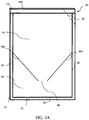
- the food package 10 which may alternatively be termed a food cooking bag having an integral grease trap compartment, has a generally rectangular plan configuration as considered in the plane of FIG. 1 .
- the food cooking package 10 is formed, preferably, from roll stock and may comprise two generally rectangular sheets of a suitable food-safe material such as a polymeric plastic film, such as, but not limited to, polyester, polymerized vinyl chloride or vinylidene chloride with monomers such as acrylic esters and unsaturated carboxyl groups, mixtures of polymers, copolymers with various orientations, or other suitable food-safe packaging materials that are compatible with cooking by microwave ovens, conventional electric or gas ovens, stove top cooking and boiling, and may have varying moisture, vapor, and gas transfer characteristics, and may be utilized to provide heat seals in discrete locations.
- a suitable food-safe material such as a polymeric plastic film, such as, but not limited to, polyester, polymerized vinyl chloride or vinylidene chloride with monomers such as acrylic esters and unsaturated carboxyl groups, mixtures of polymers, copolymers with various orientations, or other suitable food-safe packaging materials that are compatible with cooking by microwave ovens, conventional electric or gas ovens, stove top cooking
- the plastic films utilized in the food packaging of the present invention may be from laminated roll-stock sources, blown plastic sources, or any other source of plastic film apparent to one of ordinary skill in the art.
- the packages described therein may be panels that are sealed together on their peripheries, or blown bags that may not require seals along sides thereof, but across tops and bottoms, or any other configurations apparent to one of ordinary skill in the art to provide internal compartments for the placement and cooking of food products, as described below.
- two rectangular juxtaposed sheets of food-safe material 12 and 14 are secured in sealed relation along mating longitudinal marginal edges so as to form closed sealed longitudinal marginal seams 16 and 18 which intersect a similarly sealed transverse lower edge 20.
- the mating longitudinal marginal edges and transverse lower edges of sheets 12 and 14 may be suitably secured as by heat sealing or by a suitable food and heat compatible adhesive interposed between the mating marginal edges.
- the upper marginal edges 12a and 14a of the sheets 12 and 14 are not secured together and thereby define a transverse access opening 22 enabling the introduction of a food product into the food package 10.
- the interior of the food package 10 is divided into a food receiving compartment 24 and a grease trap compartment 30.
- the food receiving compartment is bounded by the longitudinal marginal edge 16, the lower transverse edge or seam 20, a seal line seam 26 that extends from the upper marginal edges 12a and 14a toward the bottom transverse edge 20 but terminates short of the bottom transverse edge, and a transverse seal 28 that closes the upper end of the food compartment and is formed after insertion of a food product into the food compartment.
- the seal line 26 is preferably angularly inclined relative to the longitudinal marginal edge 18 of the food package 10 and cooperates with the longitudinal marginal edge 18 to define the grease trap compartment 30 which is open or may be sealed at its upper end 30a and increases in transverse width toward bottom end of the seam 26.
- the seals 26 and 28 may also be formed by suitable heat sealing with the transverse seal 28 being formed after a food product is inserted into the food receiving compartment 24.
- the food package 10 is primarily intended for use by consumers in their homes to prepare food products by microwave, conventional oven, stove top or boiling cooking techniques.
- the seal 28 may be formed by a suitable liquid impervious seal of the rib/channel type wherein a transverse rib is formed on the inner surface of one of the sheets 12 or 14 and is sized and positioned to be releasably inserted into a suitably configured transverse channel formed in the inner surface of the opposing or opposite sheet 12 or 14 so that after introducing a food product into the compartment 24, the consumer can manually seal the food compartment along the seal 28.
- FIGS. 2A-2C illustrate the food package 10 having a food product, such as ground beef, inserted within the food receiving compartment 24 after which the seal 28 is formed. After the ground beef is cooked, the food package 10 is oriented so that any fat or grease will drain from the food compartment through the opening 32 into the grease trap compartment 30. The food package can then be rotated such that grease 33 accumulated in the grease trap compartment 30 is discharged through the open distal end 30a of the grease trap compartment as illustrated in FIG. 2C .
- a food product such as ground beef
- a valve may be placed in a location to provide an egress for accumulated steam or other gases that may be formed during the cooking process, and/or that may prevent the entry of gas from the ambient air.
- FIGS. 3A and 3B illustrate an alternative food cooking package, indicated generally at 40, for microwave, conventional oven, stove top or boiling cooking of a food product.
- the food cooking package 40 is generally similar to the aforedescribed food cooking package 10 but is designed to trap the cooked grease in the food package so that it may neatly and easily be disposed of into a garbage or waste receptacle.
- the food cooking package 40 is similarly formed as a generally rectangular cooking package defined by rectangular sheets of the material 12 and 14 secured along their longitudinal marginal edges 16 and 18 and their lower transverse marginal edge 20 to create an interior food receiving compartment 42 and a grease trap compartment 44.
- the food receiving compartment 42 is separated from the grease trap compartment 44 by a pair of inclined seal seams 46a and 46b that are spaced at their lower ends to establish an opening 48 which serves as a drain passage for grease and other fluids that may be created during cooking of the food product.
- the angle of incline of the sealed seams 46a and 46b relative to the respective marginal edges 16 and 18 may be varied and preferably each sealed seam forms an included angle of approximately 30-50° with its adjacent corresponding longitudinal marginal edge 16 or 18, respectively.
- the rectangular sheets 12 and 14 of microwaveable, conventional oven and boiler compatible material utilized in the food package 40 have upper transverse marginal edges 12a and 14a which are initially open or free to provide an access opening for introducing a food product into the food receiving compartment 42.
- the marginal edges 12a, 14a are then sealed together by a heat seal, the aforedescribed rib/channel closure means or a suitable cooking heat compatible mechanical sealing device to thus seal the food product within the food receiving compartment.
- a corner of the food package or bag may be slit, such as along the dash-line 56, to allow venting of the food compartment, or one or more valves may be utilized to provide venting of the food compartment.
- FIG. 3B illustrates the food cooking package 40 in a generally horizontal orientation with a food product, such as ground beef, disposed in the cooking compartment.
- a food product such as ground beef
- the food package is held upright to cause grease to drain into the lower grease trap compartment 44 while the meat is retained in the upper food cooking compartment 42.
- the upper sealed marginal edges 12a and 14a of the food package are then opened or severed and the cooked meat or other food product removed as by discharging it onto a counter or other receptacle.
- the package is then placed in a trash receptacle or the like with the trapped grease retained within the grease trap compartment.
- a vegetable, starch, rice or other food component that will benefit from drippings created by the lean meat or other savory juice producing food product may be inserted into the trap compartment 44 through the appropriate sized opening 48, or a sealable opening (not shown) providing direct access into the trap compartment, after which the lean meat or other juice producing food product is inserted into the food cooking compartment 42.
- the drippings will flow into the trap compartment 44 and mix with the vegetable, starch, rice other food component and any sauce or gravy flavoring and thickening components that are inserted into the compartment 44.
- the meat drippings may be used to produce fresh gravies and sauces or add flavor to other food components introduced into the trap compartment 44.
- FIG. 4 illustrates a preferred embodiment of a food cooking package, indicated generally at 50, that is similar to the food cooking package 40 but utilizes a single inclined sealed seam 52 to separate a food cooking compartment 42 from a grease trap compartment 44.
- the seal 52 is preferably angularly inclined relative to the longitudinal marginal edge 18 of the food cooking package so as to create a grease passage 54.
- the food cooking package 50 is substantially the same as the food package 40 and serves as a disposable food package cooking the food product inserted into the food receiving compartment 42 and passing any grease into the grease trap compartment 44.
- FIG. 5 illustrates another food cooking package, indicated generally at 60, which is made from a materials similar to the material used in the food cooking packages 10, 40 and 50, and heat sealed or otherwise suitably secured along longitudinal marginal edges 16 and 18 and along a lower transverse marginal edge 20 similar to the aforedescribed food packages 10, 40 and 50.
- the food cooking package 60 is formed with a food receiving and cooking compartment 62 and a pair of fluid receiving trap compartments 64 and 66.
- the trap compartment 64 is separated from the food cooking compartment 62 by a sealed seam 68 which preferably is inclined downwardly relative to the longitudinal marginal edge 16 and transverse bottom edge 20 so as to substantially separate the trap compartment from the food receiving compartment 62.
- the second trap compartment 66 is formed by a sealed seam 70 that substantially separates the second trap compartment 66 from the food compartment 62 and also substantially separates the trap compartment 66 from the trap compartment 64.
- a lowermost end 70a of the sealed seam 70 terminates at a point spaced from the lower marginal edge 20 of the food package so as to define an opening or passage 72 between the two trap compartments 64 and 66.
- the inner end 68a of the sealed seam 68 is spaced from the seam 70 so as to define a fluid passage 74 between the trap compartment 64 and food compartment 62.
- An air vent opening for the food cooking compartment 62 may be formed by severing an upper comer edge of the package 60, as along dash line 56.
- a food product is inserted into the food compartment 62 and the upper marginal edges 12a and 14a are sealed closed as by a heat sealed seam, the aforedescribed rib/channel seal or a compatible mechanical closure sealing device so as to substantially close the food compartment.
- the food package or bag 60 is oriented in a generally vertical orientation so that any water and oil soluble fluid components created by the cooked food product pass through the opening 74 into the trap compartment 64.
- the water component of the fluid that passes into the trap compartment 64 may then be forced by gravity through the opening 72 into the trap compartment 66 with the oil component remaining in the trap compartment 64 when the package 60 may be suitably tilted or rotated.
- the compartment 66 may be modified to enable insertion of a dry sauce, gravy or flavor component, or a combination thereof, such that after cooking of the food product, the heavier density water from the water and oil soluble components in the trap compartment 64 created by the cooked food product passes through the opening 72 and mixes with the dry sauce/gravy/flavor components in compartment 66 to create a fresh sauce or gravy.
- FIG. 6 illustrates another food cooking package, indicated generally at 80, in accordance with the invention and that employs a pair of generally rectangular sheets 82 and 84 that are preferably made of substantially the same material as the aforedescribed rectangular sheets 12 and 14 in the food cooking packages 10 and 50.
- the juxtaposed sheets 82 and 84 form side panels of the food cooking package 80 and are secured to each other along their mutually opposed peripheral edges by heat sealing or a food and heat compatible adhesive so as to form upper and lower edge seams 86a and 86b and laterally spaced edge seams 88a and 88b.
- the food cooking package 80 has a food receiving and cooking compartment 90 defined between the end seal edge 88a and a sealed seam 92 disposed substantially parallel to the edge seam 88a and affixing the sheets 82 and 84 along the seam 92.
- a pair of downwardly inclined seal lines 94 and 96 establish a lower boundary of the food receiving and cooking chamber 90 and separate the food chamber from a trap compartment 98 disposed below the food receiving and cooking chamber when the package 80 is disposed in a generally vertical orientation as illustrated in the plane of FIG. 6 .
- the seal lines 94 and 96 intersect, respectively, the lateral edge seam 88a and the divider sealed seam 92 and have inner ends 94a and 96a, respectively, which are spaced apart and define a flow passage 97 from the food compartment 90 into the grease and moisture receiving compartment 98.
- the food cooking package 80 has a second food receiving compartment 100 that is defined between the seal seam 92 and a similar seal seam 102 that extends between the upper and lower margins 86a and 86b of the food package and establishes a third food compartment 104 that may be isolated from the food compartments 90 and 100.
- a pair of upwardly inclined seal lines 106 and 108 that seal the sheets 82 and 84 along the seal lines 106, 108 are formed so as to establish a lower boundary for the food compartment and also establish an upper boundary for a trap compartment 110.
- the uppermost ends of the seal lines 106 and 108 are spaced apart to define a passage 112 that enables communication between the second food compartment 100 and the trap compartment 110, and thereby also communication with the trap compartment 98 through an opening passage 114 formed at the lower end of the seal seam 92.
- a first food product such as meat
- a second food product such as a vegetable or starch that is moisture absorbing
- a third food component is placed within the food compartment 104 also through and between the upper marginal edges of the sheets prior to sealing them together.
- the food package 80 with food products thus inserted within the food compartments 90, 100 and 104 is then placed in a suitable cooking facility, such as a microwave oven, a conventional oven, a boiler, or stove top cooking facility and the food products in all three food compartments cooked.
- a suitable cooking facility such as a microwave oven, a conventional oven, a boiler, or stove top cooking facility and the food products in all three food compartments cooked.
- the food package 80 is removed from the heating or cooking facility and the package tilted so that juices and any grease flows from the food compartment 90 into the grease trap compartment 98.
- the food package is then reoriented so that the drippings flow through the passage 114 into the compartment 110 with further orientation of the package causing the drippings to pass into the food compartment 100 for absorption by the food within food compartment 100.
- the food package can be returned to the microwave or other heating facility to further cook the food in compartment 100 after absorption of moisture from the food compartment 90 or may be removed for consumption.
- the food within food compartment 104 may be independently heated and the food within each of the food compartments is removed by severing the package generally adjacent the upper sealed marginal edge 86a. Any grease in the grease trap compartment 98 may be disposed of with the used food package 80.
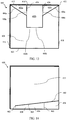
- FIG. 7 illustrates another food cooking package, indicated generally at 120, in accordance with the present invention and is generally similar to aforedescribed food cooking package 40 so that common reference numerals designate like elements in both FIGS. 3 and 7 .
- the food cooking package 120 has a food receiving compartment 42 and a grease trap compartment 44 defined by inclined seal seams 46a and 46b so that the grease trap compartment is disposed below the food receiving and cooking compartment 42.
- strategically placed susceptor material members are positioned within the food cooking compartment 42 to preferentially assist in heating all or portions of food product introduced into the food receiving and cooking compartment 42.
- An interrupted heat, impulse or other seal means 126 is formed between the inner ends of the seal seam lines 46a,46b and serves as a strainer for any grease or juice resulting from cooking of the food product that passes into the grease compartment.
- Reflector material, indicated schematically at 128a and 128b is strategically placed within the grease compartment to preferentially cool grease or juices received therein from the cooked food product.
- FIG. 8 illustrates another food cooking package, indicated generally at 130, not comprised in the present invention and which is substantially similar to the aforedescribed food cooking package 40 illustrated in FIG. 3 . Accordingly, similar reference numerals shown on FIG. 8 designate similar components as described in respect to FIG. 3 .
- the food cooking package 130 differs from the food cooking package 40 by separating the grease trap compartment area 44 from the food receiving and cooking compartment 42 by a plurality of spaced vertically disposed channels 132 that are formed by heat or impulse seals designated by a plurality of seal seam lines 134, thus eliminating a single opening or passage between the cooking compartment and the grease trap compartment and substantially preventing clogging that would prevent flow of grease or other juices from the cooked food product into the grease trap compartment.
- FIG. 9 illustrates an alternative food cooking package, indicated generally at 140, that is similar to the food cooking package 130 illustrated in FIG. 8 but employs an interrupted seal means 142 separating the grease trap compartment area 44 from the food cooking compartment 42.
- the interrupted seal means 142 is formed by a plurality of generally transversely aligned short length spaced impulse heat seals 144 so as to provide a relatively large flow area between the adjacent impulse heat seals disposed across the transverse width of the food cooking package to thus establish multi-exit points or fluid flow points for juice and fat to drip into the grease trap compartment area 44.
- the seal means 142 may be formed as a plurality of spaced impulse seals 144 and a solid length seal aligned with the impulse seals and extending approximately one-half the transverse width of the food cooking package so that a significant number of flow perforations are defined between the interrupted or spaced seals 144 while the solid length seal prevents flow to the grease trap compartment through approximately one-half the transverse width of the cooking package.
- the perforations are large enough to allow the juice, fat and small particles to pass into the grease trap compartment area but not large enough for pieces of food to pass into the grease trap compartment.
- the solid line seal serves to prevent escape of grease and juices from the grease trap compartment when the food package is oriented so that the marginal edge 18 is in a generally horizontal orientation and the sealed marginal edges 12a and 14a are in a generally vertical orientation and which, when severed, enable removal of the cooked food product.
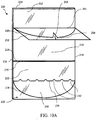
- FIGS. 10A and 10B illustrate a food cooking package 200.
- the food cooking package includes, generally, a first plastic sheet 212 and a second plastic sheet 214 disposed in face-to-face relationship, with heat seals 216, 218 disposed on opposite sides thereof.
- the bottom of the food cooking package includes a portion having discrete and strategically placed seals 219 to form a gusseted portion 220.
- Disposed within the food cooking page 200 may be a pocket 222, sealed transversely across the plastic sheets 212, 214 via heat seals 224, 226 so that food for cooking may be placed in a compartment 230, bounded along the bottom thereof the pocket 222.
- Disposed on the bottom of the pocket 222 may be a plurality of perforations 232 across a folded portion 234 of the pocket 222, the perforation forming channels for the flow of greases, oils and/or other fluids from the compartment 230 therethrough.
- a compartment 240 Formed beneath the pocket 222 may be a compartment 240 that may be disposed, generally, in the gusseted portion 220 of the food cooking package 200.
- the gusseted portion 220 may allow the food cooking package to be stood upright while being cooked, to easily drain the greases, oils and/or other fluids from the compartment 230 into the compartment 240 for separation thereof for disposal or for utilizing to make gravies, sauces or for flavorings of other food products.
- a flap 250 may be disposed across a top portion of the food cooking package 200 that may consist of a folded over portion having a fold 251 and sealed via heat seals 252 to form the flap 250. Disposed midway across the flap 250 may be a v-shaped seal portion 253 and a slit 254.
- the flap 250 may provide a handle for the food cooking package 200 so that a user may easily handle the food cooking package 200.
- the slit 254 in the v-shaped seal 253 may be used as a pressure release valve for use during cooking.
- a food product may be inserted into the compartment 230 in the food cooking package 200 and the marginal edges of plastic sheets 212, 214 may be sealed together, encasing the food product within the compartment 230.
- pressure may build within the food cooking package 200 from the release of steam, expanding the food cooking package 200 towards its maximum capacity.
- the slit 254 in the v-shaped seal 253 may rupture and provide a controlled release of excess pressure from within the food cooking package 200.
- FIG. 10B illustrates the food package 200 standing in an upright configuration with an opening 260 disposed in the upper portion thereof for adding foods to the compartment 230 disposed therein. After adding of the foods to the compartment 230, the opening 260 may be sealed, and the foods contained therein may be cooked with a heat source.
- FIG. 10B further illustrates the pocket 222 having perforations 232 therein along fold line 234, providing channels for dripping greases, oils and/or other fluids from the compartment 230 to the compartment 240.
- the food cooking package 200 may contain other functional components, including conductors, receptors, reflectors, susceptors, valves, venting slits or other functional components described herein.
- FIG. 11 illustrates an alternate food package 300.
- the food package 300 may comprise an upper compartment 302 and a lower compartment 304.
- Food package 300 may be separated into the upper compartment 302 and the lower compartment 304 by a seal 306.
- the seal 306 may extend the length of food package 300, interrupted by a plurality of releasable seals 308.
- the food package 300 may be created from a plurality of sheets 312, 314 that may be bounded by a longitudinal marginal edge 316, a longitudinal marginal edge 318, and both a lower transverse seal 320 that closes the lower compartment 304 and an upper transverse seal 322 that closes the upper compartment 302.
- the lower transverse seal 320 and/or the upper transverse seal 322 may be formed after insertion of a main food product into the lower compartment 304 and a side food product into the upper compartment 302, respectively.
- the upper compartment 302 may be used to house a side food product such as spices, sauces, butters, creams, dressings, seasonings, condiments and/or any other ingredient that may add additional flavor to a main food product.
- the lower compartment 304 may be used to house a main food product that may be readily combined with the side food product of the upper compartment 302.
- the lower compartment 304 and the upper compartment 302 may be filled with, respectively, pasta and sauce, macaroni and cheese, vegetables and butter, or mashed potatoes and gravy.
- the food package 300 may allow combinations as described above to be cooked separately and simultaneously.
- the lower compartment 304 and the upper compartment 302 may be filled with, respectively, salad and dressing, cereal and milk, or ice cream and chocolate sauce. In this way, the food package 300 may be used without cooking. Additional food combinations known to one skilled in the art may be used in the present invention, and the examples provided herein are not intended to limit the scope of the present invention.
- the food package 300 may additionally be used to combine the food product in the upper compartment 302 with the food product in the lower compartment 304 by opening the plurality of releasable seals 308 and allowing the products to mix. Further, the food package 300 may be shaken to mix the combined products to a desired consistency.
- the plurality of releasable seals 308 may each be opened completely, partially, and/or re- sealed such that the desired amount of the side product from the upper compartment 302 may be mixed with the food product in the lower compartment 304.
- the plurality of releasable seals 308 may be suitable releasable fluid tight rib/channel connections, such as the seal commonly known as ZIPLOC®, or any other re-sealable method known to one skilled in the art, such that the plurality of releasable seals 308 may both open and close.
- FIG. 12 illustrates a food package 350.
- the food package 350 may comprise a plurality of side food compartments 352a, 352b, 352c and a main food compartment 354.
- the food package 350 may be created from a plurality of sheets 362, 364 that may be bounded by a longitudinal marginal edge 366, a longitudinal marginal edge 368, and both a lower transverse seal 370 that closes the food compartment 354 and an upper transverse seal 372 that closes the plurality of side compartments 352a, 352b, 352c.
- the lower transverse seal 370 and the upper transverse seal 372 may be formed after insertion of a food product into the food compartment 354 and other food products into the plurality of side compartments 352a, 352b, 352c, respectively.
- the side compartments 352a and 352b may be separated by a vertical seal 374, both parallel to and a length away from longitudinal marginal edge 366.
- the side compartments 352c and 352b may be separated by a vertical seal 376, both parallel to and a length away from longitudinal marginal edge 368.
- the food compartment 354 may be separated from the plurality of side compartments 352a, 352b, 352c by a seal 356.
- the seal 356 may extend the length of food package 350, interrupted by a plurality of releasable seals 358a, 358b, 358c.
- the food package 350 may be used to house a food product within the food compartment 354 along with other food products within the plurality of side compartments 352a, 352b, 352c.
- the other food products may be, but are not limited to, spices, sauces, butters, creams, dressings, seasonings, condiments and/or any other ingredient that may add additional flavor to a food product.
- a different food product may be inserted into each side compartment 352a, 352b, 352c, such that there may be a choice between which of the other products to use, which other food products to not use, and/or which other food products to mix.
- a salad may fill the food compartment 354 and three different types of dressing may fill the side compartments 352a, 352b, 352c.
- a single dressing, multiple dressings, or no dressing at all may be chosen to mix with the salad. Additional food combinations known to one skilled in the art may be used in the present invention, and the examples provided herein are not intended to limit the scope of the present invention
- the food package 350 may be used to combine the other food products in the side compartments 352a, 352b, 352c with the food product in the food compartment 354.
- the releasable seals 358a, 358b, 358c associated with the respective desired side product may be opened and the side product may be allowed to mix with the food product in the food compartment 354. Further, the food package 350 may be shaken to mix the combined ingredients to a desired consistency.
- the plurality of releasable seals 358a, 358b, 358c may each be opened completely, partially, and/or re-sealed such that the desired amount of the side products from the side compartments 352a, 352b, 352c may be mixed with the food product in the food compartment 354.
- FIG. 13 illustrates a food package 400.
- the food package 400 may comprise a plurality of side compartments 402a, 402b, 402c and a food compartment 404.
- the food package 400 may be created from a plurality of sheets 412, 414 that may be bounded by a longitudinal marginal edge 416, a longitudinal marginal edge 418, and both a lower transverse seal 420 that closes the food compartment 404 and an upper transverse seal 422 that closes the plurality of side compartments 402a, 402b, 402c.
- the lower transverse seal 420 and the upper transverse seal 422 may be formed after insertion of a food product into the food compartment 404 and ingredients into the plurality of side compartments 402a, 402b, 402c, respectively.
- the side compartments 402a and 402b may be separated by a vertical seal 424, both parallel to and a length away from longitudinal marginal edge 416, and interrupted by a releasable seal 408a.
- the side compartments 402b and 402c may be separated by a vertical seal 426, both parallel to and a length away from longitudinal marginal edge 418, and interrupted by a releasable seal 408c.
- the food compartment 404 may be separated from the plurality of side compartments 402a, 402b, 402c by a plurality of seals 406a, 406b, 406c.
- the plurality of seals 406a, 406b, 406c may be designed in numerous ways.
- the seal 406a may be diagonal starting from the intersection of the longitudinal marginal edge 416 and the upper transverse seal 422 and extending until intersecting the vertical seal 424.
- the seal 406b may horizontally extend the length between vertical seal 424 and 426, interrupted by a releasable seal 408b.
- the seal 406c may be diagonal starting from the intersection of the longitudinal marginal edge 418 and the upper transverse seal 422 and extending until intersecting the vertical seal 426.
- the side compartments 402a, 402b, 402c may be used to house a plurality of separated fresh ingredients that may be mixed together to form a single sauce, condiment, dressing, or the like.
- the releasable seal 408a may be opened allowing the ingredients contained within the side compartment 402a to mix with the ingredients contained in the side compartment 402b.
- the releasable seal 408c may be opened allowing the ingredients contained within the side compartment 402c to mix with the ingredients contained in the side compartment 402b.
- the releasable seal 408b may be opened allowing the ingredients contained within the side compartment 402b to mix with a food product contained in the food compartment 404.
- the releasable seals 408a, 408b, 408c may each be opened completely, partially, and/or re-sealed such that the desired amount of the ingredients from the side compartments 402a, 402b, 402c may be mixed with the food product in the food compartment 404.
- the food package 450 may comprise a plurality of compartments including a food compartment 452 and a plurality of side compartments 454, 456, 458.
- the plurality of side compartments 454, 456, 458 may be created by a permanent seal 460 beginning on a first side of food package 450, extending diagonally towards a second side of food package 450, and terminating a length away from the second side of food package 450, and a releasable seal 462 beginning at the end of permanent seal 460 and extending to the bottom of food package 450.
- the plurality of side compartments 454, 456, 458 may be divided by a plurality of releasable seals 464, 466 such that releasable seal 464 divides side compartment 458 from side compartment 456 and releasable seal 466 divides side compartment 456 from side compartment 454.
- Releasable seal 466 may be broken or otherwise unsealed, causing side compartment 456 and side compartment 454 to combine, along with any contents within side compartments 456, 454.
- releasable seal 464 may be broken or otherwise unsealed, causing side compartment 458 and side compartment 456 to combine, along with any contents within side compartments 458, 456.
- Releasable seals 466, 464 may be released simultaneously and may allow side compartments 454, 456, 458 to combine, along with any contents within side compartments 454, 456, 458.
- Releasable seal 462 may be released and may allow the contents within to enter the food compartment 452 and mix with the contents within the food compartment.
- mixable food products may be packaged separately and freshly combined before consumption.
- a salad may be placed within the food compartment 452
- vinegar may be placed within side compartment 458
- a blend of seasoning may be placed within side compartment 456, and an oil may be placed within side compartment 454.
- the vinegar may be combined with the blend of seasoning by releasing releasable seal 464.
- the oil may be combined with the vinegar and blend of seasoning combination by releasing releasable seal 466.
- the combined salad dressing may then be combined with the salad in the food compartment 452 by releasing releasable seal 462.
- the mixed salad and salad dressing may then be eaten by the consumer.
Landscapes
- Engineering & Computer Science (AREA)
- Food Science & Technology (AREA)
- Life Sciences & Earth Sciences (AREA)
- Mechanical Engineering (AREA)
- Health & Medical Sciences (AREA)
- Nutrition Science (AREA)
- Chemical & Material Sciences (AREA)
- Polymers & Plastics (AREA)
- Package Specialized In Special Use (AREA)
- General Preparation And Processing Of Foods (AREA)
Claims (11)
- Un appareil (10, 50) destiné à être utilisé pour la cuisson de produits alimentaires, l'appareil comprenant :une première chambre (24, 42) ayant une forme configurée pour recevoir un produit alimentaire à cuire ;une deuxième chambre (30, 44) ayant une forme configurée pour recevoir des fluides créés durant le processus de cuisson ;un canal (32, 54) entre la première chambre (24, 42) et la deuxième chambre (30, 44) pour déplacer les fluides de cuisson de la première chambre à la deuxième chambre après la cuisson d'un produit alimentaire dans la première chambre ; etdans lequel la première chambre, la deuxième chambre et le canal entre la première chambre et la deuxième chambre sont formés par une fermeture hermétique (26, 52) ; etcaractérisé en ce que la fermeture hermétique (26, 52), qui s'étend d'une première extrémité (18) de l'appareil et se termine juste avant une deuxième extrémité de l'appareil, est inclinée à un angle par rapport à la première extrémité (18).
- L'appareil selon la revendication 1, dans lequel soit la première chambre, soit la deuxième chambre comprend un soufflet.
- L'appareil selon la revendication 1, comprenant en outre, soit :un matériau sélectionné dans le groupe constitué par un conducteur, a suscepteur, un isolant, un réflecteur, et une combinaison de ces derniers.
- L'appareil selon la revendication 1, comprenant en outre une valve pour relâcher la pression de l'intérieur de l'appareil.
- L'appareil selon la revendication 1, comprenant en outre :une troisième chambre ayant une forme ; etun canal entre la deuxième chambre et la troisième chambre.
- L'appareil selon la revendication 5, comprenant en outre une quatrième chambre ayant une forme, dans lequel la quatrième chambre est indépendante des première, deuxième et troisième chambres.
- Un procédé de préparation des aliments utilisant un sac pour produits alimentaires à plusieurs chambres, comprenant les étapes consistant à :fournir un sac pour produits alimentaires ayant la forme d'un appareil selon l'une quelconque des revendications précédentes ;remplir une première chambre avec un premier produit alimentaire ; etfermer hermétiquement la première chambre.
- Le procédé selon la revendication 7, comprenant les étapes consistant à :fermer hermétiquement la deuxième chambre ;cuire le premier produit alimentaire dans la première chambre pour former un produit alimentaire cuit et des sous-produits alimentaires ;déplacer les sous-produits alimentaires dans la deuxième chambre par le canal ;ouvrir la première chambre et retirer le produit alimentaire cuit ; etmettre au rebut le sac pour produits alimentaires et les sous-produits alimentaires.
- Le procédé selon la revendication 7, comprenant les étapes consistant à :remplir une deuxième chambre avec un deuxième produit alimentaire et fermer hermétiquement la deuxième chambre ;cuire le premier produit alimentaire dans la première chambre pour former un produit alimentaire cuit et des sous-produits alimentaires ;déplacer les sous-produits alimentaires dans la deuxième chambre par le canal ;mélanger les sous-produits alimentaires avec le deuxième produit alimentaire dans la deuxième chambre pour former un mélange ;ouvrir la première chambre et retirer le produit alimentaire cuit ; etouvrir la deuxième chambre et retirer le mélange.
- Le procédé selon la revendication 7, consistant en outre à :remplir une deuxième chambre avec un deuxième produit alimentaire et fermer hermétiquement la deuxième chambre, dans lequel le canal est fermé hermétiquement par une fermeture ouvrable ;ouvrir la fermeture ouvrable et introduire le deuxième produit alimentaire dans la première chambre par le canal ;mélanger le premier produit alimentaire et le deuxième produit alimentaire pour former un mélange ;ouvrir le sac pour produits alimentaires ; etretirer le mélange de produits alimentaires.
- Le procédé selon la revendication 7, consistant en outre à :remplir une deuxième chambre avec un deuxième produit alimentaire etfermer hermétiquement la deuxième chambre, dans lequel le canal est fermé hermétiquement par une fermeture ouvrable ;cuire le premier produit alimentaire dans la première chambre ;ouvrir la fermeture ouvrable et introduire le deuxième produit alimentaire dans la première chambre par le canal ;mélanger le premier produit alimentaire et le deuxième produit alimentaire pour former un mélange ;ouvrir le sac pour produits alimentaires ; etretirer le mélange de produits alimentaires.
Applications Claiming Priority (2)
| Application Number | Priority Date | Filing Date | Title |
|---|---|---|---|
| US13/285,071 US8573845B2 (en) | 2011-03-21 | 2011-10-31 | Apparatus, systems and methods for preparing food in packages having integral compartments |
| PCT/US2012/062656 WO2013066917A1 (fr) | 2011-10-31 | 2012-10-31 | Appareil, systèmes et procédés pour préparer des aliments dans des emballages ayant des compartiments intégrés |
Publications (3)
| Publication Number | Publication Date |
|---|---|
| EP2773574A1 EP2773574A1 (fr) | 2014-09-10 |
| EP2773574A4 EP2773574A4 (fr) | 2015-07-01 |
| EP2773574B1 true EP2773574B1 (fr) | 2018-02-07 |
Family
ID=46877559
Family Applications (1)
| Application Number | Title | Priority Date | Filing Date |
|---|---|---|---|
| EP12845513.6A Not-in-force EP2773574B1 (fr) | 2011-10-31 | 2012-10-31 | Appareil, systèmes et procédés pour préparer des aliments dans des emballages ayant des compartiments intégrés |
Country Status (3)
| Country | Link |
|---|---|
| US (1) | US8573845B2 (fr) |
| EP (1) | EP2773574B1 (fr) |
| WO (1) | WO2013066917A1 (fr) |
Families Citing this family (5)
| Publication number | Priority date | Publication date | Assignee | Title |
|---|---|---|---|---|
| US9272833B2 (en) * | 2011-12-19 | 2016-03-01 | Nestec S.A. | Packages for consumable products |
| US9221584B2 (en) * | 2014-06-02 | 2015-12-29 | Smartland | Cereal bag with crumb collector |
| DE102014112134A1 (de) * | 2014-08-25 | 2016-02-25 | Cofresco Frischhalteprodukte Gmbh & Co. Kg | Beutel zur Zubereitung von Lebensmitteln, Set und Verfahren zur Zubereitung von Lebensmitteln |
| AU2019265526B2 (en) * | 2018-05-08 | 2022-12-22 | The Glad Products Company | Thermoplastic bags with liquid directing structures |
| US20220232868A1 (en) * | 2021-01-25 | 2022-07-28 | Richard Warren Hardman | Packaging method for macaroni and cheese meals which includes a moisture resistant flavoring packet |
Family Cites Families (46)
| Publication number | Priority date | Publication date | Assignee | Title |
|---|---|---|---|---|
| US2741559A (en) | 1951-08-11 | 1956-04-10 | Tv Time Foods Inc | Packaged article of food and method of making the same |
| US2800269A (en) | 1954-03-09 | 1957-07-23 | Milprint Inc | Valved bag |
| US3171581A (en) | 1963-10-30 | 1965-03-02 | Kugler Emanuel | Dispensing flexible bag |
| US3542032A (en) * | 1968-03-22 | 1970-11-24 | Cramer Products Inc | Therapy package |
| EP0106648B1 (fr) * | 1982-10-16 | 1988-05-18 | Johnsen & Jorgensen Jaypak Limited | Dispositif pour la fabrication des sacs |
| US4608043A (en) * | 1984-06-22 | 1986-08-26 | Abbott Laboratories | I.V. fluid storage and mixing system |
| US4873101A (en) | 1985-09-26 | 1989-10-10 | Minnesota Mining And Manufacturing Company | Microwave food package and grease absorbent pad therefor |
| US4715963A (en) * | 1985-11-18 | 1987-12-29 | Jones Darlene N | Method of dewatering food items |
| US4730381A (en) * | 1986-03-27 | 1988-03-15 | The Procter & Gamble Company | Method of making plural-chambered dispensing device exhibiting constant proportional co-dispensing |
| US5075119A (en) * | 1986-11-10 | 1991-12-24 | Packaging Concepts, Inc. | Microwavable package for packaging combination of products and ingredients |
| JPH01288256A (ja) | 1987-09-17 | 1989-11-20 | Yoshiko Kawabata | 仕切線入り袋および流動物収納袋 |
| US4797010A (en) | 1987-09-22 | 1989-01-10 | Nabisco Brands, Inc. | Reheatable, resealable package for fried food |
| US5003142A (en) | 1988-06-03 | 1991-03-26 | E. I. Du Pont De Nemours And Company | Easy opening microwave pouch |
| US4923701A (en) * | 1989-01-12 | 1990-05-08 | Minigrip, Inc. | Zippered cook-in-bag pouch and method |
| JPH05278751A (ja) | 1992-04-03 | 1993-10-26 | Yukio Sawara | 煮汁付き加工食品の包装用袋 |
| US5380093A (en) * | 1993-10-18 | 1995-01-10 | Goldman; Robert I. | Vegetable draining and storage bag |
| JPH08294377A (ja) | 1995-04-27 | 1996-11-12 | Q P Corp | パウチ詰惣菜 |
| US6054698A (en) | 1996-11-01 | 2000-04-25 | Mast; Roy Lee | Microwave retaining package for microwave cooking |
| US5785428A (en) | 1996-12-13 | 1998-07-28 | Reynolds Consumer Products, Inc. | Bag for storing and washing produce |
| US5871790A (en) | 1997-03-04 | 1999-02-16 | Union Camp Corporation | Laminated bag wall construction |
| US5934459A (en) | 1997-11-07 | 1999-08-10 | Razorguard, Inc. | Non-corrosive flexible storage pouch with reservoir bottom for storing a shaving razor |
| US6045264A (en) | 1998-01-29 | 2000-04-04 | Miniea; Stephen H. | Self-sealing, disposable storage bag |
| US6655837B2 (en) | 1998-05-29 | 2003-12-02 | Toyo Seikan Kaisha, Ltd. | Pouch having a branched chamber |
| US6488973B1 (en) | 1998-10-05 | 2002-12-03 | Food Talk, Inc. | Method of making a cooking pouch containing a raw protein portion, a raw or blanched vegetable portion and a sauce |
| US6322044B1 (en) * | 1998-12-09 | 2001-11-27 | Unigreen International A/S | Ice cube bag and method of producing ice cube bags |
| USD420899S (en) | 1998-12-11 | 2000-02-22 | Faydi O Jubar | Trash bag with adhesive retaining means |
| US6200027B1 (en) | 1999-02-12 | 2001-03-13 | Darlene N. Jones | Flexible film washing and dewatering device for food items |
| US6020013A (en) | 1999-03-01 | 2000-02-01 | Kozma; Saul A. | Method of preventing freezer burn on food in storage bags |
| US6384391B1 (en) | 1999-04-06 | 2002-05-07 | Darla L. Beckwith | Pouch-like article for microwave heating of foods |
| DE69920722T2 (de) * | 1999-12-09 | 2005-11-03 | Schur Consumer Products A/S | Beutel zum Bewahren und Spülen eines Produktes |
| JP3563024B2 (ja) | 2000-10-12 | 2004-09-08 | 株式会社柏原製袋 | 圧縮袋 |
| US20020067865A1 (en) | 2000-12-06 | 2002-06-06 | Stutzman Todd L. | Food storage bags with multiple compartments |
| EP2181939B1 (fr) * | 2002-02-08 | 2015-05-20 | Graphic Packaging International, Inc. | Matériel pour emballage interactif aux micro-ondes |
| US6953148B2 (en) | 2002-05-31 | 2005-10-11 | Sealed Air Corporation | Mail collection bag |
| JP2004331184A (ja) | 2003-05-09 | 2004-11-25 | Nissin Food Prod Co Ltd | 包装袋及び包装袋を用いた調理方法 |
| EP1701897B1 (fr) | 2004-01-08 | 2008-11-26 | Food Talk, Inc. | Poche de cuisson micro-ondes flexible contenant une portion de proteine crue surgelee, et procede d'elaboration |
| US7748904B2 (en) * | 2005-05-12 | 2010-07-06 | Illinois Tool Works Inc. | Multicompartment evacuable storage bag |
| US20070189640A1 (en) * | 2006-02-16 | 2007-08-16 | Jeffrey Linton | Pouch with divider |
| US20070269142A1 (en) * | 2006-05-16 | 2007-11-22 | Susan Tyska | Resealable bowl-in-pouch arrangement and method |
| JP2008280078A (ja) * | 2007-05-11 | 2008-11-20 | Three K:Kk | 払拭用品 |
| WO2008041717A1 (fr) | 2006-09-29 | 2008-04-10 | Three-K Co., Ltd. | Article d'essuyage |
| US20100047403A1 (en) | 2006-10-30 | 2010-02-25 | Elizabeth Johnson | Pouch container for food product |
| WO2008118444A1 (fr) | 2007-03-27 | 2008-10-02 | Cryovac, Inc. | Réceptacle pour attendrissement de la viande à la demande |
| US20090238495A1 (en) * | 2008-03-18 | 2009-09-24 | Anderson Michael R | Pouch dispenser |
| JP5278751B2 (ja) | 2009-03-31 | 2013-09-04 | 株式会社ダイフク | 物品保管設備 |
| US20100266732A1 (en) | 2009-04-20 | 2010-10-21 | Fres-Co System Usa, Inc. | Microwavable self-venting package |
-
2011
- 2011-10-31 US US13/285,071 patent/US8573845B2/en not_active Expired - Fee Related
-
2012
- 2012-10-31 EP EP12845513.6A patent/EP2773574B1/fr not_active Not-in-force
- 2012-10-31 WO PCT/US2012/062656 patent/WO2013066917A1/fr not_active Ceased
Non-Patent Citations (1)
| Title |
|---|
| None * |
Also Published As
| Publication number | Publication date |
|---|---|
| EP2773574A1 (fr) | 2014-09-10 |
| WO2013066917A1 (fr) | 2013-05-10 |
| EP2773574A4 (fr) | 2015-07-01 |
| US8573845B2 (en) | 2013-11-05 |
| US20120244265A1 (en) | 2012-09-27 |
| WO2013066917A9 (fr) | 2013-07-25 |
Similar Documents
| Publication | Publication Date | Title |
|---|---|---|
| US8574650B2 (en) | Apparatus, systems and methods for preparing food in packages having integral compartments | |
| US11634262B2 (en) | Cooking method and apparatus | |
| US5741534A (en) | Packaged food product using partitioned receptacles with removable thin partition walls and method of making it | |
| US20190283952A1 (en) | Cooking method and apparatus | |
| EP2773574B1 (fr) | Appareil, systèmes et procédés pour préparer des aliments dans des emballages ayant des compartiments intégrés | |
| WO2008036382A2 (fr) | Produit alimentaire, appareil de cuisson et dispositif de stockage | |
| US20230144737A1 (en) | Food Products For Multifunction Pressure Cookers | |
| US12297031B2 (en) | Cooking method and apparatus | |
| JP5652462B2 (ja) | レトルトクリームソース、電子レンジ調理用容器詰食品及びクリーム煮料理の調理又は製造方法 | |
| JP2010017133A (ja) | レトルトクリームソース、電子レンジ調理用容器詰食品及びクリーム煮料理の調理又は製造方法 | |
| WO2014040868A1 (fr) | Procédé de préparation d'un produit alimentaire cuit assaisonné et produit d'assaisonnement conditionné utilisé dans ce procédé | |
| JP6607773B2 (ja) | 容器入り食品および食品の製造方法 | |
| EP2828178B1 (fr) | Produit d'assaisonnement emballé | |
| US20240417159A1 (en) | Cooking Apparatus and Method | |
| JPH0652486U (ja) | 四面体型包装米飯 | |
| JPH0779636B2 (ja) | 電子レンジ用煮物調理容器 | |
| JP2001120240A (ja) | スパウト付き耐熱性シート袋入り食品及びその製造方法 | |
| JP3191395U (ja) | 直火加熱用冷凍食品 | |
| HK1146696A1 (en) | Pouch-packed liquid food | |
| HK1146696B (en) | Pouch-packed liquid food |
Legal Events
| Date | Code | Title | Description |
|---|---|---|---|
| PUAI | Public reference made under article 153(3) epc to a published international application that has entered the european phase |
Free format text: ORIGINAL CODE: 0009012 |
|
| 17P | Request for examination filed |
Effective date: 20140528 |
|
| AK | Designated contracting states |
Kind code of ref document: A1 Designated state(s): AL AT BE BG CH CY CZ DE DK EE ES FI FR GB GR HR HU IE IS IT LI LT LU LV MC MK MT NL NO PL PT RO RS SE SI SK SM TR |
|
| RIN1 | Information on inventor provided before grant (corrected) |
Inventor name: HILLINSKI DUSTIN J. Inventor name: TUROVER ALAN S. Inventor name: STRAUS ANTIM, G. |
|
| DAX | Request for extension of the european patent (deleted) | ||
| RA4 | Supplementary search report drawn up and despatched (corrected) |
Effective date: 20150602 |
|
| RIC1 | Information provided on ipc code assigned before grant |
Ipc: B65D 81/32 20060101AFI20150527BHEP Ipc: B65B 51/10 20060101ALI20150527BHEP Ipc: B65B 9/10 20060101ALI20150527BHEP Ipc: B65D 30/22 20060101ALI20150527BHEP |
|
| 17Q | First examination report despatched |
Effective date: 20160208 |
|
| GRAP | Despatch of communication of intention to grant a patent |
Free format text: ORIGINAL CODE: EPIDOSNIGR1 |
|
| INTG | Intention to grant announced |
Effective date: 20170831 |
|
| GRAS | Grant fee paid |
Free format text: ORIGINAL CODE: EPIDOSNIGR3 |
|
| GRAA | (expected) grant |
Free format text: ORIGINAL CODE: 0009210 |
|
| AK | Designated contracting states |
Kind code of ref document: B1 Designated state(s): AL AT BE BG CH CY CZ DE DK EE ES FI FR GB GR HR HU IE IS IT LI LT LU LV MC MK MT NL NO PL PT RO RS SE SI SK SM TR |
|
| REG | Reference to a national code |
Ref country code: GB Ref legal event code: FG4D |
|
| REG | Reference to a national code |
Ref country code: AT Ref legal event code: REF Ref document number: 968682 Country of ref document: AT Kind code of ref document: T Effective date: 20180215 Ref country code: CH Ref legal event code: EP |
|
| REG | Reference to a national code |
Ref country code: IE Ref legal event code: FG4D |
|
| REG | Reference to a national code |
Ref country code: DE Ref legal event code: R096 Ref document number: 602012042702 Country of ref document: DE |
|
| REG | Reference to a national code |
Ref country code: NL Ref legal event code: MP Effective date: 20180207 |
|
| REG | Reference to a national code |
Ref country code: AT Ref legal event code: MK05 Ref document number: 968682 Country of ref document: AT Kind code of ref document: T Effective date: 20180207 |
|
| PG25 | Lapsed in a contracting state [announced via postgrant information from national office to epo] |
Ref country code: NO Free format text: LAPSE BECAUSE OF FAILURE TO SUBMIT A TRANSLATION OF THE DESCRIPTION OR TO PAY THE FEE WITHIN THE PRESCRIBED TIME-LIMIT Effective date: 20180507 Ref country code: LT Free format text: LAPSE BECAUSE OF FAILURE TO SUBMIT A TRANSLATION OF THE DESCRIPTION OR TO PAY THE FEE WITHIN THE PRESCRIBED TIME-LIMIT Effective date: 20180207 Ref country code: ES Free format text: LAPSE BECAUSE OF FAILURE TO SUBMIT A TRANSLATION OF THE DESCRIPTION OR TO PAY THE FEE WITHIN THE PRESCRIBED TIME-LIMIT Effective date: 20180207 Ref country code: NL Free format text: LAPSE BECAUSE OF FAILURE TO SUBMIT A TRANSLATION OF THE DESCRIPTION OR TO PAY THE FEE WITHIN THE PRESCRIBED TIME-LIMIT Effective date: 20180207 Ref country code: HR Free format text: LAPSE BECAUSE OF FAILURE TO SUBMIT A TRANSLATION OF THE DESCRIPTION OR TO PAY THE FEE WITHIN THE PRESCRIBED TIME-LIMIT Effective date: 20180207 Ref country code: CY Free format text: LAPSE BECAUSE OF FAILURE TO SUBMIT A TRANSLATION OF THE DESCRIPTION OR TO PAY THE FEE WITHIN THE PRESCRIBED TIME-LIMIT Effective date: 20180207 Ref country code: FI Free format text: LAPSE BECAUSE OF FAILURE TO SUBMIT A TRANSLATION OF THE DESCRIPTION OR TO PAY THE FEE WITHIN THE PRESCRIBED TIME-LIMIT Effective date: 20180207 |
|
| PG25 | Lapsed in a contracting state [announced via postgrant information from national office to epo] |
Ref country code: GR Free format text: LAPSE BECAUSE OF FAILURE TO SUBMIT A TRANSLATION OF THE DESCRIPTION OR TO PAY THE FEE WITHIN THE PRESCRIBED TIME-LIMIT Effective date: 20180508 Ref country code: IS Free format text: LAPSE BECAUSE OF FAILURE TO SUBMIT A TRANSLATION OF THE DESCRIPTION OR TO PAY THE FEE WITHIN THE PRESCRIBED TIME-LIMIT Effective date: 20180607 Ref country code: PL Free format text: LAPSE BECAUSE OF FAILURE TO SUBMIT A TRANSLATION OF THE DESCRIPTION OR TO PAY THE FEE WITHIN THE PRESCRIBED TIME-LIMIT Effective date: 20180207 Ref country code: LV Free format text: LAPSE BECAUSE OF FAILURE TO SUBMIT A TRANSLATION OF THE DESCRIPTION OR TO PAY THE FEE WITHIN THE PRESCRIBED TIME-LIMIT Effective date: 20180207 Ref country code: SE Free format text: LAPSE BECAUSE OF FAILURE TO SUBMIT A TRANSLATION OF THE DESCRIPTION OR TO PAY THE FEE WITHIN THE PRESCRIBED TIME-LIMIT Effective date: 20180207 Ref country code: RS Free format text: LAPSE BECAUSE OF FAILURE TO SUBMIT A TRANSLATION OF THE DESCRIPTION OR TO PAY THE FEE WITHIN THE PRESCRIBED TIME-LIMIT Effective date: 20180207 Ref country code: AT Free format text: LAPSE BECAUSE OF FAILURE TO SUBMIT A TRANSLATION OF THE DESCRIPTION OR TO PAY THE FEE WITHIN THE PRESCRIBED TIME-LIMIT Effective date: 20180207 Ref country code: BG Free format text: LAPSE BECAUSE OF FAILURE TO SUBMIT A TRANSLATION OF THE DESCRIPTION OR TO PAY THE FEE WITHIN THE PRESCRIBED TIME-LIMIT Effective date: 20180507 |
|
| PG25 | Lapsed in a contracting state [announced via postgrant information from national office to epo] |
Ref country code: EE Free format text: LAPSE BECAUSE OF FAILURE TO SUBMIT A TRANSLATION OF THE DESCRIPTION OR TO PAY THE FEE WITHIN THE PRESCRIBED TIME-LIMIT Effective date: 20180207 Ref country code: AL Free format text: LAPSE BECAUSE OF FAILURE TO SUBMIT A TRANSLATION OF THE DESCRIPTION OR TO PAY THE FEE WITHIN THE PRESCRIBED TIME-LIMIT Effective date: 20180207 Ref country code: IT Free format text: LAPSE BECAUSE OF FAILURE TO SUBMIT A TRANSLATION OF THE DESCRIPTION OR TO PAY THE FEE WITHIN THE PRESCRIBED TIME-LIMIT Effective date: 20180207 Ref country code: RO Free format text: LAPSE BECAUSE OF FAILURE TO SUBMIT A TRANSLATION OF THE DESCRIPTION OR TO PAY THE FEE WITHIN THE PRESCRIBED TIME-LIMIT Effective date: 20180207 |
|
| REG | Reference to a national code |
Ref country code: DE Ref legal event code: R097 Ref document number: 602012042702 Country of ref document: DE |
|
| PG25 | Lapsed in a contracting state [announced via postgrant information from national office to epo] |
Ref country code: CZ Free format text: LAPSE BECAUSE OF FAILURE TO SUBMIT A TRANSLATION OF THE DESCRIPTION OR TO PAY THE FEE WITHIN THE PRESCRIBED TIME-LIMIT Effective date: 20180207 Ref country code: SM Free format text: LAPSE BECAUSE OF FAILURE TO SUBMIT A TRANSLATION OF THE DESCRIPTION OR TO PAY THE FEE WITHIN THE PRESCRIBED TIME-LIMIT Effective date: 20180207 Ref country code: DK Free format text: LAPSE BECAUSE OF FAILURE TO SUBMIT A TRANSLATION OF THE DESCRIPTION OR TO PAY THE FEE WITHIN THE PRESCRIBED TIME-LIMIT Effective date: 20180207 Ref country code: SK Free format text: LAPSE BECAUSE OF FAILURE TO SUBMIT A TRANSLATION OF THE DESCRIPTION OR TO PAY THE FEE WITHIN THE PRESCRIBED TIME-LIMIT Effective date: 20180207 |
|
| PLBE | No opposition filed within time limit |
Free format text: ORIGINAL CODE: 0009261 |
|
| STAA | Information on the status of an ep patent application or granted ep patent |
Free format text: STATUS: NO OPPOSITION FILED WITHIN TIME LIMIT |
|
| 26N | No opposition filed |
Effective date: 20181108 |
|
| PG25 | Lapsed in a contracting state [announced via postgrant information from national office to epo] |
Ref country code: SI Free format text: LAPSE BECAUSE OF FAILURE TO SUBMIT A TRANSLATION OF THE DESCRIPTION OR TO PAY THE FEE WITHIN THE PRESCRIBED TIME-LIMIT Effective date: 20180207 |
|
| REG | Reference to a national code |
Ref country code: DE Ref legal event code: R119 Ref document number: 602012042702 Country of ref document: DE |
|
| REG | Reference to a national code |
Ref country code: CH Ref legal event code: PL |
|
| REG | Reference to a national code |
Ref country code: BE Ref legal event code: MM Effective date: 20181031 |
|
| PG25 | Lapsed in a contracting state [announced via postgrant information from national office to epo] |
Ref country code: MC Free format text: LAPSE BECAUSE OF FAILURE TO SUBMIT A TRANSLATION OF THE DESCRIPTION OR TO PAY THE FEE WITHIN THE PRESCRIBED TIME-LIMIT Effective date: 20180207 Ref country code: LU Free format text: LAPSE BECAUSE OF NON-PAYMENT OF DUE FEES Effective date: 20181031 |
|
| REG | Reference to a national code |
Ref country code: IE Ref legal event code: MM4A |
|
| PG25 | Lapsed in a contracting state [announced via postgrant information from national office to epo] |
Ref country code: DE Free format text: LAPSE BECAUSE OF NON-PAYMENT OF DUE FEES Effective date: 20190501 |
|
| PG25 | Lapsed in a contracting state [announced via postgrant information from national office to epo] |
Ref country code: BE Free format text: LAPSE BECAUSE OF NON-PAYMENT OF DUE FEES Effective date: 20181031 Ref country code: FR Free format text: LAPSE BECAUSE OF NON-PAYMENT OF DUE FEES Effective date: 20181031 Ref country code: LI Free format text: LAPSE BECAUSE OF NON-PAYMENT OF DUE FEES Effective date: 20181031 Ref country code: CH Free format text: LAPSE BECAUSE OF NON-PAYMENT OF DUE FEES Effective date: 20181031 |
|
| PG25 | Lapsed in a contracting state [announced via postgrant information from national office to epo] |
Ref country code: IE Free format text: LAPSE BECAUSE OF NON-PAYMENT OF DUE FEES Effective date: 20181031 |
|
| PGFP | Annual fee paid to national office [announced via postgrant information from national office to epo] |
Ref country code: GB Payment date: 20190807 Year of fee payment: 8 |
|
| PG25 | Lapsed in a contracting state [announced via postgrant information from national office to epo] |
Ref country code: MT Free format text: LAPSE BECAUSE OF NON-PAYMENT OF DUE FEES Effective date: 20181031 |
|
| PG25 | Lapsed in a contracting state [announced via postgrant information from national office to epo] |
Ref country code: TR Free format text: LAPSE BECAUSE OF FAILURE TO SUBMIT A TRANSLATION OF THE DESCRIPTION OR TO PAY THE FEE WITHIN THE PRESCRIBED TIME-LIMIT Effective date: 20180207 |
|
| PG25 | Lapsed in a contracting state [announced via postgrant information from national office to epo] |
Ref country code: PT Free format text: LAPSE BECAUSE OF FAILURE TO SUBMIT A TRANSLATION OF THE DESCRIPTION OR TO PAY THE FEE WITHIN THE PRESCRIBED TIME-LIMIT Effective date: 20180207 |
|
| PG25 | Lapsed in a contracting state [announced via postgrant information from national office to epo] |
Ref country code: HU Free format text: LAPSE BECAUSE OF FAILURE TO SUBMIT A TRANSLATION OF THE DESCRIPTION OR TO PAY THE FEE WITHIN THE PRESCRIBED TIME-LIMIT; INVALID AB INITIO Effective date: 20121031 Ref country code: MK Free format text: LAPSE BECAUSE OF NON-PAYMENT OF DUE FEES Effective date: 20180207 |
|
| GBPC | Gb: european patent ceased through non-payment of renewal fee |
Effective date: 20201031 |
|
| PG25 | Lapsed in a contracting state [announced via postgrant information from national office to epo] |
Ref country code: GB Free format text: LAPSE BECAUSE OF NON-PAYMENT OF DUE FEES Effective date: 20201031 |