EP2784608A2 - Elektronische Uhr und Empfangssteuerungsverfahren einer elektronischen Uhr - Google Patents
Elektronische Uhr und Empfangssteuerungsverfahren einer elektronischen Uhr Download PDFInfo
- Publication number
- EP2784608A2 EP2784608A2 EP14161971.8A EP14161971A EP2784608A2 EP 2784608 A2 EP2784608 A2 EP 2784608A2 EP 14161971 A EP14161971 A EP 14161971A EP 2784608 A2 EP2784608 A2 EP 2784608A2
- Authority
- EP
- European Patent Office
- Prior art keywords
- leap
- value
- satellite signal
- satellite
- candidate
- Prior art date
- Legal status (The legal status is an assumption and is not a legal conclusion. Google has not performed a legal analysis and makes no representation as to the accuracy of the status listed.)
- Withdrawn
Links
Images







Classifications
-
- G—PHYSICS
- G04—HOROLOGY
- G04R—RADIO-CONTROLLED TIME-PIECES
- G04R20/00—Setting the time according to the time information carried or implied by the radio signal
- G04R20/02—Setting the time according to the time information carried or implied by the radio signal the radio signal being sent by a satellite, e.g. GPS
-
- G—PHYSICS
- G04—HOROLOGY
- G04R—RADIO-CONTROLLED TIME-PIECES
- G04R20/00—Setting the time according to the time information carried or implied by the radio signal
-
- G—PHYSICS
- G04—HOROLOGY
- G04R—RADIO-CONTROLLED TIME-PIECES
- G04R20/00—Setting the time according to the time information carried or implied by the radio signal
- G04R20/02—Setting the time according to the time information carried or implied by the radio signal the radio signal being sent by a satellite, e.g. GPS
- G04R20/04—Tuning or receiving; Circuits therefor
-
- G—PHYSICS
- G04—HOROLOGY
- G04R—RADIO-CONTROLLED TIME-PIECES
- G04R20/00—Setting the time according to the time information carried or implied by the radio signal
- G04R20/02—Setting the time according to the time information carried or implied by the radio signal the radio signal being sent by a satellite, e.g. GPS
- G04R20/06—Decoding time data; Circuits therefor
Definitions
- the present invention relates to an electronic timepiece that adjusts the time by receiving satellite signals transmitted from a positioning information satellite, and to a reception control method of the electronic timepiece.
- JP-A-2012-167931 teaches an electronic timepiece that can easily acquire the time when the leap second value can be received with a minimal processor load.
- JP-A-2012-167931 more specifically teaches using parity data contained in the satellite signal to check if the GPS time (Z count) can be trusted.
- An electronic timepiece and a reception control method of an electronic timepiece according to the present invention can determine with a high degree of accuracy if the correct leap second value was received.
- An electronic timepiece has a receiver unit that receives at least a first satellite signal containing a first leap second value and a second satellite signal containing a second leap second value; a timekeeping unit that keeps time according to the current leap second; an evaluation condition setting unit that sets an evaluation condition of the correctness of the first leap second value and the second leap second value based on the timing of first satellite signal and second satellite signal reception; and a leap second correction unit that corrects the current leap second based on the first leap second value or the second leap second value when the first leap second value and the second leap second value satisfy the set evaluation condition.
- the electronic timepiece in this aspect of the invention receives at least two satellite signals, a first satellite signal containing a first leap second value and a second satellite signal containing a second leap second value, with a receiver unit.
- the first and second leap second values are information denoting the current leap second value contained in the satellite signal.
- the first and second satellite signals may be received substantially simultaneously from plural satellites, or at different times from one or a plurality of satellites.
- the correctness and reliability of the received leap second value can be evaluated based on whether or not the first and second leap second values contained in the received satellite signals meet the condition set by the evaluation condition setting unit. More particularly, the correctness of the leap second value can be accurately determined because the evaluation is based on two leap second values instead of just one. Therefore, the leap second correction unit can accurately determine that the correct leap second value was acquired when the condition is met, and can correctly adjust the current leap second using the acquired first or second leap second value. Note that because the first and second leap second values determined to be correct are normally the same value, the current leap second can be updated using either the first or the second leap second value.
- the evaluation condition setting unit also sets the evaluation condition based on the timing of first and second satellite signal reception. Therefore, when the reception environment is good and plural satellite signals can be received substantially simultaneously, the correctness of the leap second value can be determined by setting a condition for when the first and second leap second value are acquired substantially simultaneously. When the reception environment is not particularly good and only one satellite signal can be received, the correctness of the leap second value can be determined by setting the condition for when the first and second leap second value are acquired at different times. Because the evaluation condition is selected based on the timing of first and second satellite signal reception, evaluation is possible using the evaluation condition appropriate to the reception environment, and the correctness of the leap second value can be determined with a high degree of accuracy.
- An electronic timepiece preferably also has a candidate leap second value storage unit that stores first leap second value contained in the first satellite signal as candidate leap second value.
- the receiver unit receives the second satellite signal after receiving the first satellite signal; and the evaluation condition setting unit sets as the evaluation condition that the second satellite signal is received from a positioning information satellite in normal satellite health condition, and the second leap second value and the candidate leap second value are the same.
- This aspect of the invention stores the first leap second value contained in the first satellite signal as candidate leap second value, and determines if the previously received candidate leap second value (first leap second value) and the second leap second value are the same. Because this aspect of the invention can evaluate two leap second values received at different times even when the second satellite signal can only be received from one satellite because the reception environment is poor, the correctness of the leap second value can be accurately determined. The correctness of the received leap second value can therefore be determined more accurately than when the correctness of the leap second value is determined by a parity check.
- the receiver unit receives the first satellite signal and the second satellite signal in one reception process; and the evaluation condition setting unit sets as the evaluation condition that the first leap second value and the second leap second value are the same.
- This aspect of the invention can accurately determine the correctness of the leap second value by determining whether or not the first and second leap second values are the same when satellite signals are received from a plurality of satellites in one reception process.
- the correctness of the received leap second value can therefore be determined more accurately than when the correctness of the leap second value is determined by a parity check.
- the reception time can be shortened and power consumption reduced compared with receiving the leap second value at different times.
- An electronic timepiece preferably also has a candidate leap second value storage unit that stores first leap second value contained in the first satellite signal as candidate leap second value.
- the receiver unit receives the first satellite signal and the second satellite signal.
- the evaluation condition setting unit sets as the evaluation condition that the second satellite signal was received from a positioning information satellite in normal satellite health, and the second leap second value and the candidate leap second value are the same, when the second satellite signal is received from one positioning information satellite after receiving the first satellite signal and storing the first leap second value as the candidate leap second value in the candidate leap second value storage unit; and sets as the evaluation condition that the first leap second value and the second leap second value are the same when the first satellite signal and second satellite signal are received in one reception process.
- the first leap second value that was received first is stored in memory as candidate leap second value, and the second leap second value received thereafter is compared with the candidate leap second value (first leap second value) to determine if they are the same. Because this aspect of the invention can evaluate two leap second values received at different times even when the second satellite signal can only be received from one satellite because the reception environment is poor, the correctness of the leap second value can be accurately determined.
- This aspect of the invention can also accurately determine the correctness of the leap second value by determining whether or not the first and second leap second values are the same when satellite signals are received from a plurality of satellites in one reception process.
- the evaluation condition can thus be selected when the second satellite signal is received based on whether plural satellite signals were received or only one satellite signal was received, whether or not accurate leap second value was received can be accurately determined.
- the correctness of the received leap second value can therefore be determined more accurately than when the correctness of the leap second value is determined by a parity check.
- an electronic timepiece has a candidate leap second value updating unit that updates the candidate leap second value to the second leap second value when the second leap second value and the candidate leap second value are not the same.
- the candidate leap second value and the second leap second value are not the same, one or both may be incorrect data due to noise, for example.
- the candidate leap second value is not updated, the second leap second value may be repeatedly received when the candidate leap second value is wrong and a data mismatch may continue.
- This aspect of the invention can update the candidate leap second value to the most recent leap second value because the candidate leap second value is updated with the currently received second leap second value.
- the possibility of a match with the candidate leap second value can be improved when the leap second value is received next, and the correctness of the leap second value can be accurately determined.
- the evaluation condition setting unit additionally sets in the evaluation condition that the satellite signal containing the leap second value was received from a positioning information satellite in normal satellite health.
- This aspect of the invention adds the requirement that reception was from a positioning information satellite in a normal satellite health state to the other evaluation conditions. Because the invention determines if two leap second values are the same, the possibility of updating the current leap second value with an incorrect leap second value is low because the leap second value will normally not be the same even if the leap second value is received from a satellite that is not healthy. However, if plural leap second values are received from a satellite that is not healthy, there is a very slight possibility that the values will be the same.
- the invention does not use a satellite signal (leap second value) received from a satellite that is not healthy, the correctness of the leap second value can be determined even more accurately.
- the receiver unit receives a satellite signal containing the leap second value and future leap second value; and the evaluation condition setting unit additionally sets in the evaluation condition that the difference between the leap second value contained in the satellite signal and the future leap second value is greater than or equal to -1 second and less than or equal to +1 second.
- the future leap second value contained in the satellite signal is set to a new value.
- the current leap second value contained in the satellite signal and the future leap second value will be different.
- the future leap second value will be changed -1 second or +1 second from the current leap second, and will never be changed ⁇ 2 seconds or more.
- the first and second leap second values (current leap second value) received are the same, but the difference to the future leap second value that was received is outside the range of greater than or equal to -1 second and less than or equal to +1 second, the leap second value that was received may be incorrect.
- the correctness of the leap second value can be determined even more accurately.
- the current leap second value contained in the satellite signal and the future leap second value will be the same values and the difference therebetween will be 0 second, that is, within the range of greater than or equal to -1 second and less than or equal to +1 second, matching this condition.
- this condition is applied when the first satellite signal is received and when the second satellite signal is received because the accuracy of determining the correctness of the leap second value can be improved.
- the receiver unit receives a satellite signal containing the leap second value, future leap second value, and a scheduled leap second event; and the evaluation condition setting unit additionally sets in the evaluation condition that the scheduled leap second event is after the date the satellite signal was received when the leap second value contained in the satellite signal and the future leap second value are different values.
- the future leap second value contained in the satellite signal is set to a new value.
- the current leap second value contained in the satellite signal and the future leap second value will be different.
- the date of the scheduled leap second event will be a date after the reception date.
- the leap second value that was received, the future leap second value, or the scheduled date of the leap second event may be incorrect.
- the correctness of the leap second value can be determined even more accurately.
- this condition is applied when the first satellite signal is received and when the second satellite signal is received because the accuracy of determining the correctness of the leap second value can be improved.
- An electronic timepiece has a timekeeping unit that keeps time according to the current leap second; a receiver unit that receives a first satellite signal in a first reception process, and receives a second satellite signal after the first satellite signal in a second reception process that is different from the first; candidate leap second value storage unit that stores first leap second value contained in the first satellite signal as candidate leap second value; and a leap second correction unit that corrects the current leap second based on at least one of the second leap second value and the candidate leap second value when the second leap second value contained in the second satellite signal is the same as the candidate leap second value.
- This aspect of the invention stores the first leap second value contained in the first satellite signal as candidate leap second value, and determines if the previously received candidate leap second value (first leap second value) and the second leap second value are the same. Because this aspect of the invention can evaluate two leap second values received at different times even when the second satellite signal can only be received from one satellite because the reception environment is poor, the correctness of the leap second value can be accurately determined. The correctness of the received leap second value can therefore be determined more accurately than when the correctness of the leap second value is determined by a parity check.
- Another aspect of the invention is a reception control method of an electronic timepiece having a receiver unit that receives satellite signals, and a timekeeping unit that keeps time according to the current leap second, the control method including: receiving a first satellite signal containing a first leap second value and a second satellite signal containing a second leap second value; setting an evaluation condition of the correctness of the first leap second value and the second leap second value based on the timing of first satellite signal and second satellite signal reception; and correcting the current leap second based on the first leap second value or the second leap second value when the first leap second value and the second leap second value satisfy the set evaluation condition.
- This aspect of the invention has the same effects as the electronic timepiece of the invention. More specifically, because the evaluation condition is set based on the timing of first and second satellite signal reception, when the reception environment is good and plural satellite signals can be received simultaneously, the correctness of the leap second value can be determined by setting a condition for when the first and second leap second value are acquired simultaneously. When the reception environment is not particularly good and only one satellite signal can be received, the correctness of the leap second value can be determined by setting the condition for when the first and second leap second value are acquired at different times. Because the evaluation condition is selected based on the timing of first and second satellite signal reception, evaluation is possible using the evaluation condition appropriate to the reception environment, and the correctness of the leap second value can be determined with a high degree of accuracy.
- Another aspect of the invention is a reception control method of an electronic timepiece having a receiver unit that receives satellite signals, a timekeeping unit that keeps time according to the current leap second, and a candidate leap second value storage unit, the control method including: receiving a first satellite signal containing a first leap second value; storing the first leap second value as candidate leap second value in the candidate leap second value storage unit; receiving a second satellite signal containing a second leap second value; determining if the second leap second value contained in the second satellite signal and the candidate leap second value are the same; and correcting the current leap second based on at least one of the second leap second value and the candidate leap second value when the second leap second value is the same as the candidate leap second value.
- This aspect of the invention also has the same effects as the electronic timepiece of the invention. More specifically, by determining if the previously received candidate leap second value (first leap second value) and the second leap second value are the same, this aspect of the invention can accurately determine the correctness of the leap second value even when the second satellite signal can only be received from one satellite because the reception environment is poor. The correctness of the received leap second value can therefore be determined more accurately than when the correctness of the leap second value is determined by a parity check.
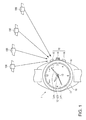
- FIG. 1 is a plan view of an electronic timepiece 1 according to the first embodiment of the invention
- FIG. 2 is a section view of the electronic timepiece 1.
- the electronic timepiece 1 receives satellite signals and acquires time information from at least one GPS satellite 100, and receives satellite signals from at least three GPS satellites 100 to calculate the current position.
- GPS satellite 100 is an example of a positioning information satellite, and there are multiple positioning information satellites in orbit. There are currently approximately 30 GPS satellites 100 in orbit.
- the electronic timepiece 1 is a wristwatch that is worn on the user's wrist, has a dial 11 and hands 12 (time display unit), and keeps and displays the time.
- the greater part of the dial 11 is made from a non-metallic material, such as plastic or glass, that is transparent to light and microwaves in the 1.5 GHz band.
- the hands 12 are disposed on the exposed face side of the dial 11.
- the hands 12 include a second hand 121, minute hand 122, and hour hand 123 that rotate on a center pivot 13, and are driven by a stepper motor through a wheel train.
- the electronic timepiece 1 executes specific processes according to manual operation of external operating members 70 (operating units) including a crown 14 and pushers 15, 16.
- a time correction process that adjusts the displayed time according operation of the crown 14 is executed. If the one pusher 15 is pressed for a long time (such as 3 seconds or more), a manual reception process (unconditional reception process) for receiving satellite signals is executed.
- reception mode timekeeping mode, positioning mode, leap second reception mode
- the timekeeping mode is a mode for locking onto one or more GPS satellites 100 and receiving satellite signals, and acquiring time information from the received satellite signals.
- the positioning mode is a mode for locking onto and receiving satellite signals from three or more GPS satellites 100, and acquiring positioning information by calculating the current position based on the received satellite signals. Note that time information is normally also received from the satellite signals at the same time in the positioning mode. However, not acquiring the time information from the satellite signals in the positioning mode is also possible.
- the leap second reception mode is a mode for locking onto and receiving satellite signals from one or more GPS satellites 100, and acquiring the leap second value that is transmitted at a specific interval (every 12.5 minutes in a GPS satellite signal). Note that time information is simultaneously acquired from the satellite signal in the leap second reception mode.
- the reception mode set by operating the pusher 16 is stored in the reception mode storage unit 660 of the memory device 60 described below. If the timekeeping mode is selected, the second hand 121 jumps to the TIME position (at the 5 second position), and if the positioning mode is selected, the second hand 121 jumps to the FIX position (at the 10 second position). If the leap second reception mode is selected, the second hand 121 jumps to the LEAP (leap second) position (at the 55 second position). The user can therefore easily know which mode is set.
- indicating the reception mode is not limited to using the second hand 121, and a separate hand (mode hand) that displays the reception mode could be separately provided.
- the reception mode may be fixed to the timekeeping mode or the positioning mode irrespective of the mode set by the pusher 16, or the reception mode set with the pusher 16 could be used in the scheduled reception mode. As described below, operation is fixed to the timekeeping mode during the scheduled reception process in this embodiment.
- a result display process that displays the result of the last reception process is executed. More specifically, if reception is successful in the positioning mode, the second hand 121 goes to the FIX (10 second position) position; if reception is successful in the timekeeping mode, the second hand 121 goes to the TIME (5 second position) position; and if reception is successful in the leap second reception mode, the second hand 121 goes to the LEAP (55 second position). If reception fails, the second hand 121 goes to the N position (20 second position).
- the second hand 121 during reception. More specifically, during reception in the positioning mode, the second hand 121 goes to the FIX (10 second position) position; during reception in the timekeeping mode, the second hand 121 goes to the TIME (5 second position) position; and if reception is successful in the leap second reception mode, the second hand 121 goes to the LEAP (55 second position). If a GPS satellite 100 cannot be locked onto, the second hand 121 goes to the N position (20 second position).
- the electronic timepiece 1 has a case 17 made of stainless steel (SUS), titanium, or other metal.
- the case 17 is substantially cylindrical.
- a crystal 19 is attached over the opening on the face side of the case 17 with a bezel 18.
- the bezel 18 is made of ceramic or other non-metallic material to improve satellite signal reception performance.
- a back cover 20 is attached to the opening on the back side of the case 17.
- a dial 11, movement 21, solar panel 22, GPS antenna 23, and storage battery 24 are disposed inside the case 17.
- the movement 21 includes a drive mechanism 210 that drives the hands 12.
- the drive mechanism 210 includes a stepper motor, wheel train 211, and a drive circuit that drives the stepper motor.
- the stepper motor includes a motor coil 212, stator, and rotor, and drives the hands 12 through the wheel train 211 and center pivot 13.
- a circuit board 25 is disposed on the back cover 20 side of the movement 21.
- a receiver device 30 Disposed to the circuit board 25 are a receiver device 30 that processes satellite signals received through the GPS antenna 23, a control device 40 that controls the receiver device 30 and driving the stepper motor, and a charging circuit 80 that charges the storage battery 24 with power produced by the solar panel 22.
- the receiver device 30 and control device 40 are driven by power supplied from the storage battery 24.
- the solar panel 22 is a photovoltaic device that produces power by converting light energy to electrical energy.
- the solar panel 22 includes 7 or 8 solar cells not shown, and the solar cells are connected in series and output.
- the solar panel 22 is supported by a solar panel support substrate 220.
- the solar panel support substrate 220 is a conductive plate approximately 0.1 mm thick, and made of metal such as brass, stainless steel (SUS), or titanium alloy.
- the solar panel support substrate 220 has the same current distribution as the GPS antenna 23 disposed nearby, and functions as part of the GPS antenna 23.
- the solar panel support substrate 220 is installed so that it does not contact the case 17. More specifically, the solar panel support substrate 220 is disposed so that its outside edge is separated from and does not contact the inside surface of the case 17.
- the solar panel support substrate 220 cannot be seen from the outside because the outside diameters of the dial 11 and solar panel 22 are determined according to the inside diameter of the dial ring 140, and their outside edges are hidden by the dial ring 140.
- the outside dimension of the solar panel support substrate 220 also exceeds the size of the solar panel 22 and dial 11, and the solar panel support substrate 220 extends to below the GPS antenna 23.
- the GPS antenna 23 is a ring antenna including a ring-shaped dielectric base 231 that is rectangular in section, and an antenna electrode 232 formed on the surface of the dielectric base 231.
- the antenna electrode 232 is formed as a line in unison with the dielectric base 231 by printing a copper, silver, or other conductive metal material on the surface of the dielectric base 231, or bonding a silver, copper, or other conductive metal plate to the surface of the dielectric base 231.
- the antenna electrode 232 may also be formed by an electroless plating pattern on the surface of the dielectric base 231.
- a connector pin 31 contacts the antenna electrode 232.
- the connector pin 31 is inserted to a substantially tubular connector base 32.
- the connector base 32 rises vertically and is connected to a printed wiring line on the circuit board 25.
- the connector pin 31 and connector base 32 are electrically connected through the printed line to the receiver device 30.
- the connector base 32 has an urging member such as a coil spring inside the tube part, and urges the connector pin 31 inserted to the connector base 32 to the antenna electrode 232 side.
- the connector pin 31 is thereby pressed against the feed node of the antenna electrode 232, and the connection between the connector pin 31 and antenna electrode 232 is maintained even when the electronic timepiece 1 is subject to impact shock.
- the conductive back cover 20 also functions as the ground plane (reflector) of the GPS antenna 23 in this embodiment of the invention.
- the back cover 20 is conductive to a ground terminal 26 disposed to the movement 21.
- the ground terminal 26 connects to the ground potential of the receiver device 30 of the movement 21.
- the back cover 20 is therefore electrically connected to the ground potential of the receiver device 30 through the ground terminal 26, and functions as a ground plane (reflector) that reflect radio waves incident from the crystal 19 side to the GPS antenna 23. Because the conductive case 17 in contact with the back cover 20 also goes to ground, the case 17 also functions as a ground plane.
- the back cover 20 and case 17 are metal and therefore also prevent adverse effects on the GPS antenna 23 when the electronic timepiece 1 is worn on the user's wrist. More specifically, if the case is a plastic case, the resonance frequency of the GPS antenna 23 is affected by the user's arm and differs depending on whether or not the electronic timepiece 1 is being worn, and performance varies undesirably. However, because the case is metal in this embodiment, effects from the body can be avoided by the shield effect of the case, there is substantially no difference in antenna characteristics when the electronic timepiece 1 is being worn and not worn, and stable reception process can be achieved. However, a plastic case could be used instead.
- the storage battery 24 is the power supply device of the electronic timepiece 1, and stores power generated by the solar panel 22.
- Two electrodes of the solar panel 22 and two electrodes of the storage battery 24 can be electrically connected to each other by two conductive coil springs 22A, and when thus connected the storage battery 24 can be charged by the power generated by the solar panel 22 of the electronic timepiece 1.
- a lithium ion storage battery that is suitable for mobile devices is used as the storage battery 24 in this embodiment of the invention, but a lithium polymer battery or other type of storage battery can be used.
- a storage device other than a storage battery (such as a capacitive device) can also be used.
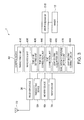
- FIG. 3 is a block diagram showing the configuration of the electronic timepiece 1.
- the electronic timepiece 1 includes a receiver device 30 (reception unit), control device 40 (control unit), timekeeping unit 50 (timekeeping unit), memory device 60 (storage unit) and input device 70 (operating unit).
- the receiver device 30 is a load driven by power stored in the storage battery 24, and when driven by the control device 40, receives satellite signals transmitted from a GPS satellite 100 through the GPS antenna 23.
- the receiver device 30 sends the acquired orbit information, GPS time information, and other information to the control device 40.
- the receiver device 30 sends a reception failure report to the control device 40.
- the configuration of the receiver device 30 is the same as a GPS reception circuit known from the literature, and further description thereof is thus omitted.
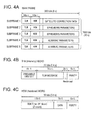
- a navigation message is composed of main frame units each containing 1500 bits. Each main frame is divided into five subframes 1 to 5 of 300 bits each. The data in one subframe is transmitted in 6 seconds from a GPS satellite 100. It therefore takes 30 seconds for a GPS satellite 100 to transmit the data in one main frame.
- subframe 1 contains satellite correction data including the week number (WN) and satellite health information (SV health) .
- the week number identifies the week to which the current GPS time information belongs. More specifically, GPS time started at 00:00:00 on January 6, 1980 in UTC (Coordinated Universal Time), and the week number of the week that started that day is week number 0. The week number is updated every week.
- the satellite health information is a code indicating if an error has occurred in the satellite, and this code can be used to prevent using signals transmitted from satellites in which there is an error. More specifically, the navigation message is normal if the satellite health SVhealth bit is set to 0, and there is a problem with part or all of the navigation message if the satellite health SVhealth bit is set to 1.
- subframes 1 to 3 in each set of five subframes contains information specific to a particular satellite, the same content is repeated during every transmission. More specifically, subframes 1 to 3 contain clock correction data and orbit information (ephemeris) specific to the transmitting satellite. Subframes 4 and 5, however, contain orbit information for all satellites (almanac data) and ionospheric correction information, which are stored in subframes 4 and 5 over multiple pages because of the large amount of information.
- subframes 4 and 5 More specifically, the data carried in subframes 4 and 5 is divided over pages 1 to 25, and different page content is sequentially transmitted in each frame. Because 25 frames are required to transmit the content of all pages, 12 minutes 30 seconds is required to receive all of the information in the navigation message.
- Each of subframes 1 to 5 starts with a telemetry (TLM) word storing 30 bits of telemetry data followed by a HOW word (handover word) storing 30 bits of handover data.
- TLM telemetry
- HOW word handover word
- the TLM and HOW words are transmitted at 6-second intervals from the GPS satellites 100, the week number data and other satellite correction data, ephemeris, and almanac data are transmitted at 30-second intervals.
- the TLM word contains a preamble, a TLM message and reserved bits, and parity data.
- the HOW word contains GPS time information called the TOW or Time of Week (also called the Z count).
- the Z count denotes in seconds the time passed since 00:00 of Sunday each week, and is reset to 0 at 00:00 Sunday the next week. More specifically, the Z count denotes the time passed from the beginning of each week in seconds.
- the Z count denotes the GPS time at which the first bit of the next subframe data is transmitted. For example, the Z count transmitted in subframe 1 denotes the GPS time that the first bit in subframe 2 is transmitted.
- the HOW word also contains 3 bits of data denoting the subframe ID (ID code).
- leap second value is contained in page 18 of subframe 4. More specifically, data related to the leap second, that is, the current leap second value ⁇ T LS , the week number of the leap second event WN LSF , the day number of the leap second event DN, and the future leap second value ⁇ t LSF , is stored on page 18 in subframe 4 of the satellite signal. Of these values, the current leap second value ⁇ t LS is referred to as the leap second value in this embodiment of the invention.
- the week number of the leap second event, the day number of the leap second event, and the future leap second value are required to execute the next leap second event process. These values are updated to the new values from approximately six months before the next leap second event. As a result, the data remains even after the leap second event. As a result, the current leap second value ⁇ t LS and the future leap second value ⁇ T LSF are the same until the next leap second event. Therefore, a leap second event has not been scheduled if ⁇ t LS and ⁇ T LSF are the same, and if the values are different, a leap second event has been scheduled.
- the time information (Z count) is stored in all subframes, and can therefore be received as every 6 seconds.
- the current week number of the GPS satellite can be known from the acquired week number and the elapsed time without receiving the week number again. Therefore, once the Z count has been acquired, the current GPS time can be acquired and the time adjusted using the current leap second value, and UTC can be determined.
- the timekeeping unit 50 includes a crystal oscillator that is driven by power stored in the storage battery 24, and updates the time using a reference signal based on the oscillation signal from the crystal oscillator.
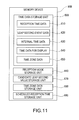
- the memory device 60 includes a time data storage unit 600, a reception mode storage unit 660, a time zone data storage unit 680, and a scheduled reception time storage unit 690.
- the time data storage unit 600 stores the reception time data 610, leap second event data 620, internal time data 630, time data for display 640, and time zone data 650.
- Time information acquired from a satellite signal (GPS time information) is stored in the reception time data 610.
- This reception time data 610 is normally updated every second by the timekeeping unit 50, and is adjusted according to the acquired time information (GPS time) when a satellite signal is received.
- At least the current leap second data is stored in the leap second event data 620.
- the week number of the leap second event, day number of the leap second event, and the future leap second values are acquired, these values are also stored in the leap second event data 620.
- the time data storage unit 600 that stores the leap second event data 620 also functions as the leap second storage unit of the invention.
- the internal time is stored in the internal time data 630.
- the internal time is updated based on the GPS time stored in the reception time data 610, and the current leap second (leap second value) stored in the leap second event data 620.
- UTC is thus stored in the internal time data 630.
- This internal time information is also updated when the reception time data 610 is updated by the timekeeping unit 50.
- the time obtained by applying the time zone data (time zone information, time difference information) stored in the time zone data 650 to the internal time information in the internal time data 630 is stored as the time data for display 640.
- the time zone data 650 is set by the positioning information (location information) acquired when signals are received in the positioning mode.
- the reception mode storage unit 660 stores the reception mode set by operating a pusher 16 as described above.
- the time zone data storage unit 680 stores positioning information (latitude and longitude) linked to the time zone information (time difference information). As a result, when positioning information is acquired in the positioning mode, the control device 40 can acquire the time zone based on the positioning information (latitude and longitude).
- city names linked to time zone data can also be stored in the time zone data storage unit 680.
- the control device 40 searches the time zone data storage unit 680 for the city name selected by the user, acquires the time zone linked to that city name, and saves the time zone in the time zone data 650.
- the scheduled reception time at which the timekeeping unit 410 runs the scheduled reception process is stored in the scheduled reception time storage unit 690.
- the time when reception initiated by manually operating the pusher 15 was last successful is stored as the scheduled reception time.
- the control device 40 is embodied by the CPU that controls the electronic timepiece 1.
- the control device 40 includes a timekeeping unit 410, navigation unit 420, time zone setting unit 430, time zone correction unit 440, time correction unit 450, leap second acquisition unit 460, evaluation conditions setting unit 470, and leap second correction unit 480.
- the timekeeping unit 410 operates the receiver device 30 to execute the reception process in the timekeeping mode. This embodiment executes the reception process in the timekeeping means by means of an automatic reception process or a manual reception process.
- the automatic reception process includes a scheduled reception process and a light-based automatic reception process. More specifically, the timekeeping unit 410 operates the receiver device 30 and executes the scheduled reception process of the timekeeping mode when the internal time data for display 640 reaches the scheduled reception time stored in the scheduled reception time storage unit 690.
- the timekeeping unit 410 operates the receiver device 30 and executes the light-based automatic reception process of the timekeeping mode. Note that the number of times the receiver device 30 executes a process based on the power output state of the solar panel 22 can be limited to once a day, for example.
- the timekeeping unit 410 When set to the timekeeping mode and the user presses the pusher 15 of the input device 70 to start the reception process manually, the timekeeping unit 410 operates the receiver device 30 and executes the manual reception process of the timekeeping mode.
- the timekeeping unit 410 then locks onto at least one GPS satellite 100 with the receiver device 30, receives satellite signals transmitted from that GPS satellite 100, and acquires the time information.
- the navigation unit 420 When set to the positioning mode and the user presses the pusher 15 of the input device 70 to start reception manually, the navigation unit 420 operates the receiver device 30 and executes the reception process in the positioning mode.
- control device 40 could switch between the reception process in the timekeeping mode using the timekeeping unit 410, and the reception process in the positioning mode using the navigation unit 420, according to how long the pusher 15 is held depressed irrespective of the reception mode stored in the reception mode storage unit 660. For example, the control device 40 could execute the reception process in the timekeeping mode when the pusher 15 is pressed for a first set time (3 seconds or more and less than 6 seconds), and execute the reception process in the positioning mode when pressed for a second set time (6 seconds or longer).
- the navigation unit 420 locks onto at least three and preferably four or more GPS satellites 100 with the receiver device 30, receives the satellite signals transmitted from the GPS satellites 100, and calculates the current position.
- the navigation unit 420 can acquire time information at the same time when receiving the satellite signals.
- the time zone setting unit 430 sets the time zone based on the acquired positioning information (latitude and longitude). More specifically, the time zone setting unit 430 selectively acquires and saves the time zone data corresponding to the positioning information (time zone information, that is, time difference information) from the time zone data storage unit 680 to the time zone data 650.
- time zone information that is, time difference information
- Japan Standard time (JST) is 9 hours ahead of UTC (UTC + 9)
- the time zone setting unit 430 reads the time difference (+9 hours) for JST from the time zone data storage unit 680 and saves the time difference in the time zone data 650.
- the time zone correction unit 440 corrects the time data for display 640 based on the time zone data.
- the time data for display 640 reflects the internal time data 630 (UTC) plus the time zone difference.
- the time correction unit 450 corrects the reception time data 610 based on the acquired time information. As a result, the internal time data 630 and time data for display 640 are also corrected. When the time data for display 640 is corrected, the time displayed by the hands 12 synchronized to the time data for display 640 is also corrected by the hand position detection means.
- the leap second acquisition unit 460 operates the receiver device 30 and executes the reception process of the leap second reception mode.
- the leap second acquisition unit 460 receives the leap second value when the leap second reception mode is set by the pusher 16 and the manual reception mode is started by the pusher 15.
- the leap second value is received when the timekeeping unit 410 or navigation unit 420 executes the reception process at the preset leap second reception time.
- the leap second reception time is set every half year in this embodiment of the invention. More specifically, the leap second is currently updated at least every half year, and in recent years has been updated once every year or several years. More specifically, a leap second event occurs on the last day of December or June. The leap second value also contains information about the next leap second event and the future leap second value.
- the leap second acquisition unit 460 determines that it is time to receive the leap second value, and executes the leap second value acquisition process when the timekeeping unit 410 or navigation unit 420 executes the reception process. If leap second reception during the leap second reception period is successful, the leap second value is not received again for the remainder of that half year unless the leap second reception mode is set manually.
- the leap second reception period is a half year period including the day number of the leap second event
- the leap second reception period is not limited to June and December, and could be July and January, or August and February, for example.
- the leap second acquisition unit 460 locks onto at least one GPS satellite 100 with the receiver device 30, receives the satellite signals transmitted from that GPS satellite 100, and acquires the leap second value.
- the leap second value is stored in page 18 of subframe 4, and is therefore transmitted every 12.5 minutes.
- the leap second acquisition unit 460 drives the receiver device 30 and receives a satellite signal, it watches the subframe and page number in the satellite signal and determines the timing when the leap second value will be sent next. If the time until the leap second value will be transmitted is short (such as less than 60 seconds), the leap second acquisition unit 460 continues receiving and acquires the leap second value. If the time until the leap second value will be broadcast is long (such as 60 seconds or more), the leap second acquisition unit 460 pauses the reception process and then resumes the reception process timed to leap second value transmission.
- the leap second acquisition unit 460 can therefore alternatively execute the reception process timed to leap second transmission based on the internal time kept by the timekeeping unit 50.
- the evaluation conditions setting unit 470 sets a condition for determining if the leap second value (the current leap second) acquired by the leap second acquisition unit 460 is correct. A specific method of setting this condition is described below.
- the leap second correction unit 480 corrects the leap second value (current leap second value) stored in the leap second event data 620.
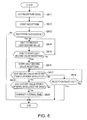
- FIG. 7 is a flow chart of the reception process of the electronic timepiece 1 according to the first embodiment of the invention.
- the control device 40 determines if the condition for starting automatic reception is met (SA1). As described above, the control device 40 determines that the condition for starting automatic reception is met (SA1 returns YES) if it is the scheduled reception time or if the output voltage or current from the solar panel 22 is greater than or equal to a set level.
- control device 40 determines if the pusher 15 was pressed for a first set time (such as 3 seconds) (SA2).
- control device 40 If SA2 returns NO, the control device 40 returns to SA1. The control device 40 therefore does not run the reception process until automatic reception starts (SA1 returns YES), or reception is started manually (SA2 returns YES).
- the control device 40 determines if the leap second reception mode is set (SA3). More specifically, if the reception mode stored in the time zone data storage unit 680 is set to the leap second reception mode, and the condition for starting automatic reception is met or reception was started manually, the control device 40 returns YES in SA3.
- the control device 40 determines if the current time is in the leap second reception period (SA4). As described above, if the current date from the internal time is June 1 to 30 or December 1 to 31, and leap second reception has not succeeded in this period, the control device 40 returns YES in SA4.
- the control device 40 drives the leap second acquisition unit 460 and executes a first reception process to acquire the leap second value (SA10).
- control device 40 executes a second reception process to receive satellite signals in the normal timekeeping mode or positioning mode (SA30).
- the process of the first reception mode is described next based on FIG. 8 .
- the leap second acquisition unit 460 first sets the receptionmode (SA11). More specifically, if step SA3 in FIG. 7 returns YES, the leap second acquisition unit 460 sets the reception mode to the leap second reception mode. If YES was returned in step SA4 in FIG. 7 , the leap second acquisition unit 460 sets the preset reception mode (timekeeping mode or positioning mode).
- the control device 40 then drives the timekeeping unit 410, navigation unit 420, and leap second acquisition unit 460 and starts the reception process according to the set reception mode (SA12).
- SA12 set reception mode
- the timekeeping unit 410 drives the receiver device 30 to find a GPS satellite 100 that can be locked onto, and locks onto at least one GPS satellite 100. After locking onto a GPS satellite 100, the timekeeping unit 410 receives the satellite signal through the receiver device 30 and acquires the time information.
- the navigation unit 420 drives the receiver device 30 to find a GPS satellite 100 that can be locked onto, and locks onto at least three GPS satellites 100. After locking onto the GPS satellites 100, the navigation unit 420 receives the satellite signals through the receiver device 30 and acquires the positioning information. Note that because time information can be acquired simultaneously to acquiring the positioning information, the navigation unit 420 acquires time information in addition to the positioning information. The navigation unit 420 can alternatively be controlled to acquire only the positioning information.
- the leap second acquisition unit 460 drives the receiver device 30 to find a GPS satellite 100 that can be locked onto, and locks onto at least one GPS satellite 100, similarly to the timekeeping unit 410. After locking onto a GPS satellite 100, the leap second acquisition unit 460 receives the satellite signal through the receiver device 30 and acquires the time information.
- the control device 40 determines if reception was successful (SA13). More specifically, if the time information was acquired, reception was successful if the acquired time information is determined to be correct by comparison with the internal time. If the positioning information was acquired, reception was successful if the acquired time information and positioning information are determined to be correct by comparing the time information acquired from the plural GPS satellites 100.
- the control device 40 terminates the reception process if NO is returned in SA13.
- the leap second value is transmitted every 12.5 minutes. Therefore, if reception is continued in order to receive the leap second value after reception starts in SA12, the reception process must continue for up to 12.5 minutes. In this event, the reception time becomes long and power consumption increases.
- the control device 40 can also know the subframe and page number of the received satellite signal, and can determine when the leap second value will be broadcast (the time when receiving leap second value starts). As a result, the control device 40 determines if it is time to start receiving the leap second value (SA15), and if NO is returned, continues waiting to receive the leap second value (SA14).
- the control device 40 drives the leap second acquisition unit 460 to start the leap second value reception process (SA16) .
- the leap second acquisition unit 460 drives the receiver device 30 to find a GPS satellite 100 that can be locked onto, and locks onto at least two GPS satellites 100. Once the GPS satellites 100 are locked, the leap second acquisition unit 460 receives satellite signals with the receiver device 30, and acquires the leap second value from the two GPS satellites 100.
- leap second value reception start time described above is set to accommodate the search time required to find GPS satellites 100.
- the control device 40 determines if leap second value was obtained from two or more GPS satellites 100 in one reception process (SA17) .
- One reception process as used here means the reception process from when reception of leap second value starts (SA16) until the reception process ends or until reception times out.
- the control device 40 determines if reception timed out (SA18). This embodiment determines that reception timed out if at least 60 seconds have past since leap second value reception started (SA16).
- control device 40 If SA18 returns NO because less than 60 seconds have past since the start of leap second value reception, the control device 40 returns to SA17 and continues receiving the leap second value.
- control device 40 ends the reception process without correcting the internal time even if time information was successfully received in SA13.
- the control device 40 determines in SA17 that leap second value was received from two or more GPS satellites 100, it determines if the leap second value (the current leap second) acquired from the two or more GPS satellites 100 is the same (SA19) . Because the stored leap second value is the current leap second, the leap second value acquired from plural GPS satellites 100 should be the same. Therefore, if the leap second values acquired from each GPS satellite 100 are not the same, the control device 40 can determine that signal strength is weak and the correct leap second value could not be acquired. However, if the same leap second value is acquired from each GPS satellite 100, the leap second value can be determined to be correct.
- control device 40 ends the reception process without correcting the internal time if NO is returned in SA19.
- the control device 40 can determine that the correct leap second value was acquired.
- the leap second correction unit 480 stores the acquired first or second leap second value (current leap second) in the leap second event data 620 of the memory device 60.
- the time correction unit 450 then corrects the internal time data 630 using the current leap second value of the leap second event data 620 (SA20).
- SA20 current leap second value of the leap second event data 620
- the time data for display 640 is also corrected based on the set time zone data 650. The reception process then ends.
- the reception process of the second reception mode is described next based on FIG. 9 .
- step SA4 in FIG. 7 returns NO, the control device 40 executes the reception process of the second reception mode.
- the control device 40 sets the preset reception mode (timekeeping mode or positioning mode) (SA21).
- the timekeeping unit 410 starts the reception process if set to the timekeeping mode, and the navigation unit 420 starts the reception process if set to the positioning mode (SA22).
- the timekeeping unit 410 drives the receiver device 30 to find a GPS satellite 100 that can be locked onto, and locks onto at least one GPS satellite 100. After locking onto a GPS satellite 100, the timekeeping unit 410 receives the satellite signal through the receiver device 30 and acquires the time information.
- the navigation unit 420 drives the receiver device 30 to find a GPS satellite 100 that can be locked onto, and locks onto at least three GPS satellites 100. After locking onto the GPS satellites 100, the navigation unit 420 receives the satellite signals through the receiver device 30 and acquires the positioning information. Note that because time information can be acquired simultaneously to acquiring the positioning information, the navigation unit 420 acquires time information in addition to the positioning information. The navigation unit 420 can alternatively be controlled to acquire only the positioning information.
- the control device 40 determines if reception was successful (SA23). This is determined in the same way as described in the first reception mode. The control device 40 terminates the reception process if NO is returned in SA23.
- the control device 40 returns YES in SA24, gets the time zone data corresponding to the acquired positioning information from the time zone data storage unit 680, and sets the time zone data 650 (SA25).
- the time correction unit 450 corrects the reception time data 610 based on the acquired time information, and corrects the internal time data 630 based on the leap second event data 620 (SA26).
- SA26 the time data for display 640 is also corrected based on the set time zone data 650.
- the electronic timepiece 1 updates the leap second value and corrects the internal time if leap second value is successfully acquired from two or more GPS satellites 100 in a single reception process and determined to match. As a result, the correctness of the received leap second value can be evaluated more accurately than when the correctness of the leap second value is determined based on a parity check.
- the leap second acquisition unit 460 simultaneously locks onto two GPS satellites 100, acquires leap second values simultaneously, and terminates the leap second value reception process after one iteration, the reception time can be shortened and power consumption can be reduced compared with an implementation that acquires plural leap second values at different times, that is, in plural reception processes.
- the leap second acquisition unit 460 delays reception until the leap second value transmission time, the time needed to receive the leap second value can be minimized and power consumption can be reduced.
- reception timing out is also considered, the reception process can be prevented from continuing for more than 60 seconds when the leap second value cannot be received, and power consumption can thereby also be reduced.
- a second embodiment of the invention is next with reference to FIG. 10 to FIG. 12 .
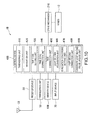
- the electronic timepiece 1B according to the second embodiment of the invention differs from the first embodiment by also having a candidate leap second value update unit 490.
- the memory device 60B of the electronic timepiece 1B differs from the first embodiment by also having a candidate leap second value storage unit 670.
- Other aspects of the configuration of the second embodiment are the same as in the first embodiment.
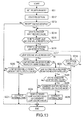
- the second embodiment further differs from the first embodiment in the reception process of the first reception mode that receives the leap second as shown in FIG. 12 .
- the reception process of the second reception mode is the same as in the first embodiment, and further description thereof is thus omitted.
- the first embodiment determines if the two leap second values received in a single reception process from two GPS satellites 100 match.
- the second embodiment uses a method that receives leap second values from GPS satellites 100 at different times (in at least two reception processes), and determines the leap second value can be used even if received from only one GPS satellite 100 at each reception time.
- steps SB11 to SB16 and SB18 in the first reception process are the same as steps SA11 to SA16 and SA18 of the first embodiment shown in FIG. 8 , and description thereof is thus omitted.
- the control device 40 After starting leap second value reception (SB16), the control device 40 determines if leap second value reception was successful (SB17). In this example, the control device 40 returns YES in SB17 if only one leap second value was received.
- SB17 returns YES in FIG. 12 , the control device 40 determines if the leap second value was received from one healthy satellite (SB19).
- a healthy satellite is a satellite for which the satellite health SVhealth bit is 0 (the navigation message is normal).
- the control device 40 therefore determines if the leap second value was received from a GPS satellite 100 for which the satellite health SVhealth bit in subframe 1 is 0.
- SB19 If SB19 returns YES, the control device 40 determines if a candidate leap second value is stored in the candidate leap second value storage unit 670 (SB20).
- the received leap second value is made the first leap second value.
- the candidate leap second value update unit 490 of the control device 40 then stores the first leap second value in the candidate leap second value storage unit 670 of the memory device 60 (SB21). The current reception process then ends without correcting the internal time.
- the control device 40 determines if the stored candidate leap second value (first leap second value) and the leap second value just received (second leap second value) are the same (SB22).
- the candidate leap second value update unit 490 saves the received leap second value (second leap second value) in the candidate leap second value storage unit 670, and updates the candidate leap second value (SB21).
- the leap second correction unit 480 stores the second leap second value or the candidate leap second value (first leap second value) in the leap second event data 620.
- the time correction unit 450 then corrects the internal time data 630 using the current leap second value of the leap second event data 620 (SB23).
- SB23 current leap second value of the leap second event data 620
- the time data for display 640 is also corrected based on the set time zone data 650. The reception process then ends.
- this second embodiment of the invention also has the following effect.
- the electronic timepiece 1B can accurately determine if an accurate leap second value was received even in a poor reception environment where a satellite signal can only be received from one GPS satellite 100. More specifically, when reception is possible from only one GPS satellite 100 at the time of reception (second reception process), the candidate leap second value that was stored during the previous reception attempt (first reception process) is compared with the leap second value received in the current reception process.
- the correctness of the received leap second value can be evaluated more accurately than when the correctness of the leap second value is determined based on a parity check.
- a normal leap second value can also be reliably acquired because the satellite health SVhealth is checked at the time of leap second value reception. This also enables preventing correcting the time using a wrong leap second value and improving the accuracy of the displayed time when reception is only possible from a single GPS satellite 100 in a single reception process.
- the candidate leap second value remaining fixed to the wrong value and the leap second values continuing to not match can also be prevented because the candidate leap second value is updated to the received second leap second value when SB22 returns NO.
- a third embodiment of the invention is described next with reference to FIG. 13 .
- the electronic timepiece according to the third embodiment of the invention has the same configuration as the electronic timepiece of the second embodiment but differs in the content of the first reception process. Description of constructions and processes that are the same in the third embodiment and the second embodiment is therefore simplified or omitted.
- steps SC11 to SC18 that receive the leap second value are identical to steps SB11 to SB18 of the second embodiment shown in FIG. 12 .
- control device 40 determines if a leap second value was received from 2 or more satellites (SC19).
- control device 40 executes steps SC20 and SC21, which are identical to steps SA19 and SA20 in the first embodiment.
- control device 40 executes steps SC22 to SC26, which are identical to steps SB19 to SB23 in the second embodiment.
- Steps SC20 to SC26 are the same as the first and second embodiments, and further description thereof is omitted.
- this third embodiment of the invention also has the following effect.
- this aspect of the invention can determine if the acquired leap second value is correct using the appropriate method corresponding to the number of satellites from which the leap second value was received. Therefore, whether or not accurate leap second value could be received can be determined accurately both when the leap second value is acquired from only one GPS satellite 100, and when the leap second value is acquired from two or more GPS satellites 100, depending upon the reception environment. As a result, the correctness of the received leap second value can be evaluated more accurately than when the correctness of the leap second value is determined based on a parity check.
- a fourth embodiment of the invention is described next with reference to FIG. 14 .
- This fourth embodiment adds a leap second value evaluation condition to the first reception process of the first embodiment. More specifically, decision step SA40 is added as shown in FIG. 14 .
- control device 40 determines if the difference between the received leap second value (current leap second value) and the future leap second value is within ⁇ 1 second (SA40). Note that this test is applied to both the first and second satellite signals.
- the future leap second value can be acquired when a satellite signal containing the leap second value is received.
- the difference between the leap second value acquired by signal reception (the current leap second) and the future leap second value should be within ⁇ 1 second. It is therefore possible that correct leap second data could not be received when SA40 returns NO, and the control device 40 ends the reception process without correcting the internal time.
- control device 40 applies the test of SA19, and corrects the internal time if SA19 returns YES (SA20).
- this fourth embodiment of the invention can also evaluate the correctness of the leap second value more accurately by adding the conditional test of SA40.
- test of SA40 in this fourth embodiment can also be added to the embodiments described above. More specifically, the test of SA40 can be additionally applied when a first satellite signal and a second satellite signal are received.
- a fifth embodiment of the invention is next with reference to FIG. 15 .
- This fifth embodiment adds a leap second value evaluation condition to the first reception process of the first embodiment. More specifically, decision steps SA50 and SA51 are added as shown in FIG. 15 .
- control device 40 determines of the received leap second value (current leap second) and the future leap second value match (SA50).
- the control device 40 determines if the scheduled leap second event is later than the reception date (SA51) . Note that steps SA50 and SA51 are applied to the first and second satellite signals.
- the control device 40 ends the reception process without correcting the internal time.
- control device 40 applies the evaluation step of SA19, and corrects the internal time if SA19 returns YES (SA20).
- this fifth embodiment of the invention can also evaluate the correctness of the leap second value more accurately by adding the conditional tests of SA50 and SA51.
- tests of SA50 and SA51 in this fifth embodiment can also be added to the embodiments described above. More specifically, the tests of SA50 and SA51 can be additionally applied when a first satellite signal and a second satellite signal are received.
- a condition determining if the leap second value was acquired from two healthy GPS satellites 100 that is, satellites with the satellite health SVhealth bit set to 0.
- the reliability of the acquired leap second value can be further improved by evaluating satellite health when two satellite signals are acquired simultaneously (in a single reception process).
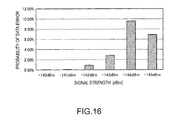
- That the signal strength of the received satellite signal is greater than or equal to a set level can also be added as a condition for evaluating the leap second value. This is because an incorrect leap second value could be received due to noise, for example, if the signal strength is weak.
- the leap second reception mode can be selected in the foregoing embodiments, but a configuration that does not have a leap second reception mode and enables selecting only a timekeeping mode and a positioning mode is also conceivable. In this event, leap second value can be acquired automatically during the leap second reception period.
- GNSS Global Navigation Satellite Systems
- EU Galileo
- GLONASS Russian
- Beidou Beidou
- An electronic timepiece according to the invention is not limited to wristwatches, and can be used in a wide range of electronic timepieces with the ability to receive satellite signals and correct the internal time, including table clocks, wall clocks, cell phones, and portable GPS receivers used in trekking and other outdoor sports.
Landscapes
- Physics & Mathematics (AREA)
- General Physics & Mathematics (AREA)
- Engineering & Computer Science (AREA)
- Radar, Positioning & Navigation (AREA)
- Remote Sensing (AREA)
- Electric Clocks (AREA)
- Position Fixing By Use Of Radio Waves (AREA)
- Electromechanical Clocks (AREA)
Applications Claiming Priority (1)
| Application Number | Priority Date | Filing Date | Title |
|---|---|---|---|
| JP2013072717A JP6107322B2 (ja) | 2013-03-29 | 2013-03-29 | 電子時計および電子時計の受信制御方法 |
Publications (2)
| Publication Number | Publication Date |
|---|---|
| EP2784608A2 true EP2784608A2 (de) | 2014-10-01 |
| EP2784608A3 EP2784608A3 (de) | 2016-01-20 |
Family
ID=50389271
Family Applications (1)
| Application Number | Title | Priority Date | Filing Date |
|---|---|---|---|
| EP14161971.8A Withdrawn EP2784608A3 (de) | 2013-03-29 | 2014-03-27 | Elektronische Uhr und Empfangssteuerungsverfahren einer elektronischen Uhr |
Country Status (4)
| Country | Link |
|---|---|
| US (1) | US9448539B2 (de) |
| EP (1) | EP2784608A3 (de) |
| JP (1) | JP6107322B2 (de) |
| CN (1) | CN104076683B (de) |
Families Citing this family (9)
| Publication number | Priority date | Publication date | Assignee | Title |
|---|---|---|---|---|
| JP2015055477A (ja) * | 2013-09-10 | 2015-03-23 | セイコーエプソン株式会社 | 電子時計および電子時計の表示制御方法 |
| JP5842908B2 (ja) * | 2013-12-26 | 2016-01-13 | カシオ計算機株式会社 | 電波時計 |
| JP6398234B2 (ja) | 2014-03-07 | 2018-10-03 | セイコーエプソン株式会社 | 衛星信号受信装置、電子時計、および衛星信号受信方法 |
| JP6094520B2 (ja) * | 2014-03-26 | 2017-03-15 | カシオ計算機株式会社 | 電子時計 |
| US10197680B2 (en) * | 2014-08-15 | 2019-02-05 | Samsung Electronics Co., Ltd | GNSS receiver |
| JP6455240B2 (ja) | 2015-03-06 | 2019-01-23 | セイコーエプソン株式会社 | 電子機器および電子機器の制御方法 |
| JP6871048B2 (ja) * | 2017-04-12 | 2021-05-12 | Necプラットフォームズ株式会社 | 時刻設定装置、時刻設定方法およびプログラム |
| JP7006418B2 (ja) * | 2018-03-20 | 2022-02-10 | セイコーエプソン株式会社 | 電子機器 |
| JP6648812B2 (ja) * | 2018-12-20 | 2020-02-14 | セイコーエプソン株式会社 | 電子機器および電子機器の制御方法 |
Citations (1)
| Publication number | Priority date | Publication date | Assignee | Title |
|---|---|---|---|---|
| JP2012167931A (ja) | 2011-02-09 | 2012-09-06 | Seiko Epson Corp | 電子時計及び電子時計の受信制御方法 |
Family Cites Families (17)
| Publication number | Priority date | Publication date | Assignee | Title |
|---|---|---|---|---|
| US5923618A (en) * | 1996-11-12 | 1999-07-13 | Trimble Navigation Limited | Leap-second cure for 1999 GPS rollover problem |
| JP2001004764A (ja) * | 1999-06-16 | 2001-01-12 | Matsushita Electric Ind Co Ltd | 時計装置 |
| US7447931B1 (en) * | 2005-12-09 | 2008-11-04 | Rockwell Automation Technologies, Inc. | Step time change compensation in an industrial automation network |
| JP2008170231A (ja) | 2007-01-10 | 2008-07-24 | Seiko Epson Corp | 時刻修正装置、時刻修正装置付き計時装置及び時刻修正方法 |
| JP2008170229A (ja) * | 2007-01-10 | 2008-07-24 | Seiko Epson Corp | 時刻修正装置、時刻修正装置付き計時装置及び時刻修正方法 |
| US7948833B2 (en) * | 2007-07-25 | 2011-05-24 | Computime, Ltd. | Clock setup over a network |
| US7649812B2 (en) * | 2007-11-21 | 2010-01-19 | Seiko Epson Corporation | Time adjustment device, timepiece with a time adjustment device, and a time adjustment method |
| JP5463630B2 (ja) * | 2007-11-21 | 2014-04-09 | セイコーエプソン株式会社 | 時刻修正装置、時刻修正装置付き計時装置及び時刻修正方法 |
| JP5200636B2 (ja) | 2008-04-07 | 2013-06-05 | セイコーエプソン株式会社 | 電子時計および電子時計の時刻修正方法 |
| JP5402073B2 (ja) * | 2009-02-23 | 2014-01-29 | セイコーエプソン株式会社 | 衛星信号受信装置および衛星信号受信装置の制御方法 |
| JP5333014B2 (ja) | 2009-07-30 | 2013-11-06 | セイコーエプソン株式会社 | 電子機器および電子機器の閏秒更新情報受信方法 |
| CN102822751B (zh) * | 2010-03-26 | 2014-08-06 | 西铁城控股株式会社 | 电波计时器 |
| WO2011118573A1 (ja) * | 2010-03-26 | 2011-09-29 | シチズンホールディングス株式会社 | 衛星電波腕時計 |
| JP2011208951A (ja) * | 2010-03-26 | 2011-10-20 | Citizen Holdings Co Ltd | 電波時計 |
| JP2012026774A (ja) | 2010-07-21 | 2012-02-09 | Seiko Epson Corp | 電子機器 |
| JP5582045B2 (ja) * | 2011-01-20 | 2014-09-03 | セイコーエプソン株式会社 | 時刻修正装置、時刻修正装置付き計時装置及び時刻修正方法 |
| JP5790061B2 (ja) * | 2011-03-25 | 2015-10-07 | セイコーエプソン株式会社 | 電子時計、およびその制御方法 |
-
2013
- 2013-03-29 JP JP2013072717A patent/JP6107322B2/ja active Active
-
2014
- 2014-03-19 US US14/219,693 patent/US9448539B2/en not_active Expired - Fee Related
- 2014-03-25 CN CN201410112286.2A patent/CN104076683B/zh not_active Expired - Fee Related
- 2014-03-27 EP EP14161971.8A patent/EP2784608A3/de not_active Withdrawn
Patent Citations (1)
| Publication number | Priority date | Publication date | Assignee | Title |
|---|---|---|---|---|
| JP2012167931A (ja) | 2011-02-09 | 2012-09-06 | Seiko Epson Corp | 電子時計及び電子時計の受信制御方法 |
Also Published As
| Publication number | Publication date |
|---|---|
| US20140293756A1 (en) | 2014-10-02 |
| CN104076683A (zh) | 2014-10-01 |
| US9448539B2 (en) | 2016-09-20 |
| JP2014196952A (ja) | 2014-10-16 |
| CN104076683B (zh) | 2017-08-25 |
| EP2784608A3 (de) | 2016-01-20 |
| JP6107322B2 (ja) | 2017-04-05 |
Similar Documents
| Publication | Publication Date | Title |
|---|---|---|
| US9639067B2 (en) | Time adjustment device, timekeeping device with a time adjustment device, and time adjustment method | |
| EP2784608A2 (de) | Elektronische Uhr und Empfangssteuerungsverfahren einer elektronischen Uhr | |
| US9588499B2 (en) | Electronic timepiece and control method for an electronic timepiece | |
| US7701390B2 (en) | Time adjustment device, timekeeping device with a time adjustment device, and a time adjustment method | |
| JP2014169869A (ja) | 電子時計および電子時計の時刻修正方法 | |
| US10001757B2 (en) | Electronic timepiece and method for controlling display operation of electronic timepiece | |
| JP2015055478A (ja) | 電子時計および電子時計の表示制御方法 | |
| JP6123479B2 (ja) | 電子時計および電子時計の受信制御方法 | |
| US11372377B2 (en) | Electronic timepiece with leap second information acquisition | |
| JP6036391B2 (ja) | 衛星信号受信装置、電子時計および衛星信号受信方法 |
Legal Events
| Date | Code | Title | Description |
|---|---|---|---|
| 17P | Request for examination filed |
Effective date: 20140327 |
|
| AK | Designated contracting states |
Kind code of ref document: A2 Designated state(s): AL AT BE BG CH CY CZ DE DK EE ES FI FR GB GR HR HU IE IS IT LI LT LU LV MC MK MT NL NO PL PT RO RS SE SI SK SM TR |
|
| AX | Request for extension of the european patent |
Extension state: BA ME |
|
| PUAI | Public reference made under article 153(3) epc to a published international application that has entered the european phase |
Free format text: ORIGINAL CODE: 0009012 |
|
| PUAL | Search report despatched |
Free format text: ORIGINAL CODE: 0009013 |
|
| AK | Designated contracting states |
Kind code of ref document: A3 Designated state(s): AL AT BE BG CH CY CZ DE DK EE ES FI FR GB GR HR HU IE IS IT LI LT LU LV MC MK MT NL NO PL PT RO RS SE SI SK SM TR |
|
| AX | Request for extension of the european patent |
Extension state: BA ME |
|
| RIC1 | Information provided on ipc code assigned before grant |
Ipc: G04R 20/06 20130101AFI20151214BHEP |
|
| R17P | Request for examination filed (corrected) |
Effective date: 20160705 |
|
| RBV | Designated contracting states (corrected) |
Designated state(s): AL AT BE BG CH CY CZ DE DK EE ES FI FR GB GR HR HU IE IS IT LI LT LU LV MC MK MT NL NO PL PT RO RS SE SI SK SM TR |
|
| STAA | Information on the status of an ep patent application or granted ep patent |
Free format text: STATUS: THE APPLICATION HAS BEEN WITHDRAWN |
|
| 18W | Application withdrawn |
Effective date: 20190301 |