EP2814876B1 - Verfahren zum recycling von bodenbelägen - Google Patents
Verfahren zum recycling von bodenbelägen Download PDFInfo
- Publication number
- EP2814876B1 EP2814876B1 EP13702343.8A EP13702343A EP2814876B1 EP 2814876 B1 EP2814876 B1 EP 2814876B1 EP 13702343 A EP13702343 A EP 13702343A EP 2814876 B1 EP2814876 B1 EP 2814876B1
- Authority
- EP
- European Patent Office
- Prior art keywords
- polyolefin wax
- mpa
- component materials
- solvent
- recycling
- Prior art date
- Legal status (The legal status is an assumption and is not a legal conclusion. Google has not performed a legal analysis and makes no representation as to the accuracy of the status listed.)
- Active
Links
Images
Classifications
-
- C—CHEMISTRY; METALLURGY
- C08—ORGANIC MACROMOLECULAR COMPOUNDS; THEIR PREPARATION OR CHEMICAL WORKING-UP; COMPOSITIONS BASED THEREON
- C08J—WORKING-UP; GENERAL PROCESSES OF COMPOUNDING; AFTER-TREATMENT NOT COVERED BY SUBCLASSES C08B, C08C, C08F, C08G or C08H
- C08J11/00—Recovery or working-up of waste materials
- C08J11/04—Recovery or working-up of waste materials of polymers
- C08J11/06—Recovery or working-up of waste materials of polymers without chemical reactions
- C08J11/08—Recovery or working-up of waste materials of polymers without chemical reactions using selective solvents for polymer components
-
- B—PERFORMING OPERATIONS; TRANSPORTING
- B29—WORKING OF PLASTICS; WORKING OF SUBSTANCES IN A PLASTIC STATE IN GENERAL
- B29B—PREPARATION OR PRETREATMENT OF THE MATERIAL TO BE SHAPED; MAKING GRANULES OR PREFORMS; RECOVERY OF PLASTICS OR OTHER CONSTITUENTS OF WASTE MATERIAL CONTAINING PLASTICS
- B29B17/00—Recovery of plastics or other constituents of waste material containing plastics
- B29B17/02—Separating plastics from other materials
-
- B—PERFORMING OPERATIONS; TRANSPORTING
- B29—WORKING OF PLASTICS; WORKING OF SUBSTANCES IN A PLASTIC STATE IN GENERAL
- B29B—PREPARATION OR PRETREATMENT OF THE MATERIAL TO BE SHAPED; MAKING GRANULES OR PREFORMS; RECOVERY OF PLASTICS OR OTHER CONSTITUENTS OF WASTE MATERIAL CONTAINING PLASTICS
- B29B17/00—Recovery of plastics or other constituents of waste material containing plastics
- B29B17/02—Separating plastics from other materials
- B29B2017/0213—Specific separating techniques
- B29B2017/0293—Dissolving the materials in gases or liquids
-
- B—PERFORMING OPERATIONS; TRANSPORTING
- B29—WORKING OF PLASTICS; WORKING OF SUBSTANCES IN A PLASTIC STATE IN GENERAL
- B29K—INDEXING SCHEME ASSOCIATED WITH SUBCLASSES B29B, B29C OR B29D, RELATING TO MOULDING MATERIALS OR TO MATERIALS FOR MOULDS, REINFORCEMENTS, FILLERS OR PREFORMED PARTS, e.g. INSERTS
- B29K2023/00—Use of polyalkenes or derivatives thereof as moulding material
- B29K2023/04—Polymers of ethylene
- B29K2023/06—PE, i.e. polyethylene
-
- B—PERFORMING OPERATIONS; TRANSPORTING
- B29—WORKING OF PLASTICS; WORKING OF SUBSTANCES IN A PLASTIC STATE IN GENERAL
- B29K—INDEXING SCHEME ASSOCIATED WITH SUBCLASSES B29B, B29C OR B29D, RELATING TO MOULDING MATERIALS OR TO MATERIALS FOR MOULDS, REINFORCEMENTS, FILLERS OR PREFORMED PARTS, e.g. INSERTS
- B29K2023/00—Use of polyalkenes or derivatives thereof as moulding material
- B29K2023/10—Polymers of propylene
- B29K2023/12—PP, i.e. polypropylene
-
- C—CHEMISTRY; METALLURGY
- C08—ORGANIC MACROMOLECULAR COMPOUNDS; THEIR PREPARATION OR CHEMICAL WORKING-UP; COMPOSITIONS BASED THEREON
- C08J—WORKING-UP; GENERAL PROCESSES OF COMPOUNDING; AFTER-TREATMENT NOT COVERED BY SUBCLASSES C08B, C08C, C08F, C08G or C08H
- C08J2323/00—Characterised by the use of homopolymers or copolymers of unsaturated aliphatic hydrocarbons having only one carbon-to-carbon double bond; Derivatives of such polymers
- C08J2323/02—Characterised by the use of homopolymers or copolymers of unsaturated aliphatic hydrocarbons having only one carbon-to-carbon double bond; Derivatives of such polymers not modified by chemical after treatment
-
- C—CHEMISTRY; METALLURGY
- C08—ORGANIC MACROMOLECULAR COMPOUNDS; THEIR PREPARATION OR CHEMICAL WORKING-UP; COMPOSITIONS BASED THEREON
- C08J—WORKING-UP; GENERAL PROCESSES OF COMPOUNDING; AFTER-TREATMENT NOT COVERED BY SUBCLASSES C08B, C08C, C08F, C08G or C08H
- C08J2323/00—Characterised by the use of homopolymers or copolymers of unsaturated aliphatic hydrocarbons having only one carbon-to-carbon double bond; Derivatives of such polymers
- C08J2323/02—Characterised by the use of homopolymers or copolymers of unsaturated aliphatic hydrocarbons having only one carbon-to-carbon double bond; Derivatives of such polymers not modified by chemical after treatment
- C08J2323/04—Homopolymers or copolymers of ethene
- C08J2323/06—Polyethene
-
- C—CHEMISTRY; METALLURGY
- C08—ORGANIC MACROMOLECULAR COMPOUNDS; THEIR PREPARATION OR CHEMICAL WORKING-UP; COMPOSITIONS BASED THEREON
- C08J—WORKING-UP; GENERAL PROCESSES OF COMPOUNDING; AFTER-TREATMENT NOT COVERED BY SUBCLASSES C08B, C08C, C08F, C08G or C08H
- C08J2391/00—Characterised by the use of oils, fats or waxes; Derivatives thereof
- C08J2391/06—Waxes
-
- C—CHEMISTRY; METALLURGY
- C08—ORGANIC MACROMOLECULAR COMPOUNDS; THEIR PREPARATION OR CHEMICAL WORKING-UP; COMPOSITIONS BASED THEREON
- C08J—WORKING-UP; GENERAL PROCESSES OF COMPOUNDING; AFTER-TREATMENT NOT COVERED BY SUBCLASSES C08B, C08C, C08F, C08G or C08H
- C08J2423/00—Characterised by the use of homopolymers or copolymers of unsaturated aliphatic hydrocarbons having only one carbon-to-carbon double bond; Derivatives of such polymers
- C08J2423/02—Characterised by the use of homopolymers or copolymers of unsaturated aliphatic hydrocarbons having only one carbon-to-carbon double bond; Derivatives of such polymers not modified by chemical after treatment
-
- C—CHEMISTRY; METALLURGY
- C08—ORGANIC MACROMOLECULAR COMPOUNDS; THEIR PREPARATION OR CHEMICAL WORKING-UP; COMPOSITIONS BASED THEREON
- C08J—WORKING-UP; GENERAL PROCESSES OF COMPOUNDING; AFTER-TREATMENT NOT COVERED BY SUBCLASSES C08B, C08C, C08F, C08G or C08H
- C08J2423/00—Characterised by the use of homopolymers or copolymers of unsaturated aliphatic hydrocarbons having only one carbon-to-carbon double bond; Derivatives of such polymers
- C08J2423/02—Characterised by the use of homopolymers or copolymers of unsaturated aliphatic hydrocarbons having only one carbon-to-carbon double bond; Derivatives of such polymers not modified by chemical after treatment
- C08J2423/10—Homopolymers or copolymers of propene
- C08J2423/12—Polypropene
-
- Y—GENERAL TAGGING OF NEW TECHNOLOGICAL DEVELOPMENTS; GENERAL TAGGING OF CROSS-SECTIONAL TECHNOLOGIES SPANNING OVER SEVERAL SECTIONS OF THE IPC; TECHNICAL SUBJECTS COVERED BY FORMER USPC CROSS-REFERENCE ART COLLECTIONS [XRACs] AND DIGESTS
- Y02—TECHNOLOGIES OR APPLICATIONS FOR MITIGATION OR ADAPTATION AGAINST CLIMATE CHANGE
- Y02W—CLIMATE CHANGE MITIGATION TECHNOLOGIES RELATED TO WASTEWATER TREATMENT OR WASTE MANAGEMENT
- Y02W30/00—Technologies for solid waste management
- Y02W30/50—Reuse, recycling or recovery technologies
- Y02W30/62—Plastics recycling; Rubber recycling
Definitions
- the invention relates to a recycling process for floor coverings of any kind for the recovery of the raw materials used.
- a solvent-based recycling process makes it possible to recycle the various raw materials used at the end of the life cycle of the floor coverings or synthetic turf.
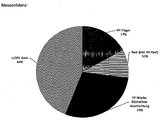
- Carpets and artificial turf are flooring constructions consisting of a backing, a yarn, a backing, and often a secondary backing such as carpet. As a fleece, fabric, foam or a heavy layer. A typical distribution of the percentage mass fractions is shown in drawing 1. Different plastics are used for the different components. In the case of carpets, the yarn used is predominantly polypropylene, polyamide or even polyester. Artificial grass mainly uses polyethylene and polypropylene. Polypropylene and polyester are most commonly used to make the backing. In order for the yarn to be incorporated into the carrier, an additional coating is required.
- aqueous latex and acrylates as coating material for carpets (nonwoven, woven fabric and tuftste) and, in the case of artificial turf, in addition to aqueous latex, also polyurethane.
- the use of latex and polyurethane as a coating material results from the non-reversible curing of the back coating to an only incomplete material or raw material recyclable end product.
- EP-A-2236671 and EP-A-2236672 described as a special form of mechanical recycling ever a method in which old artificial turf is comminuted by regranulation as a polymer blend, and the regranulate is used by admixing new plastics for the production of so-called "infill”.
- An "infill” is a granulate which is scattered loosely on the actual artificial grass, for example for damping.
- downcycling in which the materials are not produced in a pure type and thus can not be used in their original form, also referred to by so-called "downcycling".
- WO-A-2008/64012 discloses a similar process but not the catalysts, softening point and viscosity.
- raw material recycling in which the plastics are recycled by hydrogenation, gasification, cracking and / or pyrolysis processes into their starting materials - oil or gas.
- the process technologies for raw material recycling have been very well developed in the 90s. So is for example in WO 95/03375 presented a recycling process, which splits plastic waste into a liquid product and subsequent to olefins such.
- the process is particularly suitable for recycling very large quantities of polyolefin-rich plastics (PE, PP).
- the material efficiency of the process is particularly high at over 93%.
- thermoplastic polymers such as plastics and waxes
- organic solvents By a suitable choice of temperature, pressure and type of solvent can be gradually obtained pure polymer solutions and obtained after removal of the solvent by evaporation unmixed plastics.
- the advantages of this process are, on the one hand, the extraordinarily high product quality that can be achieved and, on the other hand, the possibility of being able to remove additives which often drastically reduce the possible uses for regranulates.
- EP-A-0491836 A process for recycling plastic mixtures by means of "selective dissolution" is described.
- the recycling process described is based on a selected solvent and its solvent capacity for different plastics at different temperatures. Precipitants and other solvents are dispensed with in this process.
- polymer waxes and higher molecular weight homo- and copolymers each based on propylene, ethylene, or higher ⁇ -olefins (C 4 -C 20 ), not previously described.
- Such waxes differ from the chemically related polymer in particular in their lower molecular weight and, correlatingly, in their lower melt viscosity.
- polyolefin waxes are meant here in contrast to plastics such polyolefins whose melt viscosity at 170 ° C below 40,000 mPa ⁇ s.
- the invention therefore provides a solvent-based separation process for recovering material used in nonwoven, woven and tufted goods, in particular in artificial turf, carpets and woven carpets Materials in their qualitatively single-grade material components, wherein at least one material component contains a polyolefin wax and being used as a solvent and / or swelling agent halogen-free aliphatic hydrocarbons and / or aromatic hydrocarbons.
- It is preferably a polyolefin wax which has been prepared with the aid of metallocene catalysts.
- the solvent-based separation process according to the invention relates to the recycling of flooring constructions such as nonwoven, woven and tufted goods, for.
- flooring constructions such as nonwoven, woven and tufted goods, for.
- artificial turf carpets and woven carpets for partial, preferably complete recovery of the individual unmixed material components.
- the material components are considered to be single-grade if the cross-contamination with another material component is not more than 10% by weight, preferably not more than 5% by weight, more preferably not more than 1% by weight, and if this results in the mechanical properties the material component (such as tensile strength, elongation at break, modulus of elasticity, etc.) compared to the original properties of the material component prior to recycling by not more than 20%, preferably not more than 10% change.
- the material components are at least one polymer soluble in a suitable organic solvent and at least one soluble polyolefin wax and that at most one insoluble material component is present.
- the dissolution temperatures are sufficiently far apart (at least 15 K) to ensure “selective dissolution” or "selective swelling”.
- Solvent-based separation processes are known in the art, but not for the recycling of carpets or artificial turf.
- the methods of "selective dissolution” as in EP-A-0491836 or in H. Martens, Recyclingtechnik, Spektrum Heidelberg 2011, 171ff, "selective swelling” as in WO 2011/082802 as well as the “selective fractionation” implies.
- the separation principle is based on the control of the viscosity over the degree of swelling and aims at the separation of solid undissolved material components of viscous polymer gels by filtration or sedimentation under suitable shearing.
- the solvent used can be separated and recycled to the process. Possibly. Remaining solvent residues can also be removed by extrusion with suitable degassing.
- Halogen-free aliphatic hydrocarbons such as n-heptane or decalin, aromatic hydrocarbons such as toluene, xylene, tetralin, or mixtures of one or more of these solvents are used according to the invention as the solvent or swelling agent.
- the use according to the invention of a solvent-based separation method for floor covering constructions requires that at least one of the material components, preferably that used for back side bonding, consists of a polyolefin wax.
- the polyolefin waxes according to the invention comprise homopolymers based on ethylene or propylene and copolymers based on polypropylene and 0.1 to 30% by weight of ethylene and / or 0.1 to 50% by weight of a branched or unbranched C 4 -C 20 ⁇ -olefin.
- These polyolefin waxes can be prepared in a known manner by polymerization z.
- Example be prepared by an insertion mechanism using Ziegler or metallocene catalysts or by a high-pressure radical process or by thermal degradation of plastic-like polyolefins. Corresponding production processes are described, for example, in Ullmann's Encyclopedia of Industrial Chemistry, 2000. Waxes and in Ullmann's Encyclopedia of Industrial Chemistry, 2006, Metallocenees.
- the invention also includes amorphous polyalphaolefins (APAO). Preference according to the invention is given to polyolefin waxes prepared using metallocene catalysts. Surprisingly, it has been found that such waxes can be separated in a more pure manner than, for example, waxes from the Ziegler process.
- APAO amorphous polyalphaolefins
- polyolefin waxes and their recyclates having a number average molecular weight M n of between 500 and 25,000 g / mol and a weight average molecular weight M w of between 1,000 and 40,000 g / mol and a polydispersity M w / M n of less than 5, preferably less than 2.5, more preferably less than 1.8.
- the molecular weight is determined by gel permeation chromatography.
- the polyolefin waxes are characterized by a dropping or softening point ring / ball between 70 ° C. and 165 ° C. and a melt viscosity measured at 170 ° C. of not more than 40,000 mPa ⁇ s, preferably not more than 30,000 mPa ⁇ s, particularly preferably not more than 20,000 mPa ⁇ s, off.
- the inventive application of a solvent-based separation process on flooring constructions determines the use of unmixed recyclates as material components again in their respective previous function in nonwoven, woven and Tuftware, z. B. artificial turf.
- the typical structure of flooring constructions is shown in drawing 1 using the example of an artificial turf.
- Typical materials for the filaments can natural fibers such.
- Typical materials for the carrier are z.
- the back side bonding according to the invention consists of a polyolefin wax.
- the application of a solvent-based separation process to flooring constructions also encompasses the use of fillers such as As calcium carbonate or auxiliaries such.
- fillers such as As calcium carbonate or auxiliaries such.
- flame retardants antistatic agents, waxes, resins, plasticizers, pigments and antioxidants.
- the melting behavior was determined by means of the "differential scanning calorimetry" DSC according to DIN 11357.
- the melt viscosities of the waxes were determined according to DIN 53019 with a rotational viscometer, the dropping points according to ASTM D3954, the softening points ring / ball according to ASTM D3104.
- the molecular weight average M w and the molecular weight average M n were determined by gel permeation chromatography at a temperature of 135 ° C in 1,2-dichlorobenzene when calibrated against a corresponding PP or PE standard.
- the synthetic turf pattern used for the example consisted of a LLDPE (Linear Low Density Polyethylene) yarn, a back made of PP and a Back coating based on a prepared with metallocene catalyst as PP-polyolefin wax whose original properties in the form of its dropping point, its molecular weight, its melt viscosity and its mechanical properties are given in the table below.
- LLDPE Linear Low Density Polyethylene
- the extraction of the PP polyolefin wax and the LLDPE were carried out in each case in two stages; the separation of PP proceeded in one stage.
- the dissolved in the solvent material components were precipitated by lowering the temperature, pressed and dried in vacuo at 40 ° C. The solvent recovered thereby was returned to the process.
Landscapes
- Chemical & Material Sciences (AREA)
- Polymers & Plastics (AREA)
- Health & Medical Sciences (AREA)
- Sustainable Development (AREA)
- Chemical Kinetics & Catalysis (AREA)
- Medicinal Chemistry (AREA)
- Life Sciences & Earth Sciences (AREA)
- Organic Chemistry (AREA)
- Engineering & Computer Science (AREA)
- Environmental & Geological Engineering (AREA)
- Mechanical Engineering (AREA)
- Separation, Recovery Or Treatment Of Waste Materials Containing Plastics (AREA)
- Road Paving Structures (AREA)
Description
- Die Erfindung betrifft ein Recyclingverfahren für Bodenbeläge jeglicher Art zur Wiedergewinnung der eingesetzten Rohstoffe. Ein lösungsmittelbasierendes Recyclingverfahren ermöglicht es, die verschiedenen eingesetzten Rohstoffe am Ende des Lebenszyklus der Bodenbeläge oder des Kunstrasens sortenrein zurück zu gewinnen.
- Teppiche und Kunstrasen sind Bodenbelagskonstruktionen, die aus einem Träger, einem Garn, einer Rückenbeschichtung und oftmals einem sekundären Rücken wie z. B. einem Vlies, Gewebe, Schaum oder einer Schwerschicht bestehen. Eine typische Aufteilung der prozentualen Massenanteile ist in Zeichnung 1 dargestellt. Für die unterschiedlichen Komponenten werden verschiedene Kunststoffe eingesetzt. Bei Teppichen wird für das Garn überwiegend Polypropylen, Polyamid oder auch Polyester eingesetzt. Bei Kunstrasen kommt vorwiegend Polyethylen und Polypropylen zum Einsatz. Für die Herstellung des Trägers wird meistens Polypropylen und Polyester verwendet. Damit das Garn in den Träger eingebunden wird, bedarf es einer zusätzlichen Beschichtung. Die derzeit in der Praxis angewandten Beschichtungstechnologien erlauben als Beschichtungsmaterial bei Teppichen (Nonwoven, Webware und Tuftware) fast ausschließlich den Einsatz von wässrigem Latex und Acrylaten und bei Kunstrasen neben wässrigem Latex auch Polyurethan. Die Verwendung von Latex und Polyurethan als Beschichtungsmaterial führt durch die nicht reversible Aushärtung der Rückenbeschichtung zu einem nur unvollständig werkstofflich oder rohstofflich recyclingfähigen Endprodukt.
- Die verschiedenen Recyclingoptionen (Kompostieren, Verbrennen, Werkstoffrecycling, Rohstoffrecycling) insbesondere für Kunststoffgemische sind u. a. in Ullmann's Encyclopedia of Industrial Chemistry, 6. Aufl., Vol. A 21, Kap. Plastics, Recycling, Weinheim 2005 beschrieben. Insbesondere ist auch die rohstoffliche, werkstoffliche und energetische Wiederverwertungsmöglichkeit von Bodenbelagskonstruktionen wie Teppichen und Kunstrasen bereits beschrieben worden.
- So wird in
EP-A-2236671 undEP-A-2236672 als besondere Form des werkstofflichen Recyclings je ein Verfahren beschrieben, bei welchem alter Kunstrasen durch Regranulierung als Polymerblend zerkleinert wird, und das Regranulat durch Beimischung neuer Kunststoffe zur Herstellung sogenannter "Infill" verwendet wird. Als "Infill" bezeichnet man ein Granulat, welches auf den eigentlichen Kunstrasen beispielsweise zur Dämpfung lose aufgestreut wird. In der Fachwelt wird bei derartigen werkstofflichen Recyclingmethoden, bei dem die Werkstoffe nicht sortenrein anfallen und somit nicht in ihrer ursprünglichen Form verwendet werden können, auch von sogenanntem "Downcycling" gesprochen. Beispielhaft hierfür ist neben der Wiederverwertung als Infill für Kunstrasen auch der Einsatz von regranulierten Teppichen als Schwerschicht für Fliesen oder Automobilteppiche.WO-A-2008/64012 - Die energetische Verwertung von Bodenbelägen, inklusive Kunstrasen, durch Verbrennen und damit die Rückgewinnung von Energie stellt zwar eine immer noch bessere Alternative zur Deponierung dar, sie steht aber aufgrund der nur einmaligen Anwendbarkeit im Widerspruch zur Recyclingidee, bei welcher ein Werkstoff den Recyclingkreislauf im Idealfall mehrfach durchläuft. Daher ist die energetische Verwertung vor allem eine Option für nicht weiter trennbare Stoffgemische sowie für besonders stark gealterte und nicht mehr einsetzbare Werkstofffraktionen. Tatsächlich empfiehlt die European Synthetic Turf Organisation (ESTO) in einer Stellungnahme vom März 2009 über sogenannte "end-of-life" Optionen die Verbrennung von Kunstrasen als die umweltfreundlichste Option für die Endnutzung anstelle einer Deponierung. Die Verbrennungsrückstände können anschließend z. B. in der Beton- und Zementindustrie als Füllstoffe weiterverwertet werden.
- Neben dem werkstofflichen und energetischen Recycling gibt es noch die Option des rohstofflichen Recycling, bei welchem die Kunststoffe durch Hydrierungs-, Vergasungs-, Crack- und/oder Pyrolyseverfahren in ihre Ausgangsstoffe - Öl oder Gas - zurückgeführt werden. Die Verfahrenstechniken beim rohstofflichen Recycling sind in den 90er Jahren sehr weit entwickelt worden. So ist beispielsweise in
WO 95/03375 - Eine Alternative zur energetischen oder rohstofflichen Verwertung sowie zum Downcycling und Deponieren ist die stoffliche Verwertung oder das Werkstoffrecycling, dessen wichtigste Grundvoraussetzung es ist, die verschiedenen Kunststoffe sortenrein zu erhalten. Im Falle von Teppichen, Kunstrasen und Nonwoven gelingt dies durch einfache mechanische Trennverfahren nicht zufriedenstellend.
- Nach dem bisher Ausgeführten besteht Bedarf nach einer wirksamen, wirtschaftlichen und dem Grundgedanken des Recyclings gerecht werdenden Verfahren der Wiederaufbereitung von Kunstrasen- und Teppichabfällen.
- Es wurde nun gefunden, dass hier das Verfahren der Trennung über "Selektives Lösen" eine vielversprechende Möglichkeit darstellt, insbesondere dann, wenn die Rückenverklebung anstatt mit einer konventionellen Latex- oder Polyurethanbeschichtung mit einem thermoplastischen und damit in organischen Lösungsmitteln löslichen Polyolefinwachs durchgeführt wurde.
- Die Trennung von Mischkunststoffen durch "Selektives Lösen" nutzt die unterschiedliche Löslichkeit verschiedener thermoplastischer Polymere, wie z. B. Kunststoffe und Wachse, in organischen Lösungsmitteln. Durch geeignete Wahl von Temperatur, Druck und Art des Lösungsmittels lassen sich stufenweise reine Polymerlösungen gewinnen und nach Entfernen des Lösungsmittels durch Abdampfen sortenreine Kunststoffe erhalten. Die Vorteile dieses Verfahrens liegen zum einen in der außerordentlich hohen erzielbaren Produktqualität und zum anderen in der Möglichkeit, Additive, welche die Einsatzmöglichkeiten für Regranulate oft drastisch senken, entfernen zu können. Auch lassen sich Polyolefingemische bestehend aus HDPE (High Density Polyethylene), LDPE (Low Density Polyethylene) und PP (Polypropylen) mit einem Mindestgehalt der Hauptkomponente von 95 % voneinander trennen (E. Novak, Verwertungsmöglichkeiten für ausgewählte Fraktionen aus der Demontage von Elektroaltgeräten, OFI Kunststoffinstitut, Wien 2001, 12-14.).
- In
EP-A-0491836 wird ein Verfahren zum Recycling von Kunststoffgemischen mittels "Selektiven Lösens" beschrieben. Der beschriebene Recyclingprozess basiert auf jeweils einem ausgewählten Lösungsmittel und dessen Lösevermögen für unterschiedliche Kunststoffe bei verschiedenen Temperaturen. Auf Fällungsmittel sowie weitere Lösungsmittel wird bei diesem Verfahren verzichtet. - Das Fraunhoferinstitut für Verfahrenstechnik hat auf Basis "Selektives Lösen" verschiedene verfahrenstechnische Fortschritte erzielt, insbesondere hinsichtlich einer wirtschaftlichen Prozessführung durch eine deutliche Verringerung des Lösemittelbedarfs und damit Erhöhung der Polymerbeladung. Beispielsweise beschreibt
DE-A-102005026451 ein Verfahren zur Trennung von ABS (Acryl-Butadien-Styrol Copolymer) aus Mischkunststoffen. Das werkstoffliche Recycling von EPS (Expanded Polystyrol) wird inEP-A-1438351 beschrieben. InWO 2011/082802 wird die Weiterentwicklung des "Selektiven Lösens" explizit auf ein "selektives Quellen" (Fraunhofer-Verfahren) eingeschränkt und grenzt sich somit vonEP-A-0491836 sowie von konventionellen Umlöseverfahren ab. - Unter Betrachtung der verschiedenen Recyclingoptionen (Verbrennen, Rohstoffrecycling, Downcycling) einer Bodenbelagskonstruktion (Nonwoven, Webware, Tuftware und Kunstrasen) mit dem Ziel eines nahezu vollständigen Werkstoffrecyclings, bei welchem die unterschiedlichen eingesetzten Kunststoffe sortenrein in die Produktion zurückgeführt werden, um daraus wieder Garn, Träger und die Rückenbeschichtung zu gewinnen, stellt ein lösemittelbasiertes Recyclingverfahren zur Zeit die einzige Alternative dar. Obige beschriebene Recyclingverfahren auf Basis von selektivem Lösen/Quellenbeschreiben explizit die Trennung von Mischkunststoffen sowie die Trennung unterschiedlicher Polyolefine (HDPE, LDPE und PP) und stellen dafür den Stand der Technik dar. Bisher wurde jedoch noch nicht die Trennung chemisch verwandter Polymermaterialien unterschiedlichen Molekulargewichts beschrieben (z. B. HDPE von HDPE-Wachs oder Polypropylen von Polypropylen-basiertem Wachs). Dementsprechend ist auch die Trennung von Polymerwachsen und höhermolekularen Homo- und Copolymeren, die jeweils auf Propylen-, Ethylen-, oder höheren α-Olefinen (C4-C20) basieren, nicht vorbeschrieben. Derartige Wachse unterscheiden sich vom chemisch verwandten Polymer insbesondere durch ihr niedrigeres Molekulargewicht und, damit korrelierend, durch ihre niedrigere Schmelzviskosität. Unter Polyolefinwachsen werden hier in Abgrenzung zu Kunststoffen solche Polyolefine verstanden, deren Schmelzviskosität bei 170 °C unterhalb von 40.000 mPa·s liegt.
- Es wurde nun überraschend gefunden, dass sich Bodenbelagskonstruktionen mit einer Rückseitenbeschichtung auf Basis von polyolefinischen Homo- und Copolymerwachsen mittels eines lösemittelbasiertes Recyclingverfahren besonders eignen um daraus sortenrein die Werkstoffkomponenten zurück zu gewinnen. Gleichzeitig wurde gefunden, dass die polyolefinischen Homo- und Copolymerwachse aufgrund ihrer niedrigen Lösetemperaturen im Vergleich zu chemisch verwandten Polymeren höherer Molmasse einfacher sowie gründlicher abtrennbar sind. Darüber hinaus wurde gefunden, dass hinsichtlich einer sortenreinen Trennung diese besonders gut gelingt, wenn die polyolefinischen Homo- und Copolymerwachse mit Hilfe von Metallocenkatalysatoren hergestellt wurden.
- Gegenstand der Erfindung ist daher ein Iösemittelbasiertes Trennverfahren zum werkstofflichen Wiedergewinnen der in Nonwoven-, Woven- und Tuftware, insbesondere in Kunstrasen, Teppichen und Webteppichen, eingesetzten Werkstoffe in ihre qualitativ sortenreinen Werkstoffkomponenten, wobei mindestens eine Werkstoffkomponente ein Polyolefinwachs enthält und wobei als Lösungs- und/oder Quellmittel halogenfreie aliphatische Kohlenwasserstoffe und/oder aromatische Kohlenwasserstoffe eingesetzt werden.
- Bevorzugt handelt es sich dabei um ein Polyolefinwachs, das mit Hilfe von Metallocenkatalysatoren hergestellt wurde.
- Das erfindungsgemäße lösungsmittelbasierte Trennverfahren betrifft das Recycling von Bodenbelagskonstruktionen wie Nonwoven, Woven und Tuftware, z. B. Kunstrasen, Teppiche und Webteppiche zur teilweisen, bevorzugt vollständigen Zurückgewinnung der einzelnen sortenreinen Werkstoffkomponenten. Als sortenrein werden die Werkstoffkomponenten dann betrachtet, wenn die Querkontamination mit einer anderen Werkstoffkomponente nicht über 10 Gew.-%, bevorzugt nicht über 5 Gew.-%, besonders bevorzugt nicht über 1 Gew.-%, beträgt und wenn sich damit die mechanischen Eigenschaften der Werkstoffkomponente (wie z. B. Zugfestigkeit, Reißdehnung, E-Modul, etc.) gegenüber den ursprünglichen Eigenschaften der Werkstoffkomponente vor dem Recycling um nicht mehr als 20 %, bevorzugt um nicht mehr als 10 %, verändern.
- Die Anwendung des lösungsmittelbasierten Trennverfahrens auf Bodenbelagskonstruktionen setzt voraus, dass es sich bei den Werkstoffkomponenten um mindestens ein in einem geeigneten organischen Lösungsmittel lösliches Polymer sowie mindestens ein lösliches Polyolefinwachs handelt und dass maximal eine unlösliche Werkstoffkomponente vorhanden ist. Ferner liegen erfindungsgemäß die Lösetemperaturen hinreichend weit voneinander entfernt (mindestens 15 K), um ein "selektives Lösen" oder "selektives Quellen" zu gewährleisten.
- Lösungsmittelbasierte Trennverfahren sind im Stand der Technik bekannt, allerdings nicht für das Recycling von Teppichen oder Kunstrasen. So werden die Methoden des "selektiven Lösens" wie in
EP-A-0491836 oder in H. Martens, Recyclingtechnik, Spektrum Heidelberg 2011, 171ff, des "selektiven Quellens" wie inWO 2011/082802 sowie die "selektive Fraktionierung" impliziert. - Die genauen Ausführungsformen der lösungsmittelbasierten Trennverfahren zum erfindungsgemäßen Recycling von Bodenbelagskonstruktionen sind von einem Fachmann auf die jeweilige Bodenbelagskonstruktion und die darin verwendeten Werkstoffkomponenten abzustimmen.
- Das "selektive Quellen" stellt hinsichtlich der technischen Bedingungen besondere Anforderungen, da hier aufgrund des geringen Lösungsmitteleinsatzes keine echten Polymerlösungen, sondern Polymergele hergestellt werden. Das Trennprinzip beruht auf der Steuerung der Viskosität über den Quellungsgrad und zielt auf die Trennung fester ungelöster Werkstoffkomponenten von viskosen Polymergelen durch Filtration oder Sedimentation unter geeigneter Scherung.
- Durch Abdampfen des Lösungsmittels und in einem anschließenden Trocknungsverfahren bei Temperaturen im Bereich von 30 bis 120 °C, wobei vorzugsweise im unteren Bereich der Temperaturen auch Unterdruck eingesetzt wird, kann das eingesetzte Lösungsmittel abgetrennt und in den Prozess zurückgeführt werden. Ggf. dann noch vorhandene Lösungsmittelreste können auch durch Extrusion mit geeigneter Entgasung entfernt werden.
- Als Lösungs- oder Quellmittel werden erfindungsgemäß halogenfreie aliphatische Kohlenwasserstoffe wie n-Heptan oder Decalin, aromatische Kohlenwasserstoffe wie Toluol, Xylol, Tetralin, oder Mischungen aus einem oder mehreren dieser Lösungsmittel eingesetzt.
- Die erfindungsgemäße Anwendung eines lösungsmittelbasierten Trennverfahrens für Bodenbelagskonstruktionen setzt voraus, dass mindestens eine der Werkstoffkomponenten, bevorzugt die für die Rückseitenverklebung eingesetzte, aus einem Polyolefinwachs besteht. Die erfindungsgemäßen Polyolefinwachse umfassen Homopolymere auf Basis von Ethylen oder Propylen sowie Copolymere auf Basis von Polypropylen und 0,1 bis 30 Gew.-% Ethylen und/oder 0,1 bis 50 Gew.-% eines verzweigten oder unverzweigten C4-C20 α-Olefins. Diese Polyolefinwachse können in bekannter Weise durch Polymerisation z. B. nach einem Insertionsmechanismus mit Hilfe von Ziegler- oder Metallocenkatalysatoren oder durch ein radikalisches Hochdruckverfahren oder durch thermischen Abbau von kunststoffartigen Polyolefinen hergestellt werden. Entsprechende Herstellprozesse sind etwa in Ullmann's Encyclopedia of Industrial Chemistry, 2000. Waxes sowie in Ullmann's Encyclopedia of Industrial Chemistry, 2006, Metallocenes beschrieben. Erfindungsgemäß sind ebenso amorphe Polyalphaolefine (APAO) eingeschlossen. Erfindungsgemäß bevorzugt sind Polyolefinwachse, die mit Metallocenkatalysatoren hergestellt wurden. Überraschend ergab sich, dass solche Wachse sortenreiner abgetrennt werden können als beispielsweise Wachse aus dem Zieglerverfahren.
- Bevorzugt sind Polyolefinwachse sowie deren Recyclate mit einer zahlenmittleren Molmasse Mn zwischen 500 und 25.000 g/mol und einer gewichtsmittleren Molmasse Mw zwischen 1.000 und 40.000 g/mol sowie eine Polydispersität Mw/Mn von kleiner 5, bevorzugt kleiner 2,5, besonders bevorzugt kleiner 1,8, aufweisen. Die Bestimmung der Molmasse erfolgt gelpermeationschromatographisch.
- Bevorzugt zeichnen sich die Polyolefinwachse durch einen Tropf- oder Erweichungspunkt Ring/Kugel zwischen 70 °C und 165 °C und eine Schmelzviskosität gemessen bei 170 °C von maximal 40.000 mPa·s, bevorzugt maximal 30.000 mPa·s, besonders bevorzugt maximal 20.000 mPa·s, aus.
- Die erfindungsgemäße Anwendung eines lösungsmittelbasierten Trennverfahrens auf Bodenbelagskonstruktionen bestimmt den Einsatz der sortenreinen Recyclate als Werkstoffkomponenten erneut in ihrer jeweiligen bisherigen Funktion in Nonwoven, Woven und Tuftware, z. B. Kunstrasen.
- Der typische Aufbau von Bodenbelagskonstruktionen wird in Zeichnung 1 am Beispiel eines Kunstrasens dargestellt. Typische Werkstoffe für die Filamente können dabei Naturfasern, wie z. B. Wolle oder Kunstfasern aus LLDPE, LDPE, PP, Polyester (z. B. PET (Polyethylenterephthalat), PBT (Polybutylenterphthalat)) oder Polyamid (z. B. PA6, PA66, PA6, 10) sein. Typische Werkstoffe für die Träger sind z. B. Polyethylen, Polypropylen und Polyester. Die Rückseitenverklebung besteht erfindungsgemäß aus einem Polyolefinwachs.
- Die Anwendung eines lösungsmittelbasierten Trennverfahrens auf Bodenbelagskonstruktionen umschließt auch den Einsatz von Füllstoffen wie z. B. Calciumcarbonat oder Hilfsstoffe wie z. B. Flammschutzmittel, Antistatika, Wachse, Harze, Weichmacher, Pigmente und Antioxidantien.
- Das nachfolgende Beispiel soll die Erfindung näher erläutern, ohne sie jedoch auf konkret angegebene Ausführungsformen zu beschränken. Prozentangaben sind, wenn nicht anders angegeben, stets als Gewichtsprozente zu verstehen.
- Das Schmelzverhalten (Schmelzpunkt, -enthalpie) wurde mit Hilfe der "differential scanning calorimetry" DSC nach DIN 11357 bestimmt. Die Schmelzviskositäten der Wachse wurden nach DIN 53019 mit einem Rotationsviskosimeter, die Tropfpunkte nach ASTM D3954, die Erweichungspunkte Ring/Kugel nach ASTM D3104 bestimmt.
- Das Molmassengewichtsmittel Mw und das Molmassenzahlenmittel Mn wurden durch Gelpermeationschromatographie bei einer Temperatur von 135 °C in 1,2-Dichlorbenzol bei Kalibrierung gegenüber einem entsprechenden PP- bzw. PE-Standard ermittelt.
- Die Messung der mechanische Eigenschaften (Zugfestigkeit und Reißdehnung) wurden nach DIN 527-1 durchgeführt.
- Beispiel 1:
- Selektives Lösen am Beispiel Kunstrasen:
- Das für das Beispiel verwendete Kunstrasenmuster bestand aus einem LLDPE (Linear Low Density Polyethylen)-Garn, einem Rücken aus PP sowie einer Rückseitenbeschichtung auf Basis eines mit Metallocen als Katalysator hergestellten PP-Polyolefinwachses, dessen ursprüngliche Eigenschaften in Form seines Tropfpunktes, seiner Molmasse, seiner Schmelzviskosität und seiner mechanischen Eigenschaften in der nachfolgenden Tabelle angegeben sind.
- 8 kg Kunstrasenabfall der oben beschrieben Probe wurden in einem Häcksler zerkleinert und mit 40 kg p-Xylol versetzt, dann wurde das Gemisch stufenweise erwärmt. Die jeweiligen Lösetemperaturen lagen bei 73 °C für das PP-Polyolefinwachs, 96 °C für LLDPE und bei 146 °C für PP. Die Lösezeiten lagen jeweils unter 20 min.
- Die Extraktion des PP-Polyolefinwachses und des LLDPE erfolgten jeweils 2-stufig, die Abtrennung von PP verlief einstufig. Die im Lösungsmittel gelösten Werkstoffkomponenten wurden durch Temperaturabsenkung ausgefällt, ausgepresst und im Vakuum bei 40 °C getrocknet. Das dadurch zurückgewonnene Lösungsmittel wurde dem Prozess wieder zugeführt.
- Alle Ergebnisse sind in der nachfolgenden Tabelle zusammengestellt.
Tabelle PP-Wachs (Rückseitenbeschichtung) PP-Wachs-Recyclat LLDPE (Garn) LLDPE-Recyclat PP (Träger) PP-Recyclat Tropfpunkt [°C 97 97 n.a. n.a. n.a. n.a. Tm [°C 88 89 125 123 163 160 ΔHm [mJ/mg -39 -35 -130 -120 -99 -90 Mn 17900* 19400* Mw 29700* 30400* PDI 1,7 1,6 Zugfestigkeit [MPa 9,9 9,6 8,9 7,9 n.b. n.b. Reißdehnung [% 960 1010 12 13 n.b. n.b. Viskosität bei 170 °C [mPa·s 5600 5200 n.a. n.a. n.a. n.a. n.a. nicht anwendbar
n.b. nicht bestimmt
* PP-Standard
** PE-Standard
Claims (13)
- Verfahren zum Wiedergewinnen von einzelnen, sortenreinen Werkstoffkomponenten, die in Nonwoven, Woven und Tuftware in Kombination miteinander eingesetzt sind, durch selektives Lösen und/oder selektives Quellen, dadurch gekennzeichnet, dass mindestens eine der Werkstoffkomponenten ein Polyolefinwachs enthält und dass als Lösungs- und/oder Quellmittel halogenfreie aliphatische Kohlenwasserstoffe und/oder aromatische Kohlenwasserstoffe eingesetzt werden und
es sich bei dem Polyolefinwachs um durch Polymerisation in Anwesenheit von Metallocenkatalysatoren hergestellte Homo- oder Copolymere aus Ethylen, Propylen und/oder höherer α-Olefine mit 4 bis 20 C-Atomen handelt und dass das Polyolefinwachs einen Tropf- oder Erweichungspunkt, Ring/Kugel, zwischen 70 und 160 °C und eine Schmelzviskosität, gemessen bei einer Temperatur von 170 °C, von maximal 40.000 mPa·s aufweist. - Verfahren nach Anspruch 1 , dadurch gekennzeichnet, dass das Polyolefinwachs eine gewichtsmittlere Molmasse Mw zwischen 1.000 und 40.000 g/mol und eine zahlenmittlere Molmasse Mn zwischen 500 und 25.000 g/mol aufweist.
- Verfahren nach einem oder nach mehreren der Ansprüche 1 bis 2, dadurch gekennzeichnet, dass das Polyolefinwachs ein Homopolymer auf Basis von Ethylen oder Propylen oder ein Copolymer bestehend aus Propylen und 0,1 bis 30 Gew.-% Ethylen und/oder 0,1 bis 50 Gew.% mindestens eines verzweigten oder unverzweigten C4-C20 α-Olefins ist und eine Schmelzviskosität, gemessen bei 170 °C, von maximal 30.000 mPa·s, bevorzugt maximal 20.000 mPa·s aufweist.
- Verfahren nach einem oder nach mehreren der Ansprüche 1 bis 3, dadurch gekennzeichnet, dass das Polyolefinwachs sowie dessen Recyclat einen Tropf- oder Erweichungspunkt Ring/Kugel zwischen 70 °C und 160 °C und das Recyclat eine Schmelzviskosität gemessen bei 170 °C von maximal 30.000 mPa·s, bevorzugt maximal 20.000 mPa·s aufweisen.
- Verfahren nach einem oder nach mehreren der Ansprüche 1 bis 4, dadurch gekennzeichnet, dass das Polyolefinwachs sowie dessen Recyclat eine gewichtsmittlere Molmasse Mw zwischen 1.000 und 40.000 g/mol und eine zahlenmittlere Molmasse Mn zwischen 500 und 25.000 g/mol aufweisen sowie ein Mw/Mn < 5, bevorzugt < 2.5, besonders bevorzugt < 1,8.
- Verfahren nach einem oder nach mehreren der Ansprüche 1 bis 5, dadurch gekennzeichnet, dass die Werkstoffkomponenten, die in Nonwoven, Woven und Tuftware in Kombination miteinander eingesetzt sind, beim Versetzten mit einem Quellmittel unter Quellung mindestens einer Komponente ein Polymergel als erste Phase ausbilden, die maximal 80 Gew.-% Quellmittel enthält, dass sich gleichzeitig oder nach einer temperatur- oder druckinduzierten Trennung eine zweite Phase ausbildet, in welcher mindestens eine andere Werkstoffkomponente gelöst vorliegt und dass gegebenenfalls ein weder in der ersten noch in der zweiten Phase befindlicher unlöslicher Störstoff mittels Filtration oder Sedimentation von dem Polymergel abgetrennt wird.
- Verfahren nach einem oder nach mehreren der Ansprüche 1 bis 6, dadurch gekennzeichnet, dass abgetrennte, noch Lösungsmittel enthaltende Werkstoffe durch Trocknung bei Temperaturen im Bereich von 30 bis 120 °C, ggf. in Anwesenheit von Unterdruck, vom Lösungsmittel befreit und isoliert werden.
- Verfahren nach einem oder nach mehreren der Ansprüche 1 bis 7, dadurch gekennzeichnet, dass es sich bei den Werkstoffkomponenten, die in Nonwoven, Woven und Tuftware in Kombination miteinander eingesetzt sind, um mindestens ein, besonders bevorzugt um mindestens zwei, in einem bestimmten organischen Lösungsmittel lösliche Polymere handelt und um maximal eine unlösliche Werkstoffkomponente.
- Verfahren nach einem oder nach mehreren der Ansprüche 1 bis 8, dadurch gekennzeichnet, dass es sich bei dem Werkstoff für die Filamente um Naturfasern, Wolle, oder Kunstfasern aus LLDPE, LDPE, PP, Polyester oder Polyamid und bei dem Werkstoff für den Träger um Polyethylen oder Polypropylen handelt.
- Verfahren nach einem oder nach mehreren der Ansprüche 1 bis 9, dadurch gekennzeichnet, dass es sich bei dem Werkstoff für die Verklebung um ein als Schmelzklebemasse eingesetztes Polyolefinwachs, aus amorphen Poly-alpha-olefinen (APAO) und/oder um metallocenbasierende Homo- und Copolymere handelt.
- Verfahren nach einem oder nach mehreren der Ansprüche 1 bis 10, dadurch gekennzeichnet, dass die Werkstoffkomponenten weitere Füllstoffe, wie Calciumcarbonat oder Hilfsstoffe wie Flammschutzmittel, Antistatika, Wachse, Harze, Weichmacher, Pigmente und Antioxidantien enthalten können.
- Verfahren nach einem oder nach mehreren der Ansprüche 1 bis 11, dadurch gekennzeichnet, dass die wiedergewonnenen, sortenreinen Werkstoffkomponenten erneut in ihrer jeweiligen bisherigen Funktion in Nonwoven, Woven und Tuftware, vorzugsweise in Kunstrasen eingesetzt werden.
- Verfahren nach einem oder nach mehreren der Ansprüche 1 bis 12, dadurch gekennzeichnet, dass die wiedergewonnenen, sortenreinen Werkstoffkomponenten sich in ihren mechanischen Materialeigenschaften, insbesondere in ihrer Zugfestigkeit, ihrem E-Modul und ihrer Reißdehnung, um nicht mehr als 20 % von den Werkstoffkomponenten im ursprünglichen Zustand unterscheiden.
Applications Claiming Priority (2)
| Application Number | Priority Date | Filing Date | Title |
|---|---|---|---|
| DE201210002704 DE102012002704A1 (de) | 2012-02-14 | 2012-02-14 | Recycling von Bodenbelägen |
| PCT/EP2013/000319 WO2013120586A1 (de) | 2012-02-14 | 2013-02-01 | Verfahren zum recycling von bodenbelägen |
Publications (2)
| Publication Number | Publication Date |
|---|---|
| EP2814876A1 EP2814876A1 (de) | 2014-12-24 |
| EP2814876B1 true EP2814876B1 (de) | 2016-04-20 |
Family
ID=47632973
Family Applications (1)
| Application Number | Title | Priority Date | Filing Date |
|---|---|---|---|
| EP13702343.8A Active EP2814876B1 (de) | 2012-02-14 | 2013-02-01 | Verfahren zum recycling von bodenbelägen |
Country Status (11)
| Country | Link |
|---|---|
| US (1) | US9284431B2 (de) |
| EP (1) | EP2814876B1 (de) |
| JP (1) | JP6257532B2 (de) |
| CN (1) | CN104159953B (de) |
| BR (1) | BR112014019508B1 (de) |
| CO (1) | CO7141465A2 (de) |
| DE (1) | DE102012002704A1 (de) |
| ES (1) | ES2572268T3 (de) |
| MX (1) | MX346049B (de) |
| PT (1) | PT2814876E (de) |
| WO (1) | WO2013120586A1 (de) |
Families Citing this family (5)
| Publication number | Priority date | Publication date | Assignee | Title |
|---|---|---|---|---|
| CN107810226B (zh) * | 2015-06-30 | 2021-02-02 | 宝洁公司 | 用于纯化受污染的聚合物的方法 |
| US11408098B2 (en) | 2019-03-22 | 2022-08-09 | Global Materials Development, LLC | Methods for producing polymer fibers and polymer fiber products from multicomponent fibers |
| EP4074769A1 (de) * | 2021-04-15 | 2022-10-19 | Borealis AG | Verfahren zur abtrennung von polyolefinfraktionen aus festpolymermaterialmischungen durch molmassenfraktionierung |
| CN119790121A (zh) * | 2022-09-02 | 2025-04-08 | 埃克森美孚化学专利公司 | 人造草皮的化学回收 |
| WO2024063639A1 (en) | 2022-09-21 | 2024-03-28 | New Wave By Innovations B.V. | An apparatus for processing waste objects and a method of processing waste objects |
Family Cites Families (26)
| Publication number | Priority date | Publication date | Assignee | Title |
|---|---|---|---|---|
| US3119801A (en) * | 1964-01-28 | Recovery of olefin polymers fkom | ||
| DE296931C (de) | 1915-11-05 | 1917-03-06 | ||
| US3755484A (en) | 1970-10-30 | 1973-08-28 | Exxon Research Engineering Co | Process for making synthetic waxes |
| JPS4932977A (de) * | 1972-07-25 | 1974-03-26 | ||
| JPS6041180Y2 (ja) * | 1980-10-29 | 1985-12-13 | 帝人株式会社 | カ−ペツト |
| US5198471A (en) | 1989-09-11 | 1993-03-30 | Rensselaer Polytechnic Institute | Polymer recycling by selective dissolution |
| DE4110136A1 (de) | 1991-03-27 | 1992-10-01 | Angyal Paul V | Lacksystem und verfahren zum erzeugen von folienartig abziehbaren, filmfoermigen beschichtungen mit unvernetzten polymeren |
| US5240530A (en) * | 1992-02-10 | 1993-08-31 | Tennessee Valley Performance Products, Inc. | Carpet and techniques for making and recycling same |
| US5396333A (en) * | 1992-05-21 | 1995-03-07 | General Electric Company | Device and method for observing and analyzing a stream of material |
| BR9407041A (pt) | 1993-07-20 | 1996-03-12 | Basf Ag | Processo para reciclar plásticos |
| JP2690677B2 (ja) * | 1993-10-22 | 1997-12-10 | 萬藏 寺田 | ポリ塩化ビニル回収方法 |
| BE1009547A3 (nl) * | 1995-08-23 | 1997-05-06 | Dsm Nv | Werkwijze voor het herverwerken van polyamidehoudend tapijtafval. |
| DE19732673A1 (de) * | 1997-07-29 | 1999-02-04 | Fraunhofer Ges Forschung | Verfahren zur Wiedergewinnung von löslichen Polymeren oder Polymerengemischen aus kunststoffhaltigen Materialien |
| DE19822234A1 (de) * | 1998-05-07 | 1999-11-18 | Stefan Bosewitz | Verfahren zur Trennung von Kunststoffen und deren Mischungen durch selektives Fällen aus Lösungen |
| DE19927523A1 (de) * | 1999-06-16 | 2000-12-21 | Wolfgang Lindner | Verfahren zur Trennung von polyolefinischen Kunststoffgemischen |
| JP4674946B2 (ja) * | 2000-09-25 | 2011-04-20 | Sabicイノベーティブプラスチックスジャパン合同会社 | 自動車用プラスチック天井材のリサイクル方法 |
| DE10062437A1 (de) * | 2000-12-15 | 2002-06-20 | Der Gruene Punkt Duales Syst | Verfahren zum Aufbereiten eines Kunststoffgemisches |
| JP2002264130A (ja) * | 2001-03-07 | 2002-09-18 | Kanegafuchi Chem Ind Co Ltd | 自動車内装材のリサイクル方法 |
| DE10127875A1 (de) * | 2001-06-08 | 2003-01-30 | Der Gruene Punkt Duales Syst | Verfahren zur Gewinnung von LDPE aus gebrauchten Kunststofffolien |
| ES2276982T3 (es) | 2001-10-24 | 2007-07-01 | Fraunhofer-Gesellschaft Zur Forderung Der Angewandten Forschung E.V. | Reciclaje de residuos de espumas de polimeros expandidas en productos que pueden de nuevo ser expandidas. |
| DE102005026451A1 (de) | 2005-06-08 | 2006-12-14 | Fraunhofer-Gesellschaft zur Förderung der angewandten Forschung e.V. | Verfahren zum Recycling von Kunststoffen und dessen Verwendung |
| DE102006049089A1 (de) * | 2006-10-18 | 2008-04-30 | Clariant International Limited | Heißschmelzklebemasse |
| EP2087166B1 (de) * | 2006-11-13 | 2012-07-25 | Shaw Industries Group, Inc. | Verfahren und systeme zur teppichrezyklierung und aus rezyklat hergestellte teppiche |
| JP4386457B2 (ja) | 2007-12-14 | 2009-12-16 | 住友ゴム工業株式会社 | 人工芝構造体および同人工芝構造体を用いた人工芝施設並びに人工芝構造体のリサイクル方法 |
| JP4502400B2 (ja) | 2007-12-27 | 2010-07-14 | 住友ゴム工業株式会社 | 人工芝充填用粒状物および同人工芝充填用粒状物を充填してなる人工芝構造体 |
| EP2513212B1 (de) | 2009-12-17 | 2021-04-21 | Fraunhofer-Gesellschaft zur Förderung der angewandten Forschung e.V. | Verfahren zum behandeln von kunststoffhaltigen abfällen |
-
2012
- 2012-01-24 US US14/377,131 patent/US9284431B2/en active Active
- 2012-02-14 DE DE201210002704 patent/DE102012002704A1/de not_active Withdrawn
-
2013
- 2013-02-01 BR BR112014019508-0A patent/BR112014019508B1/pt not_active IP Right Cessation
- 2013-02-01 MX MX2014009792A patent/MX346049B/es active IP Right Grant
- 2013-02-01 CN CN201380009346.1A patent/CN104159953B/zh active Active
- 2013-02-01 WO PCT/EP2013/000319 patent/WO2013120586A1/de not_active Ceased
- 2013-02-01 PT PT137023438T patent/PT2814876E/pt unknown
- 2013-02-01 JP JP2014555970A patent/JP6257532B2/ja active Active
- 2013-02-01 EP EP13702343.8A patent/EP2814876B1/de active Active
- 2013-02-01 ES ES13702343T patent/ES2572268T3/es active Active
-
2014
- 2014-09-05 CO CO14196549A patent/CO7141465A2/es not_active Application Discontinuation
Also Published As
| Publication number | Publication date |
|---|---|
| DE102012002704A1 (de) | 2013-08-14 |
| JP2015508110A (ja) | 2015-03-16 |
| US9284431B2 (en) | 2016-03-15 |
| BR112014019508A2 (de) | 2017-06-20 |
| US20150005401A1 (en) | 2015-01-01 |
| EP2814876A1 (de) | 2014-12-24 |
| ES2572268T3 (es) | 2016-05-31 |
| BR112014019508A8 (pt) | 2017-07-11 |
| PT2814876E (pt) | 2016-06-20 |
| MX346049B (es) | 2017-03-02 |
| CN104159953A (zh) | 2014-11-19 |
| WO2013120586A1 (de) | 2013-08-22 |
| MX2014009792A (es) | 2014-09-12 |
| BR112014019508B1 (pt) | 2020-12-15 |
| JP6257532B2 (ja) | 2018-01-10 |
| CN104159953B (zh) | 2018-08-07 |
| CO7141465A2 (es) | 2014-12-12 |
Similar Documents
| Publication | Publication Date | Title |
|---|---|---|
| US10246578B2 (en) | Composite material from waste and at least one element of vulcanized rubber and tire cords | |
| EP2814876B1 (de) | Verfahren zum recycling von bodenbelägen | |
| DE69427539T2 (de) | Wiederverwertung von teppichabfällen | |
| EP2885362B1 (de) | Schwerentflammbare teppichrückseitenbeschichtung | |
| US7887726B1 (en) | Self-reinforced composite made of recycled materials and process of making the same | |
| CN101631911A (zh) | 回收地毯的方法和系统以及由回收材料制造的地毯 | |
| EP0681896A1 (de) | Trennverfahren für Teppichböden | |
| US11046839B2 (en) | Plastic compositions | |
| DE4117275A1 (de) | Verformbare bodenteppiche | |
| WO2023094456A1 (de) | Flächengebilde aus einer polymermatrix und darin eingebetteten textilpartikeln | |
| DE3521596A1 (de) | Bituminoese masse und ihre verwendung | |
| DE4311708C2 (de) | Verfahren zum Recycling von kunststoffhaltigen Textilverbundstoffen, sowie das dadurch erhältliche Recyclat und dessen Verwendung | |
| EP4560088A2 (de) | Bahnförmiges produkt sowie herstellung eines solchen | |
| DE2226671A1 (de) | Verbundstruktur und verfahren zu ihrer herstellung | |
| DE19540366A1 (de) | Verfahren zum Recycling von Kunststoffteppichen | |
| EP4015180B1 (de) | Verfahren zur herstellung einer kunststoffschicht | |
| Santiagoo¹ et al. | Effect of Polypropylene Maleic Anhydride | |
| JP2004257163A (ja) | 人工芝用基布及びそれを用いた人工芝 | |
| EP3047060A1 (de) | Verfahren zur herstellung eines formkörpers |
Legal Events
| Date | Code | Title | Description |
|---|---|---|---|
| PUAI | Public reference made under article 153(3) epc to a published international application that has entered the european phase |
Free format text: ORIGINAL CODE: 0009012 |
|
| 17P | Request for examination filed |
Effective date: 20140915 |
|
| AK | Designated contracting states |
Kind code of ref document: A1 Designated state(s): AL AT BE BG CH CY CZ DE DK EE ES FI FR GB GR HR HU IE IS IT LI LT LU LV MC MK MT NL NO PL PT RO RS SE SI SK SM TR |
|
| AX | Request for extension of the european patent |
Extension state: BA ME |
|
| RIN1 | Information on inventor provided before grant (corrected) |
Inventor name: STEIB, CHRISTIAN Inventor name: HERRLICH, TIMO Inventor name: HOHNER, GERD |
|
| DAX | Request for extension of the european patent (deleted) | ||
| RAP1 | Party data changed (applicant data changed or rights of an application transferred) |
Owner name: CLARIANT INTERNATIONAL LTD |
|
| GRAP | Despatch of communication of intention to grant a patent |
Free format text: ORIGINAL CODE: EPIDOSNIGR1 |
|
| INTG | Intention to grant announced |
Effective date: 20151012 |
|
| GRAS | Grant fee paid |
Free format text: ORIGINAL CODE: EPIDOSNIGR3 |
|
| GRAA | (expected) grant |
Free format text: ORIGINAL CODE: 0009210 |
|
| RBV | Designated contracting states (corrected) |
Designated state(s): BE CZ DE ES FR GB IT NL PT TR |
|
| AK | Designated contracting states |
Kind code of ref document: B1 Designated state(s): BE CZ DE ES FR GB IT NL PT TR |
|
| REG | Reference to a national code |
Ref country code: GB Ref legal event code: FG4D Free format text: NOT ENGLISH |
|
| REG | Reference to a national code |
Ref country code: ES Ref legal event code: FG2A Ref document number: 2572268 Country of ref document: ES Kind code of ref document: T3 Effective date: 20160531 |
|
| REG | Reference to a national code |
Ref country code: DE Ref legal event code: R096 Ref document number: 502013002645 Country of ref document: DE |
|
| REG | Reference to a national code |
Ref country code: PT Ref legal event code: SC4A Free format text: AVAILABILITY OF NATIONAL TRANSLATION Effective date: 20160614 |
|
| REG | Reference to a national code |
Ref country code: NL Ref legal event code: FP |
|
| RAP2 | Party data changed (patent owner data changed or rights of a patent transferred) |
Owner name: CLARIANT INTERNATIONAL LTD |
|
| REG | Reference to a national code |
Ref country code: FR Ref legal event code: PLFP Year of fee payment: 5 |
|
| REG | Reference to a national code |
Ref country code: DE Ref legal event code: R097 Ref document number: 502013002645 Country of ref document: DE |
|
| PLBE | No opposition filed within time limit |
Free format text: ORIGINAL CODE: 0009261 |
|
| STAA | Information on the status of an ep patent application or granted ep patent |
Free format text: STATUS: NO OPPOSITION FILED WITHIN TIME LIMIT |
|
| 26N | No opposition filed |
Effective date: 20170123 |
|
| REG | Reference to a national code |
Ref country code: FR Ref legal event code: PLFP Year of fee payment: 6 |
|
| P01 | Opt-out of the competence of the unified patent court (upc) registered |
Effective date: 20230510 |
|
| PGFP | Annual fee paid to national office [announced via postgrant information from national office to epo] |
Ref country code: CZ Payment date: 20240119 Year of fee payment: 12 Ref country code: PT Payment date: 20240118 Year of fee payment: 12 |
|
| PG25 | Lapsed in a contracting state [announced via postgrant information from national office to epo] |
Ref country code: PT Free format text: LAPSE BECAUSE OF NON-PAYMENT OF DUE FEES Effective date: 20250801 |
|
| PG25 | Lapsed in a contracting state [announced via postgrant information from national office to epo] |
Ref country code: CZ Free format text: LAPSE BECAUSE OF NON-PAYMENT OF DUE FEES Effective date: 20250201 |
|
| PGFP | Annual fee paid to national office [announced via postgrant information from national office to epo] |
Ref country code: NL Payment date: 20260220 Year of fee payment: 14 |
|
| PGFP | Annual fee paid to national office [announced via postgrant information from national office to epo] |
Ref country code: GB Payment date: 20260223 Year of fee payment: 14 |
|
| PGFP | Annual fee paid to national office [announced via postgrant information from national office to epo] |
Ref country code: ES Payment date: 20260317 Year of fee payment: 14 |
|
| PGFP | Annual fee paid to national office [announced via postgrant information from national office to epo] |
Ref country code: DE Payment date: 20260220 Year of fee payment: 14 |
|
| PGFP | Annual fee paid to national office [announced via postgrant information from national office to epo] |
Ref country code: IT Payment date: 20260220 Year of fee payment: 14 Ref country code: BE Payment date: 20260220 Year of fee payment: 14 |
|
| PGFP | Annual fee paid to national office [announced via postgrant information from national office to epo] |
Ref country code: FR Payment date: 20260224 Year of fee payment: 14 |
|
| PGFP | Annual fee paid to national office [announced via postgrant information from national office to epo] |
Ref country code: TR Payment date: 20260121 Year of fee payment: 14 |