EP2831075B1 - 1,3,4-oxadiazol- und 1,3,4-thiadiazol-beta-lactamase-inhibitoren - Google Patents
1,3,4-oxadiazol- und 1,3,4-thiadiazol-beta-lactamase-inhibitoren Download PDFInfo
- Publication number
- EP2831075B1 EP2831075B1 EP13769724.9A EP13769724A EP2831075B1 EP 2831075 B1 EP2831075 B1 EP 2831075B1 EP 13769724 A EP13769724 A EP 13769724A EP 2831075 B1 EP2831075 B1 EP 2831075B1
- Authority
- EP
- European Patent Office
- Prior art keywords
- formula
- compounds
- compound
- oxo
- tert
- Prior art date
- Legal status (The legal status is an assumption and is not a legal conclusion. Google has not performed a legal analysis and makes no representation as to the accuracy of the status listed.)
- Active
Links
- 0 *C(*1)=NN=C1C(CCC(C1)N2*)N1C2=O Chemical compound *C(*1)=NN=C1C(CCC(C1)N2*)N1C2=O 0.000 description 34
- UZOFELREXGAFOI-UHFFFAOYSA-N CC1CCNCC1 Chemical compound CC1CCNCC1 UZOFELREXGAFOI-UHFFFAOYSA-N 0.000 description 2
- KYINPWAJIVTFBW-UHFFFAOYSA-N CC1CNCC1 Chemical compound CC1CNCC1 KYINPWAJIVTFBW-UHFFFAOYSA-N 0.000 description 2
- NXYUBXURIQGFOO-UHFFFAOYSA-N CC(C(CS)C1=CNC1)=S=C Chemical compound CC(C(CS)C1=CNC1)=S=C NXYUBXURIQGFOO-UHFFFAOYSA-N 0.000 description 1
- HBNLKESBIVSRHL-FOIFJWKZSA-N CC(C)(C)OC(N1CCN(CCC(NNCC(CC[C@H](C2)N3OCc4ccccc4)N2C3=O)=O)CC1)=O Chemical compound CC(C)(C)OC(N1CCN(CCC(NNCC(CC[C@H](C2)N3OCc4ccccc4)N2C3=O)=O)CC1)=O HBNLKESBIVSRHL-FOIFJWKZSA-N 0.000 description 1
- MRMNNXVGPPUKTR-KGLIPLIRSA-N CC(C)(C)OC(N1CCN(CCc2nnc([C@H](CC[C@H](C3)N4O)N3C4=O)[o]2)CC1)=O Chemical compound CC(C)(C)OC(N1CCN(CCc2nnc([C@H](CC[C@H](C3)N4O)N3C4=O)[o]2)CC1)=O MRMNNXVGPPUKTR-KGLIPLIRSA-N 0.000 description 1
- NPSSIGXLTGTDIM-RTWAWAEBSA-N CC(C)(C)OC(N1CCN(CCc2nnc([C@H](CC[C@H](C3)N4OCc5ccccc5)N3C4=O)[o]2)CC1)=O Chemical compound CC(C)(C)OC(N1CCN(CCc2nnc([C@H](CC[C@H](C3)N4OCc5ccccc5)N3C4=O)[o]2)CC1)=O NPSSIGXLTGTDIM-RTWAWAEBSA-N 0.000 description 1
- HZSDWHXQUZYZCM-UHFFFAOYSA-N CC(C)(C)OC(NCCNCCC(O)=O)=O Chemical compound CC(C)(C)OC(NCCNCCC(O)=O)=O HZSDWHXQUZYZCM-UHFFFAOYSA-N 0.000 description 1
- DQGSYFHFVDNZON-UHFFFAOYSA-N CC(C1)CN1C(N)=N Chemical compound CC(C1)CN1C(N)=N DQGSYFHFVDNZON-UHFFFAOYSA-N 0.000 description 1
- NIWNTTFADJMCIT-UHFFFAOYSA-N CC(CC1)CCN1C(N)=N Chemical compound CC(CC1)CCN1C(N)=N NIWNTTFADJMCIT-UHFFFAOYSA-N 0.000 description 1
- CGWBIHLHAGNJCX-UHFFFAOYSA-N CCCCNC(N)=N Chemical compound CCCCNC(N)=N CGWBIHLHAGNJCX-UHFFFAOYSA-N 0.000 description 1
- TZYKCBQOPBHSPR-NEPJUHHUSA-N NNC([C@H](CC[C@H](C1)N2OCc3ccccc3)N1C2=O)=O Chemical compound NNC([C@H](CC[C@H](C1)N2OCc3ccccc3)N1C2=O)=O TZYKCBQOPBHSPR-NEPJUHHUSA-N 0.000 description 1
Images











Classifications
-
- A—HUMAN NECESSITIES
- A61—MEDICAL OR VETERINARY SCIENCE; HYGIENE
- A61K—PREPARATIONS FOR MEDICAL, DENTAL OR TOILETRY PURPOSES
- A61K31/00—Medicinal preparations containing organic active ingredients
- A61K31/33—Heterocyclic compounds
- A61K31/395—Heterocyclic compounds having nitrogen as a ring hetero atom, e.g. guanethidine or rifamycins
- A61K31/54—Heterocyclic compounds having nitrogen as a ring hetero atom, e.g. guanethidine or rifamycins having six-membered rings with at least one nitrogen and one sulfur as the ring hetero atoms, e.g. sulthiame
- A61K31/542—Heterocyclic compounds having nitrogen as a ring hetero atom, e.g. guanethidine or rifamycins having six-membered rings with at least one nitrogen and one sulfur as the ring hetero atoms, e.g. sulthiame ortho- or peri-condensed with heterocyclic ring systems
- A61K31/545—Compounds containing 5-thia-1-azabicyclo [4.2.0] octane ring systems, i.e. compounds containing a ring system of the formula:, e.g. cephalosporins, cefaclor, or cephalexine
- A61K31/546—Compounds containing 5-thia-1-azabicyclo [4.2.0] octane ring systems, i.e. compounds containing a ring system of the formula:, e.g. cephalosporins, cefaclor, or cephalexine containing further heterocyclic rings, e.g. cephalothin
-
- A—HUMAN NECESSITIES
- A61—MEDICAL OR VETERINARY SCIENCE; HYGIENE
- A61K—PREPARATIONS FOR MEDICAL, DENTAL OR TOILETRY PURPOSES
- A61K31/00—Medicinal preparations containing organic active ingredients
- A61K31/33—Heterocyclic compounds
- A61K31/395—Heterocyclic compounds having nitrogen as a ring hetero atom, e.g. guanethidine or rifamycins
- A61K31/40—Heterocyclic compounds having nitrogen as a ring hetero atom, e.g. guanethidine or rifamycins having five-membered rings with one nitrogen as the only ring hetero atom, e.g. sulpiride, succinimide, tolmetin, buflomedil
- A61K31/407—Heterocyclic compounds having nitrogen as a ring hetero atom, e.g. guanethidine or rifamycins having five-membered rings with one nitrogen as the only ring hetero atom, e.g. sulpiride, succinimide, tolmetin, buflomedil condensed with other heterocyclic ring systems, e.g. ketorolac, physostigmine
-
- A—HUMAN NECESSITIES
- A61—MEDICAL OR VETERINARY SCIENCE; HYGIENE
- A61K—PREPARATIONS FOR MEDICAL, DENTAL OR TOILETRY PURPOSES
- A61K31/00—Medicinal preparations containing organic active ingredients
- A61K31/33—Heterocyclic compounds
- A61K31/395—Heterocyclic compounds having nitrogen as a ring hetero atom, e.g. guanethidine or rifamycins
- A61K31/41—Heterocyclic compounds having nitrogen as a ring hetero atom, e.g. guanethidine or rifamycins having five-membered rings with two or more ring hetero atoms, at least one of which being nitrogen, e.g. tetrazole
- A61K31/425—Thiazoles
- A61K31/427—Thiazoles not condensed and containing further heterocyclic rings
-
- A—HUMAN NECESSITIES
- A61—MEDICAL OR VETERINARY SCIENCE; HYGIENE
- A61K—PREPARATIONS FOR MEDICAL, DENTAL OR TOILETRY PURPOSES
- A61K31/00—Medicinal preparations containing organic active ingredients
- A61K31/33—Heterocyclic compounds
- A61K31/395—Heterocyclic compounds having nitrogen as a ring hetero atom, e.g. guanethidine or rifamycins
- A61K31/435—Heterocyclic compounds having nitrogen as a ring hetero atom, e.g. guanethidine or rifamycins having six-membered rings with one nitrogen as the only ring hetero atom
- A61K31/4353—Heterocyclic compounds having nitrogen as a ring hetero atom, e.g. guanethidine or rifamycins having six-membered rings with one nitrogen as the only ring hetero atom ortho- or peri-condensed with heterocyclic ring systems
- A61K31/436—Heterocyclic compounds having nitrogen as a ring hetero atom, e.g. guanethidine or rifamycins having six-membered rings with one nitrogen as the only ring hetero atom ortho- or peri-condensed with heterocyclic ring systems the heterocyclic ring system containing a six-membered ring having oxygen as a ring hetero atom, e.g. rapamycin
-
- A—HUMAN NECESSITIES
- A61—MEDICAL OR VETERINARY SCIENCE; HYGIENE
- A61K—PREPARATIONS FOR MEDICAL, DENTAL OR TOILETRY PURPOSES
- A61K31/00—Medicinal preparations containing organic active ingredients
- A61K31/33—Heterocyclic compounds
- A61K31/395—Heterocyclic compounds having nitrogen as a ring hetero atom, e.g. guanethidine or rifamycins
- A61K31/435—Heterocyclic compounds having nitrogen as a ring hetero atom, e.g. guanethidine or rifamycins having six-membered rings with one nitrogen as the only ring hetero atom
- A61K31/439—Heterocyclic compounds having nitrogen as a ring hetero atom, e.g. guanethidine or rifamycins having six-membered rings with one nitrogen as the only ring hetero atom the ring forming part of a bridged ring system, e.g. quinuclidine
-
- A—HUMAN NECESSITIES
- A61—MEDICAL OR VETERINARY SCIENCE; HYGIENE
- A61K—PREPARATIONS FOR MEDICAL, DENTAL OR TOILETRY PURPOSES
- A61K31/00—Medicinal preparations containing organic active ingredients
- A61K31/33—Heterocyclic compounds
- A61K31/395—Heterocyclic compounds having nitrogen as a ring hetero atom, e.g. guanethidine or rifamycins
- A61K31/54—Heterocyclic compounds having nitrogen as a ring hetero atom, e.g. guanethidine or rifamycins having six-membered rings with at least one nitrogen and one sulfur as the ring hetero atoms, e.g. sulthiame
- A61K31/542—Heterocyclic compounds having nitrogen as a ring hetero atom, e.g. guanethidine or rifamycins having six-membered rings with at least one nitrogen and one sulfur as the ring hetero atoms, e.g. sulthiame ortho- or peri-condensed with heterocyclic ring systems
- A61K31/545—Compounds containing 5-thia-1-azabicyclo [4.2.0] octane ring systems, i.e. compounds containing a ring system of the formula:, e.g. cephalosporins, cefaclor, or cephalexine
-
- A—HUMAN NECESSITIES
- A61—MEDICAL OR VETERINARY SCIENCE; HYGIENE
- A61K—PREPARATIONS FOR MEDICAL, DENTAL OR TOILETRY PURPOSES
- A61K45/00—Medicinal preparations containing active ingredients not provided for in groups A61K31/00 - A61K41/00
- A61K45/06—Mixtures of active ingredients without chemical characterisation, e.g. antiphlogistics and cardiaca
-
- A—HUMAN NECESSITIES
- A61—MEDICAL OR VETERINARY SCIENCE; HYGIENE
- A61P—SPECIFIC THERAPEUTIC ACTIVITY OF CHEMICAL COMPOUNDS OR MEDICINAL PREPARATIONS
- A61P31/00—Antiinfectives, i.e. antibiotics, antiseptics, chemotherapeutics
- A61P31/04—Antibacterial agents
-
- A—HUMAN NECESSITIES
- A61—MEDICAL OR VETERINARY SCIENCE; HYGIENE
- A61P—SPECIFIC THERAPEUTIC ACTIVITY OF CHEMICAL COMPOUNDS OR MEDICINAL PREPARATIONS
- A61P43/00—Drugs for specific purposes, not provided for in groups A61P1/00-A61P41/00
-
- C—CHEMISTRY; METALLURGY
- C07—ORGANIC CHEMISTRY
- C07D—HETEROCYCLIC COMPOUNDS
- C07D471/00—Heterocyclic compounds containing nitrogen atoms as the only ring hetero atoms in the condensed system, at least one ring being a six-membered ring with one nitrogen atom, not provided for by groups C07D451/00 - C07D463/00
- C07D471/02—Heterocyclic compounds containing nitrogen atoms as the only ring hetero atoms in the condensed system, at least one ring being a six-membered ring with one nitrogen atom, not provided for by groups C07D451/00 - C07D463/00 in which the condensed system contains two hetero rings
- C07D471/08—Bridged systems
-
- Y—GENERAL TAGGING OF NEW TECHNOLOGICAL DEVELOPMENTS; GENERAL TAGGING OF CROSS-SECTIONAL TECHNOLOGIES SPANNING OVER SEVERAL SECTIONS OF THE IPC; TECHNICAL SUBJECTS COVERED BY FORMER USPC CROSS-REFERENCE ART COLLECTIONS [XRACs] AND DIGESTS
- Y02—TECHNOLOGIES OR APPLICATIONS FOR MITIGATION OR ADAPTATION AGAINST CLIMATE CHANGE
- Y02A—TECHNOLOGIES FOR ADAPTATION TO CLIMATE CHANGE
- Y02A50/00—TECHNOLOGIES FOR ADAPTATION TO CLIMATE CHANGE in human health protection, e.g. against extreme weather
- Y02A50/30—Against vector-borne diseases, e.g. mosquito-borne, fly-borne, tick-borne or waterborne diseases whose impact is exacerbated by climate change
Definitions
- This disclosure is directed to ⁇ -lactamase inhibitors (BLIs) which are effective as inhibitors of ⁇ -lactamases and, when used in combination with ⁇ -lactam antibiotics are useful in the treatment of bacterial infections.
- BLIs ⁇ -lactamase inhibitors
- the compounds when combined with a ⁇ -lactam antibiotic are effective in treating infections caused by bacteria that are resistant to ⁇ -lactam antibiotics due to the presence of ⁇ -lactamases.
- Pharmaceutical compositions comprising such compounds, methods of using such compounds, and processes for preparing such compounds are also disclosed.
- ⁇ -lactamases Bacterial resistance to ⁇ -lactam antibiotics, especially in Gram-negative bacteria, is most commonly mediated by ⁇ -lactamases.
- ⁇ -lactamases are enzymes that catalyze the hydrolysis of the ⁇ -lactam ring, which inactivates the antibacterial activity of the ⁇ -lactam antibiotic and allows the bacteria to become resistant. Inhibition of the ⁇ -lactamase with a BLI slows or prevents degradation of the ⁇ -lactam antibiotic and restores ⁇ -lactam antibiotic susceptibility to ⁇ -lactamase producing bacteria. Many of these ⁇ -lactamases are not effectively inhibited by BLIs currently on the market rendering the ⁇ -lactam antibiotics ineffective in treating bacteria that produce these ⁇ -lactamases.
- the present invention provides, in one aspect, compounds of chemical formula (I), or pharmaceutically-acceptable salts thereof, which are BLIs and are useful in combination with ⁇ -lactam antibiotics for the treatment of bacterial infections.
- the disclosure provides compounds of chemical Formula (A-I) or a pharmaceutically acceptable salt thereof, which are BLIs and are useful in combination with ⁇ -lactam antibiotics for the treatment of bacterial infections.
- the invention provides use of a compound of Formula I for inhibiting ⁇ -lactamases.
- the disclosure provides use of a compound of Formula A-I for inhibiting ⁇ -lactamases.
- the invention provides compounds of Formula I with high binding affinity for ⁇ -lactamase enzymes.
- the disclosure provides compounds of Formula A-I with high binding affinity for ⁇ -lactamase enzymes.
- the present invention also provides antibacterial compositions comprising compounds of Formula I and at least one ⁇ -lactam antibiotic.
- the present disclosure also provides antibacterial compositions comprising compounds of Formula A-I and at least one ⁇ -lactam antibiotic.
- the present invention provides pharmaceutical compositions comprising compounds of Formula I and at least one ⁇ -lactam antibiotic and methods of use thereof.
- the present disclosure provides pharmaceutical compositions comprising compounds of Formula A-I and at least one ⁇ -lactam antibiotic and methods of use thereof.
- the disclosure provides methods of use of the compounds of Formula I to treat bacterial infections in a subject.
- the disclosure provides methods of use of the compounds of Formula A-I to treat bacterial infections in a subject.
- alkyl is defined as a linear or branched, saturated radical having one to about twenty carbon atoms unless otherwise specified.
- Preferred alkyl radicals are "lower alkyl” radicals having one to about five carbon atoms.
- alkyl groups include, without limitation, methyl, ethyl, tert -butyl, isopropyl, and hexyl.
- a subset of the term alkyl is "(C 1 -C 3 )-unsubstituted alkyl" which is defined as an alkyl group that bears no substituent groups.
- Examples of (C 1 -C 3 )-unsubstituted alkyl groups include methyl, ethyl, propyl and isopropyl. It is understood that if a (C 1 -C 3 )-alkyl is "substituted" that one or more hydrogen atoms is replaced by a substitutent.
- amino denotes a NH 2 radical.
- aminoalkyl denotes an alkyl in which one or more of the alkyl hydrogen atoms has been replaced by an amino group.
- aminocycloalkyl denotes a cycloalkyl in which one of the cycloalkyl hydrogen atoms has been replaced by an amino group.
- cycloalkyl or "cycloalkyl ring” is defined as a saturated or partially unsaturated carbocyclic ring in a single or fused carbocyclic ring system having from three to twelve ring members.
- a cycloalkyl is a ring system having three to seven ring members.
- Examples of a cycloalkyl group include, without limitation, cyclopropyl, cyclobutyl, cyclohexyl, and cycloheptyl.
- hydroxyalkyl denotes an alkyl radical in which one or more of the alkyl hydrogen atoms has been replaced by a hydroxyl group.
- the salts of the compounds of the invention include acid addition salts and base addition salts.
- the salt is a pharmaceutically acceptable salt of the compound of Formula I.
- pharmaceutically acceptable salts embraces salts commonly used to form alkali metal salts and to form addition salts of free acids or free bases. The nature of the salt is not critical, provided that it is pharmaceutically-acceptable.
- Suitable pharmaceutically acceptable acid addition salts of the compounds of the invention may be prepared from an inorganic acid or an organic acid. Examples of such inorganic acids include, without limitation, hydrochloric, hydrobromic, hydroiodic, nitric, carbonic, sulfuric and phosphoric acid.
- Examples of appropriate organic acids may be selected from aliphatic, cycloaliphatic, aromatic, arylaliphatic, heterocyclic, carboxylic and sulfonic classes of organic acids, examples of which include, without limitation, formic, acetic, propionic, succinic, glycolic, gluconic, maleic, embonic (pamoic), methanesulfonic, ethanesulfonic, 2-hydroxyethanesulfonic, pantothenic, benzenesulfonic, toluenesulfonic, sulfanilic, mesylic, cyclohexylaminosulfonic, stearic, algenic, ß-hydroxybutyric, malonic, galactic, and galacturonic acid.
- Suitable pharmaceutically-acceptable base addition salts of compounds of the invention include, but are not limited to, metallic salts made from aluminum, calcium, lithium, magnesium, potassium, sodium and zinc or organic salts made from N,N'-dibenzylethylenediamine, chloroprocaine, choline, diethanolamine, ethylenediamine, N-methylglucamine, lysine and procaine. All of these salts may be prepared by conventional means from the corresponding compound of the invention by treating, for example, the compound of the invention with the appropriate acid or base.
- the compounds of the invention can possess one or more asymmetric carbon atoms and are thus capable of existing in the form of optical isomers as well as in the form of racemic or non-racemic mixtures thereof.
- the compounds of the invention can be utilized in the present invention as a single isomer or as a mixture of stereochemical isomeric forms.
- Diastereoisomers, i.e., nonsuperimposable stereochemical isomers can be separated by conventional means such as chromatography, distillation, crystallization or sublimation.
- the optical isomers can be obtained by resolution of the racemic mixtures according to conventional processes, for example by formation of diastereoisomeric salts by treatment with an optically active acid or base.
- Examples of appropriate acids include, without limitation, tartaric, diacetyltartaric, dibenzoyltartaric, ditoluoyltartaric and camphorsulfonic acid.
- the mixture of diastereomers can be separated by crystallization followed by liberation of the optically active bases from the optically active salts.
- An alternative process for separation of optical isomers includes the use of a chiral chromatography column optimally chosen to maximize the separation of the enantiomers.
- Still another available method involves synthesis of covalent diastereoisomeric molecules by treating compounds of the invention with an optically pure acid in an activated form or an optically pure isocyanate.
- the synthesized diastereoisomers can be separated by conventional means such as chromatography, distillation, crystallization or sublimation, and then hydrolyzed to obtain the enantiomerically pure compound.
- the optically active compounds of the invention can likewise be obtained by utilizing optically active starting materials. These isomers may be in the form of a free acid, a free base, an ester or a salt.
- Compounds described herein also include isotopically-labeled compounds wherein one or more atoms is replaced by an atom having the same atomic number, but an atomic mass or mass number different from the atomic mass or mass number usually found in nature.
- isotopes suitable for inclusion in the compounds described herein include and are not limited to 2 H, 3 H, 11 C, 13 C, 14 C, 36 Cl, 18 F, 123 I, 125 I, 13 N, 15 N, 15 O, 17 O, 18 O, 32 P, and 35 S.
- isotopically-labeled compounds are useful in drug and/or substrate tissue distribution studies.
- substitution with heavier isotopes such as deuterium affords greater metabolic stability (for example, increased in vivo half-life or reduced dosage requirements).
- substitution with positron emitting isotopes, such as 11 C, 18 F, 15 O and 13 N is useful in Positron Emission Topography (PET) studies for examining substrate receptor occupancy.
- Isotopically-labeled compounds are prepared by any suitable method or by processes using an appropriate isotopically-labeled reagent in place of the non-labeled reagent otherwise employed.
- the invention also embraces isolated compounds.
- An isolated compound refers to a compound which represents at least 10%, such as at least 20%, such as at least 50% and further such as at least 80% of the compound present in the mixture.
- the compound, a pharmaceutically acceptable salt thereof, or a pharmaceutical composition comprising the compound exhibits detectable (i.e. statistically significant) activity when tested in conventional biological assays such as those described herein.
- the invention provides compounds of Formula I or pharmaceutically-acceptable salts thereof:
- the substituent X of Formula I is selected from O and S. In one aspect of the invention X is S. In another aspect of the invention X is O.
- Substituent R of Formula I is selected from
- R is
- the group R 1 of Formula I is selected from:
- n is 1. In another aspect of the invention n is 2. In another aspect of the invention n is 3.
- R 1 is selected from H, -CH 2 NH 2 , -CH 2 CH 2 NH 2 , -CONH 2 , -NH 2 , -CH(OH)CH 2 NH 2 , -CH(NH 2 )CH 2 NH 2 , -CH 2 CH 2 NHCH 2 CH 2 NH 2 , and
- R 1 is selected from H and
- the compounds of the invention are of the stereochemistry disclosed in Formula II.
- the compound is of Formula II and X is O, R is -OSO 3 H and R 1 is H.
- the compound is of Formula II and X is O, R is -OSO 3 H and R 1 is -CH 2 NH 2 .
- the compound is of Formula II and X is O, R is -OSO 3 H and R 1 is -CH 2 CH 2 NH 2 .
- the compound is of Formula II and X is O, R is -OSO 3 H and R 1 is
- the compound is of Formula II and X is O, R is -OSO 3 H and R 1 is
- the compound is of Formula II and X is O, R is -OSO 3 H and R 1 is -CONH 2 .
- the compound is of Formula II and X is O, R is -OSO 3 H and R 1 is -NH 2 .
- the compound is of Formula II and X is O, R is -OSO 3 H and R 1 is
- the compound is of Formula II and X is O, R is -OSO 3 H and R 1 is
- the compound is of Formula II and X is O, R is -OSO 3 H and R 1 is
- the compound is of Formula II and X is O, R is -OSO 3 H and R 1 is
- the compound is of Formula II and X is O, R is -OSO 3 H and R 1 is
- the compound is of Formula II and X is O, R is -OSO 3 H and R 1 is
- the compound is of Formula II and X is O, R is -OSO 3 H and R 1 is
- the compound is of Formula II and X is O, R is -OSO 3 H and R 1 is -CH(OH)CH 2 NH 2 .
- the compound is of Formula II and X is O, R is -OSO 3 H and R 1 is -CH 2 CH 2 NHCH 2 CH 2 NH 2 .
- the compound is of Formula II and X is O, R is -OSO 3 H and R 1 is -CH(NH 2 )CH 2 NH 2 .
- the compound is of Formula II and X is S, R is -OSO 3 H and R 1 is -CH 2 CH 2 NH 2 .
- the compound is of Formula II and X is S, R is -OSO 3 H and R 1 is
- the compound is of Formula II and X is O, R is -OSO 3 H and R 1 is
- the compound is of Formula and II X is S, R is -OSO 3 H and R 1 is
- Preferred compounds of Formula I are the compounds:
- the disclosure provides compounds of Formula A-I or pharmaceutically-acceptable salts thereof:
- the substituent X * of Formula A-I is selected from O and S. In one aspect of the disclosure X * is S. In another aspect of the disclosure X * is O.
- R * is
- the group R 1* of Formula I is selected from:
- R 1* is selected from
- R 1* is selected from and
- R 1* is selected from
- the compounds of the invention are of the stereochemistry disclosed in Formula A-II.
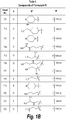
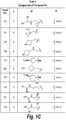
- X * , R * and R 1* are chosen from the substituents listed in Table I (See Figure 1 ).
- the compounds of the disclosure are effective in inhibiting ⁇ -lactamase.
- the compounds of Table I are effective ⁇ -lactamase inhibitors.
- the compound is effective in inhibiting ⁇ -lactamase.
- the compound is effective in inhibiting ⁇ -lactamases.
- the compound is effective in inhibiting ⁇ -lactamase.
- the compound is effective in inhibiting ⁇ -lactamase.
- the compound is effective in inhibiting ⁇ -lactamase.
- the compounds of the disclosure When used in combination with ⁇ -lactam antibiotics, the compounds of the disclosure (e.g. compounds of Formula I, compounds of Formula A-I, compounds of Formula II, compounds of Formula A-II) potentiate the activity of the ⁇ -lactam antibiotic against microorganisms that are normally resistant to ⁇ -lactam antibiotics due to the presence of a ⁇ -lactamase or multiple ⁇ -lactamases.
- the compounds of the disclosure inhibit ⁇ -lactamases selected from class A, class C or class D ⁇ -lactamases.
- the compounds of Formula I inhibit ⁇ -lactamases selected from class A, class C or class D ⁇ -lactamases.
- the compounds of Formula A-I inhibit ⁇ -lactamases selected from class A, class C or class D ⁇ -lactamases.
- the compounds of Formula II inhibit ⁇ -lactamases selected from class A, class C or class D ⁇ -lactamases.
- the compounds of Formula A-II inhibit ⁇ -lactamases selected from class A, class C or class D ⁇ -lactamases. In one aspect of the disclosurethe compounds of Table I inhibit ⁇ -lactamases selected from class A, class C or class D ⁇ -lactamases. In one aspect of the invention the compound of the Formula inhibits ⁇ -lactamases selected from class A, class C or class D ⁇ -lactamases. In one aspect of the invention the compound of the Formula inhibits ⁇ -lactamases selected from class A, class C or class D ⁇ -lactamases. In one aspect of the invention the compound of the Formula inhibits ⁇ -lactamase selected from class A, class C or class D ⁇ -lactamases.
- the compound of the Formula inhibits ⁇ -lactamases selected from class A, class C or class D ⁇ -lactamases.
- the compound of the Formula inhibits ⁇ -lactamase selected from class A, class C or class D ⁇ -lactamases.
- Class A ⁇ -lactamases for example, include, but are not limited to, TEM, SHV, CTX-M, KPC, GES, VEB, SME, and GEX.
- the compounds of the disclosure e.g. compounds of Formula I, compounds of Formula A-I, compounds of Formula II, compounds of Formula A-II
- the compounds of Formula I inhibit KPC ⁇ -lactamases.
- the compounds of Formula A-I inhibit KPC ⁇ -lactamases.
- the compounds of Formula II inhibit KPC ⁇ -lactamases.
- the compounds of Formula A-II inhibit KPC ⁇ -lactamases. More preferably the compounds of the disclosure (e.g. compounds of Formula I, compounds of Formula A-I, compounds of Formula II, compounds of Formula A-II) inhibit KPC-2 or KPC-3 ⁇ -lactamases. More preferably the compounds of Formula I of the invention inhibit KPC-2 or KPC-3 ⁇ -lactamases.
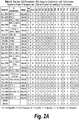
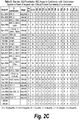
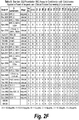
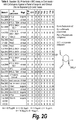
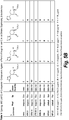
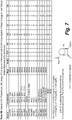
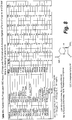
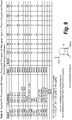
- the compounds of Formula A-I of the disclosure inhibit KPC-2 or KPC-3 ⁇ -lactamases. More preferably the compounds of Formula II of the invention inhibit KPC-2 or KPC-3 ⁇ -lactamases. More preferably the compounds of Formula A- II of the disclosure inhibit KPC-2 or KPC-3 ⁇ -lactamases. In one aspect of the disclosure, the compounds of the disclosure (e.g. compounds of Formula I, compounds of Formula A-I, compounds of Formula II, compounds of Formula A-II) inhibit KPC-2 or KPC-3 ⁇ -lactamases in clinical strains ( Figure 2 , Table II and Figures 6-9 , Tables VI-IX).
- the compounds of Formula I inhibit KPC-2 or KPC-3 ⁇ -lactamases in clinical strains ( Figure 2 , Table II and Figures 6-9 , Tables VI-IX).
- the compounds of Formula A-I inhibit KPC-2 or KPC-3 ⁇ -lactamases in clinical strains ( Figure 2 , Table II and Figures 6-9 , Tables VI-IX).
- the compounds of Formula II inhibit KPC-2 or KPC-3 ⁇ -lactamases in clinical strains ( Figure 2 , Table II and Figures 6-9 , Tables VI-IX).
- the compounds of Formula A-II inhibit KPC-2 or KPC-3 ⁇ -lactamases in clinical strains ( Figure 2 , Table II and Figures 6-9 , Tables VI-IX).
- Class C ⁇ -lactamases for example, include, but are not limited to chromosomal AmpCs, and plasmid based ACC, DHA, CMY, FOX, ACT, MIR, LAT, MOX ⁇ -lactamases.
- Class D ⁇ -lactamase enzymes for example, include, but are not limited to oxacillinases or OXA ⁇ -lactamases.
- the compounds of the disclosure e.g.
- compounds of Formula I, compounds of Formula A-I, compounds of Formula II, compounds of Formula A-II) inhibit OXA-15 ⁇ -lactamases.
- the compounds of Formula I inhibit OXA-15 ⁇ -lactamases.
- the compounds of Formula A-I inhibit OXA-15 ⁇ -lactamases.
- the compounds of Formula II inhibit OXA-15 ⁇ -lactamases.
- the compounds of Formula A-II inhibit OXA-15 ⁇ -lactamases.
- the activity of the BLI compounds can be described by the MIC value obtained from a Synergy MIC assay or a BLI potentiation assay (e.g as described herein), both of which are run in the presence of a ⁇ -lactam.
- the sMIC and BLI potentiation assay data supports that the compounds of the disclosure (e.g. compounds of Formula I, compounds of Formula A-I, compounds of Formula II, compounds of Formula A-II) potentiate (i.e. make more potent) the activity of the ⁇ -lactam antibiotic against ⁇ -lactamase producing strains by inhibiting the ⁇ -lactamase.
- the BLI activity is measured by growth inhibition of a ⁇ -lactamase producing bacterial strains in a Synergy MIC (sMIC) assay.
- sMIC Synergy MIC
- the sMIC value for the compounds of the disclosure e.g. compounds of Formula I, compounds of Formula A-I, compounds of Formula II, compounds of Formula A-II
- the sMIC value for the compounds of the disclosure is 4 ⁇ g/mL to 8 ⁇ g/mL.
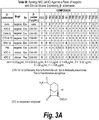
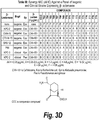
- the sMIC value for the compounds of the disclosure is 1 to 2 ⁇ g/mL. In a still more preferred aspect of the disclosure, the sMIC value for the compounds of the disclosure (e.g. compounds of Formula I, compounds of Formula A-I, compounds of Formula II, compounds of Formula A-II) is 0.2 to 0.5 ⁇ g/mL. Synergy MICs for representative compounds of the invention are described in Table III (See Figure 3 ).
- the growth inhibition of ⁇ -lactamase producing strains can also be measured by a checkerboard synergy assay like that disclosed in International Patent Application Number WO 2008/039420 or a standard BLI potentiation assay using a fixed concentration of BLI.
- the BLI activity is measured by growth inhibition of a ⁇ -lactamase producing bacterial strains in a standard BLI potentiation assay using a fixed concentration of BLI.
- the MIC value for the compounds of the disclosure e.g. compounds of Formula I, compounds of Formula A-I, compounds of Formula II, compounds of Formula A-II
- the MIC value for the compounds of the disclosure is 8 ⁇ g/mL or less.
- the MIC value for the compounds of the disclosure e.g. compounds of Formula I, compounds of Formula A-I, compounds of Formula II, compounds of Formula A-II
- the MIC value for the compounds of the disclosure e.g. compounds of Formula I, compounds of Formula A-I, compounds of Formula II, compounds of Formula A-II
- the MIC value for the compounds of the disclosure e.g.
- the MIC value for the compounds of the disclosure e.g. compounds of Formula I, compounds of Formula A-I, compounds of Formula II, compounds of Formula A-II
- the MIC value for the compounds of the disclosure is 0.2 ⁇ g/mL to 0.5 ⁇ g/mL.
- the compounds of the present disclosure have a broad spectrum of activity across a wide variety of ⁇ -lactamase producing bacteria. It was surprisingly found that the compounds of the present disclosure (e.g. compounds of Formula I, compounds of Formula A-I, compounds of Formula II, compounds of Formula A-II) are active in potentiating activity of ⁇ -lactam antibiotics, in particular, Ceftolozane, against strains expressing class D ⁇ -lactamase OXA-15 ⁇ -lactamase.
- the compounds of the present disclosure e.g. compounds of Formula I, compounds of Formula A-I, compounds of Formula II, compounds of Formula A-II
- the compounds of the present disclosure are active against a wide variety of bacterial strains that express class A and C ⁇ -lactamases and also, surprisingly are active against bacterial strains that express the class D cephalosporinase OXA-15 (Tables II and III).
- This increased activity against the class D ⁇ -lactamase is critical because differential effectiveness against different types of ⁇ -lactamase producing bacteria is necessary in order to effectively use ⁇ -lactam antibiotics to treat resistant strains of bacteria ( vide infra ).
- the compounds the disclosure are unexpectedly more active against bacterial strains that express OXA-15 ⁇ -lactamases than the most structurally similar compound, Avibactam (comparator compound CCC).
- Compounds that are more active than Avibactam against bacterial strains that express the class D cephalosporinase OXA-15 are, for example, compounds 701, 702, 703, 704, 705, 706, 707, 708, 709, 710, 711, 712, 713, 714, 715, 716, 717, 719, 720, 721, 722, 723, 724, 725, 726, 727, 728, 729, 730, 731, 732, 733, 734, 735, 736, 737, 738, 739, 740, 741, 742, 743, 744, 745, 746, 747, 748, 749, 750, 751, 752, 753, 754, 755, 756, 757, 758, 759, 760, 761, 762, 763, 764, 765, 766, 767, 768, 769, 770, 771, 772, 773, 774, 776, 777, 778, 779
- the compounds of the disclosure are unexpectedly more active against and/or show broader spectrum of activity against bacterial strains that express KPC ⁇ -lactamases than the most structurally similar compound, Avibactam.
- Compounds that are more active than Avibactam for at least one, bacterial strain that expresses KPC ⁇ -lactamase and/or show a better spectrum of activity against bacterial strains that express KPC ⁇ -lactamases than Avibactam are, for example, compounds 701, 702, 703, 705, 706, 708, 709, 710, 711, 712714, 720, 721, 722, 723, 724, 726, 727, 728, 729, 730, 731, 732, 734, 735, 736, 737, 738, 739, 740, 741, 742, 743, 744, 745, 746, 747, 749, 750, 751, 752, 753, 754, 755, 756, 758, 759, 760, 761, 762, 763, 764, 765, 766, 767, 768, 770, 771, 772, 774, 775, 776, 777, 779, 782, 783, 784, 7
- the compounds of the disclosure e.g. compounds of Formula I, compounds of Formula A-I, compounds of Formula II, compounds of Formula A-II
- the inhibition kinetics of the compounds of the disclosure e.g. compounds of Formula I, compounds of Formula A-I, compounds of Formula II, compounds of Formula A-II
- the compounds of the disclosure e.g. compounds of Formula I, compounds of Formula A-I, compounds of Formula II, compounds of Formula A-II
- the compounds of the disclosure e.g. compounds of Formula I, compounds of Formula A-I, compounds of Formula II, compounds of Formula A-II
- the compounds of the disclosure e.g. compounds of Formula I, compounds of Formula A-I, compounds of Formula II, compounds of Formula A-II
- Compounds that have a binding affinity of 100-999 mM -1 s -1 are, for example, compounds 701, 702, 703, 705, 706, 707, 709, 711, 712, 713, 714, 720, 730, 740, 741, 742, 743, 745, 746, 748, 749, 752, 753, 767, 770, 775, 779, 781, 782, 785, 794, 798 (Table IV).
- the compounds of the disclosure e.g. compounds of Formula I, compounds of Formula A-I, compounds of Formula II, compounds of Formula A-II
- Compounds that have a binding affinity of 1-99 mM -1 s -1 are, for example, compounds 704, 706, 708, 710, 715, 716, 717, 718, 719, 721, 722, 723, 724, 725, 726, 727, 728, 729, 731, 732, 733, 734, 735, 736, 737, 738, 739, 744, 747, 750, 751, 754, 755, 756, 757, 758, 759, 760, 761, 762, 763, 764, 765, 766, 769, 771, 772, 773, 774, 776, 777, 778, 780, 783, 784, 786, 792, 796, and 797 (Table IV).
- the compounds of the present invention have a higher binding affinity for the ⁇ -lactamase enzyme than the closest structural comparator Avibactam (Table IV, See Figure 4 ).
- compositions Comprising the Compounds of The Invention and Use Thereof
- compositions or formulations comprising compounds the disclosure (e.g. compounds of Formula I, compounds of Formula A-I, compounds of Formula II, compounds of Formula A-II), or salts thereof, preferably further comprising a ⁇ -lactam antibiotic.
- pharmaceutical compositions or formulations comprising compounds of Formula I, or salts thereof, preferably further comprising a ⁇ -lactam antibiotic.
- pharmaceutical compositions or formulations comprising compounds of Formula A-I, or salts thereof, preferably further comprising a ⁇ -lactam antibiotic.
- compositions or formulations comprising compounds of Formula A-II, or salts thereof, preferably further comprising a ⁇ -lactam antibiotic.
- pharmaceutical compositions or formulations comprising compounds of the invention of Table I.
- pharmaceutical compositions or formulations comprising compounds of Formula or salts thereof, preferably further comprising a ⁇ -lactam antibiotic.
- pharmaceutical compositions or formulations comprising compounds of Formula or salts thereof, preferably further comprising a ⁇ -lactam antibiotic.
- pharmaceutical compositions or formulations comprising compounds of Formula or salts thereof preferably further comprising a ⁇ -lactam antibiotic.
- compositions or formulations comprising compounds of Formula or salts thereof, preferably further comprising a ⁇ -lactam antibiotic.
- pharmaceutical compositions or formulations comprising compounds of Formula or salts thereof, preferably further comprising a ⁇ -lactam antibiotic.
- the pharmaceutical compositions can be formulated for oral, intravenous, intramuscular, subcutaneous or parenteral administration for the therapeutic or prophylactic treatment of diseases, such as bacterial infections.
- the pharmaceutical composition is formulated for intravenous administration.
- the pharmaceutical preparations disclosed herein may be prepared in accordance with standard procedures and are administered at dosages that are selected to reduce, prevent or eliminate infection (see, e.g., Remington's Pharmaceutical Sciences, Mack Publishing Company, Easton, PA and Goodman and Gilman's "The Pharmaceutical Basis of Therapeutics," Pergamon Press, New York, NY , for a general description of the methods for administering various antimicrobial agents for human therapy).
- compositions can comprise one or more of the compounds disclosed herein (e.g. one or more compounds of Formula I, compounds of Formula A-I, compounds of Formula II, compounds of Formula A-II), preferably a compound of Formula A-I or Formula A-II, in conjunction with a ⁇ -lactam antibiotic, in association with one or more nontoxic, pharmaceutically-acceptable carriers and/or diluents and/or adjuvants and/or excipients.
- pharmaceutically-acceptable carrier refers to any and all solvents, dispersion media, coatings, antibacterial and antifungal agents, isotonic and absorption delaying agents, and the like, that are compatible with pharmaceutical administration.
- Non-limiting examples of carriers and excipients include corn starch or gelatin, lactose, sucrose, microcrystalline cellulose, kaolin, mannitol, dicalcium phosphate, sodium chloride and alginic acid.
- the compositions may contain croscarmellose sodium, microcrystalline cellulose, corn starch, sodium starch glycolate and alginic acid.
- Tablet binders that can be included are acacia, methylcellulose, sodium carboxymethylcellulose, polyvinylpyrrolidone (Povidone), hydroxypropyl methylcellulose, sucrose, starch and ethylcellulose.
- Lubricants that can be used include magnesium stearate or other metallic stearates, stearic acid, silicone fluid, talc, waxes, oils and colloidal silica.
- Flavoring agents such as peppermint, oil of wintergreen, cherry flavoring or the like can also be used. It may also be desirable to add a coloring agent to make the dosage form more aesthetic in appearance or to help identify the product.
- compounds of the present disclosure e.g. compounds of Formula I, compounds of Formula A-I, compounds of Formula II, compounds of Formula A-II
- compounds of Formula A-II preferably a compound of Formula A-I or Formula A-II, in conjunction with a ⁇ -lactam antibiotic
- the compositions comprising a compound of this invention may contain from about 0.1% to about 99% by weight of the active compound, such as from about 10% to about 30%.
- solid formulations such as tablets and capsules are useful. Sustained release or enterically coated preparations may also be devised.
- one embodiment provides suspensions, syrups and chewable tablets.
- the pharmaceutical compositions are in the form of, for example, a tablet, capsule, suspension or liquid.
- the pharmaceutical compositions may be made in the form of a dosage unit containing a therapeutically-effective amount of the active ingredient.
- dosage units are tablets and capsules.
- the tablets and capsules which can contain, in addition to the active ingredient, conventional carriers such as binding agents, for example, acacia gum, gelatin, polyvinylpyrrolidone, sorbitol, or tragacanth; fillers, for example, calcium phosphate, glycine, lactose, maize-starch, sorbitol, or sucrose; lubricants, for example, magnesium stearate, polyethylene glycol, silica, or talc; disintegrants, for example, potato starch, flavoring or coloring agents, or acceptable wetting agents.
- binding agents for example, acacia gum, gelatin, polyvinylpyrrolidone, sorbitol, or tragacanth
- fillers for example, calcium phosphate, glycine, lactose, maize-starch,
- Oral liquid preparations generally are in the form of aqueous or oily solutions, suspensions, emulsions, syrups or elixirs, preparations of the invention may contain conventional additives such as suspending agents, emulsifying agents, non-aqueous agents, preservatives, coloring agents and flavoring agents.
- additives for liquid preparations include acacia, almond oil, ethyl alcohol, fractionated coconut oil, gelatin, glucose syrup, glycerin, hydrogenated edible fats, lecithin, methyl cellulose, methyl or propyl para -hydroxybenzoate, propylene glycol, sorbitol, or sorbic acid.
- the pharmaceutical composition e.g. compounds of Formula I, compounds of Formula A-I, compounds of Formula II, compounds of Formula A-II
- a compound of Formula A-I or Formula A-II in conjunction with a ⁇ -lactam antibiotic
- Intravenous fluids include, without limitation, physiological saline or Ringer's solution.
- Intravenous administration may be accomplished by using, without limitation, syringe, mini-pump or intravenous line.
- compositions of this disclosure e.g. compounds of Formula I, compounds of Formula A-I, compounds of Formula II, compounds of Formula A-II
- aqueous and non-aqueous carriers, diluents, solvents or vehicles examples include water, ethanol, benzyl alcohol, polyols (such as glycerol, propylene glycol, and polyethylene glycol), and suitable mixtures thereof, vegetable oils (such as corn oil or olive oil), and injectable organic esters such as ethyl oleate.
- aqueous and non-aqueous carriers, diluents, solvents or vehicles include water, ethanol, benzyl alcohol, polyols (such as glycerol, propylene glycol, and polyethylene glycol), and suitable mixtures thereof, vegetable oils (such as corn oil or olive oil), and injectable organic esters such as ethyl oleate.
- Proper fluidity can be maintained, for example, by the use of coating materials such as lecithin, by the maintenance of the required particle size in the case of dispersions, and by the use of surfactants.
- the compositions can include various buffers
- compositions may also contain adjuvants such as preservatives, wetting agents, emulsifying agents, and dispersing agents. They may also contain taggants or other anti-counterfeiting agents, which are well known in the art. Prevention of the action of microorganisms may be ensured by the inclusion of various antibacterial and antifungal agents, for example, paraben, chlorobutanol, and phenol sorbic acid. It may also be desirable to include isotonic agents such as sugars and sodium chloride. Prolonged absorption of the injectable pharmaceutical form may be brought about by the inclusion of agents which delay absorption, such as aluminum monostearate and gelatin.
- Injectable depot forms can be made by forming microencapsulating matrices of the drug in biodegradable polymers such as polylactide-polyglycolide. Depending upon the ratio of drug to polymer and the nature of the particular polymer employed, the rate of drug release can be controlled. Examples of other biodegradable polymers include poly(orthoesters) and poly(anhydrides). Depot injectable formulations can also be prepared by entrapping the drug in liposomes or microemulsions, which are compatible with body tissues.
- the injectable formulations can be sterilized, for example, by filtration through a bacterial-retaining filter, or by incorporating sterilizing agents in the form of sterile solid compositions, which can be dissolved or dispersed in sterile water or other sterile injectable medium just prior to use.
- Solid dosage forms for oral administration include capsules, tablets, pills, powders, and granules. Such forms may include forms that dissolve or disintegrate quickly in the oral environment.
- the active compound preferably a compound of Formula A-I or Formula A-II in conjunction with a ⁇ -lactam antibiotic, can be mixed with at least one inert, pharmaceutically-acceptable excipient or carrier.
- Suitable excipients include, for example, (a) fillers or extenders such as starches, lactose, sucrose, glucose, mannitol, and silicic acid; (b) binders such as cellulose and cellulose derivatives (such as hydroxypropylmethylcellulose, hydroxypropylcellulose, and carboxymethylcellulose), alginates, gelatin, polyvinylpyrrolidone, sucrose, and acacia; (c) humectants such as glycerol; (d) disintegrating agents such as sodium starch glycolate, croscarmellose, agar-agar, calcium carbonate, potato or tapioca starch, alginic acid, certain silicates, and sodium carbonate; (e) solution retarding agents such as paraffin; (f) absorption accelerators such as quaternary ammonium compounds; (g) wetting agents, such as cetyl alcohol and glycerol monostearate, fatty acid esters of sorbitan, poloxamers
- Solid dosage forms including those of tablets, dragees, capsules, pills, and granules, can be prepared with coatings and shells such as functional and aesthetic enteric coatings and other coatings well known in the pharmaceutical formulating art. They may optionally contain opacifying agents and colorants. They may also be in a form capable of controlled or sustained release. Examples of embedding compositions that can be used for such purposes include polymeric substances and waxes.
- the pharmaceutical compositions can be delivered using controlled (e.g., capsules) or sustained release (e.g., bioerodable matrices) delivery systems.
- controlled e.g., capsules
- sustained release e.g., bioerodable matrices
- Exemplary delayed release delivery systems for drug delivery that are suitable for administering the pharmaceutical compositions are described in U.S. Patent Nos. 4,452,775 (issued to Kent ), 5,039,660 (issued to Leonard ), and 3,854,480 (issued to Zaffaroni ).
- the rate of absorption of the drug then depends upon its rate of dissolution, which in turn, may depend upon crystal size and crystalline form.
- delayed absorption of a parenterally administered drug form can be accomplished by dissolving or suspending the drug in an oil vehicle.
- a sterile formulation of compounds preferably a compound of Formula A-I or Formula A-II in conjunction with a ⁇ -lactam antibiotic, or suitable soluble salt forms thereof, for example hydrochloride salts
- a pharmaceutical diluent such as Water-for-Injection (WFI), physiological saline or 5% glucose.
- WFI Water-for-Injection
- a suitable insoluble form of the compound may be prepared and administered as a suspension in an aqueous base or a pharmaceutically acceptable oil base, e.g., an ester of a long chain fatty acid such as ethyl oleate.
- a dose of an intravenous, intramuscular, or parental formulation of compounds may be administered as a bolus or by slow infusion.
- a bolus is a dose that is administered in less than 30 minutes. In one embodiment, a bolus is administered in less than 15 or less than 10 minutes. In another embodiment, a bolus is administered in less than 5 minutes. In yet another embodiment, a bolus is administered in one minute or less.
- An infusion is a dose that is administered at a rate of 30 minutes or greater. In one embodiment, the infusion is one hour or greater. In another embodiment, the infusion is substantially constant.
- compositions preferably a compound of Formula A-I or Formula A-II in conjunction with a ⁇ -lactam antibiotic
- a compound of Formula A-I or Formula A-II in conjunction with a ⁇ -lactam antibiotic can also be prepared in suitable forms to be applied to the skin, or mucus membranes of the nose and throat, and can take the form of creams, ointments, liquid sprays or inhalants, lozenges, or throat paints.
- topical formulations further can include chemical compounds such as dimethylsulfoxide (DMSO) to facilitate surface penetration of the active ingredient.
- DMSO dimethylsulfoxide
- the pharmaceutical composition can be presented in liquid or semi-liquid form formulated in hydrophobic or hydrophilic bases as ointments, creams, lotions, paints or powders.
- the pharmaceutical compositions preferably a compound of Formula A-I or Formula A-II in conjunction with a ⁇ -lactam antibiotic, can be administered in the form of suppositories admixed with conventional carriers such as cocoa butter, polyethylene glycol or a suppository wax or other glyceride that are solid at room temperature but liquid at body temperature and therefore melt in the rectum or vaginal cavity and release the active compound.
- conventional carriers such as cocoa butter, polyethylene glycol or a suppository wax or other glyceride that are solid at room temperature but liquid at body temperature and therefore melt in the rectum or vaginal cavity and release the active compound.
- the pharmaceutical compositions can be in powder form for reconstitution in the appropriate pharmaceutically acceptable carrier at the time of delivery.
- the unit dosage form of compounds preferably a compound of Formula A-I or Formula A-II in conjunction with a ⁇ -lactam antibiotic, can be a solution of one or more compounds, or salts thereof, in a suitable diluent, in sterile hermetically sealed ampoules or sterile syringes.
- the concentration of the compounds, preferably a compound of Formula A-I or Formula A-II in conjunction with a ⁇ -lactam antibiotic, in the unit dosage may vary, e.g. from about 1 percent to about 50 percent, depending on the compound used and its solubility and the dose desired by the physician.
- each dosage unit can contain from 1-500 mg of the active material. For adult human treatment, the dosage employed can range from 5 mg to 10 g, per day, depending on the route and frequency of administration.
- compositions disclosed herein can be placed in a pharmaceutically acceptable carrier and are delivered to a recipient subject (e.g., a human) in accordance with known methods of drug delivery.
- a recipient subject e.g., a human
- the methods of delivering the pharmaceutical compositions in vivo utilize art-recognized protocols for delivering the agent with the only substantial procedural modification being the substitution of the compounds of the present invention for the drugs in the art-recognized protocols.
- compositions for treating cells in culture for example, to eliminate or reduce the level of bacterial contamination of a cell culture
- methods for using the claimed compositions for treating cell cultures with antibacterial agent(s) with the only substantial procedural modification being the substitution of the compounds of the present invention, preferably in combination with a ⁇ -lactam antibiotic for the drugs in the art-recognized protocols.
- one or more compounds of the disclosure preferably a compound of Formula A-I or Formula A-II in conjunction with a ⁇ -lactam antibiotic, or pharmaceutical compositions thereof are administered orally, rectally or via injection (intravenous, intramuscular or subcutaneous).
- one or more compounds of the disclosure preferably a compound of Formula A-I or Formula A-II in conjunction with a ⁇ -lactam antibiotic, or pharmaceutical compositions thereof are administered orally, rectally or via injection (intravenous, intramuscular or subcutaneous) to treat an infection caused by ⁇ -lactam resistant bacteria.
- one or more compounds of the disclosure preferably a compound of Formula A-I or Formula A-II in conjunction with a ⁇ -lactam antibiotic, or pharmaceutical compositions thereof are administered orally to treat an infection caused by ⁇ -lactamase producing bacteria.
- therapeutically-effective dose and “therapeutically-effective amount” refer to an amount of a compound that prevents the onset, alleviates the symptoms, stops the progression of a bacterial infection, or results in another desired biological outcome such as, e.g., improved clinical signs or reduced/elevated levels of lymphocytes and/or antibodies.
- treating is defined as administering, to a subject, a therapeutically-effective amount of one or more compounds both to prevent the occurrence of an infection and to control or eliminate an infection.
- Those in need of treatment may include individuals already having a particular medical disease as well as those at risk for the disease ( i.e., those who are likely to ultimately acquire the disorder).
- subject refers to a mammal, a plant, a lower animal, or a cell culture.
- a subject is a human or other animal patient in need of antibacterial treatment.
- administering refers to providing the compound of the disclosure (e.g. compounds of Formula I, compounds of Formula A-I, compounds of Formula II, compounds of Formula A-II) to the subject in need of treatment.
- the subject is a mammal, more preferably a human.
- the present disclosure comprises administering the compound of the disclosure (e.g. compounds of Formula I, compounds of Formula A-I, compounds of Formula II, compounds of Formula A-II) in conjunction with a ⁇ -lactam antiobiotic.
- a compound of the disclosure e.g.
- the compound of the disclosure e.g. compounds of Formula I, compounds of Formula A-I, compounds of Formula II, compounds of Formula A-II
- the ⁇ -lactam antiobiotic can be administered at the same time or different times.
- the compounds of the disclosure e.g. compounds of Formula I, compounds of Formula A-I, compounds of Formula II, compounds of Formula A-II
- the ⁇ -lactam antiobiotic can be administered at the same time, they can be administered as a single composition or pharmaceutical composition or they can be administered separately. It is understood that when a compound of the disclosure (e.g.
- compounds of Formula I, compounds of Formula A-I, compounds of Formula II, compounds of Formula A-II) is administered in conjunction with a ⁇ -lactam antibiotic, that the active agents can be administered in a single combination or in multiple combinations.
- the compound of the disclosure e.g. compounds of Formula I, compounds of Formula A-I, compounds of Formula II, compounds of Formula A-II
- a ⁇ -lactam antibiotic can be dissolved or suspended in any of the commonly used intravenous fluids and administered by infusion.
- ⁇ -lactam antibiotic can be dissolved or suspended in any of the commonly used intravenous fluids and administered by infusion, then a compound of Formula I can be dissolved or suspended in any of the commonly used intravenous fluids and administered by infusion.
- a pharmaceutical composition comprising a compound of the disclosure (e.g. compounds of Formula I, compounds of Formula A-I, compounds of Formula II, compounds of Formula A-II) and a ⁇ -lactam antibiotic can be dissolved or suspended in any of the commonly used intravenous fluids and administered by infusion.
- a method of treating or preventing a bacterial infection comprising administering to a subject in need thereof a therapeutically-effective amount of the pharmaceutical composition comprising a compound of the disclosure (e.g. compounds of Formula I, compounds of Formula A-I, compounds of Formula II, compounds of Formula A-II) and a ⁇ -lactam antibiotic.
- a method of treating or preventing a bacterial infection comprising administering to a subject in need thereof a therapeutically-effective amount of the pharmaceutical composition comprising a compound of Formula I, and a ⁇ -lactam antibiotic.
- a method of treating or preventing a bacterial infection comprising administering to a subject in need thereof a therapeutically-effective amount of the pharmaceutical composition comprising a compound of Formula A-I, and a ⁇ -lactam antibiotic.
- a method of treating or preventing a bacterial infection comprising administering to a subject in need thereof a therapeutically-effective amount of the pharmaceutical composition comprising a compound of Formula II, and a ⁇ -lactam antibiotic.
- a method of treating or preventing a bacterial infection comprising administering to a subject in need thereof a therapeutically-effective amount of the pharmaceutical composition comprising a compound of Formula A-II, and a ⁇ -lactam antibiotic.
- a method of treating or preventing a bacterial infection comprising administering to a subject in need thereof, a therapeutically-effective amount of a ⁇ -lactam antibiotic in conjunction with a compound of the disclosure (e.g. compounds of Formula I, compounds of Formula A-I, compounds of Formula II, compounds of Formula A-II).
- a method of treating or preventing a bacterial infection comprising administering to a subject in need thereof, a therapeutically-effective amount of a ⁇ -lactam antibiotic in conjunction with a compound of Formula I.
- a method of treating or preventing a bacterial infection comprising administering to a subject in need thereof, a therapeutically-effective amount of a ⁇ -lactam antibiotic in conjunction with a compound of Formula A-I.
- a method of treating or preventing a bacterial infection comprising administering to a subject in need thereof, a therapeutically-effective amount of a ⁇ -lactam antibiotic in conjunction with a compound of Formula II.
- a method of treating or preventing a bacterial infection comprising administering to a subject in need thereof, a therapeutically-effective amount of a ⁇ -lactam antibiotic in conjunction with a compound of Formula A-II.
- a method of treating or preventing a bacterial infection comprising administering to a subject in need thereof, a therapeutically-effective amount of a ⁇ -lactam antibiotic in conjunction with a compound of Table I.
- a method of treating or preventing a bacterial infection comprising administering to a subject in need thereof, a therapeutically-effective amount of a ⁇ -lactam antibiotic in conjunction with a compound of Formula
- a method of treating or preventing a bacterial infection comprising administering to a subject in need thereof, a therapeutically-effective amount of a ⁇ -lactam antibiotic in conjunction with a compound of Formula
- a method of treating or preventing a bacterial infection comprising administering to a subject in need thereof, a therapeutically-effective amount of a ⁇ -lactam antibiotic in conjunction with a compound of Formula
- a method of treating or preventing a bacterial infection comprising administering to a subject in need thereof, a therapeutically-effective amount of a ⁇ -lactam antibiotic in conjunction
- a method of treating or preventing a bacterial infection in a subject comprising the steps of
- the compound in step a is a compound of Formula I. In one embodiment the compound in step a is a compound of Formula A-I. In one embodiment the compound in step a is a compound of Formula II. In one embodiment the compound in step a is a compound of Formula A-II. In one embodiment the compound in step a is a compound of Table I. In one embodiment the compound in step a is a compound of Formula A-II. In one embodiment the compound in step a is a compound of Formula In one embodiment the compound in step a is a compound of Formula In one embodiment the compound in step a is a compound of Formula In one embodiment the compound in step a is a compound of Formula In one embodiment the compound in step a is a compound of Formula In one embodiment the compound in step a is a compound of Formula In one embodiment the compound in step a is a compound of Formula In one embodiment the compound in step a is a compound of Formula I.
- the ⁇ -lactam antibiotic in step b is Ceftolozane, Ceftazidime, Aztreonam or Meropenem, or more preferably, Ceftolozane or Ceftazidime.
- the compound in step a is a compound of Formula and the ⁇ -lactam antibiotic in step b is Ceftolozane. In one embodiment the compound in step a is a compound of Formula and the ⁇ -lactam antibiotic in step b is Ceftolozane.
- the compound in step a is a compound of Formula and the ⁇ -lactam antibiotic in step b is Ceftolozane.
- the compound in step a is a compound of Formula and the ⁇ -lactam antibiotic in step b is Ceftolozane.
- the compound in step a is a compound of Formula and the ⁇ -lactam antibiotic in step b is Ceftolozane.
- a method of treating or preventing a bacterial infection in a subject comprising the steps of
- the compound in step b is a compound of Formula I. In one embodiment the compound in step b is a compound of Formula A-I. In one embodiment the compound in step b is a compound of Formula II. In one embodiment the compound in step b is a compound of Formula A-II. In one embodiment the compound in step b is a compound of Formula II. In one embodiment the compound in step b is a compound of Table I. In one embodiment the compound in step b is a compound of Formula In one embodiment the compound in step b is a compound of Formula In one embodiment the compound in step b is a compound of Formula In one embodiment the compound in step b is a compound of Formula In one embodiment the compound in step b is a compound of Formula In one embodiment the compound in step b is a compound of Formula In one embodiment the compound in step b is a compound of Formula I.
- the ⁇ -lactam antibiotic in step a is Ceftolozane, Ceftazidime, Aztreonam or Meropenem, or more preferably, Ceftolozane or Ceftazidime.
- the compound in step b is a compound of Formula and the ⁇ -lactam antibiotic in step a is Ceftolozane.
- the compound in step b is a compound of Formula and the ⁇ -lactam antibiotic in step a is Ceftolozane.
- the compound in step b is a compound of Formula and the ⁇ -lactam antibiotic in step a is Ceftolozane.
- the compound in step b is a compound of Formula and the ⁇ -lactam antibiotic in step a is Ceftolozane.
- the compound in step b is a compound of Formula and the ⁇ -lactam antibiotic in step a is Ceftolozane.
- the disclosure provides a method for treating an infection in a subject by administering a therapeutically-effective amount of one or more compounds of the disclosure (e.g. compounds of Formula I, compounds of Formula A-I, compounds of Formula II, compounds of Formula A-II), preferably a compound of Formula A-I or Formula A-II in conjunction with a ⁇ - lactam antibiotic, or compositions thereof.
- the method comprises administering to a subject in need thereof a pharmaceutical composition comprising at least one of the compounds described herein, preferably a compound of Formula A-I or Formula A-II in conjunction with a ⁇ -lactam antibiotic.
- the compound is of Formula in conjunction with a ⁇ -lactam antibiotic, preferably Ceftolozane, Ceftazidime, Aztreonam or Meropenem, or more preferably, Ceftolozane or Ceftazidime, or compositions thereof.
- a ⁇ -lactam antibiotic preferably Ceftolozane, Ceftazidime, Aztreonam or Meropenem, or more preferably, Ceftolozane or Ceftazidime, or compositions thereof.
- the compound is of Formula in conjunction with a ⁇ -lactam antibiotic, preferably Ceftolozane, Ceftazidime, Aztreonam or Meropenem, or more preferably, Ceftolozane or Ceftazidime, or compositions thereof.
- a ⁇ -lactam antibiotic preferably Ceftolozane, Ceftazidime, Aztreonam or Meropenem, or more preferably, Ceftolozane or Ceftazidime, or compositions thereof.
- the compound is of Formula in conjunction with a ⁇ -lactam antibiotic, preferably Ceftolozane, Ceftazidime, Aztreonam or Meropenem, or more preferably, Ceftolozane or Ceftazidime, or compositions thereof.
- the pharmaceutical composition can comprise any one of the compounds described herein as the sole active compound or in combination with another compound, composition, or biological material.
- the compound may be administered orally, parenterally, by inhalation, topically, rectally, nasally, buccally, vaginally, or by an implanted reservoir, external pump or catheter.
- the compound may be prepared for opthalmic or aerosolized uses.
- the compounds of the present invention can be administered as an aerosol for the treatment of pneumonia or other lung-based infections.
- the aerosol delivery vehicle is an anhydrous or dry powder inhaler.
- One or more compounds of the disclosure e.g. compounds of Formula I, compounds of Formula A-I, compounds of Formula II, compounds of Formula A-II
- a compound of Formula A-I or Formula A-II in conjunction with a ⁇ -lactam antibiotic, or pharmaceutical compositions thereof also may be directly injected or administered into an abscess, ventricle or joint.
- Parenteral administration includes subcutaneous, intravenous, intramuscular, intra-articular, intra-synovial, cisternal, intrathecal, intrahepatic, intralesional and intracranial injection or infusion.
- one or more compounds of the disclosure e.g. compounds of Formula I, compounds of Formula A-I, compounds of Formula II, compounds of Formula A-II
- a compound of Formula A-I or Formula A-II in conjunction with a ⁇ -lactam antibiotic are administered intravenously, subcutaneously or orally.
- for administering one or more compounds according to the disclosure e.g.
- the one or more compounds may be administered in a nutrient medium.
- one or more compounds according to the disclosure may be used to treat a subject having a bacterial infection in which the infection is caused or exacerbated by any type of bacteria, such as Gram-negative bacteria.
- the bacterial infection is caused by ⁇ -lactam resistant bacteria.
- the bacterial infection is caused by ⁇ -lactamase producing bacteria.
- the bacterial infection is caused by class A, class C or class D ⁇ -lactamase producing bacteria.
- the bacterial infection is caused by class A ⁇ -lactamase producing bacteria. In another aspect the infection is caused by class C ⁇ -lactamase producing bacteria. In still another aspect the infection is caused by class D ⁇ -lactamase producing bacteria. In still another aspect the infection is caused by KPC ⁇ -lactamase producing bacteria. In still another aspect the infection is caused by OXA ⁇ -lactamase producing bacteria. In still another aspect, the bacterial infection is caused by a bacteria that produces multiple ⁇ -lactamases. Bacteria that produce multiple ⁇ -lactamases may produce ⁇ -lactamases of the same class or of different classes (e.g class A and class A or class A and class C or class A and class D etc).
- Gram-negative pathogens known to express ⁇ -lactamases include, but are not limited to Acinetobacter spp. (including Acinetobacter baumannii ), Citrobacter spp., Escherichia spp. (including Escherichia coli ), Haemophilus influenzae, Morganella morganii, Pseudomonas aeruginosa, Klebsiella spp. (including Klebsiella pneumoniae ), Enterobacter spp. (including Enterobacter cloacae and Enterobacter aerogenes ), Pasteurella spp., Proteus spp. (including Proteus mirabilis ), Serratia spp.
- Bacterial infections can be caused or exacerbated by Gram-negative bacteria including strains which express ⁇ -lactamases that may confer resistance to penicillins, cephalosporins, monobactams and/or carbapenems.
- the co-administration of a novel BLI that inhibits these ⁇ -lactamases with a ⁇ -lactam antibiotic could be used to treat infections caused by ⁇ -lactam resistant bacteria.
- the infection is caused by a ⁇ -lactamase producing bacteria selected from Acinetobacter spp, Citrobacter spp, Escherichia coli, Enterobacter cloacae ), Haemophilus influenzae, Pseudomonas aeruginosa, Proteus mirabilis, Serratia marcescens, and Klebsiella pneumoniae,
- ⁇ -Lactam antibiotics that may be administered concurrently with compounds of the disclosure (e.g. compounds of Formula I, compounds of Formula A-I, compounds of Formula II, compounds of Formula A-II) include, but are not limited to cephalosporin, carbapenem, monobactam, penem and penicillin classes of antibiotics.
- the ⁇ -lactam antibiotic is a cephalosporin.
- cephalosporins include, but are not limited to, Cefacetrile (cephacetrile), Cefadroxil (cefadroxyl), Cefalexin (cephalexin), Cefaloglycin (cephaloglycin), Cefalonium (cephalonium), Cefaloridine (cephaloradine), Cefalotin (cephalothin), Cefapirin (cephapirin), Cefatrizine,Cefazaflur, Cefazedone, Cefazolin (cephazolin), Cefradine (cephradine), Cefroxadine, Ceftezole, Cefaclor, Cefamandole, Cefmetazole, Cefonicid, Cefotetan, Cefoxitin, Cefprozil (cefproxil), Cefuroxime, Cefuzonam, Cefcapene
- the ⁇ -lactam antibiotic is a carbapenen.
- carbapenem antibiotics include, but are not limited to, Imipenem, Imipenem/Cilastatin, Biapenem, Doripenem, Meropenem, Ertapenem and Panipenem.
- the Carbapenem is Imipenem/Cilastatin or Meropenem.
- the ⁇ -lactam antibiotic is a monobactam.
- monobactam antibiotics include, but are not limited to Aztreonam, Tigemonam, Carumonam, BAL30072 and Nocardicin A.
- the ⁇ -lactam antibiotic is a penem. In one embodiment of the invention, the ⁇ -lactam antibiotic is a penicillin.
- penicillin antibiotics include, but are not limited to Amoxicillin, Ampicillin, Azlocillin, Mezlocillin, Apalcillin, Hetacillin, Becampicillin, Carbenicillin, Sulbenicillin, Ticarcillin, Piperacillin, Azlocillin, Mecillinam, Pivmecillinam, Methicillin, Ciclacillin, Talampicillin, Aspoxicillin, Oxacillin, Cloxacillin, Dicloxacillin, Flucloxacillin, Nafcillin and Pivampicillin.
- cephalosporin is Ceftolozane, Ceftazidime, Aztreonam or Meropenem, or more preferably, Ceftolozane or Ceftazidime.
- compositions preferably a compound of the disclosure (e.g. compounds of Formula I, compounds of Formula A-I, compounds of Formula II, compounds of Formula A-II) in conjunction with a ⁇ -lactam antibiotic, can be used to treat a bacterial infection of any organ or tissue in the body caused by ⁇ -lactam resistant bacteria, preferably, Gram-negative ⁇ -lactam resistant bacteria.
- organs or tissue include, without limitation, skeletal muscle, skin, bloodstream, kidneys, heart, lung and bone.
- a pharmaceutical composition comprising at least one compound of the disclosure (e.g.
- compounds of Formula I, compounds of Formula A-I, compounds of Formula II, compounds of Formula A-II), preferably a compound of Formula A-I or Formula A-II in conjunction with a ⁇ -lactam antibiotic can be administered to a subject to treat, without limitation, skin and soft tissue infections (e.g., complex skin infections), bacteremia, intra-abdominal infections and urinary tract infections (e.g., cUTI).
- skin and soft tissue infections e.g., complex skin infections
- bacteremia bacteremia
- intra-abdominal infections e.g., cUTI
- urinary tract infections e.g., cUTI
- a compound of the disclosure e.g.
- compounds of Formula I, compounds of Formula A-I, compounds of Formula II, compounds of Formula A-II may be used to treat community acquired respiratory infections, including, without limitation, otitis media, sinusitis, chronic bronchitis and pneumonia (including community-acquired pneumonia, hospital-acquired pneumonia and ventilator associated pneumonia), including pneumonia caused by drug-resistant Pseudomonas aeruginosa.
- community acquired respiratory infections including, without limitation, otitis media, sinusitis, chronic bronchitis and pneumonia (including community-acquired pneumonia, hospital-acquired pneumonia and ventilator associated pneumonia), including pneumonia caused by drug-resistant Pseudomonas aeruginosa.
- At least one compound of the disclosure e.g.
- compounds of Formula I, compounds of Formula A-I, compounds of Formula II, compounds of Formula A-II), preferably a compound of Formula A-I or Formula A-II in conjunction with a ⁇ -lactam antibiotic can be administered to a subject to treat mixed infections that comprise different types of Gram-negative bacteria, or which comprise both Gram-positive and Gram-negative bacteria. These types of infections include intra-abdominal infections and obstetrical/gynecological infections. At least one compound of the disclosure (e.g.
- compounds of Formula I, compounds of Formula A-I, compounds of Formula II, compounds of Formula A-II), preferably a compound of Formula A-I or Formula A-II in conjunction with a ⁇ -lactam antibiotic may also be administered to a subject to treat an infection including, without limitation, endocarditis, nephritis, septic arthritis, intra-abdominal sepsis, bone and joint infections and osteomyelitis.
- an infection including, without limitation, endocarditis, nephritis, septic arthritis, intra-abdominal sepsis, bone and joint infections and osteomyelitis.
- At least one compound of the disclosure e.g.
- compositions of the disclosure e.g. compounds of Formula I, compounds of Formula A-I, compounds of Formula II, compounds of Formula A-II), preferably compound of Formula A-I or Formula A-II in conjunction with a ⁇ -lactam antibiotic, or pharmaceutical compositions thereof, may also be directly injected or administered into an abscess, ventricle or joint.
- Pharmaceutical compositions of the disclosure e.g. compounds of Formula I, compounds of Formula A-I, compounds of Formula II, compounds of Formula A-II), preferably compound of Formula A-I or Formula A-II in conjunction with a ⁇ -lactam antibiotic, may be administered as an aerosol for the treatment of pneumonia or other lung-based infections.
- the aerosol delivery vehicle is an anhydrous, liquid or dry powder inhaler.
- Actual dosage levels of active ingredients in the pharmaceutical compositions of one or more compounds according to the disclosure may be varied so as to obtain a therapeutically-effective amount of the active compound(s) to achieve the desired therapeutic response for a particular patient, compositions, and mode of administration.
- the effective amount can be determined as described herein.
- the selected dosage level will depend upon the activity of the particular compound, the route of administration, the severity of the condition being treated, and the condition and prior medical history of the patient being treated.
- the data obtained from the assays can be used in formulating a range of dosage for use in humans.
- the composition comprises a compound of the disclosure (e.g. compounds of Formula I, compounds of Formula A-I, compounds of Formula II, compounds of Formula A-II) and a ⁇ -lactam antibiotic
- both the compound of the disclosure e.g. compounds of Formula I, compounds of Formula A-I, compounds of Formula II, compounds of Formula A-II
- the ⁇ -lactam antibiotic are active compounds.
- the method comprises administering to the subject an effective dose of one or more compounds of the disclosure (e.g. compounds of Formula I, compounds of Formula A-I, compounds of Formula II, compounds of Formula A-II), preferably in conjunction with a ⁇ lactam antibiotic.
- An effective dose of a compound of the disclosure e.g. compounds of Formula I, compounds of Formula A-I, compounds of Formula II, compounds of Formula A-II
- An effective dose is generally between 125 mg/day to 2000 mg/day.
- an effective dose is from about 0.1 to about 100 mg/kg of one or more compounds of the disclosure (e.g. compounds of Formula I, compounds of Formula A-I, compounds of Formula II, compounds of Formula A-II) or pharmaceutically acceptable salts thereof.
- the dose is from about 0.1 to about 50 mg/kg of one or more compounds of the disclosure (e.g. compounds of Formula I, compounds of Formula A-I, compounds of Formula II, compounds of Formula A-II) or pharmaceutically acceptable salts thereof. In another embodiment, the dose is from about 1 to about 25 mg/kg of one or more compounds of the disclosure (e.g. compounds of Formula I, compounds of Formula A-I, compounds of Formula II, compounds of Formula A-II) or pharmaceutically acceptable salts thereof. In another embodiment, the dose is from about 1 to about 12 mg/kg of one or more compounds of the disclosure (e.g. compounds of Formula I, compounds of Formula A-I, compounds of Formula II, compounds of Formula A-II).
- the dose is about 1, 2, 3, 4, 5, 6, 7, 8, 9, 10, 11, or 12 mg/kg of one or more compounds of the disclosure (e.g. compounds of Formula I, compounds of Formula A-I, compounds of Formula II, compounds of Formula A-II).
- the compounds of the disclosure e.g. compounds of Formula I, compounds of Formula A-I, compounds of Formula II, compounds of Formula A-II
- the compounds of the disclosure e.g. compounds of Formula I, compounds of Formula A-I, compounds of Formula II, compounds of Formula A-II
- the compounds of the disclosure are administered to a human at a dose of 250 mg to 500 mg per dose up to four times a day.
- An effective dose for cell culture is usually between about 0.1 and about 1000 ⁇ g/mL. In one embodiment, the effect dose for cell culture is between about 0.1 and about 200 ⁇ g/mL.
- a ⁇ -lactam antibiotic and a compound of the disclosure are administered in ratio of 1:4 to 8:1 antibiotic: compound of the disclosure (e.g. compounds of Formula I, compounds of Formula A-I, compounds of Formula II, compounds of Formula A-II).
- the ratio is 1:4.
- the ratio is 3:4.
- the ratio is 5:4.
- the ratio is 7:4.
- the ratio is 1:2.
- the ratio is 3:2.
- the ratio is 5:2.
- the ratio is 7:2.
- the ratio is 1:3.
- the ratio is 2:3.
- the ratio is 4:3. In another embodiment the ratio is 5:3. In another embodiment the ratio is 7:3. In another embodiment the ratio is 1:2. In another embodiment the ratio is 3:2. In another embodiment the ratio is 5:2. In another embodiment the ratio is 7:2. In another embodiment the ratio is 1:1. In another embodiment the ratio is 2:1. In another embodiment the ratio is 3:1. In another embodiment the ratio is 4:1. In another embodiment the ratio is 5:1. In another embodiment the ratio is 6:1. In another embodiment the ratio is 7:1. In another embodiment the ratio is 8:1. It will be understood by one of skill in the art that the ⁇ -lactam antibiotic and compound of the disclosure (e.g.
- compounds of Formula I, compounds of Formula A-I, compounds of Formula II, compounds of Formula A-II can be administered within the range of ratios provided regardless of the method of drug delivery. It will also be understood by one of skill in the art that the ⁇ -lactam antibiotic and compound of the disclosure (e.g. compounds of Formula I, compounds of Formula A-I, compounds of Formula II, compounds of Formula A-II) can be administered within the range of ratios provided together, for example, in a pharmaceutical composition, or sequentially, i.e. the ⁇ -lactam antibiotic is administered, followed by administration of a compound of the disclosure (e.g. compounds of Formula I, compounds of Formula A-I, compounds of Formula II, compounds of Formula A-II) or vice versa.
- a compound of the disclosure e.g. compounds of Formula I, compounds of Formula A-I, compounds of Formula II, compounds of Formula A-II
- One or more compounds of the disclosure may also be administered in the diet or feed of a patient or animal. If administered as part of a total dietary intake, the amount of compound employed can be less than 1% by weight of the diet, such as no more than 0.5% by weight.
- the diet for animals can be normal foodstuffs to which the compound can be added or it can be added to a premix.
- One or more compounds of the disclosure can be administered as a single daily dose or in multiple doses per day.
- one or more compounds of the disclosure e.g. compounds of Formula I, compounds of Formula A-I, compounds of Formula II, compounds of Formula A-II
- a compound of Formula A-I or Formula A-II in conjunction with a ⁇ -lactam antibiotic is administered as a single dose per day.
- one or more compounds of the disclosure e.g. compounds of Formula I, compounds of Formula A-I, compounds of Formula II, compounds of Formula A-II
- a compound of Formula A-I or Formula A-II in conjunction with a ⁇ -lactam antibiotic is administered as a single dose per day.
- one or more compounds of the disclosure e.g.
- compounds of Formula I, compounds of Formula A-I, compounds of Formula II, compounds of Formula A-II), preferably a compound of Formula A-I of Formula A-II in conjunction with a ⁇ -lactam antibiotic is administered as two equal doses per day.
- the compounds of the disclosure e.g. compounds of Formula I, compounds of Formula A-I, compounds of Formula II, compounds of Formula A-II
- preferably a compound of Formula A-I or Formula A-II in conjunction with a ⁇ -lactam antibiotic is administered in three equal doses per day.
- the compounds of the disclosure e.g.
- the treatment regime may require administration over extended periods of time, e.g., for several days or for from two to four weeks.
- the amount per administered dose or the total amount administered will depend on such factors as the nature and severity of the infection, the age and general health of the patient, the tolerance of the patient to the compound of the invention and the ⁇ -lactam antibiotic and the microorganism or microorganisms involved in the infection.
- the treatment regimen for one type of infection may differ greatly from the treatment regimen of another infection. For example, one type of infection may require administration via intravenous administration once daily, while another infection may require a treatment regimen of multiple dosing orally.
- One or more compounds of the disclosure may be administered according to this method until the bacterial infection is eradicated or reduced.
- one or more compounds of the disclosure e.g. compounds of Formula I, compounds of Formula A-I, compounds of Formula II, compounds of Formula A-II
- a compound of Formula A-I or Formula A-II in conjunction with a ⁇ -lactam antibiotic are administered for a period of time from 3 days to 6 months.
- one or more compounds of the disclosure e.g.
- compounds of Formula I, compounds of Formula A-I, compounds of Formula II, compounds of Formula A-II), preferably a compound of Formula A-I or Formula A-II in conjunction with a ⁇ -lactam antibiotic are administered for 7 to 56 days.
- one or more compounds of the disclosure e.g. compounds of Formula I, compounds of Formula A-I, compounds of Formula II, compounds of Formula A-II), preferably a compound of Formula A-I or Formula A-II in conjunction with a ⁇ -lactam antibiotic, are administered for 7 to 28 days.
- one or more compounds of the disclosure e.g.
- compounds of Formula I, compounds of Formula A-I, compounds of Formula II, compounds of Formula A-II), preferably a compound of Formula A-I or Formula A-II in conjunction with a ⁇ -lactam antibiotic, are administered for 7 to 14 days.
- Compounds of the present invention may be administered for a longer or shorter time period if it is so desired.
- a pharmaceutical composition comprising a compound of the disclosure (e.g. compounds of Formula I, compounds of Formula A-I, compounds of Formula II, compounds of Formula A-II), preferably a compound of Formula A-I or Formula A-II and at least 1 cephalosporin antibiotic or a pharmaceutically acceptable salt thereof.
- a compound of the disclosure e.g. compounds of Formula I, compounds of Formula A-I, compounds of Formula II, compounds of Formula A-II
- a compound of Formula A-I or Formula A-II preferably a compound of Formula A-I or Formula A-II and at least 1 cephalosporin antibiotic or a pharmaceutically acceptable salt thereof.
- a pharmaceutical composition comprising a compound of the disclosure (e.g. compounds of Formula I, compounds of Formula A-I, compounds of Formula II, compounds of Formula A-II), preferably a compound of Formula A-I or Formula A-II and Ceftolozane or a pharmaceutically acceptable salt thereof.
- a compound of the disclosure e.g. compounds of Formula I, compounds of Formula A-I, compounds of Formula II, compounds of Formula A-II
- a compound of Formula A-I or Formula A-II and Ceftolozane or a pharmaceutically acceptable salt thereof e.g. compounds of Formula I, compounds of Formula A-I, compounds of Formula II, compounds of Formula A-II
- a pharmaceutical composition comprising a compound of the disclosure (e.g. compounds of Formula I, compounds of Formula A-I, compounds of Formula II, compounds of Formula A-II), preferably a compound of Formula A-I or Formula A-II and at least 1 carbapenem antibiotic or a pharmaceutically acceptable salt thereof.
- a compound of the disclosure e.g. compounds of Formula I, compounds of Formula A-I, compounds of Formula II, compounds of Formula A-II
- a compound of Formula A-I or Formula A-II preferably a compound of Formula A-I or Formula A-II and at least 1 carbapenem antibiotic or a pharmaceutically acceptable salt thereof.
- a pharmaceutical composition comprising a compound of the disclosure (e.g. compounds of Formula I, compounds of Formula A-I, compounds of Formula II, compounds of Formula A-II), preferably a compound of Formula A-I or Formula A-II and at least 1 monobactam antibiotic or a pharmaceutically acceptable salt thereof.
- a compound of the disclosure e.g. compounds of Formula I, compounds of Formula A-I, compounds of Formula II, compounds of Formula A-II
- a compound of Formula A-I or Formula A-II preferably a compound of Formula A-I or Formula A-II and at least 1 monobactam antibiotic or a pharmaceutically acceptable salt thereof.
- the embodiments described herein provide compounds of the disclosure (e.g. compounds of Formula I, compounds of Formula A-I, compounds of Formula II, compounds of Formula A-II), preferably a compound of Formula A-I or Formula A-II that are novel and active ⁇ -lactamase inhibitors.
- Other embodiments described herein provide novel compounds of the disclosure (e.g. compounds of Formula I, compounds of Formula A-I, compounds of Formula II, compounds of Formula A-II), preferably a compound of Formula A-I or Formula A-II in conjunction with ⁇ -lactam antibiotics for treatment of infections.
- Further embodiments described herein provide novel compounds of the disclosure (e.g. compounds of Formula I, compounds of Formula A-I, compounds of Formula II, compounds of Formula A-II), preferably a compound of Formula A-I or Formula A-II that show unexpected activity against ⁇ -lactamases that other compounds in the class do not have.
- a compound of the disclosure e.g. compounds of Formula I, compounds of Formula A-I, compounds of Formula II, compounds of Formula A-II
- synthetic routes including synthetic schemes described herein. These synthetic routes can be applied to large scale synthesis with appropriate adjustment of reaction sequence, reaction conditions, isolation/purification methods and choice of solvents which are environmentally friendly and cost-effective.
- the compounds of the disclosure can be prepared from intermediate 1 , according to the following reaction schemes and examples, or modifications thereof, using readily available starting materials, reagents and conventional synthetic procedures including, for example, procedures described in US7112592 and WO2009/091856 .
- compound 3 can be synthesized following standard oxadiazole ring formation chemistry from the diacylhydrazide intermediate 2g (see, e.g., Jakopin, Z.; Dolenc, M. S. Curr. Org. Chem. 2008, 12, 850-898 ; Walker, D. G.; Brodfuehrer, P. R.; Brundidge, S. P. Shih, K. M.; Sapino, C. Jr. J. Org. Chem. 1988, 53, 983-991 and references cited therein).
- Diacylhydrazide intermediate 2g can be prepared via standard amide coupling reactions from acylhydrazide intermediate 2f .
- 2g can be made by an amide coupling reaction of acylhydrazine derivative 2h and acid intermediate 2a, which can be prepared from ester intermediate 1. It may be necessary to protect certain functionalities in the molecule depending on the nature of the R 1 group. Protecting these functionalities should be within the expertise of one skilled in the art. See, e.g P. G. M. Wuts and T. W. Greene, Protective Groups in Organic Synthesis, Fourth Edition, John Wiley and Sons, 2006 , hereafter Greene.
- the benzylic ether protecting group in 3 can be removed via standard hydrogenolysis conditions, such as, but not limited to, Pd/H 2 in MeOH or THF or by acid-catalysed hydrolysis, such as, but not limited to, BCl 3 in DCM to provide the hydroxy-urea intermediate 4 , which can be used directly in the next step without further purification.
- Sulfation of 4 can be achieved by treatment with a sulfating reagent, such a, but not limited to, SO 3 .pyridine complex, in an appropriate solvent, such as pyridine, DMF or DMAc at a temperature of 0-80 °C, preferable at room temperature.
- Compound 5 can then be isolated and purified via conventional methods.
- 5 can be purified by standard reverse phase prep-HPLC using appropriate buffer system, i.e. ammonium formate buffer.
- 5 can be purified by normal phase silica gel chromatography after converting to an appropriate salt form, such as sulfate tetrabutyl ammonium salt.
- the tetrabutyl ammonium salt can then be converted to a sodium salt by cation exchange.
- a protecting group(s) i.e. Boc or Fmoc for amine and guanidine protection, TBS or TES for alcohol protection, etc
- a deprotection step is needed to convert 5 to its final product 6 , which can be purified by prep-HPLC using the conditions mentioned above.
- N -Boc deprotection 5 can be treated with an acid, such as TFA, in an appropriate solvent, such as DCM at a temperature of 0-30 °C, preferable at 0 °C to rt to give 6.
- an acid such as TFA
- an appropriate solvent such as DCM
- a fluoride reagent such as HF.pyridine, HF.NEt 3 , or TBAF can be used.
- Fmoc deprotection amines can be used, such as diethylamine, DBU, piperidine, etc can be used.
- thiadiazole derivative 3a can be synthesized from diacylhydrazide intermediate 2g by treatment with Lawesson's reagent under heating. 3a can then be converted to the final product 6a using similar chemistry as described previously.
- the nuclear magnetic resonance (NMR) spectral characteristics refer to chemical shifts (y) expressed in parts per million (ppm) versus tetramethylsilane (TMS) as reference standard.
- the relative area reported for the various shifts in the proton NMR spectral data corresponds to the number of hydrogen atoms of a particular functional type in the molecule.
- the nature of the shifts as to multiplicity is reported as broad singlet (br s), broad doublet (br d), singlet (s), multiplet (m), doublet (d), quartet (q), doublet of doublet (dd), doublet of triplet (dt), and doublet of quartet (dq).
- the solvents employed for taking NMR spectra are DMSO-d6 (perdeuterodimethysulfoxide), D 2 O (deuterated water), CDCl 3 (deuterochloroform) and other conventional deuterated solvents.
- the prep-HPLC conditions are: Waters SunFire® C18 (30x100 mm, 5 ⁇ m OBD) column; flow rate: 30-80 mL/minute, ELSD or Mass-triggered fraction collection; sample loading: Each injection loading varied from - 300 mg for different crude samples depending on their solubility and purity profiles; Solvent system using ammonium formate buffer: solvent A: water with 20 mM ammonium formate, solvent B: 85% of acetonitrile in water with 20 mM ammonium formate.
- Solvent system using NH 4 HCO 3 buffer solvent A: water with 10 mM NH 4 HCO 3 , solvent B: acetonitrile.
- Solvent system using NH 4 OH buffer solvent A: water with 0.1% NH 4 OH, solvent B: acetonitrile with 0.1% NH 4 OH.
- Step 1 Synthesis of (S)-1-tert-butyl 2-ethyl 5-oxopiperidine-1,2-dicarboxylate
- n -BuLi was added dropwise to a solution of TMSCHN 2 (690 mL, 1.38 mol) in dry THF (3 L) (600 mL, 1.5 mol) at -78 °C, and the mixture was stirred at -78 °C for 30 minutes.
- the mixture was then transferred to a solution of ( S )-1-tert-butyl 2-ethyl 5-oxopyrrolidine-1,2-dicarboxylate (300 g, 1.17 mol) in dry THF (3 L) via cannula, and the mixture was stirred at -78 °C for 30 minutes.
- the reaction mixture was then quenched with sat. NH 4 Cl solution, and extracted with DCM three times.
- Step 3 Synthesis of (2S,5R)-1-tert-butyl 2-ethyl 5-(N-(benzyloxy)-2-nitrophenylsulfonamido)piperidine-1,2-dicarboxylate
- reaction mixture was then concentrated in vacuum and purified by silica gel column chromatography (3:1 petroleum ether/EtOAc) to afford (2 S ,5 R )-1-tert-butyl 2-ethyl 5-( N- (benzyloxy)-2-nitrophenylsulfonamido)piperidine-1,2-dicarboxylate (283.8 g, 80%) as a yellow oil.
- Step 4 Synthesis of (2S,5R)-1-tert-butyl 2-ethyl 5-((benzyloxy)amino)piperidine-1,2-dicarboxylate
- Step 6 Synthesis of (2S,5R)-ethyl 6-(benzyloxy)-7-oxo-1,6-diazabicyclo[3.2.1]octane-2-carboxylate
- Triphosgene (21.3 g, 72 mmol) was added in portions to a solution of (2 S ,5 R )-ethyl 5-((benzyloxy)amino)piperidine-2-carboxylate (50 g, 0.18 mol) and DIPEA (128 mL, 0.72 mol) in DCM (2000 mL) at 0 °C. After stirring at 20 °C overnight, the reaction mixture was washed with H 3 PO 4 (10%), sat. NaHCO 3 and saturated NaCl.
- Step 1 1,1'-Carbonyldiimidazole (5.8 g, 36.2 mmol) was added to a 0 °C solution of (2 S ,5 R )- 6- (benzyloxy)-7-oxo-1,6-diazabicyclo[3.2.1]octane-2-carboxylic acid (5.0 g, 18.1 mmol) in dry THF (200 mL). The reaction mixture was allowed to warm to rt then was stirred at rt for 3 hrs. Formohydrazide (5.4 g, 90.5 mmol) was added in one portion, and the reaction mixture was stirred for additional 3 hrs. The mixture was then diluted with saturated sodium chloride and exatracted with EtOAc (3x).
- Step 2 To a -10 °C solution of (2 S ,5 R )-6-(benzyloxy)- N' -formyl-7-oxo-1,6-diazabicyclo[3.2.1]octane-2-carbohydrazide (11 g) in dry DCM (200 mL) was added pyridine (28 mL), followed by dropwise addition of (CF 3 SO 2 ) 2 O (28 mL). The reaction mixture was allowed to warm to rt and was stirred for 3 hrs. The reaction mixture was then cooled to -10 °C and quenched with sat. NaHCO 3 . The organic layer was separated and the aqueous layer was extracted with EtOAc (3x).
- Step 3 To a solution of (2 S ,5 R )-6-(benzyloxy)-2-(1,3,4-oxadiazol-2-yl)-1,6-diazabicyclo[3.2.1]octan-7-one (4.6 g, 15.3 mmol) in THF (150 mL) was added 10% Pd/C (1 g). The mixture was stirred under H 2 atmosphere at rt for 3 hrs. The reaction mixture was then filtered and concentrated to afford (2 S ,5 R )-6-hydroxy-2-(1,3,4-oxadiazol-2-yl)-1,6-diazabicyclo[3.2.1]octan-7-one (2.9 g, 91 %), which was used directly in the next step.
- ESI-MS EI + , m / z
- Step 4 To a solution of (2 S ,5 R )-6-hydroxy-2-(1,3,4-oxadiazol-2-yl)-1,6-diazabicyclo[3.2.1]octan-7-one (2.9 g, 13.8 mmol) in dry pyridine (60 mL) was added SO 3 ⁇ Py (11.0 g, 69.0 mmol). The reaction mixture was stirred at rt for 8 hrs and then concentrated under vacuum. The residue was re-dissolved in aqueous NaH 2 PO 4 (1.5 M, 100 mL) then tetrabutylammonium hydrogensulphate (5.88 g, 17.3 mmol) was added.
- Step 5 Resin Exchange: Tetrabutylammonium ( 2S, 5 R )-2-(1, 3, 4-oxadiazol-2-yl)-7-oxo-1,6-diaza-bicyclo[3.2.1]octan-6-yl sulfate (4.1 g, 7.72 mmol) was dissolved in a minimum amount of HPLC grade water ( ⁇ 40 mL) and passed through a column of 80 g of DOWEX 50WX 8 Na + resin (the resin was prewased with >4 L of HPLC grade water) and eluted with HPLC grade water to afford sodium (2 S ,5 R )-2-(1,3,4-oxadiazol-2-yl)-7-oxo-1,6-diazabicyclo[3.2.1]octan-6-yl sulfate (2.2 g, 91%) as a white solid after lyophilization.
- 2S, 5 R Tetrabutylammonium ( 2S, 5 R )-2-(
- Step 1 Synthesis of 4-(tert-butoxycarbonylamino)butanoic acid:
- Step 4 Synthesis of tert-butyl4-(2-((2S,5R)-6-(benzyloxy)-7-oxo-1,6-diaza-bicyclo[3.2.1]octane-2-carbonyl)hydrazinyl)-4-oxobutylcarbamate:
- Step 5 Synthesis of tert-butyl 3-(5-((2S,5R)-6-(benzyloxy)-7-oxo-1,6-diaza-bicyclo[3.2.1]octan-2-yl)-1,3,4-oxadiazol-2-yl)propylcarbamate:
- reaction mixture was allowed to warm to 0 °C then the reaction mixture was stirred at 0 °C for 3 hrs. Sat. NaHCO 3 was added at 0 °C very slowly.
- the organic layer was separated and the water layer was exacted with DCM (3x). The combined organic layer was washed with water, saturated sodium chloride, dried over Na 2 SO 4 , and concentrated.
- Step 6-8 Following Steps 3-5 in Example 4, replacing tert -butyl (2-(5-((2S,5R)-6-(benzyloxy)-7-oxo-1,6-diazabicyclo[3.2.1]octan-2-yl)-1,3,4-oxadiazol-2-yl)ethyl)carbamate in Step 3 with tert -butyl (3-(5-((2S,5R)-6-(benzyloxy)-7-oxo-1,6-diazabicyclo[3.2.1]octan-2-yl)-1,3,4-oxadiazol-2-yl)propyl)carbamate; (2 S ,5 R )-2-(5-(3-aminopropyl)-1,3,4-oxadiazol-2-yl)-7-oxo-1,6-diazabicyclo[3.2.1]octan-6-yl hydrogen sulfate (1.48 g) was obtained as
- Step 1 Synthesis of methyl 3-(tert-butoxycarbonyl (methyl) amino)propanoate:
- Step 2 Synthesis of tert-butyl 3-hydrazinyl-3-oxopropyl (methyl) carbamate:
- Step 3 Synthesis of tert-butyl 3-(2-((2S, 5R)-6-(benzyloxy)-7-oxo-1, 6-diaza-bicyclo [3.2.1]octane-2-carbonyl)hydrazinyl)-3-oxopropyl(methyl)carbamate:
- Step 4 Synthesis of tert-butyl 2-(5-((2S,5R)-6-(benzyloxy)-7-oxo-1,6-diaza-bicyclo[3.2.1]octan-2-yl)-1,3,4-oxadiazol-2-yl)ethyl(methyl)carbamate:
- Step 5-7 Following Steps 3-5 in Example 4, replacing tert -butyl (2-(5-((2S,5R)-6-(benzyloxy)-7-oxo-1,6-diazabicyclo[3.2.1]octan-2-yl)-1,3,4-oxadiazol-2-yl)ethyl)carbamate in Step 3 with tert -butyl (2-(5-((2S,5R)-6-(benzyloxy)-7-oxo-1,6-diazabicyclo[3.2.1]octan-2-yl)-1,3,4-oxadiazol-2-yl)ethyl)(methyl)carbamate; (2S,5R)-2-(5-(2-(methylamino)ethyl)-1,3,4-oxadiazol-2-yl)-7-oxo-1,6-diazabicyclo[3.2.1]octan-6-yl hydrogen sulfate (1.2 g)
- Step 1 Synthesis of tert-butyl 3-(2-ethoxy-2-oxoethylamino)azetidine-1-carboxylate:
- Step 2 Synthesis of tert-butyl 3 -( tert - butoxycarbonyl ( 2 - ethoxy - 2 - oxoethyl ) amino ) azetidine - 1-carboxylate:
- Step 3 Synthesis of tert-butyl 3-(tert-butoxycarbonyl(2-hydrazinyl-2-oxoethyl)amino)azetidine-1-carboxylate:
- Step 4 Synthesis of tert-butyl 3-((2-(2-((2S,5R)-6-(benzyloxy)-7-oxo-1,6-diaza-bicyclo[3.2.1]octane-2-carbonyl)hydrazinyl)-2-oxoethyl)(tert-butoxycarbonyl)amino)azetidine-1-carboxylate:
- DIPEA 14 g, 0.11 mol
- tert -butyl 3-( tert -butoxycarbonyl(2-hydrazinyl-2-oxoethyl)amino)azetidine-1-carboxylate 15 g, 0.044 mol
- (5 R )-6-(benzyloxy)-7-oxo-1,6-diaza-bicyclo[3.2.1]octane-2-carboxylic acid 10 g, 0.036 mol
- HATU 15 g, 0.04 mol
- Step 5 Synthesis of tert-butyl 3-(((5-((2S,5R)-6-(benzyloxy)-7-oxo-1,6-diaza-bicyclo[3.2.1]octan-2-yl)-1,3,4-oxadiazol-2-yl)methyl)(tert-butoxycarbonyl)amino)azetidine-1-carboxylate:
- Et 3 N (8.3 g, 0.082 mol) was added to a 0 °C solution of I 2 (10.43 g, 0.041 mol) and PPh 3 (10.76 g, 0.041 mol) in CH 2 Cl 2 (250 mL).
- Step 6-8 Following Steps 3-5 in Example 4, replacing tert -butyl (2-(5-((2S,5R)-6-(benzyloxy)-7-oxo-1,6-diazabicyclo[3.2.1]octan-2-yl)-1,3,4-oxadiazol-2-yl)ethyl)carbamate in Step 3 with tert -butyl 3-(((5-((2S,5R)-6-(benzyloxy)-7-oxo-1,6-diazabicyclo[3.2.1]octan-2-yl)-1,3,4-oxadiazol-2-yl)methyl)(tert-butoxycarbonyl)amino)azetidine-1-carboxylate; (2S,5R)-2-(5-((azetidin-3-ylamino)methyl)-1,3,4-oxadi6azol-2-yl)-7-oxo-1,6-diazabicyclo
- Step 1 Synthesis of tert-butyl ((1s,3s)-3-(hydrazinecarbonyl)cyclobutyl)carbamate:
- Step 2 Synthesis of tert-butyl((1S,3r)-3-(2-((2S,5R)-6-(benzyloxy)-7-oxo-1,6-diazabicyclo[3.2.1] octane-2-carbonyl) hydrazinecarbonyl)cyclobutyl)carbamate:
- HATU (56.4 g, 148 mmol), and DIPEA (27.8 mL, 160 mmol) were added to a solution of (2 S ,5 R )-6-(benzyloxy)-7-oxo-1,6-diaza-bicyclo[3.2.1]octane-2-carboxylic acid (31.6 g, 114 mmol) and tert -butyl 4-hydrazinyl-4-oxobutylcarbamate (28.8 g, 126 mmol) in CH 2 Cl 2 (460 mL).
- Step 3 Synthesis of tert-butyl((1S,3r)-3-(5-((2S,5R)-6-(benzyloxy)-7-oxo-1,6-diazabicycl[3.2.1]octan-2-yl)-1,3,4-oxadiazol-2-yl)cyclobutyl)carbamate:
- Step 4-6 Following Steps 3-5 in Example 4, replacing tert -butyl (2-(5-((2S,5R)-6-(benzyloxy)-7-oxo-1,6-diazabicyclo[3.2.1]octan-2-yl)-1,3,4-oxadiazol-2-yl)ethyl)carbamate in Step 3 with tert-butyl ((1S,3r)-3-(5-((2S,5R)-6-(benzyloxy)-7-oxo-1,6-diazabicyclo[3.2.1]octan-2-yl)-1,3,4-oxadiazol-2-yl)cyclobutyl)carbamate; (2S,5R)-2-(5-((1r,3S)-3-aminocyclobutyl)-1,3,4-oxadiazol-2-yl)-7-oxo-1,6-diazabicyclo[3.2.1]octan-6-yl
- Step 1 Synthesis of tert-butyl(1-(hydraznecarbonyl)cyclopropyl)methylcarbamate:
- CDI (12.5 g, 0.077 mol) was added to a 0 °C solution of 1-(( tert- butoxycarbonylamino)methyl)cyclopropanecarboxylic acid (15.0 g, 0.07 mol) in THF (250 mL). The mixture was allowed to warm to rt, and stirred at rt. for 2 hrs, and then NH 2 NH 2 ⁇ H 2 O (10.5 g, 0.21 mol) was added rapidly. The mixture was stirred for another 1 hr. The reaction mixture was concentrated, and then CH 2 Cl 2 (500 mL) was added.
- Step 2 Synthesis of tert-butyl(1-(2-((5R)-6-(benzyloxy)-7-oxo-1,6-diaza-bicyclo[3.2.1]octane-2-carbonyl)hydrazinecarbonyl)cyclopropyl)methylcarbamate:
- DIPEA 14 g, 0.11 mol was added to a solution of tert -butyl (1-(hydrazinecarbonyl)cyclopropyl)methylcarbamate (10.0 g, 0.044 mol), (5 R )-6-(benzyloxy)-7-oxo-1,6-diaza-bicyclo[3.2.1]octane-2-carboxylic acid (10 g, 0.036 mol), and HATU (15 g, 0.04 mol) in CH 2 Cl 2 (250 mL). The mixture was stirred at rt for 2 hrs. The mixture was diluted with CH 2 Cl 2 (500 mL), washed with H 2 O (300 mL), dried over Na 2 SO 4 , and concentrated.
- Step 3 Synthesis of tert-butyl(1-(5-((5R)-6-(benzyloxy)-7-oxo-1,6-diaza-bicyclo[3.2.1]octan-2-yl )- l , 3 , 4 - oxadiazol - 2 - yl ) cyclopropyl ) methylcarbamate:
- Et 3 N (8.3 g, 0.082 mol) was added to a 0 °C solution of I 2 (10.43 g, 0.041 mol), PPh 3 (10.76 g, 0.041 mol) in CH 2 Cl 2 (250 mL). The mixture was allowed to warm to rt. After stirring at rt for 0.5 hr, tert -butyl(1-(2-((5 R )-6-(benzyloxy)-7-oxo-1,6-diaza- bicyclo[3.2.1]octane-2-carbonyl)hydrazinecarbonyl)cyclopropyl)methylcarbamate (10 g, 0.0205 mol) was added.
- Step 4 Synthesis of (5R)-2-(5-(1-(aminomethyl)cyclopropyl)-1,3,4-oxadiazol-2-yl)-6-(benzyloxy)-1,6-diaza-bicyclo[3.2.1]octan-7-one:
- Step 5 Synthesis of (5R)-2-(5-(1-(2,3-bis-(tert-butoxycarbonyl)-guanidinomethyl)cyclopropyl)-1 , 3 , 4 - oxadiazol - 2 - yl )- 6 -( benzyloxy )- 1 , 6 - diaza - bicyclo[3 . 2 . 1]octan - 7 - one:
- Et 3 N (5 g, 0.05 mol) and tert-butyl (((tert-butoxycarbonyl)amino)(1H-pyrazol-1-yl)methylene)carbamate (5.5 g, 17.5 mmol) were added to a solution of (5 R )-2-(5-(1-(aminomethyl)cyclopropyl)-1,3,4-oxadiazol-2-yl)- 6-(benzyloxy)-1,6-diaza-bicyclo[3.2.1]octan-7-one (7 g, 0.017 mol) in CH 3 OH (500 mL). The mixture was stirred at rt for 4 hrs and then concentrated.
- Step 6-8 Following Steps 3-5 in Example 4, replacing tert -butyl (2-(5-((2S,5R)-6-(benzyloxy)-7-oxo-1,6-diazabicyclo[3.2.1]octan-2-yl)-1,3,4-oxadiazol-2-yl)ethyl)carbamate in Step 3 with (5 R )-2-(5-(1-(2,3-bis-( tert -butoxycarbonyl)-guanidinomethyl) cyclopropyl)-1,3,4-oxadiazol-2-yl)-6-(benzyloxy)-1,6-diaza-bicyclo[3.2.1]octan-7-one; (2S,5R)-2-(5-(1-(guanidinomethyl)cyclopropyl)-1,3,4-oxadiazol-2-yl)-7-oxo-1,6-diazabicyclo[3.2.1]octan-6-yl hydrogen
- Step 3 Synthesis of tert-butyl 1-(2-(tert-butyldimethylsilyloxy)ethyl)cyclopropyl-carbamate:
- Step 4 Synthesis of tert-butyl 1-(2-hydroxyethyl)cyclopropylcarbamate:
- RuCl 3 .H 2 O (124 mg, 0.6 mmol) was added to a solution of tert -butyl 1-(2-hydroxyethyl)cyclopropylcarbamate (6.1 g, 30 mmol), and NaIO 4 (19.0 g, 90 mmol) in DCM/H 2 O/CH 3 CN (20 mL/40 mL/20 mL). The mixture was stirred at rt for 3 hrs. The mixture was then diluted with H 2 O (100 mL), and extracted with DCM (3x). The combined organic layer was dried over Na 2 SO 4 and concentrated.
- Step 6 Synthesis of tert-butyl 1-(2-(2-((2S,5R)-6-(benzyloxy)-7-oxo-1,6-diaza-bicyclo[3.2.1]octane-2-carbonyl)hydrazinyl)-2-oxoethyl)cyclopropylcarbamate:
- Step 7 Synthesis of tert-butyl 1-((5-((2S,5R)-6-(benzyloxy)-7-oxo-1,6-diaza-bicyclo[3.2.1]octan-2-yl)-1,3,4-oxadiazol-2-yl)methyl)cyclopropylcarbamate:
- Step 8-10 Following Steps 3-5 in Example 4, replacing tert -butyl (2-(5-((2S,5R)-6-(benzyloxy)-7-oxo-1,6-diazabicyclo[3.2.1]octan-2-yl)-1,3,4-oxadiazol-2-yl)ethyl)carbamate in Step 3 with tert -butyl (1-((5-((2S,5R)-6-(benzyloxy)-7-oxo-1,6-diazabicyclo[3.2.1]octan-2-yl)-1,3,4-oxadiazol-2-yl)methyl)cyclopropyl)carbamate; (2S,5R)-2-(5-((1-aminocyclopropyl)methyl)-1,3,4-oxadiazol-2-yl)-7-oxo-1,6-diazabicyclo[3.2.1]octan-6-yl hydrogen sulfate (0.
- Step 1 Synthesis of tert-butyl 3-(2-hydrazinyl-2-oxoethyl)azetidine-1-carboxylate:
- Step 2 Synthesis of tert-butyl 3-(2-(2-((2S, 5R)-6-(benzyloxy)-7-oxo-1,6-diaza bicyclo[3.2.1]octane-2-carbonyl)hydrazinyl)-2-oxoethyl)azetidine-1-carboxylate:
- HATU (19.6 g, 52.2 mmol) and DIPEA (16.6 g, 130.5 mmol) were added to a 0 °C solution of (2 S ,5 R )-6-(benzyloxy)-7-oxo-1,6-diaza-bicyclo[3.2.1]octane-2-carboxylic acid (12.0 g, 43.5 mmol), tert -butyl 3-(2-hydrazinyl-2-oxoethyl)azetidine-1-carboxylate(11.3 g, 49.8 mmol) in CH 2 Cl 2 (360 mL). The mixture was allowed to warm to rt then the mixture was stirred at rt for 12 hrs.
- Step 3 Synthesis of tert-butyl 3-((5-((2S,5R)-6-(benzyloxy)-7-oxo-1,6-diaza-bicyclo[3.2.1]octan-2-yl)-1,3,4-oxadiazol-2-yl)methyl)azetidine-1-carboxylate:
- Step 4-6 Following Steps 3-5 in Example 4, replacing tert -butyl (2-(5-((2S,5R)-6-(benzyloxy)-7-oxo-1,6-diazabicyclo[3.2.1]octan-2-yl)-1,3,4-oxadiazol-2-yl)ethyl)carbamate in Step 3 with tert-butyl 3-((5-((2S,SR)-6-(benzyloxy)-7-oxo-1,6-diazabicyclo[3.2.1]octan-2-yl)-1,3,4-oxadiazol-2-yl)methyl)azetidine-1-carboxylate, (2S,5R)-2-(5-(azetidin-3-ylmethyl)-1,3,4-oxadiazol-2-yl)-7-oxo-1,6-diazabicyclo[3.2.1]octan-6-yl hydrogen sulfate was obtained as a white solid
- Example 25 Synthesis of (2S,5R)-2-(5-(((1s,3R)-3-aminocyclobutyl)methyl)-1,3,4-oxadiazol-2-yl)-7-oxo-1,6-diazabicyclo[3.2.1]octan-6-yl hydrogen sulfate (Compound 728 ) and ( 2S , 5R )- 2-(5-(((1r,3S)-3-aminocyclobutyl)methyl)-1,3,4-oxadiazol-2- y l)-7-oxo-1,6-diazabicyclo[3.2.1]octan-6-yl hydrogen sulfate (Compound 751)
- Step 1 Synthesis of ethyl 2-(3-(tert-butoxycarbonylamino)cyclobutylidene) acetate:
- Step 2 Synthesis of ethyl 2-(3-(tert-butoxycarbonylamino) cyclobutyl) acetate:
- Step 3 Synthesis of tert-butyl 3-(2-hydrazinyl-2-oxoethyl)cyclobutylcarbamate:
- Step 4 Synthesis of tert-butyl 3-(2-(2-((2S,SR)-6-(benzyloxy)-7-oxo-1,6-diaza-bicyclo [3.2.]octane-2-carbonyl)hydrazinyl)-2-oxoethyl) cyclobutylcarbamate:
- Step 5 Synthesis of tert-butyl 3-((5-((2S, 5 R )-6-(benzyloxy)-7-oxo- 1, 6-diaza-bicyclo [3.2.1] octan-2-yl)-1,3,4-oxadiazol-2-yl)methyl) cyclobutylcarbamate:
- Step 6-8 Following Steps 3-5 in Example 4, replacing tert -butyl (2-(5-((2S,5R)-6-(benzyloxy)-7-oxo-1,6-diazabicyclo[3.2.1]octan-2-yl)-1,3,4-oxadiazol-2-yl)ethyl)carbamate in Step 3 with tert -butyl (3-((5-((2S,SR)-6-(benzyloxy)-7-oxo-1,6-diazabicyclo[3.2.1]octan-2-yl)-1,3,4-oxadiazol-2-yl)methyl)cyclobutyl)carbamate, (2S,5R)-2-(5-(((1s,3R)-3-aminocyclobutyl)methyl)-1,3,4-oxadiazol-2-yl)-7-oxo-1,6-diazabicyclo[3.2.1 ]octan-6-yl hydrogen
- Step 1 Synthesis of tert-butyl(1R,3S)-3-(2-((2S,5R)-6-(benzyloxy)-7-oxo-1,6-diaza-bicyclo [3.2.1]octane-2-carbonyl)hydrazinecarbonyl)cyclopentylcarbamate:
- Step 2 Synthesis of tert-butyl(1R,3S)-3-(5-((2S,5R)-6-(benzyloxy)-7-oxo-1,6-diaza-bicyclo [3.2.1]octan-2-yl)-1,3,4-oxadiazol-2-yl)cyclopentylcarbamate:
- Step 3-5 Following Steps 3-5 in Example 4, replacing tert -butyl (2-(5-((2S,5R)-6-(benzyloxy)-7-oxo-1,6-diazabicyclo[3.2.1]octan-2-yl)-1,3,4-oxadiazol-2-yl)ethyl)carbamate in Step 3 with tert-butyl ((1R,3S)-3-(5-((2S,5R)-6-(benzyloxy)-7-oxo-1,6-diazabicyclo[3.2.1]octan-2-yl)-1,3,4-oxadiazol-2-yl)cyclopentyl)carbamate; (2S,5R)-2-(5-((1S,3R)-3-aminocyclopentyl)-1,3,4-oxadiazol-2-yl)-7-oxo-1,6-diazabicyclo[3.2.1]octan-6-yl
- Example 57 Synthesis of (2S,5R)-2-(5-((((1s,3R)-3-aminocyclobutyl)amino)methyl)-1,3,4-oxadiazol-2-yl)-7-oxo-1,6-diazabicyclo[3.2.1]octan-6-yl hydrogen sulfate (Compound 756) and (2S,5R)-2-(5-((((1r,3S)-3-aminocyclobutyl)amino)methyl)-1,3,4-oxadiazol-2-yl)-7-oxo-1,6-diazabicyclo[3.2.1]octan-6-yl hydrogen sulfate (Compound 757)
- a set of ⁇ -lactamases expressing isogenic E. coli strains was constructed by cloning a ⁇ -lactamase gene into a customized derivative of pBR322 (GenBank Accession Number J01749) and transforming the engineered plasmids into E. coli.
- the Nde I restriction site within the plasmid backbone of pBR322 was removed to generate pBR322 ⁇ Nde I .
- the chloramphenicol resistance gene, cat was generated by PCR amplification from pKD3 (GenBank Accession Number AY048742) using primers with an engineered Nde I restriction site at the 5' end (Pbla-cat 5 '-gc catatg atggagaaaaaatcactgg-3', SEQ ID 3) and an engineered Bam HI restriction site at the 3' end (Vec-1-cat 5'-cg ggatcc ctagagaataggaacttcgg-3', SEQ ID 4)of the resistance gene.
- pBR-CBST pBR322 ⁇ Nde I ⁇ TEM-1 :: cat Seq. ID 5
- tetA tetracycline resistance cassette
- bla TEM-1 plasmid origin of replication
- coli DH10B harboring the recombinant plasmids were selected on LB agar (supplemented with 25 ⁇ g/mL tetracycline) and single isolated colonies were then inoculated into 5 mL LB media (supplemented with 25 ⁇ g/mL tetracycline), and incubated at 37°C with aeration (250 rpm) for 18 hrs. The cultures were frozen back at -80°C in 20% glycerol. The DNA sequence of the cloned ⁇ -lactamase genes was confirmed. The ⁇ -lactamase gene expression in the recombinant E.
- coli strains was driven by the bla TEM-1 promoter in the pBR-CBST plasmid and was characterized by MIC profiling of the E. coli recombinant strains against comparator ⁇ -lactam/BLI combinations in broth microdilution assay.
- frozen glycerol stocks of clinical isolates Klebsiella pneumoniae, Escherichia coli, Enterobacter spp, Citrobacter spp, or Pseudomonas aeruginosa ) were used to streak for isolated colonies on rich, non-selective, tryptic soy agar containing 5% sheep's blood (TSAB).
- Frozen glycerol stocks of laboratory engineered, isogenic E. coli strains, which contain cloned ⁇ -lactamase expressing plasmids were used to streak for isolated colonies on rich, selective LB agar supplemented with 25 ⁇ g/mL tetracycline to maintain the plasmid. All strains were incubated at 37°C for 18-24 hrs.
- the two compound components of the assay were each diluted in CAMHB and added to the 96-well broth microdilution assay plates. 50 ⁇ L of the ⁇ -lactam was added to each well of the assay plate in 2-fold dilutions with final concentrations ranging from 128 to 0.13 ⁇ g/mL. 25 ⁇ L of the BLI compound was added to all wells in the broth microdilution plates at a final concentration of 4 ⁇ g/mL.
- each well was 100 ⁇ L and contained a ⁇ -lactam at different concentrations, a BLIcompound at 4 ⁇ g/mL concentration, the bacterial culture at an OD600 of approximately 0.001 and when necessary tetracycline at 25 ⁇ g/mL.
- the synergy MIC (sMIC) assay determines the concentration of the BLI required to potentiate the activity of a fixed concentration of a ⁇ -lactam antibiotic against ⁇ -lactamase producing bacterial strains.
- the experimental protocol was performed according to Clinical and Laboratory Standards Institute (CLSI) guidelines with modifications as described below (CLSI guidelines can be derived from the CLSI document M07-A9 published in January 2012: "Methods for Dilution Antimicrobial Susceptibility Tests for Bacteria That Grow Aerobically; Approved Standard-Ninth Edition").
- the assay is set-up by serially diluting the BLI across 11 of the 12 wells in each row of a 96-well broth microdilution assay plate, adding the ⁇ -lactam at a fixed concentration to all wells in the assay plate, inoculating the assay plate with bacterial strains, and determining the lowest concentration of BLI required to inhibit overnight bacterial growth.
- Bacterial growth in the 12 th well of the assay plate, which contains the ⁇ -lactam at a fixed concentration but does not contain any BLI demonstrates that the bacterial strains are resistant to the ⁇ -lactam antibiotic (e.g ceftolozane) at the fixed concentration of 4 ⁇ g/mL.
- frozen glycerol stocks of clinical isolates Klebsiella pneumoniae, Escherichia coli, Enterobacter spp, Citrobacter spp, or Pseudomonas aeruginosa ) were used to streak for isolated colonies on rich, non-selective, tryptic soy agar containing 5% sheep's blood (TSAB).
- Frozen glycerol stocks of laboratory engineered, isogenic E. coli strains, which contain cloned ⁇ -lactamase expressing plasmids were used to streak for isolated colonies on rich, selective LB agar supplemented with 25 ⁇ g/mL tetracycline to maintain the plasmid. All strains were incubated at 37°C for 18-24 hrs.
- the two compound components of the assay were each prepared in CAMHB and added to the 96-well broth microdilution assay plates. 50 ⁇ L of the BLI was added to each well of the assay plate in 2-fold dilutions with final concentrations ranging from 128 to 0.13 ⁇ g/mL. 25 ⁇ L of the ⁇ -lactam was added to all wells in the broth microdilution plates at a final concentration of 4 ⁇ g/mL.
- each well was 100 ⁇ L and contained a BLI at different concentrations, a ⁇ -lactam at 4 ⁇ g/mL concentration, the bacterial culture at an OD600 of approximately 0.001 and when necessary tetracycline at 25 ug/mL.
- the sMIC values represent the amount of BLI required to potentiate the activity of 4 ⁇ g/ml of CXA-101 (Ceftolozane) or ceftazidime to inhibit the growth of the ⁇ -lactamase producing bacteria.
- NCF nitrocefin
- the enzyme activity in the presence of varying concentrations of test inhibitor was determined by monitoring the hydrolysis of NCF spectrophotometrically at 486 nm, for 5 minutes, 25°C, using a SpectraMax Plus384 microplate reader with SoftMax Pro software (Molecular Devices). Data analysis was performed using GraphPad Prism (GraphPad Software, Inc.). Progress curves were fit to a first-order rate decay equation (Eq. 1) to determine k observed ( k obs ). k obs vs. inhibitor concentration [I] curves were then fit to Eq.2 to determine the inhibitor dissociation constant (K) and the first order rate constant of enzyme inactivation at infinite inhibitor concentration ( k inact ). Table IV shows kinetics results from representative test compounds.
- a larger k inact /K ratio indicates a more effective enzyme inactivator.
- Y t V 0 * 1 ⁇ e ⁇ k obs * t / k obs
- V 0 the uninhibited enzyme velocity
- k obs the observed rate constant of the enzyme inactivation
- k obs k inact * I / I + K 1 + S / K m
- S the NCF concentration
- K m the KPC-2 K m for NCF.
Landscapes
- Health & Medical Sciences (AREA)
- Chemical & Material Sciences (AREA)
- Pharmacology & Pharmacy (AREA)
- Veterinary Medicine (AREA)
- Public Health (AREA)
- General Health & Medical Sciences (AREA)
- Animal Behavior & Ethology (AREA)
- Medicinal Chemistry (AREA)
- Life Sciences & Earth Sciences (AREA)
- Epidemiology (AREA)
- Organic Chemistry (AREA)
- Nuclear Medicine, Radiotherapy & Molecular Imaging (AREA)
- General Chemical & Material Sciences (AREA)
- Chemical Kinetics & Catalysis (AREA)
- Oncology (AREA)
- Communicable Diseases (AREA)
- Engineering & Computer Science (AREA)
- Bioinformatics & Cheminformatics (AREA)
- Pharmaceuticals Containing Other Organic And Inorganic Compounds (AREA)
- Nitrogen Condensed Heterocyclic Rings (AREA)
- Enzymes And Modification Thereof (AREA)
Claims (13)
- Eine Verbindung der Formel (I) oder ein pharmazeutisch annehmbares Salz davon:
 wobei X ausgewählt ist aus O und S,R ausgewählt ist aus
 R1 ausgewählt ist aus:oder die Verbindung:a.
 wobei R2
 wobei jedes R4 und R5 unabhängig ausgewählt ist aus Wasserstoff, (C1-C3)-Alkyl, Aminoalkyl, Aminocycloalkyl und Hydroxyalkyl, und n ausgewählt ist aus 1, 2 und 3,b.
 c. Amino,d.
 wobei R7 ausgewählt ist aus unsubstituiertem (C1-C3)-Alkyl, Amino-(C2-C3)-alkyl, Aminocycloalkyl, Hydroxyalkyl und
 und wobei jedes p und q unabhängig ausgewählt ist aus 1 und 2, unde.oder wobei R1 ausgewählt ist aus: -CH2CH2NH2, -CH2CH2NHCH2CH2NH2,
-CH(R8)CH2NH2,
wobei R8 ausgewählt ist aus Amino und Hydroxyl,

- Eine Verbindung gemäß Anspruch 1, wobei R1 ausgewählt ist aus: -CH2CH2NH2, -NH2, -CH(OH)CH2NH2, -CH(NH2)CH2NH2, -CH2CH2NHCH2CH2NH2,


- Eine Verbindung gemäß Anspruch 1 oder Anspruch 2, wobei die Stereochemie wie in Formel II offenbart ist:

- Eine Verbindung gemäß Anspruch 3 wie in Tabelle 1 definiert:
Tabelle I oder ein pharmazeutisch annehmbares Salz davon.Verbindungen der Formel II Verb. Nr. X R1 R 701 O H 
703 O 

704 O 

705 O 

707 O -NH2 
708 O 

709 O 
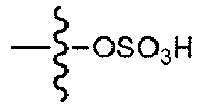
710 O 

712 O 

713 O 

714 O 

715 O 

716 O 

717 O 

718 S 
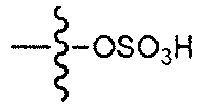
719 S 

720 O 

721 S 

- Eine pharmazeutische Zusammensetzung, umfassend eine Verbindung nach einem der Ansprüche 1-4 und wenigstens 1 β-Lactam-Antibiotikum.
- Die pharmazeutische Zusammensetzung nach Anspruch 5, wobei das β-Lactam-Antibiotikum ist:(A) ein Cephalosporin, wobei vorzugsweise das Cephalosporin Ceftolozan ist, oder(B) ein Carbapenem oder(C) ein Monobactam.
- Eine Verbindung gemäß einem der Ansprüche 1 bis 4 zusammen mit einem β-Lactam-Antibiotikum, oder eine pharmazeutische Zusammensetzung gemäß entweder Anspruch 5 oder Anspruch 6 zur Verwendung bei einem Verfahren zur Behandlung oder Prävention einer Bakterieninfektion.
- Die Verbindung oder pharmazeutische Zusammensetzung zur Verwendung bei dem Verfahren nach Anspruch 7, wobei das β-Lactam-Antibiotikum ist:(A) ein Cephalosporin, wobei vorzugsweise das Cephalosporin Ceftolozan ist, oder(B) ein Carbapenem oder(C) ein Monobactam.
- Die Verbindung oder pharmazeutische Zusammensetzung zur Verwendung bei dem Verfahren nach Anspruch 7, wobei die Bakterieninfektion durch Bakterien hervorgerufen wird, die eine Klasse-A-, Klasse-C- oder Klasse-D-β-Lactamase erzeugen, zum Beispiel wobei die Bakterieninfektion durch Bakterien hervorgerufen wird, die eine Klasse-A- oder Klasse-C-β-Lactamase erzeugen, oder wobei die Bakterieninfektion hervorgerufen wird durch Bakterien, ausgewählt aus Acinetobacter spp., Acinetobacter baumannii, Citrobacter spp., Escherichia spp., Escherichia coli, Haemophilus influenzae, Morganella morganii, Pseudomonas aeruginosa, Klebsiella spp., Klebsiella pneumoniae, Enterobacter spp., Enterobacter cloacae und Enterobacter aerogenes, Pasteurella spp., Proteus spp., Proteus mirabilis, Serratia spp, Serratia marcescens und Providencia spp., oder wobei die Bakterieninfektion hervorgerufen wird durch Bakterien, die eine KPC-2- oder KPC-3-β-Lactamase erzeugen, oder wobei die Bakterieninfektion hervorgerufen wird durch Bakterien, die eine OXA-15-β-Lactamase erzeugen.
- Die Verbindung oder pharmazeutische Zusammensetzung zur Verwendung bei dem Verfahren nach Anspruch 7, wobei die Bakterieninfektion durch β-Lactam-resistente Bakterien hervorgerufen wird.
- Eine Verbindung gemäß einem der Ansprüche 1-4 zur Verwendung bei einem Verfahren zur Behandlung einer Bakterieninfektion, das folgende Schritte umfasst:a. Verabreichen einer Verbindung nach einem der Ansprüche 1-4 an das Subjekt undb. Verabreichen einer therapeutisch wirksamen Menge eines β-Lactam-Antibiotikums an das Subjekt,oder folgende Schritte umfasst:a. Verabreichen einer therapeutisch wirksamen Menge eines β-Lactam-Antibiotikums an das Subjekt undb. Verabreichen einer Verbindung nach einem der Ansprüche 1-4 an das Subjekt.
- Die pharmazeutische Zusammensetzung nach Anspruch 5, umfassend eine Verbindung nach Anspruch 3 und Ceftolozan, wobei die Verbindung ausgewählt ist aus:


- Die pharmazeutische Zusammensetzung oder Verbindung zur Verwendung bei dem Verfahren gemäß einem der Ansprüche 7 oder 11, wobei das β-Lactam-Antibiotikum Ceftolozan ist und die Verbindung nach einem der Ansprüche 1-4 ausgewählt ist aus:


Applications Claiming Priority (3)
| Application Number | Priority Date | Filing Date | Title |
|---|---|---|---|
| US201261618131P | 2012-03-30 | 2012-03-30 | |
| US201361790579P | 2013-03-15 | 2013-03-15 | |
| PCT/US2013/034562 WO2013149121A1 (en) | 2012-03-30 | 2013-03-29 | 1,3,4-oxadiazole and 1,3,4-thiadiazole beta-lactamase inhibitors |
Publications (3)
| Publication Number | Publication Date |
|---|---|
| EP2831075A1 EP2831075A1 (de) | 2015-02-04 |
| EP2831075A4 EP2831075A4 (de) | 2015-09-09 |
| EP2831075B1 true EP2831075B1 (de) | 2017-11-08 |
Family
ID=49261280
Family Applications (1)
| Application Number | Title | Priority Date | Filing Date |
|---|---|---|---|
| EP13769724.9A Active EP2831075B1 (de) | 2012-03-30 | 2013-03-29 | 1,3,4-oxadiazol- und 1,3,4-thiadiazol-beta-lactamase-inhibitoren |
Country Status (16)
| Country | Link |
|---|---|
| US (7) | US8933232B2 (de) |
| EP (1) | EP2831075B1 (de) |
| JP (1) | JP2015514095A (de) |
| KR (1) | KR20140144254A (de) |
| CN (1) | CN104334558A (de) |
| AR (1) | AR090590A1 (de) |
| AU (1) | AU2013237939A1 (de) |
| CA (1) | CA2868553A1 (de) |
| CO (1) | CO7091178A2 (de) |
| IL (1) | IL234842A0 (de) |
| MX (1) | MX2014011827A (de) |
| PH (1) | PH12014502196A1 (de) |
| RU (1) | RU2014143821A (de) |
| SG (1) | SG11201406123TA (de) |
| TW (1) | TW201343645A (de) |
| WO (1) | WO2013149121A1 (de) |
Families Citing this family (42)
| Publication number | Priority date | Publication date | Assignee | Title |
|---|---|---|---|---|
| US9505761B2 (en) | 2011-12-02 | 2016-11-29 | Fedora Pharmaceuticals Inc. | Bicyclic compounds and their use as antibacterial agents and beta-lactamase inhibitors |
| US8796257B2 (en) | 2011-12-02 | 2014-08-05 | Naeja Pharmaceutical Inc. | Bicyclic compounds and their use as antibacterial agents and β-lactamase inhibitors |
| KR20140144254A (ko) * | 2012-03-30 | 2014-12-18 | 큐비스트 파마슈티컬즈 인코포레이티드 | 1,3,4-옥사디아졸 및 1,3,4-티아디아졸 β-락타마제 억제제 |
| US8969570B2 (en) * | 2012-03-30 | 2015-03-03 | Cubist Pharmaceuticals, Inc. | Beta-lactamase inhibitors |
| MX2014011825A (es) * | 2012-03-30 | 2015-02-20 | Cubist Pharm Inc | INHIBIDORES DE ISOXAZOL ß-LACTAMASA. |
| US8916709B2 (en) * | 2012-03-30 | 2014-12-23 | Cubist Pharmaceuticals, Inc. | 1,2,4-oxadiazole and 1,2,4-thiadiazole β-lactamase inhibitors |
| AR090539A1 (es) | 2012-04-02 | 2014-11-19 | Astrazeneca Ab | COMPUESTOS INHIBIDORES DE b LACTAMASA |
| AR091222A1 (es) * | 2012-05-30 | 2015-01-21 | Meiji Seika Pharma Co Ltd | INHIBIDOR DE b-LACTAMASA Y PROCESO PARA PREPARARLO |
| US9040712B2 (en) | 2013-01-23 | 2015-05-26 | Novartis Ag | Thiadiazole analogs thereof and methods for treating SMN-deficiency-related-conditions |
| US9006421B2 (en) | 2013-03-14 | 2015-04-14 | Cubist Pharmaceuticals, Inc. | Cephalosporin compositions and methods of manufacture |
| WO2014152996A1 (en) * | 2013-03-14 | 2014-09-25 | Cubist Pharmaceuticals, Inc. | Crystalline form of a beta-lactamase inhibitor |
| US9872906B2 (en) | 2013-03-15 | 2018-01-23 | Merck Sharp & Dohme Corp. | Ceftolozane antibiotic compositions |
| US20140274996A1 (en) | 2013-03-15 | 2014-09-18 | Cubist Pharmaceuticals, Inc. | Tazobactam and ceftolozane antibiotic compositions |
| US20140315876A1 (en) * | 2013-03-15 | 2014-10-23 | Cubist Pharmaceuticals, Inc. | Beta-lactamase inhibitors |
| WO2015051101A1 (en) | 2013-10-02 | 2015-04-09 | Cubist Pharmaceuticals, Inc. | B-lactamase inhibitor picoline salt |
| BR112016016853A2 (pt) * | 2014-01-21 | 2017-08-08 | Wockhardt Ltd | Compostos contendo nitrogênio, seu uso e seu processo de preparação, composição farmacêutica e seu uso |
| CN106164072B (zh) | 2014-03-24 | 2019-10-01 | 诺华股份有限公司 | 用于治疗细菌感染的单环内酰胺有机化合物 |
| WO2015150891A1 (en) * | 2014-03-29 | 2015-10-08 | Wockhardt Limited | A process for preparation of trans-sulfuric acid mono-[2-(5-azetidin-3-ylmethyl-[1,3,4]oxadiazol-2-yl)-7-oxo-1,6-diazabicyclo [3.2.1]oct-6-yl]ester |
| IN2014MU01196A (de) * | 2014-03-29 | 2015-10-02 | Wockhardt Ltd | |
| WO2015159263A1 (en) * | 2014-04-18 | 2015-10-22 | Wockhardt Limited | Pharmaceutical compositions comprising antibacterial agents |
| BR112016024235A2 (pt) * | 2014-04-18 | 2017-08-15 | Wockhardt Ltd | composições farmacêuticas compreendendo agentes antibacterianos |
| WO2015173663A1 (en) * | 2014-05-14 | 2015-11-19 | Wockhardt Limited | A process for preparation of trans-sulfuric acid mono-{2-[5-(2-methylamino-ethyl)-[1,3,4]-oxadiazol-2-yl]-7-oxo-1,6-diaza-bicyclo [3.2.1]oct-6-yl} ester |
| WO2015173665A1 (en) * | 2014-05-14 | 2015-11-19 | Wockhardt Limited | A process for preparation of trans-sulfuric acid mono-{2-[5-(3-azetidinylamino)-methyl-[1,3,4]- oxadiazol-2-yl]-7-oxo-1,6-diazabicyclo[3.2.1] oct-6-yl} ester trifluoroacetate |
| BR112017010132B1 (pt) | 2014-11-17 | 2023-02-14 | Entasis Therapeutics Limited | Combinações e seus usos no tratamento de infecções bacterianas resistentes |
| CA2974078A1 (en) | 2015-01-20 | 2016-07-28 | Millennium Pharmaceuticals, Inc. | Quinazoline and quinoline compounds and uses thereof |
| WO2016157057A1 (en) * | 2015-03-27 | 2016-10-06 | Wockhardt Limited | A process for preparation of sodium salt of (2s, 5r) sulfuric acid mono-(2-[1,3,4]oxadiazol-2-yl-7-oxo-1,6-diazabicyclo[3.2.1 ]oct-6-yl)ester |
| CN107580595B (zh) * | 2015-05-07 | 2020-09-18 | 拜欧蒂姆公司 | 杂环化合物及它们在预防或治疗细菌感染中的应用 |
| CA3000087A1 (en) | 2015-10-02 | 2017-04-06 | Legochem Biosciences, Inc. | Compositions and methods for inhibiting beta-lactamase |
| WO2017203266A1 (en) | 2016-05-25 | 2017-11-30 | Entasis Therapeutics Limited | Combination therapy for treatment of resistant bacterial infections |
| CA3036557A1 (en) | 2016-09-16 | 2018-03-22 | Entasis Therapeutics Limited | Beta-lactamase inhibitor compounds |
| JOP20190061A1 (ar) | 2016-09-28 | 2019-03-26 | Novartis Ag | مثبطات بيتا-لاكتاماز |
| US10404592B2 (en) * | 2017-03-24 | 2019-09-03 | Cisco Technology, Inc. | System and method to facilitate content forwarding using bit index explicit replication (BIER) in an information-centric networking (ICN) environment |
| WO2018193369A1 (en) * | 2017-04-18 | 2018-10-25 | Wockhardt Limited | Antibacterial compositions |
| PL3630111T3 (pl) | 2017-05-08 | 2022-05-23 | Entasis Therapeutics, Inc. | Związki i sposoby leczenia zakażeń bakteryjnych |
| CN111417633B (zh) | 2017-12-01 | 2022-05-06 | 齐鲁制药有限公司 | 一种β-内酰胺酶抑制剂的晶型及其制备方法 |
| EP3744722A4 (de) * | 2018-01-25 | 2021-11-03 | Suzhou Sinovent Pharmaceuticals Co., Ltd. | Ss-lactamase-hemmer und verwendung davon |
| KR102790878B1 (ko) | 2018-08-09 | 2025-04-02 | 앤타바이오 에스에이에스 | 세린 베타-락타마제의 억제제로서 다이아자바이사이클로옥타논 |
| US11905286B2 (en) | 2018-08-09 | 2024-02-20 | Antabio Sas | Diazabicyclooctanones as inhibitors of serine beta-lactamases |
| EP3854786B1 (de) * | 2018-09-21 | 2026-02-18 | UBE Corporation | Verfahren zur herstellung von aminosäurederivaten |
| CN111777607A (zh) * | 2020-07-21 | 2020-10-16 | 海南海灵化学制药有限公司 | 一种阿维巴坦纳的制备方法 |
| EP4434988A4 (de) | 2021-11-17 | 2026-01-28 | Evopoint Biosciences Co Ltd | Beta-lactamase-inhibitorzwischenprodukt und herstellungsverfahren dafür |
| CN116514696B (zh) * | 2023-06-29 | 2023-12-01 | 艾斯拓康医药科技(北京)有限公司 | 可离子化脂质及其应用 |
Family Cites Families (38)
| Publication number | Priority date | Publication date | Assignee | Title |
|---|---|---|---|---|
| US3854480A (en) | 1969-04-01 | 1974-12-17 | Alza Corp | Drug-delivery system |
| CA1195983A (en) | 1982-02-27 | 1985-10-29 | Graham Walker | Antibacterial 1-normon-2-yl thiazoles and - oxazoles |
| US4452775A (en) | 1982-12-03 | 1984-06-05 | Syntex (U.S.A.) Inc. | Cholesterol matrix delivery system for sustained release of macromolecules |
| US5039660A (en) | 1988-03-02 | 1991-08-13 | Endocon, Inc. | Partially fused peptide pellet |
| JPH09504512A (ja) | 1993-08-13 | 1997-05-06 | スミスクライン・ビーチャム・パブリック・リミテッド・カンパニー | 抗菌活性、抗マイコプラズマ活性、抗真菌類活性および除草活性を有するモン酸aおよびcの誘導体 |
| DK1115417T3 (da) | 1998-09-25 | 2006-07-31 | Cubist Pharm Inc | Anvendelse af daptomycin |
| FR2812635B1 (fr) | 2000-08-01 | 2002-10-11 | Aventis Pharma Sa | Nouveaux composes heterocycliques, preparation et utilisation comme medicaments notamment comme anti- bacteriens |
| US20130059774A1 (en) | 2000-08-01 | 2013-03-07 | Mahesh Vithalbhai Patel | Efflux pump inhibitors |
| FR2835186B1 (fr) | 2002-01-28 | 2006-10-20 | Aventis Pharma Sa | Nouveaux composes heterocycliques, actifs comme inhibiteurs de beta-lactamases |
| US7618978B2 (en) | 2004-04-22 | 2009-11-17 | Eli Lilly And Company | Amides as BACE inhibitors |
| WO2006125974A1 (en) | 2005-05-24 | 2006-11-30 | Astrazeneca Ab | Aminopiperidine quinolines and their azaisosteric analogues with antibacterial activity |
| US20090275552A1 (en) | 2006-04-28 | 2009-11-05 | Mahesh Vithalbhai Patel | Therapy for Treating Resistant Bacterial Infections |
| WO2008039420A2 (en) | 2006-09-27 | 2008-04-03 | Merck & Co., Inc. | Novel inhibitors of beta-lactamase |
| FR2921060B1 (fr) | 2007-09-14 | 2012-06-15 | Novexel | Nouveau procede de preparation d'une piperidine disubsituee et nouveaux intermediaires |
| US20100120715A1 (en) | 2007-11-13 | 2010-05-13 | Burns Christopher J | Beta-lactamase inhibitors |
| CN101983203A (zh) * | 2007-11-13 | 2011-03-02 | 诺瓦提斯国际药物有限公司 | β-内酰胺酶抑制剂 |
| MY162532A (en) | 2008-01-18 | 2017-06-15 | Merck Sharp & Dohme | Beta-lactamase inhibitors |
| FR2930553B1 (fr) | 2008-04-29 | 2010-05-21 | Novexel | Composes azabicycliques, leur preparation et leur utilisation comme medicaments, notamment inhibiteurs de beta-lactamases |
| EP3260551A1 (de) | 2008-06-19 | 2017-12-27 | Astra Zeneca Holding France | Verwendung von (1r,2s,5r)-1,6-diazabicyclo [3.2.1]oktan-2-carboxamid, 7-oxo-6-(sulfooxy)-, mononatriumsalz als diagnostisches reagens zum nachweis von serin-beta-lactamasen |
| WO2010118361A1 (en) | 2009-04-09 | 2010-10-14 | Sopharmia, Inc. | Beta lactamase inhibitors |
| WO2010126820A2 (en) | 2009-04-30 | 2010-11-04 | Merck Sharp & Dohme Corp. | Preparation of alkyl esters of n-protected oxo-azacycloalkylcarboxylic acids |
| FR2951171A1 (fr) | 2009-10-09 | 2011-04-15 | Novexel | Nouveau sel de sodium d'un compose azabicyclique sous forme enantiomere cristallisee et nouvelles formes polymorphes et pseudopolymorphes ainsi que leur preparation |
| EP2536408A1 (de) | 2010-02-16 | 2012-12-26 | Wockhardt Research Centre | Effluxpumpenhemmer |
| US8630784B2 (en) | 2010-07-19 | 2014-01-14 | Honda Motor Co., Ltd. | Method and system for detecting and compensating weather condition effects on wireless signals |
| US8772490B2 (en) | 2010-12-22 | 2014-07-08 | Meiji Seika Pharma Co., Ltd. | Optically active diazabicyclooctane derivatives and process for preparing the same |
| CN103328476B (zh) | 2010-12-22 | 2016-12-28 | 明治制果药业株式会社 | 光学活性二氮杂环辛烷衍生物及其制备方法 |
| US8829191B2 (en) | 2011-06-17 | 2014-09-09 | Melanie Simone Ronsheim | Processes for preparing heterocyclic compounds including trans-7-oxo-6-(sulphooxy)-1,6-diazabicyclo[3,2,1]octane-2-carboxamide and salts thereof |
| MX338610B (es) | 2011-07-26 | 2016-04-25 | Wockhardt Ltd | Composiciones farmaceuticas que comprenden sulbactam e inhibidor de beta-lactamasa. |
| MX362683B (es) | 2011-07-26 | 2019-01-31 | Wockhardt Ltd | Composiciones farmacéuticas que comprenden antibiótico de beta-lactama, sulbactama e inhibidor de beta-lactamasa. |
| KR101618424B1 (ko) * | 2011-08-30 | 2016-05-04 | 욱크하르트 리미티드 | 1,6-디아자비시클로[3,2,1]옥탄-7-온 유도체 및 세균 감염 치료에서의 그 유도체의 용도 |
| BR112014003476A2 (pt) | 2011-09-13 | 2017-03-01 | Wockhardt Ltd | compostos contendo nitrogênio e seu uso |
| US8796257B2 (en) | 2011-12-02 | 2014-08-05 | Naeja Pharmaceutical Inc. | Bicyclic compounds and their use as antibacterial agents and β-lactamase inhibitors |
| US8969570B2 (en) * | 2012-03-30 | 2015-03-03 | Cubist Pharmaceuticals, Inc. | Beta-lactamase inhibitors |
| KR20140144254A (ko) * | 2012-03-30 | 2014-12-18 | 큐비스트 파마슈티컬즈 인코포레이티드 | 1,3,4-옥사디아졸 및 1,3,4-티아디아졸 β-락타마제 억제제 |
| MX2014011825A (es) * | 2012-03-30 | 2015-02-20 | Cubist Pharm Inc | INHIBIDORES DE ISOXAZOL ß-LACTAMASA. |
| US8916709B2 (en) * | 2012-03-30 | 2014-12-23 | Cubist Pharmaceuticals, Inc. | 1,2,4-oxadiazole and 1,2,4-thiadiazole β-lactamase inhibitors |
| AR091222A1 (es) | 2012-05-30 | 2015-01-21 | Meiji Seika Pharma Co Ltd | INHIBIDOR DE b-LACTAMASA Y PROCESO PARA PREPARARLO |
| WO2014152996A1 (en) * | 2013-03-14 | 2014-09-25 | Cubist Pharmaceuticals, Inc. | Crystalline form of a beta-lactamase inhibitor |
-
2013
- 2013-03-29 KR KR1020147030475A patent/KR20140144254A/ko not_active Withdrawn
- 2013-03-29 RU RU2014143821A patent/RU2014143821A/ru unknown
- 2013-03-29 JP JP2015503631A patent/JP2015514095A/ja active Pending
- 2013-03-29 US US13/853,439 patent/US8933232B2/en active Active
- 2013-03-29 US US13/853,452 patent/US8940897B2/en active Active
- 2013-03-29 EP EP13769724.9A patent/EP2831075B1/de active Active
- 2013-03-29 US US13/853,460 patent/US8962844B2/en active Active
- 2013-03-29 CA CA2868553A patent/CA2868553A1/en not_active Abandoned
- 2013-03-29 WO PCT/US2013/034562 patent/WO2013149121A1/en not_active Ceased
- 2013-03-29 AU AU2013237939A patent/AU2013237939A1/en not_active Abandoned
- 2013-03-29 US US13/853,327 patent/US8962843B2/en active Active
- 2013-03-29 CN CN201380028018.6A patent/CN104334558A/zh active Pending
- 2013-03-29 SG SG11201406123TA patent/SG11201406123TA/en unknown
- 2013-03-29 TW TW102111614A patent/TW201343645A/zh unknown
- 2013-03-29 MX MX2014011827A patent/MX2014011827A/es unknown
- 2013-03-29 US US13/853,443 patent/US8933233B2/en active Active
- 2013-04-03 AR ARP130101086A patent/AR090590A1/es unknown
-
2014
- 2014-09-28 IL IL234842A patent/IL234842A0/en unknown
- 2014-09-30 PH PH12014502196A patent/PH12014502196A1/en unknown
- 2014-09-30 CO CO14216414A patent/CO7091178A2/es unknown
- 2014-10-02 US US14/505,445 patent/US20150031665A1/en not_active Abandoned
- 2014-10-02 US US14/505,442 patent/US20150031659A1/en not_active Abandoned
Non-Patent Citations (1)
| Title |
|---|
| None * |
Also Published As
| Publication number | Publication date |
|---|---|
| IL234842A0 (en) | 2014-12-31 |
| US8940897B2 (en) | 2015-01-27 |
| US20130296293A1 (en) | 2013-11-07 |
| US20150031665A1 (en) | 2015-01-29 |
| CA2868553A1 (en) | 2013-10-03 |
| US20130303504A1 (en) | 2013-11-14 |
| AU2013237939A1 (en) | 2014-10-30 |
| EP2831075A4 (de) | 2015-09-09 |
| US8933233B2 (en) | 2015-01-13 |
| CN104334558A (zh) | 2015-02-04 |
| PH12014502196A1 (en) | 2014-12-10 |
| US8962843B2 (en) | 2015-02-24 |
| US20130296291A1 (en) | 2013-11-07 |
| CO7091178A2 (es) | 2014-10-21 |
| WO2013149121A1 (en) | 2013-10-03 |
| SG11201406123TA (en) | 2014-10-30 |
| US20150031659A1 (en) | 2015-01-29 |
| US20130296292A1 (en) | 2013-11-07 |
| US8962844B2 (en) | 2015-02-24 |
| TW201343645A (zh) | 2013-11-01 |
| US8933232B2 (en) | 2015-01-13 |
| RU2014143821A (ru) | 2016-05-27 |
| WO2013149121A8 (en) | 2014-05-01 |
| US20130296290A1 (en) | 2013-11-07 |
| MX2014011827A (es) | 2015-02-20 |
| EP2831075A1 (de) | 2015-02-04 |
| KR20140144254A (ko) | 2014-12-18 |
| JP2015514095A (ja) | 2015-05-18 |
| AR090590A1 (es) | 2014-11-26 |
Similar Documents
| Publication | Publication Date | Title |
|---|---|---|
| US8933233B2 (en) | 1,3,4-oxadiazole and 1,3,4-thiadiazole β-lactamase inhibitors | |
| EP2831069B1 (de) | Isoxazol-beta-lactamase-hemmer | |
| US8916709B2 (en) | 1,2,4-oxadiazole and 1,2,4-thiadiazole β-lactamase inhibitors | |
| EP2872510B1 (de) | 1,6-diazabicyclo-[3,2,1-]octan-7-on-derivate und ihre verwendung zur behandlung bakterieller infektionen | |
| CA2833241C (en) | 1,6-diazabicyclo [3,2,1] octan-7-one derivatives and their use in the treatment of bacterial infections | |
| US9120795B2 (en) | Crystalline form of a β-lactamase inhibitor | |
| US20150038478A1 (en) | Beta-lactamase inhibitors | |
| KR101933084B1 (ko) | 화합물 및 그의 용도 | |
| US20140315876A1 (en) | Beta-lactamase inhibitors | |
| KR20180051559A (ko) | 베타-락타마제의 억제용 조성물 및 억제 방법 | |
| US20150038482A1 (en) | Isoxazole beta-lactamase inhibitors | |
| EP4146651B1 (de) | Sulfonylamidinsubstituierte verbindungen und ihre verwendung als beta-lactamase-hemmer |
Legal Events
| Date | Code | Title | Description |
|---|---|---|---|
| PUAI | Public reference made under article 153(3) epc to a published international application that has entered the european phase |
Free format text: ORIGINAL CODE: 0009012 |
|
| 17P | Request for examination filed |
Effective date: 20141027 |
|
| AK | Designated contracting states |
Kind code of ref document: A1 Designated state(s): AL AT BE BG CH CY CZ DE DK EE ES FI FR GB GR HR HU IE IS IT LI LT LU LV MC MK MT NL NO PL PT RO RS SE SI SK SM TR |
|
| AX | Request for extension of the european patent |
Extension state: BA ME |
|
| RA4 | Supplementary search report drawn up and despatched (corrected) |
Effective date: 20150812 |
|
| RIC1 | Information provided on ipc code assigned before grant |
Ipc: A61K 31/439 20060101ALI20150806BHEP Ipc: A61P 31/04 20060101ALI20150806BHEP Ipc: C07D 471/08 20060101AFI20150806BHEP |
|
| RAP1 | Party data changed (applicant data changed or rights of an application transferred) |
Owner name: MERCK SHARP & DOHME CORP. |
|
| 17Q | First examination report despatched |
Effective date: 20160819 |
|
| STAA | Information on the status of an ep patent application or granted ep patent |
Free format text: STATUS: EXAMINATION IS IN PROGRESS |
|
| GRAP | Despatch of communication of intention to grant a patent |
Free format text: ORIGINAL CODE: EPIDOSNIGR1 |
|
| STAA | Information on the status of an ep patent application or granted ep patent |
Free format text: STATUS: GRANT OF PATENT IS INTENDED |
|
| RIC1 | Information provided on ipc code assigned before grant |
Ipc: A61K 31/546 20060101ALI20170505BHEP Ipc: A61K 31/427 20060101ALI20170505BHEP Ipc: A61K 45/06 20060101ALI20170505BHEP Ipc: C07D 471/08 20060101AFI20170505BHEP Ipc: A61K 31/545 20060101ALI20170505BHEP Ipc: A61P 31/04 20060101ALI20170505BHEP Ipc: A61K 31/439 20060101ALI20170505BHEP Ipc: A61K 31/407 20060101ALI20170505BHEP Ipc: A61K 31/436 20060101ALI20170505BHEP |
|
| INTG | Intention to grant announced |
Effective date: 20170601 |
|
| GRAS | Grant fee paid |
Free format text: ORIGINAL CODE: EPIDOSNIGR3 |
|
| GRAA | (expected) grant |
Free format text: ORIGINAL CODE: 0009210 |
|
| STAA | Information on the status of an ep patent application or granted ep patent |
Free format text: STATUS: THE PATENT HAS BEEN GRANTED |
|
| AK | Designated contracting states |
Kind code of ref document: B1 Designated state(s): AL AT BE BG CH CY CZ DE DK EE ES FI FR GB GR HR HU IE IS IT LI LT LU LV MC MK MT NL NO PL PT RO RS SE SI SK SM TR |
|
| AX | Request for extension of the european patent |
Extension state: BA ME |
|
| REG | Reference to a national code |
Ref country code: GB Ref legal event code: FG4D |
|
| REG | Reference to a national code |
Ref country code: CH Ref legal event code: EP Ref country code: AT Ref legal event code: REF Ref document number: 944036 Country of ref document: AT Kind code of ref document: T Effective date: 20171115 |
|
| REG | Reference to a national code |
Ref country code: IE Ref legal event code: FG4D |
|
| REG | Reference to a national code |
Ref country code: DE Ref legal event code: R096 Ref document number: 602013029155 Country of ref document: DE |
|
| REG | Reference to a national code |
Ref country code: FR Ref legal event code: PLFP Year of fee payment: 6 |
|
| REG | Reference to a national code |
Ref country code: NL Ref legal event code: MP Effective date: 20171108 |
|
| REG | Reference to a national code |
Ref country code: LT Ref legal event code: MG4D |
|
| REG | Reference to a national code |
Ref country code: AT Ref legal event code: MK05 Ref document number: 944036 Country of ref document: AT Kind code of ref document: T Effective date: 20171108 |
|
| PG25 | Lapsed in a contracting state [announced via postgrant information from national office to epo] |
Ref country code: LT Free format text: LAPSE BECAUSE OF FAILURE TO SUBMIT A TRANSLATION OF THE DESCRIPTION OR TO PAY THE FEE WITHIN THE PRESCRIBED TIME-LIMIT Effective date: 20171108 Ref country code: ES Free format text: LAPSE BECAUSE OF FAILURE TO SUBMIT A TRANSLATION OF THE DESCRIPTION OR TO PAY THE FEE WITHIN THE PRESCRIBED TIME-LIMIT Effective date: 20171108 Ref country code: NL Free format text: LAPSE BECAUSE OF FAILURE TO SUBMIT A TRANSLATION OF THE DESCRIPTION OR TO PAY THE FEE WITHIN THE PRESCRIBED TIME-LIMIT Effective date: 20171108 Ref country code: SE Free format text: LAPSE BECAUSE OF FAILURE TO SUBMIT A TRANSLATION OF THE DESCRIPTION OR TO PAY THE FEE WITHIN THE PRESCRIBED TIME-LIMIT Effective date: 20171108 Ref country code: FI Free format text: LAPSE BECAUSE OF FAILURE TO SUBMIT A TRANSLATION OF THE DESCRIPTION OR TO PAY THE FEE WITHIN THE PRESCRIBED TIME-LIMIT Effective date: 20171108 Ref country code: NO Free format text: LAPSE BECAUSE OF FAILURE TO SUBMIT A TRANSLATION OF THE DESCRIPTION OR TO PAY THE FEE WITHIN THE PRESCRIBED TIME-LIMIT Effective date: 20180208 |
|
| PG25 | Lapsed in a contracting state [announced via postgrant information from national office to epo] |
Ref country code: HR Free format text: LAPSE BECAUSE OF FAILURE TO SUBMIT A TRANSLATION OF THE DESCRIPTION OR TO PAY THE FEE WITHIN THE PRESCRIBED TIME-LIMIT Effective date: 20171108 Ref country code: AT Free format text: LAPSE BECAUSE OF FAILURE TO SUBMIT A TRANSLATION OF THE DESCRIPTION OR TO PAY THE FEE WITHIN THE PRESCRIBED TIME-LIMIT Effective date: 20171108 Ref country code: BG Free format text: LAPSE BECAUSE OF FAILURE TO SUBMIT A TRANSLATION OF THE DESCRIPTION OR TO PAY THE FEE WITHIN THE PRESCRIBED TIME-LIMIT Effective date: 20180208 Ref country code: GR Free format text: LAPSE BECAUSE OF FAILURE TO SUBMIT A TRANSLATION OF THE DESCRIPTION OR TO PAY THE FEE WITHIN THE PRESCRIBED TIME-LIMIT Effective date: 20180209 Ref country code: LV Free format text: LAPSE BECAUSE OF FAILURE TO SUBMIT A TRANSLATION OF THE DESCRIPTION OR TO PAY THE FEE WITHIN THE PRESCRIBED TIME-LIMIT Effective date: 20171108 Ref country code: IS Free format text: LAPSE BECAUSE OF FAILURE TO SUBMIT A TRANSLATION OF THE DESCRIPTION OR TO PAY THE FEE WITHIN THE PRESCRIBED TIME-LIMIT Effective date: 20180308 Ref country code: RS Free format text: LAPSE BECAUSE OF FAILURE TO SUBMIT A TRANSLATION OF THE DESCRIPTION OR TO PAY THE FEE WITHIN THE PRESCRIBED TIME-LIMIT Effective date: 20171108 |
|
| PG25 | Lapsed in a contracting state [announced via postgrant information from national office to epo] |
Ref country code: CZ Free format text: LAPSE BECAUSE OF FAILURE TO SUBMIT A TRANSLATION OF THE DESCRIPTION OR TO PAY THE FEE WITHIN THE PRESCRIBED TIME-LIMIT Effective date: 20171108 Ref country code: SK Free format text: LAPSE BECAUSE OF FAILURE TO SUBMIT A TRANSLATION OF THE DESCRIPTION OR TO PAY THE FEE WITHIN THE PRESCRIBED TIME-LIMIT Effective date: 20171108 Ref country code: EE Free format text: LAPSE BECAUSE OF FAILURE TO SUBMIT A TRANSLATION OF THE DESCRIPTION OR TO PAY THE FEE WITHIN THE PRESCRIBED TIME-LIMIT Effective date: 20171108 Ref country code: CY Free format text: LAPSE BECAUSE OF FAILURE TO SUBMIT A TRANSLATION OF THE DESCRIPTION OR TO PAY THE FEE WITHIN THE PRESCRIBED TIME-LIMIT Effective date: 20171108 Ref country code: DK Free format text: LAPSE BECAUSE OF FAILURE TO SUBMIT A TRANSLATION OF THE DESCRIPTION OR TO PAY THE FEE WITHIN THE PRESCRIBED TIME-LIMIT Effective date: 20171108 |
|
| REG | Reference to a national code |
Ref country code: DE Ref legal event code: R097 Ref document number: 602013029155 Country of ref document: DE |
|
| PG25 | Lapsed in a contracting state [announced via postgrant information from national office to epo] |
Ref country code: PL Free format text: LAPSE BECAUSE OF FAILURE TO SUBMIT A TRANSLATION OF THE DESCRIPTION OR TO PAY THE FEE WITHIN THE PRESCRIBED TIME-LIMIT Effective date: 20171108 Ref country code: SM Free format text: LAPSE BECAUSE OF FAILURE TO SUBMIT A TRANSLATION OF THE DESCRIPTION OR TO PAY THE FEE WITHIN THE PRESCRIBED TIME-LIMIT Effective date: 20171108 Ref country code: RO Free format text: LAPSE BECAUSE OF FAILURE TO SUBMIT A TRANSLATION OF THE DESCRIPTION OR TO PAY THE FEE WITHIN THE PRESCRIBED TIME-LIMIT Effective date: 20171108 Ref country code: IT Free format text: LAPSE BECAUSE OF FAILURE TO SUBMIT A TRANSLATION OF THE DESCRIPTION OR TO PAY THE FEE WITHIN THE PRESCRIBED TIME-LIMIT Effective date: 20171108 |
|
| PLBE | No opposition filed within time limit |
Free format text: ORIGINAL CODE: 0009261 |
|
| STAA | Information on the status of an ep patent application or granted ep patent |
Free format text: STATUS: NO OPPOSITION FILED WITHIN TIME LIMIT |
|
| 26N | No opposition filed |
Effective date: 20180809 |
|
| REG | Reference to a national code |
Ref country code: CH Ref legal event code: PL |
|
| PG25 | Lapsed in a contracting state [announced via postgrant information from national office to epo] |
Ref country code: SI Free format text: LAPSE BECAUSE OF FAILURE TO SUBMIT A TRANSLATION OF THE DESCRIPTION OR TO PAY THE FEE WITHIN THE PRESCRIBED TIME-LIMIT Effective date: 20171108 Ref country code: MC Free format text: LAPSE BECAUSE OF FAILURE TO SUBMIT A TRANSLATION OF THE DESCRIPTION OR TO PAY THE FEE WITHIN THE PRESCRIBED TIME-LIMIT Effective date: 20171108 |
|
| REG | Reference to a national code |
Ref country code: BE Ref legal event code: MM Effective date: 20180331 |
|
| PG25 | Lapsed in a contracting state [announced via postgrant information from national office to epo] |
Ref country code: LU Free format text: LAPSE BECAUSE OF NON-PAYMENT OF DUE FEES Effective date: 20180329 |
|
| PG25 | Lapsed in a contracting state [announced via postgrant information from national office to epo] |
Ref country code: IE Free format text: LAPSE BECAUSE OF NON-PAYMENT OF DUE FEES Effective date: 20180329 |
|
| PG25 | Lapsed in a contracting state [announced via postgrant information from national office to epo] |
Ref country code: CH Free format text: LAPSE BECAUSE OF NON-PAYMENT OF DUE FEES Effective date: 20180331 Ref country code: BE Free format text: LAPSE BECAUSE OF NON-PAYMENT OF DUE FEES Effective date: 20180331 Ref country code: LI Free format text: LAPSE BECAUSE OF NON-PAYMENT OF DUE FEES Effective date: 20180331 |
|
| PG25 | Lapsed in a contracting state [announced via postgrant information from national office to epo] |
Ref country code: MT Free format text: LAPSE BECAUSE OF NON-PAYMENT OF DUE FEES Effective date: 20180329 |
|
| PG25 | Lapsed in a contracting state [announced via postgrant information from national office to epo] |
Ref country code: TR Free format text: LAPSE BECAUSE OF FAILURE TO SUBMIT A TRANSLATION OF THE DESCRIPTION OR TO PAY THE FEE WITHIN THE PRESCRIBED TIME-LIMIT Effective date: 20171108 |
|
| PG25 | Lapsed in a contracting state [announced via postgrant information from national office to epo] |
Ref country code: HU Free format text: LAPSE BECAUSE OF FAILURE TO SUBMIT A TRANSLATION OF THE DESCRIPTION OR TO PAY THE FEE WITHIN THE PRESCRIBED TIME-LIMIT; INVALID AB INITIO Effective date: 20130329 Ref country code: PT Free format text: LAPSE BECAUSE OF FAILURE TO SUBMIT A TRANSLATION OF THE DESCRIPTION OR TO PAY THE FEE WITHIN THE PRESCRIBED TIME-LIMIT Effective date: 20171108 |
|
| PG25 | Lapsed in a contracting state [announced via postgrant information from national office to epo] |
Ref country code: MK Free format text: LAPSE BECAUSE OF NON-PAYMENT OF DUE FEES Effective date: 20171108 |
|
| PG25 | Lapsed in a contracting state [announced via postgrant information from national office to epo] |
Ref country code: AL Free format text: LAPSE BECAUSE OF FAILURE TO SUBMIT A TRANSLATION OF THE DESCRIPTION OR TO PAY THE FEE WITHIN THE PRESCRIBED TIME-LIMIT Effective date: 20171108 |
|
| REG | Reference to a national code |
Ref country code: DE Ref legal event code: R081 Ref document number: 602013029155 Country of ref document: DE Owner name: MERCK SHARP & DOHME LLC, RAHWAY, US Free format text: FORMER OWNER: MERCK SHARP & DOHME CORP., RAHWAY, N.J., US |
|
| REG | Reference to a national code |
Ref country code: GB Ref legal event code: 732E Free format text: REGISTERED BETWEEN 20221013 AND 20221019 |
|
| PGFP | Annual fee paid to national office [announced via postgrant information from national office to epo] |
Ref country code: DE Payment date: 20250210 Year of fee payment: 13 |
|
| PGFP | Annual fee paid to national office [announced via postgrant information from national office to epo] |
Ref country code: FR Payment date: 20250210 Year of fee payment: 13 |
|
| PGFP | Annual fee paid to national office [announced via postgrant information from national office to epo] |
Ref country code: GB Payment date: 20250213 Year of fee payment: 13 |