EP2837392A2 - Modifiziertes Erythropoietin, dem ein wasserlösliches langkettiges Molekül hinzugefügt wird - Google Patents
Modifiziertes Erythropoietin, dem ein wasserlösliches langkettiges Molekül hinzugefügt wird Download PDFInfo
- Publication number
- EP2837392A2 EP2837392A2 EP20140182629 EP14182629A EP2837392A2 EP 2837392 A2 EP2837392 A2 EP 2837392A2 EP 20140182629 EP20140182629 EP 20140182629 EP 14182629 A EP14182629 A EP 14182629A EP 2837392 A2 EP2837392 A2 EP 2837392A2
- Authority
- EP
- European Patent Office
- Prior art keywords
- erythropoietin
- pharmaceutical composition
- water
- epo
- added
- Prior art date
- Legal status (The legal status is an assumption and is not a legal conclusion. Google has not performed a legal analysis and makes no representation as to the accuracy of the status listed.)
- Withdrawn
Links
Images

Classifications
-
- A—HUMAN NECESSITIES
- A61—MEDICAL OR VETERINARY SCIENCE; HYGIENE
- A61K—PREPARATIONS FOR MEDICAL, DENTAL OR TOILETRY PURPOSES
- A61K9/00—Medicinal preparations characterised by special physical form
- A61K9/0012—Galenical forms characterised by the site of application
- A61K9/0019—Injectable compositions; Intramuscular, intravenous, arterial, subcutaneous administration; Compositions to be administered through the skin in an invasive manner
-
- A—HUMAN NECESSITIES
- A61—MEDICAL OR VETERINARY SCIENCE; HYGIENE
- A61K—PREPARATIONS FOR MEDICAL, DENTAL OR TOILETRY PURPOSES
- A61K38/00—Medicinal preparations containing peptides
- A61K38/16—Peptides having more than 20 amino acids; Gastrins; Somatostatins; Melanotropins; Derivatives thereof
- A61K38/17—Peptides having more than 20 amino acids; Gastrins; Somatostatins; Melanotropins; Derivatives thereof from animals; from humans
- A61K38/18—Growth factors; Growth regulators
- A61K38/1816—Erythropoietin [EPO]
-
- A—HUMAN NECESSITIES
- A61—MEDICAL OR VETERINARY SCIENCE; HYGIENE
- A61K—PREPARATIONS FOR MEDICAL, DENTAL OR TOILETRY PURPOSES
- A61K47/00—Medicinal preparations characterised by the non-active ingredients used, e.g. carriers or inert additives; Targeting or modifying agents chemically bound to the active ingredient
- A61K47/50—Medicinal preparations characterised by the non-active ingredients used, e.g. carriers or inert additives; Targeting or modifying agents chemically bound to the active ingredient the non-active ingredient being chemically bound to the active ingredient, e.g. polymer-drug conjugates
- A61K47/51—Medicinal preparations characterised by the non-active ingredients used, e.g. carriers or inert additives; Targeting or modifying agents chemically bound to the active ingredient the non-active ingredient being chemically bound to the active ingredient, e.g. polymer-drug conjugates the non-active ingredient being a modifying agent
- A61K47/56—Medicinal preparations characterised by the non-active ingredients used, e.g. carriers or inert additives; Targeting or modifying agents chemically bound to the active ingredient the non-active ingredient being chemically bound to the active ingredient, e.g. polymer-drug conjugates the non-active ingredient being a modifying agent the modifying agent being an organic macromolecular compound, e.g. an oligomeric, polymeric or dendrimeric molecule
- A61K47/59—Medicinal preparations characterised by the non-active ingredients used, e.g. carriers or inert additives; Targeting or modifying agents chemically bound to the active ingredient the non-active ingredient being chemically bound to the active ingredient, e.g. polymer-drug conjugates the non-active ingredient being a modifying agent the modifying agent being an organic macromolecular compound, e.g. an oligomeric, polymeric or dendrimeric molecule obtained otherwise than by reactions only involving carbon-to-carbon unsaturated bonds, e.g. polyureas or polyurethanes
- A61K47/60—Medicinal preparations characterised by the non-active ingredients used, e.g. carriers or inert additives; Targeting or modifying agents chemically bound to the active ingredient the non-active ingredient being chemically bound to the active ingredient, e.g. polymer-drug conjugates the non-active ingredient being a modifying agent the modifying agent being an organic macromolecular compound, e.g. an oligomeric, polymeric or dendrimeric molecule obtained otherwise than by reactions only involving carbon-to-carbon unsaturated bonds, e.g. polyureas or polyurethanes the organic macromolecular compound being a polyoxyalkylene oligomer, polymer or dendrimer, e.g. PEG, PPG, PEO or polyglycerol
-
- A—HUMAN NECESSITIES
- A61—MEDICAL OR VETERINARY SCIENCE; HYGIENE
- A61K—PREPARATIONS FOR MEDICAL, DENTAL OR TOILETRY PURPOSES
- A61K9/00—Medicinal preparations characterised by special physical form
- A61K9/06—Ointments; Bases therefor; Other semi-solid forms, e.g. creams, sticks, gels
-
- A—HUMAN NECESSITIES
- A61—MEDICAL OR VETERINARY SCIENCE; HYGIENE
- A61K—PREPARATIONS FOR MEDICAL, DENTAL OR TOILETRY PURPOSES
- A61K9/00—Medicinal preparations characterised by special physical form
- A61K9/08—Solutions
-
- A—HUMAN NECESSITIES
- A61—MEDICAL OR VETERINARY SCIENCE; HYGIENE
- A61P—SPECIFIC THERAPEUTIC ACTIVITY OF CHEMICAL COMPOUNDS OR MEDICINAL PREPARATIONS
- A61P43/00—Drugs for specific purposes, not provided for in groups A61P1/00-A61P41/00
-
- A—HUMAN NECESSITIES
- A61—MEDICAL OR VETERINARY SCIENCE; HYGIENE
- A61P—SPECIFIC THERAPEUTIC ACTIVITY OF CHEMICAL COMPOUNDS OR MEDICINAL PREPARATIONS
- A61P7/00—Drugs for disorders of the blood or the extracellular fluid
- A61P7/06—Antianaemics
Definitions
- the invention relates to a pharmaceutical composition containing erythropoietin to which a water-soluble long-chain molecule is added.
- erythropoietin (sometimes abbreviated as "EPO"), a hormone which increases hematopoiesis, is produced by genetic recombination techniques and is achieving good results as a pharmaceutical product in the treatment of anemia.
- EPO erythropoietin
- PEG polyethylene glycol
- Patent Document 1 Due to this blood residence time-extending effect, the drug effects last longer, allowing the frequency of administration to be decreased.
- Non-Patent Document 1 a protein to which a large number of high-molecular-weight PEG molecules are added, when administered in vivo, will have a greater longevity in the blood.
- proteins such as EPO which manifest a physiological activity by binding with a receptor, as the molecular weight of the water-soluble long-chain molecules added becomes higher and the number of such molecules added becomes greater, the physiological activity in vitro decreases.
- diseases For example, among cats (within Japan), the incidence of chronic renal failure rose markedly from 0.64% to 3.95% in the ten-year period starting in 1996, climbing from 28th place to 4th place in the ranking of diseases (Non-Patent Document 2).
- Human EPO preparations are being therapeutically used also to treat anemia in animals.
- physiologically active proteins such as EPO have species-specific amino acid sequences
- when a human-derived EPO preparation is administered to animals other than humans there is a risk that it will induce the expression of anti-EPO antibodies.
- investigations are currently being carried out to develop EPO preparations for the treatment in cats or dogs, each of which has an amino acid sequence that is specific to the particular species.
- An object of the invention is to provide a pharmaceutical composition that contains EPO as the active ingredient; has a high safety in vivo although having a high physiological activity; and has a feature that has, when administered in humans and/or animals, a hematopoietic effect that lasts for not less than seven days.
- the inventors have conducted careful investigations on the chemical modification of EPO with PEG, as a result of which they have found that, depending on the number of PEG molecules added and the PEG molecular weight or structure, the hematopoietic effect lasts for not less than seven days. Thus the invention has been arrived at.
- the invention relates to a pharmaceutical composition
- a pharmaceutical composition comprising an erythropoietin to which two or more water-soluble long-chain molecules are added, wherein an amount of said erythropoietin is not less than 50% of total erythropoietin.
- the invention further relates to a pharmaceutical composition containing erythropoietin to which a water-soluble long-chain molecule is added, wherein the water-soluble long-chain molecule has a molecular weight of not less than 30 kDa.
- the invention still further relates to a pharmaceutical composition containing erythropoietin to which a water-soluble long-chain molecule is added, wherein the water-soluble long-chain molecule has a branched chain.
- the water-soluble long-chain molecule is preferably not less than one compound selected from the group consisting of polyethylene glycol, polyamino acids and polypropylene glycol.
- the pharmaceutical composition preferably has a hematopoietic effect in humans and/or animals which lasts for not less than seven days, and the animals are preferably animals of the family Felidae and/or the family Canidae.
- the pharmaceutical composition is a solution or gel, the solution or gel having a pH of not less than 4 but not more than 8.
- the solution is formulated to have substantially the same osmotic pressure and pH as those of a mammalian bodily fluid so as to give no pain when administered.
- the erythropoietin preferably has a human-, cat- or dog-derived amino acid sequence.
- the erythropoietin is preferably the following (a) to (c):
- not less than one polyethylene glycol addition site is a lysine-78 residue.
- the pharmaceutical composition preferably does not trigger the production of an antibody to erythropoietin.
- the invention further relates to a drug for treating anemia and a hematopoietic drug, each of which includes the foregoing pharmaceutical composition.
- the hematopoietic effect By administering the pharmaceutical composition of the invention in humans or animals, it is possible for the hematopoietic effect to last for not less than seven days.
- the pharmaceutical composition of the invention when the preparation is administered, places little strain on the patient, such as less pain following injection, and moreover has a long-lasting drug efficacy.
- the invention relates to three pharmaceutical compositions.
- a first aspect of the invention relates to a pharmaceutical composition containing, in an amount equal to not less than 50% of the total erythropoietin, erythropoietin (sometimes abbreviated as "EPO") to which two or more water-soluble long-chain molecules are added.
- EPO erythropoietin
- the number of water-soluble long-chain molecules added to EPO is two or more, with two molecules being preferred.
- EPO to which one water-soluble long-chain molecule is added may additionally be contained.
- EPO to which two or more water-soluble long-chain molecules are added is preferably a main component, more preferably accounts for not less than 50%, and even more preferably accounts for not less than 70%, of the total EPO.
- the content of EPO to which two or more water-soluble long-chain molecules are added is calculated by measuring the fluorescent intensity of the bands obtained by fluorescence staining following fractionation by SDS-PAGE.
- EPO to which two or more water-soluble long-chain molecules are added to be a main component in the total EPO means that EPO to which two or more water-soluble long-chain molecules are added exhibits the most intense band in SDS-PAGE.
- the phrase "exhibits the most intense band in SDS-PAGE” means that when proteins contained in a sample subjected to electrophoresis by SDS-PAGE are detected by fluorescence staining using, for example, SYPRO Ruby or the like, the intensity of the signal from EPO to which two or more water-soluble long-chain molecules are added is higher than the intensity of other signals.
- HPLC may also be used to determine whether EPO to which two or more water-soluble long-chain molecules are added is a main component in the total EPO. For example, a sample passing through a column of, e.g., YMC Pack Diol-200 (available from YMC Co., Ltd.) is detected by absorbance measurement, and the intensity of the signal from EPO to which two or more water-soluble long-chain molecules are added can be determined to be higher than the intensity of other signals.
- YMC Pack Diol-200 available from YMC Co., Ltd.
- the molecular weight of the water-soluble long-chain molecule is preferably not less than 10 kDa, and more preferably not less than 20 kDa. At less than 5 kDa, the hematopoietic effect tends not to last long.
- a second aspect of the invention relates to a pharmaceutical composition containing EPO to which a water-soluble long-chain molecule is added, wherein the water-soluble long-chain molecule has a molecular weight of not less than 30 kDa.
- the number of water-soluble long-chain molecules added to EPO is not subject to any particular limitation, and may be one molecule or may be two or more molecules.
- the molecular weight of the water-soluble long-chain molecule is preferably not less than 30 kDa, and more preferably not less than 40 kDa. At less than 20 kDa, the hematopoietic effect tends not to last long.
- a third aspect of the invention relates to a pharmaceutical composition containing EPO to which a water-soluble long-chain molecule is added, wherein the water-soluble long-chain molecule has a branched chain.
- the water-soluble long-chain molecule has a branched chain
- the number of branches is two or more, with the number of branch points being one or more.
- the number of water-soluble long-chain molecules added to EPO is not subject to any particular limitation. Even in cases where the number of water-soluble long-chain molecules added is one molecule, the hematopoietic effect caused when the pharmaceutical composition is administered is seen to last for not less than seven days.
- a method of adding PEG having a branched chain is described in JP-T H9-504299 .
- a water-soluble long-chain molecule is added to EPO for the purpose of inhibiting metabolism and prolonging the blood kinetics.
- the water-soluble long-chain molecule is not subject to any particular limitation, and examples thereof include polyethylene glycol (PEG), polyamino acids and polypropylene glycol.
- PEG polyethylene glycol
- the use of such a molecule may involve preparing a reaction precursor, followed by addition to a protein by way of a synthesis reaction. Genetic recombination techniques may also be used to produce proteins to which these molecules have been linked.
- PEG lacks antigenicity and is nontoxic, and therefore is effective also for lowering the antigenicity of the modified protein and suppressing the expression of anti-EPO antibodies as a side effect.
- Methods for covalently linking PEG to a protein generally involve a chemical reaction with a protein, or with an oxidation-activatable functional group on a sugar chain thereof, such as a polyol, lactol, amine, carboxylic acid or carboxylic acid derivative.
- an oxidation-activatable functional group on a sugar chain thereof such as a polyol, lactol, amine, carboxylic acid or carboxylic acid derivative.
- a sulfonate ester-activated polymer such as a sulfonate ester-activated PEG.
- EPO addition by such methods is possible.
- PEGylation reaction precursors which may be used include long-chain molecules that have been methoxylated at one end.
- those which are esterified with a succinimidyl fatty acid at the other unmethoxylated end of PEG have been developed; of these, ones in which the fatty acid part is propionic acid or butyric acid are preferred from the standpoint of reactivity.
- succinimidyl propionic acid ester of methoxy PEG abbreviated as "SPA-PEG”
- EPO succinimidyl propionic acid ester of methoxy PEG
- addition is known to take place selectively at lysine residues. Because a plurality of lysine residues are present on EPO, as the reaction proceeds, the number of PEG molecules added increases, resulting in a mixture of isomers having different numbers of added molecules.
- the site where PEG is added to the EPO protein will probably depend on the species from which EPO is derived and the mode of reaction. However, even in cases where a plurality of PEG molecules are added, it is preferable for not less than one place of addition to be a lysine residue corresponding to the lysine 52 on human EPO. For example, in cat EPO having the sequence set forth in SEQ ID NO:1, addition at lysine 78 is preferred.
- the EPO-containing pharmaceutical composition of the invention thus has a hematopoietic effect in humans and/or animals which lasts for not less than seven days.
- the ratio of reticulocytes (erythrocyte precursors) to erythrocytes can be quantitatively determined and used as an indicator of the hematopoietic activity when the inventive pharmaceutical composition has been administered.
- the reticulocyte count can be measured by a smear test using a dye or stain, or by an automatic blood cell counter.
- the subject for administration of the pharmaceutical preparation is not subject to any particular limitation; administration may be carried out in humans and also in animals other than humans. No particular limitation is imposed on the animals other than humans, although animals of the family Felidae and/or the family Canidae are preferred. As will be subsequently described, when a cat-derived EPO is used, in animals of the family Felidae and the family Canidae, the possibility that the EPO will act as an antigen is low, making it possible to avoid the occurrence of side effects.
- Methods of administering the pharmaceutical composition include, but are not particularly limited to, intravenous, subcutaneous, oral, intramuscular, percutaneous and nasal administrations.
- the PEG-modified EPO in the invention may be used with an agent selected from among pharmacologically acceptable excipients, disintegrants and binders.
- excipients examples include starch, agar, sucrose, lactose, glucose, dextrin, sorbitol, gum arabic, cornstarch, mannitol, crystalline cellulose, lecithin, calcium phosphate and calcium sulfate. Use may also be made of pharmaceutically acceptable excipients other than these.
- disintegrants examples include starch, agar, calcium citrate, calcium carbonate, sodium hydrogen carbonate, dextrin, crystalline cellulose, carboxymethylcellulose and tragacanth. Use may also be made of pharmaceutically acceptable disintegrants other than these.
- binders examples include starch and starch derivatives, cellulose and cellulose derivatives, gum arabic, tragacanth, gelatin, sugars, ethanol and polyvinyl alcohol. Use may also be made of pharmaceutically acceptable binders other than these.
- the PEG-modified EPO in the invention may be used with an agent selected from among stabilizers, pH modifiers, osmotic pressure modifiers and surfactants.
- stabilizers include amino acids.
- amino acids used as stabilizers may be in the form of crystals or may be amorphous. Alternatively, use may be made of those which include impurities, such as plant or animal ingredients containing a high ratio of such amino acids.
- the crystals used may be in the L form, the D form, or as a mixture of L and D forms.
- pH modifiers include buffer systems selected from the group consisting of acetic acid/acetate, malic acid/malate, citric acid/citrate, tartaric acid/tartrate, lactic acid/lactate, phosphoric acid/phosphate, glycine/glycinate, Tris, glutamic acid/glutamate, and sodium carbonate, and other buffer systems.
- the lower limit in the pH of a gel or solution containing EPO is preferably 4, more preferably 4.5, and even more preferably 5.
- the upper limit in the pH is preferably 8, more preferably 7.5, and even more preferably 7.
- osmotic pressure modifiers include, but not limited to, salts, sugars, alcohols and amino acids.
- suitable use may be made of sodium chloride, polyhydric alcohols, monohydric alcohols, monosaccharides, disaccharides, oligosaccharides and amino acids, as well as derivatives thereof.
- polyhydric alcohols examples include trihydric alcohols such as glycerol; pentahydric alcohols such as arabitol, xylitol and adonitol; and hexahydric alcohols such as mannitol, sorbitol and dulcitol. Of these, hexahydric alcohols are preferred, and mannitol is especially suitably used.
- Examples of the monohydric alcohols include methanol, ethanol and isopropyl alcohol. Of these, ethanol is preferred.
- Examples of the monosaccharides that may be used include five-carbon sugars (pentoses) such as arabinose, xylose, ribose and 2-deoxyribose; and six-carbon sugars (hexoses) such as glucose, fructose, galactose, mannose, sorbose, rhamnose and fucose. Of these, six-carbon sugars are preferred.
- pentoses such as arabinose, xylose, ribose and 2-deoxyribose
- six-carbon sugars such as glucose, fructose, galactose, mannose, sorbose, rhamnose and fucose. Of these, six-carbon sugars are preferred.
- oligosaccharides examples include trisaccharides such as maltotriose and raffinose, and tetrasaccharides such as stachyose. Of these, trisaccharides are preferred.
- Examples of derivatives of these monosaccharides, disaccharides and oligosaccharides that may be used include glucosamine, galactosamine, glucoronic acid and galacturonic acid.
- a surfactant may be contained with the PEG-modified EPO in the invention.
- exemplary surfactants include anionic surfactants, nonionic surfactants, amphoteric surfactants and cationic surfactants, although the possibilities are not limited to these.
- exemplary anionic surfactants include anionic surfactants based on fatty acids, anionic surfactants based on linear alkylbenzenes, anionic surfactants based on higher alcohols, anionic surfactants based on ⁇ -olefins and anionic surfactants based on normal paraffins, but are not limited to these.
- nonionic surfactants include nonionic surfactants based on fatty acids, nonionic surfactants based on higher alcohols and nonionic surfactants based on alkylphenols, but are not limited to these.
- Illustrative, non-limiting, examples of nonionic surfactants include polysorbate and/or polyoxyethylene glycol sorbitan alkyl esters.
- Exemplary amphoteric surfactants include amphoteric surfactants based on amino acids, betaines, or amine oxides, but are not limited to these.
- Exemplary cationic surfactants include cationic surfactants based on quaternary ammonium salts, but are not limited to these.
- excipients disintegrants, binders, stabilizers, pH modifiers, osmotic pressure modifiers and surfactants may be freely combined.
- pharmaceutically acceptable additives other than excipients, disintegrants, binders, stabilizers, pH modifiers, osmotic pressure modifiers and surfactants may be added. Examples thereof include lubricants, coating agents, colorants, dispersing agents, absorption promoters, solubilizing agents, health food materials, dietary supplement materials, vitamins, fragrances, sweeteners, antiseptics, preservatives and antioxidants.
- the ingredients may be processed as a solution, gel or powder, and subsequently rendered into a solution-type preparation, a lyophilized preparation, a prefilled syringe, slow-release preparation for subcutaneous implantation, a micelle preparation, a gel preparation, or a liposome preparation for example.
- an EPO-containing pharmaceutical composition When an EPO-containing pharmaceutical composition is used as a solution, it is important for the solution to be formulated to have substantially the same osmotic pressure and pH as those of a mammalian bodily fluid (osmotic pressure: 280 mOsm/Kg H 2 O; pH: 7.4) so as to give no pain at the time of subcutaneous administration.
- osmotic pressure 280 mOsm/Kg H 2 O; pH: 7.4
- those having an osmotic pressure of not more than 400 mOsm/Kg H 2 O can be suitably used in the invention.
- those having an osmotic pressure of not less than 200 mOsm/Kg H 2 O can be suitably used.
- the container for this preparation is thus preferably a resin product to which little protein adsorbs. Accordingly, it is desirable to select a container material such that EPO adsorption to the container is not more than 1% of the total amount of EPO in the container. It is advantageous to select a material such that such adsorption is preferably not more than 0.7%, and more preferably not more than 0.5%.
- the resin materials which are known to have a low protein adsorption include container materials for medical use such as polyethylene (PE), polypropylene (PP), polyethylene terephthalate (PET), polycarbonate and polyethyl methacrylate.
- container materials for medical use such as polyethylene (PE), polypropylene (PP), polyethylene terephthalate (PET), polycarbonate and polyethyl methacrylate.
- Preferred examples of the resin materials that are known to have a low protein adsorption include resins which are polymers obtained by ring-opening polymerizing a cycloolefin such as norbornene, tetracyclododecene or a derivative thereof, and hydrogenates of these polymers; and copolymers in which a cyclopentyl residue or substituted cyclopentyl residue has been inserted in the molecular chain by polymerizing a cycloolefin such as norbornene, tetracyclododecene or a derivative thereof with ethylene or propylene.
- Cycloolefin copolymers which are copolymers obtained from tetracyclododecene and an olefin such as ethylene as the starting materials, are more preferable in that they have a low adsorption.
- cycloolefin polymers COP
- COP cycloolefin polymers
- the amino acid sequence of EPO may be a sequence derived from any organism. As well as humans, the cDNA cloning of EPO has been carried out in, for example, mice, rats, dogs and cats ( Wen et al.: Blood 82, 1507 (1993 )), and the amino acid sequences coding for these EPOs have been elucidated. In the invention, it is possible to use not only human EPO, but also EPOs having amino acid sequences specific to species other than humans.
- the amino acid sequence of EPO in the invention is preferably a human-derived amino acid sequence or an amino acid sequence derived from an animal of the order Carnivora.
- the family Felidae and the family Canidae are preferred, with the family Felidae being more preferred.
- Cat EPO is known to have 83.4% sequence identity to human EPO. Also, cat EPO expressed in CHO cells has a hematopoietic activity in cats ( Am. J. Vet. Res. 64, 1465-71 (2003 )).
- causes of anemia are known to include massive hemorrhaging, vitamin insufficiency, autoimmune diseases, malignant tumors, chronic inflammation, chronic renal failure, hemolysis and hematopoietic abnormality.
- Anemia from these causes occurs not only in humans, but also in pets such as dogs and cats, in livestock such as cattle, horses, sheep, goats and pigs, and even in animals such as lions, tigers, kangaroos, elephants, giraffes, zebras, koalas and pandas which are raised and publicly exhibited for ecological study in zoos and the like.
- Such cases of anemia can be treated with the EPO used in the invention.
- Cat EPO may be used to treat anemia in animals of the family Felidae, such as cats, lions and tigers. Moreover, cat EPO has a high sequence identity to dog EPO, and is also effective in dogs and other animals of the family Canidae, which belong taxonomically to the order Carnivora.
- the EPO preparation of the invention which has a long-lasting hematopoietic effect can be used in such animals, either in place of transfusion or at the time of drip infusion. If an animal feels pain during administration, this may hinder administration and, in the case of large animals, may even pose a danger to the veterinarian. However, pain can be minimized by adjusting the osmotic pressure and pH to values close to those in the bodily fluid of the subject animal.
- the amino acid sequence of EPO derived from animals of the family Felidae is preferably an amino acid sequence set forth in SEQ ID NO:1.
- a polypeptide having an amino acid sequence of not less than 70% sequence identity to the amino acid sequence making up the EPO as shown in SEQ ID NO:1 is also included in the inventive EPO.
- sequence identity of the EPO polypeptide to the amino acid sequence set forth in SEQ ID NO:1 is preferably not less than 70%, more preferably not less than 80%, even more preferably not less than 85%, still more preferably not less than 90%, and most preferably not less than 95%.
- the EPO may be a polypeptide in which one or a plurality of amino acids have been substituted, deleted, inserted and/or added, provided the hematopoietic activity is not lost.
- the number of such changes introduced is preferably not more than 50, more preferably not more than 40, even more preferably not more than 30, still more preferably not more than 20, and most preferably not more than 10.
- EPO in addition to recombinant-produced EPO which is produced with commonly available animal cells (e.g., CHO cells), prokaryotic organisms or yeasts as the host, use can also be made of EPO such as those collected from a natural source and those produced in recombinant animals, although the possibilities are not limited to these. It is also possible to utilize transgenic birds as the recombinant animals which produce EPO. Either the purified product or product in an unpurified state is acceptable, although the purified product is preferred from the standpoint of quality control.
- animal cells e.g., CHO cells
- prokaryotic organisms or yeasts as the host
- transgenic birds as the recombinant animals which produce EPO. Either the purified product or product in an unpurified state is acceptable, although the purified product is preferred from the standpoint of quality control.
- EPO EPO
- common protein recovery techniques such as salting out, adsorption column chromatography, ion exchange column chromatography, gel filtration column chromatography and antibody column methods, either alone or in combination, although the possibilities are not limited only to these.
- adsorption column chromatography include blue sepharose chromatography and heparin chromatography.
- ion exchange column chromatography include cation exchange chromatography and anion exchange chromatography.
- a retroviral vector for expressing cat-derived erythropoietin was microinjected into a chicken embryo, thereby producing a transgenic chicken which expresses cat-derived erythropoietin.
- Microinjection and artificial hatching were carried out under aseptic conditions.
- Fertilized chicken eggs (available from Shixoyama Shukeijo) were disinfected on the outside with a disinfectant (available from Showa Furanki) and ethanol.
- An incubator (model P-008(B), available from Showa Furanki) was adjusted to an environment of 38°C and 50-60% humidity and, with the incubation starting time (0 hours) being the time at which the power was turned on, incubation was carried out while rotating the eggs 90° every 15 minutes thereafter.
- the eggs were removed from the incubator, the pointed ends were cut away in the form of a circle of 3.5 cm diameter with a mini-router (available from Proxxon) fitted with a diamond edge (edge diameter, 20 mm; shaft diameter, 2.35 mm).
- the contents of the fertilized eggs were transferred to egg shells prepared by cutting away the pointed ends of double-yolked chicken eggs (available from Shiroyama Shukeijo) to a diameter of 4.5 cm and discarding the contents, and the embryos were moved upward with a syringe plunger.
- a viral solution was poured into Femtotips II (available from Eppendorf) under a stereomicroscope system (SZX12, available from Olympus Corporation) and about 2 ⁇ L of the solution containing a retroviral vector for expressing cat-derived erythropoietin as mentioned in JP-A 2007-89578 was microinjected using a FemtoJet (available from Eppendorf).
- each of these openings was sealed with a piece of Saran wrap (available from Asahi Kasei Corporation) cut to a size of about 8 ⁇ 8 cm 2 , following which the eggs were returned to the incubator and incubation was continued. Egg rotation in the incubator was changed to 30° every 30 minutes. On day 20 from the start of incubation, about 20 holes were made in the Saran wrap with a 20G syringe needle and incubation was then carried out while supplying 60 cc/min of oxygen to the incubator. Once the chicks in the eggs began pipping, the shells were broken, allowing the chicks to hatch. The chicks that emerged were raised and allowed to grow.
- Saran wrap available from Asahi Kasei Corporation
- the samples to be applied to a column were all syringe filtered, just prior to use, with a Millex-HV having a pore size of 0.45 ⁇ m (available from Nihon Millipore).
- a Millex-HV having a pore size of 0.45 ⁇ m
- pre-filtration was carried out with a Puradisc 25 having a pore size of 2 ⁇ m (available from Whatman Ltd.), following which filtration with the Millex was carried out.
- buffer exchange was carried out with a desalting column.
- the heparin sepharose-eluted fractions was concentrated to a total volume of about 30-40 mL with a Vivaspin 20 (available from Sartorius Mechatronics Japan) having a molecular weight cutoff of 5,000, applied 10 mL at a time to a HiPrep 26/10 Desalting column (available from GE Healthcare Japan, Amersham) equilibrated with 25 mM Tris (pH 7.0), and eluted with the same buffer and the protein-containing fraction was recovered.
- the pH was adjusted to 9.0 with 1 M NaOH, in addition to which the electric conductivity was adjusted to 3.0 to 3.2 mS/cm with 1 M NaCl.
- the maximum cat-derived erythropoietin recovery in this step was 95%.
- anionic exchange column chromatography was carried out.
- the sample following buffer exchange was applied in two divided portions to a 5 mL HiTrap DEAE FF column (available from GE Healthcare Japan, Amersham) that had been equilibrated with 25 mM Tris (pH 9.0) and at an electrical conductivity of 3.0 to 3.2 mS/cm, and a fraction of each portion that passed through the column without adsorption was collected.
- the column was regenerated each time with 1 M NaCl.
- the fractions were concentrated to a total volume of about 2-3 mL with a Vivaspin 20 having a molecular weight cutoff of 5,000.
- the maximum cat-derived erythropoietin recovery in this step was 92%.
- a Baf/EPOR cell proliferation assay was carried out by the subsequently described method on the cat-derived erythropoietin purified from egg white. As a result, the specific activity was 160,000 to 290,000 IU/mg.
- the cat EPO and PEG reagent were mixed together in a molar ratio of 1:5, and then reacted while being intimately mixed at 4°C. Because with PEG addition, first a mono-PEGylated form, next a di-PEGylated form, then an oligo-PEGylated form are generated, the generation of the respective PEGylated forms was monitored by HPLC (available from Shimadzu Corporation), and the reaction was stopped at a stage where sufficient amounts had been obtained. A YMC Pack Diol-200 (normal phase system; available from YMC Co., Ltd.) was used as the column.
- Polysorbate 80 available from Wako Pure Chemical Industries, Ltd.
- RPMI 1640 liquid medium available from Nissui Pharmaceutical Co., Ltd.
- FBS fetal bovine serum
- penicillin and streptomycin 50 units/mL penicillin and streptomycin was used as the medium for BaF/EPOR cells.
- Epogin was added to a final concentration of 1 U/mL. Cells in the logarithmic growth phase were used in the cell proliferation assay.
- Epogin diluted to concentrations of 25, 16, 10, 6.4, 4.0, 2.5, 1.6 and 1.0 U/mL in medium in amounts of 10 ⁇ L per well, and the cells were uniformly suspended therein (the final EPO concentrations were 2.5, 1.6, 1.0, 0.64, 0.4, 0.25, 0.16 and 0.1 U/mL, respectively).
- the samples used in the assay were serially diluted about 2- to 4-fold per step with medium to fall within the measurement range of the working curve, and then 10 ⁇ L portions of each sample dilution were added to the sown cells, following which the cells were uniformly suspended.
- Triplicate measurements were performed for each standard sample or unknown sample. Culturing was carried out for two days and 10 ⁇ L of a Cell Counting Kit-8 solution (available from Dojindo Laboratories) was then added to each well.
- a color reaction was carried out for 1 to 4 hours, following which the reaction was stopped by adding 10 ⁇ L of 0.1 mol/L hydrochloric acid, and the 450 nm absorbance was measured using a microplate reader.
- An approximation formula was derived from the measurement results for the standard samples by a logarithmic approximation. The activity of each sample was calculated based on the approximation formula obtained.
- Example 2 The samples prepared in Example 2 were subcutaneously administered in rats.
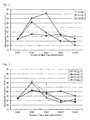
- reticulocyte count in peripheral blood was measured (Methylene Blue staining method: Laboratory-Network-Systems Inc.). Changes in the reticulocyte count are shown in Figs. 1 to 4 .
- a spectrophotometer Gene Quant pro; available from GE Healthcare Japan, Amersham; code 80-2114-98
- Laemmli sample buffer available from Bio-Rad Laboratories, code 161-0737; to which DTT has been added to a final concentration of 350 mM
- heat denaturation at 95°C is carried out for 5 minutes, following which the resulting solution is rapidly cooled on ice to give a sample, of which 2 ⁇ L is electrophoresced.
- Electrophoresis is carried out for 80 minutes using an e-PAGEL gel (E-R12.5L, available from Atto Corporation), using a pageRUN electrophoresis system (Model AE-6531, available from Atto Corporation), and after setting the current to 20 mA per slab gel.
- the gel is peeled from the gel plate and immersed for 30 minutes in ultrapure water (Milli-Q, available from Nihon Millipore, MILLIPORE ZMQS7V0T1).
- the ultrapure water is removed and the gel is fixed by 30 minutes of immersion in a fixing solution.
- the fixing solution is removed, and a staining solution is added, then the gel is immersed therein for not less than 3 hours but less than 6 hours.
- the staining solution is removed, and the gel is then immersed in a fixing solution and washed for 60 minutes while being gently shaken, after which the fixing solution used for washing is removed. A fresh fixing solution is then added, and 60 minutes of washing is carried out under gentle shaking.
- an image of the gel is captured while carrying out ultraviolet irradiation with a ChemiDoc XRS system (Bio-Rad Laboratories).
- a ChemiDoc XRS system Bio-Rad Laboratories
- the fluorescent intensity of the bands in the image is measured.
- the content is computed from the ratio of the area intensity displayed using the Lane Background command. In cases where a plurality of bands are found to exist, the ratio of the fluorescent intensity of the band having the target molecular weight to the sum of the fluorescent intensities of all the bands is defined as the content ratio.
Landscapes
- Health & Medical Sciences (AREA)
- Life Sciences & Earth Sciences (AREA)
- General Health & Medical Sciences (AREA)
- Veterinary Medicine (AREA)
- Chemical & Material Sciences (AREA)
- Animal Behavior & Ethology (AREA)
- Medicinal Chemistry (AREA)
- Pharmacology & Pharmacy (AREA)
- Public Health (AREA)
- Epidemiology (AREA)
- Engineering & Computer Science (AREA)
- Bioinformatics & Cheminformatics (AREA)
- Immunology (AREA)
- Zoology (AREA)
- Gastroenterology & Hepatology (AREA)
- Dermatology (AREA)
- Proteomics, Peptides & Aminoacids (AREA)
- General Chemical & Material Sciences (AREA)
- Nuclear Medicine, Radiotherapy & Molecular Imaging (AREA)
- Organic Chemistry (AREA)
- Chemical Kinetics & Catalysis (AREA)
- Hematology (AREA)
- Diabetes (AREA)
- Medicines That Contain Protein Lipid Enzymes And Other Medicines (AREA)
- Medicinal Preparation (AREA)
- Peptides Or Proteins (AREA)
Applications Claiming Priority (2)
| Application Number | Priority Date | Filing Date | Title |
|---|---|---|---|
| JP2009213205 | 2009-09-15 | ||
| EP10817218.0A EP2478914B1 (de) | 2009-09-15 | 2010-09-15 | Modifiziertes erythropoietin mit einem daran gebundenen langkettigen molekül |
Related Parent Applications (2)
| Application Number | Title | Priority Date | Filing Date |
|---|---|---|---|
| EP10817218.0A Division EP2478914B1 (de) | 2009-09-15 | 2010-09-15 | Modifiziertes erythropoietin mit einem daran gebundenen langkettigen molekül |
| EP10817218.0A Division-Into EP2478914B1 (de) | 2009-09-15 | 2010-09-15 | Modifiziertes erythropoietin mit einem daran gebundenen langkettigen molekül |
Publications (2)
| Publication Number | Publication Date |
|---|---|
| EP2837392A2 true EP2837392A2 (de) | 2015-02-18 |
| EP2837392A3 EP2837392A3 (de) | 2015-05-13 |
Family
ID=43758706
Family Applications (2)
| Application Number | Title | Priority Date | Filing Date |
|---|---|---|---|
| EP20140182629 Withdrawn EP2837392A3 (de) | 2009-09-15 | 2010-09-15 | Modifiziertes Erythropoietin, dem ein wasserlösliches langkettiges Molekül hinzugefügt wird |
| EP10817218.0A Active EP2478914B1 (de) | 2009-09-15 | 2010-09-15 | Modifiziertes erythropoietin mit einem daran gebundenen langkettigen molekül |
Family Applications After (1)
| Application Number | Title | Priority Date | Filing Date |
|---|---|---|---|
| EP10817218.0A Active EP2478914B1 (de) | 2009-09-15 | 2010-09-15 | Modifiziertes erythropoietin mit einem daran gebundenen langkettigen molekül |
Country Status (10)
| Country | Link |
|---|---|
| US (1) | US20120264687A1 (de) |
| EP (2) | EP2837392A3 (de) |
| JP (2) | JP5809057B2 (de) |
| KR (1) | KR101773918B1 (de) |
| CN (1) | CN102497877B (de) |
| BR (1) | BR112012008341A2 (de) |
| CA (1) | CA2773596C (de) |
| RU (1) | RU2549986C2 (de) |
| SG (2) | SG179131A1 (de) |
| WO (1) | WO2011034105A1 (de) |
Families Citing this family (6)
| Publication number | Priority date | Publication date | Assignee | Title |
|---|---|---|---|---|
| JP6920280B2 (ja) * | 2016-03-31 | 2021-08-18 | 株式会社カネカ | 精製されたネコ由来エリスロポエチンの製造方法 |
| JP6800633B2 (ja) | 2016-07-04 | 2020-12-16 | 株式会社カネカ | 非ヒト動物において腎機能の低下を抑制する方法 |
| US10940185B2 (en) | 2016-12-28 | 2021-03-09 | Jcr Pharmaceuticals Co., Ltd. | Lyophilized preparation |
| CN112933039A (zh) * | 2019-12-11 | 2021-06-11 | 深圳赛保尔生物药业有限公司 | 一种重组人促红细胞生成素液体制剂 |
| CN111574597B (zh) * | 2020-05-07 | 2023-03-31 | 中国科学院微生物研究所 | 一种经大分子量peg修饰的抗hiv多肽及其制备方法和用途 |
| CN119080909A (zh) * | 2024-08-29 | 2024-12-06 | 深圳赛保尔生物药业有限公司 | 负载peg-epo及间充质干细胞的组合物、药物及其制备方法 |
Citations (7)
| Publication number | Priority date | Publication date | Assignee | Title |
|---|---|---|---|---|
| JPS6289627A (ja) | 1985-06-04 | 1987-04-24 | Chugai Pharmaceut Co Ltd | 経鼻投与用貧血治療剤 |
| JPH05300939A (ja) | 1992-02-12 | 1993-11-16 | Daikyo Seiko:Kk | 医療用具品 |
| JPH05317411A (ja) | 1992-05-21 | 1993-12-03 | Nippon Zeon Co Ltd | 医療用器材 |
| JPH09504299A (ja) | 1993-10-27 | 1997-04-28 | エンゾン,インコーポレーテッド | 非抗原性分枝ポリマー複合体 |
| JPH1094393A (ja) | 1996-09-20 | 1998-04-14 | Chemo Sero Therapeut Res Inst | 生理活性物質産生用ターゲッティングベクター |
| WO2002032957A1 (en) | 2000-10-16 | 2002-04-25 | Chugai Seiyaku Kabushiki Kaisha | Peg-modified erythropoietin |
| JP2007089578A (ja) | 2005-08-31 | 2007-04-12 | Kaneka Corp | ネコ由来タンパク質のコード配列を含む外来性遺伝子を含むトランスジェニック鳥類およびその作製法 |
Family Cites Families (9)
| Publication number | Priority date | Publication date | Assignee | Title |
|---|---|---|---|---|
| JP2595992B2 (ja) | 1987-10-07 | 1997-04-02 | カシオ計算機株式会社 | 電子楽器 |
| CA2288341C (en) * | 1998-12-17 | 2005-01-04 | Pfizer Products Inc. | Erythropoietin in the treatment of domestic and livestock animals for anemia |
| RU2232163C2 (ru) * | 1999-07-02 | 2004-07-10 | Ф.Хоффманн-Ля Рош Аг | Конъюгаты эритропоэтина и полиэтиленгликоля, фармацевтические композиции (варианты), способ профилактического и/или терапевтического лечения нарушений и способ получения коньюгата или композиции |
| AU2004224466B2 (en) * | 2003-03-28 | 2008-01-03 | Biopolymed Inc. | Biologically active material conjugated with biocompatible polymer with 1:1 complex, preparation method thereof and pharmaceutical composition comprising the same |
| UA89481C2 (uk) * | 2003-09-30 | 2010-02-10 | Центокор, Инк. | Еритропоетинові міметичні шарнірно-серцевинні міметитіла людини, композиції, способи та застосування |
| WO2007026772A1 (ja) * | 2005-08-31 | 2007-03-08 | Kaneka Corporation | ネコ由来タンパク質のコード配列を含む外来性遺伝子を含むトランスジェニック鳥類およびその作製法 |
| EP1834963A1 (de) * | 2006-03-13 | 2007-09-19 | Siegfried Ltd. | Di-Polymer-Konjugate von Proteinen und Verfahren zur deren Erstellung |
| PL2054074T3 (pl) * | 2006-08-04 | 2015-03-31 | Prolong Pharmaceuticals Llc | Zmodyfikowana erytropoetyna |
| MX2011003272A (es) * | 2008-09-26 | 2011-04-28 | Ambrx Inc | Polipeptidos de eritropoyetina animal modificados y sus usos. |
-
2010
- 2010-09-15 KR KR1020127004458A patent/KR101773918B1/ko active Active
- 2010-09-15 RU RU2012114820/15A patent/RU2549986C2/ru active
- 2010-09-15 CA CA2773596A patent/CA2773596C/en active Active
- 2010-09-15 JP JP2011531952A patent/JP5809057B2/ja active Active
- 2010-09-15 EP EP20140182629 patent/EP2837392A3/de not_active Withdrawn
- 2010-09-15 CN CN201080041033.0A patent/CN102497877B/zh active Active
- 2010-09-15 EP EP10817218.0A patent/EP2478914B1/de active Active
- 2010-09-15 SG SG2012017901A patent/SG179131A1/en unknown
- 2010-09-15 WO PCT/JP2010/065976 patent/WO2011034105A1/ja not_active Ceased
- 2010-09-15 SG SG10201602211PA patent/SG10201602211PA/en unknown
- 2010-09-15 US US13/395,534 patent/US20120264687A1/en not_active Abandoned
- 2010-09-15 BR BR112012008341-4A patent/BR112012008341A2/pt not_active Application Discontinuation
-
2015
- 2015-05-28 JP JP2015108944A patent/JP6018667B2/ja active Active
Patent Citations (7)
| Publication number | Priority date | Publication date | Assignee | Title |
|---|---|---|---|---|
| JPS6289627A (ja) | 1985-06-04 | 1987-04-24 | Chugai Pharmaceut Co Ltd | 経鼻投与用貧血治療剤 |
| JPH05300939A (ja) | 1992-02-12 | 1993-11-16 | Daikyo Seiko:Kk | 医療用具品 |
| JPH05317411A (ja) | 1992-05-21 | 1993-12-03 | Nippon Zeon Co Ltd | 医療用器材 |
| JPH09504299A (ja) | 1993-10-27 | 1997-04-28 | エンゾン,インコーポレーテッド | 非抗原性分枝ポリマー複合体 |
| JPH1094393A (ja) | 1996-09-20 | 1998-04-14 | Chemo Sero Therapeut Res Inst | 生理活性物質産生用ターゲッティングベクター |
| WO2002032957A1 (en) | 2000-10-16 | 2002-04-25 | Chugai Seiyaku Kabushiki Kaisha | Peg-modified erythropoietin |
| JP2007089578A (ja) | 2005-08-31 | 2007-04-12 | Kaneka Corp | ネコ由来タンパク質のコード配列を含む外来性遺伝子を含むトランスジェニック鳥類およびその作製法 |
Non-Patent Citations (5)
| Title |
|---|
| "Polyethylene glycol-conjugated pharmaceutical proteins", PSTT, vol. 1, no. 8, 1998, pages 352 - 356 |
| AM. J. VET. RES., vol. 64, 2003, pages 1465 - 71 |
| REPORT ON SURVEY OF TAMA VETERINARY CLINICS ASSOCIATION, 2006 |
| TAMA J?I RINSH? KENKY?KAI CH?SA H?KOKU, 2006 |
| WEN ET AL., BLOOD, vol. 82, 1993, pages 1507 |
Also Published As
| Publication number | Publication date |
|---|---|
| CA2773596A1 (en) | 2011-03-24 |
| EP2478914A4 (de) | 2014-01-22 |
| EP2478914A1 (de) | 2012-07-25 |
| JP6018667B2 (ja) | 2016-11-02 |
| SG179131A1 (en) | 2012-04-27 |
| KR101773918B1 (ko) | 2017-09-01 |
| JP5809057B2 (ja) | 2015-11-10 |
| CA2773596C (en) | 2017-11-28 |
| EP2837392A3 (de) | 2015-05-13 |
| SG10201602211PA (en) | 2016-04-28 |
| RU2549986C2 (ru) | 2015-05-10 |
| JPWO2011034105A1 (ja) | 2013-02-14 |
| JP2015163637A (ja) | 2015-09-10 |
| CN102497877B (zh) | 2015-03-18 |
| CN102497877A (zh) | 2012-06-13 |
| BR112012008341A2 (pt) | 2020-08-25 |
| KR20120080161A (ko) | 2012-07-16 |
| WO2011034105A1 (ja) | 2011-03-24 |
| US20120264687A1 (en) | 2012-10-18 |
| RU2012114820A (ru) | 2013-10-27 |
| EP2478914B1 (de) | 2016-05-25 |
Similar Documents
| Publication | Publication Date | Title |
|---|---|---|
| JP6018667B2 (ja) | 水溶性長鎖分子を付加した修飾エリスロポエチン | |
| Sinclair et al. | Glycoengineering: the effect of glycosylation on the properties of therapeutic proteins | |
| ZA200105932B (en) | GCSF conjugates. | |
| CN101328213A (zh) | G-csf偶联物 | |
| US20100183543A1 (en) | Method for the treatment of radiation-induced neutropenia by administration of a multi-pegylated granulocyte colony stimulating factor (g-csf) variant | |
| US10653752B2 (en) | Methods and use of growth hormone supergene family protein analogs for treatment of radiation exposure | |
| KR100735784B1 (ko) | 인간 과립구콜로니자극인자 변이체 및 이의 화학적 접합물 | |
| TW201138831A (en) | Modified granulocyte colony stimulating factor (G-CSF) | |
| US11452761B2 (en) | Method for inhibiting renal hypofunction in non-human animal | |
| JP6920280B2 (ja) | 精製されたネコ由来エリスロポエチンの製造方法 | |
| KR20180017104A (ko) | Peg화된 과립세포 콜로니 자극 인자(gcsf) | |
| EP3738978A1 (de) | Rekombinanter gerinnungsfaktor viii mit verzögerter in-vivo-freisetzung und herstellungsverfahren dafür | |
| KR100808089B1 (ko) | 인간 과립구콜로니자극인자 변이체 및 이의 화학적 접합물 | |
| JP2011063522A (ja) | 活性安定化製剤 | |
| US20080171696A1 (en) | Pharmacodynamically enhanced therapeutic proteins | |
| HK1127615B (en) | Polymer/ recombinant human erythropoietin conjugate | |
| HK1127615A1 (en) | Polymer/ recombinant human erythropoietin conjugate | |
| JP2011063521A (ja) | タンパク質の修飾法 |
Legal Events
| Date | Code | Title | Description |
|---|---|---|---|
| 17P | Request for examination filed |
Effective date: 20140828 |
|
| AC | Divisional application: reference to earlier application |
Ref document number: 2478914 Country of ref document: EP Kind code of ref document: P |
|
| AK | Designated contracting states |
Kind code of ref document: A2 Designated state(s): AL AT BE BG CH CY CZ DE DK EE ES FI FR GB GR HR HU IE IS IT LI LT LU LV MC MK MT NL NO PL PT RO SE SI SK SM TR |
|
| PUAI | Public reference made under article 153(3) epc to a published international application that has entered the european phase |
Free format text: ORIGINAL CODE: 0009012 |
|
| PUAL | Search report despatched |
Free format text: ORIGINAL CODE: 0009013 |
|
| AK | Designated contracting states |
Kind code of ref document: A3 Designated state(s): AL AT BE BG CH CY CZ DE DK EE ES FI FR GB GR HR HU IE IS IT LI LT LU LV MC MK MT NL NO PL PT RO SE SI SK SM TR |
|
| RIC1 | Information provided on ipc code assigned before grant |
Ipc: A61K 47/10 20060101ALI20150407BHEP Ipc: A61K 47/34 20060101ALI20150407BHEP Ipc: A61K 47/18 20060101ALI20150407BHEP Ipc: A61P 7/06 20060101ALI20150407BHEP Ipc: A61K 38/22 20060101AFI20150407BHEP Ipc: A61P 43/00 20060101ALI20150407BHEP Ipc: A61K 9/06 20060101ALI20150407BHEP Ipc: A61K 9/08 20060101ALI20150407BHEP |
|
| STAA | Information on the status of an ep patent application or granted ep patent |
Free format text: STATUS: THE APPLICATION IS DEEMED TO BE WITHDRAWN |
|
| 18D | Application deemed to be withdrawn |
Effective date: 20151114 |