EP2856876A1 - Expression constitutive de ligands costimulants sur des lymphocytes T transférés de manière adoptive - Google Patents
Expression constitutive de ligands costimulants sur des lymphocytes T transférés de manière adoptive Download PDFInfo
- Publication number
- EP2856876A1 EP2856876A1 EP14185125.3A EP14185125A EP2856876A1 EP 2856876 A1 EP2856876 A1 EP 2856876A1 EP 14185125 A EP14185125 A EP 14185125A EP 2856876 A1 EP2856876 A1 EP 2856876A1
- Authority
- EP
- European Patent Office
- Prior art keywords
- cell
- cells
- antigen
- tumor
- 1bbl
- Prior art date
- Legal status (The legal status is an assumption and is not a legal conclusion. Google has not performed a legal analysis and makes no representation as to the accuracy of the status listed.)
- Granted
Links
Images








Classifications
-
- C—CHEMISTRY; METALLURGY
- C12—BIOCHEMISTRY; BEER; SPIRITS; WINE; VINEGAR; MICROBIOLOGY; ENZYMOLOGY; MUTATION OR GENETIC ENGINEERING
- C12N—MICROORGANISMS OR ENZYMES; COMPOSITIONS THEREOF; PROPAGATING, PRESERVING, OR MAINTAINING MICROORGANISMS; MUTATION OR GENETIC ENGINEERING; CULTURE MEDIA
- C12N5/00—Undifferentiated human, animal or plant cells, e.g. cell lines; Tissues; Cultivation or maintenance thereof; Culture media therefor
- C12N5/06—Animal cells or tissues; Human cells or tissues
- C12N5/0602—Vertebrate cells
- C12N5/0634—Cells from the blood or the immune system
- C12N5/0636—T lymphocytes
-
- A—HUMAN NECESSITIES
- A61—MEDICAL OR VETERINARY SCIENCE; HYGIENE
- A61K—PREPARATIONS FOR MEDICAL, DENTAL OR TOILETRY PURPOSES
- A61K38/00—Medicinal preparations containing peptides
- A61K38/16—Peptides having more than 20 amino acids; Gastrins; Somatostatins; Melanotropins; Derivatives thereof
- A61K38/17—Peptides having more than 20 amino acids; Gastrins; Somatostatins; Melanotropins; Derivatives thereof from animals; from humans
- A61K38/19—Cytokines; Lymphokines; Interferons
- A61K38/20—Interleukins [IL]
- A61K38/2013—IL-2
-
- A—HUMAN NECESSITIES
- A61—MEDICAL OR VETERINARY SCIENCE; HYGIENE
- A61K—PREPARATIONS FOR MEDICAL, DENTAL OR TOILETRY PURPOSES
- A61K38/00—Medicinal preparations containing peptides
- A61K38/16—Peptides having more than 20 amino acids; Gastrins; Somatostatins; Melanotropins; Derivatives thereof
- A61K38/17—Peptides having more than 20 amino acids; Gastrins; Somatostatins; Melanotropins; Derivatives thereof from animals; from humans
- A61K38/19—Cytokines; Lymphokines; Interferons
- A61K38/21—Interferons [IFN]
- A61K38/217—IFN-gamma
-
- A—HUMAN NECESSITIES
- A61—MEDICAL OR VETERINARY SCIENCE; HYGIENE
- A61K—PREPARATIONS FOR MEDICAL, DENTAL OR TOILETRY PURPOSES
- A61K40/00—Cellular immunotherapy
- A61K40/10—Cellular immunotherapy characterised by the cell type used
- A61K40/11—T-cells, e.g. tumour infiltrating lymphocytes [TIL] or regulatory T [Treg] cells; Lymphokine-activated killer [LAK] cells
-
- A—HUMAN NECESSITIES
- A61—MEDICAL OR VETERINARY SCIENCE; HYGIENE
- A61K—PREPARATIONS FOR MEDICAL, DENTAL OR TOILETRY PURPOSES
- A61K40/00—Cellular immunotherapy
- A61K40/30—Cellular immunotherapy characterised by the recombinant expression of specific molecules in the cells of the immune system
- A61K40/31—Chimeric antigen receptors [CAR]
-
- A—HUMAN NECESSITIES
- A61—MEDICAL OR VETERINARY SCIENCE; HYGIENE
- A61K—PREPARATIONS FOR MEDICAL, DENTAL OR TOILETRY PURPOSES
- A61K40/00—Cellular immunotherapy
- A61K40/40—Cellular immunotherapy characterised by antigens that are targeted or presented by cells of the immune system
- A61K40/41—Vertebrate antigens
- A61K40/42—Cancer antigens
- A61K40/4202—Receptors, cell surface antigens or cell surface determinants
- A61K40/4224—Molecules with a "CD" designation not provided for elsewhere
-
- A—HUMAN NECESSITIES
- A61—MEDICAL OR VETERINARY SCIENCE; HYGIENE
- A61K—PREPARATIONS FOR MEDICAL, DENTAL OR TOILETRY PURPOSES
- A61K40/00—Cellular immunotherapy
- A61K40/40—Cellular immunotherapy characterised by antigens that are targeted or presented by cells of the immune system
- A61K40/41—Vertebrate antigens
- A61K40/42—Cancer antigens
- A61K40/4274—Prostate associated antigens e.g. Prostate stem cell antigen [PSCA]; Prostate carcinoma tumor antigen [PCTA]; Prostatic acid phosphatase [PAP]; Prostate-specific G-protein-coupled receptor [PSGR]
- A61K40/4276—Prostate specific membrane antigen [PSMA]
-
- A—HUMAN NECESSITIES
- A61—MEDICAL OR VETERINARY SCIENCE; HYGIENE
- A61K—PREPARATIONS FOR MEDICAL, DENTAL OR TOILETRY PURPOSES
- A61K45/00—Medicinal preparations containing active ingredients not provided for in groups A61K31/00 - A61K41/00
- A61K45/06—Mixtures of active ingredients without chemical characterisation, e.g. antiphlogistics and cardiaca
-
- A—HUMAN NECESSITIES
- A61—MEDICAL OR VETERINARY SCIENCE; HYGIENE
- A61P—SPECIFIC THERAPEUTIC ACTIVITY OF CHEMICAL COMPOUNDS OR MEDICINAL PREPARATIONS
- A61P1/00—Drugs for disorders of the alimentary tract or the digestive system
- A61P1/04—Drugs for disorders of the alimentary tract or the digestive system for ulcers, gastritis or reflux esophagitis, e.g. antacids, inhibitors of acid secretion, mucosal protectants
-
- A—HUMAN NECESSITIES
- A61—MEDICAL OR VETERINARY SCIENCE; HYGIENE
- A61P—SPECIFIC THERAPEUTIC ACTIVITY OF CHEMICAL COMPOUNDS OR MEDICINAL PREPARATIONS
- A61P13/00—Drugs for disorders of the urinary system
- A61P13/08—Drugs for disorders of the urinary system of the prostate
-
- A—HUMAN NECESSITIES
- A61—MEDICAL OR VETERINARY SCIENCE; HYGIENE
- A61P—SPECIFIC THERAPEUTIC ACTIVITY OF CHEMICAL COMPOUNDS OR MEDICINAL PREPARATIONS
- A61P15/00—Drugs for genital or sexual disorders; Contraceptives
-
- A—HUMAN NECESSITIES
- A61—MEDICAL OR VETERINARY SCIENCE; HYGIENE
- A61P—SPECIFIC THERAPEUTIC ACTIVITY OF CHEMICAL COMPOUNDS OR MEDICINAL PREPARATIONS
- A61P25/00—Drugs for disorders of the nervous system
-
- A—HUMAN NECESSITIES
- A61—MEDICAL OR VETERINARY SCIENCE; HYGIENE
- A61P—SPECIFIC THERAPEUTIC ACTIVITY OF CHEMICAL COMPOUNDS OR MEDICINAL PREPARATIONS
- A61P31/00—Antiinfectives, i.e. antibiotics, antiseptics, chemotherapeutics
-
- A—HUMAN NECESSITIES
- A61—MEDICAL OR VETERINARY SCIENCE; HYGIENE
- A61P—SPECIFIC THERAPEUTIC ACTIVITY OF CHEMICAL COMPOUNDS OR MEDICINAL PREPARATIONS
- A61P31/00—Antiinfectives, i.e. antibiotics, antiseptics, chemotherapeutics
- A61P31/04—Antibacterial agents
-
- A—HUMAN NECESSITIES
- A61—MEDICAL OR VETERINARY SCIENCE; HYGIENE
- A61P—SPECIFIC THERAPEUTIC ACTIVITY OF CHEMICAL COMPOUNDS OR MEDICINAL PREPARATIONS
- A61P31/00—Antiinfectives, i.e. antibiotics, antiseptics, chemotherapeutics
- A61P31/10—Antimycotics
-
- A—HUMAN NECESSITIES
- A61—MEDICAL OR VETERINARY SCIENCE; HYGIENE
- A61P—SPECIFIC THERAPEUTIC ACTIVITY OF CHEMICAL COMPOUNDS OR MEDICINAL PREPARATIONS
- A61P31/00—Antiinfectives, i.e. antibiotics, antiseptics, chemotherapeutics
- A61P31/12—Antivirals
-
- A—HUMAN NECESSITIES
- A61—MEDICAL OR VETERINARY SCIENCE; HYGIENE
- A61P—SPECIFIC THERAPEUTIC ACTIVITY OF CHEMICAL COMPOUNDS OR MEDICINAL PREPARATIONS
- A61P31/00—Antiinfectives, i.e. antibiotics, antiseptics, chemotherapeutics
- A61P31/12—Antivirals
- A61P31/14—Antivirals for RNA viruses
- A61P31/16—Antivirals for RNA viruses for influenza or rhinoviruses
-
- A—HUMAN NECESSITIES
- A61—MEDICAL OR VETERINARY SCIENCE; HYGIENE
- A61P—SPECIFIC THERAPEUTIC ACTIVITY OF CHEMICAL COMPOUNDS OR MEDICINAL PREPARATIONS
- A61P31/00—Antiinfectives, i.e. antibiotics, antiseptics, chemotherapeutics
- A61P31/12—Antivirals
- A61P31/14—Antivirals for RNA viruses
- A61P31/18—Antivirals for RNA viruses for HIV
-
- A—HUMAN NECESSITIES
- A61—MEDICAL OR VETERINARY SCIENCE; HYGIENE
- A61P—SPECIFIC THERAPEUTIC ACTIVITY OF CHEMICAL COMPOUNDS OR MEDICINAL PREPARATIONS
- A61P31/00—Antiinfectives, i.e. antibiotics, antiseptics, chemotherapeutics
- A61P31/12—Antivirals
- A61P31/20—Antivirals for DNA viruses
-
- A—HUMAN NECESSITIES
- A61—MEDICAL OR VETERINARY SCIENCE; HYGIENE
- A61P—SPECIFIC THERAPEUTIC ACTIVITY OF CHEMICAL COMPOUNDS OR MEDICINAL PREPARATIONS
- A61P31/00—Antiinfectives, i.e. antibiotics, antiseptics, chemotherapeutics
- A61P31/12—Antivirals
- A61P31/20—Antivirals for DNA viruses
- A61P31/22—Antivirals for DNA viruses for herpes viruses
-
- A—HUMAN NECESSITIES
- A61—MEDICAL OR VETERINARY SCIENCE; HYGIENE
- A61P—SPECIFIC THERAPEUTIC ACTIVITY OF CHEMICAL COMPOUNDS OR MEDICINAL PREPARATIONS
- A61P33/00—Antiparasitic agents
-
- A—HUMAN NECESSITIES
- A61—MEDICAL OR VETERINARY SCIENCE; HYGIENE
- A61P—SPECIFIC THERAPEUTIC ACTIVITY OF CHEMICAL COMPOUNDS OR MEDICINAL PREPARATIONS
- A61P33/00—Antiparasitic agents
- A61P33/02—Antiprotozoals, e.g. for leishmaniasis, trichomoniasis, toxoplasmosis
-
- A—HUMAN NECESSITIES
- A61—MEDICAL OR VETERINARY SCIENCE; HYGIENE
- A61P—SPECIFIC THERAPEUTIC ACTIVITY OF CHEMICAL COMPOUNDS OR MEDICINAL PREPARATIONS
- A61P35/00—Antineoplastic agents
-
- A—HUMAN NECESSITIES
- A61—MEDICAL OR VETERINARY SCIENCE; HYGIENE
- A61P—SPECIFIC THERAPEUTIC ACTIVITY OF CHEMICAL COMPOUNDS OR MEDICINAL PREPARATIONS
- A61P37/00—Drugs for immunological or allergic disorders
- A61P37/02—Immunomodulators
-
- A—HUMAN NECESSITIES
- A61—MEDICAL OR VETERINARY SCIENCE; HYGIENE
- A61P—SPECIFIC THERAPEUTIC ACTIVITY OF CHEMICAL COMPOUNDS OR MEDICINAL PREPARATIONS
- A61P37/00—Drugs for immunological or allergic disorders
- A61P37/02—Immunomodulators
- A61P37/06—Immunosuppressants, e.g. drugs for graft rejection
-
- A—HUMAN NECESSITIES
- A61—MEDICAL OR VETERINARY SCIENCE; HYGIENE
- A61P—SPECIFIC THERAPEUTIC ACTIVITY OF CHEMICAL COMPOUNDS OR MEDICINAL PREPARATIONS
- A61P43/00—Drugs for specific purposes, not provided for in groups A61P1/00-A61P41/00
-
- C—CHEMISTRY; METALLURGY
- C12—BIOCHEMISTRY; BEER; SPIRITS; WINE; VINEGAR; MICROBIOLOGY; ENZYMOLOGY; MUTATION OR GENETIC ENGINEERING
- C12N—MICROORGANISMS OR ENZYMES; COMPOSITIONS THEREOF; PROPAGATING, PRESERVING, OR MAINTAINING MICROORGANISMS; MUTATION OR GENETIC ENGINEERING; CULTURE MEDIA
- C12N15/00—Mutation or genetic engineering; DNA or RNA concerning genetic engineering, vectors, e.g. plasmids, or their isolation, preparation or purification; Use of hosts therefor
- C12N15/09—Recombinant DNA-technology
- C12N15/63—Introduction of foreign genetic material using vectors; Vectors; Use of hosts therefor; Regulation of expression
- C12N15/79—Vectors or expression systems specially adapted for eukaryotic hosts
- C12N15/85—Vectors or expression systems specially adapted for eukaryotic hosts for animal cells
-
- C—CHEMISTRY; METALLURGY
- C12—BIOCHEMISTRY; BEER; SPIRITS; WINE; VINEGAR; MICROBIOLOGY; ENZYMOLOGY; MUTATION OR GENETIC ENGINEERING
- C12N—MICROORGANISMS OR ENZYMES; COMPOSITIONS THEREOF; PROPAGATING, PRESERVING, OR MAINTAINING MICROORGANISMS; MUTATION OR GENETIC ENGINEERING; CULTURE MEDIA
- C12N7/00—Viruses; Bacteriophages; Compositions thereof; Preparation or purification thereof
-
- A—HUMAN NECESSITIES
- A61—MEDICAL OR VETERINARY SCIENCE; HYGIENE
- A61K—PREPARATIONS FOR MEDICAL, DENTAL OR TOILETRY PURPOSES
- A61K35/00—Medicinal preparations containing materials or reaction products thereof with undetermined constitution
- A61K35/12—Materials from mammals; Compositions comprising non-specified tissues or cells; Compositions comprising non-embryonic stem cells; Genetically modified cells
- A61K2035/122—Materials from mammals; Compositions comprising non-specified tissues or cells; Compositions comprising non-embryonic stem cells; Genetically modified cells for inducing tolerance or supression of immune responses
-
- A—HUMAN NECESSITIES
- A61—MEDICAL OR VETERINARY SCIENCE; HYGIENE
- A61K—PREPARATIONS FOR MEDICAL, DENTAL OR TOILETRY PURPOSES
- A61K35/00—Medicinal preparations containing materials or reaction products thereof with undetermined constitution
- A61K35/12—Materials from mammals; Compositions comprising non-specified tissues or cells; Compositions comprising non-embryonic stem cells; Genetically modified cells
- A61K2035/124—Materials from mammals; Compositions comprising non-specified tissues or cells; Compositions comprising non-embryonic stem cells; Genetically modified cells the cells being hematopoietic, bone marrow derived or blood cells
-
- A—HUMAN NECESSITIES
- A61—MEDICAL OR VETERINARY SCIENCE; HYGIENE
- A61K—PREPARATIONS FOR MEDICAL, DENTAL OR TOILETRY PURPOSES
- A61K2239/00—Indexing codes associated with cellular immunotherapy of group A61K40/00
- A61K2239/31—Indexing codes associated with cellular immunotherapy of group A61K40/00 characterized by the route of administration
-
- C—CHEMISTRY; METALLURGY
- C12—BIOCHEMISTRY; BEER; SPIRITS; WINE; VINEGAR; MICROBIOLOGY; ENZYMOLOGY; MUTATION OR GENETIC ENGINEERING
- C12N—MICROORGANISMS OR ENZYMES; COMPOSITIONS THEREOF; PROPAGATING, PRESERVING, OR MAINTAINING MICROORGANISMS; MUTATION OR GENETIC ENGINEERING; CULTURE MEDIA
- C12N2501/00—Active agents used in cell culture processes, e.g. differentation
- C12N2501/20—Cytokines; Chemokines
- C12N2501/25—Tumour necrosing factors [TNF]
-
- C—CHEMISTRY; METALLURGY
- C12—BIOCHEMISTRY; BEER; SPIRITS; WINE; VINEGAR; MICROBIOLOGY; ENZYMOLOGY; MUTATION OR GENETIC ENGINEERING
- C12N—MICROORGANISMS OR ENZYMES; COMPOSITIONS THEREOF; PROPAGATING, PRESERVING, OR MAINTAINING MICROORGANISMS; MUTATION OR GENETIC ENGINEERING; CULTURE MEDIA
- C12N2501/00—Active agents used in cell culture processes, e.g. differentation
- C12N2501/50—Cell markers; Cell surface determinants
- C12N2501/51—B7 molecules, e.g. CD80, CD86, CD28 (ligand), CD152 (ligand)
-
- C—CHEMISTRY; METALLURGY
- C12—BIOCHEMISTRY; BEER; SPIRITS; WINE; VINEGAR; MICROBIOLOGY; ENZYMOLOGY; MUTATION OR GENETIC ENGINEERING
- C12N—MICROORGANISMS OR ENZYMES; COMPOSITIONS THEREOF; PROPAGATING, PRESERVING, OR MAINTAINING MICROORGANISMS; MUTATION OR GENETIC ENGINEERING; CULTURE MEDIA
- C12N2501/00—Active agents used in cell culture processes, e.g. differentation
- C12N2501/50—Cell markers; Cell surface determinants
- C12N2501/599—Cell markers; Cell surface determinants with CD designations not provided for elsewhere
-
- C—CHEMISTRY; METALLURGY
- C12—BIOCHEMISTRY; BEER; SPIRITS; WINE; VINEGAR; MICROBIOLOGY; ENZYMOLOGY; MUTATION OR GENETIC ENGINEERING
- C12N—MICROORGANISMS OR ENZYMES; COMPOSITIONS THEREOF; PROPAGATING, PRESERVING, OR MAINTAINING MICROORGANISMS; MUTATION OR GENETIC ENGINEERING; CULTURE MEDIA
- C12N2510/00—Genetically modified cells
-
- C—CHEMISTRY; METALLURGY
- C12—BIOCHEMISTRY; BEER; SPIRITS; WINE; VINEGAR; MICROBIOLOGY; ENZYMOLOGY; MUTATION OR GENETIC ENGINEERING
- C12N—MICROORGANISMS OR ENZYMES; COMPOSITIONS THEREOF; PROPAGATING, PRESERVING, OR MAINTAINING MICROORGANISMS; MUTATION OR GENETIC ENGINEERING; CULTURE MEDIA
- C12N2799/00—Uses of viruses
- C12N2799/02—Uses of viruses as vector
- C12N2799/04—Uses of viruses as vector in vivo
-
- Y—GENERAL TAGGING OF NEW TECHNOLOGICAL DEVELOPMENTS; GENERAL TAGGING OF CROSS-SECTIONAL TECHNOLOGIES SPANNING OVER SEVERAL SECTIONS OF THE IPC; TECHNICAL SUBJECTS COVERED BY FORMER USPC CROSS-REFERENCE ART COLLECTIONS [XRACs] AND DIGESTS
- Y02—TECHNOLOGIES OR APPLICATIONS FOR MITIGATION OR ADAPTATION AGAINST CLIMATE CHANGE
- Y02A—TECHNOLOGIES FOR ADAPTATION TO CLIMATE CHANGE
- Y02A50/00—TECHNOLOGIES FOR ADAPTATION TO CLIMATE CHANGE in human health protection, e.g. against extreme weather
- Y02A50/30—Against vector-borne diseases, e.g. mosquito-borne, fly-borne, tick-borne or waterborne diseases whose impact is exacerbated by climate change
Definitions
- Prostate cancer is the most frequent cancer in males in the United States and the cause of nearly 31,000 deaths per year. When diagnosed early, cancer can be effectively treated by surgery or radiation. Postsurgical residual disease requires radiation and/or hormonal therapy, which may prevent tumor progression and metastasis. At present, there is no curative treatment for hormone refractory, metastatic prostate cancer. Immunotherapy is a targeted therapy that in principle provides for the treatment of such cancers. Obstacles remain to induce tumor immunity, which requires the expansion of cytotoxic T lymphocytes to numbers sufficient to mediate tumor rejection. Among the mechanisms limiting efficient T cell priming and tumor rejection is the inherent absence of costimulatory ligands on many malignancies.
- the present invention generally provides immunoresponsive cells, including T cells and Natural Killer (NK) cells, expressing at least one of an antigen-recognizing receptor and a co-stimulatory ligand and methods of use therefore for the treatment of neoplasia, infectious disease, and other pathologies.
- immunoresponsive cells including T cells and Natural Killer (NK) cells, expressing at least one of an antigen-recognizing receptor and a co-stimulatory ligand and methods of use therefore for the treatment of neoplasia, infectious disease, and other pathologies.
- the invention generally provides an immunoresponsive cell comprising a receptor that binds an antigen and an exogenous co-stimulatory ligand.
- the invention provides a virus specific T cell expressing a vector (e.g., an expression vector) encoding a polypeptide selected from any one or more of CD80, 4-1BBL, OX40L, CD70 and CD30L.
- a virus specific T cell recognizes a virus selected from any one or more of Cytomegalovirus (CMV), Epstein Barr Virus (EBV), Human Immunodeficiency Virus (HIV), and influenza virus antigens.
- CMV Cytomegalovirus
- EBV Epstein Barr Virus
- HAV Human Immunodeficiency Virus
- influenza virus antigens e.g., influenza virus antigens.
- the invention provides a tumor antigen-specific T cell expressing a vector encoding a polypeptide selected from the group consisting of CD80, 4-1BBL, OX40L, CD70 and CD30L.
- the cell expresses CD80 and 4-1BBL.
- the vector is a retroviral vector (e.g., gamma-retroviral or lentiviral); it may also be non-viral.
- the invention provides a method of modulating an immune response in a subject, the method comprising administering an effective amount of an immunoresponsive cell of any previous aspect.
- the method increases or reduces an immune response.
- the method increases self-tolerance or increases tolerance to an organ transplant.
- the invention provides a method of treating or preventing a neoplasia in a subject, the method comprising administering an effective amount of an immunoresponsive cell comprising a receptor that binds a tumor antigen and a vector encoding a co-stimulatory ligand.
- the neoplasia is selected from the any one or more of prostate cancer, colon cancer, breast cancer, and glioblastoma.
- the tumor antigen is prostate-specific membrane antigen, CD19, NY-ESO-1, WT-1, hTERT, or mesothelin.
- the invention provides a method of enforcing tolerance in a subject, the method comprising administering an effective amount of an immunoresponsive cell comprising a receptor that binds an antigen and a vector encoding a co-stimulatory ligand.
- the method prevents or reduces an autoimmune disease or a disease associated with allogeneic transplantation.
- the invention provides a method of treating or preventing a pathogen infection in a subject, the method comprising administering an effective amount of an immunoresponsive cell comprising a receptor that binds a viral antigen and a vector encoding a co-stimulatory ligand.
- the pathogen is a virus, bacteria, fungus, protozoa or parasite.
- the virus is selected from any one or more of Cytomegalovirus (CMV), Epstein Barr Virus (EBV), Human Immunodeficiency Virus (HIV), and influenza virus.
- the cell is a T cell, a Natural Killer (NK) cell, or a cytotoxic T lymphocyte (CTL).
- the invention provides method for producing an antigen-specific immunoresponsive cell, the method comprising introducing into the immunoresponsive cell a nucleic acid sequence that encodes a chimeric antigen receptor, wherein the chimeric antigen receptor comprises an antigen-binding domain coupled to an intracellular signaling domain that activates an immunoresponsive cell.
- the immunoresponsive cell is a T cell, CTL, or NK cell.
- the antigen-binding domain is a tumor antigen-binding domain.
- the tumor antigen is prostate specific membrane antigen (PSMA).
- PSMA prostate specific membrane antigen
- the intracellular signaling domain activates a T cell, CTL cell, or NK cell.
- the intracellular signaling domain is the ⁇ -chain signaling domain.
- the invention provides a method of treating a neoplasia in a subject in need thereof, the method comprising administering to the subject a therapeutically effective amount of a T cell comprising a tumor antigen and an antigen presenting complex comprising at least two co-stimulatory ligands, wherein at least one of the two co-stimulatory ligands is selected from any one or more of a tumor necrosis factor (TNF) ligand and an immunoglobulin (Ig) superfamily ligand and combinations thereof, thereby treating cancer in the subject.
- TNF tumor necrosis factor
- Ig immunoglobulin
- the invention provides a method of treating a neoplasia in a subject, the method comprising administering to the subject a therapeutically effective amount of a Natural Killer (NK) cell comprising a tumor antigen and an antigen presenting complex comprising at least two co-stimulatory ligands, wherein at least one of the two co-stimulatory ligands is selected from any one or more of a tumor necrosis factor (TNF) ligand and an immunoglobulin (Ig) superfamily ligand and combinations thereof, thereby treating cancer in the subject.
- TNF tumor necrosis factor
- Ig immunoglobulin
- the TNF ligand is selected from any one or more of 4-1BBL, OX40L, CD70, CD30L, and LIGHT.
- the Ig superfamily ligand is selected from CD80 and CD86.
- the cell expresses at least two costimulatory ligands, where one is a TNF ligand (e.g., 4-1BBL) and the other is an Ig superfamily ligand (e.g., CD80).
- the invention provides a method of treating an infectious disease in a subject in need thereof, the method comprising administering to the subject a therapeutically effective amount of a T cell comprising a receptor specific for a viral antigen and an antigen presenting complex comprising at least two co-stimulatory ligands, wherein at least one of the two co-stimulatory ligands is selected from any one or more of a tumor necrosis factor (TNF) ligand and an immunoglobulin (Ig) superfamily ligand and combinations thereof, thereby treating the infectious disease in the subject.
- TNF tumor necrosis factor
- Ig immunoglobulin
- the invention provides method of treating an infectious disease in a subject, comprising administering to the subject a therapeutically effective amount of a Natural Killer (NK) cell comprising a receptor specific for a viral antigen and an antigen presenting complex comprising at least two co-stimulatory ligands, wherein at least one of the two costimulatory ligands is selected from any one or more of a tumor necrosis factor (TNF) ligand and an immunoglobulin (Ig) superfamily ligand and combinations thereof, thereby treating the infectious disease in the subject.
- TNF tumor necrosis factor
- Ig immunoglobulin
- the subject is an immunocompromised subject.
- the TNF ligand is selected from any one or more of 4-1BBL, OX40L, CD70, LIGHT and CD30L.
- the Ig superfamily ligand is selected from any one or more of CD80 and CD86.
- the at least two co-stimulatory ligands are a TNF ligand and an Ig superfamily ligand.
- the TNF ligand is 4-1BBL and the Ig superfamily ligand is CD80.
- the antigen recognition complex is constitutively expressed on the surface of the cell.
- the viral antigen is an antigen specific for Cytomegalovirus (CMV), Epstein Barr Virus (EBV), Human Immunodeficiency Virus (HIV), or influenza virus.
- CMV Cytomegalovirus
- EBV Epstein Barr Virus
- HAV Human Immunodeficiency Virus
- influenza virus an antigen specific for Cytomegalovirus
- EBV Epstein Barr Virus
- HSV Human Immunodeficiency Virus
- influenza virus or influenza virus.
- the at least two co-stimulatory ligands are constitutively expressed on the surface of the cell.
- the invention provides a pharmaceutical composition comprising an effective amount of an immunoresponsive cell of any previous aspect in a pharmaceutically acceptable excipient.
- the invention provides a pharmaceutical composition for the treatment of a neoplasia comprising an effective amount of a tumor antigen-specific T cell of any previous aspect in a pharmaceutically acceptable excipient.
- the invention provides a pharmaceutical composition for the treatment of a pathogen infection comprising an effective amount of a viral-specific T cell of the previous aspect in a pharmaceutically acceptable excipient.
- the composition further comprising a cytokine selected from any one or more of IL-2, IL-3, IL-6, IL-11, IL7, IL12, IL15, IL21, granulocyte macrophage colony stimulating factor, alpha, beta or gamma interferon and erythropoietin.
- the invention provides a kit comprising an immunoresponsive cell comprising a receptor that binds an antigen and an exogenous co-stimulatory ligand.
- the kit further comprises written directions for using said cell for the treatment of a subject having neoplasia, a pathogen infection, an autoimmune disorder, or an allogeneic transplant.
- the method further comprises the step of obtaining the immunoresponsive cell or co-stimulatory ligand.
- the co-stimulatory ligand is constitutively or inducibly expressed.
- at least two co-stimulatory ligands are constitutively expressed.
- the cell is selected from any one or more of of a T cell, a Natural Killer (NK) cell, a cytotoxic T lymphocyte (CTL), and a regulatory T cell.
- the antigen is a tumor or pathogen antigen, e.g., any one or more of prostate-specific membrane antigen (PSMA), Carcinoembryonic Antigen (CEA), IL13Ralpha, her-2, CD19, NY-ESO-1, HIV-1 Gag, Lewis Y, Mart-1, gp100, tyrosinase, WT-1, hTERT, mesothelin.
- PSMA prostate-specific membrane antigen
- CEA Carcinoembryonic Antigen
- IL13Ralpha her-2
- CD19 CD19
- NY-ESO-1 NY-ESO-1
- HIV-1 Gag Lewis Y, Mart-1, gp100, tyrosinase, WT-1, hTERT, mesothelin.
- the cell expresses a recombinant and/or an endogenous antigen receptor.
- the co-stimulatory ligand is a tumor necrosis factor (TNF) ligand (e.g., 4-1BBL, OX40L, CD70, LIGHT, and CD30L) or an immunoglobulin (Ig) superfamily ligand (e.g., CD80 and CD86).
- TNF tumor necrosis factor
- Ig immunoglobulin
- the immunoresponsive cell expresses at least one TNF ligand and at least one Ig superfamily ligand.
- the cell expresses 4-1BBL and CD80.
- an antigen presenting complex and/or co-stimulatory ligands are constitutively or inducibly expressed on the surface of the T cell.
- the co-stimulatory ligand is expressed in a retroviral vector.
- the tumor antigen is prostate-specific membrane antigen, CD19, NY-ESO-1, WT-1 or hTERT.
- the cell expresses a recombinant or an endogenous receptor for the antigen.
- the co-stimulatory ligand is a tumor necrosis factor (TNF) ligand or an immunoglobulin (Ig) superfamily ligand.
- the TNF ligand is selected from any one or more of 4-1BBL, OX40L, CD70, LIGHT, and CD30L.
- the intracellular signaling domain is a ⁇ -chain signaling domain.
- in the one costimulatory signal is provided through an engineered antigen receptor and the other by overexpressing a costimulatory ligand.
- the Ig superfamily ligand is selected from the group consisting of CD80 and CD86.
- CD80 polypeptide is meant a protein having at least 85% identity to NCBI Reference No: NP_005182 or a fragment thereof that acts as an Ig superfamily ligand.
- CD80 nucleic acid molecule is meant any polynucleotide encoding a CD80 polypeptide.
- An exemplary CD80 nucleic acid molecule is NM_005191.
- 4-1BBL polypeptide is meant a protein having at least 85% identity to NCBI Reference No: P41273 or NP_001552 or a fragment thereof that that acts as a tumor necrosis factor (TNF) ligand.
- TNF tumor necrosis factor
- 4-1BBL nucleic acid molecule is meant a polynucleotide encoding a 4-1BBL polypeptide.
- OX40L polypeptide is meant a protein having at least 85% identity to NCBI Reference No: BAB18304 or NP_003317 or a fragment thereof that is a tumor necrosis factor (TNF) ligand.
- TNF tumor necrosis factor
- OX40L nucleic acid molecule is meant a polynucleotide encoding a OX40L polypeptide.
- CD70 polypeptide is meant a protein having at least 85% identity to NCBI Reference No: NP_001243 or a fragment thereof that acts as a tumor necrosis factor (TNF) ligand.
- CD70 nucleic acid molecule is meant a polynucleotide encoding a CD70 polypeptide.
- Light polypeptide is meant a protein having at least 85% identity to NCBI Reference No: NP_742011 or a fragment thereof that acts as a tumor necrosis factor (TNF) ligand.
- Light nucleic acid molecule is meant a polynucleotide encoding a Light polypeptide.
- CD30L polypeptide is meant a protein having at least 85% identity to NCBI Reference No: AAB97877 or a fragment thereof that acts as a tumor necrosis factor (TNF) ligand.
- TNF tumor necrosis factor
- CD30L nucleic acid molecule is meant a polynucleotide encoding a CD30L polypeptide.
- CD86 polypeptide is meant a protein having at least 85% identity to NCBI Reference No: P42081 or a fragment thereof that acts as an Ig superfamily ligand.
- CD86 nucleic acid molecule is meant a polynucleotide encoding a CD86 polypeptide.
- Pz1 polypeptide is meant a protein having at least 85% identity to the protein described by Gong et al., Neoplasia 1:123-7, 1999 or a fragment thereof.
- P28z polypeptide is meant a protein having at least 85% identity to the protein described by Maher et al. Nature Biotechnology, Vol 20, Jan 2002, 70-75 or a fragment thereof.
- the ⁇ -chain signaling domain is also described by Maher et al. Nature Biotechnology, Vol 20, Jan 2002, 70-75 .
- Nucleic acid molecules useful in the methods of the invention include any nucleic acid molecule that encodes a polypeptide of the invention or a fragment thereof. Such nucleic acid molecules need not be 100% identical with an endogenous nucleic acid sequence, but will typically exhibit substantial identity. Polynucleotides having "substantial identity" to an endogenous sequence are typically capable of hybridizing with at least one strand of a double-stranded nucleic acid molecule. By “hybridize” is meant pair to form a double-stranded molecule between complementary polynucleotide sequences (e.g., a gene described herein), or portions thereof, under various conditions of stringency. (See, e.g., Wahl, G. M. and S. L. Berger (1987) Methods Enzymol. 152:399 ; Kimmel, A. R. (1987) Methods Enzymol. 152:507 ).
- stringent salt concentration will ordinarily be less than about 750 mM NaCl and 75 mM trisodium citrate, preferably less than about 500 mM NaCl and 50 mM trisodium citrate, and more preferably less than about 250 mM NaCl and 25 mM trisodium citrate.
- Low stringency hybridization can be obtained in the absence of organic solvent, e.g., formamide, while high stringency hybridization can be obtained in the presence of at least about 35% formamide, and more preferably at least about 50% formamide.
- Stringent temperature conditions will ordinarily include temperatures of at least about 30° C, more preferably of at least about 37° C, and most preferably of at least about 42° C.
- Varying additional parameters, such as hybridization time, the concentration of detergent, e.g., sodium dodecyl sulfate (SDS), and the inclusion or exclusion of carrier DNA, are well known to those skilled in the art.
- concentration of detergent e.g., sodium dodecyl sulfate (SDS)
- SDS sodium dodecyl sulfate
- Various levels of stringency are accomplished by combining these various conditions as needed.
- hybridization will occur at 30° C C. in 750 mM NaCl, 75 mM trisodium citrate, and 1% SDS.
- hybridization will occur at 37° C C. in 500 mM NaCl, 50 mM trisodium citrate, 1% SDS, 35% formamide, and 100 ⁇ g/ml denatured salmon sperm DNA (ssDNA).
- hybridization will occur at 42° C C. in 250 mM NaCl, 25 mM trisodium citrate, 1% SDS, 50% formamide, and 200 ⁇ g/ml ssDNA. Useful variations on these conditions will be readily apparent to those skilled in the art.
- wash stringency conditions can be defined by salt concentration and by temperature. As above, wash stringency can be increased by decreasing salt concentration or by increasing temperature.
- stringent salt concentration for the wash steps will preferably be less than about 30 mM NaCl and 3 mM trisodium citrate, and most preferably less than about 15 mM NaCl and 1.5 mM trisodium citrate.
- Stringent temperature conditions for the wash steps will ordinarily include a temperature of at least about 25° C, more preferably of at least about 42° C, and even more preferably of at least about 68° C.
- wash steps will occur at 25° C in 30 mM NaCl, 3 mM trisodium citrate, and 0.1% SDS. In a more preferred embodiment, wash steps will occur at 42.degree. C. in 15 mM NaCl, 1.5 mM trisodium citrate, and 0.1% SDS. In a more preferred embodiment, wash steps will occur at 68° C in 15 mM NaCl, 1.5 mM trisodium citrate, and 0.1% SDS. Additional variations on these conditions will be readily apparent to those skilled in the art. Hybridization techniques are well known to those skilled in the art and are described, for example, in Benton and Davis (Science 196:180, 1977 ); Grunstein and Hogness (Proc. Natl.
- substantially identical is meant a polypeptide or nucleic acid molecule exhibiting at least 50% identity to a reference amino acid sequence (for example, any one of the amino acid sequences described herein) or nucleic acid sequence (for example, any one of the nucleic acid sequences described herein).
- a reference amino acid sequence for example, any one of the amino acid sequences described herein
- nucleic acid sequence for example, any one of the nucleic acid sequences described herein.
- such a sequence is at least 60%, more preferably 80% or 85%, and more preferably 90%, 95% or even 99% identical at the amino acid level or nucleic acid to the sequence used for comparison.
- Sequence identity is typically measured using sequence analysis software (for example, Sequence Analysis Software Package of the Genetics Computer Group, University of Wisconsin Biotechnology Center, 1710 University Avenue, Madison, Wis. 53705, BLAST, BESTFIT, GAP, or PILEUP/PRETTYBOX programs). Such software matches identical or similar sequences by assigning degrees of homology to various substitutions, deletions, and/or other modifications. Conservative substitutions typically include substitutions within the following groups: glycine, alanine; valine, isoleucine, leucine; aspartic acid, glutamic acid, asparagine, glutamine; serine, threonine; lysine, arginine; and phenylalanine, tyrosine. In an exemplary approach to determining the degree of identity, a BLAST program may be used, with a probability score between e-3 and e-100 indicating a closely related sequence.
- sequence analysis software for example, Sequence Analysis Software Package of the Genetics Computer Group, University of Wisconsin Biotechnology Center
- analog is meant a structurally related polypeptide or nucleic acid molecule having the function of a reference polypeptide or nucleic acid molecule.
- ligand refers to a molecule that binds to a receptor.
- the ligand binds a receptor on another cell, allowing for cell-to-cell recognition.
- chimeric antigen receptor refers to a tumor antigen-binding domain that is fused to an intracellular signaling domain capable of activating T cells. Most commonly, the CAR's extracellular binding domain is derived from a murine or humanized monoclonal antibody.
- disease is meant any condition or disorder that damages or interferes with the normal function of a cell, tissue, or organ.
- diseases include neoplasia or pathogen infection of cell.
- an effective amount is meant an amount sufficient to arrest, ameliorate, or inhibit the continued proliferation, growth, or metastasis (e.g., invasion, or migration) of a neoplasia.
- enforcing tolerance is meant preventing the activity of self-reactive cells or immunoresponsive cells that target transplanted organs or tissues.
- exogenous is meant a nucleic acid molecule or polypeptide that is not endogenously present in the cell, or not present at a level sufficient to achieve the functional effects obtained when over-expressed.
- exogenous would therefore encompass any recombinant nucleic acid molecule or polypeptide expressed in a cell, such as foreign, heterologous, and over-expressed nucleic acid molecules and polypeptides.
- heterologous nucleic acid molecule or polypeptide is meant a nucleic acid molecule (e.g., a cDNA, DNA or RNA molecule) or polypeptide that is not normally present in a cell or sample obtained from a cell.
- This nucleic acid may be from another organism, or it may be, for example, an mRNA molecule that is not normally expressed in a cell or sample.
- immunoresponsive cell is meant a cell that functions in an immune response or a progenitor, or progeny thereof.
- isolated cell is meant a cell that is separated from the molecular and/or cellular components that naturally accompany the cell.
- tumor antigen-binding domain refers to a domain capable of specifically binding a particular antigenic determinant or set of antigenic determinants present on a tumor.
- obtaining as in “obtaining the agent” is intended to include purchasing, synthesizing or otherwise acquiring the agent (or indicated substance or material).
- modulate is meant positively or negatively alter.
- exemplary modulations include a 1%, 2%, 5%, 10%, 25%, 50%, 75%, or 100% change.
- Neoplasia is meant a disease characterized by the pathological proliferation of a cell or tissue and its subsequent migration to or invasion of other tissues or organs. Neoplasia growth is typically uncontrolled and progressive, and occurs under conditions that would not elicit, or would cause cessation of, multiplication of normal cells.
- Neoplasias can affect a variety of cell types, tissues, or organs, including but not limited to an organ selected from the group consisting of bladder, bone, brain, breast, cartilage, glia, esophagus, fallopian tube, gallbladder, heart, intestines, kidney, liver, lung, lymph node, nervous tissue, ovaries, pancreas, prostate, skeletal muscle, skin, spinal cord, spleen, stomach, testes, thymus, thyroid, trachea, urogenital tract, ureter, urethra, uterus, and vagina, or a tissue or cell type thereof.
- an organ selected from the group consisting of bladder, bone, brain, breast, cartilage, glia, esophagus, fallopian tube, gallbladder, heart, intestines, kidney, liver, lung, lymph node, nervous tissue, ovaries, pancreas, prostate, skeletal muscle, skin, spinal cord, spleen, stomach, teste
- Neoplasias include cancers, such as sarcomas, carcinomas, or plasmacytomas (malignant tumor of the plasma cells).
- Illustrative neoplasms for which the invention can be used include, but are not limited to leukemias (e.g., acute leukemia, acute lymphocytic leukemia, acute myelocytic leukemi a, acute myeloblastic leukemia, acute promyelocytic leukemia, acute myelomonocytic leukemia, acute monocytic leukemia, acute erythroleukemia, chronic leukemia, chronic myelocytic leukemia, chronic lymphocytic leukemia), polycythemia vera, lymphoma (Hodgkin's disease, non-Hodgkin's disease), Waldenstrom's macroglobulinemia, heavy chain disease, and solid tumors such as sarcomas and carcinomas (e.g., fibrosarcoma, myxos
- receptor is meant a polypeptide, or portion thereof, present on a cell membrane that selectively binds one or more ligand.
- a T cell that recognizes a virus typically expresses a receptor that binds an antigen expressed by the virus.
- pathogen is meant a virus, bacteria, fungi, parasite or protozoa capable of causing disease.
- Retroviridae e.g. human immunodeficiency viruses, such as HIV-1 (also referred to as HDTV-III, LAVE or HTLV-III/LAV, or HIV-III; and other isolates, such as HIV-LP; Picornaviridae (e.g. polio viruses, hepatitis A virus; enteroviruses, human Coxsackie viruses, rhinoviruses, echoviruses); Calciviridae (e.g. strains that cause gastroenteritis); Togaviridae (e.g. equine encephalitis viruses, rubella viruses); Flaviridae (e.g.
- Coronoviridae e.g. coronaviruses
- Rhabdoviridae e.g. vesicular stomatitis viruses, rabies viruses
- Filoviridae e.g. ebola viruses
- Paramyxoviridae e.g. parainfluenza viruses, mumps virus, measles virus, respiratory syncytial virus
- Orthomyxoviridae e.g. influenza viruses
- Bungaviridae e.g.
- African swine fever virus African swine fever virus
- Exemplary bacteria include, but are not limited to, Pasteurella, Staphylococci, Streptococcus, Escherichia coli, Pseudomonas species, and Salmonella species.
- infectious bacteria include but are not limited to, Helicobacter pyloris, Borelia burgdorferi, Legionella pneumophilia, Mycobacteria sps (e.g. M. tuberculosis, M. avium, M. intracellulare, M. kansaii, M.
- polypeptide or fragment thereof that recognizes and binds a polypeptide of interest, but which does not substantially recognize and bind other molecules in a sample, for example, a biological sample, which naturally includes a polypeptide of the invention.
- tumor antigen refers to any polypeptide expressed by a tumor that is capable of inducing an immune response.
- virus antigen is meant a polypeptide expressed by a virus that is capable of inducing an immune response.
- treatment refers to clinical intervention in an attempt to alter the disease course of the individual or cell being treated, and can be performed either for prophylaxis or during the course of clinical pathology.
- Therapeutic effects of treatment include, without limitation, preventing occurrence or recurrence of disease, alleviation of symptoms, diminishment of any direct or indirect pathological consequences of the disease, preventing metastases, decreasing the rate of disease progression, amelioration or palliation of the disease state, and remission or improved prognosis.
- a treatment can prevent deterioration due to a disorder in an affected or diagnosed subject or a subject suspected of having the disorder, but also a treatment may prevent the onset of the disorder or a symptom of the disorder in a subject at risk for the disorder or suspected of having the disorder.
- subject refers to a vertebrate, preferably a mammal, more preferably a human.
- immunocompromised refers to a subject who has an immunodeficiency.
- the subject is very vulnerable to opportunistic infections, infections caused by organisms that usually do not cause disease in a person with a healthy immune system, but can affect people with a poorly functioning or suppressed immune system.
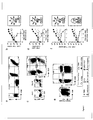
- Figures 1a-1f show that CD80 and 4-1BBL co-expression in human T-cells elicits robust proliferative responses after cyclic stimulations through their endogenous T cell receptor or through a chimeric antigen receptor without antigen presenting cell (APC)-provided costimulation.
- 0.4 x 10 6 purified human T lymphocytes was activated with antibody to CD3 (OKT3) and quantified the expansion of T lymphocytes retrovirally transduced with CD80, 4-1BBL, the combination of the two, or a control vector ( Figure 1a,b ). Transduction efficiencies were assessed by FACS analysis 48 h after gene transfer ( Figure 1a ).
- CD8 + T cells transduced with the indicated costimulatory ligand and stimulated weekly with 10 ⁇ g/ml plate-bound OKT3 is graphed in Figure 1b .
- the investigation was extended to Cytomegalovirus (CMV)-specific memory donor T cells ( Figure 1c,d ) and genetically redirected autologous T cells ( Figure 1e,f ).
- CMV- pp65-specific T lymphocytes briefly expanded on HLA-A*0201 + pp65 + artifical APCs and transduced with CD80, 4-1BBL, or a combination of the two ( Figure 1c ).
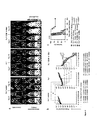
- Figures 2a-2c show the eradication of established - prostate-specific membrane antigen (PSMA) prostate carcinoma tumors in Scid/beige mice by Pz1 + T-cells transduced with CD80 and 4-1BBL.
- Figure 2a shows in vivo bioluminescent imaging and corresponding coronal MRI scans of firefly luciferase + PC3-PSMA tumors in Scid/beige mice four weeks after systemic inoculation with 4 x 10 6 tumor cells (day 0 of T-cell treatment), and eighteen days after adoptive transfer of 4 x 10 6 CD8 + Pz1 + or Pz1 + CD80 + 4-1BBL + T lymphocytes.
- PSMA prostate-specific membrane antigen
- FIG. 2b shows three graphs. Bioluminescent tumor signal quantified per animal every two days over a time period of 28 days. Acquisitions with saturated pixels -although included in the figure to allow direct visual comparison between groups- were not used for photon quantification but repeated at a shorter acquisition time.
- the graph shows photons/second/cm 2 /surface radius (sr) versus days after T cell injection. Every line corresponds to one animal with each dot representing the average photon count of the ventral and dorsal acquisition per animal at any given time point. Survival is illustrated in the Kaplan-Meier curve in Figure 2c .
- Figures 3a-3d show robust, yet tumor antigen dependent, in vivo proliferation of CD80 + 4-1BBL + T lymphocytes.
- Figure 3a shows comparative in vivo bioluminescent imaging of adoptively transferred T cells in PC3-PSMA tumor bearing Scid/beige mice on days 0, 8 and 18 after the injection of 4 x 10 6 CD8 + clickbeetle luciferase (click-luc)-expressing Pz1-transduced or Pz1 + CD80 + 4-1BBL + transduced T-lymphocytes.
- clickbeetle luciferase click-luc
- T-cell treatment started as in Figure 2 four weeks after the systemic injection of 4X10 6 PC3-PSMA tumor cells.
- Figure 3b shows three graphs. Clickbeetle luciferase signal intensities from sequential bioluminescence imaging were collected every 2 days after T-cell transfer over a sixteen day time period. Every line represents one animal with each dot showing the average photon count of the ventral and dorsal acquisition per animal at any given time point.
- Figure 3c shows a multicolor FACS analysis of a lung single-cell suspension prepared from a representative animal infused either with Pz1 + or Pz1 + CD80 + 4-1BBL + T lymphocytes, 6 d after T cell transfer. Cells were stained with idiotypic antiserum specific for the chimeric antigen receptor Pz1.
- Figure 3d absolute pulmonary Pz1 + T cell numbers (total cell counts of viable Trypan blue-negative cells x percentages of Pz1 + T cells). Shown bar graphs represent the mean ⁇ s.e.m. of three mice.
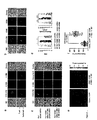
- FIGS 4a-4f show costimulation of T cells in cis as a results of the colocalization of CD80, 4-1BBL and their receptors CD28 and 4-1BB into the immunological synapse after induced T-cell/tumor cell cluster formation.
- peripheral blood human T lymphocytes were transduced with Pz1 and restimulated with LNCaP-CD80 cells before a second gene transfer with the bicistronic vector encoding the dsRed-monomer-4-1BBL fusion protein and CD80.
- T cells were labeled with FITC-Choleratoxin B (CTB), and incubated with unmodified LNCaP tumor cells or alone.
- CTB FITC-Choleratoxin B
- FIG. 4a is a set of ten confocal micrographs exemplifying the polarization of 4-1BBL - expressed as a ds-Red fusion protein in combination with CD80 on CD8 + Pz1 transduced T cells - into the immunological synapse.
- T-cell/LnCaP tumor clusters were incubated for 50 minutes before fixation, permeabilization and incubation with anti 4-1BB antiserum.
- Figure 4b fixed T cell-tumor cell clusters were incubated with anti-CD80 and anti-CD28 antisera.
- Figure 4c illustrates the augmented accumulation of granzyme-B at the immunological synapse. This accumulation is dependent on a functional engagement of 4-1BB by its ligand 4-1BBL, which is expressed on the same T cell surface.
- Primary human T lymphocytes were genetically modified as in Figure 4a , b.
- retroviral vectors encoding Pz1 also express control shRNA or 4-1BB targeting shRNA under the control of the U6 promoter in their 3'LTR as described herein below.
- Cell conjugates in the top (Pz1 + control shRNA) and middle (and Pz1 + CD80 + dsred 4-1BBL + control shRNA) row represent CD80 + dsred 4-1BBL- untransduced and transduced T-lymphocytes, respectively, cultured in the same well and conjugated to LnCaP on the same glass slide.
- Figure 4d shows the relative recruitment index (RRI) and the relative intensity, calculated as described herein below, of Granzyme-B-Alexa 647 at the T cell -antigen presenting cell interphase.
- transduced T lymphocytes were subcloned into OKT-3-coated 96-well plates before the first detectable surface expression of encoded proteins. Twelve hours after activation, the presence of single T cells in the wells was microscopically confirmed and the bioluminescent signal was measured on a single-cell level.
- Figure 4e shows 36 bioluminescence acquisitions of transduced single T cells assembled with Adobe Illustrator software. Respective bioluminescent single-cell signals were quantified, normalized to background bioluminescence, and plotted in Figure 4f .
- Figures 5a-5e show that CD80 and 4-1BBL-displaying T lymphocytes trans-costimulate unmodified, antigen specific bystander T-cells through physical contact.
- Figure 5a shows a set of 4 confocal micrographs of a Pz1 + T cell engaging an LNCaP tumor cell while in physical T cell-Tcell contact with a bystander Pz1 + T lymphocyte transduced with CD80 and dsRed-4-1BBL. Cell clusters were induced and analyzed as described in Figure 4a ,b. Scale bars, 10 ⁇ m.
- cytomegalovirus (CMV)-seropositive HLA A2.1 + donor were transduced with Pz1 or co-transduced with Pz1, CD80 and 4-1BBL.
- CMV-specific, genetically unmodified cytotoxic T lymphocytes (CTLs) from the same donor were enriched by artificial antigen presenting cell (AAPC) co-culture as described herein below. These cells were labeled with carboxyfluoroscein succinimidyl ester (CFSE).
- Granzyme B-antigen presenting cell mean fluorescent intensities (MFI) of the CFSE- (Pz1 + ) and CFSE + (pp65 + ) T cell sub-populations are summarized on top of each profile.
- MFI mean fluorescent intensities
- CFSE-MFIs indicated on top of each profile are based on pp65 + - populations after CD8 + -gating.
- Figures 6a and 6b show that the accumulation of adoptively transferred PSMA-redirected T lymphocytes at tumor sites is augmented by Pz1 + CD80 + 4-1BBL + , but not 19z + CD80 + 4-1BBL + T-cells in Scid/beige mice.
- Figure 6a shows dual in vivo bioluminescence imaging of external Gaussia luciferase (x-gaus-luc) in RM1.PGLS and Raji tumors in addition to Clickbeetle luciferase (Click-luc) in tumor targeting T-cells.
- the T-cell population listed third (Pz1 + , Pz1 + CD80 + 4-1BBL + , 19z + CD80 + 4-1BBL + , left, middle, right row, respectively) were injected twelve hours after the combined injection of T-cells listed first and second to avoid T-cell/T-cell interaction in the lung due to crowding and not as a result of selective tumor antigen binding.
- x-gaus-luc + tumor cells or click-luc + T-cells were monitored by bioluminescent imaging.
- On day 0 and day 4 a time period of at least 4 hours between tumor and T-cell imaging ensured the bioluminescent signal to return to background levels.
- a total number of n 5 Scid/beige mice were imaged per treatment group.
- Figure 5b shows a series of 6 graphs quantitating clickbeetle luciferase signal intensities from sequential bioluminescence imaging every day after T-cell transfer for a four day time period. Every line represents one animal with each dot showing the average photon count measured over the pulmonary area (top) or both femurs (bottom), respectively at any given time point.
- Figure 7 shows that dual T cell-expressed CD80 and 4-1BBL elicits superior T cell expansion compared to CD28 and/or 4-1BB signaling elements fused in series with the Pz1 chimeric antigen receptor ⁇ signaling domain.
- Primary T cells were transduced with Pz1, P28z ( Maher et al. Nature Biotechnology, Vol 20, Jan 2002, 70-75 ), which contains the CD28 signaling domain in series with the ⁇ chain, or P284-1BBz which includes both, CD28 and 4-1BB signaling regions.
- T lymphocytes were co-transduced with P28z and 4-1BBL (noted P28Z + 4-1BBL).
- Pz1 + CD80 + 4-1BBL refers to Pz1+ T cells that co-express both ligands, CD80 and 4-1BBL.
- Transduced T cells were stimulated weekly (indicated by arrows) on LNCaP tumor monolayers under conditions outlined in detail under Figure 1 .
- the fold expansion of the CD8 + Pz1-transduced human T lymphocytes population is graphed.
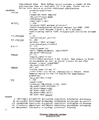
- Figure 8 provides amino acid sequences for CD80, 4-1BBL, OX40L, CD70, LIGHT, and CD30L.
- the present invention generally provides cells, including genetically modified immunoresponsive cells (e.g., T cells, Natural Killer (NK) cells, cytotoxic T lymphocytes (CTL) cells) expressing at least one of an antigen-recognizing receptor and a co-stimulatory ligand and methods of use therefore for the treatment of neoplasia and other pathologies where an increase in an antigen-specific immune response is desired.
- genetically modified immunoresponsive cells e.g., T cells, Natural Killer (NK) cells, cytotoxic T lymphocytes (CTL) cells
- NK Natural Killer
- CTL cytotoxic T lymphocytes
- the invention is based, at least in part, on the discovery that the constitutive retroviral expression of CD80 and 4-1BBL in co-transduced human T cells targeting prostate specific membrane antigen mounted a robust tumor-antigen-dependent T-cell proliferation coupled with a profound in vivo rejection of disseminated well-established prostate carcinoma tumors.
- CD80 and 4-1BBL expressing T cells provided costimulation of bystander T cells in trans in a contact dependent and antigen-specific manner at the tumor site.
- the concept of genetically modified T cells as a constitutive pool of costimulatory ligands to optimally costimulate themselves in addition to enhancing the immunogenicity within the tumor microenvironment represents a significant advance over conventional adoptive T cell therapy.
- this approach is not limited to the treatment of neoplasias, but is amenable to a wide range of applications where an increase in an antigen-specific immune response is desired, such applications include not only the treatment of neoplasias, but also for the enhancement of an immune response against a pathogen infection or an infectious disease and to reinforce immune tolerance in regulatory T cells in the context of autoimmunity or allogeneic transplantation.
- lymphoid lineages comprising B, T and natural killer (NK) cells
- B, T and natural killer (NK) cells provides for the production of antibodies, regulation of the cellular immune system, detection of foreign agents in the blood, detection of cells foreign to the host, and the like.
- T cells refers to lymphocytes that mature in the thymus and are chiefly responsible for cell-mediated immunity. T cells are involved in the adaptive immune system.
- natural killer (NK) cells refers to lymphocytes that are part of cell-mediated immunity and act during the innate immune response. They do not require prior activation in order to perform their cytotoxic effect on target cells. Cytotoxic T cells (CTL or killer T cells) are a subset of T lymphocytes capable of inducing the death of infected somatic or tumor cells.
- the present invention provides cells expressing at least one of an antigen-recognizing receptor and a co-stimulatory ligand and methods of using such cells for the treatment of a disease that requires an enhanced immune response.
- tumor antigen-specific T cells, NK cells, CTL cells or other immunoresponsive cells are used as shuttles for the selective enrichment of one or more co-stimulatory ligands for the treatment or prevention of neoplasia.
- a T cell expressing a co-stimulatory ligands 4-1BBL and CD80 are constitutively co-expressed in a T cell that expresses a chimeric antigen receptor PZ1 that recognizes and binds Prostate Specific Membrane Antigen (PSMA).
- PSMA Prostate Specific Membrane Antigen
- Such cells are administered to a human subject in need thereof for the treatment or prevention of prostate cancer.
- viral antigen-specific T cells, NK cells, CTL cells can be used for the treatment of viral diseases.
- CD80 and 4-1BBL are expressed in cytomegalovirus (CMV)-specific cytotoxic T lymphocytes for the treatment of CMV.
- CMV cytomegalovirus
- Tumor antigen-specific T lymphocytes and NK cells
- Types of tumor antigen-specific human lymphocytes that can be used in the methods of the invention include, without limitation, peripheral donor lymphocytes genetically modified to express chimeric antigen receptors (CARs) ( Sadelain, M., et al. 2003 Nat Rev Cancer 3:35-45 ), peripheral donor lymphocytes genetically modified to express a full-length tumor antigen-recognizing T cell receptor complex comprising the ⁇ and P heterodimer ( Morgan, R.A., et al. 2006 Science 314:126-129 ), lymphocyte cultures derived from tumor infiltrating lymphocytes (TILs) in tumor biopsies ( Panelli, M.C., et al.
- CARs chimeric antigen receptors
- TILs tumor infiltrating lymphocytes
- T cells may be autologous, allogeneic, or derived in vitro from engineered progenitor or stem cells.
- any suitable tumor antigen is suitable for use in the tumor-related embodiments described herein.
- Sources of antigen include, but are not limited to cancer proteins.
- the antigen can be expressed as a peptide or as an intact protein or portion thereof.
- the intact protein or a portion thereof can be native or mutagenized.
- One suitable antigen is prostate specific membrane antigen (PSMA).
- Viral antigen-specific T lymphocytes and NK cells
- Suitable antigens for use in the treatment of pathogen infection or other infectious disease, for example, in an immunocompromised subject include, without limitation, viral antigens present in Cytomegalovirus (CMV), Epstein Barr Virus (EBV), Human Immunodeficiency Virus (HIV), and influenza virus.
- CMV Cytomegalovirus
- EBV Epstein Barr Virus
- HAV Human Immunodeficiency Virus
- influenza virus influenza virus
- the unpurified source of CTLs may be any known in the art, such as the bone marrow, fetal, neonate or adult or other hematopoietic cell source, e.g., fetal liver, peripheral blood or umbilical cord blood.
- hematopoietic cell source e.g., fetal liver, peripheral blood or umbilical cord blood.
- Various techniques can be employed to separate the cells. For instance, negative selection methods can remove non-CTLs initially.
- mAbs are particularly useful for identifying markers associated with particular cell lineages and/or stages of differentiation for both positive and negative selections.
- a large proportion of terminally differentiated cells can be initially removed by a relatively crude separation.
- magnetic bead separations can be used initially to remove large numbers of irrelevant cells.
- at least about 80%, usually at least 70% of the total hematopoietic cells will be removed prior to cell isolation.
- Procedures for separation include, but are not limited to, density gradient centrifugation; resetting; coupling to particles that modify cell density; magnetic separation with antibody-coated magnetic beads; affinity chromatography; cytotoxic agents joined to or used in conjunction with a mAb, including, but not limited to, complement and cytotoxins; and panning with antibody attached to a solid matrix, e.g. plate, chip, elutriation or any other convenient technique.
- Techniques for separation and analysis include, but are not limited to, flow cytometry, which can have varying degrees of sophistication, e.g., a plurality of color channels, low angle and obtuse light scattering detecting channels, impedance channels.
- the cells can be selected against dead cells, by employing dyes associated with dead cells such as propidium iodide (PI).
- PI propidium iodide
- the cells are collected in a medium comprising 2% fetal calf serum (FCS) or 0.2% bovine serum albumin (BSA) or any other suitable, preferably sterile, isotonic medium.
- FCS fetal calf serum
- BSA bovine serum albumin
- the invention generally provides an immunoresponsive cell, such as a virus or tumor specific T cell comprising a receptor that binds an antigen and an exogenous co-stimulatory ligand (e.g., CD80, 4-1BBL, OX40L, CD70 and CD30L).
- an exogenous co-stimulatory ligand e.g., CD80, 4-1BBL, OX40L, CD70 and CD30L.
- immunoresponsive cells e.g., T cells, CTL cells, NK cells
- a retroviral vector either gamma-retroviral or lentiviral
- a retroviral vector is employed for the introduction of the DNA construct into the cell.
- a polynucleotide encoding a co-stimulatory ligand protein e.g., tumor necrosis factor (TNF) ligand, such as 4-1BBL, OX40L, CD70, LIGHT, and CD30L, or an Ig superfamily ligand, such as CD80 and CD86
- a co-stimulatory ligand protein e.g., tumor necrosis factor (TNF) ligand, such as 4-1BBL, OX40L, CD70, LIGHT, and CD30L, or an Ig superfamily ligand, such as CD80 and CD86
- TNF tumor necrosis factor
- a receptor that binds an antigen, or a variant, or a fragment thereof can be cloned into a retroviral vector and expression can be driven from its endogenous promoter, from the retroviral long terminal repeat, or from a promoter specific for a target cell type of interest.
- Non-viral vectors may be used as well.
- Co-stimulatory ligands include, without limitation, tumor necrosis factor (TNF) ligands, cytokines (such as IL-2, IL-12, IL-15 or IL21), and immunoglobulin (Ig) superfamily ligands.
- TNF tumor necrosis factor
- cytokines such as IL-2, IL-12, IL-15 or IL21
- Ig immunoglobulin
- Tumor necrosis factor is a cytokine involved in systemic inflammation and stimulates the acute phase reaction. Its primary role is in the regulation of immune cells. Tumor necrosis factor (TNF) ligands share a number of common features. The majority of the ligands are synthesized as type II transmembrane proteins (extracellular C-terminus) containing a short cytoplasmic segment and a relatively long extracellular region.
- TNF ligands include, without limitation, nerve growth factor (NGF), CD40L (CD40L)/CD154, CD137L/4-1BBL, tumor necrosis factor alpha (TNF ⁇ ), CD134L/OX40L/CD252, CD27L/CD70, Fas ligand (FasL), CD30L/CD153, tumor necrosis factor beta (TNF ⁇ )/lymphotoxin-alpha (LT ⁇ ), lymphotoxin-beta (LT ⁇ ), CD257/B cell-activating factor (BAFF)/Blys/THANK/Tall-1, glucocorticoid-induced TNF Receptor ligand (GITRL), and TNF-related apoptosis-inducing ligand (TRAIL), LIGHT (TNFSF14).
- NGF nerve growth factor
- CD40L CD40L
- CD154 CD137L/4-1BBL
- TNF ⁇ tumor necrosis factor alpha
- immunoglobulin (Ig) superfamily is a large group of cell surface and soluble proteins that are involved in the recognition, binding, or adhesion processes of cells. These proteins share structural features with immunoglobulins -- they possess an immunoglobulin domain (fold).
- Immunoglobulin superfamily ligands include, without limitation, CD80 and CD86, both ligands for CD28.
- a retroviral vector is generally employed for transduction, however any other suitable viral vector or delivery system can be used.
- retroviral gene transfer (transduction) likewise proves effective.
- Combinations of retroviruses and an appropriate packaging line are also suitable, where the capsid proteins will be functional for infecting human cells.
- Various amphotropic virus-producing cell lines are known, including, but not limited to, PA12 ( Miller, et al. (1985) Mol. Cell. Biol. 5:431-437 ); PA317 ( Miller, et al. (1986) Mol. Cell. Biol.
- Non-amphotropic particles are suitable too, e.g., particles pseudotyped with VSVG, RD114 or GALV envelope and any other known in the art.
- Possible methods of transduction also include direct co-culture of the cells with producer cells, e.g., by the method of Bregni, et al. (1992) Blood 80:1418-1422 , or culturing with viral supernatant alone or concentrated vector stocks with or without appropriate growth factors and polycations, e.g., by the method of Xu, et al. (1994) Exp. Hemat. 22:223-230 ; and Hughes, et al. (1992) J. Clin. Invest. 89:1817 .
- transducing viral vectors can be used to express a co-stimulatory ligand of the invention in an immunoresponsive cell.
- the chosen vector exhibits high efficiency of infection and stable integration and expression (see, e.g., Cayouette et al., Human Gene Therapy 8:423-430, 1997 ; Kido et al., Current Eye Research 15:833-844, 1996 ; Bloomer et al., Journal of Virology 71:6641-6649, 1997 ; Naldini et al., Science 272:263-267, 1996 ; and Miyoshi et al., Proc. Natl. Acad. Sci. U.S.A. 94:10319, 1997 ).
- viral vectors that can be used include, for example, adenoviral, lentiviral, and adeno-associated viral vectors, vaccinia virus, a bovine papilloma virus, or a herpes virus, such as Epstein-Barr Virus (also see, for example, the vectors of Miller, Human Gene Therapy 15-14, 1990 ; Friedman, Science 244:1275-1281, 1989 ; Eglitis et al., BioTechniques 6:608-614, 1988 ; Tolstoshev et al., Current Opinion in Biotechnology 1:55-61, 1990 ; Sharp, The Lancet 337:1277-1278, 1991 ; Cornetta et al., Nucleic Acid Research and Molecular Biology 36:311-322, 1987 ; Anderson, Science 226:401-409, 1984 ; Moen, Blood Cells 17:407-416, 1991 ; Miller et al., Biotechnology 7:980-990, 1989 ; Le Gal La Salle et al
- Retroviral vectors are particularly well developed and have been used in clinical settings ( Rosenberg et al., N. Engl. J. Med 323:370, 1990 ; Anderson et al., U.S. Pat. No. 5,399,346 ).
- Non-viral approaches can also be employed for the expression of a protein in cell.
- a nucleic acid molecule can be introduced into a cell by administering the nucleic acid in the presence of lipofection ( Feigner et al., Proc. Natl. Acad. Sci. U.S.A. 84:7413, 1987 ; Ono et al., Neuroscience Letters 17:259, 1990 ; Brigham et al., Am. J. Med. Sci.
- Transplantation of normal genes into the affected tissues of a subject can also be accomplished by transferring a normal nucleic acid into a cultivatable cell type ex vivo (e.g., an autologous or heterologous primary cell or progeny thereof), after which the cell (or its descendants) are injected into a targeted tissue or are injected systemically.
- a cultivatable cell type ex vivo e.g., an autologous or heterologous primary cell or progeny thereof
- cDNA expression for use in polynucleotide therapy methods can be directed from any suitable promoter (e.g., the human cytomegalovirus (CMV), simian virus 40 (SV40), or metallothionein promoters), and regulated by any appropriate mammalian regulatory element.
- CMV human cytomegalovirus
- SV40 simian virus 40
- metallothionein promoters e.g., the human cytomegalovirus (CMV), simian virus 40 (SV40), or metallothionein promoters
- enhancers known to preferentially direct gene expression in specific cell types can be used to direct the expression of a nucleic acid.
- the enhancers used can include, without limitation, those that are characterized as tissue- or cell-specific enhancers.
- regulation can be mediated by the cognate regulatory sequences or, if desired, by regulatory sequences derived from a heterologous source, including any of the promoters or regulatory elements described above.
- the resulting cells can then be grown under conditions similar to those for unmodified cells, whereby the modified cells can be expanded and used for a variety of purposes.
- PZ1, P28z, 4-1BBL, OX40L, CD70, LIGHT, and CD30L polypeptides or fragments thereof that are modified in ways that enhance their anti-neoplastic activity when expressed in an immunoresponsive cell.
- the invention provides methods for optimizing an amino acid sequence or nucleic acid sequence by producing an alteration in the sequence. Such alterations may include certain mutations, deletions, insertions, or post-translational modifications.
- the invention further includes analogs of any naturally-occurring polypeptide of the invention. Analogs can differ from a naturally-occurring polypeptide of the invention by amino acid sequence differences, by post-translational modifications, or by both.
- Analogs of the invention will generally exhibit at least 85%, more preferably 90%, and most preferably 95% or even 99% identity with all or part of a naturally-occurring amino, acid sequence of the invention.
- the length of sequence comparison is at least 5, 10, 15 or 20 amino acid residues, preferably at least 25, 50, or 75 amino acid residues, and more preferably more than 100 amino acid residues.
- a BLAST program may be used, with a probability score between e-3 and e-100 indicating a closely related sequence.
- Modifications include in vivo and in vitro chemical derivatization of polypeptides, e.g., acetylation, carboxylation, phosphorylation, or glycosylation; such modifications may occur during polypeptide synthesis or processing or following treatment with isolated modifying enzymes.
- Analogs can also differ from the naturally-occurring polypeptides of the invention by alterations in primary sequence.
- the invention also provides fragments of any one of the polypeptides or peptide domains of the invention.
- a fragment means at least 5, 10, 13, or 15 amino acids.
- a fragment is at least 20 contiguous amino acids, at least 30 contiguous amino acids, or at least 50 contiguous amino acids, and in other embodiments at least 60 to 80, 100, 200, 300 or more contiguous amino acids. Fragments of the invention can be generated by methods known to those skilled in the art or may result from normal protein processing (e.g., removal of amino acids from the nascent polypeptide that are not required for biological activity or removal of amino acids by alternative mRNA splicing or alternative protein processing events).
- Non-protein analogs have a chemical structure designed to mimic the functional activity of a protein of the invention. Such analogs are administered according to methods of the invention. Such analogs may exceed the physiological activity of the original polypeptide. Methods of analog design are well known in the art, and synthesis of analogs can be carried out according to such methods by modifying the chemical structures such that the resultant analogs increase the anti-neoplastic activity of the original polypeptide when expressed in an immunoresponsive cell. These chemical modifications include, but are not limited to, substituting alternative R groups and varying the degree of saturation at specific carbon atoms of a reference polypeptide. Preferably, the protein analogs are relatively resistant to in vivo degradation, resulting in a more prolonged therapeutic effect upon administration. Assays for measuring functional activity include, but are not limited to, those described in the Examples below.
- compositions comprising genetically modified immunoresponsive cells of the invention can be provided systemically or directly to a subject for the treatment of a neoplasia, pathogen infection, or infectious disease.
- cells of the invention are directly injected into an organ of interest (e.g., an organ affected by a neoplasia).
- compositions comprising genetically modified immunoresponsive cells are provided indirectly to the organ of interest, for example, by administration into the circulatory system (e.g., the tumor vasculature).
- Expansion and differentiation agents can be provided prior to, during or after administration of the cells to increase production of T cells, NK cells, or CTL cells in vitro or in vivo.
- the modified cells can be administered in any physiologically acceptable vehicle, normally intravascularly, although they may also be introduced into bone or other convenient site where the cells may find an appropriate site for regeneration and differentiation (e.g., thymus). Usually, at least 1x10 5 cells will be administered, eventually reaching 1x10 10 , or more.
- Genetically modified immunoresponsive cells of the invention can comprise a purified population of cells. Those skilled in the art can readily determine the percentage of genetically modified immunoresponsive cells in a population using various well-known methods, such as fluorescence activated cell sorting (FACS). Preferable ranges of purity in populations comprising genetically modified immunoresponsive cells are about 50 to about 55%, about 55 to about 60%, and about 65 to about 70%.
- the purity is about 70 to about 75%, about 75 to about 80%, about 80 to about 85%; and still more preferably the purity is about 85 to about 90%, about 90 to about 95%, and about 95 to about 100%. Dosages can be readily adjusted by those skilled in the art (e.g., a decrease in purity may require an increase in dosage).
- the cells can be introduced by injection, catheter, or the like. If desired, factors can also be included, including, but not limited to, interleukins, e.g.
- IL-2 IL-2, IL-3, IL-6, and IL-11, as well as the other interleukins, the colony stimulating factors, such as G-, M- and GM-CSF, interferons, e.g..gamma.-interferon and erythropoietin.
- the colony stimulating factors such as G-, M- and GM-CSF
- interferons e.g...gamma.-interferon and erythropoietin.
- compositions of the invention include pharmaceutical compositions comprising genetically modified immunoresponsive cells or their progenitors and a pharmaceutically acceptable carrier.
- Administration can be autologous or heterologous.
- immunoresponsive cells, or progenitors can be obtained from one subject, and administered to the same subject or a different, compatible subject.
- Peripheral blood derived immunoresponsive cells of the invention or their progeny can be administered via localized injection, including catheter administration, systemic injection, localized injection, intravenous injection, or parenteral administration.
- a therapeutic composition of the present invention e.g., a pharmaceutical composition containing a genetically modified immunoresponsive cell
- it will generally be formulated in a unit dosage injectable form (solution, suspension, emulsion).
- compositions of the invention comprising genetically modified immunoresponsive cells can be conveniently provided as sterile liquid preparations, e.g., isotonic aqueous solutions, suspensions, emulsions, dispersions, or viscous compositions, which may be buffered to a selected pH.
- sterile liquid preparations e.g., isotonic aqueous solutions, suspensions, emulsions, dispersions, or viscous compositions, which may be buffered to a selected pH.
- Liquid preparations are normally easier to prepare than gels, other viscous compositions, and solid compositions. Additionally, liquid compositions are somewhat more convenient to administer, especially by injection. Viscous compositions, on the other hand, can be formulated within the appropriate viscosity range to provide longer contact periods with specific tissues.
- Liquid or viscous compositions can comprise carriers, which can be a solvent or dispersing medium containing, for example, water, saline, phosphate buffered saline, polyol (for example, glycerol, propylene glycol, liquid polyethylene glycol, and the like) and suitable mixtures thereof.
- carriers can be a solvent or dispersing medium containing, for example, water, saline, phosphate buffered saline, polyol (for example, glycerol, propylene glycol, liquid polyethylene glycol, and the like) and suitable mixtures thereof.
- Sterile injectable solutions can be prepared by incorporating the genetically modified immunoresponsive cells utilized in practicing the present invention in the required amount of the appropriate solvent with various amounts of the other ingredients, as desired.
- Such compositions may be in admixture with a suitable carrier, diluent, or excipient such as sterile water, physiological saline, glucose, dextrose, or the like.
- the compositions can also be lyophilized.
- the compositions can contain auxiliary substances such as wetting, dispersing, or emulsifying agents (e.g., methylcellulose), pH buffering agents, gelling or viscosity enhancing additives, preservatives, flavoring agents, colors, and the like, depending upon the route of administration and the preparation desired.
- Standard texts such as " REMINGTON'S PHARMACEUTICAL SCIENCE", 17th edition, 1985 , incorporated herein by reference, may be consulted to prepare suitable preparations, without undue experimentation.
- compositions which enhance the stability and sterility of the compositions, including antimicrobial preservatives, antioxidants, chelating agents, and buffers, can be added.
- antimicrobial preservatives for example, parabens, chlorobutanol, phenol, sorbic acid, and the like.
- Prolonged absorption of the injectable pharmaceutical form can be brought about by the use of agents delaying absorption, for example, aluminum monostearate and gelatin. According to the present invention, however, any vehicle, diluent, or additive used would have to be compatible with the genetically modified immunoresponsive cells or their progenitors.
- compositions can be isotonic, i.e., they can have the same osmotic pressure as blood and lacrimal fluid.
- the desired isotonicity of the compositions of this invention may be accomplished using sodium chloride, or other pharmaceutically acceptable agents such as dextrose, boric acid, sodium tartrate, propylene glycol or other inorganic or organic solutes.
- Sodium chloride is preferred particularly for buffers containing sodium ions.
- Viscosity of the compositions can be maintained at the selected level using a pharmaceutically acceptable thickening agent.
- Methylcellulose is preferred because it is readily and economically available and is easy to work with.
- suitable thickening agents include, for example, xanthan gum, carboxymethyl cellulose, hydroxypropyl cellulose, carbomer, and the like. The preferred concentration of the thickener will depend upon the agent selected. The important point is to use an amount that will achieve the selected viscosity.
- liquid dosage form e.g., whether the composition is to be formulated into a solution, a suspension, gel or another liquid form, such as a time release form or liquid-filled form.
- compositions should be selected to be chemically inert and will not affect the viability or efficacy of the genetically modified immunoresponsive cells as described in the present invention. This will present no problem to those skilled in chemical and pharmaceutical principles, or problems can be readily avoided by reference to standard texts or by simple experiments (not involving undue experimentation), from this disclosure and the documents cited herein.
- the quantity of cells to be administered will vary for the subject being treated. In a one embodiment, between 10 4 to 10 10 , between 10 5 to 10 9 , or between 10 6 and 10 8 genetically modified immunoresponsive cells of the invention are administered to a human subject. In preferred embodiments, at least about 1 x 10 8 , 2 x 10 8 , 3 x 10 8 , 4 x 10 8 , and 5 x 10 8 genetically modified immunoresponsive cells of the invention are administered to a human subject. The precise determination of what would be considered an effective dose may be based on factors individual to each subject, including their size, age, sex, weight, and condition of the particular subject. Dosages can be readily ascertained by those skilled in the art from this disclosure and the knowledge in the art.
- any additives in addition to the active stem cell(s) and/or agent(s) are present in an amount of 0.001 to 50 % (weight) solution in phosphate buffered saline, and the active ingredient is present in the order of micrograms to milligrams, such as about 0.0001 to about 5 wt %, preferably about 0.0001 to about 1 wt %, still more preferably about 0.0001 to about 0.05 wt % or about 0.001 to about 20 wt %, preferably about 0.01 to about 10 wt %, and still more preferably about 0.05 to about 5 wt %.
- any composition to be administered to an animal or human it is preferred to determine therefore: toxicity, such as by determining the lethal dose (LD) and LD50 in a suitable animal model e.g., rodent such as mouse; and, the dosage of the composition(s), concentration of components therein and timing of administering the composition(s), which elicit a suitable response.
- toxicity such as by determining the lethal dose (LD) and LD50 in a suitable animal model e.g., rodent such as mouse
- LD50 lethal dose
- a suitable animal model e.g., rodent such as mouse
- dosage of the composition(s), concentration of components therein and timing of administering the composition(s) which elicit a suitable response.
- kits for treating neoplasia in a subject are provided herein.
- methods for treating a pathogen infection or other infectious disease in a subject such as an immunocompromised human subject.
- the methods comprise administering a T cell, NK cell, or CTL cell of the invention in an amount effective to achieve the desired effect, be it palliation of an existing condition or prevention of recurrence.
- the amount administered is an amount effective in producing the desired effect.
- An effective amount can be provided in one or a series of administrations.
- An effective amount can be provided in a bolus or by continuous perfusion.
- an “effective amount” is an amount sufficient to effect a beneficial or desired clinical result upon treatment.
- An effective amount can be administered to a subject in one or more doses.
- an effective amount is an amount that is sufficient to palliate, ameliorate, stabilize, reverse or slow the progression of the disease, or otherwise reduce the pathological consequences of the disease.
- the effective amount is generally determined by the physician on a case-by-case basis and is within the skill of one in the art. Several factors are typically taken into account when determining an appropriate dosage to achieve an effective amount. These factors include age, sex and weight of the subject, the condition being treated, the severity of the condition and the form and effective concentration of the antigen-binding fragment administered.
- T cells For adoptive immunotherapy using antigen-specific T cells, cell doses in the range of 10 9 are typically infused.
- T cells are induced that are specifically directed against the specific antigen.
- “Induction" of T cells can include inactivation of antigen-specific T cells such as by deletion or anergy. Inactivation is particularly useful to establish or reestablish tolerance such as in autoimmune disorders.
- the modified cells can be administered by any method known in the art including, but not limited to, intravenous, subcutaneous, intranodal, intratumoral, intrathecal, intrapleural, intraperitoneal and directly to the thymus.
- the invention provides methods for increasing an immune response in a subject in need thereof.
- the invention provides methods for treating or preventing a neoplasia in a subject.
- the invention provides therapies that are particularly useful for the treatment of subjects having prostate cancer, or metastatic prostate cancer that is not amenable to conventional therapeutic interventions.
- Suitable human subjects for therapy typically comprise two treatment groups that can be distinguished by clinical criteria.
- Subjects with "advanced disease” or "high tumor burden” are those who bear a clinically measurable tumor.
- a clinically measurable tumor is one that can be detected on the basis of tumor mass (e.g., by palpation, CAT scan, sonogram, mammogram or X-ray; positive biochemical or histopathologic markers on their own are insufficient to identify this population).
- a pharmaceutical composition embodied in this invention is administered to these subjects to elicit an anti-tumor response, with the objective of palliating their condition.
- reduction in tumor mass occurs as a result, but any clinical improvement constitutes a benefit.
- Clinical improvement includes decreased risk or rate of progression or reduction in pathological consequences of the tumor.
- a second group of suitable subjects is known in the art as the "adjuvant group.” These are individuals who have had a history of neoplasia, but have been responsive to another mode of therapy.
- the prior therapy can have included (but is not restricted to, surgical resection, radiotherapy, and traditional chemotherapy.
- these individuals have no clinically measurable tumor.
- they are suspected of being at risk for progression of the disease, either near the original tumor site, or by metastases.
- This group can be further subdivided into high-risk and low-risk individuals. The subdivision is made on the basis of features observed before or after the initial treatment. These features are known in the clinical arts, and are suitably defined for each different neoplasia.
- Features typical of high-risk subgroups are those in which the tumor has invaded neighboring tissues, or who show involvement of lymph nodes.
- Another group have a genetic predisposition to neoplasia but have not yet evidenced clinical signs of neoplasia. For instance, women testing positive for a genetic mutation associated with breast cancer, but still of childbearing age, can wish to receive one or more of the antigen-binding fragments described herein in treatment prophylactically to prevent the occurrence of neoplasia until it is suitable to perform preventive surgery.
- Human neoplasia subjects having any of the following neoplasias: glioblastoma, melanoma, neuroblastoma, adenocarcinoma, glioma, soft tissue sarcoma, and various carcinomas (including prostate and small cell lung cancer) are especially appropriate subjects.
- Suitable carcinomas further include any known in the field of oncology, including, but not limited to, astrocytoma, fibrosarcoma, myxosarcoma, liposarcoma, oligodendroglioma, ependymoma, medulloblastoma, primitive neural ectodermal tumor (PNET), chondrosarcoma, osteogenic sarcoma, pancreatic ductal adenocarcinoma, small and large cell lung adenocarcinomas, chordoma, angiosarcoma, endotheliosarcoma, squamous cell carcinoma, bronchoalveolarcarcinoma, epithelial adenocarcinoma, and liver metastases thereof, lymphangiosarcoma, lymphangioendotheliosarcoma, hepatoma, cholangiocarcinoma, synovioma, mesothelioma, Ewing's
- the subjects can have an advanced form of disease, in which case the treatment objective can include mitigation or reversal of disease progression, and/or amelioration of side effects.
- the subjects can have a history of the condition, for which they have already been treated, in which case the therapeutic objective will typically include a decrease or delay in the risk of recurrence.
- the invention provides a method of treating or preventing a neoplasia in a subject, the method comprising administering an effective amount of an immunoresponsive cell comprising a receptor that binds a tumor antigen and a vector encoding a co-stimulatory ligand.
- the neoplasia is selected from the group consisting of prostate cancer, colon cancer, breast cancer, and glioblastoma.
- the tumor antigen is prostate-specific membrane antigen, CD 19, NY-ESO-1, WT-1 or hTERT.
- the invention provides a method of enforcing tolerance in a subject, the method comprising administering an effective amount of an immunoresponsive cell comprising a receptor that binds an antigen and a vector encoding a co-stimulatory ligand.
- the method prevents or reduces an autoimmune disease or a disease associated with allogeneic transplantation.
- co-stimulatory ligand-expressing T cells turn the tumor or viral infection site into a highly conductive environment for a wide range of immune cells involved in the physiological anti-tumor or antiviral response (tumor infiltrating lymphocytes, NK-, NKT- cells, dendritic cells, and macrophages).
- the invention provides methods for treating subjects with a pathogen infection (e.g., viral infection, bacterial infection, fungal infection, parasite infection, or protozoal infection.
- a pathogen infection e.g., viral infection, bacterial infection, fungal infection, parasite infection, or protozoal infection.
- the invention is particularly useful for enhancing an immune response in an immunocompromised subject.
- viral infections susceptible to treatment using a method of the invention include, but are not limited to, Cytomegalovirus (CMV), Epstein Barr Virus (EBV), Human Immunodeficiency Virus (HIV), and influenza virus infections.
- the invention provides a method of treating or preventing a pathogen infection in a subject, the method comprising administering an effective amount of an immunoresponsive cell as described herein.
- kits for the treatment or prevention of a neoplasia, pathogen infection, immune disorder or allogeneic transplant includes a therapeutic or prophylactic composition containing an effective amount of an immunoresponsive cell comprising one or more co-stimulatory ligands in unit dosage form.
- the kit comprises a sterile container which contains a therapeutic or prophylactic vaccine; such containers can be boxes, ampules, bottles, vials, tubes, bags, pouches, blister-packs, or other suitable container forms known in the art.
- Such containers can be made of plastic, glass, laminated paper, metal foil, or other materials suitable for holding medicaments.
- the immunoresponsive cell is provided together with instructions for administering the cell to a subject having or at risk of developing a neoplasia, pathogen infection, immune disorder or allogeneic transplant.
- the instructions will generally include information about the use of the composition for the treatment or prevention of neoplasia, pathogen infection, immune disorder or allogeneic transplant.
- the instructions include at least one of the following: description of the therapeutic agent; dosage schedule and administration for treatment or prevention of a neoplasia, pathogen infection, immune disorder or allogeneic transplant or symptoms thereof; precautions; warnings; indications; counter-indications; overdosage information; adverse reactions; animal pharmacology; clinical studies; and/or references.
- the instructions may be printed directly on the container (when present), or as a label applied to the container, or as a separate sheet, pamphlet, card, or folder supplied in or with the container.
- T cells co-expressing CD80 and 4-1BBL elicit robust proliferative responses after cyclic stimulations through their endogenous T cell receptor or through a chimeric antigen receptor without antigen presenting cell (APC)-provided costimulation
- T cell responses of human primary T cells were first investigated in three experimental systems. Using anti-CD3 (OKT3)-mediated T cell activation, the expansion of peripheral blood T lymphocytes transduced with CD80 and 4-1BBL was quantified ( Figure 1a ), which were compared to T cells transduced with either ligand alone or none. Recurrent T cell receptor (TCR)-stimulation alone in the absence of costimulatory ligands failed to expand T cells and rapidly induced a decline in T cell number following the first restimulation ( Figure 1b ).
- OHT3 anti-CD3
- TCR Recurrent T cell receptor
- T cells equipped with the costimulatory ligand pair CD80 and 4-1BBL exhibited a significantly greater (209-fold, p ⁇ 0.0001) expansion, compared to a continuously declining T cell number in the control groups ( Figure 1d ).
- peripheral blood T cells were retrovirally transduced with the chimeric antigen receptor Pz1 ( Gade et al., Cancer Res. 65:9080-9088, 2005 ), a non-HLA-restricted antigen receptor specific for the tumor antigen PSMA.
- the Pz1 receptor comprises a PSMA-binding single chain antibody fragment fused to the human CD3 ⁇ signaling domain and is analogous in structure to other chimeric antigen receptors currently in use in clinical trials.
- Pz1 + T cells coexpressing CD80 and 4-1BBL ( Figure 1e ) mounted a robust proliferative response following three weekly stimulations with PSMA + , CD80 - , CD86 - , 4-1BBL - LNCaP cells (mean 1042-fold enrichment, Figure If, upper panel). This expansion was 9-fold, greater (p ⁇ 0.0001) than that obtained when expressing CD80 and 4-1BBL in the tumor cells rather than in the T cells ( Figure 1f , lower panel).
- T cells co-expressing CD80 and 4-1BBL eradicate established, systemic tumors.
- Seven of ten treated animals remained tumor-free 200 days after infusion of Pz1 + CD80 + 4-1BBL + T lymphocytes, and none in all other treatment or control groups ( Figure 2c ).
- T cells were labeled with fluorescein isothiocyanate-conjugated cholera toxin ⁇ subunit (FITC-CTB) to visualize lipid raft clusters after synapse formation.
- FITC-CTB fluorescein isothiocyanate-conjugated cholera toxin ⁇ subunit
- JNL cells were exposed to retroviral vectors encoding 4-1BB, 4-1BBL and CD80, and subcloned by limiting dilution 4 hours thereafter, well before the first detectable surface gene expression (data not shown), and immediately stimulated by plate-bound OKT3.
- isolated CD80 + CD28 + 4-1BBL + 4-1BB + T cells markedly up-regulated NF- ⁇ B, in contrast to JNL cells transduced with control vector.
- the luminescence signal was acquired in 36 wells containing a single, multiply transduced cell as described in Methods.
- the constitutive expression of costimulatory ligands may also enable genetically modified T cells to costimulate T cells in trans.
- three-cell clusters comprised of CD80 + 4-1BBL + and CD80 - 4-1BBL - T cells were occasionally noted in the confocal studies shown in Fig. 4 ( Figure 5a ).
- CFSE carboxyfluoroscein succinimidyl ester
- T cell-mediated trans- costimulation is operative in vivo.
- two previously described animal models were combined: the RM1-PSMA tumor model in which tumors are confined to the lungs ( Gade et al., Cancer Res. 65:9080-9088, 2005 ), and the Raji tumor model, in which tumor cells selectively colonize bone marrow( Brentjens et al., Nat Med. 2003 Mar;9(3):279-86 ). All mice were treated with Pz1-transduced T cells, which also expressed CBR-luc ( Figure 3 ). Luciferase-negative Pz1 + T cells, either expressing or lacking CD80 and 4-1BBL, were subsequently infused into the animals.
- the constitutive display of CD80 on T lymphocytes serves as a costimulatory ligand for CD28 but could also engage negative regulators of T cell expansion, such as CTLA-4 at high affinities ( Hodi et al. Clin Cancer Res. 2007 Sep 15:13:5238-42 ).
- T lymphocytes were co-transduced with the chimeric antigen receptor P28z ( Maher et al. Nature Biotechnology, Vol 20, Jan 2002, P 70-75 ) and expressed 4-1BBL on the T cell surface ( Figure 7 ).
- the dual fusion receptor P28z contains both TCR and CD28 signaling moieties.
- CD28 signals relayed by a CD28 signaling element fused into the chimeric antigen receptor construct can therefore endow Pz1 + 4-1BBL + T lymphocytes with enhanced proliferative properties, although it is not as robust a T cell proliferation than observed in Pz1 + 4-1BBL + CD80 + T cells.
- a major goal of cancer immunotherapy is to provide safe and effective costimulation to tumor-reactive T lymphocytes.
- T cells themselves provide potent costimulation.
- Constitutive expression of costimulatory ligands in human primary CMV-specific cells and PSMA-targeted T cells not only compensated for the absence of these ligands on APCs, but also induced a proliferative response surpassing that elicited by conventional APCs ( Figure 1 ).
- the survey of a panel of costimulatory ligands indicated that CD80 and 4-1BBL provided the strongest T-cell activation under our experimental conditions, enabling robust T cell expansion following repeated weekly antigenic stimulation.
- CD80 + 4-1BBL + T cells exhibited superior proliferation, cytokine secretion, in vitro survival and in vivo expansion and persistence, resulting in a 40- to 50-fold greater T cell biomass one week after infusion in tumor-bearing mice, when compared to PSMA-specific T cells that were not transduced with CD80 and 4-1BBL ( Figure 3 ).
- animals treated with non-CD80/4-1BBL-transduced PSMA-specific T cells uniformly succumbed to disease, infusion of the same T cells rendered CD80 + 4-1BBL + effectively rejected established, systemic PC-3 tumors in the majority of treated mice ( Figure 2 ).
- CD80 and 4-1BBL and their receptors on T cells before and after tumor engagement were first examined.
- CD28 and 4-1BB have been shown to accumulate in close proximity to the TCR within the central supramolecular activation cluster of immunological synapses.
- Costimulatory ligands expressed by APCs, including CD80 CD40L and CD70 polarize to the synapse, supporting the notion that the immunological synapse provides an ordered contact area to facilitate and propagate costimulatory ligand-receptor interactions.
- T-cell-encoded CD80 and 4-1BBL polarized towards the contact zone between T cells and LNCaP tumor cells with, together with CD28 and 4-1BB ( Figure 4 ).
- the functional consequence of this colocalization is illustrated by the accumulation of GRB, which is ferried towards the T cell-APC interface along microtubules following antigen contact in synapses containing 4-1BB + 4-1BBL + foci but not in T cells lacking 4-1BB ( Figure 4 ).
- the immunological synapse is thus apparently well suited to orchestrate auto-costimulation.
- trans-costimulation as a mechanism for enhancing immunity through high-level expression of CD80 and 4-1BBL in T lymphocytes.
- the proliferative and effector functions of T cells engaging APC-presented antigen in the absence of CD80 or 4-1BBL were thus amplified by in vitro coculture or in vivo coadministration of T cells displaying both ligands.
- In vitro cell mixing and transwell studies indicated that trans-costimulation required cell-cell contact ( Figure 5 ), in agreement with trans effects reported for other cell types such as fibroblasts or bystander tumor cells.
- Trans-costimulation was also induced in vivo, in organ-specific fashion, as illustrated in mice bearing two different tumors segregating to different sites ( Figure 6 ).
- Trans-costimulation mediated by T cells paves the way for exciting new therapeutic approaches since costimulation may be delivered to neighboring T cells within the tumor microenvironment. This feature is especially valuable as dendritic cells frequently fail to fully upregulate costimulatory ligands within the tumor microenvironment.
- soluble factors such as interleukin-2 may contribute to T cell aid, the dependence on cell-cell contact effectively restricts trans-costimulation to other tumor-infiltrating T cells.
- the effect of T cell competition on the in vivo frequency of trans-costimulation. in trans may ultimately broaden the anti-tumor immune response via the recruitment of a diverse population of endogenous tumor-infiltrating lymphocytes and thus help to prevent tumor antigen escape.
- CD80 and 4-1BBL expression in human T lymphocytes is a biologically efficacious means to circumvent the lack of conventional APC-mediated costimulation in the tumor microenvironment.
- This approach is applicable to T cells activated through a transduced antigen receptor as well as their endogenous TCR.
- T cell-mediated costimulation, whether in auto, trans or both, may thus be useful in a wide range of malignancies and infectious diseases that are being treated by adoptive T cell therapy.
Landscapes
- Health & Medical Sciences (AREA)
- Life Sciences & Earth Sciences (AREA)
- General Health & Medical Sciences (AREA)
- Veterinary Medicine (AREA)
- Chemical & Material Sciences (AREA)
- Animal Behavior & Ethology (AREA)
- Public Health (AREA)
- Engineering & Computer Science (AREA)
- Organic Chemistry (AREA)
- Medicinal Chemistry (AREA)
- Pharmacology & Pharmacy (AREA)
- Bioinformatics & Cheminformatics (AREA)
- Nuclear Medicine, Radiotherapy & Molecular Imaging (AREA)
- General Chemical & Material Sciences (AREA)
- Chemical Kinetics & Catalysis (AREA)
- Immunology (AREA)
- Epidemiology (AREA)
- Zoology (AREA)
- Virology (AREA)
- Genetics & Genomics (AREA)
- Biomedical Technology (AREA)
- Biotechnology (AREA)
- Wood Science & Technology (AREA)
- Oncology (AREA)
- Communicable Diseases (AREA)
- General Engineering & Computer Science (AREA)
- Molecular Biology (AREA)
- Microbiology (AREA)
- Biochemistry (AREA)
- Proteomics, Peptides & Aminoacids (AREA)
- Gastroenterology & Hepatology (AREA)
- Tropical Medicine & Parasitology (AREA)
- Cell Biology (AREA)
- Hematology (AREA)
- Physics & Mathematics (AREA)
- Plant Pathology (AREA)
- Biophysics (AREA)
- Neurosurgery (AREA)
- Pulmonology (AREA)
- Neurology (AREA)
Priority Applications (4)
| Application Number | Priority Date | Filing Date | Title |
|---|---|---|---|
| PL14185125T PL2856876T3 (pl) | 2007-03-30 | 2008-03-31 | Konstytutywna ekspresja ligandów kostymulujących na limfocytach T poddanych transferowi adoptywnemu |
| EP17206105.3A EP3357338A1 (fr) | 2007-03-30 | 2008-03-31 | Expression constitutive de ligands costimulants sur des lymphocytes t transférés de manière adoptive |
| SI200831919T SI2856876T1 (en) | 2007-03-30 | 2008-03-31 | Constitutive expression of costimulatory ligands on adoptively transferred T lymphocytes |
| HRP20180227TT HRP20180227T1 (hr) | 2007-03-30 | 2018-02-06 | Konstitutivna ekspresija kostimulatornih liganada na adoptivno prenesene t-limfocite |
Applications Claiming Priority (3)
| Application Number | Priority Date | Filing Date | Title |
|---|---|---|---|
| US92114407P | 2007-03-30 | 2007-03-30 | |
| EP12179377.2A EP2537416B1 (fr) | 2007-03-30 | 2008-03-31 | Expression constitutive de ligands costimulants sur des lymphocytes T transférés de manière adoptive |
| EP08742463A EP2141997B1 (fr) | 2007-03-30 | 2008-03-31 | Expression constitutive de ligands costimulants sur des lymphocytes t transférés de manière adoptive |
Related Parent Applications (3)
| Application Number | Title | Priority Date | Filing Date |
|---|---|---|---|
| EP12179377.2A Division EP2537416B1 (fr) | 2007-03-30 | 2008-03-31 | Expression constitutive de ligands costimulants sur des lymphocytes T transférés de manière adoptive |
| EP12179377.2A Division-Into EP2537416B1 (fr) | 2007-03-30 | 2008-03-31 | Expression constitutive de ligands costimulants sur des lymphocytes T transférés de manière adoptive |
| EP08742463A Division EP2141997B1 (fr) | 2007-03-30 | 2008-03-31 | Expression constitutive de ligands costimulants sur des lymphocytes t transférés de manière adoptive |
Related Child Applications (2)
| Application Number | Title | Priority Date | Filing Date |
|---|---|---|---|
| EP17206105.3A Division-Into EP3357338A1 (fr) | 2007-03-30 | 2008-03-31 | Expression constitutive de ligands costimulants sur des lymphocytes t transférés de manière adoptive |
| EP17206105.3A Division EP3357338A1 (fr) | 2007-03-30 | 2008-03-31 | Expression constitutive de ligands costimulants sur des lymphocytes t transférés de manière adoptive |
Publications (2)
| Publication Number | Publication Date |
|---|---|
| EP2856876A1 true EP2856876A1 (fr) | 2015-04-08 |
| EP2856876B1 EP2856876B1 (fr) | 2018-01-31 |
Family
ID=39808625
Family Applications (4)
| Application Number | Title | Priority Date | Filing Date |
|---|---|---|---|
| EP08742463A Active EP2141997B1 (fr) | 2007-03-30 | 2008-03-31 | Expression constitutive de ligands costimulants sur des lymphocytes t transférés de manière adoptive |
| EP12179377.2A Active EP2537416B1 (fr) | 2007-03-30 | 2008-03-31 | Expression constitutive de ligands costimulants sur des lymphocytes T transférés de manière adoptive |
| EP17206105.3A Pending EP3357338A1 (fr) | 2007-03-30 | 2008-03-31 | Expression constitutive de ligands costimulants sur des lymphocytes t transférés de manière adoptive |
| EP14185125.3A Active EP2856876B1 (fr) | 2007-03-30 | 2008-03-31 | Expression constitutive de ligands costimulants sur des lymphocytes T transférés de manière adoptive |
Family Applications Before (3)
| Application Number | Title | Priority Date | Filing Date |
|---|---|---|---|
| EP08742463A Active EP2141997B1 (fr) | 2007-03-30 | 2008-03-31 | Expression constitutive de ligands costimulants sur des lymphocytes t transférés de manière adoptive |
| EP12179377.2A Active EP2537416B1 (fr) | 2007-03-30 | 2008-03-31 | Expression constitutive de ligands costimulants sur des lymphocytes T transférés de manière adoptive |
| EP17206105.3A Pending EP3357338A1 (fr) | 2007-03-30 | 2008-03-31 | Expression constitutive de ligands costimulants sur des lymphocytes t transférés de manière adoptive |
Country Status (14)
| Country | Link |
|---|---|
| US (5) | US8389282B2 (fr) |
| EP (4) | EP2141997B1 (fr) |
| JP (4) | JP5840837B2 (fr) |
| AU (1) | AU2008233051B2 (fr) |
| CA (2) | CA2682527C (fr) |
| DK (3) | DK2537416T3 (fr) |
| ES (3) | ES2398760T3 (fr) |
| HR (1) | HRP20180227T1 (fr) |
| HU (1) | HUE038506T2 (fr) |
| NO (1) | NO2856876T3 (fr) |
| PL (1) | PL2856876T3 (fr) |
| PT (1) | PT2856876T (fr) |
| SI (1) | SI2856876T1 (fr) |
| WO (1) | WO2008121420A1 (fr) |
Cited By (14)
| Publication number | Priority date | Publication date | Assignee | Title |
|---|---|---|---|---|
| US10428305B2 (en) | 2014-05-15 | 2019-10-01 | National University Of Singapore | Modified natural killer cells that express IL15 and uses thereof |
| US10538739B2 (en) | 2013-01-28 | 2020-01-21 | St. Jude Children's Research Hospital, Inc. | Chimeric receptor with NKG2D specificity for use in cell therapy against cancer and infectious disease |
| WO2020101361A1 (fr) * | 2018-11-14 | 2020-05-22 | 주식회사 녹십자랩셀 | Procédé de culture de cellules tueuses naturelles dérivées de sang de cordon ombilical au moyen de lymphocytes t transformés |
| US11141436B2 (en) | 2019-03-05 | 2021-10-12 | Nkarta, Inc. | Immune cells engineered to express CD19-directed chimeric antigen receptors and uses thereof in immunotherapy |
| US11365236B2 (en) | 2017-03-27 | 2022-06-21 | Nkarta, Inc. | Truncated NKG2D chimeric receptors and uses thereof in natural killer cell immunotherapy |
| US11766456B2 (en) | 2014-11-26 | 2023-09-26 | GC Cell Corporation | Method for culturing natural killer cells using T cells |
| US11896616B2 (en) | 2017-03-27 | 2024-02-13 | National University Of Singapore | Stimulatory cell lines for ex vivo expansion and activation of natural killer cells |
| EP3612624B1 (fr) * | 2017-04-21 | 2024-09-25 | Ospedale San Raffaele S.r.l. | Thérapie génique |
| US12203065B2 (en) | 2017-05-26 | 2025-01-21 | GC Cell Corporation | Method for culturing natural killer cell, using transformed T cell |
| US12258381B2 (en) | 2018-02-09 | 2025-03-25 | National University Of Singapore | Activating chimeric receptors and uses thereof in natural killer cell immunotherapy |
| US12398372B2 (en) | 2018-11-14 | 2025-08-26 | GC Cell Corporation | Method for culturing cord blood-derived natural killer cells using transformed T-cells |
| US12441787B2 (en) | 2018-04-02 | 2025-10-14 | National University Of Singapore | Neutralization of human cytokines with membrane-bound anti-cytokine non-signaling binders expressed in immune cells |
| US12486514B2 (en) | 2018-08-29 | 2025-12-02 | National University Of Singapore | Method to specifically stimulate survival and expansion of genetically-modified immune cells |
| US12590148B2 (en) | 2018-11-26 | 2026-03-31 | Nkarta, Inc. | Methods for the simultaneous expansion of multiple immune cell types, related compositions and uses of same in cancer immunotherapy |
Families Citing this family (363)
| Publication number | Priority date | Publication date | Assignee | Title |
|---|---|---|---|---|
| US7994298B2 (en) | 2004-09-24 | 2011-08-09 | Trustees Of Dartmouth College | Chimeric NK receptor and methods for treating cancer |
| EP2126054B1 (fr) | 2007-01-31 | 2016-07-06 | Yeda Research And Development Company Limited | Cellules régulatrices t redirigées, génétiquement modifiées et leur utilisation dans la suppression d'une maladie auto-immune et inflammatoire |
| SI2856876T1 (en) * | 2007-03-30 | 2018-04-30 | Memorial Sloan-Kettering Cancer Center | Constitutive expression of costimulatory ligands on adoptively transferred T lymphocytes |
| CN101743249B (zh) | 2007-05-11 | 2017-08-08 | 阿尔托生物科学有限公司 | 融合分子与il‑15变异体 |
| US8450112B2 (en) * | 2008-04-09 | 2013-05-28 | Maxcyte, Inc. | Engineering and delivery of therapeutic compositions of freshly isolated cells |
| WO2011059836A2 (fr) | 2009-10-29 | 2011-05-19 | Trustees Of Dartmouth College | Compositions de lymphocytes t déficientes en récepteurs de lymphocytes t |
| US9273283B2 (en) | 2009-10-29 | 2016-03-01 | The Trustees Of Dartmouth College | Method of producing T cell receptor-deficient T cells expressing a chimeric receptor |
| US12492376B2 (en) | 2009-10-29 | 2025-12-09 | The Trustees Of Dartmouth College | T-cell receptor-deficient T cell compositions |
| DE102010037622B4 (de) * | 2010-09-17 | 2012-07-12 | Lophius Biosciences Gmbh | Verfahren zum Nachweis, Differenzieren und Quantifizieren von T-Zellpopulationen mittels der Reverse Transkription quantitativen Real-Time PCR (RT-qPCR) Technologie |
| US11053299B2 (en) | 2010-09-21 | 2021-07-06 | Immunity Bio, Inc. | Superkine |
| US8507222B2 (en) | 2010-09-21 | 2013-08-13 | Altor Bioscience Corporation | Multimeric IL-15 soluble fusion molecules and methods of making and using same |
| WO2012066495A2 (fr) * | 2010-11-17 | 2012-05-24 | Ben Gurion University Of The Negev Research And Development Authority | Thérapie à base de cellules t pour les maladies neurodégénératives |
| PH12013501201A1 (en) | 2010-12-09 | 2013-07-29 | Univ Pennsylvania | Use of chimeric antigen receptor-modified t cells to treat cancer |
| WO2013033626A2 (fr) | 2011-08-31 | 2013-03-07 | Trustees Of Dartmouth College | Produits thérapeutiques ciblant un récepteur nkp30 |
| US9272002B2 (en) | 2011-10-28 | 2016-03-01 | The Trustees Of The University Of Pennsylvania | Fully human, anti-mesothelin specific chimeric immune receptor for redirected mesothelin-expressing cell targeting |
| EP2828290B1 (fr) | 2012-03-23 | 2018-08-15 | The United States of America, represented by the Secretary, Department of Health and Human Services | Récepteurs d'antigène chimérique anti-mésothéline |
| WO2013169691A1 (fr) | 2012-05-07 | 2013-11-14 | Trustees Of Dartmouth College | Anticorps anti-b7-h6, protéines de fusion, et leurs procédés d'utilisation |
| MX370148B (es) * | 2012-10-02 | 2019-12-03 | Memorial Sloan Kettering Cancer Center | Composiciones y su uso para inmunoterapia. |
| WO2014055657A1 (fr) | 2012-10-05 | 2014-04-10 | The Trustees Of The University Of Pennsylvania | Utilisation d'une approche trans-signalisation dans des récepteurs d'antigènes chimériques |
| EP4282419A1 (fr) | 2012-12-20 | 2023-11-29 | Purdue Research Foundation | Cellules t exprimant un récepteur d'antigène chimérique et produits thérapeutiques anticancéreux |
| JP6647868B2 (ja) | 2013-02-20 | 2020-02-14 | ノバルティス アーゲー | ヒト化抗EGFRvIIIキメラ抗原受容体を用いたがんの処置 |
| US9573988B2 (en) | 2013-02-20 | 2017-02-21 | Novartis Ag | Effective targeting of primary human leukemia using anti-CD123 chimeric antigen receptor engineered T cells |
| CN113684185A (zh) * | 2013-02-26 | 2021-11-23 | 纪念斯隆-凯特琳癌症中心 | 用于免疫疗法的组合物和方法 |
| WO2014145252A2 (fr) | 2013-03-15 | 2014-09-18 | Milone Michael C | Ciblage de cellules cytotoxiques par des récepteurs chimériques pour une immunothérapie adoptive |
| IL311390A (en) * | 2013-03-15 | 2024-05-01 | Memorial Sloan Kettering Cancer Center | Preparations and methods for immunotherapy |
| UY35468A (es) | 2013-03-16 | 2014-10-31 | Novartis Ag | Tratamiento de cáncer utilizando un receptor quimérico de antígeno anti-cd19 |
| WO2014165707A2 (fr) * | 2013-04-03 | 2014-10-09 | Memorial Sloan-Kettering Cancer Center | Génération efficace de lymphocytes t ciblant une tumeur dérivés de cellules souches pluripotentes |
| EP3783098A1 (fr) | 2013-05-14 | 2021-02-24 | Board Of Regents, The University Of Texas System | Application à des humains de lymphocytes t comprenant un récepteur antigénique chimérique (car) |
| CN105829349B (zh) | 2013-10-15 | 2023-02-03 | 斯克利普斯研究所 | 肽嵌合抗原受体t细胞开关和其用途 |
| ES2918501T3 (es) | 2013-12-19 | 2022-07-18 | Novartis Ag | Receptores de antígenos quiméricos de mesotelina humana y usos de los mismos |
| EP3087101B1 (fr) | 2013-12-20 | 2024-06-05 | Novartis AG | Récepteur d'antigène chimérique régulable |
| WO2015112626A1 (fr) * | 2014-01-21 | 2015-07-30 | June Carl H | Capacité améliorée de présentation de l'antigène de lymphocytes t de récepteur d'antigène chimérique (car) par l'introduction conjointe de molécules de stimulation conjointe |
| KR102375998B1 (ko) | 2014-02-14 | 2022-03-21 | 더 보드 오브 리젠츠 오브 더 유니버시티 오브 텍사스 시스템 | 키메라 항원 수용체 및 제조방법 |
| AR099812A1 (es) | 2014-03-21 | 2016-08-17 | Abbvie Inc | Anticuerpos y conjugados de anticuerpo y fármaco anti-egfr |
| AU2015244039B2 (en) | 2014-04-07 | 2021-10-21 | Novartis Ag | Treatment of cancer using anti-CD19 chimeric antigen receptor |
| CA2946312A1 (fr) | 2014-04-23 | 2015-10-29 | Juno Therapeutics, Inc. | Procedes d'isolement, de culture et de manipulation genetique de populations de cellules immunitaires pour une therapie adoptive |
| KR102762243B1 (ko) | 2014-06-30 | 2025-02-05 | 알토 바이오사이언스 엘엘씨 | Il-15-베이즈드 분자 및 이의 사용 방법 |
| KR20170032406A (ko) | 2014-07-15 | 2017-03-22 | 주노 쎄러퓨티크스 인코퍼레이티드 | 입양 세포 치료를 위한 조작된 세포 |
| BR112017001183A2 (pt) | 2014-07-21 | 2017-11-28 | Novartis Ag | tratamento de câncer usando receptor de antígeno quimérico anti-bcma humanizado |
| US11542488B2 (en) | 2014-07-21 | 2023-01-03 | Novartis Ag | Sortase synthesized chimeric antigen receptors |
| SG10201913782UA (en) | 2014-07-21 | 2020-03-30 | Novartis Ag | Treatment of cancer using a cll-1 chimeric antigen receptor |
| TWI719942B (zh) | 2014-07-21 | 2021-03-01 | 瑞士商諾華公司 | 使用cd33嵌合抗原受體治療癌症 |
| MX2017002205A (es) | 2014-08-19 | 2017-08-21 | Novartis Ag | Receptor quimerico de antigeno (car) anti-cd123 para uso en el tratamiento de cancer. |
| TWI751102B (zh) | 2014-08-28 | 2022-01-01 | 美商奇諾治療有限公司 | 對cd19具專一性之抗體及嵌合抗原受體 |
| JP6839074B2 (ja) | 2014-09-17 | 2021-03-03 | ノバルティス アーゲー | 養子免疫療法のためのキメラ受容体での細胞毒性細胞のターゲティング |
| KR20170068504A (ko) | 2014-10-08 | 2017-06-19 | 노파르티스 아게 | 키메라 항원 수용체 요법에 대한 치료 반응성을 예측하는 바이오마커 및 그의 용도 |
| MX392487B (es) | 2014-10-20 | 2025-03-21 | Juno Therapeutics Inc | Métodos y composiciones para dosificación en terapia celular adoptiva. |
| US20170335331A1 (en) | 2014-10-31 | 2017-11-23 | The Trustees Of The University Of Pennsylvania | Altering Gene Expression in CART Cells and Uses Thereof |
| ES2987570T3 (es) | 2014-11-05 | 2024-11-15 | Juno Therapeutics Inc | Métodos para la transducción y el procesamiento de células |
| ES2819553T3 (es) | 2014-12-03 | 2021-04-16 | Juno Therapeutics Inc | Métodos y composiciones para terapia celular adoptiva |
| AU2015357543B2 (en) | 2014-12-05 | 2021-10-21 | Eureka Therapeutics, Inc. | Chimeric antigen receptors targeting Fc Receptor-like 5 and uses thereof |
| MY191537A (en) | 2014-12-05 | 2022-06-30 | Memorial Sloan Kettering Cancer Center | Chimeric antigen receptors targeting b-cell maturation antigen and uses thereof |
| BR112017011932A8 (pt) | 2014-12-05 | 2022-11-08 | Memorial Sloan Kettering Cancer Center | Anticorpos direcionados a receptor acoplado a proteína g e métodos de uso |
| CN118271463A (zh) | 2014-12-05 | 2024-07-02 | 纪念斯隆-凯特琳癌症中心 | 靶向g-蛋白偶联受体的嵌合抗原受体及其用途 |
| RU2021118125A (ru) | 2014-12-29 | 2022-04-06 | Новартис Аг | Способы получения экспрессирующих химерный антигенный рецептор клеток |
| MA41346A (fr) | 2015-01-12 | 2017-11-21 | Juno Therapeutics Inc | Eléments régulateurs post-transcriptionnels d'hépatite modifiée |
| US11459390B2 (en) | 2015-01-16 | 2022-10-04 | Novartis Ag | Phosphoglycerate kinase 1 (PGK) promoters and methods of use for expressing chimeric antigen receptor |
| ES2818103T3 (es) | 2015-01-16 | 2021-04-09 | Juno Therapeutics Inc | Anticuerpos y receptores de antígenos quiméricos específicos para ROR1 |
| WO2016123100A1 (fr) | 2015-01-26 | 2016-08-04 | Fate Therapeutics, Inc. | Procédés et compositions pour induire la différenciation de cellules hématopoïétiques |
| BR112017013981A2 (pt) | 2015-01-26 | 2018-01-02 | Cellectis | receptores antigênicos quiméricos com uma única cadeia específicos anti-cll1 (sccars) para imunoterapia de câncer |
| WO2016126608A1 (fr) | 2015-02-02 | 2016-08-11 | Novartis Ag | Cellules exprimant car dirigées contre de multiples antigènes tumoraux et leurs utilisations |
| SG11201705844SA (en) * | 2015-02-06 | 2017-08-30 | Heat Biologics Inc | Vector co-expressing vaccine and costimulatory molecules |
| US10800828B2 (en) | 2015-03-26 | 2020-10-13 | The Scripps Research Institute | Switchable non-scFv chimeric receptors, switches, and methods of use thereof to treat cancer |
| JP6961490B2 (ja) | 2015-04-08 | 2021-11-05 | ノバルティス アーゲー | Cd20療法、cd22療法、およびcd19キメラ抗原受容体(car)発現細胞との併用療法 |
| US11091546B2 (en) | 2015-04-15 | 2021-08-17 | The Scripps Research Institute | Optimized PNE-based chimeric receptor T cell switches and uses thereof |
| WO2016166568A1 (fr) | 2015-04-16 | 2016-10-20 | Juno Therapeutics Gmbh | Procédés, kits et appareil permettant d'augmenter une population de cellules |
| CN121159719A (zh) | 2015-04-17 | 2025-12-19 | 高山免疫科学股份有限公司 | 具有可调的亲和力的免疫调节蛋白 |
| AU2016249005B2 (en) | 2015-04-17 | 2022-06-16 | Novartis Ag | Methods for improving the efficacy and expansion of chimeric antigen receptor-expressing cells |
| EP3286211A1 (fr) | 2015-04-23 | 2018-02-28 | Novartis AG | Traitement du cancer à l'aide de protéine récepteur antigénique chimérique et un inhibiteur de protéine kinase |
| PL3298033T5 (pl) | 2015-05-18 | 2023-10-30 | TCR2 Therapeutics Inc. | Kompozycje i zastosowania medyczne do reprogramowania TCR z zastosowaniem białek fuzyjnych |
| WO2016196388A1 (fr) | 2015-05-29 | 2016-12-08 | Juno Therapeutics, Inc. | Composition et procédés de régulation des interactions inhibitrices dans les cellules génétiquement modifiées |
| HK1255161A1 (zh) | 2015-07-15 | 2019-08-09 | Juno Therapeutics, Inc. | 用於过继性细胞治疗的工程细胞 |
| CA2992551A1 (fr) | 2015-07-21 | 2017-01-26 | Novartis Ag | Methodes pour ameliorer l'efficacite et l'expansion de cellules immunitaires |
| GB2592821B (en) | 2015-07-31 | 2022-01-12 | Univ Minnesota | Modified cells and methods of therapy |
| GB201513540D0 (en) | 2015-07-31 | 2015-09-16 | King S College London | Therapeutic agents |
| EP3328994A4 (fr) | 2015-07-31 | 2019-04-17 | Memorial Sloan-Kettering Cancer Center | Protéines de liaison d'antigène ciblant cd56 et leurs utilisations |
| US11667691B2 (en) | 2015-08-07 | 2023-06-06 | Novartis Ag | Treatment of cancer using chimeric CD3 receptor proteins |
| WO2017040930A2 (fr) | 2015-09-03 | 2017-03-09 | The Trustees Of The University Of Pennsylvania | Biomarqueurs prédictifs du syndrome de libération de cytokines |
| CN108513576A (zh) * | 2015-09-14 | 2018-09-07 | 高山免疫科学股份有限公司 | 可调变体免疫球蛋白超家族结构域和工程改造的细胞治疗 |
| JP6955487B2 (ja) | 2015-09-24 | 2021-10-27 | アブビトロ, エルエルシー | Hiv抗体組成物および使用方法 |
| JP2018532729A (ja) * | 2015-09-25 | 2018-11-08 | アルター・バイオサイエンス・コーポレーション | インターロイキン−15スーパーアゴニストは、移植片対腫瘍活性を大幅に増強する |
| MX2018003534A (es) | 2015-09-25 | 2019-04-25 | Abvitro Llc | Proceso de alto rendimiento para identificacion de blanco de receptor de celula t de secuencias de receptor de celula t apareadas de manera natural. |
| MX2018004875A (es) | 2015-10-22 | 2018-08-01 | Juno Therapeutics Gmbh | Metodos para cultivar celulas y kits y aparatos para ello. |
| EP3365453A2 (fr) | 2015-10-22 | 2018-08-29 | Juno Therapeutics GmbH | Procédés, kits, agents et appareils de transduction |
| AU2016341529B2 (en) | 2015-10-22 | 2023-03-30 | Juno Therapeutics Gmbh | Methods for culturing cells and kits and apparatus for same |
| US10273281B2 (en) | 2015-11-02 | 2019-04-30 | Five Prime Therapeutics, Inc. | CD80 extracellular domain polypeptides and their use in cancer treatment |
| KR20250141836A (ko) | 2015-11-04 | 2025-09-29 | 페이트 세러퓨틱스, 인코포레이티드 | 만능 세포의 유전자 조작 |
| SG11201803145RA (en) | 2015-11-04 | 2018-05-30 | Fate Therapeutics Inc | Methods and compositions for inducing hematopoietic cell differentiation |
| BR112018008442A2 (pt) | 2015-11-05 | 2018-11-06 | Juno Therapeutics Inc | receptores quiméricos contendo domínios induto-res de traf e composições e métodos relacionados |
| US11020429B2 (en) | 2015-11-05 | 2021-06-01 | Juno Therapeutics, Inc. | Vectors and genetically engineered immune cells expressing metabolic pathway modulators and uses in adoptive cell therapy |
| EP4212166A1 (fr) | 2015-12-03 | 2023-07-19 | Juno Therapeutics, Inc. | Compositions et procédés pour réduire les réponses immunitaires contre les thérapies cellulaires |
| EP4212547A1 (fr) | 2015-12-03 | 2023-07-19 | Juno Therapeutics, Inc. | Récepteurs chimériques modifiés et compositions et procédés associés |
| WO2017093969A1 (fr) | 2015-12-04 | 2017-06-08 | Novartis Ag | Compositions et procédés d'immuno-oncologie |
| US11815514B2 (en) | 2015-12-04 | 2023-11-14 | Juno Therapeutics, Inc. | Methods and compositions related to toxicity associated with cell therapy |
| BR112018011336A2 (pt) | 2015-12-04 | 2018-12-04 | Memorial Sloan-Kettering Cancer Center | anticorpo anti-fcrl5 isolado ou um fragmento de ligação ao antígeno do mesmo, anticorpo scfv anti-fcrl5 isolado, anticorpo isolado ou porção de ligação ao antígeno do mesmo, composição, imunoconjugado, molécula biespecífica, ácido nucleico isolado, vetor de expressão, célula hospedeira, método para detectar fcrl5 em uma célula ou tecido inteiro, método para tratar câncer em um indivíduo, uso do anticorpo ou fragmento de ligação ao antígeno do mesmo, kit para tratar câncer |
| EP4643874A3 (fr) | 2015-12-22 | 2026-02-11 | Novartis AG | Récepteur antigénique chimérique (car) de mésothéline et anticorps contre un inhibiteur de pd-l1 pour une utilisation combinée dans une thérapie anticancéreuse |
| IL287889B2 (en) | 2016-02-05 | 2024-03-01 | Hope City | Administration of engineered t cells for treatment of cancers in the central nervous system |
| US11780934B2 (en) | 2016-02-05 | 2023-10-10 | Institut Pasteur | Use of inhibitors of ADAM12 as adjuvants in tumor therapies |
| WO2017161212A1 (fr) | 2016-03-16 | 2017-09-21 | Juno Therapeutics, Inc. | Procédés de conception adaptative d'un régime de traitement et traitements associés |
| EP3430548A1 (fr) | 2016-03-16 | 2019-01-23 | Juno Therapeutics, Inc. | Procédés pour déterminer le dosage d'un agent thérapeutique et traitements associés |
| MX2018011480A (es) | 2016-03-22 | 2019-03-28 | Seattle Children´S Hospital Dba Seattle Children´S Res Institute | Metodos de intervencion temprana para prevenir o aminorar toxicidad. |
| EP3432924A1 (fr) | 2016-03-23 | 2019-01-30 | Novartis AG | Mini-corps sécrétés par des cellules et leurs usages |
| EP3439675A4 (fr) | 2016-04-08 | 2019-12-18 | Purdue Research Foundation | Méthodes et compositions pour thérapie par lymphocytes t car |
| US11446398B2 (en) | 2016-04-11 | 2022-09-20 | Obsidian Therapeutics, Inc. | Regulated biocircuit systems |
| WO2017181152A2 (fr) | 2016-04-15 | 2017-10-19 | Alpine Immune Sciences, Inc. | Protéines immunomodulatrices à variants de cd80 et leurs utilisations |
| US20190136230A1 (en) | 2016-05-06 | 2019-05-09 | Juno Therapeutics, Inc. | Genetically engineered cells and methods of making the same |
| CA3025523A1 (fr) | 2016-05-27 | 2017-11-30 | Aadigen, Llc | Peptides et nanoparticules pour l'administration intracellulaire de molecules d'edition du genome |
| EP4011381A1 (fr) | 2016-06-03 | 2022-06-15 | Memorial Sloan-Kettering Cancer Center | Thérapies cellulaires adoptives utilisées en tant qu'options de traitement précoce |
| CA3024725A1 (fr) | 2016-06-06 | 2017-12-14 | Juno Therapeutics, Inc. | Procedes de traitement de malignites de lymphocytes b au moyen d'une therapie cellulaire adoptive |
| US20200147235A1 (en) | 2016-06-08 | 2020-05-14 | Abbvie Inc. | Anti-cd98 antibodies and antibody drug conjugates |
| WO2017214322A1 (fr) | 2016-06-08 | 2017-12-14 | Abbvie Inc. | Anticorps anti-b7-h3 et conjugués anticorps-médicaments |
| JP2019524651A (ja) | 2016-06-08 | 2019-09-05 | アッヴィ・インコーポレイテッド | 抗cd98抗体及び抗体薬物コンジュゲート |
| WO2017214462A2 (fr) | 2016-06-08 | 2017-12-14 | Abbvie Inc. | Anticorps anti-cd98 et conjugués anticorps-médicament |
| AU2017279550A1 (en) | 2016-06-08 | 2019-01-03 | Abbvie Inc. | Anti-B7-H3 antibodies and antibody drug conjugates |
| MX2018015285A (es) | 2016-06-08 | 2019-09-18 | Abbvie Inc | Anticuerpos anti-b7-h3 y conjugados de anticuerpo y farmaco. |
| EP3475413B1 (fr) * | 2016-06-22 | 2024-02-14 | David Klatzmann | Lymphocytes t génétiquement modifiés |
| US20200182884A1 (en) | 2016-06-27 | 2020-06-11 | Juno Therapeutics, Inc. | Method of identifying peptide epitopes, molecules that bind such epitopes and related uses |
| EP3475706B1 (fr) | 2016-06-27 | 2021-08-11 | Juno Therapeutics, Inc. | Épitopes restreints au cmh-e, molécules de liaison, et procédés et utilisations associés |
| US11471488B2 (en) | 2016-07-28 | 2022-10-18 | Alpine Immune Sciences, Inc. | CD155 variant immunomodulatory proteins and uses thereof |
| WO2018022945A1 (fr) | 2016-07-28 | 2018-02-01 | Alpine Immune Sciences, Inc. | Protéines immunomodulatrices à variants de cd112 et utilisations associées |
| MA45783A (fr) | 2016-07-29 | 2019-06-05 | Juno Therapeutics Inc | Procédés d'évaluation de la présence ou de l'absence d'un virus compétent pour la réplication |
| US12304935B2 (en) | 2016-07-29 | 2025-05-20 | Juno Therapeutics, Inc. | Immunomodulatory polypeptides and related compositions and methods |
| JP7062640B2 (ja) | 2016-07-29 | 2022-05-06 | ジュノー セラピューティクス インコーポレイテッド | 抗cd19抗体に対する抗イディオタイプ抗体 |
| CA3032498A1 (fr) | 2016-08-02 | 2018-02-08 | TCR2 Therapeutics Inc. | Compositions et methodes de reprogrammation de tcr en utilisant des proteines de fusion |
| BR112019004662A2 (pt) | 2016-09-12 | 2019-05-28 | Juno Therapeutics Inc | conjuntos de sacos de biorreator de perfusão |
| JP7002769B2 (ja) * | 2016-09-16 | 2022-02-04 | ベイラー カレッジ オブ メディスン | ウイルス特異的t細胞の活性化および拡大のためのプラットフォーム |
| GB201616238D0 (en) * | 2016-09-23 | 2016-11-09 | Adaptimmune Ltd | Modified T cells |
| US20200030377A1 (en) * | 2016-09-23 | 2020-01-30 | The Curators Of The University Of Missouri | Antigen-specific immune modulation |
| EP3518943A4 (fr) | 2016-09-28 | 2020-04-22 | Atossa Therapeutics, Inc. | Méthodes de thérapie cellulaire adoptive |
| MX2019003768A (es) | 2016-10-03 | 2019-06-24 | Juno Therapeutics Inc | Moleculas de enlace especificas de hpv. |
| BR112019006781A2 (pt) | 2016-10-07 | 2019-07-30 | Novartis Ag | receptores de antígeno quiméricos para o tratamento de câncer |
| WO2018067993A1 (fr) | 2016-10-07 | 2018-04-12 | TCR2 Therapeutics Inc. | Compositions et méthodes de reprogrammation des récepteurs des lymphocytes t faisant appel à des protéines de fusion |
| CA3040123A1 (fr) | 2016-10-11 | 2018-04-19 | University Of Miami | Vecteurs et cellules de vaccin pour immunite contre le virus zika |
| JP7623784B2 (ja) | 2016-10-13 | 2025-01-29 | ジュノー セラピューティクス インコーポレイテッド | トリプトファン代謝経路調節剤を含む免疫療法の方法および組成物 |
| CN110520530A (zh) | 2016-10-18 | 2019-11-29 | 明尼苏达大学董事会 | 肿瘤浸润性淋巴细胞和治疗方法 |
| EP3529268B1 (fr) | 2016-10-19 | 2025-02-26 | The Scripps Research Institute | Commutateurs de cellules effectrices à récepteurs chimériques d'antigène à fractions de ciblage humanisées et/ou à domaines d'interaction de récepteurs chimériques d'antigène optimisés et leurs utilisations |
| EP4613776A3 (fr) | 2016-10-21 | 2025-11-26 | Altor BioScience Corporation | Molécules multimériques à base d'il-15 |
| WO2018093591A1 (fr) | 2016-11-03 | 2018-05-24 | Juno Therapeutics, Inc. | Polythérapie de thérapie cellulaire et d'inhibiteur de la microglie |
| JP2019532997A (ja) | 2016-11-03 | 2019-11-14 | ジュノー セラピューティクス インコーポレイテッド | T細胞療法とbtk阻害剤との併用療法 |
| JP7291396B2 (ja) | 2016-11-22 | 2023-06-15 | ティーシーアール2 セラピューティクス インク. | 融合タンパク質を用いたtcrの再プログラミングのための組成物及び方法 |
| BR112019011065A2 (pt) | 2016-12-03 | 2019-10-01 | Juno Therapeutics Inc | métodos para determinação da dosagem de células t car |
| CN110248678A (zh) | 2016-12-03 | 2019-09-17 | 朱诺治疗学股份有限公司 | 调节car-t细胞的方法 |
| CA3045339A1 (fr) | 2016-12-03 | 2018-06-07 | Juno Therapeutics, Inc. | Methodes et compositions pour l'utilisation de lymphocytes t therapeutiques en association avec des inhibiteurs de kinase |
| KR20190098747A (ko) | 2016-12-05 | 2019-08-22 | 주노 쎄러퓨티크스 인코퍼레이티드 | 입양 세포 치료법을 위한 조작된 세포의 제조방법 |
| EP3568474A1 (fr) | 2017-01-10 | 2019-11-20 | Intrexon Corporation | Modulation de l'expression de polypeptides par l'intermédiaire de nouveaux systèmes d'expression de commutateurs géniques |
| MX2019008227A (es) | 2017-01-10 | 2020-08-17 | Juno Therapeutics Inc | Analisis epigenetico de terapia celular y metodos relacionados. |
| CA3050085A1 (fr) | 2017-01-20 | 2018-07-26 | Juno Therapeutics Gmbh | Conjugues de surface cellulaire et compositions cellulaires et methodes associees |
| US11649288B2 (en) | 2017-02-07 | 2023-05-16 | Seattle Children's Hospital | Phospholipid ether (PLE) CAR T cell tumor targeting (CTCT) agents |
| CN108395482B (zh) | 2017-02-08 | 2021-02-05 | 西比曼生物科技(香港)有限公司 | 一种靶向cd20抗原嵌合抗原受体的构建及其工程化t细胞的活性鉴定 |
| MX2019009552A (es) | 2017-02-17 | 2019-10-02 | Hutchinson Fred Cancer Res | Terapias de combinacion para el tratamiento de canceres relacionados con el antigeno de maduracion de celulas b (bcma) y trastornos autoinmunitarios. |
| BR112019017767A2 (pt) | 2017-02-27 | 2020-04-07 | Juno Therapeutics Inc | composições, artigos de fabricação e métodos relacionados à dosagem em terapia celular |
| WO2018160622A1 (fr) | 2017-02-28 | 2018-09-07 | Endocyte, Inc. | Compositions et méthodes de thérapie par lymphocytes t car |
| MX2019010906A (es) | 2017-03-14 | 2020-02-12 | Juno Therapeutics Inc | Metodos para almacenamiento criogenico. |
| SG11201907769XA (en) | 2017-03-16 | 2019-09-27 | Alpine Immune Sciences Inc | Cd80 variant immunomodulatory proteins and uses thereof |
| KR20190141146A (ko) | 2017-03-16 | 2019-12-23 | 알파인 이뮨 사이언시즈, 인코포레이티드 | Pd-l2 변이체 면역조절 단백질 및 그의 용도 |
| WO2018175636A2 (fr) | 2017-03-22 | 2018-09-27 | Novartis Ag | Compositions et procédés d'immuno-oncologie |
| CA3058938A1 (fr) | 2017-04-04 | 2018-10-11 | Heat Biologics, Inc. | Vaccination intratumorale |
| MX2019012017A (es) | 2017-04-07 | 2020-02-12 | Juno Therapeutics Inc | Celulas modificadas que expresan antigeno de membrana especifico de prostata (psma) o una forma modificada del mismo y metodos relacionados. |
| WO2018191619A1 (fr) * | 2017-04-13 | 2018-10-18 | Senti Biosciences, Inc. | Immunothérapie anticancéreuse combinatoire |
| CA3059584A1 (fr) | 2017-04-14 | 2018-10-18 | Juno Therapeutics, Inc. | Procedes d'evaluation de la glycosylation de surface cellulaire |
| SG11201909331UA (en) | 2017-04-18 | 2019-11-28 | Fujifilm Cellular Dynamics Inc | Antigen-specific immune effector cells |
| EP3612210A4 (fr) | 2017-04-19 | 2021-01-27 | Board Of Regents, The University Of Texas System | Cellules immunitaires exprimant des récepteurs d'antigènes modifiés |
| JP7339160B2 (ja) | 2017-04-27 | 2023-09-05 | ジュノ セラピューティクス ゲーエムベーハー | オリゴマー粒子試薬およびその使用方法 |
| KR20190139216A (ko) | 2017-04-28 | 2019-12-17 | 파이브 프라임 테라퓨틱스, 인크. | Cd80 세포외 도메인 폴리펩티드를 이용한 치료 방법 |
| CN118948892A (zh) | 2017-05-01 | 2024-11-15 | 朱诺治疗学股份有限公司 | 细胞疗法与免疫调节化合物的组合 |
| US11166985B2 (en) | 2017-05-12 | 2021-11-09 | Crispr Therapeutics Ag | Materials and methods for engineering cells and uses thereof in immuno-oncology |
| MX2019013514A (es) | 2017-05-12 | 2020-01-20 | Crispr Therapeutics Ag | Materiales y metodos para modificar celulas por ingenieria genetica y usos de los mismos en inmunooncologia. |
| AU2018275894B2 (en) | 2017-06-02 | 2025-04-24 | Juno Therapeutics, Inc. | Articles of manufacture and methods for treatment using adoptive cell therapy |
| MA48781A (fr) | 2017-06-02 | 2020-04-08 | Juno Therapeutics Inc | Articles de fabrication et procédés liés à la toxicité associée à la thérapie cellulaire |
| BR112019027133B8 (pt) | 2017-06-20 | 2022-08-09 | Inst Curie | Uso de uma célula imune modificada deficiente para suv39h1 |
| CA3068286A1 (fr) | 2017-06-22 | 2018-12-27 | Board Of Regents, The University Of Texas System | Procedes de production de cellules immunitaires regulatrices et leurs utilisations |
| JP2020526194A (ja) | 2017-06-29 | 2020-08-31 | ジュノー セラピューティクス インコーポレイテッド | 免疫療法薬と関連する毒性を評価するためのマウスモデル |
| CA3067914A1 (fr) | 2017-06-30 | 2019-01-03 | Cellectis | Immunotherapie cellulaire pour une administration repetitive |
| EP3645021A4 (fr) | 2017-06-30 | 2021-04-21 | Intima Bioscience, Inc. | Vecteurs viraux adéno-associés destinés à la thérapie génique |
| US12178830B2 (en) | 2017-06-30 | 2024-12-31 | Memorial Sloan Kettering Cancer Center | Compositions and methods for adoptive cell therapy for cancer |
| SG11202000606TA (en) | 2017-07-29 | 2020-02-27 | Juno Therapeutics Inc | Reagents for expanding cells expressing recombinant receptors |
| KR20250016455A (ko) | 2017-08-09 | 2025-02-03 | 주노 쎄러퓨티크스 인코퍼레이티드 | 유전자 조작된 세포 조성물 및 관련 조성물의 제조 방법 |
| EP3664835B1 (fr) | 2017-08-09 | 2024-10-23 | Juno Therapeutics, Inc. | Procédés et compositions de préparation de cellules génétiquement modifiées |
| WO2019046832A1 (fr) | 2017-09-01 | 2019-03-07 | Juno Therapeutics, Inc. | Expression génique et évaluation d'un risque de développement d'une toxicité suite à une thérapie cellulaire |
| MA50079A (fr) | 2017-09-07 | 2020-07-15 | Juno Therapeutics Inc | Procédés d'identification de caractéristiques cellulaires relatives à des réponses associées à une thérapie cellulaire |
| CN109517820B (zh) | 2017-09-20 | 2021-09-24 | 北京宇繁生物科技有限公司 | 一种靶向HPK1的gRNA以及HPK1基因编辑方法 |
| JP2020537515A (ja) | 2017-10-03 | 2020-12-24 | ジュノー セラピューティクス インコーポレイテッド | Hpv特異的結合分子 |
| JP7749319B2 (ja) | 2017-10-10 | 2025-10-06 | アルパイン イミューン サイエンシズ インコーポレイテッド | Ctla-4変異型免疫調節タンパク質およびそれらの使用 |
| CN117721084A (zh) * | 2017-10-12 | 2024-03-19 | 美商生物细胞基因治疗有限公司 | 靶向多种抗原的复合嵌合抗原受体(cCAR)及其组成和使用方法 |
| JP2021500878A (ja) | 2017-10-12 | 2021-01-14 | ボード・オブ・リージエンツ,ザ・ユニバーシテイ・オブ・テキサス・システム | 免疫療法のためのt細胞受容体 |
| AU2018351050B2 (en) | 2017-10-18 | 2025-09-18 | Novartis Ag | Compositions and methods for selective protein degradation |
| BR112020007542A2 (pt) | 2017-10-18 | 2020-12-01 | Alpine Immune Sciences, Inc. | proteínas imunomoduladoras ligantes de icos variantes e composições e métodos relacionados |
| PT3703750T (pt) | 2017-11-01 | 2025-01-17 | Memorial Sloan Kettering Cancer Center | Recetores de antigénio quimérico específicos para o antigénio de maturação das células b e polinucleótidos codificantes |
| US11851679B2 (en) | 2017-11-01 | 2023-12-26 | Juno Therapeutics, Inc. | Method of assessing activity of recombinant antigen receptors |
| SG11202003501XA (en) | 2017-11-01 | 2020-05-28 | Juno Therapeutics Inc | Antibodies and chimeric antigen receptors specific for b-cell maturation antigen |
| US12258580B2 (en) | 2017-11-01 | 2025-03-25 | Juno Therapeutics, Inc. | Process for generating therapeutic compositions of engineered cells |
| US11564946B2 (en) | 2017-11-01 | 2023-01-31 | Juno Therapeutics, Inc. | Methods associated with tumor burden for assessing response to a cell therapy |
| EP3704229B1 (fr) | 2017-11-01 | 2023-12-20 | Juno Therapeutics, Inc. | Procédé pour la production d'une composition de lymphocytes t |
| WO2019089858A2 (fr) | 2017-11-01 | 2019-05-09 | Juno Therapeutics, Inc. | Procédés d'évaluation ou de surveillance d'une réponse à une thérapie cellulaire |
| WO2019089884A2 (fr) | 2017-11-01 | 2019-05-09 | Editas Medicine, Inc. | Procédés, compositions et composants pour l'édition crispr-cas9 de tgfbr2 dans des cellules t pour l'immunothérapie |
| MX2020004568A (es) | 2017-11-06 | 2020-10-05 | Juno Therapeutics Inc | Combinación de una terapia celular y un inhibidor de gamma secretasa. |
| EP3707258A1 (fr) | 2017-11-06 | 2020-09-16 | Editas Medicine, Inc. | Procédés, compositions et composants pour l'édition crispr-cas9 de cblb dans des lymphocytes t pour l'immunothérapie |
| JP2021502094A (ja) | 2017-11-10 | 2021-01-28 | ジュノー セラピューティクス インコーポレイテッド | 閉鎖系極低温容器 |
| MA51210A (fr) | 2017-12-01 | 2020-10-07 | Juno Therapeutics Inc | Procédés de dosage et de modulation de cellules génétiquement modifiées |
| MX2020005907A (es) | 2017-12-08 | 2020-10-19 | Juno Therapeutics Inc | Formulacion de medio libre de suero para cultivar celulas y metodos de uso de la misma. |
| CN119193493A (zh) | 2017-12-08 | 2024-12-27 | 朱诺治疗学股份有限公司 | 生产工程化t细胞组合物的过程 |
| US12161670B2 (en) | 2017-12-08 | 2024-12-10 | Juno Therapeutics, Inc. | Phenotypic markers for cell therapy and related methods |
| MA51184A (fr) | 2017-12-15 | 2020-10-21 | Juno Therapeutics Inc | Molécules de liaison à l'anti-cct5 et procédés d'utilisation associés |
| AU2019205273B2 (en) | 2018-01-03 | 2024-04-04 | Alpine Immune Sciences, Inc. | Multi-domain immunomodulatory proteins and methods of use thereof |
| EP3735265A4 (fr) | 2018-01-03 | 2021-11-10 | Qu Biologics Inc. | Ciblage inné de thérapies cellulaires adoptives |
| US12539308B2 (en) | 2018-01-08 | 2026-02-03 | The Trustees Of The University Of Pennsylvania | Immune-enhancing RNAs for combination with chimeric antigen receptor therapy |
| WO2019139972A1 (fr) | 2018-01-09 | 2019-07-18 | Board Of Regents, The University Of Texas System | Récepteurs de lymphocytes t pour l'immunothérapie |
| US11311576B2 (en) | 2018-01-22 | 2022-04-26 | Seattle Children's Hospital | Methods of use for CAR T cells |
| JP7383620B2 (ja) | 2018-01-31 | 2023-11-20 | セルジーン コーポレイション | 養子細胞療法およびチェックポイント阻害剤を使用する併用療法 |
| JP2021511802A (ja) | 2018-01-31 | 2021-05-13 | ジュノー セラピューティクス インコーポレイテッド | 複製可能ウイルスの存在または非存在を評価するための方法および試薬 |
| US12312416B2 (en) | 2018-02-06 | 2025-05-27 | Seattle Children's Hospital | Fluorescein-specific cars exhibiting optimal t cell function against FL-PLE labelled tumors |
| CN112041432A (zh) | 2018-02-15 | 2020-12-04 | 纪念斯隆-凯特林癌症中心 | Foxp3靶向剂组合物以及用于过继细胞疗法的使用方法 |
| US12473336B2 (en) | 2018-02-21 | 2025-11-18 | Board Of Regents, The University Of Texas System | Methods for activation and expansion of natural killer cells and uses thereof |
| AU2019225174B2 (en) | 2018-02-23 | 2025-11-20 | Endocyte, Inc. | Sequencing method for CAR T cell therapy |
| CN111819192A (zh) | 2018-03-02 | 2020-10-23 | 艾洛基治疗公司 | 可诱导的嵌合细胞激素受体 |
| EP3762012A1 (fr) | 2018-03-09 | 2021-01-13 | Ospedale San Raffaele S.r.l. | Antagoniste de l'il-1 et toxicité induite par la thérapie cellulaire |
| EP3773908A1 (fr) | 2018-04-05 | 2021-02-17 | Juno Therapeutics, Inc. | Récepteurs de lymphocytes t et cellules modifiées les exprimant |
| CA3094468A1 (fr) | 2018-04-05 | 2019-10-10 | Juno Therapeutics, Inc. | Procedes de production de cellules exprimant un recepteur recombinant et compositions associees |
| CN120442670A (zh) * | 2018-04-26 | 2025-08-08 | 贝勒医学院 | 用于选择性靶向活化的致病性t细胞和nk细胞的自体/同种异体免疫防御受体 |
| KR20210044736A (ko) | 2018-05-03 | 2021-04-23 | 주노 쎄러퓨티크스 인코퍼레이티드 | 키메라 항원 수용체(car) t세포 요법과 키나제 억제제의 조합요법 |
| EP3807642B1 (fr) * | 2018-05-11 | 2024-06-12 | Memorial Sloan-Kettering Cancer Center | Méthodes d'identification de récepteurs de lymphocytes t spécifiques d'un antigène |
| MX2020012028A (es) | 2018-05-11 | 2021-03-29 | Crispr Therapeutics Ag | Metodos y composiciones para tratar el cancer. |
| EP4252759B1 (fr) | 2018-05-11 | 2025-08-06 | Memorial Sloan Kettering Cancer Center | Récepteurs de lymphocytes t ciblant les mutations pik3ca et leurs utilisations |
| TWI890660B (zh) | 2018-06-13 | 2025-07-21 | 瑞士商諾華公司 | Bcma 嵌合抗原受體及其用途 |
| WO2019241758A1 (fr) | 2018-06-15 | 2019-12-19 | Alpine Immune Sciences, Inc. | Protéines immunomodulatrices de variants de pd-l1 et utilisations associées |
| US12516099B2 (en) | 2018-08-09 | 2026-01-06 | Juno Therapeutics, Inc. | Processes for generating engineered cells and compositions thereof |
| CN112805378A (zh) | 2018-08-09 | 2021-05-14 | 朱诺治疗学股份有限公司 | 用于评估整合核酸的方法 |
| CA3110089A1 (fr) | 2018-08-28 | 2020-03-05 | Fred Hutchinson Cancer Research Center | Procedes et compositions pour therapie adoptive par lymphocytes t comportant une signalisation notch induite |
| SG11202102108QA (en) | 2018-09-11 | 2021-04-29 | Juno Therapeutics Inc | Methods for mass spectrometry analysis of engineered cell compositions |
| SG11202104355SA (en) | 2018-10-31 | 2021-05-28 | Juno Therapeutics Gmbh | Methods for selection and stimulation of cells and apparatus for same |
| MA54078A (fr) | 2018-11-01 | 2021-09-15 | Juno Therapeutics Inc | Méthodes pour le traitement au moyen de récepteurs antigéniques chimériques spécifiques de l'antigene de maturation des lymphocytes b |
| ES2968737T3 (es) | 2018-11-06 | 2024-05-13 | Juno Therapeutics Inc | Proceso para producir células T manipuladas genéticamente |
| CA3117978A1 (fr) | 2018-11-08 | 2020-05-14 | Juno Therapeutics, Inc. | Procedes et combinaisons pour le traitement et la modulation de lymphocytes t |
| IL283218B2 (en) | 2018-11-16 | 2025-11-01 | Juno Therapeutics Inc | Dosing methods of engineered T cells for the treatment of malignant B cells |
| EP3883955A1 (fr) | 2018-11-19 | 2021-09-29 | Board of Regents, The University of Texas System | Vecteur polycistronique modulaire pour la transduction de car et de tcr |
| MX2021006208A (es) | 2018-11-28 | 2021-10-01 | Univ Texas | Edición por multiplexación del genoma de células inmunitarias para mejorar la funcionalidad y resistencia al entorno supresor. |
| MX2021006393A (es) | 2018-11-29 | 2021-10-13 | Univ Texas | Metodos para expansion ex vivo de celulas exterminadoras naturales y uso de las mismas. |
| PT3886875T (pt) | 2018-11-30 | 2024-06-27 | Juno Therapeutics Inc | Métodos para tratamento utilizando terapia celular adotiva |
| CN113692285A (zh) | 2018-11-30 | 2021-11-23 | 朱诺治疗学股份有限公司 | 在过继细胞疗法中给药和治疗b细胞恶性肿瘤的方法 |
| CA3120868A1 (fr) | 2018-11-30 | 2020-06-04 | Alpine Immune Sciences, Inc. | Proteines immunomodulatrices a variants cd86 et leurs utilisations |
| CN111254119B (zh) * | 2018-12-03 | 2022-11-11 | 广州保瑞医疗技术有限公司 | 具有提高免疫应答功效的t细胞及其制备方法和应用 |
| CN111249307A (zh) * | 2018-12-03 | 2020-06-09 | 广州保瑞医疗技术有限公司 | 具有提高免疫应答功效的t细胞及其制备方法和应用 |
| MX2021008739A (es) | 2019-01-24 | 2021-10-13 | Valorisation Hsj Lp | Secuencias reguladoras de la transcripción específicas de células y usos de estas. |
| SG11202107976SA (en) | 2019-01-29 | 2021-08-30 | Juno Therapeutics Inc | Antibodies and chimeric antigen receptors specific for receptor tyrosine kinase like orphan receptor 1 (ror1) |
| US12589132B2 (en) | 2019-02-22 | 2026-03-31 | Five Prime Therapeutics, Inc. | CD80 extracellular domain Fc fusion proteins for treating PD-L1 negative tumors |
| PE20211902A1 (es) | 2019-03-01 | 2021-09-27 | Allogene Therapeutics Inc | Receptores de citocinas quimericos constitutivamente activos |
| AU2020232216B2 (en) | 2019-03-01 | 2025-09-25 | Allogene Therapeutics, Inc. | Chimeric cytokine receptors bearing a PD-1 ectodomain |
| MX2021013359A (es) | 2019-04-30 | 2022-01-31 | Crispr Therapeutics Ag | Terapia de celulas alogénicas de neoplasias malignas de células b usando células t modificadas genéticamente dirigidas a cd19. |
| TW202110873A (zh) | 2019-04-30 | 2021-03-16 | 美商聖堤生物科技股份有限公司 | 嵌合受體及其使用方法 |
| CA3136742A1 (fr) | 2019-05-01 | 2020-11-05 | Juno Therapeutics, Inc. | Cellules exprimant un recepteur chimerique a partir d'un locus cd247 modifie, polynucleotides et procedes associes |
| WO2020223535A1 (fr) | 2019-05-01 | 2020-11-05 | Juno Therapeutics, Inc. | Cellules exprimant un récepteur recombinant à base d'un locus modifié du tgfbr2, et polynucléotides et méthodes associés |
| CN114207136A (zh) | 2019-06-07 | 2022-03-18 | 朱诺治疗学股份有限公司 | 自动化t细胞培养 |
| KR20220034782A (ko) | 2019-06-12 | 2022-03-18 | 주노 쎄러퓨티크스 인코퍼레이티드 | 세포 매개 세포 독성 요법 및 친생존 bcl2 패밀리 단백질 억제제의 병용 요법 |
| WO2020263399A1 (fr) | 2019-06-26 | 2020-12-30 | Massachusetts Institute Of Technology | Complexes protéine de fusion-hydroxyde métallique immunomodulateurs et leurs procédés |
| WO2021010326A1 (fr) | 2019-07-12 | 2021-01-21 | 中外製薬株式会社 | Anticorps de fgfr3 de type anti-mutation et son utilisation |
| AU2020315796A1 (en) | 2019-07-19 | 2022-02-24 | Memorial Hospital For Cancer And Allied Diseases | Fusion polypeptide for immunotherapy |
| BR112022001148A2 (pt) | 2019-07-23 | 2022-03-15 | Inst Nat Sante Rech Med | Células imunes modificadas, composição farmacêutica, kit, uso de uma célula imune modificada e invenção de produto |
| CN114555112A (zh) | 2019-08-22 | 2022-05-27 | 朱诺治疗学股份有限公司 | T细胞疗法和zeste增强子同源物2(ezh2)抑制剂的组合疗法及相关方法 |
| KR20220073738A (ko) | 2019-08-30 | 2022-06-03 | 주노 쎄러퓨티크스 인코퍼레이티드 | 세포 분류를 위한 기계 학습 방법 |
| US12528856B2 (en) | 2019-08-30 | 2026-01-20 | Allogene Therapeutics, Inc. | Chimeric cytokine receptors comprising TGF β binding domains |
| JP7711045B2 (ja) | 2019-09-02 | 2025-07-22 | アンスティテュ・クリー | 腫瘍ネオアンチゲンペプチドを標的とする免疫療法 |
| WO2021061648A1 (fr) | 2019-09-23 | 2021-04-01 | Massachusetts Institute Of Technology | Méthodes et compositions pour la stimulation de réponses de lymphocytes t endogènes |
| WO2021078910A1 (fr) | 2019-10-22 | 2021-04-29 | Institut Curie | Immunothérapie ciblant des peptides néo-antigéniques tumoraux |
| KR20220101641A (ko) | 2019-10-30 | 2022-07-19 | 주노 테라퓨틱스 게엠베하 | 세포 선택 및/또는 자극 장치 및 사용 방법 |
| IL292667B1 (en) | 2019-11-07 | 2026-02-01 | Juno Therapeutics Inc | Combination of T-cell therapy and (s)-3-[4-(4-morpholin-4-ylmethyl-benzyloxy)-l-oxo-3,l-dihydro-isoindol-2-yl]-piperidine-6,2-dione |
| IL293215A (en) | 2019-11-26 | 2022-07-01 | Novartis Ag | Chimeric antigen receptors that bind bcma and cd19 and their uses |
| EP4065157A1 (fr) | 2019-11-26 | 2022-10-05 | Novartis AG | Récepteurs antigéniques chimériques pour cd19 et cd22 et leurs utilisations |
| CN115916817A (zh) | 2019-12-06 | 2023-04-04 | 朱诺治疗学股份有限公司 | 针对bcma靶向结合结构域的抗独特型抗体及相关组合物和方法 |
| EP4069742A1 (fr) | 2019-12-06 | 2022-10-12 | Juno Therapeutics, Inc. | Anticorps anti-idiotypiques dirigés contre des domaines de liaison ciblant gprc5d et compositions et procédés associés |
| MX2022006715A (es) | 2019-12-06 | 2022-09-23 | Juno Therapeutics Inc | Metodos relacionados con toxicidad y respuesta asociada con terapia celular para tratar neoplasias malignas de celulas b. |
| EP4093433A1 (fr) | 2020-01-24 | 2022-11-30 | Juno Therapeutics, Inc. | Méthodes de dosage et de traitement de lymphome folliculaire et de lymphome de la zone marginale en thérapie cellulaire adoptive |
| JP2023512209A (ja) | 2020-01-28 | 2023-03-24 | ジュノー セラピューティクス インコーポレイテッド | T細胞形質導入のための方法 |
| CN115210252A (zh) | 2020-02-04 | 2022-10-18 | 西雅图儿童医院(Dba西雅图儿童研究所) | 抗二硝基苯酚的嵌合抗原受体 |
| IL295384B1 (en) | 2020-02-12 | 2026-04-01 | Juno Therapeutics Inc | T-cell preparations with chimeric antigen receptor directed against CD19 and methods and uses thereof |
| IL295381B1 (en) | 2020-02-12 | 2026-04-01 | Juno Therapeutics Inc | BCMA-directed chimeric T-cell antigen receptor compounds and methods and uses thereof |
| CA3168337A1 (fr) | 2020-02-17 | 2021-08-26 | Marie-Andree Forget | Procedes d'expansion de lymphocytes infiltrant les tumeurs et leur utilisation |
| MX2022010340A (es) | 2020-02-24 | 2022-09-19 | Allogene Therapeutics Inc | Celulas t con car de bcma con actividades mejoradas. |
| JP2023517063A (ja) | 2020-03-10 | 2023-04-21 | マサチューセッツ インスティテュート オブ テクノロジー | 操作されたメモリー様nk細胞を作製するための方法およびその組成物 |
| CN113402612A (zh) | 2020-03-17 | 2021-09-17 | 西比曼生物科技(香港)有限公司 | 靶向cd19和cd20的联合嵌合抗原受体及其应用 |
| US20230174653A1 (en) * | 2020-04-06 | 2023-06-08 | St. Jude Children's Research Hospital, Inc. | B7-h3 chimeric antigen receptors |
| JP2023522857A (ja) | 2020-04-10 | 2023-06-01 | ジュノー セラピューティクス インコーポレイテッド | B細胞成熟抗原を標的とするキメラ抗原受容体によって操作された細胞療法に関する方法および使用 |
| US20210340524A1 (en) | 2020-05-01 | 2021-11-04 | Massachusetts Institute Of Technology | Methods for identifying chimeric antigen receptor-targeting ligands and uses thereof |
| US12433954B2 (en) | 2020-05-01 | 2025-10-07 | Massachusetts Institute Of Technology | Methods of activating anti-CD19 chimeric antigen receptor (CAR) T cells using amphiphilic ligand conjugates comprising CAR-targeting protein sequence motifs |
| EP4146684A2 (fr) | 2020-05-08 | 2023-03-15 | Alpine Immune Sciences, Inc. | Protéines immunomodulatrices inhibitrices de baff et april avec et sans protéine inhibitrice des lymphocytes t et leurs procédés d'utilisation |
| US20230212243A1 (en) | 2020-05-12 | 2023-07-06 | Institut Curie | Neoantigenic Epitopes Associated with SF3B1 Mutations |
| CN115835873A (zh) | 2020-05-13 | 2023-03-21 | 朱诺治疗学股份有限公司 | 用于产生表达重组受体的供体分批细胞的方法 |
| KR20230024283A (ko) | 2020-05-13 | 2023-02-20 | 주노 쎄러퓨티크스 인코퍼레이티드 | 임상 반응과 관련된 특징을 식별하는 방법 및 이의 용도 |
| AU2021275239A1 (en) | 2020-05-21 | 2022-12-15 | Board Of Regents, The University Of Texas System | T cell receptors with VGLL1 specificity and uses thereof |
| JP2023531531A (ja) | 2020-06-26 | 2023-07-24 | ジュノ セラピューティクス ゲーエムベーハー | 組換え受容体を条件付きで発現する操作されたt細胞、関連ポリヌクレオチド、および方法 |
| EP4188395A1 (fr) | 2020-07-30 | 2023-06-07 | Institut Curie | Cellules immunitaires défectives en socs1 |
| EP4192868A1 (fr) | 2020-08-05 | 2023-06-14 | Juno Therapeutics, Inc. | Anticorps anti-idiotypiques dirigés contre des domaines de liaison ciblés sur ror1 et compositions et procédés associés |
| WO2022036458A1 (fr) | 2020-08-21 | 2022-02-24 | 12343096 Canada Inc. | Recepteurs d'ensembles modulaires et utilisations associés |
| US12605446B2 (en) | 2020-10-20 | 2026-04-21 | The Methodist Hospital | PSMA-targeted immunotherapies for cancers |
| KR20230112632A (ko) | 2020-10-23 | 2023-07-27 | 애셔 바이오테라퓨틱스, 인크. | 면역 세포 기능을 조절하기 위한 cd8 항원 결합 분자와의 융합 |
| EP4243839A1 (fr) | 2020-11-13 | 2023-09-20 | Catamaran Bio, Inc. | Cellules tueuses naturelles génétiquement modifiées et procédés d'utilisation associés |
| US11661459B2 (en) | 2020-12-03 | 2023-05-30 | Century Therapeutics, Inc. | Artificial cell death polypeptide for chimeric antigen receptor and uses thereof |
| KR20230118887A (ko) | 2020-12-03 | 2023-08-14 | 센츄리 쎄라퓨틱스 인코포레이티드 | 유전자 조작 세포 및 이의 용도 |
| WO2022133030A1 (fr) | 2020-12-16 | 2022-06-23 | Juno Therapeutics, Inc. | Polythérapie de thérapie cellulaire et d'inhibiteur de bcl2 |
| WO2022147480A1 (fr) | 2020-12-30 | 2022-07-07 | Ansun Biopharma, Inc. | Virus oncolytique codant pour la sialidase et agent de ciblage de cellule immunitaire multispécifique |
| US12234473B2 (en) | 2020-12-31 | 2025-02-25 | Immatics US, Inc. | CD8 polypeptides, compositions, and methods of using thereof |
| MX2023008081A (es) | 2021-01-11 | 2023-09-12 | Sana Biotechnology Inc | Uso de vectores virales dirigidos a cd8. |
| AR124681A1 (es) | 2021-01-20 | 2023-04-26 | Abbvie Inc | Conjugados anticuerpo-fármaco anti-egfr |
| CN117693508A (zh) | 2021-03-03 | 2024-03-12 | 朱诺治疗学股份有限公司 | T细胞疗法和dgk抑制剂的组合 |
| US20250352577A1 (en) | 2021-03-11 | 2025-11-20 | Mnemo Therapeutics | Tumor neoantigenic peptides and uses thereof |
| KR20240006721A (ko) | 2021-03-11 | 2024-01-15 | 엥스띠뛰 퀴리 | 막 형질 전환 네오 안티젠 펩타이드 |
| AU2022233019A1 (en) | 2021-03-11 | 2023-09-28 | INSERM (Institut National de la Santé et de la Recherche Médicale) | Tumor neoantigenic peptides |
| AU2022241654A1 (en) | 2021-03-22 | 2023-09-28 | Juno Therapeutics, Inc. | Methods of determining potency of a therapeutic cell composition |
| CN117321200A (zh) | 2021-03-22 | 2023-12-29 | 朱诺治疗学股份有限公司 | 评估病毒载体颗粒效力的方法 |
| MX2023011370A (es) | 2021-03-29 | 2023-11-24 | Juno Therapeutics Inc | Combinacion de una terapia con celulas t con receptores de antigenos quimericos (car) y un compuesto inmunomodulador para el tratamiento de linfoma. |
| CN117858719A (zh) | 2021-03-29 | 2024-04-09 | 朱诺治疗学股份有限公司 | 使用检查点抑制剂疗法和car t细胞疗法的组合进行给药和治疗的方法 |
| CA3217028A1 (fr) | 2021-04-22 | 2022-10-27 | Baylor College Of Medicine | Procedes de modification de cellules immunitaires ayant une activite fratricide reduite |
| JP2024517863A (ja) | 2021-05-06 | 2024-04-23 | ジュノ・セラピューティクス・ゲゼルシャフト・ミット・ベシュレンクテル・ハフツング | 細胞を刺激し、形質導入する方法 |
| EP4381081A1 (fr) | 2021-08-04 | 2024-06-12 | Sana Biotechnology, Inc. | Utilisation de vecteurs viraux ciblant cd4 |
| IL310550A (en) | 2021-08-04 | 2024-03-01 | Univ Colorado Regents | LAT-activating chimeric antigen receptor T cells and methods of using them |
| US20260083848A1 (en) | 2021-11-03 | 2026-03-26 | Viracta Therapeutics, Inc. | Combination of car t-cell therapy with btk inhibitors and methods of use thereof |
| EP4444874A1 (fr) | 2021-12-09 | 2024-10-16 | Zygosity Limited | Vecteur |
| US20250059239A1 (en) | 2021-12-17 | 2025-02-20 | Sana Biotechnology, Inc. | Modified paramyxoviridae fusion glycoproteins |
| WO2023115041A1 (fr) | 2021-12-17 | 2023-06-22 | Sana Biotechnology, Inc. | Glycoprotéines de fixation de paramyxoviridae modifiées |
| JP2025501272A (ja) | 2021-12-28 | 2025-01-17 | ムネモ・セラピューティクス | 不活性化されたsuv39h1及び改変tcrを有する免疫細胞 |
| WO2023139269A1 (fr) | 2022-01-21 | 2023-07-27 | Mnemo Therapeutics | Modulation de l'expression de suv39h1 par arn |
| KR20240137075A (ko) | 2022-01-28 | 2024-09-19 | 주노 쎄러퓨티크스 인코퍼레이티드 | 세포 조성물의 제조 방법 |
| EP4472646A1 (fr) | 2022-02-01 | 2024-12-11 | Sana Biotechnology, Inc. | Vecteurs lentiviraux ciblant cd3 et leurs utilisations |
| US20250195573A1 (en) | 2022-03-18 | 2025-06-19 | The Regents Of The University Of Colorado, A Body Corporate | Genetically engineered t-cell co-receptors and methods of use thereof |
| US20250302930A1 (en) | 2022-03-24 | 2025-10-02 | Institut Curie | Immunotherapy targeting tumor transposable element derived neoantigenic peptides in glioblastoma |
| WO2023193015A1 (fr) | 2022-04-01 | 2023-10-05 | Sana Biotechnology, Inc. | Polythérapies d'agoniste de récepteur de cytokine et de vecteur viral |
| US20250304913A1 (en) | 2022-04-06 | 2025-10-02 | The Regents Of The University Of Colorado, A Body Corporate | Chimeric antigen receptor t cells and methods of use thereof |
| WO2023196921A1 (fr) | 2022-04-06 | 2023-10-12 | The Regents Of The University Of Colorado, A Body Corporate | Lymphocytes t exprimant la granzyme et méthodes d'utilisation |
| EP4514382A1 (fr) | 2022-04-28 | 2025-03-05 | Musc Foundation for Research Development | Lymphocytes t régulateurs modifiés par un récepteur antigénique chimérique pour le traitement du cancer |
| US20250297282A1 (en) | 2022-05-05 | 2025-09-25 | Juno Therapeutics Gmbh | Viral-binding protein and related reagents, articles, and methods of use |
| WO2023220655A1 (fr) | 2022-05-11 | 2023-11-16 | Celgene Corporation | Méthodes pour surmonter la résistance aux médicaments par ré-sensibilisation de cellules cancéreuses à un traitement avec une thérapie antérieure par l'intermédiaire d'un traitement avec une thérapie par lymphocytes t |
| EP4279085A1 (fr) | 2022-05-20 | 2023-11-22 | Mnemo Therapeutics | Compositions et procédés de traitement d'un cancer réfractaire ou récurrent ou d'une maladie infectieuse chronique |
| EP4532695A1 (fr) | 2022-05-25 | 2025-04-09 | Celgene Corporation | Procédés de fabrication de thérapies par lymphocytes t |
| EP4543923A1 (fr) | 2022-06-22 | 2025-04-30 | Juno Therapeutics, Inc. | Méthodes de traitement pour thérapie de deuxième ligne par cellules car-t ciblées par cd19 |
| EP4547230A1 (fr) | 2022-06-29 | 2025-05-07 | Juno Therapeutics, Inc. | Nanoparticules lipidiques pour l'administration d'acides nucléiques |
| WO2024044779A2 (fr) | 2022-08-26 | 2024-02-29 | Juno Therapeutics, Inc. | Anticorps et récepteurs antigéniques chimériques spécifiques d'un ligand 3 de type delta (dll3) |
| EP4583876A1 (fr) | 2022-09-08 | 2025-07-16 | Juno Therapeutics, Inc. | Combinaison de thérapie cellulaire t et de dosage continu ou intermittent d'inhibiteurs de dgk |
| WO2024062138A1 (fr) | 2022-09-23 | 2024-03-28 | Mnemo Therapeutics | Cellules immunitaires comprenant un gène suv39h1 modifié |
| WO2024081820A1 (fr) | 2022-10-13 | 2024-04-18 | Sana Biotechnology, Inc. | Particules virales ciblant des cellules souches hématopoïétiques |
| WO2024100604A1 (fr) | 2022-11-09 | 2024-05-16 | Juno Therapeutics Gmbh | Procédés de fabrication de cellules immunitaires modifiées |
| WO2024124132A1 (fr) | 2022-12-09 | 2024-06-13 | Juno Therapeutics, Inc. | Procédés d'apprentissage automatique pour prédire un phénotype cellulaire au moyen d'une imagerie holographique |
| JP2026504491A (ja) | 2023-02-03 | 2026-02-05 | ツェー3エス2 ゲーエムベーハー | 操作された免疫細胞の非ウイルス的製造のための方法 |
| CN121127253A (zh) | 2023-02-28 | 2025-12-12 | 朱诺治疗学股份有限公司 | 治疗系统性自身免疫性疾病的细胞疗法 |
| WO2024220588A1 (fr) | 2023-04-18 | 2024-10-24 | Juno Therapeutics, Inc. | Essai cytotoxique pour évaluer la puissance de compositions de cellules thérapeutiques |
| WO2024220598A2 (fr) | 2023-04-18 | 2024-10-24 | Sana Biotechnology, Inc. | Vecteurs lentiviraux à deux génomes ou plus |
| EP4698666A1 (fr) | 2023-04-18 | 2026-02-25 | Sana Biotechnology, Inc. | Fusogènes de protéine g universelle et systèmes adaptateurs de ceux-ci et particules lipidiques et utilisations associées |
| WO2024220560A1 (fr) | 2023-04-18 | 2024-10-24 | Sana Biotechnology, Inc. | Fusogènes de protéine g modifiés et particules lipidiques associées et procédés associés |
| WO2024226858A1 (fr) | 2023-04-26 | 2024-10-31 | Juno Therapeutics, Inc. | Procédés de fabrication de vecteurs viraux |
| KR20260026101A (ko) | 2023-05-23 | 2026-02-25 | 주노 쎄러퓨티크스 인코퍼레이티드 | T 세포의 활성화 마커 및 t 세포 활성화를 평가하는 방법 |
| WO2025054202A1 (fr) | 2023-09-05 | 2025-03-13 | Sana Biotechnology, Inc. | Procédé de criblage d'un échantillon contenant un transgène à l'aide d'un code à barres unique |
| EP4520334A1 (fr) | 2023-09-07 | 2025-03-12 | Mnemo Therapeutics | Procédés et compositions pour améliorer la réponse immunitaire |
| WO2025052001A1 (fr) | 2023-09-07 | 2025-03-13 | Mnemo Therapeutics | Procédés et compositions pour améliorer la réponse immunitaire |
| WO2025059162A1 (fr) | 2023-09-11 | 2025-03-20 | Dana-Farber Cancer Institute, Inc. | Activateur car contenant des variants d'il-2 pour améliorer la fonctionnalité de cellules car-t |
| WO2025082603A1 (fr) | 2023-10-18 | 2025-04-24 | Institut Curie | Cellules immunitaires modifiées surexprimant la molécule cd74 |
| WO2025096975A1 (fr) | 2023-11-02 | 2025-05-08 | The Regents Of The University Of Colorado, A Body Corporate | Compositions et procédés d'amélioration de thérapies cellulaires immunitaires par modulation runx2 |
| WO2025147545A1 (fr) | 2024-01-03 | 2025-07-10 | Juno Therapeutics, Inc. | Nanoparticules lipidiques pour l'administration d'acides nucléiques et procédés et utilisations associés |
| WO2025151838A1 (fr) | 2024-01-12 | 2025-07-17 | Sana Biotechnology, Inc. | Commutateurs de sécurité pour réguler la prolifération in vitro et in vivo de produits de thérapie cellulaire |
| WO2025163107A1 (fr) | 2024-02-01 | 2025-08-07 | Institut Gustave Roussy | Cellules immunitaires défectueuses pour znf217 et leurs utilisations |
| WO2025184421A1 (fr) | 2024-02-28 | 2025-09-04 | Juno Therapeutics, Inc. | Récepteurs antigéniques chimériques et anticorps spécifiques du ligand 3 de type delta (dll3) et procédés associés |
| US20260022170A1 (en) | 2024-05-10 | 2026-01-22 | Adaptam Therapeutics S.L | Anti-siglec-9 antibodies and uses thereof |
| US20250345431A1 (en) | 2024-05-10 | 2025-11-13 | Juno Therapeutics, Inc. | Genetically engineered t cells expressing a cd19 chimeric antigen receptor (car) and uses thereof for allogeneic cell therapy |
| WO2026020055A2 (fr) | 2024-07-18 | 2026-01-22 | Juno Therapeutics, Inc. | Procédés d'évaluation d'exosomes dans une composition cellulaire et utilisations associées |
| WO2026025092A1 (fr) | 2024-07-26 | 2026-01-29 | Juno Therapeutics, Inc. | Promoteurs synthétiques pour expression de lymphocytes t |
| WO2026062222A1 (fr) | 2024-09-20 | 2026-03-26 | Institut Curie | Nouvelles isoformes protéiques et utilisations |
Citations (2)
| Publication number | Priority date | Publication date | Assignee | Title |
|---|---|---|---|---|
| US1975A (en) | 1841-02-12 | Manner of constructing corn-shellers | ||
| US5399346A (en) | 1989-06-14 | 1995-03-21 | The United States Of America As Represented By The Department Of Health And Human Services | Gene therapy |
Family Cites Families (10)
| Publication number | Priority date | Publication date | Assignee | Title |
|---|---|---|---|---|
| US5482846A (en) | 1988-08-31 | 1996-01-09 | University Of Florida | Ethanol production in Gram-positive microbes |
| DK1137792T3 (da) * | 1998-12-09 | 2007-09-10 | Us Gov Health & Human Serv | En rekombinant vektor, der udtrykker adskillige costimulatoriske molekyler, og anvendelser deraf |
| US7070995B2 (en) * | 2001-04-11 | 2006-07-04 | City Of Hope | CE7-specific redirected immune cells |
| JP3926596B2 (ja) * | 2001-09-28 | 2007-06-06 | 独立行政法人科学技術振興機構 | Ox40l遺伝子を導入した自己免疫疾患モデル非ヒト哺乳動物 |
| SI2856876T1 (en) * | 2007-03-30 | 2018-04-30 | Memorial Sloan-Kettering Cancer Center | Constitutive expression of costimulatory ligands on adoptively transferred T lymphocytes |
| EP2254998B1 (fr) * | 2008-02-28 | 2015-12-23 | Argos Therapeutics, Inc. | Expression transitoire de polypeptides immunomodulateurs dans la prévention et le traitement des maladies auto-immunes, l allergie et le rejet de greffe |
| CN108728458B (zh) * | 2017-04-21 | 2021-11-16 | 上海恒润达生生物科技股份有限公司 | 靶向mesothelin的嵌合抗原受体并联合表达IL-15的方法和用途 |
| CN108728459B (zh) * | 2017-04-24 | 2023-08-04 | 上海恒润达生生物科技股份有限公司 | 靶向cd19的嵌合抗原受体并联合表达il-15的方法和用途 |
| CN108060136A (zh) * | 2017-12-26 | 2018-05-22 | 东莞赛尔生物科技有限公司 | 一种用于治疗aml的嵌合抗原受体t细胞、制备方法及应用 |
| CN108314738B (zh) * | 2018-01-29 | 2020-09-08 | 山东兴瑞生物科技有限公司 | 一种共表达细胞因子il-21的双特异性嵌合抗原受体、质粒、cik细胞及mm病应用 |
-
2008
- 2008-03-31 SI SI200831919T patent/SI2856876T1/en unknown
- 2008-03-31 NO NO14185125A patent/NO2856876T3/no unknown
- 2008-03-31 PT PT141851253T patent/PT2856876T/pt unknown
- 2008-03-31 PL PL14185125T patent/PL2856876T3/pl unknown
- 2008-03-31 DK DK12179377.2T patent/DK2537416T3/en active
- 2008-03-31 EP EP08742463A patent/EP2141997B1/fr active Active
- 2008-03-31 DK DK08742463.6T patent/DK2141997T3/da active
- 2008-03-31 EP EP12179377.2A patent/EP2537416B1/fr active Active
- 2008-03-31 HU HUE14185125A patent/HUE038506T2/hu unknown
- 2008-03-31 US US12/593,751 patent/US8389282B2/en active Active
- 2008-03-31 ES ES08742463T patent/ES2398760T3/es active Active
- 2008-03-31 ES ES12179377.2T patent/ES2529166T3/es active Active
- 2008-03-31 EP EP17206105.3A patent/EP3357338A1/fr active Pending
- 2008-03-31 CA CA2682527A patent/CA2682527C/fr active Active
- 2008-03-31 JP JP2010501025A patent/JP5840837B2/ja active Active
- 2008-03-31 CA CA2967847A patent/CA2967847C/fr active Active
- 2008-03-31 DK DK14185125.3T patent/DK2856876T3/en active
- 2008-03-31 ES ES14185125.3T patent/ES2663323T3/es active Active
- 2008-03-31 EP EP14185125.3A patent/EP2856876B1/fr active Active
- 2008-03-31 AU AU2008233051A patent/AU2008233051B2/en active Active
- 2008-03-31 WO PCT/US2008/004251 patent/WO2008121420A1/fr not_active Ceased
-
2012
- 2012-08-27 US US13/595,440 patent/US9220728B2/en active Active
-
2015
- 2015-06-09 US US14/734,969 patent/US10117897B2/en active Active
- 2015-07-10 JP JP2015138565A patent/JP6215265B2/ja active Active
-
2017
- 2017-09-20 JP JP2017179657A patent/JP6584466B2/ja active Active
-
2018
- 2018-02-06 HR HRP20180227TT patent/HRP20180227T1/hr unknown
- 2018-09-19 US US16/135,678 patent/US11077140B2/en active Active
-
2019
- 2019-09-03 JP JP2019160038A patent/JP2020005648A/ja not_active Withdrawn
-
2021
- 2021-07-21 US US17/381,587 patent/US20220016170A1/en not_active Abandoned
Patent Citations (2)
| Publication number | Priority date | Publication date | Assignee | Title |
|---|---|---|---|---|
| US1975A (en) | 1841-02-12 | Manner of constructing corn-shellers | ||
| US5399346A (en) | 1989-06-14 | 1995-03-21 | The United States Of America As Represented By The Department Of Health And Human Services | Gene therapy |
Non-Patent Citations (71)
| Title |
|---|
| "Animal Cell Culture", 1987 |
| "Current Protocols in Immunology", 1991 |
| "Current Protocols in Molecular Biology", 1987 |
| "Gene Transfer Vectors for Mammalian Cells", 1987 |
| "Handbook of Experimental Immunology" |
| "Methods in Enzymology", ACADEMIC PRESS, INC. |
| "Oligonucleotide Synthesis", 1984 |
| "PCR: The Polymerase Chain Reaction", 1994 |
| "REMINGTON'S PHARMACEUTICAL SCIENCE", 1985 |
| ANDERSON, SCIENCE, vol. 226, 1984, pages 401 - 409 |
| AUSUBEL ET AL.: "Current Protocols in Molecular Biology", 2001, WILEY INTERSCIENCE |
| BENTON; DAVIS, SCIENCE, vol. 196, 1977, pages 180 |
| BERGER; KIMMEL: "Guide to Molecular Cloning Techniques", 1987, ACADEMIC PRESS |
| BLOOMER ET AL., JOURNAL OF VIROLOGY, vol. 71, 1997, pages 6641 - 6649 |
| BREGNI ET AL., BLOOD, vol. 80, 1992, pages 1418 - 1422 |
| BRENTJENS ET AL., NAT MED., vol. 9, no. 3, March 2003 (2003-03-01), pages 279 - 86 |
| BRENTJENS RENIER J ET AL: "Eradication of systemic B-cell tumors by genetically targeted human T lymphocytes co-stimulated by CD80 and interleukin-15", NATURE MEDICINE, NATURE PUBLISHING GROUP, NEW YORK, NY, US, vol. 9, no. 3, 1 March 2003 (2003-03-01), pages 279 - 286, XP002389127, ISSN: 1078-8956 * |
| BRIGHAM ET AL., AM. J. MED. SCI., vol. 298, no. 278, 1989 |
| C. M. KOWOLIK ET AL: "CD28 Costimulation Provided through a CD19-Specific Chimeric Antigen Receptor Enhances In vivo Persistence and Antitumor Efficacy of Adoptively Transferred T Cells", CANCER RESEARCH, vol. 66, no. 22, 15 November 2006 (2006-11-15), pages 10995 - 11004, XP055044266, ISSN: 0008-5472, DOI: 10.1158/0008-5472.CAN-06-0160 * |
| CAYOUETTE ET AL., HUMAN GENE THERAPY, vol. 8, 1997, pages 423 - 430 |
| CORNETTA ET AL., NUCLEIC ACID RESEARCH AND MOLECULAR BIOLOGY, vol. 36, 1987, pages 311 - 322 |
| DANOS ET AL., PROC. NATL. ACAD. SCI. USA, vol. 85, 1988, pages 6460 - 6464 |
| DUPONT, J. ET AL., CANCER RES, vol. 65, 2005, pages 5417 - 5427 |
| EGLITIS ET AL., BIOTECHNIQUES, vol. 6, 1988, pages 608 - 614 |
| FEIGNER ET AL., PROC. NATL. ACAD. SCI. U.S.A., vol. 84, 1987, pages 7413 |
| FRIEDMAN, SCIENCE, vol. 244, 1989, pages 1275 - 1281 |
| GADE ET AL., CANCER RES., vol. 65, 2005, pages 9080 - 9088 |
| GADE TERENCE P F ET AL: "Targeted elimination of prostate cancer by genetically directed human T lymphocytes", CANCER RESEARCH, vol. 65, no. 19, October 2005 (2005-10-01), pages 9080, XP002571428, ISSN: 0008-5472 * |
| GONG ET AL., NEOPLASIA, vol. 1, 1999, pages 123 - 7 |
| GROSENBACH D W ET AL: "A recombinant vector expressing transgenes for four T-cell costimulatory molecules (OX40L, B7-1, ICAM-1, LFA-3) induces sustained CD4+ and CD8+ T-cell activation, protection from apoptosis, and enhanced cytokine production", CELLULAR IMMUNOLOGY, ACADEMIC PRESS, SAN DIEGO, CA, US, vol. 222, 1 March 2003 (2003-03-01), pages 45 - 57, XP002995005, ISSN: 0008-8749 * |
| GRUNSTEIN; HOGNESS, PROC. NATL. ACAD. SCI., USA, vol. 72:3961 |
| HODI ET AL., CLIN CANCER RES., vol. 13, 15 September 2007 (2007-09-15), pages 5238 - 42 |
| HUGHES ET AL., J CLIN. INVEST., vol. 89, 1992, pages 1817 |
| JOHNSON, CHEST, vol. 107, 1995, pages 77S - 83S |
| KIDO ET AL., CURRENT EYE RESEARCH, vol. 15, 1996, pages 833 - 844 |
| KIMMEL, A. R., METHODS ENZYMOL., vol. 152, 1987, pages 507 |
| KOWOLIK CLAUDIA M ET AL: "CD28-costimulation provided through a CD19-specific chimeric immunoreceptor enhances in vivo persistence and anti-tumor efficacy of adoptively transferred T cells.", BLOOD, vol. 106, no. 11, Part 1, November 2005 (2005-11-01), & 47TH ANNUAL MEETING OF THE AMERICAN-SOCIETY-OF-HEMATOLOGY; ATLANTA, GA, USA; DECEMBER 10 -13, 2005, pages 372A, XP009130374, ISSN: 0006-4971 * |
| LE GAL LA SALLE ET AL., SCIENCE, vol. 259, 1993, pages 988 - 990 |
| MAHER ET AL., NATURE BIOTECHNOLOGY, vol. 20, January 2002 (2002-01-01), pages 70 - 75 |
| MAUS M V ET AL: "Ex vivo expansion of polyclonal and antigen-specific cytotoxic T lymphocytes by artificial APCs expressing ligands for the T-cell receptor, CD28 and 4-1 BB", NATURE BIOTECHNOLOGY, NATURE PUBLISHING GROUP, NEW YORK, NY, US, vol. 20, no. 2, 1 February 2002 (2002-02-01), pages 143 - 148, XP002225278, ISSN: 1087-0156 * |
| MELERO I ET AL: "AMPLIFICATION OF TUMOR IMMUNITY BY GENE TRANSFER OF THE CO-STIMULATORY 4-1BB LIGAND: SYNERGY WITH THE CD28 CO-STIMULATORY PATHWAY", EUROPEAN JOURNAL OF IMMUNOLOGY, WILEY - V C H VERLAG GMBH & CO. KGAA, DE, vol. 28, no. 3, 1 January 1998 (1998-01-01), pages 1116 - 1121, XP000914703, ISSN: 0014-2980 * |
| MILLER ET AL., BIOTECHNOLOGY, vol. 7, 1989, pages 980 - 990 |
| MILLER ET AL., MOL. CELL. BIOL., vol. 5, 1985, pages 431 - 437 |
| MILLER ET AL., MOL. CELL. BIOL., vol. 6, 1986, pages 2895 - 2902 |
| MILLER, HUMAN GENE THERAPY, 1990, pages 15 - 14 |
| MIYOSHI ET AL., PROC. NATL. ACAD. SCI. U.S.A., vol. 94, 1997, pages 10319 |
| MOEN, BLOOD CELLS, vol. 17, 1991, pages 407 - 416 |
| MORGAN, R.A. ET AL., SCIENCE, vol. 314, 2006, pages 126 - 129 |
| NALDINI ET AL., SCIENCE, vol. 272, 1996, pages 263 - 267 |
| ONO ET AL., NEUROSCIENCE LETTERS, vol. 17, 1990, pages 259 |
| PANELLI, M.C. ET AL., J1MMUUOL, vol. 164, 2000, pages 4382 - 4392 |
| PANELLI, M.C. ET AL., JIMMUNOL, vol. 164, 2000, pages 495 - 504 |
| PAPANICOLAOU, G.A. ET AL., BLOOD, vol. 102, 2003, pages 2498 - 2505 |
| PONOMAREV ET AL., EUR J NUCL MED MOL IMAGING, vol. 31, no. 5, May 2004 (2004-05-01), pages 740 - 5 1 |
| ROSENBERG ET AL., N. ENGL. J. MED, vol. 323, 1990, pages 370 |
| SADELAIN M ET AL: "TARGETING TUMOURS WITH GENETICALLY ENHANCED T LYMPHOCYTES", NATURE REVIEWS. CANCER, NATUR PUBLISHING GROUP, LONDON, GB, vol. 3, no. 1, 1 January 2003 (2003-01-01), pages 35 - 45, XP009026020, ISSN: 1474-175X * |
| SADELAIN, M. ET AL., NAT REV CANCER, vol. 3, 2003, pages 35 - 45 |
| SAMBROOK ET AL.: "Molecular Cloning: A Laboratory Manual", 1989 |
| SAMBROOK ET AL.: "Molecular Cloning: A Laboratory Manual", COLD SPRING HARBOR LABORATORY PRESS |
| SAMBROOK; FRITSCH; MANIATIS: "Molecular Cloning: A Laboratory Manual", 1989, CSH PRESS |
| SHARP, THE LANCET, vol. 337, 1991, pages 1277 - 1278 |
| STAUBINGER ET AL., METHODS IN ENZYMOLOGY, vol. 101, 1983, pages 512 |
| STEPHAN MATTHIAS T ET AL: "T cell-encoded CD80 and 4-1BBL induce auto- and transcostimulation, resulting in potent tumor rejection", NATURE MEDICINE, vol. 13, no. 12, December 2007 (2007-12-01), pages 1440 - 1449, XP002571429, ISSN: 1078-8956 * |
| TOLSTOSHEV ET AL., CURRENT OPINION IN BIOTECHNOLOGY, vol. 1, 1990, pages 55 - 61 |
| WAHL, G. M.; S. L. BERGER, METHODS ENZYMOL., vol. 152, 1987, pages 399 |
| WOLFF ET AL., SCIENCE, vol. 247, 1990, pages 1465 |
| WU ET AL., JOURNAL OF BIOLOGICAL CHEMISTRY, vol. 263, 1988, pages 14621 |
| WU ET AL., JOURNAL OF BIOLOGICAL CHEMISTRY, vol. 264, 1989, pages 16985 |
| XIAO-SONG ZHONG ET AL: "Chimeric Antigen Receptors Combining 4-1BB and CD28 Signaling Domains Augment PI3kinase/AKT/Bcl-XL Activation and CD8+ T Cell-mediated Tumor Eradication", MOLECULAR THERAPY, vol. 18, no. 2, 1 February 2010 (2010-02-01), pages 413 - 420, XP055023623, ISSN: 1525-0016, DOI: 10.1038/mt.2009.210 * |
| XU ET AL., EXP. HEMAT., vol. 22, 1994, pages 223 - 230 |
| ZHONG ET AL: "Integrated CD28 and 4-1BB Signals Strongly Potentiate CD8+ T Cell Mediated radication of Metastatic Prostate Cancer", MOLECULAR THERAPY, ACADEMIC PRESS, SAN DIEGO, CA, US, vol. 13, 1 January 2006 (2006-01-01), pages S103, XP005675376, ISSN: 1525-0016 * |
Cited By (26)
| Publication number | Priority date | Publication date | Assignee | Title |
|---|---|---|---|---|
| US10829737B2 (en) | 2013-01-28 | 2020-11-10 | St. Jude Children's Research Hospital, Inc. | Chimeric receptor with NKG2D specificity for use in cell therapy against cancer and infectious disease |
| US10538739B2 (en) | 2013-01-28 | 2020-01-21 | St. Jude Children's Research Hospital, Inc. | Chimeric receptor with NKG2D specificity for use in cell therapy against cancer and infectious disease |
| US11873512B2 (en) | 2013-01-28 | 2024-01-16 | St. Jude Children's Research Hospital, Inc. | Chimeric receptor with NKG2D specificity for use in cell therapy against cancer and infectious disease |
| US10836999B2 (en) | 2013-01-28 | 2020-11-17 | St. Jude Children's Research Hospital, Inc. | Chimeric receptor with NKG2D specificity for use in cell therapy against cancer and infectious disease |
| US10774309B2 (en) | 2013-01-28 | 2020-09-15 | St. Jude Children's Research Hospital, Inc. | Natural killer cell immunotherapy for treating cancer |
| US10801012B2 (en) | 2013-01-28 | 2020-10-13 | St. Jude Children's Research Hospital, Inc. | Chimeric receptor with NKG2D specificity for use in cell therapy against cancer and infectious disease |
| US11560548B2 (en) | 2014-05-15 | 2023-01-24 | National University Of Singapore | Immune cells expressing membrane-bound interleukin 15 (mbIL15) and uses thereof |
| US10774311B2 (en) | 2014-05-15 | 2020-09-15 | National University Of Singapore | Natural killer cells modified to express membrane-bound interleukin 15 and uses thereof |
| US12264335B2 (en) | 2014-05-15 | 2025-04-01 | National University Of Singapore | Natural killer cells expressing membrane-bound interleukin 15 (mbIL15) and uses thereof |
| US10428305B2 (en) | 2014-05-15 | 2019-10-01 | National University Of Singapore | Modified natural killer cells that express IL15 and uses thereof |
| US11766456B2 (en) | 2014-11-26 | 2023-09-26 | GC Cell Corporation | Method for culturing natural killer cells using T cells |
| US11365236B2 (en) | 2017-03-27 | 2022-06-21 | Nkarta, Inc. | Truncated NKG2D chimeric receptors and uses thereof in natural killer cell immunotherapy |
| US12351617B2 (en) | 2017-03-27 | 2025-07-08 | National University Of Singapore | Immune cells comprising truncated NKG2D chimeric receptors |
| US11896616B2 (en) | 2017-03-27 | 2024-02-13 | National University Of Singapore | Stimulatory cell lines for ex vivo expansion and activation of natural killer cells |
| EP3612624B1 (fr) * | 2017-04-21 | 2024-09-25 | Ospedale San Raffaele S.r.l. | Thérapie génique |
| US12203065B2 (en) | 2017-05-26 | 2025-01-21 | GC Cell Corporation | Method for culturing natural killer cell, using transformed T cell |
| US12258381B2 (en) | 2018-02-09 | 2025-03-25 | National University Of Singapore | Activating chimeric receptors and uses thereof in natural killer cell immunotherapy |
| US12441787B2 (en) | 2018-04-02 | 2025-10-14 | National University Of Singapore | Neutralization of human cytokines with membrane-bound anti-cytokine non-signaling binders expressed in immune cells |
| US12486514B2 (en) | 2018-08-29 | 2025-12-02 | National University Of Singapore | Method to specifically stimulate survival and expansion of genetically-modified immune cells |
| WO2020101361A1 (fr) * | 2018-11-14 | 2020-05-22 | 주식회사 녹십자랩셀 | Procédé de culture de cellules tueuses naturelles dérivées de sang de cordon ombilical au moyen de lymphocytes t transformés |
| US12398372B2 (en) | 2018-11-14 | 2025-08-26 | GC Cell Corporation | Method for culturing cord blood-derived natural killer cells using transformed T-cells |
| US12590148B2 (en) | 2018-11-26 | 2026-03-31 | Nkarta, Inc. | Methods for the simultaneous expansion of multiple immune cell types, related compositions and uses of same in cancer immunotherapy |
| US11253547B2 (en) | 2019-03-05 | 2022-02-22 | Nkarta, Inc. | CD19-directed chimeric antigen receptors and uses thereof in immunotherapy |
| US11141436B2 (en) | 2019-03-05 | 2021-10-12 | Nkarta, Inc. | Immune cells engineered to express CD19-directed chimeric antigen receptors and uses thereof in immunotherapy |
| US11154575B2 (en) | 2019-03-05 | 2021-10-26 | Nkarta, Inc. | Cancer immunotherapy using CD19-directed chimeric antigen receptors |
| US12398187B2 (en) | 2019-03-05 | 2025-08-26 | Nkarta, Inc. | CD19-directed chimeric antigen receptors and uses thereof in immunotherapy |
Also Published As
Similar Documents
| Publication | Publication Date | Title |
|---|---|---|
| US11077140B2 (en) | Constitutive expression of costimulatory ligands on adoptively transferred T lymphocytes | |
| JP6963051B2 (ja) | 免疫療法のための組成物および方法 | |
| US20210060075A1 (en) | Methods for identifying antigen-specific t cell receptors | |
| AU2022202854B2 (en) | Constitutive Expression of Costimulatory Ligands on Adoptively Transferred T Lymphocytes | |
| HK1208996B (en) | Constitutive expression of costimulatory ligands on adoptively transferred t lymphocytes | |
| HK1180183B (en) | Constitutive expression of costimulatory ligands on adoptively transferred t lymphocytes | |
| HK40021640A (en) | Compositions and methods for immunotherapy |
Legal Events
| Date | Code | Title | Description |
|---|---|---|---|
| PUAI | Public reference made under article 153(3) epc to a published international application that has entered the european phase |
Free format text: ORIGINAL CODE: 0009012 |
|
| 17P | Request for examination filed |
Effective date: 20140917 |
|
| AC | Divisional application: reference to earlier application |
Ref document number: 2537416 Country of ref document: EP Kind code of ref document: P Ref document number: 2141997 Country of ref document: EP Kind code of ref document: P |
|
| AK | Designated contracting states |
Kind code of ref document: A1 Designated state(s): AT BE BG CH CY CZ DE DK EE ES FI FR GB GR HR HU IE IS IT LI LT LU LV MC MT NL NO PL PT RO SE SI SK TR |
|
| R17P | Request for examination filed (corrected) |
Effective date: 20151005 |
|
| RBV | Designated contracting states (corrected) |
Designated state(s): AT BE BG CH CY CZ DE DK EE ES FI FR GB GR HR HU IE IS IT LI LT LU LV MC MT NL NO PL PT RO SE SI SK TR |
|
| REG | Reference to a national code |
Ref country code: HK Ref legal event code: DE Ref document number: 1208996 Country of ref document: HK |
|
| 17Q | First examination report despatched |
Effective date: 20160226 |
|
| REG | Reference to a national code |
Ref country code: DE Ref legal event code: R079 Ref document number: 602008053946 Country of ref document: DE Free format text: PREVIOUS MAIN CLASS: A01N0063000000 Ipc: A61K0039000000 |
|
| RIC1 | Information provided on ipc code assigned before grant |
Ipc: A61K 38/21 20060101ALI20170707BHEP Ipc: C12N 7/00 20060101ALI20170707BHEP Ipc: A61K 38/20 20060101ALI20170707BHEP Ipc: A61K 35/17 20150101ALI20170707BHEP Ipc: A61K 45/06 20060101ALI20170707BHEP Ipc: C12N 5/0783 20100101ALI20170707BHEP Ipc: C12N 15/85 20060101ALI20170707BHEP Ipc: A61K 39/00 20060101AFI20170707BHEP Ipc: A61K 35/12 20150101ALI20170707BHEP |
|
| GRAP | Despatch of communication of intention to grant a patent |
Free format text: ORIGINAL CODE: EPIDOSNIGR1 |
|
| INTG | Intention to grant announced |
Effective date: 20170823 |
|
| GRAS | Grant fee paid |
Free format text: ORIGINAL CODE: EPIDOSNIGR3 |
|
| GRAA | (expected) grant |
Free format text: ORIGINAL CODE: 0009210 |
|
| AC | Divisional application: reference to earlier application |
Ref document number: 2537416 Country of ref document: EP Kind code of ref document: P Ref document number: 2141997 Country of ref document: EP Kind code of ref document: P |
|
| AK | Designated contracting states |
Kind code of ref document: B1 Designated state(s): AT BE BG CH CY CZ DE DK EE ES FI FR GB GR HR HU IE IS IT LI LT LU LV MC MT NL NO PL PT RO SE SI SK TR |
|
| REG | Reference to a national code |
Ref country code: GB Ref legal event code: FG4D Ref country code: CH Ref legal event code: EP |
|
| REG | Reference to a national code |
Ref country code: HR Ref legal event code: TUEP Ref document number: P20180227 Country of ref document: HR |
|
| REG | Reference to a national code |
Ref country code: AT Ref legal event code: REF Ref document number: 966762 Country of ref document: AT Kind code of ref document: T Effective date: 20180215 Ref country code: CH Ref legal event code: NV Representative=s name: HEPP WENGER RYFFEL AG, CH |
|
| REG | Reference to a national code |
Ref country code: IE Ref legal event code: FG4D |
|
| REG | Reference to a national code |
Ref country code: DE Ref legal event code: R096 Ref document number: 602008053946 Country of ref document: DE |
|
| REG | Reference to a national code |
Ref country code: HR Ref legal event code: T1PR Ref document number: P20180227 Country of ref document: HR |
|
| REG | Reference to a national code |
Ref country code: NL Ref legal event code: FP |
|
| REG | Reference to a national code |
Ref country code: PT Ref legal event code: SC4A Ref document number: 2856876 Country of ref document: PT Date of ref document: 20180328 Kind code of ref document: T Free format text: AVAILABILITY OF NATIONAL TRANSLATION Effective date: 20180322 |
|
| REG | Reference to a national code |
Ref country code: DK Ref legal event code: T3 Effective date: 20180328 |
|
| REG | Reference to a national code |
Ref country code: ES Ref legal event code: FG2A Ref document number: 2663323 Country of ref document: ES Kind code of ref document: T3 Effective date: 20180412 |
|
| REG | Reference to a national code |
Ref country code: FR Ref legal event code: PLFP Year of fee payment: 11 |
|
| REG | Reference to a national code |
Ref country code: SE Ref legal event code: TRGR |
|
| REG | Reference to a national code |
Ref country code: NO Ref legal event code: T2 Effective date: 20180131 Ref country code: LT Ref legal event code: MG4D |
|
| REG | Reference to a national code |
Ref country code: SK Ref legal event code: T3 Ref document number: E 26924 Country of ref document: SK |
|
| REG | Reference to a national code |
Ref country code: HK Ref legal event code: GR Ref document number: 1208996 Country of ref document: HK |
|
| PG25 | Lapsed in a contracting state [announced via postgrant information from national office to epo] |
Ref country code: LT Free format text: LAPSE BECAUSE OF FAILURE TO SUBMIT A TRANSLATION OF THE DESCRIPTION OR TO PAY THE FEE WITHIN THE PRESCRIBED TIME-LIMIT Effective date: 20180131 |
|
| PG25 | Lapsed in a contracting state [announced via postgrant information from national office to epo] |
Ref country code: BG Free format text: LAPSE BECAUSE OF FAILURE TO SUBMIT A TRANSLATION OF THE DESCRIPTION OR TO PAY THE FEE WITHIN THE PRESCRIBED TIME-LIMIT Effective date: 20180430 Ref country code: IS Free format text: LAPSE BECAUSE OF FAILURE TO SUBMIT A TRANSLATION OF THE DESCRIPTION OR TO PAY THE FEE WITHIN THE PRESCRIBED TIME-LIMIT Effective date: 20180531 Ref country code: LV Free format text: LAPSE BECAUSE OF FAILURE TO SUBMIT A TRANSLATION OF THE DESCRIPTION OR TO PAY THE FEE WITHIN THE PRESCRIBED TIME-LIMIT Effective date: 20180131 Ref country code: GR Free format text: LAPSE BECAUSE OF FAILURE TO SUBMIT A TRANSLATION OF THE DESCRIPTION OR TO PAY THE FEE WITHIN THE PRESCRIBED TIME-LIMIT Effective date: 20180501 |
|
| REG | Reference to a national code |
Ref country code: HU Ref legal event code: AG4A Ref document number: E038506 Country of ref document: HU |
|
| PG25 | Lapsed in a contracting state [announced via postgrant information from national office to epo] |
Ref country code: RO Free format text: LAPSE BECAUSE OF FAILURE TO SUBMIT A TRANSLATION OF THE DESCRIPTION OR TO PAY THE FEE WITHIN THE PRESCRIBED TIME-LIMIT Effective date: 20180131 Ref country code: EE Free format text: LAPSE BECAUSE OF FAILURE TO SUBMIT A TRANSLATION OF THE DESCRIPTION OR TO PAY THE FEE WITHIN THE PRESCRIBED TIME-LIMIT Effective date: 20180131 |
|
| REG | Reference to a national code |
Ref country code: DE Ref legal event code: R097 Ref document number: 602008053946 Country of ref document: DE |
|
| PG25 | Lapsed in a contracting state [announced via postgrant information from national office to epo] |
Ref country code: MC Free format text: LAPSE BECAUSE OF FAILURE TO SUBMIT A TRANSLATION OF THE DESCRIPTION OR TO PAY THE FEE WITHIN THE PRESCRIBED TIME-LIMIT Effective date: 20180131 |
|
| PLBE | No opposition filed within time limit |
Free format text: ORIGINAL CODE: 0009261 |
|
| STAA | Information on the status of an ep patent application or granted ep patent |
Free format text: STATUS: NO OPPOSITION FILED WITHIN TIME LIMIT |
|
| 26N | No opposition filed |
Effective date: 20181102 |
|
| REG | Reference to a national code |
Ref country code: HR Ref legal event code: ODRP Ref document number: P20180227 Country of ref document: HR Payment date: 20190220 Year of fee payment: 12 |
|
| PG25 | Lapsed in a contracting state [announced via postgrant information from national office to epo] |
Ref country code: MT Free format text: LAPSE BECAUSE OF NON-PAYMENT OF DUE FEES Effective date: 20180331 |
|
| REG | Reference to a national code |
Ref country code: HR Ref legal event code: ODRP Ref document number: P20180227 Country of ref document: HR Payment date: 20200225 Year of fee payment: 13 |
|
| REG | Reference to a national code |
Ref country code: AT Ref legal event code: UEP Ref document number: 966762 Country of ref document: AT Kind code of ref document: T Effective date: 20180131 |
|
| PG25 | Lapsed in a contracting state [announced via postgrant information from national office to epo] |
Ref country code: CY Free format text: LAPSE BECAUSE OF FAILURE TO SUBMIT A TRANSLATION OF THE DESCRIPTION OR TO PAY THE FEE WITHIN THE PRESCRIBED TIME-LIMIT Effective date: 20180131 |
|
| REG | Reference to a national code |
Ref country code: HR Ref legal event code: ODRP Ref document number: P20180227 Country of ref document: HR Payment date: 20210324 Year of fee payment: 14 |
|
| REG | Reference to a national code |
Ref country code: HR Ref legal event code: ODRP Ref document number: P20180227 Country of ref document: HR Payment date: 20220330 Year of fee payment: 15 |
|
| REG | Reference to a national code |
Ref country code: HR Ref legal event code: ODRP Ref document number: P20180227 Country of ref document: HR Payment date: 20230216 Year of fee payment: 16 |
|
| P01 | Opt-out of the competence of the unified patent court (upc) registered |
Effective date: 20230526 |
|
| REG | Reference to a national code |
Ref country code: HR Ref legal event code: ODRP Ref document number: P20180227 Country of ref document: HR Payment date: 20240208 Year of fee payment: 17 |
|
| PGFP | Annual fee paid to national office [announced via postgrant information from national office to epo] |
Ref country code: NL Payment date: 20250218 Year of fee payment: 18 |
|
| PGFP | Annual fee paid to national office [announced via postgrant information from national office to epo] |
Ref country code: PT Payment date: 20250328 Year of fee payment: 18 Ref country code: HR Payment date: 20250207 Year of fee payment: 18 |
|
| REG | Reference to a national code |
Ref country code: HR Ref legal event code: ODRP Ref document number: P20180227 Country of ref document: HR Payment date: 20250207 Year of fee payment: 18 |
|
| PGFP | Annual fee paid to national office [announced via postgrant information from national office to epo] |
Ref country code: DK Payment date: 20250317 Year of fee payment: 18 Ref country code: FI Payment date: 20250314 Year of fee payment: 18 |
|
| PGFP | Annual fee paid to national office [announced via postgrant information from national office to epo] |
Ref country code: LU Payment date: 20250313 Year of fee payment: 18 |
|
| PGFP | Annual fee paid to national office [announced via postgrant information from national office to epo] |
Ref country code: HU Payment date: 20250224 Year of fee payment: 18 |
|
| PGFP | Annual fee paid to national office [announced via postgrant information from national office to epo] |
Ref country code: SE Payment date: 20250211 Year of fee payment: 18 Ref country code: IE Payment date: 20250211 Year of fee payment: 18 |
|
| PGFP | Annual fee paid to national office [announced via postgrant information from national office to epo] |
Ref country code: NO Payment date: 20250312 Year of fee payment: 18 |
|
| PGFP | Annual fee paid to national office [announced via postgrant information from national office to epo] |
Ref country code: SI Payment date: 20250213 Year of fee payment: 18 Ref country code: AT Payment date: 20250225 Year of fee payment: 18 Ref country code: BE Payment date: 20250214 Year of fee payment: 18 |
|
| PGFP | Annual fee paid to national office [announced via postgrant information from national office to epo] |
Ref country code: CZ Payment date: 20250319 Year of fee payment: 18 Ref country code: PL Payment date: 20250212 Year of fee payment: 18 |
|
| PGFP | Annual fee paid to national office [announced via postgrant information from national office to epo] |
Ref country code: IT Payment date: 20250211 Year of fee payment: 18 Ref country code: SK Payment date: 20250212 Year of fee payment: 18 |
|
| PGFP | Annual fee paid to national office [announced via postgrant information from national office to epo] |
Ref country code: TR Payment date: 20250318 Year of fee payment: 18 |
|
| PGFP | Annual fee paid to national office [announced via postgrant information from national office to epo] |
Ref country code: ES Payment date: 20250411 Year of fee payment: 18 |
|
| PGFP | Annual fee paid to national office [announced via postgrant information from national office to epo] |
Ref country code: CH Payment date: 20250401 Year of fee payment: 18 |
|
| PGFP | Annual fee paid to national office [announced via postgrant information from national office to epo] |
Ref country code: GB Payment date: 20260209 Year of fee payment: 19 |
|
| PGFP | Annual fee paid to national office [announced via postgrant information from national office to epo] |
Ref country code: DE Payment date: 20260102 Year of fee payment: 19 |
|
| PGFP | Annual fee paid to national office [announced via postgrant information from national office to epo] |
Ref country code: FR Payment date: 20260209 Year of fee payment: 19 |