EP2858722B1 - Compositions et procédés pour immunothérapie anticancéreuse - Google Patents
Compositions et procédés pour immunothérapie anticancéreuse Download PDFInfo
- Publication number
- EP2858722B1 EP2858722B1 EP13799826.6A EP13799826A EP2858722B1 EP 2858722 B1 EP2858722 B1 EP 2858722B1 EP 13799826 A EP13799826 A EP 13799826A EP 2858722 B1 EP2858722 B1 EP 2858722B1
- Authority
- EP
- European Patent Office
- Prior art keywords
- cell
- cancer
- tumor
- cells
- composition according
- Prior art date
- Legal status (The legal status is an assumption and is not a legal conclusion. Google has not performed a legal analysis and makes no representation as to the accuracy of the status listed.)
- Not-in-force
Links
Images



Classifications
-
- A—HUMAN NECESSITIES
- A61—MEDICAL OR VETERINARY SCIENCE; HYGIENE
- A61K—PREPARATIONS FOR MEDICAL, DENTAL OR TOILETRY PURPOSES
- A61K35/00—Medicinal preparations containing materials or reaction products thereof with undetermined constitution
- A61K35/12—Materials from mammals; Compositions comprising non-specified tissues or cells; Compositions comprising non-embryonic stem cells; Genetically modified cells
- A61K35/13—Tumour cells, irrespective of tissue of origin
-
- A—HUMAN NECESSITIES
- A61—MEDICAL OR VETERINARY SCIENCE; HYGIENE
- A61K—PREPARATIONS FOR MEDICAL, DENTAL OR TOILETRY PURPOSES
- A61K31/00—Medicinal preparations containing organic active ingredients
- A61K31/70—Carbohydrates; Sugars; Derivatives thereof
- A61K31/7084—Compounds having two nucleosides or nucleotides, e.g. nicotinamide-adenine dinucleotide, flavine-adenine dinucleotide
-
- A—HUMAN NECESSITIES
- A61—MEDICAL OR VETERINARY SCIENCE; HYGIENE
- A61K—PREPARATIONS FOR MEDICAL, DENTAL OR TOILETRY PURPOSES
- A61K38/00—Medicinal preparations containing peptides
- A61K38/16—Peptides having more than 20 amino acids; Gastrins; Somatostatins; Melanotropins; Derivatives thereof
- A61K38/17—Peptides having more than 20 amino acids; Gastrins; Somatostatins; Melanotropins; Derivatives thereof from animals; from humans
- A61K38/19—Cytokines; Lymphokines; Interferons
-
- A—HUMAN NECESSITIES
- A61—MEDICAL OR VETERINARY SCIENCE; HYGIENE
- A61K—PREPARATIONS FOR MEDICAL, DENTAL OR TOILETRY PURPOSES
- A61K38/00—Medicinal preparations containing peptides
- A61K38/16—Peptides having more than 20 amino acids; Gastrins; Somatostatins; Melanotropins; Derivatives thereof
- A61K38/17—Peptides having more than 20 amino acids; Gastrins; Somatostatins; Melanotropins; Derivatives thereof from animals; from humans
- A61K38/19—Cytokines; Lymphokines; Interferons
- A61K38/193—Colony stimulating factors [CSF]
-
- A—HUMAN NECESSITIES
- A61—MEDICAL OR VETERINARY SCIENCE; HYGIENE
- A61K—PREPARATIONS FOR MEDICAL, DENTAL OR TOILETRY PURPOSES
- A61K38/00—Medicinal preparations containing peptides
- A61K38/16—Peptides having more than 20 amino acids; Gastrins; Somatostatins; Melanotropins; Derivatives thereof
- A61K38/17—Peptides having more than 20 amino acids; Gastrins; Somatostatins; Melanotropins; Derivatives thereof from animals; from humans
- A61K38/19—Cytokines; Lymphokines; Interferons
- A61K38/195—Chemokines, e.g. RANTES
-
- A—HUMAN NECESSITIES
- A61—MEDICAL OR VETERINARY SCIENCE; HYGIENE
- A61K—PREPARATIONS FOR MEDICAL, DENTAL OR TOILETRY PURPOSES
- A61K38/00—Medicinal preparations containing peptides
- A61K38/16—Peptides having more than 20 amino acids; Gastrins; Somatostatins; Melanotropins; Derivatives thereof
- A61K38/17—Peptides having more than 20 amino acids; Gastrins; Somatostatins; Melanotropins; Derivatives thereof from animals; from humans
- A61K38/19—Cytokines; Lymphokines; Interferons
- A61K38/20—Interleukins [IL]
- A61K38/208—IL-12
-
- A—HUMAN NECESSITIES
- A61—MEDICAL OR VETERINARY SCIENCE; HYGIENE
- A61K—PREPARATIONS FOR MEDICAL, DENTAL OR TOILETRY PURPOSES
- A61K39/00—Medicinal preparations containing antigens or antibodies
- A61K39/0005—Vertebrate antigens
- A61K39/0011—Cancer antigens
- A61K39/001136—Cytokines
- A61K39/001139—Colony stimulating factors [CSF]
-
- A—HUMAN NECESSITIES
- A61—MEDICAL OR VETERINARY SCIENCE; HYGIENE
- A61K—PREPARATIONS FOR MEDICAL, DENTAL OR TOILETRY PURPOSES
- A61K39/00—Medicinal preparations containing antigens or antibodies
- A61K39/0005—Vertebrate antigens
- A61K39/0011—Cancer antigens
- A61K39/001136—Cytokines
- A61K39/00114—Interleukins [IL]
-
- A—HUMAN NECESSITIES
- A61—MEDICAL OR VETERINARY SCIENCE; HYGIENE
- A61K—PREPARATIONS FOR MEDICAL, DENTAL OR TOILETRY PURPOSES
- A61K39/00—Medicinal preparations containing antigens or antibodies
- A61K39/12—Viral antigens
-
- A—HUMAN NECESSITIES
- A61—MEDICAL OR VETERINARY SCIENCE; HYGIENE
- A61K—PREPARATIONS FOR MEDICAL, DENTAL OR TOILETRY PURPOSES
- A61K39/00—Medicinal preparations containing antigens or antibodies
- A61K39/12—Viral antigens
- A61K39/21—Retroviridae, e.g. equine infectious anemia virus
-
- A—HUMAN NECESSITIES
- A61—MEDICAL OR VETERINARY SCIENCE; HYGIENE
- A61K—PREPARATIONS FOR MEDICAL, DENTAL OR TOILETRY PURPOSES
- A61K39/00—Medicinal preparations containing antigens or antibodies
- A61K39/39—Medicinal preparations containing antigens or antibodies characterised by the immunostimulating additives, e.g. chemical adjuvants
-
- A—HUMAN NECESSITIES
- A61—MEDICAL OR VETERINARY SCIENCE; HYGIENE
- A61K—PREPARATIONS FOR MEDICAL, DENTAL OR TOILETRY PURPOSES
- A61K9/00—Medicinal preparations characterised by special physical form
- A61K9/10—Dispersions; Emulsions
- A61K9/127—Synthetic bilayered vehicles, e.g. liposomes or liposomes with cholesterol as the only non-phosphatidyl surfactant
-
- A—HUMAN NECESSITIES
- A61—MEDICAL OR VETERINARY SCIENCE; HYGIENE
- A61P—SPECIFIC THERAPEUTIC ACTIVITY OF CHEMICAL COMPOUNDS OR MEDICINAL PREPARATIONS
- A61P35/00—Antineoplastic agents
-
- A—HUMAN NECESSITIES
- A61—MEDICAL OR VETERINARY SCIENCE; HYGIENE
- A61P—SPECIFIC THERAPEUTIC ACTIVITY OF CHEMICAL COMPOUNDS OR MEDICINAL PREPARATIONS
- A61P35/00—Antineoplastic agents
- A61P35/02—Antineoplastic agents specific for leukemia
-
- A—HUMAN NECESSITIES
- A61—MEDICAL OR VETERINARY SCIENCE; HYGIENE
- A61P—SPECIFIC THERAPEUTIC ACTIVITY OF CHEMICAL COMPOUNDS OR MEDICINAL PREPARATIONS
- A61P35/00—Antineoplastic agents
- A61P35/04—Antineoplastic agents specific for metastasis
-
- A—HUMAN NECESSITIES
- A61—MEDICAL OR VETERINARY SCIENCE; HYGIENE
- A61P—SPECIFIC THERAPEUTIC ACTIVITY OF CHEMICAL COMPOUNDS OR MEDICINAL PREPARATIONS
- A61P37/00—Drugs for immunological or allergic disorders
- A61P37/02—Immunomodulators
- A61P37/04—Immunostimulants
-
- A—HUMAN NECESSITIES
- A61—MEDICAL OR VETERINARY SCIENCE; HYGIENE
- A61P—SPECIFIC THERAPEUTIC ACTIVITY OF CHEMICAL COMPOUNDS OR MEDICINAL PREPARATIONS
- A61P43/00—Drugs for specific purposes, not provided for in groups A61P1/00-A61P41/00
-
- A—HUMAN NECESSITIES
- A61—MEDICAL OR VETERINARY SCIENCE; HYGIENE
- A61K—PREPARATIONS FOR MEDICAL, DENTAL OR TOILETRY PURPOSES
- A61K39/00—Medicinal preparations containing antigens or antibodies
- A61K2039/51—Medicinal preparations containing antigens or antibodies comprising whole cells, viruses or DNA/RNA
- A61K2039/515—Animal cells
- A61K2039/5152—Tumor cells
-
- A—HUMAN NECESSITIES
- A61—MEDICAL OR VETERINARY SCIENCE; HYGIENE
- A61K—PREPARATIONS FOR MEDICAL, DENTAL OR TOILETRY PURPOSES
- A61K39/00—Medicinal preparations containing antigens or antibodies
- A61K2039/555—Medicinal preparations containing antigens or antibodies characterised by a specific combination antigen/adjuvant
- A61K2039/55511—Organic adjuvants
- A61K2039/55555—Liposomes; Vesicles, e.g. nanoparticles; Spheres, e.g. nanospheres; Polymers
-
- A—HUMAN NECESSITIES
- A61—MEDICAL OR VETERINARY SCIENCE; HYGIENE
- A61K—PREPARATIONS FOR MEDICAL, DENTAL OR TOILETRY PURPOSES
- A61K39/00—Medicinal preparations containing antigens or antibodies
- A61K2039/555—Medicinal preparations containing antigens or antibodies characterised by a specific combination antigen/adjuvant
- A61K2039/55511—Organic adjuvants
- A61K2039/55561—CpG containing adjuvants; Oligonucleotide containing adjuvants
-
- A—HUMAN NECESSITIES
- A61—MEDICAL OR VETERINARY SCIENCE; HYGIENE
- A61K—PREPARATIONS FOR MEDICAL, DENTAL OR TOILETRY PURPOSES
- A61K39/00—Medicinal preparations containing antigens or antibodies
- A61K2039/555—Medicinal preparations containing antigens or antibodies characterised by a specific combination antigen/adjuvant
- A61K2039/55511—Organic adjuvants
- A61K2039/55572—Lipopolysaccharides; Lipid A; Monophosphoryl lipid A
-
- A—HUMAN NECESSITIES
- A61—MEDICAL OR VETERINARY SCIENCE; HYGIENE
- A61K—PREPARATIONS FOR MEDICAL, DENTAL OR TOILETRY PURPOSES
- A61K2121/00—Preparations for use in therapy
-
- C—CHEMISTRY; METALLURGY
- C12—BIOCHEMISTRY; BEER; SPIRITS; WINE; VINEGAR; MICROBIOLOGY; ENZYMOLOGY; MUTATION OR GENETIC ENGINEERING
- C12N—MICROORGANISMS OR ENZYMES; COMPOSITIONS THEREOF; PROPAGATING, PRESERVING, OR MAINTAINING MICROORGANISMS; MUTATION OR GENETIC ENGINEERING; CULTURE MEDIA
- C12N2740/00—Reverse transcribing RNA viruses
- C12N2740/00011—Details
- C12N2740/10011—Retroviridae
- C12N2740/16011—Human Immunodeficiency Virus, HIV
- C12N2740/16034—Use of virus or viral component as vaccine, e.g. live-attenuated or inactivated virus, VLP, viral protein
Definitions
- the human immune system may generally be divided into two arms, referred to as "innate immunity” and “adaptive immunity.”
- the innate arm of the immune system is predominantly responsible for an initial inflammatory response via a number of soluble factors, including the complement system and the chemokine/cytokine system; and a number of specialized cell types including mast cells, macrophages, dendritic cells (DCs), and natural killer cells.
- the adaptive immune arm involves a delayed and a longer lasting antibody response together with CD8+ and CD4+ T cell responses that play a critical role in immunological memory against an antigen.
- a third arm of the immune system may be identified as involving ⁇ T cells and T cells with limited T cell receptor repertoires such as NKT cells and MAIT cells.
- antigen presenting cells For an effective immune response to an antigen, antigen presenting cells (APCs) must process and display the antigen in a proper MHC context to a T cell, which then will result in either T cell stimulation of cytotoxic and helper T cells. Following antigen presentation successful interaction of co-stimulatory molecules on both APCs and T cells must occur or activation will be aborted.
- GM-CSF and IL-12 serve as effective pro-inflammatory molecules in many tumor models.
- GM-CSF induces myeloid precursor cells to proliferate and differentiate into dendritic cells (DCs) although additional signals are necessary to activate their maturation to effective antigen-presenting cells necessary for activation of T cells.
- Barriers to effective immune therapies include tolerance to the targeted antigen that can limit induction of cytotoxic CD8 T cells of appropriate magnitude and function, poor trafficking of the generated T cells to sites of malignant cells, and poor persistence of the induced T cell response.
- DCs that phagocytose tumor-cell debris process the material for major histocompatibility complex (MHC) presentation, upregulate expression of costimulatory molecules, and migrate to regional lymph nodes to stimulate tumor-specific lymphocytes.
- MHC major histocompatibility complex
- This pathway results in the proliferation and activation of CD4+ and CD8+ T cells that react to tumor-associated antigens. Indeed, such cells can be detected frequently in the blood, lymphoid tissues, and malignant lesions of patients.
- Tumor cells genetically modified to secrete GM-CSF have been used in various strategies in an effort to generate an effective immune response to tumors, however systemic cytokine administration has not induced a direct anti-cancer response in randomized controlled trials.
- Irradiated GM-CSF-secreting tumor cells injected subcutaneously into patients have been shown to stimulate a local response comprising DCs, macrophages, and granulocytes.
- the accumulation of large numbers of APCs suggests that one function of GM-CSF in this model involved the augmentation of tumor antigen presentation.
- tumor cell vaccines have shown to be safe in patients. However, the clinical efficacy of this approach has been yet to be proven.
- TLR Toll-like receptor
- US 2007/281897 describes cyclic di-GMP, or a cyclic dinucleotide analogue thereof, and its use as a neuroprotective agent.
- WO 2011/136828 immunogenic compositions comprising neoplastic cells expressing a cytokine (GM-CSF) formulated with at least one TLR agonist and methods of using the composition to induce or enhance an immune response.
- GM-CSF cytokine
- US 5,637,483 relates to a method of altering the specific, systemic immune response of an individual to a target antigen by the co-administration of a cytokine, an adhesion or accessory molecule and the target antigen.
- Woodward et al (Science. 2010 Jun 25;328(5986):1703-5. doi: 10.1126/science.1189801 ) describes the use of digitonin to deliver cyclic purine dinucleotides to the cytosol of the cells.
- compositions comprising:
- the present invention provides a composition comprising a cyclic purine dinucleotide which binds to the Stimulator of Interferon Genes transmembrane protein (STING) and induces STING-dependent TANK binding kinase 1 (TBK1) activation; and an inactivated tumor cell which expresses and secretes GM-CSF.
- STING Interferon Genes transmembrane protein
- TNK1 STING-dependent TANK binding kinase 1
- cyclic purine dinuclotides include, but are not limited to, one or more of c-di-AMP, c-di-GMP, c-di-IMP, c-AMP-GMP, c-AMP-IMP, c-GMP-IMP, and analogs thereof. This list is not meant to be limiting.
- Costimulatory agents described herein comprise one or more cytokines which stimulate dendritic cell induction, recruitment, and/or maturation include, but are not limited to, one or more of GM-CSF, CD40 ligand, IL-12, CCL3, CCL20, and CCL21. This list is not meant to be limiting.
- compositions of the present invention may be administered to individuals in need thereof by a variety of parenteral and nonparenteral routes in formulations containing pharmaceutically acceptable carriers, adjuvants and vehicles.
- Preferred routes are parenteral, and include but, are not limited to, one or more of subcutaneous, intravenous, intramuscular, intraarterial, intradermal, intrathecal and epidural administrations. Particularly preferred is administration by subcutaneous administration.
- Preferred pharmaceutical composition are formulated as aqueous or oil-in-water emulsions.
- compositions of the present invention may comprise, or be administered together with, one or more additional pharmaceutically active components such as adjuvants, lipids such as digitonin, liposomes, CTLA-4 and PD-1 pathway Antagonists, PD-1 pathway blocking agents, inactivated bacteria which induce innate immunity (e.g., inactivated or attenuated Listeria monocytogenes ), compositions which mediate innate immune activation via Toll-like Receptors (TLRs), (NOD)-like receptors (NLRs), Retinoic acid inducible gene-based (RIG)-I-like receptors (RLRs), C-type lectin receptors (CLRs), pathogen-associated molecular patterns (“PAMPs”), chemotherapeutic agents, etc.
- additional pharmaceutically active components such as adjuvants, lipids such as digitonin, liposomes, CTLA-4 and PD-1 pathway Antagonists, PD-1 pathway blocking agents, inactivated bacteria which induce innate immunity
- the present invention also relates to a composition comprising one or more CDNs and one or more lipids.
- one or more CDNs are formulated with digitonin, a liposomal formulation, and/or an oil-in-water emulsion. While these formulations of the invention may be administered without an inactivated tumor cell which expresses and secretes one or more cytokines which stimulate dendritic cell induction, recruitment and/or maturation, in certain embodiments, the formulation of CDNs with one or more lipids are provided together with one or more such cell lines.
- described herein are methods for inducing an immune response to a cancer in an individual. These methods comprise administering a composition according to the present invention to an individual in need thereof, wherein the inactivated tumor cell or a mixture of different tumor cells are type-matched to the individual's cancer.
- the present invention provides a composition according to the invention for use in a method of inducing an immune response to a cancer in an individual, wherein the inactivated tumor cell or a mixture of different tumor cells are type-matched to the individual's cancer.
- the inactivated tumor cells or a mixture of different tumor cells are allogeneic tumor cells or autologous tumor cells or a mixture of the two.
- composition of the present invention may be directed to patients being treated for colorectal cancer, an aero-digestive squamous cancer, a lung cancer, a brain cancer, a liver cancer, a stomach cancer, a sarcoma, a leukemia, a lymphoma, a multiple myeloma, an ovarian cancer, a uterine cancer, a breast cancer, a melanoma, a prostate cancer, a pancreatic carcinoma, and a renal carcinoma.
- Provenge® (Dendreon Corporation) for the treatment of castration-resistant metastatic prostate cancer (mCRPC) has validated active cancer immunotherapy as a therapeutic area and reinvigorated the field.
- DC dendritic cell
- Provenge® is impractical, complex and expensive, and provides only a modest-albeit significant-survival benefit.
- An improved cancer vaccine should be not only at least as effective as elle®, but also more practical, and preferably able to elicit objective responses.
- ProstVac VF a recombinant pox virus-based vaccine that encodes PSA and three co-stimulatory molecules (B7.1, ICAM-1, and Lfa-3).
- ProstVac VF was shown to increase overall survival in a randomized Phase 2 study conducted among men with mCRPC - though survival benefit did not reach p ⁇ 0.05 statistical significance - and is currently being evaluated in a Phase 3 efficacy study.
- These vaccines use a single antigen expressed by both normal prostate tissue and prostate cancer. Targeting multiple cancer antigens with therapeutic vaccination strategies is desirable to reduce the potential negative impact of antigen-loss variants, patient-by-patient differences in tumor-associated antigen expression profiles, or MHC haplotype differences, all issues with single TAA vaccination strategies.
- the present invention relates to a novel and highly active combination therapy which relies on a small molecule immune stimulator - cyclic-di-nucleotide (CDN) - that activates DCs via a recently discovered cytoplasmic receptor known as STING (Stimulator of Interferon Genes) formulated with irradiated allogeneic human tumor cell lines engineered to secrete high amounts of the DC growth factor, GM-CSF.
- This combination therapy can provide an ideal synergy of multiple tumor associated antigens, DC recruitment and proliferation (GM-CSF), coupled with a potent DC activation stimulus (CDN).
- the CDNs cyclic-di-AMP (produced by Listeria monocytogenes) and its analog cyclic-di-GMP (produced by Legionella pneumophila) are recognized by the host cell as a PAMP (Pathogen Associated Molecular Pattern), which bind to the PRR (Pathogen Recognition Receptor) known as STING.
- STING is an adaptor protein in the cytoplasm of host mammalian cells which activates the TANK binding kinase (TBK1)-IRF3 signaling axis, resulting in the induction of IFS- ⁇ and other IRF-3 dependent gene products that strongly activate innate immunity.
- STING is a component of the host cytosolic surveillance pathway, that senses infection with intracellular pathogens and in response induces the production of IFS- ⁇ , leading to the development of an adaptive protective pathogen-specific immune response consisting of both antigen-specific CD4 and CD8 T cells as well as pathogen-specific antibodies.
- administering refers without limitation to contact of an exogenous ligand, reagent, placebo, small molecule, pharmaceutical agent, therapeutic agent, diagnostic agent, or composition to the subject, cell, tissue, organ, or biological fluid, and the like.
- administering can refer, e.g ., to therapeutic, pharmacokinetic, diagnostic, research, placebo, and experimental methods.
- Treatment of a cell encompasses contact of a reagent to the cell, as well as contact of a reagent to a fluid, where the fluid is in contact with the cell.
- administering also encompasses in vitro and ex vivo treatments, e.g ., of a cell, by a reagent, diagnostic, binding composition, or by another cell.
- administered together it is not meant to be implied that two or more agents be administered as a single composition.
- administration as a single composition is contemplated by the present invention, such agents may be delivered to a single subject as separate administrations, which may be at the same or different time, and which may be by the same route or different routes of administration.
- purified and isolated is meant that a specified species accounts for at least 50%, more often accounts for at least 60%, typically accounts for at least 70%, more typically accounts for at least 75%, most typically accounts for at least 80%, usually accounts for at least 85%, more usually accounts for at least 90%, most usually accounts for at least 95%, and conventionally accounts for at least 98% by weight, or greater, of the species present in a composition.
- the weights of water, buffers, salts, detergents, reductants, protease inhibitors, stabilizers (including an added protein such as albumin), and excipients are generally not used in the determination of purity.
- nucleic acid/complementary nucleic acid e.g., a cytokine to a cytokine receptor
- a target biomolecule e.g., a cytokine to a cytokine receptor
- Specific binding can mean, e.g., that the binding compound, nucleic acid ligand, antibody, or binding composition derived from the antigen-binding site of an antibody, of the contemplated method binds to its target with an affinity that is often at least 25% greater, more often at least 50% greater, most often at least 100% (2-fold) greater, normally at least ten times greater, more normally at least 20-times greater, and most normally at least 100-times greater than the affinity with a non-target molecule.
- Affinity can be determined at equilibrium by measuring the fraction bound (r) of labeled ligand at various concentrations (c).
- r/c is plotted on the Y-axis versus r on the X-axis, thus producing a Scatchard plot.
- Affinity measurement by Scatchard analysis is well known in the art. See, e.g., van Erp et al., J.
- affinity can be measured by isothermal titration calorimetry (ITC).
- ITC isothermal titration calorimetry
- a solution of ligand is titrated into a solution of its cognate target.
- the heat released upon their interaction ( ⁇ H) is monitored over time.
- ⁇ H heat released upon their interaction
- the quantity of heat absorbed or released is in direct proportion to the amount of binding.
- the heat signal diminishes until only heats of dilution are observed.
- a binding curve is then obtained from a plot of the heats from each injection against the ratio of ligand and binding partner in the cell.
- subject refers to a human or non-human organism.
- the methods and compositions described herein are applicable to both human and veterinary disease.
- subjects are "patients," i.e., living humans that are receiving medical care for a disease or condition. This includes persons with no defined illness who are being investigated for signs of pathology.
- subjects who have an existing diagnosis of a particular cancer which is being targeted by the compositions and uses of the present invention.
- Preferred cancers for treatment with the compositions described herein include, but are not limited to prostate cancer, renal carcinoma, melanoma, pancreatic cancer, cervical cancer, ovarian cancer, colon cancer, head & neck cancer, lung cancer and breast cancer.
- “Therapeutically effective amount” is defined as an amount of a reagent or pharmaceutical composition that is sufficient to show a patient benefit, i.e., to cause a decrease, prevention, or amelioration of the symptoms of the condition being treated.
- a “diagnostically effective amount” is defined as an amount that is sufficient to produce a signal, image, or other diagnostic parameter. Effective amounts of the pharmaceutical formulation will vary according to factors such as the degree of susceptibility of the individual, the age, gender, and weight of the individual, and idiosyncratic responses of the individual.
- Effective amount encompasses, without limitation, an amount that can ameliorate, reverse, mitigate, prevent, or diagnose a symptom or sign of a medical condition or disorder or a causative process thereof. Unless dictated otherwise, explicitly or by context, an "effective amount” is not limited to a minimal amount sufficient to ameliorate a condition.
- Treatment or “treating” (with respect to a condition or a disease) is an approach for obtaining beneficial or desired results including and preferably clinical results.
- beneficial or desired results with respect to a disease include, but are not limited to, one or more of the following: preventing a disease, improving a condition associated with a disease, curing a disease, lessening severity of a disease, delaying progression of a disease, alleviating one or more symptoms associated with a disease, increasing the quality of life of one suffering from a disease, and/or prolonging survival.
- beneficial or desired results with respect to a condition include, but are not limited to, one or more of the following: preventing a condition, improving a condition, curing a condition, lessening severity of a condition, delaying progression of a condition, alleviating one or more symptoms associated with a condition, increasing the quality of life of one suffering from a condition, and/or prolonging survival.
- the beneficial or desired results include, but are not limited to, one or more of the following: reducing the proliferation of (or destroying) neoplastic or cancerous cells, reducing metastasis of neoplastic cells found in cancers, shrinking the size of a tumor, decreasing symptoms resulting from the cancer, increasing the quality of life of those suffering from the cancer, decreasing the dose of other medications required to treat the disease, delaying the progression of the cancer, and/or prolonging survival of patients having cancer.
- "treatment" of a subject can imply that the subject is in need of treatment, e.g., in the situation where the subject comprises a disorder expected to be ameliorated by administration of a reagent.
- antibody refers to a peptide or polypeptide derived from, modeled after or substantially encoded by an immunoglobulin gene or immunoglobulin genes, or fragments thereof, capable of specifically binding an antigen or epitope. See, e.g. Fundamental Immunology, 3rd Edition, W.E. Paul, ed., Raven Press, N.Y. (1993 ); Wilson (1994; J. Immunol. Methods 175:267-273 ; Yarmush (1992) J. Biochem. Biophys. Methods 25:85-97 .
- antibody includes antigen-binding portions, i.e., "antigen binding sites,” (e.g., fragments, subsequences, complementarity determining regions (CDRs)) that retain capacity to bind antigen, including (i) a Fab fragment, a monovalent fragment consisting of the VL, VH, CL and CH1 domains; (ii) a F(ab')2 fragment, a bivalent fragment comprising two Fab fragments linked by a disulfide bridge at the hinge region; (iii) a Fd fragment consisting of the VH and CH1 domains; (iv) a Fv fragment consisting of the VL and VH domains of a single arm of an antibody, (v) a dAb fragment ( Ward et al., (1989) Nature 341:544-546 ), which consists of a VH domain; and (vi) an isolated complementarity determining region (CDR).
- Antigen binding sites e.g., fragments, subs
- inactivated tumor cell is meant a tumor cell (either “autologous” or “allogeneic” to the patient) which has which been treated to prevent division of the cells.
- tumor cells preserve their immunogenicity and their metabolic activity.
- Such tumor cells are genetically modified to express a transgene which is expressed within a patient as part of cancer therapy.
- a composition or vaccine of the invention comprises neoplastic (e.g., tumor) cells that are autologous or allogeneic to the patient undergoing treatment and is most preferably the same general type of tumor cell as is afflicting the patient.
- a patient suffering from melanoma will typically be administered a genetically modified cell derived from a melanoma.
- the inactivated tumor cells of the present invention are administered to the patient together with one or more costimulatory molecules or agents.
- a preferred costimulatory agent comprises one or more cytokines which stimulate dendritic cell induction, recruitment, and/or maturation. Methods for assessing such costimulatory agents are well known in the literature. Induction and maturation of DCs is typically assessed by increased expression of certain membrane molecules such as CD80 and CD86, and/or secretion of pro-inflammatory cytokines, such as IL-12 and type I interferons following stimulation.
- the inactivated tumor cells themselves are modified to express and secrete one or more cytokines which stimulate dendritic cell induction, recruitment, and/or maturation.
- the present invention is described in exemplary terms with regard to the use of GM-CSF.
- the tumor cell may express a transgene encoding GM-CSF as described in U.S. Pat. Nos. 5,637,483 , 5,904,920 , 6,277,368 and 6,350,445 , as well as in US Patent Publication No. 20100150946 .
- a form of GM-CSF-expressing genetically modified cancer cells or a "cytokine-expressing cellular vaccine" for the treatment of pancreatic cancer is described in U.S. Pat. Nos. 6,033,674 and 5,985,290 .
- cytokines which may be expressed by such inactivated tumor cells and/or bystander cells instead of, or together with, GM-CSF include, but are not limited to, one or more of CD40 ligand, IL-12, CCL3, CCL20, and CCL21. This list is not meant to be limiting.
- the tumor cell line may be accompanied by an inactivated bystander cell line which expresses and secretes one or more cytokines which stimulate dendritic cell induction, recruitment, and/or maturation.
- the bystander cell line may provide all of the cytokines which stimulate dendritic cell induction, recruitment, and/or maturation, or may supplement cytokines which stimulate dendritic cell induction, recruitment, and/or maturation expressed and secreted by the inactivated tumor cells.
- immunomodulatory cytokine-expressing bystander cell lines are disclosed in U.S. Pat. Nos.
- GM-CSF Granulocyte-macrophage colony stimulating factor
- costimulatory agents As described herein, another of these costimulatory agents is a cyclic purine dinucleotide which binds to STING and induces STING-dependent TBK1 activation.
- Other costimulatory molecules which may be included are described hereinafter.
- Prokaryotic as well as eukaryotic cells use various small molecules for cell signaling and intra- and intercellular communication. Cyclic nucleotides like cGMP, cAMP, etc. are known to have regulatory and initiating activity in pro- and eukaryotic cells. Unlike eukaryotic cells, prokaryotic cells also use cyclic purine dinucleotides as regulatory molecules. In prokaryotes, the condensation of two GTP molecules is catalyst by the enzyme diguanylate cyclase (DGC) to give c-diGMP, which represents an important regulator in bacteria.
- DGC diguanylate cyclase
- cyclic diGMP or analogs thereof can also stimulate or enhance immune or inflammatory response in a patient or can enhance the immune response to a vaccine by serving as an adjuvant in mammals.
- Cytosolic detection of pathogen-derived DNA requires signaling through TANK binding kinase 1 (TBK1) and its downstream transcription factor, IFN-regulatory factor 3 (IRF3).
- TK1 TANK binding kinase 1
- IRF3 IFN-regulatory factor 3
- Suitable cyclic purine dinucleotides for use in the present invention are described in some detail in, e.g., U.S. Patent Nos. 7,709458 and 7,592,326 ; WO2007/054279 ; and Yan et al., Bioorg. Med. Chem Lett. 18: 5631 (2008 ).
- Preferred cyclic purine dinuclotides include, but are not limited to, c-di-AMP, c-di-GMP, c-di-IMP, c-AMP-GMP, c-AMP-IMP, and c-GMP-IMP, and analogs thereof including, but not limited to, phosphorothioate analogues.
- compositions of the present invention may further comprise one or more additional substances which, because of their adjuvant nature, can act to stimulate the immune system to respond to the cancer antigens present on the inactivated tumor cell(s).
- Such adjuvants include, but are not limited to, lipids, liposomes, inactivated bacteria which induce innate immunity (e.g., inactivated or attenuated Listeria monocytogenes ), compositions which mediate innate immune activation via Toll-like Receptors (TLRs), (NOD)-like receptors (NLRs), Retinoic acid inducible gene-based (RIG)-I-like receptors (RLRs), and/or C-type lectin receptors (CLRs).
- TLRs Toll-like Receptors
- NLRs NOD-like receptors
- RLRs Retinoic acid inducible gene-based
- CLRs C-type lectin receptors
- PAMPs examples include lipoproteins, lipopolypeptides, peptidoglycans, zymosan, lipopolysaccharide, neisserial porins, flagellin, profillin, galactoceramide, muramyl dipeptide.
- Peptidoglycans, lipoproteins, and lipoteichoic acids are cell wall components of Gram-positive. Lipopolysaccharides are expressed by most bacteria, with MPL being one example.
- Flagellin refers to the structural component of bacterial flagella that is secreted by pathogenic and commensal bacterial.
- ⁇ -Galactosylceramide ( ⁇ -GalCer) is an activator ofnatural killer T (NKT) cells.
- Muramyl dipeptide is a bioactive peptidoglycan motif common to all bacteria. This list is not meant to be limiting.
- Preferred adjuvant compositions are described below.
- CTLA-4 is thought to be an important negative regulator of the adaptive immune response. Activated T cells upregulate CTLA-4, which binds CD80 and CD86 on antigen-presenting cells with higher affinity than CD28, thus inhibiting T-cell stimulation, IL-2 gene expression and T-cell proliferation. Anti-tumor effects of CTLA4 blockade have been observed in murine models of colon carcinoma, metastatic prostate cancer, and metastatic melanoma.
- Ipilimumab (YervoyTM) and tremelimumab are humanized monoclonal antibodies that bind to human CTLA4 and prevent its interaction with CD80 and CD86. Phase I and II studies using ipilimumab and tremelimumab have demonstrated clinical activity in cancer patients.
- Other negative immune regulators which may be targeted by a similar strategy include programmed cell death 1, B and T lymphocyte attenuator, transforming growth factor beta ⁇ , interleukin-10, and vascular endothelial growth factor.
- PD-1 is another negative regulator of adaptive immune response that is expressed on activated T-cells. PD-1 binds to B7-H1 and B7-DC, and the engagement of PD-1 suppresses T-cell activation. Anti-tumor effects have been demonstrated with PD-1 pathway blockade. BMS-936558, MK3475, CT-011, AMP-224 and MDX-1106 have been reported in the literature to be examples of PD-1 pathway blockers which may find use in the present invention.
- TLR Toll like receptor
- TLRs are a family of pattern recognition receptors that were initially identified as sensors of the innate immune system that recognize microbial pathogens.
- TLRs comprise a family of conserved membrane spanning molecules containing an ectodomain of leucine-rich repeats, a transmembrane domain and an intracellular TIR (Toll/IL-1R) domain.
- PAMPs pathogen associated molecular patterns.
- Ligand binding to TLRs invokes a cascade of intra-cellular signaling pathways that induce the production of factors involved in inflammation and immunity.
- TLRs that are expressed on the surface of cells include TLR-1,-2,-4,-5, and -6, while TLR-3, -7/8, and -9 are expressed with the ER compartment.
- Human dendritic cell subsets can be identified on the basis of distinct TLR expression patterns.
- the myeloid or "conventional" subset of DC expresses TLRs 1-8 when stimulated, and a cascade of activation markers (e.g. CD80, CD86, MHC class I and II, CCR7), pro-inflammatory cytokines, and chemokines are produced.
- a cascade of activation markers e.g. CD80, CD86, MHC class I and II, CCR7
- DCs acquire an enhanced capacity to take up antigens and present them in an appropriate form to T cells.
- plasmacytoid subset of DC expresses only TLR7 and TLR9 upon activation, with a resulting activation of NK cells as well as T-cells.
- activating DC with TLR agonists may be beneficial for priming anti-tumor immunity in an immunotherapy approach to the treatment of cancer. It has also been suggested that successful treatment of breast cancer using radiation and chemotherapy requires TLR4 activation.
- TLR agonists known in the art and finding use in the present invention include, but are not limited to, the following:
- TLR agonists are preferably used in combinations with other vaccines, adjuvants and/or immune modulators, and may be combined in various combinations.
- the cyclic purine dinucleotides that bind to STING and induces STING-dependent TBK1 activation and an inactivated tumor cell which expresses and secretes one or more cytokines which stimulate dendritic cell induction, recruitment and/or maturation, as described herein can be administered together with one or more TLR agonists for therapeutic purposes.
- Liposomes are vesicles formed from one ("unilamellar") or more (“multilamellar”) layers of phospholipid. Because of the amphipathic character of the phospholipid building blocks, liposomes typically comprise a hydrophilic layer presenting a hydrophilic external face and enclosing a hydrophilic core.
- WO2010/104833 describes liposomal preparations which comprise:
- Such liposomal formulations can contain one or more additional components such as peptidoglycan, lipopeptide, lipopolysaccharide, monophosphoryl lipid A, lipoteichoic acid, resiquimod, imiquimod, flagellin, oligonucleotides containing unmethylated CpG motifs, beta-galactosylceramide, muramyl dipeptide, all-trans retinoic acid, double-stranded viral RNA, heat shock proteins, dioctadecyldimethylammonium bromide, cationic surfactants, toll-like receptor agonists, dimyristoyltrimethylammoniumpropane, and nod-like receptor agonists.
- these liposomal formulations can be used to deliver one or more liposomal formulations.
- liposomal formulations discussed above employ a" steroid derivative" as an anchor for attaching an immunogenic polypeptide or carbohydrate to a liposome
- the steroid may simply be provided as an unconjugated steroid such as cholesterol.
- Suitable methods for preparing liposomes from lipid mixtures are well known in the art. See, e.g., Basu & Basu, Liposome Methods and Protocols (Methods in Molecular Biology), Humana Press, 2002 ; Gregoriadis, Liposome Technology, 3rd Edition, Informa HealthCare, 2006 . Preferred methods include extrusion, homogenization, and sonication methods described therein.
- An exemplary method for preparing liposomes for use in the present invention, which comprises drying a lipid mixture, followed by hydration in an aqueous vehicle and sonication to form liposomes, is described in WO2010/104833 .
- the liposomes are provided within a particular average size range.
- Liposome size can be selected, for example, by extrusion of an aqueous vehicle comprising liposomes through membranes having a preselected pore size and collecting the material flowing through the membrane.
- the liposomes are selected to be substantially between 50 and 500 nm in diameter, more preferably substantially between 50 and 200 nm in diameter, and most preferably substantially between 50 and 150 nm in diameter.
- substantially as used herein in this context means that at least 75%, more preferably 80%, and most preferably at least 90% of the liposomes are within the designated range.
- lipid and lipid-like adjuvants which may find use in the present invention include oil-in-water (o/w) emulsions (see, e.g., Muderhwa et al., J. Pharmaceut. Sci. 88: 1332-9, 1999 )), VesiVax® TLR (Molecular Express, Inc.), digitonin (see, e.g., U.S. Patent 5,698,432 ), and glucopyranosyl lipids (see, e.g., United States Patent Application 20100310602 ).
- o/w oil-in-water
- VesiVax® TLR Molecular Express, Inc.
- digitonin see, e.g., U.S. Patent 5,698,432
- glucopyranosyl lipids see, e.g., United States Patent Application 20100310602 .
- the methods further involve administering to the subject an effective amount of one or more chemotherapeutics as an additional treatment for the patient's tumor.
- the one or more chemo therapeutics is selected from abiraterone acetate, altretamine, anhydrovinblastine, auristatin, bexarotene, bicalutamide, BMS 184476, 2,3,4,5,6-pentafluoro-N-(3-fluoro-4-methoxyphenyl)benzene sulfonamide, bleomycin, N,N-dimethyl-L-valyl-L-valyl-N-methyl-L-valyl-L-proly- 1-Lproline-t-butylamide, cachectin, cemadotin, chlorambucil, cyclophosphamide, 3',4'-didehydro-4'-deoxy-8'-norvin-caleukoblastine, docetaxol,
- pharmaceutical refers to a chemical substance intended for use in the cure, treatment, or prevention of disease and which is subject to an approval process by the U.S. Food and Drug Administration (or a non-U.S. equivalent thereof) as a prescription or over-the-counter drug product. Details on techniques for formulation and administration of such compositions may be found in Remington, The Science and Practice of Pharmacy 21st Edition (Mack Publishing Co., Easton, PA ) and Nielloud and Marti-Mestres, Pharmaceutical Emulsions and Suspensions: 2nd Edition (Marcel Dekker, Inc, New York ).
- the pharmaceutical compositions may be administered by a variety of means including orally, parenterally, by inhalation spray, topically, or rectally in formulations containing pharmaceutically acceptable carriers, adjuvants and vehicles.
- parenteral as used here includes but is not limited to subcutaneous, intravenous, intramuscular, intraarterial, intradermal, intrathecal and epidural injections with a variety of infusion techniques.
- Intraarterial and intravenous injection as used herein includes administration through catheters. Administration via intracoronary stents and intracoronary reservoirs is also contemplated.
- oral as used herein includes, but is not limited to oral ingestion, or delivery by a sublingual or buccal route. Oral administration includes fluid drinks, energy bars, as well as pill formulations.
- compositions may be in any form suitable for the intended method of administration.
- tablets, troches, lozenges, aqueous or oil suspensions, dispersible powders or granules, emulsions, hard or soft capsules, syrups or elixirs may be prepared.
- Compositions intended for oral use may be prepared according to any method known to the art for the manufacture of pharmaceutical compositions and such compositions may contain one or more agents including sweetening agents, flavoring agents, coloring agents and preserving agents, in order to provide a palatable preparation.
- Tablets containing a drug compound in admixture with non-toxic pharmaceutically acceptable excipient which are suitable for manufacture of tablets are acceptable.
- excipients may be, for example, inert diluents, such as calcium or sodium carbonate, lactose, calcium or sodium phosphate; granulating and disintegrating agents, such as maize starch, or alginic acid; binding agents, such as starch, gelatin or acacia; and lubricating agents; such as magnesium stearate, stearic acid or talc.
- Tablets may be uncoated, or may be coated by known techniques including enteric coating, colonic coating, or microencapsulation to delay disintegration and adsorption in the gastrointestinal tract and/or provide a sustained action over a longer period.
- a time delay material such as glyceryl monostearate or glyceryl distearate alone or with a wax may be employed.
- Formulations for oral use may be also presented as hard gelatin capsules where the drug compound is mixed with an inert solid diluent, for example calcium phosphate or kaolin, or as soft gelatin capsules wherein the active ingredient is mixed with water or an oil medium, such as peanut oil, liquid paraffin or olive oil.
- an inert solid diluent for example calcium phosphate or kaolin
- an oil medium such as peanut oil, liquid paraffin or olive oil.
- compositions may be formulated as aqueous suspensions in admixture with excipients suitable for the manufacture of aqueous-suspensions.
- excipients include a suspending agent, such as sodium carboxymethylcellulose, methylcellulose, hydroxypropyl methylcellulose, sodium alginate, polyvinylpyrrolidone, gum tragacanth and gum acacia, and dispersing or wetting agents such as a naturally occurring phosphatide (e.g., lecithin), a condensation product of an alkylene oxide with a fatty acid (e.g., polyoxyethylene stearate), a condensation product of ethylene oxide with a long chain aliphatic alcohol (e.g., heptadecaethyleneoxycetanol), a condensation product of ethylene oxide with a partial ester derived from a fatty acid and a hexitol anhydride (e.g., polyoxyethylene sorbitan monooleate).
- a suspending agent
- the aqueous suspension may also contain one or more preservatives such as ethyl or n-propyl p-hydroxy-benzoate, one or more coloring agents, one or more flavoring agents and one or more sweetening agents, such as sucrose or saccharin.
- Oil suspensions may be formulated by suspending the active ingredient in a vegetable oil, such as arachis oil, olive oil, sesame oil or coconut oil, or a mineral oil such as liquid paraffin.
- the oral suspensions may contain a thickening agent, such as beeswax, hard paraffin or cetyl alcohol.
- Sweetening agents, such as those set forth above, and flavoring agents may be added to provide a palatable oral preparation.
- These compositions may be preserved by the addition of an antioxidant such as ascorbic acid.
- Dispersible powders and granules of the disclosure suitable for preparation of an aqueous suspension by the addition of water provide the active ingredient in admixture with a dispersing or wetting agent, a suspending agent, and one or more preservatives.
- a dispersing or wetting agent and suspending agents are exemplified by those disclosed above. Additional excipients, for example sweetening, flavoring and coloring agents, may also be present.
- the pharmaceutical compositions of the disclosure may also be in the form of oil-in-water emulsions.
- the oily phase may be a vegetable oil, such as olive oil or arachis oil, a mineral oil, such as liquid paraffin, or a mixture of these.
- Suitable emulsifying agents include naturally-occurring gums, such as gum acacia and gum tragacanth, naturally occurring phosphatides, such as soybean lecithin, esters or partial esters derived from fatty acids and hexitol anhydrides, such as sorbitan monooleate, and condensation products of these partial esters with ethylene oxide, such as polyoxyethylene sorbitan monooleate.
- the emulsion may also contain sweetening and flavoring agents.
- Syrups and elixirs may be formulated with sweetening agents, such as glycerol, sorbitol or sucrose. Such formulations may also contain a demulcent, a preservative, a flavoring or a coloring agent.
- sweetening agents such as glycerol, sorbitol or sucrose.
- Such formulations may also contain a demulcent, a preservative, a flavoring or a coloring agent.
- compositions of the disclosure may be in the form of a sterile injectable preparation, such as a sterile injectable aqueous or oleaginous suspension.
- a sterile injectable preparation such as a sterile injectable aqueous or oleaginous suspension.
- This suspension may be formulated according to the known art using those suitable dispersing or wetting agents and suspending agents which have been mentioned above.
- the sterile injectable preparation may also be a sterile injectable solution or suspension in a non-toxic parenterally acceptable diluent or solvent such as a solution in 1,3-butane-diol or prepared as a lyophilized powder.
- the acceptable vehicles and solvents that may be employed are water, Ringer's solution and isotonic sodium chloride solution.
- sterile fixed oils may conventionally be employed as a solvent or suspending medium.
- any bland fixed oil may be employed including synthetic mono- or diglycerides.
- fatty acids such as oleic acid
- a time-release formulation intended for oral administration to humans may contain approximately 20 to 500 mg of active material compounded with an appropriate and convenient amount of carrier material which may vary from about 5 to about 95% of the total compositions. It is preferred that the pharmaceutical composition be prepared which provides easily measurable amounts for administration.
- an effective amount to be administered systemically is about 0.1 mg/kg to about 100 mg/kg and depends upon a number of factors including, for example, the age and weight of the subject (e.g., a mammal such as a human), the precise condition requiring treatment and its severity, the route of administration, and will ultimately be at the discretion of the attendant physician or veterinarian. It will be understood, however, that the specific dose level for any particular patient will depend on a variety of factors including the activity of the specific compound employed, the age, body weight, general health, sex and diet of the individual being treated; the time and route of administration; the rate of excretion; other drugs which have previously been administered; and the severity of the particular condition undergoing therapy, as is well understood by those skilled in the art.
- formulations of the disclosure suitable for oral administration may be presented as discrete units such as capsules, cachets or tablets each containing a predetermined amount of the active ingredient, as a powder or granules; as a solution or a suspension in an aqueous or non-aqueous liquid, or as an oil-in-water liquid emulsion or a water-in-oil liquid emulsion.
- the pharmaceutical compositions may also be administered as a bolus, electuary or paste.
- a tablet may be made by compression or molding, optionally with one or more accessory ingredients.
- Compressed tablets may be prepared by compressing in a suitable machine the active ingredient in a free flowing form such as a powder or granules, optionally mixed with a binder (e.g., povidone, gelatin, hydroxypropyl ethyl cellulose), lubricant, inert diluent, preservative, disintegrant (e.g., sodium starch glycolate, cross-linked povidone, cross-linked sodium carboxymethyl cellulose) surface active or dispersing agent.
- Molded tablets may be made in a suitable machine using a mixture of the powdered compound moistened with an inert liquid diluent.
- the tablets may optionally be coated or scored and may be formulated so as to provide slow or controlled release of the active ingredient therein using, for example, hydroxypropyl methylcellulose in varying proportions to provide the desired release profile. Tablets may optionally be provided with an enteric or colonic coating to provide release in parts of the gut other than the stomach. This is particularly advantageous with the compounds of formula 1 when such compounds are susceptible to acid hydrolysis.
- Formulations suitable for topical administration in the mouth include lozenges comprising the active ingredient in a flavored base, usually sucrose and acacia or tragacanth; pastilles comprising the active ingredient in an inert base such as gelatin and glycerin, or sucrose and acacia; and mouthwashes comprising the active ingredient in a suitable liquid carrier.
- Formulations for rectal administration may be presented as a suppository with a suitable base comprising for example cocoa butter or a salicylate.
- Formulations suitable for vaginal administration may be presented as pessaries, tampons, creams, gels, pastes, foams or spray formulations containing in addition to the active ingredient such carriers as are known in the art to be appropriate.
- Formulations suitable for parenteral administration include aqueous and non-aqueous isotonic sterile injection solutions which may contain antioxidants, buffers, bacteriostats and solutes which render the formulation isotonic with the blood of the intended recipient; and aqueous and non-aqueous sterile suspensions which may include suspending agents and thickening agents.
- the formulations may be presented in unit-dose or multi-dose sealed containers, for example, ampoules and vials, and may be stored in a freeze-dried (lyophilized) condition requiring only the addition of the sterile liquid carrier, for example water for injections, immediately prior to use.
- Injection solutions and suspensions may be prepared from sterile powders, granules and tablets of the kind previously described.
- pharmaceutically acceptable salts include, but are not limited to: acetate, pyridine, ammonium, piperazine, diethylamine, nicotinamide, formic, urea, sodium, potassium, calcium, magnesium, zinc, lithium, cinnamic, methylamino, methanesulfonic, picric, tartaric, triethylamino, dimethylamino, and tris(hydoxymethyl)aminomethane. Additional pharmaceutically acceptable salts are known to those skilled in the art.
- An effective amount for a particular patient may vary depending on factors such as the condition being treated, the overall health of the patient, the route and dose of administration and the severity of side effects.
- Guidance for methods of treatment and diagnosis is available (see, e.g., Maynard, et al. (1996) A Handbook of SOPs for Good Clinical Practice, Interpharm Press, Boca Raton, FL ; Dent (2001) Good Laboratory and Good Clinical Practice, Urch Publ., London, UK ).
- an effective amount may be given in one dose, but is not restricted to one dose.
- the administration can be two, three, four, five, six, seven, eight, nine, ten, eleven, twelve, thirteen, fourteen, fifteen, sixteen, seventeen, eighteen, nineteen, twenty, or more, administrations of pharmaceutical composition.
- the administrations can be spaced by time intervals of one minute, two minutes, three, four, five, six, seven, eight, nine, ten, or more minutes, by intervals of about one hour, two hours, three, four, five, six, seven, eight, nine, ten, 11, 12, 13, 14, 15, 16, 17, 18, 19, 20, 21, 22, 23, 24 hours, and so on.
- the term "about” means plus or minus any time interval within 30 minutes.
- the administrations can also be spaced by time intervals of one day, two days, three days, four days, five days, six days, seven days, eight days, nine days, ten days, 11 days, 12 days, 13 days, 14 days, 15 days, 16 days, 17 days, 18 days, 19 days, 20 days, 21 days, and combinations thereof.
- the invention is not limited to dosing intervals that are spaced equally in time, but encompass doses at non-equal intervals.
- a dosing schedule of, for example, once/week, twice/week, three times/week, four times/week, five times/week, six times/week, seven times/week, once every two weeks, once every three weeks, once every four weeks, once every five weeks, and the like, is available for the invention.
- the dosing schedules encompass dosing for a total period of time of, for example, one week, two weeks, three weeks, four weeks, five weeks, six weeks, two months, three months, four months, five months, six months, seven months, eight months, nine months, ten months, eleven months, and twelve months.
- the cycle can be repeated about, e.g., every seven days; every 14 days; every 21 days; every 28 days; every 35 days; 42 days; every 49 days; every 56 days; every 63 days; every 70 days; and the like.
- An interval of non dosing can occur between a cycle, where the interval can be about, e.g., seven days; 14 days; 21 days; 28 days; 35 days; 42 days; 49 days; 56 days; 63 days; 70 days; and the like.
- the term "about” means plus or minus one day, plus or minus two days, plus or minus three days, plus or minus four days, plus or minus five days, plus or minus six days, or plus or minus seven days.
- compositions of the present invention are preferably formulated as pharmaceutical compositions for parenteral or enteral delivery.
- a typical pharmaceutical composition for administration to an animal comprises a pharmaceutically acceptable vehicle such as aqueous solutions, non-toxic excipients, including salts, preservatives, buffers and the like. See, e.g., Remington's Pharmaceutical Sciences, 15th Ed., Easton ed. , Mack Publishing Co., pp 1405-1412 and 1461- 1487 (1975 ); The National Formulary XIV, 14th Ed., American Pharmaceutical Association, Washington, DC (1975 ) .
- non-aqueous solvents are propylene glycol, polyethylene glycol, vegetable oil and injectable organic esters such as ethyloleate.
- Aqueous carriers include water, alcoholic/aqueous solutions, saline solutions, parenteral vehicles such as sodium chloride, Ringer's dextrose, etc.
- Intravenous vehicles include fluid and nutrient replenishers.
- Preservatives include antimicrobial agents, anti-oxidants, chelating agents and inert gases. The pH and exact concentration of the various components the pharmaceutical composition are adjusted according to routine skills in the art.
- heterologous boosting Repeated administrations of a particular vaccine (homologous boosting) have proven effective for boosting humoral responses. Such an approach may not be effective at boosting cellular immunity because prior immunity to the vector tends to impair robust antigen presentation and the generation of appropriate inflammatory signals.
- One approach to circumvent this problem has been the sequential administration of vaccines that use different antigen-delivery systems (heterologous boosting).
- at least one prime or boost delivery comprises delivery of the inactivated tumor cell/cyclic purine dinucleotide compositions described herein.
- the heterologous arm of the regimen may comprise delivery of antigen using one or more of the following strategies:
- a prime vaccine and a boost vaccine can be administered by any one or combination of the following routes.
- the prime vaccine and boost vaccine are administered by the same route.
- the prime vaccine and boost vaccine are administered by different routes.
- the term "different routes" encompasses, but is not limited to, different sites on the body, for example, a site that is oral, non-oral, enteral, parenteral, rectal, intranode (lymph node), intravenous, arterial, subcutaneous, intramuscular, intratumor, peritumor, intratumor, infusion, mucosal, nasal, in the cerebrospinal space or cerebrospinal fluid, and so on, as well as by different modes, for example, oral, intravenous, and intramuscular.
- an effective amount of a prime or boost vaccine may be given in one dose, but is not restricted to one dose.
- the administration can be two, three, four, five, six, seven, eight, nine, ten, eleven, twelve, thirteen, fourteen, fifteen, sixteen, seventeen, eighteen, nineteen, twenty, or more, administrations of the vaccine.
- the administrations can be spaced by time intervals of one minute, two minutes, three, four, five, six, seven, eight, nine, ten, or more minutes, by intervals of about one hour, two hours, three, four, five, six, seven, eight, nine, ten, 11, 12, 13, 14, 15, 16, 17, 18, 19, 20, 21, 22, 23, 24 hours, and so on.
- the term "about” means plus or minus any time interval within 30 minutes.
- the administrations can also be spaced by time intervals of one day, two days, three days, four days, five days, six days, seven days, eight days, nine days, ten days, 11 days, 12 days, 13 days, 14 days, 15 days, 16 days, 17 days, 18 days, 19 days, 20 days, 21 days, and combinations thereof.
- the invention is not limited to dosing intervals that are spaced equally in time, but encompass doses at non-equal intervals, such as a priming schedule consisting of administration at 1 day, 4 days, 7 days, and 25 days, just to provide a nonlimiting example.
- GVAX GVAX immunotherapy
- D + P prednisone
- CDN which signals through the cytoplasmic STING receptor, could facilitate priming of both MHC class I- and class II-restricted immunity.
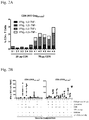
- Balb/c mice were vaccinated twice subcutaneously in the base of the tail (s.c.) 3 wks apart with 5 ⁇ g of HIV Gag protein formulated with 2% oil-in-water adjuvant (Addavax, Invivogen) and CDN at the dose level indicated in Fig. 2 .
- CDN-adjuvanted HIV Gag vaccines induce a polyfunctional Ag-specific Th1 CD4 T cell response.
- the secondary CD4 T cell response was measured at 5 days post boost by intracellular cytokine staining of IFN- ⁇ , IL-2 and TNF-a positive splenocytes following stimulation with the I-A d restricted HIV Gag epitope. Bars represent individual mice.
- the magnitude of the CDN-dependent vaccine induced T cell response is enhanced by formulation of CDN with VesiVax® liposomes.
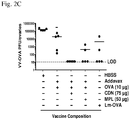
- the primary (1) and secondary (2) OVA-specific CD4 and CD8 T cell response in PBMC following s.c. immunization of groups of 5 C57BL/6 mice with the vaccine compositions shown in Figure 2 was measured by IFN- ⁇ ELISPOT, and the results depicted in Fig. 2C .
- Groups of 5 C57BL/6 mice were immunized s.c. twice at a 3-wk interval with the vaccines indicated in the Figure, or with 5x10 6 CFU of Lm-OVA, given i.v.
- mice were challenged with 5x10 5 PFU of VV-OVA, and 5 days later the ovaries were harvested, processed and VV-OVA was quantitated by plaque assay.
- mice vaccinated with CDN-adjuvanted OVA were completely protected by challenge with vaccinia virus.
- this level of protection was >4 logs.
- the level of protection afforded by the CDN-adjuvanted vaccine was better than either MPL-adjuvanted OVA (using the human MPL dose of 50 ⁇ g), or Listeria-OVA vaccines.
- Fig. 7 depicts the induction of human dendritic cells upon CDN treatment, as assessed by expression of costimulatory molecules such as CD80 and CD86.
- CD14+ monocytes were isolated from PBMC and cultured in the presence of GM-CSF and IL-4.
- 10 5 DCs were treated with 100 ng/ML LPS, 20 ⁇ M CDN (c-di-AMP); 369 ⁇ g liposomes (VesiVax®), or liposomes plus CDN, as indicated in the figure.
- the indicated costimulatory molecules were detected 48 hrs later by flow cytometry. As noted, liposomes substantially improve the ability of CDN to induce dendritic cell maturation.
- the B16 melanoma tumor model is aggressive and poorly immunogenic, and therapeutic vaccination with irradiated GM-CSF secreting B16 melanoma tumor cells (B16-GM) has not been effective unless combined with blockade of immune checkpoints, such as CTLA-4 or PD-1.
- B16-GM irradiated GM-CSF secreting B16 melanoma tumor cells
- blockade of immune checkpoints such as CTLA-4 or PD-1.
- STINGVAX CDN formulated with digitonin and incubated with irradiated B16-GM
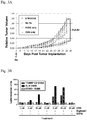
- B16 melanoma cells were inoculated in the footpad of C57BL/6 mice and when tumors were palpable at 7 days, mice were injected once s.c. in the contralateral thigh with the vaccines indicated in Fig. 3 .
- the following amounts of vaccine components were used for each injection: irradiated B16 GM-CSF (GVAX), 1.5x10 6 cells; CDN only, 20 ng; digitonin, 10 ⁇ g/mL.
- STINGVAX was prepared by incubation of irradiated B16 GM-CSF with CDN and digitonin at 20 °C for 30 min, washing 3x with PBS, and the resulting composition injected after resuspension in 200 ⁇ L of PBS. See also Woodward et al., Supporting online material 27 May 2010 on Science Express DOI: 10.1126/science.1189801 , for formulation information. Tumor growth was measured daily. Growth was significantly inhibited by STINGVAX vs No Rx Group (P ⁇ 0.01). As shown in Fig. 3A , tumor inhibition was dependent on combination of B16-GM with CDN, as treatment with either component alone had no impact on tumor growth as compared to untreated control mice. Additionally, the CD8 T cell response specific for p15E, an endogenous retrovirus-specific Ag expressed on the B16 tumor, was enhanced in STINGVAX-treated tumor-bearing mice, compared to B16-GM treated mice (data not shown).
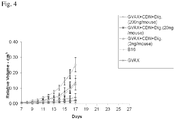
- Fig. 4 demonstrates the dose-dependency of the therapeutic benefit exhibited by the STING-targeted CDN / GVAX combination.
- 5x10 4 B16 melanoma cells were inoculated in the footpad of C57BL/6 mice. Once tumor is palpable at day 6, GVAX (B16 GM-CSF (GVAX), 1.5x10 6 cells) or the CDN/GVAX combination at 2, 20, or 200ng CDN/animal was injected subcutaneously into the contralateral thigh.
- GVAX B16 GM-CSF (GVAX), 1.5x10 6 cells
- the CDN/GVAX combination at 2, 20, or 200ng CDN/animal was injected subcutaneously into the contralateral thigh.
- the CDN was formulated with digitonin at 10 ⁇ g/mL for 30min at 20°C and subsequently washed 4x with PBS to remove non-incorporated CDN prior to injection as described above.
- Tumor volume was measured daily in a total of 20 animals/treatment group. As shown in the figure, the antitumor response was increased as the concentration of CDN increased from 2 ng/animal to 20 ng/animal, but no further increase was observed by increasing the dosage to 200 ng/mL.
- Fig. 5 provides further evidence of a synergistic antitumor response to the CDN/GVAX combination.
- B16 melanoma cells were harvested from the animals and the cells fixed onto slides for immunohistochemistry. Fluorescein-labeled anti-CD8 antibodies were ised to visualize CR8+ T-cell infiltration into the tumor. DAPI was used to counterstain the nucleus of the tumor cells.
- the four panels shown in the figure are untreated B16 melanoma cells (A), and cells treated with CDN (B), GVAX (C) and CDN /GVAX (D). As shown, a substantial improvement in CD*+ T-cell tumor infiltration is observed with CDN /GVAX in comparison to either of CDN or GVAX alone.
- Fig. 6 demonstrates an improved induction of mature interferon ⁇ -producing splenic DC (CD11c+ cells) by CDN /GVAX in comparison to either of CDN or GVAX alone.
- mice were treated as described above, and the spleen from 2 mice/group were harvested. Total splenocytes were harvested and stained with anti-CD11c and anti-IFNa conjugates. The treatment (untreated B16, CDN, CDN + digitonin, GVAX, and CDN/GVAX + digitonin) are indicated in the figure.
- the GVAX tumor cell vaccines provides an un-biased presentation of multiple tumor associated antigens to the immune system.
- GM-CSF produced by GVAX recruits dendritic cells (DCs) to the injection site.
- DCs dendritic cells
- CDNs activate the recruited DCs, which in turn activate or prime potent antigen-specific CD4 and CD8 T cells that traffic to and kill the tumor, resulting in a clinical benefit.
- STINGVAX can enhance the tumor response either by serving as a depot for the GM-CSF recruited DCs, or through autocrine signaling express both TBK-1/IRF-3 dependent IFS- ⁇ and NF- ⁇ B pro-inflammatory cytokines that in combination activate the GM-CSF recruited DCs.
- the mechanism for the increased anti-tumor efficacy of STINGVAX is believed due to the activation of innate immunity that is mediated by direct binding of CDNs to STING, triggering a conformational change in this receptor, resulting in signaling through the TBK-I/IRF-3 axis and activation of type 1 interferons (IFN), including IFN- ⁇ and IFN- ⁇ .
- GM-CSF produced by the GVAX tumor cell vaccine recruits dendritic cells (DCs) to the injection site.
- DCs dendritic cells
- CDNs activate the recruited DCs, which in turn activate or prime potent antigen-specific CD4 and CD8 T cells that traffic to and kill the tumor, resulting in a clinical benefit.
- IFN- ⁇ As a signature of CDN potency to activate innate immunity, 1x10 6 primary human PBMCs isolated from fifteen independent human donors were incubated in a 96 well U bottom plate for 30 min at 37°C, 5% CO2 with 50 ⁇ M of c-di-GMP (CDG), 1 ⁇ g/mL of Interferon Stimulatory DNA (ISD), or 4 ⁇ g/mL of Poly (I:C) utilizing Effectene transfection reagent (Qiagen) to transfer the molecules into the PBMC.
- CDG c-di-GMP
- ISD Interferon Stimulatory DNA
- I:C Poly
- ISD Effectene transfection reagent
Landscapes
- Health & Medical Sciences (AREA)
- Life Sciences & Earth Sciences (AREA)
- Chemical & Material Sciences (AREA)
- Veterinary Medicine (AREA)
- General Health & Medical Sciences (AREA)
- Public Health (AREA)
- Medicinal Chemistry (AREA)
- Pharmacology & Pharmacy (AREA)
- Animal Behavior & Ethology (AREA)
- Epidemiology (AREA)
- Immunology (AREA)
- Engineering & Computer Science (AREA)
- Zoology (AREA)
- Bioinformatics & Cheminformatics (AREA)
- Virology (AREA)
- Microbiology (AREA)
- Mycology (AREA)
- Gastroenterology & Hepatology (AREA)
- Proteomics, Peptides & Aminoacids (AREA)
- Oncology (AREA)
- Chemical Kinetics & Catalysis (AREA)
- General Chemical & Material Sciences (AREA)
- Organic Chemistry (AREA)
- Nuclear Medicine, Radiotherapy & Molecular Imaging (AREA)
- Cell Biology (AREA)
- Biomedical Technology (AREA)
- Molecular Biology (AREA)
- Hematology (AREA)
- Developmental Biology & Embryology (AREA)
- Biotechnology (AREA)
- Communicable Diseases (AREA)
- Dispersion Chemistry (AREA)
- Medicines That Contain Protein Lipid Enzymes And Other Medicines (AREA)
- Medicines Containing Antibodies Or Antigens For Use As Internal Diagnostic Agents (AREA)
- Pharmaceuticals Containing Other Organic And Inorganic Compounds (AREA)
- Medicinal Preparation (AREA)
- Medicines Containing Material From Animals Or Micro-Organisms (AREA)
Claims (15)
- Composition comprenant :un dinucléotide cyclique de purine qui se lie à la protéine transmembranaire STING (Stimulator of Interferon Genes, stimulateur des gènes d'interféron) et qui induit une activation de la TBK1 (kinase 1 de liaison à TANK) dépendante de STING ; etune cellule tumorale inactivée qui exprime et qui sécrète le GM-CSF.
- Composition selon la revendication 1, comprenant en outre un excipient pharmaceutiquement acceptable.
- Composition selon la revendication 1 ou 2, comprenant en outre un ou plusieurs d'un antagoniste de CTLA-4 et d'un agoniste de TLR-4.
- Composition selon l'une quelconque des revendications 1 à 3, dans laquelle la cellule tumorale est inactivée par radiothérapie.
- Composition selon l'une quelconque des revendications 1 à 4, dans laquelle le dinucléotide cyclique de purine est choisi dans le groupe constitué du c-di-AMP, du c-di-GMP, du c-di-IMP, du c-AMP-GMP, du c-AMP-IMP et du c-GMP-IMP, ou des combinaisons de ceux-ci.
- Composition selon l'une quelconque des revendications 1 à 5, dans laquelle le dinucléotide cyclique de purine est formulé avec un ou plusieurs lipides.
- Composition selon la revendication 6, dans laquelle les un ou plusieurs lipides comprennent de la digitonine.
- Composition selon la revendication 6, dans laquelle les un ou plusieurs lipides forment un liposome.
- Composition selon l'une quelconque des revendications 1 à 8, comprenant en outre un ou plusieurs adjuvants.
- Composition selon la revendication 9, dans laquelle les un ou plusieurs adjuvants comprennent du CpG et/ou un lipide A monophosphorylé.
- Composition selon l'une quelconque des revendications 1 à 10 pour utilisation dans un procédé d'induction d'une réponse immunitaire à un cancer chez un individu, dans laquelle le type de la cellule tumorale inactivée ou d'un mélange de différentes cellules tumorales correspond au cancer de l'individu.
- Composition pour utilisation selon la revendication 11, dans laquelle la cellule tumorale inactivée ou un mélange de différentes cellules tumorales est une lignée ou des lignées de cellules tumorales allogéniques.
- Composition pour utilisation selon la revendication 11, dans laquelle la cellule tumorale inactivée est une cellule tumorale autologue.
- Composition pour utilisation selon l'une quelconque des revendications 11 à 13, dans laquelle la cellule tumorale est choisie dans le groupe constitué d'une cellule cancéreuse colorectale, d'une cellule cancéreuse squameuse aéro-digestive, d'une cellule cancéreuse pulmonaire, d'une cellule cancéreuse cérébrale, d'une cellule cancéreuse hépatique, d'une cellule cancéreuse stomacale, d'une cellule de sarcome, d'une cellule de leucémie, d'une cellule de lymphome, d'une cellule de myélome multiple, d'une cellule cancéreuse ovarienne, d'une cellule cancéreuse utérine, d'une cellule de cancer du sein, d'une cellule de mélanome, d'une cellule de cancer de la prostate, d'une cellule de carcinome pancréatique et d'une cellule de carcinome rénal.
- Composition pour utilisation selon l'une quelconque des revendications 11 à 14 dans laquelle ledit procédé comprend en outre l'administration d'un antagoniste de la voie PD-1 ou d'un agent bloquant PD-1 à l'individu.
Applications Claiming Priority (2)
| Application Number | Priority Date | Filing Date | Title |
|---|---|---|---|
| US201261657574P | 2012-06-08 | 2012-06-08 | |
| PCT/US2013/044744 WO2013185052A1 (fr) | 2012-06-08 | 2013-06-07 | Compositions et procédés pour immunothérapie anticancéreuse |
Publications (4)
| Publication Number | Publication Date |
|---|---|
| EP2858722A1 EP2858722A1 (fr) | 2015-04-15 |
| EP2858722A4 EP2858722A4 (fr) | 2015-12-23 |
| EP2858722B1 true EP2858722B1 (fr) | 2017-12-13 |
| EP2858722B8 EP2858722B8 (fr) | 2018-02-21 |
Family
ID=49712686
Family Applications (1)
| Application Number | Title | Priority Date | Filing Date |
|---|---|---|---|
| EP13799826.6A Not-in-force EP2858722B8 (fr) | 2012-06-08 | 2013-06-07 | Compositions et procédés pour immunothérapie anticancéreuse |
Country Status (11)
| Country | Link |
|---|---|
| US (1) | US9770467B2 (fr) |
| EP (1) | EP2858722B8 (fr) |
| JP (1) | JP6257607B2 (fr) |
| KR (1) | KR20150022996A (fr) |
| CN (1) | CN104507538B (fr) |
| AU (1) | AU2013271375B2 (fr) |
| CA (1) | CA2876150A1 (fr) |
| IN (1) | IN2014MN02492A (fr) |
| NZ (1) | NZ702392A (fr) |
| SG (2) | SG10201610251PA (fr) |
| WO (1) | WO2013185052A1 (fr) |
Families Citing this family (117)
| Publication number | Priority date | Publication date | Assignee | Title |
|---|---|---|---|---|
| NZ702392A (en) | 2012-06-08 | 2017-03-31 | Aduro Biotech | Compositions and methods for cancer immunotherapy |
| EA201590396A1 (ru) | 2012-12-13 | 2015-12-30 | Адуро Биотек, Инк. | Композиция, содержащая циклические пуриновые динуклеотиды с определенной стереохимией, и способ ее получения и применения |
| PT2934598T (pt) * | 2012-12-19 | 2018-07-24 | Univ Texas | Focalização farmacêutica de uma trajetória de sinalização de dinucleótido cíclico de mamífero |
| ES2982836T3 (es) | 2013-04-29 | 2024-10-17 | Memorial Sloan Kettering Cancer Center | Composiciones y métodos para alterar la señalización de segundos mensajeros |
| EP2992000B1 (fr) | 2013-05-03 | 2020-07-08 | The Regents of The University of California | Induction de dinucléotide cyclique de l'interféron de type i |
| ME03586B (fr) * | 2013-05-18 | 2020-07-20 | Univ California | Compositions et procédés d'activation de la signalisation dépendante de « stimulateur de gènes d'interféron » |
| US9549944B2 (en) | 2013-05-18 | 2017-01-24 | Aduro Biotech, Inc. | Compositions and methods for inhibiting “stimulator of interferon gene”—dependent signalling |
| WO2014189806A1 (fr) * | 2013-05-18 | 2014-11-27 | Aduro Biotech, Inc. | Compositions et procédés d'inhibition de la signalisation dépendante du « stimulateur des gènes interférons » |
| JP2016526532A (ja) * | 2013-06-14 | 2016-09-05 | インターベット インターナショナル ベー. フェー. | GpGオリゴデオキシヌクレオチドおよびサイクリックdi‐GMPを含む医薬組成物 |
| US10176292B2 (en) | 2013-07-31 | 2019-01-08 | Memorial Sloan-Kettering Cancer Center | STING crystals and modulators |
| EP3456700A1 (fr) | 2013-10-18 | 2019-03-20 | Deutsches Krebsforschungszentrum | Inhibiteurs marqués de l'antigène membranaire spécifique de la prostate (psma), leur utilisation comme agents d'imagerie et agents pharmaceutiques pour le traitement du cancer de la prostate |
| US10421971B2 (en) * | 2014-01-15 | 2019-09-24 | The University Of Chicago | Anti-tumor therapy |
| US10441654B2 (en) | 2014-01-24 | 2019-10-15 | Children's Hospital Of Eastern Ontario Research Institute Inc. | SMC combination therapy for the treatment of cancer |
| CN103908468B (zh) * | 2014-04-21 | 2017-02-08 | 上海捌加壹医药科技有限公司 | 环二核苷酸cGAMP在制备抗肿瘤药物中的应用 |
| WO2015185565A1 (fr) | 2014-06-04 | 2015-12-10 | Glaxosmithkline Intellectual Property Development Limited | Di-nucléotides cycliques utilisés comme modulateurs de sting |
| WO2016040313A2 (fr) * | 2014-09-08 | 2016-03-17 | Dana-Farber Cancer Institute, Inc. | Méthodes de traitement du cancer |
| US10010607B2 (en) | 2014-09-16 | 2018-07-03 | Institut Curie | Method for preparing viral particles with cyclic dinucleotide and use of said particles for inducing immune response |
| JP7305300B2 (ja) * | 2014-11-05 | 2023-07-10 | ザ リージェンツ オブ ザ ユニバーシティ オブ カリフォルニア | 併用免疫療法 |
| JP6762030B2 (ja) | 2014-11-20 | 2020-09-30 | 国立研究開発法人医薬基盤・健康・栄養研究所 | 異なる核酸アジュバントの組み合わせによる、新規Th1誘導性アジュバントおよびその用途 |
| US20170340658A1 (en) * | 2014-12-16 | 2017-11-30 | Invivogen | Combined use of a chemotherapeutic agent and a cyclic dinucleotide for cancer treatment |
| ES2764178T3 (es) | 2014-12-16 | 2020-06-02 | Kayla Therapeutics | Dinucleótidos cíclicos fluorados para inducción de citocinas |
| GB201501462D0 (en) | 2015-01-29 | 2015-03-18 | Glaxosmithkline Ip Dev Ltd | Novel compounds |
| SG11201806623VA (en) | 2015-02-11 | 2018-09-27 | Univ Johns Hopkins | Bacteria over-expressing c-di-amp and therapeutic methods |
| AU2016259020B2 (en) * | 2015-05-07 | 2021-12-09 | Baylor College Of Medicine | Dendritic cell immunotherapy |
| MX2018001814A (es) | 2015-08-13 | 2018-05-07 | Merck Sharp & Dohme | Compuestos dinucleotidos ciclicos como agonistas del estimulador de genes de interferon. |
| US11453697B1 (en) | 2015-08-13 | 2022-09-27 | Merck Sharp & Dohme Llc | Cyclic di-nucleotide compounds as sting agonists |
| CN106540255A (zh) * | 2015-09-18 | 2017-03-29 | 聊城市奥润生物医药科技有限公司 | 环二核苷酸cGAMP联合贝伐珠单抗在抗肿瘤中的应用 |
| CN106540254A (zh) * | 2015-09-22 | 2017-03-29 | 聊城市奥润生物医药科技有限公司 | 环二核苷酸cGAMP及其衍生物是潜在免疫佐剂 |
| CN106540253A (zh) * | 2015-09-24 | 2017-03-29 | 聊城市奥润生物医药科技有限公司 | cGAMP及其衍生物在制备抗肿瘤疫苗中的应用 |
| CN105367617A (zh) * | 2015-09-25 | 2016-03-02 | 武汉品生科技有限公司 | 一种基于环二腺核苷酸的衍生物、tat多肽及其在一型干扰素小分子中抑制剂的应用 |
| JP6411676B2 (ja) | 2015-12-03 | 2018-10-24 | グラクソスミスクライン、インテレクチュアル、プロパティー、ディベロップメント、リミテッドGlaxosmithkline Intellectual Property Development Limited | Stingの調節因子としての環状プリンジヌクレオチド |
| HUE073018T2 (hu) | 2016-01-11 | 2026-01-28 | Innate Tumor Immunity Inc | Ciklikus dinukleotidok állapotok kezelésére, amelyek STING-aktivitással kapcsolatosak, mint például rák |
| CN106544319A (zh) * | 2016-01-24 | 2017-03-29 | 聊城市奥润生物医药科技有限公司 | 一种用于刺激树突状细胞成熟的组合物及其用于刺激树突状细胞成熟的方法 |
| CN108779473A (zh) | 2016-03-16 | 2018-11-09 | 法国居里学院 | 用于制备具有环二核苷酸的病毒颗粒的方法和所述颗粒用于治疗癌症的用途 |
| CN114751950B (zh) | 2016-03-18 | 2025-04-18 | 免疫传感器公司 | 环二核苷酸化合物及使用方法 |
| KR20180132783A (ko) | 2016-04-07 | 2018-12-12 | 글락소스미스클라인 인털렉츄얼 프로퍼티 디벨로프먼트 리미티드 | 단백질 조절제로서 유용한 헤테로사이클릭 아미드 |
| CN113549110B (zh) | 2016-04-07 | 2024-08-16 | 葛兰素史密斯克莱知识产权发展有限公司 | 用作蛋白质调节剂的杂环酰胺 |
| WO2017186711A1 (fr) | 2016-04-25 | 2017-11-02 | Invivogen | Nouveaux complexes de composés immunostimulateurs, et leurs utilisations |
| KR102569881B1 (ko) | 2016-07-06 | 2023-08-22 | 에프-스타 테라퓨틱스 인코포레이티드 | 질병 치료용 화합물, 조성물 및 방법 |
| DK3922279T3 (da) | 2016-08-30 | 2025-02-03 | Dana Farber Cancer Inst Inc | Præparater til lægemiddelafgivelse og anvendelse heraf |
| EA037513B1 (ru) * | 2016-09-17 | 2021-04-06 | ИММЬЮН СЕНСОР, ЭлЭлСи | Циклические динуклеотидные соединения и способы их применения |
| US10414747B2 (en) | 2016-10-04 | 2019-09-17 | Merck Sharp & Dohme Corp. | Benzo[b]thiophene compounds as sting agonists |
| PT3512861T (pt) | 2016-12-01 | 2021-04-29 | Takeda Pharmaceuticals Co | Dinucleotídeos cíclicos |
| KR101889181B1 (ko) * | 2016-12-19 | 2018-08-16 | 주식회사 포스코 | 굽힘성 및 신장플랜지성이 우수한 고장력강 및 이의 제조방법 |
| AU2017382294A1 (en) * | 2016-12-22 | 2019-08-01 | Abbvie Inc. | Compositions and methods of enhancing or augmenting type I IFN production |
| EP3576780A1 (fr) | 2017-02-01 | 2019-12-11 | Modernatx, Inc. | Compositions thérapeutiques immunomodulatrices d'arnm codant pour des peptides de mutation d'activation d'oncogènes |
| US20200055883A1 (en) * | 2017-02-17 | 2020-02-20 | Eisai R&D Management Co., Ltd. | Cyclic di-nucleotides derivative for the treatment of cancer |
| JP7591348B2 (ja) | 2017-02-21 | 2024-11-28 | ボード オブ レジェンツ,ザ ユニバーシティ オブ テキサス システム | インターフェロン遺伝子刺激因子依存性シグナル伝達のアゴニストとしての環状ジヌクレオチド |
| UY37695A (es) * | 2017-04-28 | 2018-11-30 | Novartis Ag | Compuesto dinucleótido cíclico bis 2’-5’-rr-(3’f-a)(3’f-a) y usos del mismo |
| WO2018208667A1 (fr) | 2017-05-12 | 2018-11-15 | Merck Sharp & Dohme Corp. | Composés dinucléotidiques cycliques en tant qu'agonistes sting |
| KR20200028392A (ko) * | 2017-06-12 | 2020-03-16 | 유니버시티 오브 마이애미 | 질환의 치료를 위한 sting-의존성 활성화제 |
| US11969499B2 (en) | 2017-06-16 | 2024-04-30 | William Marsh Rice University | Hydrogel delivery of sting immunotherapy for treatment cancer |
| JP2020530838A (ja) | 2017-08-04 | 2020-10-29 | メルク・シャープ・アンド・ドーム・コーポレーションMerck Sharp & Dohme Corp. | がん治療のためのベンゾ[b]チオフェンSTINGアゴニスト |
| AU2018311965A1 (en) | 2017-08-04 | 2020-02-13 | Merck Sharp & Dohme Llc | Combinations of PD-1 antagonists and benzo[b]thiophene sting antagonists for cancer treatment |
| US11638716B2 (en) | 2017-08-31 | 2023-05-02 | F-star Therapeutics, Inc. | Compounds, compositions, and methods for the treatment of disease |
| WO2019051488A1 (fr) | 2017-09-11 | 2019-03-14 | Sperovie Biosciences, Inc. | Composés, compositions et méthodes de traitement de maladie |
| WO2019051489A1 (fr) | 2017-09-11 | 2019-03-14 | Sperovie Biosciences, Inc. | Composés, compositions et méthodes de traitement de maladie |
| EP3692033A1 (fr) | 2017-10-05 | 2020-08-12 | GlaxoSmithKline Intellectual Property Development Limited | Modulateurs de stimulateur des gènes (sting) d'interféron utiles dans le traitement du vih |
| WO2019069270A1 (fr) | 2017-10-05 | 2019-04-11 | Glaxosmithkline Intellectual Property Development Limited | Modulateurs de stimulateur des gènes (sting) de l'interféron |
| CN107619438B (zh) * | 2017-10-11 | 2021-12-03 | 广州云启科技有限公司 | 新型环二核苷酸受体及其激动剂或抑制剂筛选的方法和试剂盒 |
| CN109694397B (zh) * | 2017-10-23 | 2021-08-31 | 上海弘翊生物科技有限公司 | 环状二核苷酸化合物、其制备方法和应用 |
| MX2020004858A (es) | 2017-11-10 | 2020-10-01 | Takeda Pharmaceuticals Co | Compuestos moduladores de sting y metodos de elaboracion y uso. |
| KR102492187B1 (ko) | 2017-12-20 | 2023-01-27 | 인스티튜트 오브 오가닉 케미스트리 앤드 바이오케미스트리 에이에스 씨알 브이.브이.아이. | Sting 어댑터 단백질을 활성화하는 포스포네이트 결합을 가진 3'3' 사이클릭 다이뉴클레오티드 |
| EP3727401A4 (fr) | 2017-12-20 | 2022-04-06 | Merck Sharp & Dohme Corp. | Composés dinucléotidiques cycliques utilisés comme agonistes sting |
| JP7098748B2 (ja) | 2017-12-20 | 2022-07-11 | インスティチュート オブ オーガニック ケミストリー アンド バイオケミストリー エーエスシーアール,ヴイ.ヴイ.アイ. | Stingアダプタータンパク質を活性化するホスホン酸結合を有する2’3’環状ジヌクレオチド |
| WO2019183578A1 (fr) | 2018-03-23 | 2019-09-26 | Codiak Biosciences, Inc. | Vésicules extracellulaires comprenant un agoniste de sting |
| EP3774764A1 (fr) | 2018-04-03 | 2021-02-17 | Merck Sharp&Dohme Corp. | Benzothiophènes et composés associés utilisés en tant qu'agonistes de sting |
| US11702430B2 (en) | 2018-04-03 | 2023-07-18 | Merck Sharp & Dohme Llc | Aza-benzothiophene compounds as STING agonists |
| US11874276B2 (en) | 2018-04-05 | 2024-01-16 | Dana-Farber Cancer Institute, Inc. | STING levels as a biomarker for cancer immunotherapy |
| TWI818007B (zh) | 2018-04-06 | 2023-10-11 | 捷克科學院有機化學與生物化學研究所 | 2'3'-環二核苷酸 |
| TWI833744B (zh) | 2018-04-06 | 2024-03-01 | 捷克科學院有機化學與生物化學研究所 | 3'3'-環二核苷酸 |
| TW202005654A (zh) | 2018-04-06 | 2020-02-01 | 捷克科學院有機化學與生物化學研究所 | 2,2,─環二核苷酸 |
| US20190359645A1 (en) | 2018-05-03 | 2019-11-28 | Institute Of Organic Chemistry And Biochemistry Ascr, V.V.I. | 2'3'-cyclic dinucleotides comprising carbocyclic nucleotide |
| GB201807924D0 (en) | 2018-05-16 | 2018-06-27 | Ctxt Pty Ltd | Compounds |
| US12291548B2 (en) | 2018-07-10 | 2025-05-06 | Sperovie Biosciences, Inc. | Compounds, compositions, and methods for the treatment of disease |
| JP2021531266A (ja) | 2018-07-12 | 2021-11-18 | ザ リージェンツ オブ ザ ユニバーシティ オブ ミシガン | 免疫応答を調節可能な金属含有製剤のための組成物および方法 |
| MX2020013322A (es) | 2018-08-16 | 2021-02-22 | Eisai R&D Man Co Ltd | Sales de compuestos y cristales de los mismos. |
| WO2020041720A1 (fr) | 2018-08-24 | 2020-02-27 | Codiak Biosciences, Inc. | Vésicules extracellulaires ciblant des cellules dendritiques et utilisations associées |
| WO2020093040A1 (fr) * | 2018-11-02 | 2020-05-07 | The Regents Of The University Of California | Procédés de diagnostic et de traitement du cancer à l'aide d'acides nucléiques non humains |
| WO2020178770A1 (fr) | 2019-03-07 | 2020-09-10 | Institute Of Organic Chemistry And Biochemistry Ascr, V.V.I. | Dinucléotides 3'3'-cycliques et leurs promédicaments |
| WO2020178768A1 (fr) | 2019-03-07 | 2020-09-10 | Institute Of Organic Chemistry And Biochemistry Ascr, V.V.I. | Analogue du dinucléotide 3'3'-cyclique comprenant un nucléotide modifié par cyclopentanyle utilisé en tant que modulateur de sting |
| CN113543851B (zh) | 2019-03-07 | 2025-03-18 | 捷克共和国有机化学与生物化学研究所 | 2’3’-环二核苷酸及其前药 |
| CA3133314A1 (fr) | 2019-03-21 | 2020-09-24 | Codiak Biosciences, Inc. | Conjugues de vesicules extracellulaires et leurs utilisations |
| US12502427B2 (en) | 2019-03-21 | 2025-12-23 | Lonza Sales Ag | Extracellular vesicles for vaccine delivery |
| TW202104214A (zh) | 2019-04-05 | 2021-02-01 | 英商葛蘭素史密斯克藍智慧財產發展有限公司 | 化合物 |
| EP3962493A2 (fr) | 2019-05-03 | 2022-03-09 | Flagship Pioneering Innovations V, Inc. | Métodes de modulation de l'activité immunitaire |
| AU2020267486B2 (en) | 2019-05-09 | 2025-12-18 | Aligos Therapeutics, Inc. | Modified cyclic dinucleoside compounds as STING modulators |
| US20220251200A1 (en) | 2019-07-03 | 2022-08-11 | Codiak Biosciences, Inc. | Extracellular vesicles targeting t cells and uses thereof |
| GB201910305D0 (en) | 2019-07-18 | 2019-09-04 | Ctxt Pty Ltd | Compounds |
| GB201910304D0 (en) | 2019-07-18 | 2019-09-04 | Ctxt Pty Ltd | Compounds |
| WO2021035257A1 (fr) * | 2019-08-21 | 2021-02-25 | The Scripps Research Institute | Agonistes monocycliques du stimulateur de la protéine sting |
| WO2021041532A1 (fr) | 2019-08-26 | 2021-03-04 | Dana-Farber Cancer Institute, Inc. | Utilisation d'héparine pour favoriser la signalisation de l'interféron de type 1 |
| JP2022549328A (ja) | 2019-09-25 | 2022-11-24 | コディアック バイオサイエンシーズ, インコーポレイテッド | 細胞外小胞組成物 |
| WO2021062290A1 (fr) | 2019-09-25 | 2021-04-01 | Codiak Biosciences, Inc. | Procédés de production de vésicules extracellulaires |
| US12616712B2 (en) | 2019-09-25 | 2026-05-05 | Lonza Sales Ag | Sting agonist comprising exosomes for treating neuroimmunological disorders |
| KR20220094221A (ko) | 2019-09-25 | 2022-07-05 | 코디악 바이오사이언시즈, 인크. | 종양의 치료를 위한 il-12 디스플레잉 엑소좀과 조합된 sting 효능제 포함 엑소좀 |
| AU2020405068A1 (en) | 2019-12-18 | 2022-07-07 | Stinginn Llc | Substituted 1,2, 4-triazoles and methods of use |
| WO2021119753A1 (fr) | 2019-12-18 | 2021-06-24 | Ctxt Pty Limited | Composés |
| US12251449B2 (en) | 2019-12-19 | 2025-03-18 | William Marsh Rice University | Synthetic multidomain peptide biomaterials that inhibit inducible nitric oxide synthase |
| US20230114434A1 (en) | 2020-03-13 | 2023-04-13 | Codiak Biosciences, Inc. | Extracellular vesicles for treating neurological disorders |
| JP2023518414A (ja) | 2020-03-20 | 2023-05-01 | コディアック バイオサイエンシーズ, インコーポレイテッド | 治療のための細胞外小胞 |
| KR20230002680A (ko) * | 2020-04-15 | 2023-01-05 | 스태튼스 세룸 인스티튜트 | 병원성 감염의 예방 또는 조기 치료 용도의 리포솜 조성물 |
| US20230149560A1 (en) | 2020-04-20 | 2023-05-18 | Massachusetts Institute Of Technology | Lipid compositions for delivery of sting agonist compounds and uses thereof |
| US11897888B1 (en) | 2020-04-30 | 2024-02-13 | Stinginn Llc | Small molecular inhibitors of sting signaling compositions and methods of use |
| WO2021237100A1 (fr) | 2020-05-21 | 2021-11-25 | Codiak Biosciences, Inc. | Procédés d'administration ciblée de vésicules extracellulaires dans le poumon |
| JP7072604B2 (ja) * | 2020-06-23 | 2022-05-20 | アンスティテュ・クリー | 環状ジヌクレオチドを含むウイルス粒子を調製する方法及びがんを治療するための前記粒子の使用 |
| CN111956797B (zh) * | 2020-07-10 | 2022-05-13 | 清华大学 | 新型疫苗佐剂及其在新冠肺炎疫苗和其他疫苗中的应用 |
| US20240082389A1 (en) | 2020-09-23 | 2024-03-14 | Lonza Sales Ag | Methods of producing extracellular vesicles |
| WO2022066883A1 (fr) | 2020-09-23 | 2022-03-31 | Codiak Biosciences, Inc. | Vésicules extracellulaires comprenant des antigènes kras et leurs utilisations |
| MX2023005381A (es) | 2020-11-09 | 2023-05-23 | Takeda Pharmaceuticals Co | Conjugados de anticuerpo y farmaco. |
| WO2022118043A1 (fr) * | 2020-12-03 | 2022-06-09 | Enara Bio Limited | Nouveau complexe protéine-ligand |
| EP4326321A1 (fr) | 2021-04-20 | 2024-02-28 | Institut Curie | Compositions et procédés destinés à être utilisés en immunothérapie |
| EP4326769A1 (fr) | 2021-04-20 | 2024-02-28 | Institut Curie | Compositions et procédés destinés à être utilisés en immunothérapie |
| WO2023056468A1 (fr) | 2021-09-30 | 2023-04-06 | Codiak Biosciences, Inc. | Vésicule extracellulaire comprenant un agoniste de sting marqué au cholestérol |
| WO2024086799A2 (fr) * | 2022-10-20 | 2024-04-25 | Northwestern University | Nanoparticules lipidiques et leurs procédés d'utilisation pour traiter des maladies et des troubles prolifératifs cellulaires |
| CN118671349A (zh) * | 2024-05-10 | 2024-09-20 | 浙江省肿瘤医院 | 一种抗胃癌药物的高通量筛选方法 |
| CN120346307A (zh) * | 2025-04-09 | 2025-07-22 | 新抗原医学科技(杭州)有限公司 | 一种靶向纳米脂质体的新型肿瘤疫苗的制备方法及其应用 |
Family Cites Families (56)
| Publication number | Priority date | Publication date | Assignee | Title |
|---|---|---|---|---|
| GB9110808D0 (en) | 1991-05-17 | 1991-07-10 | Retroscreen Ltd | Aids vaccine and method for its production |
| GB2257704B (en) | 1991-07-18 | 1995-03-01 | Erba Carlo Spa | Cyclic oligonucleotides phosphorothioates |
| US5637483A (en) | 1991-10-04 | 1997-06-10 | Whitehead Institute For Biomedical Research | Irradiated tumor cell vaccine engineered to express GM-CSF |
| US5904920A (en) | 1991-10-04 | 1999-05-18 | Whitehead Institute For Biomedical Research | Regulation of systemic immune responses utilizing cytokines and antigens |
| IT1262895B (it) | 1992-03-02 | 1996-07-22 | Proteina estratta da ceppi citotossici di helicobacter pylori, gene che la esprime, uso della proteina come vaccino o diagnostico. | |
| US5635160A (en) | 1995-06-07 | 1997-06-03 | The University Of North Carolina At Chapel Hill | Dinucleotides useful for the treatment of cystic fibrosis and for hydrating mucus secretions |
| US6033674A (en) | 1995-12-28 | 2000-03-07 | Johns Hopkins University School Of Medicine | Method of treating cancer with a tumor cell line having modified cytokine expression |
| US6277368B1 (en) | 1996-07-25 | 2001-08-21 | The Regents Of The University Of California | Cancer immunotherapy using autologous tumor cells combined with cells expressing a membrane cytokine |
| CA2318372C (fr) | 1998-02-02 | 2008-08-19 | Johns Hopkins University School Of Medicine | Lignee cellulaire universelle immunomodulatrice exprimant les cytokines a fonction temoin, compositions correspondantes et procedes de fabrication et d'utilisation |
| CN1194002C (zh) | 1999-02-15 | 2005-03-23 | 日本新药株式会社 | 短链化多核苷酸及其制备方法 |
| US6558670B1 (en) | 1999-04-19 | 2003-05-06 | Smithkline Beechman Biologicals S.A. | Vaccine adjuvants |
| EP1189611B1 (fr) | 1999-06-14 | 2006-05-03 | Cancer Research Technology Limited | Therapie anticancereuse |
| US6635677B2 (en) * | 1999-08-13 | 2003-10-21 | Case Western Reserve University | Methoxyamine combinations in the treatment of cancer |
| AU2001290860A1 (en) | 2000-09-21 | 2002-04-02 | The Regents Of The University Of California | Spas-1 cancer antigen |
| US7279883B2 (en) | 2001-01-23 | 2007-10-09 | Lydia L. Sohn | Particle analyzer and methods for use thereof |
| TW200303759A (en) * | 2001-11-27 | 2003-09-16 | Schering Corp | Methods for treating cancer |
| AR040996A1 (es) | 2002-08-19 | 2005-04-27 | Coley Pharm Group Inc | Acidos nucleicos inmunoestimuladores |
| US20040197312A1 (en) * | 2003-04-02 | 2004-10-07 | Marina Moskalenko | Cytokine-expressing cellular vaccine combinations |
| US8367716B2 (en) | 2003-07-28 | 2013-02-05 | Karaolis David K R | Method for attentuating virulence of microbial pathogens and for inhibiting microbial biofilm formation |
| US20050281783A1 (en) | 2003-10-15 | 2005-12-22 | Kinch Michael S | Listeria-based EphA2 vaccines |
| KR20060123170A (ko) | 2003-10-24 | 2006-12-01 | 알자 코포레이션 | 지질 입자의 제조방법 |
| JP4931798B2 (ja) | 2004-03-15 | 2012-05-16 | ケイ.アール. カラオリス,デイヴィッド | 免疫、炎症または神経保護応答のための方法 |
| US7592326B2 (en) | 2004-03-15 | 2009-09-22 | Karaolis David K R | Method for stimulating the immune, inflammatory or neuroprotective response |
| CA2607579A1 (fr) | 2005-05-06 | 2006-11-23 | The Regents Of The University Of California | Systeme microfluidique permettant d'identifier ou de calibrer des particules individuelles circulant dans un canal |
| US20070059683A1 (en) | 2005-09-15 | 2007-03-15 | Tom Barber | Veterinary diagnostic system |
| EP1782826A1 (fr) | 2005-11-08 | 2007-05-09 | GBF Gesellschaft für Biotechnologische Forschung mbH | PQS, c-diGMP et leurs conjugués utilisés comme adjuvants et leur emploi dans des compositions pharmaceutiques |
| EP3000480A1 (fr) | 2005-12-01 | 2016-03-30 | ProNAi Therapeutics, Inc. | Therapies contre le cancer et compositions pharmaceutiques utilisees dans ces therapies |
| AU2007292302A1 (en) | 2006-09-05 | 2008-03-13 | Bipar Sciences, Inc. | Methods for designing PARP inhibitors and uses thereof |
| WO2009133560A1 (fr) | 2008-04-29 | 2009-11-05 | Smart Assays | Dérivés de bis-(nucléotide monophosphate) cycliques non hydrolysables et perméables et leurs utilisations |
| WO2010017248A2 (fr) * | 2008-08-04 | 2010-02-11 | University Of Miami | Sting (stimulateur de gènes d’interféron), un régulateur de réponses immunitaires innées |
| US8840881B2 (en) | 2008-08-28 | 2014-09-23 | Aduro Gvax Inc. | Methods and compositions for treating prostate cancer or inducing a humoral immune response against prostate cancer |
| WO2010067262A1 (fr) | 2008-12-09 | 2010-06-17 | Pfizer Inc. | Oligonucléotides immunostimulants |
| WO2010104883A1 (fr) | 2009-03-09 | 2010-09-16 | Molecular Express, Inc. | Procédés et compositions pour formulation liposomale d'antigènes et leurs utilisations |
| US8414630B2 (en) | 2009-03-10 | 2013-04-09 | Marc Evan Richelsoph | Active bone screw |
| SI2437753T1 (sl) | 2009-06-05 | 2016-12-30 | Infectious Disease Research Institute | Sintetični glukopiranozil-lipidni adjuvansi in cepivni sestavki, ki jih vsebujejo |
| US20120178710A1 (en) | 2009-07-01 | 2012-07-12 | Rutgers, The State University Of New Jersey | Synthesis of cyclic diguanosine monophosphate and thiophosphate analogs thereof |
| US8771933B2 (en) | 2009-10-06 | 2014-07-08 | Massachusetts Institute Of Technology | Continuous-flow deformability-based cell separation |
| US20120064505A1 (en) | 2010-03-22 | 2012-03-15 | Massachusetts Institute Of Technology | Measurement of material properties and related methods and compositions |
| BR112012027745A2 (pt) | 2010-04-27 | 2017-01-10 | Univ Johns Hopkins | método e composição imunogênica para tratamento de neoplásia |
| US8450293B2 (en) | 2010-08-10 | 2013-05-28 | Rutgers, The State University Of New Jersey | Synthesis and characterization of C8 analogs of c-di-GMP |
| SI2640842T1 (sl) | 2010-11-17 | 2018-09-28 | Aduro Biotech, Inc. | Postopki in sestavki za induciranje imunskega odziva na EGFRvIII |
| US9061048B2 (en) | 2010-12-15 | 2015-06-23 | The Regents Of The University Of California | Cyclic di-AMP induction of type I interferon |
| EP2655392B1 (fr) | 2010-12-22 | 2018-04-18 | Alios Biopharma, Inc. | Analogues de nucléotides cycliques |
| US9880084B2 (en) | 2011-04-15 | 2018-01-30 | The University Of British Columbia | Apparatus for separation of particles |
| WO2013086331A1 (fr) | 2011-12-07 | 2013-06-13 | President And Fellows Of Harvard College | Cyclase di-nucléotide à haute efficacité |
| JP2015516989A (ja) | 2012-04-30 | 2015-06-18 | バーバー, グレン, エヌ.BARBER, Glen, N. | 免疫反応の変調 |
| NZ702392A (en) | 2012-06-08 | 2017-03-31 | Aduro Biotech | Compositions and methods for cancer immunotherapy |
| US9090646B2 (en) | 2012-12-05 | 2015-07-28 | Rutgers, The State University Of New Jersey | Biotinylated compounds |
| EA201590396A1 (ru) | 2012-12-13 | 2015-12-30 | Адуро Биотек, Инк. | Композиция, содержащая циклические пуриновые динуклеотиды с определенной стереохимией, и способ ее получения и применения |
| PT2934598T (pt) | 2012-12-19 | 2018-07-24 | Univ Texas | Focalização farmacêutica de uma trajetória de sinalização de dinucleótido cíclico de mamífero |
| ES2982836T3 (es) | 2013-04-29 | 2024-10-17 | Memorial Sloan Kettering Cancer Center | Composiciones y métodos para alterar la señalización de segundos mensajeros |
| EP2992000B1 (fr) | 2013-05-03 | 2020-07-08 | The Regents of The University of California | Induction de dinucléotide cyclique de l'interféron de type i |
| WO2014189806A1 (fr) | 2013-05-18 | 2014-11-27 | Aduro Biotech, Inc. | Compositions et procédés d'inhibition de la signalisation dépendante du « stimulateur des gènes interférons » |
| US9549944B2 (en) | 2013-05-18 | 2017-01-24 | Aduro Biotech, Inc. | Compositions and methods for inhibiting “stimulator of interferon gene”—dependent signalling |
| ME03586B (fr) | 2013-05-18 | 2020-07-20 | Univ California | Compositions et procédés d'activation de la signalisation dépendante de « stimulateur de gènes d'interféron » |
| US10176292B2 (en) | 2013-07-31 | 2019-01-08 | Memorial Sloan-Kettering Cancer Center | STING crystals and modulators |
-
2013
- 2013-06-07 NZ NZ702392A patent/NZ702392A/en not_active IP Right Cessation
- 2013-06-07 JP JP2015516245A patent/JP6257607B2/ja not_active Expired - Fee Related
- 2013-06-07 WO PCT/US2013/044744 patent/WO2013185052A1/fr not_active Ceased
- 2013-06-07 CN CN201380037917.2A patent/CN104507538B/zh not_active Expired - Fee Related
- 2013-06-07 CA CA2876150A patent/CA2876150A1/fr not_active Abandoned
- 2013-06-07 KR KR1020157000522A patent/KR20150022996A/ko not_active Ceased
- 2013-06-07 US US13/912,960 patent/US9770467B2/en active Active
- 2013-06-07 SG SG10201610251PA patent/SG10201610251PA/en unknown
- 2013-06-07 AU AU2013271375A patent/AU2013271375B2/en not_active Ceased
- 2013-06-07 EP EP13799826.6A patent/EP2858722B8/fr not_active Not-in-force
- 2013-06-07 SG SG11201407875UA patent/SG11201407875UA/en unknown
- 2013-06-07 IN IN2492MUN2014 patent/IN2014MN02492A/en unknown
Non-Patent Citations (1)
| Title |
|---|
| FU JUAN ET AL: "STING agonist formulated cancer vaccines can cure established tumors resistant to PD-1 blockade.", SCIENCE TRANSLATIONAL MEDICINE 15 APR 2015, vol. 7, no. 283, 15 April 2015 (2015-04-15), pages 283ra52, ISSN: 1946-6242 * |
Also Published As
| Publication number | Publication date |
|---|---|
| JP6257607B2 (ja) | 2018-01-10 |
| EP2858722A1 (fr) | 2015-04-15 |
| CN104507538A (zh) | 2015-04-08 |
| IN2014MN02492A (fr) | 2015-07-17 |
| WO2013185052A1 (fr) | 2013-12-12 |
| AU2013271375A1 (en) | 2014-12-18 |
| SG10201610251PA (en) | 2017-01-27 |
| US20150010613A1 (en) | 2015-01-08 |
| SG11201407875UA (en) | 2014-12-30 |
| CN104507538B (zh) | 2018-04-06 |
| AU2013271375B2 (en) | 2018-03-22 |
| EP2858722A4 (fr) | 2015-12-23 |
| KR20150022996A (ko) | 2015-03-04 |
| NZ702392A (en) | 2017-03-31 |
| US9770467B2 (en) | 2017-09-26 |
| JP2015518901A (ja) | 2015-07-06 |
| CA2876150A1 (fr) | 2013-12-12 |
| EP2858722B8 (fr) | 2018-02-21 |
| HK1204302A1 (en) | 2015-11-13 |
Similar Documents
| Publication | Publication Date | Title |
|---|---|---|
| US9770467B2 (en) | Compositions and methods for cancer immunotherapy | |
| JP6704012B2 (ja) | 明確な立体化学を有する環状プリンジヌクレオチドを含む組成物ならびにそれらの調製および使用方法 | |
| JP6453855B2 (ja) | 「インターフェロン遺伝子の刺激因子」依存性シグナル伝達を活性化するための組成物及び方法 | |
| Xie et al. | Remodeling tumor immunosuppressive microenvironment via a novel bioactive nanovaccines potentiates the efficacy of cancer immunotherapy | |
| ES2875338T3 (es) | Métodos de beta-glucano y composiciones que afectan al microentorno tumoral | |
| HK1204302B (en) | Compostions and methods for cancer immunotherapy | |
| Jyoti et al. | played by nanoimmunoadjuvants | |
| Shute | Glycolipid-Loaded Nanoparticles Harness Invariant Natural Killer T Cells for Tumor Immunotherapy | |
| HK40013049A (en) | Compositions comprising cyclic purine dinucleotides having defined stereochemistries and methods for their preparation and use | |
| HK1259906A1 (en) | Compositions comprising cyclic purine dinucleotides having defined stereochemistries and methods for their preparation and use | |
| HK1212707B (zh) | 包含具有确定立体化学的环嘌呤二核苷酸的组合物及其制备和使用方法 | |
| HK1222512B (en) | Compositions and methods for activating "stimulator of interferon gene"-dependent signalling | |
| HK1219024B (zh) | 用於活化“干扰素基因刺激因子”-依赖性信号传导的组合物和方法 | |
| NZ707561B2 (en) | Compositions comprising cyclic purine dinucleotides having defined stereochemistries and methods for their preparation and use |
Legal Events
| Date | Code | Title | Description |
|---|---|---|---|
| PUAI | Public reference made under article 153(3) epc to a published international application that has entered the european phase |
Free format text: ORIGINAL CODE: 0009012 |
|
| 17P | Request for examination filed |
Effective date: 20141222 |
|
| AK | Designated contracting states |
Kind code of ref document: A1 Designated state(s): AL AT BE BG CH CY CZ DE DK EE ES FI FR GB GR HR HU IE IS IT LI LT LU LV MC MK MT NL NO PL PT RO RS SE SI SK SM TR |
|
| AX | Request for extension of the european patent |
Extension state: BA ME |
|
| DAX | Request for extension of the european patent (deleted) | ||
| RIC1 | Information provided on ipc code assigned before grant |
Ipc: A61P 37/04 20060101AFI20151112BHEP |
|
| RA4 | Supplementary search report drawn up and despatched (corrected) |
Effective date: 20151120 |
|
| 17Q | First examination report despatched |
Effective date: 20161028 |
|
| GRAP | Despatch of communication of intention to grant a patent |
Free format text: ORIGINAL CODE: EPIDOSNIGR1 |
|
| INTG | Intention to grant announced |
Effective date: 20170630 |
|
| RAP1 | Party data changed (applicant data changed or rights of an application transferred) |
Owner name: ADURO BIOTECH, INC. Owner name: THE JOHN HOPKINS UNIVERSITY |
|
| GRAS | Grant fee paid |
Free format text: ORIGINAL CODE: EPIDOSNIGR3 |
|
| GRAA | (expected) grant |
Free format text: ORIGINAL CODE: 0009210 |
|
| REG | Reference to a national code |
Ref country code: GB Ref legal event code: FG4D |
|
| REG | Reference to a national code |
Ref country code: AT Ref legal event code: REF Ref document number: 953813 Country of ref document: AT Kind code of ref document: T Effective date: 20171215 Ref country code: CH Ref legal event code: EP |
|
| RAP2 | Party data changed (patent owner data changed or rights of a patent transferred) |
Owner name: THE JOHNS HOPKINS UNIVERSITY Owner name: ADURO BIOTECH, INC. |
|
| REG | Reference to a national code |
Ref country code: IE Ref legal event code: FG4D |
|
| REG | Reference to a national code |
Ref country code: DE Ref legal event code: R096 Ref document number: 602013030841 Country of ref document: DE |
|
| REG | Reference to a national code |
Ref country code: NL Ref legal event code: MP Effective date: 20171213 |
|
| REG | Reference to a national code |
Ref country code: LT Ref legal event code: MG4D |
|
| PG25 | Lapsed in a contracting state [announced via postgrant information from national office to epo] |
Ref country code: FI Free format text: LAPSE BECAUSE OF FAILURE TO SUBMIT A TRANSLATION OF THE DESCRIPTION OR TO PAY THE FEE WITHIN THE PRESCRIBED TIME-LIMIT Effective date: 20171213 Ref country code: LT Free format text: LAPSE BECAUSE OF FAILURE TO SUBMIT A TRANSLATION OF THE DESCRIPTION OR TO PAY THE FEE WITHIN THE PRESCRIBED TIME-LIMIT Effective date: 20171213 Ref country code: SE Free format text: LAPSE BECAUSE OF FAILURE TO SUBMIT A TRANSLATION OF THE DESCRIPTION OR TO PAY THE FEE WITHIN THE PRESCRIBED TIME-LIMIT Effective date: 20171213 Ref country code: NO Free format text: LAPSE BECAUSE OF FAILURE TO SUBMIT A TRANSLATION OF THE DESCRIPTION OR TO PAY THE FEE WITHIN THE PRESCRIBED TIME-LIMIT Effective date: 20180313 |
|
| REG | Reference to a national code |
Ref country code: AT Ref legal event code: MK05 Ref document number: 953813 Country of ref document: AT Kind code of ref document: T Effective date: 20171213 |
|
| PG25 | Lapsed in a contracting state [announced via postgrant information from national office to epo] |
Ref country code: GR Free format text: LAPSE BECAUSE OF FAILURE TO SUBMIT A TRANSLATION OF THE DESCRIPTION OR TO PAY THE FEE WITHIN THE PRESCRIBED TIME-LIMIT Effective date: 20180314 Ref country code: HR Free format text: LAPSE BECAUSE OF FAILURE TO SUBMIT A TRANSLATION OF THE DESCRIPTION OR TO PAY THE FEE WITHIN THE PRESCRIBED TIME-LIMIT Effective date: 20171213 Ref country code: LV Free format text: LAPSE BECAUSE OF FAILURE TO SUBMIT A TRANSLATION OF THE DESCRIPTION OR TO PAY THE FEE WITHIN THE PRESCRIBED TIME-LIMIT Effective date: 20171213 Ref country code: BG Free format text: LAPSE BECAUSE OF FAILURE TO SUBMIT A TRANSLATION OF THE DESCRIPTION OR TO PAY THE FEE WITHIN THE PRESCRIBED TIME-LIMIT Effective date: 20180313 Ref country code: RS Free format text: LAPSE BECAUSE OF FAILURE TO SUBMIT A TRANSLATION OF THE DESCRIPTION OR TO PAY THE FEE WITHIN THE PRESCRIBED TIME-LIMIT Effective date: 20171213 |
|
| REG | Reference to a national code |
Ref country code: FR Ref legal event code: PLFP Year of fee payment: 6 |
|
| PG25 | Lapsed in a contracting state [announced via postgrant information from national office to epo] |
Ref country code: NL Free format text: LAPSE BECAUSE OF FAILURE TO SUBMIT A TRANSLATION OF THE DESCRIPTION OR TO PAY THE FEE WITHIN THE PRESCRIBED TIME-LIMIT Effective date: 20171213 |
|
| PG25 | Lapsed in a contracting state [announced via postgrant information from national office to epo] |
Ref country code: EE Free format text: LAPSE BECAUSE OF FAILURE TO SUBMIT A TRANSLATION OF THE DESCRIPTION OR TO PAY THE FEE WITHIN THE PRESCRIBED TIME-LIMIT Effective date: 20171213 Ref country code: CY Free format text: LAPSE BECAUSE OF FAILURE TO SUBMIT A TRANSLATION OF THE DESCRIPTION OR TO PAY THE FEE WITHIN THE PRESCRIBED TIME-LIMIT Effective date: 20171213 Ref country code: SK Free format text: LAPSE BECAUSE OF FAILURE TO SUBMIT A TRANSLATION OF THE DESCRIPTION OR TO PAY THE FEE WITHIN THE PRESCRIBED TIME-LIMIT Effective date: 20171213 Ref country code: CZ Free format text: LAPSE BECAUSE OF FAILURE TO SUBMIT A TRANSLATION OF THE DESCRIPTION OR TO PAY THE FEE WITHIN THE PRESCRIBED TIME-LIMIT Effective date: 20171213 Ref country code: ES Free format text: LAPSE BECAUSE OF FAILURE TO SUBMIT A TRANSLATION OF THE DESCRIPTION OR TO PAY THE FEE WITHIN THE PRESCRIBED TIME-LIMIT Effective date: 20171213 |
|
| PG25 | Lapsed in a contracting state [announced via postgrant information from national office to epo] |
Ref country code: AT Free format text: LAPSE BECAUSE OF FAILURE TO SUBMIT A TRANSLATION OF THE DESCRIPTION OR TO PAY THE FEE WITHIN THE PRESCRIBED TIME-LIMIT Effective date: 20171213 Ref country code: SM Free format text: LAPSE BECAUSE OF FAILURE TO SUBMIT A TRANSLATION OF THE DESCRIPTION OR TO PAY THE FEE WITHIN THE PRESCRIBED TIME-LIMIT Effective date: 20171213 Ref country code: RO Free format text: LAPSE BECAUSE OF FAILURE TO SUBMIT A TRANSLATION OF THE DESCRIPTION OR TO PAY THE FEE WITHIN THE PRESCRIBED TIME-LIMIT Effective date: 20171213 Ref country code: IT Free format text: LAPSE BECAUSE OF FAILURE TO SUBMIT A TRANSLATION OF THE DESCRIPTION OR TO PAY THE FEE WITHIN THE PRESCRIBED TIME-LIMIT Effective date: 20171213 Ref country code: IS Free format text: LAPSE BECAUSE OF FAILURE TO SUBMIT A TRANSLATION OF THE DESCRIPTION OR TO PAY THE FEE WITHIN THE PRESCRIBED TIME-LIMIT Effective date: 20180413 Ref country code: PL Free format text: LAPSE BECAUSE OF FAILURE TO SUBMIT A TRANSLATION OF THE DESCRIPTION OR TO PAY THE FEE WITHIN THE PRESCRIBED TIME-LIMIT Effective date: 20171213 |
|
| PGFP | Annual fee paid to national office [announced via postgrant information from national office to epo] |
Ref country code: FR Payment date: 20180626 Year of fee payment: 6 |
|
| REG | Reference to a national code |
Ref country code: DE Ref legal event code: R097 Ref document number: 602013030841 Country of ref document: DE |
|
| PLBE | No opposition filed within time limit |
Free format text: ORIGINAL CODE: 0009261 |
|
| STAA | Information on the status of an ep patent application or granted ep patent |
Free format text: STATUS: NO OPPOSITION FILED WITHIN TIME LIMIT |
|
| PGFP | Annual fee paid to national office [announced via postgrant information from national office to epo] |
Ref country code: GB Payment date: 20180625 Year of fee payment: 6 Ref country code: DE Payment date: 20180627 Year of fee payment: 6 |
|
| 26N | No opposition filed |
Effective date: 20180914 |
|
| PG25 | Lapsed in a contracting state [announced via postgrant information from national office to epo] |
Ref country code: DK Free format text: LAPSE BECAUSE OF FAILURE TO SUBMIT A TRANSLATION OF THE DESCRIPTION OR TO PAY THE FEE WITHIN THE PRESCRIBED TIME-LIMIT Effective date: 20171213 |
|
| REG | Reference to a national code |
Ref country code: CH Ref legal event code: PL |
|
| PG25 | Lapsed in a contracting state [announced via postgrant information from national office to epo] |
Ref country code: SI Free format text: LAPSE BECAUSE OF FAILURE TO SUBMIT A TRANSLATION OF THE DESCRIPTION OR TO PAY THE FEE WITHIN THE PRESCRIBED TIME-LIMIT Effective date: 20171213 |
|
| REG | Reference to a national code |
Ref country code: BE Ref legal event code: MM Effective date: 20180630 |
|
| REG | Reference to a national code |
Ref country code: IE Ref legal event code: MM4A |
|
| PG25 | Lapsed in a contracting state [announced via postgrant information from national office to epo] |
Ref country code: MC Free format text: LAPSE BECAUSE OF FAILURE TO SUBMIT A TRANSLATION OF THE DESCRIPTION OR TO PAY THE FEE WITHIN THE PRESCRIBED TIME-LIMIT Effective date: 20171213 Ref country code: LU Free format text: LAPSE BECAUSE OF NON-PAYMENT OF DUE FEES Effective date: 20180607 |
|
| PG25 | Lapsed in a contracting state [announced via postgrant information from national office to epo] |
Ref country code: IE Free format text: LAPSE BECAUSE OF NON-PAYMENT OF DUE FEES Effective date: 20180607 Ref country code: LI Free format text: LAPSE BECAUSE OF NON-PAYMENT OF DUE FEES Effective date: 20180630 Ref country code: CH Free format text: LAPSE BECAUSE OF NON-PAYMENT OF DUE FEES Effective date: 20180630 |
|
| PG25 | Lapsed in a contracting state [announced via postgrant information from national office to epo] |
Ref country code: BE Free format text: LAPSE BECAUSE OF NON-PAYMENT OF DUE FEES Effective date: 20180630 |
|
| REG | Reference to a national code |
Ref country code: DE Ref legal event code: R119 Ref document number: 602013030841 Country of ref document: DE |
|
| PG25 | Lapsed in a contracting state [announced via postgrant information from national office to epo] |
Ref country code: MT Free format text: LAPSE BECAUSE OF NON-PAYMENT OF DUE FEES Effective date: 20180607 |
|
| GBPC | Gb: european patent ceased through non-payment of renewal fee |
Effective date: 20190607 |
|
| PG25 | Lapsed in a contracting state [announced via postgrant information from national office to epo] |
Ref country code: TR Free format text: LAPSE BECAUSE OF FAILURE TO SUBMIT A TRANSLATION OF THE DESCRIPTION OR TO PAY THE FEE WITHIN THE PRESCRIBED TIME-LIMIT Effective date: 20171213 |
|
| PG25 | Lapsed in a contracting state [announced via postgrant information from national office to epo] |
Ref country code: DE Free format text: LAPSE BECAUSE OF NON-PAYMENT OF DUE FEES Effective date: 20200101 Ref country code: GB Free format text: LAPSE BECAUSE OF NON-PAYMENT OF DUE FEES Effective date: 20190607 |
|
| PG25 | Lapsed in a contracting state [announced via postgrant information from national office to epo] |
Ref country code: PT Free format text: LAPSE BECAUSE OF FAILURE TO SUBMIT A TRANSLATION OF THE DESCRIPTION OR TO PAY THE FEE WITHIN THE PRESCRIBED TIME-LIMIT Effective date: 20171213 |
|
| PG25 | Lapsed in a contracting state [announced via postgrant information from national office to epo] |
Ref country code: MK Free format text: LAPSE BECAUSE OF NON-PAYMENT OF DUE FEES Effective date: 20171213 Ref country code: HU Free format text: LAPSE BECAUSE OF FAILURE TO SUBMIT A TRANSLATION OF THE DESCRIPTION OR TO PAY THE FEE WITHIN THE PRESCRIBED TIME-LIMIT; INVALID AB INITIO Effective date: 20130607 Ref country code: FR Free format text: LAPSE BECAUSE OF NON-PAYMENT OF DUE FEES Effective date: 20190630 |
|
| PG25 | Lapsed in a contracting state [announced via postgrant information from national office to epo] |
Ref country code: AL Free format text: LAPSE BECAUSE OF FAILURE TO SUBMIT A TRANSLATION OF THE DESCRIPTION OR TO PAY THE FEE WITHIN THE PRESCRIBED TIME-LIMIT Effective date: 20171213 |