EP2864336B1 - Benzo[b]isoxazolazepinbromdomänenhemmer und verwendungen davon - Google Patents
Benzo[b]isoxazolazepinbromdomänenhemmer und verwendungen davon Download PDFInfo
- Publication number
- EP2864336B1 EP2864336B1 EP13729231.4A EP13729231A EP2864336B1 EP 2864336 B1 EP2864336 B1 EP 2864336B1 EP 13729231 A EP13729231 A EP 13729231A EP 2864336 B1 EP2864336 B1 EP 2864336B1
- Authority
- EP
- European Patent Office
- Prior art keywords
- compound
- mmol
- alkyl
- halogen
- ring
- Prior art date
- Legal status (The legal status is an assumption and is not a legal conclusion. Google has not performed a legal analysis and makes no representation as to the accuracy of the status listed.)
- Active
Links
- 0 BC1(*)CCC(*N(C(*)(*)C2(*)*)c(cccc3)c3-c3c2[o]nc3*)CCC1 Chemical compound BC1(*)CCC(*N(C(*)(*)C2(*)*)c(cccc3)c3-c3c2[o]nc3*)CCC1 0.000 description 8
- QMQGNDFULOKBSN-UHFFFAOYSA-N CC(C1)NC2=CCCC=C2c2c1[o]nc2C Chemical compound CC(C1)NC2=CCCC=C2c2c1[o]nc2C QMQGNDFULOKBSN-UHFFFAOYSA-N 0.000 description 1
- KKZYWXBFFNFDOX-UHFFFAOYSA-N CC(C1)c([o]nc2C)c2-c(ccc(-c2c[n](C)nc2)c2)c2N1c(cc1)ccc1C#N Chemical compound CC(C1)c([o]nc2C)c2-c(ccc(-c2c[n](C)nc2)c2)c2N1c(cc1)ccc1C#N KKZYWXBFFNFDOX-UHFFFAOYSA-N 0.000 description 1
- SDGFAJOKSDALFH-UHFFFAOYSA-N CC(Cc([o]nc1C)c1C1=CC2)CN(C3C#CC(C#N)=CC3)C1=CC2C(CN1C)C=CC1=O Chemical compound CC(Cc([o]nc1C)c1C1=CC2)CN(C3C#CC(C#N)=CC3)C1=CC2C(CN1C)C=CC1=O SDGFAJOKSDALFH-UHFFFAOYSA-N 0.000 description 1
- QZGFCLDBHQGMLM-UHFFFAOYSA-N CC(Cc([o]nc1C)c1C1=CC=CCC11)N1c(cc1)ccc1C#N Chemical compound CC(Cc([o]nc1C)c1C1=CC=CCC11)N1c(cc1)ccc1C#N QZGFCLDBHQGMLM-UHFFFAOYSA-N 0.000 description 1
- FMCBKOOPDBRCGZ-UHFFFAOYSA-N Cc1cc(CC#N)n[o]1 Chemical compound Cc1cc(CC#N)n[o]1 FMCBKOOPDBRCGZ-UHFFFAOYSA-N 0.000 description 1
- FEXTXBAFBURKGS-UHFFFAOYSA-N Cc1cc(CCl)n[o]1 Chemical compound Cc1cc(CCl)n[o]1 FEXTXBAFBURKGS-UHFFFAOYSA-N 0.000 description 1
- SJPPICCCOWCFRK-UHFFFAOYSA-N Cc1n[o]c(C2(CC2)C2)c1-c(cccc1)c1N2c(cc1)ccc1C#N Chemical compound Cc1n[o]c(C2(CC2)C2)c1-c(cccc1)c1N2c(cc1)ccc1C#N SJPPICCCOWCFRK-UHFFFAOYSA-N 0.000 description 1
- CIVIAWSUQGFGPR-UHFFFAOYSA-N Cc1n[o]c(C2)c1-c1ccc(C3C=NN(C)C3)cc1N(c(cc1)ccc1C#N)C2=O Chemical compound Cc1n[o]c(C2)c1-c1ccc(C3C=NN(C)C3)cc1N(c(cc1)ccc1C#N)C2=O CIVIAWSUQGFGPR-UHFFFAOYSA-N 0.000 description 1
- AXQNPQQWVDWPNP-UHFFFAOYSA-N Cc1n[o]c(CC(N(C)OC)=O)c1 Chemical compound Cc1n[o]c(CC(N(C)OC)=O)c1 AXQNPQQWVDWPNP-UHFFFAOYSA-N 0.000 description 1
- LMCGHSRBCXPGOF-QGZVFWFLSA-N Cc1n[o]c(CC2)c1-c(cccc1)c1N2[C@H]1C(C)=CC(C#N)=CC1 Chemical compound Cc1n[o]c(CC2)c1-c(cccc1)c1N2[C@H]1C(C)=CC(C#N)=CC1 LMCGHSRBCXPGOF-QGZVFWFLSA-N 0.000 description 1
- LRZNTYCVIWEWSU-UHFFFAOYSA-N Cc1n[o]c(CCN(C(CC2)=CCC2SOC)c2c3)c1-c2ccc3-c1c[n](C)nc1 Chemical compound Cc1n[o]c(CCN(C(CC2)=CCC2SOC)c2c3)c1-c2ccc3-c1c[n](C)nc1 LRZNTYCVIWEWSU-UHFFFAOYSA-N 0.000 description 1
- HEDVZLDREYQMMB-UHFFFAOYSA-N Cc1n[o]c(CCN(c(cc2)ccc2C#N)c2c3)c1-c2ccc3-c1cncnc1 Chemical compound Cc1n[o]c(CCN(c(cc2)ccc2C#N)c2c3)c1-c2ccc3-c1cncnc1 HEDVZLDREYQMMB-UHFFFAOYSA-N 0.000 description 1
Classifications
-
- C—CHEMISTRY; METALLURGY
- C07—ORGANIC CHEMISTRY
- C07D—HETEROCYCLIC COMPOUNDS
- C07D498/00—Heterocyclic compounds containing in the condensed system at least one hetero ring having nitrogen and oxygen atoms as the only ring hetero atoms
- C07D498/02—Heterocyclic compounds containing in the condensed system at least one hetero ring having nitrogen and oxygen atoms as the only ring hetero atoms in which the condensed system contains two hetero rings
- C07D498/10—Spiro-condensed systems
-
- A—HUMAN NECESSITIES
- A61—MEDICAL OR VETERINARY SCIENCE; HYGIENE
- A61K—PREPARATIONS FOR MEDICAL, DENTAL OR TOILETRY PURPOSES
- A61K31/00—Medicinal preparations containing organic active ingredients
- A61K31/33—Heterocyclic compounds
- A61K31/395—Heterocyclic compounds having nitrogen as a ring hetero atom, e.g. guanethidine or rifamycins
- A61K31/55—Heterocyclic compounds having nitrogen as a ring hetero atom, e.g. guanethidine or rifamycins having seven-membered rings, e.g. azelastine, pentylenetetrazole
-
- A—HUMAN NECESSITIES
- A61—MEDICAL OR VETERINARY SCIENCE; HYGIENE
- A61P—SPECIFIC THERAPEUTIC ACTIVITY OF CHEMICAL COMPOUNDS OR MEDICINAL PREPARATIONS
- A61P35/00—Antineoplastic agents
-
- C—CHEMISTRY; METALLURGY
- C07—ORGANIC CHEMISTRY
- C07D—HETEROCYCLIC COMPOUNDS
- C07D498/00—Heterocyclic compounds containing in the condensed system at least one hetero ring having nitrogen and oxygen atoms as the only ring hetero atoms
- C07D498/02—Heterocyclic compounds containing in the condensed system at least one hetero ring having nitrogen and oxygen atoms as the only ring hetero atoms in which the condensed system contains two hetero rings
- C07D498/04—Ortho-condensed systems
Definitions
- the present invention relates to compounds useful as inhibitors of one or more bromodomain-containing proteins.
- chromatin the defining template for gene regulation.
- epigenetic regulation By conferring a wide range of specific chemical modifications to histones and DNA, epigenetic regulators modulate the structure, function, and accessibility of our genome, thereby exerting a tremendous impact on gene expression.
- the provided compounds, and pharmaceutically acceptable compositions thereof, are useful for treating a variety of diseases, disorders or conditions associated with abnormal cellular responses triggered by events mediated by bromodomain-containing proteins.
- diseases, disorders, or conditions include those described herein.
- the provided compounds are also useful for the study of bromodomain-containing proteins in biological and pathological phenomena, the study of intracellular signal transduction pathways mediated by bromodomain-containing proteins, and the comparative evaluation of new inhibitors of bromodomain-containing proteins.
- WO2011/161031 discloses bromodomain inhibitors which are benzotriazolodiazepine derivatives.
- the present invention provides a compound of Formula (Ia) or (Ib): or a pharmaceutically acceptable salt thereof, wherein:
- structures depicted herein are also meant to include all isomeric (e.g., enantiomeric, diastereomeric, and geometric (or conformational)) forms of the structure; for example, the R and S configurations for each asymmetric center, Z and E double bond isomers, and Z and E conformational isomers. Therefore, single stereochemical isomers as well as enantiomeric, diastereomeric, and geometric (or conformational) mixtures of the present compounds are within the scope of the invention. Unless otherwise stated, all tautomeric forms of the compounds of the invention are within the scope of the invention.
- the present structures include the replacement of one or more hydrogen atoms by deuterium. Alternatively, hydrogen is present at natural abundance at all positions. Such compounds are useful, for example, as analytical tools, as probes in biological assays, or as therapeutic agents in accordance with the present invention.
- a particular enantiomer may, in some embodiments be provided substantially free of the corresponding enantiomer, and may also be referred to as "optically enriched.”
- “Optically enriched,” as used herein, means that the compound is made up of a significantly greater proportion of one enantiomer. In certain embodiments the compound is made up of at least about 90% by weight of a preferred enantiomer. In other embodiments the compound is made up of at least about 95%, 98%, or 99% by weight of a preferred enantiomer.
- Preferred enantiomers may be isolated from racemic mixtures by any method known to those skilled in the art, including chiral high pressure liquid chromatography (HPLC) and the formation and crystallization of chiral salts or prepared by asymmetric syntheses.
- HPLC high pressure liquid chromatography
- Jacques et al. Enantiomers, Racemates and Resolution (Wiley Interscience, New York, 1981 ); Wilen, et al., Tetrahedron 33:2725 (1977 ); Eliel, E.L. Stereochemistry of Carbon Compounds (McGraw-Hill, NY, 1962 ); Wilen, S.H. Tables of Resolving Agents and Optical Resolutions p. 268 (E.L. Eliel, Ed., Univ. of Notre Dame Press, Notre Dame, IN 1972 ).
- natural abundance refers to the abundance of isotopes of a chemical element as naturally found where the relative atomic mass (a weighted average) of these isotopes is the atomic weight listed for the element in the periodic table.
- heteroatom means one or more of oxygen, sulfur, nitrogen, phosphorus, or silicon (including, any oxidized form of nitrogen, sulfur, phosphorus, or silicon; the quaternized form of any basic nitrogen or; a substitutable nitrogen of a heterocyclic ring, for example N (as in 3,4-dihydro-2 H -pyrrolyl), NH (as in pyrrolidinyl) or NR + (as in N-substituted pyrrolidinyl)).
- halo and "halogen” as used herein refer to an atom selected from fluorine (fluoro, -F), chlorine (chloro, -Cl), bromine (bromo, -Br), and iodine (iodo, -I).
- alkyl refers to a monovalent saturated, straight- or branched-chain hydrocarbon radical derived from an aliphatic moiety containing between one and six carbon atoms by removal of a single hydrogen atom. In some embodiments, alkyl contains 1-5 carbon atoms. In another embodiment, alkyl contains 1-4 carbon atoms. In still other embodiments, alkyl contains 1-3 carbon atoms. In yet another embodiment, alkyl contains 1-2 carbons.
- alkyl radicals include, but are not limited to, methyl, ethyl, n-propyl, isopropyl, n-butyl, iso-butyl, sec-butyl, sec-pentyl, iso-pentyl, tert-butyl, n-pentyl, neopentyl, n-hexyl, sec-hexyl, n-heptyl, n-octyl, n-decyl, n-undecyl, dodecyl, and the like.
- alkenyl denotes a monovalent group derived from a straight- or branched-chain aliphatic moiety having at least one carbon-carbon double bond by the removal of a single hydrogen atom. In certain embodiments, alkenyl contains 2-6 carbon atoms. In certain embodiments, alkenyl contains 2-5 carbon atoms. In some embodiments, alkenyl contains 2-4 carbon atoms. In another embodiment, alkenyl contains 2-3 carbon atoms. Alkenyl groups include, for example, ethenyl ("vinyl”), propenyl ("allyl”), butenyl, 1-methyl-2-buten-1-yl, and the like.
- alkynyl refers to a monovalent group derived from a straight- or branched-chain aliphatic moiety having at least one carbon-carbon triple bond by the removal of a single hydrogen atom.
- alkynyl contains 2-6 carbon atoms.
- alkynyl contains 2-5 carbon atoms.
- alkynyl contains 2-4 carbon atoms.
- alkynyl contains 2-3 carbon atoms.
- Representative alkynyl groups include, but are not limited to, ethynyl, 2-propynyl ("propargyl"), 1-propynyl, and the like.
- aliphatic or "aliphatic group”, as used herein, denotes a hydrocarbon moiety that may be straight-chain (i.e., unbranched), branched, or cyclic (including fused, bridging, and spiro-fused polycyclic) and may be completely saturated or may contain one or more units of unsaturation, but which is not aromatic. Unless otherwise specified, aliphatic groups contain 1-6 carbon atoms. In some embodiments, aliphatic groups contain 1-4 carbon atoms, and in yet other embodiments aliphatic groups contain 1-3 carbon atoms. Aliphatic groups include, but are not limited to, alkyl, alkenyl, alkynyl, carbocycle.
- Suitable aliphatic groups include, but are not limited to, linear or branched, alkyl, alkenyl, and alkynyl groups, and hybrids thereof such as (cycloalkyl)alkyl, (cycloalkenyl)alkyl or (cycloalkyl)alkenyl.
- unsaturated means that a moiety has one or more units of unsaturation.
- cycloaliphatic used alone or as part of a larger moiety, refer to a saturated or partially unsaturated cyclic aliphatic monocyclic or bicyclic ring systems, as described herein, having from 3 to 18 carbon ring atoms, wherein the aliphatic ring system is optionally substituted as defined above and described herein.
- Cycloaliphatic groups include, without limitation, cyclopropyl, cyclobutyl, cyclopentyl, cyclopentenyl, cyclohexyl, cyclohexenyl, cycloheptyl, cycloheptenyl, cyclooctyl, cyclooctenyl, and cyclooctadienyl.
- the cycloalkyl has 3-6 carbons.
- cycloaliphatic also include aliphatic rings that are fused to one or more aromatic or nonaromatic rings, such as decahydronaphthyl, tetrahydronaphthyl, decalin, or bicyclo[2.2.2]octane, where the radical or point of attachment is on an aliphatic ring.
- partially unsaturated refers to a ring moiety that includes at least one double or triple bond between ring atoms but is not aromatic.
- partially unsaturated is intended to encompass rings having multiple sites of unsaturation, but is not intended to include aryl or heteroaryl moieties, as herein defined.
- aryl used alone or as part of a larger moiety as in “aralkyl”, “aralkoxy”, or “aryloxyalkyl”, refers to monocyclic, bicyclic, and carbocyclic ring systems having a total of five to 10 ring members, wherein at least one ring in the system is aromatic and wherein each ring in the system contains three to seven ring members.
- aryl may be used interchangeably with the term “aryl ring”.
- aryl refers to an aromatic ring system which includes, but not limited to, phenyl (abbreviated as "Ph”), biphenyl, naphthyl, anthracyl and the like, which may bear one or more substituents. Also included within the scope of the term “aryl”, as it is used herein, is a group in which an aromatic ring is fused to one or more non-aromatic rings, such as indanyl, phthalimidyl, naphthimidyl, phenantriidinyl, or tetrahydronaphthyl, and the like.
- heteroaryl and “heteroar-”, used alone or as part of a larger moiety e.g., “heteroaralkyl”, or “heteroaralkoxy”, refer to groups having 5 to 10 ring atoms, preferably 5, 6, 8, or 9 ring atoms; and from one to five heteroatoms.
- heteroatom refers to nitrogen, oxygen, or sulfur, and includes any oxidized form of nitrogen or sulfur, and any quaternized form of a basic nitrogen.
- Heteroaryl groups include, without limitation, thienyl, furanyl, pyrrolyl, imidazolyl, pyrazolyl, triazolyl, tetrazolyl, oxazolyl, isoxazolyl, oxadiazolyl, thiazolyl, isothiazolyl, thiadiazolyl, pyridyl, pyridazinyl, pyrimidinyl, pyrazinyl, indolizinyl, purinyl, naphthyridinyl, and pteridinyl.
- heteroaryl and “heteroar-”, as used herein, also include groups in which a heteroaromatic ring is fused to one or more aryl, cycloalkyl, heteroaryl, or heterocyclyl rings, where the radical or point of attachment is on the heteroaromatic ring.
- Nonlimiting examples include indolyl, isoindolyl, benzothienyl, benzofuranyl, dibenzofuranyl, indazolyl, benzimidazolyl, benzthiazolyl, quinolyl, isoquinolyl, cinnolinyl, phthalazinyl, quinazolinyl, quinoxalinyl, 4 H -quinolizinyl, carbazolyl, acridinyl, phenazinyl, phenothiazinyl, phenoxazinyl, tetrahydroquinolinyl, tetrahydroisoquinolinyl, and pyrido[2,3-b]-1,4-oxazin-3(4H)-one.
- heteroaryl group may be mono- or bicyclic.
- heteroaryl may be used interchangeably with the terms “heteroaryl ring”, “heteroaryl group”, or “heteroaromatic”, any of which terms include rings that are optionally substituted.
- heteroarylkyl refers to an alkyl group substituted by a heteroaryl, wherein the alkyl and heteroaryl portions independently are optionally substituted.
- heterocycle As used herein, the terms “heterocycle”, “heterocyclyl”, “heterocyclic radical”, and “heterocyclic ring” are used interchangeably and refer to a stable 4- to 7-membered monocyclic or 7-10-membered bicyclic heterocyclic moiety that is either saturated or partially unsaturated, and having, in addition to carbon atoms, one or more, preferably one to four, heteroatoms, as defined above.
- nitrogen includes a substituted nitrogen.
- the nitrogen may be N (as in 3,4-dihydro-2 H -pyrrolyl), NH (as in pyrrolidinyl), or + NR (as in N- substituted pyrrolidinyl).
- a heterocyclic ring can be attached to its pendant group at any heteroatom or carbon atom that results in a stable structure and any of the ring atoms can be optionally substituted.
- saturated or partially unsaturated heterocyclic radicals include, without limitation, tetrahydrofuranyl, tetrahydrothienyl, pyrrolidinyl, pyrrolidonyl, piperidinyl, pyrrolinyl, tetrahydroquinolinyl, tetrahydroisoquinolinyl, decahydroquinolinyl, oxazolidinyl, piperazinyl, dioxanyl, dioxolanyl, diazepinyl, oxazepinyl, thiazepinyl, morpholinyl, and quinuclidinyl.
- heterocycle used interchangeably herein, and also include groups in which a heterocyclyl ring is fused to one or more aryl, heteroaryl, or cycloalkyl rings, such as indolinyl, 3 H -indolyl, chromanyl, phenanthridinyl, 2-azabicyclo[2.2.1]heptanyl, octahydroindolyl, or tetrahydroquinolinyl, where the radical or point of attachment is on the heterocyclyl ring.
- heterocyclyl group may be mono- or bicyclic.
- heterocyclylalkyl refers to an alkyl group substituted by a heterocyclyl, wherein the alkyl and heterocyclyl portions independently are optionally substituted.
- compounds of the invention may contain "optionally substituted” moieties.
- substituted whether preceded by the term “optionally” or not, means that one or more hydrogens of the designated moiety are replaced with a suitable substituent.
- an “optionally substituted” group may have a suitable substituent at each substitutable position of the group, and when more than one position in any given structure may be substituted with more than one substituent selected from a specified group, the substituent may be either the same or different at each position.
- Combinations of substituents envisioned under this invention are preferably those that result in the formation of stable or chemically feasible compounds.
- stable refers to compounds that are not substantially altered when subjected to conditions to allow for their production, detection, and, in certain embodiments, their recovery, purification, and use for one or more of the purposes disclosed herein.
- R° is independently hydrogen, C 1-6 alkyl, -CH 2 Ph, and, -O(CH 2 ) 0-1 Ph wherein Ph (phenyl) is optionally substituted with halogen, (C 1 -C 6 )alkoxy, (C 1 -C 6 )haloalkoxy, (C 1 -C 6 )alkyl, (C 1 -C 6 )haloalkyl, -CN, -NO 2 , -NH 2 , or, -OH.
- Suitable monovalent substituents on R° are, e.g., independently halogen, -(CH 2 ) 0-2 R ⁇ , -(haloR ⁇ ), -(CH 2 ) 0-2 OH, -(CH 2 ) 0-2 OR ⁇ , -(CH 2 ) 0-2 CH(OR ⁇ ) 2 ; -O(haloR ⁇ ), -CN, -N 3 , -(CH 2 ) 0-2 C(O)R ⁇ , -(CH 2 ) 0-2 C(O)OH, -(CH 2 ) 0-2 C(O)OR ⁇ , -(CH 2 ) 0-2 SR ⁇ , -(CH 2 ) 0-2 SH, -(CH 2 ) 0-2 NH 2 , -(CH 2 ) 0-2 NHR ⁇ ,
- Suitable divalent substituents that are bound to vicinal substitutable carbons of an "optionally substituted” group include: -O(CR* 2 ) 2-3 O-, wherein each independent occurrence of R* is selected from hydrogen,C 1-6 alkyl which may be substituted as defined below, or an unsubstituted 5-6-membered saturated, partially unsaturated, or aryl ring having 0-4 heteroatoms independently selected from nitrogen, oxygen, or sulfur.
- R* is hydrogen, C 1-6 alkyl, -CH 2 Ph, and, -O(CH 2 ) 0-1 Ph wherein Ph (phenyl) is optionally substituted with halogen, (C 1 -C 6 )alkoxy, (C 1 -C 6 )haloalkoxy, (C 1 -C 6 )alkyl, (C 1 -C 6 )haloalkyl, -CN, -NO 2 , -NH 2 , or, -OH.
- Suitable substituents on the alkyl group of R* include, e.g., halogen, -R ⁇ , -(haloR ⁇ ), -OH, -OR ⁇ , -O(haloR ⁇ ), -CN, -C(O)OH, -C(O)OR ⁇ , -NH 2 , -NHR ⁇ , -NR ⁇ 2 , or -NO 2 , wherein each R ⁇ is unsubstituted or where preceded by "halo" is substituted only with one or more halogens, and is independently C 1 - 4 alkyl, -CH 2 Ph, -O(CH 2 ) 0-1 Ph, or a 5-6-membered saturated, partially unsaturated, or aryl ring having 0-4 heteroatoms independently selected from nitrogen, oxygen, or sulfur.
- Suitable substituents on a substitutable nitrogen of an "optionally substituted" group include, e.g., -R ⁇ , -NR ⁇ 2 , -C(O)R ⁇ , -C(O)OR ⁇ -C(O)C(O)R ⁇ , -C(O)CH 2 C(O)R ⁇ , -S(O) 2 R ⁇ , -S(O) 2 NR ⁇ 2 , -C(S)NR ⁇ 2 , -C(NH)NR ⁇ 2 , or -N(R ⁇ )S(O) 2 R ⁇ ; wherein each R ⁇ is independently hydrogen, C 1-6 6alkyl which may be substituted as defined below, unsubstituted -OPh, or an unsubstituted 5-6-membered saturated, partially unsaturated, or aryl ring having 0-4 heteroatoms independently selected from nitrogen, oxygen, or sulfur, or, notwithstanding the definition above
- Suitable substituents on the alkyl group of R ⁇ are independently, e.g., halogen, -R ⁇ , -(haloR ⁇ ), -OH, -OR ⁇ , -O(haloR ⁇ ), -CN, -C(O)OH, -C(O)OR ⁇ , -NH 2 , -NHR ⁇ , -NR ⁇ 2 , or -NO 2 , wherein each R ⁇ is unsubstituted or where preceded by "halo" is substituted only with one or more halogens, and is independently C 1-4 alkyl, -CH 2 Ph, -O(CH 2 ) 0-1 Ph, or a 5-6-membered saturated, partially unsaturated, or aryl ring having 0-4 heteroatoms independently selected from nitrogen, oxygen, or sulfur.
- an inhibitor is defined as a compound that binds to and /or inhibits the target bromodomain-containing protein (such as a BET protein, e.g., BRD2, BRD3, BRD4, and/or BRDT) with measurable affinity.
- a BET protein e.g., BRD2, BRD3, BRD4, and/or BRDT
- an inhibitor has an IC 50 and/or binding constant of less about 50 ⁇ M, less than about 1 ⁇ M, less than about 500 nM, less than about 100 nM, or less than about 10 nM.
- measurable affinity and “measurably inhibit,” as used herein, means a measurable change in activity of at least one bromodomain-containing protein between a sample comprising a provided compound, or composition thereof, and at least one histone methyltransferase, and an equivalent sample comprising at least one bromodomain-containing protein, in the absence of said compound, or composition thereof.
- the compound of Formula (I) is of Formula (Ia) or (Ib): or a pharmaceutically acceptable salt thereof, wherein the variables in structural Formulae (Ia) and (Ib) are as described above.
- the compound of Formula (I) is of Formula (II) or (III): or a pharmaceutically acceptable salt thereof, wherein the variables in structural Formulae (II) and (III) are as described in the first embodiment.
- the compound of Formula (I) is of Formula (IV) or (V): or a pharmaceutically acceptable salt thereof, wherein
- compounds having the formulae described above are of Formula (VIII), (IX), or (X): or or a pharmaceutically acceptable salt thereof, wherein the variables are as described in the first, second, third and fourth embodiment.
- Ring A in structural Formulae (I)-(X) is pyridinyl, pyrazolyl, isoxazolyl, pyridinonyl, or pyrazinyl, wherein the remainder of the variables are as described in the first, second, third, fourth and fifth embodiment.
- R 2 and R 4 are each independently hydrogen, (C 1 -C 6 )alkyl, (C 1 -C 6 )haloalkyl, (C 1 -C 6 )alkoxy, (C 1 -C 6 )haloalkoxy, -N(R') 2 , -CO, halogen, -CN, -SR, -OH, or -(CH 2 ) b R x ;
- R 2 and R 4 are each independently hydrogen, (C 1 -C 3 )alkyl, -N(R') 2 , -CO, or -(CH 2 )R' 2 , (CH 2 )OH, (CH 2 )CN, (CH 2 )CON(R') 2 , or (CH 2 )COR';
- R 1 is methyl
- the present invention relates to compounds as exemplified and pharmaceutically acceptable salts thereof.
- compounds described herein are of a formula selected from: and or a pharmaceutically acceptable salt thereof.
- the present invention provides a compound described herein, or a pharmaceutically acceptable salt or composition thereof for use in treating a bromodomain-containing protein-mediated disorder (such as a BET protein, e.g., BRD2, BRD3, BRD4, and/or BRDT).
- a bromodomain-containing protein-mediated disorder such as a BET protein, e.g., BRD2, BRD3, BRD4, and/or BRDT.
- compositions are provided.
- a method of treating a patient (e.g., a human) with a disorder modulated by ROR ⁇ using a composition comprising a compound of Formula (I) and a pharmaceutically acceptable carrier, adjuvant, or vehicle is described herein.
- the amount of compound of Formula (I) in a provided composition is such that is effective to measurably act as an inverse agonist or antagonist to ROR ⁇ , in a biological sample or in a patient.
- a provided composition is formulated for administration to a patient in need of such composition.
- a provided composition is formulated for oral administration to a patient.
- patient means an animal, such as a mammal, such as a human.
- compositions of this disclosure refers to a non-toxic carrier, adjuvant, or vehicle that does not destroy the pharmacological activity of the compound with which it is formulated.
- Pharmaceutically acceptable carriers, adjuvants or vehicles that may be used in the compositions of this disclosure include, but are not limited to, ion exchangers, alumina, aluminum stearate, lecithin, serum proteins, such as human serum albumin, buffer substances such as phosphates, glycine, sorbic acid, potassium sorbate, partial glyceride mixtures of saturated vegetable fatty acids, water, salts or electrolytes, such as protamine sulfate, disodium hydrogen phosphate, potassium hydrogen phosphate, sodium chloride, zinc salts, colloidal silica, magnesium trisilicate, polyvinyl pyrrolidone, cellulose-based substances, polyethylene glycol, sodium carboxymethylcellulose, polyacrylates, waxes, polyethylene-polyoxypropylene-block
- compositions described herein may be administered orally, parenterally, by inhalation spray, topically, rectally, nasally, buccally, vaginally or via an implanted reservoir.
- parenteral as used herein includes subcutaneous, intravenous, intramuscular, intra-articular, intra-synovial, intrasternal, intrathecal, intrahepatic, intralesional and intracranial injection or infusion techniques.
- Liquid dosage forms for oral administration include, but are not limited to, pharmaceutically acceptable emulsions, microemulsions, solutions, suspensions, syrups and elixirs.
- the liquid dosage forms may contain inert diluents commonly used in the art such as, for example, water or other solvents, solubilizing agents and emulsifiers such as ethyl alcohol, isopropyl alcohol, ethyl carbonate, ethyl acetate, benzyl alcohol, benzyl benzoate, propylene glycol, 1,3-butylene glycol, dimethylformamide, oils (in particular, cottonseed, groundnut, corn, germ, olive, castor, and sesame oils), glycerol, tetrahydrofurfuryl alcohol, polyethylene glycols and fatty acid esters of sorbitan, and mixtures thereof.
- the oral compositions can also include adjuvants such as, for example, water or other solvents, solubil
- sterile injectable aqueous or oleaginous suspensions may be formulated according to the known art using suitable dispersing or wetting agents and suspending agents.
- the sterile injectable preparation may also be a sterile injectable solution, suspension or emulsion in a nontoxic parenterally acceptable diluent or solvent, for example, as a solution in 1,3-butanediol.
- acceptable vehicles and solvents that may be employed are water, Ringer's solution, U.S.P. and isotonic sodium chloride solution.
- sterile, fixed oils are conventionally employed as a solvent or suspending medium.
- any bland fixed oil can be employed including synthetic mono- or diglycerides.
- fatty acids such as oleic acid are used in the preparation of injectables.
- Injectable formulations can be sterilized, for example, by filtration through a bacterial-retaining filter, or by incorporating sterilizing agents in the form of sterile solid compositions which can be dissolved or dispersed in sterile water or other sterile injectable medium prior to use.
- the rate of compound release can be controlled.
- biodegradable polymers include poly(orthoesters) and poly(anhydrides).
- Depot injectable formulations are also prepared by entrapping the compound in liposomes or microemulsions that are compatible with body tissues.
- compositions for rectal or vaginal administration are preferably suppositories which can be prepared by mixing the compounds of this invention with suitable non-irritating excipients or carriers such as cocoa butter, polyethylene glycol or a suppository wax which are solid at ambient temperature but liquid at body temperature and therefore melt in the rectum or vaginal cavity and release the active compound.
- suitable non-irritating excipients or carriers such as cocoa butter, polyethylene glycol or a suppository wax which are solid at ambient temperature but liquid at body temperature and therefore melt in the rectum or vaginal cavity and release the active compound.
- Solid dosage forms for oral administration include capsules, tablets, pills, powders, and granules.
- the active compound is mixed with at least one inert, pharmaceutically acceptable excipient or carrier such as sodium citrate or dicalcium phosphate and/or a) fillers or extenders such as starches, lactose, sucrose, glucose, mannitol, and silicic acid, b) binders such as, for example, carboxymethylcellulose, alginates, gelatin, polyvinylpyrrolidinone, sucrose, and acacia, c) humectants such as glycerol, d) disintegrating agents such as agar--agar, calcium carbonate, potato or tapioca starch, alginic acid, certain silicates, and sodium carbonate, e) solution retarding agents such as paraffin, f) absorption accelerators such as quaternary ammonium compounds, g) wetting agents such as, for example, cetyl alcohol and g
- Solid compositions of a similar type may also be employed as fillers in soft and hard-filled gelatin capsules using such excipients as lactose or milk sugar as well as high molecular weight polyethylene glycols and the like.
- the solid dosage forms of tablets, dragees, capsules, pills, and granules can be prepared with coatings and shells such as enteric coatings and other coatings well known in the pharmaceutical formulating art. They may optionally contain opacifying agents and can also be of a composition that they release the active ingredient(s) only, or preferentially, in a certain part of the intestinal tract, optionally, in a delayed manner. Examples of embedding compositions that can be used include polymeric substances and waxes. Solid compositions of a similar type may also be employed as fillers in soft and hard-filled gelatin capsules using such excipients as lactose or milk sugar as well as high molecular weight polethylene glycols and the like.
- kits can also be in micro-encapsulated form with one or more excipients as noted above.
- the solid dosage forms of tablets, dragees, capsules, pills, and granules can be prepared with coatings and shells such as enteric coatings, release controlling coatings and other coatings well known in the pharmaceutical formulating art.
- the active compound may be admixed with at least one inert diluent such as sucrose, lactose or starch.
- Such dosage forms may also comprise, as is normal practice, additional substances other than inert diluents, e.g., tableting lubricants and other tableting aids such a magnesium stearate and microcrystalline cellulose.
- the dosage forms may also comprise buffering agents. They may optionally contain opacifying agents and can also be of a composition that they release the active ingredient(s) only, or preferentially, in a certain part of the intestinal tract, optionally, in a delayed manner.
- buffering agents include polymeric substances and waxes.
- Dosage forms for topical or transdermal administration of a compound of this invention include ointments, pastes, creams, lotions, gels, powders, solutions, sprays, inhalants or patches.
- the active component is admixed under sterile conditions with a pharmaceutically acceptable carrier and any needed preservatives or buffers as may be required.
- Ophthalmic formulation, ear drops, and eye drops are also contemplated as being within the scope of this invention.
- the present invention contemplates the use of transdermal patches, which have the added advantage of providing controlled delivery of a compound to the body.
- Such dosage forms can be made by dissolving or dispensing the compound in the proper medium.
- Absorption enhancers can also be used to increase the flux of the compound across the skin. The rate can be controlled by either providing a rate controlling membrane or by dispersing the compound in a polymer matrix or gel.
- compositions provided herein may also be administered by nasal aerosol or inhalation.
- Such compositions are prepared according to techniques well-known in the art of pharmaceutical formulation and may be prepared as solutions in saline, employing benzyl alcohol or other suitable preservatives, absorption promotors to enhance bioavailability, fluorocarbons, and/or other conventional solubilizing or dispersing agents.
- compositions provided herein may be formulated for oral administration. Such formulations may be administered with or without food. In some embodiments, pharmaceutically acceptable compositions of this disclosure are administered without food. In other embodiments, pharmaceutically acceptable compositions of this disclosure are administered with food.
- compositions may be formulate such that a dosage of between 0.01-100 mg/kg body weight/day of the inhibitor can be administered to a patient receiving these compositions.
- a specific dosage and treatment regimen for any particular patient will depend upon a variety of factors, including age, body weight, general health, sex, diet, time of administration, rate of excretion, drug combination, the judgment of the treating physician, and the severity of the particular disease being treated.
- the amount of a provided compound in the composition will also depend upon the particular compound in the composition.
- the present invention provides a compound or composition for use in inhibiting one or more proteins involved in epigenetic regulation, such as proteins containing acetyl-lysine recognition motifs, also known as bromodomains (e.g., BET proteins, such as BRD2, BRD3, BRD4, and/or BRDT).
- proteins containing acetyl-lysine recognition motifs also known as bromodomains (e.g., BET proteins, such as BRD2, BRD3, BRD4, and/or BRDT).
- Epigenetics is the study of heritable changes in gene expression caused by mechanisms other than changes in the underlying DNA sequence. Molecular mechanisms that play a role in epigenetic regulation include DNA methylation and chromatin/histone modifications. Chromatin recognition, in particular, is critical in many epigenetic phenomena.
- Chromatin the organized assemblage of nuclear DNA and histone proteins, is the basis for a multitude of vital nuclear processes including regulation of transcription, replication, DNA-damage repair and progression through the cell cycle.
- Histones are the chief protein components of chromatin. They act as spools around which DNA winds, and they play a role in gene regulation. There are a total of six classes of histones (H1, H2A, H2B, H3, H4, and H5) organized into two super classes: core histones (H2A, H2B, H3, and H4) and linker histones (H1 and H5).
- the basic unit of chromatin is the nucleosome, which consists of about 147 base pairs of DNA wrapped around the histone octamer, consisting of two copies each of the core histones H2A, H2B, H3, and H4 ( Luger, et al. (1997) Nature 389:251-260 ).
- Histones particularly residues of the amino termini of histones H3 and H4 and the amino and carboxyl termini of histones H2A, H2B and H1, are susceptible to a variety of post-translational modifications including acetylation, methylation, phosphorylation, ribosylation sumoylation, ubiquitination, citrullination, deimination, and biotinylation.
- the core of histones H2A and H3 can also be modified. Histone modifications are integral to diverse biological processes such as gene regulation, DNA repair, and chromosome condensation.
- Bromodomain-containing proteins are components of transcription factor complexes and determinants of epigenetic memory ( Dey, et al. (2009) Mol. Biol. Cell 20:4899-4909 ). There are 46 human proteins containing a total of 57 bromodomains discovered to date.
- BET proteins BET proteins
- BET proteins BET proteins
- BRD2, BRD3, BRD4, and BRDT bromodomain-containing proteins
- proteins inhibited by the compounds and compositions described herein and against which the methods described herein are useful include bromodomain-containing proteins, such as BET proteins, such as BRD2, BRD3, BRD4, and/or BRDT, or an isoform or mutant thereof.
- the activity of a provided compound, or composition thereof, as an inhibitor of a bromodomain-containing protein, such as a BET protein, such as BRD2, BRD3, BRD4, and/or BRDT, or an isoform or mutant thereof, may be assayed in vitro, in vivo, or in a cell line.
- In vitro assays include assays that determine inhibition of bromodomain-containing proteins, such as BET proteins, such as BRD2, BRD3, BRD4, and/or BRDT, or a mutant thereof.
- inhibitor binding may be determined by running a competition experiment where a provided compound is incubated with a bromodomain-containing protein, such as a BET protein, such as BRD2, BRD3, BRD4, and/or BRDT bound to known ligands, labeled or unlabeled.
- a bromodomain-containing protein such as a BET protein, such as BRD2, BRD3, BRD4, and/or BRDT bound to known ligands, labeled or unlabeled.
- a bromodomain-containing protein such as a BET protein, such as BRD2, BRD3, BRD4, and/or BRDT bound to known ligands, labeled or unlabeled.
- BRD4 knockout mice die shortly after implantation and are compromised in their ability to maintain an inner cell mass, and heterozygotes display pre- and postnatal growth defects associated with reduced proliferation rates.
- BRD4 regulates genes expressed during M/G1, including growth-associated genes, and remains bound to chromatin throughout the cell cycle ( Dey, et al. (2009) Mol. Biol. Cell 20:4899-4909 ).
- BRD4 also physically associates with Mediator and P-TEFb (CDK9/cyclin T1) to facilitate transcriptional elongation ( Yang, et al.
- CDK9 is a validated target in chronic lymphocytic leukemia (CLL), and is linked to c-Myc-dependent transcription ( Phelps, et al. Blood 113:2637-2645 ; Rahl, et al. (2010) Cell 141:432-445 ).
- BRD4 is translocated to the NUT protein in patients with lethal midline carcinoma, an aggressive form of human squamous carcinoma ( French, et al. (2001) Am. J. Pathol. 159:1987-1992 ; French, et al. (2003) Cancer Res. 63:304-307 ).
- In vitro analysis with RNAi supports a causal role for BRD4 in this recurrent t(15;19) chromosomal translocation.
- Pharmacologic inhibition of the BRD4 bromodomains results in growth arrest/differentiation of BRD4-NUT cell lines in vitro and in vivo ( Filippakopoulos, et al. "Selective Inhibition of BET Bromodomains," (Nature, 2010, 468, 1067-1073 )).
- Bromodomain-containing proteins have also been implicated in inflammatory diseases.
- BET proteins e.g., BRD2, BRD3, BRD4, and BRDT
- BRD2, BRD3, BRD4, and BRDT regulate assembly of histone acetylation-dependent chromatin complexes that control inflammatory gene expression ( Hargreaves, et al. (2009) Cell 138:129-145 ; LeRoy, et al. (2008) Mol. Cell 30:51-60 ; Jang, et al. (2005) Mol. Cell 19:523-534 ; Yang, et al. (2005) Mol. Cell 19:535-545 ).
- BET bromodomain inhibition protects against LPS-induced endotoxic shock and bacteria-induced sepsis in vivo ( Nicodeme, et al. "Suppression of Inflammation by a Synthetic Histone Mimic,” (Nature, 2010, 468, 1119-1123 )).
- Bromodomain-containing proteins also play a role in viral disease.
- BRD4 is implicated in human papilloma virus (HPV).
- HPV human papilloma virus
- the viral genome is maintained in an extra-chromosomal episome.
- BRD4 binding to the HPV E2 protein functions to tether the viral genome to chromosomes.
- E2 is critical for both the repression of E6/E7 and the activation of HPV viral genes.
- Disruption of BRD4 or the BRD4-E2 interaction blocks E2-dependent gene activation.
- BRD4 also functions to tether other classes of viral genomes to host chromatin (e.g., Herpesvirus, Epstein-Barr virus).
- treatment refers to reversing, alleviating, delaying the onset of, or inhibiting the progress of a disease or disorder, or one or more symptoms thereof, as described herein.
- Treatment may be administered after one or more symptoms have developed, i.e., therapeutic treatment.
- Treatment may be administered in the absence of symptoms.
- treatment may be administered to a susceptible individual prior to the onset of symptoms (e.g., in light of a history of symptoms and/or in light of genetic or other susceptibility factors), i.e., prophylactic treatment.
- Treatment may also be continued after symptoms have resolved, for example to prevent or delay their recurrence.
- a provided compound inhibits one or more of BRD2, BRD3, BRD4, BRDT, and/or another member of the bromodomain-containing proteins, or a mutant thereof. In some embodiments, a provided compound inhibits two or more of BRD2, BRD3, BRD4, BRDT, and/or another member of the bromodomain-containing proteins, or a mutant thereof. Provided compounds are inhibitors of one or more of the bromodomain-containing proteins, such as BRD2, BRD3, BRD4, and/or BRDT and are therefore useful for treating one or more disorders associated with activity of one or more of the bromodomain-containing proteins, such as BRD2, BRD3, BRD4, and/or BRDT.
- the present invention provides a compound, or a pharmaceutically acceptable composition thereof as claimed for use in treating a bromodomain-containing protein-mediated disorder, such as a BET-mediated, a BRD2-mediated, a BRD3-mediated, a BRD4-mediated disorder, and/or a BRDT-mediated disorder comprising the step of inhibiting a bromodomain-containing protein, such as a BET protein, such as BRD2, BRD3, BRD4, and/or BRDT, or a mutant thereof.
- a bromodomain-containing protein-mediated disorder such as a BET-mediated, a BRD2-mediated, a BRD3-mediated, a BRD4-mediated disorder, and/or a BRDT-mediated disorder
- a bromodomain-containing protein-mediated disorder such as a BET-mediated, a BRD2-mediated, a BRD3-mediated, a BRD4-mediated disorder, and/or a BRDT-mediated disorder
- bromodomain-containing protein-mediated means any disease or other deleterious condition in which one or more of the bromodomain-containing proteins, such as BET proteins, such as BRD2, BRD3, BRD4 and/or BRDT, or a mutant thereof, are known to play a role. Accordingly, the present disclosure relates to treating or lessening the severity of one or more diseases in which one or more of the bromodomain-containing proteins, such as BET proteins, such as BRD2, BRD3, BRD4, and/or BRDT, or a mutant thereof, are known to play a role.
- Diseases and conditions treatable according to this invention include, but are not limited to, cancer and other proliferative disorders, inflammatory diseases, sepsis, autoimmune disease, and viral infection.
- a human patient treated with a compound of Formula (I) and a pharmaceutically acceptable carrier, adjuvant, or vehicle, wherein said compound is present in an amount to measurably inhibit bromodomain-containing protein activity (such as BET protein, e.g., BRD2, BRD3, BRD4, and/or BRDT) in the patient is described herein.
- the invention further relates to a compound of the invention for use in treating or ameliorating cancer or another proliferative disorder.
- the disease to be treated is cancer.
- cancers treated using the compounds described herein include, but are not limited to, adrenal cancer, acinic cell carcinoma, acoustic neuroma, acral lentigious melanoma, acrospiroma, acute eosinophilic leukemia, acute erythroid leukemia, acute lymphoblastic leukemia, acute megakaryoblastic leukemia, acute monocytic leukemia, actue promyelocytic leukemia, adenocarcinoma, adenoid cystic carcinoma, adenoma, adenomatoid odontogenic tumor, adenosquamous carcinoma, adipose tissue neoplasm, adrenocortical carcinoma, adult T-cell leukemia/lymphoma, aggressive NK-cell leukemia
- Described herein is a method of treating a benign proliferative disorder.
- benign proliferative disorders include, but are not limited to, benign soft tissue tumors, bone tumors, brain and spinal tumors, eyelid and orbital tumors, granuloma, lipoma, meningioma, multiple endocrine neoplasia, nasal polyps, pituitary tumors, prolactinoma, pseudotumor cerebri, seborrheic keratoses, stomach polyps, thyroid nodules, cystic neoplasms of the pancreas, hemangiomas, vocal cord nodules, polyps, and cysts, Castleman disease, chronic pilonidal disease, dermatofibroma, pilar cyst, pyogenic granuloma, and juvenile polyposis syndrome.
- autoimmune and inflammatory diseases, disorders, and syndromes treated using the compounds and methods described herein include inflammatory pelvic disease, urethritis, skin sunburn, sinusitis, pneumonitis, encephalitis, meningitis, myocarditis, nephritis, osteomyelitis, myositis, hepatitis, gastritis, enteritis, dermatitis, gingivitis, appendicitis, pancreatitis, cholocystitus, agammaglobulinemia, psoriasis, allergy, Crohn's disease, irritable bowel syndrome, ulcerative colitis, Sjogren's disease, tissue graft rejection, hyperacute rejection of transplanted organs, asthma, allergic rhinitis, chronic inflammatory pelvic disease, urethritis, skin sunburn, sinusitis, pneumonitis, encephalitis, meningitis, myocarditis, nephritis, osteomyelitis, myo
- a method of treating systemic inflammatory response syndromes such as LPS-induced endotoxic shock and/or bacteria-induced sepsis by administration of an effective amount of a provided compound to a mammal, in particular a human in need of such treatment is described herein.
- the invention further relates to a provided compound for use in treating viral infections and diseases.
- viral infections and diseases treated using the compounds described herein include episome-based DNA viruses including, but not limited to, human papillomavirus, Herpesvirus, Epstein-Barr virus, human immunodeficiency virus, hepatis B virus, and hepatitis C virus.
- a method of treating a subject, such as a human, suffering from one of the abovementioned conditions, illnesses, disorders or diseases is described herein.
- the method comprises administering a therapeutically effective amount of one or more provided compounds, which function by inhibiting a bromodomain and, in general, by modulating gene expression, to induce various cellular effects, in particular induction or repression of gene expression, arresting cell proliferation, inducing cell differentiation and/or inducing apoptosis, to a subject in need of such treatment.
- a therapeutic method of modulating protein methylation, gene expression, cell proliferation, cell differentiation and/or apoptosis in vivo in diseases mentioned above, in particular cancer, inflammatory disease, and/or viral disease comprising administering to a subject in need of such therapy a pharmacologically active and therapeutically effective amount of one or more provided compounds is described herein.
- a method of regulating endogenous or heterologous promoter activity by contacting a cell with a provided compound is described herein.
- Compounds or compositions described herein may be administered using any amount and any route of administration effective for treating or lessening the severity of cancer or other proliferative disorder.
- the exact amount required will vary from subject to subject, depending on the species, age, and general condition of the subject, the severity of the infection, the particular agent, its mode of administration, and the like.
- Provided compounds are preferably formulated in unit dosage form for ease of administration and uniformity of dosage.
- the expression "unit dosage form” as used herein refers to a physically discrete unit of agent appropriate for the patient to be treated. It will be understood, however, that the total daily usage of the compounds and compositions of the present disclosure will be decided by the attending physician within the scope of sound medical judgment.
- the specific effective dose level for any particular patient or organism will depend upon a variety of factors including the disorder being treated and the severity of the disorder; the activity of the specific compound employed; the specific composition employed; the age, body weight, general health, sex and diet of the patient; the time of administration, route of administration, and rate of excretion of the specific compound employed; the duration of the treatment; drugs used in combination or coincidental with the specific compound employed, and like factors well known in the medical arts.
- compositions of this disclosure can be administered to humans and other animals orally, rectally, parenterally, intracisternally, intravaginally, intraperitoneally, topically (as by powders, ointments, or drops), bucally, as an oral or nasal spray, or the like, depending on the severity of the infection being treated.
- Provided compounds may be administered orally or parenterally at dosage levels of about 0.01 mg/kg to about 50 mg/kg and preferably from about 1 mg/kg to about 25 mg/kg, of subject body weight per day, one or more times a day, to obtain the desired therapeutic effect.
- a method of inhibiting bromodomain-containing proteins in a biological sample comprising the step of contacting said biological sample with a provided compound, or a composition thereof is described herein.
- a method of inhibiting a bromodomain-containing protein, such as a BET protein, such as BRD2, BRD3, BRD4 and/or BRDT, or a mutant thereof, activity in a biological sample comprising the step of contacting said biological sample with a provided compound, or a composition thereof is described herein.
- biological sample includes, without limitation, cell cultures or extracts thereof, biopsied material obtained from a mammal or extracts thereof, and blood, saliva, urine, feces, semen, tears, or other body fluids or extracts thereof.
- Inhibition of activity of a protein e.g., a bromodomain-containing protein, such as a BET protein, such as BRD2, BRD3, BRD4 and/or BRDT, or a mutant thereof, in a biological sample is useful for a variety of purposes that are known to one of skill in the art. Examples of such purposes include, but are not limited to, blood transfusion, organ-transplantation, biological specimen storage, and biological assays.
- the invention relates to a provided compound, or a composition comprising said compound for use in inhibiting activity of one or more bromodomain-containing protein, such as a BET protein, such as BRD2, BRD3, BRD4, and/or BRDT, or a mutant thereof.
- a BET protein such as BRD2, BRD3, BRD4, and/or BRDT
- the present invention provides a provided compound or pharmaceutically acceptable composition thereof for use in treating a disorder mediated by one or more bromodomain-containing proteins, such as a BET protein, such as BRD2, BRD3, BRD4, and/or BRDT, or a mutant thereof.
- a BET protein such as BRD2, BRD3, BRD4, and/or BRDT
- additional therapeutic agents that are normally administered to treat that condition may also be present in the compositions of this disclosure or administered separately as a part of a dosage regimen.
- additional therapeutic agents that are normally administered to treat a particular disease, or condition are known as "appropriate for the disease, or condition, being treated.”
- the additional therapeutic agent is an epigenetic drug.
- epigenetic drug refers to a therapeutic agent that targets an epigenetic regulator.
- epigenetic regulators include the histone lysine methyltransferases, histone arginine methyl transferases, histone demethylases, histone deacetylases, histone acetylases, and DNA methyltransferases.
- Histone deacetylase inhibitors include, but are not limited to, vorinostat.
- therapies, chemotherapeutic agents, or other anti-proliferative agents may be combined with a provided compound to treat proliferative diseases and cancer.
- therapies or anticancer agents that may be used in combination with compounds of formula I include surgery, radiotherapy (e.g., gamma-Radiation, neutron beam radiotherapy, electron beam radiotherapy, proton therapy, brachytherapy, and systemic radioactive isotopes), endocrine therapy, a biologic response modifier (e.g., an interferon, an interleukin, tumor necrosis factor (TNF), hyperthermia and cryotherapy, an agent to attenuate any adverse effects (e.g., an antiemetic), and any other approved chemotherapeutic drug.
- radiotherapy e.g., gamma-Radiation, neutron beam radiotherapy, electron beam radiotherapy, proton therapy, brachytherapy, and systemic radioactive isotopes
- endocrine therapy e.g., a biologic response modifier (e
- a provided compound may also be used to advantage in combination with one or more antiproliferative compounds.
- antiproliferative compounds include an aromatase inhibitor; an anti-estrogen; an anti-androgen; a gonadorelin agonist; a topoisomerase I inhibitor; a topoisomerase II inhibitor; a microtubule active agent; an alkylating agent; a retinoid, a carontenoid, or a tocopherol; a cyclooxygenase inhibitor; an MMP inhibitor; an mTOR inhibitor; an antimetabolite; a platin compound; a methionine aminopeptidase inhibitor; a bisphosphonate; an antiproliferative antibody; a heparanase inhibitor; an inhibitor of Ras oncogenic isoforms; a telomerase inhibitor; a proteasome inhibitor; a compound used in the treatment of hematologic malignancies; a Flt-3 inhibitor; an Hsp90 inhibitor;
- aromatase inhibitors include steroids, such as atamestane, exemestane and formestane, and non-steroids, such as aminoglutethimide, roglethimide, pyridoglutethimide, trilostane, testolactone, ketokonazole, vorozole, fadrozole, anastrozole and letrozole.
- steroids such as atamestane, exemestane and formestane
- non-steroids such as aminoglutethimide, roglethimide, pyridoglutethimide, trilostane, testolactone, ketokonazole, vorozole, fadrozole, anastrozole and letrozole.
- anti-estrogens include tamoxifen, fulvestrant, raloxifene and raloxifene hydrochloride.
- Anti-androgens include, but are not limited to, bicalutamide.
- Gonadorelin agonists include, but are not limited to, abarelix, goserelin and goserelin acetate.
- topoisomerase I inhibitors include topotecan, gimatecan, irinotecan, camptothecin and its analogues, 9-nitrocamptothecin and the macromolecular camptothecin conjugate PNU-166148.
- Topoisomerase II inhibitors include, but are not limited to, the anthracyclines such as doxorubicin, daunorubicin, epirubicin, idarubicin and nemorubicin, the anthraquinones mitoxantrone and losoxantrone, and the podophillotoxines etoposide and teniposide.
- microtubule active agents include microtubule stabilizing, microtubule destabilizing compounds and microtublin polymerization inhibitors including, but not limited to taxanes, such as paclitaxel and docetaxel; vinca alkaloids, such as vinblastine or vinblastine sulfate, vincristine or vincristine sulfate, and vinorelbine; discodermolides; colchicine and epothilones and derivatives thereof.
- taxanes such as paclitaxel and docetaxel
- vinca alkaloids such as vinblastine or vinblastine sulfate, vincristine or vincristine sulfate, and vinorelbine
- discodermolides colchicine and epothilones and derivatives thereof.
- alkylating agents include cyclophosphamide, ifosfamide, melphalan or nitrosoureas such as carmustine and lomustine.
- Exemplary cyclooxygenase inhibitors include Cox-2 inhibitors, 5-alkyl substituted 2-arylaminophenylacetic acid and derivatives, such as celecoxib, rofecoxib, etoricoxib, valdecoxib or a 5-alkyl-2- arylaminophenylacetic acid, such as lumiracoxib.
- MMP inhibitors include collagen peptidomimetic and nonpeptidomimetic inhibitors, tetracycline derivatives, batimastat, marimastat, prinomastat, metastat, BMS-279251, BAY 12-9566, TAA211, MMI270B, and AAJ996.
- Exemplary mTOR inhibitors include compounds that inhibit the mammalian target of rapamycin (mTOR) and possess antiproliferative activity such as sirolimus, everolimus, CCI-779, and ABT578.
- mTOR mammalian target of rapamycin
- Exemplary antimetabolites include 5-fluorouracil (5-FU), capecitabine, gemcitabine, DNA demethylating compounds, such as 5-azacytidine and decitabine, methotrexate and edatrexate, and folic acid antagonists such as pemetrexed.
- 5-fluorouracil 5-FU
- capecitabine gemcitabine
- DNA demethylating compounds such as 5-azacytidine and decitabine
- methotrexate and edatrexate methotrexate and edatrexate
- folic acid antagonists such as pemetrexed.
- Exemplary platin compounds include carboplatin, cis-platin, cisplatinum, and oxaliplatin.
- Exemplary methionine aminopeptidase inhibitors include bengamide or a derivative thereof and PPI-2458.
- Exemplary bisphosphonates include etridonic acid, clodronic acid, tiludronic acid, pamidronic acid, alendronic acid, ibandronic acid, risedronic acid and zoledronic acid.
- antiproliferative antibodies include trastuzumab, trastuzumab-DM1, cetuximab, bevacizumab, rituximab, PRO64553, and 2C4.
- antibody is meant to include intact monoclonal antibodies, polyclonal antibodies, multispecific antibodies formed from at least two intact antibodies, and antibody fragments, so long as they exhibit the desired biological activity.
- Exemplary heparanase inhibitors include compounds that target, decrease or inhibit heparin sulfate degradation, such as PI-88 and OGT2115.
- an inhibitor of Ras oncogenic isoforms such as H-Ras, K-Ras, or N-Ras, as used herein refers to a compound which targets, decreases, or inhibits the oncogenic activity of Ras; for example, a farnesyl transferase inhibitor such as L-744832, DK8G557, tipifarnib, and lonafarnib.
- telomerase inhibitors include compounds that target, decrease or inhibit the activity of telomerase, such as compounds which inhibit the telomerase receptor, such as telomestatin.
- Exemplary proteasome inhibitors include compounds that target, decrease or inhibit the activity of the proteasome including, but not limited to, bortezomib.
- FMS-like tyrosine kinase inhibitors which are compounds targeting, decreasing or inhibiting the activity of FMS-like tyrosine kinase receptors (Flt-3R); interferon, 1- ⁇ -D-arabinofuransylcytosine (ara-c) and bisulfan; and ALK inhibitors, which are compounds which target, decrease or inhibit anaplastic lymphoma kinase.
- Flt-3 inhibitors include PKC412, midostaurin, a staurosporine derivative, SU11248 and MLN518.
- Exemplary HSP90 inhibitors include compounds targeting, decreasing or inhibiting the intrinsic ATPase activity of HSP90; degrading, targeting, decreasing or inhibiting the HSP90 client proteins via the ubiquitin proteosome pathway.
- Compounds targeting, decreasing or inhibiting the intrinsic ATPase activity of HSP90 are especially compounds, proteins or antibodies which inhibit the ATPase activity of HSP90, such as 17-allylamino,17-demethoxygeldanamycin (17AAG), a geldanamycin derivative; other geldanamycin related compounds; radicicol and HDAC inhibitors.
- a compound targeting/decreasing a protein or lipid kinase activity; or a protein or lipid phosphatase activity; or any further anti-angiogenic compound includes a protein tyrosine kinase and/or serine and/or threonine kinase inhibitor or lipid kinase inhibitor, such as a) a compound targeting, decreasing or inhibiting the activity of the platelet-derived growth factor-receptors (PDGFR), such as a compound which targets, decreases, or inhibits the activity of PDGFR, such as an N-phenyl-2-pyrimidine-amine derivatives, such as imatinib, SU101, SU6668 and GFB-111; b) a compound targeting, decreasing or inhibiting the activity of the fibroblast growth factor-receptors (FGFR); c) a compound targeting, decreasing or inhibiting the activity of the insulin-like growth factor receptor I (IGF-IR), such as a compound
- IGF-IR
- Bcr-Abl kinase and mutants, such as an N-phenyl-2-pyrimidine-amine derivative, such as imatinib or nilotinib; PD180970; AG957; NSC 680410; PD173955; or dasatinib; j) a compound targeting, decreasing or inhibiting the activity of members of the protein kinase C (PKC) and Raf family of serine/threonine kinases, members of the MEK, SRC, JAK, FAK, PDK1, PKB/Akt, and Ras/MAPK family members, and/or members of the cyclin-dependent kinase family (CDK), such as a staurosporine derivative disclosed in US 5,093,330 , such as midostaurin; examples of further compounds include UCN-01, safingol, BAY 43-9006, bryostatin 1, perifosine; ilmofosine; RO 318220 and RO 320432
- Exemplary compounds that target, decrease or inhibit the activity of a protein or lipid phosphatase include inhibitors of phosphatase 1, phosphatase 2A, or CDC25, such as okadaic acid or a derivative thereof.
- anti-angiogenic compounds include compounds having another mechanism for their activity unrelated to protein or lipid kinase inhibition, e.g. thalidomide and TNP-470.
- Additional exemplary chemotherapeutic compounds include: daunorubicin, adriamycin, Ara-C, VP-16, teniposide, mitoxantrone, idarubicin, carboplatinum, PKC412, 6-mercaptopurine (6-MP), fludarabine phosphate, octreotide, SOM230, FTY720, 6-thioguanine, cladribine, 6-mercaptopurine, pentostatin, hydroxyurea, 2-hydroxy-1H-isoindole-1,3-dione derivatives, 1-(4-chloroanilino)-4-(4-pyridylmethyl)phthalazine or a pharmaceutically acceptable salt thereof, 1-(4-chloroanilino)-4-(4-pyridylmethyl)phthalazine succinate, angiostatin, endostain, anthranilic acid amides, ZD
- agents one or more of which a provided compound may also be combined with include: a treatment for Alzheimer's Disease such as donepezil and rivastigmine; a treatment for Parkinson's Disease such as L-DOPA/carbidopa, entacapone, ropinrole, pramipexole, bromocriptine, pergolide, trihexephendyl, and amantadine; an agent for treating multiple sclerosis (MS) such as beta interferon (e.g., Avonex® and Rebif®), glatiramer acetate, and mitoxantrone; a treatment for asthma such as albuterol and montelukast; an agent for treating schizophrenia such as zyprexa, risperdal, seroquel, and haloperidol; an anti-inflammatory agent such as a corticosteroid, a TNF blocker, IL-1 RA, azathioprine, cyclophosphamide, and sulf
- MS
- Provided compounds can be administered alone or in combination with one or more other therapeutic compounds, possible combination therapy taking the form of fixed combinations or the administration of a provided compound and one or more other therapeutic compounds being staggered or given independently of one another, or the combined administration of fixed combinations and one or more other therapeutic compounds.
- Provided compounds can besides or in addition be administered especially for tumor therapy in combination with chemotherapy, radiotherapy, immunotherapy, phototherapy, surgical intervention, or a combination of these. Long-term therapy is equally possible as is adjuvant therapy in the context of other treatment strategies, as described above. Other possible treatments are therapy to maintain the patient's status after tumor regression, or even chemopreventive therapy, for example in patients at risk.
- Such additional agents may be administered separately from a composition containing a provided compound, as part of a multiple dosage regimen.
- those agents may be part of a single dosage form, mixed together with a provided compound in a single composition.
- the two active agents may be submitted simultaneously, sequentially or within a period of time from one another normally within five hours from one another.
- the term “combination,” “combined,” and related terms refers to the simultaneous or sequential administration of therapeutic agents in accordance with this invention.
- a provided compound may be administered with another therapeutic agent simultaneously or sequentially in separate unit dosage forms or together in a single unit dosage form.
- a single unit dosage form comprising a provided compound, an additional therapeutic agent, and a pharmaceutically acceptable carrier, adjuvant, or vehicle for use in a method is described herein.
- compositions that may be combined with the carrier materials to produce a single dosage form will vary depending upon the host treated and the particular mode of administration.
- compositions should be formulated such that a dosage of between 0.01 - 100 mg/kg body weight/day of a provided compound can be administered.
- compositions which comprise an additional therapeutic agent that additional therapeutic agent and the provided compound may act synergistically. Therefore, the amount of additional therapeutic agent in such compositions will be less than that required in a monotherapy utilizing only that therapeutic agent. In such compositions a dosage of between 0.01 - 1,000 ⁇ g/kg body weight/day of the additional therapeutic agent can be administered.
- the amount of additional therapeutic agent present in the compositions of this disclosure will be no more than the amount that would normally be administered in a composition comprising that therapeutic agent as the only active agent.
- the amount of additional therapeutic agent in the presently disclosed compositions will range from about 50% to 100% of the amount normally present in a composition comprising that agent as the only therapeutically active agent.
- Provided compounds, or pharmaceutical compositions thereof, may also be incorporated into compositions for coating an implantable medical device, such as prostheses, artificial valves, vascular grafts, stents and catheters.
- an implantable medical device such as prostheses, artificial valves, vascular grafts, stents and catheters.
- Vascular stents for example, have been used to overcome restenosis (re-narrowing of the vessel wall after injury).
- patients using stents or other implantable devices risk clot formation or platelet activation. These unwanted effects may be prevented or mitigated by pre-coating the device with a pharmaceutically acceptable composition comprising a provided compound.
- Implantable devices coated with a compound of this invention are described herein.
- Example 1 Synthesis of 1-(3-methylisoxazol-5-yi)cyclopropanecarboxylic acid.
- Step 1 General procedure for amide bond formation.
- the biphasic mixture was filtered over a pad of Celite to facilitate phase separation.
- the aqueous phase was extracted with EtOAc (3x).
- the combined organic extracts were washed with water, brine, dried over Na 2 SO 4 , filtered, and concentrated to afford the crude residue.
- the crude residue was triturated with EtOAc:Hex (1:5) and filtered to afford the desired aniline as dark brown solids.
- the crude product could be purified via silica gel chromatography to afford the desired amide (50%).
- Step 2 General procedure for amide reduction.
- Step 3 General procedure for cyclization.
- a resealable vial was charged with isoxazole-aniline (1 eq.), KOAc (2 eq.), tetrabutylammonium chloride (1 eq.), and a stirbar.
- the vial was sealed before being evacuated/purged with N 2 (3x).
- the solids were suspended in DMAc ( ⁇ 0.3 M), and the mixture was stirred at 135 °C until complete as judged by LCMS (2-8 h).
- the solution was then cooled to room temperature and partitioned between EtOAc and water.
- the aqueous layer was acidified with 1N HCl (pH ⁇ 1) and extracted with EtOAc (3x).
- the combined organics layer was washed with sat. aq. NaHCO 3 and brine, dried over Na 2 SO 4 , filtered, and concentrated.
- the crude residue was purified via silica gel chromatography to afford the cyclized product ( ⁇ 30-60%).
- Step 4 General procedure for C-N bond formation.
- a resealable vial was charged with isoxazole azepine (1eq.), aryl iodide (1.3 eq.), chloro(2-dicyclohexylphosphino-2',6'-di-i-propoxy-1,1'-biphenyl)[2-(2-aminoethylphenyl)]palladium(II) [CAS 1028206-60-1] (0.02 eq.), cesium carbonate (2.4 eq.), and a stirbar before being evacuated/backfilled with N 2 (3x). To this vial was added dioxane (0.1 M) and the mixture was heated to 100 °C until complete as judged by LCMS (generally 2-10 h).
- Example 2 Synthesis of 1 - methyl - 5 , 6 - dihydro - 4H - benzo[b]isoxazolo [ 4 , 5-d]azepine (100).
- Example 3 Compounds 101-108 were synthesized following the general procedures outlined above .
- Example 4 Compounds 109-125 were synthesized according to the general procedures.
- Example 5 Synthesis of 6 -( 4 - cyanophenyl )- 1 - methyl - 5 , 6 - dihydro - 4H-benzo [ b ] isoxazolo [ 4 , 5 - d ] azepine - 9 - carboxamide (126).
- Step 1 Synthesis of ethyl 6-(4-cyanophenyl)-1-methyl-5,6-dihydro-4H-benzo[b]isoxazolo[4,5-d]azepine-9-carboxylate.
- a disposable tube was charged with 4-(9-chloro-1-methyl-4H-benzo[b]isoxazolo[4,5-d]azepin-6(5H)-yl)benzonitrile (available following the general isoxazole azepine synthesis) (104 mg, 0.310 mmol), dcpp (18.96 mg, 0.031 mmol), PdOAc 2 (3.48 mg, 0.015 mmol), K 2 CO 3 (86 mg, 0.619 mmol), and a stirbar before being evacuated and backfilled with CO(g) three times. DMF (1 mL) was added, followed by ethanol (36.2 ⁇ l, 0.619 mmol), and the mixture was stirred at 100 °C overnight.
- reaction mixture was diluted with ethyl acetate, filtered, washed three times with brine, concentrated with Celite, and purified by silica gel chromatography (eluting with hexanes/ethyl acetate/isopropanol) to yield ethyl 6-(4-cyanophenyl)-1-methyl-5,6-dihydro-4H-benzo[b]isoxazolo[4,5-d]azepine-9-carboxylate (17 mg, 0.14 mmol) as a colorless oil.
- LC/MS 374 [M+1].
- Step 2 Synthesis of 6-(4-cyanophenyl)-1-methyl-5,6-dihydro-4H-benzo[b]isoxazolo[4,5-d]azepine-9-carboxylic acid.
- a disposable tube was charged with ethyl 6-(4-cyanophenyl)-1-methyl-5,6-dihydro-4H-benzo[b]isoxazolo[4,5-d]azepine-9-carboxylate (20 mg, 0.054 mmol) and a stirbar. 1:1 THF:methanol (1mL) was added, followed by sodium hydroxide (107 ⁇ l, 0.107 mmol), and the solution was stirred at 50 °C. At 2 h, the mixture was diluted with dichloromethane, and the aqueous layer was acidified to pH 1 with 1 N HCl.
- Step 3 Synthesis of 6-(4-cyanophenyl)-1-methyl-5,6-dihydro-4H-benzo[b]isoxazolo[4,5-d]azepine-9-carboxamide.
- Example 6 Synthesis of 1 , 6 - dimethyl - 5 , 6 - dihydro - 4H-benzo[b]isoxazolo[4,5-d]azepine (127).
- Example 7 Synthesis of 6 - isopropyl - 1 - methyl - 5 , 6 - dihydro - 4H-benzo[b]isoxazolo[4,5-d]azepine (128).
- a disposable tube was charged with 1-methyl-5,6-dihydro-4H-benzo[b]isoxazolo[4,5-d]azepine (49 mg, 0.245 mmol) and a stirbar.
- THF (3 mL) was added and the solution was cooled to -78 °C for the addition of LHMDS (269 ⁇ l, 0.269 mmol) in THF.
- LHMDS (269 ⁇ l, 0.269 mmol
- the solution was stirred at that temperature 15 min before being warmed to room temperature for the addition of 2-iodopropane (122 ⁇ l, 1.224 mmol).
- a disposable tube was charged with 1-methyl-5,6-dihydro-4H-benzo[b]isoxazolo[4,5-d]azepine (54 mg, 0.270 mmol) and a stirbar.
- THF 3 mL
- LHMDS 337 ⁇ l, 0.337 mmol
- the mixture was stirred at room temperature 1 h before the addition of 1-iodopropane (132 ⁇ l, 1.348 mmol), and then the mixture was heated to 50 °C 2 h.
- reaction was quenched with methanol, diluted with ethyl acetate, washed three times with brine, dried with sodium sulfate, purified by silica gel chromatography, and lyophilized to yield 1-methyl-6-propyl-5,6-dihydro-4H-benzo[b]isoxazolo[4,5-d]azepine (30 mg, 0.124 mmol) as a colorless oil.
- a disposable tube was charged with 1-methyl-5,6-dihydro-4H-benzo[b]isoxazolo[4,5-d]azepine (28 mg, 0.140 mmol) and a stirbar.
- THF 2.5 mL, 0.1 M
- triethylamine 39.0 ⁇ l, 0.280 mmol
- benzoyl chloride (19.48 ⁇ l, 0.168 mmol)
- Example 13 Synthesis of 2-(4-(6-(4-cyanophenyl)-1,4-dimethyl-5,6-dihydro-4H-benzo[b]isoxazolo[4,5-d]azepin-8 yl)-1H pyrazol-1-yl)acetamide (134).
- the reaction mixture turned orange in color. After 3 h, the mixture was partitioned between EtOAc and water. The aqueous phase was extracted with EtOAc (3x). The combined organic phases were washed with water (3x), washed with brine, dried over Na 2 SO 4 , and concentrated to give a light red oil. The oil was purified via Biotage (gradient elution, 10% EtOAc : 1% IPA : 89% Hexane to 99% EtOAc : 1% IPA) to yield white solids that were contaminated with a urea by-product (from the coupling reagent). The solids were subsequently diluted in EtOAc and washed H 2 O (3x).
- Step 1 Synthesis of Ethyl 2-(3-methylisoxazol-5-yl)acetate.
- Step 2 Synthesis of ethyl 2-(4-bromo-3-methylisoxazol-5-yl)acetate.
- Step 3 Synthesis of 5-chloro-2-(4,4,5,5-tetramethyl-1,3,2-dioxaborolan-2-yl)aniline.
- Step 4 Synthesis of ethyl 2-(4-(2-amino-4-chlorophenyl)-3-methylisoxazol-5-yl)acetate.
- Step 5 Synthesis of 8-chloro-1-methyl-4H-benzo[b]isoxazolo[4,5-d]azepin-5(6H)-one.
- Step 6 Synthesis of 4-(8-chloro-1-methyl-5-oxo-4H-benzo[b]isoxazolo[4,5-d]azepin-6(5H)-yl)benzonitrile.
- Step 7 Synthesis of 4-(1-methyl-8-(1-methyl-1H-pyrazol-4-yl)-5-oxo-4H-benzo[b]isoxazolo[4,5-d]azepin-6(5H)-yl)benzonitrile.
- Step 1 Synthesis of 2-(5-methylisoxazol-3-yl)acetonitrile.
- Step 2 Synthesis of 2-(4-bromo-5-methylisoxazol-3-yl)acetonitrile.
- Step 3 Synthesis of tert-butyl 2-(3-(cyanomethyl)-5-methylisoxazol-4-yl)phenylcarbamate.
- Step 4 Synthesis of 2-(4-(2-(tert-butoxycarbonylamino)phenyl)-5-methylisoxazol-3-yl)acetic acid.
- Step 5 Synthesis of methyl 2-(4-(2-(tert-butoxycarbonylamino)phenyl)-5-methylisoxazol-3-yl)acetate.
- Step 6 Synthesis of methyl 2-(4-(2-aminophenyl)-5-methylisoxazol-3-yl)acetate.
- Step 8 Synthesis of 1-methyl-5,6-dihydro-4H-benzo[b]isoxazolo[4,3-d]azepine (143).
- Step 9 Synthesis of 6-(4-chlorophenyl)-1-methyl-5,6-dihydro-4H-benzo[b]isoxazolo[4,3-d]azepine.
- Example 17 Synthesis of 2-(6-(4-cyanophenyl)-1-methyl-8-(1-methyl-1H-pyrazol-4-yl)-5,6-dihydro-4H-benzo[b]isoxazolo[4,5-d]azepin-4-yl)acetamide (137) and 4-(4-(2-hydroxyethyl)-1-methyl-8-(1-methyl-1H-pyrazol-4-yl)-4H-benzo[b]isoxazolo[4,5-d]azepin-6(5H)-yl)benzonitrile (138).
- Step 1 Synthesis of tert-butyl4-((2-bromo-5-chlorophenyl)amino)-3-(3-methylisoxazol-5-yl)-4-oxobutanoate.
- Step 2 Synthesis of tert-butyl 4-(2-bromo-5-chlorophenylamino)-3-(3-methylisoxazol-5-yl)butanoate and 2-bromo-N-(4-tert-butoxy-2-(3-methylisoxazol-5-yl)butyl)-5-chloroaniline.
- Step 3 Synthesis of tert-butyl 2-(8-chloro-1-methyl-5,6-dihydro-4H-benzo[b]isoxazolo[4,5-d]azepin-4-yl)acetate and 4-(2-tert-butoxyethyl)-8-chloro-1-methyl-5,6-dihydro-4H-benzo[b]isoxazolo[4,5-d]azepine.
- the flask was evacuated/backfilled with N 2 (3x) before addition of a 1:1 mixture of 2-bromo-N-(4-tert-butoxy-2-(3-methylisoxazol-5-yl)butyl)-5-chloroaniline and tert-butyl 4-(2-bromo-5-chlorophenylamino)-3-(3-methylisoxazol-5-yl)butanoate (1.98 g, 4.61 mmol) dissolved in DMA (20 mL). The reaction was evacuated/backfilled with N 2 (3x) before heating to 130 °C overnight. The solution was cooled to room temperature, diluted with water and EtOAc, and the layers separated.
- Step 4 Synthesis of tert-butyl 2-(8-chloro-6-(4-cyanophenyl)-1-methyl-5,6-dihydro-4H-benzo[b]isoxazolo[4,5-d]azepin-4-yl)acetate and 4-(4-(2-tert-butoxyethyl)-8-chloro-1-methyl-4H-benzo[b]isoxazolo[4,5-d]azepin-6(5H)-yl)benzonitrile.
- Step 5 Synthesis of tert-butyl 2-(6-(4-cyanophenyl)-1-methyl-8-(1-methyl-1H-pyrazol-4-yl)-5,6-dihydro-4H-benzo[b]isoxazolo[4,5-d]azepin-4-yl)acetate and 4-(4-(2-tert-butoxyethyl)-1-methyl-8-(1-methyl-1H-pyrazol-4-yl)-4H-benzo[b]isoxazolo[4,5-d]azepin-6(5H)-yl)benzonitrile.
- K 3 PO 4 119 mg, 0.516 mmol
- tri-tert-butylphosphonium tetrafluoroborate 8.98 mg, 0.031 mmol
- Pd 2 (dba) 3 11.80 mg, 0.013 mmol
- 1-methyl-4-(4,4,5,5-tetramethyl-1,3,2-dioxaborolan-2-yl)-1H-pyrazole 107 mg, 0.516 mmol.
- the vial was sealed and evacuated/backfilled with N 2 (3x) before addition of a 1:1 mixture of tert-butyl 2-(8-chloro-6-(4-cyanophenyl)-1-methyl-5,6-dihydro-4H-benzo[b]isoxazolo[4,5-d]azepin-4-yl)acetate and4-(4-(2-tert-butoxyethyl)-8-chloro-1-methyl-4H-benzo[b]isoxazolo[4,5-d]azepin-6(5H)-yl)benzonitrile (116 mg, 0.258 mmol) dissolved in dioxane (2 mL).
- Step 6 Synthesis of 2-(6-(4-cyanophenyl)-1-methyl-8-(1-methyl-1H-pyrazol-4-yl)-5,6-dihydro-4H-benzo[b]isoxazolo[4,5-d]azepin-4-yl)acetamide and 4-(4-(2-hydroxyethyl)-1-methyl-8-(1-methyl-1H-pyrazol-4-yl)-4H-benzo[b]isoxazolo[4,5-d]azepin-6(5H)-yl)benzonitrile.
- Example 19 Synthesis of 4-(4-(cyanomethyl)-1-methyl-8-(1-methyl-1H-pyrazol-4-y1)-4H-benzo[b]isoxazolo[4,5-d]azepin-6(5H)-yl)benzonitrile (140).
- Step 1 Synthesis of N-methoxy-N-methyl-2-(3-methylisoxazol-5-yl)acetamide.
- Step 2 Synthesis of 1-(3-methylisoxazol-5-yl)propan-2-one.
- Step 3 Synthesis of 2-bromo-N-(1-(3-methylisoxazol-5-yl)propan-2-yl)aniline.
- Step 4 Synthesis of 1,5-dimethyl-5,6-dihydro-4H-benzo[b]isoxazolo[4,5-d]azepine (144).
- a disposable tube was charged with palladium (II) chloride (11.35 mg, 0.064 mmol), potassium acetate (251 mg, 2.56 mmol), tetrabutylammonium chloride (356 mg, 1.281 mmol), and a stirbar before being evac/purged with nitrogen.
- Step 5 Synthesis of 4-(1,5-dimethyl-4H-benzo[b]isoxazolo[4,5-d]azepin-6(5H)-yl)benzonitrile.
- a disposable tube was charged with 1,5-dimethyl-5,6-dihydro-4H-benzo[b]isoxazolo[4,5-d]azepine (50 mg, 0.233 mmol), 4-chlorobenzonitrile (48.2 mg, 0.350 mmol), RuPhos precatalyst (8.50 mg, 0.012 mmol), RuPhos (5.44 mg, 0.012 mmol), sodium tertbutoxide (33.6 mg, 0.350 mmol), and a stirbar before being evac/purged three times with nitrogen. Toluene (2 mL, 0.1 M) was added, and the mixture was stirred at 90 °C for 3.5 h.
- Example 21 Synthesis of 4-amino-1-methyl-4H-benzo[b]isoxazolo[4,5-d]azepin-5(6H)-one ( 142 ).
- Step 1 Synthesis of (4-bromo-3-methylisoxazol-5-yl)methyl acetate.
- Step 2 Synthesis of (3-methyl-4-(4,4,5,5-tetramethyl-1,3,2-dioxaborolan-2-yl)isoxazol-5-yl)methyl acetate.
- a disposable tube was charged with PdCl 2 (CH 3 CN) 2 (0.113 g, 0.437 mmol), SPhos (0.717 g, 1.747 mmol), and a stirbar before being evacuated and purged with nitrogen.
- (4-bromo-3-methylisoxazol-5-yl)methyl acetate (5.11 g, 21.83 mmol)
- 4,4,5,5-tetramethyl-1,3,2-dioxaborolane (4.75 ml, 32.7 mmol)
- dioxane (10 mL) were added, followed by triethylamine (9.13 ml, 65.5 mmol) (gas evolution!), and the mixture was stirred at 110 °C overnight.
- the mixture was cooled, diluted with ethyl acetate, filtered, and concentrated to give a residue that was used crude in the subsequent reaction.
- Step 3 Synthesis of tert-butyl (2-(5-(hydroxymethyl)-3-methylisoxazol-4-yl)phenyl)carbamate.
- a disposable tube was charged with Pd(Ph 3 P) 4 (0.841 g, 0.728 mmol), potassium phosphate (6.18 g, 29.1 mmol), (3-methyl-4-(4,4,5,5-tetramethyl-1,3,2-dioxaborolan-2-yl)isoxazol-5-yl)methyl acetate (6.14 g, 21.83 mmol) (crude), and a stirbar before being evacuated and purged with nitrogen three times.tert-butyl 2-bromophenylcarbamate (2.95 ml, 14.55 mmol) was added, followed by methanol (10 mL, 2 M), and the reaction was stirred at 70 °C 3 h.
- Step 4 Synthesis of tert-butyl (2-(5-formyl-3-methylisoxazol-4-yl)phenyl)carbamate.
- Step 5 Synthesis of (E)-tert-butyl (2-(5-((benzhydrylimino)methyl)-3-methylisoxazol-4-yl)phenyl)carbamate.
- Step 6 Synthesis of (2-(5-((benzhydrylamino)(cyano)methyl)-3-methylisoxazol-4-yl)phenyl)carbamate.
- Step 7 Synthesis of 4-amino-1-methyl-4H-benzo[b]isoxazolo[4,5-d]azepin-5(6H)-one.
- a disposable tube was charged with tert-butyl 2-(5-((benzhydrylamino)(cyano)methyl)-3-methylisoxazol-4-yl)phenylcarbamate (159 mg, 0.321 mmol) and a stirbar.
- Concentrated sulfuric acid (1 mL, 18.76 mmol) was added, and the solution was stirred at 90 °C for 1 h, at which point the mixture was cooled and quenched dropwise into ice water.
- the pH was brought to ⁇ 8 with a 50% NaOH (aq.) solution.
- Example 22 IC50 measurements for inhibitors using BRD4 AlphaLisa Binding Assay.
- BRD4 BD1 42-168 His/Flag epitope tagged BRD4 BD1 42-168 was cloned, expressed and purified to homogeneity. BRD4 binding and inhibition was assessed by monitoring the engagement of biotinylated H4-tetraacetyl peptide (Millipore #12-379) with the target using the AlphaLisa technology (Perkin-Elmer).
- cMyc RNA quantification assay (QuantiGene ® Assay): MV4:11 (AML) or Raji (Burkitt's lymphoma) cells were seeded in a 96-well plate and incubated in the presence of various concentrations of compounds for 4 h. Relative mRNA levels were quantitated by using QuantiGene 2.0 assay (Affymetrix) according to the manufacturer's recommendation. Signals were detected by using an Envision plate reader (Perkin-Elmer). Biological duplicates were averaged and normalized to vehicle (DMSO) control to calculate percent MYC mRNA levels.
- DMSO normalized to vehicle
- Cell-based IL-6 quantification assay 100,000 THP-1 cells were seeded in RPMI1640-10% FBS in 96-well plates. LPS (E. Coli Invitrogen) in RPMI-10%FBS at a final concentration of 4 ⁇ g/mL was added to the wells and the cells are then incubated in the presence of various concentrations of compounds for 16 h. Plates are spun (2rpm, 5min), an aliquot of 25uL supernatant is transferred in to an ELISA plate (Mesoscale technology, MSD) and the detection of IL-6 is performed using manufacturer's instructions. The amount of cells in each well is assessed using CellTiter-Glo® (Promega).
- Table 1 Activity for exemplified compounds Cmpd No. AS IC 50 ( ⁇ M) IL-6 IC 50 ( ⁇ M) MYC EC 50 ( ⁇ M) 142 >80 >1 n.t. 143 39.6 n.t. n.t. 144 24 >15 n.t. 100 29.8 >15 n.t. 101 2.68 11.9 n.t. 102 0.43 4.57 n.t. 132 8.14 3.11 n.t. 103 0.50 3.18 n.t.
Landscapes
- Chemical & Material Sciences (AREA)
- Organic Chemistry (AREA)
- Health & Medical Sciences (AREA)
- Animal Behavior & Ethology (AREA)
- Life Sciences & Earth Sciences (AREA)
- Pharmacology & Pharmacy (AREA)
- General Health & Medical Sciences (AREA)
- Public Health (AREA)
- Veterinary Medicine (AREA)
- Medicinal Chemistry (AREA)
- Epidemiology (AREA)
- Chemical Kinetics & Catalysis (AREA)
- General Chemical & Material Sciences (AREA)
- Nuclear Medicine, Radiotherapy & Molecular Imaging (AREA)
- Pharmaceuticals Containing Other Organic And Inorganic Compounds (AREA)
Claims (14)
- Verbindung der Formel (Ia) oder (Ib):
 Ring B nicht vorhanden; oder ein 3- bis 7-gliedriger gesättigter oder teilweise ungesättigter carbocyclischer Ring, Phenyl, ein 8- bis 10-gliedriger bicyclischer gesättigter, teilweise ungesättigter, ein 4- bis 7-gliedriger gesättigter oder teilweise ungesättigter heterocyclischer Ring mit 1 bis 2 Heteroatomen, unabhängig ausgewählt aus Stickstoff, Sauerstoff und Schwefel, ein 5- bis 6-gliedriger monocyclischer Heteroarylring mit 1 bis 3 Heteroatomen, unabhängig ausgewählt aus Stickstoff, Sauerstoff und Schwefel, ein 7- bis 10-gliedriger bicyclischer gesättigter oder teilweise ungesättigter heterocyclischer Ring mit 1 bis 4 Heteroatomen, unabhängig ausgewählt aus Stickstoff, Sauerstoff und Schwefel oder ein 8- bis 10-gliedriger bicyclischer Heteroarylring mit 1 bis 4 Heteroatomen, unabhängig ausgewählt aus Stickstoff, Sauerstoff und Schwefel, ist;R1 Wasserstoff oder eine aliphatische C1-6-Verbindung ist;R2 bis R5 jeweils unabhängig Wasserstoff, Halogen, gegebenenfalls eine substituierte aliphatische C1-6-Verbindung, -OR, -SR, -CN, -N(R')2, -C(O)R, -C(S)R, - CO2R, C(O)N(R')2, -C(O)SR, -C(O)C(O)R, -C(O)CH2C(O)R, - C(S)N(R')2, -C(S)OR, -S(O)R, -SO2R, -SO2N(R')2, -N(R')C(O)R, -N(R')C(O)N(R')2, -N(R')C(S)N(R')2, -N(R')SO2R,-N(R')SO2N(R')2, -N(R')N(R')2, -N(R')C(=N(R'))N(R')2, - C=NN(R')2, -C=NOR, -C(=N(R'))N(R')2, -OC(O)R, -OC(O)N(R')2 oder -(CH2)pRX sind;jedes von R2 und R3, R2 und R4, R3 und R5, oder R4 und R5 zusammengenommen sind mit ihren dazwischenliegenden Atomen zur Bildung von CO oder einem gegebenenfalls substituierten 3- bis 7-gliedrigen gesättigten oder teilweise ungesättigten spirokondensierten Ring mit 0 bis 2 Heteroatomen, unabhängig ausgewählt aus Stickstoff, Sauerstoff und Schwefel; undX Wasserstoff, SO2, CO, eine kovalente Bindung oder eine gegebenenfalls substituierte bivalente C1-6-Kohlenwasserstoffkette ist, wobei eine Methyleneinheit gegebenenfalls durch -NR'-, -N(R')C(O)-, -C(O)N(R')-, - N(R')SO2-, -SO2N(R')-, -O-, -C(O)-, -OC(O)-, -C(O)O-, -S-, - SO- oder -SO2- ersetzt ist; oderwenn Ring B nicht vorhanden ist, X Wasserstoff oder eine substituierte aliphatische C1-6-Verbindung ist; undRx Halogen, gegebenenfalls eine substituierte aliphatische C1-6-Verbindung, -OR, -SR, -CN, -N(R')2, -C(O)R, -C(S)R, -CO2R, -C(O)N(R')2, -C(O)SR, -C(O)C(O)R, - C(O)CH2C(O)R, -C(S)N(R')2, -C(S)OR, -S(O)R, -SO2R, - SO2N(R')2, -N(R')C(O)R, -N(R')C(O)N(R')2, -N(R')C(S)N(R')2, - N(R')SO2R, -N(R')SO2N(R')2, -N(R')N(R')2, - N(R')C(=N(R'))N(R')2, -C=NN(R')2, -C=NOR, -C(=N(R'))N(R')2, -OC(O)R oder -OC(O)N(R')2 ist;jedes R unabhängig Wasserstoff oder eine gegebenenfalls substituierte Gruppe ist, ausgewählt aus einer aliphatischen C1-6-Verbindung, Phenyl, einem 3- bis 7-gliedrigen gesättigten oder teilweise ungesättigten carbocyclischen Ring, einem 7- bis 10-gliedrigen bicyclischen gesättigten, teilweise ungesättigten oder Arylring, einem 5- bis 6-gliedrigen monocyclischen Heteroarylring mit 1 bis 3 Heteroatomen, unabhängig ausgewählt aus Stickstoff, Sauerstoff und Schwefel, einem 4- bis 7-gliedrigen gesättigten oder teilweise ungesättigten heterocyclischen Ring mit 1 bis 2 Heteroatomen, unabhängig ausgewählt aus Stickstoff, Sauerstoff und Schwefel, einem 7- bis 10-gliedrigen bicyclischen gesättigten oder teilweise ungesättigten heterocyclischen Ring mit 1 bis 4 Heteroatomen, unabhängig ausgewählt aus Stickstoff, Sauerstoff und Schwefel, und einem 8- bis 10-gliedrigen bicyclischen Heteroarylring mit 1 bis 4 Heteroatomen, unabhängig ausgewählt aus Stickstoff, Sauerstoff und Schwefel;jedes R' unabhängig -R, -C(O)R, -C(S)R, -CO2R, - C(O)N(R)2, -C(S)N(R)2, -S(O)R, -SO2R oder -SO2N(R)2 ist; oderzwei R' am gleichen Stickstoff zusammengenommen sind mit ihren dazwischenliegenden Atomen zur Bildung einer gegebenenfalls substituierten Gruppe, ausgewählt aus einem 4- bis 7-gliedrigen monocyclischen gesättigten oder teilweise ungesättigten Ring mit 1 bis 2 Heteroatomen, unabhängig ausgewählt aus Stickstoff, Sauerstoff und Schwefel, und einem 7- bis 12-gliedrigen bicyclischen gesättigten, teilweise ungesättigten oder aromatischen kondensierten Ring mit 1 bis 3 Heteroatomen, unabhängig ausgewählt aus Stickstoff, Sauerstoff und Schwefel;jedes von m und n unabhängig 0 bis 4, wie die Valenz zulässt, ist; undjedes von R6 und R7 unabhängig -R, Halogen, (C1-C6)-Alkyl, Halogen, (C1-C6)-Halogenalkyl, (C1-C6)-Alkoxy, (C1-C6)-Halogenalkoxy, -OR, -SR, -N(R')2, -CN, -NO2, -C(O)R, -C(S)R, -CO2R, -C(O)N(R')2, -C(O)SR, -C(O)C(O)R, - C(O)CH2C(O)R, -C(S)N(R')2, -C(S)OR, -S(O)R, -SO2R,-SO2N(R')2, -N(R')C(O)R, -N(R')C(O)N(R')2, -N(R')C(S)N(R')2, - N(R')SO2R, -N(R')SO2N(R')2, -N(R')N(R')2, - N(R')C(=N(R'))N(R')2, -C=NN(R')2, -C=NOR, -C(=N(R'))N(R')2, -OC(O)R oder -OC(O)N(R')2 sind.
 - Verbindung nach Anspruch 1, wobei die Verbindung von der Formel (II) oder (III):

- Verbindung nach den Ansprüchen 1 oder 2, wobei die Verbindung von der Formel (IV) oder (V):
 Ring A ein 5- bis 6-gliedriger monocyclischer Heteroarylring oder ein monocyclischer teilweise gesättigter heterocyclischer Ring ist, wobei jeder von denen ein bis drei Heteroatom(e), unabhängig ausgewählt aus Stickstoff und Sauerstoff, aufweist;jedes von p, m und n unabhängig 0 bis 2, wie die Valenz zulässt, sind;R8 unabhängig gegebenenfalls substituiertes Phenyl, Halogen, (C1-C3)-Alkyl, Halogen, (C1-C3)-Halogenalkyl, (C1-C3)-Alkoxy, (C1-C3) -Halogenalkoxy , -OR, -SR, -N(R')2, - CN, -NO2, -C(O)R, -C(S)R, -CO2R, -C(O)N(R')2, -C(O)SR, - C(O)C(O)R, -C(O)CH2C(O)R, -C(S)N(R')2, -C(S)OR, -S(O)R, - SO2R, -SO2N(R')2, -N(R')C(O)R, -N(R')C(O)N(R')2, - N(R')C(S)N(R')2, -N(R')SO2R, -N(R')SO2N(R')2, -N(R')N(R')2, - N(R')C(=N(R'))N(R')2, -C=NN(R')2, -C=NOR, -C(=N(R'))N(R')2, -OC(O)R oder -OC(O)N(R')2 ist; undb 0 bis 3 ist.
 - Verbindung nach Anspruch 2, wobei die Verbindung von der Formel (II):

R7 gegebenenfalls substituiertes Phenyl, Halogen, (C1-C3)-Alkyl, Halogen, (C1-C3) -Halogenalkyl, (C1-C3)-Alkoxy, (C1-C3)-Halogenalkoxy, -OR, -SR, -N(R')2, -CN, -NO2, -C(O)R, -C(S)R, -CO2R, -C(O)N(R')2, -C(O)SR, -C(O)C(O)R, - C(O)CH2C(O)R, -C(S)N(R')2, -C(S)OR, -S(O)R, -SO2R, - SO2N(R')2, -N(R')C(O)R, -N(R')C(O)N(R')2, -N(R')C(S)N(R')2, - N(R')SO2R, -N(R')SO2N(R')2, -N(R')N(R')2, - N(R')C(=N(R'))N(R')2, -C=NN(R')2, -C=NOR, - C(=N(R'))N(R')2, -OC(O)R oder -OC(O)N(R')2 ist. - Verbindung nach einem der Ansprüche 1 bis 4, wobei die Verbindung von der Formel (VIII), (IX) oder (X):
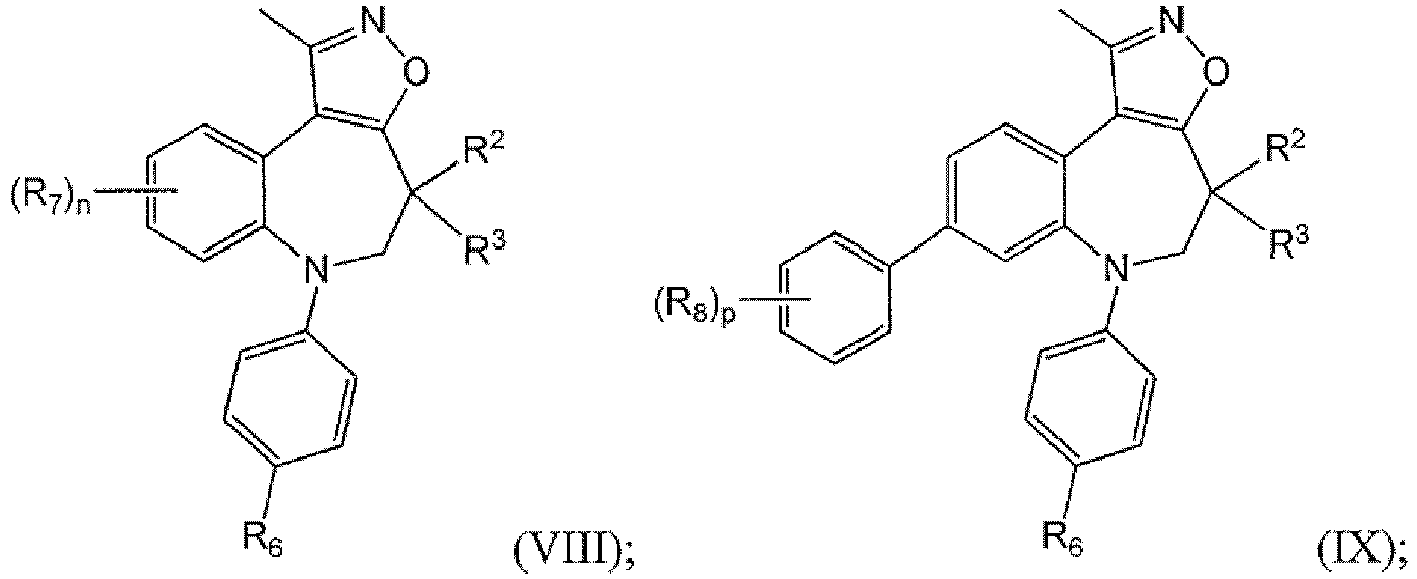

- Verbindung nach einem der Ansprüche 1 bis 5, wobei Ring A Pyridinyl, Pyrazolyl, Isoxazolyl, Pyridinonyl oder Pyrazinyl ist.
- Verbindung nach einem der Ansprüche 1 bis 6, wobeiR2 und R4, bei Vorliegen, jeweils unabhängig Wasserstoff, (C1-C6)-Alkyl, (C1-C6)-Halogenalkyl, (C1-C6)-Alkoxy, (C1-C6-Halogenalkoxy, -N(R')2, -CO, Halogen, -CN, -SR, -OH oder -(CH2)bRx sind;R3 und R5, bei Vorliegen, jeweils unabhängig Wasserstoff oder (C1-C6)-Alkyl sind; oderjedes von R2 und R3 oder R4 und R5 zusammengenommen sind mit ihren dazwischenliegenden Atomen zur Bildung eines gegebenenfalls substituierten 3- bis 7-gliedrigen Cycloalkyls; undX CO, eine kovalente Bindung oder (C1-C3)-Alkyl ist;jedes von R6 und R7 unabhängig gegebenenfalls substituiertes Phenyl, Halogen, (C1-C3)-Alkyl, Halogen, (C1-C3) -Halogenalkyl, (C1-C3)-Alkoxy, (C1-C3)-Halogenalkoxy, - OR, -SR, -N(R')2, -CN, -NO2, -C(O)R, -C(S)R, -CO2R, - C(O)N(R')2, -C(O)SR, -C(O)C(O)R, -C(O)CH2C(O)R, -C(S)N(R')2, -C (S) OR, -S(O)R, -SO2R, -SO2N(R')2, -N(R')C(O)R, - N(R')C(O)N(R')2, -N(R')C(S)N(R')2, -N(R')SO2R, - N(R')SO2N(R')2, -N(R')N(R')2, -N(R')C(=N(R'))N(R')2, - C=NN(R')2, -C=NOR, -C(=N(R'))N(R')2, -OC(O)R oder -OC(O)N(R')2 ist;jedes R und R' unabhängig Wasserstoff, (C1-C3)-Alkyl, Halogen, (C1-C3)-Halogenalkyl, (C1-C3)-Alkoxy, (C1-C3)-Halogenalkoxy oder Phenyl, gegebenenfalls substituiert mit einem oder mehr Halogen(en), (C1-C6)-Alkyl, (C1-C6)-Halogenalkyl, (C1-C6)-Alkoxy, (C1-C6)-Halogenalkoxy, - CN, -C(O)R oder -CO2R sind; undRX Halogen, (C1-C6)-Alkoxy, (C1-C6)-Halogenalkoxy, -OR, - SR, -CN, -N(R')2, -C(O)R, -CO2R, -C(O)N(R')2, -C(O)C(O)R, - C(O)CH2C(O)R, -N(R')C(O)R, -N(R')C(O)N(R')2, -OC(O)R oder -OC(O)N(R')2 ist.
- Verbindung nach einem der Ansprüche 1 bis 7, wobei:R2 und R4, bei Vorliegen, jeweils unabhängig Wasserstoff, (C1-C3)-Alkyl, -N(R')2, -CO oder -(CH2)R'2, (CH2)OH, (CH2)CN, (CH2)CON(R')2 oder (CH2)COR' sind;R3 und R5, bei Vorliegen, jeweils Wasserstoff sind; oderR2 und R3 zusammengenommen sind mit ihren dazwischenliegenden Atomen zur Bildung eines 3- bis 7-gliedrigen Cycloalkyls;R6 Halogen, -CN, (C1-C6)-Alkyl, -C(O)N(R')2 oder -SO2R ist;R7 (C1-C3) -Alkyl, Halogen, (C1-C3) -Halogenalkyl, (C1-C3)-Alkoxy, (C1-C3)-Halogenalkoxy -C(O)N(R')2 oder -CN ist;R8 (C1-C3)-Alkyl, Halogen, (C1-C3)-Halogenalkyl, (C1-C3)-Alkoxy, (C1-C3)-Halogenalkoxy, -CN, -(CH2)NH2, (CH2)OH, (CH2)CN, (CH2)CON(Me)2 oder (CH2)CONH2 ist; undjedes R und R' unabhängig Wasserstoff oder (C1-C3)-Alkyl sind.
- Verbindung nach einem der Ansprüche 1 bis 8, wobei:R1 Methyl ist;R2 Wasserstoff, -NH2, (C1-C3)-Alkyl, -(CH2)2OH, - CH2C(O)NH2, -CH2C(O)N(Me)2 oder -CH2CN oder -CO ist; oderR2 und R3 zusammengenommen sind mit ihren dazwischenliegenden Atomen zur Bildung eines Cyclopropyls; undR4 Wasserstoff ist;X eine kovalente Bindung ist;R6 Halogen, -CN, (C1-C3)-Alkyl, -C(O)NH2 oder -SO2Me ist;R7 (C1-C3)-Alkyl, -C(O)NH2, Halogen oder -CN ist; undR8 (C1-C3)-Alkyl, NH2 oder -(CH2)CONH2 ist.
- Verbindung nach Anspruch 1, wobei die Verbindung ausgewählt ist aus den folgenden Formeln:

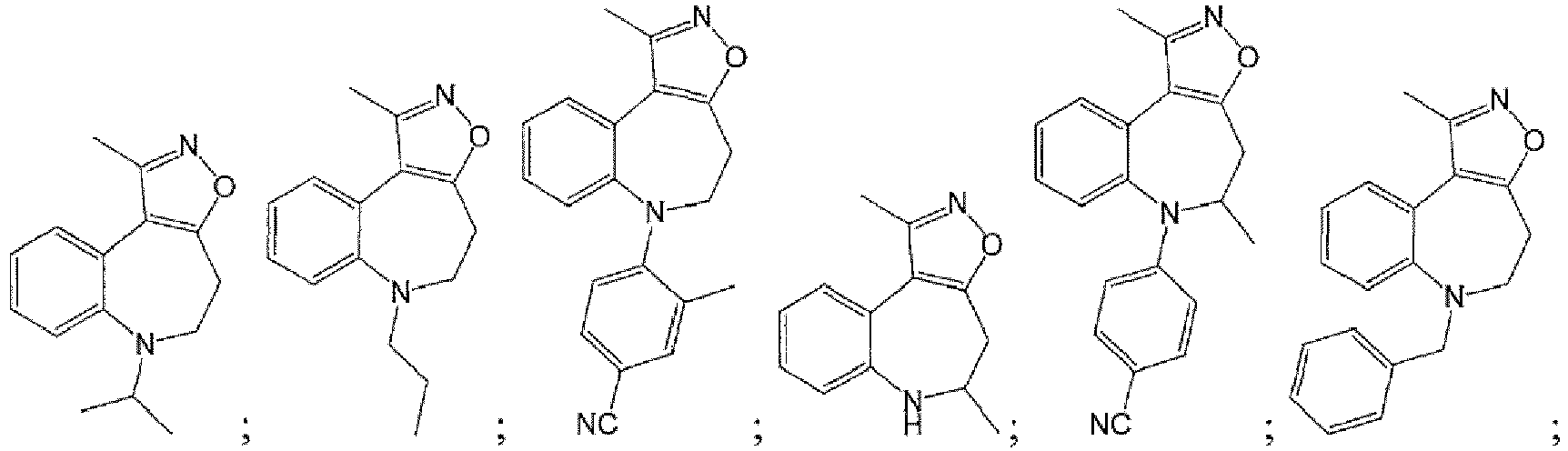


- Zusammensetzung, umfassend eine Verbindung nach einem der Ansprüche 1 bis 10 und ein pharmazeutisch verträgliches Adjuvans, einen pharmazeutisch verträglichen Träger oder ein pharmazeutisch verträgliches Vehikel.
- Verbindung oder ein pharmazeutisch verträgliches Salz davon nach einem der Ansprüche 1 bis 10 oder die Zusammensetzung nach Anspruch 11, zur Verwendung bei der Behandlung einer durch ein Bromodomänen enthaltendes Protein vermittelten Erkrankung.
- Verbindung oder ein pharmazeutisch verträgliches Salz davon oder die Zusammensetzung zur Verwendung nach Anspruch 12, wobei das Bromodomänen enthaltende Protein ein BET-Protein ist; bevorzugt wobei das BET-Protein BRD4 ist.
- Verbindung oder ein pharmazeutisch verträgliches Salz davon oder die Zusammensetzung zur Verwendung nach Anspruch 13, wobei die Erkrankung eine proliferative Erkrankung, Entzündungserkrankung, Sepsis, Autoimmunerkrankung oder Virusinfektion ist;
bevorzugt, wobei die proliferative Erkrankung Krebs ist.
Applications Claiming Priority (2)
| Application Number | Priority Date | Filing Date | Title |
|---|---|---|---|
| US201261656280P | 2012-06-06 | 2012-06-06 | |
| PCT/US2013/044449 WO2013184878A1 (en) | 2012-06-06 | 2013-06-06 | Benzo [b] isoxazoloazepine bromodomain inhibitors and uses thereof |
Publications (2)
| Publication Number | Publication Date |
|---|---|
| EP2864336A1 EP2864336A1 (de) | 2015-04-29 |
| EP2864336B1 true EP2864336B1 (de) | 2016-11-23 |
Family
ID=48626695
Family Applications (1)
| Application Number | Title | Priority Date | Filing Date |
|---|---|---|---|
| EP13729231.4A Active EP2864336B1 (de) | 2012-06-06 | 2013-06-06 | Benzo[b]isoxazolazepinbromdomänenhemmer und verwendungen davon |
Country Status (3)
| Country | Link |
|---|---|
| US (1) | US9624244B2 (de) |
| EP (1) | EP2864336B1 (de) |
| WO (1) | WO2013184878A1 (de) |
Families Citing this family (33)
| Publication number | Priority date | Publication date | Assignee | Title |
|---|---|---|---|---|
| WO2008092231A1 (en) | 2007-02-01 | 2008-08-07 | Resverlogix Corp. | Compounds for the prevention and treatment of cardiovascular diseases |
| NZ755378A (en) | 2009-03-18 | 2022-07-29 | Resverlogix Corp | Novel quinazolinones and related compounds for use as anti-inflammatory agents |
| AR084070A1 (es) | 2010-12-02 | 2013-04-17 | Constellation Pharmaceuticals Inc | Inhibidores del bromodominio y usos de los mismos |
| RU2640115C2 (ru) | 2011-11-01 | 2017-12-26 | Ресверлоджикс Корп. | Фармацевтические композиции замещенных хиназолинонов |
| TWI602820B (zh) | 2012-06-06 | 2017-10-21 | 星宿藥物公司 | 溴域抑制劑及其用途 |
| US9765039B2 (en) | 2012-11-21 | 2017-09-19 | Zenith Epigenetics Ltd. | Biaryl derivatives as bromodomain inhibitors |
| US9073878B2 (en) | 2012-11-21 | 2015-07-07 | Zenith Epigenetics Corp. | Cyclic amines as bromodomain inhibitors |
| AU2013365926B9 (en) | 2012-12-21 | 2019-01-17 | Zenith Epigenetics Ltd. | Novel heterocyclic compounds as bromodomain inhibitors |
| CA2901352A1 (en) | 2013-02-19 | 2014-08-28 | Bayer Pharma Aktiengesellschaft | Bicyclo 2,3-benzodiazepines and spirocyclically substituted 2,3-benzodiazepines |
| EP2958923A1 (de) | 2013-02-22 | 2015-12-30 | Bayer Pharma Aktiengesellschaft | 4-substituierte pyrrolo- und pyrazolo-diazepine |
| US20160009725A1 (en) | 2013-02-22 | 2016-01-14 | Bayer Pharma Aktiengesellschaft | Pyrrolo- and pyrazolo-triazolodiazepines as bet-protein inhibitors for treating hyperproliferative diseases |
| MX366703B (es) | 2013-03-15 | 2019-07-22 | Incyte Holdings Corp | Heterociclos tricíclicos como inhibidores de la proteína bet. |
| CA2915838C (en) | 2013-06-21 | 2023-04-18 | Zenith Epigenetics Corp. | Bicyclic bromodomain inhibitors |
| EP3010918B1 (de) | 2013-06-21 | 2018-08-15 | Zenith Epigenetics Ltd. | Neuartige substituierte bicyclische verbindungen als bromdomänenhemmer |
| AR096837A1 (es) | 2013-07-08 | 2016-02-03 | Incyte Corp | Heterociclos tricíclicos como inhibidores de proteínas bet |
| JP6542212B2 (ja) | 2013-07-31 | 2019-07-10 | ゼニス・エピジェネティクス・リミテッドZenith Epigenetics Ltd. | ブロモドメイン阻害剤としての新規キナゾリノン |
| US9399640B2 (en) | 2013-11-26 | 2016-07-26 | Incyte Corporation | Substituted pyrrolo[2,3-c]pyridines and pyrazolo[3,4-c]pyridines as BET protein inhibitors |
| WO2015081189A1 (en) | 2013-11-26 | 2015-06-04 | Incyte Corporation | Bicyclic heterocycles as bet protein inhibitors |
| WO2015095492A1 (en) | 2013-12-19 | 2015-06-25 | Incyte Corporation | Tricyclic heterocycles as bet protein inhibitors |
| EA034972B1 (ru) | 2014-04-23 | 2020-04-13 | Инсайт Корпорейшн | 1h-пирроло[2,3-c]пиридин-7(6h)-оны в качестве ингибиторов белков bet |
| CA2952830C (en) | 2014-06-20 | 2022-11-01 | Constellation Pharmaceuticals, Inc. | Crystalline forms of 2-((4s)-6-(4-chlorophenyl)-1-methyl-4h-benzo[c]isoxazolo[4,5-e]azepin-4-yl)acetamide |
| US9527864B2 (en) | 2014-09-15 | 2016-12-27 | Incyte Corporation | Tricyclic heterocycles as BET protein inhibitors |
| HK1246273B (en) | 2014-12-01 | 2019-12-06 | 恒翼生物医药(上海)股份有限公司 | Substituted pyridines as bromodomain inhibitors |
| EP3227281A4 (de) | 2014-12-01 | 2018-05-30 | Zenith Epigenetics Ltd. | Substituierte pyridinone als bromodomain-inhibitoren |
| EP3230277B1 (de) | 2014-12-11 | 2019-09-18 | Zenith Epigenetics Ltd. | Substituierte heterocyclen als bromdomäneninhibitoren |
| HK1245247A1 (zh) | 2014-12-17 | 2018-08-24 | 恒翼生物医药科技(上海)有限公司 | 溴结构域的抑制剂 |
| JO3789B1 (ar) | 2015-03-13 | 2021-01-31 | Resverlogix Corp | التراكيب والوسائل العلاجية المعتمدة لمعالجة الامراض المتعلقة بالمتممة |
| GB201504694D0 (en) | 2015-03-19 | 2015-05-06 | Glaxosmithkline Ip Dev Ltd | Covalent conjugates |
| CA2994456A1 (en) * | 2015-08-04 | 2017-02-09 | Catalyst Therapeutics Pty Ltd | Benzodiazepines as bromodomain inhibitors |
| TW201722966A (zh) | 2015-10-29 | 2017-07-01 | 英塞特公司 | Bet蛋白質抑制劑之非晶固體形式 |
| KR102643344B1 (ko) | 2016-06-20 | 2024-03-07 | 인사이트 코포레이션 | Bet 저해제의 결정질 고체 형태 |
| CN111518045A (zh) * | 2019-02-02 | 2020-08-11 | 博诺康源(北京)药业科技有限公司 | 一种具有苯并七元环结构的化合物、其制备方法及用途 |
| US11833155B2 (en) | 2020-06-03 | 2023-12-05 | Incyte Corporation | Combination therapy for treatment of myeloproliferative neoplasms |
Family Cites Families (143)
| Publication number | Priority date | Publication date | Assignee | Title |
|---|---|---|---|---|
| US3523939A (en) | 1967-07-03 | 1970-08-11 | Hoffmann La Roche | 5-(2,6-disubstituted phenyl)-1,4-benzodiazepines and methods for their preparation |
| CH498846A (de) | 1967-08-09 | 1970-11-15 | Hoffmann La Roche | Verfahren zur Herstellung von Benzodiazepin-Derivaten |
| US3781289A (en) | 1971-02-09 | 1973-12-25 | Upjohn Co | 7-chloro-1-methyl-5-phenyl-s-triazolo (4,3-a)quinolines |
| US3709898A (en) | 1971-02-09 | 1973-01-09 | Upjohn Co | Process for the production of triazolobenzodiazepines and intermediates |
| US3681343A (en) | 1971-05-11 | 1972-08-01 | Upjohn Co | 6-phenyl-s-triazolo{8 4,3-a{9 {8 1,4{9 {0 benzodiazepines |
| DE2242918A1 (de) | 1971-09-15 | 1973-03-22 | Upjohn Co | Neue 4-amino-s-triazolo eckige klammer auf 4,3-a eckige klammer zu eckige klammer auf 1,4 eckige klammer zu benzodiazepine |
| US3903103A (en) | 1971-09-15 | 1975-09-02 | Upjohn Co | 4-Amino-s-triazolo-{8 4,3-a{9 {8 1,4{9 benzodiazepine |
| US3886141A (en) | 1971-10-07 | 1975-05-27 | Hoffmann La Roche | Preparation of 5-pyridyl benzodiazepine utilizing hexamethylenetetramine |
| BE795790A (fr) | 1972-02-22 | 1973-08-22 | Upjohn Co | Dibenzo-triazolo-azepine |
| US4155904A (en) | 1973-02-08 | 1979-05-22 | Schering Corporation | Process for the preparation of 1,4-benzo-diazepines and 1,4-benzodiazepinones |
| FR2220257A1 (en) | 1973-03-09 | 1974-10-04 | Lipha | 5,6-Dihydro-(4H)-s-triazolo-(4,3-a) (1,5)benzodiazepines - as antiinflam-matory and analgesic agents without tranquillising effects |
| IE38931B1 (en) | 1973-03-09 | 1978-07-05 | Lipha | Triazolobenzodiazepines |
| US3966736A (en) | 1975-04-07 | 1976-06-29 | The Upjohn Company | 2,9-Dihydro-3H-pyrido[3,2-c]-s-triazolo[4,3-a][1,5]-benzodiazepin-3-ones |
| AT350056B (de) | 1975-11-04 | 1979-05-10 | Degussa | Verfahren zur herstellung von neuen pyrido- (2,3-f)-(1,4)-diazepinen, deren optischen isomeren und salzen |
| DE2640599A1 (de) | 1976-09-09 | 1978-03-16 | Scherico Ltd | Verfahren zur herstellung von 1,4- benzodiazepinen |
| CA1152066A (en) | 1980-02-08 | 1983-08-16 | Hoffmann-La Roche Limited | Benzodiazepine derivatives |
| CA1157855A (en) | 1980-07-31 | 1983-11-29 | Albert E. Fischli | Benzodiazepine derivatives |
| CA1163266A (en) | 1980-07-31 | 1984-03-06 | Albert E. Fischli | Benzodiazepine derivatives |
| US4455307A (en) | 1982-01-04 | 1984-06-19 | The Upjohn Company | Antihypertensive use of triazolobenzodiazepines |
| US4820834A (en) | 1984-06-26 | 1989-04-11 | Merck & Co., Inc. | Benzodiazepine analogs |
| US5004741A (en) | 1984-06-26 | 1991-04-02 | Merck & Co., Inc. | Methods of antagonizing CCK or gastrin with benzodiazepine analogs |
| US4663321A (en) | 1984-06-26 | 1987-05-05 | Merck & Co., Inc. | Triazolobenzodiazepines and pharmaceutical use |
| WO1988009333A1 (fr) | 1987-05-28 | 1988-12-01 | Yoshitomi Pharmaceutical Industries, Ltd. | Compose a base de thieno(triazolo)diazepine et applications medicales de ce compose |
| US5093330A (en) | 1987-06-15 | 1992-03-03 | Ciba-Geigy Corporation | Staurosporine derivatives substituted at methylamino nitrogen |
| MC1999A1 (fr) | 1987-12-18 | 1990-01-26 | Hoffmann La Roche | Composes tricycliques |
| US4959361A (en) | 1987-12-18 | 1990-09-25 | Hoffmann-La Roche Inc. | Triazolo(4,3-A)(1,4)benzodiazepines and thieno (3,2-F)(1,2,4)triazolo(4,3-A)(1,4)diazepine compounds which have useful activity as platelet activating factor (PAF) antagonists |
| WO1989005812A1 (fr) | 1987-12-22 | 1989-06-29 | Yoshitomi Pharmaceutical Industries, Ltd. | Composes de thienodiazepine et leur utilisation en medecine |
| CA1324863C (en) | 1988-01-30 | 1993-11-30 | Welfide Corporation | Thienotriazolodiazepine compounds and pharmaceutical uses thereof |
| CA1322367C (en) | 1988-05-17 | 1993-09-21 | Yoshitomi Pharmaceutical Industries Ltd. | Thienotriazolodiazepine compounds and pharmaceutical uses thereof |
| FI95708C (fi) | 1988-10-31 | 1996-03-11 | Eisai Co Ltd | Analogiamenetelmä 1,4-diatsepiinijohdannaisen ja sen farmaseuttisesti sopivan suolan valmistamiseksi |
| US5382579A (en) | 1988-10-31 | 1995-01-17 | Eisai Co., Ltd. | Triazolo-1,4-diazepine derivatives and their use in pharmaceuticals |
| US5221671A (en) | 1988-10-31 | 1993-06-22 | Eisai Co., Ltd. | Triazolo-1,4-diazepine derivatives and their use in pharmaceuticals |
| DE3936828A1 (de) | 1988-11-06 | 1990-05-10 | Boehringer Ingelheim Kg | Neue hetrazepine |
| DE4006471A1 (de) | 1989-03-03 | 1990-09-06 | Boehringer Ingelheim Kg | Neue thienodiazepine |
| YU133090A (sh) | 1989-07-12 | 1993-10-20 | Boehringer Ingelheim Kg. | Novi heteroazepini s paf-antaganostičnim učinkom in postopek za njihovo pripravo |
| JPH0374328A (ja) | 1989-08-04 | 1991-03-28 | Warner Lambert Co | 薬学的活性を有する中枢コレシストキニン拮抗剤 |
| US5175159A (en) | 1989-10-05 | 1992-12-29 | Merck & Co., Inc. | 3-substituted-1,4-benzodiazepines as oxytocin antagonists |
| CA2032427A1 (en) | 1989-12-18 | 1991-06-19 | Mark G. Bock | Benzodiazepines analogs |
| IL96613A0 (en) | 1989-12-18 | 1991-09-16 | Merck & Co Inc | Pharmaceutical compositions containing benzodiazepine analogs |
| WO1994006801A1 (fr) | 1990-05-23 | 1994-03-31 | Yoshitomi Pharmaceutical Industries, Ltd. | Compose de thienodiazepine et son utilisation comme medicament |
| JP2959591B2 (ja) | 1990-05-23 | 1999-10-06 | 吉富製薬株式会社 | チエノトリアゾロジアゼピン化合物 |
| DE4027470A1 (de) | 1990-08-30 | 1992-03-05 | Boehringer Ingelheim Kg | Neue hetrazepinoide amide |
| JP2959598B2 (ja) | 1990-10-12 | 1999-10-06 | 吉富製薬株式会社 | 光学活性なチエノトリアゾロジアゼピン化合物 |
| US5206234A (en) | 1990-10-22 | 1993-04-27 | Merck & Co., Inc. | Benzolactam analogs as antagonists of cck |
| CA2056809A1 (en) | 1990-12-07 | 1992-06-08 | Mark G. Bock | Benzodiazepine analogs |
| DE4101146A1 (de) | 1991-01-16 | 1992-07-23 | Boehringer Ingelheim Kg | Neue in 6-position substituierte diazepine, verfahren zu ihrer herstellung und ihre verwendung als arzneimittel |
| DE4107521A1 (de) | 1991-03-08 | 1992-09-10 | Boehringer Ingelheim Kg | Neue acylaminosubstituierte hetrazepine |
| US5683998A (en) | 1991-04-23 | 1997-11-04 | Toray Industries, Inc. | Tricyclic triazolo derivatives, processes for producing the same and the uses of the same |
| US5185331A (en) | 1991-05-14 | 1993-02-09 | Merck & Co., Inc. | Triazolobenzodiazepines |
| CA2071092A1 (en) | 1991-06-14 | 1992-12-15 | Roger M. Freidinger | 1,4-benzodiazepines with 5-membered heterocyclic rings |
| GB9117852D0 (en) | 1991-08-19 | 1991-10-09 | Merck Sharp & Dohme | Therapeutic agents |
| US5153191A (en) | 1991-08-20 | 1992-10-06 | Warner-Lambert Company | Cholecystokinin antagonists useful for treating depression |
| DE4128581A1 (de) | 1991-08-28 | 1993-03-04 | Boehringer Ingelheim Kg | Verwendung von paf-antagonisten hetrazepinoider struktur zur behandlung der allergischen rhinitis |
| CA2097285C (en) | 1991-09-30 | 2000-03-14 | Yoichi Naka | Thienodiazepine compounds and their use |
| EP0638560A4 (de) | 1991-10-11 | 1995-03-29 | Yoshitomi Pharmaceutical | Heilmittel für osteoporose und diazepinverbindung*. |
| DE69230891T2 (de) | 1991-12-11 | 2000-10-05 | Yoshitomi Pharmaceutical Industries, Ltd. | Arzneimittel zur Behandlung von Autoimmunerkrankungen |
| EP0617621A4 (de) | 1991-12-20 | 1995-04-05 | Merck Sharp & Dohme | Zentrale cholecystokininantagonisten mit pharmazeutischer wirksamkeit. |
| DE4200610A1 (de) | 1992-01-13 | 1993-07-15 | Boehringer Ingelheim Kg | Verwendung von paf-antagonisten zur behandlung der dysmenorrhea |
| JPH07505155A (ja) | 1992-03-24 | 1995-06-08 | メルク シヤープ エンド ドーム リミテツド | コレシストキニン及び/又はガストリン拮抗活性を有する3−ウレイド置換ベンゾジアゼピン−2−オン及び治療におけるその使用 |
| DE4219659A1 (de) | 1992-06-16 | 1993-12-23 | Boehringer Ingelheim Kg | Die Verwendung von PAF-Antagonisten in Kombination mit Anticholinergika |
| WO1994006802A1 (fr) | 1992-09-18 | 1994-03-31 | Yoshitomi Pharmaceutical Industries, Ltd. | Compose de thienodiazepine et son utilisation medicinale |
| JP3223290B2 (ja) | 1992-11-10 | 2001-10-29 | 日本電信電話株式会社 | マイクロ回転体およびその製造方法 |
| US5302590A (en) | 1992-12-18 | 1994-04-12 | Hoffmann-La Roche Inc. | Compounds useful as dual antagonists of platelet activating factor and leukotriene D4 |
| CA2159344A1 (en) | 1993-03-30 | 1994-10-13 | Minoru Moriwaki | Cell adhesion inhibitor and thienotriazolodiazepine compound |
| WO1994026723A2 (en) | 1993-05-14 | 1994-11-24 | Genentech, Inc. | ras FARNESYL TRANSFERASE INHIBITORS |
| US5869483A (en) | 1993-07-29 | 1999-02-09 | American Cyanamid Company | Tricyclic benzazepine vasopressin antagonists |
| US5516774A (en) | 1993-07-29 | 1996-05-14 | American Cyanamid Company | Tricyclic diazepine vasopressin antagonists and oxytocin antagonists |
| US5733905A (en) | 1993-07-29 | 1998-03-31 | American Cyanamid Company | Tricyclic diazepine vasopressin antagonists and oxytocin antagonists |
| US5760031A (en) * | 1993-07-29 | 1998-06-02 | American Cyanamid Company | Tricyclic benzazepine vasopressin antagonists |
| JP3633008B2 (ja) | 1993-11-15 | 2005-03-30 | 三菱ウェルファーマ株式会社 | チエノトリアゾロジアゼピン化合物 |
| JP2840454B2 (ja) | 1993-11-22 | 1998-12-24 | メルク エンド カンパニー インコーポレーテッド | ベンゾジアゼピン類 |
| WO1995018130A1 (en) | 1993-12-28 | 1995-07-06 | Meiji Seika Kabushiki Kaisha | Tricyclic benzazepine and benzothiazepine derivatives |
| US5739129A (en) | 1994-04-14 | 1998-04-14 | Glaxo Wellcome Inc. | CCK or gastrin modulating 5-heterocyclic-1, 5 benzodiazepines |
| JPH09511998A (ja) | 1994-04-15 | 1997-12-02 | グラクソ、ウェルカム、インコーポレーテッド | 1,4 − ベンゾジアゼピン化合物を用いたコレシストキニンアゴニスト活性の誘導方法 |
| JP3264588B2 (ja) | 1994-08-23 | 2002-03-11 | 松下電器産業株式会社 | 電子地図データの生成装置 |
| JP3264589B2 (ja) | 1994-09-07 | 2002-03-11 | 東芝機械株式会社 | 研磨装置 |
| TW420667B (en) | 1995-09-21 | 2001-02-01 | Inst Med Molecular Design Inc | Benzoazipine compounds for enhancing the action of a retinoid |
| PL330635A1 (en) | 1996-06-12 | 1999-05-24 | Japan Tobacco Inc | Inhibitor of cytokin production, triazepin compound and intermediate compounds used for obtaining the last mentioned one |
| DE69717160T2 (de) | 1996-09-13 | 2003-05-08 | Mitsubishi Pharma Corp., Osaka | Thienotriazolodiazepinverbindungen und ihre medizinischen anwendungen |
| EA002100B1 (ru) | 1996-12-23 | 2001-12-24 | Элан Фармасьютикалз, Инк. | ЦИКЛОАЛКИЛЬНЫЕ СОЕДИНЕНИЯ, ЛАКТАМЫ, ЛАКТОНЫ И РОДСТВЕННЫЕ СОЕДИНЕНИЯ, СОДЕРЖАЩИЕ ИХ ФАРМАЦЕВТИЧЕСКИЕ КОМПОЗИЦИИ И СПОСОБЫ ИНГИБИРОВАНИЯ ВЫСВОБОЖДЕНИЯ И/ИЛИ СИНТЕЗА β-АМИЛОИДНОГО ПЕПТИДА С ПОМОЩЬЮ УКАЗАННЫХ СОЕДИНЕНИЙ |
| EP0995752A4 (de) | 1997-06-25 | 2001-08-16 | Nikken Chemicals Co Ltd | Tirazolo-1,4-diazepin-derivate und sie enthaltende medizinische zubereitung |
| JP4204657B2 (ja) | 1997-12-05 | 2009-01-07 | 有限会社ケムフィズ | 糖尿病の予防・治療剤 |
| JPH11228576A (ja) | 1997-12-10 | 1999-08-24 | Japan Tobacco Inc | アポトーシス抑制剤 |
| FR2779652B1 (fr) | 1998-06-15 | 2001-06-08 | Sod Conseils Rech Applic | Utilisation de diazepines pour la preparation de medicaments destines a traiter les etats pathologiques ou les maladies dans lesquels un des recepteurs de la somatostatine est implique |
| PE20000944A1 (es) | 1998-07-31 | 2000-09-20 | Lilly Co Eli | Derivados de sulfonamida |
| JP2002525289A (ja) | 1998-09-01 | 2002-08-13 | イノジェネティックス・ナムローゼ・フェンノートシャップ | アネキシンに結合するベンゾジアゼピンおよびベンゾチアゼピン誘導体ならびにhsbsagペプチド、それらの組成物ならびに使用 |
| AU2939000A (en) | 1999-03-12 | 2000-10-04 | Welfide Corporation | Preventive or therapeutic agents for inflammatory dermatoses |
| FR2791980B1 (fr) | 1999-04-09 | 2001-07-06 | Sod Conseils Rech Applic | Pyrido-thieno-diazepines, leur procede de preparation, et les compositions pharmaceutiques les contenant |
| US7160880B1 (en) | 1999-05-14 | 2007-01-09 | Cenes Limited | Short-acting benzodiazepines |
| GB9911152D0 (en) | 1999-05-14 | 1999-07-14 | Glaxo Group Ltd | Short-acting benzodiazepines |
| DE60015392D1 (de) | 1999-12-29 | 2004-12-02 | Glaxo Group Ltd | Verwendung von annexin-modulatoren zur herstellung eines medikaments zur behandlung und/oder vorbeugung von arthritis und arthritischen erkrankungen |
| WO2001095912A1 (fr) | 2000-06-16 | 2001-12-20 | Mitsubishi Pharma Corporation | Compositions permettant de reguler la plage et/ou la vitesse de liberation du ph |
| IL159105A0 (en) | 2001-06-07 | 2004-05-12 | Neuro3D | Cyclic nucleotide phosphodiesterase inhibitors, preparation and uses thereof |
| US20050096322A1 (en) | 2002-03-01 | 2005-05-05 | Susumu Igarashi | Nitrogen-containing heterocyclic compound |
| US20060128695A1 (en) | 2002-10-30 | 2006-06-15 | Neuro3D | Cyclic nucleotide phosphodiesterase inhibitors, preparation and uses |
| US7482337B2 (en) | 2002-11-08 | 2009-01-27 | Boehringer Ingelheim Pharma Gmbh & Co. Kg | Xanthine derivatives, the preparation thereof and their use as pharmaceutical compositions |
| DE10251927A1 (de) | 2002-11-08 | 2004-05-19 | Boehringer Ingelheim Pharma Gmbh & Co. Kg | Neue Xanthinderivate, deren Herstellung und deren Verwendung als Arzneimittel |
| KR100562489B1 (ko) | 2002-11-11 | 2006-03-21 | 삼성전자주식회사 | 셔터 타이밍 조절 가능한 로우 디코더를 갖는 이미지 센서 |
| WO2004058769A2 (en) | 2002-12-18 | 2004-07-15 | Vertex Pharmaceuticals Incorporated | Triazolopyridazines as protein kinases inhibitors |
| US7119088B2 (en) | 2003-02-19 | 2006-10-10 | Pfizer Inc. | Triazole compounds useful in therapy |
| CA2529558A1 (en) | 2003-07-01 | 2005-01-13 | Astellas Pharma Inc. | Agent inducing increase in bone mass |
| WO2005099759A1 (ja) | 2004-04-16 | 2005-10-27 | Institute Of Medicinal Molecular Design. Inc. | 動脈硬化症の予防及び/又は治療のための医薬 |
| JP4494414B2 (ja) | 2004-10-05 | 2010-06-30 | パイオニア株式会社 | オーディオラック |
| EP1887008B1 (de) | 2005-05-30 | 2021-04-21 | Mitsubishi Tanabe Pharma Corporation | Thienotriazolodiazepinverbindung und eine medizinische anwendung davon |
| WO2007016087A2 (en) | 2005-07-29 | 2007-02-08 | Merck & Co., Inc. | Heterocyclic benzodiazepine cgrp receptor antagonists |
| JP2009513644A (ja) | 2005-10-26 | 2009-04-02 | ザ リージェンツ オブ ザ ユニバーシティ オブ ミシガン | 治療組成物および方法 |
| US20070105844A1 (en) | 2005-10-26 | 2007-05-10 | Regents Of The University Of Michigan | Therapeutic compositions and methods |
| DE102005061840A1 (de) | 2005-12-23 | 2007-06-28 | Merck Patent Gmbh | Triazolderivate |
| JPWO2008023847A1 (ja) | 2006-08-25 | 2010-01-14 | 日本ケミファ株式会社 | P2x4受容体拮抗剤 |
| WO2008109856A2 (en) | 2007-03-07 | 2008-09-12 | Xenon Pharmaceuticals Inc. | Methods of using diazepinone compounds in treating sodium channel-mediated diseases or conditions |
| US20090111780A1 (en) | 2007-10-31 | 2009-04-30 | Everett Laboratories, Inc. | Compositions and methods for treatment of ear canal infection and inflammation |
| ITFI20070288A1 (it) | 2007-12-21 | 2009-06-22 | A I L Firenze Sezione Autonoma | Inibitori delle deacetilasi istoniche |
| WO2009084693A1 (ja) | 2007-12-28 | 2009-07-09 | Mitsubishi Tanabe Pharma Corporation | 抗癌剤 |
| CN102123706B (zh) | 2008-06-17 | 2013-08-14 | 米纳斯吉拉斯联合大学 | 血小板活化因子受体在治疗黄病毒科病毒引起的感染中的用途 |
| WO2010008459A1 (en) | 2008-06-23 | 2010-01-21 | Vertex Pharmaceuticals Incorporated | Protein kinase inhibitors |
| US8569288B2 (en) | 2008-10-30 | 2013-10-29 | Circomed Llc | Thienotriazolodiazepine derivatives active on apo A |
| WO2010121164A2 (en) | 2009-04-17 | 2010-10-21 | The Regents Of The University Of Michigan | 1,4-benzodiazepinone compounds and their use in treating cancer |
| US9040531B2 (en) | 2009-05-07 | 2015-05-26 | Prism BioLab Co., Ltd. | Alpha helix mimetics and methods relating thereto |
| WO2011037128A1 (ja) | 2009-09-28 | 2011-03-31 | 日本曹達株式会社 | 含窒素ヘテロ環化合物およびその塩ならびに農園芸用殺菌剤 |
| GB0919431D0 (en) | 2009-11-05 | 2009-12-23 | Glaxosmithkline Llc | Novel compounds |
| WO2011054851A1 (en) | 2009-11-05 | 2011-05-12 | Glaxosmithkline Llc | Novel process |
| ES2563057T3 (es) | 2009-11-05 | 2016-03-10 | Glaxosmithkline Llc | Inhibidor de bromodominio de benzodiazepina |
| GB0919434D0 (en) | 2009-11-05 | 2009-12-23 | Glaxosmithkline Llc | Novel compounds |
| RS54645B1 (sr) | 2009-11-05 | 2016-08-31 | Glaxosmithkline Llc | Benzodiazepin kao inhibitor bromodomena |
| GB0919432D0 (en) | 2009-11-05 | 2009-12-23 | Glaxosmithkline Llc | Use |
| GB0919426D0 (en) | 2009-11-05 | 2009-12-23 | Glaxosmithkline Llc | Novel compounds |
| GB0919423D0 (en) | 2009-11-05 | 2009-12-23 | Glaxosmithkline Llc | Novel compounds |
| US8765920B2 (en) | 2009-12-23 | 2014-07-01 | The Scripps Research Institute | Tyrosine bioconjugation through aqueous Ene-like reactions |
| TW201201813A (en) | 2010-03-31 | 2012-01-16 | Arqule Inc | Substituted benzo-pyrido-triazolo-diazepine compounds |
| CN103180318B (zh) | 2010-05-14 | 2017-05-10 | 达那-法伯癌症研究所 | 雄性避孕组合物以及使用方法 |
| MX354217B (es) | 2010-05-14 | 2018-02-19 | Dana Farber Cancer Inst Inc | Composiciones y metodos para el tratamiento de leucemia. |
| WO2011143651A1 (en) | 2010-05-14 | 2011-11-17 | Dana-Farber Cancer Institute, Inc. | Compositions and methods for modulating metabolism |
| PL2902030T3 (pl) | 2010-05-14 | 2017-07-31 | Dana-Farber Cancer Institute, Inc. | Związki tienotriazolodiazepinowe do leczenia nowotworu |
| US9085582B2 (en) | 2010-06-22 | 2015-07-21 | Glaxosmithkline Llc | Benzotriazolodiazepine compounds inhibitors of bromodomains |
| US9249161B2 (en) | 2010-12-02 | 2016-02-02 | Constellation Pharmaceuticals, Inc. | Bromodomain inhibitors and uses thereof |
| AR084070A1 (es) | 2010-12-02 | 2013-04-17 | Constellation Pharmaceuticals Inc | Inhibidores del bromodominio y usos de los mismos |
| WO2012151512A2 (en) | 2011-05-04 | 2012-11-08 | Constellation Pharmaceuticals, Inc. | Bromodomain inhibitors and uses thereof |
| GB201114103D0 (en) | 2011-08-17 | 2011-09-28 | Glaxosmithkline Llc | Novel compounds |
| WO2013033269A1 (en) | 2011-08-29 | 2013-03-07 | Coferon, Inc. | Bioorthogonal monomers capable of dimerizing and targeting bromodomains and methods of using same |
| WO2013033270A2 (en) | 2011-08-29 | 2013-03-07 | Coferon, Inc. | Bromodomain ligands capable of dimerizing in an aqueous solution, and methods of using same |
| WO2013033420A1 (en) | 2011-08-30 | 2013-03-07 | Whitehead Institute For Biomedical Research | Methods of downregulating translocated oncogene expression using bromodomain inhibitors |
| DE102011082013A1 (de) | 2011-09-01 | 2013-03-07 | Bayer Pharma AG | 6H-Thieno[3,2-f][1,2,4]triazolo[4,3-a][1,4]diazepine |
| TWI602820B (zh) | 2012-06-06 | 2017-10-21 | 星宿藥物公司 | 溴域抑制劑及其用途 |
-
2013
- 2013-06-06 EP EP13729231.4A patent/EP2864336B1/de active Active
- 2013-06-06 WO PCT/US2013/044449 patent/WO2013184878A1/en not_active Ceased
- 2013-06-06 US US14/405,211 patent/US9624244B2/en active Active
Non-Patent Citations (1)
| Title |
|---|
| None * |
Also Published As
| Publication number | Publication date |
|---|---|
| EP2864336A1 (de) | 2015-04-29 |
| US9624244B2 (en) | 2017-04-18 |
| US20150148333A1 (en) | 2015-05-28 |
| WO2013184878A1 (en) | 2013-12-12 |
Similar Documents
| Publication | Publication Date | Title |
|---|---|---|
| EP2864336B1 (de) | Benzo[b]isoxazolazepinbromdomänenhemmer und verwendungen davon | |
| EP2859000B1 (de) | Benzo[c]isoxazolazepinbromdomänenhemmer und verwendungen davon | |
| EP2646446B1 (de) | Bromodomainhemmer und ihre verwendung | |
| EP2705039B1 (de) | Bromodomainhemmer und ihre verwendung | |
| EP2968311A2 (de) | Oxazolo[5,4-c]chinolin-2-on-verbindungen als bromdomänenhemmer | |
| US10501459B2 (en) | Substituted imidazo[1,2-a]pyridines as bromodomain inhibitors | |
| IL257340B1 (en) | Converted benzaimidazoles, methods for their preparation and use as pharmaceuticals | |
| WO2017127930A1 (en) | Substituted [1,2,4]triazolo[4,3-a]pyridines, their preparation and their use as pharmaceuticals | |
| EP3334717B1 (de) | Arylsubstituierte dihydrochinolinone, deren herstellung und deren verwendung als pharmazeutika | |
| HK1207372B (en) | Benzo [c] isoxazoloazepine bromodomain inhibitors and uses thereof | |
| HK1189587B (en) | Bromodomain inhibitors and uses thereof |
Legal Events
| Date | Code | Title | Description |
|---|---|---|---|
| PUAI | Public reference made under article 153(3) epc to a published international application that has entered the european phase |
Free format text: ORIGINAL CODE: 0009012 |
|
| 17P | Request for examination filed |
Effective date: 20150106 |
|
| AK | Designated contracting states |
Kind code of ref document: A1 Designated state(s): AL AT BE BG CH CY CZ DE DK EE ES FI FR GB GR HR HU IE IS IT LI LT LU LV MC MK MT NL NO PL PT RO RS SE SI SK SM TR |
|
| AX | Request for extension of the european patent |
Extension state: BA ME |
|
| RIN1 | Information on inventor provided before grant (corrected) |
Inventor name: ALBRECHT, BRIAN, K. Inventor name: TAYLOR, ALEXANDER, M. Inventor name: GEHLING, VICTOR, S. Inventor name: VASWANI, RISHI, G. |
|
| 17Q | First examination report despatched |
Effective date: 20151204 |
|
| GRAP | Despatch of communication of intention to grant a patent |
Free format text: ORIGINAL CODE: EPIDOSNIGR1 |
|
| INTG | Intention to grant announced |
Effective date: 20160520 |
|
| GRAS | Grant fee paid |
Free format text: ORIGINAL CODE: EPIDOSNIGR3 |
|
| GRAJ | Information related to disapproval of communication of intention to grant by the applicant or resumption of examination proceedings by the epo deleted |
Free format text: ORIGINAL CODE: EPIDOSDIGR1 |
|
| GRAL | Information related to payment of fee for publishing/printing deleted |
Free format text: ORIGINAL CODE: EPIDOSDIGR3 |
|
| GRAR | Information related to intention to grant a patent recorded |
Free format text: ORIGINAL CODE: EPIDOSNIGR71 |
|
| GRAA | (expected) grant |
Free format text: ORIGINAL CODE: 0009210 |
|
| INTC | Intention to grant announced (deleted) | ||
| INTG | Intention to grant announced |
Effective date: 20161011 |
|
| AK | Designated contracting states |
Kind code of ref document: B1 Designated state(s): AL AT BE BG CH CY CZ DE DK EE ES FI FR GB GR HR HU IE IS IT LI LT LU LV MC MK MT NL NO PL PT RO RS SE SI SK SM TR |
|
| AX | Request for extension of the european patent |
Extension state: BA ME |
|
| REG | Reference to a national code |
Ref country code: GB Ref legal event code: FG4D |
|
| REG | Reference to a national code |
Ref country code: CH Ref legal event code: EP |
|
| REG | Reference to a national code |
Ref country code: IE Ref legal event code: FG4D |
|
| REG | Reference to a national code |
Ref country code: AT Ref legal event code: REF Ref document number: 847798 Country of ref document: AT Kind code of ref document: T Effective date: 20161215 |
|
| REG | Reference to a national code |
Ref country code: DE Ref legal event code: R096 Ref document number: 602013014410 Country of ref document: DE |
|
| PG25 | Lapsed in a contracting state [announced via postgrant information from national office to epo] |
Ref country code: LV Free format text: LAPSE BECAUSE OF FAILURE TO SUBMIT A TRANSLATION OF THE DESCRIPTION OR TO PAY THE FEE WITHIN THE PRESCRIBED TIME-LIMIT Effective date: 20161123 |
|
| REG | Reference to a national code |
Ref country code: LT Ref legal event code: MG4D |
|
| REG | Reference to a national code |
Ref country code: NL Ref legal event code: MP Effective date: 20161123 |
|
| REG | Reference to a national code |
Ref country code: AT Ref legal event code: MK05 Ref document number: 847798 Country of ref document: AT Kind code of ref document: T Effective date: 20161123 |
|
| PG25 | Lapsed in a contracting state [announced via postgrant information from national office to epo] |
Ref country code: NL Free format text: LAPSE BECAUSE OF FAILURE TO SUBMIT A TRANSLATION OF THE DESCRIPTION OR TO PAY THE FEE WITHIN THE PRESCRIBED TIME-LIMIT Effective date: 20161123 Ref country code: NO Free format text: LAPSE BECAUSE OF FAILURE TO SUBMIT A TRANSLATION OF THE DESCRIPTION OR TO PAY THE FEE WITHIN THE PRESCRIBED TIME-LIMIT Effective date: 20170223 Ref country code: SE Free format text: LAPSE BECAUSE OF FAILURE TO SUBMIT A TRANSLATION OF THE DESCRIPTION OR TO PAY THE FEE WITHIN THE PRESCRIBED TIME-LIMIT Effective date: 20161123 Ref country code: GR Free format text: LAPSE BECAUSE OF FAILURE TO SUBMIT A TRANSLATION OF THE DESCRIPTION OR TO PAY THE FEE WITHIN THE PRESCRIBED TIME-LIMIT Effective date: 20170224 Ref country code: LT Free format text: LAPSE BECAUSE OF FAILURE TO SUBMIT A TRANSLATION OF THE DESCRIPTION OR TO PAY THE FEE WITHIN THE PRESCRIBED TIME-LIMIT Effective date: 20161123 |
|
| PG25 | Lapsed in a contracting state [announced via postgrant information from national office to epo] |
Ref country code: HR Free format text: LAPSE BECAUSE OF FAILURE TO SUBMIT A TRANSLATION OF THE DESCRIPTION OR TO PAY THE FEE WITHIN THE PRESCRIBED TIME-LIMIT Effective date: 20161123 Ref country code: PL Free format text: LAPSE BECAUSE OF FAILURE TO SUBMIT A TRANSLATION OF THE DESCRIPTION OR TO PAY THE FEE WITHIN THE PRESCRIBED TIME-LIMIT Effective date: 20161123 Ref country code: AT Free format text: LAPSE BECAUSE OF FAILURE TO SUBMIT A TRANSLATION OF THE DESCRIPTION OR TO PAY THE FEE WITHIN THE PRESCRIBED TIME-LIMIT Effective date: 20161123 Ref country code: RS Free format text: LAPSE BECAUSE OF FAILURE TO SUBMIT A TRANSLATION OF THE DESCRIPTION OR TO PAY THE FEE WITHIN THE PRESCRIBED TIME-LIMIT Effective date: 20161123 Ref country code: ES Free format text: LAPSE BECAUSE OF FAILURE TO SUBMIT A TRANSLATION OF THE DESCRIPTION OR TO PAY THE FEE WITHIN THE PRESCRIBED TIME-LIMIT Effective date: 20161123 Ref country code: FI Free format text: LAPSE BECAUSE OF FAILURE TO SUBMIT A TRANSLATION OF THE DESCRIPTION OR TO PAY THE FEE WITHIN THE PRESCRIBED TIME-LIMIT Effective date: 20161123 Ref country code: PT Free format text: LAPSE BECAUSE OF FAILURE TO SUBMIT A TRANSLATION OF THE DESCRIPTION OR TO PAY THE FEE WITHIN THE PRESCRIBED TIME-LIMIT Effective date: 20170323 |
|
| REG | Reference to a national code |
Ref country code: FR Ref legal event code: PLFP Year of fee payment: 5 |
|
| PG25 | Lapsed in a contracting state [announced via postgrant information from national office to epo] |
Ref country code: EE Free format text: LAPSE BECAUSE OF FAILURE TO SUBMIT A TRANSLATION OF THE DESCRIPTION OR TO PAY THE FEE WITHIN THE PRESCRIBED TIME-LIMIT Effective date: 20161123 Ref country code: CZ Free format text: LAPSE BECAUSE OF FAILURE TO SUBMIT A TRANSLATION OF THE DESCRIPTION OR TO PAY THE FEE WITHIN THE PRESCRIBED TIME-LIMIT Effective date: 20161123 Ref country code: SK Free format text: LAPSE BECAUSE OF FAILURE TO SUBMIT A TRANSLATION OF THE DESCRIPTION OR TO PAY THE FEE WITHIN THE PRESCRIBED TIME-LIMIT Effective date: 20161123 Ref country code: RO Free format text: LAPSE BECAUSE OF FAILURE TO SUBMIT A TRANSLATION OF THE DESCRIPTION OR TO PAY THE FEE WITHIN THE PRESCRIBED TIME-LIMIT Effective date: 20161123 Ref country code: DK Free format text: LAPSE BECAUSE OF FAILURE TO SUBMIT A TRANSLATION OF THE DESCRIPTION OR TO PAY THE FEE WITHIN THE PRESCRIBED TIME-LIMIT Effective date: 20161123 |
|
| REG | Reference to a national code |
Ref country code: DE Ref legal event code: R097 Ref document number: 602013014410 Country of ref document: DE |
|
| PG25 | Lapsed in a contracting state [announced via postgrant information from national office to epo] |
Ref country code: BE Free format text: LAPSE BECAUSE OF FAILURE TO SUBMIT A TRANSLATION OF THE DESCRIPTION OR TO PAY THE FEE WITHIN THE PRESCRIBED TIME-LIMIT Effective date: 20161123 Ref country code: IT Free format text: LAPSE BECAUSE OF FAILURE TO SUBMIT A TRANSLATION OF THE DESCRIPTION OR TO PAY THE FEE WITHIN THE PRESCRIBED TIME-LIMIT Effective date: 20161123 Ref country code: BG Free format text: LAPSE BECAUSE OF FAILURE TO SUBMIT A TRANSLATION OF THE DESCRIPTION OR TO PAY THE FEE WITHIN THE PRESCRIBED TIME-LIMIT Effective date: 20170223 Ref country code: SM Free format text: LAPSE BECAUSE OF FAILURE TO SUBMIT A TRANSLATION OF THE DESCRIPTION OR TO PAY THE FEE WITHIN THE PRESCRIBED TIME-LIMIT Effective date: 20161123 |
|
| PLBE | No opposition filed within time limit |
Free format text: ORIGINAL CODE: 0009261 |
|
| STAA | Information on the status of an ep patent application or granted ep patent |
Free format text: STATUS: NO OPPOSITION FILED WITHIN TIME LIMIT |
|
| 26N | No opposition filed |
Effective date: 20170824 |
|
| PG25 | Lapsed in a contracting state [announced via postgrant information from national office to epo] |
Ref country code: SI Free format text: LAPSE BECAUSE OF FAILURE TO SUBMIT A TRANSLATION OF THE DESCRIPTION OR TO PAY THE FEE WITHIN THE PRESCRIBED TIME-LIMIT Effective date: 20161123 |
|
| PG25 | Lapsed in a contracting state [announced via postgrant information from national office to epo] |
Ref country code: MC Free format text: LAPSE BECAUSE OF FAILURE TO SUBMIT A TRANSLATION OF THE DESCRIPTION OR TO PAY THE FEE WITHIN THE PRESCRIBED TIME-LIMIT Effective date: 20161123 |
|
| REG | Reference to a national code |
Ref country code: CH Ref legal event code: PL |
|
| REG | Reference to a national code |
Ref country code: IE Ref legal event code: MM4A |
|
| PG25 | Lapsed in a contracting state [announced via postgrant information from national office to epo] |
Ref country code: LI Free format text: LAPSE BECAUSE OF NON-PAYMENT OF DUE FEES Effective date: 20170630 Ref country code: CH Free format text: LAPSE BECAUSE OF NON-PAYMENT OF DUE FEES Effective date: 20170630 Ref country code: LU Free format text: LAPSE BECAUSE OF NON-PAYMENT OF DUE FEES Effective date: 20170606 Ref country code: IE Free format text: LAPSE BECAUSE OF NON-PAYMENT OF DUE FEES Effective date: 20170606 |
|
| REG | Reference to a national code |
Ref country code: FR Ref legal event code: PLFP Year of fee payment: 6 |
|
| PG25 | Lapsed in a contracting state [announced via postgrant information from national office to epo] |
Ref country code: MT Free format text: LAPSE BECAUSE OF NON-PAYMENT OF DUE FEES Effective date: 20170606 |
|
| PG25 | Lapsed in a contracting state [announced via postgrant information from national office to epo] |
Ref country code: HU Free format text: LAPSE BECAUSE OF FAILURE TO SUBMIT A TRANSLATION OF THE DESCRIPTION OR TO PAY THE FEE WITHIN THE PRESCRIBED TIME-LIMIT; INVALID AB INITIO Effective date: 20130606 |
|
| PG25 | Lapsed in a contracting state [announced via postgrant information from national office to epo] |
Ref country code: CY Free format text: LAPSE BECAUSE OF FAILURE TO SUBMIT A TRANSLATION OF THE DESCRIPTION OR TO PAY THE FEE WITHIN THE PRESCRIBED TIME-LIMIT Effective date: 20161123 |
|
| PG25 | Lapsed in a contracting state [announced via postgrant information from national office to epo] |
Ref country code: MK Free format text: LAPSE BECAUSE OF FAILURE TO SUBMIT A TRANSLATION OF THE DESCRIPTION OR TO PAY THE FEE WITHIN THE PRESCRIBED TIME-LIMIT Effective date: 20161123 |
|
| PG25 | Lapsed in a contracting state [announced via postgrant information from national office to epo] |
Ref country code: TR Free format text: LAPSE BECAUSE OF FAILURE TO SUBMIT A TRANSLATION OF THE DESCRIPTION OR TO PAY THE FEE WITHIN THE PRESCRIBED TIME-LIMIT Effective date: 20161123 |
|
| PG25 | Lapsed in a contracting state [announced via postgrant information from national office to epo] |
Ref country code: AL Free format text: LAPSE BECAUSE OF FAILURE TO SUBMIT A TRANSLATION OF THE DESCRIPTION OR TO PAY THE FEE WITHIN THE PRESCRIBED TIME-LIMIT Effective date: 20161123 Ref country code: IS Free format text: LAPSE BECAUSE OF FAILURE TO SUBMIT A TRANSLATION OF THE DESCRIPTION OR TO PAY THE FEE WITHIN THE PRESCRIBED TIME-LIMIT Effective date: 20170323 |
|
| P01 | Opt-out of the competence of the unified patent court (upc) registered |
Effective date: 20230516 |
|
| PGFP | Annual fee paid to national office [announced via postgrant information from national office to epo] |
Ref country code: DE Payment date: 20250521 Year of fee payment: 13 |
|
| PGFP | Annual fee paid to national office [announced via postgrant information from national office to epo] |
Ref country code: GB Payment date: 20250522 Year of fee payment: 13 |
|
| PGFP | Annual fee paid to national office [announced via postgrant information from national office to epo] |
Ref country code: FR Payment date: 20250523 Year of fee payment: 13 |