EP2865100B1 - Vorrichtung zur korrektur zweier fehler mit einem code mit einer hammingdistanz von drei oder vier - Google Patents
Vorrichtung zur korrektur zweier fehler mit einem code mit einer hammingdistanz von drei oder vier Download PDFInfo
- Publication number
- EP2865100B1 EP2865100B1 EP13735227.4A EP13735227A EP2865100B1 EP 2865100 B1 EP2865100 B1 EP 2865100B1 EP 13735227 A EP13735227 A EP 13735227A EP 2865100 B1 EP2865100 B1 EP 2865100B1
- Authority
- EP
- European Patent Office
- Prior art keywords
- error
- correction
- word
- bits
- bit
- Prior art date
- Legal status (The legal status is an assumption and is not a legal conclusion. Google has not performed a legal analysis and makes no representation as to the accuracy of the status listed.)
- Not-in-force
Links
Images


Classifications
-
- H—ELECTRICITY
- H03—ELECTRONIC CIRCUITRY
- H03M—CODING; DECODING; CODE CONVERSION IN GENERAL
- H03M13/00—Coding, decoding or code conversion, for error detection or error correction; Coding theory basic assumptions; Coding bounds; Error probability evaluation methods; Channel models; Simulation or testing of codes
- H03M13/37—Decoding methods or techniques, not specific to the particular type of coding provided for in groups H03M13/03 - H03M13/35
- H03M13/45—Soft decoding, i.e. using symbol reliability information
- H03M13/451—Soft decoding, i.e. using symbol reliability information using a set of candidate code words, e.g. ordered statistics decoding [OSD]
- H03M13/453—Soft decoding, i.e. using symbol reliability information using a set of candidate code words, e.g. ordered statistics decoding [OSD] wherein the candidate code words are obtained by an algebraic decoder, e.g. Chase decoding
-
- H—ELECTRICITY
- H03—ELECTRONIC CIRCUITRY
- H03M—CODING; DECODING; CODE CONVERSION IN GENERAL
- H03M13/00—Coding, decoding or code conversion, for error detection or error correction; Coding theory basic assumptions; Coding bounds; Error probability evaluation methods; Channel models; Simulation or testing of codes
- H03M13/29—Coding, decoding or code conversion, for error detection or error correction; Coding theory basic assumptions; Coding bounds; Error probability evaluation methods; Channel models; Simulation or testing of codes combining two or more codes or code structures, e.g. product codes, generalised product codes, concatenated codes, inner and outer codes
- H03M13/2906—Coding, decoding or code conversion, for error detection or error correction; Coding theory basic assumptions; Coding bounds; Error probability evaluation methods; Channel models; Simulation or testing of codes combining two or more codes or code structures, e.g. product codes, generalised product codes, concatenated codes, inner and outer codes using block codes
-
- G—PHYSICS
- G06—COMPUTING OR CALCULATING; COUNTING
- G06F—ELECTRIC DIGITAL DATA PROCESSING
- G06F11/00—Error detection; Error correction; Monitoring
- G06F11/07—Responding to the occurrence of a fault, e.g. fault tolerance
- G06F11/08—Error detection or correction by redundancy in data representation, e.g. by using checking codes
- G06F11/10—Adding special bits or symbols to the coded information, e.g. parity check, casting out 9's or 11's
-
- H—ELECTRICITY
- H03—ELECTRONIC CIRCUITRY
- H03M—CODING; DECODING; CODE CONVERSION IN GENERAL
- H03M13/00—Coding, decoding or code conversion, for error detection or error correction; Coding theory basic assumptions; Coding bounds; Error probability evaluation methods; Channel models; Simulation or testing of codes
- H03M13/03—Error detection or forward error correction by redundancy in data representation, i.e. code words containing more digits than the source words
- H03M13/05—Error detection or forward error correction by redundancy in data representation, i.e. code words containing more digits than the source words using block codes, i.e. a predetermined number of check bits joined to a predetermined number of information bits
- H03M13/13—Linear codes
- H03M13/15—Cyclic codes, i.e. cyclic shifts of codewords produce other codewords, e.g. codes defined by a generator polynomial, Bose-Chaudhuri-Hocquenghem [BCH] codes
- H03M13/159—Remainder calculation, e.g. for encoding and syndrome calculation
Definitions
- the subject of the invention is a device and a method for the correction of errors affecting at least one bit in a codeword whose number of check bits allows the correction of simple errors (ie affecting a single bit) and, possibly, dual error detection (i.e. errors affecting two bits). More generally, the invention proposes a device judiciously exploiting confidence information on the bits of a code word to be corrected, in order to correct errors of n bits or more in this word, the code being provided with a minimum distance Hamming less than or equal to 2n, the device also ensuring the correction of all errors affecting less than n bits.
- the invention applies in particular to the fields of error correcting codes and nanoscale technologies.
- data is usually stored and / or transmitted as binary values called bits. This data may be affected by faults that may cause operational errors and ultimately system failure in the absence of a correction or masking mechanism.
- ECC Error Correcting Codes
- these code words In order to allow correction of errors that affect up to n bits in the words of an ECC code, these code words must be separated by a minimum Hamming distance of 2n + 1. To also allow the detection of errors that affect n + 1 bits, apart from the correction of errors affecting up to n bits, in the code words of an ECC, these code words must be separated by a minimum distance of Hamming of 2n + 2.
- the code words of a linear correction code are defined using a control matrix H.
- a binary vector V is a codeword only if its product with the matrix H generates a null vector.
- a code word V of a linear correction code is verified by evaluating the H ⁇ V matrix product. The result of this operation is a vector called syndrome. If the syndrome is a null vector, the code word V is considered correct. A non-zero syndrome indicates the presence of at least one error. If the syndrome identifies the positions of the affected bits, the errors affecting the codeword can be corrected.
- a Hamming code makes it possible to correct a simple error, that is to say an error that affects a single bit.
- This correction capacity is called SEC, an acronym from the English expression "Single Error Correction”.
- SEC Single Error Correction
- ECC code is the code DEC, an acronym derived from the English expression “Double Error Correction”, which allows the correction of double errors, that is to say errors affecting two bits in a code word.
- DEC code
- the codes of this family are also capable of correcting all simple errors.
- the words of a DEC code are separated by a minimum Hamming distance of 5.
- This difference between the correction capacity of a SEC code and that of a DEC code is due to an increase in the number of bits of verification in the case of a DEC code. For example, for eight bits of data an SEC code needs four check bits while a DEC code needs eight check bits. Such a 100% increase in the number of verification bits can be prohibitive due to the impact on the surface of the components, their efficiency, their consumption and ultimately their cost.
- the memories manufactured using emerging technologies such as MRAMs, an acronym from the Magnetic Random Access Memory, may be affected by a high rate of transient and / or permanent errors.
- MRAMs an acronym from the Magnetic Random Access Memory
- the correction capacity of the SEC codes is too low and the DEC codes remain too expensive. In such situations, innovative masking and / or correction solutions are required.
- An object of the invention is notably to propose means for correcting a simple error or a multiple error on a codeword whose minimum Hamming distance is equal to 3 or 4.
- the subject of the invention is a device for correcting an initial binary word assigned a 1 or 2-bit error and issued from a correction code provided with a minimum Hamming distance of 3 or 4, as defined in claim 1.
- the device according to the invention thus makes it possible to correct errors of 1 or 2 bits on codewords whose minimum Hamming distance is 3 or 4.
- This device makes it possible to reduce the number of redundancy bits used by the code.
- a fortiori a similar device related to the invention but not part of it works also for codes whose words are separated by a minimum Hamming distance greater than 2n, even if its use is then of a more limited interest.
- the inversion module acts as an "a priori" correction module, the detection means being used to select the word to be outputted between the one resulting from the inversion and the initial word possibly corrected by an error on the other hand. n-1 bits.
- the correction device of an initial word can comprise a decoder of more than 1 bit fed by the word coming from the first decoder type inversion module, the outputs of the two decoders being combined to generate a signal indicating an error which can not be corrected when the two detection means have detected an error of more than 1 bit.
- the means for detecting an error of more than 1 bit are configured to detect errors affecting more than two bits which are characterized by a non-zero syndrome and different from the syndromes corresponding to a simple error.
- n is equal to 2
- the second means for correcting an error of n-1 bits are collected in the form of a SEC decoder.
- the device for n equal to 2 comprises second error detection means of more than n-1 bits fed by the word coming from the inversion module and when the minimum Hamming distance between the codewords is equal to 4 the second detection means and the second correction means can be combined in the form of a SEC-DED decoder, for "Single Error Correction-Double Error Detection".
- the detection means of an error of more than n-1 bits in the initial word and the means for correcting an n-1 bit error in the initial word are gathered in the form of a SEC-DED decoder.
- n is equal to 2 is the minimum distance of Hamming between the codewords is equal to 3
- the means for detecting an error of more than -1 bits in the initial word and means for correcting an n-1 bit error in the initial word are gathered in the form of a SEC decoder with detection of certain double errors.
- the device for correcting an initial word assigned a simple error or a double error and issued from a correction code provided with a minimum Hamming distance of 4 comprises an input adapted to receive data indicative of the confidence attributed to each of the bits of at least part of the initial word, said device comprising at least two decoders, a bit inversion module and a multiplexer, a decoder SEC- DED receiving as input the initial word, a SEC decoder or a SEC-DED decoder receiving as input the output of the inversion module, said inversion module receiving as input said indicative confidence data and the initial word, the multiplexer choosing between the outputs of the decoders, the output of the SEC decoder or the SEC-DED decoder being chosen when the SEC-DED decoder indicates the occurrence of a double error, the multiplexer being controlled by a signal provided by the decoder SEC-DED ecoder indicating the presence of a double error, the multiplexer
- the SEC-DED decoders can be constructed to also detect errors affecting more than two bits which are characterized by a non-zero syndrome and different from the syndromes corresponding to a single error. Thus these devices can ensure the correction of all detectable errors some of which affect more than two bits.
- the invention also relates to a memory module comprising a device as described above, the memory module thus benefiting from efficient error correction means at a lower cost, since the storage of many redundancy bits is avoided.
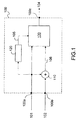
- the figure 1 shows a block diagram of a device according to the invention adapted to correct errors of n bits or more in a word 101 of a code characterized by a minimum Hamming distance does not exceed 2n. This device also ensures the correction of all errors affecting less than n bits.
- indicative confidence data in the example in the form of a word 102, is used to indicate a confidence bit level of each bit in a codeword. 101 potentially erroneous, said initial word 101, at the entrance of the proposed devices. In the examples developed, these words 101 and 102 comprise the same number of bits. Without affecting the generality of the invention, it is also considered that in the confidence word 102, a bit with the 1-logic value indicates that the corresponding bit in the codeword 101 has a low level of confidence. , a bit with the 0-logic value signaling a bit with a high level of confidence.
- the device 100 receives on a first input 100a an initial word 101 and on a second input 100b a confidence word 102 comprising the binary information relating to the confidence level of each bit in the initial word 101.
- the device 100 delivers 100c output a corrected word 104. It comprises bit inversion means 110 fed by the initial word 101 and the confidence word 102, detection means 120 of an error of n bits or more in the initial word 101 controlling means. multiplexing and correction 130.
- the bit reversal means 110 are able to invert the bits of the initial word 101 which are assigned a low level of confidence.
- the bit inversion means comprise a module operating "or exclusive" on the incoming words 101 and 102.
- all the bits marked as weak by a 1-logic are inverted, so as to provide a intermediate word 106.
- the detection means 120 make it possible to generate a control signal 105 whose value is different depending on whether they detect an error on at least n bits of the initial word 101. Thus, if the detection means 120 detect no error or if they detect an error on n-1 bits or less, then the control signal 105 takes a first value; if the detection means 120 detect an error on more than n-1 bits, then the control signal 105 takes a second value.
- the multiplexing and correction means 130 are fed, on the one hand, by the initial word 101, and on the other hand by the intermediate word 106 coming from the inverting means 110. Moreover, these means 130 are controlled by the control signal 105 from the detection means 120 so as to output a corrected word 104 determined according to the initial word 101 when the control signal 105 is at the first value - that is, when no more than one error has occurred. -1 bit has been detected on the initial word 101 -, and to deliver a corrected word 104 determined according to the intermediate word 106 when the control signal 105 is at the second value - in other words when an error of less than n bits has been detected on the initial word 101.
- the multiplexing and correction means 130 comprise means for correcting an error on maximum n-1 bits in order to correct at least one such error when it is present in the initial word 101 or in the intermediate word 106. As illustrated further in particular in figure 3 these correction means can be associated in the same physical module with the aforementioned detection means 120. The correction and multiplexing means 130 do not necessarily correspond to a separate physical module.
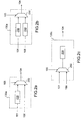
- FIGS. 2a, 2b, 2c illustrate several possible implementations of the multiplexing and correction means 130 introduced in the figure 1 .
- the figure 2a has first multiplexing and correction means 130a comprising a multiplexer 250 with two inputs controlled by the control signal 105 from the detection means as illustrated in FIG. figure 1 (reference 120).
- the means 130a also comprise means for correcting an error on a maximum of n-1 bits 230 placed on the first input of the multiplexer 250 and powered by the initial word 101.
- the multiplexer 250 is powered on its second input by the intermediate word 106
- the control signal 105 selects the first input of the multiplexer 205 to output 104 the initial word 101 corrected a possible error on maximum n-1 bits; in a second case where an error of at least n bits has been detected in the initial word 101, the control signal 105 selects the second input of the multiplexer 250 to output 104 the intermediate word 106.
- the double error correction is therefore performed by the inversion of bits.
- the corrected word 104 delivered at the output can still be affected by an error, in particular in the case where the initial word is assigned an error on n bits and the word of confidence 102 indicates a number of bits with a low level of confidence different from n.
- the inverting module 110 modifies an insufficient or too high number of bits, producing an intermediate word 106 still affected by an error despite the inversion of bits.
- the figure 2b proposes an embodiment overcoming the aforementioned drawbacks of the embodiment of the figure 2a .
- the multiplexing and correction means 130b of the figure 2 comprise a multiplexer 250 with two inputs controlled by the control signal 105.
- the means 130b also comprise first means for correcting an error of n-1 bits 230 placed on the first input of the multiplexer 250 and powered by the initial word 101 and second means for correcting an error of n-1 bits 230 placed on the second input of the multiplexer 250 and fed by the intermediate word 106.
- the control signal 105 selects the first input of the multiplexer 205 to output 104 the initial word 101 corrected for a possible error on maximum n-1 bits; in a second case where an error of at least n bits has been detected in the initial word 101, the control signal 105 selects the second input of the multiplexer 250 to output 104 the intermediate word 106 corrected for a possible residual error on maximum n-1 bits.
- the Figure 2c discloses an embodiment of the multiplexing and correction means 130c comprising a multiplexer 250 with two inputs controlled by the control signal 105.
- the multiplexer 250 is fed on its first input by the initial word 101 and on its second input. input by the intermediate word 106.
- a module for correcting an error of maximum n-1 bits 230 is placed at the output of the multiplexer 250, so that whatever the word selected at input - initial word 101 or intermediate word 106 - it is submitted to the correction module 230.
- This embodiment is only an example of mutualization of the correction means.
- the embodiment of the figure 2b can sometimes be preferred to that of the Figure 2c because it decreases the latency of the proposed devices by making it possible to calculate the control signal 105 in parallel with any corrections made in the modules 230.
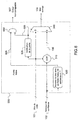
- the figure 3 presents a first embodiment of a device according to the invention.
- the device 300 notably makes it possible to correct single and multiple errors (that is to say affecting a number of bits at least equal to 2) in an initial word 101 of a code characterized by a minimum Hamming distance of 3 or 4 (in other words, n is equal to 2 to use the principle described above with respect to figure 1 ).
- a minimum Hamming distance equal to 4 allows a SEC-DED decoder to correct simple errors (i.e., when only one bit is wrong) and to detect double errors (in the case where two bits are wrong).
- This device 300 also receives a word 102 comprising information relating to the level of confidence of each bit in the codeword 101.
- the device 300 comprises a SEC-DED decoder 320 ("Single Error Correction - Double Error Detection" for simple error correction and dual error detection) fed by an initial word 101, a bit inversion module 310 powered by the initial word 101 and the confidence word 102, a SEC (Single Error Correction) decoder fed by the bit inversion module 310 and a multiplexer 340 controlled by the SEC-DED decoder 320 on the one hand, and secondly by the SEC 330 decoder.
- SEC-DED decoder 320 Single Error Correction - Double Error Detection
- the SEC-DED decoder 320 is configured to receive as input a codeword 101, said initial word 101, some bits of which may be erroneous.
- the structure of the device 300 corresponds to the case presented in figure 2b where the error correction modules are placed on each of the inputs of the multiplexer.
- the SEC-DED decoder 320 of the device 300 cumulatively fulfills the functions filled, on the one hand by the detection module 120 (cf. figure 1 ), and on the other hand by a correction module 230 included in the correction and multiplexing means 130 (cf. figure 2b ).
- correction and multiplexing means 130 correspond in the figure 3 the association of the multiplexer 340 with the SEC 330 decoder and the part of the SEC-DED decoder 320 responsible for the correction of simple errors.
- the SEC-DED decoder 320 generates a control signal 305 for controlling the multiplexer 340, and it also makes it possible to correct the simple errors in the initial word 101 before it is transmitted to a first input of the multiplexer 340.
- the bit inversion module 310 operates according to the principle already described above so as to generate an intermediate word 306 by inverting the low confidence bits of the initial word 101.
- the inversion module 310 contains logic gates operating a xor ("exclusive") between each bit in the initial word 101 and the corresponding bit in the word of confidence 102.
- the SEC decoder 330 is powered by the intermediate word 306 from the inversion module 310, so that the decoder SEC 330 can correct a simple error present in the intermediate word 306.
- the multiplexer 340 is configured to choose between the output of the SEC-DED decoder 320 and the output of the SEC 330 decoder the word that is transmitted by the output 104 of the device 300. Thanks to the control signal 305 generated by the SEC-DED 320, the output of the SEC 330 decoder is chosen only when the SEC-DED decoder 320 indicates the appearance of an uncorrectable error, that is to say in the example an error other than a simple error (in this case a double error); otherwise, the output of the SEC-DED decoder 320 is chosen.
- the control signal 305 for example takes the value 1-logic when the decoder SEC-DED 320 indicates the presence of an uncorrectable error.
- the multiplexer 340 outputs a corrected word 104, even if in rare cases, corresponding for example to cases where the initial word was assigned many low confidence bits, the device according to the invention fails. not to generate a corrected word 104 free of errors.
- the figure 4 illustrates a variant embodiment of the device presented in figure 3 also allowing the detection of errors that could not be corrected.
- the device 400 has, compared to the device of the figure 3 , an additional output 407 indicating the presence or absence of an error that could not be corrected by the device.
- the decoder SEC 330 is replaced by a decoder SEC-DED 430 which has the same properties as the decoder SEC-DED 320 presented above.
- the bits of the code word 101 are inverted by the module 310 as a function of the bits contained in the word 102, confidence indicator, to give the bits of the intermediate word 406, which is transmitted to the SEC-DED decoder 430.
- This decoder SEC -DED 430 is configured to issue a 405 error signal when it detects an uncorrectable error.
- This error signal 405 is combined with the control signal 305 transmitted by the first SEC-DED 320 to generate an output signal 407 indicating an uncorrectable error by the device.
- the signals 305 and 405 take for example the 1-logic value only when the SEC-DED 320 and SEC-DED 430 decoders respectively indicate the presence of an error which has not been corrected. These signals 305 and 405 may be combined by an "et-logic" operation 450 to produce the error signal 407 at the output of the device.
- the devices illustrated in figures 3 and 4 can correct a double error if at least one of the two bits affected by this double error in the initial word 101 is indicated by the word 102 as having a low level of confidence. In the case where only one of these two bits is indicated as having a low level of confidence, it must be the only bit in all the code word 101 which is indicated as such for the double error to become correctable.
- SEC-DED decoders can be constructed to also detect errors affecting more than two bits that are characterized by a non-zero syndrome and different from the syndromes corresponding to a single error. Thus these devices can ensure the correction of all detectable errors some of which affect more than two bits.
- the figure 5 shows an example of a device for the correction of simple errors in a code word 101 containing a parity or imparity bit which guarantees the same parity for all the error-free code words, that is to say the words of code separated by a minimum Hamming distance of 2 (in other words, n is equal to 1 to use the principle described above for figure 1 ).
- This device 500 also receives a word 102 comprising information relating to the confidence level of each bit in the codeword 101.
- the device 500 of the figure 5 comprises at least one inversion module 310, a multiplexer 340 and a parity check module 520.
- the inversion module 310 and the multiplexer 340 perform the same functions as in the previous figures.
- the verification module 520 of the parity is configured to determine the total parity of the initial word 101 and generate a parity signal 505 to control the multiplexer 340.
- the output 505 of the module 520 takes for example the 1-logic value only when the parity the word initial 101 does not match the parity of a code word without errors. A person skilled in the art can easily identify all the necessary modifications in the case where the values of this output 505 are reversed.
- the output of the inverting module 310 is chosen by the multiplexer 340 only when the control signal 505 indicates a disparity between the current parity and the expected parity of the initial word 101, thus the appearance of an error; otherwise, the initial word 101 is chosen for the output 104 of the device 500.
- the multiplexer 340 outputs the corrected word 104 excluding possibly the parity bit.
- the SEC 330 decoder is replaced by a "0-bit corrector", in other words a wire (the wire on which the word 106 from the inversion module 310 passes to feed the multiplexer 340).
- the initial word 101 is transmitted to the multiplexer by a wire (0-bit corrector).
- the parity checking module 520 corresponds to the detection module 120 (cf. figure 1 ) and the correction module 230 (cf. Figures 2a, 2b, 2c ) is a 0-bit corrector, that is, a wire.
- the figure 6 illustrates a variant of the device of the figure 5 which also allows the detection of simple errors that could not be corrected.
- the device 600 further comprises a test module 620 to check whether the word 102 confidence indicator indicates a single bit with a low level of confidence in the code word 101.
- the output 605 of the module 620 for example takes the value 0-logic only when the confidence word 102 indicates the presence of a single bit with a low level of confidence in the codeword 101.
- the outputs of the parity check 520 and test 620 modules are combined in a module 650 implementing a operation of and-logic.
- the output 607 of the et-logic module 650 thus makes it possible to indicate the presence of an error that has not been corrected.
- the inversion, multiplexing and decoding modules which are used in the presented embodiments of the device according to the invention are standard modules known from the state of the art.
- those skilled in the art can easily identify the necessary modifications to the proposed devices in the case where a low level of confidence is indicated by the 0-logic value instead of the 1-logical value as in the previous examples.
Landscapes
- Physics & Mathematics (AREA)
- Engineering & Computer Science (AREA)
- Theoretical Computer Science (AREA)
- Probability & Statistics with Applications (AREA)
- Mathematical Physics (AREA)
- General Physics & Mathematics (AREA)
- Quality & Reliability (AREA)
- General Engineering & Computer Science (AREA)
- Algebra (AREA)
- Pure & Applied Mathematics (AREA)
- Error Detection And Correction (AREA)
- Detection And Correction Of Errors (AREA)
- Detection And Prevention Of Errors In Transmission (AREA)
Claims (4)
- Vorrichtung (300) zum Korrigieren eines binären Anfangsworts (101) mit einem Fehler an 1 oder 2 Bits, das von einem Korrekturcode mit einer minimalen Hamming-Distanz von 3 oder 4 stammt, wobei die Vorrichtung ein erstes Korrektur- und Detektionsmittel (320) zum Korrigieren eines Fehlers von 1 Bit und zum Detektieren eines Fehlers von mehr als 1 Bit in dem Anfangswort (101) umfasst,
und ein zweites Mittel (330) zum Korrigieren eines Fehlers von 1 Bit in einem Wort (306), das von einem Umkehrmodul (310) kommt, wobei das Umkehrmodul (310) ein Datenelement empfangen kann, der ein niedriges oder hohes binäres Konfidenzniveau (102) anzeigt, das jedem Bit von wenigstens einem Teil des Anfangsworts (101) zugeordnet ist, wobei das Umkehrmodul (310) zum Umkehren der Bits des Anfangsworts (101) konfiguriert ist, die von dem niedrigen Konfidenzniveau betroffen sind, wobei die Vorrichtung ferner einen Multiplexer (340) mit wenigstens zwei Eingängen umfasst, der von dem ersten Korrektur- und Detektionsmittel gesteuert wird,
wobei der Multiplexer (340) an einem ersten Eingang mit dem Ausgang des ersten Korrektur- und Detektionsmittels (320) gespeist wird und an einem zweiten Eingang mit dem Ausgang des zweiten Korrekturmittels (330) gespeist wird, wobei das erste Korrektur- und Detektionsmittel (320) zum Erzeugen eines Steuersignals (305) ausgelegt ist, um den Ausgang des zweiten Korrekturmittels (330) zu wählen, falls das erste Korrektur- und Detektionsmittel (320) einen Fehler von mehr als 1 Bit in dem Anfangswort detektiert, und ansonsten der Ausgang des ersten Korrektur- und Detektionsmittels (320) gewählt wird. - Vorrichtung (400) zum Korrigieren eines Anfangsworts (101) nach Anspruch 1, dadurch gekennzeichnet, dass das zweite Korrekturmittel ein Mittel zum Korrigieren eines einzelnen Fehlers und zum Detektieren eines Fehlers von mehr als 1 Bit (430) ist,
wobei die Ausgänge der zwei Korrektur- und Detektionsmittel (320, 430) kombiniert (450) werden, um ein Signal (407) zu erzeugen, das einen unkorrigierbaren Fehler anzeigt, wenn die zwei Detektionsmittel (320, 430) einen Fehler von mehr als 1 Bit detektiert haben. - Vorrichtung nach Anspruch 2, wobei das Mittel (320, 430) zum Detektieren eines Fehlers von mehr als 1 Bit des ersten und zweiten Korrektur- und Detektionsmittels zum Detektieren von Fehlern konfiguriert sind, die mehr als zwei Bits betreffen, die durch ein Nicht-Null-Syndrom charakterisiert sind und sich von Syndromen unterscheiden, die einem einzelnen Fehler entsprechen.
- Speichermodul, das eine Vorrichtung nach einem der vorherigen Ansprüche umfasst.
Applications Claiming Priority (3)
| Application Number | Priority Date | Filing Date | Title |
|---|---|---|---|
| FR1256029A FR2992504A1 (fr) | 2012-06-26 | 2012-06-26 | Dispositif et procede pour la correction d'erreurs dans un mot de code |
| FR1202225A FR2992503A1 (fr) | 2012-06-26 | 2012-08-10 | Dispositif de correction d'une erreur d'au moins n bits dans un mot de code dont la distance minimale de hamming est inferieure ou egale a 2n |
| PCT/EP2013/063407 WO2014001397A1 (fr) | 2012-06-26 | 2013-06-26 | Dispositif de correction de deux erreurs avec un code de distance de hamming trois ou quatre |
Publications (2)
| Publication Number | Publication Date |
|---|---|
| EP2865100A1 EP2865100A1 (de) | 2015-04-29 |
| EP2865100B1 true EP2865100B1 (de) | 2016-10-12 |
Family
ID=47424928
Family Applications (2)
| Application Number | Title | Priority Date | Filing Date |
|---|---|---|---|
| EP13735227.4A Not-in-force EP2865100B1 (de) | 2012-06-26 | 2013-06-26 | Vorrichtung zur korrektur zweier fehler mit einem code mit einer hammingdistanz von drei oder vier |
| EP13733265.6A Not-in-force EP2865099B1 (de) | 2012-06-26 | 2013-06-26 | Korrektur von doppelbitfehlern in einem codewort mit hammingdistanz drei oder vier |
Family Applications After (1)
| Application Number | Title | Priority Date | Filing Date |
|---|---|---|---|
| EP13733265.6A Not-in-force EP2865099B1 (de) | 2012-06-26 | 2013-06-26 | Korrektur von doppelbitfehlern in einem codewort mit hammingdistanz drei oder vier |
Country Status (4)
| Country | Link |
|---|---|
| US (2) | US20150341055A1 (de) |
| EP (2) | EP2865100B1 (de) |
| FR (3) | FR2992504A1 (de) |
| WO (2) | WO2014001397A1 (de) |
Families Citing this family (4)
| Publication number | Priority date | Publication date | Assignee | Title |
|---|---|---|---|---|
| US8458536B2 (en) | 2008-07-17 | 2013-06-04 | Marvell World Trade Ltd. | Data recovery in solid state memory devices |
| US10396826B2 (en) * | 2016-10-26 | 2019-08-27 | Huawei Technologies Co., Ltd. | Software defined network with selectable low latency or high throughput mode |
| KR102410566B1 (ko) * | 2018-02-05 | 2022-06-17 | 삼성전자주식회사 | 반도체 메모리 장치, 이를 포함하는 메모리 시스템 및 반도체 메모리 장치의 동작 방법 |
| FR3166985A1 (fr) * | 2024-09-27 | 2026-04-03 | Stmicroelectronics International N.V. | Détection et correction d'erreur |
Family Cites Families (14)
| Publication number | Priority date | Publication date | Assignee | Title |
|---|---|---|---|---|
| DE3473365D1 (en) * | 1984-05-26 | 1988-09-15 | Honeywell Bull Spa | Single error correction circuit for system memory |
| DE69031869D1 (de) * | 1989-10-11 | 1998-02-05 | Cias Inc | Kode und vorrichtung für optimale fehlerdetektion und -verbesserung |
| US5241540A (en) * | 1991-07-31 | 1993-08-31 | International Business Machines Corporation | Reverse ordered control information transmission |
| JP3839215B2 (ja) * | 2000-03-14 | 2006-11-01 | 株式会社日立製作所 | 誤り検出・訂正方法、計算機システムの主記憶制御装置、及び計算機システム |
| US6792569B2 (en) * | 2001-04-24 | 2004-09-14 | International Business Machines Corporation | Root solver and associated method for solving finite field polynomial equations |
| US7426678B1 (en) * | 2004-07-20 | 2008-09-16 | Xilinx, Inc. | Error checking parity and syndrome of a block of data with relocated parity bits |
| GB2428496A (en) * | 2005-07-15 | 2007-01-31 | Global Silicon Ltd | Error correction for flash memory |
| US7577899B2 (en) * | 2006-02-13 | 2009-08-18 | Harris Corporation | Cyclic redundancy check (CRC) based error correction method and device |
| US7533327B2 (en) * | 2006-03-07 | 2009-05-12 | Broadcom Corporation | Method and system for bluetooth decoding |
| WO2009072103A2 (en) * | 2007-12-05 | 2009-06-11 | Densbits Technologies Ltd. | Flash memory apparatus and methods using a plurality of decoding stages including optional use of concatenated bch codes and/or designation of 'first below' cells |
| US9128868B2 (en) * | 2008-01-31 | 2015-09-08 | International Business Machines Corporation | System for error decoding with retries and associated methods |
| US8458536B2 (en) * | 2008-07-17 | 2013-06-04 | Marvell World Trade Ltd. | Data recovery in solid state memory devices |
| CN101814922B (zh) * | 2009-02-23 | 2013-06-19 | 国际商业机器公司 | 基于bch码的多位错纠错方法和装置以及存储系统 |
| US9432298B1 (en) * | 2011-12-09 | 2016-08-30 | P4tents1, LLC | System, method, and computer program product for improving memory systems |
-
2012
- 2012-06-26 FR FR1256029A patent/FR2992504A1/fr active Pending
- 2012-08-10 FR FR1202225A patent/FR2992503A1/fr active Pending
- 2012-08-10 FR FR1202226A patent/FR2992444B1/fr active Active
-
2013
- 2013-06-26 EP EP13735227.4A patent/EP2865100B1/de not_active Not-in-force
- 2013-06-26 WO PCT/EP2013/063407 patent/WO2014001397A1/fr not_active Ceased
- 2013-06-26 EP EP13733265.6A patent/EP2865099B1/de not_active Not-in-force
- 2013-06-26 US US14/411,067 patent/US20150341055A1/en not_active Abandoned
- 2013-06-26 US US14/411,081 patent/US9515682B2/en not_active Expired - Fee Related
- 2013-06-26 WO PCT/EP2013/063405 patent/WO2014001395A1/fr not_active Ceased
Non-Patent Citations (1)
| Title |
|---|
| None * |
Also Published As
| Publication number | Publication date |
|---|---|
| FR2992444A1 (fr) | 2013-12-27 |
| WO2014001397A1 (fr) | 2014-01-03 |
| US20150341055A1 (en) | 2015-11-26 |
| FR2992444B1 (fr) | 2017-01-06 |
| EP2865099A1 (de) | 2015-04-29 |
| FR2992504A1 (fr) | 2013-12-27 |
| FR2992503A1 (fr) | 2013-12-27 |
| US20150341056A1 (en) | 2015-11-26 |
| WO2014001395A1 (fr) | 2014-01-03 |
| US9515682B2 (en) | 2016-12-06 |
| EP2865099B1 (de) | 2016-08-31 |
| EP2865100A1 (de) | 2015-04-29 |
Similar Documents
| Publication | Publication Date | Title |
|---|---|---|
| US8381069B1 (en) | Absorb decode algorithm for 10GBase-T LDPC decoder | |
| EP2806565B1 (de) | Decodierverfahren eines Korrekturcodes, beispielsweise eines Turbo-Codes, durch Analyse des ausgedehnten Spektrums der Codewörter | |
| EP2394366B1 (de) | Fehlerkorrektur-codierungsverfahren mit totalparitätbit | |
| FR2512568A1 (fr) | Systeme pour transferer des donnees binaires par une pluralite de canaux au moyen d'un codeur operant par convolution | |
| EP2865100B1 (de) | Vorrichtung zur korrektur zweier fehler mit einem code mit einer hammingdistanz von drei oder vier | |
| EP0108655A1 (de) | System zur Erkennung und Korrektur von Übertragungsfehlern in einer binären Nachricht mit einem Fehlererkennungs- und Korrekturcode des verzahnten zyklischen Reed-Solomon-Typs | |
| US3831143A (en) | Concatenated burst-trapping codes | |
| US10153788B2 (en) | Detection of multiple bit errors in random access memories | |
| FR3038752A1 (de) | ||
| EP3082266B1 (de) | Kodier- und dekodierverfahren zum differenzierten schutz | |
| EP2415193B1 (de) | Modulationsverfahren und vorrichtung zur durchführung einer differenzmodulation und entsprechende(s) demodulationsverfahren und vorrichtung, signal und rechnerprogrammprodukte | |
| EP1300952A1 (de) | Hocheffizienter Fehlerdetektion - und/oder korrekturcode | |
| EP2833555B1 (de) | Verbessertes Verfahren zur Decodierung eines Korrekturcodes mit Message Passing, insbesondere für die Decodierung von Low-Density-Parity-Check-Codes oder Turbo-Codes | |
| FR3093831A1 (fr) | Dispositif pour et procédé de transmission de données | |
| FR2882480A1 (fr) | Procede et dispositif de synchronisation trame | |
| FR2995162A1 (fr) | Methode d'optimisation de l'efficacite spectrale d'une transmission de donnees et dispositif mettant en oeuvre la methode | |
| EP2786497A1 (de) | Verfahren zum optimieren der fehlerkorrektur-kapazität eines fehlerkorrektur-codes unter verwendung von zusätzlichen syndromen | |
| EP2403167B1 (de) | Verfahren zur Übertragung von Daten über einen optischen Übertragungskanal | |
| RU2826990C2 (ru) | Резервированное запоминающее устройство с коррекцией ошибок в дублируемых каналах | |
| US8804851B2 (en) | Iterative detection and decoding device for selecting soft information according to at least one predetermined constraint rule, and related iterative detection and decoding method | |
| FR2992091A1 (fr) | Procede d'enregistrement de donnees, procede de detection des erreurs d'acces a une memoire et dispositif associe | |
| FR3161964A1 (fr) | Procédé de calcul haute intégrité sur calculateur mono-composant | |
| EP1217752A2 (de) | Iteratives Dekodierungsverfahren für alle Verkettungen einer vorbestimmten Anzahl von Blockkoden oder ähnlichen Koden | |
| FR2759218A1 (fr) | Dispositif et procede de traitement de symboles d'information | |
| FR2915335A1 (fr) | Procede et dispositif optimise de decodage iteratif dans un systeme de transmission a redondance incrementale |
Legal Events
| Date | Code | Title | Description |
|---|---|---|---|
| PUAI | Public reference made under article 153(3) epc to a published international application that has entered the european phase |
Free format text: ORIGINAL CODE: 0009012 |
|
| 17P | Request for examination filed |
Effective date: 20141223 |
|
| AK | Designated contracting states |
Kind code of ref document: A1 Designated state(s): AL AT BE BG CH CY CZ DE DK EE ES FI FR GB GR HR HU IE IS IT LI LT LU LV MC MK MT NL NO PL PT RO RS SE SI SK SM TR |
|
| AX | Request for extension of the european patent |
Extension state: BA ME |
|
| DAX | Request for extension of the european patent (deleted) | ||
| GRAP | Despatch of communication of intention to grant a patent |
Free format text: ORIGINAL CODE: EPIDOSNIGR1 |
|
| INTG | Intention to grant announced |
Effective date: 20160307 |
|
| GRAJ | Information related to disapproval of communication of intention to grant by the applicant or resumption of examination proceedings by the epo deleted |
Free format text: ORIGINAL CODE: EPIDOSDIGR1 |
|
| INTC | Intention to grant announced (deleted) | ||
| GRAS | Grant fee paid |
Free format text: ORIGINAL CODE: EPIDOSNIGR3 |
|
| GRAP | Despatch of communication of intention to grant a patent |
Free format text: ORIGINAL CODE: EPIDOSNIGR1 |
|
| GRAA | (expected) grant |
Free format text: ORIGINAL CODE: 0009210 |
|
| INTG | Intention to grant announced |
Effective date: 20160826 |
|
| AK | Designated contracting states |
Kind code of ref document: B1 Designated state(s): AL AT BE BG CH CY CZ DE DK EE ES FI FR GB GR HR HU IE IS IT LI LT LU LV MC MK MT NL NO PL PT RO RS SE SI SK SM TR |
|
| REG | Reference to a national code |
Ref country code: GB Ref legal event code: FG4D Free format text: NOT ENGLISH |
|
| REG | Reference to a national code |
Ref country code: CH Ref legal event code: EP |
|
| REG | Reference to a national code |
Ref country code: AT Ref legal event code: REF Ref document number: 837308 Country of ref document: AT Kind code of ref document: T Effective date: 20161015 |
|
| REG | Reference to a national code |
Ref country code: IE Ref legal event code: FG4D Free format text: LANGUAGE OF EP DOCUMENT: FRENCH |
|
| REG | Reference to a national code |
Ref country code: DE Ref legal event code: R096 Ref document number: 602013012718 Country of ref document: DE |
|
| REG | Reference to a national code |
Ref country code: LT Ref legal event code: MG4D |
|
| REG | Reference to a national code |
Ref country code: NL Ref legal event code: MP Effective date: 20161012 |
|
| PG25 | Lapsed in a contracting state [announced via postgrant information from national office to epo] |
Ref country code: LV Free format text: LAPSE BECAUSE OF FAILURE TO SUBMIT A TRANSLATION OF THE DESCRIPTION OR TO PAY THE FEE WITHIN THE PRESCRIBED TIME-LIMIT Effective date: 20161012 |
|
| REG | Reference to a national code |
Ref country code: AT Ref legal event code: MK05 Ref document number: 837308 Country of ref document: AT Kind code of ref document: T Effective date: 20161012 |
|
| PG25 | Lapsed in a contracting state [announced via postgrant information from national office to epo] |
Ref country code: LT Free format text: LAPSE BECAUSE OF FAILURE TO SUBMIT A TRANSLATION OF THE DESCRIPTION OR TO PAY THE FEE WITHIN THE PRESCRIBED TIME-LIMIT Effective date: 20161012 Ref country code: SE Free format text: LAPSE BECAUSE OF FAILURE TO SUBMIT A TRANSLATION OF THE DESCRIPTION OR TO PAY THE FEE WITHIN THE PRESCRIBED TIME-LIMIT Effective date: 20161012 Ref country code: GR Free format text: LAPSE BECAUSE OF FAILURE TO SUBMIT A TRANSLATION OF THE DESCRIPTION OR TO PAY THE FEE WITHIN THE PRESCRIBED TIME-LIMIT Effective date: 20170113 Ref country code: NO Free format text: LAPSE BECAUSE OF FAILURE TO SUBMIT A TRANSLATION OF THE DESCRIPTION OR TO PAY THE FEE WITHIN THE PRESCRIBED TIME-LIMIT Effective date: 20170112 |
|
| PG25 | Lapsed in a contracting state [announced via postgrant information from national office to epo] |
Ref country code: RS Free format text: LAPSE BECAUSE OF FAILURE TO SUBMIT A TRANSLATION OF THE DESCRIPTION OR TO PAY THE FEE WITHIN THE PRESCRIBED TIME-LIMIT Effective date: 20161012 Ref country code: IS Free format text: LAPSE BECAUSE OF FAILURE TO SUBMIT A TRANSLATION OF THE DESCRIPTION OR TO PAY THE FEE WITHIN THE PRESCRIBED TIME-LIMIT Effective date: 20170212 Ref country code: AT Free format text: LAPSE BECAUSE OF FAILURE TO SUBMIT A TRANSLATION OF THE DESCRIPTION OR TO PAY THE FEE WITHIN THE PRESCRIBED TIME-LIMIT Effective date: 20161012 Ref country code: HR Free format text: LAPSE BECAUSE OF FAILURE TO SUBMIT A TRANSLATION OF THE DESCRIPTION OR TO PAY THE FEE WITHIN THE PRESCRIBED TIME-LIMIT Effective date: 20161012 Ref country code: NL Free format text: LAPSE BECAUSE OF FAILURE TO SUBMIT A TRANSLATION OF THE DESCRIPTION OR TO PAY THE FEE WITHIN THE PRESCRIBED TIME-LIMIT Effective date: 20161012 Ref country code: ES Free format text: LAPSE BECAUSE OF FAILURE TO SUBMIT A TRANSLATION OF THE DESCRIPTION OR TO PAY THE FEE WITHIN THE PRESCRIBED TIME-LIMIT Effective date: 20161012 Ref country code: PT Free format text: LAPSE BECAUSE OF FAILURE TO SUBMIT A TRANSLATION OF THE DESCRIPTION OR TO PAY THE FEE WITHIN THE PRESCRIBED TIME-LIMIT Effective date: 20170213 Ref country code: PL Free format text: LAPSE BECAUSE OF FAILURE TO SUBMIT A TRANSLATION OF THE DESCRIPTION OR TO PAY THE FEE WITHIN THE PRESCRIBED TIME-LIMIT Effective date: 20161012 Ref country code: FI Free format text: LAPSE BECAUSE OF FAILURE TO SUBMIT A TRANSLATION OF THE DESCRIPTION OR TO PAY THE FEE WITHIN THE PRESCRIBED TIME-LIMIT Effective date: 20161012 |
|
| REG | Reference to a national code |
Ref country code: FR Ref legal event code: PLFP Year of fee payment: 5 |
|
| REG | Reference to a national code |
Ref country code: DE Ref legal event code: R097 Ref document number: 602013012718 Country of ref document: DE |
|
| PG25 | Lapsed in a contracting state [announced via postgrant information from national office to epo] |
Ref country code: CZ Free format text: LAPSE BECAUSE OF FAILURE TO SUBMIT A TRANSLATION OF THE DESCRIPTION OR TO PAY THE FEE WITHIN THE PRESCRIBED TIME-LIMIT Effective date: 20161012 Ref country code: SK Free format text: LAPSE BECAUSE OF FAILURE TO SUBMIT A TRANSLATION OF THE DESCRIPTION OR TO PAY THE FEE WITHIN THE PRESCRIBED TIME-LIMIT Effective date: 20161012 Ref country code: DK Free format text: LAPSE BECAUSE OF FAILURE TO SUBMIT A TRANSLATION OF THE DESCRIPTION OR TO PAY THE FEE WITHIN THE PRESCRIBED TIME-LIMIT Effective date: 20161012 Ref country code: RO Free format text: LAPSE BECAUSE OF FAILURE TO SUBMIT A TRANSLATION OF THE DESCRIPTION OR TO PAY THE FEE WITHIN THE PRESCRIBED TIME-LIMIT Effective date: 20161012 Ref country code: EE Free format text: LAPSE BECAUSE OF FAILURE TO SUBMIT A TRANSLATION OF THE DESCRIPTION OR TO PAY THE FEE WITHIN THE PRESCRIBED TIME-LIMIT Effective date: 20161012 |
|
| PLBE | No opposition filed within time limit |
Free format text: ORIGINAL CODE: 0009261 |
|
| STAA | Information on the status of an ep patent application or granted ep patent |
Free format text: STATUS: NO OPPOSITION FILED WITHIN TIME LIMIT |
|
| PG25 | Lapsed in a contracting state [announced via postgrant information from national office to epo] |
Ref country code: BG Free format text: LAPSE BECAUSE OF FAILURE TO SUBMIT A TRANSLATION OF THE DESCRIPTION OR TO PAY THE FEE WITHIN THE PRESCRIBED TIME-LIMIT Effective date: 20170112 Ref country code: IT Free format text: LAPSE BECAUSE OF FAILURE TO SUBMIT A TRANSLATION OF THE DESCRIPTION OR TO PAY THE FEE WITHIN THE PRESCRIBED TIME-LIMIT Effective date: 20161012 Ref country code: SM Free format text: LAPSE BECAUSE OF FAILURE TO SUBMIT A TRANSLATION OF THE DESCRIPTION OR TO PAY THE FEE WITHIN THE PRESCRIBED TIME-LIMIT Effective date: 20161012 |
|
| 26N | No opposition filed |
Effective date: 20170713 |
|
| PG25 | Lapsed in a contracting state [announced via postgrant information from national office to epo] |
Ref country code: SI Free format text: LAPSE BECAUSE OF FAILURE TO SUBMIT A TRANSLATION OF THE DESCRIPTION OR TO PAY THE FEE WITHIN THE PRESCRIBED TIME-LIMIT Effective date: 20161012 |
|
| PG25 | Lapsed in a contracting state [announced via postgrant information from national office to epo] |
Ref country code: MC Free format text: LAPSE BECAUSE OF FAILURE TO SUBMIT A TRANSLATION OF THE DESCRIPTION OR TO PAY THE FEE WITHIN THE PRESCRIBED TIME-LIMIT Effective date: 20161012 |
|
| REG | Reference to a national code |
Ref country code: CH Ref legal event code: PL |
|
| GBPC | Gb: european patent ceased through non-payment of renewal fee |
Effective date: 20170626 |
|
| REG | Reference to a national code |
Ref country code: IE Ref legal event code: MM4A |
|
| PG25 | Lapsed in a contracting state [announced via postgrant information from national office to epo] |
Ref country code: LU Free format text: LAPSE BECAUSE OF NON-PAYMENT OF DUE FEES Effective date: 20170626 Ref country code: GB Free format text: LAPSE BECAUSE OF NON-PAYMENT OF DUE FEES Effective date: 20170626 Ref country code: IE Free format text: LAPSE BECAUSE OF NON-PAYMENT OF DUE FEES Effective date: 20170626 Ref country code: LI Free format text: LAPSE BECAUSE OF NON-PAYMENT OF DUE FEES Effective date: 20170630 Ref country code: CH Free format text: LAPSE BECAUSE OF NON-PAYMENT OF DUE FEES Effective date: 20170630 |
|
| REG | Reference to a national code |
Ref country code: BE Ref legal event code: MM Effective date: 20170630 |
|
| REG | Reference to a national code |
Ref country code: FR Ref legal event code: PLFP Year of fee payment: 6 |
|
| PGFP | Annual fee paid to national office [announced via postgrant information from national office to epo] |
Ref country code: DE Payment date: 20180607 Year of fee payment: 6 |
|
| PG25 | Lapsed in a contracting state [announced via postgrant information from national office to epo] |
Ref country code: BE Free format text: LAPSE BECAUSE OF NON-PAYMENT OF DUE FEES Effective date: 20170630 |
|
| PGFP | Annual fee paid to national office [announced via postgrant information from national office to epo] |
Ref country code: FR Payment date: 20180627 Year of fee payment: 6 |
|
| PG25 | Lapsed in a contracting state [announced via postgrant information from national office to epo] |
Ref country code: MT Free format text: LAPSE BECAUSE OF FAILURE TO SUBMIT A TRANSLATION OF THE DESCRIPTION OR TO PAY THE FEE WITHIN THE PRESCRIBED TIME-LIMIT Effective date: 20161012 |
|
| PG25 | Lapsed in a contracting state [announced via postgrant information from national office to epo] |
Ref country code: HU Free format text: LAPSE BECAUSE OF FAILURE TO SUBMIT A TRANSLATION OF THE DESCRIPTION OR TO PAY THE FEE WITHIN THE PRESCRIBED TIME-LIMIT; INVALID AB INITIO Effective date: 20130626 |
|
| PG25 | Lapsed in a contracting state [announced via postgrant information from national office to epo] |
Ref country code: CY Free format text: LAPSE BECAUSE OF FAILURE TO SUBMIT A TRANSLATION OF THE DESCRIPTION OR TO PAY THE FEE WITHIN THE PRESCRIBED TIME-LIMIT Effective date: 20161012 |
|
| PG25 | Lapsed in a contracting state [announced via postgrant information from national office to epo] |
Ref country code: MK Free format text: LAPSE BECAUSE OF FAILURE TO SUBMIT A TRANSLATION OF THE DESCRIPTION OR TO PAY THE FEE WITHIN THE PRESCRIBED TIME-LIMIT Effective date: 20161012 |
|
| REG | Reference to a national code |
Ref country code: DE Ref legal event code: R119 Ref document number: 602013012718 Country of ref document: DE |
|
| PG25 | Lapsed in a contracting state [announced via postgrant information from national office to epo] |
Ref country code: TR Free format text: LAPSE BECAUSE OF FAILURE TO SUBMIT A TRANSLATION OF THE DESCRIPTION OR TO PAY THE FEE WITHIN THE PRESCRIBED TIME-LIMIT Effective date: 20161012 |
|
| PG25 | Lapsed in a contracting state [announced via postgrant information from national office to epo] |
Ref country code: DE Free format text: LAPSE BECAUSE OF NON-PAYMENT OF DUE FEES Effective date: 20200101 |
|
| PG25 | Lapsed in a contracting state [announced via postgrant information from national office to epo] |
Ref country code: FR Free format text: LAPSE BECAUSE OF NON-PAYMENT OF DUE FEES Effective date: 20190630 |
|
| PG25 | Lapsed in a contracting state [announced via postgrant information from national office to epo] |
Ref country code: AL Free format text: LAPSE BECAUSE OF FAILURE TO SUBMIT A TRANSLATION OF THE DESCRIPTION OR TO PAY THE FEE WITHIN THE PRESCRIBED TIME-LIMIT Effective date: 20161012 |