EP2903436B1 - Heterocyclische verbindungen und deren verwendung zur behandlung neurodegenerativer tauopathien - Google Patents
Heterocyclische verbindungen und deren verwendung zur behandlung neurodegenerativer tauopathien Download PDFInfo
- Publication number
- EP2903436B1 EP2903436B1 EP13839598.3A EP13839598A EP2903436B1 EP 2903436 B1 EP2903436 B1 EP 2903436B1 EP 13839598 A EP13839598 A EP 13839598A EP 2903436 B1 EP2903436 B1 EP 2903436B1
- Authority
- EP
- European Patent Office
- Prior art keywords
- compound
- formula
- alkyl
- compounds
- use according
- Prior art date
- Legal status (The legal status is an assumption and is not a legal conclusion. Google has not performed a legal analysis and makes no representation as to the accuracy of the status listed.)
- Active
Links
- DYRIBFOWRXHQNS-UHFFFAOYSA-N CC(NCCCOC)=O Chemical compound CC(NCCCOC)=O DYRIBFOWRXHQNS-UHFFFAOYSA-N 0.000 description 1
- JXSFGWVDTIUMJF-UHFFFAOYSA-N CN(C)CCCOc(cc1F)cc(F)c1-c1c(NCC(F)(F)F)nc(-c2ncccc2)nc1Cl Chemical compound CN(C)CCCOc(cc1F)cc(F)c1-c1c(NCC(F)(F)F)nc(-c2ncccc2)nc1Cl JXSFGWVDTIUMJF-UHFFFAOYSA-N 0.000 description 1
- XBSDJXNXYCRWDX-UHFFFAOYSA-N CNC(C1)CC1OC Chemical compound CNC(C1)CC1OC XBSDJXNXYCRWDX-UHFFFAOYSA-N 0.000 description 1
- JXMIMJPTFCQEBD-QMMMGPOBSA-N C[C@@H](C(F)(F)F)Nc1c(-c(c(F)cc(OCCCF)c2)c2F)c(Cl)nc2ncn[n]12 Chemical compound C[C@@H](C(F)(F)F)Nc1c(-c(c(F)cc(OCCCF)c2)c2F)c(Cl)nc2ncn[n]12 JXMIMJPTFCQEBD-QMMMGPOBSA-N 0.000 description 1
- IGEJGBUHEHPNMR-LBPRGKRZSA-N C[C@@H](C(F)(F)F)Nc1c(-c(c(F)cc(OCCCN(C)C)c2)c2F)c(Cl)nc(-c2nccnc2)n1 Chemical compound C[C@@H](C(F)(F)F)Nc1c(-c(c(F)cc(OCCCN(C)C)c2)c2F)c(Cl)nc(-c2nccnc2)n1 IGEJGBUHEHPNMR-LBPRGKRZSA-N 0.000 description 1
- SXRPINFLPQMOJG-LBPRGKRZSA-N C[C@@H](C(F)(F)F)Nc1c(-c(c(F)cc(OCCCNC)c2)c2F)c(Cl)nc(-c2ncccc2)n1 Chemical compound C[C@@H](C(F)(F)F)Nc1c(-c(c(F)cc(OCCCNC)c2)c2F)c(Cl)nc(-c2ncccc2)n1 SXRPINFLPQMOJG-LBPRGKRZSA-N 0.000 description 1
- PYOBBMDUGURFMC-QMMMGPOBSA-N C[C@@H](C(F)(F)F)Nc1c(-c(c(F)cc(OCCCO)c2)c2F)c(Cl)nc2ncn[n]12 Chemical compound C[C@@H](C(F)(F)F)Nc1c(-c(c(F)cc(OCCCO)c2)c2F)c(Cl)nc2ncn[n]12 PYOBBMDUGURFMC-QMMMGPOBSA-N 0.000 description 1
- CEOMSEQSOGVQDN-NSHDSACASA-N C[C@@H](C(F)(F)F)Nc1c(-c(c(F)cc(OCCNC)c2)c2F)c(Cl)nc(-c2ncccc2)n1 Chemical compound C[C@@H](C(F)(F)F)Nc1c(-c(c(F)cc(OCCNC)c2)c2F)c(Cl)nc(-c2ncccc2)n1 CEOMSEQSOGVQDN-NSHDSACASA-N 0.000 description 1
- LJRQTMNDYRMPOR-UHFFFAOYSA-N Cc(c(-c(cc1)ccc1Cl)c1-c(c(F)cc(F)c2)c2F)nnc1Cl Chemical compound Cc(c(-c(cc1)ccc1Cl)c1-c(c(F)cc(F)c2)c2F)nnc1Cl LJRQTMNDYRMPOR-UHFFFAOYSA-N 0.000 description 1
- PYOACZADEZQCJS-UHFFFAOYSA-N FC(CNc1c(-c(c(F)cc(F)c2)c2F)c(Cl)nc(-c2ncccc2)n1)(F)F Chemical compound FC(CNc1c(-c(c(F)cc(F)c2)c2F)c(Cl)nc(-c2ncccc2)n1)(F)F PYOACZADEZQCJS-UHFFFAOYSA-N 0.000 description 1
Images






Classifications
-
- A—HUMAN NECESSITIES
- A61—MEDICAL OR VETERINARY SCIENCE; HYGIENE
- A61K—PREPARATIONS FOR MEDICAL, DENTAL OR TOILETRY PURPOSES
- A61K31/00—Medicinal preparations containing organic active ingredients
- A61K31/33—Heterocyclic compounds
- A61K31/395—Heterocyclic compounds having nitrogen as a ring hetero atom, e.g. guanethidine or rifamycins
- A61K31/495—Heterocyclic compounds having nitrogen as a ring hetero atom, e.g. guanethidine or rifamycins having six-membered rings with two or more nitrogen atoms as the only ring heteroatoms, e.g. piperazine or tetrazines
- A61K31/505—Pyrimidines; Hydrogenated pyrimidines, e.g. trimethoprim
- A61K31/506—Pyrimidines; Hydrogenated pyrimidines, e.g. trimethoprim not condensed and containing further heterocyclic rings
-
- A—HUMAN NECESSITIES
- A61—MEDICAL OR VETERINARY SCIENCE; HYGIENE
- A61K—PREPARATIONS FOR MEDICAL, DENTAL OR TOILETRY PURPOSES
- A61K31/00—Medicinal preparations containing organic active ingredients
- A61K31/33—Heterocyclic compounds
- A61K31/395—Heterocyclic compounds having nitrogen as a ring hetero atom, e.g. guanethidine or rifamycins
- A61K31/495—Heterocyclic compounds having nitrogen as a ring hetero atom, e.g. guanethidine or rifamycins having six-membered rings with two or more nitrogen atoms as the only ring heteroatoms, e.g. piperazine or tetrazines
- A61K31/505—Pyrimidines; Hydrogenated pyrimidines, e.g. trimethoprim
- A61K31/519—Pyrimidines; Hydrogenated pyrimidines, e.g. trimethoprim ortho- or peri-condensed with heterocyclic rings
-
- A—HUMAN NECESSITIES
- A61—MEDICAL OR VETERINARY SCIENCE; HYGIENE
- A61K—PREPARATIONS FOR MEDICAL, DENTAL OR TOILETRY PURPOSES
- A61K31/00—Medicinal preparations containing organic active ingredients
- A61K31/33—Heterocyclic compounds
- A61K31/395—Heterocyclic compounds having nitrogen as a ring hetero atom, e.g. guanethidine or rifamycins
- A61K31/41—Heterocyclic compounds having nitrogen as a ring hetero atom, e.g. guanethidine or rifamycins having five-membered rings with two or more ring hetero atoms, at least one of which being nitrogen, e.g. tetrazole
- A61K31/4196—1,2,4-Triazoles
-
- A—HUMAN NECESSITIES
- A61—MEDICAL OR VETERINARY SCIENCE; HYGIENE
- A61K—PREPARATIONS FOR MEDICAL, DENTAL OR TOILETRY PURPOSES
- A61K31/00—Medicinal preparations containing organic active ingredients
- A61K31/33—Heterocyclic compounds
- A61K31/395—Heterocyclic compounds having nitrogen as a ring hetero atom, e.g. guanethidine or rifamycins
- A61K31/495—Heterocyclic compounds having nitrogen as a ring hetero atom, e.g. guanethidine or rifamycins having six-membered rings with two or more nitrogen atoms as the only ring heteroatoms, e.g. piperazine or tetrazines
- A61K31/4985—Pyrazines or piperazines ortho- or peri-condensed with heterocyclic ring systems
-
- A—HUMAN NECESSITIES
- A61—MEDICAL OR VETERINARY SCIENCE; HYGIENE
- A61K—PREPARATIONS FOR MEDICAL, DENTAL OR TOILETRY PURPOSES
- A61K31/00—Medicinal preparations containing organic active ingredients
- A61K31/33—Heterocyclic compounds
- A61K31/395—Heterocyclic compounds having nitrogen as a ring hetero atom, e.g. guanethidine or rifamycins
- A61K31/495—Heterocyclic compounds having nitrogen as a ring hetero atom, e.g. guanethidine or rifamycins having six-membered rings with two or more nitrogen atoms as the only ring heteroatoms, e.g. piperazine or tetrazines
- A61K31/50—Pyridazines; Hydrogenated pyridazines
-
- A—HUMAN NECESSITIES
- A61—MEDICAL OR VETERINARY SCIENCE; HYGIENE
- A61K—PREPARATIONS FOR MEDICAL, DENTAL OR TOILETRY PURPOSES
- A61K31/00—Medicinal preparations containing organic active ingredients
- A61K31/33—Heterocyclic compounds
- A61K31/395—Heterocyclic compounds having nitrogen as a ring hetero atom, e.g. guanethidine or rifamycins
- A61K31/495—Heterocyclic compounds having nitrogen as a ring hetero atom, e.g. guanethidine or rifamycins having six-membered rings with two or more nitrogen atoms as the only ring heteroatoms, e.g. piperazine or tetrazines
- A61K31/50—Pyridazines; Hydrogenated pyridazines
- A61K31/501—Pyridazines; Hydrogenated pyridazines not condensed and containing further heterocyclic rings
-
- A—HUMAN NECESSITIES
- A61—MEDICAL OR VETERINARY SCIENCE; HYGIENE
- A61K—PREPARATIONS FOR MEDICAL, DENTAL OR TOILETRY PURPOSES
- A61K31/00—Medicinal preparations containing organic active ingredients
- A61K31/33—Heterocyclic compounds
- A61K31/395—Heterocyclic compounds having nitrogen as a ring hetero atom, e.g. guanethidine or rifamycins
- A61K31/53—Heterocyclic compounds having nitrogen as a ring hetero atom, e.g. guanethidine or rifamycins having six-membered rings with three nitrogens as the only ring hetero atoms, e.g. chlorazanil, melamine
-
- A—HUMAN NECESSITIES
- A61—MEDICAL OR VETERINARY SCIENCE; HYGIENE
- A61K—PREPARATIONS FOR MEDICAL, DENTAL OR TOILETRY PURPOSES
- A61K31/00—Medicinal preparations containing organic active ingredients
- A61K31/33—Heterocyclic compounds
- A61K31/395—Heterocyclic compounds having nitrogen as a ring hetero atom, e.g. guanethidine or rifamycins
- A61K31/535—Heterocyclic compounds having nitrogen as a ring hetero atom, e.g. guanethidine or rifamycins having six-membered rings with at least one nitrogen and one oxygen as the ring hetero atoms, e.g. 1,2-oxazines
- A61K31/5375—1,4-Oxazines, e.g. morpholine
- A61K31/5377—1,4-Oxazines, e.g. morpholine not condensed and containing further heterocyclic rings, e.g. timolol
-
- A—HUMAN NECESSITIES
- A61—MEDICAL OR VETERINARY SCIENCE; HYGIENE
- A61P—SPECIFIC THERAPEUTIC ACTIVITY OF CHEMICAL COMPOUNDS OR MEDICINAL PREPARATIONS
- A61P25/00—Drugs for disorders of the nervous system
-
- A—HUMAN NECESSITIES
- A61—MEDICAL OR VETERINARY SCIENCE; HYGIENE
- A61P—SPECIFIC THERAPEUTIC ACTIVITY OF CHEMICAL COMPOUNDS OR MEDICINAL PREPARATIONS
- A61P25/00—Drugs for disorders of the nervous system
- A61P25/14—Drugs for disorders of the nervous system for treating abnormal movements, e.g. chorea, dyskinesia
- A61P25/16—Anti-Parkinson drugs
Definitions
- the invention is directed to compounds of formula II as defined in the claims for use in methods for the treatment of neurodegenerative diseases as defined in the claims.
- WO2011037985 concerns methods of inhibiting a tauopathy in a patient by administration of an aminothienopyridazine compound.
- WO2006091728 concerns methods for the stabilization of microtubules involved in axonal transport.
- the methods employing compounds which functionally substitute for microtubule binding protein tau are useful, inter alia, in the treatment of neurodegenerative diseases or tauopathies.
- WO2005117550 concerns the use of indolocarbazole compounds for the preparation of a pharmaceutical composition for the prevention or treatment of a neurodegenerative and/or dementing illness driven by the molecular pathology of microtubule-associate tau.
- WO2009123486 concerns derivatives of L-Tyrosyl-L-Arginine and the use said derivatives in the prevention and/or treatment of a tau-induced cytotoxicity.
- WO2005030775 concerns 6-[(substituted)phenyl]triazolopyrimidine compounds, and compositions containing said compounds, wherein said compounds are anti-cancer agents useful for the treatment of cancer in mammals.
- US7524849 concerns 5-arylpyrimidine compounds, and compositions containing said compounds, wherein said compounds are anti-cancer agents useful for the treatment of cancer in mammals.
- Pubchem-CID Database accession no. 11655014 , concerns the compound C17H12CLF6N5.
- Neurodegenerative tauopathies including Alzheimer's disease (AD), are characterized by the misfolding and aggregation of the microtubule (MT)-associated protein tau. Normally, tau binds to and stabilizes MTs, thereby maintaining the network of MTs essential for axonal transport in neurons. In AD, tau becomes sequestered into aggregates, known as neurofibrillary tangles (NFTs) and neuropil threads, resulting in reduced MT-binding. This loss of tau function is believed to lead to MT destabilization and consequent axonal transport deficits, which could result in neuronal dysfunction and death.
- NFTs neurofibrillary tangles
- MT function may be compromised
- frontotemporal lobar degeneration multiple sclerosis, Parkinson's disease, amyotrophic laterial sclerosis, schizophrenia, Huntington's disease, multiple sclerosis, and traumatic brain injury (TBI), especially repetitive TBI (rTBI) such as that due to dementia pugilistica and recurrent football concussions and military closed head injuries, which also is known as chronic traumatic encephalopathy (CTE).
- CTE chronic traumatic encephalopathy
- Compounds that can cross the blood brain barrier and effectively stabilize MT are needed in order to treat neurodegenerative diseases caused, at least in part, by misfolding and aggregation of the MT-associated protein tau.
- the invention provides triazolopyrimidine compounds of formula II as defined in the claims for use in a method of treating a neurodegenerative disease in a patient characterized by a tauopathy or compromised microtubule function in the brain of the patient, comprising administering to the patient a therapeutically effective amount of a compound of formula II as defined in the claims.
- Phenylpyrimidine compounds of formula I, pyridopyridazine and pyridotriazine compounds of formula III, and pyridazine compounds of formula IV are described herein for the treatment of neurodegenerative diseases.
- microtubule-stabilizing compounds will be useful in treating neurodegenerative diseases, in particular, tauopathies, for example, Alzheimer's disease, frontotemporal lobar degeneration, Pick's disease, progressive supranuclear palsy (PSP), and corticobasal degeneration.
- tauopathies for example, Alzheimer's disease, frontotemporal lobar degeneration, Pick's disease, progressive supranuclear palsy (PSP), and corticobasal degeneration.
- the compounds of the invention may be useful for other diseases where tau pathology is a co-morbidity or where microtubule function is compromised, for example, schizophrenia, Parkinson's disease (PD), PD with dementia, Lewy body disease with dementia, and amyotrophic lateral sclerosis.
- the compounds of the invention can also be used to treat traumatic brain injury (TBI), especially repetitive TBI (rTBI), such as that due to dementia pugilistica and recurrent football concussions and military closed head injuries such as that due to IEDs, which also is known as chronic traumatic encephalopathy (CTE), with features of tauopathy or AD-like pathology. It is speculated that CTE also may emerge from PTSD.
- TBI traumatic brain injury
- rTBI repetitive TBI
- IEDs which also is known as chronic traumatic encephalopathy
- CTE chronic traumatic encephalopathy
- These classes of compounds include triazolopyrimidine compounds of formula II, as defined in the claims.
- Other classes of compounds described herein include phenylpyrimidine compounds of formula I, pyridopyridazine and pyridotriazine compounds of formula III and pyridazine compounds of formula IV.
- Certain compounds of formulas I, II, III, and IV have been previously studied for their anti-fungal and anti-cancer properties. As described herein, the compounds of formulas I, II, III, and IV are also useful in the treatment of neurodegenerative diseases.
- Phenylpyrimidine compounds described herein include those of formula I: wherein
- Stereoisomeric forms of the compounds of formula I for example, enantiomers, diastereomers, and atropisomers, are also described herein, as are pharmaceutically acceptable salts of any compound or stereoisomer of formula I.
- Particularly preferred compounds of formula I described herein include those wherein R 1 is Cl. In other aspects, R 1 is H. In yet others, R 1 is F. In still other aspects, R 1 is Br.
- R 3 is H.
- R 2 is C 1-6 alkyl, for example, methyl, ethyl, propyl, isopropyl, butyl, sec-butyl, and tert-butyl.
- R 3 is substituted C 1-6 alkyl, wherein the alkyl is substituted with, for example halogen or trihaloalkyl such as trifluoromethyl.
- R 2 is preferably -CH(CH 3 )CF 3 , and all stereoisomers thereof, or -CH 2 CF 3 .
- R 2 and R 3 together with the N atom to which they are attached, form a heterocycloC 3-6 alkyl, for example, a piperdinyl, piperazinyl, or morpholinyl.
- Such heterocycloC 3-6 alkyls can also be optionally substituted with, for example, one or more C 1-6 alkyl, for example, methyl, ethyl, propyl, isopropyl, butyl, sec-butyl, and tert-butyl.
- R 4 is H, Cl, F, or Br. In some aspects, R 4 is H. In other aspects, R 4 is Cl. In yet other aspects, R 4 is F. In yet other aspects, R 4 is Br.
- R 5 is H, Cl, F, or Br. In some aspects, R 5 is H. In other aspects, R 5 is Cl. In yet other aspects, R 5 is F. In yet other aspects, R 5 is Br.
- Particularly preferred compounds include those wherein R 4 and R 5 are each F.
- R 6 is F, Cl, Br, -OC 1-6 alkyl; or -OC 1-6 alkyleneNR 7 R 8 , wherein R 7 and R 8 are each independently H or C 1-6 alkyl. R 7 and R 8 can be the same or different.
- R 6 is F.
- R 6 is Cl.
- R 6 is Br.
- R 6 is -N 3 .
- R 6 is -OC 1-6 alkyl, wherein the C 1-6 alkyl is, for example, methyl, ethyl, propyl, isopropyl, butyl, sec-butyl, and tert-butyl.
- R 6 is -OC 1-6 alkyleneNR 7 R 8 , wherein R 7 and R 8 are each independently H or C 1-6 alkyl, for example, methyl, ethyl, propyl, and the like.
- Preferred alkylene moieties include those having 1, 2, 3, 4, 5, or 6 carbon atoms.
- Particularly preferred compounds are those wherein R 6 is -O-CH 2 CH 2 CH 2 -N(CH 3 ) 2 .
- R 6 is -O-CH 2 CH 2 CH 2 -NH(CH 3 ).
- R 4 , R 5 , and R 6 are each F.
- R 9 is pyridinyl, preferably 2-pyridinyl, pyrazinyl, preferably 2-pyrazinyl, or pyrazolyl, preferably 1-pyrazolyl, any of which can be substituted with one or more of F, Cl, Br, or C 1-6 alkyl, for example, methyl, ethyl, propyl, butyl, and the like.
- R9 is pyrimidyl, imidazolyl, pyrrolyl, quinolinyl, isoquinolinyl, thienyl, or furyl, any of which can be substituted with one or more of F, Cl, Br, or C 1-6 alkyl, for example, methyl, ethyl, propyl, butyl, and the like.
- Particularly preferred compounds of formula I as described herein, include, for example, the compounds set forth in the following Table 1: Table 1 X R 1 R 2 R 3 R 4 R 5 R 6 N Cl -CH(CH 3 )CF 3 ( S ) H F F F N Cl -CH(CH 3 )CF 3 ( R ) H F F F N Cl -CH(CH 3 )CF 3 (S, R ) H F F F N Cl H H F F F F F CH Cl -CH(CH 3 )CF 3 ( S ) H F F F CH Cl -CH(CH 3 )CF 3 ( R ) H F F F CH Cl -CH(CH 3 )CF 3 ( S,R ) H F F F CH Cl H H F F F N Cl -CH(CH 3 )CF 3 ( S ) H F F -OCH 2 CH 2 CH 2 N(CH 3 ) 2 N Cl -CH(CH 3 )CF 3 ( R ) H F F -OCH 2 CH 2 CH 2 N(CH 3 ) 2 N
- Triazolopyrimidine compounds for use in the invention as defined in the claims include those of formula II: wherein
- Stereoisomeric forms of the compounds of formula II are also within the scope of the invention, as are pharmaceutically acceptable salts of any compound or stereoisomer of formula II.
- Preferred compounds of formula II include those wherein R 1 is Cl. Other preferred compounds of formula II include those wherein R 1 is H. Other preferred compounds of formula II include those wherein R 1 is F. Other preferred compounds of formula II include those wherein R 1 is Br.
- Exemplary compound of formula II include those wherein R 2 is C 1-6 alkyl, for example, methyl, ethyl, propyl, isopropyl, butyl, sec-butyl, and tert-butyl. Also preferred are compounds of formula II wherein R 2 is substituted C 1-6 alkyl, wherein the alkyl is substituted with halogen or trihaloalkyl such as trifluoromethyl.
- R 2 is preferably -CH(CH 3 )(CF 3 ), and all stereoisomers thereof, and -CH 2 (CF 3 ).
- R 2 and R 3 together with the nitrogen atom to which they are attached, form a heterocycloC 3-6 alkyl, such as, for example, morpholinyl, piperidinyl, and piperazinyl.
- R 3 is H.
- R 4 is H. Preferably R 4 is F. In other embodiments, R 4 is Cl. In other embodiments, R 4 is Br.
- R 5 is H. Preferably R 5 is F. In other embodiments, R 5 is Cl. In other embodiments, R 5 is Br.
- R 3 , R 4 , and R 5 are each F.
- R 6 is F
- R 6 is Cl
- R 6 is Br
- R 6 is F when R 3 , R 4 , and R 5 are each F.
- R 6 is-OC 1-6 alkyl wherein preferred alkyl groups are methyl, ethyl, propyl, isopropyl, butyl, sec-butyl, and t-butyl.
- R 6 is -OC 1-6 alkyleneNR 7 R 8 , wherein the C 1-6 alkylene wherein the C 1-6 alkylene includes 1, 2, 3, 4, 5, or 6 carbons.
- the alkylene is -CH2CH2CH2-.
- -OC 1-6 alkyleneNR 7 R 8 include, for example, -O-CH 2 CH 2 CH 2 -N(CH 3 ) 2 or -O-CH 2 CH 2 CH 2 -NH(CH 3 ). It is particularly preferred that R 6 is -OC 1-6 alkyleneNR 7 R 8 when R 3 , R 4 , and R 5 are each F.
- R 7 and R 8 can be the same or different.
- R 7 and R 8 can each be independently C 1-6 alkyl.
- R 7 and R 8 are independently methyl.
- the C 3-6 cycloalkylene is cyclopropylene or cyclobutylene, preferably, cyclobutylene.
- R 6 is -OC 3-6 cycloalkyleneNR 7 R 8 when R 3 , R 4 , and R 5 are each F.
- Preferred compounds of formula II include, for example, those compounds set forth in Table 2 below: Table 2 R 1 R 2 R 3 R 4 R 5 R 6 Cl H H F F F Cl -CH(CH 3 )CF 3 ( S ) H F F F Cl -CH(CH 3 )CF 3 ( R ) H F F F Cl -CH(CH 3 )CF 3 ( S,R ) H F F F Cl -CH(CH 3 )CF 3 ( S ) H F F F -OCH 2 CH 2 CH 2 N(CH 3 ) 2 Cl -CH(CH 3 )CF 3 ( R ) H F F -OCH 2 CH 2 CH 2 N(CH 3 ) 2 Cl -CH(CH 3 )CF 3 ( S,R ) H F F -OCH 2 CH 2 CH 2 N(CH 3 ) 2
- Pyridopyridazine and pyridotriazine compounds described herein include those of formula III: wherein
- Stereoisomeric forms of the compounds of formula III for example, enantiomers, diastereomers, and atropisomers, are also within the scope of the disclosure, as are pharmaceutically acceptable salts of any compound or stereoisomer of formula III.
- Preferred aspects of compounds of formula III are those wherein X is CH. Other aspects include those compounds of formula III wherein X is N.
- R 1 is C 1-6 alkyl, for example, methyl, ethyl, propyl, isopropyl, butyl, sec-butyl, and tert-butyl.
- R 1 is substituted C 1-6 alkyl.
- substituents include, for example, halogen or trihalo alkyl such as -CF 3 .
- Preferred substituted C 1-6 alkyl include -CH(CH 3 )CF 3 , and all stereoisomers thereof, and -CH 2 CF 3 .
- Particularly preferred compounds of formula III described herein are those wherein R 2 is Cl or F, preferably Cl.
- R 3 is F. In other aspects, R 3 is Cl. In yet other aspects, R 3 is Br.
- R 4 is F. In other aspects, R 4 is Cl. In yet other aspects, R 4 is Br.
- R 5 is F. In other aspects, R 5 is Cl. In yet other aspects, R 5 is Br.
- R 3 , R 4 , and R 5 are compounds of formula III wherein at least one of R 3 , R 4 , and R 5 is F. In alternative aspects, each of R 3 , R 4 , and R 5 is F.
- Preferred compounds of formula III include and
- Stereoisomeric forms of the compounds of formula IV are also within the scope of the disclosure, as are pharmaceutically acceptable salts of any compound or stereoisomer of formula IV.
- Particularly preferred compounds of formula IV described herein are those wherein R 1 is methyl, ethyl, propyl, isopropyl, butyl, sec-butyl, and tert-butyl, preferably methyl. Also preferred are those compounds wherein R 2 is Cl. Other preferred compounds of formula IV are those wherein R 2 is F. In other preferred compounds of formula IV, R 2 is Br.
- Preferred aspects of the disclosure include those compounds of formula IV wherein R 3 is phenyl. Particularly preferred are aspects wherein R 3 is phenyl substituted with halo such as Cl. In other aspects, R 3 is thienyl, preferably thienyl substituted with halo such as chloro.
- R 4 is F. In other aspects, R 4 is Cl. In yet other aspects, R 4 is Br.
- R 5 is F. In other aspects, R 5 is Cl. In yet other aspects, R 5 is Br.
- R 6 is F. In other aspects, R 6 is Cl. In yet other aspects, R 6 is Br.
- R 4 , R 5 , and R 6 are F.
- each of R 4 , R 5 , and R 6 is F.
- C 1-6 alkyl refers to straight or branched aliphatic groups having from 1 to 6 carbon atoms. Examples include methyl, ethyl, propyl, isopropyl, butyl, isobutyl, tert-butyl, pentyl, isopentyl, hexyl, and the like.
- C 1-6 alkylene refers to straight or branched aliphatic groups having from 1 to 6 carbon atoms and having two points of attachment, for example, methylene (-CH 2 -), ethylene (-CH 2 -CH 2 -), propylene (-CH 2 -CH 2 -CH 2 -), and the like.
- substituted C 1-6 alkyl refers to C 1-6 alkyl groups as defined herein, substituted with another moiety that is, for example, F, Cl, Br, CF 3 , or heterocycloalkyl.
- C 3-6 cycloalkyl refers to a cyclic aliphatic group having from 3 to 6 carbon atoms. Examples include cyclopropyl, cyclobutyl, cyclopentyl, and cyclohexyl.
- C 3-6 cycloalkylene refers to a cyclic aliphatic group having from 3 to 6 carbon atoms and having two points of attachment, for example, cyclopropylene, cyclobutylene, cyclopentylene, and cyclohexylene.
- halo or halogen refers to F, Cl, Br, or I.
- heterocycloC 3-6 alkyl or “heterocycloalkyl” refers to an aliphatic cyclic moiety that includes from 3-6 carbon atoms, in addition to 1, 2 or 3 heteroatoms that are N, O, or S.
- stereoisomers refers to all enantiomerically/diastereomerically pure and enantiomerically/diastereomerically enriched compounds of the invention.
- Atropisomers that is, stereoisomers resulting from hindered rotation about single bonds, are also within the scope of the term, “stereoisomers.”
- pharmaceutically acceptable salt refers to a salt of a compound of the invention that is generally considered safe for pharmaceutical use. Examples include, for example, hydrochloric acid, sulfuric, fumaric, succinic, ascorbic, maleic, methanesulfonic, and isoethonic acid salts.
- Phenylpyrimidine compounds within the scope of formula I that can be made according to the procedures set forth in Scheme 1 include, for example, those of Table 3.
- Table 3 CNDR # X R Y 51549 N CH 3 ( S ) F N CH 3 ( R ) F N CH 3 ( S,R ) F 51550 N H F 51552 CH CH 3 ( S ) F CH CH 3 ( R ) F CH CH 3 ( S,R ) F 51553 CH H F 51554 N CH 3 ( S ) N CH 3 ( R ) N CH 3 ( S,R ) 51557 CH H 51560 CH H O t Bu 51561 CH CH 3 ( S ) 51562 CH CH 3 ( S )
- Triazolopyrimidine compounds of formula II that can be prepared according to the procedures set forth in Scheme 2 include, for example, those set forth in Table 4.
- Table 4 CNDR # R Y 51539 (7) H F 51551 CH 3 ( S ) F CH 3 ( R ) F CH 3 ( S,R ) F 51533 Cevipabulin ( 8 ) (reference compound) CH 3 ( S ) (reference compound) CH 3 ( R ) (reference compound) CH 3 ( S,R ) 51534 (9) (reference compound) H 51555 CH 3 ( S ) CH 3 ( R ) CH 3 ( S,R ) 51556 (reference compound) CH 3 ( S ) (reference compound) CH 3 ( R ) (reference compound) CH 3 ( S,R ) 51569 (reference compound) CH 3 ( S ) 51567 (reference compound) CH 3 ( S ) 51570 (reference compound) CH 3 ( S ) 51572 (reference compound) CH 3 ( S ) 515
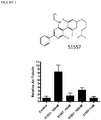
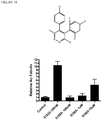
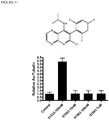
- MT-stabilizing properties of triazolopyrimidines was investigated in a cell-free MT-polymerization assay, as well in a cell-based assay (HEK/QBI 293 cells) that measures changes in acetyl-tubulin (AcTub), a biomarker of stable MTs.
- HEK/QBI 293 cells HEK/QBI 293 cells
- AcTub acetyl-tubulin
- MT structure in HEK/QBI293 cells as determined by AcTub immunofluo-rescence was examined after 4h of incubation with cevipabulin.
- Cells that were treated with 100 nM cevipabulin (8) revealed a large increase in highly organized, AcTub-positive MTs relative to control cells, with the intensity of staining exceeding that observed with 100 nM of the known MT-stabilizing agent, epothilone D (epoD).
- MT-stabilizing properties of additional triazolopyrimidines, phenylpyrimidines, and pyridazines was investigated in a cell-free MT-polymerization assay, as well in the aforementioned cell-based assay (HEK/QBI 293 cells) that measures changes in acetyl-tubulin (AcTub), a biomarker of stable MTs ( Laferriere, N.; MacRae, T.; Brown, D. Tubulin synthesis and assembly in differentiating neurons. Biochemistry and Cell Biology 1997, 75, 103-117 ; Black, M.; Baas, P.; Humphries, S. Dynamics of alpha-tubulin deacetylation in intact neurons.
- MT-stabilizing compounds For utility in neurodegenerative diseases, MT-stabilizing compounds must cross the blood-brain barrier (BBB) and enter the brain.
- BBB blood-brain barrier
- Table 7 a number of examples show concentrations in the brain that exceed 0.5 ⁇ M an hour after administration of a 5 mg/kg dose, with brain-to-plasma concentration ratios of ⁇ 0.3 or higher.
- the relative brain exposures predicted by the one hour analysis of brain and plasma compound levels were confirmed by more complete pharmacokinetic analyses, as exemplified by the profiles of CNDR-51549 and CNDR-51555 shown in Figure 13 .
- MT-stabilizing agents including cevepabulin, which do not cross the BBB
- multiple phenylpyrimidine and triazolopyrimidine examples were unexpectedly found to be brain-penetrant.
- CNDR-51549 was found to cause an increase of AcTub levels in the brains of wild-type mice 3 days after receiving a once-daily 1 mg/kg dose, as shown in Figure 14 . This is reminiscent of what has been demonstrated for other brain-penetrant MT-stabilizing agents (see Brunden KR, Yao Y, Potuzak JS, Ibarz FerrerN, Ballatore C, James MJ, HoganAL, Trojanowski JQ, Amos Smith AB, III and Lee VM-Y.
- the compounds of formula II for use as defined in the claims can be administered by a variety of methods known to one skilled in the art.
- Methods of administration include, but are not limited to, intradermal, intramuscular, intraperitoneal, intravenous, subcutaneous, intranasal, epidural, and oral routes.
- the compounds may be administered by any convenient route, for example by infusion or bolus injection, by absorption through epithelial or mucocutaneous linings (e.g., oral mucosa, rectal and intestinal mucosa, etc.) and may be administered together with other biologically active agents. Administration can be systemic or local.
- Preparative reverse phase HPLC purification was performed on a Gilson HPLC system equipped with Gilson 333 pumps, a 215 Liquid Handler, 845Z injection module, and UV detector, employing Waters SunFireTM prep C18 OBDTM columns (5 ⁇ m 19x50 or 19x100 mm). All samples were purified employing a linear gradient from 10% to 90% of acetonitrile in water over 15 minutes and flow rate of 20 mL/min. Unless otherwise stated, all final compounds were found to be >95% as determined by HPLC/MS and NMR.
- the reaction mixture containing the acid chloride in CH 2 Cl 2 (4 mL) was added dropwise to a solution containing methyl 3-aminopyrazine-2-carboxylate (0.3794 g, 2.48 mmol, 1.00 equiv), pyridine (0.372 g, 0.38 mL, 4.71 mmol, 1.90 equiv), and DMAP (catalytic quantities).
- the reaction mixture was stirred for 20 h and then diluted with CH 2 Cl 2 (100 mL) and washed with water, 1 N HCl, and brine.
- the organic layers was dried over Na 2 SO 4 , concentrated under reduced pressure, and purified via silica gel flash chromatography to deliver 0.2362 g (29%) of the title compound as an orange solid.
- the HEK293 cell subclone, QBI293, was maintained in DMEM supplemented with 10% fetal calf or bovine serum, 1% penicillin/streptomycin antibiotic solution and 1% glutamine at 37°C in 5% CO 2 .
- Cells were plated into 6-well plates at a density of 800,000 cells/ well. Each plate had a well that contained the known microtubule stabilizer, epothilone D or cevipabulin, as a positive control and the remaining wells were used for compound evaluation. Test compounds were added at multiple concentrations to the test wells and incubated for 4 h.
- ice-cold phosphate-buffered saline PBS
- 0.2 ml of ice-cold RIPA 0.5% sodium deoxycholate, 0.1% SDS, 1% NP-40, 5 mM EDTA, pH 8.0
- protease inhibitor mix (1 ⁇ g/ml each of pepstatin, leupeptin, TLCK, TPCK and trypsin inhibitor)
- 1 mM PMSF and 1 ⁇ M trichostatin A was added to the wells.
- the wells were then scraped using a cell scraper and pipetted into 1.5 ml microfuge tubes.
- the tubes were sonicated with a handheld sonicator at 20x on a power setting of 2, followed by centrifugation for 30 min at 15,000 rpm at 4°C. Supernatants were removed and quantified for protein concentration and the acetyl-tubulin levels were determined using an ELISA as described.
- 384-well plates were coated with 12G10 ⁇ -tubulin antibody (Developmental Studies Hybridoma Bank at the University of Iowa; 10 ⁇ g/ml) in 30 ⁇ l of cold 0.1 M bicarbonate buffer. After overnight incubation at 4°C, the plates were washed with cold PBS, followed by the addition of Block-Ace solution and overnight incubation at 4°C. The blocking solution was removed and 10 ⁇ l of EC buffer (0.02 M sodium phosphate, pH 7.0, 2 mM EDTA, 0.4 M NaCl, 0.2% bovine serum albumin, 0.05% CHAPS, 0.4% BlockAce and 0.05% NaN 3 ) was added to each well.
- 12G10 ⁇ -tubulin antibody Developmental Studies Hybridoma Bank at the University of Iowa
- Block-Ace solution overnight incubation at 4°C.
- the blocking solution was removed and 10 ⁇ l of EC buffer (0.02 M sodium phosphate, pH 7.0, 2 mM EDTA
- Cell culture supernatants were diluted in EC buffer to final protein concentrations of 9, 3, 1.5 and 0.5 ⁇ g/30 ⁇ l, and 30 ⁇ l of each were added to wells in duplicate and plates were subsequently sealed. After overnight incubation at 4°C, the plates were aspirated and washed with cold PBS containing 0.05% Tween-20 and 0.05% thimerisol (PBS-Tween buffer), followed by addition of 30 ⁇ l/well of HRP-conjugated acetyl-tubulin antibody (6-11B-1 antibody from Sigma-Aldrich) that was prepared with a Peroxidase Labeling Kit following the manufacturer's instructions that was subsequently diluted 1:1000 in C buffer (0.02 M sodium phosphate, pH 7.0, 2 mM EDTA, 0.4 M NaCl, 1% bovine serum albumin and 0.05% thimerisol).
- C buffer 0.02 M sodium phosphate, pH 7.0, 2 mM EDTA, 0.4 M NaCl
- the HEK293 cell subclone, QBI293, was plated onto poly-D-lysine-coated glass coverslips at 50,000 cells/ml in DMEM supplemented with 10% fetal calf or bovine serum, 1% penicillin/streptomycin antibiotic solution and 1 % glutamine and maintained overnight at 37°C in 5% CO 2 .
- DMEM fetal calf or bovine serum
- penicillin/streptomycin antibiotic solution 1 % glutamine
- cells were left untreated or were treated with 100 nM epothilone D, 100 nM CNDR-51533 or 1 ⁇ M colchicine. After an additional 4 h of incubation at 37°C in 5% CO 2 , cells were washed twice with PBS, and then fixed for 15 min in PBS containing 4% paraformaldehyde.
- the cells were again washed twice with PBS, and permeabilized with 0.1% Triton X-100 in PBS for 15 min. Following the Triton X-100 treatment, the cells were washed twice in PBS, and treated with PBS containing 3% bovine serum albumin for 1 h. Acetyl-tubulin antibody was subsequently added (1:1000 dilution) and incubated for 1 h. Cells were then washed cells 3 x 5 min with 0.1% Triton X-100 in PBS, and secondary antibody (goat-antimouse labeled with Alexa fluor 488 at 1:1000) was added and allowed to incubate for 1 h.
- secondary antibody goat-antimouse labeled with Alexa fluor 488 at 1:1000
- Mouse brains were homogenized in 10 mM ammonium acetate, pH 5.7 (1:2; w/v) using a handheld sonic homogenizer.
- Mouse plasma was obtained from blood that was collected into a 1.5 ml tube containing 0.5M EDTA solution and which was centrifuged for 10 minutes at 4500g at 4°C. Aliquots (50 ⁇ l) of brain homogenates (50% w/v in 100 mM NH 4 OAC pH 5.75) or plasma were mixed with 0.2 ml of acetonitrile, centrifuged at 15,000g, and the resulting supernatant was used for subsequent LC-MS/MS analysis.
- the LC-MS/MS system was comprised of an Aquity UPLC and a TQ MS that was controlled using MassLynx software (Waters Corporation, Milford, MA, USA). Compounds were detected using multiple reaction monitoring (MRM) of their specific collision-induced ion transitions. Samples were separated on an Aquity BEH C18 column (1.7 ⁇ m, 2.1 x 50 mm) at 35°C. Operation was in positive electrospray ionization mode, with mobile phase A of 0.1% (v/v) formic acid, and B of acetonitrile with 0.1% (v/v) formic acid.
- MRM multiple reaction monitoring
- Injections of 5 ⁇ l were separated at a flow rate of 0.6 mL/min using a gradient from 5% to 95% B over two minutes, followed by wash and reequilibration steps.
- the MS was operated with a desolvation temperature of 450°C and a source temperature of 150°C. Desolvation and source nitrogen gas flows were 900 L/hr and 50 L/hr, respectively.
- Source and MS/MS voltages were optimized for each compound using the MassLynx auto tune utility. To account for possible matrix effects on analytes, standard curves were generated for each compound from brain homogenate and plasma samples that had compound added at 24, 240, 2400 and 24000 nM.
- tissue-derived sample peak areas fell within the linear portion of standard curves that were prepared and analyzed concurrently with the samples.
- CD1 mice were administered vehicle (DMSO) or CNDR-51549 at multiple doses once per day for 3 days.
- Whole brain hemispheres were obtained from the mice, which were euthanized using protocols approved by the University of Pennsylvania Institutional Animal Care and Use Committee, and were homogenized and then briefly sonicated with a handheld sonicator in 1:5 (w/v) RIPA-INH buffer.
- the homogenates were centrifuged at 100,000 ⁇ g for 30 min at 4 °C, and the supernatants were collected.
- the supernatant samples were diluted before protein determination with a BCA assay. These supernatant samples were utilized in the Acetyl-Tubulin ELISA, as described above.
Landscapes
- Health & Medical Sciences (AREA)
- Chemical & Material Sciences (AREA)
- Medicinal Chemistry (AREA)
- Pharmacology & Pharmacy (AREA)
- Life Sciences & Earth Sciences (AREA)
- Animal Behavior & Ethology (AREA)
- General Health & Medical Sciences (AREA)
- Public Health (AREA)
- Veterinary Medicine (AREA)
- Epidemiology (AREA)
- Engineering & Computer Science (AREA)
- Bioinformatics & Cheminformatics (AREA)
- Biomedical Technology (AREA)
- Neurology (AREA)
- Neurosurgery (AREA)
- Chemical Kinetics & Catalysis (AREA)
- General Chemical & Material Sciences (AREA)
- Nuclear Medicine, Radiotherapy & Molecular Imaging (AREA)
- Organic Chemistry (AREA)
- Psychology (AREA)
- Pharmaceuticals Containing Other Organic And Inorganic Compounds (AREA)
- Nitrogen And Oxygen Or Sulfur-Condensed Heterocyclic Ring Systems (AREA)
Claims (12)
- Verbindung der Formel II zur Verwendung in einem Verfahren zur Behandlung einer neurodegenerativen Krankheit in einem Patienten, gekennzeichnet durch eine Tauopathie oder kompromittierte Mikrotubulusfunktion im Hirn des Patienten, umfassend die Verabreichung einer therapeutisch wirksamen Menge einer Verbindung der Formel II an den Patienten:
 R1 für H, Cl, F oder Br steht,R2 für C1-6-Alkyl oder substituiertes C1-6-Alkyl steht,R3 für H steht oder R2 und R3 zusammen mit dem N-Atom, an das sie gebunden sind, Heterocyclo-C3-6-alkyl bilden,R4 für H, Cl, F oder Br steht,R5 für H, Cl, F oder Br steht,R6 für F, Cl, Br, -O-C1-6-Alkyl, -O-C1-6-Alkylen-NR7R8 oder -O-C3-6-Cycloalkylen-NR7R8 steht, wobei R7 und R8 jeweils unabhängig voneinander für C1-6-Alkyl stehen,oder ein stereochemisches Isomer davon,oder ein pharmazeutisch unbedenkliches Salz davon.
 - Verbindung der Formel II zur Verwendung nach Anspruch 1, wobei R1 für Cl steht.
- Verbindung der Formel II zur Verwendung nach Anspruch 1 oder Anspruch 2, wobei R2 für C1-6-Alkyl steht, wobei R2 gegebenenfalls für Methyl, Ethyl, Propyl oder Isopropyl steht.
- Verbindung der Formel II zur Verwendung nach Anspruch 1 oder Anspruch 2, wobei R2 für substituiertes C1-6-Alkyl steht, wobei R2 gegebenenfalls für -CH(CH3)(CF3) oder -CH2(CF3) steht.
- Verbindung der Formel II zur Verwendung nach einem der Ansprüche 1-4, wobei R3 für H steht.
- Verbindung der Formel II zur Verwendung nach einem der Ansprüche 1-5, wobei R4 oder R5 für F steht.
- Verbindung der Formel II zur Verwendung nach einem der Ansprüche 1-6, wobei R3, R4 und R5 jeweils für F stehen.
- Verbindung der Formel II zur Verwendung nach einem der Ansprüche 1-7, wobei R6 für F, -O-C1-6-Alkylen-NR7R8, -O-CH2CH2CH2-N(CH3)2, O-C3-6-Cycloalkylen-NR7R8 oder -O-C1-6-Alkyl steht.
- Verbindung der Formel II zur Verwendung nach Anspruch 1, wobei es sich bei der Verbindung der Formel II um eine der folgenden handelt:

R1 R2 R3 R4 R5 R6 Cl H H F F F Cl -CH(CH3)CF3 (S) H F F F Cl -CH(CH3)CF3 (R) H F F F Cl -CH(CH3)CF3 (S,R) H F F F Cl -CH(CH3)CF3 (S) H F F -OCH2CH2CH2N(CH3)2 Cl -CH(CH3)CF3 (R) H F F -OCH2CH2CH2N(CH3)2 Cl -CH(CH3)CF3 (S,R) H F F -OCH2CH2CH2N(CH3)2 - Verbindung der Formel II zur Verwendung nach einem der vorhergehenden Ansprüche, wobei es sich bei der neurodegenerativen Krankheit um Alzheimer-Krankheit, Frontotemporallappen-Degeneration, Pick-Krankheit, progressive supranukleäre Blickparese (Progressive Supranuclear Palsy, PSP), kortikobasale Degeneration, Parkinson-Krankheit (Parkinson's Disease, PD), PD mit Demenz, Lewy-Körperchen-Krankheit mit Demenz oder amyotrophe Lateralsklerose handelt.
- Verbindung der Formel II zur Verwendung nach einem der vorhergehenden Ansprüche, wobei es sich bei der neurodegenerativen Krankheit um traumatische Hirnverletzung, insbesondere wiederholte traumatische Hirnverletzung und chronische traumatische Enzephalopathie, oder posttraumatische Belastungsstörung handelt.
- Verbindung der Formel II zur Verwendung nach einem der vorhergehenden Ansprüche, wobei es sich bei der neurodegenerativen Krankheit um Schizophrenie handelt.
Priority Applications (1)
| Application Number | Priority Date | Filing Date | Title |
|---|---|---|---|
| EP17170557.7A EP3219207A1 (de) | 2012-09-19 | 2013-09-19 | Heterocyclische verbindungen und deren verwendung zur behandlung neurodegenerativer tauopathien |
Applications Claiming Priority (2)
| Application Number | Priority Date | Filing Date | Title |
|---|---|---|---|
| US201261702800P | 2012-09-19 | 2012-09-19 | |
| PCT/US2013/060562 WO2014047257A2 (en) | 2012-09-19 | 2013-09-19 | Heterocyclic compounds and their use for the treatment of neurodegenerative tauopathies |
Related Child Applications (2)
| Application Number | Title | Priority Date | Filing Date |
|---|---|---|---|
| EP17170557.7A Division EP3219207A1 (de) | 2012-09-19 | 2013-09-19 | Heterocyclische verbindungen und deren verwendung zur behandlung neurodegenerativer tauopathien |
| EP17170557.7A Division-Into EP3219207A1 (de) | 2012-09-19 | 2013-09-19 | Heterocyclische verbindungen und deren verwendung zur behandlung neurodegenerativer tauopathien |
Publications (3)
| Publication Number | Publication Date |
|---|---|
| EP2903436A2 EP2903436A2 (de) | 2015-08-12 |
| EP2903436A4 EP2903436A4 (de) | 2016-10-12 |
| EP2903436B1 true EP2903436B1 (de) | 2019-07-17 |
Family
ID=50342068
Family Applications (2)
| Application Number | Title | Priority Date | Filing Date |
|---|---|---|---|
| EP17170557.7A Withdrawn EP3219207A1 (de) | 2012-09-19 | 2013-09-19 | Heterocyclische verbindungen und deren verwendung zur behandlung neurodegenerativer tauopathien |
| EP13839598.3A Active EP2903436B1 (de) | 2012-09-19 | 2013-09-19 | Heterocyclische verbindungen und deren verwendung zur behandlung neurodegenerativer tauopathien |
Family Applications Before (1)
| Application Number | Title | Priority Date | Filing Date |
|---|---|---|---|
| EP17170557.7A Withdrawn EP3219207A1 (de) | 2012-09-19 | 2013-09-19 | Heterocyclische verbindungen und deren verwendung zur behandlung neurodegenerativer tauopathien |
Country Status (3)
| Country | Link |
|---|---|
| US (2) | US9649317B2 (de) |
| EP (2) | EP3219207A1 (de) |
| WO (1) | WO2014047257A2 (de) |
Families Citing this family (6)
| Publication number | Priority date | Publication date | Assignee | Title |
|---|---|---|---|---|
| CA2976258C (en) | 2015-02-18 | 2024-02-20 | Buck Institute For Research On Aging | Triazolopyridines and triazolopyrimidines that lower stress-induced p-tau |
| EP3298017B1 (de) * | 2015-05-20 | 2019-08-14 | H. Hoffnabb-La Roche Ag | Verbindungen zur behandlung von spinaler muskelatrophie |
| US11623927B2 (en) | 2018-03-02 | 2023-04-11 | The Trustees Of The University Of Pennsylvania | Substituted [1,2,4]triazolo[1,5-a]pyrimidines for stabilizing microtubules |
| WO2020227491A1 (en) * | 2019-05-07 | 2020-11-12 | The Trustees Of The University Of Pennsylvania | Deuterated triazolopyrimidines |
| JP7646140B2 (ja) * | 2020-04-14 | 2025-03-17 | ザ トラスティーズ オブ ザ ユニバーシティ オブ ペンシルバニア | 置換された{1,2,4,}トリアゾロ{1,5-a}ピリミジン化合物および微小管の安定化におけるその使用 |
| CN118359616A (zh) * | 2023-01-19 | 2024-07-19 | 中国科学院上海有机化学研究所 | 一种作为治疗神经系统疾病和肿瘤的多环化合物 |
Family Cites Families (11)
| Publication number | Priority date | Publication date | Assignee | Title |
|---|---|---|---|---|
| US6117876A (en) | 1997-04-14 | 2000-09-12 | American Cyanamid Company | Fungicidal trifluorophenyl-triazolopyrimidines |
| US5986135A (en) | 1998-09-25 | 1999-11-16 | American Cyanamid Company | Fungicidal trifluoromethylalkylamino-triazolopyrimidines |
| MXPA03010909A (es) | 2001-06-01 | 2004-02-17 | Bristol Myers Squibb Co | Derivados de epotilona. |
| ES2279452T3 (es) | 2003-09-24 | 2007-08-16 | Wyeth Holdings Corporation | 6-((sustituido)fenil)triazolopirimidinas como agentes antineoplasicos. |
| RU2006107578A (ru) * | 2003-09-24 | 2007-10-27 | Вайет Холдингз Корпорейшн (Us) | 6-арилпиримидин, применяемый в качестве противоракового агента |
| MY179926A (en) | 2003-12-08 | 2020-11-19 | Wyeth Corp | Process for the preparation of tubulin inhibitors |
| DE102004025726B4 (de) | 2004-05-26 | 2006-07-06 | Roder, Hanno, Dr. | Verwendung eines spezifischen K252a-Derivats zur Verhinderung oder Behandlung der Alzheimerschen Krankheit |
| WO2006091728A2 (en) | 2005-02-24 | 2006-08-31 | The Trustees Of The University Of Pennsylvania | Microtubule stabilizing compounds and methods of their use |
| MX2007015718A (es) * | 2005-06-13 | 2008-02-21 | Wyeth Corp | Inhibidor de tubulina y proceso para su preparacion. |
| GB0805862D0 (en) * | 2008-04-01 | 2008-04-30 | Bioalvo Servi Os Investiga Oo | Method |
| US20130029983A1 (en) * | 2009-09-23 | 2013-01-31 | Carlo Ballatore | Aminothienopyridazine inhibitors of tau assembly |
-
2013
- 2013-09-19 US US14/429,101 patent/US9649317B2/en active Active
- 2013-09-19 EP EP17170557.7A patent/EP3219207A1/de not_active Withdrawn
- 2013-09-19 WO PCT/US2013/060562 patent/WO2014047257A2/en not_active Ceased
- 2013-09-19 EP EP13839598.3A patent/EP2903436B1/de active Active
-
2017
- 2017-03-07 US US15/451,475 patent/US20170173016A1/en not_active Abandoned
Non-Patent Citations (1)
| Title |
|---|
| None * |
Also Published As
| Publication number | Publication date |
|---|---|
| WO2014047257A2 (en) | 2014-03-27 |
| EP2903436A2 (de) | 2015-08-12 |
| US9649317B2 (en) | 2017-05-16 |
| EP3219207A1 (de) | 2017-09-20 |
| WO2014047257A3 (en) | 2014-06-26 |
| US20150224105A1 (en) | 2015-08-13 |
| EP2903436A4 (de) | 2016-10-12 |
| US20170173016A1 (en) | 2017-06-22 |
Similar Documents
| Publication | Publication Date | Title |
|---|---|---|
| EP2604610B1 (de) | Phthalazinon-ketonderivat, herstellungsverfahren dafür und pharmazeutische verwendung davon | |
| EP2168966B1 (de) | Bicycloanilinderivat | |
| EP2903436B1 (de) | Heterocyclische verbindungen und deren verwendung zur behandlung neurodegenerativer tauopathien | |
| EP3166608B1 (de) | Aminopyridazinonverbindungen als proteinkinasehemmer | |
| CN111315747B (zh) | 二氢吡唑酮并嘧啶类化合物及其制备方法和用途 | |
| EP2773623B1 (de) | 1- (arylmethyl) -5,6,7,8-tetrahydrochinazolin-2,4-dione sowie analoga und ihre verwendung | |
| EP2321315B1 (de) | Substituierte alkylpyrimidin-4-one-derivate | |
| EP2966079B1 (de) | Pyridopyrimidin- oder pyrimidopyrimidinverbindung, herstellungsverfahren, pharmazeutische zusammensetzung und verwendung davon | |
| WO2018133795A1 (zh) | 一种ezh2抑制剂及其用途 | |
| JP6599979B2 (ja) | Betタンパク質阻害剤として用いるための三環式複素環化合物 | |
| EP3849984B1 (de) | 1-isopropyl-3-methyl-8-(pyridin-3-yl)-1,3-dihydro-2h-imidazo[4,5-c]cinnolin-2-on als selektive modulatoren der ataxia-telangiectasia-mutierten (atm) kinase und verwendungen davon | |
| IL186270A (en) | Compositions comprising alkynyl pyrrolopyrimidines and uses thereof for preparing medicaments | |
| EP3129378B1 (de) | Bromodomainhemmende verbindungen und pharmazeutische zusammensetzung damit zur prävention oder behandlung von krebs | |
| CN115448921B (zh) | 一类咪唑烷并嘧啶酮化合物及在治疗HsClpP介导的疾病中的用途 | |
| BRPI0618752A2 (pt) | derivados de pirimidona bicìclica substituìda | |
| EP1340759A1 (de) | 1-Alkyl, 1-(Heteroaryl)alkyl und 1-(Aryl)alkyl-7-pyrimidin-4-ylimidazo[1,2-a]pyrimidin-5(1H)-on Derivate | |
| EP3854401A1 (de) | Cdc7-hemmende purinderivate und deren verwendung zur behandlung von neurologischen zuständen | |
| CA3133131A1 (en) | Pyrrole amidopyridone compound, preparation method therefor and use thereof | |
| US10550125B2 (en) | Prodrugs of imidazotriazine compounds as CK2 inhibitors | |
| TWI548637B (zh) | 酞嗪酮類衍生物、其製備方法及其在醫藥上的應用 | |
| US20250092052A1 (en) | Heteroaryl derivative compounds, and uses thereof | |
| KR20260062876A (ko) | 헤테로아릴 유도체 화합물 및 이의 용도 | |
| WO2014193696A2 (en) | Benzimidazole carboxylic acid derivatives, compositions, and methods of use as aurora kinase inhibitors | |
| EP4671245A1 (de) | Heteroaromatische ringverbindung als cdk7-kinasehemmer, herstellung davon und verwendung davon | |
| HK1215245B (en) | Macrocyclic compounds as trk kinase inhibitors |
Legal Events
| Date | Code | Title | Description |
|---|---|---|---|
| PUAI | Public reference made under article 153(3) epc to a published international application that has entered the european phase |
Free format text: ORIGINAL CODE: 0009012 |
|
| 17P | Request for examination filed |
Effective date: 20150417 |
|
| AK | Designated contracting states |
Kind code of ref document: A2 Designated state(s): AL AT BE BG CH CY CZ DE DK EE ES FI FR GB GR HR HU IE IS IT LI LT LU LV MC MK MT NL NO PL PT RO RS SE SI SK SM TR |
|
| AX | Request for extension of the european patent |
Extension state: BA ME |
|
| DAX | Request for extension of the european patent (deleted) | ||
| RIC1 | Information provided on ipc code assigned before grant |
Ipc: A01N 43/54 20060101AFI20160503BHEP Ipc: A61P 25/00 20060101ALI20160503BHEP Ipc: A61P 25/16 20060101ALI20160503BHEP Ipc: C07D 239/02 20060101ALI20160503BHEP |
|
| A4 | Supplementary search report drawn up and despatched |
Effective date: 20160909 |
|
| RIC1 | Information provided on ipc code assigned before grant |
Ipc: A61P 25/00 20060101ALI20160905BHEP Ipc: A01N 43/54 20060101AFI20160905BHEP Ipc: A61P 25/16 20060101ALI20160905BHEP Ipc: C07D 239/02 20060101ALI20160905BHEP |
|
| STAA | Information on the status of an ep patent application or granted ep patent |
Free format text: STATUS: EXAMINATION IS IN PROGRESS |
|
| 17Q | First examination report despatched |
Effective date: 20170703 |
|
| REG | Reference to a national code |
Ref country code: DE Ref legal event code: R079 Ref document number: 602013058002 Country of ref document: DE Free format text: PREVIOUS MAIN CLASS: A01N0043540000 Ipc: A61K0031519000 |
|
| GRAP | Despatch of communication of intention to grant a patent |
Free format text: ORIGINAL CODE: EPIDOSNIGR1 |
|
| STAA | Information on the status of an ep patent application or granted ep patent |
Free format text: STATUS: GRANT OF PATENT IS INTENDED |
|
| RIC1 | Information provided on ipc code assigned before grant |
Ipc: A61P 25/16 20060101ALI20181218BHEP Ipc: A61K 31/4196 20060101ALI20181218BHEP Ipc: A61P 25/00 20060101ALI20181218BHEP Ipc: A61K 31/519 20060101AFI20181218BHEP |
|
| INTG | Intention to grant announced |
Effective date: 20190118 |
|
| GRAS | Grant fee paid |
Free format text: ORIGINAL CODE: EPIDOSNIGR3 |
|
| GRAA | (expected) grant |
Free format text: ORIGINAL CODE: 0009210 |
|
| STAA | Information on the status of an ep patent application or granted ep patent |
Free format text: STATUS: THE PATENT HAS BEEN GRANTED |
|
| AK | Designated contracting states |
Kind code of ref document: B1 Designated state(s): AL AT BE BG CH CY CZ DE DK EE ES FI FR GB GR HR HU IE IS IT LI LT LU LV MC MK MT NL NO PL PT RO RS SE SI SK SM TR |
|
| REG | Reference to a national code |
Ref country code: GB Ref legal event code: FG4D |
|
| REG | Reference to a national code |
Ref country code: CH Ref legal event code: EP |
|
| REG | Reference to a national code |
Ref country code: DE Ref legal event code: R096 Ref document number: 602013058002 Country of ref document: DE |
|
| REG | Reference to a national code |
Ref country code: IE Ref legal event code: FG4D |
|
| REG | Reference to a national code |
Ref country code: AT Ref legal event code: REF Ref document number: 1155198 Country of ref document: AT Kind code of ref document: T Effective date: 20190815 |
|
| REG | Reference to a national code |
Ref country code: NL Ref legal event code: MP Effective date: 20190717 |
|
| REG | Reference to a national code |
Ref country code: LT Ref legal event code: MG4D |
|
| REG | Reference to a national code |
Ref country code: AT Ref legal event code: MK05 Ref document number: 1155198 Country of ref document: AT Kind code of ref document: T Effective date: 20190717 |
|
| PG25 | Lapsed in a contracting state [announced via postgrant information from national office to epo] |
Ref country code: FI Free format text: LAPSE BECAUSE OF FAILURE TO SUBMIT A TRANSLATION OF THE DESCRIPTION OR TO PAY THE FEE WITHIN THE PRESCRIBED TIME-LIMIT Effective date: 20190717 Ref country code: LT Free format text: LAPSE BECAUSE OF FAILURE TO SUBMIT A TRANSLATION OF THE DESCRIPTION OR TO PAY THE FEE WITHIN THE PRESCRIBED TIME-LIMIT Effective date: 20190717 Ref country code: HR Free format text: LAPSE BECAUSE OF FAILURE TO SUBMIT A TRANSLATION OF THE DESCRIPTION OR TO PAY THE FEE WITHIN THE PRESCRIBED TIME-LIMIT Effective date: 20190717 Ref country code: SE Free format text: LAPSE BECAUSE OF FAILURE TO SUBMIT A TRANSLATION OF THE DESCRIPTION OR TO PAY THE FEE WITHIN THE PRESCRIBED TIME-LIMIT Effective date: 20190717 Ref country code: NO Free format text: LAPSE BECAUSE OF FAILURE TO SUBMIT A TRANSLATION OF THE DESCRIPTION OR TO PAY THE FEE WITHIN THE PRESCRIBED TIME-LIMIT Effective date: 20191017 Ref country code: PT Free format text: LAPSE BECAUSE OF FAILURE TO SUBMIT A TRANSLATION OF THE DESCRIPTION OR TO PAY THE FEE WITHIN THE PRESCRIBED TIME-LIMIT Effective date: 20191118 Ref country code: NL Free format text: LAPSE BECAUSE OF FAILURE TO SUBMIT A TRANSLATION OF THE DESCRIPTION OR TO PAY THE FEE WITHIN THE PRESCRIBED TIME-LIMIT Effective date: 20190717 Ref country code: BG Free format text: LAPSE BECAUSE OF FAILURE TO SUBMIT A TRANSLATION OF THE DESCRIPTION OR TO PAY THE FEE WITHIN THE PRESCRIBED TIME-LIMIT Effective date: 20191017 Ref country code: AT Free format text: LAPSE BECAUSE OF FAILURE TO SUBMIT A TRANSLATION OF THE DESCRIPTION OR TO PAY THE FEE WITHIN THE PRESCRIBED TIME-LIMIT Effective date: 20190717 |
|
| PG25 | Lapsed in a contracting state [announced via postgrant information from national office to epo] |
Ref country code: AL Free format text: LAPSE BECAUSE OF FAILURE TO SUBMIT A TRANSLATION OF THE DESCRIPTION OR TO PAY THE FEE WITHIN THE PRESCRIBED TIME-LIMIT Effective date: 20190717 Ref country code: ES Free format text: LAPSE BECAUSE OF FAILURE TO SUBMIT A TRANSLATION OF THE DESCRIPTION OR TO PAY THE FEE WITHIN THE PRESCRIBED TIME-LIMIT Effective date: 20190717 Ref country code: LV Free format text: LAPSE BECAUSE OF FAILURE TO SUBMIT A TRANSLATION OF THE DESCRIPTION OR TO PAY THE FEE WITHIN THE PRESCRIBED TIME-LIMIT Effective date: 20190717 Ref country code: IS Free format text: LAPSE BECAUSE OF FAILURE TO SUBMIT A TRANSLATION OF THE DESCRIPTION OR TO PAY THE FEE WITHIN THE PRESCRIBED TIME-LIMIT Effective date: 20191117 Ref country code: RS Free format text: LAPSE BECAUSE OF FAILURE TO SUBMIT A TRANSLATION OF THE DESCRIPTION OR TO PAY THE FEE WITHIN THE PRESCRIBED TIME-LIMIT Effective date: 20190717 Ref country code: GR Free format text: LAPSE BECAUSE OF FAILURE TO SUBMIT A TRANSLATION OF THE DESCRIPTION OR TO PAY THE FEE WITHIN THE PRESCRIBED TIME-LIMIT Effective date: 20191018 |
|
| PG25 | Lapsed in a contracting state [announced via postgrant information from national office to epo] |
Ref country code: TR Free format text: LAPSE BECAUSE OF FAILURE TO SUBMIT A TRANSLATION OF THE DESCRIPTION OR TO PAY THE FEE WITHIN THE PRESCRIBED TIME-LIMIT Effective date: 20190717 |
|
| PG25 | Lapsed in a contracting state [announced via postgrant information from national office to epo] |
Ref country code: PL Free format text: LAPSE BECAUSE OF FAILURE TO SUBMIT A TRANSLATION OF THE DESCRIPTION OR TO PAY THE FEE WITHIN THE PRESCRIBED TIME-LIMIT Effective date: 20190717 Ref country code: EE Free format text: LAPSE BECAUSE OF FAILURE TO SUBMIT A TRANSLATION OF THE DESCRIPTION OR TO PAY THE FEE WITHIN THE PRESCRIBED TIME-LIMIT Effective date: 20190717 Ref country code: RO Free format text: LAPSE BECAUSE OF FAILURE TO SUBMIT A TRANSLATION OF THE DESCRIPTION OR TO PAY THE FEE WITHIN THE PRESCRIBED TIME-LIMIT Effective date: 20190717 Ref country code: IT Free format text: LAPSE BECAUSE OF FAILURE TO SUBMIT A TRANSLATION OF THE DESCRIPTION OR TO PAY THE FEE WITHIN THE PRESCRIBED TIME-LIMIT Effective date: 20190717 Ref country code: DK Free format text: LAPSE BECAUSE OF FAILURE TO SUBMIT A TRANSLATION OF THE DESCRIPTION OR TO PAY THE FEE WITHIN THE PRESCRIBED TIME-LIMIT Effective date: 20190717 |
|
| PG25 | Lapsed in a contracting state [announced via postgrant information from national office to epo] |
Ref country code: IS Free format text: LAPSE BECAUSE OF FAILURE TO SUBMIT A TRANSLATION OF THE DESCRIPTION OR TO PAY THE FEE WITHIN THE PRESCRIBED TIME-LIMIT Effective date: 20200224 Ref country code: SK Free format text: LAPSE BECAUSE OF FAILURE TO SUBMIT A TRANSLATION OF THE DESCRIPTION OR TO PAY THE FEE WITHIN THE PRESCRIBED TIME-LIMIT Effective date: 20190717 Ref country code: SM Free format text: LAPSE BECAUSE OF FAILURE TO SUBMIT A TRANSLATION OF THE DESCRIPTION OR TO PAY THE FEE WITHIN THE PRESCRIBED TIME-LIMIT Effective date: 20190717 Ref country code: MC Free format text: LAPSE BECAUSE OF FAILURE TO SUBMIT A TRANSLATION OF THE DESCRIPTION OR TO PAY THE FEE WITHIN THE PRESCRIBED TIME-LIMIT Effective date: 20190717 Ref country code: CZ Free format text: LAPSE BECAUSE OF FAILURE TO SUBMIT A TRANSLATION OF THE DESCRIPTION OR TO PAY THE FEE WITHIN THE PRESCRIBED TIME-LIMIT Effective date: 20190717 |
|
| REG | Reference to a national code |
Ref country code: CH Ref legal event code: PL |
|
| REG | Reference to a national code |
Ref country code: DE Ref legal event code: R097 Ref document number: 602013058002 Country of ref document: DE |
|
| PLBE | No opposition filed within time limit |
Free format text: ORIGINAL CODE: 0009261 |
|
| STAA | Information on the status of an ep patent application or granted ep patent |
Free format text: STATUS: NO OPPOSITION FILED WITHIN TIME LIMIT |
|
| PG2D | Information on lapse in contracting state deleted |
Ref country code: IS |
|
| PG25 | Lapsed in a contracting state [announced via postgrant information from national office to epo] |
Ref country code: IE Free format text: LAPSE BECAUSE OF NON-PAYMENT OF DUE FEES Effective date: 20190919 Ref country code: LU Free format text: LAPSE BECAUSE OF NON-PAYMENT OF DUE FEES Effective date: 20190919 Ref country code: LI Free format text: LAPSE BECAUSE OF NON-PAYMENT OF DUE FEES Effective date: 20190930 Ref country code: CH Free format text: LAPSE BECAUSE OF NON-PAYMENT OF DUE FEES Effective date: 20190930 |
|
| REG | Reference to a national code |
Ref country code: BE Ref legal event code: MM Effective date: 20190930 |
|
| 26N | No opposition filed |
Effective date: 20200603 |
|
| PG25 | Lapsed in a contracting state [announced via postgrant information from national office to epo] |
Ref country code: SI Free format text: LAPSE BECAUSE OF FAILURE TO SUBMIT A TRANSLATION OF THE DESCRIPTION OR TO PAY THE FEE WITHIN THE PRESCRIBED TIME-LIMIT Effective date: 20190717 Ref country code: BE Free format text: LAPSE BECAUSE OF NON-PAYMENT OF DUE FEES Effective date: 20190930 |
|
| PG25 | Lapsed in a contracting state [announced via postgrant information from national office to epo] |
Ref country code: CY Free format text: LAPSE BECAUSE OF FAILURE TO SUBMIT A TRANSLATION OF THE DESCRIPTION OR TO PAY THE FEE WITHIN THE PRESCRIBED TIME-LIMIT Effective date: 20190717 |
|
| PG25 | Lapsed in a contracting state [announced via postgrant information from national office to epo] |
Ref country code: MT Free format text: LAPSE BECAUSE OF FAILURE TO SUBMIT A TRANSLATION OF THE DESCRIPTION OR TO PAY THE FEE WITHIN THE PRESCRIBED TIME-LIMIT Effective date: 20190717 Ref country code: HU Free format text: LAPSE BECAUSE OF FAILURE TO SUBMIT A TRANSLATION OF THE DESCRIPTION OR TO PAY THE FEE WITHIN THE PRESCRIBED TIME-LIMIT; INVALID AB INITIO Effective date: 20130919 |
|
| PG25 | Lapsed in a contracting state [announced via postgrant information from national office to epo] |
Ref country code: MK Free format text: LAPSE BECAUSE OF FAILURE TO SUBMIT A TRANSLATION OF THE DESCRIPTION OR TO PAY THE FEE WITHIN THE PRESCRIBED TIME-LIMIT Effective date: 20190717 |
|
| P01 | Opt-out of the competence of the unified patent court (upc) registered |
Effective date: 20230519 |
|
| P02 | Opt-out of the competence of the unified patent court (upc) changed |
Effective date: 20230522 |
|
| PGFP | Annual fee paid to national office [announced via postgrant information from national office to epo] |
Ref country code: DE Payment date: 20250929 Year of fee payment: 13 |
|
| PGFP | Annual fee paid to national office [announced via postgrant information from national office to epo] |
Ref country code: GB Payment date: 20250929 Year of fee payment: 13 |
|
| PGFP | Annual fee paid to national office [announced via postgrant information from national office to epo] |
Ref country code: FR Payment date: 20250925 Year of fee payment: 13 |