EP2922560B1 - Polypeptide antagonists of human il-23 receptor for treatment of autoimmune diseases - Google Patents
Polypeptide antagonists of human il-23 receptor for treatment of autoimmune diseases Download PDFInfo
- Publication number
- EP2922560B1 EP2922560B1 EP13792577.2A EP13792577A EP2922560B1 EP 2922560 B1 EP2922560 B1 EP 2922560B1 EP 13792577 A EP13792577 A EP 13792577A EP 2922560 B1 EP2922560 B1 EP 2922560B1
- Authority
- EP
- European Patent Office
- Prior art keywords
- seq
- sequence
- rex
- binding
- receptor
- Prior art date
- Legal status (The legal status is an assumption and is not a legal conclusion. Google has not performed a legal analysis and makes no representation as to the accuracy of the status listed.)
- Not-in-force
Links
Images





Classifications
-
- C—CHEMISTRY; METALLURGY
- C07—ORGANIC CHEMISTRY
- C07K—PEPTIDES
- C07K14/00—Peptides having more than 20 amino acids; Gastrins; Somatostatins; Melanotropins; Derivatives thereof
- C07K14/435—Peptides having more than 20 amino acids; Gastrins; Somatostatins; Melanotropins; Derivatives thereof from animals; from humans
- C07K14/705—Receptors; Cell surface antigens; Cell surface determinants
- C07K14/715—Receptors; Cell surface antigens; Cell surface determinants for cytokines; for lymphokines; for interferons
- C07K14/7155—Receptors; Cell surface antigens; Cell surface determinants for cytokines; for lymphokines; for interferons for interleukins [IL]
-
- A—HUMAN NECESSITIES
- A61—MEDICAL OR VETERINARY SCIENCE; HYGIENE
- A61P—SPECIFIC THERAPEUTIC ACTIVITY OF CHEMICAL COMPOUNDS OR MEDICINAL PREPARATIONS
- A61P1/00—Drugs for disorders of the alimentary tract or the digestive system
-
- A—HUMAN NECESSITIES
- A61—MEDICAL OR VETERINARY SCIENCE; HYGIENE
- A61P—SPECIFIC THERAPEUTIC ACTIVITY OF CHEMICAL COMPOUNDS OR MEDICINAL PREPARATIONS
- A61P17/00—Drugs for dermatological disorders
- A61P17/06—Antipsoriatics
-
- A—HUMAN NECESSITIES
- A61—MEDICAL OR VETERINARY SCIENCE; HYGIENE
- A61P—SPECIFIC THERAPEUTIC ACTIVITY OF CHEMICAL COMPOUNDS OR MEDICINAL PREPARATIONS
- A61P19/00—Drugs for skeletal disorders
- A61P19/02—Drugs for skeletal disorders for joint disorders, e.g. arthritis, arthrosis
-
- A—HUMAN NECESSITIES
- A61—MEDICAL OR VETERINARY SCIENCE; HYGIENE
- A61P—SPECIFIC THERAPEUTIC ACTIVITY OF CHEMICAL COMPOUNDS OR MEDICINAL PREPARATIONS
- A61P37/00—Drugs for immunological or allergic disorders
-
- C—CHEMISTRY; METALLURGY
- C07—ORGANIC CHEMISTRY
- C07K—PEPTIDES
- C07K16/00—Immunoglobulins [IG], e.g. monoclonal or polyclonal antibodies
- C07K16/18—Immunoglobulins [IG], e.g. monoclonal or polyclonal antibodies against material from animals or humans
- C07K16/28—Immunoglobulins [IG], e.g. monoclonal or polyclonal antibodies against material from animals or humans against receptors, cell surface antigens or cell surface determinants
- C07K16/2866—Immunoglobulins [IG], e.g. monoclonal or polyclonal antibodies against material from animals or humans against receptors, cell surface antigens or cell surface determinants against receptors for cytokines, lymphokines, interferons
-
- A—HUMAN NECESSITIES
- A61—MEDICAL OR VETERINARY SCIENCE; HYGIENE
- A61K—PREPARATIONS FOR MEDICAL, DENTAL OR TOILETRY PURPOSES
- A61K38/00—Medicinal preparations containing peptides
- A61K38/16—Peptides having more than 20 amino acids; Gastrins; Somatostatins; Melanotropins; Derivatives thereof
- A61K38/17—Peptides having more than 20 amino acids; Gastrins; Somatostatins; Melanotropins; Derivatives thereof from animals; from humans
- A61K38/177—Receptors; Cell surface antigens; Cell surface determinants
- A61K38/1793—Receptors; Cell surface antigens; Cell surface determinants for cytokines; for lymphokines; for interferons
-
- C—CHEMISTRY; METALLURGY
- C07—ORGANIC CHEMISTRY
- C07K—PEPTIDES
- C07K2317/00—Immunoglobulins specific features
- C07K2317/70—Immunoglobulins specific features characterized by effect upon binding to a cell or to an antigen
- C07K2317/76—Antagonist effect on antigen, e.g. neutralization or inhibition of binding
-
- C—CHEMISTRY; METALLURGY
- C07—ORGANIC CHEMISTRY
- C07K—PEPTIDES
- C07K2318/00—Antibody mimetics or scaffolds
- C07K2318/20—Antigen-binding scaffold molecules wherein the scaffold is not an immunoglobulin variable region or antibody mimetics
Definitions
- the present invention relates to a novel class of polypeptides, derived from an albumin-binding domain of the streptococcal protein G, that inhibit binding of human IL-23 cytokine to its cognate IL-23 receptor (IL-23R). They are useful as therapeutic or diagnostic agents.
- the dendritic cell-released IL-23 cytokine composed of a unique p19 subunit and a common p40 subunit ( Beyer BM et al.: J Mol Biol 2008;382(4):942-955 ; Lupardus PJ et al.: J Mol Biol 2008;382(4):931-941 ), activates the signaling pathway through an interaction of the p19 subunit with its cognate cell membrane receptor IL-23R and a simultaneous interaction of the p40 subunit with the surface receptor ⁇ 1 of the cytokine IL-12 ( Parham C et al.: J Immunol 2002;168(11):5699-5708 ; Kastelein RA et al.: Annu Rev Immunol 2007;25:221-242 ).
- Synergistic tethering of the IL-23 heterodimer to both receptor units leads to receptor heterodimerization followed by formation of a quarternary complex triggering the signaling cascade of the Jak/Stat pathway, involving the molecules Jak2, Tyk2, Stat1, Stat3, Stat4 and Stat5.
- Transduction of the signal activates the transcription machinery inducing the secretion of a cocktail of inflammatory modulators such as IL-17A, IL-17F, IL-22 and several chemokines that stimulate keratinocytes and other cell types, thereby playing a pivotal role in the pro-inflammatory process (review Boniface K et al.: Immunol Rev 2008;226:132-146 ).
- Novel therapeutic strategies require development of novel IL-23R antagonists that will separate IL-23-mediated signaling from the IL-12 cascade, thus preserving T H -1 cell differentiation and immunity.
- Attention is at present focused on the development of new drugs targeted solely to the IL-23-mediated signaling pathway, such as specific anti-p19 antibodies MK-3222 (Merck), CNTO 1959 (Janssen Biotech) and AMG 139 (Amgen/MedImmune) ( Garber K: Nat Biotechnol 2012;30(6):475-477 ), or targeted antibodies described in the patent applications WO 2008/103432 , WO 2010/027766 a WO 2012/093127 .
- the antibodies are large molecules, requiring elaborate preparation and showing a time-limited mobility within the organism, in particular with regard to skin and tissue penetrability.
- IL-23 receptor belongs to the class-I cytokine receptor family and shares typical features with tandem fibronectin-type III (FnIII) domains containing a hallmark pattern of disulfide bonds and WQPWS sequence tag similar to a conserved WSXWS cytokine receptor consensus located in the transmembrane-proximal FnIII domain ( Parham C et al.: J Immunol 2002;168(11):5699-5708 ). Both domains form a cytokine-binding homology region (CHR) which, in concert with a terminal Ig-like domain, is believed to play a substantial role in IL-23 binding.
- CHR cytokine-binding homology region
- the molecular structure of the IL-23/IL-23R complex is not available and, thus, the precise structural mode-of-function of the IL-23/IL-23R complex is unknown. Therefore, designing efficient inhibitors of IL-23 function with a promising therapeutic potential remains cumbersome.
- the present invention provides polypeptides containing a sequence with at least 80% identity with at least one sequence selected from the group comprising:
- Said polypeptides are derived from wild-type albumin-binding domain of Streptococcal protein G (LAEAKVLANRELDKYGVSDYYKNLINNAKTVEGVKALIDEILAALP; ABD wt; SEQ. ID NO. 16).
- ABDwt-derived polypeptides are suitable candidates for compounds binding the human cytokine IL-23 receptor and thereby specifically blocking its binding to the IL-23 p19 subunit.
- ABDwt has a trihelical structure and it was found that in particular sequences derived from helixes 2 and 3 (SEQ ID NO. 1-15) are important for binding to the IL-23 receptor. They should preferably contain at least 20 amino acid residues.
- the sequence derived from helix 1 (SEQ ID NO. 17-19) or its part can be attached to the N-terminus or C-terminus of the sequence derived from the helices 2 and 3.
- sequences having at least 80% identity to the sequences SEQ ID NO. 1-15, 17-19 can arise from shortening or extending the sequence, and from point mutations of the amino acid residues.
- This affinity binding constant can be determined by known methods which yield equivalent results.
- a suitable method can be, e.g., surface plasmon resonance (SPR).
- the polypeptide is selected from the group comprising sequences SEQ ID NO. 1 to SEQ ID NO. 15, having a sequence selected from the group comprising SEQ ID NO. 17 to SEQ ID NO. 19 attached onto the C-terminus or onto the N-terminus.
- the present invention further provides a DNA sequence selected from the group comprising complementary DNA coding for the amino acid sequence of the polypeptides of the present invention, and DNA hybridizing with said complementary DNA under conditions of high stringency.
- Conditions of high stringency refer to the following conditions for washing-off a labelled probe: washing solution containing 0.5 x SSC + 0.1% SDS at the temperature of 60 °C.
- the present invention further includes the use of said DNA sequence for the preparation of polypeptides or recombinant proteins produced in bacterial, yeast, insect, mammal or human host cells, and also these host cells, containing at least one DNA sequence of the present invention.
- polypeptides of the present invention are suitable for use in medicine, namely in the treatment of autoimmune diseases. Particularly therapeutically suitable are the polypeptides containing at least one of the sequences SEQ ID NO. 1 to 7, most preferred are the polypeptides containing at least one of the sequences SEQ ID NO. 3, 4 and 6.
- polypeptides of the present invention are suitable for use as diagnostic agents, in particular for autoimmune diseases.
- it is useful to attach a chromofor or a fluorofor to the polypeptides of the present invention.
- Autoimmune diseases are diseases including pro-inflammatory processes promoted by IL-23, and include in particular psoriasis, Crohn disease, rheumatoid arthritis and multiple sclerosis.
- polypeptides of the invention inhibit the binding of the p19 subunit to the IL-23 receptor by interacting with the receptor, thereby specifically blocking the pro-inflammatory signaling pathway.
- they can be used as next-generation drugs for the treatment of autoimmune diseases.
- This inhibitory ability was show in in vitro binding assays, competition experiments and in ex vivo functional assay.
- sequences of the present invention show a decreased affinity towards serum albumins.
- Novel ABD-derived binders, called REX ligands are capable of blocking the human cytokine IL-23 receptor function.
- polypeptides exhibit a significant inhibitory effect on IL-23-driven ex vivo expansion of primary human Th-17 + cells, they represent unique IL-23R antagonists that can be used for development of innovative therapeutics important for the treatment of autoimmune diseases and also function as improved diagnostic agents.
- the invention further provides a DNA sequence encoding for such polypeptides and host cells containing such sequence.
- Monoclonal antibodies (mAbs) anti-human IL-23R-allophycocyanin (APC) (mouse IgG2B) specific for the human IL-23 receptor and IgG2B isotype control-APC (mouse IgG2b) were obtained from R&D Systems, Minneapolis, MN.
- Mouse anti-p19 mAb was purchased from Biolegend, San Diego, CA.
- Cy5-conjugated goat anti-mouse IgG (F(ab) 2 fragment) was obtained from Jackson ImmunoResearch Laboratories, West Grove, PA.
- Streptavidin-phycoerythrin was purchased from eBioscience, San Diego, CA.
- the cell lines used in the experiments were a human acute monocytic leukemia cell line, THP-1 (ATCC number: TIB-202), a human leukemic cell line, K-562 (ATCC number: CCL-243) and a human T-cell lymphoma cell line, Jurkat (ATCC number: TIB-152).
- the cells were grown in RPMI-1640 medium (Sigma-Aldrich, St. Louis, MO) supplemented with 10% fetal calf serum (FCS) (GIBCO, Grand Island, N.Y.) and antibiotic antimycotic solution (ATB) (Sigma-Aldrich, St. Louis, MO).
- the human IL-23 receptor gene consists of 10 exons that code for a 629 amino acid-long transmembrane receptor molecule.
- exIL-23R extracellular domain of IL-23R
- This part of IL-23R contains five cysteine pairs encoded within sequences forming both fibronectin type III and terminal Ig-like domains. Therefore, the E. coli SHuffle strain supporting formation of disulphide bridges in bacterial cytoplasm was used to express the N-terminally His 6 -tagged IL-23R (H-exIL-23R).
- cDNA coding for the extracellular part (fragment Gly24-Asn350) of the human IL-23 receptor (IL-23R, GenBank: AF461422.1) was amplified by PCR using forward primer IL23Rex-F-Nco-his (ATTACCATGGGCAGCAGCCACCATCATCATCATCACAGCAGCGGAATTACA AATATAAACTGCTCTGG), containing the start codon and the His 6 -tag sequence, and a reverse primer IL23Rex-R-Xho(GGGCACCTTACTTCTGACAACTGAC TCGAGATAT) bearing the TGA stop codon.
- the resulting PCR product was inserted into the pET-28b vector (Novagen, Germany) using Nco I and Xho I cloning sites and introduced in E. coli TOP10 cells.
- the obtained plasmid was used for exIL-23R protein production in E. coli SHuffle strain (SHuffle ® T7 Express Competent E. coli, New England Biolabs, Ipswich, MA). Bacteria were grown in liquid LB media with kanamycin (60 ⁇ g/l) at 30°C, induced with 1 mM isopropyl- ⁇ -D-thiogalactopyranoside (IPTG).
- Both proteins were affinity-purified by Ni-NTA chromatography and refolded by dilution from urea-solutions prior to use in ELISA binding assays and ribosome display selection. The identity of the proteins was confirmed by Western blots using anti-His and anti-IL-23R antibodies.
- a 23 kDa fusion p19 protein consisting of a mature portion of p19 with an N-terminal double-polyhistidinyl tag (DH-p19), was produced in fusion to an N-terminal double-His 6 -TEV purification tag containing the TEV protease consensus cleavage site.
- the lysates were centrifuged at 40,000xg for 20 min and the insoluble DH-p19 was extracted from inclusion bodies with 2 ml of 8M Urea in TN buffer.
- the urea extract was left shaking for 1 h at room temperature and centrifuged at 40,000xg for 20 min.
- the supernatant was applied on 1 ml Ni-NTA agarose column equilibrated with 5 ml of TN buffer.
- the washing was performed with 10 ml of TN buffer with 8M urea and, subsequently, with TN buffer containing 8M urea and 20 mM imidazole.
- the DH-p19 was eluted with TN buffer containing 8M urea and 250 mM imidazole in 0.5 ml fractions.
- soluble p19 was produced in the form of a fusion protein with maltose-binding protein (MBP) cDNA ( Mal E ) carrying double His 6 -tag at the N-terminus (DH-MBP-p19, calculated Mw 69 kDa).
- MBP maltose-binding protein
- the p19 sequence was inserted into the assembled pET28b-derived vector, carrying the sequence coding for double His 6 -MBP-TEV-MCS-TEV-6xHis, using primers p19-F-NheI (GGGCTAGCTAGCAGAGCTGTGCCTGGGGGC) and p19-R-XhoI (GCGCCTCGAGGGGACTCAGGGTTGCTGCTC).
- coli TOP 10 (Life Technologies, Carlsbad, CA) host cells were transformed by the p19-cloned vector and plated on LB-agar supplemented with 60 ⁇ g/ml kanamycin.
- the maltose-binding protein (MBP) in combination with a C-terminal modification were found to support the solubility of the produced p19-MBP fusion protein as the only found variant.
- the 69 kDa N-terminally double-His 6 -MBP-p19 fusion protein contained a C-terminal prolongation, installing an additional 40 aa solubility-supporting sequence (LEKKTCTSRASSTTTTTTEIRLLTKPERKLSWLLPPLSNN).
- ELISA experiments with immobilized exIL-23R or p19 were performed.
- the plate was washed with PBS buffer containing 0.05% Tween (PBST) and blocked by 1% BSA in the same buffer (PBSTB).
- the forward primer ABDLIB-setBlc (5'-TTAGCTGAAGCTAAAGTCTTAGCTAACAGAGAACTTGACAAATATGGAGTA AGTGAC-3') and the reverse primer setB-rev (5'-ACCGCGGATCCAGGTAA-3') were used for PCR.
- the latter had distinct codons randomized at defined positions (5'-ACCGCGGATCCAGGTAAMNNAGCTAAAATMNNATCTATMNNMNNTTTTAC MNNMNNAACMNNMNNGGCMNNGTTGATMNNGTTCTTGTAMNNGTCACTT ACTCCATATTTGTC-3'), in which M represents C/A, and N any nucleotides out of A, G, C or T.
- the tolA gene (GENE ID: 946625 tolA) was amplified from E. coli K12 strain genomic DNA, using the primer pairs ABDLIB-tolA-link (5'-TTACCTGGATCCGCGGTCGGTTCGAGCTCCAAGCTTGGATCTGGTGGCCAGA AGCAA-3') and tolArev (5'-TTTCCGCTCGAGCTACGGTTTGAAGTCCAATGGCGC-3').
- the obtained products were linked to the randomized ABD sequences using amplification with primer pairs EWT5-ABDfor1 (5'-TTCCTCCATGGGTATGAGAGGATCGCATCACCATCACCATCACTTAGCTGAA GCTAAAGTCTTA-3') and tolArev.
- the obtained DNA fragment was subjected to further PCR amplifications with the set of primers T7B (5'-ATACGAAATTAATACGACTCACTATAGGGAGACCACAACGG-3'), SD-EW (5'-GGGAGACCACAACGGTTTCCCTCTAGAAATAATTTTGTTTAACTTTAAGAAG GAGATATACCATGGGTATGAGAGGATCG-3') and tolA k (5'- CCGCACACCAGTAAGGTGTG CGGTTTCAGTTGCCGCTTTCT-3'), generating a DNA library of ABD variants lacking the downstream stop codon.
- the assembled library was in vitro transcribed/translated in a single step reaction using E. coli extract (EasyXpress Protein Synthesis Mini Kit, QIAGEN, Germany) and used for the selection of translated binders in ribosome display screening.
- Ribosome display selection of human IL-23R binders (REX binders)
- the plate wells were washed three times with TBS (50 mM Tris-HCl pH 7.4, 150 mM NaCl), followed by 10 times washing with cold WBT (50 mM Tris-acetate, pH 7.0, 150 mM NaCl, 50 mM MgAc with increasing concentrations of Tween-20 (round 1 and 2: 0.05%, round 3: 0.25%, round 4: 0.5%, round 5: 1%).
- elution with elution buffer 50 mM Tris-acetate, pH7.5, 150 mM NaCl, 50 mM EDTA
- RNA was transcribed into cDNA using specific reverse transcription with the setB-rev reverse primer, and annealing to the 3'end of the ABD cDNA. Double-strand DNA was next obtained by PCR using EWT5-ABDfor1 and setB-rev primers.
- the final amplified DNA encoding selected ABD variants contained T7 promoter and RBS sequences and a truncated tolA fragment.
- REX variants found after 3- or 5-round selection campaigns were modified by installing the AviTag in vivo biotinylation sequence (GLNDIFEAQ K IEWHE), added downstream of TolA C-terminus.
- the AviTag sequence for protein detection by streptavidin was introduced using PCR with forward primer EWT5-ABDfor1 and reverse primer tolA-AVIrev1 (TTTCCGCTCGAGCTATTCGTGCCATTCGATTTTCTGAGCCTCGAAGATGTCG TTCAGGCCCGGTTTGAAGTCCAATGGCGC).
- the final His 6 -REX-TolA-AVI fusion proteins were produced as biotinylated proteins in the Escherichia coli BL21 ( ⁇ DE3) BirA strain expressing biotin ligase (BirA) in the presence of 50 ⁇ M d-biotin in the LB medium and following induction with 2 mM IPTG.
- the soluble proteins were purified from cell extracts on Ni-NTA agarose columns.
- a fusion protein containing the original albumin-binding domain (ABDwt) fused with a TolA moiety was used as a negative control.
- ABDwt with TolA and AviTag sequences (6xHis-ABDwt-TolA-AVI)
- PCR amplification with ABDwt-tolA plasmid DNA as a template and forward primer EWT5-ABDfor1 and reverse primer ABDrev TTACTAGGATCCAGGTAATGCAGCTAAAATTTC
- the amplified PCR product was digested by NcoI and BamHI enzymes and ligated into pET-28b vector carrying tolA-AVI sequence downstream of BamHI and the resulting fusion His6-ABDwt-TolA-AVI control protein was produced.
- binding assays selected clones were picked, the inserted sequence was verified by restriction analysis (NcoI, BamHI, XhoI) and by DNA sequencing. The clones containing the right sequence 6xHis-ABD-TolA-AviTag were used for isolation of the plasmid DNA and subsequent transformation into the E. coli BL21 ( ⁇ DE3) BirA strain.
- clone cell lysate prepared as previously described ( Ahmad JN et al.: Proteins 2012;80(3):774-789 ) or the REX proteins purified on Ni-NTA columns were used. Two different sandwich layouts were used for the binding assays.
- NUNC Polysorp plates were coated directly with exIL-23R protein (5 ⁇ g/ml, recombinant variant produced in E. coli SHuffle strain) in coating buffer at low temperature ( ⁇ 7°C) overnight and the washed plates were blocked by PBSTB.
- the serially diluted cell lysates or purified REX proteins were applied in PBSTB and the amount of bound biotinylated REX proteins was detected using streptavidin Poly-HRP conjugate (1:1000).
- streptavidin Poly-HRP conjugate (1:1000).
- the plates were coated with streptavidin (1 ⁇ g/ml) in coating buffer, and biotinylated REX proteins (5 ⁇ g/ml) were immobilized through binding to streptavidin.
- a Polysorp plate was coated with 1-2 ⁇ g/ml IL-23R-IgG chimera diluted in coating buffer, and 20 nM DH-MBP-p19 protein or 23 nM human IL-23 (R&D Systems, Minneapolis, MN) were used to compete with REX ligands.
- the degree of protein unfolding was monitored by the FRET (fluorescence resonance energy transfer) channel that captured the spectral properties of Sypro Orange unfolded protein complexes (excitation wavelength ⁇ 470 nm and emission wavelength ⁇ 570 nm).
- FRET fluorescence resonance energy transfer
- the data were analyzed by CFX Manager software and the melting temperatures were determined using the first derivative spectra.
- Tm Melting temperatures (Tm) for REX125 and REX128 were found to be 56 and 56.5°C, respectively, and for REX009 around 50°C, while the Tm value for WT control was found to be 58°C. This suggested that the randomization of mutable residues of the ABD domain did not significantly affect the basic stability of the scaffold structure.
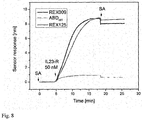
- SPR biosensor binding analysis was used to further characterize the binding interactions between IL-23R and the REX ligands.
- Surface plasmon resonance measurements were carried out using custom SPR biosensors (Institute of Photonics and Electronics, Prague, Czech Republic) with four independent sensing spots ( Vaisocherova H. et al., Biopolymers 2006;82(4):394-398 ).
- the His 6 -REX-TolA-AVI and His 6 -ABDwt-TolA-AVI proteins were immobilized to the SPR chip using the protocol described before ( Sipova H. et al. Sensors Actuators B: Chem 2012;174(0):306-311 ).
- the SPR sensor chip was coated with self-assembled monolayer of HSC 11 (EG) 2 -OH and HSC 11 (EG) 3 OCH 2 COOH alkenthiols.
- the functionalized SPR chip was mounted to the SPR sensor and all the subsequent molecular interactions were monitored in real-time at temperature 25°C and flow rate 30 ⁇ l/min.
- the REX009, REX125 and ABDwt proteins were diluted in SA buffer (10 mM sodium acetate, pH 5.0 at 25°C) at 5 ⁇ g/ml concentration. Each protein was immobilized to a separate sensing spot via amide-bond-forming chemistry.
- the non-covalently bound proteins were then washed away with a buffer of high ionic strength (PBS Na ; 1.4 mM KH 2 PO 4 , 8 mM Na 2 HPO 4 , 2.7 mM KCl, 0.75 M NaCl, pH 7.4 at 25°C).
- PBS Na a buffer of high ionic strength
- the remaining carboxylic groups were deactivated with 5-minute injection of 1M ethanolamine-hydrochloride (pH 8.5).
- the solution of IL23-R was pumped in the sensor for 10 min. The measurement was repeated on three different chips. The interaction kinetics was compensated for reference sensor response (measured in channel with ABD WT ) and analyzed with BiaEvaluation software (GE Healthcare, Uppsala, Sweden).
- IL-23R molecules For staining of the IL-23R molecules on the cell surface, 5 x 10 5 cells were incubated for 30 min at 4°C in 50 ⁇ l of cHBSS buffer containing anti-human IL-23R-APC (1:5 dilution) or isotype control-APC (1:5 dilution) mAbs.
- REX binding assay 5 x 10 5 cells were incubated in 100 ⁇ l of cHBSS with biotinylated REX binders or ABDwt controls (10 ⁇ g/ml) for 30 min at 4°C, washed with cHBSS, and the cell-bound biotinylated REX-TolA-AVI or ABDwt-TolA-AVI was stained with streptavidin-phycoerythrin (dilution 1:400) for 30 min at 4°C.
- DH-p19 binding assay 5 x 10 5 cells were incubated in 100 ⁇ l of cHBSS with or without DH-p19 (10 ⁇ g/ml) for 30 min at 4°C.
- the cells were washed with cHBSS and the cell-bound DH-p19 was stained with mouse anti-p19 mAb (1:50 dilution) for 30 min at 4°C and after washing with goat anti-mouse IgG antibody labeled with Cy5 (1:50 dilution) for 30 min at 4°C.
- REX ligands competitively inhibit p19 subunit binding to the native IL-23 receptor on human cells
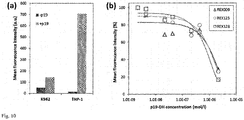
- THP-1 cells expressing higher levels of IL-23R (see Fig. 9a ), to which also higher amounts of DH-p19 protein were bound than to K-562 cells ( Fig. 10a ).
- THP-1 cells (2 x 10 5 ) were preincubated for 15 min at 4 °C in the presence of serially-diluted DH-p19 in 50 ⁇ l of cHBSS buffer.
- Biotinylated REX-TolA-AVI clones (or ABDwt-TolA-AVI negative control) were added to the cells in the continuous presence of DH-p19 in 50 ⁇ l of cHBSS buffer to a final concentration of 13 nM and incubated at 4°C for 30 min.
- the cells were washed with cHBSS and the bound biotinylated REX ligands or ABDwt were detected by streptavidin-phycoerythrin conjugate (dilution 1:400) for 30 min at 4 °C.
- Cells were washed, resuspended in 100 ⁇ l of HBSS and analyzed by flow cytometry as described above. As shown in Figure 10b , at increasing concentrations of the DH-p19 protein, the binding of all three tested REX ligands to THP-1 cells was significantly inhibited.
- REX binders inhibit IL-23-dependent ex vivo expansion of IL-17-positive CD4+ T-cells
- PBMCs were washed once with PBS and resuspended in complete RPMI 1640 media (RPMI 1640 supplemented with 10% heat-inactivated FCS, 100 U/ml penicillin, 100 ⁇ g/ml streptomycin sulfate and 1.7 mM sodium glutamate).
- PBMCs were adjusted to 2x 10 6 cells/ml and activated on a 96-well plate pre-coated with anti-CD3 (MEM-57, 10 ⁇ g/ml, Exbio Praha a.s., Praha, Czech Republic) in the presence of co-stimulatory antibodies against CD28 and CD49d (1 ⁇ g/ml, BD Biosciences, San Jose, CA, USA), in the presence of IL-23 (10 ng/ml) and IL-2 (100 U/ml).
- REX009, REX115, REX125, REX128 binders (7 ⁇ g/ml) or control ABDwt were added and cells were incubated for three days at 37°C.
- the collected data indicate that the tested REX variants inhibited IL-23-dependent Th-17+ cell expansion to the level of no-IL-23-induced samples (REX009) or even below this level (REX115 and REX125) and this finding is valid for both PBMC and separated T-cell samples.
- IL-23 was shown to promote development of Th-17+ T-cells in man ( Acosta-Rodriguez EV et al. Nat Immunol 2007;8: 942-9 ), the mode of its action might be fixing the Th-17 commitment rather than "de novo" Th-17 development, survival or proliferation enhancement ( Stritesky GL, Yeh N, Kaplan MH. J Immunol 2008;181:5948-5955 ).
- REX ligands might block the IL-23 signaling function on human T-cells through selective binding and occupation of the IL-23 receptor.
Landscapes
- Health & Medical Sciences (AREA)
- Chemical & Material Sciences (AREA)
- Life Sciences & Earth Sciences (AREA)
- Organic Chemistry (AREA)
- Medicinal Chemistry (AREA)
- General Health & Medical Sciences (AREA)
- Immunology (AREA)
- Public Health (AREA)
- Nuclear Medicine, Radiotherapy & Molecular Imaging (AREA)
- General Chemical & Material Sciences (AREA)
- Pharmacology & Pharmacy (AREA)
- Chemical Kinetics & Catalysis (AREA)
- Animal Behavior & Ethology (AREA)
- Bioinformatics & Cheminformatics (AREA)
- Engineering & Computer Science (AREA)
- Veterinary Medicine (AREA)
- Genetics & Genomics (AREA)
- Biophysics (AREA)
- Biochemistry (AREA)
- Molecular Biology (AREA)
- Proteomics, Peptides & Aminoacids (AREA)
- Rheumatology (AREA)
- Orthopedic Medicine & Surgery (AREA)
- Dermatology (AREA)
- Physical Education & Sports Medicine (AREA)
- Cell Biology (AREA)
- Toxicology (AREA)
- Zoology (AREA)
- Gastroenterology & Hepatology (AREA)
- Peptides Or Proteins (AREA)
- Preparation Of Compounds By Using Micro-Organisms (AREA)
Applications Claiming Priority (2)
| Application Number | Priority Date | Filing Date | Title |
|---|---|---|---|
| CZ2012-829A CZ304514B6 (cs) | 2012-11-23 | 2012-11-23 | Polypeptidy pro léčbu autoimunitních chorob založenou na blokaci receptoru pro lidský cytokin IL-23 |
| PCT/CZ2013/000137 WO2014079399A1 (en) | 2012-11-23 | 2013-10-25 | Polypeptide antagonists of human il-23 receptor for treatment of autoimmune diseases |
Publications (2)
| Publication Number | Publication Date |
|---|---|
| EP2922560A1 EP2922560A1 (en) | 2015-09-30 |
| EP2922560B1 true EP2922560B1 (en) | 2017-01-04 |
Family
ID=49619773
Family Applications (1)
| Application Number | Title | Priority Date | Filing Date |
|---|---|---|---|
| EP13792577.2A Not-in-force EP2922560B1 (en) | 2012-11-23 | 2013-10-25 | Polypeptide antagonists of human il-23 receptor for treatment of autoimmune diseases |
Country Status (3)
| Country | Link |
|---|---|
| EP (1) | EP2922560B1 (cs) |
| CZ (1) | CZ304514B6 (cs) |
| WO (1) | WO2014079399A1 (cs) |
Families Citing this family (2)
| Publication number | Priority date | Publication date | Assignee | Title |
|---|---|---|---|---|
| CZ307849B6 (cs) * | 2016-06-03 | 2019-06-26 | Biotechnologický ústav AV ČR, v. v. i. | Polypeptidy pro léčbu autoimunitních chorob založenou na blokaci podjednotky p19 lidského cytokinu IL-23 |
| WO2019175176A1 (en) | 2018-03-13 | 2019-09-19 | Affibody Ab | Polypeptides based on a novel scaffold |
Family Cites Families (9)
| Publication number | Priority date | Publication date | Assignee | Title |
|---|---|---|---|---|
| EP1732613A2 (en) | 2004-04-06 | 2006-12-20 | Affibody AB | Use of serum albumin binding peptides conjugates for the preparation of a medicament |
| DK2426144T3 (en) | 2007-02-23 | 2019-01-07 | Merck Sharp & Dohme | Manipulated Anti-IL-23P19 Antibodies |
| JP2011501941A (ja) * | 2007-07-06 | 2011-01-20 | バロリゼイション エイチエスジェイ, ソシエテ アン コマンディテ | Il−23レセプターのアンタゴニストおよびその使用 |
| EP2331078B1 (en) | 2008-08-27 | 2012-09-19 | Merck Sharp & Dohme Corp. | Lyophilized formulations of engineered anti-il-23p19 antibodies |
| US20110158992A1 (en) * | 2008-08-27 | 2011-06-30 | Schering Corporation | Engineered Anti-IL-23R Antibodies |
| EP2435480A1 (en) * | 2009-05-27 | 2012-04-04 | Ablynx N.V. | Biparatopic protein constructs directed against il-23 |
| JP2013507124A (ja) * | 2009-10-09 | 2013-03-04 | アナフォア インコーポレイテッド | Il−23rを結合するポリペプチド |
| KR20130010461A (ko) | 2010-02-18 | 2013-01-28 | 브리스톨-마이어스 스큅 컴퍼니 | Il―23에 결합하는 피브로넥틴 기반 스캐폴드 도메인 단백질 |
| EP2661445A2 (en) | 2011-01-04 | 2013-11-13 | Universität Zürich | Modulators of il-12 and/or il-23 for the prevention or treatment of alzheimer's disease |
-
2012
- 2012-11-23 CZ CZ2012-829A patent/CZ304514B6/cs not_active IP Right Cessation
-
2013
- 2013-10-25 EP EP13792577.2A patent/EP2922560B1/en not_active Not-in-force
- 2013-10-25 WO PCT/CZ2013/000137 patent/WO2014079399A1/en not_active Ceased
Non-Patent Citations (1)
| Title |
|---|
| None * |
Also Published As
| Publication number | Publication date |
|---|---|
| WO2014079399A1 (en) | 2014-05-30 |
| EP2922560A1 (en) | 2015-09-30 |
| CZ2012829A3 (cs) | 2014-06-11 |
| CZ304514B6 (cs) | 2014-06-11 |
Similar Documents
| Publication | Publication Date | Title |
|---|---|---|
| Kuchař et al. | Human interleukin‐23 receptor antagonists derived from an albumin‐binding domain scaffold inhibit IL‐23‐dependent ex vivo expansion of IL‐17‐producing T‐cells | |
| EP2035452B1 (en) | Soluble heterodimeric receptors and uses thereof | |
| US9221885B2 (en) | Muteins of human lipocalin 2 with affinity for CTLA-4 | |
| WO2021244089A1 (zh) | 新型冠状病毒(sars-cov-2)刺突蛋白结合分子及其应用 | |
| JP7482488B2 (ja) | Cd137とpd-l1に特異的な新規融合タンパク質 | |
| Kim et al. | Engineering of anti-human interleukin-4 receptor alpha antibodies with potent antagonistic activity | |
| US20230391886A1 (en) | Compositions and methods for muc18 targeting | |
| CN106589129A (zh) | 一种结合cd19、cd3和cd28的三功能分子及其应用 | |
| KR20180002855A (ko) | 항암 융합 폴리펩타이드 | |
| JP2017515457A (ja) | TNFαに対する結合メンバー | |
| RU2016149596A (ru) | Новые полипептиды со специфическим связыванием и пути их применения | |
| KR20250120388A (ko) | 항-cll1 단일 도메인 항체 및 이의 응용 | |
| KR20250157413A (ko) | Cll1 단백질에 특이적으로 결합하는 단일 도메인 항체 및 이의 응용 | |
| JP2022531244A (ja) | Gpcrに結合する化合物及びリガンドをスクリーニングするためのキメラタンパク質及び方法 | |
| KR20170038843A (ko) | 항-테나신 c 항체 및 이의 용도 | |
| WO2018167481A1 (en) | Method of selecting for antibodies | |
| EP3404039A1 (en) | Recombinant picp protein, and method for preparing antibody specifically binding thereto | |
| US20220411517A1 (en) | IL-1 Receptor Accessory Protein Inhibitors and Uses Thereof | |
| EP2922560A1 (en) | Polypeptide antagonists of human il-23 receptor for treatment of autoimmune diseases | |
| HK1216440A1 (zh) | 用於补体因子h相关蛋白质1检测的试剂、试剂盒和方法 | |
| US12578343B2 (en) | Selective ACKR3 modulators and uses thereof | |
| EP4426740A2 (en) | Novel anti-lilrb2 antibodies and derivative products | |
| CN119409829B (zh) | 抗EpCAM纳米抗体及其应用 | |
| KR102154177B1 (ko) | 세포질 침투성이 증진된 항체의 스크리닝 방법 | |
| CZ307849B6 (cs) | Polypeptidy pro léčbu autoimunitních chorob založenou na blokaci podjednotky p19 lidského cytokinu IL-23 |
Legal Events
| Date | Code | Title | Description |
|---|---|---|---|
| PUAI | Public reference made under article 153(3) epc to a published international application that has entered the european phase |
Free format text: ORIGINAL CODE: 0009012 |
|
| 17P | Request for examination filed |
Effective date: 20150612 |
|
| AK | Designated contracting states |
Kind code of ref document: A1 Designated state(s): AL AT BE BG CH CY CZ DE DK EE ES FI FR GB GR HR HU IE IS IT LI LT LU LV MC MK MT NL NO PL PT RO RS SE SI SK SM TR |
|
| AX | Request for extension of the european patent |
Extension state: BA ME |
|
| DAX | Request for extension of the european patent (deleted) | ||
| RAP1 | Party data changed (applicant data changed or rights of an application transferred) |
Owner name: BIOTECHNOLOGICKY USTAV AV CR, V.V.I. |
|
| REG | Reference to a national code |
Ref country code: DE Ref legal event code: R079 Ref document number: 602013016263 Country of ref document: DE Free format text: PREVIOUS MAIN CLASS: A61K0038170000 Ipc: C07K0014715000 |
|
| RIC1 | Information provided on ipc code assigned before grant |
Ipc: A61K 38/17 20060101ALI20160801BHEP Ipc: C07K 16/28 20060101ALI20160801BHEP Ipc: C07K 14/715 20060101AFI20160801BHEP |
|
| GRAP | Despatch of communication of intention to grant a patent |
Free format text: ORIGINAL CODE: EPIDOSNIGR1 |
|
| INTG | Intention to grant announced |
Effective date: 20161010 |
|
| GRAS | Grant fee paid |
Free format text: ORIGINAL CODE: EPIDOSNIGR3 |
|
| GRAA | (expected) grant |
Free format text: ORIGINAL CODE: 0009210 |
|
| AK | Designated contracting states |
Kind code of ref document: B1 Designated state(s): AL AT BE BG CH CY CZ DE DK EE ES FI FR GB GR HR HU IE IS IT LI LT LU LV MC MK MT NL NO PL PT RO RS SE SI SK SM TR |
|
| REG | Reference to a national code |
Ref country code: GB Ref legal event code: FG4D |
|
| REG | Reference to a national code |
Ref country code: CH Ref legal event code: EP |
|
| REG | Reference to a national code |
Ref country code: AT Ref legal event code: REF Ref document number: 859157 Country of ref document: AT Kind code of ref document: T Effective date: 20170115 |
|
| REG | Reference to a national code |
Ref country code: IE Ref legal event code: FG4D |
|
| REG | Reference to a national code |
Ref country code: DE Ref legal event code: R096 Ref document number: 602013016263 Country of ref document: DE |
|
| REG | Reference to a national code |
Ref country code: LT Ref legal event code: MG4D Ref country code: NL Ref legal event code: MP Effective date: 20170104 |
|
| REG | Reference to a national code |
Ref country code: AT Ref legal event code: MK05 Ref document number: 859157 Country of ref document: AT Kind code of ref document: T Effective date: 20170104 |
|
| PG25 | Lapsed in a contracting state [announced via postgrant information from national office to epo] |
Ref country code: NL Free format text: LAPSE BECAUSE OF FAILURE TO SUBMIT A TRANSLATION OF THE DESCRIPTION OR TO PAY THE FEE WITHIN THE PRESCRIBED TIME-LIMIT Effective date: 20170104 |
|
| PG25 | Lapsed in a contracting state [announced via postgrant information from national office to epo] |
Ref country code: HR Free format text: LAPSE BECAUSE OF FAILURE TO SUBMIT A TRANSLATION OF THE DESCRIPTION OR TO PAY THE FEE WITHIN THE PRESCRIBED TIME-LIMIT Effective date: 20170104 Ref country code: NO Free format text: LAPSE BECAUSE OF FAILURE TO SUBMIT A TRANSLATION OF THE DESCRIPTION OR TO PAY THE FEE WITHIN THE PRESCRIBED TIME-LIMIT Effective date: 20170404 Ref country code: LT Free format text: LAPSE BECAUSE OF FAILURE TO SUBMIT A TRANSLATION OF THE DESCRIPTION OR TO PAY THE FEE WITHIN THE PRESCRIBED TIME-LIMIT Effective date: 20170104 Ref country code: IS Free format text: LAPSE BECAUSE OF FAILURE TO SUBMIT A TRANSLATION OF THE DESCRIPTION OR TO PAY THE FEE WITHIN THE PRESCRIBED TIME-LIMIT Effective date: 20170504 Ref country code: GR Free format text: LAPSE BECAUSE OF FAILURE TO SUBMIT A TRANSLATION OF THE DESCRIPTION OR TO PAY THE FEE WITHIN THE PRESCRIBED TIME-LIMIT Effective date: 20170405 Ref country code: FI Free format text: LAPSE BECAUSE OF FAILURE TO SUBMIT A TRANSLATION OF THE DESCRIPTION OR TO PAY THE FEE WITHIN THE PRESCRIBED TIME-LIMIT Effective date: 20170104 |
|
| PG25 | Lapsed in a contracting state [announced via postgrant information from national office to epo] |
Ref country code: BG Free format text: LAPSE BECAUSE OF FAILURE TO SUBMIT A TRANSLATION OF THE DESCRIPTION OR TO PAY THE FEE WITHIN THE PRESCRIBED TIME-LIMIT Effective date: 20170404 Ref country code: ES Free format text: LAPSE BECAUSE OF FAILURE TO SUBMIT A TRANSLATION OF THE DESCRIPTION OR TO PAY THE FEE WITHIN THE PRESCRIBED TIME-LIMIT Effective date: 20170104 Ref country code: AT Free format text: LAPSE BECAUSE OF FAILURE TO SUBMIT A TRANSLATION OF THE DESCRIPTION OR TO PAY THE FEE WITHIN THE PRESCRIBED TIME-LIMIT Effective date: 20170104 Ref country code: RS Free format text: LAPSE BECAUSE OF FAILURE TO SUBMIT A TRANSLATION OF THE DESCRIPTION OR TO PAY THE FEE WITHIN THE PRESCRIBED TIME-LIMIT Effective date: 20170104 Ref country code: SE Free format text: LAPSE BECAUSE OF FAILURE TO SUBMIT A TRANSLATION OF THE DESCRIPTION OR TO PAY THE FEE WITHIN THE PRESCRIBED TIME-LIMIT Effective date: 20170104 Ref country code: LV Free format text: LAPSE BECAUSE OF FAILURE TO SUBMIT A TRANSLATION OF THE DESCRIPTION OR TO PAY THE FEE WITHIN THE PRESCRIBED TIME-LIMIT Effective date: 20170104 Ref country code: PT Free format text: LAPSE BECAUSE OF FAILURE TO SUBMIT A TRANSLATION OF THE DESCRIPTION OR TO PAY THE FEE WITHIN THE PRESCRIBED TIME-LIMIT Effective date: 20170504 Ref country code: PL Free format text: LAPSE BECAUSE OF FAILURE TO SUBMIT A TRANSLATION OF THE DESCRIPTION OR TO PAY THE FEE WITHIN THE PRESCRIBED TIME-LIMIT Effective date: 20170104 |
|
| REG | Reference to a national code |
Ref country code: DE Ref legal event code: R097 Ref document number: 602013016263 Country of ref document: DE |
|
| REG | Reference to a national code |
Ref country code: FR Ref legal event code: PLFP Year of fee payment: 5 |
|
| PG25 | Lapsed in a contracting state [announced via postgrant information from national office to epo] |
Ref country code: EE Free format text: LAPSE BECAUSE OF FAILURE TO SUBMIT A TRANSLATION OF THE DESCRIPTION OR TO PAY THE FEE WITHIN THE PRESCRIBED TIME-LIMIT Effective date: 20170104 Ref country code: CZ Free format text: LAPSE BECAUSE OF FAILURE TO SUBMIT A TRANSLATION OF THE DESCRIPTION OR TO PAY THE FEE WITHIN THE PRESCRIBED TIME-LIMIT Effective date: 20170104 Ref country code: SK Free format text: LAPSE BECAUSE OF FAILURE TO SUBMIT A TRANSLATION OF THE DESCRIPTION OR TO PAY THE FEE WITHIN THE PRESCRIBED TIME-LIMIT Effective date: 20170104 Ref country code: IT Free format text: LAPSE BECAUSE OF FAILURE TO SUBMIT A TRANSLATION OF THE DESCRIPTION OR TO PAY THE FEE WITHIN THE PRESCRIBED TIME-LIMIT Effective date: 20170104 Ref country code: RO Free format text: LAPSE BECAUSE OF FAILURE TO SUBMIT A TRANSLATION OF THE DESCRIPTION OR TO PAY THE FEE WITHIN THE PRESCRIBED TIME-LIMIT Effective date: 20170104 |
|
| PLBE | No opposition filed within time limit |
Free format text: ORIGINAL CODE: 0009261 |
|
| STAA | Information on the status of an ep patent application or granted ep patent |
Free format text: STATUS: NO OPPOSITION FILED WITHIN TIME LIMIT |
|
| PG25 | Lapsed in a contracting state [announced via postgrant information from national office to epo] |
Ref country code: DK Free format text: LAPSE BECAUSE OF FAILURE TO SUBMIT A TRANSLATION OF THE DESCRIPTION OR TO PAY THE FEE WITHIN THE PRESCRIBED TIME-LIMIT Effective date: 20170104 Ref country code: SM Free format text: LAPSE BECAUSE OF FAILURE TO SUBMIT A TRANSLATION OF THE DESCRIPTION OR TO PAY THE FEE WITHIN THE PRESCRIBED TIME-LIMIT Effective date: 20170104 |
|
| PG25 | Lapsed in a contracting state [announced via postgrant information from national office to epo] |
Ref country code: SI Free format text: LAPSE BECAUSE OF FAILURE TO SUBMIT A TRANSLATION OF THE DESCRIPTION OR TO PAY THE FEE WITHIN THE PRESCRIBED TIME-LIMIT Effective date: 20170104 |
|
| PG25 | Lapsed in a contracting state [announced via postgrant information from national office to epo] |
Ref country code: MC Free format text: LAPSE BECAUSE OF FAILURE TO SUBMIT A TRANSLATION OF THE DESCRIPTION OR TO PAY THE FEE WITHIN THE PRESCRIBED TIME-LIMIT Effective date: 20170104 |
|
| REG | Reference to a national code |
Ref country code: IE Ref legal event code: MM4A |
|
| PG25 | Lapsed in a contracting state [announced via postgrant information from national office to epo] |
Ref country code: LU Free format text: LAPSE BECAUSE OF NON-PAYMENT OF DUE FEES Effective date: 20171025 |
|
| REG | Reference to a national code |
Ref country code: BE Ref legal event code: MM Effective date: 20171031 |
|
| PG25 | Lapsed in a contracting state [announced via postgrant information from national office to epo] |
Ref country code: BE Free format text: LAPSE BECAUSE OF NON-PAYMENT OF DUE FEES Effective date: 20171031 |
|
| PG25 | Lapsed in a contracting state [announced via postgrant information from national office to epo] |
Ref country code: MT Free format text: LAPSE BECAUSE OF NON-PAYMENT OF DUE FEES Effective date: 20171025 |
|
| REG | Reference to a national code |
Ref country code: FR Ref legal event code: PLFP Year of fee payment: 6 |
|
| PG25 | Lapsed in a contracting state [announced via postgrant information from national office to epo] |
Ref country code: IE Free format text: LAPSE BECAUSE OF NON-PAYMENT OF DUE FEES Effective date: 20171025 |
|
| PG25 | Lapsed in a contracting state [announced via postgrant information from national office to epo] |
Ref country code: HU Free format text: LAPSE BECAUSE OF FAILURE TO SUBMIT A TRANSLATION OF THE DESCRIPTION OR TO PAY THE FEE WITHIN THE PRESCRIBED TIME-LIMIT; INVALID AB INITIO Effective date: 20131025 |
|
| PG25 | Lapsed in a contracting state [announced via postgrant information from national office to epo] |
Ref country code: CY Free format text: LAPSE BECAUSE OF FAILURE TO SUBMIT A TRANSLATION OF THE DESCRIPTION OR TO PAY THE FEE WITHIN THE PRESCRIBED TIME-LIMIT Effective date: 20170104 |
|
| PG25 | Lapsed in a contracting state [announced via postgrant information from national office to epo] |
Ref country code: MK Free format text: LAPSE BECAUSE OF FAILURE TO SUBMIT A TRANSLATION OF THE DESCRIPTION OR TO PAY THE FEE WITHIN THE PRESCRIBED TIME-LIMIT Effective date: 20170104 |
|
| PGFP | Annual fee paid to national office [announced via postgrant information from national office to epo] |
Ref country code: DE Payment date: 20191021 Year of fee payment: 7 |
|
| PGFP | Annual fee paid to national office [announced via postgrant information from national office to epo] |
Ref country code: FR Payment date: 20191018 Year of fee payment: 7 |
|
| PG25 | Lapsed in a contracting state [announced via postgrant information from national office to epo] |
Ref country code: TR Free format text: LAPSE BECAUSE OF FAILURE TO SUBMIT A TRANSLATION OF THE DESCRIPTION OR TO PAY THE FEE WITHIN THE PRESCRIBED TIME-LIMIT Effective date: 20170104 |
|
| PGFP | Annual fee paid to national office [announced via postgrant information from national office to epo] |
Ref country code: CH Payment date: 20191022 Year of fee payment: 7 |
|
| PGFP | Annual fee paid to national office [announced via postgrant information from national office to epo] |
Ref country code: GB Payment date: 20191018 Year of fee payment: 7 |
|
| PG25 | Lapsed in a contracting state [announced via postgrant information from national office to epo] |
Ref country code: AL Free format text: LAPSE BECAUSE OF FAILURE TO SUBMIT A TRANSLATION OF THE DESCRIPTION OR TO PAY THE FEE WITHIN THE PRESCRIBED TIME-LIMIT Effective date: 20170104 |
|
| REG | Reference to a national code |
Ref country code: DE Ref legal event code: R119 Ref document number: 602013016263 Country of ref document: DE |
|
| REG | Reference to a national code |
Ref country code: CH Ref legal event code: PL |
|
| GBPC | Gb: european patent ceased through non-payment of renewal fee |
Effective date: 20201025 |
|
| PG25 | Lapsed in a contracting state [announced via postgrant information from national office to epo] |
Ref country code: DE Free format text: LAPSE BECAUSE OF NON-PAYMENT OF DUE FEES Effective date: 20210501 Ref country code: FR Free format text: LAPSE BECAUSE OF NON-PAYMENT OF DUE FEES Effective date: 20201031 |
|
| PG25 | Lapsed in a contracting state [announced via postgrant information from national office to epo] |
Ref country code: LI Free format text: LAPSE BECAUSE OF NON-PAYMENT OF DUE FEES Effective date: 20201031 Ref country code: GB Free format text: LAPSE BECAUSE OF NON-PAYMENT OF DUE FEES Effective date: 20201025 Ref country code: CH Free format text: LAPSE BECAUSE OF NON-PAYMENT OF DUE FEES Effective date: 20201031 |