EP2927082A1 - Vorrichtung zur unterdrückung einer fahrzeugbeschleunigung und verfahren zur unterdrückung einer fahrzeugbeschleunigung - Google Patents
Vorrichtung zur unterdrückung einer fahrzeugbeschleunigung und verfahren zur unterdrückung einer fahrzeugbeschleunigung Download PDFInfo
- Publication number
- EP2927082A1 EP2927082A1 EP13858357.0A EP13858357A EP2927082A1 EP 2927082 A1 EP2927082 A1 EP 2927082A1 EP 13858357 A EP13858357 A EP 13858357A EP 2927082 A1 EP2927082 A1 EP 2927082A1
- Authority
- EP
- European Patent Office
- Prior art keywords
- obstacle
- vehicle
- distance
- acceleration suppression
- decision level
- Prior art date
- Legal status (The legal status is an assumption and is not a legal conclusion. Google has not performed a legal analysis and makes no representation as to the accuracy of the status listed.)
- Granted
Links
Images







Classifications
-
- B—PERFORMING OPERATIONS; TRANSPORTING
- B60—VEHICLES IN GENERAL
- B60W—CONJOINT CONTROL OF VEHICLE SUB-UNITS OF DIFFERENT TYPE OR DIFFERENT FUNCTION; CONTROL SYSTEMS SPECIALLY ADAPTED FOR HYBRID VEHICLES; ROAD VEHICLE DRIVE CONTROL SYSTEMS FOR PURPOSES NOT RELATED TO THE CONTROL OF A PARTICULAR SUB-UNIT
- B60W30/00—Purposes of road vehicle drive control systems not related to the control of a particular sub-unit, e.g. of systems using conjoint control of vehicle sub-units
- B60W30/08—Active safety systems predicting or avoiding probable or impending collision or attempting to minimise its consequences
- B60W30/09—Taking automatic action to avoid collision, e.g. braking and steering
-
- B—PERFORMING OPERATIONS; TRANSPORTING
- B60—VEHICLES IN GENERAL
- B60T—VEHICLE BRAKE CONTROL SYSTEMS OR PARTS THEREOF; BRAKE CONTROL SYSTEMS OR PARTS THEREOF, IN GENERAL; ARRANGEMENT OF BRAKING ELEMENTS ON VEHICLES IN GENERAL; PORTABLE DEVICES FOR PREVENTING UNWANTED MOVEMENT OF VEHICLES; VEHICLE MODIFICATIONS TO FACILITATE COOLING OF BRAKES
- B60T7/00—Brake-action initiating means
- B60T7/12—Brake-action initiating means for automatic initiation; for initiation not subject to will of driver or passenger
- B60T7/22—Brake-action initiating means for automatic initiation; for initiation not subject to will of driver or passenger initiated by contact of vehicle, e.g. bumper, with an external object, e.g. another vehicle, or by means of contactless obstacle detectors mounted on the vehicle
-
- B—PERFORMING OPERATIONS; TRANSPORTING
- B60—VEHICLES IN GENERAL
- B60W—CONJOINT CONTROL OF VEHICLE SUB-UNITS OF DIFFERENT TYPE OR DIFFERENT FUNCTION; CONTROL SYSTEMS SPECIALLY ADAPTED FOR HYBRID VEHICLES; ROAD VEHICLE DRIVE CONTROL SYSTEMS FOR PURPOSES NOT RELATED TO THE CONTROL OF A PARTICULAR SUB-UNIT
- B60W10/00—Conjoint control of vehicle sub-units of different type or different function
- B60W10/04—Conjoint control of vehicle sub-units of different type or different function including control of propulsion units
-
- B—PERFORMING OPERATIONS; TRANSPORTING
- B60—VEHICLES IN GENERAL
- B60W—CONJOINT CONTROL OF VEHICLE SUB-UNITS OF DIFFERENT TYPE OR DIFFERENT FUNCTION; CONTROL SYSTEMS SPECIALLY ADAPTED FOR HYBRID VEHICLES; ROAD VEHICLE DRIVE CONTROL SYSTEMS FOR PURPOSES NOT RELATED TO THE CONTROL OF A PARTICULAR SUB-UNIT
- B60W10/00—Conjoint control of vehicle sub-units of different type or different function
- B60W10/18—Conjoint control of vehicle sub-units of different type or different function including control of braking systems
-
- B—PERFORMING OPERATIONS; TRANSPORTING
- B60—VEHICLES IN GENERAL
- B60W—CONJOINT CONTROL OF VEHICLE SUB-UNITS OF DIFFERENT TYPE OR DIFFERENT FUNCTION; CONTROL SYSTEMS SPECIALLY ADAPTED FOR HYBRID VEHICLES; ROAD VEHICLE DRIVE CONTROL SYSTEMS FOR PURPOSES NOT RELATED TO THE CONTROL OF A PARTICULAR SUB-UNIT
- B60W50/00—Details of control systems for road vehicle drive control not related to the control of a particular sub-unit, e.g. process diagnostic or vehicle driver interfaces
- B60W50/08—Interaction between the driver and the control system
- B60W50/087—Interaction between the driver and the control system where the control system corrects or modifies a request from the driver
-
- G—PHYSICS
- G01—MEASURING; TESTING
- G01S—RADIO DIRECTION-FINDING; RADIO NAVIGATION; DETERMINING DISTANCE OR VELOCITY BY USE OF RADIO WAVES; LOCATING OR PRESENCE-DETECTING BY USE OF THE REFLECTION OR RERADIATION OF RADIO WAVES; ANALOGOUS ARRANGEMENTS USING OTHER WAVES
- G01S15/00—Systems using the reflection or reradiation of acoustic waves, e.g. sonar systems
- G01S15/02—Systems using the reflection or reradiation of acoustic waves, e.g. sonar systems using reflection of acoustic waves
- G01S15/06—Systems determining the position data of a target
- G01S15/46—Indirect determination of position data
-
- G—PHYSICS
- G01—MEASURING; TESTING
- G01S—RADIO DIRECTION-FINDING; RADIO NAVIGATION; DETERMINING DISTANCE OR VELOCITY BY USE OF RADIO WAVES; LOCATING OR PRESENCE-DETECTING BY USE OF THE REFLECTION OR RERADIATION OF RADIO WAVES; ANALOGOUS ARRANGEMENTS USING OTHER WAVES
- G01S15/00—Systems using the reflection or reradiation of acoustic waves, e.g. sonar systems
- G01S15/87—Combinations of sonar systems
- G01S15/876—Combination of several spaced transmitters or receivers of known location for determining the position of a transponder or a reflector
- G01S15/878—Combination of several spaced transmitters or receivers of known location for determining the position of a transponder or a reflector wherein transceivers are operated, either sequentially or simultaneously, both in bi-static and in mono-static mode, e.g. cross-echo mode
-
- G—PHYSICS
- G01—MEASURING; TESTING
- G01S—RADIO DIRECTION-FINDING; RADIO NAVIGATION; DETERMINING DISTANCE OR VELOCITY BY USE OF RADIO WAVES; LOCATING OR PRESENCE-DETECTING BY USE OF THE REFLECTION OR RERADIATION OF RADIO WAVES; ANALOGOUS ARRANGEMENTS USING OTHER WAVES
- G01S15/00—Systems using the reflection or reradiation of acoustic waves, e.g. sonar systems
- G01S15/88—Sonar systems specially adapted for specific applications
- G01S15/93—Sonar systems specially adapted for specific applications for anti-collision purposes
- G01S15/931—Sonar systems specially adapted for specific applications for anti-collision purposes of land vehicles
-
- G—PHYSICS
- G01—MEASURING; TESTING
- G01S—RADIO DIRECTION-FINDING; RADIO NAVIGATION; DETERMINING DISTANCE OR VELOCITY BY USE OF RADIO WAVES; LOCATING OR PRESENCE-DETECTING BY USE OF THE REFLECTION OR RERADIATION OF RADIO WAVES; ANALOGOUS ARRANGEMENTS USING OTHER WAVES
- G01S7/00—Details of systems according to groups G01S13/00, G01S15/00, G01S17/00
- G01S7/52—Details of systems according to groups G01S13/00, G01S15/00, G01S17/00 of systems according to group G01S15/00
- G01S7/539—Details of systems according to groups G01S13/00, G01S15/00, G01S17/00 of systems according to group G01S15/00 using analysis of echo signal for target characterisation; Target signature; Target cross-section
-
- B—PERFORMING OPERATIONS; TRANSPORTING
- B60—VEHICLES IN GENERAL
- B60T—VEHICLE BRAKE CONTROL SYSTEMS OR PARTS THEREOF; BRAKE CONTROL SYSTEMS OR PARTS THEREOF, IN GENERAL; ARRANGEMENT OF BRAKING ELEMENTS ON VEHICLES IN GENERAL; PORTABLE DEVICES FOR PREVENTING UNWANTED MOVEMENT OF VEHICLES; VEHICLE MODIFICATIONS TO FACILITATE COOLING OF BRAKES
- B60T2201/00—Particular use of vehicle brake systems; Special systems using also the brakes; Special software modules within the brake system controller
- B60T2201/02—Active or adaptive cruise control system; Distance control
- B60T2201/022—Collision avoidance systems
-
- B—PERFORMING OPERATIONS; TRANSPORTING
- B60—VEHICLES IN GENERAL
- B60W—CONJOINT CONTROL OF VEHICLE SUB-UNITS OF DIFFERENT TYPE OR DIFFERENT FUNCTION; CONTROL SYSTEMS SPECIALLY ADAPTED FOR HYBRID VEHICLES; ROAD VEHICLE DRIVE CONTROL SYSTEMS FOR PURPOSES NOT RELATED TO THE CONTROL OF A PARTICULAR SUB-UNIT
- B60W2420/00—Indexing codes relating to the type of sensors based on the principle of their operation
- B60W2420/54—Audio sensitive means, e.g. ultrasound
-
- B—PERFORMING OPERATIONS; TRANSPORTING
- B60—VEHICLES IN GENERAL
- B60W—CONJOINT CONTROL OF VEHICLE SUB-UNITS OF DIFFERENT TYPE OR DIFFERENT FUNCTION; CONTROL SYSTEMS SPECIALLY ADAPTED FOR HYBRID VEHICLES; ROAD VEHICLE DRIVE CONTROL SYSTEMS FOR PURPOSES NOT RELATED TO THE CONTROL OF A PARTICULAR SUB-UNIT
- B60W2520/00—Input parameters relating to overall vehicle dynamics
- B60W2520/10—Longitudinal speed
-
- B—PERFORMING OPERATIONS; TRANSPORTING
- B60—VEHICLES IN GENERAL
- B60W—CONJOINT CONTROL OF VEHICLE SUB-UNITS OF DIFFERENT TYPE OR DIFFERENT FUNCTION; CONTROL SYSTEMS SPECIALLY ADAPTED FOR HYBRID VEHICLES; ROAD VEHICLE DRIVE CONTROL SYSTEMS FOR PURPOSES NOT RELATED TO THE CONTROL OF A PARTICULAR SUB-UNIT
- B60W2540/00—Input parameters relating to occupants
- B60W2540/10—Accelerator pedal position
-
- B—PERFORMING OPERATIONS; TRANSPORTING
- B60—VEHICLES IN GENERAL
- B60W—CONJOINT CONTROL OF VEHICLE SUB-UNITS OF DIFFERENT TYPE OR DIFFERENT FUNCTION; CONTROL SYSTEMS SPECIALLY ADAPTED FOR HYBRID VEHICLES; ROAD VEHICLE DRIVE CONTROL SYSTEMS FOR PURPOSES NOT RELATED TO THE CONTROL OF A PARTICULAR SUB-UNIT
- B60W2554/00—Input parameters relating to objects
-
- B—PERFORMING OPERATIONS; TRANSPORTING
- B60—VEHICLES IN GENERAL
- B60W—CONJOINT CONTROL OF VEHICLE SUB-UNITS OF DIFFERENT TYPE OR DIFFERENT FUNCTION; CONTROL SYSTEMS SPECIALLY ADAPTED FOR HYBRID VEHICLES; ROAD VEHICLE DRIVE CONTROL SYSTEMS FOR PURPOSES NOT RELATED TO THE CONTROL OF A PARTICULAR SUB-UNIT
- B60W2554/00—Input parameters relating to objects
- B60W2554/20—Static objects
-
- B—PERFORMING OPERATIONS; TRANSPORTING
- B60—VEHICLES IN GENERAL
- B60W—CONJOINT CONTROL OF VEHICLE SUB-UNITS OF DIFFERENT TYPE OR DIFFERENT FUNCTION; CONTROL SYSTEMS SPECIALLY ADAPTED FOR HYBRID VEHICLES; ROAD VEHICLE DRIVE CONTROL SYSTEMS FOR PURPOSES NOT RELATED TO THE CONTROL OF A PARTICULAR SUB-UNIT
- B60W2554/00—Input parameters relating to objects
- B60W2554/80—Spatial relation or speed relative to objects
- B60W2554/802—Longitudinal distance
-
- B—PERFORMING OPERATIONS; TRANSPORTING
- B60—VEHICLES IN GENERAL
- B60W—CONJOINT CONTROL OF VEHICLE SUB-UNITS OF DIFFERENT TYPE OR DIFFERENT FUNCTION; CONTROL SYSTEMS SPECIALLY ADAPTED FOR HYBRID VEHICLES; ROAD VEHICLE DRIVE CONTROL SYSTEMS FOR PURPOSES NOT RELATED TO THE CONTROL OF A PARTICULAR SUB-UNIT
- B60W2720/00—Output or target parameters relating to overall vehicle dynamics
- B60W2720/10—Longitudinal speed
- B60W2720/106—Longitudinal acceleration
-
- B—PERFORMING OPERATIONS; TRANSPORTING
- B60—VEHICLES IN GENERAL
- B60W—CONJOINT CONTROL OF VEHICLE SUB-UNITS OF DIFFERENT TYPE OR DIFFERENT FUNCTION; CONTROL SYSTEMS SPECIALLY ADAPTED FOR HYBRID VEHICLES; ROAD VEHICLE DRIVE CONTROL SYSTEMS FOR PURPOSES NOT RELATED TO THE CONTROL OF A PARTICULAR SUB-UNIT
- B60W30/00—Purposes of road vehicle drive control systems not related to the control of a particular sub-unit, e.g. of systems using conjoint control of vehicle sub-units
- B60W30/06—Automatic manoeuvring for parking
-
- G—PHYSICS
- G01—MEASURING; TESTING
- G01S—RADIO DIRECTION-FINDING; RADIO NAVIGATION; DETERMINING DISTANCE OR VELOCITY BY USE OF RADIO WAVES; LOCATING OR PRESENCE-DETECTING BY USE OF THE REFLECTION OR RERADIATION OF RADIO WAVES; ANALOGOUS ARRANGEMENTS USING OTHER WAVES
- G01S15/00—Systems using the reflection or reradiation of acoustic waves, e.g. sonar systems
- G01S15/88—Sonar systems specially adapted for specific applications
- G01S15/93—Sonar systems specially adapted for specific applications for anti-collision purposes
- G01S15/931—Sonar systems specially adapted for specific applications for anti-collision purposes of land vehicles
- G01S2015/937—Sonar systems specially adapted for specific applications for anti-collision purposes of land vehicles sensor installation details
- G01S2015/938—Sonar systems specially adapted for specific applications for anti-collision purposes of land vehicles sensor installation details in the bumper area
Definitions
- the present disclosure relates to a vehicle acceleration suppression device and a vehicle acceleration suppression method for performing acceleration suppression control as a drive assist to avoid an obstacle.
- acceleration suppression control is performed as a drive assist for suppressing a contact between a vehicle and an obstacle such as a wall or another vehicle
- the acceleration suppression control is activated for the obstacles, such as a curb stone, edge stone, or grass (natural thing), for which the acceleration suppression is not needed, making a troublesome situation.
- the present disclosure intends to provide a vehicle acceleration suppression device and a vehicle acceleration suppression method, capable of activating the acceleration suppression control appropriately.
- an in-vehicle sonar configured to emit a transmission wave forward in a travel direction of a vehicle.
- An obstacle distance detector is configured to receive a reflection wave of the transmission wave emitted by the in-vehicle sonar, and to detect a distance between the vehicle and an obstacle existing ahead in the travel direction of the vehicle.
- An obstacle height determination unit is configured to receive the reflection wave of the transmission wave emitted by the in-vehicle sonar, and to determine whether or not the obstacle existing ahead in the travel direction of the vehicle is a tall obstacle that is as tall as the vehicle or taller than the vehicle.
- an obstacle type determination unit is configured to determine a type of the obstacle based on at least a first-time detection distance that is the distance between the vehicle and the obstacle detected by the obstacle distance detector for a first time, and a height determination distance that is the distance between the vehicle and the obstacle detected by the obstacle distance detector when the obstacle distance detector determines that the obstacle is the tall obstacle for the first time.
- an acceleration suppression controller is configured to carry out acceleration suppression control in a control manner depending on a determination result made by the obstacle type determination unit, when it is determined that the vehicle has approached the obstacle at an approach degree equal to or higher than a predefined approach degree based on the distance between the vehicle and the obstacle detected by the obstacle distance detector.
- the type of the obstacle detected by capturing the reflection wave of the transmission wave emitted by the in-vehicle sonar can be determined, so that the control manner of the acceleration suppression control can be changed depending on the type of the obstacle.
- the magnitude and activation/non-activation of the acceleration suppression control can be changed by the type of the obstacle.
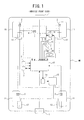
- FIG. 1 is a conceptual view illustrative of a configuration of a vehicle in the present embodiment.
- a code MM denotes the vehicle.
- the vehicle MM includes a brake device that generates a brake force and a drive device that generates a drive force.
- the brake device is configured to include brake devices 12 respectively arranged for wheels 11, a fluid pressure circuit 13 including piping connected to each of the brake devices 12, and a brake controller 14.
- the brake controller 14 is configured to control a brake force generated by each brake device 12 to a value depending on a brake force instruction value through the fluid pressure circuit 13. It is to be noted that the brake device 12 is not limited to a device that applies a brake force by fluid pressure, and may be an electric brake device or the like.
- the drive device is configured to include an engine 15 as a drive source, and an engine controller 16 configured to control the torque (drive force) generated by the engine 15 to a value depending on an acceleration instruction value.
- the drive source of the drive device is not limited to the engine 15, and may be an electric motor, or may have a hybrid configuration in which a motor is combined with the engine 15.
- the brake controller 14 and the engine controller 16 are each configured to receive an instruction value from a travel controller 10 which is a higher controller.
- the brake controller 14 is configured to receive a brake instruction (brake force instruction value) from the travel controller 10
- the engine controller 16 is configured to receive a drive instruction (acceleration instruction value) from the travel controller 10.
- the vehicle MM is configured to include a surrounding environment recognition sensor 1, a wheel speed sensor 2, a steering angle sensor 3, a shift position sensor 4, a brake manipulation detection sensor 5, an accelerator manipulation detection sensor 6, a navigation device 7, and an ignition switch 8.
- the surrounding environment recognition sensor 1 is configured to recognize an obstacle in surroundings (at least ahead in a travel direction) of the vehicle MM, and to output the information (surrounding environment recognition information) to the travel controller 10.
- the surrounding environment recognition sensor 1 is configured to include one or plural sonars (ultrasonic exploratory device) capable of detecting an obstacle.
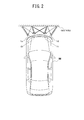
- each sonar 1a to 1d is arranged at the front side and the rear side of the vehicle MM, respectively.
- the sonars 1a to 1d arranged at the front side of the vehicle MM are illustrated in FIG. 2 , the sonars 1a to 1d are arranged in alignment in the width direction of the vehicle MM.
- Each sonar is configured to emit a spherical surface transmission wave to a measuring object at every predefined time, and to measure the location, the distance, and the like of the obstacle by receiving a reflection wave of the transmission wave from the obstacle.
- each sonar is also configured to receive the reflection waves of the transmission waves emitted by its adjacent sonars.
- the shortest one of the ten detection distance values is employed as a distance between the vehicle MM and the obstacle.
- the wheel speed sensor 2 is configured to detect the speed of the wheel, and to output detected wheel speed information to the travel controller 10.
- the wheel speed sensor 2 is configured with, for example, a pulse generator such as a rotary encoder for measuring a wheel speed pulse.
- the steering angle sensor 3 is configured to detect a steering angle of the steering wheel 20, and to output detected steering angle information to the travel controller 10.
- the steering angle sensor 3 is arranged at a steering shaft or the like. It is to be noted that the turning angle of the steering wheel may be detected as steering angle information.
- the shift position sensor 4 is configured to detect a shift position (drive instruction position, parking instruction position, neutral position, and the like), and to output the detected shift position to the travel controller 10 as shift information.
- the brake manipulation detection sensor 5 is configured to detect a presence or absence of manipulation or a manipulation amount of the brake pedal 18.
- the detected brake pedal manipulation amount is output to the travel controller 10.
- the brake pedal 18 is a manipulation element to be manipulated by a driver for instructing the speed deceleration.
- the accelerator manipulation detection sensor 6 is configured to detect a manipulation amount of the accelerator pedal 19.
- the detected accelerator pedal manipulation amount is output to the travel controller 10.
- the accelerator pedal 19 is a manipulation element to be manipulated by a driver for instructing the speed acceleration.
- the navigation device 7 is configured to include a GPS receiver, a map database, a display monitor, and the like, and is a device for performing a route search, route guidance, and the like.
- the navigation device 7 is configured to acquire road information such as a type of a road, a width of the road, and the like of the road on which the vehicle MM travels, based on the current location of the vehicle V acquired by using the GPS receiver and the road information stored in the map database.
- the vehicle MM includes an information presentation device, not illustrated.
- the information presentation device is configured to output a warning or another presentation in a sound or image in response to a control signal from the travel controller 10.
- the information presentation device is configured to include, for example, a speaker to provide information to a driver in a buzzer or voice, and a display unit to provide information by presenting an image or text.
- the display unit may also use a display monitor of the navigation device 26.
- the travel controller 10 is an electronic control unit including a CPU and peripheral devices such as a ROM, RAM, and the like, and is configured to carry out a drive assist process to avoid the obstacle.
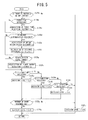
- FIG. 3 is a block view illustrative of a configuration of the travel controller 10.
- the travel controller 10 is configured to include a surrounding environment recognition information operation unit 10A, a vehicle speed operation unit 10B, a steering angle operation unit 10C, and a shift position operation unit 10D, a brake pedal manipulation information operation unit 10E, an accelerator manipulation amount operation unit 10F, an acceleration suppression activation determination unit 10G, an acceleration suppression amount operation unit 10H, a target throttle opening degree operation unit 10I, a brake control amount operation unit 10J, and a decision level storage unit 10K.
- a surrounding environment recognition information operation unit 10A a vehicle speed operation unit 10B, a steering angle operation unit 10C, and a shift position operation unit 10D
- a brake pedal manipulation information operation unit 10E an accelerator manipulation amount operation unit 10F
- an acceleration suppression activation determination unit 10G an acceleration suppression amount operation unit 10H
- a target throttle opening degree operation unit 10I a target throttle opening degree operation unit 10I
- a brake control amount operation unit 10J a decision level storage unit 10K.
- the surrounding environment recognition information operation unit 10A is configured to recognize an environment surrounding the vehicle based on a signal from the surrounding environment recognition sensor 1.
- information on the obstacle (the presence or absence of obstacle, the location of the obstacle, the distance between the vehicle MM and the obstacle) in the surrounding of the vehicle is recognized from the reflection waves detected by the sonars 1a to 1d arranged as the surrounding environment recognition sensor 1.
- the reflection wave which was received at a timing immediately before the sonars 1a to 1d emit the transmission waves, is determined to be a noise emitted from the outside, and is excluded from a subject of the obstacle detection.
- the vehicle speed operation unit 10B is configured to operate the vehicle speed based on the signal from the wheel speed sensor 2.
- the steering angle operation unit 10C is configured to operate the steering angle based on the signal from the steering angle sensor 3.
- the shift position operation unit 10D is configured to determine the shift position based on the signal from the shift position sensor 4.
- the brake pedal manipulation information operation unit 10E is configured to determine the brake manipulation amount based on the signal from the brake manipulation detection sensor 5.
- the accelerator manipulation amount operation unit 10F is configured to operate the manipulation amount of accelerator pedal 19 based on the signal from the accelerator manipulation detection sensor 6.
- the acceleration suppression activation determination unit 10G is configured to receive various pieces of information and to determine whether or not acceleration suppression control for suppressing the acceleration of the vehicle MM need to be carried out, as a drive assist process to avoid the obstacle.
- the acceleration suppression control includes drive force limit control for limiting the drive force of the vehicle MM and brake force control for generating a brake force in the vehicle MM.
- FIG. 4 is a flow chart illustrative of an acceleration suppression activation determination process procedure to be carried out by the acceleration suppression activation determination unit 10G.
- the acceleration suppression activation determination process starts when the ignition switch 8 is turned on, and is carried out at every predefined sampling time.
- step S110 the acceleration suppression activation determination unit 10G acquires the surrounding environment recognition information from the surrounding environment recognition information operation unit 10A, and processing goes to step S115.
- step S115 the acceleration suppression activation determination unit 10G determines whether or not the timing is immediately after the ignition switch 8 is turned on from the state where the ignition switch 8 is turned off. Then, when it is determined that the timing is not immediately after the ignition switch 8 is turned on, the processing goes to step S125. When it is determined that the timing is immediately after the ignition switch 8 is turned on, the processing goes to step S128.
- step S125 the acceleration suppression activation determination unit 10G determines whether or not there is an obstacle in the course ahead in the travel direction based on the surrounding environment recognition information recognized in the above step S110. Then, when there is an obstacle, the acceleration suppression activation determination unit 10G determines a decision level of the obstacle.
- the decision level of the obstacle is determined depending on the type of obstacle (such as a wall, another vehicle, an edge stone, or a natural thing (grass)). Smaller values are set in the order of a wall, another vehicle, an edge stone, and a natural thing.
- FIG. 5 is a flow chart illustrative of a decision level determination process procedure to be carried out in step S125.
- step S125a the acceleration suppression activation determination unit 10G determines whether or not there is an obstacle in the course ahead in the travel direction based on the surrounding environment recognition information recognized in the above step S110.
- the course of the vehicle MM is estimated based on the steering angle information.
- a range having a similar width to the vehicle MM in the estimated course of the vehicle MM is set as a course of the vehicle MM, and whether or not there is an obstacle in the course is determined.
- step S125b when it is determined that there is an obstacle, the processing goes to step S125b. On the other hand, when it is determined that there is no obstacle, the processing goes to step S125o to be described later.
- step S125b the acceleration suppression activation determination unit 10G determines whether or not such a detected obstacle has been detected for the first time. In other words, in the process while the vehicle MM is approaching the obstacle, it is determined whether or not the obstacle has been detected for the first time. Then, when the obstacle was not detected at the previous sampling and the obstacle is detected at the current sampling, it is determined that the detection has been made for the first time and the processing goes to step S125c. On the other hand, when the detection has not been made for the first time, that is when the obstacle was also detected at the previous sampling, the processing goes to step S125d to be described later.
- step S125c the acceleration suppression activation determination unit 10G acquires the distance from the current location of the vehicle MM to the obstacle as a first-time detection distance La, and the processing goes to step S125d.
- step S125d the acceleration suppression activation determination unit 10G determines whether or not a height determination of the obstacle is possible.
- the height determination of the obstacle is assumed possible.
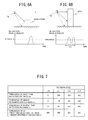
- the sonar 1a when an edge stone is detected by the sonar 1a, as illustrated in the upper section of FIG. 6A , in the transmission waves emitted from the sonar 1a, the transmission wave emitted in the road surface direction (obliquely downward) is reflected by an edge stone, such a reflection wave is again reflected on the road surface, and the sonar 1a receives the reflection wave.
- the transmission wave emitted by the sonar 1a in the horizontal direction passes above the edge stone, and therefore the sonar 1a does not receive the reflection wave of the transmission wave.
- the strength property of the reflection wave received by the sonar 1a as illustrated in the lower section of FIG. 6A , has a single peak higher than an obstacle detection threshold.
- the sonar 1a receives the reflection wave directly.
- the sonar 1a receives both of the reflection wave of the transmission wave emitted obliquely downward and the reflection wave of the transmission wave emitted horizontally.
- the strength property of the reflection waves received by the sonar 1a has two peaks higher than the obstacle detection threshold in a short period T1. It is to be noted that T1 is a length of time while it can be determined that the received reflection waves are the reflection waves from an identical obstacle.
- step S125e When it is determined that it is not a tall obstacle or when it has been already determined that it is a tall obstacle, the processing goes to step S125g to be described later.
- step S125e the acceleration suppression activation determination unit 10G acquires the distance from the current location of the vehicle MM to the obstacle as a height determination distance Lb, and the processing goes to step S125f.
- the height determination distance Lb is a distance from the vehicle MM to the obstacle at a time point when the height determination of the obstacle is enabled (the time point when it can be determined that the obstacle is a tall obstacle).
- step S125g the acceleration suppression activation determination unit 10G determines whether or not an identical obstacle is detected by plural sonars. In this situation, it is determined whether or not such an identical obstacle is detected by at least two adjacent sonars. To be specific, in a case where two adjacent sonars receive the reflection wave (direct reflection wave) of the transmission wave emitted by oneself and the reflection wave (indirect reflection wave) of the transmission wave emitted by the other one, respectively, and the detection distance values are acquired from the direct reflection wave and the indirect reflection wave, it is determined that an identical obstacle is detected by these two sonars.
- step S125h When the identical obstacle is not detected by plural sonars or when the identical obstacle has been already detected by the plural sonars, the processing goes to step S125i to be described later.
- step S125h the acceleration suppression activation determination unit 10G acquires the distance from the current location of the vehicle MM to an obstacle as a plural-number detection distance Lc, and the processing goes to step S125i.
- the plural-number detection distance Lc is a distance from the vehicle MM to the obstacle at the time point when the identical obstacle is detected by plural sonars.
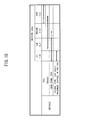
- step S125i the acceleration suppression activation determination unit 10G determines whether or not the detected obstacle has a decision level of Lv3 (high level) based on the first-time detection distance La, the height determination distance Lb, the plural-number detection distance Lc, and the distance difference Ld.
- step S125i the acceleration suppression activation determination unit 10G determines that the decision level of the detected obstacle is Lv3 (high level), when the first-time detection distance La is equal to or longer than a threshold TH13, the height determination distance Lb is equal to or longer than a threshold TH23, the plural-number detection distance Lc is equal to or longer than a threshold TH33, and the distance difference Ld is equal to or shorter than a threshold TH43.
- FIG. 7 is a view illustrative of an example of the decision level determination threshold.
- a numerical unit is centimeter (cm).
- step S125i when it is determined that a condition of Lv3 is satisfied in step S125i, the processing goes to step S125j.
- the decision level of the detected obstacle is set to Lv3 (high), and the processing goes to step S125p to be described later.
- step S125k when it is determined that the condition of Lv3 is not satisfied in step S125i, the processing goes to step S125k.
- the acceleration suppression activation determination unit 10G determines whether or not the decision level of the detected obstacle is Lv2 (medium level) based on the first-time detection distance La, the height determination distance Lb, the plural-number detection distance Lc, and the distance difference Ld.
- the decision level of the detected obstacle is Lv2 (medium level)
- the threshold TH12 300 cm
- the threshold TH22 150 cm
- the threshold TH32 230 cm
- the threshold TH42 250 cm.
- step S125k when it is determined that a condition of Lv2 is satisfied in step S125k, the processing goes to step S125l.
- the decision level of the detected obstacle is set to Lv2 (medium), and the processing goes to step S125p to be described later.
- step S125m when it is determined that the condition of Lv2 is not satisfied in step S125k, the processing goes to step S125m.
- the acceleration suppression activation determination unit 10G determines whether or not the decision level of the detected obstacle is Lv1 (low level) based on the first-time detection distance La, the height determination distance Lb, the plural-number detection distance Lc, and the distance difference Ld.
- the decision level of the detected obstacle is Lv1 (low level)
- the threshold TH11 250 cm
- the threshold TH21 100 cm
- the threshold TH31 80 cm
- the threshold TH41 300 cm.
- step S125n when it is determined that a condition of Lv1 is satisfied in step S125m, the processing goes to step S125n.
- the decision level of the detected obstacle is set to Lv1 (low), and the processing goes to step S125p to be described later.
- step S125o when it is determined that the condition of Lv1 is not satisfied in step S125m, the processing goes to step S125o.
- the decision level of the detected obstacle is set to Lv0 (null), and the decision level determination process ends.
- step S125p the acceleration suppression activation determination unit 10G determines whether or not the obstacle is lost in a short distance (for example, within a range of 50 cm ahead in the travel direction of the vehicle MM). In other words, it is determined that whether or not the state where there is an obstacle ahead in the travel direction of the vehicle MM can be kept, even when the distance between the vehicle MM and the obstacle is shorter than a short distance threshold (50 cm). Then, when it is determined that the obstacle is lost in the short distance, the processing goes to step S125o. When it is determined that the obstacle is not lost in the short distance, the processing goes to step S125q.
- a short distance for example, within a range of 50 cm ahead in the travel direction of the vehicle MM.
- step S125q the acceleration suppression activation determination unit 10G sets the decision level of the detected obstacle to Lv3 (high), and the decision level determination process ends.
- the decision level is raised to Lv3, whereas when the obstacle is lost in the short distance, the decision level is lowered to Lv0.
- step S125 the decision level is set based on the information on the obstacle existing ahead in the travel direction of the vehicle MM.
- the decision level of the obstacle is updated to a final decision level in consideration of a travel state or drive state of the vehicle MM to be described later.
- the decision level storage unit 10K when the ignition switch 8 is turned off, the decision level of the obstacle (immediately before the ignition is turned off), and the distance between the vehicle MM and the obstacle is stored the in decision level storage unit 10K. Then, when the ignition switch 8 is turned on next time (immediately after the ignition is turned on), the decision level stored in the decision level storage unit 10K is used to carry out the acceleration suppression control to avoid the obstacle.
- step S1208 the acceleration suppression activation determination unit 10G carries out a decision level acquisition process of acquiring the decision level of the obstacle stored in the decision level storage unit 10K.
- FIG. 8 is a flow chart illustrative of a decision level acquisition process procedure to be carried out in step S128.
- step S128a the acceleration suppression activation determination unit 10G reads a stored level of the obstacle stored in the decision level storage unit 10K and the distance between the vehicle MM and the obstacle, and the processing goes to step S128b.
- step S128b the acceleration suppression activation determination unit 10G detects the distance between the vehicle MM and the obstacle based on the surrounding environment recognition information recognized in the above step S110. It is to be noted that, in one embodiment, at least two sonars that have detected the obstacle immediately before the ignition is turned off are configured to detect the distance between the vehicle MM and the obstacle.
- step S128c the acceleration suppression activation determination unit 10G calculates an error between the distance between the vehicle MM and the obstacle (obstacle distance storage value) read in the above step S128a and the distance between the vehicle MM and the obstacle (obstacle distance detection value) detected in the above step S128b.
- step S128d the acceleration suppression activation determination unit 10G determines whether or not the error calculated in step S128c falls within an allowable range.
- the error falls within a range of +-30cm, it is determined that the error falls within such an allowable range.
- step S128e determines that the decision level stored in the decision level storage unit 10K is valid.
- the decision level stored in the decision level storage unit 10K is used as a decision level of the obstacle existing ahead in the travel direction of the vehicle MM, and the decision level acquisition process ends.
- step S128d when it is determined in step S128d that the error falls out of an allowable range, the processing goes to step S128f and determines that the decision level stored in the decision level storage unit 10K is invalid. In this case, the decision level of the obstacle existing ahead in the travel direction of the vehicle MM is set to an initial state (Lv0), and the decision level acquisition process ends.
- step S130 the acceleration suppression activation determination unit 10G acquires the speed of the vehicle MM from the vehicle speed operation unit 10B.
- step S140 the acceleration suppression activation determination unit 10G determines whether or not the vehicle speed acquired in the above step S130 is lower than a predefined vehicle speed threshold (for example, 15 km/h). Then, when the vehicle speed is lower than the vehicle speed threshold, it is determined that the vehicle MM is travelling at a low speed, and then the processing goes to step S150. When the vehicle speed is equal to or higher than the vehicle speed threshold, it is determined that the acceleration suppression control does not have to be activated, and the processing goes to step S145.
- a predefined vehicle speed threshold for example, 15 km/h
- step S150 the acceleration suppression activation determination unit 10G acquires the brake pedal manipulation information from the brake pedal manipulation information operation unit 10E, and the processing goes to step S160.
- step S160 the acceleration suppression activation determination unit 10G determines whether there is a presence or absence of the brake pedal manipulation based on the brake pedal manipulation information acquired in the above step S150. Then, when the absence of the brake pedal manipulation is determined, the processing goes to step S170. When the presence of the brake pedal manipulation is determined, the processing goes to step S145.
- step S170 the acceleration suppression activation determination unit 10G acquires the accelerator manipulation amount from the accelerator manipulation amount operation unit 10F, and the processing goes to step S180.
- step S180 the acceleration suppression activation determination unit 10G determines whether or not the accelerator manipulation amount acquired in step S170 is equal to or larger than a predefined accelerator manipulation amount threshold.
- the accelerator manipulation amount threshold is set to, for example, a manipulation amount corresponding to 50 % the accelerator opening degree of the accelerator pedal 19. Then, when the accelerator manipulation amount is equal to or larger than the accelerator manipulation amount threshold, processing goes to step S182. When the accelerator manipulation amount is smaller than the accelerator manipulation amount threshold, processing goes to step S145.
- step S182 the acceleration suppression activation determination unit 10G operates an approach degree D to the obstacle.
- the distance between the vehicle MM and the obstacle is set as the approach degree D.
- step S184 the acceleration suppression activation determination unit 10G determines whether or not the approach degree D calculated in the above step S182 is equal to or higher than a predefined approach degree threshold.
- a predefined value for example, 3.5 meters
- step S186 when the approach degree D is equal to or higher than the approach degree threshold, it is determined that the acceleration suppression control should be carried out, and the processing goes to step S186.
- the approach degree D is lower than the approach degree threshold, it is determined that it is sufficient to do an avoidance action from the obstacle, and the processing goes to step S122.
- the approach degree D does not have to be a distance itself between the vehicle MM and the obstacle.
- a risk potential such as a Time To Contact TTC in which the vehicle MM arrives at the current location of the obstacle can be used for a value of the approach degree D.
- step S186 the acceleration suppression activation determination unit 10G determines that the acceleration suppression activation condition is satisfied, the decision level determined in step S125 is set as an acceleration suppression activation determination result, and the processing goes to step S190.
- step S190 the acceleration suppression activation determination result determined in either the above step S145 or step S186 is output to the acceleration suppression amount operation unit 10H and is also stored in the decision level storage unit 10K, and the acceleration suppression activation determination process ends.
- the decision level is set depending on the type of obstacle based on the first-time detection distance La, the height determination distance Lb, the plural-number detection distance Lc, and the distance difference Ld that is a difference between the first-time detection distance La and the height determination distance Lb.
- the decision level storage unit 10K is configured to store the decision level that has been set most recently before the ignition is turned off and the distance between the vehicle MM and the obstacle that has been detected most recently before the ignition is turned off. Immediately after the ignition is turned on, by comparing the obstacle distance storage value with the obstacle distance detection value, the validity of the decision level stored in the decision level storage unit 10K is determined to be used for the acceleration suppression control to avoid the obstacle.
- FIG. 9A to FIG. 9C are views illustrative of differences between the obstacle distance detection result and the height determination result depending on the type of obstacle.
- the obstacle in FIG. 9A , the obstacle is a wall, in FIG. 9B , the obstacle is another vehicle, and in FIG. 9C , the obstacle is an edge stone.
- the first-time detection distance La, the height determination distance Lb, and the distance difference Ld between the first-time detection distance La and the height determination distance Lb are varied depending on the type of obstacle.
- the existence of the obstacle and the obstacle that is tall can be detected from a comparatively longer distance.
- the first-time detection distance La tends to be shorter than that of the wall.
- the distance difference Ld between the first-time detection distance La and the height determination distance Lb of another vehicle becomes longer than that of a wall.
- plural sonars are configured to detect the obstacle.
- a thin object such as a pole or a pylon
- plural sonars are not configured to detect the obstacle.
- the detection performance is poor and the reflection wave tends to be hardly received in a stable manner, unless the vehicle MM gets closer within 1 meter, for example.
- the decision level when the obstacle is a wall, the decision level is Lv3 that is a maximum level.
- the decision level varies Lv1 to Lv3 depending on the shape and size.
- the decision level when the obstacle is not tall such as an edge stone or a step, the decision level is Lv0.
- the decision level can be Lv1 until it is lost in a short distance.
- the decision level can be Lv2 until it is lost in a short distance.
- the decision level in the case of a natural thing, a thin object, a walker, a bicycle, or the like, the decision level is Lv0.
- a control manner of the acceleration suppression control is changed depending on the decision level of the obstacle (the type of the obstacle).
- the acceleration suppression amount operation unit 10H and the brake control amount operation unit 10J are configured to make such a change in the control manner, upon receipt of the decision level of the obstacle that has been set by the acceleration suppression activation determination unit 10G.
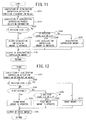
- the acceleration suppression amount operation unit 10H is configured to carry out the acceleration suppression amount operation process as illustrated in FIG. 11 at every predefined sampling time.
- step S210 the acceleration suppression amount operation unit 10H acquires the decision level of the obstacle as an acceleration suppression activation determination result from the acceleration suppression activation determination unit 10G, and processing goes to step S220.
- step S220 the acceleration suppression amount operation unit 10H acquires acceleration suppression process selection information.
- the acceleration suppression process selection information is an accelerator manipulation amount acquired from the accelerator manipulation amount operation unit 10F.
- step S230 the acceleration suppression amount operation unit 10H determines whether or not the decision level of the obstacle acquired in the above step S210 is Lv3. Then, when the decision level is Lv3, the processing goes to step S240. When the decision level is not Lv3, the processing goes to step S250 to be described later.
- step S240 the acceleration suppression amount operation unit 10H operates a second acceleration suppression amount to strongly activate the drive force limit control, and the processing goes to step S280 to be described later.
- the acceleration suppression amount is operated such that the throttle opening degree (acceleration instruction value) is not larger than a second limit value (for example, 0%) based on the accelerator manipulation amount acquired in the above step S220.
- step S250 the acceleration suppression amount operation unit 10H determines whether or not the decision level of the obstacle acquired in the above step S210 is either Lv2 or Lv1. Then, when the decision level is either Lv2 or Lv1, the processing goes to step S260.
- step S260 the acceleration suppression amount operation unit 10H operates a first acceleration suppression amount to weakly activate the drive force limit control, and the processing goes to step S280 to be described later.
- the acceleration suppression amount is operated such that the throttle opening degree (acceleration instruction value) is not larger than a first limit value (for example, 25 %) based on the accelerator manipulation amount acquired in the above step S220.
- step S250 when it is determined in step S250 that the decision level is Lv0, the processing goes to step S270.
- the acceleration suppression amount is set with "0" so that the drive force limit control should not be activated, and the processing goes to step S280.
- step S280 the acceleration suppression amount operation unit 10H outputs the acceleration suppression amount that has been operated to the target throttle opening degree operation unit 10I, and the acceleration suppression amount operation process ends.
- the target throttle opening degree operation unit 10I outputs the throttle opening degree ⁇ * that has been operated to the engine controller 16, and the engine controller 16 controls the engine that is a drive source so that the throttle opening degree should be the target throttle opening degree ⁇ *.
- FIG. 12 is a flow chart illustrative of a brake control amount operation process procedure to be carried out by the brake control amount operation unit 10J.
- step S310 the brake control amount operation unit 10J acquires the decision level of the obstacle as an acceleration suppression activation determination result from the acceleration suppression activation determination unit 10G, and processing goes to step S320.
- step S320 the brake control amount operation unit 10J determines whether or not the acceleration suppression activation determination result acquired from the acceleration suppression activation determination unit 10G is the acceleration suppression activation condition non-satisfied, that is to say, whether or not the decision level is Lv0. Then, when it is determined that the decision level is not Lv0, the processing goes to step S330. When it is determined that the decision level is Lv0, the processing goes to step S370 to be described later.
- step S330 the brake control amount operation unit 10J determines whether or not the distance between the vehicle MM and the obstacle falls within a short distance (for example, 50 cm). Then, when it falls within a short distance, the processing goes to step S340. When it does not fall within a short distance, the processing goes to step S350 to be described later.
- a short distance for example, 50 cm
- step S340 the brake control amount operation unit 10J operates a second brake amount to strongly activate the brake force control, and the processing goes to step S380 to be described later.
- the brake amount is operated such that the brake force (brake force instruction value) is the second brake force (corresponding to, for example, 0.5 G).
- step S350 the brake control amount operation unit 10J determines whether or not the decision level of the obstacle acquired in the above step S310 is either Lv3 or Lv2. Then, when the decision level is either Lv3 or Lv2, the processing goes to step S360.
- step S360 the brake control amount operation unit 10J operates the first brake amount to weakly activate the brake force control, and the processing goes to step S380 to be described later.
- the brake force is operated such that the brake force (brake force instruction value) is the first brake force (corresponding to 0.25 G, for example).
- step S350 when it is determined in step S350 that the decision level is Lv0, the processing goes to step S370.
- the control amount is set to "0" so that the brake force control should not be activated, and the processing goes to step S380.
- step S380 the brake control amount operation unit 10J outputs the control amount that has been operated to the brake controller 14, and the brake control amount operation process ends.
- the brake controller 14 controls the brake force such that the brake force generated by the brake device 12 should be a brake force operated by the brake control amount operation unit 10J.
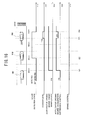
- FIG. 13 is a time chart illustrative of an example of the operation while the vehicle MM is traveling at a low speed under 15 km/h toward a wall.
- the travel controller 10 detects a wall for the first time as an obstacle existing ahead in the travel direction of the vehicle MM at a location that is 350 cm short of the wall (at a time point t1) (step S125a: Yes, step S125b: Yes in FIG. 5 )
- the distance between the vehicle MM and the obstacle at this time is acquired as the first-time detection distance La (step S125c).
- the first-time detection distance La is 350 cm.
- the distance between the vehicle MM and the obstacle at the time point t1 is acquired as the plural-number detection distance Lc (step S125h).
- the plural-number detection distance Lc is 350 cm.
- the height determination distance Lb cannot be acquired.
- the decision level of the obstacle cannot be determined. Accordingly, at the time point t1, the decision level remains as an initial state (Lv0).
- step S250 No in FIG. 11
- step S350 No in FIG. 12
- step S125d when the reflection wave having two peaks is received at a location that is 300 cm short of the wall (at a time point t2) as illustrated in the lower section of FIG. 6B , it is determined that the detected obstacle is a tall obstacle that is as tall as the vehicle or taller than the vehicle MM (step S125d: Yes). Then, the distance between the vehicle MM and the obstacle at this time is acquired as the height determination distance Lb (step S125e). In other words, the height determination distance La is 300 cm. Thus, the distance difference Ld between the first-time detection distance La and the height determination distance Lb is 50 cm (step S125f).
- the acceleration suppression amount is operated so that the throttle opening degree (acceleration instruction value) should not be higher than 0 % (step S240), and the engine is controlled based on the acceleration suppression amount that has been operated. Accordingly, the throttle opening degree is limited to 0 %.
- the strong drive force limit control the acceleration of the vehicle MM is suppressed with certainty.
- the weak brake force control for the purpose of warning is activated (step S360). Accordingly, the brake force corresponding to 0.25 G is generated, so that the vehicle speed can be decreased.
- step S330 when the driver continues the accelerator operation and the vehicle MM reaches a location that is 50 cm short of the wall at a time point t3 (step S330: Yes), the travel controller 10 activates the strong brake force control for the purpose of avoiding a contact with the wall (step S340). Accordingly, the brake force corresponding to 0.5 G is generated.
- the throttle opening degree is limited to 0 %, and in addition, the brake force corresponding to 0.25 G is generated. Further, when the vehicle MM approaches at a short distance (less than 50 cm) from the obstacle, the brake force corresponding to 0. 5 G is generated. Thus, even if a driver mistakenly manipulates between the accelerator pedal and the brake pedal in front of the wall, the acceleration of the vehicle MM is suppressed, so that a contact with the wall can be prevented.
- the decision level storage unit 10K is configured to store the decision level that has been set most recently before the ignition switch 8 is turned off, and the distance between the vehicle MM and the obstacle that has been set most recently before the ignition switch 8 is turned off.
- step S115: Yes the decision level of the obstacle stored in the decision level storage unit 10K is read (step S128a of FIG. 8 ). Also, in this situation, the sonars 1a to 1d detect the distance to the obstacle existing ahead in the travel direction of the vehicle MM (step S128b) .
- step S128d If the parked location of the vehicle MM while the ignition is off is not changed, when the obstacle existing ahead is a wall, the distance to the wall detected when the ignition is turned on is equal to the distance stored in the decision level storage unit 10K. Thus, since an error between the detection value and the storage value falls within an allowable range (step S128d: Yes), it is determined at a time point t5 immediately after the ignition is turned on that the decision level stored in the travel controller 10 is valid, the obstacle existing ahead in the travel direction is assumed to be a wall, and the decision level is set to Lv3 (step S128e).
- the throttle opening degree is limited to 0 % by the drive force limit control.
- the driver makes an accelerator manipulation to move backward with the shift position being set at the D range, in the situation where there is a wall ahead the vehicle MM, the acceleration of the vehicle MM can be suppressed with certainty.
- the decision level of the obstacle cannot be determined from the information on the obstacle existing ahead that has been detected in a parking state at the time when the ignition is turned on.
- the decision level of the obstacle stored in the decision level storage unit 10K makes it possible to understand the decision level of the obstacle promptly and appropriately at the time of turning on the ignition. Therefore, suited acceleration suppression control can be made.
- the engine is controlled such that the throttle opening degree depends on the driver's accelerator manipulation amount.
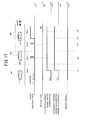
- the distance between the vehicle MM and the obstacle at this time is acquired as the first-time detection distance La (step S125c).
- the first-time detection distance La is 250 cm.
- the distance between the vehicle MM and the obstacle at the time point t12 is acquired as the plural-number detection distance Lc (step S125h).
- the plural-number detection distance Lc is 250 cm.
- the first-time detection distance La and the height determination distance Lb tend to be shorter.
- step S125m Yes
- step S125n the condition of Lv1 is satisfied
- the acceleration suppression amount is operated such that the throttle opening degree (acceleration instruction value) is not higher than 25 % at a time point t13 (step S260), the engine is controlled based on the acceleration suppression amount that has been operated. Accordingly, the throttle opening degree is limited to 25 %. Thus, the acceleration of the vehicle MM is suppressed by activating the weak drive force limit control. In addition, since the decision level is Lv1 (step S350: No), the brake force control is not activated (step S370).
- the travel controller 10 determines whether or not the obstacle is lost (step S125p).
- the obstacle is another vehicle, and in order to maintain the state where the obstacle is detected even in the short distance (step S125p: Yes), the decision level of the obstacle is raised from Lv1 to Lv3 (step S125q). Accordingly, the travel controller 10 activates the strong drive force limit control to limit the throttle opening degree to 0 % (step S240).
- step S330 since the vehicle MM moves to a location that is 50 cm short of another vehicle (step S330: Yes), the strong brake force control is activated for the purpose of avoiding a contact with another vehicle to generate the brake force corresponding to 0.5 G (step S340).
- the distance between the vehicle MM and the obstacle and the decision level of the obstacle at that time point are stored in the decision level storage unit 10K.
- step S128d No
- the validity of the decision level is determined.
- the stored decision level is made invalid so that the inappropriate acceleration suppression control can be prevented.
- FIG. 16 is a time chart illustrative of an operation when a step having the decision level that can be Lv1 is detected as an obstacle.
- step S125m when the obstacle is detected for the first time at a time point t22 at a location that is 250 cm short of the step and the height is determined at a time point t22 at a location that is 100 cm short of the step, the condition of Lv1 is satisfied (step S125m: Yes). It is determined that there is a high possibility that the detected obstacle is another vehicle, an edge stone, or a step, and the decision level is set to Lv1 (step S125n).
- the acceleration suppression amount is operated so that the throttle opening degree (acceleration instruction value) should not be higher than 25 % (step S260), and the engine is controlled based on the acceleration suppression amount that has been operated. Accordingly, the throttle opening degree is limited to 25 %. In this manner, the acceleration of the vehicle MM is suppressed by activating the weak drive force limit control. In addition, since the decision level is Lv1 (step S350: No), the brake force control is not activated (step S370).
- the travel controller 10 determines that the obstacle is lost in a short distance and lowers the decision level of the obstacle from Lv1 to Lv0 (step S125o). Accordingly, the travel controller 10 switches the drive force limit control to non-activation (step S270). In addition, the brake force control remains as non-activation (step S370).
- the decision level of the obstacle is Lv1 (or, Lv2). Even if it cannot be determined whether the obstacle is another vehicle, an edge stone, or a step, whether or not the obstacle is lost in a short distance is determined, so that the type of the obstacle can be determined. In other words, when the obstacle is not lost in a short distance, it is determined that there is a high possibility that the obstacle is another vehicle instead of a short obstacle such as an edge stone of a step and then the decision level is raised to Lv3.
- the strong drive force limit control and the strong brake force control can be activated together, so that a contact with another vehicle can be avoided appropriately.
- step S125m the conditions of Lv3 to Lv1 are not satisfied. It is determined that there is a high possibility that the detected obstacle is a natural thing or a thin object, and the decision level is set to Lv0 (step S125o).
- the engine is controlled such that the throttle opening degree depends on the driver's accelerator manipulation amount (step S270). Also, the brake force control is made to be non-activated (step S370).
- the decision level is maintained in Lv0, although the height determination is made or the obstacle is not lost in a short distance. Therefore, it is possible to prevent activation of the acceleration suppression control to avoid a natural thing with certainty.
- the distance between the vehicle MM and the obstacle, and the decision level of the obstacle at that time are stored in the decision level storage unit 10K.
- step S128d Yes
- step S128f it is determined that the decision level stored in the decision level storage unit 10K is valid and the obstacle existing ahead is assumed to be a natural thing to set the decision level to Lv0
- the surrounding environment recognition sensor 1 corresponds to an in-vehicle sonar
- the acceleration suppression amount operation unit 10H and the brake control amount operation unit 10J correspond to an acceleration suppression controller
- the decision level storage unit 10K corresponds to an obstacle type storage unit and an obstacle distance storage unit.
- step S125d corresponds to an obstacle height determination unit
- step S125i to step S125q correspond to an obstacle type determination unit
- step S128c to step S128f correspond to a validity determination unit.
- a control manner of the acceleration suppression control can be changed depending on the type of the obstacle.
- the magnitude of the control amount or activation/non-activation of the acceleration suppression control can be changed depending on the type of the obstacle.
Landscapes
- Engineering & Computer Science (AREA)
- Remote Sensing (AREA)
- Radar, Positioning & Navigation (AREA)
- Automation & Control Theory (AREA)
- Physics & Mathematics (AREA)
- Mechanical Engineering (AREA)
- Transportation (AREA)
- General Physics & Mathematics (AREA)
- Computer Networks & Wireless Communication (AREA)
- Acoustics & Sound (AREA)
- Chemical & Material Sciences (AREA)
- Combustion & Propulsion (AREA)
- Human Computer Interaction (AREA)
- Control Of Driving Devices And Active Controlling Of Vehicle (AREA)
- Traffic Control Systems (AREA)
- Measurement Of Velocity Or Position Using Acoustic Or Ultrasonic Waves (AREA)
Applications Claiming Priority (3)
| Application Number | Priority Date | Filing Date | Title |
|---|---|---|---|
| JP2012259183 | 2012-11-27 | ||
| JP2012259185 | 2012-11-27 | ||
| PCT/JP2013/006650 WO2014083787A1 (ja) | 2012-11-27 | 2013-11-12 | 車両用加速抑制装置及び車両用加速抑制方法 |
Publications (3)
| Publication Number | Publication Date |
|---|---|
| EP2927082A1 true EP2927082A1 (de) | 2015-10-07 |
| EP2927082A4 EP2927082A4 (de) | 2016-06-01 |
| EP2927082B1 EP2927082B1 (de) | 2017-08-02 |
Family
ID=50827450
Family Applications (1)
| Application Number | Title | Priority Date | Filing Date |
|---|---|---|---|
| EP13858357.0A Active EP2927082B1 (de) | 2012-11-27 | 2013-11-12 | Vorrichtung zur unterdrückung einer fahrzeugbeschleunigung und verfahren zur unterdrückung einer fahrzeugbeschleunigung |
Country Status (5)
| Country | Link |
|---|---|
| US (1) | US9409574B2 (de) |
| EP (1) | EP2927082B1 (de) |
| JP (1) | JP5846316B2 (de) |
| CN (1) | CN104755344B (de) |
| WO (1) | WO2014083787A1 (de) |
Cited By (6)
| Publication number | Priority date | Publication date | Assignee | Title |
|---|---|---|---|---|
| EP3093689A1 (de) * | 2015-05-12 | 2016-11-16 | Valeo Schalter und Sensoren GmbH | Verfahren zum betreiben eines fahrerassistenzsystems eines kraftfahrzeugs mit objekterkennung im nahbereich, fahrerassistenzsystem sowie kraftfahrzeug |
| EP3437947A1 (de) * | 2017-08-01 | 2019-02-06 | Toyota Jidosha Kabushiki Kaisha | Fahrassistenzsystem |
| EP3470285A3 (de) * | 2017-09-25 | 2019-07-24 | Toyota Jidosha Kabushiki Kaisha | Fahrunterstützungsvorrichtung |
| EP3786011A1 (de) * | 2019-09-02 | 2021-03-03 | Toyota Jidosha Kabushiki Kaisha | Vorrichtung zur unterstützung der kollisionsvermeidung |
| US11338799B2 (en) | 2018-04-16 | 2022-05-24 | Toyota Jidosha Kabushiki Kaisha | Driving support apparatus |
| EP4371836A1 (de) * | 2022-11-15 | 2024-05-22 | Suzuki Motor Corporation | Vorrichtung zur unterdrückung des motordrehmoments eines fahrzeugs |
Families Citing this family (46)
| Publication number | Priority date | Publication date | Assignee | Title |
|---|---|---|---|---|
| CN104781123B (zh) * | 2012-11-27 | 2016-08-24 | 日产自动车株式会社 | 车辆用加速抑制装置以及车辆用加速抑制方法 |
| WO2014083819A1 (ja) * | 2012-11-27 | 2014-06-05 | 日産自動車株式会社 | 車両用加速抑制装置及び車両用加速抑制方法 |
| JP6340713B2 (ja) * | 2014-03-04 | 2018-06-13 | パナソニックIpマネジメント株式会社 | 障害物検知装置 |
| DE102014111124A1 (de) * | 2014-08-05 | 2016-02-25 | Valeo Schalter Und Sensoren Gmbh | Verfahren zum Erkennen zumindest eines Objekts in einem Umgebungsbereich eines Kraftfahrzeugs mittels eines Ultraschalllsensors, Fahrerassistenzsystem sowie Kraftfahrzeug |
| JP6403055B2 (ja) * | 2014-10-03 | 2018-10-10 | パナソニックIpマネジメント株式会社 | 物体検知装置 |
| DE102014114999A1 (de) * | 2014-10-15 | 2016-04-21 | Valeo Schalter Und Sensoren Gmbh | Verfahren zum Erfassen zumindest eines Objekts in einem Umgebungsbereich eines Kraftfahrzeugs, Fahrerassistenzsystem sowie Kraftfahrzeug |
| JP6528382B2 (ja) * | 2014-10-22 | 2019-06-12 | 株式会社Soken | 車両用障害物検出装置 |
| JP6557958B2 (ja) * | 2014-10-22 | 2019-08-14 | 株式会社Soken | 車両用障害物検出装置 |
| JP6075575B2 (ja) * | 2015-03-02 | 2017-02-08 | マツダ株式会社 | 車両の制御装置 |
| JP6156655B2 (ja) * | 2015-03-02 | 2017-07-05 | マツダ株式会社 | 車両の制御装置 |
| JP6198019B2 (ja) * | 2015-03-02 | 2017-09-20 | マツダ株式会社 | 車両の制御装置 |
| JP6300181B2 (ja) | 2015-08-25 | 2018-03-28 | マツダ株式会社 | 車両の制御装置 |
| US9764718B2 (en) * | 2015-09-15 | 2017-09-19 | International Business Machines Corporation | Management of vehicle braking |
| JP6580982B2 (ja) * | 2015-12-25 | 2019-09-25 | 日立建機株式会社 | オフロードダンプトラック及び障害物判別装置 |
| WO2018047295A1 (ja) | 2016-09-09 | 2018-03-15 | 三菱電機株式会社 | 駐車支援装置 |
| CN108860143B (zh) * | 2017-05-12 | 2020-06-16 | 法雷奥汽车内部控制(深圳)有限公司 | 用于控制自动驾驶的车辆的方法和车辆控制系统 |
| JP6900894B2 (ja) * | 2017-12-20 | 2021-07-07 | 株式会社デンソー | 物体検知装置 |
| JP7087432B2 (ja) * | 2018-02-16 | 2022-06-21 | マツダ株式会社 | 車両の制御装置 |
| CN108819928B (zh) * | 2018-05-25 | 2019-10-18 | 北京车和家信息技术有限公司 | 控制车辆运行的方法及装置 |
| JP7151406B2 (ja) * | 2018-11-20 | 2022-10-12 | トヨタ自動車株式会社 | 車両制御装置 |
| JP7303624B2 (ja) * | 2018-12-17 | 2023-07-05 | ロベルト・ボッシュ・ゲゼルシャフト・ミト・ベシュレンクテル・ハフツング | 車両の制御装置 |
| JP7196627B2 (ja) * | 2019-01-21 | 2022-12-27 | 株式会社デンソー | 車両制御装置 |
| JP7218626B2 (ja) * | 2019-03-13 | 2023-02-07 | トヨタ自動車株式会社 | 車両の走行制御装置 |
| JP2021011235A (ja) * | 2019-07-09 | 2021-02-04 | トヨタ自動車株式会社 | 車両制御システム、車両制御装置、車両制御方法、及び車両制御プログラム |
| JP7343837B2 (ja) * | 2019-10-03 | 2023-09-13 | トヨタ自動車株式会社 | 運転支援装置 |
| JP7392436B2 (ja) | 2019-12-04 | 2023-12-06 | 株式会社デンソー | 障害物検知装置 |
| JP7318537B2 (ja) * | 2020-01-09 | 2023-08-01 | トヨタ自動車株式会社 | 運転支援装置 |
| JP7084443B2 (ja) * | 2020-03-19 | 2022-06-14 | 本田技研工業株式会社 | 車両制御装置および車両 |
| WO2021199651A1 (ja) * | 2020-03-31 | 2021-10-07 | パナソニックIpマネジメント株式会社 | 物体検知装置および運転支援システム |
| JP2021170232A (ja) * | 2020-04-15 | 2021-10-28 | 株式会社Subaru | 車両の運転支援装置 |
| JP7600549B2 (ja) | 2020-06-12 | 2024-12-17 | 株式会社アイシン | 運転支援装置 |
| CN116134500B (zh) * | 2020-08-03 | 2025-10-28 | 松下汽车电子系统株式会社 | 车辆和障碍物探测装置 |
| US12204018B2 (en) * | 2020-09-04 | 2025-01-21 | Qualcomm Incorporated | Target detection using multiple radar waveforms |
| JP7559570B2 (ja) | 2021-01-22 | 2024-10-02 | 株式会社Soken | 物体検知装置 |
| JPWO2022239470A1 (de) * | 2021-05-13 | 2022-11-17 | ||
| JP7663033B2 (ja) * | 2021-06-18 | 2025-04-16 | トヨタ自動車株式会社 | 車両制御装置 |
| US20230087119A1 (en) * | 2021-09-22 | 2023-03-23 | Motional Ad Llc | Switchable wheel view mirrors |
| JP7616513B2 (ja) * | 2021-12-17 | 2025-01-17 | トヨタ自動車株式会社 | 運転支援装置、運転支援方法及びプログラム |
| JP7776367B2 (ja) * | 2022-03-28 | 2025-11-26 | 本田技研工業株式会社 | 支援装置、車両、プログラム、及び支援方法 |
| JP7421613B1 (ja) * | 2022-08-31 | 2024-01-24 | 本田技研工業株式会社 | 車両制御システム |
| JP7455170B2 (ja) * | 2022-08-31 | 2024-03-25 | 本田技研工業株式会社 | 車両制御装置 |
| CN116794659A (zh) * | 2022-10-12 | 2023-09-22 | 深圳市导向视觉技术有限公司 | 一种超声数据读取方法、读取装置、计算机设备及存储介质 |
| KR20240111214A (ko) * | 2023-01-09 | 2024-07-16 | 현대자동차주식회사 | 인접 센서의 신호를 이용한 센서 무결성 결정 장치 및 방법 |
| CN116142189A (zh) * | 2023-04-25 | 2023-05-23 | 浙江吉利控股集团有限公司 | 车辆及其控制方法、计算机可读存储介质 |
| JP2025070189A (ja) * | 2023-10-19 | 2025-05-02 | 株式会社デンソー | 制御装置、制御方法、および制御プログラム |
| KR20260023735A (ko) * | 2024-08-12 | 2026-02-20 | 현대자동차주식회사 | 차량용 페달 오조작 안전 보조 시스템 및 방법 |
Family Cites Families (24)
| Publication number | Priority date | Publication date | Assignee | Title |
|---|---|---|---|---|
| JP3179635B2 (ja) * | 1993-08-05 | 2001-06-25 | マツダ株式会社 | 自動車の障害物検出装置 |
| JP3143063B2 (ja) * | 1996-06-07 | 2001-03-07 | 株式会社日立製作所 | 移動体の走行制御装置 |
| DE19745127A1 (de) | 1997-10-13 | 1999-04-15 | Daimler Chrysler Ag | Vorrichtung und Verfahren zum Verhindern von Kollisionen eines Fahrzeugs mit einem Hindernis beim Einparken des Fahrzeugs |
| US6259992B1 (en) * | 1998-06-03 | 2001-07-10 | Honda Giken Kogyo Kabushiki Kaisha | Vehicle safety running control system |
| JP3765687B2 (ja) * | 1998-06-03 | 2006-04-12 | 本田技研工業株式会社 | 車両走行安全装置 |
| JP3966673B2 (ja) * | 1999-10-26 | 2007-08-29 | 本田技研工業株式会社 | 物体検知装置および車両の走行安全装置 |
| EP1970274B1 (de) * | 2000-08-04 | 2014-01-08 | Meggitt Aerospace Limited | Bremsenzustandsüberwachung |
| JP2003072416A (ja) * | 2001-08-31 | 2003-03-12 | Denso Corp | 車両用走行制御装置 |
| JP3915746B2 (ja) * | 2003-07-01 | 2007-05-16 | 日産自動車株式会社 | 車両用外界認識装置 |
| DE10347980B4 (de) | 2003-08-19 | 2021-06-10 | Volkswagen Ag | Steuerung für ein Kraftfahrzeug |
| US6944544B1 (en) * | 2004-09-10 | 2005-09-13 | Ford Global Technologies, Llc | Adaptive vehicle safety system for collision compatibility |
| ES2259543B1 (es) * | 2005-02-04 | 2007-11-16 | Fico Mirrors, S.A. | Sistema para la deteccion de objetos en una zona exterior frontal de un vehiculos, aplicable a vehiculos industriales. |
| US7729857B2 (en) * | 2005-08-18 | 2010-06-01 | Gm Global Technology Operations, Inc. | System for and method of detecting a collision and predicting a vehicle path |
| US20070080793A1 (en) * | 2005-10-11 | 2007-04-12 | Blase Gaynell L | Auto brake alert |
| JP4169065B2 (ja) * | 2006-02-13 | 2008-10-22 | 株式会社デンソー | 車両制御装置 |
| JP5071885B2 (ja) * | 2008-03-18 | 2012-11-14 | マツダ株式会社 | 車両の障害物検知装置 |
| JP4453775B2 (ja) * | 2008-06-27 | 2010-04-21 | トヨタ自動車株式会社 | 物体検出装置 |
| JP2010164356A (ja) | 2009-01-14 | 2010-07-29 | Clarion Co Ltd | 車両用周辺監視装置 |
| JP2011109170A (ja) | 2009-11-12 | 2011-06-02 | Clarion Co Ltd | 車両周囲表示装置、車両周囲表示方法 |
| DE102010031038A1 (de) * | 2010-07-07 | 2012-01-12 | Robert Bosch Gmbh | Verfahren zur Unterstützung eines Fahrers eines Kraftfahrzeuges |
| JP2012144157A (ja) * | 2011-01-12 | 2012-08-02 | Toyota Motor Corp | 走行支援装置 |
| US8666656B2 (en) | 2011-03-04 | 2014-03-04 | Mitsubishi Electric Corporation | Object detection device and navigation device |
| TWI455073B (zh) * | 2011-12-14 | 2014-10-01 | Ind Tech Res Inst | 車用特定路況警示裝置、系統與方法 |
| US10166980B2 (en) * | 2013-02-28 | 2019-01-01 | Ford Global Technologies, Llc | Vehicle mass computation |
-
2013
- 2013-11-12 CN CN201380054955.9A patent/CN104755344B/zh active Active
- 2013-11-12 EP EP13858357.0A patent/EP2927082B1/de active Active
- 2013-11-12 WO PCT/JP2013/006650 patent/WO2014083787A1/ja not_active Ceased
- 2013-11-12 JP JP2014549790A patent/JP5846316B2/ja active Active
- 2013-11-12 US US14/441,239 patent/US9409574B2/en active Active
Cited By (13)
| Publication number | Priority date | Publication date | Assignee | Title |
|---|---|---|---|---|
| EP3093689A1 (de) * | 2015-05-12 | 2016-11-16 | Valeo Schalter und Sensoren GmbH | Verfahren zum betreiben eines fahrerassistenzsystems eines kraftfahrzeugs mit objekterkennung im nahbereich, fahrerassistenzsystem sowie kraftfahrzeug |
| EP3437947A1 (de) * | 2017-08-01 | 2019-02-06 | Toyota Jidosha Kabushiki Kaisha | Fahrassistenzsystem |
| AU2018206842B2 (en) * | 2017-08-01 | 2020-06-18 | Toyota Jidosha Kabushiki Kaisha | Driving assistance system |
| US11932265B2 (en) | 2017-08-01 | 2024-03-19 | Toyota Jidosha Kabushiki Kaisha | Driving assistance system |
| US11214267B2 (en) | 2017-08-01 | 2022-01-04 | Toyota Jidosha Kabushiki Kaisha | Driving assistance system |
| EP3470285A3 (de) * | 2017-09-25 | 2019-07-24 | Toyota Jidosha Kabushiki Kaisha | Fahrunterstützungsvorrichtung |
| US10829128B2 (en) | 2017-09-25 | 2020-11-10 | Toyota Jidosha Kabushiki Kaisha | Driving support device |
| US11338799B2 (en) | 2018-04-16 | 2022-05-24 | Toyota Jidosha Kabushiki Kaisha | Driving support apparatus |
| CN112519734A (zh) * | 2019-09-02 | 2021-03-19 | 丰田自动车株式会社 | 碰撞避免支援装置 |
| EP4071009A1 (de) * | 2019-09-02 | 2022-10-12 | Toyota Jidosha Kabushiki Kaisha | Kollisionsvermeidungsunterstützungsvorrichtung |
| CN112519734B (zh) * | 2019-09-02 | 2022-11-11 | 丰田自动车株式会社 | 碰撞避免支援装置 |
| EP3786011A1 (de) * | 2019-09-02 | 2021-03-03 | Toyota Jidosha Kabushiki Kaisha | Vorrichtung zur unterstützung der kollisionsvermeidung |
| EP4371836A1 (de) * | 2022-11-15 | 2024-05-22 | Suzuki Motor Corporation | Vorrichtung zur unterdrückung des motordrehmoments eines fahrzeugs |
Also Published As
| Publication number | Publication date |
|---|---|
| CN104755344A (zh) | 2015-07-01 |
| EP2927082B1 (de) | 2017-08-02 |
| US20150307091A1 (en) | 2015-10-29 |
| WO2014083787A1 (ja) | 2014-06-05 |
| EP2927082A4 (de) | 2016-06-01 |
| JP5846316B2 (ja) | 2016-01-20 |
| CN104755344B (zh) | 2016-05-04 |
| JPWO2014083787A1 (ja) | 2017-01-05 |
| US9409574B2 (en) | 2016-08-09 |
Similar Documents
| Publication | Publication Date | Title |
|---|---|---|
| EP2927082B1 (de) | Vorrichtung zur unterdrückung einer fahrzeugbeschleunigung und verfahren zur unterdrückung einer fahrzeugbeschleunigung | |
| US9896129B2 (en) | Driving assistant system of vehicle and method for controlling the same | |
| US10571564B2 (en) | Method for detecting at least one object in a surrounding area of a motor vehicle, driver assistance system and motor vehicle | |
| US8310376B2 (en) | Object classification method, parking assistance method, and parking assistance system | |
| US9714034B2 (en) | Vehicle control device | |
| US9358984B2 (en) | Driver intention estimation arrangement | |
| EP2990273A1 (de) | Parkassistent | |
| US20100289660A1 (en) | Motor vehicle having an environmental sensor and method for operating the environmental sensor | |
| JP6512194B2 (ja) | 自動運転車両の制御システム及び制御方法 | |
| US20200341111A1 (en) | Method and apparatus for radar detection confirmation | |
| WO2019155778A1 (ja) | 衝突回避支援装置、プログラム、衝突回避支援方法 | |
| JP2011123535A (ja) | 障害物検出装置 | |
| WO2020137747A1 (ja) | 運転支援装置 | |
| JP5560371B2 (ja) | 車両用物体検出装置 | |
| JP2008037361A (ja) | 障害物認識装置 | |
| JP6060647B2 (ja) | 車両用速度制御装置および車両用速度制御方法 | |
| JP6455380B2 (ja) | 車両の運転支援装置、及び運転支援方法 | |
| JP2006293539A (ja) | 走行支援装置 | |
| JP2011047694A (ja) | 物体検出装置 | |
| JP2014100957A (ja) | 駐車支援装置及び制御装置 | |
| US20220001862A1 (en) | Obstacle avoidance control device, vehicle, obstacle avoidance control method, and non-transitory computer-readable recording medium storing obstacle avoidance control program | |
| US12525129B2 (en) | Following vehicle approach notification device | |
| US20240326788A1 (en) | Driver assistance apparatus | |
| JP2012250674A (ja) | 車両用加速抑制装置及び車両用加速抑制方法 | |
| CN110857088A (zh) | 目标识别方法、装置、计算机可读存储介质及车辆 |
Legal Events
| Date | Code | Title | Description |
|---|---|---|---|
| PUAI | Public reference made under article 153(3) epc to a published international application that has entered the european phase |
Free format text: ORIGINAL CODE: 0009012 |
|
| 17P | Request for examination filed |
Effective date: 20150520 |
|
| AK | Designated contracting states |
Kind code of ref document: A1 Designated state(s): AL AT BE BG CH CY CZ DE DK EE ES FI FR GB GR HR HU IE IS IT LI LT LU LV MC MK MT NL NO PL PT RO RS SE SI SK SM TR |
|
| AX | Request for extension of the european patent |
Extension state: BA ME |
|
| DAX | Request for extension of the european patent (deleted) | ||
| RA4 | Supplementary search report drawn up and despatched (corrected) |
Effective date: 20160504 |
|
| RIC1 | Information provided on ipc code assigned before grant |
Ipc: B60T 7/12 20060101ALI20160428BHEP Ipc: B60W 30/09 20120101AFI20160428BHEP |
|
| GRAP | Despatch of communication of intention to grant a patent |
Free format text: ORIGINAL CODE: EPIDOSNIGR1 |
|
| INTG | Intention to grant announced |
Effective date: 20170512 |
|
| GRAS | Grant fee paid |
Free format text: ORIGINAL CODE: EPIDOSNIGR3 |
|
| GRAA | (expected) grant |
Free format text: ORIGINAL CODE: 0009210 |
|
| AK | Designated contracting states |
Kind code of ref document: B1 Designated state(s): AL AT BE BG CH CY CZ DE DK EE ES FI FR GB GR HR HU IE IS IT LI LT LU LV MC MK MT NL NO PL PT RO RS SE SI SK SM TR |
|
| REG | Reference to a national code |
Ref country code: CH Ref legal event code: EP Ref country code: AT Ref legal event code: REF Ref document number: 914090 Country of ref document: AT Kind code of ref document: T Effective date: 20170815 |
|
| REG | Reference to a national code |
Ref country code: IE Ref legal event code: FG4D |
|
| REG | Reference to a national code |
Ref country code: DE Ref legal event code: R096 Ref document number: 602013024585 Country of ref document: DE |
|
| REG | Reference to a national code |
Ref country code: FR Ref legal event code: PLFP Year of fee payment: 5 |
|
| REG | Reference to a national code |
Ref country code: NL Ref legal event code: MP Effective date: 20170802 |
|
| REG | Reference to a national code |
Ref country code: AT Ref legal event code: MK05 Ref document number: 914090 Country of ref document: AT Kind code of ref document: T Effective date: 20170802 |
|
| REG | Reference to a national code |
Ref country code: LT Ref legal event code: MG4D |
|
| PG25 | Lapsed in a contracting state [announced via postgrant information from national office to epo] |
Ref country code: SE Free format text: LAPSE BECAUSE OF FAILURE TO SUBMIT A TRANSLATION OF THE DESCRIPTION OR TO PAY THE FEE WITHIN THE PRESCRIBED TIME-LIMIT Effective date: 20170802 Ref country code: FI Free format text: LAPSE BECAUSE OF FAILURE TO SUBMIT A TRANSLATION OF THE DESCRIPTION OR TO PAY THE FEE WITHIN THE PRESCRIBED TIME-LIMIT Effective date: 20170802 Ref country code: HR Free format text: LAPSE BECAUSE OF FAILURE TO SUBMIT A TRANSLATION OF THE DESCRIPTION OR TO PAY THE FEE WITHIN THE PRESCRIBED TIME-LIMIT Effective date: 20170802 Ref country code: NO Free format text: LAPSE BECAUSE OF FAILURE TO SUBMIT A TRANSLATION OF THE DESCRIPTION OR TO PAY THE FEE WITHIN THE PRESCRIBED TIME-LIMIT Effective date: 20171102 Ref country code: LT Free format text: LAPSE BECAUSE OF FAILURE TO SUBMIT A TRANSLATION OF THE DESCRIPTION OR TO PAY THE FEE WITHIN THE PRESCRIBED TIME-LIMIT Effective date: 20170802 Ref country code: NL Free format text: LAPSE BECAUSE OF FAILURE TO SUBMIT A TRANSLATION OF THE DESCRIPTION OR TO PAY THE FEE WITHIN THE PRESCRIBED TIME-LIMIT Effective date: 20170802 Ref country code: AT Free format text: LAPSE BECAUSE OF FAILURE TO SUBMIT A TRANSLATION OF THE DESCRIPTION OR TO PAY THE FEE WITHIN THE PRESCRIBED TIME-LIMIT Effective date: 20170802 |
|
| PG25 | Lapsed in a contracting state [announced via postgrant information from national office to epo] |
Ref country code: IS Free format text: LAPSE BECAUSE OF FAILURE TO SUBMIT A TRANSLATION OF THE DESCRIPTION OR TO PAY THE FEE WITHIN THE PRESCRIBED TIME-LIMIT Effective date: 20171202 Ref country code: PL Free format text: LAPSE BECAUSE OF FAILURE TO SUBMIT A TRANSLATION OF THE DESCRIPTION OR TO PAY THE FEE WITHIN THE PRESCRIBED TIME-LIMIT Effective date: 20170802 Ref country code: GR Free format text: LAPSE BECAUSE OF FAILURE TO SUBMIT A TRANSLATION OF THE DESCRIPTION OR TO PAY THE FEE WITHIN THE PRESCRIBED TIME-LIMIT Effective date: 20171103 Ref country code: BG Free format text: LAPSE BECAUSE OF FAILURE TO SUBMIT A TRANSLATION OF THE DESCRIPTION OR TO PAY THE FEE WITHIN THE PRESCRIBED TIME-LIMIT Effective date: 20171102 Ref country code: ES Free format text: LAPSE BECAUSE OF FAILURE TO SUBMIT A TRANSLATION OF THE DESCRIPTION OR TO PAY THE FEE WITHIN THE PRESCRIBED TIME-LIMIT Effective date: 20170802 Ref country code: LV Free format text: LAPSE BECAUSE OF FAILURE TO SUBMIT A TRANSLATION OF THE DESCRIPTION OR TO PAY THE FEE WITHIN THE PRESCRIBED TIME-LIMIT Effective date: 20170802 Ref country code: RS Free format text: LAPSE BECAUSE OF FAILURE TO SUBMIT A TRANSLATION OF THE DESCRIPTION OR TO PAY THE FEE WITHIN THE PRESCRIBED TIME-LIMIT Effective date: 20170802 |
|
| PG25 | Lapsed in a contracting state [announced via postgrant information from national office to epo] |
Ref country code: CZ Free format text: LAPSE BECAUSE OF FAILURE TO SUBMIT A TRANSLATION OF THE DESCRIPTION OR TO PAY THE FEE WITHIN THE PRESCRIBED TIME-LIMIT Effective date: 20170802 Ref country code: RO Free format text: LAPSE BECAUSE OF FAILURE TO SUBMIT A TRANSLATION OF THE DESCRIPTION OR TO PAY THE FEE WITHIN THE PRESCRIBED TIME-LIMIT Effective date: 20170802 Ref country code: DK Free format text: LAPSE BECAUSE OF FAILURE TO SUBMIT A TRANSLATION OF THE DESCRIPTION OR TO PAY THE FEE WITHIN THE PRESCRIBED TIME-LIMIT Effective date: 20170802 |
|
| REG | Reference to a national code |
Ref country code: DE Ref legal event code: R097 Ref document number: 602013024585 Country of ref document: DE |
|
| PG25 | Lapsed in a contracting state [announced via postgrant information from national office to epo] |
Ref country code: SM Free format text: LAPSE BECAUSE OF FAILURE TO SUBMIT A TRANSLATION OF THE DESCRIPTION OR TO PAY THE FEE WITHIN THE PRESCRIBED TIME-LIMIT Effective date: 20170802 Ref country code: EE Free format text: LAPSE BECAUSE OF FAILURE TO SUBMIT A TRANSLATION OF THE DESCRIPTION OR TO PAY THE FEE WITHIN THE PRESCRIBED TIME-LIMIT Effective date: 20170802 Ref country code: IT Free format text: LAPSE BECAUSE OF FAILURE TO SUBMIT A TRANSLATION OF THE DESCRIPTION OR TO PAY THE FEE WITHIN THE PRESCRIBED TIME-LIMIT Effective date: 20170802 Ref country code: SK Free format text: LAPSE BECAUSE OF FAILURE TO SUBMIT A TRANSLATION OF THE DESCRIPTION OR TO PAY THE FEE WITHIN THE PRESCRIBED TIME-LIMIT Effective date: 20170802 |
|
| PLBE | No opposition filed within time limit |
Free format text: ORIGINAL CODE: 0009261 |
|
| STAA | Information on the status of an ep patent application or granted ep patent |
Free format text: STATUS: NO OPPOSITION FILED WITHIN TIME LIMIT |
|
| PG25 | Lapsed in a contracting state [announced via postgrant information from national office to epo] |
Ref country code: MC Free format text: LAPSE BECAUSE OF FAILURE TO SUBMIT A TRANSLATION OF THE DESCRIPTION OR TO PAY THE FEE WITHIN THE PRESCRIBED TIME-LIMIT Effective date: 20170802 |
|
| 26N | No opposition filed |
Effective date: 20180503 |
|
| PG25 | Lapsed in a contracting state [announced via postgrant information from national office to epo] |
Ref country code: CH Free format text: LAPSE BECAUSE OF NON-PAYMENT OF DUE FEES Effective date: 20171130 Ref country code: LI Free format text: LAPSE BECAUSE OF NON-PAYMENT OF DUE FEES Effective date: 20171130 |
|
| PG25 | Lapsed in a contracting state [announced via postgrant information from national office to epo] |
Ref country code: SI Free format text: LAPSE BECAUSE OF FAILURE TO SUBMIT A TRANSLATION OF THE DESCRIPTION OR TO PAY THE FEE WITHIN THE PRESCRIBED TIME-LIMIT Effective date: 20170802 Ref country code: LU Free format text: LAPSE BECAUSE OF NON-PAYMENT OF DUE FEES Effective date: 20171112 |
|
| REG | Reference to a national code |
Ref country code: BE Ref legal event code: MM Effective date: 20171130 |
|
| REG | Reference to a national code |
Ref country code: IE Ref legal event code: MM4A |
|
| PG25 | Lapsed in a contracting state [announced via postgrant information from national office to epo] |
Ref country code: MT Free format text: LAPSE BECAUSE OF NON-PAYMENT OF DUE FEES Effective date: 20171112 |
|
| REG | Reference to a national code |
Ref country code: FR Ref legal event code: PLFP Year of fee payment: 6 |
|
| PG25 | Lapsed in a contracting state [announced via postgrant information from national office to epo] |
Ref country code: IE Free format text: LAPSE BECAUSE OF NON-PAYMENT OF DUE FEES Effective date: 20171112 |
|
| PG25 | Lapsed in a contracting state [announced via postgrant information from national office to epo] |
Ref country code: BE Free format text: LAPSE BECAUSE OF NON-PAYMENT OF DUE FEES Effective date: 20171130 |
|
| PG25 | Lapsed in a contracting state [announced via postgrant information from national office to epo] |
Ref country code: HU Free format text: LAPSE BECAUSE OF FAILURE TO SUBMIT A TRANSLATION OF THE DESCRIPTION OR TO PAY THE FEE WITHIN THE PRESCRIBED TIME-LIMIT; INVALID AB INITIO Effective date: 20131112 |
|
| PG25 | Lapsed in a contracting state [announced via postgrant information from national office to epo] |
Ref country code: CY Free format text: LAPSE BECAUSE OF FAILURE TO SUBMIT A TRANSLATION OF THE DESCRIPTION OR TO PAY THE FEE WITHIN THE PRESCRIBED TIME-LIMIT Effective date: 20170802 |
|
| PG25 | Lapsed in a contracting state [announced via postgrant information from national office to epo] |
Ref country code: MK Free format text: LAPSE BECAUSE OF FAILURE TO SUBMIT A TRANSLATION OF THE DESCRIPTION OR TO PAY THE FEE WITHIN THE PRESCRIBED TIME-LIMIT Effective date: 20170802 |
|
| PG25 | Lapsed in a contracting state [announced via postgrant information from national office to epo] |
Ref country code: TR Free format text: LAPSE BECAUSE OF FAILURE TO SUBMIT A TRANSLATION OF THE DESCRIPTION OR TO PAY THE FEE WITHIN THE PRESCRIBED TIME-LIMIT Effective date: 20170802 |
|
| PG25 | Lapsed in a contracting state [announced via postgrant information from national office to epo] |
Ref country code: PT Free format text: LAPSE BECAUSE OF FAILURE TO SUBMIT A TRANSLATION OF THE DESCRIPTION OR TO PAY THE FEE WITHIN THE PRESCRIBED TIME-LIMIT Effective date: 20170802 |
|
| PG25 | Lapsed in a contracting state [announced via postgrant information from national office to epo] |
Ref country code: AL Free format text: LAPSE BECAUSE OF FAILURE TO SUBMIT A TRANSLATION OF THE DESCRIPTION OR TO PAY THE FEE WITHIN THE PRESCRIBED TIME-LIMIT Effective date: 20170802 |
|
| PGFP | Annual fee paid to national office [announced via postgrant information from national office to epo] |
Ref country code: DE Payment date: 20251022 Year of fee payment: 13 |
|
| PGFP | Annual fee paid to national office [announced via postgrant information from national office to epo] |
Ref country code: GB Payment date: 20251023 Year of fee payment: 13 |
|
| PGFP | Annual fee paid to national office [announced via postgrant information from national office to epo] |
Ref country code: FR Payment date: 20251023 Year of fee payment: 13 |