EP2933257B1 - Epoxidverbindung mit einer alkoxysilylgruppe, verfahren zur herstellung davon, zusammensetzung damit, gehärtetes produkt daraus und verwendung davon - Google Patents
Epoxidverbindung mit einer alkoxysilylgruppe, verfahren zur herstellung davon, zusammensetzung damit, gehärtetes produkt daraus und verwendung davon Download PDFInfo
- Publication number
- EP2933257B1 EP2933257B1 EP13837901.1A EP13837901A EP2933257B1 EP 2933257 B1 EP2933257 B1 EP 2933257B1 EP 13837901 A EP13837901 A EP 13837901A EP 2933257 B1 EP2933257 B1 EP 2933257B1
- Authority
- EP
- European Patent Office
- Prior art keywords
- group
- formulae
- epoxy
- formula
- epoxy compound
- Prior art date
- Legal status (The legal status is an assumption and is not a legal conclusion. Google has not performed a legal analysis and makes no representation as to the accuracy of the status listed.)
- Active
Links
- 0 C*c1ccc(C)cc1 Chemical compound C*c1ccc(C)cc1 0.000 description 21
- MGNZXYYWBUKAII-UHFFFAOYSA-N C1C=CC=CC1 Chemical compound C1C=CC=CC1 MGNZXYYWBUKAII-UHFFFAOYSA-N 0.000 description 1
- LCSNMSBGUMDVRK-UHFFFAOYSA-N CCC1C=CC(C)=CC1 Chemical compound CCC1C=CC(C)=CC1 LCSNMSBGUMDVRK-UHFFFAOYSA-N 0.000 description 1
- JXFVMNFKABWTHD-UHFFFAOYSA-N CCCc1ccc(C)cc1 Chemical compound CCCc1ccc(C)cc1 JXFVMNFKABWTHD-UHFFFAOYSA-N 0.000 description 1
- HILAULICMJUOLK-UHFFFAOYSA-N CCc1cc(CC)cc(C)c1 Chemical compound CCc1cc(CC)cc(C)c1 HILAULICMJUOLK-UHFFFAOYSA-N 0.000 description 1
- JWROSYDRVQHIRI-UHFFFAOYSA-N NC(NC(NC1OCC1)=O)=O Chemical compound NC(NC(NC1OCC1)=O)=O JWROSYDRVQHIRI-UHFFFAOYSA-N 0.000 description 1
Images


Classifications
-
- C—CHEMISTRY; METALLURGY
- C08—ORGANIC MACROMOLECULAR COMPOUNDS; THEIR PREPARATION OR CHEMICAL WORKING-UP; COMPOSITIONS BASED THEREON
- C08L—COMPOSITIONS OF MACROMOLECULAR COMPOUNDS
- C08L63/00—Compositions of epoxy resins; Compositions of derivatives of epoxy resins
-
- C—CHEMISTRY; METALLURGY
- C07—ORGANIC CHEMISTRY
- C07F—ACYCLIC, CARBOCYCLIC OR HETEROCYCLIC COMPOUNDS CONTAINING ELEMENTS OTHER THAN CARBON, HYDROGEN, HALOGEN, OXYGEN, NITROGEN, SULFUR, SELENIUM OR TELLURIUM
- C07F7/00—Compounds containing elements of Groups 4 or 14 of the Periodic Table
- C07F7/02—Silicon compounds
- C07F7/08—Compounds having one or more C—Si linkages
- C07F7/10—Compounds having one or more C—Si linkages containing nitrogen having a Si-N linkage
-
- C—CHEMISTRY; METALLURGY
- C08—ORGANIC MACROMOLECULAR COMPOUNDS; THEIR PREPARATION OR CHEMICAL WORKING-UP; COMPOSITIONS BASED THEREON
- C08K—Use of inorganic or non-macromolecular organic substances as compounding ingredients
- C08K7/00—Use of ingredients characterised by shape
- C08K7/02—Fibres or whiskers
- C08K7/04—Fibres or whiskers inorganic
- C08K7/14—Glass
-
- C—CHEMISTRY; METALLURGY
- C07—ORGANIC CHEMISTRY
- C07F—ACYCLIC, CARBOCYCLIC OR HETEROCYCLIC COMPOUNDS CONTAINING ELEMENTS OTHER THAN CARBON, HYDROGEN, HALOGEN, OXYGEN, NITROGEN, SULFUR, SELENIUM OR TELLURIUM
- C07F7/00—Compounds containing elements of Groups 4 or 14 of the Periodic Table
- C07F7/02—Silicon compounds
- C07F7/08—Compounds having one or more C—Si linkages
- C07F7/18—Compounds having one or more C—Si linkages as well as one or more C—O—Si linkages
- C07F7/1804—Compounds having Si-O-C linkages
-
- C—CHEMISTRY; METALLURGY
- C08—ORGANIC MACROMOLECULAR COMPOUNDS; THEIR PREPARATION OR CHEMICAL WORKING-UP; COMPOSITIONS BASED THEREON
- C08G—MACROMOLECULAR COMPOUNDS OBTAINED OTHERWISE THAN BY REACTIONS ONLY INVOLVING UNSATURATED CARBON-TO-CARBON BONDS
- C08G59/00—Polycondensates containing more than one epoxy group per molecule; Macromolecules obtained by polymerising compounds containing more than one epoxy group per molecule using curing agents or catalysts which react with the epoxy groups
- C08G59/18—Macromolecules obtained by polymerising compounds containing more than one epoxy group per molecule using curing agents or catalysts which react with the epoxy groups ; e.g. general methods of curing
- C08G59/20—Macromolecules obtained by polymerising compounds containing more than one epoxy group per molecule using curing agents or catalysts which react with the epoxy groups ; e.g. general methods of curing characterised by the epoxy compounds used
- C08G59/22—Di-epoxy compounds
- C08G59/30—Di-epoxy compounds containing atoms other than carbon, hydrogen, oxygen and nitrogen
- C08G59/306—Di-epoxy compounds containing atoms other than carbon, hydrogen, oxygen and nitrogen containing silicon
-
- C—CHEMISTRY; METALLURGY
- C08—ORGANIC MACROMOLECULAR COMPOUNDS; THEIR PREPARATION OR CHEMICAL WORKING-UP; COMPOSITIONS BASED THEREON
- C08G—MACROMOLECULAR COMPOUNDS OBTAINED OTHERWISE THAN BY REACTIONS ONLY INVOLVING UNSATURATED CARBON-TO-CARBON BONDS
- C08G59/00—Polycondensates containing more than one epoxy group per molecule; Macromolecules obtained by polymerising compounds containing more than one epoxy group per molecule using curing agents or catalysts which react with the epoxy groups
- C08G59/18—Macromolecules obtained by polymerising compounds containing more than one epoxy group per molecule using curing agents or catalysts which react with the epoxy groups ; e.g. general methods of curing
- C08G59/20—Macromolecules obtained by polymerising compounds containing more than one epoxy group per molecule using curing agents or catalysts which react with the epoxy groups ; e.g. general methods of curing characterised by the epoxy compounds used
- C08G59/32—Epoxy compounds containing three or more epoxy groups
- C08G59/3254—Epoxy compounds containing three or more epoxy groups containing atoms other than carbon, hydrogen, oxygen or nitrogen
- C08G59/3281—Epoxy compounds containing three or more epoxy groups containing atoms other than carbon, hydrogen, oxygen or nitrogen containing silicon
-
- C—CHEMISTRY; METALLURGY
- C08—ORGANIC MACROMOLECULAR COMPOUNDS; THEIR PREPARATION OR CHEMICAL WORKING-UP; COMPOSITIONS BASED THEREON
- C08K—Use of inorganic or non-macromolecular organic substances as compounding ingredients
- C08K5/00—Use of organic ingredients
- C08K5/49—Phosphorus-containing compounds
- C08K5/50—Phosphorus bound to carbon only
-
- C—CHEMISTRY; METALLURGY
- C09—DYES; PAINTS; POLISHES; NATURAL RESINS; ADHESIVES; COMPOSITIONS NOT OTHERWISE PROVIDED FOR; APPLICATIONS OF MATERIALS NOT OTHERWISE PROVIDED FOR
- C09J—ADHESIVES; NON-MECHANICAL ASPECTS OF ADHESIVE PROCESSES IN GENERAL; ADHESIVE PROCESSES NOT PROVIDED FOR ELSEWHERE; USE OF MATERIALS AS ADHESIVES
- C09J163/00—Adhesives based on epoxy resins; Adhesives based on derivatives of epoxy resins
Definitions
- the present invention relates to an epoxy compound having an alkoxysilyl group (hereinafter 'alkoxysilylated epoxy compound'), a composite thereof exhibiting good heat resistance properties and/or a cured product thereof exhibiting good flame retardancy, a method for preparing the same, a composition including the same, a cured product made therefrom, and a use thereof.
- an epoxy compound having an alkoxysilyl group hereinafter 'alkoxysilylated epoxy compound'
- the present invention relates to an alkoxysilylated epoxy compound, a composite thereof exhibiting good heat resistance properties, in particular, exhibiting a low coefficient of thermal expansion (CTE) and a high glass transition temperature (including a glass transition temperature-less (Tg-less) state, which means that the composite does not have a glass transition temperature) and not requiring a separate silane coupling agent, a method for preparing the same, a composition including the same, a cured product made therefrom, and a use thereof.
- an epoxy compound having a hydroxyl group and an allyl group obtained during the preparation of the alkoxysilylated epoxy compound as an intermediate is provided.
- the coefficient of thermal expansion (CTE) of a polymer material - specifically, an epoxy resin - is about 50 to 80 ppm/°C, significantly higher several to tens of times than the CTE of a ceramic material such as inorganic particles or a metal material, (for example, the CTE of silicon is 3 to 5 ppm/°C, and the CTE of copper is 17 ppm/°C).
- CTE coefficient of thermal expansion
- product defects such as the generation of cracks in an inorganic layer, the warpage of a substrate, the peeling of a coating layer, the failure of a substrate, and the like, may be generated due to a high CTE-mismatch between constituent elements upon the changes in processing and/or applied temperature conditions.
- next generation semiconductor substrates printed circuit boards (PCBs), packaging, organic thin film transistors (OTFTs), and flexible display substrates
- PCBs printed circuit boards
- OTFTs organic thin film transistors
- flexible display substrates may be limited.
- designers are facing challenges in the design of next generation parts requiring high degrees of integration, miniaturization, flexibility, performance, and the like, in securing processability and reliability in parts due to polymer materials having significantly high CTEs as compared to metal/ceramic materials.
- the composite of the epoxy compound and the inorganic particles as the filler is formed in order to improve thermal expansion properties
- a large amount of inorganic silica particles having a diameter of about 2 to 30 ⁇ m is required in order to decrease the CTE sufficiently.
- the processability and performance of the parts may be deteriorated. That is, the presence of the large amount of inorganic particles may decrease fluidity, and voids may be generated during the filling of narrow spaces.
- the viscosity of the material may increase exponentially due to the addition of the inorganic particles.
- the size of the inorganic particles tends to decrease due to the miniaturization of semiconductor structures.
- a decrease in fluidity may be intensified.
- inorganic particles having a large average particle diameter are used, the frequency of insufficient filling in the case of a composition including a resin and the inorganic particles may increase. While the CTE of the composite may be decreased significantly when a composition including an organic resin and a fiber as the filler is used, the CTE of fiber composite is still high as compared to that of a silicon chip or the like.
- A1 poxysilanes which contain at least one epoxy group, at least one hydrolyzable silyl group and one or more linkages containing a carbonyl group bonded to heteroatoms selected from the group consisting of oxygen, sulfur and nitrogen with at least one such heteroatom being nitrogen, there being no such linkage in which both an epoxy group and hydrolyzable silyl group are directly or indirectly bonded to the same nitrogen heteroatom in the linkage.
- An aspect of the present invention provides an epoxy compound having an alkoxysilyl group, a composite thereof exhibiting improved heat resistance properties, particularly a low CTE and high Tg, and/or a cured product thereof exhibiting good flame retardancy.
- Another aspect of the present invention provides a method for preparing an epoxy compound having an alkoxysilyl group, a composite thereof exhibiting improved heat resistance properties, particularly a low CTE and high Tg, and/or a cured product thereof exhibiting good flame retardancy.
- Another aspect of the present invention provides an epoxy composition including an epoxy compound having an alkoxysilyl group, a composite thereof exhibiting improved heat resistance properties, particularly a low CTE and high Tg, and/or a cured product thereof exhibiting good flame retardancy.
- Another aspect of the present invention provides a cured product of an epoxy composition according to an embodiment of the present invention, a composite thereof exhibiting improved heat resistance properties, particularly a low CTE and high Tg, and/or a cured product thereof exhibiting good flame retardancy.
- Another aspect of the present invention provides a use of an epoxy composition according to an embodiment of the present invention.
- Another aspect of the present invention provides an epoxy compound having a hydroxyl group and an allyl group.
- an epoxy compound having an alkoxysilyl group including at least one alkoxysilyl group in a core of (1) independently selected from the group consisting of Formulae S11 to S16, (2) independently selected from the group consisting of Formulae S21 to S26, (3) independently selected from the group consisting of Formulae S11 to S16 and Formulae S31 to S38 or (4) independently selected from the group consisting of Formulae S21 to S26 and Formulae S31 to S38; and at least two epoxy groups in a core.
- R 1 to R 3 is an alkoxy group having 1 to 5 carbon atoms, the remainder thereof are alkyl groups having 1 to 10 carbon atoms, and the alkoxy group and the alkyl group are linear or branched; in Formulae S21 to S26, at least one of R 1 to R 3 is an alkoxy group having 1 to 5 carbon atoms, the remainder thereof are alkyl groups having 1 to 10 carbon atoms, and the alkoxy group and the alkyl group are linear or branched; in Formulae S31 to S38, at least one of R 1 to R 3 is an alkoxy group having 1 to 5 carbon atoms, the remainder thereof are alkyl groups having 1 to 10 carbon atoms, and the alkoxy group and the alkyl group are linear or branched.
- an epoxy compound having an alkoxysilyl group wherein the epoxy group may be independently selected from the group consisting of Formulae S51 to S58 according to the first aspect.
- the epoxy group may be independently selected from the group consisting of Formulae S51 to S58 according to the first aspect.
- R 1 to R 3 is an alkoxy group having 1 to 5 carbon atoms, the remainder thereof are alkyl groups having 1 to 10 carbon atoms, and the alkoxy group and the alkyl group are linear or branched.
- the epoxy compound may include bisphenol A, bisphenol F, bisphenol S, biphenyl, naphthalene, benzene, thiodiphenol, fluorene, anthracene, isocyanurate, triphenylmethane, 1,1,2,2-tetraphenylethane, tetraphenylmethane, 4,4'-diaminodiphenylmethane, aminophenol, a cyclo aliphatic, or a novolac unit, as the core according to the first or second aspect.
- the core may be one selected from the group consisting of Formulae A' to N' according to the third aspect. and in Formula A', -q- is -CH 2 - or a direct linkage, in Formula D', -r- is -C(CH 3 ) 2 -, -CH 2 -, -C(CF 3 ) 2 -, -SO 2 -, -S-, in Formula K', s is in Formula N', t is and in Formulae K' to N' , n is an integer equal to or greater than 1 and preferably an integer from 1 to 1,000.
- the cores of Formulae A' to I' may be connected via a connecting group independently selected from the group consisting of Formulae LG1 to LG14, and the cores of the above Formula J' may be connected via a connecting group independently selected from the group consisting of Formulae LG2 and LG9 according to the fourth aspect.
- R 1 to R 3 is an alkoxy group having 1 to 5 carbon atoms, the remainder thereof are alkyl groups having 1 to 10 carbon atoms, and the alkoxy group and the alkyl group are linear or branched
- ® is hydrogen, a glycidyl group or where ⁇ is a linking moiety to another core, ® is as defined hereinbefore, and ® is repeated according to the number of the cores.
- the epoxy compound having an alkoxysilyl group may further include a substituent of Formula S4 selected from the group consisting of Formulae S41 to S45 according to any one of the first to fifth aspects.
- an epoxy compound having a hydroxyl group and an alkyl group including a core selected from the group consisting of Formulae (A') to (N'), and at least one S4 substituent selected from the group consisting of Formulae S41 to S45 and at least two S5(1) epoxy groups selected from the group consisting of Formulae S51 to S55, wherein if the number of the cores of Formulae (A') to (J') is equal to or greater than two, the cores of Formulae (A') to (I') may be connected via a connecting group independently selected from the group consisting of Formulae LG1 to LG7, and the cores of the above Formula (J') may be connected via a connecting group of Formula LG2.
- -q- is -CH 2 - or a direct linkage
- -r- is -C(CH 3 ) 2 -, -CH 2 -, -C(CF 3 ) 2 -, -SO 2 -, -S-
- Formula K' s is in Formula N'
- t is and in Formulae K' to N'
- n is an integer equal to or greater than 1
- ® is hydrogen, a glycidyl group or where ⁇ is a linking moiety to another core, and ® is as defined hereinbefore and is repeated according to the number of the cores.
- a method for preparing an epoxy compound including a first step of preparing an intermediate by reacting a starting material of an epoxy compound having at least three epoxy groups and allyl alcohol in the presence of a base and an optional solvent; and a second step of reacting the intermediate and a compound of the following Formula B1 in the presence of a base and an optional solvent to prepare an epoxy compound including at least one alkoxysilyl group in a core independently selected from the group consisting of Formulae S11 to S16 in a core; and at least two epoxy groups in a core.
- an optional third step of reacting the epoxy compound prepared in the second step and a compound of the following Formula B2 in the presence of a metal catalyst and an optional solvent may be further included to prepare an epoxy compound having at least one alkoxysilyl group in a core independently selected from the group consisting of Formulae S11 to S16 and Formulae S31 to S38; and at least two epoxy groups in a core according to the eighth aspect.
- R 1 to R 3 in Formulae B2, at least one of R 1 to R 3 is an alkoxy group having 1 to 5 carbon atoms, the remainder thereof are alkyl groups having 1 to 10 carbon atoms, and the alkoxy group and the alkyl group are linear or branched, in Formulae S31 to S38, at least one of R 1 to R 3 is an alkoxy group having 1 to 5 carbon atoms, the remainder thereof are alkyl groups having 1 to 10 carbon atoms, and the alkoxy group and the alkyl group are linear or branched.
- a method for preparing an epoxy compound having an alkoxysilyl group including a first step of preparing an intermediate by reacting a starting material of an epoxy compound having at least three epoxy groups and allyl alcohol in the presence of a base and an optional solvent; and a second step of reacting the intermediate and a compound of the following Formula B2 in the presence of a metal catalyst and an optional solvent to prepare an epoxy compound including at least one alkoxysilyl group in a core independently selected from the group consisting of Formulae S21 to S26 in a core; and at least two epoxy groups in a core.
- R 1 to R 3 in Formula B2, at least one of R 1 to R 3 is an alkoxy group having 1 to 5 carbon atoms, the remainder thereof are alkyl groups having 1 to 10 carbon atoms, and the alkoxy group and the alkyl group are linear or branched, in Formulae S21 to S26, at least one of R 1 to R 3 is an alkoxy group having 1 to 5 carbon atoms, the remainder thereof are alkyl groups having 1 to 10 carbon atoms, and the alkoxy group and the alkyl group are linear or branched.
- an optional third step of reacting the epoxy compound prepared in the second step and a compound of the following Formula B1 in the presence of a base and an optional solvent may be further included to prepare an epoxy compound having at least one alkoxysilyl group in the core independently selected from the group consisting of Formulae S21 to S26 and Formulae S31 to S38; and at least two epoxy groups in the core according to the tenth aspect.
- the staring material of the epoxy compound having at least three epoxy groups may include a core selected from the group consisting of Formulae (A') to (N') and at least three epoxy groups selected from the group consisting of Formulae S51 to S54, and if the number of the cores of Formulae (A') to (J') is equal to or greater than two, the cores of Formulae (A') to (I') may be connected via a connecting group independently selected from the group consisting of Formulae LG1 to LG7 and the core of Formula (J') may be connected via a connecting group of LG2 according to the eighth or tenth aspect.
- -q- is -CH 2 - or a direct linkage
- -r- is -C(CH 3 ) 2 -, -CH 2 -, -C(CF 3 ) 2 -, -SO 2 -, -S-
- Formula K' s is in Formula N'
- t is and in Formulae K' to N'
- n is an integer equal to or greater than 1.
- ® is hydrogen, a glycidyl group or where ⁇ is a linking moiety to another core, and ® is as defined hereinbefore and is repeated depending on the number of the cores.
- the intermediate prepared in the first step may include a core selected from the group consisting of Formulae (A') to (N'), at least one substituent selected from the group consisting of Formulae S41 to S45, and at least two epoxy groups selected from the group consisting of Formulae S51 to S55, and when the number of the cores of Formulae (A') to (N') is equal to or greater than two, the cores of Formulae (A') to (I') may be connected via a connecting group independently selected from the group consisting of Formulae LG1 to LG7 and the cores of Formula (J') may be connected via a connecting group of LG2 according to the eighth or tenth aspect.
- -q- is -CH 2 - or a direct linkage
- -r- is -C(CH 3 ) 2 -, -CH 2 -, -C(CF 3 ) 2 -, -SO 2 -, -S-
- Formula K' s is in Formula N'
- t is and in Formulae K' to N'
- n is an integer equal to or greater than 1
- ® is hydrogen, a glycidyl group or where ⁇ is a linking moiety to another core, and ® is as defined hereinbefore and is repeated according to the number of the cores.
- the epoxy compound having an alkoxysilyl group prepared in the second step may include a core selected from the group consisting of Formulae (A') to (N'), at least one alkoxysilyl group independently selected from the group consisting of Formulae S11 to S16, at least two epoxy groups selected from the group consisting of Formulae S51 to S55 and S57, and an optional substituent selected from the group consisting of Formulae S41 to S45, and when the number of the cores of Formulae (A') to (J') is equal to or greater than two, the cores of Formulae (A') to (I') may be connected via a connecting group independently selected from the group consisting of Formulae LG1 to LG14, and the cores of Formula (J') may be connected via a connecting group of LG2 and LG9 according to the eighth aspect.
- -q- is -CH 2 - or a direct linkage
- -r- is -C(CH 3 ) 2 -, -CH 2 -, -C(CF 3 ) 2 -, -SO 2 -, -S-
- K' s is in Formula N'
- t is and in Formulae K' to N'
- n is an integer equal to or greater than 1.
- at least one of R 1 to R 3 is an alkoxy group having 1 to 5 carbon atoms, the remainder thereof are alkyl groups having 1 to 10 carbon atoms, and the alkoxy group and the alkyl group are linear or branched.
- R 1 to R 3 is an alkoxy group having 1 to 5 carbon atoms, the remainder thereof are alkyl groups having 1 to 10 carbon atoms, and the alkoxy g roup a in Formulae LG4, LG5, LG7, LG11, LG12 and LG14, ® is hydrogen, a glycidyl group or where ⁇ is a linking moiety to another core, and ® is as defined hereinbefore and ® is repeated according to the number of the cores.
- the epoxy compound having an alkoxysilyl group prepared in the third step may include a core selected from the group consisting of the above following (A') to (N'), at least one alkoxysilyl group selected from the group consisting of Formulae S11 to S16 and Formulae S31 to S38, at least two epoxy groups selected from the group consisting of Formulae S51 to S58, and an optional substituent selected from the group consisting of Formulae S41 to S45, and when the number of the cores of Formulae (A') to (J') is equal to or greater than two, the cores of Formulae (A') to (I') may be connected via a connecting group independently selected from the group consisting of Formulae LG1 to LG14 and the cores of Formula (J') may be connected via a connecting group of LG2 and LG9 according to the ninth aspect.
- -q- is -CH 2 - or a direct linkage
- -r- is -C(CH 3 ) 2 -, -CH 2 -, -C(CF 3 ) 2 -, -SO 2 -, -S-
- s is in Formula N'
- t is and in Formulae K' to N'
- n is an integer equal to or greater than 1.
- at least one of R 1 to R 3 is an alkoxy group having 1 to 5 carbon atoms, the remainder thereof are alkyl groups having 1 to 10 carbon atoms, and the alkoxy group and the alkyl group are linear or branched.
- R 1 to R 3 is an alkoxy group having 1 to 5 carbon atoms, the remainder thereof are alkyl groups having 1 to 10 carbon atoms, and the alkoxy group and the alkyl group are linear or branched
- ® is hydrogen, a glycidyl group or where ⁇ is a linking moiety to another core, ® is as defined hereinbefore, and ® is repeated according to the number of the cores.
- the epoxy compound having an alkoxysilyl group prepared in the second step may include a core selected from the group consisting of Formulae (A') to (N'), at least one alkoxysilyl group selected from the group consisting of Formulae S21 to S26, at least two epoxy groups selected from the group consisting of Formulae S51 to S56, and an optional substituent selected from the group consisting of Formulae S41 to S45, and when the number of the cores of Formulae (A') to (J') is equal to or greater than two, the cores of Formulae (A') to (I') may be connected via a connecting group independently selected from the group consisting of Formulae LG1 to LG7 and the cores of Formula (J') may be connected via a connecting group of LG2 according to the tenth aspect.
- -q- is -CH 2 - or a direct linkage
- -r- is -C(CH 3 ) 2 -, -CH 2 -, -C(CF 3 ) 2 -, -SO 2 -, -S-
- Formula K' s is in Formula N'
- t is and in Formulae K' to N'
- n is an integer equal to or greater than 1.
- R 1 to R 3 is an alkoxy group having 1 to 5 carbon atoms, the remainder thereof are alkyl groups having 1 to 10 carbon atoms, and the alkoxy group and the alkyl group are linear or branched.
- ® is hydrogen, a glycidyl group or where ⁇ is a linking moiety to another core, and ® is as defined hereinbefore and is repeated according to the number of the cores.
- the epoxy compound having an alkoxysilyl group prepared in the third step may include a core selected from the group consisting of Formulae (A') to (N'), at least one alkoxysilyl group selected from the group consisting of a S2 substituent independently selected from the group consisting of Formulae S21 to S26, and a S3 substituent independently selected from the group consisting of Formulae S31 to S38, at least two epoxy groups selected from the group consisting of Formulae S51 to S58, and an optional substituent selected from the group consisting of Formulae S41 to S45, and when the number of the cores of Formulae (A') to (J') is equal to or greater than two, the cores of Formulae (A') to (I') may be connected via a connecting group independently selected from the group consisting of Formulae LG1 to LG14 and the cores of Formula (J') may be connected via a connecting group of LG2 and LG9 according to the eleventh aspect.
- -q- is -CH 2 - or a direct linkage
- -r- is -C(CH 3 ) 2 -, -CH 2 -, -C(CF 3 ) 2 -, -SO 2 -, -S-
- s is in Formula N'
- t is and in Formulae K' to N'
- n is an integer equal to or greater than 1.
- at least one of R 1 to R 3 is an alkoxy group having 1 to 5 carbon atoms, the remainder thereof are alkyl groups having 1 to 10 carbon atoms, and the alkoxy group and the alkyl group are linear or branched.
- R 1 to R 3 is an alkoxy group having 1 to 5 carbon atoms, the remainder thereof are alkyl groups having 1 to 10 carbon atoms, and the alkoxy group and the alkyl group are linear or branched
- ® is hydrogen, a glycidyl group or where ⁇ is a linking moiety to another core, ® is as defined hereinbefore, and ® is repeated according to the number of the cores.
- 0.1 to 10 equivalents of the allyl alcohol may react with respect to 1 equivalent of the epoxy group of the starting material in the first step according to the eighth or tenth aspect.
- the first step may be performed at a temperature from room temperature to 120°C for 1 to 120 hours according to the eighth or tenth aspect.
- 0.1 to 5 equivalents of an alkoxysilane of the above Formula B1 may react with respect to 1 equivalent of a hydroxyl group of the intermediate in the second step according to the eighth aspect.
- 0.1 to 5 equivalents of an alkoxysilane of the above Formula B2 may react with respect to 1 equivalent of the allyl group of the intermediate in the second step according to the tenth aspect.
- the second step may be performed at a temperature from room temperature to 120°C for 1 to 72 hours according to the eighth or tenth aspect.
- 0.1 to 5 equivalents of an alkoxysilane of the above Formula B2 may react with respect to 1 equivalent of an allyl group of the epoxy compound having an alkoxysilyl group obtained in the second step in the optional third step according to the ninth aspect.
- 0.1 to 5 equivalents of an alkoxysilane of the above Formula B1 may react with respect to 1 equivalent of a hydroxyl group of the epoxy compound having an alkoxysilyl group obtained in the second step in the optional third step according to the eleventh aspect.
- the optional third step may be performed at a temperature from room temperature to 120°C for 1 to 72 hours according to the ninth or eleventh aspect.
- an epoxy composition including the epoxy compound having an alkoxysilyl group according to any one of the first to the sixth aspects.
- At least one epoxy compound selected from the group consisting of a glycidyl ether-based epoxy compound, a glycidyl-based epoxy compound, a glycidyl amine-based epoxy compound, a glycidyl ester-based epoxy compound, a rubber modified epoxy compound, an aliphatic polyglycidyl-based epoxy compound and an aliphatic glycidyl amine-based epoxy compound may be further included in the epoxy composition according to the twenty-sixth aspect.
- bisphenol A bisphenol F, bisphenol S, biphenyl, naphthalene, benzene, thiodiphenol, fluorene, anthracene, isocyanurate, triphenylmethane, 1,1,2,2-tetraphenylethane, tetraphenylmethane, 4,4'-diaminodiphenylmethane, aminophenol, a cyclo aliphatic compound, or a novolac unit, may be included as a core structure in the epoxy composition according to the twenty-seventh aspect.
- the epoxy composition may include 10 wt% to 100 wt% of the epoxy compound having an alkoxysilyl group and 0 wt% to 90 wt% of at least one epoxy compound selected from the group consisting of the glycidyl ether-based epoxy compound, the glycidyl-based epoxy compound, the glycidyl amine-based epoxy compound, the glycidyl ester-based epoxy compound, the rubber modified epoxy compound, the aliphatic polyglycidyl-based epoxy compound and the aliphatic glycidyl amine-based epoxy compound based on the total weight of the epoxy compound in the epoxy composition according to the twenty-seventh aspect.
- the epoxy composition may include 30 wt% to 100 wt% of the epoxy compound having an alkoxysilyl group and 0 wt% to 70 wt% of at least one epoxy compound selected from the group consisting of the glycidyl ether-based epoxy compound, the glycidyl-based epoxy compound, the glycidyl amine-based epoxy compound, the glycidyl ester-based epoxy compound, the rubber modified epoxy compound, the aliphatic polyglycidyl-based epoxy compound and the aliphatic glycidyl-based amine epoxy compound based on the total weight of the epoxy compound in the epoxy composition according to the twenty-ninth aspect.
- At least one filler selected from the group consisting of inorganic particles or a fiber may be further included in the epoxy composition according to any one of the twenty-sixth to the thirtieth aspects.
- the inorganic particle may be at least one selected from the group consisting of a metal oxide selected from the group consisting of silica, zirconia, titania, alumina, silicon nitride and aluminum nitride, and T-10 type silsesquioxane, ladder type silsesquioxane and cage type silsesquioxane in the epoxy composition according to the thirty-first aspect.
- an amount of the inorganic particles may be 5 wt% to 95 wt% based on a total weight of solid content of the epoxy composition in the epoxy composition according to the thirty-third aspect.
- an amount of the inorganic particles may be 30 wt% to 95 wt% based on a total weight of solid content of the epoxy composition in the epoxy composition according to the thirty-third aspect.
- an amount of the inorganic particles may be 5 wt% to 60 wt% based on a total weight of solid content of the epoxy composition in the epoxy composition according to the thirty-third aspect.
- the fiber may be at least one selected from a group consisting of glass fiber selected from the group consisting of an E-glass fiber, a T-glass fiber, an S-glass fiber, an NE-glass fiber, a D-glass fiber, an H-glass fiber, and quartz, and one organic fiber selected from the group consisting of a liquid crystal polyester fiber, a polyethyleneterephthalate fiber, a wholly aromatic fiber, a polyoxybenzasol fiber, a nylon fiber, a polyethylene naphthalate fiber, a polypropylene fiber, a polyether sulfone fiber, a polyvinylidene fluoride fiber, a polyethylene sulfide fiber and a polyether ether ketone fiber in the epoxy composition according to the thirty-first aspect.
- a liquid crystal polyester fiber a polyethyleneterephthalate fiber, a wholly aromatic fiber, a polyoxybenzasol fiber, a nylon fiber, a polyethylene naphthalate fiber, a polypropylene fiber, a polyether
- the fiber may be the E-glass fiber in the epoxy composition according to the thirty-sixth aspect.
- the fiber may be the T-glass fiber in the epoxy composition according to the thirty-sixth aspect.
- an amount of the fiber may be 10 wt% to 90 wt% based on a total weight of solid content of the epoxy composition in the epoxy composition according to the thirty-first aspect.
- inorganic particles may be further included in the case that a fiber is included in the epoxy composition according to the thirty-first aspect.
- a curing agent may be further included in the epoxy composition according to any one of the twenty-sixth to the fortieth aspects.
- a reaction catalyst for the alkoxysilyl group may be further included in the epoxy composition according to any one of the twenty-sixth to the fortieth aspects.
- the reaction catalyst for the alkoxysilyl group may be at least one selected from the group consisting of at least one inorganic acid selected from the group consisting of nitric acid, sulfuric acid, hydrochloric acid, acetic acid and phosphoric acid, ammonia, KOH, NH 4 OH, amine, a transition metal alkoxide, and a tin compound in the epoxy composition according to the forty-second aspect.
- the reaction catalyst may be used by 0.01 phr to 10 phr based on the epoxy compound having an alkoxysilyl group in the epoxy composition according to the forty-second aspect.
- water may be further included in the epoxy composition according to the forty-second aspect.
- an electronic material including the epoxy composition according to any one of the twenty-sixth to the forty-fifth aspects.
- a substrate including the epoxy composition according to any one of the twenty-sixth to the forty-fifth aspects.
- a film including the epoxy composition according to any one of the twenty-sixth to the forty-fifth aspects.
- a laminated including a metal layer placed on a base layer formed using the epoxy composition according to any one of the twenty-sixth to the forty-fifth aspects.
- a printed circuit board including the laminated according to the forty-ninth aspect.
- a semiconductor device including the printed circuit board according to the fiftieth aspect.
- a semiconductor packaging material including the epoxy composition according to any one of the twenty-sixth to the forty-fifth aspects.
- a semiconductor device including the semiconductor packaging material according to the fifty-second aspect.
- an adhesive including the epoxy composition according to any one of the twenty-sixth to the forty-fifth aspects.
- a paint including the epoxy composition according to any one of the twenty-sixth to the forty-fifth aspects.
- a composite material including the epoxy composition according to any one of the twenty-sixth to the forty-fifth aspects.
- a prepreg including the epoxy composition according to any one of the twenty-sixth to the forth-fifth aspects.
- a laminated including a metal layer placed on the prepreg of the fifty-seventh aspect.
- a cured product of the epoxy composition according to any one of the twenty-sixth to the forty-fifth aspects.
- the cured product may have a CTE of less than or equal to 60 ppm/°C according to the fifty-ninth aspect.
- the cured product may have a glass transition temperature of 100°C or above, or may not exhibit the glass transition temperature according to the fifty-ninth aspect.
- composite and/or cured product of the epoxy composition including a novel epoxy compound having an alkoxysilyl group may have improved heat resistance properties. That is, the CTE of an epoxy composite may be decreased, and a glass transition temperature may be increased or the glass transition temperature may not be exhibited (Tg-less).
- the cured product of the epoxy compound of the present invention may exhibit good flame retardancy.
- the epoxy composition according to the present invention when applied to a metal film, good adhesive properties may be exhibited due to the chemical bonding between the functional group at the surface of the metal film and the alkoxysilyl group.
- a silane coupling agent used in a common epoxy composition may be unnecessary in the composition including the epoxy compound having an alkoxysilyl group.
- the epoxy composition including the epoxy compound may have good curing efficiency, and a composite formed through the curing thereof may exhibit good thermal expansion properties such as a low CTE and a high glass transition temperature or Tg-less.
- the present invention provides a novel epoxy compound having an alkoxysilyl group, a composite obtained by curing an epoxy composition exhibiting improved heat resistance properties, a particularly low CTE and a high Tg (including Tg-less) and/or a cured product formed using the composition exhibiting good flame retardancy, a method for preparing the same, an epoxy composition including the same, a cured product made from the composition and a use of the composition.
- composite refers to a cured product formed using a composition including an epoxy compound and a filler (fiber and/or inorganic particles).
- cured product refers to a cured product formed using a composition including an epoxy compound, in detail, an epoxy compound and a curing agent, for example, a cured product formed using a composition including an epoxy compound and a curing agent, and at least one selected from the group consisting of a filler, an optional and additional curing agent, an optional curing catalyst and other additives.
- cured product is also used to denote a "partially-cured product”.
- the cured product reinforced with inorganic particles and/or a fiber is referred to as a composite, and the meaning of the cured product is broader than that of the composite.
- the cured product reinforced with the inorganic particles and/or the fiber may be considered to have the same meaning as the composite.
- an epoxy group may react with a curing agent to conduct a crosslinking reaction, and the alkoxysilyl group may form an interfacial bonding with the surface group of the filler (fiber and/or inorganic particles) and/or an chemical bondings between alkoxysilyl groups.
- the remarkably high chemical bonding efficiency in an epoxy composite system may be obtained, and as a result, a low CTE and high increasing effect of glass transition temperature or Tg-less may be achieved. Therefore, dimensional stability may be improved.
- separate silane coupling agents are not necessary.
- the cured product including the epoxy compound of the present invention exhibits good flame retardancy.
- good curing properties may be attained.
- the interference of photo curing reaction due to oxygen may be prevented for an alkoxysilylated epoxy compound including -O-CH 2 CHOHCH 2 O (CH 2 ) 3 SiR 1 R 2 R 3 , -CH 2 -CHOHCH 2 O (CH 2 ) 3 SiR 1 R 2 R 3 , or -COO-CH 2 -CHOHCH 2 O(CH 2 ) 3 SiR 1 R 2 R 3 (where at least one of R 1 to R 3 is an alkoxy group having 1 to 5 carbon atoms, and the remainder thereof are alkyl groups having 1 to 10 carbon atoms), when being compared with an acryl compound, and due to the smaller curing shrinkage of the alkoxysilylated epoxy compound, good adhesion properties may be attained, and the formation of cracks may be prevented.
- a chemical bond may be formed with a hydroxyl group or the like on the surface of the metal produced through the metal surface treatment, thereby exhibiting good adhesion on the metal film.
- an epoxy compound having at least one alkoxysilyl group and at least two epoxy groups in a core is provided.
- the alkoxysilyl group (1) may be independently selected from the group consisting of Formulae S11 to S16, (2) may be independently selected from the group consisting of Formulae S21 to S26, (3) may be independently selected from the group consisting of Formulae S11 to S16 and Formulae S31 to S38, or (4) may be independently selected from the group consisting of Formulae S21 to S26 and Formulae S31 to S38.
- the equivalent ratio of an epoxy group: an alkoxysilyl group may be in a range from 1:10 to 10:1.
- R 1 to R 3 is an alkoxy group having 1 to 5 carbon atoms, preferably, an alkoxy group having 2 to 3 carbon atoms, and more preferably, an ethoxy group, and the remainder thereof are alkyl groups having 1 to 10 carbon atoms.
- the alkoxy group and the alkyl group are linear or branched.
- R 1 to R 3 is an alkoxy group having 1 to 5 carbon atoms, preferably, an alkoxy group having 2 to 3 carbon atoms, and more preferably, an ethoxy group, and the remainder thereof are alkyl groups having 1 to 10 carbon atoms.
- the alkoxy group and the alkyl group are linear or branched.
- R 1 to R 3 is an alkoxy group having 1 to 5 carbon atoms, preferably, an alkoxy group having 2 to 3 carbon atoms, and more preferably, an ethoxy group, and the remainder thereof are alkyl groups having 1 to 10 carbon atoms.
- the alkoxy group and the alkyl group are linear or branched.
- the epoxy group in the epoxy compound having an alkoxysilyl group according to an embodiment of the present invention is independently selected from Formulae S51 to S58 in the following Formula S5(3).
- R 1 to R 3 is an alkoxy group having 1 to 5 carbon atoms, preferably, an alkoxy group having 2 to 3 carbon atoms, and more preferably, an ethoxy group, and the remainder thereof are alkyl groups having 1 to 10 carbon atoms.
- the alkoxy group and the alkyl group are linear or branched.
- the alkoxysilylated epoxy compound may be a compound including bisphenol A, bisphenol F, bisphenol S, biphenyl, naphthalene, benzene, thiodiphenol, fluorene, anthracene, isocyanurate, triphenylmethane, 1,1,2,2-tetraphenylethane, tetraphenylmethane, 4,4'-diaminodiphenylmethane, aminophenol, a cyclo aliphatic, or a novolac unit, as a core structure.
- the core may be an aromatic core and may be one selected from the group consisting of Formulae A' to N'.
- the core is understood to include the structure of Formulae A' to J' and the structure including a repeating unit such as in Formulae K' to N'.
- -q- is -CH 2 - or a direct linkage
- -r- is -C(CH 3 ) 2 -, -CH 2 -, -C(CF 3 ) 2 -, -SO 2 -, -S-
- Formula K' s is in Formula N'
- t is and in Formulae K' to N'
- n is an integer equal to or greater than 1.
- the cores may be connected via a connecting group LG.
- the cores of Formulae (A') to (I') may be connected via the connecting group LG independently selected from the group consisting of Formulae LG1 to LG14, and the core of Formula (J') may be connected via a connecting group independently selected from the group consisting of Formulae LG2 and LG9.
- the connecting group from 1 to 1,000 cores may be additionally connected.
- each connecting group may be the same or different.
- the connecting group may be independently selected from various connecting groups.
- R 1 to R 3 is an alkoxy group having 1 to 5 carbon atoms, the remainder thereof are alkyl groups having 1 to 10 carbon atoms, and the alkoxy group and the alkyl group are linear or branched
- Formulae LG4, LG5, LG7, LG11, LG12 and LG14, ® is hydrogen, a glycidyl group or where ⁇ is a linking moiety to another core, ® is as defined hereinbefore, and ® is repeated according to the number of the cores.
- R 1 to R 3 is an alkoxy group having 1 to 5 carbon atoms, preferably, an alkoxy group having 2 to 3 carbon atoms, and more preferably, an ethoxy group, and the remainder thereof are alkyl groups having 1 to 10 carbon atoms.
- the alkoxy group and the alkyl group are linear or branched.
- the epoxy compound having an alkoxysilyl group of the present invention may further include a substituent S4 selected from the group consisting of Formulae S41 to S45.
- the epoxy compound according to an embodiment of the present invention when the core is a naphthalene core of the above Formula (F'), the epoxy compound according to an embodiment of the present invention may be represented by the following Formula (FI), and when the core is a biphenyl core of the above Formula (G'), the epoxy compound according to an embodiment of the present invention may be represented by the following Formula (GI).
- Formula (FI) when the core is a naphthalene core of the above Formula (F'), the epoxy compound according to an embodiment of the present invention may be represented by the following Formula (FI), and when the core is a biphenyl core of the above Formula (G'), the epoxy compound according to an embodiment of the present invention may be represented by the following Formula (GI).
- the bonding (substitution) of a substituent such as an alkoxysilyl group and an epoxy group to the core and the connection of the core via a connecting group may be clearly understood by a person skilled in the art, based on known techniques in this field.
- the naphthalene core and the biphenyl core will be explained in particular.
- a person skilled in the art may easily understand the structure of the alkoxysilylated epoxy compound connected via a connecting group and having an epoxy group, an alkoxysilyl group, etc. according to the present invention.
- the epoxy compound of the present invention may include a mixture of a dimer, a trimer, etc., other than the monomer of the epoxy compound, and these features are obvious in this field.
- At least one of a plurality of Ws may be (1) a S1 substituent independently selected from the group consisting of Formulae S11 to S16, (2) a S2 substituent independently selected from the group consisting of Formulae S21 to S26, (3) an alkoxysilyl group independently selected from the group consisting of the S1 substituent independently selected from the group consisting of Formulae S11 to S16 and a S3 substituent independently selected from the group consisting of Formulae S31 to S38, or (4) an alkoxysilyl group independently selected from the group consisting of the S2 substituent independently selected from the group consisting of Formulae S21 to S26 and the S3 substituent independently selected from the group consisting of Formulae S31 to S38, and at least two thereof are epoxy substituents independently selected from the group consisting of Formulae S51 to S54 and S56 to S58 in Formula S5(3), the remainder other than S1, S2, S3 and S5(3), may be independently selected from the group consisting of H and a
- At least one alkoxy group of R 1 to R 3 is preferably an ethoxy group in consideration of reaction stability and/or reactivity with a filler during performance of curing reaction.
- an "alkoxy group” denotes a monovalent group of -OR (R is an alkyl group) and may be linear or branched.
- an "alkyl group” denotes a monovalent hydrocarbon group and may be linear or branched.
- an epoxy compound having a hydroxyl group and an alkyl group including a core selected from the group consisting of Formulae (A') to (N'), at least one substituent selected from the group consisting of Formulae S41 to S45, and at least two epoxy groups independently selected from the group consisting of Formulae S51 to S55.
- the cores of Formulae (A') to (J') may be connected via a connecting group independently selected from the group consisting of Formulae LG1 to LG7, and the cores of Formula (J') may be connected via a connecting group of LG2.
- the connecting group from 1 to 1,000 cores may be additionally connected.
- ® is hydrogen, a glycidyl group or where ⁇ is a linking moiety to another core, and ® is as defined hereinbefore and is repeated according to the number of the cores.
- the alkoxysilylated epoxy compound according to an embodiment of the present invention may be prepared by epoxy ring-opening reaction via the reaction of an epoxy group and an allyl compound and alkoxysilylation. Accordingly, according to an embodiment of the present invention, there is provided a method for preparing an alkoxysilylated epoxy compound including epoxy ring-opening reaction through the reaction of a starting material of an epoxy compound having at least three epoxy groups and an allyl compound (first step), alkoxysilylation (second step) and an optional and additional alkoxysilylation (third step).
- the alkoxysilylation may include two kinds of reactions of isocyanate silylation and hydrosilylation, and the alkoxysilylated epoxy compound according to the present invention may be synthesized mainly by two methods according to the reaction order of the isocyanate silylation and the hydrosilylation.
- an intermediate obtained by ring-opening the epoxy group of an epoxy compound through the reaction of a starting material of an epoxy compound having at least three epoxy groups with allyl alcohol (CH 2 CHCH 2 OH).
- the reaction of the starting material of the epoxy compound having at least three epoxy groups with CH 2 CHCH 2 OH is performed in the presence of a base and an optional solvent.
- the reaction is performed using 0.1 to 10 equivalents of CH 2 CHCH 2 OH per 1 equivalent of the epoxy group of the starting material.
- an optional ammonium halide may be used as occasion demands to improve the solubility of the base in the reaction solvent.
- 0.05 to 5 equivalents of the ammonium halide per 1 equivalent of the epoxy group of the starting material may be used to improve the solubility of the base, thereby decreasing the reaction time of the first step.
- the starting material may be any epoxy compounds commonly known as a material having at least three epoxy groups.
- a glycidyl ether-type epoxy compound, a glycidyl-type epoxy compound, a glycidyl amine-type epoxy compound, or a glycidyl ester-type epoxy compound having at least three epoxy groups may be included.
- an epoxy compound having at least three epoxy groups and bisphenol A, bisphenol F, bisphenol S, biphenyl, naphthalene, benzene, thiodiphenol, fluorene, anthracene, isocyanurate, triphenylmethane, 1,1,2,2-tetraphenylethane, tetraphenylmethane, 4,4'-diaminodiphenylmethane, an aminophenol, a cyclo aliphatic, or a novolac unit, as a core structure may be included.
- the epoxy compound having at least three epoxy groups as the starting material includes a kind of core selected from the group consisting of Formulae (A') to (N') and at least three epoxy groups selected from the group consisting of Formulae S51 to S54.
- the cores of Formulae (A') to (J') may be connected via the connecting group independently selected from the group consisting of Formulae LG1 to LG7, and the cores of Formula (J') may be connected via a connecting group of Formula LG2. Through the connecting group, from 1 to 1,000 cores may be additionally connected.
- the reaction temperature and the reaction time of the first step reaction may be changed according to the kind of reactants, and the epoxy group of the starting material of the epoxy compound may be ring-opened to produce the intermediate by performing a reaction, for example, at a temperature range from room temperature (for example, 15C° to 25C°) to 120°C for 1 to 120 hours.
- the intermediate may be an epoxy compound including at least one substituent independently selected from the group consisting of Formulae S41 to S45 and at least two epoxy groups independently selected from the group consisting of Formulae S51 to S55, and particularly, an epoxy compound of a glycidyl ether type, a glycidyl type, a glycidyl amine type or a glycidyl ester type.
- the intermediate be an epoxy compound having at least one substituent independently selected from the group consisting of Formulae S41 to S45, at least two epoxy groups independently selected from the group consisting of Formulae S51 to S55, bisphenol A, bisphenol F, bisphenol S, biphenyl, naphthalene, benzene, thiodiphenol, fluorene, anthracene, isocyanurate, triphenylmethane, 1,1,2,2-tetraphenylethane, tetraphenylmethane, 4,4'-diaminodiphenylmethane, aminophenol, a cyclo aliphatic, or a novolac unit, as the core.
- the intermediate may include a core selected from the group consisting of Formulae (A') to (N'), at least one substituent independently selected from the group consisting of Formulae S41 to S45 and at least two epoxy groups independently selected from the group consisting of Formulae S51 to S55.
- the cores of Formulae (A') to (J') may be connected by a connecting group independently selected from the group consisting of Formulae LG1 to LG7, and the cores of Formula (J') may be connected by a connecting group of LG2.
- the base used may include, for example, KOH, NaOH, K 2 CO 3 , Na 2 CO 3 , KHCO 3 , NaHCO 3 , NaH, triethylamine and diisopropylethylamine, without limitation. These bases may be used alone or as a combination of two or more thereof. 0.1 to 5 equivalents of the base per 1 equivalent of the epoxy group of the starting material may be used in consideration of reaction efficiency.
- the ammonium halide used may include, for example, tetrabutylammonium iodide (Bu 4 NI), tetrabutylammonium bromide (Bu 4 NBr), tetraethylammonium bromide (Et 4 NBr), tetrabutylammonium nitrate (Bu 4 N + NO 3 - ) and ammonium chloride (NH 4 Cl), without limitation.
- These ammonium halides may be used alone or as a combination of two or more thereof. 0.05 to 5 equivalents of the ammonium halide per 1 equivalent of the epoxy group of the starting material may be used in consideration of reaction efficiency.
- the use of the ammonium halide may be determined by a person skilled in the art.
- the solvent may be used optionally in the reaction of the first step, as occasion demands.
- the solvent may not be used if the viscosity of the reactants at the reaction temperature is appropriate for carrying out the reaction without using an additional solvent in the first step reaction. That is, a separate solvent is not necessary in the case in which the viscosity of the reactants is sufficiently low, and the mixing and stirring of the reactants may be easily performed without solvents. This may be easily decided upon by a person skilled in the art.
- any organic solvents may be used, if they are able to dissolve the reactants properly, do not induce any adverse influence to the reaction, and are easily removed after the reaction.
- acetonitrile tetrahydrofuran (THF), methyl ethyl ketone (MEK), acetone, dimethylformamide (DMF), dimethyl sulfoxide (DMSO), methylene chloride, acetonitrile, or the like
- THF tetrahydrofuran
- MEK methyl ethyl ketone
- acetone dimethylformamide
- DMSO dimethyl sulfoxide
- methylene chloride acetonitrile, or the like
- solvents may be used alone or as a mixture of two or more thereof.
- the amount of the solvent may not be limited to being within a specific range, and an appropriate amount of the solvent may be used within a range needed for sufficiently dissolving the reactants and not adversely affecting the reaction.
- a person skilled in the art may select an appropriate amount of the solvent in consideration of the above-mentioned points.
- the intermediate obtained in the first step is isocyanate silylated through the reaction of the intermediate and an alkoxysilane of the following Formula (B1) to produce an epoxy compound having at least one alkoxysilyl group independently selected from the group consisting of Formulae S11 to S16 and at least two epoxy groups in a core.
- the product obtained in the second step also corresponds to an alkoxysilylated epoxy compound, a final product according to an embodiment of the present invention.
- the secondary alcohol (hydroxyl group) of the intermediate formed in the first step may be silylated to form an alkoxysilyl group independently selected from the group consisting of Formulae S11 to S16.
- the reaction of the intermediate of the first step and the alkoxysilane of the following Formula B1 may be performed stoichiometrically.
- the alkoxysilane of Formula B1 may react with the secondary alcohol group (hydroxyl group) of the intermediate.
- the reaction between the alkoxysilane of Formula B1 and the intermediate may be conducted with 0.1 to 5 equivalents of the alkoxysilane per 1 equivalent of the alcohol group of the intermediate.
- R 1 to R 3 is an alkoxy group of C1-C5, preferably, an alkoxy group of C2-C3, and more preferably, an ethoxy group, and the remainder thereof are alkyl groups of C1-C10.
- the alkoxy group and the alkyl group may be linear or branched.
- the reaction temperature and the reaction time of the second step reaction may be different depending on the reactants and may be, for example, in a temperature range of room temperature (for example 15°C to 25°C) to 120°C for 1 to 72 hours.
- the reaction of the second step is conducted in the presence of a base.
- the base used may include, for example, K 2 CO 3 , Na 2 CO 3 , KHCO 3 , NaHCO 3 , triethylamine and diisopropylethylamine, without limitation. These bases may be used alone or as a combination of two or more thereof. 0.1 to 5 equivalents of the base per 1 equivalent of the hydroxyl group of the starting material may be used in consideration of reaction efficiency.
- the solvents may be used optionally in reaction of the second step, as occasion demands.
- the solvent may not be used if the viscosity of the reactants at the reaction temperature is appropriate for carrying out the reaction without using a additional solvent in the second step reaction. That is, a additional solvent is not necessary in the case in which the viscosity of the reactants is sufficiently low, and the mixing and stirring of the reactants may be easily performed without solvents. This may be easily decided upon by a person skilled in the art.
- any aprotic solvent may be used, if they are able to dissolve the reactants properly, do not induce any adverse influence to the reaction, and are easily removed after the reaction.
- toluene, acetonitrile, THF, MEK, DMF, DMSO, methylene chloride, acetonitrile, or the like may be used, without specific limitation.
- These solvents may be used alone or as a mixture of two or more thereof.
- the amount of the solvent may not be limited to being within a specific range, and an appropriate amount of the solvent may be used within a range needed for sufficiently dissolving the reactants and not adversely affecting the reaction.
- a person skilled in the art may select an appropriate amount of the solvent in consideration of the above-mentioned points.
- the epoxy compound obtained in the second step also has an epoxy group and an alkoxysilyl group and corresponds to an epoxy compound having an alkoxysilyl group, a target product of the present invention.
- the epoxy compound having an alkoxysilyl group obtained in the second step has a core selected from the group consisting of Formulae (A') to (N'), at least one alkoxysilyl group independently selected from the group consisting of Formulae S11 to S16, at least two epoxy groups selected from the group consisting of Formulae S51 to S55 and S57, and an optional substituent of the above Formula S4 selected from the group consisting of Formulae S41 to S45.
- the cores of Formulae (A') to (J') may be connected by a connecting group independently selected from the group consisting of LG1 to LG14, and the cores of the above Formula (J') may be connected by a connecting group independently selected from the group consisting of LG2 and LG9. Via the connecting group, 1 to 1,000 cores may be additionally connected.
- an optional third step of hydrosilylation may be additionally conducted as occasion demands.
- the allyl group of the product of the second step is hydrosilylated through the reaction of the reaction product of the second step and the alkoxysilane of the above Formula B2 to produce an alkoxysilylated epoxy compound according to an embodiment of the present invention having at least one alkoxysilyl group independently selected from the group consisting of Formulae S11 to S16 and Formulae S31 to S38 and at least two epoxy groups.
- the reaction product of the second step and the alkoxysilane of the following Formula B2 may react by the stoichiometrically equivalent molar ratio.
- the reaction product of the second step and the alkoxysilane of the following Formula B2 may react with 0.1 to 5 equivalents of the alkoxysilane of Formula B2 per 1 equivalent of the allyl group of the reaction product of the second step.
- R 1 to R 3 is an alkoxy group of C1-C5, preferably, an alkoxy group of C2-C3, and more preferably, an ethoxy group, and the remainder thereof are alkyl groups of C1-C10.
- the alkoxy group and the alkyl group are linear or branched.
- the reaction temperature and the reaction time of the reaction of the third step may be different depending on the reactants, and the reaction may be completed through the reaction, for example, in a temperature range of room temperature (for example 15°C to 25°C) to 120°C for 1 to 72 hours.
- the reaction of the third step is conducted in the presence of a metal catalyst.
- a metal catalyst for example, a platinum catalyst of PtO 2 or chloroplatinic acid (H 2 PtCl 6 ) may be used, without limitation. 1x10 -4 to 0.05 equivalents of the platinum catalyst per 1 equivalent of the allyl group of the reaction product of the second step may be preferable in consideration of reaction efficiency.
- the solvent in the third step may be optionally used as occasion demands, and the kind, the amount and how to use of the solvent are the same as in the second step.
- the epoxy compound having an alkoxysilyl group obtained in the third step has a core selected from the group consisting of Formulae (A') to (N'), at least one alkoxysilyl group independently selected from the group consisting of Formulae S11 to S16 and Formulae S31 to S38, at least two epoxy groups selected from the group consisting of Formulae S51 to S58, and an optional substituent selected from the group consisting of Formulae S41 to S45.
- the cores of Formulae (A') to (J') may be connected by a connecting group independently selected from the group consisting of LG1 to LG14, and the cores of the above Formula (J') may be connected by a connecting group independently selected from the group consisting of LG2 and LG9. Via the connecting group, 1 to 1,000 cores may be additionally connected.
- reaction mechanism of preparation method 1 for an epoxy compound including tetraphenyl ethane aromatic core is as follows.
- m is an integer from 0 to 1,000.
- m is an integer from 0 to 1,000.
- an alkoxysilylated epoxy compound according to the present invention is prepared by a ring-opening reaction of a starting material (first step), hydrosilylation (second step) and an optional isocyanate silylation (third step).
- the first step of the ring-opening reaction of the starting material is the same as in preparation method 1.
- the intermediate is hydrosilylated through the reaction of the intermediate obtained in the first step and the alkoxysilane of the above Formula (B2) to produce an epoxy compound having at least one alkoxysilyl group independently selected from the group consisting of Formulae S21 to S26 and at least two epoxy groups.
- the product obtained in the second step also corresponds to an alkoxysilylated epoxy compound, a final target material according to an embodiment of the present invention.
- the allyl group of the intermediate is silylated to form an alkoxysilyl group independently selected from the group consisting of Formulae S21 to S26.
- the reaction of the intermediate of the first step and the alkoxysilane of the following Formula B2 may be performed stoichiometrically.
- the alkoxysilane of Formula B2 may react with the allyl group of the intermediate.
- the reaction between the alkoxysilane of Formula B2 and the intermediate may be conducted with 0.1 to 5 equivalents of the alkoxysilane per 1 equivalent of the allyl group of the intermediate.
- the reaction temperature and the reaction time of the second step reaction are different depending on the reactants and may be, for example, in a temperature range of room temperature (for example 15°C to 25°C) to 120°C for 1 to 72 hours.
- the reaction of the second step is conducted in the presence of a metal catalyst.
- a metal catalyst for example, a platinum catalyst of PtO 2 or H 2 PtCl 6 (chloroplatinic acid) may be used, without limitation. 1x10 -4 to 0.05 equivalents of the platinum catalyst per 1 equivalent of the allyl group of the intermediate may be preferable in consideration of reaction efficiency.
- the solvent in the second step may be optionally used as occasion demands, and the kind, how to use and the amount of the solvent used are the same as in the second step of preparation method 1.
- the epoxy compound obtained in the second step has an epoxy group and an alkoxysilyl group and also corresponds to an epoxy compound having an alkoxysilyl group, a target material of the present invention.
- the epoxy compound having an alkoxysilyl group obtained in the second step has at least one core selected from the group consisting of Formulae (A') to (N'), at least one alkoxysilyl group independently selected from the group consisting of Formulae S21 to S26, at least two epoxy groups selected from the group consisting of Formulae S51 to S56, and an optional substituent selected from the group consisting of Formulae S41 to S45.
- the cores of Formulae (A') to (J') may be connected by a connecting group independently selected from the group consisting of LG1 to LG7, and the cores of the above Formula (J') may be connected by a connecting group of LG2. Via the connecting group, 1 to 1,000 cores may be additionally connected.
- an optional third step of isocyanate silylation may be additionally conducted as occasion demands.
- the hydroxyl group of the product of the second step is isocyanate silylated through the reaction of the reaction product of the second step and the alkoxysilane of the above Formula B1 to produce an alkoxysilylated epoxy compound according to an embodiment of the present invention having at least one alkoxysilyl group independently selected from the group consisting of Formulae S21 to S26 and Formulae S31 to S38 and at least two epoxy groups in a core.
- the reaction product of the second step and the alkoxysilane of the following Formula B1 may react by the stoichiometrically equivalent molar ratio.
- the reaction product of the second step and the alkoxysilane of the following Formula B1 may react with 0.1 to 5 equivalents of the alkoxysilane of Formula B1 per 1 equivalent of the hydroxyl group of the reaction product of the second step.
- the reaction temperature and the reaction time of the reaction of the third step may be changed depending on the kind of reactants, and may be, for example, a temperature range from room temperature (for example, 15C° to 25C°) to 120°C for 1 to 72 hours.
- the reaction of the third step is conducted in the presence of a base.
- the kind of the based used is the same as that in the second step of preparation method 1.
- 0.1 to 5 equivalents of the base may preferably be used with respect to 1 equivalent of the hydroxyl group of the reaction product of the second step in consideration of reaction efficiency.
- the solvent may be optionally used as occasion demands, and the kind, the amount and how to use of the solvent are the same as in the second step.
- the epoxy compound having an alkoxysilyl group obtained in the third step has a core selected from the group consisting of Formulae (A') to (N'), at least one alkoxysilyl group independently selected from the group consisting of Formulae S21 to S26 and Formulae S31 to S38, at least two epoxy groups selected from the group consisting of Formulae S51 to S58, and an optional substituent selected from the group consisting of Formulae S41 to S45.
- the cores of Formulae (A') to (J') may be connected by a connecting group independently selected from the group consisting of LG1 to LG14, and the cores of the above Formula (J') may be connected by a connecting group independently selected from the group consisting of LG2 and LG9. Via the connecting group, 1 to 1,000 cores may be additionally connected.
- m is an integer from 0 to 1,000.
- m is an integer from 0 to 1,000.
- an epoxy composition including an epoxy compound having an alkoxysilyl group including at least one alkoxysilyl group of (1) a substituent of Formula S1 independently selected from the group consisting of Formulae S11 to S16, (2) a substituent of Formula S2 independently selected from the group consisting of Formulae S21 to S26, (3) a substituent independently selected from the group consisting of Formulae S11 to S16 and Formulae S31 to S38, or (4) a substituent independently selected from the group consisting of Formulae S21 to S26 and Formulae S31 to S38, and at least two epoxy groups.
- an epoxy composition including any alkoxysilylated epoxy compound hereinafter, 'alkoxysilylated epoxy compound'
- Epoxy compound is provided.
- compositions provided in the present invention may be used in various uses such as an electronic material, for example, an electronic part such as a semiconductor substrate such as an IC substrate, a build-up film, an encapsulating material (packaging material), a printed circuit board, an adhesive, a paint, a composite material, or the like, without limitation.
- an electronic material for example, an electronic part such as a semiconductor substrate such as an IC substrate, a build-up film, an encapsulating material (packaging material), a printed circuit board, an adhesive, a paint, a composite material, or the like, without limitation.
- any compositions provided in the present invention may be a curable composition and/or a curable composition including an inorganic material.
- any epoxy compositions according to any embodiments described above or later in the present invention may include any kind and/or any mixing ratio known in the art only when including an alkoxysilylated epoxy compound provided in any embodiments of the present invention.
- the kind and the mixing ratio of the curing agent, the curing accelerator (catalyst), the inorganic material (filler) (for example, inorganic particles and/or a fiber), other common epoxy compounds and other additives are not limited.
- the epoxy composition, the cured product and/or the composite may be used with various kinds of common epoxy compounds in consideration of the controlling feature of physical properties according to the application and/or use thereof.
- the epoxy compound may include any kind of epoxy compound commonly known in this art (hereinafter a 'common epoxy compound') as well as any alkoxysilylated epoxy compound provided in any embodiments of the present invention (hereinafter an 'alkoxysilylated epoxy compound of the present invention').
- the common epoxy compounds may be any epoxy compounds commonly known in this art without limitation, and may be, for example, at least one epoxy compound selected from the group consisting of a glycidyl ether-based epoxy compound, a glycidyl-based epoxy compound, a glycidyl amine-based epoxy compound, a glycidyl ester-based epoxy compound, a rubber modified epoxy compound, an aliphatic polyglycidyl-based epoxy compound and an aliphatic glycidyl amine epoxy compound.
- the common epoxy compound may be at least one epoxy compound selected from the group consisting of the glycidyl ether-based epoxy compound, the glycidyl-based epoxy compound, the glycidyl amine-based epoxy compound, the glycidyl ester-based epoxy compound, the rubber modified epoxy compound, the aliphatic polyglycidyl-based epoxy compound and the aliphatic glycidyl amine-based epoxy compound including bisphenol A, bisphenol F, bisphenol S, biphenyl, naphthalene, fluorene, benzene, thiodiphenol, fluorene, anthracene, isocyanurate, triphenylmethane, 1,1,2,2-tetraphenylethane, tetraphenylmethane, 4,4'-diaminodiphenylmethane, aminophenol, a cyclo aliphatic, or a novolac unit, as a core structure.
- Any epoxy compositions in accordance with an embodiment of the present invention may include without limitation, based on the total weight of an epoxy compound, from 1 wt% to 100 wt% of the alkoxysilylated epoxy compound of the present invention and from 0 wt% to 99 wt% of the common epoxy compound; for example, from 10 wt% to 100 wt% of the alkoxysilylated epoxy compound of the present invention and from 0 wt% to 90 wt% of the common epoxy compound; for example, from 30 wt% to 100 wt% of the alkoxysilylated epoxy compound of the present invention and from 0 wt% to 70 wt% of the common epoxy compound; for example, from 50 wt% to 100 wt% of the alkoxysilylated epoxy compound of the present invention and from 0 wt% to 50 wt% of the common epoxy compound; for example, from 10 wt% to below 100 wt% of the alkoxysilylated epoxy compound
- an epoxy composition including an alkoxysilylated epoxy compound and an inorganic material (filler) (for example, inorganic particles and/or a fiber) according to any embodiments of the present invention (hereinafter a 'composite composition') is provided.
- the composite composition is considered to include an epoxy composition having any kind and/or any mixing ratio commonly known in this art only when including the alkoxysilylated epoxy compound of the present invention and the filler.
- the kinds and the mixing ratios of the curing agent, the curing accelerator (catalyst), the inorganic material (filler) (for example, inorganic particles and/or a fiber), the common epoxy compound and other additives composing the epoxy composition are not limited.
- the above-described composite composition and any compositions described above or later according to the present invention may additionally include inorganic particles and/or a fiber.
- any inorganic particles known to be used to reinforce the physical properties of a common organic resin may be used.
- the inorganic particles may include, without limitation, at least one selected from the group consisting of at least one metal oxide selected from the group consisting of silica (including, for example, fused silica and crystalline silica), zirconia, titania, alumina, silicon nitride and aluminum nitride, and T-10 type silsesquioxane, ladder type silsesquioxane, and cage type silsesquioxane.
- the inorganic particles may be used alone or as a mixture of two or more thereof.
- the fused silica is preferably used.
- the fused silica may have any shape among a cataclastic shape and a spherical shape.
- the spherical shape is preferable to increase the fill factor of the fused silica and to restrain the increase of the melt viscosity of a composite material.
- the inorganic particles having a particle size of 0.5 nm to several tens of ⁇ m may be used in consideration of the use of a composite, particularly, the dispersibility of the inorganic particles, or the like. Since the inorganic particles are dispersed in the epoxy compound, and the dispersibility is different according to the particle size, using the inorganic particles having different particle size in the above-described range together may be preferab. In addition, the increase of size distribution of the inorganic particles to be mixed is preferable to increase the fill factor of the inorganic particles.
- the fill factor of the inorganic particles per the epoxy compound may be appropriately controlled in consideration of the CTE decrease of an epoxy composite and an appropriate viscosity required while applying.
- the amount of the inorganic particles may be 5 wt% to 95 wt%, for example, 5 wt% to 90 wt%, for example, 10 wt% to 90 wt%, for example, 30 wt% to 95 wt%, for example, 30 wt% to 90 wt%, for example, 5 wt% to 60 wt%, for example, 10 wt% to 50 wt% based on the total weight of the solid content of the epoxy composition (based on the total weight of the epoxy cured product for the epoxy cured product).
- the amount of the inorganic particles may be, for example, 30 wt% to 95 wt%, for example, 30 wt% to 90 wt%, without limitation, based on the total weight of the solid content of the epoxy composition (based on the total weight of the epoxy cured product for the epoxy cured product) in consideration of the CTE value and material processability.
- the amount of the inorganic particles may be 5 wt% to 60 wt%, for example, 10 wt% to 50 wt% based on the total weight of solid content of the epoxy composition (based on the total amount of the epoxy cured product for the epoxy cured product) in consideration of the CTE value and the strength of the substrate.
- a composite may mainly be obtained by the impregnation of the fiber within the epoxy composition.
- the size of the fiber may not be specifically limited. Any kind of fiber commonly used in this field may be used and dimensions thereof are not limited.
- any fibers commonly used for improving physical properties of a common cured organic resin may be used without limitation.
- a glass fiber, an organic fiber or a mixture thereof may be used.
- the term 'glass fiber' used in this application may include a glass fiber fabric, a glass fiber non woven product, or the like, as well as the glass fiber.
- the glass fibers may include, without limitation, an E-glass fiber, a T-glass fiber, an S-glass fiber, an NE-glass fiber, a D-glass fiber, a quartz glass fiber, or the like.
- E- or T-glass fiber may be included.
- An organic fiber may include at least one selected from the group consisting of a liquid crystal polyester fiber, a polyethyleneterephthalate fiber, a wholly aromatic fiber, a polyoxybenzasol fiber, a nylon fiber, a polyethylene naphthalate fiber, a polypropylene fiber, a polyether sulfone fiber, a polyvinylidene fluoride fiber, a polyethylene sulfide fiber and a polyether ether ketone fiber. These fibers may be used alone or as a combination of two or more.
- the amount of the fiber in the epoxy composition according to the present invention may be 10 wt% to 90 wt%, for example, 30 wt% to 70 wt%, in addition, for example, 35 wt% to 65 wt% based on the total weight of the solid content of the epoxy composition.
- the amount of the fiber in the cured product of the epoxy composition for example, in a glass fiber composite, may be 10 wt% to 90 wt%, for example, 30 wt% to 70 wt%, in addition, for example, 35 wt% to 65 wt% based on the total weight of the cured product.
- the amount of the resin may be 10 wt% to 90 wt%, for example, 30 wt% to 70 wt%, in addition, for example, 35 wt% to 65 wt%.
- the amount of the fiber within the above-described range may be preferred in consideration of the increase in heat resistance and the processability.
- the epoxy composition, the cured product, or the like, including the fiber solid parts excluding the fiber from the total solid content is referred to as the resin.
- the remaining amount other than the fiber is the amount of the resin.
- the epoxy composition including the fiber may additionally include inorganic particles as occasion demands.
- the inorganic particles may be included by 1 wt% to 70 wt% based on the total weight of resin in consideration of the improvement of the physical properties and processability.
- the kind of the inorganic particles is not specifically limited, and any inorganic particles known in this art may be used. For example, the above-described inorganic particles may be used.
- an alkoxysilylated epoxy composition including an epoxy compound according to any embodiments of the present invention and a curing agent
- a 'curing agent-containing composition' Any curing agent-containing compositions may include an epoxy composition having any kind and/or any mixing ratio known in the art only when including an alkoxysilylated epoxy compound of the present invention and a curing agent.
- the kinds and the mixing ratios of the curing agent, the curing accelerator (catalyst), the inorganic material (filler) (for example, inorganic particles and/or fibers), other common epoxy compounds and other additives composing the epoxy composition are not limited.
- an alkoxysilylated epoxy composition including an epoxy compound according to any embodiments of the present invention and a reaction catalyst for an alkoxysilyl group (hereinafter a 'reaction catalyst') is provided (hereinafter a 'reaction catalyst-containing composition').
- Any reaction catalyst-containing compositions may include an epoxy composition having any kind and/or any mixing ratio known in the art only when including an alkoxysilylated epoxy compound of the present invention and a reaction catalyst.
- the kinds and the mixing ratios of the curing agent, the curing accelerator (catalyst), the inorganic material (filler) (for example, inorganic particles and/or fibers), other common epoxy compounds and other additives composing the epoxy composition are not limited.
- improved processability for example, a rapid curing rate and/or a low curing temperature
- the curing agent-containing composition and the reaction catalyst-containing composition may also include the common epoxy compound as the epoxy compound.
- the kind of the common epoxy compound and the mixing ratios of the alkoxysilylated epoxy compound and the common epoxy compound are the same as described above.
- any curing agents commonly known as a curing agent of an epoxy compound may be used.
- an amine-based resin, a phenol-based resin, an anhydride compound, or the like may be used, without limitation.
- an aliphatic amine, an alicyclic amine, an aromatic amine, other amines and a modified amine may be used as the amine-based curing agent without limitation.
- an amine compound including two or more primary amine groups may be used.
- the amine curing agents may include at least one aromatic amine selected from the group consisting of 4,4'-dimethylaniline (diamino diphenyl methane, DAM or DDM), and diamino diphenyl sulfone (DDS), and m-phenylene diamine, at least one aliphatic amine selected from the group consisting of diethylene triamine (DETA), diethylene tetramine, triethylene tetramine (TETA), m-xylene diamine (MXTA), methane diamine (MDA), N,N'-diethylenediamine (N,N'-DEDA), tetraethylenepentaamine (TEPA), and hexamethylenediamine, at least one alicyclic amine selected from the group consisting of isophorone diamine (IPDI), N-aminoethyl piperazine (AEP), and bis(4-amino 3-methylcyclohexyl)methane(larom
- phenol-based curing agent may include, without limitation, a phenol novolac resin, a tri-functional phenol novolac resin, a cresol novolac resin, a bisphenol A novolac resin, a xylene novolac resin, a triphenyl novolac resin, a biphenyl novolac resin, a phenol p-xylene resin, a phenol 4,4'-dimethylbiphenylene resin, a phenol dicyclopentadiene novolac resin, a dicyclopentadiene-phenol (DCPD-phenol) novolac resin, a xylok (p-xylene modified) resin, a biphenyl-based phenol resin, a naphthalene-based phenol novolac resin, a triazine-based compound, dihydroxy naphthalene, dihydroxy benzene, or the like.
- a phenol novolac resin a tri-functional phenol novolac resin, a
- anhydride curing agent may include, without limitation, an aliphatic anhydride such as dodecenyl succinic anhydride (DDSA), poly azelaic poly anhydride, or the like, an alicyclic anhydride such as hexahydrophthalic anhydride (HHPA), methyl tetrahydrophthalic anhydride (MeTHPA), methylnadic anhydride (MNA), or the like, an aromatic anhydride such as trimellitic anhydride (TMA), pyromellitic acid dianhydride (PMDA), benzophenonetetracarboxylic dianhydride (BTDA), or the like, and a halogen-containing anhydride compound such as tetrabromophthalic anhydride (TBPA), chlorendic anhydride, or the like.
- an aliphatic anhydride such as dodecenyl succinic anhydride (DDSA), poly azelaic poly anhydride, or the like
- the degree of curing of an epoxy composite may be controlled by the extent of the reaction of the curing agent and the epoxy group.
- the amount of the curing agent may be controlled based on the concentration of the epoxy group of an epoxy compound.
- the ratio of the epoxy equivalent/amine equivalent may be preferably controlled to 0.5 to 2.0, for example, 0.8 to 1.5 in an equivalent reaction of the amine curing agent and the epoxy group.
- the mixing ratio of the curing agent has been explained with respect to the amine-based curing agent, a phenol-based curing agent, an anhydride-based curing agent and any curing agents for curing epoxy compounds not separately illustrated in this application but used for curing may be used by appropriately mixing a stoichiometric amount according to the chemical reaction of the epoxy functional group and the reactive functional group of the curing agent based on the concentration of the total epoxy group in the epoxy composition according to the desired range of the degree of curing.
- the above-described elements are commonly known in this field.
- a cationic photo curing agent also referred to as a photo initiator
- photo curing agents in this field may be used and for example, an aromatic phosphonium salt, an aromatic iodonium salt, an aromatic sulfonium salt, etc. may be illustrated without limitation.
- the photo curing agent may be used in a ratio of 0.5 to 20 parts per hundred (phr) of the epoxy compound (parts by weight on the basis of 100 parts by weight of the epoxy compound), may preferably be at least 1 phr, and may preferably be at most 15 phr.
- An optional curing accelerator may be additionally included as occasion demands to promote the curing reaction in any epoxy compositions provided in the present invention.
- Any curing accelerators (catalysts) commonly used for curing an epoxy composition in this art may be used without limitation, for example, an imidazole, a tertiary amine, a quaternary ammonium, an organic acid salt, a phosphorus compound curing accelerator may be used.
- the imidazole curing accelerator such as dimethylbenzylamine, 2-methylimidazole (2MZ), 2-undecylimidazole, 2-ethyl-4-methylimidazole (2E4M), 2-phenylimidazole, 1-(2-cyanoethyl)-2-alkyl imidazole, and 2-heptadecylimidazole (2HDI);
- the tertiary amine curing accelerator such as benzyldimethylamine (BDMA), tris dimethylaminomethyl phenol (DMP-30), and triethylenediamine
- the quaternary ammonium curing accelerator such as tetrabutylammonium bromide, or the like; diazabicycloundecene (DBU), or an organic acid salt of DBU
- the phosphorus compound curing accelerator such as triphenyl phosphine, phosphoric acid ester, or the like, and a Lewis acid such as BF 3 -monoethoxy
- the mixing amount of the curing accelerator may be a commonly applied mixing amount in this art without limitation. For example, 0.1 to 10 phr (parts per hundred parts of resin, parts by weight based on 100 parts by weight of the epoxy compound), for example, 0.2 to 5 phr of the curing accelerator based on the epoxy compound may be used.
- the above-described range of the curing accelerator may be preferably used in consideration of curing reaction accelerating effect and the control of curing reaction rate. Through using the above-described range of the curing accelerator, the curing may be rapidly achieved, and the improvement of working throughput may be expected.
- the reaction catalyst for the alkoxysilyl group may be at least one selected from the group consisting of at least one inorganic acid selected from the group consisting of, for example, nitric acid, sulfuric acid, hydrochloric acid, acetic acid and phosphoric acid, organic acid having carboxylic group, ammonia, KOH, NH 4 OH, amine, a transition metal alkoxide, a metal oxide, an organic acid salt and halide of a metal, and a tin compound (for example, dibutyltin dilaurate, tin octylate, tin (II) 2-ethylhexanoate, or the like).
- the reaction catalyst for the alkoxysilyl group may be at least one selected from the group consisting of at least one inorganic acid selected from the group consisting of, for example, nitric acid, sulfuric acid, hydrochloric acid, acetic acid and phosphoric acid, organic acid having carboxylic group, ammoni
- reaction catalyst for the alkoxysilyl group may be used alone or as a mixture of two or more thereof.
- the mixing ratio of the reaction catalyst for the alkoxysilyl group is not specifically limited; however, 0.01 phr to 10 phr of the reaction catalyst for the alkoxysilyl group may be used with respect to the epoxy compound of the present invention in consideration of reactivity.
- water may be additionally included to increase the efficiency of the reaction catalyst.
- the mixing ratio is not specifically limited; however, 0.01 to 20 equivalents of water may be included with respect to 1 equivalent of the alkoxysilyl group in consideration of the efficiency and reactivity as the catalyst.
- additives such as a releasing agent, a surface treatment agent, a flame retardant, a plasticizer, bactericides, a leveling agent, a defoaming agent, a colorant, a stabilizer, a coupling agent, a viscosity controlling agent, a diluent, a rubber, a thermoplastic resin, or the like may be mixed to control the physical properties of the epoxy composition within the range of undamaging the physical properties of the epoxy composition as occasion demands.
- the thin layer thus formed may be brittle, and cracks may be easily generated. This phenomenon may be exhibited when, for example, the composition of the present invention includes a large amount of inorganic particles.
- the rubber and/or the thermoplastic resin may be added to the epoxy composition of the present invention.
- the thermoplastic resin and a rubber-modified epoxy resin commonly known resins in this field may be used.
- any rubbers known in this field may be used only if the rubber are not dissolved in a solvent used in the composition and maintains a dispersed state in the composition.
- the kind of the rubber may include, for example, an acrylonitrile butadiene rubber, a butadiene rubber, an acryl rubber, core-shell type rubber particles, a cross-linked acrylonitrile butadiene rubber particles, cross-linked styrene butadiene rubber particles, acryl rubber particles, or the like, without limitation. These materials may be used alone, or at least two thereof may be used at the same time.
- the mean particle diameter may preferably be from 0.005 to 1 ⁇ m, and more preferably may be from 0.2 to 0.6 ⁇ m in consideration of the improvement of physical properties.
- the rubber particles may be mixed in an amount ratio, for example, of 0.5 to 10 wt% based on the weight of solid content of the epoxy composition in consideration of physical properties.
- thermoplastic resin a phenoxy resin, a polyvinyl acetal resin, a polyimide resin, a polyamideimide resin, a polyether sulfone resin, a polysulfone resin, or the like may be used, without limitation. These materials may be used alone or at least two thereof may be used at the same time.
- the thermoplastic resin may be mixed in a ratio of, for example, from 0.5 to 60 wt%, and preferably from 3 to 50 wt% based on the weight of solid content of the epoxy composition in consideration of physical properties.
- epoxy composition used in the present application is understood to include an epoxy compound of the present invention and other constituents composing the epoxy composition, for example, an optional curing agent, a curing accelerator (catalyst), an inorganic material (filler) (for example, inorganic particles and/or a fiber), other common epoxy compounds, a solvent and other additives mixed as occasion demands in this field.
- the solvent may be optionally used to control the amount and/or the viscosity of the solid content of the epoxy composition in consideration of the processability of the epoxy composition, and the like.
- total solid content of the epoxy composition used in the present invention refers to the total amount of a solid component other than a liquid component such as solvents composing the epoxy composition.
- the epoxy composition provided in accordance with an exemplary embodiment of the present invention may be used as an electronic material.
- the electronic material may include, for example, electronic parts such as a substrate for semiconductor, a film, a prepreg, a laminated obtained by placing a metal layer on a base layer formed using the composition of the present invention, a substrate, an encapsulating material (a packaging material), a build-up film (substrate), a printed circuit board, or the like.
- the epoxy composition may be used in various applications such as an adhesive, a paint and a composite material.
- an electronic material including or manufactured using a composition including the alkoxysilylated epoxy compound of the present invention is provided.
- the semiconductor apparatus may be a semiconductor apparatus including a printed circuit board (for example, for installing a semiconductor device) and/or a semiconductor apparatus including a semiconductor packaging material including or manufactured by essentially using or using the composition including the alkoxysilylated epoxy compound of the present invention.
- a curing agent, an adhesive, a paint or a composite material including or manufactured by essentially using or using any epoxy compositions provided in any embodiments of the present invention may be provided.
- a cured product including or manufactured by essentially using or using the epoxy composition provided in accordance with an exemplary embodiment of the present invention may be provided.
- a cured product formed from the epoxy composition may be used.
- the cured product formed from the composition including the epoxy compound and the filler of the inorganic component may be commonly referred to as a composite.
- the alkoxysilylated epoxy compound provided in above-described exemplary embodiments of the present invention may show good heat resistance in the composite and/or good flame retardancy in the cured product.
- the composite may exhibit a low CTE, for example, 15 ppm/°C or less, for example, 12 ppm/°C or less, for example, 10 ppm/°C or less, for example, 8 ppm/°C or less, for example, 6 ppm/°C or less, for example, 4 ppm/°C or less.
- the physical properties of the composite are better as the CTE value is smaller, and the lower value of the CTE is not particularly delimited.
- a composite including any alkoxysilylated epoxy compounds in accordance with exemplary embodiments of the present invention as the epoxy compound, and a glass fiber, for example, an E-glass fiber and/or a T-glass fiber as the inorganic material, and having the resin content (the resin content may or may not include inorganic particles) of 30 wt% to 60 wt% may have a CTE of 10 ppm/°C or less, for example, 8 ppm/°C or less, for example, 6 ppm/°C or less, for example, 4 ppm/°C or less.
- a composite including any alkoxysilylated epoxy compounds in accordance with exemplary embodiments of the present invention as the epoxy compound, and inorganic particles as the inorganic material may have a CTE of 20 ppm/°C or less, for example, 15 ppm/°C or less, for example, 10 ppm/°C or less, for example, 8 ppm/°C or less, for example, 6 ppm/°C or less, for example, 4 ppm/°C or less.
- Tg of the composite (a cured product including an inorganic material) according to the present invention may be higher than 100°C, for example, 130°C or higher, in addition, for example, 250°C or higher. Otherwise, the composite may be Tg-less. The physical properties of the composite are good when the Tg value is large, and the upper value of the Tg is not particularly delimited.
- the cured product formed using the alkoxysilylated epoxy compound (a cured product excluding an inorganic material) according to the present invention may have a CTE of 50 ppm/°C to 150 ppm/°C.
- the values delimited by the range include the lower limit, the upper limit, any sub ranges in the range, and all numerals included in the range, unless otherwise specifically stated.
- C1 to C10 is understood to include all of C1, C2, C3, C4, C5, C6, C7, C8, C9 and C10.
- the lower limit or the upper limit of the numerical range is not defined, it would be found that the smaller or the larger value may provide the better properties.
- any values may be included.
- CTE of 4 ppm/°C or less is understood to include every values in the range such as the CTE of 4, 3.5, 3, 2.7, 2, 1.4, 1, 0.5 ppm/°C, or the like.
- the main reaction of the above Synthetic Example 1 is illustrated in the synthetic scheme of the above Synthetic Example 1.
- the produced compound may have the ratio of epoxy group: allyl group of 1:1, together with 4:0, 3:1, 1:3 and 0:4 according to circumstances.
- the above-described ratio of epoxy group: allyl group in the synthetic example means the average ratio of epoxy group: allyl group for the whole mixed epoxy compound having different ratios of epoxy group: allyl group.
- the substitution is performed at a specific position of the core for convenience of illustration; however, substitution may be conducted at any position in the core, in which substitution can be occurred in practical reaction.
- the present invention is understood to include all cases described above. These points are applied to the following synthetic examples, similarly.
- the reaction between an allyl group and a glycidyl ether functional group is illustrated in the above synthetic scheme; however, the allyl group may react with a glycidyl group.
- the compounds of Formulae B-1(2) and B-1(3) were synthesized by conducting the same first step and second step of the above Synthetic Example 3 except for changing the contents as described in the following Tables B1 and B2.
- the ratios of epoxy group: alkoxysilyl group of Formula B-1 synthesized in Example 4 and Example 5 were 2:1 and 3:1, respectively.
- N,N-diglycidyl-4-glycidyloxyaniline (Ciba Geigy, MY-0510, Formula E-epoxy) was added, and 34 ml of THF and acetonitrile were respectively added to dissolve the epoxy compound. Then, 1.41 g of NaOH, 1.71 g of Et 4 NBr and 39.27 g of allyl alcohol were added thereto, followed by stirring at room temperature for 3 hours. 10 ml of a saturated NH 4 Cl solution was added thereto to terminate the reaction.
- Solvents are removed using an evaporator and the organic layer was purified using a hexane slurry. After removing a supernatant hexane layer and completely drying using a vacuum pump, Epoxy resin I-1, in which the ratio of epoxy group: alkoxysilyl group is 1:1, is produced.
- the reaction site of the allyl alcohol of the novolac epoxy is considered to not having an alternating structure but having a randomly distributed structure of an epoxy functional group and the allyl group along a main chain.
- the concentration of the epoxy group and the alkoxysilyl group in the K-1 structure is 1:1, however the position of the epoxy group and the alkoxysilyl group does not have the alternating structure but the random structure.
- the alternating structure shown in the above scheme is illustrated for convenience to adjust the ratio of the epoxy group and a modified functional group and is different from the structure of a real compound.
- a core structure is applied to the synthetic scheme and the structure of the novolac epoxy of K' to N'.
- o-cresol novolac epoxy (NIPPON KAYAKU CO., EOCN-1020, Structure L-epoxy) was added, and 22 ml of THF and acetonitrile were respectively added to dissolve the epoxy compound. Then, 0.91 g of NaOH, 1.10 g of Et 4 NBr and 25.39 g of allyl alcohol were added thereto, followed by stirring at room temperature for 6 hours. 10 ml of a saturated NH 4 Cl solution was added thereto to terminate the reaction.
- the compound of Formula L-1 was synthesized by conducting the same first and second steps of the above Synthetic Example 27 except for changing the details as described in the following Tables L1 and L2.
- the ratios of epoxy group: alkoxysilyl group of Formula L-1 synthesized in Example 28 and Example 29 were 2:1 and 3:1, respectively.
- Solvents are removed using anevaporator and the organic layer was purified using a hexane slurry. After removing a supernatant hexane layer and completely drying using a vacuum pump, Epoxy resin N-1, in which the ratio of epoxy group: alkoxysilyl group is 1:1, is produced.
- a target component was extracted with ethyl acetate from the crude product, washed three times with water and dried with MgSO 4 .
- MgSO 4 was removed by filtering, and solvents were removed using an evaporator to produce 9,9-bis(4-allyloxy)phenyl)-9H-fluorene as Intermediate 31.
- NMR data are as follows.
- An epoxy compound, a curing agent, a curing catalyst and a reaction catalyst were dissolved in methyl ethyl ketone according to the formulation illustrated in Table 1 so that a solid content was 40 wt% and mixed to obtain a homogeneous solution.
- a glass fiber (a glass fiber texture of Nittobo Co, E-glass 2116 or T-glass 2116) was impregnated with the mixture thus obtained to manufacture a glass fiber composite including an epoxy compound.
- the composite was placed in a vacuum oven heated to 100°C to remove solvents, and was cured in a hot press preheated to 120°C at 120°C for 2 hours, at 180°C for 2 hours and >200°C for 2 hours to manufacture a glass fiber composite film (4 mm x 16 mm x 0.1 mm). While manufacturing the composite film, the amount of the resin of the composite film was controlled according to the pressure of a press and the viscosity of the resin. The amount of resin in the composite film is illustrated in the following Table 1.
- a composition for a glass fiber composite includes silica, an epoxy compound, and a silica slurry (70 wt% of solid content, 2-methoxyethanol solvent, 1 ⁇ m of silica average size) were dissolved in methyl ethyl ketone according to the formulation illustrated in the following Table 1 so that a solid content was 40 wt%.
- the mixture thus obtained was mixed in a rate of 1,500 rpm for 1 hour, and a curing agent was added, followed by further mixing for 50 minutes. Finally, a curing catalyst and a reaction catalyst were added and mixed for 10 minutes further to obtain an epoxy mixture.
- a glass fiber composite was manufactured by immersing a glass fiber (glass fiber fabric by Nittobo Co., E-glass 2116) with the epoxy mixture. Then, the same curing process was performed under the same conditions as described above to manufacture a composite film.
- epoxy compound All components of epoxy compound, a silica slurry (70 wt% of solid content, 2-methoxyethanol solvent, 1 ⁇ m of silica average size) and an optional thermoplastic polymer except for the curing agent, the curing catalyst and the reaction catalystwere dissolved in methyl ethyl ketone according to the formulation illustrated in the following Table 2 so that a solid content was 40 wt%.
- the mixture thus obtained was mixed in a rate of 1,500 rpm for 1 hour, and the curing agent was added, followed by further mixing for 50 minutes. Finally, the curing catalyst and the reaction catalyst were added and mixed for 10 minutes further to obtain an epoxy mixture.
- the mixture was placed in a vacuum oven heated to 100°C to remove solvents, and was cured in a hot press preheated to 120°C, at 120°C for 2 hours, at 180°C for 2 hours and at >200°C for 2 hours to manufacture an epoxy filler (inorganic particles) composite (5 mm x 5 mm x 3 mm).
- Example 34 Example 35 Example 36 Example 37 Example 38 Example 39 Example 40 Example 41 Epoxy formulation (g) Epoxy Synthetic Example 19 Synthetic Example 20 Synthetic Example 25 Synthetic Example 26 Synthetic Example 27 4.50 4.50 5.00 5.00 Synthetic Example 28 5.00 Synthetic Example 29 5.00 Synthetic Example 30 5.00 Synthetic Example 31/32 5.00 Synthetic Example 33 Synthetic Example 34 EXA 4700 (1) GTR 1800 (2) TMTE (3) AP (4) DGEBA (5) 0.50 0.50 polydis (6) EOCN (7) HF-1M (8) 1.14 1.14 0.95 0.95 1.46 1.83 1.11 0.72 TPP (9) 0.03 0.03 0.03 0.03 0.03 0.03 0.03 0.03 0.05 Tin-OC (10) 0.15 Silica 1.54 1.50 Glass fiber type E E E T E E E E E Resin amount (wt%) 43% 44% 44% 42% 43% 43% 42% 41% Heat resistance CTE (ppm/°C) ⁇ 1 (T ⁇ Tg) 8.1 8.0 8.6 4.2 8.7 8.9 7.7 7.1 Tg (
- Example 42 Example 43 Com.
- Example 1 Com.
- Example 2 Com.
- Example 3 Com.
- Example 4 Com.
- Example 5 Com.
- Example 6 Epoxy formulation (g) Epoxy Synthetic Example 19 Synthetic Example 20
- Synthetic Example 25 Synthetic Example 26
- Synthetic Example 27 Synthetic Example 28
- Synthetic Example 29 Synthetic Example 30
- Synthetic Example 31/32 Synthetic Example 33 5.00 Synthetic Example 34 5.00 EXA 4700 (1) 5.00 GTR 1800 (2) 3.00 TMTE (3) 5.00 AP (4) 5.00 DGEBA (5) 2.0 5.00 polydis (6) EOCN (7) 5.00 HF-1M (8) 0.81 0.93 3.302 3.0 3.48 5.30 2.84 2.34 TPP (9) 0.03 0.03 0.05 0.025 0.05 0.05 0.05 0.03 Tin-OC (10) Silica Glass fiber type E E E E E E E E E E E E Resin amount (wt%) 43% 42% 47% 37% 43% 41% 40% 40% Heat resistance CTE (ppm/°C) ⁇ 1 (
- the glass fiber composite of the novolac epoxy compound modified with the alkoxysilyl group by the present invention has greatly improved heat resistance and exhibits a low CTE and high glass transition temperature or Tg-less.
- the glass fiber composites according to Examples 1 to 43 have the CTE from 1.18 to 8.9 ppm/°C, smaller than the CTE values from 12.8 to 17.0 ppm/°C of the epoxy resin composites without the alkoxysilyl group (Comparative Examples 1 to 6), and exhibit Tg-less.
- the CTE value of the inorganic particles (filler) of Examples 44 to 83 is 6.45 to 10.51 ppm/°C, and very good CTE and Tg-less may be attained.
- the epoxy composite having an alkoxysilyl group of Examples 2 to 4 exhibited Tg-less transition.
- the good CTE and glass transition temperature properties of the epoxy compound having an alkoxysilyl group, observed through the present invention are considered to be obtained due to the effective formation of the interfacial bond of the alkoxysilyl group with the glass fiber and/or the inorganic particles (filler).
- Strips of the composites according to Example 1 and Comparative Example 1 in the above Table 1 were ignited, and photographic images of the burned strips are illustrated in FIG. 3 .
- the strip of the composite of the epoxy compound according to Example 1 of the present invention was extinguished spontaneously within 1 to 2 seconds (left photographic image in FIG. 3 ).
- the strip of the composite not including an alkoxysilyl group according to Comparative Example 1 was completely burned (right photographic image in FIG. 3 , unburned part in the photographic images corresponding portion held with tweezers).
- the alkoxysilylated epoxy compound according to the present invention has good flame retardancy.
Landscapes
- Chemical & Material Sciences (AREA)
- Organic Chemistry (AREA)
- Health & Medical Sciences (AREA)
- Chemical Kinetics & Catalysis (AREA)
- Medicinal Chemistry (AREA)
- Polymers & Plastics (AREA)
- Epoxy Resins (AREA)
- Compositions Of Macromolecular Compounds (AREA)
- Epoxy Compounds (AREA)
- Silicon Polymers (AREA)
Claims (14)
- Epoxidverbindung mit einer Alkoxysilylgruppe, mit:mindestens einer Alkoxysilylgruppe in einem Kern, die(1) unabhängig ausgewählt ist aus der Gruppe bestehend aus den Formeln S11 bis S16;(2) unabhängig ausgewählt ist aus der Gruppe bestehend aus den Formeln S21 bis S26;(3) unabhängig ausgewählt ist aus der Gruppe bestehend aus den Formeln S11 bis S16 und den Formeln S31 bis S39; oder(4) unabhängig ausgewählt ist aus der Gruppe bestehend aus den Formeln S21 bis S26 und den Formeln S31 bis S38; undmindestens zwei Epoxygruppen in einem Kern:
 wobei in den Formeln S11 bis S16 mindestens eine der Komponenten R1 bis R3 eine Alkoxygruppe mit 1 bis 5 Kohlenstoffatomen ist, der Rest davon Alkylgruppen mit 1 bis 10 Kohlenstoffatomen sind und die Alkoxygruppe und die Alkylgruppe linear oder verzweigt sind;
 wobei in den Formeln S21 bis S26 mindestens eine der Komponenten R1 bis R3 eine Alkoxygruppe mit 1 bis 5 Kohlenstoffatomen ist, der Rest davon Alkylgruppen mit 1 bis 10 Kohlenstoffatomen sind und die Alkoxygruppe und die Alkylgruppe linear oder verzweigt sind;
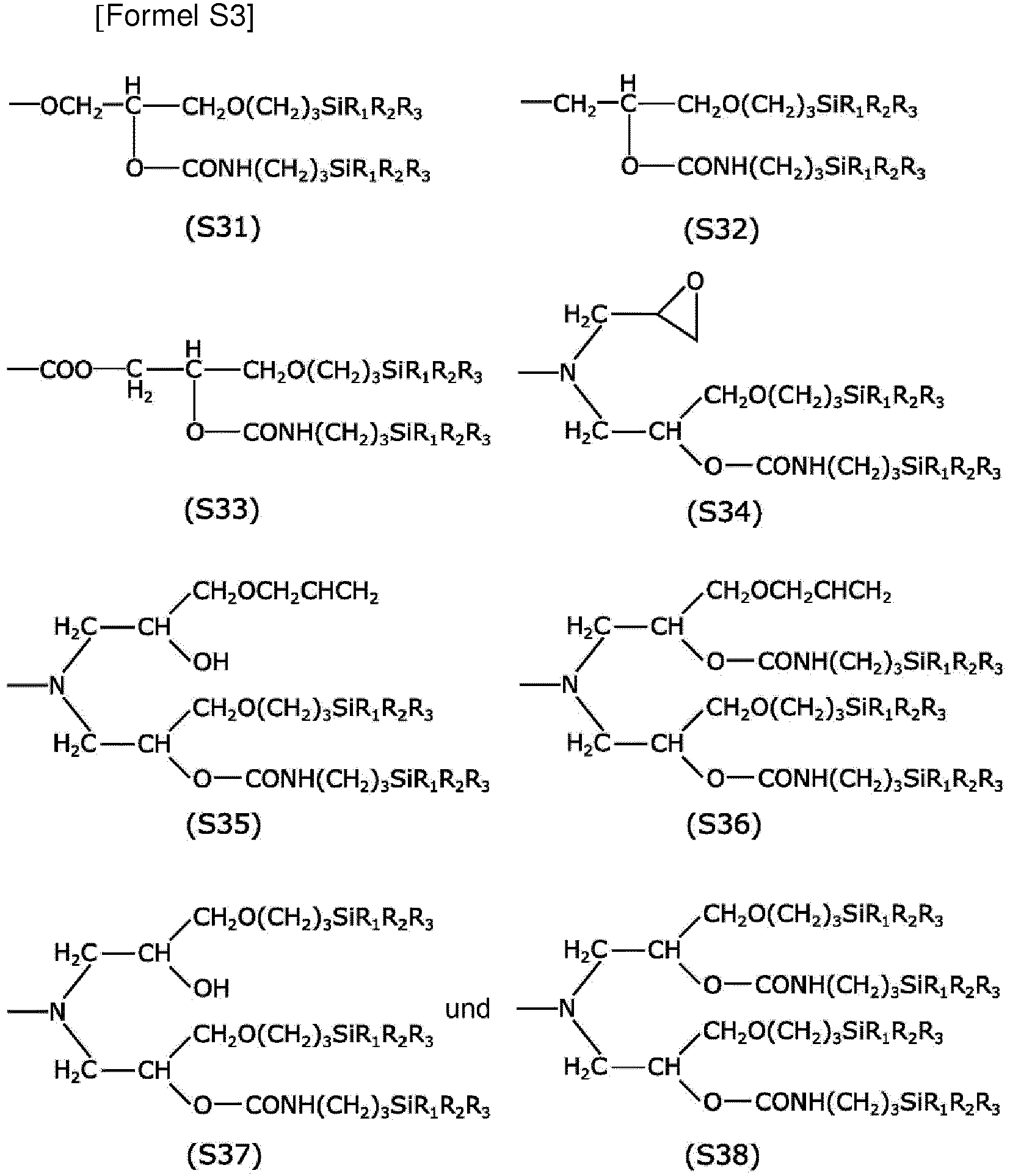 wobei in den Formeln S31 bis S38 mindestens eine der Komponenten R1 bis R3 eine Alkoxygruppe mit 1 bis 5 Kohlenstoffatomen ist, der Rest davon Alkylgruppen mit 1 bis 10 Kohlenstoffatomen sind und die Alkoxygruppe und die Alkylgruppe linear oder verzweigt sind.
 - Epoxidverbindung nach Anspruch 1, wobei die Epoxidverbindung unabhängig ausgewählt sein kann aus der Gruppe bestehend aus den Formeln S51 bis S58:

- Epoxidverbindung nach Anspruch 1 oder 2, wobei der Kern ausgewählt ist aus der Gruppe bestehend aus den Formeln A' bis N':


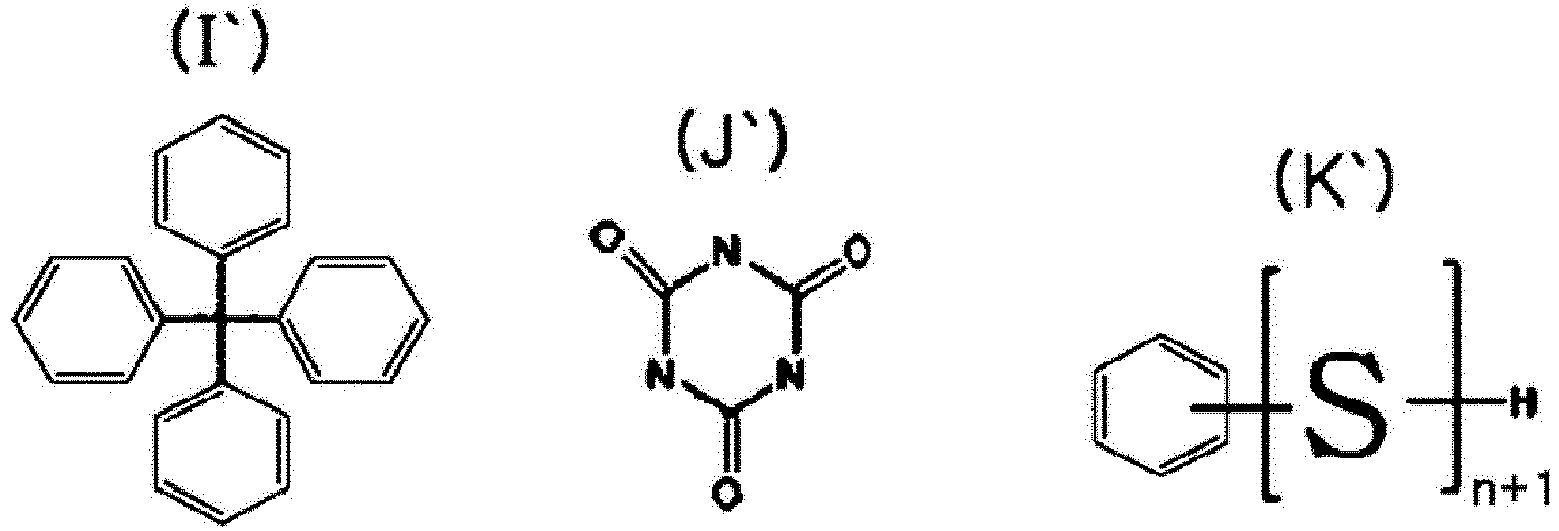


in Formel K' s

in Formel N' t
in den Formeln K' bis N' n eine ganze Zahl ist, die größer oder gleich 1 ist. - Epoxidverbindung nach Anspruch 3, wobei, wenn die Anzahl der aus der Gruppe bestehend aus den Formeln A' bis J' ausgewählten Kerne größer oder gleich zwei ist, die Kerne der Formeln A' bis I' über eine Verbindungsgeruppe verbunden sein können, die unabhängig ausgewählt ist aus der Gruppe bestehend aus den Formeln LG1 bis LG14, und die Kerne der vorstehenden Formel J' über eine Verbindungsgruppe verbunden sein können, die unabhängig ausgewählt ist aus der Gruppe bestehend aus den Formeln LG2 und LG9:
 wobei in den Formeln LG8 bis LG14 mindestens eine der Komponenten R1 bis R3 eine Alkoxygruppe mit 1 bis 5 Kohlenstoffatomen ist, der Rest davon Alkylgruppen mit 1 bis 10 Kohlenstoffatomen sind und die Alkoxygruppe und die Alkylgruppe linear oder verzweigt sind,in den Formeln LG4, LG5, LG7, LG11, LG12 und LG14 ®Wasserstoff, eine Glycidylgruppe oder
- Epoxidverbindung nach einem der Ansprüche 1 bis 4, wobei die Epoxidverbindung, die eine Alkoxysilylgruppe enthält, ferner einen Substituenten der Formel S4 aufweist, der ausgewählt ist aus der Gruppe bestehend aus den Formeln S41 bis S45:


- Verfahren zum Herstellen einer Epoxidverbindung mit einer Alkoxysilylgruppe, mit:einem ersten Schritt zum Herstellen eines Zwischenprodukts durch Umsetzen eines Ausgangsmaterials einer Epoxidverbindung mit mindestens drei Epoxidgruppen und Allylalkohol bei Anwesenheit einer Base und eines optionalen Lösungsmittels; undeinem zweiten Schritt zum Umsetzen des Zwischenprodukts und einer Verbindung der folgenden Formel B1 bei Anwesenheit einer Base und eines optionalen Lösungsmittels zum Herstellen einer Epoxidverbindung, die mindestens eine Alkoxysilylgruppe, die unabhängig ausgewählt ist aus der Gruppe bestehend aus den Formeln S11 bis S16, und mindestens zwei Epoxidgruppen in einem Kern enthält:
[Formel B1] OCN(CH2)3SiR1R2R3,
wobei in Formel B1 mindestens eine der Komponenten R1 bis R3 eine Alkoxygruppe mit 1 bis 5 Kohlenstoffatomen ist, der Rest davon Alkylgruppen mit 1 bis 10 Kohlenstoffatomen sind, und die Alkoxygruppe und die Alkylgruppe linear oder verzweigt sind; wobei in den Formeln S11 bis S16 mindestens eine der Komponenten R1 bis R3 eine Alkoxygruppe mit 1 bis 5 Kohlenstoffatomen ist, der Rest davon Alkylgruppen mit 1 bis 10 Kohlenstoffatomen sind und die Alkoxygruppe und die Alkylgruppe linear oder verzweigt sind.
 - Verfahren nach Anspruch 6, ferner mit einem optionalen dritten Schritt zum Umsetzen der im zweiten Schritt hergestellten Epoxidverbindung und einer Verbindung der folgenden Formel B2 bei Anwesenheit eines Metallkatalysators und eines optionalen Lösungsmittels zum Herstellen einer Epoxidverbindung mit mindestens einer Akoxysilylgruppe in einem Kern, die unabhängig ausgewählt ist aus der Gruppe bestehend aus den Formeln S11 bis S16 und den Formeln S31 bis S38, und mindestens zwei Epoxidgruppen im Kern:
[Formel B2] HSiR1R2R3
wobei in Formel B2 mindestens eine der Komponenten R1 bis R3 eine Alkoxygruppe mit 1 bis 5 Kohlenstoffatomen ist, der Rest davon Alkylgruppen mit 1 bis 10 Kohlenstoffatomen sind und die Alkoxygruppe und die Alkylgruppe linear oder verzweigt sind;
- Verfahren zum Herstellen einer Epoxidverbindung mit einer Alkoxysilylgruppe, mit:einem ersten Schritt zum Herstellen eines Zwischenprodukts durch Umsetzen eines Ausgangsmaterials einer Epoxidverbindung mit mindestens drei Epoxidgruppen und Allylalkohol bei Anwesenheit einer Base und eines optionalen Lösungsmittels; undeinem zweiten Schritt zum Umsetzen des Zwischenprodukts und einer Verbindung der folgenden Formel B2 bei Anwesenheit eines Metallkatalysators und eines optionalen Lösungsmittels zum Herstellen einer Epoxidverbindung, die mindestens eine Alkoxysilylgruppe in einem Kern, die unabhängig ausgewählt ist aus der Gruppe bestehend aus den Formeln S21 bis S26, und mindestens zwei Epoxidgruppen in einem Kern enthält:
[Formel B2] HSiR1R2R3,
wobei in Formel B2 mindestens eine der Komponenten R1 bis R3 eine Alkoxygruppe mit 1 bis 5 Kohlenstoffatomen ist, der Rest davon Alkylgruppen mit 1 bis 10 Kohlenstoffatomen sind und die Alkoxygruppe und die Alkylgruppe linear oder verzweigt sind; wobei in den Formeln S21 bis S26 mindestens eine der Komponenten R1 bis R3 eine Alkoxygruppe mit 1 bis 5 Kohlenstoffatomen ist, der Rest davon Alkylgruppen mit 1 bis 10 Kohlenstoffatomen sind und die Alkoxygruppe und die Alkylgruppe linear oder verzweigt sind.
 - Verfahren nach Anspruch 8, ferner mit einem optionalen dritten Schritt zum Umsetzen der im zweiten Schritt hergestellten Epoxidverbindung und einer Verbindung der folgenden Formel B1 bei Anwesenheit einer Base und eines optionalen Lösungsmittels zum Herstellen einer Epoxidverbindung mit mindestens einer Akoxysilylgruppe im Kern, die unabhängig ausgewählt ist aus der Gruppe bestehend aus den Formeln S21 bis S26 und den Formeln S31 bis S38, und mindestens zwei Epoxidgruppen im Kern:
[Formel B1] OCN(CH2)3R1R2R3
wobei in Formel B1 mindestens eine der Komponenten R1 bis R3 eine Alkoxygruppe mit 1 bis 5 Kohlenstoffatomen ist, der Rest davon Alkylgruppen mit 1 bis 10 Kohlenstoffatomen sind und die Alkoxygruppe und die Alkylgruppe linear oder verzweigt sind;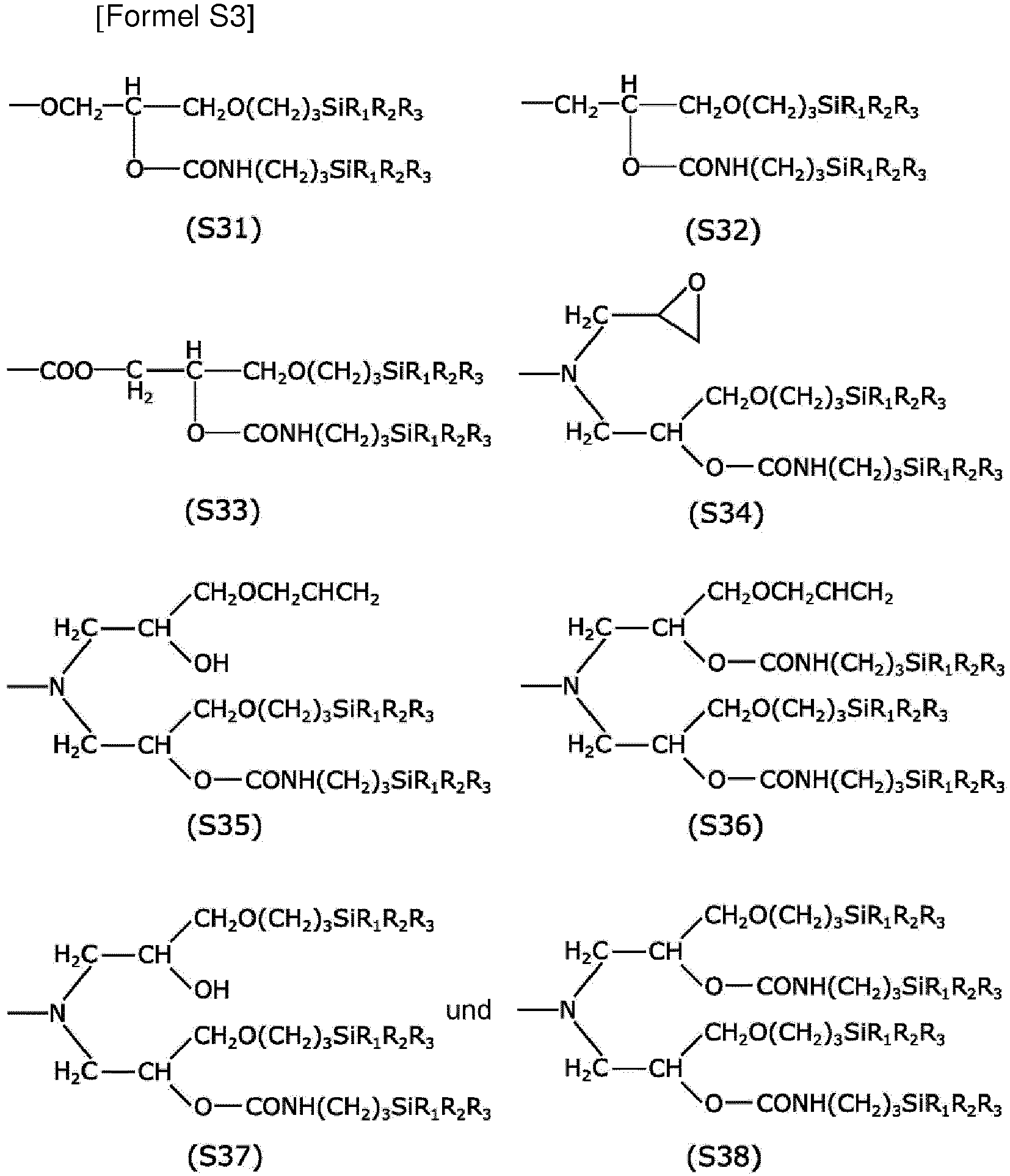
- Verfahren nach Anspruch 6 oder 8, wobei das Ausgangsmaterial der Epoxidverbindung, die mindestens drei Epoxidgruppen aufweist, einen Kern aufweisen kann, der ausgewählt ist aus der Gruppe bestehend aus den Formeln (A') bis (N'), und mindestens drei Epoxidgruppen, die ausgewählt sind aus der Gruppe bestehend aus den Formeln S51 bis S54, wobei, wenn die Anzahl der Kerne der Formeln (A') bus (J') größer oder gleich zwei ist, die Kerne der Formeln (A') bis (I') über Verbindungsgruppen verbunden sein können, die unabhängig ausgewählt sind aus der Gruppe bestehend aus den Formeln LG1 bis LG7, und der Kern der Formel (J') über eine Verbindungsgruppe der Formel LG2 verbunden sein kann:


in Formel K' s

in Formel N' t
in den Formeln K' bis N' n eine ganze Zahl ist, die größer oder gleich 1 ist;


- Verfahren nach Anspruch 6 oder 8, wobei das im ersten Schritt hergestellte Zwischenprodukt einen Kern, der ausgewählt ist aus der Gruppe bestehend aus den Formeln (A') bis (N'), mindestens einen Substituenten, der ausgewählt ist aus der Gruppe bestehend aus den Formeln S41 bis S45, und mindestens zwei Epoxidgruppen aufweisen kann, die ausgewählt sind aus der Gruppe bestehend aus den Formeln S51 bis S55, wobei, wenn die Anzahl der Kerne in den Formeln (A') bis (N') größer oder gleich zwei ist, die Kerne der Formeln (A') bis(I') über eine Verbindungsgruppe verbunden sein können, die unabhängig ausgewählt ist aus der Gruppe bestehend aus den Formeln LG1 bis LG7, und die Kerne der Formel (J') über eine Verbindungsgruppe der Formel LG2 verbunden sein können:

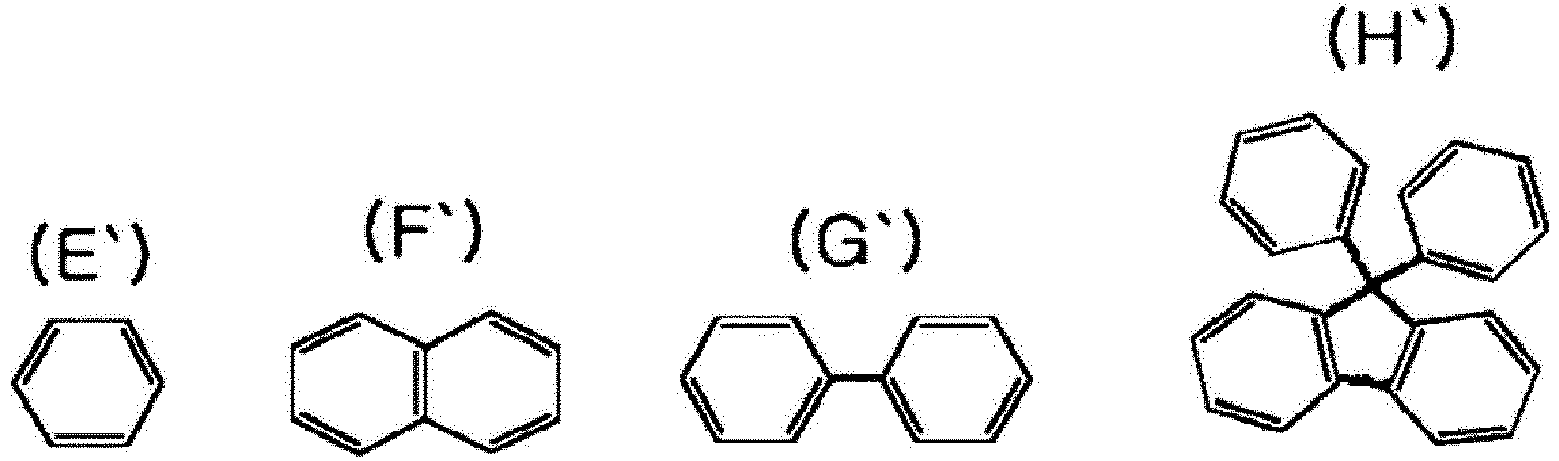


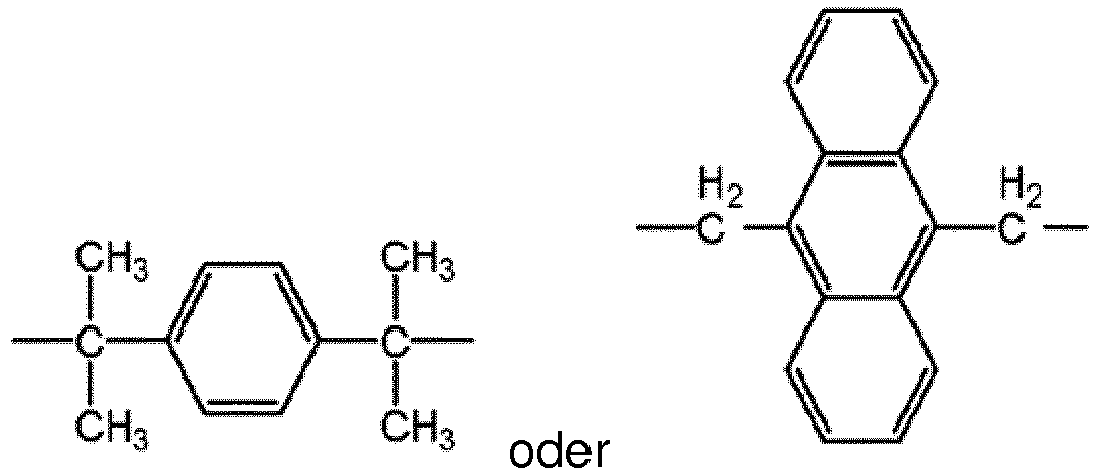
in Formel K' s

in Formel N' t
in den Formeln K' bis N' n eine ganze Zahl ist, die größer oder gleich 1 ist;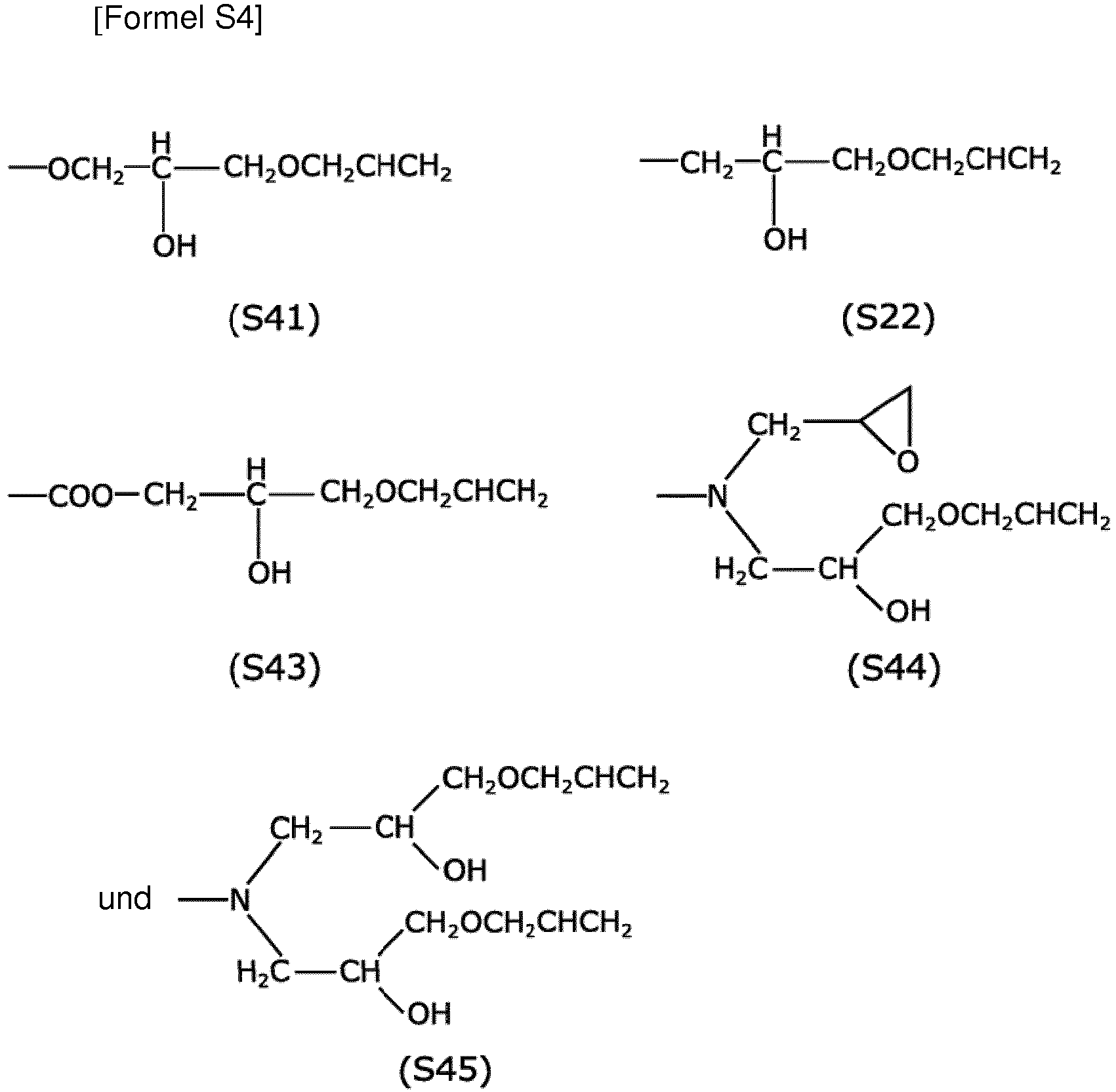


- Verfahren nach Anspruch 6, wobei die im zweiten Schritt hergestellte Epoxidverbindung, die eine Alkoxysilylgruppe aufweist, einen Kern, der ausgewählt ist aus der Gruppe bestehend aus den Formeln (A') bis (N'), mindestens eine Alkoxysilylgruppe, die unabhängig ausgewählt sind aus der Gruppe bestehend aus den Formeln S11 bis S16, mindestens zwei Epoxidgruppen, die ausgewählt sind aus der Gruppe bestehend aus den Formeln S51 bis S55 und S57, und einen optionalen Substituenten aufweisen kann, der ausgewählt ist aus der Gruppe bestehend aus den Formeln S41 bis S45, wobei, wenn die Anzahl der Kerne der Formeln (A') bis (J') größer oder gleich zwei ist, die Kerne der Formeln (A') bis (I') über eine Verbindungsgruppe verbunden sein können, die unabhängig ausgewählt ist aus der Gruppe bestehend aus den Formeln LG1 bis LG14, und die Kerne der Formel (J') über eine Verbindungsgruppe der Formeln LG2 und LG9 verbunden sein können:


in Formel K' s

in Formel N' t
in den Formeln K' bis N' n eine ganze Zahl ist, die größer oder gleich 1 ist;


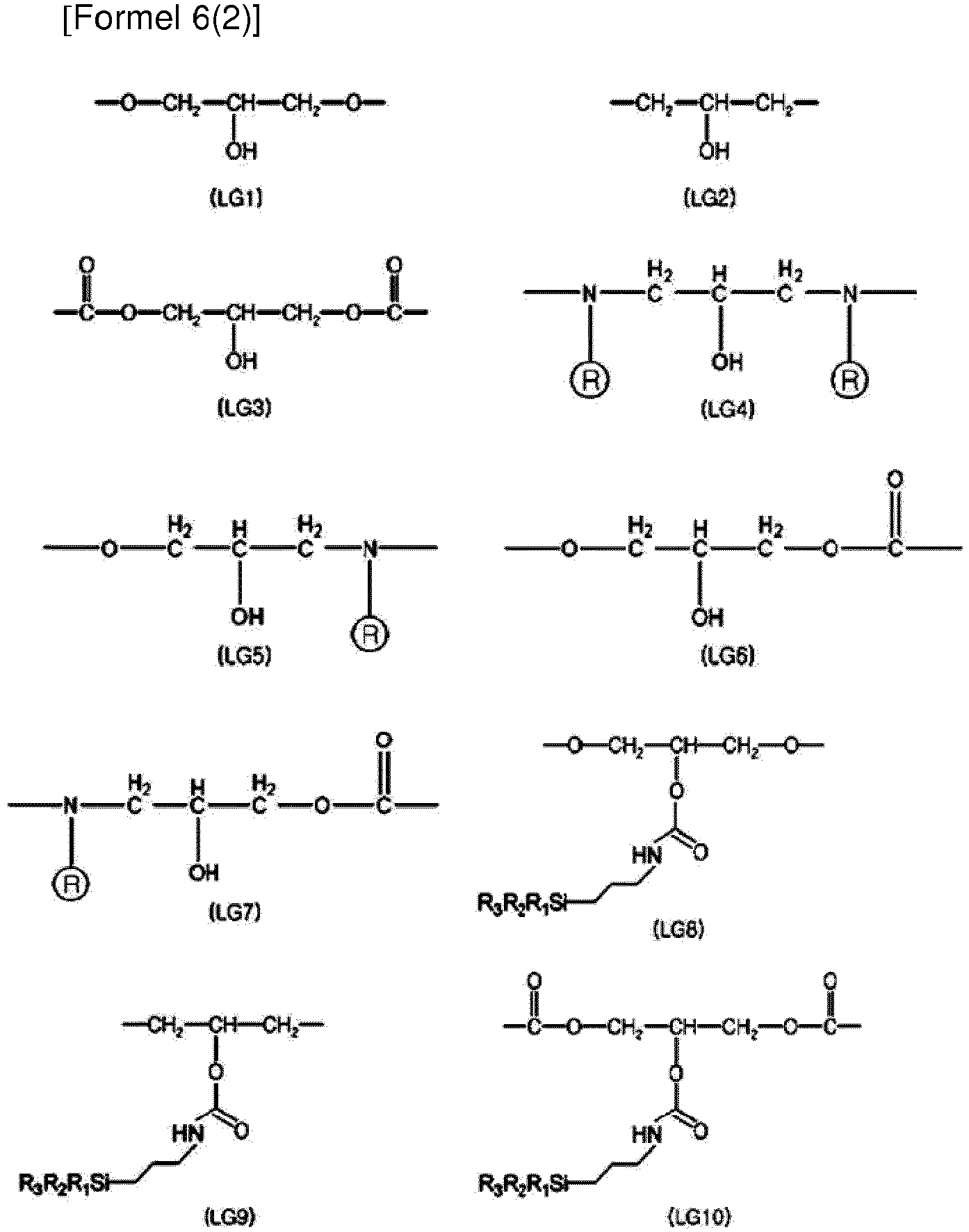

in den Formeln LG4, LG5, LG7, LG11, LG12 und LG14 ® Wasserstoff, eine Glycidylgruppe oder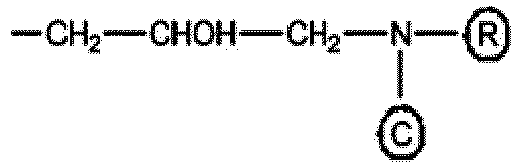
- Verfahren nach Anspruch 8, wobei die im zweiten Schritt hergestellte Epoxidverbindung, die eine Alkoxysilylgruppe aufweist, einen Kern, der ausgewählt ist aus der Gruppe bestehend aus den Formeln (A') bis (N'), mindestens eine Alkoxysilylgruppe, die ausgewählt sind aus der Gruppe bestehend aus den Formeln S21 bis S26, mindestens zwei Epoxidgruppen, die ausgewählt sind aus der Gruppe bestehend aus den Formeln S51 bis S56, und einen optionalen Substituenten aufweisen kann, der ausgewählt ist aus der Gruppe bestehend aus den Formeln S41 bis S45, wobei, wenn die Anzahl der Kerne der Formeln (A') bis (J') größer oder gleich zwei ist, die Kerne der Formeln (A') bis (I') über eine Verbindungsgeruppe verbunden sein können, die unabhängig ausgewählt ist aus der Gruppe bestehend aus den Formeln LG1 bis LG7, und die Kerne der Formel (J') über eine Verbindungsgruppe der Formel LG2 verbunden sein können:
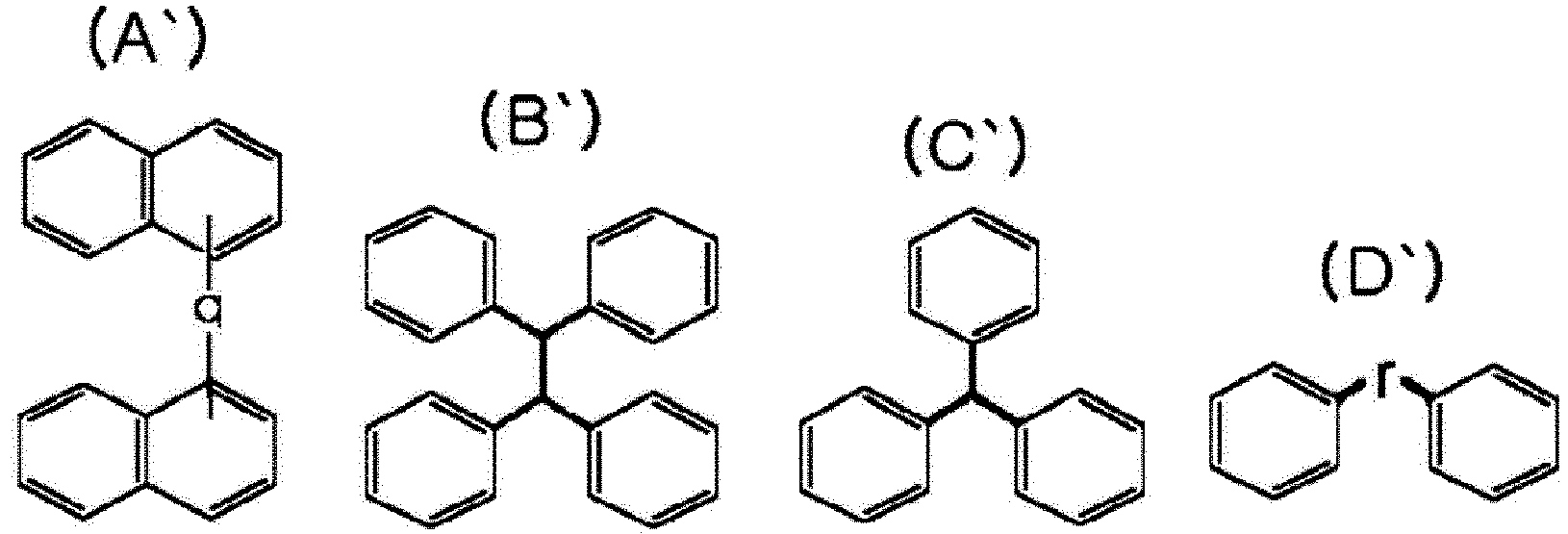


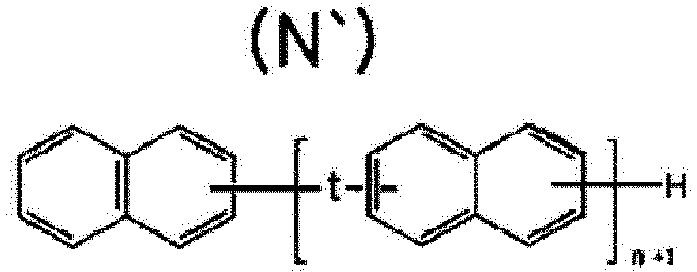

in Formel K' s

in Formel N' t
in den Formeln K' bis N' n eine ganze Zahl ist, die größer oder gleich 1 ist;


- Epoxidzusammensetzung mit einer Epoxidverbindung mit einer Alkoxysilylgruppe nach einem der Ansprüche 1 bis 5.
Applications Claiming Priority (2)
| Application Number | Priority Date | Filing Date | Title |
|---|---|---|---|
| KR20120102932 | 2012-09-17 | ||
| PCT/KR2013/008439 WO2014042491A1 (ko) | 2012-09-17 | 2013-09-17 | 알콕시실릴기를 갖는 에폭시 화합물, 이의 제조 방법, 이를 포함하는 조성물, 경화물 및 이의 용도 |
Publications (3)
| Publication Number | Publication Date |
|---|---|
| EP2933257A1 EP2933257A1 (de) | 2015-10-21 |
| EP2933257A4 EP2933257A4 (de) | 2016-07-13 |
| EP2933257B1 true EP2933257B1 (de) | 2017-07-26 |
Family
ID=50646101
Family Applications (1)
| Application Number | Title | Priority Date | Filing Date |
|---|---|---|---|
| EP13837901.1A Active EP2933257B1 (de) | 2012-09-17 | 2013-09-17 | Epoxidverbindung mit einer alkoxysilylgruppe, verfahren zur herstellung davon, zusammensetzung damit, gehärtetes produkt daraus und verwendung davon |
Country Status (6)
| Country | Link |
|---|---|
| US (1) | US9725590B2 (de) |
| EP (1) | EP2933257B1 (de) |
| JP (1) | JP6173464B2 (de) |
| KR (1) | KR101596880B1 (de) |
| CN (1) | CN104903332B (de) |
| WO (1) | WO2014042491A1 (de) |
Families Citing this family (24)
| Publication number | Priority date | Publication date | Assignee | Title |
|---|---|---|---|---|
| JP6153631B2 (ja) | 2013-02-25 | 2017-06-28 | コリア インスティチュート オブ インダストリアル テクノロジー | アルコキシシリル基を有するエポキシ化合物、その製造方法、それを含む組成物と硬化物及びその用途 |
| KR101755323B1 (ko) | 2014-02-19 | 2017-07-20 | 한국생산기술연구원 | 신규한 에폭시 화합물, 이를 포함하는 혼합물, 조성물, 경화물, 이의 제조 방법, 및 이의 용도 |
| JP5895958B2 (ja) * | 2014-02-20 | 2016-03-30 | 横浜ゴム株式会社 | 偏波保持光ファイバー用接着剤組成物 |
| WO2015133840A2 (ko) * | 2014-03-05 | 2015-09-11 | 한국생산기술연구원 | 알콕시실릴기를 갖는 에폭시 화합물, 이의 제조 방법, 이를 포함하는 조성물, 경화물 및 이의 용도 |
| JP7418941B2 (ja) * | 2016-08-19 | 2024-01-22 | 味の素株式会社 | 樹脂組成物、シート状積層材料、プリント配線板及び半導体装置 |
| TWI752114B (zh) | 2016-12-20 | 2022-01-11 | 日商迪愛生股份有限公司 | 環氧樹脂組成物 |
| JP6845417B2 (ja) * | 2016-12-20 | 2021-03-17 | Dic株式会社 | ナフタレン型エポキシ化合物の製造方法及びナフタレン型エポキシ化合物 |
| WO2018225880A1 (ko) | 2017-06-05 | 2018-12-13 | 한국생산기술연구원 | 알콕시실릴기 및 활성 에스테르기를 갖는 화합물, 이의 제조방법, 이를 포함하는 조성물 및 용도 |
| WO2018230322A1 (ja) * | 2017-06-12 | 2018-12-20 | Dic株式会社 | 重合性化合物及び液晶組成物 |
| EP3473631B1 (de) * | 2017-10-19 | 2020-01-08 | Evonik Operations GmbH | Neue epoxy-funktionelle alkoxysilane, verfahren zu deren herstellung und deren verwendung |
| KR101967155B1 (ko) | 2017-11-07 | 2019-04-09 | 한국생산기술연구원 | 알콕시실릴기를 갖는 에폭시 수지의 제조방법, 알콕시실릴기를 갖는 에폭시 수지, 이를 포함하는 조성물 및 이의 용도 |
| KR20200084327A (ko) | 2017-11-17 | 2020-07-10 | 디아이씨 가부시끼가이샤 | 중합성 화합물과, 그것을 사용한 액정 조성물 및 액정 표시 소자 |
| CN107986976B (zh) * | 2017-12-07 | 2020-06-02 | 黄山学院 | 一种3-氨基-1,2-丙二醇的制备方法 |
| WO2019167640A1 (ja) | 2018-03-01 | 2019-09-06 | Dic株式会社 | 重合性化合物並びにそれを使用した液晶組成物及び液晶表示素子 |
| US11883790B2 (en) | 2018-03-14 | 2024-01-30 | Sekisui Kasei Co., Ltd. | Hollow particles, method for producing same, and usage of same |
| KR102064379B1 (ko) | 2018-05-08 | 2020-01-10 | 한국생산기술연구원 | 알콕시실릴기를 갖는 에폭시 화합물의 제조방법 |
| JP7163654B2 (ja) * | 2018-07-27 | 2022-11-01 | 味の素株式会社 | 樹脂組成物、シート状積層材料、プリント配線板、半導体チップパッケージ、及び半導体装置 |
| KR102232340B1 (ko) | 2019-11-15 | 2021-03-26 | 한국생산기술연구원 | 알콕시실릴기를 갖는 에폭시 수지의 조성물 및 이의 복합체 |
| CN111454689B (zh) * | 2019-12-31 | 2021-10-15 | 武汉长盈鑫科技有限公司 | 一种高玻璃化温度的导热胶及其制备方法 |
| JP7038385B2 (ja) * | 2020-12-25 | 2022-03-18 | Dic株式会社 | ナフタレン型エポキシ化合物の製造方法及びナフタレン型エポキシ化合物 |
| JP2022158352A (ja) * | 2021-04-01 | 2022-10-17 | 株式会社Adeka | 化合物、重合体、重合性組成物、接着剤、コーティング剤、硬化物及び硬化物の製造方法 |
| KR102673997B1 (ko) | 2021-11-05 | 2024-06-13 | 한국생산기술연구원 | 에폭시 수지, 이의 제조방법, 이를 포함하는 에폭시 조성물 및 용도 |
| WO2024220471A1 (en) * | 2023-04-17 | 2024-10-24 | Monroe Mary Beth | Surfactants for polyurethane foam synthesis |
| CN118852060A (zh) * | 2024-06-28 | 2024-10-29 | 浙江大学衢州研究院 | 一种无有机氯的缩水甘油醚的制备方法 |
Family Cites Families (16)
| Publication number | Priority date | Publication date | Assignee | Title |
|---|---|---|---|---|
| BE534122A (de) * | 1953-12-17 | |||
| BE613364A (de) * | 1961-02-02 | |||
| US4284574A (en) | 1979-06-15 | 1981-08-18 | Ciba-Geigy Corporation | Diglycidyl ethers of di-secondary alcohols, their preparation, and curable compositions containing them |
| JPH0617458B2 (ja) * | 1987-03-16 | 1994-03-09 | 信越化学工業株式会社 | エポキシ樹脂組成物 |
| EP0507603B1 (de) * | 1991-04-04 | 1999-06-23 | Shin-Etsu Chemical Co., Ltd. | Wärmehärtende Harzzusammensetzungen und ihre Herstellung |
| US6174967B1 (en) | 1998-03-20 | 2001-01-16 | Ndsu-Research Foundation | Composition of epoxy resin and (cyclo)alkoxy-substituted organosilane |
| KR100312176B1 (ko) | 1999-03-23 | 2001-11-14 | 김충섭 | 알콕시 실란으로 치환된 디엔 공중합체 및 유기·무기 하이브리드 조성물 |
| JP4176486B2 (ja) * | 2003-01-06 | 2008-11-05 | 横浜ゴム株式会社 | 硬化性樹脂組成物 |
| JP4803339B2 (ja) | 2003-11-20 | 2011-10-26 | 信越化学工業株式会社 | エポキシ・シリコーン混成樹脂組成物及び発光半導体装置 |
| JP2006169368A (ja) | 2004-12-15 | 2006-06-29 | Arakawa Chem Ind Co Ltd | 樹脂組成物、硬化物、およびその製造方法 |
| KR100587480B1 (ko) | 2005-05-06 | 2006-06-09 | 국도화학 주식회사 | 유기관능기함유 알콕시실란 변성 에폭시수지 조성물의제조방법 및 이에 의한 고 접착용 수지조성물. |
| EP1741734A1 (de) * | 2005-07-05 | 2007-01-10 | Sika Technology AG | Tieftemperaturschlagzähe hitze-härtbare Epoxidharzzusammensetzung mit Epoxidfestharzen |
| US7989651B2 (en) * | 2007-03-09 | 2011-08-02 | Momentive Performance Materials Inc. | Epoxysilanes, processes for their manufacture and curable compositions containing same |
| JP5128873B2 (ja) | 2007-08-10 | 2013-01-23 | 株式会社豊田自動織機 | 二次電池用電極及びその製造方法 |
| JP5545862B2 (ja) * | 2009-11-04 | 2014-07-09 | 信越化学工業株式会社 | イソシアヌル環含有末端ビニルポリシロキサン |
| KR101252063B1 (ko) | 2011-08-25 | 2013-04-12 | 한국생산기술연구원 | 알콕시실릴기를 갖는 에폭시 화합물, 이의 제조 방법, 이를 포함하는 조성물과 경화물 및 이의 용도 |
-
2013
- 2013-09-17 WO PCT/KR2013/008439 patent/WO2014042491A1/ko not_active Ceased
- 2013-09-17 CN CN201380048094.3A patent/CN104903332B/zh active Active
- 2013-09-17 EP EP13837901.1A patent/EP2933257B1/de active Active
- 2013-09-17 US US14/427,990 patent/US9725590B2/en active Active
- 2013-09-17 JP JP2015531868A patent/JP6173464B2/ja active Active
- 2013-09-17 KR KR1020130111473A patent/KR101596880B1/ko active Active
Non-Patent Citations (1)
| Title |
|---|
| None * |
Also Published As
| Publication number | Publication date |
|---|---|
| EP2933257A1 (de) | 2015-10-21 |
| JP2015535814A (ja) | 2015-12-17 |
| KR20140036983A (ko) | 2014-03-26 |
| WO2014042491A1 (ko) | 2014-03-20 |
| JP6173464B2 (ja) | 2017-08-02 |
| CN104903332B (zh) | 2017-12-19 |
| CN104903332A (zh) | 2015-09-09 |
| US9725590B2 (en) | 2017-08-08 |
| US20150247033A1 (en) | 2015-09-03 |
| EP2933257A4 (de) | 2016-07-13 |
| KR101596880B1 (ko) | 2016-02-23 |
Similar Documents
| Publication | Publication Date | Title |
|---|---|---|
| EP2933257B1 (de) | Epoxidverbindung mit einer alkoxysilylgruppe, verfahren zur herstellung davon, zusammensetzung damit, gehärtetes produkt daraus und verwendung davon | |
| EP2960245B1 (de) | Epoxidverbindung mit einer alkoxysilylgruppe, verfahren zur herstellung davon, zusammensetzung und gehärtetes produkt damit und verwendung davon | |
| JP5852243B2 (ja) | アルコキシシリル基を有するエポキシ化合物、その製造方法、それを含む組成物と硬化物及びその用途 | |
| JP6664398B2 (ja) | 2つ以上のアルコキシシリル基を有する熱硬化性アルコキシシリル化合物、それを含む組成物、硬化物、及びその用途、並びにアルコキシシリル化合物の製造方法 | |
| KR101898526B1 (ko) | 알콕시실릴기를 갖는 에폭시 화합물, 이를 포함하는 조성물, 경화물, 이의 용도 및 알콕시실릴기를 갖는 에폭시 화합물의 제조방법 | |
| EP2826777B1 (de) | Epoxidverbindung mit alkoxysilylgruppe, diese enthaltende zusammensetzung, gehärtetes produkt, dessen verwendung sowie verfahren zur herstellung einer epoxyverbindung mit einer alkoxysilylgruppe | |
| US10597412B2 (en) | Epoxy compound, mixture, composition, and cured product comprising same, method for preparing same, and use thereof | |
| EP3093304B1 (de) | Neuartiges härtemittel mit alkoxysilylgruppe, verfahren zur herstellung davon, zusammensetzung damit, gehärtetes produkt und verwendung davon | |
| KR101863111B1 (ko) | 노볼락계 에폭시 화합물, 이의 제조 방법, 이를 포함하는 조성물, 경화물 및 이의 용도 | |
| EP2774929B1 (de) | Isocyanurat epoxidverbindung mit einer alkoxysilylgruppe, herstellungsverfahren dafür, zusammensetzung damit, gehärtetes produkt aus der zusammensetzung und verwendung der zusammensetzung | |
| KR20140144663A (ko) | 둘 이상의 알콕시실릴기를 갖는 알콕시 실릴 화합물, 이를 포함하는 조성물, 경화물, 이의 용도 및 알콕시실릴 화합물의 제조방법 |
Legal Events
| Date | Code | Title | Description |
|---|---|---|---|
| PUAI | Public reference made under article 153(3) epc to a published international application that has entered the european phase |
Free format text: ORIGINAL CODE: 0009012 |
|
| 17P | Request for examination filed |
Effective date: 20150416 |
|
| AK | Designated contracting states |
Kind code of ref document: A1 Designated state(s): AL AT BE BG CH CY CZ DE DK EE ES FI FR GB GR HR HU IE IS IT LI LT LU LV MC MK MT NL NO PL PT RO RS SE SI SK SM TR |
|
| AX | Request for extension of the european patent |
Extension state: BA ME |
|
| RIN1 | Information on inventor provided before grant (corrected) |
Inventor name: CHUN, HYUN-AEE Inventor name: PARK, SU-JIN Inventor name: PARK, SUNG-HWAN Inventor name: KANG, KYUNG-NAM Inventor name: TAK, SANG-YONG Inventor name: KIM, YUN-JU Inventor name: PARK, SOOK-YEON |
|
| DAX | Request for extension of the european patent (deleted) | ||
| RIC1 | Information provided on ipc code assigned before grant |
Ipc: C08K 5/50 20060101ALI20160119BHEP Ipc: C07F 7/18 20060101AFI20160119BHEP |
|
| RIC1 | Information provided on ipc code assigned before grant |
Ipc: C08K 7/14 20060101ALI20160526BHEP Ipc: C07F 7/18 20060101AFI20160526BHEP |
|
| A4 | Supplementary search report drawn up and despatched |
Effective date: 20160610 |
|
| REG | Reference to a national code |
Ref country code: DE Ref legal event code: R079 Ref document number: 602013024192 Country of ref document: DE Free format text: PREVIOUS MAIN CLASS: C07F0007100000 Ipc: C07F0007180000 |
|
| GRAP | Despatch of communication of intention to grant a patent |
Free format text: ORIGINAL CODE: EPIDOSNIGR1 |
|
| STAA | Information on the status of an ep patent application or granted ep patent |
Free format text: STATUS: GRANT OF PATENT IS INTENDED |
|
| RIC1 | Information provided on ipc code assigned before grant |
Ipc: C08L 63/00 20060101ALI20170126BHEP Ipc: C07F 7/18 20060101AFI20170126BHEP Ipc: C08K 7/14 20060101ALI20170126BHEP |
|
| INTG | Intention to grant announced |
Effective date: 20170216 |
|
| GRAS | Grant fee paid |
Free format text: ORIGINAL CODE: EPIDOSNIGR3 |
|
| GRAA | (expected) grant |
Free format text: ORIGINAL CODE: 0009210 |
|
| STAA | Information on the status of an ep patent application or granted ep patent |
Free format text: STATUS: THE PATENT HAS BEEN GRANTED |
|
| AK | Designated contracting states |
Kind code of ref document: B1 Designated state(s): AL AT BE BG CH CY CZ DE DK EE ES FI FR GB GR HR HU IE IS IT LI LT LU LV MC MK MT NL NO PL PT RO RS SE SI SK SM TR |
|
| REG | Reference to a national code |
Ref country code: GB Ref legal event code: FG4D |
|
| REG | Reference to a national code |
Ref country code: CH Ref legal event code: EP |
|
| REG | Reference to a national code |
Ref country code: AT Ref legal event code: REF Ref document number: 912272 Country of ref document: AT Kind code of ref document: T Effective date: 20170815 |
|
| REG | Reference to a national code |
Ref country code: IE Ref legal event code: FG4D |
|
| REG | Reference to a national code |
Ref country code: DE Ref legal event code: R096 Ref document number: 602013024192 Country of ref document: DE |
|
| REG | Reference to a national code |
Ref country code: NL Ref legal event code: MP Effective date: 20170726 |
|
| REG | Reference to a national code |
Ref country code: LT Ref legal event code: MG4D |
|
| REG | Reference to a national code |
Ref country code: AT Ref legal event code: MK05 Ref document number: 912272 Country of ref document: AT Kind code of ref document: T Effective date: 20170726 |
|
| PG25 | Lapsed in a contracting state [announced via postgrant information from national office to epo] |
Ref country code: FI Free format text: LAPSE BECAUSE OF FAILURE TO SUBMIT A TRANSLATION OF THE DESCRIPTION OR TO PAY THE FEE WITHIN THE PRESCRIBED TIME-LIMIT Effective date: 20170726 Ref country code: NL Free format text: LAPSE BECAUSE OF FAILURE TO SUBMIT A TRANSLATION OF THE DESCRIPTION OR TO PAY THE FEE WITHIN THE PRESCRIBED TIME-LIMIT Effective date: 20170726 Ref country code: AT Free format text: LAPSE BECAUSE OF FAILURE TO SUBMIT A TRANSLATION OF THE DESCRIPTION OR TO PAY THE FEE WITHIN THE PRESCRIBED TIME-LIMIT Effective date: 20170726 Ref country code: SE Free format text: LAPSE BECAUSE OF FAILURE TO SUBMIT A TRANSLATION OF THE DESCRIPTION OR TO PAY THE FEE WITHIN THE PRESCRIBED TIME-LIMIT Effective date: 20170726 Ref country code: NO Free format text: LAPSE BECAUSE OF FAILURE TO SUBMIT A TRANSLATION OF THE DESCRIPTION OR TO PAY THE FEE WITHIN THE PRESCRIBED TIME-LIMIT Effective date: 20171026 Ref country code: LT Free format text: LAPSE BECAUSE OF FAILURE TO SUBMIT A TRANSLATION OF THE DESCRIPTION OR TO PAY THE FEE WITHIN THE PRESCRIBED TIME-LIMIT Effective date: 20170726 Ref country code: HR Free format text: LAPSE BECAUSE OF FAILURE TO SUBMIT A TRANSLATION OF THE DESCRIPTION OR TO PAY THE FEE WITHIN THE PRESCRIBED TIME-LIMIT Effective date: 20170726 |
|
| PG25 | Lapsed in a contracting state [announced via postgrant information from national office to epo] |
Ref country code: GR Free format text: LAPSE BECAUSE OF FAILURE TO SUBMIT A TRANSLATION OF THE DESCRIPTION OR TO PAY THE FEE WITHIN THE PRESCRIBED TIME-LIMIT Effective date: 20171027 Ref country code: BG Free format text: LAPSE BECAUSE OF FAILURE TO SUBMIT A TRANSLATION OF THE DESCRIPTION OR TO PAY THE FEE WITHIN THE PRESCRIBED TIME-LIMIT Effective date: 20171026 Ref country code: IS Free format text: LAPSE BECAUSE OF FAILURE TO SUBMIT A TRANSLATION OF THE DESCRIPTION OR TO PAY THE FEE WITHIN THE PRESCRIBED TIME-LIMIT Effective date: 20171126 Ref country code: RS Free format text: LAPSE BECAUSE OF FAILURE TO SUBMIT A TRANSLATION OF THE DESCRIPTION OR TO PAY THE FEE WITHIN THE PRESCRIBED TIME-LIMIT Effective date: 20170726 Ref country code: PL Free format text: LAPSE BECAUSE OF FAILURE TO SUBMIT A TRANSLATION OF THE DESCRIPTION OR TO PAY THE FEE WITHIN THE PRESCRIBED TIME-LIMIT Effective date: 20170726 Ref country code: ES Free format text: LAPSE BECAUSE OF FAILURE TO SUBMIT A TRANSLATION OF THE DESCRIPTION OR TO PAY THE FEE WITHIN THE PRESCRIBED TIME-LIMIT Effective date: 20170726 Ref country code: LV Free format text: LAPSE BECAUSE OF FAILURE TO SUBMIT A TRANSLATION OF THE DESCRIPTION OR TO PAY THE FEE WITHIN THE PRESCRIBED TIME-LIMIT Effective date: 20170726 |
|
| PG25 | Lapsed in a contracting state [announced via postgrant information from national office to epo] |
Ref country code: RO Free format text: LAPSE BECAUSE OF FAILURE TO SUBMIT A TRANSLATION OF THE DESCRIPTION OR TO PAY THE FEE WITHIN THE PRESCRIBED TIME-LIMIT Effective date: 20170726 Ref country code: DK Free format text: LAPSE BECAUSE OF FAILURE TO SUBMIT A TRANSLATION OF THE DESCRIPTION OR TO PAY THE FEE WITHIN THE PRESCRIBED TIME-LIMIT Effective date: 20170726 Ref country code: CZ Free format text: LAPSE BECAUSE OF FAILURE TO SUBMIT A TRANSLATION OF THE DESCRIPTION OR TO PAY THE FEE WITHIN THE PRESCRIBED TIME-LIMIT Effective date: 20170726 |
|
| REG | Reference to a national code |
Ref country code: CH Ref legal event code: PL Ref country code: DE Ref legal event code: R097 Ref document number: 602013024192 Country of ref document: DE |
|
| PG25 | Lapsed in a contracting state [announced via postgrant information from national office to epo] |
Ref country code: EE Free format text: LAPSE BECAUSE OF FAILURE TO SUBMIT A TRANSLATION OF THE DESCRIPTION OR TO PAY THE FEE WITHIN THE PRESCRIBED TIME-LIMIT Effective date: 20170726 Ref country code: MC Free format text: LAPSE BECAUSE OF FAILURE TO SUBMIT A TRANSLATION OF THE DESCRIPTION OR TO PAY THE FEE WITHIN THE PRESCRIBED TIME-LIMIT Effective date: 20170726 Ref country code: IT Free format text: LAPSE BECAUSE OF FAILURE TO SUBMIT A TRANSLATION OF THE DESCRIPTION OR TO PAY THE FEE WITHIN THE PRESCRIBED TIME-LIMIT Effective date: 20170726 Ref country code: SK Free format text: LAPSE BECAUSE OF FAILURE TO SUBMIT A TRANSLATION OF THE DESCRIPTION OR TO PAY THE FEE WITHIN THE PRESCRIBED TIME-LIMIT Effective date: 20170726 Ref country code: SM Free format text: LAPSE BECAUSE OF FAILURE TO SUBMIT A TRANSLATION OF THE DESCRIPTION OR TO PAY THE FEE WITHIN THE PRESCRIBED TIME-LIMIT Effective date: 20170726 |
|
| PLBE | No opposition filed within time limit |
Free format text: ORIGINAL CODE: 0009261 |
|
| STAA | Information on the status of an ep patent application or granted ep patent |
Free format text: STATUS: NO OPPOSITION FILED WITHIN TIME LIMIT |
|
| GBPC | Gb: european patent ceased through non-payment of renewal fee |
Effective date: 20171026 |
|
| REG | Reference to a national code |
Ref country code: IE Ref legal event code: MM4A |
|
| REG | Reference to a national code |
Ref country code: BE Ref legal event code: MM Effective date: 20170930 |
|
| PG25 | Lapsed in a contracting state [announced via postgrant information from national office to epo] |
Ref country code: LU Free format text: LAPSE BECAUSE OF NON-PAYMENT OF DUE FEES Effective date: 20170917 |
|
| REG | Reference to a national code |
Ref country code: FR Ref legal event code: ST Effective date: 20180531 |
|
| 26N | No opposition filed |
Effective date: 20180430 |
|
| PG25 | Lapsed in a contracting state [announced via postgrant information from national office to epo] |
Ref country code: GB Free format text: LAPSE BECAUSE OF NON-PAYMENT OF DUE FEES Effective date: 20171026 Ref country code: IE Free format text: LAPSE BECAUSE OF NON-PAYMENT OF DUE FEES Effective date: 20170917 Ref country code: LI Free format text: LAPSE BECAUSE OF NON-PAYMENT OF DUE FEES Effective date: 20170930 Ref country code: CH Free format text: LAPSE BECAUSE OF NON-PAYMENT OF DUE FEES Effective date: 20170930 |
|
| PG25 | Lapsed in a contracting state [announced via postgrant information from national office to epo] |
Ref country code: BE Free format text: LAPSE BECAUSE OF NON-PAYMENT OF DUE FEES Effective date: 20170930 Ref country code: FR Free format text: LAPSE BECAUSE OF NON-PAYMENT OF DUE FEES Effective date: 20171002 Ref country code: SI Free format text: LAPSE BECAUSE OF FAILURE TO SUBMIT A TRANSLATION OF THE DESCRIPTION OR TO PAY THE FEE WITHIN THE PRESCRIBED TIME-LIMIT Effective date: 20170726 |
|
| PG25 | Lapsed in a contracting state [announced via postgrant information from national office to epo] |
Ref country code: MT Free format text: LAPSE BECAUSE OF NON-PAYMENT OF DUE FEES Effective date: 20170917 |
|
| PG25 | Lapsed in a contracting state [announced via postgrant information from national office to epo] |
Ref country code: HU Free format text: LAPSE BECAUSE OF FAILURE TO SUBMIT A TRANSLATION OF THE DESCRIPTION OR TO PAY THE FEE WITHIN THE PRESCRIBED TIME-LIMIT; INVALID AB INITIO Effective date: 20130917 |
|
| PG25 | Lapsed in a contracting state [announced via postgrant information from national office to epo] |
Ref country code: CY Free format text: LAPSE BECAUSE OF FAILURE TO SUBMIT A TRANSLATION OF THE DESCRIPTION OR TO PAY THE FEE WITHIN THE PRESCRIBED TIME-LIMIT Effective date: 20170726 |
|
| PG25 | Lapsed in a contracting state [announced via postgrant information from national office to epo] |
Ref country code: MK Free format text: LAPSE BECAUSE OF FAILURE TO SUBMIT A TRANSLATION OF THE DESCRIPTION OR TO PAY THE FEE WITHIN THE PRESCRIBED TIME-LIMIT Effective date: 20170726 |
|
| PG25 | Lapsed in a contracting state [announced via postgrant information from national office to epo] |
Ref country code: TR Free format text: LAPSE BECAUSE OF FAILURE TO SUBMIT A TRANSLATION OF THE DESCRIPTION OR TO PAY THE FEE WITHIN THE PRESCRIBED TIME-LIMIT Effective date: 20170726 |
|
| PG25 | Lapsed in a contracting state [announced via postgrant information from national office to epo] |
Ref country code: PT Free format text: LAPSE BECAUSE OF FAILURE TO SUBMIT A TRANSLATION OF THE DESCRIPTION OR TO PAY THE FEE WITHIN THE PRESCRIBED TIME-LIMIT Effective date: 20170726 |
|
| PG25 | Lapsed in a contracting state [announced via postgrant information from national office to epo] |
Ref country code: AL Free format text: LAPSE BECAUSE OF FAILURE TO SUBMIT A TRANSLATION OF THE DESCRIPTION OR TO PAY THE FEE WITHIN THE PRESCRIBED TIME-LIMIT Effective date: 20170726 |
|
| PGFP | Annual fee paid to national office [announced via postgrant information from national office to epo] |
Ref country code: DE Payment date: 20250624 Year of fee payment: 13 |