EP2937352B1 - Neuartige alkoxysilyl-ethylen-gruppe-terminierte siliciumhaltige verbindung, bei raumtemperatur härtbare organopolysiloxanzusammensetzung und durch aushärten dieser zusammensetzung erhaltener formkörper - Google Patents
Neuartige alkoxysilyl-ethylen-gruppe-terminierte siliciumhaltige verbindung, bei raumtemperatur härtbare organopolysiloxanzusammensetzung und durch aushärten dieser zusammensetzung erhaltener formkörper Download PDFInfo
- Publication number
- EP2937352B1 EP2937352B1 EP13865466.0A EP13865466A EP2937352B1 EP 2937352 B1 EP2937352 B1 EP 2937352B1 EP 13865466 A EP13865466 A EP 13865466A EP 2937352 B1 EP2937352 B1 EP 2937352B1
- Authority
- EP
- European Patent Office
- Prior art keywords
- group
- silicon
- alkoxysilyl
- ethylene
- containing compound
- Prior art date
- Legal status (The legal status is an assumption and is not a legal conclusion. Google has not performed a legal analysis and makes no representation as to the accuracy of the status listed.)
- Active
Links
Images




Classifications
-
- C—CHEMISTRY; METALLURGY
- C09—DYES; PAINTS; POLISHES; NATURAL RESINS; ADHESIVES; COMPOSITIONS NOT OTHERWISE PROVIDED FOR; APPLICATIONS OF MATERIALS NOT OTHERWISE PROVIDED FOR
- C09J—ADHESIVES; NON-MECHANICAL ASPECTS OF ADHESIVE PROCESSES IN GENERAL; ADHESIVE PROCESSES NOT PROVIDED FOR ELSEWHERE; USE OF MATERIALS AS ADHESIVES
- C09J183/00—Adhesives based on macromolecular compounds obtained by reactions forming in the main chain of the macromolecule a linkage containing silicon, with or without sulfur, nitrogen, oxygen, or carbon only; Adhesives based on derivatives of such polymers
- C09J183/04—Polysiloxanes
- C09J183/06—Polysiloxanes containing silicon bound to oxygen-containing groups
-
- C—CHEMISTRY; METALLURGY
- C07—ORGANIC CHEMISTRY
- C07F—ACYCLIC, CARBOCYCLIC OR HETEROCYCLIC COMPOUNDS CONTAINING ELEMENTS OTHER THAN CARBON, HYDROGEN, HALOGEN, OXYGEN, NITROGEN, SULFUR, SELENIUM OR TELLURIUM
- C07F7/00—Compounds containing elements of Groups 4 or 14 of the Periodic Table
- C07F7/02—Silicon compounds
- C07F7/08—Compounds having one or more C—Si linkages
- C07F7/0834—Compounds having one or more O-Si linkage
- C07F7/0838—Compounds with one or more Si-O-Si sequences
-
- C—CHEMISTRY; METALLURGY
- C07—ORGANIC CHEMISTRY
- C07F—ACYCLIC, CARBOCYCLIC OR HETEROCYCLIC COMPOUNDS CONTAINING ELEMENTS OTHER THAN CARBON, HYDROGEN, HALOGEN, OXYGEN, NITROGEN, SULFUR, SELENIUM OR TELLURIUM
- C07F7/00—Compounds containing elements of Groups 4 or 14 of the Periodic Table
- C07F7/02—Silicon compounds
- C07F7/08—Compounds having one or more C—Si linkages
- C07F7/18—Compounds having one or more C—Si linkages as well as one or more C—O—Si linkages
- C07F7/1804—Compounds having Si-O-C linkages
-
- C—CHEMISTRY; METALLURGY
- C08—ORGANIC MACROMOLECULAR COMPOUNDS; THEIR PREPARATION OR CHEMICAL WORKING-UP; COMPOSITIONS BASED THEREON
- C08F—MACROMOLECULAR COMPOUNDS OBTAINED BY REACTIONS ONLY INVOLVING CARBON-TO-CARBON UNSATURATED BONDS
- C08F130/00—Homopolymers of compounds having one or more unsaturated aliphatic radicals, each having only one carbon-to-carbon double bond, and containing phosphorus, selenium, tellurium or a metal
- C08F130/04—Homopolymers of compounds having one or more unsaturated aliphatic radicals, each having only one carbon-to-carbon double bond, and containing phosphorus, selenium, tellurium or a metal containing a metal
- C08F130/08—Homopolymers of compounds having one or more unsaturated aliphatic radicals, each having only one carbon-to-carbon double bond, and containing phosphorus, selenium, tellurium or a metal containing a metal containing silicon
-
- C—CHEMISTRY; METALLURGY
- C08—ORGANIC MACROMOLECULAR COMPOUNDS; THEIR PREPARATION OR CHEMICAL WORKING-UP; COMPOSITIONS BASED THEREON
- C08G—MACROMOLECULAR COMPOUNDS OBTAINED OTHERWISE THAN BY REACTIONS ONLY INVOLVING UNSATURATED CARBON-TO-CARBON BONDS
- C08G77/00—Macromolecular compounds obtained by reactions forming a linkage containing silicon with or without sulfur, nitrogen, oxygen or carbon in the main chain of the macromolecule
- C08G77/04—Polysiloxanes
- C08G77/20—Polysiloxanes containing silicon bound to unsaturated aliphatic groups
-
- C—CHEMISTRY; METALLURGY
- C08—ORGANIC MACROMOLECULAR COMPOUNDS; THEIR PREPARATION OR CHEMICAL WORKING-UP; COMPOSITIONS BASED THEREON
- C08G—MACROMOLECULAR COMPOUNDS OBTAINED OTHERWISE THAN BY REACTIONS ONLY INVOLVING UNSATURATED CARBON-TO-CARBON BONDS
- C08G77/00—Macromolecular compounds obtained by reactions forming a linkage containing silicon with or without sulfur, nitrogen, oxygen or carbon in the main chain of the macromolecule
- C08G77/04—Polysiloxanes
- C08G77/38—Polysiloxanes modified by chemical after-treatment
-
- C—CHEMISTRY; METALLURGY
- C08—ORGANIC MACROMOLECULAR COMPOUNDS; THEIR PREPARATION OR CHEMICAL WORKING-UP; COMPOSITIONS BASED THEREON
- C08G—MACROMOLECULAR COMPOUNDS OBTAINED OTHERWISE THAN BY REACTIONS ONLY INVOLVING UNSATURATED CARBON-TO-CARBON BONDS
- C08G77/00—Macromolecular compounds obtained by reactions forming a linkage containing silicon with or without sulfur, nitrogen, oxygen or carbon in the main chain of the macromolecule
- C08G77/48—Macromolecular compounds obtained by reactions forming a linkage containing silicon with or without sulfur, nitrogen, oxygen or carbon in the main chain of the macromolecule in which at least two but not all the silicon atoms are connected by linkages other than oxygen atoms
- C08G77/50—Macromolecular compounds obtained by reactions forming a linkage containing silicon with or without sulfur, nitrogen, oxygen or carbon in the main chain of the macromolecule in which at least two but not all the silicon atoms are connected by linkages other than oxygen atoms by carbon linkages
-
- C—CHEMISTRY; METALLURGY
- C08—ORGANIC MACROMOLECULAR COMPOUNDS; THEIR PREPARATION OR CHEMICAL WORKING-UP; COMPOSITIONS BASED THEREON
- C08K—Use of inorganic or non-macromolecular organic substances as compounding ingredients
- C08K5/00—Use of organic ingredients
- C08K5/04—Oxygen-containing compounds
- C08K5/05—Alcohols; Metal alcoholates
- C08K5/057—Metal alcoholates
-
- C—CHEMISTRY; METALLURGY
- C08—ORGANIC MACROMOLECULAR COMPOUNDS; THEIR PREPARATION OR CHEMICAL WORKING-UP; COMPOSITIONS BASED THEREON
- C08K—Use of inorganic or non-macromolecular organic substances as compounding ingredients
- C08K5/00—Use of organic ingredients
- C08K5/16—Nitrogen-containing compounds
- C08K5/34—Heterocyclic compounds having nitrogen in the ring
- C08K5/3442—Heterocyclic compounds having nitrogen in the ring having two nitrogen atoms in the ring
- C08K5/3462—Six-membered rings
- C08K5/3465—Six-membered rings condensed with carbocyclic rings
-
- C—CHEMISTRY; METALLURGY
- C08—ORGANIC MACROMOLECULAR COMPOUNDS; THEIR PREPARATION OR CHEMICAL WORKING-UP; COMPOSITIONS BASED THEREON
- C08K—Use of inorganic or non-macromolecular organic substances as compounding ingredients
- C08K5/00—Use of organic ingredients
- C08K5/54—Silicon-containing compounds
- C08K5/541—Silicon-containing compounds containing oxygen
- C08K5/5425—Silicon-containing compounds containing oxygen containing at least one C=C bond
-
- C—CHEMISTRY; METALLURGY
- C08—ORGANIC MACROMOLECULAR COMPOUNDS; THEIR PREPARATION OR CHEMICAL WORKING-UP; COMPOSITIONS BASED THEREON
- C08L—COMPOSITIONS OF MACROMOLECULAR COMPOUNDS
- C08L83/00—Compositions of macromolecular compounds obtained by reactions forming in the main chain of the macromolecule a linkage containing silicon with or without sulfur, nitrogen, oxygen or carbon only; Compositions of derivatives of such polymers
- C08L83/04—Polysiloxanes
-
- C—CHEMISTRY; METALLURGY
- C08—ORGANIC MACROMOLECULAR COMPOUNDS; THEIR PREPARATION OR CHEMICAL WORKING-UP; COMPOSITIONS BASED THEREON
- C08L—COMPOSITIONS OF MACROMOLECULAR COMPOUNDS
- C08L83/00—Compositions of macromolecular compounds obtained by reactions forming in the main chain of the macromolecule a linkage containing silicon with or without sulfur, nitrogen, oxygen or carbon only; Compositions of derivatives of such polymers
- C08L83/04—Polysiloxanes
- C08L83/06—Polysiloxanes containing silicon bound to oxygen-containing groups
-
- C—CHEMISTRY; METALLURGY
- C09—DYES; PAINTS; POLISHES; NATURAL RESINS; ADHESIVES; COMPOSITIONS NOT OTHERWISE PROVIDED FOR; APPLICATIONS OF MATERIALS NOT OTHERWISE PROVIDED FOR
- C09D—COATING COMPOSITIONS, e.g. PAINTS, VARNISHES OR LACQUERS; FILLING PASTES; CHEMICAL PAINT OR INK REMOVERS; INKS; CORRECTING FLUIDS; WOODSTAINS; PASTES OR SOLIDS FOR COLOURING OR PRINTING; USE OF MATERIALS THEREFOR
- C09D183/00—Coating compositions based on macromolecular compounds obtained by reactions forming in the main chain of the macromolecule a linkage containing silicon, with or without sulfur, nitrogen, oxygen, or carbon only; Coating compositions based on derivatives of such polymers
- C09D183/04—Polysiloxanes
- C09D183/06—Polysiloxanes containing silicon bound to oxygen-containing groups
Definitions
- the present invention relates to a silicon-containing compound having an alkoxysilyl-ethylene group at its terminal, a room temperature-curable organopolysiloxane composition, and a molded product obtained by curing the composition.
- a room temperature curable composition which cures an elastomer state at room temperature by a condensation and crosslinking reaction from contact with the moisture in the air particularly a room temperature-curable organopolysiloxane composition has conventionally been known in various types of materials, and above all, a material of the type which cures by discharging alcohol is preferably used for sealing, adhesion or coating of an electric and electronic devices, etc., due to its characteristics that there is no unpleasant smell and it does not corrode metals.
- a room temperature-curable organopolysiloxane composition comprising a polyorganosiloxane the terminal of which has been blocked by a hydroxyl group, an alkoxysilane and an organotitanium compound; a room temperature-curable organopolysiloxane composition comprising a polyorganosiloxane the terminal of which has been blocked by an alkoxysilyl, an alkoxysilane and an alkoxytitanium; a room temperature-curable organopolysiloxane composition comprising a linear polyorganosiloxane the terminal of which has been blocked by an alkoxysilyl group containing a silethylene group, an alkoxysilane and an alkoxytitanium; and a room temperature-curable organopolysiloxane composition comprising a polyorganosiloxane the terminal of which has been blocked by a hydroxyl group or a polyorganos
- compositions are advantageously employed in view of a certain level of storage stability, water resistance, and humidity resistance.
- these problems have not been completely solved yet. Further, they were insufficient with regard to rapid curability.
- a polymer having a reactive alkoxysilyl group has conventionally been known.
- the terminal group of this polymer has previously been blocked by an alkoxysilyl group, so that curability of the polymer difficultly change (lower) with a lapse of time, and a composition that is excellent in storage stability can be obtained.
- workability (viscosity and thixotropic property) thereof can be optionally adjustable, and it reacts with a moisture in the air to form an elastomer by crosslinking, whereby excellent characteristics (hardness, tensile strength and elongation at break) can be also obtained.
- a dealcoholization type of room temperature-curable organopolysiloxane composition comprising an organosiloxane polymer having such a reactive alkoxysilyl group at its terminal as a main agent (a base polymer) was insufficient in curability as compared to the other conventionally known curing types such as a deoximation type, a deacetylation type, a deacetone type, etc., since reactivity with a moisture in the air is low.
- US 2012/0020700 A1 concerns an electroconductive member that can demonstrate stable performance for a long period of time with an electric resistance value being hardly changed even by electrical conduction for a long period of time.
- WO 2013/081794 A1 concerns a composition that contains (A) a hydrosilylation reaction catalyst and (B) an aliphatically unsaturated compound having an average, per molecule, of one or more aliphatically unsaturated organic groups capable of undergoing hydrosilylation reaction.
- IMLINGER ET AL disclose in MONATSHEFTE FUR CHEMIE - CHEMICAL MONTHLY, vol. 136, pages 47-57 (2005 ), novel immobilized hydrosilylation catalysts based on Rhodium compounds.
- M.G.VORONKOV ET AL describe in BULLETIN OF THE ACADEMY OF SCIENCES OF THE USSR,DIVISION OF CHEMICAL SCIENCES, vol. 33, no.11 (1984), pages 2391-2393 the synthesis of 1-(2'-triethylsilylethyl)-, 1-(2'-triethylsilylvinyl)- and 1'-(2'-triethylsilylethynyl)-silatranes.
- M.G.VORONKOV ET AL further disclose in IZVESTIYA AKADEMII NAUK SSSR, SERIYA KHIMICHES, INSTITUT ORGANICHESKOI KHIMII IM.N.D.ZELINSKOGO ROSSIISKOI AKADEMII, RU, vol.8, 1 January 1983; pages 1983-1984 , the bromination of Si-alkyl(methoxy)-substituted 1,2-disilylethylene derivatives.
- the present invention has been done in view of the circumstances, and an object thereof is to provide a room temperature-curable polyorganosiloxane composition capable of providing a cured product that is excellent in rapid curability, storage stability and durability, and a novel base polymer used in the composition or a curing agent (a crosslinking agent) thereof.
- the present invention provides a silicon-containing compound having an alkoxysilyl-ethylene group at its terminal (for example, an organosilane compound and an organosiloxane compound) which comprises at least one silyl-ethylene bond represented by the following structural formula (a) in one molecule, and a novel room temperature curable composition by using the silicon-containing compound as a base polymer or a curing agent (a crosslinking agent), wherein R 1 represents a monovalent hydrocarbon group having 1 to 20 carbon atoms which may have a substituent, and the hydrocarbon group having 3 or more carbon atoms may be a cycloalkyl group which is cyclic; R 2 represents a hydrogen atom, or a monovalent hydrocarbon group having 1 to 20 carbon atoms which may have a substituent; "a” represents an integer of 1 to 3; and "n” represents an integer of 0 to 10, a silicon-containing compound having an alkoxysilyl-ethylene group at its terminal which comprises at least one sily
- the silicon-containing compound having an alkoxysilyl-ethylene group at its terminal is used as a base polymer or a curing agent (a crosslinking agent), a room temperature curable composition capable of providing a cured product that is excellent in rapid curability, storage stability and durability can be obtained.
- the silicon-containing compound having an alkoxysilyl-ethylene group at its terminal is used as, for example, a base polymer (linear diorganopolysiloxane) or a crosslinking agent (organosilane and a partial hydrolysis condensate thereof) of a room temperature-curable organopolysiloxane composition
- the room temperature-curable organopolysiloxane composition can provide a cured product that is particularly excellent in rapid curability, storage stability and durability.
- the polyorganosiloxane compound having an alkoxysilyl-ethylene group at its terminal is preferably linear diorganopolysiloxane both terminals of a molecular chain of which have been blocked by organosiloxy groups having an alkoxysilyl-ethylene structure represented by the following structural formula (2), wherein R 1 represents a monovalent hydrocarbon group having 1 to 20 carbon atoms which may have a substituent, and those having 3 or more carbon atoms among the hydrocarbon groups may be a cycloalkyl group which is cyclic; R 2 represents a hydrogen atom, or a monovalent hydrocarbon group having 1 to 20 carbon atoms which may have a substituent; "a” represents an integer of 1 to 3; and “n” represents an integer of 0 to 10; and “m” represents an integer of 0 to 2,000.
- R 1 represents a monovalent hydrocarbon group having 1 to 20 carbon atoms which may have a substituent, and those having 3 or more carbon atoms among the hydrocarbon groups may
- the polyorganosiloxane compound having an alkoxysilyl-ethylene group at its terminals can provide an organopolysiloxane cured product (silicone rubber) that is more excellent in rapid curability, storage stability and durability.
- the present invention provides a room temperature-curable organopolysiloxane composition comprising:
- the room temperature-curable organopolysiloxane composition can provide a cured product (silicone rubber) that is particularly excellent in rapid curability, storage stability and durability.
- the room temperature-curable organopolysiloxane composition is preferably used as either of a coating agent, an adhesive and a sealing agent.
- the room temperature-curable organopolysiloxane composition is useful as a coating agent, an adhesive or a sealing agent at positions where heat resistance, water resistance and humidity resistance are required.
- the present invention provides a molded product (a silicone rubber molded product) obtained by curing the room temperature-curable organopolysiloxane composition of the present invention.
- the molded product can form a rubber-elastic cured product that is excellent in heat resistance, weather resistance, low temperature characteristics, and adhesiveness to the various kinds of substrate materials, particularly to a metal, by being rapidly cured.
- the novel silicon-containing compound for example, an organosilane compound and an organosiloxane compound, etc.
- the novel silicon-containing compound provides a cured product that is particularly excellent in rapid curability. Even after storage of, for example, 12 months, the compound is rapidly cured when exposed to the air and shows excellent physical properties.
- a composition containing the novel silicon-containing compound as a base polymer or a curing agent (a crosslinking agent) is useful as an adhesive or sealing agent at positions where heat resistance, water resistance, and humidity resistance are required, and above all, it can effectively be used as building use required to have steam resistance and water resistance, and an adhesive on construction use for electric and electronic equipments.
- Inventors of the present invention have carried out extended research and found that as long as a bonding group adjacent to an alkoxysilyl group is an ethylene hydrocarbon, a hydrolyzable property of an alkoxy group is significantly improved, and according to silicon compound having an alkoxysilyl-ethylene group at its terminal represented by the following structural formula (a) a room temperature curable composition which gives a cured product particularly excellent in rapid curability, and simultaneously having favorable storage stability and durability can be obtained. Based on that information, the present invention was accomplished.
- the novel silicon-containing compound of the present invention is an silicon-containing organic silicon compound having an alkoxysilyl-ethylene group at its terminal which comprises at least one organosilyl group having a silyl-ethylene bond represented by the following structural formula (a) in one molecule, wherein R 1 represents a monovalent hydrocarbon group having 1 to 20 carbon atoms which may have a substituent, and those having 3 or more carbon atoms among the hydrocarbon groups may be a cycloalkyl group which is cyclic; R 2 represents a hydrogen atom, or a monovalent hydrocarbon group having 1 to 20 carbon atoms which may have a substituent; "a” represents an integer of 1 to 3; and "n” represents an integer of 0 to 10, the silicon-containing compound having an alkoxysilyl-ethylene group at its terminal is selected from the group consisting of the ones represented by the following formulae:
- the silicon-containing compound having an alkoxysilyl-ethylene group at its terminal is preferably linear diorganopolysiloxane both terminals of a molecular chain of which have been blocked by organosiloxy groups having an alkoxysilyl-ethylene structure represented by the following structural formula (2), wherein R 1 represents a monovalent hydrocarbon group having 1 to 20 carbon atoms which may have a substituent, and those having 3 or more carbon atoms among the hydrocarbon groups may be a cycloalkyl group which is cyclic; R 2 represents a hydrogen atom, or a monovalent hydrocarbon group having 1 to 20 carbon atoms which may have a substituent; "a” represents an integer of 1 to 3; and “n” represents an integer of 0 to 10; and “m” represents an integer of 0 to 2,000.
- R 1 represents a monovalent hydrocarbon group having 1 to 20 carbon atoms which may have a substituent, and those having 3 or more carbon atoms among the hydrocarbon groups may be a cycl
- the silicon-containing compound having an alkoxysilyl-ethylene group at its terminal is an organic silicon compound such as an organosilane compound and an organosiloxane compound containing at least one silyl-ethylene bond in one molecule.
- the substituted or unsubstituted monovalent hydrocarbon group of R 1 and R 2 having 1 to 20 carbon atoms, preferably having 1 to 10 carbon atoms, and more preferably having 1 to 6 carbon atoms may be exemplified by an alkyl group such as a methyl group, an ethyl group, a propyl group, an isopropyl group, a butyl group, an isobutyl group, a tert-butyl group, a pentyl group, a hexyl group, a heptyl group, an octyl group, a nonyl group, a decyl group, an octadecyl group, etc.; a cycloalkyl group such as a cyclopentyl group, a cyclohexyl group, etc.; and a group in which a part or all of hydrogen atoms of
- a methyl group and an ethyl group are preferable, and a methyl group is particularly preferable.
- R 2 in the above structural formula (2) additionally may be exemplified by a hydrogen atom; an alkenyl group such as a vinyl group, an allyl group, a propenyl group, a butenyl group, a pentenyl group, a hexenyl group, etc.; an aryl group such as a phenyl group, a tolyl group, a xylyl group, an ⁇ -, ⁇ -naphthyl group, etc.; an aralkyl group such as a benzyl group, a 2-phenylethyl group, a 3-phenylpropyl group, etc.; and a group in which a part or all of hydrogen atoms of these groups is/are substituted by a halogen atom such as F, Cl, Br, etc., or a cyano group, etc.
- a halogen atom such as F, Cl, Br, etc., or a cyano group, etc
- Illustrative example of a hydrolyzable group at a terminal of a molecular chain includes an alkoxy group having 1 to 5 carbon atoms such as a methoxy group, an ethoxy group, a propoxy group, an isopropoxy group, a butoxy group, an isobutoxy group, a tert-butoxy group, etc.; an alkoxyalkoxy group having 1 to 5 carbon atoms such as a methoxyethoxy group, a methoxypropoxy group, an ethoxypropoxy group, etc.
- a methoxy group and an ethoxy group are particularly preferable.
- n represents an integer of 0 to 10, preferably 0 to 5, and more preferably 0 to 3
- m represents an integer of 0 to 2,000, preferably 0 to 1600, more preferably 0 to 1,000, and much more preferably 0 to 500
- a represents an integer of 1 to 3.
- the novel silicon-containing compound according to the present invention is an organic silicon compound having an alkoxysilyl-ethylene group at its terminal such as an organosilane compound and an organosiloxane compound.
- the organic silicon compound is used, for example, as a curing agent or a main agent (a base polymer) of a room temperature-curable organopolysiloxane composition that is cured (crosslinked) by a condensation reaction, and may be linear or branched.
- a curing agent or a main agent (a base polymer) of a room temperature-curable organopolysiloxane composition that is cured (crosslinked) by a condensation reaction, and may be linear or branched.
- the organic silicon compound containing an alkoxysilyl-ethylene group is preferably linear diorganopolysiloxane with m ⁇ 20, and preferably with m ⁇ 24 or so in the structural formula (2).
- the silicon-containing compound having an alkoxysilyl-ethylene group at its terminal of the present invention can be prepared by subjecting disiloxane having an ethynyl group at both terminals and octamethylcyclotetrasiloxane to polymerization reaction in the presence of an acid catalyst to prepare diorganopolysiloxane having an ethynyl group at both terminals, and subsequently carrying out an addition reaction of trialkoxysilane.
- the reaction formula is represented by, for example, the following formula [1]. wherein R 1 and R 2 , "n", "m” and "a" are the same as before.
- the reaction formula is represented by, for example, the following formula [1'], wherein R 1 , R 2 , "a" and "n" are the same as before.
- the addition reaction catalyst may be mentioned a platinum group series catalyst, for example, a platinum series, a palladium series, and a rhodium series material, and a platinum series material is particularly suitable.
- the platinum series material may be exemplified by platinum black or a material in which solid platinum is carried on a carrier such as alumina, silica, etc., chloroplatinic acid, alcohol-modified chloroplatinic acid, a complex of chloroplatinic acid and an olefin, or a complex of platinum and vinylsiloxane.
- An amount of these platinum to be used may be the so-called catalytic amount and, for example, it may be used in an amount of 0.1 to 1,000 ppm, in terms of platinum group metal based on the amount of the trialkoxysilanes, particularly in an amount of 0.5 to 100 ppm.
- the reaction is desirably carried out, in general, at a temperature of 50 to 120°C, particularly at 60 to 100°C for 0.5 to 12 hours, particularly for 1 to 6 hours, and may be carried out without using any solvent, but a suitable solvent such as toluene, xylene, etc., may be used, if necessary, as long as it does not exert any bad effect to the addition reaction, etc.
- silicon-containing compound having an alkoxysilyl-ethylene group at its terminal includes the ones represented by the following formulae.
- the present invention provides a room temperature-curable organopolysiloxane composition comprising:
- the room temperature-curable organopolysiloxane composition of the present invention will be described in more detail.
- the diorganopolysiloxane of a component (A) is a main agent (a base polymer) of the room temperature-curable organopolysiloxane composition of the present invention, and has at least 2 hydroxyl groups or hydrolyzable silyl groups that are bonded to silicon atoms in one molecule.
- Illustrative example of the diorganopolysiloxane includes linear diorganopolysiloxane both terminals of a molecular chain represented by the following general formula (2a) or (3a) of which have been blocked by hydroxyl groups that is bonded to a silicon atom (i.e.
- R represents a substituted or unsubstituted monovalent hydrocarbon group having 1 to 12 carbon atoms, and preferably having 1 to 8 carbon atoms
- X represents an oxygen atom or a divalent hydrocarbon group having 1 to 8 carbon atoms, and preferably 1 to 6 carbon atoms (for example, an alkylene group)
- Y represents a hydrolyzable group
- "b” represents 2 or 3
- the degree of polymerization (or molecular weight) can be calculated, for example, as the weight average degree of polymerization (or weight average molecular weight), etc. in gel permeation chromatography (GPC) analysis by using a developing solvent such as toluene and tetrahydrofuran (THF) .
- GPC gel permeation chromatography
- the substituted or unsubstituted monovalent hydrocarbon group of R may be exemplified by an alkyl group such as a methyl group, an ethyl group, a propyl group, an isopropyl group, a butyl group, an isobutyl group, a tert-butyl group, a pentyl group, a hexyl group, a heptyl group, an octyl group, a nonyl group, a decyl group, an octadecyl group, etc.; a cycloalkyl group such as a cyclopentyl group, a cyclohexyl group, etc.; an alkenyl group such as a vinyl group, an allyl group, a butenyl group, a pentenyl group, a hexenyl group, etc.; an aryl group such as a phenyl group,
- X represents an oxygen atom or a divalent hydrocarbon group having 1 to 8 carbon atoms
- the divalent hydrocarbon group is preferably an alkylene group represented by -(CH 2 )p- ("p" is an integer of 1 to 8).
- p is an integer of 1 to 8.
- an oxygen atom or -CH 2 CH 2 - is preferable.
- Y represents a hydrolyzable group at a terminal of a molecular chain of the above diorganopolysiloxane, and illustrative example thereof includes an alkoxy group such as a methoxy group, an ethoxy group, a propoxy group, etc.; an alkoxyalkoxy group such as a methoxyethoxy group, an ethoxyethoxy group, a methoxypropoxy group, etc.; an acyloxy group such as an acetoxy group, an octanoyloxy group, a benzoyloxy group, etc.; an alkenyloxy group such as a vinyloxy group, an isopropenyloxy group, a 1-ethyl-2-methyl vinyloxy group, etc.; a ketoxime group such as a dimethyl ketoxime group, a methylethyl ketoxime group, a diethyl ketoxime group, etc.; an amino group such as a dimethylamino group
- the viscosity at 25°C is preferably 100 to 1,000,000 mPa ⁇ s, more preferably 300 to 500,000 mPa ⁇ s, particularly preferably 500 to 100,000 mPa ⁇ s, and more particularly 1,000 to 80,000 mPa ⁇ s. If the viscosity of the above diorganopolysiloxane is 100 mPa ⁇ s or more, a cured product that is excellent in physical and mechanical strength can be obtained, and if the viscosity is 1,000,000 mPa ⁇ s or less, the viscosity of the composition does not become too high, thereby causing no possible deterioration of workability in use.
- the viscosity refers to the number indicated on a rotary viscometer (for example, BL-type, BH-type, BS-type, and cone plate-type), etc.
- Illustrative example of the diorganopolysiloxane of the component (A) includes the ones represented by the following formulae, wherein, "m'", R and Y are the same as before; and "b'" is 0 or 1.
- Diorganopolysiloxane of the component (A) can be used alone or in combination with two or more types thereof having a different structure or degree of polymerization.
- the silicon compound containing an alkoxysilyl-ethylene group as the component (B) is a particularly important factor in the room temperature-curable organopolysiloxane composition of the present invention, and functions as a crosslinking agent (a curing agent).
- a crosslinking agent a curing agent
- an organosilane compound i.e. a compound having a triorganosilyl group silicon atom of a left end of which has been blocked by 3 monovalent hydrocarbon groups
- the method for preparing the same is shown as above.
- an E isomer (a trans isomer) in the reaction formula [2] is preferably used due to high reactivity.
- a formulation amount of the component (B) is preferably 0.1 to 30 parts by mass, particularly 0.5 to 20 parts by mass, based on 100 parts by mass of the organopolysiloxane of the above component (A).
- the component (C) is a curing catalyst, which is used to cure the composition.
- the organic metal catalyst may be exemplified by an alkyltin ester compound such as dibutyltin diacetate, dibutyltin dilaurate, dibutyltin dioctoate, etc.; a titanate or a titanium chelate compound such as tetraisopropoxy titanium, tetra-n-butoxy titanium, tetrakis (2-ethylhexoxy) titanium, dipropoxy bis (acetylacetonato) titanium, titanium isopropoxy octylene glycol, etc.; an organometallic compound such as zinc naphthenate, zinc stearate, zinc-2-ethyloctoate, iron-2-ethylhexoate, cobalt-2-ethylhexoate, manganese-2-ethylhexoate, cobalt naphthenate, an alkoxy aluminum compound
- a formulation amount of the curing catalyst is 0.001 to 15 parts by mass, and particularly 0.01 to 10 parts by mass, based on 100 parts by mass of the organopolysiloxane of the above component (A).
- a silane and/or a partial hydrolysis condensate thereof other than the component (B) as the component (D) is a crosslinking agent.
- Illustrative example thereof includes ethylsilicate, propylsilicate, methyltrimethoxysilane, methyltriethoxysilane, vinyltrimethoxysilane, vinyltriethoxysilane, methyltris(methoxyethoxy)silane, vinyltris(methoxyethoxy)silane, methyltripropenoxysilane, etc. and a partial hydrolysis condensate thereof. These can be used alone or in combination with two or more types thereof.
- a partial hydrolysis condensate means a siloxane oligomer having at least 2, preferably 3 or more residual hydrolyzable groups in one molecule which is formed by partially hydrolyzing and condensing the hydrolyzable silanes.
- a formulation amount of the component (D) is normally 0 to 30 parts by mass, preferably 0.1 to 20 parts by mass, and more preferably 0.5 to 15 parts by mass, based on 100 parts by mass of the above component (A). If the formulation amount is over 30 parts by mass, a cured product is too hard and economically disadvantage.
- the component (E) is a filler, which is used to provide a sufficient mechanical strength to a cured product formed from the composition.
- the filler may be used those well-known in the art and may be mentioned, for example, dry silica such as calcined silica, pulverized silica, aerosol silica (fumed silica), silica aerogel, etc.; wet silica such as precipitated silica sol-gel method silica, etc.; reinforcing silica type fine powder such as diatomaceous earth, etc.; metal oxide such as iron oxide, zinc oxide, titanium oxide, etc.; a material in which the surface of the above is subjected to hydrophobic treatment by an organosilane or an organosilazane, etc.; metal carboxylate such as calcium carbonate, magnesium carbonate, zinc carbonate, etc.; asbestos, glass wool, carbon black, finely particle mica, fused silica powder (quartz powder), synthetic resin powder of a polystyren
- a formulation amount of the filler is preferably 0 to 1,000 parts by mass, and particularly 1 to 400 parts by mass, based on 100 parts by mass of the component (A).
- a cured product obtained from the composition shows sufficient mechanical strength when the filler is blended than when the filler is not blended. If the filler is used in larger quantities than 1,000 parts by mass, the viscosity of the composition increases to deteriorate workability and decrease rubber strength after being cured, thereby making it hard to obtain sufficient rubber elasticity.
- the component (F) is an adhesion promoter, which is used to provide sufficient adhesiveness to a cured product formed from the composition.
- aminosilanes such as ⁇ -aminopropyltriethoxysilane, 3-2-(aminoethylamino) propyltrimethoxysilane, etc.
- epoxy silanes such as a ⁇ -glycidoxypropyltrimethoxysilane, a ⁇ -(3,4-epoxycyclohexyl) ethyltrimethoxysilane, etc.
- isocyanatesilanes are preferably formulated.
- An amount of these adhesion promoters is preferably 0 to 30 parts by mass, and particularly 0.1 to 20 parts by mass, based on 100 parts by mass of the organopolysiloxane of component (A).
- a conventionally known additive such as a pigment, a dye, antiaging agent, an antioxidant, an antistatic agent, a flame retardant such as antimony oxide, and paraffin chloride, etc. may be formulated in the room temperature curable composition of the present invention.
- a polyether as a thixotropic property improver, an antifungal agent, an antimicrobial agent may be formulated.
- the room temperature curable composition of the present invention can be obtained by uniformly mixing the predetermined amounts of the respective components, and the predetermined amounts of the respective additives in a dry atmosphere.
- the room temperature curable composition of the present invention is cured by allowing to stand at room temperature, and the molding methods and the curing conditions, etc., may be employed the conventionally known method and conditions depending on the kind of the composition.
- the thus obtained room temperature curable composition of the present invention forms a rubber elastomer cured product that is excellent in heat resistance, weather resistance, and low temperature characteristics, and adhesiveness to the various kinds of substrate materials, particularly to a metal by being rapidly cured at room temperature by the moisture in the air.
- the composition of the present invention provides a cured product that is particularly excellent in storage stability and curability and physical properties as described above by being rapidly cured when exposed to the air even after storage of 12 months. In particular, it does not discharge any poisonous or corrosive gas at the time of curing, so that no patina is formed at the surface onto which the composition has been applied.
- the composition never causes contact fault of electric and electronic parts, so that it is useful not only as an insulating material or an adhesive for electric and electronic parts, but also may be widely used as a sealing agent, a coating agent, a covering agent, a releasing agent to the various kinds of substrates, and as a fiber treatment agent as well.
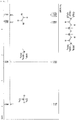
- Ethynyltrimethylsilane (98.2 g) (1.0 mol) and a 0.5 wt% toluene solution of chloroplatinic acid (H 2 PtCl 6 ⁇ 6H 2 O) (0.5 g) were fed into a 250 mL four necked separable flask equipped with a mechanical stirrer, a thermometer and a dropping funnel, and trimethoxysilane (128.3 g) (1.05 mol) was dropped therein at 85°C for approximately 2 hours.
- trimethoxysilyl-ethylene-substituted trimethylsilane compound 1 shown as follows (213 g) (yield: 97%).
- the reaction formula is represented by the following formula [3].
- 1,3-diethynyl-1,1,3,3-tetramethyldisiloxane 100 g (0.55 mol)
- a 0.5 wt% toluene solution of chloroplatinic acid (H 2 PtCl 6 ⁇ 6H 2 O) 0.5 g
- 50 mL of toluene 50 mL
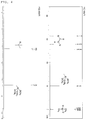
- trimethoxysilane 160 g (1.31 mol) was dropped therein at 85°C for approximately 1 hour.
- 1,3-diethynyl-1,1,3,3-tetramethyldisiloxane (17.0 g) (0.094 mol)
- a 0.5 wt% toluene solution of chloroplatinic acid (H 2 PtCl 6 ⁇ 6H 2 O) (0.05 g)
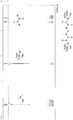
- 10 mL of toluene were fed into a 500 mL four necked separable flask equipped with a mechanical stirrer, a thermometer and a dropping funnel, and dimethoxymethylsilane (19.9 g) (0.187 mol) was dropped therein at 85°C for approximately 10 minutes.
- the respective compositions immediately after preparation which were prepared in the Examples 1 to 3 and the Comparative Examples 1 to 5 were each extruded to a sheet state with a thickness of 2 mm, exposed to air at 23°C, 50%RH, then, the each sheet was allowed to stand under the same atmosphere for 7 days to obtain a cured product.
- Physical properties (initial physical properties) of the cured product were measured in accordance with JIS K-6249. The hardness was measured by using a durometer A hardness meter according to JIS K-6249.
- the cured product was stored in a thermo-hygrostat at 85°C, 85%RH for 500 hours and the physical properties were similarly measured. Thereafter, the same measurements were carried out with regard to the sheets each having a thickness of 2 mm which had been prepared from the respective compositions immediately after preparation which were prepared in the Examples and the Comparative Examples each charged in a sealed vessel and allowed to stand at a temperature of 70°C for 7 days
- the respective compositions was filled in a glass container (28 mm in internal diameter and 15 mm deep), exposed to air at 23°C, 50%RH for 8 hours, 24 hours, and 120 hours. Thereafter, the thickness that was cured from a portion that contacted the air was measured (cured film thickness).
- Example 1 Example 2
- Example 3 Initial Hardness (durometer A) 19 26 17 Elongation (%) at breakage 120 95 130
- High sealing heat resistance test State of curing Cured Cured Cured Cured Comparative Example 1 Comparative Example 2 Comparative Example 3 Initial Hardness (durometer A) 7 10 22 Elongation (%) at breakage 200 180 115
- Example 1 is higher rapid curability and durability than the corresponding Comparative Examples 1 to 4. Also, it would be clear that the Examples 2 and 3 are more excellent durability than the Comparative Example 5. Also, it would be clear that the Examples 1 to 3 are higher storage stability than the Comparative Examples.
- a polyorganosiloxane compound containing an ethynyl group at both terminals of a molecular chain (1,500 g) (0.16 mol in terms of to the amount of a functional group of an ethynyl group of a terminal) and a platinum catalyst (0.35 g) were fed into a 3,000 mL four necked flask equipped with a mechanical stirrer, a reflux cooling pipe, a thermometer and a dropping funnel to be heated up to 75°C and stirred.
- trimethoxysilane (22.4 g) (0.18 mol) was and dropped with stirring, the product was heated with a reaction temperature of 80 to 85°C to hold a reaction system for 6 hours within this temperature range. After completion of the reaction, a small excess of trimethoxysilane was removed under reduced pressure. After cooling the product down to room temperature, it was filtered to obtain a polyorganosiloxane compound having a trimethoxysilyl-ethylene group at its terminals (1,450 g) (viscosity of 970 mPa ⁇ s).
- the respective compositions immediately after preparation which were prepared in the Examples and the Comparative Examples were each extruded to a sheet state with a thickness of 2 mm, exposed to air at room temperature (23°C), 50%RH, then, the each sheet was allowed to stand under the same atmosphere for 7 days to obtain a cured product.
- Physical properties (initial physical properties) of the cured product were measured in accordance with JIS K-6249. The hardness was measured by using a durometer A hardness meter according to JIS K-6249.
- the cured product was allowed to stand at 85°C, 85%RH in a thermo-hygrostat for 7 days and the physical properties were similarly measured. Thereafter, the respective compositions immediately after preparation which were prepared in the Examples and the Comparative Examples was fed into a sealed vessel, and stored at 70°C for 7 days to obtain a sheet with a thickness of 2 mm. Physical properties of the sheet were similarly measured.
- the room temperature curable composition of the present invention and a base polymer thereof provide a cured product having rapid curability, durability, and storage stability.
Landscapes
- Chemical & Material Sciences (AREA)
- Organic Chemistry (AREA)
- Chemical Kinetics & Catalysis (AREA)
- Health & Medical Sciences (AREA)
- Medicinal Chemistry (AREA)
- Polymers & Plastics (AREA)
- General Chemical & Material Sciences (AREA)
- Engineering & Computer Science (AREA)
- Life Sciences & Earth Sciences (AREA)
- Materials Engineering (AREA)
- Wood Science & Technology (AREA)
- Compositions Of Macromolecular Compounds (AREA)
- Paints Or Removers (AREA)
- Adhesives Or Adhesive Processes (AREA)
- Silicon Polymers (AREA)
- Sealing Material Composition (AREA)
Claims (8)
- Silizium-enthaltende Verbindung mit einer Alkoxysilyl-Ethylen-Gruppe an dessen Ende, das mindestens eine Silyl-Ethylen-Bindung umfasst, wiedergegeben durch die folgende Strukturformel (a) in einem Molekül,

wobei die Silizium-enthaltende Verbindung mit einer Alkoxysilyl-Ethylen-Gruppe an dessen Ende ausgewählt ist aus der Gruppe bestehend aus denjenigen, wiedergegeben durch die folgenden Formeln:

- Silizium-enthaltende Verbindung mit einer Alkoxysilyl-Ethylen-Gruppe an dessen Ende, wiedergegeben durch die folgende Strukturformel (2),

- Silizium-enthaltende Verbindung mit einer Alkoxysilyl-Ethylen-Gruppe an dessen Ende gemäß Anspruch 2, worin "m" für eine Ganzzahl von 0 bis 500 in der Strukturformel (2) steht.
- Silizium-enthaltende Verbindung mit einer Alkoxysilyl-Ethylen-Gruppe an dessen Ende gemäß Anspruch 2, worin die Silizium-enthaltende Verbindung mit einer Alkoxysilyl-Ethylen-Gruppe an dessen Ende eine Disiloxanverbindung ist, worin "m" für 0 in der Strukturformel (2) steht.
- Silizium-enthaltende Verbindung mit einer Alkoxysilyl-Ethylen-Gruppe an dessen Ende gemäß Anspruch 2, worin die Silizium-enthaltende Verbindung mit einer Alkoxysilyl-Ethylen-Gruppe an dessen Ende ein Niedrigmolekulargewicht-Siloxanoligomer ist, worin "m" für eine Ganzzahl von 1 bis 10 in der Strukturformel (2) steht.
- Bei Raumtemperatur härtbare Organopolysiloxanzusammensetzung, umfassend:(A) ein Diorganopolysiloxan, enthaltend mindestens 2 Siliziumatome, an die eine Hydroxylgruppe und/oder eine hydrolysierbare Gruppe in einem Molekül gebunden sind: 100 Gewichtsteile;(B) die Silizium-enthaltende Verbindung mit einer Alkoxysilyl-Ethylen-Gruppe an dessen Ende gemäß irgendeinem der Ansprüche 1 bis 5: 0,1 bis 30 Gewichtsteile;(C) einen Härtungskatalysator: 0,001 bis 15 Gewichtsteile;(D) ein Silan und/oder ein Teil-Hydrolyse-Kondensat davon, aber nicht die Komponente (B): 0 bis 30 Gewichtsteile;(E) einen Füllstoff: 0 bis 1 000 Gewichtsteile; und(F) einen Adhäsionspromoter: 0 bis 30 Gewichtsteile.
- Die bei Raumtemperatur härtbare Organopolysiloxanzusammensetzung gemäß Anspruch 6, worin die bei Raumtemperatur härtbare Zusammensetzung als ein Beschichtungsmittel, Adhäsivmittel oder Versiegelungsmittel eingesetzt wird.
- Geformtes Produkt, erhalten durch Härtung der bei Raumtemperatur härtbaren Organopolysiloxanzusammensetzung gemäß Anspruch 6.
Applications Claiming Priority (4)
| Application Number | Priority Date | Filing Date | Title |
|---|---|---|---|
| JP2012277863 | 2012-12-20 | ||
| JP2013084075 | 2013-04-12 | ||
| JP2013084149 | 2013-04-12 | ||
| PCT/JP2013/007247 WO2014097574A1 (ja) | 2012-12-20 | 2013-12-10 | 新規アルコキシシリル-エチレン基末端ケイ素含有化合物、室温硬化性オルガノポリシロキサン組成物、及び該組成物を硬化して得られる成形物 |
Publications (3)
| Publication Number | Publication Date |
|---|---|
| EP2937352A1 EP2937352A1 (de) | 2015-10-28 |
| EP2937352A4 EP2937352A4 (de) | 2016-07-20 |
| EP2937352B1 true EP2937352B1 (de) | 2019-07-17 |
Family
ID=50977937
Family Applications (1)
| Application Number | Title | Priority Date | Filing Date |
|---|---|---|---|
| EP13865466.0A Active EP2937352B1 (de) | 2012-12-20 | 2013-12-10 | Neuartige alkoxysilyl-ethylen-gruppe-terminierte siliciumhaltige verbindung, bei raumtemperatur härtbare organopolysiloxanzusammensetzung und durch aushärten dieser zusammensetzung erhaltener formkörper |
Country Status (6)
| Country | Link |
|---|---|
| US (1) | US9644124B2 (de) |
| EP (1) | EP2937352B1 (de) |
| JP (1) | JP5997778B2 (de) |
| KR (1) | KR102111415B1 (de) |
| CN (1) | CN104884461B (de) |
| WO (1) | WO2014097574A1 (de) |
Cited By (1)
| Publication number | Priority date | Publication date | Assignee | Title |
|---|---|---|---|---|
| EP4074716A4 (de) * | 2019-12-11 | 2024-01-10 | Shin-Etsu Chemical Co., Ltd. | Organopolysiloxanverbindung und verfahren zu ihrer herstellung und diese verbindung enthaltende zusammensetzung |
Families Citing this family (20)
| Publication number | Priority date | Publication date | Assignee | Title |
|---|---|---|---|---|
| US9850349B2 (en) | 2013-12-17 | 2017-12-26 | Shin-Etsu Chemical Co., Ltd. | Multicomponent room temperature-curable organopolysiloxane composition, cured product of said composition, and molded product comprising said cured product |
| WO2015114939A1 (ja) * | 2014-01-31 | 2015-08-06 | 信越化学工業株式会社 | オルガノポリシロキサン化合物及びその製造方法並びに付加硬化型シリコーン組成物 |
| CN106459586B (zh) * | 2014-06-16 | 2019-11-26 | 信越化学工业株式会社 | 室温固化性有机聚硅氧烷组合物和为该室温固化性有机聚硅氧烷组合物的固化物的成型物 |
| US10442896B2 (en) | 2015-04-03 | 2019-10-15 | Shin-Etsu Chemical Co., Ltd. | Room temperature-curable organopolysiloxane composition and cured product thereof |
| JP6729687B2 (ja) * | 2016-05-09 | 2020-07-22 | 信越化学工業株式会社 | 室温硬化性オルガノポリシロキサン組成物の硬化物でコーティングされた水中構造物、水中構造物のコーティング用の室温硬化性オルガノポリシロキサン組成物及び水中構造物表面への水生生物の付着・生育を防止する方法 |
| CN109642079B (zh) | 2016-08-26 | 2022-04-05 | 信越化学工业株式会社 | 脱醇型室温固化性有机聚硅氧烷组合物和用该组合物的固化物密封的物品 |
| JP7405613B2 (ja) * | 2017-03-02 | 2023-12-26 | Agc株式会社 | 含フッ素シラン化合物の製造方法及び含フッ素シラン化合物 |
| JP7037666B2 (ja) * | 2018-10-05 | 2022-03-16 | 中国塗料株式会社 | 防汚塗料組成物、防汚塗膜、並びに防汚塗膜付き基材及びその製造方法 |
| JP7173302B2 (ja) | 2019-04-10 | 2022-11-16 | 信越化学工業株式会社 | オイルシール用室温硬化性オルガノポリシロキサン組成物及び自動車用部品 |
| JP2021055012A (ja) * | 2019-10-01 | 2021-04-08 | 株式会社カネカ | 硬化性組成物 |
| JP2021055010A (ja) * | 2019-10-01 | 2021-04-08 | 株式会社カネカ | 硬化性組成物 |
| JP2021055018A (ja) * | 2019-10-01 | 2021-04-08 | 株式会社カネカ | 硬化性組成物 |
| JP2021055011A (ja) * | 2019-10-01 | 2021-04-08 | 株式会社カネカ | 硬化性組成物 |
| KR102298513B1 (ko) * | 2020-05-29 | 2021-09-07 | 주식회사 케이씨씨실리콘 | 습기경화형 실록산 조성물 |
| US20230250287A1 (en) | 2020-07-07 | 2023-08-10 | Shin-Etsu Chemical Co., Ltd. | Two-component type room temperature fast-curing organopolysiloxane composition, cured product thereof and article |
| JP7800552B2 (ja) | 2021-09-03 | 2026-01-16 | 信越化学工業株式会社 | オルガノポリシロキサン化合物、室温硬化性オルガノポリシロキサン組成物、及び物品 |
| JPWO2023204020A1 (de) * | 2022-04-19 | 2023-10-26 | ||
| JP2024015716A (ja) * | 2022-07-25 | 2024-02-06 | 信越化学工業株式会社 | ビスシラン化合物からなる変性剤、その製造方法及びその使用 |
| JP2024015717A (ja) * | 2022-07-25 | 2024-02-06 | 信越化学工業株式会社 | 片末端変性オルガノポリシロキサン及びその製造方法、表面処理剤、並びにシリコーン組成物 |
| CN121399192A (zh) * | 2023-07-05 | 2026-01-23 | Agc株式会社 | 化合物、组合物、表面处理剂、物品及物品的制造方法 |
Family Cites Families (15)
| Publication number | Priority date | Publication date | Assignee | Title |
|---|---|---|---|---|
| US3595733A (en) * | 1969-07-09 | 1971-07-27 | Dow Chemical Co | Method of preparing alpha-unsaturated organosilicon compounds |
| JPS5543119A (en) | 1978-09-20 | 1980-03-26 | Sws Silicones Corp | Titanium ester contained vulcanizable organopolysiloxane composition and its manufacture |
| JPS56122390A (en) * | 1980-02-29 | 1981-09-25 | Toshiba Silicone Co Ltd | Preparation of bissilylated ethylene |
| JPH04283589A (ja) * | 1991-03-12 | 1992-10-08 | Rikagaku Kenkyusho | ビニルシラン類の製造方法 |
| JPH0739547B2 (ja) | 1992-01-10 | 1995-05-01 | 東レ・ダウコーニング・シリコーン株式会社 | 室温硬化性オルガノポリシロキサン組成物 |
| JP2998505B2 (ja) | 1993-07-29 | 2000-01-11 | 富士写真光機株式会社 | ラジアル超音波走査装置 |
| JP2718620B2 (ja) * | 1993-09-01 | 1998-02-25 | 東芝シリコーン株式会社 | ポリオルガノシランの製造方法 |
| JPH07331076A (ja) | 1994-06-03 | 1995-12-19 | Shin Etsu Chem Co Ltd | 室温硬化性オルガノポリシロキサン組成物 |
| JP5324734B2 (ja) * | 2005-01-21 | 2013-10-23 | インターナショナル・ビジネス・マシーンズ・コーポレーション | 誘電体材料とその製造方法 |
| US7892648B2 (en) | 2005-01-21 | 2011-02-22 | International Business Machines Corporation | SiCOH dielectric material with improved toughness and improved Si-C bonding |
| DE102008054541A1 (de) | 2008-12-11 | 2010-06-17 | Wacker Chemie Ag | Alkoxysilanterminierte Polymere enthaltende Polymerabmischungen |
| WO2012001881A1 (ja) * | 2010-06-30 | 2012-01-05 | キヤノン株式会社 | 導電部材、プロセスカートリッジおよび電子写真画像形成装置 |
| US20130112605A1 (en) | 2010-07-26 | 2013-05-09 | Waters Technologies Corporation | Superficially porous materials comprising a substantially nonporous core having narrow particle size distribution; process for the preparation thereof; and use thereof for chromatographic separations |
| DE102010043996A1 (de) * | 2010-11-16 | 2012-05-16 | Wacker Chemie Ag | Verfahren zur Herstellung alkoxysubstituierter 1,2-Bis-Silyl-Ethane |
| CN103958059B (zh) * | 2011-12-01 | 2017-04-26 | 道康宁公司 | 硅氢加成反应催化剂和可固化组合物及它们的制备和使用方法 |
-
2013
- 2013-12-10 JP JP2014552911A patent/JP5997778B2/ja active Active
- 2013-12-10 EP EP13865466.0A patent/EP2937352B1/de active Active
- 2013-12-10 US US14/649,030 patent/US9644124B2/en active Active
- 2013-12-10 WO PCT/JP2013/007247 patent/WO2014097574A1/ja not_active Ceased
- 2013-12-10 CN CN201380067447.4A patent/CN104884461B/zh active Active
- 2013-12-10 KR KR1020157016320A patent/KR102111415B1/ko active Active
Non-Patent Citations (6)
| Title |
|---|
| BOGDAN MARCINIEC ET AL: "Catalysis of hydrosilylation", JOURNAL OF ORGANOMETALLIC CHEMISTRY., vol. 454, no. 1-2, 1 July 1993 (1993-07-01), CH, pages 45 - 50, XP055517842, ISSN: 0022-328X, DOI: 10.1016/0022-328X(93)83221-G * |
| M. G. VORONKOV ET AL: "1-(2?-triethylsilylethyl)-, 1-(2?-triethylsilylvinyl)-, and 1?-(2?-triethylsilylethynyl)-silatranes", BULLETIN OF THE ACADEMY OF SCIENCES OF THE USSR, DIVISION OF CHEMICAL SCIENCES., vol. 33, no. 11, 1 November 1984 (1984-11-01), US, pages 2391 - 2393, XP055517911, ISSN: 0568-5230, DOI: 10.1007/BF00948861 * |
| MACIEJEWSKI H ET AL: "Catalysis of hydrosilylation - Part XXXIV. High catalytic efficiency of the nickel equivalent of Karstedt catalyst [{Ni(@h-CH"2@?CHSiMe"2)"2O}"2{@m-(@h-CH"2@?CHSiMe"2)"2O}]", JOURNAL OF ORGANOMETALLIC CHEMIS, ELSEVIER-SEQUOIA S.A. LAUSANNE, CH, vol. 597, no. 1-2, 1 March 2000 (2000-03-01), pages 175 - 181, XP004190418, ISSN: 0022-328X, DOI: 10.1016/S0022-328X(99)00685-3 * |
| NICOLAS IMLINGER ET AL: "Novel Immobilized Hydrosilylation Catalysts Based on Rhodium 1,3-Bis(2,4,6-trimethylphenyl)-3,4,5,6-tetrahydropyrimidin-2-ylidenes", MONATSHEFTE FÜR CHEMIE - CHEMICAL MONTHLY ; AN INTERNATIONAL JOURNAL OF CHEMISTRY, SPRINGER-VERLAG, AU, vol. 136, no. 1, 1 January 2005 (2005-01-01), pages 47 - 57, XP019378688, ISSN: 1434-4475, DOI: 10.1007/S00706-004-0255-3 * |
| VORONKOV M G ET AL: "BROMINATION OF Si-ALKYL(METHOXY)-SUBSTITUTED 1,2-DISILYLETHYLENE DERIVATIVES", IZVESTIYA AKADEMII NAUK SSSR, SERIYA KHIMICHES, INSTITUT ORGANICHESKOI KHIMII IM. N. D. ZELINSKOGO ROSSIISKOI AKADEMII, RU, vol. 8, 1 January 1983 (1983-01-01), pages 1983 - 1984, XP008182862, ISSN: 0002-3353 * |
| VORONKOV M G ET AL: "Cyclodimethylsilethenes (Me"2SiCH=CH)"n", JOURNAL OF ORGANOMETALLIC CHEMISTRY, ELSEVIER, AMSTERDAM, NL, vol. 491, no. 1, 5 April 1995 (1995-04-05), pages 215 - 217, XP004024146, ISSN: 0022-328X, DOI: 10.1016/0022-328X(95)05199-Y * |
Cited By (2)
| Publication number | Priority date | Publication date | Assignee | Title |
|---|---|---|---|---|
| EP4074716A4 (de) * | 2019-12-11 | 2024-01-10 | Shin-Etsu Chemical Co., Ltd. | Organopolysiloxanverbindung und verfahren zu ihrer herstellung und diese verbindung enthaltende zusammensetzung |
| US12552937B2 (en) | 2019-12-11 | 2026-02-17 | Shin-Etsu Chemical Co., Ltd. | Organopolysiloxane compound and production method thereof, and composition containing said compound |
Also Published As
| Publication number | Publication date |
|---|---|
| WO2014097574A1 (ja) | 2014-06-26 |
| US20150315438A1 (en) | 2015-11-05 |
| US9644124B2 (en) | 2017-05-09 |
| JPWO2014097574A1 (ja) | 2017-01-12 |
| KR20150099526A (ko) | 2015-08-31 |
| CN104884461B (zh) | 2019-09-27 |
| CN104884461A (zh) | 2015-09-02 |
| EP2937352A4 (de) | 2016-07-20 |
| JP5997778B2 (ja) | 2016-09-28 |
| EP2937352A1 (de) | 2015-10-28 |
| KR102111415B1 (ko) | 2020-05-15 |
Similar Documents
| Publication | Publication Date | Title |
|---|---|---|
| EP2937352B1 (de) | Neuartige alkoxysilyl-ethylen-gruppe-terminierte siliciumhaltige verbindung, bei raumtemperatur härtbare organopolysiloxanzusammensetzung und durch aushärten dieser zusammensetzung erhaltener formkörper | |
| EP2937375B1 (de) | Neuartige ethynylgruppenhaltige organopolysiloxanverbindung, verfahren zur herstellung einer geradkettigen organopolysiloxanverbindung mit ethynylgruppe an beiden molekularkettenenden, verfahren zur herstellung eines alkoxysilyl-ethynylgruppen-terminierten polymers, bei raumtemperatur härtbare zusammensetzung und formkörper als gehärtetes produkt daraus | |
| EP3085739B1 (de) | Mehrkomponentige, bei raumtemperatur härtbare organopolysiloxanzusammensetzung, gehärtetes produkt aus der besagten zusammensetzung und geformtes produkt mit besagtem gehärteten produkt | |
| JP6497390B2 (ja) | 室温硬化性オルガノポリシロキサン組成物及び該室温硬化性オルガノポリシロキサン組成物の硬化物である成形物 | |
| JP6583114B2 (ja) | 室温硬化性オルガノポリシロキサン組成物及び物品 | |
| JP6747507B2 (ja) | 室温硬化性組成物、シーリング材並びに物品 | |
| JP7444857B2 (ja) | 室温硬化性オルガノポリシロキサン組成物および電気・電子部品の保護剤または接着剤組成物 | |
| KR20200125578A (ko) | 수분 경화성 실리콘 중합체 및 그의 용도 | |
| JP7852672B2 (ja) | 二成分型室温速硬化性オルガノポリシロキサン組成物及び物品、並びに二成分型室温硬化性オルガノポリシロキサン組成物の深部硬化性の改善方法 | |
| KR101136681B1 (ko) | 실온 경화성 오르가노폴리실록산 조성물, 및 자동차용 부품 | |
| CN118119670A (zh) | 室温固化性有机聚硅氧烷组合物、粘合剂、密封剂和涂层剂 | |
| EP3705535B1 (de) | Organopolysiloxanzusammensetzung und organische siliziumverbindung und verfahren zu ihrer herstellung | |
| JP2015013970A (ja) | 室温硬化性樹脂組成物 |
Legal Events
| Date | Code | Title | Description |
|---|---|---|---|
| PUAI | Public reference made under article 153(3) epc to a published international application that has entered the european phase |
Free format text: ORIGINAL CODE: 0009012 |
|
| 17P | Request for examination filed |
Effective date: 20150611 |
|
| AK | Designated contracting states |
Kind code of ref document: A1 Designated state(s): AL AT BE BG CH CY CZ DE DK EE ES FI FR GB GR HR HU IE IS IT LI LT LU LV MC MK MT NL NO PL PT RO RS SE SI SK SM TR |
|
| AX | Request for extension of the european patent |
Extension state: BA ME |
|
| DAX | Request for extension of the european patent (deleted) | ||
| A4 | Supplementary search report drawn up and despatched |
Effective date: 20160620 |
|
| RIC1 | Information provided on ipc code assigned before grant |
Ipc: C08L 83/06 20060101ALI20160613BHEP Ipc: C08G 77/50 20060101ALI20160613BHEP Ipc: C07F 7/18 20060101AFI20160613BHEP Ipc: C08K 5/5425 20060101ALI20160613BHEP |
|
| STAA | Information on the status of an ep patent application or granted ep patent |
Free format text: STATUS: EXAMINATION IS IN PROGRESS |
|
| 17Q | First examination report despatched |
Effective date: 20181029 |
|
| GRAP | Despatch of communication of intention to grant a patent |
Free format text: ORIGINAL CODE: EPIDOSNIGR1 |
|
| STAA | Information on the status of an ep patent application or granted ep patent |
Free format text: STATUS: GRANT OF PATENT IS INTENDED |
|
| INTG | Intention to grant announced |
Effective date: 20190401 |
|
| GRAS | Grant fee paid |
Free format text: ORIGINAL CODE: EPIDOSNIGR3 |
|
| GRAA | (expected) grant |
Free format text: ORIGINAL CODE: 0009210 |
|
| STAA | Information on the status of an ep patent application or granted ep patent |
Free format text: STATUS: THE PATENT HAS BEEN GRANTED |
|
| AK | Designated contracting states |
Kind code of ref document: B1 Designated state(s): AL AT BE BG CH CY CZ DE DK EE ES FI FR GB GR HR HU IE IS IT LI LT LU LV MC MK MT NL NO PL PT RO RS SE SI SK SM TR |
|
| REG | Reference to a national code |
Ref country code: GB Ref legal event code: FG4D |
|
| REG | Reference to a national code |
Ref country code: CH Ref legal event code: EP |
|
| REG | Reference to a national code |
Ref country code: IE Ref legal event code: FG4D |
|
| REG | Reference to a national code |
Ref country code: DE Ref legal event code: R096 Ref document number: 602013058033 Country of ref document: DE |
|
| REG | Reference to a national code |
Ref country code: AT Ref legal event code: REF Ref document number: 1155749 Country of ref document: AT Kind code of ref document: T Effective date: 20190815 |
|
| REG | Reference to a national code |
Ref country code: NL Ref legal event code: FP |
|
| REG | Reference to a national code |
Ref country code: LT Ref legal event code: MG4D |
|
| REG | Reference to a national code |
Ref country code: AT Ref legal event code: MK05 Ref document number: 1155749 Country of ref document: AT Kind code of ref document: T Effective date: 20190717 |
|
| PG25 | Lapsed in a contracting state [announced via postgrant information from national office to epo] |
Ref country code: NO Free format text: LAPSE BECAUSE OF FAILURE TO SUBMIT A TRANSLATION OF THE DESCRIPTION OR TO PAY THE FEE WITHIN THE PRESCRIBED TIME-LIMIT Effective date: 20191017 Ref country code: BG Free format text: LAPSE BECAUSE OF FAILURE TO SUBMIT A TRANSLATION OF THE DESCRIPTION OR TO PAY THE FEE WITHIN THE PRESCRIBED TIME-LIMIT Effective date: 20191017 Ref country code: AT Free format text: LAPSE BECAUSE OF FAILURE TO SUBMIT A TRANSLATION OF THE DESCRIPTION OR TO PAY THE FEE WITHIN THE PRESCRIBED TIME-LIMIT Effective date: 20190717 Ref country code: HR Free format text: LAPSE BECAUSE OF FAILURE TO SUBMIT A TRANSLATION OF THE DESCRIPTION OR TO PAY THE FEE WITHIN THE PRESCRIBED TIME-LIMIT Effective date: 20190717 Ref country code: SE Free format text: LAPSE BECAUSE OF FAILURE TO SUBMIT A TRANSLATION OF THE DESCRIPTION OR TO PAY THE FEE WITHIN THE PRESCRIBED TIME-LIMIT Effective date: 20190717 Ref country code: FI Free format text: LAPSE BECAUSE OF FAILURE TO SUBMIT A TRANSLATION OF THE DESCRIPTION OR TO PAY THE FEE WITHIN THE PRESCRIBED TIME-LIMIT Effective date: 20190717 Ref country code: LT Free format text: LAPSE BECAUSE OF FAILURE TO SUBMIT A TRANSLATION OF THE DESCRIPTION OR TO PAY THE FEE WITHIN THE PRESCRIBED TIME-LIMIT Effective date: 20190717 Ref country code: PT Free format text: LAPSE BECAUSE OF FAILURE TO SUBMIT A TRANSLATION OF THE DESCRIPTION OR TO PAY THE FEE WITHIN THE PRESCRIBED TIME-LIMIT Effective date: 20191118 |
|
| PG25 | Lapsed in a contracting state [announced via postgrant information from national office to epo] |
Ref country code: GR Free format text: LAPSE BECAUSE OF FAILURE TO SUBMIT A TRANSLATION OF THE DESCRIPTION OR TO PAY THE FEE WITHIN THE PRESCRIBED TIME-LIMIT Effective date: 20191018 Ref country code: LV Free format text: LAPSE BECAUSE OF FAILURE TO SUBMIT A TRANSLATION OF THE DESCRIPTION OR TO PAY THE FEE WITHIN THE PRESCRIBED TIME-LIMIT Effective date: 20190717 Ref country code: ES Free format text: LAPSE BECAUSE OF FAILURE TO SUBMIT A TRANSLATION OF THE DESCRIPTION OR TO PAY THE FEE WITHIN THE PRESCRIBED TIME-LIMIT Effective date: 20190717 Ref country code: AL Free format text: LAPSE BECAUSE OF FAILURE TO SUBMIT A TRANSLATION OF THE DESCRIPTION OR TO PAY THE FEE WITHIN THE PRESCRIBED TIME-LIMIT Effective date: 20190717 Ref country code: RS Free format text: LAPSE BECAUSE OF FAILURE TO SUBMIT A TRANSLATION OF THE DESCRIPTION OR TO PAY THE FEE WITHIN THE PRESCRIBED TIME-LIMIT Effective date: 20190717 Ref country code: IS Free format text: LAPSE BECAUSE OF FAILURE TO SUBMIT A TRANSLATION OF THE DESCRIPTION OR TO PAY THE FEE WITHIN THE PRESCRIBED TIME-LIMIT Effective date: 20191117 |
|
| PG25 | Lapsed in a contracting state [announced via postgrant information from national office to epo] |
Ref country code: TR Free format text: LAPSE BECAUSE OF FAILURE TO SUBMIT A TRANSLATION OF THE DESCRIPTION OR TO PAY THE FEE WITHIN THE PRESCRIBED TIME-LIMIT Effective date: 20190717 |
|
| PG25 | Lapsed in a contracting state [announced via postgrant information from national office to epo] |
Ref country code: RO Free format text: LAPSE BECAUSE OF FAILURE TO SUBMIT A TRANSLATION OF THE DESCRIPTION OR TO PAY THE FEE WITHIN THE PRESCRIBED TIME-LIMIT Effective date: 20190717 Ref country code: PL Free format text: LAPSE BECAUSE OF FAILURE TO SUBMIT A TRANSLATION OF THE DESCRIPTION OR TO PAY THE FEE WITHIN THE PRESCRIBED TIME-LIMIT Effective date: 20190717 Ref country code: EE Free format text: LAPSE BECAUSE OF FAILURE TO SUBMIT A TRANSLATION OF THE DESCRIPTION OR TO PAY THE FEE WITHIN THE PRESCRIBED TIME-LIMIT Effective date: 20190717 Ref country code: DK Free format text: LAPSE BECAUSE OF FAILURE TO SUBMIT A TRANSLATION OF THE DESCRIPTION OR TO PAY THE FEE WITHIN THE PRESCRIBED TIME-LIMIT Effective date: 20190717 Ref country code: IT Free format text: LAPSE BECAUSE OF FAILURE TO SUBMIT A TRANSLATION OF THE DESCRIPTION OR TO PAY THE FEE WITHIN THE PRESCRIBED TIME-LIMIT Effective date: 20190717 |
|
| PG25 | Lapsed in a contracting state [announced via postgrant information from national office to epo] |
Ref country code: IS Free format text: LAPSE BECAUSE OF FAILURE TO SUBMIT A TRANSLATION OF THE DESCRIPTION OR TO PAY THE FEE WITHIN THE PRESCRIBED TIME-LIMIT Effective date: 20200224 Ref country code: SM Free format text: LAPSE BECAUSE OF FAILURE TO SUBMIT A TRANSLATION OF THE DESCRIPTION OR TO PAY THE FEE WITHIN THE PRESCRIBED TIME-LIMIT Effective date: 20190717 Ref country code: SK Free format text: LAPSE BECAUSE OF FAILURE TO SUBMIT A TRANSLATION OF THE DESCRIPTION OR TO PAY THE FEE WITHIN THE PRESCRIBED TIME-LIMIT Effective date: 20190717 Ref country code: CZ Free format text: LAPSE BECAUSE OF FAILURE TO SUBMIT A TRANSLATION OF THE DESCRIPTION OR TO PAY THE FEE WITHIN THE PRESCRIBED TIME-LIMIT Effective date: 20190717 |
|
| REG | Reference to a national code |
Ref country code: DE Ref legal event code: R097 Ref document number: 602013058033 Country of ref document: DE |
|
| PLBE | No opposition filed within time limit |
Free format text: ORIGINAL CODE: 0009261 |
|
| STAA | Information on the status of an ep patent application or granted ep patent |
Free format text: STATUS: NO OPPOSITION FILED WITHIN TIME LIMIT |
|
| PG2D | Information on lapse in contracting state deleted |
Ref country code: IS |
|
| REG | Reference to a national code |
Ref country code: CH Ref legal event code: PL |
|
| 26N | No opposition filed |
Effective date: 20200603 |
|
| REG | Reference to a national code |
Ref country code: BE Ref legal event code: MM Effective date: 20191231 |
|
| PG25 | Lapsed in a contracting state [announced via postgrant information from national office to epo] |
Ref country code: MC Free format text: LAPSE BECAUSE OF FAILURE TO SUBMIT A TRANSLATION OF THE DESCRIPTION OR TO PAY THE FEE WITHIN THE PRESCRIBED TIME-LIMIT Effective date: 20190717 Ref country code: SI Free format text: LAPSE BECAUSE OF FAILURE TO SUBMIT A TRANSLATION OF THE DESCRIPTION OR TO PAY THE FEE WITHIN THE PRESCRIBED TIME-LIMIT Effective date: 20190717 |
|
| GBPC | Gb: european patent ceased through non-payment of renewal fee |
Effective date: 20191210 |
|
| PG25 | Lapsed in a contracting state [announced via postgrant information from national office to epo] |
Ref country code: FR Free format text: LAPSE BECAUSE OF NON-PAYMENT OF DUE FEES Effective date: 20191231 Ref country code: IE Free format text: LAPSE BECAUSE OF NON-PAYMENT OF DUE FEES Effective date: 20191210 Ref country code: GB Free format text: LAPSE BECAUSE OF NON-PAYMENT OF DUE FEES Effective date: 20191210 Ref country code: LU Free format text: LAPSE BECAUSE OF NON-PAYMENT OF DUE FEES Effective date: 20191210 |
|
| PG25 | Lapsed in a contracting state [announced via postgrant information from national office to epo] |
Ref country code: CH Free format text: LAPSE BECAUSE OF NON-PAYMENT OF DUE FEES Effective date: 20191231 Ref country code: BE Free format text: LAPSE BECAUSE OF NON-PAYMENT OF DUE FEES Effective date: 20191231 Ref country code: LI Free format text: LAPSE BECAUSE OF NON-PAYMENT OF DUE FEES Effective date: 20191231 |
|
| PG25 | Lapsed in a contracting state [announced via postgrant information from national office to epo] |
Ref country code: CY Free format text: LAPSE BECAUSE OF FAILURE TO SUBMIT A TRANSLATION OF THE DESCRIPTION OR TO PAY THE FEE WITHIN THE PRESCRIBED TIME-LIMIT Effective date: 20190717 |
|
| PG25 | Lapsed in a contracting state [announced via postgrant information from national office to epo] |
Ref country code: MT Free format text: LAPSE BECAUSE OF FAILURE TO SUBMIT A TRANSLATION OF THE DESCRIPTION OR TO PAY THE FEE WITHIN THE PRESCRIBED TIME-LIMIT Effective date: 20190717 Ref country code: HU Free format text: LAPSE BECAUSE OF FAILURE TO SUBMIT A TRANSLATION OF THE DESCRIPTION OR TO PAY THE FEE WITHIN THE PRESCRIBED TIME-LIMIT; INVALID AB INITIO Effective date: 20131210 |
|
| PG25 | Lapsed in a contracting state [announced via postgrant information from national office to epo] |
Ref country code: MK Free format text: LAPSE BECAUSE OF FAILURE TO SUBMIT A TRANSLATION OF THE DESCRIPTION OR TO PAY THE FEE WITHIN THE PRESCRIBED TIME-LIMIT Effective date: 20190717 |
|
| PGFP | Annual fee paid to national office [announced via postgrant information from national office to epo] |
Ref country code: NL Payment date: 20251112 Year of fee payment: 13 |
|
| PGFP | Annual fee paid to national office [announced via postgrant information from national office to epo] |
Ref country code: DE Payment date: 20251028 Year of fee payment: 13 |