EP2937699A1 - Méthode d'évaluation complète d'agrégation plaquettaire - Google Patents
Méthode d'évaluation complète d'agrégation plaquettaire Download PDFInfo
- Publication number
- EP2937699A1 EP2937699A1 EP13865542.8A EP13865542A EP2937699A1 EP 2937699 A1 EP2937699 A1 EP 2937699A1 EP 13865542 A EP13865542 A EP 13865542A EP 2937699 A1 EP2937699 A1 EP 2937699A1
- Authority
- EP
- European Patent Office
- Prior art keywords
- blood
- platelet
- container
- filter
- activating reagent
- Prior art date
- Legal status (The legal status is an assumption and is not a legal conclusion. Google has not performed a legal analysis and makes no representation as to the accuracy of the status listed.)
- Withdrawn
Links
Images




Classifications
-
- G—PHYSICS
- G01—MEASURING; TESTING
- G01N—INVESTIGATING OR ANALYSING MATERIALS BY DETERMINING THEIR CHEMICAL OR PHYSICAL PROPERTIES
- G01N7/00—Analysing materials by measuring the pressure or volume of a gas or vapour
- G01N7/10—Analysing materials by measuring the pressure or volume of a gas or vapour by allowing diffusion of components through a porous wall and measuring a pressure or volume difference
-
- G—PHYSICS
- G01—MEASURING; TESTING
- G01N—INVESTIGATING OR ANALYSING MATERIALS BY DETERMINING THEIR CHEMICAL OR PHYSICAL PROPERTIES
- G01N33/00—Investigating or analysing materials by specific methods not covered by groups G01N1/00 - G01N31/00
- G01N33/48—Biological material, e.g. blood, urine; Haemocytometers
- G01N33/483—Physical analysis of biological material
- G01N33/487—Physical analysis of biological material of liquid biological material
- G01N33/49—Blood
- G01N33/4905—Determining clotting time of blood
-
- G—PHYSICS
- G01—MEASURING; TESTING
- G01N—INVESTIGATING OR ANALYSING MATERIALS BY DETERMINING THEIR CHEMICAL OR PHYSICAL PROPERTIES
- G01N33/00—Investigating or analysing materials by specific methods not covered by groups G01N1/00 - G01N31/00
- G01N33/48—Biological material, e.g. blood, urine; Haemocytometers
- G01N33/483—Physical analysis of biological material
- G01N33/487—Physical analysis of biological material of liquid biological material
- G01N33/49—Blood
-
- G—PHYSICS
- G01—MEASURING; TESTING
- G01N—INVESTIGATING OR ANALYSING MATERIALS BY DETERMINING THEIR CHEMICAL OR PHYSICAL PROPERTIES
- G01N33/00—Investigating or analysing materials by specific methods not covered by groups G01N1/00 - G01N31/00
- G01N33/48—Biological material, e.g. blood, urine; Haemocytometers
- G01N33/50—Chemical analysis of biological material, e.g. blood, urine; Testing involving biospecific ligand binding methods; Immunological testing
- G01N33/86—Chemical analysis of biological material, e.g. blood, urine; Testing involving biospecific ligand binding methods; Immunological testing involving blood coagulating time or factors, or their receptors
Definitions
- the present invention relates to a method and a test apparatus for investigating platelet aggregability, more specifically, a method in which blood mixed with a platelet-activating reagent is pushed out from a container using a pump to allow the mixture to pass through a filter, and the integrated value of the pressure change during this process is used for comprehensive evaluation of platelet aggregability, and stability and persistence of aggregates formed, and an apparatus to be used for the method.
- Activation and aggregation of platelets play a central function in formation of a thrombus (white thrombus) in an artery, or in primary hemostasis.
- a thrombus white thrombus
- platelets When injury of a blood vessel occurred, platelets directly or indirectly bind to collagen present under vascular endothelial cells. Under a gentle flow of blood (under low shearing stress), direct binding by collagen receptors such as GPVI mainly occurs. Under a rapid flow of blood (under high shearing stress), vWF binds to collagen, and GPIb ⁇ receptors of platelets then bind to the vWF, indirectly causing binding of the platelets to the collagen. The direct or indirect interaction with collagen activates platelets, and this stimulation causes release of various platelet-activating substances such as adenosine diphosphate (ADP) and serotonin from dense bodies and ⁇ granules.
- ADP adenosine diphosphate
- the released platelet-activating factors activate the platelets from which those factors were released, and platelets in the vicinity thereof.
- the structural change of a fibrinogen receptor GPIIbIIIa into the activated form occurs to give the platelets high affinity to fibrinogen.
- the activated platelets are successively cross-linked through dimeric fibrinogen to form platelet aggregates.
- the light transmission method is mainly used for measurement of platelet aggregability.
- a platelet-activating reagent is mixed with platelet rich plasma (hereinafter referred to as PRP) separated from blood, and an aggregation rate curve is prepared based on changes (decreases) in the turbidity with time due to platelet aggregation (Patent Document 1).
- Non-patent Documents 1 and 2 Since preparation of PRP from blood is laborious, platelet aggregation measurement devices applicable to whole-blood measurement have been devised for simpler measurement of platelet aggregation.
- Major examples of the devices include those in which whole blood is mixed with a platelet activation substance, and changes in the electric resistance due to adhesion/aggregation of platelets to an electrode immersed in the blood are measured (Non-patent Documents 1 and 2).
- This method is a method for measuring the whole blood platelet aggregability in which a threshold coefficient for platelet aggregation in whole blood is calculated from an aggregation curve and the aggregation threshold, and whether the platelet aggregability in whole blood is normal or not is judged based on the area where the platelet aggregation threshold coefficient is positioned.
- Patent Document 4 discloses a platelet function test method in which anticoagulated blood mixed with a weak platelet-activating reagent is allowed to pass through a capillary having a platelet adhesion-promoting layer on at least a part of the inner surface, and the behavior of the blood in the capillary is observed or measured to test the platelet function.
- the threshold concentration of a platelet-activating reagent at which clogging occurs can be determined by the methods in which blood is allowed to react with different concentrations of a platelet-activating reagent for several minutes, and then sucked and allowed to pass through a filter while negative pressure due to clogging of the filter is detected for measuring the concentration at which platelet aggregation occurs, but, since the flow rate of the passing blood changes depending on the degree of clogging of the mesh, its accurate and quantitative evaluation is impossible.
- the presence of air between the blood and the suction syringe prevents maintenance of a constant flow rate especially in the low flow rate region (not more than 100 ⁇ m/minute), and accurate measurement of the pressure changes with time due to passage of the blood through the filter at a constant flow rate is impossible.
- the platelet-activating reagent needs to be prepared at various concentrations and sucked, which is laborious.
- the present invention was made under the above-described circumstances, and aims to provide a method and apparatus which enable quantitative evaluation of the rate of initiation of platelet aggregation, and stability and persistence of platelet aggregates.
- the present invention provides a method for analyzing platelet aggregability and stability of platelet aggregates, the method comprising the steps of: reacting a platelet-activating reagent with blood in a closed container; injecting a liquid which is not mixable with blood into the container using a pump connected to a first end of the container, thereby pushing the mixture of the platelet-activating reagent and the blood out from a second end of the container and allowing the mixture to pass through a filter in a filter device connected to the second end of the container; and measuring the pressure exerted on the pump.
- the liquid which is not mixable with blood is preferably mineral oil.
- the platelet-activating reagent is preferably ADP at a final concentration of 1 to 10 ⁇ M, collagen at a final concentration of 0.5 to 10 ⁇ g/ml, or arachidonic acid at a final concentration of 0.2 to 20 mM.
- the injection rate of the liquid which is not mixable with blood is preferably 5 to 200 ⁇ l/minute. Since 25 ⁇ l to 1 ml of blood is enough for carrying out the reaction for 5 minutes, the measurement is possible with a proper amount of blood sample.
- the filter preferably has a mesh having a pitch size or diameter of 10 ⁇ m to 50 ⁇ m.
- the liquid which is not mixable with blood is preferably injected to the container such that the mixture of the platelet-activating reagent and the blood reaches the filter 20 seconds to 2 minutes after the mixing of the platelet-activating reagent with the blood.
- the present invention also provides an apparatus for analyzing platelet aggregability and stability of platelet aggregates, the apparatus comprising a closed container, a pump connected to a first end of the container, a sensor for measuring the pressure exerted on the pump, and a filter device air-tightly connected to a second end of the container.
- the closed container is preferably composed of a blood storage section and a cap for tightly sealing the blood storage section; the closed container is preferably connected to a filter device through the cap; the filter device preferably comprises a filter section and a waste liquid storage section; and an air hole(s) is/are preferably present in the waste liquid storage section
- the liquid which is not mixable with blood is preferably mineral oil since mineral oil can efficiently push the blood out from the container and allow the blood to reach the filter device.
- the platelet-activating reagent is preferably ADP at a final concentration of 1 to 10 ⁇ M, collagen at a final concentration of 0.5 to 10 ⁇ g/ml, or arachidonic acid at a final concentration of 0.2 to 20 mM from the viewpoint of easily allowing formation of platelet aggregates and efficiently obtaining a pressure rise waveform.
- the injection rate of the liquid which is not mixable with blood is preferably 5 to 200 ⁇ l/minute since, at this injection rate, accurate liquid transfer is possible, and the measurement can be continued for a certain period of time even with a small amount of blood.
- the pitch size or diameter of the mesh of the filter is preferably 10 ⁇ m to 50 ⁇ m from the viewpoint of obtaining a highly reproducible pressure rise waveform due to platelet aggregates.
- the liquid which is not mixable with blood is preferably injected to the container such that the mixture of the platelet-activating reagent and the blood reaches the filter 20 seconds to 2 minutes after the mixing of the platelet-activating reagent with the blood since, in this case, the platelets pass through the filter while being activated, and therefore the initial rise of the pressure waveform tends to reflect the rate of formation of the aggregates.
- the integrated value of the pressure waveform comprehensively reflects the formation rate, stability, and persistence of platelet aggregates.
- a platelet-activating reagent is mixed with blood in a container air-tightly connected with a pump for transferring a liquid which is not mixable with blood, such as mineral oil.
- the liquid is then injected into the container at a constant flow rate to allow the mixture of the platelet-activating reagent and the blood to flow at a constant flow rate into a filter in a filter device connected to another end of the container, while the waveform indicating the pressure change during this process is measured with time to measure the platelet aggregability and the stability of platelet aggregates, and to carry out their comprehensive evaluation.
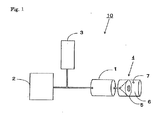
- Fig. 1 is a schematic diagram illustrating one embodiment of the platelet aggregability measurement apparatus of the present invention.
- the apparatus of the present invention is not limited to this embodiment.
- An apparatus 10 comprises a blood storage container 1 (which may be hereinafter simply referred to as container 1), a liquid transfer pump 2 air-tightly connected to a first end of the container 1, a pressure sensor 3 for measuring the pressure exerted on the pump 2, and a filter device 4 connected to a second end of the container 1.
- a blood storage container 1 which may be hereinafter simply referred to as container 1
- a liquid transfer pump 2 air-tightly connected to a first end of the container 1
- a pressure sensor 3 for measuring the pressure exerted on the pump 2
- a filter device 4 connected to a second end of the container 1.
- the filter device 4 comprises a filter section 5 and a waste liquid storage section 6.
- its opening (penetrating hole) communicating with the filter section may be connected with a projection at the second end of the container 1 in which an opening is formed.
- the filter device 4 can be prepared by, for example, installing the filter section 5 having a filter at the center of a circle, in a cylindrical container such that the outer circumference of the filter is in intimate contact with the container.
- the blood sample that has passed through the filter can be stored in the waste liquid storage section 6 as a waste liquid.
- Examples of the material of the container 1 include metals, glasses, plastics, and silicones.
- the material is preferably transparent.
- the inside of the container may be treated with PDMS (polydimethylsiloxane) or poly 2-methoxyethylacrylate (PMEA).
- blood is reacted with a platelet-activating reagent in the container 1.
- the blood stored in the container 1 is preferably anticoagulated blood.
- anticoagulant examples include sodium or potassium citrate, sodium or potassium oxalate, ACD (Acid Citrate Dextrose), and salts of ethylenediaminetetraacetic acid (EDTA).
- Such anticoagulants may be used as powders, freeze-dried products, or solutions such as aqueous solutions.
- 3.2% sodium citrate is preferred since it is commonly used and easily available. In such a case, 1 volume of the anticoagulant is preferably used for 9 volumes of blood.
- anticoagulants which may be used include heparin, hirudin, thrombin inhibitors, and maize-derived trypsin inhibitors ( 1977. J. Biol. Chem 252. 8105 ). A plurality of anticoagulants may be used.
- Examples of the method for obtaining the anticoagulated blood include a method in which blood is collected using a syringe or vacuum blood collection tube in which the anticoagulant is preliminarily placed, and a method in which the anticoagulant is quickly added to blood immediately after collection.
- Examples of the platelet-activating reagent to be mixed with the anticoagulated blood include ADP, collagen, arachidonic acid, and ristocetin.
- the platelet-activating reagent is used at a concentration which causes platelet activation in healthy individuals.
- the concentration which causes platelet activation is, for example, a final concentration of 1 to 10 ⁇ M in cases of ADP; a final concentration of 0.5 to 10 ⁇ g/ml in cases of collagen; and a final concentration of 0.2 to 20 mM in cases of arachidonic acid.
- the blood may be mixed with the platelet-activating reagent in advance, and the resulting mixture may then be placed in the container 1. However, it is preferred to preliminarily place the platelet-activating reagent in the dry state or liquid state in the container 1, followed by adding the blood thereto to allow the reaction.
- the end of the container 1 to which the filter device is to be connected may be sealed with a cap through which a needle can penetrate, which cap is made of a material such as rubber, and blood collected with a syringe may be injected into the container to allow the blood to react with the platelet-activating reagent preliminarily placed in the container 1.
- the injection is preferably begun such that the mixture of the platelet-activating reagent and blood reaches the filter 20 seconds to 2 minutes (preferably 20 seconds to 1 minute) after the mixing of the blood with the platelet-activating reagent.
- Patent Document 2 blood is mixed with 0.5, 1, 2, or 4 ⁇ M ADP, and the resulting mixture is allowed to react for 5 minutes, followed by sucking the mixture through a filter in order to draw an aggregation curve based on the suction pressure due to occurrence of clogging and to thereby determine the threshold concentration of the platelet-activating substance at which platelet aggregation occurs.
- the platelet-activating reagent needs to be prepared at different concentrations, which is laborious, and, although determination of the concentration threshold at which the aggregation occurs is possible, the results do not reflect the stability, persistence, and the like of the platelet aggregates formed.
- blood mixed with a platelet-activating reagent within the concentration range in which platelet aggregation occurs in healthy individuals is allowed to pass through a filter 20 seconds to 2 minutes (preferably 20 seconds to 1 minute) after the mixing.
- the initiation of the pressure increase reflects the degree (rate) of formation of platelet aggregates, and the maximum pressure reflects the stability of the aggregates.
- the integrated value of the pressure reflects both the aggregate formation and the stability of the aggregates formed.
- the liquid in the liquid transfer pump is not limited as long as the liquid is not mixed with the blood when the liquid is injected into the container 1, and as long as the mixture of the blood and the platelet-activating reagent can be pushed out from the container 1 by the liquid.
- An example of the liquid includes mineral oil.
- the mixture of the platelet-activating reagent and blood pushed out from the container 1 reaches the filter device 4, and passes through the filter while causing clogging of the filter due to platelet aggregation.
- the blood that has passed through the filter is stored in the waste liquid storage section 6.
- the filter is mesh-shaped, and the pitch size or diameter of the mesh is preferably 10 ⁇ m to 50 ⁇ m, more preferably 20 ⁇ m to 50 ⁇ m.
- the area of the filter is preferably 1 to 100 mm 2 .
- the thickness of the filter is preferably 10 to 100 ⁇ m.
- the flow rate is preferably a constant flow rate of 5 to 200 ⁇ l/minute, more preferably a constant flow rate of 10 to 100 ⁇ l/minute.
- the blood is preferably allowed to pass through the filter for 2 minutes to 10 minutes.
- a whole blood sample in a relatively small amount, for example, 500 ⁇ l, is sufficient for use in the method of the present invention even in cases where the sample is allowed to pass through the filter with time at a low flow rate of, for example, 50 ⁇ l/minute for 10 minutes.
- the blood container and the filter are preferably warmed at about 37°C using a heater.
- the platelet aggregability can be evaluated by sensitively measuring the small pressure change caused by the filter clogging, and calculating the integrated value of the pressure waveform obtained during 2 to 10 minutes.
- the starting time of the pressure increase (time required for the start of the increase in the pressure after the beginning of the measurement) is mainly associated with the platelet aggregability and the aggregation rate.
- the maximum pressure reflects the stability and the strength of the platelet aggregates formed, and the integrated value or area under the curve (AUC) of the pressure waveform plotted against time can be used as the comprehensive index.
- the stability and the strength of the platelet aggregates can be simultaneously measured by further allowing the blood to flow through the filter at a constant flow rate for a certain period of time (about 2 to 10 minutes) while the measurement of pressure changes is continued.
- the method of the present invention enables measurement of the beginning of clogging due to formation of platelet aggregates, and the stability and persistence of the aggregates, which depend on the type and concentration of the platelet-activating reagent employed.
- the beginning of the pressure increase, maximum pressure, and the like are differently influenced depending on the platelet-activating reagent employed and the antiplatelet agent used for its suppression.
- Fig. 8 shows a platelet aggregability measurement apparatus according to the second embodiment of the present invention.
- the blood storage container 1 is composed of: a first end 9 in which a penetrating hole is formed, which penetrating hole plays a role as a connecting section for insertion of a tube which connects a liquid transfer pump to the container; a blood storage section 13 for storing blood; a cap 8; and a second end 11 having a projection connected to the cap 8, which projection connects a filter device 4 to the container.
- the container is tightly sealed by placing the cap 8, and the filter device 4 is connected to the blood storage container 1.
- a closed container may be air-tightly connected to the second end of the blood storage container 1, and the mixture may be discharged in a small amount into the closed container from the blood storage container 1 to fill the blood storage container 1 with the mixture, followed by displacing the closed container and then connecting the blood storage container 1 to the filter device 4.
- the filter device 4 has a portion in which a penetrating hole 12 for insertion of the projection of the second end of the blood storage container 1 is formed, a filter 5, and a waste liquid storage section 6.
- a penetrating hole 12 for insertion of the projection of the second end of the blood storage container 1 is formed, a filter 5, and a waste liquid storage section 6.
- an air hole 7 is provided in the waste liquid storage section 6, an air hole 7 is provided.
- the filter 5 is placed such that the filter covers the portion corresponding to the penetrating hole 12 in the side in which the waste liquid storage section 6 is connected to the blood storage container 1, and this allows the mixture of the blood and platelet-activating reagent, which has flowed from the blood storage container 1 through the penetrating hole 12, to pass through the filter 5.
- a tube for connection to the liquid transfer pump 2 is inserted in the first end 9 of the blood storage container 1, and the projection of the second end 11 provided outside the cap 8 of the blood storage container 1 is inserted in the penetrating hole 12 of the filter device 4. Blood mixed with the platelet-activating reagent in the blood storage container 1 is pushed out by the liquid transfer pump 2 into the filter device 4, in which the blood passes through the filter 5, and is then stored in the waste liquid storage section 6.
- the platelet aggregability can be evaluated by sensitively measuring the small pressure change caused by the filter clogging, and calculating the integrated value of the pressure waveform obtained during 2 to 10 minutes.
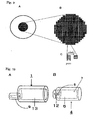
- Fig. 9 shows an example of the structure of the filter 5.
- a filter is placed at the center such that the filter covers the portion through which the mixture of the platelet-activating reagent and blood pushed out from the container 1 passes.
- An enlarged view of the filter section is shown in Fig. 9B
- an enlarged view of its openings is shown in Fig. 9C .
- FIG. 10A shows a blood storage container 1
- Fig. 10B shows a filter device 4.
- the blood storage container 1 does not have a cap in the second-end side.
- the filter device has an end which is air-tightly connected to the second end of the blood storage container 1. That is, the platelet-activating reagent is mixed with blood in the blood storage section 13, and the second end of the blood storage container 1 is directly and air-tightly connected to the end of the filter device 4. Thereafter, the mixture passes through the penetrating hole 12 of the filter device 4 and then through the filter, followed by being stored in the waste liquid storage section 6.
- a cylindrical acrylic container having a capacity of 450 ⁇ l inner diameter, 6 mm; depth, 16 mm was used.
- a circular nickel micromesh filter having 30 ⁇ m ⁇ 30 ⁇ m square openings (pitch size, 45 ⁇ m) and a diameter of 1 mm, placed at the center of the filter section was used.
- the back pressure exerted on the mineral oil was continuously monitored for 5 minutes at intervals of 1 second using the pressure sensor.
- the same measurement was carried out for blood to which AR-C66096 (platelet P2Y 12 receptor inhibitor; Tocris Bioscience, UK) was added to a final concentration of 25, 50, 100, or 250 nM.
- AR-C66096 delayed the beginning of the pressure increase, and suppressed the pressure increase in a concentration-dependent manner.
- archshaped pressure curves were drawn in the cases where AR-C66096 was present at 50 nM or 100 nM. These results indicate that the stability and persistence of platelet aggregates were suppressed by the presence of AR-C66096. As shown in Table 1, the area under the curve was suppressed in a manner dependent on the concentration of AR-C66096. From these results, it can be seen that the method of the present invention reflects both the delay of the beginning of the pressure increase and the stability of the pressure, and that quantitative evaluation of platelet aggregation is possible by the method. [Table 1] AR-C66096 Control 25nM 50nM 100nM 250nM 17.55 11.75 8.7 8.05 7.95
- the back pressure exerted on the mineral oil was continuously monitored for 5 minutes at intervals of 1 second using the pressure sensor.
- the same measurement was carried out for blood to which aspirin was added to a final concentration of 100 ⁇ M, or blood to which both 50 ⁇ M aspirin and 250 ⁇ M ARC66096 were added.
- the use of the combination of aspirin and AR-C66096 resulted in a synergistic suppression of the pressure increase.
- the back pressure exerted on the mineral oil was continuously monitored for 5 minutes at intervals of 1 second using the pressure sensor. The measurement was repeated 5 times.
- the back pressure exerted on the mineral oil was continuously monitored for 5 minutes at intervals of 1 second using the pressure sensor.
- the same measurement was carried out for a mixture prepared by mixing 50 ⁇ l of an arachidonic acid reagent with blood to which aspirin was added to a final concentration of 100 ⁇ M.
- the back pressure exerted on the mineral oil was continuously monitored for 5 minutes at intervals of 1 second using the pressure sensor. The same measurement was carried out for blood to which aspirin was added to a final concentration of 100 ⁇ M.
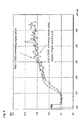
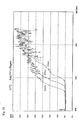
- the resulting pressure waveforms were as shown in Fig. 6 .
- the waveforms were relatively similar to the waveform in the case of ADP aggregation.
- the aggregation waveform obtained by the PAR1-activating peptide was not inhibited by aspirin.
- the back pressure exerted on the mineral oil was continuously monitored for 5 minutes at intervals of 1 second using the pressure sensor. The same measurement was carried out for blood to which aspirin was added to a final concentration of 100 ⁇ M.
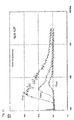
- the resulting pressure waveforms were as shown in Fig. 7 .
- the pressure increase has begun within 1 minute and continued for 2 to 3 minutes. An almost constant pressure was maintained thereafter.
- the waveforms were relatively similar to the waveform in the case of ADP aggregation.
- the aggregation waveform obtained by the PAR4-activating peptide was not inhibited by aspirin.
- an acrylic container having a capacity of 250 ⁇ l (inner diameter, 6 mm; depth, 16 mm) was used.
- a circular nickel micromesh filter having 25 ⁇ m ⁇ 25 ⁇ m square openings (pitch size, 45 ⁇ m) and a diameter of 1 mm, placed at the center of the filter section was used.
- an ADP reagent manufactured by MC Medical Inc.
- a Terumo blood collection tube Venoject, containing 3.13% sodium citrate
- the resulting mixture was mixed in the blood reservoir, and the filter device was connected to the blood reservoir.
- mineral oil was injected into the blood reservoir at a flow rate of 25 ⁇ l/minute for allowing the injection into the filter device.
- the back pressure exerted on the mineral oil was continuously monitored for 5 minutes at intervals of 1 second using the pressure sensor.
- a collagen reagent (Moriya Sangyo K.K.) (final concentration, 4 ⁇ g/ml) and blood (240 ⁇ l) anticoagulated with sodium citrate were added. After mixing the resulting mixture, the filter device was connected to the blood reservoir. Thirty seconds, 60 seconds, or 90 seconds after mixing of the blood with the collagen reagent, mineral oil was injected into the blood reservoir at a flow rate of 25 ⁇ l/minute to inject the blood into the filter device.
- the back pressure exerted on the mineral oil was continuously monitored for 5 minutes at intervals of 1 second using the pressure sensor.
- the blood activated by collagen was less influenced by the length of time after the mixing, and showed a steady pressure increase. It can be seen that the influence of the length of time between the mixing and the passing through of the filter varies depending on the platelet-activating reagent.
Landscapes
- Health & Medical Sciences (AREA)
- Life Sciences & Earth Sciences (AREA)
- Engineering & Computer Science (AREA)
- Biomedical Technology (AREA)
- Hematology (AREA)
- Chemical & Material Sciences (AREA)
- Physics & Mathematics (AREA)
- Immunology (AREA)
- Molecular Biology (AREA)
- Urology & Nephrology (AREA)
- Pathology (AREA)
- Analytical Chemistry (AREA)
- Biochemistry (AREA)
- General Health & Medical Sciences (AREA)
- General Physics & Mathematics (AREA)
- Food Science & Technology (AREA)
- Medicinal Chemistry (AREA)
- Ecology (AREA)
- Biophysics (AREA)
- Biotechnology (AREA)
- Cell Biology (AREA)
- Microbiology (AREA)
- Investigating Or Analysing Biological Materials (AREA)
Applications Claiming Priority (2)
| Application Number | Priority Date | Filing Date | Title |
|---|---|---|---|
| JP2012278452 | 2012-12-20 | ||
| PCT/JP2013/084369 WO2014098242A1 (fr) | 2012-12-20 | 2013-12-20 | Méthode d'évaluation complète d'agrégation plaquettaire |
Publications (2)
| Publication Number | Publication Date |
|---|---|
| EP2937699A1 true EP2937699A1 (fr) | 2015-10-28 |
| EP2937699A4 EP2937699A4 (fr) | 2016-08-24 |
Family
ID=50978555
Family Applications (1)
| Application Number | Title | Priority Date | Filing Date |
|---|---|---|---|
| EP13865542.8A Withdrawn EP2937699A4 (fr) | 2012-12-20 | 2013-12-20 | Méthode d'évaluation complète d'agrégation plaquettaire |
Country Status (7)
| Country | Link |
|---|---|
| US (1) | US20150338330A1 (fr) |
| EP (1) | EP2937699A4 (fr) |
| JP (1) | JP6322144B2 (fr) |
| CN (1) | CN104871005B (fr) |
| AU (1) | AU2013364840B2 (fr) |
| CA (1) | CA2895693C (fr) |
| WO (1) | WO2014098242A1 (fr) |
Cited By (1)
| Publication number | Priority date | Publication date | Assignee | Title |
|---|---|---|---|---|
| US11802825B2 (en) | 2016-10-05 | 2023-10-31 | Sony Corporation | Platelet aggregation analysis method, platelet aggregation analysis device, program for analyzing platelet aggregation, and platelet aggregation analysis system |
Families Citing this family (1)
| Publication number | Priority date | Publication date | Assignee | Title |
|---|---|---|---|---|
| JP6973585B2 (ja) * | 2016-10-05 | 2021-12-01 | ソニーグループ株式会社 | 血小板凝集能解析方法、血小板凝集能解析装置、血小板凝集能解析用プログラム及び血小板凝集能解析システム |
Family Cites Families (19)
| Publication number | Priority date | Publication date | Assignee | Title |
|---|---|---|---|---|
| NL7303522A (fr) * | 1973-03-13 | 1974-09-17 | ||
| JPS57552A (en) * | 1980-06-03 | 1982-01-05 | Kowa Co | Method for measuring agglutination power of blood platelet and kit for measuring agglutination power of bood platelet |
| US4828543A (en) * | 1986-04-03 | 1989-05-09 | Weiss Paul I | Extracorporeal circulation apparatus |
| JPH0810226B2 (ja) | 1989-06-01 | 1996-01-31 | Ssrエンジニアリング株式会社 | 血小板凝集能判定方法及び装置並びに凝集能判定具 |
| CN2123078U (zh) * | 1992-05-16 | 1992-11-25 | 中国医学科学院血液学研究所 | 血小板聚集动态图象分析仪 |
| AU1520095A (en) * | 1993-12-29 | 1995-07-17 | Bausch & Lomb Incorporated | Carbohydrate composition and method for cleaning and disinfecting contact lenses |
| JPH1090254A (ja) * | 1996-09-18 | 1998-04-10 | Godai Enbodei Kk | 血液検査装置 |
| US20010044584A1 (en) * | 1997-08-28 | 2001-11-22 | Kensey Kenneth R. | In vivo delivery methods and compositions |
| EP1369128A1 (fr) * | 2002-06-07 | 2003-12-10 | Procorde GmbH | Inhibiteurs de glycoprotéine VI et leur utilisation thérapeutique |
| JP2005538383A (ja) * | 2002-09-10 | 2005-12-15 | プラコア・インコーポレーテッド | 血小板機能を監視する方法および装置 |
| US7393690B2 (en) * | 2003-05-06 | 2008-07-01 | Thrombodyne, Inc. | Systems and methods for measuring fluid properties |
| JP2005291849A (ja) | 2004-03-31 | 2005-10-20 | Isk Kk | 全血血小板凝集能測定方法、その装置、及び吸引ノズル |
| JP4621942B2 (ja) * | 2004-12-14 | 2011-02-02 | 国立大学法人 東京大学 | レーザ加熱による液体膨張圧を用いたマイクロインジェクション法 |
| JP2006300859A (ja) | 2005-04-25 | 2006-11-02 | Ssr Engineering Co Ltd | 全血血小板凝集能測定方法及び装置並びに薬効評価方法 |
| US7205115B2 (en) * | 2005-04-28 | 2007-04-17 | Accumetrics, Inc. | Method and system for stabilization of arachidonic acid for use in platelet function assay |
| AU2006305163B2 (en) * | 2005-10-18 | 2012-09-27 | Fujimori Kogyo Co., Ltd. | Apparatus for monitoring thrombus formation and method of monitoring thrombus formation |
| JP5345853B2 (ja) * | 2005-12-05 | 2013-11-20 | インテグリス・インコーポレーテッド | ポンプのための誤差容積システムおよび方法 |
| EP2352025B1 (fr) * | 2008-08-11 | 2020-07-15 | Fujimori Kogyo Co., Ltd. | Méthode de test de plaquettes sanguines |
| JP5752055B2 (ja) * | 2010-02-10 | 2015-07-22 | 藤森工業株式会社 | 血小板検査用マイクロチップ及びそれを用いた血小板検査装置 |
-
2013
- 2013-12-20 JP JP2014553233A patent/JP6322144B2/ja active Active
- 2013-12-20 CA CA2895693A patent/CA2895693C/fr active Active
- 2013-12-20 US US14/652,866 patent/US20150338330A1/en not_active Abandoned
- 2013-12-20 CN CN201380065229.7A patent/CN104871005B/zh active Active
- 2013-12-20 WO PCT/JP2013/084369 patent/WO2014098242A1/fr not_active Ceased
- 2013-12-20 EP EP13865542.8A patent/EP2937699A4/fr not_active Withdrawn
- 2013-12-20 AU AU2013364840A patent/AU2013364840B2/en active Active
Cited By (1)
| Publication number | Priority date | Publication date | Assignee | Title |
|---|---|---|---|---|
| US11802825B2 (en) | 2016-10-05 | 2023-10-31 | Sony Corporation | Platelet aggregation analysis method, platelet aggregation analysis device, program for analyzing platelet aggregation, and platelet aggregation analysis system |
Also Published As
| Publication number | Publication date |
|---|---|
| AU2013364840A1 (en) | 2015-07-09 |
| JPWO2014098242A1 (ja) | 2017-01-12 |
| CN104871005B (zh) | 2016-07-06 |
| AU2013364840B2 (en) | 2017-03-16 |
| CA2895693A1 (fr) | 2014-06-26 |
| CN104871005A (zh) | 2015-08-26 |
| CA2895693C (fr) | 2017-02-28 |
| WO2014098242A1 (fr) | 2014-06-26 |
| JP6322144B2 (ja) | 2018-05-09 |
| EP2937699A4 (fr) | 2016-08-24 |
| US20150338330A1 (en) | 2015-11-26 |
Similar Documents
| Publication | Publication Date | Title |
|---|---|---|
| CN102150042B (zh) | 血小板检验方法和血小板检验装置 | |
| CN103384496B (zh) | 含有血液稳定剂的血液收集装置 | |
| JP2023072032A (ja) | 凝固分析を使用した抗凝固剤の検出および分類 | |
| JP5752055B2 (ja) | 血小板検査用マイクロチップ及びそれを用いた血小板検査装置 | |
| US10234469B2 (en) | Blood state analysis device, blood state analysis system, blood state analysis method, and storage device | |
| WO2009152094A2 (fr) | Dispositif à double canule de type moyeu pour des systèmes d'échantillonnage de contenant fermé | |
| EP2947451A1 (fr) | Dispositif de mesure de caractéristique électrique | |
| WO2013004024A1 (fr) | Analyseur de plaquettes automatisé et procédé analytique l'utilisant | |
| CN106164669B (zh) | 血液状况分析装置和系统以及血液状况分析方法和程序 | |
| JP7027589B2 (ja) | 採血管、試薬及びそれらを利用した血液性状分析方法 | |
| KR20150141940A (ko) | 접촉 경로를 저해하는 첨가제를 함유한 채혈 기구 | |
| US10670616B2 (en) | Microchip for assay of blood properties, and device for assay of blood properties | |
| CA2895693C (fr) | Methode d'evaluation complete d'agregation plaquettaire | |
| US9205424B2 (en) | Devices for determining the platelet function in a centrifugal analyzer | |
| US20050019742A1 (en) | Methods for assessment of platelet aggregation | |
| US20130008236A1 (en) | Method for standardizing measured results in a system for measuring thrombocyte function |
Legal Events
| Date | Code | Title | Description |
|---|---|---|---|
| PUAI | Public reference made under article 153(3) epc to a published international application that has entered the european phase |
Free format text: ORIGINAL CODE: 0009012 |
|
| 17P | Request for examination filed |
Effective date: 20150716 |
|
| AK | Designated contracting states |
Kind code of ref document: A1 Designated state(s): AL AT BE BG CH CY CZ DE DK EE ES FI FR GB GR HR HU IE IS IT LI LT LU LV MC MK MT NL NO PL PT RO RS SE SI SK SM TR |
|
| AX | Request for extension of the european patent |
Extension state: BA ME |
|
| DAX | Request for extension of the european patent (deleted) | ||
| A4 | Supplementary search report drawn up and despatched |
Effective date: 20160722 |
|
| RIC1 | Information provided on ipc code assigned before grant |
Ipc: G01N 33/86 20060101AFI20160718BHEP Ipc: G01N 33/49 20060101ALI20160718BHEP |
|
| STAA | Information on the status of an ep patent application or granted ep patent |
Free format text: STATUS: EXAMINATION IS IN PROGRESS |
|
| RIC1 | Information provided on ipc code assigned before grant |
Ipc: G01N 33/86 20060101AFI20170308BHEP Ipc: G01N 33/49 20060101ALI20170308BHEP |
|
| 17Q | First examination report despatched |
Effective date: 20170322 |
|
| STAA | Information on the status of an ep patent application or granted ep patent |
Free format text: STATUS: THE APPLICATION HAS BEEN WITHDRAWN |
|
| 18W | Application withdrawn |
Effective date: 20170718 |