EP2993237A2 - Sonde d'acide peptido-nucléique, kit et méthode de détection et/ou de quantification d'escherichia coli 0157: h7 et application respectives - Google Patents
Sonde d'acide peptido-nucléique, kit et méthode de détection et/ou de quantification d'escherichia coli 0157: h7 et application respectives Download PDFInfo
- Publication number
- EP2993237A2 EP2993237A2 EP14733740.6A EP14733740A EP2993237A2 EP 2993237 A2 EP2993237 A2 EP 2993237A2 EP 14733740 A EP14733740 A EP 14733740A EP 2993237 A2 EP2993237 A2 EP 2993237A2
- Authority
- EP
- European Patent Office
- Prior art keywords
- coli
- probe
- pna
- detection
- hybridization
- Prior art date
- Legal status (The legal status is an assumption and is not a legal conclusion. Google has not performed a legal analysis and makes no representation as to the accuracy of the status listed.)
- Withdrawn
Links
Images
Classifications
-
- C—CHEMISTRY; METALLURGY
- C12—BIOCHEMISTRY; BEER; SPIRITS; WINE; VINEGAR; MICROBIOLOGY; ENZYMOLOGY; MUTATION OR GENETIC ENGINEERING
- C12Q—MEASURING OR TESTING PROCESSES INVOLVING ENZYMES, NUCLEIC ACIDS OR MICROORGANISMS; COMPOSITIONS OR TEST PAPERS THEREFOR; PROCESSES OF PREPARING SUCH COMPOSITIONS; CONDITION-RESPONSIVE CONTROL IN MICROBIOLOGICAL OR ENZYMOLOGICAL PROCESSES
- C12Q1/00—Measuring or testing processes involving enzymes, nucleic acids or microorganisms; Compositions therefor; Processes of preparing such compositions
- C12Q1/68—Measuring or testing processes involving enzymes, nucleic acids or microorganisms; Compositions therefor; Processes of preparing such compositions involving nucleic acids
- C12Q1/6876—Nucleic acid products used in the analysis of nucleic acids, e.g. primers or probes
- C12Q1/6888—Nucleic acid products used in the analysis of nucleic acids, e.g. primers or probes for detection or identification of organisms
- C12Q1/689—Nucleic acid products used in the analysis of nucleic acids, e.g. primers or probes for detection or identification of organisms for bacteria
-
- C—CHEMISTRY; METALLURGY
- C12—BIOCHEMISTRY; BEER; SPIRITS; WINE; VINEGAR; MICROBIOLOGY; ENZYMOLOGY; MUTATION OR GENETIC ENGINEERING
- C12Q—MEASURING OR TESTING PROCESSES INVOLVING ENZYMES, NUCLEIC ACIDS OR MICROORGANISMS; COMPOSITIONS OR TEST PAPERS THEREFOR; PROCESSES OF PREPARING SUCH COMPOSITIONS; CONDITION-RESPONSIVE CONTROL IN MICROBIOLOGICAL OR ENZYMOLOGICAL PROCESSES
- C12Q1/00—Measuring or testing processes involving enzymes, nucleic acids or microorganisms; Compositions therefor; Processes of preparing such compositions
- C12Q1/68—Measuring or testing processes involving enzymes, nucleic acids or microorganisms; Compositions therefor; Processes of preparing such compositions involving nucleic acids
- C12Q1/6813—Hybridisation assays
- C12Q1/6827—Hybridisation assays for detection of mutation or polymorphism
Definitions
- This invention relates to a process for the detection of microorganisms relevant for clinical and food safety.
- a PNA probe for the detection of Escherichia coli 0157:H7 serotype was developed.
- the present invention included the PNA-FISH procedure and its application to a kit for the detection and/or quantification of Escherichia coli 0157:H7, which can be used in the food and clinical fields.
- Escherichia coli species includes a genetically heterogeneous group of bacteria which are part of the normal microflora of the intestinal tract of humans and animals (Gyles, 2007). These bacteria are typically nonpathogens, but a considerable number of strains are pathogenic. Pathogenic strains of E. coli are classified according to their specific virulence factors, their pathogenicity and their specific strain. There are 6 classes of pathogenic E . coli , enterotoxigenic E. coli (ETEC), enteropathogenic E . coli (EPEC), enteroaggregative E . coli (EAEC), enteroinvasive E. coli (EIEC), the diffusely adherent E . coli (DAEC) and the enterohemorrhagic E.
- ETEC enterotoxigenic E. coli
- EPEC enteropathogenic E . coli
- EAEC enteroaggregative E . coli
- EIEC enteroinvasive E. coli
- DAEC diffusely adherent E .
- EHEC enterohemorrhagic E . coli
- LPS cell wall lipopolysaccharide
- H Haunch
- E. coli O157:H7 The infectious dose of E. coli O157:H7 is reported to be very low - around 1-100 CFU/mL - lower than most enteric pathogens (Robinson and McKillip, 2010).
- the virulence of this microorganism is due to 3 major factors. The first and by far the most critical, is the production of one or both phage-encoded Shiga toxins (Stxs), called Stx1 and Stx2. These Stxs are among the most potent cytotoxins currently known to affect eukaryotic cells (Robinson and McKillip, 2010). Although the type of Stx produced directly influences the severity of disease, the production of Stxs alone is insufficient for E. coli 0157:H7 became pathogenic.
- the assistance of the locus of enterocyte effacement (a bacterial pathogenicity island, that encodes a battery of specialized virulence factors) and the pO157 plasmid (encodes as type II secretion system, an enterohemolysin, a serine-protease, a catalase-peroxidase, a lymphocyte inhibitor, and potential adhesions, among others) is required (Robinson and McKillip, 2010).
- HUS Hemolytic-Uremic Syndrome
- TTP Thrombocytopenic Thrombotic Purpura
- MTP Thrombocytopenic Thrombotic Purpura
- cattle serve as the primary and natural reservoir of E . coli 0157:H7 and it is estimated that 10 - 80% of all cattle are colonized (Yoon and Hovde, 2008).
- Other animals such as goats, sheep and pigs may be carriers as well.
- Results from a study of 90 outbreaks confirmed microbiologically (between 1982 and 2006) showed that the source of transmission to humans was 42.2% associated to food, 12.2% to dairy products, 7.8% to animal contact, 6 - 7% to water, 2.2% to environmental and unknown in 28.9% of the outbreaks (Pennington, 2010).
- culture methods such as ISO 16654, usually include an agglutination assay (detecting 0157 or H7 antigen) that are not specific, since the 0157 and H7 antigen is present in other Escherichia coli species.
- agglutination assay detecting 0157 or H7 antigen
- These antibodies can also cross-react with other E. coli serotypes, Escherichia species and other members of the Enterobacteriaceae family (Raji et al., 2003).
- FISH is a molecular assay widely applied in identification of microorganisms. This method is based on the specific binding of small oligonucleotides (probes) to particular rRNA regions due to its high cellular abundance, universal distribution and use as a phylogenetic marker.
- the probe is coupled to a fluorochrome and after the hybridization a fluorescence signal can be detected due to the high rRNA copy number within the cell.
- PNA peptide nucleic acid probes
- These molecules mimic DNA and are capable of hybridizing specifically with complementary nucleic acids obeying to the Watson-Crick rules.
- the present invention refers to the development of a Peptide Nucleic Acid (PNA) probe and method thereof for the detection of Escherichia coli 0157:H7 serotype (that is, identification and quantification).
- PNA Peptide Nucleic Acid
- the probe described in the present invention recognizes the 23S rRNA of the microorganism in question or the genomic sequences corresponding to the rRNA mentioned.
- the PNA probes have physiochemical characteristics that are inherent to its structure and when they are applied to a FISH-based method, allow a faster, more robust and more specific analysis than using a DNA probes.
- Another aspect of the present invention is related to the development of a kit based on the application of this blocker probe to fluorescence in situ hybridization (FISH), allowing the specific detection of E. coli 0157:H7 in a broad range of biological samples, in a prompt and simple way.
- FISH fluorescence in situ hybridization
- One of the embodiments of the present invention is the description of a PNA probe used to the detection and/or quantification of E. coli 0157 characterized in that it has at least 86% of similarity to the sequence SEG ID No. 1 -5'- CAA CAC ACA GTG TC -3', preferably 87%, 88%, 89%, 90%, 91%, 92%, 93%, 94%, 95%, 96%, 97%, 98%, 99%, 100% of similarity to the sequence SEG ID No. 1 -5'- CAA CAC ACA GTG TC -3.
- the previously described sequence is linked to at least one type of detectable fraction.
- the type of detectable fraction to be used may be selected from one of the following groups: a conjugate, a branched detection system, a chromophore, a fluorophore, radioisotope, an enzyme, a hapten or a luminescent compound, among others.
- the fluorophore group can be at least one of the following: Alexa series fluorophores, cyanines, 5- (and -6) Carboxy-2', 7'-dichlorofluorescein, 5-ROX (5 -carboxy-X-rhodamine, triethylammonium salt), among others.
- the kit may additionally present at least one of the following solutions: a fixation solution, a hybridization solution and a washing solution.
- the fixation solution can comprise paraformaldehyde and ethanol, namely 2-8% (weight/vol) of paraformaldehyde and 25-90% (vol/vol) of ethanol and/or hybridization solution may comprise formamide.
- the PNA probe herewith described allows the specific detection of the E . coli 0157 through the bonding to rRNA, genomic sequences corresponding to rRNA (r), or their complementary sequences.
- the higher specificity of the PNA probes allows a better discrimination between related nucleotide sequences. This has particular relevance to this probe since there are some phylogenetically related microorganisms to E. coli 0157 that present only one mismatch (nucleotide at position 8 of the probe described in this invention) within the selected target region. Some examples of this situation are the Escherichia coli non-O157:H7 strains.
- FISH fluorescence in situ hybridization
- the development of the new PNA-FISH probe was carried out empirically using specific software.
- the selection of the probe sequence was initially performed by aligning rDNA sequences of the target microorganism, with sequences of related microorganisms. This allowed the identification of potentially useful regions, which will be then evaluated based on other parameters such as specificity, hybridization temperature, percentage of guanine/cytosine, bond free energy and secondary structure.
- the method described in the present invention comprises contact of a sample with at least one PNA probe with a similar sequence to that previously described. Consequently, the analysis is based on a single test with a definitive result in opposition to the conventional methods for the detection of E . coli 0157 that are based on phenotypic features and require several days to yield the result.
- the method intends to be a diagnostic adjuvant for therapeutic decision and quality control.
- the implementation of this method for E. coli 0157 identification will allow the adequate clinical treatment to the bacterium and the early identification of the contamination source.
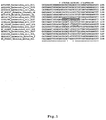
- rDNA 16S and 23S sequences available at the National Center for Biotechnology Information (NCBI) website http://www.ncbi.nlm.nih.gov/guide/ ), were chosen. This selection included six E. coli O157:H7, five E . coli non-O157:H7 serotypes and four other strains from related species belonging to the Enterobacteriaceae family ( Figure 1 ). Those sequences were aligned using the CluscalW software available at the European Bioinformatics Institute (EMBL-EBI, www.ebi.ac.uk/clustalw/ ).
- EBL-EBI European Bioinformatics Institute
- this invention also contemplates variations of the nucleotide sequences of the probes. Such variations may include deletions, insertions, among others. For example on of the following sequences:
- non-target sequences (this is, non- E . coli O157:H7 sequences) can have only one different nucleotide in comparison to the target sequences, and as such an increased level of discrimination is necessary to avoid non-specific hybridizations.
- hybridization and washing temperature were ranged between 53 and 61°C; fixation step using ethanol was ranged between 50 and 80% and finally different hybridization times were tested, 30, 45, 60 and 90 minutes.
- Trypticase Soy Broth is the most often used enrichment medium.
- Antibiotics such as novobiocin (most common), cefixime, cefsulodin or vancomycin and other selective compounds (such as bile salts - inhibit non- Enterobacteriaceae strains); are often added to this medium to promote a selective enrichment. These broths are then incubated for a period that usually varies between 16 and 24 hours (overnight growth) at 35 to 42°C.
- the data concerning the efficiency of enrichment protocols are very few and differ from study to study.
- E. coli 0157:H7 strains generally have an average optimal temperature around 40°C.
- ISO recommended for detection of E. coli 0157 in food samples ISO 16654:2001 - Microbiology of food and animal feeding stuffs - Horizontal method for the detection of Escherichia coli O157
- the good performance of mTSB may be related to the selective nature of the broth, that includes novobiocin and bile salts, which partially inhibit the growth of existing microflora in food.
- the composition of the broth (and not the selective factors) is the determining factor for bacterial growth.
- Growth rates of ⁇ 0.5 h -1 (41.5°C) and 0.4 h -1 (37°C) were observed for the strains cultivated in mTSB, while those grown in BPW had values of 0.07 h -1 for both temperatures.
- Another important feature to consider when optimizing FISH protocols is that some dietary components may present a strong autofluorescence signal, and thus interfere with the detection of the bacterium. In order to eliminate/reduce this phenomenon, ark additional step can be implemented before the hybridization procedure. Two different approaches were tested: one centrifugation step (to remove food particles) and using a detergent (Triton X-100, 1%) to emulsify the lipid compounds. Both steps have decreased autofluorescence signal, but the detergent showed a more significant reduction and also seemed to improve the fluorescence signal. This could arise from the detergent ability to help in the cellular permeabilization.
- the PNA-FISH method implementation can save at least 2 days in the detection of E . coli 0157:H7, when compared with the traditional protocol.
- Concentration Ground beef Unpasteurized milk (CFU/25g or ml) 37°C 41,5°C 37°C 41,5°C mTSB+N BPW mTBS+N BPW mTBS+N mTBS+N 100 + (6/6) a + (6/6) a + (6/6) a + (6/6) a + (6/6) a 10 + (6/6) a + (4/6) a + (6/6) a + (2/6) a +(6/6) a + (6/6) a 1 + (5/6) a - (0/6) a + (5/6) a - (0/6) a + (6/6) a + (6/6) a + (6/6) a 0.1 - (6/6) b - (6/6) b - (6/6) b (6/6) b - (6/6) b - (6/6) b 0.01 - (6/6) b - (6/6) b - (6/6) b - (6/6) b -
- This step can be performed in any epifluorescence microscope with a filter sensitive to fluorophore used.
- the kit of the present invention comprises a PNA probe at least 86% identical to SEQ ID No. 1 and another reagents or compositions that are selected to perform the test.
- the food, clinical or environmental samples were previously subjected to an enrichment step before application of the PNA probe. This happens because usually E. coli 0157:H7 presents low contamination levels.
- This enrichment step can be performed using the medium recommended for the conventional analysis method used for each sample. In the case of food, animal feed, feces or water, mTSB was used. Samples were then incubated for 18 - 22 hours at 37°C, at 120 rpm. Following the enrichment step, 15 ⁇ l of the culture medium were mixed with 15 ⁇ l of Triton X-100 (1%) directly in the microscope slide suitable for fluorescence. The slide was placed for approximately 5 minutes in an incubator oven at 59°C or left to air dry.
- the samples were immersed in a solution of 4% paraformaldehyde (wt/vol) and 50% ethanol (vol/vol) for 10 minutes each.
- hybridization solution containing: 10% (wt/vol) dextran sulfate (Sigma); 10 mM NaCl (Sigma); 30% (vol/vol) formamide (Sigma); 0.1% (wt/vol) sodium pyrophosphate (Sigma); 0.2% (wt/vol) polyvinylpirrolidone (Sigma); 0.2% (wt/vol) Ficol (Sigma); 5 mM disodium EDTA (Sigma); 0.1% (vol/vol) Triton X-100 (Sigma); 50 mM Tris-HCl (pH 7.5; Sigma); and 200nM of PNA probe.
- the samples were covered with coverslips (to assure an homogeneous spreading of the probe) placed in small wet boxes (to prevent the evaporation of the hybridization solution) protected from light and incubated for 45 minutes at 59°C.
- the coverslips were removed and the slides were immersed in a wash solution pre-warmed at 59°C containing 5 mM Tris Base (pH 10), 15 mM NaCl and 1% (vol/vol) Triton X-100. The samples were then placed in an oven at the hybridization temperature for 30 minutes. Subsequently, the slides were removed from the wash solution and dried at 59°C, in the same incubator, for approximately 5 minutes. Before the microscope visualization, a drop of non-fluorescent immersion oil (Merck) was placed and covered with a coverslip. The slides were kept in the dark for a maximum period of 24 hours before microscopy.
- a wash solution pre-warmed at 59°C containing 5 mM Tris Base (pH 10), 15 mM NaCl and 1% (vol/vol) Triton X-100.
- the samples were then placed in an oven at the hybridization temperature for 30 minutes. Subsequently, the slides were removed from the wash solution and dried at 59°C
- EXEMPLE 2 Salmonella and E . coli O157:H7 detection in feces.
- 25g of feces were mixture with 225 ml of mTSB. Different amount of sample can be used, but maintaining the 1/10 (wt/ vol) ratio. Samples were then incubated for 18 - 22 hours at 37°C, at 120 rpm. Following the enrichment step, 15 ⁇ l of the culture medium were mixed directly in a microscope slide suitable for fluorescence with 15 ⁇ l of 1% (vol/vol) Triton X-100 to minimize the interference from autofluorescent particles. The slide was placed for approximately 5 minutes in an incubator oven at 59°C or left to air dry.
- Hybridization was performed as previously described in Example 1 with a small change.
- the hybridization solution contained two probes: PNA probe for the detection of Salmonella and PNA probe for the detection of E. coli 0157:H7, each at a concentration of 200nM.
Landscapes
- Chemical & Material Sciences (AREA)
- Life Sciences & Earth Sciences (AREA)
- Analytical Chemistry (AREA)
- Proteomics, Peptides & Aminoacids (AREA)
- Organic Chemistry (AREA)
- Zoology (AREA)
- Wood Science & Technology (AREA)
- Health & Medical Sciences (AREA)
- Engineering & Computer Science (AREA)
- Microbiology (AREA)
- Immunology (AREA)
- Molecular Biology (AREA)
- Biotechnology (AREA)
- Biophysics (AREA)
- Physics & Mathematics (AREA)
- Biochemistry (AREA)
- Bioinformatics & Cheminformatics (AREA)
- General Engineering & Computer Science (AREA)
- General Health & Medical Sciences (AREA)
- Genetics & Genomics (AREA)
- Measuring Or Testing Involving Enzymes Or Micro-Organisms (AREA)
Applications Claiming Priority (2)
| Application Number | Priority Date | Filing Date | Title |
|---|---|---|---|
| PT2013691613 | 2013-04-30 | ||
| PCT/PT2014/000023 WO2014178741A2 (fr) | 2013-04-30 | 2014-04-30 | Sonde d'acide peptido-nucléique, kit et méthode de détection et/ou de quantification d'escherichia coli o157: h7 et application respectives |
Publications (1)
| Publication Number | Publication Date |
|---|---|
| EP2993237A2 true EP2993237A2 (fr) | 2016-03-09 |
Family
ID=55229441
Family Applications (1)
| Application Number | Title | Priority Date | Filing Date |
|---|---|---|---|
| EP14733740.6A Withdrawn EP2993237A2 (fr) | 2013-04-30 | 2014-04-30 | Sonde d'acide peptido-nucléique, kit et méthode de détection et/ou de quantification d'escherichia coli 0157: h7 et application respectives |
Country Status (1)
| Country | Link |
|---|---|
| EP (1) | EP2993237A2 (fr) |
Cited By (2)
| Publication number | Priority date | Publication date | Assignee | Title |
|---|---|---|---|---|
| CN111575391A (zh) * | 2020-05-12 | 2020-08-25 | 浙江省检验检疫科学技术研究院 | 液相原位荧光杂交检测大肠杆菌o157:h7的鉴定方法、试剂盒和探针 |
| WO2025046313A1 (fr) * | 2023-08-30 | 2025-03-06 | Foss Analytical A/S | Prétraitement et hybridation combinés d'acides nucléiques |
-
2014
- 2014-04-30 EP EP14733740.6A patent/EP2993237A2/fr not_active Withdrawn
Non-Patent Citations (1)
| Title |
|---|
| See references of WO2014178741A2 * |
Cited By (2)
| Publication number | Priority date | Publication date | Assignee | Title |
|---|---|---|---|---|
| CN111575391A (zh) * | 2020-05-12 | 2020-08-25 | 浙江省检验检疫科学技术研究院 | 液相原位荧光杂交检测大肠杆菌o157:h7的鉴定方法、试剂盒和探针 |
| WO2025046313A1 (fr) * | 2023-08-30 | 2025-03-06 | Foss Analytical A/S | Prétraitement et hybridation combinés d'acides nucléiques |
Similar Documents
| Publication | Publication Date | Title |
|---|---|---|
| Almeida et al. | Detection of Escherichia coli O157 by peptide nucleic acid fluorescence in situ hybridization (PNA-FISH) and comparison to a standard culture method | |
| US8883441B2 (en) | Method for detecting and counting micro-organisms in a sample | |
| EP0669399A2 (fr) | Oligonucléotides et méthode pour la détection de bactéries | |
| CN101363061B (zh) | 检测食品沙门氏菌的Taqman探针荧光定量PCR方法 | |
| CN102367475B (zh) | 不同血清型霍乱弧菌的m-PCR检测试剂盒及检测方法 | |
| US20160273025A1 (en) | Peptide nucleic acid probe, kit and method for the detection and/or quantification of esherichia coli o157:h7 and applications thereof | |
| Fach et al. | Comparison of different PCR tests for detecting Shiga toxin-producing Escherichia coli O157 and development of an ELISA-PCR assay for specific identification of the bacteria | |
| Cano et al. | Detection of salmonellas by DNA hybridization with a fluorescent alkaline phosphatase substrate | |
| Yousef | Detection of bacterial pathogens in different matrices: current practices and challenges | |
| US20050064444A1 (en) | Method for specific fast detection of relevant bacteria in drinking water | |
| JP2005515756A6 (ja) | 飲料水中の関連細菌を特異的かつ迅速に検出するための方法 | |
| JP2011212030A (ja) | 培養併用インサイチューハイブリダイゼーション法により生きている食中毒細菌及び衛生指標細菌群を迅速かつ特異的に計数するための遺伝子プローブ及びその方法(腸炎ビブリオ) | |
| JP2009535052A (ja) | 微生物の検出および計数方法 | |
| EP2553120B1 (fr) | Sonde d'acide nucléique peptidique, trousse et procédé pour la détection et/ou la quantification de salmonella spp. et applications correspondantes | |
| NAMIMATSU et al. | Detection of Salmonella by using the colorimetric DNA/rRNA sandwich hybridization in microtiter wells | |
| Ashbolt | Methods to identify and enumerate frank and opportunistic bacterial | |
| JP2006166912A (ja) | 培養併用インサイチューハイブリダイゼーション法により生きている食中毒細菌及び衛生指標細菌群を迅速かつ特異的に計数するための遺伝子プローブ及びその方法 | |
| JP4427806B2 (ja) | 腸内細菌検出用オリゴヌクレオチド及び腸内細菌の検出方法 | |
| Sutherland et al. | Cultural, serological and genetic methods for identification of bacteria | |
| Awais et al. | Occurrence of virulence genes associated with enterohemorrhagic Escherichia coli in raw municipal sewage | |
| Forohi et al. | Evaluation and optimization of a loop-mediated isothermal amplification (LAMP) assay for the detection of Salmonella enterica serovar Typhi isolated from food samples | |
| Guan | Quantitative detection of Escherichia coli O157: H7 in ground beef by the polymerase chain reaction incorporating immunomagnetic separation | |
| KR20080028633A (ko) | 살모넬라균 및 캠필러박터균의 검출을 위한올리고뉴클레오티드 프라이머, 이를 포함하는 조기진단키트 및 이를 이용한 검출방법 | |
| Bhandari | Prevalence and diversity of Arcobacter spp. in poultry meat in New Zealand: a thesis presented in the partial fulfillment of the requirements for the degree of Master of Science in Veterinary Microbiology and Public Health at Massey University, Palmerston North, New Zealand |
Legal Events
| Date | Code | Title | Description |
|---|---|---|---|
| PUAI | Public reference made under article 153(3) epc to a published international application that has entered the european phase |
Free format text: ORIGINAL CODE: 0009012 |
|
| 17P | Request for examination filed |
Effective date: 20151106 |
|
| AK | Designated contracting states |
Kind code of ref document: A2 Designated state(s): AL AT BE BG CH CY CZ DE DK EE ES FI FR GB GR HR HU IE IS IT LI LT LU LV MC MK MT NL NO PL PT RO RS SE SI SK SM TR |
|
| AX | Request for extension of the european patent |
Extension state: BA ME |
|
| DAX | Request for extension of the european patent (deleted) | ||
| STAA | Information on the status of an ep patent application or granted ep patent |
Free format text: STATUS: THE APPLICATION IS DEEMED TO BE WITHDRAWN |
|
| 18D | Application deemed to be withdrawn |
Effective date: 20160702 |