EP3025729A1 - Protéines de liaison à un antigène spécifiques pour un composant p de substance amyloïde sérique - Google Patents
Protéines de liaison à un antigène spécifiques pour un composant p de substance amyloïde sérique Download PDFInfo
- Publication number
- EP3025729A1 EP3025729A1 EP15178026.9A EP15178026A EP3025729A1 EP 3025729 A1 EP3025729 A1 EP 3025729A1 EP 15178026 A EP15178026 A EP 15178026A EP 3025729 A1 EP3025729 A1 EP 3025729A1
- Authority
- EP
- European Patent Office
- Prior art keywords
- sap
- seq
- antigen binding
- binding protein
- human
- Prior art date
- Legal status (The legal status is an assumption and is not a legal conclusion. Google has not performed a legal analysis and makes no representation as to the accuracy of the status listed.)
- Granted
Links
Images




Classifications
-
- C—CHEMISTRY; METALLURGY
- C07—ORGANIC CHEMISTRY
- C07K—PEPTIDES
- C07K16/00—Immunoglobulins [IG], e.g. monoclonal or polyclonal antibodies
- C07K16/18—Immunoglobulins [IG], e.g. monoclonal or polyclonal antibodies against material from animals or humans
-
- A—HUMAN NECESSITIES
- A61—MEDICAL OR VETERINARY SCIENCE; HYGIENE
- A61K—PREPARATIONS FOR MEDICAL, DENTAL OR TOILETRY PURPOSES
- A61K38/00—Medicinal preparations containing peptides
- A61K38/16—Peptides having more than 20 amino acids; Gastrins; Somatostatins; Melanotropins; Derivatives thereof
- A61K38/17—Peptides having more than 20 amino acids; Gastrins; Somatostatins; Melanotropins; Derivatives thereof from animals; from humans
-
- A—HUMAN NECESSITIES
- A61—MEDICAL OR VETERINARY SCIENCE; HYGIENE
- A61K—PREPARATIONS FOR MEDICAL, DENTAL OR TOILETRY PURPOSES
- A61K38/00—Medicinal preparations containing peptides
- A61K38/16—Peptides having more than 20 amino acids; Gastrins; Somatostatins; Melanotropins; Derivatives thereof
- A61K38/17—Peptides having more than 20 amino acids; Gastrins; Somatostatins; Melanotropins; Derivatives thereof from animals; from humans
- A61K38/18—Growth factors; Growth regulators
-
- A—HUMAN NECESSITIES
- A61—MEDICAL OR VETERINARY SCIENCE; HYGIENE
- A61K—PREPARATIONS FOR MEDICAL, DENTAL OR TOILETRY PURPOSES
- A61K39/00—Medicinal preparations containing antigens or antibodies
- A61K39/395—Antibodies; Immunoglobulins; Immune serum, e.g. antilymphocytic serum
-
- A—HUMAN NECESSITIES
- A61—MEDICAL OR VETERINARY SCIENCE; HYGIENE
- A61K—PREPARATIONS FOR MEDICAL, DENTAL OR TOILETRY PURPOSES
- A61K48/00—Medicinal preparations containing genetic material which is inserted into cells of the living body to treat genetic diseases; Gene therapy
-
- A—HUMAN NECESSITIES
- A61—MEDICAL OR VETERINARY SCIENCE; HYGIENE
- A61P—SPECIFIC THERAPEUTIC ACTIVITY OF CHEMICAL COMPOUNDS OR MEDICINAL PREPARATIONS
- A61P25/00—Drugs for disorders of the nervous system
-
- A—HUMAN NECESSITIES
- A61—MEDICAL OR VETERINARY SCIENCE; HYGIENE
- A61P—SPECIFIC THERAPEUTIC ACTIVITY OF CHEMICAL COMPOUNDS OR MEDICINAL PREPARATIONS
- A61P25/00—Drugs for disorders of the nervous system
- A61P25/28—Drugs for disorders of the nervous system for treating neurodegenerative disorders of the central nervous system, e.g. nootropic agents, cognition enhancers, drugs for treating Alzheimer's disease or other forms of dementia
-
- A—HUMAN NECESSITIES
- A61—MEDICAL OR VETERINARY SCIENCE; HYGIENE
- A61P—SPECIFIC THERAPEUTIC ACTIVITY OF CHEMICAL COMPOUNDS OR MEDICINAL PREPARATIONS
- A61P3/00—Drugs for disorders of the metabolism
- A61P3/08—Drugs for disorders of the metabolism for glucose homeostasis
- A61P3/10—Drugs for disorders of the metabolism for glucose homeostasis for hyperglycaemia, e.g. antidiabetics
-
- C—CHEMISTRY; METALLURGY
- C07—ORGANIC CHEMISTRY
- C07K—PEPTIDES
- C07K14/00—Peptides having more than 20 amino acids; Gastrins; Somatostatins; Melanotropins; Derivatives thereof
- C07K14/435—Peptides having more than 20 amino acids; Gastrins; Somatostatins; Melanotropins; Derivatives thereof from animals; from humans
-
- C—CHEMISTRY; METALLURGY
- C07—ORGANIC CHEMISTRY
- C07K—PEPTIDES
- C07K14/00—Peptides having more than 20 amino acids; Gastrins; Somatostatins; Melanotropins; Derivatives thereof
- C07K14/435—Peptides having more than 20 amino acids; Gastrins; Somatostatins; Melanotropins; Derivatives thereof from animals; from humans
- C07K14/475—Growth factors; Growth regulators
-
- C—CHEMISTRY; METALLURGY
- C07—ORGANIC CHEMISTRY
- C07K—PEPTIDES
- C07K14/00—Peptides having more than 20 amino acids; Gastrins; Somatostatins; Melanotropins; Derivatives thereof
- C07K14/435—Peptides having more than 20 amino acids; Gastrins; Somatostatins; Melanotropins; Derivatives thereof from animals; from humans
- C07K14/52—Cytokines; Lymphokines; Interferons
- C07K14/54—Interleukins [IL]
-
- C—CHEMISTRY; METALLURGY
- C07—ORGANIC CHEMISTRY
- C07K—PEPTIDES
- C07K16/00—Immunoglobulins [IG], e.g. monoclonal or polyclonal antibodies
- C07K16/18—Immunoglobulins [IG], e.g. monoclonal or polyclonal antibodies against material from animals or humans
- C07K16/22—Immunoglobulins [IG], e.g. monoclonal or polyclonal antibodies against material from animals or humans against growth factors ; against growth regulators
-
- C—CHEMISTRY; METALLURGY
- C07—ORGANIC CHEMISTRY
- C07K—PEPTIDES
- C07K16/00—Immunoglobulins [IG], e.g. monoclonal or polyclonal antibodies
- C07K16/18—Immunoglobulins [IG], e.g. monoclonal or polyclonal antibodies against material from animals or humans
- C07K16/24—Immunoglobulins [IG], e.g. monoclonal or polyclonal antibodies against material from animals or humans against cytokines, lymphokines or interferons
-
- C—CHEMISTRY; METALLURGY
- C07—ORGANIC CHEMISTRY
- C07K—PEPTIDES
- C07K16/00—Immunoglobulins [IG], e.g. monoclonal or polyclonal antibodies
- C07K16/18—Immunoglobulins [IG], e.g. monoclonal or polyclonal antibodies against material from animals or humans
- C07K16/28—Immunoglobulins [IG], e.g. monoclonal or polyclonal antibodies against material from animals or humans against receptors, cell surface antigens or cell surface determinants
-
- A—HUMAN NECESSITIES
- A61—MEDICAL OR VETERINARY SCIENCE; HYGIENE
- A61K—PREPARATIONS FOR MEDICAL, DENTAL OR TOILETRY PURPOSES
- A61K39/00—Medicinal preparations containing antigens or antibodies
- A61K2039/505—Medicinal preparations containing antigens or antibodies comprising antibodies
-
- A—HUMAN NECESSITIES
- A61—MEDICAL OR VETERINARY SCIENCE; HYGIENE
- A61K—PREPARATIONS FOR MEDICAL, DENTAL OR TOILETRY PURPOSES
- A61K39/00—Medicinal preparations containing antigens or antibodies
- A61K2039/545—Medicinal preparations containing antigens or antibodies characterised by the dose, timing or administration schedule
-
- C—CHEMISTRY; METALLURGY
- C07—ORGANIC CHEMISTRY
- C07K—PEPTIDES
- C07K2317/00—Immunoglobulins specific features
- C07K2317/20—Immunoglobulins specific features characterized by taxonomic origin
- C07K2317/24—Immunoglobulins specific features characterized by taxonomic origin containing regions, domains or residues from different species, e.g. chimeric, humanized or veneered
-
- C—CHEMISTRY; METALLURGY
- C07—ORGANIC CHEMISTRY
- C07K—PEPTIDES
- C07K2317/00—Immunoglobulins specific features
- C07K2317/30—Immunoglobulins specific features characterized by aspects of specificity or valency
- C07K2317/34—Identification of a linear epitope shorter than 20 amino acid residues or of a conformational epitope defined by amino acid residues
-
- C—CHEMISTRY; METALLURGY
- C07—ORGANIC CHEMISTRY
- C07K—PEPTIDES
- C07K2317/00—Immunoglobulins specific features
- C07K2317/50—Immunoglobulins specific features characterized by immunoglobulin fragments
- C07K2317/54—F(ab')2
-
- C—CHEMISTRY; METALLURGY
- C07—ORGANIC CHEMISTRY
- C07K—PEPTIDES
- C07K2317/00—Immunoglobulins specific features
- C07K2317/50—Immunoglobulins specific features characterized by immunoglobulin fragments
- C07K2317/56—Immunoglobulins specific features characterized by immunoglobulin fragments variable (Fv) region, i.e. VH and/or VL
-
- C—CHEMISTRY; METALLURGY
- C07—ORGANIC CHEMISTRY
- C07K—PEPTIDES
- C07K2317/00—Immunoglobulins specific features
- C07K2317/50—Immunoglobulins specific features characterized by immunoglobulin fragments
- C07K2317/56—Immunoglobulins specific features characterized by immunoglobulin fragments variable (Fv) region, i.e. VH and/or VL
- C07K2317/565—Complementarity determining region [CDR]
-
- C—CHEMISTRY; METALLURGY
- C07—ORGANIC CHEMISTRY
- C07K—PEPTIDES
- C07K2317/00—Immunoglobulins specific features
- C07K2317/90—Immunoglobulins specific features characterized by (pharmaco)kinetic aspects or by stability of the immunoglobulin
- C07K2317/92—Affinity (KD), association rate (Ka), dissociation rate (Kd) or EC50 value
Definitions
- amyloidosis The clinical presentations of amyloidosis are extremely diverse and the diagnosis is rarely made before significant organ damage is present. Over 20 different amyloid fibril proteins are responsible for different forms of amyloidosis, but treatments that substantially reduce the abundance of the respective amyloid fibril precursor protein do halt amyloid accumulation and the deposits may regress. Unfortunately effective measures are not always available and, when they do exist, are toxic or hazardous and slow to act ( Pepys, M.B (2006) Annu. Rev. Med., 57: 223-241 ). There is therefore a major unmet medical need for therapy which safely promotes the clearance of established amyloid deposits.
- EP 0915088 discloses D-proline derivative compounds that are competitive inhibitors of binding of SAP to amyloid fibrils, as well as methods for their manufacture.
- a preferred compound disclosed in EP 0915088 is (R)-1-[6-[(R)-2-Carboxy-pyrrolidin-1-yl]-6-oxo oxohexanoyl] pyrrolidine-2-carboxylic acid (CPHPC).
- CPHPC bis-D-proline compound
- an antigen binding protein which specifically binds to SAP, wherein the antigen binding protein is a chimeric or a humanised antibody comprising the corresponding CDRH3 of the variable domain sequence of SEQ ID NO:7, or a functional variant of CDRH3.
- the present invention also provides a nucleic acid molecule encoding an antigen binding protein of the invention, expression vectors comprising the same, and host cells capable of producing antigen binding proteins of the invention.
- D-prolines of formula I-A above can be written as Ligand - linker - Ligand, wherein the X-Y-X' moiety of formal I-A forms the linker.
- the linker (X-Y-X') can be from 4 to 20 linear carbon atoms in length, including from 4-15 linear carbon atoms, 5-10 linear carbon atoms, and 6-8 linear carbon atoms in length.
- the linker can be a straight or branched chain, or can optionally form one or more ring structures, with the proviso that at least 4 linear or straight-chain carbon atoms are present in the linker.
- At least one of the linear or straight-chain C atoms can be optionally substituted by at least one hetero atom selected from N, O, or S, advantageously O or S, advantageously O.
- C-reactive protein C-reactive protein
- the molecule such as an antigen binding protein
- the molecule is removed from the environment in which it may be found in nature.
- the molecule may be purified away from substances with which it would normally exist in nature.
- the mass of the molecule in a sample may be 95% of the total mass.
- VH and VL are used herein to refer to the heavy chain variable region and light chain variable region respectively of an antigen binding protein.
- the comparison of sequences and determination of percent identity between two sequences can be accomplished using a mathematical algorithm, as described below.
- Such alterations are selected from at least one nucleotide deletion, substitution, including transition and transversion, or insertion, and wherein said alterations may occur at the 5' or 3' terminal positions of the reference nucleotide sequence or anywhere between those terminal positions, interspersed either individually among the nucleotides in the reference sequence or in one or more contiguous groups within the reference sequence.
- a polypeptide sequence may be identical to a polypeptide reference sequence as described herein (see for example SEQ ID NO:1-7, 9, 11-17, 19, 21-24, 27-31, 34-42, 62, 64, 74), that is be 100% identical, or it may include up to a certain integer number of amino acid alterations as compared to the reference sequence such that the % identity is less than 100%, such as at least 50, 60, 70, 75, 80, 85, 90, 95, 96, 97, 98, or 99% identical.
- the antigen binding protein may compete for binding to SAP with a reference antibody comprising a heavy chain variable region sequence of SEQ ID NO: 7, and a light chain variable region sequence of SEQ ID NO: 9.
- the antigen binding protein may compete for binding to SAP with a reference antibody comprising a heavy chain variable region sequence of SEQ ID NO: 17, and a light chain variable region sequence of SEQ ID NO: 19.
- the present invention also provides an antigen binding protein which specifically binds to SAP and comprises CDRH3 of SEQ ID NO:3 or a variant CDR thereof.
- the antigen binding protein may further comprise one or more CDRs, or all CDRs, in any combination, selected from: CDRH1 (SEQ ID NO:1), CDRH2 (SEQ ID NO:2), CDRL1 (SEQ ID NO:4), CDRL2 (SEQ ID NO:5), and CDRL3 (SEQ ID NO:6); or a variant thereof.
- the antigen binding protein may comprise CDRH3 (SEQ ID NO:3) and CDRH1 (SEQ ID NO:1), or variants thereof.
- the antigen binding protein may comprise CDRH3 (SEQ ID NO:3) and CDRH2 (SEQ ID NO:2), or variants thereof.
- the antigen binding protein may comprise CDRH1 (SEQ ID NO:1) and CDRH2 (SEQ ID NO:2), and CDRH3 (SEQ ID NO:3), or variants thereof.
- the antigen binding protein may comprise CDRH3 (SEQ ID NO:3) and CDRL3 (SEQ ID NO:6), or variants thereof.
- the antigen binding protein may comprise CDRH3 (SEQ ID NO:3), CDRH2 (SEQ ID NO:2) and CDRL3 (SEQ ID NO:6), or variants thereof.
- the antigen binding protein may comprise CDRH3 (SEQ ID NO:3), CDRH2 (SEQ ID NO:2), CDRL2 (SEQ ID NO:5) and CDRL3 (SEQ ID NO:6), or variants thereof.
- the corresponding CDRs can be defined by reference to Kabat (1987), Chothia (1989), AbM or contact methods, or a combination of these methods.
- One definition of each of the methods can be found at Table 1 and can be applied to the reference heavy chain variable domain SEQ ID NO:7 and the reference light chain variable domain SEQ ID NO:9 to determine the corresponding CDR.
- the present invention also provides an antigen binding protein which specifically binds to SAP, and comprises a binding unit H3 comprising Kabat residues 95-101 of SEQ ID NO:7, or a variant H3.
- the antigen binding protein may further comprise one or more or all binding units selected from: H1 comprising Kabat residues 31-32 of SEQ ID NO:7, H2 comprising Kabat residues 52-56 of SEQ ID NO:7, L1 comprising Kabat residues 30-34 of SEQ ID NO:9, L2 comprising Kabat residues 50-55 of SEQ ID NO:9 and L3 comprising Kabat residues 89-96 of SEQ ID NO:9; or a variant binding unit.
- the present invention also provides an antigen binding protein which specifically binds to SAP, and comprises a binding unit H3 comprising Kabat residues 95-101 of SEQ ID NO:17, or a variant H3.
- the antigen binding protein may further comprise one or more or all binding units selected from: H1 comprising Kabat residues 31-32 of SEQ ID NO:17, H2 comprising Kabat residues 52-56 of SEQ ID NO:17, L1 comprising Kabat residues 30-34 of SEQ ID NO:19, L2 comprising Kabat residues 50-55 of SEQ ID NO:19 and L3 comprising Kabat residues 89-96 of SEQ ID NO:19; or a variant binding unit.
- One or more of the CDRs, corresponding CDRs, variant CDRs or binding units described herein may be present in the context of a human framework, for example as a humanised or chimeric variable domain.
- Fully human antibodies comprising one or more of the CDRs, corresponding CDRs, variant CDRs or binding units described herein are also contemplated and are within the scope of the invention.
- Examples of canonicals for CDRL3 as set out in SEQ ID NO:6, a variant thereof, the CDRL1 of SEQ ID NO:9 or a corresponding CDR are: Gln 89 is substituted for Ser, Gly, Phe or Leu; His 90 is substituted for Gln or Asn; His 91 is substituted for Asn, Phe, Gly, Ser, Arg, Asp, Thr, Tyr or Val; Tyr 92 is substituted for Asn, Trp, Thr, Ser, Arg, Gln, His, Ala or Asp; Gly 93 is substituted for Glu, Asn, His, Thr, Ser, Arg or Ala; Ala 94 is substituted for Asp, Tyr, Thr, Val, Leu, His, Asn, Ile, Trp, Pro or Ser; and/or Leu 96 is substituted for Pro, Tyr, Arg, Ile, Trp or Phe.
- Examples of canonicals for CDRH3 as set out in SEQ ID NO:13, a variant thereof, the CDRH1 of SEQ ID NO:17 or a corresponding CDR are: Val 102 is substituted for Tyr, His, Ile, Ser, Asp or Gly.
- Examples of canonicals for CDRL1 as set out in SEQ ID NO:14, a variant thereof, the CDRL1 of SEQ ID NO:19 or a corresponding CDR are: Asn 28 is substituted for Ser, Asp, Thr or Glu; Val 29 is substituted for Ile; Asn 30 is substituted for Asp, Leu, Tyr, Val, Ile, Ser, Phe, His, Gly or Thr; Ser 31 is substituted for Asn, Thr, Lys or Gly; Asn 32 is substituted for Phe, Tyr, Ala, His, Ser or Arg; Val 33 is substituted for Met, Leu, Ile or Phe; Ala 34 is substituted for Gly, Asn, Ser, His, Val or Phe.
- the heavy chain framework comprises the following residues: Val at position 2, Leu at position 4, Val at position 20, Cys at position 22, Ala at position 24, Gly at position 26, Phe at position 29, Trp at position 36, Trp at position 47, Met at position 48, Ile at position 69, Ala at position 71, Ala at position 78, Met at position 80, Tyr at position 90, Cys at position 92, and Arg at position 94; and the light chain framework comprises the following residues: Ile at position 2, Gln at position 3, Met at position 4, Cys at position 23, Trp at position 35, Tyr at position 36, Leu at position 46, His at position 49, Phe at position 71, Cys at position 88, and Phe at position 98.
- any one, any combination, or all of the framework positions described above may be present in the antigen binding protein of the invention.
- the humanised heavy chain variable domain may comprise the CDRs listed in SEQ ID NO:11-13; variant CDRs; corresponding CDRs in SEQ ID NO:17; binding units; or variants thereof, within an acceptor antibody framework having 75% or greater, 80% or greater, 85% or greater, 90% or greater, 95% or greater, 98% or greater, 99% or greater or 100% identity in the framework regions to the human acceptor variable domain sequence in SEQ ID NO:25.
- the humanised light chain variable domain may comprise the CDRs listed in SEQ ID NO:14-16; variant CDRs; corresponding CDRs in SEQ ID NO:19; binding units; or variants thereof, within an acceptor antibody framework having 75% or greater, 80% or greater, 85% or greater, 90% or greater, 95% or greater, 98% or greater, 99% or greater or 100% identity in the framework regions to the human acceptor variable domain sequence in SEQ ID NO:32.
- the antibody heavy chain variable region may have 75% or greater, 80% or greater, 85% or greater, 90% or greater, 95% or greater, 96% or greater, 97% or greater, 98% or greater, 99% or greater or 100% identity to SEQ ID NO:40.
- the antibody light chain variable region may have 75% or greater, 80% or greater, 85% or greater, 90% or greater, 95% or greater, 96% or greater, 97% or greater, 98% or greater, 99% or greater, or 100% identity to SEQ ID NO:41.
- the antibody light chain variable region may have 75% or greater, 80% or greater, 85% or greater, 90% or greater, 95% or greater, 96% or greater, 97% or greater, 98% or greater, 99% or greater, or 100% identity to SEQ ID NO:74.
- the disc-like SAP molecule has two faces.
- the single alpha helix present on each of the 5 protomers is located on the A face.
- the calcium dependent ligand binding pocket of each protomer is located on the B face and this face is therefore occluded when SAP is bound to amyloid fibrils.
- the epitope recognised by the antigen binding protein described herein is desirably accessible in SAP when SAP is bound to amyloid deposits and is therefore located on the A face or the edges of the SAP molecule.
- the antigen binding protein can then recognise and bind to amyloid bound SAP, leading to complement activation that triggers the body's efficient macrophage dependent clearance mechanism.
- the antigen binding protein binds human SAP which is bound to amyloid fibrils in vivo.
- the antigen binding protein binds to the A face of human SAP.
- the antigen binding protein may be derived from rat, mouse, rabbit, camel (or related camelid species), or primate (e.g. cynomolgus, Old World monkey, Great Ape or human). In a particular embodiment the antigen binding protein is derived from mouse. In another embodiment the antigen binding protein is derived from human. The antigen binding protein may be a humanised or chimeric antibody. The antigen binding protein may be a human antibody. The antigen binding protein is not a murine antibody.
- the antigen binding protein may comprise a constant region, which may be of any isotype or subclass.
- the constant region may be of the IgG isotype, for example IgG1, IgG2, IgG3, IgG4 or variants thereof.
- the antigen binding protein constant region may be IgG1.
- the antigen binding protein comprises a constant region that is functional in activating complement e.g. human IgG1, IgG2 or IgG3.
- the antigen binding protein may comprise one or more modifications selected from a mutated constant domain such that the antibody has altered effector functions/ADCC and/or complement activation. Examples of suitable modifications are described in Shields et al. J. Biol. Chem (2001) 276: 6591-6604 , Lazar et al. PNAS (2006) 103: 4005-4010 and US6737056 , WO2004063351 and WO2004029207 .
- the nucleic acid molecule which encodes the heavy chain may comprise SEQ ID NO:61.
- the nucleic acid molecule which encodes the light chain may comprise SEQ ID NO:63.
- human variable regions showing the greatest sequence homology to the non-human donor antibody are chosen from a database in order to provide the human framework (FR).
- the selection of human FRs can be made either from human consensus or individual human antibodies. Where necessary, key residues from the donor antibody can be substituted into the human acceptor framework to preserve CDR conformations. Computer modelling of the antibody maybe used to help identify such structurally important residues, see WO 99/48523 .
- a bispecific antigen binding protein is an antigen binding protein having binding specificities for at least two different epitopes. Methods of making such antigen binding proteins are known in the art. Traditionally, the recombinant production of bispecific antigen binding proteins is based on the co-expression of two immunoglobulin H chain-L chain pairs, where the two H chains have different binding specificities, see Millstein et al. (1983) Nature 305: 537-539 ; WO 93/08829 ; and Traunecker et al. (1991) EMBO 10: 3655-3659 . Because of the random assortment of H and L chains, a potential mixture of ten different antibody structures are produced of which only one has the desired binding specificity.
- variable domains with the desired binding specificities to heavy chain constant region comprising at least part of the hinge region, CH2 and CH3 regions.
- the CH1 region containing the site necessary for light chain binding may be present in at least one of the fusions.
- DNA encoding these fusions, and if desired the L chain are inserted into separate expression vectors and are then co-transfected into a suitable host organism. It is possible though to insert the coding sequences for two or all three chains into one expression vector.
- the bispecific antibody is composed of a H chain with a first binding specificity in one arm and a H-L chain pair, providing a second binding specificity in the other arm, see WO 94/04690 . Also see Suresh et al. (1986) Methods in Enzymology 121: 210 .
- Fv fragments appear to have lower interaction energy of their two chains than Fab fragments.
- ScFv fragments can be produced by methods well known to those skilled in the art, see Whitlow et al.
- tetravalent bispecific molecules have been created by the fusion of bispecific single chain diabodies (see Alt et al. (1999) FEBS Lett 454: 90-94 . Smaller tetravalent bispecific molecules can also be formed by the dimerization of either ScFv-ScFv tandems with a linker containing a helix-loop-helix motif (DiBi miniantibodies, see Muller et al.
- Heteroconjugate antibodies are composed of two covalently joined antibodies formed using any convenient cross-linking methods. See, for example, US 4,676,980 .
- the antibodies may be coupled to a non-proteinaeous polymer such as polyethylene glycol (PEG), polypropylene glycol or polyoxyalkylene.
- PEG polyethylene glycol
- PEG polypropylene glycol
- polyoxyalkylene polyethylene glycol
- Conjugation of proteins to PEG is an established technique for increasing half-life of proteins, as well as reducing antigenicity and immunogenicity of proteins.
- the use of PEGylation with different molecular weights and styles (linear or branched) has been investigated with intact antibodies as well as Fab' fragments, see Koumenis et al. (2000) Int. J. Pharmaceut. 198: 83-95 .
- Codon optimisation may be used with the intent that the total level of protein produced by the host cell is greater when transfected with the codon-optimised gene in comparison with the level when transfected with the sequence.
- Several methods have been published ( Nakamura et al. (1996) Nucleic Acids Research 24: 214-215 ; WO98/34640 ; WO97/11086 ). Due to the redundancy of the genetic code, alternative polynucleotides to those disclosed herein (particularly those codon optimised for expression in a given host cell) may also encode the antigen binding proteins described herein.
- the codon usage of the antigen binding protein of this invention therefore can be modified to accommodate codon bias of the host cell such to augment transcript and/or product yield (e.g. Hoekema et al Mol Cell Biol 1987 7(8): 2914-24 ).
- the choice of codons may be based upon suitable compatibility with the host cell used for expression.
- Antigen binding proteins may be produced as a fusion protein with a heterologous signal sequence having a specific cleavage site at the N-terminus of the mature protein.
- the signal sequence should be recognised and processed by the host cell.
- the signal sequence may be for example an alkaline phosphatase, penicillinase, or heat stable enterotoxin II leaders.
- yeast secretion the signal sequences may be for example a yeast invertase leader, ⁇ factor leader or acid phosphatase leaders see e.g. WO90/13646 .
- viral secretory leaders such as herpes simplex gD signal and a native immunoglobulin signal sequence may be suitable.
- the signal sequence is ligated in reading frame to DNA encoding the antigen binding protein.
- a murine signal sequence such as that shown in SEQ ID NO: 79 may be used.
- Inducible yeast promoters include alcohol dehydrogenase 2, isocytochrome C, acid phosphatase, metallothionein and enzymes responsible for nitrogen metabolism or maltose/galactose utilization.
- yeast host cells Saccharomyces cerevisiae, Schizosaccharomyces pombe, Kluyveromyces (e.g. ATCC 16,045; 12,424; 24178; 56,500), yarrowia ( EP402, 226 ), Pichia pastoris ( EP 183 070 , see also Peng et al. (2004) J. Biotechnol. 108: 185-192 ), Candida, Trichoderma reesia ( EP 244 234 ), Penicillin, Tolypocladium and Aspergillus hosts such as A. nidulans and A. niger are also contemplated.
- Genet.12 555-556
- those CHO cell lines adapted for suspension culture mouse sertoli cells, monkey kidney cells, African green monkey kidney cells (ATCC CRL-1587), HELA cells, canine kidney cells (ATCC CCL 34), human lung cells (ATCC CCL 75), Hep G2 and myeloma or lymphoma cells e.g. NS0 (see US 5,807,715 ), Sp2/0, Y0.
- microcarriers may be used as growth substrates for anchorage dependent cell lines or the cells may be adapted to suspension culture (which is typical).
- the culturing of host cells, particularly invertebrate host cells may utilise a variety of operational modes such as fed-batch, repeated batch processing (see Drapeau et al. (1994) Cytotechnology 15: 103-109 ), extended batch process or perfusion culture.
- recombinantly transformed mammalian host cells may be cultured in serum-containing media such as fetal calf serum (FCS), such host cells may be cultured in synthetic serum-free media such as disclosed in Keen et al.
- FCS fetal calf serum
- the antigen binding protein may be administered in a single large dose or in smaller repeated doses.
- the SAP depleting compound is administered first so that almost all of the circulating SAP is cleared. Since this leaves substantial amounts of SAP associated with the amyloid deposits in the tissues the sequential administration of an anti-SAP antigen binding protein enables the localisation and specific binding to the amyloid deposits to promote their rapid and extensive regression.
- the anti-SAP antigen binding protein may be administered 1, 2, 3, 4, 5, 6, 7, 8, 9, 10, 12, 15, 20 or 25 or more days after starting the treatment(s) with the SAP depleting compound.
- the terms "individual”, “subject” and “patient” are used herein interchangeably.
- the subject may be a primate (e.g. a marmoset or monkey).
- the subject is typically a human.
- Treatment can be therapeutic, prophylactic or preventative.
- the subject will be one who is in need thereof.
- Those in need of treatment may include individuals already suffering from a particular medical disease in addition to those who may develop the disease in the future.
- the antigen binding protein described herein may also be used in methods of therapy.
- therapy encompasses alleviation, reduction, or prevention of at least one aspect or symptom of a disease.
- the antigen binding protein described herein may be used to ameliorate or reduce one or more aspects or symptoms of a disease described herein.
- Antigen binding proteins described herein may be used in treating or preventing a disease associated with amyloid deposition i.e. amyloidosis.
- amyloid refers to extracellular deposits in the tissues of insoluble protein fibres composed of fibrils with characteristic ultrastructural morphology, a cross- ⁇ sheet core structure and the pathognomonic histochemical tinctorial property of binding Congo red dye from alkaline alcoholic solution and then giving red-green dichroism when viewed microscopically in strong cross polarised light. About 25 different unrelated proteins are known to form amyloid fibrils which deposit in human tissues and share all these typical properties. Amyloid deposits in the brain substance, cerebral amyloid, differ somewhat from amyloid deposits elsewhere in the body in that they are always focal and microscopic in size, and are commonly referred to as amyloid plaques.
- SAP-E mouse variable heavy chain sequence a human germ line acceptor framework was selected (IGHV1-69, SEQ ID NO:25) which had 60% identity (including CDRs) with the mouse SAP-E variable heavy chain sequence (SEQ ID NO:7) together with the JH1 minigene (Kabat: AEYFQHWGQGTLVTVSS (SEQ ID NO:26)).
- the first six residues of the JH1 minigene residues fall within the CDR3 region and were replaced by the incoming CDR from the donor antibody.
- Construct H0 was a straight graft of murine CDRs (using the Kabat definition) into the human acceptor framework selected above.
- Construct H1 has additional back-mutations at residues 27 and 30.
- Constructs H2 and H3 were based on H1 with additional back-mutations at residues 2 (H2), and 48 and 67 (H3).
- Construct H4 was based on H3 with additional back-mutations at residues 69, 73 and 91. See Table 3.
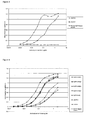
- Figure 4 shows the binding curves for SAP-K H0L0, SAP-K H1L0, SAP-K H2L0 and SAP-K H3L0 compared to the SAP-K chimera and the SAP-E H1L1 compared to the SAP-E chimera.
- An irrelevant human IgG1 kappa antibody was also tested as a negative control.
- the data shows that humanisation of the SAP-K antibody resulted in a loss of human SAP binding activity of approximately 2-fold compared to the parental SAP-K chimera, whilst the humanised SAP-E antibody retained binding activity compared to the parental SAP-E chimera.
- Figure 5 shows purified SAP-K and SAP-E murine monoclonal antibodies in the competition ELISA with the SAP-E chimera.
- Kd is for human SAP kd (s -1 ) Binding to cyno SAP SAP-K chimera 6.64E-03 Yes SAP-K H1L0 1.71E-02 poor SAP-K H3L0 1.84E-02 Yes SAP-K H2L0 2.04E-02 Yes SAP-K H3L1 2.36E-02 yes SAP-K H0L0 2.63E-02 no SAP-K H1L1 2.96E-02 poor SAP-K H2L1 3.21E-02 poor SAP-K H0L1 4.79E-02 no
- Human SAP was immobilised on a Biacore CM3 chip by primary amine coupling in accordance with the manufacturer's instructions. Anti SAP antibodies were passed over this surface at 512, 128, 32, 8, 2, 0.5nM and binding sensorgrams obtained. All runs were double referenced with a buffer injection over the human SAP surface. Analysis was carried out at 25°C using HBS-EP buffer. Regeneration of surface was done by allowing buffer to flow over the surface for several minutes and did not affect the ability of human SAP to rebind antibodies in a subsequent cycle. Data were analysed from the 128 - 0.5nM runs using the bivalent analyte model inherent to the Biacore T100 evaluation software.
- O-phosphoethanolamine was immobilised on a Biacore CM5 chip by primary amine coupling in accordance with the manufacturer's instructions. Human SAP was then captured on the surface in the presence of calcium chloride, in order to replicate in the Biacore system in vitro, the precise orientation of SAP molecules bound to amyloid fibrils in vivo. Anti SAP antibodies were then passed over this surface at 256, 64, 16, 4, 1nM and a binding sensorgrams obtained. Analysis was carried out at 25°C using 4% BSA, 10mM Tris, 140mM NaCl, 2mM CaCl 2 , 0.05°/ surfactant P20, 0.02% NaN 3 , pH 8.0 as running buffer.
- Tris-EDTA (10mM Tris, 140mM NaCl, 10mM EDTA, pH 8.0) which removed the bound human SAP but did not significantly affect subsequent binding of SAP to the immobilised phosphoethanolamine.
- Data generated were double referenced with a buffer injection over the human SAP surface and analyzed using the bivalent analyte model in the Biacore T100 evaluation software.
- Site-directed saturation mutagenesis was used to generate a panel of variants where the cysteine residue at position 91 (Kabat numbering) was potentially substituted with all other 19 amino acids in a single reaction by using a mutagenesis primer encoding NNK at this position (where N codes for adenosine or cytidine or guanosine or thymidine and K codes for guanisine or thymidine). From Biacore off-rate ranking carried out on antibody supernatant for the variants generated, four were selected for scale up in the HEK2936E cells and purification.
- variants for example glycine, serine and valine improved binding with respect to H3L0, but to a lesser extent than alanine.
- the fact that these four variants had better binding properties than L0 was also observed in a binding ELISA and a Biacore off-rate ranking experiment when the light chains were paired with H1.
- Example 10 Complement dependence of amyloid clearance by anti-SAP antibody.
- amyloid enhancing factor an extract of amyloidotic tissue containing amyloid fibrils
- each mouse received a single dose of 5 mg CPHPC by intraperitoneal injection, to deplete their circulating human SAP, followed 5h later via the same route by either the standard sheep polyclonal anti-human SAP IgG fraction (batch 2866, 1 ml at 50 mg/ml total protein containing 7 mg/ml anti-human SAP antibody) or 5 mg of one of nine different isolated pure monoclonal anti-human SAP antibodies (Table 11). All mice were killed 21 days after the antibody injection and amyloid load was determined by Congo red histology of their spleens. Table 11. The presence of amyloid in spleen of mice with systemic AA amyloidosis after treatment with CPHPC and various anti-human SAP antibodies.
- SAP-E binds optimally when more than one SAP molecule lies closely associated with another whilst SAP-K binds avidly to single isolated SAP molecules.
- SAP-E The epitope recognised by SAP-E must therefore be in the region 140-158 which evidently comprises some denaturation resistant secondary structure since SAP-E binding is not potently inhibited by the peptides 136-147, 138-149, 140-151 and 112-119 in solution. This is consistent with the kinetic stability and resistance to denaturation of SAP ( Manning, M. and Colon, W. (2004) Biochemistry, 43: 11248-11254 ).
- the potency of SAP-K was compared with the action of the standard sheep polyclonal antibody in clearing established systemic AA amyloid deposits in mice.
- mice treated with 5 mg of SAP-K showed the same remarkable clearance of splenic and hepatic amyloid deposits as seen with the 7 mg dose of sheep polyclonal antibody. Only trace specks of amyloid remained in the spleens of the treated mice and none at all was detected in many of the livers, contrasting sharply with the extensive splenic and hepatic amyloid deposits in all animals which received the irrelevant control mouse IgG2a antibody (Table 13). At the lower doses of 1 mg, 0.5 mg and 0.1 mg (data not shown for 0.5 mg and 0.1 mg) of SAP-K per mouse, there was no significant effect. Table 13.
- Example 16 Comparison of efficacy of SAP-E and SAP-K in clearing systemic AA amyloid deposits in mice, and estimation of plasma anti-SAP antibody concentrations.
- the concentrations of circulating anti-SAP antibody activity were strongly and consistently dose dependent after the single dose administered to all animals, apart from a single outlying individual in each of the lower dose groups. After the 1 mg per mouse dose, nothing above background was generally detectable even at day 1 in most mice. In contrast, after the 5 mg dose abundant antibody was still present at 15 days, and after 3 mg most mice had circulating antibody at day 5 but few after 15 days (Table 15). There was no significant difference between the patterns for SAP-E and SAP-K. Table 15. Serum concentration of anti-SAP antibody after single intraperitoneal doses.
- Example 17 Comparison of efficacy of low dose SAP-E and SAP-K in clearing systemic AA amyloid deposits in mice.
- Example 18 Activation of complement by humanised monoclonal anti-human SAP antibodies in vitro.
- Complement activation is essential for efficacy of amyloid clearing by anti-human SAP antibodies according to the present invention.
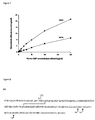
- the capacity of the humanised monoclonal antibodies, SAP-E H1L1 and SAP-K H3L0, to activate C3 in human and mouse serum was compared in vitro by adding different amounts of the isolated pure antibodies to either whole human serum containing a SAP concentration of 30 mg/l, or to whole mouse serum which had been spiked with isolated pure human SAP to this same concentration. In both cases the serum was fresh and complement sufficient and experimental conditions were optimal for complement activation with complement fixation test buffer (CFT) as the diluent.
- CFT complement fixation test buffer
Landscapes
- Health & Medical Sciences (AREA)
- Chemical & Material Sciences (AREA)
- Life Sciences & Earth Sciences (AREA)
- Organic Chemistry (AREA)
- Medicinal Chemistry (AREA)
- General Health & Medical Sciences (AREA)
- Proteomics, Peptides & Aminoacids (AREA)
- Immunology (AREA)
- Molecular Biology (AREA)
- Genetics & Genomics (AREA)
- Biophysics (AREA)
- Engineering & Computer Science (AREA)
- Biochemistry (AREA)
- Veterinary Medicine (AREA)
- Animal Behavior & Ethology (AREA)
- Pharmacology & Pharmacy (AREA)
- Public Health (AREA)
- Bioinformatics & Cheminformatics (AREA)
- Gastroenterology & Hepatology (AREA)
- Zoology (AREA)
- Epidemiology (AREA)
- Neurology (AREA)
- Toxicology (AREA)
- Neurosurgery (AREA)
- Diabetes (AREA)
- Nuclear Medicine, Radiotherapy & Molecular Imaging (AREA)
- Biomedical Technology (AREA)
- Chemical Kinetics & Catalysis (AREA)
- General Chemical & Material Sciences (AREA)
- Emergency Medicine (AREA)
- Obesity (AREA)
- Hematology (AREA)
- Biotechnology (AREA)
- Endocrinology (AREA)
- Hospice & Palliative Care (AREA)
- Psychiatry (AREA)
- Microbiology (AREA)
- Mycology (AREA)
- Peptides Or Proteins (AREA)
- Medicines Containing Antibodies Or Antigens For Use As Internal Diagnostic Agents (AREA)
Priority Applications (5)
| Application Number | Priority Date | Filing Date | Title |
|---|---|---|---|
| SM20180633T SMT201800633T1 (it) | 2010-03-03 | 2011-03-01 | Proteine leganti antigene specifiche per componente di amiloide p del siero |
| RS20181162A RS57708B1 (sr) | 2010-03-03 | 2011-03-01 | Antigen vezujući proteini specifični za p komponentu amiloida seruma |
| PL15178026T PL3025729T3 (pl) | 2010-03-03 | 2011-03-01 | Białka wiążące antygen specyficzne wobec składnika surowiczego amyloidu p |
| SI201131594T SI3025729T1 (sl) | 2010-03-03 | 2011-03-01 | Antigen vezavni proteini, specifični za serumsko amiloidno P komponento |
| HRP20181666TT HRP20181666T1 (hr) | 2010-03-03 | 2018-10-12 | Proteini koji se vežu na antigene, specifični za komponentu p serumskog amiloida |
Applications Claiming Priority (3)
| Application Number | Priority Date | Filing Date | Title |
|---|---|---|---|
| US30995710P | 2010-03-03 | 2010-03-03 | |
| EP11705617.6A EP2542261B1 (fr) | 2010-03-03 | 2011-03-01 | Protéines de liaison à un antigène spécifiques pour un composant p de substance amyloïde sérique |
| PCT/EP2011/053038 WO2011107480A1 (fr) | 2010-03-03 | 2011-03-01 | Protéines de liaison à un antigène spécifiques pour un composant p de substance amyloïde sérique |
Related Parent Applications (3)
| Application Number | Title | Priority Date | Filing Date |
|---|---|---|---|
| EP11705617.6A Division-Into EP2542261B1 (fr) | 2010-03-03 | 2011-03-01 | Protéines de liaison à un antigène spécifiques pour un composant p de substance amyloïde sérique |
| EP11705617.6A Division EP2542261B1 (fr) | 2010-03-03 | 2011-03-01 | Protéines de liaison à un antigène spécifiques pour un composant p de substance amyloïde sérique |
| PCT/EP2011/053038 Previously-Filed-Application WO2011107480A1 (fr) | 2010-03-03 | 2011-03-01 | Protéines de liaison à un antigène spécifiques pour un composant p de substance amyloïde sérique |
Publications (2)
| Publication Number | Publication Date |
|---|---|
| EP3025729A1 true EP3025729A1 (fr) | 2016-06-01 |
| EP3025729B1 EP3025729B1 (fr) | 2018-09-12 |
Family
ID=43881068
Family Applications (2)
| Application Number | Title | Priority Date | Filing Date |
|---|---|---|---|
| EP11705617.6A Active EP2542261B1 (fr) | 2010-03-03 | 2011-03-01 | Protéines de liaison à un antigène spécifiques pour un composant p de substance amyloïde sérique |
| EP15178026.9A Active EP3025729B1 (fr) | 2010-03-03 | 2011-03-01 | Protéines de liaison à un antigène spécifiques pour un composant p de substance amyloïde sérique |
Family Applications Before (1)
| Application Number | Title | Priority Date | Filing Date |
|---|---|---|---|
| EP11705617.6A Active EP2542261B1 (fr) | 2010-03-03 | 2011-03-01 | Protéines de liaison à un antigène spécifiques pour un composant p de substance amyloïde sérique |
Country Status (39)
| Country | Link |
|---|---|
| EP (2) | EP2542261B1 (fr) |
| JP (2) | JP5922592B2 (fr) |
| KR (1) | KR101817265B1 (fr) |
| CN (1) | CN102858371B (fr) |
| AR (1) | AR080432A1 (fr) |
| AU (1) | AU2011223048C1 (fr) |
| BR (1) | BR112012021926A2 (fr) |
| CA (1) | CA2789557A1 (fr) |
| CL (1) | CL2012002418A1 (fr) |
| CO (1) | CO6602134A2 (fr) |
| CR (1) | CR20120491A (fr) |
| CY (2) | CY1118046T1 (fr) |
| DK (2) | DK3025729T3 (fr) |
| DO (1) | DOP2012000232A (fr) |
| EA (1) | EA026375B1 (fr) |
| ES (2) | ES2699078T3 (fr) |
| HR (2) | HRP20161096T1 (fr) |
| HU (1) | HUE028960T2 (fr) |
| IL (2) | IL221418A (fr) |
| JO (1) | JO3188B1 (fr) |
| LT (2) | LT2542261T (fr) |
| MA (1) | MA34135B1 (fr) |
| ME (1) | ME02491B (fr) |
| MX (1) | MX340350B (fr) |
| MY (1) | MY159255A (fr) |
| NZ (1) | NZ601763A (fr) |
| PE (1) | PE20130040A1 (fr) |
| PH (1) | PH12012501743A1 (fr) |
| PL (2) | PL3025729T3 (fr) |
| PT (2) | PT2542261T (fr) |
| RS (2) | RS57708B1 (fr) |
| SG (2) | SG183316A1 (fr) |
| SI (2) | SI3025729T1 (fr) |
| SM (2) | SMT201800633T1 (fr) |
| TW (1) | TWI558409B (fr) |
| UA (1) | UA108227C2 (fr) |
| UY (1) | UY33258A (fr) |
| WO (1) | WO2011107480A1 (fr) |
| ZA (1) | ZA201206529B (fr) |
Families Citing this family (9)
| Publication number | Priority date | Publication date | Assignee | Title |
|---|---|---|---|---|
| MX337600B (es) * | 2009-12-02 | 2016-03-11 | Imaginab Inc | Minicuerpos j591 y diacuerpos-cys para apuntar con especificidad de objetivo a un antigeno de membrana especifico para prostata de humano (psma) y metodos para su uso. |
| CA2893977C (fr) * | 2012-12-21 | 2024-02-13 | Seattle Genetics, Inc. | Anticorps anti-ntb-a et compositions et procedes associes |
| CN103239713A (zh) * | 2013-05-28 | 2013-08-14 | 东南大学 | 一种糖尿病肾病微炎症小鼠模型的建立方法 |
| GB201407506D0 (en) | 2014-04-29 | 2014-06-11 | Glaxosmithkline Ip Dev Ltd | Novel compound |
| US9737505B2 (en) * | 2014-04-29 | 2017-08-22 | Glaxosmithkline Intellectual Property Development Limited | Prodrug of 1,1′-(1,6-dioxo-1,6-hexanediyl)bis-D-proline |
| KR20250008141A (ko) | 2015-08-07 | 2025-01-14 | 이미지냅 인코포레이티드 | 분자를 표적화하기 위한 항원 결합 구조체 |
| WO2018147960A1 (fr) | 2017-02-08 | 2018-08-16 | Imaginab, Inc. | Séquences d'extension pour dianticorps |
| WO2019185502A1 (fr) | 2018-03-26 | 2019-10-03 | Glaxosmithkline Intellectual Property Development Limited | Anticorps comprenant du sulfoxyde de méthionine au niveau de l'interface ch2-ch3 |
| CN116925216B (zh) * | 2022-04-11 | 2024-09-24 | 东莞市朋志生物科技有限公司 | 抗血清淀粉样蛋白a抗体、检测血清淀粉样蛋白a的试剂和试剂盒 |
Citations (40)
| Publication number | Priority date | Publication date | Assignee | Title |
|---|---|---|---|---|
| EP0054951A1 (fr) | 1980-12-24 | 1982-06-30 | Chugai Seiyaku Kabushiki Kaisha | Dibenzo(b,f)(1,4)oxazépines, leur procédé de préparation et les compositions pharmaceutiques les contenant |
| EP0183070A2 (fr) | 1984-10-30 | 1986-06-04 | Phillips Petroleum Company | Transformation de levures du genre Pichia |
| US4676980A (en) | 1985-09-23 | 1987-06-30 | The United States Of America As Represented By The Secretary Of The Department Of Health And Human Services | Target specific cross-linked heteroantibodies |
| EP0239400A2 (fr) | 1986-03-27 | 1987-09-30 | Medical Research Council | Anticorps recombinants et leurs procédés de production |
| EP0244234A2 (fr) | 1986-04-30 | 1987-11-04 | Alko Group Ltd. | Transformation de trichoderma |
| EP0307434A1 (fr) | 1987-03-18 | 1989-03-22 | Medical Res Council | Anticorps alteres. |
| DD266710A3 (de) | 1983-06-06 | 1989-04-12 | Ve Forschungszentrum Biotechnologie | Verfahren zur biotechnischen Herstellung van alkalischer Phosphatase |
| WO1990013646A1 (fr) | 1989-04-28 | 1990-11-15 | Transgene S.A. | Application de nouveaux fragments d'adn en tant que sequence codant pour un peptide signal pour la secretion de proteines matures par des levures recombinantes, cassettes d'expression, levures transformees et procede de preparation de proteines correspondant |
| EP0402226A1 (fr) | 1989-06-06 | 1990-12-12 | Institut National De La Recherche Agronomique | Vecteurs de transformation de la levure yarrowia |
| WO1993006213A1 (fr) | 1991-09-23 | 1993-04-01 | Medical Research Council | Production d'anticorps chimeriques - une approche combinatoire |
| WO1993008829A1 (fr) | 1991-11-04 | 1993-05-13 | The Regents Of The University Of California | Compositions induisant la destruction de cellules infectees par l'hiv |
| WO1994004690A1 (fr) | 1992-08-17 | 1994-03-03 | Genentech, Inc. | Immunoadhesines bispecifiques |
| EP0612251A1 (fr) | 1991-10-28 | 1994-08-31 | The Wellcome Foundation Limited | Anticorps stabilises |
| EP0629240A1 (fr) | 1992-02-19 | 1994-12-21 | Scotgen Limited | Anticorps modifies, produits et procedes s'y rapportant |
| WO1994029348A2 (fr) | 1993-06-03 | 1994-12-22 | Therapeutic Antibodies Inc. | Production de fragments d'anticorps |
| WO1995005394A1 (fr) * | 1993-08-17 | 1995-02-23 | Royal Postgraduate Medical School | Agents diagnostiques et therapeutiques de l'amyloidose |
| US5429746A (en) | 1994-02-22 | 1995-07-04 | Smith Kline Beecham Corporation | Antibody purification |
| WO1997011086A1 (fr) | 1995-09-22 | 1997-03-27 | The General Hospital Corporation | Expression de proteines a des hauts niveaux |
| US5739277A (en) | 1995-04-14 | 1998-04-14 | Genentech Inc. | Altered polypeptides with increased half-life |
| WO1998034640A2 (fr) | 1997-02-07 | 1998-08-13 | Merck & Co., Inc. | Genes synthetiques du gag hiv |
| US5807715A (en) | 1984-08-27 | 1998-09-15 | The Board Of Trustees Of The Leland Stanford Junior University | Methods and transformed mammalian lymphocyte cells for producing functional antigen-binding protein including chimeric immunoglobulin |
| EP0915088A1 (fr) | 1997-10-31 | 1999-05-12 | F. Hoffmann-La Roche Ag | Dérivés de D-Proline |
| WO1999048523A2 (fr) | 1998-03-26 | 1999-09-30 | Glaxo Group Limited | Antagonistes de mediateurs inflammatoires |
| WO2000029004A1 (fr) | 1998-11-18 | 2000-05-25 | Peptor Ltd. | Petites unites fonctionnelles de regions variables a chaine lourde d'anticorps |
| US6172197B1 (en) | 1991-07-10 | 2001-01-09 | Medical Research Council | Methods for producing members of specific binding pairs |
| US6248516B1 (en) | 1988-11-11 | 2001-06-19 | Medical Research Council | Single domain ligands, receptors comprising said ligands methods for their production, and use of said ligands and receptors |
| US6291158B1 (en) | 1989-05-16 | 2001-09-18 | Scripps Research Institute | Method for tapping the immunological repertoire |
| EP1229125A1 (fr) | 1999-10-19 | 2002-08-07 | Kyowa Hakko Kogyo Co., Ltd. | Procede de production d'un polypeptide |
| WO2003011878A2 (fr) | 2001-08-03 | 2003-02-13 | Glycart Biotechnology Ag | Variants de glycosylation d'anticorps presentant une cytotoxicite cellulaire accrue dependante des anticorps |
| WO2003051836A1 (fr) | 2001-12-14 | 2003-06-26 | F. Hoffmann-La Roche Ag | Promedicaments de d-prolines |
| WO2004006955A1 (fr) | 2001-07-12 | 2004-01-22 | Jefferson Foote | Anticorps super humanises |
| WO2004009823A1 (fr) | 2002-07-18 | 2004-01-29 | Lonza Biologics Plc. | Technique d'expression de proteines de recombinaison dans des cellules d'ovaire de hamster chinois (cho) |
| WO2004029207A2 (fr) | 2002-09-27 | 2004-04-08 | Xencor Inc. | Variants fc optimises et methodes destinees a leur generation |
| US6737056B1 (en) | 1999-01-15 | 2004-05-18 | Genentech, Inc. | Polypeptide variants with altered effector function |
| WO2004059318A2 (fr) | 2002-12-23 | 2004-07-15 | William Marsh Rice University | Techniques de detection d'inhibition de formation de fibroblastes, techniques et compositions permettant de renforcer la formation de fibroblastes |
| WO2004063351A2 (fr) | 2003-01-09 | 2004-07-29 | Macrogenics, Inc. | Identification et elaboration d'anticorps avec des regions du variant fc et procedes d'utilisation associes |
| WO2004099173A1 (fr) | 2003-05-12 | 2004-11-18 | Theracarb Inc. | Inhibiteurs polyvalents de la composante p des amyloides seriques |
| WO2006014679A1 (fr) | 2004-07-21 | 2006-02-09 | Glycofi, Inc. | Immunoglobulines contenant principalement un glycoforme de type glcnac2man3glcnac2 |
| WO2009000926A1 (fr) | 2007-06-27 | 2008-12-31 | Pentraxin Therapeutics Limited | Combinaisons d'agents d'appauvrissement et d'anticorps anti-sap |
| WO2009155962A1 (fr) * | 2008-06-27 | 2009-12-30 | Pentraxin Therapeutics Limited | Utilisation |
-
2011
- 2011-01-03 UA UAA201210015A patent/UA108227C2/uk unknown
- 2011-03-01 SG SG2012060216A patent/SG183316A1/en unknown
- 2011-03-01 KR KR1020127025884A patent/KR101817265B1/ko not_active Expired - Fee Related
- 2011-03-01 MX MX2012010129A patent/MX340350B/es active IP Right Grant
- 2011-03-01 LT LTEP11705617.6T patent/LT2542261T/lt unknown
- 2011-03-01 PL PL15178026T patent/PL3025729T3/pl unknown
- 2011-03-01 MA MA35252A patent/MA34135B1/fr unknown
- 2011-03-01 ME MEP-2016-161A patent/ME02491B/fr unknown
- 2011-03-01 AR ARP110100618A patent/AR080432A1/es not_active Application Discontinuation
- 2011-03-01 DK DK15178026.9T patent/DK3025729T3/en active
- 2011-03-01 SI SI201131594T patent/SI3025729T1/sl unknown
- 2011-03-01 CA CA2789557A patent/CA2789557A1/fr not_active Abandoned
- 2011-03-01 EA EA201290671A patent/EA026375B1/ru not_active IP Right Cessation
- 2011-03-01 EP EP11705617.6A patent/EP2542261B1/fr active Active
- 2011-03-01 SI SI201130964A patent/SI2542261T1/sl unknown
- 2011-03-01 SG SG10201500382SA patent/SG10201500382SA/en unknown
- 2011-03-01 AU AU2011223048A patent/AU2011223048C1/en not_active Ceased
- 2011-03-01 JO JOP/2011/0075A patent/JO3188B1/ar active
- 2011-03-01 LT LTEP15178026.9T patent/LT3025729T/lt unknown
- 2011-03-01 TW TW100106740A patent/TWI558409B/zh not_active IP Right Cessation
- 2011-03-01 RS RS20181162A patent/RS57708B1/sr unknown
- 2011-03-01 PH PH1/2012/501743A patent/PH12012501743A1/en unknown
- 2011-03-01 WO PCT/EP2011/053038 patent/WO2011107480A1/fr not_active Ceased
- 2011-03-01 ES ES15178026T patent/ES2699078T3/es active Active
- 2011-03-01 ES ES11705617.6T patent/ES2593454T3/es active Active
- 2011-03-01 CN CN201180017717.1A patent/CN102858371B/zh not_active Expired - Fee Related
- 2011-03-01 HR HRP20161096TT patent/HRP20161096T1/hr unknown
- 2011-03-01 DK DK11705617.6T patent/DK2542261T3/en active
- 2011-03-01 PL PL11705617.6T patent/PL2542261T3/pl unknown
- 2011-03-01 BR BR112012021926-0A patent/BR112012021926A2/pt not_active IP Right Cessation
- 2011-03-01 RS RS20160741A patent/RS55133B1/sr unknown
- 2011-03-01 NZ NZ601763A patent/NZ601763A/en not_active IP Right Cessation
- 2011-03-01 PT PT117056176T patent/PT2542261T/pt unknown
- 2011-03-01 SM SM20180633T patent/SMT201800633T1/it unknown
- 2011-03-01 PE PE2012001385A patent/PE20130040A1/es not_active Application Discontinuation
- 2011-03-01 PT PT15178026T patent/PT3025729T/pt unknown
- 2011-03-01 HU HUE11705617A patent/HUE028960T2/en unknown
- 2011-03-01 EP EP15178026.9A patent/EP3025729B1/fr active Active
- 2011-03-01 MY MYPI2012003903A patent/MY159255A/en unknown
- 2011-03-01 JP JP2012555403A patent/JP5922592B2/ja not_active Expired - Fee Related
- 2011-03-03 UY UY0001033258A patent/UY33258A/es not_active Application Discontinuation
-
2012
- 2012-08-12 IL IL221418A patent/IL221418A/en not_active IP Right Cessation
- 2012-08-22 DO DO2012000232A patent/DOP2012000232A/es unknown
- 2012-08-30 ZA ZA2012/06529A patent/ZA201206529B/en unknown
- 2012-08-31 CL CL2012002418A patent/CL2012002418A1/es unknown
- 2012-08-31 CO CO12149377A patent/CO6602134A2/es unknown
- 2012-09-27 CR CR20120491A patent/CR20120491A/es unknown
-
2016
- 2016-02-05 JP JP2016020718A patent/JP6236478B2/ja not_active Expired - Fee Related
- 2016-09-23 CY CY20161100950T patent/CY1118046T1/el unknown
- 2016-09-26 SM SM201600337T patent/SMT201600337B/it unknown
-
2017
- 2017-03-08 IL IL251031A patent/IL251031A/en not_active IP Right Cessation
-
2018
- 2018-10-12 HR HRP20181666TT patent/HRP20181666T1/hr unknown
- 2018-10-31 CY CY181101126T patent/CY1120803T1/el unknown
Patent Citations (41)
| Publication number | Priority date | Publication date | Assignee | Title |
|---|---|---|---|---|
| EP0054951A1 (fr) | 1980-12-24 | 1982-06-30 | Chugai Seiyaku Kabushiki Kaisha | Dibenzo(b,f)(1,4)oxazépines, leur procédé de préparation et les compositions pharmaceutiques les contenant |
| DD266710A3 (de) | 1983-06-06 | 1989-04-12 | Ve Forschungszentrum Biotechnologie | Verfahren zur biotechnischen Herstellung van alkalischer Phosphatase |
| US5807715A (en) | 1984-08-27 | 1998-09-15 | The Board Of Trustees Of The Leland Stanford Junior University | Methods and transformed mammalian lymphocyte cells for producing functional antigen-binding protein including chimeric immunoglobulin |
| EP0183070A2 (fr) | 1984-10-30 | 1986-06-04 | Phillips Petroleum Company | Transformation de levures du genre Pichia |
| US4676980A (en) | 1985-09-23 | 1987-06-30 | The United States Of America As Represented By The Secretary Of The Department Of Health And Human Services | Target specific cross-linked heteroantibodies |
| EP0239400A2 (fr) | 1986-03-27 | 1987-09-30 | Medical Research Council | Anticorps recombinants et leurs procédés de production |
| EP0244234A2 (fr) | 1986-04-30 | 1987-11-04 | Alko Group Ltd. | Transformation de trichoderma |
| EP0307434A1 (fr) | 1987-03-18 | 1989-03-22 | Medical Res Council | Anticorps alteres. |
| US6248516B1 (en) | 1988-11-11 | 2001-06-19 | Medical Research Council | Single domain ligands, receptors comprising said ligands methods for their production, and use of said ligands and receptors |
| WO1990013646A1 (fr) | 1989-04-28 | 1990-11-15 | Transgene S.A. | Application de nouveaux fragments d'adn en tant que sequence codant pour un peptide signal pour la secretion de proteines matures par des levures recombinantes, cassettes d'expression, levures transformees et procede de preparation de proteines correspondant |
| US6291158B1 (en) | 1989-05-16 | 2001-09-18 | Scripps Research Institute | Method for tapping the immunological repertoire |
| EP0402226A1 (fr) | 1989-06-06 | 1990-12-12 | Institut National De La Recherche Agronomique | Vecteurs de transformation de la levure yarrowia |
| US6172197B1 (en) | 1991-07-10 | 2001-01-09 | Medical Research Council | Methods for producing members of specific binding pairs |
| WO1993006213A1 (fr) | 1991-09-23 | 1993-04-01 | Medical Research Council | Production d'anticorps chimeriques - une approche combinatoire |
| EP0612251A1 (fr) | 1991-10-28 | 1994-08-31 | The Wellcome Foundation Limited | Anticorps stabilises |
| WO1993008829A1 (fr) | 1991-11-04 | 1993-05-13 | The Regents Of The University Of California | Compositions induisant la destruction de cellules infectees par l'hiv |
| EP0629240A1 (fr) | 1992-02-19 | 1994-12-21 | Scotgen Limited | Anticorps modifies, produits et procedes s'y rapportant |
| WO1994004690A1 (fr) | 1992-08-17 | 1994-03-03 | Genentech, Inc. | Immunoadhesines bispecifiques |
| WO1994029348A2 (fr) | 1993-06-03 | 1994-12-22 | Therapeutic Antibodies Inc. | Production de fragments d'anticorps |
| WO1995005394A1 (fr) * | 1993-08-17 | 1995-02-23 | Royal Postgraduate Medical School | Agents diagnostiques et therapeutiques de l'amyloidose |
| US5429746A (en) | 1994-02-22 | 1995-07-04 | Smith Kline Beecham Corporation | Antibody purification |
| US5739277A (en) | 1995-04-14 | 1998-04-14 | Genentech Inc. | Altered polypeptides with increased half-life |
| WO1997011086A1 (fr) | 1995-09-22 | 1997-03-27 | The General Hospital Corporation | Expression de proteines a des hauts niveaux |
| WO1998034640A2 (fr) | 1997-02-07 | 1998-08-13 | Merck & Co., Inc. | Genes synthetiques du gag hiv |
| EP0915088A1 (fr) | 1997-10-31 | 1999-05-12 | F. Hoffmann-La Roche Ag | Dérivés de D-Proline |
| WO1999048523A2 (fr) | 1998-03-26 | 1999-09-30 | Glaxo Group Limited | Antagonistes de mediateurs inflammatoires |
| WO2000029004A1 (fr) | 1998-11-18 | 2000-05-25 | Peptor Ltd. | Petites unites fonctionnelles de regions variables a chaine lourde d'anticorps |
| US6737056B1 (en) | 1999-01-15 | 2004-05-18 | Genentech, Inc. | Polypeptide variants with altered effector function |
| EP1229125A1 (fr) | 1999-10-19 | 2002-08-07 | Kyowa Hakko Kogyo Co., Ltd. | Procede de production d'un polypeptide |
| WO2004006955A1 (fr) | 2001-07-12 | 2004-01-22 | Jefferson Foote | Anticorps super humanises |
| WO2003011878A2 (fr) | 2001-08-03 | 2003-02-13 | Glycart Biotechnology Ag | Variants de glycosylation d'anticorps presentant une cytotoxicite cellulaire accrue dependante des anticorps |
| WO2003051836A1 (fr) | 2001-12-14 | 2003-06-26 | F. Hoffmann-La Roche Ag | Promedicaments de d-prolines |
| WO2004009823A1 (fr) | 2002-07-18 | 2004-01-29 | Lonza Biologics Plc. | Technique d'expression de proteines de recombinaison dans des cellules d'ovaire de hamster chinois (cho) |
| WO2004029207A2 (fr) | 2002-09-27 | 2004-04-08 | Xencor Inc. | Variants fc optimises et methodes destinees a leur generation |
| WO2004059318A2 (fr) | 2002-12-23 | 2004-07-15 | William Marsh Rice University | Techniques de detection d'inhibition de formation de fibroblastes, techniques et compositions permettant de renforcer la formation de fibroblastes |
| WO2004063351A2 (fr) | 2003-01-09 | 2004-07-29 | Macrogenics, Inc. | Identification et elaboration d'anticorps avec des regions du variant fc et procedes d'utilisation associes |
| WO2004099173A1 (fr) | 2003-05-12 | 2004-11-18 | Theracarb Inc. | Inhibiteurs polyvalents de la composante p des amyloides seriques |
| WO2006014679A1 (fr) | 2004-07-21 | 2006-02-09 | Glycofi, Inc. | Immunoglobulines contenant principalement un glycoforme de type glcnac2man3glcnac2 |
| WO2009000926A1 (fr) | 2007-06-27 | 2008-12-31 | Pentraxin Therapeutics Limited | Combinaisons d'agents d'appauvrissement et d'anticorps anti-sap |
| US20090191196A1 (en) | 2007-06-27 | 2009-07-30 | Pepys Mark B | Use |
| WO2009155962A1 (fr) * | 2008-06-27 | 2009-12-30 | Pentraxin Therapeutics Limited | Utilisation |
Non-Patent Citations (120)
| Title |
|---|
| "Sequences of Proteins of Immunological Interest", 1987, NATIONAL INSTITUTES OF HEALTH |
| ADAMS ET AL., CAN. RES, vol. 53, 1993, pages 4026 - 4034 |
| ALT ET AL., FEBS LETT, vol. 454, 1999, pages 90 - 94 |
| BAEZ ET AL., BIOPHARM, vol. 13, 2000, pages 50 - 54 |
| BIRD ET AL., SCIENCE, vol. 242, 1988, pages 423 - 426 |
| BOTTO ET AL., NATURE MED, vol. 3, 1997, pages 855 - 859 |
| BOTTO ET AL., NATURE MED., vol. 3, 1997, pages 855 - 859 |
| BOTTO, NATURE MED., vol. 3, 1997, pages 855 - 859 |
| BOYD ET AL., MOL. IMMUNOL., vol. 32, 1996, pages 1311 - 1318 |
| BRODEUR: "Monoclonal Antibody Production Techniques and Applications", 1987, MARCEL DEKKER INC, pages: 51 - 63 |
| CHOTHIA ET AL., NATURE, vol. 342, 1989, pages 877 - 883 |
| CO ET AL., NATURE, vol. 351, 1991, pages 501 - 502 |
| COLOMA ET AL., NATURE BIOTECHNOL., vol. 15, 1997, pages 159 - 163 |
| CUPIT, LETT APPL MICROBIOL, vol. 29, 1999, pages 273 - 277 |
| DAVIS ET AL., CHEM. REV., vol. 102, 2002, pages 579 |
| DORAN, CURR. OPINION BIOTECHNOL., vol. 11, 2000, pages 199 - 204 |
| DRAPEAU ET AL., CYTOTECHNOLOGY, vol. 15, 1994, pages 103 - 109 |
| DUNCAN B. RICHARDS ET AL: "Therapeutic Clearance of Amyloid by Antibodies to Serum Amyloid P Component", NEW ENGLAND JOURNAL OF MEDICINE, vol. 373, no. 12, 15 July 2015 (2015-07-15), US, pages 1106 - 1114, XP055225016, ISSN: 0028-4793, DOI: 10.1056/NEJMoa1504942 * |
| E. MEYERS; W. MILLER, COMPUT. APPL. BIOSCI., vol. 4, 1988, pages 11 - 17 |
| FISHWILD, NATURE BIOTECHNOL., vol. 14, 1996, pages 845 - 851 |
| GHETIE ET AL., ANNU. REV. IMMUNOL., vol. 18, 2000, pages 739 - 766 |
| GILLMORE ET AL., BRIT. J. HAEMATOL., 2010 |
| GILLMORE ET AL., IMMUNOLOGY, vol. 112, 2004, pages 255 - 264 |
| GLOCKSHUBER ET AL., BIOCHEMISTRY, vol. 29, 1990, pages 1362 - 1367 |
| GREEN, J. IMMUNOL. METHODS, vol. 231, 1999, pages 11 - 23 |
| GRIFFITHS ET AL., EMBO, vol. 13, 1994, pages 3245 - 3260 |
| HANG ET AL., ACC. CHEM. RES, vol. 34, 2001, pages 727 |
| HAWKINS ET AL., CLIN. EXP. IMMUNOL., vol. 84, 1991, pages 308 - 316 |
| HAWKINS ET AL., J. CLIN. INVEST., vol. 86, 1990, pages 1862 - 1869 |
| HAWKINS ET AL., J. CLIN. INVEST., vol. 86, 1990, pages 862 - 1 869 |
| HAWKINS ET AL., J. EXP. MED, vol. 167, 1988, pages 903 - 913 |
| HAWKINS ET AL., J. EXP. MED., vol. 167, 1988, pages 903 - 913 |
| HODGSON ET AL., BIO/TECHNOLOGY, vol. 9, 1991, pages 421 |
| HOEKEMA ET AL., MOL CELL BIOL, vol. 7, no. 8, 1987, pages 2914 - 24 |
| HOLLIGER ET AL., PNAS, vol. 90, 1993, pages 6444 - 6448 |
| HOLLIGER; HUDSON, NATURE BIOTECHNOLOGY, vol. 23, no. 9, 2005, pages 1126 - 1136 |
| HU ET AL., CANCER RES., vol. 56, 1996, pages 3055 - 3061 |
| HUSTON ET AL., INT. REV. IMMUNOL, vol. 10, 1993, pages 195 - 217 |
| HUSTON ET AL., PNAS, vol. 85, no. 16, 1988, pages 5879 - 5883 |
| HUTCHINSON ET AL., MOL. MED., vol. 6, 2000, pages 482 - 493 |
| JONES ET AL., NATURE, vol. 321, 1986, pages 522 - 525 |
| JULIAN D GILMORE ET AL: "Sustained pharmacological depletion of serum amyloid P component in patients with systemic amyloidosis", BRITISH JOURNAL OF HAEMATOLOGY, WILEY-BLACKWELL PUBLISHING LTD, GB, vol. 148, 1 January 2010 (2010-01-01), pages 760 - 767, XP007918426, ISSN: 0007-1048, [retrieved on 20100108], DOI: 10.1111/J.1365-2141.2009.08036.X * |
| JUNGHANS, IMMUNOL. RES, vol. 16, 1997, pages 29 - 57 |
| KABAT ET AL.: "Sequences of Proteins of Immunological Interest", 1987, NATIONAL INSTITUTES OF HEALTH |
| KARL BODIN ET AL: "Antibodies to human serum amyloid P component eliminate visceral amyloid deposits", NATURE, NATURE PUBLISHING GROUP, LONDON, GB, vol. 468, 4 November 2010 (2010-11-04), pages 93 - 97, XP007918427, ISSN: 0028-0836, [retrieved on 20101020], DOI: 10.1038/NATURE09494 * |
| KEEN ET AL., CYTOTECHNOLOGY, vol. 17, 1995, pages 153 - 163 |
| KIPRIYANOV ET AL., CELL. BIOPHYS, vol. 26, 1995, pages 187 - 204 |
| KIPRIYANOV ET AL., INT. J. CAN, vol. 77, 1998, pages 763 - 772 |
| KIPRIYANOV ET AL., J. MOL. BIOL., vol. 293, 1999, pages 41 - 56 |
| KOLSTOE, S.E. ET AL.: "Molecular dissection of Alzheimer's disease neuropathology by depletion of serum amyloid P component", PROC. NATL. ACAD. SCI. USA, vol. 106, 2009, pages 7619 - 7623, XP007918428, DOI: doi:10.1073/pnas.0902640106 |
| KONTERMANN ET AL., J. IMMUNOL. METHODS, vol. 226, 1999, pages 179 - 188 |
| KORTT ET AL., PROTEIN ENG, vol. 10, 1997, pages 423 - 433 |
| KOSTELNY ET AL., J. IMMUNOL., vol. 148, 1992, pages 1547 - 1553 |
| KOUMENIS ET AL., INT. J. PHARMACEUT., vol. 198, 2000, pages 83 - 95 |
| KOZBOR, J. IMMUNOL, vol. 133, 1984, pages 3001 |
| KURUCZ ET AL., J. IMMOL., vol. 154, 1995, pages 4576 - 4582 |
| LAZAR ET AL., PNAS, vol. 103, 2006, pages 4005 - 4010 |
| LE GALL ET AL., FEBS LETT, vol. 453, 1999, pages 164 - 168 |
| MA, NAT. MED., vol. 4, 1998, pages 601 - 606 |
| MANNING, M.; COLON, W, BIOCHEMISTRY, vol. 43, 2004, pages 11248 - 11254 |
| MARK ET AL.: "Handbook of Experimental Pharmacology Vol. 113: The pharmacology of Monoclonal Antibodies", vol. 11, 1994, SPRINGER-VERLAG, pages: 105 - 134 |
| MARKS, BIO/TECHNOL, vol. 10, 1992, pages 779 - 783 |
| MARTIN; THORNTON, J MOL BIOL, vol. 263, 1996, pages 800 - 815 |
| MCCAFFERTY, NATURE, vol. 348, 1990, pages 552 - 553 |
| MCCARTNEY ET AL., PROTEIN ENG., vol. 8, 1995, pages 301 - 314 |
| MENDEZ, NATURE GENETICS, vol. 15, 1997, pages 146 - 156 |
| MILLSTEIN ET AL., NATURE, vol. 305, 1983, pages 537 - 539 |
| MORRISON, PNAS, vol. 81, 1984, pages 6851 |
| MORROW, GENET. ENG. NEWS, vol. 20, 2000, pages 1 - 55 |
| MULLER ET AL., FEBS LETT, vol. 432, 1998, pages 45 - 49 |
| MYERS ET AL., BIOCHEMISTRY, vol. 45, 2006, pages 2311 - 2321 |
| NAKAMURA ET AL., NUCLEIC ACIDS RESEARCH, vol. 24, 1996, pages 214 - 215 |
| NEEDLEMAN; WUNSCH, J. MOL. BIOL., vol. 48, 1970, pages 444 - 453 |
| NELSON ET AL., CLIN. CHIM. ACTA, vol. 200, 1991, pages 191 - 200 |
| NOURSADEGHI ET AL., PNAS, vol. 97, 2000, pages 14584 - 14589 |
| PACK ET AL., BIOCHEMISTRY, vol. 31, 1992, pages 1579 - 1584 |
| PADLAN ET AL., MOL. IMMUNOL., vol. 28, 1991, pages 489 - 498 |
| PEDERSEN ET AL., J. MOL. BIOL., vol. 235, 1994, pages 959 - 973 |
| PENG ET AL., J. BIOTECHNOL., vol. 108, 2004, pages 185 - 192 |
| PEPYS ET AL., CLIN. EXP. IMMUNOL., vol. 38, 1979, pages 284 - 293 |
| PEPYS ET AL., INT. J. EXP. CLIN. INVEST., vol. 4, 1997, pages 274 - 295 |
| PEPYS ET AL., NATURE, vol. 41, no. 7, 2002, pages 254 - 259 |
| PEPYS ET AL., NATURE, vol. 417, 2002, pages 254 - 259 |
| PEPYS ET AL., PNAS, vol. 91, 1994, pages 5602 - 5606 |
| PEPYS M B ET AL: "Targeted pharmacological depletion of serum amyloid P component for treatment of human amyloidosis", NATURE, NATURE PUBLISHING GROUP, LONDON, GB, vol. 417, no. 6886, 1 January 2002 (2002-01-01), pages 254 - 259, XP002219442, ISSN: 0028-0836, DOI: 10.1038/417254A * |
| PEPYS, M.B, ANNU. REV. MED., vol. 57, 2006, pages 223 - 241 |
| PEPYS, M.B. ET AL.: "Targeted pharmacological depletion of serum amyloid P component for treatment of human amyloidosis", NATURE, vol. 417, 2002, pages 254 - 259, XP002219442, DOI: doi:10.1038/417254a |
| PEPYS, M.B., ANNU. REV. MED., vol. 57, 2006, pages 223 - 241 |
| PEPYS, M.B.; TENNENT, G.A; DENTON, C.P., REPLY TO LETTER, 2007 |
| PEPYS; HAWKINS: "Amyloidosis. Oxford Textbook of Medicine", vol. 2, 2003, OXFORD UNIVERSITY PRESS, pages: 162 - 173 |
| PEPYS; HAWKINS: "Amyloidosis. Samter's Immunologic Diseases", vol. 1, 2001, LIPPINCOTT WILLIAMS & WILLIAMS, pages: 401 - 412 |
| POLLOCK ET AL., J. IMMUNOL. METHODS, vol. 231, 1999, pages 147 - 157 |
| PUCHTLER, H.; SWEAT, F.; LEVINE, M.: "On the binding of Congo red by amyloid", J. HISTOCHEM. CYTOCHEM., vol. 10, 1962, pages 355 - 364 |
| QUEEN ET AL., PNAS, vol. 86, 1989, pages 10,029 - 10,033 |
| QUEEN ET AL., PROC. NATL ACAD SCI USA, vol. 86, 1989, pages 10029 - 10032 |
| RAJU ET AL., BIOCHEMISTRY, vol. 40, 2001, pages 8868 - 8876 |
| SANCHEZ ET AL., J. BIOTECHNOL., vol. 72, 1999, pages 13 - 20 |
| SCHARFENBERG ET AL.: "Animal Cell Technology: Developments towards the 21st century", 1995, KLUWER ACADEMIC PUBLISHERS, pages: 619 - 623 |
| SEARS ET AL., SCIENCE, vol. 291, 2001, pages 2344 |
| SHALABY ET AL., J. EXP. MED., vol. 175, 1992, pages 217 - 225 |
| SHIELDS ET AL., J. BIOL. CHEM, vol. 276, 2001, pages 6591 - 6604 |
| SIMON E KOLSTOE ET AL: "Molecular dissection of Alzheimer s disease neuropathology by depletion of serum amyloid P component", PROCEEDINGS OF THE NATIONAL ACADEMY OF SCIENCES OF THE UNITED STATES (PNAS), NATIONAL ACADEMY OF SCIENCE, US, vol. 106, no. 18, 5 May 2009 (2009-05-05), pages 7619 - 7623, XP007918428, ISSN: 0027-8424, [retrieved on 20090416], DOI: 10.1073/PNAS.0902640106 * |
| SMITH ET AL.: "Antibodies in human diagnosis and therapy", 1977, RAVEN PRESS |
| STINCHCOMB ET AL., NATURE, vol. 282, 1979, pages 38 |
| STOGER ET AL., PLANT MOL. BIOL., vol. 42, 2000, pages 583 - 590 |
| SURESH ET AL., METHODS IN ENZYMOLOGY, vol. 121, 1986, pages 210 |
| TENNENT ET AL., ARTHRITIS RHEUM., vol. 56, 2007, pages 2013 - 2017 |
| TENNENT ET AL., ARTHRITIS RHEUM., vol. 56, pages 4229 - 4230 |
| TENNENT ET AL., PNAS, vol. 92, 1995, pages 4299 - 4303 |
| TOMIZUKA, PNAS, vol. 97, 2000, pages 722 - 727 |
| TRAUNECKER ET AL., EMBO, vol. 10, 1991, pages 3655 - 3659 |
| VAN ROOIJEN, J. LIPOSOME RESEARCH, vol. 12, 2002, pages 81 - 94 |
| VERHOEYEN ET AL., SCIENCE, vol. 239, 1988, pages 1534 - 1536 |
| WACKER ET AL., SCIENCE, vol. 298, 2002, pages 1790 |
| WATERHOUSE, NUCL. ACIDS RES., vol. 21, 1993, pages 2265 - 2266 |
| WHITLOW ET AL., METHODS COMPANION METHODS ENZYMOL, vol. 2, 1991, pages 97 - 105 |
| WINTER, ANNU. REV. IMMUNOL, vol. 12, 1994, pages 433 - 455 |
| YAMAMURA ET AL., MOL. REPROD. DEV., vol. 36, 1993, pages 248 - 250 |
| ZHANG ET AL., SCIENCE, vol. 303, 2004, pages 371 |
| ZHU ET AL., PROTEIN SCI., vol. 6, 1997, pages 781 - 788 |
Also Published As
Similar Documents
| Publication | Publication Date | Title |
|---|---|---|
| EP3025729B1 (fr) | Protéines de liaison à un antigène spécifiques pour un composant p de substance amyloïde sérique | |
| US9150653B2 (en) | CD127 binding proteins | |
| CN101679506B (zh) | 用于结合鞘氨醇-1-磷酸的组合物和方法 | |
| EP3533803A1 (fr) | Protéines de liaison à la bêta anticorps | |
| WO2008150946A1 (fr) | Anticorps humanisés qui se lient au globulomère aβ(1-42) et leurs utilisations | |
| CN101374863B (zh) | 针对nogo的免疫球蛋白 | |
| US10221234B2 (en) | Antigen binding proteins | |
| HK1223292B (en) | Antigen binding proteins specific for serum amyloid p component | |
| US10064937B2 (en) | Treatment of dermal fibrosis | |
| HK1173959B (en) | Antigen binding proteins specific for serum amyloid p component |
Legal Events
| Date | Code | Title | Description |
|---|---|---|---|
| PUAI | Public reference made under article 153(3) epc to a published international application that has entered the european phase |
Free format text: ORIGINAL CODE: 0009012 |
|
| 17P | Request for examination filed |
Effective date: 20150723 |
|
| AC | Divisional application: reference to earlier application |
Ref document number: 2542261 Country of ref document: EP Kind code of ref document: P |
|
| AK | Designated contracting states |
Kind code of ref document: A1 Designated state(s): AL AT BE BG CH CY CZ DE DK EE ES FI FR GB GR HR HU IE IS IT LI LT LU LV MC MK MT NL NO PL PT RO RS SE SI SK SM TR |
|
| AX | Request for extension of the european patent |
Extension state: BA ME |
|
| STAA | Information on the status of an ep patent application or granted ep patent |
Free format text: STATUS: EXAMINATION IS IN PROGRESS |
|
| 17Q | First examination report despatched |
Effective date: 20170314 |
|
| REG | Reference to a national code |
Ref country code: HK Ref legal event code: DE Ref document number: 1223292 Country of ref document: HK |
|
| GRAP | Despatch of communication of intention to grant a patent |
Free format text: ORIGINAL CODE: EPIDOSNIGR1 |
|
| STAA | Information on the status of an ep patent application or granted ep patent |
Free format text: STATUS: GRANT OF PATENT IS INTENDED |
|
| INTG | Intention to grant announced |
Effective date: 20180320 |
|
| GRAJ | Information related to disapproval of communication of intention to grant by the applicant or resumption of examination proceedings by the epo deleted |
Free format text: ORIGINAL CODE: EPIDOSDIGR1 |
|
| STAA | Information on the status of an ep patent application or granted ep patent |
Free format text: STATUS: EXAMINATION IS IN PROGRESS |
|
| GRAR | Information related to intention to grant a patent recorded |
Free format text: ORIGINAL CODE: EPIDOSNIGR71 |
|
| GRAS | Grant fee paid |
Free format text: ORIGINAL CODE: EPIDOSNIGR3 |
|
| STAA | Information on the status of an ep patent application or granted ep patent |
Free format text: STATUS: GRANT OF PATENT IS INTENDED |
|
| GRAA | (expected) grant |
Free format text: ORIGINAL CODE: 0009210 |
|
| STAA | Information on the status of an ep patent application or granted ep patent |
Free format text: STATUS: THE PATENT HAS BEEN GRANTED |
|
| INTC | Intention to grant announced (deleted) | ||
| INTG | Intention to grant announced |
Effective date: 20180731 |
|
| AC | Divisional application: reference to earlier application |
Ref document number: 2542261 Country of ref document: EP Kind code of ref document: P |
|
| AK | Designated contracting states |
Kind code of ref document: B1 Designated state(s): AL AT BE BG CH CY CZ DE DK EE ES FI FR GB GR HR HU IE IS IT LI LT LU LV MC MK MT NL NO PL PT RO RS SE SI SK SM TR |
|
| AX | Request for extension of the european patent |
Extension state: BA ME |
|
| REG | Reference to a national code |
Ref country code: GB Ref legal event code: FG4D |
|
| REG | Reference to a national code |
Ref country code: CH Ref legal event code: EP |
|
| REG | Reference to a national code |
Ref country code: CH Ref legal event code: NV Representative=s name: E. BLUM AND CO. AG PATENT- UND MARKENANWAELTE , CH |
|
| REG | Reference to a national code |
Ref country code: IE Ref legal event code: FG4D |
|
| REG | Reference to a national code |
Ref country code: DE Ref legal event code: R096 Ref document number: 602011052094 Country of ref document: DE |
|
| REG | Reference to a national code |
Ref country code: HR Ref legal event code: TUEP Ref document number: P20181666 Country of ref document: HR |
|
| REG | Reference to a national code |
Ref country code: AT Ref legal event code: REF Ref document number: 1039784 Country of ref document: AT Kind code of ref document: T Effective date: 20181015 |
|
| REG | Reference to a national code |
Ref country code: NL Ref legal event code: FP |
|
| REG | Reference to a national code |
Ref country code: DK Ref legal event code: T3 Effective date: 20181119 |
|
| REG | Reference to a national code |
Ref country code: RO Ref legal event code: EPE |
|
| REG | Reference to a national code |
Ref country code: PT Ref legal event code: SC4A Ref document number: 3025729 Country of ref document: PT Date of ref document: 20181130 Kind code of ref document: T Free format text: AVAILABILITY OF NATIONAL TRANSLATION Effective date: 20181122 |
|
| REG | Reference to a national code |
Ref country code: HR Ref legal event code: T1PR Ref document number: P20181666 Country of ref document: HR |
|
| REG | Reference to a national code |
Ref country code: SE Ref legal event code: TRGR |
|
| REG | Reference to a national code |
Ref country code: NO Ref legal event code: T2 Effective date: 20180912 |
|
| REG | Reference to a national code |
Ref country code: EE Ref legal event code: FG4A Ref document number: E016389 Country of ref document: EE Effective date: 20181120 |
|
| REG | Reference to a national code |
Ref country code: ES Ref legal event code: FG2A Ref document number: 2699078 Country of ref document: ES Kind code of ref document: T3 Effective date: 20190207 |
|
| REG | Reference to a national code |
Ref country code: GR Ref legal event code: EP Ref document number: 20180402902 Country of ref document: GR Effective date: 20190225 |
|
| REG | Reference to a national code |
Ref country code: SK Ref legal event code: T3 Ref document number: E 29230 Country of ref document: SK |
|
| REG | Reference to a national code |
Ref country code: DE Ref legal event code: R097 Ref document number: 602011052094 Country of ref document: DE |
|
| PLBE | No opposition filed within time limit |
Free format text: ORIGINAL CODE: 0009261 |
|
| STAA | Information on the status of an ep patent application or granted ep patent |
Free format text: STATUS: NO OPPOSITION FILED WITHIN TIME LIMIT |
|
| 26N | No opposition filed |
Effective date: 20190613 |
|
| REG | Reference to a national code |
Ref country code: HR Ref legal event code: PBON Ref document number: P20181666 Country of ref document: HR Effective date: 20190301 |
|
| REG | Reference to a national code |
Ref country code: LT Ref legal event code: MM4D Effective date: 20190301 |
|
| REG | Reference to a national code |
Ref country code: DE Ref legal event code: R119 Ref document number: 602011052094 Country of ref document: DE |
|
| REG | Reference to a national code |
Ref country code: EE Ref legal event code: MM4A Ref document number: E016389 Country of ref document: EE Effective date: 20190331 |
|
| REG | Reference to a national code |
Ref country code: DK Ref legal event code: EBP Effective date: 20190331 Ref country code: NO Ref legal event code: MMEP |
|
| REG | Reference to a national code |
Ref country code: SE Ref legal event code: EUG |
|
| PG25 | Lapsed in a contracting state [announced via postgrant information from national office to epo] |
Ref country code: CZ Free format text: LAPSE BECAUSE OF NON-PAYMENT OF DUE FEES Effective date: 20190301 Ref country code: LT Free format text: LAPSE BECAUSE OF NON-PAYMENT OF DUE FEES Effective date: 20190301 Ref country code: SE Free format text: LAPSE BECAUSE OF NON-PAYMENT OF DUE FEES Effective date: 20190302 Ref country code: SI Free format text: LAPSE BECAUSE OF NON-PAYMENT OF DUE FEES Effective date: 20190302 Ref country code: RO Free format text: LAPSE BECAUSE OF NON-PAYMENT OF DUE FEES Effective date: 20180912 Ref country code: MC Free format text: LAPSE BECAUSE OF FAILURE TO SUBMIT A TRANSLATION OF THE DESCRIPTION OR TO PAY THE FEE WITHIN THE PRESCRIBED TIME-LIMIT Effective date: 20180912 Ref country code: CY Free format text: LAPSE BECAUSE OF NON-PAYMENT OF DUE FEES Effective date: 20190301 Ref country code: FI Free format text: LAPSE BECAUSE OF NON-PAYMENT OF DUE FEES Effective date: 20190301 |
|
| REG | Reference to a national code |
Ref country code: CH Ref legal event code: PL |
|
| REG | Reference to a national code |
Ref country code: NL Ref legal event code: MM Effective date: 20190401 |
|
| GBPC | Gb: european patent ceased through non-payment of renewal fee |
Effective date: 20190301 |
|
| PG25 | Lapsed in a contracting state [announced via postgrant information from national office to epo] |
Ref country code: LU Free format text: LAPSE BECAUSE OF NON-PAYMENT OF DUE FEES Effective date: 20190301 Ref country code: RS Free format text: LAPSE BECAUSE OF NON-PAYMENT OF DUE FEES Effective date: 20190911 Ref country code: LV Free format text: LAPSE BECAUSE OF NON-PAYMENT OF DUE FEES Effective date: 20190301 |
|
| REG | Reference to a national code |
Ref country code: SI Ref legal event code: KO00 Effective date: 20191007 |
|
| REG | Reference to a national code |
Ref country code: SK Ref legal event code: MM4A Ref document number: E 29230 Country of ref document: SK Effective date: 20190301 |
|
| REG | Reference to a national code |
Ref country code: BE Ref legal event code: MM Effective date: 20190331 |
|
| PG25 | Lapsed in a contracting state [announced via postgrant information from national office to epo] |
Ref country code: GB Free format text: LAPSE BECAUSE OF NON-PAYMENT OF DUE FEES Effective date: 20190301 Ref country code: PT Free format text: LAPSE BECAUSE OF NON-PAYMENT OF DUE FEES Effective date: 20191203 Ref country code: HR Free format text: LAPSE BECAUSE OF NON-PAYMENT OF DUE FEES Effective date: 20190301 Ref country code: HU Free format text: LAPSE BECAUSE OF NON-PAYMENT OF DUE FEES Effective date: 20190302 Ref country code: SK Free format text: LAPSE BECAUSE OF NON-PAYMENT OF DUE FEES Effective date: 20190301 Ref country code: LI Free format text: LAPSE BECAUSE OF NON-PAYMENT OF DUE FEES Effective date: 20190331 Ref country code: DE Free format text: LAPSE BECAUSE OF NON-PAYMENT OF DUE FEES Effective date: 20191001 Ref country code: CH Free format text: LAPSE BECAUSE OF NON-PAYMENT OF DUE FEES Effective date: 20190331 Ref country code: NL Free format text: LAPSE BECAUSE OF NON-PAYMENT OF DUE FEES Effective date: 20190401 Ref country code: BG Free format text: LAPSE BECAUSE OF NON-PAYMENT OF DUE FEES Effective date: 20190930 Ref country code: EE Free format text: LAPSE BECAUSE OF NON-PAYMENT OF DUE FEES Effective date: 20190331 Ref country code: NO Free format text: LAPSE BECAUSE OF NON-PAYMENT OF DUE FEES Effective date: 20190331 Ref country code: IE Free format text: LAPSE BECAUSE OF NON-PAYMENT OF DUE FEES Effective date: 20190301 |
|
| PG25 | Lapsed in a contracting state [announced via postgrant information from national office to epo] |
Ref country code: IT Free format text: LAPSE BECAUSE OF NON-PAYMENT OF DUE FEES Effective date: 20190301 Ref country code: BE Free format text: LAPSE BECAUSE OF NON-PAYMENT OF DUE FEES Effective date: 20190331 Ref country code: IS Free format text: LAPSE BECAUSE OF FAILURE TO SUBMIT A TRANSLATION OF THE DESCRIPTION OR TO PAY THE FEE WITHIN THE PRESCRIBED TIME-LIMIT Effective date: 20191001 Ref country code: FR Free format text: LAPSE BECAUSE OF NON-PAYMENT OF DUE FEES Effective date: 20190331 Ref country code: GR Free format text: LAPSE BECAUSE OF NON-PAYMENT OF DUE FEES Effective date: 20191007 Ref country code: SM Free format text: LAPSE BECAUSE OF NON-PAYMENT OF DUE FEES Effective date: 20191009 |
|
| PG25 | Lapsed in a contracting state [announced via postgrant information from national office to epo] |
Ref country code: DK Free format text: LAPSE BECAUSE OF NON-PAYMENT OF DUE FEES Effective date: 20190331 |
|
| PG25 | Lapsed in a contracting state [announced via postgrant information from national office to epo] |
Ref country code: MT Free format text: LAPSE BECAUSE OF NON-PAYMENT OF DUE FEES Effective date: 20190301 |
|
| REG | Reference to a national code |
Ref country code: ES Ref legal event code: FD2A Effective date: 20200724 |
|
| REG | Reference to a national code |
Ref country code: AT Ref legal event code: MM01 Ref document number: 1039784 Country of ref document: AT Kind code of ref document: T Effective date: 20190301 |
|
| PG25 | Lapsed in a contracting state [announced via postgrant information from national office to epo] |
Ref country code: ES Free format text: LAPSE BECAUSE OF NON-PAYMENT OF DUE FEES Effective date: 20190302 |
|
| PG25 | Lapsed in a contracting state [announced via postgrant information from national office to epo] |
Ref country code: AT Free format text: LAPSE BECAUSE OF NON-PAYMENT OF DUE FEES Effective date: 20190301 |
|
| PG25 | Lapsed in a contracting state [announced via postgrant information from national office to epo] |
Ref country code: PL Free format text: LAPSE BECAUSE OF NON-PAYMENT OF DUE FEES Effective date: 20190301 |
|
| PG25 | Lapsed in a contracting state [announced via postgrant information from national office to epo] |
Ref country code: AL Free format text: LAPSE BECAUSE OF NON-PAYMENT OF DUE FEES Effective date: 20190530 |
|
| REG | Reference to a national code |
Ref country code: AT Ref legal event code: UEP Ref document number: 1039784 Country of ref document: AT Kind code of ref document: T Effective date: 20180912 |
|
| PG25 | Lapsed in a contracting state [announced via postgrant information from national office to epo] |
Ref country code: TR Free format text: LAPSE BECAUSE OF NON-PAYMENT OF DUE FEES Effective date: 20190301 |