EP3035540A1 - Kommunikationspfaddecodierungsverfahren und kommunikationspfaddecodierungsvorrichtung - Google Patents
Kommunikationspfaddecodierungsverfahren und kommunikationspfaddecodierungsvorrichtung Download PDFInfo
- Publication number
- EP3035540A1 EP3035540A1 EP14836232.0A EP14836232A EP3035540A1 EP 3035540 A1 EP3035540 A1 EP 3035540A1 EP 14836232 A EP14836232 A EP 14836232A EP 3035540 A1 EP3035540 A1 EP 3035540A1
- Authority
- EP
- European Patent Office
- Prior art keywords
- decoding
- data
- trivial
- gauss
- column
- Prior art date
- Legal status (The legal status is an assumption and is not a legal conclusion. Google has not performed a legal analysis and makes no representation as to the accuracy of the status listed.)
- Granted
Links
Images




Classifications
-
- H—ELECTRICITY
- H03—ELECTRONIC CIRCUITRY
- H03M—CODING; DECODING; CODE CONVERSION IN GENERAL
- H03M13/00—Coding, decoding or code conversion, for error detection or error correction; Coding theory basic assumptions; Coding bounds; Error probability evaluation methods; Channel models; Simulation or testing of codes
- H03M13/03—Error detection or forward error correction by redundancy in data representation, i.e. code words containing more digits than the source words
- H03M13/05—Error detection or forward error correction by redundancy in data representation, i.e. code words containing more digits than the source words using block codes, i.e. a predetermined number of check bits joined to a predetermined number of information bits
- H03M13/11—Error detection or forward error correction by redundancy in data representation, i.e. code words containing more digits than the source words using block codes, i.e. a predetermined number of check bits joined to a predetermined number of information bits using multiple parity bits
- H03M13/1102—Codes on graphs and decoding on graphs, e.g. low-density parity check [LDPC] codes
- H03M13/1105—Decoding
- H03M13/1108—Hard decision decoding, e.g. bit flipping, modified or weighted bit flipping
-
- H—ELECTRICITY
- H03—ELECTRONIC CIRCUITRY
- H03M—CODING; DECODING; CODE CONVERSION IN GENERAL
- H03M13/00—Coding, decoding or code conversion, for error detection or error correction; Coding theory basic assumptions; Coding bounds; Error probability evaluation methods; Channel models; Simulation or testing of codes
- H03M13/03—Error detection or forward error correction by redundancy in data representation, i.e. code words containing more digits than the source words
- H03M13/23—Error detection or forward error correction by redundancy in data representation, i.e. code words containing more digits than the source words using convolutional codes, e.g. unit memory codes
-
- H—ELECTRICITY
- H03—ELECTRONIC CIRCUITRY
- H03M—CODING; DECODING; CODE CONVERSION IN GENERAL
- H03M13/00—Coding, decoding or code conversion, for error detection or error correction; Coding theory basic assumptions; Coding bounds; Error probability evaluation methods; Channel models; Simulation or testing of codes
- H03M13/03—Error detection or forward error correction by redundancy in data representation, i.e. code words containing more digits than the source words
- H03M13/05—Error detection or forward error correction by redundancy in data representation, i.e. code words containing more digits than the source words using block codes, i.e. a predetermined number of check bits joined to a predetermined number of information bits
- H03M13/11—Error detection or forward error correction by redundancy in data representation, i.e. code words containing more digits than the source words using block codes, i.e. a predetermined number of check bits joined to a predetermined number of information bits using multiple parity bits
- H03M13/1102—Codes on graphs and decoding on graphs, e.g. low-density parity check [LDPC] codes
- H03M13/1191—Codes on graphs other than LDPC codes
-
- H—ELECTRICITY
- H03—ELECTRONIC CIRCUITRY
- H03M—CODING; DECODING; CODE CONVERSION IN GENERAL
- H03M13/00—Coding, decoding or code conversion, for error detection or error correction; Coding theory basic assumptions; Coding bounds; Error probability evaluation methods; Channel models; Simulation or testing of codes
- H03M13/37—Decoding methods or techniques, not specific to the particular type of coding provided for in groups H03M13/03 - H03M13/35
- H03M13/3707—Adaptive decoding and hybrid decoding, e.g. decoding methods or techniques providing more than one decoding algorithm for one code
-
- H—ELECTRICITY
- H03—ELECTRONIC CIRCUITRY
- H03M—CODING; DECODING; CODE CONVERSION IN GENERAL
- H03M13/00—Coding, decoding or code conversion, for error detection or error correction; Coding theory basic assumptions; Coding bounds; Error probability evaluation methods; Channel models; Simulation or testing of codes
- H03M13/37—Decoding methods or techniques, not specific to the particular type of coding provided for in groups H03M13/03 - H03M13/35
- H03M13/373—Decoding methods or techniques, not specific to the particular type of coding provided for in groups H03M13/03 - H03M13/35 with erasure correction and erasure determination, e.g. for packet loss recovery or setting of erasures for the decoding of Reed-Solomon codes
-
- H—ELECTRICITY
- H03—ELECTRONIC CIRCUITRY
- H03M—CODING; DECODING; CODE CONVERSION IN GENERAL
- H03M13/00—Coding, decoding or code conversion, for error detection or error correction; Coding theory basic assumptions; Coding bounds; Error probability evaluation methods; Channel models; Simulation or testing of codes
- H03M13/37—Decoding methods or techniques, not specific to the particular type of coding provided for in groups H03M13/03 - H03M13/35
- H03M13/3746—Decoding methods or techniques, not specific to the particular type of coding provided for in groups H03M13/03 - H03M13/35 with iterative decoding
-
- H—ELECTRICITY
- H03—ELECTRONIC CIRCUITRY
- H03M—CODING; DECODING; CODE CONVERSION IN GENERAL
- H03M13/00—Coding, decoding or code conversion, for error detection or error correction; Coding theory basic assumptions; Coding bounds; Error probability evaluation methods; Channel models; Simulation or testing of codes
- H03M13/37—Decoding methods or techniques, not specific to the particular type of coding provided for in groups H03M13/03 - H03M13/35
- H03M13/3761—Decoding methods or techniques, not specific to the particular type of coding provided for in groups H03M13/03 - H03M13/35 using code combining, i.e. using combining of codeword portions which may have been transmitted separately, e.g. Digital Fountain codes, Raptor codes or Luby Transform [LT] codes
-
- H—ELECTRICITY
- H03—ELECTRONIC CIRCUITRY
- H03M—CODING; DECODING; CODE CONVERSION IN GENERAL
- H03M13/00—Coding, decoding or code conversion, for error detection or error correction; Coding theory basic assumptions; Coding bounds; Error probability evaluation methods; Channel models; Simulation or testing of codes
- H03M13/61—Aspects and characteristics of methods and arrangements for error correction or error detection, not provided for otherwise
- H03M13/611—Specific encoding aspects, e.g. encoding by means of decoding
-
- H—ELECTRICITY
- H03—ELECTRONIC CIRCUITRY
- H03M—CODING; DECODING; CODE CONVERSION IN GENERAL
- H03M13/00—Coding, decoding or code conversion, for error detection or error correction; Coding theory basic assumptions; Coding bounds; Error probability evaluation methods; Channel models; Simulation or testing of codes
- H03M13/61—Aspects and characteristics of methods and arrangements for error correction or error detection, not provided for otherwise
- H03M13/615—Use of computational or mathematical techniques
- H03M13/616—Matrix operations, especially for generator matrices or check matrices, e.g. column or row permutations
-
- H—ELECTRICITY
- H03—ELECTRONIC CIRCUITRY
- H03M—CODING; DECODING; CODE CONVERSION IN GENERAL
- H03M13/00—Coding, decoding or code conversion, for error detection or error correction; Coding theory basic assumptions; Coding bounds; Error probability evaluation methods; Channel models; Simulation or testing of codes
- H03M13/65—Purpose and implementation aspects
- H03M13/6502—Reduction of hardware complexity or efficient processing
Definitions
- the present invention relates to a method and a device which are capable of performing fast maximum likelihood decoding at low computational complexity by decreasing lost data restored by a Gauss elimination method whenever possible and increasing lost data restored by a trivial decoding method based on a message passing algorithm (MPA) whenever possible in maximum likelihood decoding of a sparse graph code.
- MPA message passing algorithm
- the error correction technique is widely being used in various kinds of communication systems such as communication in digital satellite broadcasting or the Internet or communication in mobile terminals.
- various kinds of communication systems such as communication in digital satellite broadcasting or the Internet or communication in mobile terminals.
- a moving image delivery service using the Internet is expected, and the error correction technique became consequential to the Internet.
- the following description will proceed with the Internet as an example.
- the Internet may be regarded as an erasure channel (a packet erasure channel (PEC)).
- PEC packet erasure channel
- This is a channel in which binary erasure channels are grouped in units of packets, and a channel output is output based on correct information at a probability of 1-p or output (lost) as an unidentified # at a probability of p due to a certain failure occurring in a line as illustrated in FIG. 1 .
- a lost packet restoration technique such as forward error correction (FEC) or automatic repeat request (ARQ) is used.
- FEC forward error correction
- ARQ automatic repeat request
- a TCP/IP protocol In a common IP-based service, a TCP/IP protocol is used, only error detection is performed at a decoder side, and when an error occurs, a method of restoring an error through retransmission control or the like is used (an ARQ scheme).
- an ARQ scheme a method of restoring an error through retransmission control or the like.
- a FEC scheme a method capable of correcting an error only at the reception without requiring a feedback channel.
- a delay is small, and the FEC scheme is used even in a teleconference system in which a real-time property is important. The following description will proceed with the FEC scheme.
- a Reed Solomon code (an RS code) is widely used in digital broadcasting or the like.
- a code length of 204 bytes is defined, and tolerance to an error is given by adding parity bytes of about 10% to original data 188 bytes.
- performance is known to be improved when a code with a large code length is used as an error correction code, but when a code length is long, an adverse effect in which decoding is complicated, and computational complexity enormously increases is also known.
- RS code a code length of 256 bytes or less is assumed to be dealt.
- the RS code adapts to a packet called an IP-based packet level FEC, it is necessary to deal 256 packets as a block due to this reason.
- a decoding technique based on a message passing algorithm is known to have excellent decoding characteristics at practical computational complexity when a code length is long, and a low density parity check (LDPC) code (for example, see Non Patent Literature 1) serving as a linear code defined by a sparse graph has attracted attention as a realistic error correction method approaching to a channel capacity defined by Shannon.
- the sparse graph is a graph in which the number of edges is much smaller than the number of nodes.
- an erasure correction code based on the sparse graph an LT code of Digital Fountain, Inc.
- Non Patent Literature 2 for example, see Non Patent Literature 2
- Raptor code for example, see Non Patent Literature 3
- code characteristics capable of decoding by only receiving arbitrary code data without significantly deteriorating coding efficiency are known to be implemented at fulfilling computational complexity. Since this property is suitable for asynchronous layered coding (ALC) (for example, see Non Patent Literature 4) serving as an Internet multicast protocol, it is widely used, for example, in a multicast communication with a layered configuration.
- ALC synchronous layered coding
- the error correction codes using the sparse graph and the MPA achieve coding characteristics that were hardly achieved in the past.
- there is a gap for improvement in performance of the decoding technique based on the MPA and the maximum likelihood decoding technique and thus the decoding based on the MPA has not extracted a maximum of performance of the sparse graph code.
- the Gauss elimination method is a solution capable of solving a system of linear equations when the number of variables is identical to the number of ranks of equations.
- the present invention was made light of the above, and it is an object of the present invention to make it possible to implement maximum likelihood decoding of a sparse graph code at low computational complexity in the maximum likelihood decoding of the sparse graph code.
- a lost data decoding process by a trivial decoding method and a lost data decoding process by a Gauss elimination method are performed repeatedly and alternately in the maximum likelihood decoding of the sparse graph code.
- the trivial decoding method is a solution capable of solving one variable in one equation.
- a channel decoding device includes a maximum likelihood decoding unit that corrects an error of a data string on which an error is occured due to data loss by performing decoding of lost data using a trivial decoding method and decoding of lost data using a Gauss elimination method on redundant data encoded based on a relation of a sparse graph multiple times alternately and repeatedly.
- the maximum likelihood decoding unit may include a storage unit that regards lost data independent of other lost data among the lost data as restored data, and holds an operation result used for decoding of the restored data, a trivial decoding unit that reads the operation result held in the storage unit, decodes the restored data by applying the read operation result to the trivial decoding method, and stores the operation result in the decoding in the storage unit, and a Gauss elimination method decoding unit that reads the operation result held in the storage unit, decodes the restored data by applying the read operation result to the Gauss elimination method, and stores the operation result in the decoding in the storage unit.
- the Gauss elimination method decoding unit may include a sorting unit that performs sorting so that an occurrence of fill-in in a pivot selecting/discharging unit which is executed later is reduced, and the pivot selecting/discharging unit that selects a pivot according to a sorting order of the sorting unit, and discharges as a triangular matrix using forward elimination.
- the Gauss elimination method decoding unit may further include a trivial column selecting unit that selects a column corresponding to lost data that is restored by the trivial decoding method using anticipated restored data expected to be restored by the Gauss elimination method as a trivial column, and discharges the trivial column as an identity matrix, and a Gauss column selecting unit that selects a Gauss column in order from a column in which a degree of a sparse graph code is large, and increases selection of the Gauss columns one by one until a sum of the Gauss column and the trivial column reaches the number of lost data.
- a channel decoding method includes a maximum likelihood decoding process of correcting an error of a data string on which an error is occured due to data loss by performing decoding of lost data using a trivial decoding method and decoding of lost data using a Gauss elimination method on redundant data encoded based on a relation of a sparse graph multiple times alternately and repeatedly.
- the maximum likelihood decoding process may include regarding lost data independent of other lost data among the lost data as restored data, a trivial decoding process of reading an operation result held in a storage unit that holds the operation result used for decoding of the restored data, decoding the restored data by applying the read operation result to the trivial decoding method, and storing the operation result in the decoding in the storage unit, and a Gauss elimination method decoding process of reading the operation result held in the storage unit, decoding the restored data by applying the read operation result to the Gauss elimination method, and storing the operation result in the decoding in the storage unit.
- the Gauss elimination method decoding process may include a sorting process of performing sorting so that an occurrence of fill-in in pivot selecting/discharging which is executed later is reduced, and the pivot selecting/discharging process of selecting a pivot according to a sorting order performed in the sorting process and discharging as a triangular matrix using forward elimination.
- the Gauss elimination method decoding process may include a trivial column selecting process of selecting a column corresponding to lost data that is restored by the trivial decoding method using anticipated restored data expected to be restored by the Gauss elimination method as a trivial column and discharging the trivial column as an identity matrix, and a Gauss column selecting process of selecting a Gauss column in order from a column in which a degree of a sparse graph code is large and increasing selection of the Gauss columns one by one until a sum of the Gauss column and the trivial column reaches the number of lost data.
- a channel decoding program according to the present invention is a channel decoding program causing a computer to execute a maximum likelihood decoding process according to the present invention.
- the present invention can be carried out without depending on a type of packet, but the description will proceed with an example of delivery using a UDP protocol used in multicast delivery. If the UDP protocol is used, a retransmission process is not performed even when a UDP packet is lost, unlike a TCP protocol, but it can be realized whether a received packet is correct as illustrated in FIG. 1 , and there is a feature that it is regarded as an erasure channel in which a position of a lost packet is accurately known.
- FIG. 2 illustrates an error correction function for packet level FEC which can be implemented by the present invention.
- An error correction method according to the present invention includes a channel encoding process of performing a function of a channel encoding device 10, a packet-based transmission process of performing a function of a packet-based transmitting device 20, a packet-based receiving process of performing a function of a packet-based receiving device 30, and a channel decoding process of performing a function of a channel decoding device 40 in order.
- a channel decoding method according to the present invention is used.
- Input information such as video data or audio data is encoded by the channel encoding device 10.
- fragmentation and the like in which a packet size and the like are considered is commonly performed in the packet-based transmitting device 20 connected thereto.
- the channel encoding device 10 when a linear code such as an LDPC code is used, redundant data is generated by the following encoding process.
- C m ′ T m , m ⁇ 1 G m , k S k ′
- S indicates an input information such as video data which performed fragmentation with a certain size
- G and T are sparse matrices corresponding to the sparse graph.
- An encoding process is known to be performed at a high speed by employing a triangular matrix as T.
- the packet-based transmitting device 20 transmits video data or audio data and generated parity data according to a FLUTE standard (RFC 3926) or the like.
- a transmitted packet is received by the packet-based receiving device 30.
- the channel decoding device 40 executes the channel decoding process of decoding data of the received packet.
- T m , m S k ′ C m ′ H m , n x n ′
- ⁇ R is an index set of a received packet.
- the lost packet can be restored by the maximum likelihood decoding.
- the Gauss elimination method known as the maximum likelihood decoding method is simply applied to the above Formula, an operation of O(N 3 ) is necessary for pre-processing of obtaining an inverse matrix of H ⁇ L , and an operation of O(N 2 ) is necessary for an operation of restoring the lost packet X ⁇ L actually.
- techniques disclosed in Non Patent Literature 5 and 6 have been proposed.
- maximum likelihood decoding capable of showing a maximum of error correction capabilities added by a channel encoding device is efficiently implemented at low computational complexity.
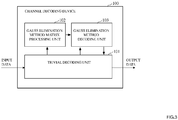
- FIG. 3 illustrates a basic configuration diagram of a channel decoding system that implements the maximum likelihood decoding using the trivial decoding method and the Gauss elimination method repeatedly.
- 101 indicates a trivial decoding unit that restores lost data for each symbol by a small number operations
- 102 indicates a Gauss elimination method matrix processing unit that performs pre-processing necessary for decoding lost data through the Gauss elimination method
- 103 indicates a Gauss elimination method decoding unit that restores lost data through the Gauss elimination method based on the matrix process of 102.
- the respective components will be described below.
- the present system is a channel decoding system that efficiently performs the maximum likelihood decoding on loss occurring on the erasure channel by a small number of processes.
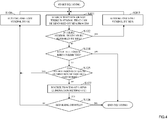
- IP packet transmission on the Internet serving as a representative channel of an erasure channel is assumed, and an LDPC code configured by a sparse graph is assumed as a code will be described below with reference to FIG. 4 .
- the trivial decoding unit 101 uniquely restores one piece of lost data having no relation with other lost data as restored lost data. This is equivalent to a process of sequentially restoring only one piece of lost data included in each row in the above Formula.
- the trivial decoding unit 101 can restore lost data through a small number of operations by this processing, if an element thereof is broken down in detail, it can be summed up into two factors: (1) it is unnecessary to perform pre-processing for restoring lost data; and (2) it is possible to restore lost data such as a packet by a small number of processes using characteristics of the sparse graph.
- the Gauss elimination method first, pre-processing of restoring lost data is performed through the Gauss elimination method matrix processing unit 102.
- ⁇ R is an index set of received data and data restored by the first trivial decoding.
- An effect obtained by applying the trivial decoding method is derived from that the magnitude by which the Gauss elimination method is applied is ⁇ L ⁇ ⁇ L .
- the Gauss elimination method matrix processing unit 102 performs triangular matrix conversion on the above Formula H ⁇ L through a forward elimination operation.
- the forward elimination operation is an operation of setting column elements below a pivot to 0 (zero) through an operation between rows.
- Matrix information generated by the Gauss elimination method matrix processing unit 102 is transferred to the Gauss elimination method decoding unit 103, and actually, one or more pieces of lost data x t ⁇ R is restored as restored lost data by backward substitution.
- decoding of lost data by the backward substitution costs more than decoding of lost data by the trivial decoding method
- small restored lost data is desirable in the Gauss elimination method decoding unit 103 in terms of computational complexity.
- one piece of lost data having no relation with other lost data is uniquely sequentially restored as restored lost data.
- a data string is output as output data (yes in S104), but when there is non-restored data, it returns to the Gauss elimination decoding unit 103 (no in S104), one piece of lost data is restored as restored lost data, and the process of performing the trivial decoding is repeated until all losses are recovered whenever possible.
- the trivial decoding unit 101 performs steps S101 to S105, the Gauss elimination method matrix processing unit 102 performs step S107, and the Gauss elimination method decoding unit 103 performs step S106.
- the number of data actually restored by the Gauss elimination method is reduced, and the number of data restored by the trivial decoding method is increased, and thus the maximum likelihood decoding in which the number of operation processes is reduced can be implemented.
- the present method is applied so that as a small number of operations as possible is performed, a completion state in which all lost data is decoded is formed by the trivial decoding unit 101.
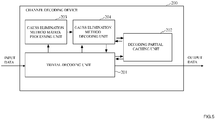
- FIG. 5 illustrates a basic configuration diagram of a channel decoding system that implements the maximum likelihood decoding using the trivial decoding method and the Gauss elimination method repeatedly.
- 201 indicates a trivial decoding unit that restores lost data by a small number operations
- 202 indicates a decoding partial caching unit that holds partial data of a restoration operation process as a cache when lost data is reconstructed through the trivial decoding unit 201 and a Gauss elimination method decoding unit 204
- 203 indicates a Gauss elimination method matrix processing unit that performs pre-processing necessary for decoding lost data through the Gauss elimination method
- 204 indicates a Gauss elimination method decoding unit that restores lost data through the Gauss elimination method based on the matrix process of 203.
- the respective components will be described below.
- the present system is a channel decoding system that efficiently performs the maximum likelihood decoding on loss occurring on the erasure channel by a small number of processes.
- a channel decoding system that efficiently performs the maximum likelihood decoding on loss occurring on the erasure channel by a small number of processes.
- IP packet transmission on the Internet serving as a representative channel of an erasure channel is assumed, and an LDPC code configured by a sparse graph is assumed as a code will be described below with reference to FIG. 6 .
- the input data is transferred to the trivial decoding unit 201, and an attempt to restore lost data is made (S201 to S203).
- the trivial decoding unit 201 uniquely restores one lost data having no relation with other lost data as the restored lost data.
- the decoding process ends, and data is output.
- the maximum likelihood decoding is attempted by applying the Gauss elimination method (S205 to S207), but part of the operation result calculated by the trivial decoding unit 201 is held in the decoding partial caching unit 202 before the maximum likelihood decoding is attempted. This is because the computational complexity is expected to be reduced by using the held part when lost data is reconstructed by the subsequent Gauss elimination method.
- the Gauss elimination method matrix processing unit 203 performs the triangular matrix conversion through the forward elimination, similarly to the first embodiment, but at this time, in order to effectively use the cache of the decoding partial caching unit 202, Formula (6) is changed to the following Formula using an identity matrix I and a cache memory r.
- Formula (6) is changed to the following Formula using an identity matrix I and a cache memory r.
- I' is a matrix obtained by performing an operation corresponding to the forward elimination on the identity matrix.
- the Gauss elimination method decoding unit 204 restore one or more pieces of lost data through a relational expression derived by the Gauss elimination method matrix processing unit 203, similarly to the first embodiment (S206), but at this time, since a portion corresponding to [H ⁇ ' ]x ⁇ ' t on the right side of Formula (9) is data already held in the decoding partial caching unit 202, it is possible to additionally reduce the computational complexity using the cache data r. Further, when the lost data is restored, part of the calculated operation result is held in the decoding partial caching unit 202. Specifically, the part is calculation data corresponding to [H ' ]x ⁇ ' t on the right side of Formula (9). Here, it is a partial operation result of a part excluding I' on the right side other than an operation result of the entire right side used for reconstruction of lost data and thus called a partial cache.
- the trivial decoding unit 201 executes steps S201 to S205, the Gauss elimination method matrix processing unit 203 executes step S207, and the Gauss elimination method decoding unit 204 executes step S206.
- the corresponding data is read from the caching unit and then used, and when there is no corresponding data, part of a corresponding operation result calculated when lost data is restored is held in the decoding partial caching unit, and thus the number of operation processes can be reduced.
- an exclusive OR may be used instead of using the diagonal matrix.
- an exclusive OR of a packet is performed directly on the data of the decoding partial caching unit 202.
- the right side used for reconstruction of lost data is calculated by performing an exclusive OR of a packet directly on [H ⁇ ' ]x ⁇ ' t on the right side of Formula (8).
- FIG. 7 illustrates a basic configuration diagram of a channel decoding system that implements the maximum likelihood decoding using the trivial decoding method and the Gauss elimination method repeatedly.
- 301 indicates a trivial decoding unit that restores lost data by a small number operations
- 302 indicates a decoding partial caching unit that holds partial data of a restoration operation process as a cache when lost data is reconstructed at the trivial decoding unit 301 and a Gauss elimination method decoding unit 305
- 303 indicates a degree sorting unit that sorts the sparse graphs according to a degree
- 304 indicates a pivot selecting/discharging unit that selects a pivot and performs the forward elimination
- 305 indicates a Gauss elimination method decoding unit that actually restores lost data.
- the pivot refers to an axis used as a reference when the forward elimination is performed. The respective components will be described below.
- the present system is a channel decoding system that efficiently performs the maximum likelihood decoding on loss occurring on the erasure channel by a small number of processes.
- IP packet transmission on the Internet serving as a representative channel of an erasure channel is assumed, and an LDPC code configured by a sparse graph is assumed as a code will be described below with reference to FIG. 8 .
- the input data is transferred to the trivial decoding unit 301, and an attempt to restore lost data is made (S301 to S303).
- the trivial decoding unit 301 uniquely restores one lost data having no relation with other lost data as the restored lost data.
- the decoding process ends, and data is output.
- the maximum likelihood decoding is attempted by applying the Gauss elimination method (S306), but the restored data calculated by the trivial decoding unit 301 is held in the decoding partial caching unit 302 before the maximum likelihood decoding is attempted. This is because the computational complexity is expected to be reduced by using the held part when lost data is reconstructed by the subsequent Gauss elimination method.
- the degree sorting unit 303 changes Formula (8) in which the identity matrix is prepared to the following relational expression by rearranging the matrix H ⁇ on the left side in the ascending order of degrees (S309).
- H ⁇ " x ⁇ ′ I m , m H ⁇ ′ x ⁇ ′ ′
- H ⁇ " is a matrix that is sorted in the ascending order of degrees. If degree sorting is limited to only column sorting, it is unnecessary to change the right side of the above Formula, and even when rows are changed, it is possible to cope with it by switching rows of the identity matrix on the right side and changing it to I".
- degree sorting is limited to only column sorting, it is unnecessary to change the right side of the above Formula, and even when rows are changed, it is possible to cope with it by switching rows of the identity matrix on the right side and changing it to I".
- an example in which only highly effective columns are sorted is described, but in the case of a class called an LDPC-Staircase code, discharging of a subsequent process can be performed at a high speed by preferentially sorting an staircase matrix.
- the fill-in refers to what a value is input to a location that was originally an element of 0 in the discharging process.
- the method of sorting in the ascending order of degrees can easily reduce the occurrence of the fill-in, and thus a high-speed operation can be performed.
- the staircase matrix is preferentially sorted, the occurrence of the fill-in can be further suppressed, leading to the high-speed operation.
- a technique such as the triangular matrix conversion is widely known, and this technique may be applied.
- the pivot selecting/discharging unit 304 performs the forward elimination on the rearranged matrix (S310). Since the discharging unit performs rearranging in which the occurrence of the fill-in is suppressed, the fast discharging can be performed.
- the trivial decoding unit 301 executes steps S301 to S305
- the degree sorting unit 303 executes step S309
- the pivot selecting/discharging unit 304 executes step S310
- the Gauss elimination method decoding unit 305 executes step S306.
- FIG. 9 illustrates a basic configuration diagram of a channel decoding system that implements the maximum likelihood decoding using the trivial decoding method and the Gauss elimination method repeatedly.
- 401 indicates a trivial decoding unit that restores lost data by a small number operations
- 402 indicates a decoding partial caching unit that holds partial data of a restoration operation process as a cache when lost data is reconstructed through the trivial decoding unit 401 and a Gauss elimination method decoding unit 407
- 403 indicates a Gauss column selecting unit that selects a parity check matrix corresponding to lost data that is restored by the Gauss elimination method as a Gauss column
- 404 indicates a trivial column selecting unit that selects a parity check matrix corresponding to lost data that is restored by the trivial decoding method as a trivial column
- 405 indicates a degree sorting unit that sorts the sparse graphs according to a degree
- 406 indicates a pivot selecting/discharging unit that selects a pivot, converts the
- the present system is a channel decoding system that efficiently performs the maximum likelihood decoding on loss occurring on the erasure channel by a small number of processes.
- a channel decoding system that efficiently performs the maximum likelihood decoding on loss occurring on the erasure channel by a small number of processes.
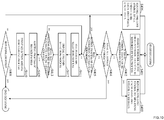
- IP packet transmission on the Internet serving as a representative channel of an erasure channel is assumed, and an LDPC code configured by a sparse graph is assumed as a code will be described below with reference to FIG. 10 .
- the input data is transferred to the trivial decoding unit 401, and an attempt to restore lost data is made (S401 to S103).
- the trivial decoding unit 401 uniquely restores one lost data having no relation with other lost data as the restored lost data.
- the decoding process ends, and data is output.
- the maximum likelihood decoding is attempted by applying the Gauss elimination method (S405 to S413), but the restored data calculated by the trivial decoding unit 401 is held in the decoding partial caching unit 402 before the maximum likelihood decoding is attempted. This is because the computational complexity is expected to be reduced by using the held part when lost data is reconstructed by the subsequent Gauss elimination method.
- the Gauss column selecting unit 403 selects one column in which lost data is highly likely to be subsequently restored by the Gauss elimination method from H ⁇ (S411).
- the decoding computational complexity is known to be changed by this selection algorithm, but for sakes of simplicity, an operation of selecting one column (a column in which the sum of all elements in a column is large) in which the degree of H ⁇ of Formula (8) is heavy is performed.
- the Gauss column After one column is designated as the Gauss column, if lost data corresponding to the Gauss column is assumed to have been restored by the trivial column selecting unit 404, a column corresponding to lost data that can be necessarily restored by the trivial decoding method is selected as the trivial column (S412).
- the lost data that can be necessarily restored by the trivial decoding method is lost data that can be uniquely reconstructed from anticipated restored data of a candidate restored by the Gauss elimination method and received data and is independent data form other lost data.
- the operations of 403 and 404 are repeated until all columns of H ⁇ belong to either of the Gauss column or the trivial column (S413). For example, this determination is performed by the Gauss column selecting unit 403.
- the process proceeds to S409.
- the degree sorting unit 405 rearranges the trivial column and the Gauss column (sorting).
- the rearranging technique such as the triangular matrix conversion may be used, but in the present embodiment, for the sake of simplicity, the trivial column and the Gauss column are assumed to be rearranged in the ascending order of degrees (the order in which the sum of all elements in a column is small).
- the pivot selecting/discharging unit 406 performs identity matrix conversion on the trivial column by the forward elimination, and performs the triangular matrix conversion on the Gauss column.
- the identity matrix conversion and triangular matrix conversion correspond to steps of the Gauss elimination method.
- the pivot is selected in the ascending order of degrees, and similarly to the third embodiment, in the case of the LDPC-Stair code, and it is selected from an upper matrix of the echelon matrix, and thus the high-speed operation can be performed.
- the trivial decoding unit 401 executes steps S401 to S405, the Gauss column selecting unit 403 executes steps S411 and S413, the trivial column selecting unit 404 executes step S412, the degree sorting unit 450 executes step S409, the pivot selecting/discharging unit 406 executes step S410, and the Gauss elimination method decoding unit 407 executes step S406.
- the fast maximum likelihood decoding can be implemented at low computational complexity by decreasing lost data restored by the Gauss elimination method whenever possible and increasing lost data restored by the trivial decoding method whenever possible in the maximum likelihood decoding of the sparse graph code.
- the device of the present invention may be implemented by a computer and a program, and the program may be recorded in a recording medium or provided via a network.
- the present invention can be applied to information communication industry.
Landscapes
- Physics & Mathematics (AREA)
- Engineering & Computer Science (AREA)
- Probability & Statistics with Applications (AREA)
- Theoretical Computer Science (AREA)
- Mathematical Analysis (AREA)
- General Physics & Mathematics (AREA)
- Computational Mathematics (AREA)
- Mathematical Optimization (AREA)
- Mathematical Physics (AREA)
- Pure & Applied Mathematics (AREA)
- Algebra (AREA)
- Computing Systems (AREA)
- Error Detection And Correction (AREA)
- Detection And Prevention Of Errors In Transmission (AREA)
Applications Claiming Priority (2)
| Application Number | Priority Date | Filing Date | Title |
|---|---|---|---|
| JP2013169065 | 2013-08-16 | ||
| PCT/JP2014/070982 WO2015022910A1 (ja) | 2013-08-16 | 2014-08-08 | 通信路復号方法及び通信路復号装置 |
Publications (3)
| Publication Number | Publication Date |
|---|---|
| EP3035540A1 true EP3035540A1 (de) | 2016-06-22 |
| EP3035540A4 EP3035540A4 (de) | 2017-06-07 |
| EP3035540B1 EP3035540B1 (de) | 2019-10-09 |
Family
ID=52468296
Family Applications (1)
| Application Number | Title | Priority Date | Filing Date |
|---|---|---|---|
| EP14836232.0A Active EP3035540B1 (de) | 2013-08-16 | 2014-08-08 | Maximalwahrscheinlichkeitsdekodierung mit löschungen für codes mit graphen geringer dichte |
Country Status (5)
| Country | Link |
|---|---|
| US (1) | US10511331B2 (de) |
| EP (1) | EP3035540B1 (de) |
| JP (1) | JP5952971B2 (de) |
| BR (1) | BR112016002908B1 (de) |
| WO (1) | WO2015022910A1 (de) |
Families Citing this family (4)
| Publication number | Priority date | Publication date | Assignee | Title |
|---|---|---|---|---|
| CN110932734B (zh) * | 2019-11-14 | 2021-06-08 | 浙江大学 | 一种基于交替方向乘子法的深度学习信道译码方法 |
| JP7587434B2 (ja) * | 2020-06-03 | 2024-11-20 | 日本放送協会 | 送信サーバ、送信装置、受信装置及びプログラム |
| JP7587450B2 (ja) * | 2021-03-22 | 2024-11-20 | 日本放送協会 | 送信サーバ、送信装置及びプログラム |
| US11734117B2 (en) * | 2021-04-29 | 2023-08-22 | Vast Data Ltd. | Data recovery in a storage system |
Family Cites Families (13)
| Publication number | Priority date | Publication date | Assignee | Title |
|---|---|---|---|---|
| JPH0659032B2 (ja) | 1985-05-10 | 1994-08-03 | 三菱電機株式会社 | 復号化方法 |
| JP3197348B2 (ja) | 1992-08-04 | 2001-08-13 | 富士通株式会社 | 自動車衝突防止レーダ |
| US6307487B1 (en) | 1998-09-23 | 2001-10-23 | Digital Fountain, Inc. | Information additive code generator and decoder for communication systems |
| US7068729B2 (en) | 2001-12-21 | 2006-06-27 | Digital Fountain, Inc. | Multi-stage code generator and decoder for communication systems |
| JP4224022B2 (ja) | 2002-06-11 | 2009-02-12 | デジタル ファウンテン, インコーポレイテッド | イナクティブ化によって連鎖反応符号を復号化するためのシステムおよび処理 |
| KR101143282B1 (ko) | 2002-10-05 | 2012-05-08 | 디지털 파운튼, 인크. | 연쇄 반응 코드의 체계적 인코딩 및 디코딩 |
| WO2007101483A2 (en) * | 2006-03-06 | 2007-09-13 | Nokia Siemens Networks Gmbh & Co. Kg | Method for generating ldpc codes and apparatus using the ldpc codes |
| JP2008172617A (ja) * | 2007-01-12 | 2008-07-24 | Fujitsu Ltd | 符号化装置、復号装置、符号化プログラム、復号プログラム、データ転送システム |
| WO2008125300A2 (en) * | 2007-04-13 | 2008-10-23 | University College Dublin, National University Of Ireland, Dublin | An encoding scheme, and a decoding scheme using a series of ldpc codes based on finite inversive spaces |
| JP2009049463A (ja) | 2007-08-13 | 2009-03-05 | Sumitomo Electric Ind Ltd | 情報伝送システム、受信装置、データ復号方法、コンピュータプログラム及びデータ構造 |
| CN101453297B (zh) * | 2007-12-07 | 2010-12-01 | 中兴通讯股份有限公司 | 低密度生成矩阵码的编码方法和装置、及译码方法和装置 |
| CN101272150B (zh) * | 2008-05-14 | 2010-09-29 | 中兴通讯股份有限公司 | 一种低密度生成矩阵码的译码方法及装置 |
| JP2011193434A (ja) * | 2009-10-28 | 2011-09-29 | Panasonic Corp | パリティパケットを用いた通信方法、通信装置及び中継器 |
-
2014
- 2014-08-08 EP EP14836232.0A patent/EP3035540B1/de active Active
- 2014-08-08 US US14/912,054 patent/US10511331B2/en active Active
- 2014-08-08 BR BR112016002908-9A patent/BR112016002908B1/pt active IP Right Grant
- 2014-08-08 JP JP2015531796A patent/JP5952971B2/ja active Active
- 2014-08-08 WO PCT/JP2014/070982 patent/WO2015022910A1/ja not_active Ceased
Non-Patent Citations (1)
| Title |
|---|
| See references of WO2015022910A1 * |
Also Published As
| Publication number | Publication date |
|---|---|
| BR112016002908B1 (pt) | 2021-11-03 |
| JPWO2015022910A1 (ja) | 2017-03-02 |
| WO2015022910A1 (ja) | 2015-02-19 |
| EP3035540A4 (de) | 2017-06-07 |
| JP5952971B2 (ja) | 2016-07-13 |
| US10511331B2 (en) | 2019-12-17 |
| US20160191080A1 (en) | 2016-06-30 |
| BR112016002908A2 (pt) | 2020-06-23 |
| EP3035540B1 (de) | 2019-10-09 |
Similar Documents
| Publication | Publication Date | Title |
|---|---|---|
| EP2357731B1 (de) | Systematische dekodierung von kettenreaktionskoden | |
| US9876607B2 (en) | Methods and apparatus employing FEC codes with permanent inactivation of symbols for encoding and decoding processes | |
| CN104124979B (zh) | 极性码的译码方法和译码装置 | |
| US8429503B2 (en) | Encoding device and decoding device | |
| Mahdavifar et al. | On the construction and decoding of concatenated polar codes | |
| EP1980041A2 (de) | Kode erzeuger mit mehreren feldern und dekoder für kommunikationsanordnungen | |
| EP3035540B1 (de) | Maximalwahrscheinlichkeitsdekodierung mit löschungen für codes mit graphen geringer dichte | |
| Lewandowsky et al. | Optimum message mapping LDPC decoders derived from the sum-product algorithm | |
| Grinchenko et al. | Improving performance of multithreshold decoder over binary erasure channel | |
| KR20150076583A (ko) | 비이진 패리티 검사 부호의 복호 방법 및 장치 | |
| Fan et al. | Variable packet-error coding | |
| Roca et al. | Rs+ ldpc-staircase codes for the erasure channel: Standards, usage and performance | |
| EP2686964B1 (de) | Dekodierverfahren, dekodiergerät und entsprechendes computerprogramprodukt | |
| Ma et al. | Statistical learning aided decoding of BMST tail-biting convolutional code | |
| WO2020139234A1 (en) | Performance enhancement of polar codes for short frame lengths considering error propagation effects | |
| Alloum et al. | On locality of Generalized Reed-Muller codes over the broadcast erasure channel | |
| Garrammone et al. | Erasure codes for space communications: Recent findings and new challenges | |
| Botos et al. | Study of the decoding complexity for rateless erasure codes | |
| Kokalj-Filipović et al. | Is rateless paradigm fitted for lossless compression of erasure-impaired sources? | |
| Hof et al. | Polar coding for degraded and non-degraded parallel channels | |
| HK1160995B (en) | Systematic encoding and decoding of chain reaction codes | |
| HK1160996A (en) | Systematic encoding and decoding of chain reaction codes | |
| HK1160994B (en) | Systematic encoding and decoding of chain reaction codes |
Legal Events
| Date | Code | Title | Description |
|---|---|---|---|
| PUAI | Public reference made under article 153(3) epc to a published international application that has entered the european phase |
Free format text: ORIGINAL CODE: 0009012 |
|
| 17P | Request for examination filed |
Effective date: 20160310 |
|
| AK | Designated contracting states |
Kind code of ref document: A1 Designated state(s): AL AT BE BG CH CY CZ DE DK EE ES FI FR GB GR HR HU IE IS IT LI LT LU LV MC MK MT NL NO PL PT RO RS SE SI SK SM TR |
|
| AX | Request for extension of the european patent |
Extension state: BA ME |
|
| DAX | Request for extension of the european patent (deleted) | ||
| REG | Reference to a national code |
Ref country code: DE Ref legal event code: R079 Ref document number: 602014055025 Country of ref document: DE Free format text: PREVIOUS MAIN CLASS: H03M0013190000 Ipc: H03M0013370000 |
|
| A4 | Supplementary search report drawn up and despatched |
Effective date: 20170510 |
|
| RIC1 | Information provided on ipc code assigned before grant |
Ipc: H03M 13/11 20060101ALI20170503BHEP Ipc: H03M 13/37 20060101AFI20170503BHEP Ipc: H03M 13/39 20060101ALI20170503BHEP |
|
| STAA | Information on the status of an ep patent application or granted ep patent |
Free format text: STATUS: EXAMINATION IS IN PROGRESS |
|
| 17Q | First examination report despatched |
Effective date: 20180214 |
|
| GRAP | Despatch of communication of intention to grant a patent |
Free format text: ORIGINAL CODE: EPIDOSNIGR1 |
|
| STAA | Information on the status of an ep patent application or granted ep patent |
Free format text: STATUS: GRANT OF PATENT IS INTENDED |
|
| INTG | Intention to grant announced |
Effective date: 20190311 |
|
| GRAS | Grant fee paid |
Free format text: ORIGINAL CODE: EPIDOSNIGR3 |
|
| GRAA | (expected) grant |
Free format text: ORIGINAL CODE: 0009210 |
|
| STAA | Information on the status of an ep patent application or granted ep patent |
Free format text: STATUS: THE PATENT HAS BEEN GRANTED |
|
| AK | Designated contracting states |
Kind code of ref document: B1 Designated state(s): AL AT BE BG CH CY CZ DE DK EE ES FI FR GB GR HR HU IE IS IT LI LT LU LV MC MK MT NL NO PL PT RO RS SE SI SK SM TR |
|
| REG | Reference to a national code |
Ref country code: GB Ref legal event code: FG4D |
|
| REG | Reference to a national code |
Ref country code: CH Ref legal event code: EP |
|
| REG | Reference to a national code |
Ref country code: IE Ref legal event code: FG4D |
|
| REG | Reference to a national code |
Ref country code: DE Ref legal event code: R096 Ref document number: 602014055025 Country of ref document: DE |
|
| REG | Reference to a national code |
Ref country code: AT Ref legal event code: REF Ref document number: 1190004 Country of ref document: AT Kind code of ref document: T Effective date: 20191115 |
|
| REG | Reference to a national code |
Ref country code: NL Ref legal event code: MP Effective date: 20191009 |
|
| REG | Reference to a national code |
Ref country code: LT Ref legal event code: MG4D |
|
| REG | Reference to a national code |
Ref country code: AT Ref legal event code: MK05 Ref document number: 1190004 Country of ref document: AT Kind code of ref document: T Effective date: 20191009 |
|
| PG25 | Lapsed in a contracting state [announced via postgrant information from national office to epo] |
Ref country code: BG Free format text: LAPSE BECAUSE OF FAILURE TO SUBMIT A TRANSLATION OF THE DESCRIPTION OR TO PAY THE FEE WITHIN THE PRESCRIBED TIME-LIMIT Effective date: 20200109 Ref country code: FI Free format text: LAPSE BECAUSE OF FAILURE TO SUBMIT A TRANSLATION OF THE DESCRIPTION OR TO PAY THE FEE WITHIN THE PRESCRIBED TIME-LIMIT Effective date: 20191009 Ref country code: GR Free format text: LAPSE BECAUSE OF FAILURE TO SUBMIT A TRANSLATION OF THE DESCRIPTION OR TO PAY THE FEE WITHIN THE PRESCRIBED TIME-LIMIT Effective date: 20200110 Ref country code: AT Free format text: LAPSE BECAUSE OF FAILURE TO SUBMIT A TRANSLATION OF THE DESCRIPTION OR TO PAY THE FEE WITHIN THE PRESCRIBED TIME-LIMIT Effective date: 20191009 Ref country code: LV Free format text: LAPSE BECAUSE OF FAILURE TO SUBMIT A TRANSLATION OF THE DESCRIPTION OR TO PAY THE FEE WITHIN THE PRESCRIBED TIME-LIMIT Effective date: 20191009 Ref country code: SE Free format text: LAPSE BECAUSE OF FAILURE TO SUBMIT A TRANSLATION OF THE DESCRIPTION OR TO PAY THE FEE WITHIN THE PRESCRIBED TIME-LIMIT Effective date: 20191009 Ref country code: NL Free format text: LAPSE BECAUSE OF FAILURE TO SUBMIT A TRANSLATION OF THE DESCRIPTION OR TO PAY THE FEE WITHIN THE PRESCRIBED TIME-LIMIT Effective date: 20191009 Ref country code: PT Free format text: LAPSE BECAUSE OF FAILURE TO SUBMIT A TRANSLATION OF THE DESCRIPTION OR TO PAY THE FEE WITHIN THE PRESCRIBED TIME-LIMIT Effective date: 20200210 Ref country code: ES Free format text: LAPSE BECAUSE OF FAILURE TO SUBMIT A TRANSLATION OF THE DESCRIPTION OR TO PAY THE FEE WITHIN THE PRESCRIBED TIME-LIMIT Effective date: 20191009 Ref country code: LT Free format text: LAPSE BECAUSE OF FAILURE TO SUBMIT A TRANSLATION OF THE DESCRIPTION OR TO PAY THE FEE WITHIN THE PRESCRIBED TIME-LIMIT Effective date: 20191009 Ref country code: PL Free format text: LAPSE BECAUSE OF FAILURE TO SUBMIT A TRANSLATION OF THE DESCRIPTION OR TO PAY THE FEE WITHIN THE PRESCRIBED TIME-LIMIT Effective date: 20191009 Ref country code: NO Free format text: LAPSE BECAUSE OF FAILURE TO SUBMIT A TRANSLATION OF THE DESCRIPTION OR TO PAY THE FEE WITHIN THE PRESCRIBED TIME-LIMIT Effective date: 20200109 |
|
| PG25 | Lapsed in a contracting state [announced via postgrant information from national office to epo] |
Ref country code: IS Free format text: LAPSE BECAUSE OF FAILURE TO SUBMIT A TRANSLATION OF THE DESCRIPTION OR TO PAY THE FEE WITHIN THE PRESCRIBED TIME-LIMIT Effective date: 20200224 Ref country code: RS Free format text: LAPSE BECAUSE OF FAILURE TO SUBMIT A TRANSLATION OF THE DESCRIPTION OR TO PAY THE FEE WITHIN THE PRESCRIBED TIME-LIMIT Effective date: 20191009 Ref country code: HR Free format text: LAPSE BECAUSE OF FAILURE TO SUBMIT A TRANSLATION OF THE DESCRIPTION OR TO PAY THE FEE WITHIN THE PRESCRIBED TIME-LIMIT Effective date: 20191009 |
|
| PG25 | Lapsed in a contracting state [announced via postgrant information from national office to epo] |
Ref country code: AL Free format text: LAPSE BECAUSE OF FAILURE TO SUBMIT A TRANSLATION OF THE DESCRIPTION OR TO PAY THE FEE WITHIN THE PRESCRIBED TIME-LIMIT Effective date: 20191009 |
|
| REG | Reference to a national code |
Ref country code: DE Ref legal event code: R097 Ref document number: 602014055025 Country of ref document: DE |
|
| PG2D | Information on lapse in contracting state deleted |
Ref country code: IS |
|
| PG25 | Lapsed in a contracting state [announced via postgrant information from national office to epo] |
Ref country code: RO Free format text: LAPSE BECAUSE OF FAILURE TO SUBMIT A TRANSLATION OF THE DESCRIPTION OR TO PAY THE FEE WITHIN THE PRESCRIBED TIME-LIMIT Effective date: 20191009 Ref country code: CZ Free format text: LAPSE BECAUSE OF FAILURE TO SUBMIT A TRANSLATION OF THE DESCRIPTION OR TO PAY THE FEE WITHIN THE PRESCRIBED TIME-LIMIT Effective date: 20191009 Ref country code: EE Free format text: LAPSE BECAUSE OF FAILURE TO SUBMIT A TRANSLATION OF THE DESCRIPTION OR TO PAY THE FEE WITHIN THE PRESCRIBED TIME-LIMIT Effective date: 20191009 Ref country code: DK Free format text: LAPSE BECAUSE OF FAILURE TO SUBMIT A TRANSLATION OF THE DESCRIPTION OR TO PAY THE FEE WITHIN THE PRESCRIBED TIME-LIMIT Effective date: 20191009 Ref country code: IS Free format text: LAPSE BECAUSE OF FAILURE TO SUBMIT A TRANSLATION OF THE DESCRIPTION OR TO PAY THE FEE WITHIN THE PRESCRIBED TIME-LIMIT Effective date: 20200209 |
|
| PLBE | No opposition filed within time limit |
Free format text: ORIGINAL CODE: 0009261 |
|
| STAA | Information on the status of an ep patent application or granted ep patent |
Free format text: STATUS: NO OPPOSITION FILED WITHIN TIME LIMIT |
|
| PG25 | Lapsed in a contracting state [announced via postgrant information from national office to epo] |
Ref country code: SK Free format text: LAPSE BECAUSE OF FAILURE TO SUBMIT A TRANSLATION OF THE DESCRIPTION OR TO PAY THE FEE WITHIN THE PRESCRIBED TIME-LIMIT Effective date: 20191009 Ref country code: IT Free format text: LAPSE BECAUSE OF FAILURE TO SUBMIT A TRANSLATION OF THE DESCRIPTION OR TO PAY THE FEE WITHIN THE PRESCRIBED TIME-LIMIT Effective date: 20191009 Ref country code: SM Free format text: LAPSE BECAUSE OF FAILURE TO SUBMIT A TRANSLATION OF THE DESCRIPTION OR TO PAY THE FEE WITHIN THE PRESCRIBED TIME-LIMIT Effective date: 20191009 |
|
| 26N | No opposition filed |
Effective date: 20200710 |
|
| PG25 | Lapsed in a contracting state [announced via postgrant information from national office to epo] |
Ref country code: SI Free format text: LAPSE BECAUSE OF FAILURE TO SUBMIT A TRANSLATION OF THE DESCRIPTION OR TO PAY THE FEE WITHIN THE PRESCRIBED TIME-LIMIT Effective date: 20191009 |
|
| PG25 | Lapsed in a contracting state [announced via postgrant information from national office to epo] |
Ref country code: MC Free format text: LAPSE BECAUSE OF FAILURE TO SUBMIT A TRANSLATION OF THE DESCRIPTION OR TO PAY THE FEE WITHIN THE PRESCRIBED TIME-LIMIT Effective date: 20191009 |
|
| REG | Reference to a national code |
Ref country code: CH Ref legal event code: PL |
|
| PG25 | Lapsed in a contracting state [announced via postgrant information from national office to epo] |
Ref country code: LU Free format text: LAPSE BECAUSE OF NON-PAYMENT OF DUE FEES Effective date: 20200808 Ref country code: LI Free format text: LAPSE BECAUSE OF NON-PAYMENT OF DUE FEES Effective date: 20200831 Ref country code: CH Free format text: LAPSE BECAUSE OF NON-PAYMENT OF DUE FEES Effective date: 20200831 |
|
| REG | Reference to a national code |
Ref country code: BE Ref legal event code: MM Effective date: 20200831 |
|
| PG25 | Lapsed in a contracting state [announced via postgrant information from national office to epo] |
Ref country code: IE Free format text: LAPSE BECAUSE OF NON-PAYMENT OF DUE FEES Effective date: 20200808 Ref country code: BE Free format text: LAPSE BECAUSE OF NON-PAYMENT OF DUE FEES Effective date: 20200831 |
|
| PG25 | Lapsed in a contracting state [announced via postgrant information from national office to epo] |
Ref country code: TR Free format text: LAPSE BECAUSE OF FAILURE TO SUBMIT A TRANSLATION OF THE DESCRIPTION OR TO PAY THE FEE WITHIN THE PRESCRIBED TIME-LIMIT Effective date: 20191009 Ref country code: MT Free format text: LAPSE BECAUSE OF FAILURE TO SUBMIT A TRANSLATION OF THE DESCRIPTION OR TO PAY THE FEE WITHIN THE PRESCRIBED TIME-LIMIT Effective date: 20191009 Ref country code: CY Free format text: LAPSE BECAUSE OF FAILURE TO SUBMIT A TRANSLATION OF THE DESCRIPTION OR TO PAY THE FEE WITHIN THE PRESCRIBED TIME-LIMIT Effective date: 20191009 |
|
| PG25 | Lapsed in a contracting state [announced via postgrant information from national office to epo] |
Ref country code: MK Free format text: LAPSE BECAUSE OF FAILURE TO SUBMIT A TRANSLATION OF THE DESCRIPTION OR TO PAY THE FEE WITHIN THE PRESCRIBED TIME-LIMIT Effective date: 20191009 |
|
| PGFP | Annual fee paid to national office [announced via postgrant information from national office to epo] |
Ref country code: DE Payment date: 20250820 Year of fee payment: 12 |
|
| PGFP | Annual fee paid to national office [announced via postgrant information from national office to epo] |
Ref country code: GB Payment date: 20250821 Year of fee payment: 12 |
|
| PGFP | Annual fee paid to national office [announced via postgrant information from national office to epo] |
Ref country code: FR Payment date: 20250829 Year of fee payment: 12 |
|
| REG | Reference to a national code |
Ref country code: DE Ref legal event code: R081 Ref document number: 602014055025 Country of ref document: DE Owner name: NTT, INC., JP Free format text: FORMER OWNER: NIPPON TELEGRAPH AND TELEPHONE CORPORATION, TOKYO, JP Ref country code: DE Ref legal event code: R082 Ref document number: 602014055025 Country of ref document: DE Representative=s name: DENNEMEYER & ASSOCIATES RECHTSANWALTSGESELLSCH, DE |