EP3077507B1 - Variants de glucoamylase - Google Patents
Variants de glucoamylase Download PDFInfo
- Publication number
- EP3077507B1 EP3077507B1 EP14815178.0A EP14815178A EP3077507B1 EP 3077507 B1 EP3077507 B1 EP 3077507B1 EP 14815178 A EP14815178 A EP 14815178A EP 3077507 B1 EP3077507 B1 EP 3077507B1
- Authority
- EP
- European Patent Office
- Prior art keywords
- group
- variant
- substitution
- amino acid
- set forth
- Prior art date
- Legal status (The legal status is an assumption and is not a legal conclusion. Google has not performed a legal analysis and makes no representation as to the accuracy of the status listed.)
- Not-in-force
Links
- 108010073178 Glucan 1,4-alpha-Glucosidase Proteins 0.000 title claims description 1781
- 102100022624 Glucoamylase Human genes 0.000 title claims description 1755
- 238000006467 substitution reaction Methods 0.000 claims description 1662
- 125000003275 alpha amino acid group Chemical group 0.000 claims description 429
- 229910052727 yttrium Inorganic materials 0.000 claims description 143
- 229910052720 vanadium Inorganic materials 0.000 claims description 132
- 229910052731 fluorine Inorganic materials 0.000 claims description 120
- 229910052740 iodine Inorganic materials 0.000 claims description 115
- 229910052717 sulfur Inorganic materials 0.000 claims description 114
- 229910052700 potassium Inorganic materials 0.000 claims description 108
- 229910052799 carbon Inorganic materials 0.000 claims description 107
- 229910052757 nitrogen Inorganic materials 0.000 claims description 95
- 229910052698 phosphorus Inorganic materials 0.000 claims description 88
- 229910052739 hydrogen Inorganic materials 0.000 claims description 87
- 229910052721 tungsten Inorganic materials 0.000 claims description 83
- 210000004027 cell Anatomy 0.000 claims description 65
- 108090000765 processed proteins & peptides Proteins 0.000 claims description 55
- 102000004190 Enzymes Human genes 0.000 claims description 52
- 108090000790 Enzymes Proteins 0.000 claims description 52
- 102000004196 processed proteins & peptides Human genes 0.000 claims description 51
- 229920001184 polypeptide Polymers 0.000 claims description 50
- 229920002472 Starch Polymers 0.000 claims description 44
- 239000008107 starch Substances 0.000 claims description 44
- 235000019698 starch Nutrition 0.000 claims description 44
- 238000000034 method Methods 0.000 claims description 43
- 239000000758 substrate Substances 0.000 claims description 41
- 230000003301 hydrolyzing effect Effects 0.000 claims description 38
- 102000040430 polynucleotide Human genes 0.000 claims description 26
- 108091033319 polynucleotide Proteins 0.000 claims description 26
- 239000002157 polynucleotide Substances 0.000 claims description 26
- 230000000694 effects Effects 0.000 claims description 25
- 239000000203 mixture Substances 0.000 claims description 23
- WQZGKKKJIJFFOK-GASJEMHNSA-N Glucose Natural products OC[C@H]1OC(O)[C@H](O)[C@@H](O)[C@@H]1O WQZGKKKJIJFFOK-GASJEMHNSA-N 0.000 claims description 20
- 230000014509 gene expression Effects 0.000 claims description 20
- 239000008103 glucose Substances 0.000 claims description 19
- 241000499912 Trichoderma reesei Species 0.000 claims description 18
- 239000013598 vector Substances 0.000 claims description 18
- 230000007062 hydrolysis Effects 0.000 claims description 16
- 238000006460 hydrolysis reaction Methods 0.000 claims description 16
- 229910052805 deuterium Inorganic materials 0.000 claims description 12
- 239000013604 expression vector Substances 0.000 claims description 12
- 230000002538 fungal effect Effects 0.000 claims description 12
- 229920002261 Corn starch Polymers 0.000 claims description 10
- 241000223199 Humicola grisea Species 0.000 claims description 10
- 239000008120 corn starch Substances 0.000 claims description 10
- OWEGMIWEEQEYGQ-UHFFFAOYSA-N 100676-05-9 Natural products OC1C(O)C(O)C(CO)OC1OCC1C(O)C(O)C(O)C(OC2C(OC(O)C(O)C2O)CO)O1 OWEGMIWEEQEYGQ-UHFFFAOYSA-N 0.000 claims description 9
- 241000351920 Aspergillus nidulans Species 0.000 claims description 8
- 238000000855 fermentation Methods 0.000 claims description 8
- 230000004151 fermentation Effects 0.000 claims description 8
- 230000008569 process Effects 0.000 claims description 8
- 229910052722 tritium Inorganic materials 0.000 claims description 8
- 241001513093 Aspergillus awamori Species 0.000 claims description 7
- -1 T539 Substances 0.000 claims description 7
- 238000004113 cell culture Methods 0.000 claims description 7
- 239000012228 culture supernatant Substances 0.000 claims description 7
- ZCLAHGAZPPEVDX-UHFFFAOYSA-N D-panose Natural products OC1C(O)C(O)C(OC(C(O)CO)C(O)C(O)C=O)OC1COC1C(O)C(O)C(O)C(CO)O1 ZCLAHGAZPPEVDX-UHFFFAOYSA-N 0.000 claims description 6
- 239000004373 Pullulan Substances 0.000 claims description 6
- 229920001218 Pullulan Polymers 0.000 claims description 6
- 240000004808 Saccharomyces cerevisiae Species 0.000 claims description 6
- 235000014680 Saccharomyces cerevisiae Nutrition 0.000 claims description 6
- 241000223259 Trichoderma Species 0.000 claims description 6
- 230000001580 bacterial effect Effects 0.000 claims description 6
- ZCLAHGAZPPEVDX-MQHGYYCBSA-N panose Chemical compound O[C@H]1[C@H](O)[C@@H](O)[C@@H](O[C@H]([C@H](O)CO)[C@H](O)[C@@H](O)C=O)O[C@@H]1CO[C@@H]1[C@H](O)[C@@H](O)[C@H](O)[C@@H](CO)O1 ZCLAHGAZPPEVDX-MQHGYYCBSA-N 0.000 claims description 6
- 235000019423 pullulan Nutrition 0.000 claims description 6
- 241000228212 Aspergillus Species 0.000 claims description 5
- 241000228245 Aspergillus niger Species 0.000 claims description 5
- 239000004136 Calcium sodium polyphosphate Substances 0.000 claims description 5
- LFQSCWFLJHTTHZ-UHFFFAOYSA-N Ethanol Chemical compound CCO LFQSCWFLJHTTHZ-UHFFFAOYSA-N 0.000 claims description 5
- 241000223198 Humicola Species 0.000 claims description 5
- 238000006243 chemical reaction Methods 0.000 claims description 5
- WSFSSNUMVMOOMR-UHFFFAOYSA-N formaldehyde Substances O=C WSFSSNUMVMOOMR-UHFFFAOYSA-N 0.000 claims description 5
- 230000005764 inhibitory process Effects 0.000 claims description 5
- 239000000594 mannitol Substances 0.000 claims description 5
- 239000000264 sodium ferrocyanide Substances 0.000 claims description 5
- 239000002076 α-tocopherol Substances 0.000 claims description 5
- UHPMCKVQTMMPCG-UHFFFAOYSA-N 5,8-dihydroxy-2-methoxy-6-methyl-7-(2-oxopropyl)naphthalene-1,4-dione Chemical compound CC1=C(CC(C)=O)C(O)=C2C(=O)C(OC)=CC(=O)C2=C1O UHPMCKVQTMMPCG-UHFFFAOYSA-N 0.000 claims description 4
- 241000228215 Aspergillus aculeatus Species 0.000 claims description 4
- 241000223218 Fusarium Species 0.000 claims description 4
- 241001480714 Humicola insolens Species 0.000 claims description 4
- 241000235004 Saccharomycopsis fibuligera Species 0.000 claims description 4
- 241000223262 Trichoderma longibrachiatum Species 0.000 claims description 4
- 239000001963 growth medium Substances 0.000 claims description 4
- 238000012258 culturing Methods 0.000 claims description 3
- 241000680806 Blastobotrys adeninivorans Species 0.000 claims description 2
- 241000222122 Candida albicans Species 0.000 claims description 2
- 241000123346 Chrysosporium Species 0.000 claims description 2
- 241001674013 Chrysosporium lucknowense Species 0.000 claims description 2
- 241000235646 Cyberlindnera jadinii Species 0.000 claims description 2
- 241000235036 Debaryomyces hansenii Species 0.000 claims description 2
- 241000228138 Emericella Species 0.000 claims description 2
- 241000896533 Gliocladium Species 0.000 claims description 2
- 241000235058 Komagataella pastoris Species 0.000 claims description 2
- 241000221960 Neurospora Species 0.000 claims description 2
- 241000320412 Ogataea angusta Species 0.000 claims description 2
- 241000228143 Penicillium Species 0.000 claims description 2
- 241000081271 Phaffia rhodozyma Species 0.000 claims description 2
- 241000235060 Scheffersomyces stipitis Species 0.000 claims description 2
- 241001123650 Schwanniomyces occidentalis Species 0.000 claims description 2
- 241001123649 Schwanniomyces polymorphus Species 0.000 claims description 2
- 241001313536 Thermothelomyces thermophila Species 0.000 claims description 2
- 241000223260 Trichoderma harzianum Species 0.000 claims description 2
- 241000378866 Trichoderma koningii Species 0.000 claims description 2
- 241000223261 Trichoderma viride Species 0.000 claims description 2
- 241000235015 Yarrowia lipolytica Species 0.000 claims description 2
- 241000588902 Zymomonas mobilis Species 0.000 claims description 2
- 229940095731 candida albicans Drugs 0.000 claims description 2
- 210000005253 yeast cell Anatomy 0.000 claims description 2
- 241000235347 Schizosaccharomyces pombe Species 0.000 claims 1
- 235000001014 amino acid Nutrition 0.000 description 411
- 150000007523 nucleic acids Chemical class 0.000 description 61
- 229940088598 enzyme Drugs 0.000 description 48
- 102000039446 nucleic acids Human genes 0.000 description 39
- 108020004707 nucleic acids Proteins 0.000 description 39
- 108090000623 proteins and genes Proteins 0.000 description 26
- 108020004414 DNA Proteins 0.000 description 25
- 150000001413 amino acids Chemical class 0.000 description 20
- WQZGKKKJIJFFOK-VFUOTHLCSA-N beta-D-glucose Chemical compound OC[C@H]1O[C@@H](O)[C@H](O)[C@@H](O)[C@@H]1O WQZGKKKJIJFFOK-VFUOTHLCSA-N 0.000 description 18
- 108050008938 Glucoamylases Proteins 0.000 description 16
- 108091028043 Nucleic acid sequence Proteins 0.000 description 16
- 230000035772 mutation Effects 0.000 description 15
- 239000000047 product Substances 0.000 description 13
- 125000000539 amino acid group Chemical group 0.000 description 12
- 239000013612 plasmid Substances 0.000 description 12
- 102000004169 proteins and genes Human genes 0.000 description 12
- 235000018102 proteins Nutrition 0.000 description 10
- 230000003248 secreting effect Effects 0.000 description 10
- 239000000126 substance Substances 0.000 description 10
- 102220618840 Arginine-glutamic acid dipeptide repeats protein_V381C_mutation Human genes 0.000 description 9
- 108091034117 Oligonucleotide Proteins 0.000 description 9
- 108010076504 Protein Sorting Signals Proteins 0.000 description 9
- 102100034540 Adenomatous polyposis coli protein Human genes 0.000 description 8
- 239000000523 sample Substances 0.000 description 7
- 235000000346 sugar Nutrition 0.000 description 7
- 238000013518 transcription Methods 0.000 description 7
- 230000035897 transcription Effects 0.000 description 7
- 238000012217 deletion Methods 0.000 description 6
- 230000037430 deletion Effects 0.000 description 6
- 238000009396 hybridization Methods 0.000 description 6
- 239000000463 material Substances 0.000 description 6
- 241000233866 Fungi Species 0.000 description 5
- 239000012634 fragment Substances 0.000 description 5
- 238000003780 insertion Methods 0.000 description 5
- 230000037431 insertion Effects 0.000 description 5
- 239000003550 marker Substances 0.000 description 5
- 238000012986 modification Methods 0.000 description 5
- 230000004048 modification Effects 0.000 description 5
- 239000002773 nucleotide Substances 0.000 description 5
- 125000003729 nucleotide group Chemical group 0.000 description 5
- 238000002864 sequence alignment Methods 0.000 description 5
- 150000008163 sugars Chemical class 0.000 description 5
- 108091026890 Coding region Proteins 0.000 description 4
- 108020004705 Codon Proteins 0.000 description 4
- 241000196324 Embryophyta Species 0.000 description 4
- 229930091371 Fructose Natural products 0.000 description 4
- RFSUNEUAIZKAJO-ARQDHWQXSA-N Fructose Chemical compound OC[C@H]1O[C@](O)(CO)[C@@H](O)[C@@H]1O RFSUNEUAIZKAJO-ARQDHWQXSA-N 0.000 description 4
- 239000005715 Fructose Substances 0.000 description 4
- 241000596490 Trichoderma citrinoviride Species 0.000 description 4
- 230000004075 alteration Effects 0.000 description 4
- 239000007795 chemical reaction product Substances 0.000 description 4
- 230000002255 enzymatic effect Effects 0.000 description 4
- 235000019441 ethanol Nutrition 0.000 description 4
- JVTAAEKCZFNVCJ-UHFFFAOYSA-N lactic acid Chemical compound CC(O)C(O)=O JVTAAEKCZFNVCJ-UHFFFAOYSA-N 0.000 description 4
- 239000011159 matrix material Substances 0.000 description 4
- 238000002703 mutagenesis Methods 0.000 description 4
- 231100000350 mutagenesis Toxicity 0.000 description 4
- 238000002741 site-directed mutagenesis Methods 0.000 description 4
- 102220481105 DNA-binding death effector domain-containing protein 2_F405W_mutation Human genes 0.000 description 3
- PEDCQBHIVMGVHV-UHFFFAOYSA-N Glycerine Chemical compound OCC(O)CO PEDCQBHIVMGVHV-UHFFFAOYSA-N 0.000 description 3
- GUBGYTABKSRVRQ-PICCSMPSSA-N Maltose Natural products O[C@@H]1[C@@H](O)[C@H](O)[C@@H](CO)O[C@@H]1O[C@@H]1[C@@H](CO)OC(O)[C@H](O)[C@H]1O GUBGYTABKSRVRQ-PICCSMPSSA-N 0.000 description 3
- 240000003183 Manihot esculenta Species 0.000 description 3
- 235000016735 Manihot esculenta subsp esculenta Nutrition 0.000 description 3
- 108091005804 Peptidases Proteins 0.000 description 3
- 102100020814 Sequestosome-1 Human genes 0.000 description 3
- 241000228341 Talaromyces Species 0.000 description 3
- 240000008042 Zea mays Species 0.000 description 3
- 235000005824 Zea mays ssp. parviglumis Nutrition 0.000 description 3
- 235000002017 Zea mays subsp mays Nutrition 0.000 description 3
- 238000007792 addition Methods 0.000 description 3
- 108090000637 alpha-Amylases Proteins 0.000 description 3
- 102000004139 alpha-Amylases Human genes 0.000 description 3
- 230000003197 catalytic effect Effects 0.000 description 3
- KRKNYBCHXYNGOX-UHFFFAOYSA-N citric acid Chemical compound OC(=O)CC(O)(C(O)=O)CC(O)=O KRKNYBCHXYNGOX-UHFFFAOYSA-N 0.000 description 3
- 235000005822 corn Nutrition 0.000 description 3
- 230000001186 cumulative effect Effects 0.000 description 3
- 239000003623 enhancer Substances 0.000 description 3
- 230000002068 genetic effect Effects 0.000 description 3
- 238000011534 incubation Methods 0.000 description 3
- 125000002924 primary amino group Chemical group [H]N([H])* 0.000 description 3
- 230000002103 transcriptional effect Effects 0.000 description 3
- 238000013519 translation Methods 0.000 description 3
- XLYOFNOQVPJJNP-UHFFFAOYSA-N water Substances O XLYOFNOQVPJJNP-UHFFFAOYSA-N 0.000 description 3
- DNIAPMSPPWPWGF-VKHMYHEASA-N (+)-propylene glycol Chemical compound C[C@H](O)CO DNIAPMSPPWPWGF-VKHMYHEASA-N 0.000 description 2
- YPFDHNVEDLHUCE-UHFFFAOYSA-N 1,3-propanediol Substances OCCCO YPFDHNVEDLHUCE-UHFFFAOYSA-N 0.000 description 2
- 229920000945 Amylopectin Polymers 0.000 description 2
- 229920000856 Amylose Polymers 0.000 description 2
- CIWBSHSKHKDKBQ-JLAZNSOCSA-N Ascorbic acid Chemical compound OC[C@H](O)[C@H]1OC(=O)C(O)=C1O CIWBSHSKHKDKBQ-JLAZNSOCSA-N 0.000 description 2
- 241000228193 Aspergillus clavatus Species 0.000 description 2
- 241001225321 Aspergillus fumigatus Species 0.000 description 2
- 241001465318 Aspergillus terreus Species 0.000 description 2
- 241000894006 Bacteria Species 0.000 description 2
- 102220583788 Cellular tumor antigen p53_P60Q_mutation Human genes 0.000 description 2
- 229920001353 Dextrin Polymers 0.000 description 2
- 239000004375 Dextrin Substances 0.000 description 2
- ZHNUHDYFZUAESO-UHFFFAOYSA-N Formamide Chemical compound NC=O ZHNUHDYFZUAESO-UHFFFAOYSA-N 0.000 description 2
- 241000223221 Fusarium oxysporum Species 0.000 description 2
- 241000221779 Fusarium sambucinum Species 0.000 description 2
- 108020005196 Mitochondrial DNA Proteins 0.000 description 2
- 241001674208 Mycothermus thermophilus Species 0.000 description 2
- 102000035195 Peptidases Human genes 0.000 description 2
- 241000221945 Podospora Species 0.000 description 2
- 239000004365 Protease Substances 0.000 description 2
- 241000959173 Rasamsonia emersonii Species 0.000 description 2
- 241000235003 Saccharomycopsis Species 0.000 description 2
- KDYFGRWQOYBRFD-UHFFFAOYSA-N Succinic acid Natural products OC(=O)CCC(O)=O KDYFGRWQOYBRFD-UHFFFAOYSA-N 0.000 description 2
- 241000039733 Thermoproteus thermophilus Species 0.000 description 2
- 241000222354 Trametes Species 0.000 description 2
- 241001230654 Trametes cingulata Species 0.000 description 2
- 241001460073 Trichoderma asperellum Species 0.000 description 2
- 241000306480 Trichoderma citrinum Species 0.000 description 2
- 241000306487 Trichoderma gelatinosum Species 0.000 description 2
- 241000718288 Trichoderma konilangbra Species 0.000 description 2
- 241000306527 Trichoderma orientale Species 0.000 description 2
- 241001304120 Trichoderma pseudokoningii Species 0.000 description 2
- 241000894111 Trichoderma strictipile Species 0.000 description 2
- 241000944291 Trichoderma vinosum Species 0.000 description 2
- 235000021307 Triticum Nutrition 0.000 description 2
- 241000209140 Triticum Species 0.000 description 2
- 108700040099 Xylose isomerases Proteins 0.000 description 2
- 239000002253 acid Substances 0.000 description 2
- 150000001298 alcohols Chemical class 0.000 description 2
- 229940024171 alpha-amylase Drugs 0.000 description 2
- 230000008901 benefit Effects 0.000 description 2
- GUBGYTABKSRVRQ-QUYVBRFLSA-N beta-maltose Chemical compound OC[C@H]1O[C@H](O[C@H]2[C@H](O)[C@@H](O)[C@H](O)O[C@@H]2CO)[C@H](O)[C@@H](O)[C@@H]1O GUBGYTABKSRVRQ-QUYVBRFLSA-N 0.000 description 2
- KDYFGRWQOYBRFD-NUQCWPJISA-N butanedioic acid Chemical compound O[14C](=O)CC[14C](O)=O KDYFGRWQOYBRFD-NUQCWPJISA-N 0.000 description 2
- 102220348392 c.107T>C Human genes 0.000 description 2
- 150000001720 carbohydrates Chemical class 0.000 description 2
- 125000003178 carboxy group Chemical group [H]OC(*)=O 0.000 description 2
- 238000012219 cassette mutagenesis Methods 0.000 description 2
- 235000013339 cereals Nutrition 0.000 description 2
- 210000000349 chromosome Anatomy 0.000 description 2
- 238000003776 cleavage reaction Methods 0.000 description 2
- 239000002299 complementary DNA Substances 0.000 description 2
- 235000019425 dextrin Nutrition 0.000 description 2
- 230000007613 environmental effect Effects 0.000 description 2
- 210000003527 eukaryotic cell Anatomy 0.000 description 2
- 239000013613 expression plasmid Substances 0.000 description 2
- 235000003599 food sweetener Nutrition 0.000 description 2
- 230000006870 function Effects 0.000 description 2
- 230000004927 fusion Effects 0.000 description 2
- 230000001939 inductive effect Effects 0.000 description 2
- 239000000543 intermediate Substances 0.000 description 2
- 239000004310 lactic acid Substances 0.000 description 2
- 235000014655 lactic acid Nutrition 0.000 description 2
- 230000014759 maintenance of location Effects 0.000 description 2
- 238000004519 manufacturing process Methods 0.000 description 2
- 230000001404 mediated effect Effects 0.000 description 2
- 150000002772 monosaccharides Chemical class 0.000 description 2
- 238000005457 optimization Methods 0.000 description 2
- 230000037361 pathway Effects 0.000 description 2
- 210000002706 plastid Anatomy 0.000 description 2
- 229920001282 polysaccharide Polymers 0.000 description 2
- 239000005017 polysaccharide Substances 0.000 description 2
- 229920000166 polytrimethylene carbonate Polymers 0.000 description 2
- 238000012545 processing Methods 0.000 description 2
- 210000001236 prokaryotic cell Anatomy 0.000 description 2
- 235000019419 proteases Nutrition 0.000 description 2
- 238000003259 recombinant expression Methods 0.000 description 2
- 230000001105 regulatory effect Effects 0.000 description 2
- 102200057514 rs1060501672 Human genes 0.000 description 2
- 102200039244 rs121908530 Human genes 0.000 description 2
- 102220278706 rs1554303873 Human genes 0.000 description 2
- 102200097129 rs199472908 Human genes 0.000 description 2
- 102220027509 rs63751140 Human genes 0.000 description 2
- 102220097947 rs876658162 Human genes 0.000 description 2
- 102220105901 rs879254890 Human genes 0.000 description 2
- 230000007017 scission Effects 0.000 description 2
- 238000000926 separation method Methods 0.000 description 2
- 238000010561 standard procedure Methods 0.000 description 2
- 239000007858 starting material Substances 0.000 description 2
- 239000006228 supernatant Substances 0.000 description 2
- 239000003765 sweetening agent Substances 0.000 description 2
- 238000012360 testing method Methods 0.000 description 2
- 238000002424 x-ray crystallography Methods 0.000 description 2
- 108091032973 (ribonucleotides)n+m Proteins 0.000 description 1
- 102220492454 2'-5'-oligoadenylate synthase 3_T35L_mutation Human genes 0.000 description 1
- DBTMGCOVALSLOR-UHFFFAOYSA-N 32-alpha-galactosyl-3-alpha-galactosyl-galactose Natural products OC1C(O)C(O)C(CO)OC1OC1C(O)C(OC2C(C(CO)OC(O)C2O)O)OC(CO)C1O DBTMGCOVALSLOR-UHFFFAOYSA-N 0.000 description 1
- 102220579265 ARF GTPase-activating protein GIT1_T35H_mutation Human genes 0.000 description 1
- 102220646192 Actin-like protein 7A_A31Y_mutation Human genes 0.000 description 1
- 102000013142 Amylases Human genes 0.000 description 1
- 108010065511 Amylases Proteins 0.000 description 1
- 102220566102 Antileukoproteinase_L97G_mutation Human genes 0.000 description 1
- 241000193830 Bacillus <bacterium> Species 0.000 description 1
- 241000193744 Bacillus amyloliquefaciens Species 0.000 description 1
- 241000193422 Bacillus lentus Species 0.000 description 1
- 241000194108 Bacillus licheniformis Species 0.000 description 1
- 235000014469 Bacillus subtilis Nutrition 0.000 description 1
- 241000193388 Bacillus thuringiensis Species 0.000 description 1
- 102220597365 Cellular tumor antigen p53_E294A_mutation Human genes 0.000 description 1
- 102220597366 Cellular tumor antigen p53_E294D_mutation Human genes 0.000 description 1
- 102220597377 Cellular tumor antigen p53_E294G_mutation Human genes 0.000 description 1
- 102220597378 Cellular tumor antigen p53_E294K_mutation Human genes 0.000 description 1
- 102220563857 Cellular tumor antigen p53_L252H_mutation Human genes 0.000 description 1
- 101800004419 Cleaved form Proteins 0.000 description 1
- 108700010070 Codon Usage Proteins 0.000 description 1
- RXVWSYJTUUKTEA-UHFFFAOYSA-N D-maltotriose Natural products OC1C(O)C(OC(C(O)CO)C(O)C(O)C=O)OC(CO)C1OC1C(O)C(O)C(O)C(CO)O1 RXVWSYJTUUKTEA-UHFFFAOYSA-N 0.000 description 1
- 102000053602 DNA Human genes 0.000 description 1
- 108010014303 DNA-directed DNA polymerase Proteins 0.000 description 1
- 102000016928 DNA-directed DNA polymerase Human genes 0.000 description 1
- 101710121765 Endo-1,4-beta-xylanase Proteins 0.000 description 1
- 241000588724 Escherichia coli Species 0.000 description 1
- 241000206602 Eukaryota Species 0.000 description 1
- 241000193385 Geobacillus stearothermophilus Species 0.000 description 1
- 229920001503 Glucan Polymers 0.000 description 1
- 101710194570 Glucoamylase I Proteins 0.000 description 1
- WHUUTDBJXJRKMK-UHFFFAOYSA-N Glutamic acid Natural products OC(=O)C(N)CCC(O)=O WHUUTDBJXJRKMK-UHFFFAOYSA-N 0.000 description 1
- 102220646033 Gonadotropin-releasing hormone receptor_I37S_mutation Human genes 0.000 description 1
- 102220576593 HLA class I histocompatibility antigen, A alpha chain_P60G_mutation Human genes 0.000 description 1
- 102220504391 Heart- and neural crest derivatives-expressed protein 2_K57R_mutation Human genes 0.000 description 1
- 241000238631 Hexapoda Species 0.000 description 1
- 102220603451 Homeobox protein SIX3_I37A_mutation Human genes 0.000 description 1
- 240000005979 Hordeum vulgare Species 0.000 description 1
- 235000007340 Hordeum vulgare Nutrition 0.000 description 1
- UFHFLCQGNIYNRP-UHFFFAOYSA-N Hydrogen Chemical compound [H][H] UFHFLCQGNIYNRP-UHFFFAOYSA-N 0.000 description 1
- 102220607217 Interferon gamma receptor 1_I37T_mutation Human genes 0.000 description 1
- 244000017020 Ipomoea batatas Species 0.000 description 1
- 235000002678 Ipomoea batatas Nutrition 0.000 description 1
- WHUUTDBJXJRKMK-VKHMYHEASA-N L-glutamic acid Chemical compound OC(=O)[C@@H](N)CCC(O)=O WHUUTDBJXJRKMK-VKHMYHEASA-N 0.000 description 1
- 241000235395 Mucor Species 0.000 description 1
- 108700026244 Open Reading Frames Proteins 0.000 description 1
- 240000007594 Oryza sativa Species 0.000 description 1
- 235000007164 Oryza sativa Nutrition 0.000 description 1
- 102220514016 Pecanex-like protein 1_D85N_mutation Human genes 0.000 description 1
- 102220479639 Phosphatidylinositol 3,4,5-trisphosphate 3-phosphatase and dual-specificity protein phosphatase PTEN_V369G_mutation Human genes 0.000 description 1
- 241000209504 Poaceae Species 0.000 description 1
- 102220467335 Protein BEX4_L97A_mutation Human genes 0.000 description 1
- 102220622911 Protein Hook homolog 3_L97T_mutation Human genes 0.000 description 1
- 102220615664 Ras-related protein Rab-11A_K41P_mutation Human genes 0.000 description 1
- 102220637987 Retinol-binding protein 1_K41L_mutation Human genes 0.000 description 1
- 241000235403 Rhizomucor miehei Species 0.000 description 1
- 241000235527 Rhizopus Species 0.000 description 1
- 101100394022 Robillarda sp. (strain Y-20) eg 1 gene Proteins 0.000 description 1
- 241000209056 Secale Species 0.000 description 1
- 235000007238 Secale cereale Nutrition 0.000 description 1
- 244000061456 Solanum tuberosum Species 0.000 description 1
- 235000002595 Solanum tuberosum Nutrition 0.000 description 1
- 240000006394 Sorghum bicolor Species 0.000 description 1
- 235000011684 Sorghum saccharatum Nutrition 0.000 description 1
- 244000062793 Sorghum vulgare Species 0.000 description 1
- 241000187747 Streptomyces Species 0.000 description 1
- 241000187398 Streptomyces lividans Species 0.000 description 1
- 229930006000 Sucrose Natural products 0.000 description 1
- CZMRCDWAGMRECN-UGDNZRGBSA-N Sucrose Chemical compound O[C@H]1[C@H](O)[C@@H](CO)O[C@@]1(CO)O[C@@H]1[C@H](O)[C@@H](O)[C@H](O)[C@@H](CO)O1 CZMRCDWAGMRECN-UGDNZRGBSA-N 0.000 description 1
- 102000004853 Transcription Factor DP1 Human genes 0.000 description 1
- 102000040945 Transcription factor Human genes 0.000 description 1
- 108091023040 Transcription factor Proteins 0.000 description 1
- 102220634779 Vacuolar protein-sorting-associated protein 36_K41R_mutation Human genes 0.000 description 1
- 102220634780 Vacuolar protein-sorting-associated protein 36_K41S_mutation Human genes 0.000 description 1
- 241000700605 Viruses Species 0.000 description 1
- 150000007513 acids Chemical class 0.000 description 1
- 239000012190 activator Substances 0.000 description 1
- 101150069317 alcA gene Proteins 0.000 description 1
- BNABBHGYYMZMOA-AHIHXIOASA-N alpha-maltoheptaose Chemical compound O[C@@H]1[C@@H](O)[C@H](O)[C@@H](CO)O[C@@H]1O[C@@H]1[C@@H](CO)O[C@H](O[C@@H]2[C@H](O[C@H](O[C@@H]3[C@H](O[C@H](O[C@@H]4[C@H](O[C@H](O[C@@H]5[C@H](O[C@H](O[C@@H]6[C@H](O[C@H](O)[C@H](O)[C@H]6O)CO)[C@H](O)[C@H]5O)CO)[C@H](O)[C@H]4O)CO)[C@H](O)[C@H]3O)CO)[C@H](O)[C@H]2O)CO)[C@H](O)[C@H]1O BNABBHGYYMZMOA-AHIHXIOASA-N 0.000 description 1
- 101150069003 amdS gene Proteins 0.000 description 1
- 238000004458 analytical method Methods 0.000 description 1
- 235000010323 ascorbic acid Nutrition 0.000 description 1
- 239000011668 ascorbic acid Substances 0.000 description 1
- 229960005070 ascorbic acid Drugs 0.000 description 1
- 238000003556 assay Methods 0.000 description 1
- 230000015572 biosynthetic process Effects 0.000 description 1
- 235000010633 broth Nutrition 0.000 description 1
- 102220377483 c.1001A>C Human genes 0.000 description 1
- 102220362290 c.1118A>G Human genes 0.000 description 1
- 102220350117 c.1181C>A Human genes 0.000 description 1
- 102220356345 c.137A>G Human genes 0.000 description 1
- 102220362453 c.1448C>T Human genes 0.000 description 1
- 102220363966 c.1619C>T Human genes 0.000 description 1
- 102220377816 c.1819A>G Human genes 0.000 description 1
- 102220364503 c.245T>C Human genes 0.000 description 1
- 102220423978 c.254A>G Human genes 0.000 description 1
- 102220354149 c.289C>A Human genes 0.000 description 1
- 102220362511 c.638C>G Human genes 0.000 description 1
- 102220356702 c.754C>A Human genes 0.000 description 1
- 102220360838 c.785A>G Human genes 0.000 description 1
- 102220361498 c.884C>T Human genes 0.000 description 1
- 108010089934 carbohydrase Proteins 0.000 description 1
- 235000014633 carbohydrates Nutrition 0.000 description 1
- 230000015556 catabolic process Effects 0.000 description 1
- 108020001778 catalytic domains Proteins 0.000 description 1
- 238000006555 catalytic reaction Methods 0.000 description 1
- 101150052795 cbh-1 gene Proteins 0.000 description 1
- 101150114858 cbh2 gene Proteins 0.000 description 1
- 230000001413 cellular effect Effects 0.000 description 1
- 238000007385 chemical modification Methods 0.000 description 1
- 239000003153 chemical reaction reagent Substances 0.000 description 1
- 239000003795 chemical substances by application Substances 0.000 description 1
- 238000010367 cloning Methods 0.000 description 1
- 230000004186 co-expression Effects 0.000 description 1
- 235000008504 concentrate Nutrition 0.000 description 1
- 239000012141 concentrate Substances 0.000 description 1
- 239000013078 crystal Substances 0.000 description 1
- 238000002447 crystallographic data Methods 0.000 description 1
- 230000001419 dependent effect Effects 0.000 description 1
- 230000009025 developmental regulation Effects 0.000 description 1
- ORXJMBXYSGGCHG-UHFFFAOYSA-N dimethyl 2-methoxypropanedioate Chemical compound COC(=O)C(OC)C(=O)OC ORXJMBXYSGGCHG-UHFFFAOYSA-N 0.000 description 1
- 150000002016 disaccharides Chemical class 0.000 description 1
- 238000005516 engineering process Methods 0.000 description 1
- 238000001914 filtration Methods 0.000 description 1
- 239000004220 glutamic acid Substances 0.000 description 1
- 235000013922 glutamic acid Nutrition 0.000 description 1
- 150000004676 glycans Chemical class 0.000 description 1
- 230000012010 growth Effects 0.000 description 1
- 239000001257 hydrogen Substances 0.000 description 1
- 238000010348 incorporation Methods 0.000 description 1
- 238000009655 industrial fermentation Methods 0.000 description 1
- 238000002955 isolation Methods 0.000 description 1
- 210000004962 mammalian cell Anatomy 0.000 description 1
- FYGDTMLNYKFZSV-UHFFFAOYSA-N mannotriose Natural products OC1C(O)C(O)C(CO)OC1OC1C(CO)OC(OC2C(OC(O)C(O)C2O)CO)C(O)C1O FYGDTMLNYKFZSV-UHFFFAOYSA-N 0.000 description 1
- 238000002844 melting Methods 0.000 description 1
- 230000008018 melting Effects 0.000 description 1
- 108020004999 messenger RNA Proteins 0.000 description 1
- 244000005700 microbiome Species 0.000 description 1
- 235000019713 millet Nutrition 0.000 description 1
- 238000010369 molecular cloning Methods 0.000 description 1
- LPUQAYUQRXPFSQ-DFWYDOINSA-M monosodium L-glutamate Chemical compound [Na+].[O-]C(=O)[C@@H](N)CCC(O)=O LPUQAYUQRXPFSQ-DFWYDOINSA-M 0.000 description 1
- 239000004223 monosodium glutamate Substances 0.000 description 1
- 235000013923 monosodium glutamate Nutrition 0.000 description 1
- 150000002482 oligosaccharides Polymers 0.000 description 1
- 229910052760 oxygen Inorganic materials 0.000 description 1
- 229920000642 polymer Polymers 0.000 description 1
- 238000006116 polymerization reaction Methods 0.000 description 1
- 210000004896 polypeptide structure Anatomy 0.000 description 1
- 238000002360 preparation method Methods 0.000 description 1
- 238000000746 purification Methods 0.000 description 1
- 238000010188 recombinant method Methods 0.000 description 1
- 230000002829 reductive effect Effects 0.000 description 1
- 230000010076 replication Effects 0.000 description 1
- 108091008146 restriction endonucleases Proteins 0.000 description 1
- 210000003705 ribosome Anatomy 0.000 description 1
- 235000009566 rice Nutrition 0.000 description 1
- 102220228208 rs1044092081 Human genes 0.000 description 1
- 102200151463 rs104894754 Human genes 0.000 description 1
- 102220206379 rs1057523727 Human genes 0.000 description 1
- 102220218943 rs1060501553 Human genes 0.000 description 1
- 102220216351 rs1060501946 Human genes 0.000 description 1
- 102220333331 rs1060502929 Human genes 0.000 description 1
- 102220224470 rs1060504695 Human genes 0.000 description 1
- 102220226519 rs1064796057 Human genes 0.000 description 1
- 102220310244 rs1156887945 Human genes 0.000 description 1
- 102200042442 rs121908701 Human genes 0.000 description 1
- 102220278135 rs1296577319 Human genes 0.000 description 1
- 102220287835 rs1363669559 Human genes 0.000 description 1
- 102220276715 rs1375796276 Human genes 0.000 description 1
- 102220036452 rs137882485 Human genes 0.000 description 1
- 102220059984 rs144545031 Human genes 0.000 description 1
- 102220285224 rs1553352545 Human genes 0.000 description 1
- 102220276958 rs1553367632 Human genes 0.000 description 1
- 102220316193 rs1553367632 Human genes 0.000 description 1
- 102220316160 rs1553412308 Human genes 0.000 description 1
- 102220238689 rs1553412587 Human genes 0.000 description 1
- 102220257484 rs1553412587 Human genes 0.000 description 1
- 102220276876 rs1553625768 Human genes 0.000 description 1
- 102220277430 rs1553641343 Human genes 0.000 description 1
- 102220258033 rs1553642756 Human genes 0.000 description 1
- 102220285622 rs1555071168 Human genes 0.000 description 1
- 102220289571 rs1555071742 Human genes 0.000 description 1
- 102220340938 rs1555203677 Human genes 0.000 description 1
- 102220283133 rs1555592200 Human genes 0.000 description 1
- 102220273847 rs1555734959 Human genes 0.000 description 1
- 102220274436 rs1555913161 Human genes 0.000 description 1
- 102220285906 rs1555913161 Human genes 0.000 description 1
- 102220330686 rs1555927222 Human genes 0.000 description 1
- 102200029485 rs1805321 Human genes 0.000 description 1
- 102220276770 rs184660818 Human genes 0.000 description 1
- 102220011730 rs201144475 Human genes 0.000 description 1
- 102220221609 rs201144475 Human genes 0.000 description 1
- 102220102640 rs201334685 Human genes 0.000 description 1
- 102220026587 rs267607707 Human genes 0.000 description 1
- 102220005544 rs28928886 Human genes 0.000 description 1
- 102220005492 rs33949106 Human genes 0.000 description 1
- 102220005507 rs33949106 Human genes 0.000 description 1
- 102200118194 rs33967755 Human genes 0.000 description 1
- 102220005479 rs34182019 Human genes 0.000 description 1
- 102200118229 rs34665886 Human genes 0.000 description 1
- 102200082903 rs35140348 Human genes 0.000 description 1
- 102220104978 rs367578415 Human genes 0.000 description 1
- 102220230424 rs374078532 Human genes 0.000 description 1
- 102220022248 rs397509318 Human genes 0.000 description 1
- 102220039983 rs397509318 Human genes 0.000 description 1
- 102220022249 rs397509319 Human genes 0.000 description 1
- 102200105582 rs483352697 Human genes 0.000 description 1
- 102200105587 rs483352697 Human genes 0.000 description 1
- 102220262999 rs539146547 Human genes 0.000 description 1
- 102220285210 rs547417612 Human genes 0.000 description 1
- 102220047073 rs587777888 Human genes 0.000 description 1
- 102220027796 rs587779167 Human genes 0.000 description 1
- 102220045056 rs587781794 Human genes 0.000 description 1
- 102220045139 rs587781858 Human genes 0.000 description 1
- 102220097744 rs587781858 Human genes 0.000 description 1
- 102220045336 rs587782023 Human genes 0.000 description 1
- 102220045590 rs587782224 Human genes 0.000 description 1
- 102220046039 rs587782591 Human genes 0.000 description 1
- 102220046369 rs587782872 Human genes 0.000 description 1
- 102200038279 rs5932 Human genes 0.000 description 1
- 102200163957 rs63750016 Human genes 0.000 description 1
- 102220094481 rs63750016 Human genes 0.000 description 1
- 102220093310 rs63750877 Human genes 0.000 description 1
- 102220056648 rs730881059 Human genes 0.000 description 1
- 102220057376 rs730881419 Human genes 0.000 description 1
- 102220058475 rs730882097 Human genes 0.000 description 1
- 102220219012 rs748402485 Human genes 0.000 description 1
- 102220226502 rs749671520 Human genes 0.000 description 1
- 102220286231 rs756935130 Human genes 0.000 description 1
- 102220094251 rs767658494 Human genes 0.000 description 1
- 102220271064 rs767775306 Human genes 0.000 description 1
- 102220090255 rs769370816 Human genes 0.000 description 1
- 102220099547 rs770550720 Human genes 0.000 description 1
- 102220234103 rs771255106 Human genes 0.000 description 1
- 102220214363 rs778573140 Human genes 0.000 description 1
- 102220059983 rs786201044 Human genes 0.000 description 1
- 102220060010 rs786201507 Human genes 0.000 description 1
- 102220061316 rs786202107 Human genes 0.000 description 1
- 102220060621 rs786202186 Human genes 0.000 description 1
- 102220059713 rs786202870 Human genes 0.000 description 1
- 102220062200 rs786203396 Human genes 0.000 description 1
- 102220063401 rs786204867 Human genes 0.000 description 1
- 102220071662 rs794728367 Human genes 0.000 description 1
- 102220064016 rs797044572 Human genes 0.000 description 1
- 102220009698 rs80357088 Human genes 0.000 description 1
- 102220018742 rs80358447 Human genes 0.000 description 1
- 102220018743 rs80358448 Human genes 0.000 description 1
- 102220097871 rs876658293 Human genes 0.000 description 1
- 102220097870 rs876658908 Human genes 0.000 description 1
- 102220093921 rs876660261 Human genes 0.000 description 1
- 102220093250 rs876660694 Human genes 0.000 description 1
- 102220093251 rs876661250 Human genes 0.000 description 1
- 102220103148 rs878854961 Human genes 0.000 description 1
- 102200037655 rs879254589 Human genes 0.000 description 1
- 102220105919 rs879254909 Human genes 0.000 description 1
- 108010038196 saccharide-binding proteins Proteins 0.000 description 1
- 230000028327 secretion Effects 0.000 description 1
- 230000035945 sensitivity Effects 0.000 description 1
- 230000007928 solubilization Effects 0.000 description 1
- 238000005063 solubilization Methods 0.000 description 1
- 239000000243 solution Substances 0.000 description 1
- 241000894007 species Species 0.000 description 1
- 238000007619 statistical method Methods 0.000 description 1
- 239000005720 sucrose Substances 0.000 description 1
- 238000003786 synthesis reaction Methods 0.000 description 1
- 235000020357 syrup Nutrition 0.000 description 1
- 239000006188 syrup Substances 0.000 description 1
- 101150080369 tpiA gene Proteins 0.000 description 1
- 238000010361 transduction Methods 0.000 description 1
- 230000026683 transduction Effects 0.000 description 1
- 238000001890 transfection Methods 0.000 description 1
- 238000012546 transfer Methods 0.000 description 1
- 230000009466 transformation Effects 0.000 description 1
- 230000009261 transgenic effect Effects 0.000 description 1
- 230000007704 transition Effects 0.000 description 1
- 101150016309 trpC gene Proteins 0.000 description 1
- 238000000108 ultra-filtration Methods 0.000 description 1
- 239000007966 viscous suspension Substances 0.000 description 1
- 238000011179 visual inspection Methods 0.000 description 1
- 239000011782 vitamin Substances 0.000 description 1
- 235000013343 vitamin Nutrition 0.000 description 1
- 229940088594 vitamin Drugs 0.000 description 1
- 229930003231 vitamin Natural products 0.000 description 1
- 238000005406 washing Methods 0.000 description 1
- FYGDTMLNYKFZSV-BYLHFPJWSA-N β-1,4-galactotrioside Chemical compound O[C@@H]1[C@@H](O)[C@H](O)[C@@H](CO)O[C@H]1O[C@@H]1[C@H](CO)O[C@@H](O[C@@H]2[C@@H](O[C@@H](O)[C@H](O)[C@H]2O)CO)[C@H](O)[C@H]1O FYGDTMLNYKFZSV-BYLHFPJWSA-N 0.000 description 1
Images


Classifications
-
- C—CHEMISTRY; METALLURGY
- C12—BIOCHEMISTRY; BEER; SPIRITS; WINE; VINEGAR; MICROBIOLOGY; ENZYMOLOGY; MUTATION OR GENETIC ENGINEERING
- C12N—MICROORGANISMS OR ENZYMES; COMPOSITIONS THEREOF; PROPAGATING, PRESERVING, OR MAINTAINING MICROORGANISMS; MUTATION OR GENETIC ENGINEERING; CULTURE MEDIA
- C12N9/00—Enzymes; Proenzymes; Compositions thereof; Processes for preparing, activating, inhibiting, separating or purifying enzymes
- C12N9/14—Hydrolases (3)
- C12N9/24—Hydrolases (3) acting on glycosyl compounds (3.2)
- C12N9/2402—Hydrolases (3) acting on glycosyl compounds (3.2) hydrolysing O- and S- glycosyl compounds (3.2.1)
- C12N9/2405—Glucanases
- C12N9/2408—Glucanases acting on alpha -1,4-glucosidic bonds
- C12N9/2411—Amylases
- C12N9/2428—Glucan 1,4-alpha-glucosidase (3.2.1.3), i.e. glucoamylase
-
- C—CHEMISTRY; METALLURGY
- C12—BIOCHEMISTRY; BEER; SPIRITS; WINE; VINEGAR; MICROBIOLOGY; ENZYMOLOGY; MUTATION OR GENETIC ENGINEERING
- C12P—FERMENTATION OR ENZYME-USING PROCESSES TO SYNTHESISE A DESIRED CHEMICAL COMPOUND OR COMPOSITION OR TO SEPARATE OPTICAL ISOMERS FROM A RACEMIC MIXTURE
- C12P19/00—Preparation of compounds containing saccharide radicals
- C12P19/14—Preparation of compounds containing saccharide radicals produced by the action of a carbohydrase (EC 3.2.x), e.g. by alpha-amylase, e.g. by cellulase, hemicellulase
-
- C—CHEMISTRY; METALLURGY
- C12—BIOCHEMISTRY; BEER; SPIRITS; WINE; VINEGAR; MICROBIOLOGY; ENZYMOLOGY; MUTATION OR GENETIC ENGINEERING
- C12Y—ENZYMES
- C12Y302/00—Hydrolases acting on glycosyl compounds, i.e. glycosylases (3.2)
- C12Y302/01—Glycosidases, i.e. enzymes hydrolysing O- and S-glycosyl compounds (3.2.1)
- C12Y302/01003—Glucan 1,4-alpha-glucosidase (3.2.1.3), i.e. glucoamylase
Definitions
- the present disclosure generally relates to amylase enzyme variants, particularly variants of glucoamylase (GA).
- GA glucoamylase
- Nucleic acids encoding the GA variants, compositions including the GA variants, methods of producing the GA variants, and methods of using the GA variants are also described.
- glucose is the product of starch processing, which is conventionally a two-step, enzymatic process that catalyzes the breakdown of starch, involving liquefaction and saccharification.
- starch processing conventionally a two-step, enzymatic process that catalyzes the breakdown of starch, involving liquefaction and saccharification.
- insoluble granular starch is slurried in water, gelatinized with heat, and hydrolyzed by a thermostable alpha-amylase.
- the soluble dextrins produced in liquefaction are further hydrolyzed by glucoamylases, producing a high glucose syrup containing greater than 95 % glucose.
- Glucoamylases are exo-acting carbohydrases, capable of hydrolyzing both the linear and branched glucosidic linkages of starch (e.g., amylose and amylopectin) to produce fermentable sugars from starch (e.g., an enzyme-liquefied starch substrate).
- starch e.g., amylose and amylopectin
- the fermentable sugars e.g., low molecular weight sugars, such as glucose, may then be converted to fructose by other enzymes (e.g., glucose isomerases); crystallized; or used in fermentations to produce numerous end products (e.g., alcohols, monosodium glutamate, succinic acid, vitamins, amino acids, 1,3-propanediol, and lactic acid).
- glucoamylase In view of the central role glucoamylases play in generating glucose from starch, it would be an advantage in the art to provide glucoamylase (GA) variants with improved properties for this conversion.
- improved properties of variant GA include, but are not limited to: solubility, hydrolytic activity, thermostability, pH activity, pH stability, reduced reversion product activity, and chemical stability.
- the present invention provides a variant of a parent glucoamylase enzyme as set out in the claims.
- the present invention also provides polynucleotides, vectors, host cells, methods, compositions and cell culture supernatants, all as set out in the claims.
- the present disclosure also sets out ('provides') a number of other aspects and embodiments as discussed herein below that may facilitate understanding of the present invention, which is defined by the claims.
- the present disclosure describes isolated variant glucoamylase (GA) enzymes having starch hydrolysis activity, nucleic acids encoding such GA enzymes, host cells containing GA enzyme-encoding polynucleotides (e.g., host cells that express the GA enzymes), compositions containing the GA enzyme, and methods for producing and using the same.
- GA glucoamylase
- aspects of the present disclosure provide variants of a parent GA enzyme, where the variant has starch hydrolysis activity, has at least 60% (e.g., at least 80%) sequence identity to SEQ ID NO:4, and has at least one improved property over the parent GA enzyme selected from: (a) expression, (b) hydrolytic activity on DP2 substrate, (c) hydrolytic activity on DP7 substrate at pH 6.8, (d) hydrolytic activity on DP7 substrate at pH 5.5, (e) hydrolytic activity on panose substrate, (f) hydrolytic activity on pullulan substrate, (g) hydrolytic activity on granular corn starch (CS), (h) thermostability, (i) glucose inhibition, and (j) reversion activity.
- a parent GA enzyme where the variant has starch hydrolysis activity, has at least 60% (e.g., at least 80%) sequence identity to SEQ ID NO:4, and has at least one improved property over the parent GA enzyme selected from: (a) expression, (b) hydrolytic activity on DP2 substrate, (c) hydrolytic activity on
- a GA variant has at least two, at least three, at least four, at least five, at least six, at least seven, at least 8, at least 9, or more improved properties (selected from the list above) over the parent GA enzyme.
- a GA variant has one amino acid substitution, deletion, or insertion as compared to the parent GA, whereas in other embodiments, the GA variant is a combinatorial variant having more than one amino acid substitution, deletion, or insertion as compared to the parent GA.
- a combinatorial GA variant may have 2, 3, 4, 5, 6, 7, 8, 9, 10, 11, 12, 13, 14, 15, 16, 17, 18, 19, 20, 21, 22, 23, 24, 25, 26, 27, 28, 29, 30 or more substitutions, deletions, and/or insertions.
- a GA variant has a few mutations, where by "a few” is meant from 1 to 10 mutations (e.g., from 1 to 10 amino acid substitutions as compared to a parent GA enzyme).
- a GA variant has one or more highly combinable substitutions that fall into Group A as defined herein (see Examples section below).
- a GA variant has one or more highly combinable substitutions that fall into Group B as defined herein, where the variant further may have one or more amino acid substitutions that fall into Group A.
- a GA variant has one or more highly combinable substitutions that fall into Group C as defined herein, where the variant further may have one or more amino acid substitutions that fall into Group A or Group B.
- the GA variant has an amino acid substitution at at least one site that has a productivity score of 4 as defined herein (see Examples section below and Table 8).
- the GA variant has an amino acid substitution at at least one site that has a productivity score of 3, where the variant further may have at least one additional substitution at a site that has a productivity score of 4.
- the GA variant has an amino acid substitution at at least one site that has a productivity score of 2, where the variant further may have at least one additional substitution at a site that has a productivity score of 3 or 4.
- the GA variant has an amino acid substitution at at least one site that has a productivity score of 1, where the variant further may have at least one additional substitution at a site that has a productivity score of 2 or 3 or 4.
- the GA variant has at least one amino acid substitution that has a variant suitability score of +++++ as defined herein (see Examples section below and Table 8).
- the GA variant has at least one amino acid substitution that has a variant suitability score of ++++, where the variant further may have at least one additional substitution that has a variant suitability score of +++++.
- the GA variant has at least one amino acid substitution that has a variant suitability score of +++, where the variant further may have at least one additional substitution that has a variant suitability score of ++++ or +++++.
- the GA variant has at least one amino acid substitution that has a variant suitability score of ++, where the variant further may have at least one additional substitution that has a variant suitability score of +++ or ++++ or +++++.
- the GA variant has at least one amino acid substitution that has a variant suitability score of +, where the variant further may have at least one additional substitution that has a variant suitability score of ++ or +++ or ++++ or +++++.
- the GA variant has at least one amino acid substitution that falls into one of the specific productivity score/variant suitability score categories A to T as set forth in Table 1 below:
- a GA variant can have at least one substitution or a combination of substitutions (i.e., a combinatorial GA variant) selected from the following, each of which falls into category A (the numbering of the amino acids is based on the mature form of HgGA shown in SEQ ID NO:3; it is noted that corresponding positions in GAs from other organisms are contemplated, as discussed in further detail below): K41E; P60Q; L97C, H, I or N; N100A, L or R; T107C, D, E, M or N; T245F or W; L300A, C, D, E, F, G, H, P, Q, R, S, T, V,W or Y; R308V; K334A, E, F, R or Y; S342K, M, P, R or V; Y364H, I, L, M, N, S or V; G3
- GA variants disclosed herein include, but are not limited to the following:
- the parent GA is a fungal GA, e.g., a filamentous fungal GA.
- the parent glucoamylase is obtained from a Trichoderma strain (e.g., T. reesei, T. longibrachiatum, T. strictipilis, T. asperellum, T. konilangbra, T. citrinoviride, T. pseudokoningii and T. hazianum ), an Aspergillus strain (e.g. A. aculeatus, A. niger, A. nidulans, A. kawachi, A. awamori, A. clavatus, A. terreus, A.
- Trichoderma strain e.g., T. reesei, T. longibrachiatum, T. strictipilis, T. asperellum, T. konilangbra, T. citrinoviride, T. pseudokoningii and T. hazianum
- a Talaromyces strain e.g. T. emersonii, T. thermophilus, and T. duponti
- a Trametes strain e.g., Trametes cingulata
- a Hypocrea strain e.g. H. gelatinosa, H. orientalis, H. vinosa, H. jecorina, H. schweinitzii, and H. citrina
- a Fusarium strain e.g., F. oxysporum, and F. roseum
- a Humicola strain e.g., H. grisea, H. insolens and H.
- the parent GA has at least 90% sequence identity to SEQ ID NO:4, e.g., at least 95% sequence identity.
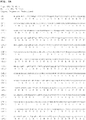
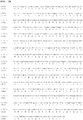
- the parent fungal GA is Humicola grisea GA (HgGA; SEQ ID NO:4 shows the mature form; see Figure 1 ). Amino acid residues in a GA enzyme derived from any of the filamentous fungi above that correspond to amino acid residues in HgGA can be determined using alignment algorithms as set forth in the definitions section below.
- the parent glucoamylase is a bacterial glucoamylase.
- the polypeptide can be obtained from a gram-positive bacterial strain such as Bacillus ( e.g., B. alkalophilus, B. amyloliquefaciens, B. lentus, B. licheniformis , B. stearothermophilus, B. subtilis and B. thuringiensis ) or a Streptomyces strain (e.g., S. lividans ).
- aspects of the subject invention include an isolated polynucleotide comprising a polynucleotide sequence encoding a variant of a parent GA as described herein.
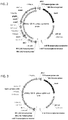
- the isolated polynucleotide may be present in a vector, e.g., an expression vector or a vector for propagation of the polynucleotide.
- the vector may be present in a host cell to propagate the vector and/or that expresses the encoded GA variant as described herein.
- the host cell can be any cell that finds use in propagation of the GA variant polynucleotide and/or expression of the encoded GA variant, e.g., a bacterial cell, a fungal cell, etc.
- suitable fungal cell types include filamentous fungal cells, e.g., cells of Trichoderma reesei, Trichoderma longibrachiatum, Trichoderma viride, Trichoderma koningii, Trichoderma harzianum, Penicillium, Humicola, Humicola insolens, Humicola grisea, Chrysosporium, Chrysosporium lucknowense, Myceliophthora thermophila, Gliocladium, Aspergillus, Fusarium, Neurospora, Hypocrea, Emericella, Aspergillus niger, Aspergillus awamori, Aspergillus aculeatus, and Aspergillus nidulans.
- filamentous fungal cells e.g., cells of Trichoderma reesei, Trichoderma longibrachiatum, Trichoderma viride, Trichoderma koningii, Trichoderma harzianum, Penicillium, Humicola
- the fungal host cell can be a yeast cell, e.g., Saccharomyces cervisiae, Saccharomycopsis fibuligera, Schizzosaccharomyces pombe, Schwanniomyces occidentalis, Kluveromyces lactus, Candida utilis, Candida albicans, Pichia stipitis, Pichia pastoris, Yarrowia lipolytica, Hansenula polymorpha, Phaffia rhodozyma, Arxula adeninivorans, Debaryomyces hansenii, or Debaryomyces polymorphus.
- a suitable host cell may even be one that is an ethanologen microorganism, including, for example, an engineered Zymomonas mobilis or a yeast ethanologen.
- aspects of the present invention include methods of producing a variant GA that includes culturing a host cell that contains a polynucleotide encoding the GA variant in a suitable culture medium under suitable conditions to express (or produce) the GA variant from the polynucleotide, e.g., where the polynucleotide encoding the GA variant is present in an expression vector (i.e., where the GA variant-encoding polynucleotide is operably linked to a promoter that drives expression of the GA variant in the host cell).
- the method further includes isolating the produced GA variant.
- compositions containing a GA variant as described herein.
- suitable compositions include, but are not limited to compositions comprising a starch substrate (e.g., liquefied starch from corn, grain, wheat tapioca, etc.) and the GA variant.
- aspects of the present invention include methods for hydrolyzing a starch substrate comprising contacting the substrate with a variant GA as described herein.
- the GA variant is provided as a cell-free composition, whereas in other embodiments, the GA variant is provided as a host cell composition in which the host cell expresses the GA variant.
- certain embodiments of the methods for hydrolyzing a starch substrate include contacting the substrate with a host cell containing a GA variant expression vector.
- the method may be a starch conversion process, an alcohol fermentation process, a direct starch to glucose process, or a simultaneous saccharification and fermentation process.
- aspects of the present invention include cell culture supernatant compositions that contain a GA variant as described herein.
- a cell culture supernatant obtained by culturing a host cell that contains a polynucleotide encoding the GA variant in a suitable culture medium under suitable conditions to express the GA variant from the polynucleotide and secrete the GA variant into the cell culture supernatant.
- Such a cell culture supernatant can include other proteins and/or enzymes produced by the host cell, including endogenously- and/or exogenously-expressed proteins and/or enzymes.
- Such supernatant of the culture medium can be used as is, with minimum or no post-production processing, which may typically include filtration to remove cell debris, cell-kill procedures, and/or ultrafiltration or other steps to enrich or concentrate the enzymes therein.
- Such supernatants are sometimes referred to herein as "whole broths" (or grammatical equivalent).
- the GA variants can be produced by co-expression with one or more other enzymes or protein products, e.g., an alpha-amylase.
- the GA variants can be produced without other enzymes or protein products.
- the GA variant optionally can be physically mixed with one or more other enzymes or protein products to form an enzyme composition that is useful for a particular application, e.g., in hydrolyzing starch substrates to generate glucose.
- compositions containing a desired variant GA are also contemplated.
- nucleic acids are written left to right in 5' to 3' orientation; amino acid sequences are written left to right in amino to carboxy orientation. Practitioners are particularly directed to Green and Sambrook Molecular Cloning: A Laboratory Manual (Fourth Edition), Cold Spring Harbor Laboratory Press 2012 , and Ausubel FM et al ., 1993, for definitions and terms of the art. It is to be understood that this invention is not limited to the particular methodology, protocols, and reagents described, as these may vary.
- amino acid sequence is synonymous with the terms “polypeptide,” “protein,” and “peptide,” and are used interchangeably. Where such amino acid sequences exhibit activity, they may be referred to as an "enzyme.”
- amino acid sequences exhibit activity, they may be referred to as an "enzyme.”
- the conventional one-letter or three-letter codes for amino acid residues are used, with amino acid sequences being presented in the standard amino-to-carboxy terminal orientation (i.e., N ⁇ C).
- nucleic acid encompasses DNA, RNA, heteroduplexes, and synthetic molecules capable of encoding a polypeptide. Nucleic acids may be single stranded or double stranded, and may have chemical modifications. The terms “nucleic acid” and “polynucleotide” are used interchangeably. Because the genetic code is degenerate, more than one codon may be used to encode a particular amino acid, and the present compositions and methods encompass nucleotide sequences that encode a particular amino acid sequence. As such, the present invention contemplates every possible variant nucleotide sequence encoding GA or an amino acid variant thereof, all of which are possible given the degeneracy of the genetic code. Unless otherwise indicated, nucleic acid sequences are presented in 5'-to-3' orientation.
- Nucleic acid and amino acid sequences that are referred to herein as "non-naturally occurring" are those that are not found in nature, i.e., are the product of human manipulation and/or synthesis.
- Glucoamylase or "GA” or “GA enzyme” or “GA polypeptide,” as used herein is defined as the amyloglucosidase class of enzymes (EC 3.2.1.3, glucoamylase, ⁇ -1, 4-D-glucan glucohydrolase). These are exo-acting enzymes that catalyze the release of D-glucose from the non-reducing ends of starch and related oligo- and polysaccharides. The enzymes are also capable of hydrolyzing ⁇ -1, 6 and ⁇ -1,3 linkages, although generally at much slower rates than the hydrolysis of ⁇ -1, 4 linkages.
- a “variant" of an enzyme, protein, polypeptide, nucleic acid, or polynucleotide as used herein means that the variant is derived from a parent polypeptide or parent nucleic acid (e.g., native, wild-type or other defined parent polypeptide or nucleic acid) that includes at least one modification or alteration as compared to that parent.
- a variant may have a few mutations as compared to a parent, where by "a few” is meant from 1 to 10 mutations.
- a variant having from 1 to 10 amino acid substitutions as compared to SEQ ID NO:4 can be referred to as a HgGA variant having a few substitutions.
- Alterations/modifications can include a substitution of an amino acid/nucleic acid residue in the parent for a different amino acid/nucleic acid residue at one or more sites, deletion of an amino acid/nucleic acid residue (or a series of amino acid/nucleic acid residues) in the parent at one or more sites, insertion of an amino acid/nucleic acid residue (or a series of amino acid/nucleic acid residues) in the parent at one or more sites, truncation of amino- and/or carboxy-terminal amino acid sequences or 5' and or 3' nucleic acid sequences, and any combination thereof.
- a variant HgGA enzyme according to aspects of the invention retains starch hydrolysis activity but may have an altered property in some specific aspect, e.g., an improved property.
- a variant HgGA enzyme may have an altered pH optimum, improved thermostability, improved hydrolysis of one or more substrates (e.g., DP2 (e.g., maltose), DP7 (e.g., maltoheptaose), panose, and/or pullulan) or a combination thereof.
- the variant HgGA enzyme contains an amino acid sequence that is at least 60%, 70%, 80%, 81%, 82%, 83%, 84%, 85%, 86%, 87%, 88%, 89%, 90%, 91%, 92%, 93%, 94%, 95%, 96%, 97%, 98%, or 99% identical to SEQ ID NO:4, or an enzymatically active fragment thereof.
- “Combinatorial variants” are variants comprising two or more mutations, e.g., 2, 3, 4, 5, 6, 7, 8, 9, 10, 11, 12, 13, 14, 15, 16, 17, 18, 19, 20, 21, 22, 23, 24, 25, 26, 27, 28, 29, 30 or more, substitutions, deletions, and/or insertions.
- a “parent” or “parental” polynucleotide, polypeptide, or enzyme sequence e.g., a "parent HgGA enzyme", or equivalents thereto, as used herein refers to a polynucleotide, polypeptide, or enzyme sequence that was used as a starting point or template for designing a variant polynucleotide, polypeptide, or enzyme. It is further noted that the words “parent” and “parental” are used interchangeably in this context.
- a "parent HgGA enzyme” as used herein means a polypeptide that in its mature form comprises an amino acid sequence which has at least 60% identity with SEQ ID NO:4, including amino acid sequences having at least 60%, 70%, 80%, 81%, 82%,83%, 84%, 85%, 86%, 87%, 88%, 89%, 90%, 91%, 92%, 93%, 94%, 95%, 96%, 97%, 98%, 99%, or 100% identity with SEQ ID NO:4 (which provides the amino acid sequence of the mature form of wild type GA from Humicola grisea ) or an allelic variant or a fragment thereof that has starch hydrolysis activity.
- wild-type refers to a naturally-occurring polypeptide or nucleic acid sequence, i.e., one that does not include a human-made variation.
- heterologous when used with reference to portions of a nucleic acid indicates that the nucleic acid comprises two or more subsequences that are not normally found in the same relationship to each other in nature.
- the nucleic acid is typically recombinantly produced, having two or more sequences, e.g., from unrelated genes, arranged to make a new functional nucleic acid, e.g., a promoter from one source and a coding region from another source.
- a heterologous polypeptide will often refer to two or more subsequences that are not found in the same relationship to each other in nature (e.g., a fusion polypeptide).
- recombinant when used with reference, e.g., to a cell, or nucleic acid, polypeptide, or vector, indicates that the cell, nucleic acid, polypeptide or vector, has been modified by the introduction of a heterologous nucleic acid or polypeptide or the alteration of a native nucleic acid or polypeptide, or that the cell is derived from a cell so modified.
- recombinant cells express genes that are not found within the native (non-recombinant) form of the cell or express native genes that are otherwise abnormally expressed, under-expressed or not expressed at all.
- a "recombinant" composition requires manipulation by a human and therefore excludes products of nature.
- isolated or purified refer to a nucleic acid or polynucleotide that is removed from the environment in which it is naturally produced.
- nucleic acid(s) or polypeptide(s) of interest are present at an increased absolute or relative concentration as compared to the environment in which they are naturally produced.
- an isolated or purified nucleic acid or polynucleotide is synthetically generated.
- enriched when describing a component or material in a composition (e.g., a polypeptide or polynucleotide) means that the component or material is present at a relatively increased concentration in that composition as compared to the starting composition from which the enriched composition was generated.
- an enriched GA composition or sample is one in which the relative or absolute concentration of GA is increased as compared to the initial fermentation product from the host organism.
- promoter refers to a nucleic acid sequence that functions to direct transcription of a downstream gene.
- the promoter will generally be appropriate to the host cell in which the target gene is being expressed.
- the promoter together with other transcriptional and translational regulatory nucleic acid sequences (also termed “control sequences"), is necessary to express a given gene.
- control sequences also termed "control sequences”
- transcriptional and translational regulatory sequences include, but are not limited to, promoter sequences, ribosomal binding sites, transcriptional start and stop sequences, translational start and stop sequences, and enhancer or activator sequences.
- a “constitutive" promoter is a promoter that is active under most environmental and developmental conditions.
- an "inducible" promoter is a promoter that is active under environmental or developmental regulation.
- An example of an inducible promoter useful in the present invention is the T. reesei ( H. jecorina ) cbh1 promoter which is deposited in GenBank under Accession Number D86235.
- the promoter is a cbh II or xylanase promoter from H. jecorina.
- suitable promoters include the promoter from the A. awamori or A. niger glucoamylase genes ( Nunberg, J. H. et al. (1984) Mol. Cell. Biol. 4, 2306-2315 ; Boel, E. et al. (1984) EMBO J.
- a nucleic acid is "operably linked" when it is placed into a functional relationship with another nucleic acid sequence.
- DNA encoding a secretory leader i.e., a signal peptide
- a promoter or enhancer is operably linked to a coding sequence if it affects the transcription of the sequence
- a ribosome binding site is operably linked to a coding sequence if it is positioned so as to facilitate translation.
- operably linked means that the DNA sequences being linked are contiguous, and, in the case of a secretory leader, contiguous and in reading phase. However, enhancers do not have to be contiguous. Linking is accomplished by ligation at convenient restriction sites. If such sites do not exist, the synthetic oligonucleotide adaptors or linkers are used in accordance with conventional practice.
- operably linked refers to a functional linkage between a nucleic acid expression control sequence (such as a promoter, or array of transcription factor binding sites) and a second nucleic acid sequence, wherein the expression control sequence directs transcription of the nucleic acid corresponding to the second sequence.
- signal sequence denotes a peptide sequence that, as a component of a larger polypeptide, directs the larger polypeptide through a secretory pathway of a cell in which it is synthesized, as well as nucleic acids encoding such peptides.
- the larger polypeptide (or protein) is commonly cleaved to remove the secretory/signal peptide during transit through the secretory pathway, where the cleaved form of the polypeptide (i.e., the form without the signal/secretory peptide) is often referred to herein as the "mature form" of the polypeptide.
- SEQ ID NO:3 provides the amino acid sequence of GA from H. grisea (HgGA) with the signal peptide (i.e., full length HgGA) while SEQ ID NO:4 provides the amino acid sequence of HgGA without the signal peptide (i.e., mature HgGA).
- vector refers to a nucleic acid construct designed for transfer between different host cells.
- expression vector refers to a vector that has the ability to incorporate and express heterologous DNA fragments in a foreign cell. Many prokaryotic and eukaryotic expression vectors are commercially available. Selection of appropriate expression vectors is within the knowledge of those having skill in the art.
- an "expression cassette” or “expression vector” is a nucleic acid construct generated recombinantly or synthetically, with a series of specified nucleic acid elements that permit transcription of a particular nucleic acid in a target cell.
- the recombinant expression cassette can be incorporated into a plasmid, chromosome, mitochondrial DNA, plastid DNA, virus, or nucleic acid fragment.
- the recombinant expression cassette portion of an expression vector includes, among other sequences, a nucleic acid sequence to be transcribed and a promoter.
- Plasmid refers to a circular double-stranded (ds) DNA construct that forms an extrachromosomal self-replicating genetic element when present in many bacteria and some eukaryotes. Plasmids may be employed for any of a number of different purposes, e.g., as cloning vectors, propagation vectors, expression vectors, etc.
- selectable marker refers to a nucleotide sequence or polypeptide encoded thereby which is capable of expression in cells and where expression of the selectable marker in cells confers the ability to be differentiated from cells that do not express the selectable marker.
- a selectable marker allows a cell expressing it to grow in the presence of a corresponding selective agent, or under corresponding selective growth conditions.
- a selectable marker allows a cell expressing it to be identified and/or isolated from cells that do not express it by virtue of a physical characteristic, e.g., by differences in fluorescence, immuno-reactivity, etc.
- nucleic acid molecules which encode the variant HgGA will hybridize, under moderate to high stringency conditions to the wild type sequence provided herein as SEQ ID NO:1 (native HgGA gene) or SEQ ID NO:2 (HgGA protein coding region).
- SEQ ID NO:1 native HgGA gene
- SEQ ID NO:2 HgGA protein coding region
- an HgGA-encoding nucleotide sequence is employed that possesses a substantially different codon usage, while the enzyme encoded by the HgGA-encoding nucleotide sequence has the same or substantially the same amino acid sequence as the native enzyme.
- the coding sequence may be modified to facilitate faster expression of HgGA in a particular prokaryotic or eukaryotic expression system, in accordance with the frequency with which a particular codon is utilized by the host (commonly referred to as "codon optimization").
- codon optimization commonly referred to as "codon optimization”
- Te'o, et al. (2000) describes the optimization of genes for expression in filamentous fungi.
- Such nucleic acid sequences are sometimes referred to as “degenerate” or "degenerated sequences”.
- a nucleic acid sequence is considered to be "selectively hybridizable" to a reference nucleic acid sequence if the two sequences specifically hybridize to one another under moderate to high stringency hybridization and wash conditions.
- Hybridization conditions are based on the melting temperature (Tm) of the nucleic acid binding complex or probe.
- Tm melting temperature
- maximum stringency typically occurs at about Tm-5°C (5° below the Tm of the probe); “high stringency” at about 5-10°below the Tm; “moderate” or “intermediate stringency” at about 10-20° below the Tm of the probe; and “low stringency” at about 20-25° below the Tm.
- maximum stringency conditions may be used to identify sequences having strict identity or near-strict identity with the hybridization probe; while high stringency conditions are used to identify sequences having about 80% or more sequence identity with the probe.
- Moderate and high stringency hybridization conditions are well known in the art (see, for example, Sambrook, et al, 1989, Chapters 9 and 11, and in Ausubel, F.M., et al ., 1993).
- An example of high stringency conditions includes hybridization at about 42°C in 50% formamide, 5X SSC, 5X Denhardt's solution, 0.5% SDS and 100 ⁇ g/ml denatured carrier DNA followed by washing two times in 2X SSC and 0.5% SDS at room temperature and two additional times in 0.1X SSC and 0.5% SDS at 42°C.
- the terms “transformed”, “stably transformed” or “transgenic” with reference to a cell means the cell has a non-native (heterologous) nucleic acid sequence integrated into its genome or as an episomal plasmid that is maintained through multiple generations.
- expression refers to the process by which a polypeptide is produced based on the nucleic acid sequence of a gene.
- the process generally includes both transcription and translation.
- the term "introduced” in the context of inserting a nucleic acid sequence into a cell means “transfection”, or “transformation” or “transduction” and includes reference to the incorporation of a nucleic acid sequence into a eukaryotic or prokaryotic cell where the nucleic acid sequence may be incorporated into the genome of the cell (for example, chromosome, plasmid, plastid, or mitochondrial DNA), converted into an autonomous replicon, or transiently expressed (for example, transfected mRNA).
- host cell a cell that contains a vector and supports the replication, and/or transcription and/or transcription and translation (expression) of the expression construct.
- Host cells for use in the present invention can be prokaryotic cells, such as E. coli, or eukaryotic cells such as yeast, plant, insect, amphibian, or mammalian cells. In certain embodiments, host cells are filamentous fungi.
- an amino acid position (or residue) in a first polypeptide is noted as being “equivalent” to an amino acid position in a second, related polypeptide, it means that the amino acid position of the first polypeptide corresponds to the position noted in the second, related polypeptide by one or more of (i) primary sequence alignment (see description of sequence alignment and sequence identity below); (ii) structural sequence homology; or (iii) analogous functional property.
- an amino acid position in a first GA enzyme (or a variant thereof) can be identified as “equivalent” (or “homologous") to an amino acid position in a second GA enzyme (or even multiple different GA enzymes).
- Equivalent amino acid positions can be determined using primary amino acid sequence alignment methodologies, many of which are known in the art. For example, by aligning the primary amino acid sequences of two or more different GA enzymes, it is possible to designate an amino acid position number from one GA enzyme as equivalent to the position number of another one of the aligned GA enzymes. In this manner, the numbering system originating from the amino acid sequence of one GA enzyme (e.g., the HgGA enzyme denoted in SEQ ID NO: 3) can be used to identify equivalent (or homologous) amino acid residues in other GA enzymes.
- the HgGA enzyme denoted in SEQ ID NO: 3
- "equivalent” amino acid positions may also be defined by determining homology at the level of secondary and/or tertiary structure. For example, for a glucoamylase whose tertiary structure has been determined by x-ray crystallography, equivalent residues can be defined as those for which the atomic coordinates of two or more of the main chain atoms of a particular amino acid residue of the glucoamylase are within 0.13nm and preferably 0.1 nm after alignment with HgGA (N on N, CA on CA, C on C, and O on O).
- Alignment is achieved after the best model has been oriented and positioned to give the maximum overlap of atomic coordinates of non-hydrogen protein atoms of the glucoamylase in question to HgGA.
- the best model is the crystallographic model that gives the highest resolution available. Where two or more different models have equal resolution, the model with the lowest R factor for experimental diffraction data, using the equation below, is used.
- R factor ⁇ h Fo h ⁇ Fc h ⁇ h Fo h
- Analogous functional property Equivalent amino acid residues in a first polypeptide which are functionally analogous to a specific residue of a second related polypeptide (e.g., a first glucoamylase and HgGA) are defined as those amino acids in the first polypeptide that adopt a conformation such that they alter, modify, or contribute to polypeptide structure, substrate binding, or catalysis in a manner defined and attributed to a specific residue of the second related polypeptide.
- a second related polypeptide e.g., a first glucoamylase and HgGA
- amino acid residues of the first polypeptide that are functionally analogous to the second polypeptide occupy an analogous position to the extent that, although the main chain atoms of the given residue may not satisfy the criteria of equivalence on the basis of occupying a homologous position, the atomic coordinates of at least two of the side chain atoms of the residue lie with 0.13nm of the corresponding side chain atoms of the second polypeptide.
- improved property or “improved performance” and the like with respect to a variant enzyme (e.g., a GA variant) is defined herein as a characteristic or activity associated with a variant enzyme which is improved as compared to its respective parent enzyme.
- Improved properties include, but are not limited to, improved thermostability or altered temperature-dependent activity profile, improved activity or stability at a desired pH or pH range, improved substrate specificity, improved product specificity, and improved stability in the presence of a chemical or other component in a starch conversion process step, etc.
- Improved performance may be determined using a particular assay(s) including, but not limited to: (a) expression, (b) hydrolytic activity on DP2 substrate, (c) hydrolytic activity on DP7 substrate at pH 6.8, (d) hydrolytic activity on DP7 substrate at pH 5.5, (e) hydrolytic activity on panose substrate, (f) hydrolytic activity on pullulan substrate, (g) hydrolytic activity on granular corn starch (CS), (h) thermostability, (i) glucose inhibition, and (j) reversion activity.
- a particular assay(s) including, but not limited to: (a) expression, (b) hydrolytic activity on DP2 substrate, (c) hydrolytic activity on DP7 substrate at pH 6.8, (d) hydrolytic activity on DP7 substrate at pH 5.5, (e) hydrolytic activity on panose substrate, (f) hydrolytic activity on pullulan substrate, (g) hydrolytic activity on granular corn starch (CS), (h) thermostability, (i) glucose inhibition, and (j)
- a variant proten e.g., a GA variant
- a variant enzyme displaying retention of a greater fraction of enzymatic activity after a period of incubation at an elevated temperature relative to the parent enzyme.
- Such a variant may or may not display an altered thermal activity profile relative to the parent.
- a variant may have an improved ability to refold following incubation at elevated temperature relative to the parent.
- improved product specificity is meant a variant enzyme displaying an altered product profile as compared to the parent enzyme, where the altered product profile of the variant is improved in a given application as compared to the parent.
- a “product profile” is defined herein as the chemical composition of the reaction products produced by the enzyme of interest.
- improved substrate specificity is meant a variant enzyme that targets a specific substrate (or class of substrate) for hydrolysis in a manner different than the parent enzyme, such that the variant has improved performance in a given application as compared to the parent.
- improved chemical stability is meant that a variant enzyme displays retention of enzymatic activity after a period of incubation in the presence of a chemical or chemicals that reduce the enzymatic activity of the parent enzyme under the same conditions. Variants with improved chemical stability are better able to catalyze a reaction in the presence of such chemicals as compared to the parent enzyme.
- pH range refers to the range of pH values under which the enzyme exhibits catalytic activity.
- pH stable and “pH stability,” with reference to an enzyme, relate to the ability of the enzyme to retain activity over a wide range of pH values for a predetermined period of time (e.g., 15 min., 30 min., 1 hour).
- starch refers to any material comprised of the complex polysaccharide carbohydrates of plants, comprised of amylose and amylopectin with the formula (C 6 H 10 O 5 ) x , wherein "X" can be any number.
- the term refers to any plant-based material including but not limited to grains, grasses, tubers and roots and more specifically wheat, barley, corn, rye, rice, sorghum, brans, cassava, millet, potato, sweet potato, and tapioca.
- Gramular starch refers to uncooked (raw) starch, which has not been subject to gelatinization, where "starch gelatinization” means solubilization of a starch molecule to form a viscous suspension.
- Degree of polymerization refers to the number (n) of anhydroglucopyranose units in a given saccharide.
- Examples of DP1 are the monosaccharides, such as glucose and fructose.
- Examples of DP2 are the disaccharides, such as maltose and sucrose.
- DP7 denotes polymers with seven anhydroglucopyranose units.
- hydrolysis of starch and the like refers to the cleavage of glucosidic bonds with the addition of water molecules.
- enzymes having "starch hydrolysis activity” catalyze the cleavage of glucosidic bonds with the addition of water molecules
- saccharides that are capable of being metabolized under fermentation conditions. These sugars typically refer to glucose, maltose, and maltotriose (DP1, DP2 and DP3).
- total sugar content refers to the total sugar content present in a starch composition.
- Percent sequence identity means that a particular sequence has at least a certain percentage of amino acid residues identical to those in a specified reference sequence using an alignment algorithm.
- An example of an algorithm that is suitable for determining sequence similarity is the BLAST algorithm, which is described in Altschul, et al., J. Mol. Biol. 215:403-410 (1990 ).
- Software for performing BLAST analyses is publicly available through the National Center for Biotechnology Information ( ⁇ www (dot) ncbi (dot) nlm (dot) nih (dot) gov>).
- This algorithm involves first identifying high scoring sequence pairs (HSPs) by identifying short words of length W in the query sequence that either match or satisfy some positive-valued threshold score T when aligned with a word of the same length in a database sequence.
- HSPs high scoring sequence pairs
- These initial neighborhood word hits act as starting points to find longer HSPs containing them.
- the word hits are expanded in both directions along each of the two sequences being compared for as far as the cumulative alignment score can be increased. Extension of the word hits is stopped when: the cumulative alignment score falls off by the quantity X from a maximum achieved value; the cumulative score goes to zero or below; or the end of either sequence is reached.
- the BLAST algorithm parameters W, T, and X determine the sensitivity and speed of the alignment.
- the BLAST program uses as defaults a word length (W) of 11, the BLOSUM62 scoring matrix (see Henikoff & Henikoff, Proc. Natl. Acad. Sci. USA 89:10915 (1989 )) alignments (B) of 50, expectation (E) of 10, M'5, N'-4, and a comparison of both strands.
- the BLAST algorithm then performs a statistical analysis of the similarity between two sequences (see, e.g., Karlin & Altschul, Proc. Nat'l. Acad. Sci. USA 90:5873-5787 (1993 )).
- One measure of similarity provided by the BLAST algorithm is the smallest sum probability (P(N)), which provides an indication of the probability by which a match between two nucleotide or amino acid sequences would occur by chance.
- P(N) the smallest sum probability
- an amino acid sequence is considered similar to a protease if the smallest sum probability in a comparison of the test amino acid sequence to a protease amino acid sequence is less than about 0.1, more preferably less than about 0.01, and most preferably less than about 0.001.
- Alignment algorithms can also be employed to identify an amino acid residue (or residues) in a first amino acid sequence (e.g., HgGA) that correspond to an amino acid residue (or residues) in a second aminbo acid sequence (e.g., homologous GA enzymes from other species, e.g., T. reesei GA).
- a first amino acid sequence e.g., HgGA
- a second aminbo acid sequence e.g., homologous GA enzymes from other species, e.g., T. reesei GA.
- Embodiments of the subject invention provide for the expression of a desired glucoamylase enzyme (or combination of glucoamylase enzymes) from glucoamylase-encoding nucleic acids under control of a promoter functional in a host cell of interest, e.g., a filamentous fungus. Therefore, this invention relies on a number of routine techniques in the field of recombinant genetics. Basic texts disclosing examples of suitable recombinant genetics methods are noted above.
- the present invention relates to the expression, purification and/or isolation and use of variant GA enzymes.
- These enzymes may be prepared by recombinant methods utilizing any of a number of glucoamylase genes known in the art (e.g., the H. grisea glucoamylase gene comprising SEQ ID NO:1 or recombinant sequence shown in SEQ ID NO:2).
- Any convenient method for introducing mutations may be employed, including site directed mutagenesis.
- mutations (or variations) include substitutions, additions, deletions or truncations that will correspond to one or more amino acid changes in the expressed GA variant.
- site directed mutagenesis and other methods of incorporating amino acid changes in expressed proteins at the DNA level can be found in numerous references, e.g., Green and Sambrook, et al. 2012 and Ausubel, et al.
- DNA encoding an amino acid sequence variant of a parent GA is prepared by a variety of methods known in the art. These methods include, but are not limited to, preparation by site-directed (or oligonucleotide-mediated) mutagenesis, PCR mutagenesis, and cassette mutagenesis of an earlier prepared DNA encoding the parent GA enzyme.
- Site-directed mutagenesis is one method that can be employed in preparing substitution variants. This technique is well known in the art (see, e.g., Carter et al. Nucleic Acids Res. 13:4431-4443 (1985 ) and Kunkel et al., Proc. Natl. Acad.Sci.USA 82:488 (1987 )). Briefly, in carrying out site-directed mutagenesis of DNA, the starting DNA is altered by first hybridizing an oligonucleotide encoding the desired mutation to a single strand of such starting DNA.
- a DNA polymerase is used to synthesize an entire second strand, using the hybridized oligonucleotide as a primer, and using the single strand of the starting DNA as a template.
- the oligonucleotide encoding the desired mutation is incorporated in the resulting double-stranded DNA.
- PCR mutagenesis is also suitable for making amino acid sequence variants of the parent GA. See Higuchi, in PCR Protocols, pp.177-183 (Academic Press, 1990 ); and Vallette et al., Nuc. Acids Res. 17:723-733 (1989 ). Briefly, when small amounts of template DNA are used as starting material in a PCR, primers that differ slightly in sequence from the corresponding region in a template DNA can be used to generate relatively large quantities of a specific DNA fragment that differs from the template sequence only at the positions where the primers differ from the template.
- the starting material is the plasmid (or other vector) comprising the starting polypeptide DNA to be mutated.
- the codon(s) in the starting DNA to be mutated are identified.
- the plasmid DNA is cut at these sites to linearize it.
- a double-stranded oligonucleotide encoding the sequence of the DNA between the restriction sites but containing the desired mutation(s) is synthesized using standard procedures, wherein the two strands of the oligonucleotide are synthesized separately and then hybridized together using standard techniques.
- This double-stranded oligonucleotide is referred to as the cassette.
- This cassette is designed to have 5' and 3' ends that are compatible with the ends of the linearized plasmid, such that it can be directly ligated to the plasmid.
- This plasmid now contains the mutated DNA sequence.
- the desired amino acid sequence encoding a desired glucoamylase can be determined, and a nucleic acid sequence encoding such amino acid sequence variant can be generated synthetically.
- the desired glucoamylase(s) so prepared may be subjected to further modifications, oftentimes depending on the intended use of the glucoamylase. Such modifications may involve further alteration of the amino acid sequence, fusion to heterologous polypeptide(s) and/or covalent modifications.
- Glucoamylases are produced by numerous strains of bacteria, fungi, yeast and plants. Many fungal glucoamylases are secreted from the cell, for example from strains of Aspergillus ( Svensson et al., Carlsberg Res. Commun. 48: 529-544 (1983 ); Boel et al., EMBO J. 3: 1097-1102 (1984 ); Hayashida et al., Agric. Biol. Chem. 53: 923-929 (1989 ); U.S. Patent No. 5,024,941 ; U.S. Patent No. 4,794,175 and WO 88/09795 ); Talaromyces ( U.S. Patent No.
- glucoamylases are very important enzymes and have been used in a wide variety of applications that require the hydrolysis of starch (e.g., for producing glucose and other monosaccharides from starch).
- Glucoamylases are used to produce high fructose corn sweeteners, which comprise over 50% of the sweetener market in the United States.
- glucoamylases may be, and commonly are, used with alpha-amylases in starch hydrolyzing processes to hydrolyze starch to dextrins and then glucose.
- the glucose may be used directly; be converted to fructose by other enzymes (e.g., glucose isomerases); crystallized; or used in fermentations to produce numerous end products (e.g., ethanol, citric acid, succinic acid, ascorbic acid intermediates, glutamic acid, glycerol, 1,3-propanediol and lactic acid).
- enzymes e.g., glucose isomerases
- crystallized e.g., ethanol, citric acid, succinic acid, ascorbic acid intermediates, glutamic acid, glycerol, 1,3-propanediol and lactic acid.
- Glucoamylases consist of as many as three distinct structural domains, a catalytic domain of approximately 450 residues that is structurally conserved in all glucoamylases, generally followed by a linker region consisting of between 30 and 80 residues that are connected to a starch binding domain (SBD) of approximately 100 residues (also referred to as a carbohydrate binding domain, or CBD).
- SBD starch binding domain
- CBD carbohydrate binding domain
- the structure was aligned with the coordinates of the catalytic domain of the glucoamylase from Aspergillus awamori strain X100 that was determined previously ( Aleshin, A.E., Hoffman, C., Firsov, L.M., and Honzatko, R.B. Refined crystal structures of glucoamylase from Aspergillus awamori var. X100. J. Mol. Biol. 238: 575-591 (1994 )). The structure of the catalytic domains of these two glucoamylases overlap very closely, and it is possible to identify equivalent residues based on this structural superposition. It is further believed that all glucoamylases share the basic structure.
- glucoamylase variants having altered properties have been successfully created and characterized. Certain variants display improved properties as compared to the parent glucoamylases. Examples of improved properties include increased thermostability and increased specific activity. Methods for making and characterizing T. reesei GA variants with altered properties have been described in WO 2009/067218 .
- variant GA enzymes have one or more mutations, as set forth herein, with respect to a parent GA enzyme, where the parent GA enzyme has at least 60% (i.e., 60% or greater) amino acid sequence identity to SEQ ID NO:4, including at least 61%, 65%, 70%, 75%, 80%, 81%, 82%, 83%, 84%, 85%, 86%, 87%, 88%, 89%, 90%, 91%, 92%, 93%, 94%, 95%, 96%, 97%, 98%, 99%, up to and including 100% amino acid sequence identity to SEQ ID NO:4.
- the parent GA enzyme has at least 60% (i.e., 60% or greater) amino acid sequence identity to SEQ ID NO:4, including at least 61%, 65%, 70%, 75%, 80%, 81%, 82%, 83%, 84%, 85%, 86%, 87%, 88%, 89%, 90%, 91%, 92%, 93%, 94%, 95%, 96%, 97%, 98%, 99%, up to and including 100%
- Variant GA enzymes may have at least 60% (i.e., 60% or greater) amino acid sequence identity to SEQ ID NO:4, including at least 61%, 65%, 70%, 75%, 80%, 81%, 82%, 83%, 84%, 85%, 86%, 87%, 88%, 89%, 90%, 91%, 92%, 93%, 94%, 95%, 96%, 97%, 98%, or 99% sequence identity to SEQ ID NO:4.
- the parent GA is selected from: a Trichoderma strain (e.g., T. reesei, T. longibrachiatum, T. strictipilis, T. asperellum, T.
- a Fusarium strain e.g., F. oxysporum, and F. roseum
- a Humicola strain e.g., H. grisea, H. insolens and H. lanuginose
- a Saccharomycopsis strain e.g., S. fibuligera
- Scytalidium thermophilum Podospora anderina, or their respective anamorph, teleomorph or holomorph counterpart forms.
- the parent GA is Humicola grisea GA (HgGA).
- the variant GA enzyme has starch hydrolysis activity (or is a variant GA fragment having starch hydrolysis activity) where, in certain embodiments, the variant GA has an improved property as compared to the parent GA (as detailed herein).
- the amino acid sequence for the wild type full-length (SEQ ID NO:3) and mature form (SEQ ID NO:4) of HgGA is shown in Figure 1 .
- aspects of the present disclosure provide variants of a parent GA enzyme, where the variant has starch hydrolysis activity, has at least 60% (e.g., at least 80%) sequence identity to SEQ ID NO:4, and has at least one improved property over the parent GA enzyme selected from: (a) expression, (b) hydrolytic activity on DP2 substrate, (c) hydrolytic activity on DP7 substrate at pH 6.8, (d) hydrolytic activity on DP7 substrate at pH 5.5, (e) hydrolytic activity on panose substrate, (f) hydrolytic activity on pullulan substrate, (g) hydrolytic activity on granular corn starch (CS), (h) thermostability, (i) glucose inhibition, and (j) reversion activity.
- a GA variant has at least two, at least three, at least four, at least five, at least six, at least seven, at least 8, at least 9, or more improved properties (selected from the list above) over the parent GA enzyme.
- a variant GA enzyme comprises an amino acid mutation at one or more amino acid positions in HgGA (as denoted in SEQ ID NO:3). Because certain parent GA enzymes according to aspects of the invention may not have the same amino acid as wild type HgGA, amino acid positions corresponding to the residues noted above may also be designated either by the position number alone (e.g., amino acid position 35, as denoted in Table 8) or with an "X" prefix (e.g., amino acid position X35). It is noted here that all three ways of designating the amino acid positions corresponding to a specific amino acid residue in HgGA are interchangeable (i.e., X35, T35, and amino acid 35).
- Alignment of amino acid sequences to determine homology can be determined by using a "sequence comparison algorithm.” Optimal alignment of sequences for comparison can be conducted, e.g., by the local homology algorithm of Smith & Waterman, Adv. Appl. Math. 2:482 (1981 ), by the homology alignment algorithm of Needleman & Wunsch, J. Mol. Biol. 48:443 (1970 ), by the search for similarity method of Pearson & Lipman, Proc. Nat'l Acad. Sci.
- a variant GA enzyme contains an amino acid substitution at one or more site corresponding to the sites shown in Table 8 for HgGA (see Example 3; amino acid numbering is based on the amino acid sequence of full-length HgGA shown in SEQ ID NO:3). All possible combinations of the substitutions shown in Table 8 at the indicated sites are contemplated embodiments of the disclosure. Variants include, but are not limited to, the following:
- a variant GA enzyme contains one or more amino acid substitution(s) corresponding to the HgGA substitutions as set forth in SEL Cohorts 1 to 10 as shown in Example 3.
- SEL Cohorts 1 to 10 are classified as follows (each variant is not listed here; they are listed in Example 3):
- aspects of the disclosure include substitutions in a GA corresponding to HgGA substitutions that fall into more than one of SEL Cohorts 1 to 10 above, including at least two SEL Cohorts, at least three SEL Cohorts, at least four SEL Cohorts, at least five SEL Cohorts, at least six SEL Cohorts, at least seven SEL Cohorts, at least eight SEL Cohorts, or at least nine SEL Cohorts.
- a review of the HgGA variant members of the SEL Cohorts listed in Example 3 clearly identifies the variants that fall into multiple SEL Cohorts, and thus have more than one improved property.
- Tables 2 to 5 below show the possible functional class of GA variants that belong to two, three, four or five SEL Cohorts.
- Each of the functional classes listed in Tables 2 to 5 is named for the numbers of the SEL Cohorts to which each GA variant of the functional class belongs.
- the functional class named "2.5.8" is one whose GA variant members belong to SEL Cohorts 2, 5 and 8 (and possibly more) and as such, each member of this functional class has (at least) the three improved properties that define SEL Cohorts 2, 5 and 8 (i.e., improved thermostability, improved DP2 hydrolysis, and improved corn starch hydrolysis).
- Example 3 the listing of the GA variants that belong to each SEL Cohort that is shown in Example 3 can be used to clearly identify which variant(s) belong to which functional class listed in Tables 2 to 5 (as well as functional classes of GA variants that belong to six, seven, eight, or nine SEL Cohorts, which can be readily derived from Example 3). Note that in the Tables 2 to 5, columns and rows that would have listed only duplicate SEL Cohort combinations (i.e., combinations that are listed elsewhere in the table) are not shown.
- Table 2 Functional Classes of Combinations of Two SEL Cohorts SEL Cohort 1 2 3 4 5 6 7 8 9 2 1.2 - - - - - - - 3 1.3 2.3 - - - - - - 4 1.4 2.4 3.4 - - - - - - 5 1.5 2.5 3.5 4.5 - - - - - 6 1.6 2.6 3.6 4.6 5.6 - - - - 7 1.7 2.7 3.7 4.7 5.7 6.7 - - - 8 1.8 2.8 3.8 4.8 5.8 6.8 7.8 - - 9 1.9 2.9 3.9 4.9 5.9 6.9 7.9 8.9 - 10 1.10 2.10 3.10 4.10 5.10 6.10 7.10 8.10 9.10 Table 3: Functional Classes of Combinations of Three SEL Cohorts (the left column lists combinations of two from previous table) SEL Cohort(s) 1 2 3 4 5 6 7 8 2.3 1.2.3 - - - - - - - -
- amino acid substitutions in HgGA that have a PI for all assays that is ⁇ 1.2 and ⁇ 0.9 were identified and categorized as SEL Cohort 11.
- one or a combination of substitutions in SEL Cohort 11 find use in generating combinatorial HgGA variants with one or more of the substitutions identified in any of the SEL Cohorts 1 to 10 above.
- one or more of the substitutions in SEL Cohort 11 may be present in a variant GA without additional substitutions selected from SEL Cohorts 1 to 10.
- combinatorial variants fall into more than one Combinatorial SEL Cohort, and thus provide improvements in more than one property (i.e., by demonstrating an improved outcome in two or more of assays (a) to (j) above). Therefore, aspects of the disclosure include combinatorial HgGA variants that fall into more than one of the Combinatorial SEL Cohorts 1 to 10 above, including at least two Combinatorial SEL Cohorts, at least three Combinatorial SEL Cohorts, at least four Combinatorial SEL Cohorts, at least five Combinatorial SEL Cohorts, at least six Combinatorial SEL Cohorts, at least seven Combinatorial SEL Cohorts, or at least eight Combinatorial SEL Cohorts.
- a review of the combinatorial SEL Cohorts listed above (and in Example 3) clearly identifies combinatorial variants that fall into multiple Combinatorial SEL Cohorts, and thus have more than one improved property.
- a variant GA enzyme contains one or more amino acid substitution(s) corresponding to the HgGA substitutions as set forth in SEL Cohorts.
- a variant according to the disclosure will comprise a fragment or functional domain of a variant GA.
- a variant GA according to aspects of the present disclosure can include a variant catalytic domain of a parent HgGA (e.g., from about amino acid 32 to about amino acid 466 of SEQ ID NO:3), a variant linker region of a parent HgGA (e.g., from about amino acid 467 to about amino acid 526 of SEQ ID NO:3), a variant starch binding domain of a parent HgGA (e.g., from about amino acid 527 to about amino acid 634 of SEQ ID NO:3), or variant domains that have at least 60% sequence identity to these domains (e.g., having at least 60%, at least 70%, at least 80%, at least 90%, at least 95%, at least 97%, or at least 99% sequence identity to one or more to these domains).
- variant GAs in which the variant catalytic, variant linker, and/or variant starch binding domain has at least 60% (or greater) sequence identity to the relevant domain in SEQ ID NO:4 are encompassed in aspects of the present disclosure.
- GA variants also include chimeric or hybrid GAs with, for example, a starch binding domain (SBD) from a first GA and a catalytic domain and/or linker from a second GA, where at least one of the domains is a variant domain of the respective parent GA.
- SBD starch binding domain
- polynucleotides encoding a variant GA enzyme having one or more mutations with respect to a parent GA enzyme (e.g., as described above) are also provided herein.
- the variant GA encoded by the subject polynucleotide has at least 60% (i.e., 60% or greater as specified above) amino acid sequence identity to HgGA (SEQ ID NO:4).
- the polynucleotide encoding a variant GA enzyme has at least 40%, at least 50%, at least 60%, at least 65%, at least 70%, at least 75%, at least 76%, at least 77%, at least 78%, at least 79%, at least 80%, at least 81%, at least 82%, at least 83%, at least 84%, at least 85%, at least 86%, at least 87%, at least 88%, at least 89%, at least 90%, at least 91%, at least 92%, at least 93%, at least 94%, at least 95%, at least 96%, at least 97%, at least 98% or even at least 99% homology/identity to SEQ ID NO: 1 (excluding the portion of the nucleic acid that encodes the signal sequence) or SEQ ID NO:2.
- nucleic acids may encode the same variant GA enzyme.
- nucleic acids encoding a variant GA enzyme as described herein may be engineered to be codon optimized, e.g., to improve expression in a host cell of interest. Certain codon optimization techniques are known in the art.
- the variant GA enzyme-encoding nucleic acid hybridizes under stringent conditions to a nucleic acid encoding (or complementary to a nucleic acid encoding) a GA having at least 40%, at least 50%, at least 60%, at least 65%, at least 70%, at least 75%, at least 76%, at least 77%, at least 78%, at least 79%, at least 80%, at least 81%, at least 82%, at least 83%, at least 84%, at least 85%, at least 86%, at least 87%, at least 88%, at least 89%, at least 90%, at least 91%, at least 92%, at least 93%, at least 94%, at least 95%, at least 96%, at least 97%, at least 98% or even at least 99% homology/identity to SEQ ID NO: 1 (excluding the portion of the nucleic acid that encodes the signal sequence) or SEQ ID NO:2.
- Nucleic acids may encode a "full-length" (“fl” or "FL") variant GA enzyme, which includes a signal sequence (e.g., SEQ ID NO:3), only the mature form of a variant GA enzyme, which lacks the signal sequence (e.g., SEQ ID NO:4), or a truncated form of a variant GA enzyme, which lacks portions of the N and/or C-terminus of the mature form but that retains glucoamylase activity.
- fl full-length
- FL full-length variant GA enzyme
- a nucleic acid that encodes a variant GA enzyme can be operably linked to various promoters and regulators in a vector suitable for expressing the variant GA enzyme in a host cell(s) of interest, as described below.
- aspects of the subject invention include methods and compositions related to the generation nucleic acids encoding GA variants, host cells containing such nucleic acids, the production of GA variants by such host cells, and the isolation, purification and/or use of the GA variants.
- embodiments of the invention provide host cells that have been transduced, transformed or transfected with an expression vector comprising a desired GA variant-encoding nucleic acid sequence.
- a filamentous fungal cell or yeast cell is transfected with an expression vector having a promoter or biologically active promoter fragment or one or more ( e.g. , a series) of enhancers which functions in the host cell line, operably linked to a DNA segment encoding a desired GA variant, such that desired GA variant is expressed in the cell line.
- Natural or synthetic polynucleotide fragments encoding a desired GA variant may be incorporated into heterologous nucleic acid constructs or vectors, capable of introduction into, and replication in, a host cell of interest (e.g., a filamentous fungal or yeast cell).
- a host cell of interest e.g., a filamentous fungal or yeast cell.
- the vectors and methods disclosed herein are suitable for use in host cells for the expression of a desired GA variant. Any vector may be used as long as it meets the desired replication/expression characteristics in the host cell(s) into which it is introduced (such characteristics generally being defined by the user). Large numbers of suitable vectors and promoters are known to those of skill in the art, some of which are commercially available.
- Cloning and expression vectors are also described in Sambrook et al., 1989, Ausubel FM et al., 1989, and Strathern et al., 1981. Appropriate expression vectors for fungi are described in van den Hondel, C.A.M.J.J. et al. (1991) In: Bennett, J.W. and Lasure, L.L. (eds.) More Gene Manipulations in Fungi. Academic Press, pp. 396-428 .
- the appropriate DNA sequence may be inserted into a plasmid or vector (collectively referred to herein as "vectors") by a variety of procedures. In general, the DNA sequence is inserted into an appropriate restriction endonuclease site(s) by standard procedures. Such procedures and related sub-cloning procedures are deemed to be within the scope of knowledge of those skilled in the art.
- Recombinant host cells comprising the coding sequence for a desired GA variant may be produced by introducing a heterologous nucleic acid construct comprising the desired GA variant coding sequence into the desired host cells (e.g., as described in further detail below).
- a desired GA variant coding sequence may be inserted into a suitable vector according to well-known recombinant techniques and used to transform a filamentous fungus capable of GA expression.
- other nucleic acid sequences which encode substantially the same or a functionally equivalent amino acid sequence may be used to clone and express a desired GA variant. Therefore it is appreciated that such substitutions in the coding region fall within the sequence variants covered by the present invention.
- the present invention also includes recombinant nucleic acid constructs comprising one or more of the desired GA variant-encoding nucleic acid sequences as described above.
- the constructs comprise a vector, such as a plasmid or viral vector, into which a sequence of the invention has been inserted, in a forward or reverse orientation.
- Heterologous nucleic acid constructs may include the coding sequence for a desired GA variant: (i) in isolation; (ii) in combination with additional coding sequences; such as fusion polypeptide or signal peptide coding sequences, where the desired GA variant coding sequence is the dominant coding sequence; (iii) in combination with non-coding sequences, such as introns and control elements, such as promoter and terminator elements or 5' and/or 3' untranslated regions, effective for expression of the coding sequence in a suitable host; and/or (iv) in a vector or host environment in which the desired GA variant coding sequence is a heterologous gene.
- a heterologous nucleic acid construct is employed to transfer a desired GA variant-encoding nucleic acid sequence into a host cell in vitro, e.g., into established filamentous fungal and yeast lines.
- Long-term production of a desired GA variant can be achieved by generating a host cell that has stable expression of the GA variant.
- any method effective to generate stable transformants may be used in practicing the invention.
- Appropriate vectors are typically equipped with a selectable marker-encoding nucleic acid sequence, insertion sites, and suitable control elements, such as promoter and termination sequences.
- the vector may comprise regulatory sequences, including, for example, non-coding sequences, such as introns and control elements, i.e., promoter and terminator elements or 5' and/or 3' untranslated regions, effective for expression of the coding sequence in host cells (and/or in a vector or host cell environment in which a modified soluble protein antigen coding sequence is not normally expressed), operably linked to the coding sequence.
- suitable vectors and promoters are known to those of skill in the art, many of which are commercially available and/or are described in Sambrook, et al. , ( supra ).
- suitable promoters include both constitutive promoters and inducible promoters, examples of which include a CMV promoter, an SV40 early promoter, an RSV promoter, an EF-1 ⁇ promoter, a promoter containing the tet responsive element (TRE) in the tet-on or tet-off system as described (ClonTech and BASF), the beta actin promoter and the metallothionine promoter that can upregulated by addition of certain metal salts.
- a promoter sequence is a DNA sequence which is recognized by the particular host cell for expression purposes. It is operably linked to DNA sequence encoding a variant GA polypeptide.
- Such linkage comprises positioning of the promoter with respect to the initiation codon of the DNA sequence encoding the variant GA polypeptide in the expression vector such that the promoter can drive transcription/translation of the GA variant-encoding sequence.
- the promoter sequence contains transcription and translation control sequences which mediate the expression of the variant GA polypeptide. Examples include the promoters from the Aspergillus niger, A awamori or A. oryzae glucoamylase, alpha-amylase, or alpha-glucosidase encoding genes; the A. nidulans gpdA or trpC Genes; the Neurospora crassa cbh1 or trp1 genes; the A.
- selectable marker genes include argB from A. nidulans or H. jecorina, amdS from A. nidulans, pyr4 from Neurospora crassa or H. jecorina, pyrG from Aspergillus niger or A. nidulans.
- selectable markers include, but are not limited to trpc, trp1, oliC31, niaD or leu2, which are included in heterologous nucleic acid constructs used to transform a mutant strain such as trp-, pyr-, leu- and the like.
- selectable markers confer to transformants the ability to utilize a metabolite that is usually not metabolized by the filamentous fungi.
- the amdS gene from H . jecorina which encodes the enzyme acetamidase, allows transformant cells to grow on acetamide as a nitrogen source.
- the selectable marker e.g. pyrG
- the selectable marker may restore the ability of an auxotrophic mutant strain to grow on a selective minimal medium or the selectable marker (e.g. olic31) may confer to transformants the ability to grow in the presence of an inhibitory drug or antibiotic.
- the selectable marker coding sequence is cloned into any suitable plasmid using methods generally employed in the art.
- suitable plasmids include pUC18, pBR322, pRAX and pUC100.
- the pRAX plasmid contains AMA1 sequences from A. nidulans, which make it possible to replicate in A. niger.
- the DNA is used to transform microorganisms.
- the microorganism to be transformed for the purpose of expressing a variant GA according to the present invention can be chosen from a wide variety of host cells.
- the sections below are provided as examples of host cells/microorganisms and are not meant to limit the scope of host cells that can be employed in practicing aspects of the present invention.
- aspects of the present invention include filamentous fungi which have been modified, selected and cultured in a manner effective to result in desired GA variant production or expression relative to the corresponding non-transformed parental filamentous fungi.
- Examples of species of parental filamentous fungi that may be treated and/or modified for desired gluycoamylase expression include, but are not limited to Trichoderma, Penicillium sp., Humicola sp., including Humicola insolens; Aspergillus sp., including Aspergillus niger, Chrysosporium sp., Myceliophthora sp., Fusarium sp., Hypocrea sp., and Emericella sp.
- Cells expressing a desired GA variant are cultured under conditions typically employed to culture the parental fungal line.
- cells are cultured in a standard medium containing physiological salts and nutrients, such as described in Pourquie, J. et al., Biochemistry and Genetics of Cellulose Degradation, eds. Aubert, J. P. et al., Academic Press, pp. 71-86, 1988 and Ilmen, M. et al., Appl. Environ. Microbiol. 63:1298-1306, 1997 .
- Standard culture conditions are known in the art, e.g., cultures are incubated at 28°C in shaker cultures or fermenters until desired levels of desired GA variant expression are achieved.
- Culture conditions for a given filamentous fungus can be found, for example, in the scientific literature and/or from the source of the fungi such as the American Type Culture Collection (ATCC). After fungal growth has been established, the cells are exposed to conditions effective to cause or permit the expression of a desired GA variant.
- ATCC American Type Culture Collection
- the inducing agent e.g ., a sugar, metal salt or antibiotic
- the inducing agent is added to the medium at a concentration effective to induce expression of the desired GA variant.
- the strain is an Aspergillus niger strain, which is a useful strain for obtaining overexpressed protein.
- A. niger var awamori dgr246 is known to secrete elevated amounts of secreted cellulases ( Goedegebuur et al, Curr. Genet (2002) 41: 89-98 ).
- Other strains of Aspergillus niger var awamori such as GCDAP3, GCDAP4 and GAP3-4 are known ( Ward et al, 1993, Appl. Microbiol. Biotechnol. 39:738-743 ).
- the strain is a Trichoderma reesei strain, which is a useful strain for obtaining overexpressed protein.
- RL-P37 described by Sheir-Neiss, et al., Appl. Microbiol. Biotechnol. 20:46-53 (1984 ) is known to secrete elevated amounts of cellulase enzymes.
- Functional equivalents of RL-P37 include Trichoderma reesei strain RUT-C30 (ATCC No. 56765) and strain QM9414 (ATCC No. 26921). It is contemplated that these strains would also be useful in over-expressing variant GA.
- a host cell strain which has had one or more glucoamylase genes deleted prior to introduction of a DNA construct or plasmid containing the DNA fragment encoding the desired GA variant.
- Such strains may be prepared in any convenient manner, for example by the method disclosed in U.S. Patent No. 5,246,853 and WO 92/06209 .
- Gene deletion may be accomplished by inserting a form of the desired gene to be deleted or disrupted into a plasmid by methods known in the art.
- the deletion plasmid is then cut at an appropriate restriction enzyme site(s), internal to the desired gene coding region, and the gene coding sequence or part thereof replaced with a selectable marker. Flanking DNA sequences from the locus of the gene to be deleted or disrupted, for example from about 0.5 to about 2.0 kb, may remain on either side of the selectable marker gene.
- An appropriate deletion plasmid will generally have unique restriction enzyme sites present therein to enable the fragment containing the deleted gene, including flanking DNA sequences, and the selectable marker gene to be removed as a single linear piece.
- more than one copy of DNA encoding a desired GA variant may be present in a host strain to facilitate overexpression of the GA variant.
- a host cell may have multiple copies of a desired GA variant integrated into the genome or, alternatively, include a plasmid vector that is capable of replicating autonomously in the host organism.
- the present invention also contemplates the use of yeast as a host cell for desired GA production.
- genes encoding hydrolytic enzymes have been expressed in various strains of the yeast S. cerevisiae. These include sequences encoding for two endoglucanases (Penttila et al., 1987), two cellobiohydrolases (Penttila et al., 1988) and one beta-glucosidase from Trichoderma reesei (Cummings and Fowler, 1996), a xylanase from Aureobasidlium pullulans (Li and Ljungdahl, 1996), an alpha-amylase from wheat (Rothstein et al., 1987), etc.
- expression systems in host cells other than filamentous fungal cells or yeast cells may be employed, including insect cell or bacterial cell expression systems.
- Certain of the bacterial host cells can, for example, be one that is also an ethanologen, such as an engineered Zymomonas moblis, which is not only capable of expressing the enzyme(s)/variant(s) of interest but also capable of metabolizing certain monomeric and other fermentable sugars, turning them into ethanol.
- the selection of a host cell may be determined by the desires of the user of the GA variants described herein, and thus no limitation in that regard is intended.
- the invention further provides cells and cell compositions which have been genetically modified to comprise an exogenously provided desired GA variant-encoding nucleic acid sequence.
- a parental cell or cell line may be genetically modified (e.g ., transduced, transformed or transfected) with a cloning vector or an expression vector.
- the vector may be, for example, in the form of a plasmid, a viral particle, a phage, etc., as further described above.
- the methods of transformation of the present invention may result in the stable integration of all or part of the transformation vector into the genome of the host cell. However, transformation resulting in the maintenance of a self-replicating extra-chromosomal transformation vector is also contemplated.
- any of the well-known procedures for introducing foreign nucleotide sequences into host cells may be used. These include the use of calcium phosphate transfection, polybrene, protoplast fusion, electroporation, biolistics, liposomes, microinjection, plasma vectors, viral vectors and any of the other well-known methods for introducing cloned genomic DNA, cDNA, synthetic DNA or other foreign genetic material into a host cell (see, e.g., Sambrook et al., supra ). In essence, the particular genetic engineering procedure used should be capable of successfully introducing a polynucleotide (e.g., an expression vector) into the host cell that is capable of expressing the desired GA variant.
- a polynucleotide e.g., an expression vector
- Trichoderma reesei cell lines that express large quantities of the heterologous polypeptide.
- Some of the published methods for the introduction of DNA constructs into strains of Trichoderma include: Lorito, Hayes, DiPietro and Harman, 1993, Curr. Genet. 24: 349-356 ; Goldman, VanMontagu and Herrera-Estrella, 1990, Curr. Genet. 17:169-174 ; Penttila, Nevalainen, Ratto, Salminen and Knowles, 1987, Gene 6: 155-164 ; for Aspergillus: Yelton, Hamer and Timberlake, 1984, Proc. Natl. Acad. Sci.
- heterologous nucleic acid constructs comprising a desired glucoamylase-encoding nucleic acid sequence can be transcribed in vitro, and the resulting RNA introduced into the host cell by well-known methods, e.g ., by injection.
- assays can be carried out at the protein level, the RNA level or by use of functional bioassays particular to glucoamylase activity and/or production.
- assays employed to analyze the expression of a desired GA variant include, but are not limited to, Northern blotting, dot blotting (DNA or RNA analysis), RT-PCR (reverse transcriptase polymerase chain reaction), or in situ hybridization, using an appropriately labeled probe (based on the nucleic acid coding sequence) and conventional Southern blotting and autoradiography.
- the production and/or expression of a desired GA variant may be measured in a sample directly, for example, by assays for glucoamylase activity, expression and/or production.
- assays are described, for example, in Becker et al., Biochem J. (2001) 356:19-30 and Mitsuishi et al., FEBS (1990) 275:135-138 .
- the ability of a GA to hydrolyze isolated soluble and insoluble substrates can be measured using assays described in Srisodsuk et al., J. Biotech. (1997) 57:49-57 and Nidetzky and Claeyssens, Biotech. Bioeng. (1994) 44:961-966 .
- Substrates useful for assaying glucoamylase, endoglucanase or ⁇ -glucosidase activities include crystalline cellulose, filter paper, phosphoric acid swollen cellulose, cellooligosaccharides, methylumbelliferyl lactoside, methylumbelliferyl cellobioside, orthonitrophenyl lactoside, paranitrophenyl lactoside, orthonitrophenyl cellobioside, paranitrophenyl cellobioside.
- protein expression may be evaluated by immunological methods, such as ELISA, competitive immunoassays, radioimmunoassays, Western blot, indirect immunofluorescent assays, and the like. Certain of these assays can be performed using commercially available reagents and/or kits designed for detecting GA enzymes. Such immunoassays can be used to qualitatively and/or quantitatively evaluate expression of a desired GA variant. The details of such methods are known to those of skill in the art and many reagents for practicing such methods are commercially available.
- an immunological reagent that is specific for a desired variant GA enzyme but not its parent GA may be employed, e.g., an antibody that is specific for a GA substitution or a fusion partner of the GA variant (e.g., an N or C terminal tag sequence, e.g., a hexa-Histidine tag or a FLAG tag).
- an antibody that is specific for a GA substitution or a fusion partner of the GA variant e.g., an N or C terminal tag sequence, e.g., a hexa-Histidine tag or a FLAG tag.
- aspects of the present invention include using a purified form of a desired GA variant to produce either monoclonal or polyclonal antibodies specific to the expressed polypeptide for use in various immunoassays. (See, e.g., Hu et al., 1991).
- a desired GA variant polypeptide produced in a host cell culture is secreted into the medium (producing a culture supernatant containing the GA variant) and may be enriched, purified or isolated, e.g ., by removing unwanted components from the cell culture medium.
- a desired GA variant polypeptide may be produced in a cellular form (e.g., cytoplasmic, periplasmic, or otherwise associated with the cell) necessitating recovery from a cell lysate/homogenate.
- the desired GA variant polypeptide is harvested from the cells or cell supernatants in which it was produced using techniques routinely employed by those of skill in the art.
- Examples include, but are not limited to, filtration (e.g., ultra- or microfiltration), centrifugation, density gradient fractionation (e.g., density gradient ultracentrifugation), affinity chromatography (Tilbeurgh et al., 1984), ion-exchange chromatographic methods (Goyal et al., 1991; Fliess et al., 1983; Bhikhabhai et al., 1984; Ellouz et al., 1987), including ion-exchange using materials with high resolution power (Medve et al., 1998), hydrophobic interaction chromatography (Tomaz and Queiroz, 1999), and two-phase partitioning (Brumbauer, et al., 1999).
- filtration e.g., ultra- or microfiltration
- centrifugation e.g., density gradient ultracentrifugation
- density gradient fractionation e.g., density gradient ultracentrifugation
- affinity chromatography Tilbeurgh e
- a host cell expressing a GA variant polypeptide is employed directly in an process that requires glucoamylase activity.
- enrichment, isolation or purification of the desired GA variant polypeptide is not always required to obtain a GA variant polypeptide composition that finds use in a desired assay or process that requires, or would benefit from, glucoamylase activity.
- GA variant-expressing yeast cells may be added directly into a fermentation process such that the yeast cell expresses the variant GA directly into the fermentation broth where its glucoamylase activity converts a non-fermentable substrate into fermentable sugars for the yeast cell to convert directly to a desired product, e.g., into ethanol (see, e.g., Ilmén et al., High level secretion of cellobiohydrolases by Saccharomyces cerevisiae Biotechnology for Biofuels 2011, 4:30).
- compositions that include a variant GA as disclosed herein are contemplated.
- the variant GAs described herein may be used in enzyme compositions including but not limited to starch hydrolyzing and saccharifying compositions, cleaning and detergent compositions (e.g ., laundry detergents, dish washing detergents, and hard surface cleaning compositions), alcohol fermentation compositions, and in animal feed compositions.
- the variant glucoamylases may be used in baking applications, such as bread and cake production, brewing, healthcare, textile, environmental waste conversion processes, biopulp processing, and biomass conversion applications.
- an enzyme composition including a variant GA encompassed by the disclosure will be used in combination with any one or a combination of the following enzymes: alpha amylases, proteases, pullulanases, isoamylases, cellulases, hemicellulases, xylanases, cyclodextrin glycotransferases, lipases, phytases, laccases, oxidases, esterases, cutinases, xylanases, granular starch hydrolyzing enzyme and other glucoamylases.
- alpha amylases proteases, pullulanases, isoamylases, cellulases, hemicellulases, xylanases, cyclodextrin glycotransferases, lipases, phytases, laccases, oxidases, esterases, cutinases, xylanases, granular starch hydrolyzing enzyme and other glucoamylases
- one or more variant GAs as described herein will be combined with an alpha amylase, such as fungal alpha amylases ( e.g ., derived from a Trichoderma sp.) or bacterial alpha amylases ( e.g. , derived from a Bacillus sp. ), including variants, chimeras, and hybrids thereof.
- an alpha amylase such as fungal alpha amylases (e.g ., derived from a Trichoderma sp.) or bacterial alpha amylases (e.g. , derived from a Bacillus sp. ), including variants, chimeras, and hybrids thereof.
- the alpha amylase is an acid stable alpha amylase.
- the alpha amylase is a granular starch hydrolyzing enzyme (GSHE).
- GSHE granular starch hydrolyzing enzyme
- one or more variant GAs as described herein can be combined with other GAs, either variant or native.
- the GAs of the disclosure will be combined with one or more GAs derived from strains of Aspergillus or variants thereof, such as A. oryzae, A. niger, A. kawachi, and A. awamori ; glucoamylases derived from strains of Humicola or variants thereof; glucoamylases derived from strains of Talaromyces or variants thereof, particularly T. emersonii ; glucoamylases derived from strains of Athelia or variants thereof, particularly A.
- rolfsii glucoamylases derived from strains of Penicillium or variants thereof, particularly P. chrysogenum ; and glucoamylases derived from strains of Trichoderma or variants thereof, particularly T. reesei.
- GAs are very important commercial enzymes used in a wide variety of applications that require the hydrolysis of starch substrates to fermentable sugars (e.g., glucose, maltose, maltotriose, etc.).
- GAs are used in processes to produce high fructose corn sweeteners, which comprise over 50% of the sweetener market in the United States, as well as in processes for the direct production of glucose.
- glucoamylases may be, and commonly are, used with alpha-amylases in starch hydrolyzing processes to hydrolyze starch to dextrins and then to glucose.
- the glucose may be used directly; be converted to fructose by other enzymes (e.g., glucose isomerases); crystallized; or used in fermentations to produce numerous end products (e.g., ethanol, citric acid, succinic acid, ascorbic acid intermediates, glutamic acid, glycerol, 1,3-propanediol and lactic acid).
- enzymes e.g., glucose isomerases
- crystallized e.g., ethanol, citric acid, succinic acid, ascorbic acid intermediates, glutamic acid, glycerol, 1,3-propanediol and lactic acid.
- the desired GA variant-encoding nucleic acids, the desired GA variant polypeptides and compositions comprising the same find utility in a wide variety applications.
- the improved property or properties of the GA variants described herein can be exploited in many ways.
- GA variants with improved performance under conditions of thermal stress can be used to increase starch hydrolysis activity in processes carried out at high temperatures (e.g., temperatures at which the parent GA would perform poorly), allowing a user to reduce the total amount of GA employed (as compared to using the parent GA).
- Other improved properties of GA variant polypeptides can be exploited, including GA variants having altered pH optima, increased stability or activity at a specific pH, increased specific activity for a substrate, and/or high level expression in a host cell of interest.
- a starch hydrolysis composition containing a desired GA variant as described herein finds use in ethanol production.
- Ethanol from this process can be further used as an octane enhancer or directly as a fuel in lieu of gasoline, which is advantageous, because ethanol as a fuel source is more environmentally friendly than petroleum derived products. It is known that the use of ethanol will improve air quality and possibly reduce local ozone levels and smog. Moreover, utilization of ethanol in lieu of gasoline can be of strategic importance in buffering the impact of sudden shifts in non-renewable energy and petro-chemical supplies.
- Separate saccharification and fermentation is a process whereby starch present in a feedstock, e.g., corn, is converted to glucose and subsequently an ethanologen (e.g., a yeast strain) convert the glucose into ethanol.
- Simultaneous saccharification and fermentation is a process whereby starch present in a feedstock is converted to glucose and, at the same time and in the same reactor, an ethanologen converts the glucose into ethanol.
- a GA variant as described herein is expressed in an ethanologen whereby the enzymatic activity of the variant GA expressed by the ethanologen generates glucose that can be converted to ethanol by the ethanologen.
- GA variants as described herein find use in generating host cells for producing biochemical products of interest.
- aspects of the present disclosure include methods of producing a biochemical by obtaining a host cell expressing a GA variant as described herein and culturing the host cell under conditions to produce the biochemical of interest.
- the host cell may include additional modifications to promote production of the desired biochemical, e.g., to express homologous or heterologous genes, additional variant genes, and/or to delete or otherwise inactivate the expression of one or more endogenous genes.
- Biochemicals of interest include, but are not limited to alcohols (ethanol, methanol, butanol, etc.) and other organic compounds, including volatile organic molecules (e.g., isoprene).
- GA variants with decreased thermostability find use, for example, in areas where the enzyme activity is required to be neutralized at lower temperatures, so that other enzymes that may be present are left unaffected.
- the enzymes may find utility in the limited conversion of cellulosics, for example, in controlling the degree of crystallinity or of cellulosic chain-length.
- the saccharifying temperature can be raised above the survival temperature of the de-stabilized GA variant. As the GA activity is essential for hydrolysis of crystalline cellulose, conversion of crystalline cellulose will cease at the elevated temperature.
- aspects of the disclosure relate to the use of the GA variant polypeptide according to the invention in the production of a fermented beverage, such as a beer.
- aspects of the present disclosure include a method of providing/producing a fermented beverage comprising the step of contacting a mash and/or a wort with a GA variant polypeptide as described herein.
- a further aspect relates to a method of providing a fermented beverage comprising the steps of: (a) preparing a mash, (b) filtering the mash to obtain a wort, and (c) fermenting the wort to obtain a fermented beverage, such as a beer, wherein a GA variant polypeptide is added to: (i) the mash of step (a) and/or (ii) the wort of step (b) and/or (iii) the wort of step (c).
- a fermented beverage such as a beer
- a method comprising the step(s) of (1) contacting a mash and/or a wort with a GA variant polypeptide as described herein; and/or (2) (a) preparing a mash, (b) filtering the mash to obtain a wort, and (c) fermenting the wort to obtain a fermented beverage, such as a beer, wherein a GA variant polypeptide is added to: (i) the mash of step (a) and/or (ii) the wort of step (b) and/or (iii) the wort of step (c).
- aspects of the disclosure also include a fermented beverage, such as a beer, produced using a GA variant as described above.
- beer is meant to include any fermented wort produced by fermentation/brewing of a starch-containing plant material. Often, beer is produced from malt or adjunct, or any combination of malt and adjunct as the starch-containing plant material.
- malt is understood as any malted cereal grain, such as malted barley or wheat.
- adjunct refers to any starch and/or sugar containing plant material which is not malt, such as barley or wheat malt.
- materials such as common corn grits, refined corn grits, brewer's milled yeast, rice, sorghum, refined corn starch, barley, barley starch, dehusked barley, wheat, wheat starch, torrified cereal, cereal flakes, rye, oats, corn (maize), potato, tapioca, cassava and syrups, such as corn syrup, sugar cane syrup, inverted sugar syrup, barley and/or wheat syrups, and the like may be used as a source of starch.
- the term "mash” refers to an aqueous slurry of any starch and/or sugar containing plant material such as grist, e. g. comprising crushed barley malt, crushed barley, and/or other adjunct or a combination hereof, mixed with water later to be separated into wort and spent grains.
- wort refers to the unfermented liquor run-off following extracting the grist during mashing.
- the disclosure relates to a method of preparing/producing a fermented beverage such as beer comprising mixing the polypeptide of the invention with malt or adjunct.
- beers produced according to the uses and methods above include, but are not limited to, the following : full malted beer, beer brewed under the "Rösgebot", ale, India Pale Ale (IPA), lager, bitter, Happoshu (second beer), third beer, dry beer, near beer, light beer, low alcohol beer, low calorie beer, porter, bock beer, stout, malt liquor, non-alcoholic beer, non-alcoholic malt liquor and the like, but also alternative cereal and malt beverages such as fruit flavored malt beverages, e. g. citrus flavored, such as lemon-, orange-, lime-, or berry-flavored malt beverages, liquor flavored malt beverages, e. g. , vodka-, rum-, or tequila-flavored malt liquor, or coffee flavored malt beverages, such as coffee-flavored malt liquor, and the like.
- fruit flavored malt beverages e. g. citrus flavored, such as lemon-, orange-, lime-, or berry-flavored malt beverages
- GA variant polypeptides and the nucleic acids encoding them
- their nucleic acids encoding them find use in improving any of a number of assays and processes that employ cellobiohydrolases.
- the following assays were used in the examples described below.
- the HgGA SEL data derived from the assays described below was employed to calculate Performance Index (PI) values for each HgGA variant in each assay performed on that variant.
- the PI compares the performance or stability of the variant (measured value) and the standard enzyme (theoretical value, e.g., for non-variant HgGA) at the same polypeptide concentration.
- the theoretical values can be calculated using the parameters of the Langmuir equation of the standard enzyme.
- the Bradford dye reagent (Quick Start) assay was used to determine the protein concentration in samples on microtiter plate (MTP) scale.
- the chemical and reagent solutions used were: Quick Start Bradford Dye Reagent (BIO-RAD Catalog No. 500-0205), and dilution buffer (50mM NaOAc pH5.0).
- the equipment used was a Biomek FX Robot (Beckman) and a SpectraMAX (type 340) MTP reader.
- the MTPs were from Greiner Bio-one (655101). Two hundred (200) ⁇ L Bradford dye reagent was pipetted into each well of an MTP, followed by 5 ⁇ L of filtered supernatant from each HgGA sample.
- Filtered supernatants of expressed HGA variants (approximately 500 ⁇ L) were transferred to filter MTP plates (Corning 3505) containing ⁇ -Cyctodextrin coupled Sepharose 6B beads (see below for protocol employed to make these beads).
- the filter MTPs were centrifuged to remove the liquid from the beads and the beads were washed with 200 ⁇ L of 50 mM NaOAc, pH 5.5 (100xg for 1 min.).
- HgGA bound to the ⁇ -cyctodextrin coupled beads was eluted by adding 200 ⁇ L of 50 mM NaOAc, pH 5.5 + 20 mM ⁇ -cyclodextrin + 100 mM NaCl and collecting the eluent by centrifugation (1000xg for 1 min.) into collection MTPs.
- 210 ⁇ L of collected HgGA samples were dialyzed in dialysis MTPs (Harvard Apparatus, 10 kDa MWCO) using 50 mM NaOAc, pH 5.5 buffer to remove ⁇ -cyclodextrin and NaCl (4°C overnight; 1:100 ratio of sample:buffer). Protein in the dialyzed samples was quantified by reading the absorbance at 280 nm wavelength. This protein quantification result was used to normalize samples (e.g., to 50 ppm) for use in certain assays described herein.
- Epoxy-activated Sepharose was washed with 3L demineralized water over the filter under a low flow.
- Sepharose was mixed with ⁇ -cyctodextrin solubilized in 300ml 0.1M NaOH at 45°C for 24 hours with mild stirring.
- the reacted Sepharose was washed with 3L demineralized water over the filter under a low flow.
- the remaining active groups were blocked with 125mL 1M ethanolamine at 45°C for 4 hours (or overnight at 40-50°C) with mild stirring.
- the Sepharose was washed with 3L demineralized water over 0.22 ⁇ m filter under a low flow.
- the Sepharose was then washed thoroughly with at least three cycles of 500ml 0.1M Acetate buffer pH 4.0 containing 0.5M NaCl followed by a wash with 500ml 0.1M Tris-HCl pH 8 containing 0.5M NaCl. After that, the Sepharose was washed with 500mL demineralized water. The Sepharose was then washed with loading buffer and the slurry was poured into the column in one continuous motion, while minimizing the introduction of air bubbles. The remainder of the column was immediately filled with buffer. The adaptor was inserted at an angle into the column, ensuring that no air was trapped under the net.
- a fresh 96-well round-bottom MTP containing 100 ⁇ L of approximately 50 ppm normalized sample per well was used for the High Performance Liquid Chromatography (HPLC) protein determination method.
- HPLC High Performance Liquid Chromatography
- An Agilent 1260 or 1290 (Hewlett Packard) HPLC equipped with an Acuity UPLC BEH 125 SEC (Waters) column was used to separate remaining contaminants. Sample was eluted from the column using 25 mM sodium phosphate buffer pH 6.8 containing 250 mM sodium chloride. Absorbance was measured at 220 nm, integrated using ChemStation software (Agilent Technologies) and the protein concentration of samples was determined based on a standard curve of purified wild type protein.
- V max assay 20 ⁇ l of the normalized HgGA supernatant was combined with 40 ⁇ l of Reagent A (25 U/mL HRP (horseradish peroxidase); 62 U/mL OXYGO® (glucose oxidase; Genencor); 50mM NaOAc, pH 5.5; 0.005% (v/v) TWEEN®-80) and 50 ⁇ l V max Reagent (50mM NaAC, pH 5.5; 0.005% (v/v) TWEEN®-80; 3.24 mg/mL ABTS (2,2'-Azino-bis(3-Ethylbenzothiazoline-6-Sulfonic Acid)); 10 mM Maltose (DP2 substrate)) and mixed well.
- Reagent A 25 U/mL HRP (horseradish peroxidase); 62 U/mL OXYGO® (glucose oxidase; Genencor
- OD 405 absorbance at 405 nm
- the rate of absorbance increase at 405 nm is proportional to the hydrolytic activity of the enzyme. Reactions were run in triplicate.
- K m assay 20 ⁇ l of the normalized HgGA supernatant was combined with 40 ⁇ l of Reagent A (25 U/mL HRP; 62 U/mL OXYGO® (glucose oxidase; Genencor); 50 mM NaAC, pH 5.5; 0.005% (v/v) TWEEN®-80) and 50 ⁇ l K m Reagent (50 mM NaAC, pH 5.5; 0.005% (v/v) TWEEN®-80; 3.24 mg/mL ABTS; 2 mM Maltose (DP2 substrate)) and mixed well.
- OD 405 (absorbance at 405 nm) was read immediately and continuously for 3.5 minutes in the kinetic mode. The rate of absorbance increase at 405 nm is proportional to the hydrolytic activity of the enzyme. Reactions were run in triplicate.
- OD 405 absorbance at 405 nm
- the rate of absorbance increase at 405 nm is proportional to the hydrolytic activity of the enzyme. Reactions were run in triplicate.
- OD 405 absorbance at 405 nm
- the rate of absorbance increase at 405 nm is proportional to the hydrolytic activity of the enzyme. Reactions were run in triplicate.
- OD 405 absorbance at 405 nm
- the rate of absorbance increase at 405 nm is proportional to the hydrolytic activity of the enzyme. Reactions were run in triplicate.
- OD 405 absorbance at 405 nm
- the rate of absorbance increase at 405 nm is proportional to the hydrolytic activity of the enzyme. Reactions were run in triplicate.
- the MTPs were incubated for 30min at 50 °C with shaking at 900rpm.
- the reaction was quenched by adding 65 ⁇ l of 0.2M borate stop solution and shaking for an additional 30 sec.
- the samples were analyzed by reading the OD at 405 nm (OD 405 ) at room temperature (RT) to detect p-nitrophenyl released by HgGA activity on the p-NPG substrate. Reactions were done in triplicate. The ratio of (inhibition sample)/(no inhibition sample) was determined. Variants having ratios higher than WT HgGA have a higher PI value (as described below).
- Glucose condensation activity (reversion activity) for each HgGA enzyme was tested by combining 87.5 ⁇ L of 60 % (w/v) glucose in 50 mM NaOAc, pH5.5 with 12.5 ⁇ L of each of the non-normalized purified HgGA samples (as described in A.2 above) in MTPs and incubated with shaking (200 rpm) at 55 °C for 66 hours. After further incubation of the MTPs at 20 °C for 1 hour (with shaking), 20 ⁇ L of each sample were added to a new MTP containing 180 ⁇ L of 100 mM H 2 SO 4 solution.
- Glucose and reversion products were quantitated by HPLC separation on a Rezex RFQ-Fast Acid H + column pre-equilibrated with 0.01 N H 2 SO 4 at 80 °C (Running buffer: 0.01 N H 2 SO 4 (isocratic); Flow rate: 0.9 ml/min; Analysis time: 4 minutes; Temperature: 80 °C (column); Injection vol.: 5 ⁇ L).
- the expected retention times of the main components are: glucose (2.23 min), DP2 (1.79 min), DP3 (1.59 min), H 2 SO 4 /DP4 + (1.42 min).
- a DNA sequence containing the coding region for glucoamylase (GH15) from the filamentous fungus H. grisea strain 473N, ATCC #16453 was amplified from the genomic DNA with the gene specific primers extended with the attB1 and attB2 sites to allow for the Gateway® BP recombination cloning into the pDonor221 vector (Invitrogen, USA). Phusion DNA polymerase (Finnzymes OY, Finland) was used for PCR amplification to minimize sequence errors.
- the pEntry-HgGA genomic plasmid, as shown in Fig. 2 was verified by sequence analysis and used by vendors as a template for construction of site saturation libraries (SELs).
- a synthetic optimized cDNA sequence of HgGA was used to construct a few SEL libraries as well as 41 combinatorial variants (CVs) ( Fig. 3 ).
- SELs were made for 580 of the 604 amino acid positions of the HgGA mature polypeptide.
- the number of mutant variants per each SEL library varied, with some exceptions, between 14 and 19. All variants were recombined via the Gateway® LR technology with the destination vector pTTTpyrG13 ( Fig. 4 ) resulting in final expression plasmids pTTTpyrG13-HgGA genomic ( Fig. 5 ) and pTTTpyrG13-HgGA optimized ( Fig. 6 ).
- Plasmids were generated in the Escherichia coli DH5a strain, purified, sequenced, arrayed individually in 96-well MTPs and used for fungal transformation as described further (see section II. below).
- the expression vector contains the T. reesei cbhl promoter and terminator regions allowing for a strong inducible expression of a gene of interest, the Aspergillus nidulans amdS and pyrG selective markers conferring growth of transformants on minimal medium with acetamide in the absence of uridine.
- the plasmids are maintained autonomously in the fungal cell due to T. reesei derived telomere regions. Usage of replicative plasmids results in increased frequencies of transformation and circumvents problems of locus-dependent expression observed with integrative fungal transformation.
- plasmids (5-10 ul) from SEL libraries and combinatorial variants (CVs) were transformed in a T. reesei strain deleted for major cellulases ( ⁇ cbh1, ⁇ cbh2, ⁇ egl1, ⁇ egl2, ⁇ egl3, ⁇ bgl1, and pyr4- ). All high throughput transformations were performed robotically in a 24 well MTP format using Biomek robots (Beckman Coulter, USA). Plasmids with variants were received from the vendors in 96 well MTPs arrayed according to a predetermined layout.
- Transformation mixtures containing approximately 1 ⁇ g of DNA and 5x 10 6 protoplasts in a total volume of 50 ⁇ l were mixed with 200 ul of 25% PEG solution, diluted with equal volume of 1.2M sorbitol/10mM Tris, pH7.5/ 10mM CaCl 2 solution, rearranged robotically into 24 well MTPs and mixed with 1 ml of 3% agarose Minimal Medium (MM) ⁇ (20g/L glucose, 15 g/L KH 2 PO 4 , 1 g/L CaCl 2 x2H 2 O, 1 g/L MgSO 4 x7H 2 O, pH 4.5, 2.5 ml/L of 400X T .
- MM agarose Minimal Medium
- reesei trace elements (175 g/L citric acid, 200 g/L FeSO4x7H 2 O, 16 g/L ZnSO4x7H 2 O, 3.2 g/L CuSO4x5H 2 O, 1.4 g/L MnSO4xH 2 O, 0.8 g/L boric acid) ⁇ containing 1M sorbitol and 10 mM NH4Cl.
- spores from each well were pooled and repatched on fresh 24 well MTPs with MM containing 10 mM acetamide for additional selective pressure.
- spores were harvested and used for inoculation of liquid cultures either in a 24-well MTP format (for screening) or shake flasks (for validation studies) in the following production medium: 37 g/L glucose, 1 g/L sophorose, 9 g/L casamino acids, 10 g/L (NH 4 ) 2 SO 4 , 5 g/L KH 2 PO 4 , 1 g/L CaCl 2 x2H 2 O, 1 g/L MgSO 4 x7H 2 O, 33 g/L 1,4-Piperazine-bis (propanesulfonic acid), pH 5.5, 2.5 ml/L of 400X T. reesei trace elements). 1 ml of production medium was added to produce variants in 24 well MTPs. For shake flasks, volumes were scaled up.
- Performance index (PI) values were determined for all the HgGA variants tested using the following assays (described in Example 1): (a) expression, (b) hydrolytic activity on DP2 substrate, (c) hydrolytic activity on DP7 substrate at pH 6.8, (d) hydrolytic activity on DP7 substrate at pH 5.5, (e) hydrolytic activity on panose substrate, (f) hydrolytic activity on pullulan substrate, (g) hydrolytic activity on granular corn starch (CS), (h) thermostability, (i) glucose inhibition, and (j) reversion activity.
- PI Performance index
- HgGA substitution variants having an improved property over wild type HgGA in at least one of the assays performed.
- the HgGA variants fall into the following SEL Cohorts (the assay and PI cut-off is listed for each Cohort).
- HgGA variants that fall into more than one of SEL Cohorts 1 to 10 above.
- aspects of the present disclosure are drawn to HgGA variants that belong to any 2, 3, 4, 5, 6 or more of the SEL Cohorts above.
- HgGA variant P470F belongs to SEL Cohorts 1 through 8 above.
- HgGA substitution variants were identified that had a PI for all assays that was less than 1.2 and greater than or equal to 0.90. These HgGA variants belong to SEL Cohort 11.
- SEL Cohort 11 - HgGA variants in which the PI for all assays is ⁇ 1.2 and ⁇ 0.9: A32E, V33P, T35R, T35L, T35W, T35Y, F36F, N38F, T39Q, T39E, T39L, K41C, P42P, P42Q, P42C, W45W, K47R, N51N, G56G, T74K, F79F, R84R, E95E, G98Y, H99M, H99A, T103Q, T104E, T104D, L105Y, T107G, T107V, T107I, 11091, I109A, Q110C, P125P, D143D, F147F, T148M, T148L, Q155Q, P160P, 11641, I164A, L166M, K171R, K171G, 11741, I174F, G177D, G177S, G177G, Y178Y, K179L
- one or a combination of substitutions in SEL Cohort 11 find use in generating combinatorial HgGA variants with one or more of the substitutions identified in any of the SEL Cohorts 1 to 10 above.
- productive amino acid positions in HgGA were identified based on the results of the functional assays.
- Productive positions are described as those positions within a molecule that are most useful for making combinatorial variants exhibiting an improved characteristic, where the position itself allows for at least one combinable mutation.
- Highly combinable mutations are mutations at any amino acid position that can be used to make combinatorial variants.
- Highly combinable mutations improve at least one desired property of the molecule, while not significantly decreasing expression, activity, or stability.
- Highly combinable mutations can be grouped as follows:
- Table 6 PI Properties for each Group of highly combinable mutations Performance Index (PI) Expression (1 above) Activity (2, 3, and 4 above) Thermostability (5 above) Minimum PI in one or more tests Group A ⁇ 0.9 ⁇ 0.9 ⁇ 0.9 X ⁇ 1.0 Group B ⁇ 0.8 ⁇ 0.8 ⁇ 0.8 X ⁇ 1.2 Group C ⁇ 0.5 ⁇ 0.5 ⁇ 0.5 X ⁇ 1.5
- Preferred combinable mutations are at "productive positions,” as described below.
- activity refers to glucoamylase activity, which can be measured as described herein.
- Productive positions are amino acid positions that are tolerant to substitution with different amino acid residues, wherein the resulting variants meet a set of performance criteria for combinability, as set forth above.
- Productive positions can be assigned a Productivity Score as follows:
- Suitability score refers to the ability of one or more highly combinable mutations to be used to make combinatorial variants, based on the performance criteria for combinability, (i.e., A, B, and C, as set forth, above) in which each of the mutations fall.
- a higher suitability score indicates a mutation or mutations that are more suitable for use in making combinatorial variants.
- Suitability scores are described in Table 7 below. Table 7: Definitions of suitability scores Substitutions meet the criteria for Group(s) Suitability Score A, B and C +++++ A and B ++++ A or (B and C) +++ B ++ C +
- Table 8 shows the Productivity Score (4, 3, 2, or 1) calculated for each position in the HgGA polypeptide. For each HgGA position, variants are listed according to the suitability score they received (+, ++, +++, ++++, or +++++). Position numbering is based on the full length HgGA polypeptide listed in SEQ ID NO: 3 (putative signal sequence is from amino acid 1 to 30, as noted above).
- performance index (PI) values were determined for 41 specific combinatorial HgGA variants using the following assays (described in Example 1): (a) expression, (b) hydrolytic activity on DP2 substrate, (c) hydrolytic activity on DP7 substrate at pH 6.8, (d) hydrolytic activity on DP7 substrate at pH 5.5, (e) hydrolytic activity on panose substrate, (f) hydrolytic activity on pullulan substrate, (g) hydrolytic activity on granular corn starch (CS), (h) thermostability, (i) glucose inhibition, and (j) reversion activity.
- combinatorial HgGA variants that have an improved property over wild type HgGA in at least one of the assays.
- the combinatorial HgGA variants fall into the following Combinatorial SEL Cohorts (the assay and PI cut-off is listed for each combinatorial Cohort).
- Combinatorial SEL Cohort 1 - Combinatorial HgGA variants having improved PI in expression (PI ⁇ 1.1): G92T-I164N-Y346W, G92T-E535W, P54D-K328Q, T35S-G92T-T239A-A448V-I461A-K571T, I43F-T239N-N271Q-E535T-K546S, P60Q-F206V, T35S-G92T-T239A, I43D-G92F-Y346W, G92F-E203A-S375D-P552I, A448V-I461A-E543H-A567R-K596I, P60Q-F79V-F206V, K139R-F147N-F206D, T74R-A448V-E535A-E543H-K571R, I43F-T239N-A448V-I46
- Combinatorial SEL Cohort 2 - Combinatorial HgGA variants having improved PI in thermostability (Residual DP7 hydrolysis activity after 63.5°C for 5min. / Initial DP7 hydrolysis activity) (PI ⁇ 1.1): F79T-G92F-S96L-L144F-I164N, A448V-I461A-E543H-A567R-K596I, A448V-I461A-K571R-K596I, A448V-I461A-E543H-K571R-K596I, and T35S-G092T-T239A-A448V-I461A-K571T.
- Combinatorial SEL Cohort 3 - Combinatorial HgGA variants having improved PI in a DP7 hydrolysis assay at pH 5.5 (PI ⁇ 1.1): I43D-G92F-Y346W, T35S-I43F-P54D-G92F-K328Q-Y346W, G92T-I164N-Y346W, A448V-I461A-E543H-K571R-K596I, A448V-I461A-E543HA567R-K596I, P60Q-F79V-E203F-F206V, T74R-A448V-E535A-E543H-K571R, and A448V-I461A-K571R-K596I.
- Combinatorial SEL Cohort 4 - HgGA variants having improved PI in a DP7 hydrolysis assay at pH 6.8 (PI ⁇ 1.1): I43D-G92F-Y346W, T35S-I43F-P54D-G92F-K328Q-Y346W, and A448V-I461A-E543H-K571R-K596I.
- Combinatorial SEL Cohort 5 - HgGA variants having improved PI in a DP2 hydrolysis assay (PI ⁇ 1.1 in either K m assay or V max assay): A448V-I461A-E543H-K571R-K596I, T74R-A448V-E535A-E543H-K571R, D75R-K571R, and G92F-L144F-D462Q-A567R.
- Combinatorial SEL Cohort 6 - HgGA variants having improved PI in a pullulan hydrolysis assay (PI ⁇ 1.1): A448V-I461A-E543H-K571R-K596I, I43F-P54D-T239N-K328Q-K546S, and A448V-I461A-K571R-K596I.
- Combinatorial SEL Cohort 7 - HgGA variants having improved PI in a panose hydrolysis assay (PI ⁇ 1.1): K139R-F147N-F206D-P213W-K571F, A448V-I461A-E543H-K571R-K596I, V422P-D449A-S568R-G569W, and T74R-A448V-E535A-E543H-K571R.
- Combinatorial SEL Cohort 8 - HgGA variants having improved PI in a corn starch hydrolysis assay (PI ⁇ 1.1): T35S-I43F-P54D-G92F-K328Q-Y346W, F79T-G92F-S096L-L144F-I164N, and I43F-P54D-T239N-K328Q-K546S.
- Combinatorial SEL Cohort 9 - HgGA variants having improved PI for glucose inhibition of enzyme activity [higher ratio of (inhibition sample)/(no inhibition sample) as compared to WT] (PI ⁇ 1.1): D75E-F79D-D449A-S568R, I43F-T239N-N271Q-E535T-K546S, I43F-T239N-N271Q-A448V-I461A-E535T-E543H-K546S-K571R-K596I, T35S-I43F-P54D-G92F-K328Q-Y346W, G92F-L144F-D462Q-A567R, T35S-G92T-T239A, T35S-G92T-T239A-T441L, G92F-E23A-S375D-P552I, P60Q-F79V-E203F-F206
- combinatorial HgGA variants that fall into more than one of Combinatorial SEL Cohorts 1 to 10 above.
- aspects of the present disclosure are drawn to HgGA variants that belong to any 2, 3, 4, 5, 6 or more of the SEL Cohorts above.
- combinatorial HgGA variant A448V-I461A-E543H-K571R-K596I belongs to SEL Cohorts 1 to 7 above.
Landscapes
- Chemical & Material Sciences (AREA)
- Life Sciences & Earth Sciences (AREA)
- Organic Chemistry (AREA)
- Health & Medical Sciences (AREA)
- Zoology (AREA)
- Engineering & Computer Science (AREA)
- Wood Science & Technology (AREA)
- Genetics & Genomics (AREA)
- Bioinformatics & Cheminformatics (AREA)
- Microbiology (AREA)
- General Health & Medical Sciences (AREA)
- Biochemistry (AREA)
- Biotechnology (AREA)
- General Engineering & Computer Science (AREA)
- Medicinal Chemistry (AREA)
- Molecular Biology (AREA)
- Biomedical Technology (AREA)
- Chemical Kinetics & Catalysis (AREA)
- General Chemical & Material Sciences (AREA)
- Enzymes And Modification Thereof (AREA)
- Micro-Organisms Or Cultivation Processes Thereof (AREA)
- Medicines That Contain Protein Lipid Enzymes And Other Medicines (AREA)
- Peptides Or Proteins (AREA)
- Detergent Compositions (AREA)
Claims (15)
- Variant d'une enzyme glucoamylase (GA) parente, où le variant diffère de l'enzyme parente en ce qu'il possède une substitution ou une combinaison de substitutions d'acides aminés qui sont choisies dans le groupe constitué de:(a) 470 choisies dans le groupe constitué de: K, S, A, C, E, F, G, I, L, M, N, Q, R, V et W; et/ou(b) 468 choisies dans le groupe constitué de: A, E, D, G, H, I, K, L, M, N, P, Q, R, T et W; et/ou(c) 466 choisies dans le groupe constitué de: D, K, M, R, Y, C, P, T, W, A, E, F, H, L, N, S, I, V et Q; et(d) 472 choisies dans le groupe constitué de: R, D, I, M, Q, S et Y,où la position de chaque substitution d'acide aminé correspond à la SEQ ID NO:3, et
où le variant de GA a une activité d'hydrolyse d'amidon; a au moins 80% d'identité de séquence avec la SEQ ID NO:4; et a au moins une propriété améliorée par rapport à l'enzyme GA parente choisie parmi: (a) expression, (b) activité hydrolytique sur un substrat DP2, (c) activité hydrolytique sur un substrat DP7 à pH 6,8, (d) activité hydrolytique sur un substrat DP7 à pH 5,5, (e) activité hydrolytique sur un substrat de panose, (f) activité hydrolytique sur un substrat de pullulane, (g) activité hydrolytique sur un substrat d'amidon de maïs (CS) perlé, (h) thermostabilité, (i) inhibition du glucose et (j) activité de réversion,
sous réserve que le variant ne soit pas la SEQ ID NO:737 provenant de WO 2013/181760 A1. - Variant selon la revendication 1, où le variant de GA diffère de l'enzyme parente en ce qu'il possède une substitution ou une combinaison de substitutions d'acides aminés qui sont choisies dans le groupe constitué de:(a) 468 choisies dans le groupe constitué de: A, E, D, G, H, I, K, L, M, N, P, Q, R, T et W; et/ou(b) 466 choisies dans le groupe constitué de: D, K, M, R, Y, C, P, T, W, A, E, F, H, L, N, S, I, V et Q; et(c) 472 choisies dans le groupe constitué de: R, D, I, M, Q, S et Y,où la position de chaque substitution d'acide aminé correspond à la SEQ ID NO:3.
- Variant de GA selon la revendication 1 ou la revendication 2, comprenant au moins une substitution d'acide aminé supplémentaire à une position choisie dans le groupe constitué de: T35, K41, P60, L97, N100, T107, A175, K183, E229, T245, G263, P293, E294, N299, L300, R308, K334, S342, Y364, I367, V369, Q373, G374, S382, V393, S394, T397, K400, S402, T406, N407, V409, N410, A411, A414, I462, L467, P469, S471, V476, A477, K478, S479, Q480, S483, T484, P503, K505, Q506, A522, T544, N556, G587, A589, T599, N600, T604, S607, P609, A31, I37, N46, K57, D85, L105, K171, K179, S184, P213, A221, T239, Q250, L252, N260, S261, K262, N264, E274, A295, A325, K328, A366, Y368, N371, K372, I376, S380, V381, P384, R387, V390, S391, T395, G396, S399, S401, S403, F405, I408, A448, D462, S475, S486, A491, S511, S515, A524, V537, S538, A540, W541, G542, V551, P552, K561, A562, T564, L565, N573, A585, V590, Q591, V597, G601, I603, D608, I613, T614, S620, S632, A32, V33, N38, T39, T74, H99, T104, N111, K118, Q121, I164, Q168, I174, G177, S180, T181, V190, K191, A198, L227, L233, Q236, D238, E240, A243, A248, V251, Q255, Y275, N290, F291, D292, G296, D298, T301, F302, A311, A315, S319, G329, A331, Q332, V345, A360, D365, W370, T379, F386, L389, S392, Y398, K413, A416, D417, S429, A434, K443, A460, R463, R464, A465, R473, L481, T493, S499, S501, V531, R536, V548, N550, A553, L554, G555, D558, T559, S560, S572, D574, S578, K584, S588, I595, K596, K602, W605, E606, R611, S612, S619, V629, D34, P42, I43, K47, A50, N55, A58, A62, A64, I68, S72, R73, D75, P77, T83, L90, S96, G98, Y101, T103, I109, Q110, V113, S115, V122, S123, S126, T128, F129, A146, T148, E150, A165, L166, Y169, A170, A182, V185, P188, L194, T197, F206, F218, S222, H224, A226, Y232, L237, P249, Q256, A257, F258, W259, Y265, V267, S268, G272, G273, S277, D280, A281, I284, A286, S287, Q303, S306, E307, H313, Y316, D318, N322, V336, A337, N348, A355, N356, A359, L363, S375, T377, V378, L383, F385, D388, T404, E421, V422, A424, K425, Y426, A432, N440, S446, T451, F457, R487, I488, V495, A496, A497, F502, S504, A513, P516, P520, T521, S527, V529, T532, N534, E535, T539, E543, I545, V547, G549, K571, L576, I579, I583, T586, Y592, Y594, G622, Q627, T628, N630 et D631, où la position de chaque substitution d'acide aminé correspond à la SEQ ID NO:3; optionnellement où la au moins une substitution d'acide aminé supplémentaire est choisie dans le Tableau 8.
- Variant selon la revendication 3, où le variant de GA comprend une substitution d'acide aminé à la position:(a) T35 choisie dans le groupe constitué de: A, P, C, F, K, L, Q, R, W, Y et H; et/ou(b) K41 choisie dans le groupe constitué de: C, S, T, W, D, H, L, N, P, R et E; et/ou(c) P60 choisie dans le groupe constitué de: V, G, H, M, R, I, W, F, T et Q; et/ou(d) L97 choisie dans le groupe constitué de: A, G, Q, E, T, V, F, C, H, I et N; et/ou(e) N100 choisie dans le groupe constitué de: P, E, V, C, I, M, Q, T, F, G, K, S, W, Y, A, L et R; et/ou(f) T107 choisie dans le groupe constitué de: A, W, Y, H, G, I, S, V, K, C, D, E, M et N; et/ou(g) A175 choisie dans le groupe constitué de: F, E, H, K, M, N, Q, R, S, T, V et C; et/ou(h) K183 choisie dans le groupe constitué de: H, E, I, Q, R, V, Y, D, F, T et W; et/ou(i) E229 choisie dans le groupe constitué de: A, D, G, M, T, W, I, L, Y, C, F, K et V; et/ou(j) T245 choisie dans le groupe constitué de: L, C, I, R, H, M, Q, S, V, Y, F et W; et/ou(k) G263 choisie dans le groupe constitué de: A, C, E, H, L, Q, R, S, T et Y; et/ou(l) P293 choisie dans le groupe constitué de: T, A, C, E, F, G, H, L, R, S, Y et Q; et/ou(m) E294 choisie dans le groupe constitué de: D, G, I, K, L, M, N, S, V, W, A et C; et/ou(n) N299 choisie dans le groupe constitué de: A, C, E, G, L, Q, T, V, P, R et S; et/ou(o) L300 choisie dans le groupe constitué de: I, K, N, A, C, D, E, F, G, H, P, Q, R, S, T, V, W et Y; et/ou(p) R308 choisie dans le groupe constitué de: I, F, L, A, D, E, G, H, K, M, Q, T, W et V; et/ou(q) K334 choisie dans le groupe constitué de: C, G, I, L, T, W, D, V, A, E, F, R et Y; et/ou(r) S342 choisie dans le groupe constitué de: G, L, T, W, Y, C, E, F, N, Q, K, M, P, R et V; et/ou(s) Y364 choisie dans le groupe constitué de: E, R, W, G, Q, H, I, L, M, N, S et V; et/ou(t) I367 choisie dans le groupe constitué de: G, E, F, K, L, M, S, V, W et Y; et/ou(u) V369 choisie dans le groupe constitué de: F, Q, C, I, K, L, N, S, T, Y, A, E, G et M; et/ou(v) Q373 choisie dans le groupe constitué de: D, E, F, G, L, N, R, S, T, C, H, K et V; et/ou(w) G374 choisie dans le groupe constitué de: D, E, F, K, R, T, V, W, C, L, M, P, S, A et Y; et/ou(x) S382 choisie dans le groupe constitué de: D, H, C, P, Q, E, G, N, T et V; et/ou(y) V393 choisie dans le groupe constitué de: A, W, E, G, T, Y, F, H, I, L et N; et/ou(z) S394 choisie dans le groupe constitué de: F, G, H, I, N, A, C, D, L, M, P et Y; et/ou(aa) T397 choisie dans le groupe constitué de: A, G, F, L, Q, V, W, Y, K et R; et/ou(ab) K400 choisie dans le groupe constitué de: A, E, G, L, R, S, V, W, Y et P; et/ou(ac) S402 choisie dans le groupe constitué de: D, I, N, P, T, W, R, F, K et M; et/ou(ad) T406 choisie dans le groupe constitué de: C, A, D, G, H, I, L, N, P, R, S, V, W et E; et/ou(ae) N407 choisie dans le groupe constitué de: C, G, I, K, L, Q, R, A, P, S et W; et/ou(af) V409 choisie dans le groupe constitué de: C, G, H, K, D, E, L, M, R, W et Y; et/ou(ag) N410 choisie dans le groupe constitué de: I, G, Q, Y, C, F, H, K, L, P, T, V, W, A et D; et/ou(ah) A411 choisie dans le groupe constitué de: P, G, I, L, N, Q, R, S, W et C; et/ou(ai) A414 choisie dans le groupe constitué de: C, F, G, I, P, Q, S, D, E, R, T et W; et/ou(aj) I461 choisie dans le groupe constitué de: C, F, G, K, M, S, T, V, Y, N, Q et R; et/ou(ak) L467 choisie dans le groupe constitué de: C, G, Q, T, W, D, H, N, Y, A, F, S et V; et/ou(al) P469 choisie dans le groupe constitué de: R, C, H, T, V, G, N, S, E, I, Q et W; et/ou(am) S471 choisie dans le groupe constitué de: D, C, M, E, G, P, Q, L, A, H, I, N et V; et/ou(an) V476 choisie dans le groupe constitué de: A, D, E, G, H, N, S, L, M, P, Q, Y, R, T, I et W; et/ou(ao) A477 choisie dans le groupe constitué de: D, E, I, K, Q, R, M, W, S et V; et/ou(ap) K478 choisie dans le groupe constitué de: E, I, P, R, S, T, Y, F, Q et V; et/ou(aq) S479 choisie dans le groupe constitué de: A, G, L, M, N, Q, R, T, Y, F, I et K; et/ou(ar) Q480 choisie dans le groupe constitué de: A, C, D, T, V, H, I, L, M et F; et/ou(as) S483 choisie dans le groupe constitué de: F, P, W, Y, A, I, K, N, R, T, H et L; et/ou(at) T484 choisie dans le groupe constitué de: I, M, V, K, P, Q, Y, F, L et S; et/ou(au) P503 choisie dans le groupe constitué de: A, D, F, G, L, M, N, Q, R, S, T, V et Y; et/ou(av) K505 choisie dans le groupe constitué de: D, E, G, N, T, M, S, V, H et P; et/ou(aw) Q506 choisie dans le groupe constitué de: A, F, L, N, P, S, E, M, T, V, Y et C; et/ou(ax) A522 choisie dans le groupe constitué de: E, P, N, T, V, Y, L, R, K, C et D; et/ou(ay) T544 choisie dans le groupe constitué de: P, A, I, L, M, N, S, Y, G, K, V et R; et/ou(az) N556 choisie dans le groupe constitué de: P, A, G, H, I, M, S, T, W, D, E, L, V et Y; et/ou(ba) G587 choisie dans le groupe constitué de: D, F, I, N, Q, T, Y, C, P, L et R; et/ou(bb) A589 choisie dans le groupe constitué de: C, D, K, L, M, R, E, Q, T et V; et/ou(bc) T599 choisie dans le groupe constitué de: M, C, E, R, D, K, L, V, Y, A, F, P, Q et S; et/ou(bd) N600 choisie dans le groupe constitué de: A, E, M, Q, R, W, Y, P, V et K; et/ou(be) T604 choisie dans le groupe constitué de: K, M, S, Y, A, D, H, I, Q, R, F, G et L; et/ou(bf) S607 choisie dans le groupe constitué de: W, L, Y, G, I, Q, V, A, H, M et N; et/ou(bg) P609 choisie dans le groupe constitué de: K, L, N, Q, R, T, V, Y, A, G et W; et/ou(bh) A31 choisie dans le groupe constitué de: I, T, Y, F, L et Q; et/ou(bi) I37 choisie dans le groupe constitué de: G, M, A, S, C et T; et/ou(bk) N46 choisie dans le groupe constitué de: D, E, P, V, C et S; et/ou(bl) K57 choisie dans le groupe constitué de: E, S, A, C, I, V, T, Q et R; et/ou(bm) D85 choisie dans le groupe constitué de: N, Y, L, S, C, G, M, E et V; et/ou(bn) L105 choisie dans le groupe constitué de: M, R, T, I, F et Y; et/ou(bo) K171 choisie dans le groupe constitué de: C, G, H, R, V et W; et/ou(bp) K179 choisie dans le groupe constitué de: D, P, H, L, Q, R et W; et/ou(bq) S184 choisie dans le groupe constitué de: A, I, M, L, C, F, V et R; et/ou(br) P213 choisie dans le groupe constitué de: A, M, N, H, Q et R; et/ou(bs) A221 choisie dans le groupe constitué de: M, R, S, I, L et T; et/ou(bt) T239 choisie dans le groupe constitué de: A, C, F, M, V, I et R; et/ou(bu) Q250 choisie dans le groupe constitué de: D, F, H, M, Y et E; et/ou(bv) L252 choisie dans le groupe constitué de: H, A, I, N, S, M et V; et/ou(bw) N260 choisie dans le groupe constitué de: C, H, R, T, F, S et W; et/ou(bx) S261 choisie dans le groupe constitué de: E, F, K, T, W et Y; et/ou(by) K262 choisie dans le groupe constitué de: H, M, P, R, V, W et C; et/ou(bz) N264 choisie dans le groupe constitué de: A, F, P, Q, V et E; et/ou(ca) E274 choisie dans le groupe constitué de: V, D, I, L, Q et F; et/ou(cb) A295 choisie dans le groupe constitué de: F, G, V, W, Y, D et N; et/ou(cc) A325 choisie dans le groupe constitué de: E, C, F, L, P et Q; et/ou(cd) K328 choisie dans le groupe constitué de: C, L, Q, W, E, F et R; et/ou(ce) A366 choisie dans le groupe constitué de: Q, C, M, V, G, S et T; et/ou(cf) Y368 choisie dans le groupe constitué de: E, H, K, T, W et M; et/ou(cg) N371 choisie dans le groupe constitué de: C, L, M, D, Q, R, Y et A; et/ou(ch) K372 choisie dans le groupe constitué de: C, D, F, S, L, N et Q; et/ou(ci) I376 choisie dans le groupe constitué de: C, T, V, Y, A, F, L et M; et/ou(cj) S380 choisie dans le groupe constitué de: A, F, K, L, Q, R, W et Y; et/ou(ck) V381 choisie dans le groupe constitué de: F, G, K, M, N, S, A, C et Q; et/ou(cl) P384 choisie dans le groupe constitué de: D, F, S, Y, E, T et V; et/ou(cm) R387 choisie dans le groupe constitué de: C, I, Q, Y, G, L et K; et/ou(cn) V390 choisie dans le groupe constitué de: H, I, K, Y, F, L et R; et/ou(co) S391 choisie dans le groupe constitué de: N, H, L, F, I et R; et/ou(cp) T395 choisie dans le groupe constitué de: K, Q, R, V, Y, F et L; et/ou(cq) G396 choisie dans le groupe constitué de: E, L, Q, R, K et V; et/ou(cr) S399 choisie dans le groupe constitué de: Q, T, R, W, K et C; et/ou(cs) S401 choisie dans le groupe constitué de: H, T, A, Y, P et Q; et/ou(ct) S403 choisie dans le groupe constitué de: I, P, W, Y, A et V; et/ou(cu) F405 choisie dans le groupe constitué de: A, H, W, Y, N et S; et/ou(cv) I408 choisie dans le groupe constitué de: Q, A, T, V, S et Y; et/ou(cw) A448 choisie dans le groupe constitué de: F, P, T, N, I et Q; et/ou(cx) D462 choisie dans le groupe constitué de: H, A, E, F, I, L, S, M et T; et/ou(cy) S475 choisie dans le groupe constitué de: K, N, Q, E, F, I, R et L; et/ou(cz) S486 choisie dans le groupe constitué de: V, T, Y, D, G, K, L, I et M; et/ou(da) A491 choisie dans le groupe constitué de: H, I, L, M, Y, K, R et V; et/ou(db) S511 choisie dans le groupe constitué de: I, W, H, K, L et N; et/ou(dc) S515 choisie dans le groupe constitué de: D, M, N, T, A, I, K et V; et/ou(dd) A524 choisie dans le groupe constitué de: F, L, N, Q, R, T, W, S et Y; et/ou(de) V537 choisie dans le groupe constitué de: M, T, A, C, K et R; et/ou(df) S538 choisie dans le groupe constitué de: G, A, C, K, Q, R, T et F; et/ou(dg) A540 choisie dans le groupe constitué de: Y, E, F, L, T, V, W et M; et/ou(dh) W541 choisie dans le groupe constitué de: A, I, L, R, V et Y; et/ou(di) G542 choisie dans le groupe constitué de: D, A, M, N, K et R; et/ou(dj) V551 choisie dans le groupe constitué de: S, N, F, K, L, Q et Y; et/ou(dk) P552 choisie dans le groupe constitué de: A, G, I, K, M, N, Y et R; et/ou(dl) K561 choisie dans le groupe constitué de: D, E, G, I, L, N, P, Q et R; et/ou(dm) A562 choisie dans le groupe constitué de: I, K, L, Y, C, G, V et S; et/ou(dn) T564 choisie dans le groupe constitué de: N, L, M, S, K et R; et/ou(do) L565 choisie dans le groupe constitué de: E, H, M, Q, S, T et V; et/ou(dp) N573 choisie dans le groupe constitué de: G, E, F, H, I, Y et A; et/ou(dq) A585 choisie dans le groupe constitué de: D, F, S, T, W, Y et N; et/ou(dr) V590 choisie dans le groupe constitué de: W, A, G, P, S, I et L; et/ou(ds) Q591 choisie dans le groupe constitué de: L, Y, C, R, P, S et T; et/ou(dt) V597 choisie dans le groupe constitué de: R, L, M, Q, S, W, F et K; et/ou(du) G601 choisie dans le groupe constitué de: E, I, R, A, H, N, P, Q et M; et/ou(dv) I603 choisie dans le groupe constitué de: Q, T, Y, A, K, F, L, N et P; et/ou(dw) D608 choisie dans le groupe constitué de: L, P, R, T, E, F et I; et/ou(dx) I613 choisie dans le groupe constitué de: A, F, L, S, T et V; et/ou(dy) T614 choisie dans le groupe constitué de: L, M, Q, V, Y et S; et/ou(dz) S620 choisie dans le groupe constitué de: D, M, Q, E, H, P et R; et/ou(ea) S632 choisie dans le groupe constitué de: L, C, D, E, G et T; et/ou(eb) A32 choisie dans le groupe constitué de: S, T, E et Q; et/ou(ec) V33 choisie dans le groupe constitué de: L, P et I; et/ou(ed) N38 choisie dans le groupe constitué de: G, F, H, K et I; et/ou(ee) T39 choisie dans le groupe constitué de: E, K, L et Q; et/ou(ef) T74 choisie dans le groupe constitué de: D, I, K et V; et/ou(eg) H99 choisie dans le groupe constitué de: G, A, M, V et Y; et/ou(eh) T104 choisie dans le groupe constitué de: V, D et E; et/ou(ei) N111 choisie dans le groupe constitué de: F, M, D, Q et H; et/ou(ej) K118 choisie dans le groupe constitué de: M, L, F et Y; et/ou(ek) Q121 choisie dans le groupe constitué de: V, L et T; et/ou(el) I164 choisie dans le groupe constitué de: K, V et A; et/ou(em) Q168 choisie dans le groupe constitué de: H, A, L et Y; et/ou(en) I174 choisie dans le groupe constitué de: V, F et Y; et/ou(eo) G177 choisie dans le groupe constitué de: D, H, K et S; et/ou(ep) S180 choisie dans le groupe constitué de: A, C et F; et/ou(eq) T181 choisie dans le groupe constitué de: A, S et W; et/ou(er) V190 choisie dans le groupe constitué de: A, I, M et L; et/ou(es) K191 choisie dans le groupe constitué de: V, W et R; et/ou(et) A198 choisie dans le groupe constitué de: Y, C, G et S; et/ou(eu) L227 choisie dans le groupe constitué de: A, C et I; et/ou(ev) L233 choisie dans le groupe constitué de: T, V et M; et/ou(ew) Q236 choisie dans le groupe constitué de: W, F, D, N et Y; et/ou(ex) D238 choisie dans le groupe constitué de: L, Q et R; et/ou(ey) E240 choisie dans le groupe constitué de: Q, W et P; et/ou(ez) A243 choisie dans le groupe constitué de: G, H, R et P; et/ou(fa) A248 choisie dans le groupe constitué de: G, C et S; et/ou(fb) V251 choisie dans le groupe constitué de: L, Q et R; et/ou(fc) Q255 choisie dans le groupe constitué de: E, G, L et S; et/ou(fd) Y275 choisie dans le groupe constitué de: E, G, L et S; et/ou(fe) N290 choisie dans le groupe constitué de: E, I, Q et V; et/ou(ff) F291 choisie dans le groupe constitué de: Y, L et M; et/ou(fg) D292 choisie dans le groupe constitué de: F, C et S; et/ou(fh) G296 choisie dans le groupe constitué de: L, P, Q et V; et/ou(fi) D298 choisie dans le groupe constitué de: A, E, I et N; et/ou(fj) T301 choisie dans le groupe constitué de: A, I, C et L; et/ou(fk) F302 choisie dans le groupe constitué de: G, M et W; et/ou(fl) A311 choisie dans le groupe constitué de: R, C, G, M et V; et/ou(fm) A315 choisie dans le groupe constitué de: G, C, E, M et Q; et/ou(fn) S319 choisie dans le groupe constitué de: N, M et Q; et/ou(fo) G329 choisie dans le groupe constitué de: T, C et D; et/ou(fp) A331 choisie dans le groupe constitué de: V, K, L, R et M; et/ou(fq) Q332 choisie dans le groupe constitué de: V, W, E, L et P; et/ou(fr) V345 choisie dans le groupe constitué de: I, Q et K; et/ou(fs) A360 choisie dans le groupe constitué de: C, G et S; et/ou(ft) D365 choisie dans le groupe constitué de: A, E, Q et R; et/ou(fu) W370 choisie dans le groupe constitué de: S, T, V, F et M; et/ou(fv) T379 choisie dans le groupe constitué de: E, H, N, Q et R; et/ou(fw) F386 choisie dans le groupe constitué de: H, L, T, V et W; et/ou(fx) L389 choisie dans le groupe constitué de: A, Q, S et T; et/ou(fy) S392 choisie dans le groupe constitué de: Y, I et P; et/ou(fz) Y398 choisie dans le groupe constitué de: N, Q, F, L et H; et/ou(ga) K413 choisie dans le groupe constitué de: T, E, F, L et R; et/ou(gb) A416 choisie dans le groupe constitué de: C, G et S; et/ou(gc) D417 choisie dans le groupe constitué de: N, T, E et Q; et/ou(gd) S429 choisie dans le groupe constitué de: D, G, M, T et A; et/ou(ge) A434 choisie dans le groupe constitué de: F, S, W et Y; et/ou(gf) K443 choisie dans le groupe constitué de: I, M, L et H; et/ou(gg) A460 choisie dans le groupe constitué de: C, G, M et T; et/ou(gh) R463 choisie dans le groupe constitué de: A, K et M; et/ou(gi) R464 choisie dans le groupe constitué de: F, V, H et K; et/ou(gj) A465 choisie dans le groupe constitué de: I, W, M, R et Y; et/ou(gk) R473 choisie dans le groupe constitué de: T, C et M; et/ou(gl) L481 choisie dans le groupe constitué de: F, H, R et C; et/ou(gm) T493 choisie dans le groupe constitué de: C, S, V et Q; et/ou(gn) S499 choisie dans le groupe constitué de: A, C, H, N et M; et/ou(go) S501 choisie dans le groupe constitué de: V, A, I et Q; et/ou(gp) V531 choisie dans le groupe constitué de: S, T, A et C; et/ou(gq) R536 choisie dans le groupe constitué de: C, Q, L, Y et H; et/ou(gr) V548 choisie dans le groupe constitué de: F, M et T; et/ou(gs) N550 choisie dans le groupe constitué de: C, G, M, S et T; et/ou(gt) A553 choisie dans le groupe constitué de: E, K, P, Q et Y; et/ou(gu) L554 choisie dans le groupe constitué de: M, V et T; et/ou(gv) G555 choisie dans le groupe constitué de: K, A et H; et/ou(gw) D558 choisie dans le groupe constitué de: F, L, Q et R; et/ou(gx) T559 choisie dans le groupe constitué de: E, G, I et L; et/ou(gy) S560 choisie dans le groupe constitué de: F, A, K, M et V; et/ou(gz) S572 choisie dans le groupe constitué de: P, E, L, V et K; et/ou(ha) D574 choisie dans le groupe constitué de: I, M, N et Y; et/ou(hb) S578 choisie dans le groupe constitué de: F, A et C; et/ou(hc) K584 choisie dans le groupe constitué de: F, T et V; et/ou(hd) S588 choisie dans le groupe constitué de: H, L, P et Y; et/ou(he) I595 choisie dans le groupe constitué de: G, M, T et L; et/ou(hf) K596 choisie dans le groupe constitué de: D, E et N; et/ou(hg) K602 choisie dans le groupe constitué de: D, I, R et F; et/ou(hi) W605 choisie dans le groupe constitué de: T, Y et F; et/ou(hj) E606 choisie dans le groupe constitué de: G, K et Q; et/ou(hk) R611 choisie dans le groupe constitué de: S, N et H; et/ou(hl) S612 choisie dans le groupe constitué de: C, E, W, F et H; et/ou(hm) S619 choisie dans le groupe constitué de: L, E et Q; et/ou(hn) V629 choisie dans le groupe constitué de: C, S, I, M et Q; et/ou(ho) D34 de M; et/ou(hp) P42 choisie dans le groupe constitué de: C et Q; et/ou(hq) I43 de V; et/ou(hr) K47 de R; et/ou(hs) A50 choisie dans le groupe constitué de: D et N; et/ou(ht) N55 de D; et/ou(hu) A58 de C; et/ou(hv) A62 de H; et/ou(hw) A64 de P; et/ou(hx) I68 de V; et/ou(hy) S72 choisie dans le groupe constitué de: C et Q; et/ou(hz) R73 de M; et/ou(ia) D75 choisie dans le groupe constitué de: H et R; et/ou(ib) P77 de D; et/ou(ic) T83 de V; et/ou(id) L90 choisie dans le groupe constitué de: I et P; et/ou(ie) S96 choisie dans le groupe constitué de: A et Y; et/ou(if) G98 choisie dans le groupe constitué de: Y et F; et/ou(ig) Y101 de F; et/ou(ih) T103 choisie dans le groupe constitué de: Q et V; et/ou(ii) I109 choisie dans le groupe constitué de: T et A; et/ou(ij) Q110 choisie dans le groupe constitué de: E et C; et/ou(ik) V113 choisie dans le groupe constitué de: E et L; et/ou(il) S115 de A; et/ou(im) V122 de L; et/ou(in) S123 choisie dans le groupe constitué de: A et P; et/ou(io) S126 de A; et/ou(ip) T128 de V; et/ou(iq) F129 de L; et/ou(ir) A146 de P; et/ou(is) T148 choisie dans le groupe constitué de: L et M; et/ou(it) E150 choisie dans le groupe constitué de: P et R; et/ou(iu) A165 de S; et/ou(iv) L166 choisie dans le groupe constitué de: M et C; et/ou(iw) Y169 choisie dans le groupe constitué de: E et F; et/ou(ix) A170 choisie dans le groupe constitué de: C et I; et/ou(iy) A182 de V; et/ou(iz) V185 choisie dans le groupe constitué de: N et Q; et/ou(ja) P188 de K; et/ou(jb) L194 de I; et/ou(jc) T197 choisie dans le groupe constitué de: A et G; et/ou(jd) F206 de Y; et/ou(je) F218 de W; et/ou(jf) S222 choisie dans le groupe constitué de: M et Q; et/ou(jg) H224 de A; et/ou(jh) A226 de S; et/ou(ji) Y232 de F; et/ou(jj) L237 de I; et/ou(jk) P249 de D; et/ou(jl) Q256 de F; et/ou(jm) A257 choisie dans le groupe constitué de: G et F; et/ou(jn) F258 de N; et/ou(jo) W259 de Y; et/ou(jp) Y265 de W; et/ou(jq) V267 choisie dans le groupe constitué de: K et R; et/ou(jr) S268 de C; et/ou(js) G272 de C; et/ou(jt) G273 de H; et/ou(ju) S277 de T; et/ou(jv) D280 de V; et/ou(jw) A281 de L; et/ou(jx) I284 choisie dans le groupe constitué de: L et V; et/ou(jx) A286 choisie dans le groupe constitué de: L et T; et/ou(jy) S287 choisie dans le groupe constitué de: C et Q; et/ou(jz) Q303 de E; et/ou(ka) S306 de C; et/ou(kb) E307 choisie dans le groupe constitué de: D et P; et/ou(kc) H313 de Y; et/ou(kd) Y316 de W; et/ou(ke) D318 de M; et/ou(kf) N322 choisie dans le groupe constitué de: H et C; et/ou(kg) V336 choisie dans le groupe constitué de: C et I; et/ou(kh) A337 de S; et/ou(ki) N348 de G; et/ou(kj) A355 choisie dans le groupe constitué de: S et C; et/ou(kk) N356 de S; et/ou(kl) A359 choisie dans le groupe constitué de: G et S; et/ou(km) L363 choisie dans le groupe constitué de: A et V; et/ou(kn) S375 choisie dans le groupe constitué de: A et L; et/ou(ko) T377 choisie dans le groupe constitué de: S et A; et/ou(kp) V378 choisie dans le groupe constitué de: L et T; et/ou(kq) L383 choisie dans le groupe constitué de: C et N; et/ou(kr) F385 de L; et/ou(ks) D388 choisie dans le groupe constitué de: A et C; et/ou(kt) T404 de Q; et/ou(ku) E421 choisie dans le groupe constitué de: C et Q; et/ou(kv) V422 de F; et/ou(kw) A424 choisie dans le groupe constitué de: C et Q; et/ou(kx) K425 choisie dans le groupe constitué de: M et R; et/ou(ky) Y426 de F; et/ou(kz) A432 choisie dans le groupe constitué de: D et S; et/ou(la) N440 de D; et/ou(lb) S446 de G; et/ou(lc) T451 de S; et/ou(ld) F457 de A; et/ou(le) R487 de S; et/ou(lf) I488 de V; et/ou(lg) V495 de I; et/ou(lh) A496 de P; et/ou(li) A497 choisie dans le groupe constitué de: Q et S; et/ou(lj) F502 de I; et/ou(lk) S504 de T; et/ou(ll) A513 choisie dans le groupe constitué de: D et G; et/ou(lm) P516 choisie dans le groupe constitué de: E et A; et/ou(ln) P520 de V; et/ou(lo) T521 choisie dans le groupe constitué de: W et S; et/ou(lp) S527 de F; et/ou(lq) V529 de W; et/ou(lr) T532 choisie dans le groupe constitué de: W et Y; et/ou(ls) N534 choisie dans le groupe constitué de: D et E; et/ou(lt) E535 de Q; et/ou(lu) T539 de S; et/ou(lv) E543 choisie dans le groupe constitué de: C et I; et/ou(lw) I545 de V; et/ou(lx) V547 choisie dans le groupe constitué de: A et C; et/ou(ly) G549 de A; et/ou(lz) K571 choisie dans le groupe constitué de: R et T; et/ou (ma) L576 de K; et/ou(mb) I579 de M; et/ou(mc) I583 de M; et/ou(md) T586 choisie dans le groupe constitué de: L et R; et/ou(me) Y592 de H; et/ou(mf) Y594 choisie dans le groupe constitué de: M et H; et/ou(mg) G622 choisie dans le groupe constitué de: P et W; et/ou(mh) Q267 choisie dans le groupe constitué de: E et A; et/ou(mi) T628 de L; et/ou(mj) N630 de C; et/ou(mk) D631 choisie dans le groupe constitué de: Q et S,où la position de chaque substitution d'acide aminé correspond à la SEQ ID NO:3.
- Variant selon l'une quelconque des revendications précédentes, où le variant de GA a au moins 90% d'identité avec la SEQ ID NO:4.
- Polynucléotide comprenant une séquence polynucléotidique codant pour un variant d'un polypeptide de GA parente selon l'une quelconque des revendications précédentes.
- Vecteur comprenant le polynucléotide isolé selon la revendication 6, optionnellement où le vecteur est un vecteur d'expression.
- Cellule hôte comprenant le polynucléotide isolé selon la revendication 6 ou le vecteur ou le vecteur d'expression selon la revendication 7; optionnellement où la cellule hôte est une cellule fongique ou une cellule bactérienne.
- Cellule hôte selon la revendication 8, où la cellule fongique est:(a) une cellule de champignon filamenteux choisie dans le groupe constitué de: Trichoderma reesei, Trichoderma longibrachiatum, Trichoderma viride, Trichoderma koningii, Trichoderma harzianum, Penicillium, Humicola, Humicola insolens, Humicola grisea, Chrysosporium, Chrysosporium lucknowense, Myceliophthora thermophila, Gliocladium, Aspergillus, Fusarium, Neurospora, Hypocrea, Emericella, Aspergillus niger, Aspergillus awamori, Aspergillus aculeatus et Aspergillus nidulans; ou(b) une cellule de levure, optionnellement choisie dans le groupe constitué de: Saccharomyces cervisiae, Saccharomycopsis fibuligera, Schizosaccharomyces pombe, Schwanniomyces occidentalis, Kluveromyces lactis, Candida utilis, Candida albicans, Pichia stipitis, Pichia pastoris, Yarrowia lipolytica, Hansenula polymorpha, Phaffia rhodozyma, Arxula adeninivorans, Debaryomyces hansenii et Debaryomyces polymorphus.
- Cellule hôte selon la revendication 8, où la cellule bactérienne est Zymomonas mobilis.
- Cellule hôte selon la revendication 8, où la cellule hôte exprime le variant d'un polypeptide de GA parente codé par le polynucléotide isolé, le vecteur ou le vecteur d'expression.
- Méthode pour la production d'un polypeptide de GA variante comprenant la culture d'une cellule hôte selon l'une quelconque des revendications 8 à 11 dans un milieu de culture approprié dans des conditions appropriées pour produire le variant, optionnellement comprenant en outre l'isolement du variant produit.
- Composition comprenant un variant de GA selon l'une quelconque des revendications 1 à 5, optionnellement où la composition comprend en outre un substrat d'amidon.
- Méthode pour l'hydrolyse d'un substrat d'amidon, comprenant la mise en contact du substrat d'amidon avec un variant de GA selon l'une quelconque des revendications 1 à 5 ou une cellule hôte selon la revendication 11, optionnellement où la méthode est choisie dans le groupe constitué de: un procédé de conversion d'amidon, un procédé de fermentation d'alcool, un procédé de transformation d'amidon en glucose directe et un procédé de saccharification et de fermentation simultanées.
- Surnageant de culture cellulaire comprenant un variant de GA selon l'une quelconque des revendications 1 à 5, optionnellement où le surnageant de culture cellulaire comprend une ou plusieurs enzymes supplémentaires.
Priority Applications (1)
| Application Number | Priority Date | Filing Date | Title |
|---|---|---|---|
| EP19178680.5A EP3572506A3 (fr) | 2013-12-04 | 2014-12-03 | Variantes de la glucoamylase |
Applications Claiming Priority (2)
| Application Number | Priority Date | Filing Date | Title |
|---|---|---|---|
| US201361911760P | 2013-12-04 | 2013-12-04 | |
| PCT/US2014/068293 WO2015084920A2 (fr) | 2013-12-04 | 2014-12-03 | Variants de glucoamylase |
Related Child Applications (2)
| Application Number | Title | Priority Date | Filing Date |
|---|---|---|---|
| EP19178680.5A Division EP3572506A3 (fr) | 2013-12-04 | 2014-12-03 | Variantes de la glucoamylase |
| EP19178680.5A Division-Into EP3572506A3 (fr) | 2013-12-04 | 2014-12-03 | Variantes de la glucoamylase |
Publications (2)
| Publication Number | Publication Date |
|---|---|
| EP3077507A2 EP3077507A2 (fr) | 2016-10-12 |
| EP3077507B1 true EP3077507B1 (fr) | 2019-07-31 |
Family
ID=52118026
Family Applications (2)
| Application Number | Title | Priority Date | Filing Date |
|---|---|---|---|
| EP14815178.0A Not-in-force EP3077507B1 (fr) | 2013-12-04 | 2014-12-03 | Variants de glucoamylase |
| EP19178680.5A Withdrawn EP3572506A3 (fr) | 2013-12-04 | 2014-12-03 | Variantes de la glucoamylase |
Family Applications After (1)
| Application Number | Title | Priority Date | Filing Date |
|---|---|---|---|
| EP19178680.5A Withdrawn EP3572506A3 (fr) | 2013-12-04 | 2014-12-03 | Variantes de la glucoamylase |
Country Status (6)
| Country | Link |
|---|---|
| US (2) | US10584323B2 (fr) |
| EP (2) | EP3077507B1 (fr) |
| BR (1) | BR112016012752A2 (fr) |
| ES (1) | ES2749211T3 (fr) |
| HU (1) | HUE047199T2 (fr) |
| WO (1) | WO2015084920A2 (fr) |
Families Citing this family (3)
| Publication number | Priority date | Publication date | Assignee | Title |
|---|---|---|---|---|
| US9598680B1 (en) * | 2016-08-05 | 2017-03-21 | Fornia Biosolutions, Inc. | G16 glucoamylase compositions and methods |
| CN108611339B (zh) * | 2018-05-11 | 2021-05-25 | 中国农业科学院北京畜牧兽医研究所 | 葡萄糖淀粉酶TlGa15及其基因和应用 |
| CN118460436B (zh) * | 2024-07-10 | 2024-10-01 | 安徽中源环保科技有限公司 | 一种微生物除臭剂及其生产工艺 |
Citations (1)
| Publication number | Priority date | Publication date | Assignee | Title |
|---|---|---|---|---|
| WO2013181760A1 (fr) * | 2012-06-08 | 2013-12-12 | Concordia University | Nouvelles enzymes de déconstruction de la paroi cellulaire de scytalidium thermophilum, myriococcum thermophilum et aureobasidium pullulans, et leurs utilisations |
Family Cites Families (17)
| Publication number | Priority date | Publication date | Assignee | Title |
|---|---|---|---|---|
| JPS5534046A (en) | 1978-09-01 | 1980-03-10 | Cpc International Inc | Novel glucoamyrase having excellent heat resistance and production |
| CA1338400C (fr) | 1983-08-31 | 1996-06-18 | David H. Gelfand | Cellulases fongiques recombinantes |
| US4794175A (en) | 1983-12-20 | 1988-12-27 | Cetus Corporation | Glucoamylase CDNA |
| US4618579A (en) | 1984-09-28 | 1986-10-21 | Genencor, Inc. | Raw starch saccharification |
| JPH0630586B2 (ja) | 1984-12-15 | 1994-04-27 | サントリー株式会社 | グルコアミラ−ゼ遺伝子 |
| US5024941A (en) | 1985-12-18 | 1991-06-18 | Biotechnica International, Inc. | Expression and secretion vector for yeast containing a glucoamylase signal sequence |
| DE3854256T2 (de) | 1987-06-06 | 1996-02-01 | Omnigene Inc | Expressionsvektor für hefe. |
| ES2170748T3 (es) | 1990-10-05 | 2002-08-16 | Genencor Int | Procedimientos para el tratamiento de tejidos que contienen algodon con celulasa. |
| US5246853A (en) | 1990-10-05 | 1993-09-21 | Genencor International, Inc. | Method for treating cotton-containing fabric with a cellulase composition containing endoglucanase components and which composition is free of exo-cellobiohydrolase I |
| US6255084B1 (en) | 1997-11-26 | 2001-07-03 | Novozymes A/S | Thermostable glucoamylase |
| MXPA01000352A (es) | 1998-07-15 | 2002-06-04 | Novozymes As | Varientes de glucoamilasa. |
| SI1685244T1 (sl) | 2003-11-21 | 2012-06-29 | Danisco Us Inc | Ekspresija encimov, ki hidrolizirajo zrnat škrob, v Trichodermi in postopek za proizvajanje glukoze iz zrnatih škrobnih substratov |
| EP2061882A2 (fr) * | 2006-10-10 | 2009-05-27 | Danisco US, INC., Genencor Division | Variants de glucoamylase a proprietes modifiees |
| US8592194B2 (en) | 2007-10-09 | 2013-11-26 | Danisco Us Inc. | Glucoamylase variants with altered properties |
| ES2502743T3 (es) | 2007-10-09 | 2014-10-06 | Danisco Us Inc. | Variantes de glucoamilasa |
| ES2527586T3 (es) | 2007-11-20 | 2015-01-27 | Danisco Us Inc. | Variantes de glucoamilasa con propiedades modificadas |
| EP2467475A1 (fr) * | 2009-08-19 | 2012-06-27 | Danisco US Inc. | Variants combinatoires de glucoamylase avec une activité spécifique améliorée et/ou une thermostabilité améliorée |
-
2014
- 2014-12-03 WO PCT/US2014/068293 patent/WO2015084920A2/fr not_active Ceased
- 2014-12-03 ES ES14815178T patent/ES2749211T3/es active Active
- 2014-12-03 EP EP14815178.0A patent/EP3077507B1/fr not_active Not-in-force
- 2014-12-03 BR BR112016012752A patent/BR112016012752A2/pt not_active Application Discontinuation
- 2014-12-03 EP EP19178680.5A patent/EP3572506A3/fr not_active Withdrawn
- 2014-12-03 US US15/037,040 patent/US10584323B2/en not_active Expired - Fee Related
- 2014-12-03 HU HUE14815178A patent/HUE047199T2/hu unknown
-
2020
- 2020-03-09 US US16/812,641 patent/US20200354705A1/en not_active Abandoned
Patent Citations (1)
| Publication number | Priority date | Publication date | Assignee | Title |
|---|---|---|---|---|
| WO2013181760A1 (fr) * | 2012-06-08 | 2013-12-12 | Concordia University | Nouvelles enzymes de déconstruction de la paroi cellulaire de scytalidium thermophilum, myriococcum thermophilum et aureobasidium pullulans, et leurs utilisations |
Also Published As
| Publication number | Publication date |
|---|---|
| EP3572506A2 (fr) | 2019-11-27 |
| BR112016012752A2 (pt) | 2017-09-26 |
| EP3572506A3 (fr) | 2020-03-04 |
| EP3077507A2 (fr) | 2016-10-12 |
| ES2749211T3 (es) | 2020-03-19 |
| US10584323B2 (en) | 2020-03-10 |
| US20200354705A1 (en) | 2020-11-12 |
| HUE047199T2 (hu) | 2020-04-28 |
| WO2015084920A3 (fr) | 2015-08-27 |
| US20160272958A1 (en) | 2016-09-22 |
| WO2015084920A2 (fr) | 2015-06-11 |
Similar Documents
| Publication | Publication Date | Title |
|---|---|---|
| EP3027742B1 (fr) | Enzymes variantes | |
| US9938551B2 (en) | Variants of cellobiohydrolases | |
| US11130975B2 (en) | Methods for saccharifying a starch subtrate | |
| US20150315560A1 (en) | Variants of cellobiohydrolases | |
| US20160122735A1 (en) | Variants of cellobiohydrolases | |
| US20200354705A1 (en) | Glucoamylase variants | |
| US20160272959A1 (en) | Variants of cellobiohydrolases | |
| US20160122734A1 (en) | Variants of cellobiohydrolases | |
| Class et al. | Patent application title: VARIANTS OF CELLOBIOHYDROLASES | |
| BR112017013172B1 (pt) | Método para sacarificação de um substrato de amido |
Legal Events
| Date | Code | Title | Description |
|---|---|---|---|
| PUAI | Public reference made under article 153(3) epc to a published international application that has entered the european phase |
Free format text: ORIGINAL CODE: 0009012 |
|
| 17P | Request for examination filed |
Effective date: 20160527 |
|
| AK | Designated contracting states |
Kind code of ref document: A2 Designated state(s): AL AT BE BG CH CY CZ DE DK EE ES FI FR GB GR HR HU IE IS IT LI LT LU LV MC MK MT NL NO PL PT RO RS SE SI SK SM TR |
|
| AX | Request for extension of the european patent |
Extension state: BA ME |
|
| DAX | Request for extension of the european patent (deleted) | ||
| PUAG | Search results despatched under rule 164(2) epc together with communication from examining division |
Free format text: ORIGINAL CODE: 0009017 |
|
| STAA | Information on the status of an ep patent application or granted ep patent |
Free format text: STATUS: EXAMINATION IS IN PROGRESS |
|
| 17Q | First examination report despatched |
Effective date: 20171107 |
|
| B565 | Issuance of search results under rule 164(2) epc |
Effective date: 20171107 |
|
| RIC1 | Information provided on ipc code assigned before grant |
Ipc: C12N 9/24 20060101AFI20171102BHEP |
|
| GRAP | Despatch of communication of intention to grant a patent |
Free format text: ORIGINAL CODE: EPIDOSNIGR1 |
|
| STAA | Information on the status of an ep patent application or granted ep patent |
Free format text: STATUS: GRANT OF PATENT IS INTENDED |
|
| INTG | Intention to grant announced |
Effective date: 20190130 |
|
| GRAS | Grant fee paid |
Free format text: ORIGINAL CODE: EPIDOSNIGR3 |
|
| GRAJ | Information related to disapproval of communication of intention to grant by the applicant or resumption of examination proceedings by the epo deleted |
Free format text: ORIGINAL CODE: EPIDOSDIGR1 |
|
| GRAL | Information related to payment of fee for publishing/printing deleted |
Free format text: ORIGINAL CODE: EPIDOSDIGR3 |
|
| STAA | Information on the status of an ep patent application or granted ep patent |
Free format text: STATUS: EXAMINATION IS IN PROGRESS |
|
| GRAR | Information related to intention to grant a patent recorded |
Free format text: ORIGINAL CODE: EPIDOSNIGR71 |
|
| STAA | Information on the status of an ep patent application or granted ep patent |
Free format text: STATUS: GRANT OF PATENT IS INTENDED |
|
| GRAA | (expected) grant |
Free format text: ORIGINAL CODE: 0009210 |
|
| STAA | Information on the status of an ep patent application or granted ep patent |
Free format text: STATUS: THE PATENT HAS BEEN GRANTED |
|
| INTC | Intention to grant announced (deleted) | ||
| AK | Designated contracting states |
Kind code of ref document: B1 Designated state(s): AL AT BE BG CH CY CZ DE DK EE ES FI FR GB GR HR HU IE IS IT LI LT LU LV MC MK MT NL NO PL PT RO RS SE SI SK SM TR |
|
| INTG | Intention to grant announced |
Effective date: 20190625 |
|
| REG | Reference to a national code |
Ref country code: CH Ref legal event code: EP Ref country code: GB Ref legal event code: FG4D |
|
| REG | Reference to a national code |
Ref country code: AT Ref legal event code: REF Ref document number: 1160915 Country of ref document: AT Kind code of ref document: T Effective date: 20190815 |
|
| REG | Reference to a national code |
Ref country code: IE Ref legal event code: FG4D |
|
| REG | Reference to a national code |
Ref country code: DE Ref legal event code: R096 Ref document number: 602014050974 Country of ref document: DE |
|
| REG | Reference to a national code |
Ref country code: NL Ref legal event code: FP |
|
| REG | Reference to a national code |
Ref country code: LT Ref legal event code: MG4D |
|
| REG | Reference to a national code |
Ref country code: AT Ref legal event code: MK05 Ref document number: 1160915 Country of ref document: AT Kind code of ref document: T Effective date: 20190731 |
|
| PG25 | Lapsed in a contracting state [announced via postgrant information from national office to epo] |
Ref country code: PT Free format text: LAPSE BECAUSE OF FAILURE TO SUBMIT A TRANSLATION OF THE DESCRIPTION OR TO PAY THE FEE WITHIN THE PRESCRIBED TIME-LIMIT Effective date: 20191202 Ref country code: SE Free format text: LAPSE BECAUSE OF FAILURE TO SUBMIT A TRANSLATION OF THE DESCRIPTION OR TO PAY THE FEE WITHIN THE PRESCRIBED TIME-LIMIT Effective date: 20190731 Ref country code: HR Free format text: LAPSE BECAUSE OF FAILURE TO SUBMIT A TRANSLATION OF THE DESCRIPTION OR TO PAY THE FEE WITHIN THE PRESCRIBED TIME-LIMIT Effective date: 20190731 Ref country code: FI Free format text: LAPSE BECAUSE OF FAILURE TO SUBMIT A TRANSLATION OF THE DESCRIPTION OR TO PAY THE FEE WITHIN THE PRESCRIBED TIME-LIMIT Effective date: 20190731 Ref country code: LT Free format text: LAPSE BECAUSE OF FAILURE TO SUBMIT A TRANSLATION OF THE DESCRIPTION OR TO PAY THE FEE WITHIN THE PRESCRIBED TIME-LIMIT Effective date: 20190731 Ref country code: BG Free format text: LAPSE BECAUSE OF FAILURE TO SUBMIT A TRANSLATION OF THE DESCRIPTION OR TO PAY THE FEE WITHIN THE PRESCRIBED TIME-LIMIT Effective date: 20191031 Ref country code: NO Free format text: LAPSE BECAUSE OF FAILURE TO SUBMIT A TRANSLATION OF THE DESCRIPTION OR TO PAY THE FEE WITHIN THE PRESCRIBED TIME-LIMIT Effective date: 20191031 Ref country code: AT Free format text: LAPSE BECAUSE OF FAILURE TO SUBMIT A TRANSLATION OF THE DESCRIPTION OR TO PAY THE FEE WITHIN THE PRESCRIBED TIME-LIMIT Effective date: 20190731 |
|
| PG25 | Lapsed in a contracting state [announced via postgrant information from national office to epo] |
Ref country code: AL Free format text: LAPSE BECAUSE OF FAILURE TO SUBMIT A TRANSLATION OF THE DESCRIPTION OR TO PAY THE FEE WITHIN THE PRESCRIBED TIME-LIMIT Effective date: 20190731 Ref country code: GR Free format text: LAPSE BECAUSE OF FAILURE TO SUBMIT A TRANSLATION OF THE DESCRIPTION OR TO PAY THE FEE WITHIN THE PRESCRIBED TIME-LIMIT Effective date: 20191101 Ref country code: LV Free format text: LAPSE BECAUSE OF FAILURE TO SUBMIT A TRANSLATION OF THE DESCRIPTION OR TO PAY THE FEE WITHIN THE PRESCRIBED TIME-LIMIT Effective date: 20190731 Ref country code: IS Free format text: LAPSE BECAUSE OF FAILURE TO SUBMIT A TRANSLATION OF THE DESCRIPTION OR TO PAY THE FEE WITHIN THE PRESCRIBED TIME-LIMIT Effective date: 20191130 Ref country code: RS Free format text: LAPSE BECAUSE OF FAILURE TO SUBMIT A TRANSLATION OF THE DESCRIPTION OR TO PAY THE FEE WITHIN THE PRESCRIBED TIME-LIMIT Effective date: 20190731 |
|
| REG | Reference to a national code |
Ref country code: ES Ref legal event code: FG2A Ref document number: 2749211 Country of ref document: ES Kind code of ref document: T3 Effective date: 20200319 |
|
| PG25 | Lapsed in a contracting state [announced via postgrant information from national office to epo] |
Ref country code: TR Free format text: LAPSE BECAUSE OF FAILURE TO SUBMIT A TRANSLATION OF THE DESCRIPTION OR TO PAY THE FEE WITHIN THE PRESCRIBED TIME-LIMIT Effective date: 20190731 |
|
| REG | Reference to a national code |
Ref country code: HU Ref legal event code: AG4A Ref document number: E047199 Country of ref document: HU |
|
| PG25 | Lapsed in a contracting state [announced via postgrant information from national office to epo] |
Ref country code: RO Free format text: LAPSE BECAUSE OF FAILURE TO SUBMIT A TRANSLATION OF THE DESCRIPTION OR TO PAY THE FEE WITHIN THE PRESCRIBED TIME-LIMIT Effective date: 20190731 Ref country code: IT Free format text: LAPSE BECAUSE OF FAILURE TO SUBMIT A TRANSLATION OF THE DESCRIPTION OR TO PAY THE FEE WITHIN THE PRESCRIBED TIME-LIMIT Effective date: 20190731 Ref country code: DK Free format text: LAPSE BECAUSE OF FAILURE TO SUBMIT A TRANSLATION OF THE DESCRIPTION OR TO PAY THE FEE WITHIN THE PRESCRIBED TIME-LIMIT Effective date: 20190731 Ref country code: PL Free format text: LAPSE BECAUSE OF FAILURE TO SUBMIT A TRANSLATION OF THE DESCRIPTION OR TO PAY THE FEE WITHIN THE PRESCRIBED TIME-LIMIT Effective date: 20190731 Ref country code: EE Free format text: LAPSE BECAUSE OF FAILURE TO SUBMIT A TRANSLATION OF THE DESCRIPTION OR TO PAY THE FEE WITHIN THE PRESCRIBED TIME-LIMIT Effective date: 20190731 |
|
| PG25 | Lapsed in a contracting state [announced via postgrant information from national office to epo] |
Ref country code: CZ Free format text: LAPSE BECAUSE OF FAILURE TO SUBMIT A TRANSLATION OF THE DESCRIPTION OR TO PAY THE FEE WITHIN THE PRESCRIBED TIME-LIMIT Effective date: 20190731 Ref country code: SK Free format text: LAPSE BECAUSE OF FAILURE TO SUBMIT A TRANSLATION OF THE DESCRIPTION OR TO PAY THE FEE WITHIN THE PRESCRIBED TIME-LIMIT Effective date: 20190731 Ref country code: SM Free format text: LAPSE BECAUSE OF FAILURE TO SUBMIT A TRANSLATION OF THE DESCRIPTION OR TO PAY THE FEE WITHIN THE PRESCRIBED TIME-LIMIT Effective date: 20190731 Ref country code: IS Free format text: LAPSE BECAUSE OF FAILURE TO SUBMIT A TRANSLATION OF THE DESCRIPTION OR TO PAY THE FEE WITHIN THE PRESCRIBED TIME-LIMIT Effective date: 20200224 |
|
| REG | Reference to a national code |
Ref country code: DE Ref legal event code: R097 Ref document number: 602014050974 Country of ref document: DE |
|
| PLBE | No opposition filed within time limit |
Free format text: ORIGINAL CODE: 0009261 |
|
| STAA | Information on the status of an ep patent application or granted ep patent |
Free format text: STATUS: NO OPPOSITION FILED WITHIN TIME LIMIT |
|
| PG2D | Information on lapse in contracting state deleted |
Ref country code: IS |
|
| PG25 | Lapsed in a contracting state [announced via postgrant information from national office to epo] |
Ref country code: IS Free format text: LAPSE BECAUSE OF FAILURE TO SUBMIT A TRANSLATION OF THE DESCRIPTION OR TO PAY THE FEE WITHIN THE PRESCRIBED TIME-LIMIT Effective date: 20191030 |
|
| REG | Reference to a national code |
Ref country code: CH Ref legal event code: PL |
|
| 26N | No opposition filed |
Effective date: 20200603 |
|
| PG25 | Lapsed in a contracting state [announced via postgrant information from national office to epo] |
Ref country code: MC Free format text: LAPSE BECAUSE OF FAILURE TO SUBMIT A TRANSLATION OF THE DESCRIPTION OR TO PAY THE FEE WITHIN THE PRESCRIBED TIME-LIMIT Effective date: 20190731 Ref country code: SI Free format text: LAPSE BECAUSE OF FAILURE TO SUBMIT A TRANSLATION OF THE DESCRIPTION OR TO PAY THE FEE WITHIN THE PRESCRIBED TIME-LIMIT Effective date: 20190731 |
|
| GBPC | Gb: european patent ceased through non-payment of renewal fee |
Effective date: 20191203 |
|
| PG25 | Lapsed in a contracting state [announced via postgrant information from national office to epo] |
Ref country code: LU Free format text: LAPSE BECAUSE OF NON-PAYMENT OF DUE FEES Effective date: 20191203 Ref country code: GB Free format text: LAPSE BECAUSE OF NON-PAYMENT OF DUE FEES Effective date: 20191203 Ref country code: IE Free format text: LAPSE BECAUSE OF NON-PAYMENT OF DUE FEES Effective date: 20191203 |
|
| PG25 | Lapsed in a contracting state [announced via postgrant information from national office to epo] |
Ref country code: CH Free format text: LAPSE BECAUSE OF NON-PAYMENT OF DUE FEES Effective date: 20191231 Ref country code: LI Free format text: LAPSE BECAUSE OF NON-PAYMENT OF DUE FEES Effective date: 20191231 |
|
| PGFP | Annual fee paid to national office [announced via postgrant information from national office to epo] |
Ref country code: NL Payment date: 20201113 Year of fee payment: 7 |
|
| PGFP | Annual fee paid to national office [announced via postgrant information from national office to epo] |
Ref country code: HU Payment date: 20201122 Year of fee payment: 7 Ref country code: DE Payment date: 20201118 Year of fee payment: 7 Ref country code: FR Payment date: 20201112 Year of fee payment: 7 |
|
| PGFP | Annual fee paid to national office [announced via postgrant information from national office to epo] |
Ref country code: BE Payment date: 20201116 Year of fee payment: 7 |
|
| PG25 | Lapsed in a contracting state [announced via postgrant information from national office to epo] |
Ref country code: CY Free format text: LAPSE BECAUSE OF FAILURE TO SUBMIT A TRANSLATION OF THE DESCRIPTION OR TO PAY THE FEE WITHIN THE PRESCRIBED TIME-LIMIT Effective date: 20190731 |
|
| PGFP | Annual fee paid to national office [announced via postgrant information from national office to epo] |
Ref country code: ES Payment date: 20210108 Year of fee payment: 7 |
|
| PG25 | Lapsed in a contracting state [announced via postgrant information from national office to epo] |
Ref country code: MT Free format text: LAPSE BECAUSE OF FAILURE TO SUBMIT A TRANSLATION OF THE DESCRIPTION OR TO PAY THE FEE WITHIN THE PRESCRIBED TIME-LIMIT Effective date: 20190731 |
|
| PG25 | Lapsed in a contracting state [announced via postgrant information from national office to epo] |
Ref country code: MK Free format text: LAPSE BECAUSE OF FAILURE TO SUBMIT A TRANSLATION OF THE DESCRIPTION OR TO PAY THE FEE WITHIN THE PRESCRIBED TIME-LIMIT Effective date: 20190731 |
|
| REG | Reference to a national code |
Ref country code: DE Ref legal event code: R119 Ref document number: 602014050974 Country of ref document: DE |
|
| REG | Reference to a national code |
Ref country code: NL Ref legal event code: MM Effective date: 20220101 |
|
| REG | Reference to a national code |
Ref country code: BE Ref legal event code: MM Effective date: 20211231 |
|
| PG25 | Lapsed in a contracting state [announced via postgrant information from national office to epo] |
Ref country code: NL Free format text: LAPSE BECAUSE OF NON-PAYMENT OF DUE FEES Effective date: 20220101 |
|
| PG25 | Lapsed in a contracting state [announced via postgrant information from national office to epo] |
Ref country code: DE Free format text: LAPSE BECAUSE OF NON-PAYMENT OF DUE FEES Effective date: 20220701 |
|
| PG25 | Lapsed in a contracting state [announced via postgrant information from national office to epo] |
Ref country code: FR Free format text: LAPSE BECAUSE OF NON-PAYMENT OF DUE FEES Effective date: 20211231 Ref country code: BE Free format text: LAPSE BECAUSE OF NON-PAYMENT OF DUE FEES Effective date: 20211231 |
|
| REG | Reference to a national code |
Ref country code: ES Ref legal event code: FD2A Effective date: 20230224 |
|
| PG25 | Lapsed in a contracting state [announced via postgrant information from national office to epo] |
Ref country code: ES Free format text: LAPSE BECAUSE OF NON-PAYMENT OF DUE FEES Effective date: 20211204 |
|
| PG25 | Lapsed in a contracting state [announced via postgrant information from national office to epo] |
Ref country code: HU Free format text: LAPSE BECAUSE OF NON-PAYMENT OF DUE FEES Effective date: 20211204 |