EP3094643B1 - Lipophile peptide zur senkung des blutglucosespiegels - Google Patents
Lipophile peptide zur senkung des blutglucosespiegels Download PDFInfo
- Publication number
- EP3094643B1 EP3094643B1 EP15723290.1A EP15723290A EP3094643B1 EP 3094643 B1 EP3094643 B1 EP 3094643B1 EP 15723290 A EP15723290 A EP 15723290A EP 3094643 B1 EP3094643 B1 EP 3094643B1
- Authority
- EP
- European Patent Office
- Prior art keywords
- formula
- seq
- acid
- prrp
- alanine
- Prior art date
- Legal status (The legal status is an assumption and is not a legal conclusion. Google has not performed a legal analysis and makes no representation as to the accuracy of the status listed.)
- Active
Links
Images



Classifications
-
- A—HUMAN NECESSITIES
- A61—MEDICAL OR VETERINARY SCIENCE; HYGIENE
- A61K—PREPARATIONS FOR MEDICAL, DENTAL OR TOILETRY PURPOSES
- A61K38/00—Medicinal preparations containing peptides
- A61K38/16—Peptides having more than 20 amino acids; Gastrins; Somatostatins; Melanotropins; Derivatives thereof
- A61K38/17—Peptides having more than 20 amino acids; Gastrins; Somatostatins; Melanotropins; Derivatives thereof from animals; from humans
- A61K38/22—Hormones
-
- A—HUMAN NECESSITIES
- A61—MEDICAL OR VETERINARY SCIENCE; HYGIENE
- A61K—PREPARATIONS FOR MEDICAL, DENTAL OR TOILETRY PURPOSES
- A61K47/00—Medicinal preparations characterised by the non-active ingredients used, e.g. carriers or inert additives; Targeting or modifying agents chemically bound to the active ingredient
- A61K47/50—Medicinal preparations characterised by the non-active ingredients used, e.g. carriers or inert additives; Targeting or modifying agents chemically bound to the active ingredient the non-active ingredient being chemically bound to the active ingredient, e.g. polymer-drug conjugates
- A61K47/51—Medicinal preparations characterised by the non-active ingredients used, e.g. carriers or inert additives; Targeting or modifying agents chemically bound to the active ingredient the non-active ingredient being chemically bound to the active ingredient, e.g. polymer-drug conjugates the non-active ingredient being a modifying agent
- A61K47/54—Medicinal preparations characterised by the non-active ingredients used, e.g. carriers or inert additives; Targeting or modifying agents chemically bound to the active ingredient the non-active ingredient being chemically bound to the active ingredient, e.g. polymer-drug conjugates the non-active ingredient being a modifying agent the modifying agent being an organic compound
- A61K47/542—Carboxylic acids, e.g. a fatty acid or an amino acid
-
- A—HUMAN NECESSITIES
- A61—MEDICAL OR VETERINARY SCIENCE; HYGIENE
- A61K—PREPARATIONS FOR MEDICAL, DENTAL OR TOILETRY PURPOSES
- A61K47/00—Medicinal preparations characterised by the non-active ingredients used, e.g. carriers or inert additives; Targeting or modifying agents chemically bound to the active ingredient
- A61K47/50—Medicinal preparations characterised by the non-active ingredients used, e.g. carriers or inert additives; Targeting or modifying agents chemically bound to the active ingredient the non-active ingredient being chemically bound to the active ingredient, e.g. polymer-drug conjugates
- A61K47/51—Medicinal preparations characterised by the non-active ingredients used, e.g. carriers or inert additives; Targeting or modifying agents chemically bound to the active ingredient the non-active ingredient being chemically bound to the active ingredient, e.g. polymer-drug conjugates the non-active ingredient being a modifying agent
- A61K47/56—Medicinal preparations characterised by the non-active ingredients used, e.g. carriers or inert additives; Targeting or modifying agents chemically bound to the active ingredient the non-active ingredient being chemically bound to the active ingredient, e.g. polymer-drug conjugates the non-active ingredient being a modifying agent the modifying agent being an organic macromolecular compound, e.g. an oligomeric, polymeric or dendrimeric molecule
- A61K47/59—Medicinal preparations characterised by the non-active ingredients used, e.g. carriers or inert additives; Targeting or modifying agents chemically bound to the active ingredient the non-active ingredient being chemically bound to the active ingredient, e.g. polymer-drug conjugates the non-active ingredient being a modifying agent the modifying agent being an organic macromolecular compound, e.g. an oligomeric, polymeric or dendrimeric molecule obtained otherwise than by reactions only involving carbon-to-carbon unsaturated bonds, e.g. polyureas or polyurethanes
- A61K47/60—Medicinal preparations characterised by the non-active ingredients used, e.g. carriers or inert additives; Targeting or modifying agents chemically bound to the active ingredient the non-active ingredient being chemically bound to the active ingredient, e.g. polymer-drug conjugates the non-active ingredient being a modifying agent the modifying agent being an organic macromolecular compound, e.g. an oligomeric, polymeric or dendrimeric molecule obtained otherwise than by reactions only involving carbon-to-carbon unsaturated bonds, e.g. polyureas or polyurethanes the organic macromolecular compound being a polyoxyalkylene oligomer, polymer or dendrimer, e.g. PEG, PPG, PEO or polyglycerol
-
- A—HUMAN NECESSITIES
- A61—MEDICAL OR VETERINARY SCIENCE; HYGIENE
- A61P—SPECIFIC THERAPEUTIC ACTIVITY OF CHEMICAL COMPOUNDS OR MEDICINAL PREPARATIONS
- A61P3/00—Drugs for disorders of the metabolism
- A61P3/08—Drugs for disorders of the metabolism for glucose homeostasis
- A61P3/10—Drugs for disorders of the metabolism for glucose homeostasis for hyperglycaemia, e.g. antidiabetics
-
- C—CHEMISTRY; METALLURGY
- C07—ORGANIC CHEMISTRY
- C07K—PEPTIDES
- C07K14/00—Peptides having more than 20 amino acids; Gastrins; Somatostatins; Melanotropins; Derivatives thereof
- C07K14/001—Peptides having more than 20 amino acids; Gastrins; Somatostatins; Melanotropins; Derivatives thereof by chemical synthesis
-
- C—CHEMISTRY; METALLURGY
- C07—ORGANIC CHEMISTRY
- C07K—PEPTIDES
- C07K14/00—Peptides having more than 20 amino acids; Gastrins; Somatostatins; Melanotropins; Derivatives thereof
- C07K14/435—Peptides having more than 20 amino acids; Gastrins; Somatostatins; Melanotropins; Derivatives thereof from animals; from humans
- C07K14/575—Hormones
-
- C—CHEMISTRY; METALLURGY
- C07—ORGANIC CHEMISTRY
- C07K—PEPTIDES
- C07K7/00—Peptides having 5 to 20 amino acids in a fully defined sequence; Derivatives thereof
- C07K7/04—Linear peptides containing only normal peptide links
- C07K7/08—Linear peptides containing only normal peptide links having 12 to 20 amino acids
-
- A—HUMAN NECESSITIES
- A61—MEDICAL OR VETERINARY SCIENCE; HYGIENE
- A61K—PREPARATIONS FOR MEDICAL, DENTAL OR TOILETRY PURPOSES
- A61K38/00—Medicinal preparations containing peptides
Definitions
- the embodiments described herein relate generally to the field of medicine, to metabolism regulation, to prolactin releasing peptides, and in particular to the use of lipidated prolactin-releasing peptides (PrRP) for treating elevated blood glucose levels and related medical conditions.
- PrRP lipidated prolactin-releasing peptides
- Impaired glucose tolerance is a pre-diabetic state of hyperglycemia that is associated with insulin resistance and increased risk of cardiovascular pathology, and which may precede type 2 diabetes mellitus ( Barr E. L. et al., Circulation 116 (2): 151-7, 2007 ).
- Type 2 diabetes is a complex polygenic disorder currently affecting the lives of over 170 million people worldwide, with that number predicted to double by 2030 [ Wild S. et al., Diabetes Care 27:1047-1053, 2004 ]. It is characterized by insulin resistance, impaired glucose-stimulated insulin release (e.g., pancreatic ⁇ -cell dysfunction), and by inappropriate secretion of glucagon, which can be manifested as chronic hyperglycemia.
- the lipidated analog of prolactin releasing peptide (PrRP) for use in the treatment of disorders characterized by an increased level of glucose in blood has the formula: (X)kRmHnHSqEuRTPDINPAWYmoRprRPsGRt-NH 2 (Formula 2; SEQ ID NO: 2), wherein k is serine, threonine, or diaminopropionic acid; m is threonine, alanine, or methylalanine; n is glutamine or arginine; q is methionine or norleucine; u is threonine or isoleucine; o is glycine or serine; p is glycine, alanine, proline or N-methylglycine; r is isoleucine, alanine or phenylglycine; s is valine or phenylglycine; and t is phenylalanine, try
- the lipidated analog of prolactin releasing peptide (PrRP) for use in the treatment of disorders characterized by an increased level of glucose in blood has the formula: (X)kRmHnHSqEuRTPDINPAWYmoRprRPsGRt-NH 2 (Formula 2; SEQ ID NO: 2), wherein k is serine, threonine, or diaminopropionic acid; m is threonine, alanine, or methylalanine; n is glutamine or arginine; q is methionine or norleucine; u is threonine or isoleucine; o is glycine or serine; p is glycine, alanine, proline or N-methylglycine; r is isoleucine, alanine or phenylglycine; s is valine or phenylglycine; and t is phenylalanine, try
- X prolactin releasing peptide
- X prolactin releasing peptide
- the lipidated analog of prolactin releasing peptide (PrRP) for use in the treatment of disorders characterized by an increased level of glucose in blood has the formula: (X)kRmHnHSqEuRTPDINPAWYmoRprRPsGRt-NH 2 (Formula 2; SEQ ID NO: 2), or (X)TPDINPAWYmoRprRPsGRt-NH 2 (Formula 3; SEQ ID NO: 3), wherein k is serine, threonine, or diaminopropionic acid; m is threonine, alanine, or methylalanine; n is glutamine or arginine; q is methionine or norleucine; u is threonine or isoleucine; o is glycine or serine; p is glycine, alanine, proline, or N-methylglycine; r is isoleucine, alan
- the lipidated analog of prolactin releasing peptide (PrRP) for use in the treatment of disorders characterized by an increased level of glucose in blood has a binding affinity to GPR10 receptor expressed in rat hypophyseal cells not over K i 10 -6 mol.l -1 .
- the lipidated analog of prolactin releasing peptide (PrRP) for use in the treatment of disorders characterized by an increased level of glucose in blood has the formula: (X)SRmHnHSqEuRTPDINPAWYmoRprRPsGRt-NH 2 (Formula 4; SEQ ID NO: 4),wherein m is threonine, alanine, or methylalanine; n is glutamine or arginine; q is methionine or norleucine; u is threonine or isoleucine; o is glycine or serine; p is glycine, alanine, proline, or N-methylglycine; r is isoleucine, alanine, or phenylglycine; s is valine or phenylglycine; and t is phenylalanine, tryptophan, pyroglutamic acid, or an amino acid with a side chain
- the lipidated analog of prolactin releasing peptide (PrRP) for use in the treatment of disorders characterized by an increased level of glucose in blood has the formula: J-rRPsGRt-NH 2 (Formula 1; SEQ ID NO:1), wherein t is selected from the group consisting of histidine, benzylhistidine, naphtylalanine, tryptophan, pyroglutamic acid, benzylcysteine, benzyl-O-glutamate, norleucine, dichlorophenylalanine, tetrachlorophynylalanine, pentafluorophenylalanine, methyl-O-phenylalanine,methyl-NH-phenylalanine, and nitrophenyalanine.
- t is selected from the group consisting of histidine, benzylhistidine, naphtylalanine, tryptophan, pyroglutamic acid, benzylcysteine,
- the lipidated analog of prolactin releasing peptide (PrRP) for use in the treatment of disorders characterized by an increased level of glucose in blood has the formula: (X)TPDINPAWYmoRGrRPsGRF-NH 2 (Formula 5; SEQ ID NO: 5); (X)TPDINPAWYmoRGrRPsGR 1-Nal-NH 2 (Formula 6; SEQ ID NO: 6); or (X)RmHnHSNleETRTPDINPAWYmoRGrRPsGR 1-Nal-NH 2 (Formula 7; SEQ ID NO: 7); wherein 1-nal is naphtylalanine; m is threonine, alanine, or methylalanine; n is glutamine or arginine; q is methionine or norleucine; u is threonine or isoleucine; o is glycine or serine; p is glycine, alanine
- the lipidated analog of prolactin releasing peptide (PrRP) for use in the treatment of disorders characterized by an increased level of glucose in blood has the formula: (X)TPDINPAWYmoRGrRPsGRF-NH 2 (Formula 5; SEQ ID NO: 5); (X)TPDINPAWYmoRGrRPsGR 1-Nal-NH 2 (Formula 6; SEQ ID NO: 6); or (X)RmHnHSNleETRTPDINPAWYmoRGrRPsGR 1-Nal-NH 2 (Formula 7; SEQ ID NO: 7); wherein r is isoleucine and s is valine.
- the lipidated analog of prolactin releasing peptide (PrRP) for use in the treatment of disorders characterized by an increased level of glucose in blood has the formula: (X)SRTHRHSMEIRTPDINPAWYASRGIRPVGRF-NH 2 (Formula 8; SEQ ID NO: 8); or (X)SRAHQHSMETRTPDINPAWYTGRGIRPVGRF-NH 2 (Formula 9; SEQ ID NO:9).
- the lipidated analog of prolactin releasing peptide (PrRP) for use in the treatment of disorders characterized by an increased level of glucose is selected from the group consisting of: SRTHRHSMEIK(palm)TPDINPAWYASRGIRPVGRF-NH 2 (SEQ ID NO: 12); TPDINPK(palm)WYASRGIRPVGRF-NH 2 (SEQ ID NO: 13); wherein palm is palmitic acid and X 2 is ⁇ -glutamic acid or polyoxyethylene.
- the lipidated analog of prolactin releasing peptide (PrRP) for use in the treatment of disorders characterized by an increased level of glucose is selected from the group consisting of:
- the disorder is characterized by insulin resistance, impaired glucose-stimulated insulin release (e.g., pancreatic ⁇ -cell dysfunction) and/or by inappropriate secretion of glucagon.
- the disorder is hyperglycemia or diabetes.
- the hyperglycermia is a chronic hyperglycermia.
- the diabetes is a type 2 diabetes.
- the type 2 diabetes is associated with a second disorder.
- the second disorder can be, e.g., obesity, cardiovascular disease, hypertension or dyslipidemia.
- the lipidated analog of prolactin releasing peptide has the formula: (X)kRmHnHSqEuRTPDINPAWYmoRprRPsGRt-NH 2 (Formula 2; SEQ ID NO: 2), wherein k is serine, threonine or diaminopropionic acid; m is threonine, alanine or methylalanine; n is glutamine or arginine; q is methionine or norleucine; u is threonine or isoleucine; o is glycine or serine; p is glycine, alanine, proline, or N-methylglycine; r is isoleucine, alanine, or phenylglycine; s is valine or phenylglycine; t is phenylalanine, tryptophan, pyroglutamic acid, or an amino acid with
- the lipidated analog of prolactin releasing peptide has the formula (X)kRmHnHSqEuRTPDINPAWYmoRprRPsGRt-NH 2 (Formula 2; SEQ ID NO: 2), wherein kRmHnHSqEuRTPDINPAWYmoRp (SEQ ID NO: 35) is shortened by eliminating 1 to 11 amino acids.
- the lipidated analog of prolactin releasing peptide has the formula: (X)kRmHnHSqEuRTPDINPAWYmoRprRPsGRt-NH 2 (Formula 2; SEQ ID NO: 2), or (X)TPDINPAWYmoRprRPsGRt-NH 2 (Formula 3; SEQ ID NO: 3); wherein k is serine, threonine, or diaminopropionic acid; m is threonine, alanine, or methylalanine; n is glutamine or arginine; q is methionine or norleucine; u is threonine or isoleucine; o is glycine or serine; p is glycine, alanine, proline, or N-methylglycine; r is isoleucine, alanine, or phenylglycine; s is valine or
- the lipidated PrRP analog of prolactin releasing peptide has a binding affinity towards a GPR10 receptor expressed in rat hypophyseal cells is not over K i 10 -6 mol.l -1 .
- the lipidated PrRP peptide has the formula: (X)SRmHnHSqEuRTPDINPAWYmoRprRPsGRt-NH 2 (Formula 4; SEQ ID NO: 4); wherein m is chosen from threonine, alanine, or methylalanine; n is glutamine or arginine; q is methionine or norleucine; u is threonine or isoleucine; o is glycine or serine; p is glycine, alanine, proline, or N-methylglycine; r is isoleucine, alanine, or phenylglycine; s is valine or phenylglycine; t is phenylalanine, tryptophan, pyroglutamic acid, or an amino acid with a side chain containing CH 2 -Ar or CH 2 -S-CH 2 -Ar, where Ar represents phen
- the lipidated analog of prolactin releasing peptide (PrRP) peptide has the formula J-rRPsGRt-NH 2 (Formula 1; SEQ ID NO: 1), wherein t is selected from the group consisting of histidine, benzylhistidine, naphtylalanine, tryptophan, pyroglutamic acid, benzylcysteine, benzyl-O-glutamate, norleucine, dichlorophenylalanine, tetrachlorophynylalanine, pentafluorophenylalanine, methyl-O-phenylalanine, methyl-NH-phenylalanine and nitrophenyalanine.
- t is selected from the group consisting of histidine, benzylhistidine, naphtylalanine, tryptophan, pyroglutamic acid, benzylcysteine, benzyl-O-glutamate, norleucine,
- the lipidated analog of prolactin releasing peptide has the formula: (X)TPDINPAWYmoRGrRPsGRF-NH 2 (Formula 5; SEQ ID NO: 5); (X)TPDINPAWYmoRGrRPsGR 1-Nal-NH 2 (Formula 6; SEQ ID NO: 6); or (X)RmHnHSNleETRTPDINPAWYmoRGrRPsGR 1-Nal-NH 2 (Formula 7; SEQ ID NO: 7); wherein 1-nal is naphtylalanine; m is threonine, alanine, or methylalanine; n is glutamine or arginine; o is glycine or serine; r is isoleucine, alanine, or phenylglycine; s is valine or phenylglycine.
- the lipidated PrRP peptide has the formula: (X)SRTHRHSMEIRTPDINPAWYASRGIRPVGRF-NH 2 (Formula 8; SEQ ID NO: 8); or (X)SRAHQHSMETRTPDINPAWYTGRGIRPVGRF-NH 2 (Formula 9; SEQ ID NO: 9).
- the lipidated PrRP peptide is selected from the group consisting of: SRTHRHSMEIK(palm)TPDINPAWYASRGIRPVGRF-NH 2 (SEQ ID NO: 12); TPDINPK(palm)WYASRGIRPVGRF-NH 2 (SEQ ID NO: 13); wherein palm is palmitic acid and X 2 is ⁇ -glutamic acid or polyoxyethylene.
- Additional embodiments relate to a medicament (or a pharmaceutical composition, e.g., a pharmaceutical composition comprising a lipidated analog of prolactin releasing peptide having the general formula: J-rRPsGRt-NH 2 (Formula 1; SEQ ID NO: 1), as an active ingredient), and a pharmeceutically acceptable carrier thereof. Further embodiments relate to a method of treating or preventing a medical condition characterized by elevated blood sugar by adminstering the medicament or pharmaceutical composition.
- compositions e.g, lipidated analogs of prolactin-releasing peptide (PrRP) and pharmaceutical compositions thereof
- PrRP prolactin-releasing peptide
- compositions e.g, lipidated analogs of prolactin-releasing peptide (PrRP) and pharmaceutical compositions thereof
- lipidated analogs e.g. lipidated analogs of prolactin-releasing peptide (PrRP) and pharmaceutical compositions thereof
- lipidated analogs of prolactin-releasing peptide (PrRP) and pharmaceutical compositions thereof to treat subjects diagnosed as having or being susceptible to a metabolic condition, such as one or more disorders characterized by an increased level of glucose.
- lipidated forms of PrRP20 and PrRP31 analogs exhibited a glucose lowering effect and anorexigenic characteristics.
- studies described herein demonstrate these lipidated analogs were efficacious when administered peripherally (e.g. subcutaneously).
- the anorexigenic characteristic of PrRP lipidated analogs was established using the rat pituitary cell line RC-4B/C and the Chinese hamster ovary (CHO) cell line. This characteristic was further demonstrated in rodent studies described herein, in which the lipidated analogs were shown to decrease food intake in fasted mice in a dose-dependent manner. Further, studies described herein on several subgroups (e.g. lean mice, obese diabetic monosodium-glutamate mice, diabetic db/db mice and lean rats) showed decreased glucose levels upon administration of a lipidated PrRP analog. These results indicate that the lipidated PrRP analogs are applicable for use as novel therapeutic candidates. Furthermore, their peripheral administration through the hypothalamus and brain stem presents an advantageous alternative for delivery across the blood brain barrier. As disclosed herein, in certain embodiments, the lipidated PrRP analogs are particularly applicable for treating elevated blood glucose levels and other medical conditions associated with it.
- peptide refers to a compound composed of at least five constituent amino acids connected by peptide (amide) bonds.
- the amino acids may be naturally occurring amino acids encoded by the genetic code, naturally occurring natural amino acids which are not encoded by the genetic code, and/or synthetic amino acids.
- analog in reference to a peptide refers to a modified peptide, wherein one or more amino acid residues of the peptide have been substituted by other amino acid residues, and/or wherein one or more amino acid residues have been deleted from the peptide, and/or wherein one or more amino acid residues have been added to the peptide.
- the analog may be lipidated.
- treatment of a disease refers to the management and care of a patient having developed the disease, condition or disorder.
- the purpose of treatment is to combat the disease, condition or disorder.
- Treatment includes the administration of the active compound to eliminate or control the disease by any known applicable method.
- Treatment of a condition or disorder can also include alleviating the symptoms or complications associated with the disease, condition or disorder.
- fatty acid refers to a carboxylic acid with a long aliphatic tail (chain).
- carboxylic acids having tails from 13 to 21 carbons long, or over 13 or over 15 carbons long.
- lower alkyl denotes a C1-C6 linear or C3-C6 branched alkyl chain.
- arylalkyl denotes a hydrocarbon group comprising 6 - 12 carbon atoms and comprising at least one aromatic cycle, which can be unsubstituted, or can be substituted by 1-5 substituents selected from a group comprising -OH, -SH, a halogen, C 1 -C 6 alkyl, -NH 2 , -CN, -NO 2 , and -COOR", wherein R" is H or C 1 -C 6 alkyl.
- polyoxyethylene denotes an oligomer or polymer of ethylenoxide having the general formula HO-(CH 2 -CH 2 -O) n -H.
- salt as used herein may be a basic salt, an acid salt, or a neutral salt.
- Useful salts may be formed with added cations or anions that react with anionic or cationic groups of the active molecule, respectively. These groups may be situated in the peptide chain, and/or in the side chain of the lipidated analog..
- esters of the lipidated analog used herein may be formed by the reaction of a free carboxylic acid group with an alcohol or a phenol, which leads to replacement of at least one hydroxyl group by an alkoxy or aryloxy group.
- amide of the lipidated analog used herein may be formed by a reaction of an activated form of a free carboxylic acid group with an amine or a substituted amine, or by reaction of a free or substituted amino group with an activated form of a carboxylic acid.
- binding affinity characterizes the interaction of most ligands with their respective binding sites.
- high-affinity ligand binding results from greater intermolecular force between the ligand and its receptor, and conversely low-affinity ligand binding involves less intermolecular force between the ligand and its receptor.
- high-affinity binding involves a longer residence time for the ligand at its receptor binding site than with low-affinity binding.
- High-affinity binding of ligands to receptors is often physiologically important when some of the binding energy can be used to cause a conformational change in the receptor, resulting in altered behavior of an associated ion channel or enzyme.
- agonist refers to a ligand that can bind to a receptor and trigger a physiological response.
- Agonist binding to a given type of receptor can be characterized both in terms of how much physiological response can be triggered and in terms of the concentration of the agonist that is required to produce the physiological response.
- High-affinity ligand binding implies that a relatively low concentration of a ligand is adequate to maximally occupy a ligand-binding site and trigger a physiological response. The lower the K i value is, the more likely it is that there will be a chemical reaction between the molecule and the receptive antigen.
- K i Low-affinity binding implies that a relatively high concentration of a ligand is required before the binding site is maximally occupied and the maximum physiological response to the ligand is achieved.
- K i may be quantified for a given putative agonist, for example, by competitive binding assays. For example, the binding affinity of an analog or otherwise modified version of a natural agonist might be gauged by competitive binding with the natural agonist.
- Abbreviations used in this disclosure include analysis of variance (ANOVA); bovine serum albumin (BSA); bovine pancreatic trypsin inhibitor (BPTI); epidermal growth factor (EGF); 4-(2-hydroxyethyl)-1-piperazineethansulfonic acid (HEPES); phosphate buffer saline (PBS); sodium dodecyl sulfate (SDS); Tris-buffered saline (TBS); diaminopropionic acid (Dpr); 1-naphtylalanine (1-Nal); norleucine (Nle); myristoyl (myr); palmitoyl (palm); octanoyl (oct); dodecanoyl (dodec); and tridecanoyl (tridec), ⁇ -aminobutyric acid (GABA), gamma-glutamic acid ( ⁇ E), polyoxyethylene (POE), particularly 1,13-diamino-4,7,10-
- PrRP Prolactin-releasing peptide
- PrRP Pr Reactive protein
- PrRP Upon finding PrRP in the hypothalamic paraventricular and dorsomedial nuclei (PVN and DMN) of the hypothalamus, which are important for maintaining the metabolic equilibrium, PrRP is considered as a factor affecting food intake ( Lawrence, C., at al., "Alternative role for prolactin-releasing peptide in the regulation of food intake,” Nat. Neurosci, 3:645-646, 2000 ).
- mice lacking the gene for PrRP's receptor GPR10 had higher food intake leading to obesity. The effect was more pronounced in the female mice ( Gu, W., et al., "The prolactin releasing peptide receptor (GPR10) regulates body weight homeostasis in mice," J Mol Neurosci, 22:93-103, 2004 ; Bjursell et al., 2007).
- GPR10 knock-out mice increased food intake in the GPR10 knock-out (KO) mice was not reduced after the administration of cholecystokinin (CCK).
- PrRP prolactin releasing peptide
- PrRP20 amino acid modifications were introduced to the natural PrRP20 such that its biological activity was comparable to PrRP31 ( Langmead, C., et al., "Characterization of the binding of [125I] human prolactin releasing peptide (PrRP) to GPR10, a novel G protein coupled receptor," Br. J. Pharmacol., 131:683-688, 2000 ; Maixnerová et al., 2011; Malet ⁇ nská, L., et al., "Biological properties of prolactin releasing peptide analogues with a modified aromatic ring of a C terminal phenylalanine amide," Peptides, 32:1887-1892, 2011 ).
- C-terminal phenylalanine was replaced by noncoded amino acids, phenylalanine derivatives PheCl2, PheF5 and PheNO2, or by non-coded amino acids with bulky naphtylalanine 1-Nal and 2-Nal, or by tyrosine.
- PrRP20 analogs [Tyr31]PrRP20, [1-Nal31]PrRP20, [PheF531]PrRP20, [PheCl231]PrRP20 and [PheNO231]PrRP20 bind to the pituitary cell line RC-4B/C, which expresses the receptor GPR10, producing on the order of tens of thousands of binding sites per cell (Maixnerová et al., 2011). Those analogues exhibit K d values comparable to those for PrRP31 and PrRP20 (Malet ⁇ nská et al., 2011).
- compositions e.g, lipidated analogs of prolactin-releasing peptide and pharmaceutical compositions thereof
- methods of treating subjects diagnosed as having or being susceptible to one or more disorders characterized by an increased level of glucose in blood with such compositions are disclosed herein.
- lipidated analogs of PrRP20 or PrRP31, 20 or 31 amino acids in length, respectively comprising the preferred heptapeptide sequence IRPVGRF-NH 2 (SEQ ID NO: 36) at the C-terminus.
- a C8 to C18 fatty acid is either directly bound by an amide bond, or is bound through a hydrocarbyl or polyoxyethylene spacer.
- isoleucine may be substituted by phenylglycine or alanine
- valine may be substituted by phenylglycine
- the terminal phenylalanine is replaced by tryptophan, pyroglutamic acid or an amino acid with a side chain containing CH 2 -Ar or CH 2 -S-CH 2 -Ar, where Ar represents phenyl or naphtyl, optionally substituted by a halogen, methyl or nitro group.
- lipidated PrRPs exhibited near native binding affinities toward the GPR10 receptor. In some embodiments, lipidated PrRPs reduced blood glucose when administered to mammalian organisms.
- the lipidated analog of PrRP is one of SEQ ID NOs.: 41-99.
- lipidated analog of PrRP is one of SEQ ID NOs: 41-99.
- a hydrophilic linker (X 2 ) between the lipid (typically a C8 to C18 fatty acid) and an amino acid (typically PrRP20, PrRP31 or an analog).
- the linker is chosen from a polyoxyethylene moiety, an arylalkyl moiety, or single bond, optionally bivalent, linear or branched C3-C8 hydrocarbon chain.
- Polyoxyethylene can comprise two or more ethoxy subunits, and can optionally be terminated by an amino group or by an acetyl group. For example, ethoxy may be coupled via an amide bond.
- Said chain carries at least one, more preferably at least two, and preferably two amino groups or carboxylic acid groups, at least one of which can be substituted to form groups as CONH 2 ; NH-polyoxyethylene; COOM 1 where M 1 is alkali metal, preferably Na or K; CN; COOR 1 , COR 1 , or CONHR 1 where R 1 is chosen from a group comprising lower alkyl, arylalkyl, polyoxyethylene, methylpolyoxyethylene, aminoethylpolyoxyethylene, (CHOH) n R 2 where R 2 is H or COOH and n is an integer from 2 to 10, or (CH) n N + (R') 3 , where each R' can independently be H or C1-C4 alkyl.
- the linker X 2 is bound to an amino acid of the peptide chain using its free NH 2 , COOH, OH or SH groups, or to a lysine replacing any amino acid of the peptide chain except sequence of IRPVGRF-NH 2 (SEQ ID NO: 36) at the C-terminus.
- X 1 typically a fatty acid
- X 1 may be bound to any of the amino acids in that chain unless otherwise limited, such as, for example, in the definition of J. More specifically, where (X) is shown at one end of a sequence of amino acids, it should not be assumed that (X) must be bound to the immediately neighboring amino acid in the sequence.
- the lipidated analogs of PrRP20 or PrRP31 described herein include a C-terminal amino acid selected from histidine, benzylhistidine, naphtylalanine, tryptophan, pyroglutamic acid, benzylcysteine, benzyl-O-glutamate, norleucine, dichlorophenylalanine, tetrachlorophynylalanine, pentafluorophenylalanine, methyl-O-phenylalanine, methyl-NH-phenylalanine and nitrophenyalanine.
- a C-terminal amino acid selected from histidine, benzylhistidine, naphtylalanine, tryptophan, pyroglutamic acid, benzylcysteine, benzyl-O-glutamate, norleucine, dichlorophenylalanine, tetrachlorophynylalanine, pentafluorophenylalan
- the substitution of some or all of those amino acids with different amino acid is possible and contemplated.
- PrRP prolactin releasing peptide
- the various lipidated analogs of PrRP20 or PrRP31 include a fatty acid which is selected from a group comprising fatty acids with 8 to 18 carbons, preferably with 10 to 18 carbon atoms, and even more preferably from 12 to 16 carbon atoms.
- the fatty acid has 8, 9, 10, 11, 12, 13, 14, 15, 16, 17, or 18 carbon atoms.
- lipidated analogs of PrRP20 and/or PrRP31 contain amino acid substitution(s) in positions 2-24 of formula 2 (SEQ ID NO: 2), or in positions 2-13 of formula 3 (SEQ ID NO: 3).
- analogs maintain sufficient binding activity and/or glucose suppressing activity.
- the analogs include substitutions which do not increase the K i value (increased K i value corresponds to weaker binding affinity) of the resulting lipidated analog of PrRP to GPR10 higher than 10 -6 mol.l -1 , as measured in the rat hypophyseal cell line RC-4B/C grown on 24-well plates, which had their bottom coated with polyethyleneimine, up to the optimal density of 300-450 thousand cells per well.
- binding buffer containing 20 mmol.l -1 HEPES, pH 7.4, 118 mmol.l-1 NaCl, 4.7 mmol.l -1 KCl, 5 mmol.l -1 MgCl2, 5.5 mmol.l -1 glucose, 1 mg/ml bovine serum albumin, 0.1 mg/ml bovine pancreatic trypsin inhibitor; unlabeled analogs of PrRP to a final concentration between 10 -11 to 10 -4 mol.l -1 , and 125 I-PrRP31 at final concentration of 10 -10 mol.l -1 ; the plate was incubated for 60 min at room temperature and thereafter the cells were solubilized in 0.1 mol/l solution of NaOH and the radioactivity bound to the cell was counted in a ⁇ -counter.
- Some embodiments relate to the use of the lipidated analogs described herein (e.g, the lipidated analogs of PrRP20 or PrRP31, having a fatty acid bound directly to an amino acid not in position 1 or bound by a linker) as agents which lower an increased level of glucose in blood and improve related medical conditions, such as obesity and eating disorders, after peripheral administration (e.g, subcutaneous administration).
- peripheral administration e.g, subcutaneous administration
- any of the lipidated analogs described herein including lipidated analogs of PrRP20 or PrRP31 having a fatty acid bound directly to an amino acid not in position 1 or bound by a linker, are utilized as an agent for the treatment of an increased level of glucose in blood, and/or for treatment of insulin resistance.
- compositions described herein are utilized.
- the pharmaceutical compositions comprise at least one or more of the lipidated analogs described herein, including lipidated analogs of PrRP20 or PrRP31 having a fatty acid bound directly to an amino acid not in position 1 or bound by a linker, as an active ingredient.
- the pharmaceutical compositions are administered to a patient as a method of treating blood sugar conditions. In some embodiments, the pharmaceutical compositions are for preventing or treating a subject diagnosed with or susceptible to having disorders characterized by an increased level of glucose in blood.
- the lipidated analogs of PrRP31 have a general formula: (X)kRmHnHSqEuRTPDINPAWYmoRprRPsGRt-NH 2 (Formula 2; SEQ ID NO: 2), wherein k is serine, threonine or diaminopropionic acid; m is threonine, alanine or methylalanine; n is glutamine or arginine; q is methionine or norleucine; u is threonine or isoleucine; o is glycine or serine; p is glycine, alanine, proline or N-methylglycine; r is isoleucine, alanine or phenylglycine; s is valine or phenylglycine; t is phenylalanine, tryptophan, pyroglutamic acid, or an amino acid with a side chain containing CH 2 -A
- the lipidated analogs of PrRP31 have a general formula: (X)kRmHnHSqEuRTPDINPAWYmoRprRPsGRt-NH 2 (Formula 2; SEQ ID NO: 2), wherein k, m, n, q, u, o, p, r, s, t and X are as described earlier, with the proviso that when X is bound to the amino acid in position 1 of the peptide chain, X will be X 1 X 2 ; and wherein the chain of amino acids kRmHnHSqEuRTPDINPAWYmoRp (SEQ ID NO: 35) is optionally shortened from N-terminus by eliminating from 1 to 11 amino acids.
- the lipidated analogs of PrRP20 or PrRP31 are selected from peptides of formulas (X)kRmHnHSqEuRTPDINPAWYmoRprRPsGRt-NH 2 (Formula 2; SEQ ID NO: 2), or (X)TPDINPAWYmoRprRPsGRt-NH 2 (Formula 3; SEQ ID NO: 3), wherein k, m, n, q, u, o, p, r, s, t and X are as described earlier, with the proviso when X is bound to the amino acid in position 1 of the peptide chain, X will be X 2 X 1 .
- the lipidated analogs of PrRP20 or PrRP31 are selected from the group consisting of: (X)TPDINPAWYmoRGrRPsGRF-NH 2 (Formula 5; SEQ ID NO: 5); (X)TPDINPAWYmoRGrRPsGR 1-Nal-NH 2 (Formula 6; SEQ ID NO: 6); and (X)RmHnHSNleETRTPDINPAWYmoRGrRPsGR 1-Nal-NH 2 (Formula 7; SEQ ID NO: 7); wherein 1-nal is naphtylalanine; m, n, o, r, s and X are as described earlier, with the proviso when X is bound to the amino acid in position 1 of the peptide chain then X is X 2 X 1 .
- the lipidated analog of PrRP31 is: (X)SRTHRHSMEIRTPDINPAWYASRGIRPVGRF-NH 2 (Formula 8; SEQ ID NO: 8); or (X)SRAHQHSMETRTPDINPAWYTGRGIRPVGRF-NH 2 (Formula 9; SEQ ID NO: 9); wherein X is as described earlier with the proviso when X is bound to the amino acid in position 1 of the peptide chain then X is X 2 X 1 .
- the lipidated analog of PrRP20 is according to the formula: (X)TPDINPAWYmoRGIRPVGRF-NH 2 (Formula 11; SEQ ID NO: 11); wherein m is threonine or alanine; and o is glycine or serine; X is as described earlier with the proviso that when X is bound to the amino acid in position 1 of the peptide chain, then X is X 2 X 1 .
- the lipidated analogs of PrRP20 or PrRP31 are according to the formula: SRTHRHSMEIK(palm)TPDINPAWYASRGIRPVGRF-NH 2 (SEQ ID NO: 12); TPDINPK(palm)WYASRGIRPVGRF-NH 2 (SEQ ID NO: 13); wherein palm is palmitic acid and X 2 is ⁇ -glutamic acid.
- the lipidated analogs of PrRP20 or PrRP31 are according to the formula: wherein palm is palmitic acid and X 2 is polyoxyethylene.
- lipidated analogs described herein are particularly useful for treating disorders characterized by an increased level of glucose in blood.
- Lipidation of the peptides (lipidated PrRP analogs) described herein facilitates the delivery of therapeutic peptides across the blood-brain barrier after peripheral administration.
- lipidation of PrRP enables induction of central effects after peripheral administration.
- a mammal can be identified as having or being likely to develop an increased level of glucose in blood using standard clinical techniques. For example, analysis of a human's family history and/or eating habits can be used to determine whether or not the human is likely to develop an increased level of glucose in blood, and thus also an increased risk of developing insulin resistance and type 2 diabetes. Direct measurement of blood glucose and related blood factors is informative.
- a mammal identified as having or being susceptible to developing an increased level of glucose in blood can be treated by administering one or more of the lipidated analogs disclosed herein.
- the methods are used to treat or prevent disorders in mammals.
- the mammal is a human.
- the methods include administering to a subject in need of one or more of the lipidated analogs, typically as part of a pharmaceutical composition.
- Such compositions typically contain a therapeutically effective amount of one or more lipidated analogs, as well as suitable excipients.
- the disorder is characterized by insulin resistance, impaired glucose-stimulated insulin release (e.g., pancreatic ⁇ -cell dysfunction) and by inappropriate secretion of glucagon.
- the disorder is hyperglycemia or diabetes.
- the hyperglycermia is a chronic hyperglycermia.
- the diabetes is a type 2 diabetes.
- the type 2 diabetes is associated with a second disorder, such asobesity, cardiovascular disease, hypertension or dyslipidemia.
- FIG. 1 Formula 2; SEQ ID NO: 2
- k is serine, threonine or diaminopropionic acid
- m is threonine, alanine or methylalanine
- n is glutamine or arginine
- q is methionine or norleucine
- u is threonine or isoleucine
- o is glycine or serine
- p is glycine, alanine, proline or N-methylglycine
- r is isoleucine, alanine or phenylglycine
- s is valine
- Yet further embodiments include a method of preventing or treating a subject diagnosed with or susceptible to having disorders characterized by an increased level of glucose in blood, comprising the step of administering to the subject of treatment the lipidated analogs of prolactin-releasing peptide having a general formula: (X)kRmHnHSqEuRTPDINPAWYmoRprRPsGRt-NH 2 (Formula 2; SEQ ID NO: 2), wherein k, m, n, q, u, o, p, r, s, t and X are as described earlier; and the chain of amino acids kRmHnHSqEuRTPDINPAWYmoRp (SEQ ID NO: 35) is optionally shortened from N-terminus by eliminating from 1 to 10 amino acids.
- Additional embodiments disclosed herein relate to a method of preventing or treating a subject diagnosed with or susceptible to having disorders characterized by an increased level of glucose in blood, comprising the step of administering to the subject of treatment the lipidated analogs of prolactin-releasing peptide chosen from the group containing peptides of formula: (X)kRmHnHSqEuRTPDINPAWYmoRprRPsGRt-NH 2 (Formula 2; SEQ ID NO: 2), and (X)TPDINPAWYmoRprRPsGRt-NH 2 (Formula 3; SEQ ID NO: 3), wherein k, m, n, q, u, o, p, r, s, t and X are as described earlier.
- the methods include administering lipidated analogs of prolactin-releasing peptide which have substitutions of amino acids in positions 1-24 of formula 2, and/or in positions 1-13 of formula 3, that do not increase the binding affinity value of the resulting lipidated analog of prolactin releasing peptide (PrRP) to the receptor GPR10 over Ki 10 -6 mol.l -1 .
- the binding affinities were assessed in the rat hypophyseal cell line RC-4B/C, or in CHO cells with transfected GPR10 receptor grown on 24-well plates, which had their bottom coated with polyethyleneimine, up to the optimal density of 300-450 thousand cells per well.
- binding buffer containing 20 mmol.l -1 HEPES, pH 7.4, 118 mmol.l -1 NaCl, 4.7 mmol.l -1 KCl, 5 mmol.l -1 MgCl 2 , 5.5 mmol.l -1 glucose, 1 mg/ml bovine serum albumin, 0.1 mg/ml bovine pancreatic trypsin inhibitor; unlabeled analogs of PrRP at a final concentration between 10 -11 to 10 -4 mol.l -1 , and 125 I-PrRP31 of final concentration of 10 -10 mol.l -1 .
- the plate was incubated for 60 min at room temperature and thereafter the cells were solubilized in 0.1 mol/l solution of NaOH and the radioactivity bound to the cell was counted in a ⁇ -counter.
- the lipidated analogs of prolactin-releasing peptide described herein have terminal amino acids chosen from histidine, benzylhistidine, naphtylalanine, tryptophan, pyroglutamic acid, benzylcysteine, benzyl-O-glutamate, norleucine, dichlorophenylalanine, tetrachlorophynylalanine, pentafluorophenylalanine, methyl-O-phenylalanine, methyl-NH-phenylalanine or nitrophenyalanine.
- the method is characterized by the step of administering to the subject of treatment the lipidated analogs of prolactin-releasing peptide described herein, having the fatty acid selected from the group consisting of fatty acids with 8 to 18 carbons, preferably with 10 to 18 carbon atoms and even more preferably from 12 to 16 carbon atoms.
- the fatty acid has 8, 9, 10, 11, 12, 13, 14, 15, 16, 17, or 18 carbon atoms.
- lipidated analogs of prolactin-releasing peptide selected from the group consisting of: (X)TPDINPAWYmoRGrRPsGRF-NH 2 (Formula 5; SEQ ID NO: 5); (X)TPDINPAWYmoRGrRPsGR 1-Nal-NH 2 (Formula 6; SEQ ID NO: 6); and (X)RmHnHSNleETRTPDINPAWYmoRGrRPsGR 1-Nal-NH 2 (Formula 7; SEQ ID NO: 7); where m, n, o, r, s and X are as described earlier, and 1-Nal is naphtylalanine.
- the methods described herein utilize lipidated analogs of prolactin-releasing peptide selected from: (X)SRTHRHSMEIRTPDINPAWYASRGIRPVGRF-NH 2 (Formula 8; SEQ ID NO: 8); and (X)SRAHQHSMETRTPDINPAWYTGRGIRPVGRF-NH 2 (Formula 9; SEQ ID NO: 9); where X is as described earlier.
- the methods described herein use lipidated analogs of prolactin-releasing peptide according to the formula: (X)TPDINPAWYmoRGIRPVGRF-NH 2 (Formula 11; SEQ ID NO: 11) wherein m is threonine or alanine; and o is glycine or serine; and X is as described earlier.
- the methods described herein utilize lipidated analogs of prolactin-releasing peptide according to the formula:
- Some embodiments described herein relate to a method of preventing or treating a subject diagnosed with or susceptible to having a disorders characterized by an increased level of glucose in blood comprising the step of administering to the subject of treatment the lipidated analogs of prolactin-releasing peptide according to the formula: SRTHRHSMEIK(palm)TPDINPAWYASRGIRPVGRF-NH 2 (SEQ ID NO: 12) TPDINPK(palm)WYASRGIRPVGRF-NH 2 (SEQ ID NO: 13) where palm is palmitic acid and X 2 is ⁇ -glutamic acid or polyoxyethylene.
- X 2 is linked to K.
- compositions comprising at least one lipidated analog as described herein and methods of treatment using these pharmaceutical compositions.
- compositions are typically formulated using one or more physiologically acceptable carriers, including excipients and auxiliaries, which facilitate processing of the therapeutic composition into preparations which are used pharmaceutically. Proper formulation is dependent upon the route of administration chosen, storage conditions and other factors known in the art. A summary of pharmaceutical compositions is found, for example, in Remington: The Science and Practice of Pharmacy, Nineteenth Ed (Eahston, Pa.: Mack Publishing Company, 1995); Hoover, John E., Remington's Pharmaceutical Sciences, Mack Publishing Co., Easton, Pennsylvania 1975 ; Liberman, H.A. and Lachman, L., Eds., Pharmaceutical Dosage Forms, Marcel Decker, New York, N.Y., 1980 ; and Pharmaceutical Dosage Forms and Drug Delivery Systems, Seventh Ed. (Lippincott Williams & Wilkins, 1999 ). Pharmaceutically acceptable excipients and dosage forms may be prepared as is known it the art.
- compositions that include one or more lipidated analogs described herein, and one or more pharmaceutically acceptable diluent(s), excipient(s), or carrier(s).
- the lipidated analog is optionally administered as pharmaceutical compositions in which it is mixed with other active ingredients, as in combination therapy.
- the pharmaceutical compositions include using a pharmaceutically acceptable salt, amide, or ester of the selected lipidated analog.
- the pharmaceutical composition includes other medicinal or pharmaceutical agents, carriers, adjuvants, such as preserving, stabilizing, wetting or emulsifying agents, solution promoters, salts for regulating osmotic pressure, and/or buffers.
- the pharmaceutical compositions can also contain other therapeutically valuable substances.
- a pharmaceutical composition refers to a mixture of a lipidated analog with one or more other chemical components, such as carriers, stabilizers, diluents, dispersing agents, suspending agents, thickening agents, and/or excipients.
- the pharmaceutical composition facilitates administration of the lipidated analog to an organism.
- a lipidated analog is administered in a pharmaceutical composition to a mammal having a condition, disease, or disorder to be treated.
- the mammal is a human.
- the dose and dosing regimen varies depending on the severity and stage of the condition, the age and relative health of an individual, the potency of the therapeutic composition used and other factors.
- the lipidated analog is optionally used singly or in combination with one or more therapeutic agents as components of mixtures.
- the pharmaceutical compositions described herein can be formulated, for example, as aqueous liquid dispersions, self-emulsifying dispersions, solid solutions, liposomal dispersions, aerosols, solid dosage forms, powders, immediate release formulations, controlled release formulations, fast melt formulations, tablets, capsules, pills, delayed release formulations, extended release formulations, pulsatile release formulations, multiparticulate formulations, and mixed immediate and controlled release formulations.
- compositions described herein are optionally administered to an individual by one or more administration routes, including but not limited to, parenteral (e.g., intravenous, subcutaneous, intramuscular, intrathecal), intracerebroventricular, intranasal, buccal, topical, rectal, oral, or transdermal administration routes.
- parenteral e.g., intravenous, subcutaneous, intramuscular, intrathecal
- intracerebroventricular intranasal
- buccal topical
- rectal oral
- transdermal administration routes lipidated analogs are administered by subcutaneous injection or intravenous routes.
- an individual is administered a therapeutically effective amount of one or more lipidated analogs, as well as suitable excipients.
- the lipidated analogs are administered for medical treatments relating to lowering of higher glucose level in blood.
- the lipidated analogs are administered for prevention and/or treatment of all forms of diabetes and related diseases, such as eating disorders and/or diabetic complications.
- the lipidated analogs are administered for delaying or preventing diabetic disease progression as for example progression of impaired glucose tolerance.
- lipidated analogs are combined with one or more additional pharmacologically active substances, such as antidiabetic agents, antiobesity agents, antihypertensive agents, appetite regulating agents, and other know agents for the treatment and/or prevention of complications resulting from or associated with higher glucose level in blood or diabetes or obesity.
- additional pharmacologically active substances such as antidiabetic agents, antiobesity agents, antihypertensive agents, appetite regulating agents, and other know agents for the treatment and/or prevention of complications resulting from or associated with higher glucose level in blood or diabetes or obesity.
- lipidated analogs are combined with surgery or other procedure that influences the glucose level in blood and/or lipid homeostasis, such as gastric banding or gastric bypass.
- ANOVA analysis of variance
- BSA bovine serum albumin
- BPTI bovine pancreatic trypsin inhibitor
- EGF epidermal growth factor
- HEPES 4-(2-hydroxyethyl)-1-piperazineethansulfonic acid
- PBS phosphate buffer saline
- SDS sodium dodecyl sulfate
- TBS Tris-buffered saline
- Dpr diaminopropionic acid
- Dpr 1-naphtylalanine (1-Nal)
- norleucine Nle
- peptides described in this disclosure were synthesized using the solid phase synthesis method according to Maixnerová et al. ( Maixnerová, J., et al., "Structure activity relationship of CART (cocaine- and amphetamine-regulated transcript) peptide fragments," Peptides, 28:1945-1953, 2007 ), utilizing the Fmoc strategy on an ABI 433A synthesizer (Applied Biosystems, Foster City, CA, USA).
- Lipidation of the peptide with the appropriate fatty acid was performed before cleaving the peptide off the resin as described in Malet ⁇ nská, L., et al., "Characterization of new stable ghrelin analogs with prolonged orexigenic potency," J Pharmacol Exp Ther, 340:781-786, 2012 .
- the labeled peptide PrRP31 used in the competitive binding experiments was iodinated with Na125I using Iodo-Gen (Pierce, Rockford, IL, USA) according to the published procedure (Maixnerová et al., 2011). Monoiodinated peptides were stored in aliquots at -20 °C, and used in binding assays within one month.
- Binding experiments were performed according to Motulsky and Neubig ( Motulsky, A., et al., "Analyzing radioligand binding data,” Curr Protoc Neurosci, Chapter 7, Unit 7.5, 2002 ). Binding experiments were conducted with rat pituitary cells, and with Chinese Hamster Ovary (CHO) cells as follows:
- the rat pituitary cell line RC-4B/C (ATCC, Manassas, USA) was grown on 24-well plates which had their bottom coated with polyethyleneimine. The cells were grown to the optimal density of 300-450 thousand cells per well.
- the following agents were used for the experiment: binding buffer (20 mmol.l -1 HEPES, Ph 7.4; 118 mmol.l -1 NaCl, 4.7 mmol.l -1 KCl, 5 mmol.l -1 MgCl 2 , 5.5 mmol.l -1 glucose, 1 mg/ml BSA, 0.1 mg/ml BPTI), unlabeled analogs of PrRP (i.e.
- CHO cells transfected with human PrRP receptor GPR10 (Perkin Elmer, USA) were grown on 24-well plates coated with polyethyleneimine. The cells were grown to the optimal density of 40-80 thousand cells per well.
- the following agents were used for the experiment: binding buffer (25 mmol.l -1 Tris, pH 7.4; 118 mmol.l -1 NaCl, 10 mmol.l -1 MgCl 2 , 1 mmol.l -1 CaCl 2 , 5.5 mmol.l -1 glucose, 0.5 mg/ml BSA), unlabeled analogs of PrRP (i.e. the analog being tested) at a final concentration between 10 -11 to 10 -4 mol.l -1 , and radiolabeled human 125 I-PrRP31 at a final concentration of 5x10 -11 mol.l -1 .
- binding buffer 25 mmol.l -1 Tris, pH 7.4; 118 mmol.l -1 NaCl, 10 mmol.l
- lipidation of the tested peptides led to an increase in receptor binding, and that lipidation of the peptides lowered the K i value, or resulted in increased binding affinity, in both rat RC-4B/C cell receptor and human GPR10 receptor.
- the increased binding affinity correlated with increasing chain length of the fatty acid present on the lipidated analog.
- the addition of fatty acid not only preserved receptor binding (as a result of N-terminal lipidation, whereas the receptor binding depends on the C-terminal RF-amide), it actually increased the binding affinity by up to an order of magnitude.
- K i values were calculated using the Cheng and Prussof equation ( Cheng, Y., et al., "Relationship between the inhibition constant (Ki) and the concentration of inhibitor which causes 50 percent inhibition (IC50) of an enzymatic reaction," Biochem Pharmacol, 22:33099-3108, 1973 ), using A K d value of 4.21 nmol.l -1 and a radioligand concentration of 0.1 nmol.l -1 (Maixnerová et al., 2011).
- PrRP31 which is known to initiate MAPK/ERK1/2 signaling, was used for comparison.
- RC-4B/C cells were grown in 6-well plates up to the optimal density of 700-900 cells per well. Seventeen hours prior to sample harvest, the growth medium was replaced by a serum-free medium lacking epidermal growth factor (EGF). The lipidated PrRP20 analogs being tested were added to each well at a final concentration of 10 -6 mol.l -1 . After a 5 minute incubation at 37 °C, the plate was placed on ice and each well was rinsed three times with PBS pH 7.4 (137 mmol.l -1 NaCl, 2.7 mmol.l -1 KCl, 8 mmol.
- PBS pH 7.4 137 mmol.l -1 NaCl, 2.7 mmol.l -1 KCl, 8 mmol.
- the proteins from the SDS-PAGE gel were transferred to the ImmobilonTM-P PVDF (polyvinylidene difluoride) membrane (Sigma-Aldrich, USA).
- the transfer was performed in blotting buffer at pH 8.3 (25 mmol.l -1 Tris, 192 mmol.l -1 glycine and 20% methanol) for 20 hours at 4 °C at a constant voltage of 30 V.
- the membranes were washed for 5 minutes in TBS washing buffer (20 mmol.l -1 Tris, 140 mmol.l -1 NaCl and 0.1% Tween-20) and then incubated for 1 hour in blocking buffer (TBS with 5% non-fat milk powder and 5 mmol.l -1 Na 3 VO 4 and 50 mmol.l -1 NaF) at room temperature. Further, the membranes were washed three times for 5 minutes using the TBS washing buffer. The membranes were then incubated with the primary antibody against phospho-p44/42 MAPK(Thr202/Tyr204) (Cell Signaling Technology, Beverly, USA) which was diluted in blocking buffer at 1:1000.
- TBS washing buffer 20 mmol.l -1 Tris, 140 mmol.l -1 NaCl and 0.1% Tween-20
- blocking buffer TBS with 5% non-fat milk powder and 5 mmol.l -1 Na 3 VO 4 and 50 mmol.l -1 NaF
- the membranes were incubated for 1 hour with rabbit secondary antibody labeled with peroxidase (Sigma, St. Louis, USA), which was diluted in blocking buffer at 1:12,000. The membranes were then washed three times in TBS washing buffer for 5 minutes and the solution Femto ( Pierce SuperSignal, Thermo Fisher Scientific, Rockford, IL, USA ) was subsequently applied. The induced chemiluminiscence was detected by a CCD camera (LAS 3000, Fuji Photo Film GmBH, Düsseldorf, Germany).
- the food intake test and glucose tolerance test was performed to show the in vivo effects of PrRP20, PrRP31, and their lipidated analogs on the appetite and blood glucose levels as well as other metabolic parameters of rats and mice.
- the results are summarized in Figs. 1-5 , in the "Food intake in mice” column of Table 2, and Tables 3-4.
- NMRI mice, C57BL/6 mice, and Wistar rats were housed in a temperature of 23°C and a daily cycle of 12 h light and dark (light from 6:00). They were given ad libitum water and a standard chow diet that contained 25, 9 and 66% of calories of protein, fat and carbohydrate respectively. Energy content of the feed was 3.4 kcal/g (St-1, Ml ⁇ n Kocanda, Czech Republic).
- Db/db mice and their controls were obtained from Taconic (Denmark), housed under the same conditions as described above, and fed by Altromin (Taconic, Denmark).
- ZDF- Lepr fa /Crl, diabetic fa/fa male rats were obtained from Charles River (France), housed under same conditions as described above, and fed with a Purina 5008 diet (IPS Product Supplies Limited, UK). All experiments followed the ethical guidelines for animal experiments and the law of the Czech Republic Nr. 246/1992.
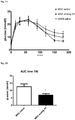
- FIGS 1A and 1B show the results of the IPGTT tests after acute administration of palm-PrRP31 (analog 43) and of control saline in lean mice.
- IPGTT was performed in overnight fasted male C57BL/6 mice.
- Fig. 1A shows glucose levels over time
- Fig. 1B shows Area Under Curve (AUC) through time of 30 min.
- AUC Area Under Curve
- IPGTT glucose levels were lower in mice given analog 43 instead of saline, particularly early in the experiment. Total area under the curve was also clearly lower in analog 43 mice.
- Obese mice were created using MSG. L-glutamic acid sodium salt hydrate (Sigma, St. Louis, USA) was subcutaneously (SC) administered to newborn male mice, at a dose of 4 mg/g body weight, daily from postnatal days 2 to 8 to induce obesity.
- SC subcutaneously
- mice were fasted overnight and IPGTT was performed. After initial blood glucose measurement, 2 g/kg glucose solution was administered IP. Blood glucose was then measured at 15, 30, 60, 120 and 180 min post injection as described above.
- Figs. 2A and 2B represent IPGTT results after 10 days of administration of palm-PrRP31 (analog 43) to the obese MSG and control NMRI mice.
- Fig. 2A shows resulting glucose levels over time
- Fig. 2B compares Area Under Curve (AUC) through 180 min. IPGTT blood glucose levels were lower in the mice given analog 43 than those administered saline, particularly later in the trial after the initial blood glucose peak was reached. Area under the curve was also substantially lower in mice receiving analog 43.
- AUC Area Under Curve
- Db/db male mice and their respective controls were acclimatized after arrival, housed 2-3 mice per cage, and used in the experiment at age 11-12 weeks. Mice had free access to food and water, and were subjected to a 14-day experiment.
- Fig. 3 compares IPGTT glucose levels after 14 days of repeated administration of palm-PrRP31 (analog 43) vs. saline to diabetic db/db mice. Glucose levels are shown for the end of the experiment (420 min), and are significantly lower in the diabetic mice where analog 43 were administered.
- Fig. 4 illustrates a plot of glucose levels after acute administration of palm-PrRP31 in rats.
- IPGTT was performed in overnight fasted male Wistar rats.
- Blood glucose levels were measured at the beginning and over time after SC administration of palm-PrRP31 (analog 43) (5 mg/kg SC) or saline. As shown, saline rats on average experienced a large spike in blood glucose and the rats given analog 43 did not.
- the ZDF rats were treated with vehicle or analogs 43 and 52 (1 and 5 mg/kg IP) dissolved in phosphate buffered saline, pH 6, twice daily for 21 days and sacrificed on day 22. Food intake was measured daily up to day 22. Leptin, insulin, cholesterol and HbA1c levels were measured on day 21. Glucose tolerance test (OGTT) was also performed on day 21.
- OGTT Glucose tolerance test
- Table 3 shows cumulative food intake at days 0, 7, 14 and 21. Food intake in free fed ZDF diabetic rats was significantly lowered after chronic IP treatment with analogs 43 and 52 at a dose of 5 mg/kg twice daily compared to controls treated with vehicle.
- Table 4 describes metabolic parameters on day 21, at the end of experiment. Blood cholesterol levels were significantly lowered after repeated treatment with analog 43 at a dose of 1 and 5 mg/kg twice daily compared to controls.
- Fig. 5 shows the results for the OGTT after 21 days of administration of palm-PrRP31 (analog 43).
- Fig. 5A shows resulting glucose levels over time
- Fig. 5B compares Area Under Curve (AUC) through 180 min.
- AUC Area Under Curve
- Rats were subjected to a 21-day food intake experiment.
- Fig. 5A illustrates resulting changes in glucose levels (delta glucose) over time
- Fig. 5B illustrates Area Under Curve (AUC) through 180 min.
Landscapes
- Health & Medical Sciences (AREA)
- Chemical & Material Sciences (AREA)
- Life Sciences & Earth Sciences (AREA)
- General Health & Medical Sciences (AREA)
- Medicinal Chemistry (AREA)
- Organic Chemistry (AREA)
- Pharmacology & Pharmacy (AREA)
- Veterinary Medicine (AREA)
- Engineering & Computer Science (AREA)
- Bioinformatics & Cheminformatics (AREA)
- Public Health (AREA)
- Animal Behavior & Ethology (AREA)
- Proteomics, Peptides & Aminoacids (AREA)
- Epidemiology (AREA)
- Gastroenterology & Hepatology (AREA)
- Endocrinology (AREA)
- Biochemistry (AREA)
- Biophysics (AREA)
- Genetics & Genomics (AREA)
- Molecular Biology (AREA)
- Zoology (AREA)
- Diabetes (AREA)
- Immunology (AREA)
- Chemical Kinetics & Catalysis (AREA)
- General Chemical & Material Sciences (AREA)
- Toxicology (AREA)
- Emergency Medicine (AREA)
- Hematology (AREA)
- Obesity (AREA)
- Nuclear Medicine, Radiotherapy & Molecular Imaging (AREA)
- Medicines That Contain Protein Lipid Enzymes And Other Medicines (AREA)
- Peptides Or Proteins (AREA)
Claims (19)
- Ein lipidiertes Prolactin freisetzendes Peptid (PrRP) mit der Formel:
(X)kRmHnHSqEuRTPDINPAWYmoRprRPsGRt-NH2 (Formel 2; SEQ ID NO: 2), oder
(X)TPDINPAWYmoRprRPsGRt-NH2 (Formel 3; SEQ ID NO: 3),
worin
k ist Serin, Threonin oder Diaminopropionsäure;
m ist Threonin, Alanin oder Methylalanin;
n ist Glutamin oder Arginin;
q ist Methionin oder Norleucin;
u ist Threonin oder Isoleucin;
o ist Glycin oder Serin;
p ist Glycin, Alanin, Prolin oder N-Methylglycin;
r ist Isoleucin, Alanin oder Phenylglycin;
s ist Valin oder Phenylglycin; und
t ist Phenylalanin, Tryptophan, Pyroglutaminsäure oder eine Aminosäure mit einer Seitenkette, die CH2-Ar oder CH2-S-CH2-Ar enthält, wobei Ar für Phenyl oder Naphthyl, gegebenenfalls substituiert mit Halogen, Methyl oder Nitro, steht,
worin X = X1 oder X2X1;
worin X1 eine C8-C18-Fettsäure, vorzugsweise eine C12-C16-Fettsäure, ist, die entweder direkt oder über X2 an eine Aminosäure mit mindestens einer freien Aminogruppe, SH-Gruppe oder OH-Gruppe gebunden ist;
und worin X2 ein hydrophiler Linker ist, ausgewählt aus der Gruppe, bestehend aus Polyoxyethylen-Einheit, einer Arylalkyl-Einheit und einer gesättigten oder ungesättigten, linearen oder verzweigten C3-C8-Kohlenwasserstoffkette, worin ein oder mehrere Kohlenstoffatome durch Heteroatome ausgewählt aus einer Gruppe bestehend aus N, S und O ersetzt sein können, wobei die Kohlenwasserstoffkette mindestens eine Aminogruppe oder Carbonsäuregruppe trägt, von denen eine substituiert sein kann zur Bildung von:
CONH2;
NH-Polyoxyethylen;
COOM1; worin M1 ein Alkalimetall ist;
CN;
COOR1, COR1 oder CONHR1; worin R1 Niederalkyl, Arylalkyl, Polyoxyethylen, Methylpolyoxyethylen oder Aminoethylpolyoxyethylen ist;
(CHOH)nR2, wobei R2 H oder COOH ist und n eine ganze Zahl von 2 bis 10 ist; oder (CH2)nN+(R'3), worin jedes R' unabhängig H oder C1-C4-Alkyl ist,
und worin in Formel 2 kRmHnHSqEuRTPDINPAWYMoRp (SEQ ID NO: 35) gegebenenfalls durch Eliminieren von 1 bis 11 Aminosäuren verkürzt ist,
zur Verwendung bei der Behandlung von Störungen, die durch einen erhöhten Glucosespiegel im Blut, ausgewählt aus Hyperglykämie oder Diabetes, gekennzeichnet sind. - Lipidiertes Analogon von Prolactin freisetzendem Peptid (PrRP) zur Verwendung nach Anspruch 1, mit der Formel:
(X)SRmHnHSqEuRTPDINPAWYmoRprRPsGRt-NH2 (Formel 4; SEQ ID NO: 4),
worin
m ist Threonin, Alanin oder Methylalanin;
n ist Glutamin oder Arginin;
q ist Methionin oder Norleucin;
u ist Threonin oder Isoleucin;
o ist Glycin oder Serin;
p ist Glycin, Alanin, Prolin oder N-Methylglycin;
r ist Isoleucin, Alanin oder Phenylglycin;
s ist Valin oder Phenylglycin; und
t ist Phenylalanin, Tryptophan, Pyroglutaminsäure oder eine Aminosäure mit einer Seitenkette, die CH2-Ar oder CH2-S-CH2-Ar enthält, wobei Ar für Phenyl oder Naphthyl, gegebenenfalls substituiert mit Halogen, Methyl oder Nitro, steht;
worin X = X1 oder X1X2, wobei X1 eine C8-C18-Fettsäure ist, die entweder direkt an eine Amidbindung oder über X2 an eine Aminosäure der Formel 4 gebunden ist. - Lipidiertes Analogon von Prolactin freisetzendem Peptid (PrRP) zur Verwendung nach Anspruch 1, wobei t ausgewählt ist aus der Gruppe bestehend aus Histidin, Benzylhistidin, Naphthylalanin, Tryptophan, Pyroglutaminsäure, Benzylcystein, Benzyl-O-glutamat, Norleucin, Dichlorphenylalanin, Tetrachlorphenylalanin, Pentafluorphenylalanin, Methyl-O-phenylalanin, Methyl-NH-phenylalanin und Nitrophenylalanin.
- Lipidiertes Analogon von Prolactin freisetzendem Peptid (PrRP) zur Verwendung nach Anspruch 1, mit der Formel:
(X)TPDINPAWYmoRGrRPsGRF-NH2 (Formel 5; SEQ ID NO: 5);
(X)TPDINPAWYmoRGrRPsGR 1-Nal-NH2 (Formel 6; SEQ ID NO: 6); oder
(X)RmHnHSNleETRTPDINPAWYmoRGrRPsGR 1-Nal-NH2 (Formel 7; SEQ ID NO: 7);
worin:
1-Nal ist Naphthylalanin;
m ist Threonin, Alanin oder Methylalanin;
n ist Glutamin oder Arginin;
q ist Methionin oder Norleucin;
u ist Threonin oder Isoleucin;
o ist Glycin oder Serin;
p ist Glycin, Alanin, Prolin oder N-Methylglycin;
r ist Isoleucin, Alanin oder Phenylglycin;
s ist Valin oder Phenylglycin; und
t ist Phenylalanin, Tryptophan, Pyroglutaminsäure oder eine Aminosäure mit einer Seitenkette, die CH2-Ar oder CH2-S-CH2-Ar enthält, wobei Ar für Phenyl oder Naphthyl, gegebenenfalls substituiert mit Halogen, Methyl oder Nitro, steht. - Lipidiertes Analogon von Prolactin freisetzendem Peptid (PrRP) zur Verwendung nach Anspruch 1, mit der Formel:
(X)SRTHRHSMEIRTPDINPAWYASRGIRPVGRF-NH2 (Formel 8; SEQ ID NO: 8); oder
(X)SRAHQHSMETRTPDINPAWYTGRGIRPVGRF-NH2 (Formel 9; SEQ ID NO 9). - Lipidiertes Analogon von Prolactin freisetzendem Peptid (PrRP) zur Verwendung nach Anspruch 1, mit der Formel:
(X)TPDINPAWYASRGIRPVGRF-NH2 (Formel 10; SEQ ID NO: 10); oder
(X)SRTHRHSMEIRTPDINPAWYASRGIRPVGRF-NH2 (Formel 8; SEQ ID NO: 8);
worin X = X1 oder X2X1 ist, wobei X1 eine C12 bis C16 Fettsäure ist, die entweder direkt durch eine Amidbindung oder durch X2 an eine Aminosäure in der Formel 10 oder Formel 8 gebunden ist, und wobei X2 β-Alanin, γ-Aminobuttersäure, Polyoxyethylen oder γ-Glutaminsäure ist. - Das lipidierte Analogon von Prolactin freisetzenden Peptid (PrRP) zur Verwendung nach Anspruch 6, worin X1 ist Myristin- oder Palmitinsäure und X2 ist γ-Glutaminsäure oder Polyoxyethylen, und worin X1 ist an die Aminosäure 1, 11 oder 18 der Formel 8 oder an die Aminosäure 1, 5 oder 7 der Formel 10 gebunden, entweder direkt durch eine Amidbindung oder durch X2; vorzugsweise ist X1 an die Aminosäure 1 oder 11 der Formel 8 oder 1 oder 7 der Formel 10 gebunden.
- Lipidiertes Analogon von Prolactin freisetzendem Peptid (PrRP) zur Verwendung nach Anspruch 7, ausgewählt aus der Gruppe bestehend aus:
SRTHRHSMEIK(palm)TPDINPAWYASRGIRPVGRF-NH2 (SEQ ID NO: 12);
TPDINPK(palm)WYASRGIRPVGRF-NH2 (SEQ ID NO: 13); worin palm ist Palmitinsäure und X2 ist γ-Glutaminsäure oder Polyoxyethylen.
- Lipidiertes Analogon von Prolactin freisetzendem Peptid (PrRP) zur Verwendung nach Anspruch 7, ausgewählt aus der Gruppe bestehend aus:X1-SRAHQHSMETRTPDINPAWYTGRGIRPVGRF-NH2 (SEQ ID NO: 16);X1-SRTHRHSMEIRTPDINPAWYASRGIRPVGRF-NH2 (SEQ ID NO: 17);(N-palm)-SRTHRHSMEIRTPDINPAWYASRGIRPVGRF-NHMe (SEQ ID NO: 18);(N-palm)-SRTHRHSMEIRTPDINPAWYASRGIRPVGRF-NOMe (SEQ ID NO: 19);(N-myr)-TPDINPAWYTGRGIRPVGRF-NH2 (SEQ ID NO: 20);(N-myr)-TPDINPAWYASRGIRPVGRF-NH2 (SEQ ID NO: 21);(N-oct)-TPDINPAWYASRGIRPVGRF-NH2 (SEQ ID NO: 22);(N-dec)-TPDINPAWYASRGIRPVGRF-NH2 (SEQ ID NO: 23);(N-dodec)-TPDINPAWYASRGIRPVGRF-NH2 (SEQ ID NO: 24);X1-SRAHQHS Nle ETRTPDINPAWYTGRGIRPVGRF-NH2 (SEQ ID NO: 25);X1-SRAHQHS Nle ETRTPDINPAWYTGRGIRPVGR 1-Nal-NH2 (SEQ ID NO: 26);X1-SRAHQHS Nle ETRTPDINPAWYTGRGIRPVGR PheCl2-NH2 (SEQ ID NO: 27);X1-SRAHQHS Nle ETRTPDINPAWYTGRGIRPVGR PheNO2-NH2 (SEQ ID NO: 28);X1-SRAHQHS Nle ETRTPDINPAWYTGRGIRPVGR PheF5-NH2 (SEQ ID NO: 29);X1-SRAHQHS Nle ETRTPDINPAWYTGRGIRPVGRY-NH2 (SEQ ID NO: 30);X1-SRAHRHS Nle EIRTPDINPAWYASRGIRPVGRY-NH2 (SEQ ID NO: 31);(N-myr)-Nle-ETRTPDINPAWYTGRGIRPVGRF-NH2 (SEQ ID NO: 32);(N-myr)-QHSMETRTPDINPAWYTGRGIRPVGRF-NH2 (SEQ ID NO: 33); und(N-myr)-QHSMETRTPDINPAWYASRGIRPVGRF-NH2 (SEQ ID NO: 34);
worin X = X1 oder X1', X1' ist Palmitinsäure, Myristinsäure oder Stearinsäure; X1 ist Palmitinsäure oder Myristinsäure. - Lipidiertes Analogon von Prolactin freisetzendem Peptid (PrRP) mit der Formel:
(X)kRmHnHSqEuRTPDINPAWYmoRprRPsGRt-NH2 (Formel 2; SEQ ID NO: 2), oder
(X)TPDINPAWYmoRprRPsGRt-NH2 (Formel 3; SEQ ID NO: 3); worin
k ist Serin, Threonin oder Diaminopropionsäure;
m ist Threonin, Alanin oder Methylalanin;
n ist Glutamin oder Arginin;
q ist Methionin oder Norleucin;
u ist Threonin oder Isoleucin;
o ist Glycin oder Serin;
p ist Glycin, Alanin, Prolin oder N-Methylglycin;
r ist Isoleucin, Alanin oder Phenylglycin;
s ist Valin oder Phenylglycin;
t ist Phenylalanin, Tryptophan, Pyroglutaminsäure oder eine Aminosäure mit einer Seitenkette, die CH2-Ar oder CH2-S-CH2-Ar enthält, wobei Ar für Phenyl oder Naphthyl, gegebenenfalls substituiert mit Halogen, Methyl oder Nitro, steht,
worin X = X1 oder X2X1; worin X1 eine C8-C18-Fettsäure, vorzugsweise eine C12-C16-Fettsäure, ist, die entweder direkt oder über X2 an eine Aminosäure mit mindestens einer freien Aminogruppe, SH-Gruppe oder OH-Gruppe gebunden ist; und worin X2 ist ein hydrophiler Linker, ausgewählt aus der Gruppe bestehend aus Polyoxyethylen-Einheit, einer Arylalkyl-Einheit und einer gesättigten oder ungesättigten, linearen oder verzweigten C3-C8-Kohlenwasserstoffkette, worin ein oder mehrere Kohlenstoffatome durch Heteroatome ausgewählt aus einer Gruppe bestehend aus N, S und O ersetzt sein können, wobei die Kohlenwasserstoffkette mindestens eine Aminogruppe oder Carbonsäuregruppe trägt, von denen eine substituiert sein kann zur Bildung von:
CONH2;
NH-Polyoxyethylen;
COOM1; worin M1 ein Alkalimetall ist;
CN;
COOR1, COR1 oder CONHR1; worin R1 Niederalkyl, Arylalkyl, Polyoxyethylen, Methylpolyoxyethylen oder Aminoethylpolyoxyethylen ist;
(CHOH)nR2, wobei R2 H oder COOH ist und n eine ganze Zahl von 2 bis 10 ist; oder
(CH2)nN+(R'3), worin jedes R' unabhängig H oder C1-C4-Alkyl ist,
und worin in Formel 2 kRmHnHSqEuRTPDINPAWYmoRp (SEQ ID NO: 35) gegebenenfalls durch Eliminieren von 1 bis 11 Aminosäuren von seinem N-Terminus verkürzt ist;
Unter der Voraussetzung, dass, wenn X an die N-terminale Aminosäure der Formel 2 oder 3 gebunden ist, X ist X2X1. - Lipidiertes Analogon von Prolaktin freisetzendem Peptid (PrRP) nach Anspruch 10 mit der Formel:
(X)SRmHnHSqEuRTPDINPAWYmoRprRPsGRt-NH2 (Formel 4; SEQ ID NO: 4);
worin
m ist ausgewählt aus Threonin, Alanin oder Methylalanin;
n ist Glutamin oder Arginin;
q ist Methionin oder Norleucin;
u ist Threonin oder Isoleucin;
o ist Glycin oder Serin;
p ist Glycin, Alanin, Prolin oder N-Methylglycin;
r ist Isoleucin, Alanin oder Phenylglycin;
s ist Valin oder Phenylglycin;
t ist Phenylalanin, Tryptophan, Pyroglutaminsäure oder eine Aminosäure mit einer Seitenkette, die CH2-Ar oder CH2-S-CH2-Ar enthält, wobei Ar für Phenyl oder Naphthyl, gegebenenfalls substituiert mit Halogen, Methyl oder Nitro, steht, und X1 ist eine C10-C18-Fettsäure. - Lipidiertes Analogon von Prolactin freisetzendem Peptid (PrRP) nach einem der Ansprüche 10 oder 11, worin t ist ausgewählt aus der Gruppe bestehend aus Histidin, Benzylhistidin, Naphthylalanin, Tryptophan, Pyroglutaminsäure, Benzylcystein, Benzyl-O-glutamat, Norleucin, Dichlorphenylalanin, Tetrachlorphenylalanin, Pentafluorphenylalanin, Methyl-O-phenylalanin, Methyl-NH-phenylalanin und Nitrophenylalanin.
- Lipidiertes Analogon von Prolaktin freisetzendem Peptid (PrRP) nach Anspruch 10 mit der Formel:
(X)TPDINPAWYmoRGrRPsGRF-NH2 (Formel 5; SEQ ID NO: 5);
(X)TPDINPAWYmoRGrRPsGR 1-Nal-NH2 (Formel 6; SEQ ID NO: 6); oder
(X)RmHnHSNleETRTPDINPAWYmoRGrRPsGR 1-Nal-NH2 (Formel 7; SEQ ID NO: 7);
worin
1-Nal ist Naphthylalanin;
m ist Threonin, Alanin oder Methylalanin;
n ist Glutamin oder Arginin;
o ist Glycin oder Serin;
r ist Isoleucin, Alanin oder Phenylglycin;
s ist Valin oder Phenylglycin. - Lipidiertes Analogon von Prolactin freisetzendem Peptid (PrRP) nach einem der Ansprüche 10 bis 13 mit der Formel:
(X)SRTHRHSMEIRTPDINPAWYASRGIRPVGRF-NH2 (Formel 8; SEQ ID NO: 8); oder
(X)SRAHQHSMETRTPDINPAWYTGRGIRPVGRF-NH2 (Formel 9; SEQ ID NO: 9). - Lipidiertes PrRP-Peptid nach Anspruch 10, mit der Formel:
(X)TPDINPAWYASRGIRPVGRF-NH2 (Formel 10; SEQ ID NO: 10), oder
(X)SRTHRHSMEIRTPDINPAWYASRGIRPVGRF-NH2 (Formel 8; SEQ ID NO: 8);
worin X1 ist eine C12 bis C16-Fettsäure, und worin X2 ist β-Alanin, γ-Aminobuttersäure, Polyoxyethylen und γ-Glutaminsäure;
vorzugsweise X1 ist Myristinsäure oder Palmitinsäure und X2 ist γ-Glutaminsäure oder Polyoxyethylen. - Lipidiertes Analogon von Prolactin freisetzendem Peptid (PrRP) nach Anspruch 15 mit der Formel
(X)TPDINPAWYASRGIRPVGRF-NH2 (Formel 10; SEQ ID NO: 10), oder
(X)SRTHRHSMEIRTPDINPAWYASRGIRPVGRF-NH2 (Formel 8; SEQ ID NO: 8);
worin X1 ist Myristin- oder Palmitinsäure, die an eine der Aminosäuren 1 bis 22 der Formel 8 oder 1 bis 12 der Formel 8, entweder direkt durch eine Amidbindung oder durch X2 gebunden ist, und X2 ist Polyoxyethylen, β-Alanin, γ-Aminobuttersäure oder γ-Glutaminsäure, mit der Maßgabe, dass wenn X an die N-terminale Aminosäure der Formel 10 oder Formel 8 gebunden ist, X ist X2X1 und die an X1 gebundene Aminosäure ist ersetzt durch Lysin. - Lipidiertes Analogon von Prolactin freisetzendem Peptid (PrRP) nach Anspruch 16, wobei X1 an die Aminosäuren 1, 11 oder 18 der Formel 8 oder 1, 5 oder 7 der Formel 10, entweder direkt durch eine Amidbindung oder durch X2 gebunden ist, wobei X2 ist γ-Glutaminsäure oder Polyoxyethylen, mit der Maßgabe, dass, wenn X an die Aminosäure in Position 1 der Peptidkette gebunden ist, X ist X2X1;
vorzugsweise X1 ist an die Aminosäuren 1 oder 11 der Formel 8 oder 1 oder 5 der Formel 10, entweder direkt durch eine Amidbindung oder durch X2, gebunden. - Lipidiertes Analogon von Prolaktin freisetzendem Peptid (PrRP) nach Anspruch 17, ausgewählt aus der Gruppe bestehend aus:
SRTHRHSMEIK(palm)TPDINPAWYASRGIRPVGRF-NH2 (SEQ ID NO: 12);
TPDINPK(palm)WYASRGIRPVGRF-NH2 (SEQ ID NO: 13); worin palm ist Palmitinsäure und X2 ist γ-Glutaminsäure oder Polyoxyethylen.
- Lipidiertes Analogon von Prolactin freisetzendem Peptid (PrRP) nach einem der Ansprüche 10 bis 18 zur Verwendung bei der Behandlung von Störungen, die durch einen erhöhten Glucosespiegel im Blut, ausgewählt aus Hyperglykämie oder Diabetes, gekennzeichnet sind.
Applications Claiming Priority (2)
| Application Number | Priority Date | Filing Date | Title |
|---|---|---|---|
| US201461927944P | 2014-01-15 | 2014-01-15 | |
| PCT/IB2015/000474 WO2015107428A2 (en) | 2014-01-15 | 2015-01-15 | Lipidated peptides for lowering blood glucose |
Publications (2)
| Publication Number | Publication Date |
|---|---|
| EP3094643A2 EP3094643A2 (de) | 2016-11-23 |
| EP3094643B1 true EP3094643B1 (de) | 2018-10-17 |
Family
ID=53189088
Family Applications (1)
| Application Number | Title | Priority Date | Filing Date |
|---|---|---|---|
| EP15723290.1A Active EP3094643B1 (de) | 2014-01-15 | 2015-01-15 | Lipophile peptide zur senkung des blutglucosespiegels |
Country Status (7)
| Country | Link |
|---|---|
| US (2) | US20150196651A1 (de) |
| EP (1) | EP3094643B1 (de) |
| JP (1) | JP6342016B2 (de) |
| AU (1) | AU2015207776B2 (de) |
| CA (1) | CA2935026C (de) |
| IL (1) | IL246618B (de) |
| WO (1) | WO2015107428A2 (de) |
Families Citing this family (5)
| Publication number | Priority date | Publication date | Assignee | Title |
|---|---|---|---|---|
| CZ309217B6 (cs) | 2014-05-27 | 2022-06-01 | Ústav Organické Chemie A Biochemie Av Čr, V.V.I. | Lipidované peptidy jako neuroprotektiva |
| EP3842449A1 (de) * | 2019-12-23 | 2021-06-30 | Merck Sharp & Dohme Corp. | Geklammerte olefin-co-agonisten der glucagon- und glp-1-rezeptoren |
| EP3842061A1 (de) * | 2019-12-23 | 2021-06-30 | Merck Sharp & Dohme Corp. | Geheftete triazol-co-agonisten der glucagon- und glp-1-rezeptoren |
| WO2023078478A1 (en) * | 2021-11-08 | 2023-05-11 | Ustav Organicke Chemie A Biochemie Av Cr, V. V. I. | Lipidized cocaine- and amphetamine-regulated transcript peptide analogues as anti-obesity and neuroprotective agents |
| CZ2022499A3 (cs) * | 2022-11-29 | 2024-06-05 | Ăšstav organickĂ© chemie a biochemie AV ÄŚR, v. v. i. | Palmitovaný analog peptidu uvolňujícího prolaktin určený pro intranasální podání |
Family Cites Families (6)
| Publication number | Priority date | Publication date | Assignee | Title |
|---|---|---|---|---|
| US6703381B1 (en) * | 1998-08-14 | 2004-03-09 | Nobex Corporation | Methods for delivery therapeutic compounds across the blood-brain barrier |
| EP1623994A3 (de) * | 1999-05-17 | 2008-07-16 | ConjuChem Biotechnologies Inc. | Schutz endogener therapeutisch aktiver Peptide vor Peptidaseaktivität durch Konjugation an Blutbestandteile |
| US20040152769A1 (en) * | 2002-11-09 | 2004-08-05 | Ekwuribe Nnochiri Nkem | Modified carbamate-containing prodrugs and methods of synthesizing same |
| WO2006066258A2 (en) * | 2004-12-17 | 2006-06-22 | Neose Technologies, Inc. | Lipoconjugation of peptides |
| RU2010114049A (ru) * | 2007-09-11 | 2011-10-20 | Мондобайотек Лабораториз Аг (Li) | Cgrp в качестве терапевтического средства |
| CZ2012476A3 (cs) * | 2012-07-12 | 2014-01-22 | Ústav organické chemie a biochemie Akademie věd ČR, v. v. i. | Lipidované peptidy jako antiobezitika |
-
2015
- 2015-01-15 EP EP15723290.1A patent/EP3094643B1/de active Active
- 2015-01-15 JP JP2016564443A patent/JP6342016B2/ja active Active
- 2015-01-15 AU AU2015207776A patent/AU2015207776B2/en active Active
- 2015-01-15 CA CA2935026A patent/CA2935026C/en active Active
- 2015-01-15 US US14/598,160 patent/US20150196651A1/en not_active Abandoned
- 2015-01-15 WO PCT/IB2015/000474 patent/WO2015107428A2/en not_active Ceased
-
2016
- 2016-04-26 US US15/138,631 patent/US10350271B2/en active Active
- 2016-07-05 IL IL246618A patent/IL246618B/en active IP Right Grant
Non-Patent Citations (1)
| Title |
|---|
| None * |
Also Published As
| Publication number | Publication date |
|---|---|
| US10350271B2 (en) | 2019-07-16 |
| IL246618B (en) | 2021-01-31 |
| WO2015107428A3 (en) | 2015-11-26 |
| AU2015207776A1 (en) | 2016-07-21 |
| US20160228563A1 (en) | 2016-08-11 |
| IL246618A0 (en) | 2016-12-29 |
| WO2015107428A2 (en) | 2015-07-23 |
| EP3094643A2 (de) | 2016-11-23 |
| CA2935026A1 (en) | 2015-07-23 |
| JP6342016B2 (ja) | 2018-06-13 |
| AU2015207776B2 (en) | 2017-06-15 |
| US20150196651A1 (en) | 2015-07-16 |
| JP2017505810A (ja) | 2017-02-23 |
| CA2935026C (en) | 2018-11-13 |
Similar Documents
| Publication | Publication Date | Title |
|---|---|---|
| US20240209054A1 (en) | Gip agonist compounds and methods | |
| EP1797109B1 (de) | Mischungen von polypeptiden, zusammensetzungen, die diese enthalten, und verfahren zu deren herstellung, und deren anwendungen | |
| CN101111515B (zh) | 胰多肽家族基序、包含该基序的多肽和方法 | |
| KR102505628B1 (ko) | 글루카곤 및 glp-1 수용체의 장기-작용성 공-효능제 | |
| US10350271B2 (en) | Lipidated peptides for lowering blood glucose | |
| US7485620B2 (en) | Pharmaceutical compositions comprising unacylated ghrelin and therapeutical uses thereof | |
| TW201202265A (en) | Glucagon analogues | |
| CN115957297A (zh) | 药物组合物 | |
| TWI250021B (en) | Pharmaceutical composition for use in the treatment of an inflammatory autoimmune disease or condition | |
| WO2007030573A2 (en) | Polypeptides useful for molecular weight determinations | |
| JP2022023179A (ja) | アシル化オキシントモジュリンペプチド類似体 | |
| US20160331812A1 (en) | Lipidated peptides as anti-obesity agents | |
| JP2022513176A (ja) | オキシントモジュリンペプチド類似体製剤 | |
| JP2014531469A (ja) | Kv1.3カリウムチャネルの薬理学的標的化による肥満症および肥満症関連障害の治療 | |
| EP2968469A2 (de) | Peptide mit nichtnatürlichen aminosäuren und verfahren zur herstellung und verwendung davon | |
| CN103626866B (zh) | 胰多肽家族基序、包含该基序的多肽和方法 | |
| AU2023404843A1 (en) | Palmitoylated analogue of prolactin-releasing peptide for intranasal administration | |
| EP4741420A1 (de) | Pharmazeutische zusammensetzung zur prävention oder behandlung von adipositas mit glp-analog als wirkstoff | |
| TW202517291A (zh) | 組合療法 |
Legal Events
| Date | Code | Title | Description |
|---|---|---|---|
| PUAI | Public reference made under article 153(3) epc to a published international application that has entered the european phase |
Free format text: ORIGINAL CODE: 0009012 |
|
| 17P | Request for examination filed |
Effective date: 20160711 |
|
| AK | Designated contracting states |
Kind code of ref document: A2 Designated state(s): AL AT BE BG CH CY CZ DE DK EE ES FI FR GB GR HR HU IE IS IT LI LT LU LV MC MK MT NL NO PL PT RO RS SE SI SK SM TR |
|
| AX | Request for extension of the european patent |
Extension state: BA ME |
|
| DAX | Request for extension of the european patent (deleted) | ||
| GRAP | Despatch of communication of intention to grant a patent |
Free format text: ORIGINAL CODE: EPIDOSNIGR1 |
|
| STAA | Information on the status of an ep patent application or granted ep patent |
Free format text: STATUS: GRANT OF PATENT IS INTENDED |
|
| INTG | Intention to grant announced |
Effective date: 20180509 |
|
| GRAS | Grant fee paid |
Free format text: ORIGINAL CODE: EPIDOSNIGR3 |
|
| GRAA | (expected) grant |
Free format text: ORIGINAL CODE: 0009210 |
|
| STAA | Information on the status of an ep patent application or granted ep patent |
Free format text: STATUS: THE PATENT HAS BEEN GRANTED |
|
| RAP1 | Party data changed (applicant data changed or rights of an application transferred) |
Owner name: FYZIOLOGICKY USTAV AKADEMIE VED CESKE REPUBLIKY, V Owner name: USTAV ORGANICKE CHEMIE A BIOCHEMIE AKADEMIE VED CR |
|
| AK | Designated contracting states |
Kind code of ref document: B1 Designated state(s): AL AT BE BG CH CY CZ DE DK EE ES FI FR GB GR HR HU IE IS IT LI LT LU LV MC MK MT NL NO PL PT RO RS SE SI SK SM TR |
|
| REG | Reference to a national code |
Ref country code: GB Ref legal event code: FG4D |
|
| REG | Reference to a national code |
Ref country code: CH Ref legal event code: EP |
|
| REG | Reference to a national code |
Ref country code: IE Ref legal event code: FG4D |
|
| REG | Reference to a national code |
Ref country code: DE Ref legal event code: R096 Ref document number: 602015018301 Country of ref document: DE Ref country code: AT Ref legal event code: REF Ref document number: 1053910 Country of ref document: AT Kind code of ref document: T Effective date: 20181115 |
|
| REG | Reference to a national code |
Ref country code: SE Ref legal event code: TRGR |
|
| REG | Reference to a national code |
Ref country code: NL Ref legal event code: MP Effective date: 20181017 |
|
| REG | Reference to a national code |
Ref country code: LT Ref legal event code: MG4D |
|
| REG | Reference to a national code |
Ref country code: AT Ref legal event code: MK05 Ref document number: 1053910 Country of ref document: AT Kind code of ref document: T Effective date: 20181017 |
|
| PG25 | Lapsed in a contracting state [announced via postgrant information from national office to epo] |
Ref country code: NL Free format text: LAPSE BECAUSE OF FAILURE TO SUBMIT A TRANSLATION OF THE DESCRIPTION OR TO PAY THE FEE WITHIN THE PRESCRIBED TIME-LIMIT Effective date: 20181017 |
|
| PG25 | Lapsed in a contracting state [announced via postgrant information from national office to epo] |
Ref country code: LV Free format text: LAPSE BECAUSE OF FAILURE TO SUBMIT A TRANSLATION OF THE DESCRIPTION OR TO PAY THE FEE WITHIN THE PRESCRIBED TIME-LIMIT Effective date: 20181017 Ref country code: ES Free format text: LAPSE BECAUSE OF FAILURE TO SUBMIT A TRANSLATION OF THE DESCRIPTION OR TO PAY THE FEE WITHIN THE PRESCRIBED TIME-LIMIT Effective date: 20181017 Ref country code: NO Free format text: LAPSE BECAUSE OF FAILURE TO SUBMIT A TRANSLATION OF THE DESCRIPTION OR TO PAY THE FEE WITHIN THE PRESCRIBED TIME-LIMIT Effective date: 20190117 Ref country code: AT Free format text: LAPSE BECAUSE OF FAILURE TO SUBMIT A TRANSLATION OF THE DESCRIPTION OR TO PAY THE FEE WITHIN THE PRESCRIBED TIME-LIMIT Effective date: 20181017 Ref country code: FI Free format text: LAPSE BECAUSE OF FAILURE TO SUBMIT A TRANSLATION OF THE DESCRIPTION OR TO PAY THE FEE WITHIN THE PRESCRIBED TIME-LIMIT Effective date: 20181017 Ref country code: IS Free format text: LAPSE BECAUSE OF FAILURE TO SUBMIT A TRANSLATION OF THE DESCRIPTION OR TO PAY THE FEE WITHIN THE PRESCRIBED TIME-LIMIT Effective date: 20190217 Ref country code: LT Free format text: LAPSE BECAUSE OF FAILURE TO SUBMIT A TRANSLATION OF THE DESCRIPTION OR TO PAY THE FEE WITHIN THE PRESCRIBED TIME-LIMIT Effective date: 20181017 Ref country code: BG Free format text: LAPSE BECAUSE OF FAILURE TO SUBMIT A TRANSLATION OF THE DESCRIPTION OR TO PAY THE FEE WITHIN THE PRESCRIBED TIME-LIMIT Effective date: 20190117 Ref country code: HR Free format text: LAPSE BECAUSE OF FAILURE TO SUBMIT A TRANSLATION OF THE DESCRIPTION OR TO PAY THE FEE WITHIN THE PRESCRIBED TIME-LIMIT Effective date: 20181017 Ref country code: PL Free format text: LAPSE BECAUSE OF FAILURE TO SUBMIT A TRANSLATION OF THE DESCRIPTION OR TO PAY THE FEE WITHIN THE PRESCRIBED TIME-LIMIT Effective date: 20181017 |
|
| PGFP | Annual fee paid to national office [announced via postgrant information from national office to epo] |
Ref country code: GB Payment date: 20190227 Year of fee payment: 18 |
|
| PG25 | Lapsed in a contracting state [announced via postgrant information from national office to epo] |
Ref country code: RS Free format text: LAPSE BECAUSE OF FAILURE TO SUBMIT A TRANSLATION OF THE DESCRIPTION OR TO PAY THE FEE WITHIN THE PRESCRIBED TIME-LIMIT Effective date: 20181017 Ref country code: GR Free format text: LAPSE BECAUSE OF FAILURE TO SUBMIT A TRANSLATION OF THE DESCRIPTION OR TO PAY THE FEE WITHIN THE PRESCRIBED TIME-LIMIT Effective date: 20190118 Ref country code: PT Free format text: LAPSE BECAUSE OF FAILURE TO SUBMIT A TRANSLATION OF THE DESCRIPTION OR TO PAY THE FEE WITHIN THE PRESCRIBED TIME-LIMIT Effective date: 20190217 Ref country code: AL Free format text: LAPSE BECAUSE OF FAILURE TO SUBMIT A TRANSLATION OF THE DESCRIPTION OR TO PAY THE FEE WITHIN THE PRESCRIBED TIME-LIMIT Effective date: 20181017 |
|
| REG | Reference to a national code |
Ref country code: DE Ref legal event code: R097 Ref document number: 602015018301 Country of ref document: DE |
|
| PG25 | Lapsed in a contracting state [announced via postgrant information from national office to epo] |
Ref country code: DK Free format text: LAPSE BECAUSE OF FAILURE TO SUBMIT A TRANSLATION OF THE DESCRIPTION OR TO PAY THE FEE WITHIN THE PRESCRIBED TIME-LIMIT Effective date: 20181017 Ref country code: IT Free format text: LAPSE BECAUSE OF FAILURE TO SUBMIT A TRANSLATION OF THE DESCRIPTION OR TO PAY THE FEE WITHIN THE PRESCRIBED TIME-LIMIT Effective date: 20181017 |
|
| PLBE | No opposition filed within time limit |
Free format text: ORIGINAL CODE: 0009261 |
|
| STAA | Information on the status of an ep patent application or granted ep patent |
Free format text: STATUS: NO OPPOSITION FILED WITHIN TIME LIMIT |
|
| PG25 | Lapsed in a contracting state [announced via postgrant information from national office to epo] |
Ref country code: RO Free format text: LAPSE BECAUSE OF FAILURE TO SUBMIT A TRANSLATION OF THE DESCRIPTION OR TO PAY THE FEE WITHIN THE PRESCRIBED TIME-LIMIT Effective date: 20181017 Ref country code: EE Free format text: LAPSE BECAUSE OF FAILURE TO SUBMIT A TRANSLATION OF THE DESCRIPTION OR TO PAY THE FEE WITHIN THE PRESCRIBED TIME-LIMIT Effective date: 20181017 Ref country code: SM Free format text: LAPSE BECAUSE OF FAILURE TO SUBMIT A TRANSLATION OF THE DESCRIPTION OR TO PAY THE FEE WITHIN THE PRESCRIBED TIME-LIMIT Effective date: 20181017 Ref country code: MC Free format text: LAPSE BECAUSE OF FAILURE TO SUBMIT A TRANSLATION OF THE DESCRIPTION OR TO PAY THE FEE WITHIN THE PRESCRIBED TIME-LIMIT Effective date: 20181017 Ref country code: SK Free format text: LAPSE BECAUSE OF FAILURE TO SUBMIT A TRANSLATION OF THE DESCRIPTION OR TO PAY THE FEE WITHIN THE PRESCRIBED TIME-LIMIT Effective date: 20181017 |
|
| 26N | No opposition filed |
Effective date: 20190718 |
|
| PG25 | Lapsed in a contracting state [announced via postgrant information from national office to epo] |
Ref country code: SI Free format text: LAPSE BECAUSE OF FAILURE TO SUBMIT A TRANSLATION OF THE DESCRIPTION OR TO PAY THE FEE WITHIN THE PRESCRIBED TIME-LIMIT Effective date: 20181017 |
|
| PG25 | Lapsed in a contracting state [announced via postgrant information from national office to epo] |
Ref country code: TR Free format text: LAPSE BECAUSE OF FAILURE TO SUBMIT A TRANSLATION OF THE DESCRIPTION OR TO PAY THE FEE WITHIN THE PRESCRIBED TIME-LIMIT Effective date: 20181017 |
|
| PG25 | Lapsed in a contracting state [announced via postgrant information from national office to epo] |
Ref country code: MT Free format text: LAPSE BECAUSE OF NON-PAYMENT OF DUE FEES Effective date: 20190115 |
|
| PG25 | Lapsed in a contracting state [announced via postgrant information from national office to epo] |
Ref country code: CZ Free format text: LAPSE BECAUSE OF NON-PAYMENT OF DUE FEES Effective date: 20200115 |
|
| PG25 | Lapsed in a contracting state [announced via postgrant information from national office to epo] |
Ref country code: CY Free format text: LAPSE BECAUSE OF FAILURE TO SUBMIT A TRANSLATION OF THE DESCRIPTION OR TO PAY THE FEE WITHIN THE PRESCRIBED TIME-LIMIT Effective date: 20181017 |
|
| PG25 | Lapsed in a contracting state [announced via postgrant information from national office to epo] |
Ref country code: HU Free format text: LAPSE BECAUSE OF FAILURE TO SUBMIT A TRANSLATION OF THE DESCRIPTION OR TO PAY THE FEE WITHIN THE PRESCRIBED TIME-LIMIT; INVALID AB INITIO Effective date: 20150115 |
|
| PG25 | Lapsed in a contracting state [announced via postgrant information from national office to epo] |
Ref country code: MK Free format text: LAPSE BECAUSE OF FAILURE TO SUBMIT A TRANSLATION OF THE DESCRIPTION OR TO PAY THE FEE WITHIN THE PRESCRIBED TIME-LIMIT Effective date: 20181017 |
|
| P01 | Opt-out of the competence of the unified patent court (upc) registered |
Effective date: 20230621 |
|
| P02 | Opt-out of the competence of the unified patent court (upc) changed |
Effective date: 20230830 |
|
| REG | Reference to a national code |
Ref country code: CH Ref legal event code: U11 Free format text: ST27 STATUS EVENT CODE: U-0-0-U10-U11 (AS PROVIDED BY THE NATIONAL OFFICE) Effective date: 20260201 |
|
| PGFP | Annual fee paid to national office [announced via postgrant information from national office to epo] |
Ref country code: LU Payment date: 20260120 Year of fee payment: 12 |
|
| PGFP | Annual fee paid to national office [announced via postgrant information from national office to epo] |
Ref country code: SE Payment date: 20260122 Year of fee payment: 12 |
|
| PGFP | Annual fee paid to national office [announced via postgrant information from national office to epo] |
Ref country code: DE Payment date: 20260122 Year of fee payment: 12 Ref country code: IE Payment date: 20260116 Year of fee payment: 12 |
|
| PGFP | Annual fee paid to national office [announced via postgrant information from national office to epo] |
Ref country code: BE Payment date: 20260120 Year of fee payment: 12 |
|
| PGFP | Annual fee paid to national office [announced via postgrant information from national office to epo] |
Ref country code: FR Payment date: 20260120 Year of fee payment: 12 |
|
| PGFP | Annual fee paid to national office [announced via postgrant information from national office to epo] |
Ref country code: CH Payment date: 20260201 Year of fee payment: 12 |