EP3097121B1 - Molécules d'anticorps anti-pd-1 et leurs utilisations - Google Patents
Molécules d'anticorps anti-pd-1 et leurs utilisations Download PDFInfo
- Publication number
- EP3097121B1 EP3097121B1 EP15703384.6A EP15703384A EP3097121B1 EP 3097121 B1 EP3097121 B1 EP 3097121B1 EP 15703384 A EP15703384 A EP 15703384A EP 3097121 B1 EP3097121 B1 EP 3097121B1
- Authority
- EP
- European Patent Office
- Prior art keywords
- seq
- amino acid
- acid sequence
- bap049
- antibody molecule
- Prior art date
- Legal status (The legal status is an assumption and is not a legal conclusion. Google has not performed a legal analysis and makes no representation as to the accuracy of the status listed.)
- Active
Links
- 0 *NC(C1NC=CC(Oc2ccc3nc(N[C@@](CCCCCC4)C[C@@]4O)[s]c3c2)=C1)=O Chemical compound *NC(C1NC=CC(Oc2ccc3nc(N[C@@](CCCCCC4)C[C@@]4O)[s]c3c2)=C1)=O 0.000 description 1
- UFPFGVNKHCLJJO-SSKFGXFMSA-N C[C@@H](C(N[C@@H](C1CCCCC1)C(N(CCC1)[C@@H]1c1nc(C(c(cc2)ccc2F)=O)c[s]1)=O)=O)NC Chemical compound C[C@@H](C(N[C@@H](C1CCCCC1)C(N(CCC1)[C@@H]1c1nc(C(c(cc2)ccc2F)=O)c[s]1)=O)=O)NC UFPFGVNKHCLJJO-SSKFGXFMSA-N 0.000 description 1
- YCOYDOIWSSHVCK-UHFFFAOYSA-N Clc(cc1)ccc1Nc1c(cccc2)c2c(Cc2ccncc2)nn1 Chemical compound Clc(cc1)ccc1Nc1c(cccc2)c2c(Cc2ccncc2)nn1 YCOYDOIWSSHVCK-UHFFFAOYSA-N 0.000 description 1
Images






Classifications
-
- A—HUMAN NECESSITIES
- A61—MEDICAL OR VETERINARY SCIENCE; HYGIENE
- A61K—PREPARATIONS FOR MEDICAL, DENTAL OR TOILETRY PURPOSES
- A61K39/00—Medicinal preparations containing antigens or antibodies
- A61K39/395—Antibodies; Immunoglobulins; Immune serum, e.g. antilymphocytic serum
- A61K39/39533—Antibodies; Immunoglobulins; Immune serum, e.g. antilymphocytic serum against materials from animals
- A61K39/3955—Antibodies; Immunoglobulins; Immune serum, e.g. antilymphocytic serum against materials from animals against proteinaceous materials, e.g. enzymes, hormones, lymphokines
-
- A—HUMAN NECESSITIES
- A61—MEDICAL OR VETERINARY SCIENCE; HYGIENE
- A61K—PREPARATIONS FOR MEDICAL, DENTAL OR TOILETRY PURPOSES
- A61K45/00—Medicinal preparations containing active ingredients not provided for in groups A61K31/00 - A61K41/00
- A61K45/06—Mixtures of active ingredients without chemical characterisation, e.g. antiphlogistics and cardiaca
-
- A—HUMAN NECESSITIES
- A61—MEDICAL OR VETERINARY SCIENCE; HYGIENE
- A61P—SPECIFIC THERAPEUTIC ACTIVITY OF CHEMICAL COMPOUNDS OR MEDICINAL PREPARATIONS
- A61P1/00—Drugs for disorders of the alimentary tract or the digestive system
- A61P1/04—Drugs for disorders of the alimentary tract or the digestive system for ulcers, gastritis or reflux esophagitis, e.g. antacids, inhibitors of acid secretion, mucosal protectants
-
- A—HUMAN NECESSITIES
- A61—MEDICAL OR VETERINARY SCIENCE; HYGIENE
- A61P—SPECIFIC THERAPEUTIC ACTIVITY OF CHEMICAL COMPOUNDS OR MEDICINAL PREPARATIONS
- A61P1/00—Drugs for disorders of the alimentary tract or the digestive system
- A61P1/16—Drugs for disorders of the alimentary tract or the digestive system for liver or gallbladder disorders, e.g. hepatoprotective agents, cholagogues, litholytics
-
- A—HUMAN NECESSITIES
- A61—MEDICAL OR VETERINARY SCIENCE; HYGIENE
- A61P—SPECIFIC THERAPEUTIC ACTIVITY OF CHEMICAL COMPOUNDS OR MEDICINAL PREPARATIONS
- A61P1/00—Drugs for disorders of the alimentary tract or the digestive system
- A61P1/18—Drugs for disorders of the alimentary tract or the digestive system for pancreatic disorders, e.g. pancreatic enzymes
-
- A—HUMAN NECESSITIES
- A61—MEDICAL OR VETERINARY SCIENCE; HYGIENE
- A61P—SPECIFIC THERAPEUTIC ACTIVITY OF CHEMICAL COMPOUNDS OR MEDICINAL PREPARATIONS
- A61P11/00—Drugs for disorders of the respiratory system
-
- A—HUMAN NECESSITIES
- A61—MEDICAL OR VETERINARY SCIENCE; HYGIENE
- A61P—SPECIFIC THERAPEUTIC ACTIVITY OF CHEMICAL COMPOUNDS OR MEDICINAL PREPARATIONS
- A61P13/00—Drugs for disorders of the urinary system
- A61P13/08—Drugs for disorders of the urinary system of the prostate
-
- A—HUMAN NECESSITIES
- A61—MEDICAL OR VETERINARY SCIENCE; HYGIENE
- A61P—SPECIFIC THERAPEUTIC ACTIVITY OF CHEMICAL COMPOUNDS OR MEDICINAL PREPARATIONS
- A61P13/00—Drugs for disorders of the urinary system
- A61P13/12—Drugs for disorders of the urinary system of the kidneys
-
- A—HUMAN NECESSITIES
- A61—MEDICAL OR VETERINARY SCIENCE; HYGIENE
- A61P—SPECIFIC THERAPEUTIC ACTIVITY OF CHEMICAL COMPOUNDS OR MEDICINAL PREPARATIONS
- A61P15/00—Drugs for genital or sexual disorders; Contraceptives
-
- A—HUMAN NECESSITIES
- A61—MEDICAL OR VETERINARY SCIENCE; HYGIENE
- A61P—SPECIFIC THERAPEUTIC ACTIVITY OF CHEMICAL COMPOUNDS OR MEDICINAL PREPARATIONS
- A61P17/00—Drugs for dermatological disorders
-
- A—HUMAN NECESSITIES
- A61—MEDICAL OR VETERINARY SCIENCE; HYGIENE
- A61P—SPECIFIC THERAPEUTIC ACTIVITY OF CHEMICAL COMPOUNDS OR MEDICINAL PREPARATIONS
- A61P31/00—Antiinfectives, i.e. antibiotics, antiseptics, chemotherapeutics
-
- A—HUMAN NECESSITIES
- A61—MEDICAL OR VETERINARY SCIENCE; HYGIENE
- A61P—SPECIFIC THERAPEUTIC ACTIVITY OF CHEMICAL COMPOUNDS OR MEDICINAL PREPARATIONS
- A61P35/00—Antineoplastic agents
-
- A—HUMAN NECESSITIES
- A61—MEDICAL OR VETERINARY SCIENCE; HYGIENE
- A61P—SPECIFIC THERAPEUTIC ACTIVITY OF CHEMICAL COMPOUNDS OR MEDICINAL PREPARATIONS
- A61P35/00—Antineoplastic agents
- A61P35/02—Antineoplastic agents specific for leukemia
-
- A—HUMAN NECESSITIES
- A61—MEDICAL OR VETERINARY SCIENCE; HYGIENE
- A61P—SPECIFIC THERAPEUTIC ACTIVITY OF CHEMICAL COMPOUNDS OR MEDICINAL PREPARATIONS
- A61P35/00—Antineoplastic agents
- A61P35/04—Antineoplastic agents specific for metastasis
-
- A—HUMAN NECESSITIES
- A61—MEDICAL OR VETERINARY SCIENCE; HYGIENE
- A61P—SPECIFIC THERAPEUTIC ACTIVITY OF CHEMICAL COMPOUNDS OR MEDICINAL PREPARATIONS
- A61P37/00—Drugs for immunological or allergic disorders
- A61P37/02—Immunomodulators
-
- A—HUMAN NECESSITIES
- A61—MEDICAL OR VETERINARY SCIENCE; HYGIENE
- A61P—SPECIFIC THERAPEUTIC ACTIVITY OF CHEMICAL COMPOUNDS OR MEDICINAL PREPARATIONS
- A61P37/00—Drugs for immunological or allergic disorders
- A61P37/02—Immunomodulators
- A61P37/04—Immunostimulants
-
- A—HUMAN NECESSITIES
- A61—MEDICAL OR VETERINARY SCIENCE; HYGIENE
- A61P—SPECIFIC THERAPEUTIC ACTIVITY OF CHEMICAL COMPOUNDS OR MEDICINAL PREPARATIONS
- A61P43/00—Drugs for specific purposes, not provided for in groups A61P1/00-A61P41/00
-
- A—HUMAN NECESSITIES
- A61—MEDICAL OR VETERINARY SCIENCE; HYGIENE
- A61P—SPECIFIC THERAPEUTIC ACTIVITY OF CHEMICAL COMPOUNDS OR MEDICINAL PREPARATIONS
- A61P5/00—Drugs for disorders of the endocrine system
- A61P5/14—Drugs for disorders of the endocrine system of the thyroid hormones, e.g. T3, T4
-
- A—HUMAN NECESSITIES
- A61—MEDICAL OR VETERINARY SCIENCE; HYGIENE
- A61P—SPECIFIC THERAPEUTIC ACTIVITY OF CHEMICAL COMPOUNDS OR MEDICINAL PREPARATIONS
- A61P7/00—Drugs for disorders of the blood or the extracellular fluid
-
- C—CHEMISTRY; METALLURGY
- C07—ORGANIC CHEMISTRY
- C07K—PEPTIDES
- C07K16/00—Immunoglobulins [IG], e.g. monoclonal or polyclonal antibodies
- C07K16/18—Immunoglobulins [IG], e.g. monoclonal or polyclonal antibodies against material from animals or humans
- C07K16/28—Immunoglobulins [IG], e.g. monoclonal or polyclonal antibodies against material from animals or humans against receptors, cell surface antigens or cell surface determinants
- C07K16/2803—Immunoglobulins [IG], e.g. monoclonal or polyclonal antibodies against material from animals or humans against receptors, cell surface antigens or cell surface determinants against the immunoglobulin superfamily
- C07K16/2818—Immunoglobulins [IG], e.g. monoclonal or polyclonal antibodies against material from animals or humans against receptors, cell surface antigens or cell surface determinants against the immunoglobulin superfamily against CD28 or CD152
-
- C—CHEMISTRY; METALLURGY
- C07—ORGANIC CHEMISTRY
- C07K—PEPTIDES
- C07K16/00—Immunoglobulins [IG], e.g. monoclonal or polyclonal antibodies
- C07K16/18—Immunoglobulins [IG], e.g. monoclonal or polyclonal antibodies against material from animals or humans
- C07K16/28—Immunoglobulins [IG], e.g. monoclonal or polyclonal antibodies against material from animals or humans against receptors, cell surface antigens or cell surface determinants
- C07K16/2896—Immunoglobulins [IG], e.g. monoclonal or polyclonal antibodies against material from animals or humans against receptors, cell surface antigens or cell surface determinants against molecules with a "CD"-designation, not provided for elsewhere
-
- C—CHEMISTRY; METALLURGY
- C07—ORGANIC CHEMISTRY
- C07K—PEPTIDES
- C07K16/00—Immunoglobulins [IG], e.g. monoclonal or polyclonal antibodies
- C07K16/18—Immunoglobulins [IG], e.g. monoclonal or polyclonal antibodies against material from animals or humans
- C07K16/28—Immunoglobulins [IG], e.g. monoclonal or polyclonal antibodies against material from animals or humans against receptors, cell surface antigens or cell surface determinants
- C07K16/30—Immunoglobulins [IG], e.g. monoclonal or polyclonal antibodies against material from animals or humans against receptors, cell surface antigens or cell surface determinants from tumour cells
-
- G—PHYSICS
- G01—MEASURING; TESTING
- G01N—INVESTIGATING OR ANALYSING MATERIALS BY DETERMINING THEIR CHEMICAL OR PHYSICAL PROPERTIES
- G01N33/00—Investigating or analysing materials by specific methods not covered by groups G01N1/00 - G01N31/00
- G01N33/48—Biological material, e.g. blood, urine; Haemocytometers
- G01N33/50—Chemical analysis of biological material, e.g. blood, urine; Testing involving biospecific ligand binding methods; Immunological testing
- G01N33/53—Immunoassay; Biospecific binding assay; Materials therefor
- G01N33/566—Immunoassay; Biospecific binding assay; Materials therefor using specific carrier or receptor proteins as ligand binding reagents where possible specific carrier or receptor proteins are classified with their target compounds
-
- G—PHYSICS
- G01—MEASURING; TESTING
- G01N—INVESTIGATING OR ANALYSING MATERIALS BY DETERMINING THEIR CHEMICAL OR PHYSICAL PROPERTIES
- G01N33/00—Investigating or analysing materials by specific methods not covered by groups G01N1/00 - G01N31/00
- G01N33/48—Biological material, e.g. blood, urine; Haemocytometers
- G01N33/50—Chemical analysis of biological material, e.g. blood, urine; Testing involving biospecific ligand binding methods; Immunological testing
- G01N33/53—Immunoassay; Biospecific binding assay; Materials therefor
- G01N33/575—Immunoassay; Biospecific binding assay; Materials therefor for cancer
- G01N33/5758—Immunoassay; Biospecific binding assay; Materials therefor for cancer involving compounds serving as markers for tumours, cancers or neoplasias, e.g. cellular determinants, receptors, heat shock/stress proteins, A-protein, oligosaccharides or metabolites
-
- G—PHYSICS
- G01—MEASURING; TESTING
- G01N—INVESTIGATING OR ANALYSING MATERIALS BY DETERMINING THEIR CHEMICAL OR PHYSICAL PROPERTIES
- G01N33/00—Investigating or analysing materials by specific methods not covered by groups G01N1/00 - G01N31/00
- G01N33/48—Biological material, e.g. blood, urine; Haemocytometers
- G01N33/50—Chemical analysis of biological material, e.g. blood, urine; Testing involving biospecific ligand binding methods; Immunological testing
- G01N33/68—Chemical analysis of biological material, e.g. blood, urine; Testing involving biospecific ligand binding methods; Immunological testing involving proteins, peptides or amino acids
- G01N33/6854—Immunoglobulins
-
- C—CHEMISTRY; METALLURGY
- C07—ORGANIC CHEMISTRY
- C07K—PEPTIDES
- C07K2317/00—Immunoglobulins specific features
- C07K2317/20—Immunoglobulins specific features characterized by taxonomic origin
- C07K2317/24—Immunoglobulins specific features characterized by taxonomic origin containing regions, domains or residues from different species, e.g. chimeric, humanized or veneered
-
- C—CHEMISTRY; METALLURGY
- C07—ORGANIC CHEMISTRY
- C07K—PEPTIDES
- C07K2317/00—Immunoglobulins specific features
- C07K2317/30—Immunoglobulins specific features characterized by aspects of specificity or valency
- C07K2317/31—Immunoglobulins specific features characterized by aspects of specificity or valency multispecific
-
- C—CHEMISTRY; METALLURGY
- C07—ORGANIC CHEMISTRY
- C07K—PEPTIDES
- C07K2317/00—Immunoglobulins specific features
- C07K2317/50—Immunoglobulins specific features characterized by immunoglobulin fragments
- C07K2317/56—Immunoglobulins specific features characterized by immunoglobulin fragments variable (Fv) region, i.e. VH and/or VL
- C07K2317/565—Complementarity determining region [CDR]
-
- C—CHEMISTRY; METALLURGY
- C07—ORGANIC CHEMISTRY
- C07K—PEPTIDES
- C07K2317/00—Immunoglobulins specific features
- C07K2317/50—Immunoglobulins specific features characterized by immunoglobulin fragments
- C07K2317/56—Immunoglobulins specific features characterized by immunoglobulin fragments variable (Fv) region, i.e. VH and/or VL
- C07K2317/569—Single domain, e.g. dAb, sdAb, VHH, VNAR or nanobody®
-
- C—CHEMISTRY; METALLURGY
- C07—ORGANIC CHEMISTRY
- C07K—PEPTIDES
- C07K2317/00—Immunoglobulins specific features
- C07K2317/70—Immunoglobulins specific features characterized by effect upon binding to a cell or to an antigen
- C07K2317/74—Inducing cell proliferation
-
- C—CHEMISTRY; METALLURGY
- C07—ORGANIC CHEMISTRY
- C07K—PEPTIDES
- C07K2317/00—Immunoglobulins specific features
- C07K2317/70—Immunoglobulins specific features characterized by effect upon binding to a cell or to an antigen
- C07K2317/76—Antagonist effect on antigen, e.g. neutralization or inhibition of binding
-
- C—CHEMISTRY; METALLURGY
- C07—ORGANIC CHEMISTRY
- C07K—PEPTIDES
- C07K2317/00—Immunoglobulins specific features
- C07K2317/90—Immunoglobulins specific features characterized by (pharmaco)kinetic aspects or by stability of the immunoglobulin
- C07K2317/92—Affinity (KD), association rate (Ka), dissociation rate (Kd) or EC50 value
-
- G—PHYSICS
- G01—MEASURING; TESTING
- G01N—INVESTIGATING OR ANALYSING MATERIALS BY DETERMINING THEIR CHEMICAL OR PHYSICAL PROPERTIES
- G01N2333/00—Assays involving biological materials from specific organisms or of a specific nature
- G01N2333/435—Assays involving biological materials from specific organisms or of a specific nature from animals; from humans
- G01N2333/705—Assays involving receptors, cell surface antigens or cell surface determinants
- G01N2333/70596—Molecules with a "CD"-designation not provided for elsewhere in G01N2333/705
-
- Y—GENERAL TAGGING OF NEW TECHNOLOGICAL DEVELOPMENTS; GENERAL TAGGING OF CROSS-SECTIONAL TECHNOLOGIES SPANNING OVER SEVERAL SECTIONS OF THE IPC; TECHNICAL SUBJECTS COVERED BY FORMER USPC CROSS-REFERENCE ART COLLECTIONS [XRACs] AND DIGESTS
- Y02—TECHNOLOGIES OR APPLICATIONS FOR MITIGATION OR ADAPTATION AGAINST CLIMATE CHANGE
- Y02A—TECHNOLOGIES FOR ADAPTATION TO CLIMATE CHANGE
- Y02A50/00—TECHNOLOGIES FOR ADAPTATION TO CLIMATE CHANGE in human health protection, e.g. against extreme weather
- Y02A50/30—Against vector-borne diseases, e.g. mosquito-borne, fly-borne, tick-borne or waterborne diseases whose impact is exacerbated by climate change
Definitions
- T cells The ability of T cells to mediate an immune response against an antigen requires two distinct signaling interactions ( Viglietta, V. et al. (2007) Neurotherapeutics 4:666-675 ; Korman, A. J. et al. (2007) Adv. Immunol. 90:297-339 ).
- APC antigen-presenting cells
- TCR T cell receptor
- the immune system is tightly controlled by a network of costimulatory and co-inhibitory ligands and receptors. These molecules provide the second signal for T cell activation and provide a balanced network of positive and negative signals to maximize immune responses against infection, while limiting immunity to self ( Wang, L. et al. (Epub Mar. 7, 2011) J. Exp. Med. 208(3):577-92 ; Lepenies, B. et al. (2008) Endocrine, Metabolic & Immune DisordersDrug Targets 8:279-288 ).
- costimulatory signals include the binding between the B7.1 (CD80) and B7.2 (CD86) ligands of the APC and the CD28 and CTLA-4 receptors of the CD4 + T-lymphocyte ( Sharpe, A. H. et al. (2002) Nature Rev. Immunol. 2:116-126 ; Lindley, P. S. et al. (2009) Immunol. Rev. 229:307-321 ). Binding of B7.1 or B7.2 to CD28 stimulates T cell activation, whereas binding of B7.1 or B7.2 to CTLA-4 inhibits such activation ( Dong, C. et al. (2003) Immunolog. Res. 28(1):39-48 ; Greenwald, R. J. et al. (2005) Ann. Rev.
- CD28 is constitutively expressed on the surface of T cells ( Gross, J., et al. (1992) J. Immunol. 149:380-388 ), whereas CTLA-4 expression is rapidly up-regulated following T-cell activation ( Linsley, P. et al. (1996) Immunity 4:535-543 ).
- B7 Superfamily B7 Superfamily
- FIG. 1 A. J. et al. (2001) Nature Immunol. 2(3):203-209 ; Sharpe, A. H. et al. (2002) Nature Rev. Immunol. 2:116-126 ; Collins, M. et al. (2005) Genome Biol. 6:223.1-223.7 ; Korman, A. J. et al. (2007) Adv. Immunol. 90:297-339 ).
- B7 Superfamily Coyle, A. J. et al. (2001) Nature Immunol. 2(3):203-209 ; Sharpe, A. H. et al. (2002) Nature Rev. Immunol. 2:116-126 ; Collins, M. et al. (2005) Genome Biol. 6:223.1-223.7 ; Korman, A. J. et al. (2007) Adv. Immunol. 90:297-339 ).
- B7 Superfamily Several members of the B7 Superfamily are known, including B7.1 (CD80), B7.2 (CD86), the inducible co-stimulator ligand (ICOS-L), the programmed death-1 ligand (PD-L1; B7-H1), the programmed death-2 ligand (PD-L2; B7-DC), B7-H3, B7-H4 and B7-H6 ( Collins, M. et al. (2005) Genome Biol. 6:223.1-223.7 ).
- the Programmed Death 1 (PD-1) protein is an inhibitory member of the extended CD28/CTLA-4 family of T cell regulators ( Okazaki et al. (2002) Curr Opin Immunol 14: 391779-82 ; Bennett et al. (2003) J. Immunol. 170:711-8 ).
- Other members of the CD28 family include CD28, CTLA-4, ICOS and BTLA.
- PD-1 is suggested to exist as a monomer, lacking the unpaired cysteine residue characteristic of other CD28 family members. PD-1 is expressed on activated B cells, T cells, and monocytes.
- the PD-1 gene encodes a 55 kDa type I transmembrane protein ( Agata et al. (1996) Int Immunol. 8:765-72 ). Although structurally similar to CTLA-4, PD-1 lacks the MYPPY motif (SEQ ID NO: 236) that is important for B7-1 and B7-2 binding.
- Two ligands for PD-1 have been identified, PD-L1 (B7-H1) and PD-L2 (B7-DC), that have been shown to downregulate T cell activation upon binding to PD-1 ( Freeman et al. (2000) J. Exp. Med. 192:1027-34 ; Carter et al. (2002) Eur. J. Immunol.
- Both PD-L1 and PD-L2 are B7 homologs that bind to PD-1, but do not bind to other CD28 family members.
- PD-L1 is abundant in a variety of human cancers ( Dong et al. (2002) Nat. Med. 8:787-9 ).
- PD-1 is known as an immunoinhibitory protein that negatively regulates TCR signals ( Ishida, Y. et al. (1992) EMBO J. 11:3887-3895 ; Blank, C. et al. (Epub 2006 Dec. 29) Immunol. Immunother. 56(5):739-745 ).
- the interaction between PD-1 and PD-L1 can act as an immune checkpoint, which can lead to, e.g., a decrease in tumor infiltrating lymphocytes, a decrease in T-cell receptor mediated proliferation, and/or immune evasion by cancerous cells ( Dong et al. (2003) J. Mol. Med. 81:281-7 ; Blank et al. (2005) Cancer Immunol. Immunother.
- Immune suppression can be reversed by inhibiting the local interaction of PD-1 with PD-L1 or PD-L2; the effect is additive when the interaction of PD-1 with PD-L2 is blocked as well ( Iwai et al. (2002) Proc. Nat'l. Acad. Sci. USA 99:12293-7 ; Brown et al. (2003) J. Immunol. 170:1257-66 ).
- Antibodies to PD-1 and therapeutic uses thereof are described in WO2006-A-121168 , WO-A-2009/114335 , WO2009-A-101611 , WO-A-2004/056875 , WO-A-2008/083174 , WO-A-2010/036959 , Hamid et al (N Engl J Med 2013 July 11; 369(2):134-144 ) and Kirkwood et al (CA Cancer J Clin. 2012 Sep-Oct;62(5):309-35 ).
- Such agents can be used, e.g., for cancer immunotherapy and treatment of other conditions, such as chronic infection.
- the invention provides antibody molecules capable of binding to human Programmed Death-1 (PD-1), as set out in the claims. These antibodies are useful in therapy. A method of producing the claimed antibodies, and a method of detecting PD-1 using the claimed antibodies, are also provided as set out in the claims.
- the invention also provides a pharmaceutical composition, a nucleic acid, an expression vector and a host cell, as set out in the claims.
- antibody molecules e.g. , humanized antibody molecules
- the anti-PD-1 antibody molecules comprise a novel combination of framework regions (e.g ., FW1, FW2, FW3 and/or FW4), e.g ., novel combinations of a heavy chain framework regions and/or light chain framework regions, as recited in the claims.
- Nucleic acid molecules encoding the antibody molecules, expression vectors, host cells and methods for making the antibody molecules are also provided.
- Immunoconjugates, multi- or bispecific antibody molecules and pharmaceutical compositions comprising the antibody molecules are also provided.
- the anti-PD-1 antibody molecules disclosed herein can be used (alone or in combination with other agents or therapeutic modalities) to treat, prevent and/or diagnose disorders, such as cancerous disorders (e.g ., solid and soft-tissue tumors), as well as infectious diseases (e.g ., chronic infectious disorders or sepsis).
- disorders such as cancerous disorders (e.g ., solid and soft-tissue tumors), as well as infectious diseases (e.g ., chronic infectious disorders or sepsis).
- cancerous disorders e.g ., solid and soft-tissue tumors
- infectious diseases e.g ., chronic infectious disorders or sepsis
- the disclosure features an antibody molecule (e.g ., an isolated or recombinant antibody molecule) having one or more of the following properties:
- the antibody molecule binds to PD-1 with high affinity, e.g ., with a K D that is about the same, or at least about 10%, 20%, 30%, 40%, 50%, 60%, 70%, 80% or 90% higher or lower than the K D of a murine or chimeric anti-PD-1 antibody molecule, e.g., a murine or chimeric anti-PD-1 antibody molecule described herein.
- the K D of the murine or chimeric anti-PD-1 antibody molecule is less than about 0.4, 0.3, 0.2, 0.1, or 0.05 nM, e.g ., measured by a Biacore method.
- the K D of the murine or chimeric anti-PD-1 antibody molecule is less than about 0.2 nM, e.g ., about 0.135 nM. In other embodiments, the K D of the murine or chimeric anti PD-1 antibody molecule is less than about 10, 5, 3, 2, or 1 nM, e.g., measured by binding on cells expressing PD-1 ( e.g., 300.19 cells). In some embodiments, the K D of the murine or chimeric anti PD-1 antibody molecule is less than about 5 nM, e.g ., about 4.60 nM (or about 0.69 ⁇ g/mL).
- the anti-PD-1 antibody molecule binds to PD-1 with a K off slower than 1 ⁇ 10 -4 , 5 ⁇ 10 -5 , or 1 ⁇ 10 -5 s -1 , e.g., about 1.65 ⁇ 10 -5 s -1 . In some embodiments, the anti-PD-1 antibody molecule binds to PD-1 with a K on faster than 1 ⁇ 10 4 , 5 ⁇ 10 4 , 1 ⁇ 10 5 , or 5 ⁇ 10 5 M -1 s -1 , e.g ., about 1.23 ⁇ 10 5 M -1 s -1 .
- the expression level of the antibody molecule is higher, e.g., at least about 0.5, 1, 2, 3, 4, 5, 6, 7, 8, 9 or 10-fold higher, than the expression level of a murine or chimeric antibody molecule, e.g., a murine or chimeric anti-PD-1 antibody molecule described herein.
- the antibody molecule is expressed in CHO cells.
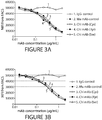
- the anti-PD-1 antibody molecule reduces one or more PD-1-associated activities with an IC 50 (concentration at 50% inhibition) that is about the same or lower, e.g., at least about 10%, 20%, 30%, 40%, 50%, 60%, 70%, 80% or 90% lower, than the IC 50 of a murine or chimeric anti-PD-1 antibody molecule, e.g., a murine or chimeric anti-PD-1 antibody molecule described herein.
- the IC 50 of the murine or chimeric anti-PD-1 antibody molecule is less than about 6, 5, 4, 3, 2, or 1 nM, e.g ., measured by binding on cells expressing PD-1 ( e.g., 300.19 cells).
- the IC 50 of the murine or chimeric anti-PD-1 antibody molecule is less than about 4 nM, e.g ., about 3.40 nM (or about 0.51 ⁇ g/mL).
- the PD-1-associated activity reduced is the binding of PD-L1 and PD-L2 to PD-1.
- the anti-PD-1 antibody molecule binds to peripheral blood mononucleated cells (PBMCs) activated by Staphylococcal enterotoxin B (SEB).
- SEB Staphylococcal enterotoxin B
- the anti-PD-1 antibody molecule increases the expression of IL-2 on whole blood activated by SEB.
- the anti-PD-1 antibody increases the expression of IL-2 by at least about 2, 3, 4, or 5-fold, compared to the expression of IL-2 when an isotype control (e.g., IgG4) is used.
- the anti-PD-1 antibody molecule has improved stability, e.g ., at least about 0.5, 1, 2, 3, 4, 5, 6, 7, 8, 9 or 10-fold more stable in vivo or in vitro, than a murine or chimeric anti-PD-1 antibody molecule, e.g., a murine or chimeric anti-PD-1 antibody molecule described herein.
- the anti PD-1 antibody molecule is a humanized antibody molecule and has a risk score based on T cell epitope analysis of 300 to 700, 400 to 650, 450 to 600, or a risk score as described herein.
- the anti-PD-1 antibody molecule as recited in the claims comprises at least one antigen-binding region, e.g., a variable region or an antigen-binding fragment thereof, from an antibody described herein, e.g., an antibody chosen from any of BAP049-hum01, BAP049-hum02, BAP049-hum03, BAP049-hum04, BAP049-hum05, BAP049-hum06, BAP049-hum07, BAP049-hum08, BAP049-hum09, BAP049-hum10, BAP049-hum11, BAP049-hum12, BAP049-hum13, BAP049-hum14, BAP049-hum15, BAP049-hum16, BAP049-Clone-A, BAP049-Clone-B, BAP049-Clone-C, BAP049-Clone-D, or BAP049-Clone-E; or as
- the anti-PD-1 antibody molecule as recited in the claims comprises at least one, two, three or four variable regions from an antibody described herein, e.g., an antibody chosen from any of BAP049-hum01, BAP049-hum02, BAP049-hum03, BAP049-hum04, BAP049-hum05, BAP049-hum06, BAP049-hum07, BAP049-hum08, BAP049-hum09, BAP049-hum10, BAP049-hum11, BAP049-hum12, BAP049-hum13, BAP049-hum14, BAP049-hum15, BAP049-hum16, BAP049-Clone-A, BAP049-Clone-B, BAP049-Clone-C, BAP049-Clone-D, or BAP049-Clone-E; or as described in Table 1, or encoded by the nucleotide sequence in Table 1
- the anti-PD-1 antibody molecule as recited in the claims comprises at least one or two heavy chain variable regions from an antibody described herein, e.g., an antibody chosen from any of BAP049-hum01, BAP049-hum02, BAP049-hum03, BAP049-hum04, BAP049-hum05, BAP049-hum06, BAP049-hum07, BAP049-hum08, BAP049-hum09, BAP049-hum10, BAP049-hum11, BAP049-hum12, BAP049-hum13, BAP049-hum14, BAP049-hum15, BAP049-hum16, BAP049-Clone-A, BAP049-Clone-B, BAP049-Clone-C, BAP049-Clone-D, or BAP049-Clone-E; or as described in Table 1, or encoded by the nucleotide sequence in Table 1; or
- the anti-PD-1 antibody molecule as recited in the claims comprises at least one or two light chain variable regions from an antibody described herein, e.g., an antibody chosen from any of BAP049-hum01, BAP049-hum02, BAP049-hum03, BAP049-hum04, BAP049-hum05, BAP049-hum06, BAP049-hum07, BAP049-hum08, BAP049-hum09, BAP049-hum10, BAP049-hum11, BAP049-hum12, BAP049-hum13, BAP049-hum14, BAP049-hum15, BAP049-hum16, BAP049-Clone-A, BAP049-Clone-B, BAP049-Clone-C, BAP049-Clone-D, or BAP049-Clone-E; or as described in Table 1, or encoded by the nucleotide sequence in Table 1; or
- the anti-PD-1 antibody molecule includes a heavy chain constant region for an IgG4, e.g., a human IgG4.
- the human IgG4 includes a substitution at position 228 according to EU numbering (e.g ., a Ser to Pro substitution).
- the anti-PD-1 antibody molecule includes a heavy chain constant region for an IgG1, e.g., a human IgG1.
- the human IgG1 includes a substitution at position 297 according to EU numbering (e.g ., an Asn to Ala substitution).
- the human IgG1 includes a substitution at position 265 according to EU numbering, a substitution at position 329 according to EU numbering, or both (e.g., an Asp to Ala substitution at position 265 and/or a Pro to Ala substitution at position 329).
- the human IgG1 includes a substitution at position 234 according to EU numbering, a substitution at position 235 according to EU numbering, or both ( e.g., a Leu to Ala substitution at position 234 and/or a Leu to Ala substitution at position 235).
- the heavy chain constant region comprises an amino sequence set forth in Table 3, or a sequence substantially identical ( e.g., at least 80%, 85%, 90%, 92%, 95%, 97%, 98%, 99% or higher identical) thereto.
- the anti-PD-1 antibody molecule includes a kappa light chain constant region, e.g., a human kappa light chain constant region.
- the light chain constant region comprises an amino sequence set forth in Table 3, or a sequence substantially identical ( e.g., at least 80%, 85%, 90%, 92%, 95%, 97%, 98%, 99% or higher identical) thereto.
- the anti-PD-1 antibody molecule includes a heavy chain constant region for an IgG4, e.g., a human IgG4, and a kappa light chain constant region, e.g., a human kappa light chain constant region, e.g., a heavy and light chain constant region comprising an amino sequence set forth in Table 3, or a sequence substantially identical ( e.g., at least 80%, 85%, 90%, 92%, 95%, 97%, 98%, 99% or higher identical) thereto.
- the human IgG4 includes a substitution at position 228 according to EU numbering (e.g ., a Ser to Pro substitution).
- the anti-PD-1 antibody molecule includes a heavy chain constant region for an IgG1, e.g., a human IgG1, and a kappa light chain constant region, e.g., a human kappa light chain constant region, e.g., a heavy and light chain constant region comprising an amino sequence set forth in Table 3, or a sequence substantially identical ( e.g., at least 80%, 85%, 90%, 92%, 95%, 97%, 98%, 99% or higher identical) thereto.
- the human IgG1 includes a substitution at position 297 according to EU numbering (e.g., an Asn to Ala substitution).
- the human IgG1 includes a substitution at position 265 according to EU numbering, a substitution at position 329 according to EU numbering, or both (e.g., an Asp to Ala substitution at position 265 and/or a Pro to Ala substitution at position 329).
- the human IgG1 includes a substitution at position 234 according to EU numbering, a substitution at position 235 according to EU numbering, or both ( e.g., a Leu to Ala substitution at position 234 and/or a Leu to Ala substitution at position 235).
- the anti-PD-1 antibody molecule as recited in the claims includes a heavy chain variable domain and a constant region, a light chain variable domain and a constant region, or both, comprising the amino acid sequence of BAP049-Clone-A, BAP049-Clone-B, BAP049-Clone-C, BAP049-Clone-D, or BAP049-Clone-E; or as described in Table 1, or encoded by the nucleotide sequence in Table 1; or a sequence substantially identical ( e.g., at least 80%, 85%, 90%, 92%, 95%, 97%, 98%, 99% or higher identical) to any of the aforesaid sequences.
- the anti-PD-1 antibody molecule optionally, comprises a leader sequence from a heavy chain, a light chain, or both, as showin in Table 4; or a sequence substantially identical thereto.
- the anti-PD-1 antibody molecule is as recited in the claims and includes all six CDRs from an antibody described herein, e.g., an antibody chosen from any of BAP049-hum01, BAP049-hum02, BAP049-hum03, BAP049-hum04, BAP049-hum05, BAP049-hum06, BAP049-hum07, BAP049-hum08, BAP049-hum09, BAP049-hum10, BAP049-hum11, BAP049-hum12, BAP049-hum13, BAP049-hum14, BAP049-hum15, BAP049-hum16, BAP049-Clone-A, BAP049-Clone-B, BAP049-Clone-C, BAP049-Clone-D, or BAP049-Clone-E; or as described in Table 1, or encoded by the nucleotide sequence in Table 1.
- the anti-PD-1 antibody molecule as recited in the claims includes a substitution in the light chain CDR3 at position 102 of the light variable region, e.g., a substitution of a cysteine to tyrosine, or a cysteine to serine residue, at position 102 of the light variable region according to Table 1 (e.g., SEQ ID NO: 16 or 24 for murine or chimeric, unmodified; or any of SEQ ID NOs: 34, 42, 46, 54, 58, 62, 66, 70, 74, or 78 for a modified sequence).
- Table 1 e.g., SEQ ID NO: 16 or 24 for murine or chimeric, unmodified; or any of SEQ ID NOs: 34, 42, 46, 54, 58, 62, 66, 70, 74, or 78 for a modified sequence.
- the anti-PD-1 antibody molecule is as recited in the claims and includes all six CDRs according to Kabat et al. ( e.g., all six CDRs according to the Kabat definition as set out in Table 1) from the heavy and light chain variable regions of an antibody described herein, e.g., an antibody chosen from any of BAP049-hum01, BAP049-hum02, BAP049-hum03, BAP049-hum04, BAP049-hum05, BAP049-hum06, BAP049-hum07, BAP049-hum08, BAP049-hum09, BAP049-hum10, BAP049-hum11, BAP049-hum12, BAP049-hum13, BAP049-hum14, BAP049-hum15, BAP049-hum16, BAP049-Clone-A, BAP049-Clone-B, BAP049-Clone-C, BAP049-C
- the anti-PD-1 antibody molecule is as recited in the claims and includes at least one, two, or three Chothia hypervariable loops (e.g., at least one, two, or three hypervariable loops according to the Chothia definition as set out in Table 1) from a heavy chain variable region of an antibody described herein, e.g., an antibody chosen from any of BAP049-hum01, BAP049-hum02, BAP049-hum03, BAP049-hum04, BAP049-hum05, BAP049-hum06, BAP049-hum07, BAP049-hum08, BAP049-hum09, BAP049-hum10, BAP049-hum11, BAP049-hum12, BAP049-hum13, BAP049-hum14, BAP049-hum15, BAP049-huml6, BAP049-Clone-A, BAP049-Clone-B, BAP049-Clone
- the anti-PD-1 antibody molecule is as recited in the claims and includes at least one, two, or three Chothia hypervariable loops (e.g., at least one, two, or three hypervairalbe loops according to the Chothia definition as set out in Table 1) of a light chain variable region of an antibody described herein, e.g., an antibody chosen from any of BAP049-hum01, BAP049-hum02, BAP049-hum03, BAP049-hum04, BAP049-hum05, BAP049-hum06, BAP049-hum07, BAP049-hum08, BAP049-hum09, BAP049-hum10, BAP049-hum11, BAP049-hum12, BAP049-hum13, BAP049-hum14, BAP049-hum15, BAP049-hum16, BAP049-Clone-A, BAP049-Clone-B, BAP049-C
- the anti-PD-1 antibody molecule is as recited in the claims and includes at least one, two, three, four, five, or six hypervariable loops (e.g., at least one, two, three, four, five, or six hypervariable loops according to the Chothia definition as set out in Table 1) from the heavy and light chain variable regions of an antibody described herein, e.g., an antibody chosen from any of BAP049-hum01, BAP049-hum02, BAP049-hum03, BAP049-hum04, BAP049-hum05, BAP049-hum06, BAP049-hum07, BAP049-hum08, BAP049-hum09, BAP049-hum10, BAP049-hum11, BAP049-hum12, BAP049-hum13, BAP049-hum14, BAP049-hum15, BAP049-huml6, BAP049-Clone-A, BAP049-Clone
- the anti-PD-1 antibody is as recited in the claims and includes all six hypervariable loops (e.g., all six hypervariable loops according to the Chothia definition as set out in Table 1) of an antibody described herein, e.g., an antibody chosen from any of BAP049-hum01, BAP049-hum02, BAP049-hum03, BAP049-hum04, BAP049-hum05, BAP049-hum06, BAP049-hum07, BAP049-hum08, BAP049-hum09, BAP049-hum10, BAP049-huml 1, BAP049-hum12, BAP049-hum13, BAP049-hum14, BAP049-hum15, BAP049-hum16, BAP049-Clone-A, BAP049-Clone-B, BAP049-Clone-C, BAP049-Clone-D, or BAP049-Clone-
- the anti-PD-1 antibody molecule is as recited in the claims and may include any hypervariable loop described herein.
- the anti-PD-1 antibody molecule is as recited in the claims and includes a combination of CDRs or hypervariable loops defined according to the Kabat et al. and Chothia et al.
- the anti-PD-1 antibody molecule is as recited in the claims and includes at least one, two or three CDRs or hypervariable loops from a heavy chain variable region of an antibody described herein, e.g., an antibody chosen from any of BAP049-hum01, BAP049-hum02, BAP049-hum03, BAP049-hum04, BAP049-hum05, BAP049-hum06, BAP049-hum07, BAP049-hum08, BAP049-hum09, BAP049-hum10, BAP049-hum11, BAP049-hum12, BAP049-hum13, BAP049-hum14, BAP049-hum15, BAP049-hum16, BAP049-Clone-A, BAP049-Clone-B, BAP049-Clone-C, BAP049-Clone-D, or BAP049-Clone-E, according to the Kabat and Cho
- the anti-PD-1 antibody molecule is as recited in the claims and can include VH CDR1 according to Kabat et al. or VH hypervariable loop 1 according to Chothia et al., or a combination thereof, e.g., as shown in Table 1.
- the combination of Kabat and Chothia CDR of VH CDR1 comprises the amino acid sequence GYTFTTYWMH (SEQ ID NO: 224).
- the anti-PD-1 antibody molecule can further include, e.g ., VH CDRs 2-3 according to Kabat et al. and VL CDRs 1-3 according to Kabat et al., e.g., as shown in Table 1. Accordingly, in some embodiments, framework regions are defined based on a combination of CDRs defined according to Kabat et al. and hypervariable loops defined according to Chothia et al. For example, the anti-PD-1 antibody molecule can include VH FR1 defined based on VH hypervariable loop 1 according to Chothia et al. and VH FR2 defined based on VH CDRs 1-2 according to Kabat et al., e.g., as shown in Table 1.
- the anti-PD-1 antibody molecule can further include, e.g ., VH FRs 3-4 defined based on VH CDRs 2-3 according to Kabat et al. and VL FRs 1-4 defined based on VL CDRs 1-3 according to Kabat et al.
- the antibody molecule is a monospecific antibody molecule, a bispecific antibody molecule, or is an antibody molecule that comprises an antigen binding fragment of an antibody, e.g ., a half antibody or antigen binding fragment of a half antibody.
- the antibody molecule as recited in the claims is a bispecific antibody molecule having a first binding specificity for PD-1 and a second binding specificity for TIM-3, LAG-3, CEACAM ( e.g ., CEACAM-1 and/or CEACAM-5), PD-L1 or PD-L2.
- the anti-PD-1 antibody molecule includes:
- the anti-PD-1 antibody molecule comprises a VH comprising a VHCDR1 amino acid sequence of SEQ ID NO: 4, a VHCDR2 amino acid sequence of SEQ ID NO: 5, and a VHCDR3 amino acid sequence of SEQ ID NO: 3; and a VL comprising a VLCDR1 amino acid sequence of SEQ ID NO: 13, a VLCDR2 amino acid sequence of SEQ ID NO: 14, and a VLCDR3 amino acid sequence of SEQ ID NO: 33 according to Chothia.
- the anti-PD-1 antibody molecule comprises a VH comprising a VHCDR1 amino acid sequence of SEQ ID NO: 1; a VHCDR2 amino acid sequence of SEQ ID NO: 2; and a VHCDR3 amino acid sequence of SEQ ID NO: 3; and a VL comprising a VLCDR1 amino acid sequence of SEQ ID NO: 10, a VLCDR2 amino acid sequence of SEQ ID NO: 11, and a VLCDR3 amino acid sequence of SEQ ID NO: 32 according to Kabat.
- the anti-PD-1 antibody molecule comprises a VH comprising a VHCDR1 amino acid sequence of SEQ ID NO: 224, a VHCDR2 amino acid sequence of SEQ ID NO: 5, and a VHCDR3 amino acid sequence of SEQ ID NO: 3; and a VL comprising a VLCDR1 amino acid sequence of SEQ ID NO: 13, a VLCDR2 amino acid sequence of SEQ ID NO: 14, and a VLCDR3 amino acid sequence of SEQ ID NO: 33 according to Chothia.
- the anti-PD-1 antibody molecule comprises a VH comprising a VHCDR1 amino acid sequence of SEQ ID NO: 224; a VHCDR2 amino acid sequence of SEQ ID NO: 2; and a VHCDR3 amino acid sequence of SEQ ID NO: 3; and a VL comprising a VLCDR1 amino acid sequence of SEQ ID NO: 10, a VLCDR2 amino acid sequence of SEQ ID NO: 11, and a VLCDR3 amino acid sequence of SEQ ID NO: 32 according to Kabat.
- the antibody molecule is a humanized antibody molecule. In another embodiment, the antibody molecule is a monospecific antibody molecule. In yet another embodiment, the antibody molecule is a bispecific antibody molecule.
- the anti-PD-1 antibody molecule includes:
- the anti-PD-1 antibody molecule includes:
- the light or the heavy chain variable framework (e.g. , the region encompassing at least FR1, FR2, FR3, and optionally FR4) of the anti-PD-1 antibody molecule can be chosen from: (a) a light or heavy chain variable framework including at least 80%, 85%, 87% 90%, 92%, 93%, 95%, 97%, 98%, or preferably 100% of the amino acid residues from a human light or heavy chain variable framework, e.g ., a light or heavy chain variable framework residue from a human mature antibody, a human germline sequence, or a human consensus sequence; (b) a light or heavy chain variable framework including from 20% to 80%, 40% to 60%, 60% to 90%, or 70% to 95% of the amino acid residues from a human light or heavy chain variable framework, e.g ., a light or heavy chain variable framework residue from a human mature antibody, a human germline sequence, or a human consensus sequence; (c) a non-human framework (e.g ., a non-human framework
- the light or heavy chain variable framework region (particularly FR1, FR2 and/or FR3) includes a light or heavy chain variable framework sequence at least 70, 75, 80, 85, 87, 88, 90, 92, 94, 95, 96, 97, 98, 99% identical or identical to the frameworks of a VL or VH segment of a human germline gene.
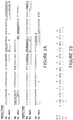
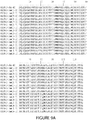
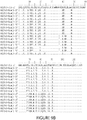
- the anti-PD-1 antibody molecule as defined in the claims comprises a heavy chain variable domain having at least one, two, three, four, five, six, seven, ten, fifteen, twenty or more changes, e.g ., amino acid substitutions or deletions, from an amino acid sequence of BAP049-chi-HC, e.g., the amino acid sequence of the FR region in the entire variable region, e.g., shown in FIGs. 9A-9B , or SEQ ID NO: 18, 20, 22 or 30.
- the anti-PD-1 antibody molecule comprises a heavy chain variable domain having one or more of: E at position 1, V at position 5, A at position 9, V at position 11, K at position 12, K at position 13, E at position 16, L at position 18, R at position 19, I or V at position 20, G at position 24, I at position 37, A or S at position 40, T at position 41, S at position 42, R at position 43, M or L at position 48, V or F at position 68, T at position 69, I at position 70, S at position 71, A or R at position 72, K or N at position 74, T or K at position 76, S or N at position 77, L at position 79, L at position 81, E or Q at position 82, M at position 83, S or N at position 84, R at position 87, A at position 88, or T at position 91 of amino acid sequence of BAP049-chi-HC, e.g ., the amino acid sequence of the FR in the entire variable region, e.g .,
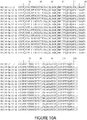
- the anti-PD-1 antibody molecule as defined in the claims comprises a light chain variable domain having at least one, two, three, four, five, six, seven, ten, fifteen, twenty or more amino acid changes, e.g ., amino acid substitutions or deletions, from an amino acid sequence of BAP049-chi-LC, e.g., the amino acid sequence shown in FIGs. 10A-10B , or SEQ ID NO: 24 or 26.
- the anti-PD-1 antibody molecule comprises a heavy chain variable domain having one or more of: E at position 1, V at position 2, Q at position 3, L at position 4, T at position 7, D or L or A at position 9, F or T at position 10, Q at position 11, S or P at position 12, L or A at position 13, S at position 14, P or L or V at position 15, K at position 16, Q or D at position 17, R at position 18, A at position 19, S at position 20, I or L at position 21, T at position 22, L at position 43, K at position 48, A or S at position 49, R or Q at position 51, Y at position 55, I at position 64, S or P at position 66, S at position 69, Y at position 73, G at position 74, E at position 76, F at position 79, N at position 82, N at position 83, L or I at position 84, E at position 85, S or P at position 86, D at position 87, A or F or I at position 89, T or Y at position 91, F at position
- the anti-PD-1 antibody molecule includes one, two, three, or four heavy chain framework regions (e.g., a VHFW amino acid sequence shown in Table 2, or encoded by the nucleotide sequence shown in Table 2), or a sequence substantially identical thereto.
- heavy chain framework regions e.g., a VHFW amino acid sequence shown in Table 2, or encoded by the nucleotide sequence shown in Table 2
- the anti-PD-1 antibody molecule includes one, two, three, or four light chain framework regions (e.g., a VLFW amino acid sequence shown in Table 2, or encoded by the nucleotide sequence shown in Table 2), or a sequence substantially identical thereto.
- light chain framework regions e.g., a VLFW amino acid sequence shown in Table 2, or encoded by the nucleotide sequence shown in Table 2
- the anti-PD-1 antibody molecule includes one, two, three, or four heavy chain framework regions (e.g., a VHFW amino acid sequence shown in Table 2, or encoded by the nucleotide sequence shown in Table 2), or a sequence substantially identical thereto; and one, two, three, or four light chain framework regions (e.g., a VLFW amino acid equence shown in Table 2, or encoded by the nucleotide sequence shown in Table 2), or a sequence substantially identical thereto.
- heavy chain framework regions e.g., a VHFW amino acid sequence shown in Table 2, or encoded by the nucleotide sequence shown in Table 2
- light chain framework regions e.g., a VLFW amino acid equence shown in Table 2, or encoded by the nucleotide sequence shown in Table 2
- the anti-PD-1 antibody molecule comprises the heavy chain framework region 1 (VHFW1) of BAP049-hum01, BAP049-hum02, BAP049-hum03, BAP049-hum04, BAP049-hum05, BAP049-hum06, BAP049-hum07, BAP049-hum08, BAP049-hum09, BAP049-hum10, BAP049-hum11, BAP049-hum12, BAP049-hum13, BAP049-hum15, BAP049-hum16, BAP049-Clone-A, BAP049-Clone-B, BAP049-Clone-C, BAP049-Clone-D, or BAP049-Clone-E ( e.g ., SEQ ID NO: 147).
- the antibody molecule comprises the heavy chain framework region 1 (VHFW1) of BAP049-hum14 or BAP049-hum15 (VHFW1) of BAP
- the anti-PD-1 antibody molecule comprises the heavy chain framework region 2 (VHFW2) of BAP049-hum01, BAP049-hum02, BAP049-hum05, BAP049-hum06, BAP049-hum07, BAP049-hum09, BAP049-hum11, BAP049-hum12, BAP049-hum13, BAP049-Clone-A, BAP049-Clone-B, BAP049-Clone-C, or BAP049-Clone-E ( e.g ., SEQ ID NO: 153).
- VHFW2 heavy chain framework region 2
- the antibody molecule comprises the heavy chain framework region 2 (VHFW2) of BAP049-hum03, BAP049-hum04, BAP049-hum08, BAP049-hum10, BAP049-hum14, BAP049-hum15, or BAP049-Clone-D (e.g ., SEQ ID NO: 157).
- the antibody molecule comprises the heavy chain framework region 2 (VHFW2) of BAP049-hum16 (e.g ., SEQ ID NO: 160).
- the anti-PD-1 antibody molecule comprises the heavy chain framework region 3 (VHFW3) of BAP049-hum01, BAP049-hum02, BAP049-hum05, BAP049-hum06, BAP049-hum07, BAP049-hum09, BAP049-hum11, BAP049-hum12, BAP049-hum13, BAP049-Clone-A, BAP049-Clone-B, BAP049-Clone-C, or BAP049-Clone-E ( e.g ., SEQ ID NO: 162).
- VHFW3 heavy chain framework region 3
- the antibody molecule comprises the heavy chain framework region 3 (VHFW3) of BAP049-hum03, BAP049-hum04, BAP049-hum08, BAP049-hum10, BAP049-huml4, BAP049-hum15, BAP049-hum16, or BAP049-Clone-D (e.g. , SEQ ID NO: 166).
- VHFW3 heavy chain framework region 3
- the anti-PD-1 antibody molecule comprises the heavy chain framework region 4 (VHFW4) of BAP049-hum01, BAP049-hum02, BAP049-hum03, BAP049-hum04, BAP049-hum05, BAP049-hum06, BAP049-hum07, BAP049-hum08, BAP049-hum09, BAP049-hum10, BAP049-hum11, BAP049-hum12, BAP049-hum13, BAP049-hum14, BAP049-hum15, BAP049-hum16, BAP049-Clone-A, BAP049-Clone-B, BAP049-Clone-C, BAP049-Clone-D, or BAP049-Clone-E ( e.g ., SEQ ID NO: 169).
- VHFW4 heavy chain framework region 4
- the anti-PD-1 antibody molecule comprises the light chain framework region 1 (VLFW1) of BAP049-hum08, BAP049-hum09, BAP049-huml5, BAP049-huml6, or BAP049-Clone-C ( e.g ., SEQ ID NO: 174).
- VLFW1 light chain framework region 1
- the antibody molecule comprises the light chain framework region 1 (VLFW1) of BAP049-hum01, BAP049-hum04, BAP049-hum05, BAP049-hum07, BAP049-hum10, BAP049-hum11, BAP049-hum14, BAP049-Clone-A, BAP049-Clone-B, BAP049-Clone-D, or BAP049-Clone-E ( e.g ., SEQ ID NO: 177).
- the antibody molecule comprises the light chain framework region 1 (VLFW1) of BAP049-hum06 (e.g ., SEQ ID NO: 181).
- the antibody molecule comprises the light chain framework region 1 (VLFW1) of BAP049-huml3 (e.g ., SEQ ID NO: 183). In some embodiments, the antibody molecule comprises the light chain framework region 1 (VLFW1) of BAP049-hum02, BAP049-hum03, or BAP049-hum12 ( e.g., SEQ ID NO: 185).
- the anti-PD-1 antibody molecule comprises the light chain framework region 2 (VLFW2) of BAP049-hum01, BAP049-hum02, BAP049-hum03, BAP049-hum06, BAP049-hum08, BAP049-hum09, BAP049-hum10, BAP049-hum11, BAP049-hum14, BAP049-hum15, BAP049-hum16, BAP049-Clone-A, BAP049-Clone-B, BAP049-Clone-D, or BAP049-Clone-E ( e.g., SEQ ID NO: 187).
- VLFW2 light chain framework region 2
- the antibody molecule comprises the light chain framework region 2 (VLFW2) of BAP049-hum04, BAP049-hum05, BAP049-hum07, BAP049-hum13, or BAP049-Clone-C ( e.g ., SEQ ID NO: 191).
- the antibody molecule comprises the light chain framework region 2 (VLFW2) of BAP049-hum12 ( e.g. , SEQ ID NO: 194).
- the anti-PD-1 antibody molecule comprises the light chain framework region 3 (VLFW3) of BAP049-hum06, BAP049-hum07, BAP049-hum08, BAP049-hum09, BAP049-hum10, BAP049-hum11, BAP049-hum12, BAP049-hum13, BAP049-hum14, BAP049-hum15, BAP049-hum16, BAP049-Clone-C, BAP049-Clone-D, or BAP049-Clone-E ( e.g., SEQ ID NO: 196).
- VLFW3 light chain framework region 3
- the antibody molecule comprises the light chain framework region 3 (VLFW3) of BAP049-hum02 or BAP049-hum03 (e.g ., SEQ ID NO: 200). In some embodiments, the antibody molecule comprises the light chain framework region 3 (VLFW3) of BAP049-hum01 or BAP049-Clone-A ( e.g. , SEQ ID NO: 202). In some embodiments, the antibody molecule comprises the light chain framework region 3 (VLFW3) of BAP049-hum04, BAP049-hum05, or BAP049-Clone-B ( e.g ., SEQ ID NO: 205).
- the anti-PD-1 antibody molecule comprises the light chain framework region 4 (VLFW4) of BAP049-hum01, BAP049-hum02, BAP049-hum03, BAP049-hum04, BAP049-hum05, BAP049-hum06, BAP049-hum07, BAP049-hum08, BAP049-hum09, BAP049-hum10, BAP049-hum11, BAP049-hum12, BAP049-hum13, BAP049-hum14, BAP049-hum15, BAP049-hum16, BAP049-Clone-A, BAP049-Clone-B, BAP049-Clone-C, BAP049-Clone-D, or BAP049-Clone-E ( e.g. , SEQ ID NO: 208).
- VLFW4 light chain framework region 4
- the anti-PD-1 antibody molecule comprises the heavy chain framework regions 1-3 of BAP049-hum01, BAP049-hum02, BAP049-hum05, BAP049-hum06, BAP-hum07, BAP049-hum09, BAP049-hum11, BAP049-hum12, BAP049-hum13, BAP049-Clone-A, BAP049-Clone-B, BAP049-Clone-C, or BAP049-Clone-E ( e.g. , SEQ ID NO: 147 (VHFW1), SEQ ID NO: 153 (VHFW2), and SEQ ID NO: 162 (VHFW3)).
- VHFW1 VHFW1
- VHFW2 VHFW3
- the antibody molecule comprises the heavy chain framework regions 1-3 of BAP049-hum03, BAP049-hum04, BAP049-hum08, BAP049-hum10, or BAP049-Clone-D (e.g ., SEQ ID NO: 147 (VHFW1), SEQ ID NO: 157 (VHFW2), and SEQ ID NO: 166 (VHFW3)).
- the antibody molecule comprises the heavy chain framework regions 1-3 of BAP049-huml4 or BAP049-huml5 (e.g ., SEQ ID NO: 151 (VHFW1), SEQ ID NO: 157 (VHFW2), and SEQ ID NO: 166 (VHFW3)).
- the antibody molecule comprises the heavy chain framework regions 1-3 of BAP049-huml6 (e.g., SEQ ID NO: 147 (VHFW1), SEQ ID NO: 160 (VHFW2), and SEQ ID NO: 166 (VHFW3)).
- VHFW1 SEQ ID NO: 147
- VHFW2 SEQ ID NO: 160
- VHFW3 SEQ ID NO: 166
- the antibody molecule further comprises the heavy chain framework region 4 (VHFW4) of BAP049-hum01, BAP049-hum02, BAP049-hum03, BAP049-hum04, BAP049-hum05, BAP049-hum06, BAP049-hum07, BAP049-hum08, BAP049-hum09, BAP049-hum10, BAP049-hum11, BAP049-hum12, BAP049-hum13, BAP049-hum14, BAP049-hum15, BAP049-hum16, BAP049-Clone-A, BAP049-Clone-B, BAP049-Clone-C, BAP049-Clone-D, or BAP049-Clone-E ( e.g. , SEQ ID NO: 169).
- VHFW4 heavy chain framework region 4
- the anti-PD-1 antibody molecule comprises the light chain framework regions 1-3 of BAP049-hum01 or BAP049-Clone-A (e.g ., SEQ ID NO: 177 (VLFW1), SEQ ID NO: 187 (VLFW2), and SEQ ID NO: 202 (VLFW3)).
- the antibody molecule comprises the light chain framework regions 1-3 of BAP049-hum02 or BAP049-hum03 (e.g ., SEQ ID NO: 185 (VLFW1), SEQ ID NO: 187 (VLFW2), and SEQ ID NO: 200 (VLFW3)).
- the antibody molecule comprises the light chain framework regions 1-3 of BAP049-hum04, BAP049-hum05, or BAP049-Clone-B (e.g ., SEQ ID NO: 177 (VLFW1), SEQ ID NO: 191 (VLFW2), and SEQ ID NO: 205 (VLFW3)).
- the antibody molecule comprises the light chain framework regions 1-3 of BAP049-hum06 (e.g ., SEQ ID NO: 181 (VLFW1), SEQ ID NO: 187 (VLFW2), and SEQ ID NO: 196 (VLFW3)).
- the antibody molecule comprises the light chain framework regions 1-3 of BAP049-hum07 (e.g. , SEQ ID NO: 177 (VLFW1), SEQ ID NO: 191 (VLFW2), and SEQ ID NO: 196 (VLFW3)).
- the antibody molecule comprises the light chain framework regions 1-3 of BAP049-hum08, BAP049-hum09, BAP049-hum15, BAP049-hum16, or BAP049-Clone-C ( e.g ., SEQ ID NO: 174 (VLFW1), SEQ ID NO: 187 (VLFW2), and SEQ ID NO: 196 (VLFW3)).
- the antibody molecule comprises the light chain framework regions 1-3 of BAP049-hum10, BAP049-hum11, BAP049-hum14, BAP049-Clone-D, or BAP049-Clone-E (e.g., SEQ ID NO: 177 (VLFW1), SEQ ID NO: 187 (VLFW2), and SEQ ID NO: 196 (VLFW3)).
- the antibody molecule comprises the light chain framework regions 1-3 of BAP049-hum12 (e.g ., SEQ ID NO: 185 (VLFW1), SEQ ID NO: 194 (VLFW2), and SEQ ID NO: 196 (VLFW3)).
- the antibody molecule comprises the light chain framework regions 1-3 of BAP049-hum13 (e.g ., SEQ ID NO: 183 (VLFW1), SEQ ID NO: 191 (VLFW2), and SEQ ID NO: 196 (VLFW3)).
- the antibody molecule further comprises the light chain framework region 4 (VLFW4) of BAP049-hum01, BAP049-hum02, BAP049-hum03, BAP049-hum04, BAP049-hum05, BAP049-hum06, BAP049-hum07, BAP049-hum08, BAP049-hum09, BAP049-hum10, BAP049-hum11, BAP049-hum12, BAP049-hum13, BAP049-hum14, BAP049-hum15, BAP049-hum16, BAP049-Clone-A, BAP049-Clone-B, BAP049-Clone-C, BAP049-Clone-D, or BAP049-Clone-E ( e.g., SEQ ID NO: 208).
- VLFW4 light chain framework region 4
- the anti-PD-1 antibody molecule comprises the heavy chain framework regions 1-3 of BAP049-hum01 or BAP049-Clone-A (e.g ., SEQ ID NO: 147 (VHFW1), SEQ ID NO: 153 (VHFW2), and SEQ ID NO: 162 (VHFW3)) and the light chain framework regions 1-3 of BAP049-hum01 or BAP049-Clone-A (e.g., SEQ ID NO: 177 (VLFW1), SEQ ID NO: 187 (VLFW2), and SEQ ID NO: 202 (VLFW3)).
- the anti-PD-1 antibody molecule comprises the heavy chain framework regions 1-3 of BAP049-hum02 (e.g. , SEQ ID NO: 147 (VHFW1), SEQ ID NO: 153 (VHFW2), and SEQ ID NO: 162 (VHFW3)) and the light chain framework regions 1-3 of BAP049-hum02 (e.g ., SEQ ID NO: 185 (VLFW1), SEQ ID NO: 187 (VLFW2), and SEQ ID NO: 200 (VLFW3)).
- the anti-PD-1 antibody molecule comprises the heavy chain framework regions 1-3 of BAP049-hum03 (e.g. , SEQ ID NO: 147 (VHFW1), SEQ ID NO: 157 (VHFW2), and SEQ ID NO: 166 (VHFW3)) and the light chain framework regions 1-3 of BAP049-hum03 (e.g ., SEQ ID NO: 185 (VLFW1), SEQ ID NO: 187 (VLFW2), and SEQ ID NO: 200 (VLFW3)).
- BAP049-hum03 e.g., SEQ ID NO: 147 (VHFW1), SEQ ID NO: 157 (VHFW2), and SEQ ID NO: 166 (VHFW3)
- VHFW3 the heavy chain framework regions 1-3 of BAP049-hum03
- VLFW1 SEQ ID NO: 185
- VLFW2 SEQ ID NO: 187
- SEQ ID NO: 200 VLFW3
- the anti-PD-1 antibody molecule comprises the heavy chain framework regions 1-3 of BAP049-hum04 (e.g ., SEQ ID NO: 147 (VHFW1), SEQ ID NO: 157 (VHFW2), and SEQ ID NO: 166 (VHFW3)) and the light chain framework regions 1-3 of BAP049-hum04 (e.g ., SEQ ID NO: 177 (VLFW1), SEQ ID NO: 191 (VLFW2), and SEQ ID NO: 205 (VLFW3)).
- BAP049-hum04 e.g ., SEQ ID NO: 147 (VHFW1), SEQ ID NO: 157 (VHFW2), and SEQ ID NO: 166 (VHFW3)
- VHFW3 the heavy chain framework regions 1-3 of BAP049-hum04
- the anti-PD-1 antibody molecule comprises the heavy chain framework regions 1-3 of BAP049-hum05 or BAP049-Clone-B (e.g ., SEQ ID NO: 147 (VHFW1), SEQ ID NO: 153 (VHFW2), and SEQ ID NO: 162 (VHFW3)) and the light chain framework regions 1-3 of BAP049-hum05 or BAP049-Clone-B (e.g ., SEQ ID NO: 177 (VLFW1), SEQ ID NO: 191 (VLFW2), and SEQ ID NO: 205 (VLFW3)).
- the anti-PD-1 antibody molecule comprises the heavy chain framework regions 1-3 ofBAP049-hum06 (e.g ., SEQ ID NO: 147 (VHFW1), SEQ ID NO: 153 (VHFW2), and SEQ ID NO: 162 (VHFW3)) and the light chain framework regions 1-3 of BAP049-hum06 (e.g ., SEQ ID NO: 181 (VLFW1), SEQ ID NO: 187 (VLFW2), and SEQ ID NO: 196 (VLFW3)).
- the anti-PD-1 antibody molecule comprises the heavy chain framework regions 1-3 ofBAP049-hum07 (e.g. , SEQ ID NO: 147 (VHFW1), SEQ ID NO: 153 (VHFW2), and SEQ ID NO: 162 (VHFW3)) and the light chain framework regions 1-3 of BAP049-hum07 (e.g ., SEQ ID NO: 177 (VLFW1), SEQ ID NO: 191 (VLFW2), and SEQ ID NO: 196 (VLFW3)).
- the anti-PD-1 antibody molecule comprises the heavy chain framework regions 1-3 ofBAP049-hum08 (e.g ., SEQ ID NO: 147 (VHFW1), SEQ ID NO: 157 (VHFW2), and SEQ ID NO: 166 (VHFW3)) and the light chain framework regions 1-3 of BAP049-hum08 (e.g ., SEQ ID NO: 174 (VLFW1), SEQ ID NO: 187 (VLFW2), and SEQ ID NO: 196 (VLFW3)).
- VHFW1 VHFW1
- VHFW2 SEQ ID NO: 157
- VHFW3 SEQ ID NO: 166
- the anti-PD-1 antibody molecule comprises the heavy chain framework regions 1-3 of BAP049-hum09 or BAP049-Clone-C (e.g ., SEQ ID NO: 147 (VHFW1), SEQ ID NO: 153 (VHFW2), and SEQ ID NO: 162 (VHFW3)) and the light chain framework regions 1-3 of BAP049-hum09 or BAP049-Clone-C (e.g ., SEQ ID NO: 174 (VLFW1), SEQ ID NO: 187 (VLFW2), and SEQ ID NO: 196 (VLFW3)).
- the anti-PD-1 antibody molecule comprises the heavy chain framework regions 1-3 of BAP049-hum10 or BAP049-Clone-D (e.g. , SEQ ID NO: 147 (VHFW1), SEQ ID NO: 157 (VHFW2), and SEQ ID NO: 166 (VHFW3)) and the light chain framework regions 1-3 of BAP049-hum10 or BAP049-Clone-D (e.g ., SEQ ID NO: 177 (VLFW1), SEQ ID NO: 187 (VLFW2), and SEQ ID NO: 196 (VLFW3)).
- VHFW1 VHFW1
- VHFW2 SEQ ID NO: 157
- VHFW3 SEQ ID NO: 166
- the anti-PD-1 antibody molecule comprises the heavy chain framework regions 1-3 of BAP049-hum11 or BAP049-Clone-E (e.g ., SEQ ID NO: 147 (VHFW1), SEQ ID NO: 153 (VHFW2), and SEQ ID NO: 162 (VHFW3)) and the light chain framework regions 1-3 of BAP049-huml11 or BAP049-Clone-E (e.g., SEQ ID NO: 177 (VLFW1), SEQ ID NO: 187 (VLFW2), and SEQ ID NO: 196 (VLFW3)).
- the anti-PD-1 antibody molecule comprises the heavy chain framework regions 1-3 of BAP049-hum12 (e.g. , SEQ ID NO: 147 (VHFW1), SEQ ID NO: 153 (VHFW2), and SEQ ID NO: 162 (VHFW3)) and the light chain framework regions 1-3 of BAP049-hum12 (e.g ., SEQ ID NO: 185 (VLFW1), SEQ ID NO: 194 (VLFW2), and SEQ ID NO: 196 (VLFW3)).
- BAP049-hum12 e.g. , SEQ ID NO: 147 (VHFW1), SEQ ID NO: 153 (VHFW2), and SEQ ID NO: 162 (VHFW3)
- VHFW3 the heavy chain framework regions 1-3 of BAP049-hum12
- VLFW1 SEQ ID NO: 185
- VLFW2 SEQ ID NO: 194
- VLFW3 SEQ ID NO: 196
- the anti-PD-1 antibody molecule comprises the heavy chain framework regions 1-3 ofBAP049-huml3 (e.g ., SEQ ID NO: 147 (VHFW1), SEQ ID NO: 153 (VHFW2), and SEQ ID NO: 162 (VHFW3)) and the light chain framework regions 1-3 of BAP049-huml3 (e.g ., SEQ ID NO: 183 (VLFW1), SEQ ID NO: 191 (VLFW2), and SEQ ID NO: 196 (VLFW3)).
- the anti-PD-1 antibody molecule comprises the heavy chain framework regions 1-3 ofBAP049-huml4 (e.g ., SEQ ID NO: 151 (VHFW1), SEQ ID NO: 157 (VHFW2), and SEQ ID NO: 166 (VHFW3)) and the light chain framework regions 1-3 of BAP049-huml4 (e.g ., SEQ ID NO: 177 (VLFW1), SEQ ID NO: 187 (VLFW2), and SEQ ID NO: 196 (VLFW3)).
- VHFW1 VHFW1
- VHFW2 SEQ ID NO: 157
- VHFW3 SEQ ID NO: 166
- the anti-PD-1 antibody molecule comprises the heavy chain framework regions 1-3 ofBAP049-huml5 (e.g ., SEQ ID NO: 151 (VHFW1), SEQ ID NO: 157 (VHFW2), and SEQ ID NO: 166 (VHFW3)) and the light chain framework regions 1-3 of BAP049-huml5 (e.g ., SEQ ID NO: 174 (VLFW1), SEQ ID NO: 187 (VLFW2), and SEQ ID NO: 196 (VLFW3)).
- VHFW1 VHFW1
- VHFW2 SEQ ID NO: 157
- VHFW3 SEQ ID NO: 166
- the anti-PD-1 antibody molecule comprises the heavy chain framework regions 1-3 ofBAP049-huml6 (e.g ., SEQ ID NO: 147 (VHFW1), SEQ ID NO: 160 (VHFW2), and SEQ ID NO: 166 (VHFW3)) and the light chain framework regions 1-3 of BAP049-huml6 (e.g. , SEQ ID NO: 174 (VLFW1), SEQ ID NO: 187 (VLFW2), and SEQ ID NO: 196 (VLFW3)).
- VHFW1 VHFW1
- VHFW2 SEQ ID NO: 160
- VHFW3 SEQ ID NO: 166
- the anti-PD-1 antibody molecule further comprises the heavy chain framework region 4 (VHFW4) of BAP049-hum01, BAP049-hum02, BAP049-hum03, BAP049-hum04, BAP049-hum05, BAP049-hum06, BAP049-hum07, BAP049-hum08, BAP049-hum09, BAP049-hum10, BAP049-hum11, BAP049-hum12, BAP049-huml3, BAP049-hum14, BAP049-hum15, BAP049-hum16, BAP049-Clone-A, BAP049-Clone-B, BAP049-Clone-C, BAP049-Clone-D, or BAP049-Clone-E ( e.g ., SEQ ID NO: 169) and the light chain framework region 4 (VLFW4) of BAP049-hum01, BAP049-hum02, BAP049-
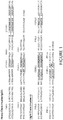
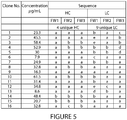
- the anti-PD-1 antibody molecule comprises a heavy chain framework region having a combination of framework regions FW1, FW2 and FW3 as showin in FIGs. 5 or 7 .
- the antibody molecule comprises a light chain framework region having a combination of framework regions FW1, FW2 and FW3 as showin in FIGs. 5 or 7 .
- the antibody molecule comprises a heavy chain framework region having a combination of framework regions FW1, FW2 and FW3 as showin in FIGs. 5 or 7 , and a light chain framework region having a combination of framework regions FW1, FW2 and FW3 as showin in FIGs. 5 or 7 .
- the heavy or light chain variable domain, or both, of the anti-PD-1 antibody molecule as defined in the claims includes an amino acid sequence, which is substantially identical to an amino acid disclosed herein, e.g., at least 80%, 85%, 90%, 92%, 95%, 97%, 98%, 99% or higher identical to a variable region of an antibody described herein, e.g., an antibody chosen from any of BAP049-hum01, BAP049-hum02, BAP049-hum03, BAP049-hum04, BAP049-hum05, BAP049-hum06, BAP049-hum07, BAP049-hum08, BAP049-hum09, BAP049-hum10, BAP049-hum11, BAP049-hum12, BAP049-hum13, BAP049-hum14, BAP049-hum15, BAP049-Clone-A, BAP049-Clone-B, BAP049-Clone-
- the heavy or light chain variable region, or both, of the anti-PD-1 antibody molecule as defined in the claims includes an amino acid sequence encoded by a nucleic acid sequence described herein or a nucleic acid that hybridizes to a nucleic acid sequence described herein (e.g., a nucleic acid sequence as shown in Tables 1 and 2) or its complement, e.g., under low stringency, medium stringency, or high stringency, or other hybridization condition described herein.
- the anti-PD-1 antibody molecule is as defined in the claims and comprises at least one, two, three, or four antigen-binding regions, e.g ., variable regions, having an amino acid sequence as set forth in Table 1, or a sequence substantially identical thereto ( e.g., a sequence at least about 85%, 90%, 95%, 99% or more identical thereto, or which differs by no more than 1, 2, 5, 10, or 15 amino acid residues from the sequences shown in Table 1.
- the anti-PD-1 antibody molecule is as defined in the claims and includes a VH and/or VL domain encoded by a nucleic acid having a nucleotide sequence as set forth in Table 1, or a sequence substantially identical thereto ( e.g., a sequence at least about 85%, 90%, 95%, 99% or more identical thereto, or which differs by no more than 3, 6, 15, 30, or 45 nucleotides from the sequences shown in Table 1.
- the anti-PD-1 antibody molecule is as defined in the claims and comprises at least one, two, or three CDRs from a heavy chain variable region having an amino acid sequence as set forth in Table 1, or a sequence substantially homologous thereto (e.g., a sequence at least about 85%, 90%, 95%, 99% or more identical thereto, and/or having one, two, three or more substitutions, insertions or deletions, e.g ., conserved substitutions).
- the anti-PD-1 antibody molecule is as defined in the claims and comprises at least one, two, or three CDRs from a light chain variable region having an amino acid sequence as set forth in Table 1, or a sequence substantially homologous thereto (e.g., a sequence at least about 85%, 90%, 95%, 99% or more identical thereto, and/or having one, two, three or more substitutions, insertions or deletions, e.g ., conserved substitutions).
- the anti-PD-1 antibody molecule is as defined in the claims and comprises at least one, two, three, four, five or six CDRs from heavy and light chain variable regions having an amino acid sequence as set forth in Table 1), or a sequence substantially homologous thereto (e.g., a sequence at least about 85%, 90%, 95%, 99% or more identical thereto, and/or having one, two, three or more substitutions, insertions or deletions, e.g ., conserved substitutions).
- the anti-PD-1 antibody molecule is as defined in the claims and comprises at least one, two, or three CDRs and/or hypervariable loops from a heavy chain variable region having an amino acid sequence of an antibody described herein, e.g., an antibody chosen from any of BAP049-hum01, BAP049-hum02, BAP049-hum03, BAP049-hum04, BAP049-hum05, BAP049-hum06, BAP049-hum07, BAP049-hum08, BAP049-hum09, BAP049-hum10, BAP049-hum11, BAP049-hum12, BAP049-hum13, BAP049-hum14, BAP049-hum15, BAP049-hum16, BAP049-Clone-A, BAP049-Clone-B, BAP049-Clone-C, BAP049-Clone-D, or BAP049-Clone-E, as
- the anti-PD-1 antibody molecule is as defined in the claims and comprises at least one, two, or three CDRs and/or hypervariable loops from a light chain variable region having an amino acid sequence of of an antibody described herein, e.g., an antibody chosen from any of BAP049-hum01, BAP049-hum02, BAP049-hum03, BAP049-hum04, BAP049-hum05, BAP049-hum06, BAP049-hum07, BAP049-hum08, BAP049-hum09, BAP049-hum10, BAP049-hum11, BAP049-hum12, BAP049-hum13, BAP049-hum14, BAP049-hum15, BAP049-hum16, BAP049-Clone-A, BAP049-Clone-B, BAP049-Clone-C, BAP049-Clone-D, or BAP049-Clone-E,
- the anti-PD-1 antibody molecule is as defined in the claims and has a variable region that is identical in sequence, or which differs by 1, 2, 3, or 4 amino acids from a variable region described herein (e.g., an FR region disclosed herein).
- the anti-PD-1 antibody molecule is a full antibody or fragment thereof (e.g ., a Fab, F(ab') 2 , Fv, or a single chain Fv fragment (scFv)).
- the anti-PD-1 antibody molecule is a monoclonal antibody or an antibody with single specificity.
- the anti-PD-1 antibody molecule can also be a humanized, chimeric, camelid, shark, or an in vitro-generated antibody molecule.
- the anti-PD-1 antibody molecule thereof is a humanized antibody molecule.
- the heavy and light chains of the anti-PD-1 antibody molecule can be full-length (e.g., an antibody can include at least one, and preferably two, complete heavy chains, and at least one, and preferably two, complete light chains) or can include an antigen-binding fragment (e.g ., a Fab, F(ab') 2 , Fv, a single chain Fv fragment, a single domain antibody, a diabody (dAb), a bivalent antibody, or bispecific antibody or fragment thereof, a single domain variant thereof, or a camelid antibody).
- an antibody can include at least one, and preferably two, complete heavy chains, and at least one, and preferably two, complete light chains
- an antigen-binding fragment e.g ., a Fab, F(ab') 2 , Fv, a single chain Fv fragment, a single domain antibody, a diabody (dAb), a bivalent antibody, or bispecific antibody or fragment thereof, a single domain variant thereof, or a came
- the anti-PD-1 antibody molecule is in the form of a bispecific or a multispecific antibody molecule.
- the bispecific antibody molecule has a first binding specificity for PD-1 and a second binding specifity for TIM-3, LAG-3, CEACAM (e.g., CEACAM-1, CEACAM-3, and/or CEACAM-5), PD-L1 or PD-L2.
- the bispecific antibody molecule binds to PD-1 and TIM-3.
- the bispecific antibody molecule binds to PD-1 and LAG-3.
- the bispecific antibody molecule binds to PD-1 and CEACAM (e.g ., CEACAM-1, CEACAM-3, and/or CEACAM-5). In another embodiment, the bispecific antibody molecule binds to PD-1 and CEACAM-1. In yet another embodiment, the bispecific antibody molecule binds to PD-1 and CEACAM-5. In another embodiment, the bispecific antibody molecule binds to PD-1 and PD-L1. In yet another embodiment, the bispecific antibody molecule binds to PD-1 and PD-L2.
- any combination of the aforesaid molecules can be made in a multispecific antibody molecule, e.g., a trispecific antibody that includes a first binding specificity to PD-1, and a second and third binding specificity to one or more of: TIM-3, LAG-3, CEACAM (e.g. , CEACAM-1, CEACAM-3, or CEACAM-5), PD-L1 or PD-L2.
- a multispecific antibody molecule e.g., a trispecific antibody that includes a first binding specificity to PD-1, and a second and third binding specificity to one or more of: TIM-3, LAG-3, CEACAM (e.g. , CEACAM-1, CEACAM-3, or CEACAM-5), PD-L1 or PD-L2.
- the anti-PD-1 antibody molecule is used in combination with a bispecific molecule comprising one or more of: TIM-3, LAG-3, CEACAM (e.g ., CEACAM-1, CEACAM-3, or CEACAM-5), PD-L1 or PD-L2.
- the bispecific antibody molecule used in combination binds to CEACAM (e.g ., CEACAM-1, CEACAM-3, and/or CEACAM-5) and LAG-3.
- the bispecific antibody molecule used in combination binds to CEACAM ( e.g ., CEACAM-1, CEACAM-3, and/or CEACAM-5) and TIM-3.
- the bispecific antibody molecule used in combination binds to LAG-3 and TIM-3.
- the anti-PD-1 antibody molecule has a heavy chain constant region (Fc) chosen from, e.g., the heavy chain constant regions of IgG1, IgG2, IgG3, IgG4, IgM, IgA1, IgA2, IgD, and IgE; particularly, chosen from, e.g., the heavy chain constant regions of IgG1, IgG2, IgG3, and IgG4, more particularly, the heavy chain constant region of IgG1 or IgG2 ( e.g. , human IgG1, IgG2 or IgG4).
- the heavy chain constant region is human IgG1.
- the anti-PD-1 antibody molecule has a light chain constant region chosen from, e.g., the light chain constant regions of kappa or lambda, preferably kappa ( e.g., human kappa).
- the constant region is altered, e.g ., mutated, to modify the properties of the anti-PD-1 antibody molecule (e.g., to increase or decrease one or more of: Fc receptor binding, antibody glycosylation, the number of cysteine residues, effector cell function, or complement function).
- the constant region is mutated at positions 296 (M to Y), 298 (S to T), 300 (T to E), 477 (H to K) and 478 (N to F) to alter Fc receptor binding (e.g., the mutated positions correspond to positions 132 (M to Y), 134 (S to T), 136 (T to E), 313 (H to K) and 314 (N to F) of SEQ ID NOs: 212 or 214; or positions 135 (M to Y), 137 (S to T), 139 (T to E), 316 (H to K) and 317 (N to F) of SEQ ID NOs: 215, 216, 217 or 218).
- the mutated positions correspond to positions 132 (M to Y), 134 (S to T), 136 (T to E), 313 (H to K) and 314 (N to F) of SEQ ID NOs: 212 or 214; or positions 135 (M to Y), 137 (S to T), 139 (T to
- the heavy chain constant region of an IgG4, e.g., a human IgG4, is mutated at position 228 according to EU numbering (e.g ., S to P), e.g., as shown in Table 3.
- the anti-PD-1 antibody molecules comprises a human IgG4 mutated at position 228 according to EU numbering (e.g ., S to P), e.g., as shown in Table 3; and a kappa light chain constant region, e.g., as shown in Table 3.
- the heavy chain constant region of an IgG is mutated at one or more of position 297 according to EU numbering (e.g., N to A), position 265 according to EU numbering (e.g., D to A), position 329 according to EU numbering ( e.g., P to A), position 234 according to EU numbering ( e.g., L to A), or position 235 according to EU numbering ( e.g ., L to A), e.g., as shown in Table 3.
- EU numbering e.g., N to A
- position 265 according to EU numbering e.g., D to A
- position 329 according to EU numbering e.g., P to A
- position 234 according to EU numbering e.g., L to A
- position 235 e.g., L to A
- the anti-PD-1 antibody molecules comprises a human IgG1 mutated at one or more of the aforesaid positions, e.g ., as shown in Table 3; and a kappa light chain constant region, e.g., as shown in Table 3.
- the anti-PD-1 antibody molecule is isolated or recombinant.
- the anti-PD-1 antibody molecule is a humanized antibody molecule.
- the anti-PD-1 antibody molecule has a risk score based on T cell epitope analysis of less than 700, 600, 500, 400 or less.
- the anti-PD-1 antibody molecue is a humanized antibody molecule and has a risk score based on T cell epitope analysis of 300 to 700, 400 to 650, 450 to 600, or a risk score as described herein.
- the disclosure also features a nucleic acid molecule that comprise one or both nucleotide sequences that encode heavy and light chain variable regions, CDRs, hypervariable loops, framework regions of the anti-PD-1 antibody molecules, as described herein.
- the nucleotide sequence that encodes the anti-PD-1 antibody molecule is codon optimized.
- the disclosure features a first and second nucleic acid encoding heavy and light chain variable regions, respectively, of an anti-PD-1 antibody molecule chosen from one or more of, e.g., any of BAP049-hum01, BAP049-hum02, BAP049-hum03, BAP049-hum04, BAP049-hum05, BAP049-hum06, BAP049-hum07, BAP049-hum08, BAP049-hum09, BAP049-hum10, BAP049-hum11, BAP049-hum12, BAP049-hum13, BAP049-hum14, BAP049-hum15, BAP049-hum16, BAP049-Clone-A, BAP049-Clone-B, BAP049-Clone-C, BAP049-Clone-D, or BAP049-Clone-E, as summarized in Table 1, or a sequence substantially identical thereto.
- the nucleic acid can comprise a nucleotide sequence as set forth in Tables 1 and 2, or a sequence substantially identical thereto (e.g., a sequence at least about 85%, 90%, 95%, 99% or more identical thereto, or which differs by no more than 3, 6, 15, 30, or 45 nucleotides from the sequences shown in Tables 1 and 2).
- the nucleic acid molecule is as defined in the claims and comprises a nucleotide sequence that encodes a heavy chain variable domain and/or a heavy chain constant region comprising the amino acid sequence of BAP049-Clone-A, BAP049-Clone-B, BAP049-Clone-C, BAP049-Clone-D, or BAP049-Clone-E; or as described in Table 1; or the nucleotide sequence in Table 1; or a sequence substantially identical ( e.g., a sequence at least about 85%, 90%, 95%, 99% or more identical) to any of the aforesaid sequences.
- the nucleic acid molecule is as defined in the claims and comprises a nucleotide sequence that encodes a light chain variable domain and/or a light chain constant region comprising the amino acid sequence of BAP049-Clone-A, BAP049-Clone-B, BAP049-Clone-C, BAP049-Clone-D, or BAP049-Clone-E; or as described in Table 1; or the nucleotide sequence in Table 1; or a sequence substantially identical (e.g., a sequence at least about 85%, 90%, 95%, 99% or more identical) to any of the aforesaid sequences.
- nucleic acid molecules comprise a nucleotide sequence encoding a leader sequence, e.g., a leader sequence as shown in Table 4, or a sequence substantially identitical thereto.
- the nucleic acid molecule is as defined in the claims and comprises a nucleotide sequence encoding at least one, two, or three CDRs, or hypervariable loops, from a heavy chain variable region having an amino acid sequence as set forth in Table 1, or a sequence substantially homologous thereto ( e.g., a sequence at least about 85%, 90%, 95%, 99% or more identical thereto, and/or having one, two, three or more substitutions, insertions or deletions, e.g., conserved substitutions).
- the nucleic acid molecule is as defined in the claims and comprises a nucleotide sequence encoding at least one, two, or three CDRs, or hypervariable loops, from a light chain variable region having an amino acid sequence as set forth in Table 1, or a sequence substantially homologous thereto ( e.g., a sequence at least about 85%, 90%, 95%, 99% or more identical thereto, and/or having one, two, three or more substitutions, insertions or deletions, e.g., conserved substitutions).
- the nucleic acid molecule is as defined in the claims and comprises a nucleotide sequence encoding at least one, two, three, four, five, or six CDRs, or hypervariable loops, from heavy and light chain variable regions having an amino acid sequence as set forth in Table 1, or a sequence substantially homologous thereto (e.g., a sequence at least about 85%, 90%, 95%, 99% or more identical thereto, and/or having one, two, three or more substitutions, insertions or deletions, e.g., conserved substitutions).
- the nucleic acid molecule is as defined in the claims and includes a nucleotide sequence encoding an anti-PD-1 antibody molecule that includes a substitution in the light chain CDR3 at position 102 of the light variable region, e.g., a substitution of a cysteine to tyrosine, or a cysteine to serine residue, at position 102 of the light variable region according to Table 1 (e.g., SEQ ID NO: 16 or 24 for murine or chimeric, unmodified; or any of SEQ ID NOs: 34, 42, 46, 54, 58, 62, 66, 70, 74, or 78 for a modified sequence).
- Table 1 e.g., SEQ ID NO: 16 or 24 for murine or chimeric, unmodified; or any of SEQ ID NOs: 34, 42, 46, 54, 58, 62, 66, 70, 74, or 78 for a modified sequence.
- the nucleic acid molecule is as defined in the claims and includes one or more heavy chain framework region (e.g., any of VHFW1 (type a), VHFW1 (type b), VHFW2 (type a), VHFW2 (type b), VHFW2 (type c), VHFW3 (type a), VHFW3 (type b), or VHFW4, or any combination thereof, e.g., a framework combination as described herein) for any of BAP049-hum01, BAP049-hum02, BAP049-hum03, BAP049-hum04, BAP049-hum05, BAP049-hum06, BAP049-hum07, BAP049-hum08, BAP049-hum09, BAP049-hum10, BAP049-hum11, BAP049-hum12, BAP049-hum13, BAP049-hum14, BAP049-hum15, BAP049-hum16, B
- the nucleic acid molecule can comprise a nucleotide sequence as set forth in Tables 1 and 2, or a sequence substantially identical thereto (e.g., a sequence at least about 85%, 90%, 95%, 99% or more identical thereto, or which differs by no more than 3, 6, 15, 30, or 45 nucleotides from the sequences shown in Tables 1 and 2).
- the nucleic acid molecule is as defined in the claims and includes one or more light chain framework region (e.g., any of VLFW1 (type a), VLFW1 (type b), VLFW1 (type c), VLFW1 (type d), VLFW1 (type e), VLFW2 (type a), VLFW2 (type b), VLFW2 (type c), VLFW3 (type a), VLFW3 (type b), VLFW3 (type c), VLFW3 (type d), or VLFW4, or any combination thereof, e.g., a framework combination as described herein) for any of BAP049-hum01, BAP049-hum02, BAP049-hum03, BAP049-hum04, BAP049-hum05, BAP049-hum06, BAP049-hum07, BAP049-hum08, BAP049-hum09, BAP049-hum10, BAP049
- the nucleic acid molecule can comprise a nucleotide sequence as set forth in Tables 1 and 2, or a sequence substantially identical thereto (e.g., a sequence at least about 85%, 90%, 95%, 99% or more identical thereto, or which differs by no more than 3, 6, 15, 30, or 45 nucleotides from the sequences shown in Tables 1 and 2).
- the nucleic acid molecule is as defined in the claims and includes one or more heavy chain framework region and one or more light chain framework region as described herein.
- the heavy and light chain framework regions may be present in the same vector or separate vectors.
- the application features host cells and vectors containing the nucleic acids described herein.
- the nucleic acids may be present in a single vector or separate vectors present in the same host cell or separate host cell.
- the host cell can be a eukaryotic cell, e.g., a mammalian cell, an insect cell, a yeast cell, or a prokaryotic cell, e.g., E. coli.
- the mammalian cell can be a cultured cell or a cell line.
- Exemplary mammalian cells include lymphocytic cell lines (e.g., NSO), Chinese hamster ovary cells (CHO), COS cells, oocyte cells, and cells from a transgenic animal, e.g ., mammary epithelial cell.
- lymphocytic cell lines e.g., NSO
- CHO Chinese hamster ovary cells
- COS cells e.g., COS cells
- oocyte cells e.g., oocyte cells
- cells from a transgenic animal e.g ., mammary epithelial cell.
- the disclosure features a method of providing an antibody molecule described herein.
- the method includes: providing a PD-1 antigen (e.g ., an antigen comprising at least a portion of a PD-1 epitope); obtaining an antibody molecule that specifically binds to the PD-1 polypeptide; and evaluating if the antibody molecule specifically binds to the PD-1 polypeptide, or evaluating efficacy of the antibody molecule in modulating, e.g ., inhibiting, the activity of the PD-1.
- the method can further include administering the antibody molecule to a subject, e.g ., a human or non-human animal.
- compositions e.g ., pharmaceutical compositions, which include a pharmaceutically acceptable carrier, excipient or stabilizer, and at least one of the anti-PD-1 antibody molecules described herein.
- the composition e.g ., the pharmaceutical composition, includes a combination of the antibody molecule as recited in the claims and one or more agents, e.g., a therapeutic agent or other antibody molecule, as described herein.
- the antibody molecule is conjugated to a label or a therapeutic agent.
- the anti-PD-1 antibody molecules disclosed herein can inhibit, reduce or neutralize one or more activities of PD-1, resulting in blockade or reduction of an immune checkpoint.
- the antibody molecule as recited in the claims results in one or more of: an increase in tumor infiltrating lymphocytes, an increase in T-cell receptor mediated proliferation, a decrease in immune evasion by cancerous cells, restoration of effector cell function (e.g ., one or more of T cell proliferation, IFN- ⁇ secretion or cytolytic function), inhibition of regulatory T cell function, or an effect on the activity of multiple cell types, such as regulatory T cell, effector T cells and NK cells).
- effector cell function e.g ., one or more of T cell proliferation, IFN- ⁇ secretion or cytolytic function
- a method of modulating an immune response in a subject comprises administering to the subject an anti-PD-1 antibody molecule disclosed herein (e.g., a therapeutically effective amount of an anti-PD-1 antibody molecule), alone or in combination with one or more agents or procedures, such that the immune response in the subject is modulated.
- the antibody molecule enhances, stimulates or increases the immune response in the subject.
- the subject can be a mammal, e.g ., a primate, preferably a higher primate, e.g., a human ( e.g., a patient having, or at risk of having, a disorder described herein).
- the subject is in need of enhancing an immune response.
- the subject has, or is at risk of, having a disorder described herein, e.g., a cancer or an infectious disorder as described herein.
- the subject is, or is at risk of being, immunocompromised.
- the subject is undergoing or has undergone a chemotherapeutic treatment and/or radiation therapy.
- the subject is, or is at risk of being, immunocompromised as a result of an infection.
- a method of treating e.g. , one or more of reducing, inhibiting, or delaying progression
- the method comprises administering to the subject an anti-PD-1 antibody molecule described herein, e.g., a therapeutically effective amount of an anti-PD-1 antibody molecule, alone or in combination with one or more agents or procedures.
- the anti-PD-1 antibody molecule is administered in combination with a modulator of a costimulatory molecule (e.g ., an agonist of a costimulatory molecule) or a modulator of an inhibitory molecule (e.g ., an inhibitor of an immune checkpoint inhibitor), e.g ., as described herein.
- the cancer treated with the anti-PD-1 antibody molecule includes but is not limited to, a solid tumor, a hematological cancer (e.g ., leukemia, lymphoma, myeloma, e.g ., multiple myeloma), and a metastatic lesion.
- the cancer is a solid tumor.
- solid tumors include malignancies, e.g ., sarcomas and carcinomas, e.g ., adenocarcinomas of the various organ systems, such as those affecting the lung, breast, ovarian, lymphoid, gastrointestinal ( e.g., colon), anal, genitals and genitourinary tract (e.g., renal, urothelial, bladder cells, prostate), pharynx, CNS ( e.g ., brain, neural or glial cells), head and neck, skin ( e.g ., melanoma), and pancreas, as well as adenocarcinomas which include malignancies such as colon cancers, rectal cancer, renal-cell carcinoma, liver cancer, non-small cell lung cancer, cancer of the small intestine and cancer of the esophagus.
- the cancer may be at an early, intermediate, late stage or metastatic cancer.
- the cancer is chosen from a lung cancer (e.g., a non-small cell lung cancer (NSCLC) (e.g., a NSCLC with squamous and/or non-squamous histology, or a NSCLC adenocarcinoma)), a melanoma (e.g., an advanced melanoma), a renal cancer (e.g., a renal cell carcinoma), a liver cancer, a myeloma (e.g.
- NSCLC non-small cell lung cancer
- a melanoma e.g., an advanced melanoma
- a renal cancer e.g., a renal cell carcinoma
- liver cancer e.g., a myeloma
- a multiple myeloma a prostate cancer, a breast cancer (e.g., a breast cancer that does not express one, two or all of estrogen receptor, progesterone receptor, or Her2/neu, e.g ., a triple negative breast cancer), a colorectal cancer, a pancreatic cancer, a head and neck cancer (e.g., head and neck squamous cell carcinoma (HNSCC), anal cancer, gastro-esophageal cancer, thyroid cancer, cervical cancer, a lymphoproliferative disease (e.g., a post-transplant lymphoproliferative disease) or a hematological cancer, T-cell lymphoma, B-cell lymphoma, a non-Hogdkin lymphoma, or a leukemia (e.g ., a myeloid leukemia or a lymphoid leukemia).
- a lymphoproliferative disease e.g., a post-transplant lymphoprolifer
- the cancer is chosen form a carcinoma (e.g ., advanced or metastatic carcinoma), melanoma or a lung carcinoma, e.g ., a non-small cell lung carcinoma.
- a carcinoma e.g ., advanced or metastatic carcinoma
- melanoma e.g ., a non-small cell lung carcinoma.
- the cancer is a lung cancer, e.g., a non-small cell lung cancer or small cell lung cancer.
- the cancer is a melanoma, e.g ., an advanced melanoma. In one embodiment, the cancer is an advanced or unresectable melanoma that does not respond to other therapies. In other embodiments, the cancer is a melanoma with a BRAF mutation ( e.g ., a BRAF V600 mutation). In yet other embodiments, the anti-PD-1 antibody molecule is administered after treatment with an anti-CTLA4 antibody (e.g ., ipilimumab) with or without a BRAF inhibitor (e.g ., vemurafenib or dabrafenib).
- an anti-CTLA4 antibody e.g ., ipilimumab
- a BRAF inhibitor e.g ., vemurafenib or dabrafenib.
- the cancer is a hepatocarcinoma, e.g. , an advanced hepatocarcinoma, with or without a viral infection, e.g., a chronic viral hepatitis.
- a hepatocarcinoma e.g. , an advanced hepatocarcinoma
- a viral infection e.g., a chronic viral hepatitis.
- the cancer is a prostate cancer, e.g., an advanced prostate cancer.
- the cancer is a myeloma, e.g ., multiple myeloma.
- the cancer is a renal cancer, e.g., a renal cell carcinoma (RCC) (e.g., a metastatic RCC or clear cell renal cell carcinoma (CCRCC)).
- RCC renal cell carcinoma
- CCRCC clear cell renal cell carcinoma
- the cancer microenvironment has an elevated level of PD-L1 expression.
- the cancer micro environment can have increased IFN ⁇ and/or CD8 expression.
- the subject has, or is identified as having, a tumor that has one or more of high PD-L1 level or expression, or as being Tumor Infiltrating Lymphocyte (TIL)+ ( e.g., as having an increased number of TILs), or both.
- TIL Tumor Infiltrating Lymphocyte
- the subject has, or is identified as having, a tumor that has high PD-L1 level or expression and that is TIL+.
- the methods described herein further include identifying a subject based on having a tumor that has one or more of high PD-L1 level or expression, or as being TIL+, or both.
- the methods described herein further include identifying a subject based on having a tumor that has high PD-L1 level or expression and as being TIL+.
- tumors that are TIL+ are positive for CD8 and IFN ⁇ .
- the subject has, or is identified as having, a high percentage of cells that are positive for one, two or more of PD-L1, CD8, and/or IFN ⁇ .
- the subject has or is identified as having a high percentage of cells that are positive for all of PD-L1, CD8, and IFN ⁇ .
- the methods described herein further include identifying a subject based on having a high percentage of cells that are positive for one, two or more of PD-L1, CD8, and/or IFN ⁇ . In certain embodiments, the methods described herein further include identifying a subject based on having a high percentage of cells that are positive for all of PD-L1, CD8, and IFN ⁇ .
- the subject has, or is identified as having, one, two or more of PD-L1, CD8, and/or IFN ⁇ , and one or more of a lung cancer, e.g ., squamous cell lung cancer or lung adenocarcinoma; a head and neck cancer; a squamous cell cervical cancer; a stomach cancer; an esophageal cancer; a thyroid cancer; a melanoma, and/or a nasopharyngeal cancer (NPC).
- a lung cancer e.g ., squamous cell lung cancer or lung adenocarcinoma
- a head and neck cancer e.g squamous cell lung cancer or lung adenocarcinoma
- a head and neck cancer e.g squamous cell cervical cancer
- a stomach cancer e.g squamous cell cervical cancer
- an esophageal cancer e.g., a thyroid cancer
- the methods described herein further describe identifying a subject based on having one, two or more of PD-L1, CD8, and/or IFN ⁇ , and one or more of a lung cancer, e.g., squamous cell lung cancer or lung adenocarcinoma; a head and neck cancer; a squamous cell cervical cancer; a stomach cancer; a thyroid cancer; a melanoma, and or a nasopharyngeal cancer.
- a lung cancer e.g., squamous cell lung cancer or lung adenocarcinoma
- a head and neck cancer e.g., squamous cell lung cancer or lung adenocarcinoma
- a head and neck cancer e.g., squamous cell lung cancer or lung adenocarcinoma
- a head and neck cancer e.g., squamous cell lung cancer or lung adenocarcinoma
- Methods and compositions disclosed herein are useful for treating metastatic lesions associated with the aforementioned cancers.
- the invention provides an antibody of the invention for use in a method of treating an infectious disease in a subject, comprising administering to a subject a therapeutically effective amount of an anti-PD-1 antibody molecule of the invention, alone or in combination with one or more agents or procedures.
- the infection disease is chosen from hepatitis (e.g., hepatis C infection), or sepsis.
- the disclosure provides a method of enhancing an immune response to an antigen in a subject, comprising administering to the subject: (i) the antigen; and (ii) an anti-PD-1 antibody molecule, such that an immune response to the antigen in the subject is enhanced.
- the antigen can be, for example, a tumor antigen, a viral antigen, a bacterial antigen or an antigen from a pathogen.
- the anti-PD-1 antibody molecule can be administered to the subject systemically (e.g., orally, parenterally, subcutaneously, intravenously, rectally, intramuscularly, intraperitoneally, intranasally, transdermally, or by inhalation or intracavitary installation), topically, or by application to mucous membranes, such as the nose, throat and bronchial tubes.
- the anti-PD-1 antibody molecule is administered by injection ( e.g., subcutaneously or intravenously) at a dose of about 1 to 30 mg/kg, e.g., about 5 to 25 mg/kg, about 10 to 20 mg/kg, about 1 to 5 mg/kg, or about 3 mg/kg.
- the dosing schedule can vary from e.g., once a week to once every 2, 3, or 4 weeks.
- the anti-PD-1 antibody molecule is administered at a dose from about 10 to 20 mg/kg every other week.
- the methods described herein can be used in combination with other agents or therapeutic modalities.
- the methods described herein include administering to the subject an anti-PD-1 antibody molecule as defined in the claims, in combination with an agent or therapeutic procedure or modality, in an amount effective to treat or prevent a disorder.
- the anti-PD-1 antibody molecule and the agent or therapeutic procedure or modality can be administered simultaneously or sequentially in any order. Any combination and sequence of the anti-PD-1 antibody molecules and other therapeutic agents, procedures or modalities ( e.g., as described herein) can be used.
- the antibody molecule and/or other therapeutic agents, procedures or modalities can be administered during periods of active disorder, or during a period of remission or less active disease.
- the antibody molecule can be administered before the other treatment, concurrently with the treatment, post-treatment, or during remission of the disorder.
- the methods and compositions described herein are administered in combination with one or more of other antibody molecules, chemotherapy, other anti-cancer therapy (e.g., targeted anti-cancer therapies, gene therapy, viral therapy, RNA therapy bone marrow transplantation, nanotherapy, or oncolytic drugs), cytotoxic agents, immune-based therapies (e.g., cytokines or cell-based immune therapies), surgical procedures (e.g., lumpectomy or mastectomy) or radiation procedures, or a combination of any of the foregoing.
- the additional therapy may be in the form of adjuvant or neoadjuvant therapy.
- the additional therapy is an enzymatic inhibitor (e.g., a small molecule enzymatic inhibitor) or a metastatic inhibitor.
- exemplary cytotoxic agents that can be administered in combination with include antimicrotubule agents, topoisomerase inhibitors, anti-metabolites, mitotic inhibitors, alkylating agents, anthracyclines, vinca alkaloids, intercalating agents, agents capable of interfering with a signal transduction pathway, agents that promote apoptosis, proteosome inhibitors, and radiation ( e.g., local or whole body irradiation ( e.g., gamma irradiation).
- the additional therapy is surgery or radiation, or a combination thereof.
- the additional therapy is a therapy targeting one or more of PI3K/AKT/mTOR pathway, an HSP90 inhibitor, or a tubulin inhibitor.
- the methods and compositions described herein can be administered in combination with one or more of: an immunomodulator (e.g., an activator of a costimulatory molecule or an inhibitor of an inhibitory molecule, e.g., an immune checkpoint molecule); a vaccine, e.g., a therapeutic cancer vaccine; or other forms of cellular immunotherapy.
- an immunomodulator e.g., an activator of a costimulatory molecule or an inhibitor of an inhibitory molecule, e.g., an immune checkpoint molecule
- a vaccine e.g., a therapeutic cancer vaccine
- Exemplary non-limiting combinations and uses of the anti-PD-1 antibody molecules include the following.
- the anti-PD-1 antibody molecule is administered in combination with a modulator of a costimulatory molecule or an inhibitory molecule, e.g., a co-inhibitory ligand or receptor.
- the anti-PD-1 antibody molecule is administered in combination with a modulator, e.g ., agonist, of a costimulatory molecule.
- a modulator e.g ., agonist
- the agonist of the costimulatory molecule is chosen from an agonist (e.g., an agonistic antibody or antigen-binding fragment thereof, or a soluble fusion) of OX40, CD2, CD27, CDS, ICAM-1, LFA-1 (CD11a/CD18), ICOS (CD278), 4-1BB (CD137), GITR, CD30, CD40, BAFFR, HVEM, CD7, LIGHT, NKG2C, SLAMF7, NKp80, CD160, B7-H3 or CD83 ligand.
- an agonist e.g., an agonistic antibody or antigen-binding fragment thereof, or a soluble fusion
- OX40 CD2, CD27, CDS, ICAM-1, LFA-1 (CD11a/
- the anti-PD-1 antibody molecule is administered in combination with an inhibitor of an inhibitory (or immune checkpoint) molecule chosen from PD-L1, PD-L2, CTLA-4, TIM-3, LAG-3, CEACAM (e.g., CEACAM-1, CEACAM-3, and/or CEACAM-5), VISTA, BTLA, TIGIT, LAIR1, CD160, 2B4 and/or TGFR beta.
- an inhibitory nucleic acid e.g., a dsRNA, siRNA or shRNA
- the inhibitor of an inhibitory signal is, a polypeptide e.g., a soluble ligand, or an antibody or antigen-binding fragment thereof, that binds to the inhibitory molecule.
- the inhibitor is a soluble ligand (e.g., a CTLA-4-Ig), or an antibody or antibody fragment that binds to PD-L1, PD-L2 or CTLA-4.
- the anti-PD-1 antibody molecule can be administered in combination with an anti-CTLA-4 antibody, e.g., ipilimumab, for example, to treat a cancer (e.g., a cancer chosen from: a melanoma, e.g., a metastatic melanoma; a lung cancer, e.g., a non-small cell lung carcinoma; or a prostate cancer).
- a cancer e.g., a cancer chosen from: a melanoma, e.g., a metastatic melanoma; a lung cancer, e.g., a non-small cell lung carcinoma; or a prostate cancer.
- the anti-PD-1 antibody molecule is administered after treatment with an anti-CTLA-4 antibody (e.g ., ipilimumab) with or without a BRAF inhibitor (e.g., vemurafenib or dabrafenib).
- the anti-PD-1 antibody molecule is administered in combination with an anti-LAG-3 antibody or antigen-binding fragment thereof.
- the anti-PD-1 antibody molecule is administered in combination with an anti-TIM-3 antibody or antigen-binding fragment thereof.
- the anti-PD-1 antibody molecule is administered in combination with an anti-LAG-3 antibody and an anti-TIM-3 antibody (or antigen-binding fragments thereof).
- the anti-PD-1 antibody molecule is administered in combination with a CEACAM inhibitor (e.g., CEACAM-1 and/or CEACAM-5 inhibitor), e.g., an anti-CEACAM antibody molecule.
- a CEACAM inhibitor e.g., CEACAM-1 and/or CEACAM-5 inhibitor
- the anti-PD-1 antibody molecule is administered in combination with a CEACAM-1 inhibitor, e.g ., an anti-CEACAM-1 antibody molecule.
- the anti-PD-1 antibody molecule is administered in combination with a CEACAM-5 inhibitor, e.g ., an anti- CEACAM-5 antibody molecule.
- the combination of antibodies recited herein can be administered separately, e.g ., as separate antibodies or antigen-binding fragments thereof, or linked, e.g., as a bispecific or trispecific antibody molecule.
- a bispecific antibody that includes an anti-PD-1 antibody molecule and an anti-TIM-3, anti-CEACAM (e.g., anti-CEACAM-1, CEACAM-3, and/or anti-CEACAM-5), or anti-LAG-3 antibody, or an antigen-binding fragment thereof, is administered.
- the combination of antibodies recited herein is used to treat a cancer, e.g., a cancer as described herein ( e.g., a solid tumor or a hematologic malignancy).
- the anti-PD-1 antibody molecule is administered in combination with a cytokine.
- the cytokine can be administered as a fusion molecule to the anti-PD-1 antibody molecule, or as separate compositions.
- the anti-PD-1 antibody is administered in combination with one, two, three or more cytokines, e.g ., as a fusion molecule or as separate compositions.
- the cytokine is an interleukin (IL) chosen from one, two, three or more of IL-1, IL-2, IL-12, IL-15 or IL-21.
- a bispecific antibody molecule has a first binding specificity to a first target (e.g., to PD-1), a second binding specificity to a second target (e.g., LAG-3 or TIM-3), and is optionally linked to an interleukin (e.g., IL-12) domain e.g., full length IL-12 or a portion thereof.
- a first target e.g., to PD-1
- a second binding specificity to a second target e.g., LAG-3 or TIM-3
- an interleukin e.g., IL-12 domain
- the combination of anti-PD-1 antibody molecule and the cytokine described herein is used to treat a cancer, e.g., a cancer as described herein (e.g., a solid tumor).
- the anti-PD-1 antibody molecule is administered in combination with an antibody specific against an HLA C, e.g., an antibody specific to Killer-cell Immunoglobulin-like Receptors (also referred to herein as an "anti-KIR antibody").
- an antibody specific against an HLA C e.g., an antibody specific to Killer-cell Immunoglobulin-like Receptors (also referred to herein as an "anti-KIR antibody"
- the combination of anti-PD-1 antibody molecule and anti-KIR antibody is used to treat a cancer, e.g., a cancer as described herein (e.g., a solid tumor, e.g., an advanced solid tumor).
- the anti-PD-1 antibody molecule is administered in combination with a cellular immunotherapy (e.g., Provenge® (e.g., Sipuleucel-T)), and optionally in combination with cyclophosphamide.
- a cellular immunotherapy e.g., Provenge® (e.g., Sipuleucel-T)
- cyclophosphamide optionally in combination with cyclophosphamide.
- the combination of anti-PD-1 antibody molecule, Provenge® and/or cyclophosphamide is used to treat a cancer, e.g., a cancer as described herein ( e.g., a prostate cancer, e.g., an advanced prostate cancer).
- the anti-PD-1 antibody molecule is administered in combination with a vaccine, e.g., a cancer vaccine, (e.g., a dendritic cell renal carcinoma (DC-RCC) vaccine).
- a vaccine e.g., a cancer vaccine, (e.g., a dendritic cell renal carcinoma (DC-RCC) vaccine).
- the vaccine is peptide-based, DNA-based, RNA-based, or antigen-based, or a combination thereof.
- the vaccine comprises one or more peptides, nucleic acids (e.g., DNA or RNA), antigens, or a combination thereof.
- the combination of anti-PD-1 antibody molecule and the DC-RCC vaccine is used to treat a cancer, e.g., a cancer as described herein (e.g., a renal carcinoma, e.g., metastatic renal cell carcinoma (RCC) or clear cell renal cell carcinoma (CCRCC)).
- a cancer e.g., a cancer as described herein (e.g., a renal carcinoma, e.g., metastatic renal cell carcinoma (RCC) or clear cell renal cell carcinoma (CCRCC)).
- a cancer as described herein e.g., a renal carcinoma, e.g., metastatic renal cell carcinoma (RCC) or clear cell renal cell carcinoma (CCRCC)
- the anti-PD-1 antibody molecule is administered in combination with an adjuvant.
- the anti-PD-1 antibody molecule is administered in combination with chemotherapy, and/or immunotherapy.
- the anti-PD-1 antibody molecule can be used to treat a myeloma, alone or in combination with one or more of: chemotherapy or other anti-cancer agents (e.g., thalidomide analogs, e.g., lenalidomide), an anti-TIM-3 antibody, tumor antigen-pulsed dendritic cells, fusions (e.g., electrofusions) of tumor cells and dendritic cells, or vaccination with immunoglobulin idiotype produced by malignant plasma cells.
- the anti-PD-1 antibody molecule is used in combination with an anti-TIM-3 antibody to treat a myeloma, e.g ., a multiple myeloma.
- the anti-PD-1 antibody molecule is used in combination with chemotherapy to treat a lung cancer, e.g ., non-small cell lung cancer.
- a lung cancer e.g ., non-small cell lung cancer.
- the anti-PD-1 antibody molecule is used with standard lung, e.g., NSCLC, chemotherapy, e.g., platinum doublet therapy, to treat lung cancer.
- the anti-PD-1 antibody molecule is used in combination with an indoleamine-pyrrole 2,3-dioxygenase (IDO) inhibitor (e.g., (4E)-4-[(3-chloro-4-fluoroanilino)-nitrosomethylidene]-1,2,5-oxadiazol-3-amine (also known as INCB24360), indoximod (1-methyl-D-tryptophan), ⁇ -cyclohexyl-5H-Imidazo[5,1-a]isoindole-5-ethanol (also known as NLG919), etc.) in a subject with advanced or metastatic cancer (e.g., a patient with metastic and recurrent NSCL cancer).
- IDO indoleamine-pyrrole 2,3-dioxygenase
- the anti-PD-1 antibody molecule is used in combination with one or more of: an immune-based strategy (e.g., interleukin-2 or interferon- ⁇ ), a targeting agent (e.g., a VEGF inhibitor such as a monoclonal antibody to VEGF); a VEGF tyrosine kinase inhibitor such as sunitinib, sorafenib, axitinib and pazopanib; an RNAi inhibitor; or an inhibitor of a downstream mediator of VEGF signaling, e.g ., an inhibitor of the mammalian target of rapamycin (mTOR), e.g ., everolimus and temsirolimus.
- mTOR mammalian target of rapamycin
- Any of such combinations can be used to treat a renal cancer, e.g., renal cell carcinoma (RCC) (e.g., clear cell renal cell carcinoma (CCRCC)) or metastatic RCC.
- RCC renal
- the anti-PD-1 antibody molecule e.g ., the anti-PD-1 antibody molecule described herein, is used in combination with a MEK inhibitor (e.g ., a MEK inhibitor as described herein).
- the combination of the anti-PD-1 antibody and the MEK inhibitor is used to treat a cancer (e.g., a cancer described herein).
- the cancer treated with the combination is chosen from a melanoma, a colorectal cancer, a non-small cell lung cancer, an ovarian cancer, a breast cancer, a prostate cancer, a pancreatic cancer, a hematological malignancy or a renal cell carcinoma.
- the cancer includes a BRAF mutation (e.g ., a BRAF V600E mutation), a BRAF wildtype, a KRAS wildtype or an activating KRAS mutation.
- the cancer may be at an early, intermediate or late stage.
- the anti-PD-1 antibody molecule is used in combination with one, two or all of oxaliplatin, leucovorin or 5-FU (e.g., a FOLFOX co-treatment).
- combination further includes a VEGF inhibitor (e.g ., a VEGF inhibitor as disclosed herein).
- the combination of the anti-PD-1 antibody, the FOLFOX co-treatment, and the VEGF inhibitor is used to treat a cancer ( e.g., a cancer described herein).
- the cancer treated with the combination is chosen from a melanoma, a colorectal cancer, a non-small cell lung cancer, an ovarian cancer, a breast cancer, a prostate cancer, a pancreatic cancer, a hematological malignancy or a renal cell carcinoma.
- the cancer may be at an early, intermediate or late stage.
- the anti-PD-1 antibody molecule is administered with a tyrosine kinase inhibitor (e.g ., axitinib) to treat renal cell carcinoma and other solid tumors.
- a tyrosine kinase inhibitor e.g ., axitinib
- the anti-PD-1 antibody molecule is administered with a 4-1BB receptor targeting agent (e.g., an antibody that stimulates signaling through 4-1BB (CD-137), e.g., PF-2566).
- a 4-1BB receptor targeting agent e.g., an antibody that stimulates signaling through 4-1BB (CD-137), e.g., PF-2566.
- the anti-PD-1 antibody molecule is administered in combination with a tyrosine kinase inhibitor (e.g ., axitinib) and a 4-1BB receptor targeting agent.
- the anti-PD-1 antibody molecule can be bound to a substance, e.g ., a cytotoxic agent or moiety (e.g., a therapeutic drug; a compound emitting radiation; molecules of plant, fungal, or bacterial origin; or a biological protein (e.g., a protein toxin) or particle ( e.g., a recombinant viral particle, e.g ., via a viral coat protein).
- the antibody can be coupled to a radioactive isotope such as an ⁇ -, ⁇ -, or ⁇ -emitter, or a ⁇ -and ⁇ -emitter.
- any combination and sequence of the anti-PD-1 antibody molecules and other therapeutic agents, procedures or modalities can be used.
- the antibody molecule and/or other therapeutic agents, procedures or modalities can be administered during periods of active disorder, or during a period of remission or less active disease.
- the antibody molecule can be administered before the other treatment, concurrently with the treatment, post-treatment, or during remission of the disorder.
- compositions described herein can be used in combination with other agents or therapeutic modalities, e.g ., a second therapeutic agent chosen from one or more of the agents listed in Table 7.
- the methods described herein include administering to the subject an anti-PD-1 antibody molecule as described herein (optionally in combination with one or more inhibitors of PD-L1, LAG-3, TIM-3, CEACAM ( e.g., CEACAM-1 and/or CEACAM-5), or CTLA-4)), further include administration of a second therapeutic agent chosen from one or more of the agents listed in Table 7, in an amount effective to treat or prevent a disorder, e.g., a disorder as described herein, e.g., a cancer.
- a disorder e.g., a disorder as described herein, e.g., a cancer.
- the anti-PD-1 antibody molecule, the additional agent (e.g., second or third agent), or all can be administered in an amount or dose that is higher, lower or the same than the amount or dosage of each agent used individually, e.g ., as a monotherapy.
- the administered amount or dosage of the anti-PD-1 antibody, the additional agent (e.g., second or third agent), or all is lower ( e.g., at least 20%, at least 30%, at least 40%, or at least 50%) than the amount or dosage of each agent used individually, e.g ., as a monotherapy.
- the amount or dosage of the anti-PD-1 antibody, the additional agent (e.g., second or third agent), or all, that results in a desired effect (e.g., treatment of cancer) is lower (e.g., at least 20%, at least 30%, at least 40%, or at least 50% lower).
- the second therapeutic agent is chosen from one or more of the agents listed in Table 7.
- the cancer is chosen from a lung cancer (e.g., a non-small cell lung cancer (NSCLC) (e.g., a NSCLC with squamous and/or non-squamous histology, or a NSCLC adenocarcinoma), or disclosed in a publication listed in Table 7.
- NSCLC non-small cell lung cancer
- the second therapeutic agent is chosen from one or more of: 1) a protein kinase C (PKC) inhibitor; 2) a heat shock protein 90 (HSP90) inhibitor; 3) an inhibitor of a phosphoinositide 3-kinase (PI3K) and/or target of rapamycin (mTOR); 4) an inhibitor of cytochrome P450 (e.g., a CYP17 inhibitor or a 17alpha-Hydroxylase/C17-20 Lyase inhibitor); 5) an iron chelating agent; 6) an aromatase inhibitor; 7) an inhibitor of p53, e.g., an inhibitor of a p53/Mdm2 interaction; 8) an apoptosis inducer; 9) an angiogenesis inhibitor; 10) an aldosterone synthase inhibitor; 11) a smoothened (SMO) receptor inhibitor; 12) a prolactin receptor (PRLR) inhibitor; 13) a Wnt signaling inhibitor; 14)
- PIC protein
- BRAF V600E or wild-type BRAF 37) an inhibitor of HER3; 38) an inhibitor of MEK; or 39) an inhibitor of a lipid kinase, e.g., as described herein and in Table 7.
- the second therapeutic agent is chosen from one or more of: Compound A8, Compound A17, Compound A23, Compound A24, Compound A27, Compound A29, Compound A33, and Compound A13.
- the second therapeutic agent is chosen from one or more of: Compound A5, Compound A8, Compound A17, Compound A23, Compound A24, Compound A29, and Compound A40.
- the second therapeutic agent is chosen from one or more of: Compound A9, Compound A16, Compound A17, Compound A21, Compound A22, Compound A25, Compound A28, Compound A48, and Compound 49.
- the second therapeutic agent is administered at a therapeutic or lower-than therapeutic dose.
- the concentration of the second therapeutic agent that is required to achieve inhibition, e.g ., growth inhibition is lower when the second therapeutic agent is administered in combination with the anti-PD-1 antibody molecule than when the second therapeutic agent is administered individually.
- the concentration of the anti-PD-1 antibody molecule that is required to achieve inhibition, e.g ., growth inhibition is lower when the anti-PD-1 antibody molecule is administered in combination with the second therapeutic agent than when the anti-PD-1 antibody molecule is administered individually.
- the concentration of the second therapeutic agent that is required to achieve inhibition, e.g ., growth inhibition, is lower than the therapeutic dose of the second therapeutic agent as a monotherapy, e.g ., 10-20%, 20-30%, 30-40%, 40-50%, 50-60%, 60-70%, 70-80%, or 80-90% lower.
- the concentration of the anti-PD-1 antibody molecule that is required to achieve inhibition, e.g ., growth inhibition, is lower than the therapeutic dose of the anti-PD-1 antibody molecule as a monotherapy, e.g ., 10-20%, 20-30%, 30-40%, 40-50%, 50-60%, 60-70%, 70-80%, or 80-90% lower.
- the invention features methods for detecting the presence of PD-1 in a sample, e.g., in vitro or in vivo (e.g., a biological sample, e.g., serum, semen or urine, or a tissue biopsy, e.g ., from a hyperproliferative or cancerous lesion).
- a sample e.g., in vitro or in vivo
- the subject method can be used to evaluate (e.g ., monitor treatment or progression of, diagnose and/or stage a disorder described herein, e.g., a hyperproliferative or cancerous disorder, in a subject).
- the method includes: (i) contacting the sample with (and optionally, a reference, e.g., a control sample), or administering to the subject, an antibody molecule as defined in the claims, under conditions that allow interaction to occur, and (ii) detecting formation of a complex between the antibody molecule, and the sample (and optionally, the reference, e.g ., control, sample). Formation of the complex is indicative of the presence of PD-1, and can indicate the suitability or need for a treatment described herein.
- the method can involve an immunohistochemistry, immunocytochemistry, FACS, antibody molecule complexed magnetic beads, ELISA assays, PCR-techniques ( e.g., RT-PCR).
- the antibody molecule used in the in vivo and in vitro diagnostic methods is directly or indirectly labeled with a detectable substance to facilitate detection of the bound or unbound binding agent.
- detectable substances include various biologically active enzymes, prosthetic groups, fluorescent materials, luminescent materials, paramagnetic (e.g., nuclear magnetic resonance active) materials, and radioactive materials.
- Additional embodiments provide a method of treating a cancer, comprising: identifying in a subject or a sample (e.g., a subject's sample comprising cancer cells and optionally immune cells such as TILs) the presence of one, two or all of PD-L1, CD8, or IFN- ⁇ , thereby providing a value for one, two or all of PD-L1, CD8, and IFN- ⁇ .
- the method can further include comparing the PD-L1, CD8, and/or IFN- ⁇ values to a reference value, e.g., a control value.
- the cancer may be, e.g., a cancer described herein, such as lung cancer (squamous), lung cancer (adenocarcinoma), head and neck cancer, cervical cancer (squamous), stomach cancer, thyroid cancer, melanoma, nasopharyngeal cancer, or breast cancer, e.g., TN breast cancer, e.g., IM-TN breast cancer.
- the cancer is ER+ breast cancer or pancreatic cancer.
- Also provided is a method of treating a cancer comprising: testing a subject or a sample (e.g., a subject's sample comprising cancer cells) for the presence of PD-L1, thereby identifying a PD-L1 value, comparing the PD-L1 value to a control value, and if the PD-L1 value is greater than the control value, administering a therapeutically effective amount of an anti-PD-1 antibody as defined in the claims to the subject, optionally in combination with one or more other agents, thereby treating the cancer.
- a sample e.g., a subject's sample comprising cancer cells
- the cancer may be, e.g., a cancer as described herein, such as cancer is non-small cell lung (NSCLC) adenocarcinoma (ACA), NSCLC squamous cell carcinoma (SCC), or hepatocellular carcinoma (HCC).
- NSCLC non-small cell lung
- ACA adenocarcinoma
- SCC NSCLC squamous cell carcinoma
- HCC hepatocellular carcinoma
- the disclosure features diagnostic or therapeutic kits that include the antibody molecules as defined in the claims and instructions for use.
- PD-1 Programmed Death 1
- PD-1 is a CD28/CTLA-4 family member expressed on activated CD4 + and CD8 + T cells, T regs , and B cells. It negatively regulates effector T cell signaling and function.
- PD-1 is induced on tumor-infiltrating T cells, resulting in functional exhaustion or dysfunction ( Keir et al. (2008) Annu. Rev. Immunol. 26:677-704 ; Pardoll et al. (2012) Nat Rev Cancer 12(4):252-64 ).
- PD-1 delivers a coinhibitory signal upon binding to either of its two ligands, Programmed Death-Ligand 1 (PD-L1) or Programmed Death-Ligand 2 (PD-L2).
- PD-L1 is expressed on T cells, natural killer (NK) cells, macrophages, dendritic cells (DCs), B cells, epithelial cells, vascular endothelial cells, as well as many types of tumors.
- High expression of PD-L1 on murine and human tumors has been linked to poor clinical outcomes in a variety of cancers ( Keir et al. (2008) Annu. Rev. Immunol. 26:677-704 ; Pardoll et al. (2012) Nat Rev Cancer 12(4):252-64 ).
- PD-L2 is expressed on dendritic cells, macrophages, and some tumors.
- Blockade of the PD-1 pathway has been pre-clinically and clinically validated for cancer immunotherapy. Both preclinical and clinical studies have demonstrated that anti-PD-1 blockade restores activity of effector T cells and results in robust anti-tumor response. For example, blockade of PD-1 pathway restores exhausted/dysfunctional effector T cell function (e.g., proliferation, IFN- ⁇ secretion, or cytolytic function) and inhibits T reg cell function ( Keir et al. (2008) Annu. Rev. Immunol. 26:677-704 ; Pardoll et al. (2012) Nat Rev Cancer 12(4):252-64 ).
- exhausted/dysfunctional effector T cell function e.g., proliferation, IFN- ⁇ secretion, or cytolytic function
- the present invention provides, at least in part, antibody molecules as defined in the claims (e.g ., humanized antibody molecules) that bind to Programmed Death 1 (PD-1) with high affinity and specificity.
- humanized antibodies against PD-1 are disclosed, which show a surprisingly low immunogenicity.
- humanized BAP049 antibodies were found to have a risk score of less than 650, 600, 550, or less than 500, according to the T cell epitope assays described herein.
- selected combination of framework regions e.g., as shown in FIGs. 5 and 7 , were shown to have distinct production efficiencies and binding properties.
- Additional aspects of the invention include nucleic acid molecules encoding the antibody molecules, expression vectors, host cells and methods for making the antibody molecules. Immunoconjugates, multi- or bispecific molecules and pharmaceutical compositions comprising the antibody molecules are also provided.
- the anti-PD-1 antibody molecules disclosed herein can be used to treat, prevent and/or diagnose cancerous or malignant disorders (e.g., solid and soft-tissue tumors; melanoma, e.g ., advanced melanoma; hepatocellular carcinoma; pancreatic cancer; renal cell carcinoma (RCC), e.g ., metastatic RCC or clear cell RCC; gliomas or glioblastomas; multiple myeloma; colorectal cancer; and lung cancer, e.g ., non-small cell carcinoma), as well as infectious diseases (e.g., infectious disorders such as hepatitis, e.g., hepatitis C ( e.g., chronic viral hepatitis); sepsis).
- PD-1 Programmed Death 1 or "PD-1” include isoforms, mammalian, e.g ., human PD-1, species homologs of human PD-1, and analogs comprising at least one common epitope with PD-1.
- the amino acid sequence of PD-1, e.g., human PD-1 is known in the art, e.g., Shinohara T et al. (1994) Genomics 23(3):704-6 ; Finger LR, et al. Gene (1997) 197(1-2):177-87 .
- the articles “a” and “an” refer to one or to more than one ( e.g., to at least one) of the grammatical object of the article.
- “About” and “approximately” shall generally mean an acceptable degree of error for the quantity measured given the nature or precision of the measurements. Exemplary degrees of error are within 20 percent (%), typically, within 10%, and more typically, within 5% of a given value or range of values.
- compositions and methods of the present disclosure encompass polypeptides and nucleic acids having the sequences specified, or sequences substantially identical or similar thereto, e.g ., sequences at least 85%, 90%, 95% identical or higher to the sequence specified.
- substantially identical is used herein to refer to a first amino acid that contains a sufficient or minimum number of amino acid residues that are i) identical to, or ii) conservative substitutions of aligned amino acid residues in a second amino acid sequence such that the first and second amino acid sequences can have a common structural domain and/or common functional activity.
- amino acid sequences that contain a common structural domain having at least about 85%, 90%. 91%, 92%, 93%, 94%, 95%, 96%, 97%, 98% or 99% identity to a reference sequence, e.g., a sequence provided herein.
- nucleotide sequence in the context of nucleotide sequence, the term "substantially identical" is used herein to refer to a first nucleic acid sequence that contains a sufficient or minimum number of nucleotides that are identical to aligned nucleotides in a second nucleic acid sequence such that the first and second nucleotide sequences encode a polypeptide having common functional activity, or encode a common structural polypeptide domain or a common functional polypeptide activity.
- the term "functional variant” refers to polypeptides that have a substantially identical amino acid sequence to the naturally-occurring sequence, or are encoded by a substantially identical nucleotide sequence, and are capable of having one or more activities of the naturally-occurring sequence.
- the sequences are aligned for optimal comparison purposes (e.g., gaps can be introduced in one or both of a first and a second amino acid or nucleic acid sequence for optimal alignment and non-homologous sequences can be disregarded for comparison purposes).
- the length of a reference sequence aligned for comparison purposes is at least 30%, preferably at least 40%, more preferably at least 50%, 60%, and even more preferably at least 70%, 80%, 90%, 100% of the length of the reference sequence.
- the amino acid residues or nucleotides at corresponding amino acid positions or nucleotide positions are then compared.
- amino acid or nucleic acid “identity” is equivalent to amino acid or nucleic acid “homology”
- the percent identity between the two sequences is a function of the number of identical positions shared by the sequences, taking into account the number of gaps, and the length of each gap, which need to be introduced for optimal alignment of the two sequences.
- the comparison of sequences and determination of percent identity between two sequences can be accomplished using a mathematical algorithm.
- the percent identity between two amino acid sequences is determined using the Needleman and Wunsch ((1970) J. Mol. Biol. 48:444-453 ) algorithm which has been incorporated into the GAP program in the GCG software package (available at http://www.gcg.com), using either a Blossum 62 matrix or a PAM250 matrix, and a gap weight of 16, 14, 12, 10, 8, 6, or 4 and a length weight of 1, 2, 3, 4, 5, or 6.
- the percent identity between two nucleotide sequences is determined using the GAP program in the GCG software package (available at http://www.gcg.com), using a NWSgapdna.CMP matrix and a gap weight of 40, 50, 60, 70, or 80 and a length weight of 1, 2, 3, 4, 5, or 6.
- a particularly preferred set of parameters are a Blossum 62 scoring matrix with a gap penalty of 12, a gap extend penalty of 4, and a frameshift gap penalty of 5.
- the percent identity between two amino acid or nucleotide sequences can be determined using the algorithm of E. Meyers and W. Miller ((1989) CABIOS, 4:11-17 ) which has been incorporated into the ALIGN program (version 2.0), using a PAM120 weight residue table, a gap length penalty of 12 and a gap penalty of 4.
- nucleic acid and protein sequences described herein can be used as a "query sequence" to perform a search against public databases to, for example, identify other family members or related sequences.
- Such searches can be performed using the NBLAST and XBLAST programs (version 2.0) of Altschul, et al. (1990) J. Mol. Biol. 215:403-10 .
- Gapped BLAST can be utilized as described in Altschul et al., (1997) Nucleic Acids Res. 25:3389-3402 .
- the default parameters of the respective programs e.g., XBLAST and NBLAST
- XBLAST and NBLAST See http://www.ncbi.nlm.nih.gov.
- hybridizes under low stringency, medium stringency, high stringency, or very high stringency conditions describes conditions for hybridization and washing.
- Guidance for performing hybridization reactions can be found in Current Protocols in Molecular Biology, John Wiley & Sons, N.Y. (1989), 6.3.1-6.3.6 . Aqueous and nonaqueous methods are described in that reference and either can be used.
- Specific hybridization conditions referred to herein are as follows: 1) low stringency hybridization conditions in 6X sodium chloride/sodium citrate (SSC) at about 45°C, followed by two washes in 0.2X SSC, 0.1% SDS at least at 50°C (the temperature of the washes can be increased to 55°C for low stringency conditions); 2) medium stringency hybridization conditions in 6X SSC at about 45°C, followed by one or more washes in 0.2X SSC, 0.1% SDS at 60°C; 3) high stringency hybridization conditions in 6X SSC at about 45°C, followed by one or more washes in 0.2X SSC, 0.1% SDS at 65°C; and preferably 4) very high stringency hybridization conditions are 0.5M sodium phosphate, 7% SDS at 65°C, followed by one or more washes at 0.2X SSC, 1% SDS at 65°C. Very high stringency conditions (4) are the preferred conditions and the ones that should be used unless otherwise specified.
- molecules of the present disclosure may have additional conservative or non-essential amino acid substitutions, which do not have a substantial effect on their functions.
- amino acid is intended to embrace all molecules, whether natural or synthetic, which include both an amino functionality and an acid functionality and capable of being included in a polymer of naturally-occurring amino acids.
- exemplary amino acids include naturally-occurring amino acids; analogs, derivatives and congeners thereof; amino acid analogs having variant side chains; and all stereoisomers of any of any of the foregoing.
- amino acid includes both the D- or L- optical isomers and peptidomimetics.
- a “conservative amino acid substitution” is one in which the amino acid residue is replaced with an amino acid residue having a similar side chain.
- Families of amino acid residues having similar side chains have been defined in the art. These families include amino acids with basic side chains (e.g., lysine, arginine, histidine), acidic side chains (e.g., aspartic acid, glutamic acid), uncharged polar side chains (e.g., glycine, asparagine, glutamine, serine, threonine, tyrosine, cysteine), nonpolar side chains ( e.g., alanine, valine, leucine, isoleucine, proline, phenylalanine, methionine, tryptophan), beta-branched side chains ( e.g., threonine, valine, isoleucine) and aromatic side chains ( e.g., tyrosine, phenylalanine, tryptophan, histidine
- polypeptide polypeptide
- peptide protein
- protein protein
- the terms “polypeptide”, “peptide” and “protein” (if single chain) are used interchangeably herein to refer to polymers of amino acids of any length.
- the polymer may be linear or branched, it may comprise modified amino acids, and it may be interrupted by non-amino acids.
- the terms also encompass an amino acid polymer that has been modified; for example, disulfide bond formation, glycosylation, lipidation, acetylation, phosphorylation, or any other manipulation, such as conjugation with a labeling component.
- the polypeptide can be isolated from natural sources, can be a produced by recombinant techniques from a eukaryotic or prokaryotic host, or can be a product of synthetic procedures.
- nucleic acid refers to a polymeric form of nucleotides of any length, either deoxyribonucleotides or ribonucleotides, or analogs thereof.
- the polynucleotide may be either single-stranded or double-stranded, and if single-stranded may be the coding strand or non-coding (antisense) strand.
- a polynucleotide may comprise modified nucleotides, such as methylated nucleotides and nucleotide analogs.
- the sequence of nucleotides may be interrupted by non-nucleotide components.
- a polynucleotide may be further modified after polymerization, such as by conjugation with a labeling component.
- the nucleic acid may be a recombinant polynucleotide, or a polynucleotide of genomic, cDNA, semisynthetic, or synthetic origin which either does not occur in nature or is linked to another polynucleotide in a nonnatural arrangement.
- isolated refers to material that is removed from its original or native environment (e.g., the natural environment if it is naturally occurring).
- a naturally-occurring polynucleotide or polypeptide present in a living animal is not isolated, but the same polynucleotide or polypeptide, separated by human intervention from some or all of the co-existing materials in the natural system, is isolated.
- Such polynucleotides could be part of a vector and/or such polynucleotides or polypeptides could be part of a composition, and still be isolated in that such vector or composition is not part of the environment in which it is found in nature.
- an antibody molecule according to the invention binds to human PD-1.
- the antibody molecule binds specifically to an epitope, e.g., linear or conformational epitope, ( e.g., an epitope as described herein) on PD-1.
- antibody molecule refers to a protein, e.g., an immunoglobulin chain or fragment thereof, comprising at least one immunoglobulin variable domain sequence.
- antibody molecule includes, for example, a monoclonal antibody (including a full length antibody which has an immunoglobulin Fc region).
- an antibody molecule comprises a full length antibody, or a full length immunoglobulin chain.
- an antibody molecule comprises an antigen binding or functional fragment of a full length antibody, or a full length immunoglobulin chain.
- an antibody molecule is a monospecific antibody molecule and binds a single epitope.
- a monospecific antibody molecule having a plurality of immunoglobulin variable domain sequences, each of which binds the same epitope.
- an antibody molecule is a multispecific antibody molecule, e.g., it comprises a plurality of immunoglobulin variable domains sequences, wherein a first immunoglobulin variable domain sequence of the plurality has binding specificity for a first epitope and a second immunoglobulin variable domain sequence of the plurality has binding specificity for a second epitope.
- the first and second epitopes are on the same antigen, e.g., the same protein (or subunit of a multimeric protein).
- the first and second epitopes overlap. In an embodiment the first and second epitopes do not overlap.
- first and second epitopes are on different antigens, e.g ., the different proteins (or different subunits of a multimeric protein).
- a multispecific antibody molecule comprises a third, fourth or fifth immunoglobulin variable domain.
- a multispecific antibody molecule is a bispecific antibody molecule, a trispecific antibody molecule, or tetraspecific antibody molecule,
- a multispecific antibody molecule is a bispecific antibody molecule.
- a bispecific antibody has specificity for no more than two antigens.
- a bispecific antibody molecule is characterized by a first immunoglobulin variable domain sequence which has binding specificity for a first epitope and a second immunoglobulin variable domain sequence that has binding specificity for a second epitope.
- the first and second epitopes are on the same antigen, e.g., the same protein (or subunit of a multimeric protein).
- the first and second epitopes overlap.
- the first and second epitopes do not overlap.
- first and second epitopes are on different antigens, e.g ., the different proteins (or different subunits of a multimeric protein).
- a bispecific antibody molecule comprises a heavy chain variable domain sequence and a light chain variable domain sequence which have binding specificity for a first epitope and a heavy chain variable domain sequence and a light chain variable domain sequence which have binding specificity for a second epitope.
- a bispecific antibody molecule comprises a half antibody having binding specificity for a first epitope and a half antibody having binding specificity for a second epitope.
- a bispecific antibody molecule comprises a half antibody, or fragment thereof, having binding specificity for a first epitope and a half antibody, or fragment thereof, having binding specificity for a second epitope.
- a bispecific antibody molecule comprises a scFv, or fragment thereof, have binding specificity for a first epitope and a scFv, or fragment thereof, have binding specificity for a second epitope.
- the first epitope is located on PD-1 and the second epitope is located on a TIM-3, LAG-3, CEACAM (e.g., CEACAM-1 and/or CEACAM-5), PD-L1, or PD-L2.
- an antibody molecule comprises a diabody, and a single-chain molecule, as well as an antigen-binding fragment of an antibody (e.g ., Fab, F(ab') 2 , and Fv).
- an antibody molecule can include a heavy (H) chain variable domain sequence (abbreviated herein as VH), and a light (L) chain variable domain sequence (abbreviated herein as VL).
- VH heavy chain variable domain sequence
- VL light chain variable domain sequence
- an antibody molecule comprises or consists of a heavy chain and a light chain (referred to herein as a half antibody.
- an antibody molecule in another example, includes two heavy (H) chain variable domain sequences and two light (L) chain variable domain sequence, thereby forming two antigen binding sites, such as Fab, Fab', F(ab') 2 , Fc, Fd, Fd', Fv, single chain antibodies (scFv for example), single variable domain antibodies, diabodies (Dab) (bivalent and bispecific), and chimeric ( e.g., humanized) antibodies, which may be produced by the modification of whole antibodies or those synthesized de novo using recombinant DNA technologies. These functional antibody fragments retain the ability to selectively bind with their respective antigen or receptor.
- Antibodies and antibody fragments can be from any class of antibodies including, but not limited to, IgG, IgA, IgM, IgD, and IgE, and from any subclass ( e.g., IgG1, IgG2, IgG3, and IgG4) of antibodies.
- the a preparation of antibody molecules can be monoclonal or polyclonal.
- An antibodymolecule can also be a human, humanized, CDR-grafted, or in vitro generated antibody.
- the antibody can have a heavy chain constant region chosen from, e.g., IgG1, IgG2, IgG3, or IgG4.
- the antibody can also have a light chain chosen from, e.g ., kappa or lambda.
- immunoglobulin (Ig) is used interchangeably with the term "antibody” herein.
- antigen-binding fragments of an antibody molecule include: (i) a Fab fragment, a monovalent fragment consisting of the VL, VH, CL and CH1 domains; (ii) a F(ab')2 fragment, a bivalent fragment comprising two Fab fragments linked by a disulfide bridge at the hinge region; (iii) a Fd fragment consisting of the VH and CH1 domains; (iv) a Fv fragment consisting of the VL and VH domains of a single arm of an antibody, (v) a diabody (dAb) fragment, which consists of a VH domain; (vi) a camelid or camelized variable domain; (vii) a single chain Fv (scFv), see e.g., Bird et al.
- a Fab fragment a monovalent fragment consisting of the VL, VH, CL and CH1 domains
- a F(ab')2 fragment a bivalent fragment comprising two Fab fragment
- antibody includes intact molecules as well as functional fragments thereof. Constant regions of the antibodies can be altered, e.g ., mutated, to modify the properties of the antibody (e.g., to increase or decrease one or more of: Fc receptor binding, antibody glycosylation, the number of cysteine residues, effector cell function, or complement function).
- Antibody molecules can also be single domain antibodies.
- Single domain antibodies can include antibodies whose complementary determining regions are part of a single domain polypeptide. Examples include, but are not limited to, heavy chain antibodies, antibodies naturally devoid of light chains, single domain antibodies derived from conventional 4-chain antibodies, engineered antibodies and single domain scaffolds other than those derived from antibodies.
- Single domain antibodies may be any of the art, or any future single domain antibodies.
- Single domain antibodies may be derived from any species including, but not limited to mouse, human, camel, llama, fish, shark, goat, rabbit, and bovine.
- a single domain antibody is a naturally occurring single domain antibody known as heavy chain antibody devoid of light chains. Such single domain antibodies are disclosed in WO 9404678 , for example.
- variable domain derived from a heavy chain antibody naturally devoid of light chain is known herein as a VHH or nanobody to distinguish it from the conventional VH of four chain immunoglobulins.
- VHH molecule can be derived from antibodies raised in Camelidae species, for example in camel, llama, dromedary, alpaca and guanaco. Other species besides Camelidae may produce heavy chain antibodies naturally devoid of light chain; such VHHs are within the scope of the disclosure.
- VH and VL regions can be subdivided into regions of hypervariability, termed “complementarity determining regions” (CDR), interspersed with regions that are more conserved, termed “framework regions” (FR or FW).
- CDR complementarity determining regions
- FR framework regions
- CDR complementarity determining region
- HCDR1, HCDR2, HCDR3 three CDRs in each heavy chain variable region
- LCDR1, LCDR2, LCDR3 three CDRs in each light chain variable region
- the CDR amino acid residues in the heavy chain variable domain (VH) are numbered 31-35 (HCDR1), 50-65 (HCDR2), and 95-102 (HCDR3); and the CDR amino acid residues in the light chain variable domain (VL) are numbered 24-34 (LCDR1), 50-56 (LCDR2), and 89-97 (LCDR3).
- the CDR amino acids in the VH are numbered 26-32 (HCDR1), 52-56 (HCDR2), and 95-102 (HCDR3); and the amino acid residues in VL are numbered 26-32 (LCDR1), 50-52 (LCDR2), and 91-96 (LCDR3).
- the CDRs consist of amino acid residues 26-35 (HCDR1), 50-65 (HCDR2), and 95-102 (HCDR3) in human VH and amino acid residues 24-34 (LCDR1), 50-56 (LCDR2), and 89-97 (LCDR3) in human VL.
- the anti-PD-1 antibody molecules can include any combination of one or more Kabat CDRs and/or Chothia hypervariable loops, e.g ., described in Table 1.
- the following definitions are used for the anti-PD-1 antibody molecules described in Table 1: HCDR1 according to the combined CDR definitions of both Kabat and Chothia, and HCCDRs 2-3 and LCCDRs 1-3 according the CDR definition of Kabat.
- each VH and VL typically includes three CDRs and four FRs, arranged from amino-terminus to carboxy-terminus in the following order: FR1, CDR1, FR2, CDR2, FR3, CDR3, FR4.
- an "immunoglobulin variable domain sequence” refers to an amino acid sequence which can form the structure of an immunoglobulin variable domain.
- the sequence may include all or part of the amino acid sequence of a naturally-occurring variable domain.
- the sequence may or may not include one, two, or more N- or C-terminal amino acids, or may include other alterations that are compatible with formation of the protein structure.
- antigen-binding site refers to the part of an antibody molecule that comprises determinants that form an interface that binds to the PD-1 polypeptide, or an epitope thereof.
- the antigen-binding site typically includes one or more loops (of at least four amino acids or amino acid mimics) that form an interface that binds to the PD-1 polypeptide.
- the antigen-binding site of an antibody molecule includes at least one or two CDRs and/or hypervariable loops, or more typically at least three, four, five or six CDRs and/or hypervariable loops.
- Compet or “cross-compete” are used interchangeably herein to refer to the ability of an antibody molecule to interfere with binding of an anti-PD-1 antibody molecule, e.g ., an anti-PD-1 antibody molecule provided herein, to a target, e.g ., human PD-1.
- the interference with binding can be direct or indirect ( e.g., through an allosteric modulation of the antibody molecule or the target).
- the extent to which an antibody molecule is able to interfere with the binding of another antibody molecule to the target, and therefore whether it can be said to compete can be determined using a competition binding assay, for example, a FACS assay, an ELISA or BIACORE assay.
- a competition binding assay is a quantitative competition assay.
- a first anti-PD-1 antibody molecule is said to compete for binding to the target with a second anti-PD-1 antibody molecule when the binding of the first antibody molecule to the target is reduced by 10% or more, e.g., 20% or more, 30% or more, 40% or more, 50% or more, 55% or more, 60% or more, 65% or more, 70% or more, 75% or more, 80% or more, 85% or more, 90% or more, 95% or more, 98% or more, 99% or more in a competition binding assay (e.g., a competition assay described herein).
- monoclonal antibody or “monoclonal antibody composition” as used herein refer to a preparation of antibody molecules of single molecular composition.
- a monoclonal antibody composition displays a single binding specificity and affinity for a particular epitope.
- a monoclonal antibody can be made by hybridoma technology or by methods that do not use hybridoma technology ( e.g., recombinant methods).
- An "effectively human" protein is a protein that does not evoke a neutralizing antibody response, e.g., the human anti-murine antibody (HAMA) response.
- HAMA can be problematic in a number of circumstances, e.g., if the antibody molecule is administered repeatedly, e.g., in treatment of a chronic or recurrent disease condition.
- a HAMA response can make repeated antibody administration potentially ineffective because of an increased antibody clearance from the serum ( see, e.g., Saleh et al., Cancer Immunol. Immunother., 32:180-190 (1990 )) and also because of potential allergic reactions ( see, e.g., LoBuglio et al., Hybridoma, 5:5117-5123 (1986 )).
- the antibody can be recombinantly produced, e.g ., produced by phage display or by combinatorial methods.
- Phage display and combinatorial methods for generating antibodies are known in the art (as described in, e.g., Ladner et al. U.S. Patent No. 5,223,409 ; Kang et al. International Publication No. WO 92/18619 ; Dower et al. International Publication No. WO 91/17271 ; Winter et al. International Publication WO 92/20791 ; Markland et al. International Publication No. WO 92/15679 ; Breitling et al. International Publication WO 93/01288 ; McCafferty et al. International Publication No. WO 92/01047 ; Garrard et al. International Publication No.
- WO 92/09690 Ladner et al. International Publication No. WO 90/02809 ; Fuchs et al. (1991) Bio/Technology 9:1370-1372 ; Hay et al. (1992) Hum Antibod Hybridomas 3:81-85 ; Huse et al. (1989) Science 246:1275-1281 ; Griffths et al. (1993) EMBO J 12:725-734 ; Hawkins et al. (1992) J Mol Biol 226:889-896 ; Clackson et al. (1991) Nature 352:624-628 ; Gram et al.
- the antibody is a fully human antibody (e.g., an antibody made in a mouse which has been genetically engineered to produce an antibody from a human immunoglobulin sequence), or a non-human antibody, e.g ., a rodent (mouse or rat), goat, primate ( e.g., monkey), camel antibody.
- a rodent mouse or rat
- the non-human antibody is a rodent (mouse or rat antibody).
- Methods of producing rodent antibodies are known in the art.
- Human monoclonal antibodies can be generated using transgenic mice carrying the human immunoglobulin genes rather than the mouse system. Splenocytes from these transgenic mice immunized with the antigen of interest are used to produce hybridomas that secrete human mAbs with specific affinities for epitopes from a human protein (see, e.g., Wood et al. International Application WO 91/00906 , Kucherlapati et al. PCT publication WO 91/10741 ; Lonberg et al. International Application WO 92/03918 ; Kay et al. International Application 92/03917 ; Lonberg, N. et al. 1994 Nature 368:856-859 ; Green, L.L.
- An antibody can be one in which the variable region, or a portion thereof, e.g., the CDRs, are generated in a non-human organism, e.g ., a rat or mouse. Chimeric, CDR-grafted, and humanized antibodies are within the invention. Antibodies generated in a non-human organism, e.g., a rat or mouse, and then modified, e.g., in the variable framework or constant region, to decrease antigenicity in a human are within the invention.
- Chimeric antibodies can be produced by recombinant DNA techniques known in the art (see Robinson et al., International Patent Publication PCT/US86/02269 ; Akira, et al., European Patent Application 184,187 ; Taniguchi, M., European Patent Application 171,496 ; Morrison et al., European Patent Application 173,494 ; Neuberger et al., International Application WO 86/01533 ; Cabilly et al. U.S. Patent No. 4,816,567 ; Cabilly et al., European Patent Application 125,023 ; Better et al. (1988 Science 240:1041-1043 ); Liu et al.
- a humanized or CDR-grafted antibody will have at least one or two but generally all three recipient CDRs (of heavy and or light immuoglobulin chains) replaced with a donor CDR.
- the antibody may be replaced with at least a portion of a non-human CDR or only some of the CDRs may be replaced with non-human CDRs. It is only necessary to replace the number of CDRs required for binding of the humanized antibody to PD-1.
- the donor will be a rodent antibody, e.g ., a rat or mouse antibody
- the recipient will be a human framework or a human consensus framework.
- the immunoglobulin providing the CDRs is called the "donor” and the immunoglobulin providing the framework is called the “acceptor.”
- the donor immunoglobulin is a non-human (e.g., rodent).
- the acceptor framework is a naturally-occurring (e.g., a human) framework or a consensus framework, or a sequence about 85% or higher, preferably 90%, 95%, 99% or higher identical thereto.
- Consensus sequence refers to the sequence formed from the most frequently occurring amino acids (or nucleotides) in a family of related sequences (See e.g., Winnaker, From Genes to Clones (Verlagsgesellschaft, Weinheim, Germany 1987 ). In a family of proteins, each position in the consensus sequence is occupied by the amino acid occurring most frequently at that position in the family. If two amino acids occur equally frequently, either can be included in the consensus sequence.
- a “consensus framework” refers to the framework region in the consensus immunoglobulin sequence.
- An antibody can be humanized by methods known in the art (see e.g., Morrison, S. L., 1985, Science 229:1202-1207 , by Oi et al., 1986, BioTechniques 4:214 , and by Queen et al. US 5,585,089 , US 5,693,761 and US 5,693,762 ).
- Humanized or CDR-grafted antibodies can be produced by CDR-grafting or CDR substitution, wherein one, two, or all CDRs of an immunoglobulin chain can be replaced. See e.g., U.S. Patent 5,225,539 ; Jones et al. 1986 Nature 321:552-525 ; Verhoeyan et al. 1988 Science 239:1534 ; Beidler et al. 1988 J. Immunol. 141:4053-4060 ; Winter US 5,225,539 . Winter describes a CDR-grafting method which may be used to prepare the humanized antibodies of the present invention (UK Patent Application GB 2188638A, filed on March 26, 1987 ; Winter US 5,225,539 ).
- humanized antibodies in which specific amino acids have been substituted, deleted or added. Criteria for selecting amino acids from the donor are described in US 5,585,089 , e.g., columns 12-16 of US 5,585,089 , e.g., columns 12-16 of US 5,585,089 . Other techniques for humanizing antibodies are described in Padlan et al. EP 519596 A1, published on December 23, 1992 .
- the antibody molecule can be a single chain antibody.
- a single-chain antibody (scFV) may be engineered (see, for example, Colcher, D. et al. (1999) Ann N Y Acad Sci 880:263-80 ; and Reiter, Y. (1996) Clin Cancer Res 2:245-52 ).
- the single chain antibody can be dimerized or multimerized to generate multivalent antibodies having specificities for different epitopes of the same target protein.
- the antibody molecule has a heavy chain constant region chosen from, e.g., the heavy chain constant regions of IgG1, IgG2, IgG3, IgG4, IgM, IgAl, IgA2, IgD, and IgE; particularly, chosen from, e.g., the ( e.g., human) heavy chain constant regions of IgG1, IgG2, IgG3, and IgG4.
- the antibody molecule has a light chain constant region chosen from, e .g., the ( e.g ., human) light chain constant regions of kappa or lambda.
- the constant region can be altered, e.g ., mutated, to modify the properties of the antibody (e.g ., to increase or decrease one or more of: Fc receptor binding, antibody glycosylation, the number of cysteine residues, effector cell function, and/or complement function).
- the antibody has: effector function; and can fix complement.
- the antibody does not; recruit effector cells; or fix complement.
- the antibody has reduced or no ability to bind an Fc receptor. For example, it is a isotype or subtype, fragment or other mutant, which does not support binding to an Fc receptor, e.g., it has a mutagenized or deleted Fc receptor binding region.
- Antibodies with altered function e.g. altered affinity for an effector ligand, such as FcR on a cell, or the C1 component of complement can be produced by replacing at least one amino acid residue in the constant portion of the antibody with a different residue ( see e.g., EP 388,151 A1 , U.S. Pat. No. 5,624,821 and U.S. Pat. No. 5,648,260 ). Similar type of alterations could be described which if applied to the murine, or other species immunoglobulin would reduce or eliminate these functions.
- an antibody molecule can be derivatized or linked to another functional molecule (e.g ., another peptide or protein).
- a "derivatized" antibody molecule is one that has been modified. Methods of derivatization include but are not limited to the addition of a fluorescent moiety, a radionucleotide, a toxin, an enzyme or an affinity ligand such as biotin. Accordingly, the antibody molecules of the invention are intended to include derivatized and otherwise modified forms of the antibodies described herein, including immunoadhesion molecules.
- an antibody molecule can be functionally linked (by chemical coupling, genetic fusion, noncovalent association or otherwise) to one or more other molecular entities, such as another antibody (e.g., a bispecific antibody or a diabody), a detectable agent, a cytotoxic agent, a pharmaceutical agent, and/or a protein or peptide that can mediate association of the antibody or antibody portion with another molecule (such as a streptavidin core region or a polyhistidine tag).
- another antibody e.g., a bispecific antibody or a diabody
- detectable agent e.g., a detectable agent, a cytotoxic agent, a pharmaceutical agent, and/or a protein or peptide that can mediate association of the antibody or antibody portion with another molecule (such as a streptavidin core region or a polyhistidine tag).
- One type of derivatized antibody molecule is produced by crosslinking two or more antibodies (of the same type or of different types, e.g., to create bispecific antibodies).
- Suitable crosslinkers include those that are heterobifunctional, having two distinctly reactive groups separated by an appropriate spacer (e.g ., m-maleimidobenzoyl-N-hydroxysuccinimide ester) or homobifunctional (e.g ., disuccinimidyl suberate).
- Such linkers are available from Pierce Chemical Company, Rockford, Ill.
- Exemplary fluorescent detectable agents include fluorescein, fluorescein isothiocyanate, rhodamine, 5dimethylamine-1-napthalenesulfonyl chloride, phycoerythrin and the like.
- An antibody may also be derivatized with detectable enzymes, such as alkaline phosphatase, horseradish peroxidase, ⁇ -galactosidase, acetylcholinesterase, glucose oxidase and the like.
- detectable enzymes such as alkaline phosphatase, horseradish peroxidase, ⁇ -galactosidase, acetylcholinesterase, glucose oxidase and the like.
- detectable enzymes such as alkaline phosphatase, horseradish peroxidase, ⁇ -galactosidase, acetylcholinesterase, glucose oxidase and the like.
- an antibody is derivatized with a detectable enzyme, it is detected by adding additional reagents that the enzyme uses to produce a detectable reaction product.
- the detectable agent horseradish peroxidase is present, the addition of hydrogen peroxide and diaminobenzidine leads to a
- an antibody may be derivatized with biotin, and detected through indirect measurement of avidin or streptavidin binding.
- suitable fluorescent materials include umbelliferone, fluorescein, fluorescein isothiocyanate, rhodamine, dichlorotriazinylamine fluorescein, dansyl chloride or phycoerythrin; an example of a luminescent material includes luminol; and examples of bioluminescent materials include luciferase, luciferin, and aequorin.
- Labeled antibody molecule can be used, for example, diagnostically and/or experimentally in a number of contexts, including (i) to isolate a predetermined antigen by standard techniques, such as affinity chromatography or immunoprecipitation; (ii) to detect a predetermined antigen (e.g., in a cellular lysate or cell supernatant) in order to evaluate the abundance and pattern of expression of the protein; (iii) to monitor protein levels in tissue as part of a clinical testing procedure, e.g., to determine the efficacy of a given treatment regimen.
- standard techniques such as affinity chromatography or immunoprecipitation
- detect a predetermined antigen e.g., in a cellular lysate or cell supernatant
- a predetermined antigen e.g., in a cellular lysate or cell supernatant
- An antibody molecules may be conjugated to another molecular entity, typically a label or a therapeutic (e.g., a cytotoxic or cytostatic) agent or moiety.
- Radioactive isotopes can be used in diagnostic or therapeutic applications. Radioactive isotopes that can be coupled to the anti-PD-1 antibodies include, but are not limited to ⁇ -, ⁇ -, or ⁇ -emitters, or ⁇ -and ⁇ -emitters.
- radioactive isotopes include, but are not limited to iodine ( 131 I or 125 I), yttrium ( 90 Y), lutetium ( 177 Lu), actinium ( 225 Ac), praseodymium, astatine ( 211 At), rhenium ( 186 Re), bismuth ( 212 Bi or 213 Bi), indium ( 111 In), technetium ( 99 mTc), phosphorus ( 32 P), rhodium ( 188 Rh), sulfur ( 35 S), carbon ( 14 C), tritium ( 3 H), chromium ( 51 Cr), chlorine ( 36 Cl), cobalt ( 57 Co or 58 Co), iron ( 59 Fe), selenium ( 75 Se), or gallium ( 67 Ga).
- Radioisotopes useful as therapeutic agents include yttrium ( 90 Y), lutetium ( 177 Lu), actinium ( 225 Ac), praseodymium, astatine ( 211 At), rhenium ( 186 Re), bismuth ( 212 Bi or 213 Bi), and rhodium ( 188 Rh).
- Radioisotopes useful as labels include iodine ( 131 I or 125 I), indium ( 111 In), technetium ( 99 mTc), phosphorus ( 32 P), carbon ( 14 C), and tritium ( 3 H), or one or more of the therapeutic isotopes listed above.
- the disclosure provides radiolabeled antibody molecules and methods of labeling the same.
- a method of labeling an antibody molecule is disclosed. The method includes contacting an antibody molecule, with a chelating agent, to thereby produce a conjugated antibody.
- the conjugated antibody is radiolabeled with a radioisotope, e.g ., 111 Indium, 90 Yttrium and 177 Lutetium, to thereby produce a labeled antibody molecule.
- the antibody molecule can be conjugated to a therapeutic agent.
- Therapeutically active radioisotopes have already been mentioned.
- examples of other therapeutic agents include taxol, cytochalasin B, gramicidin D, ethidium bromide, emetine, mitomycin, etoposide, tenoposide, vincristine, vinblastine, colchicine, doxorubicin, daunorubicin, dihydroxy anthracin dione, mitoxantrone, mithramycin, actinomycin D, 1-dehydrotestosterone, glucocorticoids, procaine, tetracaine, lidocaine, propranolol, puromycin, maytansinoids, e.g., maytansinol ( see U.S.
- Therapeutic agents include, but are not limited to, antimetabolites (e.g., methotrexate, 6-mercaptopurine, 6-thioguanine, cytarabine, 5-fluorouracil decarbazine), alkylating agents (e.g., mechlorethamine, thioepa chlorambucil, CC-1065, melphalan, carmustine (BSNU) and lomustine (CCNU), cyclothosphamide, busulfan, dibromomannitol, streptozotocin, mitomycin C, and cis-dichlorodiamine platinum (II) (DDP) cisplatin), anthracyclinies (e.g., daunorubicin (formerly dauno
- the disclosure features a method of providing a target binding molecule that specifically binds to a PD-1 receptor.
- the target binding molecule is an antibody molecule.
- the method includes: providing a target protein that comprises at least a portion of non-human protein, the portion being homologous to (at least 70, 75, 80, 85, 87, 90, 92, 94, 95, 96, 97, 98% identical to) a corresponding portion of a human target protein, but differing by at least one amino acid (e.g., at least one, two, three, four, five, six, seven, eight, or nine amino acids); obtaining an antibody molecule that specifically binds to the antigen; and evaluating efficacy of the binding agent in modulating activity of the target protein.
- the method can further include administering the binding agent (e.g., antibody molecule) or a derivative (e.g., a humanized antibody molecule) to a human subject.
- the antibody molecule is a multi-specific (e.g., a bispecific or a trispecific) antibody molecule.
- Protocols for generating bispecific or heterodimeric antibody molecules are known in the art; including but not limited to, for example, the "knob in a hole" approach described in, e.g., US 5731168 ; the electrostatic steering Fc pairing as described in, e.g., WO 09/089004 , WO 06/106905 and WO 2010/129304 ; Strand Exchange Engineered Domains (SEED) heterodimer formation as described in, e.g., WO 07/110205 ; Fab arm exchange as described in, e.g., WO 08/119353 , WO 2011/131746 , and WO 2013/060867 ; double antibody conjugate, e.g ., by antibody cross-linking to generate a bi-specific structure using a heterobifunctional reagent having an amine-reactive group and a
- the anti-PD-1 antibody molecule (e.g., a monospecific, bispecific, or multispecific antibody molecule) is covalently linked, e.g., fused, to another partner e.g., a protein e.g., one, two or more cytokines, e.g., as a fusion molecule for example a fusion protein.
- the fusion molecule comprises one or more proteins, e.g ., one, two or more cytokines.
- the cytokine is an interleukin (IL) chosen from one, two, three or more of IL-1, IL-2, IL-12, IL-15 or IL-21.
- IL interleukin
- a bispecific antibody molecule has a first binding specificity to a first target (e.g., to PD-1), a second binding specificity to a second target (e.g., LAG-3 or TIM-3), and is optionally linked to an interleukin (e.g., IL-12) domain e.g., full length IL-12 or a portion thereof.
- a first target e.g., to PD-1
- a second binding specificity to a second target e.g., LAG-3 or TIM-3
- an interleukin e.g., IL-12 domain e.g., full length IL-12 or a portion thereof.
- a “fusion protein” and a “fusion polypeptide” refer to a polypeptide having at least two portions covalently linked together, where each of the portions is a polypeptide having a different property.
- the property may be a biological property, such as activity in vitro or in vivo.
- the property can also be simple chemical or physical property, such as binding to a target molecule, catalysis of a reaction, etc.
- the two portions can be linked directly by a single peptide bond or through a peptide linker, but are in reading frame with each other.
- This invention provides an isolated nucleic acid molecule encoding the above antibody molecule of the invention, vectors and host cells thereof.
- the nucleic acid molecule includes but is not limited to RNA, genomic DNA and cDNA.
- the anti-PD-1 antibody molecule includes:
- the anti-PD-1 antibody molecule comprises:
- the anti-PD-1 antibody molecule comprises:
- the VHCDR1 comprises the amino acid sequence of SEQ ID NO: 1. In other embodiments, the VHCDR1 comprises the amino acid sequence of SEQ ID NO: 4. In yet other embodiments, the VHCDR1 amino acid sequence of SEQ ID NO: 224.
- the aforesaid antibody molecules have a heavy chain variable region comprising at least one framework (FW) region comprising the amino acid sequence of any of SEQ ID NOs: 147, 151, 153, 157, 160, 162, 166, or 169, or an amino acid sequence at least 90% identical thereto, or having no more than two amino acid substitutions, insertions or deletions compared to the amino acid sequence of any of SEQ ID NOs: 147, 151, 153, 157, 160, 162, 166, or 169.
- FW framework
- the aforesaid antibody molecules have a heavy chain variable region comprising at least one framework region comprising the amino acid sequence of any of SEQ ID NOs: 147, 151, 153, 157, 160, 162, 166, or 169.
- the aforesaid antibody molecules have a heavy chain variable region comprising at least two, three, or four framework regions comprising the amino acid sequences of any of SEQ ID NOs: 147, 151, 153, 157, 160, 162, 166, or 169.
- the aforesaid antibody molecules comprise a VHFW1 amino acid sequence of SEQ ID NO: 147 or 151, a VHFW2 amino acid sequence of SEQ ID NO: 153, 157, or 160, and a VHFW3 amino acid sequence of SEQ ID NO: 162 or 166, and, optionally, further comprising a VHFW4 amino acid sequence of SEQ ID NO: 169.
- the aforesaid antibody molecules have a light chain variable region comprising at least one framework region comprising the amino acid sequence of any of SEQ ID NOs: 174, 177, 181, 183, 185, 187, 191, 194, 196, 200, 202, 205, or 208, or an amino acid sequence at least 90% identical thereto, or having no more than two amino acid substitutions, insertions or deletions compared to the amino acid sequence of any of 174, 177, 181, 183, 185, 187, 191, 194, 196, 200, 202, 205, or 208.
- the aforesaid antibody molecules have a light chain variable region comprising at least one framework region comprising the amino acid sequence of any of SEQ ID NOs: 174, 177, 181, 183, 185, 187, 191, 194, 196, 200, 202, 205, or 208.
- the aforesaid antibody molecules have a light chain variable region comprising at least two, three, or four framework regions comprising the amino acid sequences of any of SEQ ID NOs: 174, 177, 181, 183, 185, 187, 191, 194, 196, 200, 202, 205, or 208.
- the aforesaid antibody molecules comprise a VLFW1 amino acid sequence of SEQ ID NO: 174, 177, 181, 183, or 185, a VLFW2 amino acid sequence of SEQ ID NO: 187, 191, or 194, and a VLFW3 amino acid sequence of SEQ ID NO: 196, 200, 202, or 205, and, optionally, further comprising a VLFW4 amino acid sequence of SEQ ID NO: 208.
- the aforesaid antibodies comprise a heavy chain variable domain comprising an amino acid sequence at least 85% identical to any of SEQ ID NOs: 38, 50, 82, or 86.
- the aforesaid antibody molecules comprise a heavy chain variable domain comprising the amino acid sequence of SEQ ID NO: 38, 50, 82, or 86.
- the aforesaid antibody molecules comprise a light chain variable domain comprising an amino acid sequence at least 85% identical to any of SEQ ID NOs: 42, 46, 54, 58, 62, 66, 70, 74, or 78.
- the aforesaid antibody molecules comprise a light chain variable domain comprising the amino acid sequence of SEQ ID NO: 42, 46, 54, 58, 62, 66, 70, 74, or 78.
- the aforesaid antibody molecules comprise a heavy chain variable domain comprising the amino acid sequence of SEQ ID NO: 38.
- the aforesaid antibody molecules comprise a heavy chain comprising the amino acid sequence of SEQ ID NO: 40.
- the aforesaid antibody molecules comprise a heavy chain comprising the amino acid sequence of SEQ ID NO: 91.
- the aforesaid antibody molecules comprise a heavy chain variable domain comprising the amino acid sequence of SEQ ID NO: 50.
- the aforesaid antibody molecules comprise a heavy chain comprising the amino acid sequence of SEQ ID NO: 52 or SEQ ID NO: 102.
- the aforesaid antibody molecules comprise a heavy chain variable domain comprising the amino acid sequence of SEQ ID NO: 82.
- the aforesaid antibody molecules comprise a heavy chain comprising the amino acid sequence of SEQ ID NO: 84.
- the aforesaid antibody molecules comprise a heavy chain variable domain comprising the amino acid sequence of SEQ ID NO: 86.
- the aforesaid antibody molecules comprise a heavy chain comprising the amino acid sequence of SEQ ID NO: 88.
- the aforesaid antibody molecules comprise a light chain variable domain comprising the amino acid sequence of SEQ ID NO: 42.
- the aforesaid antibody molecules comprise a light chain comprising the amino acid sequence of SEQ ID NO: 44.
- the aforesaid antibody molecules comprise a light chain variable domain comprising the amino acid sequence of SEQ ID NO: 46.
- the aforesaid antibody molecules comprise a light chain comprising the amino acid sequence of SEQ ID NO: 48.
- the aforesaid antibody molecules comprise a light chain variable domain comprising the amino acid sequence of SEQ ID NO: 54.
- the aforesaid antibody molecules comprise a light chain comprising the amino acid sequence of SEQ ID NO: 56.
- the aforesaid antibody molecules comprise a light chain variable domain comprising the amino acid sequence of SEQ ID NO: 58.
- the aforesaid antibody molecules comprise a light chain comprising the amino acid sequence of SEQ ID NO: 60.
- the aforesaid antibody molecules comprise a light chain variable domain comprising the amino acid sequence of SEQ ID NO: 62.
- the aforesaid antibodies comprise a light chain comprising the amino acid sequence of SEQ ID NO: 64.
- the aforesaid antibody molecules comprise a light chain variable domain comprising the amino acid sequence of SEQ ID NO: 66.
- the aforesaid antibody molecules comprise a light chain comprising the amino acid sequence of SEQ ID NO: 68.
- the aforesaid antibody molecules comprise a light chain variable domain comprising the amino acid sequence of SEQ ID NO: 70.
- the aforesaid antibody molecules comprise a light chain comprising the amino acid sequence of SEQ ID NO: 72.
- the aforesaid antibody molecules comprise a light chain variable domain comprising the amino acid sequence of SEQ ID NO: 74.
- the aforesaid antibody molecules comprise a light chain comprising the amino acid sequence of SEQ ID NO: 76.
- the aforesaid antibody molecules comprise a light chain variable domain comprising the amino acid sequence of SEQ ID NO: 78.
- the aforesaid antibody molecules comprise a light chain comprising the amino acid sequence of SEQ ID NO: 80.
- the aforesaid antibody molecules comprise a heavy chain variable domain comprising the amino acid sequence of SEQ ID NO: 38 and a light chain variable domain comprising the amino acid sequence of SEQ ID NO: 42.
- the aforesaid antibody molecules comprise a heavy chain variable domain comprising the amino acid sequence of SEQ ID NO: 38 and a light chain variable domain comprising the amino acid sequence of SEQ ID NO: 66.
- the aforesaid antibody molecules comprise a heavy chain variable domain comprising the amino acid sequence of SEQ ID NO: 38 and a light chain variable domain comprising the amino acid sequence of SEQ ID NO: 70.
- the aforesaid antibody molecules comprise a heavy chain variable domain comprising the amino acid sequence of SEQ ID NO: 50 and a light chain variable domain comprising the amino acid sequence of SEQ ID NO: 70.
- the aforesaid antibody molecules comprise a heavy chain variable domain comprising the amino acid sequence of SEQ ID NO: 38 and a light chain variable domain comprising the amino acid sequence of SEQ ID NO: 46.
- the aforesaid antibody molecules comprise a heavy chain variable domain comprising the amino acid sequence of SEQ ID NO: 50 and a light chain variable domain comprising the amino acid sequence of SEQ ID NO: 46.
- the aforesaid antibody molecules comprise a heavy chain variable domain comprising the amino acid sequence of SEQ ID NO: 50 and a light chain variable domain comprising the amino acid sequence of SEQ ID NO: 54.
- the aforesaid antibody molecules comprise a heavy chain variable domain comprising the amino acid sequence of SEQ ID NO: 38 and a light chain variable domain comprising the amino acid sequence of SEQ ID NO: 54.
- the aforesaid antibody molecules comprise a heavy chain variable domain comprising the amino acid sequence of SEQ ID NO: 38 and a light chain variable domain comprising the amino acid sequence of SEQ ID NO: 58.
- the aforesaid antibody molecules comprise a heavy chain variable domain comprising the amino acid sequence of SEQ ID NO: 38 and a light chain variable domain comprising the amino acid sequence of SEQ ID NO: 62.
- the aforesaid antibody molecules comprise a heavy chain variable domain comprising the amino acid sequence of SEQ ID NO: 50 and a light chain variable domain comprising the amino acid sequence of SEQ ID NO: 66.
- the aforesaid antibody molecules comprise a heavy chain variable domain comprising the amino acid sequence of SEQ ID NO: 38 and a light chain variable domain comprising the amino acid sequence of SEQ ID NO: 74.
- the aforesaid antibody molecules comprise a heavy chain variable domain comprising the amino acid sequence of SEQ ID NO: 38 and a light chain variable domain comprising the amino acid sequence of SEQ ID NO: 78.
- the aforesaid antibody molecules comprise a heavy chain variable domain comprising the amino acid sequence of SEQ ID NO: 82 and a light chain variable domain comprising the amino acid sequence of SEQ ID NO: 70.
- the aforesaid antibody molecules comprise a heavy chain variable domain comprising the amino acid sequence of SEQ ID NO: 82 and a light chain variable domain comprising the amino acid sequence of SEQ ID NO: 66.
- the aforesaid antibody molecules comprise a heavy chain variable domain comprising the amino acid sequence of SEQ ID NO: 86 and a light chain variable domain comprising the amino acid sequence of SEQ ID NO: 66.
- the aforesaid antibody molecules comprise a heavy chain comprising the amino acid sequence of SEQ ID NO: 91 and a light chain comprising the amino acid sequence of SEQ ID NO: 44.
- the aforesaid antibody molecules comprise a heavy chain comprising the amino acid sequence of SEQ ID NO: 91 and a light chain comprising the amino acid sequence of SEQ ID NO: 56.
- the aforesaid antibody molecules comprise a heavy chain comprising the amino acid sequence of SEQ ID NO: 91 and a light chain comprising the amino acid sequence of SEQ ID NO: 68.
- the aforesaid antibody molecules comprise a heavy chain comprising the amino acid sequence of SEQ ID NO: 91 and a light chain comprising the amino acid sequence of SEQ ID NO: 72.
- the aforesaid antibody molecules comprise a heavy chain comprising the amino acid sequence of SEQ ID NO: 102 and a light chain comprising the amino acid sequence of SEQ ID NO: 72.
- the aforesaid antibody molecules comprise a heavy chain comprising the amino acid sequence of SEQ ID NO: 40 and a light chain comprising the amino acid sequence of SEQ ID NO: 44.
- the aforesaid antibody molecules comprise a heavy chain comprising the amino acid sequence of SEQ ID NO: 40 and a light chain comprising the amino acid sequence of SEQ ID NO: 48.
- the aforesaid antibody molecules comprise a heavy chain comprising the amino acid sequence of SEQ ID NO: 52 and a light chain comprising the amino acid sequence of SEQ ID NO: 48.
- the aforesaid antibody molecules comprise a heavy chain comprising the amino acid sequence of SEQ ID NO: 52 and a light chain comprising the amino acid sequence of SEQ ID NO: 56.
- the aforesaid antibody molecules comprise a heavy chain comprising the amino acid sequence of SEQ ID NO: 40 and a light chain comprising the amino acid sequence of SEQ ID NO: 56.
- the aforesaid antibodies comprise a heavy chain comprising the amino acid sequence of SEQ ID NO: 40 and a light chain comprising the amino acid sequence of SEQ ID NO: 60.
- the aforesaid antibody molecules comprise a heavy chain comprising the amino acid sequence of SEQ ID NO: 40 and a light chain comprising the amino acid sequence of SEQ ID NO: 64.
- the aforesaid antibody molecules comprise a heavy chain comprising the amino acid sequence of SEQ ID NO: 52 and a light chain comprising the amino acid sequence of SEQ ID NO: 68.
- the aforesaid antibody molecules comprise a heavy chain comprising the amino acid sequence of SEQ ID NO: 40 and a light chain comprising the amino acid sequence of SEQ ID NO: 68.
- the aforesaid antibody molecules comprise a heavy chain comprising the amino acid sequence of SEQ ID NO: 52 and a light chain comprising the amino acid sequence of SEQ ID NO: 72.
- the aforesaid antibody molecules comprise a heavy chain comprising the amino acid sequence of SEQ ID NO: 40 and a light chain comprising the amino acid sequence of SEQ ID NO: 72.
- the aforesaid antibody molecules comprise a heavy chain comprising the amino acid sequence of SEQ ID NO: 40 and a light chain comprising the amino acid sequence of SEQ ID NO: 76.
- the aforesaid antibody molecules comprise a heavy chain comprising the amino acid sequence of SEQ ID NO: 40 and a light chain comprising the amino acid sequence of SEQ ID NO: 80.
- the aforesaid antibody molecules comprise a heavy chain comprising the amino acid sequence of SEQ ID NO: 84 and a light chain comprising the amino acid sequence of SEQ ID NO: 72.
- the aforesaid antibodies comprise a heavy chain comprising the amino acid sequence of SEQ ID NO: 84 and a light chain comprising the amino acid sequence of SEQ ID NO: 68.
- the aforesaid antibody molecules comprise a heavy chain comprising the amino acid sequence of SEQ ID NO: 88 and a light chain comprising the amino acid sequence of SEQ ID NO: 68.
- the aforesaid antibody molecules are chosen from a Fab, F(ab')2, Fv, or a single chain Fv fragment (scFv).
- the aforesaid antibody molecules comprise a heavy chain constant region selected from IgG1, IgG2, IgG3, and IgG4.
- the aforesaid antibody molecules comprise a light chain constant region chosen from the light chain constant regions of kappa or lambda.
- the aforesaid antibody molecules comprise a human IgG4 heavy chain constant region with a mutation at position 228 according to EU numbering or position 108 of SEQ ID NO: 212 or 214 and a kappa light chain constant region.
- the aforesaid antibody molecules comprise a human IgG4 heavy chain constant region with a Serine to Proline mutation at position 228 according to EU numbering or position 108 of SEQ ID NO: 212 or 214 and a kappa light chain constant region.
- the aforesaid antibody molecules comprise a human IgG1 heavy chain constant region with an Asparagine to Alanine mutation at position 297 according to EU numbering or position 180 of SEQ ID NO: 216 and a kappa light chain constant region.
- the aforesaid antibody molecules comprise a human IgG1 heavy chain constant region with an Aspartate to Alanine mutation at position 265 according to EU numbering or position 148 of SEQ ID NO: 217, and Proline to Alanine mutation at position 329 according to EU numbering or position 212 of SEQ ID NO: 217 and a kappa light chain constant region.
- the aforesaid antibody molecules comprise a human IgG1 heavy chain constant region with a Leucine to Alanine mutation at position 234 according to EU numbering or position 117 of SEQ ID NO: 218, and Leucine to Alanine mutation at position 235 according to EU numbering or position 118 of SEQ ID NO: 218 and a kappa light chain constant region.
- the aforesaid antibody molecules are capable of binding to human PD-1 with a dissociation constant (K D ) of less than about 0.2 nM.
- the aforesaid antibody molecules bind to human PD-1 with a K D of less than about 0.2 nM, 0.15 nM, 0.1 nM, 0.05 nM, or 0.02 nM, e.g ., about 0.13 nM to 0.03 nM, e.g., about 0.077 nM to 0.088 nM, e.g., about 0.083 nM, e.g., as measured by a Biacore method.
- the aforesaid antibody molecules bind to cynomolgus PD-1 with a K D of less than about 0.2 nM, 0.15 nM, 0.1 nM, 0.05 nM, or 0.02 nM, e.g ., about 0.11 nM to 0.08 nM, e.g., about 0.093 nM, e.g., as measured by a Biacore method.
- the aforesaid antibody molecules bind to both human PD-1 and cynomolgus PD-1 with similar K D , e.g., in the nM range, e.g., as measured by a Biacore method. In some embodiments, the aforesaid antibody molecules bind to a human PD-1-Ig fusion protein with a K D of less than about 0.1 nM, 0.075 nM, 0.05 nM, 0.025 nM, or 0.01 nM, e.g., about 0.04 nM, e.g., as measured by ELISA.
- the aforesaid antibody molecules bind to Jurkat cells that express human PD-1 (e.g., human PD-1-transfected Jurkat cells) with a K D of less than about 0.1 nM, 0.075 nM, 0.05 nM, 0.025 nM, or 0.01 nM, e.g., about 0.06 nM, e.g., as measured by FACS analysis.
- human PD-1 e.g., human PD-1-transfected Jurkat cells
- the aforesaid antibody molecules bind to cynomolgus T cells with a K D of less than about 1nM, 0.75 nM, 0.5 nM, 0.25 nM, or 0.1 nM, e.g., about 0.4 nM, e.g., as measured by FACS analysis.
- the aforesaid antibody molecules bind to cells that express cynomolgus PD-1 (e.g., cells transfected with cynomolgus PD-1) with a K D of less than about 1nM, 0.75 nM, 0.5 nM, 0.25 nM, or 0.01 nM, e.g., about 0.6 nM, e.g., as measured by FACS analysis.
- the aforesaid antibody molecules are not cross-reactive with mouse or rat PD-1.
- the aforesaid antibodies are cross-reactive with rhesus PD-1.
- the cross-reactivity can be measured by a Biacore method or a binding assay using cells that expresses PD-1 (e.g., human PD-1-expressing 300.19 cells).
- the aforesaid antibody molecules bind an extracellular Ig-like domain of PD-1.
- the aforesaid antibody molecules are capable of reducing binding of PD-1 to PD-L1 and PD-L2 or a cell that expresses PD-L1 and PD-L2.
- the aforesaid antibody molecules reduce ( e.g., block) PD-L1 binding to a cell that expresses PD-1 ( e.g., human PD-1-expressing 300.19 cells) with an IC50 of less than about 1.5 nM, 1 nM, 0.8 nM, 0.6 nM, 0.4 nM, 0.2 nM, or 0.1 nM, e.g ., between about 0.79 nM and about 1.09 nM, e.g., about 0.94 nM, or about 0.78 nM or less, e.g., about 0.3 nM.
- the aforesaid antibodies reduce ( e.g., block) PD-L2 binding to a cell that expresses PD-1 (e.g., human PD-1-expressing 300.19 cells) with an IC50 of less than about 2 nM, 1.5 nM, 1 nM, 0.5 nM, or 0.2 nM, e.g., between about 1.05 nM and about 1.55 nM, or about 1.3 nM or less, e.g., about 0.9 nM.
- PD-1 e.g., human PD-1-expressing 300.19 cells
- an IC50 of less than about 2 nM, 1.5 nM, 1 nM, 0.5 nM, or 0.2 nM, e.g., between about 1.05 nM and about 1.55 nM, or about 1.3 nM or less, e.g., about 0.9 nM.
- the aforesaid antibody molecules are capable of enhancing an antigen-specific T cell response.
- the antibody molecule is a monospecific antibody molecule or a bispecific antibody molecule.
- the antibody molecule has a first binding specificity for PD-1 and a second binding specifity for TIM-3, LAG-3, CEACAM (e.g., CEACAM-1, CEACAM-3, and/or CEACAM-5), PD-L1 or PD-L2.
- the antibody molecule comprises an antigen binding fragment of an antibody, e.g., a half antibody or antigen binding fragment of a half antibody.
- the aforesaid antibody molecules increase the expression of IL-2 from cells activated by Staphylococcal enterotoxin B (SEB) (e.g., at 25 ⁇ g/mL) by at least about 2, 3, 4, 5-fold, e.g., about 2 to 3-fold, e.g., about 2 to 2.6-fold, e.g., about 2.3-fold, compared to the expression of IL-2 when an isotype control (e.g., IgG4) is used, e.g., as measured in a SEB T cell activation assay or a human whole blood ex vivo assay.
- SEB Staphylococcal enterotoxin B
- the aforesaid antibody molecules increase the expression of IFN- ⁇ from T cells stimulated by anti-CD3 (e.g., at 0.1 ⁇ g/mL) by at least about 2, 3, 4, 5-fold, e.g., about 1.2 to 3.4-fold, e.g., about 2.3-fold, compared to the expression of IFN- ⁇ when an isotype control (e.g., IgG4) is used, e.g., as measured in an IFN- ⁇ activity assay.
- an isotype control e.g., IgG4
- the aforesaid antibody molecules increase the expression of IFN- ⁇ from T cells activated by SEB (e.g., at 3 pg/mL) by at least about 2, 3, 4, 5-fold, e.g., about 0.5 to 4.5-fold, e.g., about 2.5-fold, compared to the expression of IFN- ⁇ when an isotype control (e.g., IgG4) is used, e.g., as measured in an IFN- ⁇ activity assay.
- an isotype control e.g., IgG4
- the aforesaid antibody molecules increase the expression of IFN- ⁇ from T cells activated with an CMV peptide by at least about 2, 3, 4, 5-fold, e.g., about 2 to 3.6-fold, e.g., about 2.8-fold, compared to the expression of IFN- ⁇ when an isotype control (e.g., IgG4) is used, e.g., as measured in an IFN- ⁇ activity assay.
- an isotype control e.g., IgG4
- an isotype control e.g., IgG4
- the aforesaid antibody molecules has a Cmax between about 100 ⁇ g/mL and about 500 ⁇ g/mL, between about 150 ⁇ g/mL and about 450 ⁇ g/mL, between about 250 ⁇ g/mL and about 350 ⁇ g/mL, or between about 200 ⁇ g/mL and about 400 ⁇ g/mL, e.g., about 292.5 ⁇ g/mL, e.g., as measured in monkey.
- the aforesaid antibody molecules has a T 1/2 between about 250 hours and about 650 hours, between about 300 hours and about 600 hours, between about 350 hours and about 550 hours, or between about 400 hours and about 500 hours, e.g., about 465.5 hours, e.g., as measured in monkey.
- the aforesaid antibody molecules bind to PD-1 with a Kd slower than 5 ⁇ 10 -4 , 1 ⁇ 10 -4 , 5 ⁇ 10 -5 , or 1 ⁇ 10 -5 s -1 , e.g., about 2.13 ⁇ 10 -4 s -1 , e.g., as measured by a Biacore method.
- the aforesaid antibody molecules bind to PD-1 with a Ka faster than 1 ⁇ 10 4 , 5 ⁇ 10 4 , 1 ⁇ 10 5 , or 5 ⁇ 10 5 M -1 s -1 , e.g., about 2.78 ⁇ 10 5 M -1 s -1 , e.g., as measured by a Biacore method.
- the aforesaid anti-PD-1 antibody molecules bind to one or more residues within the C strand, CC' loop, C' strand and FG loop of PD-1.
- the domain structure of PD-1 is described, e.g., in Cheng et al., "Structure and Interactions of the Human Programmed Cell Death 1 Receptor” J. Biol. Chem. 2013, 288:11771-11785 . As described in Cheng et.
- an anti-PD-1 antibody as described herein binds to at least one residue in one or more of the ranges F43-M50, S51-N54, Q55-F62, and L108-I114 of PD-1.
- an anti-PD-1 antibody as described herein binds to at least one residue in two, three, or all four of the ranges F43-M50, S51-N54, Q55-F62, and L108-I114 of PD-1. In some embodiments, the anti-PD-1 antibody binds to a residue in PD-1 that is also part of a binding site for one or both of PD-L1 and PD-L2.
- the invention provides an isolated nucleic acid molecule encoding any of the aforesaid antibody molecules of the invention, vectors and host cells thereof.
- An isolated nucleic acid encoding the antibody heavy chain variable region or light chain variable region, or both, of any the aforesaid antibody molecules is also provided.
- the isolated nucleic acid encodes heavy chain CDRs 1-3, wherein said nucleic acid comprises a nucleotide sequence of SEQ ID NO: 108-112, 223, 122-126, 133-137, or 144-146, and encodes light chain CDRs 1-3, wherein said nucleic acid comprises a nucleotide sequence of SEQ ID NO: 113-120, 127-132, or 138-143.
- the aforesaid nucleic acid further comprises a nucleotide sequence encoding a heavy chain variable domain, wherein said nucleotide sequence is at least 85% identical to any of SEQ ID NO: 39, 51, 83, 87, 90, 95, or 101.
- the aforesaid nucleic acid further comprises a nucleotide sequence encoding a heavy chain variable domain, wherein said nucleotide sequence comprises any of SEQ ID NO: 39, 51, 83, 87, 90, 95, or 101.
- the aforesaid nucleic acid further comprises a nucleotide sequence encoding a heavy chain, wherein said nucleotide sequence is at least 85% identical to any of SEQ ID NO: 41, 53, 85, 89, 92, 96, or 103.
- the aforesaid nucleic acid further comprises a nucleotide sequence encoding a heavy chain, wherein said nucleotide sequence comprises any of SEQ ID NO: 41, 53, 85, 89, 92, 96, or 103.
- the aforesaid nucleic acid further comprises a nucleotide sequence encoding a light chain variable domain, wherein said nucleotide sequence is at least 85% identical to any of SEQ ID NO: 45, 49, 57, 61, 65, 69, 73, 77, 81, 94, 98, 100, 105, or 107.
- the aforesaid nucleic acid further comprises a nucleotide sequence encoding a light chain variable domain, wherein said nucleotide sequence comprises any of SEQ ID NO: 45, 49, 57, 61, 65, 69, 73, 77, 81, 94, 98, 100, 105, or 107.
- the aforesaid nucleic acid further comprises a nucleotide sequence encoding a light chain, wherein said nucleotide sequence is at least 85% identical to any of SEQ ID NO: 45, 49, 57, 61, 65, 69, 73, 77, 81, 94, 98, 100, 105 or 107.
- the aforesaid nucleic acid further comprises a nucleotide sequence encoding a light chain, wherein said nucleotide sequence comprises any of SEQ ID NO: 45, 49, 57, 61, 65, 69, 73, 77, 81, 94, 98, 100, 105 or 107.
- one or more expression vectors and host cells comprising the aforesaid nucleic acids are provided.
- a method of producing an antibody molecule or fragment thereof, comprising culturing the host cell as described herein under conditions suitable for gene expression is also provided.
- compositions e.g., pharmaceutically acceptable compositions, which include an antibody molecule of the invention, formulated together with a pharmaceutically acceptable carrier.
- pharmaceutically acceptable carrier includes any and all solvents, dispersion media, isotonic and absorption delaying agents, and the like that are physiologically compatible.
- the carrier can be suitable for intravenous, intramuscular, subcutaneous, parenteral, rectal, spinal or epidermal administration ( e.g. by injection or infusion).
- compositions of this invention may be in a variety of forms. These include, for example, liquid, semi-solid and solid dosage forms, such as liquid solutions (e.g., injectable and infusible solutions), dispersions or suspensions, liposomes and suppositories.
- liquid solutions e.g., injectable and infusible solutions
- dispersions or suspensions e.g., dispersions or suspensions
- liposomes e.g., liposomes and suppositories.
- the preferred form depends on the intended mode of administration and therapeutic application. Typical preferred compositions are in the form of injectable or infusible solutions.
- the preferred mode of administration is parenteral ( e.g., intravenous, subcutaneous, intraperitoneal, intramuscular).
- the antibody is administered by intravenous infusion or injection.
- the antibody is administered by intramuscular or subcutaneous injection.
- parenteral administration and “administered parenterally” as used herein means modes of administration other than enteral and topical administration, usually by injection, and includes, without limitation, intravenous, intramuscular, intraarterial, intrathecal, intracapsular, intraorbital, intracardiac, intradermal, intraperitoneal, transtracheal, subcutaneous, subcuticular, intraarticular, subcapsular, subarachnoid, intraspinal, epidural and intrasternal injection and infusion.
- compositions typically should be sterile and stable under the conditions of manufacture and storage.
- the composition can be formulated as a solution, microemulsion, dispersion, liposome, or other ordered structure suitable to high antibody concentration.
- Sterile injectable solutions can be prepared by incorporating the active compound (i.e., antibody or antibody portion) in the required amount in an appropriate solvent with one or a combination of ingredients enumerated above, as required, followed by filtered sterilization.
- dispersions are prepared by incorporating the active compound into a sterile vehicle that contains a basic dispersion medium and the required other ingredients from those enumerated above.
- the preferred methods of preparation are vacuum drying and freeze-drying that yields a powder of the active ingredient plus any additional desired ingredient from a previously sterile-filtered solution thereof.
- the proper fluidity of a solution can be maintained, for example, by the use of a coating such as lecithin, by the maintenance of the required particle size in the case of dispersion and by the use of surfactants.
- Prolonged absorption of injectable compositions can be brought about by including in the composition an agent that delays absorption, for example, monostearate salts and gelatin.
- the antibody molecules can be administered by a variety of methods known in the art, although for many therapeutic applications, the preferred route/mode of administration is intravenous injection or infusion.
- the antibody molecules can be administered by intravenous infusion at a rate of more than 20 mg/min, e.g., 20-40 mg/min, and typically greater than or equal to 40 mg/min to reach a dose of about 35 to 440 mg/m 2 , typically about 70 to 310 mg/m2, and more typically, about 110 to 130 mg/m 2 .
- the antibody molecules can be administered by intravenous infusion at a rate of less than 10mg/min; preferably less than or equal to 5 mg/min to reach a dose of about 1 to 100 mg/m 2 , preferably about 5 to 50 mg/m 2 , about 7 to 25 mg/m 2 and more preferably, about 10 mg/m 2 .
- the route and/or mode of administration will vary depending upon the desired results.
- the active compound may be prepared with a carrier that will protect the compound against rapid release, such as a controlled release formulation, including implants, transdermal patches, and microencapsulated delivery systems.
- Biodegradable, biocompatible polymers can be used, such as ethylene vinyl acetate, polyanhydrides, polyglycolic acid, collagen, polyorthoesters, and polylactic acid. Many methods for the preparation of such formulations are patented or generally known to those skilled in the art. See, e.g., Sustained and Controlled Release Drug Delivery Systems, J. R. Robinson, ed., Marcel Dekker, Inc., New York, 1978 .
- an antibody molecule can be orally administered, for example, with an inert diluent or an assimilable edible carrier.
- the compound (and other ingredients, if desired) may also be enclosed in a hard or soft shell gelatin capsule, compressed into tablets, or incorporated directly into the subject's diet.
- the compounds may be incorporated with excipients and used in the form of ingestible tablets, buccal tablets, troches, capsules, elixirs, suspensions, syrups, wafers, and the like.
- To administer a compound of the invention by other than parenteral administration it may be necessary to coat the compound with, or co-administer the compound with, a material to prevent its inactivation.
- Therapeutic compositions can also be administered with medical devices known in the art.
- Dosage regimens are adjusted to provide the optimum desired response (e.g., a therapeutic response). For example, a single bolus may be administered, several divided doses may be administered over time or the dose may be proportionally reduced or increased as indicated by the exigencies of the therapeutic situation. It is especially advantageous to formulate parenteral compositions in dosage unit form for ease of administration and uniformity of dosage.
- Dosage unit form as used herein refers to physically discrete units suited as unitary dosages for the subjects to be treated; each unit contains a predetermined quantity of active compound calculated to produce the desired therapeutic effect in association with the required pharmaceutical carrier.
- the specification for the dosage unit forms of the disclosure are dictated by and directly dependent on (a) the unique characteristics of the active compound and the particular therapeutic effect to be achieved, and (b) the limitations inherent in the art of compounding such an active compound for the treatment of sensitivity in individuals.
- an exemplary, non-limiting range for a therapeutically or prophylactically effective amount of an antibody molecule is 0.1-30 mg/kg, more preferably 1-25 mg/kg. Dosages and therapeutic regimens of the anti-PD-1 antibody molecule can be determined by a skilled artisan.
- the anti-PD-1 antibody molecule is administered by injection ( e.g., subcutaneously or intravenously) at a dose of about 1 to 40 mg/kg, e.g., 1 to 30 mg/kg, e.g., about 5 to 25 mg/kg, about 10 to 20 mg/kg, about 1 to 5 mg/kg, 1 to 10 mg/kg, 5 to 15 mg/kg, 10 to 20 mg/kg, 15 to 25 mg/kg, or about 3 mg/kg.
- the dosing schedule can vary from e.g., once a week to once every 2, 3, or 4 weeks.
- the anti-PD-1 antibody molecule is administered at a dose from about 10 to 20 mg/kg every other week.
- the antibody molecule can be administered by intravenous infusion at a rate of more than 20 mg/min, e.g., 20-40 mg/min, and typically greater than or equal to 40 mg/min to reach a dose of about 35 to 440 mg/m 2 , typically about 70 to 310 mg/m 2 , and more typically, about 110 to 130 mg/m 2 .
- the infusion rate of about 110 to 130 mg/m 2 achieves a level of about 3 mg/kg.
- the antibody molecule can be administered by intravenous infusion at a rate of less than 10 mg/min, e.g., less than or equal to 5 mg/min to reach a dose of about 1 to 100 mg/m 2 , e.g., about 5 to 50 mg/m 2 , about 7 to 25 mg/m 2 , or, about 10 mg/m 2 .
- the antibody is infused over a period of about 30 min. It is to be noted that dosage values may vary with the type and severity of the condition to be alleviated.
- compositions of the invention may include a "therapeutically effective amount” or a “prophylactically effective amount” of an antibody or antibody portion of the invention.
- a “therapeutically effective amount” refers to an amount effective, at dosages and for periods of time necessary, to achieve the desired therapeutic result.
- a therapeutically effective amount of the modified antibody or antibody fragment may vary according to factors such as the disease state, age, sex, and weight of the individual, and the ability of the antibody or antibody portion to elicit a desired response in the individual.
- a therapeutically effective amount is also one in which any toxic or detrimental effects of the modified antibody or antibody fragment is outweighed by the therapeutically beneficial effects.
- a "therapeutically effective dosage” preferably inhibits a measurable parameter, e.g., tumor growth rate by at least about 20%, more preferably by at least about 40%, even more preferably by at least about 60%, and still more preferably by at least about 80% relative to untreated subjects.
- a measurable parameter e.g., tumor growth rate
- the ability of a compound to inhibit a measurable parameter, e.g., cancer, can be evaluated in an animal model system predictive of efficacy in human tumors. Alternatively, this property of a composition can be evaluated by examining the ability of the compound to inhibit, such inhibition in vitro by assays known to the skilled practitioner.
- prophylactically effective amount refers to an amount effective, at dosages and for periods of time necessary, to achieve the desired prophylactic result. Typically, since a prophylactic dose is used in subjects prior to or at an earlier stage of disease, the prophylactically effective amount will be less than the therapeutically effective amount.
- kits comprising an antibody molecule described herein.
- the kit can include one or more other elements including: instructions for use; other reagents, e.g., a label, a therapeutic agent, or an agent useful for chelating, or otherwise coupling, an antibody to a label or therapeutic agent, or a radioprotective composition; devices or other materials for preparing the antibody for administration; pharmaceutically acceptable carriers; and devices or other materials for administration to a subject.
- the anti-PD-1 antibody molecules disclosed herein have in vitro and in vivo diagnostic, as well as therapeutic and prophylactic utilities.
- these molecules can be administered to cells in culture, in vitro or ex vivo, or to a subject, e.g., a human subject, to treat, prevent, and/or diagnose a variety of disorders, such as cancers and infectious disorders.
- the disclosure provides a method of modifying an immune response in a subject comprising administering to the subject the antibody molecule described herein, such that the immune response in the subject is modified.
- the immune response is enhanced, stimulated or up-regulated.
- the antibody molecules enhance an immune response in a subject by blockade of PD-1.
- the term "subject” is intended to include human and non-human animals.
- the subject is a human subject, e.g., a human patient having a disorder or condition characterized by abnormal PD-1 functioning.
- non-human animals includes mammals and non-mammals, such as non-human primates.
- the subject is a human.
- the subject is a human patient in need of enhancement of an immune response.
- the subject is immunocompromised, e.g., the subject is undergoing, or has undergone a chemotherapeutic or radiation therapy. Alternatively, or in combination, the subject is, or is at risk of being, immunocompromised as a result of an infection.
- the methods and compositions described herein are suitable for treating human patients having a disorder that can be treated by augmenting the T-cell mediated immune response.
- the methods and compositions described herein can enhance a number of immune activities.
- the subject has increased number or activity of tumour-infiltrating T lymphocytes (TILs).
- TILs tumour-infiltrating T lymphocytes
- IFN- ⁇ interferon-gamma
- the subject has decreased PD-L1 expression or activity.
- Blockade of PD-1 can enhance an immune response to cancerous cells in a subject.
- the ligand for PD-1, PD-L1 is not expressed in normal human cells, but is abundant in a variety of human cancers ( Dong et al. (2002) Nat Med 8:787-9 ).
- the interaction between PD-1 and PD-L1 can result in a decrease in tumor infiltrating lymphocytes, a decrease in T-cell receptor mediated proliferation, and/or immune evasion by the cancerous cells ( Dong et al. (2003) J Mol Med 81:281-7 ; Blank et al. (2005) Cancer Immunol. Immunother. 54:307-314 ; Konishi et al. (2004) Clin. Cancer Res. 10:5094-100 ).
- Immune suppression can be reversed by inhibiting the local interaction of PD-1 to PD-L1; the effect is additive when the interaction of PD-1 to PD-L2 is blocked as well ( Iwai et al. (2002) PNAS 99:12293-7 ; Brown et al. (2003) J. Immunol. 170:1257-66 ).
- inhibition of PD-1 can result in augmenting an immune response.
- the invention relates to treatment of a subject in vivo using an anti-PD-1 antibody molecule of the invention such that growth of cancerous tumors is inhibited or reduced.
- An anti-PD-1 antibody may be used alone to inhibit the growth of cancerous tumors.
- an anti-PD-1 antibody may be used in combination with one or more of: a standard of care treatment (e.g., for cancers or infectious disorders), another antibody or antigen-binding fragment thereof, an immunomodulator (e.g., an activator of a costimulatory molecule or an inhibitor of an inhibitory molecule); a vaccine, e.g., a therapeutic cancer vaccine; or other forms of cellular immunotherapy, as described below.
- a standard of care treatment e.g., for cancers or infectious disorders
- an immunomodulator e.g., an activator of a costimulatory molecule or an inhibitor of an inhibitory molecule
- a vaccine e.g., a therapeutic cancer vaccine
- other forms of cellular immunotherapy as described below
- the disclosure provides a method of inhibiting growth of tumor cells in a subject, comprising administering to the subject a therapeutically effective amount of an anti-PD-1 antibody molecule described herein.
- the methods are suitable for the treatment of cancer in vivo.
- the anti-PD-1 antibody molecule can be administered together with an antigen of interest.
- the combination can be administered in either order or simultaneously.
- a method of treating a subject e.g., reducing or ameliorating, a hyperproliferative condition or disorder (e.g., a cancer), e.g., solid tumor, a hematological cancer, soft tissue tumor, or a metastatic lesion, in a subject is provided.
- the method includes administering to the subject one or more anti-PD-1 antibody molecules described herein, alone or in combination with other agents or therapeutic modalities.
- cancer is meant to include all types of cancerous growths or oncogenic processes, metastatic tissues or malignantly transformed cells, tissues, or organs, irrespective of histopathologic type or stage of invasiveness.
- cancerous disorders include, but are not limited to, solid tumors, hematological cancers, soft tissue tumors, and metastatic lesions.
- solid tumors include malignancies, e.g., sarcomas, and carcinomas (including adenocarcinomas and squamous cell carcinomas), of the various organ systems, such as those affecting liver, lung, breast, lymphoid, gastrointestinal ( e.g., colon), genitourinary tract (e.g., renal, urothelial cells), prostate and pharynx.
- Adenocarcinomas include malignancies such as most colon cancers, rectal cancer, renal-cell carcinoma, liver cancer, non-small cell carcinoma of the lung, cancer of the small intestine and cancer of the esophagus.
- Squamous cell carcinomas include malignancies, e.g., in the lung, esophagus, skin, head and neck region, oral cavity, anus, and cervix.
- the cancer is a melanoma, e.g., an advanced stage melanoma. Metastatic lesions of the aforementioned cancers can also be treated or prevented using the methods and compositions of the invention.
- Exemplary cancers whose growth can be inhibited using the antibodies molecules disclosed herein include cancers typically responsive to immunotherapy.
- preferred cancers for treatment include melanoma (e.g., metastatic malignant melanoma), renal cancer (e.g., clear cell carcinoma), prostate cancer (e.g., hormone refractory prostate adenocarcinoma), breast cancer, colon cancer and lung cancer (e.g., non-small cell lung cancer).
- melanoma e.g., metastatic malignant melanoma
- renal cancer e.g., clear cell carcinoma
- prostate cancer e.g., hormone refractory prostate adenocarcinoma
- breast cancer e.g., colon cancer
- lung cancer e.g., non-small cell lung cancer.
- refractory or recurrent malignancies can be treated using the antibody molecules described herein.
- cancers examples include bone cancer, pancreatic cancer, skin cancer, cancer of the head or neck, cutaneous or intraocular malignant melanoma, uterine cancer, ovarian cancer, rectal cancer, anal cancer, gastro-esophageal, stomach cancer, testicular cancer, uterine cancer, carcinoma of the fallopian tubes, carcinoma of the endometrium, carcinoma of the cervix, carcinoma of the vagina, carcinoma of the vulva, Merkel cell cancer, Hodgkin lymphoma, non-Hodgkin lymphoma, cancer of the esophagus, cancer of the small intestine, cancer of the endocrine system, cancer of the thyroid gland, cancer of the parathyroid gland, cancer of the adrenal gland, sarcoma of soft tissue, cancer of the urethra, cancer of the penis, chronic or acute leukemias including acute myeloid leukemia, chronic myeloid leukemia, acute lymphoblastic leukemia, chronic lymphocytic leukemia
- metastatic cancers e.g., metastatic cancers that express PD-L1 ( Iwai et al. (2005) Int. Immunol. 17:133-144 ) can be effected using the antibody molecules described herein.
- the cancer expresses an elevated level of PD-L1, IFN ⁇ and /or CD8.
- a patient is more likely to respond to treatment with an immunomodulator (optionally in combination with one or more agents as described herein) if the patient has a cancer that highly expresses PD-L1, and/or the cancer is infiltrated by anti-tumor immune cells, e.g., TILs.
- the anti-tumor immunce cells may be positive for CD8, PD-L1, and/or IFN- ⁇ ; thus levels of CD8, PD-L1, and/or IFN- ⁇ can serve as a readout for levels of TILs in the microenvironment.
- the cancer microenvironment is referred to as triple-positive for PD-L1/CD8/IFN- ⁇ .
- this application provides methods of determining whether a tumor sample is positive for one or more of PD-L1, CD8, and IFN- ⁇ , and if the tumor sample is positive for one or more, e.g., two, or all three, of the markers, then administering to the patient a therapeutically effective amount of an anti-PD-1 antibody molecule, optionally in combination with one or more other immunnomodulators or anti-cancer agents.
- PD-L1/CD8/IFN- ⁇ Lung cancer (squamous); lung cancer (adenocarcinoma); head and neck cancer; stomach cancer; NSCLC; HNSCC; gastric cancers ( e.g . , MSIhi and/or EBV+); CRC ( e.g., MSIhi); nasopharyngeal cancer (NPC); cervical cancer ( e.g., squamous); thyroid cancer e.g., papillary thyroid; melanoma; TN breast cancer; and DLBCL (Diffuse Large B-Cell Lymphoma).
- Lung cancer squamous
- lung cancer adenocarcinoma
- head and neck cancer stomach cancer
- NSCLC HNSCC
- gastric cancers e.g . , MSIhi and/or EBV+
- CRC e.g., MSIhi
- NPC nasopharyngeal cancer
- cervical cancer e.
- screening the patients for these markers allows one to identify a fraction of patients that has an especially high likelihood of responding favorably to therapy with a PD-1 antibody (e.g., a blocking PD-1 antibody), optionally in combination with one or more other immunomodulators (e.g., an anti-TIM-3 antibody molecule, an anti-LAG-3 antibody molecule, or an anti-PD-Ll antibody molecule) and/or anti-cancer agents, e.g., those listed in Table 7 and disclosed in the publications listed in Table 7.
- a PD-1 antibody e.g., a blocking PD-1 antibody
- immunomodulators e.g., an anti-TIM-3 antibody molecule, an anti-LAG-3 antibody molecule, or an anti-PD-Ll antibody molecule
- anti-cancer agents e.g., those listed in Table 7 and disclosed in the publications listed in Table 7.
- the cancer sample is classified as triple-positive for PD-L1/CD8/IFN- ⁇ . This measurement can roughly be broken down into two thresholds: whether an individual cell is classified as positive, and whether the sample as a whole is classified as positive. First, one can measure, within an individual cell, the level of PD-L1, CD8, and/or IFN- ⁇ . In some embodiments, a cell that is positive for one or more of these markers is a cell that has a higher level of the marker compared to a control cell or a reference value. For example, in some embodiments, a high level of PD-L1 in a given cell is a level higher than the level of PD-L1 in a corresponding non-cancerous tissue in the patient.
- a high level of CD8 or IFN- ⁇ in a given cell is a level of that protein typically seen in a TIL.
- a triple positive sample is one that has a high percentage of cells, e.g., higher than a reference value or higher than a control sample, that are positive for these markers.
- a high level of CD8 or IFN- ⁇ in the sample can be the level of that protein typically seen in a tumor infiltrated with TIL.
- a high level of PD-L1 can be the level of that protein typically seen in a tumor sample, e.g., a tumor microenvironment.
- IM-TN breast cancer is described in, e.g., Brian D. Lehmann et al., "Identification of human triple-negative breast cancer subtypes and preclinical models for selection of targeted therapies", J Clin Invest. Jul 1, 2011; 121(7): 2750-2767 .
- Triple-negative breast cancers are those that do not express estrogen receptor (ER), progesterone receptor (PR) and Her2/neu. These cancers are difficult to treat because they are typically not responsive to agents that target ER, PR, and Her2/neu. Triple-negative breast cancers can be further subdivided into different classes, one of which is immunomodulatory.
- IM-TN breast cancer is enriched for factors involved in immune cell processes, for example, one or more of immune cell signaling (e.g., TH1/TH2 pathway, NK cell pathway, B cell receptor signaling pathway, DC pathway, and T cell receptor signaling), cytokine signaling (e.g., cytokine pathway, IL-12 pathway, and IL-7 pathway), antigen processing and presentation, signaling through core immune signal transduction pathways (e.g., NFKB, TNF, and JAK/STAT signaling), genes involved in T-cell function, immune transcription, interferon (IFN) response and antigen processing.
- immune cell signaling e.g., TH1/TH2 pathway, NK cell pathway, B cell receptor signaling pathway, DC pathway, and T cell receptor signaling
- cytokine signaling e.g., cytokine pathway, IL-12 pathway, and IL-7 pathway
- antigen processing and presentation e.g., signaling through core immune signal transduction pathways (e.g., NFKB
- the cancer treated is a cancer that is, or is determined to be, positive for one or more marker of IM-TN breast cancer, e.g., a factor that promotes one or more of immune cell signaling (e.g., TH1/TH2 pathway, NK cell pathway, B cell receptor signaling pathway, DC pathway, and T cell receptor signaling), cytokine signaling (e.g., cytokine pathway, IL-12 pathway, and IL-7 pathway), antigen processing and presentation, signaling through core immune signal transduction pathways (e.g., NFKB, TNF, and JAK/STAT signaling), genes involved in T-cell function, immune transcription, interferon (IFN) response and antigen processing.
- a factor that promotes one or more of immune cell signaling e.g., TH1/TH2 pathway, NK cell pathway, B cell receptor signaling pathway, DC pathway, and T cell receptor signaling
- cytokine signaling e.g., cytokine pathway, IL-12 pathway, and IL-7
- a PD-1 antibody e.g., a PD-1 antibody as described herein, (optionally in combination with one or more immunomodulators such as a LAG-3 antibody, TIM-3 antibody, or PD-L1 antibody, and one or more anti-cancer agents, e.g., an anti-cancer agent described in Table 7 or in a publication in Table 7) is administered to a patient who has, or who is identified as having, colon cancer with high MSI, thereby treating the cancer.
- a cell with high MSI is a cell having MSI at a level higher than a reference value or a control cell, e.g., a non-cancerous cell of the same tissue type as the cancer.
- a subset of gastric cancer patients having high MSI, and/or which is EBV+ is also triple-positive for PD-L1/CD8/IFN- ⁇ .
- a PD-1 antibody e.g., a PD-1 antibody as described herein, (optionally in combination with one or more immunomodulators such as a LAG-3 antibody, TIM-3 antibody, or PD-L1 antibody, and one or more anti-cancer agents, e.g., an anti-cancer agent described in Table 7 or in a publication in Table 7) is administered to a patient who has, or who is identified as having, gastric cancer with high MSI and/or EBV+, thereby treating the cancer.
- a cell with high MSI is a cell having MSI at a level higher than a reference value or a control cell, e.g., a non-cancerous cell of the same tissue type as the cancer.
- a cancer sample can be assayed for PD-L1 protein levels or mRNA levels.
- a sample having levels of PD-L1 (protein or mRNA) higher than a reference value or a control cell ( e.g., a non-cancerous cell) can be classified as PD-L1 positive.
- a PD-1 antibody of the invention (optionally in combination with one or more anti-cancer agents) is administered to a patient who has, or who is identified as having, a cancer that is PD-L1 positive.
- the cancer may be, e.g., non-small cell lung (NSCLC) adenocarcinoma (ACA), NSCLC squamous cell carcinoma (SCC), or hepatocellular carcinoma (HCC).
- NSCLC non-small cell lung
- SCC NSCLC squamous cell carcinoma
- HCC hepatocellular carcinoma
- the methods herein involve using a PD-1 antibody of the invention e.g., as a monotherapy, for treating a cancer that is (or is identified as being) positive for PD-L1.
- the cancer is colorectal cancer (e.g., MSI-high), gastric cancer (e.g., MSI-high and/or EBV+), NPC, cervical cancer, breast cancer ( e.g., TN breast cancer), and ovarian cancer.
- the cancer is NSCLC, melanoma, or HNSCC.
- the PD-1 antibody is administered at a dose of, e.g., 1, 3, 10, or 20 mg/kg.
- a cancer can be treated with an anti-PD-1 antibody molecule (optionally in combination with one or more immunomodulators, e.g., an anti-LAG-3 antibody molecule, an anti-TIM-3 antibody molecule, or an anti-PD-Ll antibody molecule) and an agent that inhibits PIK3CA.
- immunomodulators e.g., an anti-LAG-3 antibody molecule, an anti-TIM-3 antibody molecule, or an anti-PD-Ll antibody molecule
- agents in this category are described in Stein RC (September 2001). "Prospects for phosphoinositide 3-kinase inhibition as a cancer treatment”.
- CRC e.g., a patient that has (or is identified as having) MSI-high CRC may be treated with a PD-1 antibody, optionally in combination with a therapeutic that targets one or more of LAG-3, RNF43, and BRAF.
- these cancers may be treated with a PD-1 antibody, optionally in combination with one or more therapeutics that target one or more of LAG-3, PD-1, RNF43, and BRAF.
- the one or more therapeutics include an immunomodulators such as an anti-LAG-3 antibody molecule, and an anti-cancer agent described in Table 7 or a publication listed in Table 7.
- LAG-3 inhibitors e.g., antibodies, are described herein.
- RNF43 can be inhibited, e.g., with an antibody, small molecule (e.g., 2-(2',3-dimethyl-[2,4'-bipyridin]-5-yl)-N-(5-(pyrazin-2-yl)pyridin-2-yl)acetamide (Compound A28)), siRNA, or a Rspo ligand or derivative thereof.
- small molecule e.g., 2-(2',3-dimethyl-[2,4'-bipyridin]-5-yl)-N-(5-(pyrazin-2-yl)pyridin-2-yl)acetamide (Compound A28)
- siRNA e.g., siRNA, or a Rspo ligand or derivative thereof.
- BRAF inhibitors e.g., vemurafenib or dabrafenib are described herein.
- a patient that has (or is identified as having) a squamous cell lung cancer may be treated with a PD-1 antibody molecule in combination with a therapeutic that targets LAG-3, e.g., a LAG-3 antibody molecule, and optionally with one or more anti-cancer agents, e.g., an anti-cancer agent described in Table 7 or in a publication in Table 7.
- a PD-1 antibody molecule in combination with a therapeutic that targets LAG-3, e.g., a LAG-3 antibody molecule
- anti-cancer agents e.g., an anti-cancer agent described in Table 7 or in a publication in Table 7.
- a subject that has (or is identified as having) a squamous cell lung cancer may be treated with a PD-1 antibody, optionally in combination with a therapeutic that targets TIM-3, e.g., a TIM-3 antibody.
- TIM-3 inhibitors e.g., antibodies, are described herein.
- a patient that has (or is identified as having) a thyroid cancer may be treated with a PD-1 antibody molecule, optionally in combination with a therapeutic that targets BRAF, and optionally in combination with one or more immunomodulators, e.g., an anti-LAG-3 antibody molecule, an anti-TIM-3 antibody molecule, and an anti-PD-Ll antibody molecule.
- BRAF inhibitors e.g., vemurafenib or dabrafenib
- Table 7 e.g., in Table 7 and the publications listed in Table 7.
- the therapies here can be used to treat a patient that has (or is identified as having) a cancer associated with an infection, e.g., a viral or bacterial infection.
- a cancer associated with an infection e.g., a viral or bacterial infection.
- Exemplary cancers include cervical cancer, anal cancer, HPV-associated head and neck squamous cell cancer, HPV-associated esophageal papillomas, HHV6-associated lymphomas, EBV-associated lymphomas (including Burkitt lymphoma), Gastric MALT lymphoma, other infection-associated MALT lymphomas, HCC, and Kaposi's sarcoma.
- the cancer is a hematological malignancy or cancer including but is not limited to a leukemia or a lymphoma.
- the anti-PD-1 antibody molecule can be used to treat cancers and malignancies including, but not limited to, e.g., acute leukemias including but not limited to, e.g., B-cell acute lymphoid leukemia ("BALL"), T-cell acute lymphoid leukemia ("TALL”), acute lymphoid leukemia (ALL); one or more chronic leukemias including but not limited to, e.g., chronic myelogenous leukemia (CML), chronic lymphocytic leukemia (CLL); additional hematologic cancers or hematologic conditions including, but not limited to, e.g., B cell prolymphocytic leukemia, blastic plasmacytoid dendritic cell neoplasm, Burkitt's lymphoma, diffuse large B cell lymphoma, Folli
- BALL B
- the cancer is chosen from a lung cancer (e.g., a non-small cell lung cancer (NSCLC) (e.g., a NSCLC with squamous and/or non-squamous histology, or a NSCLC adenocarcinoma)), a melanoma (e.g., an advanced melanoma), a renal cancer (e.g., a renal cell carcinoma, e.g., clear cell renal cell carcinoma), a liver cancer, a myeloma ( e.g., a multiple myeloma), a prostate cancer, a breast cancer ( e.g., a breast cancer that does not express one, two or all of estrogen receptor, progesterone receptor, or Her2/neu, e.g., a triple negative breast cancer), a colorectal cancer, a pancreatic cancer, a head and neck cancer (e.g., head and neck squamous cell
- NSCLC non-small
- the cancer is chosen form a carcinoma (e.g., advanced or metastatic carcinoma), melanoma or a lung carcinoma, e.g., a non-small cell lung carcinoma.
- a carcinoma e.g., advanced or metastatic carcinoma
- melanoma e.g., a non-small cell lung carcinoma.
- the cancer is a lung cancer, e.g., a non-small cell lung cancer.
- the cancer is a hepatocarcinoma, e.g., an advanced hepatocarcinoma, with or without a viral infection, e.g., a chronic viral hepatitis.
- a hepatocarcinoma e.g., an advanced hepatocarcinoma
- a viral infection e.g., a chronic viral hepatitis.
- the cancer is a prostate cancer, e.g., an advanced prostate cancer.
- the cancer is a myeloma, e.g., multiple myeloma.
- the cancer is a renal cancer, e.g., a renal cell carcinoma (RCC) (e.g., a metastatic RCC or clear cell renal cell carcinoma).
- RCC renal cell carcinoma
- the cancer is a melanoma, e.g., an advanced melanoma. In one embodiment, the cancer is an advanced or unresectable melanoma that does not respond to other therapies. In other embodiments, the cancer is a melanoma with a BRAF mutation (e.g., a BRAF V600 mutation). In yet other embodiments, the anti-PD-1 antibody molecule is administered after treatment with an anti-CTLA-4 antibody (e.g., ipilimumab) with or without a BRAF inhibitor (e.g., vemurafenib or dabrafenib).
- an anti-CTLA-4 antibody e.g., ipilimumab
- a BRAF inhibitor e.g., vemurafenib or dabrafenib.
- Methods and compositions disclosed herein are useful for treating metastatic lesions associated with the aforementioned cancers.
- Antibody molecules to PD-1 can be combined with an immunogenic agent, such as cancerous cells, purified tumor antigens (including recombinant proteins, peptides, and carbohydrate molecules), cells, and cells transfected with genes encoding immune stimulating cytokines ( He et al. (2004) J. Immunol. 173:4919-28 ).
- an immunogenic agent such as cancerous cells, purified tumor antigens (including recombinant proteins, peptides, and carbohydrate molecules), cells, and cells transfected with genes encoding immune stimulating cytokines ( He et al. (2004) J. Immunol. 173:4919-28 ).
- Non-limiting examples of tumor vaccines that can be used include peptides of melanoma antigens, such as peptides of gp100, MAGE antigens, Trp-2, MART1 and/or tyrosinase, tumor cells transfected to express the cytokine GM-CSF, DNA-based vaccines, RNA-based vaccines, and viral transduction-based vaccines.
- the cancer vaccine may be prophylactic or therapeutic.
- PD-1 blockade can be combined with a vaccination protocol.
- Many experimental strategies for vaccination against tumors have been devised ( see Rosenberg, S., 2000, Development of Cancer Vaccines, ASCO Educational Book Spring: 60-62 ; Logothetis, C., 2000, ASCO Educational Book Spring: 300-302 ; Khayat, D. 2000, ASCO Educational Book Spring: 414-428 ; Foon, K. 2000, ASCO Educational Book Spring: 730-738 ; see also Restifo, N. and Sznol, M., Cancer Vaccines, Ch. 61, pp. 3023-3043 in DeVita, V. et al. (eds.), 1997, Cancer: Principles and Practice of Oncology. Fifth Editi on).
- a vaccine is prepared using autologous or allogeneic tumor cells. These cellular vaccines have been shown to be most effective when the tumor cells are transduced to express GM-CSF. GM-CSF has been shown to be a potent activator of antigen presentation for tumor vaccination ( Dranoff et al. (1993) Proc. Natl. Acad. Sci. U.S.A. 90: 3539-43 ).
- PD-1 blockade can be used in conjunction with a collection of recombinant proteins and/or peptides expressed in a tumor in order to generate an immune response to these proteins.
- proteins are normally viewed by the immune system as self antigens and are therefore tolerant to them.
- the tumor antigen may also include the protein telomerase, which is required for the synthesis of telomeres of chromosomes and which is expressed in more than 85% of human cancers and in only a limited number of somatic tissues ( Kim, N et al. (1994) Science 266: 2011-2013 ). (These somatic tissues may be protected from immune attack by various means).
- Tumor antigen may also be "neo-antigens" expressed in cancer cells because of somatic mutations that alter protein sequence or create fusion proteins between two unrelated sequences (ie. bcr-abl in the Philadelphia chromosome), or idiotype from B cell tumors.
- tumor vaccines may include the proteins from viruses implicated in human cancers such a Human Papilloma Viruses (HPV), Hepatitis Viruses (HBV and HCV), Kaposi's Herpes Sarcoma Virus (KHSV), and Epstein-Barr virus (EBV).
- HPV Human Papilloma Viruses
- HBV and HCV Hepatitis Viruses
- KHSV Kaposi's Herpes Sarcoma Virus
- EBV Epstein-Barr virus
- Another form of tumor specific antigen which may be used in conjunction with PD-1 blockade is purified heat shock proteins (HSP) isolated from the tumor tissue itself. These heat shock proteins contain fragments of proteins from the tumor cells and these HSPs are highly efficient at delivery to antigen presenting cells for eliciting tumor immunity ( Suot, R & Srivastava, P (1995) Science 269:1585-1588 ; Tamura, Y. et al. (1997) Science 278:117-
- DC Dendritic cells
- DC's can be produced ex vivo and loaded with various protein and peptide antigens as well as tumor cell extracts ( Nestle, F. et al. (1998) Nature Medicine 4: 328-332 ). DCs may also be transduced by genetic means to express these tumor antigens as well. DCs have also been fused directly to tumor cells for the purposes of immunization ( Kugler, A. et al. (2000) Nature Medicine 6:332-336 ). As a method of vaccination, DC immunization may be effectively combined with PD-1 blockade to activate more potent anti-tumor responses.
- the combination further includes an inhibitor or activator of an immune checkpoint modulator (e.g., a LAG-3 inhibitor (e.g., an anti-LAG-3 antibody molecule), a PD-L1 inhibitor (e.g., an anti-PD-Ll antibody molecule), a TIM-3 modulator (e.g., a TIM-3 activator or inhibitor, e.g., an anti-TIM-3 antibody molecule), or a CTLA-4 inhibitor (e.g., an anti-CTLA-4 antibody), or any combination thereof.
- an immune checkpoint modulator e.g., a LAG-3 inhibitor (e.g., an anti-LAG-3 antibody molecule), a PD-L1 inhibitor (e.g., an anti-PD-Ll antibody molecule), a TIM-3 modulator (e.g., a TIM-3 activator or inhibitor, e.g., an anti-TIM-3 antibody molecule), or a CTLA-4 inhibitor (e.g., an anti-CTLA-4 antibody),
- PD-1 blockade may also be combined with a standard cancer treatment. PD-1 blockade may be effectively combined with chemotherapeutic regimes. In these instances, it may be possible to reduce the dose of chemotherapeutic reagent administered ( Mokyr, M. et al. (1998) Cancer Research 58: 5301-5304 ).
- the methods and compositions described herein are administered in combination with one or more of other antibody molecules, chemotherapy, other anti-cancer therapy (e.g., targeted anti-cancer therapies, or oncolytic drugs), cytotoxic agents, immune-based therapies (e.g., cytokines), surgical and/or radiation procedures.
- Exemplary cytotoxic agents that can be administered in combination with include antimicrotubule agents, topoisomerase inhibitors, anti-metabolites, mitotic inhibitors, alkylating agents, anthracyclines, vinca alkaloids, intercalating agents, agents capable of interfering with a signal transduction pathway, agents that promote apoptosis, proteosome inhibitors, and radiation ( e.g., local or whole body irradiation).
- the methods and compositions described herein can be administered in combination with one or more of: an immunomodulator (e.g., an activator of a costimulatory molecule or an inhibitor of an inhibitory molecule); a vaccine, e.g., a therapeutic cancer vaccine; or other forms of cellular immunotherapy.
- an immunomodulator e.g., an activator of a costimulatory molecule or an inhibitor of an inhibitory molecule
- a vaccine e.g., a therapeutic cancer vaccine
- Exemplary non-limiting combinations and uses of the anti-PD-1 antibody molecules include the following.
- the anti-PD-1 antibody molecule is administered in combination with a modulator of a costimulatory molecule or an inhibitory molecule, e.g., a co-inhibitory ligand or receptor.
- the anti-PD-1 antibody molecule is administered in combination with a modulator, e.g., agonist, of a costimulatory molecule.
- a modulator e.g., agonist
- the agonist of the costimulatory molecule is chosen from an agonist (e.g., an agonistic antibody or antigen-binding fragment thereof, or soluble fusion) of OX40, CD2, CD27, CDS, ICAM-1, LFA-1 (CD11a/CD18), ICOS (CD278), 4-1BB (CD137), GITR, CD30, CD40, BAFFR, HVEM, CD7, LIGHT, NKG2C, SLAMF7, NKp80, CD160, B7-H3 or CD83 ligand.
- an agonist e.g., an agonistic antibody or antigen-binding fragment thereof, or soluble fusion
- OX40 CD2, CD27, CDS, ICAM-1, LFA-1 (CD11a/CD18), ICOS
- the anti-PD-1 antibody molecule is used in combination with a costimulatory molecule, e.g., an agonist associated with a positive signal that includes a costimulatory domain of CD28, CD27, ICOS and GITR.
- a costimulatory molecule e.g., an agonist associated with a positive signal that includes a costimulatory domain of CD28, CD27, ICOS and GITR.
- Exemplary GITR agonists include, e.g., GITR fusion proteins and anti-GITR antibodies (e.g., bivalent anti-GITR antibodies), such as, a GITR fusion protein described in U.S. Patent No.: 6,111,090 , European Patent No.: 090505B1 , U.S Patent No.: 8,586,023 , PCT Publication Nos.: WO 2010/003118 and 2011/090754 , or an anti-GITR antibody described, e.g., in U.S. Patent No.: 7,025,962 , European Patent No.: 1947183B1 , U.S. Patent No.: 7,812,135 , U.S.
- anti-GITR antibodies e.g., bivalent anti-GITR antibodies
- Patent No.: 8,388,967 U.S. Patent No.: 8,591,886 , European Patent No.: EP 1866339 , PCT Publication No.: WO 2011/028683 , PCT Publication No.:WO 2013/039954 , PCT Publication No.: WO2005/007190 , PCT Publication No.: WO 2007/133822 , PCT Publication No.: WO2005/055808 , PCT Publication No.: WO 99/40196 , PCT Publication No.: WO 2001/03720 , PCT Publication No.: WO99/20758 , PCT Publication No.: WO2006/083289 , PCT Publication No.: WO 2005/115451 , U.S. Patent No.: 7,618,632 , and PCT Publication No.: WO 2011/051726 .
- the anti-PD-1 antibody molecule is administered in combination with an inhibitor of an inhibitory molecule of an immune checkpoint molecule.
- an immune checkpoint molecule means a group of molecules on the cell surface of CD4 and CD8 T cells. These molecules can effectively serve as “brakes” to down-modulate or inhibit an anti-tumor immune response.
- Immune checkpoint molecules include, but are not limited to, Programmed Death 1 (PD-1), Cytotoxic T-Lymphocyte Antigen 4 (CTLA-4), B7H1, B7H4, OX-40, CD137, CD40, LAG-3 and TIM-3, which directly inhibit immune cells.
- Immunotherapeutic agents which can act as immune checkpoint inhibitors useful in the methods of the present disclosure, include, but are not limited to, inhibitors of PD-L1, PD-L2, CTLA4, TIM-3, LAG-3, VISTA, BTLA, TIGIT, LAIR1, CD160, 2B4, CEACAM (e.g., CEACAM-1 and/or CEACAM-5), and/or TGFR beta.
- Inhibition of an inhibitory molecule can be performed by inhibition at the DNA, RNA or protein level.
- an inhibitory nucleic acid e.g., a dsRNA, siRNA or shRNA
- the inhibitor of an inhibitory signal is, a polypeptide e.g., a soluble ligand, or an antibody or antigen-binding fragment thereof, that binds to the inhibitory molecule.
- the inhibitor is a soluble ligand (e.g., a CTLA-4-Ig or a TIM-3-Ig), or an antibody or antibody fragment that binds to PD-L1, PD-L2 or CTLA4.
- the anti-PD-1 antibody molecule can be administered in combination with an anti-CTLA-4 antibody, e.g., ipilimumab, for example, to treat a cancer (e.g., a cancer chosen from: a melanoma, e.g., a metastatic melanoma; a lung cancer, e.g., a non-small cell lung carcinoma; or a prostate cancer).
- a cancer e.g., a cancer chosen from: a melanoma, e.g., a metastatic melanoma; a lung cancer, e.g., a non-small cell lung carcinoma; or a prostate cancer.
- anti-CTLA4 antibodies include Tremelimumab (IgG2 monoclonal antibody available from Pfizer, formerly known as ticilimumab, CP-675,206); and Ipilimumab (CTLA-4 antibody, also known as MDX-010, CAS No. 477202-00-9 ).
- the anti-PD-1 antibody molecule is administered after treatment, e.g., after treatment of a melanoma, with an anti-CTLA4 antibody (e.g., ipilimumab) with or without a BRAF inhibitor (e.g., vemurafenib or dabrafenib).
- Exemplary doses that can be use include a dose of anti-PD-1 antibody molecule of about 1 to 10 mg/kg, e.g., 3 mg/kg, and a dose of an anti-CTLA-4 antibody, e.g., ipilimumab, of about 3 mg/kg.
- Immune inhibitory molecules can regulate, e.g., synergistically regulate, T-cell function to promote tumoral immune escape.
- the anti-PD-1 antibody molecule is administered in combination with an anti-LAG-3 antibody or an antigen-binding fragment thereof.
- the anti-PD-1 antibody molecule is administered in combination with an anti-TIM-3 antibody or antigen-binding fragment thereof.
- the anti-PD-1 antibody molecule is administered in combination with an anti-LAG-3 antibody and an anti-TIM-3 antibody, or antigen-binding fragments thereof.
- the combination of antibodies recited herein can be administered separately, e.g., as separate antibodies, or linked, e.g., as a bispecific or trispecific antibody molecule.
- the anti-PD-1 antibody molecule is administered in combination with a CEACAM inhibitor (e.g., CEACAM-1, CEACAM-3, and/or CEACAM-5 inhibitor), e.g., an anti-CEACAM antibody molecule.
- the anti-PD-1 antibody molecule is administered in combination with a CEACAM-1 inhibitor, e.g., an anti- CEACAM-1 antibody molecule.
- the anti-PD-1 antibody molecule is administered in combination with a CEACAM-5 inhibitor, e.g., an anti- CEACAM-5 antibody molecule.
- a bispecific antibody that includes an anti-PD-1 antibody molecule and an anti-TIM-3 or anti-LAG-3 antibody, or antigen-binding fragment thereof is administered.
- the combination of antibodies recited herein is used to treat a cancer, e.g., a cancer as described herein ( e.g., a solid tumor).
- a cancer e.g., a cancer as described herein ( e.g., a solid tumor).
- the efficacy of the aforesaid combinations can be tested in animal models known in the art. For example, the animal models to test the synergistic effect of anti-PD-1 and anti-LAG-3 are described, e.g., in Woo et al. (2012) Cancer Res. 72(4):917-27 ).
- the inhibitor of CEACAM is an anti-CEACAM antibody molecule.
- CEACAM-1 has been described as a ligand and partner of TIM-3 (see e.g., WO 2014/022332 ).
- Synergistic in vivo effect of the combination of anti-TIM-3 and anti-CEACAM-1 antibodies have been detected in xenograft cancer models ( see e.g., WO 2014/022332 ). Tumors are believed to use CEACAM-1 or CEACAM-5 to inhibit the immune system, as described in, e.g., Markel et al. J Immunol.
- CEACAM inhibitors can be used with the other immunomodulators described herein (e.g., anti-PD-1 or anti-TIM-3 inhibitors) to enhance an immune response against a cancer, e.g., melanoma, lung cancer (e.g., NSCLC), bladder, colon or ovarian cancer, or other cancers as described herein.
- a cancer e.g., melanoma
- lung cancer e.g., NSCLC
- bladder e.g., colon or ovarian cancer, or other cancers as described herein.
- the inhibitor of CEACAM is an anti-CEACAM-1 antibody as described in WO 2010/125571 , WO 2013/82366 and WO 2014/022332 , e.g., a monoclonal antibody 34B1, 26H7, and 5F4 or a recombinant form thereof, as described in, e.g., US 2004/0047858 , US 7,132,255 and WO 99/52552 .
- the anti-CEACAM antibody is an anti-CEACAM-1 and/or anti-CEACAM-5 antibody molecule as described in, e.g., WO 2010/125571 , WO 2013/054331 and US 2014/0271618 .
- the PD-1 and LAG-3 immune inhibitory molecules are administered in combination with each other, e.g., to treat cancer.
- the patient is a patient who progressed (e.g., experienced tumor growth) during therapy with a PD-1 inhibitor (e.g., an antibody molecule as described herein) and/or a PD-L1 inhibitor ( e.g., antibody molecule).
- a PD-1 inhibitor e.g., an antibody molecule as described herein
- a PD-L1 inhibitor e.g., antibody molecule
- therapy with the PD-1 antibody molecule and/or PD-L1 antibody molecule is continued, and a LAG-3 immune inhibitory molecule (e.g., antibody) is added to the therapy.
- the PD-1 and TIM-3 immune inhibitory molecules are administered in combination with each other, e.g., to treat cancer.
- the patient is a patient who progressed (e.g., experienced tumor growth) during therapy with a PD-1 inhibitor (e.g., an antibody molecule as described herein) and/or a PD-L1 inhibitor ( e.g., antibody molecule).
- a PD-1 inhibitor e.g., an antibody molecule as described herein
- a PD-L1 inhibitor e.g., antibody molecule
- therapy with the PD-1 antibody molecule and/or PD-L1 antibody molecule is continued, and a TIM-3 immune inhibitory molecule (e.g., antibody) is added to the therapy.
- the anti-PD-1 antibody molecule is administered in combination with a cytokine, e.g., interleukin-21, interleukin-2, interleukin-12, or interleukin-15.
- a cytokine e.g., interleukin-21, interleukin-2, interleukin-12, or interleukin-15.
- the combination of anti-PD-1 antibody molecule and cytokine described herein is used to treat a cancer, e.g., a cancer as described herein (e.g., a solid tumor or melanoma).
- immunomodulators that can be used in combination with anti-PD-1 antibody molecules include, but are not limited to, e.g., afutuzumab (available from Roche®); pegfilgrastim (Neulasta®); lenalidomide (CC-5013, Revlimid®); thalidomide (Thalomid®), actimid (CC4047); and cytokines, e.g., IL-21 or IRX-2 (mixture of human cytokines including interleukin 1, interleukin 2, and interferon ⁇ , CAS 951209-71-5 , available from IRX Therapeutics).
- afutuzumab available from Roche®
- pegfilgrastim Nema®
- lenalidomide CC-5013, Revlimid®
- Thalomid® thalidomide
- actimid CC4047
- cytokines e.g., IL-21 or IRX-2 (mixture of human cytokines including inter
- the anti-PD-1 antibody molecule is used in combination with an indoleamine-pyrrole 2,3-dioxygenase (IDO) inhibitor (e.g., INCB24360) in a subject with advanced or metastatic cancer (e.g., a patient with metastic and recurrent NSCL cancer).
- IDO indoleamine-pyrrole 2,3-dioxygenase
- the anti-PD-1 antibody molecules are administered to a subject in conjunction with ( e.g., before, simultaneously or following) one or more of: bone marrow transplantation, T cell ablative therapy using chemotherapy agents such as, fludarabine, external-beam radiation therapy (XRT), cyclophosphamide, and/or antibodies such as OKT3 or CAMPATH.
- the anti-PD-1 antibody molecules are administered following B-cell ablative therapy such as agents that react with CD20, e.g., Rituxan.
- subjects may undergo standard treatment with high dose chemotherapy followed by peripheral blood stem cell transplantation.
- subjects receive the anti-PD-1 antibody molecules.
- the anti-PD-1 antibody molecules are administered before or following surgery.
- Another example of a combination is an anti-PD-1 antibody in combination with decarbazine for the treatment of melanoma.
- PD-1 blockade and chemotherapy are believed to be facilitated by cell death, that is a consequence of the cytotoxic action of most chemotherapeutic compounds, which can result in increased levels of tumor antigen in the antigen presentation pathway.
- Other combination therapies that may result in synergy with PD-1 blockade through cell death are radiation, surgery, and hormone deprivation. Each of these protocols creates a source of tumor antigen in the host.
- Angiogenesis inhibitors may also be combined with PD-1 blockade. Inhibition of angiogenesis leads to tumor cell death which may feed tumor antigen into host antigen presentation pathways.
- PD-1 blocking antibodies can also be used in combination with bispecific antibodies.
- Bispecific antibodies can be used to target two separate antigens.
- anti-Fc receptor/anti tumor antigen e.g., Her-2/neu
- antigen may be delivered directly to DCs by the use of bispecific antibodies which bind to tumor antigen and a dendritic cell specific cell surface marker.
- Tumors evade host immune surveillance by a large variety of mechanisms. Many of these mechanisms may be overcome by the inactivation of proteins which are expressed by the tumors and which are immunosuppressive. These include among others TGF-beta ( Kehrl, J. et al. (1986) J. Exp. Med. 163: 1037-1050 ), IL-10 ( Howard, M. & O'Garra, A. (1992) Immunology Today 13: 198-200 ), and Fas ligand ( Hahne, M. et al. (1996) Science 274: 1363-1365 ). Antibodies or antigen-binding fragments thereof to each of these entities may be used in combination with anti-PD-1 to counteract the effects of the immunosuppressive agent and favor tumor immune responses by the host.
- Anti-CD40 antibodies are able to substitute effectively for T cell helper activity ( Ridge, J. et al. (1998) Nature 393: 474-478 ) and can be used in conjunction with PD-1 antibodies ( Ito, N. et al. (2000) Immunobiology 201 (5) 527-40 ).
- Antibodies to T cell costimulatory molecules such as CTLA-4 ( e.g., U.S. Pat. No. 5,811,097 ), OX-40 ( Weinberg, A. et al.
- PD-1 blockade can be combined with other forms of immunotherapy such as cytokine treatment (e.g., interferons, GM-CSF, G-CSF, IL-2, IL-21), or bispecific antibody therapy, which provides for enhanced presentation of tumor antigens (see e.g., Holliger (1993) Proc. Natl. Acad. Sci. USA 90:6444-6448 ; Poljak (1994) Structure 2:1121-1123 ).
- cytokine treatment e.g., interferons, GM-CSF, G-CSF, IL-2, IL-21
- bispecific antibody therapy which provides for enhanced presentation of tumor antigens
- the anti-PD-1 antibody molecule is administered by injection (e.g., subcutaneously or intravenously) at a dose of about 1 to 30 mg/kg, e.g., about 5 to 25 mg/kg, about 10 to 20 mg/kg, about 1 to 5 mg/kg, or about 3 mg/kg.
- the anti-PD-1 antibody molecule is administered at a dose of about 1 mg/kg, about 3 mg/kg, or 10 mg/kg, about 20 mg/kg, about 30 mg/kg, or about 40 mg/kg. In some embodiments, the anti-PD-1 antibody molecule is administered at a dose of about 1-3 mg/kg, or about 3-10 mg/kg. In some embodiments, the anti-PD-1 antibody molecule is administered at a dose of about 0.5-2, 2-4, 2-5, 5-15, or 5-20 mg/kg. The dosing schedule can vary from e.g., once a week to once every 2, 3, or 4 weeks. In one embodiment, the anti-PD-1 antibody molecule is administered at a dose from about 10 to 20 mg/kg every other week.
- the antibody molecules can be used in unconjugated forms or conjugated to a second agent, e.g., a cytotoxic drug, radioisotope, or a protein, e.g., a protein toxin or a viral protein.
- a second agent e.g., a cytotoxic drug, radioisotope, or a protein, e.g., a protein toxin or a viral protein.
- This method includes: administering the antibody molecule, alone or conjugated to a cytotoxic drug, to a subject requiring such treatment.
- the antibody molecules can be used to deliver a variety of therapeutic agents, e.g., a cytotoxic moiety, e.g., a therapeutic drug, a radioisotope, molecules of plant, fungal, or bacterial origin, or biological proteins (e.g., protein toxins) or particles (e.g., a recombinant viral particles, e.g.; via a viral coat protein), or mixtures thereof
- a cytotoxic moiety e.g., a therapeutic drug, a radioisotope
- molecules of plant, fungal, or bacterial origin or biological proteins (e.g., protein toxins) or particles (e.g., a recombinant viral particles, e.g.; via a viral coat protein), or mixtures thereof
- the anti-PD-1 antibody molecule can be used in combination with other therapies.
- the combination therapy can include a composition of the present invention co-formulated with, and/or co-administered with, one or more additional therapeutic agents, e.g., one or more anti-cancer agents, cytotoxic or cytostatic agents, hormone treatment, vaccines, and/or other immunotherapies.
- the antibody molecules are administered in combination with other therapeutic treatment modalities, including surgery, radiation, cryosurgery, and/or thermotherapy.
- Such combination therapies may advantageously utilize lower dosages of the administered therapeutic agents, thus avoiding possible toxicities or complications associated with the various monotherapies.
- the anti-PD-1 antibody molecules can be administered concurrently with, prior to, or subsequent to, one or more other additional therapies or therapeutic agents.
- the anti-PD-1 antibody molecule and the other agent or therapeutic protocol can be administered in any order.
- each agent will be administered at a dose and/or on a time schedule determined for that agent.
- the additional therapeutic agent utilized in this combination may be administered together in a single composition or administered separately in different compositions.
- the anti-PD-1 molecules described herein are administered in combination with one or more other inhibitors of PD-1, PD-L1 and/or PD-L2 known in the art.
- the antagonist may be an antibody, an antigen binding fragment thereof, an immunoadhesin, a fusion protein, or oligopeptide.
- the other anti-PD-1 antibody is chosen from MDX-1106, Merck 3475 or CT-011.
- the PD-1 inhibitor is an immunoadhesin (e.g., an immunoadhesin comprising an extracellular or PD-1 binding portion of PD-L1 or PD-L2 fused to a constant region ( e.g., an Fc region of an immunoglobulin sequence).
- the PD-1 inhibitor is AMP-224.
- the PD-L1 inhibitor is anti-PD-Ll antibody.
- the anti-PD-Ll binding antagonist is chosen from YW243.55.S70, MPDL3280A, MEDI-4736, MSB-0010718C, or MDX-1105. MDX-1105, also known as BMS-936559, is an anti-PD-Ll antibody described in WO2007/005874 .
- Antibody YW243.55.S70 (heavy and light chain variable region sequences shown in SEQ ID Nos. 20 and 21, respectively) is an anti-PD-Ll described in WO 2010/077634 .
- MDX-1106 also known as MDX-1106-04, ONO-4538 or BMS-936558, is an anti-PD-1 antibody described in WO2006/121168 .
- Merck 3745 also known as MK-3475 or SCH-900475, is an anti-PD-1 antibody described in WO2009/114335 .
- Pidilizumab (CT-011; Cure Tech) is a humanized IgGlk monoclonal antibody that binds to PD-1. Pidilizumab and other humanized anti-PD-1 monoclonal antibodies are disclosed in WO2009/101611 . In other embodiments, the anti-PD-1 antibody is pembrolizumab.
- Pembrolizumab (Trade name Keytruda formerly lambrolizumab-also known as MK-3475) disclosed, e.g., in Hamid, O. et al. (2013) New England Journal of Medicine 369 (2): 134-44 .
- AMP-224 (B7-DCIg; Amplimmune; e.g., disclosed in WO2010/027827 and WO2011/066342 ), is a PD-L2 Fc fusion soluble receptor that blocks the interaction between PD-1 and B7-H1.
- Other anti-PD-1 antibodies include AMP 514 (Amplimmune), among others, e.g., anti-PD-1 antibodies disclosed in US 8,609,089 , US 2010028330 , and/or US 20120114649 .
- the other anti-PD-1 antibody is MDX-1106.
- MDX- 1106 include MDX-1106-04, ONO-4538, BMS-936558 or Nivolumab.
- the anti-PD-1 antibody is Nivolumab ( CAS Registry Number: 946414-94-4 ).
- Nivolumab also referred to as BMS-936558 or MDX1106; Bristol-Myers Squibb
- Nivolumab is a fully human IgG4 monoclonal antibody which specifically blocks PD-1.
- Nivolumab (clone 5C4) and other human monoclonal antibodies that specifically bind to PD-1 are disclosed in US 8,008,449 and WO2006/121168 .
- Lambrolizumab (also referred to as pembrolizumab or MK03475; Merck) is a humanized IgG4 monoclonal antibody that binds to PD-1. Pembrolizumab and other humanized anti-PD-1 antibodies are disclosed in US 8,354,509 and WO2009/114335 .
- MDPL3280A (Genentech / Roche) is a human Fc optimized IgG1 monoclonal antibody that binds to PD-L1. MDPL3280A and other human monoclonal antibodies to PD-L1 are disclosed in U.S. Patent No.: 7,943,743 and U.S Publication No.: 20120039906 .
- anti-PD-Ll binding agents include YW243.55.S70 (heavy and light chain variable regions are shown in SEQ ID NOs 20 and 21 in WO2010/077634 ) and MDX-1105 (also referred to as BMS-936559, and, e.g., anti-PD-L1 binding agents disclosed in WO2007/005874 ).
- anti-PD-1 antibody molecules e.g., the anti-PD-1 antibody molecule described herein
- a standard of cancer care chemotherapeutic agent including, but not limited to, anastrozole (Arimidex®), bicalutamide (Casodex®), bleomycin sulfate (Blenoxane®), busulfan (Myleran®), busulfan injection (Busulfex®), capecitabine (Xeloda®), N4-pentoxycarbonyl-5-deoxy-5-fluorocytidine, carboplatin (Paraplatin®), carmustine (BiCNU®), chlorambucil (Leukeran®), cisplatin (Platinol®), cladribine (Leustatin®), cyclophosphamide
- alkylating agents include, without limitation, nitrogen mustards, ethylenimine derivatives, alkyl sulfonates, nitrosoureas and triazenes): uracil mustard (Aminouracil Mustard®, Chlorethaminacil®, Demethyldopan®, Desmethyldopan®, Haemanthamine®, Nordopan®, Uracil nitrogen mustard®, Uracillost®, Uracilmostaza®, Uramustin®, Uramustine®), chlormethine (Mustargen®), cyclophosphamide (Cytoxan®, Neosar®, Clafen®, Endoxan®, Procytox®, RevimmuneTM), ifosfamide (Mitoxana®), melphalan (Alkeran®), Chlorambucil (Leukeran®), pipobroman (Amedel®, Vercyte®), triethylenemelamine (Hemel®, Hexalen®
- Additional exemplary alkylating agents include, without limitation, Oxaliplatin (Eloxatin®); Temozolomide (Temodar® and Temodal®); Dactinomycin (also known as actinomycin-D, Cosmegen®); Melphalan (also known as L-PAM, L-sarcolysin, and phenylalanine mustard, Alkeran®); Altretamine (also known as hexamethylmelamine (HMM), Hexalen®); Carmustine (BiCNU®); Bendamustine (Treanda®); Busulfan (Busulfex® and Myleran®); Carboplatin (Paraplatin®); Lomustine (also known as CCNU, CeeNU®); Cisplatin (also known as CDDP, Platinol® and Platinol®-AQ); Chlorambucil (Leukeran®); Cyclophosphamide (Cytoxan® and Neosar®); dacarbazine (also known
- anthracyclines include, e.g., doxorubicin (Adriamycin® and Rubex®); bleomycin (lenoxane®); daunorubicin (dauorubicin hydrochloride, daunomycin, and rubidomycin hydrochloride, Cerubidine®); daunorubicin liposomal (daunorubicin citrate liposome, DaunoXome®); mitoxantrone (DHAD, Novantrone®); epirubicin (EllenceTM); idarubicin (Idamycin®, Idamycin PFS®); mitomycin C (Mutamycin®); geldanamycin; herbimycin; ravidomycin; and desacetylravidomycin.
- doxorubicin Adriamycin® and Rubex®
- bleomycin lenoxane®
- daunorubicin daunorubicin hydrochloride, daunomycin, and
- Exemplary vinca alkaloids that can be used in combination with the anti-PD-1 antibody molecules, alone or in combination with another immunomodulator include, but ate not limited to, vinorelbine tartrate (Navelbine®), Vincristine (Oncovin®), and Vindesine (Eldisine®)); vinblastine (also known as vinblastine sulfate, vincaleukoblastine and VLB, Alkaban-AQ® and Velban®); and vinorelbine (Navelbine®).
- Exemplary proteosome inhibitors that can be used in combination with the anti-PD-1 antibody molecules, alone or in combination with another immunomodulator (e.g., an anti-LAG-3, anti-PD-L1 or anti-TIM-3 antibody molecule), include, but ate not limited to, bortezomib (Velcade®); carfilzomib (PX-171-007, ( S )-4-Methyl-N-(( S )-1-((( S )-4-methyl-1-(( R )-2-methyloxiran-2-yl)-1-oxopentan-2-yl)amino)-1-oxo-3-phenylpropan-2-yl)-2-(( S )-2-(2-morpholinoacetamido)-4-phenylbutanamido)-pentanamide); marizomib (NPI-0052); ixazomib citrate (MLN-9708); delanzomib (CEP-18770); and O
- the anti-PD-1 antibody molecule e.g., the anti-PD-1 antibody molecule described herein, is used, alone or in combination with another immunomodulator (e.g., an anti-LAG-3, anti-PD-Ll or anti-TIM-3 antibody molecule), in combination with a tyrosine kinase inhibitor (e.g., a receptor tyrosine kinase (RTK) inhibitor).
- another immunomodulator e.g., an anti-LAG-3, anti-PD-Ll or anti-TIM-3 antibody molecule
- a tyrosine kinase inhibitor e.g., a receptor tyrosine kinase (RTK) inhibitor
- Exemplary tyrosine kinase inhibitor include, but are not limited to, an epidermal growth factor (EGF) pathway inhibitor (e.g., an epidermal growth factor receptor (EGFR) inhibitor), a vascular endothelial growth factor (VEGF) pathway inhibitor (e.g., a vascular endothelial growth factor receptor (VEGFR) inhibitor (e.g., a VEGFR-1 inhibitor, a VEGFR-2 inhibitor, a VEGFR-3 inhibitor)), a platelet derived growth factor (PDGF) pathway inhibitor (e.g., a platelet derived growth factor receptor (PDGFR) inhibitor (e.g., a PDGFR- ⁇ inhibitor)), a RAF-1 inhibitor, a KIT inhibitor and a RET inhibitor.
- EGF epidermal growth factor
- VEGF vascular endothelial growth factor
- VEGFR-1 inhibitor vascular endothelial growth factor receptor (VEGFR) inhibitor
- the anti-cancer agent used in combination with the hedgehog inhibitor is selected from the group consisting of: axitinib (AG013736), bosutinib (SKI-606), cediranib (RECENTINTM, AZD2171), dasatinib (SPRYCEL®, BMS-354825), erlotinib (TARCEVA®), gefitinib (IRESSA®), imatinib (Gleevec®, CGP57148B, STI-571), lapatinib (TYKERB®, TYVERB®), lestaurtinib (CEP-701), neratinib (HKI-272), nilotinib (TASIGNA®), semaxanib (semaxinib, SU5416), sunitinib (SUTENT®, SU11248), toceranib (PALLADIA®), vandetanib (ZACTIMA®, ZD6474), vatalanib
- the anti-PD-1 antibody molecule e.g., the anti-PD-1 antibody molecule described herein, is used, alone or in combination with another immunomodulator (e.g., an anti-LAG-3, anti-PD-Ll or anti-TIM-3 antibody molecule), in combination with a Vascular Endothelial Growth Factor (VEGF) receptor inhibitors, including but not limited to, Bevacizumab (Avastin®), axitinib (Inlyta®); Brivanib alaninate (BMS-582664, ( S )-(( R )-1-(4-(4-Fluoro-2-methyl-1 H indol-5-yloxy)-5-methylpyrrolo[2,1- f ][1,2,4]triazin-6-yloxy)propan-2-yl)2-aminopropanoate); Sorafenib (Nexavar®); Pazopanib (Votrient®); Sunitini
- anti-VEGF antibodies include, but are not limited to, a monoclonal antibody that binds to the same epitope as the monoclonal anti-VEGF antibody A4.6.1 produced by hybridoma ATCC HB 10709; a recombinant humanized anti-VEGF monoclonal antibody generated according to Presta et al. (1997) Cancer Res. 57:4593-4599 .
- the anti-VEGF antibody is Bevacizumab (BV), also known as rhuMAb VEGF or AVASTIN®.
- antibodies include those that bind to a functional epitope on human VEGF comprising of residues F17, M18, D19, Y21, Y25, Q89, 191 , K1 01, E1 03, and C104 or, alternatively, comprising residues F17, Y21, Q22, Y25, D63, 183 and Q89.
- the anti-PD-1 antibody molecule e.g., the anti-PD-1 antibody molecule described herein, is used, alone or in combination with another immunomodulator (e.g., an anti-LAG-3, anti-PD-Ll or anti-TIM-3 antibody molecule), in combination with a PI3K inhibitor.
- the PI3K inhibitor is an inhibitor of delta and gamma isoforms of PI3K.
- Exemplary PI3K inhibitors that can be used in combination are described in, e.g., WO 2010/036380 , WO 2010/006086 , WO 09/114870 , WO 05/113556 , GSK 2126458, GDC-0980, GDC-0941, Sanofi XL147, XL756, XL147, PF-46915032, BKM 120, CAL-101, CAL 263, SF1126, PX-886, and a dual PI3K inhibitor (e.g., Novartis BEZ235).
- WO 2010/036380 WO 2010/006086
- WO 09/114870 WO 05/113556
- GSK 2126458 GDC-0980
- GDC-0941 Sanofi XL147, XL756, XL147, PF-46915032
- BKM 120 CAL-101, CAL 263, SF1126, PX-886
- a dual PI3K inhibitor
- the anti-PD-1 antibody molecules described herein is used, alone or in combination with another immunomodulator (e.g., an anti-LAG-3, anti-PD-Ll or anti-TIM-3 antibody molecule), in combination with a mTOR inhibitor, e.g., one or more mTOR inhibitors chosen from one or more of rapamycin, temsirolimus (TORISEL®), AZD8055, BEZ235, BGT226, XL765, PF-4691502, GDC0980, SF1126, OSI-027, GSK1059615, KU-0063794, WYE-354, Palomid 529 (P529), PF-04691502, or PKI-587.
- a mTOR inhibitor e.g., one or more mTOR inhibitors chosen from one or more of rapamycin, temsirolimus (TORISEL®), AZD8055, BEZ235, BGT226, XL765, PF-4691502, GDC09
- ridaforolimus (formally known as deferolimus, (1 R ,2 R ,4 S )-4-[(2 R )-2[(1 R, 9 S, 12 S ,15 R ,16 E ,18 R ,19 R ,21 R, 23 S ,24 E ,26 E ,28 Z ,30 S ,32 S ,35 R )-1,18-dihydroxy-19,30-dimethoxy-15,17,21,23,29,35-hexamethyl-2,3,10,14,20-pentaoxo-11,36-dioxa-4-azatricyclo[30.3.1.0 4,9 ]hexatriaconta-16,24,26,28-tetraen-12-yl]propyl]-2-methoxycyclohexyl dimethylphosphinate, also known as AP23573 and MK8669, and described in PCT Publication No.
- the anti-PD-1 antibody molecule e.g., the anti-PD-1 antibody molecule described herein, is used, alone or in combination with another immunomodulator (e.g., an anti-LAG-3, anti-PD-Ll or anti-TIM-3 antibody molecule), in combination with a BRAF inhibitor, e.g., GSK2118436, RG7204, PLX4032, GDC-0879, PLX4720, and sorafenib tosylate (Bay 43-9006).
- another immunomodulator e.g., an anti-LAG-3, anti-PD-Ll or anti-TIM-3 antibody molecule
- a BRAF inhibitor e.g., GSK2118436, RG7204, PLX4032, GDC-0879, PLX4720, and sorafenib tosylate (Bay 43-9006).
- the anti-PD-1 antibody molecule e.g., the anti-PD-1 antibody molecule described herein, is used, alone or in combination with another immunomodulator (e.g., an anti-LAG-3, anti-PD-Ll or anti-TIM-3 antibody molecule), in combination with a MEK inhibitor.
- another immunomodulator e.g., an anti-LAG-3, anti-PD-Ll or anti-TIM-3 antibody molecule
- the combination of the anti-PD-1 antibody and the MEK inhibitor is used to treat a cancer (e.g., a cancer described herein).
- the cancer treated with the combination is chosen from a melanoma, a colorectal cancer, a non-small cell lung cancer, an ovarian cancer, a breast cancer, a prostate cancer, a pancreatic cancer, a hematological malignancy or a renal cell carcinoma.
- the cancer includes a BRAF mutation (e.g., a BRAF V600E mutation), a BRAF wildtype, a KRAS wildtype or an activating KRAS mutation.
- the cancer may be at an early, intermediate or late stage.
- MEK inhibitor can be used in combination including, but not limited to, ARRY-142886, G02442104 (also known as GSK1120212), RDEA436, RDEA119/BAY 869766, AS703026, G00039805 (also known as AZD-6244 or selumetinib), BIX 02188, BIX 02189, CI-1040 (PD-184352), PD0325901, PD98059, U0126, GDC-0973 (Methanone, [3,4-difluoro-2-[(2-fluoro-4-iodophenyl)amino]phenyl][3- hydroxy-3-(25)-2-piperidinyl- 1 -azetidinyl]-), G-38963, G02443714 (also known as AS703206), or a pharmaceutically acceptable salt or solvate thereof.
- Additional examples of MEK inhibitors are disclosed in WO 2013/019906 , WO 03/0779
- the anti-PD-1 antibody molecule e.g., the anti-PD-1 antibody molecule described herein, is used, alone or in combination with another immunomodulator (e.g., an anti-LAG-3, anti-PD-Ll or anti-TIM-3 antibody molecule), in combination with a JAK2 inhibitor, e.g., CEP-701, INCB18424, CP-690550 (tasocitinib).
- another immunomodulator e.g., an anti-LAG-3, anti-PD-Ll or anti-TIM-3 antibody molecule
- a JAK2 inhibitor e.g., CEP-701, INCB18424, CP-690550 (tasocitinib).
- the pharmaceutical composition described herein is used, alone or in combination with another immunomodulator (e.g., an anti-LAG-3, anti-PD-L1 or anti-TIM-3 antibody molecule), in combination with paclitaxel or a paclitaxel agent, e.g., TAXOL®, protein-bound paclitaxel (e.g., ABRAXANE®).
- another immunomodulator e.g., an anti-LAG-3, anti-PD-L1 or anti-TIM-3 antibody molecule
- paclitaxel or a paclitaxel agent e.g., TAXOL®
- protein-bound paclitaxel e.g., ABRAXANE®
- Exemplary paclitaxel agents include, but are not limited to, nanoparticle albumin-bound paclitaxel (ABRAXANE, marketed by Abraxis Bioscience), docosahexaenoic acid bound-paclitaxel (DHA-paclitaxel, Taxoprexin, marketed by Protarga), polyglutamate bound-paclitaxel (PG-paclitaxel, paclitaxel poliglumex, CT-2103, XYOTAX, marketed by Cell Therapeutic), the tumor-activated prodrug (TAP), ANG105 (Angiopep-2 bound to three molecules of paclitaxel, marketed by ImmunoGen), paclitaxel-EC-1 (paclitaxel bound to the erbB2-recognizing peptide EC-1; see Li et al., Biopolymers (2007) 87:225-230 ), and glucose-conjugated paclitaxel (e.g., 2'-paclitaxel methyl 2-glucopyranosy
- Radiation therapy can be administered through one of several methods, or a combination of methods, including without limitation external-beam therapy, internal radiation therapy, implant radiation, stereotactic radiosurgery, systemic radiation therapy, radiotherapy and permanent or temporary interstitial brachytherapy.
- brachytherapy refers to radiation therapy delivered by a spatially confined radioactive material inserted into the body at or near a tumor or other proliferative tissue disease site.
- the term is intended without limitation to include exposure to radioactive isotopes (e.g., At-211, 1-131, 1-125, Y-90, Re-186, Re-188, Sm-153, Bi-212, P-32, and radioactive isotopes of Lu).
- Suitable radiation sources for use as a cell conditioner of the present disclosure include both solids and liquids.
- the radiation source can be a radionuclide, such as 1-125, 1-131, Yb-169, Ir-192 as a solid source, 1-125 as a solid source, or other radionuclides that emit photons, beta particles, gamma radiation, or other therapeutic rays.
- the radioactive material can also be a fluid made from any solution of radionuclide(s), e.g., a solution of I-125 or 1-131, or a radioactive fluid can be produced using a slurry of a suitable fluid containing small particles of solid radionuclides, such as Au-198, Y-90.
- the radionuclide(s) can be embodied in a gel or radioactive micro spheres.
- Anti-PD-1 antibody molecules alone or in combination with another immunomodulator (e.g., an anti-LAG-3, anti-PD-L1 or anti-TIM-3 antibody molecule), can be administered in combination with one or more of the existing modalities for treating cancers, including, but not limited to: surgery; radiation therapy (e.g., external-beam therapy which involves three dimensional, conformal radiation therapy where the field of radiation is designed, local radiation ( e.g., radition directed to a preselected target or organ), or focused radiation).
- Focused radiation can be selected from the group consisting of stereotactic radiosurgery, fractionated stereotactic radiosurgery, and intensity-modulated radiation therapy.
- the focused radiation can have a radiation source selected from the group consisting of a particle beam (proton), cobalt-60 (photon), and a linear accelerator (x-ray), e.g., as decribed in WO 2012/177624 .
- the anti-PD-1 antibody molecule alone or in combination with another immunomodulator (e.g., an anti-LAG-3, anti-PD-L1 or anti-TIM-3 antibody molecule), is administered in combination with an antibody against a Killer-cell Immunoglobulin-like Receptors (also referred to herein as an "anti-KIR antibody”), a pan-KIR antibody, an anti-NKG2D antibody, and an anti-MICA antibody.
- another immunomodulator e.g., an anti-LAG-3, anti-PD-L1 or anti-TIM-3 antibody molecule
- the combination of anti-PD-1 antibody molecule and anti-KIR antibody, pan-KIR antibody, or an anti-NKG2D antibody described herein is used to treat a cancer, e.g., a cancer as described herein (e.g., a solid tumor, e.g., an advanced solid tumor).
- a cancer e.g., a cancer as described herein (e.g., a solid tumor, e.g., an advanced solid tumor).
- the anti-PD-1 antibody molecule alone or in combination with another immunomodulator (e.g., an anti-LAG-3, anti-PD-L1 or anti-TIM-3 antibody molecule), is administered in combination with a cellular immunotherapy (e.g., Provenge ( e.g., Sipuleucel)), and optionally in combination with cyclophosphamide.
- a cellular immunotherapy e.g., Provenge (e.g., Sipuleucel)
- cyclophosphamide e.g., the combination of anti-PD-1 antibody molecule, Provenge and/or cyclophosphamide is used to treat a cancer, e.g., a cancer as described herein ( e.g., a prostate cancer, e.g., an advanced prostate cancer).
- the anti-PD-1 antibody molecule alone or in combination with another immunomodulator (e.g., an anti-LAG-3, anti-PD-L1 or anti-TIM-3 antibody molecule), is administered in combination with a vaccine, e.g., a dendritic cell renal carcinoma (DC-RCC) vaccine.
- a vaccine e.g., a dendritic cell renal carcinoma (DC-RCC) vaccine.
- the combination of anti-PD-1 antibody molecule and the DC-RCC vaccine is used to treat a cancer, e.g., a cancer as described herein (e.g., a renal carcinoma, e.g., metastatic renal cell carcinoma (RCC) or clear cell renal cell carcinoma (CCRCC)).
- a cancer e.g., a cancer as described herein (e.g., a renal carcinoma, e.g., metastatic renal cell carcinoma (RCC) or clear cell renal cell carcinoma (CCRCC)).
- the anti-PD-1 antibody molecule alone or in combination with another immunomodulator (e.g., an anti-LAG-3, anti-PD-Ll or anti-TIM-3 antibody molecule), is administered in combination with chemotherapy, and/or immunotherapy.
- another immunomodulator e.g., an anti-LAG-3, anti-PD-Ll or anti-TIM-3 antibody molecule
- the anti-PD-1 antibody molecule can be used to treat a myeloma, alone or in combination with one or more of: chemotherapy or other anti-cancer agents (e.g., thalidomide analogs, e.g., lenalidomide), an anti-TIM-3 antibody, tumor antigen-pulsed dendritic cells, fusions ( e.g., electrofusions) of tumor cells and dendritic cells, or vaccination with immunoglobulin idiotype produced by malignant plasma cells.
- chemotherapy or other anti-cancer agents e.g., thalidomide analogs, e.g., lenalidomide
- an anti-TIM-3 antibody tumor antigen-pulsed dendritic cells
- fusions e.g., electrofusions
- the anti-PD-1 antibody molecule is used in combination with an anti-TIM-3 antibody to treat a myeloma, e.g., a multiple myeloma.
- the anti-PD-1 antibody molecule alone or in combination with another immunomodulator (e.g., an anti-LAG-3, anti-PD-L1 or anti-TIM-3 antibody molecule), is used in combination with chemotherapy to treat a lung cancer, e.g., non-small cell lung cancer.
- another immunomodulator e.g., an anti-LAG-3, anti-PD-L1 or anti-TIM-3 antibody molecule
- the anti-PD-1 antibody molecule is used with platinum doublet therapy to treat lung cancer.
- the anti-PD-1 antibody molecule alone or in combination with another immunomodulator (e.g., an anti-LAG-3, anti-PD-Ll or anti-TIM-3 antibody molecule), is used to treat a renal cancer, e.g., renal cell carcinoma (RCC) (e.g., clear cell renal cell carcinoma (CCRCC) or metastatic RCC.
- RCC renal cell carcinoma
- CCRCC clear cell renal cell carcinoma
- the anti-PD-1 antibody molecule can be administered in combination with one or more of: an immune-based strategy (e.g., interleukin-2 or interferon-a), a targeted agent (e.g., a VEGF inhibitor such as a monoclonal antibody to VEGF); a VEGF tyrosine kinase inhibitor such as sunitinib, sorafenib, axitinib and pazopanib; an RNAi inhibitor), or an inhibitor of a downstream mediator of VEGF signaling, e.g., an inhibitor of the mammalian target of rapamycin (mTOR), e.g., everolimus and temsirolimus.
- an immune-based strategy e.g., interleukin-2 or interferon-a
- a targeted agent e.g., a VEGF inhibitor such as a monoclonal antibody to VEGF
- a VEGF tyrosine kinase inhibitor
- a chemotherapeutic agent e.g., paclitaxel or a paclitaxel agent
- a paclitaxel formulation such as TAXOL
- an albumin-stabilized nanoparticle paclitaxel formulation e.g., ABRAXANE
- gemcitabine e.g., gemcitabine alone or in combination with AXP107-11
- other chemotherapeutic agents such as oxaliplatin, 5-fluorouracil, capecitabine, rubitecan, epirubicin hydrochloride, NC-6004, cisplatin, docetaxel (e.g.,
- a chemotherapeutic agent e.g., etoposide, carboplatin, cisplatin, oxaliplatin, irinotecan, topotecan, gemcitabine, liposomal SN-38, bendamustine, temozolomide, belotecan, NK012, FR901228, flavopiridol
- tyrosine kinase inhibitor e.g., EGFR inhibitor ( e.g., erlotinib, gefitinib, cetuximab, panitumumab); multikinase inhibitor ( e.g., sorafenib, sunitinib); VEGF inhibitor
- a chemotherapeutic agent e.g., vinorelbine, cisplatin, docetaxel, pemetrexed disodium, etoposide, gemcitabine, carboplatin, liposomal SN-38, TLK286, temozolomide, topotecan, pemetrexed disodium, azacitidine, irinotecan, tegafur-gimeracil-oteracil potassium, sapacitabine); tyrosine kinase inhibitor (e.g., EGFR inhibitor ( e.g., erlotinib, gefitinib, cetuximab, panitumumab, necitum
- a chemotherapeutic agent e.g., vinorelbine, cisplatin, docetaxel, pemetrexed disodium, etoposide, gemcitabine, carboplatin, liposomal SN-38, TLK286, temozolomide
- a chemotherapeutic agent e.g., paclitaxel or a paclitaxel agent; docetaxel; carboplatin; gemcitabine; doxorubicin; topotecan; cisplatin; irinotecan, TLK286, ifosfamide, olaparib, oxaliplatin, melphalan, pemetrexed disodium, SJG-136, cyclophosphamide, etoposide, decitabine); ghrelin antagonist (e.g., AEZS-130), immunotherapy (e.g., APC8024, oregovomab, OPT-821), tyrosine
- the anti-PD-1 antibody molecule alone or in combination with another immunomodulator (e.g., an anti-LAG-3, anti-PD-Ll or anti-TIM-3 antibody molecule), is used to treat a myeloma, alone or in combination with one or more of: chemotherapy or other anti-cancer agents (e.g., thalidomide analogs, e.g., lenalidomide), HSCT ( Cook, R. (2008) J Manag Care Pharm. 14(7 Suppl): 19-25 ), an anti-TIM-3 antibody ( Hallett, WHD et al.
- chemotherapy or other anti-cancer agents e.g., thalidomide analogs, e.g., lenalidomide
- HSCT Cook, R. (2008) J Manag Care Pharm. 14(7 Suppl): 19-25
- an anti-TIM-3 antibody Hallett, WHD et al.
- the anti-PD-1 antibody molecule alone or in combination with another immunomodulator (e.g., an anti-LAG-3, anti-PD-Ll or anti-TIM-3 antibody molecule), is used to treat a renal cancer, e.g., renal cell carcinoma (RCC) or metastatic RCC.
- the anti-PD-1 antibody molecule can be administered in combination with one or more of: an immune-based strategy (e.g., interleukin-2 or interferon-a), a targeted agent (e.g., a VEGF inhibitor such as a monoclonal antibody to VEGF, e.g., bevacizumab ( Rini, B.I. et al. (2010) J. Clin. Oncol.
- VEGF tyrosine kinase inhibitor such as sunitinib, sorafenib, axitinib and pazopanib (reviewed in Pal. S.K. et al. (2014) Clin. Advances in Hematology & Oncology 12(2):90-99 )); an RNAi inhibitor), or an inhibitor of a downstream mediator of VEGF signaling, e.g., an inhibitor of the mammalian target of rapamycin (mTOR), e.g., everolimus and temsirolimus ( Hudes, G. et al. (2007) N. Engl. J. Med. 356(22):2271-2281 , Motzer, R.J. et al. (2008) Lancet 372: 449-456 ).
- mTOR mammalian target of rapamycin
- An example of suitable therapeutics for use in combination with the anti-PD-1 antibody molecules described herein, alone or in combination with another immunomodulator (e.g., an anti-LAG-3, anti-PD-L1 or anti-TIM-3 antibody molecule), for treatment of chronic myelogenous leukemia (AML) according to the disclosure includes, but is not limited to, a chemotherapeutic (e.g., cytarabine, hydroxyurea, clofarabine, melphalan, thiotepa, fludarabine, busulfan, etoposide, cordycepin, pentostatin, capecitabine, azacitidine, cyclophosphamide, cladribine, topotecan), tyrosine kinase inhibitor (e.g., BCR/ABL inhibitor ( e.g., imatinib, nilotinib), ON 01910.Na, dual inhibitor (e.g., dasatinib
- chemotherapeutic agent e.g., fludarabine, cyclophosphamide, doxorubicin, vincristine, chlorambucil, bendamustine, chlorambucil, busulfan, gemcitabine, melphalan, pentostatin, mitoxantrone, 5-azacytidine, pemetrexed disodium
- tyrosine kinase inhibitor e.g., EGFR inhibitor (e.g., erlotinib)
- BTK inhibitor e.g., PCI-32765
- multikinase inhibitor e.g., MGCD265, RGB-286638
- chemotherapeutic agent e.g., prednisolone, dexamethasone, vincristine, asparaginase, daunorubicin, cyclophosphamide, cytarabine, etoposide, thioguanine, mercaptopurine, clofarabine, liposomal annamycin, busulfan, etoposide, capecitabine, decitabine, azacitidine, topotecan, temozolomide), tyrosine kinase inhibitor (e.g., BCR/ABL inhibitor (e.g., imatinib, n
- An example of suitable therapeutics for use in combination with the anti-PD-1 antibody molecules described herein, alone or in combination with another immunomodulator (e.g., an anti-LAG-3, anti-PD-Ll or anti-TIM-3 antibody molecule), for treatment of acute myeloid leukemia (AML) includes, but is not limited to, a chemotherapeutic agent (e.g., cytarabine, daunorubicin, idarubicin, clofarabine, decitabine, vosaroxin, azacitidine, clofarabine, ribavirin, CPX-351, treosulfan, elacytarabine, azacitidine), tyrosine kinase inhibitor (e.g., BCR/ABL inhibitor ( e.g., imatinib, nilotinib), ON 01910.Na, multikinase inhibitor (e.g., midostaurin, SU 11248, quiz
- a chemotherapeutic agent e.g., melphalan, amifostine, cyclophosphamide, doxorubicin, clofarabine, bendamustine, fludarabine, adriamycin, SyB L-0501
- thalidomide lenalidomide
- dexamethasone prednisone
- pomalidomide proteasome inhibitor
- cancer vaccine e.g., GVAX
- CD-40 targeting agent e.g., SGN-40, CHIR-12.12
- a chemotherapeutic agent e.g., docetaxel, carboplatin, fludarabine
- abiraterone hormonal therapy (e.g., flutamide, bicalutamide, nilutamide, cyproterone acetate, ketoconazole, aminoglutethimide, abarelix, degarelix, leuprolide, goserelin, triptorelin, buserelin), tyrosine kinase inhibitor (e.g., dual kinase inhibitor ( e.g., lapatanib), multikinase inhibitor ( e.g., sorafenib, sunitinib)), VEGF
- a chemotherapeutic agent e.g., docetaxel, carboplatin, fludarabine
- hormonal therapy e.g., flutamide, bicalutamide, nilutamide, cyproterone acetate, ketoconazole
- an example of suitable therapeutics for use in combination with the anti-PD-1 antibody molecules, alone or in combination with another immunomodulator (e.g., an anti-LAG-3, anti-PD-L1 or anti-TIM-3 antibody molecule), for treatment of HNSCC includes, but is not limited to, one or both of Compound A8 as described herein (or a compound described in PCT Publication No. WO2010/029082 ) and cetuximab ( e.g., Erbitux, marketed by BMS).
- the therapeutic e.g., the Compound A8 or compound related to A8) is a PI3K modulator, e.g., a PI3K inhibitor.
- the therapeutic e.g., cetuximab
- the cancer has, or is identified as having, elevated levels or activity of PI3K or EGFR compared to a control cell or reference value.
- an example of suitable therapeutics for use in combination with the anti-PD-1 antibody molecules, alone or in combination with another immunomodulator (e.g., an anti-LAG-3, anti-PD-L1 or anti-TIM-3 antibody molecule), for treatment of gastric cancer includes, but is not limited to, Compound A8 as described herein (or a compound described in PCT Publication No. WO2010/029082 ).
- the therapeutic e.g., the Compound A8 or compound related to A8
- the cancer has, or is identified as having, elevated levels or activity of PI3K compared to a control cell or reference value.
- an example of suitable therapeutics for use in combination with the anti-PD-1 antibody molecules, alone or in combination with another immunomodulator (e.g., an anti-LAG-3, anti-PD-L1 or anti-TIM-3 antibody molecule), for treatment of gastric cancer includes, but is not limited to, Compound A28 as described herein (or a compound described in PCT Publication No. WO2010/101849 ).
- the therapeutic e.g., the Compound A28 or compound related to A28
- the cancer has, or is identified as having, elevated levels or activity of porcupine compared to a control cell or reference value.
- an example of suitable therapeutics for use in combination with the anti-PD-1 antibody molecules, alone or in combination with another immunomodulator (e.g., an anti-LAG-3, anti-PD-L1 or anti-TIM-3 antibody molecule), for treatment of GI stromal tumor (GIST), includes, but is not limited to, Compound A16 as described herein (or a compound described in PCT Publication No. WO1999/003854 ).
- the therapeutic e.g., the Compound A16 or compound related to A16
- the cancer has, or is determined to have, elevated levels or activity of a tyrosine kinase compared to a control cell or reference value.
- An example of suitable therapeutics for use in combination with the anti-PD-1 antibody molecules, alone or in combination with another immunomodulator (e.g., an anti-LAG-3, anti-PD-L1 or anti-TIM-3 antibody molecule), for treatment of NSCLC, e.g., squamous or adenocarcinoma, includes, but is not limited to, one or both of Compound A17 as described herein (or a compound described in US Patent No. 7,767,675 and 8,420,645 ) and Compound A23 as described herein (or a compound described in PCT Publication No. WO2003/077914 ).
- the compound e.g., the Compound A17 or compound related to A17 modulates, e.g., inhibits, c-MET. In some embodiments, the compound (e.g., the Compound A23 or compound related to A23) modulates, e.g., inhibits, Alk.
- the cancer has, or is determined to have, elevated levels or activity of one or both of c-MET or Alk compared to a control cell or reference value. In some embodiments, the cancer has, or is identified as having, a mutation in EGFR.
- метод ⁇ melanoma e.g., NRAS melanoma
- melanoma e.g., NRAS melanoma
- melanoma e.g., NRAS melanoma
- melanoma e.g., NRAS melanoma
- Compound A24 as described herein or a compound described in US Patent Nos. 8,415,355 and 8,685,980
- Compound A34 as described herein (or a compound described in PCT Publication No. WO2003/077914 ).
- the compound e.g., the Compound A24 or compound related to A24 modulates, e.g., inhibits, one or more of JAK and CDK4/6.
- the compound e.g., the Compound A34 or compound related to A34 modulates, e.g., inhibits, MEK.
- the cancer has, or is identified as having, elevated levels or activity of one or more of JAK, CDK4/6, and MEK compared to a control cell or reference value.
- An example of suitable therapeutics for use in combination with the anti-PD-1 antibody molecules, alone or in combination with another immunomodulator (e.g., an anti-LAG-3, anti-PD-L1 or anti-TIM-3 antibody molecule), for treatment of melanoma includes, but is not limited to, one or both of Compound A29 as described herein (or a compound described in PCT Publication No. WO2011/025927 ) and Compound A34 as described herein (or a compound described in PCT Publication No. WO2003/077914 ).
- the compound e.g., the Compound A29 or compound related to A29 modulates, e.g., inhibits, BRAF. In some embodiments, the compound (e.g., the Compound A34 or compound related to A34) modulates, e.g., inhibits, MEK. In some embodiments, the cancer has, or is identified as having, elevated levels or activity of one or both of BRAF and MEK compared to a control cell or reference value.
- an example of suitable therapeutics for use in combination with the anti-PD-1 antibody molecules, alone or in combination with another immunomodulator (e.g., an anti-LAG-3, anti-PD-L1 or anti-TIM-3 antibody molecule), for treatment of squamous NSCLC includes, but is not limited to, Compound A5 as described herein (or a compound described in US Patent No. 8,552,002 ).
- the compound e.g., the Compound A5 or compound related to A5
- the cancer has, or is identified as having, elevated levels or activity of FGFR compared to a control cell or reference value.
- an example of suitable therapeutics for use in combination with the anti-PD-1 antibody molecules, alone or in combination with another immunomodulator (e.g., an anti-LAG-3, anti-PD-L1 or anti-TIM-3 antibody molecule), for treatment of colorectal cancer includes, but is not limited to, one or both of Compound A29 as described herein (or a compound PCT Publication No. WO2011/025927 ) and cetuximab ( e.g., Erbitux, marketed by BMS).
- the therapeutic e.g., the Compound A29 or compound related to A29
- the therapeutic e.g., cetuximab
- the cancer has, or is identified as having, elevated levels or activity of BRAF or EGFR compared to a control cell or reference value.
- This disclosure also provides a method of treating cancer with Compound A8, cetuximab, and a PD-1 antibody molecule of the invention (optionally in combination with a TIM-3 antibody molecule or LAG-3 antibody molecule).
- the patient is first treated with Compound A8 and cetuximab. This treatment continues for an amount of time, e.g., a predetermined amount of time, e.g., about 1, 2, 4, 6, 8, 10, or 12 months.
- the PD-1 antibody molecule (optionally in combination with a TIM-3 antibody molecule or LAG-3 antibody molecule) is administered.
- the PD-1 antibody can optionally be administered in combination with cetuximab.
- the patient is first treated with all three of Compound A8, cetuximab, and a PD-1 antibody molecule of the invention (optionally in combination with a TIM-3 antibody molecule or LAG-3 antibody molecule).
- This treatment continues for an amount of time, e.g., a predetermined amount of time, e.g., about 6, 8, 10, or 12 months.
- the Compound A8 and/or cetuximab can be tapered off, so that the maintenance phase involves treatment with the PD-1 antibody molecule (e.g., as a monotherapy, or in combination with a TIM-3 antibody molecule or LAG-3 antibody molecule) but not Compound A8 or cetuximab.
- the three compounds are given sequentially at the outset of the treatment.
- Compound A8 and cetuximab can be given first, as described above.
- the PD-1 antibody molecule (optionally in combination with a TIM-3 antibody molecule or LAG-3 antibody molecule) is added to the regimen.
- the Compound A8 and/or cetuximab can be tapered off as described above.
- Exemplary doses for the three (or more) agent regimens are as follows.
- the PD-1 antibody molecule can be administered, e.g., at a dose of about 1 to 40 mg/kg, e.g., 1 to 30 mg/kg, e.g., about 5 to 25 mg/kg, about 10 to 20 mg/kg, about 1 to 5 mg/kg, or about 3 mg/kg.
- the Compound A8 is administered at a dose of approximately 200-300, 300-400, or 200-400 mg.
- the cetuximab is administered at a 400 mg/m2 initial dose as a 120-minute intravenous infusion followed by 250 mg/m2 weekly infused over 60 minutes.
- one or more of the Compound A8, cetuximab, and PD-1 antibody molecule is administered at a dose that is lower than the dose at which that agent is typically administered as a monotherapy, e.g., about 0-10%, 10-20%, 20-30%, 30-40%, 40-50%, 50-60%, 60-70%, 70-80%, or 80-90% lower than the dose at which that agent is typically administered as a monotherapy.
- the one or more of the Compound A8, cetuximab, and PD-1 antibody molecule is administered at a dose that is lower than the dose of that agent recited in this paragraph, e.g., about 0-10%, 10-20%, 20-30%, 30-40%, 40-50%, 50-60%, 60-70%, 70-80%, or 80-90% lower than the dose of that agent recited in this paragraph.
- the concentration of the Compound A8 that is required to achieve inhibition, e.g., growth inhibition is lower when the Compound A8 is administered in combination with one or both of the cetuximab and PD-1 antibody molecule than when the Compound A8 is administered individually.
- the concentration of the cetuximab that is required to achieve inhibition, e.g., growth inhibition, is lower when the cetuximab is administered in combination with one or both of the Compound A8 and PD-1 antibody molecule than when the cetuximab is administered individually.
- the concentration of the PD-1 antibody molecule that is required to achieve inhibition, e.g., growth inhibition is lower when the PD-1 antibody molecule is administered in combination with one or both of the cetuximab and Compound A8 than when the PD-1 antibody molecule is administered individually.
- the anti-PD-1 antibody molecules alone or in combination with another immunomodulator (e.g., an anti-LAG-3, anti-PD-L1 or anti-TIM-3 antibody molecule), and a targeted anti-cancer agent, e.g., an agent that targets one or more proteins.
- another immunomodulator e.g., an anti-LAG-3, anti-PD-L1 or anti-TIM-3 antibody molecule
- a targeted anti-cancer agent e.g., an agent that targets one or more proteins.
- the anti-PD-1 antibody molecule (and optionally other immunomodulator(s)) are administered first, and the targeted anti-cancer agent is administered second.
- the length of time between administration of the anti-PD-1 antibody molecule and the targeted anti-cancer agent can be, e.g., 10, 20, or 30 minutes, 1, 2, 4, 6, or 12 hours, or 1, 2, 3, 4, 5, 6, or 7 days, or any span of time within this range.
- the anti-PD-1 antibody molecule is administered repeatedly over a period of time (e.g., 1, 2, 3, 4, 5, or 6 days, or 1, 2, 4, 8, 12, 16, or 20 weeks, or any span of time within this range) before the targeted anti-cancer agent is administered.
- the anti-PD-1 antibody molecule and the targeted anti-cancer agent are administered at substantially the same time.
- Another aspect of the disclosure provides a method of treating an infectious disease in a subject comprising administering to the subject an anti-PD-1 antibody molecule of the invention, such that the subject is treated for the infectious disease.
- administering can be combined with conventional treatments in addition to or in lieu of stimulating natural host immune defenses to infection.
- Natural host immune defenses to infection include, but are not limited to inflammation, fever, antibody-mediated host defense, T-lymphocyte-mediated host defenses, including lymphokine secretion and cytotoxic T-cells (especially during viral infection), complement mediated lysis and opsonization (facilitated phagocytosis), and phagocytosis.
- the ability of the anti-PD-1 antibody molecules to reactivate dysfunctional T-cells would be useful to treat chronic infections, in particular those in which cell-mediated immunity is important for complete recovery.
- antibody mediated PD-1 blockade can be used alone, or as an adjuvant, in combination with vaccines, to stimulate the immune response to pathogens, toxins, and self-antigens.
- pathogens for which this therapeutic approach may be particularly useful include pathogens for which there is currently no effective vaccine, or pathogens for which conventional vaccines are less than completely effective. These include, but are not limited to HIV, Hepatitis (A, B, & C), Influenza, Herpes, Giardia, Malaria, Leishmania, Staphylococcus aureus, Pseudomonas Aeruginosa.
- PD-1 blockade is particularly useful against established infections by agents such as HIV that present altered antigens over the course of the infections. These novel epitopes are recognized as foreign at the time of anti-human PD-1 administration, thus provoking a strong T cell response that is not dampened by negative signals through PD-1.
- the anti-PD-1 antibody molecules of the invention can be combined by application simultaneous with, prior to or subsequent to application of standard therapies for treating viral infections.
- standard therapies vary depending upon type of virus, although in almost all cases, administration of human serum containing antibodies (e.g., IgA, IgG) specific to the virus can be effective.
- pathogenic viruses causing infections treatable by methods include HIV, hepatitis (A, B, or C), herpes virus (e.g., VZV, HSV-1, HAV-6, HSV-II, and CMV, Epstein Barr virus), adenovirus, influenza virus, flaviviruses, echovirus, rhinovirus, coxsackie virus, cornovirus, respiratory syncytial virus, mumps virus, rotavirus, measles virus, rubella virus, parvovirus, vaccinia virus, HTLV virus, dengue virus, papillomavirus, molluscum virus, poliovirus, rabies virus, JC virus and arboviral encephalitis virus.
- herpes virus e.g., VZV, HSV-1, HAV-6, HSV-II, and CMV, Epstein Barr virus
- adenovirus e.g., influenza virus, flaviviruses, echovirus, rhinovirus, coxsackie virus, corn
- the infection is an influenza infection.
- Influenza infection can result in fever, cough, myalgia, headache and malaise, which often occur in seasonal epidemics.
- Influenza is also associated with a number of postinfectious disorders, such as encephalitis, myopericarditis, Goodpasture's syndrome, and Reye's syndrome.
- Influenza infection also suppresses normal pulmonary antibacterial defenses, such that patient's recovering from influenza have an increased risk of developing bacterial pneumonia.
- Influenza viral surface proteins show marked antigenic variation, resulting from mutation and recombination.
- cytolytic T lymphocytes are the host's primary vehicle for the elimination of virus after infection. Influenza is classified into three primary types: A, B and C.
- Influenza A is unique in that it infects both humans and many other animals (e.g., pigs, horses, birds and seals) and is the principal cause of pandemic influenza. Also, when a cell is infected by two different influenza A strains, the segmented RNA genomes of two parental virus types mix during replication to create a hybrid replicant, resulting in new epidemic strains. Influenza B does not replicate in animals and thus has less genetic variation and influenza C has only a single serotype.
- Influenza A may be treated both clinically and prophylactically by the administration of the cyclic amines inhibitors amantadine and rimantadine, which inhibit viral replication.
- the clinical utility of these drugs is limited due to the relatively high incidence of adverse reactions, their narrow anti-viral spectrum (influenza A only), and the propensity of the virus to become resistant.
- the most effective current treatment for influenza is vaccination with the administration of virus inactivated with formalin or ⁇ -propiolactone.
- the infection is a hepatitis infection, e.g., a Hepatitis B or C infection.
- Hepatitis B virus is the most infectious known bloodborne pathogen. It is a major cause of acute and chronic heptatis and hepatic carcinoma, as well as life-long, chronic infection. Following infection, the virus replicates in hepatocytes, which also then shed the surface antigen HBsAg. The detection of excessive levels of HBsAg in serum is used a standard method for diagnosing a hepatitis B infection. An acute infection may resolve or it can develop into a chronic persistent infection. Current treatments for chronic HBV include ⁇ -interferon, which increases the expression of class I human leukocyte antigen (HLA) on the surface of hepatocytes, thereby facilitating their recognition by cytotoxic T lymphocytes.
- HLA human leukocyte antigen
- nucleoside analogs ganciclovir, famciclovir and lamivudine have also shown some efficacy in the treatment of HBV infection in clinical trials. Additional treatments for HBV include pegylated ⁇ -interferon, adenfovir, entecavir and telbivudine. While passive immunity can be conferred through parental administration of anti-HBsAg serum antibodies, vaccination with inactivated or recombinant HBsAg also confers resistance to infection.
- the anti-PD-1 antibody molecules may be combined with conventional treatments for hepatitis B infections for therapeutic advantage.
- Hepatitis C virus (HC-V) infection may lead to a chronic form of hepatitis, resulting in cirrosis. While symptoms are similar to infections resulting from Hepatitis B, in distinct contrast to HB-V, infected hosts can be asymptomatic for 10-20 years.
- the anti-PD-1 antibody molecule can be administered as a monotherapy, or combined with the standard of care for hepatitis C infection.
- the anti-PD-1 antibody molecule can be administered with one or more of Sovaldi (sofosbuvir) Olysio (simeprevir), plus ribavirin or pegylated interferon.
- HC-V infection includes the administration of a combination of ⁇ -interferon and ribavirin.
- a promising potential therapy for HC-V infection is the protease inhibitor telaprevir (VX-960).
- Additional treatments include: anti-PD-1 antibody (MDX-1106, Medarex), bavituximab (an antibody that binds anionic phospholipid phosphatidylserine in a B2-glycoprotein I dependent manner, Peregrine Pharmaceuticals), anti-HPV viral coat protein E2 antibod(y)(ies) ( e.g., ATL 6865-Ab68+Ab65, XTL Pharmaceuticals) and Civacir® (polyclonal anti-HCV human immune globulin).
- anti-PD-1 antibody MDX-1106, Medarex
- bavituximab an antibody that binds anionic phospholipid phosphatidylserine in a B2-glycoprotein I dependent manner
- Peregrine Pharmaceuticals anti-HP
- the anti-PD-Ll antibodies of the disclosure may be combined with one or more of these treatments for hepatitis C infections for therapeutic advantage.
- Protease, polymerase and NS5A inhibitors which may be used in combination with the anti-PD-1 antibody molecules to specifically treat Hepatitis C infection include those described in US 2013/0045202 .
- the infection is a measles virus. After an incubation of 9-11 days, hosts infected with the measles virus develop fever, cough, coryza and conjunctivitis. Within 1-2 days, an erythematous, maculopapular rash develop, which quickly spreads over the entire body. Because infection also suppresses cellular immunity, the host is at greater risk for developing bacterial superinfections, including otitis media, pneumonia and postinfectious encephalomyelitis. Acute infection is associated with significant morbidity and mortality, especially in malnourished adolescents.
- Treatment for measles includes the passive administration of pooled human IgG, which can prevent infection in non-immune subjects, even if given up to one week after exposure.
- prior immunization with live, attenuated virus is the most effective treatment and prevents disease in more than 95% of those immunized.
- a single immunization or infection typically results in protection for life from subsequent infection.
- SSPE is a chronic progressive neurologic disorder resulting from a persistent infection of the central nervous system.
- SSPE is caused by clonal variants of measles virus with defects that interfere with virion assembly and budding.
- reactivation of T-cells with the anti-PD-1 antibody molecules so as to facilitate viral clearance would be desirable.
- the infection is HIV.
- HIV attacks CD4 + cells, including T-lymphocytes, monocyte-macrophages, follicular dendritic cells and Langerhan's cells, and CD4 + helper/inducer cells are depleted.
- CD4 + helper/inducer cells are depleted.
- the host acquires a severe defect in cell-mediated immunity.
- Infection with HIV results in AIDS in at least 50% of individuals, and is transmitted via sexual contact, administration of infected blood or blood products, artificial insemination with infected semen, exposure to blood-containing needles or syringes and transmission from an infected mother to infant during childbirth.
- a host infected with HIV may be asymptomatic, or may develop an acute illness that resembling mononucleosis - fever, headache, sore throat, malaise and rash. Symptoms can progress to progressive immune dysfunction, including persistent fever, night sweats, weight loss, unexplained diarrhea, eczema, psoriasis, seborrheic dermatitis, herpes zoster, oral candidiasis and oral hairy leukoplakia. Opportunistic infections by a host of parasites are common in patients whose infections develop into AIDS.
- Treatments for HIV include antiviral therapies including nucleoside analogs, zidovudine (AST) either alone or in combination with didanosine or zalcitabine, dideoxyinosine, dideoxycytidine, lamidvudine, stavudine; reverse transcriptive inhibitors such as delavirdine, nevirapine, loviride, and proteinase inhibitors such as saquinavir, ritonavir, indinavir and nelfinavir.
- the anti-PD-1 antibody molecules may be combined with conventional treatments for HIV infections for therapeutic advantage.
- the infection is a Cytomegalovirus (CMV).
- CMV infection is often associated with persistent, latent and recurrent infection. CMV infects and remains latent in monocytes and granulocyte-monocyte progenitor cells.
- the clinical symptoms of CMV include mononucleosis-like symptoms (i.e., fever, swollen glands, malaise), and a tendancy to develop allergic skin rashes to antibiotics.
- the virus is spread by direct contact. The virus is shed in the urine, saliva, semen and to a lesser extent in other body fluids. Transmission can also occur from an infected mother to her fetus or newborn and by blood transfusion and organ transplants.
- CMV infection results in general impairment of cellular immunity, characterized by impaired blastogenic responses to nonspecific mitogens and specific CMV antigens, diminished cytotoxic ability and elevation of CD8 lymphocyte number of CD4 + lymphocytes.
- Treatments of CMV infection include the anti-virals ganciclovir, foscarnet and cidovir, but these druges are typically only prescribed in immunocompromised patients.
- the anti-PD-1 antibody molecules may be combined with conventional treatments for cytomegalovirus infections for therapeutic advantage.
- the infection is Epstein-Barr virus (EBV).
- EBV Epstein-Barr virus
- Infection with EBV results in the clinical condition of infectious mononucleosis, which includes fever, sore throat, often with exudate, generalized lymphadenopathy and splenomegaly. Hepatitis is also present, which can develop into jaundice.
- EBV is associated with the development of certain cancers such as Burkitt's lymphoma and nasopharyngeal cancer. Thus, clearance of viral infection before these complications result would be of great benefit.
- the anti-PD-1 antibody molecules may be combined with conventional treatments for Epstein-Barr virus infections for therapeutic advantage.
- the infection is Herpes simplex virus (HSV).
- HSV Herpes simplex virus
- a direct infection may be asymptomatic, but typically result in blisters containing infectious particles.
- the disease manifests as cycles of active periods of disease, in which lesions appear and disappear as the viral latently infect the nerve ganglion for subsequent outbreaks. Lesions may be on the face, genitals, eyes and/or hands. In some case, an infection can also cause encephalitis.
- Treatments for herpes infections are directed primarily to resolving the symptomatic outbreaks, and include systemic antiviral medicines such as: acyclovir (e.g., Zovirax®), valaciclovir, famciclovir, penciclovir, and topical medications such as docosanol (Abreva®), tromantadine and zilactin.
- acyclovir e.g., Zovirax®
- valaciclovir e.g., valaciclovir
- famciclovir famciclovir
- penciclovir e.g., famciclovir
- topical medications such as docosanol (Abreva®), tromantadine and zilactin.
- the clearance of latent infections of herpes would be of great clinical benefit.
- the anti-PD-1 antibody molecules may be combined with conventional treatments for herpes virus infections for therapeutic advantage.
- the infection is Human T-lymphotrophic virus (HTLV-1, HTLV-2).
- HTLV is transmitted via sexual contact, breast feeding or exposure to contaminated blood.
- the virus activates a subset of T H cells called Th1 cells, resulting in their overproliferation and overproduction of Th1 related cytokines (e.g., IFN- ⁇ and TNF- ⁇ ).
- Th2 lymphocytes e.g., IL-4, IL-5, IL-10 and IL-13
- Th2 cytokine production e.g., IL-4, IL-5, IL-10 and IL-13
- HTLV infections cause lead to opportunistic infections resulting in bronchiectasis, dermatitis and superinfections with Staphylococcus spp. and Strongyloides spp. resulting in death from polymicrobial sepsis.
- HTLV infection can also lead directly to adult T-cell leukemia/lymphoma and progressive demyelinating upper motor neuron disease known as HAM/TSP.
- the clearance of HTLV latent infections would be of great clinical benefit.
- the anti-PD-1 antibody molecules may be combined with conventional treatments for HTLV infections for therapeutic advantage.
- the infection is Human papilloma virus (HPV).
- HPV Human papilloma virus
- cutaneous and genital HPV transmission is believed to occur through direct contact and/or sexual activity.
- Both cutaneous and genital HPV infection can result in warts and latent infections and sometimes recurring infections, which are controlled by host immunity which controls the symptoms and blocks the appearance of warts, but leaves the host capable of transmitting the infection to others.
- HPV human epithelial sarcoma
- HPV latent infections There are no known cures for HPV infection, but current treatment is topical application of Imiquimod, which stimulates the immune system to attack the affected area. The clearance of HPV latent infections would be of great clinical benefit.
- the anti-PD-L1 antibodies of the disclosure may be combined with conventional treatments for HPV infections for therapeutic advantage.
- pathogenic bacteria causing infections treatable by methods of the disclosure include syphilis, chlamydia, rickettsial bacteria, mycobacteria, staphylococci, streptococci, pneumonococci, meningococci and conococci, klebsiella, proteus, serratia, pseudomonas, legionella, diphtheria, salmonella, bacilli, cholera, tetanus, botulism, anthrax, plague, leptospirosis, and Lymes disease bacteria.
- the anti-PD-1 antibody molecules can be used in combination with existing treatment modalities for the aforesaid infections.
- Treatments for syphilis include penicillin (e.g., penicillin G.), tetracycline, doxycycline, ceftriaxone and azithromycin.
- Lyme disease caused by Borrelia burgdorferi is transmitted into humans through tick bites.
- the disease manifests initially as a localized rash, followed by flu-like symptoms including malaise, fever, headache, stiff neck and arthralgias. Later manifestations can include migratory and polyarticular arthritis, neurologic and cardiac involvement with cranial nerve palsies and radiculopathy, myocarditis and arrhythmias.
- Some cases of Lyme disease become persistent, resulting in irreversible damage analogous to tertiary syphilis.
- Current therapy for Lyme disease includes primarily the administration of antibiotics.
- Antibiotic-resistant strains may be treated with hydroxychloroquine or methotrexate.
- Antibiotic refractory patients with neuropathic pain can be treated with gabapentin.
- Minocycline may be helpful in late/chronic Lyme disease with neurological or other inflammatory manifestations.
- borreliois such as those resulting from B. recurentis, B. hermsii, B. turicatae, B. parikeri., B. hispanica, B. duttonii and B. persica, as well leptospirosis ( E.g., L. interrogans ), typically resolve spontaneously unless blood titers reach concentrations to cause intrahepatic obstruction.
- pathogenic fungi causing infections treatable by methods of the disclosure include Candida ( albicans, krusei, glabrata, tropicalis, etc .), Cryptococcus neoformans, Aspergillus ( fumigatus, niger, etc .), Genus Mucorales ( mucor, absidia, rhizophus ), Sporothrix schenkii, Blastomyces dermatitidis, Paracoccidioides brasiliensis, Coccidioides immitis and Histoplasma capsulatum.
- pathogenic parasites causing infections treatable by methods described herein include Entamoeba histolytica, Balantidium coli, Naegleriafowleri, Acanthamoeba sp., Giardia lambia, Cryptosporidium sp., Pneumocystis carinii, Plasmodium vivax, Babesia microti, Trypanosoma brucei, Trypanosoma cruzi, Leishmania donovani, Toxoplasma gondi, and Nippostrongylus brasiliensis.
- Combinations of PD-1 antibody molecules with one or more second therapeutics are provided herein. Many of the combinations in this section are useful in treating cancer, but other indications are also described. This section focuses on combinations of anti-PD-1 antibody molecules, optionally in combination with one or more immunomodulators (e.g., an anti-TIM-3 antibody molecule, an anti-LAG-3 antibody molecule, or an anti-PD-L1 antibody molecule), with one or more of the agents described in Table 7.
- the anti-PD-1 antibody molecule includes:
- the anti-PD-1 antibody molecule according to the invention is used in combination with a PKC inhibitor, Sotrastaurin (Compound A1), or a compound disclosed in PCT Publication No. WO 2005/039549 , to treat a disorder, e.g., a disorder described herein.
- the PKC inhibitor is Sotrastaurin (Compound A1) or a compound disclosed in PCT Publication No. WO 2005/039549 .
- a PD-1 antibody molecule is used in combination with Sotrastaurin (Compound A1), or a compound as described in PCT Publication No.
- WO 2005/039549 to treat a disorder such as a cancer, a melanoma, a non-Hodgkin lymphoma, an inflammatory bowel disease, transplant rejection, an ophthalmic disorder, or psoriasis.
- Sotrastaurin (Compound A1) is administered at a dose of about 20 to 600 mg, e.g ., about 200 to about 600 mg, about 50 mg to about 450 mg, about 100 mg to 400 mg, about 150 mg to 350 mg, or about 200 mg to 300 mg, e.g ., about 50 mg, 100 mg, 150mg, 200 mg, 300 mg, 400 mg, 500 mg, or 600 mg.
- the dosing schedule can vary from e.g., every other day to daily, twice or three times a day.
- the anti-PD-1 antibody molecule of the invention is used in combination with a BCR-ABL inhibitor, TASIGNA (Compound A2), or a compound disclosed in PCT Publication No. WO 2004/005281 , to treat a disorder, e.g., a disorder described herein.
- the BCR-ABL inhibitor is TASIGNA, or a compound disclosed in PCT Publication No. WO 2004/005281 .
- a PD-1 antibody molecule is used in combination with TASIGNA (Compound A2), or a compound as described in PCT Publication No.
- WO 2004/005281 to treat a disorder such as a lymphocytic leukemia, Parkinson's Disease, a neurologic cancer, a melanoma, a digestive/gastrointestinal cancer, a colorectal cancer, a myeloid leukemia, a head and neck cancer, or pulmonary hypertension.
- a disorder such as a lymphocytic leukemia, Parkinson's Disease, a neurologic cancer, a melanoma, a digestive/gastrointestinal cancer, a colorectal cancer, a myeloid leukemia, a head and neck cancer, or pulmonary hypertension.
- the BCR-ABL inhibitor or TASIGNA is administered at a dose of about 300 mg ( e.g., twice daily, e.g., for newly diagnosed Ph+ CML-CP), or about 400 mg, e.g., twice daily, e.g., for resistant or intolerant Ph+ CML-CP and CML-AP).
- BCR-ABL inhibitor or a Compound A2 is administered at a dose of about 300-400 mg.
- the anti-PD-1 antibody molecule e.g. , an anti-PD-1 antibody molecule of the invention, alone or in combination with one or more other immunomodulators, is used in combination with an HSP90 inhibitor, such as 5-(2,4-dihydroxy-5-isopropylphenyl)-N-ethyl-4-(4-(morpholinomethyl)phenyl)isoxazole-3-carboxamide (Compound A3), or a compound disclosed in PCT Publication No. WO 2010/060937 or WO 2004/072051 , to treat a disorder, e.g., a disorder described herein.
- an HSP90 inhibitor such as 5-(2,4-dihydroxy-5-isopropylphenyl)-N-ethyl-4-(4-(morpholinomethyl)phenyl)isoxazole-3-carboxamide (Compound A3), or a compound disclosed in PCT Publication No. WO 2010/060937 or WO 2004/072051 , to
- the HSP90 inhibitor is 5-(2,4-dihydroxy-5-isopropylphenyl)-N-ethyl-4-(4-(morpholinomethyl)phenyl)isoxazole-3-carboxamide (Compound A3), or a compound disclosed in PCT Publication No. WO 2010/060937 or WO 2004/072051 .
- a PD-1 antibody molecule is used in combination with 5-(2,4-dihydroxy-5-isopropylphenyl)-N-ethyl-4-(4-(morpholinomethyl)phenyl)isoxazole-3-carboxamide (Compound A3), or a compound as described in PCT Publication No.
- WO 2010/060937 or WO 2004/072051 to treat a disorder such as a cancer, a multiple myeloma, a non-small cell lung cancer, a lymphoma, a gastric cancer, a breast cancer, a digestive/gastrointestinal cancer, a pancreatic cancer, a colorectal cancer, a solid tumor, or a hematopoiesis disorder.
- a disorder such as a cancer, a multiple myeloma, a non-small cell lung cancer, a lymphoma, a gastric cancer, a breast cancer, a digestive/gastrointestinal cancer, a pancreatic cancer, a colorectal cancer, a solid tumor, or a hematopoiesis disorder.
- the anti-PD-1 antibody molecule of the invention is used in combination with an inhibitor of PI3K and/or mTOR, Dactolisib (Compound A4) or 8 -(6-Methoxy-pyridin-3 -yl)-3 -methyl-1 -(4-piperazin-1 -yl-3 -trifluoromethylphenyl)-1,3-dihydro-imidazo[4,5-c]quinolin-2-one (Compound A41), or a compound disclosed in PCT Publication No. WO 2006/122806 , to treat a disorder, e.g., a disorder described herein.
- a disorder e.g., a disorder described herein.
- the PI3K and/or mTOR inhibitor is Dactolisib (Compound A4), 8-(6-Methoxy-pyridin-3-yl)-3-methyl-1-(4-piperazin-1-yl-3-trifluoromethyl-phenyl)-1,3-dihydroimidazo[4,5-c]quinolin-2-one (Compound A41), or a compound disclosed in PCT Publication No. WO 2006/122806 .
- a PD-1 antibody molecule is used in combination with Dactolisib (Compound A4), 8-(6-Methoxy-pyridin-3-yl)-3-methyl-1-(4-piperazin-1-yl-3-trifluoromethyl-phenyl)-1,3-dihydro-imidazo[4,5-c]quinolin-2-one (Compound A41), or a compound described in PCT Publication No.
- WO 2006/122806 to treat a disorder such as a cancer, a prostate cancer, a leukemia (e.g ., lymphocytic leukemia), a breast cancer, a brain cancer, a bladder cancer, a pancreatic cancer, a renal cancer, a solid tumor, or a liver cancer.
- a disorder such as a cancer, a prostate cancer, a leukemia (e.g ., lymphocytic leukemia), a breast cancer, a brain cancer, a bladder cancer, a pancreatic cancer, a renal cancer, a solid tumor, or a liver cancer.
- the anti-PD-1 antibody molecule of the invention is used in combination with an FGFR inhibitor, 3-(2,6-dichloro-3,5-dimethoxyphenyl)-1-(6-((4-(4-ethylpiperazin-1-yl)phenyl)amino)pyrimidin-4-yl)-1-methylurea (Compound A5) or a compound disclosed in US Patent 8,552,002 , to treat a disorder, e.g., a disorder described herein.
- the FGFR inhibitor is 3-(2,6-dichloro-3,5-dimethoxyphenyl)-1-(6-((4-(4-ethylpiperazin-1-yl)phenyl)amino)pyrimidin-4-yl)-1-methylurea (Compound A5) or a compound disclosed in US Patent 8,552,002 .
- a PD-1 antibody molecule is used in combination with Compound A5, or a compound as described in US 8,552,002 , to treat a disorder such as a digestive/gastrointestinal cancer, a hematological cancer, or a solid tumor.
- the FGFR inhibitor or 3-(2,6-dichloro-3,5-dimethoxyphenyl)-1-(6-((4-(4-ethylpiperazin-1-yl)phenyl)amino)pyrimidin-4-yl)-1-methylurea is administered at a dose of about 100-125 mg ( e.g., per day), e.g., about 100 mg or about 125 mg.
- the anti-PD-1 antibody molecule of the invention is used in combination with a PI3K inhibitor, Buparlisib (Compound A6), or a compound disclosed in PCT Publication No. WO 2007/084786 , to treat a disorder, e.g., a disorder described herein.
- the PI3K inhibitor is Buparlisib (Compound A6) or a compound disclosed in PCT Publication No. WO 2007/084786 .
- a PD-1 antibody molecule is used in combination with Buparlisib (Compound A6), or a compound disclosed in PCT Publication No.
- WO 2007/084786 to treat a disorder such as, a prostate cancer, a non-small cell lung cancer, an endocrine cancer, a leukemia, an ovarian cancer, a melanoma, a bladder cancer, a breast cancer, a female reproductive system cancer, a digestive/gastrointestinal cancer, a colorectal cancer, a glioblastoma multiforme, a solid tumor, a non-Hodgkin lymphoma, a hematopoiesis disorder, or a head and neck cancer.
- a disorder such as, a prostate cancer, a non-small cell lung cancer, an endocrine cancer, a leukemia, an ovarian cancer, a melanoma, a bladder cancer, a breast cancer, a female reproductive system cancer, a digestive/gastrointestinal cancer, a colorectal cancer, a glioblastoma multiforme, a solid tumor, a non-Hodgkin lymphoma, a hem
- the PI3K inhibitor or Buparlisib (Compound A6) is administered at a dose of about 100 mg ( e.g., per day).
- the anti-PD-1 antibody molecule of the invention is used in combination with an FGFR inhibitor, 8-(2,6-difluoro-3,5-dimethoxyphenyl)-N-(4-((dimethylamino)methyl)-1H-imidazol-2-yl)quinoxaline-5-carboxamide (Compound A7) or a compound disclosed in PCT Publication No. WO 2009/141386 to treat a disorder, e.g., a disorder described herein.
- an FGFR inhibitor 8-(2,6-difluoro-3,5-dimethoxyphenyl)-N-(4-((dimethylamino)methyl)-1H-imidazol-2-yl)quinoxaline-5-carboxamide
- Compound A7 8-(2,6-difluoro-3,5-dimethoxyphenyl)-N-(4-((dimethylamino)methyl)-1H-imidazol-2-yl)quinox
- the FGFR inhibitor is 8-(2,6-difluoro-3,5-dimethoxyphenyl)-N-(4-((dimethylamino)methyl)-1H-imidazol-2-yl)quinoxaline-5-carboxamide(Compound A7) or a compound disclosed in a PCT Publication No. WO 2009/141386 .
- the FGFR inhibitor is 8-(2,6-difluoro-3,5-dimethoxyphenyl)-N-(4-((dimethylamino)methyl)-1H-imidazol-2-yl)quinoxaline-5-carboxamide(Compound A7).
- a PD-1 antibody molecule is used in combination with 8-(2,6-difluoro-3,5-dimethoxyphenyl)-N-(4-((dimethylamino)methyl)-1H-imidazol-2-yl)quinoxaline-5-carboxamide(Compound A7), or a compound disclosed in PCT Publication No. WO 2009/141386 , to treat a disorder such as a cancer characterized by angiogenesis.
- the FGFR inhibitor or 8-(2,6-difluoro-3,5-dimethoxyphenyl)-N-(4-((dimethylamino)methyl)-1H-imidazol-2-yl)quinoxaline-5-carboxamide is administered at a dose of e.g., from approximately 3 mg to approximately 5 g, more preferably from approximately 10 mg to approximately 1.5 g per person per day, optionally divided into 1 to 3 single doses which may, for example, be of the same size.
- the anti-PD-1 antibody molecule of the invention is used in combination with a PI3K inhibitor, (S)-N1-(4-methyl-5-(2-(1,1,1-trifluoro-2-methylpropan-2-yl)pyridin-4-yl)thiazol-2-yl)pyrrolidine-1,2-dicarboxamide (Compound A8) or a compound disclosed PCT Publication No. WO 2010/029082 to treat a disorder, e.g., a disorder described herein.
- a PI3K inhibitor (S)-N1-(4-methyl-5-(2-(1,1,1-trifluoro-2-methylpropan-2-yl)pyridin-4-yl)thiazol-2-yl)pyrrolidine-1,2-dicarboxamide
- Compound A8 or a compound disclosed PCT Publication No. WO 2010/029082 to treat a disorder, e.g., a disorder described herein.
- the PI3K inhibitor is (S)-N1-(4-methyl-5-(2-(1,1,1-trifluoro-2-methylpropan-2-yl)pyridin-4-yl)thiazol-2-yl)pyrrolidine-1,2-dicarboxamide (Compound A8) or a compound disclosed PCT Publication No. WO 2010/029082 .
- a PD-1 antibody molecule is used in combination with (S)-N1-(4-methyl-5-(2-(1,1,1-triffuoro-2-methylpropan-2-yl)pyridin-4-yl)thiazol-2-yl)pyrrolidine-1,2-dicarboxamide (Compound A8), or a compound disclosed PCT Publication No. WO 2010/029082 , to treat a disorder such as a gastric cancer, a breast cancer, a pancreatic cancer, a digestive/ gastrointestinal cancer, a solid tumor, and a head and neck cancer.
- the PI3K inhibitor or (S)-N1-(4-methyl-5-(2-(1,1,1-trifluoro-2-methylpropan-2-yl)pyridin-4-yl)thiazol-2-yl)pyrrolidine-1,2-dicarboxamide is administered at a dose of about 150-300, 200-300, 200-400, or 300-400 mg ( e.g., per day), e.g., about 200, 300, or 400 mg.
- the anti-PD-1 antibody molecule of the invention is used in combination with an inhibitor of cytochrome P450 (e.g., a CYP17 inhibitor) or a compound disclosed in PCT Publication No. WO 2010/149755 , to treat a disorder, e.g., a disorder described herein.
- cytochrome P450 e.g., a CYP17 inhibitor
- the cytochrome P450 inhibitor e.g., the CYP17 inhibitor
- a PD-1 antibody molecule is used in combination with a compound disclosed in PCT Publication No. WO 2010/149755 , to treat prostate cancer.
- the anti-PD-1 antibody molecule of the invention is used in combination with an HDM2 inhibitor, (S)-1-(4-chlorophenyl)-7-isopropoxy-6-methoxy-2-(4-(methyl(((1r,4S)-4-(4-methyl-3-oxopiperazin-1-yl)cyclohexyl)methyl)amino)phenyl)-1,2-dihydroisoquinolin-3(4H)-one(Compound A10) or a compound disclosed in PCT Publication No. WO 2011/076786 to treat a disorder, e.g., a disorder described herein).
- an HDM2 inhibitor (S)-1-(4-chlorophenyl)-7-isopropoxy-6-methoxy-2-(4-(methyl(((1r,4S)-4-(4-methyl-3-oxopiperazin-1-yl)cyclohexyl)methyl)amino)phenyl)-1,2-dihydro
- the HDM2 inhibitor is (S)-1-(4-chlorophenyl)-7-isopropoxy-6-methoxy-2-(4-(methyl(((1r,4S)-4-(4-methyl-3-oxopiperazin-1-yl)cyclohexyl)methyl)amino)phenyl)-1,2-dihydroisoquinolin-3(4H)-one (Compound A10) or a compound disclosed in PCT Publication No. WO 2011/076786 .
- a PD-1 antibody molecule is used in combination with (S)-1-(4-chlorophenyl)-7-isopropoxy-6-methoxy-2-(4-(methyl(((1r,4S)-4-(4-methyl-3-oxopiperazin-1-yl)cyclohexyl)methyl)amino)phenyl)-1,2-dihydroisoquinolin-3(4H)-one (Compound A10), or a compound disclosed in PCTPublication No. WO 2011/076786 , to treat a disorder such as a solid tumor.
- the HDM2 inhibitor or (S)-1-(4-chlorophenyl)-7-isopropoxy-6-methoxy-2-(4-(methyl(((1r,4S)-4-(4-methyl-3-oxopiperazin-1-yl)cyclohexyl)methyl)amino)phenyl)-1,2-dihydroisoquinolin-3(4H)-one is administered at a dose of about 400 to 700 mg, e.g ., administered three times weekly, 2 weeks on and one week off. In some embodiments, the dose is about 400, 500, 600, or 700 mg; about 400-500, 500-600, or 600-700 mg, e.g ., administered three times weekly.
- the anti-PD-1 antibody molecule of the invention is used in combination with an iron chelating agent, Deferasirox (also known as EXJADE; Compound A11), or a compound disclosed in PCT Publication No. WO 1997/049395 to treat a disorder, e.g., a disorder described herein.
- an iron chelating agent Deferasirox (also known as EXJADE; Compound A11)
- the iron chelating agent is Deferasirox or a compound disclosed in PCT Publication No. WO 1997/049395 .
- the iron chelating agent is Deferasirox (Compound A11).
- a PD-1 antibody molecule is used in combination with Deferasirox (Compound A11), or a compound disclosed in PCT Publication No. WO 1997/049395 , to treat iron overload, hemochromatosis, or myelodysplasia.
- the anti-PD-1 antibody molecule of the invention is used in combination with an aromatase inhibitor, Letrozole (also known as FEMARA; Compound A12), or a compound disclosed in US 4,978,672 to treat a disorder, e.g., a disorder described herein.
- the aromatase inhibitor is Letrozole (Compound A12) or a compound disclosed in US Patent 4,978,672 .
- a PD-1 antibody molecule is used in combination with Letrozole (Compound A12), or a compound disclosed in US Patent 4,978,672 , to treat a disorder such as a cancer, a leiomyosarcoma, an endometrium cancer, a breast cancer, a female reproductive system cancer, or a hormone deficiency.
- a disorder such as a cancer, a leiomyosarcoma, an endometrium cancer, a breast cancer, a female reproductive system cancer, or a hormone deficiency.
- the anti-PD-1 antibody molecule of the invention is used in combination with a PI3K inhibitor, e.g ., a pan-PI3K inhibitor, (4S,5R)-3-(2'-amino-2-morpholino-4'-(trifluoromethyl)-[4,5'-bipyrimidin]-6-yl)-4-(hydroxymethyl)-5-methyloxazolidin-2-one (Compound A13) or a compound disclosed in PCT Publication No. WO2013/124826 to treat a disorder, e.g., a disorder described herein.
- a PI3K inhibitor e.g ., a pan-PI3K inhibitor, (4S,5R)-3-(2'-amino-2-morpholino-4'-(trifluoromethyl)-[4,5'-bipyrimidin]-6-yl)-4-(hydroxymethyl)-5-methyloxazolidin-2-one (Compound A13) or a compound disclosed in PCT Publication No. WO
- the PI3K inhibitor is (4S,5R)-3-(2'-amino-2-morpholino-4'-(trifluoromethyl)-[4,5'-bipyrimidin]-6-yl)-4-(hydroxymethyl)-5-methyloxazolidin-2-one (Compound A13) or a compound disclosed in PCT Publication No. WO2013/124826 .
- a PD-1 antibody molecule is used in combination with (4S,5R)-3-(2'-amino-2-morpholino-4'-(trifluoromethyl)-[4,5'-bipyrimidin]-6-yl)-4-(hydroxymethyl)-5-methyloxazolidin-2-one (Compound A13), or a compound disclosed in PCT Publication No. WO2013/124826 , to treat a disorder such as a cancer or an advanced solid tumor.
- the anti-PD-1 antibody molecule of the invention is used in combination with an inhibitor of p53 and/or a p53/Mdm2 interaction, (S)-5-(5-chloro-1-methyl-2-oxo-1,2-dihydropyridin-3-yl)-6-(4-chlorophenyl)-2-(2,4-dimethoxypyrimidin-5-yl)-1-isopropyl-5,6-dihydropyrrolo[3,4-d]imidazol-4(1H)-one (Compound A14), or a compound disclosed in PCT Publication No.
- the p53 and/or a p53/Mdm2 interaction inhibitor is (S)-5-(5-chloro-1-methyl-2-oxo-1,2-dihydropyridin-3-yl)-6-(4-chlorophenyl)-2-(2,4-dimethoxypyrimidin-5-yl)-1-isopropyl-5,6-dihydropyrrolo[3,4-d]imidazol-4(1H)-one (Compound A14) or a compound disclosed in PCT Publication No. WO2013/111105 .
- a PD-1 antibody molecule is used in combination with (S)-5-(5-chloro-1-methyl-2-oxo-1,2-dihydropyridin-3-yl)-6-(4-chlorophenyl)-2-(2,4-dimethoxypyrimidin-5-yl)-1-isopropyl-5,6-dihydropyrrolo[3,4-d]imidazol-4(1H)-one (Compound A14), or a compound disclosed in PCT Publication No. WO2013/111105 , to treat a disorder such as a cancer or a soft tissue sarcoma.
- the anti-PD-1 antibody molecule of the invention is used in combination with a CSF-1R tyrosine kinase inhibitor, 4-((2-(((1R,2R)-2-hydroxycyclohexyl)amino)benzo[d]thiazol-6-yl)oxy)-N-methylpicolinamide (Compound A15), or a compound disclosed in PCT Publication No. WO 2005/073224 to treat a disorder, e.g., a disorder described herein.
- the CSF-1R tyrosine kinase inhibitor is 4-((2-(((1R,2R)-2-hydroxycyclohexyl)amino)benzo[d]thiazol-6-yl)oxy)-N-methylpicolinamide (Compound A15) or a compound disclosed in PCT Publication No. WO 2005/073224 .
- a PD-1 antibody molecule is used in combination with 4-((2-(((1R,2R)-2-hydroxycyclohexyl)amino)benzo[d]thiazol-6-yl)oxy)-N-methylpicolinamide (Compound A15) or a compound disclosed in PCT Publication No. WO 2005/073224 , to treat a disorder such as cancer.
- the anti-PD-1 antibody molecule of the invention is used in combination with an apoptosis inducer and/or an angiogenesis inhibitor, such as Imatinib mesylate (also known as GLEEVEC; Compound A16) or a compound disclosed in PCT Publication No. WO1999/003854 to treat a disorder, e.g., a disorder described.
- an apoptosis inducer and/or an angiogenesis inhibitor is Imatinib mesylate (Compound A16) or a compound disclosed in PCT Publication No. WO1999/003854 .
- a PD-1 antibody molecule is used in combination with Imatinib mesylate (Compound A16), or a compound disclosed in PCT Publication No. WO1999/003854 , to treat a disorder such as a cancer, a multiple myeloma, a prostate cancer, a non-small cell lung cancer, a lymphoma, a gastric cancer, a melanoma, a breast cancer, a pancreatic cancer, a digestive/gastrointestinal cancer, a colorectal cancer, a glioblastoma multiforme, a liver cancer, a head and neck cancer, asthma, multiple sclerosis, allergy, Alzheimer's dementia, amyotrophic lateral sclerosis, or rheumatoid arthritis.
- a disorder such as a cancer, a multiple myeloma, a prostate cancer, a non-small cell lung cancer, a lymphoma, a gastric cancer, a melanoma, a breast cancer
- Imatinib mesylate (Compound A16) is administered at a dose of about 100 to 1000 mg, e.g ., about 200 mg to 800 mg, about 300 mg to 700 mg, or about 400 mg to 600 mg, e.g ., about 200 mg, 300 mg, 400 mg, 500 mg, 600 mg, or 700 mg.
- the dosing schedule can vary from e.g ., every other day to daily, twice or three times a day.
- Imatinib mesylate is administered at an oral dose from about 100 mg to 600 mg daily, e.g ., about 100 mg, 200 mg, 260 mg, 300 mg, 400 mg, or 600 mg daily.
- the anti-PD-1 antibody molecule of the invention is used in combination with a JAK inhibitor, 2-fluoro-N-methyl-4-(7-(quinolin-6-ylmethyl)imidazo[1,2-b][1,2,4]triazin-2-yl)benzamide (Compound A17), or a dihydrochloric salt thereof, or a compound disclosed in PCT Publication No. WO 2007/070514 , to treat a disorder, e.g., a disorder described herein.
- a JAK inhibitor 2-fluoro-N-methyl-4-(7-(quinolin-6-ylmethyl)imidazo[1,2-b][1,2,4]triazin-2-yl)benzamide
- the JAK inhibitor is 2-fluoro-N-methyl-4-(7-(quinolin-6-ylmethyl)imidazo[1,2-b][1,2,4]triazin-2-yl)benzamide (Compound A17), or a dihydrochloric salt thereof, or a compound disclosed in PCT Publication No. WO 2007/070514 .
- a PD-1 antibody molecule is used in combination with 2-fluoro-N-methyl-4-(7-(quinolin-6-ylmethyl)imidazo[1,2-b][1,2,4]triazin-2-yl)benzamide (Compound A17), or a dihydrochloric salt thereof, or a compound disclosed in PCT Publication No. WO 2007/070514 , to treat a disorder such as colorectal cancer, myeloid leukemia, hematological cancer, autoimmune disease, non-Hodgkin lymphoma, or thrombocythemia.
- the JAK inhibitor or a 2-fluoro-N-methyl-4-(7-(quinolin-6-ylmethyl)imidazo[1,2-b][1,2,4]triazin-2-yl)benzamide (Compound A17), or a dihydrochloric salt thereof is administered at a dose of about 400-600 mg ( e.g., per day), e.g., about 400, 500, or 600 mg, or about 400-500 or 500-600 mg.
- the anti-PD-1 antibody molecule of the invention is used in combination with a JAK inhibitor, Ruxolitinib Phosphate (also known as JAKAFI; Compound A18) or a compound disclosed in PCT Publication No. WO 2007/070514 to treat a disorder, e.g., a disorder described herein.
- a JAK inhibitor is Ruxolitinib Phosphate (Compound A18) or a compound disclosed in PCT Publication No. WO 2007/070514 .
- a PD-1 antibody molecule is used in combination with Ruxolitinib Phosphate (Compound A18), or a compound disclosed in PCT Publication No. WO 2007/070514 , to treat a disorder such as a prostate cancer, a lymphocytic leukemia, a multiple myeloma, a lymphoma, a lung cancer, a leukemia, cachexia, a breast cancer, a pancreatic cancer, rheumatoid arthritis, psoriasis, a colorectal cancer, a myeloid leukemia, a hematological cancer, an autoimmune disease, a non-Hodgkin lymphoma, or thrombocythemia.
- a disorder such as a prostate cancer, a lymphocytic leukemia, a multiple myeloma, a lymphoma, a lung cancer, a leukemia, cachexia, a breast cancer, a pancreatic cancer,
- the JAK inhibitor or Ruxolitinib Phosphate is administered at a dose of about 15-25 mg, e.g., twice daily. In some embodiments, the dose is about 15, 20, or 25 mg, or about 15-20 or 20-25 mg.
- the anti-PD-1 antibody molecule of the invention is used in combination with a deacetylase (DAC) inhibitor, Panobinostat (Compound A19), or a compound disclosed in PCT Publication No. WO 2014/072493 to treat a disorder, e.g., a disorder described herein.
- DAC deacetylase
- Panobinostat Compound A19
- a PD-1 antibody molecule is used in combination with Panobinostat (Compound A19), a compound disclosed in PCT Publication No.
- WO 2014/072493 to treat a disorder such as a small cell lung cancer, a respiratory/thoracic cancer, a prostate cancer, a multiple myeloma, myelodysplastic syndrome, a bone cancer, a non-small cell lung cancer, an endocrine cancer, a lymphoma, a neurologic cancer, a leukemia, HIV/AIDS, an immune disorder, transplant rejection, a gastric cancer, a melanoma, a breast cancer, a pancreatic cancer, a colorectal cancer, a glioblastoma multiforme, a myeloid leukemia, a hematological cancer, a renal cancer, a non-Hodgkin lymphoma, a head and neck cancer, a hematopoiesis disorders, or a liver cancer.
- a disorder such as a small cell lung cancer, a respiratory/thoracic cancer, a prostate cancer, a multiple myeloma, myelodysplastic
- the DAC inhibitor or Panobinostat is administered at a dose of about 20 mg ( e.g., per day).
- the anti-PD-1 antibody molecule of the invention is used in combination with an inhibitor of one or more of cytochrome P450 (e.g., 11B2), aldosterone or angiogenesis, Osilodrostat (Compound A20), or a compound disclosed in PCT Publication No. WO2007/024945 to treat a disorder, e.g., a disorder described herein.
- the inhibitor of one or more of cytochrome P450 (e.g., 11B2), aldosterone or angiogenesis is Osilodrostat (Compound A20) or a compound disclosed in PCT Publication No. WO2007/024945 .
- a PD-1 antibody molecule is used in combination with Osilodrostat (Compound A20), or a compound disclosed in PCT Publication No. WO2007/024945 , to treat a disorder such as Cushing's syndrome, hypertension, or heart failure therapy.
- the anti-PD-1 antibody molecule of the invention is used in combination with a IAP inhibitor, (S)-N-((S)-1-cyclohexyl-2-((S)-2-(4-(4-fluorobenzoyl)thiazol-2-yl)pyrrolidin-1-yl)-2-oxoethyl)-2-(methylamino)propanamide (Compound A21) or a compound disclosed in US 8,552,003 to treat a disorder, e.g., a disorder described herein.
- the IAP inhibitor is (S)-N-((S)-1-cyclohexyl-2-((S)-2-(4-(4-fluorobenzoyl)thiazol-2-yl)pyrrolidin-1-yl)-2-oxoethyl)-2-(methylamino)propanamide (Compound A21) or a compound disclosed in US Patent 8,552,003 .
- a PD-1 antibody molecule is used in combination with (S)-N-((S)-1-cyclohexyl-2-((S)-2-(4-(4-fluorobenzoyl)thiazol-2-yl)pyrrolidin-1-yl)-2-oxoethyl)-2-(methylamino)propanamide (Compound A21), or a compound disclosed in US Patent 8,552,003 , to treat a disorder such as a multiple myeloma, a breast cancer, an ovarian cancer, a pancreatic cancer, or a hematopoiesis disorder.
- a disorder such as a multiple myeloma, a breast cancer, an ovarian cancer, a pancreatic cancer, or a hematopoiesis disorder.
- the IAP inhibitor or (S)-N-((S)-1-cyclohexyl-2-((S)-2-(4-(4-fluorobenzoyl)thiazol-2-yl)pyrrolidin-1-yl)-2-oxoethyl)-2-(methylamino)propanamide (Compound A21) or a compound disclosed in US 8,552,003 is administered at a dose of approximately 1800 mg, e.g., once weekly.
- the anti-PD-1 antibody molecule of the invention is used in combination a Smoothened (SMO) inhibitor, Sonidegib phosphate (Compound A22), (R)-2-(5-(4-(6-benzyl-4,5-dimethylpyridazin-3-yl)-2-methylpiperazin-1-yl)pyrazin-2-yl)propan-2-ol (Compound A25), or a compound disclosed in PCT Publication No. WO 2007/131201 or WO 2010/007120 to treat a disorder, e.g., a disorder described herein.
- SMO Smoothened
- Compound A22 Sonidegib phosphate
- R -2-(5-(4-(6-benzyl-4,5-dimethylpyridazin-3-yl)-2-methylpiperazin-1-yl)pyrazin-2-yl)propan-2-ol
- a compound disclosed in PCT Publication No. WO 2007/131201 or WO 2010/007120 to
- the SMO inhibitor is Sonidegib phosphate (Compound A22), (R)-2-(5-(4-(6-benzyl-4,5-dimethylpyridazin-3-yl)-2-methylpiperazin-1-yl)pyrazin-2-yl)propan-2-ol (Compound A25), or a compound disclosed in PCT Publication No. WO 2007/131201 or WO 2010/007120 .
- a PD-1 antibody molecule is used in combination with Sonidegib phosphate (Compound A22), (R)-2-(5-(4-(6-benzyl-4,5-dimethylpyridazin-3-yl)-2-methylpiperazin-1-yl)pyrazin-2-yl)propan-2-ol (Compound A25), or a compound disclosed in PCT Publication No. WO 2007/131201 or WO 2010/007120 to treat a disorder such as a cancer, a medulloblastoma, a small cell lung cancer, a prostate cancer, a basal cell carcinoma, a pancreatic cancer, or an inflammation.
- a disorder such as a cancer, a medulloblastoma, a small cell lung cancer, a prostate cancer, a basal cell carcinoma, a pancreatic cancer, or an inflammation.
- Sonidegib phosphate (Compound A22) is administered at a dose of about 20 to 500 mg, e.g. , about 40 mg to 400 mg, about 50 mg to 300 mg, or about 100 mg to 200 mg, e.g ., about 50 mg, 100 mg, 150 mg, 200 mg, 250 mg, or 300 mg.
- the dosing schedule can vary from e.g. , every other day to daily, twice or three times a day.
- the anti-PD-1 antibody molecule of the invention is used in combination with an Alk inhibitor, ceritinib (also known as ZYKADIA; Compound A23) or a compound disclosed in PCT Publication No. WO 2007/131201 to treat a disorder, e.g., a disorder described herein.
- the Alk inhibitor is ceritinib (Compound A23) or a compound disclosed in PCT Publication No. WO 2007/131201 .
- a PD-1 antibody molecule is used in combination with ceritinib (Compound A23), or a compound disclosed in PCT Publication No. WO 2007/131201 , to treat a disorder such as non-small cell lung cancer or solid tumors.
- the Alk inhibitor or ceritinib (Compound A23) is administered at a dose of approximately 750 mg, e.g., once daily.
- the anti-PD-1 antibody molecule of the invention is used in combination with a JAK and/or CDK4/6 inhibitor, 7-cyclopentyl-N,N-dimethyl-2-((5-(piperazin-1-yl)pyridin-2-yl)amino)-7H-pyrrolo[2,3-d]pyrimidine-6-carboxamide (Compound A24), or a compound disclosed in US Patent 8,415,355 or US Patent 8,685,980 to treat a disorder, e.g., a disorder described herein.
- the JAK and/or CDK4/6 inhibitor is 7-cyclopentyl-N,N-dimethyl-2-((5-(piperazin-1-yl)pyridin-2-yl)amino)-7H-pyrrolo[2,3-d]pyrimidine-6-carboxamide (Compound A24) or a compound disclosed in US Patent 8,415,355 or US Patent 8,685,980 .
- a PD-1 antibody molecule is used in combination with 7-cyclopentyl-N,N-dimethyl-2-((5-(piperazin-1-yl)pyridin-2-yl)amino)-7H-pyrrolo[2,3-d]pyrimidine-6-carboxamide (Compound A24), or a compound disclosed in US 8,415,355 or US 8,685,980 , to treat a disorder such as a lymphoma, a neurologic cancer, a melanoma, a breast cancer, or a solid tumor.
- a disorder such as a lymphoma, a neurologic cancer, a melanoma, a breast cancer, or a solid tumor.
- the JAK and/or CDK4/6 inhibitor or 7-cyclopentyl-N,N-dimethyl-2-((5-(piperazin-1-yl)pyridin-2-yl)amino)-7H-pyrrolo[2,3-d]pyrimidine-6-carboxamide is administered at a dose of approximately 200-600 mg, e.g., per day. In one embodiment, the compound is administered at a dose of about 200, 300, 400, 500, or 600 mg, or about 200-300, 300-400, 400-500, or 500-600 mg.
- the antibody molecule of the invention is used in combination a prolactin receptor (PRLR) inhibitor, a human monoclonal antibody molecule (Compound A26) as disclosed in US Patent 7,867,493 ), to treat a disorder, e.g., a disorder described herein.
- the PRLR inhibitor is a human monoclonal antibody (Compound A26) disclosed in US 7,867,493 .
- a PD-1 antibody molecule is used in combination with human monoclonal antibody molecule (Compound A26) described in US Patent 7,867,493 to treat a disorder such as, a cancer, a prostate cancer, or a breast cancer.
- the anti-PD-1 antibody molecule of the invention is used in combination with a PIM Kinase inhibitor, N-(4-((1R,3S,5S)-3-amino-5-methylcyclohexyl)pyridin-3-yl)-6-(2,6-difluorophenyl)-5-fluoropicolinamide (Compound A27) or a compound disclosed in PCT Publication No. WO 2010/026124 to treat a disorder, e.g., a disorder described herein.
- a PIM Kinase inhibitor N-(4-((1R,3S,5S)-3-amino-5-methylcyclohexyl)pyridin-3-yl)-6-(2,6-difluorophenyl)-5-fluoropicolinamide
- Compound A27 N-(4-((1R,3S,5S)-3-amino-5-methylcyclohexyl)pyridin-3-yl)-6-(2,
- the PIM Kinase inhibitor is N-(4-((1R,3 S,5S)-3-amino-5-methylcyclohexyl)pyridin-3-yl)-6-(2,6-difluorophenyl)-5-fluoropicolinamide (Compound A27) or a compound disclosed in PCT Publication No. WO 2010/026124 .
- a PD-1 antibody molecule is used in combination with N-(4-((1R,3S,5S)-3-amino-5-methylcyclohexyl)pyridin-3-yl)-6-(2,6-difluorophenyl)-5-fluoropicolinamide (Compound A27), or a compound disclosed in PCT Publication No. WO 2010/026124 , to treat a disorder such as a multiple myeloma, myelodysplastic syndrome, a myeloid leukemia, or a non-Hodgkin lymphoma.
- a disorder such as a multiple myeloma, myelodysplastic syndrome, a myeloid leukemia, or a non-Hodgkin lymphoma.
- the anti-PD-1 antibody molecule of the invention is used in combination a Wnt signaling inhibitor, 2-(2',3-dimethyl-[2,4'-bipyridin]-5-yl)-N-(5-(pyrazin-2-yl)pyridin-2-yl)acetamide (Compound A28) or a compound disclosed in PCT publication No. WO 2010/101849 to treat a disorder, e.g., a disorder described herein.
- the Wnt signaling inhibitor is 2-(2',3-dimethyl-[2,4'-bipyridin]-5-yl)-N-(5-(pyrazin-2-yl)pyridin-2-yl)acetamide (Compound A28) or a compound disclosed in PCT publication No. WO 2010/101849 . In one embodiment, the Wnt signaling inhibitor is 2-(2',3-dimethyl-[2,4'-bipyridin]-5-yl)-N-(5-(pyrazin-2-yl)pyridin-2-yl)acetamide (Compound A28).
- a PD-1 antibody molecule is used in combination with 2-(2',3-dimethyl-[2,4'-bipyridin]-5-yl)-N-(5-(pyrazin-2-yl)pyridin-2-yl)acetamide (Compound A28), or a compound disclosed in PCT publication No. WO 2010/101849 , to treat a disorder such as a solid tumor (e.g., a head and neck cancer, a squamous cell carcinoma, a breast cancer, a pancreatic cancer, or a colon cancer).
- a solid tumor e.g., a head and neck cancer, a squamous cell carcinoma, a breast cancer, a pancreatic cancer, or a colon cancer.
- 2-(2',3-dimethyl-[2,4'-bipyridin]-5-yl)-N-(5-(pyrazin-2-yl)pyridin-2-yl)acetamide (Compound A28) is administered at a dose of about 1 to 50 mg, e.g., about 2 mg to 45 mg, about 3 mg to 40 mg, about 5 mg to 35 mg, 5 mg to 10 mg, or about 10 mg to 30 mg, e.g. , about 2 mg, 5 mg, 10 mg, 20 mg, 30 mg, or 40 mg.
- the dosing schedule can vary from e.g ., every other day to daily, twice or three times a day.
- the anti-PD-1 antibody molecule of the invention is used in combination with a BRAF inhibitor, Encorafenib (Compound A29), or a compound disclosed in PCT Publication No. WO 2011/025927 to treat a disorder, e.g., a disorder described herein.
- the BRAF inhibitor is Encorafenib (Compound A29) or a compound disclosed in PCT Publication No. WO 2011/025927 .
- a PD-1 antibody molecule is used in combination with Encorafenib (Compound A29), or a compound disclosed in PCT Publication No. WO 2011/025927 , to treat a disorder such as a non-small cell lung cancer, a melanoma, or a colorectal cancer.
- the BRAF inhibitor or Encorafenib (Compound A29) is administered at a dose of about 200-300, 200-400, or 300-400 mg, e.g., per day. In one embodiment, the compound is administered at a dose of about 200, about 300 or about 400 mg.
- the anti-PD-1 antibody molecule of the invention is used in combination a CDK4/6 inhibitor, 7-cyclopentyl-N,N-dimethyl-2-((5-((1R,6S)-9-methyl-4-oxo-3,9-diazabicyclo[4.2.1]nonan-3-yl)pyridin-2-yl)amino)-7H-pyrrolo[2,3-d]pyrimidine-6-carboxamide (Compound A30), or a compound disclosed in PCT publication No. WO 2011/101409 to treat a disorder, e.g., a disorder described herein.
- a CDK4/6 inhibitor 7-cyclopentyl-N,N-dimethyl-2-((5-((1R,6S)-9-methyl-4-oxo-3,9-diazabicyclo[4.2.1]nonan-3-yl)pyridin-2-yl)amino)-7H-pyrrolo[2,3-d]pyrimidine-6-car
- the CDK4/6 inhibitor is 7-cyclopentyl-N,N-dimethyl-2-((5-((1R,6S)-9-methyl-4-oxo-3,9-diazabicyclo[4.2.1]nonan-3-yl)pyridin-2-yl)amino)-7H-pyrrolo[2,3-d]pyrimidine-6-carboxamide (Compound A30) or a compound disclosed in PCT publication No. WO 2011/101409 .
- a PD-1 antibody molecule is used in combination with 7-cyclopentyl-N,N-dimethyl-2-((5-((1R,6S)-9-methyl-4-oxo-3,9-diazabicyclo[4.2.1]nonan-3-yl)pyridin-2-yl)amino)-7H-pyrrolo[2,3-d]pyrimidine-6-carboxamide (Compound A30), or a compound disclosed in PCT publication No.
- WO 2011/101409 to treat a disorder such as a cancer, a mantle cell lymphoma, a liposarcoma, a non-small cell lung cancer, a melanoma, a squamous cell esophageal cancer, or a breast cancer.
- the anti-PD-1 antibody molecule of the invention is used in combination with a HER3 inhibitor, Compound A31, or a compound disclosed in PCT Publication No. WO 2012/022814 , to treat a disorder, e.g., a disorder described herein.
- the HER3 inhibitor is Compound A31 or a compound disclosed in PCT Publication WO 2012/022814 .
- a PD-1 antibody molecule is used in combination with Compound A31, or a compound disclosed in PCT Publication WO 2012/022814 , to treat a disorder such as a gastric cancer, an esophageal cancer, a head and neck cancer, a squamous cell carcinoma, a stomach cancer, a breast cancer ( e.g., metastatic breast cancer), or a digestive/gastrointestinal cancer.
- a disorder such as a gastric cancer, an esophageal cancer, a head and neck cancer, a squamous cell carcinoma, a stomach cancer, a breast cancer (e.g., metastatic breast cancer), or a digestive/gastrointestinal cancer.
- Compound A31 is a human monoclonal antibody molecule.
- the HER3 inhibitor or Compound A31 is administered at a dose of about 3, 10, 20, or 40 mg/kg, e.g., once weekly (QW). In one embodiment, the compound is administered at a dose of about 3-10, 10-20, or 20-40 mg/kg.
- the anti-PD-1 antibody molecule of the invention is used in combination an FGFR2 and/or FGFR4 inhibitor, Compound A32, or a compound disclosed in a publication PCT Publication No. WO 2014/160160 (e.g., an antibody molecule drug conjugate against an FGFR2 and/or FGFR4, e.g. , mAb 12425), to treat a disorder, e.g., a disorder described herein.
- the FGFR2 and/or FGFR4 inhibitor is Compound A32 or a compound disclosed in a publication PCT Publication No. WO 2014/160160 .
- a PD-1 antibody molecule is used in combination with Compound A32, or a compound as described in Table 7, to treat a disorder such as a cancer, a gastric cancer, a breast cancer, a rhabdomyosarcoma, a liver cancer, an adrenal cancer, a lung cancer, an esophageal cancer, a colon cancer, or an endometrial cancer.
- a disorder such as a cancer, a gastric cancer, a breast cancer, a rhabdomyosarcoma, a liver cancer, an adrenal cancer, a lung cancer, an esophageal cancer, a colon cancer, or an endometrial cancer.
- Compound A32 is an antibody molecule drug conjugate against an FGFR2 and/or FGFR4, e.g. , mAb 12425.
- the anti-PD-1 antibody molecule of the invention is used in combination an M-CSF inhibitor, Compound A33, or a compound disclosed in PCT Publication No. WO 2004/045532 (e.g., an antibody molecule or Fab fragment against M-CSF), to treat a disorder, e.g., a disorder described herein.
- the M-CSF inhibitor is Compound A33 or a compound disclosed in PCT Publication No. WO 2004/045532 .
- a PD-1 antibody molecule is used in combination with Compound A33, or a compound as described in PCT Publication No. WO 2004/045532 , to treat a disorder such as a cancer, a prostate cancer, a breast cancer, or pigmented villonodular synovitis (PVNS).
- a disorder such as a cancer, a prostate cancer, a breast cancer, or pigmented villonodular synovitis (PVNS).
- Compound A33 is a monoclonal antibody molecule against M-CSF or a fragment ( e.g ., Fab fragment) thereof.
- the M-CSF inhibitor or Compound A33 is administered at an average dose of about 10mg/kg.
- the anti-PD-1 antibody molecule of the invention is used in combination with a MEK inhibitor, Binimetinib (Compound A34), or a compound disclosed in PCT Publication No. WO 2003/077914 to treat a disorder, e.g., a disorder described herein.
- the MEK inhibitor is Binimetinib (Compound A34), or a compound disclosed in PCT Publication No. WO 2003/077914 .
- a PD-1 antibody molecule is used in combination with Binimetinib (Compound A34), or a compound disclosed in PCT Publication No.
- WO 2003/077914 to treat a disorder such as a non-small cell lung cancer, a multisystem genetic disorder, a melanoma, an ovarian cancer, a digestive/gastrointestinal cancer, a rheumatoid arthritis, or a colorectal cancer.
- a disorder such as a non-small cell lung cancer, a multisystem genetic disorder, a melanoma, an ovarian cancer, a digestive/gastrointestinal cancer, a rheumatoid arthritis, or a colorectal cancer.
- the MEK inhibitor or Binimetinib (Compound A34) is administered at a dose of about 45 mg, e.g. , twice daily.
- the anti-PD-1 antibody molecule of the invention is used in combination an inhibitor of one or more of c-KIT, histamine release, Flt3 ( e.g ., FLK2/STK1) or PKC, Midostaurin (Compound A35) or a compound disclosed in PCT Publication No. WO 2003/037347 to treat a disorder, e.g., a disorder described herein.
- the inhibitor is Midostaurin (Compound A35) or compound disclosed in PCT Publication No. WO 2003/037347 .
- the inhibitor of one or more of c-KIT, histamine release, Flt3 ( e.g ., FLK2/STK1) or PKC is Midostaurin.
- a PD-1 antibody molecule is used in combination with Midostaurin (Compound A35), or compound disclosed in PCT Publication No. WO 2003/037347 , to treat a disorder such as a cancer, a colorectal cancer, a myeloid leukemia, myelodysplastic syndrome, an age-related mascular degeration, a diabetic complication, or a dermatologic disorder.
- the anti-PD-1 antibody molecule of the invention is used in combination with a TOR inhibitor (e.g. , mTOR inhibitor), Everolimus (also known as AFINITOR; Compound A36) or a Compound disclosed in PCT Publication No. WO 2014/085318 to treat a disorder, e.g., a disorder described herein).
- a TOR inhibitor e.g. , mTOR inhibitor
- Everolimus also known as AFINITOR; Compound A36
- a Compound disclosed in PCT Publication No. WO 2014/085318 to treat a disorder, e.g., a disorder described herein.
- the TOR inhibitor is Everolimus (Compound A36) or a Compound disclosed in PCT Publication No. WO 2014/085318 .
- a PD-1 antibody molecule is used in combination with Everolimus (Compound A36) to treat a disorder such as an interstitial lung disease, a small cell lung cancer, a respiratory/thoracic cancer, a prostate cancer, a multiple myeloma, a sarcoma, an age-related macular degeneration,a bone cancer, tuberous sclerosis, a non-small cell lung cancer, an endocrine cancer, a lymphoma, a neurologic disorders, an astrocytoma, a cervical cancer, a neurologic cancer, a leukemia, an immune disorders, transplant rejection, a gastric cancer, a melanoma, epilepsy, a breast cancer, or a bladder cancer.
- a disorder such as an interstitial lung disease, a small cell lung cancer, a respiratory/thoracic cancer, a prostate cancer, a multiple myeloma, a sarcoma, an age-related macular degeneration,a bone cancer, tuberous s
- the TOR inhibitor or Everolimusis administered at a dose of about 2.5-20 mg/day. In one embodiment, the compound is administered at a dose of about 2.5, 5, 10, or 20 mg/day, e.g. , about 2.5-5, 5-10, or 10-20 mg/day.
- the anti-PD-1 antibody molecule of the invention is used in combination an inhibitor of one or more of VEGFR-2, PDGFRbeta, KIT or Raf kinase C, 1-methyl-5-((2-(5-(trifluoromethyl)-1H-imidazol-2-yl)pyridin-4-yl)oxy)-N-(4-(trifluoromethyl)phenyl)-1H-benzo[d]imidazol-2-amine (Compound A37) or a compound disclosed in PCT Publication No. WO 2007/030377 to treat a disorder, e.g., a disorder described herein.
- the inhibitor of one or more of VEGFR-2, PDGFRbeta, KIT or Raf kinase C is 1-methyl-5-((2-(5-(trifluoromethyl)-1H-imidazol-2-yl)pyridin-4-yl)oxy)-N-(4-(trifluoromethyl)phenyl)-1H-benzo[d]imidazol-2-amine (Compound A37) or a compound disclosed in PCT Publication No. WO 2007/030377 .
- a PD-1 antibody molecule is used in combination with 1-methyl-5-((2-(5-(trifluoromethyl)-1H-imidazol-2-yl)pyridin-4-yl)oxy)-N-(4-(trifluoromethyl)phenyl)-1H-benzo[d]imidazol-2-amine (Compound A37), or a compound disclosed in PCT Publication No. WO 2007/030377 , to treat a disorder such as a cancer, a melanoma, or a solid tumor.
- the anti-PD-1 antibody molecule of the invention is used in combination a somatostatin agonist and/or growth hormone release inhibitor, Pasireotide diaspartate (also known as SIGNIFOR; Compound A38) or a compound disclosed in PCT Publication No. WO2002/010192 or US Patent No. 7,473,761 to treat a disorder, e.g., a disorder described herein.
- the somatostatin agonist and/or growth hormone release inhibitor is Pasireotide diaspartate (Compound A38) or a compound disclosed in PCT Publication No. WO2002/010192 or US Patent No. 7,473,761 .
- a PD-1 antibody molecule is used in combination with Pasireotide diaspartate (Compound A38), or a compound disclosed in PCT Publication No. WO2002/010192 or US Patent No. 7,473,761 , to treat a disorder such as a prostate cancer, an endocrine cancer, a nurologic cancer, a skin cancer (e.g., a melanoma), a pancreatic cancer, a liver cancer, Cushing's syndrome, a gastrointestinal disorder, acromegaly, a liver and biliary tract disorder, or liver cirrhosis.
- a disorder such as a prostate cancer, an endocrine cancer, a nurologic cancer, a skin cancer (e.g., a melanoma), a pancreatic cancer, a liver cancer, Cushing's syndrome, a gastrointestinal disorder, acromegaly, a liver and biliary tract disorder, or liver cirrhosis.
- the anti-PD-1 antibody molecule of the invention is used in combination a signal transduction modulator and/or angiogenesis inhibitor, Dovitinib (Compound A39) or a compound disclosed in PCT Publication No. WO 2009/115562 to treat a disorder, e.g., a disorder described herein.
- the signal transduction modulator and/or angiogenesis inhibitor is Dovitinib (Compound A39) or a compound disclosed in PCT Publication No. WO 2009/115562 .
- a PD-1 antibody molecule is used in combination with Dovitinib (Compound A39), or a compound disclosed in PCT Publication No.
- WO 2009/115562 to treat a disorder such as a cancer, a respiratory/thoracic cancer, a multiple myeloma, a prostate cancer, a non-small cell lung cancer, an endocrine cancer, or a neurological genetic disorder.
- the anti-PD-1 antibody molecule of the invention is used in combination with an EGFR inhibitor, (R,E)-N-(7-chloro-1-(1-(4-(dimethylamino)but-2-enoyl)azepan-3-yl)-1H-benzo[d]imidazol-2-yl)-2-methylisonicotinamide (Compound A40) or a compound disclosed in PCT Publication No. WO 2013/184757 to treat a disorder, e.g., a disorder described herein.
- an EGFR inhibitor (R,E)-N-(7-chloro-1-(1-(4-(dimethylamino)but-2-enoyl)azepan-3-yl)-1H-benzo[d]imidazol-2-yl)-2-methylisonicotinamide (Compound A40) or a compound disclosed in PCT Publication No. WO 2013/184757 to treat a disorder, e.g., a
- the EGFR inhibitor is (R,E)-N-(7-chloro-1-(1-(4-(dimethylamino)but-2-enoyl)azepan-3-yl)-1H-benzo[d]imidazol-2-yl)-2-methylisonicotinamide (Compound A40) or a compound disclosed in PCT Publication No. WO 2013/184757 .
- a PD-1 antibody molecule is used in combination with (R,E)-N-(7-chloro-1-(1-(4-(dimethylamino)but-2-enoyl)azepan-3-yl)-1H-benzo[d]imidazol-2-yl)-2-methylisonicotinamide (Compound A40), or a compound disclosed in PCT Publication No. WO 2013/184757 , to treat a disorder such as a cancer, e.g., a solid tumor.
- a cancer e.g., a solid tumor.
- the EGFR inhibitor or (R,E)-N-(7-chloro-1-(1-(4-(dimethylamino)but-2-enoyl)azepan-3-yl)-1H-benzo[d]imidazol-2-yl)-2-methylisonicotinamide is administered at a dose of 150-250 mg, e.g., per day. In one embodiment, the compound is administered at a dose of about 150, 200, or 250 mg, or about 150-200 or 200-250 mg.
- the anti-PD-1 antibody molecule of the invention is used in combination an ALK inhibitor, N 6 -(2-isopropoxy-5-methyl-4-(1-methylpiperidin-4-yl)phenyl)-N 4 -(2-(isopropylsulfonyl)phenyl)-1H-pyrazolo[3,4-d]pyrimidine-4,6-diamine (Compound A42) or a compound disclosed in PCT Publication No. WO 2008/073687 to treat a disorder, e.g., a disorder described herein.
- the ALK inhibitor is N 6 -(2-isopropoxy-5-methyl-4-(1-methylpiperidin-4-yl)phenyl)-N 4 -(2-(isopropylsulfonyl)phenyl)-1H-pyrazolo[3,4-d]pyrimidine-4,6-diamine (Compound A42) or a compound disclosed in PCT Publication No. WO 2008/073687 .
- a PD-1 antibody molecule is used in combination with N 6 -(2-isopropoxy-5-methyl-4-(1-methylpiperidin-4-yl)phenyl)-N 4 -(2-(isopropylsulfonyl)phenyl)-1H-pyrazolo[3,4-d]pyrimidine-4,6-diamine (Compound A42), or a compound disclosed in PCT Publication No. WO 2008/073687 , to treat a disorder such as a cancer, an anaplastic large-cell lymphoma (ALCL), a non-small cell lung carcinoma (NSCLC), or a neuroblastoma.
- ACL an anaplastic large-cell lymphoma
- NSCLC non-small cell lung carcinoma
- the anti-PD-1 antibody molecule of the invention is used in combination an IGF-1R inhibitor, 3-(4-(4-((5-chloro-4-((5-methyl-1H-pyrazol-3-yl)amino)pyrimidin-2-yl)amino)-5-fluoro-2-methylphenyl)piperidin-1-yl)thietane 1,1-dioxide (Compound A43), 5-chloro-N 2 -(2-fluoro-5-methyl-4-(1-(tetrahydro-2H-pyran-4-yl)piperidin-4-yl)phenyl)-N 4 -(5-methyl-1H-pyrazol-3-yl)pyrimidine-2,4-diamine (Compound A44), or 5-chloro-N2-(4-(1-ethylpiperidin-4-yl)-2-fluoro-5-methylphenyl)-N 4 -
- the IGF-1R inhibitor is 3-(4-(4-((5-chloro-4-((5-methyl-1H-pyrazol-3-yl)amino)pyrimidin-2-yl)amino)-5-fluoro-2-methylphenyl)piperidin-1-yl)thietane 1,1-dioxide (Compound A43), 5-chloro-N 2 -(2-fluoro-5-methyl-4-(1-(tetrahydro-2H-pyran-4-yl)piperidin-4-yl)phenyl)-N 4 -(5-methyl-1H-pyrazol-3-yl)pyrimidine-2,4-diamine (Compound A44), 5-chloro-N2-(4-(1-ethylpiperidin-4-yl)-2-fluoro-5-methylphenyl)-N 4 -(5-methyl-1H
- a PD-1 antibody molecule is used in combination with 3-(4-(4-((5-chloro-4-((5-methyl-1H-pyrazol-3-yl)amino)pyrimidin-2-yl)amino)-5-fluoro-2-methylphenyl)piperidin-1-yl)thietane 1,1-dioxide (Compound A43), 5-chloro-N 2 -(2-fluoro-5-methyl-4-(1-(tetrahydro-2H-pyran-4-yl)piperidin-4-yl)phenyl)-N 4 -(5-methyl-1H-pyrazol-3-yl)pyrimidine-2,4-diamine (Compound A44), 5-chloro-N2-(4-(1-ethylpiperidin-4-yl)-2-fluoro-5-methylphenyl)-N 4 -(5-methyl-1H-pyrazol-3-yl)
- the anti-PD-1 antibody molecule of the invention is used in combination a P-Glycoprotein 1 inhibitor, Valspodar (also known as AMDRAY; Compound A46) or a compound disclosed in EP 296122 to treat a disorder, e.g., a disorder described herein.
- the P-Glycoprotein 1 inhibitor is Valspodar (Compound A46) or a compound disclosed in EP 296122 .
- a PD-1 antibody molecule is used in combination with Valspodar (Compound A46), or a compound disclosed in EP 296122 , to treat a disorder such as a cancer or a drug-resistant tumor.
- the anti-PD-1 antibody molecule of the invention is used in combination one or more of a VEGFR inhibitor, Vatalanib succinate (Compound A47) or a compound disclosed in EP 296122 to treat a disorder, e.g., a disorder described herein.
- the VEGFR inhibitor is Vatalanib succinate (Compound A47) or a compound disclosed in EP 296122 .
- a PD-1 antibody molecule is used in combination with Vatalanib succinate (Compound A47), or a compound disclosed in EP 296122 , to treat cancer.
- the anti-PD-1 antibody molecule of the invention is used in combination with an IDH inhibitor or a compound disclosed in WO2014/141104 to treat a disorder, e.g., a disorder described herein.
- the IDH inhibitor is a compound disclosed in PCT Publication No. WO2014/141104 .
- a PD-1 antibody molecule is used in combination with a compound disclosed in WO2014/141104 to treat a disorder such as a cancer.
- the anti-PD-1 antibody molecule of the invention is used in combination with a BCL-ABL inhibitor or a compound disclosed in PCT Publication No. WO2013/171639 , WO2013/171640 , WO2013/171641 , or WO2013/171642 to treat a disorder, e.g., a disorder described herein.
- the BCL-ABL inhibitor is a compound disclosed in PCT Publication No. WO2013/171639 , WO2013/171640 , WO2013/171641 , or WO2013/171642 .
- a PD-1 antibody molecule is used in combination with a compound disclosed in PCT Publication No. WO2013/171639 , WO2013/171640 , WO2013/171641 , or WO2013/171642 to treat a disorder such as a cancer.
- the anti-PD-1 antibody molecule of the invention is used in combination with a c-RAF inhibitor or a compound disclosed in PCT Publication No. WO2014/151616 to treat a disorder, e.g., a disorder described herein.
- the c-RAF inhibitor is Compound A50 or a compound disclosed in PCT Publication No. WO2014/151616 .
- a PD-1 antibody molecule is used in combination with a compound disclosed in PCT Publication No. WO2014/151616 to treat a disorder such as a cancer.
- the anti-PD-1 antibody molecule of the invention is used in combination with an ERK1/2 ATP competitive inhibitor or a compound disclosed in International Patent Application No. PCT/US2014/062913 to treat a disorder, e.g., a disorder described herein.
- the ERK1/2 ATP competitive inhibitor is a compound disclosed in International Patent Application No. PCT/US2014/062913 .
- a PD-1 antibody molecule is used in combination with Compound A51 or a compound disclosed in International Patent Application No. PCT/US2014/062913 to treat a disorder such as a cancer.
- the PD-1 antibody molecule of the invention is administerd in combination with one or more agents selected from, Compound A8, Compound A17, Compound A23, Compound A24, Compound A27, Compound A29, and Compound A33.
- a PD-1 antibody molecule of the invention is administered in combination with an anti-cancer agent having a known activity in an immune cell assay, e.g., in one or more of a huMLR assay, a T cell proliferation assay, and a B-cell proliferation assay. Exemplary assays are described below. Based on the assay, an IC50 for can be calculated for each test agent.
- the anti-cancer agent has an IC50 of, e.g., 0-1 ⁇ M, 1-4 ⁇ M, or greater than 4 ⁇ M, e.g., 4-10 ⁇ M or 4-20 ⁇ M.
- the second therapeutic agent is chosen from one or more of: Compound A9, Compound A16, Compound A17, Compound A21, Compound A22, Compound A25, Compound A28, Compound A48, and Compound 49.
- the Compound A28 (or a compound related to Compound A28) is administered at a dose of approximately 5-10 or 10-30 mg. In some embodiments, the Compound A22 (or compound related to Compound A22) is administered at a dose of about 200 mg. In some embodiments, the Compound A17 (or compound related to Compound A17) is administered at a dose of approximately 400-600 mg. In some embodiments, the Compound A16 (or compound related to Compound A16) is administered at a dose of approximately 400-600 mg PO qDay. In some embodiments, the Compound A29 (or compound related to Compound A29) is administered at a dose of approximately 200-400 or 300-400 mg.
- the Compound A24 (or compound related to Compound A24) is administered at a dose of approximately 200-600 mg. In some embodiments, the Compound A23 (ceritinib) (or compound related to ceritinib) is administered at a dose of approximately 750 mg once daily. In some embodiments, the Compound A8 (or compound related to Compound A8) is administered at a dose of approximately 200-400 or 300-400 mg. In some embodiments, the Compound A5 (or compound related to Compound A5) is administered at a dose of approximately 100-125 mg. In some embodiments, the Compound A6 (or compound related to Compound A6) is administered at a dose of about 100 mg.
- the Compound A1 (or compound related to Compound A1) is administered at a dose of approximately 200-300 or 200-600 mg. In some embodiments, the Compound A40 (or compound related to Compound A40) is administered at a dose of approximately 150-250 mg. In embodiments, the Compound A10 (or compound related to Compound A10) is administered at a dose of approximately 400 to 700 mg, e.g. , administered three times weekly, 2 weeks on and one week off. In embodiments, the BCR-ABL inhibitor is administered at a dose of approximately 20 mg bid-80 mg bid.
- huMLR assay and B or T cell proliferation assays are provided below.
- the Mixed Lymphocyte Reaction is a functional assay which measures the proliferative response of lymphocytes from one individual (the responder) to lymphocytes from another individual (the stimulator).
- MLR Mixed Lymphocyte Reaction
- PBMC peripheral blood mononuclear cells
- FCS fetal calf serum
- PBMC peripheral blood mononuclear cells
- B cells were resuspended in culture medium (RPMI 1640, HEPES, 10% FCS, 50 ⁇ g/mL gentamicine, 50 ⁇ M 2-Mercaptoethanol, 1x ITS (Insulin, Transferrin and Sodium Selenite), 1x Non-Essential Amino-Acids) at a concentration of 9.104 per well in a flat-bottom 96-well culture plate.
- culture medium RPMI 1640, HEPES, 10% FCS, 50 ⁇ g/mL gentamicine, 50 ⁇ M 2-Mercaptoethanol, 1x ITS (Insulin, Transferrin and Sodium Selenite), 1x Non-Essential Amino-Acids
- B cell stimulation was performed by human anti-IgM antibody molecule (30ug/mL) and IL-4 (75ng/mL) or by CD40 ligand (3ug/mL) and IL-4 (75ng/mL) in presence or not of a 7-point concentration range of test compounds. After 72h of culture at 37°C, 10% CO2, cells were pulsed with 3H-TdR (1 ⁇ Ci/well) for the last 6h of culture. B cells were then harvested and the incorporation of thymidine was measured using a scintillation counter. Of each duplicate treatment, the mean was calculated and these data were plotted in XLfit 4 to determine the respective IC50 values.
- PBMC peripheral blood cells
- T cells were prepared in culture medium (RPMI 1640, HEPES, 10% FCS, 50 ⁇ g/mL gentamicine, 50 ⁇ M 2-Mercaptoethanol, 1x ITS (Insulin, Transferrin and Sodium Selenite), 1x Non-Essential Amino-Acids) at a concentration of 8.104 per well in a flat-bottom 96-well culture plate.
- culture medium RPMI 1640, HEPES, 10% FCS, 50 ⁇ g/mL gentamicine, 50 ⁇ M 2-Mercaptoethanol, 1x ITS (Insulin, Transferrin and Sodium Selenite), 1x Non-Essential Amino-Acids) at a concentration of 8.104 per well in a flat-bottom 96-well culture plate.
- T cell stimulation was performed by human anti-CD3 antibody molecule (10ug/mL) or by human anti-CD3 antibody molecule (5 ⁇ g/mL) and anti-CD28 antibody molecule (1 ⁇ g/mL) in presence or not of a 7-point concentration range of test compounds. After 72h of culture at 37°C, 10% CO2, cells were pulsed with 3H-TdR (1 ⁇ Ci/well) for the last 6h of culture. Cell proliferation was measured by the incorporation of thymidine allowing IC50 determination for each tested compound.
- the anti-PD-1 antibody molecules disclosed herein are used to produce anti-idiotypic peptides or antibodies ( Wallmann, J. et al. (2010) “Anti-Ids in Allergy: Timeliness of a Classic Concept," World Allergy Organiz. J. 3(6):195-201 ; Nardi, M. et al. (2000) “Antiidiotype Antibody against Platelet Anti-Gpiiia Contributes To The Regulation Of Thrombocytopenia In HIV-1-ITP Patients," J. Exp. Med. 191(12):2093-2100 ) or mimetics ( Zang, Y. C. et al.
- agonist antibodies that i) enhance binding between such antibodies and such receptor/ligand or ii) trigger signal transduction when bound directly to B7-H1 or PD-1, have utility as agonists of B7-H1-PD-1 signaling and thus have utility in the treatment of inflammation and autoimmune disease, by directly or indirectly agonizing receptor activity.
- Bispecific antibodies exhibiting immunospecific binding to both PD-1 and B7-H1 are capable of binding to both APC and T-cells, and thus facilitate the co-localization of APCs and T-cells.
- Such co-localization facilitates the ability of such cells to bind together via B7-H1 and PD-1 molecules that are not complexed with antibody, or by co-inhibitory molecules.
- Such binding provides down modulation of the immune system of the recipient.
- autoimmune disorders that may be treated by administering the antibodies of the present invention include, but are not limited to, alopecia greata, ankylosing spondylitis, antiphospholipid syndrome, autoimmune Addison's disease, autoimmune diseases of the adrenal gland, autoimmune hemolytic anemia, autoimmune hepatitis, autoimmune oophoritis and orchitis, autoimmune thrombocytopenia, Behcet's disease, bullous pemphigoid, cardiomyopathy, celiac spruedermatitis, chronic fatigue immune dysfunction syndrome (CFIDS), chronic inflammatory demyelinating polyneuropathy, Churg-Strauss syndrome, cicatrical pemphigoid, CREST syndrome, cold agglutinin disease, Crohn's disease, discoid lupus, essential mixed cryoglobulinemia
- inflammatory disorders which can be prevented, treated or managed in accordance with the methods of the disclosure include, but are not limited to, asthma, encephilitis, inflammatory bowel disease, chronic obstructive pulmonary disease (COPD), allergic disorders, septic shock, pulmonary fibrosis, undifferentiated spondyloarthropathy, undifferentiated arthropathy, arthritis, inflammatory osteolysis, and chronic inflammation resulting from chronic viral or bacterial infections.
- COPD chronic obstructive pulmonary disease
- the antibodies and antigen-binding fragments of the present invention have utility in the treatment of inflammatory and autoimmune diseases.
- the present disclosure provides a diagnostic method for detecting the presence of a PD-1 protein in vitro (e.g., in a biological sample, such as a tissue biopsy, e.g., from a cancerous tissue) or in vivo (e.g., in vivo imaging in a subject).
- a biological sample such as a tissue biopsy, e.g., from a cancerous tissue
- in vivo e.g., in vivo imaging in a subject.
- the method includes: (i) contacting the sample with an antibody molecule of the invention, or administering to the subject, the antibody molecule; (optionally) (ii) contacting a reference sample, e.g., a control sample (e.g., a control biological sample, such as plasma, tissue, biopsy) or a control subject)); and (iii) detecting formation of a complex between the antibody molecule, and the sample or subject, or the control sample or subject, wherein a change, e.g., a statistically significant change, in the formation of the complex in the sample or subject relative to the control sample or subject is indicative of the presence of PD-1 in the sample.
- a reference sample e.g., a control sample (e.g., a control biological sample, such as plasma, tissue, biopsy) or a control subject)
- a change e.g., a statistically significant change
- the antibody molecule can be directly or indirectly labeled with a detectable substance to facilitate detection of the bound or unbound antibody.
- detectable substances include various enzymes, prosthetic groups, fluorescent materials, luminescent materials and radioactive materials, as described above and described in more detail below.
- sample as it refers to samples used for detecting polypeptides includes, but is not limited to, cells, cell lysates, proteins or membrane extracts of cells, body fluids, or tissue samples.
- Complex formation between the antibody molecule and PD-1 can be detected by measuring or visualizing either the binding molecule bound to the PD-1 antigen or unbound binding molecule.
- Conventional detection assays can be used, e.g., an enzyme-linked immunosorbent assays (ELISA), a radioimmunoassay (RIA) or tissue immunohistochemistry.
- ELISA enzyme-linked immunosorbent assays
- RIA radioimmunoassay
- tissue immunohistochemistry e.g., tissue immunohistochemistry.
- the presence of PD-1 can be assayed in a sample by a competition immunoassay utilizing standards labeled with a detectable substance and an unlabeled antibody molecule. In this assay, the biological sample, the labeled standards and the antibody molecule are combined and the amount of labeled standard bound to the unlabeled binding molecule is determined. The amount of PD-1 in the sample is inversely proportional to the amount of labeled standard bound to the antibody
- the invention also features nucleic acids comprising nucleotide sequences that encode heavy and light chain variable regions and CDRs or hypervariable loops of the anti-PD-1 antibody molecules of the invention, as described herein.
- the invention features a first and second nucleic acid encoding heavy and light chain variable regions, respectively, of an anti-PD-1 antibody molecule chosen from one or more of the antibody molecules disclosed and claimed herein.
- the nucleic acid can comprise a nucleotide sequence as set forth in the tables herein, or a sequence substantially identical thereto (e.g., a sequence at least about 85%, 90%, 95%, 99% or more identical thereto, or which differs by no more than 3, 6, 15, 30, or 45 nucleotides from the sequences shown in the tables herein.
- the nucleic acid can comprise a nucleotide sequence encoding at least one, two, or three CDRs or hypervariable loops from a heavy chain variable region having an amino acid sequence as set forth in the tables herein, or a sequence substantially homologous thereto ( e.g., a sequence at least about 85%, 90%, 95%, 99% or more identical thereto, and/or having one or more substitutions, e.g. , conserved substitutions).
- the nucleic acid can comprise a nucleotide sequence encoding at least one, two, or three CDRs or hypervariable loops from a light chain variable region having an amino acid sequence as set forth in the tables herein, or a sequence substantially homologous thereto (e.g., a sequence at least about 85%, 90%, 95%, 99% or more identical thereto, and/or having one or more substitutions, e.g ., conserved substitutions).
- the nucleic acid can comprise a nucleotide sequence encoding at least one, two, three, four, five, or six CDRs or hypervariable loops from heavy and light chain variable regions having an amino acid sequence as set forth in the tables herein, or a sequence substantially homologous thereto (e.g., a sequence at least about 85%, 90%, 95%, 99% or more identical thereto, and/or having one or more substitutions, e.g ., conserved substitutions).
- the nucleic acid can comprise a nucleotide sequence encoding at least one, two, or three CDRs or hypervariable loops from a heavy chain variable region having the nucleotide sequence as set forth in the tables herein, a sequence substantially homologous thereto (e.g., a sequence at least about 85%, 90%, 95%, 99% or more identical thereto, and/or capable of hybridizing under the stringency conditions described herein).
- the nucleic acid can comprise a nucleotide sequence encoding at least one, two, or three CDRs or hypervariable loops from a light chain variable region having the nucleotide sequence as set forth in the tables herein, or a sequence substantially homologous thereto ( e.g., a sequence at least about 85%, 90%, 95%, 99% or more identical thereto, and/or capable of hybridizing under the stringency conditions described herein).
- the nucleic acid can comprise a nucleotide sequence encoding at least one, two, three, four, five, or six CDRs or hypervariable loops from heavy and light chain variable regions having the nucleotide sequence as set forth in the tables herein, or a sequence substantially homologous thereto (e.g., a sequence at least about 85%, 90%, 95%, 99% or more identical thereto, and/or capable of hybridizing under the stringency conditions described herein).
- the application features host cells and vectors containing the nucleic acids described herein.
- the nucleic acids may be present in a single vector or separate vectors present in the same host cell or separate host cell, as described in more detail hereinbelow.
- vectors comprising nucleotide sequences encoding an antibody molecule of the invention.
- the vectors comprise nucleotides encoding an antibody molecule of the invention.
- the vectors comprise the nucleotide sequences of the invention.
- the vectors include, but are not limited to, a virus, plasmid, cosmid, lambda phage or a yeast artificial chromosome (YAC).
- vectors utilize DNA elements which are derived from animal viruses such as, for example, bovine papilloma virus, polyoma virus, adenovirus, vaccinia virus, baculovirus, retroviruses (Rous Sarcoma Virus, MMTV or MOMLV) or SV40 virus.
- DNA elements which are derived from animal viruses such as, for example, bovine papilloma virus, polyoma virus, adenovirus, vaccinia virus, baculovirus, retroviruses (Rous Sarcoma Virus, MMTV or MOMLV) or SV40 virus.
- RNA elements derived from RNA viruses such as Semliki Forest virus, Eastern Equine Encephalitis virus and Flaviviruses.
- cells which have stably integrated the DNA into their chromosomes may be selected by introducing one or more markers which allow for the selection of transfected host cells.
- the marker may provide, for example, prototropy to an auxotrophic host, biocide resistance (e.g ., antibiotics), or resistance to heavy metals such as copper, or the like.
- the selectable marker gene can be either directly linked to the DNA sequences to be expressed, or introduced into the same cell by cotransformation. Additional elements may also be needed for optimal synthesis of mRNA. These elements may include splice signals, as well as transcriptional promoters, enhancers, and termination signals.
- the expression vectors may be transfected or introduced into an appropriate host cell.
- Various techniques may be employed to achieve this, such as, for example, protoplast fusion, calcium phosphate precipitation, electroporation, retroviral transduction, viral transfection, gene gun, lipid based transfection or other conventional techniques.
- protoplast fusion the cells are grown in media and screened for the appropriate activity.
- Methods and conditions for culturing the resulting transfected cells and for recovering the antibody molecule produced are known to those skilled in the art, and may be varied or optimized depending upon the specific expression vector and mammalian host cell employed, based upon the present description.
- the invention also provides host cells comprising a nucleic acid encoding an antibody molecule of the invention as described herein.
- the host cells are genetically engineered to comprise nucleic acids encoding the antibody molecule.
- the host cells are genetically engineered by using an expression cassette.
- expression cassette refers to nucleotide sequences, which are capable of affecting expression of a gene in hosts compatible with such sequences.
- Such cassettes may include a promoter, an open reading frame with or without introns, and a termination signal. Additional factors necessary or helpful in effecting expression may also be used, such as, for example, an inducible promoter.
- the invention also provides host cells comprising the vectors of the invention.
- the cell can be, but is not limited to, a eukaryotic cell, a bacterial cell, an insect cell, or a human cell.
- Suitable eukaryotic cells include, but are not limited to, Vero cells, HeLa cells, COS cells, CHO cells, HEK293 cells, BHK cells and MDCKII cells.
- Suitable insect cells include, but are not limited to, Sf9 cells. Table 1. Amino acid and nucleotide sequences for murine, chimeric and humanized antibody molecules.
- the antibody molecules include murine mAb BAP049, chimeric mAbs BAP049-chi and BAP049-chi-Y, and humanized mAbs BAP049-hum01 to BAP049-hum16 and BAP049-Clone-A to BAP049-Clone-E.
- the amino acid and nucleotide sequences of the heavy and light chain CDRs, the heavy and light chain variable regions, and the heavy and light chains are shown.
- VHFW1 (type a) EVQLVQSGAEVKKPGESLRISCKGS (SEQ ID NO: 147) VHFW1 (type b) QVQLVQSGAEVKKPGASVKVSCKAS (SEQ ID NO: 151) VHFW2 (type a) WVRQATGQGLEWMG (SEQ ID NO: 153) VHFW2 (type b) WIRQSPSRGLEWLG (SEQ ID NO: 157) VHFW2 (type c) WVRQAPGQGLEWMG (SEQ ID NO: 160) VHFW3 (type a) RVTITADKSTSTAYMELSSLRSEDTAVY YCTR (SEQ ID NO:
- Murine anti-PD-1 monoclonal antibody BAP049 was humanized. The sequences and test samples of sixteen humanized BAP049 clones with unique variable region sequences were obtained. These clones were further analyzed for their biological functions (e.g., antigen binding and ligand blocking), structural features, and transcient expression in CHO cells.
- FWs human germline variable region frameworks
- the technology entails transferring the murine CDRs in frame to a library of human variable regions (VRs) that had been constructed by randomly combining human germ line FW1, FW2 and FW3 sequences. Only one FW4 sequence was used, which is WGQGTTVTVSS (SEQ ID NO: 169) for the heavy chain (HC) (Kabat human HC subgroup I, No. 21) and FGQGTKVEIK (SEQ ID NO: 208) for the light chain (LC) (Kabat human ⁇ subgroup I, No. 5).
- the library of VR sequences was fused to human constant region (CR) sequences, human IgG4(S228P) of HC and human ⁇ CR of LC, and the resulting library of whole IgG was expressed in CHO cells for screening. Screening was performed with tissue culture supernatants measuring binding avidity on antigen-expressing cells in a whole cell ELISA format or on FACS.
- CR constant region
- the humanization process was performed in a stepwise manner starting with the construction and expression of the appropriate chimeric mAb (murine VR, IgG4(S228P), human ⁇ ), which can serve as a comparator for the screening of the humanized clones.
- the constant region amino acid sequences for human IgG4(S228P) heavy chain and human kappa light chain are shown in Table 3.
- Humanization of the VR of LC and HC were performed in two independent steps.
- the library of humanized LC was paired with the chimeric HC (murine VR, IgG4(S228P)) and the resulting "half-humanized" mAbs were screened for binding activity by ELISA.
- the huLC of clones with adequate binding activity were selected.
- the library of humanized HC was paired with the chimeric LC (murine VR, human ⁇ ) and screened for binding activity by ELISA.
- the huHC of clones with appropriate binding activity were selected.
- variable regions of the selected huLC and huHC were then sequenced to identify the huLC and huHC with unique sequences (some clones from the initial selection process may share the same LC or HC).
- the unique huLC and huHC were then randomly combined to form a small library of humanized mAbs (humAbs), which was expressed in CHO cells and screened on antigen- expressing cells in an ELISA and FACS format. Clones with binding activities that were equal or better than the binding of the chimeric comparator mAb are the final product of the humanization process.
- the LC and HC variable region sequences of murine anti-PD-1 mAb were determined. The sequences obtained from two independent analyses were identical and are shown in Figure 1 .
- V-gene is 98.65% identical to mIGKV8-19*01F (293/297 nts) and the J-gene is 97.30% identical to mIGKJ2*01F (36/37 nts).
- V-gene is 92.83% identical to mIGHV1S22*01F (259/279 nts)
- the J-gene is 82.98% identical to mIGHJ3*01F (39/47 nts)
- D-gene is mIGHD2-14*01F.
- the LC sequence of the murine mAb contains an unpaired Cys at position 102, which is in CDRL3 and arose through a point mutation in the murine J2 gene (tac ⁇ tgc; Y ⁇ C).
- the three chimeric antibodies i.e., BAP049-chi (Cys), BAP049-chi (Tyr), and BAP049-chi (Ser) (also known as BAP049-chi, BAP049-chi-Y, and BAP049-chi-S, respectively), were expressed in CHO cells and tested for their ability to compete with labeled murine antibody for binding to PD-1 expressing Jurkat cells. As shown in Figures 3A-3B , the three variants were indistinguishable in the competition experiment.
- the amino acid sequences of the heavy and light chains for chimeric mAb BAP049-chi are shown in Table 1.
- the nucleotide sequences of the heavy and light chains for chimeric mAb BAP049-chi are shown in Table 1.
- BAP049-chi (Tyr) and BAP049-chi (Ser) the unpaired Cys residue at position 102 of the LC were replaced with a Tyr or Ser residue.
- the process of humanization yielded sixteen clones with binding affinities comparable to that of the chimeric antibody.
- the VR sequences were provided along with a sample of the mAb. The samples had been prepared by transient transfections of CHO cells and were concentrated tissue culture supernatants. The antibody concentrations in the solutions had been determined by an IgG4-specific ELISA.
- the sixteen unique clones are combinations of four unique HC sequences and nine unique LC sequences.
- the HC sequences are combinations of one of two different VHFW1, one of three different VHFW2, and one of two different VHFW3 sequences.
- the LC sequences are combinations of one of five different VLFW1, one of three different VLFW2, and one of four different VLFW3 sequences.
- the amino acid and nucleotide sequences of the heavy and light chain variable domains for the humanized BAP049 clones are shown in Table 1.
- the amino acid and nucleotide sequences of the heavy and light chain CDRs of the humanized BAP049 clones are also shown in Table 1.
- Figure 5 indicates that the samples varied in the concentration of the mAb, ranging from 7.9 ⁇ g/mL to 61.5 ⁇ g/mL. These numbers were representative of several transient expression experiments.
- the binding activity and specificity was measured in a competition binding assay using a constant concentration of Alexa 488-labeled murine mAb, serial dilutions of the test mAbs, and PD-1-expressing 300.19 cells. Incubations with the mAb mixtures having different concentration ratios of test mAb to labeled mAb was at 4 °C for 30 min. Bound labeled murine mAb was then quantified using a FACS machine. The experiment was performed twice. The results are shown in Figures 6A-6B .
- Figure 7 summarizes the data which was considered for the selection of humanized clones. Expression data (2 nd column), the diversity in the composition of the variable regions (3 rd column), relative rankings in binding studies (4 th and 5 th columns), and structural analysis (6 th column), were considered.
- Selected clones were further tested for their ability to block the binding of PD-L1 and PD-L2 to PD-1 and for enhancing T cell activity in vitro assays with human PBMC.
- Murine anti-PD-1 mAb blocks the binding of the natural ligands PD-L1 and PD-L2 to PD-1 expressed on cells at low concentrations. Whether the humanized clones had preserved the blocking capacity of the parent murine mAb was tested in comparative experiments with murine and chimeric antibodies.
- the blocking capacity of the mAbs was evaluated in a competition binding assay using a constant concentration of PD-L1-huIgG1 Fc fusion protein or PD-L2-huIgG1 Fc fusion protein, serial dilutions of the mAbs to be tested, and PD-1-expressing 300.19 cells. Incubation was at 4 °C for 30 min. Bound ligand fusion proteins were detected with PE-conjugated F(ab') 2 fragment of goat anti-human IgG which doesn't recognize IgG4 mAbs (Southern Biotech 2043-09), and flow cytometry. The results are shown in Figures 8A-8B .
- the humanized clones, chimeric antibody and murine parent mAb demonstrated comparable blocking activity for both the PD-L1 and PD-L2 ligands.
- Humanized mAbs were analyzed for T cell epitopes using EpibaseTM.
- the data was normalized to a risk score.
- the overall "risk score” is the sum of all potential epitopes to all tested alleles, weighted by the affinities of the respective peptides but leaving out all potential epitopes in germ line sequences (lower value therefor is “better”).
- Selected humanized clones have low scores. Typically, values below 500 indicate low risk of immunogenicity even for fully human antibodies.
- the human mAb adalimumab (Humira®)
- has a score of 654 which is relatively high for human mAbs (at the upper end of the Gaussian curve) but low in comparison to a typical CDR-grafted mAb.
- Murine anti-PD-1 monoclonal antibody BAP049 was humanized.
- the technology entails the cloning of the murine CDRs in-frame into an ordered library of human germ line variable region frameworks, expressing the library of cloned variable regions as intact IgG4(S228P) humanized mAbs in CHO cells, and selecting clones that bind with comparable or higher affinity to the target as the parent mAb. Therefore, the murine CDRs were asked to select proper human germline framework sequences that preserve their conformations and thus the binding affinity and specificity of the parent murine mAb.
- sequences and test samples of sixteen humanized mAbs with unique variable region sequences were obtained, which had passed a binding test with PD-1-transfected CHO cells. These clones were further analyzed for their biological functions (e.g., antigen binding and ligand blocking), structural features, and transcient expression in CHO cells.
- Example 1 Five humanized clones descriebed in Example 1 were selected for evaluation of expression in Chinese Hamster Ovary (CHO) cells.
- Single gene vectors were constructed using Lonza's GS Xceed vectors (IgG4pro ⁇ k for heavy chain and Kappa for light chain). The SGVs were amplified and transiently co-transfected into CHOK1SV GS-KO cells for expression at a volume of 2.8 L.
- Light chain variable domain encoding regions were synthesised by GeneArt AG.
- Light chain variable domain encoding regions were sub-cloned into pXC-Kappa and heavy chain variable domain encoding regions into pXC-IgG4pro ⁇ K vectors respectively using the N-terminal restriction site Hind III and the C-terminal restriction sites BsiWI (light chain) and ApaI (heavy chain).
- Positive clones were screened by PCR amplification (primers 1053: GCTGACAGACTAACAGACTGTTCC (SEQ ID NO: 226) and 1072: CAAATGTGGTATGGCTGA (SEQ ID NO: 227)) and verified by restriction digest (using a double digest of EcoRI-HF and HindIII-HF) and nucleotide sequencing of the gene of interest.
- a single bacterial colony was picked into 15 ml Luria Bertani (LB) medium (LB Broth, Sigma-Aldrich, L7275) containing 50 ⁇ g/ml ampicillin and incubated at 37 °C overnight with shaking at 220 rpm.
- the resulting starter culture was used to inoculate 1 L Luria Bertani (LB) medium containing 50 ⁇ g/ml ampicillin and incubated at 37 °C overnight with shaking at 220 rpm.
- Vector DNA was isolated using the QIAGEN Plasmid Plus Gigaprep system (QIAGEN, 12991).
- DNA concentration was measured using a Nanodrop 1000 spectrophotometer (Thermo-Scientific) and adjusted to 1 mg/ml with EB buffer (10 mM Tris-Cl, pH 8.5). DNA quality for the single gene vectors was assessed by measuring the absorbance ratio A260/A280. This was found to be between 1.88 and 1.90.
- CHOK1SV GS-KO cells were cultured in CD-CHO media (Invitrogen, 10743-029) supplemented with 6 mM glutamine (Invitrogen, 25030-123). Cells were incubated in a shaking incubator at 36.5 °C, 5% CO 2 , 85% humidity, 140 rpm. Cells were routinely sub-cultured every 3-4 days, seeding at 2 x 10 5 cells/ml and were propagated in order to have sufficient cells available for transfection. Cells were discarded by passage 20.
- Transient transfections were performed using CHOK1SV GS-KO cells which had been in culture a minimum two weeks. Cells were sub-cultured 24 h prior to transfection and cell viability was >99% at the time of transfection.
- transfections were carried out via electroporation using a Gene Pulse MXCell (Bio-Rad), a plate based system for electroporation.
- viable cells were resuspended in pre-warmed media to 2.86 x 10 7 cells/ml.
- 80 ⁇ g DNA (1:1 ratio of heavy and light chain SGVs) and 700 ⁇ l cell suspension were aliquotted into each cuvette/well.
- Cells were electroporated at 300 V, 1300 ⁇ F.
- Transfected cells were transferred to pre-warmed media in Erlenmeyer flasks and the cuvette/wells rinsed twice with pre-warmed media which was also transferred to the flasks.
- Transfected cell cultures were incubated in a shaking incubator at 36.5 °C, 5% CO 2 , 85% humidity, 140 rpm for 6 days. Cell viability and viable cell concentrations were measured at the time of harvest using a Cedex HiRes automated cell counter (Roche).
- Cell culture supernatant was harvested and clarified by centrifugation at 2000 rpm for 10 min, then filtered through a 0.22 ⁇ m PES membrane filter. Clarified supernatant was purified using a pre-packed 5 ml HiTrap MabSelect SuRE column (GE Healthcare, 11-0034-94) on an AKTA purifier (10 ml/min). The column was equilibrated with 50 mM sodium phosphate, 125 mM sodium chloride, pH 7.0 (equilibration buffer) for 5 column volumes (CVs).
- the column was washed with 2 CVs of equilibration buffer followed by 3 CVs of 50 mM sodium phosphate, 1 M sodium chloride pH 7.0 and a repeat wash of 2 CVs of equilibration buffer.
- the Product was then eluted with 10 mM sodium formate, pH 3.5 over 5 CVs. Protein containing, eluted fractions were immediately pH adjusted to pH 7.2 and filtered through a 0.2 ⁇ m filter.
- Samples of Protein A purified antibodies were analyzed in duplicate by SE-HPLC on an Agilent 1200 series HPLC system, using a Zorbax GF-250 4 ⁇ m 9.4 mm ID x 250 mm column (Agilent). Aliquots of sample at a concentration of 1 mg/ml were filtered through a 0.2 ⁇ m filter prior to injection. 80 ⁇ l aliquots were injected respectively and run at 1 ml/min for 15 minutes. Soluble aggregate levels were analysed using Chemstation (Agilent) software.
- Reduced samples were prepared for analysis by mixing with NuPage 4x LDS sample buffer (Invitrogen, NP0007) and NuPage 10x sample reducing agent (Invitrogen, NP0009), and incubated at 70 °C, 10 min. For non-reduced samples, the reducing agent and heat incubation were omitted. Samples were electrophoresed on 1.5 mm NuPage 4-12% Bis-Tris Novex pre-cast gels (Invitrogen, NP0335PK2) with NuPage MES SDS running buffer under denaturing conditions.
- Non-reduced samples of Protein A purified antibody were electrophoresed as described below.
- the tested clones show charge isoforms between pH 7.4 and 8.0 markers.
- the detected charge isoforms are slightly more basic than the theorectically calculated pIs for these antibodies which were predicted to be between 6.99 and 7.56.
- the general shift to more basic charge isoforms suggests the presence of post-translational modifications such as glycosylation on the molecules.
- Clone C and Clone E show comparable charge isoforms, which is also consistent with the theorectically calculated pI being the same for both (6.99).
- the control IgG4 antibody behaved as expected. Table 6.
- Endotoxin levels of purified proteins were measured at final concentrations (up to 3.44 mg/ml) using an Endosafe-PTS instrument, a cartridge based method based on the LAL assay (Charles River).
- the endotoxin content was found to range from 0.04 to 0.63 EU/mg.
- GS single gene expression vectors for selected humanized anti-PD-1 mAbs were constructed and used to transiently transfect CHOK1 SV GS-KO cells. 2.6 to 2.8 litres of expression culture were incubated under standard conditions for 6 days and the resulting cell culture supernatant purified using Protein A chromatography. Post-purification titres are indicated in Table 5 and were found to be ranging from 32.38 to 43.0 mg/L. The recovered yields range from 90.7 to 120.4 mg.
- Iso-electric focusing detected a number of charge isoforms for all mAbs.
- the mAbs showed isoforms generally more basic when based on theoretically calculated pI for these molecules indicating some level of post translation modification.
- the mAbs were found to be comparable to their theoretically calculated pI values.
- the binding affinity of murine anti-PD-1 antibody BAP049 to PD-1 was investigated.
- the murine anti-PD-1 antibody binds to human PD-1-Ig fusion protein with a K D of 0.04 nM as measured by ELISA.
- the murine anti-PD-1 antibody binds to human PD-1 transfected Jurkat cells with a K D of 0.06 nM, to cynomolgus T cells (e.g., CD3/CD28 activated CD4 T cells) with a K D of 0.4 nM, and to cells transfected with cynomolgus PD-1 with a K D of 0.6 nM.
- the blocking activity of murine anti-PD-1 antibody BAP049 was examined by competition binding assays.
- the murine anti-PD-1 antibody blocked PD-L1 binding to human PD-1-expressing 300.19 cells with an IC50 of 0.3 nM. It blocked PD-L2 binding to human PD-1-expressing 300.19 cells with an IC50 of 0.9 nM.
- the effect of murine anti-PD-1 antibody BAP049 on interferon gamma (IFN- ⁇ ) expression was tested.
- the murine anti-PD-1 antibody resulted in 2.3 ⁇ 1.1 fold increase in IFN- ⁇ expression on cells stimulated with anti-CD3 (0.1 ⁇ g/mL), 2.5 ⁇ 2.0 fold increase on cells stimulated with Staphylococcal enterotoxin B (SEB) (3 pg/mL), and 2.8 ⁇ 0.8 fold increase on cells stimulated with CMV peptides.
- SEB Staphylococcal enterotoxin B
- the binding of the same humanized anti-PD-1 antibody on human PD-1-expressing 300.19 cells was measured using FACS analysis.
- the result shows that the anti-PD-1 antibody (human IgG4) binds with high affinity to human PD-1 compared to a human IgG4 isotype control.
- the exemplary humanized anti-PD-1 antibody was found to exhibit high affinity to cynomolgus PD-1 protein and cynomolgus PD-1-expressing 300.19 cells. As measured by Biacore method, the anti-PD-1 antibody binds to cynomolgus PD-1 with a K D of 0.093 ⁇ 0.015 nM. The binding affinity to cynomolgus PD-1 is comparable to its binding affinity to human PD-1.
- the ability of the exemplary humanized anti-PD-1 antibody to block the interactions between PD-1 and both of its known ligands, PD-L1 and PD-L2 was examined.
- the results show that the anti-PD-1 antibody blocked the binding of PD-L1 and PD-L2 on human PD-1-expressing 300.19 cells compared to human IgG4 isotype control and no antibody control.
- the anti-PD-1 antibody blocked PD-L1 binding on the 300.19 cells with an IC50 of 0.94 ⁇ 0.15 nM.
- the same antibody blocked PD-L2 binding on the 300.19 cells with an IC50 of 1.3 ⁇ 0.25 nM.
- SEB Staphylococcal enterotoxin B
- Example 4 Patient selection based on PD-L1/CD8/IFN- ⁇ status
- Figure 12 shows that within a population of patients, the following types of cancer are rarely triple positive for PD-L1/CD8/IFN- ⁇ : ER+ breast cancer and pancreatic cancer. Notably, even in cancers that are generally not positive for for PD-L1/CD8/IFN- ⁇ , one can increase the likelihood of successful treatment by determining which patients are triple-positive for PD-L1/CD8/IFN- ⁇ , and treating the triple-positive patients with anti PD-1 antibodies and combination therapies as described herein.
- Figure 13 shows the proportion of breast cancer patients that are triple positive for PD-L1/CD8/IFN- ⁇ .
- the proportion of triple-positives is somewhat low.
- IM-TN breast cancer is particularly difficult to treat with conventional therapies.
- the discovery that IM-TN breast cancer is often triple-postive for PD-L1/CD8/IFN- ⁇ opens up new avenues of therapy for this cancer with anti PD-1 antibodies and combination therapies as described herein.
- Figure 14 shows the proportion of colon cancer patients that are triple positive for PD-L1/CD8/IFN- ⁇ .
- the proportion of triple-positive is somewhat low.
- MSI-high high microsatellite instability
- MSI-high CRC samples were tested for a combination of markers (data not shown). It was found that in MSI-high CRC samples, a high proportion of the PD-L1/CD8/IFN- ⁇ samples are also positive for LAG-3, PD-1 (also called PDCD1), RNF43, and BRAF. This finding suggests that these cancers may be treated with a PD-1 antibody, optionally in combination with a therapeutic that targets one or more of LAG-3, PDCD1, RNF43, and BRAF.
- Papillary thyroid cancers were tested for a combination of markers including the BRAF V600E mutation (data not shown). It was found that a high proportion of thyroid cancer samples that are positive for PD-L1 are also positive for BRAF V600E. This finding suggests that these cancers may be treated with a PD-1 antibody, optionally in combination with a therapeutic that targets BRAF.
- Example 5 Patient selection based on PD-L1 status
- PD-L1 protein expression was evaluated in a set of formalin-fixed paraffin-embedded non-small cell lung (NSCLC) adenocarcinoma (ACA), NSCLC squamous cell carcinoma (SCC), and hepatocellular carcinoma (HCC) tumors by immunohistochemistry (IHC).
- NSCLC non-small cell lung
- ACA NSCLC adenocarcinoma
- SCC NSCLC squamous cell carcinoma
- HCC hepatocellular carcinoma
- PD-L1 expression was scored semi-quantitatively by a manual histo-score (H-score) methodology based on staining intensity and percentage of positive tumor cells.
- H-score histo-score
- PD-L1 mRNA expression data was examined from The Cancer Genome Atlas (TCGA) in these same indications (503 NSCLC ACA, 489 NSCLC SCC, and 191 HCC) and analyzed by comparing the expression in matched normal tissues from TCGA.
- RNAseq analysis of data was calculated as log2 (RPKM+0.1) after RSEM normalization, utilizing OmicSoft RNASeq pipelines across TCGA tumor indications.
- the expression of PD-L1 is elevated in NSCLC ACA and SCC, relative to that in HCC.
- RNAseq our analysis defines 50% of NSCLC adenocarcinoma, 54% of NSCLC squamous cell carcinoma, and 6% of HCC as high expressers for PD-L1.
- Tumor cell PD-L1 protein expression was measured in 45 lung adenocarcinoma (ACA) samples, 47 lung squamous cell carcinoma (SCC) samples, and 36 hepatocellular carcinoma (HCC) samples. 16/45 (35.6%) lung ACA, 21/47 (44.7%) lung SCC were PD-L1 positive. In contrast, PD-L1 positivity was seen in only 2/36 (5.6%) HCC samples.
- ACA lung adenocarcinoma
- SCC lung squamous cell carcinoma
- HCC hepatocellular carcinoma
Landscapes
- Health & Medical Sciences (AREA)
- Life Sciences & Earth Sciences (AREA)
- Chemical & Material Sciences (AREA)
- Immunology (AREA)
- Medicinal Chemistry (AREA)
- General Health & Medical Sciences (AREA)
- Engineering & Computer Science (AREA)
- Organic Chemistry (AREA)
- Veterinary Medicine (AREA)
- Public Health (AREA)
- Animal Behavior & Ethology (AREA)
- Pharmacology & Pharmacy (AREA)
- General Chemical & Material Sciences (AREA)
- Nuclear Medicine, Radiotherapy & Molecular Imaging (AREA)
- Chemical Kinetics & Catalysis (AREA)
- Molecular Biology (AREA)
- Bioinformatics & Cheminformatics (AREA)
- Urology & Nephrology (AREA)
- Hematology (AREA)
- Biomedical Technology (AREA)
- Biochemistry (AREA)
- Proteomics, Peptides & Aminoacids (AREA)
- Cell Biology (AREA)
- Microbiology (AREA)
- General Physics & Mathematics (AREA)
- Pathology (AREA)
- Analytical Chemistry (AREA)
- Physics & Mathematics (AREA)
- Biotechnology (AREA)
- Food Science & Technology (AREA)
- Biophysics (AREA)
- Genetics & Genomics (AREA)
- Epidemiology (AREA)
- Endocrinology (AREA)
- Oncology (AREA)
- Diabetes (AREA)
- Mycology (AREA)
- Reproductive Health (AREA)
- Pulmonology (AREA)
- Dermatology (AREA)
Claims (25)
- Molécule d'anticorps capable de liaison à la protéine de mort programmée 1 humaine (PD-1), comprenant :(a) une région variable de chaîne lourde (VH) comprenant une séquence d'acides aminés de VHCDR1 de la SEQ ID NO : 4, une séquence d'acides aminés de VHCDR2 de la SEQ ID NO : 5, et une séquence d'acides aminés de VHCDR3 de la SEQ ID NO : 3 ; et une région variable de chaîne légère (VL) comprenant une séquence d'acides aminés de VLCDR1 de la SEQ ID NO : 13, une séquence d'acides aminés de VLCDR2 de la SEQ ID NO : 14, et une séquence d'acides aminés de VLCDR3 de la SEQ ID NO : 33, selon Chothia ;(b) une VH comprenant une séquence d'acides aminés de VHCDR1 de la SEQ ID NO : 1 ; une séquence d'acides aminés de VHCDR2 de la SEQ ID NO : 2 ; et une séquence d'acides aminés de VHCDR3 de la SEQ ID NO : 3 ; et une VL comprenant une séquence d'acides aminés de VLCDR1 de la SEQ ID NO : 10, une séquence d'acides aminés de VLCDR2 de la SEQ ID NO : 11, et une séquence d'acides aminés de VLCDR3 de la SEQ ID NO : 32, selon Kabat ;(c) une VH comprenant une séquence d'acides aminés de VHCDR1 de la SEQ ID NO : 224, une séquence d'acides aminés de VHCDR2 de la SEQ ID NO : 5, et une séquence d'acides aminés de VHCDR3 de la SEQ ID NO : 3 ; et une VL comprenant une séquence d'acides aminés de VLCDR1 de la SEQ ID NO : 13, une séquence d'acides aminés de VLCDR2 de la SEQ ID NO : 14, et une séquence d'acides aminés de VLCDR3 de la SEQ ID NO : 33, selon Chothia ; ou(d) une VH comprenant une séquence d'acides aminés de VHCDR1 de la SEQ ID NO : 224 ; une séquence d'acides aminés de VHCDR2 de la SEQ ID NO : 2 ; et une séquence d'acides aminés de VHCDR3 de la SEQ ID NO : 3 ; et une VL comprenant une séquence d'acides aminés de VLCDR1 de la SEQ ID NO : 10, une séquence d'acides aminés de VLCDR2 de la SEQ ID NO : 11, et une séquence d'acides aminés de VLCDR3 de la SEQ ID NO : 32, selon Kabat.
- Molécule d'anticorps selon la revendication 1, dans laquelle ladite molécule d'anticorps est une molécule d'anticorps humanisée, et/ou une molécule d'anticorps monospécifique ou une molécule d'anticorps bispécifique.
- Molécule d'anticorps selon la revendication 1 ou la revendication, 2, qui a :une région variable de chaîne lourde comprenant au moins une, deux, trois ou quatre régions de charpente (FW) comprenant la séquence d'acides aminés de l'une quelconque des SEQ ID NO : 147, 151, 153, 157, 160, 162, 166, ou 169, ou une séquence d'acides aminés identique à au moins 90 % à celles-ci, ou ne comportant pas plus de deux substitutions, insertions ou suppressions d'acides aminés par rapport à la séquence d'acides aminés de l'une quelconque des SEQ ID NO : 147, 151, 153, 157, 160, 162, 166, ou 169 ; et/ouune région variable de chaîne légère comprenant au moins une, deux, trois ou quatre régions de charpente comprenant la séquence d'acides aminés de l'une quelconque des SEQ ID NO : 174, 177, 181, 183, 185, 187, 191, 194, 196, 200, 202, 205, ou 208, ou une séquence d'acides aminés identique à au moins 90 % à celles-ci, ou ne comportant pas plus de deux substitutions, insertions ou suppressions d'acides aminés par rapport à la séquence d'acides aminés de l'une quelconque des 174, 177, 181, 183, 185, 187, 191, 194, 196, 200, 202, 205, ou 208.
- Molécule d'anticorps selon l'une quelconque des revendications 1 à 3, qui comprend :un domaine variable de chaîne lourde comprenant une séquence d'acides aminés de la SEQ ID NO : 38, 50, 82, ou 86, ou une séquence d'acides aminés identique à au moins 85 % à l'une quelconque des SEQ ID NO : 38, 50, 82, ou 86 ; et/ouun domaine variable de chaîne légère comprenant une séquence d'acides aminés de la SEQ ID NO : 42, 46, 54, 58, 62, 66, 70, 74, ou 78, ou une séquence d'acides aminés identique à au moins 85 % à l'une quelconque des SEQ ID NO : 42, 46, 54, 58, 62, 66, 70, 74, ou 78.
- Molécule d'anticorps selon l'une quelconque des revendications 1 à 4, qui comprend :un domaine variable de chaîne lourde comprenant une séquence d'acides aminés choisie parmi la SEQ ID NO : 38 ; la SEQ ID NO : 50, la SEQ ID NO : 82, ou la SEQ ID NO : 86 ; et/ouun domaine variable de chaîne légère comprenant une séquence d'acides aminés choisie parmi la SEQ ID NO : 42, la SEQ ID NO : 46, la SEQ ID NO : 54, la SEQ ID NO : 58, la SEQ ID NO : 62, la SEQ ID NO : 66, la SEQ ID NO : 70, la SEQ ID NO : 74, ou la SEQ ID NO : 78.
- Molécule d'anticorps selon l'une quelconque des revendications 1 à 4, qui comprend :une chaîne lourde comprenant une séquence d'acides aminés choisie parmi la SEQ ID NO : 40, la SEQ ID NO : 91, la SEQ ID NO : 52, la SEQ ID NO : 102, la SEQ ID NO : 84, ou la SEQ ID NO : 88 ; et/ouune chaîne légère comprenant une séquence d'acides aminés choisie parmi la SEQ ID NO : 44, la SEQ ID NO : 48, la SEQ ID NO : 56, la SEQ ID NO : 60, la SEQ ID NO : 64, la SEQ ID NO : 68, la SEQ ID NO : 72, la SEQ ID NO : 76, ou la SEQ ID NO : 80.
- Molécule d'anticorps selon l'une quelconque des revendications 1 à 4, qui comprend :(a) un domaine variable de chaîne lourde comprenant la séquence d'acides aminés de la SEQ ID NO : 38 et un domaine variable de chaîne légère comprenant la séquence d'acides aminés de la SEQ ID NO : 42 ;(b) un domaine variable de chaîne lourde comprenant la séquence d'acides aminés de la SEQ ID NO : 38 et un domaine variable de chaîne légère comprenant la séquence d'acides aminés de la SEQ ID NO : 66 ;(c) un domaine variable de chaîne lourde comprenant la séquence d'acides aminés de la SEQ ID NO : 38 et un domaine variable de chaîne légère comprenant la séquence d'acides aminés de la SEQ ID NO : 70 ;(d) un domaine variable de chaîne lourde comprenant la séquence d'acides aminés de la SEQ ID NO : 50 et un domaine variable de chaîne légère comprenant la séquence d'acides aminés de la SEQ ID NO : 70 ;(e) un domaine variable de chaîne lourde comprenant la séquence d'acides aminés de la SEQ ID NO : 38 et un domaine variable de chaîne légère comprenant la séquence d'acides aminés de la SEQ ID NO : 46 ;(f) un domaine variable de chaîne lourde comprenant la séquence d'acides aminés de la SEQ ID NO : 50 et un domaine variable de chaîne légère comprenant la séquence d'acides aminés de la SEQ ID NO : 46 ;(g) un domaine variable de chaîne lourde comprenant la séquence d'acides aminés de la SEQ ID NO : 50 et un domaine variable de chaîne légère comprenant la séquence d'acides aminés de la SEQ ID NO : 54 ;(h) un domaine variable de chaîne lourde comprenant la séquence d'acides aminés de la SEQ ID NO : 38 et un domaine variable de chaîne légère comprenant la séquence d'acides aminés de la SEQ ID NO : 54 ;(i) un domaine variable de chaîne lourde comprenant la séquence d'acides aminés de la SEQ ID NO : 38 et un domaine variable de chaîne légère comprenant la séquence d'acides aminés de la SEQ ID NO : 58 ;(j) un domaine variable de chaîne lourde comprenant la séquence d'acides aminés de la SEQ ID NO : 38 et un domaine variable de chaîne légère comprenant la séquence d'acides aminés de la SEQ ID NO : 62 ;(k) un domaine variable de chaîne lourde comprenant la séquence d'acides aminés de la SEQ ID NO : 50 et un domaine variable de chaîne légère comprenant la séquence d'acides aminés de la SEQ ID NO : 66 ;(l) un domaine variable de chaîne lourde comprenant la séquence d'acides aminés de la SEQ ID NO : 38 et un domaine variable de chaîne légère comprenant la séquence d'acides aminés de la SEQ ID NO : 74 ;(m) un domaine variable de chaîne lourde comprenant la séquence d'acides aminés de la SEQ ID NO : 38 et un domaine variable de chaîne légère comprenant la séquence d'acides aminés de la SEQ ID NO : 78 ;(n) un domaine variable de chaîne lourde comprenant la séquence d'acides aminés de la SEQ ID NO : 82 et un domaine variable de chaîne légère comprenant la séquence d'acides aminés de la SEQ ID NO : 70 ;(o) un domaine variable de chaîne lourde comprenant la séquence d'acides aminés de la SEQ ID NO : 82 et un domaine variable de chaîne légère comprenant la séquence d'acides aminés de la SEQ ID NO : 66 ; ou(p) un domaine variable de chaîne lourde comprenant la séquence d'acides aminés de la SEQ ID NO : 86 et un domaine variable de chaîne légère comprenant la séquence d'acides aminés de la SEQ ID NO : 66.
- Molécule d'anticorps selon l'une quelconque des revendications 1 à 7, qui comprend :(a) une chaîne lourde comprenant la séquence d'acides aminés de la SEQ ID NO : 91 et une chaîne légère comprenant la séquence d'acides aminés de la SEQ ID NO : 44 ;(b) une chaîne lourde comprenant la séquence d'acides aminés de la SEQ ID NO : 91 et une chaîne légère comprenant la séquence d'acides aminés de la SEQ ID NO : 56 ;(c) une chaîne lourde comprenant la séquence d'acides aminés de la SEQ ID NO : 91 et une chaîne légère comprenant la séquence d'acides aminés de la SEQ ID NO : 68 ;(d) une chaîne lourde comprenant la séquence d'acides aminés de la SEQ ID NO : 91 et une chaîne légère comprenant la séquence d'acides aminés de la SEQ ID NO : 72 ;(e) une chaîne lourde comprenant la séquence d'acides aminés de la SEQ ID NO : 102 et une chaîne légère comprenant la séquence d'acides aminés de la SEQ ID NO : 72 ;(f) une chaîne lourde comprenant la séquence d'acides aminés de la SEQ ID NO : 40 et une chaîne légère comprenant la séquence d'acides aminés de la SEQ ID NO : 44 ;(g) une chaîne lourde comprenant la séquence d'acides aminés de la SEQ ID NO : 40 et une chaîne légère comprenant la séquence d'acides aminés de la SEQ ID NO : 48 ;(h) une chaîne lourde comprenant la séquence d'acides aminés de la SEQ ID NO : 52 et une chaîne légère comprenant la séquence d'acides aminés de la SEQ ID NO : 48 ;(i) une chaîne lourde comprenant la séquence d'acides aminés de la SEQ ID NO : 52 et une chaîne légère comprenant la séquence d'acides aminés de la SEQ ID NO : 56 ;(j) une chaîne lourde comprenant la séquence d'acides aminés de la SEQ ID NO : 40 et une chaîne légère comprenant la séquence d'acides aminés de la SEQ ID NO : 56 ;(k) une chaîne lourde comprenant la séquence d'acides aminés de la SEQ ID NO : 40 et une chaîne légère comprenant la séquence d'acides aminés de la SEQ ID NO : 60 ;(l) une chaîne lourde comprenant la séquence d'acides aminés de la SEQ ID NO : 40 et une chaîne légère comprenant la séquence d'acides aminés de la SEQ ID NO : 64 ;(m) une chaîne lourde comprenant la séquence d'acides aminés de la SEQ ID NO : 52 et une chaîne légère comprenant la séquence d'acides aminés de la SEQ ID NO : 68 ;(n) une chaîne lourde comprenant la séquence d'acides aminés de la SEQ ID NO : 40 et une chaîne légère comprenant la séquence d'acides aminés de la SEQ ID NO : 68 ;(o) une chaîne lourde comprenant la séquence d'acides aminés de la SEQ ID NO : 52 et une chaîne légère comprenant la séquence d'acides aminés de la SEQ ID NO : 72 ;(p) une chaîne lourde comprenant la séquence d'acides aminés de la SEQ ID NO : 40 et une chaîne légère comprenant la séquence d'acides aminés de la SEQ ID NO : 72 ;(q) une chaîne lourde comprenant la séquence d'acides aminés de la SEQ ID NO : 40 et une chaîne légère comprenant la séquence d'acides aminés de la SEQ ID NO : 76 ;(r) une chaîne lourde comprenant la séquence d'acides aminés de la SEQ ID NO : 40 et une chaîne légère comprenant la séquence d'acides aminés de la SEQ ID NO : 80 ;(s) une chaîne lourde comprenant la séquence d'acides aminés de la SEQ ID NO : 84 et une chaîne légère comprenant la séquence d'acides aminés de la SEQ ID NO : 72 ;(t) une chaîne lourde comprenant la séquence d'acides aminés de la SEQ ID NO : 84 et une chaîne légère comprenant la séquence d'acides aminés de la SEQ ID NO : 68 ; ou(u) une chaîne lourde comprenant la séquence d'acides aminés de la SEQ ID NO : 88 et une chaîne légère comprenant la séquence d'acides aminés de la SEQ ID NO : 68.
- Molécule d'anticorps selon l'une quelconque des revendications 1 à 8, qui est un anticorps monoclonal, un fragment Fab, un fragment F(ab')2, un fragment Fv, ou un fragment Fv à simple chaîne (scFv) ; ou comprend
une région constante de chaîne lourde sélectionnée parmi IgG1, IgG2, IgG3, et IgG4 ; et/ou une région constante de chaîne légère choisie parmi les régions constantes de chaîne légère de kappa ou lambda. - Molécule d'anticorps selon la revendication 9, qui comprend :(a) une région constante de chaîne lourde d'IgG4 humaine avec une mutation à la position 228 selon la numérotation de l'UE ou la position 108 de la SEQ ID NO : 212 ou 214 et une région constante de chaîne légère kappa ;(b) une région constante de chaîne lourde d'IgG4 humaine avec une mutation de la Sérine en Proline à la position 228 selon la numérotation de l'UE ou la position 108 de la SEQ ID NO : 212 ou 214 et une région constante de chaîne légère kappa ;(c) une région constante de chaîne lourde d'IgG1 humaine avec une mutation de l'Asparagine en Alanine à la position 297 selon la numérotation de l'UE ou la position 180 de la SEQ ID NO : 216 et une région constante de chaîne légère kappa ;(d) une région constante de chaîne lourde d'IgG1 humaine avec une mutation de l'Aspartate en Alanine à la position 265 selon la numérotation de l'UE ou la position 148 de la SEQ ID NO : 217 et une mutation de la Proline en Alanine à la position 329 selon la numérotation de l'UE ou la position 212 de la SEQ ID NO : 217, et une région constante de chaîne légère kappa ; ou(e) une région constante de chaîne lourde d'IgG1 humaine avec une mutation de la Leucine en Alanine à la position 234 selon la numérotation de l'UE ou la position 117 de la SEQ ID NO : 218 et une mutation de la Leucine en Alanine à la position 235 selon la numérotation de l'UE ou la position 118 de la SEQ ID NO : 218, et une région constante de chaîne légère kappa.
- Molécule d'anticorps selon l'une quelconque des revendications 1 à 10, qui :(a) est capable de liaison à la PD-1 humaine avec une constante de dissociation (KD) inférieure à environ 0,2 nM ;(b) lie un domaine de type Ig extracellulaire de PD-1 ; et/ou(c) est capable de réduire la liaison de PD-1 à PD-L1 et à PD-L2 ou à une cellule qui exprime PD-L1 et PD-L2.
- Molécule d'anticorps selon l'une quelconque des revendications 1 à 11, dans laquelle ladite molécule d'anticorps a une première spécificité de liaison pour PD-1 et une deuxième spécificité de liaison pour TIM-3, LAG-3, CEACAM-1, CEACAM-5, PD-L1 ou PD-L2 ; et/ou dans laquelle ladite molécule d'anticorps comprend un fragment de liaison à un antigène d'un anticorps, un demi-anticorps ou un fragment de liaison à un antigène d'un demi-anticorps.
- Composition pharmaceutique comprenant la molécule d'anticorps selon l'une quelconque des revendications 1 à 12 et un support, excipient ou stabilisant pharmaceutiquement acceptable.
- Acide nucléique codant pour les régions variables de chaînes lourdes et légères d'anticorps de la molécule d'anticorps selon l'une quelconque des revendications 1 à 12.
- Acide nucléique codant pour les CDR 1 à 3 de chaîne lourde et les CDR 1 à 3 de chaîne légère des molécule d'anticorps selon l'une quelconque des revendications 1 à 12,
dans lequel ledit acide nucléique comprend une séquence nucléotidique de la SEQ ID NO : 108 à 120, 223, 122 à 132, ou 133 à 146. - Acide nucléique selon la revendication 15, comprenant :une séquence nucléotidique codant pour un domaine variable de chaîne lourde, dans lequel ladite séquence nucléotidique comprend l'une quelconque de la SEQ ID NO : 39, 51, 83, 87, 90, 95, ou 101 ou est au moins identique à 85 % à l'une quelconque de la SEQ ID NO : 39, 51, 83, 87, 90, 95, ou 101 ; et/ouune séquence nucléotidique codant pour un domaine variable de chaîne légère, dans lequel ladite séquence nucléotidique comprend l'une quelconque de la SEQ ID NO : 43, 47, 55, 59, 63, 67, 71, 75, 79, 93, 97, 99, 104, ou 106, ou est au moins identique à 85 % à l'une quelconque de la SEQ ID NO : 43, 47, 55, 59, 63, 67, 71, 75, 79, 93, 97, 99, 104, ou 106.
- Acide nucléique selon la revendication 16, comprenant :une séquence nucléotidique codant pour une chaîne lourde, dans lequel ladite séquence nucléotidique comprend l'une quelconque de la SEQ ID NO : 41, 53, 85, 89, 92, 96, ou 103, ou est au moins identique à 85 % à l'une quelconque de la SEQ ID NO : 41, 53, 85, 89, 92, 96, ou 103 ; et/ouune séquence nucléotidique codant pour une chaîne légère, dans lequel ladite séquence nucléotidique comprend l'une quelconque de la SEQ ID NO : 45, 49, 57, 61, 65, 69, 73, 77, 81, 94, 98, 100, 105 ou 107, ou est au moins identique à 85 % à l'une quelconque de la SEQ ID NO : 45, 49, 57, 61, 65, 69, 73, 77, 81, 94, 98, 100, 105 ou 107.
- Vecteur d'expression comprenant l'acide nucléique selon l'une quelconque des revendications 14 à 17.
- Cellule hôte comprenant l'acide nucléique selon l'une quelconque des revendications 14 à 17.
- Procédé de production d'une molécule d'anticorps selon l'une quelconque des revendications 1 à 12, comprenant la culture de la cellule hôte selon la revendication 19 dans des conditions adaptées à l'expression génique.
- Procédé de détection de PD-1 dans un échantillon biologique, comprenant la (i) mise en contact de l'échantillon ou du sujet avec une molécule d'anticorps selon l'une quelconque des revendications 1 à 12 dans des conditions qui permettent que l'interaction de la molécule d'anticorps et du polypeptide ait lieu, et (ii) la détection de la formation d'un complexe entre la molécule d'anticorps et l'échantillon ou le sujet.
- Procédé de détection de PD-1 dans un échantillon biologique selon la revendication 21, dans lequel l'étape (i) comprend en plus la mise en contact d'un échantillon ou d'un sujet de référence avec une molécule d'anticorps selon l'une quelconque des revendications 1 à 12 dans des conditions qui permettent que l'interaction de la molécule d'anticorps et du polypeptide ait lieu, et l'étape (ii) comprend en plus la détection de la formation d'un complexe entre la molécule d'anticorps et l'échantillon ou le sujet de référence.
- Molécule d'anticorps selon l'une quelconque des revendications 1 à 12, ou composition pharmaceutique selon la revendication 13, destinée à être utilisée dans un procédé de stimulation d'une réponse immunitaire ou de traitement d'un cancer ou d'une maladie infectieuse chez un sujet.
- Molécule d'anticorps, ou composition pharmaceutique, destinée à être utilisée selon la revendication 23, dans laquelle le sujet a, ou est identifié comme ayant, un ou plusieurs cancers parmi :(a) un cancer qui exprime PD-L1 ;(b) un cancer qui est positif à un, deux, ou tous les éléments parmi PD-L1, CD8, IFN-γ ;(c) un cancer qui est triple positif à PD-L1, CD8 et IFN-γ ; ou(d) un cancer qui est positif aux lymphocytes infiltrant les tumeurs (TIL) ;
- Molécule d'anticorps, ou composition pharmaceutique, destinée à être utilisée selon l'une quelconque des revendications 23 ou 24, dans laquelle :la molécule d'anticorps ou la composition pharmaceutique est administrée à une dose d'environ 1 à 30 mg/kg ou à une dose d'environ 1 à 5 mg/kg ; et/oudans laquelle la molécule d'anticorps ou la composition pharmaceutique est administrée une fois par semaine toutes les 2, 3, ou 4 semaines.
Priority Applications (6)
| Application Number | Priority Date | Filing Date | Title |
|---|---|---|---|
| MEP-2019-83A ME03366B (fr) | 2014-01-24 | 2015-01-23 | Molécules d'anticorps anti-pd-1 et leurs utilisations |
| SI201530651T SI3097121T1 (sl) | 2014-01-24 | 2015-01-23 | Molekule protitelesa proti PD-1 in njih uporaba |
| PL15703384T PL3097121T3 (pl) | 2014-01-24 | 2015-01-23 | Cząsteczki przeciwciała przeciwko PD-1 i ich zastosowania |
| RS20190360A RS58535B1 (sr) | 2014-01-24 | 2015-01-23 | Molekuli antitela protiv pd-1 i njihove upotrebe |
| EP18211373.8A EP3514179B1 (fr) | 2014-01-24 | 2015-01-23 | Molécules d'anticorps anti-pd-1 et leurs utilisations |
| HRP20190516TT HRP20190516T1 (hr) | 2014-01-24 | 2015-01-23 | Molekula protutijela protiv pd-1 i njihove uporabe |
Applications Claiming Priority (4)
| Application Number | Priority Date | Filing Date | Title |
|---|---|---|---|
| US201461931512P | 2014-01-24 | 2014-01-24 | |
| US201462059676P | 2014-10-03 | 2014-10-03 | |
| US201462094834P | 2014-12-19 | 2014-12-19 | |
| PCT/US2015/012754 WO2015112900A1 (fr) | 2014-01-24 | 2015-01-23 | Molécules d'anticorps anti-pd-1 et leurs utilisations |
Related Child Applications (1)
| Application Number | Title | Priority Date | Filing Date |
|---|---|---|---|
| EP18211373.8A Division EP3514179B1 (fr) | 2014-01-24 | 2015-01-23 | Molécules d'anticorps anti-pd-1 et leurs utilisations |
Publications (2)
| Publication Number | Publication Date |
|---|---|
| EP3097121A1 EP3097121A1 (fr) | 2016-11-30 |
| EP3097121B1 true EP3097121B1 (fr) | 2018-12-19 |
Family
ID=52463182
Family Applications (2)
| Application Number | Title | Priority Date | Filing Date |
|---|---|---|---|
| EP18211373.8A Active EP3514179B1 (fr) | 2014-01-24 | 2015-01-23 | Molécules d'anticorps anti-pd-1 et leurs utilisations |
| EP15703384.6A Active EP3097121B1 (fr) | 2014-01-24 | 2015-01-23 | Molécules d'anticorps anti-pd-1 et leurs utilisations |
Family Applications Before (1)
| Application Number | Title | Priority Date | Filing Date |
|---|---|---|---|
| EP18211373.8A Active EP3514179B1 (fr) | 2014-01-24 | 2015-01-23 | Molécules d'anticorps anti-pd-1 et leurs utilisations |
Country Status (35)
| Country | Link |
|---|---|
| US (5) | US9683048B2 (fr) |
| EP (2) | EP3514179B1 (fr) |
| JP (3) | JP6521986B2 (fr) |
| KR (1) | KR102357621B1 (fr) |
| CN (3) | CN111909270A (fr) |
| AU (2) | AU2015209145B2 (fr) |
| CA (1) | CA2935423C (fr) |
| CL (1) | CL2016001723A1 (fr) |
| CY (1) | CY1121542T1 (fr) |
| DK (1) | DK3097121T3 (fr) |
| EA (1) | EA201691488A1 (fr) |
| EC (1) | ECSP16068976A (fr) |
| ES (1) | ES2716685T3 (fr) |
| HK (1) | HK1225747B (fr) |
| HR (1) | HRP20190516T1 (fr) |
| HU (1) | HUE043363T2 (fr) |
| IL (2) | IL246382A0 (fr) |
| JO (2) | JO3560B1 (fr) |
| LT (1) | LT3097121T (fr) |
| ME (1) | ME03366B (fr) |
| MX (2) | MX375683B (fr) |
| MY (1) | MY184757A (fr) |
| NZ (1) | NZ721678A (fr) |
| PE (1) | PE20170255A1 (fr) |
| PH (1) | PH12016501456A1 (fr) |
| PL (1) | PL3097121T3 (fr) |
| PT (1) | PT3097121T (fr) |
| RS (1) | RS58535B1 (fr) |
| SG (2) | SG10201900002QA (fr) |
| SI (1) | SI3097121T1 (fr) |
| TN (1) | TN2016000272A1 (fr) |
| TW (3) | TWI692484B (fr) |
| UA (1) | UA122479C2 (fr) |
| UY (1) | UY35967A (fr) |
| WO (1) | WO2015112900A1 (fr) |
Cited By (2)
| Publication number | Priority date | Publication date | Assignee | Title |
|---|---|---|---|---|
| US11692039B2 (en) | 2020-12-31 | 2023-07-04 | Innate Pharma | Multifunctional natural killer (NK) cell engagers binding to NKp46 and CD123 |
| US12195555B2 (en) | 2022-05-27 | 2025-01-14 | Sanofi | Natural killer (NK) cell engagers binding to NKp46 and BCMA variants with Fc-engineering |
Families Citing this family (638)
| Publication number | Priority date | Publication date | Assignee | Title |
|---|---|---|---|---|
| US8709412B2 (en) * | 2001-06-29 | 2014-04-29 | The Board Of Trustees Of The Leland Stanford Junior University | Modulation of TIM receptor activity in combination with cytoreductive therapy |
| EP3002296B1 (fr) * | 2009-03-17 | 2020-04-29 | Université d'Aix-Marseille | Anticorps btla et leurs utilisations |
| HRP20161157T1 (hr) | 2009-03-30 | 2016-11-18 | Eisai R&D Management Co., Ltd. | Liposomski pripravak |
| EP2445932B1 (fr) | 2009-06-26 | 2018-02-28 | Soricimed Biopharma Inc. | Peptides dérivés de la soricidine, procédés de détection de cancers exprimant trpv-6 et administration de médicament |
| BR112012003592B8 (pt) | 2009-08-19 | 2021-05-25 | Eisai R&D Man Co Ltd | composição farmacêutica contendo derivado de quinolina |
| NZ772688A (en) | 2010-06-03 | 2022-09-30 | Pharmacyclics Llc | The use of inhibitors of bruton’s tyrosine kinase (btk) |
| ES2709654T3 (es) | 2011-04-29 | 2019-04-17 | Apexigen Inc | Anticuerpos anti-CD40 y métodos de uso |
| WO2012166899A2 (fr) | 2011-06-03 | 2012-12-06 | Eisai R&D Management Co., Ltd. | Biomarqueurs pour la prédiction et l'estimation de la sensibilité de sujets atteints d'un cancer de la thyroïde et du rein vis-à-vis de composés lenvatinib |
| EP2734205B1 (fr) | 2011-07-21 | 2018-03-21 | Tolero Pharmaceuticals, Inc. | Inhibiteurs de protéine kinase hétérocycliques |
| US12466897B2 (en) | 2011-10-10 | 2025-11-11 | Xencor, Inc. | Heterodimeric human IgG1 polypeptides with isoelectric point modifications |
| DK2786996T3 (en) | 2011-11-29 | 2016-12-19 | Ono Pharmaceutical Co | Hydrochloride PURINONDERIVAT |
| AU2013263076B2 (en) | 2012-05-15 | 2017-08-31 | Bristol-Myers Squibb Company | Cancer immunotherapy by disrupting PD-1/PD-L1 signaling |
| AU2013293087B2 (en) | 2012-07-24 | 2017-08-31 | Pharmacyclics Llc | Mutations associated with resistance to inhibitors of Bruton's tyrosine kinase (BTK) |
| CN104918957B (zh) | 2012-10-30 | 2018-11-16 | 埃派斯进有限公司 | 抗-cd40抗体及其使用方法 |
| CA2906166C (fr) | 2013-03-15 | 2023-03-14 | G1 Therapeutics, Inc. | Traitements epargnant hspc pour la proliferation cellulaire anormale rb positive |
| US10858417B2 (en) | 2013-03-15 | 2020-12-08 | Xencor, Inc. | Heterodimeric proteins |
| CA2909160C (fr) | 2013-04-09 | 2021-05-25 | Lixte Biotechnology, Inc. | Formulations d'oxabicycloheptanes et d'oxabicycloheptenes |
| JP6742903B2 (ja) | 2013-05-02 | 2020-08-19 | アナプティスバイオ インコーポレイティッド | プログラム死−1(pd−1)に対する抗体 |
| WO2014193898A1 (fr) * | 2013-05-31 | 2014-12-04 | Merck Sharp & Dohme Corp. | Thérapies combinées contre le cancer |
| CN105452296B (zh) | 2013-08-01 | 2020-09-25 | 戊瑞治疗有限公司 | 无岩藻糖基化抗fgfr2iiib抗体 |
| AR097306A1 (es) | 2013-08-20 | 2016-03-02 | Merck Sharp & Dohme | Modulación de la inmunidad tumoral |
| LT3702373T (lt) | 2013-09-13 | 2022-11-10 | Beigene Switzerland Gmbh | Anti-pd1 antikūnai ir jų naudojimas terapijai ir diagnostikai |
| EP3757130A1 (fr) | 2013-09-26 | 2020-12-30 | Costim Pharmaceuticals Inc. | Méthodes de traitement de cancers hématologiques |
| JP6478989B2 (ja) | 2013-11-07 | 2019-03-06 | エフ.ホフマン−ラ ロシュ アーゲーF. Hoffmann−La Roche Aktiengesellschaft | 抗cd20抗体とbtk阻害剤とを用いた併用療法 |
| HUE046249T2 (hu) | 2013-12-12 | 2020-02-28 | Shanghai hengrui pharmaceutical co ltd | PD-1 antitest, antigén-kötõ fragmense, és gyógyászati alkalmazása |
| GB201322626D0 (en) | 2013-12-19 | 2014-02-05 | Immutep S A | Combined preparations for the treatment of cancer |
| TWI681969B (zh) | 2014-01-23 | 2020-01-11 | 美商再生元醫藥公司 | 針對pd-1的人類抗體 |
| TWI680138B (zh) | 2014-01-23 | 2019-12-21 | 美商再生元醫藥公司 | 抗pd-l1之人類抗體 |
| CA2935423C (fr) | 2014-01-24 | 2023-11-07 | Dana-Farber Cancer Institute, Inc. | Molecules d'anticorps anti-pd-1 et leurs utilisations |
| AU2015210750B2 (en) | 2014-01-31 | 2020-08-20 | Children's Medical Center Corporation | Antibody molecules to TIM-3 and uses thereof |
| SI3102605T1 (sl) | 2014-02-04 | 2019-04-30 | Pfizer Inc. | Kombinacija PD-1 antagonista in VEGFR inhibitorja za zdravljenje raka |
| GB201403775D0 (en) | 2014-03-04 | 2014-04-16 | Kymab Ltd | Antibodies, uses & methods |
| US10618963B2 (en) | 2014-03-12 | 2020-04-14 | Yeda Research And Development Co. Ltd | Reducing systemic regulatory T cell levels or activity for treatment of disease and injury of the CNS |
| US9394365B1 (en) * | 2014-03-12 | 2016-07-19 | Yeda Research And Development Co., Ltd | Reducing systemic regulatory T cell levels or activity for treatment of alzheimer's disease |
| WO2017042633A2 (fr) * | 2015-09-10 | 2017-03-16 | Yeda Research And Development Co. Ltd | Réduction des quantités ou de l'activité de cellules t régulatrices systémiques pour le traitement de maladie et de lésion du snc |
| ES3040431T3 (en) | 2014-03-12 | 2025-10-31 | Yeda Res & Dev | Reducing systemic regulatory t cell levels or activity for treatment of disease and injury of the cns |
| US10519237B2 (en) | 2014-03-12 | 2019-12-31 | Yeda Research And Development Co. Ltd | Reducing systemic regulatory T cell levels or activity for treatment of disease and injury of the CNS |
| WO2015138920A1 (fr) | 2014-03-14 | 2015-09-17 | Novartis Ag | Molécules d'anticorps anti-lag-3 et leurs utilisations |
| CA2942528A1 (fr) | 2014-03-20 | 2015-09-24 | Pharmacyclics Inc. | Mutations de phospholipase c gamma 2 et associees aux resistances |
| WO2015153514A1 (fr) | 2014-03-31 | 2015-10-08 | Genentech, Inc. | Thérapie combinatoires comprenant des agents anti-angiogenèse et des agonistes se liant à ox40 |
| AU2015271709B2 (en) | 2014-06-06 | 2020-11-26 | Bristol-Myers Squibb Company | Antibodies against glucocorticoid-induced tumor necrosis factor receptor (GITR) and uses thereof |
| TWI726608B (zh) | 2014-07-03 | 2021-05-01 | 英屬開曼群島商百濟神州有限公司 | 抗pd-l1抗體及其作為治療及診斷之用途 |
| WO2016015095A1 (fr) * | 2014-07-31 | 2016-02-04 | The University Of Western Australia | Procédé d'identification de combinaisons de médicaments d'immunothérapie utilisant une approche en réseau |
| WO2016025880A1 (fr) | 2014-08-14 | 2016-02-18 | Novartis Ag | Traitement du cancer à l'aide du récepteur d'antigène chimérique gfr alpha-4 |
| SG11201700770PA (en) | 2014-08-19 | 2017-03-30 | Novartis Ag | Anti-cd123 chimeric antigen receptor (car) for use in cancer treatment |
| CA2957005C (fr) | 2014-08-28 | 2021-10-12 | Eisai R&D Management Co., Ltd. | Derive de quinoline de purete elevee et son procede de fabrication |
| WO2016040858A1 (fr) | 2014-09-12 | 2016-03-17 | G1 Therapeutics, Inc. | Combinaisons et régimes posologiques pour traiter des tumeurs rb-positives |
| WO2016040882A1 (fr) | 2014-09-13 | 2016-03-17 | Novartis Ag | Polythérapie par les inhibiteurs de l'egfr |
| ES2891332T3 (es) | 2014-09-17 | 2022-01-27 | Novartis Ag | Direccionamiento a células citotóxicas con receptores quiméricos para la inmunoterapia adoptiva |
| KR20170066546A (ko) * | 2014-10-03 | 2017-06-14 | 노파르티스 아게 | 조합 요법 |
| MA41044A (fr) | 2014-10-08 | 2017-08-15 | Novartis Ag | Compositions et procédés d'utilisation pour une réponse immunitaire accrue et traitement contre le cancer |
| AU2015330898B2 (en) | 2014-10-08 | 2022-03-10 | Novartis Ag | Biomarkers predictive of therapeutic responsiveness to chimeric antigen receptor therapy and uses thereof |
| WO2016061142A1 (fr) | 2014-10-14 | 2016-04-21 | Novartis Ag | Molécules d'anticorps de pd-l1 et leurs utilisations |
| EP4098278A1 (fr) | 2014-11-13 | 2022-12-07 | The Johns Hopkins University | Blocage de point de contrôle et instabilité des microsatellites |
| WO2016086021A1 (fr) | 2014-11-25 | 2016-06-02 | Bristol-Myers Squibb Company | Nouveaux polypeptides fixant pd-l1 pour l'imagerie |
| SG11201704283PA (en) | 2014-11-26 | 2017-06-29 | Xencor Inc | Heterodimeric antibodies that bind cd3 and tumor antigens |
| US20180334490A1 (en) | 2014-12-03 | 2018-11-22 | Qilong H. Wu | Methods for b cell preconditioning in car therapy |
| TWI595006B (zh) | 2014-12-09 | 2017-08-11 | 禮納特神經系統科學公司 | 抗pd-1抗體類和使用彼等之方法 |
| GB201500374D0 (en) | 2015-01-09 | 2015-02-25 | Immutep S A | Combined preparations for the treatment of cancer |
| MA41414A (fr) * | 2015-01-28 | 2017-12-05 | Centre Nat Rech Scient | Protéines de liaison agonistes d' icos |
| US11161907B2 (en) | 2015-02-02 | 2021-11-02 | Novartis Ag | Car-expressing cells against multiple tumor antigens and uses thereof |
| BR112017016973A2 (pt) * | 2015-02-09 | 2018-04-03 | Synta Pharmaceuticals Corp. | terapia de combinação de inibidores de hsp90 e inibidores de pd-1 para tratamento de câncer |
| SG11201706583PA (en) | 2015-02-19 | 2017-09-28 | Compugen Ltd | Anti-pvrig antibodies and methods of use |
| SG11201706630UA (en) | 2015-02-25 | 2017-09-28 | Eisai R&D Man Co Ltd | Method for suppressing bitterness of quinoline derivative |
| BR112017018234A2 (pt) | 2015-02-26 | 2018-04-17 | Merck Patent Gmbh | inibidores de pd-1 / pd-l1 para o tratamento de câncer |
| US9139653B1 (en) | 2015-04-30 | 2015-09-22 | Kymab Limited | Anti-human OX40L antibodies and methods of treatment |
| WO2016140717A1 (fr) * | 2015-03-04 | 2016-09-09 | Merck Sharp & Dohme Corp. | Association d'un antagoniste de pd-1 et d'un inhibiteur des tyrosines kinases vegfr/fgfr/ret pour traiter le cancer |
| KR20170122810A (ko) | 2015-03-04 | 2017-11-06 | 머크 샤프 앤드 돔 코포레이션 | 암을 치료하기 위한 pd-1 길항제 및 에리불린의 조합 |
| JO3746B1 (ar) | 2015-03-10 | 2021-01-31 | Aduro Biotech Inc | تركيبات وطرق لتنشيط الإشارات المعتمدة على "منبه أو تحفيز جين انترفيرون" |
| EP3067062A1 (fr) * | 2015-03-13 | 2016-09-14 | Ipsen Pharma S.A.S. | Combinaison de tasquinimod ou d'un sel pharmaceutiquement acceptable de celui-ci et d'un inhibiteur de pd1 et/ou de pdl1, destinée à être utilisée comme médicament |
| SG10201908269SA (en) * | 2015-03-17 | 2019-10-30 | Omniox Inc | Modulation of tumor immunity by protein-mediated o2 delivery |
| WO2016149350A1 (fr) * | 2015-03-17 | 2016-09-22 | Mayo Foundation For Medical Education And Research | Méthodes et matériels pour l'évaluation et le traitement du cancer |
| US10478494B2 (en) * | 2015-04-03 | 2019-11-19 | Astex Therapeutics Ltd | FGFR/PD-1 combination therapy for the treatment of cancer |
| TWI703984B (zh) * | 2015-04-03 | 2020-09-11 | 英商阿斯特克斯治療有限公司 | 用於癌症治療之fgfr/pd-1組合療法 |
| EP3280795B1 (fr) | 2015-04-07 | 2021-03-24 | Novartis AG | Combinaison de traitement à l'aide du récepteur antigénique chimérique et de derivés de l'amino pyrimidine |
| AU2016249005B2 (en) | 2015-04-17 | 2022-06-16 | Novartis Ag | Methods for improving the efficacy and expansion of chimeric antigen receptor-expressing cells |
| US10864180B2 (en) * | 2015-04-23 | 2020-12-15 | The Johns Hopkins University | Combination of immunotherapy with local chemotherapy for the treatment of malignancies |
| WO2016176504A1 (fr) | 2015-04-28 | 2016-11-03 | Bristol-Myers Squibb Company | Traitement du mélanome pd-l1 positif à l'aide d'un anticorps anti-pd-1 |
| JP2018514550A (ja) | 2015-04-28 | 2018-06-07 | ブリストル−マイヤーズ スクイブ カンパニーBristol−Myers Squibb Company | 抗pd−1抗体および抗ctla−4抗体を使用するpd−l1陰性黒色腫の処置 |
| PL3298021T3 (pl) | 2015-05-18 | 2019-11-29 | Tolero Pharmaceuticals Inc | Proleki alvocidibu o zwiększonej biodostępności |
| US20160347836A1 (en) * | 2015-05-28 | 2016-12-01 | Bristol-Myers Squibb Company | Treatment of hodgkin's lymphoma using an anti-pd-1 antibody |
| EA035412B1 (ru) | 2015-05-29 | 2020-06-10 | Бристол-Майерс Сквибб Компани | Антитела к ox40 и их применение |
| EP3307251B8 (fr) | 2015-06-09 | 2021-12-01 | Ocuphire Pharma, Inc. | Utilisations de fluorocyclopenténylcytosine et procédés de préparation de ce composé |
| RU2766890C2 (ru) | 2015-06-16 | 2022-03-16 | Мерк Патент Гмбх | Комбинированные способы лечения антагонистами pd-l1 |
| BR112017027227B1 (pt) | 2015-06-16 | 2023-12-12 | Eisai R&D Management Co., Ltd | Agente anti-câncer |
| CA2991976A1 (fr) | 2015-07-13 | 2017-01-19 | Cytomx Therapeutics, Inc. | Anticorps anti-pd-1, anticorps anti-pd-1 activables, et leurs procedes d'utilisation |
| SI3858859T1 (sl) | 2015-07-14 | 2026-03-31 | Bristol-Myers Squibb Company | Postopek zdravljenja raka z uporabo zaviralca imunskih kontrolnih točk; protitelo, ki se veže na receptor programirane celične smrti-1 (pd-1) ali ligand programirane celične smrti 1 (pd-l1) |
| CN116059219A (zh) | 2015-07-16 | 2023-05-05 | 比奥克斯塞尔医疗股份有限公司 | 一种使用免疫调节治疗癌症的新颖方法 |
| WO2017015427A1 (fr) | 2015-07-21 | 2017-01-26 | Novartis Ag | Méthodes pour améliorer l'efficacité et l'expansion de cellules immunitaires |
| WO2017019897A1 (fr) | 2015-07-29 | 2017-02-02 | Novartis Ag | Polythérapies comprenant des molécules d'anticorps contre tim -3 |
| ES2878188T3 (es) * | 2015-07-29 | 2021-11-18 | Novartis Ag | Terapias de combinación que comprenden moléculas de anticuerpos contra LAG-3 |
| EP4378957A3 (fr) * | 2015-07-29 | 2024-08-07 | Novartis AG | Traitements combinés comprenant des molécules d'anticorps qui se lient à pd-1 |
| MX2018001268A (es) * | 2015-07-29 | 2018-07-06 | Novartis Ag | Combinacion de antagonista de pd-1 con un inhibidor de egfr. |
| JP6840127B2 (ja) * | 2015-07-29 | 2021-03-10 | ノバルティス アーゲー | がんの治療における抗pd−1抗体および抗m−csf抗体の併用 |
| AU2016298227B9 (en) | 2015-07-30 | 2019-10-31 | Macrogenics, Inc. | PD-1-binding molecules and methods of use thereof |
| EP3331901A1 (fr) * | 2015-08-07 | 2018-06-13 | Pieris Pharmaceuticals GmbH | Nouveau polypeptide de fusion spécifique de lag-3 et pd-1 |
| US10561653B2 (en) * | 2015-08-11 | 2020-02-18 | Novartis Ag | 5-bromo-2,6-di-(1H-pyrazol-1-yl)pyrimidin-4-amine for use in the treatment of cancer |
| WO2017030956A1 (fr) * | 2015-08-14 | 2017-02-23 | Agenus Inc. | Procédé d'induction d'une réponse des lymphocytes t à des phosphopeptides à l'aide d'acides nucléiques codant pour des mimétiques de phosphopeptides |
| JP6553726B2 (ja) | 2015-08-20 | 2019-07-31 | エーザイ・アール・アンド・ディー・マネジメント株式会社 | 腫瘍治療剤 |
| WO2017040660A1 (fr) * | 2015-08-31 | 2017-03-09 | Oncomed Pharmaceuticals, Inc. | Polythérapie pour le traitement d'une maladie |
| EP3344656A1 (fr) | 2015-09-01 | 2018-07-11 | Agenus Inc. | Anticorps anti-pd1 et méthodes d'utilisation de ceux-ci |
| CN116334205A (zh) | 2015-09-03 | 2023-06-27 | 诺华股份有限公司 | 预测细胞因子释放综合征的生物标志物 |
| EP3349731B1 (fr) * | 2015-09-16 | 2023-11-01 | Board of Regents, The University of Texas System | Combinaison d'inhibiteurs de la topoisomérase-i avec l'immunothérapie dans le traitement du cancer |
| US10981991B2 (en) | 2015-09-29 | 2021-04-20 | Shanghai Zhangjiang Biotechnology Co., Ltd. | PD-1 antibodies and uses thereof |
| EP3355920A4 (fr) | 2015-09-29 | 2019-05-15 | Celgene Corporation | Protéines de liaison à pd-1 et leurs méthodes d'utilisation |
| AU2016333517B2 (en) * | 2015-10-02 | 2023-09-07 | Les Laboratoires Servier | Anti-PD-1 antibodies and compositions |
| DK3356411T3 (da) | 2015-10-02 | 2021-09-06 | Hoffmann La Roche | Bispecifikke antistoffer, der er specifikke for PD1 og TIM3 |
| BR112018002570A2 (pt) | 2015-10-02 | 2018-10-16 | Hoffmann La Roche | molécula de ligação ao antígeno biespecífica, anticorpo biespecífico, polinucleotídeos, anticorpo que se liga especificamente ao ox40, composição farmacêutica e método para inibir o crescimento de células tumorais em um indivíduo |
| US12030942B2 (en) | 2015-10-02 | 2024-07-09 | Les Laboratoires Servier | Anti-PD-1 antibodies and compositions |
| CN105175544B (zh) * | 2015-10-20 | 2021-04-09 | 安徽瀚海博兴生物技术有限公司 | 一种抗pd-1人源化单克隆抗体及其应用 |
| WO2017079303A1 (fr) * | 2015-11-02 | 2017-05-11 | The Cleveland Clinic Foundation | Thérapie ciblant les points de contrôle immunitaires orchestrée séquentiellement pour le traitement et la prévention du cancer |
| KR20250099459A (ko) | 2015-11-03 | 2025-07-01 | 얀센 바이오테크 인코포레이티드 | Pd-1과 특이적으로 결합하는 항체 및 그의 용도 |
| CN108367070B (zh) | 2015-11-04 | 2022-10-28 | 杜克大学 | 免疫毒素与检查点抑制剂的组合治疗 |
| WO2017077382A1 (fr) | 2015-11-06 | 2017-05-11 | Orionis Biosciences Nv | Protéines chimères bifonctionnelles et leurs utilisations |
| CA3132021C (fr) * | 2015-11-18 | 2024-03-12 | Merck Sharp & Dohme Corp. | Liants de pd1 et/ou lag3 |
| RU2745707C2 (ru) * | 2015-11-23 | 2021-03-30 | Файв Прайм Терапьютикс, Инк. | Ингибиторы fgfr2 отдельно или в комбинации с иммуностимулирующими агентами в лечении рака |
| US10392442B2 (en) | 2015-12-17 | 2019-08-27 | Bristol-Myers Squibb Company | Use of anti-PD-1 antibody in combination with anti-CD27 antibody in cancer treatment |
| RU2018125603A (ru) * | 2015-12-17 | 2020-01-21 | Новартис Аг | Комбинация ингибитора с-мет с молекулой антитела к pd-1 и ее применения |
| EP3389712B1 (fr) | 2015-12-17 | 2024-04-10 | Novartis AG | Molécules d'anticorps anti-pd-1 et leurs utilisations |
| CA3008102A1 (fr) | 2015-12-18 | 2017-06-22 | Novartis Ag | Anticorps ciblant cd32b et leurs procedes d'utilisation associes |
| HUE063377T2 (hu) | 2015-12-22 | 2024-01-28 | Regeneron Pharma | Anti-PD-1 antitestek és bispecifikus anti-CD20/anti-CD3 antitestek kombinációja a rák kezelésére |
| PT3393504T (pt) | 2015-12-22 | 2025-12-30 | Novartis Ag | Recetor de antigénio quimérico (car) de mesotelina e anticorpo contra o inibidor de pd-l1 para utilização combinada em terapia anticancerígena |
| EP3397962A1 (fr) * | 2015-12-29 | 2018-11-07 | INSERM (Institut National de la Santé et de la Recherche Médicale) | Méthodes permettant de prédire le temps de survie de patients souffrant d'un cancer instable microsatellitaire |
| MX388579B (es) | 2016-01-08 | 2025-03-20 | Euclises Pharmaceuticals Inc | Combinacion de un compuesto de cromeno y un segundo agente activo. |
| HK1257518A1 (zh) | 2016-01-11 | 2019-10-25 | Novartis Ag | 针对人白介素-2的免疫刺激性人源化单克隆抗体及其融合蛋白 |
| KR20180101584A (ko) * | 2016-01-27 | 2018-09-12 | 브리스톨-마이어스 스큅 컴퍼니 | 항-pd-1 항체 및 또 다른 항암제의 조합을 사용하는 폐암의 치료 |
| WO2017129769A1 (fr) * | 2016-01-28 | 2017-08-03 | INSERM (Institut National de la Santé et de la Recherche Médicale) | Méthodes permettant d'améliorer la puissance d'inhibiteurs de points de contrôle immunitaires |
| CN116769054A (zh) | 2016-02-05 | 2023-09-19 | 奥里尼斯生物科学私人有限公司 | 双特异性信号传导剂及其用途 |
| IL260937B2 (en) | 2016-02-06 | 2024-07-01 | Epimab Biotherapeutics Inc | Fabs-in-tandem immunoglobulin and uses thereof |
| US20190049453A1 (en) * | 2016-02-09 | 2019-02-14 | The General Hospital Corporation | Classification and Treatment of Gastric Cancer |
| AU2017217940B2 (en) | 2016-02-12 | 2024-03-21 | Madison Vaccines Inc. | Cancer therapy |
| KR20180107151A (ko) | 2016-02-17 | 2018-10-01 | 노파르티스 아게 | Tgf베타 2 항체 |
| CN116514976A (zh) | 2016-03-04 | 2023-08-01 | Jn生物科学有限责任公司 | 针对tigit的抗体 |
| CA3016287A1 (fr) | 2016-03-04 | 2017-09-08 | Novartis Ag | Cellules exprimant de multiples molecules de recepteur d'antigene chimere (car) et leurs utilisations |
| WO2017175200A1 (fr) * | 2016-04-08 | 2017-10-12 | The Regents Of The University Of California | Hydrogels et protéines d'acide hyaluronique modifié pour la libération contrôlée dans le temps d'agents biologiques |
| US11353459B2 (en) * | 2016-04-14 | 2022-06-07 | Creatv Microtech, Inc. | Methods of using PD-L1 expression in treatment decisions for cancer therapy |
| WO2017188350A1 (fr) | 2016-04-28 | 2017-11-02 | エーザイ・アール・アンド・ディー・マネジメント株式会社 | Procédé d'inhibition de croissance tumorale |
| AR108377A1 (es) * | 2016-05-06 | 2018-08-15 | Medimmune Llc | Proteínas de unión biespecíficas y sus usos |
| TWI808055B (zh) | 2016-05-11 | 2023-07-11 | 美商滬亞生物國際有限公司 | Hdac 抑制劑與 pd-1 抑制劑之組合治療 |
| TWI794171B (zh) | 2016-05-11 | 2023-03-01 | 美商滬亞生物國際有限公司 | Hdac抑制劑與pd-l1抑制劑之組合治療 |
| EP3243832A1 (fr) | 2016-05-13 | 2017-11-15 | F. Hoffmann-La Roche AG | Molécules de liaison d'antigène comprenant un trimère de ligand de la famille tnf et un fragment de liaison pd1 |
| TWI786044B (zh) | 2016-05-13 | 2022-12-11 | 美商再生元醫藥公司 | 藉由投予pd-1抑制劑治療皮膚癌之方法 |
| US11753463B2 (en) | 2016-05-13 | 2023-09-12 | Orionis Biosciences BV | Therapeutic targeting of non-cellular structures |
| US11236141B2 (en) | 2016-05-13 | 2022-02-01 | Orionis Biosciences BV | Targeted mutant interferon-beta and uses thereof |
| US11414491B2 (en) | 2016-05-18 | 2022-08-16 | Mayo Foundation For Medical Education And Research | Targeting PD-L1 on tumor cells |
| FI3464368T3 (fi) | 2016-06-02 | 2023-09-12 | Bristol Myers Squibb Co | Anti-pd-1-vasta-aineen käyttö yhdistelmänä anti-cd30-vasta-aineen kanssa lymfooman hoitamisessa |
| CN109475633A (zh) | 2016-06-02 | 2019-03-15 | 百时美施贵宝公司 | 在难治性霍奇金淋巴瘤中用纳武单抗阻断pd-1 |
| KR20190015407A (ko) | 2016-06-03 | 2019-02-13 | 브리스톨-마이어스 스큅 컴퍼니 | 재발성 소세포 폐암의 치료 방법에 사용하기 위한 항-pd-1 항체 |
| CN109476753A (zh) | 2016-06-03 | 2019-03-15 | 百时美施贵宝公司 | 用于治疗肿瘤的方法的抗-pd-1抗体 |
| KR102702675B1 (ko) | 2016-06-03 | 2024-09-05 | 브리스톨-마이어스 스큅 컴퍼니 | 결장직장암을 갖는 환자의 치료에서의 항-pd-1 항체의 용도 |
| CA3026876A1 (fr) | 2016-06-10 | 2017-12-14 | Novartis Ag | Utilisations therapeutiques d'un inhibiteur de c-raf |
| MA45255A (fr) * | 2016-06-14 | 2019-04-17 | Xencor Inc | Anticorps inhibiteurs de points de contrôle bispécifiques |
| US9567399B1 (en) | 2016-06-20 | 2017-02-14 | Kymab Limited | Antibodies and immunocytokines |
| JP7461741B2 (ja) | 2016-06-20 | 2024-04-04 | カイマブ・リミテッド | 抗pd-l1およびil-2サイトカイン |
| CA3027911A1 (fr) * | 2016-06-30 | 2018-01-04 | Nant Holdings Ip, Llc | Regime de traitement coordonne pour le traitement d'une tumeur |
| WO2018007885A1 (fr) | 2016-07-05 | 2018-01-11 | Beigene, Ltd. | Association d'un antagoniste de pd-1 et d'un inhibiteur du raf pour le traitement du cancer. |
| EP3507367A4 (fr) | 2016-07-05 | 2020-03-25 | Aduro BioTech, Inc. | Composés dinucléotidiques cycliques d'acide nucléique bloqué et leurs utilisations |
| CN110214150A (zh) | 2016-07-28 | 2019-09-06 | 诺华股份有限公司 | 嵌合抗原受体和pd-1抑制剂的组合疗法 |
| CN109963871A (zh) | 2016-08-05 | 2019-07-02 | 豪夫迈·罗氏有限公司 | 具有激动活性的多价及多表位抗体以及使用方法 |
| EP3496707A4 (fr) * | 2016-08-09 | 2020-03-25 | Angimmune, LLC | Traitement du cancer à l'aide d'une combinaison d'inhibiteurs d'immunomodulation et de point de contrôle |
| CA3032897A1 (fr) | 2016-08-09 | 2018-02-15 | Kymab Limited | Anticorps anti-icos |
| SG11201901077RA (en) | 2016-08-17 | 2019-03-28 | Compugen Ltd | Anti-tigit antibodies, anti-pvrig antibodies and combinations thereof |
| AU2017313085B2 (en) | 2016-08-19 | 2024-06-20 | Beone Medicines I Gmbh | Use of a combination comprising a Btk inhibitor for treating cancers |
| CN109906082A (zh) | 2016-09-07 | 2019-06-18 | 塔夫茨大学信托人 | 使用免疫dash抑制剂和pge2拮抗剂的组合治疗 |
| HRP20201993T1 (hr) * | 2016-09-14 | 2021-02-05 | Abbvie Biotherapeutics Inc. | Protutijela protiv pd-1 |
| CA3036912C (fr) | 2016-09-14 | 2022-06-07 | Beijing Hanmi Pharm. Co., Ltd. | Anticorps se liant specifiquement a pd -1 et fragment fonctionnel de celui-ci |
| CN106350488B (zh) * | 2016-09-19 | 2019-09-27 | 大连大学 | 用于治疗肿瘤的pd-1封闭cik的制备方法 |
| WO2018053405A1 (fr) | 2016-09-19 | 2018-03-22 | Celgene Corporation | Procédés de traitement de troubles immunitaires à l'aide de protéines de liaison à pd-1 |
| EP3515943A4 (fr) | 2016-09-19 | 2020-05-06 | Celgene Corporation | Méthodes de traitement du vitiligo au moyen de protéines de liaison à pd-1 |
| WO2018055503A1 (fr) * | 2016-09-20 | 2018-03-29 | Novartis Ag | Combinaison comprenant un antagoniste de pd-1 et un inhibiteur de fgfr4 |
| JP7101169B2 (ja) * | 2016-09-21 | 2022-07-14 | シーストーン ファーマシューティカルズ | プログラム死1(pd-1)に対する新規モノクローナル抗体 |
| EP3515494B1 (fr) * | 2016-09-26 | 2026-02-25 | The Brigham and Women's Hospital, Inc. | Régulateurs de l'immunosuppression médiée par lymphocytes b |
| CN110191721A (zh) * | 2016-09-26 | 2019-08-30 | 集合集团控股公司 | 有淋巴系统失调的受试者中癌症的评估与治疗方法 |
| US11498977B2 (en) | 2016-09-29 | 2022-11-15 | Beijing Hanmi Pharmaceutical Co., Ltd. | Heterodimeric immunoglobulin constructs and preparation methods thereof |
| WO2018065938A1 (fr) | 2016-10-06 | 2018-04-12 | Pfizer Inc. | Schéma posologique d'avélumab pour le traitement du cancer |
| CA3040458A1 (fr) * | 2016-10-12 | 2018-04-19 | Board Of Regents, The University Of Texas System | Procedes et compositions pour une immunotherapie par tusc2 |
| JP7204643B2 (ja) | 2016-10-24 | 2023-01-16 | オリオニス バイオサイエンシズ ビーブイ | 標的変異インターフェロン-ガンマおよびその使用 |
| US20190315865A1 (en) | 2016-10-28 | 2019-10-17 | Bristol-Myers Squibb Company | Methods of treating urothelial carcinoma using an anti-pd-1 antibody |
| EP3666794A1 (fr) * | 2016-11-01 | 2020-06-17 | AnaptysBio, Inc. | Anticorps dirigés contre la mort programmée 1 (pd -1) |
| RS62589B1 (sr) | 2016-11-02 | 2021-12-31 | Jounce Therapeutics Inc | Antitela na pd-1 i njihova upotreba |
| EP3535295A1 (fr) * | 2016-11-02 | 2019-09-11 | EngMab Sàrl | Anticorps bispécifique contre bcma et cd3 et médicament immunologique pour une utilisation combinée dans le traitement du myélome multiple |
| BR112019008223A2 (pt) | 2016-11-03 | 2019-07-16 | Bristol-Myers Squibb Company | anticorpos anti-ctla-4 ativáveis e usos dos mesmos |
| US11779604B2 (en) | 2016-11-03 | 2023-10-10 | Kymab Limited | Antibodies, combinations comprising antibodies, biomarkers, uses and methods |
| ES3008937T3 (en) | 2016-11-04 | 2025-03-25 | Aximmune Inc | Beta-alethine in combination with immune modulators and uses thereof |
| US11359018B2 (en) | 2016-11-18 | 2022-06-14 | Symphogen A/S | Anti-PD-1 antibodies and compositions |
| CA3043652A1 (fr) | 2016-11-18 | 2018-05-24 | Beijing Hanmi Pharmaceutical Co., Ltd. | Anticorps bispecifique de type structure d'anticorps naturel anti-pd -1/anti-her2 de forme heterodimere et sa preparation |
| WO2018094275A1 (fr) | 2016-11-18 | 2018-05-24 | Tolero Pharmaceuticals, Inc. | Promédicaments de l'alvocidib et leur utilisation en tant qu'inhibiteurs de protéines kinases |
| US20190358262A1 (en) | 2016-12-03 | 2019-11-28 | Juno Therapeutics, Inc. | Methods for modulation of car-t cells |
| AU2017372856B9 (en) * | 2016-12-05 | 2024-01-04 | Pharmacosmos Holding A/S | Preservation of immune response during chemotherapy regimens |
| CN118634323A (zh) | 2016-12-07 | 2024-09-13 | 艾吉纳斯公司 | 抗体和其使用方法 |
| JOP20190133A1 (ar) | 2016-12-08 | 2019-06-02 | Innovent Biologics Suzhou Co Ltd | أجسام مضادة لـ Tim-3 لمزجها بأجسام مضادة لـ PD-1 |
| WO2018107004A1 (fr) | 2016-12-08 | 2018-06-14 | Lixte Biotechnology, Inc. | Oxabicycloheptanes pour la modulation de la réponse immunitaire |
| CN113480530A (zh) | 2016-12-26 | 2021-10-08 | 阿里根公司 | 芳香烃受体调节剂 |
| JP7211952B2 (ja) * | 2017-01-05 | 2023-01-24 | ネトリス ファーマ | ネトリン-1干渉薬及び免疫チェックポイント阻害薬による併用治療 |
| JP7267921B2 (ja) | 2017-01-06 | 2023-05-02 | クレシェンド・バイオロジックス・リミテッド | プログラム細胞死(pd-1)に対するシングルドメイン抗体 |
| EP3565844B8 (fr) | 2017-01-09 | 2023-04-12 | Tesaro, Inc. | Procédés de traitement du cancer à l'aide d'anticorps anti-pd-1 |
| US10350266B2 (en) * | 2017-01-10 | 2019-07-16 | Nodus Therapeutics, Inc. | Method of treating cancer with a multiple integrin binding Fc fusion protein |
| US10603358B2 (en) | 2017-01-10 | 2020-03-31 | Nodus Therapeutics | Combination tumor treatment with an integrin-binding-Fc fusion protein and immune stimulator |
| JP2020505350A (ja) * | 2017-01-20 | 2020-02-20 | ノバルティス アーゲー | 癌の治療のための組合せ療法 |
| TWI787230B (zh) | 2017-01-20 | 2022-12-21 | 法商賽諾菲公司 | 抗TGF-β抗體及其用途 |
| TWI788321B (zh) | 2017-01-20 | 2023-01-01 | 美商健臻公司 | 骨靶向抗體 |
| CN110291109B (zh) * | 2017-01-20 | 2023-01-31 | 大有华夏生物医药集团有限公司 | 人程序性死亡受体pd-1的单克隆抗体及其片段 |
| EA201991729A1 (ru) | 2017-01-20 | 2019-12-30 | Санофи | Антитела к tgf-бета и их применение |
| JP7280828B2 (ja) * | 2017-01-23 | 2023-05-24 | クレージュ メディカル カンパニー,リミテッド | Bcmaを標的とする抗体およびその使用 |
| CN108341871A (zh) * | 2017-01-24 | 2018-07-31 | 三生国健药业(上海)股份有限公司 | 抗pd-1单克隆抗体及其制备方法和应用 |
| WO2018137681A1 (fr) | 2017-01-25 | 2018-08-02 | Beigene, Ltd. | Formes cristallines de (s) -7- (1- (but-2-ynoyl) pipéridin-4-yl) -2- (4-phénoxyphényl) -4, 5, 6, 7-tétrahy dropyrazolo [1, 5-a] pyrimidine-3-carboxamide, préparation et utilisations associées |
| US11395821B2 (en) | 2017-01-30 | 2022-07-26 | G1 Therapeutics, Inc. | Treatment of EGFR-driven cancer with fewer side effects |
| JOP20190187A1 (ar) | 2017-02-03 | 2019-08-01 | Novartis Ag | مترافقات عقار جسم مضاد لـ ccr7 |
| MX2019009255A (es) | 2017-02-06 | 2019-11-05 | Orionis Biosciences Nv | Proteínas quiméricas dirigidas y sus usos. |
| CN110573172A (zh) | 2017-02-06 | 2019-12-13 | 奥里尼斯生物科学有限公司 | 靶向的工程化干扰素及其用途 |
| US12303505B2 (en) | 2017-02-08 | 2025-05-20 | Eisai R&D Management Co., Ltd. | Tumor-treating pharmaceutical composition |
| CN110290808B (zh) | 2017-02-10 | 2023-07-11 | 诺华股份有限公司 | 1-(4-氨基-5-溴-6-(1h-吡唑-1-基)嘧啶-2-基)-1h-吡唑-4-醇及其在治疗癌症中的用途 |
| TWI674261B (zh) | 2017-02-17 | 2019-10-11 | 美商英能腫瘤免疫股份有限公司 | Nlrp3 調節劑 |
| KR20240011262A (ko) | 2017-02-21 | 2024-01-25 | 리제너론 파아마슈티컬스, 인크. | 폐암의 치료를 위한 항-pd-1 항체 |
| TW202428301A (zh) | 2017-02-28 | 2024-07-16 | 法商賽諾菲公司 | 治療性rna |
| EP3589652B1 (fr) | 2017-03-04 | 2024-12-25 | Xiangtan Tenghua Bioscience | Anticorps recombinants dirigés contre la mort programmée 1 (pd-1) et leurs utilisations |
| WO2018183928A1 (fr) | 2017-03-31 | 2018-10-04 | Bristol-Myers Squibb Company | Procédés de traitement de tumeur |
| CA3053226A1 (fr) | 2017-03-31 | 2018-10-04 | Boehringer Ingelheim International Gmbh | Polytherapie anticancereuse |
| AU2018243104B2 (en) * | 2017-04-01 | 2024-11-14 | Beijing Hanmi Pharm. Co., Ltd. | Anti-PD-L1/anti-PD-1 natural antibody structure-like heterodimeric bispecific antibody and preparation thereof |
| KR20200020662A (ko) * | 2017-04-03 | 2020-02-26 | 온콜로지, 인크. | 면역-종양학 제제와 함께 ps-표적화 항체를 사용하여 암을 치료하는 방법 |
| EP4201953A1 (fr) | 2017-04-03 | 2023-06-28 | F. Hoffmann-La Roche AG | Immunoconjugués d'un anticorps anti-pd-1 avec une il-2 mutante ou avec l'il-15 |
| JP2020516604A (ja) | 2017-04-05 | 2020-06-11 | ベーリンガー インゲルハイム インターナショナル ゲゼルシャフト ミット ベシュレンクテル ハフツング | 抗がん併用療法 |
| SG11201909154SA (en) | 2017-04-05 | 2019-10-30 | Hoffmann La Roche | Bispecific antibodies specifically binding to pd1 and lag3 |
| KR102737715B1 (ko) | 2017-04-05 | 2024-12-03 | 르 라보레또레 쎄르비에르 | Pd-1, tim-3 및 lag-3을 표적화하는 조합 요법 |
| US11603407B2 (en) | 2017-04-06 | 2023-03-14 | Regeneron Pharmaceuticals, Inc. | Stable antibody formulation |
| US11559537B2 (en) | 2017-04-07 | 2023-01-24 | Trustees Of Tufts College | Combination therapies using caspase-1 dependent anticancer agents and PGE2 antagonists |
| TWI788340B (zh) | 2017-04-07 | 2023-01-01 | 美商必治妥美雅史谷比公司 | 抗icos促效劑抗體及其用途 |
| KR102808275B1 (ko) | 2017-04-14 | 2025-05-20 | 탈락 테라퓨틱스, 인크. | 면역조절 폴리뉴클레오티드, 이의 항체 접합체, 및 이의 사용 방법 |
| US11492403B2 (en) | 2017-04-20 | 2022-11-08 | Dana-Farber Cancer Institute, Inc. | Anti-phosphotyrosinylated programmed death 1 (PD-1) monoclonal antibodies, methods of making and methods of using thereof |
| CN106939049B (zh) * | 2017-04-20 | 2019-10-01 | 苏州思坦维生物技术股份有限公司 | 拮抗抑制人pd-1抗原与其配体结合的单克隆抗体及其制备方法与应用 |
| AR111651A1 (es) | 2017-04-28 | 2019-08-07 | Novartis Ag | Conjugados de anticuerpos que comprenden agonistas del receptor de tipo toll y terapias de combinación |
| UY37695A (es) | 2017-04-28 | 2018-11-30 | Novartis Ag | Compuesto dinucleótido cíclico bis 2’-5’-rr-(3’f-a)(3’f-a) y usos del mismo |
| LT3624837T (lt) | 2017-05-16 | 2025-10-10 | Anti-fgfr2 antikūnai derinyje su chemoterapijos agentais vėžio gydymui | |
| CN110869392A (zh) * | 2017-05-16 | 2020-03-06 | 百时美施贵宝公司 | 用抗gitr激动性抗体治疗癌症 |
| BR112019023064A2 (pt) | 2017-05-16 | 2020-06-09 | Eisai R&D Man Co Ltd | tratamento de carcinoma hepatocelular |
| AR111760A1 (es) | 2017-05-19 | 2019-08-14 | Novartis Ag | Compuestos y composiciones para el tratamiento de tumores sólidos mediante administración intratumoral |
| MX2019012038A (es) | 2017-05-30 | 2019-11-18 | Bristol Myers Squibb Co | Composiciones que comprenden una combinacion de un anticuerpo anti gen 3 de activacion del linfocito (lag-3), un inhibidor de la trayectoria del receptor de muerte programada 1 (pd-1), y un agente inmunoterapeutico. |
| CA3060984A1 (fr) | 2017-05-30 | 2018-12-06 | Bristol-Myers Squibb Company | Traitement de tumeurs positives pour lag-3 |
| KR102721137B1 (ko) | 2017-05-30 | 2024-10-25 | 브리스톨-마이어스 스큅 컴퍼니 | 항-lag-3 항체 또는 항-lag-3 항체 및 항-pd-1 또는 항-pd-l1 항체를 포함하는 조성물 |
| PH12019502703A1 (en) | 2017-05-31 | 2020-10-26 | Novartis Ag | Crystalline forms of 5-bromo-2,6-di(1h-pyrazol-1-yl) pyrimidin-4-amine and new salts |
| JP7780857B2 (ja) | 2017-06-01 | 2025-12-05 | ブリストル-マイヤーズ スクイブ カンパニー | 抗pd-1抗体を用いる腫瘍の治療方法 |
| WO2018223004A1 (fr) | 2017-06-01 | 2018-12-06 | Xencor, Inc. | Anticorps bispécifiques se liant à cd20 et cd3 |
| MX2019014265A (es) * | 2017-06-01 | 2020-08-03 | Compugen Ltd | Tratamientos conjuntos triples con anticuerpos. |
| JP2020522498A (ja) | 2017-06-01 | 2020-07-30 | ゼンコー・インコーポレイテッドXencor、 Inc. | Cd123 cd3に結合する二重特異性抗体 |
| CA3061053A1 (fr) | 2017-06-02 | 2018-12-06 | Boehringer Ingelheim International Gmbh | Polytherapie anticancereuse |
| CN111225675B (zh) | 2017-06-02 | 2024-05-03 | 朱诺治疗学股份有限公司 | 使用过继细胞疗法治疗的制品和方法 |
| CR20190550A (es) | 2017-06-05 | 2020-04-05 | Janssen Biotech Inc | Anticuerpos que se unen específicamente a pd-1 y métodos de uso |
| AU2018281830B2 (en) * | 2017-06-09 | 2023-11-02 | Agonox, Inc. | Utilization of CD39 and CD103 for identification of human tumor reactive cells for treatment of cancer |
| WO2018229715A1 (fr) | 2017-06-16 | 2018-12-20 | Novartis Ag | Compositions comprenant des anticorps anti-cd32b et procédés d'utilisation correspondants |
| GB201709808D0 (en) | 2017-06-20 | 2017-08-02 | Kymab Ltd | Antibodies |
| US11312783B2 (en) | 2017-06-22 | 2022-04-26 | Novartis Ag | Antibody molecules to CD73 and uses thereof |
| WO2018237173A1 (fr) | 2017-06-22 | 2018-12-27 | Novartis Ag | Molécules d'anticorps dirigées contre cd73 et utilisations correspondantes |
| US20190048072A1 (en) | 2017-06-22 | 2019-02-14 | Novartis Ag | USE OF IL-1beta BINDING ANTIBODIES |
| CN110799537B (zh) * | 2017-06-25 | 2023-07-28 | 西雅图免疫公司 | 抗pd-1抗体及其制备和使用方法 |
| KR102757960B1 (ko) * | 2017-06-26 | 2025-01-22 | 베이진 엘티디 | 간세포암(hepatocellular carcinoma: HCC)에 대한 면역 치료 |
| US20200223924A1 (en) | 2017-06-27 | 2020-07-16 | Novartis Ag | Dosage regimens for anti-tim-3 antibodies and uses thereof |
| EP3421494A1 (fr) | 2017-06-29 | 2019-01-02 | Sanofi | Utilisation d'isatuximab en combinaison avec un anticorps anti-pd-1 |
| EP3644721A1 (fr) | 2017-06-29 | 2020-05-06 | Juno Therapeutics, Inc. | Modèle murin pour évaluer des toxicités associées à des immunothérapies |
| EP3649153B8 (fr) * | 2017-07-06 | 2025-07-16 | Tusk Therapeutics Ltd | Anticoprs anti cd25 optimisés dans leur partie fc impliquant la déplétion de cellules spécifiques aux tumeurs |
| CA3068929A1 (fr) | 2017-07-06 | 2019-01-10 | Merus N.V. | Molecules de liaison permettant de moduler l'activite biologique exprimee par une cellule |
| AR112603A1 (es) | 2017-07-10 | 2019-11-20 | Lilly Co Eli | Anticuerpos biespecíficos inhibidores de punto de control |
| US11344543B2 (en) | 2017-07-14 | 2022-05-31 | Innate Tumor Immunity, Inc. | NLRP3 modulators |
| KR20200031659A (ko) * | 2017-07-20 | 2020-03-24 | 노파르티스 아게 | 항-lag-3 항체의 투여 요법 및 그의 용도 |
| ES2932354T3 (es) | 2017-07-28 | 2023-01-18 | Bristol Myers Squibb Co | Dinucleótidos cíclicos como agentes anticáncer |
| JP6743320B1 (ja) | 2017-08-01 | 2020-08-19 | イーライ リリー アンド カンパニー | 抗cd137抗体 |
| US11512134B2 (en) | 2017-08-01 | 2022-11-29 | Eli Lilly And Company | Anti-CD137 antibodies |
| TWI901940B (zh) | 2017-08-03 | 2025-10-21 | 美商安進公司 | 介白素-21突變蛋白及治療方法 |
| IL272159B2 (en) | 2017-08-04 | 2026-03-01 | Genmab As | PD-L1 and CD137 binding agents and their use |
| WO2019046498A1 (fr) | 2017-08-31 | 2019-03-07 | Bristol-Myers Squibb Company | Dinucléotides cycliques utilisés en tant qu'agents anticancéreux |
| EP3676277A1 (fr) | 2017-08-31 | 2020-07-08 | Bristol-Myers Squibb Company | Dinucléotides cycliques utilisés en tant qu'agents anticancéreux |
| ES2904317T3 (es) | 2017-08-31 | 2022-04-04 | Bristol Myers Squibb Co | Dinucleótidos cíclicos como agentes anticancerosos |
| CN118909118A (zh) | 2017-09-07 | 2024-11-08 | 奥古斯塔大学研究所公司 | 程序性细胞死亡蛋白1抗体 |
| WO2019055579A1 (fr) | 2017-09-12 | 2019-03-21 | Tolero Pharmaceuticals, Inc. | Régime de traitement pour des cancers qui sont insensibles aux inhibiteurs de bcl-2 à l'aide de l'inhibiteur de mcl-1 alvocidib |
| UY37900A (es) | 2017-09-26 | 2019-04-30 | Novartis Ag | Nuevos derivados de rapamicina |
| JP7341130B2 (ja) | 2017-09-29 | 2023-09-08 | ブリストル-マイヤーズ スクイブ カンパニー | 癌を治療するための組成物および治療方法 |
| US20200239559A1 (en) | 2017-09-29 | 2020-07-30 | Boehringer Ingelheim International Gmbh | Anti igf, anti pd-1, anti-cancer combination therapy |
| US10973882B2 (en) | 2017-10-03 | 2021-04-13 | Cedars-Sinai Medical Center | Methods for reducing severity of pulmonary fibrosis |
| WO2019070908A1 (fr) * | 2017-10-03 | 2019-04-11 | Cedars-Sinai Medical Center | Procédés de ciblage de la voie pd1 du point de contrôle immunitaire pour le traitement de la fibrose pulmonaire |
| WO2019074887A1 (fr) | 2017-10-10 | 2019-04-18 | Bristol-Myers Squibb Company | Dinucléotides cycliques utilisés en tant qu'agents anticancéreux |
| WO2019075468A1 (fr) | 2017-10-15 | 2019-04-18 | Bristol-Myers Squibb Company | Procédés de traitement de tumeur |
| EP3697801B1 (fr) | 2017-10-16 | 2024-11-20 | Bristol-Myers Squibb Company | Dinucléotides cycliques utilisés en tant qu'agents anticancéreux |
| WO2019081983A1 (fr) | 2017-10-25 | 2019-05-02 | Novartis Ag | Anticorps ciblant cd32b et leurs procédés d'utilisation |
| US12031975B2 (en) | 2017-11-01 | 2024-07-09 | Juno Therapeutics, Inc. | Methods of assessing or monitoring a response to a cell therapy |
| CA3080904A1 (fr) | 2017-11-01 | 2019-05-09 | Juno Therapeutics, Inc. | Anticorps et recepteurs antigeniques chimeriques specifiques de l'antigene de maturation des lymphocytes b |
| MX2020004572A (es) | 2017-11-01 | 2020-10-07 | Juno Therapeutics Inc | Receptores de antigenos quimericos especificos para el antigeno de maduracion de celulas b y polinucleotidos que codifican los mismos. |
| CN111213059B (zh) | 2017-11-06 | 2024-01-09 | 豪夫迈·罗氏有限公司 | 用于癌症的诊断和治疗方法 |
| WO2019090330A1 (fr) | 2017-11-06 | 2019-05-09 | Bristol-Myers Squibb Company | Méthodes de traitement d'une tumeur |
| AU2018366199A1 (en) | 2017-11-08 | 2020-05-28 | Xencor, Inc. | Bispecific and monospecific antibodies using novel anti-PD-1 sequences |
| CA3082297A1 (fr) | 2017-11-13 | 2019-05-16 | Crescendo Biologics Limited | Molecules se liant a cd137 et psma |
| BR112020008325A2 (pt) | 2017-11-14 | 2020-10-20 | Pfizer Inc. | terapias de combinação com o inibidor de ezh2 |
| CN111655288A (zh) | 2017-11-16 | 2020-09-11 | 诺华股份有限公司 | 组合疗法 |
| CN109793892B (zh) * | 2017-11-16 | 2022-07-26 | 江苏恒瑞医药股份有限公司 | 一种抗pd-1抗体在制备治疗食管癌的药物中的用途 |
| WO2019096194A1 (fr) * | 2017-11-16 | 2019-05-23 | 江苏恒瑞医药股份有限公司 | Utilisation d'un anticorps anti-pd-1 combiné à un inhibiteur de vegfr dans le traitement du cancer du poumon à petites cellules |
| KR20200089718A (ko) | 2017-11-20 | 2020-07-27 | 아리아젠, 인크. | 인돌 화합물 및 이의 용도 |
| CN111801334B (zh) | 2017-11-29 | 2023-06-09 | 百济神州瑞士有限责任公司 | 使用包含btk抑制剂的组合治疗惰性或侵袭性b-细胞淋巴瘤 |
| WO2019108900A1 (fr) | 2017-11-30 | 2019-06-06 | Novartis Ag | Récepteur d'antigène chimérique ciblant le bcma et ses utilisations |
| EP3716991A4 (fr) * | 2017-12-01 | 2021-09-08 | Soricimed Biopharma Inc. | Inhibiteurs de trpv6 et polythérapies pour le traitement de cancers |
| ES2920283T3 (es) * | 2017-12-05 | 2022-08-02 | Progastrine Et Cancers S A R L | Terapia de combinación entre un anticuerpo antiprogastrina y la inmunoterapia para tratar el cáncer |
| WO2019118937A1 (fr) | 2017-12-15 | 2019-06-20 | Juno Therapeutics, Inc. | Molécules de liaison à l'anti-cct5 et procédés d'utilisation associés |
| EP3728314A1 (fr) | 2017-12-19 | 2020-10-28 | Kymab Limited | Anticorps bispécifique pour icos et pd-l1 |
| GB201721338D0 (en) | 2017-12-19 | 2018-01-31 | Kymab Ltd | Anti-icos Antibodies |
| WO2019126366A2 (fr) * | 2017-12-19 | 2019-06-27 | The Johns Hopkins University | Thérapie anti-baff pour favoriser l'immunité antitumorale |
| CN112218651A (zh) | 2018-01-08 | 2021-01-12 | 诺华公司 | 用于与嵌合抗原受体疗法组合的免疫增强rna |
| JP2019122373A (ja) | 2018-01-12 | 2019-07-25 | アムジエン・インコーポレーテツド | 抗pd−1抗体及び治療方法 |
| KR102839330B1 (ko) * | 2018-01-15 | 2025-07-30 | 난징 레전드 바이오테크 씨오., 엘티디. | Pd-1에 대한 단일-도메인 항체 및 이의 변이체 |
| EP3740506A1 (fr) | 2018-01-16 | 2020-11-25 | Bristol-Myers Squibb Company | Méthodes de traitement du cancer à l'aide d'anticorps dirigés contre tim3 |
| CA3096287A1 (fr) | 2018-01-22 | 2019-07-25 | Pascal Biosciences Inc. | Cannabinoides et leurs derives pour favoriser l'immunogenicite des cellules tumorales et infectees |
| US12398209B2 (en) | 2018-01-22 | 2025-08-26 | Janssen Biotech, Inc. | Methods of treating cancers with antagonistic anti-PD-1 antibodies |
| US20190224205A1 (en) | 2018-01-22 | 2019-07-25 | Bristol-Myers Squibb Company | Compositions and methods of treating cancer |
| WO2019148089A1 (fr) | 2018-01-26 | 2019-08-01 | Orionis Biosciences Inc. | Agents de liaison à xcr1 et leurs utilisations |
| AU2019215031C1 (en) | 2018-01-31 | 2026-02-26 | Novartis Ag | Combination therapy using a chimeric antigen receptor |
| CN108314734B (zh) * | 2018-01-31 | 2021-11-05 | 中国药科大学 | 抗pd-1单克隆抗体及其应用 |
| CN111655730A (zh) | 2018-01-31 | 2020-09-11 | 豪夫迈·罗氏有限公司 | 包含与lag3结合的抗原结合位点的双特异性抗体 |
| WO2019152743A1 (fr) | 2018-01-31 | 2019-08-08 | Celgene Corporation | Polythérapie utilisant une thérapie cellulaire adoptive et un inhibiteur de point de contrôle |
| CN112074267B (zh) | 2018-02-05 | 2024-06-28 | 奥里尼斯生物科学公司股份有限公司 | 成纤维细胞结合剂及其用途 |
| WO2019153200A1 (fr) | 2018-02-08 | 2019-08-15 | 北京韩美药品有限公司 | Anticorps bispécifique de type structure d'anticorps naturel anti-pd -1/anti-her2 sous forme hétérodimère et sa préparation |
| WO2019160956A1 (fr) | 2018-02-13 | 2019-08-22 | Novartis Ag | Thérapie par récepteur antigénique chimérique en combinaison avec il-15 r et il15 |
| US10519187B2 (en) | 2018-02-13 | 2019-12-31 | Bristol-Myers Squibb Company | Cyclic dinucleotides as anticancer agents |
| GB201802573D0 (en) | 2018-02-16 | 2018-04-04 | Crescendo Biologics Ltd | Therapeutic molecules that bind to LAG3 |
| US12391746B2 (en) | 2018-02-20 | 2025-08-19 | Emory University | HPV proteins, antibodies, and uses in managing abnormal epithelial cell growth |
| US11945834B2 (en) | 2018-03-08 | 2024-04-02 | Bristol-Myers Squibb Company | Cyclic dinucleotides as anticancer agents |
| AU2019233576A1 (en) | 2018-03-13 | 2020-09-17 | Cancer Research Technology Limited | Anti-CD25 for tumour specific cell depletion |
| US20190284553A1 (en) | 2018-03-15 | 2019-09-19 | KSQ Therapeutics, Inc. | Gene-regulating compositions and methods for improved immunotherapy |
| EP3768719A4 (fr) * | 2018-03-19 | 2022-04-27 | Abeome Corporation | Anticorps monoclonaux neutralisants à haute affinité envers un ligand de mort programmée 1 (pd-l1) et leurs utilisations |
| WO2019180576A1 (fr) | 2018-03-20 | 2019-09-26 | Novartis Ag | Combinaisons pharmaceutiques |
| KR102432046B1 (ko) | 2018-03-23 | 2022-08-12 | 일라이 릴리 앤드 캄파니 | 항-pd-l1 항체와의 조합을 위한 항-cd137 항체 |
| KR20240017090A (ko) | 2018-03-23 | 2024-02-06 | 일라이 릴리 앤드 캄파니 | 항-pd-1 항체와의 조합을 위한 항-cd137 항체 |
| CA3093407A1 (fr) | 2018-03-23 | 2019-09-26 | Bristol-Myers Squibb Company | Anticorps contre mica et/ou micb et leurs utilisations |
| KR20200139724A (ko) | 2018-03-30 | 2020-12-14 | 브리스톨-마이어스 스큅 컴퍼니 | 종양을 치료하는 방법 |
| JP7680208B2 (ja) | 2018-04-04 | 2025-05-20 | ブリストル-マイヤーズ スクイブ カンパニー | 抗cd27抗体およびその使用 |
| US20210147547A1 (en) | 2018-04-13 | 2021-05-20 | Novartis Ag | Dosage Regimens For Anti-Pd-L1 Antibodies And Uses Thereof |
| JP7516254B2 (ja) | 2018-04-18 | 2024-07-16 | ゼンコア インコーポレイテッド | Il-15/il-15raヘテロ二量体fc融合タンパク質およびその使用 |
| CA3097593A1 (fr) | 2018-04-18 | 2019-10-24 | Xencor, Inc. | Proteines de fusion heterodimeres ciblant pd-1 contenant des proteines de fusion fc d'il-15/il-15ra, domaines de liaison a l'antigene pd-1 et utilisations associees |
| CN112521387B (zh) | 2018-04-25 | 2023-08-22 | 先天肿瘤免疫公司 | Nlrp3调节剂 |
| EP3788369A1 (fr) | 2018-05-01 | 2021-03-10 | Novartis Ag | Biomarqueurs pour évaluer des cellules car-t pour prédire un résultat clinique |
| US12060425B2 (en) | 2018-05-03 | 2024-08-13 | Shanghai Epimab Biotherapeutics Co., Ltd. | High affinity antibodies to PD-1 and LAG-3 and bispecific binding proteins made therefrom |
| EP3569618A1 (fr) | 2018-05-19 | 2019-11-20 | Boehringer Ingelheim International GmbH | Antagonisation d'anticorps cd73 |
| TWI806870B (zh) * | 2018-05-23 | 2023-07-01 | 中國大陸商大有華夏生物醫藥集團有限公司 | 抗pd-1抗體及其用途 |
| UY38247A (es) | 2018-05-30 | 2019-12-31 | Novartis Ag | Anticuerpos frente a entpd2, terapias de combinación y métodos de uso de los anticuerpos y las terapias de combinación |
| WO2019232319A1 (fr) | 2018-05-31 | 2019-12-05 | Peloton Therapeutics, Inc. | Compositions et procédés d'inhibition de cd73 |
| US20210214459A1 (en) | 2018-05-31 | 2021-07-15 | Novartis Ag | Antibody molecules to cd73 and uses thereof |
| WO2019232528A1 (fr) | 2018-06-01 | 2019-12-05 | Xencor, Inc. | Dosage d'un anticorps bispécifique qui se lie à cd123 et cd3 |
| AU2019277029C1 (en) | 2018-06-01 | 2024-01-04 | Novartis Ag | Binding molecules against BCMA and uses thereof |
| AU2019288276B2 (en) | 2018-06-20 | 2026-02-12 | Incyte Corporation | Anti-PD-1 antibodies and uses thereof |
| US20200030443A1 (en) | 2018-06-23 | 2020-01-30 | Genentech, Inc. | Methods of treating lung cancer with a pd-1 axis binding antagonist, a platinum agent, and a topoisomerase ii inhibitor |
| CN110680919A (zh) * | 2018-07-06 | 2020-01-14 | 江苏恒瑞医药股份有限公司 | Cdk4/6抑制剂联合免疫治疗在制备治疗肿瘤的药物的用途 |
| CU20210002A7 (es) | 2018-07-10 | 2021-08-06 | Novartis Ag | Derivados de 3-(5-hidroxi-1-oxoisoindolin-2-il)piperidina-2,6-diona y su uso en el tratamiento de trastornos dependientes de la proteína con dedos de zinc 2 de la familia ikaros (ikzf2) |
| AR116109A1 (es) | 2018-07-10 | 2021-03-31 | Novartis Ag | Derivados de 3-(5-amino-1-oxoisoindolin-2-il)piperidina-2,6-diona y usos de los mismos |
| US20200171146A1 (en) | 2018-07-18 | 2020-06-04 | Genentech, Inc. | Methods of treating lung cancer with a pd-1 axis binding antagonist, an antimetabolite, and a platinum agent |
| CN112424231B (zh) | 2018-07-19 | 2022-09-13 | 大有华夏生物医药集团有限公司 | 抗pd-1抗体及其剂量和用途 |
| US12168012B2 (en) | 2018-07-25 | 2024-12-17 | Novartis Ag | NLRP3 inflammasome inhibitors |
| JP2021531306A (ja) | 2018-07-25 | 2021-11-18 | アドバンスド アクセラレーター アプリケーションズ エスエー | 神経内分泌腫瘍の処置の方法 |
| EP3826743A4 (fr) | 2018-07-25 | 2022-09-14 | Merck Sharp & Dohme Corp. | Procédés de séparation de lipases de cellules hôtes à partir d'une protéine de production dans des procédés chromatographiques |
| EP3826660A1 (fr) | 2018-07-26 | 2021-06-02 | Bristol-Myers Squibb Company | Polythérapie à base de lag-3 pour le traitement du cancer |
| US12024513B2 (en) | 2018-08-16 | 2024-07-02 | Innate Tumor Immunity, Inc. | NLRP3 modulators |
| US12201627B2 (en) | 2018-08-16 | 2025-01-21 | Innate Tumor Immunity, Inc. | NLRP3 modulators |
| SG11202101486RA (en) | 2018-08-16 | 2021-03-30 | Innate Tumor Immunity Inc | Substitued 4-amino-1h-imidazo[4,5-c]quinoline compounds and improved methods for their preparation |
| TW202026423A (zh) | 2018-08-24 | 2020-07-16 | 法商賽諾菲公司 | 用於實體瘤癌症的治療性rna |
| WO2020044252A1 (fr) | 2018-08-31 | 2020-03-05 | Novartis Ag | Régimes posologiques pour anticorps anti-m-csf et utilisations associées |
| EP3847154A1 (fr) | 2018-09-03 | 2021-07-14 | F. Hoffmann-La Roche AG | Dérivés de carboxamide et de sulfonamide utiles en tant que modulateurs de tead |
| WO2020049534A1 (fr) | 2018-09-07 | 2020-03-12 | Novartis Ag | Agoniste de sting et polythérapie correspondante pour le traitement du cancer |
| WO2020069405A1 (fr) | 2018-09-28 | 2020-04-02 | Novartis Ag | Thérapies par récepteur antigénique chimérique (car) de cd22 |
| US20210347851A1 (en) | 2018-09-28 | 2021-11-11 | Novartis Ag | Cd19 chimeric antigen receptor (car) and cd22 car combination therapies |
| SG11202103192RA (en) | 2018-10-03 | 2021-04-29 | Xencor Inc | Il-12 heterodimeric fc-fusion proteins |
| WO2020076799A1 (fr) | 2018-10-09 | 2020-04-16 | Bristol-Myers Squibb Company | Anticorps anti-mertk pour le traitement du cancer |
| WO2020079581A1 (fr) | 2018-10-16 | 2020-04-23 | Novartis Ag | Charge mutationnelle tumorale seule ou en combinaison avec des marqueurs immunitaires comme biomarqueurs pour prédire une réponse à une thérapie ciblée |
| EP4445958B1 (fr) | 2018-10-19 | 2025-09-24 | Bristol-Myers Squibb Company | Polythérapie pour mélanome |
| KR20210081384A (ko) | 2018-10-23 | 2021-07-01 | 브리스톨-마이어스 스큅 컴퍼니 | 종양을 치료하는 방법 |
| US20230053449A1 (en) | 2018-10-31 | 2023-02-23 | Novartis Ag | Dc-sign antibody drug conjugates |
| SG11202104188VA (en) | 2018-11-01 | 2021-05-28 | Juno Therapeutics Inc | Methods for treatment using chimeric antigen receptors specific for b-cell maturation antigen |
| MX2021005022A (es) | 2018-11-01 | 2021-09-08 | Juno Therapeutics Inc | Receptores de antigenos quimericos especificos para el miembro d del grupo 5 de la clase c del receptor acoplado a proteina g (gprc5d). |
| CA3118892A1 (fr) | 2018-11-08 | 2020-05-14 | Orionis Biosciences, Inc. | Modulation de lignees de cellules dendritiques |
| BR112021009111A2 (pt) | 2018-11-16 | 2021-08-24 | Bristol-Myers Squibb Company | Anticorpos anti-nkg2a e usos dos mesmos |
| EP3880238A1 (fr) | 2018-11-16 | 2021-09-22 | Juno Therapeutics, Inc. | Méthodes de posologie pour cellules t modifiées pour le traitement de cancers à cellules b |
| US20230054194A1 (en) | 2018-11-19 | 2023-02-23 | Ariagen, Inc. | Methods of Treating Cancer |
| BR112021010354A2 (pt) | 2018-11-30 | 2021-11-03 | Juno Therapeutics Inc | Métodos para o tratamento usando terapia celular adotiva |
| US12257340B2 (en) | 2018-12-03 | 2025-03-25 | Agensys, Inc. | Pharmaceutical compositions comprising anti-191P4D12 antibody drug conjugates and methods of use thereof |
| JP2022511029A (ja) | 2018-12-04 | 2022-01-28 | スミトモ ダイニッポン ファーマ オンコロジー, インコーポレイテッド | がんの処置のための薬剤としての使用のためのcdk9インヒビターおよびその多形 |
| US20220099637A1 (en) | 2018-12-04 | 2022-03-31 | Bristol-Myers Squibb Company | Methods of analysis using in-sample calibration curve by multiple isotopologue reaction monitoring |
| AU2019396360A1 (en) | 2018-12-11 | 2021-05-27 | Theravance Biopharma R&D Ip, Llc | Naphthyridine and quinoline derivatives useful as ALK5 inhibitors |
| EP3666905A1 (fr) | 2018-12-11 | 2020-06-17 | Sanofi | E. coli positif pour l'île pks en tant que marqueur de la réponse positive à la thérapie anti-pd1 dans le cancer colorectal |
| JP7618553B2 (ja) | 2018-12-18 | 2025-01-21 | ノバルティス アーゲー | ラパマイシン誘導体 |
| MX2021007330A (es) * | 2018-12-20 | 2021-09-30 | National Univ Corporation Tokai National Higher Education And Research System | Composiciones y métodos terapéuticos para tratar cáncer usando ácido 6, 8-bis-benciltio-octanoico y un inhibidor de autofagia. |
| WO2020128972A1 (fr) | 2018-12-20 | 2020-06-25 | Novartis Ag | Schéma posologique et combinaison pharmaceutique comprenant des dérivés de 3-(1-oxoisoindoline-2-yl) pipéridine-2,6-dione |
| CN113438961A (zh) | 2018-12-20 | 2021-09-24 | Xencor股份有限公司 | 含有IL-15/IL-15Rα和NKG2D抗原结合结构域的靶向异二聚体Fc融合蛋白 |
| PH12021551479A1 (en) | 2018-12-21 | 2022-07-18 | Novartis Ag | Antibodies to pmel17 and conjugates thereof |
| CN111349162A (zh) * | 2018-12-21 | 2020-06-30 | 神州细胞工程有限公司 | 人源化抗pd-1抗体及其用途 |
| JP2022514087A (ja) | 2018-12-21 | 2022-02-09 | ノバルティス アーゲー | IL-1β結合抗体の使用 |
| WO2020128637A1 (fr) | 2018-12-21 | 2020-06-25 | Novartis Ag | UTILISATION D'ANTICORPS DE LIAISON À IL-1β DANS LE TRAITEMENT D'UN CANCER MSI-H |
| EP3897613A1 (fr) | 2018-12-21 | 2021-10-27 | Novartis AG | Utilisation d'anticorps de liaison à il-1bêta |
| WO2020128636A1 (fr) | 2018-12-21 | 2020-06-25 | Novartis Ag | UTILISATION D'ANTICORPS DE LIAISON À IL-1β DANS LE TRAITEMENT OU LA PRÉVENTION DU SYNDROME MYÉLODYSPLASIQUE |
| CN113228190B (zh) | 2018-12-23 | 2024-06-11 | 豪夫迈·罗氏有限公司 | 分类和/或鉴定癌症亚型的系统和方法 |
| CN111423512B (zh) * | 2019-01-10 | 2024-01-05 | 北京比洋生物技术有限公司 | 阻断血管内皮细胞生长且活化t细胞的多靶向融合蛋白和包含其的药物组合物 |
| US20220089740A1 (en) | 2019-01-11 | 2022-03-24 | Eli Lilly And Company | Tim-3 antibodies and combinations with other checkpoint inhibitors for the treatment of cancer |
| WO2020150114A1 (fr) | 2019-01-14 | 2020-07-23 | Innate Tumor Immunity, Inc. | Modulateurs hétérocycliques de nlrp3, destinés à être utilisés dans le traitement du cancer |
| EP3911678A1 (fr) | 2019-01-14 | 2021-11-24 | Genentech, Inc. | Méthodes de traitement du cancer faisant appel à un antagoniste se liant à l'axe pd-1 et à un vaccin à arn |
| US12187706B2 (en) | 2019-01-14 | 2025-01-07 | Innate Tumor Immunity, Inc. | NLRP3 modulators |
| US12338228B2 (en) | 2019-01-14 | 2025-06-24 | Innate Tumor Immunity, Inc. | NLRP3 modulators |
| JP7335341B2 (ja) | 2019-01-14 | 2023-08-29 | イネイト・テューマー・イミュニティ・インコーポレイテッド | Nlrp3モジュレーター |
| CA3126110A1 (fr) | 2019-01-21 | 2020-07-30 | Sanofi | Arn therapeutique et anticorps anti-pd1 pour des cancers a tumeurs solides de stade avance |
| TW202600150A (zh) | 2019-01-25 | 2026-01-01 | 德商百靈佳殷格翰國際股份有限公司 | 編碼ccl21之重組棒狀病毒 |
| CA3123303A1 (fr) | 2019-01-29 | 2020-08-06 | Juno Therapeutics, Inc. | Anticorps et recepteurs antigeniques chimeriques specifiques du recepteur orphelin-1 de type recepteur a tyrosine kinase (ror1) |
| WO2020163690A1 (fr) * | 2019-02-08 | 2020-08-13 | Madison Vaccines Inc. | Thérapie anti-cancéreuse |
| AU2020221247B2 (en) | 2019-02-12 | 2024-12-12 | Sumitomo Pharma America, Inc. | Formulations comprising heterocyclic protein kinase inhibitors |
| CA3129031A1 (fr) | 2019-02-12 | 2020-08-20 | Novartis Ag | Combinaison pharmaceutique comprenant du tno155 et un inhibiteur de pd-1 |
| ES3032659T3 (en) | 2019-02-15 | 2025-07-23 | Novartis Ag | 3-(1-oxo-5-(piperidin-4-yl)isoindolin-2-yl)piperidine-2,6-dione derivatives and uses thereof |
| BR112021015672A2 (pt) | 2019-02-15 | 2021-10-05 | Novartis Ag | Derivados de 3-(1-oxoisoindolin-2-il)piperidina-2,6-diona substituída e usos dos mesmos |
| US20220088075A1 (en) | 2019-02-22 | 2022-03-24 | The Trustees Of The University Of Pennsylvania | Combination therapies of egfrviii chimeric antigen receptors and pd-1 inhibitors |
| JP2022525149A (ja) | 2019-03-20 | 2022-05-11 | スミトモ ダイニッポン ファーマ オンコロジー, インコーポレイテッド | ベネトクラクスが失敗した急性骨髄性白血病(aml)の処置 |
| EP3941463A1 (fr) | 2019-03-22 | 2022-01-26 | Sumitomo Dainippon Pharma Oncology, Inc. | Compositions comprenant des modulateurs de pkm2 et méthodes de traitement les utilisant |
| WO2020198672A1 (fr) | 2019-03-28 | 2020-10-01 | Bristol-Myers Squibb Company | Méthodes de traitement de tumeur |
| JP7773372B2 (ja) | 2019-03-28 | 2025-11-19 | オリオニス バイオサイエンシズ,インコーポレイテッド | 線維芽細胞活性化タンパク質結合物質およびその使用 |
| US20220195046A1 (en) | 2019-03-28 | 2022-06-23 | Bristol-Myers Squibb Company | Methods of treating tumor |
| CA3137027A1 (fr) | 2019-04-15 | 2020-10-22 | Ariagen, Inc. | Composes d'indole chiraux et leur utilisation |
| EP3725370A1 (fr) | 2019-04-19 | 2020-10-21 | ImmunoBrain Checkpoint, Inc. | Anticorps anti-pd-l1 modifiés et procédés et utilisations pour le traitement d'une maladie neurodégénérative |
| MX2021012692A (es) | 2019-04-19 | 2021-11-12 | Genentech Inc | Anticuerpos anti-mertk y sus metodos de uso. |
| WO2020231713A1 (fr) | 2019-05-13 | 2020-11-19 | Bristol-Myers Squibb Company | Agonists de ror-gammat |
| WO2020231766A1 (fr) | 2019-05-13 | 2020-11-19 | Bristol-Myers Squibb Company | Agonistes de gammat ror |
| UY38687A (es) | 2019-05-17 | 2023-05-15 | Novartis Ag | Inhibidores del inflamasoma nlrp3, composiciones, combinaciones de los mismos y métodos para su uso |
| WO2020239558A1 (fr) | 2019-05-24 | 2020-12-03 | Pfizer Inc. | Polythérapies faisant appel à des inhibiteurs de cdk |
| CN114174538A (zh) | 2019-05-30 | 2022-03-11 | 百时美施贵宝公司 | 适合于免疫肿瘤学疗法的多肿瘤基因特征 |
| CN114174537A (zh) | 2019-05-30 | 2022-03-11 | 百时美施贵宝公司 | 细胞定位特征和组合疗法 |
| WO2020243568A1 (fr) | 2019-05-30 | 2020-12-03 | Bristol-Myers Squibb Company | Procédés d'identification d'un sujet approprié pour une thérapie d'immuno-oncologie (i-o) |
| CN112079925B (zh) * | 2019-06-13 | 2025-04-25 | 上海健信生物医药科技有限公司 | 靶向lag-3的抗体和双特异性抗体及其用途 |
| JP2022539208A (ja) | 2019-07-03 | 2022-09-07 | スミトモ ファーマ オンコロジー, インコーポレイテッド | チロシンキナーゼ非受容体1(tnk1)阻害剤およびその使用 |
| US11083705B2 (en) | 2019-07-26 | 2021-08-10 | Eisai R&D Management Co., Ltd. | Pharmaceutical composition for treating tumor |
| US12036204B2 (en) | 2019-07-26 | 2024-07-16 | Eisai R&D Management Co., Ltd. | Pharmaceutical composition for treating tumor |
| WO2021024020A1 (fr) | 2019-08-06 | 2021-02-11 | Astellas Pharma Inc. | Polythérapie impliquant des anticorps dirigés contre la claudine 18.2 et inhibiteurs de point de contrôle immunitaire pour le traitement du cancer |
| US20220306630A1 (en) | 2019-08-06 | 2022-09-29 | Bristol-Myers Squibb Company | AGONISTS OF ROR GAMMAt |
| TW202124446A (zh) | 2019-09-18 | 2021-07-01 | 瑞士商諾華公司 | 與entpd2抗體之組合療法 |
| JP2022548881A (ja) | 2019-09-18 | 2022-11-22 | ノバルティス アーゲー | Entpd2抗体、組合せ療法並びに抗体及び組合せ療法を使用する方法 |
| CN114450028A (zh) | 2019-09-22 | 2022-05-06 | 百时美施贵宝公司 | Lag-3拮抗剂治疗的定量空间剖析 |
| JP7739269B2 (ja) | 2019-09-25 | 2025-09-16 | ブリストル-マイヤーズ スクイブ カンパニー | がん療法のための複合バイオマーカー |
| MX2022003357A (es) | 2019-09-25 | 2022-05-03 | Seagen Inc | Combinación de anticuerpo anti-cd30 conjugado con un farmaco, anti-pd-1 y quimioterapia para el tratamiento de cánceres hematopoyéticos. |
| US20220348662A1 (en) * | 2019-09-26 | 2022-11-03 | Janssen Pharmaceutica Nv | Use of fgfr inhibitors in fgfr-genetically altered cancers to enhance patient response to immune checkpoint inhibitors in sequential treatment settings |
| WO2021067863A2 (fr) | 2019-10-03 | 2021-04-08 | Xencor, Inc. | Protéines de fusion fc hétérodimères d'il-12 ciblées |
| EP4045009A4 (fr) * | 2019-10-14 | 2023-11-01 | Olatec Therapeutics LLC | Méthodes de traitement de cancer du sein |
| TW202128191A (zh) | 2019-10-21 | 2021-08-01 | 瑞士商諾華公司 | Tim-3抑制劑及其用途 |
| CA3158298A1 (fr) | 2019-10-21 | 2021-04-29 | Novartis Ag | Polytherapies comprenant du venetoclax et des inhibiteurs de tim-3 |
| US20210130438A1 (en) * | 2019-10-28 | 2021-05-06 | The Broad Institute, Inc. | Pan-cancer t cell exhaustion genes |
| US20220409724A1 (en) | 2019-10-29 | 2022-12-29 | Eisai R&D Management Co., Ltd. | Combination of a pd-1 antagonist, a vegfr/fgfr/ret tyrosine kinase inhibitor and a cbp/beta-catenin inhibitor for treating cancer |
| WO2021092044A1 (fr) | 2019-11-05 | 2021-05-14 | Bristol-Myers Squibb Company | Dosages de protéine m et leurs utilisations |
| WO2021092220A1 (fr) | 2019-11-06 | 2021-05-14 | Bristol-Myers Squibb Company | Procédés d'identification d'un sujet atteint d'une tumeur appropriée pour une thérapie par inhibiteur de point de contrôle |
| WO2021092221A1 (fr) | 2019-11-06 | 2021-05-14 | Bristol-Myers Squibb Company | Procédés d'identification d'un sujet atteint d'une tumeur appropriée pour une thérapie par inhibiteur de point de contrôle |
| EP4054723A1 (fr) | 2019-11-08 | 2022-09-14 | Bristol-Myers Squibb Company | Thérapie par antagoniste de lag-3 contre le mélanome |
| CN114728905B (zh) | 2019-11-13 | 2025-08-01 | 基因泰克公司 | 治疗性化合物及使用方法 |
| US20220395553A1 (en) | 2019-11-14 | 2022-12-15 | Cohbar, Inc. | Cxcr4 antagonist peptides |
| IL293084A (en) | 2019-11-22 | 2022-07-01 | Theravance Biopharma R& D Ip Llc | Substituted 1,5-naphthyridines or quinolines as alk5 inhibitors |
| JP2023502264A (ja) | 2019-11-22 | 2023-01-23 | スミトモ ファーマ オンコロジー, インコーポレイテッド | 固体用量医薬組成物 |
| WO2021119105A1 (fr) | 2019-12-09 | 2021-06-17 | Seagen Inc. | Polythérapie à base de liv1-adc et d'antagoniste de pd-1 |
| IL294085A (en) | 2019-12-19 | 2022-08-01 | Bristol Myers Squibb Co | Combinations of dgk inhibitors and checkpoint antagonists |
| KR20220116257A (ko) | 2019-12-20 | 2022-08-22 | 노파르티스 아게 | 골수섬유증 및 골수이형성 증후군을 치료하기 위한, 데시타빈 또는 항 pd-1 항체 스파르탈리주맙을 포함하거나 또는 포함하지 않는, 항 tim-3 항체 mbg453 및 항 tgf-베타 항체 nis793의 조합물 |
| JP7573622B2 (ja) | 2020-01-10 | 2024-10-25 | イネイト・テューマー・イミュニティ・インコーポレイテッド | Nlrp3モジュレーター |
| US20230058489A1 (en) | 2020-01-17 | 2023-02-23 | Novartis Ag | Combination comprising a tim-3 inhibitor and a hypomethylating agent for use in treating myelodysplastic syndrome or chronic myelomonocytic leukemia |
| WO2021143826A1 (fr) * | 2020-01-17 | 2021-07-22 | 信达生物制药(苏州)有限公司 | Protéine de mort cellulaire 1 anti-programmée recombinante et préparation d'anticorps bispécifique anti-cluster d'antigène de différenciation 137 et son utilisation |
| US20230086099A1 (en) | 2020-01-30 | 2023-03-23 | Ona Therapeutics, S.L. | Combination therapy for treatment of cancer and cancer metastasis |
| KR20220136378A (ko) | 2020-01-31 | 2022-10-07 | 제넨테크, 인크. | Pd-1 축 결합 길항제 및 rna 백신을 이용하여 네오에피토프-특이적 t 세포를 유도하는 방법 |
| KR20220139915A (ko) | 2020-02-06 | 2022-10-17 | 브리스톨-마이어스 스큅 컴퍼니 | Il-10 및 그의 용도 |
| TW202146452A (zh) | 2020-02-28 | 2021-12-16 | 瑞士商諾華公司 | 結合cd123和cd3之雙特異性抗體的給藥 |
| US11920136B2 (en) | 2020-02-28 | 2024-03-05 | Tallac Therapeutics, Inc. | Transglutaminase-mediated conjugation |
| JP2023516155A (ja) | 2020-02-28 | 2023-04-18 | ノバルティス アーゲー | ダブラフェニブ、erk阻害剤及びraf阻害剤又はpd-1阻害剤を含む三重の医薬品の組合せ |
| JP2023516745A (ja) | 2020-03-06 | 2023-04-20 | セルジーン・クオンティセル・リサーチ・インコーポレイテッド | 小細胞肺癌および/または扁平上皮非小細胞肺癌の処置方法 |
| JP2023516724A (ja) | 2020-03-06 | 2023-04-20 | オーエヌエー セラピューティクス エセ.エレ. | 抗cd36抗体及び癌を治療するためのそれらの使用 |
| EP3878446A1 (fr) | 2020-03-09 | 2021-09-15 | Universite De Geneve | Inhibiteurs hsd11b1 pour utilisation en immunothérapie et leurs utilisations |
| CA3174880A1 (fr) * | 2020-03-12 | 2021-09-16 | Personal Genome Diagnostics Inc. | Signatures d'instabilite de microsatellites |
| CN115768792A (zh) | 2020-03-23 | 2023-03-07 | 百时美施贵宝公司 | 抗ccr8抗体用于治疗癌症 |
| WO2021191870A1 (fr) | 2020-03-27 | 2021-09-30 | Dcprime B.V. | Utilisation ex vivo de cellules modifiées d'origine leucémique pour améliorer l'efficacité d'une thérapie cellulaire adoptive |
| EP4126824A1 (fr) | 2020-03-31 | 2023-02-08 | Theravance Biopharma R&D IP, LLC | Pyrimidines substituées et méthodes d'utilisation |
| CA3174263A1 (fr) * | 2020-04-01 | 2021-10-07 | Hans David Ulmert | Agent immunotheranostique ciblant des cellules cancereuses derivees de cellules souches mesenchymateuses et une maladie associee a des cellules souches mesenchymateuses |
| IL297147B1 (en) | 2020-04-10 | 2026-05-01 | Juno Therapeutics Inc | Methods and uses related to engineered cell therapy with a chimeric antigen receptor directed against a B-cell maturation antigen |
| US20230181756A1 (en) | 2020-04-30 | 2023-06-15 | Novartis Ag | Ccr7 antibody drug conjugates for treating cancer |
| WO2021231976A1 (fr) | 2020-05-14 | 2021-11-18 | Xencor, Inc. | Anticorps hétérodimères qui se lient à l'antigène membranaire spécifique de la prostate (psma) et cd3 |
| WO2021226984A1 (fr) * | 2020-05-15 | 2021-11-18 | 三生国健药业(上海)股份有限公司 | Anticorps bispécifique tétravalent contre pd-1 et pd-l1 |
| CA3180665A1 (fr) | 2020-05-19 | 2021-11-25 | Boehringer Ingelheim International Gmbh | Molecules de liaison pour le traitement du cancer |
| MA59827B1 (fr) | 2020-05-26 | 2024-10-31 | Boehringer Ingelheim International Gmbh | Anticorps anti-pd-1 |
| CN111537726A (zh) * | 2020-05-29 | 2020-08-14 | 武汉大学 | 高效定量检测细胞外囊泡中pd-l1水平的方法、elisa试剂盒及使用方法 |
| US11820824B2 (en) | 2020-06-02 | 2023-11-21 | Arcus Biosciences, Inc. | Antibodies to TIGIT |
| PH12022553281A1 (en) | 2020-06-03 | 2024-02-19 | Boehringer Ingelheim Int | Recombinant rhabdovirus encoding for a cd80 extracellular domain fc-fusion protein |
| JP2023530275A (ja) | 2020-06-10 | 2023-07-14 | セラヴァンス バイオファーマ アール&ディー アイピー, エルエルシー | Alk5阻害剤として有用なナフチリジン誘導体 |
| CN116096862A (zh) | 2020-06-11 | 2023-05-09 | 诺华股份有限公司 | Zbtb32抑制剂及其用途 |
| US10988479B1 (en) | 2020-06-15 | 2021-04-27 | G1 Therapeutics, Inc. | Morphic forms of trilaciclib and methods of manufacture thereof |
| US12240899B2 (en) | 2020-06-22 | 2025-03-04 | Ngm Biopharmaceuticals, Inc. | LAIR-1-binding agents and methods of use thereof |
| CN115916199A (zh) | 2020-06-23 | 2023-04-04 | 诺华股份有限公司 | 包含3-(1-氧代异吲哚啉-2-基)哌啶-2,6-二酮衍生物的给药方案 |
| KR20230033647A (ko) | 2020-06-30 | 2023-03-08 | 멘두스 비.브이. | 난소암 백신에서 백혈병 유래 세포의 용도 |
| CA3182579A1 (fr) | 2020-07-07 | 2022-01-13 | Ugur Sahin | Arn therapeutique contre le cancer positif au vph |
| WO2022009157A1 (fr) | 2020-07-10 | 2022-01-13 | Novartis Ag | Combinaisons de lhc165 et de spartalizumab pour le traitement de tumeurs solides |
| US11787775B2 (en) | 2020-07-24 | 2023-10-17 | Genentech, Inc. | Therapeutic compounds and methods of use |
| US20230271940A1 (en) | 2020-08-03 | 2023-08-31 | Novartis Ag | Heteroaryl substituted 3-(1-oxoisoindolin-2-yl)piperidine-2,6-dione derivatives and uses thereof |
| CN114073763A (zh) * | 2020-08-14 | 2022-02-22 | 正大天晴药业集团股份有限公司 | 用于预防或治疗乙型肝炎病毒感染的联用药物 |
| CA3193421A1 (fr) | 2020-08-28 | 2022-03-03 | Bristol-Myers Squibb Company | Therapie par antagoniste de lag-3 pour le carcinome hepatocellulaire |
| CA3190660A1 (fr) | 2020-08-31 | 2022-03-03 | George C. Lee | Signature de localisation cellulaire et immunotherapie |
| WO2022043557A1 (fr) | 2020-08-31 | 2022-03-03 | Advanced Accelerator Applications International Sa | Méthode de traitement de cancers exprimant le psma |
| EP4204020A1 (fr) | 2020-08-31 | 2023-07-05 | Advanced Accelerator Applications International S.A. | Méthode de traitement de cancers exprimant le psma |
| WO2022049526A1 (fr) | 2020-09-02 | 2022-03-10 | Pharmabcine Inc. | Polythérapie d'un antagoniste de pd-1 et d'un antagoniste de vegfr-2 pour traiter des patients cancéreux |
| EP4210734A1 (fr) | 2020-09-14 | 2023-07-19 | Boehringer Ingelheim International GmbH | Vaccin de type primovaccination/rappel hétérologue |
| AR123585A1 (es) | 2020-09-24 | 2022-12-21 | Merck Sharp & Dohme | Formulaciones estables de anticuerpos programados del receptor de muerte 1 (pd-1) y variantes de hialuronidasa y fragmentos de las mismas y métodos de uso de las mismas |
| CN111920948B (zh) * | 2020-09-25 | 2021-02-02 | 安可瑞(山西)生物细胞有限公司 | 包含免疫细胞的药物组合物用于治疗癌症 |
| WO2022076318A1 (fr) | 2020-10-05 | 2022-04-14 | Bristol-Myers Squibb Company | Procédés pour concentrer des protéines |
| WO2022076596A1 (fr) | 2020-10-06 | 2022-04-14 | Codiak Biosciences, Inc. | Constructions vésicules extracellulaires-oas ciblant stat6 |
| TW202233671A (zh) | 2020-10-20 | 2022-09-01 | 美商建南德克公司 | Peg結合抗mertk抗體及其使用方法 |
| US20240101666A1 (en) | 2020-10-23 | 2024-03-28 | Bristol-Myers Squibb Company | Lag-3 antagonist therapy for lung cancer |
| IL302346A (en) | 2020-10-28 | 2023-06-01 | Ikena Oncology Inc | Combination of an ahr inhibitor with a pdx inhibitor or doxorubicine |
| WO2022093981A1 (fr) | 2020-10-28 | 2022-05-05 | Genentech, Inc. | Polythérapie comprenant des inhibiteurs de ptpn22 et des antagonistes de liaison au pd-l1 |
| AU2021374590A1 (en) | 2020-11-04 | 2023-06-01 | Genentech, Inc. | Subcutaneous dosing of anti-cd20/anti-cd3 bispecific antibodies |
| KR20230095113A (ko) | 2020-11-04 | 2023-06-28 | 제넨테크, 인크. | 항-cd20/항-cd3 이중특이적 항체들과 항-cd79b 항체 약물 접합체들을 이용한 치료를 위한 투약 |
| TWI874719B (zh) | 2020-11-04 | 2025-03-01 | 美商建南德克公司 | 用抗cd20/抗cd3雙特異性抗體進行治療之給藥 |
| EP4240491A1 (fr) | 2020-11-06 | 2023-09-13 | Novartis AG | Molécules de liaison à cd19 et utilisations associées |
| CA3202523A1 (fr) | 2020-12-02 | 2022-06-09 | Genentech, Inc. | Methodes et compositions pour therapie du carcinome urothelial a neo-adjuvant et adjuvant |
| WO2022118197A1 (fr) | 2020-12-02 | 2022-06-09 | Pfizer Inc. | Délai de résolution d'événements indésirables liés à l'axitinib |
| WO2022120179A1 (fr) | 2020-12-03 | 2022-06-09 | Bristol-Myers Squibb Company | Signatures géniques multi-tumorales et leurs utilisations |
| TW202237119A (zh) | 2020-12-10 | 2022-10-01 | 美商住友製藥腫瘤公司 | Alk﹘5抑制劑和彼之用途 |
| JP2024500847A (ja) | 2020-12-18 | 2024-01-10 | センチュリー セラピューティクス,インコーポレイテッド | 適合可能な受容体特異性を有するキメラ抗原受容体システム |
| WO2022135667A1 (fr) | 2020-12-21 | 2022-06-30 | BioNTech SE | Arn thérapeutique pour le traitement du cancer |
| TW202245808A (zh) | 2020-12-21 | 2022-12-01 | 德商拜恩迪克公司 | 用於治療癌症之治療性rna |
| WO2022135666A1 (fr) | 2020-12-21 | 2022-06-30 | BioNTech SE | Programme de traitement faisant intervenir des protéines cytokines |
| JP2024501029A (ja) | 2020-12-28 | 2024-01-10 | ブリストル-マイヤーズ スクイブ カンパニー | Pd1/pd-l1抗体の皮下投与 |
| SMT202500208T1 (it) | 2020-12-28 | 2025-07-22 | Bristol Myers Squibb Co | Composizioni anticorpali e metodi per il loro uso |
| WO2022156773A1 (fr) * | 2021-01-21 | 2022-07-28 | Biocytogen Pharmaceuticals (Beijing) Co., Ltd | Complexes protéiques ciblant la voie il12 |
| AU2022211682A1 (en) | 2021-01-22 | 2023-08-03 | Mendus B.V. | Methods of tumor vaccination |
| EP4284510A1 (fr) | 2021-01-29 | 2023-12-06 | Novartis AG | Régimes posologiques d'anticorps anti-cd73 et anti-entpd2 et leurs utilisations |
| WO2022169921A1 (fr) | 2021-02-04 | 2022-08-11 | Bristol-Myers Squibb Company | Composés de benzofurane en tant qu'agonistes de sting |
| US20240044901A1 (en) * | 2021-02-09 | 2024-02-08 | Institut National de la Santé et de la Recherche Médicale | New method to pronostic lung cancer |
| KR20230156079A (ko) | 2021-03-09 | 2023-11-13 | 젠코어 인코포레이티드 | Cd3과 cldn6에 결합하는 이종이량체 항체 |
| WO2022190058A1 (fr) | 2021-03-12 | 2022-09-15 | Dcprime B.V. | Méthodes de vaccination et utilisation d'un blocage de cd47 |
| CN117321418A (zh) | 2021-03-18 | 2023-12-29 | 诺华股份有限公司 | 癌症生物标志物及其使用方法 |
| TW202304506A (zh) | 2021-03-25 | 2023-02-01 | 日商安斯泰來製藥公司 | 涉及抗claudin 18.2抗體的組合治療以治療癌症 |
| WO2022212400A1 (fr) | 2021-03-29 | 2022-10-06 | Juno Therapeutics, Inc. | Méthodes de dosage et de traitement au moyen d'une combinaison d'une thérapie par inhibiteur de point de contrôle et d'une thérapie par lymphocytes car t |
| EP4314068A1 (fr) | 2021-04-02 | 2024-02-07 | The Regents Of The University Of California | Anticorps dirigés contre un cdcp1 clivé et leurs utilisations |
| TW202304979A (zh) | 2021-04-07 | 2023-02-01 | 瑞士商諾華公司 | 抗TGFβ抗體及其他治療劑用於治療增殖性疾病之用途 |
| CA3213079A1 (fr) | 2021-04-13 | 2022-10-20 | Kristin Lynne ANDREWS | Heterocycles amino-substitues pour le traitement de cancers avec des mutations egfr |
| WO2022221720A1 (fr) | 2021-04-16 | 2022-10-20 | Novartis Ag | Conjugués anticorps-médicament et leurs procédés de fabrication |
| WO2022232503A1 (fr) | 2021-04-30 | 2022-11-03 | Genentech, Inc. | Méthodes thérapeutiques et diagnostiques et compositions contre le cancer |
| WO2022228705A1 (fr) | 2021-04-30 | 2022-11-03 | F. Hoffmann-La Roche Ag | Dosage pour un traitement combiné avec un anticorps bispécifique anti-cd20/anti-cd3 et un conjugué anticorps-médicament anti-cd79b |
| AR125874A1 (es) | 2021-05-18 | 2023-08-23 | Novartis Ag | Terapias de combinación |
| JP2024522349A (ja) | 2021-05-25 | 2024-06-18 | エーデルワイス イミューン インク | C-x-cモチーフケモカイン受容体6(cxcr6)結合分子及びその使用方法 |
| WO2022251359A1 (fr) | 2021-05-26 | 2022-12-01 | Theravance Biopharma R&D Ip, Llc | Inhibiteurs bicycliques de l'alk5 et procédés d'utilisation |
| CA3219799A1 (fr) | 2021-05-26 | 2022-12-01 | Novartis Ag | Analogues de triazolo-pyrimidine pour le traitement de maladies liees a l'inhibition de l'helicase recq du syndrome de werner (wrn) |
| TW202313679A (zh) | 2021-06-03 | 2023-04-01 | 美商欣爍克斯公司 | 包含il-2接合物及pd-1拮抗劑之頭頸癌組合療法 |
| GB202107994D0 (en) | 2021-06-04 | 2021-07-21 | Kymab Ltd | Treatment of cancer |
| CN115466328B (zh) * | 2021-06-11 | 2025-09-12 | 广东菲鹏制药股份有限公司 | 抗pd-1人源化抗体或其抗原结合片段及其应用 |
| WO2022266510A1 (fr) | 2021-06-18 | 2022-12-22 | Genzyme Corporation | Formulations d'anticorps anti-tgf-bêta et leur utilisation |
| CA3223534A1 (fr) | 2021-07-02 | 2023-01-05 | Genentech, Inc. | Methodes et compositions pour le traitement du cancer |
| CA3225254A1 (fr) | 2021-07-13 | 2023-01-19 | BioNTech SE | Agents de liaison multispecifiques contre cd40 et cd137 en polytherapie du cancer |
| TW202320848A (zh) | 2021-07-28 | 2023-06-01 | 美商建南德克公司 | 治療癌症之方法及組成物 |
| KR20240038008A (ko) | 2021-07-28 | 2024-03-22 | 에프. 호프만-라 로슈 아게 | 암 치료 방법 및 조성물 |
| CN118488964A (zh) | 2021-07-30 | 2024-08-13 | Ona疗法有限公司 | 抗cd36抗体及其治疗癌症的用途 |
| WO2023051926A1 (fr) | 2021-09-30 | 2023-04-06 | BioNTech SE | Traitement impliquant un arn non immunogène pour vaccination antigénique et antagonistes liant l'axe pd-1 |
| WO2023056403A1 (fr) | 2021-09-30 | 2023-04-06 | Genentech, Inc. | Méthodes de traitement de cancers hématologiques au moyen d'anticorps anti-tigit, d'anticorps anti-cd38 et d'antagonistes de liaison à l'axe pd-1 |
| WO2023057882A1 (fr) | 2021-10-05 | 2023-04-13 | Pfizer Inc. | Combinaisons de composés d'azalactam avec un antagoniste de liaison à l'axe pd-1 pour le traitement du cancer |
| IL311771A (en) | 2021-10-06 | 2024-05-01 | BioNTech SE | Multispecific binding agents against pd-l1 and cd137 in combination |
| TW202333802A (zh) | 2021-10-11 | 2023-09-01 | 德商拜恩迪克公司 | 用於肺癌之治療性rna(二) |
| US20240417473A1 (en) | 2021-10-29 | 2024-12-19 | Bristol-Myers Squibb Company | Lag-3 antagonist therapy for hematological cancer |
| WO2023079428A1 (fr) | 2021-11-03 | 2023-05-11 | Pfizer Inc. | Polythérapies utilisant un agoniste de tlr7/8 |
| WO2023080900A1 (fr) | 2021-11-05 | 2023-05-11 | Genentech, Inc. | Procédés et compositions pour classer et traiter le cancer rénal |
| WO2023083439A1 (fr) | 2021-11-09 | 2023-05-19 | BioNTech SE | Agoniste de tlr7 et combinaisons pour le traitement du cancer |
| TW202319073A (zh) | 2021-11-12 | 2023-05-16 | 瑞士商諾華公司 | 用於治療肺癌的組合療法 |
| CN114167256B (zh) * | 2021-11-19 | 2024-05-07 | 上海御渡半导体科技有限公司 | 一种基于数字tdr技术的模拟测量装置和测量方法 |
| EP4436969A2 (fr) | 2021-11-24 | 2024-10-02 | Genentech, Inc. | Composés thérapeutiques et méthodes d'utilisation |
| EP4436957A1 (fr) | 2021-11-24 | 2024-10-02 | Genentech, Inc. | Composés d'indazole thérapeutiques et méthodes d'utilisation dans le traitement du cancer |
| WO2023122573A1 (fr) | 2021-12-20 | 2023-06-29 | Synthorx, Inc. | Polythérapie contre le cancer de la tête et du cou comprenant un conjugué d'il-2 et du pembrolizumab |
| IL314050A (en) | 2022-01-26 | 2024-09-01 | Bristol Myers Squibb Co | Combination therapy for hepatocellular carcinoma |
| JP2025504020A (ja) | 2022-01-28 | 2025-02-06 | ジョージアミューン・インコーポレイテッド | Pd-1アゴニストであるプログラム細胞死タンパク質1に対する抗体 |
| US20250179174A1 (en) | 2022-02-25 | 2025-06-05 | Bristol-Myers Squibb Company | Combination therapy for colorectal carcinoma |
| WO2023168404A1 (fr) | 2022-03-04 | 2023-09-07 | Bristol-Myers Squibb Company | Méthodes de traitement d'une tumeur |
| JP2025508076A (ja) | 2022-03-08 | 2025-03-21 | アレンティス・セラピューティクス・アクチェンゲゼルシャフト | T細胞の利用能を向上させるための抗クローディン-1抗体の使用 |
| CN114573698B (zh) * | 2022-03-16 | 2023-01-06 | 沈阳三生制药有限责任公司 | 一种FcRn抗原结合蛋白及其制备方法和应用 |
| TW202400232A (zh) | 2022-03-16 | 2024-01-01 | 日商第一三共股份有限公司 | 多特異性分子與免疫檢查點抑制劑之組合 |
| JP2025509749A (ja) | 2022-03-18 | 2025-04-11 | ブリストル-マイヤーズ スクイブ カンパニー | ポリペプチドの単離方法 |
| WO2023191816A1 (fr) | 2022-04-01 | 2023-10-05 | Genentech, Inc. | Dosage pour traitement avec des anticorps bispécifiques anti-fcrh5/anti-cd3 |
| CN116925223A (zh) * | 2022-04-02 | 2023-10-24 | 普米斯生物技术(珠海)有限公司 | 抗pd-1单克隆抗体及其衍生物和用途 |
| US20260042840A1 (en) | 2022-04-07 | 2026-02-12 | Bristol-Myers Squibb Company | Methods of treating tumor |
| IL315992A (en) | 2022-04-08 | 2024-11-01 | Bristol Myers Squibb Co | Identification, classification and quantification of tertiary lymphoid structures using machine learning |
| WO2023214325A1 (fr) | 2022-05-05 | 2023-11-09 | Novartis Ag | Dérivés de pyrazolopyrimidine et leurs utilisations en tant qu'inhibiteurs de tet2 |
| CN119317641A (zh) | 2022-05-11 | 2025-01-14 | 基因泰克公司 | 针对用抗fcrh5/抗cd3双特异性抗体进行治疗的给药 |
| CA3253038A1 (fr) | 2022-05-12 | 2023-11-16 | Genmab A/S | Agents de liaison capables de se lier à cd27 en polythérapie |
| CA3257280A1 (fr) | 2022-05-25 | 2023-11-30 | Msd International Gmbh | Combinaison d'un inhibiteur de braf, d'un inhibiteur d'egfr et d'un antagoniste de pd-1 pour le traitement du cancer colorectal msi-h/dmmr, avec mutation v600e de braf |
| CN119562830A (zh) | 2022-06-02 | 2025-03-04 | 百时美施贵宝公司 | 抗体组合物及其使用方法 |
| IL317449A (en) | 2022-06-07 | 2025-02-01 | Genentech Inc | Method for determining the efficacy of a lung cancer treatment comprising an anti-PD-L1 antagonist and an anti-TIGIT antibody-antagonist |
| US12487299B2 (en) | 2022-06-20 | 2025-12-02 | Shanghai United Imaging Healthcare Co., Ltd. | Magnetic resonance imaging devices and radiation therapy systems including the magnetic resonance imaging devices |
| WO2023250400A1 (fr) | 2022-06-22 | 2023-12-28 | Juno Therapeutics, Inc. | Méthodes de traitement pour thérapie de deuxième ligne par cellules car-t ciblées par cd19 |
| KR20250039386A (ko) | 2022-07-13 | 2025-03-20 | 제넨테크, 인크. | 항-fcrh5/항-cd3 이중특이적 항체를 이용한 치료를 위한 투약법 |
| TW202413433A (zh) | 2022-07-19 | 2024-04-01 | 美商建南德克公司 | 用抗fcrh5/抗cd3雙特異性抗體進行治療之給藥 |
| EP4310197A1 (fr) | 2022-07-21 | 2024-01-24 | Fundación para la Investigación Biomédica del Hospital Universitario Puerta de Hierro Majadahonda | Procédé pour identifier des patients atteints de cancer du poumon pour un traitement combiné d'immunothérapie et de chimiothérapie |
| CA3262167A1 (fr) | 2022-07-27 | 2024-02-01 | Astrazeneca Ab | Combinaisons de virus recombinant exprimant l'interleukine-12 avec des inhibiteurs de pd-1/pdl1 |
| UY40374A (es) | 2022-08-03 | 2024-02-15 | Novartis Ag | Inhibidores de inflamasoma nlrp3 |
| CN120051298A (zh) | 2022-08-05 | 2025-05-27 | 朱诺治疗学股份有限公司 | Gprc5d和bcma特异性嵌合抗原受体 |
| CN120153254A (zh) | 2022-09-01 | 2025-06-13 | 基因泰克公司 | 膀胱癌的治疗和诊断方法 |
| EP4593961A1 (fr) | 2022-09-30 | 2025-08-06 | Alentis Therapeutics AG | Traitement d'un carcinome hépatocellulaire résistant aux médicaments |
| WO2024077095A1 (fr) | 2022-10-05 | 2024-04-11 | Genentech, Inc. | Méthodes et compositions de classification et de traitement du cancer de la vessie |
| WO2024077166A1 (fr) | 2022-10-05 | 2024-04-11 | Genentech, Inc. | Procédés et compositions pour la classification et le traitement du cancer du poumon |
| UY40470A (es) | 2022-10-12 | 2024-05-15 | Novartis Ag | Compuestos tricíclicos y sus usos |
| TW202426505A (zh) | 2022-10-25 | 2024-07-01 | 美商建南德克公司 | 癌症之治療及診斷方法 |
| JP2025539085A (ja) | 2022-11-16 | 2025-12-03 | ノバルティス アーゲー | 二環式複素環及びwrn阻害剤としてのその使用 |
| JP2025541725A (ja) | 2022-12-01 | 2025-12-23 | メディミューン リミテッド | 抗pd-l1抗体及び抗cd73抗体を含む癌の治療のための併用療法 |
| CN120302979A (zh) | 2022-12-01 | 2025-07-11 | 生物技术公司 | 针对CD40和CD137的多特异性抗体与抗PD1 Ab和化学治疗的组合治疗 |
| WO2024129778A2 (fr) | 2022-12-13 | 2024-06-20 | Juno Therapeutics, Inc. | Récepteurs antigéniques chimériques spécifiques de baff-r et cd19 et procédés et utilisations associés |
| EP4634224A1 (fr) | 2022-12-14 | 2025-10-22 | Astellas Pharma Europe Bv | Polythérapie impliquant des agents de liaison bispécifiques se liant à cldn18.2 et cd3 et des inhibiteurs de point de contrôle immunitaire |
| KR20250122520A (ko) | 2022-12-20 | 2025-08-13 | 제넨테크, 인크. | Pd-1 축 결합 길항제 및 rna 백신을 이용한 췌장암 치료 방법 |
| CN120731228A (zh) | 2022-12-21 | 2025-09-30 | 百时美施贵宝公司 | 肺癌的组合疗法 |
| WO2024150177A1 (fr) | 2023-01-11 | 2024-07-18 | Advesya | Méthodes de traitement de tumeurs solides |
| CN121002071A (zh) | 2023-01-20 | 2025-11-21 | 勃林格殷格翰国际有限公司 | IL-12 Fc融合蛋白 |
| CN120813375A (zh) | 2023-01-30 | 2025-10-17 | 凯玛布有限公司 | 抗体 |
| WO2024163477A1 (fr) | 2023-01-31 | 2024-08-08 | University Of Rochester | Thérapie de blocage de point de contrôle immunitaire pour le traitement d'infections par staphylococcus aureus |
| JP2026506893A (ja) | 2023-02-23 | 2026-02-27 | イムチェック セラピューティクス エスエーエス | Btn3a活性化抗体と免役チェックポイント阻害剤の併用 |
| WO2024196952A1 (fr) | 2023-03-20 | 2024-09-26 | Bristol-Myers Squibb Company | Évaluation de sous-type de tumeur pour une thérapie anticancéreuse |
| EP4688160A1 (fr) | 2023-04-06 | 2026-02-11 | Genmab A/S | Agents de liaison multispécifiques dirigés contre pd-l1 et cd137 pour le traitement du cancer |
| EP4704807A1 (fr) | 2023-05-03 | 2026-03-11 | IOX Therapeutics Limited | Compositions liposomales de modulateur de cellules inkt et procédés d'utilisation |
| AU2024270495A1 (en) | 2023-05-05 | 2025-10-09 | Genentech, Inc. | Dosing for treatment with anti-fcrh5/anti-cd3 bispecific antibodies |
| EP4709484A1 (fr) | 2023-05-10 | 2026-03-18 | Genentech, Inc. | Méthodes et compositions pour le traitement du cancer |
| US12410258B2 (en) | 2023-05-12 | 2025-09-09 | Ganmab A/S | Antibodies capable of binding to OX40, variants thereof and uses thereof |
| WO2024236048A1 (fr) | 2023-05-16 | 2024-11-21 | Nh Theraguix | Polythérapie pour le traitement de tumeurs par radiothérapie |
| WO2024263904A1 (fr) | 2023-06-23 | 2024-12-26 | Genentech, Inc. | Méthodes de traitement du cancer du foie |
| EP4731681A1 (fr) | 2023-06-23 | 2026-04-29 | Imcheck Therapeutics | Anticorps bispécifiques ciblant btn3a et l'axe inhibiteur de pd-1/pd-l1 |
| WO2024263195A1 (fr) | 2023-06-23 | 2024-12-26 | Genentech, Inc. | Méthodes de traitement du cancer du foie |
| EP4736872A1 (fr) | 2023-06-30 | 2026-05-06 | Merck Sharp & Dohme LLC | Procédé de traitement et utilisation d'une combinaison pharmaceutique contenant un conjugué |
| CN121443321A (zh) | 2023-06-30 | 2026-01-30 | 默沙东有限责任公司 | 治疗组合及其用途和治疗方法 |
| AU2024298986C1 (en) | 2023-07-21 | 2026-03-19 | Jiangsu Mabwell Health Pharmaceutical R & D Co., Ltd. | Pharmaceutical composition containing anti-nectin4 antibody-drug conjugate and anti-pd-1 antibody and use thereof |
| WO2025024257A1 (fr) | 2023-07-21 | 2025-01-30 | Genentech, Inc. | Méthodes diagnostiques et thérapeutiques pour le cancer |
| WO2025038763A1 (fr) | 2023-08-15 | 2025-02-20 | Bristol-Myers Squibb Company | Procédé de chromatographie en flux continu d'hydroxyapatite céramique |
| WO2025049277A1 (fr) | 2023-08-25 | 2025-03-06 | Genentech, Inc. | Méthodes et compositions pour le traitement du cancer du poumon non à petites cellules comprenant un anticorps antagoniste anti-tigit et un antagoniste de liaison de l'axe pd-1 |
| WO2025056180A1 (fr) | 2023-09-15 | 2025-03-20 | BioNTech SE | Procédés de traitement faisant appel à des agents se liant à epcam et cd137 en combinaison avec des antagonistes de liaison à l'axe pd-1 |
| WO2025085404A1 (fr) | 2023-10-16 | 2025-04-24 | Genentech, Inc. | Méthodes diagnostiques et thérapeutiques pour traiter le cancer du poumon |
| WO2025114541A1 (fr) | 2023-11-30 | 2025-06-05 | Genmab A/S | Anticorps pouvant se lier à ox40 en polythérapie |
| WO2025120867A1 (fr) | 2023-12-08 | 2025-06-12 | Astellas Pharma Inc. | Polythérapie impliquant des agents de liaison bispécifiques se liant à cldn18.2 et cd3 et anticorps anti-vegfr2 |
| AR134560A1 (es) | 2023-12-08 | 2026-01-28 | Astellas Pharma Inc | Terapia de combinación que implica agentes de unión biespecíficos que se unen a cldn18.2 y cd3 y agentes que estabilizan o aumentan la expresión de cldn18.2 |
| WO2026033885A1 (fr) | 2024-08-08 | 2026-02-12 | Astellas Pharma Inc. | Polythérapie faisant intervenir des agents de liaison bispécifiques se liant à cldn18.2 et cd3 et agents stabilisant ou augmentant l'expression de cldn18.2 |
| WO2025120866A1 (fr) | 2023-12-08 | 2025-06-12 | Astellas Pharma Inc. | Polythérapie impliquant des agents de liaison bispécifiques se liant à cldn18.2 et cd3 et agents stabilisant ou augmentant l'expression de cldn18.2 |
| TW202544251A (zh) | 2023-12-19 | 2025-11-16 | 德商百靈佳殷格翰國際股份有限公司 | 編碼gasdermin重組棒狀病毒 |
| WO2025145207A1 (fr) | 2023-12-29 | 2025-07-03 | Bristol-Myers Squibb Company | Polythérapie d'inhibiteur de kras et d'agent de déplétion des treg |
| WO2025155607A1 (fr) | 2024-01-16 | 2025-07-24 | Genentech, Inc. | Méthodes de traitement du carcinome urothélial avec un antagoniste de liaison à l'axe pd-1 et un vaccin à arn |
| WO2025174933A1 (fr) | 2024-02-14 | 2025-08-21 | Genentech, Inc. | Méthodes de traitement du cancer du pancréas avec anticorps anti-pd-l1, anticorps anti-tigit, gemcitabine et nab-placlitaxel |
| WO2025184211A1 (fr) | 2024-02-27 | 2025-09-04 | Bristol-Myers Squibb Company | Conjugués anticorps anti-ceacam5-médicament |
| US20250361320A1 (en) | 2024-02-27 | 2025-11-27 | Bristol-Myers Squibb Company | Anti-ceacam5 antibodies and uses thereof |
| WO2025232879A1 (fr) | 2024-05-10 | 2025-11-13 | Cytocares (Shanghai) Inc. | Constructions d'anticorps monospécifiques et bispécifiques anti-lilrb2 et leurs utilisations |
| WO2025245489A1 (fr) | 2024-05-24 | 2025-11-27 | Bristol-Myers Squibb Company | Traitement de tumeurs chez des sujets dont les échantillons sont positifs à fgl-1 |
| WO2026003224A2 (fr) | 2024-06-26 | 2026-01-02 | Iomx Therapeutics Ag | Protéines bispécifiques de liaison à l'antigène (abp) ciblant des molécules de point de contrôle immunitaire et à la fois la sous-famille b1 des récepteurs de type immunoglobuline leucocytaire (lilrb1) et lilrb2; combinaisons et utilisations associées |
| WO2026057739A1 (fr) | 2024-09-12 | 2026-03-19 | BioNTech SE | Polythérapie comprenant des anticorps anti-ctla4 et des anticorps anti-pd-1 pour le traitement du cancer de l'ovaire résistant au platine |
| US20260115307A1 (en) | 2024-10-31 | 2026-04-30 | Bristol-Myers Squibb Company | Anti-fucosyl-gm1 antibody drug conjugates |
Family Cites Families (529)
| Publication number | Priority date | Publication date | Assignee | Title |
|---|---|---|---|---|
| EP0067069A1 (fr) | 1981-06-10 | 1982-12-15 | Harold Swallow | Fauteuils pour invalides |
| US4433059A (en) | 1981-09-08 | 1984-02-21 | Ortho Diagnostic Systems Inc. | Double antibody conjugate |
| US4444878A (en) | 1981-12-21 | 1984-04-24 | Boston Biomedical Research Institute, Inc. | Bispecific antibody determinants |
| DE3381783D1 (de) | 1982-03-03 | 1990-09-13 | Genentech Inc | Menschliches antithrombin iii, dns sequenzen dafuer, expressions- und klonierungsvektoren die solche sequenzen enthalten und damit transformierte zellkulturen, verfahren zur expression von menschlichem antithrombin iii und diese enthaltende pharmazeutische zusammensetzungen. |
| US4816567A (en) | 1983-04-08 | 1989-03-28 | Genentech, Inc. | Recombinant immunoglobin preparations |
| JPS6147500A (ja) | 1984-08-15 | 1986-03-07 | Res Dev Corp Of Japan | キメラモノクロ−ナル抗体及びその製造法 |
| EP0173494A3 (fr) | 1984-08-27 | 1987-11-25 | The Board Of Trustees Of The Leland Stanford Junior University | Récepteurs chimériques par liaison et expression de l'ADN |
| GB8422238D0 (en) | 1984-09-03 | 1984-10-10 | Neuberger M S | Chimeric proteins |
| JPS61134325A (ja) | 1984-12-04 | 1986-06-21 | Teijin Ltd | ハイブリツド抗体遺伝子の発現方法 |
| US4978672A (en) | 1986-03-07 | 1990-12-18 | Ciba-Geigy Corporation | Alpha-heterocyclc substituted tolunitriles |
| GB8607679D0 (en) | 1986-03-27 | 1986-04-30 | Winter G P | Recombinant dna product |
| US5225539A (en) | 1986-03-27 | 1993-07-06 | Medical Research Council | Recombinant altered antibodies and methods of making altered antibodies |
| US5869620A (en) | 1986-09-02 | 1999-02-09 | Enzon, Inc. | Multivalent antigen-binding proteins |
| EP0307434B2 (fr) | 1987-03-18 | 1998-07-29 | Scotgen Biopharmaceuticals, Inc. | Anticorps alteres |
| WO1988008135A1 (fr) | 1987-04-10 | 1988-10-20 | Xoma Corporation | Anticorps humains monoclonaux jouant un role determinant dans l'agglutination des bacteries gramnegatives |
| ES2059558T3 (es) | 1987-06-17 | 1994-11-16 | Sandoz Ag | Ciclosporins y su uso como productos farmaceuticos. |
| JPH021556A (ja) | 1988-06-09 | 1990-01-05 | Snow Brand Milk Prod Co Ltd | ハイブリッド抗体及びその作製方法 |
| US5223409A (en) | 1988-09-02 | 1993-06-29 | Protein Engineering Corp. | Directed evolution of novel binding proteins |
| EP0768377A1 (fr) | 1988-09-02 | 1997-04-16 | Protein Engineering Corporation | Production et sélection de protéines de liaison diversifiées de recombinaison |
| FR2636953B1 (fr) | 1988-09-26 | 1990-12-14 | Roussy Inst Gustave | Nouveaux polypeptides produits par des lymphocytes humains, genes codant pour ces polypeptides et applications pharmaceutiques et biologiques |
| US5530101A (en) | 1988-12-28 | 1996-06-25 | Protein Design Labs, Inc. | Humanized immunoglobulins |
| GB8905669D0 (en) | 1989-03-13 | 1989-04-26 | Celltech Ltd | Modified antibodies |
| DE3920358A1 (de) | 1989-06-22 | 1991-01-17 | Behringwerke Ag | Bispezifische und oligospezifische, mono- und oligovalente antikoerperkonstrukte, ihre herstellung und verwendung |
| WO1991000906A1 (fr) | 1989-07-12 | 1991-01-24 | Genetics Institute, Inc. | Animaux chimeriques et transgeniques pouvant produire des anticorps humains |
| AU6290090A (en) | 1989-08-29 | 1991-04-08 | University Of Southampton | Bi-or trispecific (fab)3 or (fab)4 conjugates |
| US5208020A (en) | 1989-10-25 | 1993-05-04 | Immunogen Inc. | Cytotoxic agents comprising maytansinoids and their therapeutic use |
| US5859205A (en) | 1989-12-21 | 1999-01-12 | Celltech Limited | Humanised antibodies |
| US5976877A (en) | 1990-01-08 | 1999-11-02 | Institut National De La Sante Et De La Recherche Medicale (Inserm) | Proteins produced by human lymphocytes DNA sequence encoding these proteins and their pharmaceutical and biological uses |
| FR2656800B1 (fr) | 1990-01-08 | 1992-05-15 | Roussy Inst Gustave | Nouvelles proteines produits par les lymphocytes humains, sequence d'adn codant pour ces proteines et applications pharmaceutiques et biologiques. |
| ES2284161T3 (es) | 1990-01-12 | 2007-11-01 | Amgen Fremont Inc. | Generacion de anticuerpos xenogenicos. |
| US5273743A (en) | 1990-03-09 | 1993-12-28 | Hybritech Incorporated | Trifunctional antibody-like compounds as a combined diagnostic and therapeutic agent |
| US5427908A (en) | 1990-05-01 | 1995-06-27 | Affymax Technologies N.V. | Recombinant library screening methods |
| GB9012995D0 (en) | 1990-06-11 | 1990-08-01 | Celltech Ltd | Multivalent antigen-binding proteins |
| CA2109602C (fr) | 1990-07-10 | 2002-10-01 | Gregory P. Winter | Methodes de production de membres de paires de liaison specifiques |
| GB9015198D0 (en) | 1990-07-10 | 1990-08-29 | Brien Caroline J O | Binding substance |
| AU8507191A (en) | 1990-08-29 | 1992-03-30 | Genpharm International, Inc. | Transgenic non-human animals capable of producing heterologous antibodies |
| US5770429A (en) | 1990-08-29 | 1998-06-23 | Genpharm International, Inc. | Transgenic non-human animals capable of producing heterologous antibodies |
| DE69133557D1 (de) | 1990-08-29 | 2007-03-15 | Pharming Intellectual Pty Bv | Homologe rekombination in säugetier-zellen |
| ES2113940T3 (es) | 1990-12-03 | 1998-05-16 | Genentech Inc | Metodo de enriquecimiento para variantes de proteinas con propiedades de union alteradas. |
| US5582996A (en) | 1990-12-04 | 1996-12-10 | The Wistar Institute Of Anatomy & Biology | Bifunctional antibodies and method of preparing same |
| EP0529033B1 (fr) | 1991-02-08 | 2006-08-30 | Aventis Pharma S.A. | Sequences nucleotidiques codant pour des regions variables de chaines alpha des recepteurs des lymphocytes humains ainsi que leurs applications |
| US6596536B1 (en) | 1991-02-08 | 2003-07-22 | Aventis Pharma S.A. | Nucleotide sequences coding for variable regions of the alpha chains of human T lymphocyte receptors, corresponding peptide segments and the diagnostic and therapeutic uses |
| KR100227303B1 (ko) | 1991-02-12 | 1999-12-01 | 장-끌로드 비에이으포스 | 인체 t 임파구 수용체의 베타 사슬의 가변성 영역을 코딩하는 뉴클레오티드 서열, 대응하는 펩티드 세그먼트 및 진단 및 치료 용도 |
| DE69233769D1 (de) | 1991-03-01 | 2009-09-24 | Dyax Corp | Chimäres Protein mit Mikroprotein mit zwei oder mehr Disulfidbindungen und Ausgestaltungen davon |
| US20030206899A1 (en) | 1991-03-29 | 2003-11-06 | Genentech, Inc. | Vascular endothelial cell growth factor antagonists |
| US6582959B2 (en) | 1991-03-29 | 2003-06-24 | Genentech, Inc. | Antibodies to vascular endothelial cell growth factor |
| AU662148B2 (en) | 1991-04-10 | 1995-08-24 | Scripps Research Institute, The | Heterodimeric receptor libraries using phagemids |
| DE69233482T2 (de) | 1991-05-17 | 2006-01-12 | Merck & Co., Inc. | Verfahren zur Verminderung der Immunogenität der variablen Antikörperdomänen |
| DE4118120A1 (de) | 1991-06-03 | 1992-12-10 | Behringwerke Ag | Tetravalente bispezifische rezeptoren, ihre herstellung und verwendung |
| US6511663B1 (en) | 1991-06-11 | 2003-01-28 | Celltech R&D Limited | Tri- and tetra-valent monospecific antigen-binding proteins |
| WO1994004679A1 (fr) | 1991-06-14 | 1994-03-03 | Genentech, Inc. | Procede pour fabriquer des anticorps humanises |
| US5637481A (en) | 1993-02-01 | 1997-06-10 | Bristol-Myers Squibb Company | Expression vectors encoding bispecific fusion proteins and methods of producing biologically active bispecific fusion proteins in a mammalian cell |
| EP0606217B2 (fr) | 1991-06-27 | 2008-12-03 | Bristol-Myers Squibb Company | Recepteur ctl4a proteines de fusion contenant ce recepteur et utilisations correspondantes |
| DE4122599C2 (de) | 1991-07-08 | 1993-11-11 | Deutsches Krebsforsch | Phagemid zum Screenen von Antikörpern |
| US5932448A (en) | 1991-11-29 | 1999-08-03 | Protein Design Labs., Inc. | Bispecific antibody heterodimers |
| ES2102007T3 (es) | 1992-01-23 | 1997-07-16 | Merck Patent Gmbh | Proteinas de fusion de fragmentos de anticuerpo monomeras y dimeras. |
| WO1993016185A2 (fr) | 1992-02-06 | 1993-08-19 | Creative Biomolecules, Inc. | Proteine de liaison biosynthetique pour marqueur de cancer |
| CA2076465C (fr) | 1992-03-25 | 2002-11-26 | Ravi V. J. Chari | Conjugues agents de liaison cellulaire d'analogues et de derives de cc-1065 |
| AU675223B2 (en) | 1992-05-08 | 1997-01-30 | Creative Biomolecules, Inc. | Chimeric multivalent protein analogues and methods of use thereof |
| US5260074A (en) | 1992-06-22 | 1993-11-09 | Digestive Care Inc. | Compositions of digestive enzymes and salts of bile acids and process for preparation thereof |
| US6005079A (en) | 1992-08-21 | 1999-12-21 | Vrije Universiteit Brussels | Immunoglobulins devoid of light chains |
| PT1621554E (pt) | 1992-08-21 | 2009-07-13 | Univ Bruxelles | Imunoglobtainas desprovidas de cadeias leves |
| EP0672068A4 (fr) | 1992-09-25 | 1997-02-26 | Commw Scient Ind Res Org | Polypeptide se fixant a une cible. |
| GB9221657D0 (en) | 1992-10-15 | 1992-11-25 | Scotgen Ltd | Recombinant bispecific antibodies |
| DK1975181T3 (da) | 1992-10-28 | 2011-06-06 | Genentech Inc | Anvendelse af vaskulære endothelcelle-vækstfaktor-antagonister |
| WO1994009817A1 (fr) | 1992-11-04 | 1994-05-11 | City Of Hope | Nouvelle structure d'anticorps |
| GB9323648D0 (en) | 1992-11-23 | 1994-01-05 | Zeneca Ltd | Proteins |
| JP3720353B2 (ja) | 1992-12-04 | 2005-11-24 | メディカル リサーチ カウンシル | 多価および多重特異性の結合タンパク質、それらの製造および使用 |
| US6476198B1 (en) | 1993-07-13 | 2002-11-05 | The Scripps Research Institute | Multispecific and multivalent antigen-binding polypeptide molecules |
| US5635602A (en) | 1993-08-13 | 1997-06-03 | The Regents Of The University Of California | Design and synthesis of bispecific DNA-antibody conjugates |
| WO1995009917A1 (fr) | 1993-10-07 | 1995-04-13 | The Regents Of The University Of California | Anticorps bispecifiques et tetravalents, obtenus par genie genetique |
| IL108501A (en) | 1994-01-31 | 1998-10-30 | Mor Research Applic Ltd | Antibodies and pharmaceutical compositions containing them |
| JPH07291996A (ja) | 1994-03-01 | 1995-11-07 | Yuu Honshiyo | ヒトにおけるプログラムされた細胞死に関連したポリペプチド、それをコードするdna、そのdnaからなるベクター、そのベクターで形質転換された宿主細胞、そのポリペプチドの抗体、およびそのポリペプチドまたはその抗体を含有する薬学的組成物 |
| DK0758383T3 (da) | 1994-05-06 | 2007-05-29 | Roussy Inst Gustave | Oplöselige polypeptidfraktioner af LAG-3-proteinet; fremgangsmåde til fremstilling; terapeutisk sammensætning; antiidiotypisk antistof |
| JP3659261B2 (ja) | 1994-10-20 | 2005-06-15 | モルフォシス・アクチェンゲゼルシャフト | 組換体タンパク質の多機能性複合体への標的化ヘテロ結合 |
| US5731168A (en) | 1995-03-01 | 1998-03-24 | Genentech, Inc. | Method for making heteromultimeric polypeptides |
| US6066322A (en) | 1995-03-03 | 2000-05-23 | Millennium Pharmaceuticals, Inc. | Methods for the treatment of immune disorders |
| IL117645A (en) | 1995-03-30 | 2005-08-31 | Genentech Inc | Vascular endothelial cell growth factor antagonists for use as medicaments in the treatment of age-related macular degeneration |
| ATE274064T1 (de) | 1995-05-23 | 2004-09-15 | Morphosys Ag | Multimere proteine |
| DK0843557T3 (da) | 1995-07-21 | 2003-03-10 | Inst Nat Sante Rech Med | Fremgangsmåder til detektion, identifikation, isolation og selektiv mærkning og målsøgning af Th1-lymfocytter ved hjælp af LAG-3 protein |
| US5811097A (en) | 1995-07-25 | 1998-09-22 | The Regents Of The University Of California | Blockade of T lymphocyte down-regulation associated with CTLA-4 signaling |
| US6051227A (en) | 1995-07-25 | 2000-04-18 | The Regents Of The University Of California, Office Of Technology Transfer | Blockade of T lymphocyte down-regulation associated with CTLA-4 signaling |
| CA2230759C (fr) | 1995-08-29 | 2012-02-21 | Kirin Beer Kabushiki Kaisha | Animal chimerique et procede pour le produire |
| US6632976B1 (en) | 1995-08-29 | 2003-10-14 | Kirin Beer Kabushiki Kaisha | Chimeric mice that are produced by microcell mediated chromosome transfer and that retain a human antibody gene |
| WO1997014719A1 (fr) | 1995-10-16 | 1997-04-24 | Unilever N.V. | Analogue de fragment d'anticorps bifonctionnel ou bivalent |
| US5968511A (en) | 1996-03-27 | 1999-10-19 | Genentech, Inc. | ErbB3 antibodies |
| WO1997038102A1 (fr) | 1996-04-04 | 1997-10-16 | Unilever Plc | Proteine, polyvalente et a specificites multiples, de fixation sur un antigene |
| TW533205B (en) | 1996-06-25 | 2003-05-21 | Novartis Ag | Substituted 3,5-diphenyl-l,2,4-triazoles and their pharmaceutical composition |
| US6111090A (en) | 1996-08-16 | 2000-08-29 | Schering Corporation | Mammalian cell surface antigens; related reagents |
| DE69738749D1 (de) | 1996-08-16 | 2008-07-17 | Schering Corp | Zelloberflächen-antigen aus säugetieren und verwandte reagenzien |
| US6482925B1 (en) | 1996-11-28 | 2002-11-19 | Applied Research Systems Ars Holding N.V. | Mutants of the LAG-3 proteins and nucleotides encoding LAG-3 mutants |
| IL132240A0 (en) | 1997-04-07 | 2001-03-19 | Genentech Inc | Anti-vegf antibodies |
| US6884879B1 (en) | 1997-04-07 | 2005-04-26 | Genentech, Inc. | Anti-VEGF antibodies |
| DE69832970T2 (de) | 1997-04-07 | 2006-08-10 | Genentech, Inc., South San Francisco | Humanisierte antikörper und verfahren zu ihrer herstellung |
| US20020032315A1 (en) | 1997-08-06 | 2002-03-14 | Manuel Baca | Anti-vegf antibodies |
| AU7266698A (en) | 1997-04-30 | 1998-11-24 | Enzon, Inc. | Polyalkylene oxide-modified single chain polypeptides |
| US20030207346A1 (en) | 1997-05-02 | 2003-11-06 | William R. Arathoon | Method for making multispecific antibodies having heteromultimeric and common components |
| US20020062010A1 (en) | 1997-05-02 | 2002-05-23 | Genentech, Inc. | Method for making multispecific antibodies having heteromultimeric and common components |
| EP1012280B1 (fr) | 1997-06-11 | 2004-11-10 | Borean Pharma A/S | Module formant des trimeres |
| EP0900841A1 (fr) | 1997-06-18 | 1999-03-10 | Institut National De La Sante Et De La Recherche Medicale (Inserm) | Variantes d'épissure de LAG-3 |
| CO4940418A1 (es) | 1997-07-18 | 2000-07-24 | Novartis Ag | Modificacion de cristal de un derivado de n-fenil-2- pirimidinamina, procesos para su fabricacion y su uso |
| EP0893507A1 (fr) | 1997-07-25 | 1999-01-27 | Institut Gustave Roussy | Utilisation de ligands de MHC classe II (CD4 et LAG-3) comme adjuvants pour la vaccination de LAG-3 dans le traitement du cancer |
| WO1999020758A1 (fr) | 1997-10-21 | 1999-04-29 | Human Genome Sciences, Inc. | Proteines tr11, tr11sv1 et tr11sv2 de type recepteur du facteur de necrose tumorale humain |
| WO1999023221A2 (fr) | 1997-10-27 | 1999-05-14 | Unilever Plc | Proteines multivalentes de fixation de l'antigene |
| PT1049787E (pt) | 1998-01-23 | 2005-04-29 | Vlaams Interuniv Inst Biotech | Derivados de anticorpos multipropositos |
| JP2002502607A (ja) | 1998-02-09 | 2002-01-29 | ジェネンテク・インコーポレイテッド | 新規な腫瘍壊死因子レセプター相同体及びそれをコードする核酸 |
| CZ121599A3 (cs) | 1998-04-09 | 1999-10-13 | Aventis Pharma Deutschland Gmbh | Jednořetězcová molekula vázající několik antigenů, způsob její přípravy a léčivo obsahující tuto molekulu |
| CA2328725A1 (fr) | 1998-04-15 | 1999-10-21 | Brigham & Women's Hospital, Inc. | Compositions pour recepteurs inhibiteurs des lymphocytes t et utilisation de telles compositions |
| DE19819846B4 (de) | 1998-05-05 | 2016-11-24 | Deutsches Krebsforschungszentrum Stiftung des öffentlichen Rechts | Multivalente Antikörper-Konstrukte |
| GB9812545D0 (en) | 1998-06-10 | 1998-08-05 | Celltech Therapeutics Ltd | Biological products |
| WO2000006605A2 (fr) | 1998-07-28 | 2000-02-10 | Micromet Ag | Heterominicorps |
| US6333396B1 (en) | 1998-10-20 | 2001-12-25 | Enzon, Inc. | Method for targeted delivery of nucleic acids |
| JP5341287B2 (ja) | 1998-12-03 | 2013-11-13 | ザ リージェンツ オブ ザ ユニバーシティ オブ カリフォルニア | Ctla−4遮断薬を用いる自己抗原に対するt細胞の刺激 |
| US7041474B2 (en) | 1998-12-30 | 2006-05-09 | Millennium Pharmaceuticals, Inc. | Nucleic acid encoding human tango 509 |
| IL129299A0 (en) | 1999-03-31 | 2000-02-17 | Mor Research Applic Ltd | Monoclonal antibodies antigens and diagnosis of malignant diseases |
| US6703020B1 (en) | 1999-04-28 | 2004-03-09 | Board Of Regents, The University Of Texas System | Antibody conjugate methods for selectively inhibiting VEGF |
| US7527787B2 (en) | 2005-10-19 | 2009-05-05 | Ibc Pharmaceuticals, Inc. | Multivalent immunoglobulin-based bioactive assemblies |
| US7534866B2 (en) | 2005-10-19 | 2009-05-19 | Ibc Pharmaceuticals, Inc. | Methods and compositions for generating bioactive assemblies of increased complexity and uses |
| GB9911569D0 (en) | 1999-05-18 | 1999-07-21 | Oxford Biomedica Ltd | Antibodies |
| FR2794025A1 (fr) | 1999-05-25 | 2000-12-01 | Transgene Sa | Composition destinee a la mise en oeuvre d'un traitement antitumoral ou antiviral chez un mammifere |
| WO2000073498A1 (fr) | 1999-06-02 | 2000-12-07 | Millennium Pharmaceuticals, Inc. | Compositions et procede pour le traitement et le diagnostic de troubles de l'immunite |
| PT1196186E (pt) | 1999-07-12 | 2008-02-14 | Genentech Inc | Promoção ou inibição da angiogénese e da cardiovascularização com homólogos de ligandos/receptores do factor de necrose tumoral. |
| MXPA02001878A (es) | 1999-08-23 | 2003-08-20 | Dana Farber Cancer Inst Inc | Moleculas b7-4 novedosas y usos de las mismas. |
| PT1210428E (pt) | 1999-08-23 | 2015-07-21 | Genetics Inst Llc | Pd-1, um recetor para b7-4 e suas utilizações |
| US7605238B2 (en) | 1999-08-24 | 2009-10-20 | Medarex, Inc. | Human CTLA-4 antibodies and their uses |
| CN102766210B (zh) | 1999-08-24 | 2015-07-08 | E.R.施贵宝&圣斯有限责任公司 | 人ctla-4抗体及其应用 |
| EP1234031B2 (fr) | 1999-11-30 | 2021-11-24 | Mayo Foundation For Medical Education And Research | Nouvelle molécule immunorégulatrice b7-h1, |
| US6803192B1 (en) | 1999-11-30 | 2004-10-12 | Mayo Foundation For Medical Education And Research | B7-H1, a novel immunoregulatory molecule |
| GB0018891D0 (en) | 2000-08-01 | 2000-09-20 | Novartis Ag | Organic compounds |
| AU2001247616B2 (en) | 2000-04-11 | 2007-06-14 | Genentech, Inc. | Multivalent antibodies and uses therefor |
| US7030219B2 (en) | 2000-04-28 | 2006-04-18 | Johns Hopkins University | B7-DC, Dendritic cell co-stimulatory molecules |
| AU2001264946A1 (en) | 2000-05-24 | 2001-12-03 | Imclone Systems Incorporated | Bispecific immunoglobulin-like antigen binding proteins and method of production |
| WO2001094413A2 (fr) | 2000-06-06 | 2001-12-13 | Bristol-Myers Squibb Company | Acides nucleiques et polypeptides apparentes a b7 utiles pour effectuer une immunomodulation |
| AU2001268427B2 (en) | 2000-06-16 | 2007-03-29 | Glaxosmithkline Intellectual Property Limited | Antibodies that immunospecifically bind to blys |
| EP1320599A2 (fr) | 2000-06-28 | 2003-06-25 | Genetics Institute, LLC | Molecules pd-l2: nouveaux ligands pour pd-1 et leurs utilisations |
| WO2002002781A1 (fr) | 2000-06-30 | 2002-01-10 | Vlaams Interuniversitair Instituut Voor Biotechnologie Vzw | Proteines de fusion heterodimeres |
| AU2001283496A1 (en) | 2000-07-25 | 2002-02-05 | Immunomedics, Inc. | Multivalent target binding protein |
| PE20020354A1 (es) | 2000-09-01 | 2002-06-12 | Novartis Ag | Compuestos de hidroxamato como inhibidores de histona-desacetilasa (hda) |
| CA2422215A1 (fr) | 2000-09-20 | 2002-03-28 | Amgen Inc. | Molecules semblables a b7 (b7-like, b7-l) et utilisations correspondantes |
| JP4261907B2 (ja) | 2000-10-20 | 2009-05-13 | 中外製薬株式会社 | 低分子化アゴニスト抗体 |
| AU2599002A (en) | 2000-10-20 | 2002-04-29 | Tsuneya Ohno | Fusion cells and cytokine compositions for treatment of disease |
| US7132109B1 (en) | 2000-10-20 | 2006-11-07 | University Of Connecticut Health Center | Using heat shock proteins to increase immune response |
| US7414171B2 (en) | 2000-11-15 | 2008-08-19 | Ono Pharmaceutical Co., Ltd. | PD-1-lacking mouse and use thereof |
| JP2002194491A (ja) | 2000-12-27 | 2002-07-10 | Daido Steel Co Ltd | ばね用鋼材 |
| US6995162B2 (en) | 2001-01-12 | 2006-02-07 | Amgen Inc. | Substituted alkylamine derivatives and methods of use |
| US7829084B2 (en) | 2001-01-17 | 2010-11-09 | Trubion Pharmaceuticals, Inc. | Binding constructs and methods for use thereof |
| US20040121322A9 (en) | 2001-02-22 | 2004-06-24 | Cole Stewart T. | Comparative mycobacterial genomics as a tool for identifying targets for the diagnosis, prophylaxis or treatment of mycobacterioses |
| AU2002247826A1 (en) | 2001-03-13 | 2002-09-24 | University College London | Specific binding members |
| AR036993A1 (es) | 2001-04-02 | 2004-10-20 | Wyeth Corp | Uso de agentes que modulan la interaccion entre pd-1 y sus ligandos en la submodulacion de respuestas inmunologicas |
| WO2002079499A1 (fr) | 2001-04-02 | 2002-10-10 | Wyeth | Le pd-1, recepteur du b7-4, et ses utilisations |
| US20020146753A1 (en) | 2001-04-06 | 2002-10-10 | Henrik Ditzel | Autoantibodies to glucose-6-phosphate isomerase and their participation in autoimmune disease |
| US7794710B2 (en) | 2001-04-20 | 2010-09-14 | Mayo Foundation For Medical Education And Research | Methods of enhancing T cell responsiveness |
| US6727072B2 (en) | 2001-05-01 | 2004-04-27 | Dako Corporation | EGF-r detection kit |
| US6592849B2 (en) | 2001-06-21 | 2003-07-15 | Colgate Palmolive Company | Chewing gum to control malodorous breath |
| AU2002319402B2 (en) | 2001-06-28 | 2008-09-11 | Domantis Limited | Dual-specific ligand and its use |
| US7838220B2 (en) | 2001-06-29 | 2010-11-23 | The Board Of Trustees Of The Leland Stanford Junior University | T cell regulatory genes associated with immune disease |
| JP4572276B2 (ja) | 2001-06-29 | 2010-11-04 | ザ ボード オブ トラスティーズ オブ ザ リランド スタンフォード ジュニア ユニヴァーシティ | T細胞調節遺伝子およびその使用方法 |
| US8709412B2 (en) | 2001-06-29 | 2014-04-29 | The Board Of Trustees Of The Leland Stanford Junior University | Modulation of TIM receptor activity in combination with cytoreductive therapy |
| JP2003029846A (ja) | 2001-07-11 | 2003-01-31 | Sanyo Electric Co Ltd | 流量調整器および流量調整器を備えた飲料供給装置 |
| US20040241745A1 (en) | 2001-07-31 | 2004-12-02 | Tasuku Honjo | Substance specific to pd-1 |
| US6833441B2 (en) | 2001-08-01 | 2004-12-21 | Abmaxis, Inc. | Compositions and methods for generating chimeric heteromultimers |
| ES2276735T3 (es) | 2001-09-14 | 2007-07-01 | Affimed Therapeutics Ag | Anticuerpos fv multimericos de cadena sencilla en tandem. |
| EP1295895B1 (fr) | 2001-09-19 | 2011-08-10 | Institut Gustave Roussy | Peptides et proteines se liant aux motifs glu-pro, compositions thérapeutiques les comprenant et leurs applications |
| ATE448320T1 (de) | 2001-09-19 | 2009-11-15 | Alexion Pharma Inc | Manipulierte matrizen und ihre verwendung bei der single-primer-amplifikation |
| IL145926A0 (en) | 2001-10-15 | 2002-07-25 | Mor Research Applic Ltd | Peptide epitopes of mimotopes useful in immunomodulation |
| IL161156A0 (en) | 2001-10-30 | 2004-08-31 | Novartis Ag | Staurosporine derivatives as inhibitors of flt3 receptor tyrosine kinase activity |
| CA2466279A1 (fr) | 2001-11-13 | 2003-05-22 | Dana-Farber Cancer Institute, Inc. | Agents modulant l'activite de cellules immunes et procedes d'utilisation associes |
| WO2003049684A2 (fr) | 2001-12-07 | 2003-06-19 | Centocor, Inc. | Constructions de pseudo-anticorps |
| JP4694128B2 (ja) | 2002-01-30 | 2011-06-08 | ザ ブライハム アンド ウイメンズ ホスピタル, インコーポレイテッド | TIM−3、Th1特異的細胞表面分子に関連した組成物および方法 |
| BR0307544A (pt) | 2002-02-01 | 2004-12-07 | Ariad Gene Therapeutics Inc | Compostos contendo fósforos, componentes e composição bem como, sua utilização através de métodos de tratamentos |
| US20040258678A1 (en) | 2002-02-22 | 2004-12-23 | Genentech, Inc. | Compositions and methods for the treatment of immune related diseases |
| AU2003209446B2 (en) | 2002-03-01 | 2008-09-25 | Immunomedics, Inc. | Bispecific antibody point mutations for enhancing rate of clearance |
| TWI343377B (en) | 2002-03-13 | 2011-06-11 | Array Biopharma Inc | N3 alkylated benzimidazole derivatives as mek inhibitors |
| EP1500665B1 (fr) | 2002-04-15 | 2011-06-15 | Chugai Seiyaku Kabushiki Kaisha | PROCEDES D'ELABORATION DES BANQUES scDb |
| CA2481507A1 (fr) | 2002-04-16 | 2003-10-30 | Genentech, Inc. | Compositions et methodes permettant de diagnostiquer et de traiter une tumeur |
| IL149820A0 (en) | 2002-05-23 | 2002-11-10 | Curetech Ltd | Humanized immunomodulatory monoclonal antibodies for the treatment of neoplastic disease or immunodeficiency |
| PT1537878E (pt) | 2002-07-03 | 2010-11-18 | Ono Pharmaceutical Co | Composições de imunopotenciação |
| GB0215676D0 (en) | 2002-07-05 | 2002-08-14 | Novartis Ag | Organic compounds |
| US7052694B2 (en) | 2002-07-16 | 2006-05-30 | Mayo Foundation For Medical Education And Research | Dendritic cell potentiation |
| US20040047858A1 (en) | 2002-09-11 | 2004-03-11 | Blumberg Richard S. | Therapeutic anti-BGP(C-CAM1) antibodies and uses thereof |
| EP1576137A4 (fr) | 2002-10-29 | 2010-06-30 | Genentech Inc | Compositions et methodes de traitement de maladies liees au systeme immunitaire |
| CN1787837A (zh) | 2002-11-15 | 2006-06-14 | 希龙公司 | 防止和治疗癌转移以及与癌转移相关的骨质损失的方法 |
| US7449300B2 (en) | 2002-11-21 | 2008-11-11 | Mayo Foundation For Medical Education And Research | Detection of antibodies specific for B7-H1 in subjects with diseases or pathological conditions mediated by activated T cells |
| WO2004056875A1 (fr) | 2002-12-23 | 2004-07-08 | Wyeth | Anticorps anti pd-1 et utilisations |
| GB0230203D0 (en) | 2002-12-27 | 2003-02-05 | Domantis Ltd | Fc fusion |
| WO2004072286A1 (fr) | 2003-01-23 | 2004-08-26 | Ono Pharmaceutical Co., Ltd. | Substance specifique a pd-1 humain |
| SI1611112T1 (sl) | 2003-02-11 | 2012-12-31 | Vernalis (R&D) Limited | Izoksazolne spojine kot inhibitorji vroäśinskih ĺ ok proteinov |
| US20050009136A1 (en) | 2003-02-19 | 2005-01-13 | Dyax Corporation | PAPP-A ligands |
| US20060240024A1 (en) | 2003-02-28 | 2006-10-26 | The Johns Hopkins University | T cell regulation |
| GB0305702D0 (en) | 2003-03-12 | 2003-04-16 | Univ Birmingham | Bispecific antibodies |
| US20050003403A1 (en) | 2003-04-22 | 2005-01-06 | Rossi Edmund A. | Polyvalent protein complex |
| AU2004244626A1 (en) | 2003-05-23 | 2004-12-09 | The Government Of The United States Of America As Represented By The Secretary, Department Of Health And Human Services | GITR ligand and GITR ligand-related molecules and antibodies and uses thereof |
| NZ621449A (en) | 2003-05-30 | 2015-07-31 | Genentech Inc | Treatment with anti-vegf antibodies |
| US7700097B2 (en) | 2003-06-27 | 2010-04-20 | Biogen Idec Ma Inc. | Purification and preferential synthesis of binding molecules |
| EP1638510B1 (fr) | 2003-07-01 | 2015-09-02 | Immunomedics, Inc. | Porteuses polyvalentes d'anticorps bispecifiques |
| US20050048054A1 (en) | 2003-07-11 | 2005-03-03 | Shino Hanabuchi | Lymphocytes; methods |
| US7696322B2 (en) | 2003-07-28 | 2010-04-13 | Catalent Pharma Solutions, Inc. | Fusion antibodies |
| US20050106667A1 (en) | 2003-08-01 | 2005-05-19 | Genentech, Inc | Binding polypeptides with restricted diversity sequences |
| WO2005044853A2 (fr) | 2003-11-01 | 2005-05-19 | Genentech, Inc. | Anticorps anti-vegf |
| EP1685159B1 (fr) | 2003-10-03 | 2012-08-01 | Brigham & Women's Hospital | Polypeptides de Tim-3 |
| AU2004279742A1 (en) | 2003-10-08 | 2005-04-21 | Kyowa Hakko Kirin Co., Ltd. | Fused protein composition |
| WO2005034733A2 (fr) | 2003-10-08 | 2005-04-21 | North Shore-Long Island Jewish Research Institute | Techniques et compositions pour le diagnostic et le traitement de la leucemie lymphocytaire chronique des cellules beta |
| EP1682103A1 (fr) | 2003-10-27 | 2006-07-26 | Novartis AG | Derives d'indolyle-pyrroledione pour traiter des troubles neurologiques et vasculaires lies a la generation et/ou a l'agregation de beta-amyloide |
| WO2005055808A2 (fr) | 2003-12-02 | 2005-06-23 | Genzyme Corporation | Compositions et methodes pour le diagnostic et le traitement du cancer du poumon |
| US20050136051A1 (en) | 2003-12-22 | 2005-06-23 | Bernard Scallon | Methods for generating multimeric molecules |
| GB0329825D0 (en) | 2003-12-23 | 2004-01-28 | Celltech R&D Ltd | Biological products |
| US20050266425A1 (en) | 2003-12-31 | 2005-12-01 | Vaccinex, Inc. | Methods for producing and identifying multispecific antibodies |
| CA2553433A1 (fr) | 2004-01-23 | 2005-08-11 | Amgen Inc. | Composes de quinoleine, de quinazoline, de pyridine et de pyrimidine et utilisations connexes pour traiter l'inflammation, l'angiogenese et le cancer |
| US8383575B2 (en) | 2004-01-30 | 2013-02-26 | Paul Scherrer Institut | (DI)barnase-barstar complexes |
| WO2005097211A2 (fr) | 2004-03-24 | 2005-10-20 | Telos Pharmaceuticals, Inc. | Compositions adjuvantes ameliorant la reponse immunitaire a des vaccins et methodes d'utilisation |
| PT1737891E (pt) | 2004-04-13 | 2013-04-16 | Hoffmann La Roche | Anticorpos anti p-selectina |
| GB0409799D0 (en) | 2004-04-30 | 2004-06-09 | Isis Innovation | Method of generating improved immune response |
| EP1761540B1 (fr) | 2004-05-13 | 2016-09-28 | Icos Corporation | Quinazolinones utilisees en tant qu'inhibiteurs de la phosphatidylinositol 3-kinase delta humaine |
| US20060002932A1 (en) | 2004-06-04 | 2006-01-05 | Duke University | Methods and compositions for enhancement of immunity by in vivo depletion of immunosuppressive cell activity |
| PT2298768E (pt) | 2004-06-11 | 2012-12-05 | Japan Tobacco Inc | Derivados de 5-amino-2,4,7-trioxo-3,4,7,8-tetra-hidro-2hpirido[ 2,3-d]pirimidina e compostos relacionados para o tratamento do cancro |
| GB0512324D0 (en) | 2005-06-16 | 2005-07-27 | Novartis Ag | Organic compounds |
| US20060009360A1 (en) | 2004-06-25 | 2006-01-12 | Robert Pifer | New adjuvant composition |
| CA2572098C (fr) | 2004-06-30 | 2015-01-27 | Mayo Foundation For Medical Education And Research | Anticorps se liant a b7-dc |
| WO2006020258A2 (fr) | 2004-07-17 | 2006-02-23 | Imclone Systems Incorporated | Nouveau anticorps bispecifique tetravalent |
| MX2007000644A (es) | 2004-07-20 | 2007-03-28 | Symphogen As | Anticuerpo policlonal recombinante anti-rhesus d y metodos de fabricacion. |
| JP2008515774A (ja) | 2004-08-03 | 2008-05-15 | ダイアックス コーポレイション | hK1結合タンパク質 |
| WO2006021955A2 (fr) | 2004-08-23 | 2006-03-02 | Mor Research Applications Ltd. | Utilisation d'anticorps monoclonaux bat pour l'immunotherapie |
| CA2577082A1 (fr) | 2004-09-02 | 2006-03-16 | Genentech, Inc. | Molecules heteromultimeriques |
| TWI309240B (en) * | 2004-09-17 | 2009-05-01 | Hoffmann La Roche | Anti-ox40l antibodies |
| CN101056655A (zh) | 2004-10-01 | 2007-10-17 | 米德列斯公司 | 治疗cd30阳性淋巴瘤的方法 |
| DK3428191T3 (da) | 2004-10-06 | 2025-01-02 | Mayo Found Medical Education & Res | B7-h1 og pd-1 til behandling af renalcellekarcinom |
| US7423128B2 (en) | 2004-11-03 | 2008-09-09 | Amgen Fremont Inc. | Anti-properdin antibodies, and methods for making and using same |
| AU2006230099B2 (en) | 2005-03-25 | 2012-04-19 | Gitr, Inc. | GITR binding molecules and uses therefor |
| CN101198698B (zh) | 2005-03-31 | 2014-03-19 | 中外制药株式会社 | 通过调节多肽缔合制备多肽的方法 |
| CA2604032C (fr) | 2005-04-06 | 2017-08-22 | Ibc Pharmaceuticals, Inc. | Methodes de generation de complexes lies stablement composes d'homodimeres, d'homotetrameres ou de dimeres de dimeres et utilisations associees |
| ES2707152T3 (es) | 2005-04-15 | 2019-04-02 | Macrogenics Inc | Diacuerpos covalentes y usos de los mismos |
| PL2161336T5 (pl) | 2005-05-09 | 2017-10-31 | Ono Pharmaceutical Co | Ludzkie przeciwciała monoklonalne przeciwko białku Programmed Death 1 (PD-1) oraz sposoby leczenia raka z zastosowaniem samych przeciwciał anty-PD-1 lub w połączeniu z innymi środkami immunoterapeutycznymi |
| WO2006124269A2 (fr) | 2005-05-16 | 2006-11-23 | Amgen Fremont Inc. | Anticorps monoclonaux humains se fixant a l'antigene-1 tres tardif pour le traitement de l'inflammation ainsi que d'autres troubles |
| GB0510390D0 (en) | 2005-05-20 | 2005-06-29 | Novartis Ag | Organic compounds |
| US20060263367A1 (en) | 2005-05-23 | 2006-11-23 | Fey Georg H | Bispecific antibody devoid of Fc region and method of treatment using same |
| KR101510065B1 (ko) | 2005-06-08 | 2015-04-07 | 다나-파버 캔서 인스티튜트 인크. | 예정 세포사 1(pd-1) 경로를 억제함으로써 지속 감염 및 암을 치료하기 위한 방법 및 조성물 |
| US8901281B2 (en) * | 2005-06-17 | 2014-12-02 | Merck Sharp & Dohme Corp. | ILT3 binding molecules and uses therefor |
| CA2612241C (fr) | 2005-07-01 | 2018-11-06 | Medarex, Inc. | Anticorps monoclonaux humains diriges contre un ligand de mort programmee de type 1(pd-l1) |
| WO2007004415A1 (fr) | 2005-07-01 | 2007-01-11 | Murata Manufacturing Co., Ltd. | Substrat céramique à couches multiples, procédé pour le fabriquer et feuille verte composite pour la fabrication dudit substrat |
| SI1912671T1 (en) | 2005-07-18 | 2018-01-31 | Seattle Genetics, Inc. | Conjugates beta-glucuronide linker-drug |
| US7612181B2 (en) | 2005-08-19 | 2009-11-03 | Abbott Laboratories | Dual variable domain immunoglobulin and uses thereof |
| JP5364870B2 (ja) | 2005-08-19 | 2013-12-11 | アッヴィ・インコーポレイテッド | 二重可変ドメイン免疫グロブリン及びその使用 |
| US20070041905A1 (en) | 2005-08-19 | 2007-02-22 | Hoffman Rebecca S | Method of treating depression using a TNF-alpha antibody |
| GT200600381A (es) | 2005-08-25 | 2007-03-28 | Compuestos organicos | |
| ATE452913T1 (de) | 2005-08-26 | 2010-01-15 | Pls Design Gmbh | Bivalente igy antikörperkonstrukte für diagnostische und therapeutische anwendungen |
| TW200804345A (en) | 2005-08-30 | 2008-01-16 | Novartis Ag | Substituted benzimidazoles and methods of preparation |
| WO2007044887A2 (fr) | 2005-10-11 | 2007-04-19 | Transtarget, Inc. | Procede de production d'une population homogene d'anticorps bispecifiques tetravalents |
| EP1957531B1 (fr) | 2005-11-07 | 2016-04-13 | Genentech, Inc. | Polypeptides de liaison comprenant des sequences diversifiees et des sequences consensus hypervariables vh/vl |
| JP5102772B2 (ja) | 2005-11-29 | 2012-12-19 | ザ・ユニバーシティ・オブ・シドニー | デミボディ:二量体化活性化治療剤 |
| JP2009518320A (ja) | 2005-12-05 | 2009-05-07 | シュムフォウエン アクティーゼルスカブ | 抗オルトポックスウイルス組換えポリクローナル抗体 |
| CN103214484B (zh) | 2005-12-13 | 2016-07-06 | 因塞特控股公司 | 作为两面神激酶抑制剂的杂芳基取代的吡咯并[2,3-b]吡啶和吡咯并[2,3-b]嘧啶 |
| US20090215084A1 (en) | 2006-01-05 | 2009-08-27 | Mayo Foundation For Medical Education And Research | B7-h1 and b7-h4 in cancer |
| WO2007133822A1 (fr) | 2006-01-19 | 2007-11-22 | Genzyme Corporation | Anticorps anti-gitr destinés au traitement du cancer |
| JO2660B1 (en) | 2006-01-20 | 2012-06-17 | نوفارتيس ايه جي | Pi-3 inhibitors and methods of use |
| EA200870265A1 (ru) | 2006-02-15 | 2009-02-27 | Имклоун Системз Инкорпорейтед | Функционально активные антитела |
| CN103073639A (zh) | 2006-03-17 | 2013-05-01 | 比奥根艾迪克Ma公司 | 稳定的多肽组合物 |
| WO2007110205A2 (fr) | 2006-03-24 | 2007-10-04 | Merck Patent Gmbh | Domaines de proteine heterodimerique d'ingenierie |
| WO2007112362A2 (fr) | 2006-03-24 | 2007-10-04 | The Regents Of The University Of California | Construction d'un scfv polyvalent par l'intermediaire d'une cycloaddition 1,3-dipolaire alcyne-azoture |
| EP2009101B1 (fr) | 2006-03-31 | 2017-10-25 | Chugai Seiyaku Kabushiki Kaisha | Procede de modification d'anticorps pour purifier un anticorps bispecifique |
| WO2007113648A2 (fr) | 2006-04-05 | 2007-10-11 | Pfizer Products Inc. | Polythérapie à base d'un anticorps anti-ctla4 |
| UA93548C2 (uk) | 2006-05-05 | 2011-02-25 | Айерем Елелсі | Сполуки та композиції як модулятори хеджхогівського сигнального шляху |
| EP2799449A1 (fr) | 2006-05-25 | 2014-11-05 | Bayer Intellectual Property GmbH | Complexes moléculaires dimères |
| US20070274985A1 (en) | 2006-05-26 | 2007-11-29 | Stefan Dubel | Antibody |
| CN105837690A (zh) | 2006-06-12 | 2016-08-10 | 新兴产品开发西雅图有限公司 | 具有效应功能的单链多价结合蛋白 |
| WO2008007648A1 (fr) | 2006-07-10 | 2008-01-17 | Institute For Antibodies Co., Ltd. | Procédé de classification d'antigène, procédé d'identification d'antigène, procédé d'obtention d' un ensemble d'antigènes ou d'anticorps, procédés de construction d'un panel d'anticorps, anticorps et ens |
| PE20110218A1 (es) | 2006-08-02 | 2011-04-01 | Novartis Ag | DERIVADOS DE 2-OXO-ETIL-AMINO-PROPIONAMIDA-PIRROLIDIN-2-IL-SUSTITUIDOS COMO INHIBIDORES DEL ENLACE DE LA PROTEINA Smac AL INHIBIDOR DE LA PROTEINA DE APOPTOSIS |
| WO2008073160A2 (fr) | 2006-08-17 | 2008-06-19 | The Trustees Of Columbia University In The City Of New York | Procédés de conversion ou d'induction d'une immunité protectrice |
| JP5959795B2 (ja) | 2006-08-18 | 2016-08-02 | アーメイゲン・テクノロジーズ・インコーポレイテッドArmagen Technologies, Inc. | 血液脳関門送達のための物質 |
| EP3018144A1 (fr) | 2006-08-18 | 2016-05-11 | XOMA Technology Ltd. | Anticorps prlr spécifique et ses utilisations |
| WO2008024725A1 (fr) | 2006-08-21 | 2008-02-28 | Genentech, Inc. | Composés aza-benzofuranyle et leurs procédés d'utilisation |
| DK2059533T3 (da) | 2006-08-30 | 2013-02-25 | Genentech Inc | Multispecifikke antistoffer |
| US20090304711A1 (en) | 2006-09-20 | 2009-12-10 | Drew Pardoll | Combinatorial Therapy of Cancer and Infectious Diseases with Anti-B7-H1 Antibodies |
| BRPI0716680A2 (pt) | 2006-11-02 | 2013-09-24 | Daniel J Capon | "composto, multÍmero, composiÇço, mÉtodo de afetar a atividade de um alvo, complexo, processo de produÇço do composto, mÉtodo de produÇço de um extensço de aminoÁcidos consecutivos, processo de produÇço de uma extensço de aminoacidos consecutivos , processo para a produÇço de um composto , mÉtodo de produÇço de uma proteina e polipeptÍdeo" |
| CA2668693A1 (fr) | 2006-11-15 | 2008-05-22 | David E. Anderson | Utilisations therapeutiques des modulateurs tim-3 |
| ES2560435T3 (es) | 2006-11-22 | 2016-02-19 | Incyte Holdings Corporation | Imidazotriazinas e imidazopirimidinas como inhibidores de la quinasa |
| JP5391073B2 (ja) | 2006-11-27 | 2014-01-15 | ディアデクサス インコーポレーテッド | Ovr110抗体組成物および使用方法 |
| WO2008073687A2 (fr) | 2006-12-08 | 2008-06-19 | Irm Llc | Composés et compositions inhibant la protéine kinase |
| BRPI0722383A2 (pt) | 2006-12-08 | 2012-06-05 | Irm Llc | compostos inibidores de proteìna quinase, composições contendo os mesmos bem como seus usos |
| AU2007331672A1 (en) | 2006-12-15 | 2008-06-19 | Ablynx N.V. | Amino acid sequences that modulate the interaction between cells of the immune system |
| CA2947292C (fr) * | 2006-12-27 | 2019-07-23 | Emory University | Compositions et procedes pour le traitement d'infections et de tumeurs |
| CN104497143B (zh) | 2007-03-29 | 2020-08-25 | 健玛保 | 双特异性抗体及其制造方法 |
| CA2682605A1 (fr) | 2007-04-18 | 2008-10-30 | Zymogenetics, Inc. | Fc a chaine simple, procedes de fabrication et procedes de traitement |
| EP1987839A1 (fr) | 2007-04-30 | 2008-11-05 | I.N.S.E.R.M. Institut National de la Sante et de la Recherche Medicale | Anticorps monoclonal cytotoxique anti-LAG-3 et son utilisation pour le traitement ou la prévention d'un rejet de greffe d'organe et de maladies auto-immunes |
| US9244059B2 (en) | 2007-04-30 | 2016-01-26 | Immutep Parc Club Orsay | Cytotoxic anti-LAG-3 monoclonal antibody and its use in the treatment or prevention of organ transplant rejection and autoimmune disease |
| KR101586617B1 (ko) | 2007-06-18 | 2016-01-20 | 머크 샤프 앤 도메 비.브이. | 사람 프로그램된 사멸 수용체 pd-1에 대한 항체 |
| CN101801413A (zh) | 2007-07-12 | 2010-08-11 | 托勒克斯股份有限公司 | 采用gitr结合分子的联合疗法 |
| AU2008293885A1 (en) | 2007-07-13 | 2009-03-05 | The John Hopkins University | B7-DC variants |
| US20090028857A1 (en) | 2007-07-23 | 2009-01-29 | Cell Genesys, Inc. | Pd-1 antibodies in combination with a cytokine-secreting cell and methods of use thereof |
| US20090155275A1 (en) | 2007-07-31 | 2009-06-18 | Medimmune, Llc | Multispecific epitope binding proteins and uses thereof |
| ES2628395T3 (es) | 2007-08-15 | 2017-08-02 | Bayer Pharma Aktiengesellschaft | Anticuerpo regulado por proteasa |
| WO2009024531A1 (fr) | 2007-08-17 | 2009-02-26 | INSERM (Institut National de la Santé et de la Recherche Médicale) | Méthode de traitement et de diagnostic de malignités hématologiques |
| US8425897B2 (en) | 2007-08-30 | 2013-04-23 | Immutep S.A. | Compositions containing LAG-3 and cells that secrete GM-CSF and methods of use |
| WO2009030285A1 (fr) | 2007-09-07 | 2009-03-12 | Ablynx N.V. | Molécules de liaison présentant plusieurs sites de liaison, compositions comprenant de telles molécules et utilisations de celles-ci |
| EP2044949A1 (fr) | 2007-10-05 | 2009-04-08 | Immutep | Utilisation de lag-3 recombinant ou ses dérivatifs pour déclencher la réponse immune des monocytes |
| WO2009068631A1 (fr) | 2007-11-27 | 2009-06-04 | Ablynx N.V. | Procédé d'obtention de produits de construction de polypeptide comprenant au moins deux anticorps à domaine unique |
| EP2222709B1 (fr) | 2007-11-30 | 2016-11-23 | Glaxo Group Limited | Produits de construction de liaison à un antigène |
| PE20131210A1 (es) | 2007-12-19 | 2013-10-31 | Genentech Inc | Derivados de 5-anilinoimidazopiridina como inhibidores de mek |
| US20090162359A1 (en) | 2007-12-21 | 2009-06-25 | Christian Klein | Bivalent, bispecific antibodies |
| US8242247B2 (en) | 2007-12-21 | 2012-08-14 | Hoffmann-La Roche Inc. | Bivalent, bispecific antibodies |
| US9266967B2 (en) | 2007-12-21 | 2016-02-23 | Hoffmann-La Roche, Inc. | Bivalent, bispecific antibodies |
| US8227577B2 (en) | 2007-12-21 | 2012-07-24 | Hoffman-La Roche Inc. | Bivalent, bispecific antibodies |
| EP3663318A1 (fr) | 2008-01-07 | 2020-06-10 | Amgen Inc. | Procédé de fabrication de molécules hétérodimères fc d'anticorps utilisant les effets de conduite électrostatique |
| CA3108119C (fr) | 2008-01-15 | 2024-01-16 | The Board Of Trustees Of The Leland Stanford Junior University | Marqueurs des cellules souches de la leucemie myeloide aigue |
| US20110059106A1 (en) | 2008-01-29 | 2011-03-10 | Brigham And Women's Hospital, Inc. | Methods for modulating a population of myeloid-derived suppressor cells and uses thereof |
| RU2531758C2 (ru) * | 2008-02-11 | 2014-10-27 | Куретек Лтд. | Моноклональные антитела для лечения опухолей |
| US8168757B2 (en) | 2008-03-12 | 2012-05-01 | Merck Sharp & Dohme Corp. | PD-1 binding proteins |
| JP5547099B2 (ja) | 2008-03-14 | 2014-07-09 | インテリカイン, エルエルシー | キナーゼ阻害剤および使用方法 |
| PE20091628A1 (es) | 2008-03-19 | 2009-11-19 | Novartis Ag | Formas cristalinas y dos formas solvatadas de sales de acido lactico de 4-amino-5-fluoro-3-[5-(4-metilpiperazin-1-il)-1h-benzimidazol-2-il]quinolin-2(1h)-ona |
| CN102046660A (zh) | 2008-03-26 | 2011-05-04 | 塞勒兰特治疗公司 | 骨髓性血液学增殖性病症相关的免疫球蛋白和/或toll样受体蛋白及其用途 |
| JP5646457B2 (ja) | 2008-04-29 | 2014-12-24 | アッヴィ・インコーポレイテッド | 二重可変ドメイン免疫グロブリン及びその使用 |
| US20100260668A1 (en) | 2008-04-29 | 2010-10-14 | Abbott Laboratories | Dual Variable Domain Immunoglobulins and Uses Thereof |
| MX393622B (es) | 2008-05-21 | 2025-03-24 | Incyte Corp | Sales de 2-fluoro-n-metil-4-[7-(quinolin-6-il-metil)-imidazo[1,2-b][1,2,4]triazin-2-il]benzamida y procesos relacionados con la preparacion de las mismas. |
| JP5351254B2 (ja) | 2008-05-23 | 2013-11-27 | ノバルティス アーゲー | キノキサリン−およびキノリン−カルボキシアミド誘導体 |
| PE20100054A1 (es) | 2008-06-03 | 2010-03-03 | Abbott Lab | Inmunoglobulina con dominio variable dual |
| EP3002299A1 (fr) | 2008-06-03 | 2016-04-06 | AbbVie Inc. | Immunoglobulines à deux domaines variables et leurs utilisations |
| UY31929A (es) | 2008-06-25 | 2010-01-05 | Irm Llc | Compuestos y composiciones como inhibidores de cinasa |
| KR20110044992A (ko) | 2008-07-02 | 2011-05-03 | 이머전트 프로덕트 디벨롭먼트 시애틀, 엘엘씨 | TGF-β 길항제 다중-표적 결합 단백질 |
| WO2010001617A1 (fr) | 2008-07-04 | 2010-01-07 | Ono Pharmaceutical Co., Ltd. | Utilisation d’un marqueur d’efficacité destiné à optimiser l’efficacité thérapeutique d’un anticorps pd-1 anti-humain sur les cancers |
| MX2010014574A (es) | 2008-07-08 | 2011-04-27 | Abbott Lab | Inmunoglobulinas de dominio variable dual para prostaglandina e2 y usos de las mismas. |
| AU2009268611B2 (en) | 2008-07-08 | 2015-04-09 | Intellikine, Llc | Kinase inhibitors and methods of use |
| US20100041663A1 (en) | 2008-07-18 | 2010-02-18 | Novartis Ag | Organic Compounds as Smo Inhibitors |
| AR072999A1 (es) | 2008-08-11 | 2010-10-06 | Medarex Inc | Anticuerpos humanos que se unen al gen 3 de activacion linfocitaria (lag-3) y los usos de estos |
| US8575427B2 (en) | 2008-08-12 | 2013-11-05 | The United States Of America As Represented By The Secretary Of Agriculture | Chorismate mutase gene from the potato cyst nematode Globodera rostochiensis |
| EA019094B1 (ru) | 2008-08-22 | 2014-01-30 | Новартис Аг | Пирролопиримидины и их применение |
| ES2545609T3 (es) | 2008-08-25 | 2015-09-14 | Amplimmune, Inc. | Composiciones de antagonistas de PD-1 y métodos de uso |
| JP2012500652A (ja) | 2008-08-25 | 2012-01-12 | アンプリミューン、インコーポレーテッド | 標的化共刺激ポリペプチドおよび癌を処置するための使用方法 |
| WO2010026124A1 (fr) | 2008-09-02 | 2010-03-11 | Novartis Ag | Dérivés de picolinamide en tant qu’inhibiteurs de kinase |
| UA104147C2 (uk) | 2008-09-10 | 2014-01-10 | Новартис Аг | Похідна піролідиндикарбонової кислоти та її застосування у лікуванні проліферативних захворювань |
| JP5794917B2 (ja) | 2008-09-12 | 2015-10-14 | アイシス・イノベーション・リミテッドIsis Innovationlimited | Pd−1特異抗体およびその使用 |
| CA2736829C (fr) | 2008-09-12 | 2018-02-27 | Isis Innovation Limited | Anticorps specifiques de pd-1 et leurs utilisations |
| CN102149820B (zh) | 2008-09-12 | 2014-07-23 | 国立大学法人三重大学 | 能够表达外源gitr配体的细胞 |
| JP5731978B2 (ja) | 2008-09-26 | 2015-06-10 | インテリカイン, エルエルシー | 複素環キナーゼ阻害剤 |
| PL2342226T3 (pl) * | 2008-09-26 | 2017-01-31 | Dana-Farber Cancer Institute, Inc. | Ludzkie przeciwciała anty-PD-1, PD-L1 i PD-L2 oraz ich zastosowania |
| KR101050829B1 (ko) | 2008-10-02 | 2011-07-20 | 서울대학교산학협력단 | 항 pd-1 항체 또는 항 pd-l1 항체를 포함하는 항암제 |
| AU2009308707A1 (en) | 2008-10-31 | 2010-05-06 | Biogen Idec Ma Inc. | LIGHT targeting molecules and uses thereof |
| WO2010056735A1 (fr) | 2008-11-11 | 2010-05-20 | The Trustees Of The University Of Pennsylvania | Compositions et procédés pour inhiber une protéine oncogène pour augmenter l’immunogénicité |
| EP2370593B1 (fr) | 2008-11-28 | 2016-03-30 | Emory University | Procédés pour déterminer l'efficacité d'antagonistes de pd-1 |
| ES2621141T3 (es) | 2008-11-28 | 2017-07-03 | Novartis Ag | Combinación farmacéutica que comprende un inhibidor de Hsp 90 y un inhibidor de mTOR |
| US20100233079A1 (en) | 2008-12-04 | 2010-09-16 | Abbott Laboratories | Dual Variable Domain Immunoglobulins and Uses Thereof |
| EP4209510B1 (fr) | 2008-12-09 | 2024-01-31 | F. Hoffmann-La Roche AG | Anticorps anti-pd-l1 et leur utilisation pour améliorer la fonction des lymphocytes t |
| WO2010084999A1 (fr) | 2009-01-26 | 2010-07-29 | Protegene, Inc. | Agents immunosuppresseurs et agents prophylactiques et thérapeutiques pour des maladies auto-immunes |
| EP3192811A1 (fr) | 2009-02-09 | 2017-07-19 | Université d'Aix-Marseille | Anticorps pd-1 et pd-l1 et leurs utilisations |
| UA103918C2 (en) | 2009-03-02 | 2013-12-10 | Айерем Элелси | N-(hetero)aryl, 2-(hetero)aryl-substituted acetamides for use as wnt signaling modulators |
| TW201613969A (en) | 2009-03-05 | 2016-04-16 | Abbvie Inc | IL-17 binding proteins |
| WO2010102278A1 (fr) | 2009-03-06 | 2010-09-10 | President And Fellows Of Harvard College | Procédés et compositions permettant de générer et de maintenir des cellules t de régulation |
| US20120070450A1 (en) | 2009-03-24 | 2012-03-22 | Riken | Leukemia stem cell markers |
| ES2571235T3 (es) | 2009-04-10 | 2016-05-24 | Kyowa Hakko Kirin Co Ltd | Procedimiento para el tratamiento de un tumor sanguíneo que utiliza el anticuerpo anti-TIM-3 |
| AU2010245011B2 (en) | 2009-04-27 | 2015-09-03 | Oncomed Pharmaceuticals, Inc. | Method for making heteromultimeric molecules |
| EP2990421B1 (fr) | 2009-04-30 | 2018-02-21 | Tel HaShomer Medical Research Infrastructure and Services Ltd. | Anticorps anti-ceacam1 et leurs procédés d'utilisation |
| MX2011011670A (es) | 2009-05-01 | 2011-11-18 | Abbott Lab | Inmunoglobulinas de dominio variable dual y usos de las mismas. |
| CN102459347A (zh) | 2009-05-01 | 2012-05-16 | 雅培制药有限公司 | 双重可变结构域免疫球蛋白及其用途 |
| EP2436397B1 (fr) * | 2009-05-29 | 2017-05-10 | Chugai Seiyaku Kabushiki Kaisha | Composition pharmaceutique contenant un antagoniste d'un ligand de la famille de l'egf en tant que composant |
| CA2766405A1 (fr) | 2009-06-22 | 2011-01-13 | Medimmune, Llc | Regions fc de synthese pour une conjugaison specifique a un site |
| MA33451B1 (fr) | 2009-06-26 | 2012-07-03 | Novartis Ag | Dérivés d'imidazolidin-2-one 1,3-disubstitués en tant qu'inhibiteurs de cyp 17 |
| LT2769737T (lt) | 2009-07-20 | 2017-06-26 | Bristol-Myers Squibb Company | Anti-ctla4 antikūno derinys su etopozidu, skirtas sinerginiam proliferacinių ligų gydymui |
| TW201109438A (en) | 2009-07-29 | 2011-03-16 | Abbott Lab | Dual variable domain immunoglobulins and uses thereof |
| AR077975A1 (es) | 2009-08-28 | 2011-10-05 | Irm Llc | Derivados de pirazol pirimidina y composiciones como inhibidores de cinasa de proteina |
| AR078254A1 (es) | 2009-09-01 | 2011-10-26 | Abbott Lab | Inmunoglobulinas con dominio variable dual y usos de las mismas |
| WO2011028952A1 (fr) | 2009-09-02 | 2011-03-10 | Xencor, Inc. | Compositions et procédés pour une co-liaison bivalente et monovalente simultanée d'antigènes |
| PT3023438T (pt) | 2009-09-03 | 2020-05-08 | Merck Sharp & Dohme | Anticorpos anti-gitr |
| IT1395574B1 (it) | 2009-09-14 | 2012-10-16 | Guala Dispensing Spa | Dispositivo di erogazione |
| MX2012003396A (es) | 2009-09-16 | 2012-04-10 | Genentech Inc | Complejos de proteina conteniendo helice super-enrollada y/o enlazador tether y usos de los mismos. |
| CN104826106B (zh) | 2009-09-30 | 2019-01-11 | 斯隆凯特林防癌纪念中心 | 用于治疗癌症的组合免疫疗法 |
| MX2012004415A (es) | 2009-10-15 | 2012-05-08 | Abbott Lab | Inmunoglobulinas de dominio variable doble y usos de las mismas. |
| UY32979A (es) | 2009-10-28 | 2011-02-28 | Abbott Lab | Inmunoglobulinas con dominio variable dual y usos de las mismas |
| GB0919054D0 (en) | 2009-10-30 | 2009-12-16 | Isis Innovation | Treatment of obesity |
| US20130017199A1 (en) | 2009-11-24 | 2013-01-17 | AMPLIMMUNE ,Inc. a corporation | Simultaneous inhibition of pd-l1/pd-l2 |
| NO2504364T3 (fr) | 2009-11-24 | 2018-01-06 | ||
| RU2016105962A (ru) | 2009-12-04 | 2018-11-23 | Дженентек, Инк. | Мультиспецифические антитела, аналоги антител, композиции и способы |
| US8440693B2 (en) | 2009-12-22 | 2013-05-14 | Novartis Ag | Substituted isoquinolinones and quinazolinones |
| SI2519543T1 (sl) | 2009-12-29 | 2016-08-31 | Emergent Product Development Seattle, Llc | Beljakovine, ki se vežejo s heterodimeri in njihova uporaba |
| WO2011091078A2 (fr) | 2010-01-19 | 2011-07-28 | Xencor, Inc. | Variants d'anticorps possédant une activité complémentaire accrue |
| CA2790134A1 (fr) | 2010-02-16 | 2011-08-25 | Valorisation-Recherche, Limited Partnership | Modulation de pd-1 et utilisations de celle-ci pour moduler la replication du vih |
| UY33227A (es) | 2010-02-19 | 2011-09-30 | Novartis Ag | Compuestos de pirrolopirimidina como inhibidores de la cdk4/6 |
| PT2542590T (pt) | 2010-03-05 | 2017-08-31 | Univ Johns Hopkins | Composições e métodos para anticorpos e proteínas de fusão imunomoduladores direcionados |
| TW201134488A (en) | 2010-03-11 | 2011-10-16 | Ucb Pharma Sa | PD-1 antibodies |
| EP2545078A1 (fr) | 2010-03-11 | 2013-01-16 | UCB Pharma, S.A. | Anticorps pd-1 |
| JP6040148B2 (ja) | 2010-04-20 | 2016-12-07 | ゲンマブ エー/エス | ヘテロ二量体抗体Fc含有タンパク質およびその産生方法 |
| WO2011131472A1 (fr) | 2010-04-22 | 2011-10-27 | Institut Gustave Roussy | Composés et leurs utilisations pour induire la mort d'une cellule cancéreuse immunogène chez un sujet |
| CA2796633C (fr) | 2010-04-23 | 2020-10-27 | Genentech, Inc. | Production de proteines heteromultimeres |
| US20110280877A1 (en) | 2010-05-11 | 2011-11-17 | Koji Tamada | Inhibition of B7-H1/CD80 interaction and uses thereof |
| AU2011252883B2 (en) | 2010-05-14 | 2015-09-10 | Abbvie Inc. | IL-1 binding proteins |
| WO2011155607A1 (fr) | 2010-06-11 | 2011-12-15 | 協和発酵キリン株式会社 | Anticorps anti-tim-3 |
| CA2802344C (fr) | 2010-06-18 | 2023-06-13 | The Brigham And Women's Hospital, Inc. | Anticorps di-specifiques anti-tim-3 et pd-1 pour immunotherapie dans des etats pathologiques immuns chroniques |
| UY33492A (es) | 2010-07-09 | 2012-01-31 | Abbott Lab | Inmunoglobulinas con dominio variable dual y usos de las mismas |
| WO2012018538A2 (fr) | 2010-07-26 | 2012-02-09 | Schering Corporation | Bio-essais pour la détermination de la modulation de pd-1 |
| US8735546B2 (en) | 2010-08-03 | 2014-05-27 | Abbvie Inc. | Dual variable domain immunoglobulins and uses thereof |
| SG187908A1 (en) | 2010-08-20 | 2013-03-28 | Novartis Ag | Antibodies for epidermal growth factor receptor 3 (her3) |
| PH12013500337A1 (en) | 2010-08-26 | 2017-08-23 | Abbvie Inc | Dual variable domain immunoglobulins and uses thereof |
| WO2012054438A1 (fr) | 2010-10-22 | 2012-04-26 | Schering Corporation | Anti-pcsk9 |
| US9155802B2 (en) | 2010-11-01 | 2015-10-13 | Symphogen A/S | Pan-HER antibody composition |
| JP2014500712A (ja) | 2010-11-02 | 2014-01-16 | アッヴィ・インコーポレイテッド | 二重可変ドメイン免疫グロブリンおよびその使用 |
| US20120263722A1 (en) | 2010-11-04 | 2012-10-18 | Abbott Laboratories | Dual Variable Domain Immunoglobulins and Uses Thereof |
| JP6014596B2 (ja) | 2010-11-09 | 2016-10-25 | メディミューン,エルエルシー | 均一コンジュゲーションのための抗体足場 |
| PH12013501201A1 (en) | 2010-12-09 | 2013-07-29 | Univ Pennsylvania | Use of chimeric antigen receptor-modified t cells to treat cancer |
| UY33827A (es) | 2010-12-22 | 2012-07-31 | Abbott Lab | Proteínas de unión a media-inmunoglobulina y sus usos |
| WO2012088290A2 (fr) | 2010-12-22 | 2012-06-28 | Abbott Laboratories | Protéines de liaison à trois domaines variables et leurs utilisations |
| US8814630B2 (en) | 2011-01-04 | 2014-08-26 | Carl T. Rittberger | PVC beehive |
| WO2012106587A1 (fr) | 2011-02-04 | 2012-08-09 | Genentech, Inc. | Variantes génétiques de fc et leurs procédés de production |
| MX341076B (es) | 2011-03-31 | 2016-08-04 | Merck Sharp & Dohme | Formulaciones estables de anticuerpos para el receptor humano pd-1 de meurte programada y tratamientos relacionados. |
| SI2699264T1 (en) | 2011-04-20 | 2018-08-31 | Medimmune Llc | Antibodies and other molecules that bind b7-h1 and pd-1 |
| EP2714738B1 (fr) | 2011-05-24 | 2018-10-10 | Zyngenia, Inc. | Complexes plurispécifiques multivalents et monovalents, et leurs utilisations |
| WO2012177788A1 (fr) | 2011-06-20 | 2012-12-27 | La Jolla Institute For Allergy And Immunology | Modulateurs de 4-1bb et réponses immunitaires |
| AU2012273182A1 (en) | 2011-06-21 | 2014-01-16 | The Johns Hopkins University | Focused radiation for augmenting immune-based therapies against neoplasms |
| WO2013006490A2 (fr) | 2011-07-01 | 2013-01-10 | Cellerant Therapeutics, Inc. | Anticorps se liant spécifiquement à tim3 |
| EP2739358B1 (fr) | 2011-08-01 | 2018-11-28 | F.Hoffmann-La Roche Ag | Procédés de traitement du cancer à l'aide d'antagonistes se liant à l'axe pd-1 et inhibiteurs de mek |
| US20130058947A1 (en) | 2011-09-02 | 2013-03-07 | Stem Centrx, Inc | Novel Modulators and Methods of Use |
| WO2013039954A1 (fr) | 2011-09-14 | 2013-03-21 | Sanofi | Anticorps anti-gitr |
| CA2849259A1 (fr) | 2011-09-19 | 2013-03-28 | The Johns Hopkins University | Immunotherapie anticancereuse |
| WO2013054320A1 (fr) | 2011-10-11 | 2013-04-18 | Tel Hashomer Medical Research Infrastructure And Services Ltd. | Anticorps dirigés contre la molécule d'adhésion cellulaire associée à l'antigène carcino-embryonnaire (ceacam) |
| DK2771364T3 (da) | 2011-10-27 | 2019-08-19 | Genmab As | Fremstilling af heterodimere proteiner |
| US20140286946A1 (en) | 2011-10-31 | 2014-09-25 | Merck Sharp & Dohme Corp. | Method for preparing antibodies having improved properties |
| US9624298B2 (en) | 2011-11-28 | 2017-04-18 | Merck Patent Gmbh | Anti-PD-L1 antibodies and uses thereof |
| GB201120527D0 (en) | 2011-11-29 | 2012-01-11 | Ucl Business Plc | Method |
| CA2892371C (fr) | 2011-12-01 | 2021-01-19 | The Brigham And Women's Hospital, Inc. | Anticorps recombinants anti-ceacam1 pour la therapie de cancer |
| CN102492038B (zh) | 2011-12-09 | 2014-05-28 | 中国人民解放军军事医学科学院基础医学研究所 | 抗人Tim-3的中和性单克隆抗体L3D及其用途 |
| JO3357B1 (ar) | 2012-01-26 | 2019-03-13 | Novartis Ag | مركبات إيميدازوبيروليدينون |
| UY34632A (es) | 2012-02-24 | 2013-05-31 | Novartis Ag | Compuestos de oxazolidin- 2- ona y usos de los mismos |
| WO2013169693A1 (fr) | 2012-05-09 | 2013-11-14 | Bristol-Myers Squibb Company | Méthodes destinées à traiter le cancer à l'aide d'un polypeptide il-21 et d'un anticorps anti-pd-1 |
| US9340537B2 (en) | 2012-05-15 | 2016-05-17 | Novatis Ag | Benzamide derivatives for inhibiting the activity of ABL1, ABL2 and BCR-ABL1 |
| AU2013263076B2 (en) * | 2012-05-15 | 2017-08-31 | Bristol-Myers Squibb Company | Cancer immunotherapy by disrupting PD-1/PD-L1 signaling |
| PT2861579T (pt) | 2012-05-15 | 2018-04-27 | Novartis Ag | Derivados de benzamida para inibir a atividade de abl1, abl2 e bcr-abl |
| US9278981B2 (en) | 2012-05-15 | 2016-03-08 | Novartis Ag | Compounds and compositions for inhibiting the activity of ABL1, ABL2 and BCR-ABL1 |
| JP6080947B2 (ja) | 2012-05-15 | 2017-02-15 | ノバルティス アーゲー | Abl1、abl2およびbcr−abl1の活性を阻害するための化合物および組成物 |
| JP6312659B2 (ja) | 2012-05-31 | 2018-04-18 | ジェネンテック, インコーポレイテッド | Pd−1系結合アンタゴニスト及びvegfアンタゴニストを用いた癌の治療方法 |
| AU2013267161A1 (en) | 2012-05-31 | 2014-11-20 | Sorrento Therapeutics, Inc. | Antigen binding proteins that bind PD-L1 |
| JO3300B1 (ar) | 2012-06-06 | 2018-09-16 | Novartis Ag | مركبات وتركيبات لتعديل نشاط egfr |
| UY34887A (es) | 2012-07-02 | 2013-12-31 | Bristol Myers Squibb Company Una Corporacion Del Estado De Delaware | Optimización de anticuerpos que se fijan al gen de activación de linfocitos 3 (lag-3) y sus usos |
| SG11201500261VA (en) | 2012-07-27 | 2015-02-27 | Novartis Ag | Prediction of treatment response to jak/stat inhibitor |
| KR20170039774A (ko) | 2012-07-30 | 2017-04-11 | 알렉스 와 힌 영 | 종양 세포, 암세포파괴 바이러스 벡터 및 면역 체크포인트 조절인자를 갖는 암 백신 시스템 |
| CA2916638C (fr) | 2012-07-31 | 2021-01-12 | The Brigham And Women's Hospital, Inc. | Modulation de la reponse immunitaire |
| WO2014022758A1 (fr) | 2012-08-03 | 2014-02-06 | Dana-Farber Cancer Institute, Inc. | Anticorps de liaison double à agent unique anti-pd-l1 et pd-l2 et procédés d'utilisation |
| US20150250837A1 (en) | 2012-09-20 | 2015-09-10 | Morningside Technology Ventures Ltd. | Oncolytic virus encoding pd-1 binding agents and uses of the same |
| LT2904011T (lt) | 2012-10-02 | 2017-11-10 | Bristol-Myers Squibb Company | Anti-kir antikūnų ir anti-pd-1 antikūnų derinys, akirtas vėžio gydymui |
| BR112015007672A2 (pt) | 2012-10-04 | 2017-08-08 | Dana Farber Cancer Inst Inc | anticorpos anti-pd-l1 monoclonais humanos e métodos de uso |
| RU2015121367A (ru) | 2012-11-08 | 2017-01-10 | Новартис Аг | Фармацевтическая комбинация, содержащая ингибитор b-raf и ингибитор деацетилазы гистонов, и ее применение при лечении пролиферативных заболеваний |
| BR112015012197A8 (pt) | 2012-11-28 | 2019-10-01 | Novartis Ag | usos de inibidores de cdk mtor, e combinação farmacêutica compreendendo os mesmos |
| AR093984A1 (es) | 2012-12-21 | 2015-07-01 | Merck Sharp & Dohme | Anticuerpos que se unen a ligando 1 de muerte programada (pd-l1) humano |
| WO2014165082A2 (fr) | 2013-03-13 | 2014-10-09 | Medimmune, Llc | Anticorps et procédés de détection |
| TW201514188A (zh) | 2013-03-13 | 2015-04-16 | Lantheus Medical Imaging Inc | 製備釓磷維塞三鈉單水合物之方法 |
| US9498532B2 (en) | 2013-03-13 | 2016-11-22 | Novartis Ag | Antibody drug conjugates |
| US9242969B2 (en) | 2013-03-14 | 2016-01-26 | Novartis Ag | Biaryl amide compounds as kinase inhibitors |
| KR20150131224A (ko) | 2013-03-14 | 2015-11-24 | 노파르티스 아게 | 돌연변이 idh의 억제제로서의 3-피리미딘-4-일-옥사졸리딘-2-온 |
| US10280221B2 (en) | 2013-03-15 | 2019-05-07 | Glaxosmithkline Intellectual Property Development Limited | Anti-LAG-3 binding proteins |
| US20160084839A1 (en) | 2013-04-02 | 2016-03-24 | Marisa Dolled-Filhart | Immunohistochemical assay for detecting expression of programmed death ligand 1 (pd-l1) in tumor tissue |
| JP6742903B2 (ja) | 2013-05-02 | 2020-08-19 | アナプティスバイオ インコーポレイティッド | プログラム死−1(pd−1)に対する抗体 |
| ME03586B (fr) | 2013-05-18 | 2020-07-20 | Univ California | Compositions et procédés d'activation de la signalisation dépendante de « stimulateur de gènes d'interféron » |
| CN103242448B (zh) * | 2013-05-27 | 2015-01-14 | 郑州大学 | 一种全人源化抗pd-1单克隆抗体及其制备方法和应用 |
| CN105658206A (zh) | 2013-06-03 | 2016-06-08 | 诺华股份有限公司 | 抗pd-l1抗体与mek抑制剂和/或braf抑制剂的组合 |
| TWI888366B (zh) | 2013-07-16 | 2025-07-01 | 美商建南德克公司 | 利用pd-1軸結合拮抗劑及tigit抑制劑治療癌症之方法 |
| AR097306A1 (es) | 2013-08-20 | 2016-03-02 | Merck Sharp & Dohme | Modulación de la inmunidad tumoral |
| US9827309B2 (en) | 2013-08-20 | 2017-11-28 | Merck Sharp & Dohme Corp. | Treating cancer with a combination of a PD-1 antagonist and dinaciclib |
| WO2015036394A1 (fr) | 2013-09-10 | 2015-03-19 | Medimmune Limited | Anticorps contre pd-1 et leurs utilisations |
| CN105873606B (zh) | 2013-09-11 | 2020-12-29 | 米迪缪尼有限公司 | 用于治疗肿瘤的抗b7-h1抗体 |
| AR097584A1 (es) | 2013-09-12 | 2016-03-23 | Hoffmann La Roche | Terapia de combinación de anticuerpos contra el csf-1r humano y anticuerpos contra el pd-l1 humano |
| LT3702373T (lt) | 2013-09-13 | 2022-11-10 | Beigene Switzerland Gmbh | Anti-pd1 antikūnai ir jų naudojimas terapijai ir diagnostikai |
| AU2014323523B2 (en) | 2013-09-20 | 2020-02-20 | Bristol-Myers Squibb Company | Combination of anti-LAG-3 antibodies and anti-PD-1 antibodies to treat tumors |
| EP3757130A1 (fr) | 2013-09-26 | 2020-12-30 | Costim Pharmaceuticals Inc. | Méthodes de traitement de cancers hématologiques |
| DK3049441T3 (da) | 2013-09-27 | 2020-02-03 | Hoffmann La Roche | Anti-PDL1-antistofformuleringer |
| AU2014339900B2 (en) | 2013-10-25 | 2019-10-24 | Dana-Farber Cancer Institute, Inc. | Anti-PD-L1 monoclonal antibodies and fragments thereof |
| US11413332B2 (en) | 2013-11-11 | 2022-08-16 | Armo Biosciences, Inc. | Methods of using interleukin-10 for treating diseases and disorders |
| WO2015081158A1 (fr) | 2013-11-26 | 2015-06-04 | Bristol-Myers Squibb Company | Procédé de traitement du vih par perturbation de la signalisation pd-1/pd-l1 |
| EP3079699A4 (fr) | 2013-12-11 | 2017-07-19 | Glaxosmithkline LLC | Traitement du cancer avec une combinaison d'un antagoniste de pd-1 et un inhibiteur de vegfr |
| HUE046249T2 (hu) | 2013-12-12 | 2020-02-28 | Shanghai hengrui pharmaceutical co ltd | PD-1 antitest, antigén-kötõ fragmense, és gyógyászati alkalmazása |
| US9045545B1 (en) | 2014-07-15 | 2015-06-02 | Kymab Limited | Precision medicine by targeting PD-L1 variants for treatment of cancer |
| WO2015095423A2 (fr) | 2013-12-17 | 2015-06-25 | Genentech, Inc. | Polythérapie comprenant des agonistes se liant à ox40 et des antagonistes se liant à l'axe pd-1 |
| NZ721908A (en) | 2013-12-20 | 2022-12-23 | Massachusetts Gen Hospital | Combination therapy with neoantigen vaccine |
| CA3156357A1 (fr) | 2014-01-06 | 2015-07-09 | The Trustees Of The University Of Pennsylvania | Anticorps pd1 et pdl1 et combinaisons de vaccin et utilisation de celles-ci pour l'immunotherapie |
| EP3094351B9 (fr) | 2014-01-15 | 2022-04-13 | Kadmon Corporation, LLC | Agents immunomodulateurs |
| TWI680138B (zh) | 2014-01-23 | 2019-12-21 | 美商再生元醫藥公司 | 抗pd-l1之人類抗體 |
| TWI681969B (zh) | 2014-01-23 | 2020-01-11 | 美商再生元醫藥公司 | 針對pd-1的人類抗體 |
| US10441654B2 (en) | 2014-01-24 | 2019-10-15 | Children's Hospital Of Eastern Ontario Research Institute Inc. | SMC combination therapy for the treatment of cancer |
| CA2935423C (fr) | 2014-01-24 | 2023-11-07 | Dana-Farber Cancer Institute, Inc. | Molecules d'anticorps anti-pd-1 et leurs utilisations |
| PT3556775T (pt) | 2014-01-28 | 2021-12-31 | Bristol Myers Squibb Co | Anticorpos anti-lag-3 para tratar neoplasias malignas hematológicas |
| AU2015210750B2 (en) | 2014-01-31 | 2020-08-20 | Children's Medical Center Corporation | Antibody molecules to TIM-3 and uses thereof |
| SG10201806297VA (en) | 2014-02-04 | 2018-08-30 | Incyte Corp | Combination of a pd-1 antagonist and an ido1 inhibitor for treating cancer |
| WO2015120198A1 (fr) | 2014-02-05 | 2015-08-13 | Cedars-Sinai Medical Center | Procédés et compositions pour le traitement du cancer et de maladies infectieuses |
| EP3105246B1 (fr) | 2014-02-10 | 2021-03-31 | Merck Patent GmbH | Inhibition ciblee de facteur de croissance de transformation bêta (tgfbeta) |
| EP3114144A1 (fr) | 2014-03-05 | 2017-01-11 | Bristol-Myers Squibb Company | Traitement du cancer du rein à l'aide d'une combinaison d'un anticorps anti-pd-1 et d'un autre agent anticancéreux |
| WO2015138920A1 (fr) | 2014-03-14 | 2015-09-17 | Novartis Ag | Molécules d'anticorps anti-lag-3 et leurs utilisations |
| RU2695332C2 (ru) | 2014-05-15 | 2019-07-23 | Бристол-Маерс Сквибб Компани | Лечение рака легкого с помощью комбинации антитела против pd-1 и другого противоракового средства |
| DK3149042T3 (da) | 2014-05-29 | 2019-11-04 | Spring Bioscience Corp | PD-L1-antistoffer og anvendelser deraf |
| WO2015195163A1 (fr) | 2014-06-20 | 2015-12-23 | R-Pharm Overseas, Inc. | Anticorps totalement humain anti-pd-l1 |
| TWI726608B (zh) | 2014-07-03 | 2021-05-01 | 英屬開曼群島商百濟神州有限公司 | 抗pd-l1抗體及其作為治療及診斷之用途 |
| SG11201700770PA (en) | 2014-08-19 | 2017-03-30 | Novartis Ag | Anti-cd123 chimeric antigen receptor (car) for use in cancer treatment |
| JO3663B1 (ar) | 2014-08-19 | 2020-08-27 | Merck Sharp & Dohme | الأجسام المضادة لمضاد lag3 وأجزاء ربط الأنتيجين |
| WO2016040882A1 (fr) | 2014-09-13 | 2016-03-17 | Novartis Ag | Polythérapie par les inhibiteurs de l'egfr |
| KR20170066546A (ko) | 2014-10-03 | 2017-06-14 | 노파르티스 아게 | 조합 요법 |
| WO2016061142A1 (fr) | 2014-10-14 | 2016-04-21 | Novartis Ag | Molécules d'anticorps de pd-l1 et leurs utilisations |
| AU2015339306B2 (en) | 2014-10-29 | 2021-07-22 | Bristol-Myers Squibb Company | Combination therapy for cancer |
| US20170320954A1 (en) | 2014-11-17 | 2017-11-09 | Medimmune Limited | Therapeutic combinations and methods for treating neoplasia |
| TWI595006B (zh) | 2014-12-09 | 2017-08-11 | 禮納特神經系統科學公司 | 抗pd-1抗體類和使用彼等之方法 |
| EP3233918A1 (fr) | 2014-12-19 | 2017-10-25 | Novartis AG | Polythérapies |
| EP3277321B1 (fr) | 2015-04-01 | 2024-08-14 | AnaptysBio, Inc. | Anticorps dirigés contre l'immunoglobuline de cellule t et protéine 3 de mucine (tim-3) |
| US10478494B2 (en) | 2015-04-03 | 2019-11-19 | Astex Therapeutics Ltd | FGFR/PD-1 combination therapy for the treatment of cancer |
| MX2017012939A (es) | 2015-04-08 | 2018-05-22 | Novartis Ag | Terapias cd20, terapias cd22 y terapias de combinacion con una celula que expresa un receptor quimerico de antigeno (car) de cd19. |
| CA2991976A1 (fr) * | 2015-07-13 | 2017-01-19 | Cytomx Therapeutics, Inc. | Anticorps anti-pd-1, anticorps anti-pd-1 activables, et leurs procedes d'utilisation |
| JP6840127B2 (ja) | 2015-07-29 | 2021-03-10 | ノバルティス アーゲー | がんの治療における抗pd−1抗体および抗m−csf抗体の併用 |
| WO2017019897A1 (fr) | 2015-07-29 | 2017-02-02 | Novartis Ag | Polythérapies comprenant des molécules d'anticorps contre tim -3 |
| MX2018001268A (es) | 2015-07-29 | 2018-07-06 | Novartis Ag | Combinacion de antagonista de pd-1 con un inhibidor de egfr. |
| ES2878188T3 (es) | 2015-07-29 | 2021-11-18 | Novartis Ag | Terapias de combinación que comprenden moléculas de anticuerpos contra LAG-3 |
| EP4378957A3 (fr) | 2015-07-29 | 2024-08-07 | Novartis AG | Traitements combinés comprenant des molécules d'anticorps qui se lient à pd-1 |
| US10561653B2 (en) * | 2015-08-11 | 2020-02-18 | Novartis Ag | 5-bromo-2,6-di-(1H-pyrazol-1-yl)pyrimidin-4-amine for use in the treatment of cancer |
| AR105654A1 (es) | 2015-08-24 | 2017-10-25 | Lilly Co Eli | Anticuerpos pd-l1 (ligando 1 de muerte celular programada) |
| UY36969A (es) | 2015-10-28 | 2017-05-31 | Novartis Ag | Composiciones y métodos para activar la señalización dependiente del estimulador del gen de interferon |
| CN108367072B (zh) | 2015-12-07 | 2022-12-27 | 默克专利股份有限公司 | 含抗-pd-l1抗体avelumab的水性药物制剂 |
| EP3389712B1 (fr) | 2015-12-17 | 2024-04-10 | Novartis AG | Molécules d'anticorps anti-pd-1 et leurs utilisations |
| PT3393504T (pt) | 2015-12-22 | 2025-12-30 | Novartis Ag | Recetor de antigénio quimérico (car) de mesotelina e anticorpo contra o inibidor de pd-l1 para utilização combinada em terapia anticancerígena |
| HK1257518A1 (zh) | 2016-01-11 | 2019-10-25 | Novartis Ag | 针对人白介素-2的免疫刺激性人源化单克隆抗体及其融合蛋白 |
| BR112018071287A2 (pt) | 2016-04-25 | 2019-02-19 | Medimmune, Llc | composições compreendendo coformulação de anticorpos anti-pd-l1 e anti-ctla-4 |
| US9567399B1 (en) | 2016-06-20 | 2017-02-14 | Kymab Limited | Antibodies and immunocytokines |
| EP3507367A4 (fr) | 2016-07-05 | 2020-03-25 | Aduro BioTech, Inc. | Composés dinucléotidiques cycliques d'acide nucléique bloqué et leurs utilisations |
| CN110214150A (zh) | 2016-07-28 | 2019-09-06 | 诺华股份有限公司 | 嵌合抗原受体和pd-1抑制剂的组合疗法 |
| CN113160702A (zh) | 2017-04-10 | 2021-07-23 | 韩厚华 | 一种基于带有展示装置家具的家居环境调节系统的控制方法 |
| CA3060984A1 (fr) | 2017-05-30 | 2018-12-06 | Bristol-Myers Squibb Company | Traitement de tumeurs positives pour lag-3 |
| CA3066053A1 (fr) | 2017-06-04 | 2018-12-13 | Rappaport Family Institute For Research In The Medical Sciences | Procede de prediction de reponse personnalisee au traitement du cancer par des inhibiteurs de points de controle immunitaires et trousses associees |
| US11312783B2 (en) | 2017-06-22 | 2022-04-26 | Novartis Ag | Antibody molecules to CD73 and uses thereof |
| US20200223924A1 (en) | 2017-06-27 | 2020-07-16 | Novartis Ag | Dosage regimens for anti-tim-3 antibodies and uses thereof |
| KR20200031659A (ko) | 2017-07-20 | 2020-03-24 | 노파르티스 아게 | 항-lag-3 항체의 투여 요법 및 그의 용도 |
| WO2019018640A1 (fr) | 2017-07-21 | 2019-01-24 | Novartis Ag | Régimes posologiques pour anticorps anti-gitr et utilisations associées |
| CN111655288A (zh) | 2017-11-16 | 2020-09-11 | 诺华股份有限公司 | 组合疗法 |
| US20210147547A1 (en) | 2018-04-13 | 2021-05-20 | Novartis Ag | Dosage Regimens For Anti-Pd-L1 Antibodies And Uses Thereof |
| WO2020128636A1 (fr) | 2018-12-21 | 2020-06-25 | Novartis Ag | UTILISATION D'ANTICORPS DE LIAISON À IL-1β DANS LE TRAITEMENT OU LA PRÉVENTION DU SYNDROME MYÉLODYSPLASIQUE |
| JP2022548627A (ja) | 2019-09-16 | 2022-11-21 | ノバルティス アーゲー | 骨髄線維症の治療のための、高親和性のリガンドを遮断するヒト化抗t細胞免疫グロブリンドメイン及びムチンドメイン3(tim-3)igg4抗体の使用 |
| CA3158298A1 (fr) | 2019-10-21 | 2021-04-29 | Novartis Ag | Polytherapies comprenant du venetoclax et des inhibiteurs de tim-3 |
| TW202128191A (zh) | 2019-10-21 | 2021-08-01 | 瑞士商諾華公司 | Tim-3抑制劑及其用途 |
| KR20220116257A (ko) | 2019-12-20 | 2022-08-22 | 노파르티스 아게 | 골수섬유증 및 골수이형성 증후군을 치료하기 위한, 데시타빈 또는 항 pd-1 항체 스파르탈리주맙을 포함하거나 또는 포함하지 않는, 항 tim-3 항체 mbg453 및 항 tgf-베타 항체 nis793의 조합물 |
| US20230058489A1 (en) | 2020-01-17 | 2023-02-23 | Novartis Ag | Combination comprising a tim-3 inhibitor and a hypomethylating agent for use in treating myelodysplastic syndrome or chronic myelomonocytic leukemia |
| CN117321418A (zh) | 2021-03-18 | 2023-12-29 | 诺华股份有限公司 | 癌症生物标志物及其使用方法 |
-
2015
- 2015-01-23 CA CA2935423A patent/CA2935423C/fr active Active
- 2015-01-23 PL PL15703384T patent/PL3097121T3/pl unknown
- 2015-01-23 SG SG10201900002QA patent/SG10201900002QA/en unknown
- 2015-01-23 DK DK15703384.6T patent/DK3097121T3/en active
- 2015-01-23 UA UAA201606726A patent/UA122479C2/uk unknown
- 2015-01-23 SG SG11201604939SA patent/SG11201604939SA/en unknown
- 2015-01-23 ME MEP-2019-83A patent/ME03366B/fr unknown
- 2015-01-23 EP EP18211373.8A patent/EP3514179B1/fr active Active
- 2015-01-23 TW TW104102472A patent/TWI692484B/zh active
- 2015-01-23 PE PE2016001261A patent/PE20170255A1/es unknown
- 2015-01-23 UY UY0001035967A patent/UY35967A/es not_active Application Discontinuation
- 2015-01-23 CN CN202010507321.6A patent/CN111909270A/zh active Pending
- 2015-01-23 LT LTEP15703384.6T patent/LT3097121T/lt unknown
- 2015-01-23 EP EP15703384.6A patent/EP3097121B1/fr active Active
- 2015-01-23 AU AU2015209145A patent/AU2015209145B2/en active Active
- 2015-01-23 PT PT15703384T patent/PT3097121T/pt unknown
- 2015-01-23 MY MYPI2016702232A patent/MY184757A/en unknown
- 2015-01-23 TW TW109112287A patent/TW202045549A/zh unknown
- 2015-01-23 KR KR1020167022709A patent/KR102357621B1/ko active Active
- 2015-01-23 US US14/604,415 patent/US9683048B2/en active Active
- 2015-01-23 ES ES15703384T patent/ES2716685T3/es active Active
- 2015-01-23 RS RS20190360A patent/RS58535B1/sr unknown
- 2015-01-23 CN CN202010507274.5A patent/CN111909269A/zh active Pending
- 2015-01-23 WO PCT/US2015/012754 patent/WO2015112900A1/fr not_active Ceased
- 2015-01-23 HR HRP20190516TT patent/HRP20190516T1/hr unknown
- 2015-01-23 TW TW110146013A patent/TW202237655A/zh unknown
- 2015-01-23 EA EA201691488A patent/EA201691488A1/ru unknown
- 2015-01-23 TN TN2016000272A patent/TN2016000272A1/en unknown
- 2015-01-23 SI SI201530651T patent/SI3097121T1/sl unknown
- 2015-01-23 HK HK16114181.2A patent/HK1225747B/en not_active IP Right Cessation
- 2015-01-23 CN CN201580015562.6A patent/CN106103485B/zh active Active
- 2015-01-23 MX MX2016009616A patent/MX375683B/es active IP Right Grant
- 2015-01-23 NZ NZ721678A patent/NZ721678A/en not_active IP Right Cessation
- 2015-01-23 HU HUE15703384A patent/HUE043363T2/hu unknown
- 2015-01-23 JP JP2016548014A patent/JP6521986B2/ja active Active
- 2015-01-25 JO JOP/2015/0011A patent/JO3560B1/ar active
-
2016
- 2016-06-22 IL IL246382A patent/IL246382A0/en active IP Right Grant
- 2016-07-06 CL CL2016001723A patent/CL2016001723A1/es unknown
- 2016-07-22 MX MX2020001909A patent/MX2020001909A/es unknown
- 2016-07-22 PH PH12016501456A patent/PH12016501456A1/en unknown
- 2016-08-23 EC ECIEPI201668976A patent/ECSP16068976A/es unknown
-
2017
- 2017-05-15 US US15/595,618 patent/US9815898B2/en active Active
- 2017-10-06 US US15/727,456 patent/US10752687B2/en active Active
-
2018
- 2018-07-02 JP JP2018126166A patent/JP6518370B2/ja active Active
-
2019
- 2019-03-19 CY CY20191100330T patent/CY1121542T1/el unknown
- 2019-04-23 JP JP2019081583A patent/JP2019193628A/ja not_active Ceased
-
2020
- 2020-05-04 JO JOP/2020/0094A patent/JOP20200094A1/ar unknown
- 2020-06-30 AU AU2020204366A patent/AU2020204366A1/en not_active Abandoned
- 2020-07-10 US US16/925,980 patent/US11827704B2/en active Active
- 2020-11-18 IL IL278803A patent/IL278803A/en unknown
-
2024
- 2024-05-31 US US18/680,465 patent/US20250066479A1/en active Pending
Non-Patent Citations (1)
| Title |
|---|
| None * |
Cited By (2)
| Publication number | Priority date | Publication date | Assignee | Title |
|---|---|---|---|---|
| US11692039B2 (en) | 2020-12-31 | 2023-07-04 | Innate Pharma | Multifunctional natural killer (NK) cell engagers binding to NKp46 and CD123 |
| US12195555B2 (en) | 2022-05-27 | 2025-01-14 | Sanofi | Natural killer (NK) cell engagers binding to NKp46 and BCMA variants with Fc-engineering |
Also Published As
Similar Documents
| Publication | Publication Date | Title |
|---|---|---|
| US20250066479A1 (en) | Antibody molecules to pd-1 and uses thereof | |
| US20250382365A1 (en) | Antibody molecules to lag-3 and uses thereof | |
| EP3206711B1 (fr) | Molécules d'anticorps de pd-l1 et leurs utilisations | |
| HK1225747A1 (en) | Antibody molecules to pd-1 and uses thereof | |
| HK40007040A (en) | Antibody molecules to pd-1 and uses thereof | |
| HK40031258A (en) | Antibody molecules to lag-3 and uses thereof | |
| HK1229355B (en) | Antibody molecules to lag-3 and uses thereof | |
| HK1229355A1 (en) | Antibody molecules to lag-3 and uses thereof | |
| BR112016015677B1 (pt) | Moléculas de anticorpo isoladas capazes de se ligar à pd-1 humana, uso das mesmas, composições farmacêuticas, ácido nucleico, vetor de expressão, célula hospedeira, e método in vitro ou ex vivo para detecção de pd-1em uma amostra biológica | |
| HK1234676A1 (en) | Antibody molecules to pd-l1 and uses thereof | |
| HK1234676B (en) | Antibody molecules to pd-l1 and uses thereof |
Legal Events
| Date | Code | Title | Description |
|---|---|---|---|
| PUAI | Public reference made under article 153(3) epc to a published international application that has entered the european phase |
Free format text: ORIGINAL CODE: 0009012 |
|
| 17P | Request for examination filed |
Effective date: 20160810 |
|
| AK | Designated contracting states |
Kind code of ref document: A1 Designated state(s): AL AT BE BG CH CY CZ DE DK EE ES FI FR GB GR HR HU IE IS IT LI LT LU LV MC MK MT NL NO PL PT RO RS SE SI SK SM TR |
|
| AX | Request for extension of the european patent |
Extension state: BA ME |
|
| REG | Reference to a national code |
Ref country code: HK Ref legal event code: DE Ref document number: 1225747 Country of ref document: HK |
|
| STAA | Information on the status of an ep patent application or granted ep patent |
Free format text: STATUS: EXAMINATION IS IN PROGRESS |
|
| 17Q | First examination report despatched |
Effective date: 20180126 |
|
| GRAP | Despatch of communication of intention to grant a patent |
Free format text: ORIGINAL CODE: EPIDOSNIGR1 |
|
| STAA | Information on the status of an ep patent application or granted ep patent |
Free format text: STATUS: GRANT OF PATENT IS INTENDED |
|
| INTG | Intention to grant announced |
Effective date: 20180718 |
|
| GRAS | Grant fee paid |
Free format text: ORIGINAL CODE: EPIDOSNIGR3 |
|
| GRAA | (expected) grant |
Free format text: ORIGINAL CODE: 0009210 |
|
| STAA | Information on the status of an ep patent application or granted ep patent |
Free format text: STATUS: THE PATENT HAS BEEN GRANTED |
|
| AK | Designated contracting states |
Kind code of ref document: B1 Designated state(s): AL AT BE BG CH CY CZ DE DK EE ES FI FR GB GR HR HU IE IS IT LI LT LU LV MC MK MT NL NO PL PT RO RS SE SI SK SM TR |
|
| AX | Request for extension of the european patent |
Extension state: BA ME |
|
| REG | Reference to a national code |
Ref country code: GB Ref legal event code: FG4D |
|
| REG | Reference to a national code |
Ref country code: CH Ref legal event code: EP |
|
| REG | Reference to a national code |
Ref country code: DE Ref legal event code: R096 Ref document number: 602015021815 Country of ref document: DE |
|
| REG | Reference to a national code |
Ref country code: IE Ref legal event code: FG4D |
|
| REG | Reference to a national code |
Ref country code: AT Ref legal event code: REF Ref document number: 1078599 Country of ref document: AT Kind code of ref document: T Effective date: 20190115 |
|
| REG | Reference to a national code |
Ref country code: CH Ref legal event code: NV Representative=s name: TR-IP CONSULTING LLC, CH Ref country code: CH Ref legal event code: PK Free format text: BERICHTIGUNG INHABER Ref country code: HR Ref legal event code: TUEP Ref document number: P20190516 Country of ref document: HR |
|
| REG | Reference to a national code |
Ref country code: PT Ref legal event code: SC4A Ref document number: 3097121 Country of ref document: PT Date of ref document: 20190401 Kind code of ref document: T Free format text: AVAILABILITY OF NATIONAL TRANSLATION Effective date: 20190319 |
|
| REG | Reference to a national code |
Ref country code: RO Ref legal event code: EPE |
|
| REG | Reference to a national code |
Ref country code: SE Ref legal event code: TRGR |
|
| REG | Reference to a national code |
Ref country code: DK Ref legal event code: T3 Effective date: 20190408 |
|
| REG | Reference to a national code |
Ref country code: HR Ref legal event code: ODRP Ref document number: P20190516 Country of ref document: HR Payment date: 20190315 Year of fee payment: 5 |
|
| REG | Reference to a national code |
Ref country code: NL Ref legal event code: FP |
|
| REG | Reference to a national code |
Ref country code: HR Ref legal event code: T1PR Ref document number: P20190516 Country of ref document: HR |
|
| REG | Reference to a national code |
Ref country code: NO Ref legal event code: T2 Effective date: 20181219 |
|
| REG | Reference to a national code |
Ref country code: GR Ref legal event code: EP Ref document number: 20190400874 Country of ref document: GR Effective date: 20190524 |
|
| REG | Reference to a national code |
Ref country code: ES Ref legal event code: FG2A Ref document number: 2716685 Country of ref document: ES Kind code of ref document: T3 Effective date: 20190614 |
|
| REG | Reference to a national code |
Ref country code: EE Ref legal event code: FG4A Ref document number: E017302 Country of ref document: EE Effective date: 20190408 |
|
| REG | Reference to a national code |
Ref country code: HU Ref legal event code: AG4A Ref document number: E043363 Country of ref document: HU |
|
| PG25 | Lapsed in a contracting state [announced via postgrant information from national office to epo] |
Ref country code: SM Free format text: LAPSE BECAUSE OF FAILURE TO SUBMIT A TRANSLATION OF THE DESCRIPTION OR TO PAY THE FEE WITHIN THE PRESCRIBED TIME-LIMIT Effective date: 20181219 |
|
| REG | Reference to a national code |
Ref country code: DE Ref legal event code: R097 Ref document number: 602015021815 Country of ref document: DE |
|
| PLBE | No opposition filed within time limit |
Free format text: ORIGINAL CODE: 0009261 |
|
| STAA | Information on the status of an ep patent application or granted ep patent |
Free format text: STATUS: NO OPPOSITION FILED WITHIN TIME LIMIT |
|
| PGRI | Patent reinstated in contracting state [announced from national office to epo] |
Ref country code: AL Effective date: 20190419 |
|
| 26N | No opposition filed |
Effective date: 20190920 |
|
| PGRI | Patent reinstated in contracting state [announced from national office to epo] |
Ref country code: AL Effective date: 20190419 |
|
| REG | Reference to a national code |
Ref country code: HR Ref legal event code: ODRP Ref document number: P20190516 Country of ref document: HR Payment date: 20200102 Year of fee payment: 6 |
|
| REG | Reference to a national code |
Ref country code: CH Ref legal event code: PCAR Free format text: NEW ADDRESS: ROUTE DU COUTSET 18, 1485 NUVILLY (CH) |
|
| PG25 | Lapsed in a contracting state [announced via postgrant information from national office to epo] |
Ref country code: BG Free format text: LAPSE BECAUSE OF NON-PAYMENT OF DUE FEES Effective date: 20200731 |
|
| REG | Reference to a national code |
Ref country code: AT Ref legal event code: UEP Ref document number: 1078599 Country of ref document: AT Kind code of ref document: T Effective date: 20181219 |
|
| REG | Reference to a national code |
Ref country code: HR Ref legal event code: ODRP Ref document number: P20190516 Country of ref document: HR Payment date: 20210114 Year of fee payment: 7 |
|
| PG25 | Lapsed in a contracting state [announced via postgrant information from national office to epo] |
Ref country code: BG Free format text: LAPSE BECAUSE OF NON-PAYMENT OF DUE FEES Effective date: 20210630 |
|
| PGRI | Patent reinstated in contracting state [announced from national office to epo] |
Ref country code: AL Effective date: 20190419 |
|
| REG | Reference to a national code |
Ref country code: HR Ref legal event code: ODRP Ref document number: P20190516 Country of ref document: HR Payment date: 20220118 Year of fee payment: 8 |
|
| PGRI | Patent reinstated in contracting state [announced from national office to epo] |
Ref country code: AL Effective date: 20190419 |
|
| PGFP | Annual fee paid to national office [announced via postgrant information from national office to epo] |
Ref country code: IE Payment date: 20221223 Year of fee payment: 9 |
|
| REG | Reference to a national code |
Ref country code: HR Ref legal event code: ODRP Ref document number: P20190516 Country of ref document: HR Payment date: 20230117 Year of fee payment: 9 |
|
| PGFP | Annual fee paid to national office [announced via postgrant information from national office to epo] |
Ref country code: MK Payment date: 20221223 Year of fee payment: 9 |
|
| P01 | Opt-out of the competence of the unified patent court (upc) registered |
Effective date: 20230529 |
|
| PGFP | Annual fee paid to national office [announced via postgrant information from national office to epo] |
Ref country code: SK Payment date: 20231227 Year of fee payment: 10 |
|
| PGFP | Annual fee paid to national office [announced via postgrant information from national office to epo] |
Ref country code: MC Payment date: 20231228 Year of fee payment: 10 |
|
| PGFP | Annual fee paid to national office [announced via postgrant information from national office to epo] |
Ref country code: IS Payment date: 20231227 Year of fee payment: 10 |
|
| PGFP | Annual fee paid to national office [announced via postgrant information from national office to epo] |
Ref country code: SE Payment date: 20231228 Year of fee payment: 10 Ref country code: LV Payment date: 20231219 Year of fee payment: 10 Ref country code: LT Payment date: 20231222 Year of fee payment: 10 Ref country code: HR Payment date: 20231221 Year of fee payment: 10 Ref country code: FI Payment date: 20231226 Year of fee payment: 10 Ref country code: EE Payment date: 20231219 Year of fee payment: 10 |
|
| REG | Reference to a national code |
Ref country code: HR Ref legal event code: ODRP Ref document number: P20190516 Country of ref document: HR Payment date: 20231221 Year of fee payment: 10 |
|
| PGFP | Annual fee paid to national office [announced via postgrant information from national office to epo] |
Ref country code: PL Payment date: 20231227 Year of fee payment: 10 |
|
| PGFP | Annual fee paid to national office [announced via postgrant information from national office to epo] |
Ref country code: LU Payment date: 20240112 Year of fee payment: 10 |
|
| PGFP | Annual fee paid to national office [announced via postgrant information from national office to epo] |
Ref country code: RO Payment date: 20240112 Year of fee payment: 10 Ref country code: HU Payment date: 20240111 Year of fee payment: 10 Ref country code: CZ Payment date: 20240103 Year of fee payment: 10 Ref country code: CY Payment date: 20231222 Year of fee payment: 10 Ref country code: BG Payment date: 20240103 Year of fee payment: 10 Ref country code: PT Payment date: 20240122 Year of fee payment: 10 |
|
| PGFP | Annual fee paid to national office [announced via postgrant information from national office to epo] |
Ref country code: SI Payment date: 20231228 Year of fee payment: 10 |
|
| PGFP | Annual fee paid to national office [announced via postgrant information from national office to epo] |
Ref country code: RS Payment date: 20240105 Year of fee payment: 10 Ref country code: NO Payment date: 20240108 Year of fee payment: 10 Ref country code: MT Payment date: 20240123 Year of fee payment: 10 Ref country code: DK Payment date: 20240111 Year of fee payment: 10 |
|
| PGFP | Annual fee paid to national office [announced via postgrant information from national office to epo] |
Ref country code: AL Payment date: 20240122 Year of fee payment: 10 |
|
| REG | Reference to a national code |
Ref country code: HR Ref legal event code: PBON Ref document number: P20190516 Country of ref document: HR Effective date: 20250123 |
|
| REG | Reference to a national code |
Ref country code: DK Ref legal event code: EBP Effective date: 20250131 Ref country code: LT Ref legal event code: MM4D Effective date: 20250123 |
|
| REG | Reference to a national code |
Ref country code: SE Ref legal event code: EUG |
|
| REG | Reference to a national code |
Ref country code: SK Ref legal event code: MM4A Ref document number: E 30557 Country of ref document: SK Effective date: 20250123 |
|
| PG25 | Lapsed in a contracting state [announced via postgrant information from national office to epo] |
Ref country code: LU Free format text: LAPSE BECAUSE OF NON-PAYMENT OF DUE FEES Effective date: 20250123 Ref country code: MC Free format text: LAPSE BECAUSE OF NON-PAYMENT OF DUE FEES Effective date: 20250131 |
|
| PG25 | Lapsed in a contracting state [announced via postgrant information from national office to epo] |
Ref country code: HU Free format text: LAPSE BECAUSE OF NON-PAYMENT OF DUE FEES Effective date: 20250124 |
|
| PG25 | Lapsed in a contracting state [announced via postgrant information from national office to epo] |
Ref country code: PT Free format text: LAPSE BECAUSE OF NON-PAYMENT OF DUE FEES Effective date: 20250723 |
|
| PG25 | Lapsed in a contracting state [announced via postgrant information from national office to epo] |
Ref country code: LT Free format text: LAPSE BECAUSE OF NON-PAYMENT OF DUE FEES Effective date: 20250123 Ref country code: FI Free format text: LAPSE BECAUSE OF NON-PAYMENT OF DUE FEES Effective date: 20250123 |
|
| PG25 | Lapsed in a contracting state [announced via postgrant information from national office to epo] |
Ref country code: NO Free format text: LAPSE BECAUSE OF NON-PAYMENT OF DUE FEES Effective date: 20250131 |
|
| PG25 | Lapsed in a contracting state [announced via postgrant information from national office to epo] |
Ref country code: BG Free format text: LAPSE BECAUSE OF NON-PAYMENT OF DUE FEES Effective date: 20250123 |
|
| PG25 | Lapsed in a contracting state [announced via postgrant information from national office to epo] |
Ref country code: HR Free format text: LAPSE BECAUSE OF NON-PAYMENT OF DUE FEES Effective date: 20250123 |
|
| PG25 | Lapsed in a contracting state [announced via postgrant information from national office to epo] |
Ref country code: EE Free format text: LAPSE BECAUSE OF NON-PAYMENT OF DUE FEES Effective date: 20250131 Ref country code: RS Free format text: LAPSE BECAUSE OF NON-PAYMENT OF DUE FEES Effective date: 20250123 Ref country code: CZ Free format text: LAPSE BECAUSE OF NON-PAYMENT OF DUE FEES Effective date: 20250123 |
|
| PG25 | Lapsed in a contracting state [announced via postgrant information from national office to epo] |
Ref country code: RO Free format text: LAPSE BECAUSE OF NON-PAYMENT OF DUE FEES Effective date: 20250123 |
|
| PG25 | Lapsed in a contracting state [announced via postgrant information from national office to epo] |
Ref country code: SK Free format text: LAPSE BECAUSE OF NON-PAYMENT OF DUE FEES Effective date: 20250123 |
|
| PG25 | Lapsed in a contracting state [announced via postgrant information from national office to epo] |
Ref country code: LV Free format text: LAPSE BECAUSE OF NON-PAYMENT OF DUE FEES Effective date: 20250123 |
|
| PGFP | Annual fee paid to national office [announced via postgrant information from national office to epo] |
Ref country code: GB Payment date: 20251218 Year of fee payment: 12 |
|
| PG25 | Lapsed in a contracting state [announced via postgrant information from national office to epo] |
Ref country code: DK Free format text: LAPSE BECAUSE OF NON-PAYMENT OF DUE FEES Effective date: 20250131 |
|
| PGFP | Annual fee paid to national office [announced via postgrant information from national office to epo] |
Ref country code: NL Payment date: 20251225 Year of fee payment: 12 Ref country code: FR Payment date: 20251222 Year of fee payment: 12 |
|
| PGFP | Annual fee paid to national office [announced via postgrant information from national office to epo] |
Ref country code: GR Payment date: 20251230 Year of fee payment: 12 |
|
| PG25 | Lapsed in a contracting state [announced via postgrant information from national office to epo] |
Ref country code: IE Free format text: LAPSE BECAUSE OF NON-PAYMENT OF DUE FEES Effective date: 20250123 |
|
| REG | Reference to a national code |
Ref country code: CH Ref legal event code: U11 Free format text: ST27 STATUS EVENT CODE: U-0-0-U10-U11 (AS PROVIDED BY THE NATIONAL OFFICE) Effective date: 20260201 |
|
| PGFP | Annual fee paid to national office [announced via postgrant information from national office to epo] |
Ref country code: ES Payment date: 20260209 Year of fee payment: 12 |
|
| PGFP | Annual fee paid to national office [announced via postgrant information from national office to epo] |
Ref country code: DE Payment date: 20251216 Year of fee payment: 12 |
|
| PGFP | Annual fee paid to national office [announced via postgrant information from national office to epo] |
Ref country code: AT Payment date: 20251230 Year of fee payment: 12 |
|
| PGFP | Annual fee paid to national office [announced via postgrant information from national office to epo] |
Ref country code: BE Payment date: 20260106 Year of fee payment: 12 Ref country code: IT Payment date: 20251230 Year of fee payment: 12 |
|
| PGFP | Annual fee paid to national office [announced via postgrant information from national office to epo] |
Ref country code: TR Payment date: 20260121 Year of fee payment: 12 |
|
| PGFP | Annual fee paid to national office [announced via postgrant information from national office to epo] |
Ref country code: CH Payment date: 20260201 Year of fee payment: 12 |