EP3099306B1 - Composé stéroïde destiné à être utilisé dans le traitement de l'encéphalopathie hépatique - Google Patents
Composé stéroïde destiné à être utilisé dans le traitement de l'encéphalopathie hépatique Download PDFInfo
- Publication number
- EP3099306B1 EP3099306B1 EP15705691.2A EP15705691A EP3099306B1 EP 3099306 B1 EP3099306 B1 EP 3099306B1 EP 15705691 A EP15705691 A EP 15705691A EP 3099306 B1 EP3099306 B1 EP 3099306B1
- Authority
- EP
- European Patent Office
- Prior art keywords
- ethynyl
- hydroxyandrostan
- oxime
- rats
- hepatic encephalopathy
- Prior art date
- Legal status (The legal status is an assumption and is not a legal conclusion. Google has not performed a legal analysis and makes no representation as to the accuracy of the status listed.)
- Active
Links
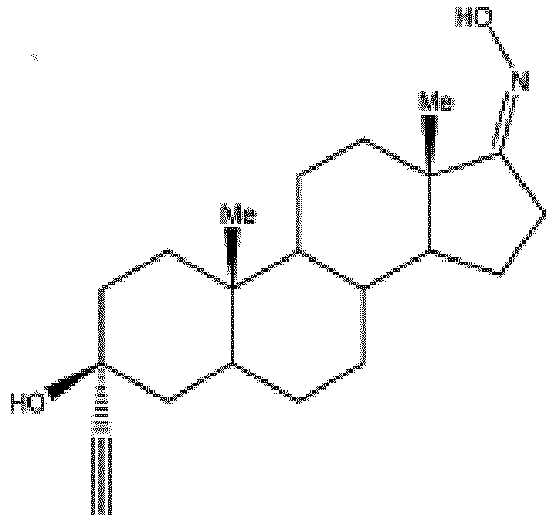
- FFIBGVYTWNPLPN-FUFGZKTOSA-N C[C@](CC1)(C(CC2)C(CC3)C1[C@@](C)(CC1)C3C[C@@]1(C#C)O)/C2=N\O Chemical compound C[C@](CC1)(C(CC2)C(CC3)C1[C@@](C)(CC1)C3C[C@@]1(C#C)O)/C2=N\O FFIBGVYTWNPLPN-FUFGZKTOSA-N 0.000 description 2
Images


Classifications
-
- A—HUMAN NECESSITIES
- A61—MEDICAL OR VETERINARY SCIENCE; HYGIENE
- A61K—PREPARATIONS FOR MEDICAL, DENTAL OR TOILETRY PURPOSES
- A61K31/00—Medicinal preparations containing organic active ingredients
- A61K31/56—Compounds containing cyclopenta[a]hydrophenanthrene ring systems; Derivatives thereof, e.g. steroids
- A61K31/565—Compounds containing cyclopenta[a]hydrophenanthrene ring systems; Derivatives thereof, e.g. steroids not substituted in position 17 beta by a carbon atom, e.g. estrane, estradiol
- A61K31/568—Compounds containing cyclopenta[a]hydrophenanthrene ring systems; Derivatives thereof, e.g. steroids not substituted in position 17 beta by a carbon atom, e.g. estrane, estradiol substituted in positions 10 and 13 by a chain having at least one carbon atom, e.g. androstanes, e.g. testosterone
-
- A—HUMAN NECESSITIES
- A61—MEDICAL OR VETERINARY SCIENCE; HYGIENE
- A61K—PREPARATIONS FOR MEDICAL, DENTAL OR TOILETRY PURPOSES
- A61K31/00—Medicinal preparations containing organic active ingredients
- A61K31/185—Acids; Anhydrides, halides or salts thereof, e.g. sulfur acids, imidic, hydrazonic or hydroximic acids
- A61K31/19—Carboxylic acids, e.g. valproic acid
- A61K31/195—Carboxylic acids, e.g. valproic acid having an amino group
- A61K31/197—Carboxylic acids, e.g. valproic acid having an amino group the amino and the carboxyl groups being attached to the same acyclic carbon chain, e.g. gamma-aminobutyric acid [GABA], beta-alanine, epsilon-aminocaproic acid or pantothenic acid
- A61K31/198—Alpha-amino acids, e.g. alanine or edetic acid [EDTA]
-
- A—HUMAN NECESSITIES
- A61—MEDICAL OR VETERINARY SCIENCE; HYGIENE
- A61K—PREPARATIONS FOR MEDICAL, DENTAL OR TOILETRY PURPOSES
- A61K31/00—Medicinal preparations containing organic active ingredients
- A61K31/21—Esters, e.g. nitroglycerine, selenocyanates
- A61K31/215—Esters, e.g. nitroglycerine, selenocyanates of carboxylic acids
- A61K31/216—Esters, e.g. nitroglycerine, selenocyanates of carboxylic acids of acids having aromatic rings, e.g. benactizyne, clofibrate
-
- A—HUMAN NECESSITIES
- A61—MEDICAL OR VETERINARY SCIENCE; HYGIENE
- A61K—PREPARATIONS FOR MEDICAL, DENTAL OR TOILETRY PURPOSES
- A61K31/00—Medicinal preparations containing organic active ingredients
- A61K31/33—Heterocyclic compounds
- A61K31/395—Heterocyclic compounds having nitrogen as a ring hetero atom, e.g. guanethidine or rifamycins
- A61K31/435—Heterocyclic compounds having nitrogen as a ring hetero atom, e.g. guanethidine or rifamycins having six-membered rings with one nitrogen as the only ring hetero atom
- A61K31/4353—Heterocyclic compounds having nitrogen as a ring hetero atom, e.g. guanethidine or rifamycins having six-membered rings with one nitrogen as the only ring hetero atom ortho- or peri-condensed with heterocyclic ring systems
- A61K31/437—Heterocyclic compounds having nitrogen as a ring hetero atom, e.g. guanethidine or rifamycins having six-membered rings with one nitrogen as the only ring hetero atom ortho- or peri-condensed with heterocyclic ring systems the heterocyclic ring system containing a five-membered ring having nitrogen as a ring hetero atom, e.g. indolizine, beta-carboline
-
- A—HUMAN NECESSITIES
- A61—MEDICAL OR VETERINARY SCIENCE; HYGIENE
- A61K—PREPARATIONS FOR MEDICAL, DENTAL OR TOILETRY PURPOSES
- A61K31/00—Medicinal preparations containing organic active ingredients
- A61K31/33—Heterocyclic compounds
- A61K31/395—Heterocyclic compounds having nitrogen as a ring hetero atom, e.g. guanethidine or rifamycins
- A61K31/435—Heterocyclic compounds having nitrogen as a ring hetero atom, e.g. guanethidine or rifamycins having six-membered rings with one nitrogen as the only ring hetero atom
- A61K31/4353—Heterocyclic compounds having nitrogen as a ring hetero atom, e.g. guanethidine or rifamycins having six-membered rings with one nitrogen as the only ring hetero atom ortho- or peri-condensed with heterocyclic ring systems
- A61K31/4375—Heterocyclic compounds having nitrogen as a ring hetero atom, e.g. guanethidine or rifamycins having six-membered rings with one nitrogen as the only ring hetero atom ortho- or peri-condensed with heterocyclic ring systems the heterocyclic ring system containing a six-membered ring having nitrogen as a ring heteroatom, e.g. quinolizines, naphthyridines, berberine, vincamine
-
- A—HUMAN NECESSITIES
- A61—MEDICAL OR VETERINARY SCIENCE; HYGIENE
- A61K—PREPARATIONS FOR MEDICAL, DENTAL OR TOILETRY PURPOSES
- A61K31/00—Medicinal preparations containing organic active ingredients
- A61K31/70—Carbohydrates; Sugars; Derivatives thereof
- A61K31/7016—Disaccharides, e.g. lactose, lactulose
-
- A—HUMAN NECESSITIES
- A61—MEDICAL OR VETERINARY SCIENCE; HYGIENE
- A61K—PREPARATIONS FOR MEDICAL, DENTAL OR TOILETRY PURPOSES
- A61K45/00—Medicinal preparations containing active ingredients not provided for in groups A61K31/00 - A61K41/00
- A61K45/06—Mixtures of active ingredients without chemical characterisation, e.g. antiphlogistics and cardiaca
-
- A—HUMAN NECESSITIES
- A61—MEDICAL OR VETERINARY SCIENCE; HYGIENE
- A61P—SPECIFIC THERAPEUTIC ACTIVITY OF CHEMICAL COMPOUNDS OR MEDICINAL PREPARATIONS
- A61P1/00—Drugs for disorders of the alimentary tract or the digestive system
- A61P1/16—Drugs for disorders of the alimentary tract or the digestive system for liver or gallbladder disorders, e.g. hepatoprotective agents, cholagogues, litholytics
-
- A—HUMAN NECESSITIES
- A61—MEDICAL OR VETERINARY SCIENCE; HYGIENE
- A61P—SPECIFIC THERAPEUTIC ACTIVITY OF CHEMICAL COMPOUNDS OR MEDICINAL PREPARATIONS
- A61P25/00—Drugs for disorders of the nervous system
-
- A—HUMAN NECESSITIES
- A61—MEDICAL OR VETERINARY SCIENCE; HYGIENE
- A61P—SPECIFIC THERAPEUTIC ACTIVITY OF CHEMICAL COMPOUNDS OR MEDICINAL PREPARATIONS
- A61P31/00—Antiinfectives, i.e. antibiotics, antiseptics, chemotherapeutics
- A61P31/12—Antivirals
- A61P31/14—Antivirals for RNA viruses
-
- A—HUMAN NECESSITIES
- A61—MEDICAL OR VETERINARY SCIENCE; HYGIENE
- A61P—SPECIFIC THERAPEUTIC ACTIVITY OF CHEMICAL COMPOUNDS OR MEDICINAL PREPARATIONS
- A61P31/00—Antiinfectives, i.e. antibiotics, antiseptics, chemotherapeutics
- A61P31/12—Antivirals
- A61P31/20—Antivirals for DNA viruses
-
- A—HUMAN NECESSITIES
- A61—MEDICAL OR VETERINARY SCIENCE; HYGIENE
- A61P—SPECIFIC THERAPEUTIC ACTIVITY OF CHEMICAL COMPOUNDS OR MEDICINAL PREPARATIONS
- A61P43/00—Drugs for specific purposes, not provided for in groups A61P1/00-A61P41/00
-
- A—HUMAN NECESSITIES
- A61—MEDICAL OR VETERINARY SCIENCE; HYGIENE
- A61K—PREPARATIONS FOR MEDICAL, DENTAL OR TOILETRY PURPOSES
- A61K2300/00—Mixtures or combinations of active ingredients, wherein at least one active ingredient is fully defined in groups A61K31/00 - A61K41/00
Definitions
- the present invention concerns a steroid compound for use in treatment of hepatic encephalopathy.
- Hepatic encephalopathy is a serious neuropsychiatric and neurocognitive complication in acute and chronic liver disease.
- HE is a significant and increasing health care problem due to the large and increasing prevalence of chronic liver disease.
- HE is characterized by impairments of the sleep-wake cycle, cognition, memory, learning, motor coordination, consciousness, decreased energy levels and personality change, ranging from minimal HE (MHE) to overt HE (OHE).
- MHE minimal HE
- OHE overt HE
- MHE minimal HE
- OHE overt HE
- MHE is manifested with cognitive impairment and has detrimental effects on health related quality of life and the ability to perform complex tasks such as driving.
- OHE is clinically manifested with mental and motor disorders and the symptoms ranges from disorientation through sedation and coma.
- Naturally occurring steroids are subject to intense metabolism and are typically not suitable for oral administration.
- GABA A -R gamma-aminobutyric acid receptor-chloride ionophore
- GAMS GABA A receptor modulating steroids
- Certain steroids have been shown to be specific GABA A receptor enhancers. Examples of these steroids can inter alia be found in WO 2008/063128 . Some of these steroids are potent and have e.g. been shown to have an ability to induce amnesia, sedation and anesthesia in pharmacological dose.
- WO 99/45931 and WO 03/059357 disclose antagonistic effects of steroids.
- Wang et al. 2000 Acta Physiol Scand 169, 333-341
- Wang et al. 2002 J Neurosci 22(9):3366-75 ) disclose antagonistic effects of 3 ⁇ -OH-5 ⁇ -pregnan-20-one and other 3 ⁇ -OH-5 ⁇ / ⁇ pregnan steroids.
- WO2006/056794 and WO2010/144498 discloses use of compounds for treatment of liver decompensation, hepatic encephalopathy and portal hypertension. There is a need to provide new and effective therapeutic treatments for hepatic encephalopathy and related disorders
- the present invention provides the compound 3 ⁇ -ethynyl-3 ⁇ -hydroxyandrostan-17-one oxime or a pharmaceutically acceptable salt thereof, for use in the treatment of hepatic encephalopathy.
- 3 ⁇ -Ethynyl-3 ⁇ -hydroxyandrostan-17-one oxime belongs to a class of compounds known as GABA A receptor modulating steroid antagonists (GAMSAs).
- GAMSAs GABA A receptor modulating steroid antagonists
- 3 ⁇ -ethynyl-3 ⁇ -hydroxyandrostan-17-one oxime is able to selectively inhibit the positive modulation of the GABA A receptor by endogenous steroids such as allopregnanolone and tetrahydrodeoxycorticosterone (THDOC).
- endogenous steroids such as allopregnanolone and tetrahydrodeoxycorticosterone (THDOC).
- THDOC tetrahydrodeoxycorticosterone
- 3 ⁇ -ethynyl-3 ⁇ -hydroxyandrostan-17-one oxime does not have an antagonistic effect towards the action of gamma-aminobutyric acid (GABA) at the GABA A receptors.
- GABA gamma-aminobutyric acid
- 3 ⁇ -ethynyl-3 ⁇ -hydroxyandrostan-17-one oxime acts on both the ⁇ 1 and ⁇ 5 GABA A receptor sub-types and so is able to exert a positive effect on both the motor and cognitive impairment, and the sedative effects, that result from the over-activation of GABA A receptors.
- the positive effect of 3 ⁇ -ethynyl-3 ⁇ -hydroxyandrostan-17-one oxime on motor and cognitive impairment has been illustrated in two animal models of HE (hyperammonemia and porta-caval anastomosis in rats vide infra ).
- 3 ⁇ -ethynyl-3 ⁇ -hydroxyandrostan-17-one oxime does not affect ammonia levels in vivo. Therefore, there is clearly also potential for it's complementary use in therapy.
- composition is used in its widest sense, encompassing all pharmaceutically applicable compositions containing at least one active substance and optional carriers, adjuvants, diluents, constituents etc.
- administration and “mode of administration” as well as “route of administration” are also used in their widest sense.
- the compound 3 ⁇ -ethynyl-3 ⁇ -hydroxyandrostan-17-one oxime as used in accordance with the invention may be administered in a number of ways depending largely on whether a local, topical or systemic mode of administration is most appropriate for the hepatic encephalopathy condition to be treated. These different modes of administration are for example topical (e.g., on the skin), local (including ophthalmic and to various mucous membranes, for example vaginal and rectal delivery), oral, parenteral or pulmonary, including the upper and lower airways.
- topical e.g., on the skin
- local including ophthalmic and to various mucous membranes, for example vaginal and rectal delivery
- oral, parenteral or pulmonary including the upper and lower airways.
- parenteral or pulmonary including the upper and lower airways.
- antagonist a substance that hinders another substance, an agonist, to induce its effect.
- antagonist and blocker are used interchangeably.
- Type A hepatic encephalopathy is typically meant hepatic encephalopathy associated with acute liver failure, typically associated with cerebral oedema.
- Type B hepatic encephalopathy is typically meant hepatic encephalopathy (bypass) caused by portal-systemic shunting without associated intrinsic liver disease.
- Type C hepatic encephalopathy is typically meant hepatic encephalopathy occurring in patients with cirrhosis - this type is subdivided in episodic, persistent and minimal encephalopathy.
- minimal hepatic encephalopathy is typically meant hepatic encephalopathy that does not lead to clinically overt cognitive dysfunction, but can be demonstrated with neuropsychological studies.
- overt hepatic encephalopathy is typically meant clinically apparent hepatic encephalopathy manifested as neuropsychiatric syndrome with a large spectrum of mental and motor disorders. Overt hepatic encephalopathy may arise episodically, over a period of hours or days in patients previously stable or patients may present with persistent neuropsychiatric abnormalities.
- hypoammonemia is typically meant a metabolic disturbance characterized by an excess of ammonia in the blood.
- liver transplantation is typically meant a surgical procedure to remove a diseased liver as a consequence of e.g. acute liver failure or cirrhosis, and replace it with a healthy liver from a donor.
- Most liver transplant operations use livers from deceased donors but a liver may also come from a living donor (a portion of a healthy person's liver).
- Patients with e.g. cirrhosis commonly experience hepatic encephalopathy and preoperative hepatic encephalopathy is a significant predictor of post-transplant neurologic complications.
- acute-on-chronic liver failure is typically meant acute decompensation of cirrhosis, at least one organ failure, or belongs to a subgroup with high short-term mortality rate.
- liver cirrhosis typically meant liver cirrhosis without any clinical evidence but may include asymptotic esophageal or gastric varices and early symptoms such as fatigue and loss of energy, loss of appetite and weight loss, nausea or abdominal pain.
- cirrhosis is typically meant advanced liver cirrhosis with a range of clinical evidence such as jaundice, ascites, oedema, hepatic encephalopathy, gastrointestinal haemorrhage, portal hypertension, bacterial infections, or any combination.
- portal hypertension is typically meant a hepatic venous pressure gradient following liver cirrhosis, with or without associated transjugular intrahepatic portsystemic shunt (TIPS).
- TIPS transjugular intrahepatic portsystemic shunt
- prevention within this disclosure, is typically meant prevention of disease or disorder hepatic encephalopathy to occur.
- Patients suffering from hepatic encephalopathy may show symptoms including, but not limited to, impairments of the sleep-wake cycle, cognition, memory, learning, motor coordination, consciousness, decreased energy levels and personality change, cognitive impairment, disorientation and coma.
- 3 ⁇ -ethynyl-3 ⁇ -hydroxyandrostan-17-one oxime may be useful for the treatment of hepatic encephalopathy.
- the compound 3 ⁇ -ethynyl-3 ⁇ -hydroxyandrostan-17-one oxime or a pharmaceutically acceptable salt thereof for use in treatment of hepatic encephalopathy.
- said hepatic encephalopathy is type A hepatic encephalopathy.
- said hepatic encephalopathy is type B hepatic encephalopathy.
- said hepatic encephalopathy is type C hepatic encephalopathy.
- said hepatic encephalopathy is minimal hepatic encephalopathy.
- said hepatic encephalopathy is overt hepatic encephalopathy.
- said compound for use is where said hepatic encephalopathy is treated in a patient with acute liver failure.
- said compound for use is where said hepatic encephalopathy is treated in a patient with chronic liver disease with or without acute-on-chronic liver failure.
- said compound for use is for prevention or alleviation of hepatic encephalopathy, such as type A hepatic encephalopathy, type B hepatic encephalopathy, type C hepatic encephalopathy, minimal hepatic encephalopathy, overt hepatic encephalopathy, in a patient with acute liver failure, or in a patient with chronic liver disease with or without acute-on-chronic liver failure.
- hepatic encephalopathy such as type A hepatic encephalopathy, type B hepatic encephalopathy, type C hepatic encephalopathy, minimal hepatic encephalopathy, overt hepatic encephalopathy, in a patient with acute liver failure, or in a patient with chronic liver disease with or without acute-on-chronic liver failure.
- said compound for use is provided before, during or after a liver transplantation.
- a pharmaceutical composition comprising 3 ⁇ -ethynyl-3 ⁇ -hydroxyandrostan-17-one oxime or a pharmaceutically acceptable salt thereof, for use in treatment of hepatic encephalopathy, together with one or more pharmaceutically acceptable carriers, excipients and/or diluents.
- the compound 3 ⁇ -ethynyl-3 ⁇ -hydroxyandrostan-17-one oxime or a pharmaceutically acceptable salt thereof for use in treatment of portal hypertension. Said use may also be prevention or alleviation of portal hypertension.
- the patient with portal hypertension typically suffers from a liver disease, such as a chronic liver disease, cirrhosis or acute liver failure.
- a method of treating portal hypertension comprising administering a pharmaceutically effective amount of 3 ⁇ -ethynyl-3 ⁇ -hydroxyandrostan-17-one oxime or a pharmaceutically acceptable salt thereof, to a patient in need thereof.
- Said method may also be in prevention or alleviation of portal hypertension.
- the patient with portal hypertension typically suffers from a liver disease, such as a chronic liver disease, cirrhosis or acute liver failure.
- the compound 3 ⁇ -ethynyl-3 ⁇ -hydroxyandrostan-17-one oxime or a pharmaceutically acceptable salt thereof for use in treatment of liver decompensation. Said use may also be prevention or alleviation of liver decompensation.
- the patient with liver decompensation typically suffers from a liver disease, such as a chronic liver disease or may be suspected of having a precipitating event, such as gastrointestinal bleeding, infection, portal vein thrombosis or dehydration.
- said hepatic encephalopathy is type A hepatic encephalopathy.
- said hepatic encephalopathy is type B hepatic encephalopathy.
- said hepatic encephalopathy is type C hepatic encephalopathy.
- said hepatic encephalopathy is minimal hepatic encephalopathy.
- said hepatic encephalopathy is overt hepatic encephalopathy.
- said use is where said hepatic encephalopathy is treated in a patient with acute liver failure.
- said use is where said hepatic encephalopathy is treated in a patient with chronic liver disease with or without acute-on-chronic liver failure.
- said use is provided before, during or after a liver transplantation.
- said use of the compound 3 ⁇ -ethynyl-3- ⁇ -hydroxyandrostan-17-one oxime, or a pharmaceutically acceptable salt thereof, in the manufacture of a medicament may be for prevention or alleviation of hepatic encephalopathy, such as type A hepatic encephalopathy, type B hepatic encephalopathy, type C hepatic encephalopathy, minimal hepatic encephalopathy, overt hepatic encephalopathy, in a patient with acute liver failure, or in a patient with chronic liver disease with or without acute-on-chronic liver failure.
- hepatic encephalopathy such as type A hepatic encephalopathy, type B hepatic encephalopathy, type C hepatic encephalopathy, minimal hepatic encephalopathy, overt hepatic encephalopathy
- a pharmaceutical composition comprising 3 ⁇ -ethynyl-3 ⁇ -hydroxyandrostan-17-one oxime or a pharmaceutically acceptable salt thereof, for use in treatment of hepatic encephalopathy, together with pharmaceutically acceptable carriers, excipients and or diluents. Said use may also be in prevention or alleviation of hepatic encephalopathy.
- a further embodiment of the invention is the compound 3 ⁇ -ethynyl-3 ⁇ -hydroxyandrostan-17-one oxime for use in the treatment or prevention of hepatic encephalopathy, such as type A hepatic encephalopathy, type B hepatic encephalopathy, type C hepatic encephalopathy, minimal hepatic encephalopathy, overt hepatic encephalopathy, in a patient with acute liver failure, or in a patient with chronic liver disease with or without acute-on-chronic liver failure; wherein said treatment or prevention comprises the co-administration of 3 ⁇ -ethynyl-3 ⁇ -hydroxyandrostan-17-one oxime, or a pharmaceutically acceptable salt thereof, with an ammonia-lowering compound, such as rifaximin, lactulose, ornithine phenylacetate and glycerol phenylbutyrate, preferably the ammonia-lowering compound is rifaximin or lactulose, and most preferably the ammonia-
- a further embodiment of the invention is the use of the compound 3 ⁇ -ethynyl-3 ⁇ -hydroxyandrostan-17-one oxime in the manufacture of a medicament for the treatment or prevention of hepatic encephalopathy, such as type A hepatic encephalopathy, type B hepatic encephalopathy, type C hepatic encephalopathy, minimal hepatic encephalopathy, overt hepatic encephalopathy, in a patient with acute liver failure, or in a patient with chronic liver disease with or without acute-on-chronic liver failure; wherein said treatment or prevention comprises the co-administration of 3 ⁇ -ethynyl-3 ⁇ -hydroxyandrostan-17-one oxime, or a pharmaceutically acceptable salt thereof, with an ammonia-lowering compound, such as rifaximin, lactulose, ornithine phenylacetate and glycerol phenylbutyrate, preferably the ammonia-lowering compound is rifaximin or lactulose, and
- a further aspect of the invention is the compound 3 ⁇ -ethynyl-3 ⁇ -hydroxyandrostan-17-one oxime, wherein one or more hydrogen atom in each possible substituent position may be substituted for deuterium or tritium, for use in the treatment of hepatic encephalopathy such as minimal hepatic encephalopathy or overt hepatic encephalopathy.
- a further aspect of the invention is the compound 3 ⁇ -ethynyl-3 ⁇ -hydroxyandrostan-17-one oxime, wherein one or more hydrogen atom in each possible substituent position may be substituted for deuterium or tritium, for use assays that involve determining the concentration of the compound in tissue or fluids.
- 3 ⁇ -ethynyl-3 ⁇ -hydroxyandrostan-17-one oxime may be administered through one of the following routes of administration: intravenously, nasally, per rectum, bucally, intravaginally, percutaneously, intramuscularly and orally.
- 3 ⁇ -ethynyl-3 ⁇ -hydroxyandrostan-17-one oxime is administered intravenously.
- 3 ⁇ -ethynyl-3 ⁇ -hydroxyandrostan-17-one oxime is administered nasally.
- Percutaneous administration using 3 ⁇ -ethynyl-3 ⁇ -hydroxyandrostan-17-one oxime formulated as a cream, a gel, and an ointment or in the form of slow-release adhesive medicine patches, is another possible form of administration, similarly suitable for self-medication.
- the pharmaceutical composition may be adapted or adjusted according to normal pharmacological procedures, comprising the effective pharmaceutical in a chemical form, suitable for the chosen route, together with suitable adjuvants, carriers, diluents and vehicles, conventionally used and well-known to a person skilled in the art.
- suitable adjuvants and vehicles for oral administration are for example fillers or suspending agents like titanium dioxide, lactose anhydride, silica, silica colloidalis, methylcellulose, magnesium stearate, microcrystalline cellulose and the like.
- Conventionally used adjuvants and vehicles for intravenous administration are for example sterile water for injections (WFI), sterile buffers (for example buffering the solution to pH 7,4) albumin solution, lipid solutions, cyclodextrins and the like.
- Conventionally used adjuvants and vehicles for transdermal administration are for example Vaseline, liquid paraffin, glycerol, water, MCT oil, sesame oil, vegetable oils and the like. The dose will naturally vary depending on the mode of administration, the particular condition to be treated or the effect desired, gender, age, weight and health of the patient, as well as possibly other factors, evaluated by the treating physician.
- 3,17-androstandione (5.0 mmol) was dissolved in 50 mL dry THF at room temperature (rt) under nitrogen.
- Ethynyl magnesium bromide (1.1 equiv) was added dropwise at rt under stirring and the solution was left stirring overnight at rt under nitrogen flow.
- the solution was then quenched with saturated NH 4 Cl (aq) and the aqueous phase extracted with dichloromethane (3 x 30 mL).
- the collected organic phases were evaporated under reduced pressure, the resulting yellow oil dissolved in dichloromethane, washed with brine and dried over MgSO 4 .
- Step 2 Synthesis of 3 ⁇ -ethynyl-3 ⁇ -hydroxyandrostan-17-one oxime
- the beam walking test was made during the 3 rd and 4 th week of 3 ⁇ -ethynyl-3 ⁇ -hydroxyandrostan-17-one oxime treatment while the Morris Water maze test was made during 4 th -5 th week of 3 ⁇ -ethynyl-3 ⁇ -hydroxyandrostan-17-one oxime treatment and the Radial maze test was made during 6 th -7 th week of 3 ⁇ -ethynyl-3 ⁇ -hydroxyandrostan-17-one oxime treatment.
- Test article of 3 ⁇ -ethynyl-3 ⁇ -hydroxyandrostan-17-one oxime was prepared as a suspension in sesame oil at 20 mg/kg.
- the Radial maze was designed as a method to assess spatial learning.
- the apparatus is composed of a central area that gives access to eight equally-sized arms.
- the arms were 70 cm long and 10 cm wide and the central area was 30 cm in diameter.
- the maze was made of black Perspex and was elevated 80 cm above de floor.
- Each arm had lateral walls with a height higher in the side proximal to the central area (30 cm) than in the distal side (5 cm).
- a recessed cup was installed for positioning the food rewards (Hernandez-Rabaza V. et al 2010).
- Training in the radial maze was composed of five blocks of three trials each, performed on ten consecutive days.
- the task involved locating four pellets, each placed at the end of a different arm according to a random configuration. Configurations were specific for each rat and were kept invariable throughout training.
- the number of spatial reference errors and working memory were calculated and expressed as number of reference and working errors per block.
- a learning index was used to evaluate the learning of the task and was defined as number of right choices-reference errors (Hernandez-Rabaza et al.2010).
- 3 ⁇ -ethynyl-3 ⁇ -hydroxyandrostan-17-one oxime restored spatial learning of hyperammonemic rats in the Radial maze. Hyperammonemic rats show reduced spatial learning and perform more working errors in the Radial maze task. Spatial memory was completely restored by 3 ⁇ -ethynyl-3 ⁇ -hydroxyandrostan-17-one oxime ( Figure 2 ).
- the treatment and testing schedule was as set out in example 2.
- the maze was designed as a method to assess spatial learning (Morris R. 1984).
- the test was carried out using a black circular pool (160 cm diameter, 40 cm height) arbitrarily divided into four quadrants. Water opacity was obtained by adding black paint.
- the test was carried out as follows; the first day was the pre-training day, rats were put in the water two times for 30 s only to adapt to water. Then the rats were trained to learn the fixed location of the invisible platform during 3 days. Each training trial involved placing the rat into the pool facing the wall at one of the three quadrants lacking the platform. A different starting point was randomly used on each trial. Training consisted of five swims per day. Each animal was allowed a maximum of 120 s to find the platform and was left for 15 s on the platform, if a rat failed to locate the platform within 120 s it was manually guided to the platform by the experimenter. The aim of this test is that the rats learn where the invisible platform is placed and reach it in the shortest time possible.
- the time, speed and path needed to find the hidden platform was recorded by a video tracking system provided by Viewpoint Company (Viewpoint 2.5, Champagne au Mont D' Or, France) and used as a measure of learning of the task. After 15 training trial, the platform was removed from the pool, the rats were allowed to swim for 90 s in the pool and the time spent in the quadrant where the platform was positioned during training was recorded.
- the treatment and testing schedule was as set out in example 2.
- rats are trained to traverse an elevated, narrow beam to reach an enclosed escape platform.
- the beam is made of smooth round wood (20 mm in diameter).
- the beam is elevated 1 m from the floor.
- the parameters of motor coordination measured are: footslips (or foot faults) and latency to traverse the beam (Jover et al., 2006; Carter et al., 2010).
- footslips or foot faults
- latency to traverse the beam.
- the experimenter places the rat at the beginning of the beam and helps the rat to cross the beam three times. After that, the test consists of three consecutive trials. The number of times the left or right hind paw slip off the beam was recorded for each trial.
- Blood was obtained from the tail of the rats (from Example 2) in the end of second week of ammonia treatment and first week of 3 ⁇ -ethynyl-3 ⁇ -hydroxyandrostan-17-one oxime treatment and also from the neck during the animal sacrifice. To obtain the plasma it was added EDTA 7.5 nM and centrifuged at 1500 r.p.m during 5 minutes.
- Ammonia concentration in blood samples was measured using the Pocket chem BA (Woodley Equipment Company Ltd, United Kingdom), an ammonia analyzer.
- the device enables immediate testing and delivers results in 3 minutes and 20 s. It also eliminates the need for pre-processes such as centrifugal separation.
- Rats were sacrificed by decapitation. One half of the brain including the cerebellum was collected and conserved at -80°C for determination of 3 ⁇ -ethynyl-3 ⁇ -hydroxyandrostan-17-one oxime. Different brain areas (cerebellum, cortex, hippocampus and striatum) were dissected and conserved at -80°C for possible determination of GAMS.
- Plasma and brain samples were analyzed for 3 ⁇ -ethynyl-3 ⁇ -hydroxyandrostan-17-one oxime concentrations.
- Plasma and brain samples were thawed at room temperature.
- Plasma was protein-precipitated with a 3-fold volume with acetonitrile and brain tissue was homogenized with a 1:4 ratio of tissue:PBS (pH 7.4) and then extracted with a 2-fold volume of methanol:acetonitrile (1:1) for 20 min during sonication. Thereafter samples were shaken and centrifuged for 10 min at 10 000 x g (Heraeus Pico 17 centrifuge). The supernatant was then diluted with an equal volume of PBS and analyzed.
- Unbound brain concentration fraction of 3 ⁇ -ethynyl-3 ⁇ -hydroxyandrostan-17-one oxime in the brain that is not bound to carrier protein or brain tissue.
- HEK-293 cells were permanently transfected with vectors including the human CMV promoter for constitutive expression of the human ⁇ 5, ⁇ 3, and ⁇ 2L GABA A receptor subunits ( ⁇ 5 ⁇ 3 ⁇ 2L) or the human ⁇ 1, ⁇ 2, and ⁇ 2L GABA A receptor subunits ( ⁇ 1 ⁇ 2 ⁇ 2L).
- the cell lines used were selected for good reactivity to GABA and to THDOC.
- THDOC and 3 ⁇ -ethynyl-3 ⁇ -hydroxyandrostan-17-one oxime were dissolved in dimethyl sulfoxide (DMSO) and thereafter diluted with EC solution to include 0.1% DMSO.
- DMSO dimethyl sulfoxide
- 3 ⁇ -Ethynyl-3 ⁇ -hydroxyandrostan-17-one oxime (1 ⁇ M) partly antagonises the effect of THDOC at both the ⁇ 1 ⁇ 2 ⁇ 2L and the ⁇ 5 ⁇ 3 ⁇ 2L subunit variants of the GABA A receptor ( Figure 8 A and C ).
- ⁇ 1 ⁇ 2 ⁇ 2L receptors 3 ⁇ -ethynyl-3 ⁇ -hydroxyandrostan-17-one oxime inhibits 29 ⁇ 4.7 % of the THDOC enhancement of GABA (P ⁇ 0.001) and with the ⁇ 5 ⁇ 3 ⁇ 2L receptor the inhibition is 49 ⁇ 4.7 % (P ⁇ 0.001, Table 1).
- 3 ⁇ -ethynyl-3 ⁇ -hydroxyandrostan-17-one oxime (1 ⁇ M) does not antagonize the GABA-activation of the GABA A receptor ( Fig 8 B and D ).
- Table 1 the ⁇ 1 ⁇ 2 ⁇ 2L GABA A receptor
- NS ⁇ 5 ⁇ 3 ⁇ 2L GABA A receptor
- GAMSA 3 ⁇ -ethynyl-3 ⁇ -hydroxyandrostan-17-one oxime
- 3 ⁇ -ethynyl-3 ⁇ -hydroxyandrostan-17-one oxime was determined for receptors, ion channels and enzymes, including all major classes of neurotransmitter receptors. In total 113 targets were tested in duplicate with 3 ⁇ -ethynyl-3 ⁇ -hydroxyandrostan-17-one oxime at 10 ⁇ M (Perkin Elmer, Customized screen). Binding activity was defined as greater than or equal to 50% inhibition of ligand binding.
- Porta-caval anastomosis Male Wistar rats (220-240 g) were anesthetized with isoflurane, and an end-to side porta-caval anastomosis was performed as described by Lee and Fisher (Surgery, 1961, 50, 668-672 ). Control rats were sham operated; they had the portal vein and inferior vena cava clamped for 10 min.
- PCS rats Rats that were subjected to the porta-caval anastomosis procedure are herein referred to as "PCS rats”.
- 3 ⁇ -ethynyl-3 ⁇ -hydroxyandrostan-17-one oxime Treatment with 3 ⁇ -ethynyl-3 ⁇ -hydroxyandrostan-17-one oxime.
- 3 ⁇ -ethynyl-3 ⁇ -hydroxyandrostan-17-one oxime in sesame oil was administered by subcutaneous injections in the back of the rats, once daily.
- Two different sets of experiments were performed in hyperammonemic rats. In the first set four groups of rats were used: 1) control rats injected with vehicle; 2) hyperammonemic rats injected with vehicle; 3) control rats injected with 20 mg/Kg of 3 ⁇ -ethynyl-3 ⁇ -hydroxyandrostan-17-one oxime and 4) hyperammonemic rats injected with 20 mg/Kg of 3 ⁇ -ethynyl-3 ⁇ -hydroxyandrostan-17-one oxime.
- mice were used: 1) control rats injected with vehicle; 2) hyperammonemic rats injected with vehicle and 3-5) hyperammonemic rats injected with 3, 10 or 20 mg/Kg of 3 ⁇ -ethynyl-3 ⁇ -hydroxyandrostan-17-one oxime. In each experiment 6-8 rats per group were used.
- the data shown are the mean ⁇ SEM of the number of rats indicated in each Figure. Statistical significance was estimated with two-way ANOVA and Bonferroni post-test and with Student's t-test when only one parameter was compared. The analyses were performed using GraphPad PRISM software for Windows (GraphPad software Inc., La Jolla, CA, USA).
- Hyperammonemic rats show motor in-coordination in the beam walking test, with higher (p ⁇ 0.05) number of slips (1.4 ⁇ 0.1) than control rats (1.0 ⁇ 0.1). Treatment with 3 ⁇ -ethynyl-3 ⁇ -hydroxyandrostan-17-one oxime restores motor coordination in hyperammonemic rats ( Fig. 9A ). The effects were statistically significant for the doses of 3 mg/kg (0.8 ⁇ 0.1 slips, p ⁇ 0.05) and 20 mg/kg (0.78 ⁇ 0.07 slips, p ⁇ 0.05).
- PCS rats also show motor in-coordination in the beam walking test, with higher (p ⁇ 0.01) number of slips (1.2 ⁇ 0.1) than sham-operated control rats (0.71 ⁇ 0.07).
- Treatment with 3 ⁇ -ethynyl-3 ⁇ -hydroxyandrostan-17-one oxime also restores motor coordination in PCS rats ( Fig. 9B ).
- the number of slips for the dose of 0.7 mg/kg was 0.75 ⁇ 0.10 (p ⁇ 0.05 vs PCS rats).
- the test was carried out as described by Monfort et al. (European Journal of Neuroscience, 2007, 25, 2103-2111 ) using a circular pool (160 cm diameter, 40 cm height) arbitrarily divided into four quadrants. After pre-training, the rats were trained to learn the fixed location of the invisible platform over 3 days. Training involved placing the rat into the pool facing the wall in one of the three quadrants lacking the platform. A different starting point was randomly used on each trial. Training consisted of three swims per day. Each animal was allowed a maximum of 120 seconds to find the platform and was left for 20 seconds on the platform. If a rat failed to locate the platform within 120 seconds it was manually guided to the platform by the experimenter. The time needed to find the hidden platform was recorded manually and used as a measure of learning of the task. Spatial memory was assessed 24 hours later by removing the platform and measuring the time spent by the rat in the quadrant where the platform was.
- 3 ⁇ -Ethynyl-3 ⁇ -hydroxyandrostan-17-one oxime was shown to restore spatial memory in the Morris water maze test in hyperammonemic and PCS rats.
- Hyperammonemic rats showed reduced spatial memory in the Morris water maze. All groups of rats learned to find the platform and the latency to reach it was reduced along the three training days ( Fig. 10A ). Learning ability was slightly reduced in hyperammonemic rats, which needed more time than control to reach the platform.
- PCS rats also showed reduced spatial memory in the Morris water maze. All groups of rats learned to find the platform and the latency to reach it was reduced along the three training days ( Fig. 10C ). Spatial memory was significantly reduced (p ⁇ 0.05) in PCS rats. In the memory test PCS rats remained less time (31 ⁇ 3% of the time) in the right quadrant than control rats (41 ⁇ 2% of the time). Treatment with 3 ⁇ -ethynyl-3 ⁇ -hydroxyandrostan-17-one oxime restored spatial memory in the Morris water maze in PCS rats. The percentages of time spent in the correct quadrant were 34 ⁇ 4 and 39 ⁇ 3, for 0.7 and 2.5 mg/kg doses, respectively ( Fig. 10D ).
- the apparatus was composed of a central area that gave access to eight equally-sized arms.
- the arms were 70 cm long and 10 cm wide and the central area was 30 cm in diameter.
- the distal extreme of each arm had a cup containing food rewards.
- Rats were allowed to explore the maze for 10 minutes on two consecutive days in the presence of distal cues to adapt to the maze.
- Training in the radial maze was composed of three trials per day on six consecutive days.
- the task involved locating four pellets, each placed at the end of a different arm according to a random configuration as described by Hernandez-Rabaza et al. (Addiction Biology, 2010, 15, 413-423 ).
- the number of working memory errors (visits to arms already visited in the same trial) were recorded and expressed as working errors.
- Hyperammonemic rats show reduced spatial learning in the radial maze. As shown in Fig. 11A , the number of working errors was higher in hyperammonemic than in control rats at days 1-3. All groups of rats learned along the training days and the difference between control and hyperammonemic rats was not significant after day 3. ( Fig. 11A ). The number of working errors in days 1-2 was higher (p ⁇ 0.05) in hyperammonemic (18 ⁇ 3 errors) than in control rats (11 ⁇ 1.5 errors). Hyperammonemic rats treated with 3 ⁇ -ethynyl-3 ⁇ -hydroxyandrostan-17-one oxime behaved as controls. The number of errors (not significantly different from controls) was 6.5 ⁇ 2.8, 8.8 ⁇ 1.9 and 12 ⁇ 2, for 3, 10 and 20 mg/kg doses, respectively ( Fig. 11B-C ).
- PCS rats also show reduced spatial learning in the radial maze. As shown in Fig. 11C , the number of working errors was higher in PCS rats than in sham rats at days 1 and 2. All groups of rats learned along the training days and the difference between sham and PCS rats was not significant after day 3. ( Fig. 11C ). The number of working errors in days 1-2 ( Fig. 11D ) was higher (p ⁇ 0.01) in PCS rats (22 ⁇ 2 errors) than in sham rats (10 ⁇ 2 errors). Treatment of PCS rats with 0.7 mg/Kg of 3 ⁇ -ethynyl-3 ⁇ -hydroxyandrostan-17-one oxime was not enough to improve performance in the radial maze (23 ⁇ 2 errors). Treatment with 2.5 mg/Kg completely normalized performance of PCS rats in the radial maze (11 ⁇ 1 errors, p ⁇ 0.05 vs PCS).
- Motor activity was measured using an actimeter (Med Associates, S t. Albans, VT). Rats were placed individually in an open-field activity chamber (43 x 43 x 31 cm), and motor activity was recorded continuously for 14 days in conditions of light-dark (L:D), 12h:12h. Data were recorded at intervals of 5 minutes. Motor activity was detected by arrays of infrared motion detectors, placed in three directions, x, y and z. One ambulatory count is recorded by the apparatus when the rat interrupts three consecutive infrared detectors, in x or y position. A vertical count is recorded when rat interrupts infrared detectors in z position. The software allows measuring different parameter of motor activity, such as ambulatory counts or vertical counts ( Ahabrach et al. Journal of Neuroscience Research, 2010, 88, 1605-14 ).
- 3 ⁇ -Ethynyl-3 ⁇ -hydroxyandrostan-17-one oxime was found to increase spontaneous motor activity during the night and to partially restore the circadian rhythm of PCS rats.
- PCS rats show reduced motor activity (ambulatory counts) during the night (the active phase of the rats) showing 1849 ⁇ 176 counts, which is significantly (p ⁇ 0.05) lower than in control rats (4546 ⁇ 584 counts).
- 3 ⁇ -ethynyl-3 ⁇ -hydroxyandrostan-17-one oxime at 0.7 mg/kg increased slightly (p ⁇ 0.05) the activity in PCS rats to 2652 ⁇ 275 counts.
- 3 ⁇ -ethynyl-3 ⁇ -hydroxyandrostan-17-one oxime at 2.5 mg/kg did not affect ambulatory counts (2235 ⁇ 170 counts 3 ⁇ -ethynyl-3 ⁇ -hydroxyandrostan-17-one oxime) ( Fig. 12A and 12C ).
- the ratio of ambulatory activity during the night vs activity during the day is reduced in PCS rats, indicating altered circadian rhythm ( Fig. 12B ).
- this ratio was 3.3 ⁇ 0.4 and was reduced (p ⁇ 0.001) in PCS rats to 0.8 ⁇ 0.16.
- PCS rats treated with 3 ⁇ -ethynyl-3 ⁇ -hydroxyandrostan-17-one oxime showed a partial but significant improvement (p ⁇ 0.05) in the night/day ratio of activity, reaching 1.7 ⁇ 0.2 and 1.6 ⁇ 0.3 for 0.7 and 2.5 mg/kg, respectively ( Fig. 12B ). This indicates partial restoration of circadian rhythm of activity.
- 3 ⁇ -Ethynyl-3 ⁇ -hydroxyandrostan-17-one oxime was also found to normalize vertical activity during the day and to partially restore the circadian rhythm of PCS rats.
- PCS rats showed reduced vertical activity during the night (the active phase of the rats) showing 561 ⁇ 108 counts, which is significantly (p ⁇ 0.05) lower than in control rats (1228 ⁇ 138 counts).
- 3 ⁇ -Ethynyl-3 ⁇ -hydroxyandrostan-17-one oxime at 0.7 mg/kg or 2.5 mg/kg did not affect vertical activity during the night (664 ⁇ 121 and 695 ⁇ 185 counts, respectively) ( Fig. 12A and 12C ).
- PCS rats showed increased vertical activity during the day showing 682 ⁇ 114 counts, which is significantly (p ⁇ 0.05) higher than in control rats (391 ⁇ 64 counts).
- the ratio of vertical activity during the night vs activity during the day was also reduced in PCS rats, indicating altered circadian rhythm ( Fig. 12B ).
- this ratio is 3.7 ⁇ 0.6 and is reduced (p ⁇ 0.001) in PCS rats to 0.8 ⁇ 0.01.
- PCS rats treated with 3 ⁇ -ethynyl-3 ⁇ -hydroxyandrostan-17-one oxime showed a partial but significant improvement (p ⁇ 0.01) in the night/day ratio of activity, reaching 2.1 ⁇ 0.4 and 1.9 ⁇ 0.6 for 0.7 and 2.5 mg/kg, respectively ( Fig. 12B ). This indicates partial restoration of circadian rhythm of vertical activity.
- Blood ammonia was measured using the kit II Ammonia Arkray test (PocketChem BA, Arkray) using 20 ⁇ L of fresh blood following manufacturer's specifications.
- brain tissue was homogenized with a 1:4 ratio of tissue: PBS (pH 7.4) and then extracted with a 2-fold volume of methanol:acetonitrile (1:1), while plasma was protein-precipitated with a 3-fold volume with acetonitrile.
- Analyses were performed by Waters ACQUITY UPLC + Waters XEVO-TQS triple quadrupole mass spectrometer (Admescope Oy, Oulu, Finland).
Landscapes
- Health & Medical Sciences (AREA)
- Life Sciences & Earth Sciences (AREA)
- Chemical & Material Sciences (AREA)
- Veterinary Medicine (AREA)
- Public Health (AREA)
- Medicinal Chemistry (AREA)
- General Health & Medical Sciences (AREA)
- Animal Behavior & Ethology (AREA)
- Pharmacology & Pharmacy (AREA)
- Epidemiology (AREA)
- Nuclear Medicine, Radiotherapy & Molecular Imaging (AREA)
- Organic Chemistry (AREA)
- General Chemical & Material Sciences (AREA)
- Chemical Kinetics & Catalysis (AREA)
- Molecular Biology (AREA)
- Engineering & Computer Science (AREA)
- Bioinformatics & Cheminformatics (AREA)
- Virology (AREA)
- Emergency Medicine (AREA)
- Neurosurgery (AREA)
- Biomedical Technology (AREA)
- Neurology (AREA)
- Oncology (AREA)
- Communicable Diseases (AREA)
- Gastroenterology & Hepatology (AREA)
- Biotechnology (AREA)
- Pharmaceuticals Containing Other Organic And Inorganic Compounds (AREA)
- Steroid Compounds (AREA)
- Acyclic And Carbocyclic Compounds In Medicinal Compositions (AREA)
- Medicines That Contain Protein Lipid Enzymes And Other Medicines (AREA)
Claims (15)
- Composé 3α-éthynyl-3β-hydroxyandrostan-17-one oxime
- Composé pour une utilisation selon la revendication 1, où le traitement comprend la prévention de l'encéphalopathie hépatique.
- Composé pour une utilisation selon la revendication 1 ou 2, où ladite encéphalopathie hépatique est l'encéphalopathie hépatique minimale.
- Composé pour une utilisation selon la revendication 1 ou 2, où ladite encéphalopathie hépatique est l'encéphalopathie hépatique manifeste.
- Composé pour une utilisation selon la revendication 1 ou 2, où ladite encéphalopathie hépatique est l'encéphalopathie hépatique de type A.
- Composé pour une utilisation selon la revendication 1 ou 2, où ladite encéphalopathie hépatique est l'encéphalopathie hépatique de type B.
- Composé pour une utilisation selon la revendication 1 ou 2, où ladite encéphalopathie hépatique est l'encéphalopathie hépatique de type C.
- Composé pour une utilisation selon l'une quelconque des revendications 1 à 7, où ledit composé est administré à un patient souffrant d'insuffisance hépatique aiguë.
- Composé pour une utilisation selon l'une quelconque des revendications 1 à 7, où ledit composé est administré à un patient souffrant d'hépatite chronique avec ou sans insuffisance hépatique aiguë sur chronique.
- Composé pour une utilisation selon l'une quelconque des revendications 1 à 9, où ledit composé est fourni avant, pendant ou après une greffe de foie.
- Composé pour une utilisation selon l'une quelconque des revendications 1 à 10, où le traitement comprend la co-administration de 3α-éthynyl-3β-hydroxyandrostan-17-one oxime avec un composé réducteur d'ammoniac.
- Composé pour une utilisation selon la revendication 11, où le composé réducteur d'ammoniac est choisi dans le groupe constitué par la rifaximine, le lactulose, le phénylacétate d'ornithine et le phénylbutyrate de glycérol.
- Composé pour une utilisation selon la revendication 11 ou 12, où le composé réducteur d'ammoniac est choisi dans le groupe constitué par la rifaximine et le lactulose.
- Composé pour une utilisation selon l'une quelconque des revendications 11 à 13, où le composé réducteur d'ammoniac est la rifaximine.
- Composition pharmaceutique comprenant un composé selon la revendication 1, conjointement avec des supports, excipients et/ou diluants pharmaceutiquement acceptables, pour une utilisation selon l'une quelconque des revendications 1 à 14.
Priority Applications (6)
| Application Number | Priority Date | Filing Date | Title |
|---|---|---|---|
| SM20190133T SMT201900133T1 (it) | 2014-01-29 | 2015-01-14 | Composto steroideo per l'uso nel trattamento dell'encefalopatia epatica |
| PL15705691T PL3099306T3 (pl) | 2014-01-29 | 2015-01-14 | Steroidowy związek do zastosowania do leczenia encefalopatii wątrobowej |
| MEP-2019-39A ME03351B (fr) | 2014-01-29 | 2015-01-14 | Composé stéroïde destiné à être utilisé dans le traitement de l'encéphalopathie hépatique |
| HRP20190251TT HRP20190251T1 (hr) | 2014-01-29 | 2015-01-14 | Steroidni spoj za upotrebu za liječenje jetrene encefalopatije |
| RS20190234A RS58375B1 (sr) | 2014-01-29 | 2015-01-14 | Steroidno jedinjenje za upotrebu u lečenju hepatične encefalopatije |
| SI201530591T SI3099306T1 (sl) | 2014-01-29 | 2015-01-14 | Steroidna spojina za uporabo v zdravljenju hepatične encefalopatije |
Applications Claiming Priority (2)
| Application Number | Priority Date | Filing Date | Title |
|---|---|---|---|
| SE1450089 | 2014-01-29 | ||
| PCT/GB2015/050060 WO2015114308A1 (fr) | 2014-01-29 | 2015-01-14 | Composé stéroïde destiné à être utilisé dans le traitement de l'encéphalopathie hépatique |
Publications (2)
| Publication Number | Publication Date |
|---|---|
| EP3099306A1 EP3099306A1 (fr) | 2016-12-07 |
| EP3099306B1 true EP3099306B1 (fr) | 2018-12-12 |
Family
ID=52544513
Family Applications (1)
| Application Number | Title | Priority Date | Filing Date |
|---|---|---|---|
| EP15705691.2A Active EP3099306B1 (fr) | 2014-01-29 | 2015-01-14 | Composé stéroïde destiné à être utilisé dans le traitement de l'encéphalopathie hépatique |
Country Status (25)
| Country | Link |
|---|---|
| US (3) | US20160339040A1 (fr) |
| EP (1) | EP3099306B1 (fr) |
| JP (1) | JP6543633B2 (fr) |
| KR (1) | KR102324667B1 (fr) |
| CN (2) | CN106163528A (fr) |
| AU (1) | AU2015212606B2 (fr) |
| BR (1) | BR112016017620A2 (fr) |
| CA (1) | CA2935015C (fr) |
| CY (1) | CY1121464T1 (fr) |
| DK (1) | DK3099306T3 (fr) |
| ES (1) | ES2714563T3 (fr) |
| HR (1) | HRP20190251T1 (fr) |
| HU (1) | HUE042242T2 (fr) |
| IL (1) | IL246496B (fr) |
| LT (1) | LT3099306T (fr) |
| ME (1) | ME03351B (fr) |
| MX (1) | MX2016008851A (fr) |
| PL (1) | PL3099306T3 (fr) |
| PT (1) | PT3099306T (fr) |
| RS (1) | RS58375B1 (fr) |
| RU (1) | RU2684616C2 (fr) |
| SI (1) | SI3099306T1 (fr) |
| SM (1) | SMT201900133T1 (fr) |
| TR (1) | TR201901687T4 (fr) |
| WO (1) | WO2015114308A1 (fr) |
Families Citing this family (10)
| Publication number | Priority date | Publication date | Assignee | Title |
|---|---|---|---|---|
| SI3099306T1 (sl) | 2014-01-29 | 2019-03-29 | Umecrine Cognition Ab | Steroidna spojina za uporabo v zdravljenju hepatične encefalopatije |
| TWI748936B (zh) | 2015-01-12 | 2021-12-11 | 瑞典商優鎂奎認知Ab公司 | 新穎化合物 |
| US10278977B2 (en) | 2016-06-06 | 2019-05-07 | Umecrine Cognition Ab | Methods for treating hypersomnolence |
| CN110945076B (zh) | 2017-09-12 | 2023-10-17 | 苏黎士联邦理工大学 | 用于定量体液中的氨的跨膜pH梯度聚合物囊泡 |
| CN111432805B (zh) | 2017-11-27 | 2023-02-17 | 梅克里内科尼蒂翁公司 | 3α-乙炔基-3β-羟基雄甾烷-17-酮肟的药物制剂 |
| EP4079307A1 (fr) * | 2021-04-20 | 2022-10-26 | Umecrine Cognition AB | Nouvelle utilisation médicale |
| US20230134958A1 (en) * | 2021-10-29 | 2023-05-04 | Umecrine Cognition Ab | New medical treatment |
| EP4389129A1 (fr) | 2022-12-22 | 2024-06-26 | Umecrine Cognition AB | Oxime de 3a-éthynyl-3bêta-hydroxyandrostan 17-one pour le traitement de la maladie de parkinson et de la dyskinésie induite par l-dopa |
| WO2025252725A1 (fr) | 2024-06-04 | 2025-12-11 | Umecrine Cognition Ab | Nouvelle composition pharmaceutique de golexanolone |
| WO2025252724A1 (fr) | 2024-06-04 | 2025-12-11 | Umecrine Cognition Ab | Nouvelle formulation pharmaceutique de golexanolone |
Family Cites Families (18)
| Publication number | Priority date | Publication date | Assignee | Title |
|---|---|---|---|---|
| US2713061A (en) | 1951-04-06 | 1955-07-12 | Schering Ag | 3-methyl androstanes |
| FR1463755A (fr) | 1960-01-26 | 1966-07-22 | Nouveaux stéroïdes de la série de l'androstane et leur procédé de préparation | |
| US3173932A (en) | 1962-11-02 | 1965-03-16 | American Cyanamid Co | 15-substituted estra-1, 3, 5(10)-trienes |
| FR2685332A1 (fr) | 1991-12-20 | 1993-06-25 | Roussel Uclaf | Nouveaux 19-nor sterouides ayant en position 11beta une chaine thiocarbonee, leur procede de preparation et les intermediaires et leur application a titre de medicaments. |
| AU698834B2 (en) | 1993-05-24 | 1998-11-12 | Purdue Pharma Ltd. | Methods and compositions for inducing sleep |
| CN1270718C (zh) | 1998-03-11 | 2006-08-23 | 托布乔恩·贝克斯托罗姆 | 表别孕烷醇酮在制备治疗甾族化合物诱导的疾病的药物中的应用 |
| US6593321B2 (en) | 2001-06-11 | 2003-07-15 | Southwest Foundation For Biomedical Research | 2-alkoxyestradiol analogs with antiproliferative and antimitotic activity |
| GB0129260D0 (en) * | 2001-12-06 | 2002-01-23 | Eisai London Res Lab Ltd | Pharmaceutical compositions and their uses |
| SE0104423D0 (sv) | 2001-12-27 | 2001-12-27 | Umecrine Ab | Pregnane steroids and their use in the treatment of CNS disorders |
| ES2448549T3 (es) | 2004-11-26 | 2014-03-14 | Ucl Business Plc | Composiciones que comprenden ornitina y fenilacetato o fenilbutirato para tratar encefalopatía hepática |
| WO2007103162A2 (fr) * | 2006-03-01 | 2007-09-13 | Samaritan Pharmaceuticals, Inc. | Conception rationnelle de médicament à base de structure pour inhibiteurs de steroïdogenèse |
| MX2009005335A (es) * | 2006-11-21 | 2009-06-08 | Umecrine Ab | El uso de esteroides de pregnano y androstano para la fabricacion de una composicion farmaceutica para el tratamiento de trastornos del snc. |
| GB0711948D0 (en) * | 2007-06-20 | 2007-08-01 | Bionature E A Ltd | Neurosteriod compounds |
| CN101585862B (zh) * | 2008-05-20 | 2014-12-17 | 梅克芳股份公司 | 甾族化合物 |
| SMT202400116T1 (it) * | 2008-10-02 | 2024-05-14 | Salix Pharmaceuticals Ltd | Trattamento dell’encefalopatia epatica utilizzando rifaximina |
| EP2440200B8 (fr) | 2009-06-08 | 2014-10-15 | UCL Business PLC | Traitement de l'hypertension portale au moyen de phénylacétate de l-ornithine |
| WO2015048818A1 (fr) | 2013-09-30 | 2015-04-02 | Hyperion Therapeutics, Inc. | Diagnostic, classement, surveillance et traitement d'encéphalopathie hépatique |
| SI3099306T1 (sl) | 2014-01-29 | 2019-03-29 | Umecrine Cognition Ab | Steroidna spojina za uporabo v zdravljenju hepatične encefalopatije |
-
2015
- 2015-01-14 SI SI201530591T patent/SI3099306T1/sl unknown
- 2015-01-14 CN CN201580006600.1A patent/CN106163528A/zh active Pending
- 2015-01-14 PL PL15705691T patent/PL3099306T3/pl unknown
- 2015-01-14 CA CA2935015A patent/CA2935015C/fr active Active
- 2015-01-14 LT LTEP15705691.2T patent/LT3099306T/lt unknown
- 2015-01-14 EP EP15705691.2A patent/EP3099306B1/fr active Active
- 2015-01-14 MX MX2016008851A patent/MX2016008851A/es active IP Right Grant
- 2015-01-14 WO PCT/GB2015/050060 patent/WO2015114308A1/fr not_active Ceased
- 2015-01-14 RU RU2016127558A patent/RU2684616C2/ru active
- 2015-01-14 RS RS20190234A patent/RS58375B1/sr unknown
- 2015-01-14 ME MEP-2019-39A patent/ME03351B/fr unknown
- 2015-01-14 TR TR2019/01687T patent/TR201901687T4/tr unknown
- 2015-01-14 HU HUE15705691A patent/HUE042242T2/hu unknown
- 2015-01-14 HR HRP20190251TT patent/HRP20190251T1/hr unknown
- 2015-01-14 CN CN202110480203.5A patent/CN113185566A/zh active Pending
- 2015-01-14 AU AU2015212606A patent/AU2015212606B2/en active Active
- 2015-01-14 BR BR112016017620A patent/BR112016017620A2/pt not_active Application Discontinuation
- 2015-01-14 JP JP2016544557A patent/JP6543633B2/ja active Active
- 2015-01-14 PT PT15705691T patent/PT3099306T/pt unknown
- 2015-01-14 US US15/114,972 patent/US20160339040A1/en not_active Abandoned
- 2015-01-14 DK DK15705691.2T patent/DK3099306T3/en active
- 2015-01-14 KR KR1020167023426A patent/KR102324667B1/ko active Active
- 2015-01-14 ES ES15705691T patent/ES2714563T3/es active Active
- 2015-01-14 SM SM20190133T patent/SMT201900133T1/it unknown
-
2016
- 2016-06-28 IL IL246496A patent/IL246496B/en active IP Right Grant
- 2016-11-15 US US15/352,035 patent/US9801894B2/en active Active
-
2017
- 2017-09-27 US US15/716,838 patent/US10342804B2/en active Active
-
2019
- 2019-03-12 CY CY20191100299T patent/CY1121464T1/el unknown
Non-Patent Citations (1)
| Title |
|---|
| None * |
Also Published As
Similar Documents
| Publication | Publication Date | Title |
|---|---|---|
| US10342804B2 (en) | Steroid compound for use in the treatment of hepatic encephalopathy | |
| JP2017507113A5 (fr) | ||
| JP6876047B2 (ja) | ミトコンドリアの活性酸素種(ros)産生に関連する疾患の治療のための化合物 | |
| KR102486434B1 (ko) | 바독솔론 메틸 또는 이의 유사체를 사용하는 알포트 증후군의 치료 방법 | |
| KR101996245B1 (ko) | 선택적 s1p1 수용체 아고니스트를 포함하는 약학 조합물 | |
| JP2023525571A (ja) | 肝障害の併用処置 | |
| TW202207927A (zh) | 肝病之組合治療 | |
| TW202327589A (zh) | 肝病之組合療法 | |
| BR112017022857B1 (pt) | Composto, método para preparar o composto, uso de uma composição | |
| EP3599243B1 (fr) | Composés de type 17bêta-hétérocyclyl-digitalis pour le traitement de l'insuffisance cardiaque | |
| EP3805243B1 (fr) | Dérivés d'androstane ayant une activité de stimulateurs purs ou majoritairement purs de serca2a pour le traitement de l'insuffisance cardiaque | |
| HK1228753A1 (en) | Steroid compound for use in the treatment of hepatic encephalopathy | |
| HK1228753B (en) | Steroid compound for use in the treatment of hepatic encephalopathy | |
| NZ721622B2 (en) | Steroid compound for use in the treatment of hepatic encephalopathy | |
| US20190183882A1 (en) | Pulmonary hypertension preventative or therapeutic agent containing component exhibiting selenoprotein p activity-inhibiting effect | |
| EP3833354B1 (fr) | Modulateurs de la transglutaminase tissulaire pour utilisation médicale | |
| EP3386510B1 (fr) | Derives phosphores pour la prevention ou le traitement des myopathies et traumatismes musculaires | |
| HK40023002B (en) | 17beta-heterocyclyl-digitalis like compounds for the treatment of heart failure |
Legal Events
| Date | Code | Title | Description |
|---|---|---|---|
| PUAI | Public reference made under article 153(3) epc to a published international application that has entered the european phase |
Free format text: ORIGINAL CODE: 0009012 |
|
| STAA | Information on the status of an ep patent application or granted ep patent |
Free format text: STATUS: REQUEST FOR EXAMINATION WAS MADE |
|
| 17P | Request for examination filed |
Effective date: 20160811 |
|
| AK | Designated contracting states |
Kind code of ref document: A1 Designated state(s): AL AT BE BG CH CY CZ DE DK EE ES FI FR GB GR HR HU IE IS IT LI LT LU LV MC MK MT NL NO PL PT RO RS SE SI SK SM TR |
|
| AX | Request for extension of the european patent |
Extension state: BA ME |
|
| GRAP | Despatch of communication of intention to grant a patent |
Free format text: ORIGINAL CODE: EPIDOSNIGR1 |
|
| STAA | Information on the status of an ep patent application or granted ep patent |
Free format text: STATUS: GRANT OF PATENT IS INTENDED |
|
| REG | Reference to a national code |
Ref country code: HK Ref legal event code: DE Ref document number: 1228753 Country of ref document: HK |
|
| INTG | Intention to grant announced |
Effective date: 20171026 |
|
| GRAJ | Information related to disapproval of communication of intention to grant by the applicant or resumption of examination proceedings by the epo deleted |
Free format text: ORIGINAL CODE: EPIDOSDIGR1 |
|
| STAA | Information on the status of an ep patent application or granted ep patent |
Free format text: STATUS: REQUEST FOR EXAMINATION WAS MADE |
|
| GRAP | Despatch of communication of intention to grant a patent |
Free format text: ORIGINAL CODE: EPIDOSNIGR1 |
|
| STAA | Information on the status of an ep patent application or granted ep patent |
Free format text: STATUS: GRANT OF PATENT IS INTENDED |
|
| INTC | Intention to grant announced (deleted) | ||
| INTG | Intention to grant announced |
Effective date: 20180228 |
|
| GRAJ | Information related to disapproval of communication of intention to grant by the applicant or resumption of examination proceedings by the epo deleted |
Free format text: ORIGINAL CODE: EPIDOSDIGR1 |
|
| STAA | Information on the status of an ep patent application or granted ep patent |
Free format text: STATUS: REQUEST FOR EXAMINATION WAS MADE |
|
| GRAP | Despatch of communication of intention to grant a patent |
Free format text: ORIGINAL CODE: EPIDOSNIGR1 |
|
| STAA | Information on the status of an ep patent application or granted ep patent |
Free format text: STATUS: GRANT OF PATENT IS INTENDED |
|
| INTC | Intention to grant announced (deleted) | ||
| INTG | Intention to grant announced |
Effective date: 20180625 |
|
| GRAS | Grant fee paid |
Free format text: ORIGINAL CODE: EPIDOSNIGR3 |
|
| GRAA | (expected) grant |
Free format text: ORIGINAL CODE: 0009210 |
|
| STAA | Information on the status of an ep patent application or granted ep patent |
Free format text: STATUS: THE PATENT HAS BEEN GRANTED |
|
| AK | Designated contracting states |
Kind code of ref document: B1 Designated state(s): AL AT BE BG CH CY CZ DE DK EE ES FI FR GB GR HR HU IE IS IT LI LT LU LV MC MK MT NL NO PL PT RO RS SE SI SK SM TR |
|
| AX | Request for extension of the european patent |
Extension state: BA ME |
|
| REG | Reference to a national code |
Ref country code: GB Ref legal event code: FG4D |
|
| REG | Reference to a national code |
Ref country code: CH Ref legal event code: EP |
|
| REG | Reference to a national code |
Ref country code: AT Ref legal event code: REF Ref document number: 1075087 Country of ref document: AT Kind code of ref document: T Effective date: 20181215 |
|
| REG | Reference to a national code |
Ref country code: DE Ref legal event code: R096 Ref document number: 602015021225 Country of ref document: DE |
|
| REG | Reference to a national code |
Ref country code: IE Ref legal event code: FG4D |
|
| REG | Reference to a national code |
Ref country code: RO Ref legal event code: EPE |
|
| REG | Reference to a national code |
Ref country code: HR Ref legal event code: TUEP Ref document number: P20190251 Country of ref document: HR |
|
| REG | Reference to a national code |
Ref country code: HR Ref legal event code: ODRP Ref document number: P20190251 Country of ref document: HR Payment date: 20190211 Year of fee payment: 5 |
|
| REG | Reference to a national code |
Ref country code: CH Ref legal event code: NV Representative=s name: ISLER AND PEDRAZZINI AG, CH |
|
| REG | Reference to a national code |
Ref country code: SE Ref legal event code: TRGR |
|
| REG | Reference to a national code |
Ref country code: NL Ref legal event code: FP |
|
| REG | Reference to a national code |
Ref country code: DK Ref legal event code: T3 Effective date: 20190311 |
|
| REG | Reference to a national code |
Ref country code: PT Ref legal event code: SC4A Ref document number: 3099306 Country of ref document: PT Date of ref document: 20190321 Kind code of ref document: T Free format text: AVAILABILITY OF NATIONAL TRANSLATION Effective date: 20190304 |
|
| REG | Reference to a national code |
Ref country code: HR Ref legal event code: T1PR Ref document number: P20190251 Country of ref document: HR |
|
| REG | Reference to a national code |
Ref country code: NO Ref legal event code: T2 Effective date: 20181212 |
|
| REG | Reference to a national code |
Ref country code: EE Ref legal event code: FG4A Ref document number: E017065 Country of ref document: EE Effective date: 20190304 |
|
| REG | Reference to a national code |
Ref country code: ES Ref legal event code: FG2A Ref document number: 2714563 Country of ref document: ES Kind code of ref document: T3 Effective date: 20190529 |
|
| REG | Reference to a national code |
Ref country code: SK Ref legal event code: T3 Ref document number: E 30277 Country of ref document: SK |
|
| REG | Reference to a national code |
Ref country code: GR Ref legal event code: EP Ref document number: 20190400630 Country of ref document: GR Effective date: 20190509 |
|
| REG | Reference to a national code |
Ref country code: HU Ref legal event code: AG4A Ref document number: E042242 Country of ref document: HU |
|
| REG | Reference to a national code |
Ref country code: DE Ref legal event code: R097 Ref document number: 602015021225 Country of ref document: DE |
|
| PLBE | No opposition filed within time limit |
Free format text: ORIGINAL CODE: 0009261 |
|
| STAA | Information on the status of an ep patent application or granted ep patent |
Free format text: STATUS: NO OPPOSITION FILED WITHIN TIME LIMIT |
|
| 26N | No opposition filed |
Effective date: 20190913 |
|
| REG | Reference to a national code |
Ref country code: HR Ref legal event code: ODRP Ref document number: P20190251 Country of ref document: HR Payment date: 20191217 Year of fee payment: 6 |
|
| REG | Reference to a national code |
Ref country code: AT Ref legal event code: UEP Ref document number: 1075087 Country of ref document: AT Kind code of ref document: T Effective date: 20181212 |
|
| REG | Reference to a national code |
Ref country code: HR Ref legal event code: ODRP Ref document number: P20190251 Country of ref document: HR Payment date: 20201216 Year of fee payment: 7 |
|
| REG | Reference to a national code |
Ref country code: HR Ref legal event code: ODRP Ref document number: P20190251 Country of ref document: HR Payment date: 20211214 Year of fee payment: 8 |
|
| REG | Reference to a national code |
Ref country code: HR Ref legal event code: ODRP Ref document number: P20190251 Country of ref document: HR Payment date: 20221216 Year of fee payment: 9 |
|
| P01 | Opt-out of the competence of the unified patent court (upc) registered |
Effective date: 20230516 |
|
| REG | Reference to a national code |
Ref country code: HR Ref legal event code: ODRP Ref document number: P20190251 Country of ref document: HR Payment date: 20231218 Year of fee payment: 10 |
|
| REG | Reference to a national code |
Ref country code: HR Ref legal event code: ODRP Ref document number: P20190251 Country of ref document: HR Payment date: 20241218 Year of fee payment: 11 |
|
| PGFP | Annual fee paid to national office [announced via postgrant information from national office to epo] |
Ref country code: AL Payment date: 20250116 Year of fee payment: 11 |
|
| PGFP | Annual fee paid to national office [announced via postgrant information from national office to epo] |
Ref country code: CY Payment date: 20250109 Year of fee payment: 11 |
|
| PGFP | Annual fee paid to national office [announced via postgrant information from national office to epo] |
Ref country code: LT Payment date: 20251219 Year of fee payment: 12 |
|
| PGFP | Annual fee paid to national office [announced via postgrant information from national office to epo] |
Ref country code: MK Payment date: 20251217 Year of fee payment: 12 Ref country code: PT Payment date: 20251216 Year of fee payment: 12 |
|
| PGFP | Annual fee paid to national office [announced via postgrant information from national office to epo] |
Ref country code: HR Payment date: 20251216 Year of fee payment: 12 |
|
| REG | Reference to a national code |
Ref country code: HR Ref legal event code: ODRP Ref document number: P20190251 Country of ref document: HR Payment date: 20251216 Year of fee payment: 12 |
|
| PGFP | Annual fee paid to national office [announced via postgrant information from national office to epo] |
Ref country code: CZ Payment date: 20251218 Year of fee payment: 12 |
|
| PGFP | Annual fee paid to national office [announced via postgrant information from national office to epo] |
Ref country code: PL Payment date: 20251218 Year of fee payment: 12 |
|
| PGFP | Annual fee paid to national office [announced via postgrant information from national office to epo] |
Ref country code: SK Payment date: 20251216 Year of fee payment: 12 |
|
| PGFP | Annual fee paid to national office [announced via postgrant information from national office to epo] |
Ref country code: RS Payment date: 20251216 Year of fee payment: 12 |
|
| PGFP | Annual fee paid to national office [announced via postgrant information from national office to epo] |
Ref country code: SI Payment date: 20251218 Year of fee payment: 12 |
|
| REG | Reference to a national code |
Ref country code: CH Ref legal event code: U11 Free format text: ST27 STATUS EVENT CODE: U-0-0-U10-U11 (AS PROVIDED BY THE NATIONAL OFFICE) Effective date: 20260201 |
|
| PGFP | Annual fee paid to national office [announced via postgrant information from national office to epo] |
Ref country code: LU Payment date: 20260120 Year of fee payment: 12 Ref country code: NL Payment date: 20260120 Year of fee payment: 12 |
|
| PGFP | Annual fee paid to national office [announced via postgrant information from national office to epo] |
Ref country code: HU Payment date: 20251223 Year of fee payment: 12 |
|
| PGFP | Annual fee paid to national office [announced via postgrant information from national office to epo] |
Ref country code: SM Payment date: 20260129 Year of fee payment: 12 |
|
| PGFP | Annual fee paid to national office [announced via postgrant information from national office to epo] |
Ref country code: SE Payment date: 20260122 Year of fee payment: 12 |
|
| PGFP | Annual fee paid to national office [announced via postgrant information from national office to epo] |
Ref country code: GB Payment date: 20260121 Year of fee payment: 12 |
|
| PGFP | Annual fee paid to national office [announced via postgrant information from national office to epo] |
Ref country code: ES Payment date: 20260206 Year of fee payment: 12 Ref country code: MC Payment date: 20260121 Year of fee payment: 12 |
|
| PGFP | Annual fee paid to national office [announced via postgrant information from national office to epo] |
Ref country code: NO Payment date: 20260126 Year of fee payment: 12 Ref country code: DE Payment date: 20260122 Year of fee payment: 12 Ref country code: DK Payment date: 20260122 Year of fee payment: 12 Ref country code: IE Payment date: 20260116 Year of fee payment: 12 |
|
| PGFP | Annual fee paid to national office [announced via postgrant information from national office to epo] |
Ref country code: AT Payment date: 20260121 Year of fee payment: 12 |
|
| PGFP | Annual fee paid to national office [announced via postgrant information from national office to epo] |
Ref country code: RO Payment date: 20260108 Year of fee payment: 12 Ref country code: FI Payment date: 20260121 Year of fee payment: 12 Ref country code: BE Payment date: 20260120 Year of fee payment: 12 Ref country code: IT Payment date: 20260127 Year of fee payment: 12 |
|
| PGFP | Annual fee paid to national office [announced via postgrant information from national office to epo] |
Ref country code: FR Payment date: 20260120 Year of fee payment: 12 Ref country code: IS Payment date: 20260122 Year of fee payment: 12 |
|
| PGFP | Annual fee paid to national office [announced via postgrant information from national office to epo] |
Ref country code: TR Payment date: 20260107 Year of fee payment: 12 |
|
| PGFP | Annual fee paid to national office [announced via postgrant information from national office to epo] |
Ref country code: CH Payment date: 20260201 Year of fee payment: 12 |
|
| PGFP | Annual fee paid to national office [announced via postgrant information from national office to epo] |
Ref country code: GR Payment date: 20260121 Year of fee payment: 12 Ref country code: MT Payment date: 20260107 Year of fee payment: 12 |
|
| PGFP | Annual fee paid to national office [announced via postgrant information from national office to epo] |
Ref country code: EE Payment date: 20260211 Year of fee payment: 12 Ref country code: LV Payment date: 20260121 Year of fee payment: 12 |
|
| PGFP | Annual fee paid to national office [announced via postgrant information from national office to epo] |
Ref country code: BG Payment date: 20260121 Year of fee payment: 12 |