EP3174854B1 - Verfahren zur herstellung von fluor-18-markiertem cabozantinib und analoga davon - Google Patents
Verfahren zur herstellung von fluor-18-markiertem cabozantinib und analoga davon Download PDFInfo
- Publication number
- EP3174854B1 EP3174854B1 EP15762798.5A EP15762798A EP3174854B1 EP 3174854 B1 EP3174854 B1 EP 3174854B1 EP 15762798 A EP15762798 A EP 15762798A EP 3174854 B1 EP3174854 B1 EP 3174854B1
- Authority
- EP
- European Patent Office
- Prior art keywords
- compound
- formula
- acid
- reaction
- generate
- Prior art date
- Legal status (The legal status is an assumption and is not a legal conclusion. Google has not performed a legal analysis and makes no representation as to the accuracy of the status listed.)
- Active
Links
Images


Classifications
-
- C—CHEMISTRY; METALLURGY
- C07—ORGANIC CHEMISTRY
- C07D—HETEROCYCLIC COMPOUNDS
- C07D215/00—Heterocyclic compounds containing quinoline or hydrogenated quinoline ring systems
- C07D215/02—Heterocyclic compounds containing quinoline or hydrogenated quinoline ring systems having no bond between the ring nitrogen atom and a non-ring member or having only hydrogen atoms or carbon atoms directly attached to the ring nitrogen atom
- C07D215/16—Heterocyclic compounds containing quinoline or hydrogenated quinoline ring systems having no bond between the ring nitrogen atom and a non-ring member or having only hydrogen atoms or carbon atoms directly attached to the ring nitrogen atom with hetero atoms or with carbon atoms having three bonds to hetero atoms with at the most one bond to halogen, e.g. ester or nitrile radicals, directly attached to ring carbon atoms
- C07D215/20—Oxygen atoms
- C07D215/22—Oxygen atoms attached in position 2 or 4
-
- A—HUMAN NECESSITIES
- A61—MEDICAL OR VETERINARY SCIENCE; HYGIENE
- A61P—SPECIFIC THERAPEUTIC ACTIVITY OF CHEMICAL COMPOUNDS OR MEDICINAL PREPARATIONS
- A61P35/00—Antineoplastic agents
-
- C—CHEMISTRY; METALLURGY
- C07—ORGANIC CHEMISTRY
- C07D—HETEROCYCLIC COMPOUNDS
- C07D215/00—Heterocyclic compounds containing quinoline or hydrogenated quinoline ring systems
- C07D215/02—Heterocyclic compounds containing quinoline or hydrogenated quinoline ring systems having no bond between the ring nitrogen atom and a non-ring member or having only hydrogen atoms or carbon atoms directly attached to the ring nitrogen atom
- C07D215/16—Heterocyclic compounds containing quinoline or hydrogenated quinoline ring systems having no bond between the ring nitrogen atom and a non-ring member or having only hydrogen atoms or carbon atoms directly attached to the ring nitrogen atom with hetero atoms or with carbon atoms having three bonds to hetero atoms with at the most one bond to halogen, e.g. ester or nitrile radicals, directly attached to ring carbon atoms
- C07D215/20—Oxygen atoms
- C07D215/22—Oxygen atoms attached in position 2 or 4
- C07D215/233—Oxygen atoms attached in position 2 or 4 only one oxygen atom which is attached in position 4
Definitions
- the present invention relates to a method of preparing Cabozantinib (Cyclopropane-1,1-dicarboxylic acid [4-(6,7-dimethoxy-quinolin-4-yloxy)-phenylo]amide (4-fluorophenyl)amide) and 18 F-labeled Cabozantinib.
- Molecular imaging provides a non-invasive assessment of biological and biochemical processes in living subjects.
- PET positron emission tomography
- GBM glioblastoma multiforme
- Cabozantinib (Cyclopropane-1,1-dicarboxylic acid [4-(6,7-dimethoxy-quinolin-4-yloxy)-phenylo]amide (4-fluoro-phenyl)amide, (1) is a multitargeted kinase inhibitor with inhibitory activity against vascular endothelial growth factor receptor-2 (VEGFR-2) (ICso of 0.035 nM), tyrosine kinase MET (ICso of 1.3 nM), receptor tyrosine kinase encoded by rearranged during transfection (RET) proto-oncogene (ICso 4 nM), and c-KIT (stem-cell factor) (ICso of 4.6 nM).
- VEGFR-2 vascular endothelial growth factor receptor-2
- RET receptor tyrosine kinase encoded by rearranged during transfection
- RET receptor tyrosine kinase encode
- Cabozantinib inhibits phosphorylation of receptors VEGFR-2, RET, and MET, as well as c-KIT, with IC 50 values of 1.9, 7.8, 5.0, and 42 nM, respectively.
- Cabozantinib inhibits MET and VEGFR-2 phosphorylation in tumor models in vivo and demonstrates potent antimetastatic, antitumor, and antiangiogenic activity in preclinical models.
- the vascular endothelial growth factor (VEGF) and the hepatocyte growth factor (HGF) are potent mediators of angiogenesis.
- Angiogenesis is the formation of new blood vessels and is one of the key requirements of tumor growth during cancer progression. Recent studies suggest that activation of VEGF through the VEFGR-2 and the HGF receptor kinase MET, play synergistic roles in tumor progression.
- the present invention is directed to a method for synthesizing Cabozantinib by incorporating the fluoroaniline moiety as the last step of the synthesis.
- 1-(4-(6,7-dimethoxyquinolin-3-yloxy)phenylcarbamoyl) cyclopropanecarboxylic acid is coupled with 4-fluoroaniline or [ 18 F]-fluoroaniline.
- the present invention relates to a method for preparing a compound of Formula 1a: or a pharmaceutically acceptable salt thereof, wherein: R 4 is F or 18 F; the method comprising: reacting the compound of Formula 15 with a compound of Formula 9 in the presence of a coupling reagent and in the presence of an aprotic solvent which is N,N-dimethylformamide to generate a compound of Formula 1a: wherein the reaction is heated with 10 Watts to 20 Watts of microwave radiation.
- the present disclosure provides a method for generating a compound of Formula I : or a pharmaceutically acceptable salt thereof, wherein each of R 1 and R 2 is independently alkoxy or haloalkoxy; R 3 is H, F, Cl, I or Br; and R 4 is F, 18 F, Cl, I or Br; comprising:
- the coupling reagent is selected from the group consisting of N,N'-dicyclohexylcarbodiimide (DCC), N,N'-diisopropylcarbodiimide (DIC), 1-ethyl-3-(3-dimethylaminopropyl)carbodiimide (EDCI), hydroxybenzotriazole (HOBt), 1-hydroxy-7-azabenzotriazole (HOAt), benzotriazole-1-yl-oxytripyrrolidinophosphonium hexafluorophosphate (BOP reagent), benzotriazol-1-yl-oxytripyrrolidinophosphonium hexafluorophosphate (PyBOP), 1-[bis(dimethylamino)methylene]-1H-1,2,3-triazolo[4,5-b]pyridinium 3-oxid hexafluorophosphate (HATU), O-(benzotriazol-1-yl)-N
- R 1 and R 2 are independently alkoxy or haloalkoxy;
- R 3 is H, F, Cl, I or Br; and
- R 4 is F, 18 F, Cl, I or Br; comprising:
- microwave radiation can be applied to the coupling reaction in an amount ranging from about 10 watts to about 20 watts, thereby generating a higher yield of a compound of Formula I as compared to the yield of a compound of Formula I in the absence of microwave heating.
- the reaction is heated with 10 Watts to 20 Watts of microwave radiation.
- the base can include: potassium carbonate, sodium carbonate, sodium bicarbonate, triethyl amine (TEA), diisopropyl ethyl amine (DIPEA), pyridine, N,N-dimethylamino-4-pyridine (DMAP), and N-methylmorpholine (NMO), or combination thereof.
- TAA triethyl amine
- DIPEA diisopropyl ethyl amine
- pyridine N,N-dimethylamino-4-pyridine
- NMO N-methylmorpholine
- the fluorinating reagent is K[ 18 F] bound to a cryptand.
- suitable cryptand compounds can include: 1,10-diaza-4,7,13,16,21,24-hexaoxa-1,10-diazabicyclo[8.8.8]hexacosane (Kryptofix ® 2.2.2. or Kryptofix 2.2.2 or Kryptofix 222).
- an exemplary fluorinating reagent is Kryptofix 2.2.2/K 18 [F].
- Alkoxy refers to the group -O-alkyl, for example including from one to eight carbon atoms of a straight, branched, cyclic configuration, unsaturated chains, and combinations thereof attached to the parent structure through an oxygen atom. Examples include methoxy, ethoxy, propoxy, isopropoxy, cyclopropyloxy, cyclohexyloxy and the like. Lower-alkoxy refers to groups containing one to six carbons.
- Alkyl is intended to include linear, branched, or cyclic hydrocarbon structures and combinations thereof, inclusively.
- C 8 alkyl may refer to an n-octyl, iso -octyl, cyclohexylethyl, and the like.
- Lower alkyl refers to alkyl groups of from one to six carbon atoms. Examples of lower alkyl groups include methyl, ethyl, propyl, isopropyl, butyl, s- butyl, t -butyl, isobutyl, pentyl, hexyl and the like.
- Higher alkyl refers to alkyl groups containing more than eight carbon atoms.
- alkyl groups are those of C 20 or below.
- Cycloalkyl is a subset of alkyl and includes cyclic hydrocarbon groups of from three to thirteen carbon atoms. Examples of cycloalkyl groups include c-propyl, c-butyl, c-pentyl, norbornyl, adamantyl and the like.
- alkyl refers to alkanyl, alkenyl, and alkynyl residues (and combinations thereof); it is intended to include cyclohexylmethyl, vinyl, allyl, isoprenyl, and the like.
- alkyl residue having a specific number of carbons all geometric isomers having that number of carbons are intended to be encompassed; thus, for example, either “butyl” or “C 4 alkyl” is meant to include n-butyl, sec- butyl, isobutyl, t -butyl, isobutenyl and but-2-yne radicals; and for example, "propyl” or “C 3 alkyl” each include n -propyl, propenyl, and isopropyl.
- halogen or halo group refers to fluorine, chlorine, bromine or iodine.
- Haloalkoxy refers to an alkoxy group which is substituted with one or more halogen atoms.
- Cryptands are a family of synthetic and polycyclic multidentate ligands for a variety of cations.
- An exemplary cryptand can include: 1,10-diaza-4,7,13,16,21,24-hexaoxabicyclo[8.8.8]hexacosane, which is a [2.2.2]cryptand.
- Cryptands are commercially available under the tradename Kryptofix ® . Cryptands with nitrogen atom(s) exhibit high affinity for alkali metal cations.
- Adsorbents are materials that adsorb various chemicals and/or gases.
- adsorbents include silica gel (chemically inert, nontoxic, polar and stable up to 399°C) zeolites, basic alumina, neutral alumina, octadecyl carbon chain (C18)-bonded silica column, C8-bonded silica, cyano-bonded silica and phenyl-bonded silica.
- Ion exchange resins are ion exchangers that exchange ions from a solution and a complex. They are either cation exchangers that exchange positively charged ions (cations) or anion exchangers that exchange negatively charged ions (anions). There are also amphoteric exchangers that are able to exchange both cations and anions simultaneously.
- “Pharmaceutically acceptable salt” of a compound means a salt that is pharmaceutically acceptable and that possesses the desired pharmacological activity of the parent compound. It is understood that the pharmaceutically acceptable salts are non-toxic. Additional information on suitable pharmaceutically acceptable salts can be found in Remington's Pharmaceutical Sciences, 17th ed., Mack Publishing Company, Easton, PA, 1985 or S. M. Berge, et al., "Pharmaceutical Salts," J. Pharm. Sci., 1977;66:1-19 .
- Examples of pharmaceutically acceptable acid addition salts include those formed with inorganic acids such as hydrochloric acid, hydrobromic acid, sulfuric acid, nitric acid, phosphoric acid, and the like; as well as organic acids such as acetic acid, trifluoroacetic acid, propionic acid, hexanoic acid, cyclopentanepropionic acid, glycolic acid, pyruvic acid, lactic acid, oxalic acid, maleic acid, malonic acid, succinic acid, fumaric acid, tartaric acid, malic acid, citric acid, benzoic acid, cinnamic acid, 3-(4-hydroxybenzoyl)benzoic acid, mandelic acid, methanesulfonic acid, ethanesulfonic acid, 1,2-ethanedisulfonic acid, 2 hydroxyethanesulfonic acid, benzenesulfonic acid, 4-chlorobenzenesulfonic acid, 2 naphthalenesulf
- “Pharmaceutically acceptable acid addition salt” refers to those salts that retain the biological effectiveness of the free bases and that are not biologically or otherwise undesirable, formed with inorganic acids such as hydrochloric acid, hydrobromic acid, sulfuric acid, nitric acid, phosphoric acid, and the like, as well as organic acids such as acetic acid, trifluoroacetic acid, propionic acid, glycolic acid, pyruvic acid, oxalic acid, maleic acid, malonic acid, succinic acid, fumaric acid, tartaric acid, citric acid, benzoic acid, cinnamic acid, mandelic acid, methanesulfonic acid, ethanesulfonic acid, p-toluenesulfonic acid, salicylic acid and the like.
- inorganic acids such as hydrochloric acid, hydrobromic acid, sulfuric acid, nitric acid, phosphoric acid, and the like
- organic acids such as acetic acid, trifluoro
- “Pharmaceutically acceptable base addition salts” include those derived from inorganic bases such as sodium, potassium, lithium, ammonium, calcium, magnesium, iron, zinc, copper, manganese, aluminum salts and the like. Exemplary salts are the ammonium, potassium, sodium, calcium, and magnesium salts.
- Salts derived from pharmaceutically acceptable organic non-toxic bases include, but are not limited to, salts of primary, secondary, and tertiary amines, substituted amines including naturally occurring substituted amines, cyclic amines and basic ion exchange resins, such as isopropylamine, trimethylamine, diethylamine, triethylamine, tripropylamine, ethanolamine, 2-dimethylaminoethanol, 2-diethylaminoethanol, dicyclohexylamine, lysine, arginine, histidine, caffeine, procaine, hydrabamine, choline, betaine, ethylenediamine, glucosamine, methylglucamine, theobromine, purines, piperazine, piperidine, N-ethylpiperidine, polyamine resins, and the like.
- salts of primary, secondary, and tertiary amines substituted amines including naturally occurring substituted amines, cyclic amines
- organic bases are isopropylamine, diethylamine, ethanolamine, trimethylamine, dicyclohexylamine, choline, and caffeine. (See, for example, S. M. Berge, et al., "Pharmaceutical Salts,” J. Pharm. Sci., 1977;66:1-19 .)
- Methodabolite refers to the break-down or end product of a compound or its salt produced by metabolism or biotransformation in the animal or human body; for example, biotransformation to a more polar molecule such as by oxidation, reduction, or hydrolysis, or to a conjugate (see Goodman and Gilman, "The Pharmacological Basis of Therapeutics” 8th Ed., Pergamon Press, Gilman et al. (eds), 1990 for a discussion of biotransformation).
- the metabolite of a compound of the invention or its salt may be the biologically active form of the compound in the body.
- a prodrug may be used such that the biologically active form, a metabolite, is released in vivo.
- a biologically active metabolite is discovered serendipitously, that is, no prodrug design per se was undertaken.
- An assay for activity of a metabolite of a compound of the present invention is known to one of skill in the art in light of the present disclosure.
- the present disclosure includes a method for generating a compound of Formula I: or a pharmaceutically acceptable salt thereof, wherein each of R 1 and R 2 is independently alkoxy or haloalkoxy; R 3 is H, F, Cl, I or Br; and R 4 is F, 18 F, Cl, I or Br; the method comprising:
- the coupling reagent can include: N,N'-dicyclohexylcarbodiimide (DCC), N,N'-diisopropylcarbodiimide (DIC), 1-ethyl-3-(3-dimethylaminopropyl)carbodiimide (EDCI), hydroxybenzotriazole (HOBt), 1-hydroxy-7-azabenzotriazole (HOAt), benzotriazole-1-yl-oxytripyrrolidinophosphonium hexafluorophosphate (BOP reagent), benzotriazol-1-yl-oxytripyrrolidinophosphonium hexafluorophosphate (PyBOP), 1-[bis(dimethylamino)methylene]-1H-1,2,3-triazolo[4,5-b]pyridinium 3-oxid hexafluorophosphate (HATU), O-(benzotriazol-1-yl)-N,N,N'
- the coupling reaction comprising a compound of Formula 8 and a compound of Formula 9 occurs in the presence of a tertiary amine base.
- the tertiary amine base can include: diisopropylethyl amine (DIPEA), triethyl amine (TEA), N-methyl imidazole, pyridine, 4-(dimethylamino)pyridine (DMAP), 3,4-lutidine, 4-methoxypyridine, N-methylmorpholine (NMO), 1,4-diazabicycle[2.2.2]octane (DABCO), and 1,8-diazacycloundec-7-ene (DBU), or a combination thereof.
- DIPEA diisopropylethyl amine
- TEA triethyl amine
- N-methyl imidazole pyridine
- DMAP 4-(dimethylamino)pyridine
- DMAP 3,4-lutidine
- 4-methoxypyridine N-methylmorph
- the coupling reaction comprising a compound of Formula 8 and a compound of Formula 9 occurs in the presence of an aprotic solvent.
- the aprotic solvent can include: acetonitrile, diethyl ether, diisopropyl ether, 2-methoxyethyl ether, 1,2-dimethoxyethane, tert-butyl methyl ether, tetrahydrofuran, 1,4-dioxane, benzene, toluene, ⁇ , ⁇ , ⁇ -trifluorotoluene, cyclohexane, methylcyclohexane carbon tetrachloride, methylene chloride, N,N-dimethylformamide, dimethyl sulfoxide, and N-methyl-2-pyrrolidone or a combination thereof.
- the reaction occurs in the presence of N,N-dimethylformamide.
- the coupling reaction comprising a compound of Formula 8 and a compound of Formula 9 is performed at temperatures ranging from about 20°C to about 100 °C, for example, from about 25 °C to about 100 °C. In some instances, the coupling reaction is performed at ambient temperature, i.e. from about 20°C to about 25 °C. In some instances, the coupling reaction comprising a compound of Formula 8 and a compound of Formula 9 is performed at an elevated temperature ranging from about 80 °C to about 90 °C. In other instances, the coupling reaction comprising a compound of Formula 8 and a compound of Formula 9 is performed at a temperature of about 85 °C.
- the times necessary for the exemplified coupling reactions comprising a compound of Formula 8 and a compound of Formula 9, may vary with the identities of the reactants, the solvent system and the chosen temperature.
- R 1 and R 2 are independently alkoxy or haloalkoxy; R 3 is H, F, Cl, I or Br; and R 4 is F, 18 F, Cl, I or Br; the method comprising:
- the coupling reaction times are shorter than when performing the coupling reaction in the absence of microwave heating.
- the coupling reaction is performed with applied microwave radiation at power levels ranging from about 10 watts to about 50 watts.
- the coupling reaction is performed using microwave radiation heating wherein the amount of microwave radiation ranges between about 10 watts to about 20 watts.
- the times necessary for the exemplified coupling reactions comprising a compound of Formula 8 and a compound of Formula 9 may vary with the identities of the reactants, the solvent system and the chosen temperature. According to the present invention, the reaction is heated with 10 Watts to 20 Watts of microwave radiation.
- the coupling reagent can include: N,N'-dicyclohexylcarbodiimide (DCC), N,N'-diisopropylcarbodiimide (DIC), 1-ethyl-3-(3-dimethylaminopropyl)carbodiimide (EDCI), hydroxybenzotriazole (HOBt), 1-hydroxy-7-azabenzotriazole (HOAt), benzotriazole-1-yl-oxytripyrrolidinophosphonium hexafluorophosphate (BOP reagent), benzotriazol-1-yl-oxytripyrrolidinophosphonium hexafluorophosphate (PyBOP), 1-[bis(dimethylamino)methylene]-1H-1,2,3-triazolo[4,5-b]pyridinium 3-oxid hexafluorophosphate (HATU), O-(benzotriazol-1-yl)-N,N,N'N'-t
- the coupling reaction of a compound of Formula 8 and a compound of Formula 9 in the presence of microwave heating further comprises the addition of a tertiary amine base.
- the tertiary amine base can include: diisopropylethyl amine (DIPEA), triethyl amine (TEA), N-methyl imidazole, pyridine, 4-(dimethylamino)pyridine (DMAP), 3,4-lutidine, 4-methoxypyridine, N-methylmorpholine (NMO), 1,4-diazabicycle[2.2.2]octane (DABCO), and 1,8-diazacycloundec-7-ene (DBU), or a combination thereof.
- DIPEA diisopropylethyl amine
- TEA triethyl amine
- N-methyl imidazole pyridine
- DMAP 4-(dimethylamino)pyridine
- DMAP 3,4-lutidine
- the coupling reaction of a compound of Formula 8 and a compound of Formula 9 in the presence of microwave heating further comprises the addition of an aprotic solvent.
- the aprotic solvent can include: acetonitrile, diethyl ether, diisopropyl ether, 2-methoxyethyl ether, 1,2-dimethoxyethane, tert-butyl methyl ether, tetrahydrofuran, 1,4-dioxane, benzene, toluene, ⁇ , ⁇ , ⁇ -trifluorotolune, cyclohexane, methylcyclohexane carbon tetrachloride, methylene chloride, N,N-dimethylformamide, dimethyl sulfoxide, and N-methyl-2-pyrrolidone, or a combination thereof.
- the reaction occurs in the presence of N,N-dimethylformamide.
- the coupling reaction of a compound of Formula 8 and a compound of Formula 9 is heated to a temperature ranging from about 25°C to about 100°C, or from about 80°C to about 90°C, or about 85°C using microwave radiation.
- the times necessary for the exemplified coupling reactions comprising a compound of Formula 8 and a compound of Formula 9, may vary with the identities of the reactants, the solvent system and the chosen temperature.
- R 1 and R 2 are independently alkoxy or haloalkoxy; R 3 is H, F, Cl, I or Br; and R 4 is F, 18 F, Cl, I or Br; comprising:
- the chlorinating or brominating agent can include: thionyl chloride, thionyl bromide, oxalyl chloride, phosphorus pentachloride and phosphorus trichloride. In some instances, the chlorinating agent is oxalyl chloride.
- the base can include: potassium carbonate, sodium carbonate, sodium bicarbonate, triethyl amine (TEA), diisopropylethyl amine (DIPEA), pyridine, 4-(dimethylamino)pyridine (DMAP), and N-methylmorpholine (NMO), or a combination thereof.
- the base is potassium carbonate.
- the above reactions can be performed at temperatures ranging from about 20°C to about 40°C. In some instances, each reaction is performed at ambient temperature. The times necessary for the above exemplified reactions may vary with the identities of the reactants, the solvent system and the chosen temperature.
- the fluorinating reagent is K[ 18 F] bound to a cryptand.
- a suitable cryptand is 1,10-diaza-4,7,13,16,21,24-hexaoxa-1,10-diazabicyclo[8.8.8]hexacosane (Kryptofix ® 2.2.2. or Kryptofix 2.2.2 or Kryptofix 222).
- the fluorinating reagent is Kryptofix 2.2.2/K 18 [F].
- the fluorination reaction occurs in the presence of a polar aprotic solvent.
- the polar aprotic solvent can include: N,N-dimethylformamide, dimethyl sulfoxide, acetonitrile, N-methyl-2-pyrrolidone, tetrhydrofuran, and 1,4-dioxane, or a combination thereof.
- the compound of Formula 9a is purified by passing through a series of columns packed with adsorbents and/or ion exchange resins.
- the adsorbents can include: silica gel, neutral alumina, basic alumina, octadecyl carbon chain (C18)-bonded silica column, C8-bonded silica, cyano-bonded silica, phenyl-bonded silica, or a combination thereof.
- the ion exchange resin can include acidic or cation-exchange resins, for example, cation ion-exchange resins containing sulphonate anions.
- the crude reaction mixture containing the compound of Formula 9a is further purified by passing the crude reaction mixture through three Sep-Pak cartridges connected in a series.
- the crude reaction mixture is passed through a basic alumina Sep-Pak cartridge to remove unreacted fluorinating reagent (for example, K[ 18 F]F.
- the resultant eluate is passed through a SCX Sep-Pak cartridge to remove unreacted trimethylanilinium salt (18).
- the enriched eluate containing the compound of Formula 9a is passed through a C-18 Sep-Pak cartridge to remove the reaction solvent (for example, dimethyl sulfoxide).
- the C-18 Sep-Pak cartridge is subsequently washed with 0.1N hydrochloric acid to remove any residual cryptand (for example, Kryptofix ® ).
- the final purification of the compound of Formula 9a is accomplished by eluting the compound of Formula 9a though the C-18 Sep-Pak cartridge with methanol.
- the reduction of the nitro group of the compound of Formula 22 is performed in the presence of a metal catalyst, an acid, and hydrogen.
- the metal catalyst is derived from palladium, platinum, rhodium, or nickel. In other instances, the metal catalyst is palladium black.
- the acid is mineral acid. More particularly, the mineral acid is phosphorus acid.
- the reduction of the nitro group of the compound of Formula 22 is performed at temperatures ranging from about 25°C to about 80°C. In some instances, the reduction of the nitro group of the compound of Formula 22 is performed at 60°C.
- Also disclosed herein is a method for generating a compound of Formula 1a , or a pharmaceutically acceptable salt thereof: wherein, R 4 is F or 18 F; the method comprising:
- Also disclosed herein is a method for generating a compound of Formula 1a , or a pharmaceutically acceptable salt thereof: wherein R 4 is F or 18 F; the method comprising:
- the compound of Formula 2 wherein R 1 and R 2 are as defined above can be converted to a compound of Formula 3 , wherein LG represents a leaving group.
- leaving groups include halo groups (e.g., Cl, Br, or F) that can be added by halogenating agents such as SOCl 2 , SO2CI 2 , COCI 2 , PCI 5 , POCI 3 , and the like.
- halo groups e.g., Cl, Br, or F
- the reaction is advantageously carried out under suitable reaction conditions.
- suitable reaction conditions in Scheme 1 can include the use of suitable solvents.
- Non-limiting example of suitable solvents that can be used during the halogenation of the compound of Formula 2 include a polar, aprotic solvent, such as CH 3 CN, DMF, and the like, or mixtures thereof.
- the chlorination can be carried out using POCI 3 in acetonitrile, COCI 2 in DMF, or SOCI 2 in DMF.
- the addition of the chlorination agent is advantageously carried out at a temperature ranging from about 60°C to about 90°C.
- the addition of the chlorination agent can be carried out at a temperature ranging from about 70°C to about 85°C.
- the addition of the chlorination agent can be carried out at a temperature ranging from about 74°C to about 80°C.
- the product can then be collected by filtration and purified using standard techniques.
- a compound of Formula 3 wherein R 1 and R 2 are as defined above is reacted with a substituted 4-aminophenol 4 wherein R 3 is defined above, to generate a compound of Formula 5.
- a non-limiting example of a leaving group (LG) includes a halo group such as CI, Br, or F.
- Various compounds of Formula 4 are commercially available, such as 2-fluoro-4-aminophenol and 4-aminophenol. Also, the skilled artisan would be able to make any variation of a compound of Formula 4 using commercially available starting materials and by using known techniques to modify these commercially available starting materials to yield various compounds within the scope of a compound of Formula 4.
- the Scheme 2 reaction in this instance is advantageously carried out under suitable reaction conditions.
- suitable reaction conditions include using suitable solvents such as polar solvents.
- suitable solvents such as polar solvents.
- suitable solvents such as polar solvents.
- suitable solvents such as polar solvents.
- polar solvents that can be used include tetrahydrofuran (THF), dimethylacetamide (DMA), dimethylsulfoxide (DMSO), dimethylformamide (DMF), ethyl acetate, N-methyl pyrrolidone (NMP), propylene carbonate, and the like, or mixtures thereof.
- the polar solvent is dimethylacetamide (DMA).
- the polar solvent is dimethylsulfoxide (DMSO).
- the polar solvent is dimethylformamide (DMF).
- the polar solvent is ethyl acetate. In another instance, the polar solvent is N-methyl pyrrolidone (NMP). In another instance, the polar solvent is propylene carbonate. In another instance, the solvent is a mixture of solvents, such as a mixture comprising THF and DMA.
- the reactant compounds of Formulas 3 and 4 can be added together at a temperature ranging from about 10°C to about 30°C, or alternatively, from about 15°C to about 28°C, or alternatively, from about 20°C to about 25°C.
- the mixture is then heated to a temperature ranging from about 80°C to about 125°C, or alternatively, from about 95°C to about 110°C, or alternatively, from about 100°C to about 105°C, and the selected temperature is maintained until the reaction is complete.
- Suitable reaction conditions in Scheme 2 include the use of a suitable base, such as a metal hydroxide or a non-nucleophilic base.
- metal hydroxides include sodium hydroxide or potassium hydroxide.
- non-nucleophilic bases include lithium diisopropylamide, lithium tetramethylpiperidide, and alkali metal alkoxides such as sodium tert-butoxide, potassium tert-butoxide, sodium-pentoxide, and the like, or mixtures thereof.
- the base is sodium tert-butoxide or sodium tert-pentoxide. In one instance, the base is sodium tert-pentoxide.
- the sodium tert-pentoxide is commercially available as 35 weight percent solution of base in tetrahydrofuran, or as a 95 weight percent solid reagent.
- the sodium tert-pentoxide is a 95 weight percent solid.
- n n ⁇ ⁇ ⁇ ⁇ ⁇ ⁇ ⁇ ⁇ ⁇ ⁇ ⁇ ⁇ ⁇ ⁇ ⁇ ⁇ ⁇ ⁇ ⁇ ⁇ ⁇ ⁇ ⁇ ⁇ ⁇ ⁇ ⁇ ⁇ ⁇ ⁇ ⁇ ⁇ ⁇ ⁇ ⁇ ⁇ ⁇ ⁇ ⁇ ⁇ ⁇ ⁇ ⁇ ⁇ ⁇ ⁇ ⁇ ⁇ ⁇ ⁇ ⁇ ⁇ ⁇ ⁇ ⁇ ⁇ ⁇ ⁇ ⁇ ⁇ ⁇ ⁇ ⁇ ⁇ ⁇ ⁇ ⁇ ⁇ ⁇ ⁇ ⁇ ⁇ ⁇ ⁇ ⁇ ⁇ ⁇ ⁇ ⁇ ⁇ ⁇ ⁇ ⁇ ⁇ ⁇ ⁇ ⁇ ⁇ ⁇ ⁇ ⁇ ⁇ ⁇ ⁇ ⁇ ⁇ ⁇ ⁇ ⁇ ⁇ ⁇ ⁇ ⁇ ⁇ ⁇ ⁇ ⁇ ⁇ ⁇ ⁇ ⁇ ⁇ ⁇ ⁇ ⁇ ⁇ ⁇ ⁇ ⁇ ⁇ ⁇ ⁇ ⁇ ⁇
- the amount of molar equivalents of amino phenol that are used exceeds the molar equivalents of base that are used. In one instance, 1.1 to 2 molar equivalents of amino phenol are used relative to the molar equivalents of base that are used.
- the reaction mixture can be cooled to a temperature ranging from about 10°C to about 25°C.
- Precooled water can be charged at a rate to maintain a temperature that ranges from about 5°C to about 35°C.
- the precooled water can be charged at a rate to maintain a temperature that ranges from about 10°C to about 25°C.
- the precooled water can be at a temperature ranging from about 0°C to about 10°C.
- the precooled water can be at a temperature ranging from about 2°C to about 7°C.
- the precipitate can be collected by filtration under standard conditions and purified by standard purification techniques.
- Suitable coupling reagents include: N,N'-dicyclohexylcarbodiimide (DCC), N,N'-diisopropylcarbodiimide (DIC), 1-ethyl-3-(3-dimethylaminopropyl)carbodiimide (EDCI), hydroxybenzotriazole (HOBt), 1-hydroxy-7-azabenzotriazole (HOAt), benzotriazole-1-yl-oxytripyrrolidinophosphonium hexafluorophosphate (BOP reagent) benzotriazol-1-yl-oxytripyrrolidinophosphonium hexafluorophosphate (PyBOP), 1-[bis(dimethylamino)methylene]-1H-1,2,3-triazolo[4,5-b]pyridinium 3-oxid hexafluorophosphate (HATU), O-(benzotriazol-1-yl)-N,N,N'N'-tetramethyl
- Suitable reaction solvents include, but are not limited to aprotic solvents.
- Suitable examples of aprotic solvents useful in the reaction shown in Scheme 3 can include: acetonitrile, diethyl ether, diisopropyl ether, 2-methoxyethyl ether, 1,2-dimethoxyethane, tert-butyl methyl ether, tetrahydrofuran (THF), 1,4-dioxane, benzene, toluene, ⁇ , ⁇ , ⁇ -trifluorotolune, cyclohexane, methylcyclohexane carbon tetrachloride, methylene chloride (DCM), N,N-dimethylformamide (DMF), dimethyl sulfoxide (DMSO), N-methyl-2-pyrrolidone (NMP) or a combination thereof.
- DCM dimethyl chloride
- DMF N,N-dimethylformamide
- DMSO dimethyl s
- the times necessary for the exemplified coupling reactions comprising a compound of Formula 5 and a compound of Formula 6, may vary with the identities of the reactants, the solvent system and the chosen temperature. Exemplary reaction times can range from about 2 hours to about 10 hours. In some instances, the reaction time is about 5 hours. The reaction can be performed at temperatures ranging from about 20 °C to about 30 °C.
- the ester compound of Formula 7 wherein R 1 and R 2 are as defined above is saponified in the presence of an alkaline or an alkaline earth metal hydroxide to generate an acid compound of Formula 8.
- alkaline or alkaline metal hydroxides can include: sodium hydroxide, lithium hydroxide, caesium hydroxide, and potassium hydroxide.
- Suitable solvents can include methanol, ethanol, isopropanol, isopropanol, water or a combination thereof.
- the times necessary for the exemplified saponification reaction comprising a compound of Formula 7 may vary with the identities of the reactants, the solvent system and the chosen temperature. Exemplary reaction times can range from about 5 hours to about 32 hours. In some instances, the reaction time is about 24 hours.
- the reaction can be performed at temperatures ranging from about 20 °C to about 45 °C.
- Suitable coupling reagents include: N,N'-dicyclohexylcarbodiimide (DCC), N,N'-diisopropylcarbodiimide (DIC), 1-ethyl-3-(3-dimethylaminopropyl)carbodiimide (EDCI), hydroxybenzotriazole (HOBt), 1-hydroxy-7-azabenzotriazole (HOAt), benzotriazole-1-yl-oxytripyrrolidinophosphonium hexafluorophosphate (BOP reagent) benzotriazol-1-yl-oxytripyrrolidinophosphonium hexafluorophosphate (PyBOP), 1-[bis(dimethylamino)methylene]-1H-1,2,3-triazolo[4,5-b]pyridinium 3-oxid hexafluorophosphate (HATU), O-(benzotriazol-1-yl)-N,N,N'N'-tetramethyl
- Suitable solvents for the use in the coupling reaction of Scheme 5 can include, but are not limited to aprotic solvents.
- aprotic solvents include: acetonitrile, diethyl ether, diisopropyl ether, 2-methoxyethyl ether, 1,2-dimethoxyethane, tert-butyl methyl ether, tetrahydrofuran (THF), 1,4-dioxane, benzene, toluene, ⁇ , ⁇ , ⁇ -trifluorotolune, cyclohexane, methylcyclohexane carbon tetrachloride, methylene chloride (DCM), N,N-dimethylformamide (DMF), dimethyl sulfoxide (DMSO), N-methyl-2-pyrrolidone (NMP) or a combination thereof.
- the solvent is N,N-dimethylformamide.
- the coupling reaction of Scheme 5 can be assisted by heating the reactants using microwave radiation ranging from about 10 watts to about 50 watts. According to the present invention, the amount of microwave radiation is 10 Watts to 20 Watts.
- the coupling reaction of Scheme 5 can proceed in the presence of a base, for example: diisopropylethyl amine (DIPEA), triethyl amine (TEA), N-methyl imidazole, pyridine, N,N-dimethylamino-4-pyridine (DMAP), 3,4-lutidine, 4-methoxypyridine (NMO), 1,4-diazabicycle[2.2.2]octane(DABCO), 1,8-diazabicyloundec-7-ene (DBU) or a combination thereof.
- DIPEA diisopropylethyl amine
- TEA triethyl amine
- N-methyl imidazole pyridine
- DMAP N,N-dimethylamino
- the coupling reaction of Scheme 5 can be heated to a desired temperature varying from about 25 °C to about 100 °C. In some instances, the coupling reaction of Scheme 5 can be heated to the desired temperature using microwave radiation. In some instances, the coupling reaction when heated to a temperature ranging from about 25 °C to about 100 °C using microwave radiation results in shorter reaction times compared to the coupling reaction without microwave heating.
- the reaction times necessary for the exemplified coupling reaction comprising a compound of Formula 8 and a compound of Formula 9 may vary with the identities of the reactants, the solvent system and the chosen temperature. In some instances, the reactants of the coupling reaction of Scheme 5 can be heated using about 10 watts to about 20 watts of microwave radiation to reach the desired temperature of from about 25 °C to about 100 °C, which provides a higher yield of the desired product.
- the acid compound of Formula 8, wherein R 1 and R 2 are as defined above, is reacted with a halogenating agent to generate the corresponding acid halide compound 8a, wherein X is chloro or bromo.
- suitable halogenating agents include: thionyl chloride, thionyl bromide, oxalyl chloride, phosphorus pentachloride or phosphorus trichloride.
- Suitable solvents for the reaction include diethyl ether, diisopropyl ether, 2-methoxyethyl ether, 1,2-dimethoxyethane, tert-butyl methyl ether, tetrahydrofuran (THF), 1,4-dioxane, benzene, toluene, ⁇ , ⁇ , ⁇ -trifluorotolune, cyclohexane, methylcyclohexane or a combination thereof.
- the reaction times necessary for the exemplified halogenation reaction of Scheme 6 comprising a compound of Formula 8 may vary with the identities of the reactants, the solvent system and the chosen temperature. In some instances, the reaction of Scheme 6 may proceed at a desired temperature ranging from about 20 °C to about 25 °C.
- Suitable bases for use in the reaction of Scheme 7 can include potassium carbonate, sodium carbonate, sodium bicarbonate, triethyl amine (TEA), diisopropyl ethyl amine (DIPEA), pyridine, N,N-dimethylamino-4-pyridine (DMAP) or N-methylmorpholine (NMO).
- Suitable solvents include water, ethanol, isopropanol, dimethyl sulfoxide or a combination thereof.
- reaction times necessary for the exemplified coupling reaction of Scheme 7 comprising a compound of Formula 8a and a compound of Formula 9 may vary with the identities of the reactants, the solvent system and the chosen temperature. In some instances, the reaction of Scheme 7 may proceed at a desired temperature ranging from about 20 °C to about 25 °C.
- [ 18 F]-Fluoride was purchased from P.E.T. Net ® Pharmaceuticals. Inc. All reagents were obtained from Aldrich Chemical Company or Lancaster ® and were either ACS grade or of the highest quality material commercially available.
- Zorbax C18 analytical, semi-preparative HPLC columns, 25 mm (0.45 ⁇ m) nylon syringe filters (Pall P.N. 4438T), Merck LiChrolut ® SCX (P.N. 48219-242), and Merck LiChrolut ® EN cartridges (P.N. 48219-232 200 mg) were obtained from VWR Inc. Basic alumina light (Waters P.N.
- WAT023555, 280 mg), C18-plus (Waters P.N. WAT 020515, 360 mg), and QMA light (Waters P.N. WAT023525, 130 mg) were obtained from Waters.
- Microvials (5 ml) were obtained from Kontes.
- the microwave heating model RI 520A was obtained from Resonance Instruments Inc. (Skokie, IL). Mass spectra were obtained with a Finnigan TSQ or a Finnigan LCQ mass spectrometer. Proton NMR spectra were recorded on a Jeol EC+ 500 MHz NMR.
- a reactor was charged sequentially with 6,7-dimethoxy-quinoline-4-ol (47.0 kg) and acetonitrile (318.8 kg). The resulting mixture was heated to approximately 60 °C, and phosphorus oxychloride (POCl 3 , 130.6 kg) was added. After the addition of POCl 3 , the temperature of the reaction mixture was raised to approximately 77 °C. The reaction was deemed complete (approximately 13 hours) when less than 3% of the starting material remained (in-process high-performance liquid chromatography [HPLC] analysis).
- HPLC high-performance liquid chromatography
- the reaction mixture was cooled to approximately 2 - 7 °C and then quenched into a chilled solution of dichloromethane (DCM, 482.8 kg), 26 % NH 4 OH (251.3 kg), and water (900 L).
- DCM dichloromethane
- the resulting mixture was warmed to approximately 20 - 25 °C, and phases were separated.
- the organic phase was filtered through a bed of AW hyflo super-cel NF (Celite; 5.4 kg) and the filter bed was washed with DCM (118.9 kg).
- the combined organic phase was washed with brine (282.9 kg) and mixed with water (120 L).
- the phases were separated and the organic phase was concentrated by vacuum distillation with the removal of solvent (approximately 95 L residual volume).
- Methyl 1-(4-(6,7-dimethoxyquinolin-3-yloxy)phenylcarbamoyl)cyclopropanecarboxylate 14 , 0.3 mg, 0.6 mmol was dissolved in methanol (5.0 mL) and heated at 35-45 °C, sodium hydroxide (1.0 N, 1.0 mL, 1.0 mmol) was then added to the reaction mixture and was allowed to stir at 35-45 °C over a 24 hour period.
- Method A Cabozantinib (1) was obtained via a microwave-assisted reaction with 4-fluoroaniline, HATU, DIPEA, and 1-(4-(6,7-dimethoxyquinolin-4-yloxy)phenylcarbamoyl)cyclopropanecarboxylic acid (15) in 80% isolated yields.
- microwave powers of greater than 50W led to vigorous refluxing of these solutions; therefore, powers of 10-50 W were investigated. It was determined that using lower wattages of 10-20 W, allowed the reaction temperature to reach 85°C over a 20 minute period.
- N , N -dimethyl-4-nitroaniline ( 17 , 0.7 g, 4.0 mmol) and benzene (10 mL) were added to a nitrogen-purged flask equipped with a stir bar.
- methyl trifluoromethanesulfonate (0.7 mL, 6.1 mmol) was added to this stirring solution.
- the reaction was then heated to 40 °C for a 24-hour period.
- the N,N,N- trimethyl-4-nitrobenzenaminium trifluoromethanesulfonate (18, 1.0 g, 3.0 mmol, 75 % yield) precipitated from solution as an orange solid.
- the aqueous [ 18 F]-Fluoride solution (1.0 mL, 18.5GBq/ 500 mCi) was purchased from P.E.T. Net ® Pharmaceuticals in West Point PA and shipped to the site.
- the average delivery time at the end of bombardment was 80 minutes, and once delivered, was transferred to our remote controlled synthesis apparatus and delivered to a Sep-Pak light QMA [The Sep-Pak light QMA cartridge was pre-conditioned sequentially with 5mL of 0.5 M potassium bicarbonate, 5 mL of deionized water, and 5 mL of MeCN before use].
- the aqueous [ 18 F]- fluoride was released from the QMA Sep-Pak by the sequential addition of potassium carbonate ( 15 mg/mL; 0.1mL) followed by a mixture of potassium carbonate ( 30 mg/ml, 0.1 mL), 4,7,13,16,21,24-hexaoxa-1,10-diazabicyclo[8.8.8]hexacosane (Kryptofix ® 2.2.2., 15 mg, 0.04 mmol) and 1.2 mL of MeCN.
- the solvent was evaporated under a gentle stream of nitrogen at 90 °C and vacuum. Azeotropic drying was repeated twice with 1mL portions of acetonitrile to generate the anhydrous Kryptofix 2.2.2/K[ 18 F]F complex.
- the reaction mixture is passed through a SCX Sep-Pak cartridge to remove unreacted trimethylanilinium salt (18).
- the compound is passed through C-18 Sep-Pak cartridge (Waters P.N. WAT 020515, 360 mg) that was pre-conditioned with 10 mL ethanol & 10 mL DI water to remove the reaction solvent (for example, dimethyl sulfoxide).
- the [ 18 F]-1,4-fluoronitrobenzene (22a) was retained onto C-18 Plus Sep-Pak.
- Residual Kryptofix 2.2.2 was rinsed from the C-18 Plus Sep-Pak by an addition of 10 mL of 0.1 N HCl.
- [ 18 F]-1,4-fluoronitrobenzene was eluted from this Sep-Pak via the addition of 2 mL of anhydrous methanol.
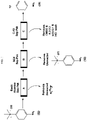
- the schematic diagram showing the various steps of purification of [ 18 F]-1,4-fluoronitrobenzene is shown in FIG. 1 .
- the eluted methanol solution containing [ 18 F]-1,4-fluoronitrobenzene was transferred into a sealed 5 mL microvial that contained palladium black (11.0 mg, 0.1 mmol), phosphorous acid (0.10 g, 1.3 mmol) and conical stir bar.
- the reaction was then heated with the microwave apparatus at 85 °C with 10-20 W for 20 minutes. After this period of heating, 5.0 mL of 25 mM potassium phosphate dibasic solution, 1.5 mL of acetonitrile were added to the microvial and this solution was loaded onto a 9.4 ⁇ 250 mm, 5 micron Zorbax SB-C18 column using an isocratic mobile phase of 45% acetonitrile and 65 % 25 mM potassium phosphate dibasic solution (pH 9.0). The UV detector was set at 254 nm. [ 18 F]-Cabozantinib was isolated at the 30 minute mark using these conditions.
- This sample was then diluted with 25 mL of 25 mM potassium phosphate dibasic and the entire sample was loaded onto a Waters Sep-Pak C18 Plus Short Cartridge, 360 mg Sorbent per Cartridge, 55-105 ⁇ m Particle Size (part number WAT020515) which was preactivated with 5 ml of ethanol, followed by 10 mL of DI water.
- the coupling reaction as described in Example 11 was conducted by varying microwave heating at various wattages and solvents. The results are shown in Table 1. A significant amount of precursor decomposition was noticed when the reactions conducted at powers above 20 W. An increase in the isolated amount of [ 18 F]-Cabozantinib 1b was seen using DMF as the reaction solvent and decreased when DMSO, THF, or a mixture of DMF/DMSO. Experiments in which the reaction is not heated with 10 Watts to 20 Watts of microwave radiation, or in which the reaction is not carried out in the presence of DMF are presented for comparative purposes only.
- the specific activity was 42.2 GBq/ ⁇ mol +/- 7.5 GBq/ ⁇ mol (1.14 Ci/ ⁇ mol +/- 0.2 Ci/ ⁇ mol).
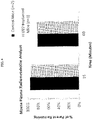
- the retention time of this radioactive product was confirmed by co-injection of the non-radioactive standard Cabozantinib as shown in FIG. 2 , using two separate analytical HPLC systems (Systems A and B). Table 1. Investigation of [ 18 F]-Cabozantinib using microwave heating Experiment No.
- Rodent imaging experiments were performed on a dedicated small animal microPET ® F120 TM scanner (Siemens Preclinical Solutions, Knoxville, TN). Both static and dynamic PET imaging studies were conducted on athymic BALB/C mice (Harlan) and stereotactically implanted U87 tumor cells. The mice were administered about 6.4-7.4 MBq (0.17-0.2 mCi) of [ 18 F]-Cabozantinib via the tail vein. The mice were anesthetized (2% isofluorane in O 2 at a flow rate of 1 mL/min) during tracer injection and throughout the imaging period. After injection, each mouse was laid in the microPET scanner.
- PET data were reconstructed using an OSEM 2D algorithm into a 128x128x95 image matrix (resulting in final voxel dimensions of 0.79x0.79x0.8 mm). Dead time, decay correction, attenuation correction, and normalization were applied to all PET data. Data were analyzed by manually drawing standardized volumes of interest using the Siemens ASIPro VM software package version 6.6.
- FIG. 3 depicts Positron Emission Tomography (PET) images of mice injected with [ 18 F]-Cabozantinib.
- Frame shows PET image of control mice, i.e., non-tumor bearing.
- Frame B shows PET image of mice with stereotactically implanted U87 tumor cells. Images are summed frames over 15-45 post injection of a 6.3 MBq (0.17 mCi) of [ 18 F]-Cabozantinib.
- a tumor:brain ratio which is the ratio of the amount of [ 18 F]-Cabozantinib in the tumor compared to the amount of [ 18 F]-Cabozantinib in the brain in non-tumor regions, of 2.6 to 2.8 was measured for U87 stereotactically implanted tumor cells.
- Frame C shows MRI image of the same stereotatically implanted U87 tumor bearing mouse as shown in Frame B.
- Frame D shows PET image in the same animal, in the same view as MRI (Frame C) to confirm tumor location and PET tracer uptake in the tumor region.
- Example 16 Stereotactic intracranial surgical procedures.
- Athymic BALB/C mice (Harlan) were anesthetized (2% isofluorane in O 2 at a flow rate of 1 L/min) and positioned in a stereotaxic atlas prior to surgery. A midline cranial incision was made and bregma located. From bregma, the coordinates 2 mm lateral ⁇ 2 mm posterior were used, and a small bore hole was made with a dental drill. Using a Hamilton syringe (30 g) inserted to a depth of 3 mm, 2.5 ⁇ 10 5 U87 cells (ATCC) in 10 ⁇ L of RPMI were injected over a 3 minute period.
- Athymic BALB/C mice (Harlan) were anesthetized (2% isofluorane in O 2 at a flow rate of 1 L/min) and positioned in a stereotaxic atlas prior to surgery. A midline cranial incision was made and bregma located. From bregma, the coordinate
- Bone wax (Ethicon) was used to seal the burr hole followed by Veterinary Tissue Adhesive (3M) to close the incision. Mice were recovered from anesthesia, observed for any signs of pains or distress, and if necessary, provided appropriate veterinary care. After 7 days, mice were initiated on imaging protocols to monitor disease progression
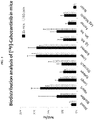
- FIG. 5 depicts biodistribution analysis of [ 18 F]-Cabozantinib in mice.
- the highest tracer uptake was found in the liver (14.4 ⁇ 3.1 %ID/g), followed by the kidneys (14.2 ⁇ 3.0 %ID/g), heart (12.9 ⁇ 3.2 %ID/g), bladder (7.1 ⁇ 6.5 %ID/g), small intestines (7.0 ⁇ 2.4 %ID/g), lungs (6.5 ⁇ 1.1 %ID/g, stomach (5.2 ⁇ 1.7 %ID/g), spleen (4.7 ⁇ 1.2 %ID/g), large intestines (4.7 ⁇ 2.1 %ID/g), femur (2.9 ⁇ 1.0 %ID/g) muscles (4.4 ⁇ 1.1 %ID/g), blood (1.8 ⁇ 0.2 %ID/g), and brain (0.9 ⁇ 0.2 %ID/g).
- the highest tracer uptake was found in the liver (14.0 ⁇ 1.9 %ID/g), followed by the kidneys (11.7 ⁇ 1.5 %ID/g), small intestines (10.7 ⁇ 1.1 %ID/g), heart (9.5 ⁇ 1.5 %ID/g), stomach (8.4 ⁇ 1.5 %ID/g), lungs (4.9 ⁇ 0.8 %ID/g, bladder (4.3 ⁇ 1.2 %ID/g), large intestines (4.6 ⁇ 0.9 %ID/g), muscles (4.2 ⁇ 0.3 %ID/g), spleen (3.6 ⁇ 0.6 %ID/g), blood (2.2 ⁇ 0.3 %ID/g), femur (1.8 ⁇ 0.8 %ID/g ) and brain (0.9 ⁇ 0.1 %ID/g).
Landscapes
- Chemical & Material Sciences (AREA)
- Organic Chemistry (AREA)
- Health & Medical Sciences (AREA)
- Life Sciences & Earth Sciences (AREA)
- General Health & Medical Sciences (AREA)
- Medicinal Chemistry (AREA)
- Nuclear Medicine, Radiotherapy & Molecular Imaging (AREA)
- Pharmacology & Pharmacy (AREA)
- Chemical Kinetics & Catalysis (AREA)
- Animal Behavior & Ethology (AREA)
- General Chemical & Material Sciences (AREA)
- Public Health (AREA)
- Veterinary Medicine (AREA)
- Organic Low-Molecular-Weight Compounds And Preparation Thereof (AREA)
- Pharmaceuticals Containing Other Organic And Inorganic Compounds (AREA)
- Quinoline Compounds (AREA)
- Low-Molecular Organic Synthesis Reactions Using Catalysts (AREA)
- Medicines Containing Antibodies Or Antigens For Use As Internal Diagnostic Agents (AREA)
Claims (14)
- Ein Verfahren zur Herstellung einer Verbindung der Formel 1a:
 R4 F oder 18F ist;das Verfahren Folgendes beinhaltet:wobei die Reaktion mit 10 Watt bis 20 Watt Mikrowellenstrahlung erwärmt wird.
Zur-Reaktion-Bringen der Verbindung der Formel 15 mit einer Verbindung der Formel 9 in Gegenwart eines Kopplungsreagens und in Gegenwart eines aprotischen Lösungsmittels, das N,N-Dimethylformamid ist, um eine Verbindung der Formel 1a zu erzeugen:
- Verfahren nach Anspruch 1, wobei die Reaktion auf etwa 20°C bis etwa 100°C erwärmt wird, wobei die Reaktion vorzugsweise auf etwa 85°C erwärmt wird.
- Verfahren nach Anspruch 1 oder Anspruch 2, wobei die Reaktion mit 20 Watt Mikrowellenstrahlung erwärmt wird.
- Verfahren nach einem vorhergehenden Anspruch, wobei das Kopplungsreagens aus der Gruppe ausgewählt ist, die aus Folgenden besteht: N,N'-Dicyclohexylcarbodiimid (DCC), N,N'-Diisopropylcarbodiimid (DIC), 1-Ethyl-3-(3-dimethylaminopropyl)carbodiimid (EDCI), Hydroxybenzotriazol (HOBt), 1-Hydroxy-7-azabenzotriazol (HOAt), Benzotriazol-1-yl-oxytripyrrolidinophosphonium-hexafluorphosphat (BOP-Reagens), Benzotriazol-1-yl-oxytripyrrolidinophosphonium-hexafluorphosphat (PyBOP), 1-[Bis(dimethylamino)methylen]-1H-1,2,3-triazolo[4,5-b]pyridinium-3-oxid-hexafluorphosphat (HATU), O-(Benzotriazol-1-yl)-N,N,N'N'-tetramethyluronium-tetrafluorborat (TBTU), N,N,N',N'-Tetramethyl-O-(1H-benzotriazol-1-yl)uranium-hexafluorphosphat (HBTU), O-[(Ethoxycarbonyl)cyanomethylenamino]-N,N,N',N'-tetramethyluronium-tetrafluorborat (TOTU) und (1-Cyano-2-ethoxy-2-oxoethylidenaminooxy)dimethylamino-morpholino-carbenium-hexafluorphosphat (COMU) oder einer Kombination davon.
- Verfahren nach Anspruch 4, wobei das Kopplungsreagens 1-[Bis(dimethylamino)methylen]-1H-1,2,3-triazolo[4,5-b]pyridinium-3-oxid-hexafluorphosphat (HATU) oder Benzotriazol-1-yl-oxytripyrrolidinophosphonium-hexafluorphosphat (PyBOP) ist.
- Verfahren nach einem vorhergehenden Anspruch, wobei die Herstellung einer Verbindung der Formel 9, wobei R4 18F ist, ferner Folgendes beinhaltet:i) Zur-Reaktion-Bringen einer Verbindung der Formel 18 mit einem Fluorierungsreagens, um eine Verbindung der Formel 22a zu erzeugen; und
 ii) Reduzieren der Verbindung der Formel 22a, um eine Verbindung der Formel 9a zu erzeugen:
- Verfahren nach Anspruch 6, wobei das Fluorierungsreagens Kryptand/K[18F] ist und wobei der Kryptand 1,10-Diaza-4,7,13,16,21,24-hexaoxa-1,10-diazabicyclo[8.8.8]hexacosan (Kryptofix 2.2.2) ist.
- Verfahren nach Anspruch 6, wobei das Fluorierungsmittel 1,10-Diaza-4,7,13,16,21,24-hexaoxa-1,10-diazabicyclo[8.8.8]hexacosan (Kryptofix 2.2.2)/K[18F] ist.
- Verfahren nach einem der Ansprüche 6-8, wobei die Reduktion der Nitrogruppe der Verbindung der Formel 22a in Gegenwart eines Metallkatalysators, einer Säure und von Wasserstoff durchgeführt wird.
- Verfahren nach Anspruch 9, wobei der Metallkatalysator von Palladium, Platin, Rhodium oder Nickel abgeleitet ist.
- Verfahren nach Anspruch 9 oder Anspruch 10, wobei die Säure phosphorige Säure ist.
- Verfahren nach einem der Ansprüche 6-11, wobei die Verbindung der Formel 9a gereinigt wird, indem sie eine oder mehrere Säulen durchläuft, wobei jede der Säulen mit einem Adsorbens und/oder einem Ionenaustauschharz gepackt ist.
- Verfahren nach Anspruch 12, wobei das Adsorbens Kieselgel, neutrales Aluminiumoxid, basisches Aluminiumoxid, Octadecylkohlenstoffkette (C18)-gebundene Siliciumdioxidsäule, C8-gebundenes Siliciumdioxid, cyano-gebundenes Siliciumdioxid oder phenyl-gebundenes Siliciumdioxid beinhaltet.
- Verfahren nach einem vorhergehenden Anspruch, wobei das Verfahren ferner Folgendes beinhaltet:i) Zur-Reaktion-Bringen einer Verbindung der Formel 10 mit einem Chlorierungsmittel, um eine Verbindung der Formel 11 zu erzeugen:
 ii) Koppeln der Verbindung der Formel 11 mit einer Verbindung der Formel 23 in Gegenwart einer Base, um eine Verbindung der Formel 12 zu erzeugen:
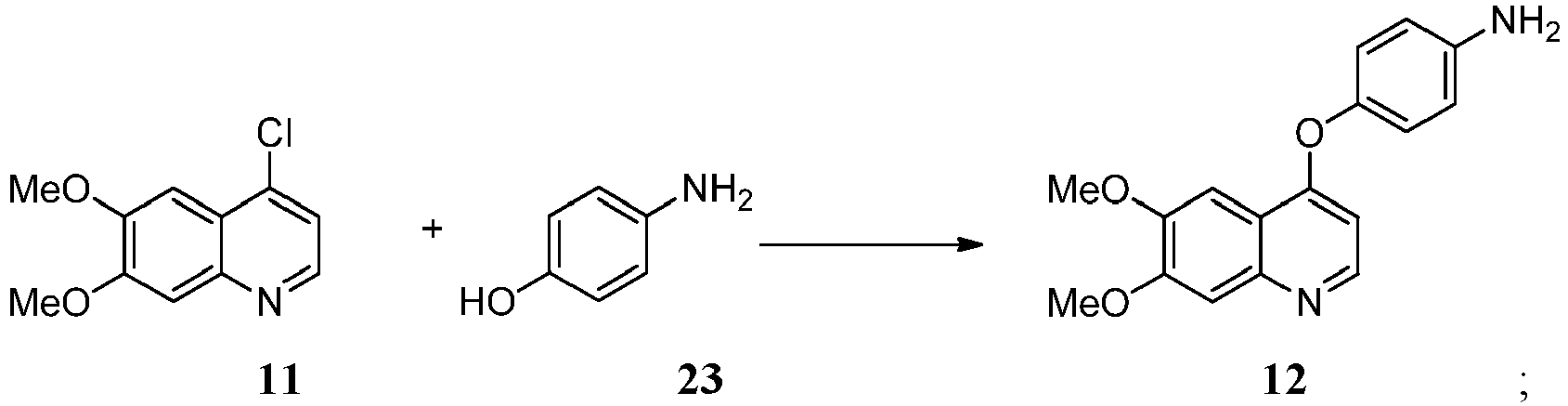 iii) Koppeln der Verbindung der Formel 12 mit einer Verbindung der Formel 13 in Gegenwart eines Kopplungsreagens, um eine Verbindung der Formel 14 zu erzeugen:
 iv) Verseifung der Verbindung der Formel 14 in Gegenwart von Natriumhydroxid, um die Verbindung der Formel 15 zu erzeugen, wobei ein Lösungsmittel verwendet wird, das Methanol, Ethanol, Isopropanol, Wasser oder eine Kombination davon ist:
Applications Claiming Priority (2)
| Application Number | Priority Date | Filing Date | Title |
|---|---|---|---|
| US201462031471P | 2014-07-31 | 2014-07-31 | |
| PCT/US2015/043195 WO2016019285A1 (en) | 2014-07-31 | 2015-07-31 | Method of preparing fluorine-18 labeled cabozantinib and its analogs |
Publications (2)
| Publication Number | Publication Date |
|---|---|
| EP3174854A1 EP3174854A1 (de) | 2017-06-07 |
| EP3174854B1 true EP3174854B1 (de) | 2022-08-24 |
Family
ID=54072944
Family Applications (1)
| Application Number | Title | Priority Date | Filing Date |
|---|---|---|---|
| EP15762798.5A Active EP3174854B1 (de) | 2014-07-31 | 2015-07-31 | Verfahren zur herstellung von fluor-18-markiertem cabozantinib und analoga davon |
Country Status (9)
| Country | Link |
|---|---|
| US (2) | US11124481B2 (de) |
| EP (1) | EP3174854B1 (de) |
| JP (2) | JP6789923B2 (de) |
| CN (1) | CN106715397B (de) |
| CA (1) | CA2956810C (de) |
| EA (1) | EA033834B1 (de) |
| ES (1) | ES2929888T3 (de) |
| MA (1) | MA40386A (de) |
| WO (1) | WO2016019285A1 (de) |
Families Citing this family (20)
| Publication number | Priority date | Publication date | Assignee | Title |
|---|---|---|---|---|
| CA2907334C (en) * | 2013-03-15 | 2021-12-07 | Exelixis, Inc. | Metabolites of n-(4-{[6,7-bis(methyloxy)quinolin-4-yl]oxy}phenyl)-n'-(4-fluorophenyl)cyclopropane-1,1-dicarboxamide |
| BR112016018450A2 (pt) | 2014-02-14 | 2018-09-18 | Exelixis Inc | formas sólidas cristalinas de n-{4-[(6,7-dimetoxiquinolin-4-il)oxi]fenil}-n'-(4-fluorofenil)ciclopropano-1,1-dicarboxamida, processos de preparo e métodos de uso |
| EP3119476A1 (de) | 2014-03-17 | 2017-01-25 | Exelixis, Inc. | Dosierung von cabozantinibformulierungen |
| EP3174854B1 (de) * | 2014-07-31 | 2022-08-24 | Exelixis, Inc. | Verfahren zur herstellung von fluor-18-markiertem cabozantinib und analoga davon |
| MX382904B (es) | 2014-08-05 | 2025-03-13 | Exelixis Inc | Combinaciones de fármacos para tratar mieloma múltiple. |
| EP3442531A1 (de) | 2016-04-15 | 2019-02-20 | Exelixis, Inc. | Verfahren zur behandlung von nierenzellkarzinomen unter verwendung von n-(4-(6,7-dimethoxychinolin-4-yloxy)phenyl)-n'-(4-fluorpheny)cyclopropan-1,1-dicarboxamid, (2s)-hydroxybutanedioat |
| CN107556238A (zh) * | 2016-06-30 | 2018-01-09 | 深圳万乐药业有限公司 | 一种卡博替尼的合成方法 |
| GB201621864D0 (en) | 2016-12-21 | 2017-02-01 | Ge Healthcare Ltd | Solid phase conditioning |
| AU2018279834B2 (en) * | 2017-06-09 | 2024-05-23 | Exelixis, Inc. | Liquid dosage forms to treat cancer |
| CN109836381A (zh) * | 2017-11-29 | 2019-06-04 | 连云港恒运药业有限公司 | 多受体酪氨酸激酶抑制剂及其中间体的制备方法 |
| CN109988107B (zh) * | 2017-12-29 | 2022-01-14 | 江苏豪森药业集团有限公司 | 卡博替尼的制备方法 |
| CN117402114A (zh) | 2018-01-26 | 2024-01-16 | 埃克塞里艾克西斯公司 | 用于治疗激酶依赖性病症的化合物 |
| TWI831259B (zh) * | 2018-06-15 | 2024-02-01 | 漢達生技醫藥股份有限公司 | 包含達沙替尼十二烷基硫酸鹽組合物的膠囊 |
| CN110143917B (zh) * | 2019-07-09 | 2020-03-31 | 郑州大学第一附属医院 | 一种卡博替尼代谢物的制备方法 |
| CN110903240A (zh) * | 2019-12-12 | 2020-03-24 | 上海玉函化工有限公司 | 一种广谱抗癌药卡博替尼的制备方法 |
| CN115461328B (zh) | 2020-04-30 | 2025-11-07 | 埃克塞里艾克西斯公司 | 用于制备激酶抑制剂的方法 |
| TW202346255A (zh) * | 2022-01-06 | 2023-12-01 | 日商中外製藥股份有限公司 | 醯胺化合物的製造方法 |
| CN120239695A (zh) * | 2022-12-01 | 2025-07-01 | 江苏奥赛康药业有限公司 | 一种制备卡博替尼及其中间体的方法 |
| WO2024163400A1 (en) * | 2023-01-31 | 2024-08-08 | Handa Oncology, Llc | Improved cabozantinib compositions and methods of use |
| WO2025115975A1 (ja) * | 2023-11-30 | 2025-06-05 | 日産化学株式会社 | 芳香族アミノ化合物の製造方法 |
Citations (1)
| Publication number | Priority date | Publication date | Assignee | Title |
|---|---|---|---|---|
| WO2013043840A1 (en) * | 2011-09-22 | 2013-03-28 | Exelixis, Inc. | Method for treating osteoporosis |
Family Cites Families (43)
| Publication number | Priority date | Publication date | Assignee | Title |
|---|---|---|---|---|
| US20050030140A1 (en) * | 2000-04-03 | 2005-02-10 | Mikael Dahlgren | Multiphase induction device |
| EP2210607B1 (de) | 2003-09-26 | 2011-08-17 | Exelixis Inc. | N-[3-fluoro-4-({6-(methyloxy)-7-[(3-morpholin-4-ylpropyl)oxy]quinolin-4-yl}oxy)phenyl]-N'-(4-fluorophenyl)cyclopropane-1,1-dicarboxamid zur Behandlung von Krebs |
| US7977345B2 (en) | 2004-07-02 | 2011-07-12 | Exelixis, Inc. | c-MET modulators and method of use |
| EP1874759A4 (de) | 2005-04-06 | 2009-07-15 | Exelixis Inc | C-met-modulatoren und anwendungsverfahren |
| JP2007056777A (ja) | 2005-08-25 | 2007-03-08 | Daido Steel Co Ltd | 電磁駆動弁 |
| US7790885B2 (en) * | 2006-08-31 | 2010-09-07 | Eisai R&D Management Co., Ltd. | Process for preparing phenoxypyridine derivatives |
| PL2101759T3 (pl) | 2006-12-14 | 2019-05-31 | Exelixis Inc | Sposoby stosowania inhibitorów MEK |
| UY31800A (es) | 2008-05-05 | 2009-11-10 | Smithkline Beckman Corp | Metodo de tratamiento de cancer usando un inhibidor de cmet y axl y un inhibidor de erbb |
| AR075084A1 (es) | 2008-09-26 | 2011-03-09 | Smithkline Beecham Corp | Metodo de preparacion de quinolinil -oxidifenil - ciclopropanodicarboxamidas e intermediarios correspondientes |
| JP5486606B2 (ja) | 2008-11-13 | 2014-05-07 | エクセリクシス, インク. | キノリン誘導体の調製方法 |
| US20130030172A1 (en) | 2008-12-04 | 2013-01-31 | Exelixis, Inc. | Methods of Preparing Quinoline Derivatives |
| NZ779754A (en) | 2009-01-16 | 2023-04-28 | Exelixis Inc | Malate salt of n-(4-{ [6,7-bis(methyloxy)quinolin-4-yl] oxy} phenyl)-n’-(4-fluorophenyl)cyclopropane-1,1-dicarboxamide, and crystalline forms thereof for the treatment of cancer |
| CN102510855B (zh) | 2009-07-17 | 2015-11-25 | 埃克塞里艾克西斯公司 | N-[3-氟-4-({6-(甲基氧基)-7-[(3-吗啉-4-基丙基)氧基]-喹啉-4-基}氧基)苯基]-n′-(4-氟苯基)环丙烷-1,1-二甲酰胺的晶形 |
| UA108618C2 (uk) | 2009-08-07 | 2015-05-25 | Застосування c-met-модуляторів в комбінації з темозоломідом та/або променевою терапією для лікування раку | |
| AU2011224203A1 (en) | 2010-03-12 | 2012-10-04 | Exelixis, Inc | Hydrated crystalline forms of N-[3-fluoro-4-({6-(methyloxy)-7-[(3-morpholin -4-ylpropyl)oxy]-quinolin-4-yl}oxy)phenyl] -N'-(4-fluorophenyl)cyclopropane-1,1-dicarboxamide |
| US20120070368A1 (en) | 2010-04-16 | 2012-03-22 | Exelixis, Inc. | Methods of Using C-Met Modulators |
| EA030435B1 (ru) | 2010-07-16 | 2018-08-31 | Экселиксис, Инк. | ТАБЛЕТКА, СОДЕРЖАЩАЯ МОДУЛЯТОР c-MET В ФОРМЕ КРИСТАЛЛИЧЕСКОЙ L-МАЛАТНОЙ СОЛИ (ВАРИАНТЫ), СПОСОБ ЕЕ ПРОИЗВОДСТВА И СПОСОБ ЛЕЧЕНИЯ ОНКОЛОГИЧЕСКОГО ЗАБОЛЕВАНИЯ С ЕЕ ИСПОЛЬЗОВАНИЕМ |
| US20140186407A9 (en) | 2010-07-16 | 2014-07-03 | Exelixis Inc. | C-Met Modulator Pharmaceutical Compositions |
| MX352926B (es) | 2010-09-27 | 2017-12-14 | Exelixis Inc | Inhibidores dobles de met y factor de crecimiento endotelial vascular (vegf) para el tratamiento de cancer de prostata resistente a la castracion y metastasis osteoblasticas en los huesos. |
| JP2013540759A (ja) | 2010-09-27 | 2013-11-07 | エクセリクシス, インク. | 去勢抵抗性前立腺癌および造骨性転移の治療のためのmetおよびvegfの二元阻害薬 |
| US20140057908A1 (en) | 2010-09-27 | 2014-02-27 | Exelixis, Inc. | Method of Treating Cancer |
| WO2012071321A1 (en) | 2010-11-22 | 2012-05-31 | Glaxosmithkline Llc | Method of treating cancer |
| BR112013020362A2 (pt) | 2011-02-10 | 2018-05-29 | Exelixis Inc | processos para a preparação de compostos de quinolina, compostos e combinações farmacêuticas que os contem |
| US20120252840A1 (en) | 2011-04-04 | 2012-10-04 | Exelixis, Inc. | Method of Treating Cancer |
| MX2013012695A (es) | 2011-05-02 | 2014-03-27 | Exelixis Inc | Metodo para el tratamiento del cancer y el dolor por cancer de hueso. |
| TW201306842A (zh) | 2011-06-15 | 2013-02-16 | Exelixis Inc | 使用pi3k/mtor吡啶並嘧啶酮抑制劑及苯達莫司汀及/或利妥昔單抗治療惡性血液疾病之組合療法 |
| CN104395284A (zh) | 2011-10-20 | 2015-03-04 | 埃克塞里艾克西斯公司 | 制备喹啉衍生物的方法 |
| IN2014CN04067A (de) | 2011-11-08 | 2015-10-23 | Exelixis Inc | |
| WO2013166296A1 (en) | 2012-05-02 | 2013-11-07 | Exelixis, Inc. | A dual met - vegf modulator for treating osteolytic bone metastases |
| JP6513567B2 (ja) | 2012-09-07 | 2019-05-15 | エクセリクシス, インク. | 肺腺癌の治療で使用するためのmet、vegfr、およびretの阻害剤 |
| CN103664776B (zh) * | 2012-09-26 | 2016-05-04 | 正大天晴药业集团股份有限公司 | 一种酪氨酸激酶抑制剂及其中间体的制备方法 |
| US20140221372A1 (en) | 2013-02-06 | 2014-08-07 | GlaxoSmithKline Intellectual Property (NO 2.) Limited | Method of administration and treatment |
| CA2907334C (en) | 2013-03-15 | 2021-12-07 | Exelixis, Inc. | Metabolites of n-(4-{[6,7-bis(methyloxy)quinolin-4-yl]oxy}phenyl)-n'-(4-fluorophenyl)cyclopropane-1,1-dicarboxamide |
| US11564915B2 (en) * | 2013-04-04 | 2023-01-31 | Exelixis, Inc. | Cabozantinib dosage form and use in the treatment of cancer |
| WO2014165779A1 (en) | 2013-04-04 | 2014-10-09 | Exelixis, Inc. | Drug combinations to treat cancer |
| BR112016018450A2 (pt) | 2014-02-14 | 2018-09-18 | Exelixis Inc | formas sólidas cristalinas de n-{4-[(6,7-dimetoxiquinolin-4-il)oxi]fenil}-n'-(4-fluorofenil)ciclopropano-1,1-dicarboxamida, processos de preparo e métodos de uso |
| EP3119476A1 (de) * | 2014-03-17 | 2017-01-25 | Exelixis, Inc. | Dosierung von cabozantinibformulierungen |
| UA121655C2 (uk) | 2014-04-25 | 2020-07-10 | Екселіксіс, Інк. | Спосіб лікування аденокарциноми легень |
| EP3174854B1 (de) * | 2014-07-31 | 2022-08-24 | Exelixis, Inc. | Verfahren zur herstellung von fluor-18-markiertem cabozantinib und analoga davon |
| MX382904B (es) | 2014-08-05 | 2025-03-13 | Exelixis Inc | Combinaciones de fármacos para tratar mieloma múltiple. |
| TW201625243A (zh) | 2014-10-14 | 2016-07-16 | 艾克塞里克斯公司 | 用於治療黑素瘤之藥物組合 |
| CN107531626B (zh) | 2015-04-07 | 2020-08-11 | 尤尼吉可株式会社 | 双酰亚胺二羧酸的制造方法 |
| US11198731B2 (en) | 2017-01-20 | 2021-12-14 | Exelixis, Inc. | Combinations of cabozantinib and atezolizumab to treat cancer |
-
2015
- 2015-07-31 EP EP15762798.5A patent/EP3174854B1/de active Active
- 2015-07-31 CA CA2956810A patent/CA2956810C/en active Active
- 2015-07-31 EA EA201790286A patent/EA033834B1/ru not_active IP Right Cessation
- 2015-07-31 CN CN201580041351.XA patent/CN106715397B/zh active Active
- 2015-07-31 ES ES15762798T patent/ES2929888T3/es active Active
- 2015-07-31 MA MA040386A patent/MA40386A/fr unknown
- 2015-07-31 WO PCT/US2015/043195 patent/WO2016019285A1/en not_active Ceased
- 2015-07-31 JP JP2017505189A patent/JP6789923B2/ja active Active
- 2015-07-31 US US15/500,312 patent/US11124481B2/en active Active
-
2020
- 2020-08-07 JP JP2020134416A patent/JP2020186261A/ja not_active Withdrawn
-
2021
- 2021-09-03 US US17/466,328 patent/US20220194902A1/en not_active Abandoned
Patent Citations (1)
| Publication number | Priority date | Publication date | Assignee | Title |
|---|---|---|---|---|
| WO2013043840A1 (en) * | 2011-09-22 | 2013-03-28 | Exelixis, Inc. | Method for treating osteoporosis |
Non-Patent Citations (1)
| Title |
|---|
| MONACO ALESSANDRA ET AL: "Synthesis and in vitro evaluation of a novel radioligand for [alpha]v[beta]3 integrin receptor imaging: [18F]FPPA-", BIOORGANIC & MEDICINAL CHEMISTRY LETTERS, PERGAMON, AMSTERDAM, NL, vol. 23, no. 22, 19 September 2013 (2013-09-19), pages 6068 - 6072, XP028755272, ISSN: 0960-894X, DOI: 10.1016/J.BMCL.2013.09.031 * |
Also Published As
| Publication number | Publication date |
|---|---|
| CA2956810A1 (en) | 2016-02-04 |
| CA2956810C (en) | 2022-10-04 |
| WO2016019285A1 (en) | 2016-02-04 |
| EA201790286A1 (ru) | 2017-06-30 |
| ES2929888T3 (es) | 2022-12-02 |
| US20170217896A1 (en) | 2017-08-03 |
| JP2020186261A (ja) | 2020-11-19 |
| JP2017523195A (ja) | 2017-08-17 |
| EP3174854A1 (de) | 2017-06-07 |
| JP6789923B2 (ja) | 2020-11-25 |
| CN106715397A (zh) | 2017-05-24 |
| MA40386A (fr) | 2016-02-04 |
| EA033834B1 (ru) | 2019-11-29 |
| US11124481B2 (en) | 2021-09-21 |
| CN106715397B (zh) | 2021-07-23 |
| US20220194902A1 (en) | 2022-06-23 |
Similar Documents
| Publication | Publication Date | Title |
|---|---|---|
| EP3174854B1 (de) | Verfahren zur herstellung von fluor-18-markiertem cabozantinib und analoga davon | |
| AU2017204979B2 (en) | 18/19F-labelled compounds which target the prostate specific membrane antigen | |
| EP3866692B1 (de) | Radioliganden zur abbildung des lpa1-rezeptors | |
| KR102513886B1 (ko) | Ido1 효소를 영상화하기 위한 방사성리간드 | |
| WO2015066456A1 (en) | Radioligands for imaging the lpa-1 receptor | |
| EP2841402B1 (de) | Markierte chinoxalin-derivate als multimodale radiopharmazeutika und ihre vorläufer | |
| Gao et al. | Synthesis of carbon-11-labeled isonicotinamides as new potential PET agents for imaging of GSK-3 enzyme in Alzheimer’s disease | |
| EP4387944A1 (de) | Radiopharmazeutika, verfahren zu ihrer herstellung und ihre verwendung bei der behandlung, diagnose und bildgebung von krankheiten | |
| HK1238645B (en) | Method of preparing fluorine-18 labeled cabozantinib and its analogs | |
| HK1238645A1 (en) | Method of preparing fluorine-18 labeled cabozantinib and its analogs | |
| CN103797007A (zh) | 新合成方法 | |
| WO2013014274A1 (en) | 5ht1a antagonist useful for in vivo imaging | |
| CA3031079C (en) | Radioligands for imaging the ido1 enzyme | |
| HK1189216A (en) | Labelled quinoxaline derivatives as multimodal radiopharmaceuticals and their precursors |
Legal Events
| Date | Code | Title | Description |
|---|---|---|---|
| STAA | Information on the status of an ep patent application or granted ep patent |
Free format text: STATUS: THE INTERNATIONAL PUBLICATION HAS BEEN MADE |
|
| 17P | Request for examination filed |
Effective date: 20170221 |
|
| AK | Designated contracting states |
Kind code of ref document: A1 Designated state(s): AL AT BE BG CH CY CZ DE DK EE ES FI FR GB GR HR HU IE IS IT LI LT LU LV MC MK MT NL NO PL PT RO RS SE SI SK SM TR |
|
| AX | Request for extension of the european patent |
Extension state: BA ME |
|
| PUAI | Public reference made under article 153(3) epc to a published international application that has entered the european phase |
Free format text: ORIGINAL CODE: 0009012 |
|
| STAA | Information on the status of an ep patent application or granted ep patent |
Free format text: STATUS: REQUEST FOR EXAMINATION WAS MADE |
|
| STAA | Information on the status of an ep patent application or granted ep patent |
Free format text: STATUS: EXAMINATION IS IN PROGRESS |
|
| 17Q | First examination report despatched |
Effective date: 20171114 |
|
| REG | Reference to a national code |
Ref country code: HK Ref legal event code: DE Ref document number: 1238645 Country of ref document: HK |
|
| GRAP | Despatch of communication of intention to grant a patent |
Free format text: ORIGINAL CODE: EPIDOSNIGR1 |
|
| STAA | Information on the status of an ep patent application or granted ep patent |
Free format text: STATUS: GRANT OF PATENT IS INTENDED |
|
| RIC1 | Information provided on ipc code assigned before grant |
Ipc: C07D 215/233 20060101ALI20220128BHEP Ipc: C07D 215/22 20060101AFI20220128BHEP |
|
| INTG | Intention to grant announced |
Effective date: 20220302 |
|
| GRAS | Grant fee paid |
Free format text: ORIGINAL CODE: EPIDOSNIGR3 |
|
| GRAA | (expected) grant |
Free format text: ORIGINAL CODE: 0009210 |
|
| STAA | Information on the status of an ep patent application or granted ep patent |
Free format text: STATUS: THE PATENT HAS BEEN GRANTED |
|
| RAP3 | Party data changed (applicant data changed or rights of an application transferred) |
Owner name: EXELIXIS, INC. |
|
| AK | Designated contracting states |
Kind code of ref document: B1 Designated state(s): AL AT BE BG CH CY CZ DE DK EE ES FI FR GB GR HR HU IE IS IT LI LT LU LV MC MK MT NL NO PL PT RO RS SE SI SK SM TR |
|
| REG | Reference to a national code |
Ref country code: CH Ref legal event code: EP |
|
| REG | Reference to a national code |
Ref country code: DE Ref legal event code: R096 Ref document number: 602015080471 Country of ref document: DE |
|
| REG | Reference to a national code |
Ref country code: IE Ref legal event code: FG4D |
|
| REG | Reference to a national code |
Ref country code: AT Ref legal event code: REF Ref document number: 1513583 Country of ref document: AT Kind code of ref document: T Effective date: 20220915 |
|
| REG | Reference to a national code |
Ref country code: ES Ref legal event code: FG2A Ref document number: 2929888 Country of ref document: ES Kind code of ref document: T3 Effective date: 20221202 |
|
| REG | Reference to a national code |
Ref country code: LT Ref legal event code: MG9D |
|
| REG | Reference to a national code |
Ref country code: NL Ref legal event code: MP Effective date: 20220824 |
|
| PG25 | Lapsed in a contracting state [announced via postgrant information from national office to epo] |
Ref country code: SE Free format text: LAPSE BECAUSE OF FAILURE TO SUBMIT A TRANSLATION OF THE DESCRIPTION OR TO PAY THE FEE WITHIN THE PRESCRIBED TIME-LIMIT Effective date: 20220824 Ref country code: RS Free format text: LAPSE BECAUSE OF FAILURE TO SUBMIT A TRANSLATION OF THE DESCRIPTION OR TO PAY THE FEE WITHIN THE PRESCRIBED TIME-LIMIT Effective date: 20220824 Ref country code: PT Free format text: LAPSE BECAUSE OF FAILURE TO SUBMIT A TRANSLATION OF THE DESCRIPTION OR TO PAY THE FEE WITHIN THE PRESCRIBED TIME-LIMIT Effective date: 20221226 Ref country code: NO Free format text: LAPSE BECAUSE OF FAILURE TO SUBMIT A TRANSLATION OF THE DESCRIPTION OR TO PAY THE FEE WITHIN THE PRESCRIBED TIME-LIMIT Effective date: 20221124 Ref country code: NL Free format text: LAPSE BECAUSE OF FAILURE TO SUBMIT A TRANSLATION OF THE DESCRIPTION OR TO PAY THE FEE WITHIN THE PRESCRIBED TIME-LIMIT Effective date: 20220824 Ref country code: LV Free format text: LAPSE BECAUSE OF FAILURE TO SUBMIT A TRANSLATION OF THE DESCRIPTION OR TO PAY THE FEE WITHIN THE PRESCRIBED TIME-LIMIT Effective date: 20220824 Ref country code: LT Free format text: LAPSE BECAUSE OF FAILURE TO SUBMIT A TRANSLATION OF THE DESCRIPTION OR TO PAY THE FEE WITHIN THE PRESCRIBED TIME-LIMIT Effective date: 20220824 Ref country code: FI Free format text: LAPSE BECAUSE OF FAILURE TO SUBMIT A TRANSLATION OF THE DESCRIPTION OR TO PAY THE FEE WITHIN THE PRESCRIBED TIME-LIMIT Effective date: 20220824 |
|
| REG | Reference to a national code |
Ref country code: AT Ref legal event code: MK05 Ref document number: 1513583 Country of ref document: AT Kind code of ref document: T Effective date: 20220824 |
|
| PG25 | Lapsed in a contracting state [announced via postgrant information from national office to epo] |
Ref country code: PL Free format text: LAPSE BECAUSE OF FAILURE TO SUBMIT A TRANSLATION OF THE DESCRIPTION OR TO PAY THE FEE WITHIN THE PRESCRIBED TIME-LIMIT Effective date: 20220824 Ref country code: IS Free format text: LAPSE BECAUSE OF FAILURE TO SUBMIT A TRANSLATION OF THE DESCRIPTION OR TO PAY THE FEE WITHIN THE PRESCRIBED TIME-LIMIT Effective date: 20221224 Ref country code: HR Free format text: LAPSE BECAUSE OF FAILURE TO SUBMIT A TRANSLATION OF THE DESCRIPTION OR TO PAY THE FEE WITHIN THE PRESCRIBED TIME-LIMIT Effective date: 20220824 Ref country code: GR Free format text: LAPSE BECAUSE OF FAILURE TO SUBMIT A TRANSLATION OF THE DESCRIPTION OR TO PAY THE FEE WITHIN THE PRESCRIBED TIME-LIMIT Effective date: 20221125 |
|
| PG25 | Lapsed in a contracting state [announced via postgrant information from national office to epo] |
Ref country code: SM Free format text: LAPSE BECAUSE OF FAILURE TO SUBMIT A TRANSLATION OF THE DESCRIPTION OR TO PAY THE FEE WITHIN THE PRESCRIBED TIME-LIMIT Effective date: 20220824 Ref country code: RO Free format text: LAPSE BECAUSE OF FAILURE TO SUBMIT A TRANSLATION OF THE DESCRIPTION OR TO PAY THE FEE WITHIN THE PRESCRIBED TIME-LIMIT Effective date: 20220824 Ref country code: DK Free format text: LAPSE BECAUSE OF FAILURE TO SUBMIT A TRANSLATION OF THE DESCRIPTION OR TO PAY THE FEE WITHIN THE PRESCRIBED TIME-LIMIT Effective date: 20220824 Ref country code: CZ Free format text: LAPSE BECAUSE OF FAILURE TO SUBMIT A TRANSLATION OF THE DESCRIPTION OR TO PAY THE FEE WITHIN THE PRESCRIBED TIME-LIMIT Effective date: 20220824 Ref country code: AT Free format text: LAPSE BECAUSE OF FAILURE TO SUBMIT A TRANSLATION OF THE DESCRIPTION OR TO PAY THE FEE WITHIN THE PRESCRIBED TIME-LIMIT Effective date: 20220824 |
|
| REG | Reference to a national code |
Ref country code: DE Ref legal event code: R097 Ref document number: 602015080471 Country of ref document: DE |
|
| PG25 | Lapsed in a contracting state [announced via postgrant information from national office to epo] |
Ref country code: SK Free format text: LAPSE BECAUSE OF FAILURE TO SUBMIT A TRANSLATION OF THE DESCRIPTION OR TO PAY THE FEE WITHIN THE PRESCRIBED TIME-LIMIT Effective date: 20220824 Ref country code: EE Free format text: LAPSE BECAUSE OF FAILURE TO SUBMIT A TRANSLATION OF THE DESCRIPTION OR TO PAY THE FEE WITHIN THE PRESCRIBED TIME-LIMIT Effective date: 20220824 |
|
| PG25 | Lapsed in a contracting state [announced via postgrant information from national office to epo] |
Ref country code: AL Free format text: LAPSE BECAUSE OF FAILURE TO SUBMIT A TRANSLATION OF THE DESCRIPTION OR TO PAY THE FEE WITHIN THE PRESCRIBED TIME-LIMIT Effective date: 20220824 |
|
| PLBE | No opposition filed within time limit |
Free format text: ORIGINAL CODE: 0009261 |
|
| STAA | Information on the status of an ep patent application or granted ep patent |
Free format text: STATUS: NO OPPOSITION FILED WITHIN TIME LIMIT |
|
| 26N | No opposition filed |
Effective date: 20230525 |
|
| PG25 | Lapsed in a contracting state [announced via postgrant information from national office to epo] |
Ref country code: SI Free format text: LAPSE BECAUSE OF FAILURE TO SUBMIT A TRANSLATION OF THE DESCRIPTION OR TO PAY THE FEE WITHIN THE PRESCRIBED TIME-LIMIT Effective date: 20220824 |
|
| PG25 | Lapsed in a contracting state [announced via postgrant information from national office to epo] |
Ref country code: MC Free format text: LAPSE BECAUSE OF FAILURE TO SUBMIT A TRANSLATION OF THE DESCRIPTION OR TO PAY THE FEE WITHIN THE PRESCRIBED TIME-LIMIT Effective date: 20220824 |
|
| PG25 | Lapsed in a contracting state [announced via postgrant information from national office to epo] |
Ref country code: MC Free format text: LAPSE BECAUSE OF FAILURE TO SUBMIT A TRANSLATION OF THE DESCRIPTION OR TO PAY THE FEE WITHIN THE PRESCRIBED TIME-LIMIT Effective date: 20220824 |
|
| PG25 | Lapsed in a contracting state [announced via postgrant information from national office to epo] |
Ref country code: LU Free format text: LAPSE BECAUSE OF NON-PAYMENT OF DUE FEES Effective date: 20230731 |
|
| PG25 | Lapsed in a contracting state [announced via postgrant information from national office to epo] |
Ref country code: LU Free format text: LAPSE BECAUSE OF NON-PAYMENT OF DUE FEES Effective date: 20230731 |
|
| REG | Reference to a national code |
Ref country code: IE Ref legal event code: MM4A |
|
| PG25 | Lapsed in a contracting state [announced via postgrant information from national office to epo] |
Ref country code: IE Free format text: LAPSE BECAUSE OF NON-PAYMENT OF DUE FEES Effective date: 20230731 |
|
| PG25 | Lapsed in a contracting state [announced via postgrant information from national office to epo] |
Ref country code: IE Free format text: LAPSE BECAUSE OF NON-PAYMENT OF DUE FEES Effective date: 20230731 |
|
| PG25 | Lapsed in a contracting state [announced via postgrant information from national office to epo] |
Ref country code: BG Free format text: LAPSE BECAUSE OF FAILURE TO SUBMIT A TRANSLATION OF THE DESCRIPTION OR TO PAY THE FEE WITHIN THE PRESCRIBED TIME-LIMIT Effective date: 20220824 |
|
| PG25 | Lapsed in a contracting state [announced via postgrant information from national office to epo] |
Ref country code: BG Free format text: LAPSE BECAUSE OF FAILURE TO SUBMIT A TRANSLATION OF THE DESCRIPTION OR TO PAY THE FEE WITHIN THE PRESCRIBED TIME-LIMIT Effective date: 20220824 |
|
| PGFP | Annual fee paid to national office [announced via postgrant information from national office to epo] |
Ref country code: GB Payment date: 20250612 Year of fee payment: 11 |
|
| PGFP | Annual fee paid to national office [announced via postgrant information from national office to epo] |
Ref country code: BE Payment date: 20250619 Year of fee payment: 11 |
|
| PGFP | Annual fee paid to national office [announced via postgrant information from national office to epo] |
Ref country code: FR Payment date: 20250623 Year of fee payment: 11 |
|
| PG25 | Lapsed in a contracting state [announced via postgrant information from national office to epo] |
Ref country code: CY Free format text: LAPSE BECAUSE OF FAILURE TO SUBMIT A TRANSLATION OF THE DESCRIPTION OR TO PAY THE FEE WITHIN THE PRESCRIBED TIME-LIMIT; INVALID AB INITIO Effective date: 20150731 |
|
| PG25 | Lapsed in a contracting state [announced via postgrant information from national office to epo] |
Ref country code: HU Free format text: LAPSE BECAUSE OF FAILURE TO SUBMIT A TRANSLATION OF THE DESCRIPTION OR TO PAY THE FEE WITHIN THE PRESCRIBED TIME-LIMIT; INVALID AB INITIO Effective date: 20150731 |
|
| PGFP | Annual fee paid to national office [announced via postgrant information from national office to epo] |
Ref country code: ES Payment date: 20250807 Year of fee payment: 11 |
|
| PGFP | Annual fee paid to national office [announced via postgrant information from national office to epo] |
Ref country code: DE Payment date: 20250618 Year of fee payment: 11 |
|
| PGFP | Annual fee paid to national office [announced via postgrant information from national office to epo] |
Ref country code: IT Payment date: 20250626 Year of fee payment: 11 |
|
| PGFP | Annual fee paid to national office [announced via postgrant information from national office to epo] |
Ref country code: CH Payment date: 20250801 Year of fee payment: 11 |
|
| VS25 | Lapsed in a validation state [announced via postgrant information from nat. office to epo] |
Ref country code: MA Free format text: FAILURE TO ELECT DOMICILE IN THE NATIONAL COUNTRY Effective date: 20221125 |
|
| PG25 | Lapsed in a contracting state [announced via postgrant information from national office to epo] |
Ref country code: TR Free format text: LAPSE BECAUSE OF FAILURE TO SUBMIT A TRANSLATION OF THE DESCRIPTION OR TO PAY THE FEE WITHIN THE PRESCRIBED TIME-LIMIT Effective date: 20220824 |