EP2841402B1 - Markierte chinoxalin-derivate als multimodale radiopharmazeutika und ihre vorläufer - Google Patents
Markierte chinoxalin-derivate als multimodale radiopharmazeutika und ihre vorläufer Download PDFInfo
- Publication number
- EP2841402B1 EP2841402B1 EP13725814.1A EP13725814A EP2841402B1 EP 2841402 B1 EP2841402 B1 EP 2841402B1 EP 13725814 A EP13725814 A EP 13725814A EP 2841402 B1 EP2841402 B1 EP 2841402B1
- Authority
- EP
- European Patent Office
- Prior art keywords
- group
- compound
- iodine
- formula
- ethyl
- Prior art date
- Legal status (The legal status is an assumption and is not a legal conclusion. Google has not performed a legal analysis and makes no representation as to the accuracy of the status listed.)
- Active
Links
- 0 *c1cc2ncc(C(NCCN(*)*)=O)nc2cc1 Chemical compound *c1cc2ncc(C(NCCN(*)*)=O)nc2cc1 0.000 description 4
- HRCWEFVAZHIJBT-UHFFFAOYSA-N CCCOCCOCCOCCF Chemical compound CCCOCCOCCOCCF HRCWEFVAZHIJBT-UHFFFAOYSA-N 0.000 description 1
Images

Classifications
-
- A—HUMAN NECESSITIES
- A61—MEDICAL OR VETERINARY SCIENCE; HYGIENE
- A61K—PREPARATIONS FOR MEDICAL, DENTAL OR TOILETRY PURPOSES
- A61K51/00—Preparations containing radioactive substances for use in therapy or testing in vivo
- A61K51/02—Preparations containing radioactive substances for use in therapy or testing in vivo characterised by the carrier, i.e. characterised by the agent or material covalently linked or complexing the radioactive nucleus
- A61K51/04—Organic compounds
- A61K51/041—Heterocyclic compounds
- A61K51/044—Heterocyclic compounds having nitrogen as a ring hetero atom, e.g. guanethidine, rifamycins
- A61K51/0459—Heterocyclic compounds having nitrogen as a ring hetero atom, e.g. guanethidine, rifamycins having six-membered rings with two nitrogen atoms as the only ring hetero atoms, e.g. piperazine
-
- C—CHEMISTRY; METALLURGY
- C07—ORGANIC CHEMISTRY
- C07D—HETEROCYCLIC COMPOUNDS
- C07D403/00—Heterocyclic compounds containing two or more hetero rings, having nitrogen atoms as the only ring hetero atoms, not provided for by group C07D401/00
- C07D403/02—Heterocyclic compounds containing two or more hetero rings, having nitrogen atoms as the only ring hetero atoms, not provided for by group C07D401/00 containing two hetero rings
- C07D403/12—Heterocyclic compounds containing two or more hetero rings, having nitrogen atoms as the only ring hetero atoms, not provided for by group C07D401/00 containing two hetero rings linked by a chain containing hetero atoms as chain links
-
- C—CHEMISTRY; METALLURGY
- C07—ORGANIC CHEMISTRY
- C07B—GENERAL METHODS OF ORGANIC CHEMISTRY; APPARATUS THEREFOR
- C07B59/00—Introduction of isotopes of elements into organic compounds ; Labelled organic compounds per se
- C07B59/002—Heterocyclic compounds
-
- C—CHEMISTRY; METALLURGY
- C07—ORGANIC CHEMISTRY
- C07D—HETEROCYCLIC COMPOUNDS
- C07D241/00—Heterocyclic compounds containing 1,4-diazine or hydrogenated 1,4-diazine rings
- C07D241/36—Heterocyclic compounds containing 1,4-diazine or hydrogenated 1,4-diazine rings condensed with carbocyclic rings or ring systems
- C07D241/38—Heterocyclic compounds containing 1,4-diazine or hydrogenated 1,4-diazine rings condensed with carbocyclic rings or ring systems with only hydrogen or carbon atoms directly attached to the ring nitrogen atoms
- C07D241/40—Benzopyrazines
- C07D241/44—Benzopyrazines with hetero atoms or with carbon atoms having three bonds to hetero atoms with at the most one bond to halogen, e.g. ester or nitrile radicals, directly attached to carbon atoms of the hetero ring
-
- C—CHEMISTRY; METALLURGY
- C07—ORGANIC CHEMISTRY
- C07F—ACYCLIC, CARBOCYCLIC OR HETEROCYCLIC COMPOUNDS CONTAINING ELEMENTS OTHER THAN CARBON, HYDROGEN, HALOGEN, OXYGEN, NITROGEN, SULFUR, SELENIUM OR TELLURIUM
- C07F7/00—Compounds containing elements of Groups 4 or 14 of the Periodic Table
- C07F7/22—Tin compounds
- C07F7/2208—Compounds having tin linked only to carbon, hydrogen and/or halogen
Definitions
- the present invention relates to new aromatic and heteroaromatic analogues of halobenzamides, and namely quinoxaline derivatives, which once labelled with suitable radioactive isotopes are usable as radiopharmaceuticals for the diagnosis by single photon emission computed tomography (SPECT) or positron emission tomography (PET) or for the targeted radionuclide therapy of melanoma.
- SPECT single photon emission computed tomography
- PET positron emission tomography
- the present invention also relates to their synthesis process and also to their corresponding use and methods in imaging and radiotherapy.
- Melanoma is one of the most dangerous skin tumours with a steadily increasing incidence. This is a highly invasive cancer, the development of which is rapidly fatal at the metastatic stage. 5-year survival does not exceed 14%, except in the case where the thickness of the tumour is less than 0.76 mm. In the case where the lesion exceeds this thickness, this tumour gives metastases in an unpredictable and silent fashion. This is why a search is currently underway for a method of investigation which makes possible the early evaluation both of the local extension and of the distant extension of the tumour. Moreover during the last decade, a number of radiopharmaceutical products, selected for their potential melanin affinity, have been experimented but few have had a satisfactory clinical development.
- stage I or II If melanoma is diagnosed early (stage I or II), the most efficient treatment remains surgery.
- stage III or IV the prognosis is very poor.
- the median survival rate is around 6 months and the success rates only reach 5% survival at 5 years, due to the lack of efficient therapies for metastatic malignant melanoma.
- beneficial results were reported only for Interferon- ⁇ , which is the most commonly used to decrease the risk of recurrence.
- stage IV melanoma a malignant melanoma
- dacarbazine is an alkylating agent often used for chemotherapy.
- the overall response rate with this single therapy is around 22% and the median response duration is from 4 to 6 months.
- the oral analogue of dacarbazine, temozolomide has also been developed.
- the response rate with this cytotoxic alkylating agent is comparable to this previously obtained.
- Interleukin-2 is a recombinant hormone of the immune system originally described as a T-cell-derivated growth factor.
- radiopharmaceutical products comprise two functional components, one being radioactive and the other not being radioactive.
- the radioactive component makes possible the detection of the product in the context of the diagnosis and it constitutes the active agent in the case of therapeutic use. It is a radionuclide with appropriate physical properties.
- the nonradioactive component for its part, is a molecule or tracer, optionally biological, intended to accumulate in the target organ, in the context of the present invention, in the melanoma, and to ensure the absorption of radioactivity by the latter. This nonradioactive component is determining for the biological behaviour of the radiopharmaceutical product in the body, in particular regarding the specificity and the pharmacokinetic profile.
- N -(2-diethylaminoethyl)-4-iodobenzamide (BZA) forms in particular the subject of more detailed studies, and also N -(2-diethylaminoethyl)-2-iodobenzamide (BZA2), in the medical imaging application and more particularly for the scintigraphic detection of primary ocular melanoma and metastases of cutaneous and ocular melanomas.
- BZA2 radiolabelled with iodine-123, is object of a clinical trial for melanoma metastases imaging by SPECT.
- fluorine-18 beyond its adequate physical and nuclear characteristics, appears as the most attractive positron-emitting radioisotope for radiopharmaceutical chemistry and PET imaging, part of this continuous growing interest probably due to the successful use in clinical oncology of [ 18 F]FDG, the most widely used PET-radiopharmaceutical.
- fluorine-18 displays simple decay and emission properties with a high 97% positron abundance.
- fluorine-18 Compared with the other conventional short-lived positron-emitting radionuclides carbon-11, nitrogen-13 and oxygen-15, fluorine-18 has a relatively low positron energy (maximum 635 keV) and the shortest positron linear range in tissue (2.3 mm), resulting in the highest resolution in PET imaging.
- fluorine-18 allows multi-step synthetic approaches that can be extended over hours.
- fluorine-18 can be reliably and routinely produced at the multi-Curie level, using the well-characterized (p, n) nuclear reaction on an oxygen-18-enriched water target on widely implemented biomedical cyclotrons of a relatively low-energy proton beam (e.g., 18 MeV).
- PET imaging is complementary to SPECT imaging and even in some contexts PET imaging, and more particularly fluorine-18 PET imaging, compared to SPECT allows better performances in terms of image quality or quantification of uptake namely for dosimetry.
- the object of the present invention is the targeting of melanoma lesions by the development of molecules which, administered to the body, will make it possible to vectorize a radioisotope.
- the present invention therefore concerns two fields of applications, namely imaging and targeted radionuclide therapy, depending on the nature of the labelling.
- the compounds in accordance with the present invention are of advantage both for their use in imaging, namely for the diagnosis of malignant melanoma, and in targeted radionuclide therapy, targeting more particularly secondary lesions and primary ocular lesions.
- One of the major advantages of the compounds according to the present invention lies precisely in their mixed potentiality or bimodality property.
- their respective behaviours in the body destine them more particularly for use in medical imaging, for use in targeted radionuclide therapy or else, and these compounds may prove to be particularly attractive when they are able to be used both in medical imaging and in radionuclide therapy.
- Said molecules endowed with said bimodal potentiality are of particular interest.
- the compounds of the present invention all comprise at least a fluorine atom so that they are more particularly dedicated to reach an application in PET imaging when said at least one fluorine atom is labelled into fluorine-18 but also comprise another radionuclide and/or halogen allowing them to reach another imaging potentiality of melanoma (for example SPECT) and/or a therapeutic property against melanoma.
- melanoma for example SPECT
- some compounds corresponding to the general formula of the compounds in accordance with the present invention when they are unlabelled, may also exhibit an intrinsic antitumour activity.
- the nonradioactive component defined above can play, in addition to its role of targeting the melanoma lesions and/or of promoting absorption of radioactivity, a role of cytotoxic agent per se.
- a subject-matter of the present invention relates to a compound of formula (I): in which
- a halogen with the exclusion of fluorine or a-OSO 2 R' group, wherein R' is a CF 3 , CH 3 , t -Bu, Ph, p -NO 2 Ph, p -BrPh or p -CH 3 Ph group are precursor groups of an optionally labelled fluorine atom.
- halogen Sn(R) 3 , B(OH) 2 , B(OR) 2 where R is a (C 1 -C 6 ) alkyl group are precursor group of an optionally labelled iodine atom.
- the present invention is directed to a compound of formula (I) as defined above, wherein R2 is an ethyl group.
- the present invention is directed to a compound of formula (1) as defined above, wherein n 1 is 2.
- the present invention is directed to a compound of formula (I) as defined above, wherein R1 is a iodine atom, a radionuclide, or Sn(R) 3 , where R is a (C 1 -C 6 ) alkyl group, and more particularly R1 is a iodine atom.
- the present invention is directed to a compound of formula (I) as defined above, wherein R3 represents:
- the present invention is directed to a compound of formula (Ia) in which
- the present invention is more particularly directed to the compounds of formula (Ia), wherein n 2 varies between 3 and 7 and n 3 is 2.
- the present invention is more particularly directed to the compounds of formula (Ia), wherein R1 represents a iodine atom, an optionally labelled iodine atom or Sn(R) 3 , where R is a (C 1 -C 6 ) alkyl group, and more particularly R1 represents a iodine atom, and X represents an optionally labelled fluorine atom or a -OSO 2 R' group, where R' is a CF 3 , a t -Bu or a CH 3 group, and more particularly a CH 3 group.
- the present invention is directed to a compound of formula (Ib) in which
- formulae (I), (Ia) and (Ib) encompass the radiotracers themselves, which are the agents for imaging and/or for targeted radionuclide therapy of melanoma which typically encompass only one radioisotope, but also the corresponding precursors, more particularly the compounds which are not yet labelled, i.e. their non-radio labelled precursors.
- the invention is directed to labelled compounds of formula (I), (Ia) ore (Ib).
- R1 and X any isotpe of I, such as 131 I and 125 I F I -OSO 2 R' halogen other than I F 76 Br , 77 Br , 210 At , 211 At F
- a subject-matter of the invention is a product chosen from the compounds of formula (I), (Ia) or (Ib) and in particular a labelled compound of formula (I), (Ia) or (Ib) as defined above for the diagnosis and/or the treatment of melanoma.
- radionuclide is understood to mean an isotope of natural or artificial origin which demonstrates radioactive properties.
- the radionuclide can be a radioisotope chosen from iodine-123, iodine-124, iodine-125, iodine-131, bromine-75, bromine-76, bromine-77, fluorine-18, astatine-210 or astatine-211.
- R1 and X can independently and preferably not simultaneously represent a radionuclide selected from iodine-123, iodine-124, iodine-125, iodine-131, astatine-211 and fluorine-18.
- labelled means "radio labelled” and is more precisely directed to a compound comprising at least one radionuclide, i. e. a radioactive nuclide.
- the compound of formula (I), (Ia) or (Ib) comprises at least one iodine atom and more particularly said iodine atom being comprised in the R1 group.
- the compound is chosen from:
- the compounds of formulae (I), (Ia) and (Ib) can comprise one or more asymmetric carbon atoms. They can thus exist in the form of enantiomers or of diastereoisomers. These enantiomers, diastereoisomers and their mixtures, including the racemic mixtures, form part of the invention.
- the pharmaceutically acceptable salts of the compounds of formulae (I), (Ia), and (Ib) include the addition salts with pharmaceutically acceptable acids, such as inorganic acids, for example hydrochloric, hydrobromic, phosphoric or sulphuric acid and organic acids, such as acetic, trifluoroacetic, propionic, oxalic, succinic, fumaric, malic, tartaric, citric, ascorbic, maleic, glutamic, benzoic, toluenesulphonic, methanesulphonic, stearic and lactic acid.
- pharmaceutically acceptable acids such as inorganic acids, for example hydrochloric, hydrobromic, phosphoric or sulphuric acid and organic acids, such as acetic, trifluoroacetic, propionic, oxalic, succinic, fumaric, malic, tartaric, citric, ascorbic, maleic, glutamic, benzoic, toluenesulphonic, methane
- the compounds of formulae (I), (Ia) and (Ib) or their salts can form solvates (namely hydrates); the invention includes such solvates.
- a further aspect of the invention pertains to a radiolabelled compound of formula (I), (Ia) or (Ib) as described above, wherein said radiolabelling occurs by means of a radionuclide which can be a radioisotope chosen among iodine-123, iodine-124, iodine-125, iodine-131, bromine-75, bromine-76, bromine-77, fluorine-18, astatine-210 or astatine-211, and particularly is chosen among fluorine-18, iodine-123, iodine-124, iodine-125 et iodine-131.
- a radionuclide which can be a radioisotope chosen among iodine-123, iodine-124, iodine-125, iodine-131, bromine-75, bromine-76, bromine-77, fluorine-18, astatine-210 or astatine-211, and particularly is
- R1 and X is preferably a radionuclide possessing ⁇ or ⁇ + emission which can be detected according to conventional radioimaging techniques, for example scintigraphic imaging by single photon emission computed tomography (SPECT) and by positron emission tomography (PET).
- SPECT single photon emission computed tomography
- PET positron emission tomography
- Such a radionuclide possessing ⁇ or ⁇ + emission advantageously exhibits an optimum energy for the measurement by means of a ⁇ camera or PET camera. Mention may in particular be made, as radionuclides acceptable for medical imaging, of iodine-123, iodine-124, iodine-125, iodine-131, bromine-75, bromine-76, bromine-77 and fluorine-18.
- Iodine-123 is particularly suitable for SPECT scintigraphic diagnosis and fluorine-18 or iodine-124 for a PET scintigraphic diagnosis.
- R1 is preferably a radionuclide possessing ⁇ , ⁇ - or Auger electron emission.
- the radionuclides suitable in this context, capable of providing a cytotoxic effect, can be chosen from iodine-131, iodine-125, astatine-210 and astatine-211.
- Iodine-131 is particularly suitable for an application in the treatment of melanoma in targeted radionuclide therapy. Furthermore, iodine-125, due to its Auger electron emission, can be used in targeted radiotherapy provided that it is internalized in the cell.
- the amide bond formation between an ester (II) and diamine (III) can be achieved in the presence or not of trimethylaluminium under reflux of anhydrous solvents such as dichloromethane, toluene or every other appropriate solvent.
- This condensation can also be achieved at room temperature in tetrahydrofuran, in the case of activated p -nitrophenyl ester.
- the amide bond formation between an acyl halide (II), particularly an acyl chloride (II), and diamine (III) can be achieved in any inert dry solvents, in presence or not of a non-nucleophilic tertiary amine as base to trap the formed HCl.
- These reactions can also be accelerated in presence of pyridine, N , N- dimethylaminopyridine or metallic zinc used as catalyst.
- Diamines, according to the general formula (III) as defined above can be prepared preferentially via intermediates containing a protective group on the primary amine.
- protecting group for the functional amino group discussed above are described in Greene and Wuts, "Protective groups in Organic Synthesis", John Wiley & Sons (1991 ), the entire teachings of which are incorporated into this application by reference.
- suitable protecting groups for use in the disclosed synthesis, including protecting groups other than those described below, as well as conditions for applying and removing the protecting groups.
- the protective group can be a phthalimide group or a tert -butoxycarbonyl (Boc) group.
- diamines according to the general formula (III), can be obtained after removing of the protective group and liberation of the primary amine, at room temperature or under reflux, by acidic hydrolysis of corresponding intermediates, containing a phthalimide or a Boc group or for phthalimide derivatives by reaction of those compounds with aqueous or ethanolic hydrazine solution.
- the compounds of formulae (I), (Ia) or (Ib) in which R2 or R3 is a hydrogen can preferably be prepared by condensation of the amine (III) with an ester (II) in which R 17 is a p -nitrophenyl group. This reaction can preferably be carried out in tetrahydrofuran at ambient temperature.
- Radioiodination of compounds, according to the general formula (I), (Ia) and (Ib) by iodine-123, iodine-124, iodine-125 or iodine-131, can be performed using several differents methods ( Dewandjee, M. K. Radioiodination: theory, practice, and biomedical application. Kluwer academic publishers, Norwell, USA, 1992 ). For example, it can be achieved by an exchange, in acidic conditions, between the non radioactive iodinated molecule and an alkaline radioactive halide.
- the exchange can be carried out, for example under a temperature in a range of 100 to 200 °C, using an aqueous solution of compounds, according to the general formula (I), (Ia) or (Ib) and radioactive halide as [ 125 I]NaI in buffered medium or in acetic acid, in the presence or not of catalysts such as, for example, copper(II) sulfate.
- an aqueous solution of compounds according to the general formula (I), (Ia) or (Ib) and radioactive halide as [ 125 I]NaI in buffered medium or in acetic acid, in the presence or not of catalysts such as, for example, copper(II) sulfate.
- Radiolabelling can also be performed between a trialkylstannane precursor of compounds, according to the general formula (I), (Ia) or (Ib) and an alkaline halide as [ 125 I]NaI or [ 131 I]NaI in the presence of an oxidative agent as chloramine-T, peracetic acid, hydrogen peroxide or in the presence or not of an acid as hydrochloric acid, acetic acid or an acid buffer solution, preferentially at room temperature and in an appropriate solvent.
- an oxidative agent as chloramine-T
- peracetic acid peroxide
- hydrogen peroxide or in the presence or not of an acid as hydrochloric acid
- acetic acid or an acid buffer solution preferentially at room temperature and in an appropriate solvent.
- Fluorine-18-labelling of compound according to the general formula (I), (Ia), or (Ib) can be performed by nucleophilic substitutions with [ 18 F]fluoride, in order to maximize the specific radioactivities.
- Nucleophilic substitutions (aliphatic and aromatic) with [ 18 F]fluoride will usually be performed either on an immediate precursor of the target molecule (direct labelling using a one-step process) or on an indirect precursor followed by one or more chemical steps leading to the target radiotracer.
- sources of [ 18 F]fluorides there is no particular restriction on the nature of the sources of [ 18 F]fluorides to be used in this reaction, and any sources of [ 18 F]fluorides conventionally used in reactions of this type may equally be used here, provided that it has no adverse effect on other parts of the molecule.
- suitable sources of [ 18 F]fluorides include: alkali metal [ 18 F]fluorides, such as sodium [ 18 F]fluoride, potassium [ 18 F]fluoride, cesium [ 18 F]fluoride; ammonium [ 18 F]fluoride, tetraalkylammonium [ 18 F]fluorides, such as tetrabutylammonium [ 18 F]fluoride.
- alkali metal [ 18 F]fluorides and notably a potassium [ 18 F]fluoride, are preferred.
- the source of [ 18 F]fluorides may be activated by the presence of a ligand able to complex the counter cationic species of the source of [ 18 F]fluorides.
- the ligand may be notably a cyclic or polycyclic multidentate ligand.
- Suitable ligands include notably crown ethers such as 1,4,7,10,13-pentaoxacyclooctadecane (18C6) or cryptands such as 4,7,13,16,21,24-hexaoxa-1,10-diazabicyclo-[8,8,8]hexacosane sold under the name K222 ® .
- the source of [ 18 F]fluoride is an alkaline metal [ 18 F]fluoride-cryptate complex, notably a potassium [ 18 F]fluoride-cryptate complex, preferably the potassium [ 18 F]fluoride - 4,7,13,16,21,24-hexaoxa-1,10-diazabicyclo-[8,8,8]hexacosane ([ 18 F]KF/K222 ® ).
- the complex [ 18 F]KF/K222 ® may be prepared by any conventional methods, for example as disclosed in Dollé, F.; Dolci, L.; Valette, H.; Hinnen, F.; Vaufrey, F.; Guenther, I.; Fuseau, C.; Coulon, C.; Bottlaender, M.; Crouzel, C. Synthesis and Nicotinic Acetylcholine Receptor in vivo Binding Properties of 2-Fluoro-3-[2(S)-2-azetidinylmethoxy]pyridine: A New Positron Emission Tomography Ligand for Nicotinic Receptors. J. Med. Chem. 1999, 42, 2251-2259 .
- the best leaving-groups are the weakest bases, which is consistent with the principle that stable species make better leaving-groups.
- Iodide is usually the best leaving-group of the halides and fluoride the poorest.
- the sulphonic ester groups such as the triflate (CF 3 SO 3 -), tosylate ( p-MeC 6 H 4 SO 3 -), mesylate (CH 3 SO 3 -), brosylate ( p -BrC 6 H 4 SO 3 -), nosylate ( m -NO 2 C 6 H 4 SO 3 -), or tert -butylsulfonate ( t -BuSO3-) are better leaving-groups than halides, leading to the following ranking order: RSO 3 > I > Br > Cl > F.
- fluorine in spite of its excellent leaving-group ability, is seldom used in fluorine-18 chemistry because of obvious isotopic dilution, leading to low specific radioactivity.
- the most common solvents are the polar aprotic ones, such as acetonitrile, in which the [ 18 F]fluoride salt ([ 18 F]KF, [ 18 F]CsF, [ 18 F]Bu 4 NF or [ 18 F]KF/K222 ® complex for example) and the organic precursors for labelling show good solubility.
- the reaction is often performed at reflux temperature of the solvent for a few minutes.
- a typical pathway also often proposed for the labelling with fluorine-18 of [ 18 F]fluoroalkyl derivatives is a two-step radiochemical process, involving first a direct substitution of an appropriated atom or group (a leaving part) by [ 18 F]fluoride (as described above) followed by a (multi)deprotection step.
- (Multi)deprotection step is usually performed under basic or acidic conditions and depends on the chemical nature of the protective groups. Heating the reaction mixture for a few minutes may be required.
- One robust and reliable pathway frequently proposed for the labelling with fluorine-18 of compounds of formula (I),) or (Ib) is a two-step radiochemical process, involving first the preparation of an appropriate azido, alcyne, halogeno or better sulphonyloxy [ 18 F]reagent.
- the radiosynthesis of azido, alcyne, n-bromo-, n-tosyloxy- and n-mesyloxy- 1-[ 18 F]fluoroalkanes (n 1-3) from the corresponding bifunctional alkanes by nucleophilic aliphatic substitution with no-carrier-added [ 18 F]fluoride as for example its activated [ 18 F]KF/K222® complex.
- One-step nucleophilic [ 18 F]fluorination in the aromatic series i.e. in the case were the precursor is linked to an aromatic ring, for example R1 is NO 2 or a halogen atom.
- the simplest pathway proposed for the labelling with fluorine-18 of [ 18 F]fluoroaryl derivatives is a one-step radiochemical process, involving a direct substitution of an appropriated atom or group (a leaving part) by [ 18 F]fluoride.
- Leaving-groups include the halogens and particularly the nitro group (with the following accepted order of decreasing leaving-group ability: F > NO 2 > Cl > Br and I).
- F > NO 2 > Cl > Br and I the trimethylammonium group
- aryltrimethylammonium salts which are relatively stable and easy to handle, tend to be more reactive than compounds with a neutral leaving-group and usually require milder conditions and give higher radiochemical yields in [ 18 F]fluoride substitution. They are also particularly convenient because of their superior separation from the reaction product, the neutral aryl [ 18 F]fluoride, using HPLC or an SPE-cartridge, due to the large differences in physical-chemical properties.
- Aromatic nucleophilic radiofluorinations are usually performed in aprotic polar solvents, such as DMSO, sulfolane or dimethylacetamide, and often under basic conditions (due for example to the presence of Kryptofix-222 ® /potassium carbonate). Completion of the [ 18 F]fluoride incorporation often requires moderate to high temperatures (100 °C-170 °C) for ten to thirty minutes. Microwave technology can be a successful application here resulting in improved yields and shorter reaction times.
- aprotic polar solvents such as DMSO, sulfolane or dimethylacetamide
- the invention also relates to a method for preparing a [ 18 F]radiolabelled compound according to the general formula (I), (Ia) or (Ib) comprising at least the steps of i) reacting a dedicated precursor for labelling with a source of [ 18 F]fluoride in an appropriate solvent and optionally ii) recovering the obtained [ 18 F]radiolabelled compound according to the general formula (I), (Ia) or (Ib).
- the method for preparing the [ 18 F]radiolabelled compounds of general formula (I), (Ia) or (Ib) can take place over a wide range of temperatures, and the precise reactions temperatures are not critical to the invention. In general, it is convenient to carry out the reactions at a temperature of from about 50 °C to about 150°C. The time required for the reactions may also vary widely, depending on many factors, notably the reactions temperatures and the nature of the reagents. However, provided that the reactions are effected under the preferred conditions outlined above, a period of from about 5 minutes to about 15 minutes will usually suffice.
- the [ 18 F]radiolabelled compound of general formula (I), (Ia) or (Ib) thus prepared may be recovered from the reaction mixture by conventional means. For example, the compounds may be recovered by filtration on a prepacked separation column. Additionally, the product can, if desired, be further purified by various well known techniques, such as chromatography techniques, notably High Performance Liquid Chromatography (HPLC).
- HPLC High Performance Liquid
- trialkylstannane precursor compounds of the compounds of formulae (I), (Ia) and (Ib) also form part of the present invention. They are referred to as compounds of formula (V): in which n1, R, R2 and R3 have the same meaning as above.
- Flash chromatography was performed on silica gel 60A normal phase, 35-70 ⁇ m (Merck or SDS) or neutral aluminium oxide 90 standardized, 63-200 ⁇ m (Merck, column chromatographic adsorption analysis acc. to Brockmann). Uncorrected melting points (mp) were recorded on an electrothermal IA9300 (capillary) or a Reichert-Jung-Koffler apparatus.
- NMR spectra 400 or 200 MHz for 1H and 100 or 50 MHz for 13C were recorded on a Bruker Avance 400 or 200 instrument; 19F NMR spectra (470 MHz) were recorded on a Bruker DRX 500 apparatus using tetrafluorotoluene as internal reference (-63 ppm). ⁇ were expressed in ppm.
- Infrared spectra IR were recorded on a FTIR Nicolet Impact 410, a FT Vector 22 or a Nicolet IS10 with attenuated total reflectance (ATR) accessory.
- Electron impact mode mass spectra were obtained on a 5989A instrument (Agilent Technologies) or HP5890 series II chromatograph coupled to HP5985B mass spectrometer. The analysis of samples was performed in CH3CN at a final concentration of 1 pmol/ ⁇ L. Electrospray ionization mass spectra (ESI-MS) were recorded on TSQ 7000 ThermoQuest Finnigam (Les Ulis, France) or Esquire-LC (Bruker Daltonics, Hor Victoria, France) spectrometers.
- ESI-MS Electrospray ionization mass spectra
- EXAMPLE 1 Synthesis of N- (12-ethyl-1-methanesulfonyloxy-3,6,9-trioxa-12-azatetradecan-14-yl)-6-iodoquinoxaline-2-carboxamide (2) (Precursor of [ 18 F]1) and N -(12-ethyl-1-fluoro-3,6,9-trioxa-12-azatetradecan-14-yl)-6-iodoquinoxaline-2-carboxamide (1).
- EXAMPLE 2 Synthesis of N- (12-ethyl-1-fluoro-3,6,9-trioxa-12-azatetradecan-14-yl)-6-(tributylstannyl)quinoxaline-2-carboxamide (4) (Precursor for radiosynthesis of [ 131 I]1).
- EXAMPLE 3 Synthesis of N -(24-ethyl-1-methanesulfonyloxy-3,6,9,12,15,18,21-heptaoxa-24-azahexacosan-26-yl)-6-iodoquinoxaline-2-carboxamide (6) (Precursor of [ 18 F]5) and N -(24-ethyl-1-fluoro-3,6,9,12,15,18,21-heptaoxa-24-azahexacosan-26-yl)-6-iodoquinoxaline-2-carboxamide (5).
- EXAMPLE 4 Synthesis of N -[2-[( N -ethyl)-( N -prop-2-ynyl)amino]ethyl]-6-iodoquinoxaline-2-carboxamide (8) (Precursor of [ 18 F]7) and N -[2-[( N -ethyl)-[[1-(2-fluoroethyl)-1 H- (1,2,3)triazol-4-yl]methyl] amino] ethyl] -6-iodoquinoxaline-2-carboxamide (7).
- [ 125 I]NaI (3.7 GBq/mL, 643.8 MBq/mg) was purchased from PerkinElmer Life and Analytical Sciences (331 Treble Cove Road, Billerica, MA 01862, US) as a no-carrier-added solution in reductant free 1.0 ⁇ 10 -5 M aqueous sodium hydroxide solution (pH 8-11).
- [ 131 I]NaI (66.21 GBq/mL, 712.82 GBq/mg) was purchased from PerkinElmer Life and Analytical Sciences (331 Treble Cove Road, Billerica, MA 01862, US) as a 0.1 M sodium hydroxide solution (pH 12-14).
- Extrelut® and citrate buffer solution were purchased from Merck (Darmstadt, Germany).
- the radio TLC plates Merck neutral aluminium oxide 60F254 or Fluka, aluminium oxide on TLC-PET foils, 60 ⁇ , 0.2 mm
- CH 2 Cl 2 /EtOH 98/2, v/v
- AMBIS 400 Scanalytics, CSPI, San Diego, CA, USA.
- Semi-preparative RP-HPLC purification of [ 125 I](7) was performed on a system including a Shimadzu LC 6A pump, SLC 6B controller, a CR5A integrator, a SPD 6AV UV detector and a flow-through gamma Raytest Steffi detector.
- the resulting suspension was passed through an Extrelut column, the vial was rinsed twice with ethanol (150 ⁇ L), and after 10 min the column was eluted with dichloromethane (5x3 mL).
- the collected organic extracts were evaporated under reduced pressure, taken up with methanol (2x100 ⁇ L), and purified by semi-preparative HPLC (Waters Symmetry® Semi-Prep C18 column (300x7.8 mm, porosity 7 ⁇ m); 70% methanol (0.2% NH 4 OH) in water (0.2% NH 4 OH)) at a flow rate of 3 mL/min.
- the fraction containing the radio labelled product was collected (retention time 15.6 min), evaporated to dryness, dissolved in dichloromethane (2 mL) and treated with a 2.0 N hydrochloric acid solution in anhydrous ether (2 mL). The resulting hydrochloride solution was evaporated under reduce pressure, and the dry residue was suspended in anhydrous ether (3 mL). The solvent was then evaporated under vacuum for 30 min to give the radio labelled compound [ 125 I](3). Radiochemical yield, 50% (90 MBq); specific activity, 19.3 MBq/ ⁇ mol; radiochemical purity, > 99%.
- the mixture was purified by semi-preparative HPLC (Waters Symmetry ® Semi-Prep C18 column (300x7.8 mm, porosity 7 ⁇ m); linear gradient 70 to 100 % methanol (0.2% NH 4 OH) in water (0.2% NH 4 OH) in 15 min) at a flow rate of 1.2 mL/min.
- the fraction containing the radio labelled product was collected (retention time 19.8 min) and evaporated to dryness to give the radiolabelled compound [ 131 I] 1 .
- Radiochemical yield 80% (1223 MBq); specific activity 99-130 GBq/ ⁇ mol, octanol/water (PBS buffer) partition coefficient (logD) 0,95 ⁇ 0,04; radiochemical purity, > 99%.
- No-carrier-added fluorine-18 (half-life: 109.8 minutes) was produced via the [ 18 O(p, n) 18 F] nuclear reaction by irradiation of a 2.8 mL [ 18 O]water target (> 97%-enriched, Bruce Technology, Chapel Hill, USA) on a CPH14 (Cyclopharma laboratories, Saint-Beauzire, France) cyclotron (14 MeV proton Beam) and the aqueous radioactive solution was then transferred to the appropriate hot cell.
- Radiochemistry syntheses were performed using a mono or bi-reactor Synchrom ® R&D synthesis module (Raytest, Straubenhardt, Germany). Radio-TLCs were run on Merck pre-coated plates of neutral aluminium oxide 60F 254 with a mixture of dichloromethane and ethanol as solvents (98/2). Radioactive spots were detected using an AMBIS 4000 detector equipped with a computer-controlled multiwire proportional counter (Scanalytics, Rockville, USA).
- the activated K[ 18 F]F-K 222 -complex was obtained by a conventional method. Briefly, the aqueous [ 18 F]fluoride from target was flushed through an anion exchange resin (SepPak ® Light AccellTM Plus QMA cartridge, Waters). The radioactivity was eluted to the reactor with 1.0 mL of a carbonate potassium (3 mg) and Kryptofix ® (15 mg) solution (AcN/H 2 O 30/70). Solvents were evaporated under reduced pressure and under a gentle stream of helium at 110 °C for 10 min. A second azeotropic drying was repeated by addition of 1 mL of anhydrous acetonitrile.
- the cartridge was then washed with water (5 mL) before being eluted with ethanol (900 ⁇ L) and then saline (8 mL). The solution was collected in a sterile vial (formulation yield: 90%). The radiosynthesis was accomplished within 57 min with a decay-corrected yield of 21%.
- Second reactor temperature was maintained at 20 °C during the complete distillation process (5 min), leading a yield of transfer of 82%.
- a solution of sodium L-ascorbate (4.4 mg) in sodium acetate buffer (250 mM, 550 ⁇ L) was added to the mixture and heated at 80 °C for 30 min. After cooling, the solution was diluted with 2 mL of HPLC eluent and purified by semi-preparative HPLC (Waters Symmetry ® Semi-Prep C18 column (300x7.8 mm, porosity 7 ⁇ m); 70% methanol (0.4% NH 4 OH) in water (0.4% NH 4 OH)).
- mice were anesthetized by isoflurane (4% for induction and 2 ⁇ 0.5% for maintaining in oxygen flux) inhalation.
- the primary tumour model was induced by subcutaneous injection of 3x10 5 melanoma B16B16 cells in 0.1 mL on the right shoulder of mice.
- [ 18 F] 1 stability study on ex vivo extracts Six primary melanoma bearing mice were intravenously injected with 18 MBq of [ 18 F] (1) and sacrificed 30 min, 1 h and 2 h after tracer injection. To determine the metabolic stability of [ 18 F] (1) , blood, tumour, eyes, liver and urine samples were collected. Blood was immediately centrifuged for 5 min at 3,000 rpm and plasma directly investigated by analytical HPLC. Other organs were pooled and homogenized using GentleMACSTM dissociator (Miltenyi Biotec, Bergisch Gladbach, Germany), suspended in 5 mL of methanol/NH 4 OH 99.8:0.2 and centrifuged for 5 min at 3,000 rpm.
- GentleMACSTM dissociator Miltenyi Biotec, Bergisch Gladbach, Germany
- the extraction efficiency was determined by measuring the radioactivity of supernatants and precipitates.
- Supernatants were passed through a 0.22 ⁇ m Millipore filter and then concentrated to a volume between 200 and 500 ⁇ L before injection (duplicate) onto the analytical HPLC (Waters Symmetry ® C18; Gradient elution: 60% to 90% MeOH (0.4% NH 4 OH) in water (0.4% NH 4 OH) (10 min), then 60% for 7 min).
- PET imaging was performed 1 h post injection of tracers in B16BL6 tumour bearing mice at day-15 after tumours cell inoculation.
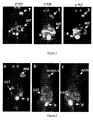
- FIG. 1 displays PET images of three B16BL6 tumour bearing mice performed at day 15, 1h after injection of [ 18 F] (1) (a), [ 18 F] (5) (b) or [ 18 F] (7) (c). Tumour (T), gastrointestinal tract (GIT), Stomach (S), and bladder (B) are indicated.
- mice Female Swiss nudes mice (6 weeks old) were originating from Charles River laboratories and maintained at 21 °C with a 12 h/12 h light/dark cycle, fed with a breeding diet (diet A04 from Safe, Villemoisson, France) and received water ad libitum .
- a breeding diet diet A04 from Safe, Villemoisson, France
- For transplantation cell suspension were grown in a monolayer culture to confluence, after which cells were trypsinized, washed with phosphate buffer saline (PBS) and they were resuspended in PBS. Mice were anesthetized by isoflurane (4% for induction and 2 ⁇ 0.5% for maintaining in oxygen flux) inhalation.
- the primary tumour model was induced by subcutaneous injection of 3x10 6 melanoma SKMEL-3 (pigmented cell line) or A375 (non-pigmented cell ligne) cells in 0.1 mL on the right shoulder of mice.
- PET imaging was performed 1 h post injection of tracers in SKMEL-3 and A375 tumour bearing mice at day-27 and day-23 post inoculation respectively.
- FIG. 2 displays PET images of B16BL6 tumour bearing mice (a), SKMEL-3 tumour bearing mice (b) and A375 tumour bearing mice (c) performed at day-15, day-27 and day-22 respectively, 1 h after injection of [ 18 F] (1) .
- Tumour, gastrointestinal tract (GIT), and bladder (B) are indicated.
- Protocols were performed under the authorization of the French Direction des Services Vcierinaires (authorization no. C63-113-10) and conducted under the supervision of authorized investigators in accordance with the institution's recommendations for the use of laboratory animals. Animals were handled and cared in accordance with the guidelines for the Care and Use of Laboratory Animals (National Research Council, 1996) and European Directive 86/609/EEC.
- C57BL/6J male mice (6-8 weeks old) were obtained from Charles River (l'Arbresle, France) and the B16F0 syngenic melanoma from ATCC (no. CRL-6322).
- Primary melanoma model was induced by subcutaneous injection of B16F0 murine melanoma cells in C57BL/6J mice.
- B16F0 melanoma cell cultures were maintained as monolayers in Dulbecco's Modified Eagle's Medium (DMEM)/Glutamax (Invitrogen, Cergy Pontoise, France) supplemented with 10% fetal calf serum (Sigma, Saint Quentin Fallavier, France), 1% vitamins (Invitrogen, Cergy-Pontoise, France), 1 mM sodium pyruvate (Invitrogen), 1% non essential amino acids (Invitrogen), and 4 ⁇ g/mL of gentamycin base (Invitrogen). Cells were grown at 37 °C in a humidified incubator containing 5% CO 2 .
- DMEM Dulbecco's Modified Eagle's Medium
- Glutamax Invitrogen, Cergy Pontoise, France
- 10% fetal calf serum Sigma, Saint Quentin Fallavier, France
- vitamins Invitrogen, Cergy-Pontoise, France
- mice For transplantation, cells in exponential growth phase were trypsinized, washed with phosphate buffer saline (PBS), and resuspended in PBS. C57BL/6J mice anesthetized by isoflurane (2%) inhalation were inoculated with 3x10 5 melanoma B16F0 cells in 0.1 mL of PBS by subcutaneous injection on the right flank.
- PBS phosphate buffer saline
- each [ 125 I]-labelled compound was administered intravenously via the tail vein with 3.7 MBq/mouse (range 3 - 8 animals/compounds).
- the injected activity to each mouse was also determined from scintigraphic imaging of the syringe before and after the injection of the radiotracer.
- mice were anaesthetized by i.p.
- ketamine-xylazine mixture in saline: ketamine (100 mg/kg, Imalgene, Rhone Mérieux, Lyon, France) and xylazine (10 mg/kg, Rompun, Bayer, France).
- a 10 min duration image was acquired on anesthetized mice placed in prone position over the collimator of the camera. Reproducibility in animal positioning for the serial images was achieved using a graduated reference grid.
- Table 3 Radioactivity uptake in melanoma B16F0 tumours at different time points after i.v. injection of radiotracers labelled with iodine-125 in C57BL/6J mice. Radioactive concentration values were calculated from planar scintigraphic images.
- 24 primary melanoma bearing mice were intravenously injected with 2.2 MBq of [ 125 I] (1) and sacrificed 1 h, 3 h, 6 h, 24 h, 72 h and 10 days after tracer injection.
- Tumour, eyes, liver, kidneys and faeces were suspended in 5 mL of methanol/NH 4 OH 99.8:0.2, homogenized using GentleMACSTM dissociator (Miltenyi Biotec, Bergisch Gladbach, Germany) and centrifuged for 5 min at 3,000 rpm (repeated 2 times). Urines were analysed without any treatment. The extraction efficiency was determined by measuring the radioactivity of supernatants and precipitates.
- Compound (1) was labelled with iodine-131, at high specific activity, from the corresponding stannane precursor, as described in detail in example 8. The labeling was performed with a radiochemical yield of 80% and a radiochemical purity> 99%.
- the antitumour activity of the compound [ 131 I] (1) was evaluated in the melanoma model B16BL6, (primary melanoma model exhibiting spontaneous pulmonary dissemination) after two intravenous injections of 20 MBq, at day-7 and day-11 stages post inoculation.
- the antitumour activity of the compound [ 131 I] (1) was also evaluated in SKMEL-3 human melanoma model after injections of 25 MBq of [ 131 I] (1) : Two groups of mice were used receiving two injections at day-33 and day-40 or three injections of at day-33, day-40 and day-47 post inoculation. Results were compared to control group injected with saline.
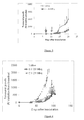
- FIG. 3 Effect of [ 131 I] (1) on murine melanoma B16BL6 tumour growth.
- [ 131 I] (1) was administered at 20 MBq at day-7 and day-11 after inoculation. Arrows indicate treatment days. Tumour growth data are expressed as the percentage change in tumour volume relative to baseline.
- FIG. 4 Effect of [ 131 I] (1) on human melanoma SKMEL-3 tumour growth.
- [ 131 I] (1) was administered at 25 MBq once weekly for 2 or 3 weeks. Tumour growth data are expressed as the percentage change in tumour volume relative to baseline.
- Dose calculations based on the Medical Internal Radiation Dose (MIRD) methodology were obtained from [ 125 I] (1) kinetic data on B16B16 melanoma-bearing C57BL/6J mice and were extrapolated to [ 131 I] (1) .
- the absorbed dose was calculated for each organ using the cumulative activity, the equilibrium dose constant of iodine 131, the absorbed dose fractions calculated according to the nature and energy of its emissions, the geometric volumes of the organs and tumour and considering tissue densities equal to 1 g.cm -3 .
- B16BL6 cells were injected intravenously into male C57BL/6J mice to obtain, within 12 days, tumour cell colonies in lungs mimicking pulmonary micrometastases.
- mice were killed 1 h post injection.
- Lungs were removed and small pieces of tissue including B16 melanoma colonies were isolated and fixed by slam freezing on an LN2-precooled metal mirror.
- Samples were dehydrated by freeze drying starting at -110 to -10 °C before embedding in Spurr resin.
- Serial sections of 0.4 ⁇ m thick were deposited on stainless steel holders for SIMS analysis or on glass slides for light microscopy observation.
- FIG. 5 Secondary ion mass spectrometry (SIMS) images used to determine the distribution of compound (1).
- SIMS allows direct identification of chemical elements with high sensitivity and specificity and can be applied to visualize elemental distribution (chemical mapping). Images centered on one B16BL6 melanoma cells colony 1 h after compound (1) injection.
- Figures 5b and 5c showed distribution of CN- and Iodine-127 ions revealing various tissue structures in particular melanin polymers. Furthermore, the histological image (a) revealed melanin grains and clusters. Superimposition of the CN - and iodide-127 signals was observed, indicating a perfect colocalisation of compound (1) with melanin polymers. These data showed the colocalisation of compound (1) with melanin.
- FIG. 5 SIMS images centered on one B16BL6 melanoma cells colony 1 h after compound (1) (0.1 ⁇ mol/mice) injection. Histological image is shown in (a). CN - (b) and 127 I - ions (c).
- Radiofluorination of said comparative compound (25) may be performed according to the following two-step procedure, also described under typical example 3: Radiosynthesis of compounds [ 18 F] (1) , [ 18 F] (5) and [ 18 F] (7) , as described in detail in example 9, was compared to the synthesis of comparative compound [ 18 F] (25) . It was stated that the radiosynthesis of compounds [ 18 F] (1) , [ 18 F] (5) and [ 18 F] (7) are easier to perform and that the yields and preparation times are better.
- Protocol see protocol of example 10.
- PET imaging was performed 1 h post injection of tracers in B16BL6 tumour bearing mice at day-15 after tumours cell inoculation (cf figures 1 and 6 ).
- Comparison of PET imaging shows a high and specific tumoural uptake of [ 18 F] 1 and [ 18 F] 7 as early as 1 h post injection ( 14.33 ⁇ 2 . 11 and 14 . 55 % ID/g, respectively), with a tumour/muscle ratio of 11.04 ⁇ 2.87 and 17.41 , respectively.
- [ 18 F](5) displays lower specific tumoural uptake ( 6.63 ⁇ 1.64% ID/g) as well as tumour/muscle ratio (6.62 ⁇ 1.90).
- [ 18 F]( 1 ) is particularly interesting due: i) to its tumoural tropism ( 14.33 ⁇ 2.11% ID/g) and tumour to muscle ratio (11.04 ⁇ 2.87), highly superior to the fluoroethyl analogue [ 18 F] (25) at 1 h p.i., and ii) to its lower gastro intestinal tract signal.
- Figure 6 displays a PET image of a B16B16 tumour bearing mice performed at day 15, 1 h after injection of [ 18 F] (25) .
- Tumour (T), gastrointestinal tract (GIT), and bladder (B) are indicated.
- the present invention relates to the use of an effective amount of a compound of formulae (I), (Ia) or (Ib) or one of its pharmaceutically acceptable salts for the preparation of a composition for the diagnosis and/or the treatment of melanoma.
- the present invention relates to compounds of formulae (I), (Ia) or (Ib) or one of its pharmaceutically acceptable salts as radiopharmaceutical and/or imaging agent for the diagnosis and/or the treatment of melanoma.
- Described herein is a method for the diagnosis and/or the treatment of melanoma wherein it comprises at least one step of administration to a patient suffering from melanoma or potentially suffering from melanoma of an effective amount of a coumpound of formulae (I), (Ia) or (Ib) or one of its pharmaceutically acceptable salts, said coumpound being beforehand radiolabelled.
- the present invention relates to a radiopharmaceutical composition
- a radiopharmaceutical composition comprising a radiolabelled compound of formulae (I), (Ia) or (Ib) or anyone of compound (1) to (8) or of its pharmaceutically acceptable salt.
- the radio labelling occurs in particular by means of a radionuclide as described above.
- the present invention relates to a radiopharmaceutical composition
- a radiopharmaceutical composition comprising, as active principle, a compound of formulae (I), (Ia) or (Ib) according to the invention, wherein it comprises a fluorine-18 atom or one of its pharmaceutically acceptable salts.
- the said radiopharmaceutical composition advantageously comprises an effective amount of such a compound of formulae (I), (Ia) or (Ib), wherein it comprises a fluorine-18 atom, and also one or more excipients.
- excipients are chosen according to the type of formulation.
- the present invention furthermore relates to compound of formulae (I), (Ia) or (Ib) or one of its pharmaceutically acceptable salts for use for the preparation of a radiopharmaceutical composition intended for medical imaging, more particularly for the diagnosis of melanoma.
- the present invention relates to compounds of formulae (I), (Ia) or (Ib) or one of its pharmaceutically acceptable salts for use as medical imaging agents, more particularly for the diagnosis of melanoma.
- the patient/subject may be an animal, mammal or human.
- a noninvasive method for the determination of the tissue distribution of tumour cells of melanoma on the human body comprising the stages of at least one injection of a radiopharmaceutical composition comprising at least one compound of formulae (I), (Ia) or (Ib), wherein it comprises a fluorine-18 atom, or one of its pharmaceutically acceptable salts and of at least one determination of the concentration of the radioactivity.
- the present invention relates to a radiolabelled compound of formulae (I), (Ia) or (Ib) or one of its pharmaceutically acceptable salts or a radiolabelled compound of formula (1) to (8) as defined above for use for medical imaging, more particularly for the diagnosis or melanoma and/or for the treatment of melanoma.
- the present invention relates to compounds of formulae (I), (Ia) or (Ib) or one of its pharmaceutically acceptable salts for use as radiopharmaceutical compounds for the treatment of melanoma.
- a method for the treatment of melanoma which comprises the administration to a patient suffering from melanoma and more particularly from disseminated melanoma of an effective amount of a compound of formulae (I), (Ia) or (Ib), wherein it comprises a iodine-131 atom, or one of its pharmaceutically acceptable salts.
- Another aspect of the invention pertains to unlabelled compound of formulae (I), (Ia) or (Ib) as described above and an alkaline radioactive halide for use in the manufacture of a medicament for the use in the diagnosis and/or the treatment of melanoma.
- the present invention relates to unlabelled compounds of formulae (I), (Ia) or (Ib) or one of its pharmaceutically acceptable salts for use, when combined with an alkaline radioactive halide, as radiopharmaceutical and/or imaging agent for the diagnosis and/or the treatment of melanoma.
- a method of treatment of melanoma comprising a step of imaging with a radiolabelled compound of formulae (I), (Ia) or (Ib) by fluorine-18 PET for diagnosis of melanoma lesions allowing, in a subject, a staging of the disease and then by treating said melanoma lesions, for example by injecting a compound of formulae (I), (Ia) or (Ib) which can be radiolabelled by iodine-131, astatine-211 or iodine-125, in particular denoting the same chemical structure with the exception of labelling, and following the evolution of the melanoma and the efficacy of the treatment by one or more successive imaging steps by fluorine-18 PET imaging.
- the fluorine-18 PET imaging allows a quantization of radioactivity present in the tumor, which is of particular interest to dosimetry studies in order to evaluate and adjust the therapeutic treatment of melanoma.
- the chemical structure for the imaging and the treatment is identical, except with respect to labelling, which is carried out on demand for each specific application.
- the radiolabelled compound according to the present invention may be administred to a subject/patient by any convenient route of administration, whether systemically/peripherally or topically.
Landscapes
- Chemical & Material Sciences (AREA)
- Organic Chemistry (AREA)
- Health & Medical Sciences (AREA)
- Life Sciences & Earth Sciences (AREA)
- Pharmacology & Pharmacy (AREA)
- Physics & Mathematics (AREA)
- Medicinal Chemistry (AREA)
- Optics & Photonics (AREA)
- Proteomics, Peptides & Aminoacids (AREA)
- Epidemiology (AREA)
- Animal Behavior & Ethology (AREA)
- General Health & Medical Sciences (AREA)
- Public Health (AREA)
- Veterinary Medicine (AREA)
- Medicines Containing Antibodies Or Antigens For Use As Internal Diagnostic Agents (AREA)
- Medicines That Contain Protein Lipid Enzymes And Other Medicines (AREA)
Claims (15)
- Verbindung der Formel (I):
 R1 SN(R)3, B(OH)2, B(OR)2, ein Halogenatom, NO2, ein Radionuklid oder eine -N+(R)3 Gruppe darstellt, wobei R eine (C1-C6) Alkylgruppe ist,n1 eine ganze Zahl variierend von 1 bis 4 ist,R2 ein Wasserstoffatom oder eine (C1-C6) Alkylgruppe darstellt,R3:- eine -(CH2CH2O)n2-(CH2)n3-X Gruppe, wobei n2 eine ganze Zahl variierend von 1 bis 12 ist und n3 eine ganze Zahl variierend von 1 bis 4 ist, oder- eine -(CH2CH2O)n4-(CH2)n5-Y Gruppe darstellt, wobei n4 eine ganze Zahl variierend von 0 bis 12 darstellt, n5 eine ganze Zahl variierend von 1 bis 4 darstellt und Y eine -C≡C-H, eine -N3 oder eine -Ar-(CH2)n6-(OCH2CH2)n7-X Gruppe darstellt, wobei Ar
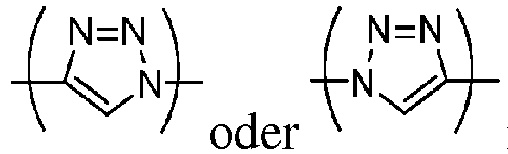 X ein Halogenatom, ein Radionuklid oder eine -OSO2R' Gruppe darstellt, wobei R' eine CF3, CH3, t-Bu, Ph, p-NO2Ph, p-BrPh oder p-CH3Ph Gruppe ist,und ihre Additionssalze mit pharmazeutisch annehmbaren Säuren.
 - Verbindung der Formel (I) gemäß Anspruch 1, wobei R2 eine Ethylgruppe ist.
- Verbindung der Formel (I) gemäß Anspruch 1 oder 2, wobei n1 2 ist.
- Verbindung der Formel (I) gemäß einem der Ansprüche 1 bis 3, wobei R1 ein IodAtom, ein Radionuklid oder SN(R)3 ist, wobei R eine (C1-C6) Alkylgruppe ist, und insbesondere ist R1 ein Iod-Atom.
- Verbindung der Formel (I) gemäß einem der Ansprüche 1 bis 4, wobei R3:- eine -(CH2CH2O)n2-(CH2)2-X Gruppe, wobei n2 eine ganze Zahl variierend von 3 bis 7 ist,- eine -CH2-Y Gruppe darstellt, wobei Y eine -C≡C-H, eine -N3 oder eine -Ar-(CH2)n6-X Gruppe darstellt, wobeiX ein Halogenatom, ein Radionuklid oder eine -OSO2R' Gruppe ist, wobei R' eine CF3, CH3, t-Bu, Ph, p-NO2Ph, p-BrPh oder p-CH3Ph Gruppe ist.
Ar
- Verbindung der Formel (Ia) gemäß Anspruch 1
 R1 SN(R)3, B(OH)2, B(OR)2, ein Halogenatom, NO2, ein Radionuklid oder eine -N+(R)3 Gruppe darstellt, wobei R eine (C1-C6) Alkylgruppe ist,n2 eine ganze Zahl variierend von 1 bis 12 ist,n3 eine ganze Zahl variierend von 1 bis 4 ist undX ein Halogenatom, ein Radionuklid oder eine -OSO2R' Gruppe ist, wobei R' eine CF3, CH3, t-Bu, Ph, p-NO2Ph, p-BrPh oder p-CH3Ph Gruppe ist,und ihre Additionssalze mit pharmazeutisch annehmbaren Säuren.
 - Verbindung der Formel (Ia) gemäß Anspruch 6, wobei n2 zwischen 3 und 7 variiert und n3 2 ist.
- Verbindung der Formel (Ia) gemäß Anspruch 6 oder 7, wobei R1 ein Iod-Atom, ein Radionuklid oder SN(R)3 darstellt, wobei R eine (C1-C6) Alkylgruppe ist, und insbesondere stellt R1 ein Iod-Atom oder ein optional markiertes Iod-Atom dar, und X ein optional markiertes Fluor-Atom oder eine -OSO2R' Gruppe darstellt, wobei R' eine CF3, eine t-Bu oder eine CH3 Gruppe ist und insbesondere eine CH3 Gruppe.
- Verbindung der Formel (Ib) gemäß Anspruch 1
 R1 SN(R)3, B(OH)2, B(OR)2, ein Halogenatom, NO2, ein Radionuklid oder eine -N+(R)3 Gruppe darstellt, wobei R eine (C1-C6) Alkylgruppe ist,n5 eine ganze Zahl variierend von 1 bis 4 darstellt undY eine -C≡C-H, eine -N3 oder eine -Ar-(CH2)n7-X Gruppe darstellt, wobei Arund ihre Additionssalze mit pharmazeutisch annehmbaren Säuren.
- Verbindung der Formel (Ib) gemäß Anspruch 9, wobei n5 1 ist und Y eine -C≡C-H, eine -N3 oder eine -Ar-(CH2)n6-X Gruppe darstellt, wobei Ar

- Verbindung der Formel (Ib) gemäß Anspruch 9 oder 10, wobei R1 ein Iod-Atom, ein Radionuklid oder SN(R)3 darstellt, wobei R eine (C1-C6) Alkylgruppe ist, und insbesondere stellt R1 ein Iod-Atom dar, und Y eine -C≡C-H oder eine -Ar-(CH2)n6-X Gruppe darstellt, wobei
Ar
- Eine radioaktiv markierte Verbindung gemäß einem der voranstehenden Ansprüche, wobei das radioaktive Markieren mittels eines Radionuklids erfolgt, welches ein Radioisotop ausgewählt aus Iod-123, Iod-124, Iod-125, Iod-131, Brom-75, Brom-76, Brom-77, Fluor-18, Astatin-210 oder Astatin-211 ist und insbesondere ausgewählt ist aus Fluor-18, Iod-123, Iod-124, Iod-125 und Iod-131.
- Verbindung gemäß einem der voranstehenden Ansprüche, ausgewählt aus:- N-(12-Ethyl-1-fluoro-3,6,9-trioxa-12-azatetradecan-14-yl)-6-iodochinoxalin-2-carboxamid (1),- N-(12-Ethyl-1-methansulfonyloxy-3,6,9-trioxa-12-azatetradecan-14-yl)-6-iodochinoxalin-2-carboxamid (2),- N-(12-Ethyl-1-fluoro-3,6,9-trioxa-12-azatetradecan-14-yl)-6-(tributylstannyl)chinoxalin-2-carboxamid (4),- N-(24-Ethyl-1-fluoro-3,6,9,12,15,18,21-heptaoxa-24-azahexacosan-26-yl)-6-iodochinoxalin-2-carboxamid (5),- N-(24-Ethyl-1-methansulfonyloxy-3,6,9,12,15,18,21-heptaoxa-24-azahexacosan-26-yl)-6-iodochinoxalin-2-carboxamid (6),- N-[2-[(N-Ethyl)-[[1-(2-fluoroethyl)-1H-(1,2,3)triazol-4-yl]methyl]amino]ethyl]-6-iodochinoxalin-2-carboxamid (7),- N-[2-[(N-Ethyl)-(N-prop-2-inyl)amino]ethyl]-6-iodochinoxalin-2-carboxamid (8),und ihre pharmazeutisch annehmbaren Salze und insbesondere ihre Hydrochloride oder Basen.
- Radiopharmazeutische Zusammensetzung umfassend, als Wirkstoff, eine radioaktiv markierte Verbindung der Formel (I), (Ia) oder (Ib) oder eines ihrer pharmazeutisch annehmbaren Salze wie gemäß einem der Ansprüche 1 bis 12 definiert oder eine von Verbindung (1), (2), (4), (5), (6), (7) und (8) wie in Anspruch 13 definiert.
- Eine radioaktiv markierte Verbindung der Formel (I), (Ia) oder (Ib) wie gemäß einem der Ansprüche 1 bis 12 definiert oder eines ihrer pharmazeutisch annehmbaren Salze oder eine radioaktiv markierte Verbindung der Formel oder eine von Verbindung (1), (2), (4), (5), (6), (7) und (8) wie in Anspruch 13 definiert, zur Verwendung in der medizinischen Bildgebung und insbesondere zur Verwendung in der Diagnose eines Melanoms und/oder zur Verwendung in der Behandlung eines Melanoms.
Priority Applications (1)
| Application Number | Priority Date | Filing Date | Title |
|---|---|---|---|
| EP13725814.1A EP2841402B1 (de) | 2012-04-24 | 2013-04-19 | Markierte chinoxalin-derivate als multimodale radiopharmazeutika und ihre vorläufer |
Applications Claiming Priority (3)
| Application Number | Priority Date | Filing Date | Title |
|---|---|---|---|
| EP12165413.1A EP2657213A1 (de) | 2012-04-24 | 2012-04-24 | Markierte Chinoxalin-Derivate als multimodale Radiopharmazeutika und ihre Vorläufer |
| EP13725814.1A EP2841402B1 (de) | 2012-04-24 | 2013-04-19 | Markierte chinoxalin-derivate als multimodale radiopharmazeutika und ihre vorläufer |
| PCT/IB2013/053106 WO2013160808A1 (en) | 2012-04-24 | 2013-04-19 | Labelled quinoxaline derivatives as multimodal radiopharmaceuticals and their precursors |
Publications (2)
| Publication Number | Publication Date |
|---|---|
| EP2841402A1 EP2841402A1 (de) | 2015-03-04 |
| EP2841402B1 true EP2841402B1 (de) | 2016-11-30 |
Family
ID=48536968
Family Applications (2)
| Application Number | Title | Priority Date | Filing Date |
|---|---|---|---|
| EP12165413.1A Withdrawn EP2657213A1 (de) | 2012-04-24 | 2012-04-24 | Markierte Chinoxalin-Derivate als multimodale Radiopharmazeutika und ihre Vorläufer |
| EP13725814.1A Active EP2841402B1 (de) | 2012-04-24 | 2013-04-19 | Markierte chinoxalin-derivate als multimodale radiopharmazeutika und ihre vorläufer |
Family Applications Before (1)
| Application Number | Title | Priority Date | Filing Date |
|---|---|---|---|
| EP12165413.1A Withdrawn EP2657213A1 (de) | 2012-04-24 | 2012-04-24 | Markierte Chinoxalin-Derivate als multimodale Radiopharmazeutika und ihre Vorläufer |
Country Status (7)
| Country | Link |
|---|---|
| US (1) | US20150079000A1 (de) |
| EP (2) | EP2657213A1 (de) |
| AU (1) | AU2013254326B2 (de) |
| DK (1) | DK2841402T3 (de) |
| ES (1) | ES2616793T3 (de) |
| IL (1) | IL235122A (de) |
| WO (1) | WO2013160808A1 (de) |
Families Citing this family (6)
| Publication number | Priority date | Publication date | Assignee | Title |
|---|---|---|---|---|
| DE102014112747A1 (de) * | 2014-09-04 | 2016-03-10 | Eberhard Karls Universität Tübingen Medizinische Fakultät | Verwendung eines Quinoxalinderivats in einem bildgebenden Verfahren |
| JP7339692B2 (ja) * | 2019-03-29 | 2023-09-06 | 国立研究開発法人量子科学技術研究開発機構 | 放射性標識化合物の製造方法及び製造装置 |
| GB201915206D0 (en) | 2019-10-21 | 2019-12-04 | Ge Healthcare Ltd | Use of cyclodextrins as a radiostabilizer |
| JP7668480B2 (ja) * | 2021-01-19 | 2025-04-25 | 国立大学法人東京科学大学 | 放射性ハロゲン標識前駆体化合物 |
| GB202108605D0 (en) * | 2021-06-16 | 2021-07-28 | Ge Healthcare Uk Ltd | Effect of water content |
| WO2025108921A1 (en) * | 2023-11-22 | 2025-05-30 | Institut National de la Santé et de la Recherche Médicale | Synthesis of radiopharmaceutical agents |
Family Cites Families (6)
| Publication number | Priority date | Publication date | Assignee | Title |
|---|---|---|---|---|
| FR2642972B1 (fr) | 1989-02-14 | 1994-08-05 | Inst Nat Sante Rech Med | Agents pour le diagnostic et le traitement des melanomes, derives halogenes aromatiques utilisables comme de tels agents et leur preparation |
| US5911970A (en) | 1993-05-06 | 1999-06-15 | Research Corporation Technologies, Inc. | Methods for cancer imaging and therapy using benzamine compounds |
| DE102004011720B4 (de) | 2004-03-10 | 2008-04-03 | Bayer Schering Pharma Aktiengesellschaft | Radiohalogenierte Benzamidderivate und deren Verwendung in der Tumordiagnostik und Tumortherapie |
| GB0428012D0 (en) * | 2004-12-22 | 2005-01-26 | Hammersmith Imanet Ltd | Radiolabelling methods |
| JP2008546804A (ja) * | 2005-06-24 | 2008-12-25 | ザ・トラスティーズ・オブ・ザ・ユニバーシティ・オブ・ペンシルバニア | 造影剤として用いるためのリガンドの放射性標識ペグ化 |
| EP2085390A1 (de) | 2008-01-31 | 2009-08-05 | Institut National De La Sante Et De La Recherche Medicale (Inserm) | Markierte Analoge von Halobenzamiden als multimodale Radiopharmazeutika und ihre Vorläufer |
-
2012
- 2012-04-24 EP EP12165413.1A patent/EP2657213A1/de not_active Withdrawn
-
2013
- 2013-04-19 US US14/396,879 patent/US20150079000A1/en not_active Abandoned
- 2013-04-19 AU AU2013254326A patent/AU2013254326B2/en active Active
- 2013-04-19 DK DK13725814.1T patent/DK2841402T3/da active
- 2013-04-19 ES ES13725814.1T patent/ES2616793T3/es active Active
- 2013-04-19 WO PCT/IB2013/053106 patent/WO2013160808A1/en not_active Ceased
- 2013-04-19 EP EP13725814.1A patent/EP2841402B1/de active Active
-
2014
- 2014-10-19 IL IL235122A patent/IL235122A/en active IP Right Grant
Non-Patent Citations (1)
| Title |
|---|
| None * |
Also Published As
| Publication number | Publication date |
|---|---|
| DK2841402T3 (da) | 2017-02-20 |
| WO2013160808A1 (en) | 2013-10-31 |
| HK1207852A1 (en) | 2016-02-12 |
| EP2657213A1 (de) | 2013-10-30 |
| AU2013254326B2 (en) | 2017-02-02 |
| ES2616793T3 (es) | 2017-06-14 |
| EP2841402A1 (de) | 2015-03-04 |
| IL235122A (en) | 2017-01-31 |
| US20150079000A1 (en) | 2015-03-19 |
| AU2013254326A1 (en) | 2014-10-30 |
Similar Documents
| Publication | Publication Date | Title |
|---|---|---|
| EP2252605B1 (de) | Markierte analoga von halogenbenzamiden als multimodal radiopharmazeutika und ihre vorstufen | |
| US11384088B2 (en) | Radiopharmaceuticals, radioimaging agents, and uses thereof | |
| CN115260160B (zh) | 一种靶向成纤维细胞活化蛋白fap的化合物及其制备方法和应用 | |
| EP2766364B1 (de) | Folatkonjugate aus albuminbindenden entitäten | |
| EP2841402B1 (de) | Markierte chinoxalin-derivate als multimodale radiopharmazeutika und ihre vorläufer | |
| EP2864329B1 (de) | 18f-markierte folat-/antifolat-analoga | |
| US20110002850A1 (en) | Nitro-Imidazole Hypoxia Imaging Agent | |
| US20240066155A1 (en) | Dual mode radiotracer and -therapeutics | |
| Malik et al. | Development and biological evaluation of [18F] FMN3PA & [18F] FMN3PU for leucine-rich repeat kinase 2 (LRRK2) in vivo PET imaging | |
| Viallard et al. | [123I] ICF01012 melanoma imaging and [131I] ICF01012 dosimetry allow adapted internal targeted radiotherapy in preclinical melanoma models | |
| US20240382633A1 (en) | Radiopharmaceuticals, methods for the production thereof, and uses in treatment, diagnosis and imaging diseases | |
| JP5085824B2 (ja) | 低酸素の検出のために有用な化合物の製造 | |
| WO2025056882A1 (en) | Radiopharmaceutical | |
| Iannone et al. | Automated radiosynthesis and preclinical evaluation of two new PSMA-617 derivatives radiolabelled via [18F] AlF2+ method | |
| EP3177598B1 (de) | Makrocyclische komplexe, verfahren zu deren herstellung und verwendung als pet-kontrastmittel | |
| HK1207852B (en) | Labelled quinoxaline derivatives as multimodal radiopharmaceuticals and their precursors | |
| HK1189216A (en) | Labelled quinoxaline derivatives as multimodal radiopharmaceuticals and their precursors | |
| US20250215027A1 (en) | Diphosphine compounds and complexes | |
| Singh et al. | Evaluation of methionine and tryptophan derivatised vehicles: Met-ac-TE3A/Trp-ac-TE3A for tumor imaging | |
| EP4282438A1 (de) | Funktionalisierte bisaminothiolderivate, komplexe mit diesen bisaminothiolderivaten und verwendung dieser komplexe als diagnostika und therapeutika | |
| VIALLARD et al. | adapted internal targeted radiotherapy in preclinical melanoma models | |
| HK1202548B (zh) | 18f-标记的叶酸/抗叶酸剂类似物 | |
| HK1161248A (en) | Psma-binding agents and uses thereof |
Legal Events
| Date | Code | Title | Description |
|---|---|---|---|
| PUAI | Public reference made under article 153(3) epc to a published international application that has entered the european phase |
Free format text: ORIGINAL CODE: 0009012 |
|
| 17P | Request for examination filed |
Effective date: 20141015 |
|
| AK | Designated contracting states |
Kind code of ref document: A1 Designated state(s): AL AT BE BG CH CY CZ DE DK EE ES FI FR GB GR HR HU IE IS IT LI LT LU LV MC MK MT NL NO PL PT RO RS SE SI SK SM TR |
|
| AX | Request for extension of the european patent |
Extension state: BA ME |
|
| RIN1 | Information on inventor provided before grant (corrected) |
Inventor name: RBAH-VIDAL, LATIFA Inventor name: CHEZAL, JEAN-MICHEL Inventor name: MIOT-NOIRAULT, ELISABETH Inventor name: AUZELOUX, PHILIPPE Inventor name: BILLAUD, EMILIE Inventor name: MADELMONT, JEAN-CLAUDE Inventor name: PAPON, JANINE Inventor name: VIDAL, AURELIEN Inventor name: MAISONIAL, AURELIE |
|
| RIN1 | Information on inventor provided before grant (corrected) |
Inventor name: CHEZAL, JEAN-MICHEL Inventor name: PAPON, JANINE Inventor name: MAISONIAL, AURELIE Inventor name: MADELMONT, JEAN-CLAUDE Inventor name: MIOT-NOIRAULT, ELISABETH Inventor name: BILLAUD, EMILIE Inventor name: RBAH-VIDAL, LATIFA Inventor name: VIDAL, AURELIEN Inventor name: AUZELOUX, PHILIPPE |
|
| DAX | Request for extension of the european patent (deleted) | ||
| RAP1 | Party data changed (applicant data changed or rights of an application transferred) |
Owner name: UNIVERSITE D'AUVERGNE CLERMONT I Owner name: LABORATOIRES CYCLOPHARMA Owner name: INSTITUT NATIONAL DE LA SANTE ET DE LA RECHERCHE M |
|
| 17Q | First examination report despatched |
Effective date: 20151105 |
|
| REG | Reference to a national code |
Ref country code: HK Ref legal event code: DE Ref document number: 1207852 Country of ref document: HK |
|
| GRAP | Despatch of communication of intention to grant a patent |
Free format text: ORIGINAL CODE: EPIDOSNIGR1 |
|
| INTG | Intention to grant announced |
Effective date: 20160721 |
|
| GRAS | Grant fee paid |
Free format text: ORIGINAL CODE: EPIDOSNIGR3 |
|
| GRAA | (expected) grant |
Free format text: ORIGINAL CODE: 0009210 |
|
| AK | Designated contracting states |
Kind code of ref document: B1 Designated state(s): AL AT BE BG CH CY CZ DE DK EE ES FI FR GB GR HR HU IE IS IT LI LT LU LV MC MK MT NL NO PL PT RO RS SE SI SK SM TR |
|
| REG | Reference to a national code |
Ref country code: CH Ref legal event code: EP Ref country code: GB Ref legal event code: FG4D |
|
| RAP2 | Party data changed (patent owner data changed or rights of a patent transferred) |
Owner name: UNIVERSITE D'AUVERGNE CLERMONT I Owner name: INSTITUT NATIONAL DE LA SANTE ET DE LA RECHERCHE M Owner name: LABORATOIRES CYCLOPHARMA |
|
| REG | Reference to a national code |
Ref country code: AT Ref legal event code: REF Ref document number: 849629 Country of ref document: AT Kind code of ref document: T Effective date: 20161215 |
|
| REG | Reference to a national code |
Ref country code: IE Ref legal event code: FG4D |
|
| REG | Reference to a national code |
Ref country code: DE Ref legal event code: R096 Ref document number: 602013014725 Country of ref document: DE |
|
| REG | Reference to a national code |
Ref country code: CH Ref legal event code: NV Representative=s name: ARNOLD AND SIEDSMA AG, CH |
|
| REG | Reference to a national code |
Ref country code: NL Ref legal event code: FP |
|
| REG | Reference to a national code |
Ref country code: DK Ref legal event code: T3 Effective date: 20170216 |
|
| REG | Reference to a national code |
Ref country code: SE Ref legal event code: TRGR |
|
| PG25 | Lapsed in a contracting state [announced via postgrant information from national office to epo] |
Ref country code: LV Free format text: LAPSE BECAUSE OF FAILURE TO SUBMIT A TRANSLATION OF THE DESCRIPTION OR TO PAY THE FEE WITHIN THE PRESCRIBED TIME-LIMIT Effective date: 20161130 |
|
| REG | Reference to a national code |
Ref country code: FR Ref legal event code: PLFP Year of fee payment: 5 |
|
| REG | Reference to a national code |
Ref country code: LT Ref legal event code: MG4D |
|
| REG | Reference to a national code |
Ref country code: NO Ref legal event code: T2 Effective date: 20161130 |
|
| PG25 | Lapsed in a contracting state [announced via postgrant information from national office to epo] |
Ref country code: LT Free format text: LAPSE BECAUSE OF FAILURE TO SUBMIT A TRANSLATION OF THE DESCRIPTION OR TO PAY THE FEE WITHIN THE PRESCRIBED TIME-LIMIT Effective date: 20161130 Ref country code: GR Free format text: LAPSE BECAUSE OF FAILURE TO SUBMIT A TRANSLATION OF THE DESCRIPTION OR TO PAY THE FEE WITHIN THE PRESCRIBED TIME-LIMIT Effective date: 20170301 |
|
| PG25 | Lapsed in a contracting state [announced via postgrant information from national office to epo] |
Ref country code: PT Free format text: LAPSE BECAUSE OF FAILURE TO SUBMIT A TRANSLATION OF THE DESCRIPTION OR TO PAY THE FEE WITHIN THE PRESCRIBED TIME-LIMIT Effective date: 20170330 Ref country code: PL Free format text: LAPSE BECAUSE OF FAILURE TO SUBMIT A TRANSLATION OF THE DESCRIPTION OR TO PAY THE FEE WITHIN THE PRESCRIBED TIME-LIMIT Effective date: 20161130 Ref country code: HR Free format text: LAPSE BECAUSE OF FAILURE TO SUBMIT A TRANSLATION OF THE DESCRIPTION OR TO PAY THE FEE WITHIN THE PRESCRIBED TIME-LIMIT Effective date: 20161130 Ref country code: RS Free format text: LAPSE BECAUSE OF FAILURE TO SUBMIT A TRANSLATION OF THE DESCRIPTION OR TO PAY THE FEE WITHIN THE PRESCRIBED TIME-LIMIT Effective date: 20161130 |
|
| REG | Reference to a national code |
Ref country code: ES Ref legal event code: FG2A Ref document number: 2616793 Country of ref document: ES Kind code of ref document: T3 Effective date: 20170614 |
|
| PG25 | Lapsed in a contracting state [announced via postgrant information from national office to epo] |
Ref country code: RO Free format text: LAPSE BECAUSE OF FAILURE TO SUBMIT A TRANSLATION OF THE DESCRIPTION OR TO PAY THE FEE WITHIN THE PRESCRIBED TIME-LIMIT Effective date: 20161130 Ref country code: CZ Free format text: LAPSE BECAUSE OF FAILURE TO SUBMIT A TRANSLATION OF THE DESCRIPTION OR TO PAY THE FEE WITHIN THE PRESCRIBED TIME-LIMIT Effective date: 20161130 Ref country code: EE Free format text: LAPSE BECAUSE OF FAILURE TO SUBMIT A TRANSLATION OF THE DESCRIPTION OR TO PAY THE FEE WITHIN THE PRESCRIBED TIME-LIMIT Effective date: 20161130 Ref country code: SK Free format text: LAPSE BECAUSE OF FAILURE TO SUBMIT A TRANSLATION OF THE DESCRIPTION OR TO PAY THE FEE WITHIN THE PRESCRIBED TIME-LIMIT Effective date: 20161130 |
|
| PG25 | Lapsed in a contracting state [announced via postgrant information from national office to epo] |
Ref country code: BG Free format text: LAPSE BECAUSE OF FAILURE TO SUBMIT A TRANSLATION OF THE DESCRIPTION OR TO PAY THE FEE WITHIN THE PRESCRIBED TIME-LIMIT Effective date: 20170228 Ref country code: SM Free format text: LAPSE BECAUSE OF FAILURE TO SUBMIT A TRANSLATION OF THE DESCRIPTION OR TO PAY THE FEE WITHIN THE PRESCRIBED TIME-LIMIT Effective date: 20161130 |
|
| REG | Reference to a national code |
Ref country code: DE Ref legal event code: R097 Ref document number: 602013014725 Country of ref document: DE |
|
| PLBE | No opposition filed within time limit |
Free format text: ORIGINAL CODE: 0009261 |
|
| STAA | Information on the status of an ep patent application or granted ep patent |
Free format text: STATUS: NO OPPOSITION FILED WITHIN TIME LIMIT |
|
| 26N | No opposition filed |
Effective date: 20170831 |
|
| REG | Reference to a national code |
Ref country code: HK Ref legal event code: GR Ref document number: 1207852 Country of ref document: HK |
|
| PG25 | Lapsed in a contracting state [announced via postgrant information from national office to epo] |
Ref country code: SI Free format text: LAPSE BECAUSE OF FAILURE TO SUBMIT A TRANSLATION OF THE DESCRIPTION OR TO PAY THE FEE WITHIN THE PRESCRIBED TIME-LIMIT Effective date: 20161130 |
|
| REG | Reference to a national code |
Ref country code: IE Ref legal event code: MM4A |
|
| REG | Reference to a national code |
Ref country code: FR Ref legal event code: PLFP Year of fee payment: 6 |
|
| PG25 | Lapsed in a contracting state [announced via postgrant information from national office to epo] |
Ref country code: IE Free format text: LAPSE BECAUSE OF NON-PAYMENT OF DUE FEES Effective date: 20170419 |
|
| PG25 | Lapsed in a contracting state [announced via postgrant information from national office to epo] |
Ref country code: MT Free format text: LAPSE BECAUSE OF NON-PAYMENT OF DUE FEES Effective date: 20170419 |
|
| REG | Reference to a national code |
Ref country code: AT Ref legal event code: UEP Ref document number: 849629 Country of ref document: AT Kind code of ref document: T Effective date: 20161130 |
|
| PG25 | Lapsed in a contracting state [announced via postgrant information from national office to epo] |
Ref country code: HU Free format text: LAPSE BECAUSE OF FAILURE TO SUBMIT A TRANSLATION OF THE DESCRIPTION OR TO PAY THE FEE WITHIN THE PRESCRIBED TIME-LIMIT; INVALID AB INITIO Effective date: 20130419 |
|
| PG25 | Lapsed in a contracting state [announced via postgrant information from national office to epo] |
Ref country code: CY Free format text: LAPSE BECAUSE OF FAILURE TO SUBMIT A TRANSLATION OF THE DESCRIPTION OR TO PAY THE FEE WITHIN THE PRESCRIBED TIME-LIMIT Effective date: 20161130 |
|
| PG25 | Lapsed in a contracting state [announced via postgrant information from national office to epo] |
Ref country code: MK Free format text: LAPSE BECAUSE OF FAILURE TO SUBMIT A TRANSLATION OF THE DESCRIPTION OR TO PAY THE FEE WITHIN THE PRESCRIBED TIME-LIMIT Effective date: 20161130 |
|
| PG25 | Lapsed in a contracting state [announced via postgrant information from national office to epo] |
Ref country code: AL Free format text: LAPSE BECAUSE OF FAILURE TO SUBMIT A TRANSLATION OF THE DESCRIPTION OR TO PAY THE FEE WITHIN THE PRESCRIBED TIME-LIMIT Effective date: 20161130 Ref country code: IS Free format text: LAPSE BECAUSE OF FAILURE TO SUBMIT A TRANSLATION OF THE DESCRIPTION OR TO PAY THE FEE WITHIN THE PRESCRIBED TIME-LIMIT Effective date: 20170330 |
|
| REG | Reference to a national code |
Ref country code: FI Ref legal event code: PCE Owner name: INSTITUT NATIONAL DE LA SANTE ET DE LA RECHERCHE MEDICALE Ref country code: FI Ref legal event code: PCE Owner name: UNIVERSITE D'AUVERGNE CLERMONT I Ref country code: FI Ref legal event code: PCE Owner name: ZIONEXA |
|
| REG | Reference to a national code |
Ref country code: LU Ref legal event code: PD Owner name: INSTITUT NATIONAL DE LA SANTE ET DE LA RECHERCHE MEDICALE (INSERM); FR Free format text: FORMER OWNER: INSTITUT NATIONAL DE LA SANTE ET DE LA RECHERCHE MEDICALE (INSERM) Effective date: 20210610 |
|
| REG | Reference to a national code |
Ref country code: NL Ref legal event code: PD Owner name: UNIVERSITE D'AUVERGNE CLERMONT I; FR Free format text: DETAILS ASSIGNMENT: CHANGE OF OWNER(S), ASSIGNMENT; FORMER OWNER NAME: UNIVERSITE D'AUVERGNE CLERMONT I Effective date: 20210623 |
|
| REG | Reference to a national code |
Ref country code: BE Ref legal event code: PD Owner name: ZIONEXA; FR Free format text: DETAILS ASSIGNMENT: CHANGE OF OWNER(S), ASSIGNMENT; FORMER OWNER NAME: LABORATOIRES CYCLOPHARMA Effective date: 20210607 |
|
| REG | Reference to a national code |
Ref country code: AT Ref legal event code: PC Ref document number: 849629 Country of ref document: AT Kind code of ref document: T Owner name: UNIVERSITE D'AUVERGNE CLERMONT I, FR Effective date: 20210802 Ref country code: AT Ref legal event code: PC Ref document number: 849629 Country of ref document: AT Kind code of ref document: T Owner name: ZIONEXA, FR Effective date: 20210802 Ref country code: AT Ref legal event code: PC Ref document number: 849629 Country of ref document: AT Kind code of ref document: T Owner name: INSTITUT NATIONAL DE LA SANTE ET DE LA RECHERC, FR Effective date: 20210802 |
|
| REG | Reference to a national code |
Ref country code: DE Ref legal event code: R081 Ref document number: 602013014725 Country of ref document: DE Owner name: ZIONEXA, FR Free format text: FORMER OWNERS: INSTITUT NATIONAL DE LA SANTE ET DE LA RECHERCHE MEDICALE, PARIS, FR; LABORATOIRES CYCLOPHARMA, SAINT BEAUZIRE, FR; UNIVERSITE D'AUVERGNE CLERMONT I, CLERMONT FERRAND, FR Ref country code: DE Ref legal event code: R081 Ref document number: 602013014725 Country of ref document: DE Owner name: UNIVERSITE D'AUVERGNE CLERMONT I, FR Free format text: FORMER OWNERS: INSTITUT NATIONAL DE LA SANTE ET DE LA RECHERCHE MEDICALE, PARIS, FR; LABORATOIRES CYCLOPHARMA, SAINT BEAUZIRE, FR; UNIVERSITE D'AUVERGNE CLERMONT I, CLERMONT FERRAND, FR Ref country code: DE Ref legal event code: R081 Ref document number: 602013014725 Country of ref document: DE Owner name: INSTITUT NATIONAL DE LA SANTE ET DE LA RECHERC, FR Free format text: FORMER OWNERS: INSTITUT NATIONAL DE LA SANTE ET DE LA RECHERCHE MEDICALE, PARIS, FR; LABORATOIRES CYCLOPHARMA, SAINT BEAUZIRE, FR; UNIVERSITE D'AUVERGNE CLERMONT I, CLERMONT FERRAND, FR Ref country code: DE Ref legal event code: R081 Ref document number: 602013014725 Country of ref document: DE Owner name: GE HEALTHCARE LIMITED, CHALFONT ST. GILES, GB Free format text: FORMER OWNERS: INSTITUT NATIONAL DE LA SANTE ET DE LA RECHERCHE MEDICALE, PARIS, FR; LABORATOIRES CYCLOPHARMA, SAINT BEAUZIRE, FR; UNIVERSITE D'AUVERGNE CLERMONT I, CLERMONT FERRAND, FR |
|
| REG | Reference to a national code |
Ref country code: NO Ref legal event code: CHAD Owner name: ZIONEXA, FR |
|
| REG | Reference to a national code |
Ref country code: ES Ref legal event code: PC2A Owner name: ZIONEXA Effective date: 20220107 |
|
| REG | Reference to a national code |
Ref country code: GB Ref legal event code: 732E Free format text: REGISTERED BETWEEN 20220818 AND 20220824 |
|
| P01 | Opt-out of the competence of the unified patent court (upc) registered |
Effective date: 20230525 |
|
| REG | Reference to a national code |
Ref country code: FI Ref legal event code: PCE Owner name: INSTITUT NATIONAL DE LA SANTE ET DE LA RECHERCHE MEDICALE; UNIVERSITE D'AUVERGNE CLERMONT I; GE HEALTHCARE LIMITED |
|
| REG | Reference to a national code |
Ref country code: NL Ref legal event code: PD Owner name: UNIVERSITE D'AUVERGNE CLERMONT I; FR Free format text: DETAILS ASSIGNMENT: CHANGE OF OWNER(S), ASSIGNMENT; FORMER OWNER NAME: ZIONEXA Effective date: 20241121 |
|
| REG | Reference to a national code |
Ref country code: LU Ref legal event code: PD Owner name: INSTITUT NATIONAL DE LA SANTE ET DE LA RECHERCHE MEDICALE (INSERM); FR Free format text: FORMER OWNER: ZIONEXA Effective date: 20241211 |
|
| REG | Reference to a national code |
Ref country code: AT Ref legal event code: PC Ref document number: 849629 Country of ref document: AT Kind code of ref document: T Owner name: UNIVERSITE D'AUVERGNE CLERMONT I, FR Effective date: 20241119 Ref country code: AT Ref legal event code: PC Ref document number: 849629 Country of ref document: AT Kind code of ref document: T Owner name: GE HEALTHCARE LIMITED, GB Effective date: 20241119 Ref country code: AT Ref legal event code: PC Ref document number: 849629 Country of ref document: AT Kind code of ref document: T Owner name: INSTITUT NATIONAL DE LA SANTE ET DE LA RECHERC, FR Effective date: 20241119 Ref country code: GB Ref legal event code: 732E Free format text: REGISTERED BETWEEN 20241219 AND 20241224 |
|
| REG | Reference to a national code |
Ref country code: BE Ref legal event code: PD Owner name: GE HEALTHCARE LIMITED; GB Free format text: DETAILS ASSIGNMENT: CHANGE OF OWNER(S), ASSIGNMENT; FORMER OWNER NAME: ZIONEXA Effective date: 20241113 |
|
| REG | Reference to a national code |
Ref country code: ES Ref legal event code: PC2A Owner name: GE HEALTHCARE LIMITED Effective date: 20250219 |
|
| REG | Reference to a national code |
Ref country code: DE Ref legal event code: R082 Ref document number: 602013014725 Country of ref document: DE Representative=s name: PFENNING, MEINIG & PARTNER MBB PATENTANWAELTE, DE Ref country code: DE Ref legal event code: R081 Ref document number: 602013014725 Country of ref document: DE Owner name: UNIVERSITE D'AUVERGNE CLERMONT I, FR Free format text: FORMER OWNERS: INSTITUT NATIONAL DE LA SANTE ET DE LA RECHERCHE MEDICALE, PARIS, FR; UNIVERSITE D'AUVERGNE CLERMONT I, CLERMONT FERRAND, FR; ZIONEXA, AUBIERE, FR Ref country code: DE Ref legal event code: R081 Ref document number: 602013014725 Country of ref document: DE Owner name: INSTITUT NATIONAL DE LA SANTE ET DE LA RECHERC, FR Free format text: FORMER OWNERS: INSTITUT NATIONAL DE LA SANTE ET DE LA RECHERCHE MEDICALE, PARIS, FR; UNIVERSITE D'AUVERGNE CLERMONT I, CLERMONT FERRAND, FR; ZIONEXA, AUBIERE, FR Ref country code: DE Ref legal event code: R081 Ref document number: 602013014725 Country of ref document: DE Owner name: GE HEALTHCARE LIMITED, CHALFONT ST. GILES, GB Free format text: FORMER OWNERS: INSTITUT NATIONAL DE LA SANTE ET DE LA RECHERCHE MEDICALE, PARIS, FR; UNIVERSITE D'AUVERGNE CLERMONT I, CLERMONT FERRAND, FR; ZIONEXA, AUBIERE, FR |
|
| PGFP | Annual fee paid to national office [announced via postgrant information from national office to epo] |
Ref country code: DE Payment date: 20250319 Year of fee payment: 13 |
|
| PGFP | Annual fee paid to national office [announced via postgrant information from national office to epo] |
Ref country code: ES Payment date: 20250502 Year of fee payment: 13 |
|
| PGFP | Annual fee paid to national office [announced via postgrant information from national office to epo] |
Ref country code: CH Payment date: 20250501 Year of fee payment: 13 |
|
| PGFP | Annual fee paid to national office [announced via postgrant information from national office to epo] |
Ref country code: AT Payment date: 20250321 Year of fee payment: 13 |
|
| PGFP | Annual fee paid to national office [announced via postgrant information from national office to epo] |
Ref country code: SE Payment date: 20260319 Year of fee payment: 14 |
|
| PGFP | Annual fee paid to national office [announced via postgrant information from national office to epo] |
Ref country code: GB Payment date: 20260319 Year of fee payment: 14 |
|
| PGFP | Annual fee paid to national office [announced via postgrant information from national office to epo] |
Ref country code: MC Payment date: 20260323 Year of fee payment: 14 |
|
| PGFP | Annual fee paid to national office [announced via postgrant information from national office to epo] |
Ref country code: NO Payment date: 20260320 Year of fee payment: 14 Ref country code: DK Payment date: 20260319 Year of fee payment: 14 |
|
| PGFP | Annual fee paid to national office [announced via postgrant information from national office to epo] |
Ref country code: LU Payment date: 20260319 Year of fee payment: 14 Ref country code: BE Payment date: 20260319 Year of fee payment: 14 Ref country code: FI Payment date: 20260319 Year of fee payment: 14 Ref country code: IT Payment date: 20260319 Year of fee payment: 14 |
|
| PGFP | Annual fee paid to national office [announced via postgrant information from national office to epo] |
Ref country code: NL Payment date: 20260319 Year of fee payment: 14 |
|
| PGFP | Annual fee paid to national office [announced via postgrant information from national office to epo] |
Ref country code: FR Payment date: 20260320 Year of fee payment: 14 |
|
| PGFP | Annual fee paid to national office [announced via postgrant information from national office to epo] |
Ref country code: TR Payment date: 20260327 Year of fee payment: 14 |