EP3178395B1 - System und verfahren zur atmungsinduzierung - Google Patents
System und verfahren zur atmungsinduzierung Download PDFInfo
- Publication number
- EP3178395B1 EP3178395B1 EP15852280.5A EP15852280A EP3178395B1 EP 3178395 B1 EP3178395 B1 EP 3178395B1 EP 15852280 A EP15852280 A EP 15852280A EP 3178395 B1 EP3178395 B1 EP 3178395B1
- Authority
- EP
- European Patent Office
- Prior art keywords
- respiration
- signal
- acquired
- patient
- guiding
- Prior art date
- Legal status (The legal status is an assumption and is not a legal conclusion. Google has not performed a legal analysis and makes no representation as to the accuracy of the status listed.)
- Active
Links
Images



Classifications
-
- A—HUMAN NECESSITIES
- A61—MEDICAL OR VETERINARY SCIENCE; HYGIENE
- A61N—ELECTROTHERAPY; MAGNETOTHERAPY; RADIATION THERAPY; ULTRASOUND THERAPY
- A61N5/00—Radiation therapy
- A61N5/10—X-ray therapy; Gamma-ray therapy; Particle-irradiation therapy
-
- A—HUMAN NECESSITIES
- A61—MEDICAL OR VETERINARY SCIENCE; HYGIENE
- A61N—ELECTROTHERAPY; MAGNETOTHERAPY; RADIATION THERAPY; ULTRASOUND THERAPY
- A61N5/00—Radiation therapy
- A61N5/10—X-ray therapy; Gamma-ray therapy; Particle-irradiation therapy
- A61N5/103—Treatment planning systems
- A61N5/1037—Treatment planning systems taking into account the movement of the target, e.g. 4D-image based planning
-
- A—HUMAN NECESSITIES
- A61—MEDICAL OR VETERINARY SCIENCE; HYGIENE
- A61B—DIAGNOSIS; SURGERY; IDENTIFICATION
- A61B5/00—Measuring for diagnostic purposes; Identification of persons
- A61B5/0059—Measuring for diagnostic purposes; Identification of persons using light, e.g. diagnosis by transillumination, diascopy, fluorescence
- A61B5/0077—Devices for viewing the surface of the body, e.g. camera, magnifying lens
-
- A—HUMAN NECESSITIES
- A61—MEDICAL OR VETERINARY SCIENCE; HYGIENE
- A61B—DIAGNOSIS; SURGERY; IDENTIFICATION
- A61B5/00—Measuring for diagnostic purposes; Identification of persons
- A61B5/08—Measuring devices for evaluating the respiratory organs
-
- A—HUMAN NECESSITIES
- A61—MEDICAL OR VETERINARY SCIENCE; HYGIENE
- A61B—DIAGNOSIS; SURGERY; IDENTIFICATION
- A61B5/00—Measuring for diagnostic purposes; Identification of persons
- A61B5/08—Measuring devices for evaluating the respiratory organs
- A61B5/0816—Measuring devices for examining respiratory frequency
-
- A—HUMAN NECESSITIES
- A61—MEDICAL OR VETERINARY SCIENCE; HYGIENE
- A61B—DIAGNOSIS; SURGERY; IDENTIFICATION
- A61B5/00—Measuring for diagnostic purposes; Identification of persons
- A61B5/103—Measuring devices for testing the shape, pattern, colour, size or movement of the body or parts thereof, for diagnostic purposes
- A61B5/11—Measuring movement of the entire body or parts thereof, e.g. head or hand tremor or mobility of a limb
- A61B5/1126—Measuring movement of the entire body or parts thereof, e.g. head or hand tremor or mobility of a limb using a particular sensing technique
- A61B5/1128—Measuring movement of the entire body or parts thereof, e.g. head or hand tremor or mobility of a limb using a particular sensing technique using image analysis
-
- A—HUMAN NECESSITIES
- A61—MEDICAL OR VETERINARY SCIENCE; HYGIENE
- A61B—DIAGNOSIS; SURGERY; IDENTIFICATION
- A61B5/00—Measuring for diagnostic purposes; Identification of persons
- A61B5/103—Measuring devices for testing the shape, pattern, colour, size or movement of the body or parts thereof, for diagnostic purposes
- A61B5/11—Measuring movement of the entire body or parts thereof, e.g. head or hand tremor or mobility of a limb
- A61B5/113—Measuring movement of the entire body or parts thereof, e.g. head or hand tremor or mobility of a limb occurring during breathing
- A61B5/1135—Measuring movement of the entire body or parts thereof, e.g. head or hand tremor or mobility of a limb occurring during breathing by monitoring thoracic expansion
-
- A—HUMAN NECESSITIES
- A61—MEDICAL OR VETERINARY SCIENCE; HYGIENE
- A61B—DIAGNOSIS; SURGERY; IDENTIFICATION
- A61B5/00—Measuring for diagnostic purposes; Identification of persons
- A61B5/48—Other medical applications
- A61B5/486—Biofeedback
-
- A—HUMAN NECESSITIES
- A61—MEDICAL OR VETERINARY SCIENCE; HYGIENE
- A61B—DIAGNOSIS; SURGERY; IDENTIFICATION
- A61B5/00—Measuring for diagnostic purposes; Identification of persons
- A61B5/72—Signal processing specially adapted for physiological signals or for diagnostic purposes
- A61B5/7271—Specific aspects of physiological measurement analysis
- A61B5/7285—Specific aspects of physiological measurement analysis for synchronizing or triggering a physiological measurement or image acquisition with a physiological event or waveform, e.g. an ECG signal
- A61B5/7292—Prospective gating, i.e. predicting the occurrence of a physiological event for use as a synchronisation signal
-
- A—HUMAN NECESSITIES
- A61—MEDICAL OR VETERINARY SCIENCE; HYGIENE
- A61M—DEVICES FOR INTRODUCING MEDIA INTO, OR ONTO, THE BODY; DEVICES FOR TRANSDUCING BODY MEDIA OR FOR TAKING MEDIA FROM THE BODY; DEVICES FOR PRODUCING OR ENDING SLEEP OR STUPOR
- A61M21/00—Other devices or methods to cause a change in the state of consciousness; Devices for producing or ending sleep by mechanical, optical, or acoustical means, e.g. for hypnosis
- A61M21/02—Other devices or methods to cause a change in the state of consciousness; Devices for producing or ending sleep by mechanical, optical, or acoustical means, e.g. for hypnosis for inducing sleep or relaxation, e.g. by direct nerve stimulation, hypnosis, analgesia
-
- A—HUMAN NECESSITIES
- A61—MEDICAL OR VETERINARY SCIENCE; HYGIENE
- A61N—ELECTROTHERAPY; MAGNETOTHERAPY; RADIATION THERAPY; ULTRASOUND THERAPY
- A61N5/00—Radiation therapy
- A61N5/10—X-ray therapy; Gamma-ray therapy; Particle-irradiation therapy
- A61N5/103—Treatment planning systems
- A61N5/1038—Treatment planning systems taking into account previously administered plans applied to the same patient, i.e. adaptive radiotherapy
-
- A—HUMAN NECESSITIES
- A61—MEDICAL OR VETERINARY SCIENCE; HYGIENE
- A61N—ELECTROTHERAPY; MAGNETOTHERAPY; RADIATION THERAPY; ULTRASOUND THERAPY
- A61N5/00—Radiation therapy
- A61N5/10—X-ray therapy; Gamma-ray therapy; Particle-irradiation therapy
- A61N5/1048—Monitoring, verifying, controlling systems and methods
- A61N5/1064—Monitoring, verifying, controlling systems and methods for adjusting radiation treatment in response to monitoring
- A61N5/1068—Gating the beam as a function of a physiological signal
-
- A—HUMAN NECESSITIES
- A61—MEDICAL OR VETERINARY SCIENCE; HYGIENE
- A61B—DIAGNOSIS; SURGERY; IDENTIFICATION
- A61B2505/00—Evaluating, monitoring or diagnosing in the context of a particular type of medical care
- A61B2505/05—Surgical care
-
- A—HUMAN NECESSITIES
- A61—MEDICAL OR VETERINARY SCIENCE; HYGIENE
- A61B—DIAGNOSIS; SURGERY; IDENTIFICATION
- A61B2576/00—Medical imaging apparatus involving image processing or analysis
-
- A—HUMAN NECESSITIES
- A61—MEDICAL OR VETERINARY SCIENCE; HYGIENE
- A61B—DIAGNOSIS; SURGERY; IDENTIFICATION
- A61B5/00—Measuring for diagnostic purposes; Identification of persons
- A61B5/103—Measuring devices for testing the shape, pattern, colour, size or movement of the body or parts thereof, for diagnostic purposes
- A61B5/11—Measuring movement of the entire body or parts thereof, e.g. head or hand tremor or mobility of a limb
- A61B5/1126—Measuring movement of the entire body or parts thereof, e.g. head or hand tremor or mobility of a limb using a particular sensing technique
- A61B5/1127—Measuring movement of the entire body or parts thereof, e.g. head or hand tremor or mobility of a limb using a particular sensing technique using markers
-
- A—HUMAN NECESSITIES
- A61—MEDICAL OR VETERINARY SCIENCE; HYGIENE
- A61M—DEVICES FOR INTRODUCING MEDIA INTO, OR ONTO, THE BODY; DEVICES FOR TRANSDUCING BODY MEDIA OR FOR TAKING MEDIA FROM THE BODY; DEVICES FOR PRODUCING OR ENDING SLEEP OR STUPOR
- A61M21/00—Other devices or methods to cause a change in the state of consciousness; Devices for producing or ending sleep by mechanical, optical, or acoustical means, e.g. for hypnosis
- A61M2021/0005—Other devices or methods to cause a change in the state of consciousness; Devices for producing or ending sleep by mechanical, optical, or acoustical means, e.g. for hypnosis by the use of a particular sense, or stimulus
- A61M2021/0044—Other devices or methods to cause a change in the state of consciousness; Devices for producing or ending sleep by mechanical, optical, or acoustical means, e.g. for hypnosis by the use of a particular sense, or stimulus by the sight sense
- A61M2021/005—Other devices or methods to cause a change in the state of consciousness; Devices for producing or ending sleep by mechanical, optical, or acoustical means, e.g. for hypnosis by the use of a particular sense, or stimulus by the sight sense images, e.g. video
-
- A—HUMAN NECESSITIES
- A61—MEDICAL OR VETERINARY SCIENCE; HYGIENE
- A61M—DEVICES FOR INTRODUCING MEDIA INTO, OR ONTO, THE BODY; DEVICES FOR TRANSDUCING BODY MEDIA OR FOR TAKING MEDIA FROM THE BODY; DEVICES FOR PRODUCING OR ENDING SLEEP OR STUPOR
- A61M21/00—Other devices or methods to cause a change in the state of consciousness; Devices for producing or ending sleep by mechanical, optical, or acoustical means, e.g. for hypnosis
- A61M2021/0005—Other devices or methods to cause a change in the state of consciousness; Devices for producing or ending sleep by mechanical, optical, or acoustical means, e.g. for hypnosis by the use of a particular sense, or stimulus
- A61M2021/0088—Other devices or methods to cause a change in the state of consciousness; Devices for producing or ending sleep by mechanical, optical, or acoustical means, e.g. for hypnosis by the use of a particular sense, or stimulus modulated by a simulated respiratory frequency
-
- A—HUMAN NECESSITIES
- A61—MEDICAL OR VETERINARY SCIENCE; HYGIENE
- A61M—DEVICES FOR INTRODUCING MEDIA INTO, OR ONTO, THE BODY; DEVICES FOR TRANSDUCING BODY MEDIA OR FOR TAKING MEDIA FROM THE BODY; DEVICES FOR PRODUCING OR ENDING SLEEP OR STUPOR
- A61M2230/00—Measuring parameters of the user
- A61M2230/40—Respiratory characteristics
- A61M2230/42—Rate
-
- G—PHYSICS
- G16—INFORMATION AND COMMUNICATION TECHNOLOGY [ICT] SPECIALLY ADAPTED FOR SPECIFIC APPLICATION FIELDS
- G16H—HEALTHCARE INFORMATICS, i.e. INFORMATION AND COMMUNICATION TECHNOLOGY [ICT] SPECIALLY ADAPTED FOR THE HANDLING OR PROCESSING OF MEDICAL OR HEALTHCARE DATA
- G16H30/00—ICT specially adapted for the handling or processing of medical images
- G16H30/40—ICT specially adapted for the handling or processing of medical images for processing medical images, e.g. editing
Definitions
- the present invention relates to a respiration inducing system and method for providing a respiration inducing signal and particularly, to such system and method used during radiation therapy by imaging a guiding signal for respiration and an actual respiration signal of the patient and providing the patient with the image.
- radiation therapy using medical radiation therapy equipment, it is most important to intensively irradiate tumor cells while minimize radiation dose to surrounding normal tissues.
- radiation therapy for a moving organ essentially requires a technique for controlling beams according to variation of geometric movement of tumor that occurs during the radiation therapy.
- a conventional radiation therapy technique mainly uses a gating method in which a medical radiation machine is controlled to perform therapy using a real-time position management (RPM) system.
- RPM real-time position management
- success or failure of the therapy technique depends on stability of the patient's respiration, and also respiratory-gated radiation therapy for a patient having unstable respiration requires a long treatment time.
- the RPM system sets a respiration phase using only a respiration period and applies the respiration phase to the respiratory-gated radiation therapy without considering a respiration pattern or a respiration volume, the RPM system has very low therapeutic accuracy.
- stereotactic body radiation therapy for a moving organ may have a significantly long treatment time and a very high risk of side effects in comparison to conventional radiation therapies. Accordingly, in order to solve this problem, it is also important to educate and to train so that the patient has a stable respiration period and respiration volume.
- Embodiments of the present invention relate to a system for inducing regular respiration of a patient during radiation therapy. It is the technical problem underlying the present invention to provide a respiration inducing system that may induce regular respiration of a patient by imaging a guiding signal for respiration and an actual respiration signal of the patient and providing the patient with the image, and to provide a related respiration inducing signal providing method.
- the invention solves this by providing a respiration inducing system having the features of claim 1 and a respiration inducing signal providing method having the features of claim 4.
- Advantageous embodiments of the invention are mentioned in the dependent claims.
- the respiration inducing system of the invention includes an imaging unit configured to capture a respiration image of a patient; a respiration signal conversion unit configured to acquire a respiration signal of the patient by imaging processing, tracking, and analyzing the respiration image of the patient obtained by the imaging unit; a respiration determination unit configured to determine whether the acquired respiration signal is suitable for radiation therapy, whether the acquired respiration signal is stable, to store a first acquired respiration signal related to the acquired respiration signal as a first guiding signal when the acquired respiration signal is stably maintained, and to determine whether a matching score between the first guiding signal and the acquired respiration signal is greater than or equal to a predetermined reference value when the acquired respiration signal is not stably maintained; and a respiration guide unit configured to provide the acquired respiration signal and a guide respiration pattern of a guiding signal together.
- the respiration determination unit determines whether the acquired respiration signal is suitable for radiation therapy based on information regarding one or more of a respiration period of the acquired respiration signal, a respiration amplitude of the acquired respiration signal, and a respiration pattern of the acquired respiration signal. This may include one or more of information regarding the stability of the respiration period (period & variance), stability of the respiration amplitude (amplitude & variance), and stability of the respiration pattern (respiratory pattern) of the acquired respiration signal.
- the respiration guide unit acquires the respiration signal of the patient and displays the acquired respiration signal in real time to correspond to the guiding signal while displaying the guide respiration pattern through an input/output unit.
- the respiration determination unit maintains a first guide respiration pattern of the first guiding signal when a difference indicated by the matching score between the first guiding signal and the acquired respiration signal is within a predetermined reference during a predetermined time, and provides a second guide respiration pattern when the difference indicated by the matching score between the first guiding signal and the acquired respiration signal is not within the predetermined reference during the predetermined time.
- the respiration inducing system may irradiate radiation beams only when the patient's respiration ranges between an upper threshold and a lower threshold.
- the respiration guide unit may create a patient-specific guiding signal based on information regarding one or more of a respiration period, respiration amplitude, and respiration pattern of the acquired respiration signal.
- the respiration inducing signal providing method of the present invention includes capturing a respiration image of a patient; acquiring a respiration signal of the patient by processing, tracking, and analyzing the captured respiration image of the patient; determining whether the acquired respiration signal is suitable for radiation therapy; determining whether the acquired respiration signal is stably maintained; storing a current respiration signal as a guiding signal when the acquired respiration signal is stably maintained; and guiding the patient's respiration by providing the acquired respiration signal of the patient and the stored guiding signal together.
- the determination of whether the acquired respiration signal is suitable for radiation therapy includes determining whether the acquired respiration signal is suitable for radiation treatment on the basis of information regarding one or more of a respiration period, respiration amplitude, and a respiration pattern of the acquired respiration signal.
- the guiding of the patient's respiration includes acquiring the respiration signal of the patient and displaying the acquired respiration signal in real time to correspond to the guiding signal while displaying the guiding signal through an input/output unit.
- the present invention in order to minimize radiation dose to normal tissues and maximize a radiation dose to tumors, it is possible to perform training and guiding respiration so that a patient's respiration can be regular. It is also possible to obtain stability in a radiation therapy process with the respiration inducing system of the present invention using a bio-feedback principle, which enabling a patient to control his or her respiration while the patient directly views his or her movement when stable respiration or movement of the patient is required. That is, since the patient carries out training by viewing his or her respiration and receiving a feedback, it is possible to increase efficiency of radiation therapy.
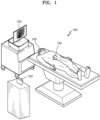
- FIG. 1 is a diagram showing a respiration inducing system 100 according to an embodiment of the present invention
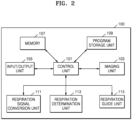
- FIG. 2 is a block diagram showing an internal configuration of the respiration inducing system 100 of FIG. 1 .
- the respiration inducing system 100 includes a control unit 101, an imaging unit 103, an input/output unit 105, a memory 107, a program storage unit 109, a respiration signal conversion unit 111, a respiration determination unit 113, and a respiration guide unit 115, etc. These will be described in detail below.
- radiation therapy for organs that moves due to respiration has limitation in that a radiation dose is not focused on an intended part or is irradiated to an unintended part because precision and accuracy of irradiating technique are reduced due to movement of an organ to be treated.
- a four-dimensional respiratory-gated method is used to perform radiation therapy.
- Success or failure of respiratory-gated radiation therapy depends on how well beams are controlled according to variation of geometric movement of an organ that occurs during the radiation therapy.
- particle radiation therapy which has recently been spotlighted, radiation dose distribution is greatly affected by a movement of an organ to be treated in comparison to conventional therapies.
- the introduction of the respiratory-gated radiation therapy is essential.
- the conventional radiation therapy techniques with a linear accelerator use a gating method for tracking movement of tumor only using an external marker.. In this method, respiration gating is achieved using a real-time position management (RPM) system.
- RPM real-time position management
- the respiration inducing system 100 provides a system and method for inducing regular respiration of a radiation therapy patient.
- the respiration inducing system 100 according to an embodiment of the present invention provides a system and method for controlling a radiation therapy machine in accordance with respiration uniformity of the patient during simulation and actual radiation therapy, where the actual radiation therapy of a patient is not part of the present invention, and enabling the patient to control his or her respiration by showing a guiding signal for respiration together with a feedback signal obtained from the patient.
- the control unit 101 is a kind of central processing unit and it controls the entire process of inducing respiration of a patient in the respiration inducing system 100. That is, the control unit 101 drives control software installed in the program storage unit 109, controls the imaging unit 103 to capture a respiration image of a patient, controls the input/output unit 105 to display a guiding signal and a respiration signal of the patient, controls the respiration signal conversion unit 111 to process the respiration image of the patient obtained by the imaging unit 103 and track and analyze the respiration signal, controls the respiration determination unit 113 to determine whether the respiration signal of the patient is suitable for radiation therapy, whether the patient's respiration is stable, and whether a matching score between the respiration signal of the patient and the guiding signal is greater than or equal to a predetermined reference value, and controls the respiration guide unit 115 to provide various services, such as the guiding signal, to the patient so that the patient may maintain stable respiration.
- the control unit 101 drives control software installed in the program storage unit 109, controls
- the input/output unit 105 may be configured with a touch recognition display controller or various other input/output controllers.
- the touch recognition display controller provides an output interface and an input interface between an apparatus and a user.
- the touch recognition display controller transmits and receives an electric signal to and from the control unit.
- the touch recognition display controller displays a visual output to a user, and the visual output may include text, graphics, image, video, and a combination thereof.
- the input/output unit 105 may be a predetermined display member capable of touch recognition, such as an organic light emitting display (OLED) or a liquid crystal display (LCD).
- FIG. 1 shows a glasses-type goggle display and a monitor as an example of the input/output unit 105, but is not limited thereto.
- Various types of display devices such as a PDA and a smartphone, may be applied.
- the memory 107 functions to temporarily store data or the like that is processed by the control unit 101.
- the program storage unit 109 has control software that performs a task of capturing a respiration image of a patient and obtaining a respiration signal of the patient from the respiration image, a task of determining whether the patient's respiration is normal, a task of providing a guiding signal to a patient, etc., through the respiration inducing system 100.
- the patient-specific respiration inducing system 100 may be used in simulation that is performed before the respiratory-gated radiation therapy. That is, as shown in FIG. 6 , the respiration inducing system 100 provides a patient with a general sinusoidal guiding signal for the purpose of respiration training of the patient during simulation, acquires a patient's respiration image while the patient is breathing following the guiding signal through the imaging unit 103, and measures basic parameters associated with the patient respiration such as a respiration period and respiration amplitude from the acquired image. In this case, since a respiration pattern is different for each patient, the respiration inducing system 100 analyzes the measured respiration data and finds an optimal respiration pattern for each patient.
- the patient carries out respiration self-training following the pattern which uses the measured and analyzed respiration parameters.
- the respiration inducing system 100 performs comparison and analyses the measured respiration signal of the patient to determine whether the patient's respiration is stable. In this case, when a matching score between guiding respiration and the patient's actual respiration is less than or equal to a reference value, the respiration inducing system 100 re-analyzes the respiration parameters of an individual patient and re-determines an appropriate respiration inducing signal.
- the respiration inducing system 100 when it is determined that the patient's respiration is stable, the respiration inducing system 100 provides the patient with an interface for showing the guiding signal and the currently acquired respiration signal of the patient together.
- the respiration inducing system 100 provides the patient with a guiding signal that is as similar as possible to the patient's initial respiration so that the patient may breathe regularly while viewing an eye tracking point displayed on the monitor.
- the respiration inducing system 100 provides, in real time, the patient with the guiding signal and the respiration signal of the patient acquired through image processing, tracking, and analysis.
- the acquired respiration signal of the patient is used as basic data for determining whether the respiration is suitable for respiratory-gated radiation therapy in the process of establishing a respiratory-gated radiation therapy plan.
- respiration signal When it is determined that the respiration signal is not suitable for respiratory-gated radiation therapy due to a geometrical structure of the tumor and other organs in the process of establishing the therapy plan, for the patient an appropriate respiration parameters is re-established through the simulation for respiration-gated therapy.
- an operator determines an optimal respiratory gating window on the basis of the respiration parameters of the patient provided during the simulation.
- the present invention provides a patient with his or her current respiratory status and a patient-specific guiding signal in real time even during respiratory-gated radiation therapy, said therapy as such not being part of the invention, as already mentioned, and thus induces regular respiration of the radiation therapy patient.
- matching between respiration during the respiratory-gated radiation therapy and respiration during simulation may be analyzed in real time, and also whether the patient's respiration is within the gating window may be continuously observed in real time.
- a beam-off alarm is turned on to inform the operator of an abnormal status of the patient. In this case, the beam is automatically turned off or manually turned off by the operator.
- the respiration signal conversion unit 111 acquires a respiration signal by processing, tracking, and analyzing a respiration image of a patient acquired by the imaging unit 103.
- a predetermined marker 130 may be put on the patient's chest or abdomen, and the respiration signal conversion unit 111 may process, track, and analyze movement of the marker 130 in the respiration image of the patient acquired by the imaging unit 103.
- the respiration signal of the patient (a patient signal) acquired by the respiration signal conversion unit 111 may be displayed on the input/output unit 105 in the form of a sine wave, as shown in FIG. 6 .
- the respiration determination unit 113 serves to determine whether the respiration signal of the patient is suitable for radiation therapy, whether the patient's respiration is stable, whether a matching score between the patient's respiration and guiding respiration is greater than or equal to a predetermined reference value, etc.
- the respiration determination unit 113 determines whether the respiration signal acquired by the respiration signal conversion unit 111 is suitable for radiation therapy.
- the respiration determination unit 113 uses a respiration period, respiration amplitude, a respiration pattern, etc. of the acquired respiration signal to determine whether the acquired respiration signal and respiration regularity is suitable for radiation therapy. That is, when the respiration period of the patient is too long or short, or the respiration amplitude of the patient is too large or small, or a respiration pattern of the patient is irregular, the respiration determination unit 113 may determine that the acquired respiration signal is not suitable for respiratory-gated radiation therapy.
- the respiration determination unit 113 determines whether a matching score between the guiding respiration and the respiration signal acquired by the respiration signal conversion unit 111 is greater than or equal to the predetermined reference value. That is, when the difference between the guiding respiration and the patient's respiration is within a certain criterion for a certain time, the respiration determination unit 113 determines that the patient's respiration is entirely stable and instruct the patient to carry out respiration self-training according to a current guiding respiration pattern even though the patient's respiration is temporarily unstable.
- the respiration determination unit 113 determines that stored guiding respiration does not match the patient's respiration and provide a new respiration pattern suitable for an individual patient as the guiding respiration.
- the respiration determination unit 113 determines whether the acquired respiration signal of the patient is stable. That is, the respiration determination unit 113 determines whether the patient's respiration that is initially measured is stably maintained. Also, the respiration determination unit 113 stores a current respiration pattern as a respiration pattern of the patient when the acquired respiration signal is stably maintained and stores a new respiration pattern as the respiration pattern of the patient when the acquired respiration signal is not stable.
- the respiration guide unit 115 may serve to provide the guiding signal to the patient so that the patient may maintain stable respiration. That is, by providing the patient with a predetermined sinusoidal guiding signal and the respiration signal of the patient acquired by the respiration signal conversion unit 111 through the input/output unit 105 together, the respiration guide unit 115 serves to perform guidance such that the patient may adjust his or her respiration according to the guiding signal.
- FIG. 6 shows a screen in which the respiration guide unit 115 provides the patient with the predetermined sinusoidal guiding signal (the guiding signal) and the respiration signal of the patient (the patient signal) acquired by the respiration signal conversion unit 111 through the input/output unit 105 together.
- the respiration guide unit 115 acquires the respiration signal of the patient and shows the acquired respiration signal in real time to correspond to the guiding signal, thus facilitating guidance of the patient's respiration. That is, by moving an eye tracking point according to the respiration signal of the patient, the user may let patient respire according to the eye tracking point and induce stable respiration of the patient.
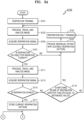
- FIGS. 3A and 3B are a flowchart showing the respiration inducing method during simulation in the respiration inducing method according to an embodiment of the present invention.
- the respiration inducing method includes carrying out respiratory training by a patient (step S101), processing, tracking, and analyzing a respiration image of the patient acquired by an imaging unit (step S103), acquiring a respiration signal of the patient through the image processing, tracking, and analysis (step S105), determining whether the acquired respiration signal is suitable for radiation therapy (step S 107), processing, tracking, and analyzing a respiration image of the patient that is periodically acquired by the imaging unit when the acquired respiration signal is suitable for radiation therapy (step S111), acquiring a respiration signal of the patient through the image processing, tracking, and analysis (step S113), determining whether the acquired respiration signal is stable (step S115), storing a current respiration pattern as a respiration pattern of the patient when the acquired respiration signal is stable (step S117), and determining whether a matching score between guiding respiration and the patient's respiration is greater than or equal to a reference value when the acquired respiration signal is
- the respiration inducing method includes processing, tracking, and analyzing the respiration image of the patient that is periodically acquired by the imaging unit (step S121), acquiring a respiration signal of the patient through the image processing, tracking, and analysis (step S123), determining whether the acquired respiration signal is stable (step S125), storing the current respiration pattern as the respiration pattern of the patient when the acquired respiration signal is stable (step S127), storing the patient's respiration as a new respiration pattern when the acquired respiration signal is not stable (step S129), guiding the patient with the stored respiration pattern (step S141), and determining whether the simulation has ended and repetitively performing the above steps, starting from step S121, when the simulation has not ended (step S143).
- the respiration signal conversion unit 111 processes, tracks, and analyzes a respiration image of the patient acquired by the imaging unit 103 (step S103) and acquires a respiration signal of the patient (step S105).
- the respiration determination unit 113 determines whether the acquired respiration signal is suitable for radiation therapy (step S107).
- the respiration determination unit 113 uses a respiration period, respiration amplitude, a respiration pattern, etc. of the acquired respiration signal to determine whether the acquired respiration signal is suitable for radiation therapy. That is, when the respiration period of the patient is too long or short, the respiration amplitude of the patient is too large or small, or the respiration pattern of the patient is irregular, the respiration determination unit 113 determines that the acquired respiration signal is not suitable for radiation therapy.
- control unit 101 When it is determined that the acquired respiration signal is not suitable for radiation therapy, the control unit 101 provides the patient with a new respiration pattern suitable for the patient through the input/output unit 105 (step S131), and the patient carries out respiration self-training (step S133). Then, step S103 to step S107 are repetitively performed.
- the control unit 101 processes, tracks, and analyzes a respiration image of the patient that is periodically acquired by the imaging unit 103 (step S111) and acquires a respiration signal of the patient (step S 113).
- the respiration determination unit 113 determines whether the acquired respiration signal is stable (step S115). That is, the respiration determination unit 113 determines whether the patient's initial respiration that is acquired in an initial stage (step S103 to step S107) is stably maintained.
- the respiration determination unit 113 determines whether a matching score between guiding respiration and the patient's respiration is greater than or equal to the reference value (step S119). That is, when the difference between the guiding respiration and the patient's respiration is within a certain criterion for a certain time, the respiration determination unit 113 determines that the patient's respiration is stable on the whole, instructs the patient to carry out respiration self-training according to a current guiding respiration pattern (step S133), and repetitively performs step S103 to step S107 even though the patient's respiration is temporarily unstable.
- step S131 when the difference between the guiding respiration and the patient's respiration is not within the certain criterion for a certain time, the control unit 101 provides the patient with a new respiration pattern suitable for the patient through the input/output unit 105 (step S131), and the patient carries out respiration self-training (step S133). Then, step S103 to step S106 are repetitively performed.
- the control unit 101 stores a current respiration pattern as the respiration pattern of the patient (step 5117).
- the respiration signal conversion unit 111 periodically processes, tracks, and analyzes a respiration image of the patient acquired by the imaging unit 103 (step S121) and acquires a respiration signal of the patient through the image processing, tracking, and analysis (step S123).
- the respiration determination unit 113 determines whether the acquired respiration signal is stable (step S125). That is, the respiration determination unit 113 determines whether the patient's respiration is stably maintained same as that is initially measured.
- a current respiration pattern is stored as the respiration pattern of the patient (step S127).
- a new respiration pattern is stored as the respiration pattern of the patient (step S129).
- step S141 the patient is guided with the stored respiration pattern (step S141), and it is determined whether the simulation has ended.
- the above steps are repetitively performed starting from step S121 (step S143).
- FIG. 4 is a flowchart showing the respiration inducing method in the process of establishing a radiation therapy plan using the respiration inducing method according to an embodiment of the present invention.
- a respiration inducing method in the process of establishing a radiation therapy plan includes providing a patient with a respiration signal of the patient stored during simulation (step S201), establishing a respiration-gated radiation therapy plan (step S203), acquiring a respiration signal of the patient by processing, tracking, and analyzing a respiration image of the patient acquired by the imaging unit 103, and determining whether the acquired respiration signal is suitable for radiation therapy (step S205), determining an optimal gating window of the patient when the acquired respiration signal is suitable for the radiation therapy (step S207), and performing the respiration-gated radiation therapy (step S209).
- a suitable respiration pattern of the patient is found by repeating the simulation shown in FIG. 3 .
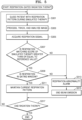
- FIG. 5 is a flowchart showing the respiration inducing method during actual radiation therapy using the respiration inducing method according to an embodiment of the present invention, while the actual therapy is not part of the invention.
- the respiration inducing method during actual therapy includes guiding a patient with a respiration signal of the patient stored during simulation (step S301), processing, tracking, and analyzing a respiration image of the patient acquired by the imaging unit (step S303), acquiring a respiration signal of the patient through the image processing, tracking, and analysis (step S305), determining whether a matching score between the acquired respiration signal and guiding respiration obtained during the simulation is greater than or equal to a reference value (step S307), determining whether the patient respires in the gating window when the matching score is greater than or equal to the reference value (step S309), maintaining a current respiration pattern when the patient respires in the gating window (step S311), and determining whether radiation therapy has ended and repetitively performing the above steps starting from step S301 when the radiation therapy has not ended (step S317).
- the matching score is less than or equal to the reference value or
- control may be performed such that the irradiation is on only when the patient's respiration is within a predetermined range and the irradiation is off when the patient's respiration is not within the predetermined range. That is, referring to FIG. 6 , the control is performed such that the irradiation is when the patient's respiration ranges between an upper threshold and a lower threshold and the irradiation is off when the patient's respiration does not range between the upper threshold and the lower threshold.
- the present invention it is possible to perform training and guiding so that regularity of the patient's respiration may be obtained in order to minimize a radiation dose to normal tissues and irradiate a maximal radiation dose to tumors.
- the above-described embodiments of the present invention may be implemented in the form of a program instruction that is executable through various computer components and recordable on a computer-readable recording medium.
- the computer-readable recording medium may include a magnetic medium such as a hard disk, a floppy disk, or a magnetic tape, an optical medium such as a compact disc-read only memory (CD-ROM) or a digital versatile disc (DVD), a magneto-optical medium such as a floptical disk, and a hardware device such as a ROM, a RAM, or a flash memory that is specially designed to store and execute program instructions.
- the computer-readable recording medium may include a non-transitory medium that may be transmitted over a network, for example, a medium that is implemented in the form of software or an application and thus transmitted and distributed over a network.
- the computer program may be designed and configured specially for the exemplary embodiments or be known and available to those skilled in computer software.
- Examples of the computer program include a high-level language code executable by a computer with an interpreter in addition to a machine language code made by a compiler.
- Embodiments of the present invention relate to a system and method for inducing respiration, and may be used in a system and method for inducing regular respiration of a patient since a system for inducing regular respiration of the patient during radiation therapy images a guiding signal for respiration and an actual respiration signal of a patient and provide the image to the patient.
Landscapes
- Health & Medical Sciences (AREA)
- Life Sciences & Earth Sciences (AREA)
- Engineering & Computer Science (AREA)
- Biomedical Technology (AREA)
- Public Health (AREA)
- Veterinary Medicine (AREA)
- Animal Behavior & Ethology (AREA)
- General Health & Medical Sciences (AREA)
- Pathology (AREA)
- Physics & Mathematics (AREA)
- Heart & Thoracic Surgery (AREA)
- Biophysics (AREA)
- Medical Informatics (AREA)
- Molecular Biology (AREA)
- Surgery (AREA)
- Physiology (AREA)
- Nuclear Medicine, Radiotherapy & Molecular Imaging (AREA)
- Radiology & Medical Imaging (AREA)
- Anesthesiology (AREA)
- Pulmonology (AREA)
- Computer Vision & Pattern Recognition (AREA)
- Oral & Maxillofacial Surgery (AREA)
- Dentistry (AREA)
- Pain & Pain Management (AREA)
- Acoustics & Sound (AREA)
- Psychology (AREA)
- Hematology (AREA)
- Biodiversity & Conservation Biology (AREA)
- Psychiatry (AREA)
- Signal Processing (AREA)
- Artificial Intelligence (AREA)
- Radiation-Therapy Devices (AREA)
- Measurement Of The Respiration, Hearing Ability, Form, And Blood Characteristics Of Living Organisms (AREA)
Claims (4)
- System zur Atmungsinduzierung, umfassend:eine Bildgebungseinheit (103), die dafür ausgelegt ist, ein Atmungsbild eines Patienten aufzunehmen;eine Atmungssignalumwandlungseinheit (101), die dafür ausgelegt ist, ein Atmungssignal des Patienten durch Verarbeitung, Verfolgung und Analyse des von der Bildgebungseinheit erhaltenen Atmungsbildes des Patienten zu erfassen;eine Atmungsleiteinheit (115), die dafür ausgelegt ist, das erfasste Atmungssignal und ein Leitatmungsmuster eines Leitsignals zusammen bereitzustellen, wobei, während das Leitatmungsmuster auf einer Eingabe-/Ausgabeeinheit (105) angezeigt wird, die Atmungsleiteinheit (115) das erfasste Atmungssignal, das dem Leitsignal entspricht, in Echtzeit anzeigt, zusammen mit einem Augennachführpunkt, der sich in Echtzeit entlang des erfassten Atmungssignals bewegt; undeine Atmungsbestimmungseinheit (113), die dafür ausgelegt istzu bestimmen, ob das erfasste Atmungssignal für eine Strahlentherapie geeignet ist, basierend auf Informationen über eine oder mehrere Atmungsperioden des erfassten Atmungssignals, einer Atmungsamplitude des erfassten Atmungssignals und einem Atmungsmuster des erfassten Atmungssignals,zu bestimmen, ob das erfasste Atmungssignal stabil gehalten wird,ein erstes erfasstes Atmungssignal, das sich auf das erfasste Atmungssignal bezieht, als erstes Leitsignal zu speichern, wenn das erfasste Atmungssignal stabil gehalten wird,zu bestimmen, ob ein Übereinstimmungswert zwischen dem ersten Leitsignal und dem erfassten Atmungssignal größer oder gleich einem Referenzwert ist, wenn das erfasste Atmungssignal nicht stabil gehalten wird,ein erstes Leitatmungsmuster des ersten Leitsignals beizubehalten, wenn eine durch den Übereinstimmungswert angezeigte Differenz zwischen dem ersten Leitsignal und dem erfassten Atmungssignal während einer vorbestimmten Zeit innerhalb eines vorbestimmten Referenzbereichs liegt, undein zweites Leitatmungsmuster an den Patienten bereitzustellen, wenn die durch den Übereinstimmungswert angezeigte Differenz zwischen dem ersten Leitsignal und dem erfassten Atmungssignal während der vorbestimmten Zeit nicht innerhalb des vorbestimmten Referenzbereichs liegt.
- System zur Atmungsinduzierung nach Anspruch 1, wobei die Bestrahlung nur dann eingeschaltet ist, wenn die Atmung des Patienten zwischen einem oberen und einem unteren Schwellenwert liegt.
- System zur Atmungsinduzierung nach Anspruch 1 oder 2, wobei die Atmungsleiteinheit (115) dafür ausgelegt ist, ein patientenspezifisches Führungssignal zu erzeugen, basierend auf Informationen über eine oder mehrere Atmungsperioden des erfassten Atmungssignals, einer Atmungsamplitude des erfassten Atmungssignals und einem Atmungsmuster des erfassten Atmungssignals.
- Verfahren zum Bereitstellen eines Signals zur Atmungsinduzierung, umfassend:Aufnehmen eines Atmungsbildes eines Patienten;Erfassen eines Atmungssignals des Patienten durch Verarbeitung, Verfolgung und Analyse des erfassten Atmungsbildes des Patienten;Bestimmen, ob das erfasste Atmungssignal für eine Strahlentherapie geeignet ist, basierend auf Informationen über eine oder mehrere Atmungsperioden des erfassten Atmungssignals, einer Atmungsamplitude des erfassten Atmungssignals und einem Atmungsmuster des erfassten Atmungssignals;Bestimmen, ob das erfasste Atmungssignal stabil gehalten wird;Speichern eines ersten erfassten Atmungssignals, das sich auf das erfasste Atmungssignal bezieht, als erstes Leitsignal, wenn das erfasste Atmungssignal stabil gehalten wird;Leiten der Atmung des Patienten, indem das erfasste Atmungssignal und ein Leitatmungsmuster eines Leitsignals zusammen bereitgestellt werden, wobei, während das Leitatmungsmuster auf einer Eingabe-/Ausgabeeinheit (105) angezeigt wird, das erfasste Atmungssignal, das dem Leitsignal entspricht, in Echtzeit angezeigt wird, zusammen mit einem Augennachführpunkt, der sich in Echtzeit entlang des erfassten Atmungssignals bewegt,Bestimmen, ob ein Übereinstimmungswert zwischen dem ersten Leitsignal und dem erfassten Atmungssignal größer oder gleich einem Referenzwert ist, wenn das erfasste Atmungssignal nicht stabil gehalten wird;Beibehalten eines ersten Leitatmungsmusters des ersten Leitsignals, wenn eine durch den Übereinstimmungswert angezeigte Differenz zwischen dem ersten Leitsignal und dem erfassten Atmungssignal während einer vorbestimmten Zeit innerhalb eines vorbestimmten Referenzbereichs liegt; undBereitstellen eines zweiten Leitatmungsmusters an den Patienten, wenn die durch den Übereinstimmungswert angezeigte Differenz zwischen dem ersten Leitsignal und dem erfassten Atmungssignal während der vorbestimmten Zeit nicht innerhalb des vorbestimmten Referenzbereichs liegt.
Applications Claiming Priority (2)
| Application Number | Priority Date | Filing Date | Title |
|---|---|---|---|
| KR1020140143595A KR101816886B1 (ko) | 2014-10-22 | 2014-10-22 | 호흡 유도 시스템 및 방법 |
| PCT/KR2015/011172 WO2016064204A1 (ko) | 2014-10-22 | 2015-10-22 | 호흡 유도 시스템 및 방법 |
Publications (3)
| Publication Number | Publication Date |
|---|---|
| EP3178395A1 EP3178395A1 (de) | 2017-06-14 |
| EP3178395A4 EP3178395A4 (de) | 2018-04-18 |
| EP3178395B1 true EP3178395B1 (de) | 2023-08-23 |
Family
ID=55761162
Family Applications (1)
| Application Number | Title | Priority Date | Filing Date |
|---|---|---|---|
| EP15852280.5A Active EP3178395B1 (de) | 2014-10-22 | 2015-10-22 | System und verfahren zur atmungsinduzierung |
Country Status (6)
| Country | Link |
|---|---|
| US (1) | US10569102B2 (de) |
| EP (1) | EP3178395B1 (de) |
| JP (1) | JP6534441B2 (de) |
| KR (1) | KR101816886B1 (de) |
| CN (1) | CN106714683A (de) |
| WO (1) | WO2016064204A1 (de) |
Families Citing this family (13)
| Publication number | Priority date | Publication date | Assignee | Title |
|---|---|---|---|---|
| GB2537686A (en) * | 2015-04-24 | 2016-10-26 | Vision Rt Ltd | Patient positioning training apparatus |
| KR101817423B1 (ko) | 2016-04-29 | 2018-01-10 | 주식회사 한빔테크놀로지 | 호흡 연동 시스템 |
| CN107874758A (zh) * | 2017-10-27 | 2018-04-06 | 上海联影医疗科技有限公司 | 磁共振扫描中呼吸周期的捕获方法及系统 |
| KR102403650B1 (ko) * | 2018-04-02 | 2022-05-30 | 사회복지법인 삼성생명공익재단 | 호흡 유도 시스템 |
| CN110215591A (zh) * | 2019-06-21 | 2019-09-10 | 王森 | 生理节律引导方法、系统、介质及设备 |
| JP7404039B2 (ja) * | 2019-11-22 | 2023-12-25 | キヤノンメディカルシステムズ株式会社 | 患者制動ガイド装置及び放射線治療装置 |
| CN111568424B (zh) * | 2020-05-26 | 2023-09-26 | 江苏省肿瘤医院 | 一种用于放疗中呼吸运动信号同步的装置及其使用方法 |
| EP4176796A1 (de) * | 2021-11-05 | 2023-05-10 | Koninklijke Philips N.V. | Mehrsitzungsatmungsführung |
| KR102615335B1 (ko) | 2022-02-04 | 2023-12-19 | 주식회사 파프리카랩 | 방사선 치료 환자용 웨어러블 호흡 트레이닝 장치 |
| WO2023179876A1 (en) * | 2022-03-25 | 2023-09-28 | Brainlab Ag | System configured to aid in training a patient's breathing in preparation for a radiotherapy treatment |
| CN115089163B (zh) * | 2022-06-20 | 2023-08-22 | 推想医疗科技股份有限公司 | 呼吸信号检测方法及其装置、手术导航方法及其装置 |
| KR102831154B1 (ko) | 2022-12-07 | 2025-07-07 | 영남대학교 산학협력단 | 호흡동조 방사선 치료에서의 타임 딜레이 설정 방법 및 타임 딜레이 설정 시스템 |
| CN121549799B (zh) * | 2026-01-21 | 2026-03-31 | 北京清雷科技有限公司 | 呼吸引导交互方法及设备 |
Family Cites Families (29)
| Publication number | Priority date | Publication date | Assignee | Title |
|---|---|---|---|---|
| US4232333A (en) | 1979-01-05 | 1980-11-04 | Hamamatsu Terebi Kabushiki Kaisha | Streak image analyzing device |
| US5825936A (en) | 1994-09-22 | 1998-10-20 | University Of South Florida | Image analyzing device using adaptive criteria |
| US6118847A (en) | 1998-01-15 | 2000-09-12 | Siemens Medical Systems, Inc. | System and method for gated radiotherapy based on physiological inputs |
| US6937696B1 (en) * | 1998-10-23 | 2005-08-30 | Varian Medical Systems Technologies, Inc. | Method and system for predictive physiological gating |
| US6621889B1 (en) | 1998-10-23 | 2003-09-16 | Varian Medical Systems, Inc. | Method and system for predictive physiological gating of radiation therapy |
| KR20010089335A (ko) * | 1998-10-23 | 2001-10-06 | 추후제출 | 방사선 치료의 생리적 게이팅을 위한 방법 및 장치 |
| US7907765B2 (en) | 2001-03-28 | 2011-03-15 | University Of Washington | Focal plane tracking for optical microtomography |
| US7367955B2 (en) | 2003-06-13 | 2008-05-06 | Wisconsin Alumni Research Foundation | Combined laser spirometer motion tracking system for radiotherapy |
| US7778691B2 (en) * | 2003-06-13 | 2010-08-17 | Wisconsin Alumni Research Foundation | Apparatus and method using synchronized breathing to treat tissue subject to respiratory motion |
| WO2005066897A1 (ja) | 2004-01-06 | 2005-07-21 | Sony Corporation | 画像処理装置および方法、記録媒体、並びにプログラム |
| US7177386B2 (en) * | 2004-03-15 | 2007-02-13 | Varian Medical Systems Technologies, Inc. | Breathing synchronized computed tomography image acquisition |
| KR100740341B1 (ko) * | 2006-01-14 | 2007-07-19 | 재단법인 한국원자력의학원 | 움직임 추적 방사선 치료장치 |
| JP2007190278A (ja) | 2006-01-20 | 2007-08-02 | Omron Healthcare Co Ltd | 呼吸訓練器 |
| JP2008154861A (ja) | 2006-12-25 | 2008-07-10 | Univ Of Tokyo | 放射線治療システム |
| US10667727B2 (en) | 2008-09-05 | 2020-06-02 | Varian Medical Systems, Inc. | Systems and methods for determining a state of a patient |
| CN101422368A (zh) * | 2008-10-09 | 2009-05-06 | 李宝生 | 呼吸信号提取和呼吸运动引导装置 |
| CN201260669Y (zh) * | 2008-10-09 | 2009-06-24 | 李宝生 | 呼吸信号提取和呼吸运动引导装置 |
| CN102073273A (zh) | 2010-05-13 | 2011-05-25 | 安徽兴泉喷射液化装备有限责任公司 | 基于Optimus软件与Fluent软件相结合对蒸汽喷射液化装置优化的方法 |
| EP2586495B1 (de) * | 2010-11-16 | 2017-04-19 | Mitsubishi Electric Corporation | Atmungseinleitungsvorrichtung, atmungseinleitungsprogramm und teilchenstrahlentherapiegerät |
| US9271692B2 (en) * | 2011-04-01 | 2016-03-01 | Varian Medical Systems, Inc. | System and method for triggering an imaging process based on non-periodicity in breathing |
| US20130261424A1 (en) * | 2012-03-09 | 2013-10-03 | Research & Business Foundation Sungkyunkwan University | System for Inducing Respiration Using Biofeedback Principle |
| KR101463681B1 (ko) * | 2012-03-09 | 2014-11-20 | 성균관대학교산학협력단 | 방사선 치료시 바이오피드백 원리를 이용한 호흡유도 시스템 |
| CN102973273B (zh) * | 2012-11-29 | 2014-12-17 | 中国人民解放军第四军医大学 | 一种基于红外辐射检测的睡眠呼吸功能监测系统 |
| KR101497436B1 (ko) * | 2013-01-15 | 2015-03-02 | 주식회사 인피니트헬스케어 | 환자의 호흡 패턴에 기반한 방사선 치료 방법 및 그 장치 |
| US9504850B2 (en) | 2013-03-14 | 2016-11-29 | Xcision Medical Systems Llc | Methods and system for breathing-synchronized, target-tracking radiation therapy |
| DE102013222295A1 (de) | 2013-11-04 | 2015-05-07 | Carl Zeiss Microscopy Gmbh | Digitalmikroskop, Verfahren zur Kalibrierung und Verfahren zur automatischen Fokus- und Bildmittennachführung für ein solches Digitalmikroskop |
| JP6255944B2 (ja) | 2013-11-27 | 2018-01-10 | 株式会社リコー | 画像解析装置、画像解析方法及び画像解析プログラム |
| JP6165695B2 (ja) | 2014-09-24 | 2017-07-19 | 富士フイルム株式会社 | 放射線画像解析装置および方法並びにプログラム |
| JP2016096889A (ja) | 2014-11-19 | 2016-05-30 | 株式会社東芝 | 画像解析装置、画像解析方法、およびプログラム |
-
2014
- 2014-10-22 KR KR1020140143595A patent/KR101816886B1/ko active Active
-
2015
- 2015-10-22 CN CN201580048994.7A patent/CN106714683A/zh active Pending
- 2015-10-22 WO PCT/KR2015/011172 patent/WO2016064204A1/ko not_active Ceased
- 2015-10-22 US US15/509,666 patent/US10569102B2/en active Active
- 2015-10-22 EP EP15852280.5A patent/EP3178395B1/de active Active
- 2015-10-22 JP JP2017515886A patent/JP6534441B2/ja active Active
Also Published As
| Publication number | Publication date |
|---|---|
| JP6534441B2 (ja) | 2019-06-26 |
| WO2016064204A1 (ko) | 2016-04-28 |
| US20170281970A1 (en) | 2017-10-05 |
| KR20160047311A (ko) | 2016-05-02 |
| EP3178395A4 (de) | 2018-04-18 |
| US10569102B2 (en) | 2020-02-25 |
| KR101816886B1 (ko) | 2018-01-09 |
| EP3178395A1 (de) | 2017-06-14 |
| JP2017533005A (ja) | 2017-11-09 |
| CN106714683A (zh) | 2017-05-24 |
Similar Documents
| Publication | Publication Date | Title |
|---|---|---|
| EP3178395B1 (de) | System und verfahren zur atmungsinduzierung | |
| EP2572757B1 (de) | Atemsteuervorrichtung auf Vorhersagebasis für die Strahlungstherapie | |
| US8064642B2 (en) | Constrained-curve correlation model | |
| US10043284B2 (en) | Systems and methods for real-time tumor tracking | |
| US20100020932A1 (en) | Treatment-speed regulated tumor-tracking | |
| EP2407206B1 (de) | Drehstrahlbehandlung von sich bewegenden Targets | |
| EP4271473B1 (de) | Strahl-aus-bewegungsschwellwerte in der strahlentherapie auf basis der bestimmung des atem-halteniveaus | |
| US10300301B2 (en) | Respiratory guidance device and method applied in respiratory-gated ion beam irradiation | |
| US20150196780A1 (en) | System and method for radiotherapeutic treatment | |
| EP3655101A1 (de) | Ausgelöste behandlungssysteme und verfahren | |
| US10799715B2 (en) | Adaptive radiation therapy planning | |
| US20150367143A1 (en) | Therapy planning device, system for planned therapy, method for making therapy plan, and program | |
| US20140275698A1 (en) | Intra-fraction motion management system and method | |
| US20230149073A1 (en) | Method and device for probe navigation of an ablation system | |
| US11426603B2 (en) | Radiation irradiation planning apparatus, clinical decision support apparatus and program | |
| EP3449976A1 (de) | Atem-gating-system | |
| US20250177784A1 (en) | System configured to aid in training a patient's breathing in preparation for a radiotherapy treatment | |
| US20200038689A1 (en) | Method and apparatus for providing feedback to a patient on his or her breathing during radiotherapy | |
| KR102273862B1 (ko) | 기계학습을 이용한 호흡연동 방사선 치료 평가 시스템 및 그 방법 | |
| KR102403650B1 (ko) | 호흡 유도 시스템 | |
| JP7404039B2 (ja) | 患者制動ガイド装置及び放射線治療装置 | |
| KR102248029B1 (ko) | 호흡연동 방사선 치료 평가 시스템 및 그 방법 | |
| Byrne et al. | Prospective Randomized Trial Comparing 2 Devices for Deep Inspiration Breath Hold Management in Breast Radiation Therapy: Results of the BRAVEHeart Trial | |
| KR20130103394A (ko) | 방사선 치료시 바이오피드백 원리를 이용한 호흡유도 시스템 | |
| KR20160000080A (ko) | 호흡 동조시스템 및 호흡 동조방법 |
Legal Events
| Date | Code | Title | Description |
|---|---|---|---|
| STAA | Information on the status of an ep patent application or granted ep patent |
Free format text: STATUS: THE INTERNATIONAL PUBLICATION HAS BEEN MADE |
|
| PUAI | Public reference made under article 153(3) epc to a published international application that has entered the european phase |
Free format text: ORIGINAL CODE: 0009012 |
|
| STAA | Information on the status of an ep patent application or granted ep patent |
Free format text: STATUS: REQUEST FOR EXAMINATION WAS MADE |
|
| 17P | Request for examination filed |
Effective date: 20170214 |
|
| AK | Designated contracting states |
Kind code of ref document: A1 Designated state(s): AL AT BE BG CH CY CZ DE DK EE ES FI FR GB GR HR HU IE IS IT LI LT LU LV MC MK MT NL NO PL PT RO RS SE SI SK SM TR |
|
| AX | Request for extension of the european patent |
Extension state: BA ME |
|
| DAV | Request for validation of the european patent (deleted) | ||
| DAX | Request for extension of the european patent (deleted) | ||
| A4 | Supplementary search report drawn up and despatched |
Effective date: 20180315 |
|
| RIC1 | Information provided on ipc code assigned before grant |
Ipc: A61B 5/08 20060101AFI20180309BHEP Ipc: A61B 5/11 20060101ALI20180309BHEP Ipc: A61B 5/113 20060101ALI20180309BHEP Ipc: A61M 21/02 20060101ALI20180309BHEP Ipc: A61B 5/00 20060101ALI20180309BHEP Ipc: A61N 5/10 20060101ALI20180309BHEP |
|
| STAA | Information on the status of an ep patent application or granted ep patent |
Free format text: STATUS: EXAMINATION IS IN PROGRESS |
|
| 17Q | First examination report despatched |
Effective date: 20200709 |
|
| GRAP | Despatch of communication of intention to grant a patent |
Free format text: ORIGINAL CODE: EPIDOSNIGR1 |
|
| STAA | Information on the status of an ep patent application or granted ep patent |
Free format text: STATUS: GRANT OF PATENT IS INTENDED |
|
| INTG | Intention to grant announced |
Effective date: 20230307 |
|
| GRAS | Grant fee paid |
Free format text: ORIGINAL CODE: EPIDOSNIGR3 |
|
| GRAA | (expected) grant |
Free format text: ORIGINAL CODE: 0009210 |
|
| STAA | Information on the status of an ep patent application or granted ep patent |
Free format text: STATUS: THE PATENT HAS BEEN GRANTED |
|
| AK | Designated contracting states |
Kind code of ref document: B1 Designated state(s): AL AT BE BG CH CY CZ DE DK EE ES FI FR GB GR HR HU IE IS IT LI LT LU LV MC MK MT NL NO PL PT RO RS SE SI SK SM TR |
|
| REG | Reference to a national code |
Ref country code: GB Ref legal event code: FG4D |
|
| REG | Reference to a national code |
Ref country code: CH Ref legal event code: EP |
|
| REG | Reference to a national code |
Ref country code: DE Ref legal event code: R096 Ref document number: 602015085316 Country of ref document: DE |
|
| REG | Reference to a national code |
Ref country code: IE Ref legal event code: FG4D |
|
| REG | Reference to a national code |
Ref country code: LT Ref legal event code: MG9D |
|
| REG | Reference to a national code |
Ref country code: SE Ref legal event code: TRGR |
|
| REG | Reference to a national code |
Ref country code: NL Ref legal event code: MP Effective date: 20230823 |
|
| REG | Reference to a national code |
Ref country code: AT Ref legal event code: MK05 Ref document number: 1601608 Country of ref document: AT Kind code of ref document: T Effective date: 20230823 |
|
| PG25 | Lapsed in a contracting state [announced via postgrant information from national office to epo] |
Ref country code: GR Free format text: LAPSE BECAUSE OF FAILURE TO SUBMIT A TRANSLATION OF THE DESCRIPTION OR TO PAY THE FEE WITHIN THE PRESCRIBED TIME-LIMIT Effective date: 20231124 |
|
| PG25 | Lapsed in a contracting state [announced via postgrant information from national office to epo] |
Ref country code: IS Free format text: LAPSE BECAUSE OF FAILURE TO SUBMIT A TRANSLATION OF THE DESCRIPTION OR TO PAY THE FEE WITHIN THE PRESCRIBED TIME-LIMIT Effective date: 20231223 |
|
| PG25 | Lapsed in a contracting state [announced via postgrant information from national office to epo] |
Ref country code: RS Free format text: LAPSE BECAUSE OF FAILURE TO SUBMIT A TRANSLATION OF THE DESCRIPTION OR TO PAY THE FEE WITHIN THE PRESCRIBED TIME-LIMIT Effective date: 20230823 Ref country code: PT Free format text: LAPSE BECAUSE OF FAILURE TO SUBMIT A TRANSLATION OF THE DESCRIPTION OR TO PAY THE FEE WITHIN THE PRESCRIBED TIME-LIMIT Effective date: 20231226 Ref country code: NO Free format text: LAPSE BECAUSE OF FAILURE TO SUBMIT A TRANSLATION OF THE DESCRIPTION OR TO PAY THE FEE WITHIN THE PRESCRIBED TIME-LIMIT Effective date: 20231123 Ref country code: NL Free format text: LAPSE BECAUSE OF FAILURE TO SUBMIT A TRANSLATION OF THE DESCRIPTION OR TO PAY THE FEE WITHIN THE PRESCRIBED TIME-LIMIT Effective date: 20230823 Ref country code: LV Free format text: LAPSE BECAUSE OF FAILURE TO SUBMIT A TRANSLATION OF THE DESCRIPTION OR TO PAY THE FEE WITHIN THE PRESCRIBED TIME-LIMIT Effective date: 20230823 Ref country code: LT Free format text: LAPSE BECAUSE OF FAILURE TO SUBMIT A TRANSLATION OF THE DESCRIPTION OR TO PAY THE FEE WITHIN THE PRESCRIBED TIME-LIMIT Effective date: 20230823 Ref country code: IS Free format text: LAPSE BECAUSE OF FAILURE TO SUBMIT A TRANSLATION OF THE DESCRIPTION OR TO PAY THE FEE WITHIN THE PRESCRIBED TIME-LIMIT Effective date: 20231223 Ref country code: HR Free format text: LAPSE BECAUSE OF FAILURE TO SUBMIT A TRANSLATION OF THE DESCRIPTION OR TO PAY THE FEE WITHIN THE PRESCRIBED TIME-LIMIT Effective date: 20230823 Ref country code: GR Free format text: LAPSE BECAUSE OF FAILURE TO SUBMIT A TRANSLATION OF THE DESCRIPTION OR TO PAY THE FEE WITHIN THE PRESCRIBED TIME-LIMIT Effective date: 20231124 Ref country code: FI Free format text: LAPSE BECAUSE OF FAILURE TO SUBMIT A TRANSLATION OF THE DESCRIPTION OR TO PAY THE FEE WITHIN THE PRESCRIBED TIME-LIMIT Effective date: 20230823 Ref country code: AT Free format text: LAPSE BECAUSE OF FAILURE TO SUBMIT A TRANSLATION OF THE DESCRIPTION OR TO PAY THE FEE WITHIN THE PRESCRIBED TIME-LIMIT Effective date: 20230823 |
|
| PG25 | Lapsed in a contracting state [announced via postgrant information from national office to epo] |
Ref country code: PL Free format text: LAPSE BECAUSE OF FAILURE TO SUBMIT A TRANSLATION OF THE DESCRIPTION OR TO PAY THE FEE WITHIN THE PRESCRIBED TIME-LIMIT Effective date: 20230823 |
|
| PG25 | Lapsed in a contracting state [announced via postgrant information from national office to epo] |
Ref country code: ES Free format text: LAPSE BECAUSE OF FAILURE TO SUBMIT A TRANSLATION OF THE DESCRIPTION OR TO PAY THE FEE WITHIN THE PRESCRIBED TIME-LIMIT Effective date: 20230823 |
|
| PG25 | Lapsed in a contracting state [announced via postgrant information from national office to epo] |
Ref country code: SM Free format text: LAPSE BECAUSE OF FAILURE TO SUBMIT A TRANSLATION OF THE DESCRIPTION OR TO PAY THE FEE WITHIN THE PRESCRIBED TIME-LIMIT Effective date: 20230823 Ref country code: RO Free format text: LAPSE BECAUSE OF FAILURE TO SUBMIT A TRANSLATION OF THE DESCRIPTION OR TO PAY THE FEE WITHIN THE PRESCRIBED TIME-LIMIT Effective date: 20230823 Ref country code: ES Free format text: LAPSE BECAUSE OF FAILURE TO SUBMIT A TRANSLATION OF THE DESCRIPTION OR TO PAY THE FEE WITHIN THE PRESCRIBED TIME-LIMIT Effective date: 20230823 Ref country code: EE Free format text: LAPSE BECAUSE OF FAILURE TO SUBMIT A TRANSLATION OF THE DESCRIPTION OR TO PAY THE FEE WITHIN THE PRESCRIBED TIME-LIMIT Effective date: 20230823 Ref country code: DK Free format text: LAPSE BECAUSE OF FAILURE TO SUBMIT A TRANSLATION OF THE DESCRIPTION OR TO PAY THE FEE WITHIN THE PRESCRIBED TIME-LIMIT Effective date: 20230823 Ref country code: CZ Free format text: LAPSE BECAUSE OF FAILURE TO SUBMIT A TRANSLATION OF THE DESCRIPTION OR TO PAY THE FEE WITHIN THE PRESCRIBED TIME-LIMIT Effective date: 20230823 Ref country code: SK Free format text: LAPSE BECAUSE OF FAILURE TO SUBMIT A TRANSLATION OF THE DESCRIPTION OR TO PAY THE FEE WITHIN THE PRESCRIBED TIME-LIMIT Effective date: 20230823 |
|
| REG | Reference to a national code |
Ref country code: DE Ref legal event code: R097 Ref document number: 602015085316 Country of ref document: DE |
|
| PG25 | Lapsed in a contracting state [announced via postgrant information from national office to epo] |
Ref country code: IT Free format text: LAPSE BECAUSE OF FAILURE TO SUBMIT A TRANSLATION OF THE DESCRIPTION OR TO PAY THE FEE WITHIN THE PRESCRIBED TIME-LIMIT Effective date: 20230823 Ref country code: MC Free format text: LAPSE BECAUSE OF FAILURE TO SUBMIT A TRANSLATION OF THE DESCRIPTION OR TO PAY THE FEE WITHIN THE PRESCRIBED TIME-LIMIT Effective date: 20230823 |
|
| REG | Reference to a national code |
Ref country code: CH Ref legal event code: PL |
|
| REG | Reference to a national code |
Ref country code: BE Ref legal event code: MM Effective date: 20231031 |
|
| PG25 | Lapsed in a contracting state [announced via postgrant information from national office to epo] |
Ref country code: LU Free format text: LAPSE BECAUSE OF NON-PAYMENT OF DUE FEES Effective date: 20231022 |
|
| PLBE | No opposition filed within time limit |
Free format text: ORIGINAL CODE: 0009261 |
|
| STAA | Information on the status of an ep patent application or granted ep patent |
Free format text: STATUS: NO OPPOSITION FILED WITHIN TIME LIMIT |
|
| PG25 | Lapsed in a contracting state [announced via postgrant information from national office to epo] |
Ref country code: LU Free format text: LAPSE BECAUSE OF NON-PAYMENT OF DUE FEES Effective date: 20231022 |
|
| PG25 | Lapsed in a contracting state [announced via postgrant information from national office to epo] |
Ref country code: CH Free format text: LAPSE BECAUSE OF NON-PAYMENT OF DUE FEES Effective date: 20231031 |
|
| 26N | No opposition filed |
Effective date: 20240524 |
|
| PG25 | Lapsed in a contracting state [announced via postgrant information from national office to epo] |
Ref country code: CH Free format text: LAPSE BECAUSE OF NON-PAYMENT OF DUE FEES Effective date: 20231031 Ref country code: SI Free format text: LAPSE BECAUSE OF FAILURE TO SUBMIT A TRANSLATION OF THE DESCRIPTION OR TO PAY THE FEE WITHIN THE PRESCRIBED TIME-LIMIT Effective date: 20230823 |
|
| PG25 | Lapsed in a contracting state [announced via postgrant information from national office to epo] |
Ref country code: BE Free format text: LAPSE BECAUSE OF NON-PAYMENT OF DUE FEES Effective date: 20231031 |
|
| PG25 | Lapsed in a contracting state [announced via postgrant information from national office to epo] |
Ref country code: IE Free format text: LAPSE BECAUSE OF NON-PAYMENT OF DUE FEES Effective date: 20231022 |
|
| PG25 | Lapsed in a contracting state [announced via postgrant information from national office to epo] |
Ref country code: IE Free format text: LAPSE BECAUSE OF NON-PAYMENT OF DUE FEES Effective date: 20231022 |
|
| PG25 | Lapsed in a contracting state [announced via postgrant information from national office to epo] |
Ref country code: BG Free format text: LAPSE BECAUSE OF FAILURE TO SUBMIT A TRANSLATION OF THE DESCRIPTION OR TO PAY THE FEE WITHIN THE PRESCRIBED TIME-LIMIT Effective date: 20230823 |
|
| PG25 | Lapsed in a contracting state [announced via postgrant information from national office to epo] |
Ref country code: BG Free format text: LAPSE BECAUSE OF FAILURE TO SUBMIT A TRANSLATION OF THE DESCRIPTION OR TO PAY THE FEE WITHIN THE PRESCRIBED TIME-LIMIT Effective date: 20230823 |
|
| PG25 | Lapsed in a contracting state [announced via postgrant information from national office to epo] |
Ref country code: CY Free format text: LAPSE BECAUSE OF FAILURE TO SUBMIT A TRANSLATION OF THE DESCRIPTION OR TO PAY THE FEE WITHIN THE PRESCRIBED TIME-LIMIT; INVALID AB INITIO Effective date: 20151022 |
|
| PG25 | Lapsed in a contracting state [announced via postgrant information from national office to epo] |
Ref country code: HU Free format text: LAPSE BECAUSE OF FAILURE TO SUBMIT A TRANSLATION OF THE DESCRIPTION OR TO PAY THE FEE WITHIN THE PRESCRIBED TIME-LIMIT; INVALID AB INITIO Effective date: 20151022 |
|
| PGFP | Annual fee paid to national office [announced via postgrant information from national office to epo] |
Ref country code: GB Payment date: 20250922 Year of fee payment: 11 |
|
| PGFP | Annual fee paid to national office [announced via postgrant information from national office to epo] |
Ref country code: FR Payment date: 20250925 Year of fee payment: 11 |
|
| PGFP | Annual fee paid to national office [announced via postgrant information from national office to epo] |
Ref country code: SE Payment date: 20250923 Year of fee payment: 11 |
|
| PG25 | Lapsed in a contracting state [announced via postgrant information from national office to epo] |
Ref country code: TR Free format text: LAPSE BECAUSE OF FAILURE TO SUBMIT A TRANSLATION OF THE DESCRIPTION OR TO PAY THE FEE WITHIN THE PRESCRIBED TIME-LIMIT Effective date: 20230823 |
|
| PGFP | Annual fee paid to national office [announced via postgrant information from national office to epo] |
Ref country code: DE Payment date: 20250922 Year of fee payment: 11 |