EP3204501B1 - Genetische kontrolle des achselknospenwachstums bei tabakpflanzen - Google Patents
Genetische kontrolle des achselknospenwachstums bei tabakpflanzen Download PDFInfo
- Publication number
- EP3204501B1 EP3204501B1 EP15795251.6A EP15795251A EP3204501B1 EP 3204501 B1 EP3204501 B1 EP 3204501B1 EP 15795251 A EP15795251 A EP 15795251A EP 3204501 B1 EP3204501 B1 EP 3204501B1
- Authority
- EP
- European Patent Office
- Prior art keywords
- seq
- nucleic acid
- topping
- expression
- promoter
- Prior art date
- Legal status (The legal status is an assumption and is not a legal conclusion. Google has not performed a legal analysis and makes no representation as to the accuracy of the status listed.)
- Active
Links
Images









Classifications
-
- C—CHEMISTRY; METALLURGY
- C07—ORGANIC CHEMISTRY
- C07K—PEPTIDES
- C07K14/00—Peptides having more than 20 amino acids; Gastrins; Somatostatins; Melanotropins; Derivatives thereof
- C07K14/415—Peptides having more than 20 amino acids; Gastrins; Somatostatins; Melanotropins; Derivatives thereof from plants
-
- C—CHEMISTRY; METALLURGY
- C12—BIOCHEMISTRY; BEER; SPIRITS; WINE; VINEGAR; MICROBIOLOGY; ENZYMOLOGY; MUTATION OR GENETIC ENGINEERING
- C12N—MICROORGANISMS OR ENZYMES; COMPOSITIONS THEREOF; PROPAGATING, PRESERVING, OR MAINTAINING MICROORGANISMS; MUTATION OR GENETIC ENGINEERING; CULTURE MEDIA
- C12N15/00—Mutation or genetic engineering; DNA or RNA concerning genetic engineering, vectors, e.g. plasmids, or their isolation, preparation or purification; Use of hosts therefor
- C12N15/09—Recombinant DNA-technology
- C12N15/63—Introduction of foreign genetic material using vectors; Vectors; Use of hosts therefor; Regulation of expression
- C12N15/79—Vectors or expression systems specially adapted for eukaryotic hosts
- C12N15/82—Vectors or expression systems specially adapted for eukaryotic hosts for plant cells, e.g. plant artificial chromosomes (PACs)
- C12N15/8216—Methods for controlling, regulating or enhancing expression of transgenes in plant cells
- C12N15/8218—Antisense, co-suppression, viral induced gene silencing [VIGS], post-transcriptional induced gene silencing [PTGS]
-
- A—HUMAN NECESSITIES
- A01—AGRICULTURE; FORESTRY; ANIMAL HUSBANDRY; HUNTING; TRAPPING; FISHING
- A01H—NEW PLANTS OR NON-TRANSGENIC PROCESSES FOR OBTAINING THEM; PLANT REPRODUCTION BY TISSUE CULTURE TECHNIQUES
- A01H1/00—Processes for modifying genotypes ; Plants characterised by associated natural traits
- A01H1/02—Methods or apparatus for hybridisation; Artificial pollination ; Fertility
-
- C—CHEMISTRY; METALLURGY
- C12—BIOCHEMISTRY; BEER; SPIRITS; WINE; VINEGAR; MICROBIOLOGY; ENZYMOLOGY; MUTATION OR GENETIC ENGINEERING
- C12N—MICROORGANISMS OR ENZYMES; COMPOSITIONS THEREOF; PROPAGATING, PRESERVING, OR MAINTAINING MICROORGANISMS; MUTATION OR GENETIC ENGINEERING; CULTURE MEDIA
- C12N13/00—Treatment of microorganisms or enzymes with electrical or wave energy, e.g. magnetism, sonic waves
-
- C—CHEMISTRY; METALLURGY
- C12—BIOCHEMISTRY; BEER; SPIRITS; WINE; VINEGAR; MICROBIOLOGY; ENZYMOLOGY; MUTATION OR GENETIC ENGINEERING
- C12N—MICROORGANISMS OR ENZYMES; COMPOSITIONS THEREOF; PROPAGATING, PRESERVING, OR MAINTAINING MICROORGANISMS; MUTATION OR GENETIC ENGINEERING; CULTURE MEDIA
- C12N15/00—Mutation or genetic engineering; DNA or RNA concerning genetic engineering, vectors, e.g. plasmids, or their isolation, preparation or purification; Use of hosts therefor
- C12N15/01—Preparation of mutants without inserting foreign genetic material therein; Screening processes therefor
-
- C—CHEMISTRY; METALLURGY
- C12—BIOCHEMISTRY; BEER; SPIRITS; WINE; VINEGAR; MICROBIOLOGY; ENZYMOLOGY; MUTATION OR GENETIC ENGINEERING
- C12N—MICROORGANISMS OR ENZYMES; COMPOSITIONS THEREOF; PROPAGATING, PRESERVING, OR MAINTAINING MICROORGANISMS; MUTATION OR GENETIC ENGINEERING; CULTURE MEDIA
- C12N15/00—Mutation or genetic engineering; DNA or RNA concerning genetic engineering, vectors, e.g. plasmids, or their isolation, preparation or purification; Use of hosts therefor
- C12N15/09—Recombinant DNA-technology
- C12N15/63—Introduction of foreign genetic material using vectors; Vectors; Use of hosts therefor; Regulation of expression
- C12N15/79—Vectors or expression systems specially adapted for eukaryotic hosts
- C12N15/82—Vectors or expression systems specially adapted for eukaryotic hosts for plant cells, e.g. plant artificial chromosomes (PACs)
- C12N15/8216—Methods for controlling, regulating or enhancing expression of transgenes in plant cells
- C12N15/8222—Developmentally regulated expression systems, tissue, organ specific, temporal or spatial regulation
- C12N15/8223—Vegetative tissue-specific promoters
- C12N15/8229—Meristem-specific, e.g. nodal, apical
-
- C—CHEMISTRY; METALLURGY
- C12—BIOCHEMISTRY; BEER; SPIRITS; WINE; VINEGAR; MICROBIOLOGY; ENZYMOLOGY; MUTATION OR GENETIC ENGINEERING
- C12N—MICROORGANISMS OR ENZYMES; COMPOSITIONS THEREOF; PROPAGATING, PRESERVING, OR MAINTAINING MICROORGANISMS; MUTATION OR GENETIC ENGINEERING; CULTURE MEDIA
- C12N15/00—Mutation or genetic engineering; DNA or RNA concerning genetic engineering, vectors, e.g. plasmids, or their isolation, preparation or purification; Use of hosts therefor
- C12N15/09—Recombinant DNA-technology
- C12N15/63—Introduction of foreign genetic material using vectors; Vectors; Use of hosts therefor; Regulation of expression
- C12N15/79—Vectors or expression systems specially adapted for eukaryotic hosts
- C12N15/82—Vectors or expression systems specially adapted for eukaryotic hosts for plant cells, e.g. plant artificial chromosomes (PACs)
- C12N15/8241—Phenotypically and genetically modified plants via recombinant DNA technology
- C12N15/8261—Phenotypically and genetically modified plants via recombinant DNA technology with agronomic (input) traits, e.g. crop yield
-
- C—CHEMISTRY; METALLURGY
- C12—BIOCHEMISTRY; BEER; SPIRITS; WINE; VINEGAR; MICROBIOLOGY; ENZYMOLOGY; MUTATION OR GENETIC ENGINEERING
- C12N—MICROORGANISMS OR ENZYMES; COMPOSITIONS THEREOF; PROPAGATING, PRESERVING, OR MAINTAINING MICROORGANISMS; MUTATION OR GENETIC ENGINEERING; CULTURE MEDIA
- C12N15/00—Mutation or genetic engineering; DNA or RNA concerning genetic engineering, vectors, e.g. plasmids, or their isolation, preparation or purification; Use of hosts therefor
- C12N15/09—Recombinant DNA-technology
- C12N15/63—Introduction of foreign genetic material using vectors; Vectors; Use of hosts therefor; Regulation of expression
- C12N15/79—Vectors or expression systems specially adapted for eukaryotic hosts
- C12N15/82—Vectors or expression systems specially adapted for eukaryotic hosts for plant cells, e.g. plant artificial chromosomes (PACs)
- C12N15/8241—Phenotypically and genetically modified plants via recombinant DNA technology
- C12N15/8261—Phenotypically and genetically modified plants via recombinant DNA technology with agronomic (input) traits, e.g. crop yield
- C12N15/8291—Hormone-influenced development
- C12N15/8295—Cytokinins
-
- Y—GENERAL TAGGING OF NEW TECHNOLOGICAL DEVELOPMENTS; GENERAL TAGGING OF CROSS-SECTIONAL TECHNOLOGIES SPANNING OVER SEVERAL SECTIONS OF THE IPC; TECHNICAL SUBJECTS COVERED BY FORMER USPC CROSS-REFERENCE ART COLLECTIONS [XRACs] AND DIGESTS
- Y02—TECHNOLOGIES OR APPLICATIONS FOR MITIGATION OR ADAPTATION AGAINST CLIMATE CHANGE
- Y02A—TECHNOLOGIES FOR ADAPTATION TO CLIMATE CHANGE
- Y02A40/00—Adaptation technologies in agriculture, forestry, livestock or agroalimentary production
- Y02A40/10—Adaptation technologies in agriculture, forestry, livestock or agroalimentary production in agriculture
- Y02A40/146—Genetically Modified [GMO] plants, e.g. transgenic plants
Definitions
- This application describes approaches to produce tobacco with no or reduced sucker growth.
- the description includes: axillary bud growth gene profiling to discover genes that are critical for axillary bud development; up regulation of axillary bud growth and/or sucker suppressor genes; down-regulation of axillary bud and/or sucker activator genes; and modulation of regulatory components of sucker growth; or initiation or induction of cell death mechanisms in axillary buds using axillary bud-specific promoters.
- This disclosure is based on the discovery of nucleic acids encoding polypeptides from N. tabacum, Arabidopsis thaliana and Bacillus amyloliquefaciens that are involved in axillary bud growth and the regulation thereof.
- two sequences are aligned and the number of identical matches of nucleotides or amino acid residues between the two sequences is determined.
- the number of identical matches is divided by the length of the aligned region (i.e., the number of aligned nucleotides or amino acid residues) and multiplied by 100 to arrive at a percent sequence identity value.
- the length of the aligned region can be a portion of one or both sequences up to the full-length size of the shortest sequence.
- a single sequence can align with more than one other sequence and hence, can have different percent sequence identity values over each aligned region.
- the default parameters can be used (i.e., word size: 2; window size: 4; scoring method: percentage; number of top diagonals: 4; and gap penalty: 5); for an alignment of multiple nucleic acid sequences, the following parameters can be used: gap opening penalty: 10.0; gap extension penalty: 5.0; and weight transitions: yes.
- word size 1; window size: 5; scoring method: percentage; number of top diagonals: 5; and gap penalty: 3.
- Changes can be introduced into a nucleic acid molecule (e.g., SEQ ID NOs: 1, 3, 5, 7, 9, 11, 13, 15, 17, 19, 21, 23, 25, 27, 29, 31, 33, 35, 37, 39, 41, 43, 45, 47, 49, 51, 53, 55, 57, 59, 61, 63, 65, 67, 69, 71, 73, 75, 77, 79, or 81), thereby leading to changes in the amino acid sequence of the encoded polypeptide (e.g., SEQ ID NOs: 2, 4, 6, 8, 10, 12, 14, 16, 18, 20, 22, 24, 26, 28, 30, 32, 34, 36, 38, 40, 42, 44, 46, 48, 50, 52, 54, 56, 58, 60, 62, 64, 66, 68, 70, 72, 74, 76, 78, 80, or 82).
- a nucleic acid molecule e.g., SEQ ID NOs: 1, 3, 5, 7, 9, 11, 13, 15, 17, 19, 21, 23, 25, 27, 29, 31, 33, 35, 37, 39
- changes can be introduced into nucleic acid coding sequences using mutagenesis (e.g., site-directed mutagenesis, transcription activator-like effector nuclease (TALEN), PCR-mediated mutagenesis, clustered regularly interspaced short palindromic repeats (CRISPR) mutagenesis) or by chemically synthesizing a nucleic acid molecule having such changes.
- mutagenesis e.g., site-directed mutagenesis, transcription activator-like effector nuclease (TALEN), PCR-mediated mutagenesis, clustered regularly interspaced short palindromic repeats (CRISPR) mutagenesis
- CRISPR clustered regularly interspaced short palindromic repeats
- a "conservative amino acid substitution” is one in which one amino acid residue is replaced with a different amino acid residue having a similar side chain (see, for example, Dayhoff et al.
- an "isolated" nucleic acid molecule is a nucleic acid molecule that is free of sequences that naturally flank one or both ends of the nucleic acid in the genome of the organism from which the isolated nucleic acid molecule is derived (e.g., a cDNA or genomic DNA fragment produced by PCR or restriction endonuclease digestion). Such an isolated nucleic acid molecule is generally introduced into a vector (e.g., a cloning vector, or an expression vector) for convenience of manipulation or to generate a fusion nucleic acid molecule, discussed in more detail below.
- an isolated nucleic acid molecule can include an engineered nucleic acid molecule such as a recombinant or a synthetic nucleic acid molecule.
- a “purified” polypeptide is a polypeptide that has been separated or purified from cellular components that naturally accompany it. Typically, the polypeptide is considered “purified” when it is at least 70% (e.g., at least 75%, 80%, 85%, 90%, 95%, or 99%) by dry weight, free from the polypeptides and naturally occurring molecules with which it is naturally associated. Since a polypeptide that is chemically synthesized is, by nature, separated from the components that naturally accompany it, a synthetic polypeptide is "purified.”
- Nucleic acids can be isolated using techniques routine in the art. For example, nucleic acids can be isolated using any method including, without limitation, recombinant nucleic acid technology, and/or the polymerase chain reaction (PCR). General PCR techniques are described, for example in PCR Primer: A Laboratory Manual, Dieffenbach & Dveksler, Eds., Cold Spring Harbor Laboratory Press, 1995 . Recombinant nucleic acid techniques include, for example, restriction enzyme digestion and ligation, which can be used to isolate a nucleic acid. Isolated nucleic acids also can be chemically synthesized, either as a single nucleic acid molecule or as a series of oligonucleotides.
- PCR polymerase chain reaction
- Polypeptides can be purified from natural sources (e.g., a biological sample) by known methods such as DEAE ion exchange, gel filtration, and hydroxyapatite chromatography.
- a polypeptide also can be purified, for example, by expressing a nucleic acid in an expression vector.
- a purified polypeptide can be obtained by chemical synthesis. The extent of purity of a polypeptide can be measured using any appropriate method, e.g., column chromatography, polyacrylamide gel electrophoresis, or HPLC analysis.
- Vectors as described herein can be introduced into a host cell.
- host cell refers to the particular cell into which the nucleic acid is introduced and also includes the progeny of such a cell that carry the vector.
- a host cell can be any prokaryotic or eukaryotic cell.
- nucleic acids can be expressed in bacterial cells such as E. coli, or in insect cells, yeast or mammalian cells (such as Chinese hamster ovary cells (CHO) or COS cells).
- Other suitable host cells are known to those skilled in the art and include plant cells.
- the conditions under which membranes containing nucleic acids are prehybridized and hybridized, as well as the conditions under which membranes containing nucleic acids are washed to remove excess and non-specifically bound probe, can play a significant role in the stringency of the hybridization.
- Such hybridizations and washes can be performed, where appropriate, under moderate or high stringency conditions.
- washing conditions can be made more stringent by decreasing the salt concentration in the wash solutions and/or by increasing the temperature at which the washes are performed.
- high stringency conditions typically include a wash of the membranes in 0.2X SSC at 65°C.
- interpreting the amount of hybridization can be affected, for example, by the specific activity of the labeled oligonucleotide probe, by the number of probe-binding sites on the template nucleic acid to which the probe has hybridized, and by the amount of exposure of an autoradiograph or other detection medium.
- any number of hybridization and washing conditions can be used to examine hybridization of a probe nucleic acid molecule to immobilized target nucleic acids, it is more important to examine hybridization of a probe to target nucleic acids under identical hybridization, washing, and exposure conditions.
- the target nucleic acids are on the same membrane.
- a nucleic acid molecule is deemed to hybridize to a nucleic acid but not to another nucleic acid if hybridization to a nucleic acid is at least 5-fold (e.g., at least 6-fold, 7-fold, 8-fold, 9-fold, 10-fold, 20-fold, 50-fold, or 100-fold) greater than hybridization to another nucleic acid.
- the amount of hybridization can be quantified directly on a membrane or from an autoradiograph using, for example, a PhosphorImager or a Densitometer (Molecular Dynamics, Sunnyvale, CA).
- Detection e.g., of an amplification product, a hybridization complex, or a polypeptide is usually accomplished using detectable labels.
- label is intended to encompass the use of direct labels as well as indirect labels.
- Detectable labels include enzymes, prosthetic groups, fluorescent materials, luminescent materials, bioluminescent materials, and radioactive materials.
- Tobacco hybrids varieties, lines, or cultivars are described that have a mutation in one or more nucleic acids described herein (e.g., SEQ ID NOs: 1, 3, 5, 7, 9, 11, 13, 15, 17, 19, 21, 23, 25, 27, 29, 31, 33, 35, 37, 39, 41, 43, 45, 47, 49, 51, 53, 57, 59, 61, 63, 65, 69, 71, 73, 75, or 77).
- SEQ ID NOs: 1, 3, 5, 7, 9, 11, 13, 15, 17, 19, 21, 23, 25, 27, 29, 31, 33, 35, 37, 39, 41, 43, 45, 47, 49, 51, 53, 57, 59, 61, 63, 65, 69, 71, 73, 75, or 77 are described herein (e.g., SEQ ID NOs: 1, 3, 5, 7, 9, 11, 13, 15, 17, 19, 21, 23, 25, 27, 29, 31, 33, 35, 37, 39, 41, 43, 45, 47, 49, 51, 53, 57, 59, 61, 63, 65, 69
- stalks of plants having a mutation in one or more of the nucleic acids can exhibit reduced axillary bud growth (e.g., compared to stalks of a plant that lacks the mutation).
- the nucleic acid having the mutation can be an endogenous nucleic acid; in some instances, the nucleic acid having the mutation can be introduced recombinantly.
- axillary bud growth (or "suckering") describes the production of lateral buds (or “suckers”) that grow between the leaf and the stalk after a tobacco plant is topped, as commonly understood in the art.
- Topping refers to the removal of the stalk apex, including the flowers and up to several adjacent leaves, when the plant is near maturity, and results in the loss of apical dominance.
- topping increases the yield and the value-per-acre as well as results in desirable modifications to physical and chemical properties of the leaf.
- Mutations can be random mutations or targeted mutations.
- cells e.g., Nicotiana tabacum cells
- a chemical mutagen e.g., ionizing radiation, or fast neutron bombardment (see, e.g., Li et al., 2001, Plant J., 27:235-42 ).
- TALEN see, for example, Li et al., 2011, Nucleic Acids Res., 39(14):6315-25
- zinc-finger nucleases see, for example, Wright et al., 2005, The Plant J., 44:693-705 .
- a mutation can be a point mutation, an insertion, a deletion, a substitution, or combinations thereof.
- one or more nucleotides can be mutated to alter the expression and/or function of the encoded polypeptide, relative to the expression and/or function of the corresponding wild type polypeptide. It will be appreciated, for example, that a mutation in one or more of the highly conserved regions would likely alter polypeptide function, while a mutation outside of those conserved regions would likely have little to no effect on polypeptide function. In addition, a mutation in a single nucleotide can create a stop codon, which would result in a truncated polypeptide and, depending on the extent of truncation, loss of function.
- a variety can be essentially derived from another line or variety. As defined by the International Convention for the Protection of New Varieties of Plants (December 2, 1961 , as revised at Geneva on November 10, 1972, On October 23, 1978, and on March 19, 1991), a variety is "essentially derived" from an initial variety if: a) it is predominantly derived from the initial variety, or from a variety that is predominantly derived from the initial variety, while retaining the expression of the essential characteristics that result from the genotype or combination of genotypes of the initial variety; b) it is clearly distinguishable from the initial variety; and c) except for the differences which result from the act of derivation, it confirms to the initial variety in the expression of the essential characteristics that result from the genotype or combination of genotypes of the initial variety.
- Essentially derived varieties can be obtained, for example, by the selection of a natural or induced mutant, a somaclonal variant, a variant individual plant from the initial variety, backcrossing, or transformation.
- double-cross hybrids can be created wherein the F 1 progeny of two different single-crosses are themselves crossed.
- Self-incompatibility can be used to particular advantage to prevent self-pollination of female parents when forming a double-cross hybrid.
- the RNAi molecule can be expressed using a plant expression vector.
- the RNAi molecule typically is at least 25 nucleotides in length and has at least 91% sequence identity (e.g., at least 95%, 96%, 97%, 98% or 99% sequence identity) to one of the nucleic acid sequences disclosed herein (e.g., SEQ ID NOs: 1, 3, 5, 7, 9, 11, 13, 15, 17, 19, 21, 23, 25, 27, 29, 31, 33, 35, 37, 39, 41, 43, 45, 47, 49, 51, 53, 57, 59, 61, 63, 65, 69, 71, 73, 75, or 77) or hybridizes under stringent conditions to one of the nucleic acid sequences disclosed herein (e.g., SEQ ID NOs: 1, 3, 5, 7, 9, 11, 13, 15, 17, 19, 21, 23, 25, 27, 29, 31, 33, 35, 37, 39, 41, 43, 45, 47, 49, 51, 53, 57, 59, 61, 63, 65, 69, 71, 73
- transgenic tobacco plants are described that are transformed with a nucleic acid molecule described herein (e.g., SEQ ID NOs: 1, 3, 5, 7, 9, 11, 13, 15, 17, 19, 21, 23, 25, 27, 29, 31, 33, 35, 37, 39, 41, 43, 45, 47, 49, 51, 53, 55, 57, 59, 61, 63, 65, 67, 69, 71, 73, 75, 77, 79, or 81) or a functional fragment thereof under control of a promoter that is able to drive expression in plants.
- a nucleic acid molecule described herein e.g., SEQ ID NOs: 1, 3, 5, 7, 9, 11, 13, 15, 17, 19, 21, 23, 25, 27, 29, 31, 33, 35, 37, 39, 41, 43, 45, 47, 49, 51, 53, 55, 57, 59, 61, 63, 65, 67, 69, 71, 73, 75, 77, 79, or 81
- a promoter that is able to drive expression in plants.
- a nucleic acid e.g., a heterologous nucleic acid
- Methods of introducing a nucleic acid (e.g., a heterologous nucleic acid) into plant cells include, for example, particle bombardment, Agrobacterium-mediated transformation, microinjection, polyethylene glycol-mediated transformation (e.g., of protoplasts, see, for example, Yoo et al. (2007, Nature Protocols, 2(7):1565-72 )), liposome-mediated DNA uptake, or electroporation.
- the transgenic plant cells can be regenerated into transgenic tobacco plants.
- expression of the transgene results in a plant that exhibits reduced axillary bud growth relative to a plant not expressing the transgene.
- axillary bud growth can be controlled using any of the following approaches:
- Genes for resistance to glyphosate also are suitable. See, for example, U.S. Patent Nos. 4,940,835 and 4,769,061 . Such genes can confer resistance to glyphosate herbicidal compositions, including, without limitation, glyphosate salts such as the trimethylsulphonium salt, the isopropylamine salt, the sodium salt, the potassium salt and the ammonium salt. See, e.g., U.S. Patent Nos. 6,451,735 and 6,451,732 . Genes for resistance to phosphono compounds such as glufosinate ammonium or phosphinothricin, and pyridinoxy or phenoxy propionic acids and cyclohexones also are suitable. See, e.g., U.S. Patent Nos. 5,879,903 ; 5,276,268 ; and 5,561,236 ; and European Application No. 0 242 246 .
- genes encoding toxins that exhibit insecticidal activity against Manduca sexta tobacco hornworm
- Heliothis virescens Fabricius tobacco budworm
- S. litura Fabricius tobacco cutworm
- Tobacco products are known in the art and include products made or derived from tobacco that are intended for human consumption, including any component, part, or accessory of a tobacco product.
- Representative tobacco products include, without limitation, smokeless tobacco products, tobacco-derived nicotine products, cigarillos, non-ventilated recess filter cigarettes, vented recess filter cigarettes, cigars, snuff, pipe tobacco, cigar tobacco, cigarette tobacco, chewing tobacco, leaf tobacco, shredded tobacco, and cut tobacco.
- Representative smokeless tobacco products include, for example, chewing tobacco, snuff, long-cut moist smokeless tobacco, snus, pouches, films, tablets, coated dowels, rods, and the like.
- Representative cigarettes and other smoking articles include, for example, smoking articles that include filter elements or rod elements, where the rod element of a smokeable material can include cured tobacco within a tobacco blend.
- tobacco products also can include other ingredients such as, without limitation, binders, plasticizers, stabilizers, and/or flavorings. See, for example, US 2005/0244521 ; US 2006/0191548 ; US 2012/0024301 ; US 2012/0031414 ; and US 2012/0031416 for examples of tobacco products.
- RNA from the samples described above was isolated using RNeasy Plant Mini Kit (Qiagen, MA) and quality was tested using Agilent Plant RNA Nano Kit and a 2100 Bioanalyzer (Agilent Technologies, CA). Thirty cDNA libraries were constructed, with indexing using a TrueSeq RNA Library Prep Kit v.2 (Illumina). cDNA libraries made from the same biological replicates were pooled together, and each pooled replicate was analyzed on an Illumina HiSeq 2000, 100 bp single reads with a minimum of 30 million reads per sample. Two samples were tagged per lane for a total of 15 sequencing lanes. Axillary bud specific gene expression in TN90 tobacco was determined by RNA deep sequencing performed by ArrayXpress (Raleigh, NC).
- RNA samples (before topping and 2 hr, 6 hr, 12 hr, 24 hr and 72 hr after topping), young leaf 24 hr after topping, mature leaf, senescence leaf, midrib, stalk before topping, stalk 24 hr after topping, shoot apical meristem, root before topping and 24 hr after topping) were measured.
- total RNA was isolated using TRI Reagent (Sigma-Aldritch, St. Louis, Mo). To remove DNA impurities, purified RNA was treated with RNase-free DNase (Turbo DNA-free, Ambion, Austin, TX).
- RNA was transcribed utilizing the High Capacity cDNA Kit (Applied Biosystems, Foster City, CA).
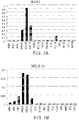
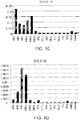
- RT-PCR was performed using SYBR Green PCR Master Mix (Applied Biosystems, Foster City, CA) and the gene specific primers listed in Table 3. Real time gene expression verification of representative candidate genes are listed in Figures 1A - 1G .
- candidate putative full length gene sequences were selected for RNAi and full length Agrobacterium transformation analysis.
- the candidate sequences are listed in Table 5 and are shown in SEQ ID NOs:39, 41, 43, 45, 47, 49, 51, 53, 61, 63, 65, 71, 73, 75, or 77.
- the predicted protein sequences are shown in SEQ ID NOs:40, 42, 44, 46, 48, 50, 52, 54, 62, 64, 66, 72, 74, 76, or 78.
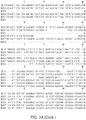
- TCP domain conserved domain
- Table 5 Selected candidate putative gene sequences Contig Number Coding Sequence Nucleotide (bp) Protein (aa) SEQ ID NO (DNA / protein) C145337 Predicted 867 288 39/40 C348 Predicted 2562 853 41/42 C131180 Predicted 2790 929 43/44 C22266 Predicted 2478 825 45/46 C21860 Confirmed 1152 383 47/48 C75660 Predicted 813 270 49/50 C11320 Predicted 762 253 51/52 C1838 Predicted 753 250 53/54 G120126 Predicted 960 320 61/62 G151887 Predicted 930 310 63/64 G135280 Predicted 822 274 65/66 G56830 Predicted 1158 386 71/72 S4261 Predicted 1224 408 73/74 S950 Predicted 1014 338 75/76 S1904 Predicted 1011 337 77/78
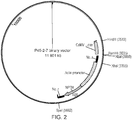
- An expression vector, p45-2-7 (SEQ ID NO:112; Figure 2 ), was used, which has a CsVMV promoter and a NOS terminator, as well as a cassette having a kanamycin selection marker (NPT II) under direction of the actin2 promoter and a NOS terminator.
- the nucleic acid constructs carrying the transgenes of interest were introduced into tobacco leaf discs using an Agrobacterium transformation approach. See, for example, Mayo et al., 2006, Nat Protoc., 1(3):1105-11 and Horsch et al., 1985, Science 227:1229-1231 .
- Leaf disks were placed upside down, a thin layer of MS/B5 liquid resuspension medium was added, and slices were made with a #15 razor blade. The leaf discs were poked uniformly with a fine point needle. Eight disks were placed, upside down, in each regeneration plate (15 x 100 mm). Agrobacterium tumefaciens suspension was added and the leaf discs were incubated for 10 minutes.
- Leaf disks were transferred to co-cultivation plates (1/2 MS medium) and disks were placed upside down in contact with filter paper overlaid on the co-cultivation TOM medium (MS medium with 20 g sucrose/L; 1 mg/L IAA and 2.5 mg/L BAP). The plate was sealed with parafilm and labeled appropriately. Plates were incubated in dim light (60-80 mE/ms) and 18/6 photoperiods at 24°C for three days. Leaf disks were transferred to regeneration/selection TOM K medium plates (TOM medium with 300 mg/l Kanamycin) and subculture bi-weekly to the same fresh medium in dim light at 24°C until shoots become excisable. Shoots from leaves were removed with forceps and inserted in MS basal medium with 100 mg/L kanamycin at 24°C and 18/6 photoperiods with light intensity of 6080 mE/ms for rooting.
- MS medium with 20 g sucrose/L; 1 mg/L IAA and 2.5 mg/L BAP
- sequence of the expression cassette is shown in SEQ ID NO:111, with the relevant portions indicated to the left.
- chimeric candidate promoters were analyzed by transformation of tobacco with a chimeric candidate promoter::beta-glucuronidase (GUS) reporter gene with the same cassette described in Example 5.
- the chimeric gene was introduced via Agrobacterium- mediated transformation into a NLM line. Gus staining was used to locate promoter expression following the method of Crone et al., 2001, Plant Cell Environ., 24:869-874 .
- Transgenic tobacco tissue was placed in cold 90% Acetone on ice. When all samples were harvested, samples were placed at room temperature for 20 minutes.
- Acetone was removed from the samples, and staining buffer (0.2% Triton X-100; 50mM NaHPO4 Buffer, pH7.2; 2mM Potassium Ferrocyanide) was added to samples, all the while keeping the samples on ice.
- X- Gluc was added to the staining buffer to a final concentration of 2mM - from a 100mM stock solution of X-Gluc in DMF, which must be kept in the dark at -20°C.
- Staining buffer was removed from samples and fresh staining buffer with X-Gluc was added. The samples were infiltrated under vacuum, on ice, for 15 to 20 minutes. The samples were incubated at 37°C from 2 hours to overnight.
- samples were removed from the incubator and the staining buffer was removed. Samples were washed through an ethanol series (i.e., from 10%, 30%, 50%, 70%; the sample can be heated to 60°C to get rid of chloroplasts, if desired), to 95%, avoiding light, for 30 min each step. Finally, samples were kept in 100% ethanol.
- the solution laid on Lymphoprep was separated with the centrifugation at 100g for 10 min.
- the protoplast bands were collected using a Pasteur pipette, and purified protoplasts were washed with an equal volume of W5n solution containing with NaCl, CaCl 2 , KCl, MES and Glucose, and centrifuged for 5 min at 2000 rpm.
- the protoplast pellets were resuspended at 2 x 10 5 /ml in W5n solution, and left on ice for 30 mins. Afterwards, the supernatant was removed and the protoplast pellet was resuspended in filter-sterilized MMM solution containing mannitol, MgCl 2 and MES.
- the PEG-treated protoplasts were resuspended in 1 ml culture media containing with 0.1 mg/l NAA and 0.5 mg/l BAP, and mixed with 1 ml low-melting agar to make protoplast beads.
- the protoplast beads were cultured in liquid media, and calli growing from the protoplast beads were transferred onto solid shooting media. When shoots were well developed, the shoots were transferred in a magenta box for root formation. When root systems were fully developed and shoot growth had resumed, plants were transplanted into soil.
- TALEN approaches that can be used to prevent or reduce sucker growth include: (1) for targeted genomic integration in tobacco varieties, gene-specific TALENs and a donor DNA with homology-derived recombination (HDR) are designed; (2) for sucker-specific promoter and target gene insertion in the tobacco genome; and (3) for target gene disruption, gene-specific TALENs with, e.g., non-homologous end joining (NHEJ) are used to direct the TALENs to the target gene disruption.
- HDR homology-derived recombination
- NHEJ non-homologous end joining
- a TALEN target sequence is shown in SEQ ID NO:122 (the target sequences are underlined).
- LAS Arabidopsis La teral S uppressor
- RAX Arabidopsis R egulator of A xillary M eristems
- cytokinin plays many regulatory roles in shoot growth, retardation of leaf senescence, inhibition of root growth, seed germination, and stress responses. It is well-known that cytokinin promotes axillary bud outgrowth. When cytokinin is applied directly to axillary buds or supplied via the xylem stream, side branches are increased. Cytokinin oxidase / dehydrogenase (CKX) is an enzyme that degrades cytokinin. Overexpression of individual CKX genes established cytokinin deficient plants and revealed that cytokinin is a positive regulator of the shoot meristem activity.
- CKX Cytokinin oxidase / dehydrogenase
- CKX expression in axillary buds can inhibit or delay axillary bud outgrowth in tobacco after the shoot apical meristem has been topped.
- Decapitation of the shoot apex releases axillary buds from their dormancy and they begin to grow out.
- Auxin derived from an intact shoot apex suppresses axillary bud outgrowth, whereas cytokinin induced by decapitation of the shoot apex stimulates axillary bud outgrowth.
- Depletion of cytokinin in the axillary bud region by overexpression of the relevant enzymes under control of an axillary bud specific promoter can be used to inhibit axillary meristem outgrowth.
- the candidate genes involved in this strategy are Arabidopsis cytokinin oxidase (CKX; SEQ ID NO:55 encoding SEQ ID NO:56); tobacco CKXs (SEQ ID NOs:57, 59, or 61); and tobacco adenosine phosphate-isopentenyltransferase (IPT) (SEQ ID NO: 61).
- CKX Arabidopsis cytokinin oxidase
- tobacco CKXs SEQ ID NOs:57, 59, or 61
- IPT tobacco adenosine phosphate-isopentenyltransferase
- the third strategy applied was to control axillary bud outgrowth by destroying axillary apical meristem development .
- the constitutive gene expression can result in unexpected problems if a gene of critical importance in a certain tissue is miss-expressed in other tissues.
- tissue-specific expression is the result of gene regulation in a target tissue.
- promoters can control the expression of given genes in a tissue-dependent manner and according to the developmental stage of the plant. In our case, the promoters were obtained from genes specifically expressed in axillary buds, and the promoters were defined to regulate gene expression in buds.
- the promoters can be used to direct expression of a heterologous gene in tobacco plants.
- the heterologous gene or the transgene operably linked to the promoter is expressed in axillary buds where expression of the transgene is desired, leaving the rest of the plant unaffected by transgene expression.
- Plant tissues were stained for GUS by immersion in a staining solution (50 mM sodium phosphate buffer, pH 7.0, 1 mM EDTA, 0.5 mg/mL 5-bromo-4-chloro-3-indolyl -D GlcUA [X-Gluc; Biosynth AG], 0.4% Triton X-100, and 5 mM each of potassium ferri/ferrocyanide), and incubated at 37 °C for 6-24 h.
- a staining solution 50 mM sodium phosphate buffer, pH 7.0, 1 mM EDTA, 0.5 mg/mL 5-bromo-4-chloro-3-indolyl -D GlcUA [X-Gluc; Biosynth AG], 0.4% Triton X-100, and 5 mM each of potassium ferri/ferrocyanide
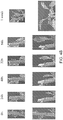
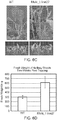
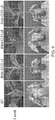
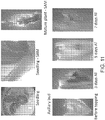
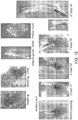
- the promoter shown in SEQ ID NO:117 has been shown to be a good candidate for specific expression in the axillary bud before topping and for 15 days after topping. There was no expression in the shoot apical meristem region before topping.
- the promoter shown in SEQ ID NO:117 (about 2.5 kb) is the 5'end upstream of sequence of SEQ ID NO: 27, which encodes eukaryotic translation initiation factor 3, subunit A (eIF-3A), a component of the eukaryotic translation initiation factor 3 (eIF-3) complex, which is required for several steps in the initiation of protein synthesis.
Landscapes
- Health & Medical Sciences (AREA)
- Genetics & Genomics (AREA)
- Life Sciences & Earth Sciences (AREA)
- Engineering & Computer Science (AREA)
- Chemical & Material Sciences (AREA)
- Organic Chemistry (AREA)
- Biomedical Technology (AREA)
- Zoology (AREA)
- Wood Science & Technology (AREA)
- Bioinformatics & Cheminformatics (AREA)
- Biotechnology (AREA)
- General Engineering & Computer Science (AREA)
- Molecular Biology (AREA)
- General Health & Medical Sciences (AREA)
- Biochemistry (AREA)
- Biophysics (AREA)
- Microbiology (AREA)
- Physics & Mathematics (AREA)
- Plant Pathology (AREA)
- Cell Biology (AREA)
- Botany (AREA)
- Virology (AREA)
- Proteomics, Peptides & Aminoacids (AREA)
- Medicinal Chemistry (AREA)
- Gastroenterology & Hepatology (AREA)
- Endocrinology (AREA)
- Developmental Biology & Embryology (AREA)
- Environmental Sciences (AREA)
- Breeding Of Plants And Reproduction By Means Of Culturing (AREA)
- Micro-Organisms Or Cultivation Processes Thereof (AREA)
- Chemical Kinetics & Catalysis (AREA)
- General Chemical & Material Sciences (AREA)
Claims (12)
- Tabakpflanze, umfassend einen Promotor, der SEQ ID NO: 117 umfasst, und der funktionsfähig mit einem heterologen zweiten Nukleinsäuremolekül verbunden ist.
- Tabakpflanze nach Anspruch 1, wobei die zweite Nukleinsäure ein Polypeptid mit mindestens 80% Sequenzidentität zu einem Polypeptid codiert, das ausgewählt ist aus der Gruppe, bestehend aus SEQ ID NO: 2, 4, 6, 8, 10, 12, 14, 16, 18, 20, 22, 24, 26, 28, 30, 32, 34, 36, 38, 40, 42, 44, 46, 48, 50, 52, 54, 56, 58, 60, 62, 64, 66, 68, 70, 72, 74, 76, 78, 80 oder 82.
- Tabakpflanze nach Anspruch 1, wobei die zweite Nukleinsäure ein doppelsträngiges RNA-Molekül codiert, das die Expression eines Nukleinsäuremoleküls hemmt, das ein Polypeptid mit mindestens 80% Sequenzidentität zu einem Polypeptid codiert, das ausgewählt ist aus der Gruppe, bestehend aus SEQ ID NO: 2, 4, 6, 8, 10, 12, 14, 16, 18, 20, 22, 24, 26, 28, 30, 32, 34, 36, 38, 40, 42, 44, 46, 48, 50, 52, 54, 56, 58, 60, 62, 64, 66, 68, 70, 72, 74, 76, 78, 80 oder 82.
- Tabakpflanze nach Anspruch 3, wobei das doppelsträngige RNA-Molekül mindestens 25 aufeinanderfolgende Nukleotide mit 91% oder mehr Sequenzidentität zu einer Sequenz umfasst, die ausgewählt ist aus der Gruppe, bestehend aus SEQ ID NO: 1, 3, 5, 7, 9, 11, 13, 15, 17, 19, 21, 23, 25, 27, 29, 31, 33, 35, 37, 39, 41, 43, 45, 47, 49, 51, 53, 57, 59, 61, 63, 65, 69, 71, 73, 75 und 77.
- Tabakpflanze nach Anspruch 1, wobei das zweite Nukleinsäuremolekül von einem Gen stammt, das zu programmiertem Zelltod führt, beispielsweise ein Nukleinsäuremolekül, das ein Ribosomen-inaktivierendes Protein codiert, oder ein Nukleinsäuremolekül, das an der hypersensitiven Reaktion beteiligt ist, die Pflanzen einleiten, wenn sie mit einem Pathogen konfrontiert werden.
- Verfahren zur Herstellung einer transgenen Tabakpflanze, umfassend das Einbringen eines Expressionsvektors, der einen Promotor umfasst, der funktionsfähig mit einem heterologen Nukleinsäuremolekül verbunden ist, wobei die Expression des Nukleinsäuremoleküls zu einer Pflanze führt, die ein reduziertes Achselknospenwachstum im Vergleich zu einer Tabakpflanze aufweist, die das Nukleinsäuremolekül nicht exprimiert, wobei der Promotor SEQ ID NO: 117 umfasst.
- Verfahren nach Anspruch 6, wobei die Nukleinsäure ein Polypeptid mit mindestens 80% Sequenzidentität zu einem Polypeptid codiert, das ausgewählt ist aus der Gruppe, bestehend aus SEQ ID NO: 2, 4, 6, 8, 10, 12, 14, 16, 18, 20, 22, 24, 26, 28, 30, 32, 34, 36, 38, 40, 42, 44, 46, 48, 50, 52, 54, 56, 58, 60, 62, 64, 66, 68, 70, 72, 74, 76, 78, 80 oder 82.
- Verfahren nach Anspruch 6, wobei das Nukleinsäuremolekül ein doppelsträngiges RNA-Molekül codiert, das die Expression eines Nukleinsäuremoleküls hemmt, das ein Polypeptid mit mindestens 80% Sequenzidentität zu einem Polypeptid codiert, das ausgewählt ist aus der Gruppe, bestehend aus SEQ ID NO: 2, 4, 6, 8, 10, 12, 14, 16, 18, 20, 22, 24, 26, 28, 30, 32, 34, 36, 38, 40, 42, 44, 46, 48, 50, 52, 54, 56, 58, 60, 62, 64, 66, 68, 70, 72, 74, 76, 78, 80 oder 82.
- Expressionsvektor, umfassend einen Promotor, der SEQ ID NO: 117 umfasst, und der funktionsfähig mit einem zweiten Nukleinsäuremolekül verbunden ist.
- Expressionsvektor nach Anspruch 9, wobei das zweite Nukleinsäuremolekül ein Polypeptid mit mindestens 80% Sequenzidentität zu einem Polypeptid codiert, das ausgewählt ist aus der Gruppe, bestehend aus SEQ ID NO: 2, 4, 6, 8, 10, 12, 14, 16, 18, 20, 22, 24, 26, 28, 30, 32, 34, 36, 38, 40, 42, 44, 46, 48, 50, 52, 54, 56, 58, 60, 62, 64, 66, 68, 70, 72, 74, 76, 78, 80 oder 82.
- Expressionsvektor nach Anspruch 9, wobei die zweite Nukleinsäure ein doppelsträngiges RNA-Molekül codiert, das die Expression eines Nukleinsäuremoleküls hemmt, das ein Polypeptid mit mindestens 80% Sequenzidentität zu einem Polypeptid codiert, das ausgewählt ist aus der Gruppe, bestehend aus SEQ ID NO: 2, 4, 6, 8, 10, 12, 14, 16, 18, 20, 22, 24, 26, 28, 30, 32, 34, 36, 38, 40, 42, 44, 46, 48, 50, 52, 54, 56, 58, 60, 62, 64, 66, 68, 70, 72, 74, 76, 78, 80 oder 82.
- Verfahren zur Herstellung einer transgenen Tabakpflanze, umfassend das Einbringen des Expressionsvektors nach einem der Ansprüche 9 bis 11 in eine Tabakpflanze.
Priority Applications (3)
| Application Number | Priority Date | Filing Date | Title |
|---|---|---|---|
| EP18208907.8A EP3470521B1 (de) | 2014-10-06 | 2015-10-06 | Genetische kontrolle des achselknospenwachstums bei tabakpflanzen |
| EP23191125.6A EP4268584A3 (de) | 2014-10-06 | 2015-10-06 | Genetische kontrolle des achselknospenwachstums bei tabakpflanzen |
| EP20180722.9A EP3739053B1 (de) | 2014-10-06 | 2015-10-06 | Genetische kontrolle des achselknospenwachstums bei tabakpflanzen |
Applications Claiming Priority (2)
| Application Number | Priority Date | Filing Date | Title |
|---|---|---|---|
| US201462060473P | 2014-10-06 | 2014-10-06 | |
| PCT/US2015/054247 WO2016057515A2 (en) | 2014-10-06 | 2015-10-06 | Genetic control of axillary bud growth in tobacco plants |
Related Child Applications (4)
| Application Number | Title | Priority Date | Filing Date |
|---|---|---|---|
| EP18208907.8A Division-Into EP3470521B1 (de) | 2014-10-06 | 2015-10-06 | Genetische kontrolle des achselknospenwachstums bei tabakpflanzen |
| EP18208907.8A Division EP3470521B1 (de) | 2014-10-06 | 2015-10-06 | Genetische kontrolle des achselknospenwachstums bei tabakpflanzen |
| EP23191125.6A Division EP4268584A3 (de) | 2014-10-06 | 2015-10-06 | Genetische kontrolle des achselknospenwachstums bei tabakpflanzen |
| EP20180722.9A Division EP3739053B1 (de) | 2014-10-06 | 2015-10-06 | Genetische kontrolle des achselknospenwachstums bei tabakpflanzen |
Publications (2)
| Publication Number | Publication Date |
|---|---|
| EP3204501A2 EP3204501A2 (de) | 2017-08-16 |
| EP3204501B1 true EP3204501B1 (de) | 2019-01-09 |
Family
ID=54548242
Family Applications (4)
| Application Number | Title | Priority Date | Filing Date |
|---|---|---|---|
| EP20180722.9A Active EP3739053B1 (de) | 2014-10-06 | 2015-10-06 | Genetische kontrolle des achselknospenwachstums bei tabakpflanzen |
| EP15795251.6A Active EP3204501B1 (de) | 2014-10-06 | 2015-10-06 | Genetische kontrolle des achselknospenwachstums bei tabakpflanzen |
| EP18208907.8A Active EP3470521B1 (de) | 2014-10-06 | 2015-10-06 | Genetische kontrolle des achselknospenwachstums bei tabakpflanzen |
| EP23191125.6A Pending EP4268584A3 (de) | 2014-10-06 | 2015-10-06 | Genetische kontrolle des achselknospenwachstums bei tabakpflanzen |
Family Applications Before (1)
| Application Number | Title | Priority Date | Filing Date |
|---|---|---|---|
| EP20180722.9A Active EP3739053B1 (de) | 2014-10-06 | 2015-10-06 | Genetische kontrolle des achselknospenwachstums bei tabakpflanzen |
Family Applications After (2)
| Application Number | Title | Priority Date | Filing Date |
|---|---|---|---|
| EP18208907.8A Active EP3470521B1 (de) | 2014-10-06 | 2015-10-06 | Genetische kontrolle des achselknospenwachstums bei tabakpflanzen |
| EP23191125.6A Pending EP4268584A3 (de) | 2014-10-06 | 2015-10-06 | Genetische kontrolle des achselknospenwachstums bei tabakpflanzen |
Country Status (5)
| Country | Link |
|---|---|
| US (4) | US10435700B2 (de) |
| EP (4) | EP3739053B1 (de) |
| JP (1) | JP6702957B2 (de) |
| CN (2) | CN113652416A (de) |
| WO (1) | WO2016057515A2 (de) |
Families Citing this family (15)
| Publication number | Priority date | Publication date | Assignee | Title |
|---|---|---|---|---|
| CN113652416A (zh) | 2014-10-06 | 2021-11-16 | 奥驰亚客户服务有限公司 | 烟草植物中腋芽生长的遗传控制 |
| WO2017121776A1 (en) * | 2016-01-15 | 2017-07-20 | Keygene N.V. | Method for modifying lateral budding in plants and plants resulting from said method |
| US20190024107A1 (en) * | 2016-01-15 | 2019-01-24 | Keygene N.V. | Method for modifying lateral budding in plants and plants resulting from said method |
| EP3426786A1 (de) | 2016-03-11 | 2019-01-16 | Altria Client Services LLC | Zusammensetzungen und verfahren zur herstellung von tabakpflanzen und -produkten mit verringerten oder beseitigten wurzeltrieben |
| CN116058286A (zh) * | 2016-03-30 | 2023-05-05 | 日本烟草产业株式会社 | 烟草植物体及其制备方法 |
| CN106497946A (zh) * | 2016-10-21 | 2017-03-15 | 云南省烟草农业科学研究院 | 一种烟草腋芽生长调控基因NtIPT1及其克隆方法与应用 |
| CN106350524A (zh) * | 2016-11-04 | 2017-01-25 | 云南省烟草农业科学研究院 | 一种烟草腋芽生长调控基因NtBRC1及其克隆方法与应用 |
| CN106636140A (zh) * | 2016-11-08 | 2017-05-10 | 云南省烟草农业科学研究院 | 一种烟草干旱响应基因NtXERICO及其克隆方法与应用 |
| BR112019019058A2 (pt) | 2017-03-16 | 2020-04-22 | Japan Tobacco Inc | planta de tabaco e método de produção da mesma |
| BR112019019030A2 (pt) * | 2017-03-16 | 2020-04-22 | Japan Tobacco Inc | planta de tabaco e método de produção da mesma |
| CN111108205B (zh) * | 2017-09-11 | 2024-05-28 | 奥驰亚客户服务有限公司 | 用于生产烟杈减少或消除的烟草植物和制品的组合物和方法 |
| CN108450227A (zh) * | 2018-01-30 | 2018-08-28 | 山东博华高效生态农业科技有限公司 | 一种葡萄的整枝方法 |
| JP7416761B2 (ja) | 2018-08-02 | 2024-01-17 | アルトリア クライアント サーヴィシーズ リミテッド ライアビリティ カンパニー | 最適化された組織優先的プロモーターおよびその使用 |
| WO2020243276A1 (en) | 2019-05-29 | 2020-12-03 | Altria Client Services Llc | Compositions and methods for producing tobacco plants and products having reduced or eliminated suckers |
| CN118599868B (zh) * | 2024-07-04 | 2025-04-01 | 中国科学院遗传与发育生物学研究所 | 一种调控豆科植物根瘤共生固氮的基因ls及其应用 |
Citations (2)
| Publication number | Priority date | Publication date | Assignee | Title |
|---|---|---|---|---|
| US8093459B2 (en) * | 2004-09-29 | 2012-01-10 | Advanced Technologies (Cambridge) Limited | Modification of plant development and morphology |
| CN102943075B (zh) * | 2012-10-16 | 2014-08-13 | 中国农业科学院作物科学研究所 | 棉花GhTCP2基因启动子及其应用 |
Family Cites Families (91)
| Publication number | Priority date | Publication date | Assignee | Title |
|---|---|---|---|---|
| US4091823A (en) | 1976-07-12 | 1978-05-30 | Liggett Group Inc. | Cyclogeraniol and derivatives thereof as tobacco flavorants |
| US4762785A (en) | 1982-08-12 | 1988-08-09 | Calgene, Inc. | Novel method and compositions for introducting alien DNA in vivo |
| US4660577A (en) | 1982-08-20 | 1987-04-28 | R.J. Reynolds Tobacco Company | Dry pre-mix for moist snuff |
| US4528993A (en) | 1982-08-20 | 1985-07-16 | R. J. Reynolds Tobacco Company | Process for producing moist snuff |
| US4516590A (en) | 1982-11-26 | 1985-05-14 | Philip Morris Incorporated | Air-cured bright tobacco filler, blends and smoking articles |
| US4535060A (en) | 1983-01-05 | 1985-08-13 | Calgene, Inc. | Inhibition resistant 5-enolpyruvyl-3-phosphoshikimate synthetase, production and use |
| NL8300698A (nl) | 1983-02-24 | 1984-09-17 | Univ Leiden | Werkwijze voor het inbouwen van vreemd dna in het genoom van tweezaadlobbige planten; agrobacterium tumefaciens bacterien en werkwijze voor het produceren daarvan; planten en plantecellen met gewijzigde genetische eigenschappen; werkwijze voor het bereiden van chemische en/of farmaceutische produkten. |
| US4761373A (en) | 1984-03-06 | 1988-08-02 | Molecular Genetics, Inc. | Herbicide resistance in plants |
| US4732856A (en) | 1984-04-03 | 1988-03-22 | Carnegie Institution Of Washington | Transposable elements and process for using same |
| US5231019A (en) | 1984-05-11 | 1993-07-27 | Ciba-Geigy Corporation | Transformation of hereditary material of plants |
| US5149645A (en) | 1984-06-04 | 1992-09-22 | Rijksuniversiteit Leiden | Process for introducing foreign DNA into the genome of plants |
| US4678904A (en) | 1984-07-06 | 1987-07-07 | Technology Dynamics, Inc. | Optical measuring device using a spectral modulation sensor having an optically resonant structure |
| US4945050A (en) | 1984-11-13 | 1990-07-31 | Cornell Research Foundation, Inc. | Method for transporting substances into living cells and tissues and apparatus therefor |
| US5254799A (en) | 1985-01-18 | 1993-10-19 | Plant Genetic Systems N.V. | Transformation vectors allowing expression of Bacillus thuringiensis endotoxins in plants |
| US4638816A (en) | 1985-03-22 | 1987-01-27 | Philip Morris Incorporated | Smoking compositions containing a glycosylamine flavorant additive |
| US4683195A (en) | 1986-01-30 | 1987-07-28 | Cetus Corporation | Process for amplifying, detecting, and/or-cloning nucleic acid sequences |
| US4965188A (en) | 1986-08-22 | 1990-10-23 | Cetus Corporation | Process for amplifying, detecting, and/or cloning nucleic acid sequences using a thermostable enzyme |
| US4683202A (en) | 1985-03-28 | 1987-07-28 | Cetus Corporation | Process for amplifying nucleic acid sequences |
| US4940835A (en) | 1985-10-29 | 1990-07-10 | Monsanto Company | Glyphosate-resistant plants |
| US4810648A (en) | 1986-01-08 | 1989-03-07 | Rhone Poulenc Agrochimie | Haloarylnitrile degrading gene, its use, and cells containing the gene |
| US4800159A (en) | 1986-02-07 | 1989-01-24 | Cetus Corporation | Process for amplifying, detecting, and/or cloning nucleic acid sequences |
| ATE57390T1 (de) | 1986-03-11 | 1990-10-15 | Plant Genetic Systems Nv | Durch gentechnologie erhaltene und gegen glutaminsynthetase-inhibitoren resistente pflanzenzellen. |
| US4975374A (en) | 1986-03-18 | 1990-12-04 | The General Hospital Corporation | Expression of wild type and mutant glutamine synthetase in foreign hosts |
| US5188958A (en) | 1986-05-29 | 1993-02-23 | Calgene, Inc. | Transformation and foreign gene expression in brassica species |
| US5177010A (en) | 1986-06-30 | 1993-01-05 | University Of Toledo | Process for transforming corn and the products thereof |
| US5273894A (en) | 1986-08-23 | 1993-12-28 | Hoechst Aktiengesellschaft | Phosphinothricin-resistance gene, and its use |
| US5276268A (en) | 1986-08-23 | 1994-01-04 | Hoechst Aktiengesellschaft | Phosphinothricin-resistance gene, and its use |
| US5013659A (en) | 1987-07-27 | 1991-05-07 | E. I. Du Pont De Nemours And Company | Nucleic acid fragment encoding herbicide resistant plant acetolactate synthase |
| SE455438B (sv) | 1986-11-24 | 1988-07-11 | Aga Ab | Sett att senka en brennares flamtemperatur samt brennare med munstycken for oxygen resp brensle |
| US5004863B2 (en) | 1986-12-03 | 2000-10-17 | Agracetus | Genetic engineering of cotton plants and lines |
| US4848373A (en) | 1987-04-13 | 1989-07-18 | Helme Tobacco Company | Nicotine removal process and product produced thereby |
| US5316931A (en) | 1988-02-26 | 1994-05-31 | Biosource Genetics Corp. | Plant viral vectors having heterologous subgenomic promoters for systemic expression of foreign genes |
| US5085325A (en) | 1988-03-08 | 1992-02-04 | Simco/Ramic Corporation | Color sorting system and method |
| US5013658A (en) | 1988-05-13 | 1991-05-07 | Dna Plant Technology Corporation | Transposon tagging of genes in transformed plants |
| US5990387A (en) | 1988-06-10 | 1999-11-23 | Pioneer Hi-Bred International, Inc. | Stable transformation of plant cells |
| US4987907A (en) | 1988-06-29 | 1991-01-29 | Helme Tobacco Company | Chewing tobacco composition and process for producing same |
| US5162602A (en) | 1988-11-10 | 1992-11-10 | Regents Of The University Of Minnesota | Corn plants tolerant to sethoxydim and haloxyfop herbicides |
| US5879918A (en) | 1989-05-12 | 1999-03-09 | Pioneer Hi-Bred International, Inc. | Pretreatment of microprojectiles prior to using in a particle gun |
| US5164180A (en) | 1989-05-18 | 1992-11-17 | Mycogen Corporation | Bacillus thuringiensis isolates active against lepidopteran pests |
| US5141131A (en) | 1989-06-30 | 1992-08-25 | Dowelanco | Method and apparatus for the acceleration of a propellable matter |
| US5932782A (en) | 1990-11-14 | 1999-08-03 | Pioneer Hi-Bred International, Inc. | Plant transformation method using agrobacterium species adhered to microprojectiles |
| US5767366A (en) | 1991-02-19 | 1998-06-16 | Louisiana State University Board Of Supervisors, A Governing Body Of Louisiana State University Agricultural And Mechanical College | Mutant acetolactate synthase gene from Ararbidopsis thaliana for conferring imidazolinone resistance to crop plants |
| US5372149A (en) | 1992-03-25 | 1994-12-13 | Roth; David S. | Sterilization process in the manufacturing of snuff |
| JP2952041B2 (ja) | 1992-07-27 | 1999-09-20 | パイオニア ハイ−ブレッド インターナショナル,インコーポレイテッド | 培養ダイズ細胞のagrobacterium媒介形質転換の改良法 |
| IL108241A (en) | 1992-12-30 | 2000-08-13 | Biosource Genetics Corp | Plant expression system comprising a defective tobamovirus replicon integrated into the plant chromosome and a helper virus |
| US5469976A (en) | 1993-04-30 | 1995-11-28 | Burchell; James R. | Shelf allocation and management system |
| US5789156A (en) | 1993-06-14 | 1998-08-04 | Basf Ag | Tetracycline-regulated transcriptional inhibitors |
| US5814618A (en) | 1993-06-14 | 1998-09-29 | Basf Aktiengesellschaft | Methods for regulating gene expression |
| DE733059T1 (de) | 1993-12-09 | 1997-08-28 | Univ Jefferson | Verbindungen und verfahren zur ortsspezifischen mutation in eukaryotischen zellen |
| US5491081A (en) | 1994-01-26 | 1996-02-13 | Pioneer Hi-Bred International, Inc. | Soybean cyst nematode resistant soybeans and methods of breeding and identifying resistant plants |
| US6808904B2 (en) | 1994-06-16 | 2004-10-26 | Syngenta Participations Ag | Herbicide-tolerant protox genes produced by DNA shuffling |
| US5659026A (en) | 1995-03-24 | 1997-08-19 | Pioneer Hi-Bred International | ALS3 promoter |
| US5853973A (en) | 1995-04-20 | 1998-12-29 | American Cyanamid Company | Structure based designed herbicide resistant products |
| US6084155A (en) | 1995-06-06 | 2000-07-04 | Novartis Ag | Herbicide-tolerant protoporphyrinogen oxidase ("protox") genes |
| US5689035A (en) | 1995-09-26 | 1997-11-18 | Pioneer Hi-Bred International, Inc. | Brown stem rot resistance in soybeans |
| EP0861021B1 (de) | 1995-10-13 | 2009-09-23 | Dow Agrosciences LLC | Modifiziertes bacillus thuringiensis gen zur kontrolle von lepidoptera in pflanzen |
| US5731181A (en) | 1996-06-17 | 1998-03-24 | Thomas Jefferson University | Chimeric mutational vectors having non-natural nucleotides |
| US5760012A (en) | 1996-05-01 | 1998-06-02 | Thomas Jefferson University | Methods and compounds for curing diseases caused by mutations |
| US6072050A (en) | 1996-06-11 | 2000-06-06 | Pioneer Hi-Bred International, Inc. | Synthetic promoters |
| DE19631255A1 (de) | 1996-08-02 | 1998-02-05 | Amazonen Werke Dreyer H | Rüttelegge |
| US5981840A (en) | 1997-01-24 | 1999-11-09 | Pioneer Hi-Bred International, Inc. | Methods for agrobacterium-mediated transformation |
| EP0979311A1 (de) | 1997-04-30 | 2000-02-16 | Of The University Of Minnesota Regents | $i(IN VIVO)VERWENDUNG REKOMBINAGENISCHER OLIGONUKLEOBASEN ZUR KORREKTUR GENETISCHER DEFEKTE IN HEPATOZYTEN |
| US7094606B2 (en) | 1997-08-05 | 2006-08-22 | Arntzen Charles J | Use of mixed duplex oligonucleotides to effect localized genetic changes in plants |
| GB9819693D0 (en) | 1998-09-10 | 1998-11-04 | Zeneca Ltd | Glyphosate formulation |
| US6410872B2 (en) | 1999-03-26 | 2002-06-25 | Key Technology, Inc. | Agricultural article inspection apparatus and method employing spectral manipulation to enhance detection contrast ratio |
| AU3930000A (en) | 1999-03-29 | 2000-10-16 | Src Vision, Inc. | Multi-band spectral sorting system for light-weight articles |
| US6451732B1 (en) | 1999-06-04 | 2002-09-17 | Syngenta, Limited | Herbicidal compositions of glyphosate trimesium |
| DE60139619D1 (de) * | 2000-06-16 | 2009-10-01 | Thomas Schmuelling | Verfahren zur modifizierung der morphologie, biochemien und physiologie der pflanzen durch cytokinin-oxidase |
| BRPI0214830B1 (pt) | 2001-12-10 | 2015-10-27 | Thomas Schmülling | método para modificação de planta, morfologicamente, bioquimicamente e fisicamente |
| US6930492B2 (en) | 2002-08-29 | 2005-08-16 | Malcam Ltd. | Using surface microwaves for measuring and determining density and/or moisture content of a material |
| US7025066B2 (en) | 2002-10-31 | 2006-04-11 | Jerry Wayne Lawson | Method of reducing the sucrose ester concentration of a tobacco mixture |
| US20040118422A1 (en) | 2002-12-19 | 2004-06-24 | Swedish Match North Europe Ab | Tobacco dough and a method for its manufacture |
| CN104397869B (zh) | 2003-11-07 | 2016-06-08 | 美国无烟烟草有限责任公司 | 烟草组合物 |
| US8627828B2 (en) | 2003-11-07 | 2014-01-14 | U.S. Smokeless Tobacco Company Llc | Tobacco compositions |
| EP1729602A1 (de) | 2003-12-22 | 2006-12-13 | U.S. Smokeless Tobacco Company | Konditionierungsverfahren für tabak- und/oder schnupftabakzusammensetzung |
| GB2416139A (en) * | 2004-07-16 | 2006-01-18 | Howard Paul Davis | Mist injector for gas treatment |
| US20070199097A1 (en) * | 2004-09-03 | 2007-08-23 | U.S. Smokeless Tobacco Company | Tobacco plants having a mutation in a nicotine demethylase gene |
| CN1824774B (zh) * | 2004-11-12 | 2010-05-05 | 贾朝钧 | 一种打顶后无腋芽烟草的培育方法 |
| US20060200878A1 (en) | 2004-12-21 | 2006-09-07 | Linda Lutfiyya | Recombinant DNA constructs and methods for controlling gene expression |
| ATE530656T1 (de) | 2005-02-23 | 2011-11-15 | Univ North Carolina State | Veränderung des alkaloidgehaltes in tabak durch modifikation spezifischer cytochrome p450 gene. |
| US7741548B2 (en) | 2005-05-12 | 2010-06-22 | University Of Connecticut | Method and composition for increasing branching and flowering response in plants |
| EP2985353A1 (de) | 2006-10-12 | 2016-02-17 | Monsanto Technology LLC | Pflanzen-mikro-rnas und verfahren zur verwendung davon |
| US8319011B2 (en) | 2006-12-15 | 2012-11-27 | U.S. Smokeless Tobacco Company Llc | Tobacco plants having reduced nicotine demethylase activity |
| WO2009064771A2 (en) | 2007-11-12 | 2009-05-22 | North Carolina State University | Alteration of tobacco alkaloid content through modification of specific cytochrome p450 genes |
| ES2351009B1 (es) | 2009-01-13 | 2012-01-23 | Consejo Superior De Investigaciones Científicas (Csic) | Genes reguladores de la ramificación de plantas, promotores, construcciones genéticas que los contienen y usos. |
| US8953158B2 (en) | 2009-09-04 | 2015-02-10 | Danny S. Moshe | Grading of agricultural products via hyper spectral imaging and analysis |
| PH12012501393B1 (en) | 2010-01-15 | 2017-10-25 | Univ North Carolina State | Compositions and methods for minimizing nornicotine synthesis in tobacco |
| EP2557947A1 (de) | 2010-04-14 | 2013-02-20 | Altria Client Services Inc. | Vorgeformtes rauchloses tabakprodukt |
| BR112013002861A2 (pt) | 2010-08-05 | 2016-06-07 | Altria Client Services Inc | tecido tendo tabaco emaranhado com fibras estruturais |
| JP5946451B2 (ja) | 2010-08-05 | 2016-07-06 | アルトリア クライアント サービシーズ リミテッド ライアビリティ カンパニー | 複合無煙タバコ製品、システム、および方法 |
| CN113652416A (zh) | 2014-10-06 | 2021-11-16 | 奥驰亚客户服务有限公司 | 烟草植物中腋芽生长的遗传控制 |
-
2015
- 2015-10-06 CN CN202110787109.4A patent/CN113652416A/zh active Pending
- 2015-10-06 EP EP20180722.9A patent/EP3739053B1/de active Active
- 2015-10-06 EP EP15795251.6A patent/EP3204501B1/de active Active
- 2015-10-06 EP EP18208907.8A patent/EP3470521B1/de active Active
- 2015-10-06 US US14/875,928 patent/US10435700B2/en active Active
- 2015-10-06 EP EP23191125.6A patent/EP4268584A3/de active Pending
- 2015-10-06 JP JP2017519319A patent/JP6702957B2/ja active Active
- 2015-10-06 WO PCT/US2015/054247 patent/WO2016057515A2/en not_active Ceased
- 2015-10-06 CN CN201580065347.7A patent/CN107250355B/zh active Active
-
2019
- 2019-10-01 US US16/589,783 patent/US11236349B2/en active Active
-
2021
- 2021-12-15 US US17/551,565 patent/US12203082B2/en active Active
-
2024
- 2024-12-09 US US18/974,011 patent/US20250101447A1/en active Pending
Patent Citations (2)
| Publication number | Priority date | Publication date | Assignee | Title |
|---|---|---|---|---|
| US8093459B2 (en) * | 2004-09-29 | 2012-01-10 | Advanced Technologies (Cambridge) Limited | Modification of plant development and morphology |
| CN102943075B (zh) * | 2012-10-16 | 2014-08-13 | 中国农业科学院作物科学研究所 | 棉花GhTCP2基因启动子及其应用 |
Non-Patent Citations (3)
| Title |
|---|
| DATABASE EMBL [online] 27 June 2008 (2008-06-27), "CHO_OF6517xd18f1.ab1 CHO_OF6 Nicotiana tabacum genomic 5', genomic survey sequence.", XP002780419, retrieved from EBI accession no. EMBL:FI053861 Database accession no. FI053861 * |
| TAITO TAKEDA ET AL: "The OsTB1 gene negatively regulates lateral branching in rice", THE PLANT JOURNAL, BLACKWELL SCIENTIFIC PUBLICATIONS, OXFORD, GB, vol. 33, no. 3, 6 February 2003 (2003-02-06), pages 513 - 520, XP002768277, ISSN: 0960-7412, Retrieved from the Internet <URL:http://onlinelibrary.wiley.com/doi/10.1046/j.1365-313X.2003.01648.x/epdf> DOI: 10.1046/J.1365-313X.2003.01648.X * |
| TATEMATSU K ET AL: "Identification of cis-elements that regulate gene expression during initiation of axillary bud outgrowth in arabidopsis", PLANT PHYSIOLOGY, AMERICAN SOCIETY OF PLANT PHYSIOLOGISTS, ROCKVILLE, MD, USA, vol. 138, June 2005 (2005-06-01), pages 757 - 766, XP002419543, ISSN: 0032-0889, DOI: 10.1104/PP.104.057984 * |
Also Published As
| Publication number | Publication date |
|---|---|
| US11236349B2 (en) | 2022-02-01 |
| US20200032283A1 (en) | 2020-01-30 |
| JP2017534271A (ja) | 2017-11-24 |
| US20160281100A1 (en) | 2016-09-29 |
| WO2016057515A9 (en) | 2018-08-09 |
| US12203082B2 (en) | 2025-01-21 |
| EP4268584A3 (de) | 2024-02-21 |
| EP3470521B1 (de) | 2020-07-15 |
| US10435700B2 (en) | 2019-10-08 |
| EP3739053B1 (de) | 2023-08-30 |
| WO2016057515A2 (en) | 2016-04-14 |
| CN107250355B (zh) | 2021-07-16 |
| WO2016057515A3 (en) | 2016-06-09 |
| EP4268584A2 (de) | 2023-11-01 |
| EP3739053A1 (de) | 2020-11-18 |
| US20250101447A1 (en) | 2025-03-27 |
| JP6702957B2 (ja) | 2020-06-03 |
| EP3204501A2 (de) | 2017-08-16 |
| EP3470521A1 (de) | 2019-04-17 |
| CN113652416A (zh) | 2021-11-16 |
| US20220098604A1 (en) | 2022-03-31 |
| CN107250355A (zh) | 2017-10-13 |
Similar Documents
| Publication | Publication Date | Title |
|---|---|---|
| US12203082B2 (en) | Genetic control of axillary bud growth in tobacco plants | |
| US12209249B2 (en) | Compositions and methods for producing tobacco plants and products having reduced or eliminated suckers | |
| US20180199532A1 (en) | Tobacco plants having altered amounts of one or more alkaloids in leaf and methods of using such plants | |
| US12286637B2 (en) | Compositions and methods for producing tobacco plants and products having reduced or eliminated suckers | |
| US12163139B2 (en) | Tobacco plants having increased nitrogen efficiency and methods of using such plants | |
| WO2015093946A2 (en) | New effects of plant ahl proteins |
Legal Events
| Date | Code | Title | Description |
|---|---|---|---|
| STAA | Information on the status of an ep patent application or granted ep patent |
Free format text: STATUS: THE INTERNATIONAL PUBLICATION HAS BEEN MADE |
|
| PUAI | Public reference made under article 153(3) epc to a published international application that has entered the european phase |
Free format text: ORIGINAL CODE: 0009012 |
|
| STAA | Information on the status of an ep patent application or granted ep patent |
Free format text: STATUS: REQUEST FOR EXAMINATION WAS MADE |
|
| 17P | Request for examination filed |
Effective date: 20170508 |
|
| AK | Designated contracting states |
Kind code of ref document: A2 Designated state(s): AL AT BE BG CH CY CZ DE DK EE ES FI FR GB GR HR HU IE IS IT LI LT LU LV MC MK MT NL NO PL PT RO RS SE SI SK SM TR |
|
| AX | Request for extension of the european patent |
Extension state: BA ME |
|
| DAV | Request for validation of the european patent (deleted) | ||
| DAX | Request for extension of the european patent (deleted) | ||
| STAA | Information on the status of an ep patent application or granted ep patent |
Free format text: STATUS: EXAMINATION IS IN PROGRESS |
|
| PUAG | Search results despatched under rule 164(2) epc together with communication from examining division |
Free format text: ORIGINAL CODE: 0009017 |
|
| 17Q | First examination report despatched |
Effective date: 20180503 |
|
| RIC1 | Information provided on ipc code assigned before grant |
Ipc: C12N 15/82 20060101AFI20180426BHEP Ipc: A01H 5/12 20060101ALI20180426BHEP Ipc: C07K 14/415 20060101ALI20180426BHEP |
|
| B565 | Issuance of search results under rule 164(2) epc |
Effective date: 20180503 |
|
| GRAJ | Information related to disapproval of communication of intention to grant by the applicant or resumption of examination proceedings by the epo deleted |
Free format text: ORIGINAL CODE: EPIDOSDIGR1 |
|
| STAA | Information on the status of an ep patent application or granted ep patent |
Free format text: STATUS: GRANT OF PATENT IS INTENDED |
|
| GRAP | Despatch of communication of intention to grant a patent |
Free format text: ORIGINAL CODE: EPIDOSNIGR1 |
|
| INTG | Intention to grant announced |
Effective date: 20180731 |
|
| GRAS | Grant fee paid |
Free format text: ORIGINAL CODE: EPIDOSNIGR3 |
|
| GRAA | (expected) grant |
Free format text: ORIGINAL CODE: 0009210 |
|
| STAA | Information on the status of an ep patent application or granted ep patent |
Free format text: STATUS: THE PATENT HAS BEEN GRANTED |
|
| AK | Designated contracting states |
Kind code of ref document: B1 Designated state(s): AL AT BE BG CH CY CZ DE DK EE ES FI FR GB GR HR HU IE IS IT LI LT LU LV MC MK MT NL NO PL PT RO RS SE SI SK SM TR |
|
| REG | Reference to a national code |
Ref country code: GB Ref legal event code: FG4D |
|
| REG | Reference to a national code |
Ref country code: CH Ref legal event code: EP Ref country code: AT Ref legal event code: REF Ref document number: 1087310 Country of ref document: AT Kind code of ref document: T Effective date: 20190115 |
|
| REG | Reference to a national code |
Ref country code: IE Ref legal event code: FG4D |
|
| REG | Reference to a national code |
Ref country code: DE Ref legal event code: R096 Ref document number: 602015023316 Country of ref document: DE |
|
| REG | Reference to a national code |
Ref country code: NL Ref legal event code: MP Effective date: 20190109 |
|
| REG | Reference to a national code |
Ref country code: LT Ref legal event code: MG4D |
|
| PG25 | Lapsed in a contracting state [announced via postgrant information from national office to epo] |
Ref country code: NL Free format text: LAPSE BECAUSE OF FAILURE TO SUBMIT A TRANSLATION OF THE DESCRIPTION OR TO PAY THE FEE WITHIN THE PRESCRIBED TIME-LIMIT Effective date: 20190109 |
|
| REG | Reference to a national code |
Ref country code: AT Ref legal event code: MK05 Ref document number: 1087310 Country of ref document: AT Kind code of ref document: T Effective date: 20190109 |
|
| PG25 | Lapsed in a contracting state [announced via postgrant information from national office to epo] |
Ref country code: ES Free format text: LAPSE BECAUSE OF FAILURE TO SUBMIT A TRANSLATION OF THE DESCRIPTION OR TO PAY THE FEE WITHIN THE PRESCRIBED TIME-LIMIT Effective date: 20190109 Ref country code: PT Free format text: LAPSE BECAUSE OF FAILURE TO SUBMIT A TRANSLATION OF THE DESCRIPTION OR TO PAY THE FEE WITHIN THE PRESCRIBED TIME-LIMIT Effective date: 20190509 Ref country code: SE Free format text: LAPSE BECAUSE OF FAILURE TO SUBMIT A TRANSLATION OF THE DESCRIPTION OR TO PAY THE FEE WITHIN THE PRESCRIBED TIME-LIMIT Effective date: 20190109 Ref country code: FI Free format text: LAPSE BECAUSE OF FAILURE TO SUBMIT A TRANSLATION OF THE DESCRIPTION OR TO PAY THE FEE WITHIN THE PRESCRIBED TIME-LIMIT Effective date: 20190109 Ref country code: NO Free format text: LAPSE BECAUSE OF FAILURE TO SUBMIT A TRANSLATION OF THE DESCRIPTION OR TO PAY THE FEE WITHIN THE PRESCRIBED TIME-LIMIT Effective date: 20190409 Ref country code: PL Free format text: LAPSE BECAUSE OF FAILURE TO SUBMIT A TRANSLATION OF THE DESCRIPTION OR TO PAY THE FEE WITHIN THE PRESCRIBED TIME-LIMIT Effective date: 20190109 Ref country code: LT Free format text: LAPSE BECAUSE OF FAILURE TO SUBMIT A TRANSLATION OF THE DESCRIPTION OR TO PAY THE FEE WITHIN THE PRESCRIBED TIME-LIMIT Effective date: 20190109 |
|
| REG | Reference to a national code |
Ref country code: GR Ref legal event code: EP Ref document number: 20190401048 Country of ref document: GR Effective date: 20190620 |
|
| PG25 | Lapsed in a contracting state [announced via postgrant information from national office to epo] |
Ref country code: BG Free format text: LAPSE BECAUSE OF FAILURE TO SUBMIT A TRANSLATION OF THE DESCRIPTION OR TO PAY THE FEE WITHIN THE PRESCRIBED TIME-LIMIT Effective date: 20190409 Ref country code: IS Free format text: LAPSE BECAUSE OF FAILURE TO SUBMIT A TRANSLATION OF THE DESCRIPTION OR TO PAY THE FEE WITHIN THE PRESCRIBED TIME-LIMIT Effective date: 20190509 Ref country code: HR Free format text: LAPSE BECAUSE OF FAILURE TO SUBMIT A TRANSLATION OF THE DESCRIPTION OR TO PAY THE FEE WITHIN THE PRESCRIBED TIME-LIMIT Effective date: 20190109 Ref country code: LV Free format text: LAPSE BECAUSE OF FAILURE TO SUBMIT A TRANSLATION OF THE DESCRIPTION OR TO PAY THE FEE WITHIN THE PRESCRIBED TIME-LIMIT Effective date: 20190109 Ref country code: RS Free format text: LAPSE BECAUSE OF FAILURE TO SUBMIT A TRANSLATION OF THE DESCRIPTION OR TO PAY THE FEE WITHIN THE PRESCRIBED TIME-LIMIT Effective date: 20190109 |
|
| REG | Reference to a national code |
Ref country code: DE Ref legal event code: R097 Ref document number: 602015023316 Country of ref document: DE |
|
| PG25 | Lapsed in a contracting state [announced via postgrant information from national office to epo] |
Ref country code: CZ Free format text: LAPSE BECAUSE OF FAILURE TO SUBMIT A TRANSLATION OF THE DESCRIPTION OR TO PAY THE FEE WITHIN THE PRESCRIBED TIME-LIMIT Effective date: 20190109 Ref country code: IT Free format text: LAPSE BECAUSE OF FAILURE TO SUBMIT A TRANSLATION OF THE DESCRIPTION OR TO PAY THE FEE WITHIN THE PRESCRIBED TIME-LIMIT Effective date: 20190109 Ref country code: RO Free format text: LAPSE BECAUSE OF FAILURE TO SUBMIT A TRANSLATION OF THE DESCRIPTION OR TO PAY THE FEE WITHIN THE PRESCRIBED TIME-LIMIT Effective date: 20190109 Ref country code: EE Free format text: LAPSE BECAUSE OF FAILURE TO SUBMIT A TRANSLATION OF THE DESCRIPTION OR TO PAY THE FEE WITHIN THE PRESCRIBED TIME-LIMIT Effective date: 20190109 Ref country code: AT Free format text: LAPSE BECAUSE OF FAILURE TO SUBMIT A TRANSLATION OF THE DESCRIPTION OR TO PAY THE FEE WITHIN THE PRESCRIBED TIME-LIMIT Effective date: 20190109 Ref country code: DK Free format text: LAPSE BECAUSE OF FAILURE TO SUBMIT A TRANSLATION OF THE DESCRIPTION OR TO PAY THE FEE WITHIN THE PRESCRIBED TIME-LIMIT Effective date: 20190109 Ref country code: AL Free format text: LAPSE BECAUSE OF FAILURE TO SUBMIT A TRANSLATION OF THE DESCRIPTION OR TO PAY THE FEE WITHIN THE PRESCRIBED TIME-LIMIT Effective date: 20190109 Ref country code: SK Free format text: LAPSE BECAUSE OF FAILURE TO SUBMIT A TRANSLATION OF THE DESCRIPTION OR TO PAY THE FEE WITHIN THE PRESCRIBED TIME-LIMIT Effective date: 20190109 |
|
| PLBE | No opposition filed within time limit |
Free format text: ORIGINAL CODE: 0009261 |
|
| STAA | Information on the status of an ep patent application or granted ep patent |
Free format text: STATUS: NO OPPOSITION FILED WITHIN TIME LIMIT |
|
| PG25 | Lapsed in a contracting state [announced via postgrant information from national office to epo] |
Ref country code: SM Free format text: LAPSE BECAUSE OF FAILURE TO SUBMIT A TRANSLATION OF THE DESCRIPTION OR TO PAY THE FEE WITHIN THE PRESCRIBED TIME-LIMIT Effective date: 20190109 |
|
| 26N | No opposition filed |
Effective date: 20191010 |
|
| PG25 | Lapsed in a contracting state [announced via postgrant information from national office to epo] |
Ref country code: SI Free format text: LAPSE BECAUSE OF FAILURE TO SUBMIT A TRANSLATION OF THE DESCRIPTION OR TO PAY THE FEE WITHIN THE PRESCRIBED TIME-LIMIT Effective date: 20190109 |
|
| PG25 | Lapsed in a contracting state [announced via postgrant information from national office to epo] |
Ref country code: TR Free format text: LAPSE BECAUSE OF FAILURE TO SUBMIT A TRANSLATION OF THE DESCRIPTION OR TO PAY THE FEE WITHIN THE PRESCRIBED TIME-LIMIT Effective date: 20190109 |
|
| PG25 | Lapsed in a contracting state [announced via postgrant information from national office to epo] |
Ref country code: MC Free format text: LAPSE BECAUSE OF FAILURE TO SUBMIT A TRANSLATION OF THE DESCRIPTION OR TO PAY THE FEE WITHIN THE PRESCRIBED TIME-LIMIT Effective date: 20190109 |
|
| REG | Reference to a national code |
Ref country code: CH Ref legal event code: PL |
|
| PG25 | Lapsed in a contracting state [announced via postgrant information from national office to epo] |
Ref country code: LU Free format text: LAPSE BECAUSE OF NON-PAYMENT OF DUE FEES Effective date: 20191006 Ref country code: LI Free format text: LAPSE BECAUSE OF NON-PAYMENT OF DUE FEES Effective date: 20191031 Ref country code: CH Free format text: LAPSE BECAUSE OF NON-PAYMENT OF DUE FEES Effective date: 20191031 |
|
| REG | Reference to a national code |
Ref country code: BE Ref legal event code: MM Effective date: 20191031 |
|
| PG25 | Lapsed in a contracting state [announced via postgrant information from national office to epo] |
Ref country code: BE Free format text: LAPSE BECAUSE OF NON-PAYMENT OF DUE FEES Effective date: 20191031 |
|
| PG25 | Lapsed in a contracting state [announced via postgrant information from national office to epo] |
Ref country code: IE Free format text: LAPSE BECAUSE OF NON-PAYMENT OF DUE FEES Effective date: 20191006 |
|
| PG25 | Lapsed in a contracting state [announced via postgrant information from national office to epo] |
Ref country code: CY Free format text: LAPSE BECAUSE OF FAILURE TO SUBMIT A TRANSLATION OF THE DESCRIPTION OR TO PAY THE FEE WITHIN THE PRESCRIBED TIME-LIMIT Effective date: 20190109 |
|
| PG25 | Lapsed in a contracting state [announced via postgrant information from national office to epo] |
Ref country code: HU Free format text: LAPSE BECAUSE OF FAILURE TO SUBMIT A TRANSLATION OF THE DESCRIPTION OR TO PAY THE FEE WITHIN THE PRESCRIBED TIME-LIMIT; INVALID AB INITIO Effective date: 20151006 Ref country code: MT Free format text: LAPSE BECAUSE OF FAILURE TO SUBMIT A TRANSLATION OF THE DESCRIPTION OR TO PAY THE FEE WITHIN THE PRESCRIBED TIME-LIMIT Effective date: 20190109 |
|
| PG25 | Lapsed in a contracting state [announced via postgrant information from national office to epo] |
Ref country code: MK Free format text: LAPSE BECAUSE OF FAILURE TO SUBMIT A TRANSLATION OF THE DESCRIPTION OR TO PAY THE FEE WITHIN THE PRESCRIBED TIME-LIMIT Effective date: 20190109 |
|
| P01 | Opt-out of the competence of the unified patent court (upc) registered |
Effective date: 20230517 |
|
| PGFP | Annual fee paid to national office [announced via postgrant information from national office to epo] |
Ref country code: DE Payment date: 20251029 Year of fee payment: 11 |
|
| PGFP | Annual fee paid to national office [announced via postgrant information from national office to epo] |
Ref country code: GB Payment date: 20251027 Year of fee payment: 11 |
|
| PGFP | Annual fee paid to national office [announced via postgrant information from national office to epo] |
Ref country code: FR Payment date: 20251027 Year of fee payment: 11 |
|
| PGFP | Annual fee paid to national office [announced via postgrant information from national office to epo] |
Ref country code: GR Payment date: 20251029 Year of fee payment: 11 |