EP3214153B1 - Dispositif électroluminescent organique - Google Patents
Dispositif électroluminescent organique Download PDFInfo
- Publication number
- EP3214153B1 EP3214153B1 EP17157381.9A EP17157381A EP3214153B1 EP 3214153 B1 EP3214153 B1 EP 3214153B1 EP 17157381 A EP17157381 A EP 17157381A EP 3214153 B1 EP3214153 B1 EP 3214153B1
- Authority
- EP
- European Patent Office
- Prior art keywords
- group
- substituted
- unsubstituted
- salt
- formula
- Prior art date
- Legal status (The legal status is an assumption and is not a legal conclusion. Google has not performed a legal analysis and makes no representation as to the accuracy of the status listed.)
- Active
Links
- 0 *c1c(N)nc2[n]1cccc2 Chemical compound *c1c(N)nc2[n]1cccc2 0.000 description 7
- AVWGJDPQWDDRJV-UHFFFAOYSA-N O=P1(c2ccccc2)c2cc3ccccc3cc2Oc(cc2)c1cc2-c1nc(-c2ccccc2)nc(-c2ccccc2)n1 Chemical compound O=P1(c2ccccc2)c2cc3ccccc3cc2Oc(cc2)c1cc2-c1nc(-c2ccccc2)nc(-c2ccccc2)n1 AVWGJDPQWDDRJV-UHFFFAOYSA-N 0.000 description 2
- YTWDLGXWIMQQME-UHFFFAOYSA-N C(C1)C1(C(c(cc1)cc(c2ccccc22)c1[n]2-c1ccccc1)c1ccc(c(cccc2)c2[o]2)c2c1)c(cc1)cc2c1-c1ccccc1C2(c1ccccc1)c1ccccc1 Chemical compound C(C1)C1(C(c(cc1)cc(c2ccccc22)c1[n]2-c1ccccc1)c1ccc(c(cccc2)c2[o]2)c2c1)c(cc1)cc2c1-c1ccccc1C2(c1ccccc1)c1ccccc1 YTWDLGXWIMQQME-UHFFFAOYSA-N 0.000 description 1
- UCNOLDJEPFIMRU-UHFFFAOYSA-N C(C12)C=CC=C1C(c1cc(cccc3)c3cc1)=C(C=CC(C1)c3nc4ccccc4[n]3-c3ccccc3)C1=C2c1cc2ccccc2cc1 Chemical compound C(C12)C=CC=C1C(c1cc(cccc3)c3cc1)=C(C=CC(C1)c3nc4ccccc4[n]3-c3ccccc3)C1=C2c1cc2ccccc2cc1 UCNOLDJEPFIMRU-UHFFFAOYSA-N 0.000 description 1
- JOPGRTCRYACAAG-PLQHUNECSA-N C/C=C\C=C(/CI)\P1(c(cccc2)c2OC2C=CC(c3nc(-c4ccc(cccc5)c5c4)nc(-c4ccc(cccc5)c5c4)n3)=CC12)=O Chemical compound C/C=C\C=C(/CI)\P1(c(cccc2)c2OC2C=CC(c3nc(-c4ccc(cccc5)c5c4)nc(-c4ccc(cccc5)c5c4)n3)=CC12)=O JOPGRTCRYACAAG-PLQHUNECSA-N 0.000 description 1
- CKANKRKVFFMTJH-UHFFFAOYSA-N CC1(C)c2cc(N(c(cc3)cc4c3-c3ccccc3C4(C)C)c(cc3)cc(c4ccccc44)c3[n]4-c3ccccc3)ccc2-c2c1cccc2 Chemical compound CC1(C)c2cc(N(c(cc3)cc4c3-c3ccccc3C4(C)C)c(cc3)cc(c4ccccc44)c3[n]4-c3ccccc3)ccc2-c2c1cccc2 CKANKRKVFFMTJH-UHFFFAOYSA-N 0.000 description 1
- IALHFENCHMVREB-NBCKZDEISA-N C[C@H](/C=C\C(\c1cc(-c2cccnc2)cc(-c2cccnc2)c1)=C/COc1ccccc11)P1(c1ccccc1)=O Chemical compound C[C@H](/C=C\C(\c1cc(-c2cccnc2)cc(-c2cccnc2)c1)=C/COc1ccccc11)P1(c1ccccc1)=O IALHFENCHMVREB-NBCKZDEISA-N 0.000 description 1
- HUMNYLRZRPPJDN-UHFFFAOYSA-N O=Cc1ccccc1 Chemical compound O=Cc1ccccc1 HUMNYLRZRPPJDN-UHFFFAOYSA-N 0.000 description 1
- QUQIVFHWJJBJLK-UHFFFAOYSA-N O=P1(c2ccccc2)c(cc(cc2)-c3cc(-c4cccnc4)cc(-c4cnccc4)c3)c2Oc2c1cccc2 Chemical compound O=P1(c2ccccc2)c(cc(cc2)-c3cc(-c4cccnc4)cc(-c4cnccc4)c3)c2Oc2c1cccc2 QUQIVFHWJJBJLK-UHFFFAOYSA-N 0.000 description 1
- MDYWHIBEGXNJNL-UHFFFAOYSA-N O=P1(c2ccccc2)c(cc(cc2)-c3cc(-c4ccncc4)cc(-c4ccncc4)c3)c2Oc2c1cccc2 Chemical compound O=P1(c2ccccc2)c(cc(cc2)-c3cc(-c4ccncc4)cc(-c4ccncc4)c3)c2Oc2c1cccc2 MDYWHIBEGXNJNL-UHFFFAOYSA-N 0.000 description 1
- FRHQCMPRHLZTHP-UHFFFAOYSA-N O=P1(c2ccccc2)c(cc(cc2)-c3nc(-c4c(cccc5)c5ccc4)nc(-c4cccc5ccccc45)n3)c2Oc2c1cccc2 Chemical compound O=P1(c2ccccc2)c(cc(cc2)-c3nc(-c4c(cccc5)c5ccc4)nc(-c4cccc5ccccc45)n3)c2Oc2c1cccc2 FRHQCMPRHLZTHP-UHFFFAOYSA-N 0.000 description 1
- MZGKQFYAPIZCSG-UHFFFAOYSA-N O=P1(c2ccccc2)c(cc(cc2)-c3nc(-c4cc(cccc5)c5cc4)nc(-c4cc5ccccc5cc4)n3)c2Oc2c1cccc2 Chemical compound O=P1(c2ccccc2)c(cc(cc2)-c3nc(-c4cc(cccc5)c5cc4)nc(-c4cc5ccccc5cc4)n3)c2Oc2c1cccc2 MZGKQFYAPIZCSG-UHFFFAOYSA-N 0.000 description 1
- QRYMJLBYRJXYIH-UHFFFAOYSA-N O=P1(c2ccccc2)c(cc(cc2)-c3nc(-c4ccccc4)nc(-c4ccccc4)n3)c2Oc2c1cccc2 Chemical compound O=P1(c2ccccc2)c(cc(cc2)-c3nc(-c4ccccc4)nc(-c4ccccc4)n3)c2Oc2c1cccc2 QRYMJLBYRJXYIH-UHFFFAOYSA-N 0.000 description 1
- NSFCAEUEHPVYGM-UHFFFAOYSA-N O=P1(c2ccccc2)c(ccc(-c(c2c3cccc2)c(cccc2)c2c3-c2cccc(-c3ccccc3)n2)c2)c2Oc2c1cccc2 Chemical compound O=P1(c2ccccc2)c(ccc(-c(c2c3cccc2)c(cccc2)c2c3-c2cccc(-c3ccccc3)n2)c2)c2Oc2c1cccc2 NSFCAEUEHPVYGM-UHFFFAOYSA-N 0.000 description 1
- IREWTYXJHLQSCC-UHFFFAOYSA-N O=P1(c2ccccc2)c(ccc(-c2c(cccc3)c3c(-c3cccnc3)c3c2cccc3)c2)c2Oc2c1cccc2 Chemical compound O=P1(c2ccccc2)c(ccc(-c2c(cccc3)c3c(-c3cccnc3)c3c2cccc3)c2)c2Oc2c1cccc2 IREWTYXJHLQSCC-UHFFFAOYSA-N 0.000 description 1
- ZKNQFEFZSIKLTR-UHFFFAOYSA-N O=P1(c2ccccc2)c(ccc(-c2c(cccc3)c3c(-c3ccncc3)c3c2cccc3)c2)c2Oc2c1cccc2 Chemical compound O=P1(c2ccccc2)c(ccc(-c2c(cccc3)c3c(-c3ccncc3)c3c2cccc3)c2)c2Oc2c1cccc2 ZKNQFEFZSIKLTR-UHFFFAOYSA-N 0.000 description 1
- JORMLSOWVUOORQ-UHFFFAOYSA-N O=P1(c2ccccc2)c2cc(-c3cc(-c4cnccc4)ccc3)ccc2Oc2ccccc12 Chemical compound O=P1(c2ccccc2)c2cc(-c3cc(-c4cnccc4)ccc3)ccc2Oc2ccccc12 JORMLSOWVUOORQ-UHFFFAOYSA-N 0.000 description 1
- BLNZGNGBLREEFK-UHFFFAOYSA-O O=P1(c2ccccc2)c2cc(-c3cccc(-c(c4c5nccc4)cc4c5[NH2+]CC=C4)c3)ccc2Oc2ccccc12 Chemical compound O=P1(c2ccccc2)c2cc(-c3cccc(-c(c4c5nccc4)cc4c5[NH2+]CC=C4)c3)ccc2Oc2ccccc12 BLNZGNGBLREEFK-UHFFFAOYSA-O 0.000 description 1
- GIAHUMKFNYELGX-UHFFFAOYSA-N O=P1(c2ccccc2)c2cc(-c3cccc(-c4ccncc4)c3)ccc2Oc2ccccc12 Chemical compound O=P1(c2ccccc2)c2cc(-c3cccc(-c4ccncc4)c3)ccc2Oc2ccccc12 GIAHUMKFNYELGX-UHFFFAOYSA-N 0.000 description 1
- SZMDBQNLRHXPET-UHFFFAOYSA-N O=P1(c2ccccc2)c2cc3ccccc3cc2Oc(cc2)c1cc2-c1nc(-c2ccccc2)cc(-c2ccccc2)n1 Chemical compound O=P1(c2ccccc2)c2cc3ccccc3cc2Oc(cc2)c1cc2-c1nc(-c2ccccc2)cc(-c2ccccc2)n1 SZMDBQNLRHXPET-UHFFFAOYSA-N 0.000 description 1
- ODHNBZISTGMPLO-UHFFFAOYSA-N O=[F]1(c2ccccc2)c2cc3ccccc3cc2Oc(cc2)c1cc2-c1nc(-c2ccccc2)cc(-c2ccccc2)n1 Chemical compound O=[F]1(c2ccccc2)c2cc3ccccc3cc2Oc(cc2)c1cc2-c1nc(-c2ccccc2)cc(-c2ccccc2)n1 ODHNBZISTGMPLO-UHFFFAOYSA-N 0.000 description 1
- BZTJJZHJPSPBBO-UHFFFAOYSA-N O[N]1(c2ccccc2)c(cc(cc2)-c3cccc(-c4ccncc4)c3)c2Oc2ccccc12 Chemical compound O[N]1(c2ccccc2)c(cc(cc2)-c3cccc(-c4ccncc4)c3)c2Oc2ccccc12 BZTJJZHJPSPBBO-UHFFFAOYSA-N 0.000 description 1
- DSMFQKYETLWUHU-UHFFFAOYSA-N c(cc1)cc(cc2)c1cc2-c1c(cccc2)c2c(-c2cc(cccc3)c3cc2)c2c1ccc(-c(cc1)cnc1-c1cnc(cccc3)c3c1)c2 Chemical compound c(cc1)cc(cc2)c1cc2-c1c(cccc2)c2c(-c2cc(cccc3)c3cc2)c2c1ccc(-c(cc1)cnc1-c1cnc(cccc3)c3c1)c2 DSMFQKYETLWUHU-UHFFFAOYSA-N 0.000 description 1
- RXWRDNBNOXXYQX-UHFFFAOYSA-N c(cc1)ccc1-c1c(cccc2)c2c(-c2cccc3c2[o]c2c3cccc2)c2c1cccc2 Chemical compound c(cc1)ccc1-c1c(cccc2)c2c(-c2cccc3c2[o]c2c3cccc2)c2c1cccc2 RXWRDNBNOXXYQX-UHFFFAOYSA-N 0.000 description 1
Images


Classifications
-
- C—CHEMISTRY; METALLURGY
- C09—DYES; PAINTS; POLISHES; NATURAL RESINS; ADHESIVES; COMPOSITIONS NOT OTHERWISE PROVIDED FOR; APPLICATIONS OF MATERIALS NOT OTHERWISE PROVIDED FOR
- C09K—MATERIALS FOR MISCELLANEOUS APPLICATIONS, NOT PROVIDED FOR ELSEWHERE
- C09K11/00—Luminescent materials, e.g. electroluminescent or chemiluminescent
- C09K11/06—Luminescent materials, e.g. electroluminescent or chemiluminescent containing organic luminescent materials
-
- C—CHEMISTRY; METALLURGY
- C07—ORGANIC CHEMISTRY
- C07F—ACYCLIC, CARBOCYCLIC OR HETEROCYCLIC COMPOUNDS CONTAINING ELEMENTS OTHER THAN CARBON, HYDROGEN, HALOGEN, OXYGEN, NITROGEN, SULFUR, SELENIUM OR TELLURIUM
- C07F9/00—Compounds containing elements of Groups 5 or 15 of the Periodic Table
- C07F9/02—Phosphorus compounds
- C07F9/547—Heterocyclic compounds, e.g. containing phosphorus as a ring hetero atom
- C07F9/6564—Heterocyclic compounds, e.g. containing phosphorus as a ring hetero atom having phosphorus atoms, with or without nitrogen, oxygen, sulfur, selenium or tellurium atoms, as ring hetero atoms
- C07F9/6571—Heterocyclic compounds, e.g. containing phosphorus as a ring hetero atom having phosphorus atoms, with or without nitrogen, oxygen, sulfur, selenium or tellurium atoms, as ring hetero atoms having phosphorus and oxygen atoms as the only ring hetero atoms
- C07F9/657163—Heterocyclic compounds, e.g. containing phosphorus as a ring hetero atom having phosphorus atoms, with or without nitrogen, oxygen, sulfur, selenium or tellurium atoms, as ring hetero atoms having phosphorus and oxygen atoms as the only ring hetero atoms the ring phosphorus atom being bound to at least one carbon atom
-
- H—ELECTRICITY
- H10—SEMICONDUCTOR DEVICES; ELECTRIC SOLID-STATE DEVICES NOT OTHERWISE PROVIDED FOR
- H10K—ORGANIC ELECTRIC SOLID-STATE DEVICES
- H10K50/00—Organic light-emitting devices
-
- H—ELECTRICITY
- H10—SEMICONDUCTOR DEVICES; ELECTRIC SOLID-STATE DEVICES NOT OTHERWISE PROVIDED FOR
- H10K—ORGANIC ELECTRIC SOLID-STATE DEVICES
- H10K85/00—Organic materials used in the body or electrodes of devices covered by this subclass
- H10K85/30—Coordination compounds
-
- H—ELECTRICITY
- H10—SEMICONDUCTOR DEVICES; ELECTRIC SOLID-STATE DEVICES NOT OTHERWISE PROVIDED FOR
- H10K—ORGANIC ELECTRIC SOLID-STATE DEVICES
- H10K85/00—Organic materials used in the body or electrodes of devices covered by this subclass
- H10K85/60—Organic compounds having low molecular weight
- H10K85/615—Polycyclic condensed aromatic hydrocarbons, e.g. anthracene
-
- H—ELECTRICITY
- H10—SEMICONDUCTOR DEVICES; ELECTRIC SOLID-STATE DEVICES NOT OTHERWISE PROVIDED FOR
- H10K—ORGANIC ELECTRIC SOLID-STATE DEVICES
- H10K85/00—Organic materials used in the body or electrodes of devices covered by this subclass
- H10K85/60—Organic compounds having low molecular weight
- H10K85/649—Aromatic compounds comprising a hetero atom
-
- H—ELECTRICITY
- H10—SEMICONDUCTOR DEVICES; ELECTRIC SOLID-STATE DEVICES NOT OTHERWISE PROVIDED FOR
- H10K—ORGANIC ELECTRIC SOLID-STATE DEVICES
- H10K85/00—Organic materials used in the body or electrodes of devices covered by this subclass
- H10K85/60—Organic compounds having low molecular weight
- H10K85/649—Aromatic compounds comprising a hetero atom
- H10K85/654—Aromatic compounds comprising a hetero atom comprising only nitrogen as heteroatom
-
- H—ELECTRICITY
- H10—SEMICONDUCTOR DEVICES; ELECTRIC SOLID-STATE DEVICES NOT OTHERWISE PROVIDED FOR
- H10K—ORGANIC ELECTRIC SOLID-STATE DEVICES
- H10K85/00—Organic materials used in the body or electrodes of devices covered by this subclass
- H10K85/60—Organic compounds having low molecular weight
- H10K85/649—Aromatic compounds comprising a hetero atom
- H10K85/656—Aromatic compounds comprising a hetero atom comprising two or more different heteroatoms per ring
-
- H—ELECTRICITY
- H10—SEMICONDUCTOR DEVICES; ELECTRIC SOLID-STATE DEVICES NOT OTHERWISE PROVIDED FOR
- H10K—ORGANIC ELECTRIC SOLID-STATE DEVICES
- H10K85/00—Organic materials used in the body or electrodes of devices covered by this subclass
- H10K85/60—Organic compounds having low molecular weight
- H10K85/649—Aromatic compounds comprising a hetero atom
- H10K85/657—Polycyclic condensed heteroaromatic hydrocarbons
-
- H—ELECTRICITY
- H10—SEMICONDUCTOR DEVICES; ELECTRIC SOLID-STATE DEVICES NOT OTHERWISE PROVIDED FOR
- H10K—ORGANIC ELECTRIC SOLID-STATE DEVICES
- H10K85/00—Organic materials used in the body or electrodes of devices covered by this subclass
- H10K85/60—Organic compounds having low molecular weight
- H10K85/649—Aromatic compounds comprising a hetero atom
- H10K85/657—Polycyclic condensed heteroaromatic hydrocarbons
- H10K85/6572—Polycyclic condensed heteroaromatic hydrocarbons comprising only nitrogen in the heteroaromatic polycondensed ring system, e.g. phenanthroline or carbazole
-
- C—CHEMISTRY; METALLURGY
- C09—DYES; PAINTS; POLISHES; NATURAL RESINS; ADHESIVES; COMPOSITIONS NOT OTHERWISE PROVIDED FOR; APPLICATIONS OF MATERIALS NOT OTHERWISE PROVIDED FOR
- C09K—MATERIALS FOR MISCELLANEOUS APPLICATIONS, NOT PROVIDED FOR ELSEWHERE
- C09K2211/00—Chemical nature of organic luminescent or tenebrescent compounds
- C09K2211/10—Non-macromolecular compounds
- C09K2211/1003—Carbocyclic compounds
- C09K2211/1007—Non-condensed systems
-
- C—CHEMISTRY; METALLURGY
- C09—DYES; PAINTS; POLISHES; NATURAL RESINS; ADHESIVES; COMPOSITIONS NOT OTHERWISE PROVIDED FOR; APPLICATIONS OF MATERIALS NOT OTHERWISE PROVIDED FOR
- C09K—MATERIALS FOR MISCELLANEOUS APPLICATIONS, NOT PROVIDED FOR ELSEWHERE
- C09K2211/00—Chemical nature of organic luminescent or tenebrescent compounds
- C09K2211/10—Non-macromolecular compounds
- C09K2211/1003—Carbocyclic compounds
- C09K2211/1011—Condensed systems
-
- C—CHEMISTRY; METALLURGY
- C09—DYES; PAINTS; POLISHES; NATURAL RESINS; ADHESIVES; COMPOSITIONS NOT OTHERWISE PROVIDED FOR; APPLICATIONS OF MATERIALS NOT OTHERWISE PROVIDED FOR
- C09K—MATERIALS FOR MISCELLANEOUS APPLICATIONS, NOT PROVIDED FOR ELSEWHERE
- C09K2211/00—Chemical nature of organic luminescent or tenebrescent compounds
- C09K2211/10—Non-macromolecular compounds
- C09K2211/1003—Carbocyclic compounds
- C09K2211/1014—Carbocyclic compounds bridged by heteroatoms, e.g. N, P, Si or B
-
- C—CHEMISTRY; METALLURGY
- C09—DYES; PAINTS; POLISHES; NATURAL RESINS; ADHESIVES; COMPOSITIONS NOT OTHERWISE PROVIDED FOR; APPLICATIONS OF MATERIALS NOT OTHERWISE PROVIDED FOR
- C09K—MATERIALS FOR MISCELLANEOUS APPLICATIONS, NOT PROVIDED FOR ELSEWHERE
- C09K2211/00—Chemical nature of organic luminescent or tenebrescent compounds
- C09K2211/10—Non-macromolecular compounds
- C09K2211/1018—Heterocyclic compounds
- C09K2211/1025—Heterocyclic compounds characterised by ligands
- C09K2211/1029—Heterocyclic compounds characterised by ligands containing one nitrogen atom as the heteroatom
-
- C—CHEMISTRY; METALLURGY
- C09—DYES; PAINTS; POLISHES; NATURAL RESINS; ADHESIVES; COMPOSITIONS NOT OTHERWISE PROVIDED FOR; APPLICATIONS OF MATERIALS NOT OTHERWISE PROVIDED FOR
- C09K—MATERIALS FOR MISCELLANEOUS APPLICATIONS, NOT PROVIDED FOR ELSEWHERE
- C09K2211/00—Chemical nature of organic luminescent or tenebrescent compounds
- C09K2211/10—Non-macromolecular compounds
- C09K2211/1018—Heterocyclic compounds
- C09K2211/1025—Heterocyclic compounds characterised by ligands
- C09K2211/1029—Heterocyclic compounds characterised by ligands containing one nitrogen atom as the heteroatom
- C09K2211/1037—Heterocyclic compounds characterised by ligands containing one nitrogen atom as the heteroatom with sulfur
-
- C—CHEMISTRY; METALLURGY
- C09—DYES; PAINTS; POLISHES; NATURAL RESINS; ADHESIVES; COMPOSITIONS NOT OTHERWISE PROVIDED FOR; APPLICATIONS OF MATERIALS NOT OTHERWISE PROVIDED FOR
- C09K—MATERIALS FOR MISCELLANEOUS APPLICATIONS, NOT PROVIDED FOR ELSEWHERE
- C09K2211/00—Chemical nature of organic luminescent or tenebrescent compounds
- C09K2211/10—Non-macromolecular compounds
- C09K2211/1018—Heterocyclic compounds
- C09K2211/1025—Heterocyclic compounds characterised by ligands
- C09K2211/1029—Heterocyclic compounds characterised by ligands containing one nitrogen atom as the heteroatom
- C09K2211/104—Heterocyclic compounds characterised by ligands containing one nitrogen atom as the heteroatom with other heteroatoms
-
- C—CHEMISTRY; METALLURGY
- C09—DYES; PAINTS; POLISHES; NATURAL RESINS; ADHESIVES; COMPOSITIONS NOT OTHERWISE PROVIDED FOR; APPLICATIONS OF MATERIALS NOT OTHERWISE PROVIDED FOR
- C09K—MATERIALS FOR MISCELLANEOUS APPLICATIONS, NOT PROVIDED FOR ELSEWHERE
- C09K2211/00—Chemical nature of organic luminescent or tenebrescent compounds
- C09K2211/10—Non-macromolecular compounds
- C09K2211/1018—Heterocyclic compounds
- C09K2211/1025—Heterocyclic compounds characterised by ligands
- C09K2211/1044—Heterocyclic compounds characterised by ligands containing two nitrogen atoms as heteroatoms
-
- C—CHEMISTRY; METALLURGY
- C09—DYES; PAINTS; POLISHES; NATURAL RESINS; ADHESIVES; COMPOSITIONS NOT OTHERWISE PROVIDED FOR; APPLICATIONS OF MATERIALS NOT OTHERWISE PROVIDED FOR
- C09K—MATERIALS FOR MISCELLANEOUS APPLICATIONS, NOT PROVIDED FOR ELSEWHERE
- C09K2211/00—Chemical nature of organic luminescent or tenebrescent compounds
- C09K2211/10—Non-macromolecular compounds
- C09K2211/1018—Heterocyclic compounds
- C09K2211/1025—Heterocyclic compounds characterised by ligands
- C09K2211/1059—Heterocyclic compounds characterised by ligands containing three nitrogen atoms as heteroatoms
-
- C—CHEMISTRY; METALLURGY
- C09—DYES; PAINTS; POLISHES; NATURAL RESINS; ADHESIVES; COMPOSITIONS NOT OTHERWISE PROVIDED FOR; APPLICATIONS OF MATERIALS NOT OTHERWISE PROVIDED FOR
- C09K—MATERIALS FOR MISCELLANEOUS APPLICATIONS, NOT PROVIDED FOR ELSEWHERE
- C09K2211/00—Chemical nature of organic luminescent or tenebrescent compounds
- C09K2211/10—Non-macromolecular compounds
- C09K2211/1018—Heterocyclic compounds
- C09K2211/1025—Heterocyclic compounds characterised by ligands
- C09K2211/1092—Heterocyclic compounds characterised by ligands containing sulfur as the only heteroatom
-
- C—CHEMISTRY; METALLURGY
- C09—DYES; PAINTS; POLISHES; NATURAL RESINS; ADHESIVES; COMPOSITIONS NOT OTHERWISE PROVIDED FOR; APPLICATIONS OF MATERIALS NOT OTHERWISE PROVIDED FOR
- C09K—MATERIALS FOR MISCELLANEOUS APPLICATIONS, NOT PROVIDED FOR ELSEWHERE
- C09K2211/00—Chemical nature of organic luminescent or tenebrescent compounds
- C09K2211/10—Non-macromolecular compounds
- C09K2211/1018—Heterocyclic compounds
- C09K2211/1025—Heterocyclic compounds characterised by ligands
- C09K2211/1096—Heterocyclic compounds characterised by ligands containing other heteroatoms
-
- C—CHEMISTRY; METALLURGY
- C09—DYES; PAINTS; POLISHES; NATURAL RESINS; ADHESIVES; COMPOSITIONS NOT OTHERWISE PROVIDED FOR; APPLICATIONS OF MATERIALS NOT OTHERWISE PROVIDED FOR
- C09K—MATERIALS FOR MISCELLANEOUS APPLICATIONS, NOT PROVIDED FOR ELSEWHERE
- C09K2211/00—Chemical nature of organic luminescent or tenebrescent compounds
- C09K2211/18—Metal complexes
- C09K2211/185—Metal complexes of the platinum group, i.e. Os, Ir, Pt, Ru, Rh or Pd
-
- H—ELECTRICITY
- H10—SEMICONDUCTOR DEVICES; ELECTRIC SOLID-STATE DEVICES NOT OTHERWISE PROVIDED FOR
- H10K—ORGANIC ELECTRIC SOLID-STATE DEVICES
- H10K50/00—Organic light-emitting devices
- H10K50/10—OLEDs or polymer light-emitting diodes [PLED]
- H10K50/11—OLEDs or polymer light-emitting diodes [PLED] characterised by the electroluminescent [EL] layers
-
- H—ELECTRICITY
- H10—SEMICONDUCTOR DEVICES; ELECTRIC SOLID-STATE DEVICES NOT OTHERWISE PROVIDED FOR
- H10K—ORGANIC ELECTRIC SOLID-STATE DEVICES
- H10K50/00—Organic light-emitting devices
- H10K50/10—OLEDs or polymer light-emitting diodes [PLED]
- H10K50/14—Carrier transporting layers
- H10K50/15—Hole transporting layers
-
- H—ELECTRICITY
- H10—SEMICONDUCTOR DEVICES; ELECTRIC SOLID-STATE DEVICES NOT OTHERWISE PROVIDED FOR
- H10K—ORGANIC ELECTRIC SOLID-STATE DEVICES
- H10K50/00—Organic light-emitting devices
- H10K50/10—OLEDs or polymer light-emitting diodes [PLED]
- H10K50/14—Carrier transporting layers
- H10K50/16—Electron transporting layers
-
- H—ELECTRICITY
- H10—SEMICONDUCTOR DEVICES; ELECTRIC SOLID-STATE DEVICES NOT OTHERWISE PROVIDED FOR
- H10K—ORGANIC ELECTRIC SOLID-STATE DEVICES
- H10K50/00—Organic light-emitting devices
- H10K50/10—OLEDs or polymer light-emitting diodes [PLED]
- H10K50/14—Carrier transporting layers
- H10K50/16—Electron transporting layers
- H10K50/165—Electron transporting layers comprising dopants
-
- H—ELECTRICITY
- H10—SEMICONDUCTOR DEVICES; ELECTRIC SOLID-STATE DEVICES NOT OTHERWISE PROVIDED FOR
- H10K—ORGANIC ELECTRIC SOLID-STATE DEVICES
- H10K85/00—Organic materials used in the body or electrodes of devices covered by this subclass
- H10K85/60—Organic compounds having low molecular weight
- H10K85/631—Amine compounds having at least two aryl rest on at least one amine-nitrogen atom, e.g. triphenylamine
- H10K85/633—Amine compounds having at least two aryl rest on at least one amine-nitrogen atom, e.g. triphenylamine comprising polycyclic condensed aromatic hydrocarbons as substituents on the nitrogen atom
-
- H—ELECTRICITY
- H10—SEMICONDUCTOR DEVICES; ELECTRIC SOLID-STATE DEVICES NOT OTHERWISE PROVIDED FOR
- H10K—ORGANIC ELECTRIC SOLID-STATE DEVICES
- H10K85/00—Organic materials used in the body or electrodes of devices covered by this subclass
- H10K85/60—Organic compounds having low molecular weight
- H10K85/631—Amine compounds having at least two aryl rest on at least one amine-nitrogen atom, e.g. triphenylamine
- H10K85/636—Amine compounds having at least two aryl rest on at least one amine-nitrogen atom, e.g. triphenylamine comprising heteroaromatic hydrocarbons as substituents on the nitrogen atom
Definitions
- a phosphine-containing cyclic compound has been used as a blue dopant and a phosphorescent host in an emission layer of a light-emitting device.
- the example embodiments of the present disclosure provide an electron transport layer compound comprising a novel cyclic compound that may enable higher device performance.
- WO 2015/080182 discloses a light-emitting material, organic light-emitting element, and compound.
- the present invention discloses a material suitable for use in an electron transport region, and provides an organic light-emitting device having improved characteristics due to the use of the material.
- the present invention provides an organic light-emitting device comprising a first electrode; a second electrode facing the first electrode; and an organic layer between the first electrode and the second electrode and comprising an emission layer, wherein the organic layer further comprises: i) a hole transport region between the first electrode and the emission layer, the hole transport region comprising at least one selected from a hole injection layer, a hole transport layer, an emission auxiliary layer, and an electron blocking layer, and ii) an electron transport region between the emission layer and the second electrode, the electron transport region comprising an electron transport layer, and further comprising at least one selected from a hole blocking layer, an electron control layer, a buffer layer, and an electron injection layer, wherein the electron transport region comprises a compound represented by Formula 1:
- L is selected from a substituted or unsubstituted C 6 -C 60 arylene group, a substituted or unsubstituted C 1 -C 60 heteroarylene group, a substituted or unsubstituted divalent non-aromatic condensed C8 to C60 polycyclic group, and a substituted or unsubstituted divalent non-aromatic condensed 8- to 60-membered heteropolycyclic group; 1 is an integer of 0 to 2; m is an integer of 1 to 3; and Ar is one selected from Formulae 3a to 3k: wherein, in Formulae 3a to 3k,
- the term “and/or” includes any and all combinations of one or more of the associated listed items. Expressions such as “at least one of”, “one of”, and “selected from”, when preceding a list of elements, modify the entire list of elements and do not modify the individual elements of the list.
- R 9 to R 13 are independently be selected from hydrogen, deuterium, -F, -Cl, -Br, -I, a hydroxyl group, a cyano group, a nitro group, an amino group, an amidino group, a hydrazine group, a hydrazone group, a carboxylic acid group or a salt thereof, a sulfonic acid group or a salt thereof, a phosphoric acid group or a salt thereof, a substituted or unsubstituted C 1 -C 60 alkyl group, a substituted or unsubstituted C 2 -C 60 alkenyl group, a substituted or unsubstituted C 2 -C 60 alkynyl group, a substituted or unsubstituted C 1 -C 60 alkoxy group, a substituted or unsubstituted C 3 -C 10 cycloalkyl group, a substituted or unsubstituted C 1 -C
- R 1 to R 8 are each independently a group as defined for R 9 , a group represented by Formula 2, or one or more pairs of R 1 to R 8 groups attached to adjacent carbon atoms are joined to form a C 5 -C 60 carbocyclic group or a C 1 -C 60 heterocyclic group, provided that one selected from R 1 to R 8 is a group represented by Formula 2:
- Non-limiting examples of compounds that may be used as electron transport materials in an electron transport layer comprised in the stacked structure of an organic light-emitting device may comprise an imidazole, a triazine, a phosphine oxide compound bound to one or more suitable heteroaromatic derivatives or heterocyclic compounds, etc. These compounds may be used together with an alkali metal complex (such as LiQ) to facilitate electron injection and to improve the lifespan characteristics of the device.
- an alkali metal complex such as LiQ
- a compound represented by Formula 1 has an asymmetric structure due to its inclusion of a group represented by Formula 2 in one selected from R 1 to R 8 .
- the compounds discussed above in connection with the background to the invention each have a symmetric structure and comprise a diarylamine group as a substituent.
- the highest occupied molecular orbital (HOMO) electrons may be localized on the amine group, leading to a shallow HOMO energy level that is suitable for a compound to be comprised in a hole transport layer or an emission layer.
- An amine group may have strong hole transport characteristics, and compounds containing an amine group may thus be used as hole transport materials.
- a compound represented by Formula 1 may comprise an aryl group, a heteroaryl group or a condensed polycyclic or heteropolycyclic group attached directly to the central polycyclic system in Formula 1 at one of the R1 to R8 positions, as in a group represented by Formula 2 when 1 is 1 or more or when 1 is zero and Ar is an aryl group or a heteroaryl group, thereby providing a molecule with electron transport characteristics that are strong compared to its hole transport characteristics.
- the substituents of Formula 1 will now be described in more detail.
- the electron transport layer of the organic light-emitting device may comprise the compound represented by Formula 1.
- R 5 , R 8 , and R 9 to R 13 in Formula 1 may each independently be selected from hydrogen or deuterium.
- R 6 or R 7 of Formula 1 may be a group represented by Formula 2.
- R 1 to R 4 in Formula 1 may each independently be selected from hydrogen, deuterium, and a substituted or unsubstituted C 2 -C 60 alkenyl group.
- R 1 and R 2 may be linked (e.g., coupled) to form a ring
- R 2 and R 3 may be linked (e.g., coupled) to form a ring
- R 3 and R 4 may be linked (e.g., coupled) to form a ring.
- L in Formula 2 may be one selected from Formulae 2a to 2g:
- R 1 and R 2 may be linked (e.g., coupled) to form a ring
- R 2 and R 3 may be linked (e.g., coupled) to form a ring
- R 3 and R 4 may be linked (e.g., coupled) to form a ring
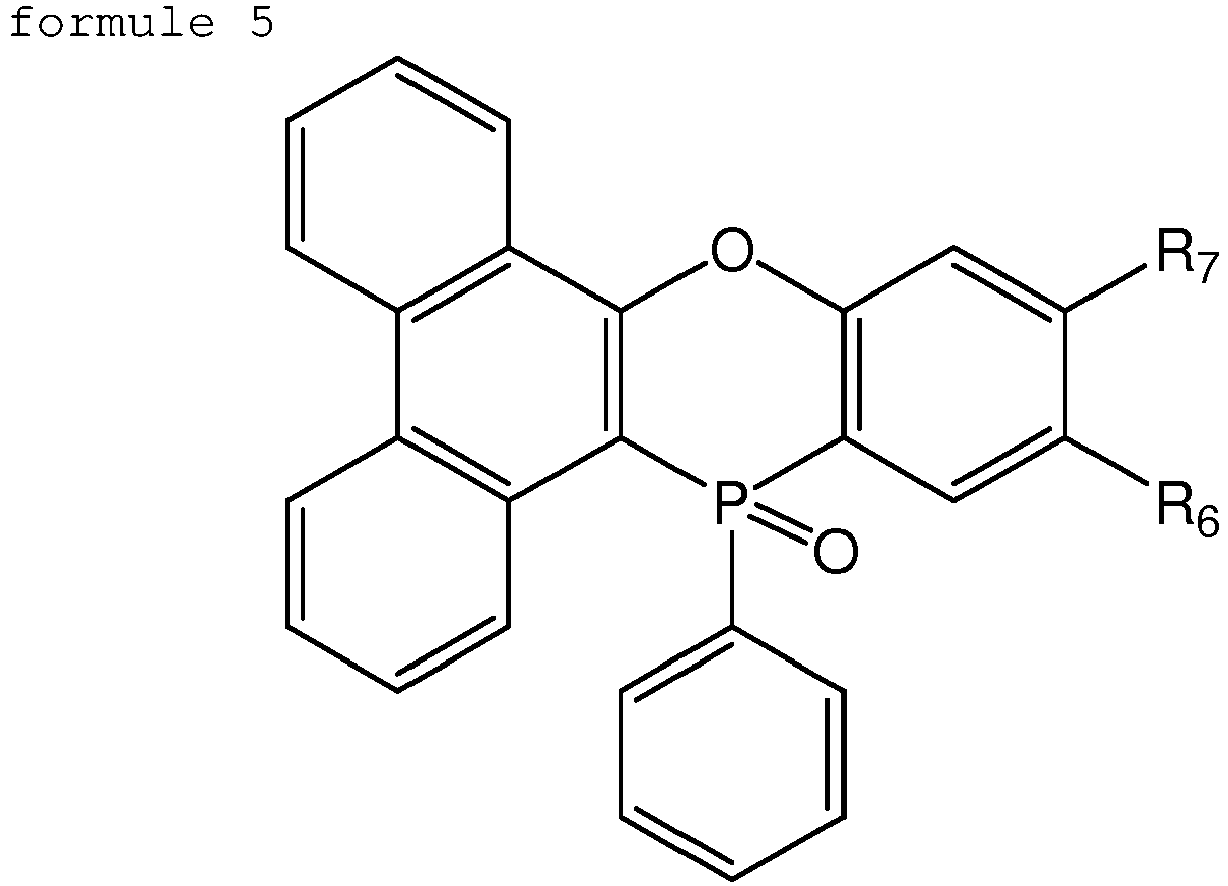
- the compound represented by Formula 1 may be represented, for example, by Formula 3, 4, or 5.
- R 6 and R 7 in Formulae 3, 4, and 5 may be as described herein in connection with Formula 1, provided that one of R 6 and R 7 is a group represented by Formula 2.
- R 6 when R 6 is a group represented by Formula 2, R 7 may be the same as described above in connection with Formula 1.
- R 6 when R 7 is a group represented by Formula 2, R 6 may be the same as described above in connection with Formula 1.
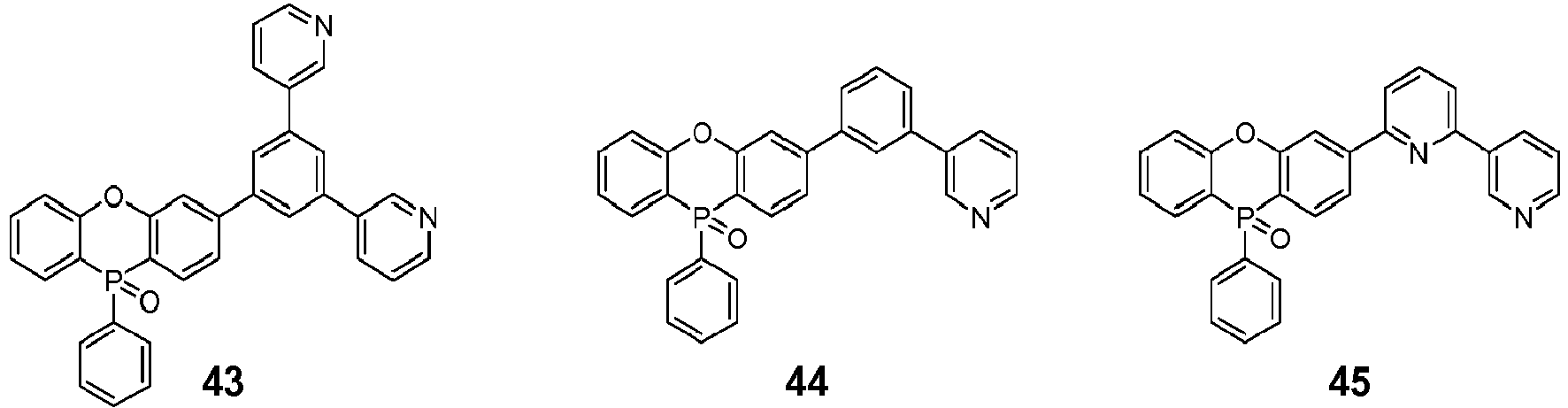
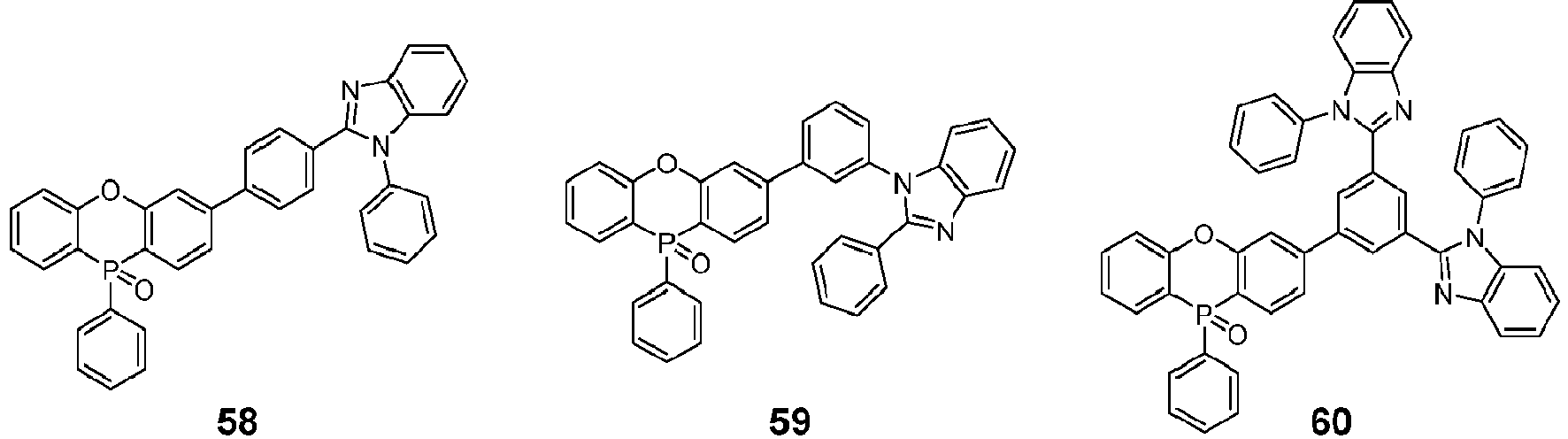
- the compound represented by Formula 1 may be one selected from the following compounds:
- FIG. 1 is a schematic view of the structure of an organic light-emitting device 10 according to an embodiment of the present disclosure.
- the organic light-emitting device 10 comprises a first electrode 110, an organic layer 150, and a second electrode 190.
- a substrate may be under the first electrode 110 or above the second electrode 190.
- the substrate may be a glass substrate or a plastic substrate, each having excellent mechanical strength, thermal stability, transparency, surface smoothness, ease of handling, and/or water-resistance.
- the first electrode 110 may be a reflective electrode, a semi-transmissive electrode, or a transmissive electrode.
- a material for forming a first electrode may be selected from indium tin oxide (ITO), indium zinc oxide (IZO), tin oxide (SnO 2 ), zinc oxide (ZnO), and combinations thereof, but embodiments of the present disclosure are not limited thereto.
- a material for forming a first electrode may be selected from magnesium (Mg), silver (Ag), aluminum (Al), aluminum-lithium (Al-Li), calcium (Ca), magnesium-indium (Mg-In), magnesium-silver (Mg-Ag), and combinations thereof, but embodiments of the present disclosure are not limited thereto.
- the first electrode 110 may have a single-layered structure, or a multi-layered structure comprising two or more layers.
- the first electrode 110 may have a three-layered structure of ITO/Ag/ITO, but embodiments of the structure of the first electrode 110 are not limited thereto.
- the organic layer 150 is on the first electrode 110.
- the organic layer 150 may comprise an emission layer.
- the organic layer 150 may further comprise a hole transport region between the first electrode 110 and the emission layer, and an electron transport region between the emission layer and the second electrode 190.
- the hole transport region may have: i) a single-layered structure consisting of a single layer consisting of a single material, ii) a single-layered structure consisting of a single layer comprising a plurality of different materials, or iii) a multi-layered structure having a plurality of layers comprising a plurality of different materials.
- the hole transport region may comprise at least one layer selected from a hole injection layer (HIL), a hole transport layer (HTL), an emission auxiliary layer, and an electron blocking layer (EBL).
- HIL hole injection layer
- HTL hole transport layer
- EBL electron blocking layer
- the hole transport region may have a single-layered structure consisting of a single layer comprising a plurality of different materials, or a multi-layered structure having a structure of hole injection layer/hole transport layer, hole injection layer/hole transport layer/emission auxiliary layer, hole injection layer/emission auxiliary layer, hole transport layer/emission auxiliary layer or hole injection layer/hole transport layer/electron blocking layer, wherein layers of each structure are sequentially stacked on the first electrode 110 in each stated order, but embodiments of the structure of the hole transport region are not limited thereto.
- the hole transport region may comprise at least one selected from m-MTDATA, TDATA, 2-TNATA, NPB(NPD), ⁇ -NPB, TPD, Spiro-TPD, Spiro-NPB, methylated NPB, TAPC, HMTPD, 4,4',4"-tris( N -carbazolyl)triphenylamine (TCTA), polyaniline/dodecylbenzenesulfonic acid (PANI/DBSA), poly(3,4-ethylenedioxythiophene)/poly(4-styrenesulfonate) (PEDOT/PSS), polyaniline/camphor sulfonic acid (PANI/CSA), polyaniline/poly(4-styrenesulfonate) (PANI/PSS), a compound represented by Formula 201, and a compound represented by Formula 202: In Formulae 201 and 202,
- R 201 and R 202 may optionally be linked (e.g., coupled) via a single bond, a dimethyl-methylene group, or a diphenyl-methylene group
- R 203 and R 204 may optionally be linked (e.g., coupled) via a single bond, a dimethyl-methylene group, or a diphenyl-methylene group.
- L 201 to L 205 may each independently be selected from the group consisting of:
- xa1 to xa4 may each independently be 0, 1, or 2.
- xa5 may be 1, 2, 3, or 4.
- R 201 to R 204 and Q 201 may each independently be selected from the group consisting of: a phenyl group, a biphenyl group, a terphenyl group, a pentalenyl group, an indenyl group, a naphthyl group, an azulenyl group, a heptalenyl group, an indacenyl group, an acenaphthyl group, a fluorenyl group, a spiro-bifluorenyl group, a benzofluorenyl group, a dibenzofluorenyl group, a phenalenyl group, a phenanthrenyl group, an anthracenyl group, a fluoranthenyl group, a triphenylenyl group, a pyrenyl group, a chrysenyl group, a naphthacenyl group, a picen
- At least one selected from R 201 to R 203 in Formula 201 may each independently be selected from the group consisting of:
- R 201 and R 202 may be linked (e.g., coupled) via a single bond
- R 203 and R 204 may be linked (e.g., coupled) via a single bond
- At least one selected from R 201 to R 204 in Formula 202 may be selected from the group consisting of:
- the compound represented by Formula 201 may be represented by Formula 201A:
- the compound represented by Formula 201 may be represented by Formula 201A(1), but embodiments of the present disclosure are not limited thereto:
- the compound represented by Formula 201 may be represented by Formula 201A-1, but embodiments of the present disclosure are not limited thereto:
- the compound represented by Formula 202 may be represented by Formula 202A:
- the compound represented by Formula 202 may be represented by Formula 202A-1: In Formulae 201A, 201A(1), 201A-1, 202A, and 202A-1,
- R 211 in Formula 201A may be a substituted or unsubstituted phenyl group or a substituted or unsubstituted pyridyl group.
- R 213 and R 214 in Formula 201A may each independently be a methyl group or a phenyl group.
- the hole transport layer of the hole transport region may comprise the compound represented by Formula 201A.
- the emission auxiliary layer may increase the light-emission efficiency of the device by compensating for an optical resonance distance according to the wavelength of light emitted by an emission layer (e.g., by adjusting the optical resonance distance to match the wavelength of light emitted from the emission layer), and the electron blocking layer may block or reduce the flow of electrons from an electron transport region.
- the emission auxiliary layer and the electron blocking layer each may comprise the materials described above.
- the phosphorescent dopant may comprise an organometallic complex represented by Formula 401: Formula 401 M(L 401 ) xc1 (L 402 ) xc2 , in which L 401 may be selected from ligands represented by Formula 402: In Formulae 401 and 402,
- a 401 and A 402 in Formula 402 may each independently be selected from a benzene group, a naphthalene group, a fluorene group, a spiro-bifluorene group, an indene group, a pyrrole group, a thiophene group, a furan group, an imidazole group, a pyrazole group, a thiazole group, an isothiazole group, an oxazole group, an isoxazole group, a pyridine group, a pyrazine group, a pyrimidine group, a pyridazine group, a quinoline group, an isoquinoline group, a benzoquinoline group, a quinoxaline group, a quinazoline group, a carbazole group, a benzimidazole group, a benzofuran group, a benzothiophene group, an isobenzothiophene
- L 402 in Formula 401 may be a monovalent, divalent, or trivalent organic ligand.
- R 501 and R 502 in Formula 502 may each independently be selected from the group consisting of:
- the electron transport region comprises the compound represented by Formula 1.
- the electron transport region may have a structure of electron transport layer/electron injection layer, a structure of hole blocking layer/electron transport layer/electron injection layer, a structure of electron control layer/electron transport layer/electron injection layer, or a structure of buffer layer/electron transport layer/electron injection layer, wherein layers of each structure are sequentially stacked on an emission layer in each stated order.
- embodiments of the structure of the electron transport region are not limited thereto.
- Non-limiting examples of the ⁇ electron-depleted nitrogen-containing ring may comprise an imidazole, a pyrazole, a thiazole, an isothiazole, an oxazole, an isoxazole, a pyridine, a pyrazine, a pyrimidine, a pyridazine, an indazole, a purine, a quinoline, an isoquinoline, a benzoquinoline, a phthalazine, a naphthyridine, a quinoxaline, a quinazoline, a cinnoline, a phenanthridine, an acridine, a phenanthroline, a phenazine, a benzimidazole, an isobenzothiazole, a benzoxazole, an isobenzoxazole, a triazole, a tetrazole, an oxadiazole, a
- xe11 in Formula 601 is two or more, two or more Ar 601 (s) may be linked (e.g., coupled) via a single bond.
- the compound represented by Formula 601 may be represented by Formula 601-1: In Formula 601-1,
- L 601 and L 611 to L 613 in Formulae 601 and 601-1 may each independently be selected from the group consisting of:
- xe1 and xe611 to xe613 in Formulae 601 and 601-1 may each independently be 0, 1, or 2.
- R 601 and R 611 to R 613 in Formula 601 and 601-1 may each independently be selected from the group consisting of:
- the electron transport region may comprise at least one compound selected from Compounds ET1 to ET36, but embodiments of the present disclosure are not limited thereto:
- the electron transport region may comprise at least one compound selected from 2,9-dimethyl-4,7-diphenyl-1,10-phenanthroline (BCP), 4,7-diphenyl-1,10-phenanthroline (Bphen), Alq 3 , Balq, 3-(biphenyl-4-yl)-5-(4- tert- butylphenyl)-4-phenyl-4 H -1,2,4-triazole (TAZ), and NTAZ.
- BCP 2,9-dimethyl-4,7-diphenyl-1,10-phenanthroline
- Bphen 4,7-diphenyl-1,10-phenanthroline
- Alq 3 Alq 3
- Balq 3-(biphenyl-4-yl)-5-(4- tert- butylphenyl)-4-phenyl-4 H -1,2,4-triazole (TAZ), and NTAZ.
- the thicknesses of the buffer layer, the hole blocking layer, and/or the electron control layer may each be about 20 ⁇ to about 1,000 ⁇ , and in some embodiments, about 30 ⁇ to about 300 ⁇ .
- the electron blocking layer may have excellent electron blocking characteristics and/or electron control characteristics without a substantial increase in driving voltage.
- the thickness of the electron transport layer may be about 100 ⁇ to about 1,000 ⁇ , and in some embodiments, about 150 ⁇ to about 500 ⁇ . When the thickness of the electron transport layer is within these ranges, the electron transport layer may have satisfactory electron transport characteristics without a substantial increase in driving voltage.
- the electron transport region (for example, the electron transport layer in the electron transport region) may further comprise, in addition to the materials described above, a metal-containing material.
- the metal-containing material may comprise at least one selected from an alkali metal complex and an alkaline earth metal complex.
- the alkali metal complex may comprise a metal ion selected from a lithium (Li) ion, a sodium (Na) ion, a potassium (K) ion, a rubidium (Rb) ion, and a cesium (Cs) ion
- the alkaline earth metal complex may comprise a metal ion selected from a beryllium (Be) ion, a magnesium (Mg) ion, a calcium (Ca) ion, a strontium (Sr) ion, and a barium (Ba) ion.
- the ligands coordinated with the metal ion of the alkali metal complex or the alkaline earth metal complex may be selected from a hydroxyquinoline, a hydroxyisoquinoline, a hydroxybenzoquinoline, a hydroxyacridine, a hydroxyphenanthridine, a hydroxyphenyl oxazole, a hydroxyphenyl thiazole, a hydroxydiphenyl oxadiazole, a hydroxydiphenyl thiadiazole, a hydroxyphenyl pyridine, a hydroxyphenyl benzimidazole, a hydroxyphenyl benzothiazole, a bipyridine, a phenanthroline, and a cyclopentadiene, but embodiments of the present disclosure are not limited thereto.
- the metal-containing material may comprise a Li complex.
- the Li complex may comprise, for example, Compound ET-D1 (lithium quinolate, LiQ) and/or ET-D2:
- the electron transport region may comprise an electron injection layer that facilitates injection of electrons from the second electrode 190.
- the electron injection layer may directly contact the second electrode 190.
- the electron injection layer may have: i) a single-layered structure consisting of a single layer consisting of a single material, ii) a single-layered structure consisting of a single layer comprising a plurality of different materials, or iii) a multi-layered structure having a plurality of layers comprising a plurality of different materials.
- the electron injection layer may comprise an alkali metal, an alkaline earth metal, a rare earth metal, an alkali metal compound, an alkaline earth metal compound, a rare earth metal compound, an alkali metal complex, an alkaline earth metal complex, a rare earth metal complex, or a combination thereof.
- the alkali metal may be selected from Li, Na, K, Rb, and Cs. In one embodiment, the alkali metal may be Li, Na, or Cs. In one embodiment, the alkali metal may be Li or Cs, but embodiments of the present disclosure are not limited thereto.
- the alkaline earth metal may be selected from Mg, Ca, Sr, and Ba.
- the rare earth metal may be selected from scandium (Sc), yttrium (Y), cerium (Ce), ytterbium (Yb), gadolinium (Gd), and terbium (Tb).
- the alkali metal complex, the alkaline earth metal complex, and the rare earth metal complex may comprise an alkali metal ion, an alkaline earth metal ion, or a rare earth metal ion as described above, and each ligand coordinated with the metal ion of the alkali metal complex, the alkaline earth metal complex, and the rare earth metal complex may independently be selected from a hydroxyquinoline, a hydroxyisoquinoline, a hydroxybenzoquinoline, a hydroxyacridine, a hydroxyphenanthridine, a hydroxyphenyl oxazole, a hydroxyphenyl thiazole, a hydroxydiphenyl oxadiazole, a hydroxydiphenyl thiadiazole, a hydroxyphenyl pyridine, a hydroxyphenyl benzimidazole, a hydroxyphenyl benzothiazole, a bipyridine, a phenanthroline, and a cyclopentadiene
- the second electrode 190 may have a single-layered structure, or a multi-layered structure comprising two or more layers.
- the organic layer 150 of each of the organic light-emitting devices 20 and 40 light generated in an emission layer may pass through the first electrode 110 (which may be a semi-transmissive electrode or a transmissive electrode) and the first capping layer 210 toward the outside.
- the organic layer 150 of each of the organic light-emitting devices 30 and 40 light generated in an emission layer may pass through the second electrode 190 (which may be a semi-transmissive electrode or a transmissive electrode) and the second capping layer 220 toward the outside.
- At least one selected from the first capping layer 210 and the second capping layer 220 may independently comprise at least one material selected from carbocyclic compounds, heterocyclic compounds, amine-based compounds, porphyrin derivatives, phthalocyanine derivatives, naphthalocyanine derivatives, alkali metal-based complexes, and alkaline earth metal-based complexes.
- the carbocyclic compound, the heterocyclic compound, and the amine-based compound may be optionally substituted with a substituent containing at least one element selected from O, N, S, selenium (Se), silicon (Si), fluorine (F), chlorine (Cl), bromine (Br), and iodine (I).
- at least one selected from the first capping layer 210 and the second capping layer 220 may independently comprise an amine-based compound.
- the spin coating may be performed at a coating speed of about 2,000 rpm to about 5,000 rpm and at a heat treatment temperature of about 80°C to 200°C, depending on the compound to be comprised in each layer, and the structure of each layer to be formed.
- C 1 -C 60 alkoxy group refers to a monovalent group represented by -O-A 101 (wherein A 101 is a C 1 -C 60 alkyl group), and non-limiting examples thereof may include a methoxy group, an ethoxy group, and an isopropyloxy group.
- C 3 -C 10 cycloalkyl group refers to a monovalent saturated hydrocarbon monocyclic group having 3 to 10 carbon atoms, and non-limiting examples thereof may include a cyclopropyl group, a cyclobutyl group, a cyclopentyl group, a cyclohexyl group, and a cycloheptyl group.
- C 3 -C 10 cycloalkylene group refers to a divalent group having substantially the same structure as the C 3 -C 10 cycloalkyl group.
- C 6 -C 60 aryl group refers to a monovalent group having a carbocyclic aromatic system having 6 to 60 carbon atoms e.g. 6 to 20 ring carbon atoms, 6 to 14 ring cabon atoms or 6 to 10 ring carbon atoms.
- C 6 -C 60 arylene group refers to a divalent group having a carbocyclic aromatic system having 6 to 60 carbon atoms, e.g. 6 to 20 ring carbon atoms, 6 to 14 ring cabon atoms or 6 to 10 ring carbon atoms.
- C 1 -C 60 heterocyclic group refers to a group having substantially the same structure as the C 5 -C 60 carbocyclic group, except that as a ring-forming atom, at least one heteroatom (e.g. 1, 2, 3, 4 or 5 hereoatoms) selected from N, O, Si, P, and S is used in addition to 1 to 60 ring carbon atoms(e.g. 1 to 20 ring carbon atoms, 1 to 14 ring cabon atoms or 1 to 10 ring carbon atoms).
- heteroatom e.g. 1, 2, 3, 4 or 5 hereoatoms
- N,N -di([1,1'-biphenyl]-4-yl)-4'-(9H-carbazol-9-yl)-[1,1'-biphenyl]-4-amine was vacuum deposited on the first hole transport layer to form a second hole transport layer having a thickness of 100 ⁇ .
Landscapes
- Chemical & Material Sciences (AREA)
- Engineering & Computer Science (AREA)
- Materials Engineering (AREA)
- Physics & Mathematics (AREA)
- Organic Chemistry (AREA)
- Spectroscopy & Molecular Physics (AREA)
- Molecular Biology (AREA)
- Health & Medical Sciences (AREA)
- General Health & Medical Sciences (AREA)
- Biochemistry (AREA)
- Life Sciences & Earth Sciences (AREA)
- Optics & Photonics (AREA)
- Inorganic Chemistry (AREA)
- Electroluminescent Light Sources (AREA)
Claims (14)
- Dispositif électroluminescent organique comprenant :une première électrode ;une deuxième électrode faisant face à la première électrode ; etune couche organique entre la première électrode et la deuxième électrode et comprenant une couche d'émission,dans lequel la couche organique comprend en outre :i) une région de transport de trous entre la première électrode et la couche d'émission, la région de transport de trous comprenant au moins l'une choisie parmi une couche d'injection de trous, une couche de transport de trous, une couche auxiliaire d'émission, et une couche de blocage d'électrons, etii) une région de transport d'électrons entre la couche d'émission et la deuxième électrode, la région de transport d'électrons comprenant une couche de transport d'électrons, et comprenant en outre au moins l'une choisie parmi une couche de blocage de trous, une couche de contrôle d'électrons, une couche tampon, et une couche d'injection d'électrons,dans lequel la région de transport d'électrons comprend un composé représenté par la formule 1 :
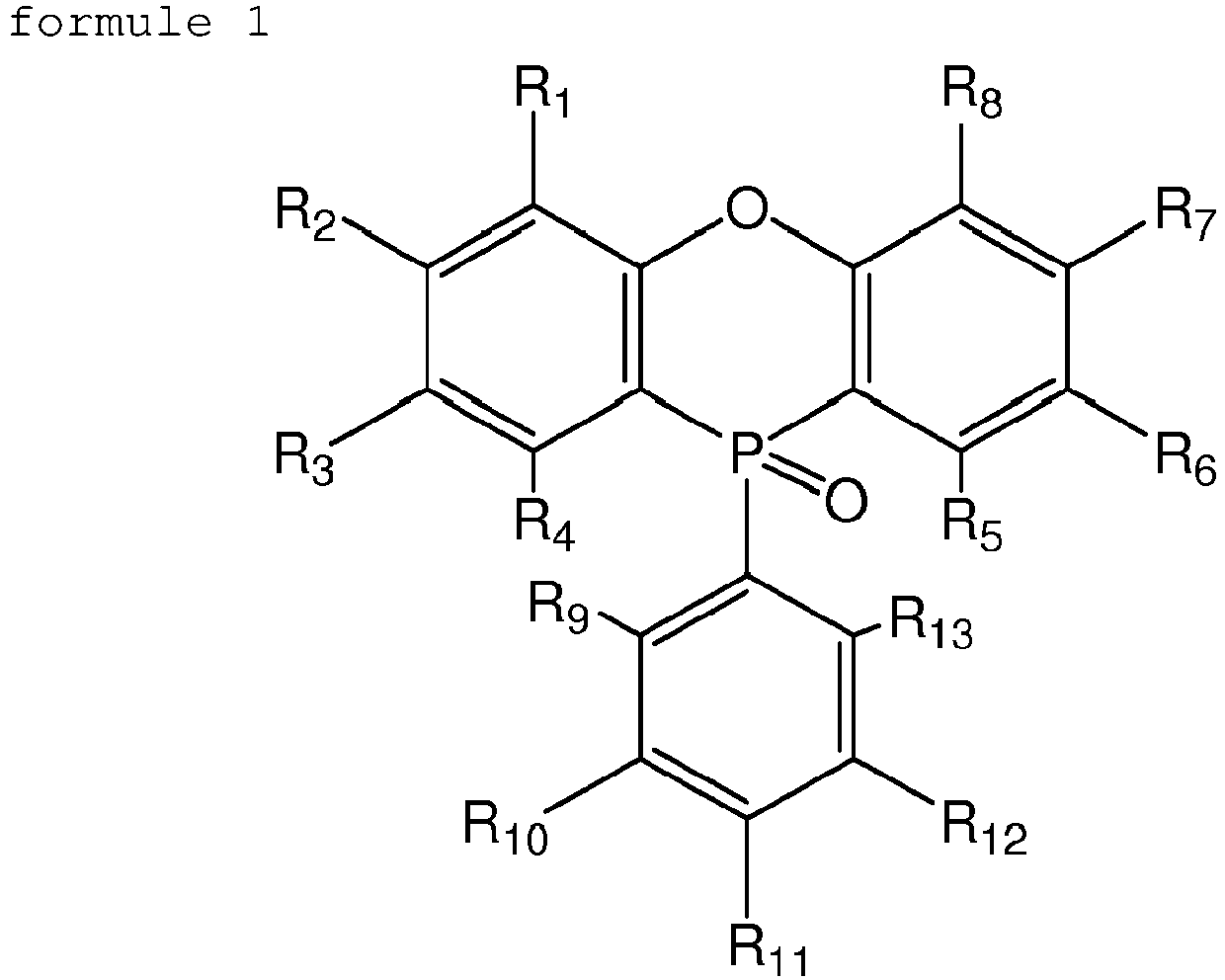 où, dans la formule 1, chacun de R9 à R13 est indépendamment choisi parmi l'hydrogène, le deutérium, -F, -Cl, -Br, -I, un groupe hydroxyle, un groupe cyano, un groupe nitro, un groupe amino, un groupe amidino, un groupe hydrazine, un groupe hydrazone, un groupe acide carboxylique ou un sel de celui-ci, un groupe acide sulfonique ou un sel de celui-ci, un groupe acide phosphorique ou un sel de celui-ci, un groupe alkyle en C1 à C60 substitué ou non substitué, un groupe alcényle en C2 à C60 substitué ou non substitué, un groupe alcynyle en C2 à C60 substitué ou non substitué, un groupe alkoxy en C1 à C60 substitué ou non substitué, un groupe cycloalkyle en C3 à C10 substitué ou non substitué, un groupe hétérocycloalkyle en C1 à C10 substitué ou non substitué, un groupe cycloalcényle en C3 à C10 substitué ou non substitué, un groupe hétérocycloalcényle en C1 à C10 substitué ou non substitué, un groupe aryle en C6 à C60 substitué ou non substitué, un groupe hétéroaryle en C1 à C60 substitué ou non substitué, un groupe carbocyclique en C5 à C60 substitué ou non substitué, un groupe hétérocyclique en C1 à C60 substitué ou non substitué, un groupe polycyclique en C8 à C60 condensé non aromatique monovalent substitué ou non substitué, et un groupe hétéropolycyclique à 8 à 60 chaînons condensé non aromatique monovalent substitué ou non substitué ;chacun de R1 à R8 est un groupe tel que défini pour R9 ou un groupe représenté par la formule 2, ou bien une ou plusieurs paires de groupes R1 à R8 rattachées à des atomes de carbone adjacents sont jointes pour former un groupe carbocyclique en C5 à C60 ou un groupe hétérocyclique en C1 à C60, sous réserve que l'un choisi parmi R1 à R8 soit un groupe représenté par la formule 2 :
formule 2 *-(L)1-(Ar)m
où, dans la formule 2, L est choisi parmi un groupe arylène en C6 à C60 substitué ou non substitué, un groupe hétéroarylène en C1 à C60 substitué ou non substitué, un groupe polycyclique en C8 à C60 condensé non aromatique divalent substitué ou non substitué, et un groupe hétéropolycyclique à 8 à 60 chaînons condensé non aromatique divalent substitué ou non substitué ;1 est un entier choisi parmi 0 à 2 ;m est un entier choisi parmi 1 à 3 ;Ar est l'un choisi parmi les formules 3a à 3k :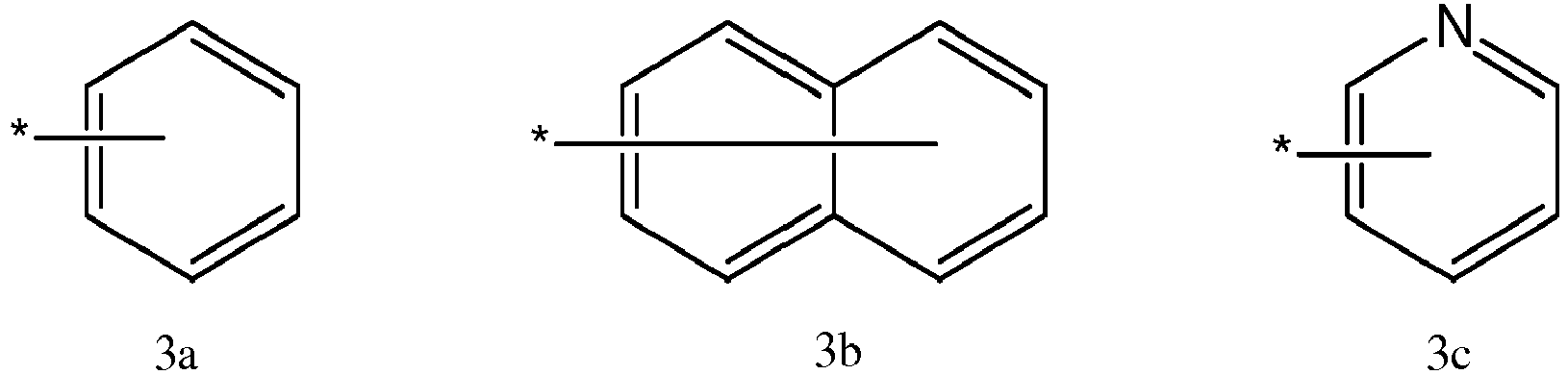
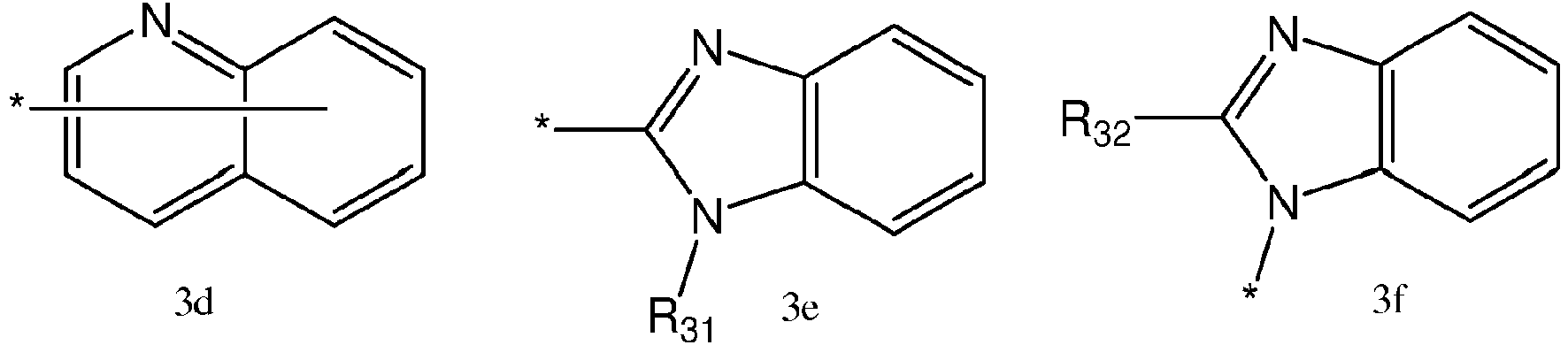
 X indique CH ou N ;chacun de R31 à R34, Z1 et Z2 est indépendamment choisi parmi l'hydrogène, le deutérium, -F, -Cl, -Br, -I, un groupe hydroxyle, un groupe cyano, un groupe nitro, un groupe amino, un groupe amidino, un groupe hydrazine, un groupe hydrazone, un groupe acide carboxylique ou un sel de celui-ci, un groupe acide sulfonique ou un sel de celui-ci, un groupe acide phosphorique ou un sel de celui-ci, un groupe alkyle en C1 à C20 substitué ou non substitué, un groupe aryle en C6 à C20 substitué ou non substitué, un groupe hétéroaryle en C1 à C20 substitué ou non substitué, un groupe polycyclique en C8 à C60 condensé non aromatique monovalent substitué ou non substitué, et un groupe hétéropolycyclique à 8 à 60 chaînons condensé non aromatique monovalent substitué ou non substitué ;p est un entier choisi parmi 1 à 3 ; et* indique un site de liaison,et quand le nombre de L et le nombre d'Ar sont chacun de deux ou plus de deux, deux ou plus de deux L sont identiques ou différents et deux ou plus de deux Ar sont identiques ou différents ; etle groupe alkyle en C1 à C60 substitué, le groupe alcényle en C2 à C60 substitué, le groupe alcynyle en C2 à C60 substitué, le groupe alkoxy en C1 à C60 substitué, le groupe cycloalkyle en C3 à C10 substitué, le groupe hétérocycloalkyle en C1 à C10 substitué, le groupe cycloalcényle en C3 à C10 substitué, le groupe hétérocycloalcényle en C1 à C10 substitué, le groupe aryle en C6 à C60 substitué, le groupe hétéroaryle en C1 à C60 substitué, le groupe carbocyclique en C5 à C60 substitué, le groupe hétérocyclique en C1 à C60 substitué, le groupe polycyclique en C8 à C60 condensé non aromatique monovalent substitué, le groupe hétéropolycyclique à 8 à 60 chaînons condensé non aromatique monovalent substitué, le groupe arylène en C6 à C60 substitué ou non substitué, le groupe hétéroarylène en C1 à C60 substitué ou non substitué, le groupe polycyclique en C8 à C60 condensé non aromatique divalent substitué, et le groupe hétéropolycyclique à 8 à 60 chaînons condensé non aromatique divalent substitué sont substitués par un ou plusieurs substituants choisis dans l'ensemble constitué par :le deutérium, -F, -Cl, -Br, -I, un groupe hydroxyle, un groupe cyano, un groupe nitro, un groupe amino, un groupe amidino, un groupe hydrazine, un groupe hydrazone, un groupe acide carboxylique ou un sel de celui-ci, un groupe acide sulfonique ou un sel de celui-ci, un groupe acide phosphorique ou un sel de celui-ci, un groupe alkyle en C1 à C60, un groupe alcényle en C2 à C60, un groupe alcynyle en C2 à C60, et un groupe alkoxy en C1 à C60 ;un groupe alkyle en C1 à C60, un groupe alcényle en C2 à C60, un groupe alcynyle en C2 à C60, et un groupe alkoxy en C1 à C60, chacun substitué par au moins l'un choisi parmi le deutérium, -F, -Cl, -Br, -I, un groupe hydroxyle, un groupe cyano, un groupe nitro, un groupe amino, un groupe amidino, un groupe hydrazine, un groupe hydrazone, un groupe acide carboxylique ou un sel de celui-ci, un groupe acide sulfonique ou un sel de celui-ci, un groupe acide phosphorique ou un sel de celui-ci, un groupe cycloalkyle en C3 à C10, un groupe hétérocycloalkyle en C2 à C10, un groupe cycloalcényle en C3 à C10, un groupe hétérocycloalcényle en C2 à C10, un groupe aryle en C6 à C60, un groupe aryloxy en C6 à C60, un groupe arylthio en C6 à C60, un groupe hétéroaryle en C2 à C60, un groupe polycyclique en C8 à C60 condensé non aromatique monovalent, un groupe hétéropolycyclique à 8 à 60 chaînons condensé non aromatique monovalent, -N(Q11) (Q12), -Si(Q13) (Q14) (Q15), et -B(Q16) (Q17);un groupe cycloalkyle en C3 à C10, un groupe hétérocycloalkyle en C2 à C10, un groupe cycloalcényle en C3 à C10, un groupe hétérocycloalcényle en C2 à C10, un groupe aryle en C6 à C60, un groupe aryloxy en C6 à C60, un groupe arylthio en C6 à C60, un groupe hétéroaryle en C2 à C60, un groupe polycyclique en C8 à C60 condensé non aromatique monovalent, et un groupe hétéropolycyclique à 8 à 60 chaînons condensé non aromatique monovalent ; etun groupe cycloalkyle en C3 à C10, un groupe hétérocycloalkyle en C2 à C10, un groupe cycloalcényle en C3 à C10, un groupe hétérocycloalcényle en C2 à C10, un groupe aryle en C6 à C60, un groupe aryloxy en C6 à C60, un groupe arylthio en C6 à C60, un groupe hétéroaryle en C2 à C60, un groupe polycyclique en C8 à C60 condensé non aromatique monovalent, et un groupe hétéropolycyclique à 8 à 60 chaînons condensé non aromatique monovalent, chacun substitué par au moins l'un choisi parmi le deutérium, -F, -Cl, -Br, -I, un groupe hydroxyle, un groupe cyano, un groupe nitro, un groupe amino, un groupe amidino, un groupe hydrazine, un groupe hydrazone, un groupe acide carboxylique ou un sel de celui-ci, un groupe acide sulfonique ou un sel de celui-ci, un groupe acide phosphorique ou un sel de celui-ci, un groupe alkyle en C1 à C60, un groupe alcényle en C2 à C60, un groupe alcynyle en C2 à C60, un groupe alkoxy en C1 à C60, un groupe cycloalkyle en C3 à C10, un groupe hétérocycloalkyle en C2 à C10, un groupe cycloalcényle en C3 à C10, un groupe hétérocycloalcényle en C2 à C10, un groupe aryle en C6 à C60, un groupe aryloxy en C6 à C60, un groupe arylthio en C6 à C60, un groupe hétéroaryle en C2 à C60, un groupe polycyclique en C8 à C60 condensé non aromatique monovalent, un groupe hétéropolycyclique à 8 à 60 chaînons condensé non aromatique monovalent, -N(Q21) (Q22), -Si(Q23) (Q24) (Q25), et -B(Q26) (Q27);où chacun de Q11 à Q17 et de Q21 à Q27 est indépendamment choisi parmi l'hydrogène, le deutérium, -F, -Cl, -Br, -I, un groupe hydroxyle, un groupe cyano, un groupe nitro, un groupe amino, un groupe amidino, un groupe hydrazine, un groupe hydrazone, un groupe acide carboxylique ou un sel de celui-ci, un groupe acide sulfonique ou un sel de celui-ci, un groupe acide phosphorique ou un sel de celui-ci, un groupe alkyle en C1 à C60, un groupe alcényle en C2 à C60, un groupe alcynyle en C2 à C60, un groupe alkoxy en C1 à C60, un groupe cycloalkyle en C3 à C10, un groupe hétérocycloalkyle en C1 à C10, un groupe cycloalcényle en C3 à C10, un groupe hétérocycloalcényle en C1 à C10, un groupe aryle en C6 à C60, un groupe hétéroaryle en C1 à C60, un groupe polycyclique en C8 à C60 condensé non aromatique monovalent, et un groupe hétéropolycyclique à 8 à 60 chaînons condensé non aromatique monovalent.
 - Dispositif électroluminescent organique selon la revendication 1, dans lequel la couche de transport d'électrons comprend le composé représenté par la formule 1.
- Dispositif électroluminescent organique selon la revendication 1 ou la revendication 2, dans lequel chacun de R5, R8 et R9 à R13 dans la formule 1 est indépendamment l'hydrogène ou le deutérium ; et/ou R6 ou R7 dans la formule 1 est un groupe représenté par la formule 2.
- Dispositif électroluminescent organique selon l'une quelconque des revendications 1 à 3, dans lequel chacun de R1 à R4 dans la formule 1 est indépendamment choisi parmi l'hydrogène, le deutérium, et un groupe alcényle en C2 à C60 substitué ou non substitué, et/ou
dans lequel R1 et R2 dans la formule 1 sont liés pour former un groupe carbocyclique en C5 à C60 ou un groupe hétérocyclique en C1 à C60, R2 et R3 sont liés pour former un groupe carbocyclique en C5 à C60 ou un groupe hétérocyclique en C1 à C60, ou R3 et R4 sont liés pour former un groupe carbocyclique en C5 à C60 ou un groupe hétérocyclique en C1 à C60. - Dispositif électroluminescent organique selon l'une quelconque des revendications précédentes, dans lequel L dans la formule 2 est l'un choisi parmi les formules 2a à 2g :


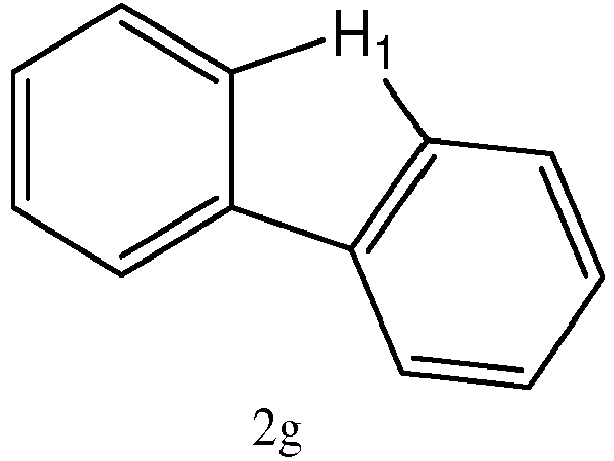 où, dans la formule 2g, H1 représente CR21R22 ou O,chacun de R21 et R22 est indépendamment choisi parmi l'hydrogène, le deutérium, -F, -Cl, -Br, -I, un groupe hydroxyle, un groupe cyano, un groupe nitro, un groupe amino, un groupe amidino, un groupe hydrazine, un groupe hydrazone, un groupe acide carboxylique ou un sel de celui-ci, un groupe acide sulfonique ou un sel de celui-ci, un groupe acide phosphorique ou un sel de celui-ci, un groupe alkyle en C1 à C20 substitué ou non substitué, un groupe aryle en C6 à C20 substitué ou non substitué, un groupe hétéroaryle en C1 à C20, un groupe polycyclique en C8 à C60 condensé non aromatique monovalent substitué ou non substitué, et un groupe hétéropolycyclique à 8 à 60 chaînons condensé non aromatique monovalent substitué ou non substitué, etchaque groupe représenté par les formules 2a à 2g est rattaché à Ar et le reste du composé de formule 1 en n'importe quelles positions disponibles du groupe représenté par les formules 2a à 2g.
 - Dispositif électroluminescent organique selon la revendication 1, dans lequel le composé représenté par la formule 1 est représenté par la formule 3, 4 ou 5 :


- Dispositif électroluminescent organique selon la revendication 1, dans lequel le composé représenté par la formule 1 est l'un choisi parmi les composés suivants :






- Dispositif électroluminescent organique selon l'une quelconque des revendications précédentes, dans lequel la région de transport de trous comprend un composé représenté par la formule 201A :

chacun de L201 à L203 est indépendamment choisi dans l'ensemble constitué par :un groupe phénylène, un groupe naphtylène, un groupe fluorénylène, un groupe spiro-fluorénylène, un groupe benzofluorénylène, un groupe dibenzofluorénylène, un groupe phénanthrénylène, un groupe anthracénylène, un groupe pyrénylène, un groupe chrysénylène, un groupe pyridinylène, un groupe pyrazinylène, un groupe pyrimidinylène, un groupe pyridazinylène, un groupe quinolinylène, un groupe isoquinolinylène, un groupe quinoxalinylène, un groupe quinazolinylène, un groupe carbazolylène, et un groupe triazinylène ; etun groupe phénylène, un groupe naphtylène, un groupe fluorénylène, un groupe spiro-fluorénylène, un groupe benzofluorénylène, un groupe dibenzofluorénylène, un groupe phénanthrénylène, un groupe anthracénylène, un groupe pyrénylène, un groupe chrysénylène, un groupe pyridinylène, un groupe pyrazinylène, un groupe pyrimidinylène, un groupe pyridazinylène, un groupe quinolinylène, un groupe isoquinolinylène, un groupe quinoxalinylène, un groupe quinazolinylène, un groupe carbazolylène, et un groupe triazinylène, chacun substitué par au moins l'un choisi parmi le deutérium, -F, -Cl, -Br, -I, un groupe hydroxyle, un groupe cyano, un groupe nitro, un groupe amino, un groupe amidino, un groupe hydrazine, un groupe hydrazone, un groupe acide carboxylique ou un sel de celui-ci, un groupe acide sulfonique ou un sel de celui-ci, un groupe acide phosphorique ou un sel de celui-ci, un groupe alkyle en C1 à C20, un groupe alkoxy en C1 à C20, un groupe phényle, un groupe biphényle, un groupe terphényle, un groupe biphényle, un groupe terphényle, un groupe naphtyle, un groupe fluorényle, un groupe spiro-fluorényle, un groupe benzofluorényle, un groupe dibenzofluorényle, un groupe phénanthrényle, un groupe anthracényle, un groupe pyrényle, un groupe chrysényle, un groupe pyridinyle, un groupe pyrazinyle, un groupe pyrimidinyle, un groupe pyridazinyle, un groupe quinolinyle, un groupe isoquinolinyle, un groupe quinoxalinyle, un groupe quinazolinyle, un groupe carbazolyle, et un groupe triazinyle ;chacun de xa1 à xa3 vaut indépendamment 0 ou 1 ;chacun de R203 et R211 est indépendamment choisi dans l'ensemble constitué par :un groupe phényle, un groupe biphényle, un groupe terphényle, un groupe biphényle, un groupe terphényle, un groupe naphtyle, un groupe fluorényle, un groupe spiro-fluorényle, un groupe benzofluorényle, un groupe dibenzofluorényle, un groupe phénanthrényle, un groupe anthracényle, un groupe pyrényle, un groupe chrysényle, un groupe pyridinyle, un groupe pyrazinyle, un groupe pyrimidinyle, un groupe pyridazinyle, un groupe quinolinyle, un groupe isoquinolinyle, un groupe quinoxalinyle, un groupe quinazolinyle, un groupe carbazolyle, et un groupe triazinyle ; etun groupe phényle, un groupe biphényle, un groupe terphényle, un groupe naphtyle, un groupe fluorényle, un groupe spiro-fluorényle, un groupe benzofluorényle, un groupe dibenzofluorényle, un groupe phénanthrényle, un groupe anthracényle, un groupe pyrényle, un groupe chrysényle, un groupe phénanthrényle, un groupe anthracényle, un groupe pyrényle, un groupe chrysényle, un groupe pyridinyle, un groupe pyrazinyle, un groupe pyrimidinyle, un groupe pyridazinyle, un groupe quinolinyle, un groupe isoquinolinyle, un groupe quinoxalinyle, un groupe quinazolinyle, un groupe carbazolyle, et un groupe triazinyle, chacun substitué par au moins l'un choisi parmi le deutérium, -F, -Cl, -Br, -I, un groupe hydroxyle, un groupe cyano, un groupe nitro, un groupe amino, un groupe amidino, un groupe hydrazine, un groupe hydrazone, un groupe acide carboxylique ou un sel de celui-ci, un groupe acide sulfonique ou un sel de celui-ci, un groupe acide phosphorique ou un sel de celui-ci, un groupe alkyle en C1 à C20, un groupe alkoxy en C1 à C20, un groupe phényle, un groupe biphényle, un groupe terphényle, un groupe naphtyle, un groupe fluorényle, un groupe spiro-fluorényle, un groupe benzofluorényle, un groupe dibenzofluorényle, un groupe phénanthrényle, un groupe anthracényle, un groupe pyrényle, un groupe chrysényle, un groupe pyridinyle, un groupe pyrazinyle, un groupe pyrimidinyle, un groupe pyridazinyle, un groupe quinolinyle, un groupe isoquinolinyle, un groupe quinoxalinyle, un groupe quinazolinyle, un groupe carbazolyle, et un groupe triazinyle ;chacun de R213 et R214 est indépendamment choisi dans l'ensemble constitué par :un groupe alkyle en C1 à C20 et un groupe alkoxy en C1 à C20 ;un groupe alkyle en C1 à C20 et un groupe alkoxy en C1 à C20, chacun substitué par au moins l'un choisi parmi le deutérium, -F, -Cl, -Br, -I, un groupe hydroxyle, un groupe cyano, un groupe nitro, un groupe amino, un groupe amidino, un groupe hydrazine, un groupe hydrazone, un groupe acide carboxylique ou un sel de celui-ci, un groupe acide sulfonique ou un sel de celui-ci, un groupe acide phosphorique ou un sel de celui-ci, un groupe phényle, un groupe biphényle, un groupe terphényle, un groupe naphtyle, un groupe fluorényle, un groupe spiro-fluorényle, un groupe benzofluorényle, un groupe dibenzofluorényle, un groupe phénanthrényle, un groupe anthracényle, un groupe pyrényle, un groupe chrysényle, un groupe pyridinyle, un groupe pyrazinyle, un groupe pyrimidinyle, un groupe pyridazinyle, un groupe quinolinyle, un groupe isoquinolinyle, un groupe quinoxalinyle, un groupe quinazolinyle, un groupe carbazolyle, et un groupe triazinyle ;un groupe phényle, un groupe biphényle, un groupe terphényle, un groupe naphtyle, un groupe fluorényle, un groupe spiro-fluorényle, un groupe benzofluorényle, un groupe dibenzofluorényle, un groupe phénanthrényle, un groupe anthracényle, un groupe pyrényle, un groupe chrysényle, un groupe pyridinyle, un groupe pyrazinyle, un groupe pyrimidinyle, un groupe pyridazinyle, un groupe quinolinyle, un groupe isoquinolinyle, un groupe quinoxalinyle, un groupe quinazolinyle, un groupe carbazolyle, et un groupe triazinyle ; etun groupe phényle, un groupe biphényle, un groupe terphényle, un groupe naphtyle, un groupe fluorényle, un groupe spiro-fluorényle, un groupe benzofluorényle, un groupe dibenzofluorényle, un groupe phénanthrényle, un groupe anthracényle, un groupe pyrényle, un groupe chrysényle, un groupe pyridinyle, un groupe pyrazinyle, un groupe pyrimidinyle, un groupe pyridazinyle, un groupe quinolinyle, un groupe isoquinolinyle, un groupe quinoxalinyle, un groupe quinazolinyle, un groupe carbazolyle, et un groupe triazinyle, chacun substitué par au moins l'un choisi parmi le deutérium, -F, -Cl, -Br, -I, un groupe hydroxyle, un groupe cyano, un groupe nitro, un groupe amino, un groupe amidino, un groupe hydrazine, un groupe hydrazone, un groupe acide carboxylique ou un sel de celui-ci, un groupe acide sulfonique ou un sel de celui-ci, un groupe acide phosphorique ou un sel de celui-ci, un groupe alkyle en C1 à C20, un groupe alkoxy en C1 à C20, un groupe phényle, un groupe biphényle, un groupe terphényle, un groupe naphtyle, un groupe fluorényle, un groupe spiro-fluorényle, un groupe benzofluorényle, un groupe dibenzofluorényle, un groupe phénanthrényle, un groupe anthracényle, un groupe pyrényle, un groupe chrysényle, un groupe pyridinyle, un groupe pyrazinyle, un groupe pyrimidinyle, un groupe pyridazinyle, un groupe quinolinyle, un groupe isoquinolinyle, un groupe quinoxalinyle, un groupe quinazolinyle, un groupe carbazolyle, et un groupe triazinyle ; etchacun de R215 et R216 est indépendamment choisi dans l'ensemble constitué par :l'hydrogène, le deutérium, -F, -Cl, -Br, -I, un groupe hydroxyle, un groupe cyano, un groupe nitro, un groupe amino, un groupe amidino, un groupe hydrazine, un groupe hydrazone, un groupe acide carboxylique ou un sel de celui-ci, un groupe acide sulfonique ou un sel de celui-ci, un groupe acide phosphorique ou un sel de celui-ci, un groupe alkyle en C1 à C20, et un groupe alkoxy en C1 à C20 ;un groupe alkyle en C1 à C20, et un groupe alkoxy en C1 à C20, chacun substitué par au moins l'un choisi parmi le deutérium, -F, -Cl, -Br, -I, un groupe hydroxyle, un groupe cyano, un groupe nitro, un groupe amino, un groupe amidino, un groupe hydrazine, un groupe hydrazone, un groupe acide carboxylique ou un sel de celui-ci, un groupe acide sulfonique ou un sel de celui-ci, un groupe acide phosphorique ou un sel de celui-ci, un groupe phényle, un groupe biphényle, un groupe terphényle, un groupe naphtyle, un groupe fluorényle, un groupe spiro-fluorényle, un groupe benzofluorényle, un groupe dibenzofluorényle, un groupe phénanthrényle, un groupe anthracényle, un groupe pyrényle, un groupe chrysényle, un groupe pyridinyle, un groupe pyrazinyle, un groupe pyrimidinyle, un groupe pyridazinyle, un groupe quinolinyle, un groupe isoquinolinyle, un groupe quinoxalinyle, un groupe quinazolinyle, un groupe carbazolyle, et un groupe triazinyle ;un groupe phényle, un groupe biphényle, un groupe terphényle, un groupe naphtyle, un groupe fluorényle, un groupe spiro-fluorényle, un groupe benzofluorényle, un groupe dibenzofluorényle, un groupe phénanthrényle, un groupe anthracényle, un groupe pyrényle, un groupe chrysényle, un groupe pyridinyle, un groupe pyrazinyle, un groupe pyrimidinyle, un groupe pyridazinyle, un groupe quinolinyle, un groupe isoquinolinyle, un groupe quinoxalinyle, un groupe quinazolinyle, et un groupe triazinyle ; etun groupe phényle, un groupe biphényle, un groupe terphényle, un groupe naphtyle, un groupe fluorényle, un groupe spiro-fluorényle, un groupe benzofluorényle, un groupe dibenzofluorényle, un groupe phénanthrényle, un groupe anthracényle, un groupe pyrényle, un groupe chrysényle, un groupe pyridinyle, un groupe pyrazinyle, un groupe pyrimidinyle, un groupe pyridazinyle, un groupe quinolinyle, un groupe isoquinolinyle, un groupe quinoxalinyle, un groupe quinazolinyle, un groupe carbazolyle, et un groupe triazinyle, chacun substitué par au moins l'un choisi parmi le deutérium, -F, -Cl, -Br, -I, un groupe hydroxyle, un groupe cyano, un groupe nitro, un groupe amino, un groupe amidino, un groupe hydrazine, un groupe hydrazone, un groupe acide carboxylique ou un sel de celui-ci, un groupe acide sulfonique ou un sel de celui-ci, un groupe acide phosphorique ou un sel de celui-ci, un groupe alkyle en C1 à C20, un groupe alkoxy en C1 à C20, un groupe phényle, un groupe biphényle, un groupe terphényle, un groupe naphtyle, un groupe fluorényle, un groupe spiro-fluorényle, un groupe benzofluorényle, un groupe dibenzofluorényle, un groupe phénanthrényle, un groupe anthracényle, un groupe pyrényle, un groupe chrysényle, un groupe pyridinyle, un groupe pyrazinyle, un groupe pyrimidinyle, un groupe pyridazinyle, un groupe quinolinyle, un groupe isoquinolinyle, un groupe quinoxalinyle, un groupe quinazolinyle, un groupe carbazolyle, et un groupe triazinyle. - Dispositif électroluminescent organique selon la revendication 8, dans lequel R211 dans la formule 201A est un groupe phényle ou un groupe pyridyle, ou
un groupe phényle ou un groupe pyridyle, chacun substitué par au moins l'un choisi parmi le deutérium, -F, -Cl, -Br, -I, un groupe hydroxyle, un groupe cyano, un groupe nitro, un groupe amino, un groupe amidino, un groupe hydrazine, un groupe hydrazone, un groupe acide carboxylique ou un sel de celui-ci, un groupe acide sulfonique ou un sel de celui-ci, un groupe acide phosphorique ou un sel de celui-ci, un groupe alkyle en C1 à C20, un groupe alkoxy en C1 à C20, un groupe phényle, un groupe biphényle, un groupe terphényle, un groupe naphtyle, un groupe fluorényle, un groupe spiro-fluorényle, un groupe benzofluorényle, un groupe dibenzofluorényle, un groupe phénanthrényle, un groupe anthracényle, un groupe pyrényle, un groupe chrysényle, un groupe pyridinyle, un groupe pyrazinyle, un groupe pyrimidinyle, un groupe pyridazinyle, un groupe quinolinyle, un groupe isoquinolinyle, un groupe quinoxalinyle, un groupe quinazolinyle, un groupe carbazolyle, et un groupe triazinyle. - Dispositif électroluminescent organique selon la revendication 8 ou 9, dans lequel chacun de R213 et R214 dans la formule 201A est indépendamment un groupe méthyle ou un groupe phényle.
- Dispositif électroluminescent organique selon l'une quelconque des revendications 8 à 10, dans lequel la couche de transport de trous de la région de transport de trous comprend le composé représenté par la formule 201A.
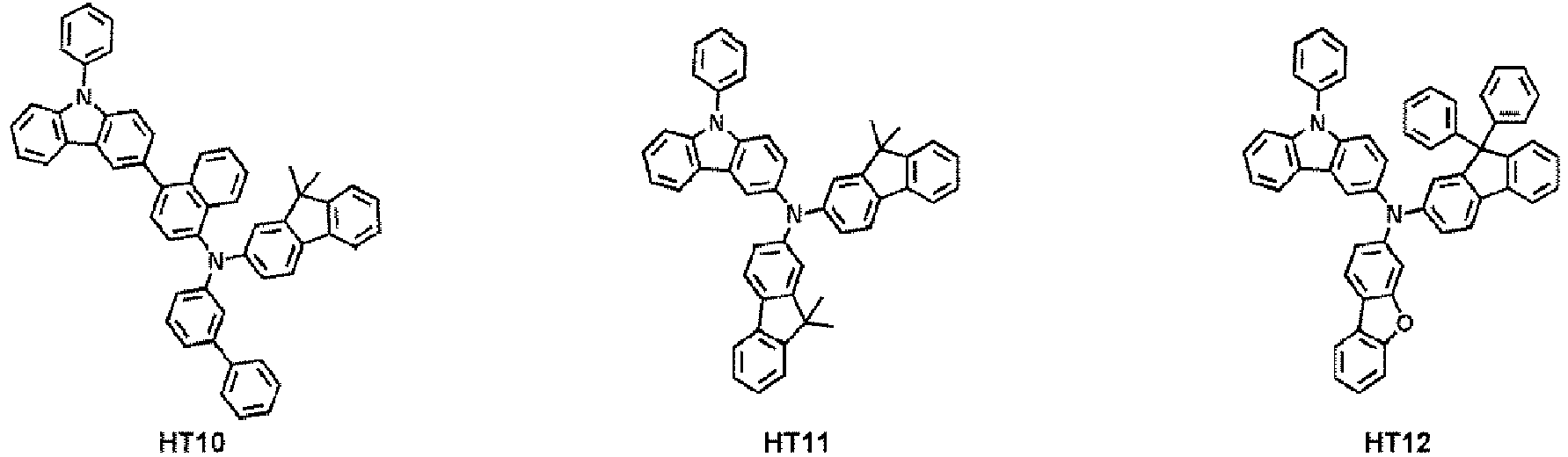
- Dispositif électroluminescent organique selon la revendication 8 ou 11, dans lequel le composé représenté par la formule 201A est l'un choisi parmi les composés HT1 à HT15 :



- Dispositif électroluminescent organique selon l'une quelconque des revendications 1 à 7, dans lequel la région de transport de trous comprend un composé choisi parmi les composés HT16 à HT39 :


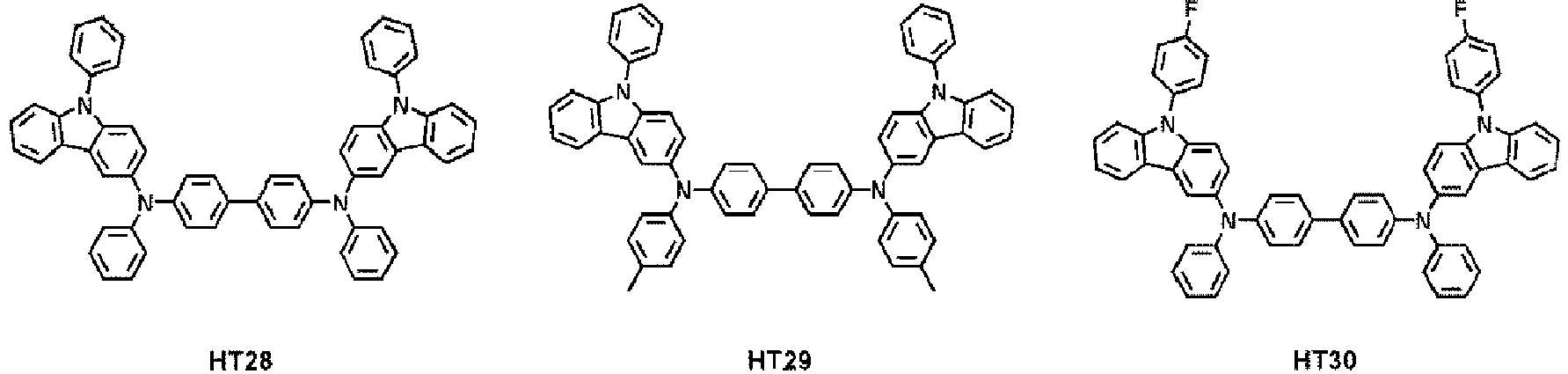
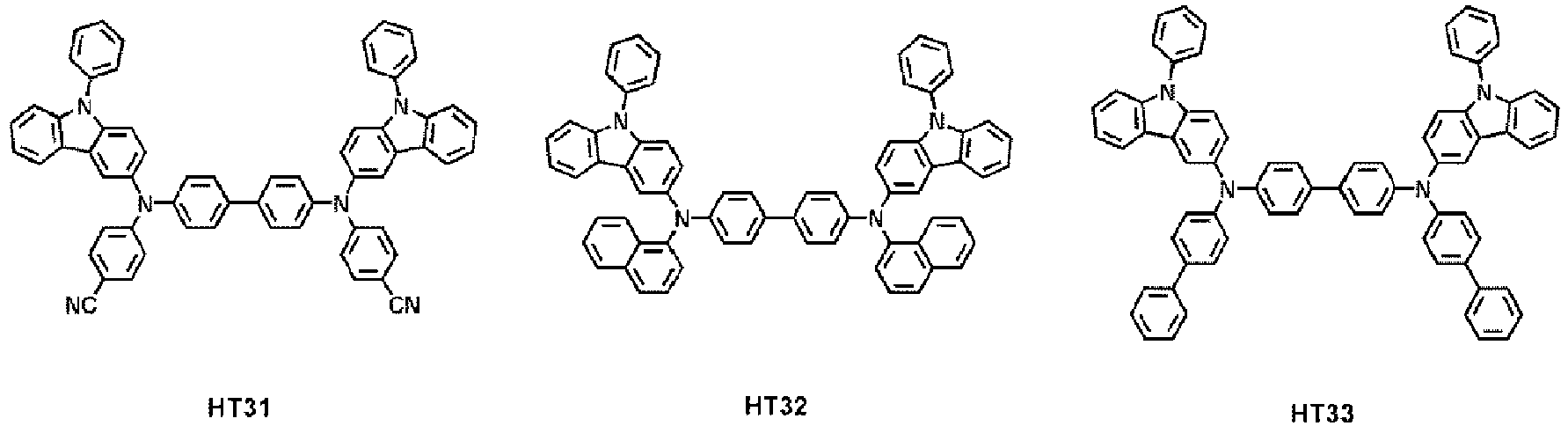


- Dispositif électroluminescent organique selon l'une quelconque des revendications précédentes, dans lequel la région de transport d'électrons comprend un complexe métallique ;
de préférence dans lequel la région de transport d'électrons comprend ET-D1 ou ET-D2 :
Applications Claiming Priority (1)
| Application Number | Priority Date | Filing Date | Title |
|---|---|---|---|
| KR1020160020685A KR102547685B1 (ko) | 2016-02-22 | 2016-02-22 | 유기 발광 소자 |
Publications (2)
| Publication Number | Publication Date |
|---|---|
| EP3214153A1 EP3214153A1 (fr) | 2017-09-06 |
| EP3214153B1 true EP3214153B1 (fr) | 2020-03-25 |
Family
ID=58108521
Family Applications (1)
| Application Number | Title | Priority Date | Filing Date |
|---|---|---|---|
| EP17157381.9A Active EP3214153B1 (fr) | 2016-02-22 | 2017-02-22 | Dispositif électroluminescent organique |
Country Status (4)
| Country | Link |
|---|---|
| US (1) | US10096780B2 (fr) |
| EP (1) | EP3214153B1 (fr) |
| KR (2) | KR102547685B1 (fr) |
| CN (1) | CN107104204B (fr) |
Families Citing this family (16)
| Publication number | Priority date | Publication date | Assignee | Title |
|---|---|---|---|---|
| KR102756323B1 (ko) * | 2016-12-27 | 2025-01-16 | 엘지디스플레이 주식회사 | 전계발광 표시장치 |
| CN109627175A (zh) * | 2017-10-09 | 2019-04-16 | 北京夏禾科技有限公司 | 可交联氘代的电荷传输化合物,包含该化合物的有机电致发光器件及溶液配方 |
| CN109686848B (zh) * | 2017-10-19 | 2022-01-28 | 佳能株式会社 | 包括多个有机电致发光元件的发光器件 |
| JP6833776B2 (ja) * | 2017-10-19 | 2021-02-24 | キヤノン株式会社 | 複数の有機el素子を有する発光装置 |
| KR102571084B1 (ko) * | 2017-10-31 | 2023-08-28 | 삼성디스플레이 주식회사 | 헤테로시클릭 화합물 및 이를 포함한 유기 발광 소자 |
| KR102783339B1 (ko) * | 2018-06-12 | 2025-03-20 | 삼성디스플레이 주식회사 | 헤테로시클릭 화합물 및 이를 포함한 유기 발광 소자 |
| KR102857112B1 (ko) * | 2019-12-12 | 2025-09-09 | 삼성디스플레이 주식회사 | 유기 발광 소자 및 이를 포함하는 장치 |
| KR20210075282A (ko) * | 2019-12-12 | 2021-06-23 | 삼성디스플레이 주식회사 | 발광 소자 |
| CN111548278B (zh) * | 2019-12-31 | 2021-05-28 | 南京高光半导体材料有限公司 | 一种新型有机电致发光化合物及有机电致发光器件 |
| CN111153809B (zh) * | 2020-01-15 | 2023-06-06 | 吉林奥来德光电材料股份有限公司 | 一种芳胺类化合物及其制备方法和应用 |
| CN113402556B (zh) * | 2020-03-17 | 2025-11-18 | 北京鼎材科技股份有限公司 | 一种化合物及其应用 |
| CN111574565B (zh) * | 2020-05-26 | 2023-08-22 | 武汉天马微电子有限公司 | 一种化合物及其制备方法和应用 |
| KR102946782B1 (ko) * | 2021-03-11 | 2026-04-03 | 삼성디스플레이 주식회사 | 발광 소자 및 발광 소자용 아민 화합물 |
| EP4693470A1 (fr) | 2023-05-18 | 2026-02-11 | LG Chem, Ltd. | Matériau d'électrode positive, et électrode positive et batterie secondaire au lithium le comprenant |
| EP4697408A1 (fr) | 2023-05-18 | 2026-02-18 | LG Chem, Ltd. | Matériau d'électrode positive et électrode positive et batterie secondaire au lithium le comprenant |
| CN121127978A (zh) | 2023-05-18 | 2025-12-12 | 株式会社Lg化学 | 正极材料、包含其的正极和锂二次电池 |
Family Cites Families (16)
| Publication number | Priority date | Publication date | Assignee | Title |
|---|---|---|---|---|
| US4914234A (en) | 1986-03-05 | 1990-04-03 | American Cyanamid Company | 10,10-Dihydro-10-((substituted-carbonyl)imino)-10-phenyl-10H-phenoxaphosphine, hydrochloride |
| JP4505067B2 (ja) | 1998-12-16 | 2010-07-14 | 淳二 城戸 | 有機エレクトロルミネッセント素子 |
| DE10022186C1 (de) | 2000-05-06 | 2001-10-04 | Celanese Chem Europe Gmbh | Verfahren zur Herstellung von substituierten 10-Chlor-phenoxaphosphinen oder 10-Brom-phenoxaphosphinen |
| DE102005023437A1 (de) | 2005-05-20 | 2006-11-30 | Merck Patent Gmbh | Verbindungen für organische elektronische Vorrichtungen |
| KR100904070B1 (ko) | 2007-07-18 | 2009-06-23 | 제일모직주식회사 | 유기광전소자용 화합물 및 이를 이용한 유기광전소자 |
| KR101115255B1 (ko) | 2008-07-11 | 2012-02-15 | 주식회사 엘지화학 | 신규한 안트라센 유도체 및 이를 이용한 유기전자소자 |
| EP2395571B1 (fr) | 2010-06-10 | 2013-12-04 | Novaled AG | Dispositif Électronique organique comprenant un matériau de semiconducteur organique |
| JP5724588B2 (ja) | 2011-04-28 | 2015-05-27 | コニカミノルタ株式会社 | 有機エレクトロルミネッセンス素子材料、有機エレクトロルミネッセンス素子、表示装置および照明装置 |
| JP5782836B2 (ja) | 2011-05-27 | 2015-09-24 | コニカミノルタ株式会社 | 有機エレクトロルミネッセンス素子材料、有機エレクトロルミネッセンス素子、表示装置、照明装置、並びに化合物 |
| EP2719742B1 (fr) | 2011-06-13 | 2016-04-27 | LG Chem, Ltd. | Composés originaux et dispositif électronique organique utilisant ces composés |
| KR101983019B1 (ko) * | 2011-08-03 | 2019-05-28 | 메르크 파텐트 게엠베하 | 전자 소자용 물질 |
| TWI584513B (zh) | 2011-11-30 | 2017-05-21 | 諾瓦發光二極體有限公司 | 顯示器 |
| TWI605055B (zh) * | 2012-12-21 | 2017-11-11 | 陶氏全球科技有限責任公司 | 啡膦化合物 |
| TWI606056B (zh) * | 2012-12-21 | 2017-11-21 | 陶氏全球科技有限責任公司 | 用於有機發光二極體之組成物 |
| KR102188028B1 (ko) | 2013-06-18 | 2020-12-08 | 삼성디스플레이 주식회사 | 유기 발광 소자 |
| TW201529565A (zh) * | 2013-11-28 | 2015-08-01 | Univ Kyushu Nat Univ Corp | 發光材料、有機發光元件及化合物 |
-
2016
- 2016-02-22 KR KR1020160020685A patent/KR102547685B1/ko active Active
- 2016-08-24 US US15/246,141 patent/US10096780B2/en active Active
-
2017
- 2017-02-22 EP EP17157381.9A patent/EP3214153B1/fr active Active
- 2017-02-22 CN CN201710095797.1A patent/CN107104204B/zh active Active
-
2023
- 2023-04-25 KR KR1020230054119A patent/KR102654927B1/ko active Active
Non-Patent Citations (1)
| Title |
|---|
| None * |
Also Published As
| Publication number | Publication date |
|---|---|
| EP3214153A1 (fr) | 2017-09-06 |
| US20170244048A1 (en) | 2017-08-24 |
| KR20230064596A (ko) | 2023-05-10 |
| KR102547685B1 (ko) | 2023-06-27 |
| CN107104204A (zh) | 2017-08-29 |
| KR102654927B1 (ko) | 2024-04-05 |
| KR20170099027A (ko) | 2017-08-31 |
| US10096780B2 (en) | 2018-10-09 |
| CN107104204B (zh) | 2021-03-05 |
Similar Documents
| Publication | Publication Date | Title |
|---|---|---|
| EP3441391B1 (fr) | Composé hétérocyclique et élément électroluminescent organique le comprenant | |
| EP3214153B1 (fr) | Dispositif électroluminescent organique | |
| EP3447062B1 (fr) | Composé organométallique, dispositif électroluminescent organique comprenant le composé organométallique et appareil électroluminescent organique comprenant le dispositif électroluminescent organique | |
| EP3406597B1 (fr) | Composé cyclique condensé et dispositif électroluminescent organique l'incluant | |
| KR102536248B1 (ko) | 헤테로시클릭 화합물 및 이를 포함한 유기 발광 소자 | |
| EP3444241B1 (fr) | Composé aminé et dispositif électroluminescent organique contenant ce composé | |
| KR102597025B1 (ko) | 헤테로시클릭 화합물 및 이를 포함한 유기 발광 소자 | |
| EP3301097B1 (fr) | Dérivés de [1]benzothieno[3',2':4,5]imidazo[1,2-a]pyridine et composés similaires à être utilisés dans de dispositifs d'émission de lumière organiques (oleds) | |
| EP3502107B1 (fr) | Composé basé sur le 1-aminodibenzofurane et dispositif électroluminescent organique le comprenant | |
| KR20230064592A (ko) | 축합환 화합물 및 이를 포함한 유기 발광 소자 | |
| EP3879593A1 (fr) | Composé hétérocyclique et dispositif électroluminescent organique le comprenant | |
| EP3561894B1 (fr) | Composé de diamine et dispositif électroluminescent organique l'incluant | |
| EP3783007B1 (fr) | Composé organométallique et dispositif électroluminescent organique l'incluant | |
| EP3263558B1 (fr) | Composé hétérocyclique et dispositif électroluminescent organique l'incluant | |
| EP3418272B1 (fr) | Composés triazine et dispositifs électroluminescents organiques les incluant | |
| EP3748706B1 (fr) | Composé hétérocyclique et dispositif électroluminescent organique l'incluant | |
| KR102644563B1 (ko) | 축합환 화합물 및 이를 포함한 유기 발광 소자 | |
| KR102462422B1 (ko) | 아민계 화합물 및 이를 포함한 유기 발광 소자 | |
| KR102261646B1 (ko) | 아민계 화합물 및 이를 포함한 유기 발광 소자 | |
| EP3575295B1 (fr) | Composé hétérocyclique et dispositif électroluminescent organique l'incluant | |
| KR102504126B1 (ko) | 축합환 화합물 및 이를 포함한 유기 발광 소자 | |
| EP3333168B1 (fr) | Composé cyclique condensé et dispositif électroluminescent organique le comprenant | |
| KR20200052503A (ko) | 아민계 화합물 및 이를 포함한 유기 발광 소자 |
Legal Events
| Date | Code | Title | Description |
|---|---|---|---|
| PUAI | Public reference made under article 153(3) epc to a published international application that has entered the european phase |
Free format text: ORIGINAL CODE: 0009012 |
|
| STAA | Information on the status of an ep patent application or granted ep patent |
Free format text: STATUS: THE APPLICATION HAS BEEN PUBLISHED |
|
| AK | Designated contracting states |
Kind code of ref document: A1 Designated state(s): AL AT BE BG CH CY CZ DE DK EE ES FI FR GB GR HR HU IE IS IT LI LT LU LV MC MK MT NL NO PL PT RO RS SE SI SK SM TR |
|
| AX | Request for extension of the european patent |
Extension state: BA ME |
|
| STAA | Information on the status of an ep patent application or granted ep patent |
Free format text: STATUS: REQUEST FOR EXAMINATION WAS MADE |
|
| 17P | Request for examination filed |
Effective date: 20180228 |
|
| RBV | Designated contracting states (corrected) |
Designated state(s): AL AT BE BG CH CY CZ DE DK EE ES FI FR GB GR HR HU IE IS IT LI LT LU LV MC MK MT NL NO PL PT RO RS SE SI SK SM TR |
|
| STAA | Information on the status of an ep patent application or granted ep patent |
Free format text: STATUS: EXAMINATION IS IN PROGRESS |
|
| 17Q | First examination report despatched |
Effective date: 20180808 |
|
| GRAP | Despatch of communication of intention to grant a patent |
Free format text: ORIGINAL CODE: EPIDOSNIGR1 |
|
| STAA | Information on the status of an ep patent application or granted ep patent |
Free format text: STATUS: GRANT OF PATENT IS INTENDED |
|
| INTG | Intention to grant announced |
Effective date: 20190923 |
|
| GRAS | Grant fee paid |
Free format text: ORIGINAL CODE: EPIDOSNIGR3 |
|
| GRAA | (expected) grant |
Free format text: ORIGINAL CODE: 0009210 |
|
| STAA | Information on the status of an ep patent application or granted ep patent |
Free format text: STATUS: THE PATENT HAS BEEN GRANTED |
|
| AK | Designated contracting states |
Kind code of ref document: B1 Designated state(s): AL AT BE BG CH CY CZ DE DK EE ES FI FR GB GR HR HU IE IS IT LI LT LU LV MC MK MT NL NO PL PT RO RS SE SI SK SM TR |
|
| REG | Reference to a national code |
Ref country code: GB Ref legal event code: FG4D |
|
| REG | Reference to a national code |
Ref country code: DE Ref legal event code: R096 Ref document number: 602017013429 Country of ref document: DE |
|
| REG | Reference to a national code |
Ref country code: AT Ref legal event code: REF Ref document number: 1248532 Country of ref document: AT Kind code of ref document: T Effective date: 20200415 Ref country code: IE Ref legal event code: FG4D |
|
| PG25 | Lapsed in a contracting state [announced via postgrant information from national office to epo] |
Ref country code: RS Free format text: LAPSE BECAUSE OF FAILURE TO SUBMIT A TRANSLATION OF THE DESCRIPTION OR TO PAY THE FEE WITHIN THE PRESCRIBED TIME-LIMIT Effective date: 20200325 Ref country code: FI Free format text: LAPSE BECAUSE OF FAILURE TO SUBMIT A TRANSLATION OF THE DESCRIPTION OR TO PAY THE FEE WITHIN THE PRESCRIBED TIME-LIMIT Effective date: 20200325 Ref country code: NO Free format text: LAPSE BECAUSE OF FAILURE TO SUBMIT A TRANSLATION OF THE DESCRIPTION OR TO PAY THE FEE WITHIN THE PRESCRIBED TIME-LIMIT Effective date: 20200625 |
|
| PG25 | Lapsed in a contracting state [announced via postgrant information from national office to epo] |
Ref country code: BG Free format text: LAPSE BECAUSE OF FAILURE TO SUBMIT A TRANSLATION OF THE DESCRIPTION OR TO PAY THE FEE WITHIN THE PRESCRIBED TIME-LIMIT Effective date: 20200625 Ref country code: SE Free format text: LAPSE BECAUSE OF FAILURE TO SUBMIT A TRANSLATION OF THE DESCRIPTION OR TO PAY THE FEE WITHIN THE PRESCRIBED TIME-LIMIT Effective date: 20200325 Ref country code: LV Free format text: LAPSE BECAUSE OF FAILURE TO SUBMIT A TRANSLATION OF THE DESCRIPTION OR TO PAY THE FEE WITHIN THE PRESCRIBED TIME-LIMIT Effective date: 20200325 Ref country code: HR Free format text: LAPSE BECAUSE OF FAILURE TO SUBMIT A TRANSLATION OF THE DESCRIPTION OR TO PAY THE FEE WITHIN THE PRESCRIBED TIME-LIMIT Effective date: 20200325 Ref country code: GR Free format text: LAPSE BECAUSE OF FAILURE TO SUBMIT A TRANSLATION OF THE DESCRIPTION OR TO PAY THE FEE WITHIN THE PRESCRIBED TIME-LIMIT Effective date: 20200626 |
|
| REG | Reference to a national code |
Ref country code: NL Ref legal event code: MP Effective date: 20200325 |
|
| REG | Reference to a national code |
Ref country code: LT Ref legal event code: MG4D |
|
| PG25 | Lapsed in a contracting state [announced via postgrant information from national office to epo] |
Ref country code: NL Free format text: LAPSE BECAUSE OF FAILURE TO SUBMIT A TRANSLATION OF THE DESCRIPTION OR TO PAY THE FEE WITHIN THE PRESCRIBED TIME-LIMIT Effective date: 20200325 |
|
| PG25 | Lapsed in a contracting state [announced via postgrant information from national office to epo] |
Ref country code: SK Free format text: LAPSE BECAUSE OF FAILURE TO SUBMIT A TRANSLATION OF THE DESCRIPTION OR TO PAY THE FEE WITHIN THE PRESCRIBED TIME-LIMIT Effective date: 20200325 Ref country code: IS Free format text: LAPSE BECAUSE OF FAILURE TO SUBMIT A TRANSLATION OF THE DESCRIPTION OR TO PAY THE FEE WITHIN THE PRESCRIBED TIME-LIMIT Effective date: 20200725 Ref country code: LT Free format text: LAPSE BECAUSE OF FAILURE TO SUBMIT A TRANSLATION OF THE DESCRIPTION OR TO PAY THE FEE WITHIN THE PRESCRIBED TIME-LIMIT Effective date: 20200325 Ref country code: EE Free format text: LAPSE BECAUSE OF FAILURE TO SUBMIT A TRANSLATION OF THE DESCRIPTION OR TO PAY THE FEE WITHIN THE PRESCRIBED TIME-LIMIT Effective date: 20200325 Ref country code: SM Free format text: LAPSE BECAUSE OF FAILURE TO SUBMIT A TRANSLATION OF THE DESCRIPTION OR TO PAY THE FEE WITHIN THE PRESCRIBED TIME-LIMIT Effective date: 20200325 Ref country code: CZ Free format text: LAPSE BECAUSE OF FAILURE TO SUBMIT A TRANSLATION OF THE DESCRIPTION OR TO PAY THE FEE WITHIN THE PRESCRIBED TIME-LIMIT Effective date: 20200325 Ref country code: RO Free format text: LAPSE BECAUSE OF FAILURE TO SUBMIT A TRANSLATION OF THE DESCRIPTION OR TO PAY THE FEE WITHIN THE PRESCRIBED TIME-LIMIT Effective date: 20200325 Ref country code: PT Free format text: LAPSE BECAUSE OF FAILURE TO SUBMIT A TRANSLATION OF THE DESCRIPTION OR TO PAY THE FEE WITHIN THE PRESCRIBED TIME-LIMIT Effective date: 20200818 |
|
| REG | Reference to a national code |
Ref country code: AT Ref legal event code: MK05 Ref document number: 1248532 Country of ref document: AT Kind code of ref document: T Effective date: 20200325 |
|
| REG | Reference to a national code |
Ref country code: DE Ref legal event code: R097 Ref document number: 602017013429 Country of ref document: DE |
|
| PG25 | Lapsed in a contracting state [announced via postgrant information from national office to epo] |
Ref country code: DK Free format text: LAPSE BECAUSE OF FAILURE TO SUBMIT A TRANSLATION OF THE DESCRIPTION OR TO PAY THE FEE WITHIN THE PRESCRIBED TIME-LIMIT Effective date: 20200325 Ref country code: ES Free format text: LAPSE BECAUSE OF FAILURE TO SUBMIT A TRANSLATION OF THE DESCRIPTION OR TO PAY THE FEE WITHIN THE PRESCRIBED TIME-LIMIT Effective date: 20200325 Ref country code: AT Free format text: LAPSE BECAUSE OF FAILURE TO SUBMIT A TRANSLATION OF THE DESCRIPTION OR TO PAY THE FEE WITHIN THE PRESCRIBED TIME-LIMIT Effective date: 20200325 Ref country code: IT Free format text: LAPSE BECAUSE OF FAILURE TO SUBMIT A TRANSLATION OF THE DESCRIPTION OR TO PAY THE FEE WITHIN THE PRESCRIBED TIME-LIMIT Effective date: 20200325 |
|
| PLBE | No opposition filed within time limit |
Free format text: ORIGINAL CODE: 0009261 |
|
| STAA | Information on the status of an ep patent application or granted ep patent |
Free format text: STATUS: NO OPPOSITION FILED WITHIN TIME LIMIT |
|
| PG25 | Lapsed in a contracting state [announced via postgrant information from national office to epo] |
Ref country code: PL Free format text: LAPSE BECAUSE OF FAILURE TO SUBMIT A TRANSLATION OF THE DESCRIPTION OR TO PAY THE FEE WITHIN THE PRESCRIBED TIME-LIMIT Effective date: 20200325 |
|
| 26N | No opposition filed |
Effective date: 20210112 |
|
| PG25 | Lapsed in a contracting state [announced via postgrant information from national office to epo] |
Ref country code: SI Free format text: LAPSE BECAUSE OF FAILURE TO SUBMIT A TRANSLATION OF THE DESCRIPTION OR TO PAY THE FEE WITHIN THE PRESCRIBED TIME-LIMIT Effective date: 20200325 |
|
| REG | Reference to a national code |
Ref country code: DE Ref legal event code: R119 Ref document number: 602017013429 Country of ref document: DE |
|
| PG25 | Lapsed in a contracting state [announced via postgrant information from national office to epo] |
Ref country code: MC Free format text: LAPSE BECAUSE OF FAILURE TO SUBMIT A TRANSLATION OF THE DESCRIPTION OR TO PAY THE FEE WITHIN THE PRESCRIBED TIME-LIMIT Effective date: 20200325 |
|
| REG | Reference to a national code |
Ref country code: BE Ref legal event code: MM Effective date: 20210228 |
|
| PG25 | Lapsed in a contracting state [announced via postgrant information from national office to epo] |
Ref country code: CH Free format text: LAPSE BECAUSE OF NON-PAYMENT OF DUE FEES Effective date: 20210228 Ref country code: LU Free format text: LAPSE BECAUSE OF NON-PAYMENT OF DUE FEES Effective date: 20210222 Ref country code: LI Free format text: LAPSE BECAUSE OF NON-PAYMENT OF DUE FEES Effective date: 20210228 |
|
| PG25 | Lapsed in a contracting state [announced via postgrant information from national office to epo] |
Ref country code: DE Free format text: LAPSE BECAUSE OF NON-PAYMENT OF DUE FEES Effective date: 20210901 Ref country code: FR Free format text: LAPSE BECAUSE OF NON-PAYMENT OF DUE FEES Effective date: 20210228 Ref country code: IE Free format text: LAPSE BECAUSE OF NON-PAYMENT OF DUE FEES Effective date: 20210222 |
|
| PG25 | Lapsed in a contracting state [announced via postgrant information from national office to epo] |
Ref country code: BE Free format text: LAPSE BECAUSE OF NON-PAYMENT OF DUE FEES Effective date: 20210228 |
|
| PG25 | Lapsed in a contracting state [announced via postgrant information from national office to epo] |
Ref country code: HU Free format text: LAPSE BECAUSE OF FAILURE TO SUBMIT A TRANSLATION OF THE DESCRIPTION OR TO PAY THE FEE WITHIN THE PRESCRIBED TIME-LIMIT; INVALID AB INITIO Effective date: 20170222 |
|
| P01 | Opt-out of the competence of the unified patent court (upc) registered |
Effective date: 20230516 |
|
| PG25 | Lapsed in a contracting state [announced via postgrant information from national office to epo] |
Ref country code: CY Free format text: LAPSE BECAUSE OF FAILURE TO SUBMIT A TRANSLATION OF THE DESCRIPTION OR TO PAY THE FEE WITHIN THE PRESCRIBED TIME-LIMIT Effective date: 20200325 |
|
| PG25 | Lapsed in a contracting state [announced via postgrant information from national office to epo] |
Ref country code: MK Free format text: LAPSE BECAUSE OF FAILURE TO SUBMIT A TRANSLATION OF THE DESCRIPTION OR TO PAY THE FEE WITHIN THE PRESCRIBED TIME-LIMIT Effective date: 20200325 |
|
| PG25 | Lapsed in a contracting state [announced via postgrant information from national office to epo] |
Ref country code: TR Free format text: LAPSE BECAUSE OF FAILURE TO SUBMIT A TRANSLATION OF THE DESCRIPTION OR TO PAY THE FEE WITHIN THE PRESCRIBED TIME-LIMIT Effective date: 20200325 |
|
| PG25 | Lapsed in a contracting state [announced via postgrant information from national office to epo] |
Ref country code: MT Free format text: LAPSE BECAUSE OF FAILURE TO SUBMIT A TRANSLATION OF THE DESCRIPTION OR TO PAY THE FEE WITHIN THE PRESCRIBED TIME-LIMIT Effective date: 20200325 |
|
| PGFP | Annual fee paid to national office [announced via postgrant information from national office to epo] |
Ref country code: GB Payment date: 20260122 Year of fee payment: 10 |