EP3219327A1 - Compositions de nanoparticules pour la génération de lymphocytes t régulateurs et traitement des maladies auto-immunes et autres conditions inflammatoires chroniques - Google Patents
Compositions de nanoparticules pour la génération de lymphocytes t régulateurs et traitement des maladies auto-immunes et autres conditions inflammatoires chroniques Download PDFInfo
- Publication number
- EP3219327A1 EP3219327A1 EP17166292.7A EP17166292A EP3219327A1 EP 3219327 A1 EP3219327 A1 EP 3219327A1 EP 17166292 A EP17166292 A EP 17166292A EP 3219327 A1 EP3219327 A1 EP 3219327A1
- Authority
- EP
- European Patent Office
- Prior art keywords
- cells
- pharmaceutical composition
- peptide
- nanoparticles
- regulatory
- Prior art date
- Legal status (The legal status is an assumption and is not a legal conclusion. Google has not performed a legal analysis and makes no representation as to the accuracy of the status listed.)
- Withdrawn
Links
Images




Classifications
-
- A—HUMAN NECESSITIES
- A61—MEDICAL OR VETERINARY SCIENCE; HYGIENE
- A61K—PREPARATIONS FOR MEDICAL, DENTAL OR TOILETRY PURPOSES
- A61K9/00—Medicinal preparations characterised by special physical form
- A61K9/14—Particulate form, e.g. powders, Processes for size reducing of pure drugs or the resulting products, Pure drug nanoparticles
- A61K9/141—Intimate drug-carrier mixtures characterised by the carrier, e.g. ordered mixtures, adsorbates, solid solutions, eutectica, co-dried, co-solubilised, co-kneaded, co-milled, co-ground products, co-precipitates, co-evaporates, co-extrudates, co-melts; Drug nanoparticles with adsorbed surface modifiers
- A61K9/146—Intimate drug-carrier mixtures characterised by the carrier, e.g. ordered mixtures, adsorbates, solid solutions, eutectica, co-dried, co-solubilised, co-kneaded, co-milled, co-ground products, co-precipitates, co-evaporates, co-extrudates, co-melts; Drug nanoparticles with adsorbed surface modifiers with organic macromolecular compounds
-
- A—HUMAN NECESSITIES
- A61—MEDICAL OR VETERINARY SCIENCE; HYGIENE
- A61K—PREPARATIONS FOR MEDICAL, DENTAL OR TOILETRY PURPOSES
- A61K39/00—Medicinal preparations containing antigens or antibodies
- A61K39/0005—Vertebrate antigens
- A61K39/0008—Antigens related to auto-immune diseases; Preparations to induce self-tolerance
-
- A—HUMAN NECESSITIES
- A61—MEDICAL OR VETERINARY SCIENCE; HYGIENE
- A61K—PREPARATIONS FOR MEDICAL, DENTAL OR TOILETRY PURPOSES
- A61K39/00—Medicinal preparations containing antigens or antibodies
- A61K39/39—Medicinal preparations containing antigens or antibodies characterised by the immunostimulating additives, e.g. chemical adjuvants
-
- A—HUMAN NECESSITIES
- A61—MEDICAL OR VETERINARY SCIENCE; HYGIENE
- A61K—PREPARATIONS FOR MEDICAL, DENTAL OR TOILETRY PURPOSES
- A61K40/00—Cellular immunotherapy
- A61K40/10—Cellular immunotherapy characterised by the cell type used
- A61K40/11—T-cells, e.g. tumour infiltrating lymphocytes [TIL] or regulatory T [Treg] cells; Lymphokine-activated killer [LAK] cells
-
- A—HUMAN NECESSITIES
- A61—MEDICAL OR VETERINARY SCIENCE; HYGIENE
- A61K—PREPARATIONS FOR MEDICAL, DENTAL OR TOILETRY PURPOSES
- A61K40/00—Cellular immunotherapy
- A61K40/20—Cellular immunotherapy characterised by the effect or the function of the cells
- A61K40/22—Immunosuppressive or immunotolerising
-
- A—HUMAN NECESSITIES
- A61—MEDICAL OR VETERINARY SCIENCE; HYGIENE
- A61K—PREPARATIONS FOR MEDICAL, DENTAL OR TOILETRY PURPOSES
- A61K40/00—Cellular immunotherapy
- A61K40/40—Cellular immunotherapy characterised by antigens that are targeted or presented by cells of the immune system
- A61K40/41—Vertebrate antigens
- A61K40/414—Nervous system antigens
-
- A—HUMAN NECESSITIES
- A61—MEDICAL OR VETERINARY SCIENCE; HYGIENE
- A61K—PREPARATIONS FOR MEDICAL, DENTAL OR TOILETRY PURPOSES
- A61K40/00—Cellular immunotherapy
- A61K40/40—Cellular immunotherapy characterised by antigens that are targeted or presented by cells of the immune system
- A61K40/41—Vertebrate antigens
- A61K40/416—Antigens related to auto-immune diseases; Preparations to induce self-tolerance
-
- A—HUMAN NECESSITIES
- A61—MEDICAL OR VETERINARY SCIENCE; HYGIENE
- A61K—PREPARATIONS FOR MEDICAL, DENTAL OR TOILETRY PURPOSES
- A61K47/00—Medicinal preparations characterised by the non-active ingredients used, e.g. carriers or inert additives; Targeting or modifying agents chemically bound to the active ingredient
- A61K47/50—Medicinal preparations characterised by the non-active ingredients used, e.g. carriers or inert additives; Targeting or modifying agents chemically bound to the active ingredient the non-active ingredient being chemically bound to the active ingredient, e.g. polymer-drug conjugates
- A61K47/69—Medicinal preparations characterised by the non-active ingredients used, e.g. carriers or inert additives; Targeting or modifying agents chemically bound to the active ingredient the non-active ingredient being chemically bound to the active ingredient, e.g. polymer-drug conjugates the conjugate being characterised by physical or galenical forms, e.g. emulsion, particle, inclusion complex, stent or kit
- A61K47/6905—Medicinal preparations characterised by the non-active ingredients used, e.g. carriers or inert additives; Targeting or modifying agents chemically bound to the active ingredient the non-active ingredient being chemically bound to the active ingredient, e.g. polymer-drug conjugates the conjugate being characterised by physical or galenical forms, e.g. emulsion, particle, inclusion complex, stent or kit the form being a colloid or an emulsion
- A61K47/6907—Medicinal preparations characterised by the non-active ingredients used, e.g. carriers or inert additives; Targeting or modifying agents chemically bound to the active ingredient the non-active ingredient being chemically bound to the active ingredient, e.g. polymer-drug conjugates the conjugate being characterised by physical or galenical forms, e.g. emulsion, particle, inclusion complex, stent or kit the form being a colloid or an emulsion the form being a microemulsion, nanoemulsion or micelle
-
- A—HUMAN NECESSITIES
- A61—MEDICAL OR VETERINARY SCIENCE; HYGIENE
- A61K—PREPARATIONS FOR MEDICAL, DENTAL OR TOILETRY PURPOSES
- A61K49/00—Preparations for testing in vivo
- A61K49/001—Preparation for luminescence or biological staining
- A61K49/0063—Preparation for luminescence or biological staining characterised by a special physical or galenical form, e.g. emulsions, microspheres
- A61K49/0065—Preparation for luminescence or biological staining characterised by a special physical or galenical form, e.g. emulsions, microspheres the luminescent/fluorescent agent having itself a special physical form, e.g. gold nanoparticle
- A61K49/0067—Preparation for luminescence or biological staining characterised by a special physical or galenical form, e.g. emulsions, microspheres the luminescent/fluorescent agent having itself a special physical form, e.g. gold nanoparticle quantum dots, fluorescent nanocrystals
-
- A—HUMAN NECESSITIES
- A61—MEDICAL OR VETERINARY SCIENCE; HYGIENE
- A61K—PREPARATIONS FOR MEDICAL, DENTAL OR TOILETRY PURPOSES
- A61K49/00—Preparations for testing in vivo
- A61K49/06—Nuclear magnetic resonance [NMR] contrast preparations; Magnetic resonance imaging [MRI] contrast preparations
- A61K49/18—Nuclear magnetic resonance [NMR] contrast preparations; Magnetic resonance imaging [MRI] contrast preparations characterised by a special physical form, e.g. emulsions, microcapsules, liposomes
- A61K49/1806—Suspensions, emulsions, colloids, dispersions
- A61K49/1809—Micelles, e.g. phospholipidic or polymeric micelles
-
- A—HUMAN NECESSITIES
- A61—MEDICAL OR VETERINARY SCIENCE; HYGIENE
- A61K—PREPARATIONS FOR MEDICAL, DENTAL OR TOILETRY PURPOSES
- A61K49/00—Preparations for testing in vivo
- A61K49/06—Nuclear magnetic resonance [NMR] contrast preparations; Magnetic resonance imaging [MRI] contrast preparations
- A61K49/18—Nuclear magnetic resonance [NMR] contrast preparations; Magnetic resonance imaging [MRI] contrast preparations characterised by a special physical form, e.g. emulsions, microcapsules, liposomes
- A61K49/1818—Nuclear magnetic resonance [NMR] contrast preparations; Magnetic resonance imaging [MRI] contrast preparations characterised by a special physical form, e.g. emulsions, microcapsules, liposomes particles, e.g. uncoated or non-functionalised microparticles or nanoparticles
- A61K49/1821—Nuclear magnetic resonance [NMR] contrast preparations; Magnetic resonance imaging [MRI] contrast preparations characterised by a special physical form, e.g. emulsions, microcapsules, liposomes particles, e.g. uncoated or non-functionalised microparticles or nanoparticles coated or functionalised microparticles or nanoparticles
- A61K49/1824—Nuclear magnetic resonance [NMR] contrast preparations; Magnetic resonance imaging [MRI] contrast preparations characterised by a special physical form, e.g. emulsions, microcapsules, liposomes particles, e.g. uncoated or non-functionalised microparticles or nanoparticles coated or functionalised microparticles or nanoparticles coated or functionalised nanoparticles
- A61K49/1827—Nuclear magnetic resonance [NMR] contrast preparations; Magnetic resonance imaging [MRI] contrast preparations characterised by a special physical form, e.g. emulsions, microcapsules, liposomes particles, e.g. uncoated or non-functionalised microparticles or nanoparticles coated or functionalised microparticles or nanoparticles coated or functionalised nanoparticles having a (super)(para)magnetic core, being a solid MRI-active material, e.g. magnetite, or composed of a plurality of MRI-active, organic agents, e.g. Gd-chelates, or nuclei, e.g. Eu3+, encapsulated or entrapped in the core of the coated or functionalised nanoparticle
- A61K49/1851—Nuclear magnetic resonance [NMR] contrast preparations; Magnetic resonance imaging [MRI] contrast preparations characterised by a special physical form, e.g. emulsions, microcapsules, liposomes particles, e.g. uncoated or non-functionalised microparticles or nanoparticles coated or functionalised microparticles or nanoparticles coated or functionalised nanoparticles having a (super)(para)magnetic core, being a solid MRI-active material, e.g. magnetite, or composed of a plurality of MRI-active, organic agents, e.g. Gd-chelates, or nuclei, e.g. Eu3+, encapsulated or entrapped in the core of the coated or functionalised nanoparticle having a (super)(para)magnetic core coated or functionalised with an organic macromolecular compound, i.e. oligomeric, polymeric, dendrimeric organic molecule
- A61K49/1857—Nuclear magnetic resonance [NMR] contrast preparations; Magnetic resonance imaging [MRI] contrast preparations characterised by a special physical form, e.g. emulsions, microcapsules, liposomes particles, e.g. uncoated or non-functionalised microparticles or nanoparticles coated or functionalised microparticles or nanoparticles coated or functionalised nanoparticles having a (super)(para)magnetic core, being a solid MRI-active material, e.g. magnetite, or composed of a plurality of MRI-active, organic agents, e.g. Gd-chelates, or nuclei, e.g. Eu3+, encapsulated or entrapped in the core of the coated or functionalised nanoparticle having a (super)(para)magnetic core coated or functionalised with an organic macromolecular compound, i.e. oligomeric, polymeric, dendrimeric organic molecule the organic macromolecular compound being obtained otherwise than by reactions only involving carbon-to-carbon unsaturated bonds, e.g. PLGA
-
- A—HUMAN NECESSITIES
- A61—MEDICAL OR VETERINARY SCIENCE; HYGIENE
- A61K—PREPARATIONS FOR MEDICAL, DENTAL OR TOILETRY PURPOSES
- A61K51/00—Preparations containing radioactive substances for use in therapy or testing in vivo
- A61K51/12—Preparations containing radioactive substances for use in therapy or testing in vivo characterised by a special physical form, e.g. emulsion, microcapsules, liposomes, characterized by a special physical form, e.g. emulsions, dispersions, microcapsules
- A61K51/1217—Dispersions, suspensions, colloids, emulsions, e.g. perfluorinated emulsion, sols
- A61K51/1227—Micelles, e.g. phospholipidic or polymeric micelles
-
- A—HUMAN NECESSITIES
- A61—MEDICAL OR VETERINARY SCIENCE; HYGIENE
- A61K—PREPARATIONS FOR MEDICAL, DENTAL OR TOILETRY PURPOSES
- A61K9/00—Medicinal preparations characterised by special physical form
- A61K9/10—Dispersions; Emulsions
- A61K9/107—Emulsions ; Emulsion preconcentrates; Micelles
- A61K9/1075—Microemulsions or submicron emulsions; Preconcentrates or solids thereof; Micelles, e.g. made of phospholipids or block copolymers
-
- C—CHEMISTRY; METALLURGY
- C12—BIOCHEMISTRY; BEER; SPIRITS; WINE; VINEGAR; MICROBIOLOGY; ENZYMOLOGY; MUTATION OR GENETIC ENGINEERING
- C12N—MICROORGANISMS OR ENZYMES; COMPOSITIONS THEREOF; PROPAGATING, PRESERVING, OR MAINTAINING MICROORGANISMS; MUTATION OR GENETIC ENGINEERING; CULTURE MEDIA
- C12N5/00—Undifferentiated human, animal or plant cells, e.g. cell lines; Tissues; Cultivation or maintenance thereof; Culture media therefor
- C12N5/06—Animal cells or tissues; Human cells or tissues
- C12N5/0602—Vertebrate cells
- C12N5/0634—Cells from the blood or the immune system
- C12N5/0636—T lymphocytes
- C12N5/0637—Immunosuppressive T lymphocytes, e.g. regulatory T cells or Treg
-
- A—HUMAN NECESSITIES
- A61—MEDICAL OR VETERINARY SCIENCE; HYGIENE
- A61K—PREPARATIONS FOR MEDICAL, DENTAL OR TOILETRY PURPOSES
- A61K39/00—Medicinal preparations containing antigens or antibodies
- A61K2039/555—Medicinal preparations containing antigens or antibodies characterised by a specific combination antigen/adjuvant
- A61K2039/55511—Organic adjuvants
- A61K2039/55555—Liposomes; Vesicles, e.g. nanoparticles; Spheres, e.g. nanospheres; Polymers
-
- A—HUMAN NECESSITIES
- A61—MEDICAL OR VETERINARY SCIENCE; HYGIENE
- A61K—PREPARATIONS FOR MEDICAL, DENTAL OR TOILETRY PURPOSES
- A61K2239/00—Indexing codes associated with cellular immunotherapy of group A61K40/00
- A61K2239/38—Indexing codes associated with cellular immunotherapy of group A61K40/00 characterised by the dose, timing or administration schedule
-
- A—HUMAN NECESSITIES
- A61—MEDICAL OR VETERINARY SCIENCE; HYGIENE
- A61K—PREPARATIONS FOR MEDICAL, DENTAL OR TOILETRY PURPOSES
- A61K9/00—Medicinal preparations characterised by special physical form
- A61K9/0012—Galenical forms characterised by the site of application
- A61K9/0019—Injectable compositions; Intramuscular, intravenous, arterial, subcutaneous administration; Compositions to be administered through the skin in an invasive manner
-
- C—CHEMISTRY; METALLURGY
- C12—BIOCHEMISTRY; BEER; SPIRITS; WINE; VINEGAR; MICROBIOLOGY; ENZYMOLOGY; MUTATION OR GENETIC ENGINEERING
- C12N—MICROORGANISMS OR ENZYMES; COMPOSITIONS THEREOF; PROPAGATING, PRESERVING, OR MAINTAINING MICROORGANISMS; MUTATION OR GENETIC ENGINEERING; CULTURE MEDIA
- C12N2502/00—Coculture with; Conditioned medium produced by
- C12N2502/14—Coculture with; Conditioned medium produced by hepatocytes
Definitions
- the present invention relates to nanoparticles for the targeted delivery of antigen to liver cells, in particular, liver sinusoidal endothelial cells (LSEC) and/or Kupffer cells, and for the in vivo generation of regulatory T cells, notably CD4+CD25+FOXP3+ regulatory T cells (Treg).
- LSEC liver sinusoidal endothelial cells
- Kupffer cells notably CD4+CD25+FOXP3+ regulatory T cells (Treg).
- the invention provides compositions and methods for the prevention and treatment of autoimmune diseases, allergies or other chronic inflammatory conditions, and for generation of regulatory T cells.
- Immune tolerance to self-antigens is maintained by multiple mechanisms that control potentially pathogenic autoreactive lymphocytes, including deletion, clonal anergy or suppression by regulatory T cells (1-3). Autoimmune disease may thus result from insufficient control of autoreactive lymphocytes (4,5), and a major goal of immunotherapy for autoimmune diseases is the induction of tolerance to autoantigens by restoring regulation (6).
- a particularly promising way to restore self-tolerance seems to be the manipulation of autoantigen-specific CD4 + CD25 + FOXP3 + regulatory T cells (Treg); adoptive transfer of these cells can prevent autoimmune or inflammatory conditions (6-10).
- Treg feature several secreted or membrane-bound molecules that communicate inhibitory signals to other effector T cells, thereby suppressing proliferation and inflammatory cytokine secretion (11,12).
- the majority of Treg seems to be generated in the thymus (8); however, these cells may also be generated in the periphery (9,10).
- peripheral Treg can be generated not only by peripheral expansion of thymic Treg (13,14), but also by de novo conversion from conventional CD4 + Foxp3 - T cells (15-18). So far, however, it is not clear, how the therapeutic potential of specific Treg generation in the periphery could be effectively translated into clinically applicable therapies.
- liver The microenvironment of the liver favours immune tolerance, presumably by a combination of tolerogenic antigen presenting cells and cytokines (19-22).
- immune tolerance the outcome of T cell stimulation by liver cells is immune tolerance.
- Such hepatic tolerance induction may not only function locally in the liver, but also systemically. Indeed, it has been shown that liver allografts are not only being well accepted, but, moreover, can facilitate the acceptance of skin grafts from the liver donor; whereas third party skin grafts, in contrast, are rapidly rejected (23). Oral tolerance, which is induced by oral administration of antigen, seems to be at least in part facilitated by the liver (24).
- hepatic tolerance could be utilized to induce neuroantigen-specific Treg and protection from autoimmune neuroinflammatory disease (25), using gene transfer to liver cells.
- the generation of Treg cells was thymus-independent, required ectopic expression of neuroantigen in the liver, and occurred by conversion from conventional CD4 + CD25 - T cells (25, 34). It was suggested that gene delivery to hepatocytes might be useful for therapy of human autoimmune disease (25, 33).
- the inventors solved the problem of providing a pharmaceutical composition capable of inducing regulatory T cells, and thus useful for treating and preventing a disease wherein suppression of a specific immune response is beneficial, e.g. an autoimmune disease, an allergy or a disease wherein inflammation is excessive, chronic or adverse, wherein said pharmaceutical composition is suitable for use in human subjects and avoids, e.g., problems potentially associated with gene transfer.
- the present invention provides a pharmaceutical composition comprising a nanoparticle, said nanoparticle comprising
- nanoparticle is used interchangeably with “nanoscale particle”. Such particles have a diameter of 1-999 nm, preferably, of about 2 to about 600 nm, about 5 to about 500 nm, about 10 to about 300 nm, about 30 to about 100 nm, about 40 to about 50 nm.
- the inventors have found that, after in vivo administration to a subject of the specific nanoparticles of the invention associated with a peptide, these nanoparticles locate in the liver, in particular, in liver sinusoidal endothelial cells, and they are capable of inducing regulatory T cells specific to the associated peptide.
- the induced regulatory T cells were capable of suppressing experimental autoimmune encephalitis (EAE) in an animal model.
- nanoparticles had been found to localise in a variety of tissues, including liver cells (35-38), and they had also been found to have a diverse variety of effects on the immune system (36-38). Both the predominant localisation of the presently administrated nanoparticles in liver sinusoidal endothelial cells and the clear induction of regulatory T cells by the nanoparticles of the invention was therefore surprising.
- the nanoparticles used in the invention comprise a micelle comprising an amphiphilic polymer rendering the nanoparticle water-soluble.
- the term "micelle” relates to an aggregate of amphiphilic molecules dispersed in an aqueous solution. The hydrophilic parts of the amphiphilic molecules are in contact with the surrounding solvent, sequestering the hydrophobic "tail” regions of the amphiphilic molecules on the inside of the micelle, and thus render the nanoparticle water-soluble.
- This type of micelle is also known as a normal phase micelle (or oil-in-water micelle).
- the micelle is formed by a single layer of an amphiphilic polymer.
- Such a micelle is structurally distinct from a bilayer or a liposome formed by an amphiphilic polymer. Such structures are not, or not to a significant percentage (e.g. not more than 10%, more than 5%, or preferably, more than 1%), comprised in the pharmaceutical composition.
- the amphiphilic polymer forming the micelle is a synthetic polymer. It may comprise a hydrophobic region comprising a hydrophobic, e.g., carboxylic, "tail" having a length of about 14-22, preferably, 16-18 C atoms.
- the hydrophilic region of the polymer may be negatively charged in an aqueous solution.
- the molecular mass of the polymer may be, e.g., about 30 000-50 000 g/mol.
- the polymer is a maleic copolymer, such as poly(maleic anhydride-alt-1-octadecene) (available, e.g., from Sigma Aldrich).
- the polymer may also be, e.g., poly(maleic anhydride-alt-1-tetradecene) or polyisoprene-block polyethyleneoxide block copolymer (PI-b-PEO).
- the micelle may be formed by one, but also by more than one, e.g., two, three or four amphiphilic molecules, in particular, polymers.
- "a” or “the” is not intended to be limiting to "one” unless specifically disclosed.
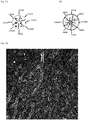
- the core of the micelle does not comprise additional molecules or compounds, but consists of the hydrophobic regions of the amphiphilic polymers (such a micelle is schematically shown in Fig. 3A ).
- the micelle coats a solid hydrophobic core (as schematically shown in Fig. 3B ), which preferably is an inorganic core.
- the inorganic core preferably is a traceable inorganic core, e.g., comprising iron oxide, CdSe, silver or gold.
- the diameter of the core is about 2 to about 500 nm, preferably, about 5 to about 30 nm, more preferably, about 9 to about 12 nm.
- Exemplary inorganic cores are FeO nanoparticles stabilized by oleic acid or another carboxylic acid (C14-C22, preferably, C16-18), quantum dots (CdSe/CdS/ZnS stabilized, e.g., by trioctyloxinphosphinoxide), gold nanoparticles, e.g., stabilized by sulfonic compounds.
- Such inorganic cores by themselves are typically not stable in an aqueous solvent such as water, but embedding them in the polymeric micelles renders them water-soluble.
- the hydrophobic parts of the amphiphilic polymer interact with the hydrophobic core of the nanoparticle, leading to formation of a single coating layer of polymer surrounding the core.
- the cores preferably render the nanoparticles of the invention traceable, e.g., by their characteristics in fluorescence, electron microscopy or other detection method.
- the nanoparticle comprises an iron oxide core having a diameter of about 9 to about 12 nm encapsulated by a coating of poly(maleic anhydride-alt-1-octadecene) to which a peptide comprising a T cell epitope is linked, preferably, covalently linked.
- the nanoparticles comprise a lipophilic iron oxide core, synthesized according to a method of Colvin (26), preferably, with a modification of the reaction time to produce particles of about 9-12 nm as described in the examples.
- iron oxide nanoparticles are encapsulated by incubation with poly(maleic anhydride-alt-1-octadecene) solution according to a protocol modified from (27) to produce water-soluble particles.
- the nanoparticle by virtue of the polymer forming the micelle, may be negatively charged or uncharged, preferably, it is negatively charged.
- the polymer coating may comprise acid, e.g., carboxylic acid, groups, leading to a negative charge.
- the peptide is preferably covalently linked to the micelles, e.g., by carbodiimide or succinimide coupling, e.g., conjugation via 1-Ethyl-3-(3-dimethylaminopropyl)carbodiimide, (as, e.g., in the example 4 below), or by another method of covalently coupling peptides.
- the peptide is localized on the outside of the micelles.
- the peptide may also be non-covalently associated to the nanoparticle. Such nanoparticles may be prepared, e.g., by dipping and drying as described by Giri et al. (36).
- the term "peptide” is not intended to be limiting in size, in particular, the peptide may comprise a whole protein or about 8 to about 2000 amino acids, preferably, 8-200 amino acids, 8-100 amino acids, 9-60 amino acids, or 10-20 amino acids.
- the term also comprises combinations of different peptides, which may be linked to each other as fusion polypeptides.
- the peptide comprises at least one T cell epitope to which regulatory T cells are to be generated. At least one epitope needs to be capable of being presented by cells of the subject to which the nanoparticles are to be administrated, i.e., the peptide and/or the subject need to be appropriately selected.
- the peptide comprises several epitopes which enable it to be presented in a plurality of Major Histocompatibility Complex types.
- MHC class II As the regulatory T cells are predominantly CD4+, presentation on MHC class II is of main interest in this respect.
- the phenotype of a subject e.g., a human subject, can easily be tested.
- Epitopes of a specific peptide which can be presented on specific MHC molecules are known and/or can routinely be selected, e.g., by appropriate software.
- the peptide comprises a sufficient number and selection of epitopes to enable it to be presented by at least 20%, preferably, at least 30%, at least 40%, at least 50%, at least 60%, at least 70%, at least 80% or at least 90% of a population of subjects, wherein, the population of subjects may be the general population, or, preferably, a population of subjects having a certain disease, condition or disorder associated with the peptide as described below.
- the subject is human, but it can also be mouse, rat, rabbit, guinea pig, pig, ape, monkey, cattle, sheep, goat, cat or dog.
- the peptide may be synthesized, recombinantly expressed or isolated or modified from natural sources.
- the peptide, or at least the epitope against which regulatory T cells are to be generated, is preferably derived from a peptide/protein against which an inflammatory immune response is to be suppressed, e.g., in the context of treatment or prevention of an autoimmune disease or an allergy.
- the peptide may, e.g., be an allergen, a known autoimmune antigen, or a fragment or derivative thereof.
- the peptide can combine various epitopes from various antigens.
- nanoparticles of the present invention are suitable for transferring the peptide to liver sinusoidal endothelial cells of a subject in vivo.
- other cells are also targeted, however - without intending to be bound by the theory - targeting to liver sinusoidal endothelial cells seems to be important for the generation of regulatory T cells, as the pharmaceutical composition induces generation of regulatory T cells specific for the at least one epitope via presentation of said epitope by liver sinusoidal endothelial cells.
- at least 60% of the nanoparticles found in the liver after administration localize in liver sinusoidal endothelial cells, more preferably, at least 70% or at least 80%. A smaller percentage may also be found in Kupffer cells or in endothelial cells of intestinal veins that feed the portal vein.
- the nanoparticles used in the present invention may be selected by their ability to be loaded with cargo peptide and by their ability to target such cargo peptide to liver cells, notably liver sinusoidal endothelial cells.
- the nanoparticles may comprise a moiety, e.g., a carbohydrate or a protein targeting them, or enhancing targeting to specific cells such as liver sinusoidal endothelial cells and/or Kupffer cells.
- a moiety e.g., a carbohydrate or a protein targeting them, or enhancing targeting to specific cells such as liver sinusoidal endothelial cells and/or Kupffer cells.
- Such moiety could, e.g., enhance or accelerate uptake from the circulation via receptor mediated endocytosis.
- suitable modifications are carbohydrates such as mannose.
- the inventors have shown that, advantageously, such additional targeting moieties are not required in the context of the invention.
- the pharmaceutical composition of the invention may further comprise at least one suitable excipient and/or diluent.
- the diluent preferably is water or water-based, e.g., a buffer such as Phosphate buffered saline (PBS), Ringer solution or sodium chloride solution. Suitable preservatives may or may not be contained. It is evident that, in particular for administration to a human subject, the composition preferably is sterile and biologically compatible.
- the pharmaceutical composition may further comprise a cytokine such as TGFß.
- the nanoparticles are preferably used in and formulated for administration to a subject having a disease wherein suppression of a specific immune response is beneficial.
- the required dose and concentration for administration to the subject may be determined by the responsible medical attendant according to the facts and circumstances of the case.
- An exemplary dose might comprise 0.1 to 10 mg/kg body weight, preferably, about 0.5-2 mg/kg body weight or about 1 mg/kg body weight, e.g., for a human subject.
- Administration may be repeated, e.g., twice, three or four times, e.g., with, 1, 2, 3, 4, 5, 6, 7, 10 or 14 days between administrations.
- the pharmaceutical composition is for use in treating or preventing a disease wherein suppression of a specific immune response is beneficial, wherein said disease is selected from the group comprising an autoimmune disease, an allergy or a disease wherein inflammation is excessive, chronic or adverse.
- a disease may be associated with excessive or chronic inflammation.
- the nanoparticles may also be for use in treating clinical conditions associated with an adverse outcome of inflammation.
- Diseases and inflammatory conditions that may be treated by the pharmaceutical composition of the invention include, but are not limited to, multiple sclerosis, type I diabetes, rheumatoid arthritis, systemic lupus erythematosus, degeneration after trauma or stroke, graft versus host disease, transplant rejection, inflammatory bowel disease (IBD), asthma, allergies, e.g., allergic rhinitis, allergic eczema and the like.
- IBD inflammatory bowel disease
- 'treating' refers to the alleviation of symptoms of a particular disease in a subject, and/or improvement of an ascertainable measurement associated with a particular disorder.
- the invention further provides a method comprising administering to a subject in need thereof a pharmaceutical composition comprising a nanoparticle as defined herein.
- a pharmaceutical composition comprising a nanoparticle as defined herein.
- such nanoparticles may be loaded with autoantigen, alloantigen or other antigen to which the adverse inflammatory response is directed, or with peptides comprising an amino acid sequence derived or modified from such antigen.
- the invention further provides a method of generating regulatory T cells, comprising,
- a sample comprising T cells may, e.g., be a biopsy, a blood sample, a sample from spleen, liver or any organ targeted by an allergy or autoimmune disease which is associated with the peptide employed in the method.
- the isolation step may be based on selection of regulatory T cell markers such as CD4, CD25, CD127 and/or FoxP3. For example, sorting by flow cytometry or adhesion to antibody coated beads, e.g., magnetic beads, may be used. Isolated cells may be used for analytic purposes, e.g., for determining if regulatory T cells have been induced, or for determining their characteristics. If further culture of cells is of interest, intracellular staining of FoxP3 is not employed for selection.
- regulatory T cells After isolation of the regulatory T cells, they may be further cultured and or expanded, e.g., in the presence of the T cell epitope and/or a cytokine such as TGFß, IL-2, IL-35, IL-10.
- Regulatory T cells generated in this matter may be useful for scientific purposes. They may also be for use in treating a subject in need thereof, e.g., a subject having a disease or condition as described above, e.g., after expansion.
- Regulatory T cells obtainable by the method may be formulated as a pharmaceutical composition to this end.
- the invention is thus also directed to a method of preparing a pharmaceutical composition comprising the method of generating regulatory T cells.
- the present invention at last provides pharmaceutical compositions and methods for generating specific regulatory immune cells, which are, as demonstrated in a model system, even capable of suppressing autoimmune disease.
- Example 1 Generation of regulatory T cells by liver sinusoidal endothelial cells and Kupffer cells.
- Mouse liver non-parenchymal cells were isolated applying a protocol modified from (28). Briefly, mouse livers were perfused with 0.05% collagenase IV (Sigma; Taufkirchen, Germany) in Gey's balanced salt solution, mechanically dissected and further digested in 0,05% collagenase IV in Gey's balanced salt solution for 25 minutes at 37°C at constant rotation (240rpm). Hepatocytes and debris were sedimented twice at 40g and non-parenchymal cells were recovered by centrifugation over a 17% Optiprep (Sigma) gradient at 400g.
- collagenase IV Sigma; Taufkirchen, Germany
- LSEC Liver sinusoidal endothelial cells
- ME-9F1 antibody Miltenyi Biotech, Bergisch-Gladbach, Germany
- LSEC were seeded on collagen-coated culture plates (Serva, Heidelberg, Germany). After overnight culture in Iscove's modified Dulbecco's medium supplemented with 5% FCS, non-adherent cells were removed by medium change. Accordingly, Kupffer cells were purified from the non-parenchymal cells by magnetic sorting with biotinylated F4/80 antibody (eBioscience, Frankfurt, Germany) and anti-biotin microbeads (Miltenyi).
- hepatocytes were isolated from mouse livers as described (30); and dendritic cells were isolated from mouse spleen by magnetic cell separation for CD11c as described (30).
- TGFß transforming growth factor-beta
- Example 2 Suppression of experimental autoimmune neuroinflammation by liver sinusoidal endothelial cell-stimulated CD4 T cells
- LSEC were isolated as described in example 1 and used to stimulate non-regulatory CD4+ CD25- T cells purified from tg4 mice, which carry a transgenic T cell receptor specific for myelin-basic protein (25). After 4 days of T cell stimulation with the specific myelin basic protein-peptide (5ng/ml) on LSEC, performed as described in example 1, 10 5 LSEC-stimulated T cells were transferred to B10.PL mice that had been immunized one day before with a myelin basic protein peptide to induce the clinical symptoms of experimental autoimmune encephalomyelitis (EAE), as described in (25).
- EAE experimental autoimmune encephalomyelitis
- Example 3 Selective and specific targeting of nanoparticle to liver sinusoidal endothelial cells in vivo
- Example 4 Treatment of experimental neuroinflammation with autoantigen-loaded nanoparticles in vivo
- the solution was filtered under centrifugal force in a filter device (100 kDa, 2500 g, 4°C) and the remnant resuspended in PBS. This procedure was repeated 20 times to remove all excess peptide.
- the obtained peptide-particle conjugates were dissolved in PBS and subjected to size-exclusion-chromatography to assure for the absence of free peptide. Then, the iron content was measured to determine the concentration of the peptide-particle suspension.
- Example 5 T-reg-mediated control of autoimmunity by nanoparticle-based antigen delivery to tolerogenic liver cells
- Liver dendritic cells DC
- liver sinusoidal endothelial cells LSEC
- Kupffer cells KC
- MHC II molecules liver resident antigen-presenting cells constitutively expressing MHC II molecules and capable of stimulating CD4 + T cells.
- primary liver DC, LSEC or KC were used to stimulate CD4 + Foxp3 - non-Treg cells from the spleen of (tg4 x Foxp3gfp.KI) F1 mice.
- These non-Treg cells specifically recognize myelin basic protein (MBP), and allow monitoring of Treg conversion based on the Foxp3-linked expression of green fluorescent protein (GFP).
- MBP myelin basic protein
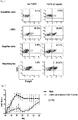
- the stimulation of non-Treg cells was performed in the presence of the specific MBP peptide and exogenous TGF ⁇ , which is required for Treg conversion. All tested liver cell types were capable of inducing MBP-specific Foxp3 + Tregs; however, LSEC were more efficient in inducing Tregs than KC and liver DC ( Figure 6A ). The ability of the liver cells to provide TGF ⁇ -signals in the absence of exogenous TGF ⁇ was then tested. Liver DC and KC were not efficient in inducing Tregs ( Figure 6B ), whereas LSEC could induce Treg conversion at increased rates ( Figure 6B ).
- LSEC can provide TGF ⁇ -signals that promote Treg conversion
- CD4 + CD25 - non-Tregs from (hCD2- ⁇ kT ⁇ RII x tg4) F1 mice were stimulated on LSEC; these T cells carry a dominant-negative TGF ⁇ type II receptor and thus display reduced sensitivity to TGF ⁇ .
- the inventors found strongly reduced conversion rates of TGF ⁇ -insensitive T cells to Foxp3 + Tregs, as compared to wild-type T cells ( Figure 6C ), indicating that the efficiency of LSEC to induce Tregs depends on TGF ⁇ -signaling.
- LSEC seem to provide TGF ⁇ -signals for Treg induction ( Figure 6B )
- active TGF ⁇ in LSEC supernatants was not detected (not shown). Therefore, the inventors tested whether LSEC have bound TGF ⁇ to their membrane; in complex with latency-associated peptide (LAP) ( 40, 41 ), TGF ⁇ can be tethered to the surface of cells through glycoprotein-A repetitions predominant (GARP, also known as LRRC32) ( 42 ).
- GAP latency-associated peptide
- LRRC32 glycoprotein-A repetitions predominant
- Such membrane-bound TGF ⁇ was shown to induce a tolerogenic phenotype and Foxp3-expression in stimulated T cells ( 41 ).
- NP nanoparticles
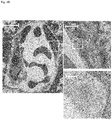
- the inventors made use of nanoparticles (NP) that are rapidly cleared from the circulation through uptake by liver cells. Specifically, the inventors took advantage of a polymer-coated nanoparticle ( 43 ), which they observed to accumulate selectively in liver sinusoidal endothelium (data not shown).
- a simple one-step coupling strategy using a carbodiimide crosslinking approach was chosen to attach the MBP peptide to polymer-coated nanoparticles with superparamagnetic iron oxide core.
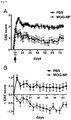
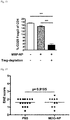
- Tregs were depleted in mice that had received MBP-nanoparticles by repeated administration of the PC61 antibody that recognizes CD25 ( 47 ) ( Figure 8E ); the efficacy of depletion was confirmed by flow cytometry ( Figure 13 ). Although administration of MBP-nanoparticles induced protection from EAE in control mice, MBP-nanoparticles could not prevent the development of disease in Treg-depleted mice ( Figure 8E ).
- Treg depletion was similar to the disease severity of the control group receiving PBS instead of MBP-nanoparticles ( Figure 8E ), demonstrating that Tregs are critically involved in nanoparticle-mediated tolerance induction in vivo.
- nanoparticle-mediated autoantigen delivery to LSEC is therapeutically effective in autoimmune disease.
- DC display a high degree of plasticity and readily can differentiate to inflammatory cells
- LSEC display a robust tolerance-inducing phenotype even in the presence of pro-inflammatory signals. Therefore, autoantigen delivery to robust tolerogenic LSEC provides increased safety, notably when attempting to treat individuals with on-going inflammation.
- Nanoparticles are most commonly modified by the attachment of specific ligands to their surface in order to avoid their rapid clearance by the liver and to redirect them to specific targets, e.g. to cancer cells. Nevertheless, the targeting efficacy of such redirection is still limited by undesired uptake in the liver.
- the inventive approach avoids mistargeting of autoantigen to potentially inflammatory cells. Indeed, this efficient and selective delivery to LSEC may explain the stable and potent treatment efficacy induced by only a single administration of peptide-loaded nanoparticles.
- the inventors' data provide proof-of-principle that antigen-specific tolerance induction in vivo can be attained through nanoparticle-based antigen-delivery to LSEC. These findings enable the development of an effective Treg-based treatment for human autoimmune and inflammatory diseases in which the driving antigens have been identified.
Landscapes
- Health & Medical Sciences (AREA)
- Chemical & Material Sciences (AREA)
- Life Sciences & Earth Sciences (AREA)
- General Health & Medical Sciences (AREA)
- Veterinary Medicine (AREA)
- Public Health (AREA)
- Epidemiology (AREA)
- Animal Behavior & Ethology (AREA)
- Engineering & Computer Science (AREA)
- Immunology (AREA)
- Nanotechnology (AREA)
- Medicinal Chemistry (AREA)
- Pharmacology & Pharmacy (AREA)
- Bioinformatics & Cheminformatics (AREA)
- Biomedical Technology (AREA)
- Dispersion Chemistry (AREA)
- Microbiology (AREA)
- Nuclear Medicine, Radiotherapy & Molecular Imaging (AREA)
- Mycology (AREA)
- Wood Science & Technology (AREA)
- Biotechnology (AREA)
- Organic Chemistry (AREA)
- Zoology (AREA)
- Genetics & Genomics (AREA)
- Radiology & Medical Imaging (AREA)
- Molecular Biology (AREA)
- Rheumatology (AREA)
- Biochemistry (AREA)
- Materials Engineering (AREA)
- Hematology (AREA)
- Inorganic Chemistry (AREA)
- Cell Biology (AREA)
- General Chemical & Material Sciences (AREA)
- Physics & Mathematics (AREA)
- Chemical Kinetics & Catalysis (AREA)
- Optics & Photonics (AREA)
- Biophysics (AREA)
- General Engineering & Computer Science (AREA)
- Medicines That Contain Protein Lipid Enzymes And Other Medicines (AREA)
- Peptides Or Proteins (AREA)
Applications Claiming Priority (2)
| Application Number | Priority Date | Filing Date | Title |
|---|---|---|---|
| EP11009032.1A EP2591801A1 (fr) | 2011-11-14 | 2011-11-14 | Compositions de nanoparticules pour la génération de lymphocytes T régulateurs et traitement des maladies auto-immunes et autres conditions inflammatoires chroniques |
| EP12790425.8A EP2780036B1 (fr) | 2011-11-14 | 2012-11-14 | Compositions de nanoparticules pour la génération de lymphocytes t régulateurs et traitement des maladies auto-immunes et autres conditions inflammatoires chroniques |
Related Parent Applications (2)
| Application Number | Title | Priority Date | Filing Date |
|---|---|---|---|
| EP12790425.8A Division EP2780036B1 (fr) | 2011-11-14 | 2012-11-14 | Compositions de nanoparticules pour la génération de lymphocytes t régulateurs et traitement des maladies auto-immunes et autres conditions inflammatoires chroniques |
| EP12790425.8A Division-Into EP2780036B1 (fr) | 2011-11-14 | 2012-11-14 | Compositions de nanoparticules pour la génération de lymphocytes t régulateurs et traitement des maladies auto-immunes et autres conditions inflammatoires chroniques |
Publications (1)
| Publication Number | Publication Date |
|---|---|
| EP3219327A1 true EP3219327A1 (fr) | 2017-09-20 |
Family
ID=47221300
Family Applications (3)
| Application Number | Title | Priority Date | Filing Date |
|---|---|---|---|
| EP11009032.1A Withdrawn EP2591801A1 (fr) | 2011-11-14 | 2011-11-14 | Compositions de nanoparticules pour la génération de lymphocytes T régulateurs et traitement des maladies auto-immunes et autres conditions inflammatoires chroniques |
| EP12790425.8A Active EP2780036B1 (fr) | 2011-11-14 | 2012-11-14 | Compositions de nanoparticules pour la génération de lymphocytes t régulateurs et traitement des maladies auto-immunes et autres conditions inflammatoires chroniques |
| EP17166292.7A Withdrawn EP3219327A1 (fr) | 2011-11-14 | 2012-11-14 | Compositions de nanoparticules pour la génération de lymphocytes t régulateurs et traitement des maladies auto-immunes et autres conditions inflammatoires chroniques |
Family Applications Before (2)
| Application Number | Title | Priority Date | Filing Date |
|---|---|---|---|
| EP11009032.1A Withdrawn EP2591801A1 (fr) | 2011-11-14 | 2011-11-14 | Compositions de nanoparticules pour la génération de lymphocytes T régulateurs et traitement des maladies auto-immunes et autres conditions inflammatoires chroniques |
| EP12790425.8A Active EP2780036B1 (fr) | 2011-11-14 | 2012-11-14 | Compositions de nanoparticules pour la génération de lymphocytes t régulateurs et traitement des maladies auto-immunes et autres conditions inflammatoires chroniques |
Country Status (14)
| Country | Link |
|---|---|
| US (2) | US10004689B2 (fr) |
| EP (3) | EP2591801A1 (fr) |
| CA (1) | CA2890299C (fr) |
| CY (1) | CY1119124T1 (fr) |
| DK (1) | DK2780036T3 (fr) |
| ES (1) | ES2630022T3 (fr) |
| HR (1) | HRP20171278T1 (fr) |
| HU (1) | HUE034287T2 (fr) |
| LT (1) | LT2780036T (fr) |
| PL (1) | PL2780036T3 (fr) |
| PT (1) | PT2780036T (fr) |
| RS (1) | RS56301B1 (fr) |
| SI (1) | SI2780036T1 (fr) |
| WO (1) | WO2013072051A1 (fr) |
Families Citing this family (27)
| Publication number | Priority date | Publication date | Assignee | Title |
|---|---|---|---|---|
| US9511151B2 (en) | 2010-11-12 | 2016-12-06 | Uti Limited Partnership | Compositions and methods for the prevention and treatment of cancer |
| CN107320734A (zh) | 2011-04-29 | 2017-11-07 | 西莱克塔生物科技公司 | 从合成纳米载体中控制释放免疫抑制剂 |
| EP2591801A1 (fr) | 2011-11-14 | 2013-05-15 | Universitätsklinikum Hamburg-Eppendorf | Compositions de nanoparticules pour la génération de lymphocytes T régulateurs et traitement des maladies auto-immunes et autres conditions inflammatoires chroniques |
| US10988516B2 (en) | 2012-03-26 | 2021-04-27 | Uti Limited Partnership | Methods and compositions for treating inflammation |
| US9603948B2 (en) | 2012-10-11 | 2017-03-28 | Uti Limited Partnership | Methods and compositions for treating multiple sclerosis and related disorders |
| CN105307641A (zh) | 2013-05-03 | 2016-02-03 | 西莱克塔生物科技公司 | 用于降低不期望体液免疫应答的给药组合 |
| SG10201803780UA (en) | 2013-11-04 | 2018-06-28 | Uti Lp | Methods and compositions for sustained immunotherapy |
| CN106414723A (zh) * | 2014-02-10 | 2017-02-15 | 纳维基因股份有限公司 | 细胞调节纳米组合物及使用方法 |
| EA201790551A1 (ru) | 2014-09-07 | 2017-07-31 | Селекта Байосайенсиз, Инк. | Способы и композиции для ослабления иммунных ответов к пропускающему экзон вирусному трансферному вектору |
| ES3055030T3 (en) | 2015-05-06 | 2026-02-09 | Uti Lp | Nanoparticle compositions for sustained therapy |
| EP3445332B1 (fr) * | 2016-04-18 | 2022-04-27 | University of Maryland, College Park | Exploitation des boîtes quantiques en vue d'étudier, de visualiser et de promouvoir la tolérance immunitaire |
| US11174288B2 (en) | 2016-12-06 | 2021-11-16 | Northeastern University | Heparin-binding cationic peptide self-assembling peptide amphiphiles useful against drug-resistant bacteria |
| EP4599848A3 (fr) | 2017-03-11 | 2025-12-03 | Cartesian Therapeutics, Inc. | Procédés et compositions associés à un traitement combiné avec anti-inflammatoires et nanovecteurs synthétiques comprenant un immunosuppresseur |
| CN109692326A (zh) * | 2017-10-23 | 2019-04-30 | 华中科技大学 | 一种蜂毒脂质纳米颗粒的应用 |
| CN109692327B (zh) * | 2017-10-23 | 2022-04-08 | 华中科技大学 | 一种运载蜂毒肽的纳米颗粒的应用 |
| EP3716949A4 (fr) | 2017-11-29 | 2022-05-18 | UTI Limited Partnership | Méthodes de traitement d'une maladie auto-immune |
| US12553041B2 (en) | 2019-06-04 | 2026-02-17 | Cartesian Therapeutics Inc. | Formulations and doses of pegylated uricase |
| EP3789768A1 (fr) | 2019-09-07 | 2021-03-10 | Universitätsklinikum Hamburg-Eppendorf | Procédé pour déterminer l'efficacité d'une thérapie à base de nanoparticules |
| ES2990970T3 (es) * | 2020-02-17 | 2024-12-02 | Topas Therapeutics Gmbh | Polímeros anfifílicos y su uso para mejorar la producción de nanopartículas para el suministro dirigido de antígenos |
| CN115068503B (zh) * | 2021-03-16 | 2024-03-12 | 上海交通大学医学院附属仁济医院 | 具有多重免疫调控功能的仿生纳米颗粒及其制备与应用 |
| JP2024520699A (ja) * | 2021-06-02 | 2024-05-24 | トパス セラピューティクス ゲーエムベーハー | N末端リンカーを含むペプチドを含むナノ粒子 |
| EP4137121A1 (fr) * | 2021-08-17 | 2023-02-22 | Topas Therapeutics GmbH | Compositions pharmaceutiques comprenant des nanoparticules pour l'administration ciblée d'antigènes |
| US20230145185A1 (en) * | 2021-11-10 | 2023-05-11 | University Of Kentucky Research Foundation | Cell sorting microbeads as novel contrast agent for magnetic resonance imaging |
| CN115400210B (zh) * | 2022-07-15 | 2026-02-06 | 暨南大学 | 抗原纳米颗粒及其制备方法和疫苗制备应用 |
| AU2025207205A1 (en) | 2024-01-12 | 2026-07-09 | Topas Therapeutics Gmbh | Nanoparticles comprising amphiphilic polymers and lipids for the targeted delivery of antigens |
| WO2026027739A1 (fr) | 2024-08-02 | 2026-02-05 | Topas Therapeutics Gmbh | Nanoparticules destinées à être utilisées avec des particules de virus adéno-associés |
| WO2026046962A1 (fr) | 2024-08-27 | 2026-03-05 | Topas Therapeutics Gmbh | Composition pharmaceutique comprenant des nanoparticules pour l'administration ciblée d'antigènes |
Citations (2)
| Publication number | Priority date | Publication date | Assignee | Title |
|---|---|---|---|---|
| WO2009067349A2 (fr) * | 2007-11-20 | 2009-05-28 | The Brigham And Women's Hospital, Inc. | Modulation de la réponse immunitaire |
| WO2012149282A2 (fr) * | 2011-04-29 | 2012-11-01 | Selecta Biosciences, Inc. | Nanovecteurs synthétiques tolérogéniques pour la génération de lymphocytes t régulateurs cd8+ |
Family Cites Families (6)
| Publication number | Priority date | Publication date | Assignee | Title |
|---|---|---|---|---|
| US20100069550A1 (en) * | 2008-03-17 | 2010-03-18 | Washington, University Of | Nanoparticle assemblies and methods for their preparation |
| WO2009126835A2 (fr) * | 2008-04-09 | 2009-10-15 | University Of Washington Techtransfer Invention Licensing | Nanoparticules magnétiques, et procédé d'imagerie de cellules t |
| IT1395771B1 (it) * | 2009-03-06 | 2012-10-19 | Fond Istituto Italiano Di Tecnologia | Nanocapsule colloidali magnetiche fluorescenti: procedimento per la loro preparazione e loro impiego in saggi di selezione cellulare |
| EP2255831A1 (fr) * | 2009-05-25 | 2010-12-01 | Institut Pasteur | Construction de diépitopes à base de liposomes |
| US20110054236A1 (en) * | 2009-08-25 | 2011-03-03 | The Regents Of The University Of Michigan | Compositions and methods for targeting tumors |
| EP2591801A1 (fr) | 2011-11-14 | 2013-05-15 | Universitätsklinikum Hamburg-Eppendorf | Compositions de nanoparticules pour la génération de lymphocytes T régulateurs et traitement des maladies auto-immunes et autres conditions inflammatoires chroniques |
-
2011
- 2011-11-14 EP EP11009032.1A patent/EP2591801A1/fr not_active Withdrawn
-
2012
- 2012-11-14 PL PL12790425T patent/PL2780036T3/pl unknown
- 2012-11-14 ES ES12790425.8T patent/ES2630022T3/es active Active
- 2012-11-14 PT PT127904258T patent/PT2780036T/pt unknown
- 2012-11-14 CA CA2890299A patent/CA2890299C/fr active Active
- 2012-11-14 EP EP12790425.8A patent/EP2780036B1/fr active Active
- 2012-11-14 LT LTEP12790425.8T patent/LT2780036T/lt unknown
- 2012-11-14 HR HRP20171278TT patent/HRP20171278T1/hr unknown
- 2012-11-14 WO PCT/EP2012/004735 patent/WO2013072051A1/fr not_active Ceased
- 2012-11-14 HU HUE12790425A patent/HUE034287T2/en unknown
- 2012-11-14 SI SI201231027T patent/SI2780036T1/sl unknown
- 2012-11-14 US US13/261,883 patent/US10004689B2/en active Active
- 2012-11-14 EP EP17166292.7A patent/EP3219327A1/fr not_active Withdrawn
- 2012-11-14 RS RS20170753A patent/RS56301B1/sr unknown
- 2012-11-14 DK DK12790425.8T patent/DK2780036T3/en active
-
2017
- 2017-07-28 CY CY20171100807T patent/CY1119124T1/el unknown
-
2018
- 2018-05-24 US US15/988,501 patent/US10898436B2/en active Active
Patent Citations (2)
| Publication number | Priority date | Publication date | Assignee | Title |
|---|---|---|---|---|
| WO2009067349A2 (fr) * | 2007-11-20 | 2009-05-28 | The Brigham And Women's Hospital, Inc. | Modulation de la réponse immunitaire |
| WO2012149282A2 (fr) * | 2011-04-29 | 2012-11-01 | Selecta Biosciences, Inc. | Nanovecteurs synthétiques tolérogéniques pour la génération de lymphocytes t régulateurs cd8+ |
Non-Patent Citations (47)
| Title |
|---|
| A. BARTELT ET AL., NAT MED, vol. 17, 2011, pages 200 - 205 |
| BRUNS ET AL., NAT. NANOTECHNOL, vol. 4, 2009, pages 193 - 201 |
| CALNE, R.Y. ET AL.: "Induction of immunological tolerance by porcine liver allografts", NATURE, vol. 223, 1969, pages 472 - 476 |
| CANTOR, H.M.; DUMONT, A.E.: "Hepatic suppression of sensitization to antigen absorbed into the portal system", NATURE, vol. 215, 1967, pages 744 - 745 |
| CARAMBIA ET AL., J. HEPATOL, vol. 52, 2010, pages S59 - S182 |
| COHEN, I.R.: "Tending Adam's garden: evolving the cognitive immune self.", 2001, ACADEMIC PRESS, pages: 266 |
| CRISPE, I.N.: "Hepatic T cells and liver tolerance", NAT. REV. IMMUNOL, vol. 3, 2003, pages 51 - 62, XP002523937, DOI: doi:10.1038/nri981 |
| D. Q. TRAN ET AL., PROC NATL ACAD SCI USA, vol. 106, 2009, pages 13445 - 13450 |
| FONTENOT, J.D.; GAVIN, M.A.; RUDENSKY, A.Y.: "Foxp3 programs the development and function of CD4+CD25+ regulatory T cells", NAT. IMMUNOL., vol. 4, 2003, pages 330 - 336, XP009108663, DOI: doi:10.1038/ni904 |
| G. Y. LIU ET AL., IMMUNITY, vol. 3, 1995, pages 407 - 415 |
| GAVIN, M.A.; CLARKE, S.R.; NEGROU, E.; GALLEGOS, A.; RUDENSKY, A.: "Homeostasis and anergy of CD4(+)CD25(+) suppressor T cells in vivo", NAT. IMMUNOL., vol. 3, 2002, pages 33 - 41 |
| GIRI ET AL., ACTA BIOPHYS SIN, 2011, pages 1 - 7 |
| GOODNOW, C.C.; SPRENT, J.; FAZEKAS DE ST GROTH, B.; VINUESA, C.G.: "Cellular and genetic mechanisms of self tolerance and autoimmunity", NATURE, vol. 435, 2005, pages 590 - 597 |
| H. L. WEINER; A. P. DA CUNHA; F. QUINTANA; H. WU., IMMUNOL REV, vol. 241, 2011, pages 241 - 259 |
| HOGQUIST, K.A.; BALDWIN, T.A.; JAMESON, S.C.: "Central tolerance: learning self-control in the thymus", NAT. REV. IMMUNOL, vol. 5, 2005, pages 772 - 782 |
| HUBER, S.; SCHRAMM, C.: "TGF-beta and CD4+CD25+ regulatory T cells", FRONT. BIOSCI., vol. 11, 2006, pages 1014 - 1023 |
| HUBERMAN, A.; PEREZ C.: "Nonheme iron determination", ANAL. BIOCHEM., vol. 307, 2002, pages 375 - 378 |
| J. ANDERSSON ET AL., J EXP MED, vol. 205, 2008, pages 1975 - 1981 |
| J. SHIMIZU; S. YAMAZAKI; S. SAKAGUCHI., J IMMUNOL, vol. 163, 1999, pages 5211 - 5218 |
| JONULEIT, H.; SCHMITT, E.: "The regulatory T cell family: distinct subsets and their interrelations", J. IMMUNOL., vol. 171, 2003, pages 6323 - 6327, XP002270348 |
| KNOECHEL, B.; LOHR, J.; KAHN, E.; BLUESTONE, J.A.; ABBAS, A.K.: "Sequential development of interleukin 2-dependent effector and regulatory T cells in response to endogenous systemic antigen", J. EXP. MED., vol. 202, 2005, pages 1375 - 1386, XP055001304, DOI: doi:10.1084/jem.20050855 |
| KNOLLE, P.A. ET AL.: "Induction of cytokine production in naive CD4 (+) T cells by antigen-presenting murine liver sinusoidal endothelial cells but failure to induce differentiation toward Th1 cells", GASTROENTEROLOGY, vol. 116, 1999, pages 1428 - 1440, XP005688371, DOI: doi:10.1016/S0016-5085(99)70508-1 |
| KRETSCHMER, K. ET AL.: "Inducing and expanding regulatory T cell populations by foreign antigen", NAT. IMMUNOL, vol. 6, 2005, pages 1219 - 1227 |
| LIANG, S. ET AL.: "Conversion of CD4+ CD25- cells into CD4+ CD25+ regulatory T cells in vivo requires B7 costimulation, but not the thymus", J. EXP. MED., vol. 201, 2005, pages 127 - 137 |
| LIMMER, A. ET AL.: "Efficient presentation of exogenous antigen by liver endothelial cells to CD8+ T cells results in antigen-specific T cell tolerance", NAT. MED., vol. 6, 2000, pages 1348 - 1354 |
| LIMMER, A. ET AL.: "Failure to induce organ-specific autoimmunity by breaking of tolerance: importance of the microenvironment", EUR. J. IMMUNOL., vol. 28, 1998, pages 2395 - 2406 |
| LUTH, S. ET AL.: "Ectopic expression of neural autoantigen in mouse liver suppresses experimental autoimmune neuroinflammation by inducing antigen-specific Tregs", J. CLIN. INVEST., vol. 118, 2008, pages 3403 - 3410 |
| MINCHIN, NATURE NANOTECHNOL, vol. 3, 2008, pages 12 - 13 |
| NGUYEN E, GENE THER., vol. 11, no. 1, 2004, pages S76 - S84 |
| QUINTANA, F.J. ET AL.: "Control of T(reg) and T(H)17 cell differentiation by the aryl hydrocarbon receptor", NATURE, vol. 453, 2008, pages 65 - 71 |
| S. HUBER ET AL., J IMMUNOL, vol. 173, 2004, pages 6526 - 6531 |
| SAKAGUCHI, S.: "Naturally arising Foxp3-expressing CD25+CD4+ regulatory T cells in immunological tolerance to self and non-self", NAT. IMMUNOL, vol. 6, 2005, pages 345 - 352, XP002394639, DOI: doi:10.1038/ni1178 |
| SCHRAGE, A. ET AL.: "Murine CD146 is widely expressed on endothelial cells and is recognized by the monoclonal antibody ME-9F1", HISTOCHEM. CELL. BIOL., vol. 129, 2008, pages 441 - 451, XP019589897 |
| SHEN ET AL., INT. J. NANOMEDICINE, vol. 6, 2011, pages 1229 - 1235 |
| SHEVACH, E.M.: "Mechanisms of Foxp3+ T regulatory cell-mediated suppression", IMMUNITY, vol. 30, 2009, pages 636 - 645 |
| SHTYKOVA, E.V. ET AL.: "Hydrophilic monodisperse magnetic nanoparticles protected by an amphiphilic alternating copolymer", J. PHYS. CHEM., vol. C112, 2008, pages 16809 - 16817 |
| T. PELLEGRINO ET AL., NANO LETTERS, vol. 4, 2004, pages 703 - 707 |
| VIGLIETTA, V.; BAECHER-ALLAN, C.; WEINER, H.L.; HAFLER, D.A.: "Loss of functional suppression by CD4+CD25+ regulatory T cells in patients with multiple sclerosis", J. EXP. MED., vol. 199, 2004, pages 971 - 979, XP003009665, DOI: doi:10.1084/jem.20031579 |
| VON BOEHMER, H.: "Mechanisms of suppression by suppressor T cells", NAT. IMMUNOL., vol. 6, 2005, pages 338 - 344 |
| VON HERRATH, M.G.; HARRISON, L.C.: "Antigen-induced regulatory T cells in autoimmunity", NAT. REV. IMMUNOL, vol. 3, 2003, pages 223 - 32, XP002491622, DOI: doi:10.1038/nri1029 |
| WALKER, L.S.; CHODOS, A.; EGGENA, M.; DOOMS, H.; ABBAS, A.K.: "Antigen-dependent proliferation of CD4+ CD25+ regulatory T cells in vivo.", J. EXP. MED., vol. 198, 2003, pages 249 - 258 |
| WAN, Y.Y.; FLAVELL, R.A.: "The roles for cytokines in the generation and maintenance of regulatory T cells", IMMUNOL. REV., vol. 212, 2006, pages 114 - 130 |
| WIEGARD, C. ET AL.: "Defective T helper 1 response by hepatocyte-stimulated CD4 T cells impairs anti-viral CD8 response and viral clearance", GASTROENTEROLOGY, vol. 133, 2007, pages 2010 - 2018 |
| WIEGARD, C.; FRENZEL, C.; HERKEL, J.; KALLEN, K.J.; SCHMITT, E.; LOHSE, A.W.: "Murine liver antigen presenting cells control suppressor activity of CD4+CD25+ regulatory T cells", HEPATOLOGY, vol. 42, 2005, pages 193 - 199 |
| WU ET AL., MOL. PHARM, vol. 6, pages 1506 - 1517 |
| WU, X. ET AL.: "Immunofluorescent labeling of cancer marker Her2 and other cellular targets with semiconductor quantum dots", NAT. BIOTECHNOL., vol. 21, 2002, pages 41 - 46, XP008053284, DOI: doi:10.1038/nbt764 |
| YU, W.W.; FALKNER, J.C.; YAVUZ, C.T.; COLVIN, V.L.: "Synthesis of monodisperse iron oxide nanocrystals by thermal decomposition of iron carboxylate salts", CHEM. COMMUN., vol. 20, 2004, pages 2306 - 2307, XP002495319, DOI: doi:10.1039/b409601k |
Also Published As
| Publication number | Publication date |
|---|---|
| US20180325821A1 (en) | 2018-11-15 |
| WO2013072051A1 (fr) | 2013-05-23 |
| ES2630022T3 (es) | 2017-08-17 |
| HUE034287T2 (en) | 2018-02-28 |
| US10004689B2 (en) | 2018-06-26 |
| PT2780036T (pt) | 2017-08-29 |
| US20140294982A1 (en) | 2014-10-02 |
| CA2890299C (fr) | 2018-01-09 |
| EP2780036A1 (fr) | 2014-09-24 |
| SI2780036T1 (sl) | 2017-09-29 |
| US10898436B2 (en) | 2021-01-26 |
| CY1119124T1 (el) | 2018-02-14 |
| HRP20171278T1 (hr) | 2017-10-20 |
| CA2890299A1 (fr) | 2013-05-23 |
| LT2780036T (lt) | 2017-09-11 |
| EP2780036B1 (fr) | 2017-05-24 |
| PL2780036T3 (pl) | 2017-10-31 |
| EP2591801A1 (fr) | 2013-05-15 |
| DK2780036T3 (en) | 2017-07-31 |
| RS56301B1 (sr) | 2017-12-29 |
Similar Documents
| Publication | Publication Date | Title |
|---|---|---|
| US10898436B2 (en) | Nanoparticle compositions for generation of regulatory T cells and treatment of autoimmune diseases and other chronic inflammatory conditions | |
| Sanz-Ortega et al. | T cells loaded with magnetic nanoparticles are retained in peripheral lymph nodes by the application of a magnetic field | |
| Cruz et al. | Targeted PLGA nano-but not microparticles specifically deliver antigen to human dendritic cells via DC-SIGN in vitro | |
| Carambia et al. | Nanoparticle-based autoantigen delivery to Treg-inducing liver sinusoidal endothelial cells enables control of autoimmunity in mice | |
| Fahmy et al. | Nanosystems for simultaneous imaging and drug delivery to T cells | |
| Conniot et al. | Cancer immunotherapy: nanodelivery approaches for immune cell targeting and tracking | |
| Liu et al. | Impact of hydrogel nanoparticle size and functionalization on in vivo behavior for lung imaging and therapeutics | |
| Messerschmidt et al. | Targeted lipid-coated nanoparticles: delivery of tumor necrosis factor-functionalized particles to tumor cells | |
| US12377174B2 (en) | Magnetic nanoparticles functionalized with N-(3,4-dihydroxyphenethyl)dodecanamide, production and use thereof | |
| US20130071329A1 (en) | Theranostic delivery systems with modified surfaces | |
| Papadia et al. | Multifunctional LUV liposomes decorated for BBB and amyloid targeting. A. In vitro proof-of-concept | |
| US20120059240A1 (en) | Method for preparation of micellar hybrid nanoparticles for therapeutic and diagnostic applications and compositions thereof | |
| Wu et al. | Galactosylated LDL nanoparticles: a novel targeting delivery system to deliver antigen to macrophages and enhance antigen specific T cell responses | |
| Chen et al. | Enhancing adoptive T cell therapy for solid tumor with cell-surface anchored immune checkpoint inhibitor nanogels | |
| Li et al. | Anti‐Inflammatory Macrophage‐Derived Exosomes Modified With Self‐Antigen Peptides for Treatment of Experimental Autoimmune Encephalomyelitis | |
| van Tilborg et al. | Improved magnetic resonance molecular imaging of tumor angiogenesis by avidin-induced clearance of nonbound bimodal liposomes | |
| Bicho et al. | Anti-CD8 conjugated nanoparticles to target mammalian cells expressing CD8 | |
| US20240424089A1 (en) | Pharmaceutical Composition Comprising Nanoparticles for the Targeted Delivery of Antigens | |
| WO2014034669A1 (fr) | Structure membranaire lipidique comprenant un composant de cellule bactérienne ayant une dispersibilité dans un solvant non polaire, et son procédé de fabrication | |
| Van Hees et al. | Targeting of sialoadhesin-expressing macrophages through antibody-conjugated (polyethylene glycol) poly (lactic-co-glycolic acid) nanoparticles | |
| Xu et al. | Recent advances in the development of nanomaterials for DC-based immunotherapy | |
| Jain et al. | Macrophage-targeted nanoparticle delivery systems | |
| Bilorosiuk et al. | Nanomedicine in demyelinating disease application to diagnosis and therapy in multiple sclerosis | |
| Koppisetti et al. | Nanomedicine in Demyelinating Disease Application to Diagnosis and Therapy in Multiple Sclerosis | |
| WO2026046962A1 (fr) | Composition pharmaceutique comprenant des nanoparticules pour l'administration ciblée d'antigènes |
Legal Events
| Date | Code | Title | Description |
|---|---|---|---|
| PUAI | Public reference made under article 153(3) epc to a published international application that has entered the european phase |
Free format text: ORIGINAL CODE: 0009012 |
|
| AC | Divisional application: reference to earlier application |
Ref document number: 2780036 Country of ref document: EP Kind code of ref document: P |
|
| AK | Designated contracting states |
Kind code of ref document: A1 Designated state(s): AL AT BE BG CH CY CZ DE DK EE ES FI FR GB GR HR HU IE IS IT LI LT LU LV MC MK MT NL NO PL PT RO RS SE SI SK SM TR |
|
| RIN1 | Information on inventor provided before grant (corrected) |
Inventor name: HERKEL, JOHANNES Inventor name: CARAMBIA, ANTONELLA Inventor name: FREUND, BARBARA Inventor name: LUETH, STEFAN Inventor name: LOHSE, ANSGAR Inventor name: NIELSEN, PETER Inventor name: SALMEN, SUNHILD Inventor name: BRUNS, OLIVER Inventor name: WELLER, HORST Inventor name: HEEREN, JOERG |
|
| RIN1 | Information on inventor provided before grant (corrected) |
Inventor name: SALMEN, SUNHILD Inventor name: HERKEL, JOHANNES Inventor name: CARAMBIA, ANTONELLA Inventor name: LUETH, STEFAN Inventor name: WELLER, HORST Inventor name: NIELSEN, PETER Inventor name: FREUND, BARBARA Inventor name: BRUNS, OLIVER Inventor name: HEEREN, JOERG Inventor name: LOHSE, ANSGAR |
|
| STAA | Information on the status of an ep patent application or granted ep patent |
Free format text: STATUS: THE APPLICATION IS DEEMED TO BE WITHDRAWN |
|
| 18D | Application deemed to be withdrawn |
Effective date: 20180321 |