EP3245172B1 - Granulés de polymère vinylique aromatique expansible et mousse de polymère aromatique de vinyle expansé comprenant de composites géopolymères, ainsi que leur utilisation - Google Patents
Granulés de polymère vinylique aromatique expansible et mousse de polymère aromatique de vinyle expansé comprenant de composites géopolymères, ainsi que leur utilisation Download PDFInfo
- Publication number
- EP3245172B1 EP3245172B1 EP16700584.2A EP16700584A EP3245172B1 EP 3245172 B1 EP3245172 B1 EP 3245172B1 EP 16700584 A EP16700584 A EP 16700584A EP 3245172 B1 EP3245172 B1 EP 3245172B1
- Authority
- EP
- European Patent Office
- Prior art keywords
- geopolymer
- vinyl aromatic
- range
- aromatic polymer
- athermanous
- Prior art date
- Legal status (The legal status is an assumption and is not a legal conclusion. Google has not performed a legal analysis and makes no representation as to the accuracy of the status listed.)
- Active
Links
Images

Classifications
-
- C—CHEMISTRY; METALLURGY
- C04—CEMENTS; CONCRETE; ARTIFICIAL STONE; CERAMICS; REFRACTORIES
- C04B—LIME, MAGNESIA; SLAG; CEMENTS; COMPOSITIONS THEREOF, e.g. MORTARS, CONCRETE OR LIKE BUILDING MATERIALS; ARTIFICIAL STONE; CERAMICS; REFRACTORIES; TREATMENT OF NATURAL STONE
- C04B28/00—Compositions of mortars, concrete or artificial stone, containing inorganic binders or the reaction product of an inorganic and an organic binder, e.g. polycarboxylate cements
- C04B28/006—Compositions of mortars, concrete or artificial stone, containing inorganic binders or the reaction product of an inorganic and an organic binder, e.g. polycarboxylate cements containing mineral polymers, e.g. geopolymers of the Davidovits type
-
- B—PERFORMING OPERATIONS; TRANSPORTING
- B29—WORKING OF PLASTICS; WORKING OF SUBSTANCES IN A PLASTIC STATE IN GENERAL
- B29B—PREPARATION OR PRETREATMENT OF THE MATERIAL TO BE SHAPED; MAKING GRANULES OR PREFORMS; RECOVERY OF PLASTICS OR OTHER CONSTITUENTS OF WASTE MATERIAL CONTAINING PLASTICS
- B29B7/00—Mixing; Kneading
- B29B7/30—Mixing; Kneading continuous, with mechanical mixing or kneading devices
- B29B7/58—Component parts, details or accessories; Auxiliary operations
- B29B7/72—Measuring, controlling or regulating
- B29B7/726—Measuring properties of mixture, e.g. temperature or density
-
- B—PERFORMING OPERATIONS; TRANSPORTING
- B29—WORKING OF PLASTICS; WORKING OF SUBSTANCES IN A PLASTIC STATE IN GENERAL
- B29B—PREPARATION OR PRETREATMENT OF THE MATERIAL TO BE SHAPED; MAKING GRANULES OR PREFORMS; RECOVERY OF PLASTICS OR OTHER CONSTITUENTS OF WASTE MATERIAL CONTAINING PLASTICS
- B29B7/00—Mixing; Kneading
- B29B7/30—Mixing; Kneading continuous, with mechanical mixing or kneading devices
- B29B7/58—Component parts, details or accessories; Auxiliary operations
- B29B7/72—Measuring, controlling or regulating
- B29B7/728—Measuring data of the driving system, e.g. torque, speed, power, vibration
-
- B—PERFORMING OPERATIONS; TRANSPORTING
- B29—WORKING OF PLASTICS; WORKING OF SUBSTANCES IN A PLASTIC STATE IN GENERAL
- B29B—PREPARATION OR PRETREATMENT OF THE MATERIAL TO BE SHAPED; MAKING GRANULES OR PREFORMS; RECOVERY OF PLASTICS OR OTHER CONSTITUENTS OF WASTE MATERIAL CONTAINING PLASTICS
- B29B7/00—Mixing; Kneading
- B29B7/80—Component parts, details or accessories; Auxiliary operations
- B29B7/82—Heating or cooling
- B29B7/823—Temperature control
-
- B—PERFORMING OPERATIONS; TRANSPORTING
- B29—WORKING OF PLASTICS; WORKING OF SUBSTANCES IN A PLASTIC STATE IN GENERAL
- B29B—PREPARATION OR PRETREATMENT OF THE MATERIAL TO BE SHAPED; MAKING GRANULES OR PREFORMS; RECOVERY OF PLASTICS OR OTHER CONSTITUENTS OF WASTE MATERIAL CONTAINING PLASTICS
- B29B7/00—Mixing; Kneading
- B29B7/80—Component parts, details or accessories; Auxiliary operations
- B29B7/88—Adding charges, i.e. additives
- B29B7/90—Fillers or reinforcements, e.g. fibres
-
- C—CHEMISTRY; METALLURGY
- C08—ORGANIC MACROMOLECULAR COMPOUNDS; THEIR PREPARATION OR CHEMICAL WORKING-UP; COMPOSITIONS BASED THEREON
- C08J—WORKING-UP; GENERAL PROCESSES OF COMPOUNDING; AFTER-TREATMENT NOT COVERED BY SUBCLASSES C08B, C08C, C08F, C08G or C08H
- C08J3/00—Processes of treating or compounding macromolecular substances
- C08J3/20—Compounding polymers with additives, e.g. colouring
- C08J3/22—Compounding polymers with additives, e.g. colouring using masterbatch techniques
-
- C—CHEMISTRY; METALLURGY
- C08—ORGANIC MACROMOLECULAR COMPOUNDS; THEIR PREPARATION OR CHEMICAL WORKING-UP; COMPOSITIONS BASED THEREON
- C08J—WORKING-UP; GENERAL PROCESSES OF COMPOUNDING; AFTER-TREATMENT NOT COVERED BY SUBCLASSES C08B, C08C, C08F, C08G or C08H
- C08J9/00—Working-up of macromolecular substances to porous or cellular articles or materials; After-treatment thereof
- C08J9/0014—Use of organic additives
-
- C—CHEMISTRY; METALLURGY
- C08—ORGANIC MACROMOLECULAR COMPOUNDS; THEIR PREPARATION OR CHEMICAL WORKING-UP; COMPOSITIONS BASED THEREON
- C08J—WORKING-UP; GENERAL PROCESSES OF COMPOUNDING; AFTER-TREATMENT NOT COVERED BY SUBCLASSES C08B, C08C, C08F, C08G or C08H
- C08J9/00—Working-up of macromolecular substances to porous or cellular articles or materials; After-treatment thereof
- C08J9/0061—Working-up of macromolecular substances to porous or cellular articles or materials; After-treatment thereof characterized by the use of several polymeric components
-
- C—CHEMISTRY; METALLURGY
- C08—ORGANIC MACROMOLECULAR COMPOUNDS; THEIR PREPARATION OR CHEMICAL WORKING-UP; COMPOSITIONS BASED THEREON
- C08J—WORKING-UP; GENERAL PROCESSES OF COMPOUNDING; AFTER-TREATMENT NOT COVERED BY SUBCLASSES C08B, C08C, C08F, C08G or C08H
- C08J9/00—Working-up of macromolecular substances to porous or cellular articles or materials; After-treatment thereof
- C08J9/0066—Use of inorganic compounding ingredients
-
- C—CHEMISTRY; METALLURGY
- C08—ORGANIC MACROMOLECULAR COMPOUNDS; THEIR PREPARATION OR CHEMICAL WORKING-UP; COMPOSITIONS BASED THEREON
- C08J—WORKING-UP; GENERAL PROCESSES OF COMPOUNDING; AFTER-TREATMENT NOT COVERED BY SUBCLASSES C08B, C08C, C08F, C08G or C08H
- C08J9/00—Working-up of macromolecular substances to porous or cellular articles or materials; After-treatment thereof
- C08J9/04—Working-up of macromolecular substances to porous or cellular articles or materials; After-treatment thereof using blowing gases generated by a previously added blowing agent
- C08J9/12—Working-up of macromolecular substances to porous or cellular articles or materials; After-treatment thereof using blowing gases generated by a previously added blowing agent by a physical blowing agent
- C08J9/14—Working-up of macromolecular substances to porous or cellular articles or materials; After-treatment thereof using blowing gases generated by a previously added blowing agent by a physical blowing agent organic
- C08J9/141—Hydrocarbons
-
- C—CHEMISTRY; METALLURGY
- C08—ORGANIC MACROMOLECULAR COMPOUNDS; THEIR PREPARATION OR CHEMICAL WORKING-UP; COMPOSITIONS BASED THEREON
- C08J—WORKING-UP; GENERAL PROCESSES OF COMPOUNDING; AFTER-TREATMENT NOT COVERED BY SUBCLASSES C08B, C08C, C08F, C08G or C08H
- C08J9/00—Working-up of macromolecular substances to porous or cellular articles or materials; After-treatment thereof
- C08J9/16—Making expandable particles
-
- C—CHEMISTRY; METALLURGY
- C08—ORGANIC MACROMOLECULAR COMPOUNDS; THEIR PREPARATION OR CHEMICAL WORKING-UP; COMPOSITIONS BASED THEREON
- C08J—WORKING-UP; GENERAL PROCESSES OF COMPOUNDING; AFTER-TREATMENT NOT COVERED BY SUBCLASSES C08B, C08C, C08F, C08G or C08H
- C08J9/00—Working-up of macromolecular substances to porous or cellular articles or materials; After-treatment thereof
- C08J9/16—Making expandable particles
- C08J9/18—Making expandable particles by impregnating polymer particles with the blowing agent
-
- C—CHEMISTRY; METALLURGY
- C08—ORGANIC MACROMOLECULAR COMPOUNDS; THEIR PREPARATION OR CHEMICAL WORKING-UP; COMPOSITIONS BASED THEREON
- C08J—WORKING-UP; GENERAL PROCESSES OF COMPOUNDING; AFTER-TREATMENT NOT COVERED BY SUBCLASSES C08B, C08C, C08F, C08G or C08H
- C08J9/00—Working-up of macromolecular substances to porous or cellular articles or materials; After-treatment thereof
- C08J9/16—Making expandable particles
- C08J9/20—Making expandable particles by suspension polymerisation in the presence of the blowing agent
-
- C—CHEMISTRY; METALLURGY
- C08—ORGANIC MACROMOLECULAR COMPOUNDS; THEIR PREPARATION OR CHEMICAL WORKING-UP; COMPOSITIONS BASED THEREON
- C08J—WORKING-UP; GENERAL PROCESSES OF COMPOUNDING; AFTER-TREATMENT NOT COVERED BY SUBCLASSES C08B, C08C, C08F, C08G or C08H
- C08J9/00—Working-up of macromolecular substances to porous or cellular articles or materials; After-treatment thereof
- C08J9/22—After-treatment of expandable particles; Forming foamed products
- C08J9/224—Surface treatment
-
- C—CHEMISTRY; METALLURGY
- C08—ORGANIC MACROMOLECULAR COMPOUNDS; THEIR PREPARATION OR CHEMICAL WORKING-UP; COMPOSITIONS BASED THEREON
- C08J—WORKING-UP; GENERAL PROCESSES OF COMPOUNDING; AFTER-TREATMENT NOT COVERED BY SUBCLASSES C08B, C08C, C08F, C08G or C08H
- C08J9/00—Working-up of macromolecular substances to porous or cellular articles or materials; After-treatment thereof
- C08J9/22—After-treatment of expandable particles; Forming foamed products
- C08J9/228—Forming foamed products
-
- C—CHEMISTRY; METALLURGY
- C08—ORGANIC MACROMOLECULAR COMPOUNDS; THEIR PREPARATION OR CHEMICAL WORKING-UP; COMPOSITIONS BASED THEREON
- C08J—WORKING-UP; GENERAL PROCESSES OF COMPOUNDING; AFTER-TREATMENT NOT COVERED BY SUBCLASSES C08B, C08C, C08F, C08G or C08H
- C08J9/00—Working-up of macromolecular substances to porous or cellular articles or materials; After-treatment thereof
- C08J9/22—After-treatment of expandable particles; Forming foamed products
- C08J9/228—Forming foamed products
- C08J9/232—Forming foamed products by sintering expandable particles
-
- C—CHEMISTRY; METALLURGY
- C08—ORGANIC MACROMOLECULAR COMPOUNDS; THEIR PREPARATION OR CHEMICAL WORKING-UP; COMPOSITIONS BASED THEREON
- C08K—Use of inorganic or non-macromolecular organic substances as compounding ingredients
- C08K3/00—Use of inorganic substances as compounding ingredients
- C08K3/01—Use of inorganic substances as compounding ingredients characterized by their specific function
- C08K3/013—Fillers, pigments or reinforcing additives
-
- B—PERFORMING OPERATIONS; TRANSPORTING
- B29—WORKING OF PLASTICS; WORKING OF SUBSTANCES IN A PLASTIC STATE IN GENERAL
- B29B—PREPARATION OR PRETREATMENT OF THE MATERIAL TO BE SHAPED; MAKING GRANULES OR PREFORMS; RECOVERY OF PLASTICS OR OTHER CONSTITUENTS OF WASTE MATERIAL CONTAINING PLASTICS
- B29B7/00—Mixing; Kneading
- B29B7/30—Mixing; Kneading continuous, with mechanical mixing or kneading devices
- B29B7/34—Mixing; Kneading continuous, with mechanical mixing or kneading devices with movable mixing or kneading devices
- B29B7/38—Mixing; Kneading continuous, with mechanical mixing or kneading devices with movable mixing or kneading devices rotary
- B29B7/46—Mixing; Kneading continuous, with mechanical mixing or kneading devices with movable mixing or kneading devices rotary with more than one shaft
- B29B7/48—Mixing; Kneading continuous, with mechanical mixing or kneading devices with movable mixing or kneading devices rotary with more than one shaft with intermeshing devices, e.g. screws
-
- C—CHEMISTRY; METALLURGY
- C08—ORGANIC MACROMOLECULAR COMPOUNDS; THEIR PREPARATION OR CHEMICAL WORKING-UP; COMPOSITIONS BASED THEREON
- C08J—WORKING-UP; GENERAL PROCESSES OF COMPOUNDING; AFTER-TREATMENT NOT COVERED BY SUBCLASSES C08B, C08C, C08F, C08G or C08H
- C08J2201/00—Foams characterised by the foaming process
- C08J2201/02—Foams characterised by the foaming process characterised by mechanical pre- or post-treatments
- C08J2201/03—Extrusion of the foamable blend
-
- C—CHEMISTRY; METALLURGY
- C08—ORGANIC MACROMOLECULAR COMPOUNDS; THEIR PREPARATION OR CHEMICAL WORKING-UP; COMPOSITIONS BASED THEREON
- C08J—WORKING-UP; GENERAL PROCESSES OF COMPOUNDING; AFTER-TREATMENT NOT COVERED BY SUBCLASSES C08B, C08C, C08F, C08G or C08H
- C08J2201/00—Foams characterised by the foaming process
- C08J2201/02—Foams characterised by the foaming process characterised by mechanical pre- or post-treatments
- C08J2201/034—Post-expanding of foam beads or sheets
-
- C—CHEMISTRY; METALLURGY
- C08—ORGANIC MACROMOLECULAR COMPOUNDS; THEIR PREPARATION OR CHEMICAL WORKING-UP; COMPOSITIONS BASED THEREON
- C08J—WORKING-UP; GENERAL PROCESSES OF COMPOUNDING; AFTER-TREATMENT NOT COVERED BY SUBCLASSES C08B, C08C, C08F, C08G or C08H
- C08J2201/00—Foams characterised by the foaming process
- C08J2201/02—Foams characterised by the foaming process characterised by mechanical pre- or post-treatments
- C08J2201/036—Use of an organic, non-polymeric compound to impregnate, bind or coat a foam, e.g. fatty acid ester
-
- C—CHEMISTRY; METALLURGY
- C08—ORGANIC MACROMOLECULAR COMPOUNDS; THEIR PREPARATION OR CHEMICAL WORKING-UP; COMPOSITIONS BASED THEREON
- C08J—WORKING-UP; GENERAL PROCESSES OF COMPOUNDING; AFTER-TREATMENT NOT COVERED BY SUBCLASSES C08B, C08C, C08F, C08G or C08H
- C08J2203/00—Foams characterized by the expanding agent
- C08J2203/14—Saturated hydrocarbons, e.g. butane; Unspecified hydrocarbons
-
- C—CHEMISTRY; METALLURGY
- C08—ORGANIC MACROMOLECULAR COMPOUNDS; THEIR PREPARATION OR CHEMICAL WORKING-UP; COMPOSITIONS BASED THEREON
- C08J—WORKING-UP; GENERAL PROCESSES OF COMPOUNDING; AFTER-TREATMENT NOT COVERED BY SUBCLASSES C08B, C08C, C08F, C08G or C08H
- C08J2203/00—Foams characterized by the expanding agent
- C08J2203/18—Binary blends of expanding agents
- C08J2203/182—Binary blends of expanding agents of physical blowing agents, e.g. acetone and butane
-
- C—CHEMISTRY; METALLURGY
- C08—ORGANIC MACROMOLECULAR COMPOUNDS; THEIR PREPARATION OR CHEMICAL WORKING-UP; COMPOSITIONS BASED THEREON
- C08J—WORKING-UP; GENERAL PROCESSES OF COMPOUNDING; AFTER-TREATMENT NOT COVERED BY SUBCLASSES C08B, C08C, C08F, C08G or C08H
- C08J2205/00—Foams characterised by their properties
- C08J2205/04—Foams characterised by their properties characterised by the foam pores
- C08J2205/044—Micropores, i.e. average diameter being between 0,1 micrometer and 0,1 millimeter
-
- C—CHEMISTRY; METALLURGY
- C08—ORGANIC MACROMOLECULAR COMPOUNDS; THEIR PREPARATION OR CHEMICAL WORKING-UP; COMPOSITIONS BASED THEREON
- C08J—WORKING-UP; GENERAL PROCESSES OF COMPOUNDING; AFTER-TREATMENT NOT COVERED BY SUBCLASSES C08B, C08C, C08F, C08G or C08H
- C08J2205/00—Foams characterised by their properties
- C08J2205/04—Foams characterised by their properties characterised by the foam pores
- C08J2205/046—Unimodal pore distribution
-
- C—CHEMISTRY; METALLURGY
- C08—ORGANIC MACROMOLECULAR COMPOUNDS; THEIR PREPARATION OR CHEMICAL WORKING-UP; COMPOSITIONS BASED THEREON
- C08J—WORKING-UP; GENERAL PROCESSES OF COMPOUNDING; AFTER-TREATMENT NOT COVERED BY SUBCLASSES C08B, C08C, C08F, C08G or C08H
- C08J2325/00—Characterised by the use of homopolymers or copolymers of compounds having one or more unsaturated aliphatic radicals, each having only one carbon-to-carbon double bond, and at least one being terminated by an aromatic carbocyclic ring; Derivatives of such polymers
- C08J2325/02—Homopolymers or copolymers of hydrocarbons
- C08J2325/04—Homopolymers or copolymers of styrene
- C08J2325/06—Polystyrene
-
- C—CHEMISTRY; METALLURGY
- C08—ORGANIC MACROMOLECULAR COMPOUNDS; THEIR PREPARATION OR CHEMICAL WORKING-UP; COMPOSITIONS BASED THEREON
- C08J—WORKING-UP; GENERAL PROCESSES OF COMPOUNDING; AFTER-TREATMENT NOT COVERED BY SUBCLASSES C08B, C08C, C08F, C08G or C08H
- C08J2325/00—Characterised by the use of homopolymers or copolymers of compounds having one or more unsaturated aliphatic radicals, each having only one carbon-to-carbon double bond, and at least one being terminated by an aromatic carbocyclic ring; Derivatives of such polymers
- C08J2325/02—Homopolymers or copolymers of hydrocarbons
- C08J2325/16—Homopolymers or copolymers of alkyl-substituted styrenes
-
- C—CHEMISTRY; METALLURGY
- C08—ORGANIC MACROMOLECULAR COMPOUNDS; THEIR PREPARATION OR CHEMICAL WORKING-UP; COMPOSITIONS BASED THEREON
- C08J—WORKING-UP; GENERAL PROCESSES OF COMPOUNDING; AFTER-TREATMENT NOT COVERED BY SUBCLASSES C08B, C08C, C08F, C08G or C08H
- C08J2400/00—Characterised by the use of unspecified polymers
- C08J2400/10—Polymers characterised by the presence of specified groups, e.g. terminal or pendant functional groups
- C08J2400/102—Polymers characterised by the presence of specified groups, e.g. terminal or pendant functional groups containing halogen atoms
-
- C—CHEMISTRY; METALLURGY
- C08—ORGANIC MACROMOLECULAR COMPOUNDS; THEIR PREPARATION OR CHEMICAL WORKING-UP; COMPOSITIONS BASED THEREON
- C08J—WORKING-UP; GENERAL PROCESSES OF COMPOUNDING; AFTER-TREATMENT NOT COVERED BY SUBCLASSES C08B, C08C, C08F, C08G or C08H
- C08J2400/00—Characterised by the use of unspecified polymers
- C08J2400/22—Thermoplastic resins
-
- C—CHEMISTRY; METALLURGY
- C08—ORGANIC MACROMOLECULAR COMPOUNDS; THEIR PREPARATION OR CHEMICAL WORKING-UP; COMPOSITIONS BASED THEREON
- C08K—Use of inorganic or non-macromolecular organic substances as compounding ingredients
- C08K3/00—Use of inorganic substances as compounding ingredients
- C08K3/02—Elements
- C08K3/04—Carbon
-
- C—CHEMISTRY; METALLURGY
- C08—ORGANIC MACROMOLECULAR COMPOUNDS; THEIR PREPARATION OR CHEMICAL WORKING-UP; COMPOSITIONS BASED THEREON
- C08K—Use of inorganic or non-macromolecular organic substances as compounding ingredients
- C08K3/00—Use of inorganic substances as compounding ingredients
- C08K3/34—Silicon-containing compounds
-
- Y—GENERAL TAGGING OF NEW TECHNOLOGICAL DEVELOPMENTS; GENERAL TAGGING OF CROSS-SECTIONAL TECHNOLOGIES SPANNING OVER SEVERAL SECTIONS OF THE IPC; TECHNICAL SUBJECTS COVERED BY FORMER USPC CROSS-REFERENCE ART COLLECTIONS [XRACs] AND DIGESTS
- Y02—TECHNOLOGIES OR APPLICATIONS FOR MITIGATION OR ADAPTATION AGAINST CLIMATE CHANGE
- Y02P—CLIMATE CHANGE MITIGATION TECHNOLOGIES IN THE PRODUCTION OR PROCESSING OF GOODS
- Y02P40/00—Technologies relating to the processing of minerals
- Y02P40/10—Production of cement, e.g. improving or optimising the production methods; Cement grinding
-
- Y—GENERAL TAGGING OF NEW TECHNOLOGICAL DEVELOPMENTS; GENERAL TAGGING OF CROSS-SECTIONAL TECHNOLOGIES SPANNING OVER SEVERAL SECTIONS OF THE IPC; TECHNICAL SUBJECTS COVERED BY FORMER USPC CROSS-REFERENCE ART COLLECTIONS [XRACs] AND DIGESTS
- Y02—TECHNOLOGIES OR APPLICATIONS FOR MITIGATION OR ADAPTATION AGAINST CLIMATE CHANGE
- Y02W—CLIMATE CHANGE MITIGATION TECHNOLOGIES RELATED TO WASTEWATER TREATMENT OR WASTE MANAGEMENT
- Y02W30/00—Technologies for solid waste management
- Y02W30/50—Reuse, recycling or recovery technologies
- Y02W30/91—Use of waste materials as fillers for mortars or concrete
Definitions
- the present invention relates to the use of geopolymer composite in expanded vinyl aromatic polymer foam. Furthermore, the invention relates to a process for the production of expandable vinyl aromatic polymer granulate, and expandable vinyl aromatic polymer granulate. Finally, the present invention relates to expanded vinyl aromatic polymer foam, and to a masterbatch comprising vinyl aromatic polymer and geopolymer composite.
- Vinyl aromatic polymers are known and are used for the preparation of expanded products that are adopted in various applications, of which the most important one is for thermal insulation. This is why there is a continuously increasing demand for expanded vinyl aromatic polymers with low thermal conductivity as well as good mechanical and self-extinguishing properties. It is generally known that the addition of athermanous additives from the group of heat absorbers (e.g.
- heat scatterers e.g. minerals from the group of silicas and titanium oxides
- heat reflectors e.g. aluminium pigment and graphite
- thermal conductivity of polymers decreases the thermal conductivity of polymers.
- types of polymers are those obtained by suspension polymerization of vinyl aromatic monomers (in particular of styrene) and optionally comonomers.
- Other examples for such type of polymers are those obtained by the extrusion of general purpose polystyrene or its copolymers.
- the addition of a combination of athermanous additives that can absorb or scatter heat radiation to prolong the IR rays' pathway results in a significant reduction of thermal conductivity.
- the most advantageous effect results from the addition of IR reflectors.
- a combination of IR scatterers and IR reflectors can influence the reduction of the concentration of typical IR absorbers (such as carbon black) and leads to an improvement of the self-extinguishing effect of polystyrene foams.
- typical IR absorbers such as carbon black
- an addition of carbon black especially in extrusion processes, requires the addition of a relatively high amount of brominated flame retardant, to maintain acceptable self-extinguishing properties.
- a further problem is the required proper dispersion of carbon black in the polymer phase.
- the uniform dispersion can only be achieved when adequate shearing forces are applied in the extruder.
- US 2008/0 249 199 A1 teaches a method for the manufacture of foamed or foamable particles from a polymer melt.
- a recycled polymer melt is introduced into the polymer melt through a side extruder and may include additive. This is said to be more economical than the use of a masterbatch. If bromide-containing flame protection agents or other thermally unstable additives are present in the recycled polymer, or are added to the recycled polymer, the process temperature in the side extruder and in all following system components should not exceed a temperature and dwell time limiting value which is defined by the thermal stability of the additives.
- WO 2006/058733 A1 teaches expandable styrene polymer granulates containing a) athermanous additive selected from the group of inorganic powder materials such as silicic acid and b) carbon black or graphite. Further, EP 0 863 175 , EP 0 981 574 , EP 1 758 951 and EP 1 771 502 A2 teach the use of graphite in polystyrene foam obtained by an extrusion process.
- WO 2006/058733 also teaches that the mechanical properties of thermoplastic polymers containing fillers can be improved by using adhesion promoters (coupling agents), such as maleic anhydride modified styrene copolymers, epoxy group containing polymers, organosilanes or styrene copolymers having isocyanate or acid group.
- adhesion promoters such as maleic anhydride modified styrene copolymers, epoxy group containing polymers, organosilanes or styrene copolymers having isocyanate or acid group.
- WO 2006/058733 A1 also proposes to use side extruders for introducing additives such as solids and thermally sensitive additives. This arrangement is, however, undesirable in situations where additives that are not thermally sensitive, but rather require thorough mixing, are to be introduced. This is because large amounts of material would need to be processed if additives that require thorough mixing were to be introduced into a main portion of the polymer. This is
- WO 2004/087798 A1 teaches expandable vinyl aromatic polymers comprising, in a polymer matrix, a type of carbon black having an active surface area ranging from 5 to 40 m 2 /g.
- the thermal conductivity of a material with a density of 14 g/l is reported to be 36.5 mW/m*K.
- WO 2006/061571 A1 teaches an expandable polystyrene composition comprising carbon black as an additive, the carbon black having a very high BET surface, as measured according to ASTM D 6556, ranging from 550 to 1,600 m 2 /g.
- the examples report polystyrene foam with a thermal conductivity of 36.16 mW/m*K at density 13.3 g/l according to ASTM D 1622, and 34.21 mW/m*K at density 19.4 g/l, respectively.
- WO 2008/061678 A2 discloses the use of carbon black having a specific electric conductivity, to reduce the thermal conductivity of expandable vinyl aromatic polymers.
- the carbon black is introduced during suspension polymerization, or during polymer extrusion.
- the examples report polystyrene foam having a thermal conductivity of 31.0 mW/m*K at a density of 17 g/l.
- Japanese patent JP 63183941 teaches the use of aluminium pigment, titanium dioxide and graphite, having specific particle size and heat radiation reflectivity, to reduce the thermal conductivity of polystyrene foams.
- Examples 7 to 11 teach polystyrene foam produced by an extrusion process and having a thermal conductivity of 25 to 30 mW/m*K, where masterbatches were used as starting material.
- WO 2005/123816 A1 teaches styrene polymer particle foam materials.
- WO 2004/087798 A1 teaches expandable polystyrenes containing carbon black.
- the carbon black is present during the polymerization in aqueous suspension.
- a continuous process for preparing expandable polystyrene in mass wherein the polymer is fed together with carbon black into an extruder, and, subsequently, expanding agent and possible further additives are injected into the molten polymer before extrusion through a die.
- thermoinsulating expanded articles comprising an expanded polymeric matrix, obtained by expansion and sintering of beads/granules of a vinyl aromatic (co)polymer, in whose interior a filler is homogeneously dispersed, which comprises at least one athermanous material selected from coke, graphite and carbon black and optionally an active inorganic additive within the wave-lengths ranging from 100 to 20,000 cm -1 .
- US2012/264836 A1 teaches nanocomposite compositions based on expandable thermoplastic polymers which comprise: a) a polymeric matrix, b) expanding agent englobed in the polymeric matrix; c) athermanous filler comprising nano-scaled graphene plates having specific dimensions.
- US 2008/0028994 A1 entitled “Geopolymer Compositions and Application in Oilfield Industry” teaches a geopolymer composition formed from a suspension comprising an aluminosilicate source, a metal silicate, an alkali activator, and a carrier fluid.
- Lightweight particles and/or heavyweight materials may be added to control density of the composition.
- Barium sulfate or ilmenite are examples for heavy particles.
- WO 2010/141 976 A1 entitled “Concrete Aggregate” discloses polymeric aggregates produced from fly ash combined with an activator. The aggregate is used in concrete, mortar, or road base.
- WO2009/009089 A1 discloses a process for treating fly ash to render it highly usable as a concrete additive.
- WO 2015/065710 A1 discloses a deformable particulate material made of cement materials such as aluminosilicate cement and having an aspect ratio of greater than 1 to about 25 may be mixed with conventional proppants to give a blend with improved flow back capacity when the blend is injected into a hydraulic fracture created in a subterranean formation.
- the presence of small amounts of athermanous additives of the heat scatterer type e.g. minerals (such as silicas, calcium phosphates and minerals with perovskite structure), does not cause a substantial deterioration of the flame retarded polymer foam's self-extinguishing properties. Rather, these properties are improved, but the decrease of the foam's thermal conductivity is not as pronounced as it would be in the case of foams comprising carbon-based additives, i.e. comprising athermanous additives of the heat absorber or of the heat reflector type (in particular carbon blacks and/or graphites).
- athermanous additives of the heat scatterer type e.g. minerals (such as silicas, calcium phosphates and minerals with perovskite structure)
- the present invention has the following aspects:
- the geopolymers as used according to the present disclosure are a class of synthetic inorganic aluminosilicate materials formed by reaction of an aluminosilicate with a polysilicate solution under strong alkaline conditions. Under these conditions, free SiO 4 and AlO 4 - tetrahedral units are generated and are linked to yield polymeric precursors by sharing all oxygen atoms between two tetrahedral units, while water molecules are released.
- the tetrahedral units are balanced by group I cations (Na + , K + , Li + , Ca 2+ , Ba 2+ , NH 4 + , H 3 O + , which are present in the framework cavities and balance the negative charge of Al 3+ in tetrahedral coordination (i.e. AlO 4 - ). Additionally, this class of materials demonstrates ceramic-like properties, including extreme fire resistance. Geopolymers can be amorphous or crystalline materials. They possess a microstructure on a nanometre scale (as observed by TEM) which comprises small aluminosilicate clusters with pores dispersed within a highly porous network. The cluster size is typically between 5 and 10 nm.
- geopolymers from aluminosilicate materials takes place by the so-called geopolymerization process, which involves polycondensation phenomena of aluminate and silicate groups with formation of Si-O-AI type bonds.
- the original raw material used by Davidovits is metakaolinite, activated by sodium (or potassium) hydroxide and sodium (or potassium) silicate.
- Van Devender found that many other Si-AI materials could become the sources for making geopolymers, such as fly ash, furnace slag, silica fume, mine tailings, pozzolan, kaolin, building residues, and some natural minerals. After approximately several hours of curing, these materials exhibit excellent features such as light weight and high strength, but are also ideally fire resistant, with non-toxic fumes and smokes, and resist all organic solvents.
- Athermanous additive (especially carbon-based additive) becomes encapsulated into the geopolymer matrix during the process for the production of geopolymer composite. This limits the contact (interphase) between (especially carbon-based) athermanous additive, in particular when using carbon black and graphite as athermanous additive, with brominated flame retardant (especially a polymeric one based on polystyrene-butadiene rubber). It is well known that carbon black is a strong radical scavenger.
- the high shear forces applied for instance in a twin-screw co-rotating extruder cause a degradation of polymeric brominated flame-retardant based on styrene-butadiene rubber, with radical crosslinking and hydrogen bromide elimination.
- the self-extinguishing properties are typically significantly reduced due to this fact.
- the encapsulation of athermanous additive (especially carbon-based additive) in a fire-resistant and low-cost inorganic matrix is consequently very advantageous.
- the encapsulation generally blocks any radical reactions with athermanous additive (especially carbon-based additive) which would otherwise reduce the effectiveness of brominated flame retardant.
- Athermanous additive especially carbon-based additive
- the geopolymer matrix makes it completely inert to radical reactions with polymeric brominated flame retardant and inactive in the radical process that inhibits flame retardancy in which bromine radicals play the major part. This effect in turn allows for a decrease of the required amount of brominated flame retardant in expanded vinyl aromatic polymer foam.
- the addition of a geopolymer or the geopolymer composite stabilizes the foam's structural uniformity. Because the nanoporous structure of geopolymers has a strong capability for the sorption of hydrocarbons, it was found that by sorption of blowing agent and then its desorption during the foaming process allows that a very similar structure can be obtained independently from the content of geopolymer or geopolymer composite in the expandable vinyl aromatic polymer granulate. It was surprisingly found that a uniform cell structure is beneficial for thermal conductivity decrease. White-coloured foams with reduced thermal conductivity and high thermal stability compared to the standard expanded polystyrene foams can also be prepared according to the present disclosure.
- geopolymer and the geopolymer composite when applied in expandable vinyl aromatic polymer granulate production, have a strong ability to modify polymer viscosity during extrusion processes and also in the polymerization of vinyl aromatic monomers and optionally comonomers in suspension processes. Strong ionic forces are created by the geopolymer chains and relax cohesive force which bond macromolecules of polymer in the molten state. It was found that the pressure in the extrusion process can be reduced significantly and polymer flow in the die plate could be considerably improved too.
- the cooling times of the blocks in the moulds are very short and identical as for white material without containing any athermanous additive.
- the expanded foam is also more thermally stable. Another benefit is a much better adhesion of foams (containing geopolymer or geopolymer composite) to those glues that are normally used to stick foam plates to surfaces when insulating houses or buildings. An even significantly better effect can be achieved when geopolymer paste is used as a glue for foam plates containing geopolymer or geopolymer composite.
- the standard EPS glues can much better penetrate the plate surface and thus the adhesion is significantly improved.
- the geopolymer or the geopolymer composite are present in the foam, and the geopolymer-based glue is used, the adhesion is even more pronounced because there is a stronger interaction between the foam and the glue.
- the geopolymer-based glues have better adhesion to concrete-based material, because they are partially chemically identical.
- This novel type of athermanous additive according to the disclosure is suitable for decreasing thermal conductivity and for improving durability, thermal stability, and self-extinguishing properties, and for the easier processing of expandable vinyl aromatic polymer granulate and of the expanded foam products made thereof. Also, it is expected that these improvements are possible when this new type of athermanous additive is used in other expandable vinyl polymers such as polyethylene and polypropylene. In general, several processing improvements are expected in extrusion and injection moulding of vinyl aromatic and non-aromatic polymers, when geopolymer, its combination with athermanous additive, or geopolymer composite is used as additive.
- the present disclosure relates to a process for the production of a geopolymer composite, from an aluminosilicate component and an athermanous additive component.
- the process for the production of a geopolymer composite according to the disclosure comprises the following steps:
- an athermanous additive component is incorporated into the gel, i.e. the forming geopolymer.
- the mixing is in a third step c) continued, and geopolymerization proceeds, and the geopolymer chains encapsulate the athermanous additive.
- water can be introduced as viscosity modification additive.
- drying of the filled geopolymer blocks in a fourth step d) evaporates excess of water.
- Blocks of geopolymer are preliminary milled to form filled geopolymer particles (ballast).
- the ballast is dried, preferably in rotating cylindrical dryers at higher temperature, to remove any remaining water.
- the ballast is then milled, to obtain a suitable particle size.
- the optional fifth step e) is the elution of cations from the geopolymer, preferably by addition of concentrated (hydrochloric) acid to the suspended filled geopolymer particles in water, and subsequent drying.
- the cations may negatively influence the thermal stability of brominated flame retardants, especially of polymeric styrene-butadiene brominated rubbers.
- this step preferably comprises removal of cations with an acid solution, and subsequent drying.
- the process according to the disclosure in fact includes step e), and step e) in addition to comprising removal of cations with an acid solution further comprises washing with water. Then follow filtration and concentration of the geopolymer composite suspension, and finally, a drying process.
- a sixth step f) of the process the geopolymer composite is obtained.
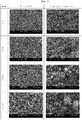
- the particle shape and particle size of a geopolymer composite as obtained according to the disclosure was also established by an SEM measurement (see Fig. 1 ).
- the aluminosilicate component comprises one or more selected from the group consisting of metakaolin, metakaolinite, metafly ash, furnace slag, silica fume, mine tailings, pozzolan, kaolin, and building residues,
- the athermanous additive component comprises one or more athermanous additives selected from the group consisting of
- the athermanous additive component comprises one or more athermanous additives selected from the group consisting of titanium oxides, rutiles, chamotte, fly ash, fumed silica, hydromagne-site/huntite mineral, and mineral having perovskite structure.
- the alkaline silicate comprises one or both of sodium silicate and potassium silicate, in particular the alkaline silicate is potassium silicate.
- silane is added to the aluminosilicate component, prior to mixing with the alkaline silicate solution in step a).
- silane is preferably added to the geopolymer composite, after optional step e) and preferably after step f).
- the silane is selected from aminopropyltriethoxysilane, aminopropyltrimethoxysilane, phenyltriethoxysilane, and mixtures thereof.
- the silane is selected from 0.01 to 10 wt.%, more preferably in the range of from 0.05 to 5 wt.%, most preferably from 0.1 to 3 wt.%, based on the weight of geopolymer composite, and mixtures thereof.
- the process proceeds as follows:
- the particle's shape and size was also proven by an SEM measurement (see Fig. 1 ).
- the geopolymer composite comprises geopolymer and athermanous additive.
- the athermanous additive is preferably selected from the group consisting of
- Athermanous additives are preferably used:
- Geopolymer or geopolymer composite may be modified by reaction with coupling agents to obtain better adhesion to the vinyl aromatic expandable polymers.
- different coupling agents can be used, depending on where addition takes place during preparation of the geopolymer or the geopolymer composite. However, this depends on the type of geopolymer used and the type of athermanous additive within the geopolymer composite.
- the present disclosure relates to the use of
- geopolymer and the athermanous additive can be added separately, to result in the filled vinyl aromatic polymer foam.
- geopolymer (powder) and athermanous additive (powder) are first mixed, and are then added as the mixture of geopolymer and athermanous additive, to result in the filled vinyl aromatic polymer foam.
- the athermanous additive may be comprised within the geopolymer, and is preferably actually encapsulated by the geopolymer.
- the second aspect of the present invention (II) relates to a process for the production of expandable vinyl aromatic polymer in the form of granulate of so-called expandable particles (micro-pellets or beads).
- This process involving the addition of the geopolymer composite, namely (1) an extrusion process (XEPS) and (2) a suspension polymerization process (EPS).
- XEPS extrusion process
- EPS suspension polymerization process
- incorporation of the geopolymer composite favourably contributes to both the process conditions and the properties of the product.
- An extrusion process for the production of expandable vinyl aromatic polymer granulate, preferably by twin-screw extrusion consists of a two-step mixing of the athermanous additive and flame retardant in two twin-screw extruders. Mixing takes place in a side twin screw extruder to which the athermanous additive (geopolymer, or combination of geopolymer with athermanous additive or mixture of athermanous additives, or geopolymer composite) is added through the two side feeders, in order to better degas the melt from excess of water and air. In this way, a filler masterbatch is created "in situ" and the filled melt is then (preferably directly, i.e. as melt) transferred to the main 32D twin-screw extruder.
- the athermanous additive geopolymer, or combination of geopolymer with athermanous additive or mixture of athermanous additives, or geopolymer composite
- the main extruder is filled with general purpose polystyrene (the same as the one dosed to the side twin screw extruder), polymeric brominated flame retardant, synergist of flame retardant (a type of initiator or peroxide) and nucleating agent (a type of polyethylene wax, or one with 80 % crystallinity obtained in a Fischer-Tropsch production process).
- the melt is impregnated with blowing agent (propellant, typically pentanes, or a suitable mixture).
- blowing agent propellant, typically pentanes, or a suitable mixture.
- the melt containing all additives is then cooled in a single screw extruder.
- the melt is then downstream processed in a pressurized underwater pelletization process, to obtain vinyl aromatic polymer granulate.
- the granulate is finally coated with a mixture of zinc (or magnesium) stearate, glycerine monostearate and glycerine tristearate.
- Expandable vinyl aromatic polymer granulate is preferably prepared in an extrusion process comprising the following steps:
- the total amount of coating can be from 0.2 to 0.6 wt.%, preferably from 0.3 to 0.5 wt.%, based on polymer granulate weight (inclusive of all additives, and inclusive of propellant), depending on the particles in the produced fraction.
- the 99.9 % is the required fraction, for example 0.8 to 1.6 mm.
- the additive i.e. (i) geopolymer, or (ii) combination of geopolymer with athermanous additive, or (ii) geopolymer composite
- the additive can be added to the main extruder in the form of a concentrated masterbatch.
- the masterbatch is prepared in the same side twin-screw co-rotating extruder with 54D length but separately and then incorporated to the main 32D length extruder together with flame retardant.
- the process does not require a side twin-screw extruder to prepare compounding in situ.
- the expandable vinyl aromatic polymer may be prepared in a suspension polymerization process.
- radically initiated copolymerization preferably takes place in the presence of powder of a. geopolymer, or b. combination of geopolymer with athermanous additive, or c. geopolymer composite, each preferably hydrophobized on the surface by the coupling agents, in particularly by vinyl silanes.
- mixing of prepolymer as obtained in first step with vinyl aromatic polymer takes place, preferably in a twin-screw co-rotating extruder.
- Underwater pelletization gives a masterbatch in the form of granulate. Then, this masterbatch is preferably, dissolved in styrene, together with flame retardant and nucleating agent.
- the process preferably comprises the following steps, as described in more detail below:
- the present disclosure relates also to expandable vinyl aromatic polymer granulate comprising vinyl aromatic polymer, one or more propellants, and
- the granulate is obtainable according to the process of the disclosure.
- the third aspect of the invention (III) relates to embodiment c. of the present disclosure, i.e. the use of geopolymer composite with athermanous additive, specifically wherein the vinyl monomer is vinyl aromatic monomer.
- expandable vinyl aromatic polymer granulate and an expanded foam products made thereof, which comprises vinyl aromatic polymer prepared from styrene monomer with optional incorporation of one or more vinyl comonomers, and
- Expandable vinyl aromatic polymer granulate may be expanded to form foam with a uniform structure independently from the geopolymer or geopolymer composite concentration in the foam.
- a uniform structure is characterized by the cell size distribution, as measured by a statistical analysis of the picture prepared by an optical microscopy measurement. From the cross section of the foamed bead, the cell size distribution is determined.
- the specific structure is created by the addition of geopolymer or geopolymer composite and produces a foam cell size in a range of from 10-100 ⁇ m, and the content of cells with a size of 50 ⁇ m is more than 30 %, 60 ⁇ m more than 25 %; preferably they have a cell size in the range of from 30 to 80 ⁇ m and a content of cells with a size of 50 ⁇ m above 35 %, 60 ⁇ m above 30 %; more preferably with a cell size in the range from 40 to 70 ⁇ m and a content of cells with a size of 50 ⁇ m above 45 %, 60 ⁇ m is above 40 %.
- the content of cells with a size of 40 ⁇ m is approximately between 10 and 20 % and with a size of 70 ⁇ m is approximately between 5 and 20 %.
- the typical structures (with histograms made for expanded vinyl aromatic polymer) as obtained with addition of pure geopolymer and a geopolymer composite are presented in Fig. 2 .
- the invention relates to the expandable vinyl aromatic polymer granulate (particles) as obtainable according to the second aspect, in an extrusion or a suspension processes.
- the expandable vinyl aromatic polymer granulate comprises polymer, one or more propellants and additive which is the geopolymer composite as prepared from geopolymer and suitable athermanous additive such as those from the group of carbon based athermanous additives (e.g. carbon black or petroleum coke), with optional addition of geopolymeric binders and minerals (e.g. fire clays such as chamotte, kaolinite, and as minerals the titanium ores including ilmenite, rutile, and as well titanium dioxide and synthetic rutile, and optionally barium sulphate).
- the binders and/or minerals and/or carbon-based athermanous additives can be used alone in the b. combination of geopolymer or be used separately according to the desired properties of geopolymer composite and final (foamed) product.
- the granulate or foam may contain: brominated flame retardant, preferably an environmentally friendly polymeric brominated flame retardant (Emerald 3000 from Chemtura, FR-122P from ICL or GREENCREST from Albemarle); synergist from the group of initiators or peroxides with relatively high temperature of decomposition; nucleating agent with high degree or crystallinity, preferably polyethylene oligomers from the group of Polywax (Baker Hughes) or Fischer Tropsch waxes from Evonik for example; blowing agent from the group of low boiling hydrocarbons, such as pentane or its suitable mixtures with isopentane.
- brominated flame retardant preferably an environmentally friendly polymeric brominated flame retardant (Emerald 3000 from Chemtura, FR-122P from ICL or GREENCREST from Albemarle); synergist from the group of initiators or peroxides with relatively high temperature of decomposition; nucleating agent with high degree or crystallinity
- the vinyl aromatic polymer used in all aspects of the disclosure is in particular polystyrene or a vinyl aromatic styrene copolymer.
- a part of styrene monomer is substituted with unsaturated comonomer, the reactivity of which is close to styrene monomer's reactivity, such as p-methyl styrene and its dimers, vinyl toluene, t-butyl styrene or divinylbenzene.
- typically used vinyl aromatic polymers have a different number average molecular weight.
- a general purpose type of polystyrene (or a copolymer with unsaturated styrene derivative) with a number average molecular weight (Mn) of from 40 to 100 kg/mol, preferably of from 50 to 80 kg/mol, more preferably of from 55 to 70 kg/mol, and a suitable polydispersity of Mw/Mn in a range of from 2.0 to 5.0, preferably of from 2.5 to 4.0, more preferably of from 3.0 to 3.5, and Mz/Mw in the range of from 1.5 to 2.5.
- Mn number average molecular weight
- the vinyl aromatic polymer as produced in the suspension process preferably has a number average molecular weight (Mn) from 50 to 120 kg/mol, preferably of from 60 to 100 kg/mol, more preferably of from 70 to 90 kg/mol, and a suitable polydispersity Mw/Mz in a range of from 2.0 to 4.5, preferably from 2.5 to 4.0, more preferably from 3.0 to 4.0, and Mz/Mw in the range of from 1.5 to 2.5.
- Mn number average molecular weight
- a flame retardant is used according to all aspects of the disclosure, to make expanded vinyl aromatic polymers which are self-extinguishing.
- the flame retardant is usually a combination of two types of compounds, namely a brominated aliphatic, cycloaliphatic, aromatic or polymeric compound containing at least 50 wt.% of bromine, and a second compound (so called synergistic compound) which can be bicumyl (i.e. 2,3-dimethyl-2,3-diphenylbutane) and/or its polymeric form, or 2-hydroperoxy-2-methylpropane.
- bicumyl i.e. 2,3-dimethyl-2,3-diphenylbutane
- the flame retardant can be stabilized by addition of thermo-oxidative stabilizers, especially standard components (e.g. Irganox 1010 in synergistic mixture with Irgafos 126), in which the components are used in a ratio of 1/2, preferably 1/1.
- the bromic acid scavenger used can be an epoxy resin, e.g. a solid multifunctional epichlorohydrin/cresol novolak epoxy resin, for example Epon 164 with an epoxy equivalent weight of 200 to 240 g/eq.
- the resin is typically used in a ratio of 2/1 with Irganox 1010 and Irgafos 126.
- acid scavengers that can be used are special grades of hydrotalcite such as DHT-4A from Kisuma Chemicals and hydromagnesite/huntite mineral, a hydrated magnesium carbonate mixed with platy magnesium calcium carbonate (such as UltraCarb 1250 from Minelco). Additionally, hydromagnesite/huntite can act as halogen free flame retardant and smoke suppressant and can thus in combination with brominated flame retardant strengthen the self-extinguishing effect. A beneficial influence of this mineral in the reduction of thermal conductivity was also noticed.
- the geopolymer composite used in accordance with the disclosure is preferably synthesized from metakaolin (geopolymeric binder based on fire clays - metaclay) and sodium or potassium polysilicate solution, preferably a sodium solution may be used, and/or carbon blacks and/or petroleum cokes and/or graphite and/or chamotte and other crystalline fire clays as cross linking precursors and/or titanium dioxide, and/or barium sulfate and/or synthetic rutile and/or ilmenite and/or perovskite and/or fumed silica and/or fly ashes and/or hydromagne-site/huntite mineral can be used as well.
- metakaolin geopolymeric binder based on fire clays - metaclay
- sodium or potassium polysilicate solution preferably a sodium solution may be used
- carbon blacks and/or petroleum cokes and/or graphite and/or chamotte and other crystalline fire clays as cross linking precursors and/or titanium dioxide, and/
- the geopolymer composite can e.g. contain up to 70 % of athermanous additive from the group of carbon-based additives, such as carbon blacks and/or petroleum cokes and/or graphite. Various types of carbon black and petroleum coke and graphite can be added. In addition, it is possible to incorporate graphitized carbon black together with synthetic or natural graphite or alone.
- the concentration of athermanous additives in the geopolymer composite depends on the geopolymer composite's viscosity, and this is related to the athermanous additive's particle size and BET surface area of the particular additive.
- Kaolinite used according to the present disclosure is a clay mineral composed of aluminosilicate oxides with the formula Al 2 O 3 ⁇ 2SiO 2 ⁇ 2H 2 O. It is a layered silicate mineral, with one tetrahedral sheet linked through oxygen atoms to one octahedral sheet of alumina octahedra.
- Endothermic dehydration of kaolinite begins at 550-600°C, producing disordered metakaolin, but continuous hydroxyl loss is observed up to 900°C.
- calcination of kaolin clay at 550-900°C, preferably 600-800°C and more, more preferably 600-700°C, results in metakaolin that is preferably used according to the disclosure.
- the metakaolin used according to the disclosure is preferably composed of:
- Titanium dioxide occurs in form of three common crystalline phases, namely rutile, anatase and brookite. Rutile is the most stable form, while anatase and brookite slowly convert to rutile upon heating above 550°C and 570°C. All three forms of titanium dioxide have six co-ordinated titanium atoms in their unit cells. Rutile and anatase structures are tetragonal. Titanium dioxide is characterized by its excellent processing properties, ease of wetting and dispersion. Moreover, it is able to absorb infrared radiation, thus in this manner was used in the synthesis of geopolymer composite of the disclosure, to decrease thermal conductivity of the expanded vinyl aromatic polymer (as measured according to ISO 8301).
- the titanium dioxide preferably used in the present disclosure has a TiO 2 content in the range of 70.0-99.9 wt.%, as measured according to standard PT-5006, preferably 85.0-99.0 wt.%, more preferably from 90-98 wt.%.
- the total Al 2 O 3 and SiO 2 content is in the range of 0.1 to 30 wt.%, preferably in the range of from 1 to 10 wt.%, more preferably of from 3-5 wt.%, as measured according to PT-5003 and PT-5002 standards.
- the density is preferably 1 to 7 kg/dm 3 , as measured according to DIN ISO 787 standard, preferably 2 to 6 kg/dm 3 , more preferably 3 to 5 kg/dm 3 .
- the average particle size is in the range of 0.01 to 100 ⁇ m, preferably in the range of 0.1 to 30 ⁇ m, more preferably 0.5 to 25 ⁇ m, as measured by a Malvern Mastersizer apparatus according to the standard ISO
- Ilmenite is a titanium-iron oxide mineral (FeTiO 3 ), weakly magnetic, considered as the most important ore of titanium. Ilmenite most often contains appreciable quantities of magnesium and manganese and the full chemical formula can be expressed as (Fe, Mg, Mn, Ti)O3. Ilmenite crystallizes in the trigonal system. The crystal structure consists of an ordered derivative of the corundum structure.
- the ilmenite as used according to the disclosure preferably has a TiO 2 content in the range of from 10 to 70 wt.%, preferably of from 30 to 50 wt.%, more preferably of from 40 to 45 wt.%. It is preferred that the total Fe content is from 5 to 50 wt.%, preferably from 20 to 40 wt.%, more preferably from 33 to 38 wt.%.
- the content of SiO 2 , MnO, MgO, Cao, Al 2 O 3 and V 2 O 5 is in the range of from 0.1 to 20 wt.%, preferably in the range of from 1 to 15 wt.%, more preferably in the range of 5 to 10 wt.%.
- the density is preferably from 2 to 6 kg/dm 3 , as measured according to DIN ISO 787, preferably 3 to 5 kg/dm 3 .
- the average particle size is in the range of from 0.01 to 100 ⁇ m, preferably in the range of from 0.5 to 30 ⁇ m, as measured by laser diffraction, using a Malvern Mastersizer apparatus according to ISO 13320-1.
- Rutile is a mineral composed primarily of titanium dioxide (TiO 2 ). Natural rutile may contain up to 10 % of iron and significant amounts of niobium and tantalum. Rutile crystallizes in the tetragonal system.
- the titanium dioxide used in the present disclosure preferably has a TiO 2 content in the range of from 70.0 to 99.9 wt.%, preferably of from 85.0 to 99.0 wt.%, more preferably from 90 to 93 wt.%.
- the SiO 2 content is in the range of 0.1 to 10 wt.% preferably in the range from 1 to 5 wt.%, more preferably from 2 to 4 wt.%.
- the density is from 1 to 7 kg/dm 3 , as measured according to DIN ISO 787, preferably 2 to 6 kg/dm 3 , more preferably 3 to 5 kg/dm 3 .
- the average particle size is in the range of 0.01 to 100 ⁇ m, preferably in the range of 0.1 to 30 ⁇ m, more preferable is range of 0.5 to 25 ⁇ m, measured by laser diffraction, using a Malvern Mastersizer apparatus according to the ISO 13320-1.
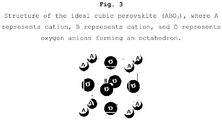
- a mineral of the general formula ABX3 is preferably present, A and B being cations and X being anions, wherein the mineral has perovskite crystal structure (in the following "mineral having perovskite structure", or “perovskite' ) .
- This type of additive reduces flame development by the creation of char with higher viscosity and thus reduces dripping and flaming.
- the perovskite as preferably used in accordance with the disclosure has the following specific properties:
- FIG. 3 The structure of an ideal cubic perovskite structure is shown in Fig. 3 , where A cations are shown at the corners of the cube, and the B cation in the centre with oxygen ions in the face-centred positions.
- the sum of oxidation states of A and B cations should be equal to six.
- A is selected from the group consisting of Ca, Sr, Ba, Bi, Ce, Fe, and mixtures thereof.
- the A atom can be represented also by hybrid organic-inorganic groups, e.g. (CH 3 NH 3 ) + .
- the B atom is preferably represented by Ti, Zr, Ni, Al, Ga, In, Bi, Sc, Cr, Pb as well as ammonium groups.
- the X atom is preferably represented by oxygen or halide ion, or mixtures thereof.
- Perovskites have large reflectance properties in the broad wavelength and a high optical constant, even in the far-infrared region. Hence, perovskites are infrared reflective materials that reflect infrared rays included in sunlight or the like and reduce the level of absorbed infrared rays.
- Glass water is a water soluble alkali metal silicate with a certain molar ratio of M 2 O:SiO 2 (M representing Na or K, or a mixture of Na and K), corresponding to the chemical formula M 2 O:2SiO 2 *nH 2 O, n being comprised between 2 and 6.
- M is in one embodiment preferably Na.
- M is K.
- potassium silicate is more expensive than sodium silicate, the properties of the geopolymers prepared with potassium silicate are much better than those obtained with sodium silicate.
- the molar ratio of M 2 O:SiO 2 is preferably comprised between 0.2 and 0.8.
- the alkali metal silicate solution contains 20 to 30 wt.% by weight of SiO 2 , 15 to 26 wt.% of K 2 O or Na 2 O, and 45 to 65 wt.% by weight of water.
- the solution may be prepared in advance or may result from the dissolution of solid (powdered) alkali silicate present in the mix, with added water.
- Calcium silicate as part of or as the aluminosilicate component
- Calcium silicates with Ca/Si atomic ratio equal to or greater than 1, such as wollastonite Ca(SiO 3 ), gehlenite (2CaO ⁇ Al 2 O 3 ⁇ SiO 2 ), akermanite (2CaO ⁇ MgO ⁇ 2SiO 2 ) are preferred.
- an alkaline solution NaOH or KOH
- very rapid desorption of CaO occurs, so that the Ca/Si atomic ratio becomes less than 1 and is closer to 0.5.
- Industrial by-products and high-temperature residues contain essentially the basic silicates gehlenite, akermanite and wollastonite, and are thus very suitable. They are found in blast furnace slag.
- the blast furnace slag used has a specific surface area in the range of 400 to 600 m 2 /kg, i.e. d50 less than 10 ⁇ m, such as in WO 98/31644 .
- the specific surface area of the slag is greater than 400 m 2 /kg, preferably comprised between 500 and 800 m 2 /kg. This is not the case in the present disclosure where, preferably, 5 to 15 parts by weight of blast furnace slag with a specific surface area less than 380 m 2 /kg or d50 between 15 and 25 ⁇ m are used. This results in mixtures with a pot-life ranging between 1 and 4 hours.
- calcium silicate improves the geopolymer properties by better dissolution of metakaolinite in the sodium activator.
- the carbon black as most preferably used in geopolymer composite preparation according to the disclosure has a BET surface, as measured according to ASTM 6556 standard, in the range of 5 to 1000 m 2 /g.
- the following carbon blacks within this BET surface area range can be characterized:
- Typical coke products are needle coke, regular coke, and sponge coke.
- Needle coke consists of highly structured graphene layers.
- Regular coke consists of irregularly oriented graphene layers.
- Sponge coke is a coke with highly porous structure. It is preferred according to the present disclosure to use a coke for the preparation of geopolymer composite having a sulphur content in the range from 1 to 100 000 ppm, preferably 50 to 20 000 ppm, as measured according to ASTM D1619, and an ash content from 0.1 to 1 %.
- the mean diameter size of coke particles should be in the range of 0.01 to 100 ⁇ m, more preferably in the range of 0.1 to 30 ⁇ m, suitably 0.5 to 25 ⁇ m.
- the coke's further properties are preferably:
- the chamotte preferably used according to the disclosure is preferably composed of:
- the water absorption of chamotte as used according to the disclosure is 10 wt.% maximum, preferably lower than 7 wt.% and more preferably lower than 5 wt.%.
- chamotte used according to the disclosure preferably has a melting point of approximately 1780°C. Its thermal expansion coefficient is most preferably about 5.2 mm/m, and thermal conductivity (as measured according to ISO 8301) is about 0.8 W/(m ⁇ K) at 100°C and about 1.0 W/(m ⁇ K) at 1000°C.
- the chamotte used in this disclosure acts as a cross-linking precursor agent.
- thermal silica fume designates exclusively an amorphous type of silica obtained by condensing of SiO vapours resulting from the very high temperature electrofusion of siliceous materials, generally at about 2000°C; the said alkaline silicate is preferably obtained by dissolving the said thermal silica in a concentrated solution of NaOH and/or KOH.
- the thermal silica fume is prepared by electrofusion of zircon sand.
- the obtained thermal silica fume preferably contains at most 10 % by weight of Al 2 O 3 and at least 90 % by weight of SiO 2 . It has a chemical formula between (13Si 2 O 5 , Al 2 O 2 ) and (16Si 2 O 5 , Al 2 O 2 ), representing an aluminosilicate oxide with Al in coordination (IV), with additional amorphous silica SiO 2 .
- the aluminosilicate oxide having the characteristics of this thermal silica is written as (I5Si 2 O 5 ,Al 2 O 2 ), however, without excluding from the scope of the disclosure other thermal silica fumes with compositions containing at most 10 % by weight of Al 2 O 3 and at least 90 % by weight of SiO 2 .
- the fumed silica used in this disclosure acts as a cross-linking precursor agent and viscosity modifier.
- Huntite magnesium calcium carbonate with the formula Mg 3 Ca(CO 3 ) 4
- hydromagnesite hydrated magnesium carbonate with the formula Mg 5 (CO 3 ) 4 (OH) 2 ⁇ 4H 2 O
- Huntite and hydromagnesite in accordance with the disclosure preferably have the following specific properties:
- the expandable vinyl aromatic polymer granulate preferably comprises one or more types of geopolymer composite (containing encapsulated or physically or chemically modified athermanous additives selected from the group of carbon black, petroleum coke, graphitized carbon black, graphite oxides, graphite and graphene, titanium oxides, barium sulfate, ilmenite, rutiles, chamotte, fly ash, fumed silica, hydromagnesite/huntite mineral, perovskite mineral).
- geopolymer composite containing encapsulated or physically or chemically modified athermanous additives selected from the group of carbon black, petroleum coke, graphitized carbon black, graphite oxides, graphite and graphene, titanium oxides, barium sulfate, ilmenite, rutiles, chamotte, fly ash, fumed silica, hydromagnesite/huntite mineral, perovskite mineral).
- a process for the production of expanded vinyl aromatic polymer foam preferably comprises the following steps:
- the disclosure relates to expanded vinyl polymer foam comprising vinyl polymer and
- the expanded vinyl polymer foam comprises vinyl aromatic polymer, and the foam is more preferably obtainable by expansion of the granulate.
- the fourth aspect of the invention (IV) relates to expanded vinyl aromatic foam comprising vinyl aromatic polymer and a geopolymer composite comprising athermanous additive.
- the foam (made of expanded vinyl aromatic polymer with addition of geopolymer composite) has a density of from 8 to 30 kg/m 3 , and a thermal conductivity (as measured according to ISO 8301) of from 25 to 35 mW/K ⁇ m.
- the foam should have thermal conductivity for low densities in the range of from 31 to 34 mW/m ⁇ K at densities of from 8 to 14 kg/m 3 .
- thermal conductivity is preferably in the range of from 28 to 31 mW/mK, at densities of from 17 to 21 kg/m 3 .
- the presence of geoplymer composite does not exclude the presence of athermanous additive that is not contained within the geopolymer composite.
- the disclosure further relates to a masterbatch comprising vinyl polymer and a., b. and/or c.
- the fifth aspect of the present invention (V) relates to embodiment c. of the present disclosure, i.e. the use of geopolymer composite with athermanous additive, specifically wherein the vinyl monomer is vinyl aromatic monomer.
- the disclosure relates to a masterbatch comprising vinyl polymer and a. geopolymer, wherein the amount of geopolymer is in a range of from 10 to 70 wt.%, based on the weight of the masterbatch.
- a masterbatch wherein the amount is in a range of from 10 to 65 wt.%, based on the weight of the masterbatch, more preferably the amount is in a range of from 20 to 60 wt.%, most preferably the amount is in a range of from 25 to 55 wt.%.
- the disclosure further relates to a masterbatch comprising vinyl polymer and b. a combination of a geopolymer with an athermanous additive, wherein the total amount of geopolymer and athermanous additive is in a range of from 10 to 70 wt.%, based on the weight of the masterbatch.
- a masterbatch wherein the amount is in a range of from 10 to 65 wt.%, based on the weight of the masterbatch, more preferably the amount is in a range of from 20 to 60 wt.%, most preferably the amount is in a range of from 25 to 55 wt.%.
- the present invention relates to a masterbatch comprising vinyl aromatic polymer and c. a geopolymer composite derived from geopolymer and comprising athermanous additive, wherein the amount of geopolymer composite is in a range of from 10 to 70 wt.%, based on the weight of the masterbatch.
- a masterbatch wherein the amount is in a range of from 10 to 65 wt.%, based on the weight of the masterbatch, more preferably the amount is in a range of from 20 to 60 wt.%, most preferably the amount is in a range of from 25 to 55 wt.%.
- the vinyl polymer is a vinyl aromatic polymer, more preferably the vinyl aromatic polymer has a melt index in a range of from 4 to 30 g/10 min, as measured according to ISO 1133, most preferably the vinyl aromatic polymer is a homopolymer or copolymer with p-tert butyl styrene or alpha-methyl styrene.
- the masterbatch may further comprise one or more silanes (preferably selected from aminopropyltriethoxysilane, aminopropyltrimethoxysilane, and phenyltriethoxysilane).
- silanes preferably selected from aminopropyltriethoxysilane, aminopropyltrimethoxysilane, and phenyltriethoxysilane.
- the amount of silane is in a range of from 0.01 to 1 wt.%, based on the respective weight of a., b. or c. in the masterbatch.
- the materials according to the disclosure may, in addition to
- any additive by weight of polymer
- This example shows the advantages of the invention for the foam derived from extrusion based polymer granulate, with addition of 16 wt.% of geopolymer composite, and its preparation, and for the suspension based composite foam with addition of 10 and 5 wt.% of geopolymer composite, respectively.
- the components 572 kg of a mixture which comprises metakaolinite and calcium silicate in an optimum weight ratio (product Baucis L160 from ⁇ eské lupkové závody, a.s.) and 457 kg of sodium water glass were charged into a planetary mixer having a volume 2 m 3 and mixed over 15 min, to obtain a thixotropic pulp.
- the athermanous additive namely petroleum coke (Ranco 9895 from Richard Anton KG having a mean diameter particle size of 5 ⁇ m, a BET surface area of 28.7 m 2 /g, and a sulphur content of 10,100 ppm) was added in an amount of 250 kg, and 163 1 of water was added subsequently to the pulp and mixed during the next 15 min.
- the highly viscous, homogenous pulp was discharged from the mixer do the hermetic moulds made of polypropylene (each portion was 100 kg). The moulds were transported then to the hall (polycondensation hermetic room) and placed on the racks. After 24 hours, the ready blocks (each approx.
- the dried geopolymer composite blocks were then placed into a crushing mill to obtain the ballast form of the material.
- the ballast with a mean diameter of 10 mm was dried in a rotary cylindrical dryer for 30 min at a temperature of 140°C.
- the fine powder (amount of approx. 1000 kg) was then placed in a 5 m 3 tank equipped with a turbine blade agitator. Immediately thereafter, 2000 1 of processing water were charged into the vessel and mixing was started simultaneously. An amount of 250 kg of concentrated aqueous hydrochloric acid (37 %) was then "drop wise" added to the tank over 30 min. (8.3 kg/min.). The starting pH, as measured before acid addition, was 13, after 60 min. of mixing and elution the final pH was 7.5. The water was filtrated from the powder of geopolymer composite, and a second portion of water was added to dilute remaining sodium chloride, and the slurry was mixed for 30 min. After this time, the pH increased to 7.7.
- the slurry (water and powder) was then filtrated partially in filtration press and transferred to a powder drying process to remove the water and to dry the powder. After filtration, the pH of the powder was 7.2. After the powder-drying process, the fine powder possessed the same particle size distribution as after the milling process.
- silane aminopropyltriethoxysilane or phenyltriethoxysilane
- silane aminopropyltriethoxysilane or phenyltriethoxysilane
- Special equipment for silanization of powders can be used, for example a twin-cone blender or a vacuum tumble dryer.
- the silanization can be performed in the slurry reactor, by using for example toluene as liquid medium.
- silanization of the final powder can be performed for this purpose, in a concentration of 1 wt.% calculated per geopolymer composite powder amount.
- the mechanical properties in particular the strength according to standard ISO 679 as used for the measurement of mechanical properties of concrete, were measured to study the influence of silane addition to the geopolymer composite on the cohesion of the composite matrix.
- the geopolymer's or geopolymer composite's high ability for absorption of the blowing agent (a typical hydrocarbon) was confirmed by measurement according to standard ASTM C830-00.
- the geopolymer composite powder in a concentration of 16 wt.% (containing 25 % of Ranco 9595, having a mean particle size of 6 ⁇ m and a BET surface area of 20.5 m 2 /g) was dosed to the side arm (54D/25 mm) twin-screw co-rotating extruder via two side feeders and the vinyl aromatic polymer (in the form of granules) was dosed to the main hopper of this extruder.
- the melt containing 40 wt.% of concentrated geopolymer composite was transported to the main extruder.
- the melt temperature inside the extruder was 190°C.
- the blowing agent (n-pentane/isopentane mixture 80/20 %) was injected to the main 32D/40 mm extruder downstream from the injection of the melt from the side twin-screw extruder.
- the concentration of blowing agent was 5.5 wt.%, calculated on total mass of product.
- the melt of vinyl aromatic polymer containing flame retardant, bicumyl, geopolymer composite and blowing agent was transported to the 30D/90 mm cooling extruder and pumped through a 60 mm length static mixer, melt pump, screen changer, diverter valve and extruded through the die head with 0.75 mm diameter holes, and underwater pelletized by the rotating knifes. Downstream, the rounded product, a granulate with a particle size distribution of 99.9 % of the fraction 0.8-1.6 mm was centrifuged to remove the water, and was finally coated by the suitable mixture of magnesium stearate with glycerine monostearate and tristearate. The melt temperature in the cooling extruder was 170°C.
- the coated beads were expanded to measure the final general properties of expanded foam composite:
- the expandable granulate with a particle size distribution 0.8 to 1.6 mm was in the pre-expander vessel treated for 50 sec. with steam having a pressure of 0.2 kPa, and was then dried in a connected fluid bed drier.
- the obtained beads' density was 17 kg/m 3 .
- the expanded beads were conditioned in a silo for 24 h and introduced to the block mould with dimensions of 1000 x 1000 x 500 mm.
- Steam having a pressure of 0.7 kPa was used to weld the beads, and to obtain moulded blocks having a density of 17.5 kg/m 3 .
- the mould cooling time in this case was 70 sec.
- the ready block was cut into plates and then specimens after 6 days of conditioning at room temperature.
- Geopolymer composite (as produced according to Example 1 but silanized with 1 wt.% of vinyltriethoxysilane) was introduced into the reactor part-by-part in equal portions of 4 kg each.
- the composition was mixed, to obtain a homogenous paste, and 0.5 wt.% of benzoyl peroxide were added, as well as dicumyl peroxide in the same 0.5 wt.% concentration.
- the reactor was closed and a nitrogen pressure of 1 bar was established. The intensively mixed mass was heated to 100°C and kept at that temperature for 40 min.
- a melt pump transferred the melt to the 54D/25 mm co-rotating twin-screw extruder with the speed to provide 10 wt.% concentration of geopolymer composite in the melt.
- An amount of 30 wt.% per total mass of masterbatch of geopolymer composite powder (silanized with 2 wt.% of vinyltriethoxysilane) was introduced to the extruder by the side feeder before the melt from the extruder was injected.
- High molecular weight vinyl aromatic polymer (Mn of 80 kg/mol) was dosed to the main hopper at the first zone of extruder.
- the copolymer with geopolymer composite (copolymerized with styrene and grafted with polystyrene) was obtained in the form of masterbatch granules, containing 40 wt.% of geopolymer composite in the polymer matrix.
- High shear force and processing temperature of 190°C set-up for all zones in extruder provided good reaction capability.
- a masterbatch with mean granules size of 3 mm was produced by an underwater pelletization method.
- the mixture was heated relatively quickly to a temperature of 70°C and mixed at this temperature for 30 min with 275 rpm. Then, the temperature was increased to 90°C and 9 1 of demineralised water (temperature of 60°C) were added. The mixing force immediately created a suspension of prepolymer and the suspension was heated to 82°C. Immediately, 0.3 wt.% of Peroxan PO and 0.5 wt.% of TBPEHC were added. The radical polymerization was started and the following surfactant composition was introduced:
- the polymerization was then continued for 120 min. at a temperature of 82°C, and the temperature was then increased to 90°C.
- the suspension was kept at this temperature for 120 min. to achieve particle identity point of suspension.
- a further portion of Poval 217 (in a concentration of 0.3 wt.% of a 5 wt.% concentrated solution in water) was introduced and the reactor was filled with 0.5 1 of demineralised water.
- the sodium chloride can be added in an amount of 0.5 wt.% per water phase, to reduce the water content in the polymer.
- the surfactant sodium dodecylbenzenesulfonate, SDBS
- SDBS sodium dodecylbenzenesulfonate
- the reactor was closed and an n-pentane/isopentane 80/20 % mixture in amount of 5.5 wt.% was added over 60 min. Simultaneously, the temperature was increased to 125°C. Then the polymerization was continued for 120 min. and after that time the suspension slurry was cooled down to 25°C.
- the product was removed from the reactor and water was removed in a basket centrifuge.
- the particles were then dried in a fluid bed drier at a temperature of 40°C for 30 min. and fractionated on 80 % of particles fraction 0.8-1.6 mm, 15 % of 0.3-1.3, 4 % of 1.0-2.5 mm and 1 % of upper and lower size. Fractions were then coated the same way as the product as obtained in the extrusion process, and then expanded to foam.
- Example 2 This example is comparable to Example 1 but with a lower amount of geopolymer composite in the foam, and with a higher content of carbon based athermanous additive in the composite.
- An expandable granulate was produced with the same conditions and process as in Example 1, except that 10 wt.% of geopolymer composite containing 40 wt.% of Ranco 9895 and having a mean particle size of 6 ⁇ m and BET surface of 10 m 2 /g was used.
- This example shows the influence of silanization on the cohesiveness of geopolymer composite and the mechanical properties of the foam.
- the example is comparable to Example 1.
- Expandable particles were produced with the same conditions, ingredient concentrations and process as in Example 1, except that aminopropyltriethoxysilane was added in a concentration of 2 wt.% per amount of used Baucis L160. Additionally, the ready geopolymer composite powder was silanized with phenyltriethoxysilane in a concentration of 1 wt.% per dry weight of powder.
- Expandable particles were produced with the same conditions and process as in Example 1, except that, instead of petroleum coke, 20 wt.% of Monarch 460 carbon black having a BET surface of 71.8 m 2 /g and 5600 ppm of sulphur was used to prepare the geopolymer composite. Moreover, the ready composite powder with a mean diameter 7 ⁇ m and BET surface 21.3 m 2 /g in concentration of 15 wt.% was added to the total composition.
- This example compares the influence of pure geopolymer addition on the structure and foam composite properties and shows that properties are very similar to those examples were geopolymer composites were used.
- Expandable particles were produced with the same conditions as in Example 1, except that pure geopolymer (without addition of any athermanous filler) was prepared and added to the expandable vinyl aromatic polymer in a concentration of 10 wt.% calculated per total mass of expanded foam composite.
- Expandable particles were produced under the same conditions as in Example 1, except that the Emerald 3000 flame retardant was added in a concentration of 1 wt.%.
- This example is further focused to show that an even lower amount of flame retardant may be added when thermal and thermo-oxidative stabilizers are incorporated into the mixture.
- Expandable particles were produced with the same conditions as in Example 1, except that the thermo-oxidative stabilizers were added in a concentration of 0.04 wt.% of Irgafos 126 and 0.04 wt.% of Irganox 1010, and 0.08 wt.% of Epon 164 as HBr acid scavenger, and 0.32 wt.% of F-2200 HM as thermal stabilizer for Emerald 3000 (according to ICL recommendation) were used. The flame retardant concentration was decreased down to 0.8 wt.%.
- a complex geopolymer composite was prepared and used in the preparation of expanded foam.
- the example was performed in particular to show the influence of geopolymer composite based on a mixture of ilmenite, rutile and carbon black on the thermal conductivity reduction of the foam.
- Expandable particles were produced with the same conditions as in Example 1, except that 10 wt.% of Monarch 460, 10 wt.% of synthetic rutile from Iluka with a mean particle size of 5 ⁇ m, and 10 wt.% of ilmenite (standard grade from Titania AS, Norway with a mean particle size of 5 ⁇ m) were used to prepare the geopolymer composite with a mean particle size of 6 ⁇ m, and the geopolymer composite was used in an amount of 15 wt.%. Emerald 3000 concentration was reduced to 1.25 %.
- a geopolymer composite with perovskite, a barium titanate (BaTiO 3 ), with small inclusion of hydromagnesite/huntite (product UltraCarb 1250) and chamotte was prepared. A very small amount of flame retardant was used then too (0.7 wt.%).
- Expandable particles were produced with the same conditions as in Example 1, except that 30 wt.% of barium titanate with a mean particle size of 5 ⁇ m and 5 wt.% of hydromagnesite/huntite with a mean particle size of 2.6 ⁇ m and 5 wt.% of chamotte with a mean particle size of 6 ⁇ m from ⁇ eské lupkové závody, a.s. were used to prepare the geopolymer composite with a mean particle size of 6 ⁇ m, which was added in a concentration of 10 wt.%.
- Example 2 the suspension process specified in Example 1, point 3 was used to prepare the expanded foam; 10 wt.% of geopolymer composite were incorporated. The organic stabilization system for suspension was used.
- the suspension was prepared according to Example 10, except that the geopolymer composite concentration was reduced to 5 wt.% and the inorganic stabilization system was based on potassium persulfate and tricalcium phosphate.
- Table 1 lists the compositions of the seven different compositions of geopolymer composite used in Examples 1 to 11 (Example 5 is not according to the invention). Properties of the resultant geopolymer composites are shown below in Table 5.
- Table 1 Geopolymer composite compositions. No. 1 2 3 4 5 6 7 Unit wt.% Silanes YES Geopolymer matrix (%) 75 60 75 80 100 70 60 Ranco 9895 25 40 25 Monarch 460 20 10 Synthetic rutile 10 Ilmenite 10 Barium titanate 30 Hydromagnesite 5 Chamotte 5 Table 2. Examples summary - foam from an extrusion process.
- Geopolymer and geopolymer composite parameters Geopolymer composite 1 2 3 4 5 6 7 Density (g/cm 3 ) 2.58 1.48 2.60 2.23 3 . 2 4.2 4.1 Compresive strength (MPa) 26 17 71 30 44 53 62 Water content (%) 2.5 1.0 2.0 4.0 1.9 2.1 3.1 Blowing agent absorption (%) 13.1 8.0 12.2 14.9 19.4 11.0 14.2
Landscapes
- Chemical & Material Sciences (AREA)
- Engineering & Computer Science (AREA)
- Organic Chemistry (AREA)
- Materials Engineering (AREA)
- Chemical Kinetics & Catalysis (AREA)
- Health & Medical Sciences (AREA)
- Medicinal Chemistry (AREA)
- Polymers & Plastics (AREA)
- Ceramic Engineering (AREA)
- Inorganic Chemistry (AREA)
- Structural Engineering (AREA)
- Environmental & Geological Engineering (AREA)
- General Life Sciences & Earth Sciences (AREA)
- Geochemistry & Mineralogy (AREA)
- Geology (AREA)
- Life Sciences & Earth Sciences (AREA)
- Mechanical Engineering (AREA)
- Compositions Of Macromolecular Compounds (AREA)
- Civil Engineering (AREA)
- Manufacture Of Porous Articles, And Recovery And Treatment Of Waste Products (AREA)
- Processes Of Treating Macromolecular Substances (AREA)
- Combustion & Propulsion (AREA)
- Polymers With Sulfur, Phosphorus Or Metals In The Main Chain (AREA)
- Silicon Polymers (AREA)
Claims (11)
- Utilisation d'un composite géopolymère dérivé d'un géopolymère et comprenant un additif athermane,
visant à diminuer la conductivité thermique d'une mousse comprenant un polymère vinyle aromatique (la diminution étant mesurée selon la norme ISO 8301). - Utilisation selon la revendication 1, dans laquelle l'additif athermane comprend un ou plusieurs éléments choisis dans le groupe consistant ena. du noir de carbone, du coke de pétrole, du noir de carbone graphitisé, des oxydes de graphite, du graphite et du graphène, etb. des oxydes de titane, du sulfate de baryum, de l'ilménite, des rutiles, de la chamotte, des cendres volantes, de la silice sublimée, un minéral hydromagnésite/huntite, et un minéral ayant une structure de pérovskite,de préférence dans laquelle l'additif athermane est un ou plusieurs additifs athermanes à base de carbone choisis dans le groupe des absorbants thermiques et des réflecteurs thermiques,
en particulier dans laquelle l'additif athermane est du noir de carbone, du graphite, ou l'un de leur mélange. - Procédé de production d'un granulat de polymère vinyle aromatique expansible par un procédé d'extrusion ou de suspension, le procédé comprenant l'addition d'un composite géopolymère dérivé de géopolymère et comprenant un additif athermane.
- Granulat de polymère vinyle aromatique expansible comprenant un polymère vinyle aromatique, un ou plusieurs agents propulseurs, et un composite géopolymère dérivé de géopolymère et comprenant un additif athermane.
- Granulat de polymère vinyle aromatique selon la revendication 4, tel qu'il peut être obtenu selon le procédé de la revendication 3.
- Mousse de polymère vinyle expansé, comprenant un polymère vinyle aromatique et un composite géopolymère dérivé de géopolymère et comprenant un additif athermane,
la mousse ayant- une masse volumique de 8 à 30 kg/m3, et- une conductivité thermique (telle que mesurée selon la norme ISO 8301) allant de 25 à 35 mW/K·m. - Mousse de polymère vinyle expansé selon la revendication 6, dans laquelle la mousse peut être obtenue par expansion du granulat selon la revendication 4 ou la revendication 5.
- Lot-maître comprenant un polymère vinyle aromatique, et un composite géopolymère dérivé de géopolymère et comprenant un additif athermane, dans lequel la quantité de composite géopolymère est dans une plage de 10 à 70 % en poids rapporté au poids du lot-maître.
- Lot-maître selon la revendication 8, dans lequel la quantité est dans une plage de 10 à 65 % en poids, rapporté au poids du lot-maître,
de préférence dans lequel la quantité est dans une plage de 20 à 60 % en poids,
de manière davantage préférée, dans lequel la quantité est dans une plage de 25 à 55 % en poids. - Lot-maître selon la revendication 8 ou la revendication 9, dans lequel le polymère vinyle aromatique a un indice de fusion dans une plage de 4 à 30 g/10 min, tel que mesuré selon la norme ISO 1133,
de préférence dans lequel le polymère vinyle aromatique est un homopolymère ou copolymère avec du p-tert butyl styrène ou de l'alpha-méthyl styrène. - Lot-maître selon l'une quelconque des revendications 8 à 10, comprenant en outre un ou plusieurs silanes (de préférence choisis parmi l'aminopropyltriéthoxysilane, l'aminopropyltriméthoxysilane, et le phényltriéthoxysilane),
de préférence dans lequel la quantité de silane est dans une plage de 0,01 à 1 % en poids, rapporté au poids respectif de a. ou b. dans le lot-maître.
Priority Applications (6)
| Application Number | Priority Date | Filing Date | Title |
|---|---|---|---|
| MA41339A MA41339B1 (fr) | 2015-01-14 | 2016-01-14 | Granulés de polymère vinylique aromatique expansible et mousse de polymère aromatique de vinyle expansé comprenant de composites géopolymères, ainsi que leur utilisation |
| SI201630222T SI3245172T1 (sl) | 2015-01-14 | 2016-01-14 | Ekspandibilen vinilaromatski polimerni granulat in ekspandirana vinilaromatska polimerna pena, ki obsega geopolimerni kompozit in njegova uporaba |
| HRP20190608TT HRP20190608T1 (hr) | 2015-01-14 | 2016-01-14 | Granulat ekspandirajućeg vinil aromatskog polimera i ekspandirana pjena vinil aromatskog polimera koja sadrži geopolimerni kompozit i njegova uporaba |
| RS20190275A RS58556B1 (sr) | 2015-01-14 | 2016-01-14 | Ekspandibilni granulat vinil-aromatičnog polimera i ekspandirana pena vinil-aromatičnog polimera koji sadrže geopolimerni kompozit i njegova upotreba u njima |
| PL16700584T PL3245172T3 (pl) | 2015-01-14 | 2016-01-14 | Spienialny granulat polimeru winyloaromatycznego i pianka ze spienionego polimeru winyloaromatycznego zawierająca kompozyt geopolimerowy i jego zastosowanie w nich |
| EP19150362.2A EP3495335A1 (fr) | 2015-01-14 | 2016-01-14 | Procédé de fabrication d'un composite géopolymère |
Applications Claiming Priority (2)
| Application Number | Priority Date | Filing Date | Title |
|---|---|---|---|
| EP15461507 | 2015-01-14 | ||
| PCT/EP2016/050594 WO2016113321A1 (fr) | 2015-01-14 | 2016-01-14 | Composite géopolymère et granulé de polymère vinylique aromatique expansible et mousse de polymère vinylique aromatique expansé comprenant celui-ci |
Related Child Applications (1)
| Application Number | Title | Priority Date | Filing Date |
|---|---|---|---|
| EP19150362.2A Division EP3495335A1 (fr) | 2015-01-14 | 2016-01-14 | Procédé de fabrication d'un composite géopolymère |
Publications (2)
| Publication Number | Publication Date |
|---|---|
| EP3245172A1 EP3245172A1 (fr) | 2017-11-22 |
| EP3245172B1 true EP3245172B1 (fr) | 2019-01-09 |
Family
ID=52354918
Family Applications (2)
| Application Number | Title | Priority Date | Filing Date |
|---|---|---|---|
| EP19150362.2A Pending EP3495335A1 (fr) | 2015-01-14 | 2016-01-14 | Procédé de fabrication d'un composite géopolymère |
| EP16700584.2A Active EP3245172B1 (fr) | 2015-01-14 | 2016-01-14 | Granulés de polymère vinylique aromatique expansible et mousse de polymère aromatique de vinyle expansé comprenant de composites géopolymères, ainsi que leur utilisation |
Family Applications Before (1)
| Application Number | Title | Priority Date | Filing Date |
|---|---|---|---|
| EP19150362.2A Pending EP3495335A1 (fr) | 2015-01-14 | 2016-01-14 | Procédé de fabrication d'un composite géopolymère |
Country Status (21)
| Country | Link |
|---|---|
| US (3) | US10961154B2 (fr) |
| EP (2) | EP3495335A1 (fr) |
| JP (1) | JP2018502965A (fr) |
| KR (1) | KR20170106391A (fr) |
| CN (1) | CN107406325B (fr) |
| AU (1) | AU2016208052C1 (fr) |
| BR (1) | BR112017014972A2 (fr) |
| CA (1) | CA2973630A1 (fr) |
| DK (1) | DK3245172T3 (fr) |
| ES (1) | ES2718408T3 (fr) |
| HK (1) | HK1246767B (fr) |
| HR (1) | HRP20190608T1 (fr) |
| HU (1) | HUE042408T2 (fr) |
| LT (1) | LT3245172T (fr) |
| MA (2) | MA41339B1 (fr) |
| PL (1) | PL3245172T3 (fr) |
| PT (1) | PT3245172T (fr) |
| RS (1) | RS58556B1 (fr) |
| SI (1) | SI3245172T1 (fr) |
| TR (1) | TR201903834T4 (fr) |
| WO (1) | WO2016113321A1 (fr) |
Cited By (1)
| Publication number | Priority date | Publication date | Assignee | Title |
|---|---|---|---|---|
| CN111154194A (zh) * | 2020-01-03 | 2020-05-15 | 武汉理工大学 | 新型改性水菱镁矿-eg-聚苯乙烯复合阻燃材料及其制备工艺 |
Families Citing this family (35)
| Publication number | Priority date | Publication date | Assignee | Title |
|---|---|---|---|---|
| EP2953999A1 (fr) | 2013-02-05 | 2015-12-16 | SGL Carbon SE | Mousses de polystyrène |
| WO2016113321A1 (fr) | 2015-01-14 | 2016-07-21 | Synthos S.A. | Composite géopolymère et granulé de polymère vinylique aromatique expansible et mousse de polymère vinylique aromatique expansé comprenant celui-ci |
| MA41344B1 (fr) | 2015-01-14 | 2019-01-31 | Synthos Sa | Combinaison de silice et de graphite et son utilisation pour réduire la conductivité thermique d'une mousse de polymère aromatique vinylique |
| MA41342A (fr) | 2015-01-14 | 2017-11-21 | Synthos Sa | Procédé pour la production de granulés de polymère vinylique aromatique expansible ayant une conductivité thermique réduite |
| KR20170108043A (ko) | 2015-01-14 | 2017-09-26 | 신도스 에스.에이. | 비닐 방향족 중합체 발포체내에서의 페로브스카이트 구조의 미네랄의 용도 |
| KR101749281B1 (ko) * | 2015-11-13 | 2017-06-21 | 강범형 | 난연 입자 및 그 제조방법, 그리고 이를 이용한 난연 스티로폼 |
| US20190218359A1 (en) | 2016-07-20 | 2019-07-18 | Synthos S.A. | Use of geopolymeric additive in combination with non-brominated flame retardant in polymer foams |
| EP3487830B1 (fr) | 2016-07-20 | 2025-08-20 | Synthos Dwory 7 spolka z ograniczona odpowiedzialnoscia | Utilisation des géopolymères modifiés pour réduire la conductivité thermique des mousses en polymères aromatiques vinyliques |
| LT3487829T (lt) | 2016-07-20 | 2021-10-25 | Synthos Dwory 7 Spolka Z Ograniczona Odpowiedzialnoscia Spolka Jawna | Geopolimero arba geopolimero kompozito gamybos būdas |
| US12122729B2 (en) | 2016-08-12 | 2024-10-22 | Xi'an Crysten Materials Technology Corporation Limited | Perovskite-type compounds of formula ABX3 |
| CN107721781B (zh) * | 2016-08-12 | 2020-08-28 | 西安固能新材料科技有限公司 | 一类化合物在作为含能材料方面的用途 |
| JP6697353B2 (ja) * | 2016-08-24 | 2020-05-20 | 太陽誘電株式会社 | 水位測定装置 |
| SI3684852T1 (sl) | 2017-09-22 | 2023-09-29 | Synthos Dwory 7 Spolka Z Ograniczona Odpowiedzialnoscia | Vinilaromatski polimerni granulat in pena, ki vsebujeta obdelane delce antracita kot atermani dodatek, in postopek za proizvodnjo le-teh |
| CN108164741B (zh) * | 2017-12-12 | 2021-03-26 | 湖北航天化学技术研究所 | 一种芳纶蜂窝增强的硅基绝热材料及其制备方法 |
| KR101988942B1 (ko) * | 2017-12-14 | 2019-06-13 | 장준원 | 산업폐기물을 활용한 건축재료용 단열흡음성 발포체의 조성물 및 상기 조성물을 이용한 단열흡음성 발포체의 제조방법 |
| HUE061550T2 (hu) * | 2017-12-27 | 2023-07-28 | Versalis Spa | Áramkör és eljárás tranziensek kezelésére egy granulált expandálható polimerek folyamatos tömeggyártására szolgáló üzemben |
| CN108640547B (zh) * | 2018-07-05 | 2021-06-04 | 武汉科技大学 | 一种铁尾矿\偏高岭土基地质聚合物及其制备方法 |
| EP3663268A1 (fr) * | 2018-12-06 | 2020-06-10 | ImerTech SAS | Matériaux granulaires expansés et expansibles |
| WO2021007608A1 (fr) * | 2019-07-12 | 2021-01-21 | Speedpanel GP Pty Ltd | Procédé et formulation de béton géopolymère aéré durcissale à la demande |
| KR102243042B1 (ko) * | 2019-10-04 | 2021-04-21 | 최재영 | 불연성 단열재 및 이의 제조 방법 |
| US11162015B2 (en) * | 2020-02-14 | 2021-11-02 | Halliburton Energy Services, Inc. | Geopolymer formulations for mitigating losses |
| US11332654B2 (en) | 2020-02-14 | 2022-05-17 | Halliburton Energy Services, Inc. | Well bore spacer and efficiency fluids comprising geopolymers |
| US11242479B2 (en) | 2020-02-14 | 2022-02-08 | Halliburton Energy Services, Inc. | Geopolymer cement for use in subterranean operations |
| IT202100005723A1 (it) * | 2021-03-11 | 2022-09-11 | Daniel Pinter | Pannello isolante |
| WO2022272115A1 (fr) | 2021-06-24 | 2022-12-29 | Bmic Llc | Matériaux de construction comprenant du graphène et procédés associés |
| MX2022008284A (es) | 2021-07-01 | 2023-01-02 | Bmic Llc | Materiales para techos que contienen grafeno y métodos relacionados. |
| EP4422839A1 (fr) * | 2021-10-29 | 2024-09-04 | ExxonMobil Chemical Patents Inc. | Procédé de formation d'une composition comprenant un polymère fonctionnalisé |
| MX2024005660A (es) * | 2021-11-11 | 2024-07-19 | Polystyvert Inc | Métodos para reciclar material de poliestireno que comprende contaminantes bromados. |
| CN113877532B (zh) * | 2021-11-15 | 2023-07-18 | 东北大学 | 一种氧化石墨烯强化固废无机球形吸附剂、制备方法及其应用 |
| WO2024030495A1 (fr) * | 2022-08-02 | 2024-02-08 | Arclin Usa Llc | Compositions de géopolymères et leurs procédés de fabrication et d'utilisation |
| WO2024155855A2 (fr) * | 2023-01-18 | 2024-07-25 | Cooper-Standard Automotive, Inc. | Compositions de mousse moulée |
| IT202300012726A1 (it) * | 2023-06-20 | 2024-12-20 | Geomits S R L | Procedimento per la fabbricazione di manufatti a blocco |
| WO2025017394A1 (fr) * | 2023-07-19 | 2025-01-23 | Reco2 S.R.L. | Matériau composite durable et procédé de fabrication d'un matériau composite durable |
| US12486614B1 (en) | 2023-10-06 | 2025-12-02 | Bmic Llc | Magnetic-responsive compositions for roofing materials |
| WO2025197878A1 (fr) * | 2024-03-21 | 2025-09-25 | 積水テクノ成型株式会社 | Composition de résine et produit moulé en résine |
Citations (8)
| Publication number | Priority date | Publication date | Assignee | Title |
|---|---|---|---|---|
| EP1693413A1 (fr) | 2005-02-21 | 2006-08-23 | Synbra Technology B.V. | Un particule expansible de polystyrène (EPS), méthode pour la production d'un particule expansible de polystyrène et application spécialle de matériau de mousse de polystyrène |
| US20070112082A1 (en) | 2003-12-12 | 2007-05-17 | Basf Aktiengesellschaft | Moldable-foam moldings composed of expandable pelletized filled polymer materials |
| WO2010128369A1 (fr) | 2009-05-05 | 2010-11-11 | Polimeri Europa S.P.A. | Articles expansés avec excellente résistance au rayonnement solaire et des propriétés d'isolation thermique et mécaniques optimales |
| US20120032103A1 (en) | 2010-08-09 | 2012-02-09 | Basf Se | High-temperature-stable and moisture-stable materials which have improved insulation properties and are based on foams and disperse silicates |
| FR2964113A3 (fr) | 2010-08-27 | 2012-03-02 | Sunpor Kunststoff Gmbh | Polymeres expansibles ignifuges et leurs procedes de production |
| WO2012146577A1 (fr) | 2011-04-28 | 2012-11-01 | Ineos Styrenics International Sa | Polystyrène ignifuge |
| KR101431002B1 (ko) | 2013-07-25 | 2014-09-22 | 주식회사 지케이 | 발포 폴리스티렌폼용 난연성 코팅 조성물 |
| EP3245172A1 (fr) | 2015-01-14 | 2017-11-22 | Synthos S.A. | Composite géopolymère et granulé de polymère vinylique aromatique expansible et mousse de polymère vinylique aromatique expansé comprenant celui-ci |
Family Cites Families (65)
| Publication number | Priority date | Publication date | Assignee | Title |
|---|---|---|---|---|
| US3393260A (en) | 1965-04-27 | 1968-07-16 | Baker Perkins Inc | Process for preparing foam products |
| JPS63183941A (ja) | 1987-01-27 | 1988-07-29 | Asahi Chem Ind Co Ltd | 断熱用熱可塑性樹脂発泡体 |
| JP3018341B2 (ja) * | 1988-02-23 | 2000-03-13 | ザ ヘラ コーポレーション | ジオポリマー複合材料 |
| US5244726A (en) * | 1988-02-23 | 1993-09-14 | The Hera Corporation | Advanced geopolymer composites |
| DE9305431U1 (de) | 1993-04-13 | 1994-08-11 | AlgoStat GmbH & Co. KG, 29227 Celle | Formkörper aus Polystyrol-Hartschaum |
| JPH0722834A (ja) | 1993-06-30 | 1995-01-24 | Murata Mfg Co Ltd | アンテナ用誘電体レンズ及びその製造方法 |
| JPH08311232A (ja) | 1995-05-24 | 1996-11-26 | Sekisui Plastics Co Ltd | セラミックス入り発泡性樹脂粒子の製造方法 |
| AU2960897A (en) | 1996-05-28 | 1998-01-05 | Basf Aktiengesellschaft | Expandable styrene polymers containing carbon black |
| FR2758323B1 (fr) | 1997-01-15 | 1999-08-06 | Cordi Geopolymere Sa | Methodes de fabrication de ciments geopolymeriques et ciments obtenus par ces methodes |
| DK0856353T3 (da) | 1997-01-29 | 2002-07-15 | Sulzer Chemtech Ag | Modul til en statisk blandeindretning til et opholdstidskritisk blandingsmateriale med plastisk flydeevne |
| DE19709119A1 (de) | 1997-03-06 | 1998-09-10 | Basf Ag | Schaumstoffplatten mit verminderter Wärmeleitfähigkeit |
| WO1998051735A1 (fr) | 1997-05-14 | 1998-11-19 | Basf Aktiengesellschaft | Polymerisats de styrene expansibles contenant des particules de graphite |
| CA2290007C (fr) | 1997-05-14 | 2006-07-11 | Basf Aktiengesellschaft | Procede de production de polymerisats de styrene expansibles contenant des particules de graphite |
| DE19828250B4 (de) | 1998-06-25 | 2007-08-16 | Basf Ag | Polystyrol-Schaumstoffkugeln und ihre Verwendung für Dränageplatten |
| JP2001151900A (ja) | 1998-12-14 | 2001-06-05 | Toray Ind Inc | 樹脂射出成形品および射出成形用ペレットおよび金属部品をインサート成形した樹脂射出成形筐体 |
| AT406477B (de) | 1999-01-25 | 2000-05-25 | Sunpor Kunststoff Gmbh | Teilchenförmige, expandierbare styrolpolymerisate und verfahren zu ihrer herstellung |
| DE19907663A1 (de) | 1999-02-23 | 2000-08-24 | Basf Ag | Schaumstoffplatten mit verminderter Wärmeleitfähigkeit |
| JP2001250423A (ja) | 2000-03-03 | 2001-09-14 | Achilles Corp | 耐熱性誘電発泡体 |
| JP2001279014A (ja) | 2000-03-31 | 2001-10-10 | Achilles Corp | 改良された寸法安定性を有する誘電発泡成形品 |
| JP3638889B2 (ja) | 2000-07-27 | 2005-04-13 | 大塚化学ホールディングス株式会社 | 誘電性樹脂発泡体及びそれを用いた電波レンズ |
| DE10101432A1 (de) | 2001-01-13 | 2002-07-18 | Basf Ag | Kohlenstoffpartikel enthaltende expandierbare Styrolpolymerisate |
| IL146821A0 (en) | 2001-11-29 | 2002-07-25 | Bromine Compounds Ltd | Fire retarded polymer composition |
| ITMI20030627A1 (it) | 2003-03-31 | 2004-10-01 | Polimeri Europa Spa | Polimeri vinilaromatici espandibili e procedimento per la loro preparazione. |
| DE10341298A1 (de) * | 2003-09-04 | 2005-03-31 | Fagerdala Deutschland Gmbh | Partikelschaumstoffe mit flammhemmenden Eigenschaften, Verfahren zu deren Herstellung und Anwendungsgebiete |
| US7135263B2 (en) | 2003-09-12 | 2006-11-14 | Canon Kabushiki Kaisha | Toner |
| DE102004028768A1 (de) | 2004-06-16 | 2005-12-29 | Basf Ag | Styrolpolymer-Partikelschaumstoffe mit verringerter Wärmeleitfähigkeit |
| DE102004034516A1 (de) | 2004-07-15 | 2006-02-16 | Basf Ag | Verfahren zur Herstellung von flammgeschütztem, expandierbarem Polystyrol |
| DE102004057589A1 (de) | 2004-11-29 | 2006-06-08 | Basf Ag | Schaumstoffplatten mit verminderter Wärmeleitfähigkeit |
| DE102004058586A1 (de) | 2004-12-03 | 2006-06-14 | Basf Ag | Halogenfrei flammgeschützte, expandierbare Styrolpolymerisate |
| DE102004058583A1 (de) | 2004-12-03 | 2006-06-14 | Basf Ag | Expandierbare Styrolpolymergranulate und Partikelschaumstoffe mit verringerter Wärmeleitfähigkeit |
| WO2006061571A1 (fr) | 2004-12-06 | 2006-06-15 | Ineos Europe Limited | Composition de polystyrene expansible |
| AU2005243604A1 (en) * | 2004-12-13 | 2006-06-29 | Blue Circle Southern Cement Limited | Stabilising compositions and processes |
| RU2295439C2 (ru) | 2005-02-21 | 2007-03-20 | Общество с ограниченной ответственностью "ПРОМПЛАСТ 14" | Способ получения гранул вспенивающегося стирольного полимера |
| CN1321929C (zh) | 2005-08-22 | 2007-06-20 | 严素玲 | 地聚合物干粉再生聚苯乙烯保温隔热砂浆 |
| US7794537B2 (en) | 2006-08-07 | 2010-09-14 | Schlumberger Technology Corporation | Geopolymer composition and application in oilfield industry |
| EP1892034B1 (fr) | 2006-08-23 | 2010-09-08 | Sulzer Chemtech AG | Methode de production d'une masse déformable |
| JP5165991B2 (ja) | 2006-11-23 | 2013-03-21 | スルザー ケムテック アクチェンゲゼルシャフト | ポリマー粒子を製造するための方法及びプラント |
| ITMI20062245A1 (it) | 2006-11-23 | 2008-05-24 | Polimeri Europa Spa | Polimeri vinilaromatici espandibili a migliorata capacita' di isolamento termico e procedimento per la loro preparazione |
| ITMI20071005A1 (it) | 2007-05-18 | 2008-11-19 | Polimeri Europa Spa | Procedimento per la preparazione di granuli a base di polimeri termoplastici espandibili e relativo prodotto |
| ITMI20071003A1 (it) | 2007-05-18 | 2008-11-19 | Polimeri Europa Spa | Compositi a base di polimeri vinilaromatici aventi migliorate proprieta' di isolamento termico e procedimento per la loro preparazione |
| US8172940B2 (en) * | 2007-07-12 | 2012-05-08 | Ceramatec, Inc. | Treatment of fly ash for use in concrete |
| EP2025961A1 (fr) | 2007-07-25 | 2009-02-18 | LuK Lamellen und Kupplungsbau Beteiligungs KG | Ensemble embrayage |
| JP2009144134A (ja) | 2007-11-20 | 2009-07-02 | Techno Polymer Co Ltd | 発泡成形用熱可塑性樹脂組成物、発泡成形品及び積層品 |
| DE102008047594A1 (de) * | 2008-09-17 | 2010-04-15 | H.C. Carbon Gmbh | Infrarotblocker enthaltende Formkörper aus Polystyrolhartschaum oder Polystyrolpartikelschaum |
| IT1392391B1 (it) | 2008-12-19 | 2012-03-02 | Polimeri Europa Spa | Composizioni di polimeri vinilaromatici espansibili a migliorata capacita' di isolamento termico, procedimento per la loro preparazione ed articoli espansi da loro ottenuti |
| WO2010141976A1 (fr) * | 2009-06-12 | 2010-12-16 | Polyrox Pty Ltd | Agrégat de béton |
| EP2267065A1 (fr) | 2009-06-22 | 2010-12-29 | Total Petrochemicals Research Feluy | polymères à base de vinyle aromatique et procédé pour leur préparation. |
| IT1396193B1 (it) | 2009-10-07 | 2012-11-16 | Polimeri Europa Spa | Composizioni polimeriche nanocomposite termoplastiche espansibili con migliorata capacita' di isolamento termico. |
| EP2353832A1 (fr) | 2010-01-28 | 2011-08-10 | Total Petrochemicals Research Feluy | Procédé pour démarrer un processus permettant d'étendre les polymères aromatiques vinyl |
| ES2583329T3 (es) | 2010-03-08 | 2016-09-20 | Asahi Kasei Chemicals Corporation | Composición de espuma, procedimiento para producirla y espuma |
| US8455559B2 (en) | 2010-03-12 | 2013-06-04 | Basf Se | Preparing expandable styrene polymers |
| AT510312B1 (de) | 2010-08-27 | 2013-02-15 | Sunpor Kunststoff Gmbh | Polymerschaumkörper oder teilchenförmige expandierbare polymerisatpartikel und verfahren zu deren herstellung |
| KR101699580B1 (ko) | 2010-09-03 | 2017-01-24 | 세키스이가가쿠 고교가부시키가이샤 | 수지 복합 재료 및 수지 복합 재료의 제조 방법 |
| BR112013004043A2 (pt) | 2010-09-10 | 2016-07-05 | Total Res & Technology Feluy | polímeros aromáticos vinílicos expansíveis |
| US20140005302A1 (en) * | 2010-10-14 | 2014-01-02 | Tnemec Company, Inc. | Geopolymer and epoxy simultaneous interpenetrating polymer network composition, and methods for the same |
| BR112013008987A2 (pt) | 2010-10-18 | 2016-07-05 | Total Res & Technology Feluy | polímeros aromáticos de vinil expansíveis |
| KR101034033B1 (ko) | 2011-03-04 | 2011-05-11 | 주식회사 엠씨엠그룹 | 발포 스티렌폼용 난연성 코팅 조성물 |
| KR102060844B1 (ko) | 2011-09-21 | 2019-12-30 | 아리조나 보드 오브 리전트스, 아리조나주의 아리조나 주립대 대행법인 | 지오폴리머 수지 재료, 지오폴리머 재료, 및 그에 의해 제조된 재료 |
| JP2013159632A (ja) | 2012-02-01 | 2013-08-19 | Bridgestone Corp | 熱可塑性エラストマー組成物及び発泡体 |
| JP6068920B2 (ja) | 2012-10-16 | 2017-01-25 | 株式会社カネカ | 発泡性スチレン系樹脂粒子とその製造方法、スチレン系樹脂発泡成形体 |
| US20140184249A1 (en) * | 2012-12-28 | 2014-07-03 | University Of Strathclyde | Smart paint |
| DE102013001927B4 (de) * | 2013-02-04 | 2019-01-17 | Refratechnik Holding Gmbh | Geopolymer-Bindemittelsystem für Feuerbetone, trockener Feuerbetonversatz enthaltend das Bindemittelsystem sowie die Verwendung des Versatzes |
| US20150114641A1 (en) | 2013-10-30 | 2015-04-30 | Baker Hughes Incorporated | Proppants with improved flow back capacity |
| JP6036646B2 (ja) | 2013-10-31 | 2016-11-30 | 株式会社ジェイエスピー | 発泡性スチレン系樹脂粒子、及びその製造方法、並びにスチレン系樹脂発泡粒子成形体 |
| MA41344B1 (fr) | 2015-01-14 | 2019-01-31 | Synthos Sa | Combinaison de silice et de graphite et son utilisation pour réduire la conductivité thermique d'une mousse de polymère aromatique vinylique |
-
2016
- 2016-01-14 WO PCT/EP2016/050594 patent/WO2016113321A1/fr not_active Ceased
- 2016-01-14 BR BR112017014972A patent/BR112017014972A2/pt not_active IP Right Cessation
- 2016-01-14 PL PL16700584T patent/PL3245172T3/pl unknown
- 2016-01-14 SI SI201630222T patent/SI3245172T1/sl unknown
- 2016-01-14 MA MA41339A patent/MA41339B1/fr unknown
- 2016-01-14 TR TR2019/03834T patent/TR201903834T4/tr unknown
- 2016-01-14 KR KR1020177022616A patent/KR20170106391A/ko not_active Withdrawn
- 2016-01-14 PT PT16700584T patent/PT3245172T/pt unknown
- 2016-01-14 HR HRP20190608TT patent/HRP20190608T1/hr unknown
- 2016-01-14 EP EP19150362.2A patent/EP3495335A1/fr active Pending
- 2016-01-14 LT LTEP16700584.2T patent/LT3245172T/lt unknown
- 2016-01-14 AU AU2016208052A patent/AU2016208052C1/en not_active Ceased
- 2016-01-14 ES ES16700584T patent/ES2718408T3/es active Active
- 2016-01-14 JP JP2017537275A patent/JP2018502965A/ja active Pending
- 2016-01-14 CA CA2973630A patent/CA2973630A1/fr not_active Abandoned
- 2016-01-14 RS RS20190275A patent/RS58556B1/sr unknown
- 2016-01-14 DK DK16700584.2T patent/DK3245172T3/en active
- 2016-01-14 EP EP16700584.2A patent/EP3245172B1/fr active Active
- 2016-01-14 HK HK18106322.6A patent/HK1246767B/en not_active IP Right Cessation
- 2016-01-14 HU HUE16700584A patent/HUE042408T2/hu unknown
- 2016-01-14 MA MA047749A patent/MA47749A/fr unknown
- 2016-01-14 CN CN201680015803.1A patent/CN107406325B/zh active Active
- 2016-01-14 US US15/543,307 patent/US10961154B2/en active Active
-
2021
- 2021-02-17 US US17/178,140 patent/US11708306B2/en active Active
-
2023
- 2023-06-02 US US18/328,058 patent/US12195397B2/en active Active
Patent Citations (8)
| Publication number | Priority date | Publication date | Assignee | Title |
|---|---|---|---|---|
| US20070112082A1 (en) | 2003-12-12 | 2007-05-17 | Basf Aktiengesellschaft | Moldable-foam moldings composed of expandable pelletized filled polymer materials |
| EP1693413A1 (fr) | 2005-02-21 | 2006-08-23 | Synbra Technology B.V. | Un particule expansible de polystyrène (EPS), méthode pour la production d'un particule expansible de polystyrène et application spécialle de matériau de mousse de polystyrène |
| WO2010128369A1 (fr) | 2009-05-05 | 2010-11-11 | Polimeri Europa S.P.A. | Articles expansés avec excellente résistance au rayonnement solaire et des propriétés d'isolation thermique et mécaniques optimales |
| US20120032103A1 (en) | 2010-08-09 | 2012-02-09 | Basf Se | High-temperature-stable and moisture-stable materials which have improved insulation properties and are based on foams and disperse silicates |
| FR2964113A3 (fr) | 2010-08-27 | 2012-03-02 | Sunpor Kunststoff Gmbh | Polymeres expansibles ignifuges et leurs procedes de production |
| WO2012146577A1 (fr) | 2011-04-28 | 2012-11-01 | Ineos Styrenics International Sa | Polystyrène ignifuge |
| KR101431002B1 (ko) | 2013-07-25 | 2014-09-22 | 주식회사 지케이 | 발포 폴리스티렌폼용 난연성 코팅 조성물 |
| EP3245172A1 (fr) | 2015-01-14 | 2017-11-22 | Synthos S.A. | Composite géopolymère et granulé de polymère vinylique aromatique expansible et mousse de polymère vinylique aromatique expansé comprenant celui-ci |
Non-Patent Citations (5)
| Title |
|---|
| A. D. MCNAUGHT ET AL.: "Compendium of Chemical Terminology", IUPAC, 1997, Oxford, pages 0, XP055651541, ISBN: 0-9678550-9-8, Retrieved from the Internet <URL:https://doi.org/10.1351/goldbook> |
| ANONYMOUS: "Encyclopedia of Polymer Science and Technology", 2007, article "Addictives", pages: 43, XP055651547 |
| F. SKVARA: "Alkali activated materials or geopolymers?", CERAMICS SILIKATY, vol. 51, no. 3, 2007, pages 173 - 177, XP002615949 |
| K. DE WEERDT: "Geopolymers - state of the art", COIN PROJECT REPORT 37, 2011, pages 1 - 39, XP055651514 |
| P. DUXON ET AL.: "Geopolymer technology: the current state of the art", JOURNAL OF MATERIALS SCIENCE, vol. 42, no. 9, 2007, pages 2917 - 2933, XP019503389 |
Cited By (2)
| Publication number | Priority date | Publication date | Assignee | Title |
|---|---|---|---|---|
| CN111154194A (zh) * | 2020-01-03 | 2020-05-15 | 武汉理工大学 | 新型改性水菱镁矿-eg-聚苯乙烯复合阻燃材料及其制备工艺 |
| CN111154194B (zh) * | 2020-01-03 | 2021-06-08 | 武汉理工大学 | 新型改性水菱镁矿-eg-聚苯乙烯复合阻燃材料及其制备工艺 |
Also Published As
| Publication number | Publication date |
|---|---|
| US20210276920A1 (en) | 2021-09-09 |
| TR201903834T4 (tr) | 2019-04-22 |
| AU2016208052C1 (en) | 2020-07-16 |
| HRP20190608T1 (hr) | 2019-05-31 |
| US20180029937A1 (en) | 2018-02-01 |
| AU2016208052A1 (en) | 2017-07-13 |
| PL3245172T3 (pl) | 2019-06-28 |
| US20240083817A1 (en) | 2024-03-14 |
| MA41339B1 (fr) | 2019-05-31 |
| US12195397B2 (en) | 2025-01-14 |
| SI3245172T1 (sl) | 2019-05-31 |
| BR112017014972A2 (pt) | 2018-03-20 |
| ES2718408T3 (es) | 2019-07-01 |
| AU2016208052B2 (en) | 2020-04-16 |
| CN107406325B (zh) | 2021-01-15 |
| US10961154B2 (en) | 2021-03-30 |
| LT3245172T (lt) | 2019-02-11 |
| US11708306B2 (en) | 2023-07-25 |
| PT3245172T (pt) | 2019-04-23 |
| KR20170106391A (ko) | 2017-09-20 |
| MA41339A (fr) | 2017-11-22 |
| CA2973630A1 (fr) | 2016-07-21 |
| RS58556B1 (sr) | 2019-05-31 |
| WO2016113321A1 (fr) | 2016-07-21 |
| CN107406325A (zh) | 2017-11-28 |
| EP3495335A1 (fr) | 2019-06-12 |
| HK1246767B (en) | 2019-10-11 |
| MA47749A (fr) | 2020-01-15 |
| JP2018502965A (ja) | 2018-02-01 |
| DK3245172T3 (en) | 2019-04-23 |
| HUE042408T2 (hu) | 2019-06-28 |
| EP3245172A1 (fr) | 2017-11-22 |
Similar Documents
| Publication | Publication Date | Title |
|---|---|---|
| US12195397B2 (en) | Geopolymer composite and expandable vinyl aromatic polymer granulate and expanded vinyl aromatic polymer foam comprising the same | |
| US11440843B2 (en) | Modified geopolymer and modified geopolymer composite and process for the production thereof | |
| US20190241472A1 (en) | Process for the production of geopolymer or geopolymer composite | |
| EP3245242B1 (fr) | Utilisation d'un minéral présentant une structure pérovskite dans une mousse de polymère aromatique de vinyle | |
| CN107428978B (zh) | 二氧化硅与石墨的组合及其降低乙烯基芳香族聚合物泡沫热导率的使用 | |
| HK1246818A1 (en) | Use of a mineral having perovskite structure in vinyl aromatic polymer foam | |
| JP2018502204A (ja) | 低減した熱伝導度を有する発泡性ビニル芳香族ポリマー顆粒状物の生産のためのプロセス |
Legal Events
| Date | Code | Title | Description |
|---|---|---|---|
| STAA | Information on the status of an ep patent application or granted ep patent |
Free format text: STATUS: THE INTERNATIONAL PUBLICATION HAS BEEN MADE |
|
| PUAI | Public reference made under article 153(3) epc to a published international application that has entered the european phase |
Free format text: ORIGINAL CODE: 0009012 |
|
| STAA | Information on the status of an ep patent application or granted ep patent |
Free format text: STATUS: REQUEST FOR EXAMINATION WAS MADE |
|
| 17P | Request for examination filed |
Effective date: 20170729 |
|
| AK | Designated contracting states |
Kind code of ref document: A1 Designated state(s): AL AT BE BG CH CY CZ DE DK EE ES FI FR GB GR HR HU IE IS IT LI LT LU LV MC MK MT NL NO PL PT RO RS SE SI SK SM TR |
|
| AX | Request for extension of the european patent |
Extension state: BA ME |
|
| RAV | Requested validation state of the european patent: fee paid |
Extension state: MA Effective date: 20170817 |
|
| STAA | Information on the status of an ep patent application or granted ep patent |
Free format text: STATUS: EXAMINATION IS IN PROGRESS |
|
| 17Q | First examination report despatched |
Effective date: 20180419 |
|
| REG | Reference to a national code |
Ref country code: DE Ref legal event code: R079 Ref document number: 602016009217 Country of ref document: DE Free format text: PREVIOUS MAIN CLASS: C04B0028000000 Ipc: C08J0009000000 |
|
| GRAP | Despatch of communication of intention to grant a patent |
Free format text: ORIGINAL CODE: EPIDOSNIGR1 |
|
| STAA | Information on the status of an ep patent application or granted ep patent |
Free format text: STATUS: GRANT OF PATENT IS INTENDED |
|
| RIC1 | Information provided on ipc code assigned before grant |
Ipc: C08J 9/16 20060101ALI20180712BHEP Ipc: C08J 9/00 20060101AFI20180712BHEP Ipc: C08J 9/20 20060101ALI20180712BHEP Ipc: C04B 28/00 20060101ALI20180712BHEP |
|
| INTG | Intention to grant announced |
Effective date: 20180727 |
|
| REG | Reference to a national code |
Ref country code: HK Ref legal event code: DE Ref document number: 1246767 Country of ref document: HK |
|
| GRAS | Grant fee paid |
Free format text: ORIGINAL CODE: EPIDOSNIGR3 |
|
| GRAA | (expected) grant |
Free format text: ORIGINAL CODE: 0009210 |
|
| STAA | Information on the status of an ep patent application or granted ep patent |
Free format text: STATUS: THE PATENT HAS BEEN GRANTED |
|
| AK | Designated contracting states |
Kind code of ref document: B1 Designated state(s): AL AT BE BG CH CY CZ DE DK EE ES FI FR GB GR HR HU IE IS IT LI LT LU LV MC MK MT NL NO PL PT RO RS SE SI SK SM TR |
|
| AX | Request for extension of the european patent |
Extension state: BA ME |
|
| REG | Reference to a national code |
Ref country code: GB Ref legal event code: FG4D |
|
| REG | Reference to a national code |
Ref country code: AT Ref legal event code: REF Ref document number: 1087214 Country of ref document: AT Kind code of ref document: T Effective date: 20190115 Ref country code: CH Ref legal event code: EP |
|
| REG | Reference to a national code |
Ref country code: DE Ref legal event code: R096 Ref document number: 602016009217 Country of ref document: DE |
|
| REG | Reference to a national code |
Ref country code: IE Ref legal event code: FG4D |
|
| REG | Reference to a national code |
Ref country code: RO Ref legal event code: EPE |
|
| REG | Reference to a national code |
Ref country code: HR Ref legal event code: TUEP Ref document number: P20190608 Country of ref document: HR |
|
| REG | Reference to a national code |
Ref country code: CH Ref legal event code: NV Representative=s name: RENTSCH PARTNER AG, CH |
|
| REG | Reference to a national code |
Ref country code: NL Ref legal event code: FP |
|
| REG | Reference to a national code |
Ref country code: SE Ref legal event code: TRGR Ref country code: DK Ref legal event code: T3 Effective date: 20190415 Ref country code: PT Ref legal event code: SC4A Ref document number: 3245172 Country of ref document: PT Date of ref document: 20190423 Kind code of ref document: T Free format text: AVAILABILITY OF NATIONAL TRANSLATION Effective date: 20190329 |
|
| REG | Reference to a national code |
Ref country code: EE Ref legal event code: FG4A Ref document number: E017136 Country of ref document: EE Effective date: 20190321 |
|
| REG | Reference to a national code |
Ref country code: HR Ref legal event code: ODRP Ref document number: P20190608 Country of ref document: HR Payment date: 20190328 Year of fee payment: 4 |
|
| REG | Reference to a national code |
Ref country code: MA Ref legal event code: VAGR Ref document number: 41339 Country of ref document: MA Kind code of ref document: B1 Ref country code: HR Ref legal event code: T1PR Ref document number: P20190608 Country of ref document: HR |
|
| REG | Reference to a national code |
Ref country code: GR Ref legal event code: EP Ref document number: 20190401070 Country of ref document: GR Effective date: 20190524 |
|
| REG | Reference to a national code |
Ref country code: NO Ref legal event code: T2 Effective date: 20190109 |
|
| REG | Reference to a national code |
Ref country code: HU Ref legal event code: AG4A Ref document number: E042408 Country of ref document: HU |
|
| REG | Reference to a national code |
Ref country code: ES Ref legal event code: FG2A Ref document number: 2718408 Country of ref document: ES Kind code of ref document: T3 Effective date: 20190701 |
|
| REG | Reference to a national code |
Ref country code: DE Ref legal event code: R026 Ref document number: 602016009217 Country of ref document: DE |
|
| PLBI | Opposition filed |
Free format text: ORIGINAL CODE: 0009260 |
|
| PLAX | Notice of opposition and request to file observation + time limit sent |
Free format text: ORIGINAL CODE: EPIDOSNOBS2 |
|
| PG25 | Lapsed in a contracting state [announced via postgrant information from national office to epo] |
Ref country code: MC Free format text: LAPSE BECAUSE OF FAILURE TO SUBMIT A TRANSLATION OF THE DESCRIPTION OR TO PAY THE FEE WITHIN THE PRESCRIBED TIME-LIMIT Effective date: 20190109 |
|
| 26 | Opposition filed |
Opponent name: VERSALIS S.P.A. Effective date: 20191009 |
|
| REG | Reference to a national code |
Ref country code: HR Ref legal event code: ODRP Ref document number: P20190608 Country of ref document: HR Payment date: 20200109 Year of fee payment: 5 |
|
| PLBB | Reply of patent proprietor to notice(s) of opposition received |
Free format text: ORIGINAL CODE: EPIDOSNOBS3 |
|
| REG | Reference to a national code |
Ref country code: AT Ref legal event code: UEP Ref document number: 1087214 Country of ref document: AT Kind code of ref document: T Effective date: 20190109 |
|
| PGFP | Annual fee paid to national office [announced via postgrant information from national office to epo] |
Ref country code: IE Payment date: 20200122 Year of fee payment: 5 Ref country code: PT Payment date: 20200108 Year of fee payment: 5 |
|
| VSFP | Annual fee paid to validation state [announced via postgrant information from national office to epo] |
Ref country code: MA Payment date: 20190419 Year of fee payment: 4 |
|
| PGFP | Annual fee paid to national office [announced via postgrant information from national office to epo] |
Ref country code: IS Payment date: 20200122 Year of fee payment: 5 |
|
| PG25 | Lapsed in a contracting state [announced via postgrant information from national office to epo] |
Ref country code: MT Free format text: LAPSE BECAUSE OF NON-PAYMENT OF DUE FEES Effective date: 20190114 |
|
| PGFP | Annual fee paid to national office [announced via postgrant information from national office to epo] |
Ref country code: MK Payment date: 20200103 Year of fee payment: 5 Ref country code: AL Payment date: 20200123 Year of fee payment: 5 |
|
| REG | Reference to a national code |
Ref country code: HR Ref legal event code: ODRP Ref document number: P20190608 Country of ref document: HR Payment date: 20210108 Year of fee payment: 6 |
|
| PLCK | Communication despatched that opposition was rejected |
Free format text: ORIGINAL CODE: EPIDOSNREJ1 |
|
| PG25 | Lapsed in a contracting state [announced via postgrant information from national office to epo] |
Ref country code: CY Free format text: LAPSE BECAUSE OF FAILURE TO SUBMIT A TRANSLATION OF THE DESCRIPTION OR TO PAY THE FEE WITHIN THE PRESCRIBED TIME-LIMIT Effective date: 20190109 |
|
| APBM | Appeal reference recorded |
Free format text: ORIGINAL CODE: EPIDOSNREFNO |
|
| APBP | Date of receipt of notice of appeal recorded |
Free format text: ORIGINAL CODE: EPIDOSNNOA2O |
|
| APAH | Appeal reference modified |
Free format text: ORIGINAL CODE: EPIDOSCREFNO |
|
| PG25 | Lapsed in a contracting state [announced via postgrant information from national office to epo] |
Ref country code: SM Free format text: LAPSE BECAUSE OF FAILURE TO SUBMIT A TRANSLATION OF THE DESCRIPTION OR TO PAY THE FEE WITHIN THE PRESCRIBED TIME-LIMIT Effective date: 20190109 |
|
| APBQ | Date of receipt of statement of grounds of appeal recorded |
Free format text: ORIGINAL CODE: EPIDOSNNOA3O |
|
| PG25 | Lapsed in a contracting state [announced via postgrant information from national office to epo] |
Ref country code: PT Free format text: LAPSE BECAUSE OF NON-PAYMENT OF DUE FEES Effective date: 20210714 |
|
| PG25 | Lapsed in a contracting state [announced via postgrant information from national office to epo] |
Ref country code: IE Free format text: LAPSE BECAUSE OF NON-PAYMENT OF DUE FEES Effective date: 20210114 |
|
| REG | Reference to a national code |
Ref country code: HR Ref legal event code: ODRP Ref document number: P20190608 Country of ref document: HR Payment date: 20220110 Year of fee payment: 7 |
|
| REG | Reference to a national code |
Ref country code: HR Ref legal event code: ODRP Ref document number: P20190608 Country of ref document: HR Payment date: 20230104 Year of fee payment: 8 |
|
| APBU | Appeal procedure closed |
Free format text: ORIGINAL CODE: EPIDOSNNOA9O |
|
| P01 | Opt-out of the competence of the unified patent court (upc) registered |
Effective date: 20230517 |
|
| REG | Reference to a national code |
Ref country code: HR Ref legal event code: ODRP Ref document number: P20190608 Country of ref document: HR Payment date: 20240105 Year of fee payment: 9 |
|
| VS25 | Lapsed in a validation state [announced via postgrant information from nat. office to epo] |
Ref country code: MA Free format text: LAPSE BECAUSE OF NON-PAYMENT OF DUE FEES Effective date: 20210115 |
|
| PG25 | Lapsed in a contracting state [announced via postgrant information from national office to epo] |
Ref country code: AL Free format text: LAPSE BECAUSE OF NON-PAYMENT OF DUE FEES Effective date: 20210114 |
|
| PLAG | Information modified related to despatch of communication that opposition is rejected |
Free format text: ORIGINAL CODE: EPIDOSCREJ1 |
|
| REG | Reference to a national code |
Ref country code: HR Ref legal event code: ODRP Ref document number: P20190608 Country of ref document: HR Payment date: 20250108 Year of fee payment: 10 |
|
| PG25 | Lapsed in a contracting state [announced via postgrant information from national office to epo] |
Ref country code: IS Free format text: LAPSE BECAUSE OF NON-PAYMENT OF DUE FEES Effective date: 20210803 |
|
| VSFP | Annual fee paid to validation state [announced via postgrant information from national office to epo] |
Ref country code: MA Payment date: 20190513 Year of fee payment: 5 |
|
| VSFP | Annual fee paid to validation state [announced via postgrant information from national office to epo] |
Ref country code: MA Payment date: 20190419 Year of fee payment: 4 |
|
| REG | Reference to a national code |
Ref country code: CH Ref legal event code: U11 Free format text: ST27 STATUS EVENT CODE: U-0-0-U10-U11 (AS PROVIDED BY THE NATIONAL OFFICE) Effective date: 20260201 |
|
| REG | Reference to a national code |
Ref country code: HR Ref legal event code: ODRP Ref document number: P20190608 Country of ref document: HR Payment date: 20260112 Year of fee payment: 11 |
|
| PGFP | Annual fee paid to national office [announced via postgrant information from national office to epo] |
Ref country code: LU Payment date: 20260121 Year of fee payment: 11 Ref country code: NL Payment date: 20260121 Year of fee payment: 11 |
|
| PGFP | Annual fee paid to national office [announced via postgrant information from national office to epo] |
Ref country code: HU Payment date: 20260114 Year of fee payment: 11 |
|
| PGFP | Annual fee paid to national office [announced via postgrant information from national office to epo] |
Ref country code: SE Payment date: 20260121 Year of fee payment: 11 |
|
| PGFP | Annual fee paid to national office [announced via postgrant information from national office to epo] |
Ref country code: GB Payment date: 20260122 Year of fee payment: 11 Ref country code: LT Payment date: 20260105 Year of fee payment: 11 |
|
| PGFP | Annual fee paid to national office [announced via postgrant information from national office to epo] |
Ref country code: ES Payment date: 20260217 Year of fee payment: 11 |
|
| PGFP | Annual fee paid to national office [announced via postgrant information from national office to epo] |
Ref country code: DE Payment date: 20260120 Year of fee payment: 11 Ref country code: NO Payment date: 20260120 Year of fee payment: 11 Ref country code: DK Payment date: 20260121 Year of fee payment: 11 |
|
| PGFP | Annual fee paid to national office [announced via postgrant information from national office to epo] |
Ref country code: HR Payment date: 20260112 Year of fee payment: 11 Ref country code: AT Payment date: 20260119 Year of fee payment: 11 |
|
| PGFP | Annual fee paid to national office [announced via postgrant information from national office to epo] |
Ref country code: RO Payment date: 20260112 Year of fee payment: 11 Ref country code: IT Payment date: 20260130 Year of fee payment: 11 Ref country code: FI Payment date: 20260120 Year of fee payment: 11 Ref country code: BE Payment date: 20260121 Year of fee payment: 11 |
|
| PGFP | Annual fee paid to national office [announced via postgrant information from national office to epo] |
Ref country code: RS Payment date: 20260109 Year of fee payment: 11 |
|
| PGFP | Annual fee paid to national office [announced via postgrant information from national office to epo] |
Ref country code: FR Payment date: 20260128 Year of fee payment: 11 |
|
| PGFP | Annual fee paid to national office [announced via postgrant information from national office to epo] |
Ref country code: TR Payment date: 20260112 Year of fee payment: 11 |
|
| PGFP | Annual fee paid to national office [announced via postgrant information from national office to epo] |
Ref country code: CZ Payment date: 20260102 Year of fee payment: 11 Ref country code: CH Payment date: 20260201 Year of fee payment: 11 |
|
| PGFP | Annual fee paid to national office [announced via postgrant information from national office to epo] |
Ref country code: GR Payment date: 20260119 Year of fee payment: 11 Ref country code: PL Payment date: 20260108 Year of fee payment: 11 |
|
| PGFP | Annual fee paid to national office [announced via postgrant information from national office to epo] |
Ref country code: EE Payment date: 20260130 Year of fee payment: 11 Ref country code: SK Payment date: 20260107 Year of fee payment: 11 Ref country code: LV Payment date: 20260120 Year of fee payment: 11 |
|
| PGFP | Annual fee paid to national office [announced via postgrant information from national office to epo] |
Ref country code: SI Payment date: 20260106 Year of fee payment: 11 |
|
| PGFP | Annual fee paid to national office [announced via postgrant information from national office to epo] |
Ref country code: BG Payment date: 20260122 Year of fee payment: 11 |