EP3291596A1 - Procédé de transmission d'informations de liaison descendante, station de base et équipement utilisateur - Google Patents
Procédé de transmission d'informations de liaison descendante, station de base et équipement utilisateur Download PDFInfo
- Publication number
- EP3291596A1 EP3291596A1 EP15892930.7A EP15892930A EP3291596A1 EP 3291596 A1 EP3291596 A1 EP 3291596A1 EP 15892930 A EP15892930 A EP 15892930A EP 3291596 A1 EP3291596 A1 EP 3291596A1
- Authority
- EP
- European Patent Office
- Prior art keywords
- base station
- pattern
- period
- information
- downlink information
- Prior art date
- Legal status (The legal status is an assumption and is not a legal conclusion. Google has not performed a legal analysis and makes no representation as to the accuracy of the status listed.)
- Granted
Links
Images


Classifications
-
- H—ELECTRICITY
- H04—ELECTRIC COMMUNICATION TECHNIQUE
- H04L—TRANSMISSION OF DIGITAL INFORMATION, e.g. TELEGRAPHIC COMMUNICATION
- H04L1/00—Arrangements for detecting or preventing errors in the information received
- H04L1/0001—Systems modifying transmission characteristics according to link quality, e.g. power backoff
- H04L1/0002—Systems modifying transmission characteristics according to link quality, e.g. power backoff by adapting the transmission rate
- H04L1/0003—Systems modifying transmission characteristics according to link quality, e.g. power backoff by adapting the transmission rate by switching between different modulation schemes
- H04L1/0004—Systems modifying transmission characteristics according to link quality, e.g. power backoff by adapting the transmission rate by switching between different modulation schemes applied to control information
-
- H—ELECTRICITY
- H04—ELECTRIC COMMUNICATION TECHNIQUE
- H04W—WIRELESS COMMUNICATION NETWORKS
- H04W56/00—Synchronisation arrangements
- H04W56/003—Arrangements to increase tolerance to errors in transmission or reception timing
-
- H—ELECTRICITY
- H04—ELECTRIC COMMUNICATION TECHNIQUE
- H04L—TRANSMISSION OF DIGITAL INFORMATION, e.g. TELEGRAPHIC COMMUNICATION
- H04L5/00—Arrangements affording multiple use of the transmission path
- H04L5/003—Arrangements for allocating sub-channels of the transmission path
- H04L5/0048—Allocation of pilot signals, i.e. of signals known to the receiver
-
- H—ELECTRICITY
- H04—ELECTRIC COMMUNICATION TECHNIQUE
- H04W—WIRELESS COMMUNICATION NETWORKS
- H04W28/00—Network traffic management; Network resource management
-
- H—ELECTRICITY
- H04—ELECTRIC COMMUNICATION TECHNIQUE
- H04W—WIRELESS COMMUNICATION NETWORKS
- H04W48/00—Access restriction; Network selection; Access point selection
- H04W48/08—Access restriction or access information delivery, e.g. discovery data delivery
- H04W48/10—Access restriction or access information delivery, e.g. discovery data delivery using broadcasted information
-
- H—ELECTRICITY
- H04—ELECTRIC COMMUNICATION TECHNIQUE
- H04W—WIRELESS COMMUNICATION NETWORKS
- H04W56/00—Synchronisation arrangements
- H04W56/001—Synchronization between nodes
-
- H—ELECTRICITY
- H04—ELECTRIC COMMUNICATION TECHNIQUE
- H04W—WIRELESS COMMUNICATION NETWORKS
- H04W56/00—Synchronisation arrangements
- H04W56/004—Synchronisation arrangements compensating for timing error of reception due to propagation delay
- H04W56/0045—Synchronisation arrangements compensating for timing error of reception due to propagation delay compensating for timing error by altering transmission time
-
- H—ELECTRICITY
- H04—ELECTRIC COMMUNICATION TECHNIQUE
- H04W—WIRELESS COMMUNICATION NETWORKS
- H04W72/00—Local resource management
- H04W72/12—Wireless traffic scheduling
-
- H—ELECTRICITY
- H04—ELECTRIC COMMUNICATION TECHNIQUE
- H04W—WIRELESS COMMUNICATION NETWORKS
- H04W72/00—Local resource management
- H04W72/20—Control channels or signalling for resource management
- H04W72/23—Control channels or signalling for resource management in the downlink direction of a wireless link, i.e. towards a terminal
-
- H—ELECTRICITY
- H04—ELECTRIC COMMUNICATION TECHNIQUE
- H04W—WIRELESS COMMUNICATION NETWORKS
- H04W76/00—Connection management
- H04W76/10—Connection setup
-
- H—ELECTRICITY
- H04—ELECTRIC COMMUNICATION TECHNIQUE
- H04L—TRANSMISSION OF DIGITAL INFORMATION, e.g. TELEGRAPHIC COMMUNICATION
- H04L5/00—Arrangements affording multiple use of the transmission path
- H04L5/0001—Arrangements for dividing the transmission path
- H04L5/0003—Two-dimensional division
- H04L5/0005—Time-frequency
- H04L5/0007—Time-frequency the frequencies being orthogonal, e.g. OFDM(A) or DMT
- H04L5/001—Time-frequency the frequencies being orthogonal, e.g. OFDM(A) or DMT the frequencies being arranged in component carriers
Definitions
- the present invention relates to the field of communications technologies, and in particular, to a downlink information transmission method, a base station, and user equipment.
- the base station may send downlink information periodically in a fixed sending manner, such as a synchronization signal, a discovery signal, or a system broadcast message.
- a fixed sending manner such as a synchronization signal, a discovery signal, or a system broadcast message.
- LTE Long Term Evolution
- the base station needs to send synchronization information every 5 ms, send a measurement signal every 1 ms, and send a system broadcast message every 10 ms.
- periodic sending of downlink information may occupy a considerable part of downlink resources. In this way, downlink resources used for data transmission are reduced, leading to low utilization of the downlink resources.
- the UE can establish a wireless connection to the base station in time when the base station sends the downlink information periodically in a fixed sending manner, a requirement of a user for rapid access to a network still cannot be satisfied.
- an existing downlink information sending method cannot satisfy user requirements, and overheads are relatively large.
- embodiments of the present invention provide a downlink information transmission method, a base station, and user equipment, to resolve at least a prior-art problem that a requirement of a user for rapid access to a network cannot be satisfied, so that it can be ensured that UE can obtain downlink information in time and can establish a wireless connection to a base station rapidly, thereby reducing a time for the UE to access a network, and improving user experience.
- a downlink information transmission method includes: sending, by a first base station, downlink information by using a first period according to a first pattern; and sending, by the first base station, the downlink information by using a second period according to the first pattern, or by using the first period according to a second pattern, or by using a second period according to a second pattern when the first base station determines to change a transmission period and/or a transmission pattern of the downlink information, where the second period is less than the first period, and orthogonal frequency division multiplexing (OFDM) symbols occupied by the second pattern are more than OFDM symbols occupied by the first pattern.
- OFDM orthogonal frequency division multiplexing
- that the first base station determines to change a transmission period and/or a transmission pattern of the downlink information includes: after the first base station determines that a preset condition is satisfied, determining, by the first base station, to change the transmission period and/or the transmission pattern of the downlink information, where the preset condition includes that the first base station detects that a measurement value of an uplink pilot sent by user equipment (UE) is greater than a specified value, or that the first base station receives a proximity instruction message, an access sequence, or a scheduling request signal sent by the UE, or that the first base station receives a first instruction message sent by a second base station, where the first instruction message is used to instruct the first base station to change the transmission period and/or the transmission pattern of the downlink information.
- the preset condition includes that the first base station detects that a measurement value of an uplink pilot sent by user equipment (UE) is greater than a specified value, or that the first base station receives a proximity instruction message, an access sequence, or a scheduling request signal sent by the
- the method further includes: after the UE accesses the first base station, sending, by the first base station, the downlink information at a preset time point by using the first period according to the first pattern; or sending, by the first base station, the downlink information by using the first period according to the first pattern after a preset time.
- the method when the preset condition is that the first base station receives the first instruction message sent by the second base station, after the sending, by the first base station, the downlink information, the method further includes: sending, by the first base station, an identifier of the second period and/or an identifier of the second pattern to the second base station; or receiving, by the first base station, a request message sent by the second base station, where the request message is used to request to obtain an identifier of the second period and/or an identifier of the second pattern; and sending, by the first base station, a request response message to the second base station, where the request response message carries the identifier of the second period and/or the identifier of the second pattern.
- the method when the preset condition is that the first base station detects that the measurement value of the uplink pilot sent by the user equipment (UE) is greater than the specified value, or that the first base station receives the proximity instruction message, the access sequence, or the scheduling request signal sent by the UE, after the sending, by the first base station, the downlink information, the method further includes: sending, by the first base station, a second instruction message to the UE, where the second instruction message is used to indicate that the period and/or the pattern used by the first base station to send the downlink information have been changed.
- the preset condition is that the first base station detects that the measurement value of the uplink pilot sent by the user equipment (UE) is greater than the specified value, or that the first base station receives the proximity instruction message, the access sequence, or the scheduling request signal sent by the UE, after the sending, by the first base station, the downlink information
- the method further includes: sending, by the first base station, a second instruction message to the UE, where the second instruction message is used to indicate that the
- the second instruction message carries an identifier of the second period and/or an identifier of the second pattern.
- the method further includes: sending, by the first base station, the second instruction message to at least one first UE covered by the first base station.
- the downlink information includes a downlink common signal and/or a part or all of downlink common information.
- a first base station includes a sending unit and a determining unit, where the sending unit is configured to send downlink information by using a first period according to a first pattern; the determining unit is configured to determine to change a transmission period and/or a transmission pattern of the downlink information; and the sending unit is further configured to send the downlink information by using a second period according to the first pattern, or by using the first period according to a second pattern, or by using a second period according to a second pattern when the determining unit determines to change the transmission period and/or the transmission pattern of the downlink information, where the second period is less than the first period, and orthogonal frequency division multiplexing (OFDM) symbols occupied by the second pattern are more than OFDM symbols occupied by the first pattern.
- OFDM orthogonal frequency division multiplexing
- the first base station further includes a detection unit and a receiving unit, where the detection unit is configured to detect whether a measurement value of an uplink pilot sent by user equipment (UE) is greater than a specified value; the receiving unit is configured to receive a proximity instruction message, an access sequence, and a scheduling request signal that are sent by the UE; the receiving unit is further configured to receive a first instruction message sent by a second base station, where the first instruction message is used to instruct the first base station to change the transmission period and/or the transmission pattern of the downlink information; and the determining unit is specifically configured to: after determining that a preset condition is satisfied, determine to change the transmission period and/or the transmission pattern of the downlink information, where the preset condition includes that the detection unit detects that the measurement value of the uplink pilot sent by the UE is greater than the specified value, or that the receiving unit receives the proximity instruction message, the access sequence, or the scheduling request signal sent by the UE, or that the receiving unit receive
- the sending unit is further configured to: after sending the downlink information, after the UE accesses the first base station, send the downlink information at a preset time point by using the first period according to the first pattern, or send the downlink information by using the first period according to the first pattern after a preset time.
- the sending unit is further configured to: when the preset condition is that the receiving unit receives the first instruction message sent by the second base station, after the sending unit sends the downlink information, send an identifier of the second period and/or an identifier of the second pattern to the second base station; or the receiving unit is further configured to: when the preset condition is that the receiving unit receives the first instruction message sent by the second base station, after the sending unit sends the downlink information, receive a request message sent by the second base station, where the request message is used to request to obtain an identifier of the second period and/or an identifier of the second pattern; and the sending unit is further configured to send a request response message to the second base station, where the request response message carries the identifier of the second period and/or the identifier of the second pattern.
- the sending unit is further configured to: when the preset condition is that the detection unit detects that the measurement value of the uplink pilot sent by the user equipment (UE) is greater than the specified value, or that the receiving unit receives the proximity instruction message, the access sequence, or the scheduling request signal sent by the UE, after sending the downlink information, send a second instruction message to the UE, where the second instruction message is used to indicate that the period and/or the pattern used by the first base station to send the downlink information have been changed.
- the preset condition is that the detection unit detects that the measurement value of the uplink pilot sent by the user equipment (UE) is greater than the specified value, or that the receiving unit receives the proximity instruction message, the access sequence, or the scheduling request signal sent by the UE, after sending the downlink information, send a second instruction message to the UE, where the second instruction message is used to indicate that the period and/or the pattern used by the first base station to send the downlink information have been changed.
- the second instruction message carries an identifier of the second period and/or an identifier of the second pattern.
- the sending unit is further configured to: after sending the downlink information, send the second instruction message to at least one first UE covered by the first base station.
- the downlink information includes a downlink common signal and/or a part or all of downlink common information.
- a first base station includes a transmitter and a processor, where the transmitter is configured to send downlink information by using a first period according to a first pattern; the processor is configured to determine to change a transmission period and/or a transmission pattern of the downlink information; and the transmitter is further configured to send the downlink information by using a second period according to the first pattern, or by using the first period according to a second pattern, or by using a second period according to a second pattern when the processor determines to change the transmission period and/or the transmission pattern of the downlink information, where the second period is less than the first period, and orthogonal frequency division multiplexing (OFDM) symbols occupied by the second pattern are more than OFDM symbols occupied by the first pattern.
- OFDM orthogonal frequency division multiplexing
- the first base station further includes a receiver, where the processor is further configured to detect whether a measurement value of an uplink pilot sent by user equipment (UE) is greater than a specified value; the receiver is configured to receive a proximity instruction message, an access sequence, and a scheduling request signal that are sent by the UE; the receiver is further configured to receive a first instruction message sent by a second base station, where the first instruction message is used to instruct the first base station to change the transmission period and/or the transmission pattern of the downlink information; and the processor is specifically configured to: after determining that a preset condition is satisfied, determine to change the transmission period and/or the transmission pattern of the downlink information, where the preset condition includes that the processor detects that the measurement value of the uplink pilot sent by the UE is greater than the specified value, or that the receiver receives the proximity instruction message, the access sequence, or the scheduling request signal sent by the UE, or that the receiver receives the first instruction message sent by the second base station.
- the processor is further configured to detect whether a measurement value of an uplink
- the transmitter is further configured to: after sending the downlink information, after the UE accesses the first base station, send the downlink information at a preset time point by using the first period according to the first pattern, or send the downlink information by using the first period according to the first pattern after a preset time.
- the transmitter is further configured to: when the preset condition is that the receiver receives the first instruction message sent by the second base station, after sending the downlink information, send an identifier of the second period and/or an identifier of the second pattern to the second base station; or the receiver is further configured to: when the preset condition is that the receiver receives the first instruction message sent by the second base station, after sending the downlink information, receive a request message sent by the second base station, where the request message is used to request to obtain an identifier of the second period and/or an identifier of the second pattern; and the transmitter is further configured to send a request response message to the second base station, where the request response message carries the identifier of the second period and/or the identifier of the second pattern.
- the transmitter is further configured to: when the preset condition is that the detection unit detects that the measurement value of the uplink pilot sent by the user equipment (UE) is greater than the specified value, or that the receiver receives the proximity instruction message, the access sequence, or the scheduling request signal sent by the UE, after sending the downlink information, send a second instruction message to the UE, where the second instruction message is used to indicate that the period and/or the pattern used by the first base station to send the downlink information have been changed.
- the preset condition is that the detection unit detects that the measurement value of the uplink pilot sent by the user equipment (UE) is greater than the specified value, or that the receiver receives the proximity instruction message, the access sequence, or the scheduling request signal sent by the UE, after sending the downlink information, send a second instruction message to the UE, where the second instruction message is used to indicate that the period and/or the pattern used by the first base station to send the downlink information have been changed.
- the second instruction message carries an identifier of the second period and/or an identifier of the second pattern.
- the transmitter is further configured to: after sending the downlink information, send the second instruction message to at least one first UE covered by the first base station.
- the downlink information includes a downlink common signal and/or a part or all of downlink common information.
- a downlink information transmission method includes: sending, by a second base station, a first instruction message to a first base station after receiving indication information sent by user equipment (UE), where the indication information is used to indicate that the UE detects that a measurement value of a downlink pilot sent by the first base station is greater than a specified value, and the first instruction message is used to instruct the first base station to change a period and/or a pattern for sending downlink information; and sending, by the second base station, a second instruction message to the UE, where the second instruction message is used to indicate that the period and/or the pattern used by the first base station to send the downlink information have been changed.
- UE user equipment
- the method further includes: obtaining, by the second base station, an identifier of a second period and/or an identifier of a second pattern, where the second period is a transmission period obtained after the first base station changes the period for sending the downlink information, and the second pattern is a transmission pattern obtained after the first base station changes the pattern for sending the downlink information.
- the obtaining, by the second base station, an identifier of a second period and/or an identifier of a second pattern includes: receiving, by the second base station, the identifier of the second period and/or the identifier of the second pattern that are sent by the first base station; or sending, by the second base station, a request message to the first base station, where the request message is used to request to obtain the identifier of the second period and/or the identifier of the second pattern; and receiving, by the second base station, a request response message sent by the first base station, and obtaining the identifier of the second period and/or the identifier of the second pattern according to the request response message, where the request response message carries the identifier of the second period and/or the identifier of the second pattern.
- the method further includes: sending, by the second base station, the second instruction message to at least one first UE covered by the first base station.
- the downlink information includes a downlink common signal and/or a part or all of downlink common information.
- a second base station includes a receiving unit and a sending unit, where the receiving unit is configured to receive indication information sent by user equipment (UE), where the indication information is used to indicate that the UE detects that a measurement value of a downlink pilot sent by a first base station is greater than a specified value; the sending unit is configured to: after the receiving unit receives the indication information sent by the UE, send a first instruction message to the first base station, where the first instruction message is used to instruct the first base station to change a period and/or a pattern for sending downlink information; and the sending unit is further configured to send a second instruction message to the UE, where the second instruction message is used to indicate that the period and/or the pattern used by the first base station to send the downlink information have been changed.
- UE user equipment
- the second base station further includes an obtaining unit, where the obtaining unit is configured to: after the sending unit sends the first instruction message to the first base station, before the sending unit sends the second instruction message to the UE, obtain an identifier of a second period and/or an identifier of a second pattern, where the second period is a transmission period obtained after the first base station changes the period for sending the downlink information, and the second pattern is a transmission pattern obtained after the first base station changes the pattern for sending the downlink information.
- the obtaining unit is specifically configured to: receive the identifier of the second period and/or the identifier of the second pattern that are sent by the first base station; or send a request message to the first base station, where the request message is used to request to obtain the identifier of the second period and/or the identifier of the second pattern; and receive a request response message sent by the first base station, and obtain the identifier of the second period and/or the identifier of the second pattern according to the request response message, where the request response message carries the identifier of the second period and/or the identifier of the second pattern.
- the sending unit is further configured to: after sending the first instruction message to the first base station, send the second instruction message to at least one first UE covered by the first base station.
- the downlink information includes a downlink common signal and/or a part or all of downlink common information.
- a second base station includes a receiver and a transmitter, where the receiver is configured to receive indication information sent by user equipment (UE), where the indication information is used to indicate that the UE detects that a measurement value of a downlink pilot sent by a first base station is greater than a specified value; the transmitter is configured to: after the receiving unit receives the indication information sent by the UE, send a first instruction message to the first base station, where the first instruction message is used to instruct the first base station to change a period and/or a pattern for sending downlink information; and the transmitter is further configured to send a second instruction message to the UE, where the second instruction message is used to indicate that the period and/or the pattern used by the first base station to send the downlink information have been changed.
- UE user equipment
- the second base station further includes a processor, where the processor is configured to: after the transmitter sends the first instruction message to the first base station, before the transmitter sends the second instruction message to the UE, obtain an identifier of a second period and/or an identifier of a second pattern, where the second period is a transmission period obtained after the first base station changes the period for sending the downlink information, and the second pattern is a transmission pattern obtained after the first base station changes the pattern for sending the downlink information.
- the processor is specifically configured to: receive the identifier of the second period and/or the identifier of the second pattern that are sent by the first base station; or send a request message to the first base station, where the request message is used to request to obtain the identifier of the second period and/or the identifier of the second pattern; and receive a request response message sent by the first base station, and obtain the identifier of the second period and/or the identifier of the second pattern according to the request response message, where the request response message carries the identifier of the second period and/or the identifier of the second pattern.
- the transmitter is further configured to: after sending the first instruction message to the first base station, send the second instruction message to at least one first UE covered by the first base station.
- the downlink information includes a downlink common signal and/or a part or all of downlink common information.
- a downlink information transmission method includes: determining, by user equipment (UE), that a first base station has changed a period and/or a pattern for sending downlink information, and obtaining, by the UE, a period and a pattern that are used by the first base station to send the downlink information; and receiving, by the UE according to the period and the pattern, the downlink information sent by the first base station.
- UE user equipment
- the determining, by UE, that a first base station has changed a period and/or a pattern for sending downlink information includes: after the UE determines that a preset condition is satisfied, determining, by the UE, that the first base station has changed the period and/or the pattern for sending the downlink information, where the preset condition includes that the UE detects that a measurement value of a downlink pilot sent by the first base station is greater than a specified value, or that fingerprint information obtained by the UE matches pre-stored fingerprint information, or that geographical location information of a current location of the UE matches pre-stored geographical location information, or that the UE receives an instruction message sent by the first base station or a second base station, where the instruction message is used to indicate that the period and/or the pattern used by the first base station to send the downlink information have been changed.
- the method further includes: sending, by the UE, indication information to the first base station, where the indication information is used to indicate that the UE detects that the measurement value of the downlink pilot sent by the first base station is greater than the specified value, or the fingerprint information obtained by the UE matches the pre-stored fingerprint information, or the geographical location information of the current location of the UE matches the pre-stored geographical location information.
- the obtaining, by the UE, a period and a pattern that are used by the first base station to send the downlink information includes: obtaining, by the UE according to pre-stored configuration information, the period and the pattern that are used by the first base station to send the downlink information.
- the obtaining, by the UE, a period and a pattern that are used by the first base station to send the downlink information includes: determining, by the UE, that the instruction message carries only a second period, obtaining, by the UE, the second period carried in the instruction message, and obtaining a first pattern according to pre-stored configuration information, where the second period is a transmission period obtained after the first base station changes the period for sending the downlink information, and the first pattern is a transmission pattern obtained before the first base station changes the period for sending the downlink information; and the receiving, by the UE according to the period and the pattern, the downlink information sent by the first base station includes: receiving, by the UE according to the second period and the first pattern, the downlink information sent by the first base station.
- the obtaining, by the UE, a period and a pattern that are used by the first base station to send the downlink information includes: determining, by the UE, that the instruction message carries only an identifier of a second pattern, obtaining, by the UE, the second pattern according to the identifier of the second pattern, and obtaining a first period according to pre-stored configuration information, where the second pattern is a transmission pattern obtained after the first base station changes the pattern for sending the downlink information, and the first period is a transmission period obtained before the first base station changes the pattern for sending the downlink information; and the receiving, by the UE according to the period and the pattern, the downlink information sent by the first base station includes: receiving, by the UE according to the first period and the second pattern, the downlink information sent by the first base station.
- the obtaining, by the UE, a period and a pattern that are used by the first base station to send the downlink information includes: determining, by the UE, that the instruction message carries an identifier of a second period and an identifier of a second pattern, obtaining, by the UE, the second period and the identifier of the second pattern that are carried in the instruction message, and obtaining the second pattern according to the identifier of the second pattern, where the first period is a transmission period obtained after the first base station changes the period for sending the downlink information, and the second pattern is a transmission pattern obtained after the first base station changes the pattern for sending the downlink information; and the receiving, by the UE according to the period and the pattern, the downlink information sent by the first base station includes: receiving, by the UE according to the second period and
- the downlink information includes a downlink common signal and/or a part or all of downlink common information.
- UE user equipment
- the UE includes a determining unit, an obtaining unit, and a receiving unit
- the determining unit is configured to determine that a first base station has changed a period and/or a pattern for sending downlink information
- the obtaining unit is configured to obtain a period and a pattern that are used by the first base station to send the downlink information
- the receiving unit is configured to receive, according to the period and the pattern, the downlink information sent by the first base station.
- the UE further includes a detection unit, where the detection unit is configured to detect whether a measurement value of a downlink pilot sent by the first base station is greater than a specified value, whether fingerprint information obtained by the UE matches pre-stored fingerprint information, and whether geographical location information of a current location of the UE matches pre-stored geographical location information; the receiving unit is further configured to receive an instruction message sent by the first base station or a second base station, where the instruction message is used to indicate that the period and/or the pattern used by the first base station to send the downlink information have been changed; and the determining unit is specifically configured to: after determining that a preset condition is satisfied, determine that the first base station has changed the period and/or the pattern for sending the downlink information, where the preset condition includes that the detection unit detects that the measurement value of the downlink pilot sent by the first base station is greater than the specified value, or that the fingerprint information obtained by the UE matches the pre-stored fingerprint information, or that
- the UE further includes a sending unit, where the sending unit is configured to: when the preset condition is that the detection unit detects that the measurement value of the downlink pilot sent by the first base station is greater than the specified value, or that the fingerprint information obtained by the UE matches the pre-stored fingerprint information, or that the geographical location information of the current location of the UE matches the pre-stored geographical location information, after the determining unit determines that the preset condition is satisfied, send indication information to the first base station, where the indication information is used to indicate that the detection unit detects that the measurement value of the downlink pilot sent by the first base station is greater than the specified value, or the fingerprint information obtained by the UE matches the pre-stored fingerprint information, or the geographical location information of the current location of the UE matches the pre-stored geographical location information.
- the obtaining unit is specifically configured to: when the preset condition is that the detection unit detects that the measurement value of the downlink pilot sent by the first base station is greater than the specified value, or that the fingerprint information obtained by the UE matches the pre-stored fingerprint information, or that the geographical location information of the current location of the UE matches the pre-stored geographical location information, obtain, according to pre-stored configuration information, the period and the pattern that are used by the first base station to send the downlink information.
- the obtaining unit is specifically configured to: when the preset condition is that the receiving unit receives the instruction message sent by the first base station or the second base station, determine that the instruction message carries only a second period, obtain the second period carried in the instruction message, and obtain a first pattern according to pre-stored configuration information, where the second period is a transmission period obtained after the first base station changes the period for sending the downlink information, and the first pattern is a transmission pattern obtained before the first base station changes the period for sending the downlink information; and the receiving unit is specifically configured to receive, according to the second period and the first pattern, the downlink information sent by the first base station.
- the obtaining unit is specifically configured to: when the preset condition is that the receiving unit receives the instruction message sent by the first base station or the second base station, determine that the instruction message carries only an identifier of a second pattern, obtain the second pattern according to the identifier of the second pattern, and obtain a first period according to pre-stored configuration information, where the second pattern is a transmission pattern obtained after the first base station changes the pattern for sending the downlink information, and the first period is a transmission period obtained before the first base station changes the pattern for sending the downlink information; and the receiving unit is specifically configured to receive, according to the first period and the second pattern, the downlink information sent by the first base station.
- the obtaining unit is specifically configured to: when the preset condition is that the receiving unit receives the instruction message sent by the first base station or the second base station, determine that the instruction message carries an identifier of a second period and an identifier of a second pattern, obtain the identifier of the second period and the identifier of the second pattern that are carried in the instruction message, and obtain the second pattern according to the identifier of the second pattern, where the first period is a transmission period obtained after the first base station changes the period for sending the downlink information, and the second pattern is a transmission pattern obtained after the first base station changes the pattern for sending the downlink information; and the receiving unit is specifically configured to receive, according to the second period and the second pattern, the downlink information sent by the first base station.
- the downlink information includes a downlink common signal and/or a part or all of downlink common information.
- UE user equipment
- the UE includes a processor and a receiver, where the processor is configured to determine that a first base station has changed a period and/or a pattern for sending downlink information; the processor is further configured to obtain a period and a pattern that are used by the first base station to send the downlink information; and the receiver is configured to receive, according to the period and the pattern, the downlink information sent by the first base station.
- the processor is further configured to detect whether a measurement value of a downlink pilot sent by the first base station is greater than a specified value, whether fingerprint information obtained by the UE matches pre-stored fingerprint information, and whether geographical location information of a current location of the UE matches pre-stored geographical location information;
- the receiver is further configured to receive an instruction message sent by the first base station or a second base station, where the instruction message is used to indicate that the period and/or the pattern used by the first base station to send the downlink information have been changed;
- the processor is specifically configured to: after determining that a preset condition is satisfied, determine that the first base station has changed the period and/or the pattern for sending the downlink information, where the preset condition includes that the processor detects that the measurement value of the downlink pilot sent by the first base station is greater than the specified value, or that the fingerprint information obtained by the UE matches the pre-stored fingerprint information, or that the geographical location information of the current location of the UE matches the pre
- the UE further includes a transmitter, where the transmitter is configured to: when the preset condition is that the processor detects that the measurement value of the downlink pilot sent by the first base station is greater than the specified value, or that the fingerprint information obtained by the UE matches the pre-stored fingerprint information, or that the geographical location information of the current location of the UE matches the pre-stored geographical location information, after the processor determines that the preset condition is satisfied, send indication information to the first base station, where the indication information is used to indicate that the processor detects that the measurement value of the downlink pilot sent by the first base station is greater than the specified value, or the fingerprint information obtained by the UE matches the pre-stored fingerprint information, or the geographical location information of the current location of the UE matches the pre-stored geographical location information.
- the processor is specifically configured to: when the preset condition is that the processor detects that the measurement value of the downlink pilot sent by the first base station is greater than the specified value, or that the fingerprint information obtained by the UE matches the pre-stored fingerprint information, or that the geographical location information of the current location of the UE matches the pre-stored geographical location information, obtain, according to pre-stored configuration information, the period and the pattern that are used by the first base station to send the downlink information.
- the processor is specifically configured to: when the preset condition is that the receiver receives the instruction message sent by the first base station or the second base station, determine that the instruction message carries only a second period, obtain the second period carried in the instruction message, and obtain a first pattern according to pre-stored configuration information, where the second period is a transmission period obtained after the first base station changes the period for sending the downlink information, and the first pattern is a transmission pattern obtained before the first base station changes the period for sending the downlink information; and the receiver is specifically configured to receive, according to the second period and the first pattern, the downlink information sent by the first base station.
- the processor is specifically configured to: when the preset condition is that the receiver receives the instruction message sent by the first base station or the second base station, determine that the instruction message carries only an identifier of a second pattern, obtain the second pattern according to the identifier of the second pattern, and obtain a first period according to pre-stored configuration information, where the second pattern is a transmission pattern obtained after the first base station changes the pattern for sending the downlink information, and the first period is a transmission period obtained before the first base station changes the pattern for sending the downlink information; and the receiver is specifically configured to receive, according to the first period and the second pattern, the downlink information sent by the first base station.
- the processor is specifically configured to: when the preset condition is that the receiver receives the instruction message sent by the first base station or the second base station, determine that the instruction message carries an identifier of a second period and an identifier of a second pattern, obtain the identifier of the second period and the identifier of the second pattern that are carried in the instruction message, and obtain the second pattern according to the identifier of the second pattern, where the first period is a transmission period obtained after the first base station changes the period for sending the downlink information, and the second pattern is a transmission pattern obtained after the first base station changes the pattern for sending the downlink information; and the receiver is specifically configured to receive, according to the second period and the second pattern, the downlink information sent by the first base station.
- the downlink information includes a downlink common signal and/or a part or all of downlink common information.
- the base station does not send downlink information by using a fixed period or according to a fixed pattern, but sends downlink information by using relatively many time frequency resources when determining to change a transmission period and/or a transmission pattern of the downlink information (if UE is to use a resource of the base station), so that the UE can receive the downlink information in time, and establish a wireless connection to the base station rapidly according to the downlink information.
- the downlink information transmission method provided in the embodiments of the present invention, it can be ensured that UE can obtain downlink information in time, and further can establish a wireless connection to a base station rapidly, thereby reducing a time for the UE to access a network, and further improving user experience.
- words such as “first”, “second”, and “third”, are used in the embodiments of the present invention to distinguish between same items or similar items with basically same functions or purposes.
- a person skilled in the art may understand that the words such as “first”, “second”, and “third” do not restrict a quantity and an implementation sequence.
- the embodiments of the present invention may be applied to an existing Long Term Evolution (Long Term Evolution, LTE) mobile communications system, or may be applied to an evolved wireless communications system by using an LTE mobile communications system. This is not specifically limited in the embodiments of the present invention.
- LTE Long Term Evolution
- an embodiment of the present invention provides a downlink information transmission method.
- the second period is less than the first period, and orthogonal frequency division multiplexing (Orthogonal Frequency Division Multiplexing, OFDM) symbols occupied by the second pattern are more than OFDM symbols occupied by the first pattern.
- the first pattern and the second pattern are distribution statuses of the downlink information in a unit time frequency resource.
- the first base station may be specifically one or more cells of the first base station, and the second base station may be specifically a user plane site or a control plane site of the UE. This is not specifically limited in this embodiment of the present invention.
- the downlink information may specifically include a downlink common signal and/or a part or all of downlink common information.
- the downlink common signal may be specifically a cell reference signal, a synchronization signal, a discovery signal, or the like, and the downlink common information may be specifically a system broadcast message.
- the first base station may change only the period for sending the downlink information, or may change only the pattern for sending the downlink information, or may change both the period and the pattern for sending the downlink information.
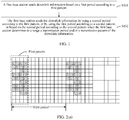
- the first base station originally sends the downlink information according to the first period and the first pattern that are shown in FIG. 2 (a) (in the figure, the horizontal coordinate represents a time domain, the vertical coordinate represents a frequency domain, each grid represents a resource element, a slashed grid represents that the resource element is used to carry downlink information, and a blank grid represents that the resource element is not used to carry downlink information).
- the first base station may send the downlink information according to the second period and the first pattern that are shown in FIG. 2(b) . That is, the first base station changes the transmission period to the second period but does not change the transmission pattern.
- the first base station may send the downlink information according to the first period and the second pattern that are shown in FIG. 2(c) . That is, the first base station changes the transmission pattern to the second pattern but does not change the transmission period.
- the first base station may send the downlink information according to the second period and the second pattern that are shown in FIG. 2(d) . That is, the first base station changes the transmission period to the second period and changes the transmission pattern to the second pattern.
- the first base station determines to change a transmission period and/or a transmission pattern of the downlink information may specifically include:
- the preset condition includes that the first base station detects that a measurement value of an uplink pilot sent by user equipment (User Equipment, UE) is greater than a specified value, or that the first base station receives a proximity instruction message, an access sequence, or a scheduling request signal sent by the UE, or that the first base station receives a first instruction message sent by a second base station, where the first instruction message is used to instruct the first base station to change the transmission period and/or the transmission pattern of the downlink information.
- User Equipment User Equipment
- the first base station may detect a probe signal sent by the UE, to determine whether the UE approaches the first base station.
- the UE may detect a pilot signal sent by the first base station, to determine that the UE approaches the first base station, and perform reporting to the first base station. This is not specifically limited in this embodiment of the present invention.
- the measurement value of the uplink pilot may be specifically signal strength, signal quality, or a channel quality indicator (Channel Quality Indicator, CQI). This is not specifically limited in this embodiment of the present invention.
- the downlink information transmission method may further include S103a.
- the base station after the UE accesses a network and does not need to obtain the downlink information of the base station, or after the first base station sends the downlink information by using the changed transmission period and/or pattern for a period of time, the base station sends the downlink information by using a relatively few time frequency resources, so that overheads of downlink information sending can be reduced, more time frequency resources are used to send data, and further a downlink capacity and downlink resource utilization are improved.
- the downlink information transmission method may further include:
- the downlink information transmission method may further include S104.
- the second instruction message carries an identifier of the second period and/or an identifier of the second pattern.
- the base station side and the UE side may pre-agree on the period and the pattern (that is, the first period and the first pattern) that are obtained before the base station side changes the period and/or the pattern for sending the downlink information, and the base station side adds the second period and/or the identifier of the second pattern to the second instruction message, to notify the UE of the changed period and/or pattern.
- the base station side and the UE side may further agree on the period and the pattern (that is, the second period and the second pattern) that are obtained after the base station side changes the period and/or the transmission pattern for sending the downlink information.
- the second instruction message indicates only that the period and/or the pattern used by the base station to send the downlink information have been changed, and does not need to carry information.
- the base station side may add the first period or the second period and an identifier of the first pattern or the identifier of the second pattern to the second instruction messageinformation, to notify the UE of the period and the pattern that are currently used by the base station to send the downlink information.
- This is not specifically limited in this embodiment of the present invention.
- the downlink information transmission method may further include S105.
- the first base station further needs to notify the at least one first UE.
- the first base station may first changes the transmission period and/or pattern of the downlink information, and then notify the UE and the first UE that the transmission period and/or pattern have been changed.
- the first base station may first send an instruction message to the UE and the first UE, to notify the UE and the first UE that the first base station is to change, at a particular time point, the period and/or the pattern for sending the downlink information, and then change, at the time point, the period and/or the pattern for sending the downlink information. This is not specifically limited in this embodiment of the present invention.
- a first base station originally sends downlink information by using a first period according to a first pattern; and the first base station sends the downlink information by using a second period according to the first pattern, or by using the first period according to a second pattern, or by using a second period according to a second pattern when determining to change a transmission period and/or a transmission pattern of the downlink information.
- the second period is less than the first period, and OFDM symbols occupied by the second pattern are more than OFDM symbols occupied by the first pattern.
- a base station does not send downlink information by using a fixed period or according to a fixed pattern, but sends downlink information by using relatively many time frequency resources when determining to change a transmission period and/or a transmission pattern of the downlink information (if UE is to use a resource of the base station), so that the UE can receive the downlink information in time, and establish a wireless connection to the base station rapidly according to the downlink information.
- the downlink information transmission method provided in this embodiment of the present invention, it can be ensured that UE can obtain downlink information in time, and further can establish a wireless connection to a base station rapidly, thereby reducing a time for the UE to access a network, and further improving user experience.
- another embodiment of the present invention provides a downlink information transmission method.
- the second base station may be specifically a user plane site or a control plane site of the UE and the first base station may be specifically one or more cells of the first base station. This is not specifically limited in this embodiment of the present invention.
- the downlink information may specifically include a downlink common signal and/or a part or all of downlink common information.
- the downlink common signal may be specifically a cell reference signal, a synchronization signal, a discovery signal, or the like, and the downlink common information may be specifically a system broadcast message.
- the second base station may first send an instruction message to the UE, to notify the UE that the first base station is to change, at a particular time point, the period and/or the pattern for sending the downlink information, and then send the instruction message to the first base station, to instruct the first base station to change, at the time point, the period and/or the pattern for sending the downlink information.
- This is not specifically limited in this embodiment of the present invention.
- the downlink information transmission method provided in this embodiment of the present invention may further include S603.
- the second base station obtains the changed period and/or pattern, and notifies the UE by using the second instruction message.
- the obtaining, by the second base station, an identifier of a second period and/or an identifier of a second pattern may include:
- the downlink information transmission method provided in this embodiment of the present invention may further include S604.
- a second base station after receiving indication information sent by UE, a second base station sends a first instruction message to a first base station, and the first base station changes a period and/or a pattern for sending downlink information.
- a base station does not send downlink information by using a fixed period or according to a fixed pattern, but sends downlink information by using relatively many time frequency resources when determining to change a transmission period and/or a transmission pattern of the downlink information (if UE is to use a resource of the base station), so that the UE can receive the downlink information in time, and establish a wireless connection to the base station rapidly according to the downlink information.
- the downlink information transmission method provided in this embodiment of the present invention, it can be ensured that UE can obtain downlink information in time, and further can establish a wireless connection to a base station rapidly, thereby reducing a time for the UE to access a network, and further improving user experience.
- another embodiment of the present invention provides a downlink information transmission method.
- the second base station may be specifically a user plane site or a control plane site of the UE and the first base station may be specifically one or more cells of the first base station. This is not specifically limited in this embodiment of the present invention.
- the downlink information may specifically include a downlink common signal and/or a part or all of downlink common information.
- the downlink common signal may be specifically a cell reference signal, a synchronization signal, a discovery signal, or the like, and the downlink common information may be specifically a system broadcast message.
- the determining, by UE, that a first base station has changed a period and/or a pattern for sending downlink information may specifically include:
- the preset condition includes that the UE detects that a measurement value of a downlink pilot sent by the first base station is greater than a specified value, or that fingerprint information obtained by the UE matches pre-stored fingerprint information, or that geographical location information of a current location of the UE matches pre-stored geographical location information, or that the UE receives an instruction message sent by the first base station or the second base station, where the instruction message is used to indicate that the period and/or the pattern used by the first base station to send the downlink information have been changed.
- the downlink information transmission method may further include: sending, by the UE, indication information to the first base station, where the indication information is used to indicate that the UE detects that the measurement value of the downlink pilot sent by the first base station is greater than the specified value, or the fingerprint information obtained by the UE matches the pre-stored fingerprint information, or the geographical location information of the current location of the UE matches the pre-stored geographical location information.
- the obtaining, by the UE, a period and a pattern that are used by the first base station to send the downlink information includes: obtaining, by the UE according to pre-stored configuration information, the period and the pattern that are used by the first base station to send the downlink information.
- the base station side and the UE side may pre-agree on periods and patterns obtained before and after the first base station changes the period and/or the pattern for sending the downlink information.
- the UE may obtain, according to the instruction message sent by the first base station and the pre-stored configuration information, the period and the pattern that are currently used by the first base station to send the downlink information. For example, assuming that the first base station has changed only the period for sending the downlink information, the UE may learn, according to the instruction message sent by the first base station, that the first base station has changed the period for sending the downlink information, and may obtain, according to the pre-stored configuration information, the changed transmission period and a transmission pattern that is obtained before the transmission period is changed.
- the obtaining, by the UE, a period and a pattern that are used by the first base station to send the downlink information may specifically include:
- the obtaining, by the UE, a period and a pattern that are used by the first base station to send the downlink information may specifically include:
- the obtaining, by the UE, a period and a pattern that are used by the first base station to send the downlink information may specifically include:
- UE After determining that a first base station has changed a period and/or a pattern for sending downlink information, UE obtains a period and a pattern that are currently used by the first base station to send the downlink information, and receives, according to the period and the pattern, the downlink information sent by the first base station.
- a base station does not send downlink information by using a fixed period or according to a fixed pattern (even though the base station sends the downlink information by using a fixed time frequency resource), but changes a period and/or a pattern for sending the downlink information, to send the downlink information by using relatively many time frequency resources.
- the UE can receive the downlink information in time, and establish a wireless connection to the base station rapidly according to the downlink information. Therefore, compared with the prior art, by means of the downlink information transmission method provided in this embodiment of the present invention, it can be ensured that UE can obtain downlink information in time, and further can establish a wireless connection to a base station rapidly, thereby reducing a time for the UE to access a network, and further improving user experience.
- another embodiment of the present invention provides a downlink information transmission method.
- the second period is less than the first period, and OFDM symbols occupied by the second pattern are more than OFDM symbols occupied by the first pattern.
- the first base station may send, at the same time, the instruction message to another UE covered by the first base station, to notify the another UE that the period and/or the pattern used by the first base station to send the downlink information have been changed.
- the downlink information transmission method provided in this embodiment of the present invention may further include: sending, by the first base station, the instruction message to at least one first UE covered by the first base station.
- the base station side and the UE side may pre-agree on the period and the pattern (that is, the first period and the first pattern) that are obtained before the base station side changes the period and/or the pattern for sending the downlink information, and the base station side adds the second period and/or an identifier of the second pattern to the instruction message, to notify the UE of the changed period and/or pattern.
- the base station side and the UE side may further agree on the period and the pattern (that is, the second period and the second pattern) that are obtained after the base station side changes the period and/or the transmission pattern for sending the downlink information.
- the instruction message indicates only that the period and/or the pattern used by the base station to send the downlink information have been changed, and does not need to carry information.
- the base station side may add the first period or the second period and an identifier of the first pattern or the identifier of the second pattern to the indication information, to notify the UE of the period and the pattern that are currently used by the base station to send the downlink information.
- This is not specifically limited in this embodiment of the present invention.
- the first base station needs to notify the UE of the changed start location.
- the obtaining, according to the instruction message, the period and the pattern that are used by the first base station to send the downlink information may specifically include:
- the UE may learn, according to the instruction message sent by the first base station, that the first base station has specifically changed the period and/or the pattern for sending the downlink information, and further obtain, according to the pre-stored configuration information, the period and the pattern that are currently used by the first base station to send the downlink information.
- the UE may learn, according to the instruction message sent by the first base station, that the first base station has changed the period for sending the downlink information, and further may obtain, according to the pre-stored configuration information, the changed transmission period (that is, the second period) and a transmission pattern (that is, the first pattern) that is obtained before the transmission period is changed.
- the UE may obtain, according to related information carried in the indication information, the period and the pattern that are currently used by the first base station to send the downlink information. This is not specifically limited in this embodiment of the present invention. For example, assuming that the first base station has changed only the period for sending the downlink information, the first base station sends an instruction message that carries the second period and the identifier of the first pattern to the UE, and after receiving the instruction message, the UE may obtain the period and the pattern that are currently used by the first base station to send the downlink information.
- a base station does not send downlink information by using a fixed period or according to a fixed pattern (even though the base station sends the downlink information by using a fixed time frequency resource), but changes a period and/or a pattern for sending the downlink information, to send the downlink information by using relatively many time frequency resources.
- the UE can receive the downlink information in time, and establish a wireless connection to the base station rapidly according to the downlink information.
- the downlink information transmission method provided in this embodiment of the present invention it can be ensured that UE can obtain downlink information in time, and further can establish a wireless connection to a base station rapidly, thereby reducing a time for the UE to access a network, and further improving user experience.
- the base station after the UE accesses the base station or after a period of time, the base station sends the downlink information by using a relatively few time frequency resources, so that overheads of downlink information sending can be reduced, more time frequency resources are used to send data, and further, a downlink capacity and downlink resource utilization are improved. Therefore, compared with the prior art, by means of the downlink information transmission method provided in this embodiment of the present invention, overheads used by a base station to send downlink information can be reduced, a downlink capacity can be improved, and further downlink resource utilization can be improved.
- UE can obtain downlink information in time, and further can establish a wireless connection to a base station rapidly, thereby reducing a time for the UE to access a network, and further improving user experience.
- overheads used by the base station to send the downlink information can be reduced, a downlink capacity can be improved, and downlink resource utilization can be improved.
- another embodiment of the present invention provides a downlink information transmission method.
- the first indication information is used to indicate that the UE detects that the measurement value of the downlink pilot sent by the first base station is greater than the specified value.
- the second base station may be specifically a control plane site or a user plane site of the UE. This is not specifically limited in this embodiment of the present invention.
- the first instruction message is used to instruct the first base station to change a period and/or a pattern for sending the downlink information.
- the second instruction message is used to indicate that the period and/or the pattern used by the first base station to send the downlink information have been changed, and the second instruction message carries the identifier of the second period and/or the identifier of the second pattern.
- the second base station may send, at the same time, the instruction message to another UE covered by the first base station, to notify the another UE that the period and/or the pattern used by the first base station to send the downlink information have been changed.
- the downlink information transmission method provided in this embodiment of the present invention may further include: sending, by the second base station, the instruction message to at least one first UE covered by the first base station.
- the second indication information is used to indicate that the UE already accesses the first base station.
- the second base station receives the second indication information sent by the UE.
- the second base station sends a third instruction message to the first base station.
- the third instruction message is used to instruct the first base station to send the downlink information at a preset time point by using the first period according to the first pattern.
- the method includes
- the request message is used to request to obtain the identifier of the second period and/or the identifier of the second pattern.
- the request response message carries the identifier of the second period and/or the identifier of the second pattern.
- the method includes S1110b1 and S1110b2.
- the fourth instruction message is used to instruct the first base station to send the downlink information by using the first period according to the first pattern after a preset time.
- a base station does not send downlink information by using a fixed period or according to a fixed pattern (even though the base station sends the downlink information by using a fixed time frequency resource), but changes a period and/or a pattern for sending the downlink information, to send the downlink information by using relatively many time frequency resources.
- the UE can receive the downlink information in time, and establish a wireless connection to the base station rapidly according to the downlink information.
- the downlink information transmission method provided in this embodiment of the present invention it can be ensured that UE can obtain downlink information in time, and further can establish a wireless connection to a base station rapidly, thereby reducing a time for the UE to access a network, and further improving user experience.
- the base station after the UE accesses the base station or after a period of time, the base station sends the downlink information by using a relatively few time frequency resources, so that overheads of downlink information sending can be reduced, more time frequency resources are used to send data, and further, a downlink capacity and downlink resource utilization are improved. Therefore, compared with the prior art, by means of the downlink information transmission method provided in this embodiment of the present invention, overheads used by a base station to send downlink information can be reduced, a downlink capacity can be improved, and further downlink resource utilization can be improved.
- UE can obtain downlink information in time, and further can establish a wireless connection to a base station rapidly, thereby reducing a time for the UE to access a network, and further improving user experience.
- overheads used by the base station to send the downlink information can be reduced, a downlink capacity can be improved, and downlink resource utilization can be improved.
- another embodiment of the present invention provides a downlink information transmission method.
- the indication information is used to indicate that the UE detects that the measurement value of the pilot signal sent by the first base station is greater than the specified value.
- the measurement value may be specifically signal strength, signal quality, or a CQI. This is not specifically limited in this embodiment of the present invention.
- the second period is less than the first period, and OFDM symbols occupied by the second pattern are more than OFDM symbols occupied by the first pattern.
- the UE after detecting that the measurement value of the pilot signal sent by the first base station is greater than the specified value, and sending the indication information to the first base station, the UE considers that the first base station has changed the period and/or the pattern for sending the downlink information, and obtains, according to pre-stored configuration information, the period and/or the pattern that are currently used by the first base station to send the downlink information.
- the base station side and the UE side may pre-agree on that the base station side changes only the period for sending the downlink information, or the base station side changes only the pattern for sending the downlink information, or the base station side changes both the period and the pattern for sending the downlink information and the base station side and the UE side agree on the changed period and pattern that are used by the base station side to send the downlink information.
- the UE may learn, according to the pre-stored configuration information, the period and the pattern that are currently used by the base station to send the downlink information.
- a base station does not send downlink information by using a fixed period or according to a fixed pattern (even though the base station sends the downlink information by using a fixed time frequency resource), but changes a period and/or a pattern for sending the downlink information, to send the downlink information by using relatively many time frequency resources.
- the UE can receive the downlink information in time, and establish a wireless connection to the base station rapidly according to the downlink information.
- the downlink information transmission method provided in this embodiment of the present invention it can be ensured that UE can obtain downlink information in time, and further can establish a wireless connection to a base station rapidly, thereby reducing a time for the UE to access a network, and further improving user experience.
- the base station after the UE accesses the base station or after a period of time, the base station sends the downlink information by using a relatively few time frequency resources, so that overheads of downlink information sending can be reduced, more time frequency resources are used to send data, and further, a downlink capacity and downlink resource utilization are improved. Therefore, compared with the prior art, by means of the downlink information transmission method provided in this embodiment of the present invention, overheads used by a base station to send downlink information can be reduced, a downlink capacity can be improved, and further downlink resource utilization can be improved.
- UE can obtain downlink information in time, and further can establish a wireless connection to a base station rapidly, thereby reducing a time for the UE to access a network, and further improving user experience.
- overheads used by the base station to send the downlink information can be reduced, a downlink capacity can be improved, and downlink resource utilization can be improved.
- FIG. 13 another embodiment of the present invention provides a first base station 130, including a sending unit 1301 and a determining unit 1302.
- the sending unit 1301 is configured to send downlink information by using a first period according to a first pattern.
- the determining unit 1302 is configured to determine to change a transmission period and/or a transmission pattern of the downlink information.
- the sending unit 1301 is further configured to send the downlink information by using a second period according to the first pattern, or by using the first period according to a second pattern, or by using a second period according to a second pattern when the determining unit 1302 determines to change the transmission period and/or the transmission pattern of the downlink information.
- the second period is less than the first period, and OFDM symbols occupied by the second pattern are more than OFDM symbols occupied by the first pattern.
- the downlink information may include a downlink common signal and/or a part or all of downlink common information.
- the first base station 130 provided in this embodiment of the present invention may further include a detection unit 1303 and a receiving unit 1304.
- the detection unit 1303 is configured to detect whether a measurement value of an uplink pilot sent by UE is greater than a specified value.
- the receiving unit 1304 is configured to receive a proximity instruction message, an access sequence, and a scheduling request signal that are sent by the UE.
- the receiving unit 1304 is further configured to receive a first instruction message sent by a second base station, where the first instruction message is used to instruct the first base station 130 to change the transmission period and/or the transmission pattern of the downlink information.
- the determining unit 1302 is specifically configured to: after determining that a preset condition is satisfied, determine to change the transmission period and/or the transmission pattern of the downlink information, where the preset condition includes that the detection unit 1303 detects that the measurement value of the uplink pilot sent by the UE is greater than the specified value, or that the receiving unit 1304 receives the proximity instruction message, the access sequence, or the scheduling request signal sent by the UE, or that the receiving unit 1304 receives the first instruction message sent by the second base station.
- the sending unit 1301 is further configured to: after sending the downlink information, after the UE accesses the first base station 130, send the downlink information at a preset time point by using the first period according to the first pattern, or send the downlink information by using the first period according to the first pattern after a preset time.
- the sending unit 1301 is further configured to: when the preset condition is that the receiving unit 1304 receives the first instruction message sent by the second base station, after the sending unit 1301 sends the downlink information, send an identifier of the second period and/or an identifier of the second pattern to the second base station; or the receiving unit 1304 is further configured to: when the preset condition is that the receiving unit 1304 receives the first instruction message sent by the second base station, after the sending unit 1301 sends the downlink information, receive a request message sent by the second base station, where the request message is used to request to obtain an identifier of the second period and/or an identifier of the second pattern; and the sending unit 1301 is further configured to send a request response message to the second base station, where the request response message carries the identifier of the second period and/or the identifier of the second pattern.
- the sending unit 1301 is further configured to: when the preset condition is that the detection unit 1303 detects that the measurement value of the uplink pilot sent by the UE is greater than the specified value, or that the receiving unit 1304 receives the proximity instruction message, the access sequence, or the scheduling request signal sent by the UE, after sending the downlink information, send a second instruction message to the UE, where the second instruction message is used to indicate that the period and/or the pattern used by the first base station 130 to send the downlink information have been changed.
- the second instruction message carries an identifier of the second period and/or an identifier of the second pattern.
- the sending unit 1301 is further configured to: after sending the downlink information, send the second instruction message to at least one first UE covered by the first base station 130.
- the first base station does not send downlink information by using a fixed period or according to a fixed pattern, but sends downlink information by using relatively many time frequency resources when determining to change a transmission period and/or a transmission pattern of the downlink information (if UE is to use a resource of the first base station), so that the UE can receive the downlink information in time, and establish a wireless connection to the first base station rapidly according to the downlink information.
- another embodiment of the present invention provides a second base station 150, including a receiving unit 1501 and a sending unit 1502.
- the receiving unit 1501 is configured to receive indication information sent by UE, where the indication information is used to indicate that the UE detects that a measurement value of a downlink pilot sent by a first base station is greater than a specified value.
- the sending unit 1502 is configured to: after the receiving unit 1501 receives the indication information sent by the UE, send a first instruction message to the first base station, where the first instruction message is used to instruct the first base station to change a period and/or a pattern for sending downlink information.
- the sending unit 1502 is further configured to send a second instruction message to the UE, where the second instruction message is used to indicate that the period and/or the pattern used by the first base station to send the downlink information have been changed.
- the downlink information may specifically include a downlink common signal and/or a part or all of downlink common information.
- the second base station 150 provided in this embodiment of the present invention may further include an obtaining unit 1503.
- the obtaining unit 1503 is configured to: after the sending unit 1502 sends the first instruction message to the first base station, before the sending unit 1502 sends the second instruction message to the UE, obtain an identifier of a second period and/or an identifier of a second pattern, where the second period is a transmission period obtained after the first base station changes the period for sending the downlink information, and the second pattern is a transmission pattern obtained after the first base station changes the pattern for sending the downlink information.
- the obtaining unit 1503 is specifically configured to: receive the identifier of the second period and/or the identifier of the second pattern that are sent by the first base station; or send a request message to the first base station, where the request message is used to request to obtain the identifier of the second period and/or the identifier of the second pattern; and receive a request response message sent by the first base station, and obtain the identifier of the second period and/or the identifier of the second pattern according to the request response message, where the request response message carries the identifier of the second period and/or the identifier of the second pattern.
- the sending unit 1502 is further configured to: after sending the first instruction message to the first base station, send the second instruction message to at least one first UE covered by the first base station.
- the second base station after receiving indication information sent by UE, sends a first instruction message to a first base station, to instruct the first base station to change a period and/or a pattern for sending downlink information.
- the first base station may determine that the transmission period and/or the transmission pattern of the downlink information need to be changed, further change the transmission period and/or the transmission pattern of the downlink information, and send the downlink information by using relatively many time frequency resources, so that the UE can receive the downlink information in time and establish a wireless connection to the first base station rapidly according to the downlink information. Therefore, compared with the prior art, by means of the second base station provided in this embodiment of the present invention, it can be ensured that UE can obtain downlink information in time, and further can establish a wireless connection to a first base station rapidly, thereby reducing a time for the UE to access a network, and further improving user experience.
- another embodiment of the present invention provides UE 170, including a determining unit 1701, an obtaining unit 1702, and a receiving unit 1703.
- the determining unit 1701 is configured to determine that a first base station has changed a period and/or a pattern for sending downlink information.
- the obtaining unit 1702 is configured to obtain a period and a pattern that are used by the first base station to send the downlink information.
- the receiving unit 1703 is configured to receive, according to the period and the pattern, the downlink information sent by the first base station.
- the downlink information may specifically include a downlink common signal and/or a part or all of downlink common information.
- the UE 170 provided in this embodiment of the present invention may further include a detection unit 1704.
- the detection unit 1704 is configured to detect whether a measurement value of a downlink pilot sent by the first base station is greater than a specified value, whether fingerprint information obtained by the UE 170 matches pre-stored fingerprint information, and whether geographical location information of a current location of the UE 170 matches pre-stored geographical location information.
- the receiving unit 1703 is further configured to receive an instruction message sent by the first base station or a second base station, where the instruction message is used to indicate that the period and/or the pattern used by the first base station to send the downlink information have been changed.
- the determining unit 1701 is specifically configured to: after determining that a preset condition is satisfied, determine that the first base station has changed the period and/or the pattern for sending the downlink information, where the preset condition includes that the detection unit 1704 detects that the measurement value of the downlink pilot sent by the first base station is greater than the specified value, or that the fingerprint information obtained by the UE 170 matches the pre-stored fingerprint information, or that the geographical location information of the current location of the UE 170 matches the pre-stored geographical location information, or that the receiving unit 1703 receives the instruction message sent by the first base station or the second base station.
- the UE 170 provided in this embodiment of the present invention may further include a sending unit 1705.
- the sending unit 1705 is configured to: when the preset condition is that the detection unit 1704 detects that the measurement value of the downlink pilot sent by the first base station is greater than the specified value, or that the fingerprint information obtained by the UE 170 matches the pre-stored fingerprint information, or that the geographical location information of the current location of the UE 170 matches the pre-stored geographical location information, after the determining unit 1701 determines that the preset condition is satisfied, send indication information to the first base station, where the indication information is used to indicate that the detection unit 1704 detects that the measurement value of the downlink pilot sent by the first base station is greater than the specified value, or the fingerprint information obtained by the UE 170 matches the pre-stored fingerprint information, or the geographical location information of the current location of the UE 170 matches the pre-stored geographical location information.
- the obtaining unit 1702 is specifically configured to: when the preset condition is that the detection unit 1704 detects that the measurement value of the downlink pilot sent by the first base station is greater than the specified value, or that the fingerprint information obtained by the UE 170 matches the pre-stored fingerprint information, or that the geographical location information of the current location of the UE 170 matches the pre-stored geographical location information, obtain, according to pre-stored configuration information, the period and the pattern that are used by the first base station to send the downlink information.
- the obtaining unit 1702 is specifically configured to: when the preset condition is that the receiving unit 1703 receives the instruction message sent by the first base station or the second base station, determine that the instruction message carries only a second period, obtain the second period carried in the instruction message, and obtain a first pattern according to pre-stored configuration information, where the second period is a transmission period obtained after the first base station changes the period for sending the downlink information, and the first pattern is a transmission pattern obtained before the first base station changes the period for sending the downlink information; and the receiving unit 1703 is specifically configured to receive, according to the second period and the first pattern, the downlink information sent by the first base station.
- the obtaining unit 1702 is specifically configured to: when the preset condition is that the receiving unit 1703 receives the instruction message sent by the first base station or the second base station, determine that the instruction message carries only an identifier of a second pattern, obtain the second pattern according to the identifier of the second pattern, and obtain a first period according to pre-stored configuration information, where the second pattern is a transmission pattern obtained after the first base station changes the pattern for sending the downlink information, and the first period is a transmission period obtained before the first base station changes the pattern for sending the downlink information; and the receiving unit 1703 is specifically configured to receive, according to the first period and the second pattern, the downlink information sent by the first base station.
- the obtaining unit 1702 is specifically configured to: when the preset condition is that the receiving unit 1703 receives the instruction message sent by the first base station or the second base station, determine that the instruction message carries an identifier of a second period and an identifier of a second pattern, obtain the identifier of the second period and the identifier of the second pattern that are carried in the instruction message, and obtain the second pattern according to the identifier of the second pattern, where the first period is a transmission period obtained after the first base station changes the period for sending the downlink information, and the second pattern is a transmission pattern obtained after the first base station changes the pattern for sending the downlink information; and the receiving unit 1703 is specifically configured to receive, according to the second period and the second pattern, the downlink information sent by the first base station.
- the UE After determining that a first base station has changed a period and/or a pattern for sending downlink information, the UE provided in this embodiment of the present invention obtains a period and a pattern that are currently used by the first base station to send the downlink information, and receives, according to the period and the pattern, the downlink information sent by the first base station.
- a base station does not send downlink information by using a fixed period or according to a fixed pattern (even though the base station sends the downlink information by using a fixed time frequency resource), but changes a period and/or a pattern for sending the downlink information, to send the downlink information by using relatively many time frequency resources.
- the UE can receive the downlink information in time, and establish a wireless connection to the base station rapidly according to the downlink information.
- the UE can obtain downlink information in time, and further can establish a wireless connection to a base station rapidly, thereby reducing a time for the UE to access a network, and further improving user experience.
- FIG. 20 another embodiment of the present invention provides a first base station 200, including a transmitter 2001 and a processor 2002.
- the transmitter 2001 is configured to send downlink information by using a first period according to a first pattern.
- the processor 2002 is configured to determine to change a transmission period and/or a transmission pattern of the downlink information.
- the transmitter 2001 is further configured to send the downlink information by using a second period according to the first pattern, or by using the first period according to a second pattern, or by using a second period according to a second pattern when the processor 2002 determines to change the transmission period and/or the transmission pattern of the downlink information.
- the second period is less than the first period, and OFDM symbols occupied by the second pattern are more than OFDM symbols occupied by the first pattern.
- the downlink information may specifically include a downlink common signal and/or a part or all of downlink common information.
- the first base station 200 provided in this embodiment of the present invention may further include a receiver 2003.
- the processor 2002 is further configured to detect whether a measurement value of an uplink pilot sent by UE is greater than a specified value.
- the receiver 2003 is configured to receive a proximity instruction message, an access sequence, and a scheduling request signal that are sent by the UE.
- the receiver 2003 is further configured to receive a first instruction message sent by a second base station, where the first instruction message is used to instruct the first base station 200 to change the transmission period and/or the transmission pattern of the downlink information.
- the processor 2002 is specifically configured to: after determining that a preset condition is satisfied, determine to change the transmission period and/or the transmission pattern of the downlink information, where the preset condition includes that the processor 2002 detects that the measurement value of the uplink pilot sent by the UE is greater than the specified value, or that the receiver 2003 receives the proximity instruction message, the access sequence, or the scheduling request signal sent by the UE, or that the receiver 2003 receives the first instruction message sent by the second base station.
- the transmitter 2001 is further configured to: after sending the downlink information, after the UE accesses the first base station 200, send the downlink information at a preset time point by using the first period according to the first pattern, or send the downlink information by using the first period according to the first pattern after a preset time.
- the transmitter 2001 is further configured to: when the preset condition is that the receiver 2003 receives the first instruction message sent by the second base station, after sending the downlink information, send an identifier of the second period and/or an identifier of the second pattern to the second base station; or the receiver 2003 is further configured to: when the preset condition is that the receiver 2003 receives the first instruction message sent by the second base station, after sending the downlink information, receive a request message sent by the second base station, where the request message is used to request to obtain an identifier of the second period and/or an identifier of the second pattern; and the transmitter 2001 is further configured to send a request response message to the second base station, where the request response message carries the identifier of the second period and/or the identifier of the second pattern.
- the transmitter 2001 is further configured to: when the preset condition is that the processor 2002 detects that the measurement value of the uplink pilot sent by the UE is greater than the specified value, or that the receiver 2003 receives the proximity instruction message, the access sequence, or the scheduling request signal sent by the UE, after sending the downlink information, send a second instruction message to the UE, where the second instruction message is used to indicate that the period and/or the pattern used by the first base station 200 to send the downlink information have been changed.
- the second instruction message carries an identifier of the second period and/or an identifier of the second pattern.
- the transmitter 2001 is further configured to: after sending the downlink information, send the second instruction message to at least one first UE covered by the first base station 200.
- the first base station does not send downlink information by using a fixed period or according to a fixed pattern, but sends downlink information by using relatively many time frequency resources when determining to change a transmission period and/or a transmission pattern of the downlink information (if UE is to use a resource of the first base station), so that the UE can receive the downlink information in time, and establish a wireless connection to the first base station rapidly according to the downlink information.
- the first base station provided in this embodiment of the present invention, it can be ensured that UE can obtain downlink information in time, and further can establish a wireless connection to a base station rapidly, thereby reducing a time for the UE to access a network, and further improving user experience.
- another embodiment of the present invention provides a second base station 220, including a receiver 2201 and a transmitter 2202.
- the receiver 2201 is configured to receive indication information sent by UE, where the indication information is used to indicate that the UE detects that a measurement value of a downlink pilot sent by a first base station is greater than a specified value.
- the transmitter 2202 is configured to: after the receiver 2201 receives the indication information sent by the UE, send a first instruction message to the first base station, where the first instruction message is used to instruct the first base station to change a period and/or a pattern for sending downlink information.
- the transmitter 2202 is further configured to send a second instruction message to the UE, where the second instruction message is used to indicate that the period and/or the pattern used by the first base station to send the downlink information have been changed.
- the downlink information may include a downlink common signal and/or a part or all of downlink common information.
- the second base station 220 provided in this embodiment of the present invention may further include a processor 2203.
- the processor 2203 is configured to: after the transmitter 2202 sends the first instruction message to the first base station, before the transmitter 2202 sends the second instruction message to the UE, obtain an identifier of a second period and/or an identifier of a second pattern, where the second period is a transmission period obtained after the first base station changes the period for sending the downlink information, and the second pattern is a transmission pattern obtained after the first base station changes the pattern for sending the downlink information.
- the processor 2203 is specifically configured to: receive the identifier of the second period and/or the identifier of the second pattern that are sent by the first base station; or send a request message to the first base station, where the request message is used to request to obtain the identifier of the second period and/or the identifier of the second pattern; and receive a request response message sent by the first base station, and obtain the identifier of the second period and/or the identifier of the second pattern according to the request response message, where the request response message carries the identifier of the second period and/or the identifier of the second pattern.
- the transmitter 2202 is further configured to: after sending the first instruction message to the first base station, send the second instruction message to at least one first UE covered by the first base station.
- the second base station after receiving indication information sent by UE, the second base station sends a first instruction message to a first base station, to instruct the first base station to change a period and/or a pattern for sending downlink information.
- the first base station may determine that the transmission period and/or the transmission pattern of the downlink information need to be changed, further change the transmission period and/or the transmission pattern of the downlink information, and send the downlink information by using relatively many time frequency resources, so that the UE can receive the downlink information in time and establish a wireless connection to the first base station rapidly according to the downlink information.
- the second base station provided in this embodiment of the present invention, it can be ensured that UE can obtain downlink information in time, and further can establish a wireless connection to a first base station rapidly, thereby reducing a time for the UE to access a network, and further improving user experience.
- FIG. 24 another embodiment of the present invention provides UE 240, including a processor 2401 and a receiver 2402.
- the processor 2401 is configured to determine that a first base station has changed a period and/or a pattern for sending downlink information.
- the processor 2401 is further configured to obtain a period and a pattern that are used by the first base station to send the downlink information.
- the receiver 2402 is configured to receive, according to the period and the pattern, the downlink information sent by the first base station.
- the downlink information may include a downlink common signal and/or a part or all of downlink common information.
- the processor 2401 is further configured to detect whether a measurement value of a downlink pilot sent by the first base station is greater than a specified value, whether fingerprint information obtained by the UE 240 matches pre-stored fingerprint information, and whether geographical location information of a current location of the UE 240 matches pre-stored geographical location information;
- the receiver 2402 is further configured to receive an instruction message sent by the first base station or a second base station, where the instruction message is used to indicate that the period and/or the pattern used by the first base station to send the downlink information have been changed;
- the processor 2401 is specifically configured to: after determining that a preset condition is satisfied, determine that the first base station has changed the period and/or the pattern for sending the downlink information, where the preset condition includes that the processor 2401 detects that the measurement value of the downlink pilot sent by the first base station is greater than the specified value, or that the fingerprint information obtained by the UE 240 matches the pre-stored fingerprint information, or that
- the UE 240 provided in this embodiment of the present invention may further include a transmitter 2403.
- the transmitter 2403 is configured to: when the preset condition is that the processor 2401 detects that the measurement value of the downlink pilot sent by the first base station is greater than the specified value, or that the fingerprint information obtained by the UE 240 matches the pre-stored fingerprint information, or that the geographical location information of the current location of the UE 240 matches the pre-stored geographical location information, after the processor 2401 determines that the preset condition is satisfied, send indication information to the first base station, where the indication information is used to indicate that the processor 2401 detects that the measurement value of the downlink pilot sent by the first base station is greater than the specified value, or the fingerprint information obtained by the UE 240 matches the pre-stored fingerprint information, or the geographical location information of the current location of the UE 240 matches the pre-stored geographical location information.
- the processor 2401 is specifically configured to: when the preset condition is that it is detected that the measurement value of the downlink pilot sent by the first base station is greater than the specified value, or that the fingerprint information obtained by the UE 240 matches the pre-stored fingerprint information, or that the geographical location information of the current location of the UE 240 matches the pre-stored geographical location information, obtain, according to pre-stored configuration information, the period and the pattern that are used by the first base station to send the downlink information.
- the processor 2401 is specifically configured to: when the preset condition is that the receiver 2402 receives the instruction message sent by the first base station or the second base station, determine that the instruction message carries only a second period, obtain the second period carried in the instruction message, and obtain a first pattern according to pre-stored configuration information, where the second period is a transmission period obtained after the first base station changes the period for sending the downlink information, and the first pattern is a transmission pattern obtained before the first base station changes the period for sending the downlink information; and the receiver 2402 is specifically configured to receive, according to the second period and the first pattern, the downlink information sent by the first base station.
- the processor 2401 is specifically configured to: when the preset condition is that the receiver 2402 receives the instruction message sent by the first base station or the second base station, determine that the instruction message carries only an identifier of a second pattern, obtain the second pattern according to the identifier of the second pattern, and obtain a first period according to pre-stored configuration information, where the second pattern is a transmission pattern obtained after the first base station changes the pattern for sending the downlink information, and the first period is a transmission period obtained before the first base station changes the pattern for sending the downlink information; and the receiver 2402 is specifically configured to receive, according to the first period and the second pattern, the downlink information sent by the first base station.
- the processor 2401 is specifically configured to: when the preset condition is that the receiver 2402 receives the instruction message sent by the first base station or the second base station, determine that the instruction message carries an identifier of a second period and an identifier of a second pattern, obtain the identifier of the second period and the identifier of the second pattern that are carried in the instruction message, and obtain the second pattern according to the identifier of the second pattern, where the first period is a transmission period obtained after the first base station changes the period for sending the downlink information, and the second pattern is a transmission pattern obtained after the first base station changes the pattern for sending the downlink information; and the receiver 2402 is specifically configured to receive, according to the second period and the second pattern, the downlink information sent by the first base station.
- the UE After determining that a first base station has changed a period and/or a pattern for sending downlink information, the UE provided in this embodiment of the present invention obtains a period and a pattern that are currently used by the first base station to send the downlink information, and receives, according to the period and the pattern, the downlink information sent by the first base station.
- a base station does not send downlink information by using a fixed period or according to a fixed pattern (even though the base station sends the downlink information by using a fixed time frequency resource), but changes a period and/or a pattern for sending the downlink information, to send the downlink information by using relatively many time frequency resources.
- the UE can receive the downlink information in time, and establish a wireless connection to the base station rapidly according to the downlink information.
- the UE can obtain downlink information in time, and further can establish a wireless connection to a base station rapidly, thereby reducing a time for the UE to access a network, and further improving user experience.
- the disclosed system, apparatus, and method may be implemented in other manners.
- the described apparatus embodiment is merely an example.
- the module or unit division is merely logical function division and may be other division in actual implementation.
- a plurality of units or components may be combined or integrated into another system, or some features may be ignored or not performed.
- the displayed or discussed mutual couplings or direct couplings or communication connections may be implemented through some interfaces, indirect couplings or communication connections between the apparatuses or units, or electrical connections, mechanical connections, or connections in other forms.
- the units described as separate parts may or may not be physically separate, and parts displayed as units may or may not be physical units, may be located in one position, or may be distributed on a plurality of network units. Some or all of the units may be selected according to actual needs to achieve the objectives of the solutions of the embodiments.
- functional units in the embodiments of the present invention may be integrated into one processing unit, or each of the units may exist alone physically, or two or more units are integrated into one unit.
- the integrated unit may be implemented in a form of hardware, or may be implemented in a form of a software functional unit.
- the integrated unit When the integrated unit is implemented in the form of a software functional unit and sold or used as an independent product, the integrated unit may be stored in a computer-readable storage medium.
- the software product is stored in a storage medium and includes several instructions for instructing a computer device (which may be a personal computer, a server, or a network device) or a processor (processor) to perform all or a part of the steps of the methods described in the embodiments of the present invention.
- the foregoing storage medium includes: any medium that can store program code, such as a USB flash drive, a removable hard disk, a read-only memory (ROM, Read-Only Memory), a random access memory (RAM, Random Access Memory), a magnetic disk, or an optical disc.
- program code such as a USB flash drive, a removable hard disk, a read-only memory (ROM, Read-Only Memory), a random access memory (RAM, Random Access Memory), a magnetic disk, or an optical disc.
Landscapes
- Engineering & Computer Science (AREA)
- Signal Processing (AREA)
- Computer Networks & Wireless Communication (AREA)
- Quality & Reliability (AREA)
- Computer Security & Cryptography (AREA)
- Mobile Radio Communication Systems (AREA)
Applications Claiming Priority (1)
| Application Number | Priority Date | Filing Date | Title |
|---|---|---|---|
| PCT/CN2015/079964 WO2016187849A1 (fr) | 2015-05-27 | 2015-05-27 | Procédé de transmission d'informations de liaison descendante, station de base et équipement utilisateur |
Publications (3)
| Publication Number | Publication Date |
|---|---|
| EP3291596A1 true EP3291596A1 (fr) | 2018-03-07 |
| EP3291596A4 EP3291596A4 (fr) | 2018-05-16 |
| EP3291596B1 EP3291596B1 (fr) | 2021-07-28 |
Family
ID=57392400
Family Applications (1)
| Application Number | Title | Priority Date | Filing Date |
|---|---|---|---|
| EP15892930.7A Active EP3291596B1 (fr) | 2015-05-27 | 2015-05-27 | Procédé et système de transmission d'informations de liaison descendante |
Country Status (6)
| Country | Link |
|---|---|
| US (1) | US11012178B2 (fr) |
| EP (1) | EP3291596B1 (fr) |
| JP (1) | JP6704940B2 (fr) |
| KR (1) | KR102204737B1 (fr) |
| CN (1) | CN107005878B (fr) |
| WO (1) | WO2016187849A1 (fr) |
Families Citing this family (1)
| Publication number | Priority date | Publication date | Assignee | Title |
|---|---|---|---|---|
| JP6832794B2 (ja) * | 2017-06-05 | 2021-02-24 | ルネサスエレクトロニクス株式会社 | 無線通信システム |
Family Cites Families (18)
| Publication number | Priority date | Publication date | Assignee | Title |
|---|---|---|---|---|
| WO2008146494A1 (fr) * | 2007-05-29 | 2008-12-04 | Mitsubishi Electric Corporation | Procédé d'étalonnage, système de communication, procédé de commande de fréquence et dispositif de communication |
| US9401784B2 (en) * | 2009-10-21 | 2016-07-26 | Qualcomm Incorporated | Time and frequency acquisition and tracking for OFDMA wireless systems |
| US9407409B2 (en) | 2010-02-23 | 2016-08-02 | Qualcomm Incorporated | Channel state information reference signals |
| CN102196495B (zh) * | 2010-03-03 | 2013-11-20 | 电信科学技术研究院 | 下行数据传输方法、系统和设备 |
| KR20120100078A (ko) * | 2011-03-03 | 2012-09-12 | 삼성전자주식회사 | 방송통신시스템에서 주파수 도약 방식을 제공하기 위한 장치 및 방법 |
| CN103503332B (zh) * | 2011-05-04 | 2016-05-18 | Lg电子株式会社 | 在无线通信系统中发射/接收信道状态信息的方法和装置 |
| CN102202400B (zh) * | 2011-05-31 | 2013-10-16 | 电信科学技术研究院 | 一种资源占用方式的指示及处理方法及装置 |
| WO2013062386A1 (fr) * | 2011-10-27 | 2013-05-02 | 엘지전자 주식회사 | Procédé et appareil de renvoi d'informations d'état de canal agrégées dans un système de transmission multipoint coordonnée |
| US20150043520A1 (en) * | 2011-11-17 | 2015-02-12 | Broadcom Corporation | Methods and Apparatuses for Provision of Reference Signal Design for Downlink Tracking in Occupied Shared Band |
| CN102638294B (zh) * | 2012-05-02 | 2015-07-08 | 大唐移动通信设备有限公司 | 一种下行多输入多输出模式内传输方式的切换方法和系统 |
| CN103427968B (zh) * | 2012-05-21 | 2019-02-05 | 中兴通讯股份有限公司 | 一种时分双工系统中子帧的管理方法和系统 |
| CN102868421B (zh) | 2012-05-30 | 2016-05-04 | 赵训威 | 无线通信系统的信号屏蔽方法、装置及系统 |
| EP2720401A1 (fr) * | 2012-10-10 | 2014-04-16 | Panasonic Corporation | Configuration dynamique de liaison montante et liaison descendante de TDD |
| WO2014097357A1 (fr) * | 2012-12-19 | 2014-06-26 | 富士通株式会社 | Terminal radio, station de base radio, système de communication radio et procédé de communication radio |
| EP2945419B1 (fr) * | 2013-01-09 | 2019-01-09 | LG Electronics Inc. | Procédé et équipement utilisateur permettant de recevoir un signal, et procédé et station de base permettant de transmettre un signal |
| WO2014175696A1 (fr) * | 2013-04-25 | 2014-10-30 | Samsung Electronics Co., Ltd. | Procédé et système d'acquisition de porteuse haute fréquence dans un réseau de communication sans fil |
| CN105659694B (zh) * | 2013-12-25 | 2020-09-04 | 松下电器(美国)知识产权公司 | 移动台及接收质量测量方法 |
| US10361747B2 (en) * | 2014-10-24 | 2019-07-23 | Telefonaktiebolaget Lm Ericsson (Publ) | Hopping synchronization signals |
-
2015
- 2015-05-27 EP EP15892930.7A patent/EP3291596B1/fr active Active
- 2015-05-27 WO PCT/CN2015/079964 patent/WO2016187849A1/fr not_active Ceased
- 2015-05-27 JP JP2017561644A patent/JP6704940B2/ja active Active
- 2015-05-27 KR KR1020177036892A patent/KR102204737B1/ko active Active
- 2015-05-27 CN CN201580064317.4A patent/CN107005878B/zh active Active
-
2017
- 2017-11-22 US US15/821,201 patent/US11012178B2/en active Active
Also Published As
| Publication number | Publication date |
|---|---|
| JP2018518106A (ja) | 2018-07-05 |
| KR102204737B1 (ko) | 2021-01-19 |
| CN107005878B (zh) | 2021-06-29 |
| WO2016187849A1 (fr) | 2016-12-01 |
| JP6704940B2 (ja) | 2020-06-03 |
| BR112017025419A2 (pt) | 2018-08-07 |
| KR20180011232A (ko) | 2018-01-31 |
| EP3291596A4 (fr) | 2018-05-16 |
| EP3291596B1 (fr) | 2021-07-28 |
| CN107005878A (zh) | 2017-08-01 |
| US20180109350A1 (en) | 2018-04-19 |
| US11012178B2 (en) | 2021-05-18 |
Similar Documents
| Publication | Publication Date | Title |
|---|---|---|
| CN102123432B (zh) | 一种下行控制信道的资源指示及检测方法、设备 | |
| EP3235290B1 (fr) | Procédés de transmission de signaux de mobilité et des noeuds de réseau liés et des dispositifs sans fil | |
| JP5044715B2 (ja) | 移動局装置、移動通信システム、処理方法および処理装置 | |
| CN102201885B (zh) | 一种载波调度信息传输方法及其装置 | |
| EP3217589B1 (fr) | Procédé et appareil de sélection de porteuse, point d'accès et support d'informations | |
| EP2941066A1 (fr) | Procédé et appareil d'émission d'un signal commun | |
| US10411860B2 (en) | Information transmission method, base station, and user equipment | |
| US20180084433A1 (en) | Method and apparatus for transmitting pattern information | |
| KR101783277B1 (ko) | 무선 인터페이스 기반 동기화 방법, 기지국, 제어 장치, 및 무선 통신 시스템 | |
| JP6953505B2 (ja) | 通信方法、端末デバイス及びネットワークデバイス | |
| JP5915766B2 (ja) | 基地局装置、無線通信システム、無線通信制御方法 | |
| RU2749092C1 (ru) | Управление распределением ресурсов и управление уведомлением по интерфейсам ran | |
| CN111194054B (zh) | 用户设备迁移方法、集中单元、分布单元及系统 | |
| CN105393634B (zh) | 一种数据通信方法、设备及系统 | |
| EP2884800B1 (fr) | Procédé et dispositif de mesure de signal | |
| CN109565774B (zh) | 数据传输方法及装置 | |
| CN108029103A (zh) | 一种载波聚合技术中载波选择方法和设备 | |
| EP2811772A1 (fr) | Procédé et appareil d'attribution de ressources de station de base et serveur de coopération multicellulaire utilisant un canal de signal de liaison montante | |
| EP3291596A1 (fr) | Procédé de transmission d'informations de liaison descendante, station de base et équipement utilisateur | |
| EP3477999A1 (fr) | Procédé d'accès au réseau, dispositif d'accès et dispositif terminal | |
| EP3606212A1 (fr) | Procédé, appareil et dispositif d'acquisition de mode de terminal | |
| CN105490788A (zh) | 一种基于异构网络的探测参考信号复用方法、装置及系统 | |
| CN103379556B (zh) | 一种移动性测量的方法及装置 | |
| CN114567905A (zh) | 触发边链路中继系统缓存状态报告方法及用户设备、介质 | |
| BR112017025419B1 (pt) | Método e aparelho para transmitir informações de enlace descendente, aparelho para receber informações de enlace descendente e meio legível por computador |
Legal Events
| Date | Code | Title | Description |
|---|---|---|---|
| STAA | Information on the status of an ep patent application or granted ep patent |
Free format text: STATUS: THE INTERNATIONAL PUBLICATION HAS BEEN MADE |
|
| PUAI | Public reference made under article 153(3) epc to a published international application that has entered the european phase |
Free format text: ORIGINAL CODE: 0009012 |
|
| STAA | Information on the status of an ep patent application or granted ep patent |
Free format text: STATUS: REQUEST FOR EXAMINATION WAS MADE |
|
| 17P | Request for examination filed |
Effective date: 20171129 |
|
| AK | Designated contracting states |
Kind code of ref document: A1 Designated state(s): AL AT BE BG CH CY CZ DE DK EE ES FI FR GB GR HR HU IE IS IT LI LT LU LV MC MK MT NL NO PL PT RO RS SE SI SK SM TR |
|
| AX | Request for extension of the european patent |
Extension state: BA ME |
|
| A4 | Supplementary search report drawn up and despatched |
Effective date: 20180412 |
|
| RIC1 | Information provided on ipc code assigned before grant |
Ipc: H04W 28/00 20090101AFI20180406BHEP |
|
| DAV | Request for validation of the european patent (deleted) | ||
| DAX | Request for extension of the european patent (deleted) | ||
| STAA | Information on the status of an ep patent application or granted ep patent |
Free format text: STATUS: EXAMINATION IS IN PROGRESS |
|
| 17Q | First examination report despatched |
Effective date: 20190306 |
|
| REG | Reference to a national code |
Ref country code: DE Ref legal event code: R079 Ref document number: 602015071818 Country of ref document: DE Free format text: PREVIOUS MAIN CLASS: H04W0028000000 Ipc: H04W0056000000 |
|
| RIC1 | Information provided on ipc code assigned before grant |
Ipc: H04W 56/00 20090101AFI20210125BHEP |
|
| GRAP | Despatch of communication of intention to grant a patent |
Free format text: ORIGINAL CODE: EPIDOSNIGR1 |
|
| STAA | Information on the status of an ep patent application or granted ep patent |
Free format text: STATUS: GRANT OF PATENT IS INTENDED |
|
| INTG | Intention to grant announced |
Effective date: 20210322 |
|
| GRAS | Grant fee paid |
Free format text: ORIGINAL CODE: EPIDOSNIGR3 |
|
| GRAA | (expected) grant |
Free format text: ORIGINAL CODE: 0009210 |
|
| STAA | Information on the status of an ep patent application or granted ep patent |
Free format text: STATUS: THE PATENT HAS BEEN GRANTED |
|
| AK | Designated contracting states |
Kind code of ref document: B1 Designated state(s): AL AT BE BG CH CY CZ DE DK EE ES FI FR GB GR HR HU IE IS IT LI LT LU LV MC MK MT NL NO PL PT RO RS SE SI SK SM TR |
|
| REG | Reference to a national code |
Ref country code: GB Ref legal event code: FG4D |
|
| REG | Reference to a national code |
Ref country code: CH Ref legal event code: EP |
|
| REG | Reference to a national code |
Ref country code: AT Ref legal event code: REF Ref document number: 1415906 Country of ref document: AT Kind code of ref document: T Effective date: 20210815 |
|
| REG | Reference to a national code |
Ref country code: IE Ref legal event code: FG4D |
|
| REG | Reference to a national code |
Ref country code: DE Ref legal event code: R096 Ref document number: 602015071818 Country of ref document: DE |
|
| REG | Reference to a national code |
Ref country code: LT Ref legal event code: MG9D |
|
| REG | Reference to a national code |
Ref country code: NL Ref legal event code: MP Effective date: 20210728 |
|
| REG | Reference to a national code |
Ref country code: AT Ref legal event code: MK05 Ref document number: 1415906 Country of ref document: AT Kind code of ref document: T Effective date: 20210728 |
|
| PG25 | Lapsed in a contracting state [announced via postgrant information from national office to epo] |
Ref country code: NO Free format text: LAPSE BECAUSE OF FAILURE TO SUBMIT A TRANSLATION OF THE DESCRIPTION OR TO PAY THE FEE WITHIN THE PRESCRIBED TIME-LIMIT Effective date: 20211028 Ref country code: PT Free format text: LAPSE BECAUSE OF FAILURE TO SUBMIT A TRANSLATION OF THE DESCRIPTION OR TO PAY THE FEE WITHIN THE PRESCRIBED TIME-LIMIT Effective date: 20211129 Ref country code: NL Free format text: LAPSE BECAUSE OF FAILURE TO SUBMIT A TRANSLATION OF THE DESCRIPTION OR TO PAY THE FEE WITHIN THE PRESCRIBED TIME-LIMIT Effective date: 20210728 Ref country code: FI Free format text: LAPSE BECAUSE OF FAILURE TO SUBMIT A TRANSLATION OF THE DESCRIPTION OR TO PAY THE FEE WITHIN THE PRESCRIBED TIME-LIMIT Effective date: 20210728 Ref country code: ES Free format text: LAPSE BECAUSE OF FAILURE TO SUBMIT A TRANSLATION OF THE DESCRIPTION OR TO PAY THE FEE WITHIN THE PRESCRIBED TIME-LIMIT Effective date: 20210728 Ref country code: AT Free format text: LAPSE BECAUSE OF FAILURE TO SUBMIT A TRANSLATION OF THE DESCRIPTION OR TO PAY THE FEE WITHIN THE PRESCRIBED TIME-LIMIT Effective date: 20210728 Ref country code: BG Free format text: LAPSE BECAUSE OF FAILURE TO SUBMIT A TRANSLATION OF THE DESCRIPTION OR TO PAY THE FEE WITHIN THE PRESCRIBED TIME-LIMIT Effective date: 20211028 Ref country code: LT Free format text: LAPSE BECAUSE OF FAILURE TO SUBMIT A TRANSLATION OF THE DESCRIPTION OR TO PAY THE FEE WITHIN THE PRESCRIBED TIME-LIMIT Effective date: 20210728 Ref country code: RS Free format text: LAPSE BECAUSE OF FAILURE TO SUBMIT A TRANSLATION OF THE DESCRIPTION OR TO PAY THE FEE WITHIN THE PRESCRIBED TIME-LIMIT Effective date: 20210728 Ref country code: SE Free format text: LAPSE BECAUSE OF FAILURE TO SUBMIT A TRANSLATION OF THE DESCRIPTION OR TO PAY THE FEE WITHIN THE PRESCRIBED TIME-LIMIT Effective date: 20210728 Ref country code: HR Free format text: LAPSE BECAUSE OF FAILURE TO SUBMIT A TRANSLATION OF THE DESCRIPTION OR TO PAY THE FEE WITHIN THE PRESCRIBED TIME-LIMIT Effective date: 20210728 |
|
| PG25 | Lapsed in a contracting state [announced via postgrant information from national office to epo] |
Ref country code: PL Free format text: LAPSE BECAUSE OF FAILURE TO SUBMIT A TRANSLATION OF THE DESCRIPTION OR TO PAY THE FEE WITHIN THE PRESCRIBED TIME-LIMIT Effective date: 20210728 Ref country code: LV Free format text: LAPSE BECAUSE OF FAILURE TO SUBMIT A TRANSLATION OF THE DESCRIPTION OR TO PAY THE FEE WITHIN THE PRESCRIBED TIME-LIMIT Effective date: 20210728 Ref country code: GR Free format text: LAPSE BECAUSE OF FAILURE TO SUBMIT A TRANSLATION OF THE DESCRIPTION OR TO PAY THE FEE WITHIN THE PRESCRIBED TIME-LIMIT Effective date: 20211029 |
|
| PG25 | Lapsed in a contracting state [announced via postgrant information from national office to epo] |
Ref country code: DK Free format text: LAPSE BECAUSE OF FAILURE TO SUBMIT A TRANSLATION OF THE DESCRIPTION OR TO PAY THE FEE WITHIN THE PRESCRIBED TIME-LIMIT Effective date: 20210728 |
|
| REG | Reference to a national code |
Ref country code: DE Ref legal event code: R097 Ref document number: 602015071818 Country of ref document: DE |
|
| PG25 | Lapsed in a contracting state [announced via postgrant information from national office to epo] |
Ref country code: SM Free format text: LAPSE BECAUSE OF FAILURE TO SUBMIT A TRANSLATION OF THE DESCRIPTION OR TO PAY THE FEE WITHIN THE PRESCRIBED TIME-LIMIT Effective date: 20210728 Ref country code: SK Free format text: LAPSE BECAUSE OF FAILURE TO SUBMIT A TRANSLATION OF THE DESCRIPTION OR TO PAY THE FEE WITHIN THE PRESCRIBED TIME-LIMIT Effective date: 20210728 Ref country code: RO Free format text: LAPSE BECAUSE OF FAILURE TO SUBMIT A TRANSLATION OF THE DESCRIPTION OR TO PAY THE FEE WITHIN THE PRESCRIBED TIME-LIMIT Effective date: 20210728 Ref country code: EE Free format text: LAPSE BECAUSE OF FAILURE TO SUBMIT A TRANSLATION OF THE DESCRIPTION OR TO PAY THE FEE WITHIN THE PRESCRIBED TIME-LIMIT Effective date: 20210728 Ref country code: CZ Free format text: LAPSE BECAUSE OF FAILURE TO SUBMIT A TRANSLATION OF THE DESCRIPTION OR TO PAY THE FEE WITHIN THE PRESCRIBED TIME-LIMIT Effective date: 20210728 Ref country code: AL Free format text: LAPSE BECAUSE OF FAILURE TO SUBMIT A TRANSLATION OF THE DESCRIPTION OR TO PAY THE FEE WITHIN THE PRESCRIBED TIME-LIMIT Effective date: 20210728 |
|
| PLBE | No opposition filed within time limit |
Free format text: ORIGINAL CODE: 0009261 |
|
| STAA | Information on the status of an ep patent application or granted ep patent |
Free format text: STATUS: NO OPPOSITION FILED WITHIN TIME LIMIT |
|
| 26N | No opposition filed |
Effective date: 20220429 |
|
| PG25 | Lapsed in a contracting state [announced via postgrant information from national office to epo] |
Ref country code: IT Free format text: LAPSE BECAUSE OF FAILURE TO SUBMIT A TRANSLATION OF THE DESCRIPTION OR TO PAY THE FEE WITHIN THE PRESCRIBED TIME-LIMIT Effective date: 20210728 |
|
| REG | Reference to a national code |
Ref country code: CH Ref legal event code: PL |
|
| REG | Reference to a national code |
Ref country code: BE Ref legal event code: MM Effective date: 20220531 |
|
| GBPC | Gb: european patent ceased through non-payment of renewal fee |
Effective date: 20220527 |
|
| PG25 | Lapsed in a contracting state [announced via postgrant information from national office to epo] |
Ref country code: MC Free format text: LAPSE BECAUSE OF FAILURE TO SUBMIT A TRANSLATION OF THE DESCRIPTION OR TO PAY THE FEE WITHIN THE PRESCRIBED TIME-LIMIT Effective date: 20210728 Ref country code: LU Free format text: LAPSE BECAUSE OF NON-PAYMENT OF DUE FEES Effective date: 20220527 Ref country code: LI Free format text: LAPSE BECAUSE OF NON-PAYMENT OF DUE FEES Effective date: 20220531 Ref country code: CH Free format text: LAPSE BECAUSE OF NON-PAYMENT OF DUE FEES Effective date: 20220531 |
|
| PG25 | Lapsed in a contracting state [announced via postgrant information from national office to epo] |
Ref country code: IE Free format text: LAPSE BECAUSE OF NON-PAYMENT OF DUE FEES Effective date: 20220527 Ref country code: FR Free format text: LAPSE BECAUSE OF NON-PAYMENT OF DUE FEES Effective date: 20220531 |
|
| PG25 | Lapsed in a contracting state [announced via postgrant information from national office to epo] |
Ref country code: GB Free format text: LAPSE BECAUSE OF NON-PAYMENT OF DUE FEES Effective date: 20220527 Ref country code: BE Free format text: LAPSE BECAUSE OF NON-PAYMENT OF DUE FEES Effective date: 20220531 |
|
| P01 | Opt-out of the competence of the unified patent court (upc) registered |
Effective date: 20230524 |
|
| PG25 | Lapsed in a contracting state [announced via postgrant information from national office to epo] |
Ref country code: HU Free format text: LAPSE BECAUSE OF FAILURE TO SUBMIT A TRANSLATION OF THE DESCRIPTION OR TO PAY THE FEE WITHIN THE PRESCRIBED TIME-LIMIT; INVALID AB INITIO Effective date: 20150527 |
|
| PG25 | Lapsed in a contracting state [announced via postgrant information from national office to epo] |
Ref country code: MK Free format text: LAPSE BECAUSE OF FAILURE TO SUBMIT A TRANSLATION OF THE DESCRIPTION OR TO PAY THE FEE WITHIN THE PRESCRIBED TIME-LIMIT Effective date: 20210728 Ref country code: CY Free format text: LAPSE BECAUSE OF FAILURE TO SUBMIT A TRANSLATION OF THE DESCRIPTION OR TO PAY THE FEE WITHIN THE PRESCRIBED TIME-LIMIT Effective date: 20210728 |
|
| PG25 | Lapsed in a contracting state [announced via postgrant information from national office to epo] |
Ref country code: TR Free format text: LAPSE BECAUSE OF FAILURE TO SUBMIT A TRANSLATION OF THE DESCRIPTION OR TO PAY THE FEE WITHIN THE PRESCRIBED TIME-LIMIT Effective date: 20210728 |
|
| PG25 | Lapsed in a contracting state [announced via postgrant information from national office to epo] |
Ref country code: MT Free format text: LAPSE BECAUSE OF FAILURE TO SUBMIT A TRANSLATION OF THE DESCRIPTION OR TO PAY THE FEE WITHIN THE PRESCRIBED TIME-LIMIT Effective date: 20210728 |
|
| PGFP | Annual fee paid to national office [announced via postgrant information from national office to epo] |
Ref country code: DE Payment date: 20250402 Year of fee payment: 11 |