EP3298048B1 - Composants de catalyseur pour la polymérisation d'oléfines - Google Patents
Composants de catalyseur pour la polymérisation d'oléfines Download PDFInfo
- Publication number
- EP3298048B1 EP3298048B1 EP16725438.2A EP16725438A EP3298048B1 EP 3298048 B1 EP3298048 B1 EP 3298048B1 EP 16725438 A EP16725438 A EP 16725438A EP 3298048 B1 EP3298048 B1 EP 3298048B1
- Authority
- EP
- European Patent Office
- Prior art keywords
- amino
- ethoxycarbonyl
- groups
- methyl
- catalyst component
- Prior art date
- Legal status (The legal status is an assumption and is not a legal conclusion. Google has not performed a legal analysis and makes no representation as to the accuracy of the status listed.)
- Active
Links
- 0 CC(CC(C)OC(*)=O)N(*)C(*)=O Chemical compound CC(CC(C)OC(*)=O)N(*)C(*)=O 0.000 description 1
- ZWZNPZLPFWDKMI-UHFFFAOYSA-N CCCCN(C(C)CC(C)OC(c(cc1)ccc1F)=O)C(OCC)=O Chemical compound CCCCN(C(C)CC(C)OC(c(cc1)ccc1F)=O)C(OCC)=O ZWZNPZLPFWDKMI-UHFFFAOYSA-N 0.000 description 1
- IRQNTHZVZOCYJR-UHFFFAOYSA-N CCOC(N(Cc1ccccc1)C(C)CC(C)OC(c1ccccc1)=O)=O Chemical compound CCOC(N(Cc1ccccc1)C(C)CC(C)OC(c1ccccc1)=O)=O IRQNTHZVZOCYJR-UHFFFAOYSA-N 0.000 description 1
- HIKHQDLZTJBATC-UHFFFAOYSA-N CCOC(Nc(cc(C(C)(C)C)cc1C)c1OC(c1ccccc1)=O)=O Chemical compound CCOC(Nc(cc(C(C)(C)C)cc1C)c1OC(c1ccccc1)=O)=O HIKHQDLZTJBATC-UHFFFAOYSA-N 0.000 description 1
Classifications
-
- C—CHEMISTRY; METALLURGY
- C08—ORGANIC MACROMOLECULAR COMPOUNDS; THEIR PREPARATION OR CHEMICAL WORKING-UP; COMPOSITIONS BASED THEREON
- C08F—MACROMOLECULAR COMPOUNDS OBTAINED BY REACTIONS ONLY INVOLVING CARBON-TO-CARBON UNSATURATED BONDS
- C08F4/00—Polymerisation catalysts
- C08F4/42—Metals; Metal hydrides; Metallo-organic compounds; Use thereof as catalyst precursors
- C08F4/44—Metals; Metal hydrides; Metallo-organic compounds; Use thereof as catalyst precursors selected from light metals, zinc, cadmium, mercury, copper, silver, gold, boron, gallium, indium, thallium, rare earths or actinides
- C08F4/60—Metals; Metal hydrides; Metallo-organic compounds; Use thereof as catalyst precursors selected from light metals, zinc, cadmium, mercury, copper, silver, gold, boron, gallium, indium, thallium, rare earths or actinides together with refractory metals, iron group metals, platinum group metals, manganese, rhenium technetium or compounds thereof
- C08F4/62—Refractory metals or compounds thereof
- C08F4/64—Titanium, zirconium, hafnium or compounds thereof
- C08F4/659—Component covered by group C08F4/64 containing a transition metal-carbon bond
- C08F4/65912—Component covered by group C08F4/64 containing a transition metal-carbon bond in combination with an organoaluminium compound
-
- C—CHEMISTRY; METALLURGY
- C08—ORGANIC MACROMOLECULAR COMPOUNDS; THEIR PREPARATION OR CHEMICAL WORKING-UP; COMPOSITIONS BASED THEREON
- C08F—MACROMOLECULAR COMPOUNDS OBTAINED BY REACTIONS ONLY INVOLVING CARBON-TO-CARBON UNSATURATED BONDS
- C08F4/00—Polymerisation catalysts
- C08F4/42—Metals; Metal hydrides; Metallo-organic compounds; Use thereof as catalyst precursors
- C08F4/44—Metals; Metal hydrides; Metallo-organic compounds; Use thereof as catalyst precursors selected from light metals, zinc, cadmium, mercury, copper, silver, gold, boron, gallium, indium, thallium, rare earths or actinides
- C08F4/60—Metals; Metal hydrides; Metallo-organic compounds; Use thereof as catalyst precursors selected from light metals, zinc, cadmium, mercury, copper, silver, gold, boron, gallium, indium, thallium, rare earths or actinides together with refractory metals, iron group metals, platinum group metals, manganese, rhenium technetium or compounds thereof
- C08F4/62—Refractory metals or compounds thereof
- C08F4/64—Titanium, zirconium, hafnium or compounds thereof
- C08F4/65—Pretreating the metal or compound covered by group C08F4/64 before the final contacting with the metal or compound covered by group C08F4/44
- C08F4/651—Pretreating with non-metals or metal-free compounds
-
- C—CHEMISTRY; METALLURGY
- C08—ORGANIC MACROMOLECULAR COMPOUNDS; THEIR PREPARATION OR CHEMICAL WORKING-UP; COMPOSITIONS BASED THEREON
- C08F—MACROMOLECULAR COMPOUNDS OBTAINED BY REACTIONS ONLY INVOLVING CARBON-TO-CARBON UNSATURATED BONDS
- C08F110/00—Homopolymers of unsaturated aliphatic hydrocarbons having only one carbon-to-carbon double bond
- C08F110/04—Monomers containing three or four carbon atoms
- C08F110/06—Propene
-
- C—CHEMISTRY; METALLURGY
- C08—ORGANIC MACROMOLECULAR COMPOUNDS; THEIR PREPARATION OR CHEMICAL WORKING-UP; COMPOSITIONS BASED THEREON
- C08F—MACROMOLECULAR COMPOUNDS OBTAINED BY REACTIONS ONLY INVOLVING CARBON-TO-CARBON UNSATURATED BONDS
- C08F2/00—Processes of polymerisation
- C08F2/38—Polymerisation using regulators, e.g. chain terminating agents, e.g. telomerisation
-
- C—CHEMISTRY; METALLURGY
- C08—ORGANIC MACROMOLECULAR COMPOUNDS; THEIR PREPARATION OR CHEMICAL WORKING-UP; COMPOSITIONS BASED THEREON
- C08F—MACROMOLECULAR COMPOUNDS OBTAINED BY REACTIONS ONLY INVOLVING CARBON-TO-CARBON UNSATURATED BONDS
- C08F4/00—Polymerisation catalysts
- C08F4/42—Metals; Metal hydrides; Metallo-organic compounds; Use thereof as catalyst precursors
- C08F4/44—Metals; Metal hydrides; Metallo-organic compounds; Use thereof as catalyst precursors selected from light metals, zinc, cadmium, mercury, copper, silver, gold, boron, gallium, indium, thallium, rare earths or actinides
- C08F4/60—Metals; Metal hydrides; Metallo-organic compounds; Use thereof as catalyst precursors selected from light metals, zinc, cadmium, mercury, copper, silver, gold, boron, gallium, indium, thallium, rare earths or actinides together with refractory metals, iron group metals, platinum group metals, manganese, rhenium technetium or compounds thereof
- C08F4/62—Refractory metals or compounds thereof
- C08F4/64—Titanium, zirconium, hafnium or compounds thereof
- C08F4/643—Component covered by group C08F4/64 with a metal or compound covered by group C08F4/44 other than an organo-aluminium compound
- C08F4/6432—Component of C08F4/64 containing at least two different metals
- C08F4/6435—Component of C08F4/64 containing at least two different metals containing magnesium
-
- C—CHEMISTRY; METALLURGY
- C08—ORGANIC MACROMOLECULAR COMPOUNDS; THEIR PREPARATION OR CHEMICAL WORKING-UP; COMPOSITIONS BASED THEREON
- C08F—MACROMOLECULAR COMPOUNDS OBTAINED BY REACTIONS ONLY INVOLVING CARBON-TO-CARBON UNSATURATED BONDS
- C08F4/00—Polymerisation catalysts
- C08F4/42—Metals; Metal hydrides; Metallo-organic compounds; Use thereof as catalyst precursors
- C08F4/44—Metals; Metal hydrides; Metallo-organic compounds; Use thereof as catalyst precursors selected from light metals, zinc, cadmium, mercury, copper, silver, gold, boron, gallium, indium, thallium, rare earths or actinides
- C08F4/60—Metals; Metal hydrides; Metallo-organic compounds; Use thereof as catalyst precursors selected from light metals, zinc, cadmium, mercury, copper, silver, gold, boron, gallium, indium, thallium, rare earths or actinides together with refractory metals, iron group metals, platinum group metals, manganese, rhenium technetium or compounds thereof
- C08F4/62—Refractory metals or compounds thereof
- C08F4/64—Titanium, zirconium, hafnium or compounds thereof
- C08F4/65—Pretreating the metal or compound covered by group C08F4/64 before the final contacting with the metal or compound covered by group C08F4/44
- C08F4/652—Pretreating with metals or metal-containing compounds
- C08F4/654—Pretreating with metals or metal-containing compounds with magnesium or compounds thereof
-
- C—CHEMISTRY; METALLURGY
- C08—ORGANIC MACROMOLECULAR COMPOUNDS; THEIR PREPARATION OR CHEMICAL WORKING-UP; COMPOSITIONS BASED THEREON
- C08F—MACROMOLECULAR COMPOUNDS OBTAINED BY REACTIONS ONLY INVOLVING CARBON-TO-CARBON UNSATURATED BONDS
- C08F2500/00—Characteristics or properties of obtained polyolefins; Use thereof
- C08F2500/12—Melt flow index or melt flow ratio
-
- C—CHEMISTRY; METALLURGY
- C08—ORGANIC MACROMOLECULAR COMPOUNDS; THEIR PREPARATION OR CHEMICAL WORKING-UP; COMPOSITIONS BASED THEREON
- C08F—MACROMOLECULAR COMPOUNDS OBTAINED BY REACTIONS ONLY INVOLVING CARBON-TO-CARBON UNSATURATED BONDS
- C08F2500/00—Characteristics or properties of obtained polyolefins; Use thereof
- C08F2500/15—Isotactic
Definitions
- the present disclosure relates to catalyst components for the polymerization of olefins, in particular propylene, comprising a Mg dihalide based support on which are supported Ti atoms and an electron donor compound containing an ester and a carbamate function.
- the present disclosure further relates to the catalysts obtained from said components and to their use in processes for the polymerization of olefins in particular propylene.
- Catalyst components for the stereospecific polymerization of olefins have been disclosed in the art.
- Ziegler-Natta catalysts which, in general terms, comprise a solid catalyst component, constituted by a magnesium dihalide on which are supported a titanium compound and an internal electron donor compound, used in combination with an Al-alkyl compound.
- an external donor for example an alkoxysilane
- Esters of phthalic acid, particularly diisobutylphthalate are used as internal donors in catalyst preparations. The phthalates are used as internal donors in combination with alkylalkoxysilanes as external donor.
- This catalyst system gives good performances in terms of activity, isotacticity and xylene insolubility.
- Some of the tested catalysts contain donors structures having contemporaneously amido groups and ester groups.
- WO2011/106494 describes substituted amide ester deriving from aliphatic 1,3-amino alcohol. The catalysts generated by these structures have not entirely satisfactory performances.
- a catalyst component for the polymerization of olefins comprising Mg, Ti and an electron donor of formula (I) where independently, Z is selected from C, Si, Ge, O, N, S or P with the proviso that the atoms O, S, and N are not directly linked to either the ester oxygen or the carbamic nitrogen of the formula (I),
- the R 2 groups equal to or different from each other, are hydrogen or a C 1 -C 20 hydrocarbon radicals, optionally containing a heteroatom selected from halogen, P, S, N, O and Si, which can be fused together to form one or more cycles
- m is a number satisfying the valences of Z and n is an integer ranging from 1 to 10
- R 1 and R 4 are selected from C 1 -C 15 hydrocarbon groups, optionally containing a heteroatom selected from halogen, P, S, N, O; and
- R 3 group is hydrogen or R 4 groups.
- Z is selected from C and Si.
- Z is carbon.
- only C and Si can be linked directly to the ester oxygen and/or the carbamic nitrogen of formula (I).
- the (ZR 2 m ) n group of formula (I) can be selected from the group consisting of aliphatic, alicyclic and aromatic bivalent radicals, optionally substituted with C 1 -C 15 hydrocarbon groups and/or with heteroatoms selected from halogen, P, S, N, O and Si, in which n ranges from 1 to 6 atoms and especially from 1 to 4.
- the (ZR 2 m ) n group is an aliphatic or alicyclic bridging group in which n ranges from 1-6 carbon atoms.
- bridging groups are methyliden, ethane-1,2-diyl, butane-2,3-diyl, pentane-2,4-diyl, 2,2-diisobutylpropane-1,3-diyl, cyclohexane-1,2-diyl, cyclopentane -1,2-diyl.
- the bridging group pentane-2,4-diyl being the most preferred.
- Another class of preferred bridging group is the one based on cyclic aromatic groups which through the carbon ring atoms can link the two oxygen of formula (I).
- phenyl groups optionally substituted with halogens or C 1 -C 20 alkyl radicals, bridging the oxygen atoms in position 1,2 or 1,3 or 1,4 and the naphthalene groups, optionally substituted bridging the oxygen groups in position 1,2 or 2,3 or 1,8.
- Preferred structures of formula (II) are those in which at least two of the R 5 -R 7 groups are different from hydrogen. More preferably, the aromatic ring of formula (II) is substituted in position 3,5 and/or 6. In all these cases, R 5 -R 8 groups are preferably selected from C 1 -C 5 alkyl groups. Particularly preferred is the substitution in position 3 and/or 6 with a primary alkyl group especially methyl, and in position 4 and/or 5 with a tertiary alkyl group especially tert-butyl.
- aromatic bridging groups are 1,2-phenylene, 3-methyl-1,2-phenylene, 4-chloro-1,2-phenylene, 4-( tert -butyl)-1,2-phenylene, 3,6-dimethyl-1,2-phenylene, 3,5-dimethyl-1,2-phenylene, 5-( tert -butyl)-3-methyl-1,2-phenylene, 3,5-diisopropyl-1,2-phenylene.
- 5-( tert -butyl)-3-methyl-1,2-phenylene is the most preferred.
- the R 1 groups are independently selected from C 1 -C 15 alkyl groups, C 6 -C 14 aryl groups, C 3 -C 15 cycloalkyl groups, and C 7 -C 15 arylalkyl or alkylaryl groups; the same applies to R 2 groups in formula (I) which can additionally be hydrogen. More preferably, the R 1 groups aryl or alkylaryl groups in particular phenyl groups preferably substituted with halogen and/or C 1 -C 5 alkyl groups.
- the R 3 group is independently selected from hydrogen or C 1 -C 10 alkyl groups and even more preferably from hydrogen or C 1 -C 5 alkyl groups in particular methyl.
- the R 4 group is preferably selected from C 1 -C 10 alkyl groups and even more preferably from C 1 -C 5 alkyl groups in particular ethyl.
- R 1 groups are phenyl groups optionally substituted with halogen and/or C 1 -C 5 alkyl groups
- R 3 is hydrogen or C 1 -C 20 hydrocarbon group
- R 4 is a C 1 -C 10 alkyl group.
- R 3 is hydrogen or methyl
- R 4 is a C 1 -C 5 alkyl group.
- These structures may exist in different configurations that may imply the presence of mixture of stereoisomers in variable proportions although the syn form may often be preponderant.
- the ratio syn/anti may range from 2:1 to 10:1.
- the final amount of electron donor compound in the solid catalyst component ranges from 1 to 25% by weight preferably in the range from 3 to 20% by weight.
- Examples of structures of formulas (I) are the following: 4-((butoxycarbonyl)(methyl)amino)pentan-2-yl 3-chlorobenzoate, 4-(butoxycarbonyl)(methyl)amino)pentan-2-yl 4-chlorobenzoate, 4-((ethoxycarbonyl)(ethyl)amino)pentan-2-yl 3-chlorobenzoate, 4-((ethoxycarbonyl)(ethyl)amino)pentan-2-yl 4-chlorobenzoate, 4-((ethoxycarbonyl)(ethyl)amino)pentan-2-yl 4-propylbenzoate, 4-((ethoxycarbonyl)(ethyl)amino)pentan-2-yl benzoate, 4-((ethoxycarbonyl)(methyl)amino)-3-methylpentan-2-yl 3-chlorobenzoate, 4-((ethoxycarbonyl
- the compounds falling in formula (I) and (II) can be generally prepared by reacting an aminoalcohol HO-A-NRH with a suitable chloroformate. Then the monocarbamate-monoalcohol is reacted with a suitable acyl chloride. Both steps are carried out in presence of a base.
- the amount of Ti atoms is preferably higher than 2.5%wt more preferably higher than 3.0% with respect to the total weight of said catalyst component.
- the catalyst components of the disclosure comprise, in addition to the above electron donors, Ti, Mg and halogen.
- the catalyst components comprise a titanium compound, having at least a Ti-halogen bond and the above mentioned electron donor compounds supported on a Mg halide.
- the magnesium halide is preferably MgCl 2 in active form which is widely known from the patent literature as a support for Ziegler-Natta catalysts.
- Patents USP 4,298,718 and USP 4,495,338 were the first to describe the use of these compounds in Ziegler-Natta catalysis.
- magnesium dihalides in active form used as support or co-support in components of catalysts for the polymerization of olefins are characterized by X-ray spectra in which the most intense diffraction line that appears in the spectrum of the non-active halide is diminished in intensity and is replaced by a halo whose maximum intensity is displaced towards lower angles relative to that of the more intense line.
- the preferred titanium compounds used in the catalyst component of the present disclosure are TiCl 4 and TiCl 3 ; furthermore, also Ti-haloalcoholates of formula Ti(OR) m-y X y can be used, where m is the valence of titanium, y is a number between 1 and m-1, X is halogen and R is a hydrocarbon radical having from 1 to 10 carbon atoms.
- the preparation of the solid catalyst component can be carried out according to several methods.
- One method comprises the reaction between magnesium alcoholates or chloroalcoholates (in particular chloroalcoholates prepared according to USP 4,220,554 ) and an excess of TiCl 4 in the presence of the electron donor compounds at a temperature of about 80 to 120°C.
- the solid catalyst component can be prepared by reacting a titanium compound of formula Ti(OR) m-y X y , where m is the valence of titanium and y is a number between 1 and m, preferably TiCl 4 , with a magnesium chloride deriving from an adduct of formula MgCl 2 •pROH, where p is a number between 0.1 and 6, preferably from 2 to 3.5, and R is a hydrocarbon radical having 1-18 carbon atoms.
- the adduct can be suitably prepared in spherical form by mixing alcohol and magnesium chloride in the presence of an inert hydrocarbon immiscible with the adduct, operating under stirring conditions at the melting temperature of the adduct (100-130°C). Then, the emulsion is quickly quenched, thereby causing the solidification of the adduct in form of spherical particles. Examples of spherical adducts prepared according to this procedure are described in USP 4,399,054 and USP 4,469,648 .
- the so obtained adduct can be directly reacted with Ti compound or it can be previously subjected to thermal controlled dealcoholation (80-130°C) so as to obtain an adduct in which the number of moles of alcohol is lower than 3, preferably between 0.1 and 2.5.
- the reaction with the Ti compound can be carried out by suspending the adduct (dealcoholated or as such) in cold TiCl 4 (about 0°C); the mixture is heated up to 80-130°C and kept at this temperature for 0.5-2 hours.
- the treatment with TiCl 4 can be carried out one or more times.
- the electron donor compound is preferably added during the treatment with TiCl 4 .
- the preparation of catalyst components in spherical form are described for example in European Patent Applications EP-A-395083 , EP-A-553805 , EP-A-553806 , EPA601525 and WO98/44009 .
- the solid catalyst components obtained according to the above method show a surface area (by B.E.T. method) may range between 20 and 500 m 2 /g and preferably between 50 and 400 m 2 /g, and a total porosity (by B.E.T. method) higher than 0.2 cm 3 /g preferably between 0.2 and 0.6 cm 3 /g.
- the porosity (Hg method) due to pores with radius up to 10.000 ⁇ may range from 0.3 to 1.5 cm 3 /g, preferably from 0.45 to 1 cm 3 /g.
- the solid catalyst component has an average particle size ranging from 5 to 120 ⁇ m and more preferably from 10 to 100 ⁇ m.
- the desired electron donor compounds can be added as such or, in an alternative way, it can be obtained in situ by using an appropriate precursor capable to be transformed in the desired electron donor compound by means, for example, of available chemical reactions.
- the final amount of the electron donor compound of formula (I) is such that its molar ratio with respect to the Ti atoms is from 0.01 to 2, preferably from 0.05 to 1.5.
- the solid catalyst components according to the present disclosure are converted into catalysts for the polymerization of olefins by reacting them with organoaluminum compounds according to available methods.
- the alkyl-Al compound (ii) is preferably chosen among the trialkyl aluminum compounds such as for example triethylaluminum, triisobutylaluminum, tri-n-butylaluminum, tri-n-hexylaluminum, tri-n-octylaluminum. It is also possible to use alkylaluminum halides, alkylaluminum hydrides or alkylaluminum sesquichlorides, such as AlEt 2 Cl and Al 2 Et 3 Cl 3 , possibly in mixture with the above cited trialkylaluminums.
- the external electron-donor compounds can include silicon compounds, ethers, esters, amines, heterocyclic compounds and particularly 2,2,6,6-tetramethylpiperidine and ketones.
- Another class of preferred external donor compounds is that of silicon compounds of formula (R 7 ) a (R 8 ) b Si(OR 9 ) c , where a and b are integers from 0 to 2, c is an integer from 1 to 4 and the sum (a+b+c) is 4; R 7 , R 8 , and R 9 , are radicals with 1-18 carbon atoms optionally containing heteroatoms.
- Particularly preferred are the silicon compounds in which a is 1, b is 1, c is 2, at least one of R 7 and R 8 is selected from branched alkyl, cycloalkyl or aryl groups with 3-10 carbon atoms optionally containing heteroatoms and R 9 is a C 1 -C 10 alkyl group, in particular methyl.
- Examples of such preferred silicon compounds are methylcyclohexyldimethoxysilane (C donor), diphenyldimethoxysilane, methyl-t-butyldimethoxysilane, dicyclopentyldimethoxysilane (D donor), diisopropyldimethoxysilane, (2-ethylpiperidinyl)t-butyldimethoxysilane, (2-ethylpiperidinyl)thexyldimethoxysilane, (3,3,3-trifluoro-n-propyl)(2-ethylpiperidinyl)dimethoxysilane, methyl(3,3,3-trifluoro-n-propyl)dimethoxysilane, N,N-diethylaminotriethoxysilane.
- C donor methylcyclohexyldimethoxysilane
- D donor dicyclopentyldimethoxysilane
- examples of such preferred silicon compounds are cyclohexyltrimethoxysilane, t-butyltrimethoxysilane and thexyltrimethoxysilane.
- the electron donor compound (iii) is used in such an amount to give a molar ratio between the organoaluminum compound and said electron donor compound (iii) of from 0.1 to 500, preferably from 1 to 300 and more preferably from 3 to 100.
- the catalyst components of the present disclosure particularly when used in the polymerization of propylene in association with an aluminum alkyl compound and an alkyl alkoxysilane are able to produce polypropylene, under the polymerization conditions set forth in the experimental section, with an activity higher than 40 Kg/gcat preferably higher than 50 Kg/gcat and a xylene insolubility at 25°C higher than 96%, preferably higher than 97 and more preferably higher than 98%.
- the polymerization process can be carried out according to available techniques for example slurry polymerization using as diluent an inert hydrocarbon solvent, or bulk polymerization using the liquid monomer (for example propylene) as a reaction medium. Moreover, it is possible to carry out the polymerization process in gas-phase operating in one or more fluidized or mechanically agitated bed reactors.
- the polymerization may be carried out at temperature of from 20 to 120°C, preferably of from 40 to 80°C.
- the operating pressure may range between 0.5 and 5 MPa, preferably between 1 and 4 MPa.
- the operating pressure ranges between 1 and 8 MPa, preferably between 1.5 and 5 MPa.
- the content of electron donor has been carried out via gas-chromatography.
- the solid component was dissolved in acidic water.
- the solution was extracted with ethyl acetate, an internal standard was added, and a sample of the organic phase was analyzed in a gas chromatograph, to determine the amount of donor present at the starting catalyst compound.
- the melt flow rate MIL of the polymer was determined according to ISO 1133 (230°C, 2.16 Kg).
- microspheroidal MgCl 2 .2.8C 2 H 5 OH was prepared according to the method described in Example 2 of WO98/44009 , but operating on larger scale.
- This adduct is called adduct A.
- the solid adduct A was then subject to thermal dealcoholation at increasing temperatures from 30 to 130°C and operating in nitrogen current until reaching an alcohol content of 1.9 moles per mol of MgCl 2 .
- This partially dealcoholated adduct is called adduct B.
- the non-reacted propylene was removed; the polymer was recovered and dried at 70°C under vacuum for three hours. Then the polymer was weighed and fractionated with o-xylene to determine the amount of the xylene insoluble (X.I.) fraction.
- the internal donor used in the comparative example 1 has been prepared according to US2015/0259448 .
Landscapes
- Chemical & Material Sciences (AREA)
- Health & Medical Sciences (AREA)
- Chemical Kinetics & Catalysis (AREA)
- Medicinal Chemistry (AREA)
- Polymers & Plastics (AREA)
- Organic Chemistry (AREA)
- Engineering & Computer Science (AREA)
- Materials Engineering (AREA)
- Crystallography & Structural Chemistry (AREA)
- Transition And Organic Metals Composition Catalysts For Addition Polymerization (AREA)
Claims (15)
- Constituant catalytique solide pour la polymérisation d'oléfines comprenant Mg, Ti et un donneur d'électrons de formule (I)

- Constituant catalytique selon la revendication 1, dans lequel le groupe (ZR2 m)n de formule (I) est choisi dans le groupe constitué par les radicaux bivalents aliphatiques, alicycliques et aromatiques, éventuellement substitués par des groupes hydrocarbonés en C1-C15 et/ou par des hétéroatomes choisis parmi halogène, P, S, N, O et Si, n étant situé dans une plage de 1 à 6 atomes.
- Constituant catalytique selon la revendication 2, dans lequel le groupe (ZR2 m)n est un groupe de pontage aliphatique ou alicyclique dans lequel n est situé dans une plage de 1 à 6 atomes de carbone.
- Constituant catalytique selon la revendication 1, dans lequel les groupes R1 sont choisis parmi les groupes aryle et alkylaryle.
- Constituant catalytique selon la revendication 4, dans lequel les groupes R1 sont choisis parmi les groupes phényle.
- Constituant catalytique selon la revendication 5, dans lequel les groupes phényle sont substitués par halogène et/ou des groupes alkyle en C1-C5.
- Constituant catalytique selon la revendication 1, dans lequel les groupes R3 sont choisis, indépendamment, parmi hydrogène ou les groupes alkyle en C1-C10.
- Constituant catalytique selon la revendication 7, dans lequel les groupes R3 sont choisis, indépendamment, parmi les groupes alkyle en C1-C5.
- Constituant catalytique selon la revendication 1, dans lequel les groupes R4 sont choisis parmi les groupes alkyle en C1-C10.
- Constituant catalytique selon la revendication 9, dans lequel les groupes R4 sont choisis parmi les groupes alkyle en C1-C5.
- Constituant catalytique selon la revendication 1, dans lequel le donneur d'électrons est choisi parmi ceux de formule (III)
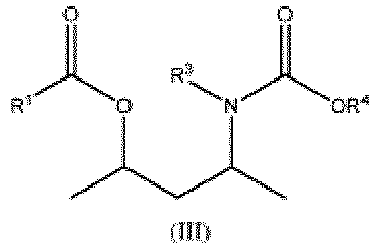
- Constituant catalytique selon la revendication 11, dans lequel R3 représente hydrogène ou méthyle et R4 représente un groupe alkyle en C1-C5.
- Catalyseur pour la polymérisation d'oléfines comprenant le produit de la réaction entre :(i) le constituant catalytique solide selon l'une quelconque des revendications précédentes et(ii) un composé d'alkylaluminium et, éventuellement,(iii) un composé donneur d'électrons externe.
- Catalyseur selon la revendication 13 comprenant, en outre, un composé donneur d'électrons externe.
- Procédé pour la (co)polymérisation d'oléfines CH2=CHR, dans lesquelles R représente hydrogène ou un radical hydrocarbyle comprenant 1 à 12 atomes de carbone, effectué en présence d'un système catalytique comprenant le produit de la réaction entre :i. le constituant catalytique solide selon l'une quelconque des revendications ci-dessus ;ii. un composé d'alkylaluminium et,iii. éventuellement, un composé donneur externe.
Applications Claiming Priority (2)
| Application Number | Priority Date | Filing Date | Title |
|---|---|---|---|
| EP15168208 | 2015-05-19 | ||
| PCT/EP2016/061078 WO2016184884A1 (fr) | 2015-05-19 | 2016-05-18 | Constituants de catalyseur pour la polymérisation d'oléfines |
Publications (2)
| Publication Number | Publication Date |
|---|---|
| EP3298048A1 EP3298048A1 (fr) | 2018-03-28 |
| EP3298048B1 true EP3298048B1 (fr) | 2019-07-03 |
Family
ID=53180640
Family Applications (1)
| Application Number | Title | Priority Date | Filing Date |
|---|---|---|---|
| EP16725438.2A Active EP3298048B1 (fr) | 2015-05-19 | 2016-05-18 | Composants de catalyseur pour la polymérisation d'oléfines |
Country Status (9)
| Country | Link |
|---|---|
| US (1) | US10221256B2 (fr) |
| EP (1) | EP3298048B1 (fr) |
| JP (1) | JP6404497B2 (fr) |
| KR (1) | KR101895565B1 (fr) |
| CN (1) | CN107580607B (fr) |
| BR (1) | BR112017023776B1 (fr) |
| ES (1) | ES2746290T3 (fr) |
| RU (1) | RU2667539C1 (fr) |
| WO (1) | WO2016184884A1 (fr) |
Families Citing this family (9)
| Publication number | Priority date | Publication date | Assignee | Title |
|---|---|---|---|---|
| WO2018060406A1 (fr) * | 2016-09-29 | 2018-04-05 | Sabic Global Technologies B.V. | Procatalyseur pour la polymérisation d'oléfines |
| CN108517022B (zh) * | 2017-03-10 | 2020-10-27 | 北京利和知信科技有限公司 | 用于烯烃聚合的固体催化剂组分、及其催化剂和应用 |
| CN108517021B (zh) * | 2017-03-10 | 2020-10-27 | 北京利和知信科技有限公司 | 一种适用于生产宽分子量分布聚合物的固体催化剂组分、催化剂及其应用 |
| WO2018161854A1 (fr) | 2017-03-10 | 2018-09-13 | 北京利和知信科技有限公司 | Constituant de catalyseur solide destiné à être utilisé dans une polymérisation d'oléfines, catalyseur, et application associée |
| ES2980461T3 (es) * | 2019-07-03 | 2024-10-01 | Basell Poliolefine Italia Srl | Componentes catalíticos para la polimerización de olefinas |
| JP7881848B2 (ja) * | 2023-03-17 | 2026-06-29 | バーゼル・ポリオレフィン・イタリア・ソチエタ・ア・レスポンサビリタ・リミタータ | オレフィン重合用触媒成分 |
| US20260098022A1 (en) | 2023-03-31 | 2026-04-09 | Mitsui Chemicals, Inc. | Carbamate compound |
| JP2026513612A (ja) * | 2023-05-15 | 2026-04-28 | バーゼル・ポリオレフィン・イタリア・ソチエタ・ア・レスポンサビリタ・リミタータ | オレフィン重合用触媒成分 |
| WO2025144069A1 (fr) * | 2023-12-28 | 2025-07-03 | Public Joint Stock Company "Sibur Holding" (Pjsc "Sibur Holding") | Procatalyseur et système catalyseur pour la polymérisation d'oléfines, et procédé de (co)polymérisation d'oléfines |
Family Cites Families (20)
| Publication number | Priority date | Publication date | Assignee | Title |
|---|---|---|---|---|
| NL162661B (nl) | 1968-11-21 | 1980-01-15 | Montedison Spa | Werkwijze om een katalysator te bereiden voor de poly- merisatie van alkenen-1. |
| YU35844B (en) | 1968-11-25 | 1981-08-31 | Montedison Spa | Process for obtaining catalysts for the polymerization of olefines |
| JPS4817672B1 (fr) * | 1970-01-30 | 1973-05-31 | ||
| US3661844A (en) | 1970-12-11 | 1972-05-09 | Cincinnati Milacron Chem | Organic acyl thioacetal and thioketal stabilizers for halogenated resins |
| JPS5615406B2 (fr) * | 1973-08-02 | 1981-04-10 | ||
| GB1603724A (en) | 1977-05-25 | 1981-11-25 | Montedison Spa | Components and catalysts for the polymerisation of alpha-olefins |
| IT1096661B (it) | 1978-06-13 | 1985-08-26 | Montedison Spa | Procedimento per la preparazione di prodotti in forma sferoidale solidi a temperatura ambiente |
| IT1098272B (it) | 1978-08-22 | 1985-09-07 | Montedison Spa | Componenti,di catalizzatori e catalizzatori per la polimerizzazione delle alfa-olefine |
| IT1230134B (it) | 1989-04-28 | 1991-10-14 | Himont Inc | Componenti e catalizzatori per la polimerizzazione di olefine. |
| IT1262935B (it) | 1992-01-31 | 1996-07-22 | Montecatini Tecnologie Srl | Componenti e catalizzatori per la polimerizzazione di olefine |
| IT1262934B (it) | 1992-01-31 | 1996-07-22 | Montecatini Tecnologie Srl | Componenti e catalizzatori per la polimerizzazione di olefine |
| IT1256648B (it) | 1992-12-11 | 1995-12-12 | Montecatini Tecnologie Srl | Componenti e catalizzatori per la polimerizzazione delle olefine |
| IL127230A (en) | 1997-03-29 | 2004-07-25 | Montell Technology Company Bv | Magnesium dichloride-alcohol adducts, process for their preparation and catalyst components obtained therefrom |
| CN1169845C (zh) | 2002-02-07 | 2004-10-06 | 中国石油化工股份有限公司 | 用于烯烃聚合的固体催化剂组分和含该催化剂组分的催化剂及其应用 |
| US8288606B2 (en) | 2005-03-08 | 2012-10-16 | Ineos Usa Llc | Propylene polymer catalyst donor component |
| SG183460A1 (en) | 2010-02-26 | 2012-09-27 | Dow Global Technologies Llc | Procatalyst composition with substituted amide ester internal electron donor |
| ES2582184T3 (es) * | 2012-06-29 | 2016-09-09 | Saudi Basic Industries Corporation | Composición catalítica para la polimerización de olefinas |
| US9790291B2 (en) * | 2013-03-14 | 2017-10-17 | Formosa Plastics Corporation, Usa | Non-phthalate compounds as electron donors for polyolefin catalysts |
| EP2803679A1 (fr) | 2013-05-17 | 2014-11-19 | Basell Poliolefine Italia S.r.l. | Composants de catalyseur pour la polymérisation des oléfines |
| BR112016003829B1 (pt) | 2013-09-09 | 2020-10-06 | Basell Poliolefine Italia S.R.L. | Componente catalisador sólido, catalisador e processo para (co)polimerização de olefinas |
-
2016
- 2016-05-18 EP EP16725438.2A patent/EP3298048B1/fr active Active
- 2016-05-18 CN CN201680026686.9A patent/CN107580607B/zh active Active
- 2016-05-18 RU RU2017140819A patent/RU2667539C1/ru active
- 2016-05-18 US US15/574,807 patent/US10221256B2/en active Active
- 2016-05-18 WO PCT/EP2016/061078 patent/WO2016184884A1/fr not_active Ceased
- 2016-05-18 JP JP2017558544A patent/JP6404497B2/ja active Active
- 2016-05-18 KR KR1020177034969A patent/KR101895565B1/ko not_active Expired - Fee Related
- 2016-05-18 ES ES16725438T patent/ES2746290T3/es active Active
- 2016-05-18 BR BR112017023776-8A patent/BR112017023776B1/pt active IP Right Grant
Non-Patent Citations (1)
| Title |
|---|
| None * |
Also Published As
| Publication number | Publication date |
|---|---|
| US10221256B2 (en) | 2019-03-05 |
| KR20170140407A (ko) | 2017-12-20 |
| EP3298048A1 (fr) | 2018-03-28 |
| BR112017023776A2 (pt) | 2018-07-31 |
| BR112017023776B1 (pt) | 2021-11-16 |
| JP2018514633A (ja) | 2018-06-07 |
| KR101895565B1 (ko) | 2018-09-06 |
| CN107580607A (zh) | 2018-01-12 |
| US20180142044A1 (en) | 2018-05-24 |
| JP6404497B2 (ja) | 2018-10-10 |
| RU2667539C1 (ru) | 2018-09-27 |
| ES2746290T3 (es) | 2020-03-05 |
| CN107580607B (zh) | 2019-09-27 |
| WO2016184884A1 (fr) | 2016-11-24 |
Similar Documents
| Publication | Publication Date | Title |
|---|---|---|
| EP2900706B1 (fr) | Composants de catalyseur pour la polymérisation des oléfines | |
| US10221256B2 (en) | Catalyst components for the polymerization of olefins | |
| EP3044239B9 (fr) | Composants de catalyseur pour la polymérisation des oléfines | |
| EP3541857B1 (fr) | Composants de catalyseur de polymérisation d'oléfines | |
| EP3268397B1 (fr) | Composants de catalyseur pour la polymérisation d'oléfines | |
| EP3994184B1 (fr) | Composants de catalyseur de polymérisation d'oléfines | |
| EP3268398B1 (fr) | Composants de catalyseur pour la polymérisation d'oléfines | |
| EP3277736B1 (fr) | Composants de catalyseur pour la polymerisation d'olefines | |
| EP2601223B1 (fr) | Composants de catalyseur pour la polymérisation d'oléfines | |
| EP3268396B1 (fr) | Composants de catalyseur pour la polymérisation d'oléfines | |
| EP3122788B1 (fr) | Composants catalytiques pour la polymérisation d'oléfines | |
| US9416203B2 (en) | Catalyst components for the polymerization of olefins | |
| EP3894448B1 (fr) | Composants de catalyseur de polymérisation d'oléfines | |
| EP4680656A1 (fr) | Composants catalyseurs pour la polymérisation d'oléfines | |
| WO2024235894A1 (fr) | Composants catalyseurs pour la polymérisation d'oléfines |
Legal Events
| Date | Code | Title | Description |
|---|---|---|---|
| STAA | Information on the status of an ep patent application or granted ep patent |
Free format text: STATUS: THE INTERNATIONAL PUBLICATION HAS BEEN MADE |
|
| PUAI | Public reference made under article 153(3) epc to a published international application that has entered the european phase |
Free format text: ORIGINAL CODE: 0009012 |
|
| STAA | Information on the status of an ep patent application or granted ep patent |
Free format text: STATUS: REQUEST FOR EXAMINATION WAS MADE |
|
| 17P | Request for examination filed |
Effective date: 20171102 |
|
| AK | Designated contracting states |
Kind code of ref document: A1 Designated state(s): AL AT BE BG CH CY CZ DE DK EE ES FI FR GB GR HR HU IE IS IT LI LT LU LV MC MK MT NL NO PL PT RO RS SE SI SK SM TR |
|
| AX | Request for extension of the european patent |
Extension state: BA ME |
|
| DAV | Request for validation of the european patent (deleted) | ||
| DAX | Request for extension of the european patent (deleted) | ||
| GRAP | Despatch of communication of intention to grant a patent |
Free format text: ORIGINAL CODE: EPIDOSNIGR1 |
|
| STAA | Information on the status of an ep patent application or granted ep patent |
Free format text: STATUS: GRANT OF PATENT IS INTENDED |
|
| INTG | Intention to grant announced |
Effective date: 20190226 |
|
| GRAS | Grant fee paid |
Free format text: ORIGINAL CODE: EPIDOSNIGR3 |
|
| GRAA | (expected) grant |
Free format text: ORIGINAL CODE: 0009210 |
|
| STAA | Information on the status of an ep patent application or granted ep patent |
Free format text: STATUS: THE PATENT HAS BEEN GRANTED |
|
| AK | Designated contracting states |
Kind code of ref document: B1 Designated state(s): AL AT BE BG CH CY CZ DE DK EE ES FI FR GB GR HR HU IE IS IT LI LT LU LV MC MK MT NL NO PL PT RO RS SE SI SK SM TR |
|
| REG | Reference to a national code |
Ref country code: GB Ref legal event code: FG4D |
|
| REG | Reference to a national code |
Ref country code: CH Ref legal event code: EP Ref country code: AT Ref legal event code: REF Ref document number: 1150902 Country of ref document: AT Kind code of ref document: T Effective date: 20190715 |
|
| REG | Reference to a national code |
Ref country code: DE Ref legal event code: R096 Ref document number: 602016016332 Country of ref document: DE |
|
| REG | Reference to a national code |
Ref country code: IE Ref legal event code: FG4D |
|
| REG | Reference to a national code |
Ref country code: NL Ref legal event code: MP Effective date: 20190703 |
|
| REG | Reference to a national code |
Ref country code: LT Ref legal event code: MG4D |
|
| PG25 | Lapsed in a contracting state [announced via postgrant information from national office to epo] |
Ref country code: CZ Free format text: LAPSE BECAUSE OF FAILURE TO SUBMIT A TRANSLATION OF THE DESCRIPTION OR TO PAY THE FEE WITHIN THE PRESCRIBED TIME-LIMIT Effective date: 20190703 Ref country code: HR Free format text: LAPSE BECAUSE OF FAILURE TO SUBMIT A TRANSLATION OF THE DESCRIPTION OR TO PAY THE FEE WITHIN THE PRESCRIBED TIME-LIMIT Effective date: 20190703 Ref country code: LT Free format text: LAPSE BECAUSE OF FAILURE TO SUBMIT A TRANSLATION OF THE DESCRIPTION OR TO PAY THE FEE WITHIN THE PRESCRIBED TIME-LIMIT Effective date: 20190703 Ref country code: PT Free format text: LAPSE BECAUSE OF FAILURE TO SUBMIT A TRANSLATION OF THE DESCRIPTION OR TO PAY THE FEE WITHIN THE PRESCRIBED TIME-LIMIT Effective date: 20191104 Ref country code: NL Free format text: LAPSE BECAUSE OF FAILURE TO SUBMIT A TRANSLATION OF THE DESCRIPTION OR TO PAY THE FEE WITHIN THE PRESCRIBED TIME-LIMIT Effective date: 20190703 Ref country code: BG Free format text: LAPSE BECAUSE OF FAILURE TO SUBMIT A TRANSLATION OF THE DESCRIPTION OR TO PAY THE FEE WITHIN THE PRESCRIBED TIME-LIMIT Effective date: 20191003 Ref country code: SE Free format text: LAPSE BECAUSE OF FAILURE TO SUBMIT A TRANSLATION OF THE DESCRIPTION OR TO PAY THE FEE WITHIN THE PRESCRIBED TIME-LIMIT Effective date: 20190703 Ref country code: NO Free format text: LAPSE BECAUSE OF FAILURE TO SUBMIT A TRANSLATION OF THE DESCRIPTION OR TO PAY THE FEE WITHIN THE PRESCRIBED TIME-LIMIT Effective date: 20191003 |
|
| PG25 | Lapsed in a contracting state [announced via postgrant information from national office to epo] |
Ref country code: GR Free format text: LAPSE BECAUSE OF FAILURE TO SUBMIT A TRANSLATION OF THE DESCRIPTION OR TO PAY THE FEE WITHIN THE PRESCRIBED TIME-LIMIT Effective date: 20191004 Ref country code: LV Free format text: LAPSE BECAUSE OF FAILURE TO SUBMIT A TRANSLATION OF THE DESCRIPTION OR TO PAY THE FEE WITHIN THE PRESCRIBED TIME-LIMIT Effective date: 20190703 Ref country code: IS Free format text: LAPSE BECAUSE OF FAILURE TO SUBMIT A TRANSLATION OF THE DESCRIPTION OR TO PAY THE FEE WITHIN THE PRESCRIBED TIME-LIMIT Effective date: 20191103 Ref country code: RS Free format text: LAPSE BECAUSE OF FAILURE TO SUBMIT A TRANSLATION OF THE DESCRIPTION OR TO PAY THE FEE WITHIN THE PRESCRIBED TIME-LIMIT Effective date: 20190703 Ref country code: AL Free format text: LAPSE BECAUSE OF FAILURE TO SUBMIT A TRANSLATION OF THE DESCRIPTION OR TO PAY THE FEE WITHIN THE PRESCRIBED TIME-LIMIT Effective date: 20190703 |
|
| REG | Reference to a national code |
Ref country code: ES Ref legal event code: FG2A Ref document number: 2746290 Country of ref document: ES Kind code of ref document: T3 Effective date: 20200305 |
|
| PG25 | Lapsed in a contracting state [announced via postgrant information from national office to epo] |
Ref country code: TR Free format text: LAPSE BECAUSE OF FAILURE TO SUBMIT A TRANSLATION OF THE DESCRIPTION OR TO PAY THE FEE WITHIN THE PRESCRIBED TIME-LIMIT Effective date: 20190703 |
|
| PG25 | Lapsed in a contracting state [announced via postgrant information from national office to epo] |
Ref country code: PL Free format text: LAPSE BECAUSE OF FAILURE TO SUBMIT A TRANSLATION OF THE DESCRIPTION OR TO PAY THE FEE WITHIN THE PRESCRIBED TIME-LIMIT Effective date: 20190703 Ref country code: DK Free format text: LAPSE BECAUSE OF FAILURE TO SUBMIT A TRANSLATION OF THE DESCRIPTION OR TO PAY THE FEE WITHIN THE PRESCRIBED TIME-LIMIT Effective date: 20190703 Ref country code: RO Free format text: LAPSE BECAUSE OF FAILURE TO SUBMIT A TRANSLATION OF THE DESCRIPTION OR TO PAY THE FEE WITHIN THE PRESCRIBED TIME-LIMIT Effective date: 20190703 Ref country code: IT Free format text: LAPSE BECAUSE OF FAILURE TO SUBMIT A TRANSLATION OF THE DESCRIPTION OR TO PAY THE FEE WITHIN THE PRESCRIBED TIME-LIMIT Effective date: 20190703 Ref country code: EE Free format text: LAPSE BECAUSE OF FAILURE TO SUBMIT A TRANSLATION OF THE DESCRIPTION OR TO PAY THE FEE WITHIN THE PRESCRIBED TIME-LIMIT Effective date: 20190703 |
|
| PG25 | Lapsed in a contracting state [announced via postgrant information from national office to epo] |
Ref country code: SK Free format text: LAPSE BECAUSE OF FAILURE TO SUBMIT A TRANSLATION OF THE DESCRIPTION OR TO PAY THE FEE WITHIN THE PRESCRIBED TIME-LIMIT Effective date: 20190703 Ref country code: IS Free format text: LAPSE BECAUSE OF FAILURE TO SUBMIT A TRANSLATION OF THE DESCRIPTION OR TO PAY THE FEE WITHIN THE PRESCRIBED TIME-LIMIT Effective date: 20200224 Ref country code: SM Free format text: LAPSE BECAUSE OF FAILURE TO SUBMIT A TRANSLATION OF THE DESCRIPTION OR TO PAY THE FEE WITHIN THE PRESCRIBED TIME-LIMIT Effective date: 20190703 |
|
| REG | Reference to a national code |
Ref country code: DE Ref legal event code: R097 Ref document number: 602016016332 Country of ref document: DE |
|
| PLBE | No opposition filed within time limit |
Free format text: ORIGINAL CODE: 0009261 |
|
| STAA | Information on the status of an ep patent application or granted ep patent |
Free format text: STATUS: NO OPPOSITION FILED WITHIN TIME LIMIT |
|
| REG | Reference to a national code |
Ref country code: AT Ref legal event code: UEP Ref document number: 1150902 Country of ref document: AT Kind code of ref document: T Effective date: 20190703 |
|
| PG2D | Information on lapse in contracting state deleted |
Ref country code: IS |
|
| 26N | No opposition filed |
Effective date: 20200603 |
|
| PG25 | Lapsed in a contracting state [announced via postgrant information from national office to epo] |
Ref country code: SI Free format text: LAPSE BECAUSE OF FAILURE TO SUBMIT A TRANSLATION OF THE DESCRIPTION OR TO PAY THE FEE WITHIN THE PRESCRIBED TIME-LIMIT Effective date: 20190703 |
|
| PG25 | Lapsed in a contracting state [announced via postgrant information from national office to epo] |
Ref country code: LI Free format text: LAPSE BECAUSE OF NON-PAYMENT OF DUE FEES Effective date: 20200531 Ref country code: MC Free format text: LAPSE BECAUSE OF FAILURE TO SUBMIT A TRANSLATION OF THE DESCRIPTION OR TO PAY THE FEE WITHIN THE PRESCRIBED TIME-LIMIT Effective date: 20190703 Ref country code: CH Free format text: LAPSE BECAUSE OF NON-PAYMENT OF DUE FEES Effective date: 20200531 |
|
| GBPC | Gb: european patent ceased through non-payment of renewal fee |
Effective date: 20200518 |
|
| PG25 | Lapsed in a contracting state [announced via postgrant information from national office to epo] |
Ref country code: LU Free format text: LAPSE BECAUSE OF NON-PAYMENT OF DUE FEES Effective date: 20200518 |
|
| PG25 | Lapsed in a contracting state [announced via postgrant information from national office to epo] |
Ref country code: GB Free format text: LAPSE BECAUSE OF NON-PAYMENT OF DUE FEES Effective date: 20200518 Ref country code: IE Free format text: LAPSE BECAUSE OF NON-PAYMENT OF DUE FEES Effective date: 20200518 |
|
| PG25 | Lapsed in a contracting state [announced via postgrant information from national office to epo] |
Ref country code: MT Free format text: LAPSE BECAUSE OF FAILURE TO SUBMIT A TRANSLATION OF THE DESCRIPTION OR TO PAY THE FEE WITHIN THE PRESCRIBED TIME-LIMIT Effective date: 20190703 Ref country code: CY Free format text: LAPSE BECAUSE OF FAILURE TO SUBMIT A TRANSLATION OF THE DESCRIPTION OR TO PAY THE FEE WITHIN THE PRESCRIBED TIME-LIMIT Effective date: 20190703 |
|
| PG25 | Lapsed in a contracting state [announced via postgrant information from national office to epo] |
Ref country code: MK Free format text: LAPSE BECAUSE OF FAILURE TO SUBMIT A TRANSLATION OF THE DESCRIPTION OR TO PAY THE FEE WITHIN THE PRESCRIBED TIME-LIMIT Effective date: 20190703 |
|
| PGFP | Annual fee paid to national office [announced via postgrant information from national office to epo] |
Ref country code: FR Payment date: 20220422 Year of fee payment: 7 |
|
| PGFP | Annual fee paid to national office [announced via postgrant information from national office to epo] |
Ref country code: BE Payment date: 20220412 Year of fee payment: 7 |
|
| P01 | Opt-out of the competence of the unified patent court (upc) registered |
Effective date: 20230414 |
|
| REG | Reference to a national code |
Ref country code: BE Ref legal event code: MM Effective date: 20230531 |
|
| PG25 | Lapsed in a contracting state [announced via postgrant information from national office to epo] |
Ref country code: FR Free format text: LAPSE BECAUSE OF NON-PAYMENT OF DUE FEES Effective date: 20230531 Ref country code: BE Free format text: LAPSE BECAUSE OF NON-PAYMENT OF DUE FEES Effective date: 20230531 |
|
| PGFP | Annual fee paid to national office [announced via postgrant information from national office to epo] |
Ref country code: ES Payment date: 20260602 Year of fee payment: 11 |
|
| PGFP | Annual fee paid to national office [announced via postgrant information from national office to epo] |
Ref country code: DE Payment date: 20260414 Year of fee payment: 11 |
|
| PGFP | Annual fee paid to national office [announced via postgrant information from national office to epo] |
Ref country code: AT Payment date: 20260427 Year of fee payment: 11 Ref country code: FI Payment date: 20260428 Year of fee payment: 11 |