EP3305538A1 - Matériel d'enregistrement sensible à la chaleur - Google Patents
Matériel d'enregistrement sensible à la chaleur Download PDFInfo
- Publication number
- EP3305538A1 EP3305538A1 EP16192933.6A EP16192933A EP3305538A1 EP 3305538 A1 EP3305538 A1 EP 3305538A1 EP 16192933 A EP16192933 A EP 16192933A EP 3305538 A1 EP3305538 A1 EP 3305538A1
- Authority
- EP
- European Patent Office
- Prior art keywords
- heat
- sensitive recording
- formula
- recording material
- compound
- Prior art date
- Legal status (The legal status is an assumption and is not a legal conclusion. Google has not performed a legal analysis and makes no representation as to the accuracy of the status listed.)
- Withdrawn
Links
Images


Classifications
-
- B—PERFORMING OPERATIONS; TRANSPORTING
- B41—PRINTING; LINING MACHINES; TYPEWRITERS; STAMPS
- B41M—PRINTING, DUPLICATING, MARKING, OR COPYING PROCESSES; COLOUR PRINTING
- B41M5/00—Duplicating or marking methods; Sheet materials for use therein
- B41M5/26—Thermography ; Marking by high energetic means, e.g. laser otherwise than by burning, and characterised by the material used
- B41M5/30—Thermography ; Marking by high energetic means, e.g. laser otherwise than by burning, and characterised by the material used using chemical colour formers
- B41M5/323—Organic colour formers, e.g. leuco dyes
-
- B—PERFORMING OPERATIONS; TRANSPORTING
- B41—PRINTING; LINING MACHINES; TYPEWRITERS; STAMPS
- B41M—PRINTING, DUPLICATING, MARKING, OR COPYING PROCESSES; COLOUR PRINTING
- B41M5/00—Duplicating or marking methods; Sheet materials for use therein
- B41M5/26—Thermography ; Marking by high energetic means, e.g. laser otherwise than by burning, and characterised by the material used
- B41M5/30—Thermography ; Marking by high energetic means, e.g. laser otherwise than by burning, and characterised by the material used using chemical colour formers
- B41M5/333—Colour developing components therefor, e.g. acidic compounds
- B41M5/3333—Non-macromolecular compounds
-
- B—PERFORMING OPERATIONS; TRANSPORTING
- B41—PRINTING; LINING MACHINES; TYPEWRITERS; STAMPS
- B41M—PRINTING, DUPLICATING, MARKING, OR COPYING PROCESSES; COLOUR PRINTING
- B41M2205/00—Printing methods or features related to printing methods; Location or type of the layers
- B41M2205/04—Direct thermal recording [DTR]
Definitions
- thermosensitive recording material comprising a) a compound of the formula (I) and b) a compound of the formula (II), a use of the thermosensitive recording material and a process for producing a thermosensitive recording material.
- Heat-sensitive recording materials have been known for many years and enjoy a high level of popularity. This popularity is due, among other things, to the fact that their use has the advantage that the color-forming components are contained in the recording material itself and therefore toner and color cartridge-free printers can be used. It is therefore no longer necessary to purchase or replenish toner or ink cartridges. Thus, this innovative technology has largely prevailed, especially in public transport and retail.
- thermo-print heat-induced recording
- US Pat DE 10 2004 044 204 A1 a heat-sensitive recording material whose heat-sensitive recording layer has conventional dye precursors and the combination of a phenolic color developer and a urea-urethane-based color developer.
- thermosensitive recording material containing at least the components of two color-forming systems to form an irreversible printed image, one being a chelate-type system and the other being a conventional leuco-dye system.
- thermosensitive recording material may be used in its typical uses as a ticket, ticket, ticket, parking ticket, and the like. a variety of different environmental influences, such as moisture, heat or chemicals exposed.
- thermosensitive recording materials may come into contact with a variety of different substances which may affect the resistance of the thermal term.
- these also include fats and oils, which are contained, for example, in hand care products and can be transferred to them when the heat-sensitive recording material is touched.
- the resistance to fats and oils is therefore very relevant.
- heat-sensitive recording materials In addition to the resistance to chemicals which may come into contact with the heat-sensitive recording materials, heat-sensitive recording materials must also have a high resistance to thermal influences.
- the heat-sensitive recording material should be energy-saving and easy to print, for example, to consume low energy in mobile applications.
- the printed image should remain after printing, and when exposed to heat, the printed image should not fade, nor should the unprinted background be discolored, which would make the print no longer legible.
- the thermal resistance is extremely relevant.
- the object of the present invention is therefore to provide a heat-sensitive recording material which, when printed, has a high resistance to environmental influences, such as moisture, heat or chemicals.
- the heat-sensitive recording materials should have a low long-term aging, even at high temperatures (40 to 60 ° C) and possibly high humidity and thereby have a relation to the prior art improved or at least consistent resistance to fat.
- the compound of the formula (I) is likewise already known and is described, for example, in US Pat EP 2 923 851 A1 described. It is sold under the name NKK. However, it has been found that the compound of formula (I) can exist in two different crystalline forms. Both crystalline forms have different physical properties that may affect the thermosensitive recording material.
- a crystalline form of the compounds of formula (I) has a melting point of about 158 ° C, while the second used in the invention crystalline form of the compounds of formula (I) has a melting point of 175 ° C.
- the compound of the formula (I) which is the crystalline form having a melting point of about 158 ° C. has been described in the literature so far (cf., for example, US Pat EP 2 923 851 A1 Paragraph [0084]). Neither the preparation nor the use of the crystalline form of the compounds of the formula (I) having a melting point of about 175 ° C. used according to the invention are described in the literature.
- the crystalline form of the compound of the formula (I) having a melting point of about 158 ° C has always been used, although the melting point is not explicitly mentioned in the corresponding document.
- the crystalline form of the compound of the formula (I) having a melting point of 175 ° C. used according to the invention has recently become commercially available as well.
- a heat-sensitive recording material preference is therefore given to a heat-sensitive recording material, the crystalline form of the compound of the formula (I) having a (preferably endothermic) transition at a temperature between 170 ° C and 178 ° C, preferably between 173 ° C and 177 ° C, more preferably between 174 ° C and 176 ° C as determined by differential scanning calorimetry (DKK) at a heating rate of 10 K / min.
- DKK differential scanning calorimetry
- Both crystalline forms of the compounds of the formula (I) can also be distinguished from one another in the IR absorption spectrum.
- Particularly characteristic in the crystalline form of the compounds of the formula (I) used according to the invention is an absorption band in the IR spectrum at 3401 ⁇ 20 cm -1 .
- this band is not present, but in each case a band at 3322 and 3229 cm -1 .
- thermosensitive recording material wherein the crystalline form of the compound of the formula (I) in the IR spectrum has absorption bands at 689 ⁇ 10 cm -1 , 731 ⁇ 10 cm -1 , 1653 ⁇ 10 cm -1 3364 ⁇ 20 cm -1 and 3401 ⁇ 20 cm -1 .
- a heat-sensitive recording material wherein the IR absorption spectrum of the crystalline form of the compound of the formula (I) is substantially identical to that in Fig. 1a ), 2a) and / or 3a) matches the IR absorption spectrum.
- Both crystalline forms of the compounds of the formula (I) can likewise be distinguished from one another in the X-ray powder diffractogram. According to the invention, preference is given to a heat-sensitive recording material, the crystalline form of the compound of the formula (I) having an X-ray powder diffractogram with diffraction reflections at ° 2 ⁇ values of 10.00 ⁇ 0.20, 11.00 ⁇ 0.20, 12.40 ⁇ 0, 20, 13.80 ⁇ 0.20 and 15.00 ⁇ 0.20.
- a heat-sensitive recording material wherein the crystalline form of the compound of the formula (I) has an X-ray powder diffractogram which substantially corresponds to that in FIG Fig. 4b ) corresponds to the X-ray powder diffractogram shown.
- a compound of the formula (I) is always described as being the crystalline form which has an absorption band at 3401 ⁇ 20 cm -1 in the IR spectrum or has a melting point of 175 ° C. or a transition at one temperature between 170 ° C. and 178 ° C. (determined by means of differential scanning calorimetry (DKK) at a heating rate of 10 K / min) or in the X-ray powder diffractogram with diffraction reflections at ° 2 ⁇ values of at least 10.00 ⁇ 0.20, 11.00 ⁇ 0.20, 12.40 ⁇ 0.20, 13.80 ⁇ 0.20, and 15.00 ⁇ 0.20, unless the existence of the other crystal structure is explicitly described.
- DKK differential scanning calorimetry
- heat-sensitive recording materials according to the invention have a significantly improved long-term stability than heat-sensitive recording materials in which the color developer mixture has been replaced in equal parts by weight by a compound of formula (I) or a compound of formula (II).
- the combination of a compound of the formula (I) used according to the invention with a compound of the formula (II) thus has a synergistic effect which was unpredictable and therefore completely surprising.
- a heat-sensitive recording material is preferred, wherein the aging of the heat-sensitive recording material is less than the aging of a heat-sensitive recording material when stored for 24 hours at a temperature of 90 ° C, wherein the color developer mixture in equal parts by weight by a compound of formula (I) or a compound of formula (II) has been replaced.
- Also preferred according to the invention is a heat-sensitive recording material, wherein the aging of the heat-sensitive recording material when stored for 38 days at 40 ° C and 90% relative humidity is less than the aging of a thermosensitive recording material, wherein the color developer mixture in equal parts by weight by a compound of formula (I) or a compound of formula (II) has been replaced.
- thermosensitive recording material The aging of the thermosensitive recording material is considered to be lower if the printing density of a printed area decreases less than that of the comparative sample.
- recording materials according to the invention in addition to the improved long-term stability, also have improved resistance to fat, in particular lanolin, as heat-sensitive recording materials in which the color developer mixture according to the invention has been replaced in equal parts by weight with a compound of the formula (I).
- the resistance to fat, in particular lanolin may also be better than the fat resistance of a heat-sensitive recording material in which the color developer mixture according to the invention has been replaced in equal parts by weight by a compound of the formula (I) or (II). Accordingly, therefore, there is also a synergistic effect in terms of resistance to fat, which was unpredictable and therefore completely surprising.
- thermosensitive recording material is preferred, wherein the stability of the thermosensitive recording material to lanolin after 14 days is higher than the resistance of a thermosensitive recording material in which the color developer mixture has been replaced in equal parts by weight by a compound of formula (I).
- thermosensitive recording material wherein the durability of the thermosensitive recording material to lanolin is higher than or equal to 14 days, than the resistance of a thermosensitive recording material in which the color developing agent in equal parts by weight has been replaced by a compound of formula (II).
- thermosensitive recording material to lanolin is considered to be higher if the printing density of a printed area decreases less than that of the comparative sample.
- thermosensitive recording material usually leads to a deterioration of the properties of the heat-sensitive recording material.
- the combination of two or more developers leads to an undesirable change in the color of the thermosensitive recording material, so that the thermosensitive recording material, for example, gray effect, without thereby improving the other properties.
- the person skilled in the art would not have considered combining different developers with one another and did not carry out corresponding tests. For this reason too, the solution according to the invention shown here is surprising, since the skilled person first had to overcome the technical prejudice that two developers should not be combined with one another in order to achieve the object.
- the mass ratio between the compound of the formula (I) and the compound of the formula (II) being 0.5: 99.5 to 99.5: 0.5. It has been shown in our own investigations that at a level of less than 0.5% by weight of the compound of the formula (I) or (II), based on the total weight of the compounds of the formula (I) and (II ), the positive influence of the respective compound is not so pronounced.
- Particularly preferred according to the invention is a heat-sensitive recording material, the mass ratio between the compound of the formula (I) and the compound of the formula (II) being 35:65 to 65:35, preferably 40:60 to 60:40, particularly preferably 45: 55 to 55: 45.
- a heat-sensitive recording material is preferred, wherein the carrier substrate is a paper, synthetic paper or a plastic film.
- a non-surface treated base paper is particularly preferred because it has good recyclability and good environmental compatibility.
- a non-surface treated base paper is to be understood as meaning a base paper which has not been treated in a size press or in a coater.
- plastic films films of polypropylene or other polyolefins are preferred. Also preferred according to the invention are papers coated with one or more polyolefins (in particular polypropylene).
- the carrier substrate is a paper with a fraction of recycled fibers of at least 70% by weight, based on the total pulp content in the paper.
- a heat-sensitive recording material additionally comprising an intermediate layer located between the carrier substrate and the heat-sensitive recording layer, the intermediate layer preferably containing pigments.
- the pigments can be organic pigments, inorganic pigments or a mixture of organic pigments and inorganic pigments.
- the basis weight of the intermediate layer in the range of 5 to 20 g / m 2 , preferably in the range of 7 to 12 g / m 2 .
- the intermediate layer contains pigments
- the pigments are organic pigments, preferably organic hollow-body pigments.
- the pigments are inorganic pigments, preferably selected from the list consisting of calcined kaolin, silica, bentonite, calcium carbonate, alumina and boehmite ,
- inorganic pigments When inorganic pigments are incorporated in the intermediate layer sandwiched between the recording layer and the substrate, these pigments can absorb the components (e.g., waxes) of the thermosensitive recording layer liquefied by heat from the thermal head in the typeface formation, thus promoting even safer and faster operation of the heat-induced recording.
- these pigments can absorb the components (e.g., waxes) of the thermosensitive recording layer liquefied by heat from the thermal head in the typeface formation, thus promoting even safer and faster operation of the heat-induced recording.
- the inorganic pigments of the intermediate layer has an oil absorption of at least 80 cm3 / 100 g, and more preferably 100 cm3 / 100 g, determined according to the Japanese standard JIS K 5101, is having.
- Calcined kaolin has become especially proven due to its large absorption reservoir in the cavities. Also mixtures of several different types of inorganic pigments are conceivable.
- the ratio between organic and inorganic pigment is a combination of the two types of pigments caused effects, which is particularly advantageously solved when the pigment mixture to 5 to 30 wt .-% or better to 8 to 20 wt .-% of organic and 95 to 70 wt .-% or better to 92 to 80 wt.% Of inorganic pigment.
- Pigment mixtures of different organic pigments and / or inorganic pigments are conceivable.
- the intermediate layer optionally containing, in addition to the inorganic and / or organic pigments, at least one binder, preferably based on a synthetic polymer, with styrene-butadiene latex giving particularly good results.
- a synthetic binder with the admixture of at least one natural polymer, particularly preferably starch, is a particularly suitable embodiment.
- a binder-to-pigment ratio within the intermediate layer of between 3: 7 and 1: 9, in each case based on wt .-% in the intermediate layer, represents a particularly suitable embodiment.
- a heat-sensitive recording material wherein the color former is selected from derivatives of compounds from the group consisting of fluoran, phthalide, lactam, triphenylmethane, phenothiazine and spiropyran.
- a preferred heat-sensitive recording material preferably comprises, as color formers, fluoran-type compounds selected from the group consisting of 3-diethylamino-6-methyl-7-anilinofluoran, 3-diethylamino-6-methyl-7- (3'-methylphenylamino) fluoran ( 6 '- (diethylamino) -3'-methyl-2' - (m-tolylamino) -3H-spiro [isobenzofuran-1,9'-xanthene] -3-one; ODB-7), 3-di-n- pentylamino-6-methyl-7-anilinofluoran, 3- (diethylamino) -6-methyl-7- (3-methylphenylamino) fluoran, 3-di-n-butylamino-7- (2-chloroanilino) fluoran, 3 Diethylamino-7- (2-chloroanilino) fluoran, 3-diethylamino-6-methyl
- heat-sensitive recording materials according to the invention which, as color formers, are those described in paragraphs [0049] to [0052] of the EP2923851A1 contained compounds.
- Particularly preferred according to the invention is a heat-sensitive recording material, wherein the color former is selected from the group consisting of 3-N-di-n-butylamine-6-methyl-7-anilinofluoran (ODB-2) and 3- (N-ethyl-N- isopentylamino) -6-methyl-7-anilinofluoran.
- ODB-2 3-N-di-n-butylamine-6-methyl-7-anilinofluoran
- 3- (N-ethyl-N- isopentylamino) -6-methyl-7-anilinofluoran is selected from the group consisting of 3-N-di-n-butylamine-6-methyl-7-anilinofluoran (ODB-2) and 3- (N-ethyl-N- isopentylamino) -6-methyl-7-anilinofluoran.
- Preferred in the invention is a heat-sensitive recording material, wherein the heat-sensitive recording layer contains a sensitizer.
- the sensitizer When a sensitizer is used, the sensitizer is first melted during the application of heat during printing, and the molten sensitizer dissolves the color formers and color developers coexisting in the thermosensitive recording layer and / or lowers the melting temperature of the color formers and color developers to cause a color development reaction.
- the sensitizer does not participate in the color-winding reaction itself.
- a sensitizer is therefore understood to mean substances which serve to adjust the melting temperature of the heat-sensitive recording layer and with which preferably a melting temperature of about 70 to 80 ° C. can be set without the sensitizers themselves being involved in the color-winding reaction.
- fatty acid salts eg zinc stearate, stearic acid amide, palmitic acid amide, Oleic acid amide, lauric acid amide, ethylene and methylenebisstearic acid amide, methylolstearic acid amide), naphthalene derivatives, biphenyl derivatives, phthalates and terephthalates.
- fatty acid salts eg zinc stearate, stearic acid amide, palmitic acid amide, Oleic acid amide, lauric acid amide, ethylene and methylenebisstearic acid amide, methylolstearic acid amide
- naphthalene derivatives eg zinc stearate, stearic acid amide, palmitic acid amide, Oleic acid amide, lauric acid amide, ethylene and methylenebisstearic acid amide, methylolstearic acid amide
- naphthalene derivatives eg zinc stearate,
- the sensitizer is selected from the group consisting of 1,2-bis (3-methylphenoxy) ethane, 1,2-diphenoxyethane, 1,2-di (m-methylphenoxy) ethane, 2 (2H-Benzotriazol-2-yl) -p-cresol, 2,2'-bis (4-methoxyphenoxy) diethyl ether, 4,4'-diallyloxydiphenylsulfone, 4-acetylacetophenone, 4-benzylbiphenyl, acetoacetic anilides, benzyl 2-naphthyl ether, Benzyl naphthyl ether, benzyl 4- (benzyloxy) benzoate, benzyl paraben, bis (4-chlorobenzyl) oxalate ester, bis (4-methoxyphenyl) ether, dibenzyl oxalate, dibenzyl terephthalate
- the sensitizer is selected from the group consisting of 1,2-bis
- heat-sensitive recording materials according to the invention which act as sensitizers in paragraphs [0059] to [0061] of the EP2923851A1 contained compounds.
- these sensitizers are each used alone, that is, not in combination with the other sensitisers mentioned above.
- at least two sensitisers selected from the above list are incorporated in the heat-sensitive recording layer.
- a heat-sensitive recording material is preferred, wherein the sensitizer has a melting point of 60 ° C to 180 ° C, preferably a melting point of 80 ° C to 140 ° C.
- 4,4'-diaminodiphenylsulfone 4,4'-DDS, dapsone
- the use of 4,4'-diaminodiphenyl sulfone in thermal papers is eg in the WO 2014/143174 A1 described.
- the invention may then in this case relate to a heat-sensitive recording material, 4,4'-diaminodiphenylsulfone in the heat-sensitive recording layer, in particular additionally as an additive, is included.
- Preferred in the invention are heat-sensitive recording materials, the heat-sensitive recording layer containing a binder, preferably a crosslinked or uncrosslinked binder selected from the group consisting of polyvinyl alcohol, carboxyl-modified polyvinyl alcohol, ethylene-vinyl alcohol copolymer, a combination of polyvinyl alcohol and ethylene-vinyl alcohol copolymer, silanol group-modified polyvinyl alcohol, diacetone-modified polyvinyl alcohol, acrylate copolymer and film-forming acrylic copolymers.
- a binder preferably a crosslinked or uncrosslinked binder selected from the group consisting of polyvinyl alcohol, carboxyl-modified polyvinyl alcohol, ethylene-vinyl alcohol copolymer, a combination of polyvinyl alcohol and ethylene-vinyl alcohol copolymer, silanol group-modified polyvinyl alcohol, diacetone-modified polyvinyl alcohol, acrylate copolymer and film-forming acrylic
- the coating composition for forming the heat-sensitive recording layer of the heat-sensitive recording material of the present invention contains, in addition to one or more binders, one or more crosslinking agents for the binder or binders.
- a heat-sensitive recording material of the present invention whose heat-sensitive recording layer is formed from such a coating composition containing one or more binders and one or more crosslinking agents for the binder or binders contains one or more binders crosslinked by reacting with one or more crosslinking agents in the heat-sensitive recording layer.
- crosslinked binder is meant the reaction product formed by reaction of a binder with one or more crosslinking agents.
- a heat-sensitive recording material is preferred, wherein the basis weight of the heat-sensitive recording layer is in the range of 1.5 to 6 g / m 2 , preferably in the range of 2.0 to 5.5 g / m 2 , particularly preferably in the range of 2.0 to 4.8 g / m 2 .
- Also preferred according to the invention is a heat-sensitive recording material, the proportion of the color developer mixture in the heat-sensitive recording layer being 35 to 15% by weight, preferably 31 to 19% by weight, particularly preferably 28 to 22% by weight, based on the total solids content the heat-sensitive recording layer.
- recording materials according to the invention may additionally image stabilizers, dispersants, antioxidants, release agents, defoamers, light stabilizers, brighteners, as are known in the art, can be used.
- Each of the components is usually used in an amount of 0.01 to 15 wt .-%, in particular - with the exception of defoamers - 0.1 to 15 wt .-%, preferably 1 to 10 wt .-%, based on the total solids content the heat-sensitive recording layer.
- the antifoaming agent may be present in amounts of from 0.03 to 0.05% by weight in the recording materials according to the invention, based on the total solids content of the heat-sensitive recording layer.
- the heat-sensitive recording layer is completely or partially covered with a protective layer.
- the heat-sensitive recording layer is also shielded to the outside or the supporting substrate of the next layer within a roll, so that it is protected from external influences.
- Such a protective layer in such cases in addition to the protection of the heat-sensitive recording layer arranged under the protective layer against environmental influences, often has the additional positive effect of being able to print the heat-sensitive recording material according to the invention, in particular in the indigo range. Improve offset and flexo printing. For this reason, it may be desirable for certain applications that the heat-sensitive recording material of the present invention has a protective layer although the presence of a color developing agent as defined above in the heat-sensitive recording layer of the heat-sensitive recording material of the present invention selects the resistance of a thermal printable on a heat-sensitive recording material of the present invention to cloths from the group consisting of water, Alcohols, fats, oils and their mixtures even without protective layer is already sufficient.
- the protective layer of the heat-sensitive recording material according to the invention preferably comprises one or more crosslinked or uncrosslinked binders selected from the group consisting of carboxyl-modified polyvinyl alcohols, silanol-modified polyvinyl alcohols, diacetone-modified polyvinyl alcohols, partially and fully hydrolyzed polyvinyl alcohols and film-forming acrylic copolymers.
- the coating composition for forming the protective layer of the heat-sensitive recording material according to the invention contains, in addition to one or more binders, one or more crosslinking agents for the binder (s).
- the crosslinking agent is then preferably selected from the group consisting of boric acid, polyamines, epoxy resins, dialdehydes, formaldehyde oligomers, epichlorohydrin resins, adipic dihydrazide, melamine formaldehyde, urea, methylol urea, ammonium zirconium carbonate and polyamide-epichlorohydrin resins.
- a heat-sensitive recording material according to the invention contains in the protective layer one or more binders crosslinked by reaction with one or more crosslinking agents, wherein the one or more Crosslinking agents are selected from the group consisting of boric acid, polyamines, epoxy resins, dialdehydes, formaldehyde oligomers, epichlorohydrin resins, adipic dihydrazide melamine formaldehyde, urea, methylol urea, ammonium zirconium carbonate, polyamide epichlorohydrin resins and Tyzor LA.
- crosslinked binder is meant the reaction product formed by reaction of a binder with one or more crosslinking agents.
- the protective layer wholly or partly covering the heat-sensitive recording layer is obtainable from a coating composition comprising one or more polyvinyl alcohols and one or more crosslinking agents. It is preferred that the polyvinyl alcohol of the protective layer is modified with carboxyl or in particular silanol groups. Also, mixtures of various carboxyl group- or silanol-modified polyvinyl alcohols are preferred used.
- a protective layer has a high affinity with respect to the preferably UV-crosslinking printing ink used in the offset printing process. This critically supports meeting the demand for excellent printability within offset printing.
- the one or more crosslinking agents for the protective layer according to this embodiment are preferably selected from the group consisting of boric acid, polyamines, epoxy resins, dialdehydes, formaldehyde oligomers, polyamine epichlorohydrin resin, adipic dihydrazide, melamine formaldehyde and Tyzor LA. It is also possible to use mixtures of different crosslinking agents.
- the weight ratio of the modified polyvinyl alcohol to the crosslinking agent is in a range of 20: 1 to 5: 1, and more preferably in a range of 12: 1 to 7: 1 Ratio of the modified polyvinyl alcohol to the crosslinking agent in the range of 100 parts by weight to 8 to 11 parts by weight.
- the protective layer according to this embodiment additionally contains an inorganic pigment.
- the inorganic pigment is preferably selected from the group consisting of silicon dioxide, bentonite, aluminum hydroxide, calcium carbonate, kaolin and mixtures of said inorganic pigments.
- the protective layer according to this embodiment with a basis weight in a range from 1.0 g / m 2 to 6 g / m 2 and more preferably from 1.2 g / m 2 to 3.8 g / m 2 , In this case, the protective layer is preferably formed in one layer.
- the coating composition for forming the protective layer comprises a water-insoluble, self-crosslinking acrylic polymer as a binder, a crosslinking agent and a pigment component, wherein the pigment component of the protective layer consists of one or more inorganic pigments and at least 80 wt .-% of a highly purified alkaline treated Bentonite are formed, the binder of the protective layer of one or more water-insoluble, self-crosslinking acrylic polymers and the binder / pigment ratio is in a range of 7: 1 to 9: 1.
- a self-crosslinking acrylic polymer within the protective layer according to the second embodiment described herein is preferably selected from the group consisting of styrene-acrylic acid ester copolymers, acrylamide-containing copolymers of styrene and acrylic acid esters and copolymers based on acrylonitrile, methacrylamide and acrylic esters. The latter are preferred.
- a pigment alkaline bentonite natural or precipitated calcium carbonate, kaolin, silica or aluminum hydroxide may be incorporated into the protective layer.
- Preferred crosslinking agents are selected from the group consisting of cyclic urea, methylol urea, ammonium zirconium carbonate and polyamide-epichlorohydrin resins.
- the protective layer itself can be applied by means of conventional brushing, for which inter alia a coating color is usable, preferably with a surface-related mass in a range from 1.0 to 4.5 g / m 2 .
- the protective layer is printed. Processing technology and particularly suitable in terms of their technological properties are those protective layers which are curable by means of actinic radiation.
- actinic radiation UV or ionizing radiation, such as electron beams to understand.
- the appearance of the protective layer is significantly determined by the type of smoothing and the friction in the calender and calender influencing roll surfaces and their materials.
- a roughness (Parker Print Surf roughness) of the protective layer of less than 1.5 microns (determined in accordance with ISO standard 8791, Part 4) is considered preferable.
- the use of calenders using NipcoFlex TM or zone controlled Nipco-P TM rolls has proven particularly useful; however, the invention is not limited thereto.
- Another aspect of the present invention relates to a use of a heat-sensitive recording material according to the invention as entry tickets, aviation, Rail, boat or bus ticket, gambling document, parking ticket, label, receipt, bank statements, self-adhesive label, medical chart paper, fax paper, security paper or barcode labels.
- a further aspect of the present invention relates to products, preferably tickets, air, rail, boat or bus ticket, gambling document, parking ticket, label, receipt, bank statements, self-adhesive label, medical chart paper, fax paper, security paper or bar code labels, comprising a heat-sensitive according to the invention recording material.
- a further aspect of the present invention relates to a use of a compound of the formula (I) wherein the compound of formula (I) is in a crystalline form having an absorption band at 3401 ⁇ 20 cm -1 in the IR spectrum,
- a compound of formula (II) as a color developer, wherein the mass ratio between the compound of the formula (I) and the compound of the formula (II) is 0.5: 99.5 to 99.5: 0.5, preferably 35: 65 to 65: 35 , more preferably 40: 60 to 60: 40, more preferably 45: 55 to 55: 45.
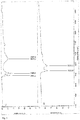
- FIG. 1 shows a comparison of IR spectra in the wavenumber range of about 4000 to 2000 cm -1 of the two crystalline forms of the compound of formula (I). Shown in the upper part and denoted by a) is the IR spectrum of the crystalline form used according to the invention of the compound of formula (I) with a melting point of 175 ° C. Shown in the lower part and labeled b) is the IR spectrum of the crystalline form of the compound of the formula (I) having a melting point of about 158 ° C.
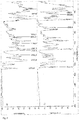
- FIG. 2 shows a comparison of IR spectra in the wavenumber range of about 2400 to 400 cm -1 of the two crystalline forms of the compound of formula (I). Shown in the upper part and denoted by a) is the IR spectrum of the crystalline form used according to the invention of the compound of formula (I) with a melting point of 175 ° C. Shown in the lower part and labeled b) is the IR spectrum of the crystalline form of the compound of the formula (I) having a melting point of about 158 ° C.
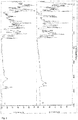
- FIG. 3 shows a comparison of IR spectra of the two crystalline forms of the compound of formula (I). Shown in the upper part and denoted by a) is the IR spectrum of the crystalline form used according to the invention of the compound of formula (I) with a melting point of 175 ° C. Shown in the lower part and labeled b) is the IR spectrum of the crystalline form of the compound of the formula (I) having a melting point of about 158 ° C.
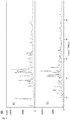
- FIG. 4 shows a comparison of X-ray powder diffraction patterns of the two crystalline forms of the compound of formula (I). Shown in the upper part and denoted by a) is the X-ray powder diffractogram of the crystalline form of the compound of formula (I) with a melting point of about 158 ° C. Shown in the lower part and denoted by b) is the X-ray powder diffractogram of the crystalline form of the compound of the formula (I) having a melting point of 175 ° C. used according to the invention.
- FIG. 5 shows the results of determination of long-term climatic resistance of heat-sensitive recording materials (at 40 ° C and 90% RH).
- the density is plotted as a function of time in days.
- FIG. 6 shows the results of determination of long-term climatic resistance of heat-sensitive recording materials (at 60 ° C).
- the density is plotted as a function of time in days.
- FIG. 7 shows the results of determination of the resistance of thermosensitive recording materials to lanolin.
- the density is plotted as a function of time in hours ("h").
- a paper web of bleached and ground hardwood and softwood pulps with a basis weight of 67 g / m 2 is prepared as the carrier substrate with the addition of customary additives in conventional amounts.
- an intermediate layer comprising hollow-shell pigments and calcined kaolin as pigment, styrene-butadiene latex as binder and starch as cobinder with a mass per unit area of 9 g / m 2 is applied using a roller-blade coating unit and dried conventionally.
- a heat-sensitive recording layer with a basis weight of 6.0 g / m 2 is applied to the intermediate layer by means of a roller blade coating unit and dried conventionally after the application.
- the heat-sensitive recording layer there is used a formulation comprising as a binder a mixture comprising polyvinyl alcohol and an acrylate copolymer and as a pigment calcium carbonate.
- Table 1 Compound of the formula (I) Compound of the formula (II) 3-N-di-n-butylamine-6-methyl-7-anilinofluoran (color former)
- Example 1 (according to the invention) 50 atro parts by weight 50 atro parts by weight 50 atro parts by weight 50 atro parts by weight
- Example 2 (according to the invention) 90 atro parts by weight 10 atro parts by weight 50 atro parts by weight
- Example 3 accordinging to the invention) 10 atro parts by weight 90 atro parts by weight 50 atro parts by weight Comparative Example 1 (not according to the invention) 100 atro parts by weight 0 atro parts by weight 50 atro parts by weight Comparative Example 2 (not according to the invention)
- Examples 4 to 6 were carried out analogously to Examples 1 to 3.
- the intermediate layer is not applied with a roller blade coating unit, but a contour line is drawn with a blade as an intermediate layer.
- the heat-sensitive recording layer is applied by means of curtain coating, the basis weight being from 1.5 to 6.0 g / m 2 , preferably from 2 to 5.5 g / m 2 .
- the 3-N-di-n-butylamine-6-methyl-7-anilinofluoran (color former) is added in an amount of 40-60 parts by dry weight.
- thermoprobing print After the preparation of the black and white checkered thermoprobing print, after a rest period of more than 5 minutes, a determination of the print density was carried out on three spots of the black-colored areas of the thermoprobing print using a Gretag Macbeth Model RD-1152 "B" densitometer. From the respective measured values of the black-colored areas, the mean value was formed in each case.
- thermoprobing print was hung in a climatic cabinet at 40 ° C and 90% relative humidity. After 1, 2, 3, 6, 10, 20, and 38 days, the thermal paper printout was taken, cooled to room temperature, and the print density was again determined at three locations of the black colored areas of the thermal proof using a Gretag Macbeth Model RD-1152 densitometer "B" performed. The mean value was formed from the respective measured values of black-colored areas. After each measurement, the thermographic printout was again placed in the climatic chamber at 40 ° C and a relative humidity of 90% until the next measurement.
- thermosensitive recording materials at 60 ° C
- the determination was carried out analogously to the determination of the climatic resistance of heat-sensitive recording materials (at 40 ° C and 90% R.F.), but the storage was not carried out in a climatic chamber, but in a drying oven at 60 ° C.
- thermosensitive recording materials Determination of the resistance of thermosensitive recording materials to lanolin:
- thermosensitive recording materials of Examples 1, 2 and 3 and Comparative Examples 1 and 2 to lanolin were on each of the thermosensitive recording materials to be tested black / white checkered designed Thermoprobeaustike with a device of the type Atlantek 400 of Company Viex (USA), using a thermal head with a resolution of 300 dpi and an energy per unit area of 16 mJ / mm 2 .
- the prepared Thermoprobeaustik the test thermosensitive recording material was coated with lanolin. After a contact time of 10 minutes, the lanolin is carefully wiped off and then stored at 23 ° C and 50% humidity. After 1, 2, 4, 24 and 96 hours, the thermal paper printout was taken and a three-digit determination of the print density using a Gretag MacBeth TYPE D19C Densitometer was performed on each of the black areas of the thermoprint prints. After each measurement, the thermographic sample was again placed in the climatic chamber at 23 ° C and a relative humidity of 50% until the next measurement.
- the resistance of the image formed on the recording layer to water and aqueous solutions is evaluated.
- To the printed areas produced by the TEC printer 572 at maximum pressure energy (level +1) is applied a drop of distilled water or the chosen aqueous 25% ethanol solution.
- the excess test liquid is dabbed after 20 minutes exposure time with a filter paper or cotton cloth and the test sheet then stored for 24 hours at room temperature (23 ° C, 50% relative humidity).
- the Macbeth Densitometer 1150 determines the optical density of the printed areas and their difference.
- the resistance to water or aqueous ethanol solutions corresponds to the quotient of the average value of the print density formed before and after the treatment with the respective test liquid multiplied by 100.
- Tables 5 Results of Resistance Testing against Water and Aqueous Ethanol Solutions (Part 1) (Cf. for Comparative Example)
- the commercially available or in WO 2014/080615 described compound of formula (I) having a melting point of about 158 ° C is recrystallized from ethanol.
- the compound of the formula (I) according to the invention having a melting point of about 175 ° C. is obtained.
- the compound of the formula (I) according to the invention has an absorption band at 3401 ⁇ 20 cm -1 in the IR spectrum.
Landscapes
- Chemical & Material Sciences (AREA)
- Chemical Kinetics & Catalysis (AREA)
- General Chemical & Material Sciences (AREA)
- Physics & Mathematics (AREA)
- Optics & Photonics (AREA)
- Heat Sensitive Colour Forming Recording (AREA)
Priority Applications (12)
| Application Number | Priority Date | Filing Date | Title |
|---|---|---|---|
| EP16192933.6A EP3305538A1 (fr) | 2016-10-07 | 2016-10-07 | Matériel d'enregistrement sensible à la chaleur |
| US16/339,991 US10850546B2 (en) | 2016-10-07 | 2017-09-29 | Heat-sensitive recording material |
| EP17777054.2A EP3352991B1 (fr) | 2016-10-07 | 2017-09-29 | Matériel d'enregistrement sensible à la chaleur |
| DE102017122800.4A DE102017122800A1 (de) | 2016-10-07 | 2017-09-29 | Wärmeempfindliches Aufzeichnungsmaterial |
| DE202017006776.5U DE202017006776U1 (de) | 2016-10-07 | 2017-09-29 | Wärmeempfindliches Aufzeichnungsmaterial |
| EP17800709.2A EP3523134A1 (fr) | 2016-10-07 | 2017-09-29 | Matériau d'enregistrement thermosensible |
| JP2019530385A JP6664552B2 (ja) | 2016-10-07 | 2017-09-29 | 感熱記録材料 |
| JP2019530416A JP6664553B2 (ja) | 2016-10-07 | 2017-09-29 | 感熱記録材料 |
| ES17777054T ES2720576T3 (es) | 2016-10-07 | 2017-09-29 | Material de registro termosensible |
| PCT/EP2017/074879 WO2018065330A1 (fr) | 2016-10-07 | 2017-09-29 | Matériau d'enregistrement thermosensible |
| US16/340,006 US10882348B2 (en) | 2016-10-07 | 2017-09-29 | Heat-sensitive recording material |
| PCT/EP2017/074875 WO2018065328A1 (fr) | 2016-10-07 | 2017-09-29 | Matériau d'impression thermosensible |
Applications Claiming Priority (1)
| Application Number | Priority Date | Filing Date | Title |
|---|---|---|---|
| EP16192933.6A EP3305538A1 (fr) | 2016-10-07 | 2016-10-07 | Matériel d'enregistrement sensible à la chaleur |
Publications (1)
| Publication Number | Publication Date |
|---|---|
| EP3305538A1 true EP3305538A1 (fr) | 2018-04-11 |
Family
ID=57137846
Family Applications (2)
| Application Number | Title | Priority Date | Filing Date |
|---|---|---|---|
| EP16192933.6A Withdrawn EP3305538A1 (fr) | 2016-10-07 | 2016-10-07 | Matériel d'enregistrement sensible à la chaleur |
| EP17777054.2A Active EP3352991B1 (fr) | 2016-10-07 | 2017-09-29 | Matériel d'enregistrement sensible à la chaleur |
Family Applications After (1)
| Application Number | Title | Priority Date | Filing Date |
|---|---|---|---|
| EP17777054.2A Active EP3352991B1 (fr) | 2016-10-07 | 2017-09-29 | Matériel d'enregistrement sensible à la chaleur |
Country Status (6)
| Country | Link |
|---|---|
| US (1) | US10850546B2 (fr) |
| EP (2) | EP3305538A1 (fr) |
| JP (1) | JP6664553B2 (fr) |
| DE (1) | DE102017122800A1 (fr) |
| ES (1) | ES2720576T3 (fr) |
| WO (1) | WO2018065328A1 (fr) |
Families Citing this family (10)
| Publication number | Priority date | Publication date | Assignee | Title |
|---|---|---|---|---|
| BR112019003249B1 (pt) | 2016-08-24 | 2022-10-18 | Nippon Soda Co., Ltd | Material e folha para registro |
| KR102266817B1 (ko) * | 2017-01-30 | 2021-06-17 | 닛뽕소다 가부시키가이샤 | 기록 재료 및 기록 시트 |
| DE102018102180A1 (de) * | 2018-01-31 | 2019-08-01 | Mitsubishi Hitec Paper Europe Gmbh | Wärmeempfindliches Aufzeichnungsmaterial |
| DE102018102177A1 (de) | 2018-01-31 | 2019-08-01 | Mitsubishi Hitec Paper Europe Gmbh | Beschichtungszusammensetzung, wärmeempfindliche Aufzeichnungsschicht, wärmeempfindliches Aufzeichnungsmaterial sowie entsprechende Verwendungen und Verfahren |
| DE102018133168B4 (de) * | 2018-12-20 | 2021-02-18 | Papierfabrik August Koehler Se | Wärmeempfindliches Aufzeichnungsmaterial |
| DE102019126220A1 (de) | 2019-09-27 | 2021-04-01 | Mitsubishi Hitec Paper Europe Gmbh | Wärmeempfindliches Aufzeichnungsmaterial, umfassend phenolfreie organische Farbentwickler |
| EP3957488A1 (fr) | 2020-08-19 | 2022-02-23 | Mitsubishi HiTec Paper Europe GmbH | Matériau d'enregistrement thermosensible ainsi que couche d'enregistrement thermosensible et sa composition de revêtement de fabrication, utilisations correspondantes et procédé |
| US12115803B2 (en) * | 2020-12-10 | 2024-10-15 | Appvion, Llc | Fade-resistant water-dispersible phenol-free direct thermal media |
| JP2025528105A (ja) | 2022-08-10 | 2025-08-26 | アプヴィオン エルエルシー | 耐油性のためのジアリール尿素の組合せを用いた直接感熱記録媒体 |
| CN121532292A (zh) * | 2023-06-20 | 2026-02-13 | 王子控股株式会社 | 热敏记录体用印刷墨 |
Citations (8)
| Publication number | Priority date | Publication date | Assignee | Title |
|---|---|---|---|---|
| EP1140515B1 (fr) | 1998-12-16 | 2004-09-15 | Ciba SC Holding AG | Materiau d'enregistrement thermosensible |
| US20050148467A1 (en) | 2001-10-12 | 2005-07-07 | Jouko Makitalo | Heat-sensitive recording material |
| DE102004044204A1 (de) | 2004-09-06 | 2005-11-17 | Siemens Ag | Vorrichtung zur Betätigung von Türen |
| WO2014080615A1 (fr) | 2012-11-21 | 2014-05-30 | 日本曹達株式会社 | Matériau d'enregistrement produit en utilisant un composé non phénolique |
| WO2014143174A1 (fr) | 2013-03-14 | 2014-09-18 | Appvion, Inc. | Matériau d'enregistrement réagissant à la chaleur |
| JP2014218062A (ja) * | 2013-05-10 | 2014-11-20 | 王子ホールディングス株式会社 | 感熱記録体 |
| WO2016136203A1 (fr) * | 2015-02-25 | 2016-09-01 | 日本曹達株式会社 | Modification cristalline de n-(2- (3-phényluréido)phényl)-benzènesulfonamide et matériau d'enregistrement l'utilisant |
| DE102015104306A1 (de) * | 2015-03-23 | 2016-09-29 | Papierfabrik August Koehler Se | Wärmeempfindliches Aufzeichnungsmaterial |
Family Cites Families (11)
| Publication number | Priority date | Publication date | Assignee | Title |
|---|---|---|---|---|
| JP2003528752A (ja) * | 2000-03-27 | 2003-09-30 | チバ スペシャルティ ケミカルズ ホールディング インコーポレーテッド | 感熱記録材料 |
| JP2003276334A (ja) * | 2002-03-22 | 2003-09-30 | Ricoh Co Ltd | 感熱記録材料 |
| JP4255300B2 (ja) * | 2003-03-24 | 2009-04-15 | 三菱製紙株式会社 | 感熱記録材料 |
| DE102004004204A1 (de) | 2004-01-27 | 2005-08-11 | Mitsubishi Hitec Paper Bielefeld Gmbh | Wärmeempfindliches Aufzeichnungsmaterial |
| JP2005262714A (ja) * | 2004-03-19 | 2005-09-29 | Mitsubishi Paper Mills Ltd | 感熱記録材料 |
| WO2013065704A1 (fr) * | 2011-10-31 | 2013-05-10 | 日本製紙株式会社 | Ester d'aryle d'acide phénolsulfonique, agent révélateur, et matériau d'enregistrement thermosensible |
| WO2013093484A1 (fr) | 2011-12-21 | 2013-06-27 | Ono Pharmaceutical Co., Ltd. | Dérivés de pyridinone et de pyrimidinone comme inhibiteurs du facteur xia |
| JP6187388B2 (ja) * | 2013-06-05 | 2017-08-30 | 王子ホールディングス株式会社 | 感熱記録体 |
| US9962980B2 (en) * | 2013-10-04 | 2018-05-08 | Oji Holdings Corporation | Thermosensitive recording material |
| JP2015134428A (ja) * | 2014-01-16 | 2015-07-27 | 王子ホールディングス株式会社 | 感熱記録体 |
| US11481690B2 (en) * | 2016-09-16 | 2022-10-25 | Foursquare Labs, Inc. | Venue detection |
-
2016
- 2016-10-07 EP EP16192933.6A patent/EP3305538A1/fr not_active Withdrawn
-
2017
- 2017-09-29 JP JP2019530416A patent/JP6664553B2/ja active Active
- 2017-09-29 DE DE102017122800.4A patent/DE102017122800A1/de not_active Ceased
- 2017-09-29 ES ES17777054T patent/ES2720576T3/es active Active
- 2017-09-29 EP EP17777054.2A patent/EP3352991B1/fr active Active
- 2017-09-29 US US16/339,991 patent/US10850546B2/en active Active
- 2017-09-29 WO PCT/EP2017/074875 patent/WO2018065328A1/fr not_active Ceased
Patent Citations (9)
| Publication number | Priority date | Publication date | Assignee | Title |
|---|---|---|---|---|
| EP1140515B1 (fr) | 1998-12-16 | 2004-09-15 | Ciba SC Holding AG | Materiau d'enregistrement thermosensible |
| US20050148467A1 (en) | 2001-10-12 | 2005-07-07 | Jouko Makitalo | Heat-sensitive recording material |
| DE102004044204A1 (de) | 2004-09-06 | 2005-11-17 | Siemens Ag | Vorrichtung zur Betätigung von Türen |
| WO2014080615A1 (fr) | 2012-11-21 | 2014-05-30 | 日本曹達株式会社 | Matériau d'enregistrement produit en utilisant un composé non phénolique |
| EP2923851A1 (fr) | 2012-11-21 | 2015-09-30 | Nippon Soda Co., Ltd. | Matériau d'enregistrement produit en utilisant un composé non phénolique |
| WO2014143174A1 (fr) | 2013-03-14 | 2014-09-18 | Appvion, Inc. | Matériau d'enregistrement réagissant à la chaleur |
| JP2014218062A (ja) * | 2013-05-10 | 2014-11-20 | 王子ホールディングス株式会社 | 感熱記録体 |
| WO2016136203A1 (fr) * | 2015-02-25 | 2016-09-01 | 日本曹達株式会社 | Modification cristalline de n-(2- (3-phényluréido)phényl)-benzènesulfonamide et matériau d'enregistrement l'utilisant |
| DE102015104306A1 (de) * | 2015-03-23 | 2016-09-29 | Papierfabrik August Koehler Se | Wärmeempfindliches Aufzeichnungsmaterial |
Non-Patent Citations (1)
| Title |
|---|
| CLAUDIA CALTAGIRONE ET AL: "Anion binding vs.sulfonamide deprotonation in functionalised ureas", CHEMICAL COMMUNICATIONS, no. 1, 25 October 2007 (2007-10-25), pages 61 - 63, XP055212087, ISSN: 1359-7345, DOI: 10.1039/B713431B * |
Also Published As
| Publication number | Publication date |
|---|---|
| US20200039270A1 (en) | 2020-02-06 |
| EP3352991A1 (fr) | 2018-08-01 |
| US10850546B2 (en) | 2020-12-01 |
| DE102017122800A1 (de) | 2018-04-12 |
| ES2720576T3 (es) | 2019-07-23 |
| JP2019534190A (ja) | 2019-11-28 |
| JP6664553B2 (ja) | 2020-03-13 |
| WO2018065328A1 (fr) | 2018-04-12 |
| EP3352991B1 (fr) | 2019-01-30 |
Similar Documents
| Publication | Publication Date | Title |
|---|---|---|
| EP3352991B1 (fr) | Matériel d'enregistrement sensible à la chaleur | |
| EP2033799B1 (fr) | Matériel d'enregistrement sensible à la chaleur | |
| DE202017006776U1 (de) | Wärmeempfindliches Aufzeichnungsmaterial | |
| EP3746308B1 (fr) | Composition de revêtement, couche d'enregistrement thermosensible, matériau d'enregistrement thermosensible et utilisations et procédés correspondants | |
| DE202020005616U1 (de) | Wärmeempfindliches Aufzeichnungsmaterial, umfassend phenolfreie organische Farbentwickler | |
| EP2993055A1 (fr) | Matériel d'enregistrement sensible à la chaleur en forme de bande doté d'une couche de protection | |
| DE69301527T2 (de) | Wärmeempfindliches Aufzeichnungsblatt | |
| EP3625058B1 (fr) | Composite stratifié comprenant une couche de support et une couche de finition et son procédé de fabrication | |
| DE202021004481U1 (de) | Wärmeempfindliches Aufzeichnungsmaterial sowie wärmeempfindliche Aufzeichnungsschicht und Beschichtungszusammensetzung zu seiner Herstellung | |
| WO2011067004A1 (fr) | Matière d'enregistrement thermosensible comprenant un revêtement barrière | |
| DE60216456T2 (de) | Wärmeempfindliches aufzeichnungsmaterial | |
| EP3746309B1 (fr) | Matériau d'impression thermosensible | |
| DE60315695T2 (de) | Wärmeempfindliches aufzeichnungsmedium | |
| DE60032686T2 (de) | Wärmeempfindliches aufzeichnungsmaterial | |
| EP2033800B1 (fr) | Matériel d'enregistrement sensible à la chaleur | |
| DE102016219569A1 (de) | Wärmeempfindliches Aufzeichnungsmaterial | |
| EP2765007B1 (fr) | Matériel d'enregistrement sensible à la chaleur | |
| DE102016219567A1 (de) | Wärmeempfindliches Aufzeichnungsmaterial | |
| EP1925459B1 (fr) | Procédé de fabrication d'un matériel d'enregistrement sensible à la chaleur doté d'une marque d'authentification | |
| DE102006050420B3 (de) | Wärmeempfindliches Aufzeichnungsmaterial | |
| DE10197272B4 (de) | Thermisches Aufzeichnungsmaterial | |
| WO2020084020A1 (fr) | Matériau d'enregistrement thermosensible à révélateur chromogène encapsulé | |
| EP3482963A1 (fr) | Matériel d'enregistrement sensible à la chaleur à base de pla | |
| DE102018113022A1 (de) | Wärmeempfindliches Aufzeichnungsmaterial mit glänzender und bedruckbarer Rückseite und Verfahren zur Herstellung eines wärmeempfindlichen Aufzeichnungsmaterials |
Legal Events
| Date | Code | Title | Description |
|---|---|---|---|
| PUAI | Public reference made under article 153(3) epc to a published international application that has entered the european phase |
Free format text: ORIGINAL CODE: 0009012 |
|
| STAA | Information on the status of an ep patent application or granted ep patent |
Free format text: STATUS: THE APPLICATION HAS BEEN PUBLISHED |
|
| AK | Designated contracting states |
Kind code of ref document: A1 Designated state(s): AL AT BE BG CH CY CZ DE DK EE ES FI FR GB GR HR HU IE IS IT LI LT LU LV MC MK MT NL NO PL PT RO RS SE SI SK SM TR |
|
| AX | Request for extension of the european patent |
Extension state: BA ME |
|
| STAA | Information on the status of an ep patent application or granted ep patent |
Free format text: STATUS: REQUEST FOR EXAMINATION WAS MADE |
|
| 17P | Request for examination filed |
Effective date: 20181011 |
|
| RBV | Designated contracting states (corrected) |
Designated state(s): AL AT BE BG CH CY CZ DE DK EE ES FI FR GB GR HR HU IE IS IT LI LT LU LV MC MK MT NL NO PL PT RO RS SE SI SK SM TR |
|
| STAA | Information on the status of an ep patent application or granted ep patent |
Free format text: STATUS: EXAMINATION IS IN PROGRESS |
|
| 17Q | First examination report despatched |
Effective date: 20200406 |
|
| STAA | Information on the status of an ep patent application or granted ep patent |
Free format text: STATUS: THE APPLICATION IS DEEMED TO BE WITHDRAWN |
|
| 18D | Application deemed to be withdrawn |
Effective date: 20201017 |