EP3315514B1 - Navette de la barrière hémato-encéphalique - Google Patents
Navette de la barrière hémato-encéphalique Download PDFInfo
- Publication number
- EP3315514B1 EP3315514B1 EP17199410.6A EP17199410A EP3315514B1 EP 3315514 B1 EP3315514 B1 EP 3315514B1 EP 17199410 A EP17199410 A EP 17199410A EP 3315514 B1 EP3315514 B1 EP 3315514B1
- Authority
- EP
- European Patent Office
- Prior art keywords
- mab31
- antibody
- brain
- binding
- antibodies
- Prior art date
- Legal status (The legal status is an assumption and is not a legal conclusion. Google has not performed a legal analysis and makes no representation as to the accuracy of the status listed.)
- Active
Links
Images








Classifications
-
- A—HUMAN NECESSITIES
- A61—MEDICAL OR VETERINARY SCIENCE; HYGIENE
- A61K—PREPARATIONS FOR MEDICAL, DENTAL OR TOILETRY PURPOSES
- A61K47/00—Medicinal preparations characterised by the non-active ingredients used, e.g. carriers or inert additives; Targeting or modifying agents chemically bound to the active ingredient
- A61K47/50—Medicinal preparations characterised by the non-active ingredients used, e.g. carriers or inert additives; Targeting or modifying agents chemically bound to the active ingredient the non-active ingredient being chemically bound to the active ingredient, e.g. polymer-drug conjugates
-
- A—HUMAN NECESSITIES
- A61—MEDICAL OR VETERINARY SCIENCE; HYGIENE
- A61K—PREPARATIONS FOR MEDICAL, DENTAL OR TOILETRY PURPOSES
- A61K39/00—Medicinal preparations containing antigens or antibodies
- A61K39/395—Antibodies; Immunoglobulins; Immune serum, e.g. antilymphocytic serum
-
- A—HUMAN NECESSITIES
- A61—MEDICAL OR VETERINARY SCIENCE; HYGIENE
- A61K—PREPARATIONS FOR MEDICAL, DENTAL OR TOILETRY PURPOSES
- A61K47/00—Medicinal preparations characterised by the non-active ingredients used, e.g. carriers or inert additives; Targeting or modifying agents chemically bound to the active ingredient
- A61K47/50—Medicinal preparations characterised by the non-active ingredients used, e.g. carriers or inert additives; Targeting or modifying agents chemically bound to the active ingredient the non-active ingredient being chemically bound to the active ingredient, e.g. polymer-drug conjugates
- A61K47/51—Medicinal preparations characterised by the non-active ingredients used, e.g. carriers or inert additives; Targeting or modifying agents chemically bound to the active ingredient the non-active ingredient being chemically bound to the active ingredient, e.g. polymer-drug conjugates the non-active ingredient being a modifying agent
- A61K47/62—Medicinal preparations characterised by the non-active ingredients used, e.g. carriers or inert additives; Targeting or modifying agents chemically bound to the active ingredient the non-active ingredient being chemically bound to the active ingredient, e.g. polymer-drug conjugates the non-active ingredient being a modifying agent the modifying agent being a protein, peptide or polyamino acid
-
- A—HUMAN NECESSITIES
- A61—MEDICAL OR VETERINARY SCIENCE; HYGIENE
- A61K—PREPARATIONS FOR MEDICAL, DENTAL OR TOILETRY PURPOSES
- A61K47/00—Medicinal preparations characterised by the non-active ingredients used, e.g. carriers or inert additives; Targeting or modifying agents chemically bound to the active ingredient
- A61K47/50—Medicinal preparations characterised by the non-active ingredients used, e.g. carriers or inert additives; Targeting or modifying agents chemically bound to the active ingredient the non-active ingredient being chemically bound to the active ingredient, e.g. polymer-drug conjugates
- A61K47/51—Medicinal preparations characterised by the non-active ingredients used, e.g. carriers or inert additives; Targeting or modifying agents chemically bound to the active ingredient the non-active ingredient being chemically bound to the active ingredient, e.g. polymer-drug conjugates the non-active ingredient being a modifying agent
- A61K47/68—Medicinal preparations characterised by the non-active ingredients used, e.g. carriers or inert additives; Targeting or modifying agents chemically bound to the active ingredient the non-active ingredient being chemically bound to the active ingredient, e.g. polymer-drug conjugates the non-active ingredient being a modifying agent the modifying agent being an antibody, an immunoglobulin or a fragment thereof, e.g. an Fc-fragment
-
- A—HUMAN NECESSITIES
- A61—MEDICAL OR VETERINARY SCIENCE; HYGIENE
- A61P—SPECIFIC THERAPEUTIC ACTIVITY OF CHEMICAL COMPOUNDS OR MEDICINAL PREPARATIONS
- A61P25/00—Drugs for disorders of the nervous system
-
- A—HUMAN NECESSITIES
- A61—MEDICAL OR VETERINARY SCIENCE; HYGIENE
- A61P—SPECIFIC THERAPEUTIC ACTIVITY OF CHEMICAL COMPOUNDS OR MEDICINAL PREPARATIONS
- A61P25/00—Drugs for disorders of the nervous system
- A61P25/28—Drugs for disorders of the nervous system for treating neurodegenerative disorders of the central nervous system, e.g. nootropic agents, cognition enhancers, drugs for treating Alzheimer's disease or other forms of dementia
-
- A—HUMAN NECESSITIES
- A61—MEDICAL OR VETERINARY SCIENCE; HYGIENE
- A61P—SPECIFIC THERAPEUTIC ACTIVITY OF CHEMICAL COMPOUNDS OR MEDICINAL PREPARATIONS
- A61P43/00—Drugs for specific purposes, not provided for in groups A61P1/00-A61P41/00
-
- C—CHEMISTRY; METALLURGY
- C07—ORGANIC CHEMISTRY
- C07K—PEPTIDES
- C07K16/00—Immunoglobulins [IG], e.g. monoclonal or polyclonal antibodies
-
- C—CHEMISTRY; METALLURGY
- C07—ORGANIC CHEMISTRY
- C07K—PEPTIDES
- C07K16/00—Immunoglobulins [IG], e.g. monoclonal or polyclonal antibodies
- C07K16/18—Immunoglobulins [IG], e.g. monoclonal or polyclonal antibodies against material from animals or humans
-
- C—CHEMISTRY; METALLURGY
- C07—ORGANIC CHEMISTRY
- C07K—PEPTIDES
- C07K16/00—Immunoglobulins [IG], e.g. monoclonal or polyclonal antibodies
- C07K16/18—Immunoglobulins [IG], e.g. monoclonal or polyclonal antibodies against material from animals or humans
- C07K16/28—Immunoglobulins [IG], e.g. monoclonal or polyclonal antibodies against material from animals or humans against receptors, cell surface antigens or cell surface determinants
-
- C—CHEMISTRY; METALLURGY
- C07—ORGANIC CHEMISTRY
- C07K—PEPTIDES
- C07K16/00—Immunoglobulins [IG], e.g. monoclonal or polyclonal antibodies
- C07K16/18—Immunoglobulins [IG], e.g. monoclonal or polyclonal antibodies against material from animals or humans
- C07K16/28—Immunoglobulins [IG], e.g. monoclonal or polyclonal antibodies against material from animals or humans against receptors, cell surface antigens or cell surface determinants
- C07K16/2881—Immunoglobulins [IG], e.g. monoclonal or polyclonal antibodies against material from animals or humans against receptors, cell surface antigens or cell surface determinants against CD71
-
- C—CHEMISTRY; METALLURGY
- C07—ORGANIC CHEMISTRY
- C07K—PEPTIDES
- C07K16/00—Immunoglobulins [IG], e.g. monoclonal or polyclonal antibodies
- C07K16/46—Hybrid immunoglobulins
-
- C—CHEMISTRY; METALLURGY
- C07—ORGANIC CHEMISTRY
- C07K—PEPTIDES
- C07K19/00—Hybrid peptides, i.e. peptides covalently bound to nucleic acids, or non-covalently bound protein-protein complexes
-
- C—CHEMISTRY; METALLURGY
- C12—BIOCHEMISTRY; BEER; SPIRITS; WINE; VINEGAR; MICROBIOLOGY; ENZYMOLOGY; MUTATION OR GENETIC ENGINEERING
- C12N—MICROORGANISMS OR ENZYMES; COMPOSITIONS THEREOF; PROPAGATING, PRESERVING, OR MAINTAINING MICROORGANISMS; MUTATION OR GENETIC ENGINEERING; CULTURE MEDIA
- C12N15/00—Mutation or genetic engineering; DNA or RNA concerning genetic engineering, vectors, e.g. plasmids, or their isolation, preparation or purification; Use of hosts therefor
- C12N15/09—Recombinant DNA-technology
- C12N15/11—DNA or RNA fragments; Modified forms thereof; Non-coding nucleic acids having a biological activity
- C12N15/62—DNA sequences coding for fusion proteins
-
- A—HUMAN NECESSITIES
- A61—MEDICAL OR VETERINARY SCIENCE; HYGIENE
- A61K—PREPARATIONS FOR MEDICAL, DENTAL OR TOILETRY PURPOSES
- A61K39/00—Medicinal preparations containing antigens or antibodies
- A61K2039/505—Medicinal preparations containing antigens or antibodies comprising antibodies
-
- C—CHEMISTRY; METALLURGY
- C07—ORGANIC CHEMISTRY
- C07K—PEPTIDES
- C07K2317/00—Immunoglobulins specific features
- C07K2317/20—Immunoglobulins specific features characterized by taxonomic origin
- C07K2317/21—Immunoglobulins specific features characterized by taxonomic origin from primates, e.g. man
-
- C—CHEMISTRY; METALLURGY
- C07—ORGANIC CHEMISTRY
- C07K—PEPTIDES
- C07K2317/00—Immunoglobulins specific features
- C07K2317/30—Immunoglobulins specific features characterized by aspects of specificity or valency
- C07K2317/31—Immunoglobulins specific features characterized by aspects of specificity or valency multispecific
-
- C—CHEMISTRY; METALLURGY
- C07—ORGANIC CHEMISTRY
- C07K—PEPTIDES
- C07K2317/00—Immunoglobulins specific features
- C07K2317/30—Immunoglobulins specific features characterized by aspects of specificity or valency
- C07K2317/34—Identification of a linear epitope shorter than 20 amino acid residues or of a conformational epitope defined by amino acid residues
-
- C—CHEMISTRY; METALLURGY
- C07—ORGANIC CHEMISTRY
- C07K—PEPTIDES
- C07K2317/00—Immunoglobulins specific features
- C07K2317/30—Immunoglobulins specific features characterized by aspects of specificity or valency
- C07K2317/35—Valency
-
- C—CHEMISTRY; METALLURGY
- C07—ORGANIC CHEMISTRY
- C07K—PEPTIDES
- C07K2317/00—Immunoglobulins specific features
- C07K2317/50—Immunoglobulins specific features characterized by immunoglobulin fragments
- C07K2317/55—Fab or Fab'
-
- C—CHEMISTRY; METALLURGY
- C07—ORGANIC CHEMISTRY
- C07K—PEPTIDES
- C07K2317/00—Immunoglobulins specific features
- C07K2317/60—Immunoglobulins specific features characterized by non-natural combinations of immunoglobulin fragments
- C07K2317/62—Immunoglobulins specific features characterized by non-natural combinations of immunoglobulin fragments comprising only variable region components
- C07K2317/622—Single chain antibody (scFv)
-
- C—CHEMISTRY; METALLURGY
- C07—ORGANIC CHEMISTRY
- C07K—PEPTIDES
- C07K2317/00—Immunoglobulins specific features
- C07K2317/60—Immunoglobulins specific features characterized by non-natural combinations of immunoglobulin fragments
- C07K2317/64—Immunoglobulins specific features characterized by non-natural combinations of immunoglobulin fragments comprising a combination of variable region and constant region components
-
- C—CHEMISTRY; METALLURGY
- C07—ORGANIC CHEMISTRY
- C07K—PEPTIDES
- C07K2317/00—Immunoglobulins specific features
- C07K2317/70—Immunoglobulins specific features characterized by effect upon binding to a cell or to an antigen
- C07K2317/73—Inducing cell death, e.g. apoptosis, necrosis or inhibition of cell proliferation
- C07K2317/732—Antibody-dependent cellular cytotoxicity [ADCC]
-
- C—CHEMISTRY; METALLURGY
- C07—ORGANIC CHEMISTRY
- C07K—PEPTIDES
- C07K2317/00—Immunoglobulins specific features
- C07K2317/70—Immunoglobulins specific features characterized by effect upon binding to a cell or to an antigen
- C07K2317/76—Antagonist effect on antigen, e.g. neutralization or inhibition of binding
-
- C—CHEMISTRY; METALLURGY
- C07—ORGANIC CHEMISTRY
- C07K—PEPTIDES
- C07K2319/00—Fusion polypeptide
- C07K2319/33—Fusion polypeptide fusions for targeting to specific cell types, e.g. tissue specific targeting, targeting of a bacterial subspecies
Definitions
- the present invention relates to a blood brain barrier shuttle that binds receptors on the blood brain barrier (R/BBB) and methods of using the same.
- Brain penetration of neurological disorder drugs such as e.g. large biotherapeutic drugs or small molecule drugs having a low brain penetration, is strictly limited by the extensive and impermeable blood-brain barrier (BBB) together with the other cell component in the neurovascular unit (NVU).
- BBB blood-brain barrier
- NNU neurovascular unit
- Many strategies to overcome this obstacle have been tested and one is to utilize transcytosis pathways mediated by endogenous receptors expressed on the brain capillary endothelium.
- Recombinant proteins such as monoclonal antibodies or peptides have been designed against these receptors to enable receptor-mediated delivery of biotherapeutics to the brain.
- strategies to maximize brain uptake while minimizing miss-sorting within the brain endothelial cells (BECs), and the extent of accumulation within certain organelles (especially organelles that leads to degradation of the biotherapeutic) in BECs remain unexplored.
- WO 2012/075037 describes bispecific anti-TfR x anti-Abeta and bispecific anti-TfR x anti-BACE1 antibodies with a IgG heterotetrameric format wherein one arm binds TfR and the other arm binds the brain target, which function as blood brain barrier shuttle.
- the present invention provides a blood brain barrier shuttle comprising a full length IgG antibody directed to a brain antigen, a linker and one scFab directed to the transferrin receptor, wherein the scFab is coupled by the linker to the C-terminal end of the Fc part of one of the heavy chains of the full length IgG antibody
- the scFab recognizes an epitope in the transferrin receptor comprised within the amino acid sequence of Seq. Id. No. 14, 15 or 16.
- the full length IgG antibody directed to a brain target is a full length IgG antibody directed to A ⁇ .
- the full length IgG antibody directed to A ⁇ comprises (a) H-CDR1 comprising the amino acid sequence of Seq. Id. No. 5, (b) H-CDR2 comprising the amino acid sequence of Seq. Id. No. 6, (c) H-CDR3 comprising the amino acid sequence of Seq. Id. No. 7, (d) L-CDR1 comprising the amino acid sequence of Seq. Id. No. 8, (e) L-CDR2 comprising the amino acid sequence of Seq. Id. No. 9 and (f) L-CDR3 comprising the amino acid sequence of Seq. Id. No. 10.
- the full length IgG antibody directed to Abeta comprises a V H domain comprising the amino acid sequence of Seq. Id. No. 11 and a V L domain comprising the amino acid sequence of Seq. Id. No. 12.
- the full length IgG antibody directed to a brain target is a full length IgG antibody directed to phosphorylated Tau.
- the full length IgG antibody directed to a brain target is a full length IgG antibody directed to alpha synuclein.
- the linker is a peptide linker, preferably a peptide which is an amino acid sequence with a length of at least 20 amino acids, more preferably with a length of 25 to 50 amino acids.
- the "blood-brain barrier” or “BBB” refers to the physiological barrier between the peripheral circulation and the brain and spinal cord which is formed by tight junctions within the brain capillary endothelial plasma membranes, creating a tight barrier that restricts the transport of molecules into the brain, even very small molecules such as urea (60 Daltons).
- the BBB within the brain, the blood-spinal cord barrier within the spinal cord, and the blood-retinal barrier within the retina are contiguous capillary barriers within the CNS, and are herein collectively referred to an the blood-brain barrier or BBB.
- the BBB also encompasses the blood-CSF barrier (choroid plexus) where the barrier is comprised of ependymal cells rather than capillary endothelial cells.
- knobs into holes dimerization modules and their use in antibody engineering are described in Carter P.; Ridgway J.B.B.; Presta L.G.: Immunotechnology, Volume 2, Number 1, February 1996 , pp. 73-73 (1)).
- central nervous system or “CNS” refers to the complex of nerve tissues that control bodily function, and includes the brain and spinal cord.
- R/BBB blood-brain barrier receptor
- IGF-R insulin-like growth factor receptor
- LRP1 low density lipoprotein receptors
- LRP8 heparin-binding epidermal growth factor-like growth factor
- HB-EGF heparin-binding epidermal growth factor-like growth factor
- the "brain effector entity” refers to a molecule that is to be transported to the brain across the BBB.
- the effector entity typically has a characteristic therapeutic activity that is desired to be delivered to the brain.
- Effector entities include neurologically disorder drugs and cytotoxic agents such as e.g. peptides, proteins and antibodies, in particular monoclonal antibodies or fragments thereof directed to a brain target.
- the "monovalent binding entity” refers to a molecule able to bind specifically and in a monovalent binding mode to an R/BBB.
- the blood brain shuttle of the present invention is characterized by the presence of a single unit of a monovalent binding entity i.e. the blood brain shuttle of the present invention comprises one unit of the monovalent binding entity.
- the monovalent binding entity includes but is not limited to proteins, polypeptides, peptides and antibody fragments including Fab, Fab', Fv fragments, single-chain antibody molecules such as e.g. single chain Fab, scFv.
- the monovalent binding entity can for example be a scaffold protein engineered using state of the art technologies like phage display or immunization.
- the monovalent binding entity can also be a peptide.
- the monovalent binding entity can comprises a CH2-CH3 Ig domain and a single Fab (sFab) directed to a blood brain barrier receptor.
- the scFab is coupled to the C-terminal end of the CH2-CH3 Ig domain by a linker.
- the sFab is directed to the transferrin receptor.
- the monovalent binding entity of the blood brain barrier shuttle of the invention is limited to "one scFab directed to the transferrin receptor".
- the "monovalent binding mode” refers to a specific binding to the R/BBB where the interaction between the monovalent binding entity and the R/BBB take place through one single epitope.
- the monovalent binding mode prevents any dimerization/multimerization of the R/BBB due to a single epitope interaction point.
- the monovalent binding mode prevents that the intracellular sorting of the R/BBB is changed.
- epitope includes any polypeptide determinant capable of specific binding to an antibody.
- the epitope determinant can include chemically active surface groupings of molecules such as amino acids, sugar side chains, phosphoryl, or sulfonyl, and may have specific three dimensional structural characteristics, and or specific charge characteristics.
- An epitope is a region of an antigen that is bound by an antibody.
- TfR transferrin receptor
- the "transferrin receptor” (“TfR”) is a transmembrane glycoprotein (with a molecular weight of about 180,000) composed of two disulphide-bonded sub-units (each of apparent molecular weight of about 90,000) involved in iron uptake in vertebrates.
- the TfR herein is human TfR comprising the amino acid sequence as in Schneider et al. Nature 311 : 675 - 678 (1984 ), for example.
- a “neurological disorder” as used herein refers to a disease or disorder which affects the CNS and/or which has an etiology in the CNS.
- exemplary CNS diseases or disorders include, but are not limited to, neuropathy, amyloidosis, cancer, an ocular disease or disorder, viral or microbial infection, inflammation, ischemia, neurodegenerative disease, seizure, behavioral disorders, and a lysosomal storage disease.
- the CNS will be understood to include the eye, which is normally sequestered from the rest of the body by the blood-retina barrier.
- neurological disorders include, but are not limited to, neurodegenerative diseases (including, but not limited to, Lewy body disease, postpoliomyelitis syndrome, Shy-Draeger syndrome, olivopontocerebellar atrophy, Parkinson's disease, multiple system atrophy, striatonigral degeneration, tauopathies (including, but not limited to, Alzheimer disease and supranuclear palsy), prion diseases (including, but not limited to, bovine spongiform encephalopathy, scrapie, Creutzfeldt- Jakob syndrome, kuru, Gerstmann-Straussler-Scheinker disease, chronic wasting disease, and fatal familial insomnia), bulbar palsy, motor neuron disease, and nervous system heterodegenerative disorders (including, but not limited to, Canavan disease, Huntington's disease, neuronal ceroid- lipofuscinosis, Alexander's disease, Tourette's syndrome, Menkes kinky hair syndrome, Cockayne syndrome, Halervorden-Spatz syndrome, la
- Neurological disorder drug is a drug or therapeutic agent that treats one or more neurological disorder(s).
- Neurological disorder drugs include, but are not limited to, small molecule compounds, antibodies, peptides, proteins, natural ligands of one or more CNS target(s), modified versions of natural ligands of one or more CNS target(s), aptamers, inhibitory nucleic acids (i.e., small inhibitory RNAs (siRNA) and short hairpin RNAs (shRNA)), ribozymes, and small molecules, or active fragments of any of the foregoing.
- siRNA small inhibitory RNAs
- shRNA short hairpin RNAs
- Exemplary neurological disorder drugs include, but are not limited to: antibodies, aptamers, proteins, peptides, inhibitory nucleic acids and small molecules and active fragments of any of the foregoing that either are themselves or specifically recognize and/or act upon (i.e., inhibit, activate, or detect) a CNS antigen or target molecule such as, but not limited to, amyloid precursor protein or portions thereof, amyloid beta, beta-secretase, gamma-secretase, tau, alpha-synuclein, parkin, huntingtin, DR6, presenilin, ApoE, glioma or other CNS cancer markers, and neurotrophins.
- a CNS antigen or target molecule such as, but not limited to, amyloid precursor protein or portions thereof, amyloid beta, beta-secretase, gamma-secretase, tau, alpha-synuclein, parkin, huntingtin, DR6, presenilin, ApoE, gli
- BDNF Brain-derived neurotrophic factor
- Neurogenesis Chronic brain injury
- FGF-2 Fibroblast growth factor 2
- FGF-2 Fibroblast growth factor 2
- EGFR Anti-Epidermal Growth Factor Receptor
- imaging agent is a compound that has one or more properties that permit its presence and/or location to be detected directly or indirectly.
- imaging agents include proteins and small molecule compounds incorporating a labeled entity that permits detection.
- a “CNS antigen” or "brain target” is an antigen and/or molecule expressed in the CNS, including the brain, which can be targeted with an antibody or small molecule.
- antigen and/or molecule include, without limitation: beta-secretase 1 (BACEl), amyloid beta (Abeta), epidermal growth factor receptor (EGFR), human epidermal growth factor receptor 2 (HER2), Tau, apolipoprotein E4 (ApoE4), alpha-synuclein, CD20, huntingtin, prion protein (PrP), leucine rich repeat kinase 2 (LRRK2), parkin, presenilin 1, presenilin 2, gamma secretase, death receptor 6 (DR6), amyloid precursor protein (APP), p75 neurotrophin receptor (p75NTR), and caspase 6.
- the antigen is BACEl.
- a “native sequence” protein herein refers to a protein comprising the amino acid sequence of a protein found in nature, including naturally occurring variants of the protein.
- the term as used herein includes the protein as isolated from a natural source thereof or as recombinantly produced.
- antibody herein is used in the broadest sense and specifically covers monoclonal antibodies, polyclonal antibodies, multispecific antibodies ⁇ e.g. bispecific antibodies) formed from at least two intact antibodies, and antibody fragments so long as they exhibit the desired biological activity.
- Antibody fragments herein comprise a portion of an intact antibody which retains the ability to bind antigen.
- Examples of antibody fragments include Fab, Fab', F(ab') 2 , and Fv fragments; diabodies; linear antibodies; single-chain antibody molecules such as e.g. single chain Fab, scFv and multispecific antibodies formed from antibody fragments.
- the "Single chain Fab” format is e.g. described in Hust M. et al. BMC Biotechnol. 2007 Mar 8;7:14 .
- the term "monoclonal antibody” as used herein refers to an antibody obtained from a population of substantially homogeneous antibodies, i.e., the individual antibodies comprising the population are identical and/or bind the same epitope, except for possible variants that may arise during production of the monoclonal antibody, such variants generally being present in minor amounts.
- each monoclonal antibody is directed against a single determinant on the antigen.
- the monoclonal antibodies are advantageous in that they are uncontaminated by other immunoglobulins.
- the modifier "monoclonal” indicates the character of the antibody as being obtained from a substantially homogeneous population of antibodies, and is not to be construed as requiring production of the antibody by any particular method.
- the monoclonal antibodies to be used in accordance with the present invention may be made by the hybridoma method first described by Kohler et al., Nature, 256:495 (1975 ), or may be made by recombinant DNA methods (see, e.g., U.S. Patent No. 4,816,567 ).
- the "monoclonal antibodies” may also be isolated from phage antibody libraries using the techniques described in Clackson et al., Nature, 352:624-628 (1991 ) and Marks et al., J. Mol. Biol., 222:581-597 (1991 ), for example.
- Specific examples of monoclonal antibodies herein include chimeric antibodies, humanized antibodies, and human antibodies, including antigen-binding fragments thereof.
- the monoclonal antibodies herein specifically include "chimeric" antibodies (immunoglobulins) in which a portion of the heavy and/or light chain is identical with or homologous to corresponding sequences in antibodies derived from a particular species or belonging to a particular antibody class or subclass, while the remainder of the chain(s) is identical with or homologous to corresponding sequences in antibodies derived from another species or belonging to another antibody class or subclass, as well as fragments of such antibodies, so long as they exhibit the desired biological activity ( U.S. Patent No. 4,816,567 ; Morrison et al, Proc. Natl. Acad. Sci. USA, 81 :6851-6855 (1984 )).
- chimeric antibodies immunoglobulins in which a portion of the heavy and/or light chain is identical with or homologous to corresponding sequences in antibodies derived from a particular species or belonging to a particular antibody class or subclass, while the remainder of the chain(s) is identical with or homologous to corresponding sequence
- Chimeric antibodies of interest herein include "primatized" antibodies comprising variable domain antigen-binding sequences derived from a non-human primate ⁇ e.g. Old World Monkey, such as baboon, rhesus or cynomolgus monkey) and human constant region sequences ( US Pat No. 5,693,780 ).
- a non-human primate e.g. Old World Monkey, such as baboon, rhesus or cynomolgus monkey
- human constant region sequences US Pat No. 5,693,780
- Humanized forms of non-human ⁇ e.g., murine antibodies are chimeric antibodies that contain minimal sequence derived from non-human immunoglobulin.
- humanized antibodies are human immunoglobulins (recipient antibody) in which residues from a hypervariable region of the recipient are replaced by residues from a hypervariable region of a non-human species (donor antibody) such as mouse, rat, rabbit or nonhuman primate having the desired specificity, affinity, and capacity.
- donor antibody such as mouse, rat, rabbit or nonhuman primate having the desired specificity, affinity, and capacity.
- framework region (FR) residues of the human immunoglobulin are replaced by corresponding non-human residues.
- humanized antibodies may comprise residues that are not found in the recipient antibody or in the donor antibody. These modifications are made to further refine antibody performance.
- the humanized antibody will comprise substantially all of at least one, and typically two, variable domains, in which all or substantially all of the hypervariable regions correspond to those of a non-human immunoglobulin and all or substantially all of the FRs are those of a human immunoglobulin sequence, except for FR substitution(s) as noted above.
- the humanized antibody optionally also will comprise at least a portion of an immunoglobulin constant region, typically that of a human immunoglobulin. For further details, see Jones et al, Nature 321 :522-525 (1986 ); Riechmann et al, Nature 332:323-329 (1988 ); and Presta, Curr. Op. Struct. Biol 2:593-596 (1992 ).
- a "human antibody” herein is one comprising an amino acid sequence structure that corresponds with the amino acid sequence structure of an antibody obtainable from a human B- cell, and includes antigen-binding fragments of human antibodies.
- Such antibodies can be identified or made by a variety of techniques, including, but not limited to: production by transgenic animals ⁇ e.g., mice) that are capable, upon immunization, of producing human antibodies in the absence of endogenous immunoglobulin production (see, e.g., Jakobovits et al, Proc. Natl Acad. Sci.
- a “multispecific antibody” herein is an antibody having binding specificities for at least two different epitopes.
- Exemplary multispecific antibodies may bind both an R/BBB and a brain antigen.
- Multispecific antibodies can be prepared as full-length antibodies or antibody fragments (e.g. F(ab')2 bispecific antibodies).
- Engineered antibodies with two, three or more (e.g. four) functional antigen binding sites are also contemplated (see, e.g., US Appln No. US 2002/0004587 Al, Miller et al. ).
- Multispecific antibodies can be prepared as full length antibodies or antibody fragments.
- Several bispecific antibody formats, including the IgG-scFab format are reviewed by Kontermann in "Dual targeting strategies with bispecific antibodies", MABS, vol. 4, no. 2, March 2012 (2012-03), pages 182-197 .
- Antibodies herein include "amino acid sequence variants" with altered antigen-binding or biological activity.
- amino acid alterations include antibodies with enhanced affinity for antigen (e.g. "affinity matured” antibodies), and antibodies with altered Fc region, if present, e.g. with altered (increased or diminished) antibody dependent cellular cytotoxicity (ADCC) and/or complement dependent cytotoxicity (CDC) (see, for example, WO 00/42072 , Presta, L. and WO 99/51642, Iduosogie et al ); and/or increased or diminished serum half-life (see, for example, WO00/42072, Presta, L .).
- ADCC antibody dependent cellular cytotoxicity
- CDC complement dependent cytotoxicity
- an "affinity modified variant” has one or more substituted hypervariable region or framework residues of a parent antibody (e.g. of a parent chimeric, humanized, or human antibody) that alter (increase or reduce) affinity.
- the resulting variant(s) selected for further development will have reduced affinity for the R/BBB.
- a convenient way for generating such substitutional variants uses phage display. Briefly, several hypervariable region sites (e.g. 6-7 sites) are mutated to generate all possible amino substitutions at each site.
- the antibody variants thus generated are displayed in a monovalent fashion from filamentous phage particles as fusions to the gene III product of Ml 3 packaged within each particle. The phage-displayed variants are then screened for their biological activity (e.g.
- alanine scanning mutagenesis can be performed to identify hypervariable region residues contributing significantly to antigen binding.
- the antibody herein may be a "glycosylation variant" such that any carbohydrate attached to the Fc region, if present, is altered.
- a glycoslation variant such that any carbohydrate attached to the Fc region, if present, is altered.
- antibodies with a mature carbohydrate structure that lacks fucose attached to an Fc region of the antibody are described in US Pat Appl No US 2003/0157108 (Presta, L. ). See also US 2004/0093621 (Kyowa Hakko Kogyo Co., Ltd).
- Antibodies with a bisecting N-acetylglucosamine (GlcNAc) in the carbohydrate attached to an Fc region of the antibody are referenced in WO 2003/011878, Jean-Mairet et al. and US Patent No. 6,602,684, Umana et al.
- Antibodies with at least one galactose residue in the oligosaccharide attached to an Fc region of the antibody are reported in WO 1997/30087, Patel et al. See, also, WO 1998/58964 (Raju, S .) and WO 1999/22764 (Raju, S .) concerning antibodies with altered carbohydrate attached to the Fc region thereof. See also US 2005/0123546 (Umana et al. ) describing antibodies with modified glycosylation.
- the term "hypervariable region” when used herein refers to the amino acid residues of an antibody that are responsible for antigen binding.
- the hypervariable region comprises amino acid residues from a "complementarity determining region" or "CDR" (e.g.
- "Framework" or "FR" residues are those variable domain residues other than the hypervariable region residues as herein defined.
- a “full length antibody” is one which comprises an antigen-binding variable region as well as a light chain constant domain (CL) and heavy chain constant domains, CHI, CH2 and CH3.
- the constant domains may be native sequence constant domains (e.g. human native sequence constant domains) or amino acid sequence variants thereof.
- naked antibody is an antibody (as herein defined) that is not conjugated to a heterologous molecule, such as a cytotoxic entity, polymer, or radiolabel.
- Antibody effector functions refer to those biological activities attributable to the Fc region (a native sequence Fc region or amino acid sequence variant Fc region) of an antibody. Examples of antibody effector functions include Clq binding, complement dependent cytotoxicity (CDC), Fc receptor binding, antibody-dependent cell-mediated cytotoxicity (ADCC), etc. The antibody may essentially lack effector function.
- ADCC antibody-dependent cellular cytotoxicity
- CDC complement-dependent cytotoxicity
- full length antibodies can be assigned to different "classes". There are five major classes of full length antibodies: IgA, IgD, IgE, IgG, and IgM, and several of these may be further divided into “subclasses” (isotypes), e.g., IgGl, IgG2, IgG3, IgG4, IgA, and IgA2.
- the heavy-chain constant domains that correspond to the different classes of antibodies are called alpha, delta, epsilon, gamma, and mu, respectively.
- the subunit structures and three-dimensional configurations of different classes of immunoglobulins are well known.
- recombinant antibody refers to an antibody (e.g. a chimeric, humanized, or human antibody or antigen-binding fragment thereof) that is expressed by a recombinant host cell comprising nucleic acid encoding the antibody.
- host cells include: (1) mammalian cells, for example, Chinese Hamster Ovary (CHO), COS, myeloma cells (including Y0 and NSO cells), baby hamster kidney (BHK), Hela and Vero cells; (2) insect cells, for example, sf9, sf21 and Tn5; (3) plant cells, for example plants belonging to the genus Nicotiana (e.g.
- Nicotiana tabacum (4) yeast cells, for example, those belonging to the genus Saccharomyces (e.g. Saccharomyces cerevisiae) or the genus Aspergillus (e.g. Aspergillus niger); (5) bacterial cells, for example Escherichia, coli cells or Bacillus subtilis cells, etc.
- yeast cells for example, those belonging to the genus Saccharomyces (e.g. Saccharomyces cerevisiae) or the genus Aspergillus (e.g. Aspergillus niger)
- bacterial cells for example Escherichia, coli cells or Bacillus subtilis cells, etc.
- binding affinity is generally determined using a standard assay, such as Scatchard analysis, or surface plasmon resonance technique (e.g. using BIACORE ® ).
- an "antibody that binds to the same epitope” as a reference antibody refers to an antibody that blocks binding of the reference antibody to its antigen in a competition assay by 50% or more, and conversely, the reference antibody blocks binding of the antibody to its antigen in a competition assay by 50% or more.
- cytotoxic agent refers to a substance that inhibits or prevents a cellular function and/or causes cell death or destruction.
- Cytotoxic agents include, but are not limited to, radioactive isotopes (e.g., At211, 1131, 1125, Y90, Re186, Re188, Sm153, Bi212, P32, Pb212 and radioactive isotopes of Lu); chemotherapeutic agents or drugs (e.g., methotrexate, adriamicin, vinca alkaloids (vincristine, vinblastine, etoposide), doxorubicin, melphalan, mitomycin C, chlorambucil, daunorubicin or other intercalating agents); growth inhibitory agents; enzymes and fragments thereof such as nucleolytic enzymes; antibiotics; toxins such as small molecule toxins or enzymatically active toxins of bacterial, fungal, plant or animal origin, including fragments and/or variants thereof.
- an "effective amount" of an agent refers to an amount effective, at dosages and for periods of time necessary, to achieve the desired therapeutic or prophylactic result.
- Fc region herein is used to define a C-terminal region of an immunoglobulin heavy chain that contains at least a portion of the constant region.
- the Fc region comprises the CH2 and CH3 domains of an immunoglobulin.
- the term includes native sequence Fc regions and variant Fc regions.
- the human IgG heavy chain Fc region extends from Cys226, or from Pro230, to the carboxyl-terminus of the heavy chain.
- the C-terminal lysine (Lys447) of the Fc region may or may not be present.
- FR refers to variable domain residues other than hypervariable region (HVR) residues.
- the FR of a variable domain generally consists of four FR domains: FR1, FR2, FR3, and FR4. Accordingly, the HVR and FR sequences generally appear in the following sequence in VH (or VL): FR1-H1(L1)-FR2-H2(L2)-FR3-H3(L3)-FR4.
- CH2-CH3 Ig entity refers to a protein entity derived from immunoglobulin CH2 or CH3 domains.
- the "CH2-CH3 Ig entity” comprises two "CH2-CH3" polypeptides forming a dimer.
- the immunoglobulin can be IgG, IgA, IgD, IgE or IgM.
- the CH2-CH3 Ig entity may derive from an IgG immunoglobulin and is referred to herein as "CH2-CH3 IgG entity".
- the term includes native sequence of CH2-CH3 domains and variant CH2-CH3 domains.
- the "CH2-CH3 Ig entity” may derive from human heavy chain CH2-CH3 IgG domain which extends from Cys226, or from Pro230, to the carboxyl-terminus of the heavy chain. However, the C-terminal lysine (Lys447) of the Fc region may or may not be present. Unless otherwise specified herein, numbering of amino acid residues in the CH2-CH3 domain region or constant region is according to the EU numbering system, also called the EU index, as described in Kabat et al., Sequences of Proteins of Immunological Interest, 5th Ed. Public Health Service, National Institutes of Health, Bethesda, MD, 1991 .
- a “conjugate” is a fusion protein conjugated to one or more heterologous molecule(s), including but not limited to a label, neurological disorder drug or cytotoxic agent.
- a “linker” as used herein refers to a chemical linker or a single chain peptide linker that covalently connects the different entities of the blood brain barrier shuttle and/or the fusion protein and/or the conjugate.
- the linker connects for example the brain effector entity to the monovalent binding entity.
- the monovalent binding entity comprises a CH2-CH3 Ig entity and a sFab directed to the blood brain barrier receptor, then the linker connects the sFab to the C-terminal end of the CH3-CH2 Ig entity.
- the linker connecting the brain effector entity to the monovalent binding entity (first linker) and the linker connecting the sFab to the C-terminal end of the CH2-CH3 Ig domain (second linker) can be the same or different.
- Single chain peptide linkers comprised of from one to twenty amino acids joined by peptide bonds, can be used.
- the amino acids are selected from the twenty naturally-occurring amino acids.
- one or more of the amino acids are selected from glycine, alanine, proline, asparagine, glutamine and lysine.
- the linker is a chemical linker.
- said linker is a single chain peptide with an amino acid sequence with a length of at least 25 amino acids, preferably with a length of 32 to 50 amino acids.
- said linker is (G 4 S) 4 (Seq. Id. No. 17).
- said linker is (G 4 S) 6 G 2 (Seq. Id. No. 13).
- Conjugation may be performed using a variety of chemical linkers.
- the monovalent binding entity or the fusion protein and the brain effector entity may be conjugated using a variety of bifunctional protein coupling agents such as N-succinimidyl-3-(2-pyridyldithio) propionate (SPDP), succinimidyl-4-(N-maleimidomethyl) cyclohexane-1-carboxylate (SMCC), iminothiolane (IT), bifunctional derivatives of imidoesters (such as dimethyl adipimidate HC1), active esters (such as disuccinimidyl suberate), aldehydes (such as glutaraldehyde), bis-azido compounds (such as bis (p- azidobenzoyl) hexanediamine), bis-diazonium derivatives (such as bis-(p-diazoniumbenzoyl)- ethylenediamine), diisocyanates (such as tolu
- the linker may be a "cleavable linker" facilitating release of the effector entity upon delivery to the brain.
- a "cleavable linker” facilitating release of the effector entity upon delivery to the brain.
- an acid- labile linker, peptidase-sensitive linker, photolabile linker, dimethyl linker or disulfide- containing linker Chari et al, Cancer Res. 52: 127-131 (1992 ); U.S. Patent No. 5,208,020 ) may be used.
- Covalent conjugation can be either direct or via a linker.
- direct conjugation is by construction of a protein fusion (i.e., by genetic fusion of the two genes encoding the monovalent binding entity towards the R/BBB and effector entity and expressed as a single protein).
- direct conjugation is by formation of a covalent bond between a reactive group on one of the two portions of the monovalent binding entity against the R/BBB and a corresponding group or acceptor on the brain effector entity.
- direct conjugation is by modification (i.e., genetic modification) of one of the two molecules to be conjugated to include a reactive group (as non-limiting examples, a sulfhydryl group or a carboxyl group) that forms a covalent attachment to the other molecule to be conjugated under appropriate conditions.
- a reactive group as non-limiting examples, a sulfhydryl group or a carboxyl group
- a molecule i.e., an amino acid
- a desired reactive group i.e., a cysteine residue
- a monovalent binding entity and a effector entity may be conjugated using a variety of bifunctional protein coupling agents such as N- succinimidyl-3-(2-pyridyldithio) propionate (SPDP), succinimidyl-4-(N-maleimidomethyl) cyclohexane-l-carboxylate (SMCC), iminothiolane (IT), bifunctional derivatives of imidoesters (such as dimethyl adipimidate HC1), active esters (such as disuccinimidyl suberate), aldehydes (such as glutaraldehyde), bis-azido compounds (such as bis (p- azidobenzoyl) hexanediamine), bis-diazonium derivatives (such as bis-(p-diazoniumbenzoyl)- ethylenediamine), diisocyanates (such as toluene 2,6-diisocyanate), and bis-active fluorine compounds (SPDP
- Peptide linkers comprised of from one to twenty amino acids joined by peptide bonds, may also be used.
- the amino acids are selected from the twenty naturally-occurring amino acids.
- one or more of the amino acids are selected from glycine, alanine, proline, asparagine, glutamine and lysine.
- the linker may be a "cleavable linker" facilitating release of the effector entity upon delivery to the brain.
- an acid- labile linker, peptidase-sensitive linker, photolabile linker, dimethyl linker or disulfide- containing linker Chari et al, Cancer Res. 52: 127-131 (1992 ); U.S. Patent No. 5,208,020 ) may be used.
- a “label” is a marker coupled with the fusion protein herein and used for detection or imaging.
- labels include: radiolabel, a fluorophore, a chromophore, or an affinity tag.
- the label may be a radiolabel used for medical imaging, for example tc99m or 1123, or a spin label for nuclear magnetic resonance (NMR) imaging (also known as magnetic resonance imaging, mri), such as iodine-123 again, iodine-131, indium- 111, fluorine- 19, carbon- 13, nitrogen-15, oxygen- 17, gadolinium, manganese, iron, etc.
- NMR nuclear magnetic resonance
- An "individual” or “subject” is a mammal.
- Mammals include, but are not limited to, domesticated animals (e.g., cows, sheep, cats, dogs, and horses), primates (e.g., humans and non-human primates such as monkeys), rabbits, and rodents (e.g., mice and rats).
- domesticated animals e.g., cows, sheep, cats, dogs, and horses
- primates e.g., humans and non-human primates such as monkeys
- rabbits e.g., mice and rats
- rodents e.g., mice and rats.
- the individual or subject is a human.
- an “isolated” antibody is one which has been separated from a component of its natural environment.
- the antibody may be purified to greater than 95% or 99% purity as determined by, for example, electrophoretic (e.g., SDS-PAGE, isoelectric focusing (IEF), capillary electrophoresis) or chromatographic (e.g., ion exchange or reverse phase HPLC).
- electrophoretic e.g., SDS-PAGE, isoelectric focusing (IEF), capillary electrophoresis
- chromatographic e.g., ion exchange or reverse phase HPLC
- package insert is used to refer to instructions customarily included in commercial packages of therapeutic products, that contain information about the indications, usage, dosage, administration, combination therapy, contraindications and/or warnings concerning the use of such therapeutic products.
- pharmaceutical formulation refers to a preparation which is in such form as to permit the biological activity of an active ingredient contained therein to be effective, and which contains no additional components which are unacceptably toxic to a subject to which the formulation would be administered.
- a “pharmaceutically acceptable carrier” refers to an ingredient in a pharmaceutical formulation, other than an active ingredient, which is nontoxic to a subject.
- a pharmaceutically acceptable carrier includes, but is not limited to, a buffer, excipient, stabilizer, or preservative.
- treatment refers to clinical intervention in an attempt to alter the natural course of the individual being treated, and can be performed either for prophylaxis or during the course of clinical pathology. Desirable effects of treatment include, but are not limited to, preventing occurrence or recurrence of disease, alleviation of symptoms, diminishment of any direct or indirect pathological consequences of the disease, preventing metastasis, decreasing the rate of disease progression, amelioration or palliation of the disease state, and remission or improved prognosis.
- the antibodies can be used to delay development of a disease or to slow the progression of a disease.
- the R/BBB antigen to be used for production of, or screening for, monovalent binding entity may be, e.g., a soluble form of or a portion thereof (e.g. the extracellular domain), containing the desired epitope.
- cells expressing BBB- R at their cell surface can be used to generate, or screen for, monovalent binding entity.
- Other forms of R/BBB useful for generating monovalent binding entity will be apparent to those skilled in the art.
- R/BBB examples include transferrin receptor (TfR), insulin receptor, insulin-like growth factor receptor (IGF-R), low density lipoprotein receptor-related protein 1 (LRP1) and LRP8 and heparin-binding epidermal growth factor-like growth factor (HB-EGF).
- TfR transferrin receptor
- IGF-R insulin receptor
- LRP1 low density lipoprotein receptor-related protein 1
- HB-EGF heparin-binding epidermal growth factor-like growth factor
- a "monovalent binding" entity against an R/BBB e.g. monovalent binding entity for TfR
- monovalent binding entity for TfR is selected based on the data herein demonstrating that such monovalent binding entity display improved CNS (for example, brain) uptake.
- CNS for example, brain
- various assays for measuring monovalent binding mode are available including, without limitation: Scatchard assay and surface plasmon resonance technique (e.g. using BIACORE ® ) and in vivo investigations described herein.
- the disclosure provides a method of making a monovalent binding entity useful for transporting an brain effector entity such as e.g. a neurological disorder drug, across the blood-brain barrier comprising selecting a monovalent binding entity from a panel of monovalent binding moieties against an R/BBB because it has an monovalent binding mode for the R/BBB.
- the monovalent binding mode ensures efficient BBB crossing for certain R/BBB by not interfering with the receptors normal intracellular sorting.
- anti-cancer immunoglobulins including, but not limited to, trastuzumab, bevacizumab, alemtuxumab, cetuximab, gemtuzumab ozogamicin, ibritumomab tiuxetan, panitumumab and rituximab.
- antibodies in conjunction with a toxic label may be used to target and kill desired cells (i.e., cancer cells), including, but not limited to, tositumomab with a radiolabel.
- the brain effector entity may be an intact or full-length antibody.
- intact antibodies can be assigned to different classes. There are five major classes of intact antibodies: IgA, IgD, IgE, IgG, and IgM, and several of these may be further divided into subclasses (isotypes), e.g., IgGl, IgG2, IgG3, IgG4, IgA, and IgA2.
- the heavy chain constant domains that correspond to the different classes of antibodies are called ⁇ , ⁇ , ⁇ , ⁇ , and ⁇ , respectively.
- the subunit structures and three-dimensional configurations of different classes of immunoglobulins are well known.
- the intact antibody can lack effector function.
- the antibody can be a chimeric, humanized, or human antibody or antigen-binding fragment thereof.
- Various techniques are available for determining binding of the monovalent binding entity to the R/BBB.
- One such assay is an enzyme linked immunosorbent assay (ELIS A) for confirming an ability to bind to human R/BBB (and brain antigen).
- enzyme linked immunosorbent assay (ELIS A) for confirming an ability to bind to human R/BBB (and brain antigen).
- plates coated with antigen e.g. recombinant sR/BBB
- binding of the monovalent binding entity to the antigen of interest is determined.
- the monovalent binding entity of the disclosure is tested for its antigen binding activity, e.g., by known methods such as ELISA, Western blot, etc.
- the monovalent binding entity of the disclosure is tested for its single antigen binding activity towards an R/BBB using epitope mapping of X-ray structure determination.
- Assays for evaluating uptake of systemically administered blood brain barrier shuttle and/or conjugate and other biological activity of blood brain barrier shuttle and/or conjugate can be performed as disclosed in the examples or as known for the blood brain barrier shuttle and/or conjugate of interest. Measuring the concentration within the parenchyma space of CNS can also be used using for example microdialysis or the capillary depletion method combined with ELISA or radioactivity measurements of labeled blood brain barrier shuttle and/or conjugate.
- Therapeutic formulations of the blood brain barrier shuttle and/or conjugate used in accordance with the present disclosure are prepared for storage by mixing with optional pharmaceutically acceptable carriers, excipients or stabilizers ⁇ Remington 's Pharmaceutical Sciences 16th edition, Osol, A. Ed. (1980 )), in the form of lyophilized formulations or aqueous solutions.
- Acceptable carriers, excipients, or stabilizers are nontoxic to recipients at the dosages and concentrations employed, and include buffers such as phosphate, citrate, and other organic acids; antioxidants including ascorbic acid and methionine; preservatives (such as octadecyldimethylbenzyl ammonium chloride; hexamethonium chloride; benzalkonium chloride, benzethonium chloride; phenol, butyl or benzyl alcohol; alkyl parabens such as methyl or propyl paraben; catechol; resorcinol; cyclohexanol; 3-pentanol; and m-cresol); low molecular weight (less than about 10 residues) polypeptides; proteins, such as serum albumin, gelatin, or immunoglobulins; hydrophilic polymers such as polyvinylpyrrolidone; amino acids such as glycine, glutamine, asparagine, histidine,
- the formulation herein may also contain more than one active compound as necessary, optionally those with complementary activities that do not adversely affect each other.
- the type and effective amounts of such medicaments depend, for example, on the amount of blood brain barrier shuttle and/or conjugate present in the formulation, and clinical parameters of the subjects. Exemplary such medicaments are discussed below.
- the active ingredients may also be entrapped in microcapsules prepared, for example, by coacervation techniques or by interfacial polymerization, for example, hydroxymethylcellulose or gelatin-microcapsules and poly-(methylmethacylate) microcapsules, respectively, in colloidal drug delivery systems (for example, liposomes, albumin microspheres, microemulsions, nanoparticles and nanocapsules) or in macroemulsions.
- colloidal drug delivery systems for example, liposomes, albumin microspheres, microemulsions, nanoparticles and nanocapsules
- sustained-release preparations may be prepared. Suitable examples of sustained- release preparations include semi-permeable matrices of solid hydrophobic polymers containing the antibody, which matrices are in the form of shaped articles, e.g. films, or microcapsules. Examples of sustained-release matrices include polyesters, hydrogels (for example, poly(2-hydroxyethylmethacrylate), or poly(vinylalcohol)), polylactides ( U.S. Pat. No.
- copolymers of L-glutamic acid and ⁇ ethyl-L-glutamate copolymers of L-glutamic acid and ⁇ ethyl-L-glutamate, non-degradable ethylene-vinyl acetate, degradable lactic acid-glycolic acid copolymers such as the LUPRON DEPOT TM (injectable microspheres composed of lactic acid-glycolic acid copolymer and leuprolide acetate), and poly-D-(-)-3-hydroxybutyric acid.
- LUPRON DEPOT TM injectable microspheres composed of lactic acid-glycolic acid copolymer and leuprolide acetate
- poly-D-(-)-3-hydroxybutyric acid poly-D-(-)-3-hydroxybutyric acid.
- the formulations to be used for in vivo administration must be sterile. This is readily accomplished by filtration through sterile filtration membranes. In one embodiment the formulation is isotonic.
- the blood brain barrier shuttle of the invention may be utilized in a variety of in vivo methods.
- the disclosure provides a method of transporting a therapeutic compound across the BBB comprising exposing the blood brain barrier shuttle and/or conjugate to the BBB such that the monovalent binding entity transports the therapeutic compound coupled thereto across the BBB.
- the disclosure provides a method of transporting a neurological disorder drug across the BBB comprising exposing the blood brain barrier shuttle and/or conjugate to the BBB such that the monovalent binding entity transports the neurological disorder drug coupled thereto across the BBB.
- the BBB here is in a mammal (e.g. a human), e.g.
- AD Alzheimer's disease
- MD muscular dystrophy
- MS multiple sclerosis
- ALS amyotrophic lateral sclerosis
- cystic fibrosis Angelman's syndrome
- Liddle syndrome Parkinson's disease
- Parkinson's disease Pick's disease
- Paget's disease cancer
- traumatic brain injury etc.
- a neurological disorder is selected from: a neuropathy, amyloidosis, cancer (e.g. involving the CNS or brain), an ocular disease or disorder, a viral or microbial infection, inflammation (e.g. of the CNS or brain), ischemia, neurodegenerative disease, seizure, behavioral disorder, lysosomal storage disease, etc.
- Neuropathy disorders are diseases or abnormalities of the nervous system characterized by inappropriate or uncontrolled nerve signaling or lack thereof, and include, but are not limited to, chronic pain (including nociceptive pain), pain caused by an injury to body tissues, including cancer-related pain, neuropathic pain (pain caused by abnormalities in the nerves, spinal cord, or brain), and psychogenic pain (entirely or mostly related to a psychological disorder), headache, migraine, neuropathy, and symptoms and syndromes often accompanying such neuropathy disorders such as vertigo or nausea.
- chronic pain including nociceptive pain
- pain caused by an injury to body tissues including cancer-related pain
- neuropathic pain pain caused by abnormalities in the nerves, spinal cord, or brain
- psychogenic pain include, but are not limited to, headache, migraine, neuropathy, and symptoms and syndromes often accompanying such neuropathy disorders such as vertigo or nausea.
- Amyloidoses are a group of diseases and disorders associated with extracellular proteinaceous deposits in the CNS, including, but not limited to, secondary amyloidosis, age- related amyloidosis, Alzheimer's Disease (AD), mild cognitive impairment (MCI), Lewy body dementia, Down's syndrome, hereditary cerebral hemorrhage with amyloidosis (Dutch type); the Guam Parkinson-Dementia complex, cerebral amyloid angiopathy, Huntington's disease, progressive supranuclear palsy, multiple sclerosis; Creutzfeld Jacob disease, Parkinson's disease, transmissible spongiform encephalopathy, HIV-related dementia, amyotropic lateral sclerosis (ALS), inclusion-body myositis (IBM), and ocular diseases relating to beta-amyloid deposition (i.e., macular degeneration, drusen-related optic neuropathy, and cataract).
- AD Alzheimer's Disease
- MCI mild cognitive impairment
- Lewy body dementia Down's
- Cancers of the CNS are characterized by aberrant proliferation of one or more CNS cell (i.e., a neural cell) and include, but are not limited to, glioma, glioblastoma multiforme, meningioma, astrocytoma, acoustic neuroma, chondroma, oligodendroglioma, meduUoblastomas, ganglioglioma, Schwannoma, neurofibroma, neuroblastoma, and extradural, intramedullary or intra-dural tumors.
- glioma glioblastoma multiforme
- meningioma astrocytoma
- acoustic neuroma chondroma
- oligodendroglioma meduUoblastomas
- ganglioglioma Schwannoma
- neurofibroma neuroblastoma
- extradural intramedullary or intra-dural tumors.
- Viral or microbial infections of the CNS include, but are not limited to, infections by viruses (i.e., influenza, HIV, poliovirus, rubella, ), bacteria (i.e., Neisseria sp., Streptococcus sp., Pseudomonas sp., Proteus sp., E. coli, S.
- viruses i.e., influenza, HIV, poliovirus, rubella,
- bacteria i.e., Neisseria sp., Streptococcus sp., Pseudomonas sp., Proteus sp., E. coli, S.
- aureus Pneumococcus sp., Meningococcus sp., Haemophilus sp., and Mycobacterium tuberculosis
- fungi i.e., yeast, Cryptococcus neoformans
- parasites i.e., toxoplasma gondii
- amoebas resulting in CNS pathophysiologies including, but not limited to, meningitis, encephalitis, myelitis, vasculitis and abscess, which can be acute or chronic.
- Inflammation of the CNS is inflammation that is caused by an injury to the CNS, which can be a physical injury (i.e., due to accident, surgery, brain trauma, spinal cord injury, concussion) or an injury due to or related to one or more other diseases or disorders of the CNS (i.e., abscess, cancer, viral or microbial infection).
- an injury to the CNS which can be a physical injury (i.e., due to accident, surgery, brain trauma, spinal cord injury, concussion) or an injury due to or related to one or more other diseases or disorders of the CNS (i.e., abscess, cancer, viral or microbial infection).
- Ischemia of the CNS refers to a group of disorders relating to aberrant blood flow or vascular behavior in the brain or the causes therefor, and includes, but is not limited to: focal brain ischemia, global brain ischemia, stroke (i.e., subarachnoid hemorrhage and intracerebral hemorrhage), and aneurysm.
- Neurodegenerative diseases are a group of diseases and disorders associated with neural cell loss of function or death in the CNS, and include, but are not limited to: adrenoleukodystrophy, Alexander's disease, Alper's disease, amyotrophic lateral sclerosis, ataxia telangiectasia, Batten disease, cockayne syndrome, corticobasal degeneration, degeneration caused by or associated with an amyloidosis, Friedreich's ataxia, frontotemporal lobar degeneration, Kennedy's disease, multiple system atrophy, multiple sclerosis, primary lateral sclerosis, progressive supranuclear palsy, spinal muscular atrophy, transverse myelitis, Refsum's disease, and spinocerebellar ataxia.
- Seizure diseases and disorders of the CNS involve inappropriate and/or abnormal electrical conduction in the CNS, and include, but are not limited to: epilepsy (i.e., absence seizures, atonic seizures, benign Rolandic epilepsy, childhood absence, clonic seizures, complex partial seizures, frontal lobe epilepsy, febrile seizures, infantile spasms, juvenile myoclonic epilepsy, juvenile absence epilepsy, Lennox-Gastaut syndrome, Landau-Kleffner Syndrome, Dravet's syndrome, Otahara syndrome, West syndrome, myoclonic seizures, mitochondrial disorders, progressive myoclonic epilepsies, psychogenic seizures, reflex epilepsy, Rasmussen's Syndrome, simple partial seizures, secondarily generalized seizures, temporal lobe epilepsy, toniclonic seizures, tonic seizures, psychomotor seizures, limbic epilepsy, partial-onset seizures, generalized-onset seizures, status epilepticus, abdominal epilepsy, akinetic seizures, autonomic seizures, massive bilateral my
- Behavioral disorders are disorders of the CNS characterized by aberrant behavior on the part of the afflicted subject and include, but are not limited to: sleep disorders (i.e., insomnia, parasomnias, night terrors, circadian rhythm sleep disorders, and narcolepsy), mood disorders (i.e., depression, suicidal depression, anxiety, chronic affective disorders, phobias, panic attacks, obsessive-compulsive disorder, attention deficit hyperactivity disorder (ADHD), attention deficit disorder (ADD), chronic fatigue syndrome, agoraphobia, post-traumatic stress disorder, bipolar disorder), eating disorders (i.e., anorexia or bulimia), psychoses, developmental behavioral disorders (i.e., autism, Rett's syndrome, Aspberger's syndrome), personality disorders and psychotic disorders (i.e., schizophrenia, delusional disorder, and the like).
- sleep disorders i.e., insomnia, parasomnias, night terrors, circadian rhythm sleep disorders, and narcolepsy
- mood disorders i
- Lysosomal storage disorders are metabolic disorders which are in some cases associated with the CNS or have CNS-specific symptoms; such disorders include, but are not limited to: Tay-Sachs disease, Gaucher's disease, Fabry disease, mucopolysaccharidosis (types I, II, III, IV, V, VI and VII), glycogen storage disease, GM1 -gangliosidosis, metachromatic leukodystrophy, Farber's disease, Canavan's leukodystrophy, and neuronal ceroid lipofuscinoses types 1 and 2, Niemann-Pick disease, Pompe disease, and Krabbe's disease.
- the blood brain barrier shuttle of the invention can be used either alone or in combination with other agents in a therapy.
- the blood brain barrier shuttle of the invention may be co-administered with at least one additional therapeutic agent.
- An additional therapeutic agent is a therapeutic agent effective to treat the same or a different neurological disorder as the blood brain barrier shuttle of the invention is being employed to treat.
- Exemplary additional therapeutic agents include, but are not limited to: the various neurological drugs described above, cholinesterase inhibitors (such as donepezil, galantamine, rovastigmine, and tacrine), NMDA receptor antagonists (such as memantine), amyloid beta peptide aggregation inhibitors, antioxidants, ⁇ -secretase modulators, nerve growth factor (NGF) mimics or NGF gene therapy, PPARy agonists, HMS-CoA reductase inhibitors (statins), ampakines, calcium channel blockers, GABA receptor antagonists, glycogen synthase kinase inhibitors, intravenous immunoglobulin, muscarinic receptor agonists, nicrotinic receptor modulators, active or passive amyloid beta peptide immunization, phosphodiesterase inhibitors, serotonin receptor antagonists and anti-amyloid beta peptide antibodies.
- the at least one additional therapeutic agent is selected for its ability to mitigate one or more side effects of the neurological drugs described
- Such combination therapies noted above encompass combined administration (where two or more therapeutic agents are included in the same or separate formulations), and separate administration, in which case, administration of the blood brain barrier shuttle of the invention can occur prior to, simultaneously, and/or following, administration of the additional therapeutic agent and/or adjuvant.
- Blood brain barrier shuttles of the invention can also be used in combination with other interventional therapies such as, but not limited to, radiation therapy, behavioral therapy, or other therapies known in the art and appropriate for the neurological disorder to be treated or prevented.
- the blood brain barrier shuttle of the invention (and any additional therapeutic agent) can be administered by any suitable means, including parenteral, intrapulmonary, and intranasal, and, if desired for local treatment, intralesional administration.
- Parenteral infusions include intramuscular, intravenous, intraarterial, intraperitoneal, or subcutaneous administration.
- Dosing can be by any suitable route, e.g. by injections, such as intravenous or subcutaneous injections, depending in part on whether the administration is brief or chronic.
- Various dosing schedules including but not limited to monovalent or multiple administrations over various time- points, bolus administration, and pulse infusion are contemplated herein.
- Blood brain barrier shuttle of the invention would be formulated, dosed, and administered in a fashion consistent with good medical practice. Factors for consideration in this context include the particular disorder being treated, the particular mammal being treated, the clinical condition of the individual patient, the cause of the disorder, the site of delivery of the agent, the method of administration, the scheduling of administration, and other factors known to medical practitioners.
- the blood brain barrier shuttle of the invention need not be, but is optionally formulated with one or more agents currently used to prevent or treat the disorder in question. The effective amount of such other agents depends on the amount of blood brain barrier shuttle and/or conjugate present in the formulation, the type of disorder or treatment, and other factors discussed above. These are generally used in the same dosages and with administration routes as described herein, or about from 1 to 99% of the dosages described herein, or in any dosage and by any route that is empirically/clinically determined to be appropriate.
- the appropriate dosage of blood brain barrier shuttle of the invention (when used alone or in combination with one or more other additional therapeutic agents) will depend on the type of disease to be treated, the type of blood brain barrier shuttle and/or conjugate, the severity and course of the disease, whether the antibody is administered for preventive or therapeutic purposes, previous therapy, the patient's clinical history and response to the blood brain barrier shuttle and/or conjugate, and the discretion of the attending physician.
- the blood brain barrier shuttle and/or conjugate is suitably administered to the patient at one time or over a series of treatments.
- about 1 ⁇ g/kg to 15 mg/kg e.g.
- 0.1 mg/kg- 10mg/kg) of blood brain barrier shuttle and/or conjugate can be an initial candidate dosage for administration to the patient, whether, for example, by one or more separate administrations, or by continuous inmultimeric.
- One typical daily dosage might range from about 1 ⁇ g/kg to 100 mg/kg or more, depending on the factors mentioned above.
- the treatment would generally be sustained until a desired suppression of disease symptoms occurs.
- One exemplary dosage of the antibody would be in the range from about 0.05 mg/kg to about 10 mg/kg.
- one or more doses of about 0.5 mg/kg, 2.0 mg/kg, 4.0 mg/kg or 10 mg/kg (or any combination thereof) may be administered to the patient.
- Such doses may be administered intermittently, e.g. every week or every three weeks (e.g. such that the patient receives from about two to about twenty, or e.g. about six doses of the antibody).
- An initial higher loading dose, followed by one or more lower doses may be administered.
- other dosage regimens may be useful. The progress of this therapy is easily monitored by conventional techniques and assays.
- Desired proteins were expressed by transient transfection of human embryonic kidney cells (HEK 293).
- HEK 293 human embryonic kidney cells
- a desired gene/protein e.g. antibody-Fab multimeric protein
- a transcription unit comprising the following functional elements was used:
- Beside the expression unit/cassette including the desired gene to be expressed the basic/standard mammalian expression plasmid contains:
- Knob heavy chain (10134_pPM287_Mab31(IgG1)_knob_SS_-(G 4 S) 4 -VL-Ck-(G 4 S) 6 -GG-VH-CH1) (Seq. Id. No. 3)
- the antibody chains were generated by transient transfection of HEK293 cells (human embryonic kidney cell line 293-derived) cultivated in F17 Medium (Invitrogen Corp.). For transfection "293-Fectin” Transfection Reagent (Invitrogen) was used.
- the antibody chains were expressed from two (tetravalent Mab31-scFab(8D3)) or three (trivalent Mab31-scFab(8D3)) different plasmids, coding for the tetravalent Mab31-scFab(8D3) heavy chain and the Mab31 corresponding light chain, or the knob and hole trivalent Mab31-scFab(8D3) heavy chains and the Mab31 corresponding light chain, respectively.
- the two or three plasmids were used at an equimolar plasmid ratio upon transfection. Transfections were performed as specified in the manufacturer's instructions. Antibody fusion proteins-containing cell culture supernatants were harvested seven days after transfection. Supernatants were stored frozen until purification.
- Proteins were purified from filtered cell culture supernatants. Supernatants were applied to a protein A Sepharose column (GE Healthcare) and washed with PBS pH 7.4. Elution of antibodies was achieved with 100 mM Citate buffer at pH 3.0 followed by immediate neutralization of the sample to pH6.5. After concentration aggregated protein and other byproducts were separated from monomeric antibodies by size exclusion chromatography (Superdex 200; GE Healthcare) in 20 mM histidine, 140 mM NaCl, pH 6.0.
- mAb31-8D3 constructs Binding of mAb31-8D3 constructs to mouse transferrin receptor (mTfR) was assessed by indirect ELISA.
- mTfR mouse transferrin receptor
- recombinant mTfR extracellular domain; Sino Biological
- mAb31-8D3 constructs were added to the wells at concentrations between 0.01 and 150 nM in blocking buffer and incubated for 1 h at RT.
- constructs were detected by addition of anti-human-IgG-HRP (Jackson Immunoresearch) at 1:10,000 dilution in blocking buffer (1 RT), followed by 6 washes and incubation in TMB (Sigma). Absorbance was read out at 450 nm after stopping color development with 1 N HCl.
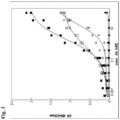
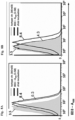
- Fig. 3 shows that binding of the bivalent mAb31-8D3-dFab to mTfR is comparable to that of 8D3 IgG, while the monovalent construct mAb31-8D3-sFab shows a reduced affinity.
- mAb31 Functionality of mAb31 was confirmed by ELISA. Briefly, Abeta(1-40) was coated at 7 ⁇ g/mL in PBS onto Maxisorp plates for 3 days at 37°C to produce fibrillar Abeta, then dried for 3 h at RT. The plate was blocked with 1% Crotein C and 0.1% RSA in PBS (blocking buffer) for 1 h at RT, then washed once with wash buffer. mAb31 constructs were added at concentrations up to 100 nM in blocking buffer and incubated at 4°C overnight. After 4 wash steps, constructs were detected as indicated above.
- Fig. 4 shows that both mAb31-8D3 constructs (sFab and dFab) bind with an affinity comparable to that of unmodified mAb31 to immobilized Abeta fibrils.
- Brains were prepared after PBS perfusion and sagittal cryo-sections were cut between lateral ⁇ 1.92 and 1.68 millimeter according to the brain atlas of Paxinos and Franklin. Brains were sectioned at a nominal thickness of 20 microns at -15°C using a Leica CM3050 S cryostat and placed onto precooled glass slides (Superfrost plus, Menzel, Germany). For each brain, three sections spaced 80 microns were deposited on the same slide.
- Sections were rehydrated in PBS for 5 minutes followed by immersion with 100% acetone precooled to -20°C for 2 min. All further steps were done at room temperature. Slides with brain sections were washed with PBS, pH 7.4 and blocking of unspecific binding sites by sequential incubation in Ultra V block (LabVision) for 5 minutes followed by PBS wash and incubation in power block solution (BioGenex) with 2 % normal goat serum in PBS for 20 min.
- Plaques immunolabelled with Alexa Fluor 488 dyes were captured in the same spectral conditions (a 488nm excitation and a 500-554nm band pass emission) with adjusted photomultiplier gain and offset (typically, 770 V and -0% respectively) at a 30% laser power.
- Bound secondary Alexa Fluor 555 antibodies on the accessible surface of tissue sections were recorded at the 561 nm excitation laser line at a window ranging from 570 to 725 nm covering the emission wavelength range of the applied detection antibody. Instrument settings were kept constant for image acquisitions to allow comparative intensity measurements for tested human anti-A ⁇ antibodies; in particular, laser power, scanning speed, gain and offset. Laser power was set to 30% and settings for PMT gain were typically 850 V and a nominal offset of 0%. This enabled visualization of both faint and strongly stained plaques with the same setting. Acquisition frequency was at 400 Hz.
- Confocal scans were recorded as single optical layers with a HCX PL APO 20x 0.7 IMM UV objective in water, at a 512 x 512 pixel resolution and an optical measuring depth in the vertical axis was interactively controlled to ensure imaging within the tissue section.
- Amyloid- ⁇ plaques located in layers 2-5 of the frontal cortex were imaged and fluorescent intensities quantified.
- Immunopositive regions were visualized as TIFF images and processed for quantification of fluorescence intensity and area (measured in pixels) with ImageJ version 1.45 (NIH). For quantification, background intensities of 5 were subtracted in every image and positive regions smaller than 5 square pixels were filtered out. Total fluorescence intensity of selected isosurfaces was determined as sum of intensities of single individual positive regions and the mean pixel intensity was calculated dividing the total intensity by the number of pixels analyzed.
- Average and standard deviations values were calculated with Microsoft Excel (Redmond / WA, USA) from all measured isosurfaces obtained from nine pictures taken from three different sections for each animal. Statistical analysis was performed using the Student's t test for group comparison or a Mann-Whitney test.
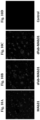
- sFab-mAb31 to the Transferrin receptor is much more efficient bring the construct through the brain endothelial cells at the BBB.
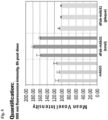
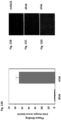
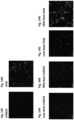
- the quantification of the bivalent binding molecule (dFab-mAb31) is shown in Fig 5 .
- the data shows that there is not increase in plaque decoration for the dFab-mAb31 construct, there is only an increase in total intensity due to the capillary accumulation of the construct.
- Fig 7 shows data of the mAb31 (construct of Fig. 1A ) and the sFab-mAb31 (construct of Fig. 1B ) construct at a low dose. Again only the sFab-mAb31 construct is able to cross the brain endothelial cells and decorate the plaque in the brain. Maximal effect is already reached at 8 hours post dose. It is only at a higher dose (10 mg/kg) and relative long time (7 days) for the mAb31 construct that there is a trend for increase in the signal of binding to the Abeta plaques in the brain ( Fig 7 ). All these data are highly significant as indicated in Fig 7 .
- Example 7 In vivo intracellular sorting of a single and double Fab construct
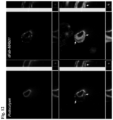
- mice were injected i.v (tail injection) with the following constructs MAb31 (10mg/kg), sFab-MAb31 (13.3 mg/kg) or dFab-MAb31 (17.44mg/kg).
- the injected dose reflects the molecule size with MAb31 used as reference. 15 minutes or 8 hours after the injection, mice were euthanized with CO 2 and treated as followed. The right cardiac atrium of the heart was cut open so that blood and perfusion solution can flow out. The left cardiac ventricle was incised and a gavage probe #10 was shoved into the aorta.
- Fig 10 To control the integrity of all constructs used in the study, staining of 18 months brain cryosections was done using MAb31 ( Fig. 10A ), sFab-MAb31 ( Fig. 10B ) or dFab-MAB31 ( Fig. 10C ). Results showed that all 3 constructs detected amyloid plaques in the brain of transgenic mice.
- Fig 11-12 High resolution confocal microscopy shows that sFab ( Fig. 11 ) and dFab-MAb31 ( Fig. 12 ) do not decorate the luminal side of brain capillaries but are contained within vesicule-like structures crossing the luminal membrane of endothelial cells and within the endothelial cell cytosol. Arrows in Fig 11 and Fig 12 indicate vesicles containing sFab or dFab-MAb31 constructs on the abluminal side of endothelial cell nuclei. Altogether these data suggest that both sFab-MAb31 and dFab-MAb31 can enter endothelial cells but only sFab-MAb31 can cross the vasculature and reach amyloid plaques
- the methods and compositions of the invention provide a way to drastically improve the part of the antibody that distributes into the CNS and thus more readily reach a therapeutic concentration in the CNS.
- the methods and compositions of the present invention are novel and significantly improve the efficiency of crossing through the different organelles within the BECs using an optimal and undisturbed intracellular route/sorting to reach the abluminal side.
- Example 8 Monovalent receptor binding mode crucial for crossing the BBB
- the anti-A ⁇ monoclonal antibody mAb31 is a very specific and potent A ⁇ plaque binder providing us with a powerful readout to quantify target engagement within brain parenchyma.
- the three variants were injected intravenously at 10 mg/kg and the degree of brain exposure was determined by quantifying the amount of antibody present at plaques 8 hours post injection.
- For the dFab construct no significant increase in plaque decoration was detected compared to mAb31 ( Fig. 13A ). However, for the sFab construct there was a massive increase in plaque decoration in comparison with the parent mAb31 antibody.
- Target engagement at the amyloid plaques was improved more than 50-fold for the sFab construct based on fluorescence intensity quantification using a labeled secondary antibody.
- the sFab construct showed extensive plaque decoration ( Fig. 13D )
- the dFab was only detectable in the microvessels ( Fig. 13C ) indicating that the dFab construct targets and enters brain microvessels but fails to escape at the abluminal side.
- the parent mAb31 had been shown to reach maximal plaque binding 7 days after injection. Quantification of the staining in microvessel structures indicated that the localization of the sFab construct was very transient at the BBB, illustrating the relatively rapid rate at which the construct crosses the barrier.
- the representative plaque staining images for the parent antibody mAb31 at 2 mg/kg 7 day post injection ( Fig. 13F ) and equimolar concentration for the sFab construct ( Fig. 13G ) illustrate the increase in plaque binding one achieves with the sFab brain shuttle construct.
- the sFab construct shows only a minor colocalization with the lysosomal compartment, which likely reflects normal constitutive trafficking of the TfR to the lyso-some.
- Example 9 Increased antibody delivery across BBB translates into enhanced in vivo potency
- a secondary analysis of plaque sizes revealed a more pronounced reduction of plaque numbers for small plaques, in agreement with the mode of action for mAb31.
- Transferrin receptor expressing BaF3 cells (DSMZ, # CLPZ04004) (TfR+) were used as target cells for antibody-dependent cell toxicity (ADCC) experiments induced by different antibody-fusion molecules.
- Fig. 15 Antibody fusion with TfR scFab fragments fused to the Fc C-terminus do not induce ADCC. NK92-mediated killing of BA/F3 mouse erythroleukemia cells was measured by quantifying LDH release. Only fusion constructs with the TfR-binding Fab moiety in the "conventional" "N-terminal to Fc" orientation induce significant ADCC, while the brain shuttle constructs in reverse orientation are silent. Constructs: 8D3-IgG (full length 8D3 IgG), OA - 8D3 (single heavy chain of 8D3 IgG), mAb31 (antibody of Fig. 1A ), mAb31-8D3 sFab (construct of Fig. 1B ), mAb31-8D3-dFab (construct of Fig. 1C ).
- Example 11 Epitope mapping of mTfR antibody 8D3
- the epitope mapping of monoclonal antibody 8D3 was carried out by means of a library of overlapping, immobilized peptide fragments (length: 15 amino acids, shift: 3 amino acids) corresponding to the sequence of the extracellular domain of murine Transferrin receptor 1 (90-763).
- Intavis CelluSpots TM technology was employed for preparation of the peptide array.
- peptides are synthesized with an automated synthesizer (Intavis MultiPep RS) on modified cellulose disks which are dissolved after synthesis. The solutions of the individual peptides that remain covalently linked to macromolecular cellulose are then spotted onto coated microscope slides.
- the CelluSpots TM synthesis was carried out stepwise utilizing 9-fluorenylmethoxycarbonyl (Fmoc) chemistry on amino-modified cellulose disks in a 384-well synthesis plate.
- Fmoc 9-fluorenylmethoxycarbonyl
- the corresponding amino acids were activated with a solution of DIC/HOBt in DMF.
- un-reacted amino groups were capped with a mixture of acetic anhydride, diisopropylethyl amine and 1-hydroxybenzotriazole.
- the cellulose disks were transferred to a 96-well plate and treated with a mixture of trifluoroacetic acid (TFA), dichloromethane, triisoproylsilane (TIS) and water for side chain deprotection.
- TFA trifluoroacetic acid
- TIS triisoproylsilane
- the cellulose bound peptides are dissolved with a mixture of TFA, TFMSA, TIS and water, precipitated with diisopropyl ether and re-suspended in DMSO. These peptide solutions were subsequently spotted onto Intavis CelluSpots TM slides using an Intavis slide spotting robot.
- the prepared slides were washed with ethanol and then Tris-buffered saline (TBS; 50 mM Tris, 137 mM NaCl, 2.7 mM KCl, pH 8) before a blocking step was carried out for 16 h at 4°C with 5 mL 10x Western Blocking Reagent (Roche Applied Science), 2.5 g sucrose in TBS, 0.1% Tween 20. After washing (TBS + 0.1% Tween 20), the slides were incubated with a solution (1 ⁇ g/mL) of antibody 8D3 in TBS + 0.1% Tween 20 at ambient temperature for 2 h.
- TBS Tris-buffered saline
- Fig. 16 8D3 binds to three distinct peptides in the extracellular domain of mouse transferrin receptor. Binding of antibody 8D3 to 15mer peptides overlapping by three amino acids was revealed by chemiluminescent detection of antibody incubated on a CelluSpot slide carrying immobilized mTfR peptides. Box: Peptides #373, 374 and 376 bound by 8D3. Table 1: mTfR extracellular domain peptide sequences bound by 8D3 in peptide mapping experiment. Peptide ID Peptide Sequence Sequence Number 373 I-G-Q-N-M-V-T-I-V-Q-S-N-G-N-L Seq. Id. No.
- biotherapeutic constructs against a blood brain barrier receptor in particular the transferrin receptor (TfR)
- TfR transferrin receptor
- Distribution of certain engineered biotherapeutic constructs changed from cerebrovascular space to parenchyma space within a few hours after injection, indicating that these particular constructs utilizing an optimal transport pathway through the BECs to allow significant amount of biotherapeutics to be transcytosed through BECs to reach the parenchyma.
- the degree of biotherapeutic constructs uptake into and distribution in the CNS was completely dependent on the monovalent binding mode to the blood brain barrier receptor, in particularTfR.
- a dual (or multimeric) anti-R/BBB binding mode limit brain uptake by quickly down-regulate the R/BBB on the cell surface on the lumen side, thus reducing the total amount anti-R/BBB that can be taken up into the vasculature which is the first step in efficient BBB crossing.
- a dual (or multimeric) anti-R/BBB binding mode induces a distinct miss-sorting intracellularly in the BECs that prevent the construct to reach the abluminal side. Strikingly, monovalent binding to the R/BBB improves brain uptake and distribution, with a complete shift observed in localization from the vasculature to the amyloid plaques within the CNS.
- the engineered monovalent binding mode of the biotherapeutic constructs for the R/BBB is securing the recycling of the R/BBB to the lumen side to allow uptake of additional fusion polypeptide construct and transport to the abluminal side and into the parenchyma.
- the monovalent binding mode biotherapeutic construct is engineered at the C-terminal end of the Fc part of an IgG which preserve the original format for a therapeutic monoclonal antibody which in most cases are critical for in vivo efficacy. This can also be accomplished by linking to other part of an IgG described within this specification. This is advantageous because already developed IgG monoclonals with established preclinical and clinical efficacy can be incorporated in this transport system without compromising established function and efficacy.
- RMT receptor mediated transport
- the invention provides methods of engineering BBB-penetrant therapeutics preserving existing IgGs formats with proven therapeutic activities that greatly improve transport across the BBB and CNS distribution of the therapeutic.
Landscapes
- Health & Medical Sciences (AREA)
- Chemical & Material Sciences (AREA)
- Organic Chemistry (AREA)
- Life Sciences & Earth Sciences (AREA)
- Medicinal Chemistry (AREA)
- General Health & Medical Sciences (AREA)
- Immunology (AREA)
- Genetics & Genomics (AREA)
- Molecular Biology (AREA)
- Biochemistry (AREA)
- Engineering & Computer Science (AREA)
- Biophysics (AREA)
- Proteomics, Peptides & Aminoacids (AREA)
- Bioinformatics & Cheminformatics (AREA)
- Animal Behavior & Ethology (AREA)
- Veterinary Medicine (AREA)
- Public Health (AREA)
- Pharmacology & Pharmacy (AREA)
- Biomedical Technology (AREA)
- Chemical Kinetics & Catalysis (AREA)
- Neurology (AREA)
- Neurosurgery (AREA)
- Nuclear Medicine, Radiotherapy & Molecular Imaging (AREA)
- General Chemical & Material Sciences (AREA)
- Epidemiology (AREA)
- General Engineering & Computer Science (AREA)
- Biotechnology (AREA)
- Microbiology (AREA)
- Wood Science & Technology (AREA)
- Zoology (AREA)
- Psychiatry (AREA)
- Hospice & Palliative Care (AREA)
- Physics & Mathematics (AREA)
- Plant Pathology (AREA)
- Mycology (AREA)
- Peptides Or Proteins (AREA)
- Medicinal Preparation (AREA)
- Medicines Containing Antibodies Or Antigens For Use As Internal Diagnostic Agents (AREA)
- Medicines That Contain Protein Lipid Enzymes And Other Medicines (AREA)
- Medicines Containing Material From Animals Or Micro-Organisms (AREA)
Claims (8)
- Navette de la barrière hémato-encéphalique comprenant un anticorps IgG pleine longueur dirigé contre une cible cérébrale, un lieur et un scFab dirigé contre le récepteur de la transferrine, dans laquelle le scFab est couplé par le lieur à l'extrémité C-terminale de la partie Fc de l'une des chaînes lourdes de l'anticorps IgG pleine longueur.
- Navette de la barrière hémato-encéphalique selon la revendication 1, dans laquelle le scFab reconnait un épitope dans le récepteur de la transferrine compris au sein de la séquence d'acides aminés de Seq. Id. No. 14, 15 ou 16.
- Navette de la barrière hémato-encéphalique selon la revendication 1 ou 2, dans laquelle l'anticorps IgG pleine longueur dirigé contre une cible cérébrale est un anticorps IgG pleine longueur dirigé contre Aβ.
- Navette de la barrière hémato-encéphalique selon la revendication 3, dans laquelle l'anticorps IgG pleine longueur dirigé contre Aβ comprend (a) une H-CDR1 comprenant la séquence d'acides aminés de Seq. Id. No. 5, (b) une H-CDR2 comprenant la séquence d'acides aminés de Seq. Id. No. 6, (c) une H-CDR3 comprenant la séquence d'acides aminés de Seq. Id. No. 7, (d) une L-CDR1 comprenant la séquence d'acides aminés de Seq. Id. No. 8, (e) une L-CDR2 comprenant la séquence d'acides aminés de Seq. Id. No. 9 et (f) une L-CDR3 comprenant la séquence d'acides aminés de Seq. Id. No. 10.
- Navette de la barrière hémato-encéphalique selon la revendication 4, dans laquelle l'anticorps IgG pleine longueur dirigé contre Aβ comprend un domaine VH comprenant la séquence d'acides aminés de Seq. Id. No. 11 et un domaine VL comprenant la séquence d'acides aminés de Seq. Id. No. 12.
- Navette de la barrière hémato-encéphalique selon la revendication 1 ou 2, dans laquelle l'anticorps IgG pleine longueur dirigé contre une cible cérébrale est un anticorps IgG pleine longueur dirigé contre la Tau phosphorylée.
- Navette de la barrière hémato-encéphalique selon la revendication 1 ou 2, dans laquelle l'anticorps IgG pleine longueur dirigé contre une cible cérébrale est un anticorps IgG pleine longueur dirigé contre l'alpha-synucléine.
- Navette de la barrière hémato-encéphalique selon les revendications 1 à 7, dans laquelle le lieur est un lieur peptidique, de préférence un peptide qui est une séquence d'acides aminés ayant une longueur d'au moins 20 acides aminés, plus préférablement ayant une longueur de 25 à 50 acides aminés.
Applications Claiming Priority (3)
| Application Number | Priority Date | Filing Date | Title |
|---|---|---|---|
| EP12182181 | 2012-08-29 | ||
| PCT/EP2013/067595 WO2014033074A1 (fr) | 2012-08-29 | 2013-08-26 | Navette de la barrière hémato-encéphalique |
| EP13756076.9A EP2890712B1 (fr) | 2012-08-29 | 2013-08-26 | Navette de la barrière hémato-encéphalique |
Related Parent Applications (3)
| Application Number | Title | Priority Date | Filing Date |
|---|---|---|---|
| EP13756076.9A Division-Into EP2890712B1 (fr) | 2012-08-29 | 2013-08-26 | Navette de la barrière hémato-encéphalique |
| EP13756076.9A Division EP2890712B1 (fr) | 2012-08-29 | 2013-08-26 | Navette de la barrière hémato-encéphalique |
| PCT/EP2013/067595 Previously-Filed-Application WO2014033074A1 (fr) | 2012-08-29 | 2013-08-26 | Navette de la barrière hémato-encéphalique |
Publications (3)
| Publication Number | Publication Date |
|---|---|
| EP3315514A1 EP3315514A1 (fr) | 2018-05-02 |
| EP3315514B1 true EP3315514B1 (fr) | 2025-06-18 |
| EP3315514C0 EP3315514C0 (fr) | 2025-06-18 |
Family
ID=46963437
Family Applications (2)
| Application Number | Title | Priority Date | Filing Date |
|---|---|---|---|
| EP17199410.6A Active EP3315514B1 (fr) | 2012-08-29 | 2013-08-26 | Navette de la barrière hémato-encéphalique |
| EP13756076.9A Active EP2890712B1 (fr) | 2012-08-29 | 2013-08-26 | Navette de la barrière hémato-encéphalique |
Family Applications After (1)
| Application Number | Title | Priority Date | Filing Date |
|---|---|---|---|
| EP13756076.9A Active EP2890712B1 (fr) | 2012-08-29 | 2013-08-26 | Navette de la barrière hémato-encéphalique |
Country Status (27)
| Country | Link |
|---|---|
| US (2) | US20150322149A1 (fr) |
| EP (2) | EP3315514B1 (fr) |
| JP (3) | JP6219956B2 (fr) |
| KR (4) | KR102036262B1 (fr) |
| CN (2) | CN109053901A (fr) |
| AU (3) | AU2013307406B2 (fr) |
| BR (1) | BR112015004512B1 (fr) |
| CA (1) | CA2879496C (fr) |
| DK (1) | DK2890712T3 (fr) |
| ES (1) | ES2733324T3 (fr) |
| HK (1) | HK1205521A1 (fr) |
| HR (1) | HRP20191153T1 (fr) |
| HU (1) | HUE045144T2 (fr) |
| IL (2) | IL237064A0 (fr) |
| LT (1) | LT2890712T (fr) |
| MX (2) | MX380701B (fr) |
| MY (1) | MY178542A (fr) |
| NZ (1) | NZ703585A (fr) |
| PL (1) | PL2890712T3 (fr) |
| PT (1) | PT2890712T (fr) |
| RS (1) | RS58928B1 (fr) |
| RU (3) | RU2711552C2 (fr) |
| SG (2) | SG10201702702VA (fr) |
| SI (1) | SI2890712T1 (fr) |
| TR (1) | TR201909156T4 (fr) |
| WO (1) | WO2014033074A1 (fr) |
| ZA (1) | ZA201500346B (fr) |
Families Citing this family (96)
| Publication number | Priority date | Publication date | Assignee | Title |
|---|---|---|---|---|
| US8609820B2 (en) | 2011-10-28 | 2013-12-17 | Neotope Biosciences Limited | Humanized antibodies that recognize alpha-synuclein |
| NZ629296A (en) | 2012-01-27 | 2016-06-24 | Prothena Biosciences Ltd | Humanized antibodies that recognize alpha-synuclein |
| MX361875B (es) | 2012-03-14 | 2018-12-18 | Regeneron Pharma | Moléculas de unión de antígeno multiespecifícas y usos de las mismas. |
| RU2711552C2 (ru) * | 2012-08-29 | 2020-01-17 | Ф. Хоффманн-Ля Рош Аг | Шаттл для гематоэнцефалического барьера |
| UA118441C2 (uk) | 2012-10-08 | 2019-01-25 | Протена Біосаєнсиз Лімітед | Антитіло, що розпізнає альфа-синуклеїн |
| US10513555B2 (en) | 2013-07-04 | 2019-12-24 | Prothena Biosciences Limited | Antibody formulations and methods |
| CA2924268C (fr) * | 2013-11-21 | 2021-05-18 | F. Hoffmann-La Roche Ag | Anticorps anti-alpha-synucleine et leurs methodes d'utilisation |
| JP6618912B2 (ja) | 2013-12-20 | 2019-12-11 | エフ.ホフマン−ラ ロシュ アーゲーF. Hoffmann−La Roche Aktiengesellschaft | 改良された、組換えポリペプチド作製方法 |
| HRP20200384T1 (hr) | 2013-12-20 | 2020-06-12 | F. Hoffmann - La Roche Ag | Humanizirana anti-tau(ps422) protutijela i načini uporabe |
| CA2933384A1 (fr) | 2014-01-03 | 2015-07-09 | F. Hoffmann-La Roche Ag | Anticorps bispecifiques diriges contre les haptenes/les recepteurs de la barriere hemato-encephalique, complexes en integrant et leur utilisation en tant que navettes a travers la barriere hemato-encephalique |
| CA2932547C (fr) | 2014-01-06 | 2023-05-23 | F. Hoffmann-La Roche Ag | Modules navettes de barriere hemato-encephalique monovalents |
| JP6744856B2 (ja) * | 2014-04-08 | 2020-08-19 | プロセナ・バイオサイエンシズ・リミテッド | α−シヌクレインを認識する抗体を含む血液脳関門シャトル |
| AR100978A1 (es) * | 2014-06-26 | 2016-11-16 | Hoffmann La Roche | LANZADERAS CEREBRALES DE ANTICUERPO HUMANIZADO ANTI-Tau(pS422) Y USOS DE LAS MISMAS |
| WO2016094881A2 (fr) | 2014-12-11 | 2016-06-16 | Abbvie Inc. | Protéines de liaison à lrp-8 |
| BR112017023862A2 (pt) | 2015-05-04 | 2018-07-17 | Cytomx Therapeutics Inc | anticorpos anti-cd71, anticorpos anti-cd71 ativáveis, e métodos de uso destes |
| TW201710286A (zh) | 2015-06-15 | 2017-03-16 | 艾伯維有限公司 | 抗vegf、pdgf及/或其受體之結合蛋白 |
| HRP20201489T1 (hr) | 2015-06-19 | 2020-12-11 | Eisai R&D Management Co., Ltd. | Imunoglobulini konjugirani s cys80 |
| MX391086B (es) | 2015-06-24 | 2025-03-21 | Hoffmann La Roche | Anticuerpos anti-receptor de transferrina con afinidad diseñada. |
| WO2016207091A1 (fr) * | 2015-06-24 | 2016-12-29 | F. Hoffmann-La Roche Ag | Anticorps trispécifiques spécifiques de her2 et d'un récepteur de la barrière hémato-encéphalique et procédés d'utilisation |
| CN107810196B (zh) | 2015-06-24 | 2021-11-05 | 豪夫迈·罗氏有限公司 | 人源化的抗-Tau(pS422)抗体和使用方法 |
| NZ741067A (en) | 2015-10-02 | 2023-07-28 | Hoffmann La Roche | Bispecific anti-human cd20/human transferrin receptor antibodies and methods of use |
| AR106189A1 (es) * | 2015-10-02 | 2017-12-20 | Hoffmann La Roche | ANTICUERPOS BIESPECÍFICOS CONTRA EL A-b HUMANO Y EL RECEPTOR DE TRANSFERRINA HUMANO Y MÉTODOS DE USO |
| AU2016365834B2 (en) * | 2015-12-08 | 2023-09-28 | Regeneron Pharmaceuticals, Inc. | Compositions and methods for internalizing enzymes |
| RU2019102746A (ru) | 2016-07-14 | 2020-08-14 | Биоарктик Аб | Белок для транспорта в мозг |
| US10702589B2 (en) | 2016-10-04 | 2020-07-07 | Ann And Robert H. Lurie Children's Hospital Of Chicago | Compositions and methods of treating neurological disorder and stress-induced conditions |
| KR20190114963A (ko) * | 2016-12-02 | 2019-10-10 | 더 트러스티스 오브 더 유니버시티 오브 펜실바니아 | 에볼라 바이러스에 대한 사용을 위한 dna 항체 작제물 |
| RU2711912C2 (ru) * | 2016-12-15 | 2020-01-23 | Федеральное государственное бюджетное научное учреждение "Федеральный исследовательский центр "Красноярский научный центр Сибирского отделения Российской академии наук" (ФИЦ КНЦ СО РАН) | Аптамер, проходящий через гематоэнцефалический барьер головного мозга мыши |
| US20190352335A1 (en) * | 2016-12-19 | 2019-11-21 | Hanmi Pharm. Co., Ltd. | Brain targeting long-acting protein conjugate |
| EP3560955A4 (fr) | 2016-12-26 | 2020-12-23 | Kyowa Kirin Co., Ltd. | Anticorps capable de se lier à la glycoprotéine d'oligodendrocytes de myéline |
| AU2017385274B2 (en) | 2016-12-26 | 2024-02-22 | Jcr Pharmaceuticals Co., Ltd. | Fusion protein including BDNF |
| TWI761413B (zh) | 2016-12-26 | 2022-04-21 | 日商Jcr製藥股份有限公司 | 通過血腦障壁之新穎抗人類運鐵蛋白受體抗體 |
| US12049493B2 (en) | 2017-01-06 | 2024-07-30 | Abl Bio Inc. | Anti-alpha-synuclein antibodies and uses thereof |
| KR20240095466A (ko) * | 2017-01-30 | 2024-06-25 | 내션얼 리서치 카운슬 오브 캐나다 | 혈액-뇌 장벽을 관통이동하는 화합물 및 이의 용도 |
| BR112019016989A2 (pt) * | 2017-02-17 | 2020-05-26 | Denali Therapeutics Inc. | Polipeptídeos de ligação ao receptor de transferrina manipulados |
| US10457717B2 (en) | 2017-02-17 | 2019-10-29 | Denali Therapeutics Inc. | Engineered polypeptides |
| US10143187B2 (en) | 2017-02-17 | 2018-12-04 | Denali Therapeutics Inc. | Transferrin receptor transgenic models |
| MX2019012381A (es) * | 2017-05-18 | 2020-01-23 | Hoffmann La Roche | Reduccion de reaccion secundaria relacionada con la aplicacion de un anticuerpo terapeutico. |
| FI3635009T3 (fi) | 2017-06-07 | 2026-04-07 | Regeneron Pharma | Koostumuksia ja menetelmiä entsyymien internalisoimiseksi |
| SMT202300347T1 (it) * | 2017-08-10 | 2023-11-13 | Denali Therapeutics Inc | Polipeptidi ingegnerizzati che si legano al recettore della transferrina |
| US11453701B2 (en) | 2017-08-18 | 2022-09-27 | Adrx, Inc. | Tau aggregation peptide inhibitors |
| CN107412747B (zh) * | 2017-08-24 | 2018-05-22 | 北京亦贝安生物医药科技有限公司 | 一种含有乳铁蛋白和唾液酸的复方制剂 |
| CN107410495B (zh) * | 2017-08-24 | 2018-06-01 | 北京亦贝安生物医药科技有限公司 | 一种酸性乳糖酶和锌的复方制剂及其制备方法 |
| WO2019055841A1 (fr) * | 2017-09-14 | 2019-03-21 | Denali Therapeutics Inc. | Anticorps anti-trem2 et leurs procédés d'utilisation |
| AU2018345303B2 (en) | 2017-10-02 | 2025-09-18 | Denali Therapeutics Inc. | Fusion proteins comprising enzyme replacement therapy enzymes |
| WO2019074892A1 (fr) | 2017-10-09 | 2019-04-18 | Wisconsin Alumni Research Foundation | Anticorps ciblant des cellules de type souche de glioblastome et leurs procédés d'utilisation |
| CA3080351A1 (fr) | 2017-11-02 | 2019-05-09 | Ossianix, Inc. | Peptides de liaison selectifs pour le tfr ameliores capables de traverser la barriere hemato-encephalique |
| US12071483B1 (en) | 2017-12-14 | 2024-08-27 | Abl Bio Inc. | Bispecific antibody to alpha-synuclein/insulin-like growth factor 1 receptor and use thereof |
| US10688191B2 (en) | 2018-01-19 | 2020-06-23 | Hr Biomed, Llc | Delivery of a chemotherapy agent across the blood-brain barrier |
| KR102012448B1 (ko) * | 2018-02-01 | 2019-08-20 | (주)프론트바이오 | 트리메토벤자미드 또는 이의 약학적으로 허용가능한 염을 유효성분으로 함유하는 신경병증 통증의 예방 또는 치료용 약학적 조성물 |
| JP7779653B2 (ja) | 2018-02-07 | 2025-12-03 | リジェネロン・ファーマシューティカルズ・インコーポレイテッド | 治療用タンパク質送達のための方法および組成物 |
| KR20190114907A (ko) * | 2018-03-30 | 2019-10-10 | 한미약품 주식회사 | 뇌 표적 지속성 단백질 결합체, 이의 제조 방법, 및 이를 포함하는 조성물 |
| EP3793591A1 (fr) | 2018-05-17 | 2021-03-24 | Regeneron Pharmaceuticals, Inc. | Anticorps anti-cd63, conjugués et leurs utilisations |
| JP7589049B2 (ja) | 2018-06-21 | 2024-11-25 | ノヴォ ノルディスク アー/エス | 肥満を治療するための新規化合物 |
| TWI857959B (zh) | 2018-06-26 | 2024-10-11 | 日商協和麒麟股份有限公司 | 與細胞黏著分子3 結合之抗體 |
| CN112424357B (zh) | 2018-06-26 | 2024-12-24 | 协和麒麟株式会社 | 与硫酸软骨素蛋白聚糖5结合的抗体 |
| KR20210074279A (ko) * | 2018-08-22 | 2021-06-21 | 데날리 테라퓨틱스 인크. | 항-her2 폴리펩타이드 및 이의 사용방법 |
| EP3845648A4 (fr) * | 2018-08-30 | 2022-05-18 | Nexmos Co., Ltd. | Aptamère apte à traverser la barrière hématoencéphalique et son application |
| US12351642B2 (en) | 2018-09-14 | 2025-07-08 | Ossianix, Inc. | TFR-specific binding moieties and transcytosis method to select VNARs that cross cellular barriers |
| EP3870604B1 (fr) | 2018-10-26 | 2022-11-23 | F. Hoffmann-La Roche AG | Procédé de criblage d' anticorps multispécifiques utilisant un echange de cassettes induit par la recombinase |
| KR102692543B1 (ko) | 2018-10-26 | 2024-08-07 | 재단법인 목암생명과학연구소 | Ids를 포함하는 융합 단백질 및 이의 용도 |
| CN113661173B (zh) | 2019-03-29 | 2024-10-01 | 豪夫迈·罗氏有限公司 | 通过以限定的组织形式靶向整合多个表达盒来产生表达FcRn的细胞的方法 |
| CN113801219A (zh) * | 2019-05-23 | 2021-12-17 | 江苏豪思睦可生物科技有限公司 | 一种转铁蛋白的制备方法及包含转铁蛋白的组合物和应用 |
| WO2020254352A1 (fr) | 2019-06-19 | 2020-12-24 | F. Hoffmann-La Roche Ag | Procédé de génération d'une cellule exprimant un anticorps trivalent par intégration ciblée de multiples cassettes d'expression dans une organisation définie |
| JP7572977B2 (ja) | 2019-06-19 | 2024-10-24 | エフ. ホフマン-ラ ロシュ アーゲー | 所定の構成の複数の発現カセットの標的化組込みによって多価の多重特異性抗体発現細胞を作製するための方法 |
| US20220257542A1 (en) * | 2019-07-30 | 2022-08-18 | Frontbio Inc. | Pharmaceutical composition comprising trimethobenzamide or pharmaceutically acceptable salt thereof as active ingredient for preventing or treating neuropathic pain |
| US20220325265A1 (en) * | 2019-09-09 | 2022-10-13 | Hoffmann-La Roche Inc. | Glucocerebrosidase mutants |
| KR102247568B1 (ko) | 2019-10-11 | 2021-05-04 | 재단법인 대구경북첨단의료산업진흥재단 | 집속초음파 조사 시스템 및 집속초음파를 이용한 혈액뇌장벽 개방 조절 방법 |
| CA3165846A1 (fr) | 2019-12-23 | 2021-07-01 | Denali Therapeutics Inc. | Variants de la progranuline |
| CA3171988A1 (fr) | 2020-02-22 | 2021-08-26 | Jcr Pharmaceuticals Co., Ltd. | Peptide de liaison au recepteur de la transferrine humaine |
| KR20230012464A (ko) | 2020-02-25 | 2023-01-26 | 브이아이비 브이지더블유 | 류신-풍부 반복 키나제 2 알로스테릭 조절제 |
| PE20231931A1 (es) | 2020-10-14 | 2023-12-01 | Denali Therapeutics Inc | Proteinas de fusion que comprenden enzimas sulfoglucosamina sulfohidrolasa y metodos de estas |
| WO2022258841A1 (fr) | 2021-06-11 | 2022-12-15 | Bioarctic Ab | Molécule de liaison bispécifique |
| EP4373853A4 (fr) * | 2021-07-21 | 2025-07-02 | Icahn School Med Mount Sinai | Anticorps anti-fsh contre des maladies neurodégénératives |
| JPWO2023022234A1 (fr) | 2021-08-19 | 2023-02-23 | ||
| US20240366775A1 (en) | 2021-08-24 | 2024-11-07 | Peptidream Inc. | Human transferrin receptor binding antibody-peptide conjugate |
| EP4396231A1 (fr) | 2021-09-01 | 2024-07-10 | Biogen MA Inc. | Anticorps anti-récepteurs de la transferrine et leurs utilisations |
| CN118556069A (zh) * | 2021-10-01 | 2024-08-27 | 首尔大学校产学协力团 | 用于穿透血脑屏障的肽及其用途 |
| KR102575322B1 (ko) * | 2021-12-31 | 2023-09-08 | 주식회사 아임뉴런 | 뇌혈관장벽 투과성 융합 단백질 및 이의 용도 |
| AU2022428997A1 (en) * | 2021-12-31 | 2024-08-15 | Imnewrun, Inc. | Blood-brain barrier permeable fusion protein and uses thereof |
| WO2023198661A1 (fr) | 2022-04-12 | 2023-10-19 | F. Hoffmann-La Roche Ag | Protéines de fusion ciblées sur le système nerveux central |
| JP2025523630A (ja) | 2022-07-04 | 2025-07-23 | ブイアイビー ブイゼットダブリュ | 血液-脳脊髄液関門通過抗体 |
| US20240059784A1 (en) * | 2022-08-08 | 2024-02-22 | Eli Lilly And Company | Transferrin receptor binding proteins and conjugates |
| WO2024080843A1 (fr) * | 2022-10-14 | 2024-04-18 | 주식회사 아임뉴런 | Protéine de fusion perméable à la barrière hémato-encéphalique et son utilisation |
| WO2024091079A1 (fr) * | 2022-10-28 | 2024-05-02 | 주식회사 아임뉴런 | Protéine de fusion perméable à la barrière hémato-encéphalique et ses utilisations |
| CN120603851A (zh) | 2023-01-30 | 2025-09-05 | 伊萨尔生物科学有限责任公司 | 用于治疗神经退行性疾病的人抗trem2抗体 |
| TW202434613A (zh) | 2023-02-17 | 2024-09-01 | 日商肽夢想股份有限公司 | 人類運鐵蛋白受體結合肽 |
| EP4688846A1 (fr) | 2023-03-24 | 2026-02-11 | BioArctic AB | Anticorps se liant au domaine de type protéase du récepteur de transferrine humaine htfr1 |
| CN121548587A (zh) | 2023-07-24 | 2026-02-17 | 豪夫迈·罗氏有限公司 | 多特异性抗体 |
| KR20260051039A (ko) | 2023-08-09 | 2026-04-15 | 에프. 호프만-라 로슈 아게 | 항-a-베타 단백질 항체, 이의 제조 방법 및 용도 |
| WO2025054461A1 (fr) * | 2023-09-08 | 2025-03-13 | California Institute Of Technology | Dérivés d'ester de liants ciblant ca-iv |
| TW202542190A (zh) | 2023-12-20 | 2025-11-01 | 美商戴納立製藥公司 | 包含酸性α—葡萄糖苷酶之融合蛋白及其方法 |
| US20260035475A1 (en) | 2024-06-20 | 2026-02-05 | Bioarctic Ab | Stabilized binding molecule |
| WO2025262228A1 (fr) | 2024-06-20 | 2025-12-26 | Bioarctic Ab | Molécule de liaison bispécifique |
| WO2026068532A1 (fr) | 2024-09-24 | 2026-04-02 | Bioarctic Ab | Molécule de liaison bispécifique |
| WO2026068519A1 (fr) | 2024-09-24 | 2026-04-02 | Bioarctic Ab | Molécule de liaison sensible au ph |
| WO2026068513A1 (fr) | 2024-09-24 | 2026-04-02 | Bioarctic Ab | Molécule de liaison bispécifique |
Family Cites Families (31)
| Publication number | Priority date | Publication date | Assignee | Title |
|---|---|---|---|---|
| US3773919A (en) | 1969-10-23 | 1973-11-20 | Du Pont | Polylactide-drug mixtures |
| US4816567A (en) | 1983-04-08 | 1989-03-28 | Genentech, Inc. | Recombinant immunoglobin preparations |
| US5567610A (en) | 1986-09-04 | 1996-10-22 | Bioinvent International Ab | Method of producing human monoclonal antibodies and kit therefor |
| GB8823869D0 (en) | 1988-10-12 | 1988-11-16 | Medical Res Council | Production of antibodies |
| US5175384A (en) | 1988-12-05 | 1992-12-29 | Genpharm International | Transgenic mice depleted in mature t-cells and methods for making transgenic mice |
| US5208020A (en) | 1989-10-25 | 1993-05-04 | Immunogen Inc. | Cytotoxic agents comprising maytansinoids and their therapeutic use |
| US5229275A (en) | 1990-04-26 | 1993-07-20 | Akzo N.V. | In-vitro method for producing antigen-specific human monoclonal antibodies |
| IE922437A1 (en) | 1991-07-25 | 1993-01-27 | Idec Pharma Corp | Recombinant antibodies for human therapy |
| ES2136092T3 (es) | 1991-09-23 | 1999-11-16 | Medical Res Council | Procedimientos para la produccion de anticuerpos humanizados. |
| ATE244763T1 (de) | 1992-02-11 | 2003-07-15 | Cell Genesys Inc | Erzielen von homozygotem durch zielgerichtete genetische ereignisse |
| US5573905A (en) | 1992-03-30 | 1996-11-12 | The Scripps Research Institute | Encoded combinatorial chemical libraries |
| GB9603256D0 (en) | 1996-02-16 | 1996-04-17 | Wellcome Found | Antibodies |
| ATE296315T1 (de) | 1997-06-24 | 2005-06-15 | Genentech Inc | Galactosylierte glykoproteine enthaltende zusammensetzungen und verfahren zur deren herstellung |
| WO1999022764A1 (fr) | 1997-10-31 | 1999-05-14 | Genentech, Inc. | Compositions renfermant des glycoformes de glycoproteine et methodes afferentes |
| ES2292236T3 (es) | 1998-04-02 | 2008-03-01 | Genentech, Inc. | Variantes de anticuerpos y sus fragmentos. |
| ES2434961T5 (es) | 1998-04-20 | 2018-01-18 | Roche Glycart Ag | Ingeniería de glicosilación de anticuerpos para mejorar la citotoxicidad celular dependiente del anticuerpo |
| HU230769B1 (hu) | 1999-01-15 | 2018-03-28 | Genentech Inc. | Módosított effektor-funkciójú polipeptid-változatok |
| WO2000077178A1 (fr) | 1999-06-16 | 2000-12-21 | Boston Biomedical Research Institute | Temoin immunologique de niveaux de $g(b)-amyloide <i/in vivo> |
| CN101289511A (zh) | 2000-04-11 | 2008-10-22 | 杰南技术公司 | 多价抗体及其应用 |
| EP2180044A1 (fr) | 2001-08-03 | 2010-04-28 | GlycArt Biotechnology AG | Variantes de glycosylation d'anticorps dotées de cytotoxicité cellulaire dépendante des anticorps améliorée |
| HUP0600342A3 (en) | 2001-10-25 | 2011-03-28 | Genentech Inc | Glycoprotein compositions |
| US20040093621A1 (en) | 2001-12-25 | 2004-05-13 | Kyowa Hakko Kogyo Co., Ltd | Antibody composition which specifically binds to CD20 |
| US6849032B2 (en) * | 2002-11-20 | 2005-02-01 | Fitness Botics, Inc. | Exercise apparatus simulating skating motions |
| US20050142141A1 (en) | 2002-11-27 | 2005-06-30 | Pardridge William M. | Delivery of enzymes to the brain |
| ES2672640T3 (es) | 2003-11-05 | 2018-06-15 | Roche Glycart Ag | Moléculas de unión a antígeno con afinidad de unión a receptores Fc y función efectora incrementadas |
| UA99097C2 (ru) * | 2005-12-12 | 2012-07-25 | Ф. Хоффманн-Ля Рош Аг | Композиция, содержащая антитела к амилоиду бета 4, имеющие гликозилированный вариабельный участок |
| DE102006013531A1 (de) * | 2006-03-24 | 2007-09-27 | Lts Lohmann Therapie-Systeme Ag | Polylactid-Nanopartikel |
| AU2009296297A1 (en) * | 2008-09-26 | 2010-04-01 | Roche Glycart Ag | Bispecific anti-EGFR/anti-IGF-1R antibodies |
| PE20120591A1 (es) * | 2009-04-02 | 2012-05-23 | Roche Glycart Ag | Anticuerpos multiespecificos que comprenden anticuerpos de longitud completa y fragmentos fab de cadena sencilla |
| AR084020A1 (es) * | 2010-11-30 | 2013-04-17 | Genentech Inc | Anticuerpos para el receptor de la barrera hematoencefalica de baja afinidad y sus usos |
| RU2711552C2 (ru) * | 2012-08-29 | 2020-01-17 | Ф. Хоффманн-Ля Рош Аг | Шаттл для гематоэнцефалического барьера |
-
2013
- 2013-08-26 RU RU2018127006A patent/RU2711552C2/ru active
- 2013-08-26 EP EP17199410.6A patent/EP3315514B1/fr active Active
- 2013-08-26 SI SI201331492T patent/SI2890712T1/sl unknown
- 2013-08-26 KR KR1020187021343A patent/KR102036262B1/ko active Active
- 2013-08-26 ES ES13756076T patent/ES2733324T3/es active Active
- 2013-08-26 WO PCT/EP2013/067595 patent/WO2014033074A1/fr not_active Ceased
- 2013-08-26 EP EP13756076.9A patent/EP2890712B1/fr active Active
- 2013-08-26 HU HUE13756076A patent/HUE045144T2/hu unknown
- 2013-08-26 MX MX2019006259A patent/MX380701B/es unknown
- 2013-08-26 PT PT13756076T patent/PT2890712T/pt unknown
- 2013-08-26 CN CN201810972126.3A patent/CN109053901A/zh active Pending
- 2013-08-26 LT LTEP13756076.9T patent/LT2890712T/lt unknown
- 2013-08-26 SG SG10201702702VA patent/SG10201702702VA/en unknown
- 2013-08-26 KR KR1020197030778A patent/KR20190121874A/ko not_active Ceased
- 2013-08-26 DK DK13756076.9T patent/DK2890712T3/da active
- 2013-08-26 KR KR20157004942A patent/KR20150039798A/ko not_active Ceased
- 2013-08-26 RS RS20190813A patent/RS58928B1/sr unknown
- 2013-08-26 PL PL13756076T patent/PL2890712T3/pl unknown
- 2013-08-26 CN CN201380042265.1A patent/CN104520329A/zh active Pending
- 2013-08-26 KR KR1020177009426A patent/KR101885044B1/ko active Active
- 2013-08-26 BR BR112015004512-0A patent/BR112015004512B1/pt active IP Right Grant
- 2013-08-26 AU AU2013307406A patent/AU2013307406B2/en active Active
- 2013-08-26 HR HRP20191153TT patent/HRP20191153T1/hr unknown
- 2013-08-26 SG SG11201500583PA patent/SG11201500583PA/en unknown
- 2013-08-26 JP JP2015528977A patent/JP6219956B2/ja active Active
- 2013-08-26 NZ NZ703585A patent/NZ703585A/en unknown
- 2013-08-26 HK HK15106064.1A patent/HK1205521A1/xx unknown
- 2013-08-26 MX MX2015002215A patent/MX367126B/es active IP Right Grant
- 2013-08-26 RU RU2015111093A patent/RU2663120C2/ru active
- 2013-08-26 CA CA2879496A patent/CA2879496C/fr active Active
- 2013-08-26 MY MYPI2015000168A patent/MY178542A/en unknown
- 2013-08-26 TR TR2019/09156T patent/TR201909156T4/tr unknown
-
2015
- 2015-01-16 ZA ZA2015/00346A patent/ZA201500346B/en unknown
- 2015-02-02 US US14/611,964 patent/US20150322149A1/en not_active Abandoned
- 2015-02-02 IL IL237064A patent/IL237064A0/en active IP Right Grant
-
2017
- 2017-09-28 JP JP2017187722A patent/JP2018029602A/ja active Pending
-
2018
- 2018-05-15 AU AU2018203400A patent/AU2018203400B2/en active Active
- 2018-12-19 US US16/225,370 patent/US20190276530A1/en not_active Abandoned
-
2019
- 2019-09-12 JP JP2019166422A patent/JP6889218B2/ja active Active
- 2019-12-20 RU RU2019142838A patent/RU2754794C2/ru active
-
2020
- 2020-07-31 AU AU2020210286A patent/AU2020210286A1/en not_active Abandoned
- 2020-11-22 IL IL278872A patent/IL278872A/en unknown
Non-Patent Citations (2)
| Title |
|---|
| FELIX WEBER ET AL: "Brain Shuttle Antibody for Alzheimer's Disease with Attenuated Peripheral Effector Function due to an Inverted Binding Mode", CELL REPORTS, vol. 22, no. 1, 2 January 2018 (2018-01-02), US, pages 149 - 162, XP055578810, ISSN: 2211-1247, DOI: 10.1016/j.celrep.2017.12.019 * |
| J. A. COUCH ET AL: "Addressing Safety Liabilities of TfR Bispecific Antibodies That Cross the Blood-Brain Barrier", SCIENCE TRANSLATIONAL MEDICINE, vol. 5, no. 183, 1 May 2013 (2013-05-01), US, pages 183ra57 - 183ra57, XP055531363, ISSN: 1946-6234, DOI: 10.1126/scitranslmed.3005338 * |
Also Published As
Similar Documents
| Publication | Publication Date | Title |
|---|---|---|
| EP3315514B1 (fr) | Navette de la barrière hémato-encéphalique | |
| US20260008846A1 (en) | Compositions and methods for blood-brain barrier delivery | |
| US20180344869A1 (en) | Reduction of application-related side reaction of a therapeutic antibody | |
| US20230174669A1 (en) | Anti-CD98 Antibodies And Uses Thereof | |
| JP2016527260A (ja) | 治療用融合タンパク質 | |
| US20250136672A1 (en) | Multispecific antibodies and uses thereof | |
| US20250129144A1 (en) | Multispecific antibodies and uses thereof | |
| HK40015169A (en) | Reduction of application-related side reaction of a therapeutic antibody |
Legal Events
| Date | Code | Title | Description |
|---|---|---|---|
| PUAI | Public reference made under article 153(3) epc to a published international application that has entered the european phase |
Free format text: ORIGINAL CODE: 0009012 |
|
| STAA | Information on the status of an ep patent application or granted ep patent |
Free format text: STATUS: THE APPLICATION HAS BEEN PUBLISHED |
|
| AC | Divisional application: reference to earlier application |
Ref document number: 2890712 Country of ref document: EP Kind code of ref document: P |
|
| AK | Designated contracting states |
Kind code of ref document: A1 Designated state(s): AL AT BE BG CH CY CZ DE DK EE ES FI FR GB GR HR HU IE IS IT LI LT LU LV MC MK MT NL NO PL PT RO RS SE SI SK SM TR |
|
| STAA | Information on the status of an ep patent application or granted ep patent |
Free format text: STATUS: REQUEST FOR EXAMINATION WAS MADE |
|
| 17P | Request for examination filed |
Effective date: 20181102 |
|
| RBV | Designated contracting states (corrected) |
Designated state(s): AL AT BE BG CH CY CZ DE DK EE ES FI FR GB GR HR HU IE IS IT LI LT LU LV MC MK MT NL NO PL PT RO RS SE SI SK SM TR |
|
| STAA | Information on the status of an ep patent application or granted ep patent |
Free format text: STATUS: EXAMINATION IS IN PROGRESS |
|
| 17Q | First examination report despatched |
Effective date: 20191022 |
|
| GRAP | Despatch of communication of intention to grant a patent |
Free format text: ORIGINAL CODE: EPIDOSNIGR1 |
|
| STAA | Information on the status of an ep patent application or granted ep patent |
Free format text: STATUS: GRANT OF PATENT IS INTENDED |
|
| INTG | Intention to grant announced |
Effective date: 20250211 |
|
| RIN1 | Information on inventor provided before grant (corrected) |
Inventor name: URICH, EDUARD Inventor name: TISSOT-DAGUETTE, ALAIN Inventor name: NIEWOEHNER, JENS Inventor name: MAIER, PETER Inventor name: FRESKGARD, PER-OLA Inventor name: BOHRMANN, BERND |
|
| GRAS | Grant fee paid |
Free format text: ORIGINAL CODE: EPIDOSNIGR3 |
|
| GRAA | (expected) grant |
Free format text: ORIGINAL CODE: 0009210 |
|
| STAA | Information on the status of an ep patent application or granted ep patent |
Free format text: STATUS: THE PATENT HAS BEEN GRANTED |
|
| AC | Divisional application: reference to earlier application |
Ref document number: 2890712 Country of ref document: EP Kind code of ref document: P |
|
| AK | Designated contracting states |
Kind code of ref document: B1 Designated state(s): AL AT BE BG CH CY CZ DE DK EE ES FI FR GB GR HR HU IE IS IT LI LT LU LV MC MK MT NL NO PL PT RO RS SE SI SK SM TR |
|
| REG | Reference to a national code |
Ref country code: GB Ref legal event code: FG4D |
|
| REG | Reference to a national code |
Ref country code: CH Ref legal event code: EP |
|
| REG | Reference to a national code |
Ref country code: DE Ref legal event code: R096 Ref document number: 602013086840 Country of ref document: DE |
|
| REG | Reference to a national code |
Ref country code: CH Ref legal event code: EP |
|
| REG | Reference to a national code |
Ref country code: IE Ref legal event code: FG4D |
|
| U01 | Request for unitary effect filed |
Effective date: 20250618 |
|
| U07 | Unitary effect registered |
Designated state(s): AT BE BG DE DK EE FI FR IT LT LU LV MT NL PT RO SE SI Effective date: 20250625 |
|
| U20 | Renewal fee for the european patent with unitary effect paid |
Year of fee payment: 13 Effective date: 20250723 |
|
| PG25 | Lapsed in a contracting state [announced via postgrant information from national office to epo] |
Ref country code: GR Free format text: LAPSE BECAUSE OF FAILURE TO SUBMIT A TRANSLATION OF THE DESCRIPTION OR TO PAY THE FEE WITHIN THE PRESCRIBED TIME-LIMIT Effective date: 20250919 Ref country code: NO Free format text: LAPSE BECAUSE OF FAILURE TO SUBMIT A TRANSLATION OF THE DESCRIPTION OR TO PAY THE FEE WITHIN THE PRESCRIBED TIME-LIMIT Effective date: 20250918 |
|
| PGFP | Annual fee paid to national office [announced via postgrant information from national office to epo] |
Ref country code: GB Payment date: 20250725 Year of fee payment: 13 |
|
| PG25 | Lapsed in a contracting state [announced via postgrant information from national office to epo] |
Ref country code: HR Free format text: LAPSE BECAUSE OF FAILURE TO SUBMIT A TRANSLATION OF THE DESCRIPTION OR TO PAY THE FEE WITHIN THE PRESCRIBED TIME-LIMIT Effective date: 20250618 |
|
| PGFP | Annual fee paid to national office [announced via postgrant information from national office to epo] |
Ref country code: CH Payment date: 20250901 Year of fee payment: 13 |
|
| PG25 | Lapsed in a contracting state [announced via postgrant information from national office to epo] |
Ref country code: RS Free format text: LAPSE BECAUSE OF FAILURE TO SUBMIT A TRANSLATION OF THE DESCRIPTION OR TO PAY THE FEE WITHIN THE PRESCRIBED TIME-LIMIT Effective date: 20250918 |
|
| PG25 | Lapsed in a contracting state [announced via postgrant information from national office to epo] |
Ref country code: IS Free format text: LAPSE BECAUSE OF FAILURE TO SUBMIT A TRANSLATION OF THE DESCRIPTION OR TO PAY THE FEE WITHIN THE PRESCRIBED TIME-LIMIT Effective date: 20251018 |
|
| PG25 | Lapsed in a contracting state [announced via postgrant information from national office to epo] |
Ref country code: SM Free format text: LAPSE BECAUSE OF FAILURE TO SUBMIT A TRANSLATION OF THE DESCRIPTION OR TO PAY THE FEE WITHIN THE PRESCRIBED TIME-LIMIT Effective date: 20250618 |
|
| PG25 | Lapsed in a contracting state [announced via postgrant information from national office to epo] |
Ref country code: CZ Free format text: LAPSE BECAUSE OF FAILURE TO SUBMIT A TRANSLATION OF THE DESCRIPTION OR TO PAY THE FEE WITHIN THE PRESCRIBED TIME-LIMIT Effective date: 20250618 |
|
| PG25 | Lapsed in a contracting state [announced via postgrant information from national office to epo] |
Ref country code: PL Free format text: LAPSE BECAUSE OF FAILURE TO SUBMIT A TRANSLATION OF THE DESCRIPTION OR TO PAY THE FEE WITHIN THE PRESCRIBED TIME-LIMIT Effective date: 20250618 |
|
| PG25 | Lapsed in a contracting state [announced via postgrant information from national office to epo] |
Ref country code: SK Free format text: LAPSE BECAUSE OF FAILURE TO SUBMIT A TRANSLATION OF THE DESCRIPTION OR TO PAY THE FEE WITHIN THE PRESCRIBED TIME-LIMIT Effective date: 20250618 |
|
| PG25 | Lapsed in a contracting state [announced via postgrant information from national office to epo] |
Ref country code: ES Free format text: LAPSE BECAUSE OF FAILURE TO SUBMIT A TRANSLATION OF THE DESCRIPTION OR TO PAY THE FEE WITHIN THE PRESCRIBED TIME-LIMIT Effective date: 20250618 |
|
| PG25 | Lapsed in a contracting state [announced via postgrant information from national office to epo] |
Ref country code: MC Free format text: LAPSE BECAUSE OF FAILURE TO SUBMIT A TRANSLATION OF THE DESCRIPTION OR TO PAY THE FEE WITHIN THE PRESCRIBED TIME-LIMIT Effective date: 20250618 |
|
| PLBE | No opposition filed within time limit |
Free format text: ORIGINAL CODE: 0009261 |
|
| STAA | Information on the status of an ep patent application or granted ep patent |
Free format text: STATUS: NO OPPOSITION FILED WITHIN TIME LIMIT |