EP3354291B1 - Décontamination automatisée de zones complexes - Google Patents
Décontamination automatisée de zones complexes Download PDFInfo
- Publication number
- EP3354291B1 EP3354291B1 EP18153197.1A EP18153197A EP3354291B1 EP 3354291 B1 EP3354291 B1 EP 3354291B1 EP 18153197 A EP18153197 A EP 18153197A EP 3354291 B1 EP3354291 B1 EP 3354291B1
- Authority
- EP
- European Patent Office
- Prior art keywords
- area
- aerosol
- unit
- mobile decontamination
- decontaminant
- Prior art date
- Legal status (The legal status is an assumption and is not a legal conclusion. Google has not performed a legal analysis and makes no representation as to the accuracy of the status listed.)
- Active
Links
Images




Classifications
-
- A—HUMAN NECESSITIES
- A61—MEDICAL OR VETERINARY SCIENCE; HYGIENE
- A61L—METHODS OR APPARATUS FOR STERILISING MATERIALS OR OBJECTS IN GENERAL; DISINFECTION, STERILISATION OR DEODORISATION OF AIR; CHEMICAL ASPECTS OF BANDAGES, DRESSINGS, ABSORBENT PADS OR SURGICAL ARTICLES; MATERIALS FOR BANDAGES, DRESSINGS, ABSORBENT PADS OR SURGICAL ARTICLES
- A61L2/00—Disinfection or sterilisation of materials or objects, in general; Accessories therefor
- A61L2/16—Disinfection or sterilisation of materials or objects, in general; Accessories therefor using chemical substances
- A61L2/22—Phase substances, e.g. smokes or aerosols
-
- B—PERFORMING OPERATIONS; TRANSPORTING
- B05—SPRAYING OR ATOMISING IN GENERAL; APPLYING FLUENT MATERIALS TO SURFACES, IN GENERAL
- B05B—SPRAYING APPARATUS; ATOMISING APPARATUS; NOZZLES
- B05B1/00—Nozzles, spray heads or other outlets, with or without auxiliary devices such as valves, heating means
- B05B1/14—Nozzles, spray heads or other outlets, with or without auxiliary devices such as valves, heating means with multiple outlet openings; with strainers in or outside the outlet opening
-
- B—PERFORMING OPERATIONS; TRANSPORTING
- B05—SPRAYING OR ATOMISING IN GENERAL; APPLYING FLUENT MATERIALS TO SURFACES, IN GENERAL
- B05B—SPRAYING APPARATUS; ATOMISING APPARATUS; NOZZLES
- B05B12/00—Arrangements for controlling delivery; Arrangements for controlling the spray area
- B05B12/08—Arrangements for controlling delivery; Arrangements for controlling the spray area responsive to condition of liquid or other fluent material to be discharged, of ambient medium or of target ; responsive to condition of spray devices or of supply means, e.g. pipes, pumps or their drive means
- B05B12/12—Arrangements for controlling delivery; Arrangements for controlling the spray area responsive to condition of liquid or other fluent material to be discharged, of ambient medium or of target ; responsive to condition of spray devices or of supply means, e.g. pipes, pumps or their drive means responsive to conditions of ambient medium or target, e.g. humidity, temperature position or movement of the target relative to the spray apparatus
-
- B—PERFORMING OPERATIONS; TRANSPORTING
- B64—AIRCRAFT; AVIATION; COSMONAUTICS
- B64D—EQUIPMENT FOR FITTING IN OR TO AIRCRAFT; FLIGHT SUITS; PARACHUTES; ARRANGEMENT OR MOUNTING OF POWER PLANTS OR PROPULSION TRANSMISSIONS IN AIRCRAFT
- B64D11/00—Passenger or crew accommodation; Flight-deck installations not otherwise provided for
-
- B—PERFORMING OPERATIONS; TRANSPORTING
- B64—AIRCRAFT; AVIATION; COSMONAUTICS
- B64F—GROUND OR AIRCRAFT-CARRIER-DECK INSTALLATIONS SPECIALLY ADAPTED FOR USE IN CONNECTION WITH AIRCRAFT; DESIGNING, MANUFACTURING, ASSEMBLING, CLEANING, MAINTAINING OR REPAIRING AIRCRAFT, NOT OTHERWISE PROVIDED FOR; HANDLING, TRANSPORTING, TESTING OR INSPECTING AIRCRAFT COMPONENTS, NOT OTHERWISE PROVIDED FOR
- B64F5/00—Designing, manufacturing, assembling, cleaning, maintaining or repairing aircraft, not otherwise provided for; Handling, transporting, testing or inspecting aircraft components, not otherwise provided for
- B64F5/30—Cleaning aircraft
-
- A—HUMAN NECESSITIES
- A61—MEDICAL OR VETERINARY SCIENCE; HYGIENE
- A61L—METHODS OR APPARATUS FOR STERILISING MATERIALS OR OBJECTS IN GENERAL; DISINFECTION, STERILISATION OR DEODORISATION OF AIR; CHEMICAL ASPECTS OF BANDAGES, DRESSINGS, ABSORBENT PADS OR SURGICAL ARTICLES; MATERIALS FOR BANDAGES, DRESSINGS, ABSORBENT PADS OR SURGICAL ARTICLES
- A61L2103/00—Materials or objects being the target of disinfection or sterilisation
- A61L2103/75—Room floors or walls
-
- A—HUMAN NECESSITIES
- A61—MEDICAL OR VETERINARY SCIENCE; HYGIENE
- A61L—METHODS OR APPARATUS FOR STERILISING MATERIALS OR OBJECTS IN GENERAL; DISINFECTION, STERILISATION OR DEODORISATION OF AIR; CHEMICAL ASPECTS OF BANDAGES, DRESSINGS, ABSORBENT PADS OR SURGICAL ARTICLES; MATERIALS FOR BANDAGES, DRESSINGS, ABSORBENT PADS OR SURGICAL ARTICLES
- A61L2202/00—Aspects relating to methods or apparatus for disinfecting or sterilising materials or objects
- A61L2202/10—Apparatus features
- A61L2202/15—Biocide distribution means, e.g. nozzles, pumps, manifolds, fans, baffles, sprayers
-
- A—HUMAN NECESSITIES
- A61—MEDICAL OR VETERINARY SCIENCE; HYGIENE
- A61L—METHODS OR APPARATUS FOR STERILISING MATERIALS OR OBJECTS IN GENERAL; DISINFECTION, STERILISATION OR DEODORISATION OF AIR; CHEMICAL ASPECTS OF BANDAGES, DRESSINGS, ABSORBENT PADS OR SURGICAL ARTICLES; MATERIALS FOR BANDAGES, DRESSINGS, ABSORBENT PADS OR SURGICAL ARTICLES
- A61L2202/00—Aspects relating to methods or apparatus for disinfecting or sterilising materials or objects
- A61L2202/10—Apparatus features
- A61L2202/16—Mobile applications, e.g. portable devices, trailers, devices mounted on vehicles
-
- B—PERFORMING OPERATIONS; TRANSPORTING
- B05—SPRAYING OR ATOMISING IN GENERAL; APPLYING FLUENT MATERIALS TO SURFACES, IN GENERAL
- B05B—SPRAYING APPARATUS; ATOMISING APPARATUS; NOZZLES
- B05B5/00—Electrostatic spraying apparatus; Spraying apparatus with means for charging the spray electrically; Apparatus for spraying liquids or other fluent materials by other electric means
- B05B5/025—Discharge apparatus, e.g. electrostatic spray guns
-
- B—PERFORMING OPERATIONS; TRANSPORTING
- B64—AIRCRAFT; AVIATION; COSMONAUTICS
- B64U—UNMANNED AERIAL VEHICLES [UAV]; EQUIPMENT THEREFOR
- B64U10/00—Type of UAV
- B64U10/80—UAVs characterised by their small size, e.g. micro air vehicles [MAV]
-
- B—PERFORMING OPERATIONS; TRANSPORTING
- B64—AIRCRAFT; AVIATION; COSMONAUTICS
- B64U—UNMANNED AERIAL VEHICLES [UAV]; EQUIPMENT THEREFOR
- B64U2101/00—UAVs specially adapted for particular uses or applications
- B64U2101/45—UAVs specially adapted for particular uses or applications for releasing liquids or powders in-flight, e.g. crop-dusting
-
- Y—GENERAL TAGGING OF NEW TECHNOLOGICAL DEVELOPMENTS; GENERAL TAGGING OF CROSS-SECTIONAL TECHNOLOGIES SPANNING OVER SEVERAL SECTIONS OF THE IPC; TECHNICAL SUBJECTS COVERED BY FORMER USPC CROSS-REFERENCE ART COLLECTIONS [XRACs] AND DIGESTS
- Y02—TECHNOLOGIES OR APPLICATIONS FOR MITIGATION OR ADAPTATION AGAINST CLIMATE CHANGE
- Y02T—CLIMATE CHANGE MITIGATION TECHNOLOGIES RELATED TO TRANSPORTATION
- Y02T50/00—Aeronautics or air transport
- Y02T50/40—Weight reduction
Definitions
- Contaminants may be introduced or appear in various areas causing the areas to become unsuitable for further use.
- Some types and levels of contamination may be controlled by air filtration, as well as wiping exposed surfaces with disinfecting agents.
- these methods can be costly, time consuming, expose humans (e.g., cleaning personnel) to contaminants and/or decontaminants, and have other unintended results.
- many modern aircraft have large cabins with many hard to access surfaces making it difficult to perform through decontamination during short landing periods. Many hidden surfaces and small cavities may remain unattended and can retain substantial amounts of contaminants.
- many biological pathogens are quite resilient at room temperatures and require concentrated harsh chemicals, such as peroxides and/or acids, which may be undesirable for some surfaces.
- Patent document US 2011/0171065 A1 states an electrostatic spraying system for decontamination of a vehicle.
- the system includes a wheeled platform sized to fit inside the vehicle, at least one tank operable to contain one or more decontaminant agents, the tanks supported by said wheeled platform, a plurality of nozzles affixed to the wheeled platform, wherein each nozzle is positioned for distribution of the decontaminant agents in at least one predetermined direction, an electrostatic charging system connected to each of the nozzles for applying an electrostatic charge to the decontaminant agents as the agents are dispersed, and at least one compressor in communication with the tanks for pressurizing the decontaminant agents.
- the one or more compressors are capable of providing a pressure sufficient to provide a constant distribution of the decontaminant agents through the electrostatic nozzles.
- the area characteristics can be stored in a database of the mobile decontamination unit.
- the database may be preloaded with a layout of the area, surface conditions, and/or expected environmental conditions (e.g., humidity, temperature).
- the area characteristics stored in the database may be combined with additional area characteristics obtained locally by the mobile decontamination unit.
- Some area characteristics and/or dispensing parameters may be transmitted to the mobile decontamination unit from an external unit, e.g., sensors provided in the area, external controllers, and the like.
- the mobile decontamination unit may transmit some area characteristics and/or dispensing parameters to the external unit.
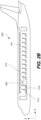
- mobile decontamination unit 300 may be deployed together with another mobile decontamination unit 300 in the same area 100 as, for example, shown in FIG. 1A .
- Each mobile decontamination unit 300 may be responsible for decontaminating a portion of area 100. Referring to FIG. 1A , mobile decontamination unit 300 on the left may be responsible for decontaminating all seats in the left row and a left portion of the center row. Mobile decontamination unit 300 on the right may be responsible for decontaminating all seats in the right row and a right portion of the center row as, for example, schematically shown in an expanded view in FIG. 1B . Each mobile decontamination unit 300 may be movable along its respective aisle in this example.
- Mobile decontamination unit 300 is operable to disperse decontaminant 315 in an aerosol form as decontaminant droplets 317.
- mobile decontamination unit 300 is operable to disperse decontaminant 315 in different directions at the same time, as schematically shown in FIGS. 1B and 1C .
- mobile decontamination unit 300 may be operable to disperse decontaminant 315 to the seat on the right and both seats on the left of mobile decontamination unit 300. It should be noted that in the example shown in FIGS. 1B and 1C , mobile decontamination unit 300 is positioned at different distances to different seats (e.g., the leftmost seat being the farthest from mobile decontamination unit 300) that are being decontaminated.
- mobile decontamination unit 300 in this example disperses decontaminant 315 to only one seat on the right and two seats on the left.
- the control of dispersing angles, dispersing amounts, droplet sizes, airflows carrying the droplets, temperature, and other like parameters allows to decontaminate all seats in a uniform manner.
- FIG. 2A is a schematic block diagram of mobile decontamination unit 300.
- mobile decontamination unit 300 may be a part of system 200, which may include other components, such as one or more remote units 210.
- Remote unit 210 may be also present in area 100.
- One example of remote unit 210 is heating-ventilation-air-conditioning (HVAC) unit 212 as, for example, schematically shown in FIG. 2B .
- HVAC heating-ventilation-air-conditioning
- Other examples include a humidifier, an ozone generator, a power supply, a decontaminant supply, a central controller, and the like.
- Remote units 210 should be distinguished from various components of mobile decontamination unit 300.
- system 200 or at least is an environmental system of an aircraft.
- area 100 is the interior of the aircraft.
- head portion 320 Mobility of head portion 320 relative to base portion 310 may be utilized for distribution of decontaminant 315 in a particular manner (e.g., more uniformly) as further described below.
- head portion 320 may support various components of mobile decontamination unit 300 operable to dispersed decontaminant 315 and direct decontaminant 315 to surfaces 110. Therefore, movement and orientation of head portion 320 relative to base portion 310 (and relative to area 100) may be utilized for decontaminant distribution as further described below.
- Mobile decontamination unit 300 or at least base portion 310 may have a cylindrical shape. This shape allows for mobile decontamination unit 300 moves in area 100 and contact objects within area 100 without getting stuck on objects in the space.
- the mobile decontamination unit 300 can comprise sensor 328, which may include one or more of the following, but are not limited to, a biological sensor 328a, chemical sensor 328b, temperature sensor 328c, humidity sensor 328d, camera 328e, and the like.
- Sensor 328 is operable to obtain area characteristics 102.
- the biological sensor 328a can include a bio-recognition component and a bio-transducer component.
- the recognition component such as a bio-receptor, may use biomolecules to interact with the analyte of interest. This interaction may be measured by the bio-transducer, which outputs a measurable signal proportional to the presence of the target analyte in the sample.
- the chemical sensor 328b can include a catalytic bead sensor, chemical field-effect transistor, electrochemical gas sensor, infrared point sensor, and ion-selective electrode.
- Examples of temperature sensor 328c include an infrared thermometer, resistance thermometer, thermistor, and thermocouple. A hygrometer or a humistor may be used for humidity sensor 328d.
- Mobile decontamination unit 300 comprises unit controller 302 as, for example, schematically shown in FIGS. 2A and 3A .
- mobile decontamination unit 300 receives all control instructions from a remote unit and may not have its own unit controller 302.
- Unit controller 302 when present, is operable to determine aerosol dispersing parameters 305 based on area characteristics 102.
- unit controller 302 is operable to control operations of various other components of mobile decontamination unit 300, such as aerosol dispersing nozzle 322, aerosol directing fan 324, and mobility module 312.
- Mobile decontamination unit 300 may also include communication module 306 and/or database 304, which may be parts of unit controller 302 or standalone devices.
- Unit controller 302 may be used to implement one or more computers and may include a processor unit, communications framework, memory, persistent storage, communications module, input/output (I/O) unit, and display.
- the communications framework may take the form of a bus system.
- the processor unit may serve to execute instructions for software that may be loaded into the memory.
- the processor unit may be a number of processors, a multi-processor core, or some other type of processor, depending on the particular implementation.
- the memory and persistent storage are examples of storage devices, which may be hardware units operable to store information, such as, for example, without limitation, data, program code in functional form, and/or other suitable information either on a temporary basis and/or a permanent basis.
- the memory in these examples, may be, for example, a random access memory or any other suitable volatile or non-volatile storage device.
- the persistent storage may be a hard drive, a flash memory, a rewritable optical disk, a rewritable magnetic tape, or some combination of the above.
- database 304 (which may include area characteristics 102) is stored in the persistent storage.
- the input/output unit of unit controller 302 may be used for input and output of data with other devices. For example, the input/output unit may provide a connection for user input through a keyboard, a mouse, and/or some other suitable input device.
- the program code may be located in a functional form on the computer readable media that is selectively removable and may be loaded onto or transferred to unit controller 302 for execution by the processor unit.
- the computer readable storage media is a physical or tangible storage device used to the store program code rather than a medium that propagates or transmits the program code.
- the program code may be transferred to unit controller 302 using the computer readable signal media.
- the computer readable signal media may be, for example, a propagated data signal containing program code.
- the computer readable signal media may be an electromagnetic signal, an optical signal, and/or any other suitable type of signal. These signals may be transmitted over communications links, such as wireless communications links, optical fiber cable, coaxial cable, a wire, and/or any other suitable type of communications link.
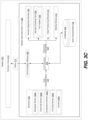
- FIG. 3C is a schematic representation of information flowing among various components of mobile decontamination unit 300, in accordance with some examples.
- the input components such as sensor 328, provide information to unit controller 302 that includes area characteristics 102.
- biological sensor 328a and chemical sensor 328b may be used for detection of contaminants within area 100 and provide information (area characteristics 102) about the detected contaminants to unit controller 302.
- Temperature sensor 328c and humidity sensor 328d may be used to measure temperature and humidity, respectively, inside area 100.
- Camera 328e may capture images of area 100 to determine orientations of different surfaces 110 within area and/or relative to mobile decontamination unit 300.
- Unit controller 302 receives information from communication module 306 and/or database 304.
- Database 304 can be used to store at least a portion of one or more characteristics of area 100 shown as area information in FIG. 2C. In other words, at least a portion of area characteristics 102 are stored locally at mobile decontamination unit 300. One example of such characteristics is area layout. Additional characteristics can be transmitted to mobile decontamination unit 300 and/or obtained by mobile decontamination unit 300.
- Communication module 306 is used to exchange information (area characteristics 102 and/or dispersing parameters 305) with other units, e.g., Remote Units 210 and/or other mobile decontamination units 300.
- unit controller 302 determines dispensing parameters 305, these parameters are used to control various components of mobile decontamination unit 300, such as aerosol dispersing nozzle 322 and aerosol directing fan 324 as further described below.
- Aerosol dispersing parameters 305 may be determined based on area characteristics 102. To achieve effective decontamination, various different area characteristics 102 are considered. Some examples of area characteristics 102 are humidity, temperature, contaminant type, orientation of surfaces 110 in area 100, and the like. Areas having different characteristics may be decontaminated using different aerosol dispersing parameters. Furthermore, area characteristics 102 may be different from one part of area 100 to another. Smaller decontaminant droplets 317 and/or faster airflow can be used to access remote surfaces of area (e.g., to prevent droplets 317 from settling before reaching these surfaces). When determining aerosol dispersing parameters 305, area characteristics 102 may be considered collectively. For example, a combination of humidity, temperature, and contaminant type is used for selection of decontaminant 315.
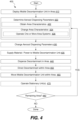
- Determining aerosol dispersing parameters 305 during operation 420 can be performed using unit controller 302 of mobile decontamination unit 300. Furthermore, some or all aspect of operation 420 may be performed remotely from mobile decontamination unit 300 and transmitted (e.g., complete aerosol dispersing parameters 305) to mobile decontamination unit 300. For example, an initial set of aerosol dispersing parameters 305 may be transmitted to mobile decontamination unit 300 and then further modified at mobile decontamination unit 300 based on locally obtained characteristics 102 of area 100.
- Determining aerosol dispersing parameters 305 during operation 420 comprises obtaining area characteristics 102, as schematically shown by block 422 in FIG. 4 .
- Area characteristics 102 may be obtained using sensor 328 of mobile decontamination unit 300 or transmitted to mobile decontamination unit 300.
- Obtaining area characteristics 102 using sensor 328 allows deploying mobile decontamination unit 300 in area 100 and to achieve effective decontamination even when some information about area 100 is unknown. For example, temperature of area 100 may be initially unknown or it may change during decontamination. Yet, temperature has a significant impact on effectiveness of decontamination. Temperature is monitored locally by mobile decontamination unit 300 or, more specifically, a sensor of mobile decontamination unit 300.
- Another example of operation 422 is obtaining the orientation of surfaces 110 in area 100 using a camera of mobile decontamination unit 300 or from a database of mobile decontamination unit 300.
- Presence of one or more contaminants in area 100 may be performed during operation 422.
- contaminants include target pathogens and bio-agents, such as viruses, bacteria, prions, and funguses.
- the sensors may be configured to identify particular strains of the flu, the Ebola virus, tuberculosis, hemorrhagic fever, and/or any other contagion.
- operation 422 may involve detecting concentrations and other characteristics of these contaminants. Operation 422 may be performed onboard of mobile decontamination unit 300 or some information may be transmitted to remote unit 210.
- Operation 422 is optional. All characteristics 102 of area 100 necessary for operation of mobile decontamination unit 300 may be stored in mobile decontamination unit 300 (e.g., in database 304 of mobile decontamination unit 300) and/or transmitted to mobile decontamination unit 300 (e.g., from remote unit 210).
- database 304 of mobile decontamination unit 300 may be preloaded with a layout of area, surface conditions, expected environmental conditions e.g., humidity, temperature.
- Some characteristics 102 may be obtained at the mobile decontamination unit 300 after being deployed in area 100 (e.g., using sensor 328) while additional characteristics 102 may be stored at mobile decontamination unit 300 and/or transmitted to mobile decontamination unit 300.
- Aerosol dispersing parameters 305 determined during operation 420 include at least one or more of identification of decontaminant 315 for dispensing in an aerosolized, temperature of air in area 100, humidity of air in area 100, relative timing of dispersing decontaminant 315 from aerosol dispersing nozzle 322 and flowing air from aerosol directing fan 324, duration of the dispersing, and the like.
- aerosol dispersing parameters 305 may specify a relative humidity for the air in area 100 to be between about 40% and 80%, such as about 60%.
- the aerosol dispersing parameters 305 may be different for different types of detected contaminants.
- the initial determined aerosol dispersing parameters 305 can be later changed.
- the temperature of the air in area 100 may be between about 100 degrees Fahrenheit and 180 degrees Fahrenheit (37.78 and 82.22 Celsius) or, more specifically, between about 120 degrees Fahrenheit and 140 degrees Fahrenheit (48.89 and 60 Celsius). This temperature may be specifically selected to increase efficacy of decontaminant 315 with respect to the detected contaminants. Other considerations for selecting a particular temperature or, more generally, a particular temperature profile is to minimize duration of the heated air flowing through the aircraft compartment and to minimize a concentration of determined decontaminant 315.
- Changing the orientations of both aerosol dispersing nozzle 322 and aerosol directing fan 324 may comprise changing the orientation of head portion 320 of mobile decontamination unit 300 relative to base portion 310.
- head portion 320 may comprise (and support) aerosol dispersing nozzle 322 and aerosol directing fan 324.
- head portion 320 changes its orientation relative to base portion 310 (and to area 100)
- it causes aerosol dispersing nozzle 322 and aerosol directing fan 324 to change their orientations relative to area 100 as well.
- head portion 320 may be raised and/or rotated relative to base portion 310. As shown in FIGS.
- Method 400 may proceed with directing decontaminant droplets 317 to surfaces 110 in area 100, as schematically shown by block 450 in FIG. 4 .
- Aerosol directing fan 324 may be used for this operation by creating an airflow carrying decontaminant droplets 317.
- the airflow may be turbulent. Without being restricted to any particular theory, it is believed that a turbulent flow mitigated aerosol settling more effectively than, for example, a laminar flow. Aerosol directing fan 324 may be operable to generate a turbulent flow. Furthermore, aerosol directing fan 324 such that the airflow engages decontaminant droplets 317 soon after their dispensing, e.g., within 0.5 meters from aerosol dispersing nozzle 322 or even within 0.25 meters.
- Moving mobile decontamination unit 300 in area 100 during operation 460 may be performed automatically based on area characteristics 102.
- mobile decontamination unit 300 may include a mobility module 312 that allows mobile decontamination unit 300 to move without external help e.g., from an operator. This feature allows to avoid exposing humans to potential contaminants and/or decontaminants in area 100.
- Method 400 can further comprise supplying compressed air, decontaminant, electrical power, and/or control instructions to mobile decontamination unit 300, as schematically shown by block 435 in FIG. 4 .
- decontaminant 315 may be supplied to mobile decontamination unit 300. More specifically, decontaminant 315 may be supplied while dispersing decontaminant 315 within area 100 during operation 440. This on-demand supply of decontaminant effectively reduces the weight of mobile decontamination unit 300 by eliminating a need for local storage.
- Decontaminant 315 may be supplied to mobile decontamination unit 300 using tether 219 extending within area 100. Tether 219 allows mobile decontamination unit 300 to move within area 100.
- tether 219 may be use for supplying compressed air, power, and/or control instructions in addition to or instead of supplying decontaminant 315. Control instructions may be supplied to mobile decontamination unit 300 wirelessly (without tether 219).
Landscapes
- Health & Medical Sciences (AREA)
- Engineering & Computer Science (AREA)
- Epidemiology (AREA)
- Life Sciences & Earth Sciences (AREA)
- Chemical & Material Sciences (AREA)
- Chemical Kinetics & Catalysis (AREA)
- General Chemical & Material Sciences (AREA)
- Veterinary Medicine (AREA)
- Public Health (AREA)
- Aviation & Aerospace Engineering (AREA)
- Animal Behavior & Ethology (AREA)
- General Health & Medical Sciences (AREA)
- Manufacturing & Machinery (AREA)
- Transportation (AREA)
- Apparatus For Disinfection Or Sterilisation (AREA)
- Disinfection, Sterilisation Or Deodorisation Of Air (AREA)
Claims (15)
- Procédé de décontamination d'une zone (100), le procédé comprenant :le déploiement d'une unité mobile de décontamination (300) dans la zone (100),l'unité mobile de décontamination (300) ayant une partie de base (310) et une partie de tête (320) comprenant une buse de dispersion d'aérosol (322) et un ventilateur de direction d'aérosol (324), la buse de dispersion d'aérosol (322) et le ventilateur de direction d'aérosol (324) étant chacun indépendamment mobile par rapport à la partie de base (310) ;la détermination de paramètres de dispersion d'aérosol (305) pour l'unité mobile de décontamination (300) en fonction de caractéristiques de zone (102) ;la dispersion automatique d'un décontaminant à l'intérieur de la zone (100) à l'aide de la buse de dispersion d'aérosol (322) et conformément aux paramètres de dispersion d'aérosol (305),le décontaminant (315) étant dispersé sous forme d'aérosol comprenantdes gouttelettes de décontaminant (317) ; etla direction des gouttelettes de décontaminant (317) vers des surfaces de la zone (100) à l'aide d'un ventilateur de direction d'aérosol (324) et conformément aux paramètres de dispersion d'aérosol (305),lesquelles caractéristiques de zone (102) sont obtenues à l'aide d'un capteur (328) de l'unité mobile de décontamination (300), lesquelles caractéristiques de zone (102) comprennent des informations inconnues sur la zone (100) à décontaminer,lesquelles caractéristiques de zone (102) sont transmises par le capteur (328) à un dispositif de commande d'unité (302) de l'unité mobile de contamination (300),lequel dispositif de commande d'unité (302) détermine ensuite les paramètres de dispersion d'aérosol (305) en fonction des caractéristiques de zone transmises par le capteur (328)
- Procédé selon la revendication 1, dans lequel au moins une partie d'une ou plusieurs caractéristiques de zone (100) à décontaminer est stockée dans une base de données (304) de l'unité mobile de décontamination (300), laquelle partie d'une ou plusieurs caractéristiques de zone (100) est transmise de la base de données (304) au dispositif de commande d'unité (302), dans lequel le dispositif de commande d'unité (303) détermine les paramètres de dispersion d'aérosol (305) en fonction des caractéristiques de zone (102) reçues du capteur (328) et de la partie d'une ou de plusieurs caractéristiques de zone (100) stockée dans la base de données (304).
- Procédé selon les revendications 1 ou 2, dans lequel le dispositif de commande d'unité (302) échange des informations, telles que les caractéristiques de zone (102), avec un module de communication (306) qui, à son tour, échange les informations avec d'autres unités telles que des unités distantes (210) et/ou d'autres unités mobiles de décontamination (300).
- Procédé selon la revendication 3, dans lequel le dispositif de commande d'unité (302), le module de communication (306) et/ou la base de données (304) sont intégrés dans un système informatique.
- Procédé selon l'une quelconque des revendications précédentes, dans lequel la détermination des paramètres de dispersion d'aérosol (305) est en outre effectuée en fonction de caractéristiques de décontaminant.
- Procédé selon l'une quelconque des revendications précédentes, dans lequel les caractéristiques de zone (102) comprennent au moins l'un parmi humidité, température, type de contaminant et orientation des surfaces (110) dans la zone (100).
- Procédé selon l'une quelconque des revendications précédentes, dans lequel la détermination des paramètres de dispersion d'aérosol (305) comprend en outre la modification des caractéristiques de zone (102) en une plage définie, par exemple une plage de décontamination acceptable prédéfinie, moyennant quoi la détermination des paramètres de dispersion d'aérosol n'est pas terminée tant que les caractéristiques de zone ne sont pas modifiées et comprises dans la plage définie
- Procédé selon l'une quelconque des revendications précédentes 3 à 7, dans lequel la modification des caractéristiques de zone (102) comprend l'utilisation d'une unité distante (210), externe à l'unité mobile de décontamination (300).
- Procédé selon la revendication 8, dans lequel la modification des caractéristiques de zone (102) comprend en outre l'envoi d'instructions de commande d'une unité mobile de décontamination (300) à l'unité distante (210).
- Procédé selon l'une quelconque des revendications précédentes, dans lequel la zone (100) est une cabine d'aéronef.
- Unité mobile de décontamination permettant de décontaminer une zone (100), l'unité mobile de décontamination (300) comprenant :une partie de base (310) comprenant un module de mobilité (312) pouvant être actionné pour déplacer l'unité mobile de décontamination (300) autour de la zone (100) ;une partie de tête (320) accouplée de manière mobile à la partie de base (310) ;une buse de dispersion d'aérosol (322) pouvant être actionné pour disperser un décontaminant (315) à l'intérieur de la zone (100) sous forme d'aérosol comprenant des gouttelettes de décontaminant (317) ;un ventilateur de direction d'aérosol (324) pouvant être actionné pour diriger les gouttelettes de décontaminant (317) vers des surfaces (110) de la zone (100),la buse de dispersion d'aérosol (322) et le ventilateur de direction d'aérosol (324) étant positionnés sur la partie de tête (320), et chacun étant indépendamment mobile par rapport à la partie de base (310),un capteur (328) permettant de détecter des caractéristiques de zone (102) de la zone (100) à décontaminer, lesquelles caractéristiques de zone (102) comprennent des informations inconnues sur la zone (100) à décontaminer, lequel capteur est en communication avec unun dispositif de commande d'unité (302) pouvant être actionné pour déterminer des paramètres de dispersion d'aérosol (305) en fonction des caractéristiques de zone et pour commander des opérations de la buse de dispersion d'aérosol (322), du ventilateur de direction d'aérosol (324) et du module de mobilité (312).
- Unité mobile de décontamination selon la revendication 11, comprenant en outre une base de données (304) comprenant au moins une partie des caractéristiques de zone (102).
- Unité mobile de décontamination selon l'une quelconque des revendications 11 ou 12, dans laquelle le module de mobilité (312) peut être commandé par le dispositif de commande d'unité (302) en fonction des caractéristiques de zone (102) obtenues de la zone (100).
- Unité mobile de décontamination selon l'une quelconque des revendications 11 à 13, comprenant en outre un module de communication (306) pour l'échange d'informations avec d'autres unités telles que des unités distantes (210) et/ou d'autres unités mobiles de décontamination (300).
- Unité mobile de décontamination selon la revendication 14, dans laquelle le dispositif de commande d'unité (302), le module de communication (306) et/ou la base de données (304) sont intégrés dans un système informatique.
Applications Claiming Priority (2)
| Application Number | Priority Date | Filing Date | Title |
|---|---|---|---|
| US15/417,994 US10507256B2 (en) | 2017-01-27 | 2017-01-27 | Automated decontamination of complex areas |
| NL2018402A NL2018402B1 (en) | 2017-01-27 | 2017-02-21 | Automated Decontamination of Complex Areas |
Publications (2)
| Publication Number | Publication Date |
|---|---|
| EP3354291A1 EP3354291A1 (fr) | 2018-08-01 |
| EP3354291B1 true EP3354291B1 (fr) | 2024-07-03 |
Family
ID=61002953
Family Applications (1)
| Application Number | Title | Priority Date | Filing Date |
|---|---|---|---|
| EP18153197.1A Active EP3354291B1 (fr) | 2017-01-27 | 2018-01-24 | Décontamination automatisée de zones complexes |
Country Status (7)
| Country | Link |
|---|---|
| EP (1) | EP3354291B1 (fr) |
| JP (3) | JP7506453B2 (fr) |
| CN (1) | CN108355155B (fr) |
| AU (1) | AU2018200617B2 (fr) |
| BR (1) | BR102018001692B1 (fr) |
| CA (1) | CA2992202C (fr) |
| SG (1) | SG10201800709YA (fr) |
Families Citing this family (18)
| Publication number | Priority date | Publication date | Assignee | Title |
|---|---|---|---|---|
| US10507256B2 (en) | 2017-01-27 | 2019-12-17 | The Boeing Company | Automated decontamination of complex areas |
| JP7361277B2 (ja) * | 2018-08-30 | 2023-10-16 | パナソニックIpマネジメント株式会社 | 飛沫到達範囲制御システム及び飛沫到達範囲制御方法 |
| US11524087B2 (en) | 2019-03-22 | 2022-12-13 | Zeteo Tech, Inc. | Microwave assisted methods and systems for surface decontamination |
| US11938243B2 (en) | 2019-03-22 | 2024-03-26 | Zeteo Tech, Inc. | Mobile systems for microwave assisted surface decontamination and decontamination methods |
| US20210354854A1 (en) * | 2019-11-01 | 2021-11-18 | B/E Aerospace, Inc. | Aircraft Interior UAS Inspection and Sanitation |
| EP4090387A1 (fr) * | 2020-02-21 | 2022-11-23 | Siemens Aktiengesellschaft | Robot de désinfection et système de commande de robot de désinfection |
| EP4157369A4 (fr) * | 2020-06-01 | 2024-07-10 | Zeteo Tech, Inc. | Systèmes mobiles pour la décontamination de surface assistée par micro-ondes et procédés de décontamination |
| US12179926B2 (en) * | 2020-06-19 | 2024-12-31 | The Boeing Company | Methods and systems for decontaminating aircraft cabins and providing indications for safe reentry |
| US12226554B2 (en) | 2020-06-19 | 2025-02-18 | The Boeing Company | System and method for disinfecting an interior of an aircraft |
| KR102895246B1 (ko) | 2020-07-24 | 2025-12-04 | 현대자동차주식회사 | 드론을 이용한 차량 실내 살균방법 |
| ES2894352A1 (es) * | 2020-08-07 | 2022-02-14 | Ct Ingenieros A A I De Andalucia S L | Robot plegable de desinfeccion automatica destinado a desinfectar una cabina de transporte de pasajeros |
| EP3960623B1 (fr) * | 2020-08-24 | 2023-07-12 | Rister, Frank | Dispositif de désinfection d'un espace intérieur |
| CN112386735B (zh) * | 2020-10-29 | 2022-03-29 | 中国人民解放军疾病预防控制中心 | 一种变频智能机器人、喷雾消毒方法及系统 |
| KR102935098B1 (ko) * | 2020-11-13 | 2026-03-06 | 현대자동차주식회사 | 드론을 이용한 차량 실내 살균장치 |
| TW202308707A (zh) * | 2021-04-26 | 2023-03-01 | 日商愛瑞思股份有限公司 | 室內除污設備 |
| CN113876985A (zh) * | 2021-10-08 | 2022-01-04 | 上海应用技术大学 | 一种智慧型地铁防疫系统 |
| CN115154628B (zh) * | 2022-09-02 | 2022-12-16 | 江苏容正医药科技有限公司 | 低温等离子体在杀灭rna、dna类型病毒的应用方法和装置 |
| CN115641979B (zh) * | 2022-10-26 | 2023-07-07 | 核工业北京化工冶金研究院 | 一种管道用化学法在线去污装置及去污方法 |
Citations (1)
| Publication number | Priority date | Publication date | Assignee | Title |
|---|---|---|---|---|
| CN204910199U (zh) * | 2015-04-12 | 2015-12-30 | 陈田来 | 一种智能消毒设备 |
Family Cites Families (20)
| Publication number | Priority date | Publication date | Assignee | Title |
|---|---|---|---|---|
| JP2001009335A (ja) * | 1999-06-25 | 2001-01-16 | Matsuji Nakagome | キャリー式消臭液.除菌液散布システム |
| EP2252171A4 (fr) * | 2008-02-28 | 2011-07-06 | Megair Ltd | Dispositif et procédé de traitement d'air et de désinfection |
| US8889081B2 (en) * | 2009-10-15 | 2014-11-18 | Medivators Inc. | Room fogging disinfection system |
| US8715586B2 (en) * | 2010-01-11 | 2014-05-06 | The Boeing Company | Methods and systems for dispersing decontamination products |
| JP5271940B2 (ja) * | 2010-03-12 | 2013-08-21 | パナソニック株式会社 | 自走型機能成分発生装置 |
| CN101972128B (zh) * | 2010-04-15 | 2012-03-28 | 雷学军 | 仿生智能型空气净化机器人 |
| GB201014820D0 (en) * | 2010-09-07 | 2010-10-20 | Norman Pendred And Company Ltd | Delivery method |
| JP2012120738A (ja) * | 2010-12-09 | 2012-06-28 | Akio Hyodo | ミスト殺菌装置 |
| US8416554B2 (en) * | 2011-04-27 | 2013-04-09 | The Boeing Company | Multi-phase decontamination of aircraft cabin interior |
| US8936944B2 (en) * | 2011-11-22 | 2015-01-20 | The Boeing Company | Infectious disease detection system |
| US9005523B2 (en) * | 2012-05-10 | 2015-04-14 | American Sterilizer Company | Cold-mist decontamination unit and method of operating same |
| US8992830B2 (en) * | 2013-03-15 | 2015-03-31 | The Boeing Company | High temperature decontamination of aircraft compartments |
| CN104249032A (zh) * | 2013-06-25 | 2014-12-31 | 苏州工业园区协诚精密五金有限公司 | 喷雾设备 |
| CN203766592U (zh) * | 2014-04-04 | 2014-08-13 | 北京中科火冠科技有限公司 | 一种火车飞机船舶专用清洗和消毒装置 |
| CN204563029U (zh) * | 2015-02-09 | 2015-08-19 | 河南旭百瑞生物科技股份有限公司 | 养殖场自动消毒装置 |
| CN104689940B (zh) * | 2015-03-10 | 2017-03-08 | 郑州大学 | 一种化工厂泄露事故洗消机器人 |
| CN104740670A (zh) * | 2015-04-08 | 2015-07-01 | 芜湖锐进医疗设备有限公司 | 医疗器械车间消毒装置 |
| CN106139196A (zh) * | 2015-04-12 | 2016-11-23 | 陈田来 | 一种智能消毒设备 |
| CN105879081A (zh) * | 2016-06-09 | 2016-08-24 | 曲建强 | 疾病防疫消毒喷雾装置 |
| CN106179818A (zh) * | 2016-08-21 | 2016-12-07 | 于延军 | 一种多向喷雾装置 |
-
2018
- 2018-01-17 CA CA2992202A patent/CA2992202C/fr active Active
- 2018-01-24 EP EP18153197.1A patent/EP3354291B1/fr active Active
- 2018-01-25 AU AU2018200617A patent/AU2018200617B2/en active Active
- 2018-01-25 CN CN201810071216.5A patent/CN108355155B/zh active Active
- 2018-01-26 JP JP2018011300A patent/JP7506453B2/ja active Active
- 2018-01-26 SG SG10201800709YA patent/SG10201800709YA/en unknown
- 2018-01-26 BR BR102018001692-0A patent/BR102018001692B1/pt active IP Right Grant
-
2022
- 2022-03-14 JP JP2022039186A patent/JP2022101536A/ja active Pending
-
2024
- 2024-02-26 JP JP2024026343A patent/JP2024079675A/ja active Pending
Patent Citations (1)
| Publication number | Priority date | Publication date | Assignee | Title |
|---|---|---|---|---|
| CN204910199U (zh) * | 2015-04-12 | 2015-12-30 | 陈田来 | 一种智能消毒设备 |
Also Published As
| Publication number | Publication date |
|---|---|
| JP2018149272A (ja) | 2018-09-27 |
| JP7506453B2 (ja) | 2024-06-26 |
| CA2992202A1 (fr) | 2018-07-27 |
| CN108355155B (zh) | 2022-05-06 |
| BR102018001692A2 (pt) | 2018-12-04 |
| CN108355155A (zh) | 2018-08-03 |
| AU2018200617A1 (en) | 2018-08-16 |
| JP2022101536A (ja) | 2022-07-06 |
| SG10201800709YA (en) | 2018-08-30 |
| JP2024079675A (ja) | 2024-06-11 |
| BR102018001692B1 (pt) | 2023-02-07 |
| CA2992202C (fr) | 2023-08-15 |
| EP3354291A1 (fr) | 2018-08-01 |
| AU2018200617B2 (en) | 2023-04-20 |
Similar Documents
| Publication | Publication Date | Title |
|---|---|---|
| EP3354291B1 (fr) | Décontamination automatisée de zones complexes | |
| US11904064B2 (en) | Automated decontamination of complex areas | |
| EP2777716B1 (fr) | Methode et systeme de decontamination de compartiments de vehicules | |
| US20210308300A1 (en) | Methods and apparatus for sanitizing an autonomous vehicle | |
| CN102711844B (zh) | 分送净化产品的方法和系统 | |
| US20220143244A1 (en) | Method and device for disinfecting clean rooms | |
| JP2020518272A5 (fr) | ||
| EP3925884B1 (fr) | Système et procédé de désinfection de l'intérieur d'un aéronef | |
| US20180064049A1 (en) | Systems and methods for dispensing pollen onto crops via unmanned vehicles | |
| EP3943120A1 (fr) | Systèmes de baguettes portables et leurs procédés d'utilisation pour indiquer et vérifier les applications de traitement de surface | |
| JP6066996B2 (ja) | 航空機キャビン内の多相汚染除去 | |
| US11865222B2 (en) | Multimodal automated disinfecting system | |
| JP2025165858A (ja) | 畜舎洗浄装置、畜舎洗浄方法、及び畜舎洗浄システム | |
| CN115916268A (zh) | 消毒系统 | |
| IT202000017026A1 (it) | Apparato per trattamento ambienti |
Legal Events
| Date | Code | Title | Description |
|---|---|---|---|
| STAA | Information on the status of an ep patent application or granted ep patent |
Free format text: STATUS: EXAMINATION IS IN PROGRESS |
|
| PUAI | Public reference made under article 153(3) epc to a published international application that has entered the european phase |
Free format text: ORIGINAL CODE: 0009012 |
|
| 17P | Request for examination filed |
Effective date: 20180124 |
|
| AK | Designated contracting states |
Kind code of ref document: A1 Designated state(s): AL AT BE BG CH CY CZ DE DK EE ES FI FR GB GR HR HU IE IS IT LI LT LU LV MC MK MT NL NO PL PT RO RS SE SI SK SM TR |
|
| AX | Request for extension of the european patent |
Extension state: BA ME |
|
| RAP3 | Party data changed (applicant data changed or rights of an application transferred) |
Owner name: THE BOEING COMPANY |
|
| GRAP | Despatch of communication of intention to grant a patent |
Free format text: ORIGINAL CODE: EPIDOSNIGR1 |
|
| STAA | Information on the status of an ep patent application or granted ep patent |
Free format text: STATUS: GRANT OF PATENT IS INTENDED |
|
| INTG | Intention to grant announced |
Effective date: 20240205 |
|
| GRAS | Grant fee paid |
Free format text: ORIGINAL CODE: EPIDOSNIGR3 |
|
| GRAA | (expected) grant |
Free format text: ORIGINAL CODE: 0009210 |
|
| STAA | Information on the status of an ep patent application or granted ep patent |
Free format text: STATUS: THE PATENT HAS BEEN GRANTED |
|
| AK | Designated contracting states |
Kind code of ref document: B1 Designated state(s): AL AT BE BG CH CY CZ DE DK EE ES FI FR GB GR HR HU IE IS IT LI LT LU LV MC MK MT NL NO PL PT RO RS SE SI SK SM TR |
|
| REG | Reference to a national code |
Ref country code: CH Ref legal event code: EP |
|
| P01 | Opt-out of the competence of the unified patent court (upc) registered |
Free format text: CASE NUMBER: APP_35966/2024 Effective date: 20240617 |
|
| REG | Reference to a national code |
Ref country code: DE Ref legal event code: R096 Ref document number: 602018071195 Country of ref document: DE |
|
| REG | Reference to a national code |
Ref country code: LT Ref legal event code: MG9D |
|
| REG | Reference to a national code |
Ref country code: NL Ref legal event code: MP Effective date: 20240703 |
|
| PG25 | Lapsed in a contracting state [announced via postgrant information from national office to epo] |
Ref country code: PT Free format text: LAPSE BECAUSE OF FAILURE TO SUBMIT A TRANSLATION OF THE DESCRIPTION OR TO PAY THE FEE WITHIN THE PRESCRIBED TIME-LIMIT Effective date: 20241104 |
|
| REG | Reference to a national code |
Ref country code: AT Ref legal event code: MK05 Ref document number: 1699132 Country of ref document: AT Kind code of ref document: T Effective date: 20240703 |
|
| PG25 | Lapsed in a contracting state [announced via postgrant information from national office to epo] |
Ref country code: NL Free format text: LAPSE BECAUSE OF FAILURE TO SUBMIT A TRANSLATION OF THE DESCRIPTION OR TO PAY THE FEE WITHIN THE PRESCRIBED TIME-LIMIT Effective date: 20240703 |
|
| PG25 | Lapsed in a contracting state [announced via postgrant information from national office to epo] |
Ref country code: PT Free format text: LAPSE BECAUSE OF FAILURE TO SUBMIT A TRANSLATION OF THE DESCRIPTION OR TO PAY THE FEE WITHIN THE PRESCRIBED TIME-LIMIT Effective date: 20241104 Ref country code: NL Free format text: LAPSE BECAUSE OF FAILURE TO SUBMIT A TRANSLATION OF THE DESCRIPTION OR TO PAY THE FEE WITHIN THE PRESCRIBED TIME-LIMIT Effective date: 20240703 |
|
| PG25 | Lapsed in a contracting state [announced via postgrant information from national office to epo] |
Ref country code: NO Free format text: LAPSE BECAUSE OF FAILURE TO SUBMIT A TRANSLATION OF THE DESCRIPTION OR TO PAY THE FEE WITHIN THE PRESCRIBED TIME-LIMIT Effective date: 20241003 |
|
| PG25 | Lapsed in a contracting state [announced via postgrant information from national office to epo] |
Ref country code: FI Free format text: LAPSE BECAUSE OF FAILURE TO SUBMIT A TRANSLATION OF THE DESCRIPTION OR TO PAY THE FEE WITHIN THE PRESCRIBED TIME-LIMIT Effective date: 20240703 Ref country code: GR Free format text: LAPSE BECAUSE OF FAILURE TO SUBMIT A TRANSLATION OF THE DESCRIPTION OR TO PAY THE FEE WITHIN THE PRESCRIBED TIME-LIMIT Effective date: 20241004 Ref country code: PL Free format text: LAPSE BECAUSE OF FAILURE TO SUBMIT A TRANSLATION OF THE DESCRIPTION OR TO PAY THE FEE WITHIN THE PRESCRIBED TIME-LIMIT Effective date: 20240703 |
|
| PG25 | Lapsed in a contracting state [announced via postgrant information from national office to epo] |
Ref country code: BG Free format text: LAPSE BECAUSE OF FAILURE TO SUBMIT A TRANSLATION OF THE DESCRIPTION OR TO PAY THE FEE WITHIN THE PRESCRIBED TIME-LIMIT Effective date: 20240703 |
|
| PG25 | Lapsed in a contracting state [announced via postgrant information from national office to epo] |
Ref country code: LV Free format text: LAPSE BECAUSE OF FAILURE TO SUBMIT A TRANSLATION OF THE DESCRIPTION OR TO PAY THE FEE WITHIN THE PRESCRIBED TIME-LIMIT Effective date: 20240703 |
|
| PG25 | Lapsed in a contracting state [announced via postgrant information from national office to epo] |
Ref country code: IS Free format text: LAPSE BECAUSE OF FAILURE TO SUBMIT A TRANSLATION OF THE DESCRIPTION OR TO PAY THE FEE WITHIN THE PRESCRIBED TIME-LIMIT Effective date: 20241103 Ref country code: AT Free format text: LAPSE BECAUSE OF FAILURE TO SUBMIT A TRANSLATION OF THE DESCRIPTION OR TO PAY THE FEE WITHIN THE PRESCRIBED TIME-LIMIT Effective date: 20240703 |
|
| PG25 | Lapsed in a contracting state [announced via postgrant information from national office to epo] |
Ref country code: HR Free format text: LAPSE BECAUSE OF FAILURE TO SUBMIT A TRANSLATION OF THE DESCRIPTION OR TO PAY THE FEE WITHIN THE PRESCRIBED TIME-LIMIT Effective date: 20240703 Ref country code: CZ Free format text: LAPSE BECAUSE OF FAILURE TO SUBMIT A TRANSLATION OF THE DESCRIPTION OR TO PAY THE FEE WITHIN THE PRESCRIBED TIME-LIMIT Effective date: 20240703 |
|
| PG25 | Lapsed in a contracting state [announced via postgrant information from national office to epo] |
Ref country code: RS Free format text: LAPSE BECAUSE OF FAILURE TO SUBMIT A TRANSLATION OF THE DESCRIPTION OR TO PAY THE FEE WITHIN THE PRESCRIBED TIME-LIMIT Effective date: 20241003 Ref country code: ES Free format text: LAPSE BECAUSE OF FAILURE TO SUBMIT A TRANSLATION OF THE DESCRIPTION OR TO PAY THE FEE WITHIN THE PRESCRIBED TIME-LIMIT Effective date: 20240703 |
|
| PG25 | Lapsed in a contracting state [announced via postgrant information from national office to epo] |
Ref country code: RS Free format text: LAPSE BECAUSE OF FAILURE TO SUBMIT A TRANSLATION OF THE DESCRIPTION OR TO PAY THE FEE WITHIN THE PRESCRIBED TIME-LIMIT Effective date: 20241003 Ref country code: PL Free format text: LAPSE BECAUSE OF FAILURE TO SUBMIT A TRANSLATION OF THE DESCRIPTION OR TO PAY THE FEE WITHIN THE PRESCRIBED TIME-LIMIT Effective date: 20240703 Ref country code: NO Free format text: LAPSE BECAUSE OF FAILURE TO SUBMIT A TRANSLATION OF THE DESCRIPTION OR TO PAY THE FEE WITHIN THE PRESCRIBED TIME-LIMIT Effective date: 20241003 Ref country code: LV Free format text: LAPSE BECAUSE OF FAILURE TO SUBMIT A TRANSLATION OF THE DESCRIPTION OR TO PAY THE FEE WITHIN THE PRESCRIBED TIME-LIMIT Effective date: 20240703 Ref country code: IS Free format text: LAPSE BECAUSE OF FAILURE TO SUBMIT A TRANSLATION OF THE DESCRIPTION OR TO PAY THE FEE WITHIN THE PRESCRIBED TIME-LIMIT Effective date: 20241103 Ref country code: HR Free format text: LAPSE BECAUSE OF FAILURE TO SUBMIT A TRANSLATION OF THE DESCRIPTION OR TO PAY THE FEE WITHIN THE PRESCRIBED TIME-LIMIT Effective date: 20240703 Ref country code: GR Free format text: LAPSE BECAUSE OF FAILURE TO SUBMIT A TRANSLATION OF THE DESCRIPTION OR TO PAY THE FEE WITHIN THE PRESCRIBED TIME-LIMIT Effective date: 20241004 Ref country code: FI Free format text: LAPSE BECAUSE OF FAILURE TO SUBMIT A TRANSLATION OF THE DESCRIPTION OR TO PAY THE FEE WITHIN THE PRESCRIBED TIME-LIMIT Effective date: 20240703 Ref country code: ES Free format text: LAPSE BECAUSE OF FAILURE TO SUBMIT A TRANSLATION OF THE DESCRIPTION OR TO PAY THE FEE WITHIN THE PRESCRIBED TIME-LIMIT Effective date: 20240703 Ref country code: CZ Free format text: LAPSE BECAUSE OF FAILURE TO SUBMIT A TRANSLATION OF THE DESCRIPTION OR TO PAY THE FEE WITHIN THE PRESCRIBED TIME-LIMIT Effective date: 20240703 Ref country code: BG Free format text: LAPSE BECAUSE OF FAILURE TO SUBMIT A TRANSLATION OF THE DESCRIPTION OR TO PAY THE FEE WITHIN THE PRESCRIBED TIME-LIMIT Effective date: 20240703 Ref country code: AT Free format text: LAPSE BECAUSE OF FAILURE TO SUBMIT A TRANSLATION OF THE DESCRIPTION OR TO PAY THE FEE WITHIN THE PRESCRIBED TIME-LIMIT Effective date: 20240703 |
|
| REG | Reference to a national code |
Ref country code: DE Ref legal event code: R097 Ref document number: 602018071195 Country of ref document: DE |
|
| PG25 | Lapsed in a contracting state [announced via postgrant information from national office to epo] |
Ref country code: SM Free format text: LAPSE BECAUSE OF FAILURE TO SUBMIT A TRANSLATION OF THE DESCRIPTION OR TO PAY THE FEE WITHIN THE PRESCRIBED TIME-LIMIT Effective date: 20240703 Ref country code: RO Free format text: LAPSE BECAUSE OF FAILURE TO SUBMIT A TRANSLATION OF THE DESCRIPTION OR TO PAY THE FEE WITHIN THE PRESCRIBED TIME-LIMIT Effective date: 20240703 Ref country code: DK Free format text: LAPSE BECAUSE OF FAILURE TO SUBMIT A TRANSLATION OF THE DESCRIPTION OR TO PAY THE FEE WITHIN THE PRESCRIBED TIME-LIMIT Effective date: 20240703 |
|
| PG25 | Lapsed in a contracting state [announced via postgrant information from national office to epo] |
Ref country code: EE Free format text: LAPSE BECAUSE OF FAILURE TO SUBMIT A TRANSLATION OF THE DESCRIPTION OR TO PAY THE FEE WITHIN THE PRESCRIBED TIME-LIMIT Effective date: 20240703 |
|
| PG25 | Lapsed in a contracting state [announced via postgrant information from national office to epo] |
Ref country code: IT Free format text: LAPSE BECAUSE OF FAILURE TO SUBMIT A TRANSLATION OF THE DESCRIPTION OR TO PAY THE FEE WITHIN THE PRESCRIBED TIME-LIMIT Effective date: 20240703 Ref country code: SK Free format text: LAPSE BECAUSE OF FAILURE TO SUBMIT A TRANSLATION OF THE DESCRIPTION OR TO PAY THE FEE WITHIN THE PRESCRIBED TIME-LIMIT Effective date: 20240703 |
|
| PLBE | No opposition filed within time limit |
Free format text: ORIGINAL CODE: 0009261 |
|
| STAA | Information on the status of an ep patent application or granted ep patent |
Free format text: STATUS: NO OPPOSITION FILED WITHIN TIME LIMIT |
|
| 26N | No opposition filed |
Effective date: 20250404 |
|
| REG | Reference to a national code |
Ref country code: CH Ref legal event code: PL |
|
| PG25 | Lapsed in a contracting state [announced via postgrant information from national office to epo] |
Ref country code: SE Free format text: LAPSE BECAUSE OF FAILURE TO SUBMIT A TRANSLATION OF THE DESCRIPTION OR TO PAY THE FEE WITHIN THE PRESCRIBED TIME-LIMIT Effective date: 20240703 |
|
| PG25 | Lapsed in a contracting state [announced via postgrant information from national office to epo] |
Ref country code: MC Free format text: LAPSE BECAUSE OF FAILURE TO SUBMIT A TRANSLATION OF THE DESCRIPTION OR TO PAY THE FEE WITHIN THE PRESCRIBED TIME-LIMIT Effective date: 20240703 Ref country code: LU Free format text: LAPSE BECAUSE OF NON-PAYMENT OF DUE FEES Effective date: 20250124 |
|
| PG25 | Lapsed in a contracting state [announced via postgrant information from national office to epo] |
Ref country code: BE Free format text: LAPSE BECAUSE OF NON-PAYMENT OF DUE FEES Effective date: 20250131 |
|
| PG25 | Lapsed in a contracting state [announced via postgrant information from national office to epo] |
Ref country code: CH Free format text: LAPSE BECAUSE OF NON-PAYMENT OF DUE FEES Effective date: 20250131 |
|
| REG | Reference to a national code |
Ref country code: BE Ref legal event code: MM Effective date: 20250131 |
|
| PG25 | Lapsed in a contracting state [announced via postgrant information from national office to epo] |
Ref country code: IE Free format text: LAPSE BECAUSE OF NON-PAYMENT OF DUE FEES Effective date: 20250124 |
|
| PGFP | Annual fee paid to national office [announced via postgrant information from national office to epo] |
Ref country code: GB Payment date: 20260127 Year of fee payment: 9 |
|
| PGFP | Annual fee paid to national office [announced via postgrant information from national office to epo] |
Ref country code: DE Payment date: 20260128 Year of fee payment: 9 |
|
| PGFP | Annual fee paid to national office [announced via postgrant information from national office to epo] |
Ref country code: FR Payment date: 20260126 Year of fee payment: 9 |