EP3368555B1 - Doppelfunktionsproteine und pharmazeutische zusammensetzung damit - Google Patents
Doppelfunktionsproteine und pharmazeutische zusammensetzung damit Download PDFInfo
- Publication number
- EP3368555B1 EP3368555B1 EP16860306.6A EP16860306A EP3368555B1 EP 3368555 B1 EP3368555 B1 EP 3368555B1 EP 16860306 A EP16860306 A EP 16860306A EP 3368555 B1 EP3368555 B1 EP 3368555B1
- Authority
- EP
- European Patent Office
- Prior art keywords
- protein
- dual function
- fgf21
- glp
- seq
- Prior art date
- Legal status (The legal status is an assumption and is not a legal conclusion. Google has not performed a legal analysis and makes no representation as to the accuracy of the status listed.)
- Active
Links
Images









Classifications
-
- A—HUMAN NECESSITIES
- A61—MEDICAL OR VETERINARY SCIENCE; HYGIENE
- A61K—PREPARATIONS FOR MEDICAL, DENTAL OR TOILETRY PURPOSES
- A61K38/00—Medicinal preparations containing peptides
- A61K38/16—Peptides having more than 20 amino acids; Gastrins; Somatostatins; Melanotropins; Derivatives thereof
- A61K38/17—Peptides having more than 20 amino acids; Gastrins; Somatostatins; Melanotropins; Derivatives thereof from animals; from humans
- A61K38/18—Growth factors; Growth regulators
- A61K38/1825—Fibroblast growth factor [FGF]
-
- A—HUMAN NECESSITIES
- A61—MEDICAL OR VETERINARY SCIENCE; HYGIENE
- A61P—SPECIFIC THERAPEUTIC ACTIVITY OF CHEMICAL COMPOUNDS OR MEDICINAL PREPARATIONS
- A61P1/00—Drugs for disorders of the alimentary tract or the digestive system
- A61P1/16—Drugs for disorders of the alimentary tract or the digestive system for liver or gallbladder disorders, e.g. hepatoprotective agents, cholagogues, litholytics
-
- A—HUMAN NECESSITIES
- A61—MEDICAL OR VETERINARY SCIENCE; HYGIENE
- A61P—SPECIFIC THERAPEUTIC ACTIVITY OF CHEMICAL COMPOUNDS OR MEDICINAL PREPARATIONS
- A61P29/00—Non-central analgesic, antipyretic or antiinflammatory agents, e.g. antirheumatic agents; Non-steroidal antiinflammatory drugs [NSAID]
-
- A—HUMAN NECESSITIES
- A61—MEDICAL OR VETERINARY SCIENCE; HYGIENE
- A61P—SPECIFIC THERAPEUTIC ACTIVITY OF CHEMICAL COMPOUNDS OR MEDICINAL PREPARATIONS
- A61P3/00—Drugs for disorders of the metabolism
-
- A—HUMAN NECESSITIES
- A61—MEDICAL OR VETERINARY SCIENCE; HYGIENE
- A61P—SPECIFIC THERAPEUTIC ACTIVITY OF CHEMICAL COMPOUNDS OR MEDICINAL PREPARATIONS
- A61P3/00—Drugs for disorders of the metabolism
- A61P3/04—Anorexiants; Antiobesity agents
-
- A—HUMAN NECESSITIES
- A61—MEDICAL OR VETERINARY SCIENCE; HYGIENE
- A61P—SPECIFIC THERAPEUTIC ACTIVITY OF CHEMICAL COMPOUNDS OR MEDICINAL PREPARATIONS
- A61P3/00—Drugs for disorders of the metabolism
- A61P3/06—Antihyperlipidemics
-
- A—HUMAN NECESSITIES
- A61—MEDICAL OR VETERINARY SCIENCE; HYGIENE
- A61P—SPECIFIC THERAPEUTIC ACTIVITY OF CHEMICAL COMPOUNDS OR MEDICINAL PREPARATIONS
- A61P3/00—Drugs for disorders of the metabolism
- A61P3/08—Drugs for disorders of the metabolism for glucose homeostasis
- A61P3/10—Drugs for disorders of the metabolism for glucose homeostasis for hyperglycaemia, e.g. antidiabetics
-
- A—HUMAN NECESSITIES
- A61—MEDICAL OR VETERINARY SCIENCE; HYGIENE
- A61P—SPECIFIC THERAPEUTIC ACTIVITY OF CHEMICAL COMPOUNDS OR MEDICINAL PREPARATIONS
- A61P43/00—Drugs for specific purposes, not provided for in groups A61P1/00-A61P41/00
-
- A—HUMAN NECESSITIES
- A61—MEDICAL OR VETERINARY SCIENCE; HYGIENE
- A61P—SPECIFIC THERAPEUTIC ACTIVITY OF CHEMICAL COMPOUNDS OR MEDICINAL PREPARATIONS
- A61P9/00—Drugs for disorders of the cardiovascular system
-
- C—CHEMISTRY; METALLURGY
- C07—ORGANIC CHEMISTRY
- C07K—PEPTIDES
- C07K14/00—Peptides having more than 20 amino acids; Gastrins; Somatostatins; Melanotropins; Derivatives thereof
- C07K14/435—Peptides having more than 20 amino acids; Gastrins; Somatostatins; Melanotropins; Derivatives thereof from animals; from humans
- C07K14/475—Growth factors; Growth regulators
- C07K14/50—Fibroblast growth factor [FGF]
-
- C—CHEMISTRY; METALLURGY
- C07—ORGANIC CHEMISTRY
- C07K—PEPTIDES
- C07K14/00—Peptides having more than 20 amino acids; Gastrins; Somatostatins; Melanotropins; Derivatives thereof
- C07K14/435—Peptides having more than 20 amino acids; Gastrins; Somatostatins; Melanotropins; Derivatives thereof from animals; from humans
- C07K14/575—Hormones
-
- C—CHEMISTRY; METALLURGY
- C07—ORGANIC CHEMISTRY
- C07K—PEPTIDES
- C07K14/00—Peptides having more than 20 amino acids; Gastrins; Somatostatins; Melanotropins; Derivatives thereof
- C07K14/435—Peptides having more than 20 amino acids; Gastrins; Somatostatins; Melanotropins; Derivatives thereof from animals; from humans
- C07K14/575—Hormones
- C07K14/605—Glucagons
-
- A—HUMAN NECESSITIES
- A61—MEDICAL OR VETERINARY SCIENCE; HYGIENE
- A61K—PREPARATIONS FOR MEDICAL, DENTAL OR TOILETRY PURPOSES
- A61K38/00—Medicinal preparations containing peptides
-
- C—CHEMISTRY; METALLURGY
- C07—ORGANIC CHEMISTRY
- C07K—PEPTIDES
- C07K2319/00—Fusion polypeptide
- C07K2319/30—Non-immunoglobulin-derived peptide or protein having an immunoglobulin constant or Fc region, or a fragment thereof, attached thereto
Definitions
- the present invention relates to a dual function protein including a biologically active protein and a fibroblast growth factor 21 (FGF21) mutant protein, and a pharmaceutical composition containing same.
- FGF21 fibroblast growth factor 21
- US 2013/0129724 A1 relates to dual function proteins for treating metabolic disorders.
- Glucagon-like peptide-1 (GLP-1) is an incretin hormone consisting of 31 amino acids, which is secreted by L cells in the intestinal tract when stimulated by food, etc. Its biological effects arise via intracellular signaling through the GLP-1 receptor, a G protein-coupled receptor which is expressed in target tissues such as ⁇ -cells in the pancreas, brain, etc. GLP-1 secreted in the blood has a very short half-life of less than 2 minutes, which is caused by a loss of activity due to the cleavage of amino acids at the N-terminus by the enzyme dipeptidyl peptidase-4 (DPP-4).
- DPP-4 dipeptidyl peptidase-4
- GLP-1 stimulates the secretion of insulin in ⁇ -cells in the pancreas based on blood glucose level, it has a strong effect on lowering blood glucose without inducing hypoglycemia. Further, the administration of GLP-1 results in loss of body weight in various animal models and humans, which is known to be caused by reduced food intake due to its effect on appetite suppression. GLP-1 induces proliferation of ⁇ -cells and enhances the viability of P-cells by inhibiting cell death caused by glycolipid toxicity through GLP-1 receptor expressed in ⁇ -cells in the pancreas. Excessive secretion of glucagon increases blood glucose, which is known to be one of the causes of hyperglycemia in diabetics. In addition, it is known that GLP-1 acts on ⁇ -cells in the pancreas to inhibit fasting blood glucose elevation by inhibiting secretion of protein kinase A (PKA) protein-specific glucagon.
- PKA protein kinase A
- Exendin-4 is a clinically important GLP-1 receptor agonist.
- Exendin-4 is a polypeptide with 39 amino acid residues, and is normally produced in the salivary glands of the Gila Monster lizard. It is known that exendin-4 an amino acid sequence homology of 52% with GLP-1, and interacts with the GLP-1 receptor in mammals ( Thorens et al. (1993) Diabetes 42:1678-1682 ). Exendin-4 has been shown to stimulate the secretion of insulin by insulin-producing cells in vitro, and the induction of insulin release by insulin-producing cells is stronger than GLP-1 under equimolar conditions.
- exendin-4 strongly stimulates the secretion of insulin to decrease blood glucose levels in both rodents and humans with a duration of action longer than that of GLP-1, exendin-4 has exhibits antigenicity in mammals devoid of GLP-1 as it has unfamiliar epitopes in such animals.
- GLP-1 and exendin-4 analogs e.g., liraglutide and byetta
- GLP-1 increases ⁇ -cell mass through the inhibition of apoptosis and induced proliferation.
- GLP-1 acts as an intestinal hormone inhibiting gastric acid secretion and gastric emptying while enhancing satiety signals, thereby reducing appetite.
- Such effects of GLP-1 can explain the weight loss observed when GLP-1 analogs are administered to patients with type 2 diabetes.
- GLP-1 exhibits cardioprotective effects following ischemia in rodents.
- FGF21 fibroblast growth factor 21
- fibroblast growth factor 21 synthesized in the liver, is a hormone known to play an important role in glucose and lipid homeostasis.
- FGF21 exhibits pharmacological actions in the liver, adipocytes, ⁇ cells of the pancreas, hypothalamus in the brain, and muscle tissues, where both an FGF21-specific receptor, i.e., FGF receptor, and ⁇ -klotho complex are expressed.
- FGF21-specific receptor i.e., FGF receptor
- ⁇ -klotho complex i.e., FGF receptor, and ⁇ -klotho complex are expressed.
- FGF21 can lower blood glucose levels in an insulin-independent manner, reduce body weight, and lower triglyceride and low-density lipoprotein (LDL) concentrations in the blood.
- LDL low-density lipoprotein
- FGF21 has a very short half-life, it has proven problematic if used directly as a biotherapeutic agent ( Kharitonenkov, A. et al. (2005) Journal of Clinical Investigation 115:1627-1635 ).
- the in vivo half-life of FGF21 is 1 to 2 hours in mice, and 2.5 to 3 hours in monkeys. Therefore, for FGF21 to be used in its current form as a therapeutic agent for diabetes, daily administration is required.
- FGF21 recombinant proteins Various approaches have been reported in attempting to increase the in vivo half-life of FGF21 recombinant proteins.
- One such example is to link polyethylene glycol (PEG), i.e., a polymer material, to FGF21 to increase its molecular weight, thereby inhibiting renal excretion and increasing in vivo retention time (see WO2012/066075 ).
- PEG polyethylene glycol
- Another approach attempts to improve the half-life by fusing it with a fatty acid, which binds to human albumin (see WO2012/010553 ).
- An additional example attempts to increase the half-life while maintaining pharmacological activity equivalent to that of wild-type FGF21 through the generation of an agonist antibody, which specifically binds to the human FGF receptor alone or as a complex with ⁇ -klotho (see WO2012/170438 ).
- the half-life was improved by preparing long-acting fusion proteins, in which an Fc region of IgG binds to an FGF21 molecule (see WO2013/188181 ).
- Fc fusion technology is widely used because it has less of the disadvantages seen with other approaches, such as inducing an immune response or toxicity while increasing in vivo half-life.
- Fc-fused FGF21 protein as a long-acting therapeutic drug, the following conditions should be satisfied.
- Combined administration of GLP-1 and FGF21 may have a synergistic effect as compared with single administration depending on the action mechanisms and target tissues in the body, and potentially outstanding anti-diabetic efficacy and additional advantages are expected.
- the effects of combined administration of GLP-1 and FGF21 or a GLP-1/FGF21 dual function protein have been already investigated and reported (see WO 2010/142665 and WO 2011/020319 ).
- a dual function protein has a structure that cannot exist in a human body, and is structurally complex as compared with a fusion protein for a single target.
- mutation or linker engineering is required to balance the two targets, the possibility of forming aggregate complexes may increase, and further protein engineering to prevent this may be required.
- potential immunogenicity may increase due to novel mutation sequences or complex structures, which should be addressed or avoided.
- the present inventors have endeavored to improve the stability, pharmacokinetic profiles and pharmacological efficacy of dual function proteins including GLP-1 mutant proteins and FGF21 mutant proteins, and discovered that the stability, pharmacokinetic profiles and pharmacological efficacy of dual function proteins may be improved when a GLP-1 mutant protein is fused to an Fc region of an immunoglobulin and a novel FGF21 mutant protein is fused thereto, thereby accomplishing the present invention.
- An object of the present invention is to provide a dual function protein including a biologically active protein and an FGF21 mutant protein with improved pharmacokinetic parameters, high stability, low possibility of forming aggregation complexes, and reduced potential immunogenicity.
- Another object of the present invention is to provide a pharmaceutical composition including the dual function protein for preventing or treating FGF21-associated disorders.
- a further object of the present invention is to provide an isolated nucleic acid molecule encoding the dual function protein, an expression vector including the nucleic acid molecule, and a host cell including the expression vector.
- the present invention provides a dual function protein, a dual function protein for use, a pharmaceutical composition for use, an isolated nucleic acid molecule, an expression vector, and a host cell as defined in the appended claims.
- the present invention provides a dual function protein comprising an FGF21 mutant protein; a biologically active protein; and an Fc region of an immunoglobulin, wherein the FGF21 mutant protein has the amino acid sequence of any one of SEQ ID NOs: 6, 11 to 15 and 20 to 23;
- the present invention provides a pharmaceutical composition comprising the dual function protein of the invention for use in treating diabetes, obesity, dyslipidemia, metabolic syndrome, non-alcoholic fatty liver disease, non-alcoholic steatohepatitis or cardiovascular diseases.
- the present invention provides an isolated nucleic acid molecule encoding the dual function protein, an expression vector comprising the nucleic acid molecule, and a host cell comprising the expression vector.
- a dual function protein of the present invention prepared by linking a biologically active protein and an FGF mutant protein to an Fc region of an immunoglobulin, has improved pharmacological efficacy, in vivo duration and protein stability.
- a pharmaceutical composition including the dual function protein as an active ingredient can be used as a therapeutic agent for diabetes, obesity, dyslipidemia, metabolic syndrome, non-alcoholic fatty liver diseases, non-alcoholic steatohepatitis or cardiovascular diseases.
- the present invention provides a dual function protein comprising a fibroblast growth factor 21 (FGF21) mutant protein; a biologically active protein; and an Fc region of an immunoglobulin, wherein the FGF21 mutant protein has the amino acid sequence of any one of SEQ ID NOs: 6, 11 to 15 and 20 to 23;
- FGF21 fibroblast growth factor 21
- the wild-type FGF21 protein may be one derived from mammals such as humans, mice, pigs, monkeys, etc., preferably from humans. More preferably, the wild-type FGF21 protein may be the wild-type human FGF21 protein having an amino acid sequence represented by SEQ ID NO: 1.
- the mutation included in the FGF21 mutant protein is the mutation of EIRP; or a combination of any one of the mutations of TGLEAV, TGLEAN, G170N and G174N and the mutation of EIRP; or a combination of the mutation of EIRP and the mutation of A180E; or a combination of any one of the mutations of TGLEAV, TGLEAN, G170N and G174N, the mutation of EIRP and the mutation of A180E.
- the FGF21 mutant protein has the amino acid sequence of any one of SEQ ID NOs: 6, 11 to 15 and 20 to 23.
- an amino acid residue N of FGF21 mutant protein introduced by a mutation may be glycosylated.
- the biologically active protein is one selected from GLP-1, a mutant thereof and exendin-4, wherein the mutant of GLP-1 has the amino acid sequence of any one of SEQ ID NOs: 43 to 46.
- Fc region refers to a protein, which includes a heavy chain constant region 1 (CH1), a heavy chain constant region 2 (CH2) and a heavy chain constant region 3 (CH3) of an immunoglobulin, but does not include variable regions of the heavy and light chains and a light chain constant region 1 (CL1) of an immunoglobulin.
- Fc region mutant refers to one prepared by substituting part of amino acid(s) of an Fc region or by combining Fc regions of different types.
- the Fc region of immunoglobulin may be an entire Fc region constituting an antibody, a fragment thereof, or an Fc region mutant. Additionally, the Fc region includes a molecule in the form of a monomer or multimer, and may further include a hinge region of the heavy chain constant region. The Fc region mutant may be modified to prevent cleavage at the hinge region. Furthermore, the hinge sequence of the Fc may have a substitution in some amino acid sequences to reduce antibody dependent cell-mediated cytotoxicity (ADCC) or complement-dependent cytotoxicity (CDC). In addition, part of the amino acid sequence of the Fc hinge sequence may be substituted to inhibit the rearrangement of the Fab region. A lysine residue at the C-terminus of the Fc may be removed.
- ADCC antibody dependent cell-mediated cytotoxicity
- CDC complement-dependent cytotoxicity
- the Fc region of immunoglobulin may be any one of IgG1, IgG2, IgG3, IgG4 and IgD Fc regions; or a hybrid Fc, which is a combination thereof.
- the hybrid Fc may include an IgG4 region and an IgD region.
- the hybrid Fc region may include part of the hinge sequence and CH2 of an IgD Fc, and CH2 and CH3 sequences of IgG4 Fc.
- the Fc fragment of the present invention may be in the form of wild-type glycosylated chain, more glycosylated chain than the wild-type, less glycosylated chain than the wild-type, or deglycosylated chain.
- the increase, decrease, or removal of glycosylated chain may be performed by a conventional method known in the art, such as a chemical method, an enzymatic method, and a genetic engineering method using microorganisms.
- the immunoglobulin Fc region may be represented by an amino acid sequence selected from SEQ ID Nos: 24 to 26, 47 and 48.
- the dual function protein may include a biologically active protein, an Fc region of an immunoglobulin and an FGF21 mutant protein, linked in this order from the N-terminus to the C-terminus. Further, the dual function protein may include an FGF21 mutant protein, an Fc region of an immunoglobulin and a biologically active protein, linked in this order from the N-terminus to the C-terminus. Preferably, the dual function protein may include a biologically active protein, an Fc region of an immunoglobulin and an FGF21 mutant protein, linked in this order from the N-terminus to the C-terminus.
- the dual function protein may include a GLP-1 mutant protein, an Fc region of an immunoglobulin and an FGF21 mutant protein, linked in this order from the N-terminus to the C-terminus.
- the dual function protein may include an FGF21 mutant protein, an Fc region of an immunoglobulin and a GLP-1 mutant protein, linked in this order from the N-terminus to the C-terminus.
- the dual function protein may include a GLP-1 mutant protein, an Fc region of an immunoglobulin and an FGF21 mutant protein, linked in this order from the N-terminus to the C-terminus.
- the dual function protein further includes a linker, wherein the linker connects the FGF21 mutant protein to the Fc region of the immunoglobulin.
- the linker may be connected to the N-terminus, C-terminus, or a free radical of the Fc fragment, and also, may be connected to the N-terminus, C-terminus, or a free radical of the FGF21 mutant protein.
- the linker is a peptide linker
- the connection may occur in any region.
- the linker may be connected to the C-terminus of the immunoglobulin Fc region and the N-terminus of the FGF21 mutant protein to form a fusion protein of the immunoglobulin Fc region and the FGF21 mutant protein.
- the dual function protein of the present invention may be in the form, in which a biologically active protein is linked to the N-terminus of the Fc region of immunoglobulin of the fusion protein.
- the linker may be a crosslinking agent known in the art.
- the crosslinking agent may include 1,1-bis(diazoacetyl)-2-phenylethane, glutaraldehyde, imidoesters including N-hydroxysuccinimide ester such as 4-azidosalicylic acid and disuccinimidyl esters such as 3,3'-dithiobis(succinimidylpropionate), and bifunctional maleimides such as bis-N-maleimido-1,8-octane, but are not limited thereto.
- the linker may be a peptide.
- the linker may be a peptide consisting of 10 to 30 amino acid residues.
- alanine may additionally be attached to the end of linker.
- the linker may be a peptide having the amino acid sequence of any one of SEQ ID NOs: 2 to 5.
- the dual function protein may be in a form in which a dimer or multimer of FGF21 mutant proteins, in which one or more FGF21 mutant proteins linked together, is connected to an immunoglobulin Fc region. Additionally, the dual function protein may be in a form of a dimer or multimer in which two or more immunoglobulin Fc regions are linked, wherein the immunoglobulin Fc regions have the FGF21 mutant protein connected thereto.
- the dual function protein may be a peptide which preferably has the amino acid sequence of any one of SEQ ID NOs: 58 to 67. More preferably, the dual function protein may be a peptide which has the amino acid sequence of SEQ ID NO: 65, 66 or 67.
- the present invention provides a pharmaceutical composition containing the dual function protein for use in treating diabetes, obesity, dyslipidemia, metabolic syndrome, non-alcoholic fatty liver disease, non-alcoholic steatohepatitis or cardiovascular diseases.
- the pharmaceutical composition may further include a pharmaceutical carrier.
- the pharmaceutical carrier may be any carrier as long as it is a non-toxic material suitable for delivering antibodies to patients.
- distilled water, alcohol, fats, waxes and inactive solids may be included as a carrier.
- Pharmaceutically acceptable adjuvants buffering agents, dispersants may also be included in the pharmaceutical composition. In these formulations, the concentration of the dual function protein may vary greatly.
- the pharmaceutical composition may contain a formulation material for altering, maintaining, or conserving the pH, osmolarity, viscosity, transparency, color, isotonicity, odor, sterility, stability, dissolution or release rate, adsorption, or permeability of the composition.
- suitable formulating material may include amino acids (e.g., glycine, glutamine, asparagine, arginine or lysine), anti-microorganism agents, anti-oxidants (e.g., ascorbic acid, sodium sulfite or sodium bisulfite), buffering agents (e.g., borate, bicarbonates, Tris-HCl, citrate, phosphate or other organic acids), bulking agents (e.g., mannitol or glycine), chelating agents (e.g., ethyelenediaminetetraacetic acid (EDTA)), complexing agents (e.g., caffeine, polyvinylpyrrolidione, ⁇ -cyclodextrin or hydroxypropyl- ⁇ -cyclodextrin), fillers, monosaccharides, disaccharides and other carbohydrates (e.g., glucose, mannose or dextrin), proteins (e.g., serum albumin, gelatin or immunoglobulin),
- the present invention provides a dual function protein of the invention for use in treating diabetes, obesity, dyslipidemia, metabolic syndrome, non-alcoholic fatty liver disease, non-alcoholic steatohepatitis or cardiovascular diseases.
- Treatment includes administering the dual function protein to a subject in need of such treatment, in particular, administering an effective amount of the dual function protein of the present invention to a mammal having a symptom of diabetes, obesity, dyslipidemia, metabolic syndrome, non-alcoholic fatty liver disease, non-alcoholic steatohepatitis or cardiovascular diseases which are FGF21-associated disorders.
- the pharmaceutical composition may be administered via any route.
- the composition may be provided to an animal directly (e.g., topically, by administering into tissue areas by injection, transplantation, or by topical administration) or systemically (e.g., by oral- or parenteral administration) via any appropriate means.
- the composition is parenterally provided via intravenous-, subcutaneous-, ophthalmic-, intraperitoneal-, intramuscular-, oral-, rectal-, intraorbital-, intracerebral-, intracranial-, intraspinal-, intraventricular-, intrathecal-, intracistenal-, intracapsular-, intranasal-, or aerosol administration
- the composition is preferably aqueous or may include a portion of a physiologically applicable body liquid suspension or solution.
- the carrier or vehicle may be added to the composition and be delivered to a patient since it is physiologically applicable. Therefore, a physiologically-appropriate saline solution may generally be included as a carrier like a body fluid for formulations.
- the administration frequency may vary depending on the pharmacokinetic parameters of the dual function protein in the formulations to be used.
- physicians would administer the composition until an administration dose to achieve a desired effect is reached.
- the composition may be administered as a unit dose, at least two doses with time intervals (may or may not contain the same amount of a target dual function protein) or administered by a continuous injection via a transplantation device or catheter.
- the precision of addition of an appropriate administration dose may be routinely performed by those skilled in the art, and corresponds to the scope of work being routinely performed by them.
- the preferable unit dose of the dual function protein in humans may be in a range from 0.01 ⁇ g/kg to 100 mg/kg of body weight, and more preferably from 1 ⁇ g/kg to 10 mg/kg of body weight. Although this is the optimal amount, the unit dose may vary depending on the disease to be treated or the presence/absence of adverse effects. Nevertheless, the optimal administration dose may be determined by performing a conventional experiment.
- the administration of the dual function protein may be performed by a periodic bolus injection, an external reservoir (e.g., an intravenous bag), or a continuous intravenous-, subcutaneous-, or intraperitoneal administration from the internal source (e.g., a bioerodable implant).
- the dual function protein of the present invention may be administered to a subject recipient along with other biologically active molecules.
- the optimal combination of the dual function protein and other molecule(s), dosage forms, and optimal doses may be determined by a conventional experiment well known in the art.
- the present invention provides an isolated nucleic acid molecule encoding the dual function protein.
- isolated nucleic acid molecule refers to a nucleic acid molecule of the present invention, which is isolated from about at least 50% of proteins, lipids, carbohydrates, or other materials, discovered in nature when total nucleic acids are isolated from a source cell; which is operatively linked to a polynucleotide which is not linked in nature; or which is a part of a larger polynucleotide sequence and does not occur in nature.
- the isolated nucleic acid molecules of the present invention there are not substantially present any other contaminated nucleic acids, or other contaminants which are discovered in the natural environment and inhibit uses of the nucleic acids in the production of polypeptides, or treatment, diagnosis, prevention, or research.
- the isolated nucleic acid molecules encoding the dual function protein may have different sequences with each other due to codon redundancy. Furthermore, as long as the isolated nucleic acid can produce the dual function protein, the isolated nucleic acid may be appropriately modified, or a nucleotide may be added to the N-terminus or C-terminus of the isolated nucleic acid according to desired purposes.
- the isolated nucleic acid may include, for example, a nucleotide sequence represented by any one of SEQ ID NOs: 71 to 80.
- the present invention provides an expression vector comprising the isolated nucleic acid molecule.
- the term "expression vector” refers to a vector containing a nucleic acid sequence, which is suitable for the transformation of a host cell and directs or controls the expression of an inserted heterogenous nucleic acid sequence.
- the expression vector includes a linear nucleic acid, a plasmid, a phagemid, a cosmid, an RNA vector, a viral vector, and analogs thereof.
- the viral vector include a retrovirus, an adenovirus and an adeno-associated virus, but are not limited thereto.
- expression of a heterogeneous nucleic acid sequence or “expression” of a target protein refers to transcription of an inserted DNA sequence, translation of an mRNA transcript, and production of an Fc fusion protein product, an antibody or an antibody fragment.
- a useful expression vector may be RcCMV (Invitrogen, Carlsbad) or a mutant thereof.
- the useful expression vector may include a human cytomegalovirus (CMV) promoter for promoting a continuous transcription of a target gene in a mammalian cell, and a bovine growth hormone polyadenylation signal sequence for enhancing the level of post-transcriptional RNA stability.
- CMV human cytomegalovirus
- bovine growth hormone polyadenylation signal sequence for enhancing the level of post-transcriptional RNA stability.
- the expression vector is pAD15, which is a modified vector of RcCMV.
- the present invention provides a host cell comprising the expression vector.
- the term "host cell” refers to a prokaryotic cell or eukaryotic cell into which a recombinant expression vector may be introduced.
- the term “transformed” or “transfected” refers to introduction of a nucleic acid (e.g., a vector) into a cell by various technologies known in the art.
- An appropriate host cell may be transformed or transfected with a DNA sequence of the present invention and may be used for the expression and/or secretion of the target protein.
- Examples of the appropriate host cell that may be used in the present invention include immortal hybridoma cells, NS/0 myeloma cells, 293 cells, Chinese hamster ovary (CHO) cells, HeLa cells, CAP cells (human amniotic fluid-derived cells), and COS cells.
- mutant proteins were designed for the LLLE region (the amino acids at positions 98 to 101 from the N-terminus of the FGF21 protein) and GPSQG region (the amino acids at positions 170 to 174 from the N-terminus of the FGF21 protein), and A180 site, which were expected to significantly affect protein activities based on 3-dimensional structure analysis of the FGF21 proteins.
- Expression vectors were prepared to express the amino acids of the three components: fusion carrier, linker and FGF21 mutant in this order from the N-terminus to C-terminus.
- the material code of each FGF21 mutant fusion protein, sequence of mutation introduced into FGF21, sequence of fusion carrier and linker sequence are listed in Table 3 below (in Table 3, N refers to glycosylated asparagine (N)).
- the nucleotide sequences encoding each of the FGF21 mutant proteins were synthesized by consulting with Bioneer Corporation (Korea) based on the amino acid sequence of each protein. NheI and NotI restriction enzyme sequences were added to the 5' terminus and 3' terminus of the nucleotide sequences encoding each of the FGF21 mutant proteins and an initiation codon for protein translation and a leader sequence (MDAMLRGLCCVLLLCGAVFVSPSHA) capable of secreting the expressed protein to the outside of a cell were inserted next to the restriction enzyme sequence at the 5' terminus. A termination codon was inserted next to the nucleotide sequence, which encodes each of the FGF21 mutant fusion proteins.
- Korea Bioneer Corporation
- the nucleotide sequence encoding each of the FGF21 mutant fusion proteins was cloned into a pTrans-empty expression vector by using the two restriction enzymes of NheI and NotI.
- the pTrans-empty expression vector which has a simple structure including a CMV promoter, a pUC-derived replication origin, an SV40-derived replication origin and an ampicillin-resistant gene, was purchased from CEVEC Pharmaceuticals (Germany).
- the nucleotide sequence encoding each fusion protein was inserted into a pET30a expression vector for expression in E. coli.
- E . coli was transformed with each of the expression vectors constructed in Preparation Example 1-1 to obtain a large amount of plasmid DNA to be used for expression.
- E . coli cells whose cell walls were weakened, were transformed with each expression vector through heat shock, and the transformants were plated out on LB plates to obtain colonies. The colonies thus obtained were inoculated into LB media, cultured at 37°C for 16 hours, and each E. coli culture containing each expression vector was obtained in a volume of 100 mL.
- Plasmid DNA was purified from the DNA suspension thus obtained by using a Qiagen DNA purification column. The eluted plasmid DNA was identified through an agarose gel electrophoresis, and concentrations and purities were measured by using a nanodrop device (Thermo scientific, Nanodrop Lite). The DNA thus obtained was used for expression.
- Each plasmid DNA type was transduced into CAP-T cells (CEVEC), which had been cultured in PEM medium (Life technologies), by using PEI solution (Polyplus, Cat. No.:101-10N).
- the mixed solution of DNA and the PEI solution was mixed with the cell suspension by using a Freestyle293 expression medium (Invitrogen), cultured at 37°C for 5 hours, and PEM medium was added. After culturing at 37°C for 5-7 days, the culture was centrifuged to remove cells and a supernatant including FGF21 mutant fusion proteins was obtained.
- E. coli strain BL21 (DE3) was transformed with each plasmid DNA expressing DFD6 (E. coli) and RGE (Amgen) fusion proteins.
- the transformed E. coli expressing each fusion protein was inoculated into 20 mL of LB media, cultured at 37°C for 15 hours with shaking, and then a portion of the culture media was inoculated into 100 mL of LB media, and cultured at 37°C for 16 hours with shaking.
- the culture was centrifuged to obtain E. coli pellets, and then cells were disrupted using a high pressure cell disruptor to obtain inclusion bodies.
- he obtained inclusion bodies were purified by washing and elution, followed by a protein refolding process. Specifically, the obtained inclusion bodies were washed 2-3 times with a buffer solution (pH 8.0) containing 0.5% Triton X-100, 50 mM Tris, 1 mM EDTA and 0.1 M NaCl to remove bacterial protein, and then resuspended in 8 M urea buffer containing 8 M urea, 50 mM Tris and 1 mM DTT. Since the proteins in 8 M urea buffer were completely denatured, a protein refolding process was performed as follows.
- urea buffer was gradually diluted with 20 mM glycine buffer solution (pH 9.0) to remove urea, and from the concentration of 2 M, CuSO 4 was added to the concentration of 80 ⁇ M to induce stable protein folding.
- the protein completing the refolding process was suspended in PBS buffer solution (pH 7.4), and the suspension was filtered with a 0.22 ⁇ m filter to remove impurities, and then loaded into a Protein A affinity chromatography column. The column was washed with 1X PBS buffer solution (pH 7.4) and then the proteins were eluted using 100 mM glycine buffer solution (pH 3.0) to prepare DFD6 (E. coli) fusion protein.
- RGE (Amgen) fusion protein the protein completing the refolding process was suspended in 50 mM Tris buffer solution (pH 8.0), the suspension was filtered with a 0.22 ⁇ m filter to remove impurities, and then loaded into an anion exchange resin column (POROS ® HQ 50 ⁇ m, Thermo Fisher Scientific). The column was washed with 50 mM Tris buffer solution (pH 8.0), and then 50 mM Tris buffer solution (pH 8.0) was administered along the concentration gradient to elute RGE (Amgen) fusion protein.
- the RGE (Amgen) fusion protein obtained by the anion exchange resin was mixed with ammonium sulfate to the concentration of 1 M, and then purified using a hydrophobic interaction chromatography column (Phenyl sepharose FF, GE Healthcare). Specifically, the column was washed with 50 mM Tris buffer solution (pH 8.0) containing 1 M ammonium sulfate, 50 mM Tris buffer solution (pH 8.0) was administered along the concentration gradient, and the eluted fractions were analyzed through 10% Tris-glycine gel electrophoresis.
- the gel was dyed with coomassie brilliant blue R with mild shaking, and the fractions containing FGF21 mutant fusion protein with high purity were collected and then dialyzed overnight at 4°C using a final buffer solution (1X PBS, 1 mM EDTA, pH 7.4). Upon completion of the dialysis, the obtained protein stock solution was concentrated at 3,000 rpm by using a 30,000 MW cut-off centrifugation filter at 4°C. The concentration of FGF21 mutant fusion protein was measured via BCA quantitative analysis.
- otein A affinity chromatography column (GE Healthcare) was equilibrated with 1X PBS buffer solution (pH 7.4).
- the culture supernatant including each FGF21 mutant fusion protein obtained in Preparation Example 1-3 was filtered with a 0.2 ⁇ m filter, and then loaded into a Protein A affinity chromatography column.
- the column was washed with 1X PBS buffer solution (pH 7.4) and then proteins were eluted using 100 mM glycine buffer solution (pH 3.0).
- the fusion proteins obtained by affinity chromatography were purified using an anion exchange resin column (POROS ® HQ 50 ⁇ m, Thermo Fisher Scientific).
- the anion exchange resin column was equilibrated with 50 mM Tris buffer solution (pH 8.0), before the FGF21 mutant fusion proteins were eluted from the column. Specifically, after washing the column with 50 mM Tris buffer solution (pH 8.0), 50 mM Tris buffer solution (pH 8.0) was dispensed along the concentration gradient and the eluted fractions were analyzed. Each eluted fraction was analyzed using size exclusion chromatography (SEC-HPLC), and the fractions including FGF21 mutant fusion proteins with high purity were collected. The concentration and quantitative analysis were performed in accordance with the methods described in Preparation Example 1-4.
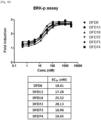
- the in vitro FGF21 activities of the fusion proteins were evaluated using a HEK293 cell line (Yuhan Corporation, Korea) which was modified to overexpress human ⁇ -klotho, a coreceptor of FGF21.
- the concentrates containing the fusion proteins prepared in Preparation Examples 1-4 and 1-5 were subjected to a 3-fold serial dilution at a concentration of 3 ⁇ M.
- the cell line overexpressing human ⁇ -klotho was treated with the diluted fusion proteins for 20 minutes, and then was lysed by adding cytolysis buffer (Cisbio/Cat# 64ERKPEG) with stirring at 60 rpm for 30 minutes at room temperature.
- the cell lysate solution was mixed with antibodies (Cisbio/Cat# 64ERKPEG), which can detect extracellular signal-regulated kinase (ERK) and phosphorylated ERK, and the mixture was maintained at room temperature for 2 hours. Fluorescence was detected using a fluorometric detector (TECAN/GENiosPro). The activities of the fusion proteins were measured by comparing their EC 50 values.
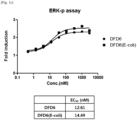
- FIGS. 1A to 1C it was confirmed that the in vitro activities of the fusion proteins prepared by introducing mutation sequences into the wild-type FGF21 protein were not inhibited, and the activities of each fusion protein were similar to each other. It was also confirmed that through the DFD6 (E. coli) sample expressed in E. coli and the DFD6 sample expressed in animal cells, the in vitro activities of the fusion proteins prepared by introducing N-glycosylation mutation into the wild-type FGF21 protein were not inhibited.
- DFD6 E. coli
- the FGF21 activities of the fusion proteins were measured by using the concentrates containing the fusion proteins prepared in Preparation Example 1-5 and the control proteins in accordance with the methods described in Experimental Example 1-1. The results are shown in FIG. 3 .
- a TosoHaas model TSK-GEL G3000SW XL column was used for the SEC-HPLC method.
- the column was equilibrated by flowing a buffer solution (1X PBS, 1 mM EDTA, pH 7.4) at a flow rate of 1 mL/min.
- the DFD4 and DFD13 protein stock solutions prepared in Preparation Examples 1-5 were concentrated to a target concentration of 20 mg/mL or higher at 3,000 rpm using a 30,000 MW cut-off centrifugation filter at 4°C.
- the samples were diluted with a buffer solution (1X PBS, 1 mM EDTA, pH 7.4) to a final concentration of 20 mg/mL.
- a buffer solution (1X PBS, 1 mM EDTA, pH 7.4 In order to measure the initial %HMW of DFD4 and DFD13, 20 mg/mL of the samples were diluted with the buffer solution (1X PBS, 1 mM EDTA, pH 7.4) to a final concentration of 1 mg/mL, and each sample in a volume of 100 ⁇ l was analyzed by SEC-HPLC column.
- %HMW of the samples was measured using the SEC-HPLC method on the 4 th , the 8 th and the 14 th days while storing them at 5°C, 25°C and 37°C for two weeks.
- DFD13 had a lower quantity of high molecular weight aggregates (HMW %) at the initial stage and up to the point of 2 weeks as compared with DFD4, indicating that the introduction of the EIRP mutation improves the stability of the FGF21 mutant fusion protein, thereby reducing HMW % significantly.
- the quantity of %HMW at the initial stage (Day 0) was 0.91% for DFD4, and 0.56% for DFD13.
- the amount of %HMW increased to 8.83% for DFD4, but it was not observed in DFD13, under the condition of storage at 25°C.
- DFD13 was shown to have a lower %HMW rate at the initial stage and 2 weeks, as compared with DFD4, which indicates that the %HMW rate of FGF21 mutant fusion protein decreased significantly due to the introduction of the EIRP mutation.
- the pharmacokinetic profile of each fusion protein was compared and evaluated based on the value of the area under the curve (AUC) indicating the degree of drug exposure.
- the mutations of TGLEAN, G170N and G174N are designed to extend the half-life by introducing N-glycosylation into the C-terminus of FGF21, which is known to be proteolyzed in vivo.
- the increase in AUC due to the introduction of N-glycosylation was confirmed by comparing the mutants with each control material.
- the AUC value for DFD6 (E. coli) produced by E. coli which has no glycosylation was compared with that in DFD6 produced by a human cell line.
- DFD6 produced by the human cell line showed a 3-fold or higher increase in the AUC value as compared with DFD6 (E. coli) produced by E. coli, which demonstrated an improvement of pharmacokinetic profile due to glycosylation.
- the A180E is a mutation disclosed in WO 2009/149171 owned by Amgen Inc.
- the mutation of A180E was further introduced into the mutant DFD 13 or DFD73 including the mutation of TGLEAV or G170N, respectively, the resulting mutant DFD18 or DFD74, respectively, showed an approximate 2- to 3-fold additional increase in AUC value.
- Experimental Example 4-1 Experimental method for evaluating activity in oblob mice
- mice characterized as exhibiting hyperglycemia, insulin resistance, hyperphagia, fatty liver and obesity due to a genetic deficiency in leptin, are widely used for the study of type 2 diabetes.
- Male oblob mice (Harlan, USA) were purchased from Raonbio (Korea). These mice were 5 to 6 weeks old at the time of arrival, and 8 to 9 weeks old at the time of drug treatment after 3 weeks of adaptation.
- Dulbecco's phosphate buffered saline (DPBS, Gibco, USA) was administered as the vehicle treatment, and the glucose concentration in the blood was measured using a glucose meter, GlucoDr (All Medicus, Korea). The non-fasting glucose levels and body weights were measured every day until the 14 th day after administration. Glycated hemoglobin levels were also measured in each group before the administration and after the test. The glycated hemoglobin levels were calculated using a DCA 2000 HbAlc kit (Siemens, 5035C).
- DFD18, DFD72 and DFD74 all had the effect of lowering blood glucose level in a dose-dependent manner. Comparing the three agents at the high dose of 100 nmol/kg, DFD72 and DFD74 showed an improved effect on lowering blood glucose level than DFD18 ( FIG. 6 ). In addition, Fc-FGF21 (Lilly) which was used as a control material in the test, was less effective in lowing blood glucose level as compared with DFD18, DFD72 and DFD74 at the same dose level (30 nmol/kg).
- DFD72 was the most effective in oblob mice resulting in an approximate 6% reduction in body weight
- DFD18 was the next most effective, followed by DFD74 ( FIG. 7 ).
- the glycated hemoglobin levels indicative of the mean values of blood glucose were measured and the changes in mean blood glucose were analyzed in each test group. All of the treated groups except the control group treated with control protein Fc-FGF21 (Lilly) showed negative values in the differences between before administration and after the test, which confirmed the effectiveness of the test proteins as compared with the control material in lowering blood glucose ( FIG. 8 ).
- Experimental Example 5-1 Experimental method for evaluating activity in HFD/ STZ mice
- the effects of the FGF21 mutant fusion proteins on lowering blood glucose and body weight were compared and evaluated in another diabetic model, the HFD/STZ mouse model.
- Conventional dietary-induced obesity mouse models induced by feeding 60 kcal% high fat diet to C57BL/6 mice for eight weeks or longer) have weak hyperglycemic and diabetic features, although they invoke insulin resistance.
- the HFD/STZ mice which may compensate for defects in the conventional dietary-induced obesity mouse models, are capable of producing dysfunctional ⁇ cells in the pancreas and decreased secretion of insulin as a result of a high fat diet (HFD) and administration of low level streptozotocin (STZ), and are therefore useful for pharmacological studies of type 2 diabetes.
- HFD high fat diet
- STZ low level streptozotocin
- mice C57BL/6 mice (Japan SLC) were fed on a 60 kcal% high fat diet for four weeks, and then 50 mg/kg of STZ (Sigma, 85882) was administered intraperitoneally every day for 3 days to induce dysfunction in the ⁇ cells of the pancreas.
- STZ Sigma, 85882
- mice with non-fasting blood glucose levels of 200 mg/dL or higher were used for the test.
- Dulbecco's phosphate buffered saline (DPBS, Gibco, USA) was administered as the vehicle treatment, and the glucose concentration in the blood was measured using a glucose meter, GlucoDr (All Medicus, Korea). The non-fasting glucose levels and body weights were measured every day until the 14 th day after administration. Glycated hemoglobin levels were also measured in each group before the administration and after the test. The glycated hemoglobin levels were calculated using a DCA 2000 HbA1c kit (Siemens, 5035C).
- DFD72 and DFD74 had similar effects on lowering blood glucose levels, and the blood glucose lowering effect was maintained until the 10 th day after administration and then lost with metabolism of the drugs after the 10 th day ( FIG. 9 ).
- DFD72 showed a more prolonged effect than DFD74 in terms of changes in non-fasting blood glucose levels after the 10 th day after administration.
- the glycated hemoglobin levels indicative of the mean value of blood glucose were measured and the changes in mean blood glucose were analyzed in each test group. While the vehicle group had an increase of 0.25 in glycated hemoglobin levels, the group treated with DFD74 had an increase of 0.1 and the group treated with DFD72 had an decrease of 0.27 ( FIG. 11 ).
- Experimental Example 6-1 Experimental method for evaluating activities in diet-induced obese mice
- PBS group treated with vehicle
- HyFc5 refers to SEQ ID NO: 47
- HyFc40 refers to SEQ ID NO: 48.
- each dual function protein contains a GLP-1 mutant protein, an Fc region of an immunoglobulin, a linker and an FGF21 mutant protein connected in this order from the N-terminus to C-terminus.
- nucleotide sequences encoding each of the dual function proteins were synthesized after consulting with Bioneer Corporation (Korea) based on the amino acid sequence of each protein. NheI and NotI restriction enzyme sequences were added to the 5' terminus and 3' terminus of the nucleotide sequences encoding each of the dual function proteins and an initiation codon for protein translation and a leader sequence (MDAMLRGLCCVLLLCGAVFVSPSHA) enabling secretion of the expressed protein to the outside of a cell were inserted next to the restriction enzyme sequence at the 5' terminus. A termination codon was inserted next to the nucleotide sequence, which encodes each of the dual function proteins.
- Korea Bioneer Corporation
- the nucleotide sequence encoding each of the dual function proteins was cloned into a pTrans-empty expression vector by using the two restriction enzymes NheI and NotI.
- the pTrans-empty expression vector which has a simple structure including a CMV promoter, a pUC-derived replication origin, an SV40-derived replication origin and an ampicillin-resistance gene, was purchased from CEVEC Pharmaceuticals (Germany).
- E. coli was transformed with each of the expression vectors constructed in Preparation Example 2-1 to obtain a large quantity of plasmid DNA to be used for expression.
- the E. coli thereafter obtained was centrifuged to remove the culture medium, and then P1, P2, P3 solutions (QIAGEN, Cat No.: 12963) were added to break the cell walls, thereby obtaining a DNA suspension in which proteins and DNA were separated.
- Plasmid DNA was purified from the DNA suspension thus obtained by using a Qiagen DNA purification column.
- the eluted plasmid DNA was identified by agarose gel electrophoresis, and the concentrations and purities were measured using a nanodrop device (Thermo Scientific, Nanodrop Lite). The DNA thus obtained was used for expression.
- Each plasmid DNA type was transduced into CAP-T cells (CEVEC), which had been cultured in PEM medium (Life Technologies), by using a PEI solution (Polyplus, Cat. No.:101-10N).
- the mixed solution of DNA and the PEI solution was mixed with the cell suspension using Freestyle293 expression medium (Invitrogen), cultured at 37°C for 5 hours, and PEM medium was added. After culturing at 37°C for 5-7 days, the culture was centrifuged to remove cells and supernatant containing each protein was obtained.
- Protein A affinity chromatography column (GE Healthcare) was equilibrated with 1X PBS buffer solution (pH 7.4).
- the culture supernatant including each of the Fc-fused GLP-1 mutants and dual function proteins obtained in Preparation Example 2-3 was filtered with a 0.2 ⁇ m filter, and then loaded into a Protein A affinity chromatography column.
- the column was washed with 1X PBS buffer solution (pH 7.4) and then the proteins were eluted using 100 mM glycine buffer solution (pH 3.0).
- the proteins obtained by affinity chromatography were purified using an anion exchange resin column (POROS ® HQ 50 ⁇ m, Thermo Fisher Scientific).
- the anion exchange resin column was equilibrated with 50 mM Tris buffer solution (pH 8.0), before the proteins eluted from the affinity chromatography were loaded thereto.
- the in vitro GLP-1 activities of the dual function proteins DFD23, DFD24, DFD25, DFD26, DFD27, DFD28 and DFD29 were measured.
- a CHO cell line Eurofins, HTS163C2
- samples containing the fusion proteins protein stock solutions prepared in Preparation Example 2-4; hereinafter, "sample” were subjected to a 4-fold serial dilution at a concentration of 25 nM.
- the intracellular cAMP produced was measured (Cisbio, 62AM4PEB). The activity of each protein was evaluated by comparing the EC 50 values.
- the dual function protein containing the GLP-1 (A2G) sequence showed activity approximately 2 ⁇ 3 times lower than that for the dual function proteins containing other GLP-1 mutant sequences. No significant difference in GLP-1 activities was observed between the dual function proteins containing the mutation sequences except the GLP-1 (A2G) sequence.
- the in vitro GLP-1 activities of the dual function proteins DFD69, DFD112 and DFD114 prepared in Preparation Example 2 and DFD59 (an Fc-fused GLP-1 mutant) were measured.
- a CHO cell line Eurofins, HTS163C2 overexpressing the human GLP-1 receptor was purchased and used to evaluate the GLP-1 activities of the dual function proteins.
- the sample containing each of the fusion proteins was subjected to a 4-fold serial dilution at a concentration of 25 nM. After the human GLP-1 receptor-overexpressing CHO cell line was treated for 30 minutes, the intracellular cAMP produced was measured (Cisbio, 62AM4PEB).
- each protein was evaluated by comparing the EC 50 value.
- the three dual function proteins showed similar EC 50 values, and DFD59 (containing no FGF21 mutant) showed activity approximately 2 times higher than that of the dual function proteins.
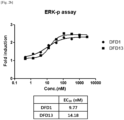
- the in vitro activities of the FGF21 portion in DFD69, DFD112 and DFD114 were measured. Specifically, the in vitro activities of the FGF21 portion in the dual function proteins were evaluated using a HEK293 cell line overexpressing human ⁇ -klotho (a co-receptor of FGF21). For the evaluation of activity, samples containing each of the dual function proteins were subjected to a 3-fold serial dilution at a concentration of 3 ⁇ M.
- the human ⁇ -klotho-overexpressing HEK293 cell line was treated for 20 minutes, before the cells were lysed by adding cytolysis buffer (Cisbio/Cat# 64ERKPEG) with stirring at 60 rpm for 30 minutes at room temperature.
- the cell lysate solution was mixed with antibodies which can detect ERK and phosphorylated ERK, and the mixture was maintained at room temperature for 2 hours. Fluorescence was detected using a fluorometric detector (TECAN/GENiosPro). The activities were measured by comparing their EC 50 values.
- Experimental Example 8-1 Experimental method for pharmacokinetic assessment
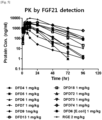
- the blood samples were collected at 1, 4, 8, 12, 24, 48, 72, 96, 144, 192 and 240 hours after the injection, respectively.
- the concentration of each dual function protein in the blood was measured based on the FGF21 portion and the GLP-1-Fc portion separately.
- the concentration of the intact full length FGF21 portion of the dual function protein in the blood was measured using an Intact human FGF21 ELISA Kit (F1231-K01, Eagle Biosciences, USA), which has immunoreactivity to the N-terminus and C-terminus of FGF21 protein. Further, the concentration of the active GLP-1-Fc portion of the dual function protein in the blood was measured using an antibody, which has immunoreactivity to the N-terminus of GLP-1 and Fc, as determined through ELISA analysis. The concentrations of the FGF21 and GLP-1-Fc portions of each protein in the blood samples collected until 240 hours after single subcutaneous injection of each protein into the mice were measured, and the pharmacokinetic parameters of each protein was calculated.
- the pharmacokinetic profiles of each dual function protein were compared and evaluated based on the value of the area under the curve (AUC), indicating the degree of drug exposure.
- DFD114 showed the highest degree of drug exposure (AUC) and half-life, and DFD112 showed the next highest AUC value, followed by DFD69. DFD114 exhibited an approximate 2-fold or higher increase in AUC value as compared with DFD69.
- the four proteins DFD59, DFD69, DFD112 and DFD114 containing the same GLP-1 mutant sequence showed similar AUC values.
- mice characterized as having hyperglycemia, insulin resistance, hyperphagia, fatty liver and obesity due to a genetic deficiency for the leptin receptor and exhibiting more serious hyperglycemia and obesity than oblob mice, are widely used for the study of type 2 diabetes.
- Male db / db mice (Harlan, USA) were purchased from Raonbio (Korea). These mice were 5 to 6 weeks old at the time of arrival, and 8 to 9 weeks old at the time of drug treatment, after 3 weeks of adaptation.
- Dulbecco's phosphate buffered saline DPBS, Gibco, USA
- GlucoDr All Medicus, Korea
- the non-fasting glucose levels and body weights were measured every day until the 14 th day after administration.
- Glycated hemoglobin levels were also measured in each group before the administration and after the test. The glycated hemoglobin levels were calculated using a DCA 2000 HbAlc kit (Siemens, 5035C).
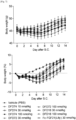
- the long-acting GLP-1-Fc protein DFD59 caused a sharp reduction in blood glucose levels by the 1 st day after administration, but the reduction in blood glucose decreased after the 2 nd day and the blood glucose level was similar to that of the vehicle-treated group after the 4 th day. Meanwhile, the group treated with DFD 114 showed excellent effects on blood glucose reduction by the 3 rd day after administration, and the effects on lowering blood glucose level disappeared more rapidly after the 4 th day from the administration at the dose of 10 nmol/kg than for 30 nmol/kg, indicating dose-dependent differences in the duration of the blood glucose lowering effect.
- the groups treated with combined administration of each protein showed the most sustained effects for lowering blood glucose levels as compared with those of the other groups, indicating that the combination of GLP-1 and FGF21 had an excellent effect on controlling blood glucose level ( FIG. 16 ).
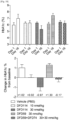
- the groups treated with a combination of DFD59 and DFD74 showed the greatest effects on reducing body weight, and the group treated with 30 nmol/kg of DFD114 also showed an outstanding effect on reducing body weight ( FIG. 17 ).
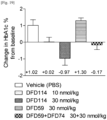
- the glycated hemoglobin levels indicative of the mean value of blood glucose were measured and the changes in mean blood glucose were analyzed in each test group.
- the group treated with vehicle showed increased glycated hemoglobin levels after the termination of the tests as compared with the group before the administration, and the group treated with DFD59 showed a similar increase.
- the group treated with 30 nmol/kg of DFD114 showed the greatest decrease in glycated hemoglobin levels, and the group receiving combined administration showed the next highest effectiveness, followed by the group treated with 10 nmol/kg of DFD114.
- Experimental Example 10-1 Experimental method for evaluating activities in HFD/ STZ mice
- the conventional dietary-induced obesity mouse model (induced by feeding 60 kcal% high fat diet to C57BL/6 mice for eight weeks or longer) has weak hyperglycemic and diabetic features, although invokes insulin resistance.
- the HFD/STZ mice which may compensate for the deficiencies of the conventional dietary-induced obesity mouse model, are capable of generating dysfunctional ⁇ cells of the pancreas and decreased secretion of insulin following a high fat diet (HFD) and administration of low level streptozotocin (STZ), and are used for pharmacological studies of type 2 diabetes.
- HFD high fat diet
- STZ low level streptozotocin
- STZ Sigma, 85882
- Dulbecco's phosphate buffered saline (DPBS, Gibco, USA) was administered as the vehicle treatment, and the glucose concentration in the blood was measured using a glucose meter, GlucoDr (All Medicus, Korea). The non-fasting glucose levels and body weights were measured every day until the 14 th day after administration. Glycated hemoglobin levels were also measured in each group before the administration and after the test. The glycated hemoglobin levels were calculated using a DCA 2000 HbAlc kit (Siemens, 5035C).
- DFD72 and DFD74 long-acting FGF21 single function proteins
- DFD114 long-acting protein including GLP-1
- DFD59 and combined administration of DFD59 and DFD74 showed a more rapid reduction of blood glucose from the 1 st day of administration.
- DFD59 showed a sharp reduction in blood glucose at an early stage, but the reduction of blood glucose disappeared slowly after the 4 th day.
- DFD114 showed a similar pattern at the low dose of 3 nmol/kg. In the groups treated with 10 nmol/kg of DFD114, DFD72, DFD74 and combined administration, similar non-fasting blood glucose profiles were observed.
- the group treated with combined administration of DFD59 and DFD74 showed the greatest effect on body weight reduction (7 to 8%), and the group treated with 10 nmol/kg of DFD114 also showed an outstanding effect on reducing body weight (approximately 6%) ( FIG. 20 ).
- the group treated with DFD59 exhibited a reduction in body weight by 5% at the 1 st day after administration, but the effect disappeared after the 2 nd day and became similar to that of the vehicle group after the 7 th day.
- the group treated with each of the long-acting FGF21 single function proteins DFD72 and DFD74 showed a slower reduction in body weight by 4 to 5% until the 7 th day after the administration, and the effect disappeared after the 10 th day.
- the glycated hemoglobin levels indicative of the mean value of blood glucose were measured and the changes in mean blood glucose were analyzed in each test group ( FIG. 21 ).
- the vehicle group had an increase in glycated hemoglobin levels after the termination of the test as compared with before administration, and the group treated with DFD59 showed a similar increase.
- the group treated with DFD 114 showed reductions in glycated hemoglobin levels in a dose-dependent manner, and the group treated with 10 nmol/kg of DFD114 had the greatest effect in terms of reduced glycated hemoglobin levels (-0.42%).
- the group treated with combined administration of DFD59 and DFD74 showed reduced glycated hemoglobin levels (-0.38%) similar to that of DFD114.
- DFD72 was superior to DFD74. Comparing the proteins based on the reduced levels of glycated hemoglobin in each group, it was confirmed that the dual function protein DFD 114 was superior to both GLP-1-Fc and Fc-FGF21 single function proteins.
- the potential immunogenicity of dual function proteins was rapidly screened by using iTope TM and TCED TM methods (Prediction of immunogenicity of therapeutic proteins: validity of computational tools, BioDrugs, 2010).
- the T-cell epitope may be more accurately predicted as compared with the in silico analytical method which depends on MHC class II binding analysis only.
- EpiScreen TM analysis Increased brain bio-distribution and chemical stability and decreased immunogenicity of an engineered variant of GDNF, Exp Neurol, 2015 was performed.
- the amino acid sequences inducing immunogenicity may be identified through T-cell epitope mapping, and deimmunized mutants with minimized immunogenicity may be designed and prepared via in silico prediction to reevaluate immunogenicity.
Landscapes
- Health & Medical Sciences (AREA)
- Chemical & Material Sciences (AREA)
- Life Sciences & Earth Sciences (AREA)
- Organic Chemistry (AREA)
- General Health & Medical Sciences (AREA)
- Medicinal Chemistry (AREA)
- Animal Behavior & Ethology (AREA)
- Veterinary Medicine (AREA)
- Public Health (AREA)
- Pharmacology & Pharmacy (AREA)
- Engineering & Computer Science (AREA)
- Bioinformatics & Cheminformatics (AREA)
- General Chemical & Material Sciences (AREA)
- Nuclear Medicine, Radiotherapy & Molecular Imaging (AREA)
- Chemical Kinetics & Catalysis (AREA)
- Gastroenterology & Hepatology (AREA)
- Diabetes (AREA)
- Proteomics, Peptides & Aminoacids (AREA)
- Zoology (AREA)
- Biochemistry (AREA)
- Genetics & Genomics (AREA)
- Biophysics (AREA)
- Molecular Biology (AREA)
- Toxicology (AREA)
- Endocrinology (AREA)
- Hematology (AREA)
- Obesity (AREA)
- Cardiology (AREA)
- Heart & Thoracic Surgery (AREA)
- Child & Adolescent Psychology (AREA)
- Emergency Medicine (AREA)
- Epidemiology (AREA)
- Immunology (AREA)
- Rheumatology (AREA)
- Pain & Pain Management (AREA)
- Medicines That Contain Protein Lipid Enzymes And Other Medicines (AREA)
- Peptides Or Proteins (AREA)
- Micro-Organisms Or Cultivation Processes Thereof (AREA)
- Medicines Containing Antibodies Or Antigens For Use As Internal Diagnostic Agents (AREA)
- Medicinal Preparation (AREA)
Claims (15)
- Doppelfunktionsprotein, das ein mutiertes Protein des Fibroblasten-Wachstumsfaktors 21 (FGF21); ein biologisch aktives Protein; und eine Fc-Region eines Immunglobulins umfasst;wobei das FGF21-Mutantenprotein eine Aminosäuresequenz von einer der SEQ ID-NOs: 6, 11 bis 15 und 20 bis 23 aufweist;
wobei das biologisch aktive Protein ein aus der Gruppe ausgewähltes ist, die aus Glucagon-ähnlichem Peptid-1 (GLP-1), eine Mutante von GLP-1 und Exendin-4 besteht, wobei die Mutante von GLP-1 die Aminosäuresequenz einer der SEQ ID NOs: 43 bis 46 aufweist; undwobei das Doppelfunktionsprotein weiter einen Linker umfasst, wobei der Linker das mutierte FGF21-Mutantenprotein mit der Fc-Region des Immunglobulins verbindet. - Doppelfunktionsprotein nach Anspruch 1, wobei ein durch eine Mutation eingeführter Aminosäurerest N des mutierten FGF21-Proteins glykosyliert ist.
- Doppelfunktionsprotein nach Anspruch 1 oder Anspruch 2, wobei das biologisch aktive Protein GLP-1 oder eine Mutante von GLP-1 ist, wobei die Mutante von GLP-1 die Aminosäuresequenz einer der SEQ ID NOs.: 43 bis 46 aufweist.
- Doppelfunktionsprotein nach einem der Ansprüche 1 bis 3, wobei der Linker mit dem C-Terminus der Fc-Region des Immunglobulins und dem N-Terminus des mutierten FGF21-Proteins verbunden ist.
- Doppelfunktionsprotein nach einem der Ansprüche 1 bis 4, wobei die Fc-Region des Immunglobulins eine der Fc-Regionen von IgG1, IgG2, IgG3, IgG4 und IgD oder ein hybrides Fc ist, das eine Kombination davon enthält, wobei das hybride Fc vorzugsweise eine IgG4-Region und eine IgD-Region umfasst.
- Doppelfunktionsprotein nach einem der Ansprüche 1 bis 5, wobei das Doppelfunktionsprotein das biologisch aktive Protein, die Fc-Region des Immunglobulins und das mutierte FGF21-Protein umfasst, die in dieser Reihenfolge vom N-Terminus zum C-Terminus verbunden sind.
- Doppelfunktionsprotein nach einem der Ansprüche 1 bis 6, wobei der Linker ein Peptid ist, das aus 10 bis 30 Aminosäureresten besteht.
- Doppelfunktionsprotein nach einem der Ansprüche 1 bis 7, wobei der Linker die Aminosäuresequenz einer der SEQ ID NOs: 2 bis 5 aufweist.
- Doppelfunktionsprotein nach einem der Ansprüche 1 bis 8, wobei das Doppelfunktionsprotein die Aminosäuresequenz von SEQ ID NO: 65, SEQ ID NO: 66 oder SEQ ID NO: 67 aufweist.
- Doppelfunktionsprotein nach Anspruch 9, wobei das Doppelfunktionsprotein die Aminosäuresequenz von SEQ ID NO: 66 aufweist.
- Doppelfunktionsprotein nach einem der Ansprüche 1 bis 10 zur Verwendung bei der Behandlung von Diabetes, Fettleibigkeit, Dyslipidämie, metabolischem Syndrom, nichtalkoholischer Fettlebererkrankung, nichtalkoholischer Steatohepatitis oder Herz-Kreislauf-Erkrankungen.
- Pharmazeutische Zusammensetzung, die das Doppelfunktionsprotein nach einem der Ansprüche 1 bis 10 umfasst, zur Verwendung bei der Behandlung von Diabetes, Fettleibigkeit, Dyslipidämie, metabolischem Syndrom, nichtalkoholischer Fettlebererkrankung, nichtalkoholischer Steatohepatitis oder Herz-Kreislauf-Erkrankungen.
- Isoliertes Nukleinsäuremolekül, das das Doppelfunktionsprotein nach einem der Ansprüche 1 bis 10 codiert.
- Expressionsvektor, der das Nukleinsäuremolekül nach Anspruch 13 umfasst.
- Wirtszelle, die den Expressionsvektor nach Anspruch 14 umfasst.
Priority Applications (4)
| Application Number | Priority Date | Filing Date | Title |
|---|---|---|---|
| RS20250290A RS66648B1 (sr) | 2015-10-28 | 2016-10-28 | Proteini dvostruke funkcije i farmaceutska kompozicija koja sadrži iste |
| EP25151368.5A EP4527403A3 (de) | 2015-10-28 | 2016-10-28 | Doppelfunktionsproteine und pharmazeutische zusammensetzung damit |
| HRP20250309TT HRP20250309T1 (hr) | 2015-10-28 | 2016-10-28 | Proteini s dvostrukom funkcijom i farmaceutski pripravak koji ih sadrži |
| SI201631894T SI3368555T1 (sl) | 2015-10-28 | 2016-10-28 | Proteini z dvojno funkcijo in farmacevtski sestavek, ki jih vsebuje |
Applications Claiming Priority (2)
| Application Number | Priority Date | Filing Date | Title |
|---|---|---|---|
| KR1020150150576A KR102670157B1 (ko) | 2015-10-28 | 2015-10-28 | 이중 작용 단백질 및 이를 포함하는 약학적 조성물 |
| PCT/KR2016/012300 WO2017074123A1 (en) | 2015-10-28 | 2016-10-28 | Dual function proteins and pharmaceutical composition comprising same |
Related Child Applications (1)
| Application Number | Title | Priority Date | Filing Date |
|---|---|---|---|
| EP25151368.5A Division EP4527403A3 (de) | 2015-10-28 | 2016-10-28 | Doppelfunktionsproteine und pharmazeutische zusammensetzung damit |
Publications (3)
| Publication Number | Publication Date |
|---|---|
| EP3368555A1 EP3368555A1 (de) | 2018-09-05 |
| EP3368555A4 EP3368555A4 (de) | 2019-11-20 |
| EP3368555B1 true EP3368555B1 (de) | 2025-01-15 |
Family
ID=58630627
Family Applications (2)
| Application Number | Title | Priority Date | Filing Date |
|---|---|---|---|
| EP25151368.5A Pending EP4527403A3 (de) | 2015-10-28 | 2016-10-28 | Doppelfunktionsproteine und pharmazeutische zusammensetzung damit |
| EP16860306.6A Active EP3368555B1 (de) | 2015-10-28 | 2016-10-28 | Doppelfunktionsproteine und pharmazeutische zusammensetzung damit |
Family Applications Before (1)
| Application Number | Title | Priority Date | Filing Date |
|---|---|---|---|
| EP25151368.5A Pending EP4527403A3 (de) | 2015-10-28 | 2016-10-28 | Doppelfunktionsproteine und pharmazeutische zusammensetzung damit |
Country Status (21)
| Country | Link |
|---|---|
| US (3) | US11136364B2 (de) |
| EP (2) | EP4527403A3 (de) |
| JP (3) | JP7575862B2 (de) |
| KR (2) | KR102670157B1 (de) |
| CN (4) | CN115925979A (de) |
| AU (1) | AU2016346870B2 (de) |
| CA (1) | CA3003115C (de) |
| DK (1) | DK3368555T3 (de) |
| ES (1) | ES3013110T3 (de) |
| FI (1) | FI3368555T3 (de) |
| HR (1) | HRP20250309T1 (de) |
| HU (1) | HUE071444T2 (de) |
| LT (1) | LT3368555T (de) |
| MX (1) | MX2018005193A (de) |
| PL (1) | PL3368555T3 (de) |
| PT (1) | PT3368555T (de) |
| RS (1) | RS66648B1 (de) |
| RU (1) | RU2741345C2 (de) |
| SI (1) | SI3368555T1 (de) |
| WO (1) | WO2017074123A1 (de) |
| ZA (1) | ZA201802003B (de) |
Families Citing this family (32)
| Publication number | Priority date | Publication date | Assignee | Title |
|---|---|---|---|---|
| KR102668200B1 (ko) * | 2015-10-28 | 2024-05-23 | 주식회사유한양행 | 지속형 fgf21 융합 단백질 및 이를 포함하는 약학적 조성물 |
| KR102670157B1 (ko) * | 2015-10-28 | 2024-05-29 | 주식회사유한양행 | 이중 작용 단백질 및 이를 포함하는 약학적 조성물 |
| CN107759696A (zh) | 2016-08-19 | 2018-03-06 | 安源医药科技(上海)有限公司 | 人白介素7融合蛋白及其制备方法 |
| WO2018032638A1 (zh) | 2016-08-19 | 2018-02-22 | 安源医药科技(上海)有限公司 | 用于构建融合蛋白的连接肽 |
| CN106279437B (zh) | 2016-08-19 | 2017-10-31 | 安源医药科技(上海)有限公司 | 高糖基化人凝血因子viii融合蛋白及其制备方法与用途 |
| KR102692516B1 (ko) * | 2016-11-10 | 2024-08-08 | 주식회사유한양행 | 융합 단백질을 포함하는 간염증, 간섬유화 및 간경화 예방 또는 치료용 약학적 조성물 |
| ES3014984T3 (en) | 2017-03-14 | 2025-04-28 | Sunshine Lake Pharma Co Ltd | Dual-target fusion proteins comprising the fc portion of an immunoglobulin |
| MX2019012331A (es) * | 2017-04-21 | 2020-01-23 | Yuhan Corp | Metodo para producir proteinas de doble funcion y sus derivados. |
| CN109836503B (zh) * | 2017-11-24 | 2022-09-16 | 浙江道尔生物科技有限公司 | 一种治疗代谢疾病的多重活性蛋白 |
| CN113603794B (zh) * | 2018-01-11 | 2024-01-16 | 安源医药科技(上海)有限公司 | 用于调节血糖和脂质的增效型双功能蛋白 |
| US11679143B2 (en) | 2018-02-08 | 2023-06-20 | Sunshine Lake Pharma Co., Ltd. | FGF21 variant, fusion protein and application thereof |
| US20210275643A1 (en) * | 2018-06-21 | 2021-09-09 | Sanofi | Fgf21 compound / glp-1r agonist combinations with optimized activity ratio |
| US20210338779A1 (en) * | 2018-10-04 | 2021-11-04 | Hanmi Pharm. Co., Ltd | Therapeutic use of glucagon and combination including the same |
| CN109836486B (zh) * | 2019-01-30 | 2020-09-08 | 北京双因生物科技有限公司 | 成纤维生长因子21变体、其融合蛋白及其用途 |
| EP3935075A4 (de) | 2019-03-05 | 2023-01-18 | Sunshine Lake Pharma Co., Ltd. | Polypeptidmolekül und anwendung davon |
| CN114853908B (zh) * | 2019-05-16 | 2024-06-07 | 浙江道尔生物科技有限公司 | 一种治疗代谢疾病的融合蛋白 |
| US11639383B2 (en) * | 2019-11-27 | 2023-05-02 | Gi Innovation, Inc. | Pharmaceutical composition for treatment of cancer, comprising an immune checkpoint inhibitor antibody and a fusion protein comprising an IL-2 mutant and a CD80 extracellular domain |
| CN116925237A (zh) | 2019-12-31 | 2023-10-24 | 北京质肽生物医药科技有限公司 | Glp-1和gdf15的融合蛋白以及其缀合物 |
| TW202140525A (zh) * | 2020-01-08 | 2021-11-01 | 大陸商上海翰森生物醫藥科技有限公司 | Fgf21突變體蛋白及其融合蛋白 |
| WO2021139744A1 (en) * | 2020-01-11 | 2021-07-15 | Beijing Ql Biopharmaceutical Co., Ltd. | Conjugates of fusion proteins of glp-1 and fgf21 |
| US11981718B2 (en) | 2020-05-27 | 2024-05-14 | Ampsource Biopharma Shanghai Inc. | Dual-function protein for lipid and blood glucose regulation |
| KR20230034356A (ko) * | 2020-07-02 | 2023-03-09 | 사노피 | 활성이 감소된 glp-1r 효능제 펩티드 |
| JP2023540663A (ja) * | 2020-07-02 | 2023-09-26 | サノフイ | Glp-1rアゴニスト/fgf21融合タンパク質 |
| EP4308610A4 (de) * | 2021-03-19 | 2025-07-16 | Sunshine Lake Pharma Co Ltd | Verwendungen von fgf21-polypeptiden und fusionspolypeptiden davon |
| CN113265007B (zh) * | 2021-06-10 | 2022-02-15 | 江南大学 | 一种治疗代谢疾病的融合蛋白及其制备方法和应用 |
| KR20240034235A (ko) | 2021-07-14 | 2024-03-13 | 베이징 큐엘 바이오파마슈티컬 컴퍼니 리미티드 | 대사 장애를 위한 융합 폴리펩타이드 |
| CN117510646A (zh) * | 2022-08-03 | 2024-02-06 | 无锡市华盛康肽生物技术有限公司 | 一种双功能融合蛋白及其用途 |
| WO2024123812A1 (en) | 2022-12-05 | 2024-06-13 | Shattuck Labs, Inc. | Fusion proteins for the treatment of cardiometabolic diseases |
| EP4659888A1 (de) | 2023-01-30 | 2025-12-10 | Nippon Steel Corporation | Massgeschneiderter rohling, pressformartikel, verfahren zur herstellung eines massgeschneiderten rohlings und verfahren zur herstellung eines pressformartikels |
| WO2024162363A1 (ja) | 2023-01-30 | 2024-08-08 | 日本製鉄株式会社 | テーラードブランク、プレス成形品、テーラードブランクの製造方法、及びプレス成形品の製造方法 |
| CN117143242B (zh) * | 2023-10-30 | 2024-03-29 | 南京佰抗生物科技有限公司 | 抗Galectin-3蛋白的单克隆抗体组合物及应用 |
| CN117942425B (zh) * | 2024-03-27 | 2024-10-22 | 杭州惠康医疗器械有限公司 | 一种促进伤口愈合的水凝胶敷料及其制备方法 |
Family Cites Families (40)
| Publication number | Priority date | Publication date | Assignee | Title |
|---|---|---|---|---|
| JPH0387173A (ja) | 1987-09-10 | 1991-04-11 | Teijin Ltd | ヒト活性化天然型ファクター8cの製造方法及びそれに用いる形質転換体 |
| WO1990002175A1 (en) | 1988-08-16 | 1990-03-08 | Novo Nordisk A/S | A method of producing polypeptides by culturing eukaryotic cells in the presence of protease inhibitors |
| US5851800A (en) | 1996-05-14 | 1998-12-22 | Pharmacia & Upjohn Ab | Process for producing a protein |
| US20040259780A1 (en) | 2001-07-30 | 2004-12-23 | Glasebrook Andrew Lawrence | Method for treating diabetes and obesity |
| EP1463752A4 (de) | 2001-12-21 | 2005-07-13 | Human Genome Sciences Inc | Albuminfusionsproteine |
| JP4629047B2 (ja) | 2003-06-12 | 2011-02-09 | イーライ リリー アンド カンパニー | Glp−1アナログ複合タンパク質 |
| WO2005091944A2 (en) | 2004-03-17 | 2005-10-06 | Eli Lilly And Company | Glycol linked fgf-21 compounds |
| AU2007240315A1 (en) | 2006-04-20 | 2007-11-01 | Amgen Inc. | GLP-1 compound/glucagon antibody compositions |
| KR101389376B1 (ko) | 2007-02-23 | 2014-04-29 | 에스케이케미칼주식회사 | 제 8 인자 및 그의 유도체의 제조 및 정제 방법 |
| US20110034373A1 (en) * | 2007-08-03 | 2011-02-10 | Eli Lilly And Company | Use of an fgf-21 compound and a glp-1 compound for the treatment of obesity |
| MX2010013333A (es) | 2008-06-04 | 2011-04-05 | Amgen Inc | Mutantes fgf21 y usos de los mismos. |
| WO2010065439A1 (en) | 2008-12-05 | 2010-06-10 | Eli Lilly And Company | Variants of fibroblast growth factor 21 |
| KR20110117666A (ko) | 2009-01-23 | 2011-10-27 | 노보 노르디스크 에이/에스 | 알부민 바인더 a-b-c-d-e-를 갖는 fgf21 유도체 및 그것의 사용 |
| WO2011089170A2 (en) | 2010-01-22 | 2011-07-28 | Novo Nordisk A/S | Process for preparing fgf-21 with low degree of o-glycosylation |
| CN108530543B (zh) | 2009-02-03 | 2023-06-23 | 阿穆尼克斯制药公司 | 延伸重组多肽和包含该延伸重组多肽的组合物 |
| TWI560197B (en) * | 2009-05-05 | 2016-12-01 | Amgen Inc | Fgf21 mutants and uses thereof |
| US20120052069A1 (en) | 2009-05-05 | 2012-03-01 | Amgen Inc | Fgf21 mutants and uses thereof |
| US20120172298A1 (en) | 2009-06-11 | 2012-07-05 | Novo Nordisk A/S | Glp-1 and fgf21 combinations for treatment of diabetes type 2 |
| CN101993496B (zh) * | 2009-08-20 | 2013-06-05 | 重庆富进生物医药有限公司 | 双重调节血糖血脂融合蛋白及其制法和用途 |
| CN101993485B (zh) | 2009-08-20 | 2013-04-17 | 重庆富进生物医药有限公司 | 促胰岛素分泌肽类似物同源二聚体及其用途 |
| EP2595647A1 (de) | 2010-07-20 | 2013-05-29 | Novo Nordisk A/S | N-terminal-modifizierte fgf21-verbindungen |
| US9023791B2 (en) | 2010-11-19 | 2015-05-05 | Novartis Ag | Fibroblast growth factor 21 mutations |
| US9574002B2 (en) | 2011-06-06 | 2017-02-21 | Amgen Inc. | Human antigen binding proteins that bind to a complex comprising β-Klotho and an FGF receptor |
| EP2548570A1 (de) | 2011-07-19 | 2013-01-23 | Sanofi | Pharmazeutische Zusammensetzung zur Behandlung eines metabolischen Syndroms |
| EP2750695A2 (de) | 2011-08-31 | 2014-07-09 | Amgen Inc. | Verfahren zur behandlung oder linderung von typ-1-diabetes mittels fgf21 |
| UY34346A (es) * | 2011-09-26 | 2013-04-30 | Novartis Ag | Proteínas de fusión para tratar trastornos metabólicos |
| UY34347A (es) | 2011-09-26 | 2013-04-30 | Novartis Ag | Proteínas de función dual para tratar trastornos metabólicos |
| CN102558358A (zh) * | 2011-12-30 | 2012-07-11 | 张海涛 | 人成纤维细胞生长因子21融合蛋白及其突变体的制备与应用 |
| WO2013131091A1 (en) * | 2012-03-02 | 2013-09-06 | New York University | Chimeric fgf21 proteins with enhanced binding affinity for beta-klotho for the treatment of type ii diabetes, obesity and related metabolic disorders |
| TWI513705B (zh) | 2012-06-11 | 2015-12-21 | Lilly Co Eli | 纖維母細胞生長因子21蛋白質 |
| AR092076A1 (es) * | 2012-08-22 | 2015-03-18 | Lilly Co Eli | Proteinas homodimericas |
| CA2880929A1 (en) * | 2012-09-07 | 2014-03-13 | Sanofi | Fusion proteins for treating a metabolic syndrome |
| WO2014130659A1 (en) | 2013-02-22 | 2014-08-28 | New York University | Chimeric fibroblast growth factor 23 proteins and methods of use |
| AU2014318579A1 (en) * | 2013-09-13 | 2016-04-14 | The California Institute For Biomedical Research | Modified therapeutic agents and compositions thereof |
| BR112017008157A2 (pt) | 2014-10-24 | 2017-12-19 | Bristol Myers Squibb Co | polipeptídeos de fgf-21 modificados e usos dos mesmos |
| KR102668200B1 (ko) | 2015-10-28 | 2024-05-23 | 주식회사유한양행 | 지속형 fgf21 융합 단백질 및 이를 포함하는 약학적 조성물 |
| KR102670157B1 (ko) * | 2015-10-28 | 2024-05-29 | 주식회사유한양행 | 이중 작용 단백질 및 이를 포함하는 약학적 조성물 |
| CN105288592A (zh) | 2015-11-02 | 2016-02-03 | 哈尔滨博翱生物医药技术开发有限公司 | 成纤维细胞生长因子-21成熟肽在制备肝纤维化治疗药物中的应用 |
| ES3014984T3 (en) | 2017-03-14 | 2025-04-28 | Sunshine Lake Pharma Co Ltd | Dual-target fusion proteins comprising the fc portion of an immunoglobulin |
| MX2019012331A (es) | 2017-04-21 | 2020-01-23 | Yuhan Corp | Metodo para producir proteinas de doble funcion y sus derivados. |
-
2015
- 2015-10-28 KR KR1020150150576A patent/KR102670157B1/ko active Active
-
2016
- 2016-10-28 CN CN202210973282.8A patent/CN115925979A/zh active Pending
- 2016-10-28 EP EP25151368.5A patent/EP4527403A3/de active Pending
- 2016-10-28 CN CN202210972247.4A patent/CN115925978A/zh active Pending
- 2016-10-28 AU AU2016346870A patent/AU2016346870B2/en active Active
- 2016-10-28 ES ES16860306T patent/ES3013110T3/es active Active
- 2016-10-28 HU HUE16860306A patent/HUE071444T2/hu unknown
- 2016-10-28 CN CN201680062638.5A patent/CN108350054B/zh active Active
- 2016-10-28 SI SI201631894T patent/SI3368555T1/sl unknown
- 2016-10-28 PT PT168603066T patent/PT3368555T/pt unknown
- 2016-10-28 PL PL16860306.6T patent/PL3368555T3/pl unknown
- 2016-10-28 LT LTEPPCT/KR2016/012300T patent/LT3368555T/lt unknown
- 2016-10-28 RS RS20250290A patent/RS66648B1/sr unknown
- 2016-10-28 US US15/768,865 patent/US11136364B2/en active Active
- 2016-10-28 CN CN202210973281.3A patent/CN116333160A/zh active Pending
- 2016-10-28 MX MX2018005193A patent/MX2018005193A/es unknown
- 2016-10-28 WO PCT/KR2016/012300 patent/WO2017074123A1/en not_active Ceased
- 2016-10-28 JP JP2018522147A patent/JP7575862B2/ja active Active
- 2016-10-28 DK DK16860306.6T patent/DK3368555T3/da active
- 2016-10-28 CA CA3003115A patent/CA3003115C/en active Active
- 2016-10-28 RU RU2018118025A patent/RU2741345C2/ru active
- 2016-10-28 FI FIEP16860306.6T patent/FI3368555T3/fi active
- 2016-10-28 EP EP16860306.6A patent/EP3368555B1/de active Active
- 2016-10-28 HR HRP20250309TT patent/HRP20250309T1/hr unknown
-
2018
- 2018-03-26 ZA ZA2018/02003A patent/ZA201802003B/en unknown
-
2021
- 2021-09-17 US US17/478,628 patent/US20220002368A1/en not_active Abandoned
-
2022
- 2022-10-12 JP JP2022164154A patent/JP2023011644A/ja active Pending
-
2024
- 2024-05-20 KR KR1020240065441A patent/KR102927838B1/ko active Active
- 2024-10-18 US US18/919,743 patent/US20250270269A1/en active Pending
-
2025
- 2025-05-27 JP JP2025087649A patent/JP2025128179A/ja active Pending
Also Published As
Similar Documents
| Publication | Publication Date | Title |
|---|---|---|
| US20250270269A1 (en) | Dual function proteins comprising fgf21 mutant protein and pharmaceutical composition comprising same | |
| US20240279296A1 (en) | Long-acting fgf21 fusion proteins and pharmaceutical composition comprising same | |
| EP3568149B1 (de) | Pharmazeutische zusammensetzung zur prävention oder behandlung von hepatitis, leberfibrose sowie leberzirrhose mit fusionsproteinen | |
| HK40040781A (en) | Long-acting fgf21 fusion proteins and pharmaceutical composition comprising same | |
| HK40040781B (en) | Long-acting fgf21 fusion proteins and pharmaceutical composition comprising same | |
| BR112018008805B1 (pt) | Proteína de função dupla, composição farmacêutica e molécula de ácido nucleico isolada que compreendem a dita proteína, uso terapêutico da mesma e vetor de expressão | |
| HK1257375B (en) | Long-acting fgf21 fusion proteins and pharmaceutical composition comprising same | |
| BR112018008676B1 (pt) | Proteína de fusão de fgf21 de ação prolongada e composição farmacêutica compreendendo a mesma, molécula isolada de ácido nucleico, vetor de expressão e uso terapêutico da dita proteína |
Legal Events
| Date | Code | Title | Description |
|---|---|---|---|
| REG | Reference to a national code |
Ref country code: HR Ref legal event code: TUEP Ref document number: P20250309T Country of ref document: HR |
|
| STAA | Information on the status of an ep patent application or granted ep patent |
Free format text: STATUS: THE INTERNATIONAL PUBLICATION HAS BEEN MADE |
|
| PUAI | Public reference made under article 153(3) epc to a published international application that has entered the european phase |
Free format text: ORIGINAL CODE: 0009012 |
|
| STAA | Information on the status of an ep patent application or granted ep patent |
Free format text: STATUS: REQUEST FOR EXAMINATION WAS MADE |
|
| 17P | Request for examination filed |
Effective date: 20180426 |
|
| AK | Designated contracting states |
Kind code of ref document: A1 Designated state(s): AL AT BE BG CH CY CZ DE DK EE ES FI FR GB GR HR HU IE IS IT LI LT LU LV MC MK MT NL NO PL PT RO RS SE SI SK SM TR |
|
| AX | Request for extension of the european patent |
Extension state: BA ME |
|
| DAV | Request for validation of the european patent (deleted) | ||
| DAX | Request for extension of the european patent (deleted) | ||
| RIC1 | Information provided on ipc code assigned before grant |
Ipc: C07K 14/50 20060101AFI20190521BHEP Ipc: A61K 38/18 20060101ALI20190521BHEP Ipc: C07K 19/00 20060101ALI20190521BHEP Ipc: A61K 38/26 20060101ALI20190521BHEP Ipc: A61K 38/17 20060101ALI20190521BHEP Ipc: C07K 14/46 20060101ALI20190521BHEP Ipc: C07K 14/605 20060101ALI20190521BHEP |
|
| A4 | Supplementary search report drawn up and despatched |
Effective date: 20191018 |
|
| RIC1 | Information provided on ipc code assigned before grant |
Ipc: C07K 14/46 20060101ALI20191014BHEP Ipc: C07K 19/00 20060101ALI20191014BHEP Ipc: A61K 38/17 20060101ALI20191014BHEP Ipc: A61K 38/26 20060101ALI20191014BHEP Ipc: A61K 38/18 20060101ALI20191014BHEP Ipc: C07K 14/605 20060101ALI20191014BHEP Ipc: C07K 14/50 20060101AFI20191014BHEP |
|
| STAA | Information on the status of an ep patent application or granted ep patent |
Free format text: STATUS: EXAMINATION IS IN PROGRESS |
|
| 17Q | First examination report despatched |
Effective date: 20230524 |
|
| P01 | Opt-out of the competence of the unified patent court (upc) registered |
Effective date: 20230522 |
|
| GRAP | Despatch of communication of intention to grant a patent |
Free format text: ORIGINAL CODE: EPIDOSNIGR1 |
|
| STAA | Information on the status of an ep patent application or granted ep patent |
Free format text: STATUS: GRANT OF PATENT IS INTENDED |
|
| INTG | Intention to grant announced |
Effective date: 20240808 |
|
| GRAS | Grant fee paid |
Free format text: ORIGINAL CODE: EPIDOSNIGR3 |
|
| GRAA | (expected) grant |
Free format text: ORIGINAL CODE: 0009210 |
|
| STAA | Information on the status of an ep patent application or granted ep patent |
Free format text: STATUS: THE PATENT HAS BEEN GRANTED |
|
| AK | Designated contracting states |
Kind code of ref document: B1 Designated state(s): AL AT BE BG CH CY CZ DE DK EE ES FI FR GB GR HR HU IE IS IT LI LT LU LV MC MK MT NL NO PL PT RO RS SE SI SK SM TR |
|
| REG | Reference to a national code |
Ref country code: CH Ref legal event code: EP Ref country code: GB Ref legal event code: FG4D |
|
| REG | Reference to a national code |
Ref country code: DE Ref legal event code: R096 Ref document number: 602016090970 Country of ref document: DE |
|
| REG | Reference to a national code |
Ref country code: IE Ref legal event code: FG4D |
|
| REG | Reference to a national code |
Ref country code: FI Ref legal event code: FGE |
|
| REG | Reference to a national code |
Ref country code: PT Ref legal event code: SC4A Ref document number: 3368555 Country of ref document: PT Date of ref document: 20250228 Kind code of ref document: T Free format text: AVAILABILITY OF NATIONAL TRANSLATION Effective date: 20250224 |
|
| REG | Reference to a national code |
Ref country code: NL Ref legal event code: FP |
|
| REG | Reference to a national code |
Ref country code: ES Ref legal event code: FG2A Ref document number: 3013110 Country of ref document: ES Kind code of ref document: T3 Effective date: 20250411 |
|
| REG | Reference to a national code |
Ref country code: DK Ref legal event code: T3 Effective date: 20250411 |
|
| REG | Reference to a national code |
Ref country code: SE Ref legal event code: TRGR |
|
| REG | Reference to a national code |
Ref country code: HR Ref legal event code: T1PR Ref document number: P20250309 Country of ref document: HR |
|
| REG | Reference to a national code |
Ref country code: SK Ref legal event code: T3 Ref document number: E 46176 Country of ref document: SK |
|
| REG | Reference to a national code |
Ref country code: GR Ref legal event code: EP Ref document number: 20250400764 Country of ref document: GR Effective date: 20250514 |
|
| REG | Reference to a national code |
Ref country code: EE Ref legal event code: FG4A Ref document number: E025010 Country of ref document: EE Effective date: 20250312 |
|
| REG | Reference to a national code |
Ref country code: HU Ref legal event code: AG4A Ref document number: E071444 Country of ref document: HU |
|
| PG25 | Lapsed in a contracting state [announced via postgrant information from national office to epo] |
Ref country code: SM Free format text: LAPSE BECAUSE OF FAILURE TO SUBMIT A TRANSLATION OF THE DESCRIPTION OR TO PAY THE FEE WITHIN THE PRESCRIBED TIME-LIMIT Effective date: 20250115 |
|
| REG | Reference to a national code |
Ref country code: DE Ref legal event code: R097 Ref document number: 602016090970 Country of ref document: DE |
|
| REG | Reference to a national code |
Ref country code: CH Ref legal event code: U11 Free format text: ST27 STATUS EVENT CODE: U-0-0-U10-U11 (AS PROVIDED BY THE NATIONAL OFFICE) Effective date: 20251101 |
|
| REG | Reference to a national code |
Ref country code: HR Ref legal event code: ODRP Ref document number: P20250309 Country of ref document: HR Payment date: 20251017 Year of fee payment: 10 |
|
| PGFP | Annual fee paid to national office [announced via postgrant information from national office to epo] |
Ref country code: HU Payment date: 20251021 Year of fee payment: 10 |
|
| PGFP | Annual fee paid to national office [announced via postgrant information from national office to epo] |
Ref country code: NL Payment date: 20251017 Year of fee payment: 10 Ref country code: LU Payment date: 20251017 Year of fee payment: 10 |
|
| PLBE | No opposition filed within time limit |
Free format text: ORIGINAL CODE: 0009261 |
|
| STAA | Information on the status of an ep patent application or granted ep patent |
Free format text: STATUS: NO OPPOSITION FILED WITHIN TIME LIMIT |
|
| PGFP | Annual fee paid to national office [announced via postgrant information from national office to epo] |
Ref country code: PT Payment date: 20251020 Year of fee payment: 10 |
|
| 26N | No opposition filed |
Effective date: 20251016 |
|
| PGFP | Annual fee paid to national office [announced via postgrant information from national office to epo] |
Ref country code: DE Payment date: 20251020 Year of fee payment: 10 Ref country code: IS Payment date: 20251027 Year of fee payment: 10 |
|
| PGFP | Annual fee paid to national office [announced via postgrant information from national office to epo] |
Ref country code: LT Payment date: 20251020 Year of fee payment: 10 Ref country code: GB Payment date: 20251017 Year of fee payment: 10 |
|
| PGFP | Annual fee paid to national office [announced via postgrant information from national office to epo] |
Ref country code: MC Payment date: 20251020 Year of fee payment: 10 Ref country code: NO Payment date: 20251023 Year of fee payment: 10 |
|
| PGFP | Annual fee paid to national office [announced via postgrant information from national office to epo] |
Ref country code: MK Payment date: 20251020 Year of fee payment: 10 Ref country code: AT Payment date: 20251020 Year of fee payment: 10 |
|
| PGFP | Annual fee paid to national office [announced via postgrant information from national office to epo] |
Ref country code: FI Payment date: 20251021 Year of fee payment: 10 Ref country code: DK Payment date: 20251022 Year of fee payment: 10 Ref country code: IT Payment date: 20251020 Year of fee payment: 10 |
|
| PGFP | Annual fee paid to national office [announced via postgrant information from national office to epo] |
Ref country code: HR Payment date: 20251017 Year of fee payment: 10 Ref country code: FR Payment date: 20251017 Year of fee payment: 10 |
|
| PGFP | Annual fee paid to national office [announced via postgrant information from national office to epo] |
Ref country code: GR Payment date: 20251020 Year of fee payment: 10 Ref country code: AL Payment date: 20251020 Year of fee payment: 10 Ref country code: TR Payment date: 20251020 Year of fee payment: 10 Ref country code: BE Payment date: 20251017 Year of fee payment: 10 |
|
| PGFP | Annual fee paid to national office [announced via postgrant information from national office to epo] |
Ref country code: CH Payment date: 20251101 Year of fee payment: 10 Ref country code: SE Payment date: 20251022 Year of fee payment: 10 |
|
| PGFP | Annual fee paid to national office [announced via postgrant information from national office to epo] |
Ref country code: CZ Payment date: 20251017 Year of fee payment: 10 Ref country code: IE Payment date: 20251023 Year of fee payment: 10 Ref country code: CY Payment date: 20251021 Year of fee payment: 10 |
|
| PGFP | Annual fee paid to national office [announced via postgrant information from national office to epo] |
Ref country code: MT Payment date: 20251021 Year of fee payment: 10 Ref country code: LV Payment date: 20251021 Year of fee payment: 10 |
|
| PGFP | Annual fee paid to national office [announced via postgrant information from national office to epo] |
Ref country code: BG Payment date: 20251027 Year of fee payment: 10 Ref country code: PL Payment date: 20251020 Year of fee payment: 10 |
|
| PGFP | Annual fee paid to national office [announced via postgrant information from national office to epo] |
Ref country code: EE Payment date: 20251028 Year of fee payment: 10 |
|
| PGFP | Annual fee paid to national office [announced via postgrant information from national office to epo] |
Ref country code: SK Payment date: 20251020 Year of fee payment: 10 Ref country code: RO Payment date: 20251023 Year of fee payment: 10 |
|
| PGFP | Annual fee paid to national office [announced via postgrant information from national office to epo] |
Ref country code: RS Payment date: 20251020 Year of fee payment: 10 |
|
| PGFP | Annual fee paid to national office [announced via postgrant information from national office to epo] |
Ref country code: SI Payment date: 20251021 Year of fee payment: 10 Ref country code: ES Payment date: 20251114 Year of fee payment: 10 |