EP3484480B1 - Utilisation d'homosalate et de salicylate d'octyle pour traiter la sclérose en plaques - Google Patents
Utilisation d'homosalate et de salicylate d'octyle pour traiter la sclérose en plaques Download PDFInfo
- Publication number
- EP3484480B1 EP3484480B1 EP17742350.6A EP17742350A EP3484480B1 EP 3484480 B1 EP3484480 B1 EP 3484480B1 EP 17742350 A EP17742350 A EP 17742350A EP 3484480 B1 EP3484480 B1 EP 3484480B1
- Authority
- EP
- European Patent Office
- Prior art keywords
- homosalate
- composition
- patient
- octyl salicylate
- symptom
- Prior art date
- Legal status (The legal status is an assumption and is not a legal conclusion. Google has not performed a legal analysis and makes no representation as to the accuracy of the status listed.)
- Not-in-force
Links
Images


Classifications
-
- A—HUMAN NECESSITIES
- A61—MEDICAL OR VETERINARY SCIENCE; HYGIENE
- A61K—PREPARATIONS FOR MEDICAL, DENTAL OR TOILETRY PURPOSES
- A61K31/00—Medicinal preparations containing organic active ingredients
- A61K31/60—Salicylic acid; Derivatives thereof
- A61K31/618—Salicylic acid; Derivatives thereof having the carboxyl group in position 1 esterified, e.g. salsalate
-
- A—HUMAN NECESSITIES
- A61—MEDICAL OR VETERINARY SCIENCE; HYGIENE
- A61K—PREPARATIONS FOR MEDICAL, DENTAL OR TOILETRY PURPOSES
- A61K31/00—Medicinal preparations containing organic active ingredients
- A61K31/60—Salicylic acid; Derivatives thereof
-
- A—HUMAN NECESSITIES
- A61—MEDICAL OR VETERINARY SCIENCE; HYGIENE
- A61K—PREPARATIONS FOR MEDICAL, DENTAL OR TOILETRY PURPOSES
- A61K8/00—Cosmetics or similar toiletry preparations
- A61K8/18—Cosmetics or similar toiletry preparations characterised by the composition
- A61K8/30—Cosmetics or similar toiletry preparations characterised by the composition containing organic compounds
- A61K8/33—Cosmetics or similar toiletry preparations characterised by the composition containing organic compounds containing oxygen
- A61K8/37—Esters of carboxylic acids
-
- A—HUMAN NECESSITIES
- A61—MEDICAL OR VETERINARY SCIENCE; HYGIENE
- A61K—PREPARATIONS FOR MEDICAL, DENTAL OR TOILETRY PURPOSES
- A61K9/00—Medicinal preparations characterised by special physical form
- A61K9/0012—Galenical forms characterised by the site of application
- A61K9/0014—Skin, i.e. galenical aspects of topical compositions
-
- A—HUMAN NECESSITIES
- A61—MEDICAL OR VETERINARY SCIENCE; HYGIENE
- A61K—PREPARATIONS FOR MEDICAL, DENTAL OR TOILETRY PURPOSES
- A61K9/00—Medicinal preparations characterised by special physical form
- A61K9/0012—Galenical forms characterised by the site of application
- A61K9/0019—Injectable compositions; Intramuscular, intravenous, arterial, subcutaneous administration; Compositions to be administered through the skin in an invasive manner
-
- A—HUMAN NECESSITIES
- A61—MEDICAL OR VETERINARY SCIENCE; HYGIENE
- A61K—PREPARATIONS FOR MEDICAL, DENTAL OR TOILETRY PURPOSES
- A61K9/00—Medicinal preparations characterised by special physical form
- A61K9/0012—Galenical forms characterised by the site of application
- A61K9/0053—Mouth and digestive tract, i.e. intraoral and peroral administration
-
- A—HUMAN NECESSITIES
- A61—MEDICAL OR VETERINARY SCIENCE; HYGIENE
- A61P—SPECIFIC THERAPEUTIC ACTIVITY OF CHEMICAL COMPOUNDS OR MEDICINAL PREPARATIONS
- A61P25/00—Drugs for disorders of the nervous system
-
- A—HUMAN NECESSITIES
- A61—MEDICAL OR VETERINARY SCIENCE; HYGIENE
- A61Q—SPECIFIC USE OF COSMETICS OR SIMILAR TOILETRY PREPARATIONS
- A61Q17/00—Barrier preparations; Preparations brought into direct contact with the skin for affording protection against external influences, e.g. sunlight, X-rays or other harmful rays, corrosive materials, bacteria or insect stings
- A61Q17/04—Topical preparations for affording protection against sunlight or other radiation; Topical sun tanning preparations
-
- A—HUMAN NECESSITIES
- A61—MEDICAL OR VETERINARY SCIENCE; HYGIENE
- A61K—PREPARATIONS FOR MEDICAL, DENTAL OR TOILETRY PURPOSES
- A61K2800/00—Properties of cosmetic compositions or active ingredients thereof or formulation aids used therein and process related aspects
- A61K2800/80—Process related aspects concerning the preparation of the cosmetic composition or the storage or application thereof
- A61K2800/91—Injection
-
- A—HUMAN NECESSITIES
- A61—MEDICAL OR VETERINARY SCIENCE; HYGIENE
- A61K—PREPARATIONS FOR MEDICAL, DENTAL OR TOILETRY PURPOSES
- A61K2800/00—Properties of cosmetic compositions or active ingredients thereof or formulation aids used therein and process related aspects
- A61K2800/80—Process related aspects concerning the preparation of the cosmetic composition or the storage or application thereof
- A61K2800/92—Oral administration
Definitions
- MS Multiple sclerosis
- the disease affects the ability of parts of the nervous system to communicate and results in physical, mental, and sometimes psychiatric problems.
- MS patients often have vision disorders, such as blindness in one eye or double vision. Patients also exhibit muscle weakness, trouble with sensation, and trouble with coordination.
- MS is usually diagnosed based on analysis of a patient's symptoms and the results of supporting medical tests.
- the present invention provides a composition selected from the group consisting of homosalate, octyl salicylate and combinations of homosalate and octyl salicylate for use in a method of treating a multiple sclerosis (MS) patient, the method comprising the steps of
- the "effective amount,” as used herein, refers to the amount of a required to ameliorate the symptoms of a disease relative to an untreated patient.
- the effective amount of active compound(s) used to practice the present invention for therapeutic treatment of a disease varies depending upon the manner of administration, the age, body weight, and general health of the subject. Ultimately, the attending physician or veterinarian will decide the appropriate amount and dosage regimen. Such amount is referred to as an "effective" amount.
- MS multiple sclerosis
- RRMS relapsing/remitting MS
- secondary progressive MS primary progressive MS
- progressive relapsing MS secondary progressive MS
- progressive relapsing MS secondary progressive MS
- the relapsing-remitting subtype may be characterized by unpredictable relapses followed by periods of months to years of relative quiet (remission) with no new signs of disease activity.
- the relapsing-remitting subtype may usually begin with a clinically isolated syndrome (CIS).
- CIS clinically isolated syndrome
- CIS clinically isolated syndrome
- a diagnosis of multiple sclerosis can be established on the basis of established clinical symptoms and the clinical symptoms is well known to the skilled person.
- the present invention disclose a composition for treating MS by lessening occurrence of the symptom or by slowing or stalling progression of the symptom.
- the clinical symptoms of multiple sclerosis may include vision problems, dizziness, vertigo, sensory dysfunction, weakness, problems with coordination, loss of balance, fatigue, pain, neurocognitive deficits, mental health deficits, bladder dysfunction, bowel dysfunction, sexual dysfunction, heat sensitivity.
- multiple sclerosis also refers to any other autoimmune disease manifested by demylination of the central nervous system's neurons.
- the first symptoms which appear at the onset of MS may be referred to at times as “MS-related symptoms.”
- the symptoms of MS in EAE-induced animals may be typically weakness and malfunction in the animal's tail, followed by weakness of its rear feet and finally weakness in its front feet.
- Such first MS-related symptoms may typically be double vision, facial numbness, facial weakness, vertigo, nausea, vomiting ataxia, weakness of the arms, etc.
- treating refers to amelioration of some of the undesired symptoms of multiple sclerosis, the prevention of the manifestation of such symptoms before they occur, slowing down or completely preventing the progression of the disease (as may be evident by longer periods between reoccurrence episodes, slowing down or prevention of the deterioration of symptoms etc.), enhancing the onset of the remission period, slowing down the irreversible damage caused in the progressive-chronic stage of the disease (both in the primary and secondary stages), delaying the onset of said progressive stage, or a combination of two or more of the above.
- patient refers to a mammalian subject (primates (e.g., humans), cows, sheep, goats, pigs, horses, dogs, cats, rabbits, rats, mice and the like), preferably a human subject, that has, is suspected of having, or is or may be susceptible to a condition associated with multiple sclerosis.
- the present method may be used for treating a patient who suffers from multiple sclerosis, e.g., with any symptoms as discussed above.
- the present method may also be used to prevent a perspective patient from getting multiple sclerosis.
- diagnosis refers to detecting a disease or disorder or determining the stage or degree of a disease or disorder such as MS.
- the term “diagnosis” also encompasses determining the therapeutic effect of a drug therapy to treat MS, or predicting the pattern of response to a drug therapy of MS.
- the diagnostic methods may be used independently, or in combination with other diagnostic and/or staging methods known in the medical art for a particular disease or disorder, e.g., MS.
- pharmaceutically acceptable refers to the compound or composition or carrier being suitable for administration to a subject to achieve the treatments described herein, without unduly deleterious side effects in light of the necessity of the treatment.
- terapéuticaally effective amount refers to the amount of the compounds or dosages that will elicit the biological or medical response of a subject, tissue or cell that is being sought by the researcher, veterinarian, medical doctor or other clinician.
- pharmaceutically-acceptable carrier includes any and all dry powder, solvents, dispersion media, coatings, antibacterial and antifungal agents, isotonic agents, absorption delaying agents, and the like.
- Pharmaceutically-acceptable carriers are materials, useful for the purpose of administering the compounds in the method described herein, which are preferably non-toxic, and may be solid, liquid, or gaseous materials, which are otherwise inert and pharmaceutically acceptable, and are compatible with the compounds described herein.
- Examples may include sugars such as, but not limited to, lactose, glucose and sucrose; starches such as, but not limited to, corn starch and potato starch; cellulose and its derivatives such as, but not limited to, sodium carboxymethyl cellulose, ethyl cellulose and cellulose acetate; powdered tragacanth; malt; gelatin; talc; excipients such as, but not limited to, cocoa butter and suppository waxes; oils such as, but not limited to, peanut oil, cottonseed oil, safflower oil, sesame oil, olive oil, corn oil and soybean oil; glycols; such a propylene glycol; esters such as, but not limited to, ethyl oleate and ethyl laurate; agar; buffering agents such as, but not limited to, magnesium hydroxide and aluminum hydroxide; alginic acid; pyrogen-free water; isotonic saline; Ringer's solution; e
- Such carriers include, various lactose, mannitol, oils such as com oil, buffers such as PBS, saline, polyethylene glycol, glycerin, polypropylene glycol, dimethylsulfoxide, an amide such as dimethylacetamide, a protein such as albumin, and a detergent such as Tween 80, mono- and oligopolysaccharides such as glucose, lactose, cyclodextrins and starch.
- oils such as com oil
- buffers such as PBS, saline
- polyethylene glycol such as glycerin, polypropylene glycol
- dimethylsulfoxide dimethylsulfoxide
- an amide such as dimethylacetamide
- a protein such as albumin
- a detergent such as Tween 80
- mono- and oligopolysaccharides such as glucose, lactose, cyclodextrins and starch.
- administering refers to providing a compound or pharmaceutical composition to a subject suffering from or at risk of the diseases or conditions to be treated or prevented.
- systemic delivery refers to any suitable administration methods which may delivery the compounds systemically.
- Systemic delivery may be selected from the group consisting of oral, parenteral, intranasal, inhaler, sublingual, rectal, intracisternal, and transdermal, intravaginal, intraperitoneal, topically (as by powders, ointments or drops), bucal or as an oral or nasal spray administrations.
- parenterally refers to modes of administration which include intravenous, intramuscular, intraperitoneal, intrasternal, subcutaneous and intraarticular injection and infusion.
- compositions or formulations may be administered topically.
- topical administration refers to local administration of a component of a composition or a kit onto the surface of a skin or mucosal tissue of a subject.
- a topical administration emphasizes local effect, and substance is applied directly where its action is desired.
- topical may be defined as applied to a localized area of the body or to the surface of a body part, without necessarily involving target effect of the substance, making the classification rather a variant of the classification based on application location.
- Described herein are methods of using octyl salicylate and/or homosalate, or a composition comprising at least one of octyl salicylate and homosalate, to prevent or suppress the progression of multiple sclerosis.
- the Examples below show that Applicants observed that commercial sun block preparations decreased or prevented the incidence of EAE in EAE mice, a mouse model of MS.
- Applicants demonstrate that treating a multiple sclerosis (MS) patient or a prospective MS patient with an effective amount of a composition selected from the group consisting of homosalate, octyl salicylate and combinations of homosalate and octyl salicylate can prevent the development of experimental autoimmune encephalomyelitis, thus treating MS.
- MS multiple sclerosis
- the method requires the use of the composition daily for at least 30 days and preferably at least 60 or 90 days. Additionally, a preferable form of administration is orally, by inhalation or parenterally, in contrast to topical sunscreen administration.
- the method described herein includes the step of diagnosing a group of subjects (e.g., humans) in danger of developing MS and identifying an MS patient or a perspective MS patient exhibiting at least one symptom of MS.
- a group of subjects e.g., humans
- Identification of a subject or patient appropriate for treatment of MS symptoms can be carried out based on standardized diagnostic criteria widely used by practicing physicians, especially in the first stages of the disease, such as the socalled Schumacher and Poser criteria ( Compston A, Coles A, October 2008, Multiple sclerosis. Lancet 372 (9648): 1502-17 ; Trojano M, Paoliceili D, (2001) The differential diagnosis of multiple sclerosis: classification and clinical features of relapsing and progressive neurological syndromes. Neurol, Sci. 22 (Suppl 2): S98-102 ; Poser CM, Brinar VV (2004) Diagnostic criteria for multiple sclerosis: an historical review.
- MRI magnetic resonance imaging
- Gadolinium administered, as a contrast agent, to a patient with MS typically localizes in these "hot spots" or lesions, and can be easily identified with the use of MRI.
- the MRI of the lesions is one of the most efficient methods of diagnosing MS. Measuring the development of new lesions is also a critical and efficient method of monitoring the progression of MS.
- MS can be diagnosed with other known methods. For instance, an MS patient may respond less actively to stimulation of the optic nerve (which may be examined using visual and sensory evoked potentials) and sensory nerves due to demyelination of these nerve pathways ( Gronseth GS, Ashman EJ, (2000) Practice parameter: the usefulness of evoked potentials in identifying clinically silent lesions in patients with suspected multiple sclerosis (an evidencebased review): Report of the Quality Standards Subcommittee of the American Academy of Neurology. Neurology 54 (9): 1720-5 ). Chronic inflammation of the central nervous system can be demonstrated by an analysis of cerebrospinal fluid.
- the cerebrospinal fluid is tested for oligoclonai bands, which are present in 75-85% of people with MS ( McDonald WI, Compston A, Edan G et al, (2001) Recommended diagnostic criteria for multiple sclerosis: guidelines from the International Panel on the diagnosis of multiple sclerosis.
- the method described herein of diagnosing an MS patient or a perspective MS patient may include the steps of diagnosing or identifying a subject with one or more of a delay of onset of MS symptoms, with a reduction of peak of severity of MS symptoms, and/or with a decrease of the cumulative disease index (CDI).
- CDI cumulative disease index
- the patient's symptoms may include vision problems, dizziness, vertigo, sensory dysfunction, weakness, problems with coordination, loss of balance, fatigue, pain, neurocognitive deficits, mental health deficits, bladder dysfunction, bowel dysfunction, sexual dysfunction, heat sensitivity, muscle weakness/numbness, and/or paralysis.
- the patient's symptom may include paralysis.
- the patient's symptom may include muscle weakness/numbness.
- EAE experimental autoimmune encephalomyelitis, sometimes experimental allergic encephalomyelitis
- CNS central nervous system
- the mouse model is widely studied as an animal model of the human CNS demyelinating diseases, including multiple sclerosis and acute disseminated encephalomyelitis (ADEM).
- ADAM acute disseminated encephalomyelitis
- Described herein is a method of treating an MS patient, comprising the steps of identifying an MS patient or a prospective MS patient and treating the patient with an effective amount of a compound selected from the group consisting of octyl salicylate, homosalate and a mixture of octyl salicylate and homosalate, wherein MS symptoms are decreased or eliminated.
- a compound selected from the group consisting of octyl salicylate, homosalate and a mixture of octyl salicylate and homosalate wherein MS symptoms are decreased or eliminated.
- the amount of octyl salicylate, homosalate, or a mixture of octyl salicylate and homosalate is not the same as the amount that would be applied to an individual using sunscreen.
- Progression of disease symptoms may be slowed or stalled.
- the step of identifying an MS patient or a prospective MS patient may include any methods of identification as discussed above and/or any other methods known to one skilled in the art.
- the monitored symptom may include paralysis.
- the monitored symptom may be paralysis.
- the monitored symptom may include muscle weakness/numbness.
- the monitored symptom may be muscle weakness/numbness.
- compositions or a formulation comprising at least one of octyl salicylate and homosalate, to prevent or suppress the progression of multiple sclerosis in a patient.
- composition or formulation may include at least one of octyl salicylate and homosalate as the sole active compounds for treating, preventing or suppressing the progression of multiple sclerosis in a patient.
- composition or formulation may include at least one of octyl salicylate and homosalate along with other active compounds for treating, preventing or suppressing the progression of multiple sclerosis in a patient.
- the target patient may be a mammalian subject (primates (e.g., humans), cows, sheep, goats, pigs, horses, dogs, cats, rabbits, rats, mice and the like), or a human subject.
- the patient is preferably a human being.
- a patient of the human subject may be suspected of having, or is or may be susceptible to a condition associated with multiple sclerosis.
- the method may include the step of identifying an MS patient or a prospective MS patient.
- an MS patient or a prospective MS patient for the present application may be identified by monitoring one or more symptoms including vision problems, dizziness, vertigo, sensory dysfunction, weakness, problems with coordination, loss of balance, fatigue, pain, neurocognitive deficits, mental health deficits, bladder dysfunction, bowel dysfunction, sexual dysfunction, heat sensitivity, muscle weakness/numbness, and/or paralysis of the subject.
- the step of identifying an MS patient or a prospective MS patient may be by monitoring the symptom of paralysis or muscle weakness/numbness.
- the step of identifying an MS patient or a prospective MS patient may be by monitoring the symptom of paralysis.
- the step of identifying an MS patient or a prospective MS patient may be by monitoring the symptom of muscle weakness/numbness.
- a patient's symptom such as paralysis or muscle weakness/numbness may be monitored during the treatment so that the patient's treatment can be evaluated.
- the success of the treatment can be shown when occurrence of MS symptom is lessened or progression of the symptom is slowed or stalled after the treatment.
- the MS patient or the prospective MS patient is treated with a therapeutically effective amount of a composition or formulation comprising a substance selected from the group consisting of homosalate, octyl salicylate and combinations of homosalate and octyl salicylate.
- the substance selected from the group consisting of homosalate, octyl salicylate and combinations of homosalate and octyl salicylate may be the only active substance used in the present application.
- the MS patient or the prospective MS patient is treated with a therapeutically effective amount of a substance selected from the group consisting of homosalate, octyl salicylate and combinations of homosalate and octyl salicylate.
- the substance selected from the group consisting of homosalate, octyl salicylate and combinations of homosalate and octyl salicylate may be used as one of the active substances.
- the MS patient or the prospective MS patient is treated with a therapeutically effective amount of a composition or formulation comprising a substance selected from the group consisting of homosalate, octyl salicylate and combinations of homosalate and octyl salicylate.
- composition or formulation may additionally include any pharmaceutically acceptable carrier, pharmaceutically acceptable sterile aqueous or nonaqueous solutions, dispersions, suspensions or emulsions, adjuvants such as preservatives, wetting agents, emulsifying agents and dispersing agents, or other necessary substances.
- composition or formulation may be either in solid dosage forms or liquid dosage forms.
- Liquid dosage forms may include pharmaceutically acceptable emulsions, solutions, suspensions, syrups and elixirs.
- the liquid dosage forms may contain inert diluents commonly used in the art such as, for example, water or other solvents, solubilizing agents and emulsifiers such as ethyl alcohol, isopropyl alcohol, ethyl carbonate, ethyl acetate, benzyl alcohol, benzyl benzoate, propylene glycol, 1,3-butylene glycol, dimethyl formamide, oils (in particular, cottonseed, groundnut, corn, germ, olive, castor and sesame oils), glycerol, tetrahydrofurfuryl alcohol, polyethylene glycols, and fatty acid esters of sorbitan and mixtures thereof.
- inert diluents commonly used in the art such as, for example, water or other solvents, solubilizing agents and emulsifiers such as e
- Solid dosage forms may include capsules, tablets, pills, powders, and granules. Solid dosage forms may contain from 1% to 95% (w/w) of a compound described herein. The present compounds or pharmaceutically acceptable salts thereof, may be present in the solid dosage form in a range of from 5% to 70% (w/w).
- the active compound may be mixed with at least one inert, pharmaceutically acceptable carrier, such as sodium citrate or dicalcium phosphate and/or a), fillers or extenders such as starches, lactose, sucrose, glucose, mannitol, and silicic acid; b) binders such as carboxymethylcellulose, alginates, gelatin, polyvinylpyrrolidone, sucrose, and acacia; c) humectants such as glycerol; d) disintegrating agents such as agar-agar, calcium carbonate, potato or tapioca starch, alginic acid, certain silicates, and sodium carbonate; e) solution retarding agents such as paraffin; f) absorption accelerators such as quaternary ammonium compounds; g) wetting agents such as cetyl alcohol and glycerol monostearate; h) absorbents such as kaolin and bentonite clay and i) lubricants such as
- Dosage forms for topical administration of the compounds and the formulation described herein include powders, sprays, ointments, and inhalants.
- the active compound may be mixed under sterile conditions with a pharmaceutically acceptable carrier and any needed preservatives, buffers or propellants which may be required.
- Ophthalmic formulations, eye ointments, powders and solutions are also contemplated.
- a compound described herein may also be administered in sustained release forms or from sustained release drug delivery systems.
- the compounds, compositions and the formulations may be administered by a method of oral, parenteral, intranasal, inhaler, sublingual, rectal, intracisternal, and transdermal, intravaginal, intraperitoneal, topically (as by powders, ointments or drops), bucal or as an oral or nasal spray administrations.
- the compounds, compositions and the formulations may be administered by oral, parenteral or topical method.
- the compounds, compositions and the formulations may be administered topically.
- the dose of homosalate and/or octisalate may be at least about 0.1 g/kg per body weight.
- the dose of homosalate and/or octisalate may be at least about 0.1, 0.15, 0.2, 0.25, 0.3, 0.35, 0.4, 0.45, 0.5, 0.55, 0.6, 0.65, 0.7, 0.75, 0.8, 0.85, 0.9, 0.95, 1.0, 1.05, 1.1, 1.15, 1.2, 1.25, 1.3, 1.35, 1.4, 1.45, 1.5, 2, 2.5, 3, 3.5, 4, 4.5, 5, 5.5, 6, 6.5, 7, 7.5, 8, 8.5, 9, 9.5, 10, 10.5, 11, 11.5, 12, 12.5, 13, 13.5, 14, 14.5 or 15 g/kg per body weight.
- the dose of homosalate and/or octisalate may be between about 0.5 to about 15g/kg per body weight.
- the dose of homosalate and/or octisalate may be between about 0.5-14, 1-10, 2-10, 1-8, 1-5 or 0.5 -2 g/kg per body weight.
- Homosalate and/or octisalate may be administered as the only active ingredient in a composition or formulation as discussed above.
- a composition of homosalate and/or octisalate may be administered to a MS patient or a perspective patient.
- the composition of homosalate and/or octisalate may be combined with other components such as any pharmaceutically acceptable carrier, pharmaceutically acceptable sterile aqueous or nonaqueous solutions, dispersions, suspensions or emulsions, adjuvants such as preservatives, wetting agents, emulsifying agents and dispersing agents, or other necessary substances.
- homosalate and/or octisalate may be administered as one of the multiple active ingredients for treating MS.
- homosalate and/or octisalate may be used with other MS treatment protocols such as cyclooxygenase (COX) inhibitors and others
- the method of using the compounds, compositions and the formulations as discussed above for treating MS is dose-dependent.
- 0.8, 0.85, 0.9, 0.95, 1.0, 1.05, 1.1, 1.15, 1.2, 1.25, 1.3, 1.35, 1.4, 1.45, 1.5, 2, 2.5, 3, 3.5, 4, 4.5, 5, 5.5, 6, 6.5, 7, 7.5, 8, 8.5, 9, 9.5, 10, 10.5, 11, 11.5, 12, 12.5, 13, 13.5, 14, 14.5 or 15 g/kg per body weight of homosalate and/or octisalate may be administered to a MS patient or a perspective MS patient.
- 1.0, 1.05, 1.1, 1.15, 1.2, 1.25, 1.3, 1.35, 1.4, 1.45, 1.5, 2, 2.5, 3, 3.5, 4, 4.5, 5, 5.5, 6, 6.5, 7, 7.5, 8, 8.5, 9, 9.5, 10, 10.5, 11, 11.5, 12, 12.5, 13, 13.5, 14, 14.5 or 15 g/kg per body weight of homosalate and/or octisalate may be administered to a MS patient or a perspective MS patient.
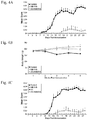
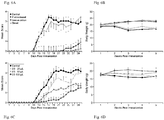
- Figs. 8A, 8B, 8C and 8D show dose dependent suppression of EAE by homosalate (HS) and octisalate (OS).
- Figs. 8A and 8B Mice were treated with various doses (10, 20 and 30 ⁇ l or 0.5, 1.0, 1.5 g/kg) of homosalate or octisalate topically. The mean score ( Fig. 8A ) and body weights ( Fig. 8B ) were recorded.
- Figs. 8C and 8D Mice treated with homosalate (30 ⁇ l or 1.5 g/kg) topically at various times. Daily mean score ( Fig. 8C ) and body weight ( Fig. 8D ) were recorded. Data are expressed as mean value.
- Fig. 8A all treatment groups were significantly different from control (p ⁇ 0.05).
- Fig. 8B all treatments except homosalate 0.5g/kg were significantly different from control (p ⁇ 0.05);
- Figs. 8C and 8D the mean scores of homosalate every day and every 2-day were significantly lower than control (p ⁇ 0.05).
- a preferred patient is an MS patient who exhibits at least one of the following autonomic, visual, motor, or sensory symptom: loss of sensitivity or changes in sensation such as tingling, numbness, muscle weakness, very pronounced reflexes, muscle spasms, or difficulty in moving; difficulties with coordination and balance (ataxia); problems with speech or swallowing, visual problems (nystagmus, optic neuritis or double vision), feeling tired, acute or chronic pain, bladder and bowel difficulties, confused thinking, emotional problems such as depression or unstable mood, Uhthoff's phenomenon (a worsening of symptoms due to exposure to higher than usual temperatures) or Lhermitte's sign (an electrical sensation that runs down the back when bending the neck).
- disability and severity can be measured by the expanded disability status scale (EDSS) or the multiple sclerosis functional composite.
- EDSS expanded disability status scale
- Magnetic resonance may also be used to show a reduction in new lesions in the nervous system.
- Another preferred patient is a patient in danger of developing MS or a "prospective patient.”
- Preferred patients may be pediatric patients, geriatric patients or adult patients. Preferred patients may be either male or female.
- the method described herein requires exposing a patient to octyl salicylate, homosalate or a combination of both.
- Octyl salicylate can be obtained from Spectrum Chemical MFG. Corp. (New Brunswick, NJ).
- the salicylate portion of the molecule absorbs ultraviolet light, protecting skin from the harmful effects of exposure to sunlight.
- the ethylhexanol portion is a fatty alcohol, adding emollient and oil-like (water resistant) properties.
- Homosalate or 3,3,5-trimethylcyclohexyl 2-hydrobenzoate, is an ester formed from salicylic acid and 3,3,5-trimethylcyclohexanol, a derivative of cyclohexanol.
- the compound is contained in 45% of U.S. sunscreens and is sometimes used as a chemical UV filter.
- the salicylic acid portion of the molecule absorbs ultraviolet rays with a wavelength from 295 nm to 315 nm, protecting the skin from sun damage.
- the hydrophobic cyclohexanol portion provides greasiness that prevents it from dissolving in water.
- Homosalate can be obtained from Spectrum Chemical MFG. Corp. (New Brunswick, NJ).
- the compounds may be introduced to a patient in a variety of administrative modes. Preferable administration may be topical, intravenous, oral, parenteral, or via inhalation. Other modes of administration are also described herein.
- the Examples below disclose an effective topical dose in a mouse model of 1.5 g/kg each day for homosalate and 0.5 g/kg daily for octyl salicylate.
- the corresponding human dose would be in the range of 0.1 to 5g/kg body weight.
- An oral, inhalation or parenteral dose will typically be similar to a topical dose.
- a preferred dose will achieve an effective systemic concentration of the compound.
- mice Female C57BL/6 mice (8-9 weeks old) purchased from Jackson Laboratory were fed a standard lab diet chow 5008 (Purina Mills, Richmond, IN) and maintained in the Department of Biochemistry's vivarium. The mice were exposed to 12 h light-dark cycles. All procedures were approved by the Research Animal Resources Committee of the College of Agricultural & Life Sciences, University of Wisconsin-Madison. The mice were randomly divided into groups for different treatment (12 mice/group).
- CoTZ Face SPF40, CoTZ Skincare, West Norriton, PA.
- the sunscreen was applied manually to cover the shaved skin daily depending on the experimental schedule.
- Four main active ingredients (avobenzone; oxibenzone; homosalate; octyl salicylate) were purchased from Spectrum Chemical MFG. Corp. (New Brunswick, NJ).
- the total dose of each ingredient administrated topically on each mouse skin was equal to the amount of the ingredient in the sunscreen.
- UVB 311 narrow band 2 Ft bulbs For NBUVB treatment, a set of four TL20W/01 UVB 311 narrow band 2 Ft bulbs (wavelength centered at 311 nm-313nm, Amjo Corp, West Chester, OH) were used. The radiation output was measured by using a UV radiometer equipped with a 302-nm sensor (UVP LLC, Upland, CA). Mice were put into a 16-chamber Plexiglas cage individually to receive daily UV radiation from day 7 prior to immunization to day 30 after immunization. Each mouse was rotated in the different chamber to avoid uneven UV radiation in the experiment.
- mice were immunized with myelin oligodendrocyte glycoprotein peptide (MOG) 35-55 .
- MOG 35-55 kit (EK-2110) was purchased from Hooke lab (Lawrence, MA). Each mouse was immunized with subcutaneous injection of 20 ⁇ l MOG 35-55 /CFA emulsion and intraperitoneally injection with 200 ng of pertussis toxin (List Biological Laboratories) diluted in sterile PBS. The second booster pertussis toxin injection was given 48 hours later. Each mouse was scored daily for clinical signs of EAE using the following scale: 0, no clinical disease; 1, loss of tail tone; 2, unsteady gait; 3, hind limb paralysis; 4, forelimb paralysis; 5, death.
- Onset was calculated by averaging the first day when clinical signs appeared and continued for at least 2 days. Mean severity was determined by averaging the clinical scores during the entire experiment.
- the CDI clinical disease index
- Statistical analyses were performed using the twotailed Fisher exact probability test for incidence, the Mann-Whitney nonparametric u test for clinical scores, and the unpaired Student t test for all other measurements. A value of P ⁇ 0.05 was considered statistically significant.
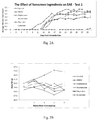
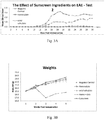
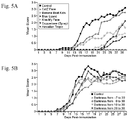
- Figs. 9A, 9B, 9C , 10A, 10B, 10C, 10D, 10E and 10F show the protective effect of various sun screens on mice from developing EAE, although the sunscreens protect at different levels. Testing individual sunscreen ingredients demonstrate that homosalate and octyl salicylate components provide the protection.
- sunscreen ingredients dramatically suppress EAE development in mice without affecting body weight.
- Mice were treated with ingredients (homosalate, octyl salicylate or combination) of sunscreen by topical administration daily during EAE (day 0-day 30).
- Table 1 summarized the effect of different sunscreen ingredients on EAE mice.
- Salate derivatives found in sunscreens block experimental autoimmune encephalomyelitis in mice.
- UV Ultraviolet light
- EAE experimental autoimmune encephalomyelitis
- MS Multiple sclerosis
- EAE experimental autoimmune encephalomyelitis
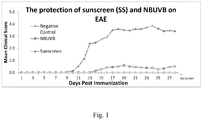
- Salate esters in the sunblock preparations were found responsible for preventing EAE. This suggests that the salate esters may be of value in arresting the symptoms of MS.
- MS Multiple sclerosis
- CNS central nervous system
- Topical application of sunscreen (Coppertone Spray) completely suppressed EAE development.
- mice receiving treatment with sunscreen were slightly but significantly higher in mice receiving treatment with sunscreen either prior to or at the time of immunization ( Fig. 6B ).
- the suppression of disease by sunscreen was dose-dependent ( Fig. 6C ) and increased body weights correlated with the improvement of disease ( Fig. 6D ).
- Homosalate and octisalate were the ingredients that caused EAE suppression; Avobenzone and oxybenzone produced only slight suppression of EAE.
- sunscreens that are effective as sun blockers do not suppress EAE. Only sunblocks that contain salate esters are effective and the salates themselves clearly block EAE. The only adverse effect of the homosalate and octisalate is a temporary mild skin irritation. A topical dose of 1.5g/kg of homosalate, which completely blocked EAE, is below the unpublished acute dermal toxicity (LD50 >5g/kg for rabbits).
- Salicylates are well-known nonsteroidal anti-inflammatory drugs (NSAIDs)(6).
- NSAIDs nonsteroidal anti-inflammatory drugs
- a related compound, aspirin acetylsalicylic acid, ASA
- ASA acetylsalicylic acid
- COX-2 has been observed in MS lesions(11). Recently, cyclooxygenase (COX) inhibitors, have shown significant suppression of EAE(12, 13). It is clear that we have no explanation of how the salates prevent EAE. However, this finding presents a clear opportunity to explore not only mechanisms but also new approaches to therapy of MS.
- COX cyclooxygenase
- mice Female C57BL/6 mice (8-10 weeks old) purchased from Jackson Laboratory (Bar Harbor, ME) were fed a standard lab chow 5008 (Purina Mills, Richmond, IN). The mice were exposed to 12 h light-dark cycles. In one experiment the animals were kept in darkness at all times. All procedures were approved by the Institutional Animal Care and Use Committee of the College of Agricultural & Life Sciences, University of Wisconsin-Madison.
- mice were immunized with MOG 35-55 kit (EK-2110, purchased from Hooke lab (Lawrence, MA)). Each mouse was immunized with a subcutaneous injection of 20 ⁇ l MOG 35-55 /CFA emulsion and an intraperitoneal injection with 200 ng of pertussis toxin (List Biological Laboratories) diluted in sterile PBS(14). A second booster pertussis toxin injection was given 48 hours later. Each mouse was scored daily for clinical signs of EAE using the following scale: 0, no clinical disease; 1, loss of tail tone; 2, unsteady gait; 3, hindlimb paralysis; 4, forelimb paralysis; 5, death(15).
- Each sunscreen was applied daily to cover the shaved skin (100-200 ⁇ l).
- Avobenzone, oxibenzone, homosalate, and octisalate were purchased from Spectrum Chemical Mfg. Corp. (New Brunswick, NJ).
- Avobenzone and oxibenzone were dissolved in DMSO. Homosalate and octisalate were applied directly.
- the total dose of each ingredient administrated topically on each mouse skin was equal to the amount provided by the respective sunscreen. Table 2. Sunscreen brands tested.
- a set of four TL20W/01 UVB 311 narrow band 2 ft. bulbs (wavelength centered at 311-313nm, Amjo Corp, West Chester, OH ) were used daily at (10KJ/m 2 ) (14).
- the radiation output was measured using a UV radiometer equipped with a 302-nm sensor (UVP LLC, Upland, CA).
- a 16-chamber Plexiglass cage was used for daily UV radiation.
- Each chamber contained one mouse. The mice were rotated through the different chambers so that each mouse received equal light exposure. The mice were UV radiated beginning at the same day of immunization continuing through 30 days post immunization.
Landscapes
- Health & Medical Sciences (AREA)
- Life Sciences & Earth Sciences (AREA)
- Veterinary Medicine (AREA)
- Public Health (AREA)
- General Health & Medical Sciences (AREA)
- Animal Behavior & Ethology (AREA)
- Epidemiology (AREA)
- Chemical & Material Sciences (AREA)
- Pharmacology & Pharmacy (AREA)
- Medicinal Chemistry (AREA)
- Dermatology (AREA)
- Emergency Medicine (AREA)
- Birds (AREA)
- Physiology (AREA)
- Nutrition Science (AREA)
- Neurology (AREA)
- Biomedical Technology (AREA)
- Bioinformatics & Cheminformatics (AREA)
- Engineering & Computer Science (AREA)
- Nuclear Medicine, Radiotherapy & Molecular Imaging (AREA)
- General Chemical & Material Sciences (AREA)
- Organic Chemistry (AREA)
- Neurosurgery (AREA)
- Chemical Kinetics & Catalysis (AREA)
- Pharmaceuticals Containing Other Organic And Inorganic Compounds (AREA)
Claims (15)
- Composition choisie dans le groupe constitué par l'homosalate, le salicylate d'octyle et des combinaisons d'homosalate et de salicylate d'octyle à utiliser dans un procédé de traitement d'un patient atteint de sclérose en plaques (SEP), le procédé comprenant les étapes consistant à(a) identifier un patient atteint de SEP présentant au moins un symptôme de la SEP,(b) traiter le patient avec une quantité efficace d'une composition choisie dans le groupe constitué par l'homosalate, le salicylate d'octyl et des combinaisons d'homosalate et de salicylate d'octyl, dans laquelle l'apparition du symptôme est diminuée ou la progression du symptôme est ralentie ou bloquée.
- Composition à utiliser selon la revendication 1, dans laquelle le symptôme est la paralysie.
- Composition à utiliser selon la revendication 1 ou 2, dans laquelle le traitement est quotidien.
- Composition à utiliser selon l'une quelconque des revendications 1 à 3, dans laquelle le traitement dure au moins 30 jours.
- Composition à utiliser selon l'une quelconque des revendications 1 à 4, dans laquelle la composition est administrée sous forme de dose orale.
- Composition à utiliser selon l'une quelconque des revendications 1 à 4, dans laquelle la composition est administrée sous forme de dose topique.
- Composition à utiliser selon l'une quelconque des revendications 1 à 4, dans laquelle la composition est administrée sous forme de dose parentérale.
- Composition choisie dans le groupe constitué par l'homosalate, le salicylate d'octyle et des combinaisons d'homosalate et de salicylate d'octyle à utiliser dans un procédé de traitement d'un patient potentiel atteint de sclérose en plaques (SEP) présentant un ou plusieurs symptômes associés à la SEP, le procédé comprenant les étapes consistant à(a) identifier un patient potentiel atteint de SEP, et(b) traiter le patient avec une quantité efficace d'une composition choisie dans le groupe constitué par l'homosalate, le salicylate d'octyle et des combinaisons d'homosalate et de salicylate d'octyle, dans laquelle l'apparition de l'un ou plusieurs symptômes de SEP est atténuée ou la progression du symptôme est ralentie ou bloquée.
- Composition à utiliser selon la revendication 8, dans laquelle le symptôme est une faiblesse / un engourdissement musculaire.
- Composition à utiliser selon la revendication 8 ou 9, dans laquelle le traitement est quotidien.
- Composition à utiliser selon l'une quelconque des revendications 8 à 10, dans laquelle le traitement dure au moins 30 jours.
- Composition à utiliser selon l'une quelconque des revendications 8 à 11, dans laquelle la composition est administrée sous forme de dose orale.
- Composition à utiliser selon l'une quelconque des revendications 8 à 11, dans laquelle la composition est administrée sous forme de dose topique.
- Composition à utiliser selon l'une quelconque des revendications 8 à 11, dans laquelle la composition est administrée sous forme de dose parentérale.
- Composition à utiliser selon l'une quelconque des revendications 8 à 14, dans laquelle l'un ou plusieurs symptômes de la SEP sont choisis parmi les problèmes de vision, les étourdissements, les vertiges, les dysfonctionnements sensoriels, la faiblesse, les problèmes de coordination, la perte d'équilibre, la fatigue, la douleur, les déficits neurocognitifs, les déficits de santé mentale, le dysfonctionnement de la vessie, le dysfonctionnement intestinal, le dysfonctionnement sexuel, la sensibilité à la chaleur, la faiblesse / l'engourdissement musculaire et la paralysie.
Applications Claiming Priority (2)
| Application Number | Priority Date | Filing Date | Title |
|---|---|---|---|
| US201662362951P | 2016-07-15 | 2016-07-15 | |
| PCT/US2017/041092 WO2018013420A1 (fr) | 2016-07-15 | 2017-07-07 | Utilisation d'homosalate et de salicylate d'octyle pour traiter la sclérose en plaques |
Publications (2)
| Publication Number | Publication Date |
|---|---|
| EP3484480A1 EP3484480A1 (fr) | 2019-05-22 |
| EP3484480B1 true EP3484480B1 (fr) | 2021-09-22 |
Family
ID=59381712
Family Applications (1)
| Application Number | Title | Priority Date | Filing Date |
|---|---|---|---|
| EP17742350.6A Not-in-force EP3484480B1 (fr) | 2016-07-15 | 2017-07-07 | Utilisation d'homosalate et de salicylate d'octyle pour traiter la sclérose en plaques |
Country Status (6)
| Country | Link |
|---|---|
| US (2) | US10434110B2 (fr) |
| EP (1) | EP3484480B1 (fr) |
| JP (1) | JP6949100B2 (fr) |
| AU (1) | AU2017297300B2 (fr) |
| CA (1) | CA3030948A1 (fr) |
| WO (1) | WO2018013420A1 (fr) |
Families Citing this family (3)
| Publication number | Priority date | Publication date | Assignee | Title |
|---|---|---|---|---|
| EP3484480B1 (fr) * | 2016-07-15 | 2021-09-22 | Wisconsin Alumni Research Foundation | Utilisation d'homosalate et de salicylate d'octyle pour traiter la sclérose en plaques |
| KR102316961B1 (ko) * | 2020-01-29 | 2021-10-26 | 프라비바이오 주식회사 | 면역억제제로서의 벤젠 유도체의 면역억제용 약학적 조성물 |
| FR3130556B1 (fr) * | 2021-12-16 | 2026-02-13 | Oreal | Utilisation d’acide salicylique et/ou de ses dérivés et/ou de leurs sels, pour augmenter ou restaurer la perception tactile cutanée |
Family Cites Families (3)
| Publication number | Priority date | Publication date | Assignee | Title |
|---|---|---|---|---|
| CA2748441C (fr) * | 2009-01-05 | 2017-10-03 | Ernest T. Armstrong | Ecran solaire favorisant la vitamine d |
| US8470304B2 (en) * | 2009-08-04 | 2013-06-25 | Avidas Pharmaceuticals Llc | Therapeutic vitamin D sun-protecting formulations and methods for their use |
| EP3484480B1 (fr) * | 2016-07-15 | 2021-09-22 | Wisconsin Alumni Research Foundation | Utilisation d'homosalate et de salicylate d'octyle pour traiter la sclérose en plaques |
-
2017
- 2017-07-07 EP EP17742350.6A patent/EP3484480B1/fr not_active Not-in-force
- 2017-07-07 US US15/643,988 patent/US10434110B2/en active Active
- 2017-07-07 WO PCT/US2017/041092 patent/WO2018013420A1/fr not_active Ceased
- 2017-07-07 JP JP2019501940A patent/JP6949100B2/ja active Active
- 2017-07-07 CA CA3030948A patent/CA3030948A1/fr active Pending
- 2017-07-07 AU AU2017297300A patent/AU2017297300B2/en active Active
-
2019
- 2019-08-23 US US16/549,677 patent/US11266664B2/en not_active Expired - Fee Related
Also Published As
| Publication number | Publication date |
|---|---|
| US11266664B2 (en) | 2022-03-08 |
| JP6949100B2 (ja) | 2021-10-13 |
| US10434110B2 (en) | 2019-10-08 |
| JP2019524734A (ja) | 2019-09-05 |
| CA3030948A1 (fr) | 2018-01-18 |
| AU2017297300B2 (en) | 2022-08-18 |
| US20180015107A1 (en) | 2018-01-18 |
| US20190381075A1 (en) | 2019-12-19 |
| AU2017297300A1 (en) | 2019-01-24 |
| WO2018013420A1 (fr) | 2018-01-18 |
| EP3484480A1 (fr) | 2019-05-22 |
Similar Documents
| Publication | Publication Date | Title |
|---|---|---|
| JP7312169B2 (ja) | 遺伝性てんかん性障害の処置に使用するガナキソロン | |
| US9579346B2 (en) | Treatment of macrophage-related disorders | |
| JP6189037B2 (ja) | 治療用ビタミンd日焼け止め製剤およびそれを使用するための方法 | |
| ES2952727T3 (es) | Tratamiento de la enfermedad de Alzheimer en una población de pacientes particular | |
| US20100286188A1 (en) | Means for improving cognitive functions and memory based on hydrogenated pyrido(4,3-b)indoles (variants), pharmacological means based thereon and method for the use thereof | |
| HK1052647B (zh) | 用於治疗cns疾病的吡咯烷乙酰胺衍生物或者其组合物 | |
| US11266664B2 (en) | Use of homosalate and octyl salicylate to treat multiple sclerosis | |
| CN110325246B (zh) | 防晒组合物 | |
| CN105792829A (zh) | 使用伊维菌素治疗丘疹脓疱性红斑痤疮 | |
| JP2023169413A (ja) | 精神病性障害を治療するための方法および組成物 | |
| EP3934637A1 (fr) | Leucine, acétyl leucine et analogues apparentés pour le traitement d'une maladie | |
| CN117377476A (zh) | 治疗与化学疗法诱发的周围神经病变相关的疼痛 | |
| CN111818910A (zh) | 含有赛度替尼的局部用皮肤药物组合物及其应用 | |
| EP2286810A1 (fr) | Composition pharmaceutique pour le traitement d'une fibromyalgie | |
| CA3194825A1 (fr) | Administration de compositions antipurinergiques pour traiter des troubles du systeme nerveux | |
| JPH0635387B2 (ja) | 光防御剤 | |
| EP4522143B1 (fr) | Traitement de douleur associée à la sensibilisation centrale | |
| Ishida et al. | Transdermal pilocarpine on the skin over salivary glands to increase salivation: an in vivo study | |
| Marling et al. | c12) United States Patent | |
| JP2025514192A (ja) | 神経障害の治療 | |
| Kobayashi et al. | Anti-asthmatic effect of ASP3258, a novel phosphodiesterase 4 inhibitor | |
| JP7387617B2 (ja) | 皮膚病変の治療用の組成物および方法 | |
| Ehrich et al. | Effects of polyhydroxyfullerenes on organophosphate-induced toxicity in mice | |
| US20190160030A1 (en) | Carboxylic acids for early childhood application | |
| Johnson et al. | P358 Correlation of glucocorticoid receptor (GR) affinity and anti-inflammatory potency for topical corticosteroids |
Legal Events
| Date | Code | Title | Description |
|---|---|---|---|
| STAA | Information on the status of an ep patent application or granted ep patent |
Free format text: STATUS: UNKNOWN |
|
| STAA | Information on the status of an ep patent application or granted ep patent |
Free format text: STATUS: THE INTERNATIONAL PUBLICATION HAS BEEN MADE |
|
| PUAI | Public reference made under article 153(3) epc to a published international application that has entered the european phase |
Free format text: ORIGINAL CODE: 0009012 |
|
| STAA | Information on the status of an ep patent application or granted ep patent |
Free format text: STATUS: REQUEST FOR EXAMINATION WAS MADE |
|
| 17P | Request for examination filed |
Effective date: 20190121 |
|
| AK | Designated contracting states |
Kind code of ref document: A1 Designated state(s): AL AT BE BG CH CY CZ DE DK EE ES FI FR GB GR HR HU IE IS IT LI LT LU LV MC MK MT NL NO PL PT RO RS SE SI SK SM TR |
|
| AX | Request for extension of the european patent |
Extension state: BA ME |
|
| DAV | Request for validation of the european patent (deleted) | ||
| DAX | Request for extension of the european patent (deleted) | ||
| STAA | Information on the status of an ep patent application or granted ep patent |
Free format text: STATUS: EXAMINATION IS IN PROGRESS |
|
| 17Q | First examination report despatched |
Effective date: 20201008 |
|
| GRAP | Despatch of communication of intention to grant a patent |
Free format text: ORIGINAL CODE: EPIDOSNIGR1 |
|
| STAA | Information on the status of an ep patent application or granted ep patent |
Free format text: STATUS: GRANT OF PATENT IS INTENDED |
|
| INTG | Intention to grant announced |
Effective date: 20210622 |
|
| GRAS | Grant fee paid |
Free format text: ORIGINAL CODE: EPIDOSNIGR3 |
|
| GRAA | (expected) grant |
Free format text: ORIGINAL CODE: 0009210 |
|
| STAA | Information on the status of an ep patent application or granted ep patent |
Free format text: STATUS: THE PATENT HAS BEEN GRANTED |
|
| AK | Designated contracting states |
Kind code of ref document: B1 Designated state(s): AL AT BE BG CH CY CZ DE DK EE ES FI FR GB GR HR HU IE IS IT LI LT LU LV MC MK MT NL NO PL PT RO RS SE SI SK SM TR |
|
| REG | Reference to a national code |
Ref country code: GB Ref legal event code: FG4D |
|
| REG | Reference to a national code |
Ref country code: IE Ref legal event code: FG4D |
|
| REG | Reference to a national code |
Ref country code: DE Ref legal event code: R096 Ref document number: 602017046391 Country of ref document: DE |
|
| REG | Reference to a national code |
Ref country code: CH Ref legal event code: EP Ref country code: AT Ref legal event code: REF Ref document number: 1431769 Country of ref document: AT Kind code of ref document: T Effective date: 20211015 |
|
| REG | Reference to a national code |
Ref country code: LT Ref legal event code: MG9D |
|
| REG | Reference to a national code |
Ref country code: NL Ref legal event code: MP Effective date: 20210922 |
|
| PG25 | Lapsed in a contracting state [announced via postgrant information from national office to epo] |
Ref country code: SE Free format text: LAPSE BECAUSE OF FAILURE TO SUBMIT A TRANSLATION OF THE DESCRIPTION OR TO PAY THE FEE WITHIN THE PRESCRIBED TIME-LIMIT Effective date: 20210922 Ref country code: RS Free format text: LAPSE BECAUSE OF FAILURE TO SUBMIT A TRANSLATION OF THE DESCRIPTION OR TO PAY THE FEE WITHIN THE PRESCRIBED TIME-LIMIT Effective date: 20210922 Ref country code: HR Free format text: LAPSE BECAUSE OF FAILURE TO SUBMIT A TRANSLATION OF THE DESCRIPTION OR TO PAY THE FEE WITHIN THE PRESCRIBED TIME-LIMIT Effective date: 20210922 Ref country code: NO Free format text: LAPSE BECAUSE OF FAILURE TO SUBMIT A TRANSLATION OF THE DESCRIPTION OR TO PAY THE FEE WITHIN THE PRESCRIBED TIME-LIMIT Effective date: 20211222 Ref country code: FI Free format text: LAPSE BECAUSE OF FAILURE TO SUBMIT A TRANSLATION OF THE DESCRIPTION OR TO PAY THE FEE WITHIN THE PRESCRIBED TIME-LIMIT Effective date: 20210922 Ref country code: BG Free format text: LAPSE BECAUSE OF FAILURE TO SUBMIT A TRANSLATION OF THE DESCRIPTION OR TO PAY THE FEE WITHIN THE PRESCRIBED TIME-LIMIT Effective date: 20211222 Ref country code: LT Free format text: LAPSE BECAUSE OF FAILURE TO SUBMIT A TRANSLATION OF THE DESCRIPTION OR TO PAY THE FEE WITHIN THE PRESCRIBED TIME-LIMIT Effective date: 20210922 |
|
| REG | Reference to a national code |
Ref country code: AT Ref legal event code: MK05 Ref document number: 1431769 Country of ref document: AT Kind code of ref document: T Effective date: 20210922 |
|
| PG25 | Lapsed in a contracting state [announced via postgrant information from national office to epo] |
Ref country code: LV Free format text: LAPSE BECAUSE OF FAILURE TO SUBMIT A TRANSLATION OF THE DESCRIPTION OR TO PAY THE FEE WITHIN THE PRESCRIBED TIME-LIMIT Effective date: 20210922 Ref country code: GR Free format text: LAPSE BECAUSE OF FAILURE TO SUBMIT A TRANSLATION OF THE DESCRIPTION OR TO PAY THE FEE WITHIN THE PRESCRIBED TIME-LIMIT Effective date: 20211223 |
|
| PG25 | Lapsed in a contracting state [announced via postgrant information from national office to epo] |
Ref country code: AT Free format text: LAPSE BECAUSE OF FAILURE TO SUBMIT A TRANSLATION OF THE DESCRIPTION OR TO PAY THE FEE WITHIN THE PRESCRIBED TIME-LIMIT Effective date: 20210922 |
|
| PG25 | Lapsed in a contracting state [announced via postgrant information from national office to epo] |
Ref country code: IS Free format text: LAPSE BECAUSE OF FAILURE TO SUBMIT A TRANSLATION OF THE DESCRIPTION OR TO PAY THE FEE WITHIN THE PRESCRIBED TIME-LIMIT Effective date: 20220122 Ref country code: SK Free format text: LAPSE BECAUSE OF FAILURE TO SUBMIT A TRANSLATION OF THE DESCRIPTION OR TO PAY THE FEE WITHIN THE PRESCRIBED TIME-LIMIT Effective date: 20210922 Ref country code: RO Free format text: LAPSE BECAUSE OF FAILURE TO SUBMIT A TRANSLATION OF THE DESCRIPTION OR TO PAY THE FEE WITHIN THE PRESCRIBED TIME-LIMIT Effective date: 20210922 Ref country code: PT Free format text: LAPSE BECAUSE OF FAILURE TO SUBMIT A TRANSLATION OF THE DESCRIPTION OR TO PAY THE FEE WITHIN THE PRESCRIBED TIME-LIMIT Effective date: 20220124 Ref country code: PL Free format text: LAPSE BECAUSE OF FAILURE TO SUBMIT A TRANSLATION OF THE DESCRIPTION OR TO PAY THE FEE WITHIN THE PRESCRIBED TIME-LIMIT Effective date: 20210922 Ref country code: NL Free format text: LAPSE BECAUSE OF FAILURE TO SUBMIT A TRANSLATION OF THE DESCRIPTION OR TO PAY THE FEE WITHIN THE PRESCRIBED TIME-LIMIT Effective date: 20210922 Ref country code: ES Free format text: LAPSE BECAUSE OF FAILURE TO SUBMIT A TRANSLATION OF THE DESCRIPTION OR TO PAY THE FEE WITHIN THE PRESCRIBED TIME-LIMIT Effective date: 20210922 Ref country code: EE Free format text: LAPSE BECAUSE OF FAILURE TO SUBMIT A TRANSLATION OF THE DESCRIPTION OR TO PAY THE FEE WITHIN THE PRESCRIBED TIME-LIMIT Effective date: 20210922 Ref country code: CZ Free format text: LAPSE BECAUSE OF FAILURE TO SUBMIT A TRANSLATION OF THE DESCRIPTION OR TO PAY THE FEE WITHIN THE PRESCRIBED TIME-LIMIT Effective date: 20210922 Ref country code: AL Free format text: LAPSE BECAUSE OF FAILURE TO SUBMIT A TRANSLATION OF THE DESCRIPTION OR TO PAY THE FEE WITHIN THE PRESCRIBED TIME-LIMIT Effective date: 20210922 |
|
| REG | Reference to a national code |
Ref country code: DE Ref legal event code: R097 Ref document number: 602017046391 Country of ref document: DE |
|
| PG25 | Lapsed in a contracting state [announced via postgrant information from national office to epo] |
Ref country code: DK Free format text: LAPSE BECAUSE OF FAILURE TO SUBMIT A TRANSLATION OF THE DESCRIPTION OR TO PAY THE FEE WITHIN THE PRESCRIBED TIME-LIMIT Effective date: 20210922 |
|
| PLBE | No opposition filed within time limit |
Free format text: ORIGINAL CODE: 0009261 |
|
| STAA | Information on the status of an ep patent application or granted ep patent |
Free format text: STATUS: NO OPPOSITION FILED WITHIN TIME LIMIT |
|
| 26N | No opposition filed |
Effective date: 20220623 |
|
| PG25 | Lapsed in a contracting state [announced via postgrant information from national office to epo] |
Ref country code: SI Free format text: LAPSE BECAUSE OF FAILURE TO SUBMIT A TRANSLATION OF THE DESCRIPTION OR TO PAY THE FEE WITHIN THE PRESCRIBED TIME-LIMIT Effective date: 20210922 |
|
| PG25 | Lapsed in a contracting state [announced via postgrant information from national office to epo] |
Ref country code: IT Free format text: LAPSE BECAUSE OF FAILURE TO SUBMIT A TRANSLATION OF THE DESCRIPTION OR TO PAY THE FEE WITHIN THE PRESCRIBED TIME-LIMIT Effective date: 20210922 |
|
| PG25 | Lapsed in a contracting state [announced via postgrant information from national office to epo] |
Ref country code: MC Free format text: LAPSE BECAUSE OF FAILURE TO SUBMIT A TRANSLATION OF THE DESCRIPTION OR TO PAY THE FEE WITHIN THE PRESCRIBED TIME-LIMIT Effective date: 20210922 |
|
| REG | Reference to a national code |
Ref country code: CH Ref legal event code: PL |
|
| REG | Reference to a national code |
Ref country code: BE Ref legal event code: MM Effective date: 20220731 |
|
| PG25 | Lapsed in a contracting state [announced via postgrant information from national office to epo] |
Ref country code: LU Free format text: LAPSE BECAUSE OF NON-PAYMENT OF DUE FEES Effective date: 20220707 Ref country code: LI Free format text: LAPSE BECAUSE OF NON-PAYMENT OF DUE FEES Effective date: 20220731 Ref country code: CH Free format text: LAPSE BECAUSE OF NON-PAYMENT OF DUE FEES Effective date: 20220731 |
|
| PG25 | Lapsed in a contracting state [announced via postgrant information from national office to epo] |
Ref country code: BE Free format text: LAPSE BECAUSE OF NON-PAYMENT OF DUE FEES Effective date: 20220731 |
|
| P01 | Opt-out of the competence of the unified patent court (upc) registered |
Effective date: 20230425 |
|
| PG25 | Lapsed in a contracting state [announced via postgrant information from national office to epo] |
Ref country code: IE Free format text: LAPSE BECAUSE OF NON-PAYMENT OF DUE FEES Effective date: 20220707 |
|
| PG25 | Lapsed in a contracting state [announced via postgrant information from national office to epo] |
Ref country code: HU Free format text: LAPSE BECAUSE OF FAILURE TO SUBMIT A TRANSLATION OF THE DESCRIPTION OR TO PAY THE FEE WITHIN THE PRESCRIBED TIME-LIMIT; INVALID AB INITIO Effective date: 20170707 |
|
| PG25 | Lapsed in a contracting state [announced via postgrant information from national office to epo] |
Ref country code: SM Free format text: LAPSE BECAUSE OF FAILURE TO SUBMIT A TRANSLATION OF THE DESCRIPTION OR TO PAY THE FEE WITHIN THE PRESCRIBED TIME-LIMIT Effective date: 20210922 Ref country code: MK Free format text: LAPSE BECAUSE OF FAILURE TO SUBMIT A TRANSLATION OF THE DESCRIPTION OR TO PAY THE FEE WITHIN THE PRESCRIBED TIME-LIMIT Effective date: 20210922 Ref country code: CY Free format text: LAPSE BECAUSE OF FAILURE TO SUBMIT A TRANSLATION OF THE DESCRIPTION OR TO PAY THE FEE WITHIN THE PRESCRIBED TIME-LIMIT Effective date: 20210922 |
|
| PGFP | Annual fee paid to national office [announced via postgrant information from national office to epo] |
Ref country code: GB Payment date: 20240530 Year of fee payment: 8 |
|
| PGFP | Annual fee paid to national office [announced via postgrant information from national office to epo] |
Ref country code: FR Payment date: 20240611 Year of fee payment: 8 |
|
| PG25 | Lapsed in a contracting state [announced via postgrant information from national office to epo] |
Ref country code: MT Free format text: LAPSE BECAUSE OF FAILURE TO SUBMIT A TRANSLATION OF THE DESCRIPTION OR TO PAY THE FEE WITHIN THE PRESCRIBED TIME-LIMIT Effective date: 20210922 |
|
| PGFP | Annual fee paid to national office [announced via postgrant information from national office to epo] |
Ref country code: DE Payment date: 20240529 Year of fee payment: 8 |
|
| PG25 | Lapsed in a contracting state [announced via postgrant information from national office to epo] |
Ref country code: TR Free format text: LAPSE BECAUSE OF FAILURE TO SUBMIT A TRANSLATION OF THE DESCRIPTION OR TO PAY THE FEE WITHIN THE PRESCRIBED TIME-LIMIT Effective date: 20210922 |
|
| REG | Reference to a national code |
Ref country code: DE Ref legal event code: R119 Ref document number: 602017046391 Country of ref document: DE |
|
| GBPC | Gb: european patent ceased through non-payment of renewal fee |
Effective date: 20250707 |
|
| PG25 | Lapsed in a contracting state [announced via postgrant information from national office to epo] |
Ref country code: GB Free format text: LAPSE BECAUSE OF NON-PAYMENT OF DUE FEES Effective date: 20250707 |
|
| PG25 | Lapsed in a contracting state [announced via postgrant information from national office to epo] |
Ref country code: DE Free format text: LAPSE BECAUSE OF NON-PAYMENT OF DUE FEES Effective date: 20260203 |
|
| PG25 | Lapsed in a contracting state [announced via postgrant information from national office to epo] |
Ref country code: FR Free format text: LAPSE BECAUSE OF NON-PAYMENT OF DUE FEES Effective date: 20250731 |