EP3548061B1 - Treatment of neurological diseases - Google Patents
Treatment of neurological diseases Download PDFInfo
- Publication number
- EP3548061B1 EP3548061B1 EP17811693.5A EP17811693A EP3548061B1 EP 3548061 B1 EP3548061 B1 EP 3548061B1 EP 17811693 A EP17811693 A EP 17811693A EP 3548061 B1 EP3548061 B1 EP 3548061B1
- Authority
- EP
- European Patent Office
- Prior art keywords
- peptide
- disease
- lys
- treatment
- amino acid
- Prior art date
- Legal status (The legal status is an assumption and is not a legal conclusion. Google has not performed a legal analysis and makes no representation as to the accuracy of the status listed.)
- Active
Links
Images




Classifications
-
- A—HUMAN NECESSITIES
- A61—MEDICAL OR VETERINARY SCIENCE; HYGIENE
- A61K—PREPARATIONS FOR MEDICAL, DENTAL OR TOILETRY PURPOSES
- A61K38/00—Medicinal preparations containing peptides
- A61K38/16—Peptides having more than 20 amino acids; Gastrins; Somatostatins; Melanotropins; Derivatives thereof
- A61K38/17—Peptides having more than 20 amino acids; Gastrins; Somatostatins; Melanotropins; Derivatives thereof from animals; from humans
- A61K38/22—Hormones
-
- A—HUMAN NECESSITIES
- A61—MEDICAL OR VETERINARY SCIENCE; HYGIENE
- A61K—PREPARATIONS FOR MEDICAL, DENTAL OR TOILETRY PURPOSES
- A61K38/00—Medicinal preparations containing peptides
- A61K38/16—Peptides having more than 20 amino acids; Gastrins; Somatostatins; Melanotropins; Derivatives thereof
- A61K38/17—Peptides having more than 20 amino acids; Gastrins; Somatostatins; Melanotropins; Derivatives thereof from animals; from humans
- A61K38/22—Hormones
- A61K38/26—Glucagons
-
- A—HUMAN NECESSITIES
- A61—MEDICAL OR VETERINARY SCIENCE; HYGIENE
- A61K—PREPARATIONS FOR MEDICAL, DENTAL OR TOILETRY PURPOSES
- A61K47/00—Medicinal preparations characterised by the non-active ingredients used, e.g. carriers or inert additives; Targeting or modifying agents chemically bound to the active ingredient
- A61K47/50—Medicinal preparations characterised by the non-active ingredients used, e.g. carriers or inert additives; Targeting or modifying agents chemically bound to the active ingredient the non-active ingredient being chemically bound to the active ingredient, e.g. polymer-drug conjugates
- A61K47/51—Medicinal preparations characterised by the non-active ingredients used, e.g. carriers or inert additives; Targeting or modifying agents chemically bound to the active ingredient the non-active ingredient being chemically bound to the active ingredient, e.g. polymer-drug conjugates the non-active ingredient being a modifying agent
- A61K47/54—Medicinal preparations characterised by the non-active ingredients used, e.g. carriers or inert additives; Targeting or modifying agents chemically bound to the active ingredient the non-active ingredient being chemically bound to the active ingredient, e.g. polymer-drug conjugates the non-active ingredient being a modifying agent the modifying agent being an organic compound
- A61K47/542—Carboxylic acids, e.g. a fatty acid or an amino acid
-
- A—HUMAN NECESSITIES
- A61—MEDICAL OR VETERINARY SCIENCE; HYGIENE
- A61P—SPECIFIC THERAPEUTIC ACTIVITY OF CHEMICAL COMPOUNDS OR MEDICINAL PREPARATIONS
- A61P21/00—Drugs for disorders of the muscular or neuromuscular system
-
- A—HUMAN NECESSITIES
- A61—MEDICAL OR VETERINARY SCIENCE; HYGIENE
- A61P—SPECIFIC THERAPEUTIC ACTIVITY OF CHEMICAL COMPOUNDS OR MEDICINAL PREPARATIONS
- A61P25/00—Drugs for disorders of the nervous system
-
- A—HUMAN NECESSITIES
- A61—MEDICAL OR VETERINARY SCIENCE; HYGIENE
- A61P—SPECIFIC THERAPEUTIC ACTIVITY OF CHEMICAL COMPOUNDS OR MEDICINAL PREPARATIONS
- A61P25/00—Drugs for disorders of the nervous system
- A61P25/02—Drugs for disorders of the nervous system for peripheral neuropathies
-
- A—HUMAN NECESSITIES
- A61—MEDICAL OR VETERINARY SCIENCE; HYGIENE
- A61P—SPECIFIC THERAPEUTIC ACTIVITY OF CHEMICAL COMPOUNDS OR MEDICINAL PREPARATIONS
- A61P25/00—Drugs for disorders of the nervous system
- A61P25/08—Antiepileptics; Anticonvulsants
-
- A—HUMAN NECESSITIES
- A61—MEDICAL OR VETERINARY SCIENCE; HYGIENE
- A61P—SPECIFIC THERAPEUTIC ACTIVITY OF CHEMICAL COMPOUNDS OR MEDICINAL PREPARATIONS
- A61P25/00—Drugs for disorders of the nervous system
- A61P25/14—Drugs for disorders of the nervous system for treating abnormal movements, e.g. chorea, dyskinesia
-
- A—HUMAN NECESSITIES
- A61—MEDICAL OR VETERINARY SCIENCE; HYGIENE
- A61P—SPECIFIC THERAPEUTIC ACTIVITY OF CHEMICAL COMPOUNDS OR MEDICINAL PREPARATIONS
- A61P25/00—Drugs for disorders of the nervous system
- A61P25/14—Drugs for disorders of the nervous system for treating abnormal movements, e.g. chorea, dyskinesia
- A61P25/16—Anti-Parkinson drugs
-
- A—HUMAN NECESSITIES
- A61—MEDICAL OR VETERINARY SCIENCE; HYGIENE
- A61P—SPECIFIC THERAPEUTIC ACTIVITY OF CHEMICAL COMPOUNDS OR MEDICINAL PREPARATIONS
- A61P25/00—Drugs for disorders of the nervous system
- A61P25/18—Antipsychotics, i.e. neuroleptics; Drugs for mania or schizophrenia
-
- A—HUMAN NECESSITIES
- A61—MEDICAL OR VETERINARY SCIENCE; HYGIENE
- A61P—SPECIFIC THERAPEUTIC ACTIVITY OF CHEMICAL COMPOUNDS OR MEDICINAL PREPARATIONS
- A61P25/00—Drugs for disorders of the nervous system
- A61P25/24—Antidepressants
-
- A—HUMAN NECESSITIES
- A61—MEDICAL OR VETERINARY SCIENCE; HYGIENE
- A61P—SPECIFIC THERAPEUTIC ACTIVITY OF CHEMICAL COMPOUNDS OR MEDICINAL PREPARATIONS
- A61P25/00—Drugs for disorders of the nervous system
- A61P25/28—Drugs for disorders of the nervous system for treating neurodegenerative disorders of the central nervous system, e.g. nootropic agents, cognition enhancers, drugs for treating Alzheimer's disease or other forms of dementia
-
- A—HUMAN NECESSITIES
- A61—MEDICAL OR VETERINARY SCIENCE; HYGIENE
- A61P—SPECIFIC THERAPEUTIC ACTIVITY OF CHEMICAL COMPOUNDS OR MEDICINAL PREPARATIONS
- A61P43/00—Drugs for specific purposes, not provided for in groups A61P1/00-A61P41/00
-
- A—HUMAN NECESSITIES
- A61—MEDICAL OR VETERINARY SCIENCE; HYGIENE
- A61P—SPECIFIC THERAPEUTIC ACTIVITY OF CHEMICAL COMPOUNDS OR MEDICINAL PREPARATIONS
- A61P9/00—Drugs for disorders of the cardiovascular system
- A61P9/10—Drugs for disorders of the cardiovascular system for treating ischaemic or atherosclerotic diseases, e.g. antianginal drugs, coronary vasodilators, drugs for myocardial infarction, retinopathy, cerebrovascula insufficiency, renal arteriosclerosis
-
- C—CHEMISTRY; METALLURGY
- C07—ORGANIC CHEMISTRY
- C07K—PEPTIDES
- C07K14/00—Peptides having more than 20 amino acids; Gastrins; Somatostatins; Melanotropins; Derivatives thereof
-
- C—CHEMISTRY; METALLURGY
- C07—ORGANIC CHEMISTRY
- C07K—PEPTIDES
- C07K14/00—Peptides having more than 20 amino acids; Gastrins; Somatostatins; Melanotropins; Derivatives thereof
- C07K14/435—Peptides having more than 20 amino acids; Gastrins; Somatostatins; Melanotropins; Derivatives thereof from animals; from humans
- C07K14/575—Hormones
- C07K14/605—Glucagons
-
- A—HUMAN NECESSITIES
- A61—MEDICAL OR VETERINARY SCIENCE; HYGIENE
- A61K—PREPARATIONS FOR MEDICAL, DENTAL OR TOILETRY PURPOSES
- A61K38/00—Medicinal preparations containing peptides
Definitions
- aspects and embodiments of the present invention relate to the treatment of neurological disorders such as for example, Alzheimer's disease and Parkinson's disease. Particularly, certain embodiments relate to GIP/GLP-1 co-agonist peptides for use in the treatment of these two neurological disorders. Also included in the present invention are inter alia pharmaceutical compositions comprising the GIP/GLP-1 co-agonist peptides, together with methods of treating such disorders as well as other subject matter.
- AD Alzheimer's disease
- the main hallmarks of the disease are disorientation, loss of memory, loss of neurons and synapses in the brain, the accumulation of beta-amyloid protein in the brain (amyloid plaques), and intracellular aggregation of hyperphosphorylated tau protein (tangles) (LaFerla and Oddo, 2005; Blennow et al., 2006).
- Parkinson's disease is also a chronic neurodegenerative disease for which currently only delaying medication is available.
- the main hallmarks are tremor, rigor, and a loss of ability to move, the degeneration of neurons in the basal brain (substantia nigra) and the loss of release of the neurotransmitter, dopamine (Shen, 2010).
- Type 2 diabetes has been identified as a risk factor for AD and PD (Holscher, 2014), indicating that insulin signalling impairment may be a factor in initiating or accelerating the development of AD.
- Epidemiological studies found a clear correlation between T2DM and the risk of developing AD or other neurodegenerative disorders at a later stage (Luchsinger et al., 2004; Ristow, 2004; Ohara et al., 2011). It was also shown that insulin signalling in the brain is desensitised in AD patients.
- GLP-1 Glucagon-like peptide
- GLP-1 receptor stimulation enhances beta-cell proliferation in the pancreas by activating stem cell proliferation, facilitates glucose-dependent insulin secretion and lowers blood glucose in patients with T2DM (Lovshin and Drucker, 2009).
- Three GLP-1 analogues are currently on the market as a treatment for diabetes, exendin-4 (Byetta®, Bydureon®), lixisenatide (Lyxumia®) and liraglutide (Victoza®) (Campbell and Drucker, 2013; Elkinson and Keating, 2013).
- GIP Glucose-dependent insulinotropic peptide
- gastric inhibitory polypeptide is a 42-amino acid incretin hormone which activates pancreatic islets to enhance insulin secretion and to help reduce postprandial hyperglycaemia, similar to GLP-1 (Gault et al., 2003).
- GIP is a member of the secretin/glucagon family of neuroregulatory polypeptides which also include the growth hormone releasing factor. It is expressed in pancreatic alpha cells, endocrine cells, and also in neurons in the brain (Nyberg et al., 2007; Campbell and Drucker, 2013).
- GIP has also been shown to promote pancreatic beta-cell growth, differentiation, proliferation and cell survival, documenting its growth-hormone properties (Gault et al., 2003). Therefore, research is on-going to develop GIP as a therapeutic tool for T2DM treatment (Irwin et al., 2006). There are currently no GIP analogues authorised for the treatment of T2DM.
- Dual agonist peptides which target more than one receptor are being considered for the treatment of T2DM.
- GIP/GLP-1 co-agonist peptides are currently in development for the treatment of T2D.
- GIP/GLP-1 dual receptor agonists are currently no GIP/GLP-1 dual receptor agonists authorised for use to treat T2DM.
- Insulin as well as the incretins not only have growth-factor like properties in the brain, but also modulate synaptic activity (Holscher, 2014). Synapses are the contacts between neurons, and they are important for memory formation and information processing in the brain.
- Direct injection of GLP-1 or long-lasting GLP-1 analogues into the brain markedly enhanced long-term potentiation of synaptic transmission (LTP) in the hippocampus, a brain area that is involved in memory formation. LTP is considered a cellular correlate of memory formation (Bliss and Collingridge, 1993).
- the GLP-1 analogue, liraglutide has been shown to upregulate LTP in the rat brain (McClean et al., 2010).
- GLP-1 analogues were able to prevent the impairment of LTP that was induced by beta-amyloid fragments (Gault and Holscher, 2008a; McClean et al., 2011; Gengler et al., 2012; Han et al., 2013).
- This impairment of LTP by amyloid protein may be the mechanism by which amyloid causes memory loss (Cleary et al., 2005).
- liraglutide in an APP/PS1 mouse model of AD showed that the drug can prevent the impairment in memory formation and synaptic plasticity, the reduction of total numbers of synapses, normalise stem cell proliferation and neurogenesis in the dentate gyrus, reduce the inflammation response, and furthermore reduce amyloid plaque load in the cortex and total amyloid levels in the brain (McClean et al., 2011).
- liraglutide also had protective and regenerative effects in very old transgenic mice, demonstrating that even at an advanced stage of disease progression, memory can be improved and plaque load be reduced to some degree (McClean and Holscher, 2014).
- GIP analogues have an effect in AD. It has been found that GIP analogues can prevent the LTP impairment that beta-amyloid fragments induce on synaptic transmission in the brain (Gault and Holscher, 2008b). In a GIP receptor- deletion mouse strain, LTP was also impaired, and paired-pulse facilitation was reduced, indicating that the release of synaptic vesicles is reduced (Faivre et al., 2011). The long-lasting GIP analogue D-Ala 2 -GIP also had neuroprotective effects in an APP/PS1 mouse model of AD.
- AD mice In aged 19 month old AD mice, the drug was still able to reverse some of the AD symptoms such as synapse loss (Faivre and Holscher, 2013a). In a longitudinal study, oxidative stress and the inflammation response in the brain was much reduced in APP/PS1 mice (Duffy and Holscher, 2013). This suggests that these analogues have neuroprotective properties in AD and protect synapses from the detrimental effects of beta-amyloid.
- GIP/GLP-1 dual agonist peptides which have superior properties as compared to a GIP mono agonist.
- superior properties include for example a greater decrease in beta-amyloid plaque load and/or reduction of motor skill impairment.
- GIP/GLP-1 dual agonist peptides for use in the treatment and/or prevention of a neurodegenerative disorder such as for example Alzheimer's disease and/or Parkinson's disease.
- a GIP/GLP-1 co-agonist peptide or a pharmaceutically acceptable salt or solvate thereof for use in the treatment and/or prophylaxis of a neurological disorder wherein the co-agonist peptide is represented by the general formula 1:
- Y2 is Lys-Lys-Lys-Lys-Lys or Lys-Lys-Lys-Lys-Lys-Lys. In certain aspects of the disclosure
- Xaa 24 is Cys. In certain embodiments, Xaa 24 is Asn.
- Y1 is an extension comprising at least 10 amino acids e.g. at least 11 amino acids.
- Y1 is selected from:
- Y1 is Gly-Pro-Ser-Ser-Gly-Ala-Pro-Pro-Pro-Ser (SEQ. ID. No. 6).
- Y1 is Gly-Pro-Ser-Ser-Gly-Ala-Pro-Pro-Pro-Ser-Cys (SEQ. ID. No 8).
- Y1 is Gly-Pro-Ser-Ser-Gly-Ala-Pro-Pro-Pro-Ser-Lys (SEQ. ID. No. 7).
- the peptide comprises a hydrophilic moiety covalently linked to an amino acid. In certain embodiments, the peptide comprises a hydrophilic moiety covalently linked to an amino acid at position 24.
- the peptide comprises a hydrophilic moiety covalently linked to an amino acid at position 39 or 40, when Y1 is an extension comprising at least 10 amino acids or at least 11 amino acids.
- Xaa 39 or Xaa 40 is Cys and the peptide comprises a hydrophilic moiety covalently linked to Cys(39) or Cys(40).
- Xaa 24 is Cys and the peptide comprises a hydrophilic moiety covalently linked to Cys(24).
- the hydrophilic moiety is a water-soluble polymer.
- the water-soluble polymer is a polyethylene glycol moiety and optionally is a polyethylene glycol moiety having a molecular weight of between about 20,000 Daltons and about 60,000 Daltons.
- the peptide is conjugated with a lipophilic substituent.
- the lipophilic substituent comprises a hydrocarbon chain having 8 to 24 carbon (C) atoms. In certain embodiments, the lipophilic substituent comprises an acyl group.
- the lipophilic substituent is a fatty acid molecule.
- the fatty acid molecule is selected from a C-8 octanoyl group, a C-10 decanoyl group, a C-12 lauroyl group, a C-14 myristoyl group, a C-16 palmitoyl group, a C-18 stearoyl group and a C-20 acyl group.
- the lipophilic substituent is attached to an amino acid at the carboxyl-terminus of the peptide.
- the lipophilic substituent is attached to an amino acid at position 40.
- the lipophilic substituent is covalently bonded to a side chain of an amino acid of the peptide.
- the peptide comprises a spacer which conjugates the lipophilic substituent to an amino acid residue.
- the spacer is a residue from a naturally occurring or unnatural amino acid, wherein the spacer comprises a residue of Gly, Pro, Ala, Val, Leu, Ile, Met, Cys, Phe, Tyr, Trp, His, Lys, Arg, Gln, Asn, ⁇ -Glu, ⁇ -Glu, ⁇ -Lys, Asp, Ser, Thr, Gaba, Aib, ⁇ -aminohexonyl, 7-aminoheptanoyl, 8-aminooctanoyl, 9-aminononanoyl, 10-aminodecanoyl or 8-amino-3,6- dioxaoctanoyl.
- the spacer is ⁇ -Glu. In certain embodiments, the spacer is a dipeptide, optionally wherein the spacer comprises two negatively charged amino acids and further optionally wherein the spacer is ⁇ -Glu- ⁇ -Glu.
- a peptide as described herein for use in the treatment and/or prophylaxis of a neurological disorder.
- a peptide as described herein for use in the treatment of a neurological disorder which is caused by or associated with beta-amyloid protein plaque deposition in an area of the patient.
- the beta-amyloid plaque deposition is in the brain of the patient.
- a peptide as described herein for use in the treatment and/or prophylaxis of a neurological disorder caused by, or associated with, dysfunction of long-term potentiation of synaptic transmission.
- a peptide as described herein is for use in the treatment and/or prophylaxis of a neurological disorder caused by, or associated with, inflammation.
- a peptide as described herein for use in the treatment of a neurological disorder associated with motor impairment.
- a peptide as described herein for use in the treatment and/or prophylaxis of a neurological disorder affecting cognitive function, e.g. dementia, stroke, schizophrenia and/or bipolar disorder.
- a neurological disorder affecting cognitive function e.g. dementia, stroke, schizophrenia and/or bipolar disorder.
- the disorder is cerebral ischemia associated with stroke.
- the peptide is for use in the treatment and/or prophylaxis of a disorder selected from post-traumatic stress disorder, epilepsy, Tourette's syndrome, and hallucinations; and dysfunctional cognitive processes, optionally selected from attention, calculation, memory, judgment, insight, learning and reasoning.
- the peptide is for use in the treatment and/or prophylaxis of a neurodegenerative disorder e.g. Alzheimer's disease, Parkinson's disease, Amyotrophic Lateral Sclerosis, peripheral neuropathy, Huntington's disease and Creutzfeldt-Jacob disease.
- a neurodegenerative disorder e.g. Alzheimer's disease, Parkinson's disease, Amyotrophic Lateral Sclerosis, peripheral neuropathy, Huntington's disease and Creutzfeldt-Jacob disease.
- the neurological disorder is multiple sclerosis.
- the peptide is for use in the treatment and/or prophylaxis of a neurological disorder selected from clinical or pre-clinical Alzheimer's disease, prodromal Alzheimer's disease, and clinical or preclinical amyloid angiopathy (CAA).
- a neurological disorder selected from clinical or pre-clinical Alzheimer's disease, prodromal Alzheimer's disease, and clinical or preclinical amyloid angiopathy (CAA).
- the peptide is for use in the treatment and/or prophylaxis of clinical Alzheimer's disease.
- a peptide as described herein for use in the treatment and/or prophylaxis of Parkinson's disease.
- a method of treating and/ or preventing a neurological disorder comprising administering to a patient in need thereof a pharmaceutical composition comprising a GIP/ GLP-1 co-agonist peptide, or a derivative or a pharmaceutically acceptable salt or solvate of the peptide or the derivative, wherein said co-agonist peptide is represented by the general Formula I:
- the peptide is as described herein.
- the neurological disorder is selected from post-traumatic stress disorder, epilepsy, Tourette's syndrome, and hallucinations; and dysfunctional cognitive processes, optionally selected from attention, calculation, memory, judgment, insight, learning and reasoning.
- the neurological disorder is a neurodegenerative disorder.
- the neurodegenerative disorder is selected from Alzheimer's Disease, Parkinson's Disease, Huntington's disease, Amyotrophic Lateral Sclerosis, peripheral neuropathy, and Creutzfeldt-Jacob disease.
- the neurological disorder is a neurological disorder selected from clinical or pre-clinical Alzheimer's disease, prodromal Alzheimer's disease, and clinical or preclinical amyloid angiopathy (CAA).
- APTLY the neurological disorder is clinical Alzheimer's Disease.
- the peptide comprises or consists of the following amino acid sequence: YXEGTFTSDYSIYLDKQAAXEFVNWLLAGGPSSGAPPPSKKKKKK-NH2 (SEQ. ID. No. 11)
- X aminoisobutyric acid
- DA4 This peptide is referred to herein as "DA4" and has an amino acid sequence as set forth in SEQ. ID. No. 11.
- the peptide comprises or consists of the following amino acid sequence: YXEGTFTSDYSIYLDKQAAXEFVNWLLAGGPSSGAPPPSKRRQRRKKRGY-NH2 (SEQ. ID. No. 12)
- X aminoisobutyric acid
- DA5 This peptide is referred to herein as "DA5" and has an amino acid sequence as set forth in SEQ. ID. No. 12.
- the ability to cross the blood-brain barrier may have utility in the treatment of neurodegenerative disorders. Without being bound by theory, it is considered that the peptides of certain embodiments of the present invention are able to cross the blood-brain barrier. Furthermore, the peptides of certain embodiments cross the blood-brain barrier at an enhanced rate as compared to known GIP/GLP-1 co-agonist peptides.
- the peptide is for use in the treatment and/or prevention of Alzheimer's disease or Parkinson's disease.
- compositions which comprises GIP/GLP-1 receptor co-agonist peptides as described herein and a pharmaceutically acceptable carrier for use in the treatment and/or prophylaxis of a neurological disorder as described herein.
- kit including such a pharmaceutical composition.
- GIP/GLP-1 co-agonist peptides The native human GLP-1 peptide and GIP peptide sequences are known in the art.
- GLP-1 or "hGLP-1 " as used herein refers to the human Glucagon-Like Peptide-1 (GLP-1 (7-37)), the sequence of which is included herein as SEQ ID. No. 13.
- the peptide having the sequence of SEQ ID. No 13 may also be designated "native" GLP-1.
- the Homo sapiens GLP-1(7-37) sequence is: HAEGTFTSDV SSYLEGQAAK EFIAWLVKGR G-OH (SEQ ID No. 13).
- GIP Gastric Inhibitory Peptide
- SEQ. ID. No. 14 The peptide having the sequence of SEQ. ID. No. 14 may also be designated "native” GIP: YAEGTFISDYSIAMDKIHQQDFVNWLLAQKGKKNDWKHNITQ-OH (SEQ ID. No 14).
- GIP GIP
- GLP-1 native GIP
- peptide encompasses a sequence of 3 or more amino acids and typically less than 50 amino acids, wherein the amino acids are naturally occurring or non-naturally occurring amino acids.
- Non-naturally occurring amino acids refer to amino acids that do not naturally occur in vivo but which, nevertheless, can be incorporated into the peptide structures described herein.
- polypeptide and “protein” are terms that are used interchangeably to refer to a polymer of amino acids, without regard to the length of the polymer. Typically, polypeptides and proteins have a polymer length that is greater than that of "peptides”.
- an amino acid “modification” refers to a substitution, addition or deletion of an amino acid, and includes substitution with or addition of any of the 20 amino acids commonly found in human proteins, as well as atypical or non-naturally occurring amino acids.
- all references to a particular amino acid position by number refer to the amino acid at that position in the GIP/GLP-1 dual agonist of embodiments of the present invention.
- a GIP/GLP-1 co-agonist peptide or a derivative or a pharmaceutically acceptable salt or solvate of the peptide or the derivative, for use in the treatment and/or prophylaxis of a neurological disorder.
- the co-agonist peptide has a GLP-1 percentage potency within about 10-fold of the GIP percentage potency.
- the term "agonist” refers to a substance (ligand) that activates the receptor type in question.
- the terms “dual agonist” and “co-agonist” are used herein are interchangeable and refer to a substance (ligand) that activate two receptor types.
- the GIP/GLP-1 co-agonist peptides described herein have balanced activity at both the GLP-1R and the GIPR.
- the co-agonist peptide has an EC 50 at the human GLP-1 receptor within about 10-fold of the EC 50 at the human GIP receptor. Activity in in vitro assays may be used as a measure of the peptides' activity.
- the peptides described herein are synthesized by means of solid-phase or liquid-phase peptide synthesis, as described in for example WO98/11125 .
- the peptides may be synthesized as described in Finan et al. (Sci. Transl. Med. 5 209ra151 (2013) pp 1 to 16 ).
- the peptides of the present disclosure may be formulated as pharmaceutical compositions prepared for storage or administration for use in the treatment and/or prevention of a neurological disorder as described herein.
- a composition typically comprises a therapeutically effective amount of a GIP/GLP-1 co-agonist peptide, in the appropriate form, in a pharmaceutically acceptable carrier.
- the therapeutically effective amount of a GIP/GLP-1 co-agonist peptide as described herein will depend on the route of administration, the type of mammal being treated, and the physical characteristics of the specific mammal under consideration. These factors and their relationship to determining this amount are well known to skilled practitioners in the medical arts. This amount and the method of administration can be tailored to achieve optimal efficacy, and may depend on such factors as weight, diet, concurrent medication and other factors, well known to those skilled in the medical arts.
- the peptides of the present disclosure may be particularly useful for treatment of humans.
- An effective dosage and treatment protocol may be determined by conventional means, starting with a low dose in laboratory animals and then increasing the dosage while monitoring the effects, and systematically varying the dosage regimen as well. Numerous factors may be taken into consideration by a clinician when determining an optimal dosage for a given subject. Such considerations are known to the person skilled in the art.
- pharmaceutically acceptable carrier includes any of the standard pharmaceutical carriers.
- Pharmaceutically acceptable carriers for therapeutic use are well known in the pharmaceutical art, and are described, for example, in Remington's Pharmaceutical Sciences, Mack Publishing Co. (A.R.Gennaro edit. 1985 ).
- pH buffering agents may be phosphate, citrate, acetate, tris/hydroxymethyl)aminomethane (TRIS), N-Tris(hydroxymethyl)methyl-3-aminopropanesulphonic acid (TAPS), ammonium bicarbonate, diethanolamine, histidine, arginine, lysine, or acetate or mixtures thereof.
- the term further encompasses any agents listed in the US Pharmacopeia for use in animals, including humans.
- salts refers to a salt of any one of the GIP/GLP-1 co-agonist peptide of embodiments of the invention.
- Salts include pharmaceutically acceptable salts such as acid addition salts and basic salts. Examples of acid addition salts include hydrochloride salts, citrate salts and acetate salts.
- basis salts include salts where the cation is selected from alkali metals, such as sodium and potassium, alkaline earth metals, such as calcium, and ammonium ions + N(R 3 ) 3 (R 4 ), where R 3 and R 4 independently designates optionally substituted C 1-6 -alkyl, optionally substituted C 2-6 -alkenyl, optionally substituted aryl, or optionally substituted heteroaryl.
- alkali metals such as sodium and potassium
- alkaline earth metals such as calcium
- R 3 and R 4 independently designates optionally substituted C 1-6 -alkyl, optionally substituted C 2-6 -alkenyl, optionally substituted aryl, or optionally substituted heteroaryl.
- R 3 and R 4 independently designates optionally substituted C 1-6 -alkyl, optionally substituted C 2-6 -alkenyl, optionally substituted aryl, or optionally substitute
- solvate in the context of the present disclosure refers to a complex of defined stoichiometry formed between a solute (e.g., a peptide or pharmaceutically acceptable salt thereof according to the present disclosure) and a solvent.
- the solvent in this connection may, for example, be water, ethanol or another pharmaceutically acceptable, typically small-molecular organic species, such as, but not limited to, acetic acid or lactic acid.
- a solvate is normally referred to as a hydrate.
- Treatment is an approach for obtaining beneficial or desired clinical results.
- beneficial or desired clinical results include, but are not limited to, alleviation of symptoms, diminishment of extent of disease, stabilized (i.e., not worsening) state of disease, delay or slowing of disease progression, amelioration or palliation of the disease state, and remission (whether partial or total), whether detectable or undetectable.
- Treatment can also mean prolonging survival as compared to expected survival if not receiving treatment.
- Treatment is an intervention performed with the intention of preventing the development or altering the pathology of a disorder. Accordingly, “treatment” refers to both therapeutic treatment and prophylactic or preventative measures in certain embodiments.
- Those in need of treatment include those already with the disorder as well as those in which the disorder is to be prevented.
- treatment is meant inhibiting or reducing an increase in pathology or symptoms when compared to the absence of treatment, and is not necessarily meant to imply complete cessation of the relevant condition.
- compositions for use in the treatment of a neurological disorder can be in unit dosage form.
- the composition is divided into unit doses containing appropriate quantities of the active component.
- the unit dosage form can be a packaged preparation, the package containing discrete quantities of the preparations, for example, packeted tablets, capsules, and powders in vials or ampoules.
- the unit dosage form can also be a capsule, cachet, or tablet itself, or it can be the appropriate number of any of these packaged forms. It may be provided in single dose injectable form, for example in the form of a pen.
- packaged forms include a label or insert with instructions for use.
- Compositions may be formulated for any suitable route and means of administration.
- Pharmaceutically acceptable carriers or diluents include those used in formulations suitable for oral, rectal, nasal, topical (including buccal and sublingual), vaginal or parenteral (including subcutaneous, intramuscular, intravenous, intradermal, and transdermal) administration.
- the formulations may conveniently be presented in unit dosage form and may be prepared by any of the methods well known in the art of pharmacy.
- an "effective” amount or a “therapeutically effective amount” of a peptide refers to a nontoxic but sufficient amount of the peptide to provide the desired effect.
- the amount that is “effective” will vary from subject to subject, depending on the age and general condition of the individual, mode of administration, and the like. An appropriate “effective” amount in any individual case may be determined by one of ordinary skill in the art using routine experimentation.
- patient may be used interchangeably and refer to either a human or non-human mammal. Aptly, the subject is a human.
- the peptides described herein may be used to treat and/or prevent a neurological disorder e.g. a neurodegenerative disorder.
- a neurological disorder e.g. a neurodegenerative disorder.
- the peptide is for use in the treatment and/or prevention of Alzheimer's disease.
- AD Alzheimer's disease
- Major hallmarks of the disease are aggregation and deposition of misfolded proteins such as aggregated beta-amyloid peptide as extracellular senile or neuritic 'plaques', and hyperphosphorylated tau protein as intracellular neurofibrillary 'tangles' (NFTs).
- misfolded proteins such as aggregated beta-amyloid peptide as extracellular senile or neuritic 'plaques'
- hyperphosphorylated tau protein as intracellular neurofibrillary 'tangles' (NFTs).
- AD is divided into two forms: (1) early-onset familial AD ( ⁇ 60 years), and (2) late-onset sporadic AD (>60 years).
- APP Amyloid precursor protein
- PSEN1 Presenilin 1
- PSEN2 Presenilin 2
- Alzheimer's disease develops differently for every individual, there are many common symptoms. Early symptoms are often mistakenly thought to be 'age-related' concerns, or manifestations of stress. In the early stages, the most common symptom is difficulty in remembering recent events. When AD is suspected, the diagnosis is usually confirmed with tests that evaluate behaviour and thinking abilities, often followed by a brain scan if available, however, examination of brain tissue is required for a definitive diagnosis.
- AD Alzheimer's disease
- the co-agonist peptide is for use in treating Alzheimer's disease.
- the peptide may be used to slow down and/or halt the progression of Alzheimer's disease in a subject.
- the peptide may be for use to slow down and/or prevent the progression to clinical Alzheimer's disease of a subject suffering from pre-clinical Alzheimer's Disease.
- the co-agonist peptide is for use in the treatment and/or prevention of Parkinson's disease.
- Parkinson's disease is a neurodegenerative disorder characterized by progressive neuronal loss, in particular of dopaminergic neurons of the substantia nigra, leading to motor disturbances such as tremor, rigidity, slowness of movement, and postural instability.
- the peptide is for use to reduce and/or prevent motor disturbances associated with Parkinson's disease.
- Parkinson's Disease Dementia PDD
- LBD Lewy Body Dementia
- MSA Multi-Systems Atrophy
- the peptide may be for use in the retrieval or improvement of learning processes or learning deficits and/or the prevention, retrieval or improvement of memory loss or memory impairment in a subject suffering from Parkinson's disease.
- Peptides were synthesized by GL Biochem Ltd. (Shanghai). The purity of the peptide was analysed by reversed-phase HPLC and characterised using matrix assisted laser desorption/ionisation time of flight (MALDI-TOF) mass spectrometry, with a purity > 99%. Peptides were reconstituted in ultrapure® water to a concentration of 1 mg/ml in polypropylene tubes and frozen in aliquots to permit fresh preparation of doses required for injection.
- MALDI-TOF matrix assisted laser desorption/ionisation time of flight
- a standard model for Alzheimer's disease is transgenic mice that express human mutated genes for amyloid production that are known to induce Alzheimer's disease in humans. These APP/PS1 transgenic mice recapitulate some of the symptoms of Alzheimer's disease such as the aggregation of amyloid in the brain, memory loss and the loss of synapses (Radde et al., 2006).
- the APP/PS1 mice express human Swedish mutated APP and human mutated presenilin-1 which induce Alzheimer's Disease in humans.
- the dose of peptide tested was 10nmol/kg body weight.
- the peptides were administered by a once-daily intraperitoneal injection for 8 weeks. Saline injections were administered as a control. Six animals per group were injected with a peptide or a saline control.
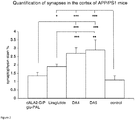
- Immunostaining techniques were used to assess the neuronal plaque load (anti beta-amyloid rabbit polyclonal antibody (1:200, rabbit polyclonal-Invitrogen 71-5800) and of synaptophysin (polyclonal rabbit anti-synaptophysin primary antibody, 1:2000, Abcam, Cambridge, UK) to measure the amount of synapses in the cortex.
- Brain samples were first exposed to 99% formic acid for 7 minutes and then washed 3 times for 10 minutes in TBS. Pre-treatment with 99% formic acid is known to drastically increase the detection of beta-Amyloid in formalin-fixed brain samples.
- a primary antibody against beta-Amyloid or synaptophysin was added and incubated overnight on the shaker at 4°C.
- the antibody was polyclonal and raised against a synthetic beta-Amyloid 1-43 peptide in rabbit.
- the primary antibody was used in a final dilution of 1 to 250 in TBS containing 2% goat serum and 10% Triton X-100. Afterwards, the samples were washed with TBS 3 times for 10 minutes and a secondary antibody was added for 90 minutes on the shaker at 4°C.
- the secondary antibody was a biotinylated anti-rabbit IgG raised in goat (Vectastain ABC Kit, Rabbit IgG; Vector Laboratories; Cat.-No.: PK-6101), and was used in a final dilution of 1 to 60 in TBS containing 1% goat serum and 10% Triton-X-100.
- the samples were then washed 3 times in TBS for 10 minutes and then stained by adding phosphate-buffered saline containing 3% SG blue solution (SG Blue Peroxidase Kit; Vector Laboratories; Cat.-No.: SK-4700) and 3% H2O2 solution for 5 minutes and then again washed 3 times for 10 minutes with phosphate-buffered saline.
- phosphate-buffered saline containing 3% SG blue solution SG Blue Peroxidase Kit; Vector Laboratories; Cat.-No.: SK-4700
- H2O2 solution 3% H2O2 solution
- samples were incubated with ddH2O containing 0.5% CuSO4 (w/w) for 5 minutes. After washing 3 times for 10 minutes in ddH2O, the brain slices were put onto silane-coated glass slides with a fine brush where they could dry overnight. Finally the slides were cover slipped with an aquatic mounting medium (VectaMountAQ Mounting Medium; Vector Laboratories, Cat.-No.: H-5501). As control served a set of samples from a 17 month old non-transgenic littermate processed together with the experimental samples.
- an aquatic mounting medium VectaMountAQ Mounting Medium
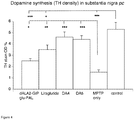
- a standard model to induce Parkinson like symptoms in mice is the injection of the chemical (MPTP) (Li et al., 2009). This chemical impairs or kills neurons in the brain that produce dopamine. The mice develop motor impairments, and the dopaminergic neurons in the brain are reduced in numbers and function.
- the enzyme tyrosine hydroxylase (TH) is required to synthesise dopamine. A loss of TH signifies a loss of dopamine production (Harkavyi et al., 2008).
- the dose of peptide tested was 10nmol/kg body weight.
- the peptides were administered by a once-daily intraperitoneal injection for 2 weeks. Saline injections were administered as a control. Six animals per group were injected with a peptide or a saline control.
- the rotarod consists of a rotating pole that accelerates over time. Mice are placed on the rod, and motor skills are tested by accelerating the rotation. As the rotation increases, animals lose grip and fall on a cushion located below the rod. Mice were given three trials with 45 min inter-trial intervals on each of 2 consecutive days for 3 weeks. Each animal's endurance time was recorded, and the average was calculated. Data were analysed using a one-way ANOVA with post-hoc Bonferroni tests.
- TH tyrosine hydroxylase
- Sections were cut on a cryostat and postfixed in 4% paraformaldehyde, washed in PBS, treated with 0.3% H2O2 in methanol for 20 min, and washed again. Incubation with TH (1:800) antibody was at 48°C overnight in PBS with 0.1 % Tween and 10% goat serum. Sections were incubated for 1 hr at room temperature with biotinylated secondary antibody diluted in 0.1% PBS-Tween. DAB staining was performed according to the Vectastain ABC kit instructions (Vector Laboratories). For each animal, three tissue sections from one level of striatum were stained and analysed for TH-positive fibre innervation. To achieve a TH cell count representative of the whole SN, each animal was analysed at four and three rostrocaudal levels (bregma - 4.80 to - 6.04). Two tissue sections from each level were quantified by immunohistochemistry.
- both GLP-1/GIP dual agonist peptides (DA4 and DA5) showed superior neuroprotection over single GLP-1 and GIP analogues in animal models of Alzheimer's and Parkinson's disease.
- the data of the present examples demonstrate that both peptides DA4 and DA5 may be considered suitable for use in the treatment and/or prevention of neurodegenerative disorders such as, for example, Alzheimer's Disease and/or Parkinson's Disease.
- Example 2 Materials and methods in Example 2 are the same as Example 1 except when stated.
- Reagents used in Example 2 only include antibodies to p-PI3Kp85, PI3Kp85, p-Akt (ser473), Akt, p-GSK3 ⁇ (Y216), and GSK3 ⁇ from Abcam, Inc. Cambridge, UK.
- the antibody to p-tau (AT8) from Thermo Scientific USA.
- the animals had a 30 min of adaptation in the laboratory.
- the open field was divided into 16 equal size squares with defining 4 squares in the middle as central area and the rest as peripheral area.
- Each mouse was placed individually in the apparatus (40cm ⁇ 40cm ⁇ 40cm) from the center for 5 min and the total distance as well as the percentage of time in center were recorded by Smart 3.0 software system (Panlab, Spain) at the same time.
- the apparatus was cleaned with 70% ethanol before each test.
- Spatial working memory was assessed by recording spontaneous alternation behaviour in a Y-maze.
- the maze was made of three 30 cm long, 7 cm high, 15 cm wide arms and the arms converged in an equilateral triangular central area. Each mouse was placed at the central triangular area and allowed to move freely through the maze during an 8-min session.
- the total arm entries and arm order was recorded by Smart 3.0 software system. Alternation was defined as successive entries into the three arms, on overlapping triplet sets.
- the percent alternation was calculated as the ratio of actual to possible alternations (defined as the total number of arm entries minus 2) multiplied by 100.
- the water maze mainly included a stainless steel pool and a platform in the pool for escape. There were several landmarks fixed to the walls of the water maze.
- the pool was filled with tap water at 22 ⁇ 2 °C.
- the first phase was acquisition trial phase which was consisted of five training days (days 1-5) and four trials each day.
- the pool (diameter, 120 cm; high, 50 cm) was divided into four quadrants and the escape platform (diameter, 12 cm) hidden 1 cm beneath the water surface was placed in the center of the first quadrant. Four points equally spaced along the circumference of the pool were served as the starting position, which was chosen randomly across the four trials per day.
- the second phase was probe trial phase. On the day after finishing the acquisition task (day 6), a probe trial was performed to assess the spatial memory. The platform was removed from the pool, and animals were allowed to swim freely for 1 min. The percentage of swimming time in target quadrant (the first quadrant) and frequency of platform crossing were recorded. Reversal MWM test was used to observe the ability of mice to relearn and cognitive flexibility. After classical MWM test, the platform was moved to reversal quadrant (the third quadrant), and mice were placed into the water for similar four days' acquisition trial and one day' probe trial as mentioned above. The third phase was visible platform test. Raise the platform 1cm above the water level and the mice were placed in two randomly selected quadrants. swimming time to target was recorded.
- mice were anesthetized with urethane (Sigma, UK, 1.5 g/kg, i.p.) and placed in a stereotaxic apparatus (RWD Life Science, China) for L-LTP recording. Cut off the scalp and expose the skull, small holes were drilled on one side of the skull (2.0 mm posterior to bregma and 1.5 mm lateral to the midline).
- a pair of parallel stimulating/recording electrodes (Sequim, WA, USA) was inserted at the Schaffer collateral and stratum radiatum in the CA1 region of hippocampus.
- Baseline fEPSPs were elicited by test stimuli at an interval of 30 seconds and 30 minutes fEPSPs were recorded to observe whether the underlying synaptic transmission is affected.
- two paired test stimuli with an interval of 50 ms were given before HFS to induce paired-pulse facilitation (PPF).
- PPF ratio calculated by dividing the slope of the second fEPSP by the slope of the first fEPSP, is viewed to be related with the changes in neurotransmitter release from presynaptic terminals.
- L-LTP was induced by three sets of high-frequency stimulation (HFS) with an interval of 5 minutes.
- HFS high-frequency stimulation
- Each set of HFS includes three trains of 20 pulses with 5 ms of interstimulus interval (200 Hz).
- the fEPSPs were recorded for 180 minutes after HFS. All events were recorded by a biological signal processing system (Chengdu Instruments Ltd, China). The percentage change of fEPSPs in each group after HFS was compared.
- mice were anesthetized with chloral hydrate (0.007ml/g) by intraperitoneal injection and then the brain tissue was fixed with paraformaldehyde for 24 hours, after that the tissue was transferred to 30% sucrose solution for dehydration.
- the brain tissue was harvested, frozen in -80°C, and then sliced at a thickness of 30 ⁇ m, put the frozen section in PBS, blocked with normal goat serum (Solarbio, Beijing, China), followed by adding the primary antibody, second antibody and DAPI.
- Phosphorylated tau protein was observed by confocal laser scanning microscopy.
- the hippocampi of mouse were dissected and homogenized in tissue protein extraction reagent, and protein concentration was measured using BCA Protein Assay Kit. A total of 50 ⁇ g of protein was used from each sample. Sample proteins were separated on 12% SDS-polyacrylamide gels. After that, the proteins were transferred onto PVDF membranes and nonspecific binding was blocked with 5% BSA. A primary antibody was used to incubate the membranes overnight at 4°C, followed by a secondary antibody for 2 h. The optical density of the target strip (p-PI3K, t-PI3K, p-AKT, t-AKT, p-GSK3 ⁇ and t-GSK3 ⁇ ) was analyzed by using a gel image processing system.
- the results present in this study confirmed the protective effects of the GLP-1/GIP dual agonist DA5 peptide on the cognitive function and pathological characteristics in APP/PS1 transgenic AD mice.
- the neuroprotection of the DA5 peptide may be associated with the improvement of hippocampal synaptic plasticity and PI3K/AKT/GSK3 ⁇ signalling pathway.
- the above results suggest that the DA5 peptide may be useful in the treatment of neurodegenerative disease, and particularly may be beneficial for AD patients, especially those with T2DM or hyperglycemia.
Landscapes
- Health & Medical Sciences (AREA)
- Chemical & Material Sciences (AREA)
- Life Sciences & Earth Sciences (AREA)
- Organic Chemistry (AREA)
- Engineering & Computer Science (AREA)
- Bioinformatics & Cheminformatics (AREA)
- General Health & Medical Sciences (AREA)
- Medicinal Chemistry (AREA)
- Neurology (AREA)
- Veterinary Medicine (AREA)
- Public Health (AREA)
- Animal Behavior & Ethology (AREA)
- Pharmacology & Pharmacy (AREA)
- Biomedical Technology (AREA)
- Neurosurgery (AREA)
- Nuclear Medicine, Radiotherapy & Molecular Imaging (AREA)
- Chemical Kinetics & Catalysis (AREA)
- General Chemical & Material Sciences (AREA)
- Proteomics, Peptides & Aminoacids (AREA)
- Gastroenterology & Hepatology (AREA)
- Molecular Biology (AREA)
- Genetics & Genomics (AREA)
- Biophysics (AREA)
- Biochemistry (AREA)
- Endocrinology (AREA)
- Psychiatry (AREA)
- Zoology (AREA)
- Epidemiology (AREA)
- Toxicology (AREA)
- Hospice & Palliative Care (AREA)
- Psychology (AREA)
- Immunology (AREA)
- Pain & Pain Management (AREA)
- Physical Education & Sports Medicine (AREA)
- Orthopedic Medicine & Surgery (AREA)
- Urology & Nephrology (AREA)
- Vascular Medicine (AREA)
- Cardiology (AREA)
- Heart & Thoracic Surgery (AREA)
- Peptides Or Proteins (AREA)
Priority Applications (4)
| Application Number | Priority Date | Filing Date | Title |
|---|---|---|---|
| SM20200684T SMT202000684T1 (it) | 2016-12-05 | 2017-12-04 | Trattamento delle malattie neurologiche |
| SI201730543T SI3548061T1 (sl) | 2016-12-05 | 2017-12-04 | Zdravljanje nevroloških bolezni |
| RS20201491A RS61230B1 (sr) | 2016-12-05 | 2017-12-04 | Lečenje neuroloških bolesti |
| HRP20201959TT HRP20201959T1 (hr) | 2016-12-05 | 2017-12-04 | Liječenje neuroloških bolesti |
Applications Claiming Priority (2)
| Application Number | Priority Date | Filing Date | Title |
|---|---|---|---|
| GBGB1620611.2A GB201620611D0 (en) | 2016-12-05 | 2016-12-05 | Treatment of neurological diseases |
| PCT/GB2017/053655 WO2018104718A1 (en) | 2016-12-05 | 2017-12-04 | Treatment of neurological diseases |
Publications (2)
| Publication Number | Publication Date |
|---|---|
| EP3548061A1 EP3548061A1 (en) | 2019-10-09 |
| EP3548061B1 true EP3548061B1 (en) | 2020-09-09 |
Family
ID=58159786
Family Applications (1)
| Application Number | Title | Priority Date | Filing Date |
|---|---|---|---|
| EP17811693.5A Active EP3548061B1 (en) | 2016-12-05 | 2017-12-04 | Treatment of neurological diseases |
Country Status (25)
| Country | Link |
|---|---|
| US (2) | US11220534B2 (lt) |
| EP (1) | EP3548061B1 (lt) |
| JP (1) | JP7099729B2 (lt) |
| KR (1) | KR102600128B1 (lt) |
| CN (1) | CN110312520B (lt) |
| AU (1) | AU2017371811B2 (lt) |
| BR (1) | BR112019011462A2 (lt) |
| CA (1) | CA3044797C (lt) |
| CL (1) | CL2019001512A1 (lt) |
| CO (1) | CO2019006979A2 (lt) |
| CY (1) | CY1123623T1 (lt) |
| DK (1) | DK3548061T3 (lt) |
| ES (1) | ES2833408T3 (lt) |
| GB (1) | GB201620611D0 (lt) |
| HR (1) | HRP20201959T1 (lt) |
| HU (1) | HUE052766T2 (lt) |
| LT (1) | LT3548061T (lt) |
| MX (1) | MX2019006495A (lt) |
| PT (1) | PT3548061T (lt) |
| RS (1) | RS61230B1 (lt) |
| RU (1) | RU2755997C2 (lt) |
| SI (1) | SI3548061T1 (lt) |
| SM (1) | SMT202000684T1 (lt) |
| WO (1) | WO2018104718A1 (lt) |
| ZA (1) | ZA201903003B (lt) |
Cited By (1)
| Publication number | Priority date | Publication date | Assignee | Title |
|---|---|---|---|---|
| US12281149B2 (en) | 2021-05-13 | 2025-04-22 | Carmot Therapeutics, Inc. | Modulators of G-protein coupled receptors |
Families Citing this family (11)
| Publication number | Priority date | Publication date | Assignee | Title |
|---|---|---|---|---|
| GB201620611D0 (en) * | 2016-12-05 | 2017-01-18 | Univ Of Lancaster | Treatment of neurological diseases |
| HRP20241052T1 (hr) | 2019-11-06 | 2024-11-08 | Novo Nordisk A/S | Semaglutid, namijenjen liječenju alzheimerove demencije |
| TW202140058A (zh) * | 2020-01-30 | 2021-11-01 | 美商美國禮來大藥廠 | 提派肽(tirzepatide)之治療用途 |
| AU2021312323A1 (en) | 2020-07-22 | 2023-02-02 | Novo Nordisk A/S | Co-agonists at GLP-1 and GIP receptors suitable for oral delivery |
| US20230355789A1 (en) * | 2020-09-25 | 2023-11-09 | Hanmi Pharm. Co., Ltd. | Therapeutic use, for neurodegenerative diseases, of triple agonist having activity with respect to all of glucagon, glp-1, and gip receptors, or conjugate thereof |
| CN114617956B (zh) * | 2020-12-10 | 2023-10-03 | 江苏中新医药有限公司 | 一种高效降糖的蛋白质药物 |
| CN114042149B (zh) * | 2021-12-03 | 2023-06-16 | 中国人民解放军空军军医大学 | D-Ala2-GIP用于制备治疗焦虑症药物的应用 |
| TW202330584A (zh) | 2022-01-20 | 2023-08-01 | 丹麥商諾佛 儂迪克股份有限公司 | 前藥及其用途 |
| WO2023151594A1 (en) * | 2022-02-11 | 2023-08-17 | Hangzhou Sciwind Biosciences Co., Ltd. | A composition comprising gip receptor agonists and glp-1 receptor agonists and use thereof |
| WO2024209050A1 (en) | 2023-04-05 | 2024-10-10 | Antag Therapeutics Aps | Gip activity modulators and orthostatic intolerance |
| CN119925576A (zh) * | 2024-02-06 | 2025-05-06 | 上海市第四人民医院 | 一种治疗神经退行性疾病的药物 |
Family Cites Families (16)
| Publication number | Priority date | Publication date | Assignee | Title |
|---|---|---|---|---|
| EP2913056A1 (en) * | 2006-01-05 | 2015-09-02 | The University of Utah Research Foundation | Methods and compositions related to improving properties of pharmacological agents targeting nervous system |
| TWI474835B (zh) | 2008-06-17 | 2015-03-01 | Univ Indiana Res & Tech Corp | 用於治療代謝病症及肥胖症之基於gip之混合激動劑 |
| US8921314B2 (en) | 2008-10-15 | 2014-12-30 | Angiochem, Inc. | Conjugates of GLP-1 agonists and uses thereof |
| EP2528618A4 (en) | 2010-01-27 | 2015-05-27 | Univ Indiana Res & Tech Corp | GLUCAGON ANTAGONISTE AND GIP AGONISTS CONJUGATES AND COMPOSITIONS FOR THE TREATMENT OF METABOLISM DISEASES AND ADIPOSITAS |
| UA114592C2 (uk) | 2010-09-28 | 2017-07-10 | Ноно Інк. | Пептид nd2 та спосіб лікування неврологічного захворювання |
| AR087744A1 (es) | 2011-09-01 | 2014-04-16 | Sanofi Aventis Deutschland | Composicion farmaceutica para uso en el tratamiento de una enfermedad neurodegenerativa |
| US9579358B2 (en) | 2011-10-10 | 2017-02-28 | Lancaster University Business Enterprises Limited | Compositions for binding to amyloid proteins |
| NZ702333A (en) | 2012-05-03 | 2017-06-30 | Zealand Pharma As | Gip-glp-1 dual agonist compounds and methods |
| US9340600B2 (en) | 2012-06-21 | 2016-05-17 | Indiana University Research And Technology Corporation | Glucagon analogs exhibiting GIP receptor activity |
| SMT202000307T1 (it) | 2014-05-28 | 2020-07-08 | Nono Inc | Sale cloruro di tat-nr2b9c |
| GB2528436A (en) | 2014-07-15 | 2016-01-27 | Lancaster Univ Business Entpr Ltd | Treatment of neurological diseases |
| US20160143920A1 (en) * | 2014-10-22 | 2016-05-26 | Morris Notelovitz | Composition, formulations and methods of making and using botanicals and natural compounds for the promotion of healthy brain aging |
| US20170112897A1 (en) | 2015-10-23 | 2017-04-27 | Cedars-Sinai Medical Center | Methods for treating brain insulin resistance |
| EP4442314A2 (en) | 2015-10-28 | 2024-10-09 | Tufts University | Novel polypeptides with improved proteolytic stability, and methods of preparing and using same |
| WO2017210168A1 (en) | 2016-06-02 | 2017-12-07 | Indiana University Research And Technology Corporation | Aqueously soluble and chemically stable depsi glucagon agonists |
| GB201620611D0 (en) * | 2016-12-05 | 2017-01-18 | Univ Of Lancaster | Treatment of neurological diseases |
-
2016
- 2016-12-05 GB GBGB1620611.2A patent/GB201620611D0/en not_active Ceased
-
2017
- 2017-12-04 MX MX2019006495A patent/MX2019006495A/es unknown
- 2017-12-04 PT PT178116935T patent/PT3548061T/pt unknown
- 2017-12-04 KR KR1020197015601A patent/KR102600128B1/ko active Active
- 2017-12-04 LT LTEP17811693.5T patent/LT3548061T/lt unknown
- 2017-12-04 AU AU2017371811A patent/AU2017371811B2/en active Active
- 2017-12-04 ES ES17811693T patent/ES2833408T3/es active Active
- 2017-12-04 CA CA3044797A patent/CA3044797C/en active Active
- 2017-12-04 HU HUE17811693A patent/HUE052766T2/hu unknown
- 2017-12-04 RU RU2019118165A patent/RU2755997C2/ru active
- 2017-12-04 JP JP2019529926A patent/JP7099729B2/ja active Active
- 2017-12-04 DK DK17811693.5T patent/DK3548061T3/da active
- 2017-12-04 WO PCT/GB2017/053655 patent/WO2018104718A1/en not_active Ceased
- 2017-12-04 SI SI201730543T patent/SI3548061T1/sl unknown
- 2017-12-04 HR HRP20201959TT patent/HRP20201959T1/hr unknown
- 2017-12-04 EP EP17811693.5A patent/EP3548061B1/en active Active
- 2017-12-04 BR BR112019011462A patent/BR112019011462A2/pt unknown
- 2017-12-04 SM SM20200684T patent/SMT202000684T1/it unknown
- 2017-12-04 RS RS20201491A patent/RS61230B1/sr unknown
- 2017-12-04 US US16/466,194 patent/US11220534B2/en active Active
- 2017-12-04 CN CN201780075565.8A patent/CN110312520B/zh active Active
-
2019
- 2019-05-14 ZA ZA2019/03003A patent/ZA201903003B/en unknown
- 2019-06-04 CL CL2019001512A patent/CL2019001512A1/es unknown
- 2019-06-27 CO CONC2019/0006979A patent/CO2019006979A2/es unknown
-
2020
- 2020-12-09 CY CY20201101167T patent/CY1123623T1/el unknown
-
2021
- 2021-10-13 US US17/500,430 patent/US11851468B2/en active Active
Non-Patent Citations (1)
| Title |
|---|
| None * |
Cited By (1)
| Publication number | Priority date | Publication date | Assignee | Title |
|---|---|---|---|---|
| US12281149B2 (en) | 2021-05-13 | 2025-04-22 | Carmot Therapeutics, Inc. | Modulators of G-protein coupled receptors |
Also Published As
Similar Documents
| Publication | Publication Date | Title |
|---|---|---|
| US11851468B2 (en) | Treatment of neurological diseases | |
| US9884091B2 (en) | Treatment of neurological diseases | |
| JP6272284B2 (ja) | グルカゴン様ペプチド−2(glp−2)アナログ | |
| US9062125B2 (en) | Use of GIP for the treatment of disorders associated with dysfunctional synaptic transmission | |
| KR102508651B1 (ko) | 신경계 및 신경변성 상태의 요법으로서 장기간 작용하는 glf-1r 작용제 | |
| JP2003192698A (ja) | 糖尿病治療に有用なglp−1アナログ | |
| EP3129396A1 (en) | Dual glp-1 / glucagon receptor agonists derived from exendin-4 | |
| KR20160089523A (ko) | 전립선 암 치료용 조성물 | |
| JP2012503674A (ja) | 抗癌剤との補助的治療薬としての下垂体アデニル酸シクラーゼ活性化ポリペプチド(pacap)及びpacap類似体の使用 | |
| CN105753963A (zh) | 高活性艾塞那肽类似物及其医药应用 | |
| JP7069126B2 (ja) | 化学療法誘発性末梢性ニューロパシーおよび難聴を処置または予防するためのbcl-wポリペプチドおよび模倣物 | |
| AU2012207301B2 (en) | Apolipoprotein AIV as an antidiabetic peptide | |
| JP5219168B2 (ja) | アルツハイマー病の予防および/または治療用βシート破壊ペプチド | |
| CN101531703B (zh) | 用于预防和/或治疗阿尔茨海默病的β片层阻断肽 | |
| HK40007316A (en) | Treatment of neurological diseases | |
| HK40007316B (en) | Treatment of neurological diseases | |
| WO2017147044A1 (en) | Peptides and methods for treatment of neurodegenerative diseases | |
| CN104045703B (zh) | 一种多肽、多肽衍生物、多肽的可药用盐及药物组合物 | |
| Class et al. | Patent application title: TREATMENT OF NEUROLOGICAL DISEASES | |
| KR20200021880A (ko) | 신경근육질환의 예방 또는 치료용 약학적 조성물 | |
| WO2022156189A1 (zh) | 多肽化合物在预防或治疗炎症性肠病及其相关的肠纤维化中的应用 | |
| HK1137765B (en) | β -SHEET BLOCKING PEPTIDES FOR PREVENTING AND/OR TREATING ALZHEIMER’S DISEASE |
Legal Events
| Date | Code | Title | Description |
|---|---|---|---|
| STAA | Information on the status of an ep patent application or granted ep patent |
Free format text: STATUS: UNKNOWN |
|
| STAA | Information on the status of an ep patent application or granted ep patent |
Free format text: STATUS: THE INTERNATIONAL PUBLICATION HAS BEEN MADE |
|
| PUAI | Public reference made under article 153(3) epc to a published international application that has entered the european phase |
Free format text: ORIGINAL CODE: 0009012 |
|
| STAA | Information on the status of an ep patent application or granted ep patent |
Free format text: STATUS: REQUEST FOR EXAMINATION WAS MADE |
|
| 17P | Request for examination filed |
Effective date: 20190621 |
|
| AK | Designated contracting states |
Kind code of ref document: A1 Designated state(s): AL AT BE BG CH CY CZ DE DK EE ES FI FR GB GR HR HU IE IS IT LI LT LU LV MC MK MT NL NO PL PT RO RS SE SI SK SM TR |
|
| AX | Request for extension of the european patent |
Extension state: BA ME |
|
| DAV | Request for validation of the european patent (deleted) | ||
| DAX | Request for extension of the european patent (deleted) | ||
| REG | Reference to a national code |
Ref country code: DE Ref legal event code: R079 Ref document number: 602017023484 Country of ref document: DE Free format text: PREVIOUS MAIN CLASS: A61K0038220000 Ipc: A61K0038000000 |
|
| GRAP | Despatch of communication of intention to grant a patent |
Free format text: ORIGINAL CODE: EPIDOSNIGR1 |
|
| STAA | Information on the status of an ep patent application or granted ep patent |
Free format text: STATUS: GRANT OF PATENT IS INTENDED |
|
| RIC1 | Information provided on ipc code assigned before grant |
Ipc: A61P 25/02 20060101ALI20200326BHEP Ipc: A61K 38/00 20060101AFI20200326BHEP Ipc: A61P 25/24 20060101ALI20200326BHEP Ipc: A61P 25/16 20060101ALI20200326BHEP Ipc: A61P 25/00 20060101ALI20200326BHEP Ipc: C07K 14/605 20060101ALI20200326BHEP Ipc: A61P 25/08 20060101ALI20200326BHEP Ipc: C07K 14/00 20060101ALI20200326BHEP Ipc: A61P 25/14 20060101ALI20200326BHEP Ipc: A61P 25/28 20060101ALI20200326BHEP Ipc: A61P 21/00 20060101ALI20200326BHEP |
|
| INTG | Intention to grant announced |
Effective date: 20200421 |
|
| REG | Reference to a national code |
Ref country code: HK Ref legal event code: DE Ref document number: 40007316 Country of ref document: HK |
|
| GRAS | Grant fee paid |
Free format text: ORIGINAL CODE: EPIDOSNIGR3 |
|
| GRAA | (expected) grant |
Free format text: ORIGINAL CODE: 0009210 |
|
| STAA | Information on the status of an ep patent application or granted ep patent |
Free format text: STATUS: THE PATENT HAS BEEN GRANTED |
|
| AK | Designated contracting states |
Kind code of ref document: B1 Designated state(s): AL AT BE BG CH CY CZ DE DK EE ES FI FR GB GR HR HU IE IS IT LI LT LU LV MC MK MT NL NO PL PT RO RS SE SI SK SM TR |
|
| REG | Reference to a national code |
Ref country code: GB Ref legal event code: FG4D |
|
| REG | Reference to a national code |
Ref country code: AT Ref legal event code: REF Ref document number: 1310717 Country of ref document: AT Kind code of ref document: T Effective date: 20200915 Ref country code: CH Ref legal event code: EP |
|
| REG | Reference to a national code |
Ref country code: DE Ref legal event code: R096 Ref document number: 602017023484 Country of ref document: DE |
|
| REG | Reference to a national code |
Ref country code: IE Ref legal event code: FG4D |
|
| REG | Reference to a national code |
Ref country code: PT Ref legal event code: SC4A Ref document number: 3548061 Country of ref document: PT Date of ref document: 20201124 Kind code of ref document: T Free format text: AVAILABILITY OF NATIONAL TRANSLATION Effective date: 20201117 |
|
| REG | Reference to a national code |
Ref country code: NL Ref legal event code: FP |
|
| REG | Reference to a national code |
Ref country code: HR Ref legal event code: TUEP Ref document number: P20201959T Country of ref document: HR |
|
| REG | Reference to a national code |
Ref country code: RO Ref legal event code: EPE |
|
| REG | Reference to a national code |
Ref country code: FI Ref legal event code: FGE |
|
| REG | Reference to a national code |
Ref country code: DK Ref legal event code: T3 Effective date: 20201208 |
|
| REG | Reference to a national code |
Ref country code: CH Ref legal event code: NV Representative=s name: STOLMAR AND PARTNER INTELLECTUAL PROPERTY S.A., CH |
|
| REG | Reference to a national code |
Ref country code: NO Ref legal event code: T2 Effective date: 20200909 |
|
| REG | Reference to a national code |
Ref country code: EE Ref legal event code: FG4A Ref document number: E020022 Country of ref document: EE Effective date: 20201120 |
|
| REG | Reference to a national code |
Ref country code: HR Ref legal event code: ODRP Ref document number: P20201959T Country of ref document: HR Payment date: 20201221 Year of fee payment: 4 |
|
| REG | Reference to a national code |
Ref country code: SK Ref legal event code: T3 Ref document number: E 35929 Country of ref document: SK |
|
| REG | Reference to a national code |
Ref country code: HR Ref legal event code: T1PR Ref document number: P20201959 Country of ref document: HR |
|
| REG | Reference to a national code |
Ref country code: HU Ref legal event code: AG4A Ref document number: E052766 Country of ref document: HU |
|
| REG | Reference to a national code |
Ref country code: DE Ref legal event code: R097 Ref document number: 602017023484 Country of ref document: DE |
|
| REG | Reference to a national code |
Ref country code: ES Ref legal event code: FG2A Ref document number: 2833408 Country of ref document: ES Kind code of ref document: T3 Effective date: 20210615 |
|
| PLBE | No opposition filed within time limit |
Free format text: ORIGINAL CODE: 0009261 |
|
| STAA | Information on the status of an ep patent application or granted ep patent |
Free format text: STATUS: NO OPPOSITION FILED WITHIN TIME LIMIT |
|
| 26N | No opposition filed |
Effective date: 20210610 |
|
| REG | Reference to a national code |
Ref country code: AT Ref legal event code: UEP Ref document number: 1310717 Country of ref document: AT Kind code of ref document: T Effective date: 20200909 |
|
| REG | Reference to a national code |
Ref country code: HR Ref legal event code: ODRP Ref document number: P20201959 Country of ref document: HR Payment date: 20220524 Year of fee payment: 5 |
|
| PG25 | Lapsed in a contracting state [announced via postgrant information from national office to epo] |
Ref country code: CY Free format text: LAPSE BECAUSE OF NON-PAYMENT OF DUE FEES Effective date: 20211204 |
|
| REG | Reference to a national code |
Ref country code: HU Ref legal event code: HC9C Owner name: LANCASTER UNIVERSITY BUSINESS ENTERPRISES LIMITED, GB |
|
| REG | Reference to a national code |
Ref country code: HR Ref legal event code: ODRP Ref document number: P20201959 Country of ref document: HR Payment date: 20221123 Year of fee payment: 6 |
|
| P01 | Opt-out of the competence of the unified patent court (upc) registered |
Effective date: 20230417 |
|
| REG | Reference to a national code |
Ref country code: HR Ref legal event code: ODRP Ref document number: P20201959 Country of ref document: HR Payment date: 20231122 Year of fee payment: 7 |
|
| REG | Reference to a national code |
Ref country code: EE Ref legal event code: HC1A Ref document number: E020022 Country of ref document: EE Ref country code: EE Ref legal event code: GB1A Ref document number: E020022 Country of ref document: EE |
|
| REG | Reference to a national code |
Ref country code: GB Ref legal event code: 732E Free format text: REGISTERED BETWEEN 20240222 AND 20240228 |
|
| REG | Reference to a national code |
Ref country code: FI Ref legal event code: PCE Owner name: UNIVERSITY OF LANCASTER |
|
| REG | Reference to a national code |
Ref country code: LU Ref legal event code: PD Owner name: UNIVERSITY OF LANCASTER; GB Free format text: FORMER OWNER: LANCASTER UNIVERSITY BUSINESS ENTERPRISES LIMITED Effective date: 20240715 |
|
| REG | Reference to a national code |
Ref country code: SK Ref legal event code: PC4A Ref document number: E 35929 Country of ref document: SK Owner name: UNIVERSITY OF LANCASTER, LANCASTER, GB Free format text: FORMER OWNER: LANCASTER UNIVERSITY BUSINESS ENTERPRISES LIMITED, LANCASTER, GB Effective date: 20240731 |
|
| REG | Reference to a national code |
Ref country code: NL Ref legal event code: PD Owner name: UNIVERSITY OF LANCASTER; GB Free format text: DETAILS ASSIGNMENT: CHANGE OF OWNER(S), ASSIGNMENT; FORMER OWNER NAME: LANCASTER UNIVERSITY BUSINESS ENTERPRISES LIMITED Effective date: 20240808 |
|
| REG | Reference to a national code |
Ref country code: BE Ref legal event code: PD Owner name: UNIVERSITY OF LANCASTER; GB Free format text: DETAILS ASSIGNMENT: CHANGE OF OWNER(S), ASSIGNMENT; FORMER OWNER NAME: LANCASTER UNIVERSITY BUSINESS ENTERPRISES LIMITED Effective date: 20240807 |
|
| REG | Reference to a national code |
Ref country code: DE Ref legal event code: R081 Ref document number: 602017023484 Country of ref document: DE Owner name: UNIVERSITY OF LANCASTER, LANCASTER, GB Free format text: FORMER OWNER: LANCASTER UNIVERSITY BUSINESS ENTERPRISES LIMITED, LANCASTER, GB |
|
| REG | Reference to a national code |
Ref country code: HR Ref legal event code: PPPP Ref document number: P20201959 Country of ref document: HR Owner name: UNIVERSITY OF LANCASTER, GB |
|
| REG | Reference to a national code |
Ref country code: ES Ref legal event code: PC2A Owner name: UNIVERSITY OF LANCASTER Effective date: 20241003 |
|
| REG | Reference to a national code |
Ref country code: AT Ref legal event code: PC Ref document number: 1310717 Country of ref document: AT Kind code of ref document: T Owner name: UNIVERSITY OF LANCASTER, GB Effective date: 20240913 |
|
| REG | Reference to a national code |
Ref country code: HU Ref legal event code: GB9C Owner name: UNIVERSITY OF LANCASTER, GB Free format text: FORMER OWNER(S): LANCASTER UNIVERSITY BUSINESS ENTERPRISES LIMITED, GB Ref country code: HU Ref legal event code: FH1C Free format text: FORMER REPRESENTATIVE(S): DR. KOCSOMBA NELLI UEGYVEDI IRODA, HU Representative=s name: DR. KOCSOMBA NELLI UEGYVEDI IRODA, HU |
|
| REG | Reference to a national code |
Ref country code: SI Ref legal event code: SP73 Owner name: UNIVERSITY OF LANCASTER; GB Effective date: 20240917 |
|
| REG | Reference to a national code |
Ref country code: HR Ref legal event code: ODRP Ref document number: P20201959 Country of ref document: HR Payment date: 20241126 Year of fee payment: 8 |
|
| PGFP | Annual fee paid to national office [announced via postgrant information from national office to epo] |
Ref country code: PT Payment date: 20251126 Year of fee payment: 9 |
|
| PGFP | Annual fee paid to national office [announced via postgrant information from national office to epo] |
Ref country code: LU Payment date: 20251124 Year of fee payment: 9 Ref country code: NL Payment date: 20251125 Year of fee payment: 9 |
|
| REG | Reference to a national code |
Ref country code: HR Ref legal event code: ODRP Ref document number: P20201959 Country of ref document: HR Payment date: 20251127 Year of fee payment: 9 |
|
| REG | Reference to a national code |
Ref country code: CH Ref legal event code: U11 Free format text: ST27 STATUS EVENT CODE: U-0-0-U10-U11 (AS PROVIDED BY THE NATIONAL OFFICE) Effective date: 20260101 |
|
| PGFP | Annual fee paid to national office [announced via postgrant information from national office to epo] |
Ref country code: IS Payment date: 20251126 Year of fee payment: 9 Ref country code: DE Payment date: 20251127 Year of fee payment: 9 |
|
| PGFP | Annual fee paid to national office [announced via postgrant information from national office to epo] |
Ref country code: LT Payment date: 20251126 Year of fee payment: 9 Ref country code: GB Payment date: 20251202 Year of fee payment: 9 |
|
| PGFP | Annual fee paid to national office [announced via postgrant information from national office to epo] |
Ref country code: NO Payment date: 20251204 Year of fee payment: 9 Ref country code: MC Payment date: 20251128 Year of fee payment: 9 |
|
| PGFP | Annual fee paid to national office [announced via postgrant information from national office to epo] |
Ref country code: SM Payment date: 20251228 Year of fee payment: 9 Ref country code: AT Payment date: 20251127 Year of fee payment: 9 Ref country code: MK Payment date: 20251126 Year of fee payment: 9 |
|
| PGFP | Annual fee paid to national office [announced via postgrant information from national office to epo] |
Ref country code: IT Payment date: 20251126 Year of fee payment: 9 Ref country code: FI Payment date: 20251209 Year of fee payment: 9 Ref country code: DK Payment date: 20251202 Year of fee payment: 9 |
|
| PGFP | Annual fee paid to national office [announced via postgrant information from national office to epo] |
Ref country code: HR Payment date: 20251127 Year of fee payment: 9 Ref country code: HU Payment date: 20251128 Year of fee payment: 9 Ref country code: FR Payment date: 20251202 Year of fee payment: 9 |
|
| PGFP | Annual fee paid to national office [announced via postgrant information from national office to epo] |
Ref country code: TR Payment date: 20251201 Year of fee payment: 9 Ref country code: BE Payment date: 20251124 Year of fee payment: 9 Ref country code: AL Payment date: 20251204 Year of fee payment: 9 Ref country code: GR Payment date: 20251222 Year of fee payment: 9 |
|
| PGFP | Annual fee paid to national office [announced via postgrant information from national office to epo] |
Ref country code: SE Payment date: 20251202 Year of fee payment: 9 |
|
| PGFP | Annual fee paid to national office [announced via postgrant information from national office to epo] |
Ref country code: CY Payment date: 20251126 Year of fee payment: 9 Ref country code: CZ Payment date: 20251126 Year of fee payment: 9 Ref country code: IE Payment date: 20251202 Year of fee payment: 9 |
|
| PGFP | Annual fee paid to national office [announced via postgrant information from national office to epo] |
Ref country code: MT Payment date: 20251203 Year of fee payment: 9 Ref country code: LV Payment date: 20251128 Year of fee payment: 9 |
|
| PGFP | Annual fee paid to national office [announced via postgrant information from national office to epo] |
Ref country code: BG Payment date: 20251126 Year of fee payment: 9 Ref country code: PL Payment date: 20251125 Year of fee payment: 9 |
|
| PGFP | Annual fee paid to national office [announced via postgrant information from national office to epo] |
Ref country code: EE Payment date: 20251202 Year of fee payment: 9 |
|
| PGFP | Annual fee paid to national office [announced via postgrant information from national office to epo] |
Ref country code: SK Payment date: 20251201 Year of fee payment: 9 Ref country code: RO Payment date: 20251128 Year of fee payment: 9 |
|
| PGFP | Annual fee paid to national office [announced via postgrant information from national office to epo] |
Ref country code: RS Payment date: 20251127 Year of fee payment: 9 |
|
| PGFP | Annual fee paid to national office [announced via postgrant information from national office to epo] |
Ref country code: SI Payment date: 20251127 Year of fee payment: 9 |
|
| PGFP | Annual fee paid to national office [announced via postgrant information from national office to epo] |
Ref country code: ES Payment date: 20260108 Year of fee payment: 9 |
|
| PGFP | Annual fee paid to national office [announced via postgrant information from national office to epo] |
Ref country code: CH Payment date: 20260101 Year of fee payment: 9 |