EP3550023B1 - Oligomères et conjugués d'oligomères - Google Patents
Oligomères et conjugués d'oligomères Download PDFInfo
- Publication number
- EP3550023B1 EP3550023B1 EP19152205.1A EP19152205A EP3550023B1 EP 3550023 B1 EP3550023 B1 EP 3550023B1 EP 19152205 A EP19152205 A EP 19152205A EP 3550023 B1 EP3550023 B1 EP 3550023B1
- Authority
- EP
- European Patent Office
- Prior art keywords
- oligomer
- seq
- region
- conjugate
- units
- Prior art date
- Legal status (The legal status is an assumption and is not a legal conclusion. Google has not performed a legal analysis and makes no representation as to the accuracy of the status listed.)
- Active
Links
Images





Classifications
-
- A—HUMAN NECESSITIES
- A61—MEDICAL OR VETERINARY SCIENCE; HYGIENE
- A61K—PREPARATIONS FOR MEDICAL, DENTAL OR TOILETRY PURPOSES
- A61K31/00—Medicinal preparations containing organic active ingredients
- A61K31/70—Carbohydrates; Sugars; Derivatives thereof
- A61K31/7088—Compounds having three or more nucleosides or nucleotides
- A61K31/713—Double-stranded nucleic acids or oligonucleotides
-
- A—HUMAN NECESSITIES
- A61—MEDICAL OR VETERINARY SCIENCE; HYGIENE
- A61K—PREPARATIONS FOR MEDICAL, DENTAL OR TOILETRY PURPOSES
- A61K47/00—Medicinal preparations characterised by the non-active ingredients used, e.g. carriers or inert additives; Targeting or modifying agents chemically bound to the active ingredient
- A61K47/50—Medicinal preparations characterised by the non-active ingredients used, e.g. carriers or inert additives; Targeting or modifying agents chemically bound to the active ingredient the non-active ingredient being chemically bound to the active ingredient, e.g. polymer-drug conjugates
- A61K47/51—Medicinal preparations characterised by the non-active ingredients used, e.g. carriers or inert additives; Targeting or modifying agents chemically bound to the active ingredient the non-active ingredient being chemically bound to the active ingredient, e.g. polymer-drug conjugates the non-active ingredient being a modifying agent
- A61K47/54—Medicinal preparations characterised by the non-active ingredients used, e.g. carriers or inert additives; Targeting or modifying agents chemically bound to the active ingredient the non-active ingredient being chemically bound to the active ingredient, e.g. polymer-drug conjugates the non-active ingredient being a modifying agent the modifying agent being an organic compound
- A61K47/549—Sugars, nucleosides, nucleotides or nucleic acids
-
- A—HUMAN NECESSITIES
- A61—MEDICAL OR VETERINARY SCIENCE; HYGIENE
- A61K—PREPARATIONS FOR MEDICAL, DENTAL OR TOILETRY PURPOSES
- A61K47/00—Medicinal preparations characterised by the non-active ingredients used, e.g. carriers or inert additives; Targeting or modifying agents chemically bound to the active ingredient
- A61K47/50—Medicinal preparations characterised by the non-active ingredients used, e.g. carriers or inert additives; Targeting or modifying agents chemically bound to the active ingredient the non-active ingredient being chemically bound to the active ingredient, e.g. polymer-drug conjugates
- A61K47/51—Medicinal preparations characterised by the non-active ingredients used, e.g. carriers or inert additives; Targeting or modifying agents chemically bound to the active ingredient the non-active ingredient being chemically bound to the active ingredient, e.g. polymer-drug conjugates the non-active ingredient being a modifying agent
- A61K47/54—Medicinal preparations characterised by the non-active ingredients used, e.g. carriers or inert additives; Targeting or modifying agents chemically bound to the active ingredient the non-active ingredient being chemically bound to the active ingredient, e.g. polymer-drug conjugates the non-active ingredient being a modifying agent the modifying agent being an organic compound
- A61K47/554—Medicinal preparations characterised by the non-active ingredients used, e.g. carriers or inert additives; Targeting or modifying agents chemically bound to the active ingredient the non-active ingredient being chemically bound to the active ingredient, e.g. polymer-drug conjugates the non-active ingredient being a modifying agent the modifying agent being an organic compound the modifying agent being a steroid plant sterol, glycyrrhetic acid, enoxolone or bile acid
-
- A—HUMAN NECESSITIES
- A61—MEDICAL OR VETERINARY SCIENCE; HYGIENE
- A61P—SPECIFIC THERAPEUTIC ACTIVITY OF CHEMICAL COMPOUNDS OR MEDICINAL PREPARATIONS
- A61P1/00—Drugs for disorders of the alimentary tract or the digestive system
- A61P1/16—Drugs for disorders of the alimentary tract or the digestive system for liver or gallbladder disorders, e.g. hepatoprotective agents, cholagogues, litholytics
-
- A—HUMAN NECESSITIES
- A61—MEDICAL OR VETERINARY SCIENCE; HYGIENE
- A61P—SPECIFIC THERAPEUTIC ACTIVITY OF CHEMICAL COMPOUNDS OR MEDICINAL PREPARATIONS
- A61P31/00—Antiinfectives, i.e. antibiotics, antiseptics, chemotherapeutics
- A61P31/12—Antivirals
-
- A—HUMAN NECESSITIES
- A61—MEDICAL OR VETERINARY SCIENCE; HYGIENE
- A61P—SPECIFIC THERAPEUTIC ACTIVITY OF CHEMICAL COMPOUNDS OR MEDICINAL PREPARATIONS
- A61P31/00—Antiinfectives, i.e. antibiotics, antiseptics, chemotherapeutics
- A61P31/12—Antivirals
- A61P31/20—Antivirals for DNA viruses
-
- A—HUMAN NECESSITIES
- A61—MEDICAL OR VETERINARY SCIENCE; HYGIENE
- A61P—SPECIFIC THERAPEUTIC ACTIVITY OF CHEMICAL COMPOUNDS OR MEDICINAL PREPARATIONS
- A61P43/00—Drugs for specific purposes, not provided for in groups A61P1/00-A61P41/00
-
- C—CHEMISTRY; METALLURGY
- C12—BIOCHEMISTRY; BEER; SPIRITS; WINE; VINEGAR; MICROBIOLOGY; ENZYMOLOGY; MUTATION OR GENETIC ENGINEERING
- C12N—MICROORGANISMS OR ENZYMES; COMPOSITIONS THEREOF; PROPAGATING, PRESERVING, OR MAINTAINING MICROORGANISMS; MUTATION OR GENETIC ENGINEERING; CULTURE MEDIA
- C12N15/00—Mutation or genetic engineering; DNA or RNA concerning genetic engineering, vectors, e.g. plasmids, or their isolation, preparation or purification; Use of hosts therefor
- C12N15/09—Recombinant DNA-technology
- C12N15/11—DNA or RNA fragments; Modified forms thereof; Non-coding nucleic acids having a biological activity
- C12N15/113—Non-coding nucleic acids modulating the expression of genes, e.g. antisense oligonucleotides; Antisense DNA or RNA; Triplex- forming oligonucleotides; Catalytic nucleic acids, e.g. ribozymes; Nucleic acids used in co-suppression or gene silencing
- C12N15/1131—Non-coding nucleic acids modulating the expression of genes, e.g. antisense oligonucleotides; Antisense DNA or RNA; Triplex- forming oligonucleotides; Catalytic nucleic acids, e.g. ribozymes; Nucleic acids used in co-suppression or gene silencing against viruses
-
- C—CHEMISTRY; METALLURGY
- C12—BIOCHEMISTRY; BEER; SPIRITS; WINE; VINEGAR; MICROBIOLOGY; ENZYMOLOGY; MUTATION OR GENETIC ENGINEERING
- C12N—MICROORGANISMS OR ENZYMES; COMPOSITIONS THEREOF; PROPAGATING, PRESERVING, OR MAINTAINING MICROORGANISMS; MUTATION OR GENETIC ENGINEERING; CULTURE MEDIA
- C12N15/00—Mutation or genetic engineering; DNA or RNA concerning genetic engineering, vectors, e.g. plasmids, or their isolation, preparation or purification; Use of hosts therefor
- C12N15/09—Recombinant DNA-technology
- C12N15/11—DNA or RNA fragments; Modified forms thereof; Non-coding nucleic acids having a biological activity
- C12N15/113—Non-coding nucleic acids modulating the expression of genes, e.g. antisense oligonucleotides; Antisense DNA or RNA; Triplex- forming oligonucleotides; Catalytic nucleic acids, e.g. ribozymes; Nucleic acids used in co-suppression or gene silencing
- C12N15/1131—Non-coding nucleic acids modulating the expression of genes, e.g. antisense oligonucleotides; Antisense DNA or RNA; Triplex- forming oligonucleotides; Catalytic nucleic acids, e.g. ribozymes; Nucleic acids used in co-suppression or gene silencing against viruses
- C12N15/1133—Non-coding nucleic acids modulating the expression of genes, e.g. antisense oligonucleotides; Antisense DNA or RNA; Triplex- forming oligonucleotides; Catalytic nucleic acids, e.g. ribozymes; Nucleic acids used in co-suppression or gene silencing against viruses against herpetoviridae, e.g. HSV
-
- C—CHEMISTRY; METALLURGY
- C12—BIOCHEMISTRY; BEER; SPIRITS; WINE; VINEGAR; MICROBIOLOGY; ENZYMOLOGY; MUTATION OR GENETIC ENGINEERING
- C12N—MICROORGANISMS OR ENZYMES; COMPOSITIONS THEREOF; PROPAGATING, PRESERVING, OR MAINTAINING MICROORGANISMS; MUTATION OR GENETIC ENGINEERING; CULTURE MEDIA
- C12N2310/00—Structure or type of the nucleic acid
- C12N2310/10—Type of nucleic acid
- C12N2310/11—Antisense
-
- C—CHEMISTRY; METALLURGY
- C12—BIOCHEMISTRY; BEER; SPIRITS; WINE; VINEGAR; MICROBIOLOGY; ENZYMOLOGY; MUTATION OR GENETIC ENGINEERING
- C12N—MICROORGANISMS OR ENZYMES; COMPOSITIONS THEREOF; PROPAGATING, PRESERVING, OR MAINTAINING MICROORGANISMS; MUTATION OR GENETIC ENGINEERING; CULTURE MEDIA
- C12N2310/00—Structure or type of the nucleic acid
- C12N2310/30—Chemical structure
- C12N2310/31—Chemical structure of the backbone
- C12N2310/315—Phosphorothioates
-
- C—CHEMISTRY; METALLURGY
- C12—BIOCHEMISTRY; BEER; SPIRITS; WINE; VINEGAR; MICROBIOLOGY; ENZYMOLOGY; MUTATION OR GENETIC ENGINEERING
- C12N—MICROORGANISMS OR ENZYMES; COMPOSITIONS THEREOF; PROPAGATING, PRESERVING, OR MAINTAINING MICROORGANISMS; MUTATION OR GENETIC ENGINEERING; CULTURE MEDIA
- C12N2310/00—Structure or type of the nucleic acid
- C12N2310/30—Chemical structure
- C12N2310/32—Chemical structure of the sugar
- C12N2310/323—Chemical structure of the sugar modified ring structure
- C12N2310/3231—Chemical structure of the sugar modified ring structure having an additional ring, e.g. LNA, ENA
-
- C—CHEMISTRY; METALLURGY
- C12—BIOCHEMISTRY; BEER; SPIRITS; WINE; VINEGAR; MICROBIOLOGY; ENZYMOLOGY; MUTATION OR GENETIC ENGINEERING
- C12N—MICROORGANISMS OR ENZYMES; COMPOSITIONS THEREOF; PROPAGATING, PRESERVING, OR MAINTAINING MICROORGANISMS; MUTATION OR GENETIC ENGINEERING; CULTURE MEDIA
- C12N2310/00—Structure or type of the nucleic acid
- C12N2310/30—Chemical structure
- C12N2310/33—Chemical structure of the base
- C12N2310/334—Modified C
- C12N2310/3341—5-Methylcytosine
-
- C—CHEMISTRY; METALLURGY
- C12—BIOCHEMISTRY; BEER; SPIRITS; WINE; VINEGAR; MICROBIOLOGY; ENZYMOLOGY; MUTATION OR GENETIC ENGINEERING
- C12N—MICROORGANISMS OR ENZYMES; COMPOSITIONS THEREOF; PROPAGATING, PRESERVING, OR MAINTAINING MICROORGANISMS; MUTATION OR GENETIC ENGINEERING; CULTURE MEDIA
- C12N2310/00—Structure or type of the nucleic acid
- C12N2310/30—Chemical structure
- C12N2310/34—Spatial arrangement of the modifications
- C12N2310/346—Spatial arrangement of the modifications having a combination of backbone and sugar modifications
-
- C—CHEMISTRY; METALLURGY
- C12—BIOCHEMISTRY; BEER; SPIRITS; WINE; VINEGAR; MICROBIOLOGY; ENZYMOLOGY; MUTATION OR GENETIC ENGINEERING
- C12N—MICROORGANISMS OR ENZYMES; COMPOSITIONS THEREOF; PROPAGATING, PRESERVING, OR MAINTAINING MICROORGANISMS; MUTATION OR GENETIC ENGINEERING; CULTURE MEDIA
- C12N2310/00—Structure or type of the nucleic acid
- C12N2310/30—Chemical structure
- C12N2310/35—Nature of the modification
- C12N2310/351—Conjugate
-
- C—CHEMISTRY; METALLURGY
- C12—BIOCHEMISTRY; BEER; SPIRITS; WINE; VINEGAR; MICROBIOLOGY; ENZYMOLOGY; MUTATION OR GENETIC ENGINEERING
- C12N—MICROORGANISMS OR ENZYMES; COMPOSITIONS THEREOF; PROPAGATING, PRESERVING, OR MAINTAINING MICROORGANISMS; MUTATION OR GENETIC ENGINEERING; CULTURE MEDIA
- C12N2310/00—Structure or type of the nucleic acid
- C12N2310/30—Chemical structure
- C12N2310/35—Nature of the modification
- C12N2310/351—Conjugate
- C12N2310/3515—Lipophilic moiety, e.g. cholesterol
-
- C—CHEMISTRY; METALLURGY
- C12—BIOCHEMISTRY; BEER; SPIRITS; WINE; VINEGAR; MICROBIOLOGY; ENZYMOLOGY; MUTATION OR GENETIC ENGINEERING
- C12N—MICROORGANISMS OR ENZYMES; COMPOSITIONS THEREOF; PROPAGATING, PRESERVING, OR MAINTAINING MICROORGANISMS; MUTATION OR GENETIC ENGINEERING; CULTURE MEDIA
- C12N2320/00—Applications; Uses
- C12N2320/30—Special therapeutic applications
Definitions
- the invention relates to the field of oligomer therapeutics, and in particular to oligomers and oligomer conjugates targeting Hepatitis B Virus (HBV).
- HBV Hepatitis B Virus
- the invention relates to the field of oligomer conjugates therapeutics wherein antisense oligonucleotides are attached to a carrier component.
- the invention relates to the field of oligomer conjugates therapeutics wherein antisense oligonucleotides are covalently attached to a carrier component by means of physiologically labile linkers.
- the present invention relates to oligomers, in particular oligomer conjugates therapeutics, that target HBV mRNA in a cell leading to treatment of the viral disorders.
- oligonucleotides complementary in sequence to the messenger RNA of a deleterious target gene.
- the messenger RNA strand is a copy of the coding DNA strand and is therefore, as the DNA strand, called the sense strand.
- Oligonucleotides that hybridize to the sense strand are called antisense oligonucleotides. Binding of these strands to mRNA interferes with the translation process and consequently with gene expression.
- nucleotide-based compounds have been utilized in various therapeutic applications.
- various oligonucleotides have been investigated including single-stranded and double-stranded oligonucleotides, and analogues.
- an oligonucleotide must have a plethora of properties including the ability to penetrate a cell membrane, have good resistance to extra- and intracellular nucleases, have high affinity and specificity for the target and preferably have the ability to recruit endogenous enzymes such as RNAseH, RNAaselll, RNAseL etc.
- a fundamental property of oligonucleotides that underlies many of their potential therapeutic applications is their ability to recognize and hybridize specifically to complementary single stranded nucleic acids employing either Watson-Crick hydrogen bonding (A-T and G-C) or other hydrogen bonding schemes such as the Hoogsteen/reverse Hoogsteen mode.
- Affinity and specificity are properties commonly employed to characterize hybridization characteristics of a particular oligonucleotide. Affinity is a measure of the binding strength of the oligonucleotide to its complementary target (expressed as the thermostability (Tm) of the duplex).
- Each nucleobase pair in the duplex adds to the thermostability and thus affinity increases with increasing size (number of nucleobases) of the oligonucleotide.
- Specificity is a measure of the ability of the oligonucleotide to discriminate between a fully complementary and a mismatched target sequence.
- Modified nucleic acids are known to be used to improve for example stabilisation of the oligonucleotides, in particular for the gapmer designs, such as when 1 or more modified nucleotides are present in either or both of the wing regions.
- modifications include 2'-O-alkyl-RNA units, 2'-amino-DNA units, 2'-fluoro-DNA units, LNA units, arabino nucleic acid (ANA) units, 2'-fluoro-ANA units, HNA units, INA (intercalating nucleic acid - Christensen, 2002. Nucl. Acids. Res.
- LNA Locked Nucleic Acids
- Oligonucleotides comprising the 2'-O,4'-C-methylene bridge (LNA) units and also the corresponding 2'-thio-LNA (thio-LNA), 2'-HN-LNA (amino-LNA), and 2'-N(R)-LNA (amino-R-LNA) analogue, form duplexes with complementary DNA and RNA with thermal stabilities not previously observed for bi- and tricyclic nucleosides modified oligonucleotides.
- the increase in Tm per modification varies from +3 to +11°C, and furthermore, the selectivity is also improved. No other DNA analogue has reproducibly shown such high affinity for nucleic acids.
- the present invention relates to hepatitis B virus (HBV) therapies.
- Hepatitis B is a viral disease caused by the hepatitis B virus (HBV). It is transmitted parenterally by contaminated material such as blood and blood products, contaminated needles, sexually and vertically from infected or carrier mothers to their offspring. In those areas of the world where the disease is common vertical transmission at an early age results in a high proportion of infected individuals becoming chronic carriers of hepatitis B. It is estimated by the World Health Organization that more than 2 billion people have been infected worldwide, with about 4 million acute cases per year, 1 million deaths per year, and 350-400 million chronic carriers.
- Hepatitis B virus is the second most significant carcinogen behind tobacco, causing from 60% to 80% of all primary liver cancer. HBV is 100 times more contagious than HIV.
- the hepatitis B virus is an enveloped, partially double-stranded DNA virus.
- the compact 3.2 kb HBV genome consists of four overlapping open reading frames (ORF), which encode for the core, polymerase (Pol), envelope and X-proteins.
- ORF open reading frames
- the Pol ORF is the longest and the envelope ORF is located within it, while the X and core ORFs overlap with the Pol ORF.
- the lifecycle of HBV has two main events: 1) generation of closed circular DNA (cccDNA) from relaxed circular (RC DNA), and 2) reverse transcription of pregenomic RNA (pgRNA) to produce RC DNA. Prior to the infection of host cells, the HBV genome exists within the virion as RC DNA.
- HBV virions are able to gain entry into host cells by nonspecifically binding to the negatively charged proteoglycans present on the surface of human hepatocytes and via the specific binding of HBV surface antigens (HBV sAg).
- HBV surface antigens HBV surface antigens
- the viral cores and the encapsidated RC DNA are transported by host factors, via a nuclear localization signal, into the nucleus through the Imp ⁇ /Imp ⁇ nuclear transport receptors.
- host DNA repair enzymes convert the RC DNA into cccDNA.
- cccDNA acts as the template for all viral mRNAs and as such, is responsible for HBV persistence in infected individuals.
- the transcripts produced from cccDNA are grouped into two categories; pgRNA and subgenomic RNA.
- Subgenomic transcripts encode for the three envelope (L, M and S) and X proteins
- pgRNA encodes for Pre-Core, Core, and Pol proteins.
- IFN- ⁇ was shown to inhibit HBV replication and viral HBsAg production by decreasing the transcription of pregenomic RNA (pgRNA) and subgenomic RNA from the HBV covalently closed circular DNA (cccDNA) minichromosome.
- All HBV viral mRNAs are capped and polyadenylated, and then exported to the cytoplasm for translation.
- the assembly of new virons is initiated and nascent pgRNA is packaged with viral Pol so that reverse transcription of pgRNA, via a single stranded DNA intermediate, into RC DNA can commence.
- the mature nucleocapsids containing RC DNA are enveloped with cellular lipids and viral L, M, and S proteins and then the infectious HBV particles are then released by budding at the intracellular membrane.
- non-infectious particles are also produced that greatly outnumber the infectious virions.
- These empty, enveloped particles (L, M and S), are referred to as subviral particles.
- subviral particles share the same envelope proteins and as infectious particles, it has been surmised that they act as decoys to the host immune system and have been used for HBV vaccines.
- the S, M, and L envelope proteins are expressed from a single ORF that contains three different start codons. All three proteins share a 226aa sequence, the S-domain, at their C-termini. M and L have additional pre-S domains, Pre-S2 and Pre-S2 and Pre-S1, respectively. However, it is the S-domain that has the HBsAg epitope.
- Hepatitis B viral infections are a continuing medical problem because, like any rapidlyreplicating infectious agent, there are continuing mutations that help some sub- populations of HBV become resistant to current treatment regimens.
- the recommended therapies for chronic HBV infection by the American Association for the Study of Liver Diseases (AASLD) and the European Association for the Study of the Liver (EASL) include interferon alpha (INFa), pegylated interferon alpha-2a (Peg-IFN2a), entecavir, and tenofovir.
- typical interferon therapy is 48-weeks and results in serious and unpleasant side effects, and HBeAg seroconversion, 24 weeks after therapy has ceased, ranges from only 27-36%. Seroconversion of HBsAg is even lower - only 3% observed immediately after treatment ceases, with an increase to upwards of 12% after 5 years.
- the secretion of antiviral cytokines in response to HBV infection by the hepatocytes and/or the intra-hepatic immune cells plays a central role in the viral clearance of infected liver.
- chronically infected patients only display a weak immune response due to various escape strategies adopted by the virus to counteract the host cell recognition systems and the subsequent antiviral responses.
- HBV empty subviral particles may participate to the maintenance of the immunological tolerant state observed in chronically infected patients (CHB).
- SVPs could contribute to the absence of antigen presentation by dendritic cells together with the lack of HBV-specific T cell immune activation to enable viral persistence.
- HBsAg quantification is a significant biomarker to predict the infection outcome; however the achievement of HBsAg seroconversion is rarely observed in chronically infected patients.
- nucleoside and nucleotide therapies entecavir and tenofovir are successful at reducing viral load, but the rates of HBeAg seroconversion and HBsAg loss are even lower than those obtained using IFNa therapy.
- Other similar therapies including lamivudine (3TC), telbivudine (LdT), and adefovir are also used, but for nucleoside/nucleotide therapies in general, the emergence of resistance limits therapeutic efficacy.
- HBV Hepatitis B virus
- anti-viral therapies in particular anti-HBV therapies.
- anti-HBV therapies There is also a need to have a therapeutic strategy that enables one to target different types of HBV genotypes.
- WO 2014/118267 relates to LNA therapeutics oligonucleotide carbohydrate conjugates with considerably enhanced potency, extended therapeutic index and reduced toxicity.
- Ying et al, 2007, Antiviral Research, vol. 73, no. 1 discloses that Hepatitis B virus is inhibited by RNA interference in cell culture and in mice.
- Klein et al, 2003, Gastroenterology, vol. 125 relates to inhibition of hepatitis B virus replication in vivo by nucleoside analogues and siRNA.
- RNAi for Treating Hepatitis B Viral Infection and discusses several strategies for improving the anti-HBV therapeutic efficacy of siRNAs, while avoiding their off-target effects and immunostimulation.
- Balkrishen Bhat et al, 2013, Hepatology, vol. 58, no. 6 , suppl, 1 and Balkrishen Bhat et al, 2013 disclose that RG-101, a GalNAC-conjugated anti-miR employing a unique mechanism of action by targeting host factor microRNA-122 (miR-122), demonstrates potent activity and reduction of HCV in preclinical studies.
- WO 02/081494 relates to nucleic acid molecules, including antisense and enzymatic nucleic acid molecules, such as hammerhead ribozymes, DNAzymes, Inozymes, Zinzymes, Amberzymes, and G-cleaver ribozymes, which modulate the synthesis, expression and/or stability of an HCV or HBV RNA and methods for their use alone or in combination with other therapies.
- antisense and enzymatic nucleic acid molecules such as hammerhead ribozymes, DNAzymes, Inozymes, Zinzymes, Amberzymes, and G-cleaver ribozymes, which modulate the synthesis, expression and/or stability of an HCV or HBV RNA and methods for their use alone or in combination with other therapies.
- nucleic acid molecules can be modified in various ways on the sugar and/or base moieties and/or on the phosphate backbone. They are used in pharmaceutical formulations for the treatment of diseases involving increased expression of the target genes. Also disclosed is a method for the synthesis of a modified pyrimidine nucleotide triphosphate and its incorporation into an oligonucleotide.
- US 2004/054156 relates to nucleic acid molecules, including antisense and enzymatic nucleic acid molecules, such as hammerhead ribozymes, DNAzymes, Inozymes, Zinzymes, Amberzymes, and G-cleaver ribozymes, which modulate the synthesis, expression and/or stability of an RNA encoding one or more protein components of Hepatitis B virus (HBV), and methods for their use alone or in combination with other therapies, such as 3TC(R) (Lamivudine) and Interferons.
- antisense and enzymatic nucleic acid molecules such as hammerhead ribozymes, DNAzymes, Inozymes, Zinzymes, Amberzymes, and G-cleaver ribozymes, which modulate the synthesis, expression and/or stability of an RNA encoding one or more protein components of Hepatitis B virus (HBV), and methods for their use alone or in combination with other therapies, such as 3TC(R) (Lami
- JP 2004 532022 relates to nucleic acid molecules that regulate the synthesis, expression and / or stability of HCV or HBV RNA, such as antisense and enzymatic nucleic acid molecules, such as hammerhead ribozymes, DNAzymes, inozymes, tinzymes, amberzymes, and G-cleaving agents ribozymes and methods of using them alone or in combination with other therapies.
- antisense and enzymatic nucleic acid molecules such as hammerhead ribozymes, DNAzymes, inozymes, tinzymes, amberzymes, and G-cleaving agents ribozymes and methods of using them alone or in combination with other therapies.
- JP 2004 512810 discloses that nucleic acid molecules can be modified on the sugar and / or base moiety and / or the phosphate backbone by various methods. These are used in pharmaceutical formulations for the treatment of diseases involving increased expression of target genes. Also disclosed are methods for synthesizing modified pyrimidine nucleotide triphosphates and incorporating them into oligonucleotides.
- WO 2011/047312 relates to antisense oligomers useful for modulating hepatitis B virus infections, and for the treatment of hepatitis B virus (HBV) and hepatitis B virus-related conditions in animals including humans.
- HBV hepatitis B virus
- US 8 642 752 relates to antisense compounds and methods for decreasing HBV mRNA, DNA and protein expression.
- WO 2005/021800 relates to processes for the detection and quantitation of nucleic acid molecules, polynucleotides, and/or oligonucleotides in a sample using hybridizationdetection assays, antibody-mediated recognition assays, nucleic acid sensor molecules, chromatographic assays, and/or electrophoresis assays.
- the present invention provides an oligomer conjugate comprising:
- the present invention further provides a pharmaceutical composition
- a pharmaceutical composition comprising an oligomer conjugate according to the invention; and one or more pharmaceutically acceptable diluents, carriers, salts or adjuvants.
- the present invention also provides the oligomer conjugate defined in the invention or the pharmaceutical composition of the invention for use in the treatment of HBV.
- the present invention also provides the oligomer conjugate or pharmaceutical composition for the use according to the invention, wherein the viral disorder is Hepatitis B Virus (HBV) and the oligomer conjugate or the pharmaceutical composition down-regulate expression of HBx and/or HBsAg
- HBV Hepatitis B Virus
- oligomer conjugates uses thereof, methods using same that are suitable for use in medicine, such as the treatment of a viral disorder.
- oligomer or an oligomer conjugate - that is suitable for use in the treatment of a viral disorder - wherein said oligomer or said oligomer of the oligomer conjugate is capable of modulating a target sequence of Hepatitis B Virus (HBV), preferably HBx or HBsAg of HBV.
- HBV Hepatitis B Virus
- a carrier component is conjugated to the oligomer.
- oligomer or an oligomer conjugate as herein defined wherein the oligomer or oligomer component of the oligomer conjugate comprises at least 6, preferably at least 7, preferably at least 8, preferably at least 9, preferably at least 10 units, preferably at least 11 units, preferably at least 12 units, preferably at least 13 units, preferably at least 14 units, preferably at least 15 units, preferably at least 16 units that are at least 80% identical, preferably at least 85% identical, preferably at least 90% identical, preferably at least 91% identical, preferably at least 92% identical, preferably at least 93% identical, preferably at least 94% identical, preferably at least 95% identical, preferably at least 96% identical, preferably at least 97% identical, preferably at least 98% identical, preferably at least 99% identical, preferably identical to a region corresponding to a HBV HBx gene or HBsAg gene or to the reverse complement of a target region of a nucleic acid which encodes a HBV
- an oligomer or an oligomer conjugate as herein defined wherein the oligomer or oligomer component of the oligomer conjugate comprises at least 6, preferably at least 7, preferably at least 8, preferably at least 9, preferably at least 10 units that are identical to a region corresponding to a HBV HBx gene or HBsAg gene or to the reverse complement of a target region of a nucleic acid which encodes a HBV HBx or HBV HBsAg.
- oligomer or an oligomer conjugate as herein defined wherein the oligomer or oligomer component of the oligomer conjugate comprises less than 20 units, such as less than 19 units, such as less than 18 units, such as less than 17 units, such as 16 or less units.
- oligomer or an oligomer conjugate as herein defined wherein the oligomer or oligomer component of the oligomer conjugate comprises 15 units or 16 units.
- conjugate comprising the oligomer according to the disclosure, and at least one non-nucleotide or non-polynucleotide moiety covalently attached to said oligomer.
- composition comprising the oligomer or the conjugate according to the disclosure, and a pharmaceutically acceptable diluent (such as water or saline), carrier, salt or adjuvant.
- a pharmaceutically acceptable diluent such as water or saline
- carrier such as water or saline
- oligomer or the conjugate according to the disclosure for use as a medicament, such as for the treatment of a viral disorder.
- Also described herein is a method of treating a viral disorder, said method comprising administering an effective amount of, an oligomer, an oligomer conjugate or a pharmaceutical composition according to the disclosure, to an animal suffering from, or likely to suffer from a viral disorder (such as an animal suffering from or susceptible to the disease or disorder).
- Also described herein is a method of treating a viral disorder, said method comprising administering an effective amount of, an oligomer, an oligomer conjugate or a pharmaceutical composition according to the disclosure, to a non-human animal suffering from, or likely to suffer from a viral disorder (such as a non-human animal suffering from or susceptible to the disease or disorder).
- Also described herein is a method of treating a viral disorder, said method comprising administering an effective amount of, an oligomer, an oligomer conjugate or a pharmaceutical composition according to the disclosure, to a human patient suffering from, or likely to suffer from a viral disorder (such as a human patient suffering from or susceptible to the disease or disorder).
- a pharmaceutical system comprising a pharmaceutical composition according to the disclosureand an additional pharmaceutical entity/therapeutic entity.
- the additional pharmaceutical entity may be an oligomer or oligomer conjugate according to the present disclosure.
- the additional pharmaceutical entity may be an oligomer or oligomer conjugate capable of modulating a target sequence in HBV which is not within HBx or HBsAg.
- at least one oligomer or oligomer conjugate may be capable of modulating a target sequence within the gene or mRNA for HBV HBsAg, HBeAg, or DNA polymerase.
- a plurality of oligomers or conjugates according to the disclosure are administered to a subject in need of treatment.
- the oligomers or conjugates may administered with additional pharmaceutical/therapeutic agents.
- the disease or disorder or condition is associated with overexpression of HBx or HBsAg.
- Also described herein are methods for modulating the expression of HBx or HBsAg in a cell or a tissue comprising the step of contacting the cell or tissue, in vitro or in vivo, with an effective amount of one or more oligomers, conjugates, or pharmaceutical compositions thereof, to effect modulation of expression of HBx or HBsAg.
- Also described herein are methods of inhibiting (e.g., by down-regulating) the expression of HBx in a cell or a tissue the method comprising the step of contacting the cell or tissue, in vitro or in vivo, with an effective amount of one or more oligomers, conjugates, or pharmaceutical compositions thereof, to effect down-regulation of expression of HBx or HBsAg.
- Also described herein is a method for the inhibition of HBx or HBsAg in a cell which is expressing HBx or HBsAg, said method comprising administering an oligomer, or a conjugate according to the disclosureto said cell so as to affect the inhibition of HBx or HBsAg in said cell.
- Also described herein are methods of down-regulating the expression of HBx or HBsAg in cells or tissues comprising contacting said cells or tissues, in vitro or in vivo, with an effective amount of one or more of the oligomers, oligomer conjugates or compositions of the disclosure.
- oligomer conjugate for use in the treatment of a viral disorder, wherein said oligomer conjugate comprises:
- oligomer conjugate suitable for the treatment of a viral disorder, wherein said oligomer conjugate comprises:
- composition suitable for the treatment of a viral disorder wherein said composition comprises an oligomer conjugate and at least one additional different oligonucleotide; wherein said oligomer conjugate comprises:
- oligomer or the oligomer component of the oligomer conjugate that hybridize to a target sequence selected from the group consisting of any one or more of positions: 1530 to 1598; 1264-1278 and 670 to 706 of SEQ ID NO: 3.
- oligomer based on a core motif selected from the group consisting of any one or more of:
- compositions suitable for the treatment of a viral disorder comprising an oligomer and at least one additional different oligonucleotide; wherein said oligomer comprises at least one first oligomer region capable of modulating a target sequence of Hepatitis B Virus (HBV), preferably HBx or HBsAg of HBV, to treat said viral disorder.
- HBV Hepatitis B Virus
- Described herein is a method for treating a viral disorder, said method comprising administering to a subject in need of treatment an effective amount of an oligomer conjugate according to the disclosure.
- Described herein is a method for treating a viral disorder, said method comprising administering to a subject in need of treatment an effective amount of a composition according to the disclosure.
- Describe herein is a method for treating a viral disorder, said method comprising administering to a subject in need of treatment an effective amount of an oligomer according to the disclosure.
- the present invention provides a pharmaceutical composition
- a pharmaceutical composition comprising an oligomer conjugate according to the disclosure; and one or more pharmaceutically acceptable diluents, carriers, salts or adjuvants.
- composition comprising a composition according to the disclosure; and one or more pharmaceutically acceptable diluents, carriers, salts or adjuvants.
- Described herein is a pharmaceutical composition
- a pharmaceutical composition comprising an oligomer according to the disclosure; and one or more pharmaceutically acceptable diluents, carriers, salts or adjuvants.
- Described herein is a pharmaceutical system comprising a pharmaceutical composition according to the disclosureand an additional pharmaceutical entity.
- a motif selected from the group consisting of any one or more of:NO: 13) GCGTAAAGAGAGGT (SEQ ID NO: 11) and CGCGTAAAGAGAGGT (SEQ ID NO 12) for constructing a composition according to the invention.
- a motif selected from the group consisting of any one or more of:AGCGAAGTGCACACG (SEQ ID NO: 20); AGGTGAAGCGAAGTG (SEQ ID NO: 26); AGCGAAGTGCACACGG (SEQ ID NO 18); GAAGTGCACACGG (SEQ ID NO 16); GCGAAGTGCACACGG (SEQ ID NO 17); CGAAGTGCACACG (SEQ ID NO 19) and AGGTGAAGCGAAGT (SEQ ID NO 27)for constructing an oligomer according to the disclosure.
- an oligomer conjugate according to the invention comprising conjugating one or more oligomers according to the invention with a carrier component according to the invention.
- compositions according to the invention comprising admixing an oligomer conjugate according to the invention with a pharmaceutically acceptable diluents, carriers, salts or adjuvants.
- references to "oligomer” and “oligonucleotide” as used herein also apply to the first oligomer region and/or the second oligomer region - such as when the first oligomer region is in the oligomer conjugate or when it is not in the free form (i.e. when not in the oligomer conjugate).
- oligomer refers to a molecule formed by covalent linkage of two or more nucleotides (i.e. an oligonucleotide). Therefore as used herein, the terms “oligomer” and “oligonucleotide” are interchangeable and have identical meaning.
- a single nucleotide (unit) may also be referred to as a monomer or unit.
- the terms “nucleoside”, “nucleotide”, “unit” and “monomer” are used interchangeably. It will be recognised that when referring to a sequence of nucleotides or units, what is referred to is the sequence of bases, such as A, T, G, C or U.
- oligomer and “oligonucleotide” include linear or circular oligomers of natural and/or modified units or linkages, including deoxyribonucleosides, ribonucleosides, substituted and alpha-anomeric forms thereof, peptide nucleic acids (PNA), and the like, capable of specifically binding to a target polynucleotide by way of a regular pattern of unit-to-unit interactions, such as Watson-Crick type of base pairing, Hoogsteen or reverse Hoogsteen types of base pairing, or the like.
- PNA peptide nucleic acids
- the oligonucleotide may be composed of a single region or may be composed of several regions.
- the oligonucleotide may be "chimeric", that is, composed of different regions.
- "chimeric" antisense compounds are antisense compounds, particularly oligonucleotides, which contain two or more chemical regions, for example, DNA region(s), RNA region(s), PNA region(s) etc. Each chemical region is made up of at least one unit, i.e., a nucleotide in the case of an oligonucleotide compound.
- These oligonucleotides typically contain at least one region wherein the oligonucleotide is modified in order to exhibit one or more sought properties.
- the sought properties of the oligonucleotide might be to increased resistance to nuclease degradation, increased cellular uptake, and/or increased binding affinity for the target nucleic acid. Different regions of the oligonucleotide may therefore have different properties. One ore more regions of the oligonucleotide may serve as a substrate for enzymes capable of cleaving RNA:DNA or RNA:RNA hybrids. There are several enzymes with such catalytic effect. A method of digesting RNA at a specific location with an antisense oligonucleotide and an RNase H has been demonstrated by Minshull et al. (Nucleic Acids Research, 14:6433-6451 (1986 )).
- Rnase H is a cellular endonuclease which cleaves the RNA strand of an RNA:DNA duplex. Therefore, activation of RNase H results in cleavage of the RNA target. The efficiency of oligonucleotide inhibition of gene expression might therefore be enhanced.
- Other enzymes capable of cleaving are Rnase L and Rnase P.
- nucleobase refers to the base moiety of a nucleotide and covers both naturally occuring a well as non-naturally occurring variants.
- nucleobase covers not only the known purine and pyrimidine heterocycles but also heterocyclic analogues and tautomeres thereof.
- nucleobases include, but are not limited to adenine, guanine, cytosine, thymidine, uracil, xanthine, hypoxanthine, 5-methylcytosine, isocytosine, pseudoisocytosine, 5-bromouracil, 5-propynyluracil, 6-aminopurine, 2-aminopurine, inosine, diaminopurine, and 2-chloro-6-aminopurine.
- At least one of the nucleobases present in the oligomer is a modified nucleobase selected from the group consisting of 5-methylcytosine, isocytosine, pseudoisocytosine, 5-bromouracil, 5-propynyluracil, 6-aminopurine, 2-aminopurine, inosine, diaminopurine, and 2-chloro-6-aminopurine.
- units typically indicates nucleoside units linked by phosphodiester bonds or analogs thereof to form oligonucleotides ranging in size from a few monomeric units, e.g., from about 3-4, to about several hundreds of monomeric units.
- Analogs of phosphodiester linkages include: phosphorothioate, phosphorodithioate, methylphosphornates, phosphoroselenoate, phosphoramidate, and the like.
- nucleoside analogue and “nucleotide analogue” are used interchangeably.
- nucleotide refers to a glycoside comprising a sugar moiety, a base moiety and a covalently linked group (linkage group), such as a phosphate or phosphorothioate internucleotide linkage group, and covers both naturally occurring nucleotides, such as DNA or RNA, and non-naturally occurring nucleotides comprising modified sugar and/or base moieties, which are also referred to as “nucleotide analogues" herein.
- a single nucleotide (unit) may also be referred to as a monomer or nucleic acid unit.
- nucleoside is commonly used to refer to a glycoside comprising a sugar moiety and a base moiety, and may therefore be used when referring to the nucleotide units, which are covalently linked by the internucleotide linkages between the nucleotides of the oligomer.
- nucleotide is often used to refer to a nucleic acid monomer or unit, and as such in the context of an oligonucleotide may refer to the base - such as the "nucleotide sequence" - and typically may refer to the nucleobase sequence ( i.e. the presence of the sugar backbone and internucleoside linkages are implicit).
- nucleotide may refer to a "nucleoside” for example the term “nucleotide” may be used, even when specifiying the presence or nature of the linkages between the nucleosides.
- the 5' terminal nucleotide of an oligonucleotide does not comprise a 5' internucleotide linkage group, although may or may not comprise a 5' terminal group.
- Non-naturally occurring nucleotides include nucleotides which have modified sugar moieties, such as bicyclic nucleotides or 2' modified nucleotides, such as 2' substituted nucleotides.
- Nucleotide analogues are variants of natural nucleotides, such as DNA or RNA nucleotides, by virtue of modifications in the sugar and/or base moieties. Analogues could in principle be merely “silent” or “equivalent” to the natural nucleotides in the context of the oligonucleotide, i.e. have no functional effect on the way the oligonucleotide works to inhibit target gene expression. Such "equivalent” analogues may nevertheless be useful if, for example, they are easier or cheaper to manufacture, or are more stable to storage or manufacturing conditions, or represent a tag or label.
- the analogues will have a functional effect on the way in which the oligomer works to inhibit expression; for example by producing increased binding affinity to the target and/or increased resistance to intracellular nucleases and/or increased ease of transport into the cell.
- nucleoside analogues are described by e.g. Freier & Altmann; Nucl. Acid Res., 1997, 25, 4429-4443 and Uhlmann; Curr. Opinion in Drug Development, 2000, 3(2), 293-213 , and in Scheme 1 presented in Figure 4 .
- linker group is intended to mean a group capable of covalently coupling together two entities, such as nucleotides. Specific examples include phosphate groups and phosphorothioate groups. Such linkers may contain a spacer molecule covalently attached to one or more activated groups or functional groups. Optionally, the functional group of the linker molecule can be treated with a coupling agent to form an activated group.Such linkers also include tether molecules as described herein.
- brancher region is intended to mean a group or region capable of covalently coupling together two or more entities, such as nucleotides or for the generation of carrier component clusters such as galctose clusters.
- linker groups and “brancher regions” as described herein may be used to covalently couple nucleotide regions and non-nucleotide regions, such a linker group is termed L.
- a linker group may be used to conjugate an oligomer of the invention to a carrier component described herein.
- a brancher region may be used to conjugate an oligomer of the invention to one or more carrier components described herein.
- a brancher region may be used to conjugate one or more oligomers of the invention to a carrier component described herein.
- a brancher region may be used to conjugate one or more oligomers of the invention to one or more carrier components described herein.
- oligomer conjugate is intended to indicate a heterogenous molecule formed by the attachment ("conjugation"), such as by the covalent attachment, of the oligomer as described herein to a carrier component.
- the linkage such as covalent conjugation, may be chemical in nature, such as via a linker group, or genetic in nature for example by recombinant genetic technology, such as in a fusion protein with for example a reporter molecule (e.g. green fluorescent protein, ⁇ -galactosidase, Histag, etc.
- a reporter molecule e.g. green fluorescent protein, ⁇ -galactosidase, Histag, etc.
- the oligomer may be conjugated to the carrier component directly without the need for any tether molecule or linker group.
- carrier component relates to a molecular vehicle which is intended to carry or convey the oligomers of the invention to their desired location, such as desired anatomical location.
- Carrier components according to the present invention may be used to enhance the activity, cellular distribution and/or cellular uptake of the oligomers.
- Carrier components described herein may be polynucleotide. However, typically, the carrier component is a non-nucleotide moiety or a non-polynucleotide moiety.
- non-nucleotide or non- polynucleotide moieties include macromolecular agents selected from the group consisting of carbohydrates, cell surface receptor ligands, drug substances, hormones, lipophilic substances, polymers, proteins, peptides, toxins (e.g. bacterial toxins), vitamins, viral proteins, or combinations thereof.
- Typical polymers may be polyethylene glycol and/or polypropylene glycol (PPG).
- the carrier component may be an amino acid, a protein, a peptide or polypeptide.
- proteins may be enzymes, serum proteins (e.g.human serum albumin (HSA), transferrin or glycoproteins), receptors, antibodies or antibody derivatives thereof like single-chain variable fragments, bispecific antibodies, tribodies etc designed to bind a desired target antigen.
- serum proteins e.g.human serum albumin (HSA), transferrin or glycoproteins
- receptors e.g.human serum albumin (HSA), transferrin or glycoproteins
- antibodies or antibody derivatives thereof like single-chain variable fragments, bispecific antibodies, tribodies etc designed to bind a desired target antigen.
- peptide carrier components are poly(L-lysine), that significantly increases cell penetration, and the antennapedia transport peptide.
- Such conjugates are described by Lemaitre et al, "Specific antiviral activity of a poly(L-lysine)-conjugated oligodeoxyribonucleotide sequence complementary to vesicular stomatitis virus N protein mRNA initiation site," Proc. Natl. Acad. Sci. USA, 84:648-652, 1987 ; US Patent Nos.: 6,166,089 and 6,086,900 .
- the procedure in the above publication requires that the 3'-terminal nucleotide be a ribonucleotide.
- the resulting aldehyde groups are then randomly coupled to the epsilon-amino groups of lysine residues of poly(L-lysine) by Schiff base formation, and then reduced with sodium cyanoborohydride.
- This procedure converts the 3'-terminal ribose ring into morpholine structure antisense oligomers.
- the peptide segment can also be synthesized by strategies which are compatible with DNA/RNA synthesis e.g. Mmt/Fmoc strategies. In that case the peptide can be synthesized directly before or after the oligonucleotide segment. Also methods exist to prepare the peptide oligonucleotide conjugate post synthetically, e.g., by formation of a disulfide bridge.
- the conjugate moiety may be or comprise a lipophilic conjugate moiety.
- Lipophilic conjugate moieties may be selected from the group consisting of sterols, stanols, steroids, polycyclic aromatic groups, aliphatic groups, lipids, phospholipids, lipophilic alcohols, fatty acids and fatty esters.
- the conjugate moiety comprises cholesterol.
- the carrier component may be or comprise a pharmacokinetic modulator, such as a lipophilic or hydrophobic moieties. Such moieties are disclosed within the context of siRNA conjugates in WO2012/082046 .
- the hydrophobic moiety may comprise a C8 - C36 fatty acid, which may be saturated or un-saturated. In some embodiments, C10, C12, C14, C16, C18, C20, C22, C24, C26, C28, C30, C32 and C34 fatty acids may be used.
- the hydrophobic group may have 16 or more carbon atoms.
- hydrophobic groups may be selected from the group comprising:sterol, cholesterol, palmitoyl, hexadec-8-enoyl, oleyl, (9E, 12E)-octadeca-9,12-dienoyl, dioctanoyl, and C16-C20 acyl.
- hydrophobic groups having fewer than 16 carbon atoms are less effective in enhancing polynucleotide targeting, but they may be used in multiple copies (e.g. 2x, such as 2x C8 or C10, C12 or C14) to enhance efficacy.
- Pharmacokinetic modulators useful as polynucleotide targeting moieties may be selected from the group consisting of: cholesterol, alkyl group, alkenyl group, alkynyl group, aryl group, aralkyl group, aralkenyl group, and aralkynyl group, each of which may be linear, branched, or cyclic.
- Pharmacokinetic modulators are preferably hydrocarbons, containing only carbon and hydrogen atoms. However, substitutions or heteroatoms which maintain hydrophobicity, for example fluorine, may be permitted.
- WO2007/031091 provides examples of other suitable ligands and carrier components.
- the carrier component is or comprises a carbohydrate moiety.
- Carbohydrate conjugate moieties include, but is not limited to, galactose, lactose, n-acetylgalactosamine, mannose and mannose-6-phosphate.
- Carbohydrate conjugates may be used to enhance delivery or activity in a range of tissues, such as liver and/or muscle. See, for example, EP1495769 , WO99/65925 , Yang et al., Bioconjug Chem (2009) 20(2): 213-21 . Zatsepin & Oretskaya Chem Biodivers. (2004) 1(10): 1401-17 .
- the oligomer may further comprise one or more additional conjugate moieties, of which lipophilic or hydrophobic moieties are particularly interesting. These may for example, act as pharmacokinetic modulators, and may be covalently linked to either the carbohydrate conjugate, a linker linking the carbohydrate conjugate to the oligomer or a linker linking multiple carbohydrate conjugates (multi-valent) conjugates, or to the oligomer, optionally via a linker, such as a physiologically labile linker.
- additional conjugate moieties of which lipophilic or hydrophobic moieties are particularly interesting. These may for example, act as pharmacokinetic modulators, and may be covalently linked to either the carbohydrate conjugate, a linker linking the carbohydrate conjugate to the oligomer or a linker linking multiple carbohydrate conjugates (multi-valent) conjugates, or to the oligomer, optionally via a linker, such as a physiologically labile linker.
- the carrier component comprises an asiaglycoprotein receptor (ASGP-R) targeting moiety with affinity equal to or greater than that of galactose.
- ASPG-R targeting moiety may be selected from the group consisting of galactose, galactosamine, N-formyl-galactosamine, N-acetylgalactosamine (GalNAc), N-propionylgalactosamine, N-n-butanoyl-galactosamine, and N-isobutanoylgalactos-amine.
- the asialoglycoprotein receptor targeting conjugate moiety is mono-valent.
- the carrier component comprises a galactose cluster, such as a di-valent, tri-valent or tetra-valent asialoglycoprotein receptor targeting conjugate moiety (i.e. containing 1, 2, 3 or 4 terminal carbohydrate moieties capable of binding to the asialoglycoprotein receptor).
- the carrier component comprises a GalNAc (N-acetylgalactosamine), such as a mono-valent, di-valent, tri-valent of tetra-valent GaINAc. GalNAc conjugates may be used to target the compound to the liver.
- a preferred carrier component is a N-acetylgalactosamine trimer.
- GalNAc conjugates have been used with methylphosphonate and PNA antisense oligonucleotides (e.g. US 5,994517 and Hangeland et al., Bioconjug Chem. 1995 Nov-Dec; 6(6):695-701 ) and siRNAs (e.g. WO2009/126933 , WO2012/089352 and WO2012/083046 ) and with LNA and 2'-MOE modified nucleosides WO 2014/076196 WO 2014/207232 , WO 2014/179620 and WO 2014/179627 .
- methylphosphonate and PNA antisense oligonucleotides e.g. US 5,994517 and Hangeland et al., Bioconjug Chem. 1995 Nov-Dec; 6(6):695-701
- siRNAs e.g. WO2009/126933 , WO2012/089352 and WO2012/083046
- WO2012/083046 discloses siRNAs with GalNAc conjugate moieties which comprise cleavable pharmacokinetic modulators, which are suitable for use in the present invention, the preferred pharmacokinetic modulators are C16 hydrophobic groups such as palmitoyl, hexadec-8-enoyl, oleyl, (9E, 12E)-octadeca-9,12-dienoyl, dioctanoyl, and C16-C20 acyl.
- the WO2012/083046 cleavable pharmacokinetic modulators may also be cholesterol.
- the carrier component may be selected from the group consisting of: galactose, galactosamine, N-formyl-galactosamine, N-acetylgalactosamine, Npropionyl- galactosamine, N-n-butanoyl-galactosamine, N-iso-butanoylgalactos-amine, galactose cluster, and N-acetylgalactosamine trimer and may have a pharmacokinetic modulator selected from the group consisting of: hydrophobic group having 16 or more carbon atoms, hydrophobic group having 16-20 carbon atoms, palmitoyl, hexadec-8-enoyl, oleyl, (9E,12E)-octadeca-9,12dienoyl, dioctanoyl, and C16-C20 acyl, and cholesterol.
- a pharmacokinetic modulator selected from the group consisting of: hydrophobic group having 16 or more carbon
- GalNac clusters disclosed in '046 include: (E)-hexadec-8-enoyl (C16), oleyl (C18), (9,E,12E)-octadeca-9,12-dienoyl (C18), octanoyl (C8), dodececanoyl (C12), C-20 acyl, C24 acyl, dioctanoyl (2xC8).
- the carrier component -pharmacokinetic modulator may be linked to the polynucleotide via a physiologically labile bond or, e.g. a disulfide bond (PO-linker), or a PEG linker. Described herein is the use of phosphodiester linkers between the oligomer and the carrier component (suitably are positioned between the oligomer and the carbohydrate conjugate group).
- the oligomer is linked, preferably conjugated, to a carrier component, which may be used to deliver oligomers to the liver of a subject e.g. by increasing the cellular uptake of oligomers.
- a preferred targeting ligand is a galactose cluster.
- a galactose cluster comprises a molecule having e.g. comprising two to four terminal galactose derivatives.
- galactose derivative includes both galactose and derivatives of galactose having affinity for the ASGP-R equal to or greater than that of galactose.
- a terminal galactose derivative is attached to a molecule through its C-I carbon.
- the ASGP-R is unique to hepatocytes and binds branched galactose-terminal glycoproteins.
- a preferred galactose cluster has three terminal galactosamines or galactosamine derivatives each having affinity for the asialoglycoprotein receptor.
- a more preferred galactose cluster has three terminal N-acetyl-galactosamines.
- Other terms common in the art include tri-antennary galactose, tri-valent galactose and galactose trimer. It is known that tri-antennary galactose derivative clusters are bound to the ASGP-R with greater affinity than bi-antennary or monoantennary galactose derivative structures ( Baenziger and Fiete, 1980, Cell, 22, 611-620 ; Connolly et al., 1982, 1. Biol. Chern., 257,939-945 ). Multivalency is required to achieve nM affinity.
- a preferred galactose derivative is an N-acetyl-galactosamine (GalNAc).
- Other saccharides having affinity for the asialoglycoprotein receptor may be selected from the list comprising: galactosamine, N-n-butanoylgalactosamine, and N-iso-butanoylgalactosamine.
- the affinities of numerous galactose derivatives for the asialoglycoprotein receptor have been studied (see for example: Jobst, S.T. and Drickamer, K. JB.C. 1996,271,6686 ) or are readily determined using methods typical in the art.
- a galactose cluster may comprise two or preferably three galactose derivatives each linked to a central branch point.
- the galactose derivatives are attached to the central branch point through the C-I carbons of the saccharides.
- the galactose derivative is preferably linked to the branch point via linkers or spacers.
- a preferred spacer is a flexible hydrophilic spacer ( U.S. Patent 5885968 ; Biessen et al. J. Med. Chern. 1995 Vol. 39 p. 1538-1546 ).
- a preferred flexible hydrophilic spacer is a PEG spacer.
- a preferred PEG spacer is a PEG3 spacer (three ethylene units).
- the branch point can be any small molecule which permits attachment of the three galactose derivatives and further permits attachment of the branch point to the oligomer.
- Each galactose derivative (carbohydrate moiety) in a GalNAc cluster may be joined to the oligomer via a spacer, such as (poly)ethylene glycol linker (PEG), such as a di, tri, tetra, penta, hexa-ethylene glycol linker.
- PEG polyethylene glycol linker
- the PEG moiety may form a spacer between the galactose derivative sugar moiety and a peptide (di-lysine is shown) linker.
- An exemplary branch point group is a di-lysine.
- a di-lysine molecule contains three amine groups through which three galactose derivatives may be attached and a carboxyl reactive group through which the di-lysine may be attached to the oligomer (se for example figure 4 ).
- the carbohydrate conjugate e.g. GalNAc
- carbohydrate-linker moiety e.g. carbohydrate-PEG moiety
- a branch point group such as, an amino acid, or peptide, which suitably comprises two or more amino groups (such as 3, 4, or 5), such as lysine, di-lysine or tri-lysine or tetra-lysine.
- a tri-lysine molecule contains four amine groups through which three carbohydrate conjugate groups, such as galactose & derivatives (e.g.
- GalNAc GalNAc
- a further conjugate such as a hydrophobic or lipophilic moiety/group may be attached and a carboxyl reactive group through which the tri-lysine may be attached to the oligomer.
- the further conjugate such as lipophilic/hyrodphobic moiety may be attached to the lysine residue that is attached to the oligomer.
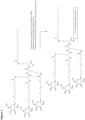
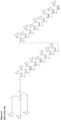
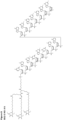
- the GalNac cluster comprises a peptide linker, e.g. a Tyr-Asp(Asp) tripeptide or Asp(Asp) dipeptide, which is attached to the oligomer via a biradical linker, for example the GalNac cluster may comprise biradical linkers such as those illustrated as Conj 3, 3a , 4 and 4a in figure 3 .
- Alternative brancher molecules may be selected from the from the group consisting of 1,3-bis-[5-(4,4'-dimethoxytrityloxy)pentylamido]propyl-2-[(2-cyanoethyl)-(N,N-diisopropyl)] phosphoramidite (Glen Research Catalogue Number: 10-1920-xx), tris-2,2,2-[3-(4,4'-dimethoxytrityloxy)propyloxymethyl]ethyl-[(2-cyanoethyl)-(N,N-diisopropyl)]-phosphoramidite (Glen Research Catalogue Number: 10-1922-xx), tris-2,2,2-[3-(4,4'-dimethoxytrityloxy)propyloxymethyl]methyleneoxypropyl-[(2-cyanoethyl)-(N,N-diisopropyl)]-phosphoramidite and 1-[5-(4,4'-
- WO 2014/179620 and European application No. 14188444.5 describes the generation of various GalNAc conjugate moieties. Attachment of the branch point to oligomer may occur through a linker or spacer.
- a preferred spacer is a flexible hydrophilic spacer.
- a preferred flexible hydrophilic spacer is a PEG spacer or C6 linker.
- a preferred PEG spacer is a PEG3 spacer (three ethylene units).
- the linker is a physiologically labile linker.
- the galactose cluster may be attached to the 3' or 5' end of the oligomer using methods known in the art.
- the asialoglycoprotein receptor targeting conjugate moiety is linked to the 5'-end of the oligonucleotide.
- a preferred galactose cluster comprises three terminal GaINAc moieties linked via a PEG spacer to a di-lysine brancher molecule (a GalNAc cluster).
- a GalNAc cluster Preferably, the PEG spacer is a 3PEG spacer.
- Preferred GalNAc clusters are Conj 1, 1a, 2 and 2a. Most preferred is Conj2a (also termed GaINAc2).
- the carrier component may be linked to the first oligomer region, and/or the second oligomer region, by means of a linker (L). Any suitable linker may be used.
- a carbohydrate conjugate (e.g. GalNAc) may be linked to the oligomer via a biocleavable linker also termed a physiologically labile linker.
- a physiologically labile bond is a labile bond that is cleavable under conditions normally encountered or analogous to those encountered within a mammalian body (also referred to as a physiologically labile linker).
- Physiologically labile linkage groups are selected such that they undergo a chemical transformation (e.g., cleavage) when present in certain physiological conditions.
- Mammalian intracellular conditions include chemical conditions such as pH, temperature, oxidative or reductive conditions or agents, and salt concentration found in or analogous to those encountered in mammalian cells. Mammalian intracellular conditions also include the presence of enzymatic activity normally present in a mammalian cell such as from proteolytic or hydrolytic enzymes
- Chemical transformation may be initiated by the addition of a pharmaceutically acceptable agent to the cell or may occur spontaneously when a molecule containing the labile bond reaches an appropriate intra-and/or extra-cellular environment.
- a pH labile bond may be cleaved when the molecule enters an acidified endosome.
- a pH labile bond may be considered to be an endosomal cleavable bond.
- Enzyme cleavable bonds may be cleaved when exposed to enzymes such as those present in an endosome or lysosome or in the cytoplasm.
- a disulfide bond may be cleaved when the molecule enters the more reducing environment of the cell cytoplasm.
- a disulfide may be considered to be a cytoplasmic cleavable bond.
- a pH-labile bond is a labile bond that is selectively broken under acidic conditions (pH ⁇ 7). Such bonds may also be termed endosomally labile bonds, since cell endosomes and lysosomes have a pH less than 7.
- An example of another physiologically labile linker is a di-lysine as used in the GalNAc clusters in figure 3 .
- the oligomer conjugate of the invention comprises a physiologically labile linker (region PL, also referred to as a biocleavable linker or nuclease susceptible linker), which joins the oligomer (region A) of the invention to the carrier component (or region C).
- region PL also referred to as a biocleavable linker or nuclease susceptible linker
- the cleavage rate seen in the target tissue is greater than that found in blood serum.
- Suitable methods for determining the level (%) of cleavage in target tissue versus serum are described in the "Tissue specific In vitro linker cleavage assay" section.
- the physiologically labile linker (also referred to as the biocleavable linker, or nuclease susceptible linker) in a compound of the invention are at least about 20% cleaved, such as at least about 30% cleaved, such as at least about 40% cleaved, such as at least about 50% cleaved, such as at least about 60% cleaved, such as at least about 70% cleaved, such as at least about 75% cleaved in the "Tissue specific In vitro linker cleavage assay" in the "Materials and methods" section.
- the cleavage (%) in serum, as used in the "Tissue specific In vitro linker cleavage assay” is less than about 20%, such as less than about 10%, such as less than 5%, such as less than about 1%.
- the oligomer conjugate of the invention comprises three regions: i) a first region (region A), which comprises 10 - 18 contiguous nucleotides; ii) a second region (region PL) which comprises a physiologically labile linker and iii) a third region (C) which comprises a carrier component, wherein the third region is covalent linked to the second region which is covalently linked to the first region.
- region A and region PL is covalently linked via a phosphate nucleoside linkage (e.g. phosphodiester, phosphorothioate, phosphodithioate, boranophosphate or methylphosphonate) or a triazol group.
- region PL and region C is covalently linked via a phosphate nucleoside linkage (e.g. phosphodiester, phosphorothioate, phosphodithioate, boranophosphate or methylphosphonate) or a triazol group.
- region PL and region C is covalently linked via a second linker such as region E linkers described below.
- the physiologically labile linker may be situated either at the 5' end and/or the 3'-end of the oligomer (region A). In a preferred embodiment the physiologically labile linker is at the 5'-end.
- the physiologically labile linker is attached at its 3'-end to the 5'-end of region A and the carrier component (region C) is attached to the 5'-end or the physiologically labile linker (e.g. PO-linker), optionally via an additional linker region E.
- the physiologically labile linker e.g. PO-linker
- the physiologically labile linker is susceptible to nuclease(s) which may for example, be expressed in the target cell - and as such, as detailed herein, the linker may be a short region (e.g. 1 - 10) phosphodiester linked nucleosides, such as DNA nucleosides.
- the physiologically labile linker (region PL) is susceptible to S1 nuclease cleavage. Susceptibility to S1 cleavage may be evaluated using the S1 nuclease assay described in the "S1 nuclease cleavage assay" section.
- the physiologically labile linker (also referred to as the physiologically labile linker, or nuclease susceptible linker), such as region PL, in a compound of the invention, are at least about 30% cleaved, such as at least about 40% cleaved, such as at least about 50% cleaved, such as at least about 60% cleaved, such as at least about 70% cleaved, such as at least about 80% cleaved, such as at least about 90% cleaved, such as at least 95% cleaved after 120min incubation with S1 nuclease as described in the "S1 nuclease cleavage assay in the "Materials and methods" section.
- the physiologically labile linker (region PL) is a nuclease susceptible linker, which comprises between 1 and 10 nucleosides, such as 1, 2, 3, 4, 5, 6, 7, 8, 9 or 10 nucleosides, more preferably between 2 and 6 nucleosides and most preferably between 2 and 4 linked nucleosides.
- the nuclease susceptible linker is a phosphodiester nucleotide linker, such a linker is also termed a PO-linker.
- the nuclease susceptible linker (PO-linker) comprises at least one phosphodiester linked nucleoside.
- the nuclease susceptible PO-linker comprises at least two consecutive phosphodiester linkages, such as at least 3 or 4 or 5 consecutive phosphodiester linkages.
- the nucleosides in the PO-linker are (optionally independently) selected from the group consisting of DNA and RNA or modifications thereof which do not interfere with nuclease cleavage. Modifications of DNA and RNA nucleosides which do not interfere with nuclease cleavage may be non-naturally occurring nucleobases. Certain sugar-modified nucleosides may also allow nuclease cleavage such as an alpha-L-oxy-LNA. In some embodiments, all the nucleosides of the PO-linker comprise (optionally independently) either a 2'-OH ribose sugar (RNA) or a 2'-H sugar - i.e. RNA or DNA.
- RNA 2'-OH ribose sugar
- DNA DNA
- the nucleosides of the PO-linker are DNA nucleosides. In some embodiments, at least two consecutive nucleosides of the PO-linker are DNA or RNA nucleosides (such as at least 3 or 4 or 5 consecutive DNA or RNA nucleosides).
- the PO-linker consists of between 1 to 5 or 1 to 4, such as 2, 3, 4 consecutive phosphodiester linked DNA nucleosides. In preferred embodiments the PO-linker is so short that it does not recruit RNAseH. In some embodiments, the PO-linker comprises no more than 3 or no more than 4 consecutive phospodiester linked DNA and/or RNA nucleosides (such as DNA nucleosides).
- the PO-linker is not complementary to the target nucleic acid sequence or to the oligomer in region A.
- the PO-linker is complementary with the target nucleic acid sequence.
- region A and the PO-linker together may form a single contiguous sequence which is complementary to the target sequence.
- region A and the PO-linker form a single contiguous nucleotide sequence of 10 - 22, such as 12 - 20 nucleotides in length.
- region A can be differentiated from the PO-linker in that it starts with at least one, preferably at least two, modified nucleosides with increased binding affinity to the target nucleic acid (e.g. LNA or nucleosides with a 2' substituted sugar moiety) and region A on its own is capable of modulation of the expression the target nucleic acid in a relevant cell line.
- region A comprises DNA or RNA nucleosides these are linked with nuclease resistant internucleoside linkage, such phosphorothioate or boranophosphate.
- the internucleoside linkage between the first (region A) and the second region (the PO-linker) may be considered part of the second region.
- the sequence of bases in the PO-linker is selected to provide an optimal endonuclease cleavage site, based upon the predominant endonuclease cleavage enzymes present in the target tissue or cell or sub-cellular compartment.
- endonuclease cleavage sequences for use in the PO-linker may be selected based upon a preferential cleavage activity in the desired target cell (e.g. liver/hepatocytes) as compared to a non-target cell (e.g. kidney).
- the potency of the compound for target down-regulation may be optimized for the desired tissue/cell.
- the PO-linker comprises a dinucleotide of sequence AA, AT, AC, AG, TA, TT, TC, TG, CA, CT, CC, CG, GA, GT, GC, or GG, wherein C may be 5-methylcytosine, and/or T may be replaced with U.
- the internucleoside linkage is a phosphodiester linkage.
- the PO-linker is a CA dinucleotide with at least two phosphodiester linkages (one being to Region A).
- the PO-linker comprises a trinucleotide of sequence AAA, AAT, AAC, AAG, ATA, ATT, ATC, ATG, ACA, ACT, ACC, ACG, AGA, AGT, AGC, AGG, TAA, TAT, TAC, TAG, TTA, TTT, TTC, TAG, TCA, TCT, TCC, TCG, TGA, TGT, TGC, TGG, CAA, CAT, CAC, CAG, CTA, CTG, CTC, CTT, CCA, CCT, CCC, CCG, CGA, CGT, CGC, CGG, GAA, GAT, GAC, CAG, GTA, GTT, GTC, GTG, GCA, GCT, GCC, GCG, GGA, GGT, GGC, and GGG wherein C may be 5-methylcytosine and/or T may be replaced with U.
- the internucleoside linkages are phosphodiester linkages.
- the PO-linker comprises a trinucleotide of sequence AAAX, AATX, AACX, AAGX, ATAX, ATTX, ATCX, ATGX, ACAX, ACTX, ACCX, ACGX, AGAX, AGTX, AGCX, AGGX, TAAX, TATX, TACX, TAGX, TTAX, TTTX, TTCX, TAGX, TCAX, TCTX, TCCX, TCGX, TGAX, TGTX, TGCX, TGGX, CAAX, CATX, CACX, CAGX, CTAX, CTGX, CTCX, CTTX, CCAX, CCTX, CCCX, CCGX, CGAX, CGTX, CGCX, CGGX, GAAX, GATX, GACX, CAGX, GTAX, GTTX, ACCX,
- the internucleoside linkages are phosphodiester linkages. It will be recognized that when referring to (naturally occurring) nucleobases A, T, U, G, C, these may be substituted with nucleobase analogues which function as the equivalent natural nucleobase (e.g. base pair with the complementary nucleoside).
- region PL is a phosphodiester nucleotide linker (PO-linker) covalently attached to a lipophilic conjugate moiety, such as a lipid, a fatty acid, sterol, such as cholesterol or tocopherol.
- region PL is a phosphodiester nucleotide linker (PO-linker) covalently attached to a asialoglycoprotein receptor targeting moiety, such as a GalNAc carrier component.
- linkers are not necessarily physiologically labile but primarily serves to covalently connect a third region, e.g. a carrier component (region C), to an oligomer (region A).
- region C a carrier component
- region E oligomer conjugates of the present invention can be constructed of the following regional elements A-C/C-A, A-PL-C/C-PL-A, A-PL-E-C/C-E-PL-A, A-E-PL-C/C-PL-E-A or A-E-C/C-E-A.
- the linker E comprises a chain structure or an oligomer of repeating units such as ethylene glycol, amino acid units or amino alkyl groups.
- the linker E can have at least two functionalities, one for attaching to the oligomer (optionally with a physiologically labile linker) and the other for attaching to the carrier component.
- Example linker functionalities can be electrophilic for reacting with nucleophilic groups on the oligomer or carrier component, or nucleophilic for reacting with electrophilic groups.
- linker functionalities include amino, hydroxyl, carboxylic acid, thiol, phosphoramidate, phosphorothioate, phosphate, phosphite, unsaturations (e.g., double or triple bonds), and the like.
- a carbohydrate carrier component e.g. GalNAc
- a linker such as (poly)ethylene glycol linker (PEG), such as a di, tri, tetra, penta, hexa-ethylene glycol linker.
- the linker (region E) is an amino alkyl, such as a C2 - C36 amino alkyl group, including, for example C6 to C12 amino alkyl groups. In a preferred embodiment the linker (region E) is a C6 amino alkyl group.
- the amino alkyl group may be added to the oligomer (region A or region A-L/L-A) as part of standard oligomer synthesis, for example using a (e.g. protected) amino alkyl phosphoramidite.
- the linkage group between the amino alkyl and the oligomer may for example be a phosphorothioate or a phosphodiester, or one of the other nucleoside linkage groups referred to herein.
- the amino alkyl group is covalently linked to the 5' or 3'-end of the oligomer.
- amino alkyl linkers are for example 3'-Amino-Modifier reagent for linkage at the 3'-end of the oligomer and for linkage at the 5 '-end of an oligomer 5'- Amino-Modifier C6 is available. These reagents are available from Glen Research Corporation (Sterling, Va.). These compounds or similar ones were utilized by Krieg, et al, Antisense Research and Development 1991, 1, 161 to link fluorescein to the 5'- terminus of an oligomer. A wide variety of further linker groups are known in the art and can be useful in the attachment of carrier components to oligomers.
- Linkers and their use in preparation of conjugates of oligomers are provided throughout the art such as in WO 96/11205 and WO 98/52614 and U.S. Pat. Nos. 4,948,882 ; 5,525,465 ; 5,541,313 ; 5,545,730 ; 5,552,538 ; 5,580,731 ; 5,486,603 ; 5,608,046 ; 4,587,044 ; 4,667,025 ; 5,254,469 ; 5,245,022 ; 5,112,963 ; 5,391,723 ; 5,510475 ; 5,512,667 ; 5,574,142 ; 5,684,142 ; 5,770,716 ; 6,096,875 ; 6,335,432 ; and 6,335,437 , WO 2012/083046 .
- Figure 3 present example GalNAc clusters, Conj 1, 2, 3, 4 and Conj1a, 2a, 3a and 4a having an optional C6 linker which joins the
- ASGP-R asiaglycoprotein receptor
- the carrier component is a conjugate moiety.
- conjugate moieties may be attached to the oligomer or the oligomer conjugate in addition to the carrier component.
- one or more conjugate moieties is attached to the oligomer.
- the conjugate moiety may be a non-nucleotide moiety or a non-polynucleotide moiety.
- the conjugate moiety may enhance the activity, cellular distribution or cellular uptake of the oligomer of the invention.
- moieties include, but are not limited to, antibodies, polypeptides, lipid moieties such as a cholesterol moiety, cholic acid, a thioether, e.g.
- a phospholipids e.g., di-hexadecyl-rac-glycerol or triethylammonium 1,2-di-o-hexadecyl-rac-glycero-3-h-phosphonate
- the oligomers of the disclosure may also be conjugated to active drug substances for example, aspirin, ibuprofen, a sulfa drug, an antidiabetic, an antibacterial or an antibiotic.
- active drug substances for example, aspirin, ibuprofen, a sulfa drug, an antidiabetic, an antibacterial or an antibiotic.
- the conjugated moiety is a sterol, such as cholesterol.
- the conjugate moiety comprises or consists of a positively charged polymer, such as a positively charged peptides of, for example from 1 -50, such as 2 - 20 such as 3-10 amino acid residues in length, and/or polyalkylene oxide such as polyethylglycol(PEG) or polypropylene glycol - see WO 2008/034123 .
- a positively charged polymer such as a positively charged peptides of, for example from 1 -50, such as 2 - 20 such as 3-10 amino acid residues in length
- polyalkylene oxide such as polyethylglycol(PEG) or polypropylene glycol - see WO 2008/034123 .
- the positively charged polymer, such as a polyalkylene oxide may be attached to the oligomer of the invention via a linker such as the releasable linker described in WO 2008/034123 .
- the oligomer conjugates of the present invention include - as a conjugate moiety - an appropriate ligand-binding molecule.
- the oligonucleotides may be conjugated for therapeutic administration to ligand-binding molecules which recognize cell-surface molecules, such as according to International Patent Application WO 91/04753 .
- the ligand-binding molecule may comprise, for example, an antibody against a cell surface antigen, an antibody against a cell surface receptor, a growth factor having a corresponding cell surface receptor, an antibody to such a growth factor, or an antibody which recognizes a complex of a growth factor and its receptor.
- Methods for conjugating ligand-binding molecules to oligonucleotides are detailed in WO 91/04753 .
- conjugation methods and methods to improve cellular uptake which may be used are described in the following international patent applications WO 9640961 , WO9964449 , WO9902673 , WO9803533 , WO0015265 and US patents 5856438 and 5138045 .
- a conjugate moiety as described herein may be a growth factor such as transferrin or folate.
- Transferrin-polylysine-oligonucleotide complexes or folate-polylysine-oligonucleotide complexes may be prepared for uptake by cells expressing high levels of transferrin or folate receptor.
- the preparation of transferrin complexes as carrier components facilitating oligonucleotide uptake into cells is described by Wagner et al., Proc. Natl. Acad. Sci. USA 87, 3410-3414 (1990 ).
- target nucleic acid and target sequence refer to the DNA or RNA encoding a HBx or HBsAg polypeptide, such as a sequence contained within any of SEQ ID No. 1 or SEQ ID No. 2.
- target nucleic acid and target sequence therefore include HBx- or HBsAg-encoding nucleic acids or naturally occurring variants thereof, and RNA nucleic acids derived therefrom, preferably mRNA, such as pre-mRNA, although preferably mature mRNA.
- target nucleic acid or “target sequence” may be a cDNA or a synthetic oligonucleotide derived from the above DNA or RNA nucleic acid targets.
- the oligomer according to the invention is preferably capable of hybridising to the target nucleic acid.
- corresponding to and “corresponds to” refer to the comparison between the nucleotide sequence of the oligomer (i.e. the nucleobase or base sequence) or a contiguous nucleotide sequence thereof and the equivalent contiguous nucleotide sequence of a further sequence selected from either i) a sub-sequence of the reverse complement of the nucleic acid target, such as the mRNA which encodes the target sequence protein, such as any sequence within SEQ ID No. 1 or SEQ ID No. 2 or SEQ ID No. 3 and/or ii) the sequence of any of the specific nucleotide sequences provided herein, or sub-sequence thereof.
- Nucleotide analogues are compared directly to their equivalent or corresponding nucleotides.
- a sequence which corresponds to a further sequence under i) or ii) typically is identical to that sequence over the length of the first sequence (such as the contiguous nucleotide sequence) or, as described herein may, in some embodiments, is at least 80% homologous to a corresponding sequence, such as at least 85%, at least 90%, at least 91%, at least 92%at least 93%, at least 94%, at least 95%, at least 96% homologous, such as 100% homologous (identical).
- the percentage sequence identity may be calculated by counting the number of aligned bases that are identical between the 2 sequences, dividing by the total number of units in the oligomer, and multiplying by 100.
- nucleotide analogue and “corresponding nucleotide” are intended to indicate that the nucleotide in the nucleotide analogue and the naturally occurring nucleotide are identical.
- the "corresponding nucleotide analogue” contains a pentose unit (different from 2-deoxyribose) linked to an adenine.
- complementary means that two sequences are complementary when the sequence of one can bind to the sequence of the other in an anti-parallel sense wherein the 3'-end of each sequence binds to the 5'-end of the other sequence and each A, T(U), G, and C of one sequence is then aligned with a T(U), A, C, and G, respectively, of the other sequence.
- the complementary sequence of the oligonucleotide has at least 90%, preferably 95%, most preferably 100%, complementarity to a defined sequence.
- the degree of "complementarity” is expressed as the percentage identity (or percentage homology) between the sequence of the oligomer (or region thereof) and the sequence of the target region (or the reverse complement of the target region) that best aligns therewith.
- the percentage is calculated by counting the number of aligned bases that are identical between the 2 sequences, dividing by the total number of contiguous units in the oligomer, and multiplying by 100. In such a comparison, if gaps exist, it is preferable that such gaps are merely mismatches rather than areas where the number of units within the gap differs between the oligomer of the invention and the target region.
- the term "complementary" means the capacity for pairing between nucleobases of a first nucleic acid and a second nucleic acid.
- Two sequences are complementary when the sequence of one can bind to the sequence of the other in an anti-parallel sense wherein the 3'-end of each sequence binds to the 5'-end of the other sequence and each nucleobase A, T(U), G, and C of one sequence is then aligned with a T(U), A, C, and G, respectively, of the other sequence.
- the degree of complementarity is expressed as the percentage complementarity between the sequence of the oligomer (or region thereof) and the sequence of the target region that best aligns therewith. The percentage is calculated by counting the number of aligned bases that form pairs between the 2 sequences, dividing by the total number of contiguous units in the oligomer, and multiplying by 100. In such a comparison a nucleobase/nucleotide which does not align is termed a mismatch.
- the complementary sequence of a oligonucleotide of the present invention has at least 80%, preferably 85%, preferably 90%, more preferably 95%, most preferably 100%, complementarity to a defined sequence.
- complementary sequence as it refers to a polynucleotide sequence, relates to the base sequence in another nucleic acid molecule by the base-pairing rules. More particularly, the term or like term refers to the hybridization or base pairing between nucleotides or nucleic acids, such as, for instance, between the two strands of a double stranded DNA molecule or between an oligonucleotide primer and a primer binding site on a single stranded nucleic acid to be sequenced or amplified.
- Complementary nucleotides are, generally, A and T (or A and U), or C and G.
- Two single stranded RNA or DNA molecules are said to be substantially complementary when the nucleotides of one strand, optimally aligned and compared and with appropriate nucleotide insertions or deletions, pair with at least about 95% of the nucleotides of the other strand, usually at least about 98%, and more preferably from about 99 to about 100%.
- Complementary polynucleotide sequences can be identified by a variety of approaches including use of well-known computer algorithms and software, for example the BLAST program.
- mismatch refers to a nucleobase or nucleotide at a given position in a first nucleic acid that does not make Watson- Crick base paring with the corresponding nucleobase or nucleotide in a second nucleic acid when the first nucleic acid is aligned with thee second nucleic acid.
- the first nucleic acid can for example be an oligomer or oligomer conjugate according to the invention and the second nucleic acid can for example be a target sequence. In the oligomer or the oligomer conjugate containing multiple mismatches, the mismatches can either be adjacent to each other or interspersed.
- naturally occurring variant thereof refers to variants of the target sequence which exist naturally within the defined taxonomic group, such as HBV genotypes A-H.
- naturally occurring variants of a polynucleotide the term may also encompass any allelic variant of the target sequence encoding genomic DNA which are found by chromosomal translocation or duplication, and the RNA, such as mRNA derived therefrom.
- Naturally occurring variants may also include variants derived from alternative splicing of the target sequence mRNA.
- the term also includes naturally occurring forms of the protein which may therefore be processed, e.g. by co- or post-translational modifications, such as signal peptide cleavage, proteolytic cleavage, glycosylation, etc.
- downstream when used in reference to a direction along a nucleotide sequence means in the direction from the 5' to the 3' end.
- upstream means in the direction from the 3' to the 5' end.
- LNA refers to a bicyclic nucleoside analogue, known as "Locked Nucleic Acid”. It may refer to an LNA unit, or, when used in the context of an "LNA oligonucleotide", LNA refers to an oligonucleotide containing one or more such bicyclic nucleotide analogues.
- LNA nucleotides are characterised by the presence of a linker group (such as a bridge) between C2' and C4' of the ribose sugar ring - for example as shown as the biradical R 4* - R 2* as described below.
- LNA oligonucleotide and "LNA-modified oligonucleotide” include any oligonucleotide either fully or partially modified with LNA units.
- an LNA-modified oligonucleotide may be composed entirely of LNA units, or a LNA-modified oligonucleotide may comprise one LNA unit.
- the LNA used in the oligonucleotide compounds of the invention preferably has the structure of the general formula I
- R 4* and R 2* together designate a biradical consisting of functional groups selected from the group consisting of C(R a R b )-C(R a R b )-, C(R a R b )-O-, C(R a R b )-NR a -, C(R a R b )-S-, and C(R a R b )-C(R a R b )-O-, wherein each R a and R b may optionally be independently selected.
- R a and R b may be, optionally independently selected from the group consisting of hydrogen and C1-6 alkyl, such as methyl, such as hydrogen.
- R 4* and R 2* together designate the biradical -O-CH(CH 2 OCH 3 )- (2'O-methoxyethyl bicyclic nucleic acid - Seth at al., 2010, J. Org. Chem ) - in either the R- or S-configuration.
- R 4* and R 2* together designate the biradical -O-CH(CH 2 CH 3 )- (2'O-ethyl bicyclic nucleic acid - Seth at al., 2010, J. Org. Chem ). - in either the R- or S- configuration.
- R 4* and R 2* together designate the biradical -O-CH(CH 3 )-. - in either the R- or S- configuration. In some embodiments, R 4* and R 2* together designate the biradical -O-CH 2 -O-CH 2 - - ( Seth at al., 2010, J. Org. Chem ).
- R 4* and R 2* together designate the biradical -O-NR-CH 3 - - ( Seth at al., 2010, J. Org. Chem ) .
- the LNA units have a structure selected from the following group:
- R 1* , R 2 , R 3 , R 5 , R 5* are independently selected from the group consisting of hydrogen, halogen, C 1-6 alkyl, substituted C 1-6 alkyl, C 2-6 alkenyl, substituted C 2-6 alkenyl, C 2-6 alkynyl or substituted C 2-6 alkynyl, C 1-6 alkoxyl, substituted C 1-6 alkoxyl, acyl, substituted acyl, C 1-6 aminoalkyl or substituted C 1-6 aminoalkyl.
- asymmetric groups may be found in either R or S orientation.
- R 1* , R 2 , R 3 , R 5 , R 5* are hydrogen.
- R 1* , R 2 , R 3 are independently selected from the group consisting of hydrogen, halogen, C 1-6 alkyl, substituted C 1-6 alkyl, C 2-6 alkenyl, substituted C 2-6 alkenyl, C 2-6 alkynyl or substituted C 2-6 alkynyl, C 1-6 alkoxyl, substituted C 1-6 alkoxyl, acyl, substituted acyl, C 1-6 aminoalkyl or substituted C 1-6 aminoalkyl.
- asymmetric groups may be found in either R or S orientation.
- R 1* , R 2 , R 3 are hydrogen.
- B is a nucleobase, including nucleobase analogues and naturally occurring nucleobases, such as a purine or pyrimidine, or a substituted purine or substituted pyrimidine, such as a nucleobase referred to herein, such as a nucleobase selected from the group consisting of adenine, cytosine, thymine, adenine, uracil, and/or a modified or substituted nucleobase, such as 5-thiazolo-uracil, 2-thio-uracil, 5-propynyl-uracil, 2'thio-thymine, 5-methyl cytosine, 5-thiozolo-cytosine, 5-propynyl-cytosine, and 2,6-diaminopurine.
- nucleobase including nucleobase analogues and naturally occurring nucleobases, such as a purine or pyrimidine, or a substituted purine or substituted pyrimidine, such
- R 4* and R 2* together designate the biradical C(R a R b )-N(R c )-O-, wherein R a and R b are independently selected from the group consisting of hydrogen, halogen, C 1-6 alkyl, substituted C 1-6 alkyl, C 2-6 alkenyl, substituted C 2-6 alkenyl, C 2-6 alkynyl or substituted C 2-6 alkynyl, C 1-6 alkoxyl, substituted C 1-6 alkoxyl, acyl, substituted acyl, C 1-6 aminoalkyl or substituted C 1-6 aminoalkyl, such as hydrogen, and; wherein R c is selected from the group consisting of hydrogen, halogen, C 1-6 alkyl, substituted C 1-6 alkyl, C 2-6 alkenyl, substituted C 2-6 alkenyl, C 2-6 alkynyl or substituted C 2-6 alkynyl, C 1-6 alkoxyl, substituted C
- R 4* and R 2* together designate the biradical C(R a R b )-O-C(R c R d ) -O-, wherein R a , R b , R c , and R d are independently selected from the group consisting of hydrogen, halogen, C 1-6 alkyl, substituted C 1-6 alkyl, C 2-6 alkenyl, substituted C 2-6 alkenyl, C 2-6 alkynyl or substituted C 2-6 alkynyl, C 1-6 alkoxyl, substituted C 1-6 alkoxyl, acyl, substituted acyl, C 1-6 aminoalkyl or substituted C 1-6 aminoalkyl, such as hydrogen.
- Z is C 1-6 alkyl or substituted C 1-6 alkyl. In some embodiments Z is methyl. In some embodiments Z is substituted C 1-6 alkyl. In some embodiments said substituent group is C 1-6 alkoxy. In some embodiments Z is CH 3 OCH 2 -. For all chiral centers, asymmetric groups may be found in either R or S orientation. Such bicyclic nucleotides are disclosed in US 7,399,845 .
- R 1* , R 2 , R 3 , R 5 , R 5* are hydrogen. In some some embodiments, R 1* , R 2 , R 3 * are hydrogen, and one or both of R 5 , R 5* may be other than hydrogen as referred to above and in WO 2007/134181 .
- R 4* and R 2* together designate a biradical which comprise a substituted amino group in the bridge such as consist or comprise of the biradical -CH 2 -N(R c )-, wherein R c is C 1-12 alkyloxy.
- R 1* , R 2 , R 3 , R 5 , R 5* are independently selected from the group consisting of hydrogen, halogen, C 1-6 alkyl, substituted C 1-6 alkyl, C 2-6 alkenyl, substituted C 2-6 alkenyl, C 2-6 alkynyl or substituted C 2-6 alkynyl, C 1-6 alkoxyl, substituted C 1-6 alkoxyl, acyl, substituted acyl, C 1-6 aminoalkyl or substituted C 1-6 aminoalkyl.
- R 1* , R 2 , R 3 , R 5 , R 5* are hydrogen. In some embodiments, R 1* , R 2 , R 3 are hydrogen and one or both of R 5 , R 5* may be other than hydrogen as referred to above and in WO 2007/134181 .
- each J 1 and J 2 is, independently, H, C 1-6 alkyl, C 2-6 alkenyl, C 2-6 alkynyl, C 1-6 aminoalkyl or a protecting group; and, optionally wherein when Q is C(q 1 )(q 2 )(q 3 )(q 4 ) and one of q 3 or q 4
- R 1* , R 2 , R 3 , R 5 , R 5* are hydrogen.
- asymmetric groups may be found in either R or S orientation.
- Such bicyclic nucleotides are disclosed in WO2008/154401 .
- R 1* , R 2 , R 3 , R 5 , R 5* are independently selected from the group consisting of hydrogen, halogen, C 1-6 alkyl, substituted C 1-6 alkyl, C 2-6 alkenyl, substituted C 2-6 alkenyl, C 2-6 alkynyl or substituted C 2-6 alkynyl, C 1-6 alkoxyl, substituted C 1-6 alkoxyl, acyl, substituted acyl, C 1-6 aminoalkyl or substituted C 1-6 aminoalkyl.
- R 1* , R 2 , R 3 , R 5 , R 5* are hydrogen.
- R 1* , R 2 , R 3 are hydrogen and one or both of R 5 , R 5* may be other than hydrogen as referred to above and in WO 2007/134181 or WO2009/067647 (alpha-L-bicyclic nucleic acids analogs).
- nucleoside analogues and their use in antisense oligonucleotides are disclosed in WO2011/115818 , WO2011/085102 , WO2011/017521 , WO09/100320 , WO10/036698 , WO09/124295 & WO09/006478 .
- Such nucleoside analogues may in some aspects be useful in the compounds of present invention.
- the LNA used in the oligonucleotide compounds of the invention preferably has the structure of the general formula II: wherein Y is selected from the group consisting of -O-, -CH 2 O-, -S-, -NH-, N(R e ) and/or -CH 2 -; Z and Z* are independently selected among an internucleotide linkage, R H , a terminal group or a protecting group; B constitutes a natural or non-natural nucleotide base moiety (nucleobase), and R H is selected from hydrogen and C 1-4 -alkyl; R a , R b R c , R d and R e are, optionally independently, selected from the group consisting of hydrogen, optionally substituted C 1-12 -alkyl, optionally substituted C 2-12 -alkenyl, optionally substituted C 2-12 -alkynyl, hydroxy, C 1-12 -alkoxy, C 2-12 -alkoxy
- R a , R b R c , R d and R e are, optionally independently, selected from the group consisting of hydrogen and C 1-6 alkyl, such as methyl.
- R a , R b R c , R d and R e are, optionally independently, selected from the group consisting of hydrogen and C 1-6 alkyl, such as methyl.
- C 1-6 alkyl such as methyl.
- asymmetric groups may be found in either R or S orientation, for example, two exemplary stereochemical isomers include the beta-D and alpha-L isoforms, which may be illustrated as follows:
- thio-LNA comprises a locked nucleotide in which Y in the general formula above is selected from S or -CH 2 -S-.
- Thio-LNA can be in both beta-D and alpha-L-configuration.
- amino-LNA comprises a locked nucleotide in which Y in the general formula above is selected from -N(H)-, N(R)-, CH 2 -N(H)-, and -CH 2 -N(R)- where R is selected from hydrogen and C 1-4 -alkyl.
- Amino-LNA can be in both beta-D and alpha-L-configuration.
- Oxy-LNA comprises a locked nucleotide in which Y in the general formula above represents -O-. Oxy-LNA can be in both beta-D and alpha-L-configuration.
- ENA comprises a locked nucleotide in which Y in the general formula above is -CH 2 -O- (where the oxygen atom of -CH 2 -O- is attached to the 2'-position relative to the base B).
- R e is hydrogen or methyl.
- LNA is selected from beta-D-oxy-LNA, alpha-L-oxy-LNA, beta-D-amino-LNA and beta-D-thio-LNA, in particular beta-D-oxy-LNA.
- LNA-modified antisense oligonucleotides may be used in combinations. For instance, a cocktail of several different LNA modified oligonucleotides, directed against different regions of the same gene, may be administered simultaneously or separately.
- a "headmer” is defined as an oligomer that comprises a region X' and a region Y' that is contiguous thereto, with the 5'-most unit of region Y' linked to the 3'-most unit of region X'.
- Region X' comprises a contiguous stretch of non-RNase recruiting nucleoside analogues and region Y' comprises a contiguous stretch (such as at least 7 contiguous units) of DNA units or nucleoside analogue units recognizable and cleavable by the RNase.
- a “tailmer” is defined as an oligomer that comprises a region X" and a region Y" that is contiguous thereto, with the 5'-most unit of region Y" linked to the 3'-most unit of the region X".
- Region X" comprises a contiguous stretch (such as at least 7 contiguous units) of DNA units or nucleoside analogue units recognizable and cleavable by the RNase, and region X" comprises a contiguous stretch of non-RNase recruiting nucleoside analogues.
- Chimeric oligomers consist of an alternating composition of (i) DNA units or nucleoside analogue units recognizable and cleavable by RNase, and (ii) non-RNase recruiting nucleoside analogue units.
- photochemically active groups refers to compounds which are able to undergo chemical reactions upon irradiation with light.
- functional groups herein are quinones, especially 6-methyl-1,4-naphtoquinone, anthraquinone, naphtoquinone, and 1,4-dimethyl-anthraquinone, diazirines, aromatic azides, benzophenones, psoralens, diazo compounds, and diazirino compounds.
- the term "based on” means that the oligomer or the oligomer of the oligomer conjugate comprises at least 80%, preferably at least 85%, preferably at least 90%, preferably at least 95%, preferably all of the nucleotides of the core motif or sequence and optionally wherein one or more of the nucleotides may be a modified nucleotide.
- the term "based on” means that the oligomer or the oligomer of the oligomer conjugate comprises all of the nucleotides of the core motif or sequence and optionally wherein one or more of the nucleotides may be a modified nucleotide.
- the term "based on” means that the oligomer or the oligomer of the oligomer conjugate comprises all of the nucleotides of the core motif or sequence and wherein one or more of the nucleotides is a modified nucleotide.
- the term "based on” means that the oligomer or the oligomer of the oligomer conjugate comprises at least 80%, preferably at least 85%, preferably at least 90%, preferably at least 95%, preferably all of the nucleotides of the core motif or sequence and wherein one or more of the nucleotides may be a modified nucleotide; and wherein said oligomer is a gapmer of the motif X-Y-Z wherein each of X and Z is independently a wing comprising at least one modified nucleotide and Y is a central region of nucleotides.
- the term "based on” means that the oligomer or the oligomer of the oligomer conjugate comprises all of the nucleotides of the core motif or sequence and wherein one or more of the nucleotides may be a modified nucleotide; and wherein said oligomer is a gapmer of the motif X-Y-Z wherein each of X and Z is independently a wing comprising at least one modified nucleotide and Y is a central region of nucleotides.
- Stability in reference to duplex or triplex formation generally designates how tightly an antisense oligonucleotide binds to its intended target sequence; more particularly, “stability” designates the free energy of formation of the duplex or triplex under physiological conditions. Melting temperature under a standard set of conditions, e.g., as described below, is a convenient measure of duplex and/or triplex stability.
- antisense oligonucleotides of the invention are selected that have melting temperatures of at least 45°C when measured in 100mM NaCl, 0.1mM EDTA and10 mM phosphate buffer aqueous solution, pH 7.0 at a strand concentration of both the antisense oligonucleotide and the target nucleic acid of 1.5 ⁇ M.
- duplex or triplex formation will be substantially favored over the state in which the antisense oligonucleotide and its target are dissociated.
- a stable duplex or triplex may in some embodiments include mismatches between base pairs and/or among base triplets in the case of triplexes.
- LNA modified antisense oligonucleotides of the invention form perfectly matched duplexes and/or triplexes with their target nucleic acids.
- the oligomer or oligomer conjugate is a potent inhibitor, in particular of HBx or HBsAg.
- the phrase "potent inhibitor” refers to an oligomer with an IC50 of less than 5nM as determined by a lipofectamin transfection assay. In some embodiments, the IC50 is less than 4nM, such as less than 2nM.
- treat/"treatment etc. include one or more of to cure, to alleviate, to prevent or to detect.
- the terms “treat”/"treatment” etc. mean to cure or to alleviate.
- alleviate includes to alleviate the symptoms and/or the conditions attributed with or associated with a viral disorder.
- the present invention relates to oligomer conjugates suitable for, and uses thereof and methods using same, to cure, to alleviate, to prevent or to detect a viral disorder.
- the present invention relates to oligomer conjugates suitable for, and uses thereof and methods using same, to cure or to alleviate a viral disorder.
- treatment refers to both treatment of an existing disease (e.g. a disease or disorder as herein referred to), or prevention of a disease, i.e. prophylaxis. It will therefore be recognised that treatment as referred to herein may, In some embodiments, be prophylactic.
- Treating" a disease or condition in a subject or “treating” a subject having a disease or condition refers to subjecting the individual to a pharmaceutical treatment, e.g., the administration of a drug, such that at least one symptom of the disease or condition is decreased or stabilized.
- a patient who is in need of treatment is a patient suffering from or likely to suffer from the disease or disorder.
- treating prophyllactically a disease or condition in a subject is meant reducing or eliminating the risk of developing (i.e., the incidence) of or reducing the severity of the disease or condition prior to the appearance of at least one symptom of the disease.
- agent means any compound, for example, an antibody, or a therapeutic agent, a detectable label (e.g., a marker, tracer, or imaging compound).
- therapeutic agent means any compound having a biological activity. Therapeutic agents may be useful for treating conditions or diseases. Specific therapeutic agents according to the invention may be oligomers. Specific therapeutic agents may be oligomers or oligomer conjugates according to the present invention.
- the term "delivering said oligomer to the liver” relates to the process by which an oligomer is brought into contact with, or into proximity to the cells or tissues of the liver. This includes the delivery of the oligomer to the blood supply within or surrounding the liver.
- the oligomer may be delivered or carried from the site of entry into the body to the liver or tissues surrounding the liver.
- the term "delivering said oligomer to a hepatocyte” relates to the process by which an oligomer is brought into contact with, or into proximity to, a hepatocyte of the liver. This includes the delivery of the oligomer to the blood supply within or surrounding a hepatocyte.
- the oligomer may be delivered or carried from the site of entry into the body to a hepatocyte.
- viral disorder in the context of the present invention refers to any disorder or disease which is associated with viral infection.
- administering and “administration” are intended to mean a mode of delivery including, without limitation, intra-arterially, intra-nasally, intra-peritoneally, intravenously, intramuscularly, sub-cutaneously, transdermally or per os.
- a daily dosage can be divided into one, two or more doses in a suitable form to be administered at one, two or more times throughout a time period.
- oligomers also referred to as oligomeric molecules
- oligomer conjugates oligomers
- the oligomers and oligomer conjugates are useful for the treatment of a viral disorder.
- the oligomers described herein or oligomer conjugates of the invention are capable of modulating a target sequence in HBV HBx or HBsAg.
- the oligomers described herein may be conjugated to a carrier component.
- the carrier component may be capable of delivering the oligomer to the liver of a subject to be treated.
- the present disclosure therefore employs oligomers or oligomer conjugates for use in modulating the function of nucleic acid molecules encoding HBV HBx or HBsAg, such as the HBV nucleic acid molecule presented as SEQ ID no 1 or SEQ ID No 2, and naturally occurring variants of such nucleic acid molecules encoding HBV HBx or HBV HBsAg.
- the oligomer or the oligomer of the oligomer conjugate may consist or comprise of a contiguous nucleotide sequence of from 8-50, 8-30, 8-25, 8-20, 8-18, 8-17, 8-16, 8-15, 8-14, 8-13, or 8-12 nucleotides in length, preferably 8-16 nucleotides in length, more preferably 10 to 20 nucleotides in length.
- the oligomer or the oligomer of the oligomer conjugate may comprise or consist of a contiguous nucleotide sequence of from 10 - 50, such as 10 - 30, 10-20, 10-18, 10-17, 10-16, 10-15, 10-14, 10-13, or 10-12 nucleotides in length, preferably 10-20 nucleotides in length, more preferably 10 to 18 nucleotides in length, most preferably 10 to 16 nucleotides in length.
- the oligomer or the oligomer of the oligomer conjugate may comprise or consist of a contiguous nucleotide sequence of from 12 - 50, such as 12 - 30, 12-20, 12-18, 12-17, 12-16, 12-15, 12-14 or 12-13 nucleotides in length, preferably 12-16 nucleotides in length.
- the oligomer or the oligomer of the oligomer conjugate may comprise or consist of a contiguous nucleotide sequence of 8, 9, 10, 11, 12, 13, 14, 15, 16, 17, 18, 19 or 20 nucleotides in length.
- the oligomers or the oligomer component of the oligomer conjugates described herein may comprise or consist of a contiguous nucleotide sequence of a total of 8, 9, 10, 11, 12, 13, 14, 15, 16, 17, 18, 19, 20, 21, 22, 23, 24, 25, 26, 27, 28, 29 or 30 contiguous nucleotides in length.
- the oligomer or the oligomer of the oligomer conjugate comprises or consists of a contiguous nucleotide sequence of a total of from 8 - 22, such as 8-20, such as 8 - 18, such as 8 - 17 or 8 - 16, contiguous nucleotides in length.
- the oligomer or the oligomer of the oligomer conjugate comprises or consists of a contiguous nucleotide sequence of a total of 8, 9, 10, 11, 12, 13, 14, 15, or 16 contiguous nucleotides in length.
- the oligomer or the oligomer of the oligomer conjugate comprises or consists of a contiguous nucleotide sequence of a total of 15 or 16 contiguous nucleotides in length.
- the oligomer or the oligomer of the oligomer conjugate described herein consists of no more than 22 nucleotides, such as no more than 20 nucleotides, such as no more than 18 nucleotides - such as 15, or 16 or 17 nucleotides.
- the oligomer or the oligomer of the oligomer conjugate described herein comprises less than 20 nucleotides.
- the length of the oligonucleotide moieties is sufficiently large to ensure that specific binding takes place only at the desired target polynucleotide and not at other fortuitous sites, as explained in many references, e.g., Rosenberg et al., International application PCT/US92/05305 ; or Szostak et al., Meth. Enzymol, 68:419-429 (1979 ).
- the upper range of the length is determined by several factors, including the inconvenience and expense of synthesizing and purifying oligomers greater than about 30-40 nucleotides in length, the greater tolerance of longer oligonucleotides for mismatches than shorter oligonucleotides, whether modifications to enhance binding or specificity are present, whether duplex or triplex binding is desired, and the like.
- the oligomer or the oligomer of the oligomer conjugate may comprise or consist of a simple sequence of natural occurring nucleotides - preferably 2'-deoxynucleotides (referred to here generally as "DNA”), but also possibly ribonucleotides (referred to here generally as "RNA"), or a combination of such naturally occurring nucleotides and one or more non-naturally occurring nucleotides, i.e. nucleotide analogues.
- nucleotide analogues may suitably enhance the affinity of the oligomer for the target sequence.
- nucleotide analogues include nucleotides that have been modified. Examples of such modifications include modifying the sugar moiety to provide a 2'-substituent group or to produce a bridged (locked nucleic acid) structure which enhances binding affinity and may also provide increased nuclease resistance. These modified nucleotide analogues can therefore be affinity-enhancing nucleotide analogues.
- the oligomer or the oligomer of the oligomer conjugate comprises at least 1 nucleotide analogue. In some embodiments the oligomer or the oligomer of the oligomer conjugate comprises at least 2 nucleotide analogues. In some embodiments, the oligomer or the oligomer of the oligomer conjugate comprises from 2-8 nucleotide analogues, e.g. 6 or 7 nucleotide analogues.
- At least one of said nucleotide analogues is a locked nucleic acid (LNA); for example at least 2, 3 or at least 4, or at least 5, or at least 6, or at least 7, or 8, of the nucleotide analogues may be LNA. In some embodiments all the nucleotides analogues may be LNA.
- LNA locked nucleic acid
- nucleotide sequence motif or nucleotide sequence which consists of only nucleotides
- the oligomers described herein or the oligomers of the oligomer conjugates of the invention which are defined by that sequence comprise a corresponding nucleotide analogue in place of one or more of the nucleotides present in said sequence, such as LNA units or other nucleotide analogues, which raise the duplex stability/T m of the oligomer/target duplex ( i.e. affinity enhancing nucleotide analogues).
- a preferred nucleotide analogue is LNA, such as oxy-LNA (such as beta-D-oxy-LNA, and alpha-L-oxy-LNA), and/or amino-LNA (such as beta-D-amino-LNA and alpha-L-amino-LNA) and/or thio-LNA (such as beta-D-thio-LNA and alpha-L-thio-LNA) and/or ENA (such as beta-D-ENA and alpha-L-ENA). Most preferred is beta-D-oxy-LNA.
- oxy-LNA such as beta-D-oxy-LNA, and alpha-L-oxy-LNA
- amino-LNA such as beta-D-amino-LNA and alpha-L-amino-LNA
- thio-LNA such as beta-D-thio-LNA and alpha-L-thio-LNA
- ENA such as beta-D-ENA and alpha-L-ENA
- nucleotide analogues present within the oligomer described herein or the oligomer of the oligomer conjugate of the invention are independently selected from, for example: 2'-O-alkyl-RNA units, 2'-amino-DNA units, 2'-fluoro-DNA units, LNA units, arabino nucleic acid (ANA) units, 2'-fluoro-ANA units, HNA units, INA (intercalating nucleic acid - Christensen, 2002. Nucl. Acids. Res. 2002 30: 4918-4925 ) units and 2'MOE units.
- the nucleotide analogues are 2'-O-methoxyethyl-RNA (2'MOE), 2'-fluoro-DNA units or LNA nucleotide analogues, and as such the oligonucleotide of the invention may comprise nucleotide analogues which are independently selected from these three types of analogue, or may comprise only one type of analogue selected from the three types.
- at least one of said nucleotide analogues is 2'-MOE-RNA, such as 2, 3, 4, 5, 6, 7, 8, 9 or 10 2'-MOE-RNA nucleotide units.
- at least one of said nucleotide analogues is 2'-fluoro DNA, such as 2, 3, 4, 5, 6, 7, 8, 9 or 10 2'-fluoro-DNA nucleotide units.
- the oligomer described herein or the oligomer of the oligomer conjugate according to the invention comprises at least one Locked Nucleic Acid (LNA) unit, such as 1, 2, 3, 4, 5, 6, 7, or 8 LNA units, such as from 3 - 7 or 4 to 8 LNA units, or 3, 4, 5, 6 or 7 LNA units.
- LNA Locked Nucleic Acid
- all the nucleotide analogues are LNA.
- the oligomer or the oligomer of the oligomer conjugate may comprise both beta-D-oxy-LNA, and one or more of the following LNA units: thio-LNA, amino-LNA, oxy-LNA, and/or ENA in either the beta-D or alpha-L configurations or combinations thereof.
- all LNA cytosine units are 5'methyl-Cytosine.
- the oligomer described herein or the oligomer of the oligomer conjugate of the invention may comprise both LNA and DNA units.
- the combined total of LNA and DNA units is 10-25, such as 10 - 24, preferably 10-20, such as 10 - 18, even more preferably 12-16.
- the nucleotide sequence of the oligomer such as the contiguous nucleotide sequence consists of at least one LNA and the remaining nucleotide units are DNA units.
- the oligomer or the oligomer of the oligomer conjugate comprises only LNA nucleotide analogues and naturally occurring nucleotides (such as RNA or DNA, most preferably DNA nucleotides), optionally with modified internucleotide linkages such as phosphorothioate.
- any mismatches between the nucleotide sequence of the oligomer and the target sequence are preferably found in regions outside the affinity enhancing nucleotide analogues.
- regions outside the affinity enhancing nucleotide analogues in gapmers include region X as referred to herein and/or region V as referred to herein and/or region Z as referred to herein, and/or at the site of non modified nucleotides in the oligonucleotide, and/or in regions which are 5' or 3' to the contiguous nucleotide sequence.
- the oligomer described herein or the oligomer of the oligomer conjugate of the invention does not comprise RNA (units). It is preferred that the oligomer described herein or the oligomer of the oligomer conjugate according to the invention is a linear molecule or is synthesised as a linear molecule. Preferably the oligomer or the oligomer of the oligomer conjugate is a single stranded molecule, and preferably does not comprise short regions of, for example, at least 3, 4 or 5 contiguous nucleotides, which are complementary to equivalent regions within the same oligomer ( i.e. duplexes).
- the oligomer or the oligomer of the oligomer conjugate is not (essentially) double stranded. In some embodiments, the oligomer or the oligomer of the oligomer conjugate is essentially single stranded. In various embodiments, the oligomer described herein or the oligomer of the oligomer conjugate of the invention may consist entirely of the contiguous nucleotide region. Thus, preferably the oligomer or the oligomer of the oligomer conjugate is not substantially self-complementary.
- an oligomer or an oligomer conjugate having an oligomer component from 5-50, such as 5-30, or such as 5-20, such as 8-30, such as 8-20, such as 8-18, such as 8-16, such as 10-16, such as 10-15, such as 12-16, such as 12-15 nucleotides in length which comprises a contiguous nucleotide sequence (a first region) of a total of at least 5 such as at least 8 nucleotides, wherein said contiguous nucleotide sequence (a first region) is at least 80% (e.g., 85%, 90%, 95%, 98%, or 99%) homologous to a region corresponding to the reverse complement of a HBV HBx or HBsAg gene or mRNA, such any sequence within any of SEQ ID No.
- the oligomer or the oligomer component of the oligomer conjugate hybridizes to a single stranded nucleic acid molecule having the sequence of a portion of any of SEQ ID No. 1, SEQ ID No. 2 and SEQ ID No. 3, preferably within any of SEQ ID No. 1 and SEQ ID No. 2.
- the oligomer or oligomer component may hybridize to a single stranded nucleic acid molecule having the sequence of a portion sequence shown as position 200 to 1900 of SEQ ID No. 3).
- the oligomer or the oligomer component of the oligomer conjugate may hybridize to a single stranded nucleic acid molecule having the sequence shown as position 1264 to 1598 or 691 to 706 of SEQ ID NO: 3.
- the oligomer or the oligomer component of the oligomer conjugate may hybridize to a single stranded nucleic acid molecule with a sequence selected from the group consisting of the following positions in SEQ ID NO 3: position1 to 1944, position 157 to 1840, position 1196 to 1941, position 1376 to 1840 and position 3158-3182.
- the oligomer conjugate hybridize to a single stranded nucleic acid molecule with a sequence selected within position1530 to 1598 of SEQ ID NO: 3, more preferrable within position 1577 to 1598 of SEQ ID NO: 3 and most preferably within position 1530 to 1543 of SEQ ID NO: 3.
- An oligomer or the oligomer component of the oligomer conjugate may hybridize to a single stranded nucleic acid molecule selected from the group consisting of positions: 1264-1278; 1265-1277; 1530-1543; 1530-1544; 1531-1543; 1551-1565; 1551-1566; 1577-1589; 1577-1591; 1577-1592; 1578-1590; 1578-1592; 1583-1598; 1584-1598; and 1585-1598; or 670-706, 691-705; 691-706; 692-706; 693-706; and 694-706 of SEQ ID NO: 3.
- an oligomer or the oligomer component of the oligomer conjugate may hybridize to a single stranded nucleic acid molecule within position1530 to 1598 of SEQ ID NO: 3, more preferably withn positions 1530-1543 or positions 1577-1598 of SEQ ID NO: 3.
- oligomer or an oligomer conjugate having an oligomer based on a core motif selected from the group consisting of any one or more of:
- An oligomer or the oligomer component of the oligomer conjugate described herein may be based on a sequence selected from the group consisting of any one or more of:
- the oligomer, or additional oligomer, or oligomer component of the oligomer conjugate, or oligomer component of the additional oligomer conjugate may comprise a sequence based on a sequence selected from a list of:
- the motif sequence is selected from GCGTAAAGAGAGG (SEQ ID NO: 13) GCGTAAAGAGAGGT (SEQ ID NO: 11) and CGCGTAAAGAGAGGT (SEQ ID NO 12).
- the motif sequence is selected from AGCGAAGTGCACACG (SEQ ID NO: 20); AGGTGAAGCGAAGTG (SEQ ID NO: 26); AGCGAAGTGCACACGG (SEQ ID NO 18); GAAGTGCACACGG (SEQ ID NO 16); GCGAAGTGCACACGG (SEQ ID NO 17); CGAAGTGCACACG (SEQ ID NO 19) and AGGTGAAGCGAAGT (SEQ ID NO 27).
- the motif sequence is selected from CGAACCACTGAACA (SEQ ID NO: 7); GAACCACTGAACAAA (SEQ ID NO 4); CGAACCACTGAACAAA (SEQ ID NO 5); CGAACCACTGAACAA (SEQ ID NO 6); CGAACCACTGAAC (SEQ ID NO 8) and TAGTAAACTGAGCCA (SEQ ID NO: 834).
- the motif sequence is selected from CCGCAGTATGGATCG (SEQ ID NO 9) and CGCAGTATGGATC (SEQ ID NO: 10).
- the motif sequence is selected from AGAAGGCACAGACGG (SEQ ID NO 14) and GAGAAGGCACAGACGG (SEQ ID NO 15).
- the oligomer, or additional oligomer, or oligomer component of the oligomer conjugate, or oligomer component of the additional oligomer conjugate may comprise or consist of a sequence selected from the group presented below:
- the sequence is selected from GCGtaaagagaGG (SEQ ID NO: 303) GCGtaaagagaGGT(SEQ ID NO: 301); GCGtaaagagAGG (SEQ ID NO: 618) and CGCgtaaagagaGGT (SEQ ID NO: 302).
- sequence is selected from AGCgaagtgcacACG (SEQ ID NO: 310); AGGtgaagcgaagTGC (SEQ ID NO: 315); AGGtgaagcgaaGTG (SEQ ID NO: 316); GAAgtgcacaCGG (SEQ ID NO: 628); AGgtgaagcgaAGTG (SEQ ID NO: 668); AGCgaagtgcacaCGG (SEQ ID NO: 308); GAAgtgcacacGG (SEQ ID NO: 306); GCGaagtgcacaCGG (SEQ ID NO: 307); CGAagtgcacaCG (SEQ ID NO: 309); and AGGtgaagcgaAGT (SEQ ID NO: 317).
- sequence is selected from CGAaccactgaACA (SEQ ID NO: 297); GAAccactgaacAAA (SEQ ID NO: 294); CGAaccactgaacAAA (SEQ ID NO: 295); CGAaccactgaaCAA (SEQ ID NO: 296); CGAaccactgaAC (SEQ ID NO: 298); CGAaccactgAACA (SEQ ID NO: 597) and TAGtaaactgagCCA (SEQ ID NO: 678).
- sequence is selected from CCGcagtatggaTCG (SEQ ID NO: 299) and CGCagtatggaTC (SEQ ID NO: 300).
- sequence is selected from AGAaggcacagaCGG (SEQ ID NO: 304) and GAGaaggcacagaCGG (SEQ ID NO: 305).
- the oligomer conjugate described herein may be based on a sequence selected from the group consisting of any one or more of:
- the oligomer or oligomer conjugate described herein consists of or comprises or is based on the sequence motif GCGTAAAGAGAGG (SEQ ID NO: 13), or a sub-sequence of thereof.
- the oligomer or oligomer conjugate described herein consists of or comprises or is based on the sequence motif AGCGAAGTGCACACG (SEQ ID NO: 20), or a sub-sequence of thereof.
- the oligomer or oligomer conjugate described herein consists of or comprises or is based on the sequence motif GCGTAAAGAGAGGT (SEQ ID NO: 11), or a sub-sequence of thereof.
- the oligomer or oligomer conjugate described herein consists of or comprises or is based on the sequence motif AGGTGAAGCGAAGTG (SEQ ID NO: 26), or a sub-sequence of thereof.
- the oligomer or oligomer conjugate described herein consists of or comprises or is based on the sequence motif AGCGAAGTGCACACGG (SEQ ID NO 18), or a sub-sequence of thereof.
- the oligomer or oligomer conjugate described herein consists of or comprises or is based on the sequence motif CGAACCACTGAACA (SEQ ID NO: 7), or a sub-sequence of thereof.
- the oligomer or oligomer conjugate described herein consists of or comprises or is based on the sequence motif CCGCAGTATGGATCG (SEQ ID NO 9), or a sub-sequence of thereof.
- the oligomer or oligomer conjugate described herein consists of or comprises or is based on GCGtaaagagaGG (SEQ ID NO: 303).
- the oligomer or oligomer conjugate described herein consists of or comprises or is based on GCGtaaagagaGGT(SEQ ID NO: 301).
- the oligomer or oligomer conjugate described herein consists of or comprises or is based on GCGtaaagagAGG (SEQ ID NO: 618).
- the oligomer described herein or oligomer conjugate according to the invention consists of or comprises or is based on AGCgaagtgcacACG (SEQ ID NO: 310).
- the oligomer described herein or oligomer conjugate according to the invention consists of or comprises or is based on AGgtgaagcgaAGTG (SEQ ID NO: 668).
- the oligomer described herein or oligomer conjugate according to the invention consists of or comprises or is based on AGCgaagtgcacaCGG (SEQ ID NO: 308).
- the oligomer or oligomer conjugate described herein consists of or comprises or is based on CGAaccactgaACA (SEQ ID NO: 297).
- the oligomer or oligomer conjugate described herein consists of or comprises or is based on CCGcagtatggaTCG (SEQ ID NO: 299)
- the oligomer conjugate according described herein consists of or comprises 5'- GN2-C6 ca G s m C s G s t s a s a s a s g s a s g s a s G s G- 3' (SEQ ID NO: 815).
- the oligomer conjugate described herein consists of or comprises 5'-GN2-C6 ca G s m C s G s t s a s a s a s g s a s g s a s G s G s T- 3' (SEQ ID NO: 814).
- the oligomer conjugate described herein consists of or comprises 5'-GN2-C6 ca G s m C s G s t s a s a s a s g s a s g s A s G s G -3' (SEQ ID NO: 825).
- the oligomer conjugate according to the invention consists of or comprises5'- GN2-C6 ca A s G s m C s g s a s a s g s t s g s c s a s c s A s m C s G -3' (SEQ ID NO: 808).
- the oligomer conjugate according to the invention consists of or comprises 5'-GN2-C6 ca A s G s g s t s g s a s a s g s m c s g s a s A s G s T s G -3' (SEQ ID NO: 826).
- the oligomer conjugate according to the invention consists of or comprises 5'- GN2-C6 ca A s G s m C s g s a s a s g s t s g s c s a s c s a s m C s G s G -3' (SEQ ID NO: 807).
- the oligomer conjugate described herein consists of or comprises 5'-GN2-C6 ca m C s G s A s a s c s c s a s c s t s g s a s A s m C s A -3' (SEQ ID NO: 811).
- the oligomer conjugate described herein consists of or comprises 5'-GN2-C6 ca m C s m C s G s c s a s g s t s a s t s g s g s a s T s m C s G -3' (SEQ ID NO: 802).
- the oligomer described herein or the oligomer component of the oligomer conjugate of the invention is a gapmer (sometimes referred to as a gapmer oligomer).
- the oligomer region comprises a 2'-deoxyribonucleotide gap region flanked on each side by a wing, wherein each wing independently comprises one or more LNA units.
- a gapmer oligomer described herein or the gapmer oligomer component of the oligomer conjugate of the invention can be represented by any one of the following formulae:
- regions V, W, X, Y or Z may contain additional nucleotides or affinity enhancing nucleotide analogues.
- a gapmer oligomer is an oligomer which comprises a contiguous stretch of nucleotides which is capable of recruiting an RNAse, such as RNAseH, such as a region of at least 6 or 7 DNA nucleotides that is region X; wherein region X is flanked both 5' and 3' by regions of affinity enhancing nucleotide analogues, such as from 1-6 nucleotide analogues 5' and 3' to the contiguous stretch of nucleotides which is capable of recruiting RNAse - these regions are region W and region Y respectively.
- an RNAse such as RNAseH
- region X is flanked both 5' and 3' by regions of affinity enhancing nucleotide analogues, such as from 1-6 nucleotide analogues 5' and 3' to the contiguous stretch of nucleotides which is capable of recruiting RNAse - these regions are region W and region Y respectively.
- the units which are capable of recruiting RNAse are selected from the group consisting of DNA units, alpha-L-LNA units, C4' alkylayted DNA units (see PCT/EP2009/050349 and Vester et al., Bioorg. Med. Chem. Lett. 18 (2008) 2296 - 2300 ), and UNA (unlinked nucleic acid) nucleotides (see Fluiter et al., Mol. Biosyst., 2009, 10, 1039 ).
- UNA is unlocked nucleic acid, typically where the C2 - C3 C-C bond of the ribose has been removed, forming an unlocked "sugar” residue.
- the gapmer comprises a (poly)nucleotide sequence of formula (5' to 3'), W-X-Y, or optionally W-X-Y-Z or V-W-X-Y, wherein: region W (W)
- (5' region) consists or comprises at least one nucleotide analogue, such as at least one LNA unit, such as from 1-6 nucleotide analogues, such as LNA units, and; region X (X) consists or comprises at least five consecutive nucleotides which are capable of recruiting RNAse (when formed in a duplex with a complementary RNA molecule, such as the mRNA target), such as DNA nucleotides, and; region Y (Y) (3' region) consists or comprises at least one nucleotide analogue, such as at least one LNA unit, such as from 1-6 nucleotide analogues, such as LNA units, and; region V (V) and/or region Z (Z), when present consists or comprises 1, 2 or 3 nucleotide units, such as DNA nucleotides.
- region X (X) consists or comprises at least five consecutive nucleotides which are capable of recruiting RNAse (when formed in a duplex with a
- region W consists of 1, 2, 3, 4, 5 or 6 nucleotide analogues, such as LNA units, such as from 2-5 nucleotide analogues, such as 2-5 LNA units, such as 3 or 4 nucleotide analogues, such as 2, 3 or 4 LNA units.
- LNA units such as from 2-5 nucleotide analogues, such as 2-5 LNA units, such as 3 or 4 nucleotide analogues, such as 2, 3 or 4 LNA units.
- region Y consists of 1, 2, 3, 4, 5 or 6 nucleotide analogues, such as LNA units, such as from 2-5 nucleotide analogues, such as 2-5 LNA units, such as 2, 3 or 4 nucleotide analogues, such as 3 or 4 LNA units.
- LNA units such as from 2-5 nucleotide analogues, such as 2-5 LNA units, such as 2, 3 or 4 nucleotide analogues, such as 3 or 4 LNA units.
- region X consists or comprises 5, 6, 7, 8, 9, 10, 11 or 12 consecutive nucleotides which are capable of recruiting RNAse, or from 6-10, or from 7-9, such as 8 consecutive nucleotides which are capable of recruiting RNAse.
- region X consists or comprises at least one DNA nucleotide unit, such as 1-12 DNA units, preferably from 4-12 DNA units, more preferably from 6-10 DNA units, such as from 7-10 DNA units, most preferably 8, 9 or 10 DNA units.
- region W consist of 2, 3 or 4 nucleotide analogues, such as LNA
- region X consists of 7, 8, 9 or 10 DNA units
- region Y consists of 2, 3 or 4 nucleotide analogues, such as LNA.
- Such designs include (W-X-Y) 3-10-3, 3-10-4, 4-10-3, 3-9-3, 3-9-4, 4-9-3, 3-8-3, 3-8-4, 4-8-3, 3-7-3, 3-7-4, 4-7-3, 3-10-2, 3-9-2, 3-8-2, 3-7-2, 4-10-2, 4-9-2, 4-8-2, 4-7-2; and may further include region V, which may have 1, 2 or 3 nucleotide units, such as DNA units and/or region Z, which may have 1, 2 or 3 nucleotide units, such as DNA units.
- oligomers presented here may be such shortmer gapmers.
- the oligomer is consisting of a contiguous nucleotide sequence of a total of 10, 11, 12, 13 or 14 nucleotide units, wherein the contiguous nucleotide sequence is of formula (5' - 3'), W-X-Y, or optionally W-X-Y-Z or V-W-X-Y, wherein; W consists of 1, 2 or 3 nucleotide analogue units, such as LNA units; X consists of 7, 8 or 9 contiguous nucleotide units which are capable of recruiting RNAse when formed in a duplex with a complementary RNA molecule (such as a mRNA target); and Y consists of 1, 2 or 3 nucleotide analogue units, such as LNA units.
- V consists of 1 or 2 DNA units.
- Z consists of 1 or 2 DNA units.
- W consists of 1 LNA unit. In some embodiments W consists of 2 LNA units. In some embodiments W consists of 3 LNA units.
- Y consists of 1 LNA unit. In some embodiments Y consists of 2 LNA units. In some embodiments Y consists of 3 LNA units.
- X consists of 7 nucleotide units. In some embodiments X consists of 8 nucleotide units. In some embodiments X consists of 9 nucleotide units. In certain embodiments, region X consists of 10 nucleoside units. In certain embodiments, region X comprises 1 - 10 DNA units. In some embodiments X comprises from 1 - 9 DNA units, such as 2, 3, 4, 5, 6, 7, 8 or 9 DNA units. In some embodiments X consists of DNA units. In some embodiments X comprises at least one LNA unit which is in the alpha-L configuration, such as 2, 3, 4, 5, 6, 7, 8 or 9 LNA units in the alpha-L-configuration. In some embodiments X comprises at least one alpha-L-oxy LNA unit or wherein all the LNA units in the alpha-L-configuration are alpha-L-oxy LNA units.
- the number of nucleotides present in W-X-Y are selected from the group consisting of (nucleotide analogue units - region X - nucleotide analogue units): 1-8-1, 1-8-2, 2-8-1, 2-8-2, 3-8-3, 2-8-3, 3-8-2, 4-8-1, 4-8-2, 1-8-4, 2-8-4, or;1-9-1, 1-9-2, 2-9-1, 2-9-2, 2-9-3, 3-9-2, 1-9-3, 3-9-1, 4-9-1, 1-9-4, or; 1-10-1, 1-10-2, 2-10-1, 2-10-2, 1-10-3, 3-10-1, 3-10-2, 2-10-3, 3-10-3.
- the number of nucleotides in W-X-Y are selected from the group consisting of: 2-7-1, 1-7-2, 2-7-2, 3-7-3, 2-7-3, 3-7-2, 3-7-4, and 4-7-3; in some embodiments preferred motifs are 3-10-3, 3-9-3, 3-8-3, 3-8-2.
- gapsmer designs include those where regions W and/or Y consists of 3, 4, 5 or 6 nucleoside analogues, such as units containing a 2'-O-methoxyethyl-ribose sugar (2'-MOE) or units containing a 2'-fluoro-deoxyribose sugar, and region X consists of 8, 9, 10, 11 or 12 nucleosides, such as DNA units, where regions W-X-Y have 3-9-3, 3-10-3, 5-10-5 or 4-12-4 units.
- regions W and/or Y consists of 3, 4, 5 or 6 nucleoside analogues, such as units containing a 2'-O-methoxyethyl-ribose sugar (2'-MOE) or units containing a 2'-fluoro-deoxyribose sugar
- region X consists of 8, 9, 10, 11 or 12 nucleosides, such as DNA units, where regions W-X-Y have 3-9-3, 3-10-3, 5-10-5 or 4
- the oligomer or the oligomer component of the oligomer conjugate may comprise at least 1, at least 2 or at least 3 modified nucleotides at the 5' end of the above sequences.
- one or more preferably all of the modified nucleotides may be LNA units.
- the oligomer or the oligomer component of the oligomer conjugate may comprise at least 1, at least 2 or at least 3 modified nucleotides at the 3' end of the above sequences.
- one or more preferably all of the modified nucleotides may be LNA units.
- the oligomer or the oligomer component of the oligomer conjugate may comprise at least 2 or at least 3 modified nucleotides at the 5' and/or 3' end of the sequences disclosed herein.
- two or more preferably all of the nucleotides may be LNA units.
- the oligomer or the oligomer component of the oligomer conjugate may comprise at least 3 modified nucleotides at the 5' and/or 3' end of the sequences disclosed herein.
- three or more preferably all of the modified nucleotides may be LNA units.
- the oligomer or the oligomer component of the oligomer conjugate may comprise 3 modified nucleotides at the 5' and/or 3' end of the sequences disclosed herein.
- the modified nucleotides may be LNA units.
- the oligomer may comprise an additional CA dinucleotide motif.
- the oligomer or oligomer component of the oligomer conjugate comprises any one of the motifs: 2-8-2, 3-8-3, 2-8-3, 3-8-2, 2-9-2, 3-9-3, 2-9-3, 3-9-2, 2-10-2, 3-10-3, 3-10-2, 2-10-3 wherein the first number is the number of LNA units in an LNA wing region, the second number is the number of nucleotides in the gap region, and the third number is the number of LNA units in an LNA wing region.
- the oligomer or oligomer component of the oligomer conjugate comprises any one of the motifs 3-8-3, 3-8-2, 3-9-3, 3-9-2, 3-10-3, 3-10-2 wherein the first number is the number of LNA units in an LNA wing region, the second number is the number of nucleotides in the gap region, and the third number is the number of LNA units in an LNA wing region.
- the oligomer or the oligomer component of the oligomer conjugate may be based on a sequence selected from the group consisting of any one or more of:
- the oligomer or the oligomer component of the oligomer conjugate may be based on a sequence selected from the group consisting of any one or more of:
- the oligomer or the oligomer component of the oligomer conjugate may be based on a sequence selected from the group consisting of any one or more of:
- the oligomer or the oligomer component of the oligomer conjugate may be based on a sequence selected from the group consisting of any one or more of:
- the oligomer or the oligomer component of the oligomer conjugate may be based on a sequence selected from the group consisting of any one or more of:
- the oligomer or oligomer component of the oligomer conjugate comprises any one of the motifs: 3-10-3, 3-10-2, 3-9-3, 3-9-2, 3-8-3, 3-8-2 wherein the first number is the number of modified nucleotides in the wing region, preferably at least one being an LNA unit, preferably all being an LNA unit, the second number is the number of nucleotides in the gap region, and the third number is the number of modified nucleotides in the wing region, preferably at least one being an LNA unit, preferably all being an LNA unit.
- a gapmer oligomer is an oligomer which comprises a contiguous stretch of nucleotides which is capable of recruiting an RNAse, such as RNAseH, such as a region of at least 6 or 7 DNA nucleotides, referred to herein in as region GH (GH), wherein region GH is flanked both 5' and 3' by regions of affinity enhancing nucleotide analogues, such as from 1 - 6 nucleotide analogues 5' and 3' to the contiguous stretch of nucleotides which is capable of recruiting RNAse - these regions are referred to as regions GX' (GX') and GZ' (GZ'). Regions GX, GH and GZ correspond to regions W, X and Y, respectively.
- the units which are capable of recruiting RNAse are selected from the group consisting of DNA units, alpha-L-LNA units, C4' alkylayted DNA units (see PCT/EP2009/050349 and Vester et al., Bioorg. Med. Chem. Lett. 18 (2008) 2296 - 2300 ), and UNA (unlinked nucleic acid) nucleotides (see Fluiter et al., Mol. Biosyst., 2009, 10, 1039 ). UNA is unlocked nucleic acid, typically where the C2 - C3 C-C bond of the ribose has been removed, forming an unlocked "sugar" residue.
- the gapmer comprises a (poly)nucleotide sequence of formula (5' to 3'), GX'-GH-GZ', wherein; region GX' (GX') (5' region) consists or comprises of at least one nucleotide analogue, such as at least one BNA (e.g. LNA) unit, such as from 1-6 nucleotide analogues, such as BNA (e.g.
- BNA e.g. LNA
- region GH (H) consists or comprises of at least five consecutive nucleotides which are capable of recruiting RNAse (when formed in a duplex with a complementary RNA molecule, such as the mRNA target), such as DNA nucleotides
- region GZ' (GZ') (3'region) consists or comprises of at least one nucleotide analogue, such as at least one BNA (e.g LNA unit), such as from 1-6 nucleotide analogues, such as BNA (e.g. LNA) units.
- region GX' consists of 1, 2, 3, 4, 5 or 6 nucleotide analogues, such as BNA (e.g. LNA) units, such as from 2-5 nucleotide analogues, such as 2-5 LNA units, such as 3 or 4 nucleotide analogues, such as 3 or 4 LNA units; and/or region GZ' consists of 1, 2, 3, 4, 5 or 6 nucleotide analogues, such as BNA (e.g. LNA) units, such as from 2-5 nucleotide analogues, such as 2-5 BNA (e.g. LNA units), such as 3 or 4 nucleotide analogues, such as 3 or 4 BNA (e.g. LNA) units.
- BNA e.g. LNA
- GH consists or comprises of 5, 6, 7, 8, 9, 10, 11 or 12 consecutive nucleotides which are capable of recruiting RNAse, or from 6-10, or from 7-9, such as 8 consecutive nucleotides which are capable of recruiting RNAse.
- region GH consists or comprises at least one DNA nucleotide unit, such as 1-12 DNA units, preferably from 4-12 DNA units, more preferably from 6-10 DNA units, such as from 7-10 DNA units, most preferably 8, 9 or 10 DNA units.
- region GX' consist of 3 or 4 nucleotide analogues, such as BNA (e.g. LNA)
- region X' consists of 7, 8, 9 or 10 DNA units
- region Z' consists of 3 or 4 nucleotide analogues, such as BNA (e.g. LNA).
- BNA e.g. LNA
- Such designs include (GX'-GH-GZ') 3-10-3, 3-10-4, 4-10-3, 3-9-3, 3-9-4, 4-9-3, 3-8-3, 3-8-4, 4-8-3, 3-7-3, 3-7-4, 4-7-3.
- the oligomer e.g. region GX'
- GX' is consisting of a contiguous nucleotide sequence of a total of 10, 11, 12, 13 or 14 nucleotide units, wherein the contiguous nucleotide sequence comprises or is of formula (5' - 3'), GX'-GH-GZ' wherein; GX' consists of 1, 2 or 3 nucleotide analogue units, such as BNA (e.g.
- LNA LNA
- GH consists of 7, 8 or 9 contiguous nucleotide units which are capable of recruiting RNAse when formed in a duplex with a complementary RNA molecule (such as a mRNA target); and GZ' consists of 1, 2 or 3 nucleotide analogue units, such as BNA (e.g. LNA) units.
- BNA e.g. LNA
- GX' consists of 1 BNA (e.g. LNA) unit. In some embodiments GX' consists of 2 BNA (e.g. LNA) units. In some embodiments GX' consists of 3 BNA (e.g. LNA) units. In some embodiments GZ' consists of 1 BNA (e.g. LNA) units. In some embodiments GZ' consists of 2 BNA (e.g. LNA) units. In some embodiments GZ' consists of 3 BNA (e.g. LNA) units. In some embodiments GH consists of 7 nucleotide units. In some embodiments GH consists of 8 nucleotide units. In some embodiments GH consists of 9 nucleotide units..
- region GH consists of 10 nucleoside units. In certain embodiments, region GH consists or comprises 1 - 10 DNA units. In some embodiments GH comprises of from 1 - 9 DNA units, such as 2, 3, 4, 5, 6, 7 , 8 or 9 DNA units. In some embodiments GH consists of DNA units. In some embodiments GH comprises of at least one BNA unit which is in the alpha-L configuration, such as 2, 3, 4, 5, 6, 7, 8 or 9 LNA units in the alpha-L-configuration. In some embodiments GH comprises of at least one alpha-L-oxy BNA/LNA unit or wherein all the LNA units in the alpha-L- configuration are alpha-L-oxy LNA units.
- the number of nucleotides present in GX'-GH-GZ' are selected from the group consisting of (nucleotide analogue units - region GH - nucleotide analogue units): 1-8-1, 1-8-2, 2-8-1, 2-8-2, 3-8-3, 2-8-3, 3-8-2, 4-8-1, 4-8-2, 1-8-4, 2-8-4, or;1-9-1, 1-9-2, 2-9-1, 2-9-2, 2-9-3, 3-9-2, 1-9-3, 3-9-1, 4-9-1, 1-9-4, or; 1-10-1, 1-10-2, 2-10-1, 2-10-2, 1-10-3, 3-10-1.
- the number of nucleotides in GX'-GH-GZ' are selected from the group consisting of: 2-7-1, 1-7-2, 2-7-2, 3-7-3, 2-7-3, 3-7-2, 3-7-4, and 4-7-3.
- each of regions GX' and GH consists of three BNA (e.g. LNA) units, and region GH consists of 8 or 9 or 10 nucleoside units, preferably DNA units.
- both GX' and GZ' consists of two BNA (e.g. LNA) units each, and GH consists of 8 or 9 nucleotide units, preferably DNA units.
- regions GX' and/or GZ' consists of 3, 4, 5 or 6 nucleoside analogues, such as units containing a 2'-O-methoxyethyl-ribose sugar (2'-MOE) or units containing a 2'-fluoro-deoxyribose sugar
- region H consists of 8, 9, 10, 11 or 12 nucleosides, such as DNA units, where regions GX'-GH-GZ' have 3-9-3, 3-10-3, 5-10-5 or 4-12-4 units.
- BNA and LNA Gapmers The terms BNA and LNA are used interchangeably.
- a BNA gapmer is a gapmer oligomer (region GA) which comprises at least one BNA nucleotide.
- a LNA gapmer is a gapmer oligomer (region GA) which comprises at least one LNA nucleotide.
- each unit is coupled together via linkage groups.
- each unit is linked to the 3' adjacent unit via a linkage group.
- the 5' unit at the end of an oligomer does not comprise a 5' linkage group, although it may or may not comprise a 5' terminal group.
- nucleotides of the oligomer described hereinor contiguous nucleotides sequence thereof are coupled together via linkage groups.
- each nucleotide is linked to the 3' adjacent nucleotide via a linkage group.
- the oligonucleotide described hereinor the oligonucleotide conjugate of the invention may comprise one or more linker groups and/or one or more brancher regions.
- the linker groups are internucleoside or internucleotide linkages.
- Suitable internucleotide linkages include those listed within WO2007/031091 , for example the internucleotide linkages listed on the first paragraph of page 34 of WO2007/031091 .
- internucleotide linkage from its normal phosphodiester to one that is more resistant to nuclease attack, such as phosphorothioate or boranophosphate - these two, being cleavable by RNase H, also allow that route of antisense inhibition in reducing the expression of the target gene.
- Suitable sulphur (S) containing internucleotide linkages as provided herein may be preferred.
- Phosphorothioate internucleotide linkages are also preferred, particularly for the gap region (X) of gapmers.
- Phosphorothioate linkages may also be used for the flanking regions (W and Y, and for linking W or Y to V or Z, and within region V or region Z, as appropriate).
- Regions W, X and Y may however comprise internucleotide linkages other than phosphorothioate, such as phosphodiester linkages, particularly, for instance when the use of nucleotide analogues protects the internucleotide linkages within regions W and Y from endonuclease degradation - such as when regions Wand Y comprise LNA nucleotides.
- the internucleotide linkages in the oligomer may be phosphodiester, phosphorothioate or boranophosphate so as to allow RNase H cleavage of targeted RNA.
- Phosphorothioate is preferred for improved nuclease resistance and other reasons, such as ease of manufacture.
- nucleotides and/or nucleotide analogues are linked to each other by means of phosphorothioate groups.
- all remaining linkage groups are either phosphodiester or phosphorothioate, or a mixture thereof.
- all the internucleotide linkage groups are phosphorothioate.
- linkages are phosphorothioate linkages
- alternative linkages such as those disclosed herein may be used, for example phosphate (phosphodiester) linkages may be used, particularly for linkages between nucleotide analogues, such as LNA units.
- phosphate (phosphodiester) linkages may be used, particularly for linkages between nucleotide analogues, such as LNA units.
- C residues are annotated as 5'methyl modified cytosine
- one or more of the Cs present in the oligomer may be unmodified C residues.
- WO09124238 refers to oligomeric compounds having at least one bicyclic nucleoside attached to the 3' or 5' termini by a neutral internucleoside linkage.
- the oligomers described herein may therefore have at least one bicyclic nucleoside attached to the 3' or 5' termini by a neutral internucleoside linkage, such as one or more phosphotriester, methylphosphonate, MMI, amide-3, formacetal or thioformacetal.
- the remaining linkages may be phosphorothioate.
- the oligomer described herein is linked to one or more carrier components, which may be the same or different.
- the oligomer conjugate has or comprises the structure: Carrier component - L - First Oligomer Region wherein L is an optional linker or brancher region or tether molecule or bridging moiety.
- L is selected from a physiologically labile linker (region PL) or an alternative linker (Region E), or a combination of both.
- the first oligomer region can be linked to the linker or carrier via the 5'-end illustrated as follows:
- the oligomer conjugate has or comprises the structure:
- Linker 1 is present.
- said carrier component is linked, preferably conjugated, to said first oligomer region.
- said carrier component is linked, preferably conjugated, to the 5' end of said oligomer.
- said carrier component is linked, preferably conjugated, to the 5' end of said oligomer by means of a linker group or a brancher region or tether molecule or bridging moiety.
- the linker group or the brancher region is a physiologically labile linker group or a physiologically labile brancher region or physiologically labile tether molecule or physiologically labile bridging moiety.
- physiologically labile linker group is a nuclease susceptible linker, preferably a phosphodiester linker.
- the preferred L1 linker is composed of a physiologically labile linker and a C2 - C36 amino alkyl group, including, for example C6 to C12 amino alkyl groups.
- the L1 linker is composed a PO linker and a C6 amino linker.
- the carrier component is selected from a carbohydrate conjugate or a lipophilic conjugate, or the carrier component comprises both a carbohydrate and a lipophilic conjugate.
- the carbohydrate conjugate moiety may for example be selected from the group consisting of galactose, galactosamine, N-formyl-galactosamine, Nacetylgalactosamine, N-propionyl-galactosamine, N-n-butanoyl-galactosamine, and N-isobutanoylgalactose-amine.
- the carbohydrate conjugate moiety is an asialoglycoprotein receptor targeting conjugate moiety.
- the lipophilic conjugate may be a hydrophobic group, such as a C16-20 hydrophobic group, a sterol, cholesterol. Other carbohydrate and lipophilic groups which may be used are, for example, disclosed herein.
- the oligomer may comprise an additional CA dinucleotide motif.
- the CA motif is positioned between the carrier component and the oligomer.
- the CA motif preferably comprise a phosphidiester linkage and serves as a PO linker between the oligomer and the carrier component.
- oligomers and oligomer conjugates as described herein are capable of being used to treat a viral disorder, in particular a disorder associated with HBV. Such uses form part of the present invention.
- oligomers and oligomer conjugates as described herein are capable of being used in the manufacture of a medicament to treat a viral disorder, in particular a disorder associated with HBV. Such uses are described herein.
- oligomers and oligomer conjugates as described herein are capable of being administered to a subject as part of a method for alleviating, curing or treating a viral disorder, in particular a disorder associated with HBV. Such methods are described herein.
- oligomers and oligomer conjugates as described herein are capable of comprising part of a pharmaceutical composition to treat a viral disorder, in particular a disorder associated with HBV.
- Such pharmaceutical compositions form part of the present invention.
- Hepatitis B virus is a species of the genus Orthohepadnavirus, which is a part of the Hepadnaviridae family. The virus causes the disease hepatitis B. In addition to causing hepatitis, infection with HBV can lead to cirrhosis and hepatocellular carcinoma. It has also been suggested that it may increase the risk of pancreatic cancer.
- the virus is divided into four major serotypes (adr, adw, ayr, ayw) based on antigenic epitopes present on its envelope proteins, and into eight genotypes (A-H) according to overall nucleotide sequence variation of the genome.
- the genotypes have a distinct geographical distribution and differences between genotypes affect the disease severity, course and likelihood of complications, and response to treatment and possibly vaccination.
- the genotypes differ by at least 8%.
- Type F which diverges from the other genomes by 14% is the most divergent type known. Type A is prevalent in Europe, Africa and South-east Asia, including the Philippines.
- Type B and C are predominant in Asia; type D is common in the Mediterranean area, the Middle East and India; type E is localized in sub-Saharan Africa; type F (or H) is restricted to Central and South America. Type G has been found in France and Germany. Genotypes A, D and F are predominant in Brazil and all genotypes occur in the United States with frequencies dependent on ethnicity.
- HBV has a circular DNA genome, however, the DNA is not fully double-stranded as one end of the full length strand is linked to the viral DNA polymerase.
- the genome is 3020-3320 nucleotides long (for the full length strand) and 1700-2800 nucleotides long (for the short length strand).
- HBV genome There are four known genes encoded by the HBV genome (C, P, S, and X).
- the core protein is coded for by gene C (HBcAg), and its start codon is preceded by an upstream in-frame AUG start codon from which the pre-core protein is produced.
- HBeAg is produced by proteolytic processing of the pre-core protein.
- the DNA polymerase is encoded by gene P.
- the HBx polypeptide is a 154 residue protein which interferes with transcription, signal transduction, cell cycle progress, protein degradation, apoptosis and chromosomal stability in the host. It forms a heterodimeric complex with its cellular target protein (HBX interacting protein: HBXIP), and this interaction dysregulates centrosome dynamics and mitotic spindle formation. It interacts with DDB1 (Damaged DNA Binding Protein 1) redirecting the ubiquitin ligase activity of the CUL4-DDB1 E3 complexes, which are intimately involved in the intracellular regulation of DNA replication and repair, transcription and signal transduction.
- DDB1 Damaged DNA Binding Protein 1
- mice expressing the X protein in liver are more likely than the wild type to develop hepatocellular carcinoma. This is because the X protein promotes cell cycle progression while binding to and inhibiting tumour suppressor protein p53 from performing their role.
- Experimental observations also suggest that HBx protein increases TERT and telomerase activity, prolonging the lifespan of hepatocytes and contributing to malignant transformation.
- PRMT1 protein arginine methyltransferase 1
- Overexpression causes a reduction in the number of HBV genes transcribed, while conversely, reduced expression causes an increase.
- PRMT1 was also found to be recruited by HBV DNA during the replication process to regulate the transcription process. Increased HBx expression in turn leads to an inhibition of PRMT1-mediated protein methylation, benefiting viral replication.
- the HBx target sequence comprises sequences starting at the first reported transcription start site at position 1196 to the polyadenylation site at position 1941.
- the sequence from position 1196 to 1941 of the U95551 sequence is presented as SEQ ID No. 1.
- the U95551 sequence is presented as SEQ ID No. 3.
- HBsAg (also known as Major surface antigen, HBV major surface antigen, HBV surface antigen and 'S') is the surface antigen of the HBV.
- Gene S is the gene that codes for the surface antigen (HBsAg).
- the HBsAg gene is one long open reading frame but contains three in frame "start" (ATG) codons that divide the gene into three sections, pre-S1, pre-S2, and S. Because of the multiple start codons, polypeptides of three different sizes called large, middle, and small (pre-S1 + pre-S2 + S, pre-S2 + S, or S) are produced.
- the HBsAg is made up of three glycoproteins that are encoded by the same gene.
- the proteins are translated in the same reading frame but start at a different AUG start codon; thus, all have the same C-terminus.
- the largest protein is the L protein (42kd) and contained within this is the M glycoprotein.
- the S glycoprotein (27kD) is contained within the M protein.
- the HBsAg protein is also secreted into the patient's serum where it can be seen as spherical (mostly self-associated S protein) or filamentous particles (also mostly S protein but with some L and M).
- the former are smaller than the true virus but the filaments can be quite large (several hundred nanometers).
- S-HBsAg is 226 amino acid residues in length. It is an integral membrane glycoprotein which is anchored in the ER lipid bilayer through an amino-terminal transmembrane domain (TMD-I) between residues 4 and 24. It comprises a downstream cytosolic loop (CYL-I) between residues 24 and 80, a second transmembrane domain (TMD-II) between residues 80 and 100, and an antigenic loop (AGL) encompassing residues 101 to 164, facing the ER lumen (or the surface of extracellular particles).
- TMD-I amino-terminal transmembrane domain
- CYL-I downstream cytosolic loop
- TMD-II second transmembrane domain
- AGL antigenic loop
- the carboxyl terminus (residues 165 to 226) is predicted to contain two TMDs (TMD-III and -IV), located at positions 173 to 193 and 202 to 222, respectively, separated by a short sequence (residues 194 to 201) referred to here as cytosolic loop II (CYL-II) because it is predicted to reside at the cytosolic side of the ER membrane.
- TMD-III and -IV a short sequence (residues 194 to 201) referred to here as cytosolic loop II (CYL-II) because it is predicted to reside at the cytosolic side of the ER membrane.
- CYL-II cytosolic loop II
- the M-HBsAg protein sequence is longer than that of S-HBsAg by 55 residues (the pre-S2 domain) at its amino terminus; it is coassembled with the latter in the viral envelope but is dispensable for both morphogenesis and in vitro infect
- All three envelope proteins are synthesized at the endoplasmic reticulum (ER) membrane, where they aggregate through protein-protein interactions leading primarily to the secretion of empty S-HBsAg-coated subviral particles (SVPs) It is only when L-HBsAg is present in the envelope protein aggregates at the ER membrane that the HBV nucleocapsid can be recruited in the budding complex and released as a mature virion. Owing to the overwhelming activity of S-HBsAg for self-assembly, in comparison to that of L-HBsAg, HBV virion formation occurs only on rare occasions.
- SVPs subviral particles
- the HBsAg target sequence comprises sequences starting of the circularized U95551 sequence from the transcription start site at position 3158 to 3182 and from position 1 to the polyadenylation site at position 1941.
- the HBsAg target sequence comprises sequences of the combined sequences from position 3158 to 3182 and position 1 to 1944 of the circularized U95551 sequence.
- This target sequence is presented as SEQ ID no. 2.
- the U95551 sequence is presented as SEQ ID No. 3.
- the oligomer conjugate of the invention is capable of modulating a target sequence in HBx or HBsAg of Hepatitis B Virus (HBV).
- HBV Hepatitis B Virus
- the oligomer described herein can affect the inhibition of a target sequence, typically in a mammalian cell such as a human cell, such as a liver cell.
- the oligomer described herein or the oligomer conjugate of the invention binds to the target nucleic acid and modulates expression by at least 10% or 20% compared to the normal expression level, more preferably at least a 30%, 40%, 50%, 60%, 70%, 80%, 90% or 95% compared to the normal expression level (such as the expression level in the absence of the oligomer(s) or oligomer conjugate(s)).
- the oligomer described herein or the oligomer conjugate of the invention is capable of down-regulating (e.g. inhibiting, reducing or removing) expression of the HBx or HBsAg gene.
- the oligomer described herein can affect the inhibition of HBx or HBsAg. Such inhibition may typically occur in a mammalian cell such as a human cell, such as a liver cell.
- the level of down-regulation when using an appropriate dosage is, in some embodiments, typically to a level of from 10-20% the normal levels in the absence of the compound, conjugate or composition of the invention.
- the cells may be in vitro transfected cells.
- the concentration of the oligomer or the oligomer conjugate used may, in some embodiments, be 5nM.
- the oligomer concentration used may, in some embodiments be 25nM.
- the concentration of the oligomer or the oligomer conjugate used may, in some embodiments be 1nM.
- the concentration of oligomer used to treat the cell is typically performed in an in vitro cell assay, using transfection (Lipofecton), as illustrated in the examples. In the absence of a transfection agent, the concentration of the oligomer or the oligomer conjugate required to obtain the down-regulation of the target is typically between 1 and 25 ⁇ M, such as 5 ⁇ M.
- Described herein is a method of down-regulating or inhibiting the expression of HBx or HBsAg protein and/or mRNA in a cell which is expressing HBx or HBsAg protein and/or mRNA, said method comprising administering the oligomer or conjugate according to the invention to said cell to down-regulate or inhibit the expression of HBx or HBsAg protein and/or mRNA in said cell.
- the cell is a mammalian cell such as a human cell.
- the administration may occur, in some embodiments, in vitro.
- the administration may occur, in some embodiments, in vivo.
- the oligomer or the oligomer component of the oligomer conjugate that targets HBx also binds to HBsAg.
- the oligomers or oligomer conjugates comprise or consist of a contiguous nucleotide sequence which corresponds to the reverse complement of a nucleotide sequence present in the target sequence.
- the target sequence may be a gene or a mRNA, such as a coding or a non-coding region of a gene or mRNA.
- the target sequence may be a coding or non-coding exon.
- the target sequence may comprise at least part of an exon.
- the target sequence may be part of an exon, such as within an exon.
- the target sequence may be single-stranded or double-stranded DNA or RNA; however, single-stranded DNA or RNA targets are preferred. It is understood that the target sequence to which the antisense oligonucleotides of the invention are directed include allelic forms of the targeted gene and the corresponding mRNAs including splice variants. There is substantial guidance in the literature for selecting particular sequences for antisense oligonucleotides given a knowledge of the sequence of the target polynucleotide, e.g., Cook S.T.
- mRNA targets may include the 5' cap site, tRNA primer binding site, the initiation codon site, the mRNA donor splice site, and the mRNA acceptor splice site.
- sequence complementary oligonucleotides can hybridize to any desired portion of the transcript.
- Such oligonucleotides are, in principle, effective for inhibiting translation, and capable of inducing the effects described herein. It is hypothesized that translation is most effectively inhibited by blocking the mRNA at a site at or near the initiation codon.
- oligonucleotides may be complementary to the 5'-region of mRNA transcript.
- Oligonucleotides may be complementary to the mRNA, including the initiation codon (the first codon at the 5' end of the translated portion of the transcript), or codons adjacent to the initiation codon.
- the target sequence may have identity between HBV genotypes A-H (described in detail below).
- the target sequence may have at least 80%, at least 85%, at least 90%, at least 95%, at least 98% or at least 99% identity with any one or more of the HBV genotypes AH.
- the target sequence may have at least 80%, at least 85%, at least 90%, at least 95%, at least 98% or at least 99% identity with HBV genotype A.
- the target sequence may have at least 80%, at least 85%, at least 90%, at least 95%, at least 98% or at least 99% identity with HBV genotype B.
- the target sequence may have at least 80%, at least 85%, at least 90%, at least 95%, at least 98% or at least 99% identity with HBV genotype C.
- the target sequence may have at least 80%, at least 85%, at least 90%, at least 95%, at least 98% or at least 99% identity with HBV genotype D.
- the target sequence may have at least 80%, at least 85%, at least 90%, at least 95%, at least 98% or at least 99% identity with HBV genotype E.
- the target sequence may have at least 80%, at least 85%, at least 90%, at least 95%, at least 98% or at least 99% identity with HBV genotype F.
- the target sequence may have at least 80%, at least 85%, at least 90%, at least 95%, at least 98% or at least 99% identity with HBV genotype G.
- the target sequence may have at least 80%, at least 85%, at least 90%, at least 95%, at least 98% or at least 99% identity with HBV genotype H.
- the target sequence may have at least 80%, at least 85%, at least 90%, at least 95%, at least 98% identity between two or more of the HBV genotypes A-H.
- the target sequence may have identity between two or more of HBV genotypes A, B, C and D.
- the target sequence may have at least 80%, at least 85%, at least 90%, at least 95%, at least 98% between HBV genotypes A and B.
- the target sequence may have identity between two or more of HBV genotypes A, B, C and D.
- the target sequence may have at least 80%, at least 85%, at least 90%, at least 95%, at least 98% between HBV genotypes A and C.
- the target sequence may have identity between three or more of HBV genotypes A, B, C and D.
- the target sequence may have at least 80%, at least 85%, at least 90%, at least 95%, at least 98% identity between HBV genotypes A, B, C and D.
- the target sequence may have identity between three or more of HBV genotypes A, B, C and D.
- the target sequence may have at least 80%, at least 85%, at least 90%, at least 95%, at least 98% identity between HBV genotypes A, B and C.
- the target sequence may have identity between all of HBV genotypes A, B, C and D.
- the target sequence may have at least 80%, at least 85%, at least 90%, at least 95%, at least 98% or at least 99% identity between HBV genotypes A, B, C and D.
- the target sequence is within the sequence shown as SEQ ID No. 3.
- the target sequence comprises at least part of a gene or a mRNA encoding HBx or HBsAg or a naturally-occurring variant thereof.
- the target sequence is HBx or HBsAg or a naturally-occurring variant thereof.
- the target sequence is within the sequence shown as SEQ ID No. 1.
- the target sequence is within the sequence shown as SEQ ID No. 2.
- the target sequence may be selected from the group consisting of any one or more of positions:
- the oligomer or oligomer conjugate described herein is capable of targeting at least 8, 9, 10, 11, 12, 13, 14, 15, 16, 17, 18, 19, 20, 21, 22, 23, 24, 25, 26, 27, 28, or 29 contiguous nucleotides within the sequence shown as position 1200 to 1900, preferably position 1530 to 1598, more preferrable position 1577 to 1598, most preferably position 1530 to 1543 of SEQ ID NO: 3 of SEQ ID No. 3; preferably wherein said oligomer or oligomer conjugate is complementary to said contiguous nucleotides.
- the oligomer or oligomer conjugate described herein is capable of targeting at least 9 contiguous nucleotides within the sequence shown as position 1200 to 1900, preferably position 1530 to 1598, more preferrable position 1577 to 1598, most preferably position 1530 to 1543 of SEQ ID NO: 3 of SEQ ID NO: 3 preferably wherein said oligomer or oligomer conjugate is complementary to said contiguous nucleotides.
- the oligomer or oligomer conjugate described herein is capable of targeting at least 10 contiguous nucleotides within the sequence shown as position 1200 to 1900, preferably position 1530 to 1598, more preferrable position 1577 to 1598, most preferably position 1530 to 1543 of SEQ ID NO: 3 of SEQ ID NO: 3; preferably wherein said oligomer or oligomer conjugate is complementary to said contiguous nucleotides.
- the oligomer or oligomer conjugate described herein is capable of targeting at least 11 contiguous nucleotides within the sequence shown as position 1200 to 1900, preferably position 1530 to 1598, more preferrable position 1577 to 1598, most preferably position 1530 to 1543 of SEQ ID NO: 3 of SEQ ID NO: 3 preferably wherein said oligomer or oligomer conjugate is complementary to said contiguous nucleotides.
- the oligomer or oligomer conjugate described herein is capable of targeting at least 12 contiguous nucleotides within the sequence shown as position 1200 to 1900, preferably position 1530 to 1598, more preferrable position 1577 to 1598, most preferably position 1530 to 1543 of SEQ ID NO: 3 of SEQ ID NO: 3 preferably wherein said oligomer or oligomer conjugate is complementary to said contiguous nucleotides.
- the oligomer or oligomer conjugate described herein is capable of targeting at least 13 contiguous nucleotides within the sequence shown as position 1200 to 1900, preferably position 1530 to 1598, more preferrable position 1577 to 1598, most preferably position 1530 to 1543 of SEQ ID NO: 3 of SEQ ID NO: 3 preferably wherein said oligomer or oligomer conjugate is complementary to said contiguous nucleotides.
- the oligomer or oligomer conjugate described herein is capable of targeting at least 15 contiguous nucleotides within the sequence shown as position 1200 to 1900, preferably position 1530 to 1598, more preferrable position 1577 to 1598, most preferably position 1530 to 1543 of SEQ ID NO: 3 of SEQ ID NO: 3 preferably wherein said oligomer or oligomer conjugate is complementary to said contiguous nucleotides.
- the oligomer or oligomer conjugate described herein is capable of targeting at least 16 contiguous nucleotides within the sequence shown as position 1200 to 1900, preferably position 1530 to 1598, more preferrable position 1577 to 1598, most preferably position 1530 to 1543 of SEQ ID NO: 3 of SEQ ID NO: 3 preferably wherein said oligomer or oligomer conjugate is complementary to said contiguous nucleotides.
- the target sequence comprises a sequence within the sequence set forth in SEQ ID NO: 1 or SEQ ID No 2 or SEQ ID No 3 or a sequence having at least 80% identity thereto.
- the oligomer or oligomer conjugate can comprise or consist of a core motif selected from the group presented herein, wherein said oligomer or oligomer conjugate (or contiguous nucleotide portion thereof) may optionally have one, two, or three mismatches against said selected motif sequence:
- the target sequence comprises the sequence set forth below or a sequence having at least 80% identity to any thereto.
- the oligomer or oligomer conjugate can comprise or consist of a sequence hybridizing to a target sequence selected from the group presented below, wherein said oligomer or oligomer conjugate (or contiguous nucleotide portion thereof) may optionally have one, two, or three mismatches against said selected target sequence.
- the oligomer or oligomer conjugate may tolerate 1, 2, 3, or 4 (or more) mismatches, when hybridising to the target sequence and still sufficiently bind to the target to show the desired effect, i.e. down-regulation of the target.
- Mismatches may, for example, be compensated by increased length of the oligomer nucleotide sequence and/or an increased number of nucleotide analogues, such as LNA, present within the nucleotide sequence.
- the contiguous nucleotide sequence comprises no more than 3, such as no more than 2 mismatches when hybridizing to the target sequence, such as to the corresponding region of a nucleic acid which encodes HBx or HBsAg.
- the contiguous nucleotide sequence comprises no more than a single mismatch when hybridizing to the target sequence, such as the corresponding region of a nucleic acid which encodes HBx or HBsAg.
- the nucleotide sequence of the oligomer described herein or oligomer conjugate of the invention or the contiguous nucleotide sequence preferably has at least 80% identity (sometimes referred to as homology or homologous) to the reverse complement of a corresponding sequence within the sequence presented as SEQ ID No. 1, such as at least 85%, at least 90%, at least 91%, at least 92%, at least 93%, at least 94%, at least 95%, at least 96% homologous, at least 97% homologous, at least 98% homologous, at least 99% homologous, such as 100% homologous (identical).
- the nucleotide sequence of the oligomer described herein or oligomer conjugate of the invention or the contiguous nucleotide sequence is preferably at least 80% complementary to a sub-sequence present within the sequence presented as SEQ ID No. 1,, such as at least 85%, at least 90%, at least 91%, at least 92%, at least 93%, at least 94%, at least 95%, at least 96% complementary, at least 97% complementary, at least 98% complementary, at least 99% complementary, such as 100% complementary (perfectly complementary).
- the oligomer or oligomer conjugate (or contiguous nucleotide portion thereof) is selected from, or comprises, one of the sequences presented herein, or a sub-sequence of at least 10 contiguous nucleotides thereof, wherein said oligomer or oligomer conjugate (or contiguous nucleotide portion thereof) may optionally comprise one, two, or three mismatches when compared to the sequence.
- the nucleotide sequence of the oligomer described herein or oligomer conjugate of the invention or the contiguous nucleotide sequence preferably has at least 80% identity (sometimes referred to as homology or homologous) to a corresponding sequence selected from the group presented herein, such as at least 85%, at least 90%, at least 91%, at least 92%, at least 93%, at least 94%, at least 95%, at least 96% homologous, at least 97% homologous, at least 98% homologous, at least 99% homologous, such as 100% homologous (identical).
- the nucleotide sequence of the oligomer described herein or oligomer conjugate of the invention or the contiguous nucleotide sequence is preferably at least 80% complementary to a sub-sequence present within the sequence presented as SEQ ID No. 2, such as at least 85%, at least 90%, at least 91%, at least 92%, at least 93%, at least 94%, at least 95%, at least 96% complementary, at least 97% complementary, at least 98% complementary, at least 99% complementary, such as 100% complementary (perfectly complementary).
- the nucleotide sequence of the oligomer or oligomer conjugate may comprise additional 5' or 3' nucleotides, such as, independently, 1, 2, 3, 4 or 5 additional nucleotides 5' and/or 3', which are non-complementary to the target sequence.
- the oligomer described herein may, in some embodiments, comprise a contiguous nucleotide sequence which is flanked 5' and or 3' by additional nucleotides.
- the additional 5' or 3' nucleotides are naturally occurring nucleotides, such as DNA or RNA.
- the additional 5' or 3' nucleotides may represent region D as referred to in the context of gapmer oligomer or oligomer conjugate herein.
- an oligomeric molecule may function via non RNase mediated degradation of target mRNA, such as by steric hindrance of translation, or other methods.
- the oligomer described herein or oligomer conjugate of the invention is capable of recruiting an endoribonuclease (RNase), such as RNase H.
- RNase endoribonuclease
- the oligomer described herein or oligomer conjugate of the invention comprises a region of at least 6, such as at least 7 consecutive nucleotide units, such as at least 8 or at least 9 consecutive nucleotide units (residues), including 7, 8, 9, 10, 11, 12, 13, 14, 15 or 16 consecutive nucleotides, which, when formed in a duplex with the complementary target RNA is capable of recruiting RNase.
- the contiguous sequence which is capable of recruiting RNAse may be region X as referred to in the context of a gapmer as described herein.
- the size of the contiguous sequence which is capable of recruiting RNAse, such as region X may be higher, such as 10, 11, 12, 13, 14, 15, 16, 17, 18, 19 or 20 nucleotide units.
- EP 1 222 309 provides in vitro methods for determining RNaseH activity, which may be used to determine the ability to recruit RNaseH.
- An oligomer is deemed capable of recruiting RNase H if, when provided with the complementary RNA target, it has an initial rate, as measured in pmol/l/min, of at least 1 %, such as at least 5%, such as at least 10% or ,more than 20% of the of the initial rate determined using DNA only oligonucleotide, having the same base sequence but containing only DNA units, with no 2' substitutions, with phosphorothioate linkage groups between all units in the oligonucleotide, using the methodology provided by Examples 91 - 95 of EP 1 222 309 .
- an oligomer is deemed essentially incapable of recruiting RNaseH if, when provided with the complementary RNA target, and RNaseH, the RNaseH initial rate, as measured in pmol/l/min, is less than 1%, such as less than 5%,such as less than 10% or less than 20% of the initial rate determined using the equivalent DNA only oligonucleotide, with no 2' substitutions, with phosphorothioate linkage groups between all nucleotides in the oligonucleotide, using the methodology provided by Examples 91 - 95 of EP 1 222 309 .
- an oligomer is deemed capable of recruiting RNaseH if, when provided with the complementary RNA target, and RNaseH, the RNaseH initial rate, as measured in pmol/l/min, is at least 20%, such as at least 40 %, such as at least 60 %, such as at least 80 % of the initial rate determined using the equivalent DNA only oligonucleotide, with no 2' substitutions, with phosphorothioate linkage groups between all nucleotides in the oligonucleotide, using the methodology provided by Examples 91 - 95 of EP 1 222 309 .
- the oligomer described herein or oligomer conjugate of the invention may comprise a nucleotide sequence which comprises both nucleotides and nucleotide analogues, and may be in the form of a gapmer, a headmer or a mixmer.
- some nucleoside analogues in addition to enhancing affinity of the oligomer for the target region, some nucleoside analogues also mediate RNase (e.g., RNaseH) binding and cleavage. Since ⁇ -L-LNA units recruit RNaseH activity to a certain extent, in some embodiments, gap regions (e.g., region X as referred to herein) of oligomers containing ⁇ -L-LNA units consist of fewer units recognizable and cleavable by the RNaseH, and more flexibility in the mixmer construction is introduced.
- RNase e.g., RNaseH
- Described herein is a method of manufacturing a polyoligomer conjugate as described herein, comprising attaching one or more oligomers to a linker group (E or L) or a symmetrical brancher region F which is then attached to a carrier component as described herein, wherein said oligomer conjugate is suitable for treating a viral disorder.
- a linker group E or L
- a symmetrical brancher region F which is then attached to a carrier component as described herein, wherein said oligomer conjugate is suitable for treating a viral disorder.
- the asymmetrical brancher region is 1,3-pentylamidopropyl (from 1-[5-(4,4'-dimethoxytrityloxy)pentylamido]-3-[5-fluorenomethoxycarbonyloxypentylamido]-propyl-2-[(2-cyanoethyl)-(N,N-diisopropyl)]-phosphoramidite),Glen Reseach, USA provides such suitable branchers (e.g. catalog number 0-1920, 10-1922 and 10-1925).
- activated oligomer refers to an oligomer described herein that is covalently linked (i.e., functionalized) to at least one functional moiety that permits covalent linkage of the oligomer to one or more conjugated moieties, i.e., moieties that are not themselves nucleic acids or units, to form the conjugates herein described.
- suitable amino protecting groups include benzyl, alpha-methylbenzyl, diphenylmethyl, triphenylmethyl, benzyloxycarbonyl, tert-butoxycarbonyl, and acyl groups such as trichloroacetyl or trifluoroacetyl.
- the functional moiety is self-cleaving. In other embodiments, the functional moiety is biodegradable. See e.g., U.S. Patent No. 7,087,229 .
- oligomers described herein are functionalized at the 5' end in order to allow covalent attachment of the conjugated moiety to the 5' end of the oligomer. In other embodiments, oligomers described herein can be functionalized at the 3' end. In still other embodiments, oligomers described herein can be functionalized along the backbone or on the heterocyclic base moiety. In yet other embodiments, oligomers described herein can be functionalized at more than one position independently selected from the 5' end, the 3' end, the backbone and the base.
- the oligomers are functionalized with a hindered ester containing an aminoalkyl linker, wherein the alkyl portion has the formula (CH 2 ) w , wherein w is an integer ranging from 1 to 10, preferably about 6, wherein the alkyl portion of the alkylamino group can be straight chain or branched chain, and wherein the functional group is attached to the oligomer via an ester group (-O-C(O)-(CH 2 ) w NH).
- Activated oligomers containing hindered esters as described above can be synthesized by any method known in the art, and in particular by methods disclosed in PCT Publication No. WO 2008/034122 and the examples therein.
- the oligomers described herein are functionalized by introducing sulfhydryl, amino or hydroxyl groups into the oligomer by means of a functionalizing reagent substantially as described in U.S. Patent Nos. 4,962,029 and 4,914,210 , i.e., a substantially linear reagent having a phosphoramidite at one end linked through a hydrophilic spacer chain to the opposing end which comprises a protected or unprotected sulfhydryl, amino or hydroxyl group.
- a functionalizing reagent substantially as described in U.S. Patent Nos. 4,962,029 and 4,914,210 , i.e., a substantially linear reagent having a phosphoramidite at one end linked through a hydrophilic spacer chain to the opposing end which comprises a protected or unprotected sulfhydryl, amino or hydroxyl group.
- Such reagents primarily react with hydroxyl groups of the oligomer.
- such activated oligomers have a functionalizing reagent coupled to a 5'-hydroxyl group of the oligomer. In other embodiments, the activated oligomers have a functionalizing reagent coupled to a 3'-hydroxyl group. In still other embodiments, the activated oligomers described herein have a functionalizing reagent coupled to a hydroxyl group on the backbone of the oligomer. In yet further embodiments, the oligomer described herein is functionalized with more than one of the functionalizing reagents as described in U.S. Patent Nos. 4,962,029 and 4,914,210 . Methods of synthesizing such functionalizing reagents and incorporating them into units or oligomers are disclosed in U.S. Patent Nos. 4,962,029 and 4,914,210 .
- the 5'-terminus of a solid-phase bound oligomer is functionalized with a dienyl phosphoramidite derivative, followed by conjugation of the deprotected oligomer with, e.g., an amino acid or peptide via a Diels-Alder cycloaddition reaction.
- an oligomer with an amino-containing linker at the 2'-position of one or more units is prepared using a reagent such as, for example, 5'-dimethoxytrityl-2'-O-(e-phthalimidylaminopentyl)-2'-deoxyadenosine-3'-N,N-diisopropyl-cyanoethoxy phosphoramidite
- the oligomers described herein may have amine-containing functional moieties on the nucleobase, including on the N6 purine amino groups, on the exocyclic N2 of guanine, or on the N4 or 5 positions of cytosine.
- such functionalization may be achieved by using a commercial reagent that is already functionalized in the oligomer synthesis.
- Some functional moieties are commercially available, for example, heterobifunctional and homobifunctional linking moieties are available from the Pierce Co. (Rockford, Ill.).
- Other commercially available linking groups are 5'-Amino-Modifier C6 and 3'-Amino-Modifier reagents, both available from Glen Research Corporation (Sterling, Va.).
- 5'-Amino-Modifier C6 is also available from ABI (Applied Biosystems Inc., Foster City, Calif.) as Aminolink-2
- 3'-Amino-Modifier is also available from Clontech Laboratories Inc. (Palo Alto, Calif.).
- the oligomer conjugate has or comprises the structure: Carrier component - L1 - First Oligomer Region - L2 - Second Oligomer Region
- the oligomer conjugate for the use according to the present invention wherein said oligomer conjugate has or comprises the structure: Carrier component - L1 - First Oligomer Region - L2 - Second Oligomer Region
- the Linker 1 is present.
- the carrier component is linked, preferably conjugated, to the 5' end of said oligomer.
- Regions PB and PB' may, in some embodiments have the same structure, e.g. the same number of DNA/RNA nucleosides and phosphodiester linkages and/or the same nucleobase sequence. In other embodiments Regions PB and PB' may be different.
- poly oligomeric compounds may have a structure such as: (5' - 3' or 3' - 5') Conjugate/Carrier Compound-PO-ON-PO'-ON', wherein conjugate/carrier compound is region PC, PO is region PB, PO' is region PB', and ON is region PA, and ON' is region PA'.
- each of PA, PA' may be an oligomer which is capable of modulating a target sequence in HBx or HBsAg of HBV, for example an oligomer as described herein.
- PA and PA' may be complements to different positions in the target sequence.
- PA' may be an oligomer which is capable of modulating a target sequence in HBx and PA (and/or PA" if present) may be oligomers which are capable of modulating a different target sequence from HBV.
- PA (and/or PA" if present) may be capable of modulating a target sequence in HBsAg of HBV.
- PA (and/or PA" if present) may be an oligomer capable of modulating a target sequence in HBsAg of HBV, as described herein.
- the compound described herein does not comprise RNA (units).
- the compound described herein forms a single contiguous sequence), optionally linked to a function group, such as a conjugate group, and is such a linear molecule or is synthesized as a linear molecule.
- the oligomeric compound may therefore be single stranded molecule.
- the oligomer does not comprise short regions of, for example, at least 3, 4 or 5 contiguous nucleotides, which are complementary to equivalent regions within the same oligomeric compound (i.e. duplexes).
- the oligomer in some embodiments, may be not (essentially) double stranded. In some embodiments, the oligomer is essentially not double stranded, such as is not a siRNA.
- Oligomer regions PA, PA' and if present PA" are phosphorothioate oligomers, i.e. at least 70% of the internucleoside linkages within each oligomer region PA, PA' and if present PA", are phosphorothioate linkages, such as at least 80% or at least 90% or all of the internucleoside linkages if present oligomer regions PA, PA' and PA" (if present), are phosphorothioate.
- the oligomers described herein, such as PA, PA' and if present PA do not form part of a siRNA complex.
- the oligomers described herein, such as PA, PA' and if present PA are non-complementary, e.g. they do not hybridize to one another to form a region of more than 8 or in some embodiments more than 6 contiguous base pairs. In some embodiments, regions PA and PA" do not hybridize to one another to form a region of more than 4 contiguous base pairs. Exemplary base pairs may be between A-T, G-C or A-U. In the case there are three oligomer regions, PA, PA' and PA", the non-complementarity is between PA and PA', and PA' and PA", as well as PA and PA".
- oligomer regions PA, PA' and if present PA" are not in the form of a duplex with a (substantially) complementary oligonucleotide - e.g. is not an siRNA.
- oligomer regions PA, PA' and PA" share the same contiguous nucleotide sequence. In some embodiments, oligomer regions PA and PA' share the same contiguous nucleotide sequence. In this respect described herein is a single compound which can be used to deliver multiple copies of an oligomer (i.e. with the same contiguous nucleobase sequence and optionally the same chemical modifications) to the target tissue.
- region PB comprises 1 - 10 nucleosides which form a physiologically labile region between oligomer regions, or between an (or each) oligomer region and a linking group. Regions of DNA phosphodiester nucleosides may be used, but other nucleotide regions may be used if they are suitably physiologically labile.
- the internucleoside linkage between the oligomer region (PA, PA' or if present PA") and (each) second region PB is a phosphodiester linked to the first (or only) DNA or RNA nucleoside of region PB comprises at least one phosphodiester linked DNA or RNA nucleoside.
- region PB may also be used to join a functional group to the oligomeric region(s), optionally via a further linkage group (PY).
- PY linkage group
- a region PB is further covalently linked to a third region which may, for example, be a conjugate, a targeting group a reactive group, and/or a blocking group (PC).
- Group (PC) may be a carrier component as described herein.
- the present invention is based upon the provision of a physiologically labile region, the second region, linking the first region, e.g. an antisense oligonucleotide, and a conjugate or functional group, e.g. carrier component.
- the physiologically labile region may comprises at least one phosphodiester linked nucleoside, such as a DNA or RNA nucleoside, such as 1, 2, 3, 4, 5, 6, 7, 8,9 or 10 phosphodiester linked nucleosides, such as DNA or RNA.
- the oligomeric compound comprises a cleavable (physiologically labile) linker.
- the cleavable linker is preferably present in region PB (or in some embodiments, between region PA and PB).
- one (or more or all) region PB may comprise or consists of at least one DNA or RNA nucleosides linked to the first region via a phosphodiester linkage.
- the internucleoside linkage between an oligomer region and second region is considered as part of region PB.
- a (or more or each) region PB comprises or consists of at least between 1 and 10 linked nucleosides, such as 1, 2, 3, 4, 5, 6, 7, 8, 9 or 10 linked DNA or RNA nucleotides. Whilst a region of DNA/RNA phosphodiester is considered important in the provision of a cleavable linker, it is possible that region PB also comprises sugar-modified nucleoside analogues, such as those referred to under the first region above. However in some embodiments, the nucleosides of region PB are (optionally independently) selected from the group consisting of DNA and RNA. In some embodiments, the nucleosides of region PB are (optionally independently) DNA.
- region PB may comprise naturally occurring or non-naturally occurring nucleobases.
- region PB comprises at least one phosphodiester linked DNA or RNA nucleoside (which may, in some embodiments. be the first nucleoside adjacent to an oligomer).
- region PB may also comprise of other nucleoside linkages other than phosphodiester, such as (optionally independently) phosphorothioate, phosphodithioate, boranophosphate or methyl phosphonate.
- all the internucleoside linkages in region PB are phosphorothioate.
- the second region comprises or consists of at least between 1 and 10 (e.g. phosphodiester) linked DNA or RNA nucleosides, such as 1, 2, 3, 4, 5, 6, 7, 8, 9 or 10 (e.g. phosphodiester) linked DNA or RNA nucleotides.
- 1 and 10 e.g. phosphodiester linked DNA or RNA nucleosides, such as 1, 2, 3, 4, 5, 6, 7, 8, 9 or 10 (e.g. phosphodiester) linked DNA or RNA nucleotides.
- region PB comprises no more than 3 or no more than 4 consecutive DNA or RNA nucleosides (such as DNA nucleosides).
- region PB may be so short as it does not recruit RNAseH, an aspect which may be important in embodiments when region PB does not form a part of a single contiguous nucleobase sequence which is complementary to the target.
- Shorter region PBs e.g. of 1 - 4nts in length may also be preferable in some embodiments, as they are unlikely to be the target of sequence specific restriction enzymes.
- region PB region PB to endonuclease cleavage, and thereby fine-tune the rate of activation of the active oligomer in vivo, or even intra-cellular.
- region PBs may be employed and/or region Bs which comprise the recognition sites of (e.g. cell or tissue specific or differentially expressed) restriction enzymes.
- a region PB may be conjugated to a functional group (PC), such as a conjugate, targeting reactive group, an activation group, or blocking group, optinally via a linker group (PY such as those provided herein).
- Functional groups may also be joined to an oligomer region, or the compound described herein via other means, e.g. via phosphate nucleoside linkage (e.g. phosphodiester, phosphorothioate, phosphodithioate, boranophosphate or methylphosphonate) or a triazol group.
- the linkage group is the same as the region PB between at least two of the oligomer regions, and as such may be a phosphodiester linkage.
- the DNA or RNA nucleotides of an (or more or each) region PB are independently selected from DNA and RNA nucleotides. In some embodiments the DNA or RNA nucleotides of an (or more or each) region PB are DNA nucleotides. In some embodiments the DNA or RNA nucleotides of an (or more or each) region PB are RNA nucleotides.
- DNA and RNA nucleoside may comprise a naturally occurring or non-naturally occurring base (also referred to as a base analogue or modified base).
- an (or more or each) region PB may further comprise other nucleotides or nucleotide analogues.
- (or more or each) region PB comprises only DNA or RNA nucleosides.
- an (or more or each) region PB comprises more than one nucleoside, the internucleoside linkages in an or each region PB comprise phosphodiester linkages.
- all the internucleoside linkages in the second region comprise phosphodiester linkages.
- region PB comprises more than one nucleoside
- at least one further internucleoside linkage is phosphodiester - such as the linkage group(s) between the 2 (or 3 or 4 or 5) nucleosides adjacent to a region PA.
- region PB comprises a trinucleotide of sequence AAAX, AATX, AACX, AAGX, ATAX, ATTX, ATCX, ATGX, ACAX, ACTX, ACCX, ACGX, AGAX, AGTX, AGCX, AGGX, TAAX, TATX, TACX, TAGX, TTAX, TTTX, TTCX, TAGX, TCAX, TCTX, TCCX, TCGX, TGAX, TGTX, TGCX, TGGX, CAAX, CATX, CACX, CAGX, CTAX, CTGX, CTCX, CTTX, CCAX, CCTX, CCCX, CCGX, CGAX, CGTX, CGCX, CGGX, GAAX, GATX, GACX, CAGX, GTAX, GTTX, GTCX, GTGX, GCAX, GCTX, GCCX, GCCX,
- nucleobases A, T, U, G, C may be substituted with nucleobase analogues which function as the equivalent natural nucleobase (e.g. base pair with the complementary nucleoside).
- Oligomers described herein and oligomer conjugates of the invention may be used in pharmaceutical formulations and compositions.
- such compositions comprise a pharmaceutically acceptable diluent, carrier, salt or adjuvant.
- WO 2007/03109 provides suitable and preferred pharmaceutically acceptable diluent, carrier and adjuvants. Suitable dosages, formulations, administration routes, compositions, dosage forms, combinations with other therapeutic agents, pro-drug formulations are also provided in WO 2007/03109 .
- compositions of the invention may include a pharmaceutically acceptable carrier that may contain a variety of components that provide a variety of functions, including regulation of drug concentration, regulation of solubility, chemical stabilization, regulation of viscosity, absorption enhancement, regulation of pH, and the like.
- the pharmaceutical carrier may comprise a suitable liquid vehicle or excipient and an optional auxiliary additive or additives.
- the liquid vehicles and excipients are conventional and commercially available. Illustrative thereof are distilled water, physiological saline, aqueous solutions of dextrose, and the like.
- the pharmaceutical composition preferably includes a buffer such as a phosphate buffer, or other organic acid salt, preferably at a pH in the range of 6.5 to 8.
- a nonionic surfactant such as polysorbate 80 in an amount of 0.04-0.05% (w/v), to increase solubility.
- antioxidants such as ascorbic acid
- hydrophilic polymers such as, monosaccharides, disaccharides, and other carbohydrates including cellulose or its derivatives, dextrins, chelating agents, such as EDTA, and like components well known to those in the pharmaceutical sciences, e.g., Remington's Pharmaceutical Science, latest edition (Mack Publishing Company, Easton, Pa .).
- Oligonucleotides described herein include the pharmaceutically acceptable salts thereof, including those of alkaline earth salts, e.g., sodium or magnesium, ammonium or NX 4 + , wherein X is C 1 -C 4 alkyl.
- Other pharmaceutically acceptable salts include organic carboxylic acids such as formic, acetic, lactic, tartaric, malic, isethionic, lactobionic, and succinic acids; organic sulfonic acids such as methanesulfonic, ethanesulfonic, toluenesulfonic acid and benzenesulfonic; and inorganic acids such as hydrochloric, sulfuric, phosphoric, and sulfamic acids.
- Pharmaceutically acceptable salts of a compound having a hydroxyl group include the anion of such compound with a suitable cation such as Na + , NH 4 + , or the like.
- the patient should receive a sufficient daily dosage of oligonucleotide to achieve an effective yet safe intercellular concentrations of combined oligonucleotides.
- oligonucleotide a sufficient daily dosage of oligonucleotide to achieve an effective yet safe intercellular concentrations of combined oligonucleotides.
- Those skilled in the art should be readily able to derive appropriate dosages and schedules of administration to suit the specific circumstance and needs of the patient.
- the effectiveness of the treatment may be assessed by routine methods, which are used for determining whether or not remission has occurred. Such methods generally depend upon morphological, cytochemical, cytogenetic, immunologic and molecular analyses. In addition, remission can be assessed genetically by probing the level of expression of one or more relevant genes.
- the reverse transcriptase polymerase chain reaction (RT-PCR) methodology can be used to detect even very low numbers of mRNA transcript.
- Oligonucleotides described herein and conjugates of the invention may be preferably administered to a subject orally or topically but may also be administered intravenously by injection.
- the vehicle is designed accordingly.
- the oligonucleotide may be administered subcutaneously via controlled release dosage forms or conventional formulation for intravenous injection.
- a preferred method of administration of oligonucleotides comprises either topical, systemic or regional perfusion, as is appropriate.
- the afferent and efferent vessels supplying the extremity containing the lesion are isolated and connected to a low-flow perfusion pump in continuity with an oxygenator and a heat exchanger.
- the iliac vessels may be used for perfusion of the lower extremity.
- oligomers described herein and conjugates of the invention are administered systemically or formulated for systemic administration.
- the antisense oligonucleotides may be administered by a variety of specialized oligonucleotide delivery techniques.
- Sustained release systems suitable for use with the pharmaceutical compositions of the invention include semi-permeable polymer matrices in the form of films, microcapsules, or the like, which may comprise polylactides; copolymers of L-glutamic acid and gamma-ethyl-L-glutamate, poly(2-hydroxyethyl methacrylate), and like materials, e.g., Rosenberg et al., International application PCT/US92/05305 .
- Oligomers described herein and oligomer conjugates of the invention may be used as the primary therapeutic for the treatment of the disease state, or may be used in combination with non-oligonucleotide drugs.
- the oligomer described herein or the oligomer conjugate of the present invention may be used in combination with other actives, such as other anti-viral actives.
- the oligomer described herein or the oligomer conjugate of the present invention may be used in combination with other actives, such as oligonucleotide-based antivirals - such as sequence specific oligonucleotide-based antivirals - acting either through antisense (including other LNA oligomers), siRNAs (such as ARC520), aptamers, morpholinos or any other antiviral, nucleotide sequence-dependent mode of action.
- actives such as oligonucleotide-based antivirals - such as sequence specific oligonucleotide-based antivirals - acting either through antisense (including other LNA oligomers), siRNAs (such as ARC520), aptamers, morpholinos or any other antiviral, nucleotide sequence-dependent mode of action.
- the oligomer described herein or the oligomer conjugate of the present invention may be used in combination with other actives, such as immune stimulatory antiviral compounds, such as interferon (e.g. pegylated interferon alpha), TLR7 agonists (e.g. GS-9620), or therapeutic vaccines.
- immune stimulatory antiviral compounds such as interferon (e.g. pegylated interferon alpha), TLR7 agonists (e.g. GS-9620), or therapeutic vaccines.
- the oligomer described herein or the oligomer conjugate of the present invention may be used in combination with other actives, such as small molecules, with antiviral activity.
- actives such as small molecules, with antiviral activity.
- these other actives could be, for example, nucleoside/nucleotide inhibitors (eg entecavir or tenofovir disoproxil fumarate), encapsidation inhibitors, entry inhibitors (eg Myrcludex B).
- the additional therapeutic agent may be an HBV agent, an Hepatitis C virus (HCV) agent, a chemotherapeutic agent, an antibiotic, an analgesic, a nonsteroidal antiinflammatory (NSAID) agent, an antifungal agent, an antiparasitic agent, an anti-nausea agent, an anti-diarrheal agent, or an immunosuppressant agent.
- HBV Hepatitis C virus
- NSAID nonsteroidal antiinflammatory
- the additional HBV agent may be interferon alpha-2b, interferon alpha-2a, and interferon alphacon-1 (pegylated and unpegylated), ribavirin; an HBV RNA replication inhibitor; a second antisense oligomer; an HBV therapeutic vaccine; an HBV prophylactic vaccine; lamivudine (3TC); entecavir (ETV); tenofovir diisoproxil fumarate (TDF); telbivudine (LdT); adefovir; or an HBV antibody therapy (monoclonal or polyclonal).
- interferon alpha-2b, interferon alpha-2a, and interferon alphacon-1 pegylated and unpegylated
- ribavirin an HBV RNA replication inhibitor
- a second antisense oligomer an HBV therapeutic vaccine
- an HBV prophylactic vaccine lamivudine (3TC); entecavir (ETV);
- the additional HCV agent may be interferon alpha-2b, interferon alpha-2a, and interferon alphacon-1 (pegylated and unpegylated); ribavirin; an HCV RNA replication inhibitor (e.g., ViroPharma's VP50406 series); an HCV antisense agent; an HCV therapeutic vaccine; an HCV protease inhibitor; an HCV helicase inhibitor; or an HCV monoclonal or polyclonal antibody therapy.
- the additional pharmaceutical entity may be an oligomer or oligomer conjugate as defined herein.
- the pharmaceutical system may comprise at least one, at least two, at least three, up to a plurality of oligomers described herein or oligomer conjugates provided by the present invention.
- the additional pharmaceutical entity may an oligomer or oligomer conjugate capable of modulating a target sequence in HBV.
- the oligomers or conjugates may each be capable of modulating a target sequence in HBV HBx or HBsAg.
- the oligomers or conjugates may be capable of modulating a target sequence in HBV which is not within HBx or HBsAg.
- at least one oligomer or conjugate may be capable of modulating a target sequence within the HBV gene or mRNA for HBcAg, HBeAg, or DNA polymerase.
- the oligomer, or additional oligomer, or conjugate, or additional conjugate may be capable of modulating a target sequence in the HBV gene or mRNA for HBsAg.
- the ratio of the amounts of the different types of oligonucleotide may vary over a broad range.
- the oligonucleotides of all types are present in approximately equal amounts, by molarity.
- the present invention also relates pharmaceutical compositions that contain a therapeutically effective amount of a conjugate of the invention.
- the composition can be formulated for use in a variety of drug delivery systems.
- One or more physiologically acceptable excipients or carriers can also be included in the composition for proper formulation.
- Suitable formulations for use in the present invention are found in Remington's Pharmaceutical Sciences, Mack Publishing Company, Philadelphia, Pa., 17th ed., 1985 .
- Langer Science 249:1527-1533, 1990 ).
- compositions of the present invention are intended for parenteral, intranasal, topical, oral, or local administration, such as by a transdermal means, for prophylactic and/or therapeutic treatment.
- the pharmaceutical compositions can be administered parenterally (e.g., by intravenous, intramuscular, or subcutaneous injection), or by oral ingestion, or by topical application or intraarticular injection. Additional routes of administration include intravascular, intra-arterial, intratumor, intraperitoneal, intraventricular, intraepidural, as well as nasal, ophthalmic, intrascleral, intraorbital, rectal, topical, or aerosol inhalation administration. Sustained release administration is also specifically included in the invention, by such means as depot injections or erodible implants or components.
- compositions for parenteral administration that comprise the above mention agents dissolved or suspended in an acceptable carrier, preferably an aqueous carrier, e.g., water, buffered water, saline, PBS, and the like.
- an acceptable carrier preferably an aqueous carrier
- the compositions may contain pharmaceutically acceptable auxiliary substances as required to approximate physiological conditions, such as pH adjusting and buffering agents, tonicity adjusting agents, wetting agents, detergents and the like.
- the invention also provides compositions for oral delivery, which may contain inert ingredients such as binders or fillers for the formulation of a tablet, a capsule, and the like.
- compositions for local administration which may contain inert ingredients such as solvents or emulsifiers for the formulation of a cream, an ointment, and the like.
- oligomers described herein and conjugates of the invention are administered subcutaneously or formulated for subcutaneous administration.
- compositions may be sterilized by conventional sterilization techniques, or may be sterile filtered.
- the resulting aqueous solutions may be packaged for use as is, or lyophilized, the lyophilized preparation being combined with a sterile aqueous carrier prior to administration.
- the pH of the preparations typically will be between 3 and 11, more preferably between 5 and 9 or between 6 and 8, and most preferably between 7 and 8, such as 7 to 7.5.
- the resulting compositions in solid form may be packaged in multiple single dose units, each containing a fixed amount of the above-mentioned agent or agents, such as in a sealed package of tablets or capsules.
- the composition in solid form can also be packaged in a container for a flexible quantity, such as in a squeezable tube designed for a topically applicable cream or ointment.
- compositions containing an effective amount can be administered for prophylactic or therapeutic treatments.
- compositions can be administered to a subject with a clinically determined predisposition or increased susceptibility to development of a tumor or cancer, neurodegenerative disease, or lysosomal disorder.
- Compositions of the invention can be administered to the patient (e.g., a human) in an amount sufficient to delay, reduce, or preferably prevent the onset of clinical disease or tumorigenesis.
- compositions are administered to a subject (e.g., a human) already suffering from disease (e.g., a cancer, neurodegenerative disease, or lysosomal storage disorder) in an amount sufficient to cure or at least partially arrest the symptoms of the condition and its complications.
- an amount adequate to accomplish this purpose is defined as a "therapeutically effective dose," an amount of a compound sufficient to substantially improve some symptom associated with a disease or a medical condition.
- a therapeutically effective dose an amount of a compound sufficient to substantially improve some symptom associated with a disease or a medical condition.
- an agent or compound which decreases, prevents, delays, suppresses, or arrests any symptom of the disease or condition would be therapeutically effective.
- a therapeutically effective amount of an agent or compound is not required to cure a disease or condition but will provide a treatment for a disease or condition such that the onset of the disease or condition is delayed, hindered, or prevented, or the disease or condition symptoms are ameliorated, or the term of the disease or condition is changed or, for example, is less severe or recovery is accelerated in an individual.
- Amounts effective for this use may depend on the severity of the disease or condition and the weight and general state of the patient, but generally range from about 0.5 mg to about 3000 mg of the agent or agents per dose per patient.
- Suitable regimes for initial administration and booster administrations are typified by an initial administration followed by repeated doses at one or more hourly, daily, weekly, or monthly intervals by a subsequent administration.
- the total effective amount of an agent present in the compositions of the invention can be administered to a mammal as a single dose, either as a bolus or by infusion over a relatively short period of time, or can be administered using a fractionated treatment protocol, in which multiple doses are administered over a more prolonged period of time (e.g., a dose every 4-6, 8-12, 14-16, or 18-24 hours, or every 2-4 days, 1-2 weeks, once a month).
- a fractionated treatment protocol in which multiple doses are administered over a more prolonged period of time (e.g., a dose every 4-6, 8-12, 14-16, or 18-24 hours, or every 2-4 days, 1-2 weeks, once a month).
- continuous intravenous infusion sufficient to maintain therapeutically effective concentrations in the blood are contemplated.
- the therapeutically effective amount of one or more agents present within the compositions of the invention and used in the methods described herein applied to mammals can be determined by the ordinarily-skilled artisan with consideration of individual differences in age, weight, and the condition of the mammal.
- the agents of the invention are administered to a subject (e.g. a mammal, such as a human) in an effective amount, which is an amount that produces a desirable result in a treated subject (e.g. the slowing or remission of a cancer or neurodegenerative disorder).
- Therapeutically effective amounts can be determined empirically by those of skill in the art.
- the patient may also receive an agent in the range of about 0.1 to 3,000 mg per dose one or more times per week (e.g., 2, 3, 4, 5, 6, or 7 or more times per week), 0.1 to 2,500 (e.g., 2,000, 1,500, 1,000, 500, 100, 10, 1, 0.5, or 0.1) mg dose per week.
- a patient may also receive an agent of the composition in the range of 0.1 to 3,000 mg per dose once every two or three weeks.
- Single or multiple administrations of the compositions of the invention comprising an effective amount can be carried out with dose levels and pattern being selected by the treating physician.
- the dose and administration schedule can be determined and adjusted based on the severity of the disease or condition in the patient, which may be monitored throughout the course of treatment according to the methods commonly practiced by clinicians or those described herein.
- the carrier and conjugates of the present invention may be used in combination with either conventional methods of treatment or therapy or may be used separately from conventional methods of treatment or therapy.
- compositions according to the present invention may be comprised of a combination of a carrier-agent conjugate of the present invention in association with a pharmaceutically acceptable excipient, as described herein, and another therapeutic or prophylactic agent known in the art.
- Also described herein is theuse of a compound of the invention in the manufacture of a medicament for the treatment of a disease, disorder or condition as referred to herein.
- the viral disorder is associated with expression or over-expression of HBx or HBsAg.
- the viral disorder may be a disorder associated with HBV.
- examples of such viral disorders include, but are not limited to, hepatitis B, cirrhosis, liver cancer (e.g. hepatocellular carcinoma), cholangiocarcinoma.
- the viral disorder is cirrhosis.
- cirrhosis in the context of the present invention refers to an advanced liver disease characterised by the presence of fibrosis and regenerative nodules in the liver. These changes can lead to a loss a liver function.
- the viral disorder in liver cancer refers to a malignancy which originates in the liver.
- tumours there are four architectural and cytological types (patterns) of HCC: fibrolamellar, pseudoglandular (adenoid), pleomorphic (giant cell) and clear cell.
- fibrolamellar pseudoglandular (adenoid)
- pleomorphic giant cell
- clear cell clear cell.
- tumour cells resemble hepatocytes, form trabeculae, cords and nests, and may contain bile pigment in cytoplasm.
- malignant epithelial cells are discohesive, pleomorphic, anaplastic, giant.
- the tumour has a scant stroma and central necrosis because of the poor vascularization.
- oligomer a composition or an oligomer conjugate as defined herein for use as a medicament.
- Described herein is use of a compound, composition, or a conjugate as defined herein for the manufacture of a medicament for the treatment of abnormal levels of HBx or HBsAg or expression of mutant forms of HBx or HBsAg (such as allelic variants, such as those associated with one of the diseases referred to herein).
- a method of treating a subject suffering from a disease or condition such as those referred to herein is a method of treating a subject suffering from a disease or condition such as those referred to herein.
- a patient who is in need of treatment is a patient suffering from or likely to suffer from the disease or disorder.
- oligomers examples are presented in the following Tables.
- Table 1 oligonucleotide sequence motifs used to design LNA modified oligomers. The table indicates the fraction of conservation within all published full length genotype sequences of genotype A, B, C and D (GenBank), meaning that a given oligomer motif will be 100% complementary to the given fraction of target sequences within a genotype. All oligomer motifs were selected such that they will essentially target almost all sequences within genotypes A, B, C and D, thereby allowing for treatment of individual infected with any of these four genotypes. SEQ ID No.
- Target HBx Target HBsAg Start position on U95551 Oligosequence motif Fraction of conservation within all sequences of genotype
- Target HBx Target HBsAg Start position on U95551 Oligo_seq SeqID 4 X 691 GAACCACTGAACAAA SeqID 5 X 691 CGAACCACTGAACAAA SeqID 6 X 692 CGAACCACTGAACAA SeqID 7 X 693 CGAACCACTGAACA SeqID 8 X 694 CGAACCACTGAAC SeqID 9 X 1264 CCGCAGTATGGATCG SeqID 10 X 1265 CGCAGTATGGATC SeqID 11 X 1530 GCGTAAAGAGGT SeqID 12 X 1530 CGCGTAAAGAGAGGT SeqID 13 X 1531 GCGTAAAGAGAGG SeqID 14 X 1551 AGAAGGCACAGACGG SeqID 15 X 1551 GAGAAGGCACAGACGG SeqID 16 X 1577 GAAGTGCACACGG SeqID 17 X 1577 GCGAAGTGCACACGG SeqID 18 X 1577 AGCGAAGTGCACACGG Seq
- Serum HBsAg and HBeAg level were determined in the serum of infected AAV-HBV mouse using the HBsAg chemoluminescence immunoassay (CLIA) and the HBeAg CLIA kit (Autobio diagnostics Co. Ltd., Zhengzhou,China, Cat. no.CL0310-2 and CL0312-2 respectively), according to the manufacturer's protocol. Briefly, 50 ⁇ l of serum was transferred to the respective antibody coated microtiter plate and 50 ⁇ l of enzyme conjugate reagent was added. The plate was incubated for 60 min on a shaker at room temperature before all wells were washed six times with washing buffer using an automatic washer. 25 ⁇ l of substrate A and then 25 ⁇ l of substrate B was added to each well.
- CLIA chemoluminescence immunoassay
- HBeAg is given in the unit NCU/ml serum.
- mice serum was diluted by a factor of 10 (1:10) with Phosphate buffered saline (PBS).
- DNA was extracted using the MagNA Pure 96 (Roche) robot. 50 ⁇ l of the diluted serum was mixed in a processing cartridge with 200ul MagNA Pure 96 external lysis buffer (Roche, Cat. no. 06374913001) and incubated for 10 minutes. DNA was then extracted using the "MagNA Pure 96 DNA and Viral Nucleic Acid Small Volume Kit" (Roche, Cat. no. 06543588001) and the "Viral NA Plasma SV external lysis 2.0" protocol. DNA elution volume was 50 ⁇ l.
- FAM-labeled oligomers with the physiologically labile linker to be tested e.g. a DNA phosphodiester linker (PO linker)
- PO linker a DNA phosphodiester linker
- tissue and serum samples are collected from a suitable animal (e.g. mice, monkey, pig or rat) and homogenized in a homogenisation buffer (0,5% Igepal CA-630, 25 mM Tris pH 8.0, 100 mM NaCl, pH 8.0 (adjusted with 1 N NaOH).
- a homogenisation buffer 0,5% Igepal CA-630, 25 mM Tris pH 8.0, 100 mM NaCl, pH 8.0 (adjusted with 1 N NaOH).
- the tissue homogenates and Serum are spiked with oligomer to concentrations of 200 ⁇ g/g tissue.
- the samples are incubated for 24 hours at 37°C and thereafter the samples are extracted with phenol - chloroform.
- the solutions are subjected to AIE HPLC analyses on a Dionex Ultimate 3000 using an Dionex DNApac p-100 column and a gradient ranging from 10mM - 1 M sodium perchlorate at pH 7.5.
- the content of cleaved and non-cleaved oligomer is determined against a standard using both a fluoresense detector at 615 nm and a uv detector at 260 nm.
- FAM-labelled oligomers with S1 nuclease susceptible linkers are subjected to in vitro cleavage in S1 nuclease extract or Serum.
- S1 nuclease susceptible linkers e.g. a DNA phosphodiester linker (PO linker)
- 100 ⁇ M of the oligomer are subjected to in vitro cleavage by S1 nuclease in nuclease buffer (60 U pr. 100 ⁇ L) for 20 and 120 minutes.
- the enzymatic activity is stopped by adding EDTA to the buffer solution.
- the solutions are subjected to AIE HPLC analyses on a Dionex Ultimate 3000 using an Dionex DNApac p-100 column and a gradient ranging from 10mM - 1 M sodium perchlorate at pH 7.5.
- the content of cleaved and non-cleaved oligomer is determined against a standard using both a fluoresense detector at 615 nm and a uv detector at 260 nm.
- Oligonucleotides were synthesized on uridine universal supports or UnyLinker support from Kinovate using the phosphoramidite approach on a MerMade12 or an OligoMaker DNA/RNA synthesizerat 4 ⁇ mol scale. At the end of the synthesis, the oligonucleotides were cleaved from the solid support using aqueous ammonia for 1-2 hours at room temperature, and further deprotected for 16 hours at 65°C. The oligonucleotides were purified by reverse phase HPLC (RP-HPLC) and characterized by UPLC, and the molecular mass was further confirmed by ESI-MS. See below for more details.
- RP-HPLC reverse phase HPLC
- the crude compound was purified by preparative RP-HPLC on a Phenomenex Jupiter C18 10 ⁇ 150x10 mm column. 0.1 M ammonium acetate pH 8 and acetonitrile was used as buffers at a flow rate of 5 mL/min. The collected fractions were lyophilized to give the purified compound typically as a white solid.
- the HbsAg assay used in the following studies is a standard method. It measures the amount of virus produced. It therefore measures a reduction in virus due to oligomers or oligomer conjugates targeting HBx or HBsAg. In addition, oligomers or oligomer conjugates that target the HBx transcriptet will also target the HbsAg transcript (see also column 3 and 4 in the results table).
- HepG2.2.15 cells were cultured in DMEM+Glutamax-I medium (Invitrogen, Carlsbad, CA, USA), supplemented with 10% fetal bovine serum (Invitrogen) and G418 (Invitrogen) at a final concentration of 200 mg/L and maintained in 5% CO 2 at 37°C.
- DMEM+Glutamax-I medium Invitrogen, Carlsbad, CA, USA
- 10% fetal bovine serum Invitrogen
- G418 Invitrogen
- HepG2.2.15 cells (a constitutively HBV-expressing cell line) were seeded in duplicate into white, 96-well plates at 1.5 x 10 4 cells/well. The cells were treated with single concentrations of oligomers or with a three-fold serial dilution series of the compounds in DMSO. The final DMSO concentration in all wells was 1% and DMSO was used as control.
- the HBsAg chemiluminescence immunoassay (CLIA) kit (Autobio Diagnostics Co., Zhengzhou, China) was used to measure the levels of secreted HBV antigens semi-quantitatively. For the detection 50uL/well culture supernatant was used and the procedure conducted as directed by manufacturer's instructions. The cytotoxicity was measured using CellTiter-Glo (Promega, Madison, WI, USA, Cat# G7571). Using the E-WorkBook Suite (ID Business Solutions Ltd., Guildford, UK) dose-response curves were generated and the IC 50 and CC 50 values extrapolated.
- CLIA chemiluminescence immunoassay
- the IC 50 and CC 50 are defined as the compound concentration (or conditioned media log dilution) at which HBsAg secretion (IC50) and cytotoxicity (CC50), respectively, are reduced by 50% compared to the control. Data may be presented as the EC50 value for an oligomer, when testing at a range of concentrations, or as the absolute level of HBsAg in the supernatant as a percent of the HBsAg levels in the no drug control samples, when testing at a single concentration.
- HBV antigen (HBsAg) secretion was measured after 13 days.
- Table 5 below show the results of the screening.
- the oligomers of SEQ ID NO 294 to SEQ ID NO 318 all reduced the HBsAg activity to less than 40% of the control.
- the oligomer of SEQ ID NO 584 corresponds to the oligomer disclosed as SEQ ID NO 16 in US 8,598,334.
- oligomers from Table 5 were tested using three-fold serial dilutions (25.000, 8.3333, 2.7778, 0.9259, 0.0343, 0.0114, 0.0038, 0.0013 ⁇ M oligomer) in the in vitro efficacy assay to assess IC 50 and CC50 values for the oligomers.
- HBV antigen (HBsAg) secretion was measured after 13 days.
- Table 6 show the results of the analysis.
- the oligomer of SEQ ID NO 585 corresponds to the oligomer disclosed as SEQ ID NO 16 in US 8,598,334.
- Seq ID IC 50 ( ⁇ M) CC 50 ( ⁇ M) SeqID 294 2.07 >25 SeqID 295 2.05 >25 SeqID 296 1.72 ⁇ 0.0013 SeqID 297 0.45 >25 SeqID 298 0.44 >25 SeqID 300 0.54 >25 SeqID 301 0.96 >25 SeqID 303 2.57 >25 SeqID 304 1.70 ⁇ 0.0013 SeqID 305 2.05 >25 SeqID 306 1.18 >25 SeqID 307 0.68 >25 SeqID 308 2.62 >25 SeqID 309 2.15 >25 SeqID 310 2.04 >25 SeqID 311 9.75 >25 SeqID 315 1.12 >25 SeqID 316 1.13 >25 SeqID 317 0.80 >25 SeqID 318 5.27 >25 SeqID 368 >25 ⁇ 0.0013 SeqID 386 12.32 >25 SeqID 389 23.43 >25 SeqID 390 2.57 >25 SeqID 391 5.91 >25 SeqID 393
- Anti-HBV LNAs can be evaluated in AAV/HBV mouse model.
- mice infected with a recombinant adeno-associated virus (AAV) carrying the HBV genome (AAV/HBV) maintains stable viremia and antigenimia for more than 30 weeks ( Dan Yang, et al. 2014 Cellular & Molecular Immunology 11, 71-78 ).
- AAV adeno-associated virus
- mice Male C57BL/6 mice (4-6 weeks old), specific pathogen free, are purchased from SLAC (Shanghai Laboratory Animal Center of Chinese Academy of Sciences) and housed in an animal care facility in individually ventilated cages. Guidelines are followed for the care and use of animals as indicated by WuXi IACUC (Institutional Animal Care and Use Committee, WUXI IACUC protocol number R20131126-Mouse). Mice are allowed to acclimate to the new environment for 3 days and are grouped according to the experimental design.
- Recombinant AAV-HBV was diluted in PBS, 200 ⁇ L per injection. This recombinant virus carries 1.3 copies of the HBV genome (genotype D, serotype ayw).
- mice On day 0, all mice are injected through tail vein with 200 ⁇ L AAV-HBV. On days 6, 13 and 20 after AAV injection, all mice in are submandibularly bled (0.1 ml blood/mouse) for serum collection. On day 22 post injection, mice with stable viremia are treated with vehicle or anti-HBV LNAs dosed intravenously at 5 mg/kg.
- the LNA oligomers can be unconjugated or GalNAc conjugated.
- mice are dosed biweekly for two weeks. On days 3, 7, 10 and 14 days after first LNA dosing, all mice are submandibularly bled (0.1 ml blood/mouse) for serum collection to monitor HBV surface antigen (HBsAg), HBV e antigen (HBeAg), and HBV genomic DNA in serum.
- HBV surface antigen HBsAg
- HBV e antigen HBeAg
- HBV genomic DNA HBV genomic DNA in serum.
- the AAV/HBV Mouse Model as prepared in Example 3 was used in this study.
- Ten GalNAc conjugated Anti-HBV LNA oligomers were tested with saline as control in C57BL/6 mice with stable viremia. Some of the oligomers were compared with the standard of care nucleoside analog, Entecavir ( ETV), administered as prescribed with 0.03 mg per kilo as a daily oral dosis. Mice were dosed subcutaneously twice weekly for two weeks on days 0, 3, 7 and 10 or day 0, 3, 6 and 9 with a dose of 2 mg/kg pr injection.
- HBV surface antigen (HBsAg), HBV e antigen (HBeAg), and HBV genomic DNA in serum was measured at the indicated days using the methods described in the "Materials and methods" section. The mice were followed for 23 - 24 days.
- Table 7A-C Serum level of HBsAg (log 10 (IU/ml)) following twice-weekly dosages of 2 mg/kg Data are from three independent studies.
- GalNAc conjugated anti-HBV antisense oligomers are capable of reducing serum levels of HBV s antigen (HBsAg) to a level that is lower than saline and standard of care.
- HBsAg HBV s antigen
- SEQ ID NO 807, SEQ ID NO: 808, SEQ ID NO: 814, SEQ ID NO: 815, SEQ ID NO: 825, SEQ ID NO: 826 can be demonstrated to greatly reduce the serum levels of HBsAg.
- Table 8A-C Serum level of HBeAg (log 10 (NCU/ml)) following twice-weekly dosages of 2 mg/kg A Saline SEQID806 SEQID807 SEQID815 SEQID800 SEQID802 ETV HBeAg HBeAg HBeAg HBeAg HBeAg HBeAg HBeAg D ay St dev St dev St dev St dev St dev St dev St dev St dev St dev St dev 0 3.63 0.05 3.66 0.05 3.62 0.03 3.65 0.04 3.63 0.03 3.63 0.03 3.59 0.05 3 3.54 0.04 3.21 0.06 2.91 0.05 3.04 0.05 2.65 0.03 3.43 0.04 3.62 0.03 7 3.61 0.08 3.00 0.05 2.41 0.14 2.54 0.13 2.19 0.05 3.37 0.03 3.64 0.02 10 3.63 0.05 2.21 1.05 2.21 0.11 2.35 0.93 1.96 0.05 2.29 0.91 3.67 0.02 14 3.63 0.04 2.69 0.34 2.
- GalNAc conjugated anti-HBV antisense oligomers are capable of reducing serum levels of HBeAg to a level that is lower than saline and standard of care.
- SEQ ID NO: 807, SEQ ID NO: 808, SEQ ID NO: 814, SEQ ID NO: 815, SEQ ID NO: 825, SEQ ID NO: 826 can be demonstrated to greatly reduce the serum levels of HBeAg.
- Table 9A-C - Serum level of HBV DNA (by log 10 copy number) following biweekly dosages of 2 mg/kg A Saline SEQID806 SEQID807 SEQID815 SEQID800 SEQID802 ETV DNA DNA DNA DNA DNA DNA DNA DNA DNA DNA DNA D ay St Dev St Dev St Dev St Dev St Dev St Dev 0 7.08 0.54 7.78 0.08 7.27 0.38 7.06 0.39 7.26 0.35 6.92 0.31 7.30 0.37 3 7.21 0.36 7.28 0.20 6.45 0.54 6.11 0.41 5.99 0.45 6.78 0.33 5.73 0.83 7 6.81 0.54 6.53 0.15 5.16 0.86 4.52 0.38 5.16 0.50 6.43 0.58 5.15 0.50 10 7.64 0.14 6.38 0.37 4.72 0.52 4.23 LLO Q 4.23 LLO Q 6.39 0.60 4.23 LLOQ 14 7.71 0.09 5.97 0.70 4.23 LLO Q 4.23 LLO Q 4.23 LLO Q 6.12 0.46 4.23 LLOQ 17 7.76 0.04 6.13
- GalNAc conjugated anti-HBV antisense oligomers are capable of reducing serum levels of HBV genomic DNA to a level that is lower than saline and or equal to the ETV (the clinical standard of care).
- SEQ ID NO: 807, SEQ ID NO: 808, SEQ ID NO: 814, SEQ ID NO: 815, SEQ ID NO: 825, SEQ ID NO: 826 can be demonstrated to greatly reduce the serum levels of HBV genomic DNA.
- HBV-targeting LNAs in vivo can target and reduce expression of HBsAg and HBeAg better than ETV (the clinical standard of care) and the HBV serum DNA with equal or better efficacy as compared to ETV.
- ETV the clinical standard of care
- these data suggest that the use of GalNAc conjugated HBV-targeting LNAs in the clinic is likely to lead to a much improved outcome, including significantly increasing the cure rate for chronically infected HBV patients. Particularly the reduction of the immune suppressor HBsAg will lead to a recovery of the HBV-directed host immune response.
- Example 3 The AAV/HBV Mouse Model as prepared in Example 3 was used in this study. Seven GalNAc conjugated Anti-HBV LNA oligomers were tested at different doses with saline as control in C57BL/6 mice with stable viremia.
- mice were dosed subcutaneously twice weekly for two weeks on days 0, 3, 7 and 10 or day 0, 3, 6 and 9 with the dose in mg/kg (mpk) pr injection indicated in the tables below.
- HBV e antigen (HBeAg) HBV e antigen
- HBV genomic DNA in serum was measured at the indicated days using the methods described in the "Materials and methods" section. The mice were followed for 23 - 24 days.
- Table 10A-G - Serum level of HBsAg (log 10 (IU/ml)) following biweekly dosages at the concentration indicated A Saline SEQID 807 7.1 mpk 1.4 mpk 0.28 mpk HBsAg HBsAg HBsAg Day Serum level stdev Serum level stdev Serum level stdev Serum level stdev Serum level stdev 0 4.63 0.12 4.74 0.06 4.71 0.05 4.51 0.24 3 4.67 0.09 3.79 0.19 4.23 0.08 4.23 0.45 6 4.63 0.11 2.68 0.15 3.50 0.08 3.83 0.52 9 4.62 0.10 2.09 0.09 2.95 0.05 3.62 0.42 13 4.64 0.06 1.84 0.09 2.50 0.04 3.54 0.28 16 4.56 0.05 1.72 0.05 2.53 0.13 3.63 0.35 20 4.69 0.03 1.97 0.29 2.92 0.17 3.91 0.25 23 4.67 0.10 1.78 0.11 3.18 0.15 4.08 0.20 B
- Table 11A-G - Serum level of HBeAg (log 10 (NCU/ml)) following biweekly dosages at the concentrations indicated.
- a Saline SEQID 807 7.1 mpk 1.4 mpk 0.28 mpk DNA DNA DNA DNA Day Serum level StDev Serum level StDev Serum level StDev Serum level StDev Serum level StDev 0 6.64 0.31 6.77 0.57 6.46 0.22 6.80 0.38 3 6.58 0.42 4.86 0.58 4.61 0.49 6.10 0.11 6 7.25 0.49 4.43 0.18 4.32 LLOQ 5.87 0.31 9 7.14 0.23 4.32 LLOQ 4.32 0.01 5.19 0.58 13 7.32 0.33 4.30 LLOQ 4.30 LLOQ 5.23 0.54 16 7.28 0.27 4.30 LLOQ 4.30 LLOQ 5.60 0.27 20 7.23 0.31 4.30 LLOQ 4.40 0.17 6.05 0.19 23 7.43 0.28 4.30 LLOQ 4.30 LLOQ 6.41 0.20 LLOQ less than lower level of quantification
- GalNAc conjugated anti-HBV antisense oligomers are capable of reducing serum levels of HBsAG, HBeAG and HBV genomic DNA to a level that is lower than saline.
- SEQ ID NO: 807, 814, 815 and 825 show very efficient HBsAG decrease even at the intermediate dose.
- the antigen reduction is maintained at least 11 days after treatment ended for SEQ ID NO: 807 and 815.
- SEQ ID 814, 815 and 825 demonstrate the most efficacious knock-down of viral serum DNA, demonstrating a particularly potent effect on the viral polymerase-expressing transcripts.
- the AAV/HBV Mouse Model as prepared in Example 3 was used in this study.
- a GalNAc conjugated Anti-HBV LNA oligomer was tested at different doses using either subcutaneous (SC) or intravenous (IV) administration routes with saline as control in C57BL/6 mice with stable viremia.
- mice were dosed subcutaneously or intravenously twice weekly for two weeks on days 0, 3, 6 and 9 with the dose in mg/kg (mpk) pr injection indicated in the tables below.
- HBV e antigen (HBeAg) HBV e antigen
- HBV genomic DNA in serum was measured at the indicated days using the methods described in the "Materials and methods" section. The mice were followed for 23 days after first dosing.
- Table 13A- Serum level of HBsAg (log 10 (IU/ml)) following biweekly SC dosages at the concentration indicated A Saline SEQID 807 0.2 mpk 1.0 mpk 5.0 mpk HBsAg HBsAg HBsAg HBsAg Day Serum level StDev Serum level StDev Serum level StDev Serum level StDev Serum level StDev 0 4.64 0.11 4.55 0.08 4.46 0.13 4.69 0.07 3 4.61 0.11 4.44 0.06 3.80 0.22 3.64 0.10 6 4.58 0.07 4.29 0.08 3.33 0.19 2.54 0.12 9 4.57 0.10 4.11 0.05 2.98 0.20 1.83 0.14 13 4.67 0.08 3.93 0.18 2.85 0.23 2.00 0.08 16 4.61 0.08 3.98 0.15 2.93 0.19 2.05 0.09 20 4.52 0.08 4.08 0.11 3.11 0.31 1.98 0.11 23 4.25 0.52 3.97 0.26 3.30 0.33 2.05 0.16 Table 13B - Serum
- a Saline SEQID 807 0.2 mpk 1.0 mpk 5.0 mpk HBeAg HBeAg HBeAg Day Serum level StDev Serum level StDev Serum level StDev Serum level StDev 0 3.57 0.06 3.57 0.04 3.57 0.04 6.85 0.60 3 3.63 0.04 3.43 0.03 2.87 0.07 5.74 0.82 6 3.61 0.04 3.28 0.03 2.42 0.09 5.27 0.60 9 3.63 0.05 3.15 0.03 2.14 0.09 4.57 0.40 13 3.49 0.07 2.84 0.09 2.01 0.05 4.30 LLOQ 16 3.53 0.06 3.06 0.04 2.09 0.06 4.30 LLOQ 20 3.56 0.05 3.21 0.03 2.24 0.08 4.30 LLOQ 23 3.64 0.06 3.29 0.03 2.46 0.09 4.85 0.54 LLOQ less than lower level of quantification Table 14B - Serum level of HBeAg (log 10 (IU/ml)) following biweekly IV dosages at the concentration indicated B Saline SEQID
- GalNAc conjugated anti-HBV antisense oligomers more efficiently reduces serum levels of HBsAG, HBeAG and HBV genomic DNA to a level that is lower than saline, when dosed by subcutaneous administration, as compared to intravenous administration.
- the AAV/HBV Mouse Model as prepared in Example 3 was used in this study. Unconjugated (SEQ ID NO 308 and 303) and GalNAc conjugated (SEQ ID NO: 807 and 815) Anti-HBV LNA oligomers were tested at equimolar oligomer doses with saline as control in C57BL/6 mice with stable viremia.
- mice were dosed subcutaneously twice weekly for two weeks on days 0, 3, 6 and 9 with the dose in mg/kg (mpk) pr injection indicated in the tables below.
- HBV e antigen (HBeAg) HBV e antigen
- HBV genomic DNA in serum was measured at the indicated days using the methods described in the "Materials and methods" section. The mice were followed for 23.
- Table 16A-B Serum level of HBsAg (log 10 (IU/ml)) following biweekly dosages at equimolarconcentrations
- a Saline SEQ ID 308 SEQ ID 807 5 mpk 7.1 mpk HBsAg HBsAg HBsAg Day Serum level StDev Serum level StDev Serum level StDev 0 4.63 0.12 4.70 0.05 4.74 0.06 3 4.67 0.09 4.44 0.14 3.79 0.19 6 4.63 0.11 3.91 0.44 2.68 0.15 9 4.62 0.10 3.50 0.44 2.09 0.09 13 4.64 0.06 3.27 0.43 1.84 0.09 16 4.56 0.05 3.20 0.53 1.72 0.05 20 4.69 0.03 3.61 0.54 1.97 0.29 23 4.67 0.10 3.96 0.34 1.78 0.11
- B Saline SEQ ID 303 SEQ ID 815 1 mpk 1.5 mpk HBsAg HBsAg Day Serum level StDev Serum
Landscapes
- Health & Medical Sciences (AREA)
- Life Sciences & Earth Sciences (AREA)
- Engineering & Computer Science (AREA)
- Chemical & Material Sciences (AREA)
- Genetics & Genomics (AREA)
- General Health & Medical Sciences (AREA)
- Bioinformatics & Cheminformatics (AREA)
- Molecular Biology (AREA)
- Biomedical Technology (AREA)
- Organic Chemistry (AREA)
- Medicinal Chemistry (AREA)
- Animal Behavior & Ethology (AREA)
- Public Health (AREA)
- Pharmacology & Pharmacy (AREA)
- Veterinary Medicine (AREA)
- Biotechnology (AREA)
- Virology (AREA)
- Biochemistry (AREA)
- General Engineering & Computer Science (AREA)
- Zoology (AREA)
- Wood Science & Technology (AREA)
- Epidemiology (AREA)
- Microbiology (AREA)
- Plant Pathology (AREA)
- Biophysics (AREA)
- Physics & Mathematics (AREA)
- Chemical Kinetics & Catalysis (AREA)
- General Chemical & Material Sciences (AREA)
- Nuclear Medicine, Radiotherapy & Molecular Imaging (AREA)
- Botany (AREA)
- Communicable Diseases (AREA)
- Oncology (AREA)
- Gastroenterology & Hepatology (AREA)
- Pharmaceuticals Containing Other Organic And Inorganic Compounds (AREA)
- Medicines That Contain Protein Lipid Enzymes And Other Medicines (AREA)
- Medicinal Preparation (AREA)
- Peptides Or Proteins (AREA)
- Saccharide Compounds (AREA)
- Macromolecular Compounds Obtained By Forming Nitrogen-Containing Linkages In General (AREA)
- Treatments For Attaching Organic Compounds To Fibrous Goods (AREA)
Claims (14)
- Conjugué d'oligomère comprenant :a) un premier oligomère choisi dans le groupe constitué parAGCgaagtgcacACG (SEQ ID NO : 310)AGgtgaagcgaAGTG (SEQ ID NO : 668) ; etAGCgaagtgcacaCGG (SEQ ID NO : 308) ;dans lequel les lettres majuscules désignent des nucléotides modifiés, tels que des motifs de LNA ; etb) un composant support comprenant une fraction conjuguée ciblant le récepteur d'asialoglycoprotéine (ASGP-R).
- Conjugué d'oligomère selon la revendication 1, dans lequel ledit composant support est un cluster de GalNAc comprenant deux à quatre fractions GalNAc terminales, un espaceur PEG reliant chaque fraction GalNAc à un groupe de point de ramification.
- Conjugué d'oligomère selon la revendication 2, dans lequel le cluster de GalNAc est un GalNAc trivalent, choisi dans le groupe constitué par Conj 1, 2, 1a ou 2a.
- Conjugué d'oligomère selon l'une quelconque des revendications 1 à 3, dans lequel ledit composant support est GalNAc2 (figure 3).
- Conjugué d'oligomère selon l'une quelconque des revendications 1 à 4, dans lequel le composant support est lié au premier oligomère par l'intermédiaire d'un lieur PO comprenant deux, trois, quatre ou cinq nucléosides d'ADN ou d'ARN liés à un phosphodiester.
- Conjugué d'oligomère selon la revendication 5, dans lequel le lieur PO est constitué de la séquence dinucléotidique CA.
- Conjugué d'oligomère selon l'une quelconque des revendications 1 à 6, dans lequel le premier oligomère est choisi dans le groupe constitué par une quelconque ou plusieurs parmi :5'- AM-C6 caAsGs mCs gsasasgstsgscsascs As mCsG-3' (SEQ ID NO : 310)5'-AM-C6 caAsGs gstsgsasasgs mcsgsas A s G s T s G-3' (SEQ ID NO : 668)5'-AM-C6 caAsGs mCs gsasasgstsgscsascsas mCsGsG-3' (SEQ ID NO : 308)dans lequel les lettres majuscules désignent des motifs de bêta-D-oxy-LNA ; les lettres minuscules désignent des motifs d'ADN ; l'indice « s » désigne une liaison phosphorothioate ; l'exposant m désigne un motif d'ADN ou de bêta-D-oxy-LNA contenant une base 5-méthylcytosine ; AM-C6 représente un lieur amino-C6 ; dans lequel le groupe terminal en 5' « AM-C6 c a » est facultatif.
- Conjugué d'oligomère selon la revendication 1 à 7, dans lequel le conjugué d'oligomère est choisi dans le groupe constitué par une quelconque ou plusieurs parmi :5'- GN2-C6 caAsGs mCs gsasasgstsgscsascs As mCsG-3'(SEQ ID NO : 808)5'-GN2-C6 caAsGs gstsgsasasgs mcsgsas A s G s T s G-3' (SEQ ID NO : 826) ; et5'- GN2-C6 caAsGs mCs gsasasgstsgscsascsas mCsGsG-3' (SEQ ID NO : 807)dans lequel les lettres majuscules désignent des motifs de bêta-D-oxy-LNA ; les lettres minuscules désignent des motifs d'ADN ; l'indice « s » désigne une liaison phosphorothioate ; l'exposant m désigne un motif d'ADN ou de bêta-D-oxy-LNA contenant une base 5-méthylcytosine ; GN2-C6 désigne un composant support GalNAc2 avec un lieur C6.
- Conjugué d'oligomère selon la revendication 1 à 8, où le conjugué d'oligomère a la structure suivante :

- Conjugué d'oligomère selon la revendication 1 à 8, où le conjugué d'oligomère a la structure suivante :

- Composition pharmaceutique comprenant un conjugué d'oligomère selon l'une quelconque des revendications 1 à 10 ; et un ou plusieurs diluants, véhicules, sels ou adjuvants pharmaceutiquement acceptables.
- Conjugué d'oligomère défini selon l'une quelconque des revendications 1 à 10 ou composition pharmaceutique selon la revendication 11 pour une utilisation dans le traitement du VHB.
- Conjugué d'oligomère ou composition pharmaceutique pour l'utilisation selon la revendication 12, dans lequel/laquelle le trouble viral est le virus de l'hépatite B (VHB) et le conjugué d'oligomère ou la composition pharmaceutique régulent à la baisse l'expression de HBx et/ou HBsAg.
- Conjugué d'oligomère ou composition pharmaceutique pour l'utilisation selon la revendication 12 ou 13, dans lequel/laquelle ledit conjugué d'oligomère ou ladite composition pharmaceutique doit être administré(e) de manière sous-cutanée.
Priority Applications (4)
| Application Number | Priority Date | Filing Date | Title |
|---|---|---|---|
| HRP20250974TT HRP20250974T1 (hr) | 2014-05-15 | 2015-05-12 | Oligomeri i oligomerni konjugati |
| SI201532074T SI3550023T1 (sl) | 2014-05-15 | 2015-05-12 | Oligomeri in oligomerni konjugati |
| MA49715A MA49715B1 (fr) | 2014-05-15 | 2015-05-12 | Oligomères et conjugués d'oligomères |
| RS20250799A RS67099B1 (sr) | 2014-05-15 | 2015-05-12 | Oligomeri i oligomerni konjugati |
Applications Claiming Priority (3)
| Application Number | Priority Date | Filing Date | Title |
|---|---|---|---|
| GBGB1408623.5A GB201408623D0 (en) | 2014-05-15 | 2014-05-15 | Oligomers and oligomer conjugates |
| PCT/EP2015/060402 WO2015173208A2 (fr) | 2014-05-15 | 2015-05-12 | Oligomères et conjugués d'oligomères |
| EP15721704.3A EP3143142A2 (fr) | 2014-05-15 | 2015-05-12 | Oligomères et conjugués d'oligomères |
Related Parent Applications (1)
| Application Number | Title | Priority Date | Filing Date |
|---|---|---|---|
| EP15721704.3A Division EP3143142A2 (fr) | 2014-05-15 | 2015-05-12 | Oligomères et conjugués d'oligomères |
Publications (2)
| Publication Number | Publication Date |
|---|---|
| EP3550023A1 EP3550023A1 (fr) | 2019-10-09 |
| EP3550023B1 true EP3550023B1 (fr) | 2025-06-25 |
Family
ID=51134907
Family Applications (2)
| Application Number | Title | Priority Date | Filing Date |
|---|---|---|---|
| EP19152205.1A Active EP3550023B1 (fr) | 2014-05-15 | 2015-05-12 | Oligomères et conjugués d'oligomères |
| EP15721704.3A Pending EP3143142A2 (fr) | 2014-05-15 | 2015-05-12 | Oligomères et conjugués d'oligomères |
Family Applications After (1)
| Application Number | Title | Priority Date | Filing Date |
|---|---|---|---|
| EP15721704.3A Pending EP3143142A2 (fr) | 2014-05-15 | 2015-05-12 | Oligomères et conjugués d'oligomères |
Country Status (33)
| Country | Link |
|---|---|
| US (4) | US10421967B2 (fr) |
| EP (2) | EP3550023B1 (fr) |
| JP (4) | JP6306745B2 (fr) |
| KR (3) | KR101953074B1 (fr) |
| CN (3) | CN112274647B (fr) |
| AR (1) | AR100445A1 (fr) |
| AU (2) | AU2015260991B2 (fr) |
| BR (1) | BR112016026777A2 (fr) |
| CA (1) | CA2948946A1 (fr) |
| CL (2) | CL2016002849A1 (fr) |
| CR (1) | CR20160520A (fr) |
| DK (1) | DK3550023T3 (fr) |
| EA (1) | EA034924B1 (fr) |
| ES (1) | ES3050007T3 (fr) |
| FI (1) | FI3550023T3 (fr) |
| GB (1) | GB201408623D0 (fr) |
| HR (1) | HRP20250974T1 (fr) |
| HU (1) | HUE072453T2 (fr) |
| IL (1) | IL248526A0 (fr) |
| LT (1) | LT3550023T (fr) |
| MA (2) | MA39996A (fr) |
| MX (1) | MX2016014866A (fr) |
| MY (1) | MY176428A (fr) |
| PE (1) | PE20170262A1 (fr) |
| PH (1) | PH12016502102A1 (fr) |
| PL (1) | PL3550023T3 (fr) |
| PT (1) | PT3550023T (fr) |
| RS (1) | RS67099B1 (fr) |
| SG (2) | SG10201800655YA (fr) |
| SI (1) | SI3550023T1 (fr) |
| TW (2) | TWI639432B (fr) |
| WO (1) | WO2015173208A2 (fr) |
| ZA (1) | ZA201607251B (fr) |
Families Citing this family (35)
| Publication number | Priority date | Publication date | Assignee | Title |
|---|---|---|---|---|
| KR20120095397A (ko) | 2009-10-16 | 2012-08-28 | 글락소 그룹 리미티드 | Hbv 안티센스 억제제 |
| GB201408623D0 (en) | 2014-05-15 | 2014-07-02 | Santaris Pharma As | Oligomers and oligomer conjugates |
| JP6924744B2 (ja) | 2015-07-17 | 2021-08-25 | アークトゥラス・セラピューティクス・インコーポレイテッドArcturus Therapeutics,Inc. | B型肝炎ウイルスに対する組成物および薬剤ならびにその使用 |
| US20170137821A1 (en) | 2015-07-17 | 2017-05-18 | Arcturus Therapeutics, Inc. | Molecules and agents for treating hepatitis b virus |
| CN109414448B (zh) | 2016-06-17 | 2021-10-26 | 豪夫迈·罗氏有限公司 | 用于减少PAPD5或PAPD7 mRNA治疗乙型肝炎感染的核酸分子 |
| CN110446718A (zh) * | 2017-03-29 | 2019-11-12 | 罗氏创新中心哥本哈根有限公司 | Unylinker快速裂解 |
| WO2018215049A1 (fr) | 2017-05-23 | 2018-11-29 | F. Hoffmann-La Roche Ag | Procédé de préparation de conjugués d'oligonucléotides galnac |
| EP3682007A2 (fr) * | 2017-09-14 | 2020-07-22 | Janssen BioPharma, Inc. | Dérivés de galnac |
| UA126931C2 (uk) * | 2017-10-16 | 2023-02-22 | Ф. Хоффманн-Ля Рош Аг | МОЛЕКУЛИ НУКЛЕЇНОВИХ КИСЛОТ ДЛЯ ЗМЕНШЕННЯ РІВНЯ мРНК PAPD5 І PAPD7 ДЛЯ ЛІКУВАННЯ ІНФЕКЦІЙНОГО ГЕПАТИТУ B |
| SI3684377T1 (sl) * | 2017-10-20 | 2023-05-31 | Dicerna Pharmaceuticals, Inc. | Postopki zdravljenja okužbe s hepatitisom B |
| MA52661A (fr) | 2018-04-05 | 2021-02-17 | Centre Leon Berard | Utilisation d'inhibiteurs de fubp1 dans le traitement d'une infection par le virus de l'hépatite b |
| SG11202012759XA (en) | 2018-07-03 | 2021-01-28 | Hoffmann La Roche | Oligonucleotides for modulating tau expression |
| EP4512407A3 (fr) | 2018-07-13 | 2025-09-24 | F. Hoffmann-La Roche AG | Oligonucléotides pour moduler l'expression de rtel1 |
| CN113905744A (zh) * | 2019-05-31 | 2022-01-07 | 阿利戈斯治疗公司 | 经修饰的间隙子寡核苷酸及其使用方法 |
| US20220370447A1 (en) | 2019-09-20 | 2022-11-24 | Hoffmann-La Roche Inc. | Method of treating hbv infection using a core protein allosteric modulator |
| CN114901821A (zh) | 2019-12-19 | 2022-08-12 | 豪夫迈·罗氏有限公司 | Sept9抑制剂用于治疗乙型肝炎病毒感染的用途 |
| JP2023506550A (ja) | 2019-12-19 | 2023-02-16 | エフ. ホフマン-ラ ロシュ エージー. | B型肝炎ウイルス感染症を処置するためのsbds阻害剤の使用 |
| JP2023506954A (ja) | 2019-12-19 | 2023-02-20 | エフ. ホフマン-ラ ロシュ エージー. | B型肝炎ウイルス感染を処置するためのsaraf阻害剤の使用 |
| CN115516091A (zh) | 2019-12-19 | 2022-12-23 | 豪夫迈·罗氏有限公司 | Cops3抑制剂用于治疗乙型肝炎病毒感染的用途 |
| CN114829599A (zh) | 2019-12-19 | 2022-07-29 | 豪夫迈·罗氏有限公司 | Scamp3抑制剂用于治疗乙型肝炎病毒感染的用途 |
| EP4081639A1 (fr) | 2019-12-24 | 2022-11-02 | F. Hoffmann-La Roche AG | Association pharmaceutique d'un oligonucléotide thérapeutique ciblant le vhb et un agoniste de tlr7 pour le traitement du vhb |
| CN114828852A (zh) | 2019-12-24 | 2022-07-29 | 豪夫迈·罗氏有限公司 | 用于治疗hbv的靶向hbv的抗病毒药剂和/或免疫调节剂的药物组合 |
| KR20220119616A (ko) | 2019-12-24 | 2022-08-30 | 에프. 호프만-라 로슈 아게 | Tlr7 효현제를 이용하여 바이러스 감염을 치료하는 방법 |
| WO2021207641A1 (fr) * | 2020-04-10 | 2021-10-14 | Aligos Therapeutics, Inc. | Molécules d'oligonucléotide antisens (aso) et leurs utilisations pour des maladies à coronavirus |
| US20240033278A9 (en) * | 2020-06-10 | 2024-02-01 | Medshine Discovery Inc. | Conjugate group and conjugate |
| AR122731A1 (es) | 2020-06-26 | 2022-10-05 | Hoffmann La Roche | Oligonucleótidos mejorados para modular la expresión de fubp1 |
| JP2023538630A (ja) | 2020-08-21 | 2023-09-08 | エフ. ホフマン-ラ ロシュ アーゲー | B型肝炎ウイルス感染症を処置するためのa1cf阻害剤の使用 |
| CN116546989A (zh) * | 2020-10-09 | 2023-08-04 | 阿达尔克斯制药有限公司 | N-乙酰半乳糖胺(GalNAc)来源的化合物和寡核苷酸 |
| EP4225322A4 (fr) * | 2020-10-09 | 2024-12-11 | Adarx Pharmaceuticals, Inc. | Composés dérivés de n-acétylgalactosamine (galnac) et oligonucléotides |
| TW202246500A (zh) | 2021-02-02 | 2022-12-01 | 瑞士商赫孚孟拉羅股份公司 | 用於抑制 rtel1 表現之增強型寡核苷酸 |
| CA3234478A1 (fr) | 2021-11-11 | 2023-05-19 | Souphalone LUANGSAY | Combinaisons pharmaceutiques pour le traitement du vhb |
| EP4448106A1 (fr) | 2021-12-17 | 2024-10-23 | Hoffmann-La Roche Inc. | Combinaison d'oligonucléotides pour moduler rtel1 et fubp1 |
| WO2023131926A2 (fr) | 2022-01-10 | 2023-07-13 | Ausper Biopharma Co., Ltd. | Modulation de l'expression du virus de l'hépatite b (vhb) |
| KR20240158340A (ko) * | 2022-03-17 | 2024-11-04 | 알리고스 테라퓨틱스 인코포레이티드 | 변형 갭머 올리고머 및 이의 사용 방법 |
| WO2025264546A1 (fr) * | 2024-06-18 | 2025-12-26 | Sirius Therapeutics, Inc. | Compositions de conjugués lipide-acide polynucléique et leurs utilisations |
Family Cites Families (103)
| Publication number | Priority date | Publication date | Assignee | Title |
|---|---|---|---|---|
| JPS5927900A (ja) | 1982-08-09 | 1984-02-14 | Wakunaga Seiyaku Kk | 固定化オリゴヌクレオチド |
| US4948882A (en) | 1983-02-22 | 1990-08-14 | Syngene, Inc. | Single-stranded labelled oligonucleotides, reactive monomers and methods of synthesis |
| US4587044A (en) | 1983-09-01 | 1986-05-06 | The Johns Hopkins University | Linkage of proteins to nucleic acids |
| JPH0660613B2 (ja) | 1983-10-11 | 1994-08-10 | ヤマハ発動機株式会社 | 車両のキツク式起動装置 |
| US4740463A (en) | 1984-04-13 | 1988-04-26 | Massachusetts Institute Of Technology | Methods and artificial genes for antagonizing the function of an oncogene |
| US5430136A (en) | 1984-10-16 | 1995-07-04 | Chiron Corporation | Oligonucleotides having selectably cleavable and/or abasic sites |
| US4914210A (en) | 1987-10-02 | 1990-04-03 | Cetus Corporation | Oligonucleotide functionalizing reagents |
| US4962029A (en) | 1987-10-02 | 1990-10-09 | Cetus Corporation | Covalent oligonucleotide-horseradish peroxidase conjugate |
| US5525465A (en) | 1987-10-28 | 1996-06-11 | Howard Florey Institute Of Experimental Physiology And Medicine | Oligonucleotide-polyamide conjugates and methods of production and applications of the same |
| DE3738460A1 (de) | 1987-11-12 | 1989-05-24 | Max Planck Gesellschaft | Modifizierte oligonukleotide |
| US5108921A (en) | 1989-04-03 | 1992-04-28 | Purdue Research Foundation | Method for enhanced transmembrane transport of exogenous molecules |
| US5391723A (en) | 1989-05-31 | 1995-02-21 | Neorx Corporation | Oligonucleotide conjugates |
| EP0403716B1 (fr) | 1989-06-22 | 1995-09-13 | International Business Machines Corporation | Dispositif d'annulation d'écho à ajustement des coefficients de l'annuleur d'écho pendant la transmission en duplex intégral |
| US5254469A (en) | 1989-09-12 | 1993-10-19 | Eastman Kodak Company | Oligonucleotide-enzyme conjugate that can be used as a probe in hybridization assays and polymerase chain reaction procedures |
| GB8921710D0 (en) | 1989-09-26 | 1989-11-08 | Mentholatum Co Ltd | Ibuprofen triturates and topical compositions containing same |
| WO1991004753A1 (fr) | 1989-10-02 | 1991-04-18 | Cetus Corporation | Conjugues d'oligonucleotides non codants et leurs emplois therapeutiques |
| US5486603A (en) | 1990-01-08 | 1996-01-23 | Gilead Sciences, Inc. | Oligonucleotide having enhanced binding affinity |
| US5138045A (en) | 1990-07-27 | 1992-08-11 | Isis Pharmaceuticals | Polyamine conjugated oligonucleotides |
| US5608046A (en) | 1990-07-27 | 1997-03-04 | Isis Pharmaceuticals, Inc. | Conjugated 4'-desmethyl nucleoside analog compounds |
| US5245022A (en) | 1990-08-03 | 1993-09-14 | Sterling Drug, Inc. | Exonuclease resistant terminally substituted oligonucleotides |
| US5512667A (en) | 1990-08-28 | 1996-04-30 | Reed; Michael W. | Trifunctional intermediates for preparing 3'-tailed oligonucleotides |
| WO1992008728A1 (fr) | 1990-11-08 | 1992-05-29 | Hybridon, Inc. | Incorporation de groupes reporter multiples sur des oligonucleotides synthetiques |
| WO1993001286A2 (fr) | 1991-06-28 | 1993-01-21 | Massachusetts Institute Of Technology | Therapie localisee utilisant des oligonucleotides |
| DE59209203D1 (de) | 1991-08-28 | 1998-03-26 | Boehringer Mannheim Gmbh | Primer für matrizenabhängige enzymatische nukleinsäuresynthesen |
| AU2314592A (en) | 1992-03-25 | 1993-10-21 | Dactylamatic, Inc. | Fingerprint observation and recording system |
| US20030206887A1 (en) * | 1992-05-14 | 2003-11-06 | David Morrissey | RNA interference mediated inhibition of hepatitis B virus (HBV) using short interfering nucleic acid (siNA) |
| US20040054156A1 (en) * | 1992-05-14 | 2004-03-18 | Kenneth Draper | Method and reagent for inhibiting hepatitis B viral replication |
| US20040127446A1 (en) | 1992-05-14 | 2004-07-01 | Lawrence Blatt | Oligonucleotide mediated inhibition of hepatitis B virus and hepatitis C virus replication |
| WO2002081494A1 (fr) * | 2001-03-26 | 2002-10-17 | Sirna Therapeutics, Inc. | Inhibition regulee par des oligonucleotides de la replication du virus de l'hepatite b et du virus de l'hepatite c |
| NL9201440A (nl) | 1992-08-11 | 1994-03-01 | Univ Leiden | Triantennaire clusterglycosiden, hun bereiding en toepassing. |
| US5574142A (en) | 1992-12-15 | 1996-11-12 | Microprobe Corporation | Peptide linkers for improved oligonucleotide delivery |
| US5652332A (en) | 1993-03-12 | 1997-07-29 | Xoma | Biologically active peptides from functional domains of bactericidal/permeability-increasing protein and uses thereof |
| US6413949B1 (en) | 1995-06-07 | 2002-07-02 | D-Pharm, Ltd. | Prodrugs with enhanced penetration into cells |
| JPH09507062A (ja) * | 1993-12-23 | 1997-07-15 | アポロン インク. | 抗b型肝炎ウイルスオリゴヌクレオチド |
| US5728518A (en) | 1994-01-12 | 1998-03-17 | The Immune Response Corporation | Antiviral poly-and oligonucleotides |
| US5580731A (en) | 1994-08-25 | 1996-12-03 | Chiron Corporation | N-4 modified pyrimidine deoxynucleotides and oligonucleotide probes synthesized therewith |
| PT804456E (pt) | 1994-10-06 | 2003-01-31 | Peter Eigil Nielsen | Conjugados de acidos nucleicos dos peptidos |
| US5856459A (en) | 1995-06-06 | 1999-01-05 | Hybridon, Inc. | Oligonucleotides specific for hepatitis B virus |
| US5684142A (en) | 1995-06-07 | 1997-11-04 | Oncor, Inc. | Modified nucleotides for nucleic acid labeling |
| US5736392A (en) | 1995-06-07 | 1998-04-07 | Life Technologies, Inc. | Peptide-enhanced cationic lipid transfections |
| US5985662A (en) | 1995-07-13 | 1999-11-16 | Isis Pharmaceuticals Inc. | Antisense inhibition of hepatitis B virus replication |
| AU1039397A (en) | 1995-11-22 | 1997-06-27 | Johns Hopkins University, The | Ligands to enhance cellular uptake of biomolecules |
| WO1998003533A1 (fr) | 1996-07-24 | 1998-01-29 | Oligos Etc. And Oligos Therapeutics, Inc. | Oligonucleotides anti-sens utilises comme agents antibacteriens |
| AU6769998A (en) | 1997-03-26 | 1998-10-20 | Board Of Regents, The University Of Texas System | Methods and compositions for using membrane-penetrating proteins to carry materials across cell membranes |
| US5770716A (en) | 1997-04-10 | 1998-06-23 | The Perkin-Elmer Corporation | Substituted propargylethoxyamido nucleosides, oligonucleotides and methods for using same |
| IL132941A0 (en) | 1997-05-21 | 2001-03-19 | Univ Leland Stanford Junior | Composition and method for enhancing transport across biological membranes |
| US6610539B1 (en) | 1997-07-10 | 2003-08-26 | Genesense Technologies, Inc. | Antisense oligonucleotide sequences as inhibitors of microorganisms |
| AU9063398A (en) | 1997-09-12 | 1999-04-05 | Exiqon A/S | Oligonucleotide analogues |
| US6096875A (en) | 1998-05-29 | 2000-08-01 | The Perlein-Elmer Corporation | Nucleotide compounds including a rigid linker |
| WO1999064449A2 (fr) | 1998-06-10 | 1999-12-16 | The Queen's University Of Belfast | Peptide |
| US6300319B1 (en) | 1998-06-16 | 2001-10-09 | Isis Pharmaceuticals, Inc. | Targeted oligonucleotide conjugates |
| US6335432B1 (en) | 1998-08-07 | 2002-01-01 | Bio-Red Laboratories, Inc. | Structural analogs of amine bases and nucleosides |
| US6335437B1 (en) | 1998-09-07 | 2002-01-01 | Isis Pharmaceuticals, Inc. | Methods for the preparation of conjugated oligomers |
| WO2000015265A1 (fr) | 1998-09-16 | 2000-03-23 | Vitagenix, Inc. | Compositions et techniques permettant d'utiliser des mecanismes d'incorporation pour des applications diagnostiques et therapeutiques d'oligonucleotides ciblant des bacteries |
| CA2403243A1 (fr) * | 1999-08-31 | 2001-03-08 | Ribozyme Pharmaceuticals, Inc. | Modulateurs d'expression genetique a base d'acide nucleique |
| US6617442B1 (en) | 1999-09-30 | 2003-09-09 | Isis Pharmaceuticals, Inc. | Human Rnase H1 and oligonucleotide compositions thereof |
| EP2322185A3 (fr) | 2001-11-21 | 2011-08-10 | The Board Of Trustees Of The Leland Stanford Junior University | Thérapie à base de polynucléotides |
| US7087229B2 (en) | 2003-05-30 | 2006-08-08 | Enzon Pharmaceuticals, Inc. | Releasable polymeric conjugates based on aliphatic biodegradable linkers |
| US9045518B2 (en) | 2002-11-18 | 2015-06-02 | Santaris Pharma A/S | Amino-LNA, thio-LNA and alpha-L-oxy-LN |
| DE60319354T2 (de) | 2003-07-11 | 2009-03-26 | Lbr Medbiotech B.V. | Mannose-6-Phosphat Rezeptor vermittelter Gentransfer zu Muskelzellen |
| US7521184B2 (en) * | 2003-08-22 | 2009-04-21 | Sirna Therapeutics, Inc. | Detection and quantitation of nucleic acid molecules in biological samples |
| US7276548B2 (en) | 2004-04-02 | 2007-10-02 | Fujifilm Corporation | Colorant-containing curable composition, color filter using the composition, and method for manufacturing the same |
| WO2007031091A2 (fr) | 2005-09-15 | 2007-03-22 | Santaris Pharma A/S | Composes antagonistes d'arn de modulation de l'expression de p21 ras |
| JP5342881B2 (ja) | 2006-01-27 | 2013-11-13 | アイシス ファーマシューティカルズ, インコーポレーテッド | 6−修飾された二環式核酸類似体 |
| EP2023940B1 (fr) | 2006-05-05 | 2011-06-22 | Isis Pharmaceuticals, Inc. | Composés et procédés de modulation de l'expression de sglt2 |
| AU2007249349B2 (en) | 2006-05-11 | 2012-03-08 | Isis Pharmaceuticals, Inc. | 5'-Modified bicyclic nucleic acid analogs |
| JP2010503707A (ja) | 2006-09-15 | 2010-02-04 | エンゾン ファーマスーティカルズ インコーポレイテッド | オリゴヌクレオチドの送達を目的としたヒンダードエステル系生体分解性リンカー |
| EP2076257A4 (fr) | 2006-09-15 | 2014-04-16 | Belrose Pharma Inc | Conjugues polymeres contenant des fragments charges positivement |
| WO2008113832A2 (fr) | 2007-03-22 | 2008-09-25 | Santaris Pharma A/S | Composés arn antagonistes courts pour la modulation de l'arnm cible |
| EP2170917B1 (fr) | 2007-05-30 | 2012-06-27 | Isis Pharmaceuticals, Inc. | Analogues d'acides nucléiques bicycliques pontés par aminométhylène n-substitué |
| EP2173760B2 (fr) | 2007-06-08 | 2015-11-04 | Isis Pharmaceuticals, Inc. | Analogues d'acide nucléique bicyclique carbocylique |
| CA2692579C (fr) | 2007-07-05 | 2016-05-03 | Isis Pharmaceuticals, Inc. | Analogues d'acides nucleiques bicycliques disubstitues en position 6 |
| CN101342530A (zh) | 2007-07-10 | 2009-01-14 | 陈镜图 | 一种小五金件生产检测分选系统及方法 |
| WO2009060316A2 (fr) * | 2007-09-14 | 2009-05-14 | The Governors Of The University Of Alberta | Polypeptides se liant au virus de l'hépatite b et leurs procédés d'utilisation |
| US8546556B2 (en) | 2007-11-21 | 2013-10-01 | Isis Pharmaceuticals, Inc | Carbocyclic alpha-L-bicyclic nucleic acid analogs |
| WO2009090182A1 (fr) | 2008-01-14 | 2009-07-23 | Santaris Pharma A/S | Oligonucléotides de type « gapmère » de nucléotide d'adn substitué en c4' |
| WO2009100320A2 (fr) | 2008-02-07 | 2009-08-13 | Isis Pharmaceuticals, Inc. | Analogues d’acides nucléiques de cyclohexitol bicycliques |
| US8846639B2 (en) | 2008-04-04 | 2014-09-30 | Isis Pharmaceutical, Inc. | Oligomeric compounds comprising bicyclic nucleosides and having reduced toxicity |
| DK2285819T3 (da) | 2008-04-04 | 2013-12-02 | Isis Pharmaceuticals Inc | Oligomere forbindelser omfattende neutralt bundne, terminale bicykliske nukleosider |
| WO2009126933A2 (fr) | 2008-04-11 | 2009-10-15 | Alnylam Pharmaceuticals, Inc. | Délivrance spécifique à un site d'acides nucléiques en combinant des ligands de ciblage avec des composants endosomolytiques |
| WO2010036698A1 (fr) | 2008-09-24 | 2010-04-01 | Isis Pharmaceuticals, Inc. | Nucléosides alpha-l-bicycliques substitués |
| AR076053A1 (es) * | 2009-04-14 | 2011-05-18 | Schering Corp | Derivados de pirazolo[1,5-a]pirimidina como inhibidores de mtor |
| EP2462153B1 (fr) | 2009-08-06 | 2015-07-29 | Isis Pharmaceuticals, Inc. | Analogues d'acides nucléiques cyclohexoses bicycliques |
| KR20120095397A (ko) | 2009-10-16 | 2012-08-28 | 글락소 그룹 리미티드 | Hbv 안티센스 억제제 |
| WO2011085102A1 (fr) | 2010-01-11 | 2011-07-14 | Isis Pharmaceuticals, Inc. | Nucléosides bicycliques à base modifiée et composés oligomères préparés à partir de ceux-ci |
| WO2011115818A1 (fr) | 2010-03-17 | 2011-09-22 | Isis Pharmaceuticals, Inc. | Nucléosides bicycliques 5'-substitués et composés oligomères synthétisés à partir desdits nucléosides |
| WO2012024170A2 (fr) | 2010-08-17 | 2012-02-23 | Merck Sharp & Dohme Corp. | Inhibition médiée par des arn interférents de l'expression génique du virus de l'hépatite b (vhb) à l'aide de petits acides nucléiques interférents (pani) |
| PT2652897T (pt) | 2010-12-13 | 2017-08-08 | ERICSSON TELEFON AB L M (publ) | Troca de parâmetros relativos a períodos de medição |
| EP2652134B1 (fr) | 2010-12-17 | 2017-03-01 | Arrowhead Pharmaceuticals, Inc. | Fraction de ciblage complexe de galactose-modulateur pharmacocinétique pour arnsi |
| ES2605990T3 (es) | 2010-12-29 | 2017-03-17 | F. Hoffmann-La Roche Ag | Conjugados de molécula pequeña para la administración intracelular de ácidos nucleicos |
| IT1404160B1 (it) | 2010-12-30 | 2013-11-15 | Incard Sa | Metodo e sistema per calcolare una frequenza di clock di un segnale di clock per una carta a circuito integrato |
| WO2012145674A1 (fr) * | 2011-04-21 | 2012-10-26 | Isis Pharmaceuticals, Inc. | Modulation de l'expression du virus de l'hépatite b (vhb) |
| PH12019502377A1 (en) * | 2011-04-21 | 2022-11-14 | Isis Pharmaceuticals Inc | Modulation of hepatitis b virus (hbv) expression |
| HRP20181564T1 (hr) * | 2011-06-30 | 2018-11-30 | Arrowhead Pharmaceuticals, Inc. | Pripravci i postupci za inhibiciju ekspresije gena virusa hepatitisa b |
| HK1200484A1 (zh) * | 2011-09-14 | 2015-08-07 | Translate Bio Ma, Inc. | 多聚寡核苷酸化合物 |
| KR20140036498A (ko) * | 2012-09-17 | 2014-03-26 | 김문섭 | 와이-클립 이어폰 줄정리기 |
| US10077443B2 (en) | 2012-11-15 | 2018-09-18 | Roche Innovation Center Copenhagen A/S | Oligonucleotide conjugates |
| CN104955952A (zh) * | 2013-01-30 | 2015-09-30 | 弗·哈夫曼-拉罗切有限公司 | Lna寡核苷酸碳水化合物缀合物 |
| DK2991656T3 (da) * | 2013-05-01 | 2020-03-23 | Ionis Pharmaceuticals Inc | Sammensætninger og fremgangsmåder til modulering af apolipoprotein c-iii-ekspression |
| ES2770667T3 (es) | 2013-06-27 | 2020-07-02 | Roche Innovation Ct Copenhagen As | Oligómeros antisentido y conjugados que se dirigen a PCSK9 |
| GB201408623D0 (en) | 2014-05-15 | 2014-07-02 | Santaris Pharma As | Oligomers and oligomer conjugates |
| WO2016055601A1 (fr) | 2014-10-10 | 2016-04-14 | F. Hoffmann-La Roche Ag | Phosphoramidites galnac, leurs conjugués d'acides nucléiques et leur utilisation |
| SG11202001590RA (en) | 2017-08-25 | 2020-03-30 | Stoke Therapeutics Inc | Antisense oligomers for treatment of conditions and diseases |
-
2014
- 2014-05-15 GB GBGB1408623.5A patent/GB201408623D0/en not_active Ceased
-
2015
- 2015-05-12 JP JP2016567782A patent/JP6306745B2/ja active Active
- 2015-05-12 BR BR112016026777A patent/BR112016026777A2/pt not_active Application Discontinuation
- 2015-05-12 HR HRP20250974TT patent/HRP20250974T1/hr unknown
- 2015-05-12 CN CN202011042126.7A patent/CN112274647B/zh active Active
- 2015-05-12 KR KR1020187001367A patent/KR101953074B1/ko not_active Expired - Fee Related
- 2015-05-12 SG SG10201800655YA patent/SG10201800655YA/en unknown
- 2015-05-12 KR KR1020167034972A patent/KR101878587B1/ko not_active Expired - Fee Related
- 2015-05-12 RS RS20250799A patent/RS67099B1/sr unknown
- 2015-05-12 CA CA2948946A patent/CA2948946A1/fr not_active Abandoned
- 2015-05-12 PL PL19152205.1T patent/PL3550023T3/pl unknown
- 2015-05-12 SI SI201532074T patent/SI3550023T1/sl unknown
- 2015-05-12 EP EP19152205.1A patent/EP3550023B1/fr active Active
- 2015-05-12 LT LTEP19152205.1T patent/LT3550023T/lt unknown
- 2015-05-12 PT PT191522051T patent/PT3550023T/pt unknown
- 2015-05-12 MA MA039996A patent/MA39996A/fr unknown
- 2015-05-12 FI FIEP19152205.1T patent/FI3550023T3/fi active
- 2015-05-12 WO PCT/EP2015/060402 patent/WO2015173208A2/fr not_active Ceased
- 2015-05-12 CR CR20160520A patent/CR20160520A/es unknown
- 2015-05-12 MA MA49715A patent/MA49715B1/fr unknown
- 2015-05-12 ES ES19152205T patent/ES3050007T3/es active Active
- 2015-05-12 KR KR1020187019343A patent/KR20180081180A/ko not_active Withdrawn
- 2015-05-12 CN CN202410413891.7A patent/CN118286449A/zh active Pending
- 2015-05-12 SG SG11201609501WA patent/SG11201609501WA/en unknown
- 2015-05-12 DK DK19152205.1T patent/DK3550023T3/da active
- 2015-05-12 MY MYPI2016704166A patent/MY176428A/en unknown
- 2015-05-12 HU HUE19152205A patent/HUE072453T2/hu unknown
- 2015-05-12 MX MX2016014866A patent/MX2016014866A/es unknown
- 2015-05-12 EA EA201692274A patent/EA034924B1/ru not_active IP Right Cessation
- 2015-05-12 CN CN201580025044.2A patent/CN106470688B/zh active Active
- 2015-05-12 EP EP15721704.3A patent/EP3143142A2/fr active Pending
- 2015-05-12 AU AU2015260991A patent/AU2015260991B2/en not_active Ceased
- 2015-05-12 PE PE2016002231A patent/PE20170262A1/es unknown
- 2015-05-14 TW TW104115446A patent/TWI639432B/zh not_active IP Right Cessation
- 2015-05-14 TW TW107110809A patent/TW201825101A/zh unknown
- 2015-05-14 AR ARP150101503A patent/AR100445A1/es unknown
- 2015-05-15 US US14/714,004 patent/US10421967B2/en active Active
-
2016
- 2016-10-20 ZA ZA2016/07251A patent/ZA201607251B/en unknown
- 2016-10-20 PH PH12016502102A patent/PH12016502102A1/en unknown
- 2016-10-26 IL IL248526A patent/IL248526A0/en unknown
- 2016-11-09 CL CL2016002849A patent/CL2016002849A1/es unknown
-
2018
- 2018-01-16 JP JP2018004608A patent/JP6522814B2/ja active Active
-
2019
- 2019-03-12 CL CL2019000621A patent/CL2019000621A1/es unknown
- 2019-04-12 AU AU2019202556A patent/AU2019202556A1/en not_active Abandoned
- 2019-04-16 JP JP2019077627A patent/JP2019108405A/ja active Pending
- 2019-08-02 US US16/530,765 patent/US10767181B2/en active Active
-
2020
- 2020-09-04 US US17/013,374 patent/US11591598B2/en active Active
-
2022
- 2022-02-04 JP JP2022016545A patent/JP2022048397A/ja active Pending
-
2023
- 2023-02-27 US US18/114,626 patent/US12281307B2/en active Active
Also Published As
Similar Documents
| Publication | Publication Date | Title |
|---|---|---|
| US12281307B2 (en) | Oligomers and oligomer conjugates | |
| JP2025072578A (ja) | B型肝炎ウイルス感染症を処置するためのsept9阻害剤の使用 | |
| JP2025166835A (ja) | B型肝炎ウイルス感染を処置するためのscamp3阻害剤の使用 | |
| JP2023538630A (ja) | B型肝炎ウイルス感染症を処置するためのa1cf阻害剤の使用 | |
| JP2025094072A (ja) | B型肝炎ウイルス感染を処置するためのcops3阻害剤の使用 | |
| HK40044543A (en) | Oligomers and oligomer conjugates | |
| HK40110272A (zh) | 寡聚物和寡聚物缀合物 | |
| HK40044543B (zh) | 寡聚物和寡聚物缀合物 | |
| HK1233957B (zh) | 寡聚物和寡聚物缀合物 | |
| HK1233957A1 (en) | Oligomers and oligomer conjugates |
Legal Events
| Date | Code | Title | Description |
|---|---|---|---|
| PUAI | Public reference made under article 153(3) epc to a published international application that has entered the european phase |
Free format text: ORIGINAL CODE: 0009012 |
|
| STAA | Information on the status of an ep patent application or granted ep patent |
Free format text: STATUS: THE APPLICATION HAS BEEN PUBLISHED |
|
| AC | Divisional application: reference to earlier application |
Ref document number: 3143142 Country of ref document: EP Kind code of ref document: P |
|
| AK | Designated contracting states |
Kind code of ref document: A1 Designated state(s): AL AT BE BG CH CY CZ DE DK EE ES FI FR GB GR HR HU IE IS IT LI LT LU LV MC MK MT NL NO PL PT RO RS SE SI SK SM TR |
|
| STAA | Information on the status of an ep patent application or granted ep patent |
Free format text: STATUS: REQUEST FOR EXAMINATION WAS MADE |
|
| 17P | Request for examination filed |
Effective date: 20200409 |
|
| RAV | Requested validation state of the european patent: fee paid |
Extension state: MA Effective date: 20200409 |
|
| RBV | Designated contracting states (corrected) |
Designated state(s): AL AT BE BG CH CY CZ DE DK EE ES FI FR GB GR HR HU IE IS IT LI LT LU LV MC MK MT NL NO PL PT RO RS SE SI SK SM TR |
|
| GRAP | Despatch of communication of intention to grant a patent |
Free format text: ORIGINAL CODE: EPIDOSNIGR1 |
|
| STAA | Information on the status of an ep patent application or granted ep patent |
Free format text: STATUS: GRANT OF PATENT IS INTENDED |
|
| INTG | Intention to grant announced |
Effective date: 20250124 |
|
| GRAS | Grant fee paid |
Free format text: ORIGINAL CODE: EPIDOSNIGR3 |
|
| P01 | Opt-out of the competence of the unified patent court (upc) registered |
Free format text: CASE NUMBER: APP_17907/2025 Effective date: 20250411 |
|
| GRAA | (expected) grant |
Free format text: ORIGINAL CODE: 0009210 |
|
| STAA | Information on the status of an ep patent application or granted ep patent |
Free format text: STATUS: THE PATENT HAS BEEN GRANTED |
|
| AC | Divisional application: reference to earlier application |
Ref document number: 3143142 Country of ref document: EP Kind code of ref document: P |
|
| AK | Designated contracting states |
Kind code of ref document: B1 Designated state(s): AL AT BE BG CH CY CZ DE DK EE ES FI FR GB GR HR HU IE IS IT LI LT LU LV MC MK MT NL NO PL PT RO RS SE SI SK SM TR |
|
| REG | Reference to a national code |
Ref country code: GB Ref legal event code: FG4D |
|
| REG | Reference to a national code |
Ref country code: CH Ref legal event code: EP |
|
| REG | Reference to a national code |
Ref country code: CH Ref legal event code: EP |
|
| REG | Reference to a national code |
Ref country code: IE Ref legal event code: FG4D |
|
| REG | Reference to a national code |
Ref country code: DE Ref legal event code: R096 Ref document number: 602015091908 Country of ref document: DE |
|
| REG | Reference to a national code |
Ref country code: PT Ref legal event code: SC4A Ref document number: 3550023 Country of ref document: PT Date of ref document: 20250814 Kind code of ref document: T Free format text: AVAILABILITY OF NATIONAL TRANSLATION Effective date: 20250811 |
|
| REG | Reference to a national code |
Ref country code: DK Ref legal event code: T3 Effective date: 20250822 Ref country code: FI Ref legal event code: FGE |
|
| REG | Reference to a national code |
Ref country code: NL Ref legal event code: FP |
|
| REG | Reference to a national code |
Ref country code: SE Ref legal event code: TRGR |
|
| REG | Reference to a national code |
Ref country code: MA Ref legal event code: VAGR Ref document number: 49715 Country of ref document: MA Kind code of ref document: B1 |
|
| REG | Reference to a national code |
Ref country code: HR Ref legal event code: T1PR Ref document number: P20250974 Country of ref document: HR |
|
| REG | Reference to a national code |
Ref country code: SK Ref legal event code: T3 Ref document number: E 46932 Country of ref document: SK |
|
| PG25 | Lapsed in a contracting state [announced via postgrant information from national office to epo] |
Ref country code: LV Free format text: LAPSE BECAUSE OF FAILURE TO SUBMIT A TRANSLATION OF THE DESCRIPTION OR TO PAY THE FEE WITHIN THE PRESCRIBED TIME-LIMIT Effective date: 20250625 |
|
| REG | Reference to a national code |
Ref country code: GR Ref legal event code: EP Ref document number: 20250401673 Country of ref document: GR Effective date: 20251009 |
|
| REG | Reference to a national code |
Ref country code: HU Ref legal event code: AG4A Ref document number: E072453 Country of ref document: HU |
|
| REG | Reference to a national code |
Ref country code: ES Ref legal event code: FG2A Ref document number: 3050007 Country of ref document: ES Kind code of ref document: T3 Effective date: 20251219 |
|
| PG25 | Lapsed in a contracting state [announced via postgrant information from national office to epo] |
Ref country code: IS Free format text: LAPSE BECAUSE OF FAILURE TO SUBMIT A TRANSLATION OF THE DESCRIPTION OR TO PAY THE FEE WITHIN THE PRESCRIBED TIME-LIMIT Effective date: 20251025 |
|
| PG25 | Lapsed in a contracting state [announced via postgrant information from national office to epo] |
Ref country code: SM Free format text: LAPSE BECAUSE OF FAILURE TO SUBMIT A TRANSLATION OF THE DESCRIPTION OR TO PAY THE FEE WITHIN THE PRESCRIBED TIME-LIMIT Effective date: 20250625 |
|
| PG25 | Lapsed in a contracting state [announced via postgrant information from national office to epo] |
Ref country code: EE Free format text: LAPSE BECAUSE OF FAILURE TO SUBMIT A TRANSLATION OF THE DESCRIPTION OR TO PAY THE FEE WITHIN THE PRESCRIBED TIME-LIMIT Effective date: 20250625 |
|
| PGFP | Annual fee paid to national office [announced via postgrant information from national office to epo] |
Ref country code: GB Payment date: 20260317 Year of fee payment: 12 |