EP3551241B1 - Polymères à mémoire de forme antimicrobiens - Google Patents
Polymères à mémoire de forme antimicrobiens Download PDFInfo
- Publication number
- EP3551241B1 EP3551241B1 EP17877973.2A EP17877973A EP3551241B1 EP 3551241 B1 EP3551241 B1 EP 3551241B1 EP 17877973 A EP17877973 A EP 17877973A EP 3551241 B1 EP3551241 B1 EP 3551241B1
- Authority
- EP
- European Patent Office
- Prior art keywords
- smp
- foam
- acid
- reaction product
- antimicrobial agent
- Prior art date
- Legal status (The legal status is an assumption and is not a legal conclusion. Google has not performed a legal analysis and makes no representation as to the accuracy of the status listed.)
- Active
Links
Images





Classifications
-
- A—HUMAN NECESSITIES
- A61—MEDICAL OR VETERINARY SCIENCE; HYGIENE
- A61L—METHODS OR APPARATUS FOR STERILISING MATERIALS OR OBJECTS IN GENERAL; DISINFECTION, STERILISATION OR DEODORISATION OF AIR; CHEMICAL ASPECTS OF BANDAGES, DRESSINGS, ABSORBENT PADS OR SURGICAL ARTICLES; MATERIALS FOR BANDAGES, DRESSINGS, ABSORBENT PADS OR SURGICAL ARTICLES
- A61L24/00—Surgical adhesives or cements; Adhesives for colostomy devices
- A61L24/001—Use of materials characterised by their function or physical properties
- A61L24/0015—Medicaments; Biocides
-
- A—HUMAN NECESSITIES
- A61—MEDICAL OR VETERINARY SCIENCE; HYGIENE
- A61L—METHODS OR APPARATUS FOR STERILISING MATERIALS OR OBJECTS IN GENERAL; DISINFECTION, STERILISATION OR DEODORISATION OF AIR; CHEMICAL ASPECTS OF BANDAGES, DRESSINGS, ABSORBENT PADS OR SURGICAL ARTICLES; MATERIALS FOR BANDAGES, DRESSINGS, ABSORBENT PADS OR SURGICAL ARTICLES
- A61L15/00—Chemical aspects of, or use of materials for, bandages, dressings or absorbent pads
- A61L15/16—Bandages, dressings or absorbent pads for physiological fluids such as urine or blood, e.g. sanitary towels, tampons
- A61L15/22—Bandages, dressings or absorbent pads for physiological fluids such as urine or blood, e.g. sanitary towels, tampons containing macromolecular materials
- A61L15/26—Macromolecular compounds obtained otherwise than by reactions only involving carbon-to-carbon unsaturated bonds; Derivatives thereof
-
- A—HUMAN NECESSITIES
- A61—MEDICAL OR VETERINARY SCIENCE; HYGIENE
- A61L—METHODS OR APPARATUS FOR STERILISING MATERIALS OR OBJECTS IN GENERAL; DISINFECTION, STERILISATION OR DEODORISATION OF AIR; CHEMICAL ASPECTS OF BANDAGES, DRESSINGS, ABSORBENT PADS OR SURGICAL ARTICLES; MATERIALS FOR BANDAGES, DRESSINGS, ABSORBENT PADS OR SURGICAL ARTICLES
- A61L15/00—Chemical aspects of, or use of materials for, bandages, dressings or absorbent pads
- A61L15/16—Bandages, dressings or absorbent pads for physiological fluids such as urine or blood, e.g. sanitary towels, tampons
- A61L15/42—Use of materials characterised by their function or physical properties
-
- A—HUMAN NECESSITIES
- A61—MEDICAL OR VETERINARY SCIENCE; HYGIENE
- A61L—METHODS OR APPARATUS FOR STERILISING MATERIALS OR OBJECTS IN GENERAL; DISINFECTION, STERILISATION OR DEODORISATION OF AIR; CHEMICAL ASPECTS OF BANDAGES, DRESSINGS, ABSORBENT PADS OR SURGICAL ARTICLES; MATERIALS FOR BANDAGES, DRESSINGS, ABSORBENT PADS OR SURGICAL ARTICLES
- A61L15/00—Chemical aspects of, or use of materials for, bandages, dressings or absorbent pads
- A61L15/16—Bandages, dressings or absorbent pads for physiological fluids such as urine or blood, e.g. sanitary towels, tampons
- A61L15/42—Use of materials characterised by their function or physical properties
- A61L15/425—Porous materials, e.g. foams or sponges
-
- A—HUMAN NECESSITIES
- A61—MEDICAL OR VETERINARY SCIENCE; HYGIENE
- A61L—METHODS OR APPARATUS FOR STERILISING MATERIALS OR OBJECTS IN GENERAL; DISINFECTION, STERILISATION OR DEODORISATION OF AIR; CHEMICAL ASPECTS OF BANDAGES, DRESSINGS, ABSORBENT PADS OR SURGICAL ARTICLES; MATERIALS FOR BANDAGES, DRESSINGS, ABSORBENT PADS OR SURGICAL ARTICLES
- A61L15/00—Chemical aspects of, or use of materials for, bandages, dressings or absorbent pads
- A61L15/16—Bandages, dressings or absorbent pads for physiological fluids such as urine or blood, e.g. sanitary towels, tampons
- A61L15/42—Use of materials characterised by their function or physical properties
- A61L15/44—Medicaments
-
- A—HUMAN NECESSITIES
- A61—MEDICAL OR VETERINARY SCIENCE; HYGIENE
- A61L—METHODS OR APPARATUS FOR STERILISING MATERIALS OR OBJECTS IN GENERAL; DISINFECTION, STERILISATION OR DEODORISATION OF AIR; CHEMICAL ASPECTS OF BANDAGES, DRESSINGS, ABSORBENT PADS OR SURGICAL ARTICLES; MATERIALS FOR BANDAGES, DRESSINGS, ABSORBENT PADS OR SURGICAL ARTICLES
- A61L15/00—Chemical aspects of, or use of materials for, bandages, dressings or absorbent pads
- A61L15/16—Bandages, dressings or absorbent pads for physiological fluids such as urine or blood, e.g. sanitary towels, tampons
- A61L15/42—Use of materials characterised by their function or physical properties
- A61L15/46—Deodorants or malodour counteractants, e.g. to inhibit the formation of ammonia or bacteria
-
- A—HUMAN NECESSITIES
- A61—MEDICAL OR VETERINARY SCIENCE; HYGIENE
- A61L—METHODS OR APPARATUS FOR STERILISING MATERIALS OR OBJECTS IN GENERAL; DISINFECTION, STERILISATION OR DEODORISATION OF AIR; CHEMICAL ASPECTS OF BANDAGES, DRESSINGS, ABSORBENT PADS OR SURGICAL ARTICLES; MATERIALS FOR BANDAGES, DRESSINGS, ABSORBENT PADS OR SURGICAL ARTICLES
- A61L24/00—Surgical adhesives or cements; Adhesives for colostomy devices
- A61L24/001—Use of materials characterised by their function or physical properties
-
- A—HUMAN NECESSITIES
- A61—MEDICAL OR VETERINARY SCIENCE; HYGIENE
- A61L—METHODS OR APPARATUS FOR STERILISING MATERIALS OR OBJECTS IN GENERAL; DISINFECTION, STERILISATION OR DEODORISATION OF AIR; CHEMICAL ASPECTS OF BANDAGES, DRESSINGS, ABSORBENT PADS OR SURGICAL ARTICLES; MATERIALS FOR BANDAGES, DRESSINGS, ABSORBENT PADS OR SURGICAL ARTICLES
- A61L24/00—Surgical adhesives or cements; Adhesives for colostomy devices
- A61L24/001—Use of materials characterised by their function or physical properties
- A61L24/0036—Porous materials, e.g. foams or sponges
-
- A—HUMAN NECESSITIES
- A61—MEDICAL OR VETERINARY SCIENCE; HYGIENE
- A61L—METHODS OR APPARATUS FOR STERILISING MATERIALS OR OBJECTS IN GENERAL; DISINFECTION, STERILISATION OR DEODORISATION OF AIR; CHEMICAL ASPECTS OF BANDAGES, DRESSINGS, ABSORBENT PADS OR SURGICAL ARTICLES; MATERIALS FOR BANDAGES, DRESSINGS, ABSORBENT PADS OR SURGICAL ARTICLES
- A61L24/00—Surgical adhesives or cements; Adhesives for colostomy devices
- A61L24/04—Surgical adhesives or cements; Adhesives for colostomy devices containing macromolecular materials
- A61L24/046—Surgical adhesives or cements; Adhesives for colostomy devices containing macromolecular materials obtained otherwise than by reactions only involving carbon-to-carbon unsaturated bonds
-
- A—HUMAN NECESSITIES
- A61—MEDICAL OR VETERINARY SCIENCE; HYGIENE
- A61L—METHODS OR APPARATUS FOR STERILISING MATERIALS OR OBJECTS IN GENERAL; DISINFECTION, STERILISATION OR DEODORISATION OF AIR; CHEMICAL ASPECTS OF BANDAGES, DRESSINGS, ABSORBENT PADS OR SURGICAL ARTICLES; MATERIALS FOR BANDAGES, DRESSINGS, ABSORBENT PADS OR SURGICAL ARTICLES
- A61L27/00—Materials for grafts or prostheses or for coating grafts or prostheses
- A61L27/14—Macromolecular materials
- A61L27/18—Macromolecular materials obtained otherwise than by reactions only involving carbon-to-carbon unsaturated bonds
-
- A—HUMAN NECESSITIES
- A61—MEDICAL OR VETERINARY SCIENCE; HYGIENE
- A61L—METHODS OR APPARATUS FOR STERILISING MATERIALS OR OBJECTS IN GENERAL; DISINFECTION, STERILISATION OR DEODORISATION OF AIR; CHEMICAL ASPECTS OF BANDAGES, DRESSINGS, ABSORBENT PADS OR SURGICAL ARTICLES; MATERIALS FOR BANDAGES, DRESSINGS, ABSORBENT PADS OR SURGICAL ARTICLES
- A61L27/00—Materials for grafts or prostheses or for coating grafts or prostheses
- A61L27/50—Materials characterised by their function or physical properties, e.g. injectable or lubricating compositions, shape-memory materials, surface modified materials
-
- A—HUMAN NECESSITIES
- A61—MEDICAL OR VETERINARY SCIENCE; HYGIENE
- A61L—METHODS OR APPARATUS FOR STERILISING MATERIALS OR OBJECTS IN GENERAL; DISINFECTION, STERILISATION OR DEODORISATION OF AIR; CHEMICAL ASPECTS OF BANDAGES, DRESSINGS, ABSORBENT PADS OR SURGICAL ARTICLES; MATERIALS FOR BANDAGES, DRESSINGS, ABSORBENT PADS OR SURGICAL ARTICLES
- A61L27/00—Materials for grafts or prostheses or for coating grafts or prostheses
- A61L27/50—Materials characterised by their function or physical properties, e.g. injectable or lubricating compositions, shape-memory materials, surface modified materials
- A61L27/54—Biologically active materials, e.g. therapeutic substances
-
- A—HUMAN NECESSITIES
- A61—MEDICAL OR VETERINARY SCIENCE; HYGIENE
- A61L—METHODS OR APPARATUS FOR STERILISING MATERIALS OR OBJECTS IN GENERAL; DISINFECTION, STERILISATION OR DEODORISATION OF AIR; CHEMICAL ASPECTS OF BANDAGES, DRESSINGS, ABSORBENT PADS OR SURGICAL ARTICLES; MATERIALS FOR BANDAGES, DRESSINGS, ABSORBENT PADS OR SURGICAL ARTICLES
- A61L27/00—Materials for grafts or prostheses or for coating grafts or prostheses
- A61L27/50—Materials characterised by their function or physical properties, e.g. injectable or lubricating compositions, shape-memory materials, surface modified materials
- A61L27/56—Porous materials, e.g. foams or sponges
-
- A—HUMAN NECESSITIES
- A61—MEDICAL OR VETERINARY SCIENCE; HYGIENE
- A61L—METHODS OR APPARATUS FOR STERILISING MATERIALS OR OBJECTS IN GENERAL; DISINFECTION, STERILISATION OR DEODORISATION OF AIR; CHEMICAL ASPECTS OF BANDAGES, DRESSINGS, ABSORBENT PADS OR SURGICAL ARTICLES; MATERIALS FOR BANDAGES, DRESSINGS, ABSORBENT PADS OR SURGICAL ARTICLES
- A61L31/00—Materials for other surgical articles, e.g. stents, stent-grafts, shunts, surgical drapes, guide wires, materials for adhesion prevention, occluding devices, surgical gloves, tissue fixation devices
- A61L31/04—Macromolecular materials
- A61L31/06—Macromolecular materials obtained otherwise than by reactions only involving carbon-to-carbon unsaturated bonds
-
- A—HUMAN NECESSITIES
- A61—MEDICAL OR VETERINARY SCIENCE; HYGIENE
- A61L—METHODS OR APPARATUS FOR STERILISING MATERIALS OR OBJECTS IN GENERAL; DISINFECTION, STERILISATION OR DEODORISATION OF AIR; CHEMICAL ASPECTS OF BANDAGES, DRESSINGS, ABSORBENT PADS OR SURGICAL ARTICLES; MATERIALS FOR BANDAGES, DRESSINGS, ABSORBENT PADS OR SURGICAL ARTICLES
- A61L31/00—Materials for other surgical articles, e.g. stents, stent-grafts, shunts, surgical drapes, guide wires, materials for adhesion prevention, occluding devices, surgical gloves, tissue fixation devices
- A61L31/14—Materials characterised by their function or physical properties, e.g. injectable or lubricating compositions, shape-memory materials, surface modified materials
-
- A—HUMAN NECESSITIES
- A61—MEDICAL OR VETERINARY SCIENCE; HYGIENE
- A61L—METHODS OR APPARATUS FOR STERILISING MATERIALS OR OBJECTS IN GENERAL; DISINFECTION, STERILISATION OR DEODORISATION OF AIR; CHEMICAL ASPECTS OF BANDAGES, DRESSINGS, ABSORBENT PADS OR SURGICAL ARTICLES; MATERIALS FOR BANDAGES, DRESSINGS, ABSORBENT PADS OR SURGICAL ARTICLES
- A61L31/00—Materials for other surgical articles, e.g. stents, stent-grafts, shunts, surgical drapes, guide wires, materials for adhesion prevention, occluding devices, surgical gloves, tissue fixation devices
- A61L31/14—Materials characterised by their function or physical properties, e.g. injectable or lubricating compositions, shape-memory materials, surface modified materials
- A61L31/146—Porous materials, e.g. foams or sponges
-
- A—HUMAN NECESSITIES
- A61—MEDICAL OR VETERINARY SCIENCE; HYGIENE
- A61L—METHODS OR APPARATUS FOR STERILISING MATERIALS OR OBJECTS IN GENERAL; DISINFECTION, STERILISATION OR DEODORISATION OF AIR; CHEMICAL ASPECTS OF BANDAGES, DRESSINGS, ABSORBENT PADS OR SURGICAL ARTICLES; MATERIALS FOR BANDAGES, DRESSINGS, ABSORBENT PADS OR SURGICAL ARTICLES
- A61L31/00—Materials for other surgical articles, e.g. stents, stent-grafts, shunts, surgical drapes, guide wires, materials for adhesion prevention, occluding devices, surgical gloves, tissue fixation devices
- A61L31/14—Materials characterised by their function or physical properties, e.g. injectable or lubricating compositions, shape-memory materials, surface modified materials
- A61L31/16—Biologically active materials, e.g. therapeutic substances
-
- C—CHEMISTRY; METALLURGY
- C08—ORGANIC MACROMOLECULAR COMPOUNDS; THEIR PREPARATION OR CHEMICAL WORKING-UP; COMPOSITIONS BASED THEREON
- C08G—MACROMOLECULAR COMPOUNDS OBTAINED OTHERWISE THAN BY REACTIONS ONLY INVOLVING UNSATURATED CARBON-TO-CARBON BONDS
- C08G18/00—Polymeric products of isocyanates or isothiocyanates
- C08G18/06—Polymeric products of isocyanates or isothiocyanates with compounds having active hydrogen
- C08G18/08—Processes
- C08G18/10—Prepolymer processes involving reaction of isocyanates or isothiocyanates with compounds having active hydrogen in a first reaction step
-
- C—CHEMISTRY; METALLURGY
- C08—ORGANIC MACROMOLECULAR COMPOUNDS; THEIR PREPARATION OR CHEMICAL WORKING-UP; COMPOSITIONS BASED THEREON
- C08G—MACROMOLECULAR COMPOUNDS OBTAINED OTHERWISE THAN BY REACTIONS ONLY INVOLVING UNSATURATED CARBON-TO-CARBON BONDS
- C08G18/00—Polymeric products of isocyanates or isothiocyanates
- C08G18/06—Polymeric products of isocyanates or isothiocyanates with compounds having active hydrogen
- C08G18/70—Polymeric products of isocyanates or isothiocyanates with compounds having active hydrogen characterised by the isocyanates or isothiocyanates used
- C08G18/72—Polyisocyanates or polyisothiocyanates
- C08G18/73—Polyisocyanates or polyisothiocyanates acyclic
-
- C—CHEMISTRY; METALLURGY
- C08—ORGANIC MACROMOLECULAR COMPOUNDS; THEIR PREPARATION OR CHEMICAL WORKING-UP; COMPOSITIONS BASED THEREON
- C08G—MACROMOLECULAR COMPOUNDS OBTAINED OTHERWISE THAN BY REACTIONS ONLY INVOLVING UNSATURATED CARBON-TO-CARBON BONDS
- C08G18/00—Polymeric products of isocyanates or isothiocyanates
- C08G18/06—Polymeric products of isocyanates or isothiocyanates with compounds having active hydrogen
- C08G18/83—Chemically modified polymers
- C08G18/831—Chemically modified polymers by oxygen-containing compounds inclusive of carbonic acid halogenides, carboxylic acid halogenides and epoxy halides
-
- C—CHEMISTRY; METALLURGY
- C08—ORGANIC MACROMOLECULAR COMPOUNDS; THEIR PREPARATION OR CHEMICAL WORKING-UP; COMPOSITIONS BASED THEREON
- C08J—WORKING-UP; GENERAL PROCESSES OF COMPOUNDING; AFTER-TREATMENT NOT COVERED BY SUBCLASSES C08B, C08C, C08F, C08G or C08H
- C08J9/00—Working-up of macromolecular substances to porous or cellular articles or materials; After-treatment thereof
- C08J9/36—After-treatment
-
- A—HUMAN NECESSITIES
- A61—MEDICAL OR VETERINARY SCIENCE; HYGIENE
- A61L—METHODS OR APPARATUS FOR STERILISING MATERIALS OR OBJECTS IN GENERAL; DISINFECTION, STERILISATION OR DEODORISATION OF AIR; CHEMICAL ASPECTS OF BANDAGES, DRESSINGS, ABSORBENT PADS OR SURGICAL ARTICLES; MATERIALS FOR BANDAGES, DRESSINGS, ABSORBENT PADS OR SURGICAL ARTICLES
- A61L2300/00—Biologically active materials used in bandages, wound dressings, absorbent pads or medical devices
- A61L2300/10—Biologically active materials used in bandages, wound dressings, absorbent pads or medical devices containing or releasing inorganic materials
- A61L2300/102—Metals or metal compounds, e.g. salts such as bicarbonates, carbonates, oxides, zeolites, silicates
- A61L2300/104—Silver, e.g. silver sulfadiazine
-
- A—HUMAN NECESSITIES
- A61—MEDICAL OR VETERINARY SCIENCE; HYGIENE
- A61L—METHODS OR APPARATUS FOR STERILISING MATERIALS OR OBJECTS IN GENERAL; DISINFECTION, STERILISATION OR DEODORISATION OF AIR; CHEMICAL ASPECTS OF BANDAGES, DRESSINGS, ABSORBENT PADS OR SURGICAL ARTICLES; MATERIALS FOR BANDAGES, DRESSINGS, ABSORBENT PADS OR SURGICAL ARTICLES
- A61L2300/00—Biologically active materials used in bandages, wound dressings, absorbent pads or medical devices
- A61L2300/20—Biologically active materials used in bandages, wound dressings, absorbent pads or medical devices containing or releasing organic materials
- A61L2300/21—Acids
-
- A—HUMAN NECESSITIES
- A61—MEDICAL OR VETERINARY SCIENCE; HYGIENE
- A61L—METHODS OR APPARATUS FOR STERILISING MATERIALS OR OBJECTS IN GENERAL; DISINFECTION, STERILISATION OR DEODORISATION OF AIR; CHEMICAL ASPECTS OF BANDAGES, DRESSINGS, ABSORBENT PADS OR SURGICAL ARTICLES; MATERIALS FOR BANDAGES, DRESSINGS, ABSORBENT PADS OR SURGICAL ARTICLES
- A61L2300/00—Biologically active materials used in bandages, wound dressings, absorbent pads or medical devices
- A61L2300/20—Biologically active materials used in bandages, wound dressings, absorbent pads or medical devices containing or releasing organic materials
- A61L2300/216—Biologically active materials used in bandages, wound dressings, absorbent pads or medical devices containing or releasing organic materials with other specific functional groups, e.g. aldehydes, ketones, phenols, quaternary phosphonium groups
-
- A—HUMAN NECESSITIES
- A61—MEDICAL OR VETERINARY SCIENCE; HYGIENE
- A61L—METHODS OR APPARATUS FOR STERILISING MATERIALS OR OBJECTS IN GENERAL; DISINFECTION, STERILISATION OR DEODORISATION OF AIR; CHEMICAL ASPECTS OF BANDAGES, DRESSINGS, ABSORBENT PADS OR SURGICAL ARTICLES; MATERIALS FOR BANDAGES, DRESSINGS, ABSORBENT PADS OR SURGICAL ARTICLES
- A61L2300/00—Biologically active materials used in bandages, wound dressings, absorbent pads or medical devices
- A61L2300/40—Biologically active materials used in bandages, wound dressings, absorbent pads or medical devices characterised by a specific therapeutic activity or mode of action
- A61L2300/404—Biocides, antimicrobial agents, antiseptic agents
-
- A—HUMAN NECESSITIES
- A61—MEDICAL OR VETERINARY SCIENCE; HYGIENE
- A61L—METHODS OR APPARATUS FOR STERILISING MATERIALS OR OBJECTS IN GENERAL; DISINFECTION, STERILISATION OR DEODORISATION OF AIR; CHEMICAL ASPECTS OF BANDAGES, DRESSINGS, ABSORBENT PADS OR SURGICAL ARTICLES; MATERIALS FOR BANDAGES, DRESSINGS, ABSORBENT PADS OR SURGICAL ARTICLES
- A61L2400/00—Materials characterised by their function or physical properties
- A61L2400/04—Materials for stopping bleeding
-
- A—HUMAN NECESSITIES
- A61—MEDICAL OR VETERINARY SCIENCE; HYGIENE
- A61L—METHODS OR APPARATUS FOR STERILISING MATERIALS OR OBJECTS IN GENERAL; DISINFECTION, STERILISATION OR DEODORISATION OF AIR; CHEMICAL ASPECTS OF BANDAGES, DRESSINGS, ABSORBENT PADS OR SURGICAL ARTICLES; MATERIALS FOR BANDAGES, DRESSINGS, ABSORBENT PADS OR SURGICAL ARTICLES
- A61L2400/00—Materials characterised by their function or physical properties
- A61L2400/16—Materials with shape-memory or superelastic properties
-
- A—HUMAN NECESSITIES
- A61—MEDICAL OR VETERINARY SCIENCE; HYGIENE
- A61L—METHODS OR APPARATUS FOR STERILISING MATERIALS OR OBJECTS IN GENERAL; DISINFECTION, STERILISATION OR DEODORISATION OF AIR; CHEMICAL ASPECTS OF BANDAGES, DRESSINGS, ABSORBENT PADS OR SURGICAL ARTICLES; MATERIALS FOR BANDAGES, DRESSINGS, ABSORBENT PADS OR SURGICAL ARTICLES
- A61L2430/00—Materials or treatment for tissue regeneration
- A61L2430/02—Materials or treatment for tissue regeneration for reconstruction of bones; weight-bearing implants
-
- A—HUMAN NECESSITIES
- A61—MEDICAL OR VETERINARY SCIENCE; HYGIENE
- A61L—METHODS OR APPARATUS FOR STERILISING MATERIALS OR OBJECTS IN GENERAL; DISINFECTION, STERILISATION OR DEODORISATION OF AIR; CHEMICAL ASPECTS OF BANDAGES, DRESSINGS, ABSORBENT PADS OR SURGICAL ARTICLES; MATERIALS FOR BANDAGES, DRESSINGS, ABSORBENT PADS OR SURGICAL ARTICLES
- A61L2430/00—Materials or treatment for tissue regeneration
- A61L2430/36—Materials or treatment for tissue regeneration for embolization or occlusion, e.g. vaso-occlusive compositions or devices
-
- C—CHEMISTRY; METALLURGY
- C08—ORGANIC MACROMOLECULAR COMPOUNDS; THEIR PREPARATION OR CHEMICAL WORKING-UP; COMPOSITIONS BASED THEREON
- C08G—MACROMOLECULAR COMPOUNDS OBTAINED OTHERWISE THAN BY REACTIONS ONLY INVOLVING UNSATURATED CARBON-TO-CARBON BONDS
- C08G2280/00—Compositions for creating shape memory
-
- C—CHEMISTRY; METALLURGY
- C08—ORGANIC MACROMOLECULAR COMPOUNDS; THEIR PREPARATION OR CHEMICAL WORKING-UP; COMPOSITIONS BASED THEREON
- C08J—WORKING-UP; GENERAL PROCESSES OF COMPOUNDING; AFTER-TREATMENT NOT COVERED BY SUBCLASSES C08B, C08C, C08F, C08G or C08H
- C08J2207/00—Foams characterised by their intended use
- C08J2207/10—Medical applications, e.g. biocompatible scaffolds
-
- C—CHEMISTRY; METALLURGY
- C08—ORGANIC MACROMOLECULAR COMPOUNDS; THEIR PREPARATION OR CHEMICAL WORKING-UP; COMPOSITIONS BASED THEREON
- C08J—WORKING-UP; GENERAL PROCESSES OF COMPOUNDING; AFTER-TREATMENT NOT COVERED BY SUBCLASSES C08B, C08C, C08F, C08G or C08H
- C08J2375/00—Characterised by the use of polyureas or polyurethanes; Derivatives of such polymers
- C08J2375/04—Polyurethanes
Definitions
- Embodiments of the invention are in the field of shape memory polymer medical devices.
- Hemorrhage is the leading cause of potentially preventable death on the battlefield.
- the current standard of field care is to utilize gauze in combination with tourniquets; however, these treatments are insufficient for up to 80% of wounds.
- tourniquets only serve as temporary measures against blood loss, as tourniquet use beyond ⁇ 4-6 hours is associated with limb damage and loss.
- An improved hemostat material could enable earlier tourniquet removal before patients can receive treatment at a fixed facility.
- WO2004063088 discloses shape memory polyurethane foams comprising inorganic antibacterial agents.
- CN104744664 discloses the preparation of antimicrobial shape memory polyurethane foams by reacting a polyol and a diisocyanate in the presence of nano-silver compositions.
- WO2016149070 discloses wound dressings which comprise shape memory polyurethane foams comprising a hydrogel which is doped with antimicrobial iodine.
- Embodiments are first addressed in the section entitled “OVERVIEW OF AN EMBODIMENT”. Embodiments are then further addressed in sections entitled “HIGH LEVEL DESCRIPTION OF EMBODIMENTS” and “MORE DETAILED DESCRIPTION OF EMBODIMENTS.”
- an embodiment according to the invention includes the incorporation of antimicrobials into thermoset polyurethane shape memory polymer (SMP) foams, wherein the at least one antimicrobial agent includes a phenolic acid chemically bonded to a polyurethane polymer chain of the SMP foam.
- SMPs are highly valuable materials that may be employed in a range of medical devices or other devices.
- An embodiment incorporates the non-drug-based antimicrobial agents (e.g., phenolic acids from honey) into SMPs. The presence of these antimicrobial agents provides localized infection prevention around SMP-based devices.
- An embodiment provides that antimicrobial properties are introduced by including the small antimicrobial or antimicrobialproducing agents in the polymer synthesis to chemically incorporate antimicrobials into the polymer network.
- embodiments include SMP-based medical devices with infection resistance.
- Embodiments include antimicrobial SMPs to be employed in a wide range of medical devices including, but not limited to, endovascular medical devices, wound dressings, hemostat materials, lung puncture sealants, and/or bone grafts.
- SMP medical devices with incorporated antimicrobials work in conjunction with oral antibiotics to reduce local infection risks in damaged tissue.
- antimicrobial SMP-based medical devices meet large clinical needs in treatment and infection prevention because infections acquired at the point of injury and/or in the hospital environment are a significant source of health care costs and contribute to patient morbidity and mortality rates.
- antimicrobial agents directly to the source of wounding or implantation, these infections and their complications are reduced, particularly with the use of broad-spectrum antimicrobials that are effective against drug-resistant bacteria strains.
- SMP medical devices can be easily delivered into small and/or irregularly-shaped defect sites.
- antimicrobial SMPs provide new treatment options with reduced infection risks.
- non-drug-based antimicrobial agents directly into SMPs and the subsequent fabrication of devices with complex architectures are novel.
- a point of novelty includes incorporating non-drug small antimicrobial molecules ( phenolic acids ) into a SM polymer foam system to enable delivery in a medical device.
- the antimicrobial molecules include phenolic acids (PAs).
- PAs phenolic acids
- Bees produce plant-derived PAs in their honey, which protect hives against microbes and viruses.
- PAs exhibit broad antimicrobial properties, and have been shown to be effective against multi-drug resistant organisms (MDROs).
- MDROs multi-drug resistant organisms
- antibiotic-resistant bacteria that were obtained from hospitals (Enterobacter aerogenes, Escherichia coli, and Staphylococcus aureus) were susceptible to the PA cinnamic acid.
- two other Pas ferulic and gallic acids
- reduced biofilm activity >70% for four human pathogenic bacteria Escherichia coli, Pseudomonas aeruginosa, Staphylococcus aureus, and Listeria monocytogenes).
- the technique of utilizing antimicrobials as monomers enables fine-tuning of SMP properties using standard variables, such as hydrophobicity and crosslink density. This property expands the potential applications of antimicrobial SMPs, as they can be processed and tuned to match a range of tissue types.
- antimicrobial SMP foams are fabricated by a number of routes.
- a SMP network includes switch units or segments and netpoints or domains.
- the netpoints determine the permanent shape of the polymer network.
- the antimicrobial agent is a physically crosslinked netpoint. With the antimicrobial agent the SMP foam comprises a composite and is therefore stronger in response to the inclusion of the antimicrobial agent.
- any of the above routes are utilized with bulk or porous SMPs. After synthesis, the material is cut, cleaned, processed, and incorporated into a medical device.
- Embodiments include PAs that have been successfully modified with HPED and utilized in SMP foam and bulk film (not according to the invention) synthesis.
- the PA-containing SMPs have similar thermal transition temperatures to controls and demonstrate shape memory properties.
- the PA-containing SMPs demonstrate effective reduction in Escherichia coli growth in comparison to controls.
- Embodiments include polyurethane SMP foams synthesized by some combination of: (a) Hexamethylene diisocyanate, trimethyl hexamethylene diisocyanate, isophorone diisocyanate, triethanolamine, diethanolamine, butane diol, butyne diol, N,N,N',N' tetrakis (hydroxyl propylene) ethylenediamine, and (b) an antimicrobial agent which is limited to: phenolic acids (e.g.
- cinnamic acid benzoic acid, gentisic acid, 4-hydroxy benzoic acid, p-coumaric acid, vanillic acid, syringic acid, protocatechuic acid, gallic acid, ferulic acid, sinapic acid, caffeic acid).
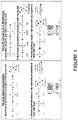
- Antimicrobial agents are incorporated into polyurethane shape memory polymers (SMPs), Figure 1 .
- SMPs polyurethane shape memory polymers
- incorporated antimicrobials work in conjunction with oral antibiotics to reduce infection risks in implanted SMP-based devices.
- antibiotics There are numerous concerns about antibiotic-resistant bacterial strains.
- PAs antimicrobial phenolic acids
- Bees produce plant-derived PAs in their honey, which protect hives against microbes and viruses. PAs exhibit broad antimicrobial properties, and have been shown to be effective against multi-drug resistant organisms (MDROs).
- antibiotic-resistant bacteria that were obtained from hospitals (Enterobacter aerogenes, Escherichia coli, and Staphylococcus aureus) were susceptible to cinnamic acid.
- a recent review covers the efficacy of a number of PAs, including cinnamic, gentisic, and benzoic acids, against Candida infections (planktonic and biofilms, drug susceptible and drug resistant).
- ferulic and gallic acids reduced biofilm activity >70% for four human pathogenic bacteria (Escherichia coli, Pseudomonas aeruginosa, Staphylococcus aureus, and Listeria monocytogenes).
- honey e.g., PA
- PA-containing SMP foams Fabricate PA-containing SMP foams.
- PA (modified and unmodified) antimicrobial efficacy against MDROs is measured to down-select agents prior to foam fabrication.
- SMP foams are synthesized with varying levels of cinnamic, gentisic, and benzoic acid via (a) prior esterification with foaming polyols to produce a PA-containing polyol (PAOH) and (b) direct incorporation.
- route (a) requires fewer alterations to foam composition. Prior esterification enhances the antimicrobial properties of PAs.
- route (a) eliminates/reduces bubble generation from the reaction between carboxylic acids on PAs and isocyanates in the foams to better control foam properties.
- Route (b) is simpler and less expensive.
- foams synthesized via route (b) that meet all success criteria and produce consistent and reliable foams are advantageous.
- PAOH is synthesized from hydroxypropyl ethylenediamine (HPED) and select PAs (cinnamic acid, gentisic acid, and benzoic acid) via esterification in chloroform (catalyzed by dicyclohexylcarbodiimide (DCC) and dimethylaminopyridine (DMAP)) for 3 hours at room temperature, Figure 1 .
- the reaction is filtered and washed to remove byproducts and residual catalysts, and the final product is isolated by rotary evaporation.
- Successful synthesis of PAOH is confirmed using Fourier transform infrared (FTIR) and nuclear magnetic resonance (NMR) spectroscopy.
- FTIR Fourier transform infrared
- NMR nuclear magnetic resonance
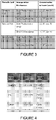
- Cinnamic acid-HPED (CAOH) was successfully synthesized, as indicated by FTIR spectra that show a reduction in hydroxyl groups relative to HPED and formation of ester linkages, Figure 2 .
- foams are synthesized with varied amounts of PAOH in combination with HPED and hexamethylene diisocyanate (HDI) as previously described, Figure 1 .
- HDI hexamethylene diisocyanate
- a polyurethane prepolymer is synthesized using an excess of HDI with PAOH and HPED.
- the remainder of PAOH and HPED are mixed together and added to the prepolymer at a final molar ratio of 1:1 (isocyanates (HDI): hydroxyls (PAOH and HPED)) in some embodiments.
- PA-containing foams are synthesized via direct incorporation of phenolic acids into the polyurethane backbone (reaction between carboxylic acid on PAs and isocyanates in foam), Figure 3 .
- Study 1.2 Characterize PA-containing foam structure; mechanical, thermal, and shape memory properties; and cytocompatibility. After a library of PA-containing foams is synthesized, they are characterized to ensure that desirable foam properties are retained. In particular, embodiments of PA-containing foams have thermal transitions at body temperature in aqueous conditions to enable shape change upon application of a bleed, rapid shape recovery ( ⁇ 2 minutes) to enhance wound filling and clotting speed, and high cytocompatibility as an initial indication of their safety. These properties are achieved with a number of the compositions described herein.
- Tg glass transition temperature
- DSC differential scanning calorimetry
- CA and CAOH-containing SMP foams exhibited retained dry thermal properties relative to control, Figure 4 .
- the wet glass transition temperatures were reduced relative to the control, but maintained below body temperature to enable actuation upon implantation.
- Shape Memory Properties Cylindrical foam samples (2 mm diameter X 1 cm length) are cut, and a 203.20 ⁇ m diameter nickel titanium wire is threaded through the length of the sample to serve as a stabilizer. Samples are be crimped to their smallest possible diameter using a stent crimper with heating above the Tg. Initial foam diameter is measured using ImageJ software, and the foams are placed in a water bath at 37°C. Images are taken over 30 minutes, and foam diameter is calculated at each time point using ImageJ ® . Percent recovery versus the original sample diameter and volume expansion is calculated using the resulting measurements.
- Study 1.3 Assess antimicrobial properties of PA-containing foams in comparison to clinically available silver-based antimicrobial wound dressings. As an initial indication of the antimicrobial efficacy of PA-containing SMP foams, a series of in vitro studies were conducted with bacteria. Embodiments include formulations with comparable antibacterial properties to those of clinically available antimicrobial oxidized regenerated cellulose hemostats.
- E. coli Gram-negative
- S. epidermidis gram-positive colony forming units
- CFUs colony forming units
- SMP foams embodiments addressed herein provide a biomaterial platform with numerous potential benefits for use as hemostatic dressings.
- Polyurethane SMPs are fabricated as expanded, open porous foams that can be compressed into a temporary, secondary shape. The compressed shape is retained until the foam is exposed to water and heat, upon which it returns to the original expanded shape.
- Embodiments are designed to actuate in aqueous conditions between 15 and 45°C ( ⁇ 40-70°C in dry conditions), and actuation times are tuned between 30 seconds and 30 minutes.
- SMP foams demonstrated excellent biocompatibility over 90 and 180 days of implantation in a porcine aneurysm model.
- SMP foams induce rapid clotting due to their high surface area and thrombogenic material chemistry; in a porcine hind limb vessel, SMP foams promoted arterial hemostasis within 90 seconds of device deployment.
- SMP foam embodiments have minimal particulate generation, and no undesired downstream clotting has been observed in prior in vivo occlusion studies.
- Embodiments enable application of a compressed device in a deep, irregularly-shaped bleed site, which rapidly expands upon passive heating to body temperature to space-fill the wound volume and promote hemostasis.
- antimicrobial agents are introduced into the polymer network.
- incorporated antimicrobials work in conjunction with oral antibiotics to reduce infection risks and the need for frequent dressing changes.
- antimicrobial phenolic acids were utilized to provide a non-drug approach.
- Bees produce plant-derived phenolic acids in their honey, which protect hives against microbes and viruses.
- Phenolic acids exhibit broad antimicrobial properties, and have been shown to be effective against multi-drug resistant organisms (MDROs).
- antibiotic-resistant bacteria that were obtained from hospitals (Enterobacter aerogenes, Escherichia coli, and Staphylococcus aureus) were susceptible to cinnamic acid.
- a recent review covers the efficacy of a number of phenolic acids, including cinnamic, gentisic, and benzoic acids, against Candida infections (planktonic and biofilms, drug susceptible and drug resistant).
- Embodiments incorporate native and modified cinnamic acid (CA) into the SMP system, Figure 1 .
- the resulting scaffolds were characterized to ensure that the desirable SMP properties were maintained, including density, pore size and structure, thermal properties, shape recovery profiles, and cytocompatibility.
- An emphasis was placed on design of a SMP foam hemostat that could be stored in extreme battlefield conditions and actuate quickly once exposed to water in blood at body temperature.
- Antimicrobial efficacy against Escherichia coli (E.coli) and Staphylococcus epidermidis (Staph. epi.) was characterized after soaking samples for up to 30 days in saline at body temperature to gain an understanding of initial and sustained antimicrobial effects.
- CA and HCA-containing SMPs To enable its incorporation without sacrificing polyurethane network crosslink density, cinnamic acid (CA) was modified via esterification with N,N,N',N'-tetrakis(2-hydroxypropyl) ethylenediamine (HPED) to form a CA-containing triol (HCA).
- HCA cinnamic acid
- HPED N,N,N',N'-tetrakis(2-hydroxypropyl) ethylenediamine
- HCA CA-containing triol
- Successful synthesis of HCA was confirmed via Fourier transform infrared (FTIR) and nuclear magnetic resonance (NMR) spectroscopy. In the FTIR spectra, a relative decrease in the hydroxyl groups can be observed at ⁇ 3350 cm -1 , and ester formation was confirmed via a shift in the carbonyl peak from ⁇ 1680 to -1710 cm -1 , Figure 2A .
- NMR showed the presence of esterified CA and HP
- ATR-FTIR spectra were obtained of CA and HCA containing foams, Figure 2C .
- There is an additional peak at ⁇ 1615 cm -1 in all of the CA and HCA foams that is attributed to the C C groups in the ring structure.
- the relative absorbance of this peak increases slightly (relative to the urethane peak at ⁇ 1680 cm -1 ) with increased HCA concentration.
- the relative absorbance at the 1615 cm -1 peak is between that of 20 and 30% HCA, indicating a higher incorporation efficiency with the unmodified CA.
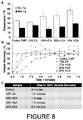
- Thermal and shape memory properties For effective field use, SMP foam-based hemostats must retain their compressed geometries at the high temperatures that are reached in desert climates (e.g., up to ⁇ 45°C in Iraq) under dry storage conditions and then rapidly expand upon exposure to water in body temperature blood. As an initial indication of these capabilities, SMP foam glass transition temperatures (Tg's) were measured under dry and wet conditions, Figure 8A . The 10% CA foam dry Tg was similar to that of the control, and both were below the required 45°C for field use. CA increases the hydrophobicity of the foams, which generally increases Tg; however, incorporation of the monofunctional group is expected to reduce the overall crosslink density, which had an opposing effect to lower Tg.
- Tg's SMP foam glass transition temperatures
- CA foams had more rapid expansion as compared to controls, which is attributed to their theoretically decreased crosslink density due to the incorporation of a monofunctional monomer.
- Increasing HCA content resulted in slower volume expansion, correlating with increased Tg measurements, and is attributed to increased foam hydrophobicity and backbone stiffness with the introduction of the ring structure in CA.
- the increase in expansion rate of 10 and 20% HCA foams relative to the control is likely due to network inconsistencies.
- high average functionalization of HCA was achieved, the synthesized monomer is a mix of HPED with varied numbers of tethered CA molecules.
- CFU colony forming unit
- the increased efficacy of 30% HCA illustrates how antimicrobial properties should increase with increased CA concentration in the films. Similar results were observed with Staph. epi., with significant decreases in CFU density for 10% CA, 20% HCA, and 30% HCA films to levels at or below the drug-based (P/S) control, Figure 10B . There was a trend of decreasing CFU density with increased HCA concentration. Some phenolic acids have shown increased antimicrobial efficacy after esterification. This result has not been observed with CA. Embodiments include incorporation of phenolic acids that benefit from esterification. Overall, these results demonstrate that the antimicrobial properties of CA are retained following incorporation into SMPs with and without prior modification. The comparable efficacy to P/S is highly promising for potential use of CA or HCA-containing SMPs against drug resistant organisms.
- CA and HCA containing films were soaked in saline solution at 37°C for up to 30 days, and E. coli and Staph. epi. CFU density was measured after exposure to soaked films. All 10% CA films retained significantly lower CFU density compared to the unmodified control SMP for both bacteria types, Figure 11 .
- the formation of a urethane bond between CA and HDI in the SMP network provides a biostable linkage that is not susceptible to hydrolysis.
- the majority of the CA was retained in the films throughout the soaking period, providing a sustained antimicrobial effect.
- the 10% HCA films had comparable CFU densities up to 20 days of soaking, with increases for the 30 day samples that approached the control film value (red dashed line) for both bacteria types. Since HCA is incorporated into the SMP network via an ester linkage, hydrolysis likely caused HCA concentration reductions over time. A similar trend was observed with 20% HCA samples, with increases in the CFU density after exposure to the 20 and 30 day soaked films. Increases in E. coli density were lower for 20% HCA at 30 days than those for 10% HCA, indicating a higher retained HCA concentration with increased initial concentration. This trend was further confirmed with 30% HCA films.
- HCA provides a sustained antimicrobial effect in SMPs when incorporated at higher concentrations.
- DC 198, DC 5943, BL-22, T-131, and Enovate ® were purchased from Evonik ® (Essen, Germany) and used as received. All other chemicals were purchased from Sigma-Aldrich Inc. (St. Louis, MO) and used as received.
- Phenolic acid monomer synthesis and characterization N,N,N',N'-tetrakis(2-hydroxypropyl) ethylenediamine (HPED)-cinnamic acid (HCA) was synthesized using an esterification procedure. Cinnamic acid (CA, 1 molar eq.) was added to a round bottom flask and dissolved in chloroform. Then, 4-(dimethylamino) pyridine (DMAP, 0.1 molar eq.) was added to the flask and dissolved. HPED (1 molar eq.) was weighed out in a separate vial, dissolved in chloroform, and added dropwise to the reaction flask.
- DMAP 4-(dimethylamino) pyridine
- Shape memory polymer foam and film (not according to the invention) 2.
- An isocyanate (NCO) prepolymer was synthesized with appropriate molar ratios of HPED, triethanolamine (TEA), HCA or CA, and hexamethylene diisocyanate (HDI), with a 42 mol% hydroxyl (OH) content.
- a OH mixture was prepared with the remaining molar equivalents of HPED, TEA, and HCA or CA.
- Foaming agents catalogsts, surfactants, deionized water, and Enovate
- the foams were then cured at 50°C for 5-10 minutes and cooled to room temperature before washing via sonication in isopropyl alcohol (IPA) or reverse osmosis (RO) water for 15 minute cycles.
- IPA isopropyl alcohol
- RO reverse osmosis
- SMP films (not according to the invention) were synthesized using the same monomer compositions as the foams, but without surfactants, deionized water, or Enovate ® .
- Figure 12 shows the SMP compositions that were synthesized and characterized in these studies.
- SEM Jeol NeoScope JCM-5000 Scanning Electron Microscope
- foam samples (3-8 mg) were submerged in reverse osmosis (RO) water at 50°C for 5 minutes to allow full plasticization.
- the samples were removed from the water, pressed dry with laboratory wipes, weighed, and placed in an aluminum pan with a vented aluminum lid.
- a Q-200 DSC was used to cool the samples to - 40°C at 10°C ⁇ min-1 and hold them isothermally for 2 minutes.
- the samples were then heated to 80°C at 10°Cmin-1.
- TA Instruments software was used to generate the thermogram and determine the wet Tg using the average inflection point of the thermal transition.
- Tg Various examples at the end of the application address Tg, such as dry Tg and wet Tg. Those terms should be construed in keeping with the immediately preceding two paragraphs (i.e., as used herein dry and wet Tg should be determined using the methods described in the two paragraphs immediately above).
- HDFs Human dermal fibroblasts
- Invitrogen, Inc. San Diego, CA
- P/S penicillin-streptomycin
- SMP films (not according to the invention) were cut into 6 mm diameter cylinders and sterilized via incubation in 70% ethanol overnight and subsequent washing in sterile phosphate buffered saline (PBS, 3 washes).
- PBS sterile phosphate buffered saline
- TCPS tissue culture polystyrene
- BSA bovine serum albumin
- HDFs were seeded into wells containing SMP films at 5,000 cells cm -1 . Seeded cells were cultured at 37°C/5% CO2 for up to 72 hours. Media was changed at 2 and 36 hours. At 2 and 72 hours, brightfield images were obtained to qualitatively assess cell attachment and proliferation. Representative images were obtained using a Nikon Eclipse TE2000-S ® with 4 field views per specimen and 3 specimens per sample type.
- Antimicrobial properties To obtain an initial measure of antimicrobial properties, SMP films (not according to the invention) were cut into 6 mm diameter cylinders. To characterize antimicrobial properties over time, samples were incubated in PBS at 37°C for 0, 10, 20, or 30 days. Then, films were sterilized as described in the Cell Interactions Section. Escherichia coli (E. coli) and Staphylococcus epidermidis (Staph. epi.) were grown overnight in 5 ml of lysogeny broth (LB) at 37°C. Subsequently, 500 ⁇ l were taken from each overnight culture and grown in 10 ml of fresh LB to optical density (O.D.) 0.6 (i.e. until bacteria had entered log phase growth).
- E. coli Escherichia coli
- Staph. epi. Staphylococcus epidermidis
- O.D. was measured using a Tecan plate reader. Samples were placed into a sterile 96 well plate, and 100 ⁇ l of bacteria solution were pipetted onto the surface of each sample. Control SMP films were soaked in P/S overnight to provide a drug-based antimicrobial control. Samples were incubated with bacteria for 1 hour at 37°C and then vortexed to dislodge attached bacteria. Bacterial solutions were diluted by 106 in fresh LB and plated onto LBagar plates overnight at 37°C. Images were obtained of each specimen plating area. Colony forming unit (CFU) density was measured by counting the number of colonies and dividing by the plating area.
- CFU Colony forming unit
- Embodiments demonstrate successful incorporation of CA, a honey-based phenolic acid, into SMP foams via two routes.
- the resulting foams retain the desirable porous structure of the control SMP while providing tunable thermal transitions and shape recovery properties that are ideal for their use in hemostats for bleeding control.
- CA-based SMPs were designed with high dry Tg's to enable their storage under extreme battlefield conditions and low wet Tg's to enable their rapid shape recovery upon exposure to blood at body temperature.
- CA-based SMPs have high cytocompatibility while effectively reducing bacterial growth to levels that are comparable to penicillin/streptomycinbased treatments, even after 30 days of storage in saline at body temperature.
- embodiments provide a hemostat device that is easy-to-use, biocompatible, and antimicrobial.
- An additional benefit to phenolic acids is their antioxidant properties; phenolic acids contain hydrogen donating groups that scavenge free radicals and reduce oxidation. This is ideal for SMP foams that are susceptible to oxidative degradation.
- pendent phenolic acids may be used in biodurable implants.
- occlusive foams e.g., foams for occulting aneurysms
- biodurable help prevent recanalization-a problem experienced with hydrogel and coil based aneurysm therapies.
- Example 1 includes a shape memory polymer composition with incorporated antimicrobial agents.
- Example 2 includes the device of Example 1 wherein the antimicrobial agents are chemically incorporated into the polymer backbone via at least one of: (a) direct reaction between hydroxyls, carboxylic acids, or amines on the antimicrobial agent with the backbone, and (b) reacting a polyurethane monomer or macromer with the antimicrobial agent prior to polymerization to produce pendent antimicrobial species.
- Example 3 includes the device of Example 1 wherein the antimicrobial agents are physically incorporated into the polymer (not according to the invention).
- Example 4 includes the device of Example 1 wherein the antimicrobial agents are utilized to surface treat the polymer.
- an embodiment functionalizes the surface with antimicrobial agents. This maintains bulk physical/mechanical properties of the polymer, but allows antimicrobial agent incorporation at the surface of the foam.
- Example 5 includes the polymer composition of Example 1 wherein: monomers for the SMP foam are selected from a group consisting of hexamethylene diisocyanate (HDI), trimethyl hexamethylene diisocyanate (TMHDI), isophorone diisocyanate (IPDI), triethanolamine (TEA), diethanolamine, butane diol, butyne diol, N,N,N',N' tetrakis (hydroxyl propylene) ethylenediamine (HPED), and the antimicrobial agent is selected from the group consisting of phenolic acids, fluorescent dyes (not according to the invention), and silver (not according to the invention).
- monomers for the SMP foam are selected from a group consisting of hexamethylene diisocyanate (HDI), trimethyl hexamethylene diisocyanate (TMHDI), isophorone diisocyanate (IPDI), triethanolamine (TEA), diethanolamine, butane diol, butyne
- An example network includes a reaction between HPED and an antimicrobial agent with carboxylic acid group to produce a triol with a pendent antimicrobial group.
- the antimicrobial triol is incorporated into a polyurethane network with HDI, TEA, and HPED to produce a polyurethane with pendent antimicrobial groups throughout the bulk.
- Example 6 includes a method for making polymeric foams from Example 1 into a porous structure or foam by one or a combination of processes, including but not limited to, freeze drying, phase separation, emulsion foaming/templating, or physical blowing,
- Example 7 includes the polymer of Examples 1 and 6 that can be used in medical device manufacturing and as a medical material, in such devices including but not limited to: subcutaneous implants, aneurysm filling devices, peripheral filling devices, wound dressings, bone grafts, etc.
- Example 1a includes a system comprising a thermoset polyurethane shape memory polymer (SMP) foam that includes at least one antimicrobial agent (according to the invention the antimicrobial agent includes a phenolic acid chemically bonded to a polyurethane polymer chain of the SMP foam).
- SMP thermoset polyurethane shape memory polymer
- Example 2a includes the system of claim 1a wherein the SMP foam is chemically bonded to the at least one antimicrobial agent (according to the invention the antimicrobial agent includes a phenolic acid chemically bonded to a polyurethane polymer chain of the SMP foam).
- Example 3a includes the system of claim 2a wherein the at least one antimicrobial agent includes a phenolic acid.
- Example 4a includes the system of claim 3a wherein the at least one phenolic acid includes at least one of cinnamic acid, benzoic acid, gentisic acid, 4-hydroxy benzoic acid, p-coumaric acid, vanillic acid, syringic acid, protocatechuic acid, gallic acid, ferulic acid, sinapic acid, and caffeic acid.
- the at least one phenolic acid includes at least one of cinnamic acid, benzoic acid, gentisic acid, 4-hydroxy benzoic acid, p-coumaric acid, vanillic acid, syringic acid, protocatechuic acid, gallic acid, ferulic acid, sinapic acid, and caffeic acid.
- Example 5a includes the system of claim 4a wherein the at least one phenolic acid is a pendent group chemically bonded to a polyurethane polymer chain of the SMP foam.
- a pendant group (sometimes spelled pendent) or side group is a molecule or group of molecules attached to the backbone of a long molecule. Usually, this "long molecule" would be a polymer.
- Pendant groups are different from pendant chains, as they are neither oligomeric nor polymeric. For example, the phenyl groups are the pendant groups on a polystyrene chain.
- Example 5a includes the system of claim 4a wherein the at least one phenolic acid is a pendent structure (one or more molecules that may or may not be in a chain) chemically bonded to a polyurethane polymer chain of the SMP foam.
- the at least one phenolic acid is a pendent structure (one or more molecules that may or may not be in a chain) chemically bonded to a polyurethane polymer chain of the SMP foam.
- Example 6a includes the system of claim 5a wherein the pendent group is chemically bonded to the polyurethane polymer chain via an ester.
- Figure 2(B) shows an example of a pendent group (CA) chemically bonded to a polyurethane chain via an ester linkage.
- CA pendent group
- Example 7a includes the system of claim 6a wherein the SMP foam has a dry glass transition (Tg) above 40 degrees C and a wet Tg below 30 degrees C.
- Tg dry glass transition
- Other embodiments may have dry Tg's above 35, 37, 39, 42, 45, 47 or 50 degrees C and wet Tg's below 34, 32, 28, or 26 degrees C.
- Example 8a includes the system of claim 2a wherein the at least one antimicrobial agent includes a carboxylic acid group (according to the invention the antimicrobial agent includes a phenolic acid chemically bonded to a polyurethane polymer chain of the SMP foam).
- Example 8a includes the system of claim 2a wherein the at least one antimicrobial agent includes an amine group.
- Example 8a includes the system of claim 2a wherein the at least one antimicrobial agent includes: (a) a first antimicrobial agent that includes an amine group, and (b) a second antimicrobial agent that includes a carboxylic acid group (according to the invention the antimicrobial agent includes a phenolic acid chemically bonded to a polyurethane polymer chain of the SMP foam).
- the at least one antimicrobial agent includes: (a) a first antimicrobial agent that includes an amine group, and (b) a second antimicrobial agent that includes a carboxylic acid group (according to the invention the antimicrobial agent includes a phenolic acid chemically bonded to a polyurethane polymer chain of the SMP foam).
- Example 9a includes the system of claim la wherein the SMP foam is physically crosslinked around the at least one antimicrobial agent.
- the agent may not be chemically bonded to the polyurethane chain but the chain may be crosslinked in such manner as to render shape memory properties to the foam and to also physically retain an agent that is not chemically bonded to the chain. As the foam recovers its programmed primary shape (from its compressed secondary shape) the agent may be released.
- Embodiments also include SMP foams that BOTH (a) physically crosslink around some antimicrobial agents, and (b) include chemically bonded pendent antimicrobial groups.
- Example 10a includes the system of claim la comprising: a thermoset polyurethane second SMP foam that includes a phenolic acid that is a pendent group chemically bonded to a polyurethane polymer chain of the second SMP foam; and a thermoset polyurethane third SMP foam that includes a phenolic acid that is a pendent group chemically bonded to a polyurethane polymer chain of the third SMP foam; wherein (a) the SMP foam comprises a first foam, and (b) the first, second, and third SMP foams are all enclosed in a sealed kit.
- Embodiments come in many varied form factors. Some embodiments include one or more pieces of SMP foam which can be applied independently of one another to a site of bleeding. Other embodiments may tether multiple piece of foam together to help ease their removal.
- an embodiment includes first and second SMP foams each deployed along a single backbone.
- the backbone may be metal, cloth, string, suture, or a polymer filament.
- the sponges may have cloth, dacron, or PTFE pledgets on either side of the SMP foams to help secure the foams to the backbone and to help control any sliding of the foams along the back bone.
- the pledgets may be secured by simply tying a knot in the backbone adjacent the pledget.
- Foams may couple to gauze.
- the gauze may be a strip of gauze to which the foams are coupled.
- the gauze may be a gauze pouch that includes multiple foams and the entire pouch is placed in a wound (and then easily recovered at a later time considering all the foams are retained within a single pouch).
- the foam pieces themselves may be formed as pellets (regularly or irregularly shaped, one or many, cylindrical, conical, and/or planar sheets) which may be placed into a wound and those pellets may or may not be coupled to one another.
- Other embodiments may couple one or more foams to a backbone, such as a Nitinol coil, and then deployed into an aneurysm, peripheral vessel that is desired to be occluded, in a void of a septal wall, and the like.
- Other embodiments include simply deploying a free foam from a catheter to an internal bleed site.
- Other embodiments include a single large foam that can be independently placed at any bleeding site or any site with liquids a user wishes to control (e.g., remove).
- Example 11a includes a method comprising: reacting a first polyol portion with an antimicrobial agent to form a first reaction product; reacting a first portion of the first reaction product with a second polyol portion and an isocyanate to form a second reaction product; reacting the second reaction product with a second portion of the first reaction product and a third polyol portion to form a third reaction product; mixing the third reaction product with a blowing agent to form a shape memory polymer (SMP) foam; wherein the SMP is a thermoset polyurethane SMP foam (according to the invention the antimicrobial agent includes a phenolic acid chemically bonded to a polyurethane polymer chain of the SMP foam).
- SMP shape memory polymer
- Figure 1 which includes reacting a first polyol portion (HPED from line 1 of Route B) with an antimicrobial agent (CA) to form a first reaction product (HCA from line of Route B); reacting a first portion of the first reaction product (HCA from line 2 of Route B) with a second polyol portion (HPED and/or TEA from line 2 of Route B) and an isocyanate (HDI from line 2 of Route B) to form a second reaction product (prepolymer from line 2 of Route B); reacting the second reaction product (prepolymer) with a second portion of the first reaction product (HCA from line 3 of Route B) and a third polyol portion (HPED and/or TEA from line 3 of Route B) to form a third reaction product; mixing the third reaction product with a blowing agent to form a shape memory polymer (SMP) foam; wherein the SMP is a thermoset polyurethane SMP foam.
- SMP shape memory polymer
- Example 11a includes reacting a first polyol portion (HPED or some other polyol) with an antimicrobial agent (CA or some other agent) to form an antimicrobial monomer as the first reaction product; reacting a first portion of the first reaction product with a second polyol portion (HPED and/or TEA and or some other polyol) and an isocyanate (HDI or some other isocyanate) to form a second reaction product (prepolymer); reacting the second reaction product (prepolymer) with a second portion of the first reaction product and a third polyol portion (HPED and/or TEA or some other polyol) and, in response thereto, forming a shape memory polymer (SMP) foam; wherein the SMP is a thermoset polyurethane SMP foam (according to the invention the antimicrobial agent includes a phenolic acid chemically bonded to a polyurethane polymer chain of the SMP foam).
- the antimicrobial agent includes a phenolic acid chemically
- the "side A” portion of the reaction includes hydroxyl components, such as HPED, TEA, HCA, CA, and combinations thereof in addition to water.
- the "side B” portion of the reaction includes the prepolymer described above (where the prepolymer contains unreacted isocyanates). The side A and side B are mixed and a foam blowing reaction occurs.
- first polyol portion and a second polyol portion may be two portions of a single polyol or may include two (or more) different polyols from one another.
- Example 12a includes the method of claim 11a wherein the at least one antimicrobial agent includes a phenolic acid.
- Example 13a includes the method of claim 12a wherein the phenolic acid includes at least one of cinnamic acid, benzoic acid, gentisic acid, 4-hydroxy benzoic acid, p-coumaric acid, vanillic acid, syringic acid, protocatechuic acid, gallic acid, ferulic acid, sinapic acid, and caffeic acid.
- the phenolic acid includes at least one of cinnamic acid, benzoic acid, gentisic acid, 4-hydroxy benzoic acid, p-coumaric acid, vanillic acid, syringic acid, protocatechuic acid, gallic acid, ferulic acid, sinapic acid, and caffeic acid.
- Example 14a includes the method of claim 12a wherein reacting a first polyol portion with an antimicrobial agent to form a first reaction product comprises esterification of the antimicrobial agent.
- line 1 of Route B of Figure 1 depicts one example of esterification.
- Example 15a includes the method of claim 11a wherein the first reaction product comprises a triol.
- Example 16a includes the method of claim 15a wherein: at least one of the first, second, and third polyol portions includes at least one of triethanolamine (TEA), diethanolamine, butane diol, butyne diol, and N,N,N',N' tetrakis (hydroxyl propylene) ethylenediamine (HPED); and the isocyanate includes at least one of hexamethylene diisocyanate (HDI), trimethyl hexamethylene diisocyanate (TMHDI), and isophorone diisocyanate (IPDI).
- TAA triethanolamine
- HPED hydroxyl propylene ethylenediamine
- HPED hydroxyl propylene ethylenediamine
- the isocyanate includes at least one of hexamethylene diisocyanate (HDI), trimethyl hexamethylene diisocyanate (TMHDI), and isophorone diisocyanate (IPDI).
- HDI hexamethylene diis
- Example 17a includes the method of claim 16a wherein the antimicrobial agent includes at least one of a phenolic acid, a fluorescent dye (not according to the invention), and silver (not according to the invention).
- Example 18a includes the method of claim 17a wherein the antimicrobial agent includes a carboxylic acid group.
- Example 19a includes the method of claim 18a wherein the antimicrobial agent includes at least one phenolic acid that is a pendent group chemically bonded to a polyurethane polymer chain of the SMP foam.
- Example 20a includes the method of claim 19a wherein the pendent group is chemically bonded to the polyurethane polymer chain via an ester.
- Example 21 includes the method of claim 11a wherein the second reaction product is a prepolymer formed before polymerization of the SMP foam.
- pre-polymer refers to a monomer or system of monomers that have been reacted to an intermediate molecular mass state. This material is capable of further polymerization by reactive groups to a fully cured high molecular weight state. As such, mixtures of reactive polymers with un-reacted monomers may also be referred to as pre-polymers.
- pre-polymer and “polymer precursor” may be interchanged.
- the prepolymer includes unreacted isocyanates.
- Example 22 includes a method comprising: reacting a first polyol portion with a first antimicrobial agent portion and an isocyanate to form a first reaction product; reacting the reaction product with a second polyol portion and a second antimicrobial agent portion to form a second reaction product; mixing the second reaction product with a blowing agent to form a shape memory polymer (SMP) foam; wherein the SMP is a thermoset polyurethane SMP foam; wherein the first reaction product is a prepolymer formed before polymerization of the SMP foam.
- SMP shape memory polymer
- Route A of Figure 1 includes reacting a first polyol portion (HPED and/or TEA of line 1 of Route A) with a first antimicrobial agent portion (e.g., CA of line 1 of Route A) and an isocyanate (e.g., HDI of line 1 of Route A) to form a first reaction product (e.g., prepolymer of line 1 of Route A); reacting the first reaction product with a second polyol portion (HPED and/or TEA of line 2 of Route A) and a second antimicrobial agent portion (e.g., CA of line 2 of Route A) to form a second reaction product; mixing the second reaction product with a blowing agent to form a shape memory polymer (SMP) foam; wherein the SMP is a thermoset polyurethane SMP foam; wherein the first reaction product is a prepolymer formed before polymerization of the SMP foam.
- a first antimicrobial agent portion e.g., CA of line 1 of Route A
- Route A of Figure 1 includes reacting a first polyol portion (HPED and/or TEA or some other polyol) with a first antimicrobial agent portion (e.g., CA and/or some other antimicrobial agent) and an isocyanate (e.g., HDI or some other isocyanate) to form a first reaction product (e.g., prepolymer); reacting the first reaction product with a second polyol portion (HPED and/or TEA or some other polyol) and a second antimicrobial agent portion (e.g., CA and/or some other antimicrobial agent); forming a shape memory polymer (SMP) foam in response thereto; wherein the SMP is a thermoset polyurethane SMP foam; wherein the first reaction product is a prepolymer formed before polymerization of the SMP foam (according to the invention the antimicrobial agent includes a phenolic acid chemically bonded to a polyurethane polymer chain of the
- Example 23 includes the method of claim 22a wherein the antimicrobial agent includes at least one phenolic acid that forms a pendent group chemically bonded to a polyurethane polymer chain of the SMP foam.
- SMP foams have a number of desirable properties for use as hemostats, including shape recovery to enable delivery into bleed sites, biocompatibility, and rapid blood clotting.
- phenolic acids which are honey-based antimicrobial agents
- CA cinnamic acid
- modified foams demonstrated initial and sustained antimicrobial effects against gram-positive and gram-negative bacteria.
- multi-functional scaffolds demonstrate potential for use as hemostats to improve upon current hemorrhage treatments and provide a new tool in tuning the biological and material properties of SMP foams.
Landscapes
- Health & Medical Sciences (AREA)
- Chemical & Material Sciences (AREA)
- Life Sciences & Earth Sciences (AREA)
- Veterinary Medicine (AREA)
- Public Health (AREA)
- General Health & Medical Sciences (AREA)
- Animal Behavior & Ethology (AREA)
- Epidemiology (AREA)
- Engineering & Computer Science (AREA)
- Medicinal Chemistry (AREA)
- Surgery (AREA)
- Materials Engineering (AREA)
- Chemical Kinetics & Catalysis (AREA)
- Dispersion Chemistry (AREA)
- Hematology (AREA)
- Oral & Maxillofacial Surgery (AREA)
- Dermatology (AREA)
- Transplantation (AREA)
- Heart & Thoracic Surgery (AREA)
- Vascular Medicine (AREA)
- Polymers & Plastics (AREA)
- Organic Chemistry (AREA)
- Molecular Biology (AREA)
- Biomedical Technology (AREA)
- General Chemical & Material Sciences (AREA)
- Materials For Medical Uses (AREA)
- Polyurethanes Or Polyureas (AREA)
- Manufacture Of Porous Articles, And Recovery And Treatment Of Waste Products (AREA)
- Compositions Of Macromolecular Compounds (AREA)
- Pharmaceuticals Containing Other Organic And Inorganic Compounds (AREA)
Claims (9)
- Système comprenant une mousse de polymère à mémoire de forme (SMP) de polyuréthane thermodurci qui contient au moins un agent antimicrobien, dans lequel l'au moins un agent antimicrobien comprend un acide phénolique lié chimiquement à une chaîne de polymère de polyuréthane de la mousse de SMP.
- Système selon la revendication 1, dans lequel l'acide phénolique est un groupe pendant chimiquement lié à une chaîne de polymère de polyuréthane de la mousse de SMP.
- Système selon la revendication 2, dans lequel le groupe pendant est chimiquement lié à la chaîne de polymère de polyuréthane via un ester.
- Système selon l'une quelconque des revendications 1 à 3, dans lequel la mousse de SMP a une température de transition vitreuse (Tg) à l'état sec supérieure à 40°C et une Tg à l'état humide inférieure à 30°C.
- Système selon l'une quelconque des revendications 1 à 4, comprenant :une deuxième mousse de SMP de polyuréthane thermodurci qui contient un acide phénolique qui est un groupe pendant chimiquement lié à une chaîne de polymère de polyuréthane de la deuxième mousse de SMP ; etune troisième mousse de SMP de polyuréthane thermodurci qui contient un acide phénolique qui est un groupe pendant chimiquement lié à une chaîne de polymère de polyuréthane de la troisième mousse de SMP ;dans lequel (a) la mousse de SMP comprend une première mousse, et (b) les première, deuxième et troisième mousses de SMP sont toutes enfermées dans un kit scellé.
- Procédé comprenant :la réaction d'une première portion de polyol avec un agent antimicrobien pour former un premier produit réactionnel ;la réaction d'une première portion du premier produit réactionnel avec une deuxième portion de polyol et un isocyanate pour former un deuxième produit réactionnel ;la réaction du deuxième produit réactionnel avec une deuxième portion du premier produit réactionnel et une troisième portion de polyol pour former un troisième produit réactionnel ;le mélange du troisième produit réactionnel avec un agent gonflant pour former une mousse de polymère à mémoire de forme (SMP) ;dans lequel le SMP est une mousse de SMP de polyuréthane thermodurci,dans lequel l'au moins un agent antimicrobien comprend un acide phénolique.
- Procédé selon la revendication 6, dans lequel l'acide phénolique comprend au moins l'un parmi l'acide cinnamique, l'acide benzoïque, l'acide gentisique, l'acide 4-hydroxybenzoïque, l'acide p-coumarique, l'acide vanillique, l'acide syringique, l'acide protocatéchuique, l'acide gallique, l'acide férulique, l'acide sinapique, l'acide caféique, et leurs combinaisons.
- Procédé selon l'une quelconque des revendications 6 et 7, dans lequel la réaction d'une première portion de polyol avec un agent antimicrobien pour former un premier produit réactionnel comprend l'estérification de l'agent antimicrobien ; et/oudans lequel le premier produit réactionnel comprend un triol ; et/oudans lequel au moins l'une des première, deuxième et troisième portions de polyol comprend au moins l'un parmi la triéthanolamine (TEA), la diéthanolamine, le butanediol, le butynediol, la N,N,N',N'-tétrakis(hydroxypropylène)éthylènediamine (HPED), et leurs combinaisons ; etl'isocyanate comprend au moins l'un parmi le diisocyanate d'hexaméthylène (TMHDI), le diisocyanate d'isophorone (IPDI), et leurs combinaisons ; et/oul'acide phénolique est un groupe pendant chimiquement lié à une chaîne de polymère de polyuréthane de la mousse de SMP ; et/oudans lequel le groupe pendant est chimiquement lié à la chaîne de polymère de polyuréthane via un ester ; et/oudans lequel le deuxième produit réactionnel est un prépolymère formé avant la polymérisation de la mousse de SMP.
- Procédé comprenant :la réaction d'une première portion de polyol avec une première portion d'agent antimicrobien et un isocyanate pour former un premier produit réactionnel ;la réaction du premier produit réactionnel avec une deuxième portion de polyol et une deuxième portion d'agent antimicrobien pour former un deuxième produit réactionnel ; le mélange du deuxième produit réactionnel avec un agent gonflant pour former une mousse de polymère à mémoire de forme (SMP) ;dans lequel le SMP est une mousse de SMP de polyuréthane thermodurci ;dans lequel le premier produit réactionnel est un prépolymère formé avant la polymérisation de la mousse de SMP,dans lequel l'agent antimicrobien comprend au moins un acide phénolique qui forme un groupe pendant chimiquement lié à une chaîne de polymère de polyuréthane de la mousse de SMP.
Priority Applications (2)
| Application Number | Priority Date | Filing Date | Title |
|---|---|---|---|
| EP25183094.9A EP4599855A3 (fr) | 2016-12-06 | 2017-12-06 | Polymères antimicrobiens à mémoire de forme |
| EP23151357.3A EP4183426B1 (fr) | 2016-12-06 | 2017-12-06 | Polymères antimicrobiens à mémoire de forme |
Applications Claiming Priority (2)
| Application Number | Priority Date | Filing Date | Title |
|---|---|---|---|
| US201662430620P | 2016-12-06 | 2016-12-06 | |
| PCT/US2017/064852 WO2018106775A1 (fr) | 2016-12-06 | 2017-12-06 | Polymères à mémoire de forme antimicrobiens |
Related Child Applications (2)
| Application Number | Title | Priority Date | Filing Date |
|---|---|---|---|
| EP23151357.3A Division EP4183426B1 (fr) | 2016-12-06 | 2017-12-06 | Polymères antimicrobiens à mémoire de forme |
| EP25183094.9A Division EP4599855A3 (fr) | 2016-12-06 | 2017-12-06 | Polymères antimicrobiens à mémoire de forme |
Publications (3)
| Publication Number | Publication Date |
|---|---|
| EP3551241A1 EP3551241A1 (fr) | 2019-10-16 |
| EP3551241A4 EP3551241A4 (fr) | 2020-08-12 |
| EP3551241B1 true EP3551241B1 (fr) | 2023-01-18 |
Family
ID=62491350
Family Applications (3)
| Application Number | Title | Priority Date | Filing Date |
|---|---|---|---|
| EP23151357.3A Active EP4183426B1 (fr) | 2016-12-06 | 2017-12-06 | Polymères antimicrobiens à mémoire de forme |
| EP17877973.2A Active EP3551241B1 (fr) | 2016-12-06 | 2017-12-06 | Polymères à mémoire de forme antimicrobiens |
| EP25183094.9A Pending EP4599855A3 (fr) | 2016-12-06 | 2017-12-06 | Polymères antimicrobiens à mémoire de forme |
Family Applications Before (1)
| Application Number | Title | Priority Date | Filing Date |
|---|---|---|---|
| EP23151357.3A Active EP4183426B1 (fr) | 2016-12-06 | 2017-12-06 | Polymères antimicrobiens à mémoire de forme |
Family Applications After (1)
| Application Number | Title | Priority Date | Filing Date |
|---|---|---|---|
| EP25183094.9A Pending EP4599855A3 (fr) | 2016-12-06 | 2017-12-06 | Polymères antimicrobiens à mémoire de forme |
Country Status (7)
| Country | Link |
|---|---|
| US (2) | US11090408B2 (fr) |
| EP (3) | EP4183426B1 (fr) |
| JP (3) | JP7683874B2 (fr) |
| CN (1) | CN110267690B (fr) |
| ES (1) | ES2940069T3 (fr) |
| PL (1) | PL3551241T3 (fr) |
| WO (1) | WO2018106775A1 (fr) |
Families Citing this family (7)
| Publication number | Priority date | Publication date | Assignee | Title |
|---|---|---|---|---|
| WO2018106775A1 (fr) * | 2016-12-06 | 2018-06-14 | The Texas A&M University System | Polymères à mémoire de forme antimicrobiens |
| US12558459B2 (en) * | 2019-05-03 | 2026-02-24 | Syracuse University | Shape memory polymer hydrogels for wound healing |
| CN110563906B (zh) * | 2019-08-15 | 2021-11-16 | 深圳大学 | 一种形状记忆聚氨酯及其制备方法和应用 |
| CN111909347A (zh) * | 2020-06-28 | 2020-11-10 | 合肥科天水性科技有限责任公司 | 一种抗菌抗病毒的阴离子水性聚氨酯树脂及其制备方法 |
| CN111892693A (zh) * | 2020-06-28 | 2020-11-06 | 合肥科天水性科技有限责任公司 | 一种抗菌抗病毒的阳离子水性聚氨酯树脂及其制备方法 |
| JP2023077164A (ja) * | 2021-11-24 | 2023-06-05 | 株式会社イノアックコーポレーション | ポリウレタンフォーム |
| WO2024220471A1 (fr) * | 2023-04-17 | 2024-10-24 | Monroe Mary Beth | Tensioactifs pour la synthèse de mousse de polyuréthane |
Family Cites Families (31)
| Publication number | Priority date | Publication date | Assignee | Title |
|---|---|---|---|---|
| JP3045512B2 (ja) * | 1990-02-07 | 2000-05-29 | 株式会社イノアックコーポレーション | 抗菌性ポリウレタンフォーム、抗菌性ポリウレタンエラストマー及び抗菌性ポリウレタン塗料組成物 |
| US5384176A (en) | 1992-12-11 | 1995-01-24 | Zimmerman; Richard C. | Phenolic acid sulfate esters for prevention of marine biofouling |
| US5489618A (en) * | 1993-11-29 | 1996-02-06 | Osi Specialties, Inc. | Process for preparing polyurethane foam |
| KR20010013377A (fr) * | 1997-06-04 | 2001-02-26 | 데이비드 엠 모이어 | Compositions antimicrobiennes comprenant un analogue de l'acide benzoique et un sel metallique |
| US6054504A (en) * | 1997-12-31 | 2000-04-25 | Hydromer, Inc. | Biostatic coatings for the reduction and prevention of bacterial adhesion |
| US7820734B2 (en) * | 1998-10-07 | 2010-10-26 | Tyco Healthcare Group Lp | Antimicrobial lubricious coating |
| NZ505514A (en) | 2000-06-30 | 2003-02-28 | Bee & Herbal New Zealand Ltd | Method of manufacturing a wound dressing for the application of honey |
| GB0110715D0 (en) | 2001-05-02 | 2001-06-27 | Acordis Speciality Fibres Ltd | Wound dressing |
| DE10300271A1 (de) * | 2003-01-08 | 2004-07-22 | Mnemoscience Gmbh | Photosensitive polymere Netzwerke |
| KR100956759B1 (ko) | 2003-01-11 | 2010-05-12 | 제이티엘주식회사 | 항균성, 소취성, 원적외선 방사율이 뛰어난 메모리 폼 |
| DE102004061406A1 (de) | 2004-12-21 | 2006-07-06 | Bayer Innovation Gmbh | Infektionsresistente Polyurethanschäume, Verfahren zu ihrer Herstellung und Verwendung in antiseptisch ausgestatteten Wundauflagen |
| US8075906B2 (en) * | 2005-02-01 | 2011-12-13 | Boston Scientific Scimed, Inc. | Medical devices having polymeric regions with copolymers containing hydrocarbon and heteroatom-containing monomeric species |
| CN1330388C (zh) * | 2005-03-29 | 2007-08-08 | 胡金莲 | 抗菌形状记忆聚氨酯骨科矫形、固形康复板材及其制备方法 |
| EP2020869B1 (fr) * | 2006-05-01 | 2013-10-16 | Universiteit Gent | Combinaison de poly-3-hydroxybutyrate et depolymerase en tant que composants d'aliments pour animaux ou d'additifs aux aliments pour animaux |
| CN101161299B (zh) * | 2006-10-09 | 2011-07-06 | 乐普(北京)医疗器械股份有限公司 | 孔洞及聚合物共载的药物释放结构及其制备方法 |
| US8389022B2 (en) | 2006-10-12 | 2013-03-05 | Nm Tech Nanomaterials Microdevice Technology Ltd. | Material, item and products comprising a composition having anti-microbial properties |
| DE102006050793A1 (de) * | 2006-10-27 | 2008-04-30 | Bayer Materialscience Ag | Neuartige Hydrogele auf Basis aliphatischer NCO-Prepolymere |
| JP2008239725A (ja) | 2007-03-27 | 2008-10-09 | Nippon Polyurethane Ind Co Ltd | 硬質ポリウレタンフォーム用ポリイソシアネート組成物、及び硬質ポリウレタンフォームの製造方法 |
| GB0813541D0 (en) | 2008-07-24 | 2008-08-27 | Brightwake Ltd | Honey wound dressing |
| WO2011141341A1 (fr) * | 2010-05-14 | 2011-11-17 | Iberhospitex, S.A. | Composés pour la synthèse de polyuréthane, de polyurée ou de polymères polyurée uréthane biostables |
| CN101817746A (zh) | 2010-05-19 | 2010-09-01 | 江西中医学院 | 酚酸类化合物及其在制备抗补体药物中的用途 |
| US8901188B2 (en) | 2011-06-16 | 2014-12-02 | Kimberly-Clark Worldwide, Inc. | Antimicrobial polyurethane foam and process to make the same |
| US20140142207A1 (en) * | 2012-05-24 | 2014-05-22 | Lawrence Livermore National Security, Llc | Ultra low density biodegradable shape memory polymer foams with tunable physical properties |
| US9962364B2 (en) | 2012-12-26 | 2018-05-08 | A-Z Ltd. | Wound healing accelerator |
| US20170197006A1 (en) | 2014-07-09 | 2017-07-13 | Derma Sciences, Inc. | Honey-based foam compositions |
| EP3032597B1 (fr) * | 2014-12-09 | 2019-02-27 | LG Display Co., Ltd. | Dispositif transformable et son procédé de fabrication |
| EP3031597B1 (fr) * | 2014-12-12 | 2020-02-05 | Recticel | Matériaux à mémoire de forme de polyuréthane |
| US10265433B2 (en) * | 2015-03-18 | 2019-04-23 | Lawrence Livermore National Security, Llc | Hemorrhage management system |
| CN104744664A (zh) * | 2015-04-07 | 2015-07-01 | 杭州艾茵美家居用品有限公司 | 一种纳米银记忆棉的生产方法 |
| EP3548531B1 (fr) | 2016-12-02 | 2023-06-28 | The Texas A&M University System | Mousses d'embolisation en un polymère à mémoire de forme chimiquement modifié à visualisation augmentée aux rayons x |
| WO2018106775A1 (fr) * | 2016-12-06 | 2018-06-14 | The Texas A&M University System | Polymères à mémoire de forme antimicrobiens |
-
2017
- 2017-12-06 WO PCT/US2017/064852 patent/WO2018106775A1/fr not_active Ceased
- 2017-12-06 EP EP23151357.3A patent/EP4183426B1/fr active Active
- 2017-12-06 PL PL17877973.2T patent/PL3551241T3/pl unknown
- 2017-12-06 ES ES17877973T patent/ES2940069T3/es active Active
- 2017-12-06 CN CN201780075839.3A patent/CN110267690B/zh active Active
- 2017-12-06 EP EP17877973.2A patent/EP3551241B1/fr active Active
- 2017-12-06 JP JP2019530119A patent/JP7683874B2/ja active Active
- 2017-12-06 US US16/466,073 patent/US11090408B2/en active Active
- 2017-12-06 EP EP25183094.9A patent/EP4599855A3/fr active Pending
-
2021
- 2021-08-05 US US17/395,116 patent/US20220016310A1/en active Pending
-
2022
- 2022-10-20 JP JP2022168036A patent/JP7674320B2/ja active Active
-
2024
- 2024-11-22 JP JP2024203568A patent/JP2025019198A/ja active Pending
Also Published As
| Publication number | Publication date |
|---|---|
| US11090408B2 (en) | 2021-08-17 |
| EP4599855A3 (fr) | 2025-08-27 |
| CN110267690A (zh) | 2019-09-20 |
| CN110267690B (zh) | 2022-08-12 |
| JP2025019198A (ja) | 2025-02-06 |
| WO2018106775A1 (fr) | 2018-06-14 |
| EP4183426A1 (fr) | 2023-05-24 |
| EP4183426B1 (fr) | 2025-06-18 |
| JP7683874B2 (ja) | 2025-05-27 |
| EP3551241A1 (fr) | 2019-10-16 |
| EP4183426C0 (fr) | 2025-06-18 |
| EP4599855A2 (fr) | 2025-08-13 |
| JP2023010705A (ja) | 2023-01-20 |
| JP7674320B2 (ja) | 2025-05-09 |
| US20220016310A1 (en) | 2022-01-20 |
| JP2020506249A (ja) | 2020-02-27 |
| ES2940069T3 (es) | 2023-05-03 |
| PL3551241T3 (pl) | 2023-06-05 |
| US20190282726A1 (en) | 2019-09-19 |
| EP3551241A4 (fr) | 2020-08-12 |
Similar Documents
| Publication | Publication Date | Title |
|---|---|---|
| EP3551241B1 (fr) | Polymères à mémoire de forme antimicrobiens | |
| Jang et al. | Biodegradable shape memory polymer foams with appropriate thermal properties for hemostatic applications | |
| Monroe et al. | Multifunctional shape‐memory polymer foams with bio‐inspired antimicrobials | |
| JP5607362B2 (ja) | ポリエステル組成物、その組成物を生産する方法及びそれから作製される物品 | |
| Thatiparti et al. | Cyclodextrin-based device coatings for affinity-based release of antibiotics | |
| Wei et al. | Facile preparation of polysaccharides-based adhesive hydrogel with antibacterial and antioxidant properties for promoting wound healing | |
| EP1481694A1 (fr) | Pansement biodégradable et hemostatique | |
| JP2020537585A (ja) | 組織接着性封止剤デバイス | |
| Ding et al. | Antibacterial polyurethane foams with quaternized-chitosan as a chain extender for nasal packing and hemostasis | |
| CN105944138A (zh) | 一种可生物降解医用聚氨酯壳聚糖复合止血绵的制备 | |
| CN120242133B (zh) | 一种促进感染性伤口愈合的水凝胶伤口敷料及其制备方法和应用 | |
| CN118576751A (zh) | 一种可整体崩解止血海绵及其制备方法和应用 | |
| US12558459B2 (en) | Shape memory polymer hydrogels for wound healing | |
| KR102778571B1 (ko) | 삼중 가교 하이드로겔 및 이의 제조방법 | |
| WO2020263903A1 (fr) | Dispositif de distribution d'un matériau pour pansement tissulaire fluide et procédés d'utilisation | |
| Schauer et al. | A Novel Shape Memory Polymer (SMP) Foam for Hemorrhage Control | |
| Beaman Jr | Leveraging Isocyanate Chemistry for Low Cost and Highly Functional Hydrogels | |
| Fletcher | Modifications of Polyurethane Shape Memory Polymers for Medical Devices | |
| CN121873364A (zh) | 智能响应的改性胶原载体、复合药物及其制备和应用 | |
| Grant | Incorporation of Honey-Based Phenolic Acids Into Shape Memory Polymer Foams for Use as Antimicrobial Hemostat | |
| Landsman | Design and verification of shape memory polymer embolization devices for peripheral indications |
Legal Events
| Date | Code | Title | Description |
|---|---|---|---|
| STAA | Information on the status of an ep patent application or granted ep patent |
Free format text: STATUS: THE INTERNATIONAL PUBLICATION HAS BEEN MADE |
|
| PUAI | Public reference made under article 153(3) epc to a published international application that has entered the european phase |
Free format text: ORIGINAL CODE: 0009012 |
|
| STAA | Information on the status of an ep patent application or granted ep patent |
Free format text: STATUS: REQUEST FOR EXAMINATION WAS MADE |
|
| 17P | Request for examination filed |
Effective date: 20190613 |
|
| AK | Designated contracting states |
Kind code of ref document: A1 Designated state(s): AL AT BE BG CH CY CZ DE DK EE ES FI FR GB GR HR HU IE IS IT LI LT LU LV MC MK MT NL NO PL PT RO RS SE SI SK SM TR |
|
| AX | Request for extension of the european patent |
Extension state: BA ME |
|
| DAV | Request for validation of the european patent (deleted) | ||
| DAX | Request for extension of the european patent (deleted) | ||
| A4 | Supplementary search report drawn up and despatched |
Effective date: 20200713 |
|
| RIC1 | Information provided on ipc code assigned before grant |
Ipc: A61L 27/54 20060101AFI20200707BHEP Ipc: A61L 15/44 20060101ALI20200707BHEP Ipc: A61L 15/42 20060101ALI20200707BHEP Ipc: A61L 15/26 20060101ALI20200707BHEP Ipc: A61L 27/56 20060101ALI20200707BHEP Ipc: A61L 27/18 20060101ALI20200707BHEP |
|
| GRAP | Despatch of communication of intention to grant a patent |
Free format text: ORIGINAL CODE: EPIDOSNIGR1 |
|
| STAA | Information on the status of an ep patent application or granted ep patent |
Free format text: STATUS: GRANT OF PATENT IS INTENDED |
|
| INTG | Intention to grant announced |
Effective date: 20220126 |
|
| GRAJ | Information related to disapproval of communication of intention to grant by the applicant or resumption of examination proceedings by the epo deleted |
Free format text: ORIGINAL CODE: EPIDOSDIGR1 |
|
| STAA | Information on the status of an ep patent application or granted ep patent |
Free format text: STATUS: REQUEST FOR EXAMINATION WAS MADE |
|
| GRAP | Despatch of communication of intention to grant a patent |
Free format text: ORIGINAL CODE: EPIDOSNIGR1 |
|
| STAA | Information on the status of an ep patent application or granted ep patent |
Free format text: STATUS: GRANT OF PATENT IS INTENDED |
|
| INTC | Intention to grant announced (deleted) | ||
| INTG | Intention to grant announced |
Effective date: 20220628 |
|
| GRAS | Grant fee paid |
Free format text: ORIGINAL CODE: EPIDOSNIGR3 |
|
| GRAA | (expected) grant |
Free format text: ORIGINAL CODE: 0009210 |
|
| STAA | Information on the status of an ep patent application or granted ep patent |
Free format text: STATUS: THE PATENT HAS BEEN GRANTED |
|
| AK | Designated contracting states |
Kind code of ref document: B1 Designated state(s): AL AT BE BG CH CY CZ DE DK EE ES FI FR GB GR HR HU IE IS IT LI LT LU LV MC MK MT NL NO PL PT RO RS SE SI SK SM TR |
|
| REG | Reference to a national code |
Ref country code: GB Ref legal event code: FG4D |
|
| REG | Reference to a national code |
Ref country code: DE Ref legal event code: R096 Ref document number: 602017065658 Country of ref document: DE |
|
| REG | Reference to a national code |
Ref country code: CH Ref legal event code: EP |
|
| REG | Reference to a national code |
Ref country code: NL Ref legal event code: FP |
|
| REG | Reference to a national code |
Ref country code: AT Ref legal event code: REF Ref document number: 1544324 Country of ref document: AT Kind code of ref document: T Effective date: 20230215 Ref country code: IE Ref legal event code: FG4D |
|
| REG | Reference to a national code |
Ref country code: ES Ref legal event code: FG2A Ref document number: 2940069 Country of ref document: ES Kind code of ref document: T3 Effective date: 20230503 |
|
| REG | Reference to a national code |
Ref country code: LT Ref legal event code: MG9D |
|
| REG | Reference to a national code |
Ref country code: AT Ref legal event code: MK05 Ref document number: 1544324 Country of ref document: AT Kind code of ref document: T Effective date: 20230118 |
|
| P01 | Opt-out of the competence of the unified patent court (upc) registered |
Effective date: 20230519 |
|
| PG25 | Lapsed in a contracting state [announced via postgrant information from national office to epo] |
Ref country code: RS Free format text: LAPSE BECAUSE OF FAILURE TO SUBMIT A TRANSLATION OF THE DESCRIPTION OR TO PAY THE FEE WITHIN THE PRESCRIBED TIME-LIMIT Effective date: 20230118 Ref country code: PT Free format text: LAPSE BECAUSE OF FAILURE TO SUBMIT A TRANSLATION OF THE DESCRIPTION OR TO PAY THE FEE WITHIN THE PRESCRIBED TIME-LIMIT Effective date: 20230518 Ref country code: NO Free format text: LAPSE BECAUSE OF FAILURE TO SUBMIT A TRANSLATION OF THE DESCRIPTION OR TO PAY THE FEE WITHIN THE PRESCRIBED TIME-LIMIT Effective date: 20230418 Ref country code: LV Free format text: LAPSE BECAUSE OF FAILURE TO SUBMIT A TRANSLATION OF THE DESCRIPTION OR TO PAY THE FEE WITHIN THE PRESCRIBED TIME-LIMIT Effective date: 20230118 Ref country code: LT Free format text: LAPSE BECAUSE OF FAILURE TO SUBMIT A TRANSLATION OF THE DESCRIPTION OR TO PAY THE FEE WITHIN THE PRESCRIBED TIME-LIMIT Effective date: 20230118 Ref country code: HR Free format text: LAPSE BECAUSE OF FAILURE TO SUBMIT A TRANSLATION OF THE DESCRIPTION OR TO PAY THE FEE WITHIN THE PRESCRIBED TIME-LIMIT Effective date: 20230118 Ref country code: AT Free format text: LAPSE BECAUSE OF FAILURE TO SUBMIT A TRANSLATION OF THE DESCRIPTION OR TO PAY THE FEE WITHIN THE PRESCRIBED TIME-LIMIT Effective date: 20230118 |
|
| PG25 | Lapsed in a contracting state [announced via postgrant information from national office to epo] |
Ref country code: SE Free format text: LAPSE BECAUSE OF FAILURE TO SUBMIT A TRANSLATION OF THE DESCRIPTION OR TO PAY THE FEE WITHIN THE PRESCRIBED TIME-LIMIT Effective date: 20230118 Ref country code: IS Free format text: LAPSE BECAUSE OF FAILURE TO SUBMIT A TRANSLATION OF THE DESCRIPTION OR TO PAY THE FEE WITHIN THE PRESCRIBED TIME-LIMIT Effective date: 20230518 Ref country code: GR Free format text: LAPSE BECAUSE OF FAILURE TO SUBMIT A TRANSLATION OF THE DESCRIPTION OR TO PAY THE FEE WITHIN THE PRESCRIBED TIME-LIMIT Effective date: 20230419 Ref country code: FI Free format text: LAPSE BECAUSE OF FAILURE TO SUBMIT A TRANSLATION OF THE DESCRIPTION OR TO PAY THE FEE WITHIN THE PRESCRIBED TIME-LIMIT Effective date: 20230118 |
|
| REG | Reference to a national code |
Ref country code: DE Ref legal event code: R097 Ref document number: 602017065658 Country of ref document: DE |
|
| PG25 | Lapsed in a contracting state [announced via postgrant information from national office to epo] |
Ref country code: SM Free format text: LAPSE BECAUSE OF FAILURE TO SUBMIT A TRANSLATION OF THE DESCRIPTION OR TO PAY THE FEE WITHIN THE PRESCRIBED TIME-LIMIT Effective date: 20230118 Ref country code: RO Free format text: LAPSE BECAUSE OF FAILURE TO SUBMIT A TRANSLATION OF THE DESCRIPTION OR TO PAY THE FEE WITHIN THE PRESCRIBED TIME-LIMIT Effective date: 20230118 Ref country code: EE Free format text: LAPSE BECAUSE OF FAILURE TO SUBMIT A TRANSLATION OF THE DESCRIPTION OR TO PAY THE FEE WITHIN THE PRESCRIBED TIME-LIMIT Effective date: 20230118 Ref country code: DK Free format text: LAPSE BECAUSE OF FAILURE TO SUBMIT A TRANSLATION OF THE DESCRIPTION OR TO PAY THE FEE WITHIN THE PRESCRIBED TIME-LIMIT Effective date: 20230118 Ref country code: CZ Free format text: LAPSE BECAUSE OF FAILURE TO SUBMIT A TRANSLATION OF THE DESCRIPTION OR TO PAY THE FEE WITHIN THE PRESCRIBED TIME-LIMIT Effective date: 20230118 |
|
| PLBE | No opposition filed within time limit |
Free format text: ORIGINAL CODE: 0009261 |
|
| STAA | Information on the status of an ep patent application or granted ep patent |
Free format text: STATUS: NO OPPOSITION FILED WITHIN TIME LIMIT |
|
| PG25 | Lapsed in a contracting state [announced via postgrant information from national office to epo] |
Ref country code: SK Free format text: LAPSE BECAUSE OF FAILURE TO SUBMIT A TRANSLATION OF THE DESCRIPTION OR TO PAY THE FEE WITHIN THE PRESCRIBED TIME-LIMIT Effective date: 20230118 |
|
| 26N | No opposition filed |
Effective date: 20231019 |
|
| PG25 | Lapsed in a contracting state [announced via postgrant information from national office to epo] |
Ref country code: SI Free format text: LAPSE BECAUSE OF FAILURE TO SUBMIT A TRANSLATION OF THE DESCRIPTION OR TO PAY THE FEE WITHIN THE PRESCRIBED TIME-LIMIT Effective date: 20230118 |
|
| PG25 | Lapsed in a contracting state [announced via postgrant information from national office to epo] |
Ref country code: LU Free format text: LAPSE BECAUSE OF NON-PAYMENT OF DUE FEES Effective date: 20231206 |
|
| PG25 | Lapsed in a contracting state [announced via postgrant information from national office to epo] |
Ref country code: MC Free format text: LAPSE BECAUSE OF FAILURE TO SUBMIT A TRANSLATION OF THE DESCRIPTION OR TO PAY THE FEE WITHIN THE PRESCRIBED TIME-LIMIT Effective date: 20230118 |
|
| REG | Reference to a national code |
Ref country code: BE Ref legal event code: MM Effective date: 20231231 |
|
| PG25 | Lapsed in a contracting state [announced via postgrant information from national office to epo] |
Ref country code: MC Free format text: LAPSE BECAUSE OF FAILURE TO SUBMIT A TRANSLATION OF THE DESCRIPTION OR TO PAY THE FEE WITHIN THE PRESCRIBED TIME-LIMIT Effective date: 20230118 Ref country code: LU Free format text: LAPSE BECAUSE OF NON-PAYMENT OF DUE FEES Effective date: 20231206 |
|
| REG | Reference to a national code |
Ref country code: IE Ref legal event code: MM4A |
|
| PG25 | Lapsed in a contracting state [announced via postgrant information from national office to epo] |
Ref country code: IE Free format text: LAPSE BECAUSE OF NON-PAYMENT OF DUE FEES Effective date: 20231206 |
|
| PG25 | Lapsed in a contracting state [announced via postgrant information from national office to epo] |
Ref country code: BE Free format text: LAPSE BECAUSE OF NON-PAYMENT OF DUE FEES Effective date: 20231231 |
|
| PG25 | Lapsed in a contracting state [announced via postgrant information from national office to epo] |
Ref country code: IE Free format text: LAPSE BECAUSE OF NON-PAYMENT OF DUE FEES Effective date: 20231206 Ref country code: BE Free format text: LAPSE BECAUSE OF NON-PAYMENT OF DUE FEES Effective date: 20231231 |
|
| PG25 | Lapsed in a contracting state [announced via postgrant information from national office to epo] |
Ref country code: BG Free format text: LAPSE BECAUSE OF FAILURE TO SUBMIT A TRANSLATION OF THE DESCRIPTION OR TO PAY THE FEE WITHIN THE PRESCRIBED TIME-LIMIT Effective date: 20230118 |
|
| PG25 | Lapsed in a contracting state [announced via postgrant information from national office to epo] |
Ref country code: BG Free format text: LAPSE BECAUSE OF FAILURE TO SUBMIT A TRANSLATION OF THE DESCRIPTION OR TO PAY THE FEE WITHIN THE PRESCRIBED TIME-LIMIT Effective date: 20230118 |
|
| PG25 | Lapsed in a contracting state [announced via postgrant information from national office to epo] |
Ref country code: CY Free format text: LAPSE BECAUSE OF FAILURE TO SUBMIT A TRANSLATION OF THE DESCRIPTION OR TO PAY THE FEE WITHIN THE PRESCRIBED TIME-LIMIT; INVALID AB INITIO Effective date: 20171206 |
|
| PG25 | Lapsed in a contracting state [announced via postgrant information from national office to epo] |
Ref country code: HU Free format text: LAPSE BECAUSE OF FAILURE TO SUBMIT A TRANSLATION OF THE DESCRIPTION OR TO PAY THE FEE WITHIN THE PRESCRIBED TIME-LIMIT; INVALID AB INITIO Effective date: 20171206 |
|
| PGFP | Annual fee paid to national office [announced via postgrant information from national office to epo] |
Ref country code: PL Payment date: 20250917 Year of fee payment: 9 |
|
| PG25 | Lapsed in a contracting state [announced via postgrant information from national office to epo] |
Ref country code: TR Free format text: LAPSE BECAUSE OF FAILURE TO SUBMIT A TRANSLATION OF THE DESCRIPTION OR TO PAY THE FEE WITHIN THE PRESCRIBED TIME-LIMIT Effective date: 20230118 |
|
| PGFP | Annual fee paid to national office [announced via postgrant information from national office to epo] |
Ref country code: NL Payment date: 20251113 Year of fee payment: 9 |
|
| REG | Reference to a national code |
Ref country code: CH Ref legal event code: U11 Free format text: ST27 STATUS EVENT CODE: U-0-0-U10-U11 (AS PROVIDED BY THE NATIONAL OFFICE) Effective date: 20260101 |
|
| PGFP | Annual fee paid to national office [announced via postgrant information from national office to epo] |
Ref country code: DE Payment date: 20251118 Year of fee payment: 9 |
|
| PGFP | Annual fee paid to national office [announced via postgrant information from national office to epo] |
Ref country code: GB Payment date: 20251113 Year of fee payment: 9 |
|
| PGFP | Annual fee paid to national office [announced via postgrant information from national office to epo] |
Ref country code: IT Payment date: 20251211 Year of fee payment: 9 |
|
| PGFP | Annual fee paid to national office [announced via postgrant information from national office to epo] |
Ref country code: FR Payment date: 20251111 Year of fee payment: 9 |
|
| PGFP | Annual fee paid to national office [announced via postgrant information from national office to epo] |
Ref country code: ES Payment date: 20260120 Year of fee payment: 9 |
|
| PGFP | Annual fee paid to national office [announced via postgrant information from national office to epo] |
Ref country code: CH Payment date: 20260101 Year of fee payment: 9 |