EP3581205A2 - Produkt und verfahren zur behandlung von diarrhöe - Google Patents
Produkt und verfahren zur behandlung von diarrhöe Download PDFInfo
- Publication number
- EP3581205A2 EP3581205A2 EP19169633.5A EP19169633A EP3581205A2 EP 3581205 A2 EP3581205 A2 EP 3581205A2 EP 19169633 A EP19169633 A EP 19169633A EP 3581205 A2 EP3581205 A2 EP 3581205A2
- Authority
- EP
- European Patent Office
- Prior art keywords
- diarrhea
- receptor antagonist
- pharmaceutical composition
- patient
- per day
- Prior art date
- Legal status (The legal status is an assumption and is not a legal conclusion. Google has not performed a legal analysis and makes no representation as to the accuracy of the status listed.)
- Pending
Links
Images
Classifications
-
- A—HUMAN NECESSITIES
- A61—MEDICAL OR VETERINARY SCIENCE; HYGIENE
- A61K—PREPARATIONS FOR MEDICAL, DENTAL OR TOILETRY PURPOSES
- A61K31/00—Medicinal preparations containing organic active ingredients
- A61K31/33—Heterocyclic compounds
- A61K31/395—Heterocyclic compounds having nitrogen as a ring hetero atom, e.g. guanethidine or rifamycins
- A61K31/495—Heterocyclic compounds having nitrogen as a ring hetero atom, e.g. guanethidine or rifamycins having six-membered rings with two or more nitrogen atoms as the only ring heteroatoms, e.g. piperazine or tetrazines
-
- A—HUMAN NECESSITIES
- A61—MEDICAL OR VETERINARY SCIENCE; HYGIENE
- A61K—PREPARATIONS FOR MEDICAL, DENTAL OR TOILETRY PURPOSES
- A61K31/00—Medicinal preparations containing organic active ingredients
- A61K31/33—Heterocyclic compounds
- A61K31/335—Heterocyclic compounds having oxygen as the only ring hetero atom, e.g. fungichromin
- A61K31/34—Heterocyclic compounds having oxygen as the only ring hetero atom, e.g. fungichromin having five-membered rings with one oxygen as the only ring hetero atom, e.g. isosorbide
- A61K31/341—Heterocyclic compounds having oxygen as the only ring hetero atom, e.g. fungichromin having five-membered rings with one oxygen as the only ring hetero atom, e.g. isosorbide not condensed with another ring, e.g. ranitidine, furosemide, bufetolol, muscarine
-
- A—HUMAN NECESSITIES
- A61—MEDICAL OR VETERINARY SCIENCE; HYGIENE
- A61K—PREPARATIONS FOR MEDICAL, DENTAL OR TOILETRY PURPOSES
- A61K31/00—Medicinal preparations containing organic active ingredients
- A61K31/33—Heterocyclic compounds
- A61K31/395—Heterocyclic compounds having nitrogen as a ring hetero atom, e.g. guanethidine or rifamycins
- A61K31/41—Heterocyclic compounds having nitrogen as a ring hetero atom, e.g. guanethidine or rifamycins having five-membered rings with two or more ring hetero atoms, at least one of which being nitrogen, e.g. tetrazole
- A61K31/4164—1,3-Diazoles
-
- A—HUMAN NECESSITIES
- A61—MEDICAL OR VETERINARY SCIENCE; HYGIENE
- A61K—PREPARATIONS FOR MEDICAL, DENTAL OR TOILETRY PURPOSES
- A61K31/00—Medicinal preparations containing organic active ingredients
- A61K31/33—Heterocyclic compounds
- A61K31/395—Heterocyclic compounds having nitrogen as a ring hetero atom, e.g. guanethidine or rifamycins
- A61K31/41—Heterocyclic compounds having nitrogen as a ring hetero atom, e.g. guanethidine or rifamycins having five-membered rings with two or more ring hetero atoms, at least one of which being nitrogen, e.g. tetrazole
- A61K31/425—Thiazoles
- A61K31/426—1,3-Thiazoles
-
- A—HUMAN NECESSITIES
- A61—MEDICAL OR VETERINARY SCIENCE; HYGIENE
- A61K—PREPARATIONS FOR MEDICAL, DENTAL OR TOILETRY PURPOSES
- A61K45/00—Medicinal preparations containing active ingredients not provided for in groups A61K31/00 - A61K41/00
- A61K45/06—Mixtures of active ingredients without chemical characterisation, e.g. antiphlogistics and cardiaca
-
- A—HUMAN NECESSITIES
- A61—MEDICAL OR VETERINARY SCIENCE; HYGIENE
- A61K—PREPARATIONS FOR MEDICAL, DENTAL OR TOILETRY PURPOSES
- A61K9/00—Medicinal preparations characterised by special physical form
- A61K9/0012—Galenical forms characterised by the site of application
- A61K9/0053—Mouth and digestive tract, i.e. intraoral and peroral administration
-
- A—HUMAN NECESSITIES
- A61—MEDICAL OR VETERINARY SCIENCE; HYGIENE
- A61K—PREPARATIONS FOR MEDICAL, DENTAL OR TOILETRY PURPOSES
- A61K9/00—Medicinal preparations characterised by special physical form
- A61K9/20—Pills, tablets, discs, rods
-
- A—HUMAN NECESSITIES
- A61—MEDICAL OR VETERINARY SCIENCE; HYGIENE
- A61K—PREPARATIONS FOR MEDICAL, DENTAL OR TOILETRY PURPOSES
- A61K9/00—Medicinal preparations characterised by special physical form
- A61K9/48—Preparations in capsules, e.g. of gelatin, of chocolate
-
- A—HUMAN NECESSITIES
- A61—MEDICAL OR VETERINARY SCIENCE; HYGIENE
- A61P—SPECIFIC THERAPEUTIC ACTIVITY OF CHEMICAL COMPOUNDS OR MEDICINAL PREPARATIONS
- A61P1/00—Drugs for disorders of the alimentary tract or the digestive system
- A61P1/12—Antidiarrhoeals
-
- A—HUMAN NECESSITIES
- A61—MEDICAL OR VETERINARY SCIENCE; HYGIENE
- A61K—PREPARATIONS FOR MEDICAL, DENTAL OR TOILETRY PURPOSES
- A61K2300/00—Mixtures or combinations of active ingredients, wherein at least one active ingredient is fully defined in groups A61K31/00 - A61K41/00
-
- Y—GENERAL TAGGING OF NEW TECHNOLOGICAL DEVELOPMENTS; GENERAL TAGGING OF CROSS-SECTIONAL TECHNOLOGIES SPANNING OVER SEVERAL SECTIONS OF THE IPC; TECHNICAL SUBJECTS COVERED BY FORMER USPC CROSS-REFERENCE ART COLLECTIONS [XRACs] AND DIGESTS
- Y02—TECHNOLOGIES OR APPLICATIONS FOR MITIGATION OR ADAPTATION AGAINST CLIMATE CHANGE
- Y02A—TECHNOLOGIES FOR ADAPTATION TO CLIMATE CHANGE
- Y02A50/00—TECHNOLOGIES FOR ADAPTATION TO CLIMATE CHANGE in human health protection, e.g. against extreme weather
- Y02A50/30—Against vector-borne diseases, e.g. mosquito-borne, fly-borne, tick-borne or waterborne diseases whose impact is exacerbated by climate change
Definitions
- Diarrhea is a common condition characterized by increased frequency or fluidity of bowel movements. Diarrhea may cause dehydration and electrolyte abnormalities that may require hospitalization to replace lost fluids and electrolytes until the symptoms subside. Persistent, uncontrolled diarrhea can cause such severe malnutrition, electrolyte imbalances and dehydration that it may ultimately result in death. Acute diarrhea is usually treated with fluid and electrolyte replacement, dietary modifications and antidiarrheal or antimicrobial agents. Acute diarrhea complications may cause severe illness, especially in high-risk groups, for example patients with underlying immunosuppression or advanced age. Antidiarrheal treatment is also required in patients with chronic diarrhea. Empiric therapies routinely used for chronic diarrhea include: stool-modifying agents (such as psyllium and fiber), anticholinergic agents, opiates, antibiotics, and probiotics.
- stool-modifying agents such as psyllium and fiber
- anticholinergic agents such as psyllium and fiber
- opiates such as
- Chronic diarrhea may be a symptom of a chronic disease, for example irritable bowel syndrome (IBS).
- IBS irritable bowel syndrome
- IBS alone is estimated to affect 15-20% of the U.S. population, and accounts for at least 30% of all gastroenterology health care costs.
- the cause of the chronic diarrhea is not found, the diagnosis remains uncertain, and empiric treatments unsuccessful.
- antidiarrheal agents that effectively stop or greatly reduce bowel movements and fluid loss in patients undergoing treatment, to remove the cause of diarrhea, or in patients in which the cause of diarrhea is not found.
- H1 and H2 receptor antagonists are two classes of antihistamines.
- H1 receptor antagonists are used in the symptomatic treatment of multiple conditions, including allergic rhinoconjunctivitis, relief of pruritus in patients with urticaria, and in patients with chronic asthma.
- Newer H1 receptor antagonists such as cetirizine, are referred to as second-generation H1 receptor antagonists, and are more selective for peripheral H1 receptors than first-generation H1 receptor antagonist, which antagonize both the central and peripheral nervous system H1 receptors as well as cholinergic receptors.
- the selectivity significantly reduces the occurrence of adverse drug reactions, such as sedation, while still providing effective relief of allergic conditions.
- H2 receptor antagonists are used primarily to treat symptoms of acid reflux, or gastroesophageal reflux disease. H2 receptor antagonists reduce the production of stomach acid. Often diarrhea is listed as a major side effect of H2 receptor antagonists.
- Diphenhydramine a first-generation H1 receptor antagonist, together with either cimetidine or ranitidine, H2 receptor antagonists, have been studied for the treatment of acute allergic reactions.
- a first study Runge et al. "Histamine antagonists in the treatment of acute allergic reactions" Ann Emerg Med (Mar. 1992) 21:237-242 )
- patients were treated by a single intravenous administration of a solution 300 mg cimetidine and placebo, 50 mg diphenhydramine and placebo, or diphenhydramine plus cimetidine; the treatment was found effective for acute urticaria.
- a second study Lin et al. "Improved outcomes in patients with acute allergic syndromes who are treated with combined H1 and H2 antagonists" Ann Emerg Med (Nov. 2000) 36:462-468 )
- patients were treated by a single parenteral administration of a solution of either 50 mg diphenhydramine and saline or 50 mg diphenhydramine and 50 mg ranitidine; the treatment was found effective for acute allergic
- the present invention is a method of treating diarrhea in a patient, comprising administering an H1 receptor antagonist and an H2 receptor antagonist to the patient.
- the H1 receptor antagonist comprises cetirizine and the H2 receptor antagonist comprises famotidine.
- the present invention is a method of treating diarrhea in a patient, comprising administering an H1 receptor antagonist and an H2 receptor antagonist to the patient.
- the H2 receptor antagonist is not ranitidine.
- the present invention is a method of treating diarrhea in a patient, comprising administering an H1 receptor antagonist and an H2 receptor antagonist to the patient.
- the present invention is a method of treating diarrhea in a patient, comprising administering an H1 receptor antagonist and an H2 receptor antagonist to the patient.
- the patient does not have mastocytic enterocolitis.
- the present invention is a pharmaceutical composition for treating diarrhea, comprising an H1 receptor antagonist, and an H2 receptor antagonist.
- the H2 receptor antagonist is not ranitidine
- the pharmaceutical composition is an oral dosage form.
- the present invention is a pharmaceutical composition for treating diarrhea, comprising an H1 receptor antagonist, and an H2 receptor antagonist.
- the H1 receptor antagonist is not diphenhydramine.
- the present invention is a pharmaceutical composition for treating diarrhea in a patient, comprising an H1 receptor antagonist, and an H2 receptor antagonist.
- the patient does not have mastocytic enterocolitis.
- the present invention is use of an H1 receptor antagonist and an H2 receptor antagonist for the preparation of a medicament for treating a patient having diarrhea.
- diarrhea means increased fluidity or frequency of stools.
- acute diarrhea is ongoing diarrhea which has occurred for at most 4 weeks.
- chronic diarrhea is ongoing diarrhea for more than 4 weeks.
- unit dosage form means a single pre-measured dose, and includes tablets, pills, capsules, packets, suspensions, transdermal patches, and rectal suppositories.
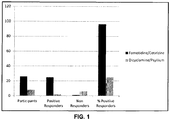
- FIG. 1 illustrates participants and responses by treatment group of an IBS-D study.
- the present invention makes use of the discovery that administering an H1 receptor antagonist and an H2 receptor antagonist to a patient, results in a significant reduction or cessation of diarrhea.
- Applicant discovered that the combination of an H1 receptor antagonist and an H2 receptor antagonist administered to patients with diarrhea, resulted in 85-90% positive responders (see Example 7 and Table 1).
- a positive responder is identified as having a 50% or more reduction in the number of stools per day or a change in stool formation from liquid to solid. No adverse reactions or events were reported.
- a control group was treated with fiber (Metamucyl®) and an anticholinergic (Bentyl®); positive responders in the control group were less than 25%.
- the present invention includes treating diarrhea by administering an H1 receptor antagonist and an H2 receptor antagonist in combination.
- the present invention also includes unit dosage forms, multi-dosage forms, and kits, including an H1 receptor antagonist and an H2 receptor antagonist.
- the H1 receptor antagonist includes cetirizine and the H2 receptor antagonist includes famotidine.
- Diarrhea may be acute or chronic. Diarrhea may also be further classified:
- Secretory diarrhea diarrhea which occurs when the intestine does not complete absorption of water from luminal contents and electrolyte absorption is impaired, often caused by bacterial toxins, surgically reduced absorptive area of the intestines, microscopic colitis and luminal secretagogues such as laxatives and bile acids.
- Osmotic diarrhea diarrhea which results from intestinal malabsorption of ingested non-electrolytes.
- Inflammatory diarrhea diarrhea which may be characterized by blood and pus in the stool and possibly an elevated fecal calprotectin level, and inflammation exhibited on intestinal biopsy, caused by, for example, Crohn's disease and ulcerative colitis.
- IBS-diarrhea predominate chronic diarrhea associated with abdominal pain.
- IBS-D IBS-diarrhea predominate
- a patient In order to have IBS, a patient must have experienced onset of symptoms 6 months prior to diagnosis and must have recurrent abdominal pain or discomfort at least three days per month in the last three months associated with two or more of the following: improvement with defecation; onset associated with a change in frequency of stool; onset associated with a change in form of stool.
- IBS-D chronic diarrhea associated with abdominal pain.
- IBS-C constipation
- IBS-M mixed
- Chronic diarrhea chronic diarrhea in a patient who does not meet the criteria for IBS, and for which no other cause can be determined. This type of diarrhea may also be referred to as chronic idiopathic diarrhea.
- Malabsorbtive diarrhea diarrhea caused by an enteropathy such as celiac disease (celiac sprue) and giardiasis, which is characterized by excess gas, steatorrhea, and/or weight loss.
- enteropathy such as celiac disease (celiac sprue) and giardiasis, which is characterized by excess gas, steatorrhea, and/or weight loss.
- Drug induced diarrhea diarrhea caused by a drug or treatment for an unrelated disease state, such as chemotherapy, radiation therapy, antibiotic therapy, anti-ulcer therapy, and herbal therapies.
- Food intolerance diarrhea diarrhea which is associated with dietary intake, such as lactose, sugar substitutes or other food substances.
- IBS associated diarrhea a chronic diarrhea
- IBS-diarrhea predominate a chronic diarrhea
- IBS-D IBS-diarrhea predominate
- the patient does not have mastocytic enterocolitis.
- H1 receptor antagonists block H1 histamine receptors; first-generation H1 receptor antagonists block histamine receptors in the central and peripheral nervous systems, as well as cholinergic receptors, while second-generation H1 receptor antagonists are selective for H1 histamine receptors in the peripheral nervous system.
- First-generation H1 receptor antagonists include brompheniramine, chlorpheniramine, dexbrompheniramine, dexchlorpheniramine, pheniramine, triprolidine, carbinoxamine, clemastine, diphenhydramine, pyrilamine, promethazine, hydroxyzine, azatadine, cyproheptadine, and phenindamine.
- Second-generation H1 receptor antagonists include ketotifen, rupatadine, mizolastine, acrivastine, ebastine, bilastine, bepotastine, terfenadine, quifenadine, azelastined, cetirizine, levocetirizine, desloratadine, fexofenadine and loratadine.
- the H1 receptor antagonist is a second-generation H1 receptor antagonist, more preferably the H1 receptor antagonist is cetirizine or levocetirizine, with cetirizine being particularly preferred. Mixtures and combination of H1 receptor antagonists may also be used.
- the H1 receptor antagonists may be used in an amount of from 0.1 to 10 times the amount typically used for the treatment of allergies, for example in an amount of 0.1 to 600 mg per dose, 0.5 to 500 mg per dose, 1.0 to 50 or 60 mg per dose, including 1.25, 1.5, 1.75, 2.0, 2.5, 3.0, 3.5, 4.0, 4.5, 5.0, 5.5, 6.0, 6.5, 7.0, 7.5, 8.0, 8.5, 9.0, 9.5, 10, 11, 12, 13, 14, 15, 16, 17, 18, 19, 20, 25, 30, 35, 40 and 45 mg per dose.
- the H1 receptor antagonist is administered 1, 2, 3 or 4 times per day.
- the H1 receptor antagonist may be administered as an injectable formulation, for example intravenously, intraparenterally or intramuscularly; transdermally, via a transdermal patch; or, preferably, orally, as a powder, table or capsule, an oral solution or suspension, or sublingual or buccal tablets.
- injectable formulation for example intravenously, intraparenterally or intramuscularly; transdermally, via a transdermal patch; or, preferably, orally, as a powder, table or capsule, an oral solution or suspension, or sublingual or buccal tablets.
- Alternative forms of administration include rectal suppositories, inhaled, epidural, subcutaneous, nasal spray, transmucosal, and intradermal formulations.
- H2 receptor antagonists block H2 histamine receptors.
- H2 receptor antagonists include cimetidine, ranitidine, famotidine, and nizatidine, with famotidine being preferred. Mixtures and combinations of H2 receptor antagonists may also be used.
- the H2 receptor antagonists may be used in an amount of from 0.1 to 10 time the amount typically used for treatment dyspepsia, for example 1.0 to 8000 mg per dose, 2.0 to 1000 mg per dose, 5.0 to 800 mg per dose, including 6.0, 7.0, 8.0, 9.0, 10, 15, 20, 21, 22, 22.5, 23, 24, 25, 26, 27, 28, 29, 30, 35, 40, 45, 50, 55, 60, 65, 70, 75, 80, 85, 90, 95, 100, 120, 140, 150, 175, 200, 250, 300, 350, 400, 450, 500, 600, and 700 mg per dose.
- the H2 receptor antagonist is administered 1, 2, 3 or 4 times per day.
- the H2 receptor antagonist may be administered as an injectable formulation, for example intravenously, intraparenterally or intramuscularly; transdermally, via a transdermal patch; or, preferably, orally, as a powder, table or capsule, an oral solution or suspension, or sublingual or buccal tablets.
- injectable formulation for example intravenously, intraparenterally or intramuscularly; transdermally, via a transdermal patch; or, preferably, orally, as a powder, table or capsule, an oral solution or suspension, or sublingual or buccal tablets.
- Alternative forms of administration include rectal suppositories, inhaled, epidural, subcutaneous, nasal spray, transmucosal, and intradermal formulations.
- Treatment should be carried out for an amount of time to resolve any underlying cause in the case of acute diarrhea, for example 3 to 14 days, or 5 to 10 days.
- any underlying cause in the case of acute diarrhea for example 3 to 14 days, or 5 to 10 days.
- chronic diarrhea a 30 day trial is reasonable, and if the underlying cause of the diarrhea cannot be resolved, for example in the case of IBS-D, then treatment should be continued indefinitely.
- the H1 and H2 receptor antagonists are administered simultaneously, as a unit dosage form containing both receptor antagonists.
- unit dosage forms include oral compositions, such as tablets (for example, sublingual or buccal tablets), capsules (for example, hard gelatin and soft gelatin capsules), transmucosal and sublingual patches and films, pre-measured powder packets and saches, flavored and/or sweetened aqueous solutions or suspensions. Because diarrhea is often associated with dehydration, flavored and/or sweetened aqueous solutions or suspension may be oral rehydration solutions, or solutions which also contain sodium and glucose or a glucose-containing saccharide, in amounts of 250 ml, 500 ml or 1 liter of fluid.
- a pre-measured powder packet containing the receptor antagonists, together with sodium (for example, as sodium chloride) and glucose or a glucose-containing saccharide, and optionally other excipients, flavorings and/or sweeteners, may be provided, which may be readily mixed with water prior to consumption.
- the oral unit dosage form is present as a once-per-day dosage.
- oral dosage forms include a tablet containing famotidine, in an amount of 5, 10, 15, 20, 22.5, 25, 30, 35 or 40 mg, as a core, and a coating of cetirizine, in an amount of 2.5, 5, 8.5, 10, 15, or 20 mg.
- a capsule containing granules of famotidine and cetirizine in water-soluble matrix In another example, both the famotidine and the cetirizine are present as a mixture in a matrix, either as a table or within a capsule.
- other H1 and/or H2 receptor antagonists may be used in place of, or in addition to, famotidine and/or cetirizine.
- unit dosage forms may also be provided, containing both H1 and H2 receptor antagonist.
- injectable formulation containing a sterile solution or suspension including formulation for administration intravenously, intraparenterally or intramuscularly, may be provided.
- a unit dosage form for administration transdermally, via a transdermal patch may be provided.
- Other unit dosage forms include rectal suppositories, inhaled, epidural, subcutaneous, nasal spray, and intradermal formulations. Excipients and adjuvants maybe also be included in any of the unit dosage forms, both oral and non-oral.
- Multi-dosage forms such as kits, containing 2 to 30, 3 to 25, or 5 to 14 unit dosage forms, for example 6, 7, 8, 9, 10, 11, 12, 13, 15, 20, 40, 50 or 60 unit dosage forms, may be provided.
- the multi-dosage forms contain sufficient unit dosage forms for administration over a period of 2 to 30, 3 to 25, or 7 to 14 days, for example 4, 5, 6, 7, 8, 9, 10, 11, 12, 13, 20 or 30 days.
- Kits may also be provided, which include oral rehydration solutions, or powders which may be hydrated to form oral rehydration solutions, or kits containing sodium and glucose or a glucose-containing saccharide, as well as other excipients, flavorings and/or sweeteners, together with unit dosage forms.
- Patient #1 age 65, was hospitalized for more than one week for weight and fluid loss related to chronic diarrhea.
- the patient had from 20 to 40 stools per day and severe life threatening diarrhea.
- the patient was treated with 20 mg famotidine and 10 mg cetirizine, once per day. Symptoms subsided within 48 hours with a 95% decrease in the number of stools and the patient was discharged.
- the patient responded to treatment and now has 1 stool per day, occasionally two, but no diarrhea.
- Patient #1 age 80, with mild to severe cramping and 4 to 5 stools a day.
- the patient was treated with 300 mg ranitidine and 10 mg cetirizine, once per day.
- the patient reported a 60% reduction in the number of stools.
- Patient #2 age 62, had severe weight loss, greater than 30 pounds, related to the diarrhea, 10 to 20 stools per day, and was opiate and steroid dependant.
- the patient was treated with 20 mg famotidine and 10 mg cetirizine, once per day. Treatment was successful with an 85 to 90% reduction in the number of stools.
- the patient now has 1 to 2 stools per day for over 8 months on treatment.
- Patient #3 age 65, prior to treatment was homebound, had 4 to 5 stools per day, each episode lasting an hour or two.
- the patient was treated with 300 mg ranitidine and 10 mg cetirizine, once per day. Treatment was successful, with the patient reporting a 90% reduction in the number of stools.
- Patient #4 age 67, with moderate diarrhea and cramping, had 4 to 5 stools per day.
- the patient was treated with 20 mg famotidine and 10 mg cetirizine, once per day. Treatment was successful, with a 75% reduction in the number of stools, no cramping and no side effects.
- Patient #5 age 26, had moderate to severe diarrhea with 7 to 8 stools per day.
- the patient was treated with 20 mg famotidine and 10 mg cetirizine, once per day. Treatment was successful, with a decrease in the number of stools by 50%, down to 3 to 4 per day, with no side effects.
- Patient #6 age 74, with severe diarrhea, had 8 stools per day and was homebound.
- the patient was treated with 300 mg ranitidine and 10 mg cetirizine, once per day. Treatment was successful, with a decrease in the number of stools by 75%, down to 2 stools per day and no side effects. Patient is presently only on cetirizine.
- Patient #7 age 51, with colon resection, had severe diarrhea with 15 to 20 stools per day.
- the patient was treated with 300 mg ranitidine and 10 mg cetirizine, once per day. Treatment was successful, with a decrease in the number of stools by 94%, to 1 to 2 stools per day and better consistency, with no side effects.
- Example 3 chronic idiopathic diarrhea
- the patient was treated with 20 mg famotidine and 10 mg cetirizine, once per day. Treatment was successful, with a decrease in the number of stools by 70%, to 1 to 2, mostly 1, per day and a repeat colonoscopy was cancelled because symptoms had resolved.
- Example 4 chemotherapy induced diarrhea
- Patient age 64, with colon cancer and moderate to severe diarrhea, in a deconditioned state from chemotherapeutic agents, had 5 to 10 stools per day.
- the patient was treated with 20 mg famotidine and 10 mg cetirizine, once per day. Treatment was successful, with a decrease in the number of stools by 80%, to 1 to 2 per day and normal consistency, with no side effects.
- Example 5 inflammatory diarrhea - ulcerative colitis/Crohn's disease
- Patient #1 age 64, with Crohn's disease, had 12 to 15 stools per day and severe diarrhea.
- the patient was treated with 20 mg famotidine and 10 mg cetirizine, once per day. Treatment was not successful, with a decrease in the number of stools only by 5%. There were no side effects.
- Patient #2 age 37, with Crohn's disease and colitis, had severe diarrhea with 4 to 5 stools per day.
- the patient was treated with 300 mg ranitidine and 10 mg cetirizine, once per day. Treatment was successful, with a decrease in the number of stools by 75%, to one stool per day and normal consistency. There were no side effects.
- Patient #3 age 35, with ulcerative colitis, had severe diarrhea with 4 to 6 stools per day.
- the patient was treated with 20 mg famotidine and 10 mg cetirizine, once per day. Treatment was successful, with a decrease in the number of stools by 50%. There were no side effects.
- Patient #1 age 57, with celiac disease had mild to moderate diarrhea, with 2 to 4 stools per day. The patient had no improvement from treatment with 20 mg famotidine and 10 mg cetirizine, once per day. There were no side effects.
- Patient #2 age 26, with celiac disease. The patient had little improvement from treatment.
- the study population age was 18 to 80, with the patients having chronic unexplained diarrhea from an outpatient population of a clinic and outpatients from a medical center, who gave consent for treatment. Patients were excluded who had a history of systemic or cutaneous mastocytosis, definable etiology of diarrhea (other than IBS-D or chronic idiopathic diarrhea) such as celiac disease, inflammatory bowel disease, or lactose intolerance, or who were pregnant. The study was initiated after IRB approval.
- Figure 1 illustrates participants and responses by treatment group.
- the bars on the left represent the patients who received famotidine and cetirizine, while the bars on the right represent the patients who received fiber and anticholinergic.
- 90% of the patients receiving famotidine and cetirizine responded to the treatment, while only 10% of those receiving fiber and anticholinergic responded to the treatment.
- Tables 4 and 5 show the percent decrease in number of stools per day, for the famotidine and cetirizine study arm, and the dicylcomine and psyllium study arm, respectively.
- Table 4 Percent decrease in number of stools per day, for the famotidine and cetirizine study arm Number of Subjects Percent Stool Decrease 1 0% 1 10-25% 2 28-45% 11 50-65% 11 66-85% 0 > 86 %
- Table 5 Percent decrease in number of stools per day, for the dicylcomine and psyllium study arm Number of Subjects Percent Stool Decrease 6 0% 0 10-25% 1 28-45% 1 50-65% 0 66-85% 0 > 86 %
- the study population age was 21 to 70, with patients diagnosed with chronic diarrhea, who gave consent for treatment. Patients were excluded if there was a sensitivity or allergy to H1 receptor antagonists or H2 receptor antagonists, renal impairment or a history of renal failure, a diagnosis of inflammatory bowel disease (Crohn's disease or ulcerative colitis), a known active infection of the colon (such as Clostridium difficile , giardia, or Salmonella ), biopsy proven microscopic colitis (collagenous or lymphocytic colitis), or an inability to discontinue other anti-diarrheal agents during the study. Patients were also excluded if they were pregnant or lactating women, or if the patient was taking atazanavir, itraconazole, or ketoconazole. The study was initiated after IRB approval.
- the “active” group received famotidine (24 mg) and cetirizine (9 mg), once per day, with both drugs combined in the form of a single capsule.
- the "placebo” group received a capsule once per day, which contained no active ingredients.
- Table 6 The results of the study are shown in Table 6.
- the table shows the results of 27 patients, 12 in the placebo group and 15 in the active group.
- the average value for percent change is stools per day (SPD) was 25.08 for the placebo group, while the average value for percent change in SPD was 46.00 for the active group.
- SPD stools per day
- the data demonstrate a clinical significance between the placebo group and the active group, and demonstrate a significant improvement in the quality of life of the patients in the active group.
- Table 6 Results of Chronic Diarrhea Treatment Study Group Number of Patients Mean ⁇ % SPD Placebo 12 25.08 Active 15 46.00
Landscapes
- Health & Medical Sciences (AREA)
- Veterinary Medicine (AREA)
- Public Health (AREA)
- General Health & Medical Sciences (AREA)
- Animal Behavior & Ethology (AREA)
- Life Sciences & Earth Sciences (AREA)
- Pharmacology & Pharmacy (AREA)
- Chemical & Material Sciences (AREA)
- Medicinal Chemistry (AREA)
- Epidemiology (AREA)
- Nutrition Science (AREA)
- Physiology (AREA)
- Chemical Kinetics & Catalysis (AREA)
- Organic Chemistry (AREA)
- Bioinformatics & Cheminformatics (AREA)
- Engineering & Computer Science (AREA)
- General Chemical & Material Sciences (AREA)
- Nuclear Medicine, Radiotherapy & Molecular Imaging (AREA)
- Pharmaceuticals Containing Other Organic And Inorganic Compounds (AREA)
- Medicines That Contain Protein Lipid Enzymes And Other Medicines (AREA)
- Medicinal Preparation (AREA)
- Investigating Or Analysing Biological Materials (AREA)
- Medicines Containing Material From Animals Or Micro-Organisms (AREA)
Applications Claiming Priority (4)
| Application Number | Priority Date | Filing Date | Title |
|---|---|---|---|
| US201361782608P | 2013-03-14 | 2013-03-14 | |
| PCT/US2014/027323 WO2014152420A2 (en) | 2013-03-14 | 2014-03-14 | Product and method for treating diarrhea |
| EP14722445.5A EP2968205B1 (de) | 2013-03-14 | 2014-03-14 | Produkt und verfahren zur behandlung von diarrhöe |
| EP17189072.6A EP3269364B1 (de) | 2013-03-14 | 2014-03-14 | Produkt und verfahren zur behandlung von diarrhöe |
Related Parent Applications (3)
| Application Number | Title | Priority Date | Filing Date |
|---|---|---|---|
| EP14722445.5A Division EP2968205B1 (de) | 2013-03-14 | 2014-03-14 | Produkt und verfahren zur behandlung von diarrhöe |
| EP17189072.6A Division-Into EP3269364B1 (de) | 2013-03-14 | 2014-03-14 | Produkt und verfahren zur behandlung von diarrhöe |
| EP17189072.6A Division EP3269364B1 (de) | 2013-03-14 | 2014-03-14 | Produkt und verfahren zur behandlung von diarrhöe |
Publications (2)
| Publication Number | Publication Date |
|---|---|
| EP3581205A2 true EP3581205A2 (de) | 2019-12-18 |
| EP3581205A3 EP3581205A3 (de) | 2020-03-25 |
Family
ID=50680150
Family Applications (3)
| Application Number | Title | Priority Date | Filing Date |
|---|---|---|---|
| EP17189072.6A Active EP3269364B1 (de) | 2013-03-14 | 2014-03-14 | Produkt und verfahren zur behandlung von diarrhöe |
| EP19169633.5A Pending EP3581205A3 (de) | 2013-03-14 | 2014-03-14 | Produkt und verfahren zur behandlung von diarrhöe |
| EP14722445.5A Active EP2968205B1 (de) | 2013-03-14 | 2014-03-14 | Produkt und verfahren zur behandlung von diarrhöe |
Family Applications Before (1)
| Application Number | Title | Priority Date | Filing Date |
|---|---|---|---|
| EP17189072.6A Active EP3269364B1 (de) | 2013-03-14 | 2014-03-14 | Produkt und verfahren zur behandlung von diarrhöe |
Family Applications After (1)
| Application Number | Title | Priority Date | Filing Date |
|---|---|---|---|
| EP14722445.5A Active EP2968205B1 (de) | 2013-03-14 | 2014-03-14 | Produkt und verfahren zur behandlung von diarrhöe |
Country Status (20)
| Country | Link |
|---|---|
| US (4) | US9717726B2 (de) |
| EP (3) | EP3269364B1 (de) |
| JP (4) | JP6313417B2 (de) |
| KR (4) | KR20200100211A (de) |
| CN (2) | CN105324112B (de) |
| AU (3) | AU2014239878B2 (de) |
| BR (2) | BR112015022513A2 (de) |
| CA (1) | CA2906005C (de) |
| DK (1) | DK2968205T3 (de) |
| ES (2) | ES2743604T3 (de) |
| HK (1) | HK1247557B (de) |
| HU (1) | HUE035201T2 (de) |
| IL (3) | IL273377B2 (de) |
| MX (2) | MX366329B (de) |
| MY (1) | MY175326A (de) |
| PL (1) | PL2968205T3 (de) |
| PT (1) | PT2968205T (de) |
| RU (1) | RU2015143475A (de) |
| WO (1) | WO2014152420A2 (de) |
| ZA (1) | ZA201708539B (de) |
Families Citing this family (8)
| Publication number | Priority date | Publication date | Assignee | Title |
|---|---|---|---|---|
| US9717726B2 (en) | 2013-03-14 | 2017-08-01 | Maregade Rx, LLC | Product and method for treating diarrhea |
| WO2015073573A1 (en) * | 2013-11-14 | 2015-05-21 | Jacobs Michael M | Compositions and methods for the prevention and treatment of alcohol-induced hangover syndrome |
| EP3558296B1 (de) * | 2016-12-23 | 2023-06-28 | Maregade RX, LLC | Niedrigdosisprodukt und verfahren zur behandlung von durchfall |
| IT201900012645A1 (it) * | 2019-07-23 | 2021-01-23 | Eros Zanotti | Una composizione farmaceutica per l'uso nel trattamento delle chinetosi |
| US11424105B2 (en) * | 2019-08-05 | 2022-08-23 | Hitachi High-Tech Corporation | Plasma processing apparatus |
| CN115515435A (zh) * | 2020-02-11 | 2022-12-23 | 沃尔夫森医疗中心 | 有效治疗溃疡性结肠炎的方法 |
| US12586760B2 (en) | 2021-08-23 | 2026-03-24 | Hitachi High-Tech Corporation | Plasma processing apparatus and plasma processing method |
| US20240277700A1 (en) * | 2021-09-22 | 2024-08-22 | II Reed B. Hogan | Compositions and methods for treating and preventing interstitial cystitis |
Family Cites Families (19)
| Publication number | Priority date | Publication date | Assignee | Title |
|---|---|---|---|---|
| US5204118A (en) | 1989-11-02 | 1993-04-20 | Mcneil-Ppc, Inc. | Pharmaceutical compositions and methods for treating the symptoms of overindulgence |
| US5096894A (en) * | 1990-04-03 | 1992-03-17 | Bristol-Myers Squibb Company | Rice dextrin oral rehydration solution |
| AU7255094A (en) | 1993-07-06 | 1995-02-06 | Mcneil-Ppc, Inc. | H2 antagonist-antihistamine combinations |
| US6264984B1 (en) * | 1999-12-06 | 2001-07-24 | Bristol-Myers Squibb Company | Effervescent histamine H2 antagonist composition |
| US6656492B2 (en) * | 2000-06-30 | 2003-12-02 | Yamanouchi Pharmaceutical Co., Ltd. | Quick disintegrating tablet in buccal cavity and manufacturing method thereof |
| AU2100402A (en) | 2000-11-30 | 2002-06-11 | Bio Balance Corp | Bacterial strain, processed plant extracts, compositions containing same, processes for their preparation and their therapeutic and industrial applications |
| CA2690483C (en) * | 2001-11-23 | 2012-07-24 | Janssen Pharmaceutica N.V. | The use of anti-histaminics for acute reduction of elevated intracranial pressure |
| SE528789C2 (sv) | 2004-09-10 | 2007-02-13 | Sandvik Intellectual Property | PVD-belagt skär av hårdmetall samt sätt att tillverka detta |
| US20070077300A1 (en) * | 2005-09-30 | 2007-04-05 | Wynn David W | Oral compositions containing a salivation inducing agent |
| WO2007111945A2 (en) | 2006-03-22 | 2007-10-04 | Trustees Of Boston University | Method for management of diarrhea |
| US8207188B2 (en) | 2006-04-07 | 2012-06-26 | Michalis Nicolaou | Treatment of diseases modulated by a H4 receptor agonist |
| US20070254050A1 (en) * | 2006-05-01 | 2007-11-01 | Quart Barry D | Method for treatment of diarrhea-predominant irritable bowel syndrome |
| US20090042972A1 (en) * | 2006-05-19 | 2009-02-12 | Somaxon Pharmaceuticals, Inc. | Methods of using low-dose doxepin for the improvement of sleep |
| EP2526938A3 (de) | 2007-02-12 | 2013-06-12 | Mike Nicolaou | Hinstidindecarboxylasehemmern allein oder kombiniert mit einem Leukotriene Rezeptor Antagonist, einem Anti-H1 und/oder einem Anti-H2 zur Behandlung von COPD oder gastrointestinalen Erkrankungen |
| CA2721133C (en) * | 2007-04-13 | 2018-11-06 | Somaxon Pharmaceuticals, Inc. | Low-dose doxepin formulations and methods of making and using the same |
| US8263581B2 (en) | 2009-07-03 | 2012-09-11 | Jdp Therapeutics, Inc. | Non-sedating antihistamine injection formulations and methods of use thereof |
| CN105051192B (zh) | 2012-11-13 | 2020-04-17 | 科迪艾克生物科学公司 | 治疗剂的递送 |
| US9717726B2 (en) | 2013-03-14 | 2017-08-01 | Maregade Rx, LLC | Product and method for treating diarrhea |
| EP3558296B1 (de) | 2016-12-23 | 2023-06-28 | Maregade RX, LLC | Niedrigdosisprodukt und verfahren zur behandlung von durchfall |
-
2014
- 2014-03-13 US US14/209,937 patent/US9717726B2/en active Active
- 2014-03-14 EP EP17189072.6A patent/EP3269364B1/de active Active
- 2014-03-14 CA CA2906005A patent/CA2906005C/en active Active
- 2014-03-14 ES ES17189072T patent/ES2743604T3/es active Active
- 2014-03-14 EP EP19169633.5A patent/EP3581205A3/de active Pending
- 2014-03-14 IL IL273377A patent/IL273377B2/en unknown
- 2014-03-14 MX MX2017011532A patent/MX366329B/es unknown
- 2014-03-14 PT PT147224455T patent/PT2968205T/pt unknown
- 2014-03-14 RU RU2015143475A patent/RU2015143475A/ru not_active Application Discontinuation
- 2014-03-14 PL PL14722445T patent/PL2968205T3/pl unknown
- 2014-03-14 MX MX2015011885A patent/MX350814B/es active IP Right Grant
- 2014-03-14 EP EP14722445.5A patent/EP2968205B1/de active Active
- 2014-03-14 BR BR112015022513A patent/BR112015022513A2/pt not_active Application Discontinuation
- 2014-03-14 KR KR1020207023569A patent/KR20200100211A/ko not_active Ceased
- 2014-03-14 CN CN201480022471.0A patent/CN105324112B/zh active Active
- 2014-03-14 AU AU2014239878A patent/AU2014239878B2/en active Active
- 2014-03-14 BR BR122017004716-7A patent/BR122017004716A2/pt not_active Application Discontinuation
- 2014-03-14 KR KR1020157029028A patent/KR101884506B1/ko active Active
- 2014-03-14 ES ES14722445.5T patent/ES2655505T3/es active Active
- 2014-03-14 WO PCT/US2014/027323 patent/WO2014152420A2/en not_active Ceased
- 2014-03-14 KR KR1020187021688A patent/KR20180088514A/ko not_active Ceased
- 2014-03-14 KR KR1020217004881A patent/KR102449977B1/ko active Active
- 2014-03-14 DK DK14722445.5T patent/DK2968205T3/da active
- 2014-03-14 JP JP2016502404A patent/JP6313417B2/ja active Active
- 2014-03-14 MY MYPI2015703092A patent/MY175326A/en unknown
- 2014-03-14 CN CN201810755897.7A patent/CN108939076A/zh active Pending
- 2014-03-14 HU HUE14722445A patent/HUE035201T2/hu unknown
-
2015
- 2015-09-09 IL IL241372A patent/IL241372B/en active IP Right Grant
-
2016
- 2016-09-06 US US15/257,674 patent/US10034875B2/en active Active
-
2017
- 2017-10-24 AU AU2017251701A patent/AU2017251701B2/en active Active
- 2017-12-13 IL IL256300A patent/IL256300B/en active IP Right Grant
- 2017-12-15 ZA ZA2017/08539A patent/ZA201708539B/en unknown
-
2018
- 2018-03-22 JP JP2018054088A patent/JP6473254B2/ja active Active
- 2018-05-28 HK HK18106976.5A patent/HK1247557B/en unknown
- 2018-07-06 US US16/029,384 patent/US11058681B2/en active Active
-
2019
- 2019-01-24 JP JP2019009896A patent/JP6790140B2/ja active Active
- 2019-02-28 AU AU2019201412A patent/AU2019201412A1/en not_active Abandoned
-
2020
- 2020-11-04 JP JP2020184294A patent/JP2021046400A/ja active Pending
-
2021
- 2021-05-28 US US17/333,525 patent/US20220047583A1/en active Pending
Non-Patent Citations (47)
| Title |
|---|
| AKHAVEIN A; PATEL NR ET AL.: "Allergic Mastocytic Gastroenteritis and colitis: and unexplained etiology in chronic abdominal pain and gastrointestinal dysmotility", GASTROENTER RESEARCH AND PRACTICE, 2012, pages 950582 |
| AKIN C; VALENT P; METCALFE DD: "Mast cell activation syndrome: Proposed diagnostic criteria", J ALLERGY CLIN IMMUNOL., vol. 126, no. 6, 2010, pages 1099 - 104, XP027541425 |
| BARBARA G; STANGHELLINI V ET AL.: "Functional gastrointestinsl disorders and mast cells: implications for therapy", NEUROGASTROENTEROL MOTIL, vol. 18, 2006, pages 6 - 17 |
| BARBARS G; DE GIORGIO ET AL.: "New pathophysiological mechanisms in irritable bowel syndrome", ALIMENT PHARMACOL THER, vol. 20, no. 2, 2004, pages 1 - 9 |
| BRAAK B; KLOOKER TK ET AL.: "Mucosal immune cell numbers and visceral sensitivity in patients with irritable bowel syndrome: is there any relationship?", AM J GASTROENTEROL, vol. 107, 2012, pages 715 - 726 |
| D IARRHEA: "Diarrhea [electronic resource] / National Digestive Diseases Information Clearinghouse", 2011, U.S. DEPT. OF HEALTH AND HUMAN SERVICES, article "electronic resource] / National Digestive Diseases Information Clearinghouse" |
| DUNLOP SP; HEBDEN ET AL.: "Abnormal intestinal permeability in subgroups of diarrhea-predominant irritable bowel syndromes", AM J GASTROENTEROL, vol. 101, no. 6, 2006, pages 1288 - 1294 |
| DUPONT, H.L. ET AL.: "Diarrhea", NATIONAL DIGESTIVE DISEASES INFORMATION CLEARINGHOUSE, January 2012 (2012-01-01) |
| FARHADI A; FIELDS JZ; KESHAVARZIAN A: "Mucosal mast cells are pivotal elements in inflammatory bowel disease that connect the dots: stress, intestinal hyperpermeability and inflammation", WORLD J GASTROENTEROL, vol. 13, no. 22, 2007, pages 3027 - 3030 |
| FINE KD; SCHILLER UR: "AGA technical review on the evaluation and management of chronic diarrhea", GASTROENTEROLOGY, vol. 116, 1999, pages 1464 - 1486, XP005688376, DOI: doi:10.1016/S0016-5085(99)70513-5 |
| FORBES D; O'LOUGHLIN E; SCOTT R; GALL D: "Laxative abuse and secretory diarrhoea", ARCH DIS CHILD, vol. 60, no. 1, 1985, pages 58 - 60 |
| FORDTRAN JS; SANTA ANA CA; MORAWSKI SG ET AL.: "Pathophysiology of chronic diarrhea: insights derived from intestinal perfusion studies in 31 patients", GASTROENTEROL CLIN NORTH AM, vol. 15, 1986, pages 477 - 490 |
| H2 BLOCKERS: "U.S. National Library of Medicine", 11 August 2011, NIH, article "MedlinePlus®" |
| HALVORSON HA ET AL.: "Postinfectious irritable bowel syndrome-a meta-analysis", AM J GASTROENTEROL, vol. 101, 2006, pages 1894 - 1899 |
| HAMILTON MJ; HORNICK JL; AKIN C; CASTELLS MC; GREENBERGER NJ: "Mast cell activation syndrome: a newly recognized disorder with systemic clinical manifestations", J ALLERGY CLIN IMMUNOL., vol. 128, no. 1, 2011, pages 147 - 152 |
| HE, SHUANG; LI, FENG; ZHOU, DAN; DU, JUNRONG; HUANG, YUAN, DRUG DEVELOPMENT AND INDUSTRIAL PHARMACY, vol. 38, no. 10, October 2012 (2012-10-01), pages 1280 - 1289 |
| JAKATE ET AL.: "Mastocytic Enterocolitis: Increased mucosal mast cells in chronic intractable diarrhea", ARCH PATHOL LAB MED, vol. 130, 2006, pages 362 - 367, XP055121580, DOI: doi:10.1043/1543-2165(2006)130[362:MEIMMC]2.0.CO;2 |
| JAKATE S ET AL.: "Mastocytic enterocolitis increased mucosal mast cells in chronic intractable diarrhea", ARCH PATHOL LAB MED, vol. 130, 2006, pages 362 - 367, XP055121580, DOI: doi:10.1043/1543-2165(2006)130[362:MEIMMC]2.0.CO;2 |
| JAKATE: "Mastocytic Enterocolitis: Increased mucosal mast cells in chronic intractable diarrhea", ARCH PATHOL LAB MED, vol. 130, 2006, pages 362 - 367, XP055121580, DOI: doi:10.1043/1543-2165(2006)130[362:MEIMMC]2.0.CO;2 |
| JUCKETT G; TRIVEDI R: "Evaluation of chronic diarrhea", AMERICAN FAMILY PHYSICIAN, vol. 84, no. 10, 15 November 2011 (2011-11-15), pages 1119 - 1126 |
| KIRSCH RH; RIDDELL R: "Histopathological alterations in irritable bowel syndrome", MODEM PATHOLOGY, vol. 19, 2006, pages 1638 - 1645 |
| KLOOKER TK; BRAAK B; KOOPMAN KE ET AL.: "The mast cell stabilizer ketotifen decreases visceral hypersensitivity and improves intestinal symptoms in patients with irritable bowel syndrome", GUT, vol. 59, 2010, pages 1213 - 21, XP009184677, DOI: doi:10.1136/gut.2010.213108 |
| LEVER, D.D. ET AL.: "Center for Continuing Education publications: Disease Management Project", 1 August 2010, CLEVELAND CLINIC, article "Acute Diarrhea" |
| LEWIS, J; CANDELORA, J; HOGAN, II, RB; BRIGGS, F; ABRAHAM, S: "Crystal-Storing Histiocytosis Due to Massive Accumulation of Charcot-Leyden Crystals: A Unique Association Producing Colonic Polyposis in a 78-year-old Woman With Eosinophilic Colitis", AM J SURG PATHOL., vol. 321, no. 3, March 2007 (2007-03-01), pages 481 - 485 |
| LIN ET AL.: "Improved outcomes in patients with acute allergic syndromes who are treated with combined H1 and H2 antagonists", ANN EMERG MED, vol. 36, November 2000 (2000-11-01), pages 462 - 468 |
| LUNARDI C; BAMBARA LM; BIASI D ET AL.: "Double-blind cross-over trial of oral sodium cromoglycate in patients with irritable bowel syndrome due to food intolerance", CLIN EXP ALLERGY, vol. 21, 1991, pages 569 - 572 |
| MARTINEZ C ET AL.: "The Jejunum of Diarrhea-Predominant Irritable Bowel Syndrome Shows Molecular Alterations in the Tight Junction Signaling Pathway That Are Associated With Mucosal Pathobiology and Clinical Manifestations", AM J GASTROENTEROL, vol. 107, 2012, pages 736 - 746 |
| MARTINEZ C; LOBO B ET AL.: "Diarrhoea-predominant irritable bowel syndrome: an organic disorder with structural abnormalities in the jejunal epithelial barrier", GUT, 2012 |
| O'SULLIVAN ET AL.: "Increased mast cells in the irritable bowel syndrome'' Neurogastroenterol", MOT, vol. 12, 2000, pages 449 - 457 |
| PICHE T; SAINT-PAUL MC ET AL.: "Mast cells and cellularity of the colonic mucosa correlated with fatigue and depression in irritable bowel syndrome", GUT, vol. 57, 2008, pages 468 - 473 |
| POSSERUD I ET AL.: "Small intestinal bacterial overgrowth in patients with irritable bowel syndrome", GUT, vol. 56, 2007, pages 802 - 808 |
| PYLERIS E; GIAMARELLOS-BOURBOULIS EJ ET AL.: "The prevalence of overgrowth by aerobic bacteria in the small intestine by small bowel culture: relationship with irritable bowel syndrome", DIG DIS SCI., vol. 57, no. 5, May 2012 (2012-05-01), pages 1321 - 9, XP035045350, DOI: doi:10.1007/s10620-012-2033-7 |
| RAMOS L; VICARIO M; SANTOS J: "Stress-mast cell axis and regulation of gut mucosal inflammation: from intestinal health to an irritable bowel", MED CLIN (BARC, vol. 129, no. 2, June 2007 (2007-06-01), pages 61 - 69 |
| RUNGE ET AL.: "Histamine antagonists in the treatment of acute allergic reactions", ANN EMERG MED, vol. 21, March 1992 (1992-03-01), pages 237 - 242 |
| SCHILLER LR: "Secretory Diarrhea", CURRENT GASTROENTEROLOGY REPORTS, 1999, pages 389 - 397 |
| SCHILLER, LR; HOGAN RB; MORAWSKI, SG; SANTA ANA, CA; BERN MJ; NOGAARD, RP; BO-LINN, GW; FORDTRAN JS: "Studies of the Prevalence and Significance of Radiolabeled Rice Acid Malabsorption in a Group of Patients with Idiopathic Chronic Diarrhea", GASTROENTEROLOGY, vol. 92, 1997, pages 151 - 160 |
| SMITH MJ: "IBS remains a mysterious disorder with few effective Remedies", GASTROENTEROLOGY AND ENDOSCOPY NEWS, vol. 63, April 2012 (2012-04-01), pages 4 |
| SPILLER RC; JENKINS D; THORNLEY JP; HEBDEN JM; WRIGHT T; SKINNER M; NEAL KR: "Increased rectal mucosal enteroendocrine cells, T lymphocytes, and increased gut permeability following acute Campylobacter enteritis and in post-dysenteric irritable bowel syndrome", GUT, vol. 47, no. 6, December 2000 (2000-12-01), pages 804 - 11 |
| THABANE M; MARSHALL JK: "Post-infectious irritable bowel syndrome", WORLD J GASTROENTEROL., vol. 15, no. 29, 2009, pages 3591 - 3596 |
| THEOHARIDES TC; ASADI S; CHEN J; HUIZINGA JD: "Irritable bowel syndrome and the elusive mast cells", AM J GASTROENTEROL, vol. 107, no. 5, 2012, pages 727 - 729 |
| THEOHARIDES TC; COCHRANE DE: "Critical role of Mast Cells in inflammatory diseases and the effect of acute stress", J NEUROIMMUNOL, vol. 146, 2004, pages 1 - 12, XP002363337, DOI: doi:10.1016/j.jneuroim.2003.10.041 |
| THEOHARIDES TC; SHAHRZAD A; CHEN J; HUIZINGA J: "Irritable Bowel Syndrome and the Elusive Mast Cell", AM J GASTROENTEROL, vol. 107, 2012, pages 727 - 729 |
| VALENT P: "Mast cell activation syndromes: definition and classification", ALLERGY, 2013 |
| VISSER J; ROZING ET AL.: "Tight Junctions, intestinal permeability and autoimmunity celiac disease and type 1 diabetes paradigms", ANN N Y ACAD SCI, vol. 1165, 2009, pages 195 - 205, XP008151167, DOI: doi:10.1111/j.1749-6632.2009.04037.x |
| VIVINUS-NEBOT M; DAINESE R ET AL.: "Combination of allergic factors can worsen diarrheic irritable bowel syndrome: role of barrier defects and mast cells", ACG, vol. 107, 2012, pages 74 - 81 |
| WALKER MM; SALEHIAN SS ET AL.: "Implications of eosinophilia in the normal duodenal biopsy - an association with allergy and functional dyspepsia", ALIMENT PHARMACOL THER, vol. 31, 2010, pages 1229 - 1236 |
| WALKER MM; TALLEY NJ ET AL.: "Duodenal mastocytosis, eosinophilia and intraepithelial lymphocytosis as possible disease merkers in the irritable bowel syndrome and functional dyspepsia", ALIMENT PHARMACOL THER, vol. 29, 2009, pages 765 - 773 |
Also Published As
Similar Documents
| Publication | Publication Date | Title |
|---|---|---|
| US11058681B2 (en) | Product and method for treating diarrhea | |
| HK1247557A1 (en) | Product and method for treating diarrhea | |
| US20250325540A1 (en) | Low dose product and method for treating diarrhea | |
| HK1213205B (en) | Product and method for treating diarrhea |
Legal Events
| Date | Code | Title | Description |
|---|---|---|---|
| PUAI | Public reference made under article 153(3) epc to a published international application that has entered the european phase |
Free format text: ORIGINAL CODE: 0009012 |
|
| STAA | Information on the status of an ep patent application or granted ep patent |
Free format text: STATUS: REQUEST FOR EXAMINATION WAS MADE |
|
| 17P | Request for examination filed |
Effective date: 20190515 |
|
| AC | Divisional application: reference to earlier application |
Ref document number: 2968205 Country of ref document: EP Kind code of ref document: P Ref document number: 3269364 Country of ref document: EP Kind code of ref document: P |
|
| AK | Designated contracting states |
Kind code of ref document: A2 Designated state(s): AL AT BE BG CH CY CZ DE DK EE ES FI FR GB GR HR HU IE IS IT LI LT LU LV MC MK MT NL NO PL PT RO RS SE SI SK SM TR |
|
| PUAL | Search report despatched |
Free format text: ORIGINAL CODE: 0009013 |
|
| AK | Designated contracting states |
Kind code of ref document: A3 Designated state(s): AL AT BE BG CH CY CZ DE DK EE ES FI FR GB GR HR HU IE IS IT LI LT LU LV MC MK MT NL NO PL PT RO RS SE SI SK SM TR |
|
| RIC1 | Information provided on ipc code assigned before grant |
Ipc: A61K 31/495 20060101ALI20200218BHEP Ipc: A61P 1/12 20060101ALI20200218BHEP Ipc: A61K 31/4164 20060101ALI20200218BHEP Ipc: A61K 31/341 20060101ALI20200218BHEP Ipc: A61K 45/06 20060101AFI20200218BHEP Ipc: A61K 31/426 20060101ALI20200218BHEP |
|
| STAA | Information on the status of an ep patent application or granted ep patent |
Free format text: STATUS: EXAMINATION IS IN PROGRESS |
|
| 17Q | First examination report despatched |
Effective date: 20230119 |
|
| P01 | Opt-out of the competence of the unified patent court (upc) registered |
Effective date: 20230526 |
|
| REG | Reference to a national code |
Ref country code: DE Ref legal event code: R079 Free format text: PREVIOUS MAIN CLASS: A61K0045060000 Ipc: A61K0031495000 |
|
| RIC1 | Information provided on ipc code assigned before grant |
Ipc: A61K 31/495 20060101AFI20260306BHEP Ipc: A61K 45/06 20060101ALI20260306BHEP Ipc: A61K 31/4164 20060101ALI20260306BHEP Ipc: A61K 31/426 20060101ALI20260306BHEP Ipc: A61K 31/341 20060101ALI20260306BHEP Ipc: A61P 1/12 20060101ALI20260306BHEP |