EP3588338A1 - Procédé d'évaluation d'un document - Google Patents
Procédé d'évaluation d'un document Download PDFInfo
- Publication number
- EP3588338A1 EP3588338A1 EP19192698.9A EP19192698A EP3588338A1 EP 3588338 A1 EP3588338 A1 EP 3588338A1 EP 19192698 A EP19192698 A EP 19192698A EP 3588338 A1 EP3588338 A1 EP 3588338A1
- Authority
- EP
- European Patent Office
- Prior art keywords
- processing device
- data processing
- user
- data
- document
- Prior art date
- Legal status (The legal status is an assumption and is not a legal conclusion. Google has not performed a legal analysis and makes no representation as to the accuracy of the status listed.)
- Pending
Links
Images


Classifications
-
- G—PHYSICS
- G06—COMPUTING OR CALCULATING; COUNTING
- G06V—IMAGE OR VIDEO RECOGNITION OR UNDERSTANDING
- G06V30/00—Character recognition; Recognising digital ink; Document-oriented image-based pattern recognition
- G06V30/40—Document-oriented image-based pattern recognition
- G06V30/41—Analysis of document content
- G06V30/418—Document matching, e.g. of document images
-
- G—PHYSICS
- G06—COMPUTING OR CALCULATING; COUNTING
- G06F—ELECTRIC DIGITAL DATA PROCESSING
- G06F21/00—Security arrangements for protecting computers, components thereof, programs or data against unauthorised activity
- G06F21/30—Authentication, i.e. establishing the identity or authorisation of security principals
- G06F21/31—User authentication
-
- G—PHYSICS
- G06—COMPUTING OR CALCULATING; COUNTING
- G06F—ELECTRIC DIGITAL DATA PROCESSING
- G06F40/00—Handling natural language data
- G06F40/10—Text processing
- G06F40/103—Formatting, i.e. changing of presentation of documents
- G06F40/106—Display of layout of documents; Previewing
-
- G—PHYSICS
- G06—COMPUTING OR CALCULATING; COUNTING
- G06F—ELECTRIC DIGITAL DATA PROCESSING
- G06F40/00—Handling natural language data
- G06F40/10—Text processing
- G06F40/12—Use of codes for handling textual entities
- G06F40/134—Hyperlinking
-
- G—PHYSICS
- G06—COMPUTING OR CALCULATING; COUNTING
- G06Q—INFORMATION AND COMMUNICATION TECHNOLOGY [ICT] SPECIALLY ADAPTED FOR ADMINISTRATIVE, COMMERCIAL, FINANCIAL, MANAGERIAL OR SUPERVISORY PURPOSES; SYSTEMS OR METHODS SPECIALLY ADAPTED FOR ADMINISTRATIVE, COMMERCIAL, FINANCIAL, MANAGERIAL OR SUPERVISORY PURPOSES, NOT OTHERWISE PROVIDED FOR
- G06Q30/00—Commerce
- G06Q30/06—Buying, selling or leasing transactions
- G06Q30/0601—Electronic shopping [e-shopping]
- G06Q30/0609—Qualifying participants for shopping transactions
-
- G—PHYSICS
- G06—COMPUTING OR CALCULATING; COUNTING
- G06V—IMAGE OR VIDEO RECOGNITION OR UNDERSTANDING
- G06V40/00—Recognition of biometric, human-related or animal-related patterns in image or video data
- G06V40/10—Human or animal bodies, e.g. vehicle occupants or pedestrians; Body parts, e.g. hands
- G06V40/16—Human faces, e.g. facial parts, sketches or expressions
- G06V40/172—Classification, e.g. identification
-
- G—PHYSICS
- G06—COMPUTING OR CALCULATING; COUNTING
- G06V—IMAGE OR VIDEO RECOGNITION OR UNDERSTANDING
- G06V40/00—Recognition of biometric, human-related or animal-related patterns in image or video data
- G06V40/40—Spoof detection, e.g. liveness detection
-
- H—ELECTRICITY
- H04—ELECTRIC COMMUNICATION TECHNIQUE
- H04L—TRANSMISSION OF DIGITAL INFORMATION, e.g. TELEGRAPHIC COMMUNICATION
- H04L51/00—User-to-user messaging in packet-switching networks, transmitted according to store-and-forward or real-time protocols, e.g. e-mail
- H04L51/06—Message adaptation to terminal or network requirements
-
- H—ELECTRICITY
- H04—ELECTRIC COMMUNICATION TECHNIQUE
- H04L—TRANSMISSION OF DIGITAL INFORMATION, e.g. TELEGRAPHIC COMMUNICATION
- H04L67/00—Network arrangements or protocols for supporting network services or applications
- H04L67/01—Protocols
- H04L67/02—Protocols based on web technology, e.g. hypertext transfer protocol [HTTP]
-
- G—PHYSICS
- G06—COMPUTING OR CALCULATING; COUNTING
- G06F—ELECTRIC DIGITAL DATA PROCESSING
- G06F2221/00—Indexing scheme relating to security arrangements for protecting computers, components thereof, programs or data against unauthorised activity
- G06F2221/21—Indexing scheme relating to G06F21/00 and subgroups addressing additional information or applications relating to security arrangements for protecting computers, components thereof, programs or data against unauthorised activity
- G06F2221/2117—User registration
Definitions
- the invention relates to a method for evaluating a document.
- Some business transactions may require verification of a user's identity and / or age of the user, for example due to legal requirements.
- a method and system for evaluating documents are in the document US 2003/0139994 A1 disclosed.
- a user can insert an ID card or a driver's license into the device.
- Personal data of the user is recorded from the inserted document by means of text recognition.
- a signature of the user can also be captured from the document and compared with another signature in order to determine a match.
- the user must use the device that is installed at banks, for example.
- the document US 7,734,779 B1 discloses a method of providing a password to a user on a network. Before the password is provided, provision can be made to check the identity of the user. A user ID can be used for this be provided by video transmission to an agent who checks the identification document and compares it with an image of the user.
- the task is to specify a method for evaluating documents that is quick, easy and safe for a user to use. In particular, unnecessary routes by the user should be avoided.
- a method for evaluating a document includes the following steps.
- An image data connection for transmitting an image signal between a second data processing device, which has an image recording device, and a first data processing device is provided.
- a process identification number assigned to user data is recorded in the first data processing device.
- User data are transmitted to the first data processing device.
- a document is captured using the image recording device and an image of the document is transmitted to the first data processing device using the image data connection.
- the document is evaluated.
- the result of the evaluation can then be stored in a database with the process identification number and the user data.
- the method can further comprise the following steps, which are optionally carried out before the image data connection is provided and / or before the process identification number is recorded: generating the process identification number in a fourth data processing device and transmitting the process identification number from the fourth data processing device to the second data processing device.
- the method can further comprise the following steps, which are optionally carried out after the process identification number has been recorded: transmission of the process identification number from the first data processing device to the fourth data processing device and transmission of the user data from the fourth data processing device to the first data processing device in response to receipt the transaction identification number.
- the method can, for example, be integrated into a method that requires identification or verification of a user. It can be provided that a user would like to conclude a contract on the website of a provider. A review of the user may be required to execute the agreement, for example due to legal provisions.
- the check can relate, for example, to the identity of the user and / or his age.
- the provider can be a bank where, for example, an account should be opened, a dealer who sells goods that fall under the protection of minors law or another service provider (e.g. online gaming, betting office) that requires it that, for example, the age of majority of the user is checked before the contract is concluded.
- the website of the provider can be made available by means of a third data processing device.
- the user can access and interact with the website using the second data processing device.
- the user can, for example, use a web browser (short: browser) that is installed on the second data processing device.
- the user can enter user data in a form on the website of the provider.
- user data can already be stored with the provider.
- the user can log in to the third data processing device using a user ID (e.g. user name and password) so that the existing user data is used.
- a verification of identity and / or age is required before the contract is concluded, this verification can be provided by a service provider.
- a button can be displayed on the provider's website, by means of which the check is started.
- the user data can be transmitted from the third data processing device to a fourth data processing device, which is operated by the service provider.
- the fourth data processing device can be coupled to a database, for example in the manner of a CRM system ( CRM - Customer Relationship Management ).
- the transmission of user data can be encrypted.
- the user data is then compared with data records stored in the database.
- the user data can include, for example, the following information about the user, individually or in any combination with one another: surname (first name and / or last name), academic degree, address (street, house number, postcode and town), a telephone number (landline and / or mobile number ), date of birth, place of birth, Country and an email address.
- surname first name and / or last name
- academic degree address
- address street, house number, postcode and town
- a telephone number laandline and / or mobile number
- date of birth place of birth, Country and an email address.
- certain data must be specified as mandatory information, for example first name, last name, mobile number and / or email address.
- the comparison of the transmitted user data with the data records can take place on the basis of all data or on the basis of selected data. For example, it can be checked whether the email address is in the database. If so, the user can be identified in the database.
- a threshold value for the similarity of the data records can be adjustable.
- the user is identified on the basis of the transmitted data as having already been recorded in the database, he is regarded as an existing customer.
- the further process for an existing customer is described below.
- the user data does not match the data in the service provider's database, the user is considered a new customer. In this case the following procedure can start.
- An image data connection for transmitting an image signal between the second data processing device and the first data processing device is provided.
- the second data processing device has an image recording device.
- the image recording device can be integrated in the second data processing device or can be coupled thereto.
- the image recording device can be, for example, a webcam, a (digital) video camera or a (digital) camera.
- an audio signal is also transmitted together with the image signal.
- the second data processing device can have an audio recording device, for example a microphone, which can be integrated in the second data processing device or connected to it.
- the image data connection with which the image signal and possibly the audio signal is transmitted can be provided in encrypted form.
- the first data processing device can have a display device, for example a screen, and / or a sound reproduction device, for example a loudspeaker.
- the image data connection is provided, it is checked, for example by means of the first, the third or the fourth data processing device, whether the second data processing device has an image recording device.
- the Testing can be carried out, for example, by reading out a browser configuration from the browser.
- the second data processing device has video software or a browser-based video telephony for providing the image data connection. If the test is negative, a hyperlink can be provided that can be used to download the video software.
- the test can be carried out using the first or the third data processing device.
- the hyperlink can be provided by means of the first or third data processing device, for example on the website of the provider. Examples of video software are Skype or Facetime. Alternatively or additionally, video software provided by the provider can be downloaded.
- a process identification number assigned to the user data is recorded in the first data processing device. Provision can be made for the process identification number to be generated beforehand by means of the fourth data processing device, for example after the customer data has been received by the third data processing device.
- the process identification number serves to uniquely identify the identification process for the user.
- a separate, unique process identification number can be created for each identification process of the user. For example, if a user wants to open an account with two banks, they must identify themselves with both banks. For each identification a separate process identification number is created, which is assigned to the user data.
- the process identification number can be transmitted from the fourth data processing device to the second data processing device, for example by means of e-mail or SMS ( SMS - Short Message Service ). It can also be provided that the process identification number is displayed in the browser of the second data processing device.
- the user can transmit the process identification number, for example, to an agent serving the first data processing device by means of the image data connection. Alternatively, it can be provided that the user announces the agent the process identification number, that is, the transmission takes place acoustically. The agent then enters the process identification number into the first data processing device using an input device.
- the process identification number can be transmitted from the second data processing device to the first data processing device, for example by means of e-mail, SMS or an electronic form in which the user enters the process identification number for transmission.
- the process identification number can be transmitted directly from the fourth data processing device to the first data processing device.
- the process identification number can be a 9-digit number, for example. Alternatively, a mix of alphanumeric characters can also be provided.
- the process identification number can include a randomly generated number, characters, number sequence and / or character string. It can be provided that the process identification number is formed on the basis of an earlier process identification number. For this purpose, a random number can be included in the process identification number in addition to the previous process identification number. Digits between the previous transaction identification number and the random number are padded with zeros. Finally, the last digit can be swapped with any other digit. It can be provided that the process identification number is tamper-proof. For control purposes, it should be ensured that the process identification number is uniquely assigned to an identification so that it can be traced at a later point in time. Furthermore, it can be provided that the process identification number is only valid for a limited period of time, for example one hour. After the time has expired, the process identification number becomes invalid and can no longer be used.
- the process identification number After the process identification number has been recorded (e.g. by inputting), it can be transmitted from the first data processing device to the fourth data processing device.
- the fourth data processing device can transmit the user data assigned to the process identification number to the first data processing device.
- the transmission can be encrypted. It can be provided that the transmitted user data cannot be changed by means of the first data processing device. This prevents manipulation of user data by the agent.
- the user data can be changeable by means of the first data processing device. This enables the existing user data to be corrected or supplemented.
- a document is captured by means of the image capturing device of the second data processing device.
- An image of the document is transmitted to the first data processing device.
- the image of the document can be displayed using a display device.
- the agent gives the user instructions relating to a specific positioning of the document so that it is adequately captured by the image recording device.
- auxiliary lines are displayed on a display device coupled to the second data processing device, which display a suitable position of the document. The auxiliary lines can be generated by the first data processing device and transmitted from there to the second data processing device.
- the document is evaluated.
- the evaluation can include, for example, checking the authenticity of the document and / or checking the authenticity of a signature on the document. It can be provided that the document is automatically evaluated by means of the first data processing device.
- the document can be evaluated in order to create a user profile for the user so that the user is recognized as an existing customer in later actions.
- To register the user as an existing customer it may be necessary to verify the identity of the user, for example on the basis of legal provisions. It can be provided that a personal identification document is evaluated as the document, for example an identity card, a passport or a driver's license.
- the result of the evaluation is stored together with the process identification number and the user data in a database.
- the data can be transmitted from the first data processing device to the fourth data processing device and stored in the database coupled to it. It can be provided that the image signal and / or the audio signal are at least partially or also completely stored in the database.
- An identity check of the user can be carried out using the personal identification document.
- the agent can compare the transmitted user data with the information on the personal identification document.
- the user data can be displayed on a screen mask, for example in a two-column form. One column contains the transmitted user data, another column is initially empty.
- the verified and confirmed user data can be transferred to the other column to indicate the successful verification.
- a button can be provided for the transmission of the data. Empty fields of the mask can be highlighted, for example by means of a colored marking. Missing data can be added by the agent if necessary.
- the user's view can be compared to a photo on the personal identification document.
- a checklist can be provided which lists the points to be checked.
- security features of the personal identification document are evaluated in order to check the authenticity of the personal identification document. For example, security features can be evaluated in the form of watermarks and / or structural patterns.
- the following information about the agent is stored in the database: name of a call center in which the agent operates, location, telephone number, name of the agent (first name, last name), an agent identification number, a call center identification number and one any combination of these.
- the identity check can be carried out automatically by means of the first data processing device.
- the first data processing device can also be set up to check security features of the personal identification document. It can be provided that an image of the person identification document is recorded and saved.
- the storage can take place in the first data processing device, for example as temporary storage, or in the database, which is coupled to the fourth data processing device.
- the illustration may include a front and / or a back of the personal identification document.
- an image of the user can be recorded and possibly saved using the image recording device. It can be provided that a photo is read from the image of the personal identification document and saved in a separate photo image.
- the illustration of the user and the photo illustration can be standardized, for example according to the size, the color intensity and / or the orientation. It can be provided that the number of required standardization steps is saved for the respective image. Furthermore, the standardized image of the user and / or the standardized photo image can be saved.
- the two images are each converted into an image with reduced colors, for example into a gray-shaded image or a black and white image.
- the background in the area around the head can be colored white.
- the number of adjustment steps for the two images can be saved.
- the converted image of the user and / or the converted photo image can be saved.
- the following parameters can be determined either individually or in any combination of the two images (in their original, standardized or converted form): horizontal outside distance of the ears, horizontal outside distance of the eyes, horizontal outside distance from Naris to Naris (width of the nose), horizontal The outer margin of the neck (width of the neck), the horizontal margin of the face below the ears and the horizontal margin of the eyebrows. It can be provided to compare the determined distances with one another in order to check the agreement.
- the images can be regarded as identical if a maximum of one element could not be determined (e.g. because hair covers the ears) and no element shows a deviation of more than 5%.
- provision can be made to dynamically set an acceptable degree of deviations, for example in the range from 1% to 20%. This can be used to address different security requirements.
- a similarity assessment of the face shape and possibly further details can be provided.
- data fields are read from the image of the person identification document by means of the first data processing device.
- the data read out can, for example, be a surname (first name (s) and / or last name), an academic degree, a date of birth, a place of birth, a nationality, a date of validity of the personal identification document, an identification number of the personal identification document, an access number, a signature and any combination include this.
- the aforementioned data can be indicated, for example, on the front of the personal identification document.
- the following data can be recorded by the first data processing device: an address (street, house number, city and / or postcode), an eye color, a body size, an issue date of the personal identification document, an issuing authority, an artist name and any combination thereof. This data can be given, for example, on the back of the personal identification document.
- a two-line machine-readable area on the front of an old German ID card (issued until October 30, 2010) or a three-line machine-readable area on the back of a new German ID card (issued from November 1, 2010) is at least partially read out .
- the machine-readable areas can also be completely captured.
- a non-proportional font is generally used for the machine-readable areas.
- Each character has the same tracking.
- the symbol " ⁇ " is used instead of spaces.
- Each point in the machine-readable area is therefore assigned a character.
- the first data processing device can be configured to recognize an old or new German identity card.
- DD.MM.YY D - day, M - month, Y - year.
- a further check can include a comparison of the validity date with a current date.
- the check can be classified as failed in the following cases: the personal identification document has expired, the format control and / or the logic control lead to a negative result, the checksum is incorrect, more than three data fields cannot be read out. It can be provided that the test is considered to have failed if one of the aforementioned cases is present. It can be provided that the method for evaluating the personal identification document (identity check) is restarted if a previous run was not successful. The restart can be initiated by the agent or initiated automatically by the first data processing device.
- security features can be provided: a structure in the background of a photo, a horizontal structure under the photo, a structure in the central area on the right edge, a structure on the upper edge (from the upper edge to about 1.5 cm below) and any combination of these.
- the aforementioned security features can also be referred to as official security features.
- the security features can be evaluated, for example, by comparing them with stored standard templates for the security features. A similarity assessment of the recorded security features can be carried out with the saved standard templates. It can be provided that the checking of the security features is only classified as positive if all recorded, preferably all of the above, security features pass the comparison with the respective standard templates.
- the detection and evaluation of further security features of a German identity card can be provided by means of the first data processing device.
- the recorded further security features can be compared with stored target values.
- the target values can, for example, be stored in the database, which is coupled to the fourth data processing device.
- the additional security features can include the following: distance from the lower edge to a lower black line on the front, distance between two black lines on the front, distance from the upper edge of the machine-readable area to the lower edge of the photo the front, the total height and / or the total width of the printed area on the front, distance from the right margin to the beginning of the printed area on the back, distance from the lower margin to the beginning of the text of the last name, distance between the last name and the date of issue on the back and any combination of these.
- the automatic comparison can, for example, be classified as successful if at least 6 of the above-mentioned further security features could be determined and the deviation in the comparison with the respective target values is in each case less than 5%. A dynamic adjustment of the deviation can also be provided.
- the additional security features for a new German ID card can include the following features: distance from the lower edge to the beginning of the lower edge of the printed photo on the front, distance between the upper edge to the start of the ID card number on the front , Distance from the top edge to the top edge of the photo on the front, the total height and / or the total width of the printed area on the front, Distance from the left edge to the beginning of the printed area on the back, Distance from the bottom edge to the start of the machine readable area, height of the machine readable area on the back, total width of the machine readable area on the back, and any combination thereof.
- the automatic comparison can, for example, be classified as successful if at least 6 of the above-mentioned further security features could be determined and the deviation in the comparison with the respective target values is in each case less than 5%. A dynamic adjustment of the deviation can also be provided.
- the agent can alternatively or additionally check the security features and / or the further security features.
- the latter can give the user instructions on how the user should hold the personal identification document (for example the identity card) in front of the image recording device, so that security features and / or the further security features are enabled by the first data processing device and / or the agent the security features and / or the can verify additional security features.
- the user data are sent to a fifth data processing device.
- the fifth data processing device checks whether the user data is at least partially contained in a further database coupled to the fifth data processing device. As a result, the fifth data processing device can transmit the information as to whether the user data is contained in the further database or not to the first data processing device.
- the user can be recorded as an existing customer.
- the user's data can be stored in the database, optionally together with a user identification number assigned to the user.
- the user data and / or data from the evaluation of the personal identification document are transmitted in encrypted and / or compressed form from the first data processing device to the fourth data processing device.
- the transmitted data are converted by the fourth data processing device into a format that cannot be read in plain text.
- the user data and / or data from the evaluation of the personal identification document can be transmitted in encrypted and / or compressed form from the first data processing device to the third data processing device.
- the data can be transferred using a POST BASE64 string, for example.
- An electronic message about the successful identification can be sent to the user, for example by email and / or SMS.
- TAN new transaction number
- the user data is compared with the database. Additionally or alternatively, it can be provided that each existing customer is assigned a customer identification number. When the user enters the customer identification number, it can be checked whether it is already stored in the database. After the user data and / or the customer identification number have been successfully compared, a transaction number (TAN) is transmitted to the user, for example by email, SMS and / or by voice announcement by telephone. The TAN is stored in the database, optionally together with the assigned process identification number. After entering the TAN on the website of the provider, a check is carried out to determine whether the entered TAN matches the stored TAN.
- TAN transaction number
- test result is positive, the user is recognized as an existing customer and can immediately take further action on the website. It can be provided that a button is displayed on the provider's website that the user can click to indicate that he is an existing customer. This then leads directly to checking the user data. It can further be provided that it is automatically determined that the user is an existing customer, for example on the basis of the user data entered, in particular on the basis of the email address.
- the TAN can be generated by the fourth data processing device, for example as a 6-digit number. It can be provided that the TAN is only valid for a limited time, for example up to one hour after its generation. This may be checked when entering the TAN. Furthermore, it can be provided that the user only has a limited number of attempts to enter the TAN. Entering a mismatched TAN (due to typing errors, for example) can be limited to three attempts.
- the fourth data processing device can be configured to count and check the number of entries of the TAN. The fourth data processing device can also carry out a logical check of the TAN, for example whether it has a specific format. It can also be checked whether a transaction identification number exists for the TAN. It can be provided that the TAN is deleted after successful entry in the database.
- Provider data of the provider can also be stored in the database.
- the provider data can include the following information: first name, last name, company name, Address (street, house number, postcode, town), country, a provider identification number, a date of registration and any combination of these.
- it can be stored whether a contractual relationship is in force between the provider and the service provider.
- the provider identification number can be assigned to user data which are transmitted to the third data processing device.
- a signature on the document is evaluated.
- the signature can be captured using the image recording device.
- the first data processing device can be configured to compare the recorded signature with signatures stored in the database in order to determine a match.
- a similarity relation can be used for the correspondence, which indicates how large the deviation between the recorded and the stored signature may be so that they are recognized as the same.
- the signature on a personal identification document, of which an image is stored in the database can be used as the stored signature.
- the method is carried out by means of several data processing devices.
- the data processing devices can each have, for example, one or more processors and a memory with a volatile (for example working memory) and / or a non-volatile (for example hard disk) storage area.
- the data processing devices can each have communication devices for receiving and / or sending data and / or data streams, for example a network connection ( LAN - local area network ), a connection for a wireless network ( WLAN - wireless local area network ), a USB Connection ( USB - universal serial bus ), a Bluetooth adapter and / or a Firewire connection (IEEE 1394).
- the data processing devices can each have a device for recording user input, for example a keyboard, a mouse and / or a touchpad.
- the data processing devices can each be connected to a display device.
- a display device can be integrated into one of the data processing devices.
- the display device can have a touch-sensitive screen ( touch screen ) for detecting a user input.
- the data processing devices can, for example, each be designed as a server, web server, personal computer, laptop, tablet PC or smartphone.
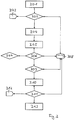
- Fig. 1 shows a flow chart that gives an overview of the method.
- a user wants to trigger an order process 100 in a web shop. Before completing the order, the user enters various personal data on the shop's website, for example his name, address and date of birth (step 101). It is then checked in step 102 whether authentication and / or an age check of the user is required. This can be the case, for example, if there are goods in the user's shopping cart that are not approved for young people.
- step 116 the ordering process continues with step 116.
- the user can then initiate the payment process 117 and the order is completed.
- the user can switch on a service provider who carries out the identification online (step 103).
- the process can be carried out by the user using his computer (tablets, smartphones) used for the order.
- it is first checked whether the user is already an existing customer with the service provider (step 104).
- the personal data of the user who entered it on the website of the shop are compared with data in a database of the service provider. If a match is found, the user is considered an existing customer (step 105).
- the user can enter a user identification number that is checked.
- a transaction number is generated by a server of the service provider and transmitted to the user's computer (e.g. by email) and / or to a user's phone (e.g. by SMS).
- the user can enter the TAN on the shop's website and hereby confirm his identity (step 106). If the entry of the TAN was successful (step 107), the authentication is considered successful (step 111). The user can complete the order with the payment process 117.
- step 108 If the user is not recognized as an existing customer in step 104 or the entry of the TAN was not successful in step 107, the user is forwarded to an identity check 108.
- a video connection is established between the user's computer and a test server, which includes image and sound transmission.
- the test server can be used to check whether the required video software is installed on the user's computer. If this is not the case, a link to download video software may be provided (step 112).
- a process identification number that is assigned to the user's personal data is recorded with the test server (step 109). The process identification number can be generated on the service provider's server. The process identification number can then be transmitted to the user's computer and displayed there, for example, in a browser.
- the user can use the video connection to communicate the process identification number to an agent serving the test server, who enters it into the test server.
- the process identification number is transmitted to the service provider's server.
- the service provider's server transmits the user's personal data, which are assigned to the process identification number, to the test server. If necessary, the transmitted personal data of the user can be supplemented (step 113).
- an identity card of the user is recorded and then evaluated.
- a photo of the user is taken for the evaluation (step 110).
- the evaluation can include a comparison of the transmitted personal data of the user with information on the identity card.
- an examination of security features of the identity card can be provided.
- the comparison and / or the test can be carried out automatically by means of the test server (step 114).
- the agent can intervene if necessary by giving the user instructions on how to hold the ID card in front of the camera so that the relevant information can be recorded.
- the result of the evaluation of the identity card is saved together with the process identification number in the database. If the check is successful (step 111), that is to say the identity of the user has been confirmed, corresponding information is sent to the shop's website. The user can then complete the order with the payment process 117. This method enables the user to be authenticated within a few minutes and requires little effort on the part of the user.
- the known authentication by post remains with him (step 115). After this process has been successfully completed, the user can also complete the ordering process by means of the payment process 117. In this case, however, at least a few days pass.
- Fig. 2 shows a detailed schedule for the processes at the service provider.
- a request to check a user comes from the shop's website to the service provider's server (step 201). With the request, a provider identification number and personal data of the user are transmitted, which is checked in step 202. In addition, further data from the web shop (provider) can be checked in step 206. If the test is negative, an exit 204 takes place. If the provider identification number is present in the database, it is checked whether the transmitted personal data of the user correspond to predetermined data fields (step 203). The provider created and stored the specifications in advance (step 207). Exit 205 occurs if the requirements are not met. In the case of exits 204 and 205, a renewed request with revised data can be sent.
- a new process is created in a database (step 208).
- a transaction identification number is generated and transmitted (step 209).
- a form for checking the identity of the user is called up. In the form the user can indicate whether he is already an existing customer with the service provider or not (step 210).
- a corresponding check is carried out (step 212). As already explained above, the personal data of the user and / or a customer identification number can be checked for this (step 213). If the check is successful, a TAN is generated (step 215) and sent to the user (steps 216, 217). The TAN is stored in a database (step 221). If the test is negative, an exit 214 takes place. Subsequently, an entry can be made in the form (step 210). The TAN is entered into the form in step 218 and then checked in step 219, for example by means of the service provider's server. If the check is successful, the information that the user is registered and the identification was successful is transmitted to the shop website (step 220).
- step 211 If the user is not an existing customer, the identity check described above is carried out (step 211). After successful completion, the TAN is generated and transmitted (steps 215, 216 and 217). After entering and positive verification of the TAN, the provider is informed again (steps 218, 219 and 220).
- an exit is made 222.
- the number of input attempts can be counted. If the number of attempts to enter is less than or equal to three (step 223), the method returns to step 210. If the number of unsuccessful entries is greater than three, an exit 225 takes place. The provider is informed of the failure of the authentication of the user (step 220).
- Fig. 3 shows the process for an existing customer.
- a request to check a user comes from the website of a provider (step 301).
- a provider identification number that is also transmitted is checked (step 302).
- a database is accessed (step 308). If the result is negative, an exit 303 occurs.
- the test is positive, a process identification number is generated and a form is provided for the user (step 304). The user can enter his user identification number in the form (step 305). The user identification number is checked using the database (step 306). If the test is negative, an exit is made. Alternatively, the user's email address can be checked to determine whether the customer is an existing customer. An identity check of the user can then be initiated (step 307).
- a TAN is generated and transmitted to the user (step 309).
- the TAN is assigned to the transaction identification number.
- the TAN is entered on the provider's website (step 310) and checked (step 311). If the check is unsuccessful, exit 312 occurs. If the result of the check is positive, corresponding information is sent to the provider (step 313). The user can continue with the provider, for example, complete an order process.
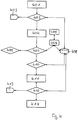
- a process for a new customer is shown.
- a request is again made by a provider to authenticate a user (eg operator of a web shop) in step 401.
- a provider identification number is checked and compared with a database (step 402). If the result is negative, an exit 403 takes place.
- a process identification number is generated and a form is provided for the user (step 404).
- the identity of the user is then checked (step 407). The details of the identity check have already been explained above.
- the database 408 can be accessed here, optionally using a CRM system 406 and / or a validation software 405. If the identity cannot be ascertained, an exit 409 takes place.
- a TAN is generated and transmitted to the user (Ste 410).
- the latter is checked (step 412).
- the database 408 can be accessed here, in which the TAN is stored together with the assigned process identification number. If the result is negative, an exit 413 takes place again. If the result of the test is positive, the user can continue to act on the website of the provider (step 414).
Landscapes
- Engineering & Computer Science (AREA)
- Theoretical Computer Science (AREA)
- Physics & Mathematics (AREA)
- General Physics & Mathematics (AREA)
- Computer Security & Cryptography (AREA)
- Business, Economics & Management (AREA)
- Multimedia (AREA)
- General Engineering & Computer Science (AREA)
- Accounting & Taxation (AREA)
- Finance (AREA)
- General Health & Medical Sciences (AREA)
- Artificial Intelligence (AREA)
- Health & Medical Sciences (AREA)
- Human Computer Interaction (AREA)
- Computer Vision & Pattern Recognition (AREA)
- Computer Hardware Design (AREA)
- Software Systems (AREA)
- Signal Processing (AREA)
- Computer Networks & Wireless Communication (AREA)
- Strategic Management (AREA)
- Marketing (AREA)
- Economics (AREA)
- General Business, Economics & Management (AREA)
- Development Economics (AREA)
- Computational Linguistics (AREA)
- Audiology, Speech & Language Pathology (AREA)
- Oral & Maxillofacial Surgery (AREA)
- Management, Administration, Business Operations System, And Electronic Commerce (AREA)
- Financial Or Insurance-Related Operations Such As Payment And Settlement (AREA)
Applications Claiming Priority (3)
| Application Number | Priority Date | Filing Date | Title |
|---|---|---|---|
| DE102013108713.2A DE102013108713B8 (de) | 2013-08-12 | 2013-08-12 | Verfahren zum Verifizieren der ldentität eines Nutzers |
| PCT/DE2014/100253 WO2015039646A1 (fr) | 2013-08-12 | 2014-07-14 | Procédé d'évaluation d'un document |
| EP14761562.9A EP3033708B1 (fr) | 2013-08-12 | 2014-07-14 | Procédé d'évaluation d'un document |
Related Parent Applications (1)
| Application Number | Title | Priority Date | Filing Date |
|---|---|---|---|
| EP14761562.9A Division EP3033708B1 (fr) | 2013-08-12 | 2014-07-14 | Procédé d'évaluation d'un document |
Publications (1)
| Publication Number | Publication Date |
|---|---|
| EP3588338A1 true EP3588338A1 (fr) | 2020-01-01 |
Family
ID=51494056
Family Applications (2)
| Application Number | Title | Priority Date | Filing Date |
|---|---|---|---|
| EP19192698.9A Pending EP3588338A1 (fr) | 2013-08-12 | 2014-07-14 | Procédé d'évaluation d'un document |
| EP14761562.9A Active EP3033708B1 (fr) | 2013-08-12 | 2014-07-14 | Procédé d'évaluation d'un document |
Family Applications After (1)
| Application Number | Title | Priority Date | Filing Date |
|---|---|---|---|
| EP14761562.9A Active EP3033708B1 (fr) | 2013-08-12 | 2014-07-14 | Procédé d'évaluation d'un document |
Country Status (9)
| Country | Link |
|---|---|
| US (3) | US9911035B2 (fr) |
| EP (2) | EP3588338A1 (fr) |
| CN (1) | CN105593867B (fr) |
| DE (1) | DE102013108713B8 (fr) |
| DK (1) | DK3033708T3 (fr) |
| ES (1) | ES2755885T3 (fr) |
| PL (1) | PL3033708T3 (fr) |
| PT (1) | PT3033708T (fr) |
| WO (1) | WO2015039646A1 (fr) |
Families Citing this family (13)
| Publication number | Priority date | Publication date | Assignee | Title |
|---|---|---|---|---|
| DE102013108713B8 (de) * | 2013-08-12 | 2016-10-13 | WebID Solutions GmbH | Verfahren zum Verifizieren der ldentität eines Nutzers |
| US11256792B2 (en) | 2014-08-28 | 2022-02-22 | Facetec, Inc. | Method and apparatus for creation and use of digital identification |
| DE102016112956A1 (de) | 2016-07-14 | 2018-01-18 | identity Trust Management AG | Verfahren zum online-basierten Identifizieren einer Person, Client-Server System und Computer-Programmprodukt |
| DE102016009258A1 (de) * | 2016-07-29 | 2018-02-01 | Giesecke+Devrient Mobile Security Gmbh | Authentisierungsanordnung |
| DE102016118886A1 (de) | 2016-10-05 | 2018-04-05 | WebID Solutions GmbH | Verfahren zur Prüfung einer Darstellung eines Objekts |
| DE102017001879A1 (de) * | 2017-02-27 | 2018-08-30 | Giesecke+Devrient Mobile Security Gmbh | Verfahren zur Verifizierung der Identität eines Nutzers |
| SG11201907614YA (en) * | 2017-04-10 | 2019-09-27 | Inventio Ag | Visitor access control system with radio identification and facial recognition |
| DE102018009301A1 (de) * | 2018-11-27 | 2020-05-28 | Giesecke+Devrient Mobile Security Gmbh | Entferntes Authentisieren eines Benutzers |
| EP3899764B1 (fr) * | 2019-03-24 | 2023-06-21 | Apple Inc. | Authentification de document d'identité |
| US20210358068A1 (en) | 2020-05-14 | 2021-11-18 | Bbl Healthcare Solutions Ltd | Method for issuing a verified health pass, use thereof for entering a venue and contact tracing method |
| EP4068720B1 (fr) * | 2021-03-31 | 2025-05-21 | SITS Deutschland GmbH | Procédé d'envoi électronique d'un code d'identification personnel |
| MY210345A (en) | 2021-07-15 | 2025-09-12 | Innov8Tif Solutions Sdn Bhd | A method to determine authenticity of security hologram |
| CN113592305B (zh) * | 2021-07-29 | 2024-08-13 | 北京百度网讯科技有限公司 | 测试方法、装置、电子设备以及存储介质 |
Citations (5)
| Publication number | Priority date | Publication date | Assignee | Title |
|---|---|---|---|---|
| US20030139994A1 (en) | 2002-01-22 | 2003-07-24 | Jones John E. | Financial institution system |
| WO2006076696A2 (fr) * | 2005-01-13 | 2006-07-20 | Glass Paul H | Systeme et procede de verification de l'age et de l'identite d'individus et de restriction de leur acces a des elements materiels et a des situations appropriees |
| US7734779B1 (en) | 2005-08-25 | 2010-06-08 | Gregory Alexander Piccionelli | Password protection system and method |
| DE102009022381A1 (de) | 2009-05-22 | 2010-11-25 | Cybits Ag | Verfahren zur webbasierten Personenidentifikation |
| US20130191904A1 (en) * | 2007-06-01 | 2013-07-25 | Albright Associates | Systems and Methods for Universal Enhanced Log-In, Identity Document Verification and Dedicated Survey Participation |
Family Cites Families (50)
| Publication number | Priority date | Publication date | Assignee | Title |
|---|---|---|---|---|
| US4675863A (en) * | 1985-03-20 | 1987-06-23 | International Mobile Machines Corp. | Subscriber RF telephone system for providing multiple speech and/or data signals simultaneously over either a single or a plurality of RF channels |
| US5239654A (en) * | 1989-11-17 | 1993-08-24 | Texas Instruments Incorporated | Dual mode SIMD/MIMD processor providing reuse of MIMD instruction memories as data memories when operating in SIMD mode |
| US5266942A (en) * | 1991-08-21 | 1993-11-30 | Stoller Gerald S | Security system with memory in transmitter and receiver |
| US6487661B2 (en) * | 1995-04-21 | 2002-11-26 | Certicom Corp. | Key agreement and transport protocol |
| US6782100B1 (en) * | 1997-01-29 | 2004-08-24 | Certicom Corp. | Accelerated finite field operations on an elliptic curve |
| GB2321741B (en) * | 1997-02-03 | 2000-10-04 | Certicom Corp | Data card verification system |
| US6424712B2 (en) * | 1997-10-17 | 2002-07-23 | Certicom Corp. | Accelerated signature verification on an elliptic curve |
| JPH11143779A (ja) * | 1997-11-07 | 1999-05-28 | Nec Corp | 仮想記憶装置におけるページング処理システム |
| US6249867B1 (en) * | 1998-07-31 | 2001-06-19 | Lucent Technologies Inc. | Method for transferring sensitive information using initially unsecured communication |
| US20020057796A1 (en) * | 1998-12-24 | 2002-05-16 | Lambert Robert J. | Method for accelerating cryptographic operations on elliptic curves |
| US20070111713A1 (en) * | 1999-05-25 | 2007-05-17 | Silverbrook Research Pty Ltd | Method for accessing content from a computer network via a mobile phone using a two-step retrieval process |
| CN1384945A (zh) * | 1999-05-25 | 2002-12-11 | 塞弗派澳大利亚有限公司 | 网上交易处理系统 |
| US7409557B2 (en) * | 1999-07-02 | 2008-08-05 | Time Certain, Llc | System and method for distributing trusted time |
| US7111168B2 (en) | 2000-05-01 | 2006-09-19 | Digimarc Corporation | Digital watermarking systems |
| US7392388B2 (en) * | 2000-09-07 | 2008-06-24 | Swivel Secure Limited | Systems and methods for identity verification for secure transactions |
| US8543823B2 (en) | 2001-04-30 | 2013-09-24 | Digimarc Corporation | Digital watermarking for identification documents |
| US20040049401A1 (en) | 2002-02-19 | 2004-03-11 | Carr J. Scott | Security methods employing drivers licenses and other documents |
| SE524778C2 (sv) * | 2002-02-19 | 2004-10-05 | Douglas Lundholm | Förfarande och arrangemang för att skydda mjukvara för otillbörlig användning eller kopiering |
| AUPS087602A0 (en) * | 2002-03-04 | 2002-03-28 | Ong, Yong Kin (Michael) | Electronic fund transfer system |
| US7289632B2 (en) * | 2003-06-03 | 2007-10-30 | Broadcom Corporation | System and method for distributed security |
| US20050080693A1 (en) | 2003-10-14 | 2005-04-14 | Foss Sheldon H. | Point-of-sale customer identification system |
| CA2565360C (fr) * | 2004-04-30 | 2012-01-10 | Research In Motion Limited | Systeme et procede de securisation de donnees |
| US20060157559A1 (en) | 2004-07-07 | 2006-07-20 | Levy Kenneth L | Systems and methods for document verification |
| US20100044430A1 (en) * | 2005-01-03 | 2010-02-25 | Yuh-Shen Song | Automated Remittance Network |
| US20070098225A1 (en) | 2005-10-28 | 2007-05-03 | Piccionelli Gregory A | Age verification method for website access |
| WO2007138876A1 (fr) * | 2006-06-01 | 2007-12-06 | Nec Corporation | système et procédé d'authentification de nœud de communication, et programme d'authentification de nœud de communication |
| US8132014B2 (en) * | 2006-08-29 | 2012-03-06 | Xerox Corporation | Image archiver |
| US20100131414A1 (en) | 2007-03-14 | 2010-05-27 | Gavin Randall Tame | Personal identification device for secure transactions |
| US8056118B2 (en) * | 2007-06-01 | 2011-11-08 | Piliouras Teresa C | Systems and methods for universal enhanced log-in, identity document verification, and dedicated survey participation |
| WO2009091421A1 (fr) * | 2008-01-18 | 2009-07-23 | Astakhov Pavel V | Certification, identification et communication électroniques utilisant des images graphiques cryptées |
| US8549298B2 (en) * | 2008-02-29 | 2013-10-01 | Microsoft Corporation | Secure online service provider communication |
| RU2419154C2 (ru) | 2008-11-06 | 2011-05-20 | Наталья Петровна Катина | Система и способ дистанционной идентификации и верификации личности клиента при оказании финансовых услуг |
| ES2381293B1 (es) * | 2009-04-20 | 2012-11-07 | Alter Core, S.L. | Sistema y método de acreditación personal mediante dispositivo móvil. |
| US20100306828A1 (en) * | 2009-05-31 | 2010-12-02 | Curt Grob | Method for Secure Validation Utilizing Existing Validation Framework |
| CN102713671A (zh) * | 2009-12-11 | 2012-10-03 | 株式会社拓普康 | 点群数据处理装置、点群数据处理方法和点群数据处理程序 |
| US20110153362A1 (en) * | 2009-12-17 | 2011-06-23 | Valin David A | Method and mechanism for identifying protecting, requesting, assisting and managing information |
| KR101318958B1 (ko) * | 2010-05-06 | 2013-10-29 | (주)시루정보 | 전자결제 서비스 방법과, 이를 실행하는 전자결제 서비스 장치, 이동통신 단말기 및 거래 단말기 |
| CN101859451B (zh) * | 2010-05-17 | 2015-04-22 | 深圳市沃达通实业有限公司 | 一种银行自动发卡远程人证一致性识别及权限设置方法 |
| US8719910B2 (en) | 2010-09-29 | 2014-05-06 | Verizon Patent And Licensing Inc. | Video broadcasting to mobile communication devices |
| US8582829B2 (en) | 2010-11-03 | 2013-11-12 | Gary S. Shuster | Online identity verification |
| US9544137B1 (en) * | 2010-12-29 | 2017-01-10 | Amazon Technologies, Inc. | Encrypted boot volume access in resource-on-demand environments |
| US20120173431A1 (en) * | 2010-12-30 | 2012-07-05 | First Data Corporation | Systems and methods for using a token as a payment in a transaction |
| JP5779434B2 (ja) * | 2011-07-15 | 2015-09-16 | 株式会社ソシオネクスト | セキュリティ装置及びセキュリティシステム |
| US8935265B2 (en) * | 2011-08-30 | 2015-01-13 | Abbyy Development Llc | Document journaling |
| US9231926B2 (en) * | 2011-09-08 | 2016-01-05 | Lexmark International, Inc. | System and method for secured host-slave communication |
| US20140279516A1 (en) * | 2013-03-14 | 2014-09-18 | Nicholas Rellas | Authenticating a physical device |
| CA2855099C (fr) * | 2013-06-27 | 2016-05-17 | Infosec Global Inc. | Protocole d'entente principale destine a generer une cle secrete partagee utilisee par une paire d'entites dans un systeme de communication de donnees |
| DE102013108713B8 (de) * | 2013-08-12 | 2016-10-13 | WebID Solutions GmbH | Verfahren zum Verifizieren der ldentität eines Nutzers |
| US9953311B2 (en) * | 2013-09-25 | 2018-04-24 | Visa International Service Association | Systems and methods for incorporating QR codes |
| KR20150064647A (ko) * | 2013-12-03 | 2015-06-11 | 삼성전자주식회사 | 컨텐츠 보안 방법 및 컨텐츠 보안 기능을 제공하는 단말기 |
-
2013
- 2013-08-12 DE DE102013108713.2A patent/DE102013108713B8/de not_active Revoked
-
2014
- 2014-07-14 US US14/911,479 patent/US9911035B2/en active Active
- 2014-07-14 PL PL14761562T patent/PL3033708T3/pl unknown
- 2014-07-14 WO PCT/DE2014/100253 patent/WO2015039646A1/fr not_active Ceased
- 2014-07-14 DK DK14761562T patent/DK3033708T3/da active
- 2014-07-14 ES ES14761562T patent/ES2755885T3/es active Active
- 2014-07-14 EP EP19192698.9A patent/EP3588338A1/fr active Pending
- 2014-07-14 CN CN201480052831.1A patent/CN105593867B/zh active Active
- 2014-07-14 EP EP14761562.9A patent/EP3033708B1/fr active Active
- 2014-07-14 PT PT147615629T patent/PT3033708T/pt unknown
-
2018
- 2018-01-29 US US15/882,344 patent/US10867172B2/en active Active
- 2018-02-09 US US15/892,591 patent/US11017223B2/en active Active
Patent Citations (5)
| Publication number | Priority date | Publication date | Assignee | Title |
|---|---|---|---|---|
| US20030139994A1 (en) | 2002-01-22 | 2003-07-24 | Jones John E. | Financial institution system |
| WO2006076696A2 (fr) * | 2005-01-13 | 2006-07-20 | Glass Paul H | Systeme et procede de verification de l'age et de l'identite d'individus et de restriction de leur acces a des elements materiels et a des situations appropriees |
| US7734779B1 (en) | 2005-08-25 | 2010-06-08 | Gregory Alexander Piccionelli | Password protection system and method |
| US20130191904A1 (en) * | 2007-06-01 | 2013-07-25 | Albright Associates | Systems and Methods for Universal Enhanced Log-In, Identity Document Verification and Dedicated Survey Participation |
| DE102009022381A1 (de) | 2009-05-22 | 2010-11-25 | Cybits Ag | Verfahren zur webbasierten Personenidentifikation |
Also Published As
| Publication number | Publication date |
|---|---|
| US10867172B2 (en) | 2020-12-15 |
| ES2755885T3 (es) | 2020-04-24 |
| PL3033708T3 (pl) | 2020-04-30 |
| DK3033708T3 (da) | 2019-11-25 |
| HK1224401A1 (zh) | 2017-08-18 |
| US20180165516A1 (en) | 2018-06-14 |
| DE102013108713A1 (de) | 2015-02-12 |
| US20180197003A1 (en) | 2018-07-12 |
| DE102013108713B4 (de) | 2016-06-02 |
| US11017223B2 (en) | 2021-05-25 |
| WO2015039646A1 (fr) | 2015-03-26 |
| EP3033708B1 (fr) | 2019-08-21 |
| CN105593867B (zh) | 2019-10-25 |
| DE102013108713B8 (de) | 2016-10-13 |
| EP3033708A1 (fr) | 2016-06-22 |
| PT3033708T (pt) | 2019-11-26 |
| US20160196470A1 (en) | 2016-07-07 |
| US9911035B2 (en) | 2018-03-06 |
| CN105593867A (zh) | 2016-05-18 |
Similar Documents
| Publication | Publication Date | Title |
|---|---|---|
| EP3033708B1 (fr) | Procédé d'évaluation d'un document | |
| EP3086251B1 (fr) | Identification d'utilisateur | |
| DE102014103016B4 (de) | Globales Identifizierungs-(ID-) und Altersverifizierungssystem und -verfahren | |
| EP2820623B1 (fr) | Procédé d'identification d'une personne | |
| DE102007003597A1 (de) | Verfahren und Anordnung zur Erzeugung eines signierten Text- und/oder Bilddokuments | |
| EP2203900B1 (fr) | Système de contrôle des personnes et procédé en vue d'exécuter un contrôle de personnes | |
| DE202023103820U1 (de) | Auf künstlicher Intelligenz und Blockchain-Technologie basierendes System zur Verbesserung der Qualität der Finanzberichterstattung und der Beziehungen zwischen Wirtschaftsprüfern und Kunden | |
| EP3082292A1 (fr) | Signature numerique comprenant une identification a distance | |
| EP4217890A1 (fr) | Système d'authentification et/ou d'identification d'un utilisateur | |
| EP2820624B1 (fr) | Procédé d'identification d'une personne | |
| EP3367281A1 (fr) | Procédé de vérification de l'identité d'un utilisateur | |
| EP3117359B1 (fr) | Système informatique de fournisseur d'identifiant, jeton d'identifiant et procédé de confirmation d'une identité numérique | |
| CH717006A2 (de) | Verfahren zur Benutzeridentifikation. | |
| DE202021102756U1 (de) | Elektronisches Veranstaltungsticket mit einem Gesundheitsindikator und Ticketshop zum Erzeugen eines elektronischen Veranstaltungstickets | |
| EP3483770A1 (fr) | Procédé de stockage des documents signés électroniquement | |
| DE102013012409A1 (de) | Identifikationsverfahren | |
| EP3823210A1 (fr) | Procédé mis en oeuvre par ordinateur permettant de commander et de contrôler la distribution des données utilisateur à caractère personnel vérifiées d'un utilisateur sur une pluralité de serveurs fournisseurs | |
| DE102016118886A1 (de) | Verfahren zur Prüfung einer Darstellung eines Objekts | |
| EP3977371B1 (fr) | Procédé et appareil de contrôle permettant la vérification sûre d'un billet électronique | |
| EP3117360B1 (fr) | Système informatique de fournisseur d'identifiant | |
| DE102022106241B4 (de) | Kontaktlose Identifizierung und Authentifizierung einer Person | |
| EP3407234B1 (fr) | Dispositif et procédé de vérification d'une identité d'une personne | |
| WO2023272330A1 (fr) | Procédé de génération numérique d'un document d'accès infalsifiable pouvant être vérifié hors ligne | |
| DE102024001374A1 (de) | Authentifizierung eines Fahrzeug-Insassen für eine Finanztransaktion | |
| DE102021124640A1 (de) | Verfahren zum digitalen Austauschen von Informationen |
Legal Events
| Date | Code | Title | Description |
|---|---|---|---|
| PUAI | Public reference made under article 153(3) epc to a published international application that has entered the european phase |
Free format text: ORIGINAL CODE: 0009012 |
|
| STAA | Information on the status of an ep patent application or granted ep patent |
Free format text: STATUS: THE APPLICATION HAS BEEN PUBLISHED |
|
| AC | Divisional application: reference to earlier application |
Ref document number: 3033708 Country of ref document: EP Kind code of ref document: P |
|
| AK | Designated contracting states |
Kind code of ref document: A1 Designated state(s): AL AT BE BG CH CY CZ DE DK EE ES FI FR GB GR HR HU IE IS IT LI LT LU LV MC MK MT NL NO PL PT RO RS SE SI SK SM TR |
|
| RIN1 | Information on inventor provided before grant (corrected) |
Inventor name: FUERST, FRANZ THOMAS Inventor name: JORGA, FRANK STEFAN Inventor name: KAISER, TIM-MARKUS |
|
| STAA | Information on the status of an ep patent application or granted ep patent |
Free format text: STATUS: REQUEST FOR EXAMINATION WAS MADE |
|
| 17P | Request for examination filed |
Effective date: 20200626 |
|
| RBV | Designated contracting states (corrected) |
Designated state(s): AL AT BE BG CH CY CZ DE DK EE ES FI FR GB GR HR HU IE IS IT LI LT LU LV MC MK MT NL NO PL PT RO RS SE SI SK SM TR |
|
| STAA | Information on the status of an ep patent application or granted ep patent |
Free format text: STATUS: EXAMINATION IS IN PROGRESS |
|
| 17Q | First examination report despatched |
Effective date: 20201222 |
|
| RAP3 | Party data changed (applicant data changed or rights of an application transferred) |
Owner name: WEBID SOLUTIONS GMBH |
|
| GRAP | Despatch of communication of intention to grant a patent |
Free format text: ORIGINAL CODE: EPIDOSNIGR1 |
|
| STAA | Information on the status of an ep patent application or granted ep patent |
Free format text: STATUS: GRANT OF PATENT IS INTENDED |
|
| RIC1 | Information provided on ipc code assigned before grant |
Ipc: G06F 21/31 20130101AFI20260203BHEP Ipc: G06Q 30/06 20120101ALI20260203BHEP Ipc: G06Q 30/0601 20230101ALI20260203BHEP Ipc: G06V 30/418 20220101ALI20260203BHEP Ipc: G06V 40/40 20220101ALI20260203BHEP Ipc: G06V 40/16 20220101ALI20260203BHEP |
|
| INTG | Intention to grant announced |
Effective date: 20260305 |