EP3625263B1 - Anti-galectin-9-antikörper und verwendungen davon - Google Patents
Anti-galectin-9-antikörper und verwendungen davon Download PDFInfo
- Publication number
- EP3625263B1 EP3625263B1 EP18870270.8A EP18870270A EP3625263B1 EP 3625263 B1 EP3625263 B1 EP 3625263B1 EP 18870270 A EP18870270 A EP 18870270A EP 3625263 B1 EP3625263 B1 EP 3625263B1
- Authority
- EP
- European Patent Office
- Prior art keywords
- antibody
- galectin
- seq
- cancer
- antibodies
- Prior art date
- Legal status (The legal status is an assumption and is not a legal conclusion. Google has not performed a legal analysis and makes no representation as to the accuracy of the status listed.)
- Active
Links
Images


















Classifications
-
- C—CHEMISTRY; METALLURGY
- C07—ORGANIC CHEMISTRY
- C07K—PEPTIDES
- C07K16/00—Immunoglobulins [IG], e.g. monoclonal or polyclonal antibodies
- C07K16/18—Immunoglobulins [IG], e.g. monoclonal or polyclonal antibodies against material from animals or humans
- C07K16/28—Immunoglobulins [IG], e.g. monoclonal or polyclonal antibodies against material from animals or humans against receptors, cell surface antigens or cell surface determinants
- C07K16/2803—Immunoglobulins [IG], e.g. monoclonal or polyclonal antibodies against material from animals or humans against receptors, cell surface antigens or cell surface determinants against the immunoglobulin superfamily
- C07K16/2827—Immunoglobulins [IG], e.g. monoclonal or polyclonal antibodies against material from animals or humans against receptors, cell surface antigens or cell surface determinants against the immunoglobulin superfamily against B7 molecules, e.g. CD80, CD86
-
- A—HUMAN NECESSITIES
- A61—MEDICAL OR VETERINARY SCIENCE; HYGIENE
- A61K—PREPARATIONS FOR MEDICAL, DENTAL OR TOILETRY PURPOSES
- A61K39/00—Medicinal preparations containing antigens or antibodies
- A61K39/395—Antibodies; Immunoglobulins; Immune serum, e.g. antilymphocytic serum
- A61K39/39533—Antibodies; Immunoglobulins; Immune serum, e.g. antilymphocytic serum against materials from animals
- A61K39/3955—Antibodies; Immunoglobulins; Immune serum, e.g. antilymphocytic serum against materials from animals against proteinaceous materials, e.g. enzymes, hormones, lymphokines
-
- A—HUMAN NECESSITIES
- A61—MEDICAL OR VETERINARY SCIENCE; HYGIENE
- A61K—PREPARATIONS FOR MEDICAL, DENTAL OR TOILETRY PURPOSES
- A61K45/00—Medicinal preparations containing active ingredients not provided for in groups A61K31/00 - A61K41/00
- A61K45/06—Mixtures of active ingredients without chemical characterisation, e.g. antiphlogistics and cardiaca
-
- A—HUMAN NECESSITIES
- A61—MEDICAL OR VETERINARY SCIENCE; HYGIENE
- A61P—SPECIFIC THERAPEUTIC ACTIVITY OF CHEMICAL COMPOUNDS OR MEDICINAL PREPARATIONS
- A61P35/00—Antineoplastic agents
-
- A—HUMAN NECESSITIES
- A61—MEDICAL OR VETERINARY SCIENCE; HYGIENE
- A61P—SPECIFIC THERAPEUTIC ACTIVITY OF CHEMICAL COMPOUNDS OR MEDICINAL PREPARATIONS
- A61P37/00—Drugs for immunological or allergic disorders
-
- A—HUMAN NECESSITIES
- A61—MEDICAL OR VETERINARY SCIENCE; HYGIENE
- A61P—SPECIFIC THERAPEUTIC ACTIVITY OF CHEMICAL COMPOUNDS OR MEDICINAL PREPARATIONS
- A61P37/00—Drugs for immunological or allergic disorders
- A61P37/02—Immunomodulators
- A61P37/06—Immunosuppressants, e.g. drugs for graft rejection
-
- C—CHEMISTRY; METALLURGY
- C07—ORGANIC CHEMISTRY
- C07K—PEPTIDES
- C07K16/00—Immunoglobulins [IG], e.g. monoclonal or polyclonal antibodies
- C07K16/06—Immunoglobulins [IG], e.g. monoclonal or polyclonal antibodies from serum
- C07K16/065—Purification, fragmentation
-
- C—CHEMISTRY; METALLURGY
- C07—ORGANIC CHEMISTRY
- C07K—PEPTIDES
- C07K16/00—Immunoglobulins [IG], e.g. monoclonal or polyclonal antibodies
- C07K16/18—Immunoglobulins [IG], e.g. monoclonal or polyclonal antibodies against material from animals or humans
- C07K16/28—Immunoglobulins [IG], e.g. monoclonal or polyclonal antibodies against material from animals or humans against receptors, cell surface antigens or cell surface determinants
- C07K16/2851—Immunoglobulins [IG], e.g. monoclonal or polyclonal antibodies against material from animals or humans against receptors, cell surface antigens or cell surface determinants against the lectin superfamily, e.g. CD23, CD72
-
- C—CHEMISTRY; METALLURGY
- C12—BIOCHEMISTRY; BEER; SPIRITS; WINE; VINEGAR; MICROBIOLOGY; ENZYMOLOGY; MUTATION OR GENETIC ENGINEERING
- C12N—MICROORGANISMS OR ENZYMES; COMPOSITIONS THEREOF; PROPAGATING, PRESERVING, OR MAINTAINING MICROORGANISMS; MUTATION OR GENETIC ENGINEERING; CULTURE MEDIA
- C12N15/00—Mutation or genetic engineering; DNA or RNA concerning genetic engineering, vectors, e.g. plasmids, or their isolation, preparation or purification; Use of hosts therefor
- C12N15/09—Recombinant DNA-technology
- C12N15/63—Introduction of foreign genetic material using vectors; Vectors; Use of hosts therefor; Regulation of expression
- C12N15/70—Vectors or expression systems specially adapted for E. coli
-
- C—CHEMISTRY; METALLURGY
- C12—BIOCHEMISTRY; BEER; SPIRITS; WINE; VINEGAR; MICROBIOLOGY; ENZYMOLOGY; MUTATION OR GENETIC ENGINEERING
- C12N—MICROORGANISMS OR ENZYMES; COMPOSITIONS THEREOF; PROPAGATING, PRESERVING, OR MAINTAINING MICROORGANISMS; MUTATION OR GENETIC ENGINEERING; CULTURE MEDIA
- C12N15/00—Mutation or genetic engineering; DNA or RNA concerning genetic engineering, vectors, e.g. plasmids, or their isolation, preparation or purification; Use of hosts therefor
- C12N15/09—Recombinant DNA-technology
- C12N15/63—Introduction of foreign genetic material using vectors; Vectors; Use of hosts therefor; Regulation of expression
- C12N15/79—Vectors or expression systems specially adapted for eukaryotic hosts
- C12N15/85—Vectors or expression systems specially adapted for eukaryotic hosts for animal cells
-
- A—HUMAN NECESSITIES
- A61—MEDICAL OR VETERINARY SCIENCE; HYGIENE
- A61K—PREPARATIONS FOR MEDICAL, DENTAL OR TOILETRY PURPOSES
- A61K39/00—Medicinal preparations containing antigens or antibodies
- A61K2039/505—Medicinal preparations containing antigens or antibodies comprising antibodies
-
- C—CHEMISTRY; METALLURGY
- C07—ORGANIC CHEMISTRY
- C07K—PEPTIDES
- C07K2317/00—Immunoglobulins specific features
- C07K2317/20—Immunoglobulins specific features characterized by taxonomic origin
- C07K2317/24—Immunoglobulins specific features characterized by taxonomic origin containing regions, domains or residues from different species, e.g. chimeric, humanized or veneered
-
- C—CHEMISTRY; METALLURGY
- C07—ORGANIC CHEMISTRY
- C07K—PEPTIDES
- C07K2317/00—Immunoglobulins specific features
- C07K2317/30—Immunoglobulins specific features characterized by aspects of specificity or valency
-
- C—CHEMISTRY; METALLURGY
- C07—ORGANIC CHEMISTRY
- C07K—PEPTIDES
- C07K2317/00—Immunoglobulins specific features
- C07K2317/50—Immunoglobulins specific features characterized by immunoglobulin fragments
- C07K2317/55—Fab or Fab'
-
- C—CHEMISTRY; METALLURGY
- C07—ORGANIC CHEMISTRY
- C07K—PEPTIDES
- C07K2317/00—Immunoglobulins specific features
- C07K2317/50—Immunoglobulins specific features characterized by immunoglobulin fragments
- C07K2317/56—Immunoglobulins specific features characterized by immunoglobulin fragments variable (Fv) region, i.e. VH and/or VL
-
- C—CHEMISTRY; METALLURGY
- C07—ORGANIC CHEMISTRY
- C07K—PEPTIDES
- C07K2317/00—Immunoglobulins specific features
- C07K2317/50—Immunoglobulins specific features characterized by immunoglobulin fragments
- C07K2317/56—Immunoglobulins specific features characterized by immunoglobulin fragments variable (Fv) region, i.e. VH and/or VL
- C07K2317/565—Complementarity determining region [CDR]
-
- C—CHEMISTRY; METALLURGY
- C07—ORGANIC CHEMISTRY
- C07K—PEPTIDES
- C07K2317/00—Immunoglobulins specific features
- C07K2317/70—Immunoglobulins specific features characterized by effect upon binding to a cell or to an antigen
- C07K2317/73—Inducing cell death, e.g. apoptosis, necrosis or inhibition of cell proliferation
- C07K2317/732—Antibody-dependent cellular cytotoxicity [ADCC]
Definitions
- Immune checkpoint blockade has demonstrated unprecedented success in the past few years as cancer treatment. Often antibodies are used to block immune inhibitory pathways, such as the cytotoxic T-lymphocyte-associated protein 4 (CTLA-4) and programmed death 1 (PD-1) pathways. While therapies targeting those two pathways have shown success in treating several cancer types, anti-CTLA-4 and anti-PD-1 therapies have a response rate of 10 to 60% of treated patients, depending on cancer type, and have not yet shown the ability to exceed a response rate of 60%, even when used in combination ( Kyvistborg et al., Enhancing responses to cancer immunotherapy; Science. 2018 Feb 2;359(6375):516-517 ). Additionally, a large number of cancer types are refractory to these therapies.
- CTL-4 cytotoxic T-lymphocyte-associated protein 4
- PD-1 programmed death 1
- T-cell immunoglobulin mucin-3 Tim-3 /Galectin-9
- Tim-3 T-cell immunoglobulin mucin-3
- Galectin-9 T-cell immunoglobulin-9
- Galectin-9 is a tandem-repeat lectin consisting of two carbohydrate recognition domains (CRDs) and was discovered and described for the first time in 1997 in patients suffering from Hodgkin's lymphoma (HL) ( Tureci et al., J. Biol. Chem. 1997, 272, 6416-6422 ). Three isoforms exist, and can be located within the cell or extracellularly. Elevated Galectin-9 levels have been in observed a wide range of cancers, including melanoma, Hodgkin's lymphoma, hepatocellular, pancreatic, gastric, colon and clear cell renal cell cancers ( Wdowiak et al. Int. J. Mol. Sci. 2018, 19, 210 ).
- Galectin-9 In renal cancer, patients with high Galectin-9 expression showed more advanced progression of the disease with larger tumor size and necrosis ( Kawashima et al.; BJU Int. 2014;113:320-332 ). In melanoma - a cancer considered as one of the most lethal cancers due to its aggressive metastasis and resistance to therapy - Galectin-9 was expressed in 57% of tumors and was significantly increased in the plasma of patients with advanced melanoma compared to healthy controls ( Enninga et al., Melanoma Res. 2016 Oct; 26(5): 429-441 ).
- Gal-9 As a prognostic marker, and more recently as a potential new drug target ( Enninga et al., 2016; Kawashima et al. BJU Int 2014; 113: 320-332 ; Kageshita et al., Int J Cancer. 2002 Jun 20;99(6):809-16 , and references therein).
- Galectin-9 has been described to play an important role in in a number of cellular processes such as adhesion, cancer cell aggregation, apoptosis, and chemotaxis.
- the present disclosure is based, at least in part, on the development of anti-Galectin-9 antibodies that potently suppress signaling triggered by Galectin-9.
- Such antibodies are capable of suppressing Galectin-9 signaling and/or eliminating Galectin-9 positive pathologic cells, thereby benefiting treatment of diseases associated with Galectin-9.
- the anti-Galectin-9 antibody disclosed herein is an antibody selected from the group consisting of G9.1-1, G9.1-2, G9.1-3, G9.1-4, G9.1-5, G9.1-6, G9.1-7, G9.1-8, G9.1-8m1, G9.1-8m2, G9.1-8m3, G9.1-8m4, G9.1-8m5, G9.1-8m6, G9.1-8m7, G9.1-8m8, G9.1-8m9, G9.1-8m10, G9.1-8m11, G9.1-8m12, G9.1-8m13, G9.1-8m14, G9.1-9, G9.1-10, and G9.1-11 antibodies.
- the anti-Galectin-9 antibody is G9.1-8 antibody.
- the antibody is G9.1-8m13 antibody.
- the anti-Galectin-9 antibody may comprise the same heavy chain complementarity determining regions (CDRs) and the same light chain CDRs as the reference antibody, e.g., any of the reference antibodies provided herein.
- the anti-Galectin-9 antibody comprises the same heavy chain variable region and the same light chain variable region as the reference antibody, e.g., any of the reference antibodies provided above and elsewhere herein.
- the anti-Galectin-9 antibody has a V L sequence comprising SEQ ID NO: 21 or consisting essentially of SEQ ID NO: 21 or consisting of SEQ ID NO: 21. In some embodiments, the anti-Galectin-9 antibody has a V H sequence comprising SEQ ID NO: 86 or consisting essentially of SEQ ID NO: 86 or consisting of SEQ ID NO: 86. In some embodiments, the anti-Galectin-9antibody has a V L sequence comprising SEQ ID NO: 21 and a V H sequence comprising SEQ ID NO: 86.
- the anti-Galectin-9antibody has a V L sequence consisting essentially of SEQ ID NO: 21 and a V H sequence consisting essentially of SEQ ID NO: 86. In some embodiments, the anti-Galectin-9antibody has a V L sequence consisting of SEQ ID NO: 21 and a V H sequence consisting of SEQ ID NO: 86.
- the anti-Galectin antibody has a V H sequence comprising SEQ ID NO: 22 or consisting essentially of SEQ ID NO: 22 or consisting of SEQ ID NO: 22.
- the anti-Galectin-9 antibody has a V L sequence comprising SEQ ID NO: 21 and a V H sequence comprising SEQ ID NO: 22.
- the anti-Galectin-9antibody has a V L sequence consisting essentially of SEQ ID NO: 21 and a V H sequence consisting essentially of SEQ ID NO: 22.
- the anti-Galectin-9antibody has a V L sequence consisting of SEQ ID NO: 21 and a V H sequence consisting of SEQ ID NO: 22.
- the anti-Galectin-9 antibody has a V L sequence comprising one or more of the sequences set forth in SEQ ID NOs: 328, 329, and 337. In some embodiments, the anti-Galectin-9 antibody has a V H sequence comprising one or more of the sequences set forth in SEQ ID NOs: 361, 364, 374, 366, and 383. In some embodiments, the anti-Galectin-9 antibody has a V L sequence comprising one or more of the sequences set forth in SEQ ID NOs: 328, 329, and 337, and a V H sequence comprising one or more of the sequences set forth in SEQ ID NOs: 361, 364, and 374.
- the anti-Galectin-9 antibody has a V L sequence comprising one or more of the sequences set forth in SEQ ID NOs: 328, 329, and 337, and a V H sequence comprising one or more of the sequences set forth in SEQ ID NOs: 361, 366, and 383.
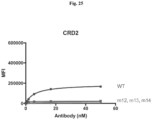
- the anti-Galectin-9 antibody disclosed herein binds an epitope within the Galectin-9 CRD2 region. In some embodiments, the anti-Galectin-9 antibody disclosed herein binds an epitope within the Galectin-9 CRD2 region, which CRD2 region may have the amino acid sequence of SEQ ID NO: 4. In some embodiments, the anti-Galectin-9 antibody disclosed herein binds an epitope within the CRD2 region having the amino acid sequence of SEQ ID NO: 4. In some embodiments, the anti-Galectin-9 antibody binds an epitope within the Galectin-9 CRD2 region that comprises a tryptophan residue corresponding with residue W309 of SEQ ID NO: 1.
- the anti-Galectin-9 antibody binds an epitope within the Galectin-9 CRD2 region that does not comprise one or more residues corresponding with R253, R271, Y330, R334, R341 and Y236 of SEQ ID NO: 1.
- the anti-Galectin-9 antibody may bind an epitope within the Galectin-9 CRD2 region that comprises a tryptophan residue corresponding with residue W309 of SEQ ID NO: 1 and additionally does not comprise one or more residues corresponding to R253, R271, Y330, R334, R341 and Y236 of SEQ ID NO: 1.
- the anti-Galectin-9 antibody binds to the same epitope as a reference antibody selected from the group consisting of G9.2-1, G9.2-2, G9.2-3, G9.2-4, G9.2-5, G9.2-6, G9.2-7, G9.2-8, G9.2-9, G9.2-10, G9.2-11, G9.2-12, G9.2-13, G9.2-14, G9.2-15, G9.2-16, G9.2-17, G9.2-17mut6, G9.2-18, G9.2-19, G9.2-20, G9.2-21, G9.2-22, G9.2-23, G9.2-24, G9.2-25, G9.2-26, and G9.2-low affinity binder antibodies, and/or competes against the reference antibody from binding to the CRD2 region.
- a reference antibody selected from the group consisting of G9.2-1, G9.2-2, G9.2-3, G9.2-4, G9.2-5, G9.2-6, G9.2-7, G9.2-8, G9.2-9, G9.2-10, G9.2-11, G9.2-12, G9.2-13, G9.2-14, G9.
- the anti-Galectin-9 antibody binds to the same epitope as antibody G9.2-17 or antibody G9.2-17mut6 and/or competes against antibody G9.2-17 or antibody G92-17mut6 from binding to the CRD2 region.
- the anti-Galectin-9 antibody is an antibody selected from the group consisting of G9.2-1, G9.2-2, G9.2-3, G9.2-4, G9.2-5, G9.2-6, G9.2-7, G9.2-8, G9.2-9, G9.2-10, G9.2-11, G9.2-12, G9.2-13, G9.2-14, G9.2-15, G9.2-16, G9.2-17, G9.2-17mut6, G9.2-18, G9.2-19, G9.2-20, G9.2-21, G9.2-22, G9.2-23, G9.2-24, G9.2-25, and G9.2-26 antibodies.
- the anti-Galectin-9 antibody is G9.2-17 antibody or G9.2-17mut6 antibody.
- the anti-Galectin-9 antibody has a V L sequence comprising SEQ ID NO: 54or may consist essentially of SEQ ID NO: 54 or may consist of SEQ ID NO: 54.
- the anti-Galectin-9 antibody has a V H sequence comprising SEQ ID NO: 55 or may consist essentially of SEQ ID NO: 55 or may consist of SEQ ID NO: 55.
- the anti-Galectin-9antibody has a V L sequence comprising SEQ ID NO: 54 and a V H sequence comprising SEQ ID NO: 55.
- the anti-Galectin-9antibody may have a V L sequence consisting essentially of SEQ ID NO: 54 and a V H sequence consisting essentially of SEQ ID NO: 55.
- the anti-Galectin-9antibody may have a V L sequence consisting of SEQ ID NO: 54 and a V H sequence consisting of SEQ ID NO: 55.
- the antibody may have a V H sequence comprising SEQ ID NO: 56.
- the antibody may have a V H sequence consisting essentially of SEQ ID NO: 56 or consisting of SEQ ID NO: 56.
- the isolated antibody may have a V L sequence comprising SEQ ID NO: 54 and a V H sequence comprising SEQ ID NO: 56.
- the isolated antibody may have a V L sequence consisting essentially of SEQ ID NO: 54 and a V H sequence consisting essentially of SEQ ID NO: 56.
- the isolated antibody may have a V L sequence consisting of SEQ ID NO: 54 and a V H sequence consisting of SEQ ID NO: 56.
- an isolated antibody which binds to human galectin-9,
- the anti-Galectin-9 antibody may comprise the same heavy chain complementarity determining regions (CDRs) and the same light chain CDRs as the reference antibody, e.g., any of the reference antibodies provided herein.
- the anti-Galectin-9 antibody comprises the same heavy chain variable region and the same light chain variable region as a reference antibody, e.g., any of the reference antibodies provided herein.
- the anti-Galectin-9 antibody comprises a heavy chain complementarity determining region 1 (CDR1), a heavy chain complementary determining region 2 (CDR2), and a heavy chain complementary determining region 3 (CDR3), which collectively are at least 90% ( e.g., 90%, 91%, 92%, 93%, 94%, 95%, 96%, 97%, 98%, or 99%) identical to the heavy chain CDRs of a reference antibody, e.g., any of the reference antibodies provided herein.
- CDR1 heavy chain complementarity determining region 1
- CDR2 heavy chain complementary determining region 2
- CDR3 heavy chain complementary determining region 3
- the anti-Galectin-9 antibody may comprise the same heavy chain CDRs and the same light chain CDRs as the reference antibodies noted above.
- the anti-Galectin-9 antibody may comprise the same heavy chain variable region and the same light chain variable region as of a reference antibody, e.g., any of the reference antibodies provided herein.
- the exemplary isolated anti-Galectin 9 antibodies which bind to CRD2 include G9.2-17.
- the isolated anti-Galectin 9 antibodies, or antigen binding portion thereof comprise heavy and light chain variable regions, wherein the light chain variable region comprises an amino acid sequence comprising SEQ ID NO: 54, and the heavy chain variable region comprises an amino acid sequence comprising SEQ ID NO: 55.
- the isolated anti-Galectin 9 antibodies, or antigen binding portion thereof comprise heavy and light chain variable regions, wherein the light chain variable region consists of an amino acid sequence consisting of SEQ ID NO: 54, and the heavy chain variable region consists of an amino acid sequence consisting of SEQ ID NO: 55.
- the anti-Galectin-9 antibody may comprise a VL region that has at least 80% (e.g., 85%, 90%, 95%, 96%, 97%, 98%, 99% and any increment therein) sequence identity to a VL region set forth in SEQ ID NO: 54.
- the anti-Galectin-9 antibody may comprise a VH region that has at least 80% (e.g., 85%, 90%, 95%, 96%, 97%, 98%, 99% and any increment therein) sequence identity to a VH region set forth in SEQ ID NO:55.
- the anti-Galectin-9 antibody or antigen binding fragment thereof may comprise a VL and/or VH region that has at least 80% (e.g., 85%, 90%, 95%, 96%, 97%, 98%, 99% and any increment therein) sequence identity to a VL and/or VH region set forth in SEQ ID NO: 54 and 55, respectively.
- the anti-Galectin-9 antibody may comprise a VL region that has at least 80% (e.g., 85%, 90%, 95%, 96%, 97%, 98%, 99% and any increment therein) sequence identity to the VL region of G9.2-17.
- the anti-Galectin-9 antibody may comprise a VH region that has at least 80% (e.g., 85%, 90%, 95%, 96%, 97%, 98%, 99% and any increment therein) sequence identity to the VH region of G9.2-17.
- the anti-Galectin-9 antibody may comprise VL and VH regions that has at least 80% (e.g., 85%, 90%, 95%, 96%, 97%, 98%, 99% and any increment therein) sequence identity to VL and VH regions of G9.2-17.
- an anti-Galectin-9 antibodies or antigen binding portions thereof comprising (a) VL CDR1 amino acid sequence set forth in SEQ ID NO: 328; (b) VL CDR2 amino acid sequence set forth in SEQ ID NO: 329; (c) VL CDR3 amino acid sequence set forth in SEQ ID NO: 352; (d) VH CDR1 amino acid sequence set forth in SEQ ID NO: 361; (d) VH CDR2s amino acid sequence set forth in SEQ ID NO: 388;(e) VH CDR3 amino acid sequence set forth in SEQ ID NO: 406.
- the anti-Galectin-9 antibody or binding portion thereof comprises heavy and light chain variable regions, wherein the light chain variable region CDR1 comprises SEQ ID NO: 328. In some embodiments, the anti-Galectin-9 antibody or binding portion thereof comprises heavy and light chain variable regions, wherein the light chain variable region CDR1 consists of SEQ ID NO: 328.
- the anti-Galectin-9 antibody or binding portion thereof comprises heavy and light chain variable regions, wherein the light chain variable region CDR1 comprises SEQ ID NO: 328.
- the anti-Galectin-9 antibody or binding portion thereof comprises heavy and light chain variable regions, wherein the light chain variable region CDR2 comprises SEQ ID NO: 329.
- the anti-Galectin-9 antibody or binding portion thereof comprises heavy and light chain variable regions, wherein the light chain variable region CDR1 consists of SEQ ID NO: 328.
- the anti-Galectin-9 antibody or binding portion thereof comprises heavy and light chain variable regions, wherein the light chain variable region CDR2 consists of SEQ ID NO: 329.
- the anti-Galectin-9 antibody or binding portion thereof comprises heavy and light chain variable regions, wherein the heavy chain variable region CDR1 comprises SEQ ID NO: 361.
- the anti-Galectin-9 antibody or binding portion thereof comprises heavy and light chain variable regions, wherein the heavy chain variable region CDR1 consists of SEQ ID NO: 361.
- the anti-Galectin-9 antibody or binding portion thereof comprises heavy and light chain variable regions, wherein the light chain variable region CDR1 comprises SEQ ID NO: 328.
- the anti-Galectin-9 antibody or binding portion thereof comprises heavy and light chain variable regions, wherein the light chain variable region CDR2 comprises SEQ ID NO: 329.
- the anti-Galectin-9 antibody or binding portion thereof comprises heavy and light chain variable regions, wherein the light chain variable region CDR3 comprises SEQ ID NO: 352.
- the anti-Galectin-9 antibody or binding portion thereof comprises heavy and light chain variable regions, wherein the light chain variable region CDR1 consists of SEQ ID NO: 328.
- the anti-Galectin-9 antibody or binding portion thereof comprises heavy and light chain variable regions, wherein the light chain variable region CDR2 consists of SEQ ID NO: 329.
- the anti-Galectin-9 antibody or binding portion thereof consists of heavy and light chain variable regions, wherein the light chain variable region CDR3 comprises SEQ ID NO: 352.
- the anti-Galectin-9 antibody or binding portion thereof comprises heavy and light chain variable regions, wherein the light chain variable region CDR1, CDR2, and CDR3 regions comprise SEQ ID NO: 328, 329, and 352, respectively.
- the light chain variable region CDR1, CDR2, and CDR3 regions consist of SEQ ID NO: 328, 329, and 352, respectively.
- the anti-Galectin-9 antibody comprises the same VL CDRs as G9.2-17.
- the anti-Galectin-9 antibody or binding portion thereof comprises heavy and light chain variable regions, wherein the heavy chain variable region CDR1, CDR2, and CDR3 regions comprise SEQ ID NO: 361, 388, and 406, respectively.
- the heavy chain variable region CDR1, CDR2, and CDR3 regions consist of SEQ ID NO: 361, 388, and 406, respectively.
- the antibody comprises the same VH CDRs as G9.2-17.
- the anti-Galectin-9 antibody or binding portion thereof comprises heavy and light chain variable regions, wherein the light chain variable region CDR1, CDR2, and CDR3 regions comprise SEQ ID NO: 328, 329, and 352, respectively, and the heavy chain variable region CDR1, CDR2, and CDR3 comprise SEQ ID NO: 361, 388, and 406, respectively.
- the light and heavy chain variable region CDR1, CDR2, and CDR3 regions consist of SEQ ID NO: 328, 329, and 352, respectively, and SEQ ID NO: 361, 388, and 406, respectively.
- the anti-Galectin-9 antibody comprises the same VL and VH CDRs as G9.2-17.
- anti-Galectin-9 antibodies or antigen binding portions thereof may comprise (a) VL CDR1 amino acid sequence that has at least 80% ( e.g., 85%, 90%, 95%, 96%, 97%, 98%, 99% and any increment therein) sequence identity to the VL CDR1 amino acid sequence set forth in SEQ ID NO: 328; (b) VL CDR2 amino acid sequence that has at least 80% ( e.g., 85%, 90%, 95%, 96%, 97%, 98%, 99% and any increment therein) sequence identity to the VL CDR2 amino acid sequence set forth in SEQ ID NO: 329; (c) VL CDR3 amino acid sequence that has at least 80% ( e.g., 85%, 90%, 95%, 96%, 97%, 98%, 99% and any increment therein) sequence identity to the VL CDR3 amino acid sequence selected from SEQ ID NO: 352; (d) VH CDR1 amino acid sequence that has at least 80% ( e.
- the anti-Galectin-9 antibody or binding portion thereof comprises heavy and light chain variable regions, wherein the light chain variable region CDR1, CDR2, and CDR3 amino acid sequences may have at least 80% ( e.g., 85%, 90%, 95%, 96%, 97%, 98%, 99% and any increment therein) sequence identity to the light chain variable region CDR1, CDR2, and CDR3 amino acid sequences set forth in SEQ ID NO: 328, 329, and 352, respectively.
- the antibody VL CDR1, CDR2, and CDR3 amino acid sequences may have at least 80% (e.g., 85%, 90%, 95%, 96%, 97%, 98%, 99% and any increment therein) sequence identity to the VL CDR1, CDR2, and CDR3 amino acid sequences of G9.2-17.
- the anti-Galectin-9 antibody or binding portion thereof may comprise heavy and light chain variable regions, wherein the heavy chain variable region CDR1, CDR2, and CDR3 amino acid sequences have at least 80% ( e.g., 85%, 90%, 95%, 96%, 97%, 98%, 99% and any increment therein) sequence identity to the heavy chain variable region CDR1, CDR2, and CDR3 amino acid sequences set forth in SEQ ID NO: 361, 388, and 406, respectively.
- the antibody VH CDR1, CDR2, and CDR3 amino acid sequences may have at least 80% (e.g., 85%, 90%, 95%, 96%, 97%, 98%, 99% and any increment therein) sequence identity to the VH CDR1, CDR2, and CDR3 amino acid sequences of G9.2-17.
- the anti-Galectin-9 antibody or binding portion thereof may comprise heavy and light chain variable regions, wherein the light chain variable region CDR1, CDR2, and CDR3 amino acid sequences have at least 80% ( e.g., 85%, 90%, 95%, 96%, 97%, 98%, 99% and any increment therein) sequence identity to the light chain variable region CDR1, CDR2, and CDR3 amino acid sequences set forth in comprise SEQ ID NO: 328, 329, and 352, respectively, and the heavy chain variable region CDR1, CDR2, and CDR3 amino acid sequences have at least 80% ( e.g., 85%, 90%, 95%, 96%, 97%, 98%, 99% and any increment therein) sequence identity to the heavy chain variable region CDR1, CDR2, and CDR3 amino acid sequences set forth in SEQ ID NO: 361, 388, and 406, respectively.
- the antibody VL CDR1, CDR2, and CDR3 and VH CDR1, CDR2, and CDR3 amino acid sequences may have at least 80% ( e.g., 85%, 90%, 95%, 96%, 97%, 98%, 99% and any increment therein) sequence identity to the VL CDR1, CDR2, and CDR3 and VH CDR1, CDR2, and CDR3 amino acid sequences of G9.2-17.
- the heavy chain constant region of the anti-Galectin-9 antibody is from a human IgG (a gamma heavy chain) of any IgG subfamily as described herein, e.g., IgG1 or IgG4.
- the anti-Galectin-9 antibodies or antigen-binding portion thereof may comprise a light chain sequence of SEQ ID NO: 108.
- light chains of anti-Galectin-9 antibodies may comprise an amino acid sequence that has at least 80% (e.g., 85%, 90%, 95%, 96%, 97%, 98%, 99% and any increment therein) sequence identity to the light chain sequence set forth in SEQ ID NO: 108 (or their variable regions).
- the heavy chain constant region of the anti-Galectin-9 antibody is from a human IgG1.
- the IgG1 is a mutant with minimal Fc receptor engagement.
- the anti-Galectin-9 antibody comprises a light chain amino acid sequence that has at least 80% (e.g., 85%, 90%, 95%, 96%, 97%, 98%, 99% and any increment therein) sequence identity to SEQ ID NO: 108 and a heavy chain amino acid sequence that has at least 80% (e.g., 85%, 90%, 95%, 96%, 97%, 98%, 99% and any increment therein) sequence identity to SEQ ID NO: 316.
- Also disclosed herein is a method for producing the anti-Galectin-9 antibody, comprising culturing the host cell described herein under suitable conditions allowing for expressing of the antibody, and harvesting the antibody thus produced from the cell culture ( e.g., from the culture medium).
- a second aspect of the present invention provides a pharmaceutical composition, comprising any of the anti-Galectin-9 antibodies or a nucleic acid(s) encoding such, and a pharmaceutically acceptable carrier.
- Exemplary autoimmune diseases include, but are not limited to, a rheumatoid condition (e.g ., rheumatoid arthritis), an autoimmune respiratory disease, an autoimmune metabolic and/or endocrine disorder (e.g ., type I diabetes), or a fibrotic condition.
- a rheumatoid condition e.g ., rheumatoid arthritis
- an autoimmune respiratory disease e.g ., an autoimmune respiratory disease
- an autoimmune metabolic and/or endocrine disorder e.g ., type I diabetes
- fibrotic condition e.g., type I diabetes
- the anti-Galectin-9 antibodies bind to one or more epitopes in the CRD1 and/or CRD2 domains.
- Such anti-Galectin-9 antibodies are capable of suppressing the signaling mediated by Galectin-9 (e.g., the signaling pathway mediated by Galectin-9/Dectin-1 or Galectin-9/Tim-3) or eliminating pathologic cells expressing Galectin-9 via, e.g., ADCC.
- the anti-Galectin-9 antibodies described herein can be used for inhibiting any of the Galectin-9 signaling and/or eliminating Galectin-9 positive pathologic cells, thereby benefiting treatment of diseases associated with Galectin-9, for example, autoimmune diseases, solid tumors, allergic disorders, or hematological disorders such as hematological malignancies.
- Galectin-9 a tandem-repeat lectin, is a beta-galactoside-binding protein, which has been shown to have a role in modulating cell-cell and cell-matrix interactions. It is found to be strongly overexpressed in Hodgkin's disease tissue and in other pathologic states. It may also be found circulating in the tumor microenvironment (TME).
- TAE tumor microenvironment
- Galectin-9 is found to interact with Dectin-1, an innate immune receptor which is highly expressed on macrophages in PDA, as well as on cancer cells ( Daley D, et al. Dectin 1 activation on macrophages by galectin 9 promotes pancreatic carcinoma and peritumoral immune tolerance; Nat Med. 2017;23(5):556-6 ). Regardless of the source of Galectin-9, disruption of its interaction with Dectin-1 has been shown to lead to the reprogramming of CD4 + and CD8 + cells into indispensable mediators of anti-tumor immunity. Thus, Galectin-9 serves as a valuable therapeutic target for blocking the signaling mediated by Dectin-1. Accordingly, in some embodiments, the anti-Galectin-9 antibodies describe herein disrupt the interaction between Galectin-9 and Dectin-1.
- Galectin-9 is also found to interact with TIM-3, a type I cell surface glycoprotein expressed on the surface of leukemic stem cells in all varieties of acute myeloid leukemia (except for M3 (acute promyelocytic leukemia)), but not expressed in normal human hematopoietic stem cells (HSCs).
- TIM-3 a type I cell surface glycoprotein expressed on the surface of leukemic stem cells in all varieties of acute myeloid leukemia (except for M3 (acute promyelocytic leukemia)), but not expressed in normal human hematopoietic stem cells (HSCs).
- TIM-3 signaling resulting from Galectin-9 ligation has been found to have a pleiotropic effect on immune cells, inducing apoptosis in Th1 cells ( Zhu et al., Nat Immunol., 2005, 6:1245-1252 ) and stimulating the secretion of tumor necrosis factor- ⁇ (TNF- ⁇ ), leading to the maturation of monocytes into dendritic cells, resulting in inflammation by innate immunity ( Kuchroo et al., Nat Rev Immunol., 2008, 8:577-580 ).
- Galectin-9/TIM-3 signaling has been found to co-activate NF- ⁇ B and ⁇ -catenin signaling, two pathways that promote LSC self-renewal ( Kikushige et al., Cell Stem Cell, 2015, 17(3):341-352 ).
- An anti-Galectin-9 antibody that interferes with Galectin-9/TIM-3 binding could have a therapeutic effect, especially with respect to leukemia and other hematological malignancies. Accordingly, in some embodiments, the anti-Galectin-9 antibodies described herein disrupt the interaction between Galectin-9 and TIM-3.
- Galectin-9 is also found to interact with CD206, a mannose receptor highly expressed on M2 polarized macrophages, thereby promoting tumor survival ( Enninga et al., CD206-positive myeloid cells bind galectin-9 and promote a tumor-supportive microenvironment. J Pathol. 2018 Aug;245(4):468-477 ).
- Tumor-associated macrophages expressing CD206 are mediators of tumor immunosuppression, angiogenesis, metastasis, and relapse (see, e.g., Scodeller et al., Precision Targeting of Tumor Macrophages with a CD206 Binding Peptide. M1 and M2 had been described as the functional states of macrophages; Sci Rep.
- the CRD1 domain of human Galectin-9 (SEQ ID NO: 3) encompasses residues 1-148 of SEQ ID NO:1, and the CRD2 domain (SEQ ID NO: 4) spans residues 218-355 of SEQ ID NO: 1.
- the CRD1 domain of murine Galectin-9 (SEQ ID NO: 5) spans residues 1-147 of SEQ ID NO:2, and the CRD2 domain (SEQ ID NO: 6) spans residues 226-353 of SEQ ID NO: 2.
- An antibody is an immunoglobulin molecule capable of specific binding to a target, such as a carbohydrate, polynucleotide, lipid, polypeptide, etc., through at least one antigen recognition site, located in the variable region of the immunoglobulin molecule.
- antibody e.g ., anti-Galectin-9 antibody
- An antibody e.g., anti-Galectin-9 antibody
- an antibody of any class such as IgD, IgE, IgG, IgA, or IgM (or sub-class thereof), and the antibody need not be of any particular class.
- immunoglobulins can be assigned to different classes. There are five major classes of immunoglobulins: IgA, IgD, IgE, IgG, and IgM, and several of these may be further divided into subclasses (isotypes), e.g ., IgG1, IgG2, IgG3, IgG4, IgA1 and IgA2.
- the heavy-chain constant domains that correspond to the different classes of immunoglobulins are called alpha, delta, epsilon, gamma, and mu, respectively.
- the subunit structures and three-dimensional configurations of different classes of immunoglobulins are well known.
- a typical antibody molecule comprises a heavy chain variable region (V H ) and a light chain variable region (V L ), which are usually involved in antigen binding.
- V H and V L regions can be further subdivided into regions of hypervariability, also known as “complementarity determining regions” ("CDR"), interspersed with regions that are more conserved, which are known as “framework regions” ("FR").
- CDR complementarity determining regions
- FR framework regions
- Each V H and V L is typically composed of three CDRs and four FRs, arranged from amino-terminus to carboxy-terminus in the following order: FR1, CDR1, FR2, CDR2, FR3, CDR3, FR4.
- the extent of the framework region and CDRs can be precisely identified using methodology known in the art, for example, by the Kabat definition, the Chothia definition, the AbM definition, and/or the contact definition, all of which are well known in the art. See, e.g., Kabat, E.A., et al. (1991) Sequences of Proteins of Immunological Interest, Fifth Edition, U.S. Department of Health and Human Services, NIH Publication No. 91-3242 , Chothia et al., (1989) Nature 342:877 ; Chothia, C. et al. (1987) J. Mol. Biol. 196:901-917 , Al-lazikani et al (1997) J. Molec. Biol. 273:927-948 ; and Almagro, J. Mol. Recognit. 17:132-143 (2004 ). See also hgmp.mrc.ac.uk and bioinf.org.uk/abs).
- the anti-Galectin-9 antibody described herein may be a full-length antibody, which contains two heavy chains and two light chains, each including a variable domain and a constant domain.
- the anti-Galectin-9 antibody can be an antigen-binding fragment of a full-length antibody.
- binding fragments encompassed within the term "antigen-binding fragment" of a full length antibody include (i) a Fab fragment, a monovalent fragment consisting of the V L , V H , C L and C H 1 domains; (ii) a F(ab') 2 fragment, a bivalent fragment including two Fab fragments linked by a disulfide bridge at the hinge region; (iii) a Fd fragment consisting of the V H and C H 1 domains; (iv) a Fv fragment consisting of the V L and V H domains of a single arm of an antibody, (v) a dAb fragment ( Ward et al., (1989) Nature 341:544-546 ), which consists of a V H domain; and (vi) an isolated complementarity determining region (CDR) that retains functionality.
- a Fab fragment a monovalent fragment consisting of the V L , V H , C L and C H 1 domains
- V L and V H are coded for by separate genes, they can be joined, using recombinant methods, by a synthetic linker that enables them to be made as a single protein chain in which the V L and V H regions pair to form monovalent molecules known as single chain Fv (scFv).
- scFv single chain Fv
- the anti-Galectin-9 antibody as described herein can bind and inhibit (e.g., reduce or eliminate) the activity of Galectin-9.
- the anti-Galectin-9 antibody as described herein can bind and inhibit the activity of Galectin-9 by at least 30% ( e.g., 31%, 35%, 40%, 45%, 50%, 60%, 70%, 80%, 90%, 95% or greater, including any increment therein).
- the apparent inhibition constant (Ki app or K i,app ) which provides a measure of inhibitor potency, is related to the concentration of inhibitor required to reduce enzyme activity and is not dependent on enzyme concentrations.
- the inhibitory activity of an anti-Galectin-9 antibody described herein can be determined by routine methods known in the art.
- the K i, app value of an antibody may be determined by measuring the inhibitory effect of different concentrations of the antibody on the extent of the reaction (e.g ., enzyme activity); fitting the change in pseudo-first order rate constant (v) as a function of inhibitor concentration to the modified Morrison equation (Equation 1) yields an estimate of the apparent Ki value.
- the anti-Galectin-9 antibody described herein may have a Ki app value of 1000, 900, 800, 700, 600, 500, 400, 300, 200, 100, 50, 40, 30, 20, 19, 18, 17, 16, 15, 14, 13, 12, 11, 10, 9, 8, 7, 6, 5 pM or less for the target antigen or antigen epitope.
- the anti-Galectin-9 antibody may have a lower Ki app for a first target (e.g., the CRD2 of Galectin-9) relative to a second target (e.g., CRD1 of Galectin-9).
- Differences in Ki app can be at least 1.5, 2, 3, 4, 5, 10, 15, 20, 37.5, 50, 70, 80, 91, 100, 500, 1000, 10,000 or 10 5 fold.
- the anti-Galectin-9 antibody inhibits a first antigen (e.g ., a first protein in a first conformation or mimic thereof) greater relative to a second antigen (e.g ., the same first protein in a second conformation or mimic thereof; or a second protein).
- a first antigen e.g ., a first protein in a first conformation or mimic thereof
- a second antigen e.g ., the same first protein in a second conformation or mimic thereof; or a second protein.
- any of the anti-Galectin-9 antibodies may be further affinity matured to reduce the Ki app of the antibody to the target antigen or antigenic epitope thereof.
- the anti-Galectin-9 antibody suppresses the Dectin-1 signaling, e.g., in tumor infiltrating immune cells, such as macrophages. In some embodiments, the anti-Galectin-9 antibody suppresses the Dectin-1 signaling triggered by Galectin-9 by at least 30% ( e.g., 31%, 35%, 40%, 50%, 60%, 70%, 80%, 90%, 95% or greater, including any increment therein). Such inhibitory activity can be determined by conventional methods or the assays described herein, for example, Example 2. Alternatively or in addition, the anti-Galectin-9 antibody may suppress the T cell immunoglobulin mucin-3 (TIM-3) signaling initiated by Galectin-9.
- TIM-3 T cell immunoglobulin mucin-3
- the anti-Galectin-9 antibody suppresses the T cell immunoglobulin mucin-3 (TIM-3) signaling, e.g., in tumor infiltrating immune cells, e.g., in some embodiments by at least 30% ( e.g., 31%, 35%, 40%, 50%, 60%, 70%, 80%, 90%, 95% or greater, including any increment therein).
- TIM-3 T cell immunoglobulin mucin-3
- Such inhibitory activity can be determined by conventional methods or the assays described herein, for example, Example 2.
- the anti-Galectin-9 antibody suppresses the CD206 signaling, e.g., in tumor infiltrating immune cells. In some embodiments, the anti-Galectin-9 antibody suppresses the CD206 signaling triggered by Galectin-9 by at least 30% ( e.g., 31%, 35%, 40%, 50%, 60%, 70%, 80%, 90%, 95% or greater, including any increment therein).
- Such inhibitory activity can be determined by conventional methods or the assays described herein, for example, Example 13.
- the anti-Galectin-9 antibody blocks or prevents binding of Galectin-9 to CD206 by at least 30% (e.g., 31%, 35%, 40%, 50%, 60%, 70%, 80%, 90%, 95% or greater, including any increment therein).
- Such inhibitory activity can be determined by conventional methods or the assays described herein, for example, Example 13.
- any of the anti-Galectin-9 antibodies described herein induce cell cytotoxicity, such as ADCC, in target cells expressing Galectin-9, e.g., wherein the target cells are cancer cells or immune suppressive immune cells.
- the anti-Galectin-9 antibody induces apoptosis in immune cells, such as T cells, or cancer cells by at least 30% ( e.g., 31%, 35%, 40%, 50%, 60%, 70%, 80%, 90%, 95% or greater, including any increment therein).
- Such inhibitory activity can be determined by conventional methods or the assays described herein, for example, Example 14.
- any of the anti-Galectin-9 antibodies described herein induce cell cytotoxicity such as complement-dependent cytotoxicity (CDC) against target cells expressing Galectin-9.
- CDC complement-dependent cytotoxicity
- ADCP Antibody-dependent cell-mediated phagocytosis
- any of the anti-Galectin-9 antibodies described herein induce T cell activation, e.g., in tumor infiltrating T cells, i.e., suppress Galectin-9 mediated inhibition of T cell activation, either directly or indirectly.
- the anti-Galectin-9 antibody promotes T cell activation by at least 30% ( e.g., 31%, 35%, 40%, 50%, 60%, 70%, 80%, 90%, 95% or greater, including any increment therein).
- T cell activation can be determined by conventional methods or the assays described herein, for example, Example 6 (e.g., measurement of CD44, OX40, IFNgamma, PD-1).
- the anti-Galectin-9 antibody promotes CD4+ cell activation by at least 30% ( e.g., 31%, 35%, 40%, 50%, 60%, 70%, 80%, 90%, 95% or greater, including any increment therein).
- the anti-Galectin antibody induces CD44 expression in CD4+ cells.
- the anti-Galectin-9 antibody increases CD44 expression in CD4+ cells by at least 30% ( e.g., 31%, 35%, 40%, 50%, 60%, 70%, 80%, 90%, 95% or greater, including any increment therein).
- the anti-Galectin antibody induces IFNgamma expression in CD4+ cells.
- the anti-Galectin-9 antibody increases IFNgamma expression in CD4+ cells by at least 30% (e.g., 31%, 35%, 40%, 50%, 60%, 70%, 80%, 90%, 95% or greater, including any increment therein).
- the anti-Galectin antibody induces TNFalpha expression in CD4+ cells.
- the anti-Galectin-9 antibody increases TNFalpha expression in CD4+ cells by at least 30% ( e.g., 31%, 35%, 40%, 50%, 60%, 70%, 80%, 90%, 95% or greater, including any increment therein).
- the anti-Galectin-9 antibody promotes CD8+ cell activation by at least 30% ( e.g., 31%, 35%, 40%, 50%, 60%, 70%, 80%, 90%, 95% or greater), including any increment therein).
- the anti-Galectin antibody induces CD44 expression in CD8+ cells.
- the anti-Galectin-9 antibody increases CD44 expression in CD8+ cells by at least 30% ( e.g., 31%, 35%, 40%, 50%, 60%, 70%, 80%, 90%, 95% or greater, including any increment therein).
- the anti-Galectin antibody induces IFNgamma expression in CD8+ cells.
- the anti-Galectin-9 antibody increases IFNgamma expression in CD8+ cells by at least 30% (e.g., 31%, 35%, 40%, 50%, 60%, 70%, 80%, 90%, 95% or greater, including any increment therein).
- the anti-Galectin antibody induces TNFalpha expression in CD8+ cells.
- the anti-Galectin-9 antibody increases TNFalpha expression in CD8+ cells by at least 30% ( e.g., 31%, 35%, 40%, 50%, 60%, 70%, 80%, 90%, 95% or greater, including any increment therein).
- the antibodies described herein can be murine, rat, human, or any other origin (including chimeric or humanized antibodies). Such antibodies are non-naturally occurring, i.e., would not be produced in an animal without human act (e.g ., immunizing such an animal with a desired antigen or fragment thereof or isolated from antibody libraries).
- any of the antibodies described herein can be either monoclonal or polyclonal.
- a “monoclonal antibody” refers to a homogenous antibody population and a “polyclonal antibody” refers to a heterogeneous antibody population. These two terms do not limit the source of an antibody or the manner in which it is made.
- the anti-Galectin-9 antibody is a humanized antibody. In some embodiments, the anti-Galectin-9 antibody is a humanized antibody having one of more of the elements or characteristics described below or elsewhere herein.
- Humanized antibodies refer to forms of non-human (e.g ., murine) antibodies that are specific chimeric immunoglobulins, immunoglobulin chains, or antigen-binding fragments thereof that contain minimal sequence derived from non-human immunoglobulin.
- humanized antibodies are human immunoglobulins (recipient antibody) in which residues from a CDR of the recipient are replaced by residues from a CDR of a non-human species (donor antibody) such as mouse, rat, or rabbit having the desired specificity, affinity, and capacity.
- donor antibody such as mouse, rat, or rabbit having the desired specificity, affinity, and capacity.
- Fv framework region (FR) residues of the human immunoglobulin are replaced by corresponding non-human residues.
- the humanized antibody may comprise residues that are found neither in the recipient antibody nor in the imported CDR or framework sequences, but are included to further refine and optimize antibody performance.
- the humanized antibody may comprise substantially all of at least one, and typically two, variable domains, in which all or substantially all of the CDR regions correspond to those of a non-human immunoglobulin and all or substantially all of the FR regions are those of a human immunoglobulin consensus sequence.
- the humanized antibody optimally also will comprise at least a portion of an immunoglobulin constant region or domain (Fc), typically that of a human immunoglobulin.
- Antibodies may have Fc regions modified as described in WO 99/58572 .
- humanized antibodies have one or more CDRs (one, two, three, four, five, or six) which are altered with respect to the original antibody, which are also termed one or more CDRs "derived from" one or more CDRs from the original antibody. Humanized antibodies may also involve affinity maturation.
- variable regions of V H and V L of a parent non-human antibody are subjected to three-dimensional molecular modeling analysis following methods known in the art.
- framework amino acid residues predicted to be important for the formation of the correct CDR structures are identified using the same molecular modeling analysis.
- human V H and V L chains having amino acid sequences that are homologous to those of the parent non-human antibody are identified from any antibody gene database using the parent V H and V L sequences as search queries. Human V H and V L acceptor genes are then selected.
- the CDR regions within the selected human acceptor genes can be replaced with the CDR regions from the parent non-human antibody or functional variants thereof.
- residues within the framework regions of the parent chain that are predicted to be important in interacting with the CDR regions can be used to substitute for the corresponding residues in the human acceptor genes.
- the anti-Galectin-9 antibody is a chimeric antibody.
- the anti-Galectin-9 antibody is a chimeric antibody which may include a heavy constant region and a light constant region from a human antibody.
- Chimeric antibodies refer to antibodies having a variable region or part of variable region from a first species and a constant region from a second species.
- the variable region of both light and heavy chains mimics the variable regions of antibodies derived from one species of mammals (e.g ., a non-human mammal such as mouse, rabbit, and rat), while the constant portions are homologous to the sequences in antibodies derived from another mammal such as human.
- amino acid modifications can be made in the variable region and/or the constant region.
- the anti-Galectin-9 antibodies described herein specifically bind to the corresponding target antigen or an epitope thereof, e.g., Galectin-9 antigen or epitope.
- An antibody that "specifically binds" to an antigen or an epitope is a term well understood in the art. A molecule is said to exhibit "specific binding” if it reacts more frequently, more rapidly, with greater duration and/or with greater affinity with a particular target antigen than it does with alternative targets. An antibody "specifically binds" to a target antigen or epitope if it binds with greater affinity, avidity, more readily, and/or with greater duration than it binds to other substances.
- an antibody that specifically (or preferentially) binds to an antigen (Galectin-9) or an antigenic epitope therein is an antibody that binds this target antigen with greater affinity, avidity, more readily, and/or with greater duration than it binds to other antigens or other epitopes in the same antigen. It is also understood with this definition that, for example, an antibody that specifically binds to a first target antigen may or may not specifically or preferentially bind to a second target antigen. As such, “specific binding” or “preferential binding” does not necessarily require (although it can include) exclusive binding.
- an antibody that "specifically binds" to a target antigen or an epitope thereof may not bind to other antigens or other epitopes in the same antigen (i.e., only baseline binding activity can be detected in a conventional method).
- the anti-Galectin-9 antibodies described herein specifically bind to Galectin-9.
- the anti-Galectin-9 antibodies described herein specifically bind to the CRD2 of Galectin-9.
- the anti-Galectin-9 antibodies described herein specifically bind to the CRD1 of Galectin-9.
- the anti-Galectin-9 antibody described herein specifically binds human Galectin-9 or a fragment thereof as relative to the mouse counterpart, or vice versa (e.g., having a binding affinity at least 10-fold higher to one antigen than the other as determined in the same assay under the same assay conditions).
- the anti-Galectin -9 antibody binds only to CRD1 (and not CRD2), for example, meaningful binding to CRD2 or binding to CRD2 is not detectable by a routine assay method.
- the anti-Galectin -9 or a fragment thereof binds only to CRD2 (and not CRD1).
- certain antibodies described herein may bind to both CRD1 and CRD2. In some embodiments, certain antibodies or fragments thereof described herein may bind to both CRD1 and CRD2, but with a lower affinity to CRD2. In some embodiments, certain antibodies or fragments thereof described herein may bind to both CRD1 and CRD2, but with a lower affinity to CRD1.
- an antibody comprising the variable region of clone 9.1-8m13 e.g., SEQ ID NO: 21 (light chain and SEQ ID NO: 86) can be combined with an antibody comprising the variable region of clone 9.2-17 (SEQ ID NO: 54 (light chain and SEQ ID NO: 55) in a composition.
- Antibodies may be mixed in equimolar amounts or in other ratios, as determined optimal for performance.
- an anti-Galectin-9 antibody as described herein has a suitable binding affinity for the target antigen (e.g ., Galectin-9) or antigenic epitopes thereof.
- binding affinity refers to the apparent association constant or K A .
- the K A is the reciprocal of the dissociation constant (K D ).
- the anti-Galectin-9 antibody described herein may have a binding affinity (K D ) of at least 10 -5 , 10 -6 , 10 -7 , 10 -8 , 10 -9 , 10 -10 M, or lower for the target antigen or antigenic epitope.
- An increased binding affinity corresponds to a decreased K D .
- K A K A ⁇ ⁇ ⁇ ⁇ ⁇ ⁇ ⁇ ⁇ ⁇ ⁇ ⁇ ⁇ ⁇ ⁇ ⁇ ⁇ ⁇ ⁇ ⁇ ⁇ ⁇ ⁇ ⁇ ⁇ ⁇ ⁇ ⁇ ⁇ ⁇ ⁇ ⁇ ⁇ ⁇ ⁇ ⁇ ⁇ ⁇ ⁇ ⁇ ⁇ ⁇ ⁇ ⁇ ⁇ ⁇ ⁇ ⁇ ⁇ ⁇ ⁇ ⁇ ⁇ ⁇ ⁇ ⁇ ⁇ ⁇ ⁇ ⁇ ⁇ ⁇ ⁇ ⁇ ⁇ ⁇ ⁇ ⁇ ⁇ ⁇ ⁇ ⁇ ⁇ ⁇ ⁇ ⁇ ⁇ ⁇ ⁇ ⁇ ⁇ ⁇ ⁇ ⁇ ⁇ ⁇ ⁇ ⁇ ⁇ ⁇ ⁇ ⁇ ⁇ ⁇ ⁇ ⁇ ⁇ ⁇ ⁇ ⁇ ⁇ ⁇ ⁇ ⁇ ⁇ ⁇ ⁇ ⁇ ⁇ ⁇ ⁇ ⁇ ⁇ ⁇ ⁇ ⁇ ⁇ ⁇ ⁇ ⁇ ⁇ ⁇ ⁇ ⁇ ⁇
- Exemplary antibody clones (reference antibodies) of the disclosure binding to CRD1 include G9.1-1, G9.1-2, G9.1-3, G9.1-4, G9.1-5, G9.1-6, G9.1-7, G9.1-8, G9.1-9, G9.1-10, G9.1-11, G9.1-8m1, G9.1-8m2, G9.1-8m3, G9.1-8m4, G9.1-8m5, G9.1-8m6,G9.1-8m7, G9.1-8m8, G9.1-8m9, G9.1-8m10, G9.1-8m11, G9.1-8m12, G9.1-8m13, and G9.1-8m14.
- Exemplary antibody clones (reference antibodies) of the disclosure binding to CRD2 include G9.2-1, G9.2-2, G9.2-3, G9.2-4, G9.2-5, G9.2-6, G9.2-7, G9.2-8, G9.2-9, G9.2-10, G9.2-11, G9.2-12, G9.2-13, G9.2-14, G9.2-15, G9.2-16, G9.2-17, G9.2-17mut6 , G9.2-18, G9.2-19, G9.2-20, G9.2-21, G9.2-22, G9.2-23, G9.2-24, G9.2-25, G9.2-26, and G9.2-low affinity binder.
- Exemplary anti-Galectin-9 antibodies described herein binding to CRD1 are antibodies, e.g., monoclonal, recombinant, and/or human antibodies, having the CDR and/or variable region sequences of antibodies G9.1-1, G9.1-2, G9.1-3, G9.1-4, G9.1-5, G9.1-6, G9.1-7, G9.1-8, G9.1-9, G9.1-10, G9.1-11, G9.1-8m1, G9.1-8m2, G9.1-8m3, G9.1-8m4, G9.1-8m5, G9.1-8m6,G9.1-8m7, G9.1-8m8, G9.1-8m9, G9.1-8m10, G9.1-8m11, G9.1-8m12, G9.1-8m13, and G9.1-8m14.
- antibodies e.g., monoclonal, recombinant, and/or human antibodies, having the CDR and/or variable region sequences of antibodies G9.1-1, G9.1-2, G9.1-3, G9.
- Exemplary anti-Galectin-9 antibodies described herein binding to CRD2 are antibodies, e.g., monoclonal, recombinant, and/or human antibodies, having the CDR and/or variable region sequences of antibodies G9.2-1, G9.2-2, G9.2-3, G9.2-4, G9.2-5, G9.2-6, G9.2-7, G9.2-8, G9.2-9, G9.2-10, G9.2-11, G9.2-12, G9.2-13, G9.2-14, G9.2-15, G9.2-16, G9.2-17, G9.2-17mut6 , G9.2-18, G9.2-19, G9.2-20, G9.2-21, G9.2-22, G9.2-23, G9.2-24, G9.2-25, G9.2-26, and G9.2-low affinity binder.
- Such CRD1 and CRD2 binding anti-Galectin-9 antibodies are isolated and structurally characterized as described herein.
- the disclosure also contemplates antibodies having at least 80% identity (e.g., at least 85%, at least 90%, at least 95%, or at least 99% identity) to their variable region or CDR sequences.
- VL amino acid sequences of G9.2-1, G9.2-2, G9.2-3, G9.2-4, G9.2-5, G9.2-6, G9.2-7, G9.2-8, G9.2-9, G9.2-10, G9.2-11, G9.2-12, G9.2-13, G9.2-14, G9.2-15, G9.2-16, G9.2-17, G9.2-17mut6 , G9.2-18, G9.2-19, G9.2-20, G9.2-21, G9.2-22, G9.2-23, G9.2-24, G9.2-25, G9.2-26, G9.2-low affinity binder are set forth in SEQ ID NO: 29, 13, 34, 36, 38, 40, 42, 44, 46, 48, 29, 34, 54, 58, 61, 63, 65, 73, 67, 69, and 71.
- VH amino acid sequences of G9.2-1, G9.2-2, G9.2-3, G9.2-4, G9.2-5, G9.2-6, G9.2-7, G9.2-8, G9.2-9, G9.2-10, G9.2-11, G9.2-12, G9.2-13, G9.2-14, G9.2-15, G9.2-16, G9.2-17, G9.2-17mut6 , G9.2-18, G9.2-19, G9.2-20, G9.2-21, G9.2-22, G9.2-23, G9.2-24, G9.2-25, G9.2-26, G9.2-low affinity binder are set forth in SEQ ID NO: 30, 31, 32, 33, 35, 37, 39, 41, 43, 45, 47, 49, 50, 51, 52, 53, 55, 56, 57, 59, 60, 62, 64, 66, 68, 70, 72 and 73.
- the light chain variable regions consists of an amino acid sequence comprising SEQ ID NO:54.
- the heavy chain variable regions consists of an amino acid sequence comprising SEQ ID NO:, 55.
- isolated anti-Galectin-9 antibodies, or antigen binding portion thereof, comprising heavy and light chain variable regions wherein the light chain variable region comprises an amino acid sequence comprising SEQ ID NO: 54, and the heavy chain variable region comprises an amino acid sequence comprising SEQ ID NO: 55.
- isolated anti-Galectin-9 antibodies, or antigen binding portion thereof, comprising heavy and light chain variable regions wherein the light chain variable region consists of an amino acid sequence comprising SEQ ID NO: 54, and the heavy chain variable region consists of an amino acid sequence comprising SEQ ID NO: 55.
- the anti-Galectin-9 antibody comprises a VL region having the sequence of SEQ ID NO: 54.
- the anti-Galectin-9 antibody comprises a VH region having the sequence of SEQ ID NO: 55.
- the anti-Galectin-9 antibody comprises a VL region having the sequence of SEQ ID NO: 54 and a VH region having the sequence of SEQ ID NO: 55.
- VL amino acid sequences of G9.1-1, G9.1-2, G9.1-3, G9.1-4, G9.1-5, G9.1-6, G9.1-7, G9.1-8, G9.1-9, G9.1-10, G9.1-11, G9.1-8m1, G9.1-8m2, G9.1-8m3, G9.1-8m4, G9.1-8m5, G9.1-8m6,G9.1-8m7, G9.1-8m8, G9.1-8m9, G9.1-8m10, G9.1-8m11, G9.1-8m12, G9.1-8m13, G9.1-8m14 are set forth in SEQ ID NO: 7, 9, 11, 13, 15, 17, 19, 21, 23, 25, and 27, respectively.
- VH amino acid sequences of G9.1-1, G9.1-2, G9.1-3, G9.1-4, G9.1-5, G9.1-6, G9.1-7, G9.1-8, G9.1-9, G9.1-10, G9.1-11, G9.1-8m1, G9.1-8m2, G9.1-8m3, G9.1-8m4, G9.1-8m5, G9.1-8m6,G9.1-8m7, G9.1-8m8, G9.1-8m9, G9.1-8m10, G9.1-8m11, G9.1-8m12, G9.1-8m13, G9.1-8m14 are set forth in SEQ ID NO: 8, 10, 12, 14, 16, 18, 20, 22, 24, 26, 28, 74, 75, 76, 77, 78, 79, 80, 81, 82, 83, 84, 85, 86, and 87.
- the anti-Galectin-9 antibody or antigen binding portion thereof comprises a VL region comprising SEQ ID NO: 54.
- the anti-Galectin-9 antibody or antigen binding portion thereof comprises a VH region comprising SEQ ID NO: 55.
- the anti-Galectin-9 antibody comprises a VL region consisting of SEQ ID NO: 54.
- the anti-Galectin-9 antibody or antigen binding portion thereof comprises a VH region consisting of SEQ ID NO: 55.
- the anti-Galectin-9 antibody comprises a VL and VH region comprising SEQ ID NO: 54 and 55.
- the anti-Galectin-9 antibody or antigen binding portion thereof comprises a VL and VH region consisting of SEQ ID NO: 54 and 55.
- the anti-Galectin-9 antibody or antigen binding portion thereof comprises a VL region and a VH region comprising SEQ ID NO: 54 and SEQ ID NO: 55.
- the anti-Galectin-9 antibody may comprise a VL region that has at least 80% (e.g., 85%, 90%, 95%, 96%, 97%, 98%, 99% and any increment therein) sequence identity to a VL region comprising SEQ ID NO: 54.
- the anti-Galectin-9 antibody may comprise a VH region that has at least 80% (e.g., 85%, 90%, 95%, 96%, 97%, 98%, 99% and any increment therein) sequence identity to a VH region comprising SEQ ID NO: 55.
- the anti-Galectin-9 antibody may comprise a VL region that has at least 80% (e.g., 85%, 90%, 95%, 96%, 97%, 98%, 99% and any increment therein) sequence identity to a VL region comprising SEQ ID NO: 54 and a VH region that has at least 80% (e.g., 85%, 90%, 95%, 96%, 97%, 98%, 99% and any increment therein) sequence identity to a VH region comprising SEQ ID NO: 55..
- the anti-Galectin-9 antibody may comprise a VL region that has at least 80% (e.g., 85%, 90%, 95%, 96%, 97%, 98%, 99% and any increment therein) sequence identity to a VL region of an antibody selected from G9.2-17.
- the anti-Galectin-9 antibody may comprise a VH region that has at least 80% (e.g., 85%, 90%, 95%, 96%, 97%, 98%, 99% and any increment therein) sequence identity to a VH region of an antibody selected from G9.2-17.
- the anti-Galectin-9 antibody may comprise VL and VH regions that has at least 80% (e.g., 85%, 90%, 95%, 96%, 97%, 98%, 99% and any increment therein) sequence identity to VL and VH regions of an antibody selected from G9.2-17.
- the anti-Galectin-9 antibody may comprise a VL region that has at least 80% (e.g., 85%, 90%, 95%, 96%, 97%, 98%, 99% and any increment therein) sequence identity to the VL region of G9.2-17.
- the anti-Galectin-9 antibody may comprise a VH region that has at least 80% (e.g., 85%, 90%, 95%, 96%, 97%, 98%, 99% and any increment therein) sequence identity to the VH region of G9.2-17.
- the anti-Galectin-9 antibody may comprise VL and VH regions that has at least 80% (e.g., 85%, 90%, 95%, 96%, 97%, 98%, 99% and any increment therein) sequence identity to VL and VH regions of G9.2-17.
- the anti-Galectin-9 antibody or antigen binding fragment thereof may comprise a VL that has at least 80% (e.g., 85%, 90%, 95%, 96%, 97%, 98%, 99% and any increment therein) sequence identity to a VL region set forth in SEQ ID NO: 54.
- the anti-Galectin-9 antibody or antigen binding fragment thereof may comprise a VH region that has at least 80% (e.g., 85%, 90%, 95%, 96%, 97%, 98%, 99% and any increment therein) sequence identity to a VH region set forth in SEQ ID NO: 55.
- the anti-Galectin-9 antibody or antigen binding fragment thereof may comprise a VL and/or VH region that has at least 80% (e.g., 85%, 90%, 95%, 96%, 97%, 98%, 99% and any increment therein) sequence identity to a VL and/or VH region set forth in SEQ ID NO: 54 and 55.
- CDRs Complementarity Determining Regions
- the anti-Galectin-9 antibody comprises a VL CDR1 having the sequence of SEQ ID NO: 328.
- the anti-Galectin-9 antibody comprises a VL CDR2 having the sequence of SEQ ID NO: 329.
- the anti-Galectin-9 antibody comprises a VH CDR1 having the sequence of SEQ ID NO: 361.
- the anti-Galectin-9 antibodies may comprise the light and heavy chain CDR1s, CDR2s and CDR3s of G9.2-17.
- the amino acid sequence of the VL CDR1s of G9.2-1, G9.2-2, G9.2-3, G9.2-4, G9.2-5, G9.2-6, G9.2-7, G9.2-8, G9.2-9, G9.2-10, G9.2-11, G9.2-12, G9.2-13, G9.2-14, G9.2-15, G9.2-16, G9.2-17, G9.2-17mut6 , G9.2-18, G9.2-19, G9.2-20, G9.2-21, G9.2-22, G9.2-23, G9.2-24, G9.2-25, G9.2-26, and G9.2-low affinity binder is set forth in SEQ ID NO: 328.
- the amino acid sequence of the VL CDR2s of G9.2-1, G9.2-2, G9.2-3, G9.2-4, G9.2-5, G9.2-6, G9.2-7, G9.2-8, G9.2-9, G9.2-10, G9.2-11, G9.2-12, G9.2-13, G9.2-14, G9.2-15, G9.2-16, G9.2-17, G9.2-17mut6 , G9.2-18, G9.2-19, G9.2-20, G9.2-21, G9.2-22, G9.2-23, G9.2-24, G9.2-25, G9.2-26, and G9.2-low affinity binder is set forth in SEQ ID NO: 329.
- amino acid sequences of the VL CDR3s of G9.2-1, G9.2-2, G9.2-3, G9.2-4, G9.2-5, G9.2-6, G9.2-7, G9.2-8, G9.2-9, G9.2-10, G9.2-11, G9.2-12, G9.2-13, G9.2-14, G9.2-15, G9.2-16, G9.2-17, G9.2-17mut6 , G9.2-18, G9.2-19, G9.2-20, G9.2-21, G9.2-22, G9.2-23, G9.2-24, G9.2-25, G9.2-26, and G9.2-low affinity binder are set forth in SEQ ID NO: 341-360.
- amino acid sequences of the VH CDR1 of G9.2-1, G9.2-2, G9.2-3, G9.2-4, G9.2-5, G9.2-6, G9.2-7, G9.2-8, G9.2-9, G9.2-10, G9.2-11, G9.2-12, G9.2-13, G9.2-14, G9.2-15, G9.2-16, G9.2-17, G9.2-17mut6, G9.2-18, G9.2-19, G9.2-20, G9.2-21, G9.2-22, G9.2-23, G9.2-24, G9.2-25, G9.2-26, and G9.2-low affinity binder are set forth in SEQ ID NO: 361, 424-434.
- amino acid sequences of the VH CDR2s of G9.2-1, G9.2-2, G9.2-3, G9.2-4, G9.2-5, G9.2-6, G9.2-7, G9.2-8, G9.2-9, G9.2-10, G9.2-11, G9.2-12, G9.2-13, G9.2-14, G9.2-15, G9.2-16, G9.2-17, G9.2-17mut6, G9.2-18, G9.2-19, G9.2-20, G9.2-21, G9.2-22, G9.2-23, G9.2-24, G9.2-25, G9.2-26, and G9.2-low affinity binder are set forth in SEQ ID NO: 362, 363, 387-389 and 446-466.
- amino acid sequences of the VH CDR3s of G9.2-1, G9.2-2, G9.2-3, G9.2-4, G9.2-5, G9.2-6, G9.2-7, G9.2-8, G9.2-9, G9.2-10, G9.2-11, G9.2-12, G9.2-13, G9.2-14, G9.2-15, G9.2-16, G9.2-17, G9.2-17mut6, G9.2-18, G9.2-19, G9.2-20, G9.2-21, G9.2-22, G9.2-23, G9.2-24, G9.2-25, G9.2-26, and G9.2-low affinity binder are set forth in SEQ ID NO: 390-417.
- the anti-Galectin-9 antibody comprises a VL CDR1 having the sequence of SEQ ID NO: 328.
- the anti-Galectin-9 antibody comprises a VL CDR2 having the sequence of SEQ ID NO: 329.
- the anti-Galectin-9 antibody comprises a VL CDR3 having the sequence of SEQ ID NO: 352
- the anti-Galectin-9 antibody comprises a VL CDR1 having the sequence of SEQ ID NO: 328, a VL CDR2 having the sequence of SEQ ID NO: 329, and a VL CDR3 having the sequence of SEQ ID NO: 352.
- the anti-Galectin-9 antibody comprises a VH CDR1 having the sequence of SEQ ID NO: 361.
- the anti-Galectin-9 antibody comprises a VH CDR2 having the sequence of SEQ ID NO: 388.
- the anti-Galectin-9 antibody comprises a VH CDR3 having the sequence of SEQ ID NO: 406.
- the anti-Galectin-9 antibody comprises a VH CDR1 having the sequence of SEQ ID NO: 361, a VH CDR2 having the sequence of SEQ ID NO: 388, and a VH CDR3 having the sequence of SEQ ID NO: 406.
- the anti-Galectin-9 antibody comprises a VL CDR1 having the sequence of SEQ ID NO: 328, a VL CDR2 having the sequence of SEQ ID NO: 329, a VL CDR3 having the sequence of SEQ ID NO: 352, a VH CDR1 having the sequence of SEQ ID NO: 361, a VH CDR2 having the sequence of SEQ ID NO: 388, and a VH CDR3 having the sequence of SEQ ID NO: 406.
- the anti-Galectin-9 antibody binds to CRD1.
- the VH CDR1, 2 and 3 sequences and the VL CDR1, 2 and 3 sequences disclosed above can be mixed and matched to generate new Galectin-9 binding antibodies, as long as each resulting new antibody has a VL CDR1, 2 and 3 and a VH CDR1, 2 and 3.
- Such antibodies resulting from a new combination of CDRs described herein can be tested using the binding assays described herein.
- the CDR1, CDR2 and/or CDR3 sequence from a particular VH or VL sequence is replaced with a structurally similar CDR sequence(s).
- Novel VH and VL sequences can be created by substituting one or more VH and/or VL CDR sequence(s) with structurally similar sequences from the CDR sequences disclosed herein, according to methods known in the art.
- the anti-Galectin-9 antibody or binding portion thereof may comprise heavy and light chain variable regions, wherein the heavy chain variable region CDR1 comprises SEQ ID NO: 328.
- the anti-Galectin-9 antibody or binding portion thereof comprises heavy and light chain variable regions, wherein the light chain variable region CDR1 comprises SEQ ID NO: 328.
- the anti-Galectin-9 antibody or binding portion thereof comprises heavy and light chain variable regions, wherein the light chain variable region CDR2 comprises SEQ ID NO: 329.
- the anti-Galectin-9 antibody or binding portion thereof comprises heavy and light chain variable regions, wherein the light chain variable region CDR3 comprises SEQ ID NO: 352.
- the anti-Galectin-9 antibody or binding portion thereof comprises heavy and light chain variable regions, wherein the light chain variable region CDR1 consists of SEQ ID NO: 328.
- the anti-Galectin-9 antibody or binding portion thereof comprises heavy and light chain variable regions, wherein the light chain variable region CDR2 consists of SEQ ID NO: 329. In some embodiments, the anti-Galectin-9 antibody or binding portion thereof consists of heavy and light chain variable regions, wherein the light chain variable region CDR3 comprises SEQ ID NO: 352.
- the anti-Galectin-9 antibody or binding portion thereof comprises heavy and light chain variable regions, wherein the light chain variable region CDR1, CDR2, and CDR3 regions comprise SEQ ID NO: 328, 329, and 352, respectively. In some embodiments, the light chain variable region CDR1, CDR2, and CDR3 regions consist of SEQ ID NO: 328, 329, and 352, respectively. In some embodiments, the antibody comprises the same VL CDRs as G9.2-17.
- the anti-Galectin-9 antibody or binding portion thereof comprises heavy and light chain variable regions, wherein the light chain variable region CDR1, CDR2, and CDR3 regions comprise SEQ ID NO: 328, 329, and 352, respectively.
- the light chain variable region CDR1, CDR2, and CDR3 regions consist of SEQ ID NO: 328, 329, and 352, respectively.
- the antibody comprises the same VL CDRs as G9.2-low affinity binder.
- the anti-Galectin-9 antibody or binding portion thereof comprises heavy and light chain variable regions, wherein the heavy chain variable region CDR1, CDR2, and CDR3 regions comprise SEQ ID NO: 361, 388, and 406, respectively.
- the heavy chain variable region CDR1, CDR2, and CDR3 regions consist of SEQ ID NO: 361, 388, and 406.
- the antibody comprises the same VH CDRs as G9.2-17.
- the anti-Galectin-9 antibody or binding portion thereof comprises heavy and light chain variable regions, wherein the light chain variable region CDR1, CDR2, and CDR3 regions comprise SEQ ID NO: 328, 329, and 352, respectively, and the heavy chain variable region CDR1, CDR2, and CDR3 comprise SEQ ID NO: 361, 388, and 406, respectively.
- the light and heavy chain variable region CDR1, CDR2, and CDR3 regions consist of SEQ ID NO: 328, 329, and 352, and SEQ ID NO: 361, 388, and 406.
- the antibody comprises the same VL and VH CDRs as G9.2-17.
- the anti-Galectin-9 antibody (e.g., specific to CRD1 and/or CRD2) may comprise light chain CDRs that have at least 80% (e.g., 85%, 90%, 95%, 96%, 97%, 98%, 99% and any increment therein) sequence identity, individually or collectively, as compared with the corresponding V L CDRs of an antibody or antigen binding portion thereof selected from G9.2-1, G9.2-2, G9.2-3, G9.2-4, G9.2-5, G9.2-6, G9.2-7, G9.2-8, G9.2-9, G9.2-10, G9.2-11, G9.2-12, G9.2-13, G9.2-14, G9.2-15, G9.2-16, G9.2-17, G9.2-17mut6 , G9.2-18, G9.2-19, G9.2-20, G9.2-21, G9.2-22, G9.2-23, G9.2-24, G9.2-25, G9.2-26, and G9.2-low affinity binder.
- 80% e.g., 85%, 90%, 95%, 96%,
- the anti-Galectin-9 antibody (e.g., specific to CRD1 and/or CRD2) may comprise heavy chain CDRs that have at least 80% (e.g., 85%, 90%, 95%, 96%, 97%, 98%, 99% and any increment therein) sequence identity, individually or collectively, as compared with the corresponding V H CDRs of an antibody or antigen binding portion thereof selected from G9.2-1, G9.2-2, G9.2-3, G9.2-4, G9.2-5, G9.2-6, G9.2-7, G9.2-8, G9.2-9, G9.2-10, G9.2-11, G9.2-12, G9.2-13, G9.2-14, G9.2-15, G9.2-16, G9.2-17, G9.2-17mut6 , G9.2-18, G9.2-19, G9.2-20, G9.2-21, G9.2-22, G9.2-23, G9.2-24, G9.2-25, G9.2-26, and G9.2-low affinity binder.
- 80% e.g., 85%, 90%, 95%, 96%,
- the anti-Galectin-9 antibody (e.g., specific to CRD1 and/or CRD2) may comprise light chain CDRs and heavy chain CDRs that have at least 80% (e.g., 85%, 90%, 95%, 96%, 97%, 98%, 99% and any increment therein) sequence identity, individually or collectively, as compared with the corresponding V L CDRs and V H CDRs of an antibody or antigen binding portion thereof selected from G9.2-1, G9.2-2, G9.2-3, G9.2-4, G9.2-5, G9.2-6, G9.2-7, G9.2-8, G9.2-9, G9.2-10, G9.2-11, G9.2-12, G9.2-13, G9.2-14, G9.2-15, G9.2-16, G9.2-17, G9.2-17mut6 , G9.2-18, G9.2-19, G9.2-20, G9.2-21, G9.2-22, G9.2-23, G9.2-24, G9.2-25, G9.2-26, and G9.2-low affinity binder.
- 80% e.g.
- the anti-Galectin-9 antibody or binding portion thereof may comprise heavy and light chain variable regions, wherein the light chain variable region CDR1, CDR2, and CDR3 amino acid sequences have at least 80% ( e.g., 85%, 90%, 95%, 96%, 97%, 98%, 99% and any increment therein) sequence identity to the light chain variable region CDR1, CDR2, and CDR3 amino acid sequences set forth in SEQ ID NO: 328, 329, and 352, respectively.
- the antibody VL CDR1, CDR2, and CDR3 amino acid sequences may have at least 80% (e.g., 85%, 90%, 95%, 96%, 97%, 98%, 99% and any increment therein) sequence identity to the VL CDR1, CDR2, and CDR3 amino acid sequences of G9.2-17.
- the anti-Galectin-9 antibody or binding portion thereof may comprise heavy and light chain variable regions, wherein the heavy chain variable region CDR1, CDR2, and CDR3 amino acid sequences have at least 80% ( e.g., 85%, 90%, 95%, 96%, 97%, 98%, 99% and any increment therein) sequence identity to the heavy chain variable region CDR1, CDR2, and CDR3 amino acid sequences set forth in SEQ ID NO: 361, 388, and 406, respectively.
- the antibody VH CDR1, CDR2, and CDR3 amino acid sequences have at least 80% (e.g., 85%, 90%, 95%, 96%, 97%, 98%, 99% and any increment therein) sequence identity to the VH CDR1, CDR2, and CDR3 amino acid sequences of G9.2-17.
- the anti-Galectin-9 antibody or binding portion thereof may comprise heavy and light chain variable regions, wherein the light chain variable region CDR1, CDR2, and CDR3 amino acid sequences have at least 80% ( e.g., 85%, 90%, 95%, 96%, 97%, 98%, 99% and any increment therein) sequence identity to the light chain variable region CDR1, CDR2, and CDR3 amino acid sequences set forth in comprise SEQ ID NO: 328, 329, and 352, respectively, and the heavy chain variable region CDR1, CDR2, and CDR3 amino acid sequences have at least 80% ( e.g., 85%, 90%, 95%, 96%, 97%, 98%, 99% and any increment therein) sequence identity to the heavy chain variable region CDR1, CDR2, and CDR3 amino acid sequences set forth in SEQ ID NO: 361, 388, and 406, respectively.
- VL CDR1, CDR2, and CDR3 and VH CDR1, CDR2, and CDR3 amino acid sequences have at least 80% ( e.g., 85%, 90%, 95%, 96%, 97%, 98%, 99% and any increment therein) sequence identity to the VL CDR1, CDR2, and CDR3 and VH CDR1, CDR2, and CDR3 amino acid sequences of G9.2-17.
- the anti-Galectin-9 antibodies described herein may bind to the same epitope as any of the exemplary antibodies described herein (e.g., antibody comprising any of SEQ ID NO: 7-87 or the CDRs thereof) or competes against the exemplary antibody from binding to the Galectin-9 antigen.
- An "epitope" refers to the site on a target antigen that is recognized and bound by an antibody.
- the site can be entirely composed of amino acid components, entirely composed of chemical modifications of amino acids of the protein ( e.g., glycosyl moieties), or composed of combinations thereof.
- Overlapping epitopes include at least one common amino acid residue.
- An epitope can be linear, which is typically 6-15 amino acids in length.
- the epitope can be conformational.
- the epitope to which an antibody binds can be determined by routine technology, for example, the epitope mapping method (see, e.g., descriptions below).
- An antibody that binds the same epitope as an exemplary antibody described herein may bind to exactly the same epitope or a substantially overlapping epitope ( e.g., containing less than 3 non-overlapping amino acid residue, less than 2 non-overlapping amino acid residues, or only 1 non-overlapping amino acid residue) as the exemplary antibody.
- Whether two antibodies compete against each other from binding to the cognate antigen can be determined by a competition assay, which is well known in the art.
- the anti-Galectin-9 antibody may bind to an epitope at least a segment of which is in CRD1 of a galectin-9 protein (e.g., a human galectin-9 or a mouse galectin-9).
- the antibody may bind an epitope which is entirely within the CRD1 of the Galectin-9 protein.
- the antibody may bind an epitope which is partially within the CRD1 of the Galectin-9 protein.
- the epitope to which the anti-Galectin antibody binds is a linear epitope.
- the epitope to which the anti-Galectin antibody binds is a conformational epitope.
- the anti-Galectin-9 antibody may bind an epitope at least a segment of which is in CRD2 of a Galectin-9 protein (e.g., a human galectin-9 or a mouse galectin-9).
- the anti-Galectin-9 antibody may bind an epitope which is entirely within the CRD2 of the Galectin-9 protein.
- the anti-Galectin-9 antibody binds an epitope partially or entirely within CDR2
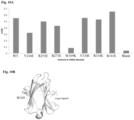
- the antibody may bind an epitope comprising at least residue W309.
- the epitope to which the anti-Galectin-9 antibody may bind does not contain one or more of R253, R271, Y330, R334, R341, and Y236 of SEQ ID NO: 1.
- the epitope to which the anti-Galectin antibody may bind is a linear epitope encompassing residue W309.
- the epitope to which the anti-Galectin antibody may bind is a conformational epitope comprising W309.
- the anti-Galectin-9 antibody comprises the same V H and/or V L CDRs as an exemplary antibody described herein.
- Two antibodies having the same V H and/or V L CDRs means that their CDRs are identical when determined by the same approach ( e.g., the Kabat approach or the Chothia approach as known in the art).
- Such anti-Galectin-9 antibodies may have the same V H , the same V L , or both as compared to an exemplary antibody described herein.
- Two heavy chain variable regions (or two light chain variable regions) having the same CDRs means that the CDRs in the two heavy chain variable regions (or light chain variable regions) as determined by the same numbering scheme are identical.
- Exemplary numbering schemes for determining antibody CDRs include the "Kabat” numbering scheme (Kabat et al. (1991), 5th Ed. Public Health Service, National Institutes of Health, Bethesda, Md.), the “Chothia” numbering scheme ( Al-Lazikani et al., (1997) JMB 273,927-948 ), the “Contact” numbering scheme ( MacCallum et al., J. Mol. Biol.
- a functional variant comprises substantially the same V H and V L CDRs as the exemplary antibody.
- it may comprise only up to 5 (e.g., 4, 3, 2, or 1) amino acid residue variations in the total CDR regions of the antibody and binds the same epitope of Galectin-9 with substantially similar affinity (e.g., having a K D value in the same order).
- the amino acid residue variations are conservative amino acid residue substitutions.
- a "conservative amino acid substitution” refers to an amino acid substitution that does not alter the relative charge or size characteristics of the protein in which the amino acid substitution is made.
- Variants can be prepared according to methods for altering polypeptide sequence known to one of ordinary skill in the art such as are found in references which compile such methods, e.g. Molecular Cloning: A Laboratory Manual, J. Sambrook, et al., eds., Second Edition, Cold Spring Harbor Laboratory Press, Cold Spring Harbor, New York, 1989 , or Current Protocols in Molecular Biology, F.M. Ausubel, et al., eds., John Wiley & Sons, Inc., New York .
- amino acids include substitutions made amongst amino acids within the following groups: (a) M, I, L, V; (b) F, Y, W; (c) K, R, H; (d) A, G; (e) S, T; (f) Q, N; and (g) E, D.
- Gapped BLAST can be utilized as described in Altschul et al., Nucleic Acids Res. 25(17):3389-3402, 1997 .
- the default parameters of the respective programs e.g., XBLAST and NBLAST
- the anti-Galectin-9 antibody may comprise a heavy chain variable region framework derived from a subclass of germline VH fragment. Such germline VH regions are well known in the art. See, e.g., the IMGT database (www.imgt.org) or at www.vbase2.org/vbstat.php.
- Examples include the IGHV1 subfamily (e.g., IGHV1-2, IGHV1-3, IGHV1-8, IGHV1-18, IGHV1-24, IGHV1-45, IGHV1-46, IGHV1-58, and IGHV1-69), the IGHV2 subfamily (e.g., IGHV2-5, IGHV2-26, and IGHV2-70), the IGHV3 subfamily ( e.g., IGHV3-7, IGHV3-9, IGHV3-11, IGHV3-13, IGHV3-15, IGHV3-20, IGHV3-21, IGHV3-23, IGHV3-30, IGHV3-33, IGHV3-43, IGHV3-48, IGHV3-49, IGHV3-53, IGHV3-64, IGHV3-66, IGHV3-72, and IGHV3-73, IGHV3-74), the IGHV4 subfamily (e.g., IGHV4-4, IGHV4-
- the anti-Galectin-9 antibody may comprise a light chain variable region that contains a framework derived from a germline V ⁇ fragment.
- a framework derived from a germline V ⁇ fragment examples include an IGKV1 framework (e.g., IGKV1-05, IGKV1-12, IGKV1-27, IGKV1-33, or IGKV1-39), an IGKV2 framework ( e.g., IGKV2-28), an IGKV3 framework ( e.g., IGKV3-11, IGKV3-15, or IGKV3-20), and an IGKV4 framework ( e.g., IGKV4-1).
- an IGKV1 framework e.g., IGKV1-05, IGKV1-12, IGKV1-27, IGKV1-33, or IGKV1-39
- an IGKV2 framework e.g., IGKV2-28
- an IGKV3 framework
- the anti-Galectin-9 antibody may comprise a light chain variable region that contains a framework derived from a germline V ⁇ fragment.
- a framework derived from a germline V ⁇ fragment examples include an IG ⁇ 1 framework (e.g., IG ⁇ V1-36, IG ⁇ V1-40, IG ⁇ V1-44, IG ⁇ V1-47, IG ⁇ V1-51), an IG ⁇ 2 framework (e.g., IG ⁇ V2-8, IG ⁇ V2-11, IG ⁇ V2-14, IG ⁇ V2-18, IG ⁇ V2-23,), an IG ⁇ 3 framework (e.g., IG ⁇ V3-1, IG ⁇ V3-9, IG ⁇ V3-10, IG ⁇ V3-12, IG ⁇ V3-16, IG ⁇ V3-19, IG ⁇ V3-21, IG ⁇ V3-25, IG ⁇ V3-27,), an IG ⁇ 4 framework (e.g., IG ⁇ V4-3, IG ⁇ V4-60, IG ⁇ V4-69,), an IG ⁇ 5 framework
- the heavy chain of any of the anti-Galectin-9 antibodies as described herein may further comprise a heavy chain constant region (CH) or a portion thereof (e.g., CH1, CH2, CH3, or a combination thereof).
- the heavy chain constant region can be of any suitable origin, e.g., human, mouse, rat, or rabbit.
- the heavy chain constant region is from a human IgG (a gamma heavy chain) of any IgG subfamily as described herein.
- the heavy chain constant region of the antibodies described herein may comprise a single domain (e.g., CH1, CH2, or CH3) or a combination of any of the single domains, of a constant region ( e.g., SEQ ID NO: 419-423).
- the light chain constant region of the antibodies described herein may comprise a single domain (e.g., CL), of a constant region ( e.g., SEQ ID NO: 418).
- Exemplary light and heavy chain sequences are listed below.
- the hIgG1 LALA sequence includes two mutations, L234A and L235A, which suppress FcgR binding as well as a P329G mutation to abolish complement C1q binding, thus abolishing all immune effector functions.
- the hIgG4 Fab Arm Exchange Mutant sequence includes a mutation to suppress Fab Arm Exchange (S228P), underlined and bolded.
- the light chain sequence for G9.2-17 is identical among all G9.-2-17 constructs.
- the light chain sequence for G9.1-8m13 is identical among all G9.1-8m13 constructs.
- Bolded residues are the VH and VL regions.
- a IL2 signal sequence (MYRMQLLSCIALSLALVTNS; SEQ ID NO:469 is located N-terminally of the variable region. It is used in expression vectors, which is cleaved during secretion and thus not in the mature antibody molecule.
- the mature protein (after secretion) starts with "EVQ" for the heavy chain and "DIM" for the light chain.
- the anti-Galectin 9 antibody has a light chain comprising, consisting essentially of, or consisting of SEQ ID NO: 108. In some embodiments, the anti-Galectin 9 antibody has a heavy chain comprising, consisting essentially of, or consisting of any one of the sequences selected from the group consisting of SEQ ID NO: 316. In some embodiments, the anti-Galectin 9 antibody has a light chain comprising, consisting essentially of, or consisting of SEQ ID NO: 108 and a heavy chain comprising, consisting essentially of, or consisting of SEQ ID NO: 316.
- the constant region of the anti-Galectin-9 antibody may comprise a light chain IgG4 constant region that has at least 80% (e.g., 85%, 90%, 95%, 96%, 97%, 98%, 99% and any increment therein) sequence identity to SEQ ID NO: 418.
- the constant region of the anti-Galectin-9 antibody comprises a light chain IgG4 constant region comprising SEQ ID No: 418.
- the constant region of the anti-Galectin-9 antibody comprises a light chain IgG4 constant region consisting of SEQ ID NO: 418.
- the constant region is from a human IgG1.
- the constant region of the anti-Galectin-9 antibody comprises a light chain IgG1 constant region comprising SEQ ID NO: 418. In one embodiment, the constant region of the anti-Galectin-9 antibody comprises a light chain IgG4 constant region consisting of SEQ ID NO: 418.
- the anti-Galectin-9 antibody comprises a modified constant region.
- the anti-Galectin-9 antibody comprise a modified constant region that is immunologically inert, e.g., does not trigger complement mediated lysis, or does not stimulate antibody-dependent cell mediated cytotoxicity (ADCC). ADCC activity can be assessed using methods disclosed in U.S. Pat. No. 5,500,362 .
- the constant region is modified as described in Eur. J. Immunol. (1999) 29:2613-2624 ; PCT Application No. PCT/GB99/01441 ; and/or UK Patent Application No. 9809951.8 .
- the IgG4 constant region is a mutant with reduced heavy chain exchange. In some embodiments, the constant region is from a human IgG4 Fab Arm Exchange mutant S229P.
- the constant region of the anti-Galectin-9 antibody comprises a heavy chain IgG4 constant region that has at least 80% (e.g., 85%, 90%, 95%, 96%, 97%, 98%, 99% and any increment therein) sequence identity to SEQ ID NO: 422. In one embodiment, the constant region of the anti-Galectin-9 antibody comprises a heavy chain IgG4 constant region comprising SEQ ID NO: 422.
- the constant region of the anti-Galectin-9 antibody comprises a heavy chain IgG4 constant region consisting of SEQ ID NO: 422. In some embodiments, the constant region of the anti-Galectin-9 antibody comprises a light chain IgG4 constant region that has at least 80% (e.g., 85%, 90%, 95%, 96%, 97%, 98%, 99% and any increment therein) sequence identity to SEQ ID NO: 418. In one embodiment, the constant region of the anti-Galectin-9 antibody comprises a light chain IgG4 constant region comprising SEQ ID NO: 418. In one embodiment, the constant region of the anti-Galectin-9 antibody comprises a light chain IgG4 constant region consisting of SEQ ID NO: 418.
- the constant region of the anti-Galectin-9 antibody comprises a light chain IgG1 constant region that has at least 80% (e.g., 85%, 90%, 95%, 96%, 97%, 98%, 99% and any increment therein) sequence identity to SEQ ID NO: 418.
- the constant region of the anti-Galectin-9 antibody comprises a light chain IgG1 constant region comprising SEQ ID NO: 418.
- the constant region of the anti-Galectin-9 antibody comprises a light chain IgG4 constant region consisting of SEQ ID NO: 418.
- Light chains of anti-Galectin-9 antibodies may consist of an amino acid sequence that has at least 80% (e.g., 85%, 90%, 95%, 96%, 97%, 98%, 99% and any increment therein) sequence identity to the light chain sequence set forth in SEQ ID NO: 108.
- Light chains of anti-Galectin-9 antibodies comprise an amino acid sequence set forth in SEQ ID NO: 108 (or their variable regions). In some embodiments, light chains of anti-Galectin-9 antibodies consist set forth in SEQ ID NO: 108.
- heavy chains of anti-Galectin-9 antibodies comprise an amino acid sequence that has at least 80% (e.g., 85%, 90%, 95%, 96%, 97%, 98%, 99% and any increment therein) sequence identity to the heavy chain sequence set forth in SEQ ID NO: 316 (or its variable region).
- heavy chains of anti-Galectin-9 antibodies consist of an amino acid sequence that has at least 80% (e.g., 85%, 90%, 95%, 96%, 97%, 98%, 99% and any increment therein) sequence identity to the heavy chain sequence set forth in SEQ ID NO: 316.
- heavy chains of anti-Galectin-9 antibodies comprise an amino acid sequence set forth in SEQ ID NO: 316 (or its variable region). In some embodiments, heavy chains of anti-Galectin-9 antibodies consist of an amino acid sequence set forth in SEQ ID NO: 316.
- the anti-Galectin-9 antibodies or antigen-binding portion thereof comprise a light chain having the sequence of SEQ ID NO: 108 and a heavy chain having a sequence of SEQ ID NO: 316.
- the anti-Galectin-9 antibodies or antigen-binding portion thereof comprise a light chain sequence of SEQ ID NO: 108 and comprise a heavy chain sequence of SEQ ID NO: 316.
- light chains of anti-Galectin-9 antibodies comprise an amino acid sequence that has at least 80% (e.g., 85%, 90%, 95%, 96%, 97%, 98%, 99% and any increment therein) sequence identity to the light chain sequence set forth in SEQ ID NO: 108 (or their variable regions) and heavy chains of anti-Galectin-9 antibodies comprise an amino acid sequence that has at least 80% (e.g., 85%, 90%, 95%, 96%, 97%, 98%, 99% and any increment therein) sequence identity to the heavy chain sequence set forth in SEQ ID NO: 316 (or its variable region).
- light chains of anti-Galectin-9 antibodies consist of an amino acid sequence that has at least 80% (e.g., 85%, 90%, 95%, 96%, 97%, 98%, 99% and any increment therein) sequence identity to the light chain sequence set forth in SEQ ID NO: 108 and heavy chains of anti-Galectin-9 antibodies consist of an amino acid sequence that has at least 80% (e.g., 85%, 90%, 95%, 96%, 97%, 98%, 99% and any increment therein) sequence identity to the heavy chain sequence set forth in SEQ ID NO: 316.
- light chains of anti-Galectin-9 antibodies comprise an amino acid sequence set forth in SEQ ID NO: 108 (or their variable regions) and heavy chains of anti-Galectin-9 antibodies comprise an amino acid sequence set forth in SEQ ID NO: 316.
- light chains of anti-Galectin-9 antibodies consist of the amino acid sequence set forth in SEQ ID NO: 108 and heavy chains of anti-Galectin-9 antibodies consist of an amino acid sequence set forth in SEQ ID NO: 316.
- Antibody heavy and light chain constant regions are well known in the art, e.g., those provided in the IMGT database (www.imgt.org) or at www.vbase2.org/vbstat.php..
- Antibodies capable of binding Galectin-9 as described herein can be made by any method known in the art. See, for example, Harlow and Lane, (1998) Antibodies: A Laboratory Manual, Cold Spring Harbor Laboratory, New York .
- antibodies specific to a target antigen are made by conventional hybridoma technology.
- the full-length target antigen or a fragment thereof, optionally coupled to a carrier protein such as KLH, can be used to immunize a host animal for generating antibodies binding to that antigen.
- the route and schedule of immunization of the host animal are generally in keeping with established and conventional techniques for antibody stimulation and production, as further described herein. General techniques for production of mouse, humanized, and human antibodies are known in the art and are described herein.
- any mammalian subject including humans or antibody producing cells therefrom can be manipulated to serve as the basis for production of mammalian, including human hybridoma cell lines.
- the host animal is inoculated intraperitoneally, intramuscularly, orally, subcutaneously, intraplantar, and/or intradermally with an amount of immunogen, including as described herein.
- Hybridomas can be prepared from the lymphocytes and immortalized myeloma cells using the general somatic cell hybridization technique of Kohler, B. and Milstein, C. (1975) Nature 256:495-497 or as modified by Buck, D. W., et al., In Vitro, 18:377-381 (1982 ).
- Available myeloma lines including, but not limited to, X63-Ag8.653 and those from the Salk Institute, Cell Distribution Center, San Diego, Calif., USA, may be used in the hybridization.
- the technique involves fusing myeloma cells and lymphoid cells using a fusogen such as polyethylene glycol, or by electrical means well known to those skilled in the art.
- the cells are separated from the fusion medium and grown in a selective growth medium, such as hypoxanthine-aminopterin-thymidine (HAT) medium, to eliminate unhybridized parent cells.
- a selective growth medium such as hypoxanthine-aminopterin-thymidine (HAT) medium
- HAT hypoxanthine-aminopterin-thymidine
- Any of the media described herein, supplemented with or without serum, can be used for culturing hybridomas that secrete monoclonal antibodies.
- EBV immortalized B cells may be used to produce the anti-Galectin-9 monoclonal antibodies described herein.
- hybridomas are expanded and subcloned, if desired, and supernatants are assayed for anti-immunogen activity by conventional immunoassay procedures (e.g., radioimmunoassay, enzyme immunoassay, or fluorescence immunoassay).
- immunoassay procedures e.g., radioimmunoassay, enzyme immunoassay, or fluorescence immunoassay.
- Hybridomas that may be used as source of antibodies encompass all derivatives, progeny cells of the parent hybridomas that produce monoclonal antibodies capable of interfering with the Galectin-9 activity.
- Hybridomas that produce such antibodies may be grown in vitro or in vivo using known procedures.
- the monoclonal antibodies may be isolated from the culture media or body fluids, by conventional immunoglobulin purification procedures such as ammonium sulfate precipitation, gel electrophoresis, dialysis, chromatography, and ultrafiltration, if desired.
- Undesired activity if present, can be removed, for example, by running the preparation over adsorbents made of the immunogen attached to a solid phase and eluting or releasing the desired antibodies off the immunogen.
- a target antigen or a fragment containing the target amino acid sequence conjugated to a protein that is immunogenic in the species to be immunized e.g., keyhole limpet hemocyanin, serum
- an antibody (monoclonal or polyclonal) of interest may be sequenced and the polynucleotide sequence may then be cloned into a vector for expression or propagation.
- the sequence encoding the antibody of interest may be maintained in vector in a host cell and the host cell can then be expanded and frozen for future use.
- the polynucleotide sequence may be used for genetic manipulation to "humanize” the antibody or to improve the affinity (affinity maturation), or other characteristics of the antibody.
- the constant region may be engineered to more resemble human constant regions to avoid immune response if the antibody is used in clinical trials and treatments in humans.
- Fully human antibodies are obtained using commercially available mice that have been engineered to express specific human immunoglobulin proteins.
- Transgenic animals that are designed to produce a more desirable (e.g., fully human antibodies) or more robust immune response may also be used for generation of humanized or human antibodies. Examples of such technology are Xenomouse RTM from Amgen, Inc. (Fremont, Calif.) and HuMAb-Mouse RTM and TC MouseTM from Medarex, Inc. (Princeton, N.J.).
- antibodies are made recombinantly by phage display or yeast technology. See, for example, U.S. Pat. Nos.
- phage display technology McCafferty et al., (1990) Nature 348:552-553 ) is used to produce human antibodies and antibody fragments in vitro, from immunoglobulin variable (V) domain gene repertoires from unimmunized donors.
- antibodies capable of binding to the target antigens as described herein are isolated from a suitable antibody library.
- Antibody libraries which contain a plurality of antibody components, can be used to identify antibodies that bind to a specific target antigen (e.g., the CRD1 or CRD2 of Galectin-9 in this case) following routine selection processes as known in the art.
- a specific target antigen e.g., the CRD1 or CRD2 of Galectin-9 in this case
- an antibody library can be probed with the target antigen or a fragment thereof and members of the library that are capable of binding to the target antigen can be isolated, typically by retention on a support.
- Such screening process may be performed by multiple rounds (e.g., including both positive and negative selections) to enrich the pool of antibodies capable of binding to the target antigen.
- sequences of the heavy chain and light chain variable domains can also be determined via conventional methodology. There are a number of routine methods known in the art to identify and isolate antibodies capable of binding to the target antigens described herein, including phage display, yeast display, ribosomal display, or mammalian display technology.
- phage displays typically use a covalent linkage to bind the protein (e.g., antibody) component to a bacteriophage coat protein.
- the linkage results from translation of a nucleic acid encoding the antibody component fused to the coat protein.
- the linkage can include a flexible peptide linker, a protease site, or an amino acid incorporated as a result of suppression of a stop codon. Phage display is described, for example, in U.S. Pat. No.
- Bacteriophage displaying the protein component can be grown and harvested using standard phage preparatory methods, e.g. PEG precipitation from growth media. After selection of individual display phages, the nucleic acid encoding the selected protein components can be isolated from cells infected with the selected phages or from the phage themselves, after amplification. Individual colonies or plaques can be selected, and then the nucleic acid may be isolated and sequenced.
- Other display formats include cell-based display (see, e.g., WO 03/029456 ), protein-nucleic acid fusions (see, e.g., U.S. Pat. No. 6,207,446 ), ribosome display (See, e.g., Mattheakis et al. (1994) Proc. Natl. Acad. Sci. USA 91:9022 and Hanes et al. (2000) Nat Biotechnol. 18:1287-92 ; Hanes et al. (2000) Methods Enzymol. 328:404-30 ; and Schaffitzel et al. (1999) J Immunol Methods. 231(1-2):119-35 ), and E. coli periplasmic display ( J Immunol Methods. 2005 Nov 22;PMID: 16337958 ).
- each isolated library member can be also tested for its ability to bind to a non-target molecule to evaluate its binding specificity.
- non-target molecules include streptavidin on magnetic beads, blocking agents such as bovine serum albumin, non-fat bovine milk, soy protein, any capturing or target immobilizing monoclonal antibody, or non-transfected cells which do not express the target.
- a high-throughput ELISA screen can be used to obtain the data, for example.
- the ELISA screen can also be used to obtain quantitative data for binding of each library member to the target as well as for cross species reactivity to related targets or subunits of the target antigen and also under different condition such as pH 6 or pH 7.5.
- the non-target and target binding data are compared ( e.g., using a computer and software) to identify library members that specifically bind to the target.
- each candidate library member can be further analyzed, e.g., to further characterize its binding properties for the target, e.g., Galectin-9.
- Each candidate library member can be subjected to one or more secondary screening assays.
- the assay can be for a binding property, a catalytic property, an inhibitory property, a physiological property (e.g., cytotoxicity, renal clearance, immunogenicity), a structural property (e.g., stability, conformation, oligomerization state) or another functional property.
- the same assay can be used repeatedly, but with varying conditions, e.g., to determine pH, ionic, or thermal sensitivities.
- the assays can use a display library member directly, a recombinant polypeptide produced from the nucleic acid encoding the selected polypeptide, or a synthetic peptide synthesized based on the sequence of the selected polypeptide.
- the Fabs can be evaluated or can be modified and produced as intact IgG proteins. Exemplary assays for binding properties are described below.
- Binding proteins can also be evaluated using an ELISA assay. For example, each protein is contacted to a microtitre plate whose bottom surface has been coated with the target, e.g., a limiting amount of the target. The plate is washed with buffer to remove non-specifically bound polypeptides. Then the amount of the binding protein bound to the target on the plate is determined by probing the plate with an antibody that can recognize the binding protein, e.g., a tag or constant portion of the binding protein. The antibody is linked to a detection system (e.g., an enzyme such as alkaline phosphatase or horse radish peroxidase (HRP) which produces a colorimetric product when appropriate substrates are provided).
- a detection system e.g., an enzyme such as alkaline phosphatase or horse radish peroxidase (HRP) which produces a colorimetric product when appropriate substrates are provided.
- the ability of a binding protein described herein to bind a target antigen can be analyzed using a homogenous assay, i.e., after all components of the assay are added, additional fluid manipulations are not required.
- FRET fluorescence resonance energy transfer
- FRET fluorescence resonance energy transfer
- a fluorophore label on the first molecule is selected such that its emitted fluorescent energy can be absorbed by a fluorescent label on a second molecule ( e.g., the target) if the second molecule is in proximity to the first molecule.
- the fluorescent label on the second molecule fluoresces when it absorbs to the transferred energy. Since the efficiency of energy transfer between the labels is related to the distance separating the molecules, the spatial relationship between the molecules can be assessed. In a situation in which binding occurs between the molecules, the fluorescent emission of the 'acceptor' molecule label in the assay should be maximal.
- a binding event that is configured for monitoring by FRET can be conveniently measured through standard fluorometric detection means, e.g., using a fluorimeter. By titrating the amount of the first or second binding molecule, a binding curve can be generated to estimate the equilibrium binding constant.
- SPR Surface plasmon resonance
- BIA Biomolecular Interaction Analysis
- Changes in the mass at the binding surface (indicative of a binding event) of the BIA chip result in alterations of the refractive index of light near the surface (the optical phenomenon of SPR).
- the changes in the refractivity generate a detectable signal, which are measured as an indication of real-time reactions between biological molecules.
- Information from SPR can be used to provide an accurate and quantitative measure of the equilibrium dissociation constant (K D ), and kinetic parameters, including K on and K off , for the binding of a binding protein to a target.
- K D equilibrium dissociation constant
- kinetic parameters including K on and K off
- Such data can be used to compare different biomolecules. For example, selected proteins from an expression library can be compared to identify proteins that have high affinity for the target or that have a slow K off .
- This information can also be used to develop structure-activity relationships (SAR). For example, the kinetic and equilibrium binding parameters of matured versions of a parent protein can be compared to the parameters of the parent protein. Variant amino acids at given positions can be identified that correlate with particular binding parameters, e.g., high affinity and slow K off .
- This information can be combined with structural modeling (e.g., using homology modeling, energy minimization, or structure determination by x-ray crystallography or NMR).
- structural modeling e.g., using homology modeling, energy minimization, or structure determination by x-ray crystallography or NMR.
- Binding proteins can be screened for ability to bind to cells which transiently or stably express and display the target of interest on the cell surface.
- Galectin-9 binding proteins can be fluorescently labeled and binding to Galectin-9 in the presence or absence of antagonistic antibody can be detected by a change in fluorescence intensity using flow cytometry e.g., a FACS machine.
- Antigen-binding fragments of an intact antibody can be prepared via routine methods.
- F(ab')2 fragments can be produced by pepsin digestion of an antibody molecule, and Fab fragments that can be generated by reducing the disulfide bridges of F(ab')2 fragments.
- DNA encoding a monoclonal antibodies specific to a target antigen can be readily isolated and sequenced using conventional procedures (e.g., by using oligonucleotide probes that are capable of binding specifically to genes encoding the heavy and light chains of the monoclonal antibodies). Once isolated, the DNA may be placed into one or more expression vectors, which are then transfected into host cells such as E.
- coli cells simian COS cells, Chinese hamster ovary (CHO) cells, or myeloma cells that do not otherwise produce immunoglobulin protein, to obtain the synthesis of monoclonal antibodies in the recombinant host cells. See, e.g., PCT Publication No. WO 87/04462 .
- the DNA can then be modified, for example, by substituting the coding sequence for human heavy and light chain constant domains in place of the homologous murine sequences, Morrison et al., (1984) Proc. Nat. Acad. Sci.
- genetically engineered antibodies such as “chimeric” or “hybrid” antibodies; can be prepared that have the binding specificity of a target antigen.
- variable regions of V H and V L of a parent non-human antibody are subjected to three-dimensional molecular modeling analysis following methods known in the art.
- framework amino acid residues predicted to be important for the formation of the correct CDR structures are identified using the same molecular modeling analysis.
- human V H and V L chains having amino acid sequences that are homologous to those of the parent non-human antibody are identified from any antibody gene database using the parent V H and V L sequences as search queries. Human V H and V L acceptor genes are then selected.
- the CDR regions within the selected human acceptor genes can be replaced with the CDR regions from the parent non-human antibody or functional variants thereof.
- residues within the framework regions of the parent chain that are predicted to be important in interacting with the CDR regions can be used to substitute for the corresponding residues in the human acceptor genes.
- a single-chain antibody can be prepared via recombinant technology by linking a nucleotide sequence coding for a heavy chain variable region and a nucleotide sequence coding for a light chain variable region.
- a flexible linker is incorporated between the two variable regions.
- techniques described for the production of single chain antibodies U.S. Patent Nos. 4,946,778 and 4,704,692 ) can be adapted to produce a phage or yeast scFv library and scFv clones specific to Galectin-9 can be identified from the library following routine procedures. Positive clones can be subjected to further screening to identify those that inhibit Galectin-9 activity.
- Antibodies obtained following a method known in the art and described herein can be characterized using methods well known in the art. For example, one method is to identify the epitope to which the antigen binds, or "epitope mapping.” There are many methods known in the art for mapping and characterizing the location of epitopes on proteins, including solving the crystal structure of an antibody-antigen complex, competition assays, gene fragment expression assays, and synthetic peptide-based assays, as described, for example, in Chapter 11 of Harlow and Lane, Using Antibodies, a Laboratory Manual, Cold Spring Harbor Laboratory Press, Cold Spring Harbor, N.Y., 1999 . In an additional example, epitope mapping can be used to determine the sequence, to which an antibody binds.
- the epitope can be a linear epitope, i.e., contained in a single stretch of amino acids, or a conformational epitope formed by a three-dimensional interaction of amino acids that may not necessarily be contained in a single stretch (primary structure linear sequence).
- Peptides of varying lengths e.g., at least 4-6 amino acids long
- the epitope to which the antibody binds can be determined in a systematic screening by using overlapping peptides derived from the target antigen sequence and determining binding by the antibody.
- the open reading frame encoding the target antigen is fragmented either randomly or by specific genetic constructions and the reactivity of the expressed fragments of the antigen with the antibody to be tested is determined.
- the gene fragments may, for example, be produced by PCR and then transcribed and translated into protein in vitro, in the presence of radioactive amino acids. The binding of the antibody to the radioactively labeled antigen fragments is then determined by immunoprecipitation and gel electrophoresis. Certain epitopes can also be identified by using large libraries of random peptide sequences displayed on the surface of phage particles (phage libraries). Alternatively, a defined library of overlapping peptide fragments can be tested for binding to the test antibody in simple binding assays.
- mutagenesis of an antigen binding domain can be performed to identify residues required, sufficient, and/or necessary for epitope binding.
- domain swapping experiments can be performed using a mutant of a target antigen in which various fragments of the Galectin-9 polypeptide have been replaced (swapped) with sequences from a closely related, but antigenically distinct protein (such as another member of the ⁇ -galactoside-binding soluble lectin family).
- competition assays can be performed using other antibodies known to bind to the same antigen to determine whether an antibody binds to the same epitope as the other antibodies. Competition assays are well known to those of skill in the art.
- an anti-Galectin-9 antibody is prepared by recombinant technology as exemplified below.
- Nucleic acids encoding the heavy and light chain of an anti-Galectin-9 antibody as described herein can be cloned into one expression vector, each nucleotide sequence being in operable linkage to a suitable promoter.
- each of the nucleotide sequences encoding the heavy chain and light chain is in operable linkage to a distinct promoter.
- the nucleotide sequences encoding the heavy chain and the light chain can be in operable linkage with a single promoter, such that both heavy and light chains are expressed from the same promoter.
- an internal ribosomal entry site IRS
- the nucleotide sequences encoding the two chains of the antibody are cloned into two vectors, which can be introduced into the same or different cells.
- the two chains are expressed in different cells, each of them can be isolated from the host cells expressing such and the isolated heavy chains and light chains can be mixed and incubated under suitable conditions allowing for the formation of the antibody.
- a nucleic acid sequence encoding one or all chains of an antibody can be cloned into a suitable expression vector in operable linkage with a suitable promoter using methods known in the art.
- the nucleotide sequence and vector can be contacted, under suitable conditions, with a restriction enzyme to create complementary ends on each molecule that can pair with each other and be joined together with a ligase.
- synthetic nucleic acid linkers can be ligated to the termini of a gene. These synthetic linkers contain nucleic acid sequences that correspond to a particular restriction site in the vector. The selection of expression vectors/promoter would depend on the type of host cells for use in producing the antibodies.
- promoters can be used for expression of the antibodies described herein, including, but not limited to, cytomegalovirus (CMV) intermediate early promoter, a viral LTR such as the Rous sarcoma virus LTR, HIV-LTR, HTLV-1 LTR, the simian virus 40 (SV40) early promoter, E. coli lac UV5 promoter, and the herpes simplex tk virus promoter.
- CMV cytomegalovirus
- a viral LTR such as the Rous sarcoma virus LTR, HIV-LTR, HTLV-1 LTR
- SV40 simian virus 40
- E. coli lac UV5 promoter E. coli lac UV5 promoter
- herpes simplex tk virus promoter the herpes simplex tk virus promoter.
- Regulatable promoters can also be used.
- Such regulatable promoters include those using the lac repressor from E. coli as a transcription modulator to regulate transcription from lac operator-bearing mammalian cell promoters [ Brown, M. et al., Cell, 49:603-612 (1987 )], those using the tetracycline repressor (tetR) [ Gossen, M., and Bujard, H., Proc. Natl. Acad. Sci. USA 89:5547-5551 (1992 ); Yao, F. et al., Human Gene Therapy, 9:1939-1950 (1998 ); Shockelt, P., et al., Proc. Natl. Acad. Sci.
- Regulatable promoters that include a repressor with the operon can be used.
- the lac repressor from E. coli can function as a transcriptional modulator to regulate transcription from lac operator-bearing mammalian cell promoters ( M. Brown et al., Cell, 49:603-612 (1987 ); Gossen and Bujard (1992); M. Gossen et al., Natl. Acad. Sci.
- tetracycline repressor tetR
- VP 16 transcription activator
- tetR-VP 16 tetR-mammalian cell transcription activator fusion protein
- tetO-bearing minimal promoter derived from the human cytomegalovirus (hCMV) major immediate-early promoter to create a tetR-tet operator system to control gene expression in mammalian cells.
- hCMV human cytomegalovirus
- a tetracycline inducible switch is used.
- the tetracycline repressor (tetR) alone, rather than the tetR-mammalian cell transcription factor fusion derivatives can function as potent trans-modulator to regulate gene expression in mammalian cells when the tetracycline operator is properly positioned downstream for the TATA element of the CMVIE promoter ( Yao et al., Human Gene Therapy, 10(16):1392-1399 (2003 )).
- One particular advantage of this tetracycline inducible switch is that it does not require the use of a tetracycline repressor-mammalian cells transactivator or repressor fusion protein, which in some instances can be toxic to cells ( Gossen et al., Natl. Acad. Sci. USA, 89:5547-5551 (1992 ); Shockett et al., Proc. Natl. Acad. Sci. USA, 92:6522-6526 (1995 )), to achieve its regulatable effects.
- the vector can contain, for example, some or all of the following: a selectable marker gene, such as the neomycin gene for selection of stable or transient transfectants in mammalian cells; enhancer/promoter sequences from the immediate early gene of human CMV for high levels of transcription; transcription termination and RNA processing signals from SV40 for mRNA stability; SV40 polyoma origins of replication and ColE1 for proper episomal replication; internal ribosome binding sites (IRESes), versatile multiple cloning sites; and T7 and SP6 RNA promoters for in vitro transcription of sense and antisense RNA.
- a selectable marker gene such as the neomycin gene for selection of stable or transient transfectants in mammalian cells
- enhancer/promoter sequences from the immediate early gene of human CMV for high levels of transcription
- transcription termination and RNA processing signals from SV40 for mRNA stability
- SV40 polyoma origins of replication and ColE1 for proper episomal replication
- One or more vectors comprising nucleic acids encoding any of the antibodies may be introduced into suitable host cells for producing the antibodies.
- the host cells can be cultured under suitable conditions for expression of the antibody or any polypeptide chain thereof.
- Such antibodies or polypeptide chains thereof can be recovered by the cultured cells (e.g., from the cells or the culture supernatant) via a conventional method, e.g., affinity purification. If necessary, polypeptide chains of the antibody can be incubated under suitable conditions for a suitable period of time allowing for production of the antibody.
- two recombinant expression vectors are provided, one encoding the heavy chain of the anti-Galectin-9 antibody and the other encoding the light chain of the anti-Galectin-9 antibody.
- Both of the two recombinant expression vectors can be introduced into a suitable host cell (e.g., dhfr- CHO cell) by a conventional method, e.g., calcium phosphate-mediated transfection.
- each of the expression vectors can be introduced into a suitable host cells. Positive transformants can be selected and cultured under suitable conditions allowing for the expression of the polypeptide chains of the antibody.
- the antibody produced therein can be recovered from the host cells or from the culture medium.
- Standard molecular biology techniques are used to prepare the recombinant expression vector, transfect the host cells, select for transformants, culture the host cells and recovery of the antibodies from the culture medium.
- some antibodies can be isolated by affinity chromatography with a Protein A or Protein G coupled matrix.
- nucleic acids encoding the heavy chain, the light chain, or both of an anti-Galectin-9 antibody as described herein, vectors (e.g., expression vectors) containing such; and host cells comprising the vectors are within the scope of the present disclosure.
- Anti-Galectin-9 antibodies thus prepared can be characterized using methods known in the art, whereby reduction, amelioration, or neutralization of Galectin-9 biological activity is detected and/or measured.
- an ELISA-type assay may be suitable for qualitative or quantitative measurement of Galectin-9 inhibition of Dectin-1 or TIM-3 signaling.
- the bioactivity of an anti-Galectin-9 antibody can verified by incubating a candidate antibody with Dectin-1 and Galectin-9, and monitoring any one or more of the following characteristics: (a) binding between Dectin-1 and Galectin-9 and inhibition of the signaling transduction mediated by the binding; (b) preventing, ameliorating, or treating any aspect of a solid tumor; (c) blocking or decreasing Dectin-1 activation; (d) inhibiting (reducing) synthesis, production or release of Galectin-9.
- TIM-3 can be used to verify the bioactivity of an anti-Galectin-9 antibody using the protocol described above.
- CD206 can be used to verify the bioactivity of an anti-Galectin-9 antibody using the protocol described above.
- Additional assays to determine bioactivity of an anti-Galectin-9 antibody include measurement of CD8+ and CD4+ (conventional) T-cell activation (in an in vitro or in vivo assay, e.g., by measuring inflammatory cytokine levels, e.g., IFNgamma, TNFalpha, CD44, ICOS granzymeB, Perforin, IL2 (upregulation); CD26L and IL-10 (downregulation)); measurement of reprogramming of macrophages (in vitro or in vivo), e.g., from the M2 to the M1 phenotype (e.g., increased MHCII, reduced CD206, increased TNF-alpha and iNOS).
- levels of ADCC can be assessed, e.g., in an in vitro assay, as described herein.
- compositions comprising at least one anti-Galectin-9 antibody described herein or antigen binding fragment thereof and uses of such for inhibiting or reducing a signaling mediated by Galectin-9 or eliminating or reducing Galectin-9 positive cells.
- Any of the anti-Galectin-9 antibodies described herein can be used in any of the methods described herein.
- the anti-Galentin-9 antibody is selected from G9.1-1, G9.1-2, G9.1-3, G9.1-4, G9.1-5, G9.1-6, G9.1-7, G9.1-8, G9.1-9, G9.1-10, G9.1-11, G9.1-8m1, G9.1-8m2, G9.1-8m3, G9.1-8m4, G9.1-8m5, G9.1-8m6,G9.1-8m7, G9.1-8m8, G9.1-8m9, G9.1-8m10, G9.1-8m11, G9.1-8m12, G9.1-8m13, and G9.1-8m14, or combinations thereof.
- the anti-Galectin-9 antibody is selected from G9.2-1, G9.2-2, G9.2-3, G9.2-4, G9.2-5, G9.2-6, G9.2-7, G9.2-8, G9.2-9, G9.2-10, G9.2-11, G9.2-12, G9.2-13, G9.2-14, G9.2-15, G9.2-16, G9.2-17, G9.2-17mut6 , G9.2-18, G9.2-19, G9.2-20, G9.2-21, G9.2-22, G9.2-23, G9.2-24, G9.2-25, G9.2-26, and G9.2-low affinity binder, or combinations thereof.
- Non-limiting examples of such antibodies include for example antibody 9.2-17 or 9.1-8mut13.
- Such antibodies can be used for treating diseases associated with Galectin-9.
- the invention provides methods of treating cancer.
- the disclosure provides a method for treating cancer in a subject, the method comprising administering to a subject in need thereof an effective amount of an anti-Galectin-9 antibody described herein or antigen binding fragment thereof. In some embodiments, the disclosure provides a method for treating cancer in a subject, the method comprising administering to a subject in need thereof an effective amount of a pharmaceutical composition comprising an anti-Galectin-9 antibody described herein or antigen binding fragment thereof.
- the anti-Galectin-9 antibody is selected from the group consisting of G9.1-1, G9.1-2, G9.1-3, G9.1-4, G9.1-5, G9.1-6, G9.1-7, G9.1-8, G9.1-9, G9.1-10, G9.1-11, G9.1-8m1, G9.1-8m2, G9.1-8m3, G9.1-8m4, G9.1-8m5, G9.1-8m6,G9.1-8m7, G9.1-8m8, G9.1-8m9, G9.1-8m10, G9.1-8m11, G9.1-8m12, G9.1-8m13, and G9.1-8m14 antibodies , or combinations thereof.
- the anti-Galectin-9 antibody is selected from the group consisting of G9.2-1, G9.2-2, G9.2-3, G9.2-4, G9.2-5, G9.2-6, G9.2-7, G9.2-8, G9.2-9, G9.2-10, G9.2-11, G9.2-12, G9.2-13, G9.2-14, G9.2-15, G9.2-16, G9.2-17, G9.2-17mut6 , G9.2-18, G9.2-19, G9.2-20, G9.2-21, G9.2-22, G9.2-23, G9.2-24, G9.2-25, G9.2-26, and G9.2-low affinity binder antibodies, or combinations thereof.
- Non-limiting examples of such antibodies include for example antibody 9.2-17 or 9.1-8mut13.
- Galectin-9 Given that pro-tumor action of Galectin-9 is mediated through interaction with immune cells (i.e., interactions with with lymphoid cells via TIM-3, CD44, and 41BB, and with macrophages via dectin-1 and CD206) and given that Galectin-9 is expressed in a large number of tumors, targeting Galectin-9, e.g., using a Galectin-9 binding antibody to inhibit interaction with its receptors, provides a therapeutic approach that can be applied across a variety of different tumor types.
- immune cells i.e., interactions with with lymphoid cells via TIM-3, CD44, and 41BB, and with macrophages via dectin-1 and CD206
- the cancer is selected from adrenal cancer, adrenocortical carcinoma, anal cancer, appendix cancer, bile duct cancer, bladder cancer, bone cancer (e.g., Ewing sarcoma tumors, osteosarcoma, malignant fibrous histiocytoma), brain cancer (e.g., astrocytomas, brain stem glioma, craniopharyngioma, ependymoma), bronchial tumors, cholangiocarcinoma, cholangiosarcoma, central nervous system tumors, breast cancer, Castleman disease, cervical cancer, colon cancer, rectal cancer, colorectal cancer, endometrial cancer, esophageal cancer, eye cancer, gallbladder cancer, gastrointestinal cancer, gastrointestinal carcinoid tumors, gastrointestinal stromal tumors, genitourinary cancers, gestational trophoblastic disease, heart cancer, Kaposi sarcoma, kidney cancer, laryngeal
- bone cancer
- the cancer is selected from hematological malignancies include acute lymphoblastic leukemia, chronic lymphocytic leukemia, lymphomas, multiple myeloma, acute myelogenous leukemia, chronic myelogenous leukemia, myelodysplastic syndromes and the myeloproliferative neoplasms, such as essential thrombocythemia, polycythemia vera, myelofibrosis, and gallbladder cancer (adenocarcinomas or squamous cell carcinoma).
- the symptom(s) associated thereof include, but are not limited to, anemia, loss of appetite, irritation of bladder lining, bleeding and bruising (thrombocytopenia), changes in taste or smell, constipation, diarrhea, dry mouth, dysphagia, edema, fatigue, hair loss (alopecia), infection, infertility, lymphedema, mouth sores, nausea, pain, peripheral neuropathy, tooth decay, urinary tract infections, and/or problems with memory and concentration.
- the method may comprise preparing a pharmaceutical composition with an anti-Galectin-9 antibody described herein, and administering the pharmaceutical composition to a subject in a therapeutically effective amount.
- the disclosure provides a method for treating gall bladder cancer in a subject, the method comprising administering to a subject in need thereof an effective amount of an anti-Galectin-9 antibody described herein, e.g., in Table 1 or Table 2 herein, including but not limited to, 9.1-8m13 and/or 9.2-17, or an antigen binding fragment thereof.
- an anti-Galectin-9 antibody described herein e.g., in Table 1 or Table 2 herein, including but not limited to, 9.1-8m13 and/or 9.2-17, or an antigen binding fragment thereof.
- administering the pharmaceutical composition e.g., one or more of the anti-Galectin-9 antibodies described herein, e.g., in Table 1 and/or Table 2, including, but not limited to, 9.2-17 and 9.1-8m13, to the subject reduces cell proliferation, tumor growth, and/or tumor volume in a subject, or reduces the number of metastatic lesions over time.
- administering the composition results in complete response, partial response, or stable disease.
- Pancreatic ductal adenocarcinoma is a devastating disease with few long-term survivors ( Yadav et al., Gastroenterology, 2013, 144, 1252-1261 ). Inflammation is paramount in PDA progression as oncogenic mutations alone, in the absence of concomitant inflammation, are insufficient for tumorigenesis ( Guerra et al., Cancer Cell, 2007, 11, 291-302 ). Innate and adaptive immunity cooperate to promote tumor progression in PDA. In particular, specific innate immune subsets within the tumor microenvironment (TME) are apt at educating adaptive immune effector cells towards a tumor-permissive phenotype.
- TAE tumor microenvironment
- Antigen presenting cell (APC) populations including M2-polarized tumor-associated macrophages (TAMs) and myeloid dendritic cells (DC), induce the generation of immune suppressive Th2 cells in favor of tumor-protective Th1 cells ( Ochi et al., J of Exp Med., 2012, 209, 1671-1687 ; Zhu et al., Cancer Res., 2014, 74, 5057-5069 ) .
- APC Antigen presenting cell
- MDSC myeloid derived suppressor cells negate anti-tumor CD8+ cytotoxic T-Lymphocyte (CTL) responses in PDA and promote metastatic progression ( Connolly et al., J Leuk Biol., 2010, 87, 713-725 ; Pylayeva-Gupta et al., Cancer Cell, 2012, 21, 836-847 ; Bayne et al., Cancer Cell, 2012, 21, 822-835 ).
- CTL cytotoxic T-Lymphocyte
- dectin-1 on macrophages was shown to bind galectin-9 in pancreatic ductal adenocarcinoma (PDA) (Daley et al., 2017).
- PDA pancreatic ductal adenocarcinoma
- Removal of dectin-1 signaling resulted in a decrease in tumor infiltration of M2 type (suppressive CD206+) macrophages.
- antibody-based Galectin-9 neutralization only enhanced T cell activation in Dectin-1+/+ hosts, indicating that Galectin-9 exerts primary immune-suppressive effects specific to Dectin-1 signaling.
- the disclosure provides a method for treating pancreatic ductal adenocarcinoma (PDA) in a subject, the method comprising administering to a subject in need thereof an effective amount of an anti-Galectin-9 antibody described herein or antigen binding fragment thereof.
- PDA pancreatic ductal adenocarcinoma
- the anti-Galentin-9 antibody is selected from the group consisting of G9.1-1, G9.1-2, G9.1-3, G9.1-4, G9.1-5, G9.1-6, G9.1-7, G9.1-8, G9.1-9, G9.1-10, G9.1-11, G9.1-8m1, G9.1-8m2, G9.1-8m3, G9.1-8m4, G9.1-8m5, G9.1-8m6,G9.1-8m7, G9.1-8m8, G9.1-8m9, G9.1-8m10, G9.1-8m11, G9.1-8m12, G9.1-8m13, and G9.1-8m14 antibodies , and combinations thereof.
- the anti-Galectin-9 antibody is selected from the group consisting of G9.2-1, G9.2-2, G9.2-3, G9.2-4, G9.2-5, G9.2-6, G9.2-7, G9.2-8, G9.2-9, G9.2-10, G9.2-11, G9.2-12, G9.2-13, G9.2-14, G9.2-15, G9.2-16, G9.2-17, G9.2-17mut6 , G9.2-18, G9.2-19, G9.2-20, G9.2-21, G9.2-22, G9.2-23, G9.2-24, G9.2-25, G9.2-26, and G9.2-low affinity binder antibodies , and combinations thereof.
- Non-limiting examples of such antibodies include for example antibody 9.2-17 or 9.1-8mut13.
- the anti-Galectin-9 antibody is antibody 9.2-17 and/or antibody 9.1-8mut13.
- the disclosure provides the use of an anti-Galectin-9 antibody as a medicament for the treatment of cancer, wherein the anti-Galectin-9 antibody is any of the antibodies described herein in Table 1 and/or Table 2, and wherein the cancer is pancreatic ductal adenocarcinoma (PDA).
- the disclosure provides the use of an anti-Galectin-9 antibody as a medicament for the treatment of cancer, wherein the anti-Galectin-9 antibody is antibody 9.1-8m13 and/or 9.2-17, and wherein the cancer is pancreatic ductal adenocarcinoma (PDA).
- CRC Colorectal cancer
- bowel cancer also known as bowel cancer, colon cancer, or rectal cancer
- CRC is any cancer affecting the colon and the rectum.
- CRC is known to be driven by genetic alterations of tumor cells and is also influenced by tumor-host interactions. Recent reports have demonstrated a direct correlation between the densities of certain T lymphocyte subpopulations and a favorable clinical outcome in CRC, supporting a major role of T-cell-mediated immunity in repressing tumor progression of CRC.
- Tim-3 expression is associated with M2 macrophage polarization in colon cancer and promotes tumor growth.
- Blockade of the Tim-3 pathway inhibited both the polarization of tumor-supporting macrophages and colon cancer growth ( Jiang et al., Tim-3 promotes tumor-promoting M2 macrophage polarization by binding to STAT1 and suppressing the STAT1-miR-155 signaling axis; Oncoimmunology, 2016 Aug 3;5(9):e1211219 ).
- modulating the Galectin-9/TIM-3 axis by inhibiting the interaction between Galectin-9 and TIM-3, e.g., by administrating an antibody that binds to Galectin-9, is a novelapproach to treating such cancers in the clinic which may result in improved outcomes.
- the disclosure provides a method for treating colorectal cancer (CRC) in a subject, the method comprising administering to a subject in need thereof an effective amount of an anti-Galectin-9 antibody described herein or antigen binding fragment thereof.
- the anti-Galentin-9 antibody is selected from the group consisting of G9.1-1, G9.1-2, G9.1-3, G9.1-4, G9.1-5, G9.1-6, G9.1-7, G9.1-8, G9.1-9, G9.1-10, G9.1-11, G9.1-8m1, G9.1-8m2, G9.1-8m3, G9.1-8m4, G9.1-8m5, G9.1-8m6,G9.1-8m7, G9.1-8m8, G9.1-8m9, G9.1-8m10, G9.1-8m11, G9.1-8m12, G9.1-8m13, and G9.1-8m14 antibodies, and combinations thereof.
- the anti-Galectin-9 antibody is selected from the group consisting of G9.2-1, G9.2-2, G9.2-3, G9.2-4, G9.2-5, G9.2-6, G9.2-7, G9.2-8, G9.2-9, G9.2-10, G9.2-11, G9.2-12, G9.2-13, G9.2-14, G9.2-15, G9.2-16, G9.2-17, G9.2-17mut6 , G9.2-18, G9.2-19, G9.2-20, G9.2-21, G9.2-22, G9.2-23, G9.2-24, G9.2-25, G9.2-26, and G9.2-low affinity binder antibodies, and combinations thereof.
- Non-limiting examples of such antibodies include for example antibody 9.2-17 or 9.1-8mut13.
- the anti-Galectin-9 antibody is antibody 9.2-17 and/or antibody 9.1-8mut13.
- the disclosure provides the use of an anti-Galectin-9 antibody as a medicament for the treatment of cancer, wherein the anti-Galectin-9 antibody is any of the antibodies described herein in Table 1 and/or Table 2, and wherein the cancer is colorectal cancer(CRC).
- the disclosure provides the use of an anti-Galectin-9 antibody as a medicament for the treatment of cancer, wherein the anti-Galectin-9 antibody is antibody 9.1-8m13 and/or 9.2-17, and wherein the cancer is colorectal cancer (CRC).
- Melanoma is the deadliest form of skin cancer and has been increasing in incidence for the past 30 years, especially in young adults. Recent advances have resulted in the development of numerous immune-activating therapies that have greatly improved patient survival.
- galectin-9 is co-localized with the M2 macrophage population in metastatic melanoma and soluble forms of galectin-9 in the blood correspond with poor survival ( Enninga et al., Melanoma Res. 2016 Oct;26(5):429-41 ). Association of Galectin-9 with M2 macrophages was found to be due to Galectin-9 ligation to CD206 on M2 macrophages, which resulted in pro-tumor phenotype in the local microenvironment.
- Galectin-9/dectin-1 and Galectin-9/CD206 interactions may promote macrophage mediated immune suppressive effects.
- these findings indicate that inhibiting Galectin-9/dectin-1 and Galectin-9/CD206 interactions, e.g., by administering an antibody that binds to Galectin-9, may present a rationale for employing anti-Galectin-9 antibodies in a therapeutic approach in melanoma, which will lead to improved overall survival, in patients, including but not limited to those refractory to anti- CTLA-4, PD-1 and PD-L1/2 therapies.
- the disclosure provides a method for treating melanoma in a subject, the method comprising administering to a subject in need thereof an effective amount of an anti-Galectin-9 antibody described herein or antigen binding fragment thereof.
- the anti-Galentin-9 antibody is selected from the group consisting of G9.1-1, G9.1-2, G9.1-3, G9.1-4, G9.1-5, G9.1-6, G9.1-7, G9.1-8, G9.1-9, G9.1-10, G9.1-11, G9.1-8m1, G9.1-8m2, G9.1-8m3, G9.1-8m4, G9.1-8m5, G9.1-8m6,G9.1-8m7, G9.1-8m8, G9.1-8m9, G9.1-8m10, G9.1-8m11, G9.1-8m12, G9.1-8m13, and G9.1-8m14 antibodies, and combinations thereof.
- the anti-Galectin-9 antibody is selected from the group consisting of G9.2-1, G9.2-2, G9.2-3, G9.2-4, G9.2-5, G9.2-6, G9.2-7, G9.2-8, G9.2-9, G9.2-10, G9.2-11, G9.2-12, G9.2-13, G9.2-14, G9.2-15, G9.2-16, G9.2-17, G9.2-17mut6 , G9.2-18, G9.2-19, G9.2-20, G9.2-21, G9.2-22, G9.2-23, G9.2-24, G9.2-25, G9.2-26, and G9.2-low affinity binder antibodies, and combinations thereof.
- Non-limiting examples of such antibodies include for example antibody 9.2-17 or 9.1-8mut13.
- the anti-Galectin-9 antibody is antibody 9.2-17 and/or antibody 9.1-8mut13.
- the disclosure provides the use of an anti-Galectin-9 antibody as a medicament for the treatment of cancer, wherein the anti-Galectin-9 antibody is any of the antibodies described herein in Table 1 and/or Table 2, and wherein the cancer is melanoma.
- the disclosure provides the use of an anti-Galectin-9 antibody as a medicament for the treatment of cancer, wherein the anti-Galectin-9 antibody is antibody 9.1-8m13 and/or 9.2-17, and wherein the cancer is melanoma.
- Cholangiocarcinoma is an epithelial cancer that forms in the bile ducts and is the most common biliary malignancy and the second most common hepatic malignancy after hepatocellular carcinoma and the overall incidence of cholangiocarcinoma has increased progressively worldwide over the past four decades.
- CCAs are classified into three subtypes based on their anatomic location, intrahepatic cholangiocarcinoma (iCCA), perihilar CCA (pCCA), and distal CCA (dCCA) (see, e.g., Loeuillard et al., Animal models of cholangiocarcinoma; Biochim Biophys Acta Mol Basis Dis. 2018 Apr 5 ., and Rizvi et al., Cholangiocarcinoma - evolving concepts and therapeutic strategies; Nat Rev Clin Oncol. 2018 Feb; 15(2): 95-111 ).
- TIM-3-positive staining of centrally located, tumor infiltrative lymphocytes was observed, at levels 3 times greater than PD-1 staining.
- Overall survival was significantly associated with lower numbers of TIM-3 tumor infiltrating lymphocytes (ascopubs.org/doi/abs/10.1200/JCO.2018.36.15_suppl.12049).
- reducing TIM-3 activity or signaling e.g., by inhibiting the Gal-9/Tim-3 interaction in an immunotherapeutic approach, e.g., by administering an anti-Galectin-9 antibody such as one or more of the anti-Galectin-9 antibodies described herein, may have a positive impact on overall survival.
- the disclosure provides a method for treating cholangiocarcinoma in a subject, the method comprising administering to a subject in need thereof an effective amount of an anti-Galectin-9 antibody described herein or antigen binding fragment thereof.
- the anti-Galentin-9 antibody is selected from the group consisting of G9.1-1, G9.1-2, G9.1-3, G9.1-4, G9.1-5, G9.1-6, G9.1-7, G9.1-8, G9.1-9, G9.1-10, G9.1-11, G9.1-8m1, G9.1-8m2, G9.1-8m3, G9.1-8m4, G9.1-8m5, G9.1-8m6,G9.1-8m7, G9.1-8m8, G9.1-8m9, G9.1-8m10, G9.1-8m11, G9.1-8m12, G9.1-8m13, and G9.1-8m14 antibodies, and combinations thereof.
- the anti-Galectin-9 antibody is selected from the group consisting of G9.2-1, G9.2-2, G9.2-3, G9.2-4, G9.2-5, G9.2-6, G9.2-7, G9.2-8, G9.2-9, G9.2-10, G9.2-11, G9.2-12, G9.2-13, G9.2-14, G9.2-15, G9.2-16, G9.2-17, G9.2-17mut6 , G9.2-18, G9.2-19, G9.2-20, G9.2-21, G9.2-22, G9.2-23, G9.2-24, G9.2-25, G9.2-26, and G9.2-low affinity binder antibodies, and combinations thereof.
- Non-limiting examples of such antibodies include for example antibody 9.2-17 or 9.1-8mut13.
- the anti-Galectin-9 antibody is antibody 9.2-17 and/or antibody 9.1-8mut13.
- the disclosure provides the use of an anti-Galectin-9 antibody as a medicament for the treatment of cancer, wherein the anti-Galectin-9 antibody is any of the antibodies described herein in Table 1 and/or Table 2, and wherein the cancer is cholangiocarcinoma.
- the disclosure provides the use of an anti-Galectin-9 antibody as a medicament for the treatment of cancer, wherein the anti-Galectin-9 antibody is antibody 9.1-8m13 and/or 9.2-17, and wherein the cancer is cholangiocarcinoma.
- Renal Cell Carcinoma has the highest mortality rate of the genitourinary cancers and the incidence of RCC has risen steadily, while the outcome remains poor. Approximately 273,000 new cases of kidney cancer are diagnosed worldwide each year. About one third of patients with localized disease will suffer recurrence or metastasis. Once metastasis occurs, malignancy metastasize, the 5-year survival for patients is less than 10 %. Clear-cell renal cell carcinoma (ccRCC) is the major histological subtype, which accounts for 80-90 % of all the RCCs. RCC is sensitive to immunotherapy and targeted therapy while highly resistant to both chemotherapy and radiation therapy.
- Gal-9 is expressed at much higher levels in cancerous lesions than the surrounding normal tissue, and patients with high Galectin-9 expression showed more advanced progression of the disease with larger tumor size and necrosis ( Kawashima et al.; BJU Int. 2014;113:320-332 ).
- Gal-9 in tumor tissue of ccRCC patients was significantly positively associated with tumor size, Fuhrman grade, necrosis, and impaired clinical outcome including poor survival and early recurrence ( Fu et al., Galectin-9 predicts postoperative recurrence and survival of patients with clear-cell renal cell carcinoma; Tumour Biol. 2015 Aug;36(8):5791-9 ).
- TIM-3 is also associated with poor prognosis in RCC, and knockdown of TIM-3 suppresses the proliferation and invasion capacity of ccRCC cell lines ( Yuan et al., Prognostic implication of Tim-3 in clear cell renal cell carcinoma. Neoplasma. 2014;61:35-40 ). Accordingly, the Gal-9/TIM-3 axis might play an important role in the development of renal cell carcinoma and administration of immunotherapeutic agents which inhibit Gal-9 binding to TIM-3, such as the anti-Galectin-9 antibodies described herein, e.g., in Table 1 and/or Table 2, may result in increased survival and lower reoccurrence in RCC.
- immunotherapeutic agents which inhibit Gal-9 binding to TIM-3, such as the anti-Galectin-9 antibodies described herein, e.g., in Table 1 and/or Table 2
- the disclosure provides a method for treating renal cancer in a subject, the method comprising administering to a subject in need thereof an effective amount of an anti-Galectin-9 antibody described herein or antigen binding fragment thereof.
- the anti-Galentin-9 antibody is selected from the group consisting of G9.1-1, G9.1-2, G9.1-3, G9.1-4, G9.1-5, G9.1-6, G9.1-7, G9.1-8, G9.1-9, G9.1-10, G9.1-11, G9.1-8m1, G9.1-8m2, G9.1-8m3, G9.1-8m4, G9.1-8m5, G9.1-8m6,G9.1-8m7, G9.1-8m8, G9.1-8m9, G9.1-8m10, G9.1-8m11, G9.1-8m12, G9.1-8m13, and G9.1-8m14 antibodies, and combinations thereof.
- the anti-Galectin-9 antibody is selected from the group consisting of G9.2-1, G9.2-2, G9.2-3, G9.2-4, G9.2-5, G9.2-6, G9.2-7, G9.2-8, G9.2-9, G9.2-10, G9.2-11, G9.2-12, G9.2-13, G9.2-14, G9.2-15, G9.2-16, G9.2-17, G9.2-17mut6 , G9.2-18, G9.2-19, G9.2-20, G9.2-21, G9.2-22, G9.2-23, G9.2-24, G9.2-25, G9.2-26, and G9.2-low affinity binder antibodies, and combinations thereof.
- Non-limiting examples of such antibodies include for example antibody 9.2-17 or antibody 9.1-8mut13.
- the anti-Galectin-9 antibody is antibody 9.2-17 and/or antibody 9.1-8mut13.
- the disclosure provides the use of an anti-Galectin-9 antibody as a medicament for the treatment of cancer, wherein the anti-Galectin-9 antibody is any of the antibodies described herein in Table 1 and/or Table 2, and wherein the cancer is renal cell carcinoma (RCC).
- the disclosure provides the use of an anti-Galectin-9 antibody as a medicament for the treatment of cancer, wherein the anti-Galectin-9 antibody is antibody 9.1-8m13 and/or 9.2-17, and wherein the cancer is renal cell carcinoma (RCC).
- Hepatocellular carcinoma is the most common type of primary liver cancer. Hepatocellular carcinoma occurs most often in people with chronic liver diseases, such as cirrhosis caused by hepatitis B or hepatitis C infection. HCC is usually accompanied by cirrhotic liver with extensive lymphocyte infiltration due to chronic viral infection. Many studies have demonstrated that tumor-infiltrating effector CD8+ T cells and T helper 17 (Th17) cells correlate with improved survival after surgical resection of tumors. However, tumor-infiltrating effector T cells fail to control tumor growth and metastasis Pang et al., The immunosuppressive tumor microenvironment in hepatocellular carcinoma; Cancer Immunol Immunother 2009;58:877-886 ).
- Tim-3/galectin-9 contributes to immune dysfunction in human HCC ( Li, et al., Tim-3/galectin-9 signaling pathway mediates T-cell dysfunction and predicts poor prognosis in patients with hepatitis B virus-associated hepatocellular carcinoma; Hepatology. 2012 Oct;56(4):1342-51 ).
- High Galectin-9 expression is found on myeloid APCs and high numbers of Tim-3+ T cells are found in HBV-associated HCC, and blocking Tim-3/galectin-9 signaling using TIM-3 antibodies recovers effector T-cell function in T cells isolated from human HCC.
- the targeting Tim-3/Galectin-9 axis e.g., by administering anti-Galectin-9 antibodies, e.g., such as anti-Galectin-9 antibodies shown in Table 1 and Table 2 herein, including, but not limited to, antibody 9.1-8mut13 and/or antibody 9.2-17, constitutes a novel immune therapeutic strategy for treating patients with HBV-associated HCC.
- anti-Galectin-9 antibodies e.g., such as anti-Galectin-9 antibodies shown in Table 1 and Table 2 herein, including, but not limited to, antibody 9.1-8mut13 and/or antibody 9.2-17
- the disclosure provides a method for treating hepatocellular carcinoma in a subject, the method comprising administering to a subject in need thereof an effective amount of an anti-Galectin-9 antibody described herein or antigen binding fragment thereof.
- the anti-Galentin-9 antibody is selected from the group consisting of G9.1-1, G9.1-2, G9.1-3, G9.1-4, G9.1-5, G9.1-6, G9.1-7, G9.1-8, G9.1-9, G9.1-10, G9.1-11, G9.1-8m1, G9.1-8m2, G9.1-8m3, G9.1-8m4, G9.1-8m5, G9.1-8m6,G9.1-8m7, G9.1-8m8, G9.1-8m9, G9.1-8m10, G9.1-8m11, G9.1-8m12, G9.1-8m13, and G9.1-8m14 antibodies, and combinations thereof.
- the anti-Galectin-9 antibody is selected from the group consisting of G9.2-1, G9.2-2, G9.2-3, G9.2-4, G9.2-5, G9.2-6, G9.2-7, G9.2-8, G9.2-9, G9.2-10, G9.2-11, G9.2-12, G9.2-13, G9.2-14, G9.2-15, G9.2-16, G9.2-17, G9.2-17mut6 , G9.2-18, G9.2-19, G9.2-20, G9.2-21, G9.2-22, G9.2-23, G9.2-24, G9.2-25, G9.2-26, and G9.2-low affinity binder antibodies, and combinations thereof.
- Non-limiting examples of such antibodies include for example antibody 9.2-17 or 9.1-8mut13.
- the anti-Galectin-9 antibody is antibody 9.2-17 and/or antibody 9.1-8mut13.
- Acute myeloid leukemia AML is the most common form of acute leukemia, with an incidence that increases with advanced age. Commonly of unknown etiology, AML can also occur as a result of exposure to genotoxic agents or following a previous hematologic disorder. AML is complex, with genetic, epigenetic, and phenotypic heterogeneity ( Lowenberg and Rowe, Introduction to the review series on advances in acute myeloid leukemia (AML); Blood 2016 127:1 ).
- the disclosure provides the use of an anti-Galectin-9 antibody as a medicament for the treatment of cancer, wherein the anti-Galectin-9 antibody is any of the antibodies described herein in Table 1 and/or Table 2, and wherein the cancer is hepatocellular carcinoma (HCC).
- the disclosure provides the use of an anti-Galectin-9 antibody as a medicament for the treatment of cancer, wherein the anti-Galectin-9 antibody is antibody 9.1-8m13 and/or 9.2-17, and wherein the cancer is hepatocellular carcinoma (HCC).
- TIM-3/Gal-9 axis that TIM-3 and Gal-9 are connected to the establishment of AML.
- Malignant stem cells achieve dominant clonal selection through acquisition of multiple genetic abnormalities. These genetic abnormalities progressively accumulate in self-renewing hematopoietic stem cells (HSCs), and, as a consequence, these genetically impaired preleukemic HSCs transform into leukemic stem cells (LSCs).
- HSCs self-renewing hematopoietic stem cells
- LSCs leukemic stem cells
- preleukemic HSCs outgrow normal HSCs, and finally self-renew at a hematopoietic progenitor cell stage to become myeloid LSCs ( Walter et al., Clonal architecture of secondary acute myeloid leukemia; N. Engl. J.
- Kikshige et al. ( Kikushige et al., A TIM-3/Gal-9 Autocrine Stimulatory Loop Drives Self-Renewal of Human Myeloid Leukemia Stem Cells and Leukemic Progression (Cell Stem Cell 17; 3(2015), 341-352 ) observed that serum Galectin-9 levels were significantly elevated in AML patients and that the Tim3/Gal-9 axis stimulates an autocrine loop which functions to allow clonal dominancy and self-renewal of LSCs. Gal-9-mediated TIM-3 stimulation lead to the induction of LSC self renewal pathways.
- targeting the Gal-9/TIM-3 axis e.g., through the administration of an anti-Galectin-9 antibody, such as one or more of the anti-Galectin-9 antibodies described herein, e.g., in Table 1 and/or Table 2, including antibody 9.1-8mut13 and/or antibody 9.2-17, may constitute a novel approach to cancer stem cell therapy common to human myeloid malignancies, and moreover, such therapies may be useful not only to eradicate LSCs in AMLs, but also to prevent progression of preleukemic disorders into overt AML.
- an anti-Galectin-9 antibody such as one or more of the anti-Galectin-9 antibodies described herein, e.g., in Table 1 and/or Table 2, including antibody 9.1-8mut13 and/or antibody 9.2-17
- Such preleukemic disorders include the refractory cytopenia with multilineage displasia (RCMD) stage in myelodysplastic syndromes (MDS) or the chronic phase of myeloproliferative neoplasms (MPN), including chronic myelogenous leukemia.
- RCMD refractory cytopenia with multilineage displasia
- MDS myelodysplastic syndromes
- MPN chronic phase of myeloproliferative neoplasms
- the disclosure provides a method for treating a hematological malignancy in a subject, the method comprising administering to a subject in need thereof an effective amount of an anti-Galectin-9 antibody described herein or antigen binding fragment thereof.
- the disclosure provides a method for treating acute lymphoblastic leukemia in a subject, the method comprising administering to a subject in need thereof an effective amount of an anti-Galectin-9 antibody described herein or antigen binding fragment thereof.
- the disclosure provides a method for treating acute myeloid leukemia in a subject, the method comprising administering to a subject in need thereof an effective amount of an anti-Galectin-9 antibody described herein or antigen binding fragment thereof.
- the disclosure provides a method for preventing progression of preleukemic disorders into acute myeloid leukemia in a subject, the method comprising administering to a subject in need thereof an effective amount of an anti-Galectin-9 antibody described herein or antigen binding fragment thereof.
- the preleukemic disorders comprise RCMD stage in MDS or the chronic phase of MPN, including chronic myelogenous leukemia.
- the anti-Galentin-9 antibody is selected from the group consisting of G9.1-1, G9.1-2, G9.1-3, G9.1-4, G9.1-5, G9.1-6, G9.1-7, G9.1-8, G9.1-9, G9.1-10, G9.1-11, G9.1-8m1, G9.1-8m2, G9.1-8m3, G9.1-8m4, G9.1-8m5, G9.1-8m6,G9.1-8m7, G9.1-8m8, G9.1-8m9, G9.1-8m10, G9.1-8m11, G9.1-8m12, G9.1-8m13, and G9.1-8m14 antibodies, and combinations thereof.
- the anti-Galectin-9 antibody is selected from the group consisting of G9.2-1, G9.2-2, G9.2-3, G9.2-4, G9.2-5, G9.2-6, G9.2-7, G9.2-8, G9.2-9, G9.2-10, G9.2-11, G9.2-12, G9.2-13, G9.2-14, G9.2-15, G9.2-16, G9.2-17, G9.2-17mut6 , G9.2-18, G9.2-19, G9.2-20, G9.2-21, G9.2-22, G9.2-23, G9.2-24, G9.2-25, G9.2-26, and G9.2-low affinity binder antibodies, and combinations thereof.
- Non-limiting examples of such antibodies include for example antibody 9.2-17 or 9.1-8mut13.
- the anti-Galectin-9 antibody is antibody 9.2-17 and/or antibody 9.1-8mut13.
- the disclosure provides the use of an anti-Galectin-9 antibody as a medicament for the treatment of cancer, wherein the anti-Galectin-9 antibody is any of the antibodies described herein in Table 1 and/or Table 2, and wherein the cancer is a hematological malignancy.
- the disclosure provides the use of an anti-Galectin-9 antibody as a medicament for the treatment of cancer, wherein the anti-Galectin-9 antibody is antibody 9.1-8m13 and/or 9.2-17, and wherein the cancer is hematological malignancy.
- the disclosure provides the use of an anti-Galectin-9 antibody as a medicament for the treatment of cancer, wherein the anti-Galectin-9 antibody is any of the antibodies described herein in Table 1 and/or Table 2, and wherein the cancer is AML.
- the disclosure provides the use of an anti-Galectin-9 antibody as a medicament for the treatment of cancer, wherein the anti-Galectin-9 antibody is antibody 9.1-8m13 and/or 9.2-17, and wherein the cancer is AML.
- the disclosure provides the use of an anti-Galectin-9 antibody as a medicament for the treatment of cancer, wherein the anti-Galectin-9 antibody is any of the antibodies described herein in Table 1 and/or Table 2, and wherein the cancer is ALL.
- the disclosure provides the use of an anti-Galectin-9 antibody as a medicament for the treatment of cancer, wherein the anti-Galectin-9 antibody is antibody 9.1-8m13 and/or 9.2-17, and wherein the cancer is ALL.
- the treatment method further comprises administering to the subject an inhibitor of a checkpoint molecule, an activator of a co-stimulatory receptor, and/or an inhibitor of an innate immune cell target.
- the treatment method further comprises administering to the subject an inhibitor of a checkpoint molecule.
- the checkpoint molecule is selected from the group consisting of PD-1, PD-L1, PD-L2, CTLA-4, LAG3, TIM-3 and A2aR.
- the treatment method further comprises administering to the subject an inhibitor of an activator of a co-stimulatory receptor, and/or an inhibitor of an innate immune cell target.
- the co-stimulatory receptor is selected from the group consisting of OX40, GITR, CD137, CD40, CD27, and ICOS.
- the treatment method further comprises administering to the subject an inhibitor of an innate immune cell target.
- the innate immune cell target is selected from the group consisting of KIR, NKG2A, CD96, TLR, and IDO.
- the anti-Galectin-9 antibody is selected from the group consisting of G9.1-1, G9.1-2, G9.1-3, G9.1-4, G9.1-5, G9.1-6, G9.1-7, G9.1-8, G9.1-9, G9.1-10, G9.1-11, G9.1-8m1, G9.1-8m2, G9.1-8m3, G9.1-8m4, G9.1-8m5, G9.1-8m6,G9.1-8m7, G9.1-8m8, G9.1-8m9, G9.1-8m10, G9.1-8m11, G9.1-8m12, G9.1-8m13, and G9.1-8m14 antibodies, and combinations thereof.
- the anti-Galectin-9 antibody is selected from the group consisting of G9.2-1, G9.2-2, G9.2-3, G9.2-4, G9.2-5, G9.2-6, G9.2-7, G9.2-8, G9.2-9, G9.2-10, G9.2-11, G9.2-12, G9.2-13, G9.2-14, G9.2-15, G9.2-16, G9.2-17, G9.2-17mut6 , G9.2-18, G9.2-19, G9.2-20, G9.2-21, G9.2-22, G9.2-23, G9.2-24, G9.2-25, G9.2-26, and G9.2-low affinity binder antibodies , and combinations thereof.
- Non-limiting examples of such antibodies include for example antibody 9.2-17 or 9.1-8mut13.
- the anti-Galectin-9 antibody is antibody 9.2-17 and/or antibody 9.1-8mut13.
- the cancer is selected from pancreatic cancer, e.g., pancreatic ductal adenocarcinoma, cholangiocarcinoma, hepatocellular carcinoma, colorectal cancer, melanoma, renal cell carcinoma, and acute myeloid leukemia.
- the disclosure provides the use of an anti-Galectin-9 antibody as a medicament for the treatment of cancer in combination with a checkpoint inhibitor molecule, e.g., wherein the checkpoint inhibitor molecule is selected from the group consisting of PD-1, PD-L1, PD-L2, CTLA-4, LAG3, TIM-3 and A2aR, wherein the anti-Galectin-9 antibody is any of the antibodies described herein in Table 1 and/or Table 2.
- the disclosure provides the use of an anti-Galectin-9 antibody as a medicament for the treatment of cancer in combination with a checkpoint molecule, wherein the checkpoint inhibitor molecule is selected from the group consisting of PD-1, PD-L1, PD-L2, CTLA-4, LAG3, TIM-3 and A2aR, and wherein the anti-Galectin-9 antibody is antibody 9.1-8m13 and/or 9.2-17.
- the checkpoint inhibitor molecule is selected from the group consisting of PD-1, PD-L1, PD-L2, CTLA-4, LAG3, TIM-3 and A2aR, and wherein the anti-Galectin-9 antibody is antibody 9.1-8m13 and/or 9.2-17.
- the disclosure provides the use of an anti-Galectin-9 antibody as a medicament for the treatment of cancer in combination with a co-stimulatory molecule, e.g., wherein the co-stimulatory molecule is selected from the group consisting of OX40, GITR, CD137, CD40, CD27, and ICOS, and wherein the anti-Galectin-9 antibody is any of the antibodies described herein in Table 1 and/or Table 2.
- a co-stimulatory molecule is selected from the group consisting of OX40, GITR, CD137, CD40, CD27, and ICOS
- the anti-Galectin-9 antibody is any of the antibodies described herein in Table 1 and/or Table 2.
- the disclosure provides the use of an anti-Galectin-9 antibody as a medicament for the treatment of cancer in combination with a co-stimulatory, wherein the co-stimulatory molecule is selected from the group consisting of OX40, GITR, CD137, CD40, CD27, and ICOS, wherein the anti-Galectin-9 antibody is antibody 9.1-8m13 and/or 9.2-17.
- the methods of the present disclosure may increase anti-tumor activity (e.g., reduce cell proliferation, tumor growth, tumor volume, and/or tumor burden or load or reduce the number of metastatic lesions over time) by at least about 10%, 20%, 25%, 30%, 40%, 50%, 60%, 70%, 75%, 80%, 85%, 90%, 95%, or more as compared to levels prior to treatment or in a control subject.
- reduction is measured by comparing cell proliferation, tumor growth, and/or tumor volume in a subject before and after administration of the pharmaceutical composition.
- the method of treating or ameliorating a cancer in a subject allows one or more symptoms of the cancer to improve by at least about 10%, 20%, 30%, 40%, 50%, 60%, 70%, 80%, 90%, 95%, or more.
- cancerous cells and/or biomarkers in a subject may be measured in a biological sample, such as blood, serum, plasma, urine, peritoneal fluid, and/or a biopsy from a tissue or organ.
- the methods may include administration of the compositions of the invention to reduce tumor volume, size, load or burden in a subject to an undetectable size, or to less than about 1%, 2%, 5%, 10%, 20%, 25%, 30%, 40%, 50%, 60%, 70%, 75%, 80%, or 90% of the subject's tumor volume, size, load or burden prior to treatment.
- the methods may include administration of the compositions of the invention to reduce the cell proliferation rate or tumor growth rate in a subject to an undetectable rate, or to less than about 1%, 2%, 5%, 10%, 20%, 25%, 30%, 40%, 50%, 60%, 70%, 75%, 80%, or 90% of the rate prior to treatment.
- the methods may include administration of the compositions of the invention to reduce the development of or the number or size of metastatic lesions in a subject to an undetectable rate, or to less than about 1%, 2%, 5%, 10%, 20%, 25%, 30%, 40%, 50%, 60%, 70%, 75%, 80%, or 90% of the rate prior to treatment.
- compositions comprising one or more anti-Galectin-9 antibodies, which may be used to treat, manage, ameliorate, and/or prevent cancer.
- compositions of the disclosure comprise two or more anti-Galectin-9 antibodies, alone or in combination with prophylactic agents, therapeutic agents (e.g., chemotherapy or immunotherapy), and/or pharmaceutically acceptable carriers and the use thereof are provided.
- the one or more antibodies bind to CRD1.
- the one or more antibodies bind to CRD2.
- the one or more antibodies bind to CRD1.
- the compositions can comprise a combinattion of antibodies, some of which bind to CRD1, and some of which bind to CRD2.
- a non-limiting example of a combination is a combination comprising 9.2-17 and 9.1-8mut1.
- Antibodies can be combined in equimolar or non-equimolar amounts.
- the anti-Galectin-9 antibodies, as well as the encoding nucleic acids or nucleic acid sets, vectors comprising such, or host cells comprising the vectors, as described herein can be mixed with a pharmaceutically acceptable carrier (excipient) to form a pharmaceutical composition for use in treating a target disease.
- a pharmaceutically acceptable carrier excipient
- “Acceptable” means that the carrier must be compatible with the active ingredient of the composition (and preferably, capable of stabilizing the active ingredient) and not deleterious to the subject to be treated.
- compositions to be used in the present methods can comprise pharmaceutically acceptable carriers, excipients, or stabilizers in the form of lyophilized formulations or aqueous solutions.
- pharmaceutically acceptable carriers excipients, or stabilizers in the form of lyophilized formulations or aqueous solutions.
- Acceptable carriers, excipients, or stabilizers are nontoxic to recipients at the dosages and concentrations used, and may comprise buffers such as phosphate, citrate, and other organic acids; antioxidants including ascorbic acid and methionine; preservatives (such as octadecyldimethylbenzyl ammonium chloride; hexamethonium chloride; benzalkonium chloride, benzethonium chloride; phenol, butyl or benzyl alcohol; alkyl parabens such as methyl or propyl paraben; catechol; resorcinol; cyclohexanol; 3-pentanol; and m-cresol); low molecular weight (less than about 10 residues) polypeptides; proteins, such as serum albumin, gelatin, or immunoglobulins; hydrophilic polymers such as polyvinylpyrrolidone; amino acids such as glycine, glutamine, asparagine, histidine,
- the pharmaceutical composition described herein comprises liposomes containing the antibodies (or the encoding nucleic acids) which can be prepared by methods known in the art, such as described in Epstein, et al., Proc. Natl. Acad. Sci. USA 82:3688 (1985 ); Hwang, et al., Proc. Natl. Acad. Sci. USA 77:4030 (1980 ); and U.S. Pat. Nos. 4,485,045 and 4,544,545 . Liposomes with enhanced circulation time are disclosed in U.S. Pat. No.
- Particularly useful liposomes can be generated by the reverse phase evaporation method with a lipid composition comprising phosphatidylcholine, cholesterol and PEG-derivatized phosphatidylethanolamine (PEG-PE). Liposomes are extruded through filters of defined pore size to yield liposomes with the desired diameter.
- PEG-PE PEG-derivatized phosphatidylethanolamine
- the anti-Galectin-9 antibodies, or the encoding nucleic acid(s) may also be entrapped in microcapsules prepared, for example, by coacervation techniques or by interfacial polymerization, for example, hydroxymethylcellulose or gelatin-microcapsules and poly-(methylmethacylate) microcapsules, respectively, in colloidal drug delivery systems (for example, liposomes, albumin microspheres, microemulsions, nano-particles and nanocapsules) or in macroemulsions.
- colloidal drug delivery systems for example, liposomes, albumin microspheres, microemulsions, nano-particles and nanocapsules
- macroemulsions for example, liposomes, albumin microspheres, microemulsions, nano-particles and nanocapsules
- sustained-release preparations include semipermeable matrices of solid hydrophobic polymers containing the antibody, which matrices are in the form of shaped articles, e.g. films, or microcapsules.
- sustained-release matrices include polyesters, hydrogels (for example, poly(2-hydroxyethyl-methacrylate), or poly(vinyl alcohol)), polylactides ( U.S. Pat. No.
- copolymers of L-glutamic acid and 7 ethyl-L-glutamate copolymers of L-glutamic acid and 7 ethyl-L-glutamate, non-degradable ethylene-vinyl acetate, degradable lactic acid-glycolic acid copolymers such as the LUPRON DEPOT TM (injectable microspheres composed of lactic acid-glycolic acid copolymer and leuprolide acetate), sucrose acetate isobutyrate, and poly-D-(-)-3-hydroxybutyric acid.
- LUPRON DEPOT TM injectable microspheres composed of lactic acid-glycolic acid copolymer and leuprolide acetate
- sucrose acetate isobutyrate sucrose acetate isobutyrate
- poly-D-(-)-3-hydroxybutyric acid poly-D-(-)-3-hydroxybutyric acid.
- compositions to be used for in vivo administration must be sterile. This is readily accomplished by, for example, filtration through sterile filtration membranes.
- Therapeutic antibody compositions are generally placed into a container having a sterile access port, for example, an intravenous solution bag or vial having a stopper pierceable by a hypodermic injection needle.
- the pharmaceutical compositions described herein can be in unit dosage forms such as tablets, pills, capsules, powders, granules, solutions or suspensions, or suppositories, for oral, parenteral or rectal administration, or administration by inhalation or insufflation.
- the principal active ingredient can be mixed with a pharmaceutical carrier, e.g., conventional tableting ingredients such as corn starch, lactose, sucrose, sorbitol, talc, stearic acid, magnesium stearate, dicalcium phosphate or gums, and other pharmaceutical diluents, e.g., water, to form a solid preformulation composition containing a homogeneous mixture of a compound of the present invention, or a non-toxic pharmaceutically acceptable salt thereof.
- a pharmaceutical carrier e.g., conventional tableting ingredients such as corn starch, lactose, sucrose, sorbitol, talc, stearic acid, magnesium stearate, dicalcium phosphate or gums, and other pharmaceutical diluents, e.g., water, to form a solid preformulation composition containing a homogeneous mixture of a compound of the present invention, or a non-toxic pharmaceutically acceptable salt thereof.
- preformulation compositions as homogeneous, it is meant that the active ingredient is dispersed evenly throughout the composition so that the composition may be readily subdivided into equally effective unit dosage forms such as tablets, pills and capsules.
- This solid preformulation composition is then subdivided into unit dosage forms of the type described above containing from 0.1 to about 500 mg of the active ingredient of the present invention.
- the tablets or pills of the novel composition can be coated or otherwise compounded to provide a dosage form affording the advantage of prolonged action.
- the tablet or pill can comprise an inner dosage and an outer dosage component, the latter being in the form of an envelope over the former.
- the two components can be separated by an enteric layer that serves to resist disintegration in the stomach and permits the inner component to pass intact into the duodenum or to be delayed in release.
- enteric layers or coatings such materials including a number of polymeric acids and mixtures of polymeric acids with such materials as shellac, cetyl alcohol and cellulose acetate.
- Suitable surface-active agents include, in particular, non-ionic agents, such as polyoxyethylenesorbitans (e.g., Tween TM 20, 40, 60, 80 or 85) and other sorbitans (e.g., Span TM 20, 40, 60, 80 or 85).
- Compositions with a surface-active agent will conveniently comprise between 0.05 and 5% surface-active agent, and can be between 0.1 and 2.5%. It will be appreciated that other ingredients may be added, for example mannitol or other pharmaceutically acceptable vehicles, if necessary.
- Suitable emulsions may be prepared using commercially available fat emulsions, such as Intralipid TM , Liposyn TM , Infonutrol TM , Lipofundin TM and Lipiphysan TM .
- the active ingredient may be either dissolved in a pre-mixed emulsion composition or alternatively it may be dissolved in an oil (e.g., soybean oil, safflower oil, cottonseed oil, sesame oil, corn oil or almond oil) and an emulsion formed upon mixing with a phospholipid (e.g. egg phospholipids, soybean phospholipids or soybean lecithin) and water.
- an oil e.g., soybean oil, safflower oil, cottonseed oil, sesame oil, corn oil or almond oil
- a phospholipid e.g. egg phospholipids, soybean phospholipids or soybean lecithin
- Suitable emulsions will typically contain up to 20% oil, for example, between 5 and 20%.
- the fat emulsion can comprise fat droplets between 0.1 and 1.0 .im, particularly 0.1 and 0.5 .im, and have a pH in the range of 5.5 to 8.0.
- the emulsion compositions can be those prepared by mixing an antibody with Intralipid TM or the components thereof (soybean oil, egg phospholipids, glycerol and water).
- compositions for inhalation or insufflation include solutions and suspensions in pharmaceutically acceptable, aqueous or organic solvents, or mixtures thereof, and powders.
- the liquid or solid compositions may contain suitable pharmaceutically acceptable excipients as set out above.
- the compositions are administered by the oral or nasal respiratory route for local or systemic effect.
- compositions in preferably sterile pharmaceutically acceptable solvents may be nebulized by use of gases. Nebulized solutions may be breathed directly from the nebulizing device or the nebulizing device may be attached to a face mask, tent or intermittent positive pressure breathing machine. Solution, suspension or powder compositions may be administered, preferably orally or nasally, from devices which deliver the formulation in an appropriate manner.
- the present disclosure provides methods of eliminating pathologic cells expressing Galectin-9, the method comprising administering to a subject having pathologic cells expressing Galectin-9 an effective amount of a pharmaceutical composition comprising an anti-Galectin-9 antibody described herein.
- the present disclosure also provides methods of inhibiting Galectin-9-mediated cell signaling in a subject, the method comprising administering to a subject in need thereof an effective amount of a pharmaceutical composition comprising an anti-Galectin-9 antibody described herein.
- an effective amount of the pharmaceutical composition described herein can be administered to a subject (e.g., a human) in need of the treatment via a suitable route, systemically or locally.
- the anti-Galectin-9 antibodies are administered by intravenous administration, e.g., as a bolus or by continuous infusion over a period of time, by intramuscular, intraperitoneal, intracerebrospinal, subcutaneous, intra-arterial, intra-articular, intrasynovial, intrathecal, intratumoral, oral, inhalation or topical routes.
- nebulizers for liquid formulations including jet nebulizers and ultrasonic nebulizers are useful for administration.
- Liquid formulations can be directly nebulized and lyophilized powder can be nebulized after reconstitution.
- the antibodies as described herein can be aerosolized using a fluorocarbon formulation and a metered dose inhaler, or inhaled as a lyophilized and milled powder.
- the subject to be treated by the methods described herein can be a mammal, more preferably a human.
- Mammals include, but are not limited to, farm animals, sport animals, pets, primates, horses, dogs, cats, mice and rats.
- a human subject who needs the treatment may be a human patient having, at risk for, or suspected of having a target disease/disorder, such as a solid tumor, hematological malignancy, autoimmune disease (such as an allergic disorder), microbial disease, and fibrotic condition.
- a target disease/disorder such as a solid tumor, hematological malignancy, autoimmune disease (such as an allergic disorder), microbial disease, and fibrotic condition.
- solid tumor cancers include pancreatic duct adenocarcinoma (PDA), colorectal cancer (CRC), melanoma, cholangiocarcinoma, breast cancer, lung cancer (for example, non-small cell lung cancer, NSCLC, and small cell lung cancer, SCLC), upper and lower gastrointestinal malignancies (including, but not limited to, esophageal, gastric, and hepatobiliary cancer), squamous cell head and neck cancer, genitourinary cancers, ovarian cancer, and sarcomas.
- PDA pancreatic duct adenocarcinoma
- CRC colorectal cancer
- melanoma melanoma
- cholangiocarcinoma cholangiocarcinoma
- breast cancer for example, non-small cell lung cancer, NSCLC, and small cell lung cancer, SCLC
- lung cancer for example, non-small cell lung cancer, NSCLC, and small cell lung cancer, SCLC
- Hematological malignancies include acute lymphoblastic leukemia, chronic lymphocytic leukemia, lymphomas, multiple myeloma, acute myelogenous leukemia, chronic myelogenous leukemia, myelodysplastic syndromes and the myeloproliferative neoplasms, such as essential thrombocythemia, polycythemia vera and myelofibrosis.
- a subject having a solid tumor or a hematological malignancy can be identified by routine medical examination, e.g., laboratory tests, organ functional tests, CT scans, or ultrasounds.
- the subject to be treated by the method described herein may be a human cancer patient who has undergone or is subjecting to an anti-cancer therapy, for example, chemotherapy, radiotherapy, immunotherapy, or surgery.
- autoimmune diseases include rheumatoid conditions, metabolic and endocrine conditions, as well as respiratory and allergic conditions.
- a subject having an autoimmune disease can be identified by routine medical examination, e.g., with laboratory tests, such as antinuclear antibodies, anti-mitochondrial autoantibodies, anti-neutrophil cytoplasmic antibody, anti-phospholipid antibodies, anti-citrullinated peptide (anti-CCP), anti-rheumatoid factor, immunoglobulin A, C-reactive protein test, complement test, erythrocyte sedimentation rate (ESR) test, blood clotting profie, and protein electrophoresis/immunofixation electrophoresis, among others.
- laboratory tests such as antinuclear antibodies, anti-mitochondrial autoantibodies, anti-neutrophil cytoplasmic antibody, anti-phospholipid antibodies, anti-citrullinated peptide (anti-CCP), anti-rheumatoid factor, immunoglobul
- the subject to be treated by the method described herein may be a human subject with an autoimmune disease who has undergone or is subjecting to an autoimmune disease treatment, for example, immunosuppressive mediation, hormone replacement therapy, blood transfusions, anti-inflammatory medication, and/or pain medication.
- an autoimmune disease treatment for example, immunosuppressive mediation, hormone replacement therapy, blood transfusions, anti-inflammatory medication, and/or pain medication.
- Microbial diseases can be caused by a variety of pathogens, including bacteria, fungi, protozoa and viruses.
- infectious bacteria include Streptococcus pyogenes, Streptococcus pneumoniae, Neisseria gonorrheae, Neisseria meningitidis, Corynebacterium diphtheriae, Clostridium botulinum, Clostridium perfringens, Clostridium tetani, Hemophilus influenzae, Klebsiella pneumoniae, Klebsiella ozaenas, Klebsiella rhinoscleromotis, Staphylococcus aureus, Vibrio colerae, Escherichia coli, Pseudomonas aeruginosa, Campylobacter (Vibrio) fetus, Aeromonas hydrophila, Bacillus aereus, Edwardsiella tarda, Yersinia enterocolitica, Yers
- pathologic fungi examples include Coccidioides immitis, Aspergillusfumigatus, Candida albicans, Blastomyces dermatitidis, Cryptococcus neoformans, and Histoplasma capsulatum.
- Pathologic protozoa include Entomoeba histolytica, Toxoplasma gondii, Trichomonas tenas, Trichomonas hominis, Trichomonas vaginalis, Tryoanosoma gambiense, Trypanosoma rhodesiense, Trypanosoma cruzi, Leishmania donovani, Leishmania tropica, Leishmania braziliensis, Pneumocystis pneumonia, Plasmodium vivax, Plasmodium falciparum, and Plasmodium malaria.
- helminiths examples include Enterobius vermicularis, Trichuris trichiura, Ascaris lumbricoides, Trichinella spiralis, Strongyloides stercoralis, Schistosoma japonicum, Schistosoma mansoni, Schistosoma haematobium, and hookworms.
- Viral infectious diseases include those caused by Adenovirus, Lassa fever virus (Arenavirus), Astrovirus, Hantavirus, Rift Valley Fever virus (Phlebovirus), Calicivirus, Ebola virus, Marburg Virus, Japanese encephalitis virus, Dengue virus, Yellow fever virus, Hepatitis C virus, Hepatitis G virus, Hepatitis B virus, Hepatitis D virus, Herpes simplex virus 1, Herpes simplex virus 2, Cytomegalovirus, Epstein Barr virus, Varicella Zoster Virus, Human Herpesvirus 7, Human Herpesvirus 8, Influenza virus, Parainfluenza virus, Rubella virus, Mumps virus, Morbillivirus, Measles virus, Respiratory Syncytial virus, Papillomaviruses, JC virus (Polyomavirus), BK virus (Polyomavirus), Parvovirus, Coxsackie virus (A and B), Hepatitis A virus, Polioviruses, Rhinovirus
- a subject having a microbial disease can be identified by routine medical examination, e.g., laboratory tests. For example, microscopy (e.g., Gram-positive and/or Gram-negative staining), sample culturing, biochemical tests (e.g., tests for metabolic and/or enzymatic products, such as fermentation products, acids, alcohol, or gases), and molecular diagnostics (e.g. , PCR) may be used.
- the subject to be treated by the method described herein may be a human infectious disease patient who has undergone or is subjecting to an antimicrobial therapy, for example, immunotherapy.
- fibrotic conditions include pulmonary fibrosis (e.g., cystic fibrosis, idiopathic pulmonary fibrosis), cirrhosis, biliary atresia, atrial fibrosis, endomyocardial fibrosis, glial scar, arthrofibrosis, Crohn's disease, Dupuytren's contracture, keloid, mediastinal fibrosis, myelofibrosis, nephrogenic systemic fibrosis, progressive massive fibrosis, retroperitoneal fibrosis, and scleroderma/systemic sclerosis.
- pulmonary fibrosis e.g., cystic fibrosis, idiopathic pulmonary fibrosis
- cirrhosis e.g., cystic fibrosis, idiopathic pulmonary fibrosis
- biliary atresia e.g., atrial fibrosis
- a subject having a fibrotic condition can be identified by routine medical examination, e.g., laboratory tests, CT scans, X-rays, echocardiograms, or ultrasounds.
- the subject to be treated by the method described herein may be a human fibrotic patient who has undergone or is subjecting to an anti-fibrotic therapy, for example medication, physical therapy, oxygen therapy, or surgery.
- a subject suspected of having any of such target disease/disorder might show one or more symptoms of the disease/disorder.
- a subject at risk for the disease/disorder can be a subject having one or more of the risk factors for that disease/disorder.
- an effective amount refers to the amount of each active agent required to confer therapeutic effect on the subject, either alone or in combination with one or more other active agents.
- the therapeutic effect is reduced Galectin-9 activity and/or amount/expression, reduced Dectin-1 signaling, reduced TIM-3 signaling, reduced CD206 signaling, or increased anti-tumor immune responses in the tumor microenvironment.
- increased anti-tumor responses include increased activation levels of effector T cells, or switching of the TAMs from the M2 to the M1 phenotype, and increased ADCC responses. Determination of whether an amount of the antibody achieved the therapeutic effect would be evident to one of skill in the art.
- Effective amounts vary, as recognized by those skilled in the art, depending on the particular condition being treated, the severity of the condition, the individual patient parameters including age, physical condition, size, gender and weight, the duration of the treatment, the nature of concurrent therapy (if any), the specific route of administration and like factors within the knowledge and expertise of the health practitioner. These factors are well known to those of ordinary skill in the art and can be addressed with no more than routine experimentation. It is generally preferred that a maximum dose of the individual components or combinations thereof be used, that is, the highest safe dose according to sound medical judgment.
- Empirical considerations such as the half-life, generally will contribute to the determination of the dosage.
- antibodies that are compatible with the human immune system such as humanized antibodies or fully human antibodies, may be used to prolong half-life of the antibody and to prevent the antibody being attacked by the host's immune system.
- Frequency of administration may be determined and adjusted over the course of therapy, and is generally, but not necessarily, based on treatment and/or suppression and/or amelioration and/or delay of a target disease/disorder.
- sustained continuous release formulations of an antibody may be appropriate.
- formulations and devices for achieving sustained release are known in the art.
- dosages for an antibody as described herein may be determined empirically in individuals who have been given one or more administration(s) of the antibody. Individuals are given incremental dosages of the antagonist. To assess efficacy of the antagonist, an indicator of the disease/disorder can be followed.
- an initial candidate dosage can be about 2 mg/kg.
- a typical daily dosage might range from about any of 0.1 ⁇ g/kg to 3 ⁇ g/kg to 30 ⁇ g/kg to 300 ⁇ g/kg to 3 mg/kg, to 30 mg/kg to 100 mg/kg or more, depending on the factors mentioned above.
- the treatment is sustained until a desired suppression of symptoms occurs or until sufficient therapeutic levels are achieved to alleviate a target disease or disorder, or a symptom thereof.
- An exemplary dosing regimen comprises administering an initial dose of about 2 mg/kg, followed by a weekly maintenance dose of about 1 mg/kg of the antibody, or followed by a maintenance dose of about 1 mg/kg every other week.
- other dosage regimens may be useful, depending on the pattern of pharmacokinetic decay that the practitioner wishes to achieve. For example, dosing from one-four times a week is contemplated. In some embodiments, dosing ranging from about 3 ⁇ g/mg to about 2 mg/kg (such as about 3 ⁇ g/mg, about 10 ⁇ g/mg,about 30 ⁇ g/mg,about 100 ⁇ g/mg, about 300 ⁇ g/mg, about 1 mg/kg, and about 2 mg/kg) may be used.
- dosing frequency is once every week, every 2 weeks, every 4 weeks, every 5 weeks, every 6 weeks, every 7 weeks, every 8 weeks, every 9 weeks, or every 10 weeks; or once every month, every 2 months, or every 3 months, or longer.
- the progress of this therapy is easily monitored by conventional techniques and assays.
- the dosing regimen (including the antibody used) can vary over time.
- doses ranging from about 0.3 to 5.00 mg/kg may be administered.
- the dosage of the anti-Galectin-9 antibody described herein can be 10 mg/kg.
- the particular dosage regimen, i.e., dose, timing and repetition, will depend on the particular individual and that individual's medical history, as well as the properties of the individual agents (such as the half-life of the agent, and other considerations well known in the art).
- the appropriate dosage of an antibody as described herein will depend on the specific antibody, antibodies, and/or non-antibody peptide (or compositions thereof) employed, the type and severity of the disease/disorder, whether the antibody is administered for preventive or therapeutic purposes, previous therapy, the patient's clinical history and response to the antagonist, and the discretion of the attending physician.
- the clinician will administer an antibody, until a dosage is reached that achieves the desired result.
- the desired result is an increase in anti-tumor immune response in the tumor microenvironment.
- Administration of one or more antibodies can be continuous or intermittent, depending, for example, upon the recipient's physiological condition, whether the purpose of the administration is therapeutic or prophylactic, and other factors known to skilled practitioners.
- the administration of an antibody may be essentially continuous over a preselected period of time or may be in a series of spaced dose, e.g., either before, during, or after developing a target disease or disorder.
- treating refers to the application or administration of a composition including one or more active agents to a subject, who has a target disease or disorder, a symptom of the disease/disorder, or a predisposition toward the disease/disorder, with the purpose to cure, heal, alleviate, relieve, alter, remedy, ameliorate, improve, or affect the disorder, the symptom of the disease, or the predisposition toward the disease or disorder.
- Alleviating a target disease/disorder includes delaying the development or progression of the disease, or reducing disease severity or prolonging survival. Alleviating the disease or prolonging survival does not necessarily require curative results.
- "delaying" the development of a target disease or disorder means to defer, hinder, slow, retard, stabilize, and/or postpone progression of the disease. This delay can be of varying lengths of time, depending on the history of the disease and/or individuals being treated.
- a method that "delays" or alleviates the development of a disease, or delays the onset of the disease is a method that reduces probability of developing one or more symptoms of the disease in a given time frame and/or reduces extent of the symptoms in a given time frame, when compared to not using the method. Such comparisons are typically based on clinical studies, using a number of subjects sufficient to give a statistically significant result.
- “Development” or “progression” of a disease means initial manifestations and/or ensuing progression of the disease. Development of the disease can be detectable and assessed using standard clinical techniques as well known in the art. However, development also refers to progression that may be undetectable. For purpose of this disclosure, development or progression refers to the biological course of the symptoms. “Development” includes occurrence, recurrence, and onset. As used herein "onset” or “occurrence” of a target disease or disorder includes initial onset and/or recurrence.
- the antibodies described herein are administered to a subject in need of the treatment at an amount sufficient to inhibit the activity of Galectin-9 (and/or Dectin-1 or TIM-3 or CD206) in immune suppressive immune cells in a tumor by at least 20% ( e.g., 30%, 40%, 50%, 60%, 70%, 80%, 90% or greater) in vivo.
- the antibodies described herein are administered in an amount effective in reducing the activity level of Galectin-9 (and/or Dectin-1 or TIM-3 or CD206) in immune suppressive immune cells in a tumor by at least 20% ( e.g., 30%, 40%, 50%, 60%, 70%, 80%, 90% or greater) (as compared to levels prior to treatment or in a control subject).
- the antibodies described herein are administered to a subject in need of the treatment at an amount sufficient to promote M1-like programming in TAMs by at least 20% ( e.g., 30%, 40%, 50%, 60%, 70%, 80%, 90% or greater) in vivo (as compared to levels prior to treatment or in a control subject).
- the antibodies described herein are administered to a subject in need thereof at an amount sufficient to promote ADCC in target cells in a tumor.
- the antibodies described herein, e.g., in Table 1 and/or Table 2, including, but not limited to, 9.2-17 and 9.1-8mut13 are administered to a subject in need of the treatment at an amount sufficient to promote ADCC in target cells in a tumor by at least 20% ( e.g., 30%, 40%, 50%, 60%, 70%, 80%, 90% or greater) in vivo (as compared to levels prior to treatment or in a control subject).
- the antibodies described herein, e.g., in Table 1 and/or Table 2, including, but not limited to, 9.2-17 and 9.1-8mut13 are administered to a subject in need of the treatment at an amount sufficient to promote CDC in target cells in a tumor.
- the antibodies described herein, e.g., in Table 1 and/or Table 2, including, but not limited to, 9.2-17 and 9.1-8mut13 are administered to a subject in need of the treatment at an amount sufficient to promote CDC in target cells in a tumor by at least 20% ( e.g., 30%, 40%, 50%, 60%, 70%, 80%, 90% or greater) in vivo (as compared to levels prior to treatment or in a control subject).
- the antibodies described herein, e.g., in Table 1 and/or Table 2, including, but not limited to, 9.2-17 and 9.1-8mut13 are administered to a subject in need of the treatment at an amount sufficient to promote ADCP in target cells in a tumor.
- the antibodies described herein, e.g., in Table 1 and/or Table 2, including, but not limited to, 9.2-17 and 9.1-8mut13 are administered to a subject in need of the treatment at an amount sufficient to promote ADCP in target cells in a tumor by at least 20% ( e.g., 30%, 40%, 50%, 60%, 70%, 80%, 90% or greater) in vivo (as compared to levels prior to treatment or in a control subject).
- the antibodies described herein are administered to a subject in need of the treatment at an amount sufficient to promote T cell activation in a tumor.
- the antibodies described herein, e.g., in Table 1 and/or Table 2, including, but not limited to, 9.2-17 and 9.1-8mut13 are administered to a subject in need of the treatment at an amount sufficient to promote T cell activation in a tumor by at least 20% ( e.g., 30%, 40%, 50%, 60%, 70%, 80%, 90% or greater) in vivo (as compared to levels prior to treatment or in a control subject).
- the antibodies described herein, e.g., in Table 1 and/or Table 2, including, but not limited to, 9.2-17 and 9.1-8mut13 are administered to a subject in need of the treatment at an amount sufficient to promote CD4+ T cell activation in a tumor.
- the antibodies described herein, e.g., in Table 1 and/or Table 2, including, but not limited to, 9.2-17 and 9.1-8mut13 are administered to a subject in need of the treatment at an amount sufficient to promote CD4+ T cell activation in a tumor by at least 20% ( e.g., 30%, 40%, 50%, 60%, 70%, 80%, 90% or greater) in vivo (as compared to levels prior to treatment or in a control subject).
- the antibodies described herein, e.g., in Table 1 and/or Table 2, including, but not limited to, 9.2-17 and 9.1-8mut13 are administered to a subject in need of the treatment at an amount sufficient to induce CD44 expression in CD4+ cells in a tumor.
- the antibodies described herein, e.g., in Table 1 and/or Table 2, including, but not limited to, 9.2-17 and 9.1-8mut13 are administered to a subject in need of the treatment at an amount sufficient to induce CD44 expression in CD4+ cells in a tumor by at least 20% ( e.g., 30%, 40%, 50%, 60%, 70%, 80%, 90% or greater) in vivo (as compared to levels prior to treatment or in a control subject).
- the antibodies described herein are administered to a subject in need of the treatment at an amount sufficient to induce TNFalpha expression in CD4+ cells in a tumor.
- the antibodies described herein are administered to a subject in need of the treatment at an amount sufficient to induce TNFalpha expression in CD4+ cells in a tumor by at least 20% ( e.g., 30%, 40%, 50%, 60%, 70%, 80%, 90% or greater) in vivo (as compared to levels prior to treatment or in a control subject).
- the antibodies described herein are administered to a subject in need of the treatment at an amount sufficient to promote CD8+ T cell activation in a tumor.
- the antibodies described herein, e.g., in Table 1 and/or Table 2, including, but not limited to, 9.2-17 and 9.1-8mut13 are administered to a subject in need of the treatment at an amount sufficient to promote CD8+ T cell activation in a tumor by at least 20% ( e.g., 30%, 40%, 50%, 60%, 70%, 80%, 90% or greater) in vivo (as compared to levels prior to treatment or in a control subject).
- the antibodies described herein, e.g., in Table 1 and/or Table 2, including, but not limited to, 9.2-17 and 9.1-8mut13 are administered to a subject in need of the treatment at an amount sufficient to induce CD44 expression in CD8+ cells in a tumor.
- the antibodies described herein, e.g., in Table 1 and/or Table 2, including, but not limited to, 9.2-17 and 9.1-8mut13 are administered to a subject in need of the treatment at an amount sufficient to induce CD44 expression in CD8+ cells in a tumor by at least 20% ( e.g., 30%, 40%, 50%, 60%, 70%, 80%, 90% or greater) in vivo (as compared to levels prior to treatment or in a control subject).
- the antibodies described herein are administered to a subject in need of the treatment at an amount sufficient to induce TNFalpha expression in CD8+ cells in a tumor.
- the antibodies described herein are administered to a subject in need of the treatment at an amount sufficient to induce TNFalpha expression in CD8+ cells in a tumor by at least 20% ( e.g., 30%, 40%, 50%, 60%, 70%, 80%, 90% or greater) in vivo (as compared to levels prior to treatment or in a control subject).
- the antibodies described herein are administered to a subject having cancer, wherein the cancer is selected from pancreatic cancer, e.g., pancreatic ductal adenocarcinoma, cholangiocarcinoma, hepatocellular carcinoma, colorectal cancer, melanoma, renal cell carcinoma, and acute myeloid leukemia.
- pancreatic cancer e.g., pancreatic ductal adenocarcinoma, cholangiocarcinoma, hepatocellular carcinoma, colorectal cancer, melanoma, renal cell carcinoma, and acute myeloid leukemia.
- TCGA Cancer Genome Atlas
- TNF tumor necrosis factor
- T cell association levels (surrogate for T cell infiltration) with individual tumor types is generally proportional to the ranking of IFNg expression with the exception of pancreatic cancer (PDA).
- PDA pancreatic cancer
- the level of IFNg transcription is significantly suppressed suggesting over that observed in other solid tumors implying that the immunosuppressive environment of PDA is particularly robust.
- the expression of TNF does not generally correlate with the degree of T cell infiltration.
- TNF is produced by activated macrophages with less contribution by Th1 T cells, NK cells, neutrophils, mast cells, and eosinophils.
- increasing levels of IFNgamma may be particularly useful to combat the immunosuppressive environment and re-activate myeloid and lymphoid response particularly in PDA.
- methods of increasing levels of IFNgamma in a cancer are provided herein, wherein the method comprises administering an anti-Galectin-9 antibody, e.g., as described herein in Table 1 and/or Table 2, including, but not limited to, antibody 9.1-8m13 and/or antibody 9.2-17, and wherein the levels of IFNgamma in the cancer are low prior prior the administration, e.g., as assessed relative to levels of expression of T cell markers.
- the cancer is PDA.
- methods of increasing levels of IFNgamma in a cancer comprising administering an anti-Galectin-9 antibody, e.g., as described herein in Table 1 and/or Table 2, including, but not limited to, antibody 9.1-8m13 and/or antibody 9.2-17, and wherein the cancer is PDA.
- methods are provided herein, wherein the antibodies described herein, e.g., in Table 1 and/or Table 2, including, but not limited to, 9.2-17 and 9.1-8mut13, are administered to a subject in need of the treatment at an amount sufficient to induce IFNgamma expression in effector T cells in a tumor.
- the antibodies described herein are administered to a subject in need of the treatment at an amount sufficient to induce IFNgamma expression in effector T cells in a tumor.
- the antibodies described herein are administered to a subject in need of the treatment at an amount sufficient to induce IFNgamma expression in CD4+ cells in a tumor by at least 20% ( e.g., 30%, 40%, 50%, 60%, 70%, 80%, 90% or greater) in vivo (as compared to levels prior to treatment or in a control subject).
- methods are provided herein, wherein the antibodies described herein, e.g., in Table 1 and/or Table 2, including, but not limited to, 9.2-17 and 9.1-8mut13, are administered to a subject in need of the treatment at an amount sufficient to induce IFNgamma expression in CD4+ cells in a tumor.
- the antibodies described herein, e.g., in Table 1 and/or Table 2, including, but not limited to, 9.2-17 and 9.1-8mut13 are administered to a subject in need of the treatment at an amount sufficient to induce IFNgamma expression in CD4+ cells in a tumor.
- the antibodies described herein are administered to a subject in need of the treatment at an amount sufficient to induce IFNgamma expression in CD4+ cells in a tumor by at least 20% ( e.g., 30%, 40%, 50%, 60%, 70%, 80%, 90% or greater) in vivo (as compared to levels prior to treatment or in a control subject).
- methods are provided herein, wherein the antibodies described herein, e.g., in Table 1 and/or Table 2, including, but not limited to, 9.2-17 and 9.1-8mut13, are administered to a subject in need of the treatment at an amount sufficient to induce IFNgamma expression in CD8+ cells in a tumor.
- the antibodies described herein, e.g., in Table 1 and/or Table 2, including, but not limited to, 9.2-17 and 9.1-8mut13 are administered to a subject in need of the treatment at an amount sufficient to induce IFNgamma expression in CD8+ cells in a tumor.
- the antibodies described herein are administered to a subject in need of the treatment at an amount sufficient to induce IFNgamma expression in CD8+ cells in a tumor by at least 20% ( e.g., 30%, 40%, 50%, 60%, 70%, 80%, 90% or greater) in vivo (as compared to levels prior to treatment or in a control subject).
- methods are provided herein, wherein immune cell populations in tumor samples are analyzed in vitro or ex vivo. Accordingly methods are provided herein, wherein the antibodies described herein, e.g., in Table 1 and/or Table 2, including, but not limited to, 9.2-17 and 9.1-8mut13, are provided in vitro or ex vivo at an amount sufficient to induce IFNgamma expression in effector T cells in a tumor. In some embodiments, . the antibodies described herein, e.g., in Table 1 and/or Table 2, including, but not limited to, 9.2-17 and 9.1-8mut13, are provided in vitro or ex vivo at an amount sufficient to induce IFNgamma expression in effector T cells in a tumor.
- the antibodies described herein e.g., in Table 1 and/or Table 2, including, but not limited to, 9.2-17 and 9.1-8mut13, induce IFNgamma expression in CD4+ cells in a tumor by at least 20% ( e.g., 30%, 40%, 50%, 60%, 70%, 80%, 90% or greater) in vitro or ex vivo.
- administration of one or more of the antibodies described herein results in a reduction in tumor size, reduction in tumor growth, elimination of the tumor, reduction in number of metastatic lesions over time, complete response, partial response, or stable disease.
- compositions can be administered via other conventional routes, e.g., administered orally, parenterally, by inhalation spray, topically, rectally, nasally, buccally, vaginally or via an implanted reservoir.
- parenteral as used herein includes subcutaneous, intracutaneous, intravenous, intramuscular, intraarticular, intraarterial, intrasynovial, intrasternal, intrathecal, intralesional, intratumoral, and intracranial injection or infusion techniques.
- injectable depot routes of administration such as using 1-, 3-, or 6-month depot injectable or biodegradable materials and methods.
- the pharmaceutical composition is administered intraocularly or intravitreally.
- Injectable compositions may contain various carriers such as vegetable oils, dimethylactamide, dimethyformamide, ethyl lactate, ethyl carbonate, isopropyl myristate, ethanol, and polyols (glycerol, propylene glycol, liquid polyethylene glycol, and the like).
- water soluble antibodies can be administered by the drip method, whereby a pharmaceutical formulation containing the antibody and a physiologically acceptable excipient is infused.
- Physiologically acceptable excipients may include, for example, 5% dextrose, 0.9% saline, Ringer's solution or other suitable excipients.
- Intramuscular preparations e.g., a sterile formulation of a suitable soluble salt form of the antibody
- a pharmaceutical excipient such as Water-for-Injection, 0.9% saline, or 5% glucose solution.
- an antibody is administered via site-specific or targeted local delivery techniques.
- site-specific or targeted local delivery techniques include various implantable depot sources of the antibody or local delivery catheters, such as infusion catheters, an indwelling catheter, or a needle catheter, synthetic grafts, adventitial wraps, shunts and stents or other implantable devices, site specific carriers, direct injection, or direct application. See, e.g., PCT Publication No. WO 00/53211 and U.S. Pat. No. 5,981,568 .
- Targeted delivery of therapeutic compositions containing an antisense polynucleotide, expression vector, or subgenomic polynucleotides can also be used.
- Receptor-mediated DNA delivery techniques are described in, for example, Findeis et al., Trends Biotechnol. (1993) 11:202 ; Chiou et al., Gene Therapeutics: Methods And Applications Of Direct Gene Transfer (J. A. Wolff, ed.) (1994 ); Wu et al., J. Biol. Chem. (1988) 263:621 ; Wu et al., J. Biol. Chem. (1994) 269:542 ; Zenke et al., Proc. Natl. Acad. Sci. USA (1990) 87:3655 ; Wu et al., J. Biol. Chem. (1991) 266:338 .
- compositions containing a polynucleotide are administered in a range of about 100 ng to about 200 mg of DNA for local administration in a gene therapy protocol.
- concentration ranges of about 500 ng to about 50 mg, about 1 ⁇ g to about 2 mg, about 5 ⁇ g to about 500 ⁇ g, and about 20 ⁇ g to about 100 ⁇ g of DNA or more can also be used during a gene therapy protocol.
- the therapeutic polynucleotides and polypeptides described herein can be delivered using gene delivery vehicles.
- the gene delivery vehicle can be of viral or non-viral origin (see generally, Jolly, Cancer Gene Therapy (1994) 1:51 ; Kimura, Human Gene Therapy (1994) 5:845 ; Connelly, Human Gene Therapy (1995) 1:185 ; and Kaplitt, Nature Genetics (1994 ) 6:148).
- Expression of such coding sequences can be induced using endogenous mammalian or heterologous promoters and/or enhancers. Expression of the coding sequence can be either constitutive or regulated.
- Viral-based vectors for delivery of a desired polynucleotide and expression in a desired cell are well known in the art.
- Exemplary viral-based vehicles include, but are not limited to, recombinant retroviruses (see, e.g., PCT Publication Nos. WO 90/07936 ; WO 94/03622 ; WO 93/25698 ; WO 93/25234 ; WO 93/11230 ; WO 93/10218 ; WO 91/02805 ; U.S. Pat. Nos. 5,219,740 and 4,777,127 ; GB Patent No. 2,200,651 ; and EP Patent No.
- alphavirus-based vectors e . g ., Sindbis virus vectors, Semliki forest virus (ATCC VR-67; ATCC VR-1247), Ross River virus (ATCC VR-373; ATCC VR-1246) and Venezuelan equine encephalitis virus (ATCC VR-923; ATCC VR-1250; ATCC VR 1249; ATCC VR-532)
- AAV adeno-associated virus
- Non-viral delivery vehicles and methods can also be employed, including, but not limited to, polycationic condensed DNA linked or unlinked to killed adenovirus alone (see, e.g., Curiel, Hum. Gene Ther. (1992) 3:147 ); ligand-linked DNA (see, e.g., Wu, J. Biol. Chem. (1989) 264:16985 ); eukaryotic cell delivery vehicles cells (see, e.g., U.S. Pat. No. 5,814,482 ; PCT Publication Nos. WO 95/07994 ; WO 96/17072 ; WO 95/30763 ; and WO 97/42338 ) and nucleic charge neutralization or fusion with cell membranes.
- polycationic condensed DNA linked or unlinked to killed adenovirus alone see, e.g., Curiel, Hum. Gene Ther. (1992) 3:147
- ligand-linked DNA see, e.g., Wu, J. Bio
- Naked DNA can also be employed.
- Exemplary naked DNA introduction methods are described in PCT Publication No. WO 90/11092 and U.S. Pat. No. 5,580,859 .
- Liposomes that can act as gene delivery vehicles are described in U.S. Pat. No. 5,422,120 ; PCT Publication Nos. WO 95/13796 ; WO 94/23697 ; WO 91/14445 ; and EP Patent No. 0524968 .
- Additional approaches are described in Philip, Mol. Cell. Biol. (1994) 14:2411 , and in Woffendin, Proc. Natl. Acad. Sci. (1994) 91:1581 .
- the particular dosage regimen i.e., dose, timing and repetition, used in the method described herein will depend on the particular subject and that subject's medical history.
- more than one antibody, or a combination of an antibody and another suitable therapeutic agent may be administered to a subject in need of the treatment.
- the antibody can also be used in conjunction with other agents that serve to enhance and/or complement the effectiveness of the agents.
- Treatment efficacy for a target disease/disorder can be assessed by methods well-known in the art.
- the disclosure provides a method for suppressing Dectin-1 signaling e.g., in immune suppressive immune cells, e.g., tumor infiltrating immune cells, such as macrophages, the method comprising providing or administering an anti-Galectin-9 antibody described herein, e.g., in Table 1 and/or Table 2, or antigen binding fragment thereof to a subject.
- the anti-Galectin-9 antibody is a 9.1-8mut13 antibody and/or a 9.2-17 antibody.
- the method suppresses Dectin-1 signaling, e.g., in immune suppressive immune cells, by at least 30% ( e.g., 31%, 35%, 40%, 50%, 60%, 70%, 80%, 90%, 95% or greater, including any increment therein).
- the disclosure provides a method for suppressing TIM-3 signaling e.g., in tumor infiltrating immune cells, the method comprising providing or administering an anti-Galectin-9 antibody described herein, e.g., in Table 1 and/or Table 2, or antigen binding fragment thereof to a subject.
- the anti-Galectin-9 antibody is a 9.1-8mut13 antibody and/or a 9.2-17 antibody.
- the method suppresses the TIM-3 signaling, e.g., in tumor infiltrating immune cells by at least 30% ( e.g., 31%, 35%, 40%, 50%, 60%, 70%, 80%, 90%, 95% or greater, including any increment therein).
- the disclosure provides a method for suppressing CD206 signaling, e.g., in tumor infiltrating immune cells, e.g., in macrophages, the method comprising providing or administering an anti-Galectin-9 antibody described herein, e.g., in Table 1 and/or Table 2, or antigen binding fragment thereof to a subject.
- the anti-Galectin-9 antibody is a 9.1-8mut13 antibody and/or a 9.2-17 antibody.
- the method suppresses the CD206 signaling, e.g., in tumor infiltrating immune cells, e.g., macrophages, by at least 30% ( e.g., 31%, 35%, 40%, 50%, 60%, 70%, 80%, 90%, 95% or greater, including any increment therein).
- the disclosure provides a method for inducing cell cytotoxicity, such as ADCC, in target cells expressing Galectin-9, e.g., wherein the target cells are cancer cells or immune suppressive immune cells, the method comprising providing or administering an anti-Galectin-9 antibody described herein, e.g., in Table 1 and/or Table 2, or antigen binding fragment thereof to a subject.
- the anti-Galectin-9 antibody is a 9.1-8mut13 antibody and/or a 9.2-17 antibody.
- the method induces apoptosis in immune cells such as T cells by at least 30% ( e.g., 31%, 35%, 40%, 50%, 60%, 70%, 80%, 90%, 95% or greater, including any increment therein).
- the disclosure provides a method for inducing cell cytotoxicity such as complement-dependent cytotoxicity (CDC) against target cells expressing Galectin-9 in a subject, the method comprising providing or administering an anti-Galectin-9 antibody described herein, e.g., in Table 1 and/or Table 2, or antigen binding fragment thereof to a subject.
- the anti-Galectin-9 antibody is a 9.1-8mut13 antibody and/or a 9.2-17 antibody.
- the method induces cell cytotoxicity such as complement-dependent cytotoxicity (CDC) against target cells expressing Galectin-9 at least 30% ( e.g., 31%, 35%, 40%, 50%, 60%, 70%, 80%, 90%, 95% or greater, including any increment therein).
- CDC complement-dependent cytotoxicity
- the disclosure provides a method for inducing cell cytotoxicity, such as ADCC, e.g., against target cells expressing Galectin-9 in a subject, the method comprising providing or administering an anti-Galectin-9 antibody described herein, e.g., in Table 1 and/or Table 2, or antigen binding fragment thereof to a subject.
- the anti-Galectin-9 antibody is a 9.1-8mut13 antibody and/or a 9.2-17 antibody.
- the method induces cell cytotoxicity by at least 30% ( e.g., 31%, 35%, 40%, 50%, 60%, 70%, 80%, 90%, 95% or greater, including any increment therein).
- the disclosure provides a method for inducing phagocytosis of target cells expressing Galectin-9 (ADCP), the method comprising providing or administering an anti-Galectin-9 antibody described herein, e.g., in Table 1 and/or Table 2, or antigen binding fragment thereof to a subject.
- the anti-Galectin-9 antibody is a 9.1-8mut13 antibody and/or a 9.2-17 antibody.
- the anti-Galectin-9 antibody increases phagocytosis of target cells by at least 30% ( e.g., 31%, 35%, 40%, 50%, 60%, 70%, 80%, 90%, 95% or greater, including any increment therein).
- the disclosure provides a method for inducing cell cytotoxicity such as complement-dependent cytotoxicity (CDC) against target cells expressing Galectin-9, the method comprising providing or administering an anti-Galectin-9 antibody described herein, e.g., in Table 1 and/or Table 2, or antigen binding fragment thereof to a subject.
- the anti-Galectin-9 antibody is a 9.1-8mut13 antibody and/or a 9.2-17 antibody.
- the method induces cell cytotoxicity against target cells by at least 30% ( e.g., 31%, 35%, 40%, 50%, 60%, 70%, 80%, 90%, 95% or greater, including any increment therein).
- the disclosure provides a method for inducing T cell activation, e.g., in tumor infiltrating T cells, i.e., suppress Galectin-9 mediated inhibition of T cell activation, either directly or indirectly., the method comprising providing or administering an anti-Galectin-9 antibody described herein, e.g., in Table 1 and/or Table 2, or antigen binding fragment thereof to a subject.
- the anti-Galectin-9 antibody is a 9.1-8mut13 antibody and/or a 9.2-17 antibody.
- the method promotes T cell activation by at least 30% ( e.g., 31%, 35%, 40%, 50%, 60%, 70%, 80%, 90%, 95% or greater, including any increment therein).
- the disclosure provides a method for promoting CD4+ cell activation, the method comprising providing or administering an anti-Galectin-9 antibody described herein, e.g., in Table 1 and/or Table 2, or antigen binding fragment thereof to a subject.
- the anti-Galectin-9 antibody is a 9.1-8mut13 antibody and/or a 9.2-17 antibody.
- the method promotes CD4+ cell activation by at least 30% ( e.g., 31%, 35%, 40%, 50%, 60%, 70%, 80%, 90%, 95% or greater, including any increment therein).
- the disclosure provides a method for inducing CD44 expression in CD4+ cells, the method comprising providing or administering an anti-Galectin-9 antibody described herein, e.g., in Table 1 and/or Table 2, or antigen binding fragment thereof to a subject.
- the anti-Galectin-9 antibody is a 9.1-8mut13 antibody and/or a 9.2-17 antibody.
- the method increases CD44 expression in CD4+ cells by at least 30% ( e.g., 31%, 35%, 40%, 50%, 60%, 70%, 80%, 90%, 95% or greater, including any increment therein).
- the disclosure provides a method for inducing IFNgamma expression in CD4+ cells, the method comprising providing or administering an anti-Galectin-9 antibody described herein, e.g., in Table 1 and/or Table 2, or antigen binding fragment thereof to a subject.
- the anti-Galectin-9 antibody is a 9.1-8mut13 antibody and/or a 9.2-17 antibody.
- the method increases IFNgamma expression in CD4+ cells by at least 30% ( e.g., 31%, 35%, 40%, 50%, 60%, 70%, 80%, 90%, 95% or greater, including any increment therein).
- the disclosure provides a method for inducing TNFalpha expression in CD4+ cells, the method comprising providing or administering an anti-Galectin-9 antibody described herein, e.g., in Table 1 and/or Table 2, or antigen binding fragment thereof to a subject.
- the anti-Galectin-9 antibody is a 9.1-8mut13 antibody and/or a 9.2-17 antibody.
- the method increases TNFalpha expression in CD4+ cells by at least 30% ( e.g., 31%, 35%, 40%, 50%, 60%, 70%, 80%, 90%, 95% or greater, including any increment therein).
- the disclosure provides a method for inducing CD44 expression in CD8+ cells, the method comprising providing or administering an anti-Galectin-9 antibody described herein, e.g., in Table 1 and/or Table 2, or antigen binding fragment thereof to a subject.
- the anti-Galectin-9 antibody is a 9.1-8mut13 antibody and/or a 9.2-17 antibody.
- the method increases CD44 expression in CD8+ cells by at least 30% ( e.g., 31%, 35%, 40%, 50%, 60%, 70%, 80%, 90%, 95% or greater, including any increment therein).
- the disclosure provides a method for inducing IFNgamma expression in CD8+ cells, the method comprising providing or administering an effective amount of an anti-Galectin-9 antibody described herein, e.g., in Table 1 and/or Table 2, or antigen binding fragment thereof to a subject.
- the anti-Galectin-9 antibody is a 9.1-8mut13 antibody and/or a 9.2-17 antibody.
- the method increases IFNgamma expression in CD8+ cells by at least 30% ( e.g., 31%, 35%, 40%, 50%, 60%, 70%, 80%, 90%, 95% or greater, including any increment therein).
- the disclosure provides a method for inducing TNFalpha expression in CD8+ cells, the method comprising providing or administering an effective amount of an anti-Galectin-9 antibody described herein, e.g., in Table 1 and/or Table 2, or antigen binding fragment thereof to a subject.
- the anti-Galectin-9 antibody is a 9.1-8mut13 antibody and/or a 9.2-17 antibody.
- the method increases TNFalpha expression in CD8+ cells by at least 30% ( e.g., 31%, 35%, 40%, 50%, 60%, 70%, 80%, 90%, 95% or greater, including any increment therein).
- the methods comprising providing or administering an effective amount of an anti-Galectin-9 antibody described herein, induce CD44, IFNgamma, and/or TNFalpha in CD4+ and CD8+ cells.
- the method embodiments described supra for suppressing Dectin-1 signaling, for suppressing TIM-3 signaling, for suppressing CD206 signaling, for inducing ADCC against target cells, for inducing CDC against target cell, for inducing ADCP against target cells, for inducing T cell activation, for promoting CD4+ cell activation, for inducing CD44 expression in CD4+ cells, for inducing IFNgamma expression in CD4+ cells, for inducing TNFalpha expression in CD4+ cells, for inducing CD44 expression in CD8+ cells, for inducing IFNgamma expression in CD8+ cells, for inducing TNFalpha expression in CD8+ cells), wherein the method includes providing an effective amount of an anti-Galectin-9 antibody described herein, e.g., in Table 1 and/or Table 2, or antigen binding fragment thereof, to a sample isolated from a tumor, and measuring in vitro or ex vivo one or more parameters selected from Dectin-1 suppression, for TIM-3 suppression, for CD
- the subject in need of administration has cancer
- the cancer is selected from pancreatic cancer, e.g., pancreatic ductal adenocarcinoma, cholangiocarcinoma, hepatocellular carcinoma, colorectal cancer, melanoma, renal cell carcinoma, and acute myeloid leukemia.
- pancreatic cancer e.g., pancreatic ductal adenocarcinoma, cholangiocarcinoma, hepatocellular carcinoma, colorectal cancer, melanoma, renal cell carcinoma, and acute myeloid leukemia.
- cancer low levels of IFNgamma expression, relative to expression of T cell markers.
- the cancer is PDA.
- pancreatic cancer e.g., pancreatic ductal adenocarcinoma, cholangiocarcinoma, hepatocellular carcinoma, colorectal cancer, melanoma, renal cell carcinoma, and acute myeloid leukemia.
- any of the anti-Galectin-9 antibodies described herein may be utilized in conjunction with other types of therapy for cancer or autoimmune diseases, such as chemotherapy, surgery, radiation, gene therapy, or in conjunction with other types of therapy for autoimmune diseases, such as immunosuppressive mediation, hormone replacement therapy, blood transfusions, anti-inflammatory medication, and/or pain medication and so forth.
- Such therapies can be administered simultaneously or sequentially (in any order) with the immunotherapy according to the present disclosure.
- methods are provided herein, wherein the anti-Galectin-9 antibodies described herein are utilized in conjunction with other types of therapy for cancer or autoimmune diseases, such as chemotherapy, surgery, radiation, gene therapy, or in conjunction with other types of therapy for autoimmune diseases, such as immunosuppressive mediation, hormone replacement therapy, blood transfusions, anti-inflammatory medication, and/or pain medication and so forth.
- the methods include the steps of administering the anti-Galectin-9 antibodies, such as any of the anti-Galectin-9 antibodies described herein, e.g., in Table 1 and/or Table 2 , simultaneously or sequentially (in any order) with the immunotherapy according to the present disclosure.
- suitable therapeutically effective dosages for each agent may be lowered due to the additive action or synergy.
- the methods are provided herein, wherein the anti-Galectin-9 antibody, for example antibody 9.2-17 or 9.1-8mut13, is combined with other immunomodulatory treatments such as, e.g., inhibitors of a checkpoint molecule (e.g., PD-1, PD-L1, PD-L2, CTLA-4, LAG3, TIM3, or A2aR), activators of a co-stimulatory receptor (e.g., DX40, GITR, CD137, CD40, CD27, and ICOS), and/or inhibitors of an innate immune cell target (e.g., KIR, NKG2A, CD96, TLR, and IDO).
- a checkpoint molecule e.g., PD-1, PD-L1, PD-L2, CTLA-4, LAG3, TIM3, or A2aR
- activators of a co-stimulatory receptor e.g., DX40, GITR, CD137, CD40, CD27, and ICOS
- anti-Galectin-9 antibodies through their inhibition of Dectin-1, can reprogram immune responses against tumor cells via, e.g., inhibiting the activity of ⁇ T cells infiltrated into tumor microenvironment, and/or enhancing immune surveillance against tumor cells by, e.g., activating CD4+ and/or CD8+ T cells.
- an anti-Galectin-9 antibody and an immunomodulatory agent such as those described herein would be expected to significantly enhance anti-tumor efficacy.
- the methods are provided, wherein the anti-Galectin-9 antibody is administered concurrently with a checkpoint inhibitor. In some embodiments, wherein the anti-Galectin-9 antibody is administered before or after a checkpoint inhibitor. In some embodiments, the checkpoint inhibitor is administered systemically. In some embodiments, the checkpoint inhibitor is administered locally.
- the methods are provided, wherein the anti-Galectin-9 antibody, such as any of the Galectin-9 antibodies described herein in Table 1 and/or Table 2, such as 9.2-17 or 9.1-8mut13, is capable of improving anti-tumor activity (e.g., reduced tumor proliferation, size, volume, weight, burden or load, reduction in number of metastatic lesions over time) of the co-administered checkpoint inhibitors (e.g., PD-1, PD-L1 and/or CTLA-4 or others listed herein or known in the art), e.g., by 10%, 20%, 25%, 30%, 40%, 50%, 60%, 70%, 75%, 80%, 85%, 90%, 95%, or more as compared to a checkpoint inhibitor therapy alone under the same conditions.
- the co-administered checkpoint inhibitors e.g., PD-1, PD-L1 and/or CTLA-4 or others listed herein or known in the art
- the anti-Galectin-9 antibody such as any of the Galectin-9 antibodies described herein in Table 1 and/or Table 2, for example antibody 9.2-17 or antibody 9.1-8mut13, is capable of improving antitumor activity (e.g., tumor proliferation, size, volume, weight, load or burden, or reduction in number of metastatic lesions over time) of the co-administered checkpoint inhibitors (e.g., PD-land/or CTLA-4 e.g., PD-1, PD-L1 and/or CTLA-4 or others listed herein or known in the art), e.g., 1.0-1.2-fold, 1.2-1.4-fold, 1.4-1.6-fold, 1.6-1.8-fold, 1.8-2-fold, or two-fold more or more as compared to a checkpoint inhibitor therapy alone under the same conditions.
- the co-administered checkpoint inhibitors e.g., PD-land/or CTLA-4 e.g., PD-1, PD-L1 and
- the anti-Galectin-9 antibody such as any of the Galectin-9 antibodies described herein in Table 1 and/or Table 2, including but not limited to antibody 9.1-8m13 and/or antibody 9.2-17, is capable of improving antitumor activity (e.g., tumor proliferation, size, volume, weight, load or burden or reduction in number of metastatic lesions over time) of the co-administered checkpoint inhibitor (e.g., PD-1, PD-L1 and/or CTLA-4 or others listed herein or known in the art), e.g., about three-fold, four-fold, about threefold, four-fold, five-fold, six-fold, seven-fold, eight-fold, nine-fold, ten-fold, or more as compared to a checkpoint inhibitor therapy alone under the same conditions.
- the co-administered checkpoint inhibitor e.g., PD-1, PD-L1 and/or CTLA-4 or others listed herein or known in the art
- the co-administered checkpoint inhibitors are capable of improving anti-tumor activity of the anti-Galectin-9 antibody, such as any of the Galectin-9 antibodies described herein in Table 1 and/or Table 2, including but not limited to antibody 9.1-8m13 and/or antibody 9.2-17, (e.g., tumor proliferation, size, volume, weight, burden or load or reduction in number of metastatic lesions ), e.g., by 10%, 20%, 25%, 30%, 40%, 50%, 60%, 70%, 75%, 80%, 85%, 90%, 95%, or more as compared to anti-Galectin-9 therapy alone under the same conditions.
- the co-administered checkpoint inhibitors e.g., PD-1, PD-L1 and/or CTLA-4 or others listed herein or known in the art
- the co-ad checkpoint inhibitors are capable of improving anti-tumor activity of the anti-Galectin-9 antibody, such as any of the Galectin-9 antibodies described herein in Table 1 and/
- the co-administered checkpoint inhibitors are capable of improving antitumor activity (e.g., tumor proliferation, size, volume, weight, load or burden or reduction in number of metastatic lesions over time) of the anti-Galectin-9 antibody, such as any of the Galectin-9 antibodies described herein in Table 1 and/or Table 2, including but not limited to antibody 9.1-8m13 and/or antibody 9.2-17, e.g., 1.0-1.2-fold, 1.2-1.4-fold, 1.4-1.6-fold, 1.6-1.8-fold, 1.8-2-fold, or two-fold more or more as compared to an anti-Galectin-9 therapy alone under the same conditions.
- antitumor activity e.g., tumor proliferation, size, volume, weight, load or burden or reduction in number of metastatic lesions over time
- the anti-Galectin-9 antibody such as any of the Galectin-9 antibodies described herein in Table 1 and/or Table 2, including but not limited to antibody 9.1-8m13 and/or antibody 9.2-17
- the co-administered checkpoint inhibitors are capable of improving antitumor activity (e.g., tumor proliferation, size, volume, weight, load or burden or reduction in number of metastatic lesions over time) of the anti-Galectin-9 antibody, such as any of the Galectin-9 antibodies described herein in Table 1 and/or Table 2, including but not limited to, antibody 9.1-8m13 and/or antibody 9.2-17, e.g., about three-fold, four-fold, about threefold, four-fold, five-fold, six-fold, seven-fold, eight-fold, nine-fold, ten-fold, or more as compared to a anti-Galectin-9 therapy alone under the same conditions.
- antitumor activity e.g., tumor proliferation, size, volume, weight, load or burden or reduction in number of metastatic lesions over time
- the anti-Galectin-9 antibody such as any of the Galectin-9 antibodies described herein in Table 1 and/or Table 2, including but not limited to, antibody 9.1-8m13 and
- the methods are provided, wherein the anti-Galectin-9 antibody, such as any of the Galectin-9 antibodies described herein in Table 1 and/or Table 2, including but not limited to, antibody 9.1-8m13 and/or antibody 9.2-17, is capable of improving the ability of the immunotherapy to activate T cells (e.g., as measured by cytokine markers described herein) (e.g., as described herein or known in the art), e.g., by 10%, 20%, 25%, 30%, 40%, 50%, 60%, 70%, 75%, 80%, 85%, 90%, 95%, or more as compared to a immunotherapy therapy alone under the same conditions.
- the anti-Galectin-9 antibody such as any of the Galectin-9 antibodies described herein in Table 1 and/or Table 2, including but not limited to, antibody 9.1-8m13 and/or antibody 9.2-17, is capable of improving the ability of the immunotherapy to activate T cells (e.g., as measured by cytokine markers described herein) (e.g., as described herein
- the anti-Galectin-9 antibody is capable of improving the ability of the immunotherapy to activate T cells (e.g., as measured by cytokine markers described herein) (e.g., as described herein or known in the art), e.g., 1.0-1.2-fold, 1.2-1.4-fold, 1.4-1.6-fold, 1.6-1.8-fold, 1.8-2-fold, or two-fold more or more as compared to a immunotherapy therapy alone under the same conditions.
- the anti-Galectin-9 antibody such as any of the Galectin-9 antibodies described herein in Table 1 and/or Table 2, including but not limited to, antibody 9.1-8m13 and/or antibody 9.2-17, is capable of improving the ability of the immunotherapy to activate T cells (e.g., as measured by cytokine markers described herein) (e.g., as described herein or known in the art), e.g., about three-fold, four-fold, about threefold, four-fold, five-fold, six-fold, seven-fold, eight-fold, nine-fold, ten-fold, or more as compared to a immunotherapy therapy alone under the same conditions.
- the methods are provided, wherein the co-administered immunotherapies (e.g., as described herein or known in the art) are capable of improving the ability of the anti-Galectin-9 antibody, such as any of the Galectin-9 antibodies described herein in Table 1 and/or Table 2, including but not limited to, antibody 9.1-8m13 and/or antibody 9.2-17, to activate T cells (e.g., as measured by cytokine markers described herein ), e.g., by 10%, 20%, 25%, 30%, 40%, 50%, 60%, 70%, 75%, 80%, 85%, 90%, 95%, or more as compared to an anti-Galectin-9 therapy alone under the same conditions.
- the co-administered immunotherapies e.g., as described herein or known in the art
- the co-administered immunotherapies are capable of improving the ability of the anti-Galectin-9 antibody, such as any of the Galectin-9 antibodies described herein in Table 1 and/or Table 2, including but
- the co-administered immunotherapies are capable of improving the ability of the anti-Galectin-9 antibody to activate T cells (e.g., as measured by cytokine markers described herein ), e.g., 1.0-1.2-fold, 1.2-1.4-fold, 1.4-1.6-fold, 1.6-1.8-fold, 1.8-2-fold, or two-fold more or more as compared to an anti-Galectin-9 therapy alone under the same conditions.
- the co-administered immunotherapies are capable of improving the ability of the anti-Galectin-9 antibody to activate T cells (e.g., as measured by cytokine markers described herein), e.g., about three-fold, four-fold, about threefold, four-fold, five-fold, six-fold, seven-fold, eight-fold, nine-fold, ten-fold, or more as compared to an anti-Galectin-9 therapy alone under the same conditions.
- the methods are provided herein, wherein the anti-Galectin-9 antibody, such as any of the Galectin-9 antibodies described herein in Table 1 and/or Table 2, including but not limited to, antibody 9.1-8m13 and/or antibody 9.2-17, is administered in combination with one or more of the existing modalities for treating autoimmune disorders including, but not limited to: intravenous Ig therapy, nonsteroidal anti-inflammatory drugs (NSAID), and corticosteroids; and anti-inflammatory treatments such as cyclosporins, rapamycins or ascomycins, or their immunosuppressive analogs, e .
- NSAID nonsteroidal anti-inflammatory drugs
- anti-inflammatory treatments such as cyclosporins, rapamycins or ascomycins, or their immunosuppressive analogs, e .
- cyclosporin A cyclosporin G, FK-506, rapamycin, 40-O-(2-hydroxy)ethyl-rapamycin etc.
- cyclophosphamide azathioprene
- methotrexate brequinar
- FTY 720 leflunomide
- mnizoribine mycophenolic acid
- mycophenolate mofetil 15-deoxyspergualine
- immunosuppressive monoclonal antibodies e . g ., monoclonal antibodies to leukocyte receptors, e .
- combination therapies can be part of an immunomodulating regimens or a regimen for the treatment or prevention of inflammatory disorders or autoimmune disorders.
- the methods are provided, wherein the anti-Galectin-9 antibody, such as any of the Galectin-9 antibodies described herein in Table 1 and/or Table 2, including but not limited to, antibody 9.1-8m13 and/or antibody 9.2-17, can also be co-used with a chemotherapeutic agent, including alkylating agents, anthracyclines, cytoskeletal disruptors (Taxanes), epothilones, histone deacetylase inhibitors, inhibitors of topoisomerase I, inhibitors of topoisomerase II, kinase inhibitors, nucleotide analogs and precursor analogs, peptide antibiotics, platinum-based agents, retinoids, vinca alkaloids and derivatives thereof.
- a chemotherapeutic agent including alkylating agents, anthracyclines, cytoskeletal disruptors (Taxanes), epothilones, histone deacetylase inhibitors, inhibitors of topoisomerase I, inhibitors of top
- Non-limiting examples include: (i) anti-angiogenic agents (e . g ., TNP-470, platelet factor 4, thrombospondin-1, tissue inhibitors of metalloproteases (TIMP1 and TIMP2), prolactin (16-Kd fragment), angiostatin (38-Kd fragment of plasminogen), endostatin, bFGF soluble receptor, transforming growth factor beta, interferon alpha, soluble KDR and FLT-1 receptors, placental proliferin-related protein, as well as those listed by Carmeliet and Jain (2000)); (ii) a VEGF antagonist or a VEGF receptor antagonist such as anti-VEGF antibodies, VEGF variants, soluble VEGF receptor fragments, aptamers capable of blocking VEGF or VEGFR, neutralizing anti-VEGFR antibodies, inhibitors of VEGFR tyrosine kinases and any combinations thereof; and (iii) chemotherapeutic compounds such as, e .
- pyrimidine analogs (5-fluorouracil, floxuridine, capecitabine, gemcitabine and cytarabine), purine analogs, folate antagonists and related inhibitors (mercaptopurine, thioguanine, pentostatin and 2-chlorodeoxyadenosine (cladribine)); antiproliferative/antimitotic agents including natural products such as vinca alkaloids (vinblastine, vincristine, and vinorelbine), microtubule disruptors such as taxane (paclitaxel, docetaxel), vincristine, vinblastine, nocodazole, epothilones, and navelbine, epidipodophyllotoxins (etoposide and teniposide), DNA damaging agents (actinomycin, amsacrine, anthracyclines, bleomycin, busulfan, camptothecin, carboplatin, chlorambucil, cisplatin, cycl
- TNP-470 genistein, bevacizumab
- growth factor inhibitors e . g ., fibroblast growth factor (FGF) inhibitors
- FGF fibroblast growth factor
- angiotensin receptor blocker nitric oxide donors; anti-sense oligonucleotides; antibodies (trastuzumab); cell cycle inhibitors and differentiation inducers (tretinoin); mTOR inhibitors, topoisomerase inhibitors (doxorubicin (adriamycin), amsacrine, camptothecin, daunorubicin, dactinomycin, eniposide, epirubicin, etoposide, idarubicin, mitoxantrone, topotecan, and irinotecan), corticosteroids (cortisone, dexamethasone, hydrocortisone, methylprednisolone, prednisone, and prednisolone); growth factor signal transduction
- methods are provided herein wherein the anti-Galectin-9 antibody, such as any of the Galectin-9 antibodies described herein in Table 1 and/or Table 2, including but not limited to, antibody 9.1-8m13 and/or antibody 9.2-17, is administered concurrently with a chemotherapeutic agent.
- methods are provided herein, wherein the anti-Galectin-9 antibody is administered before or after a chemotherapeutic agent.
- methods are provided herein, wherein the chemotherapeutic agent is administered systemically.
- methods are provided herein, wherine the chemotherapeutic agent is administered locally.
- the methods are provided, wherein the anti-Galectin-9 antibody, such as any of the antibodies described herein in Table 1 and/or Table 2, for example antibody 9.2-17 or antibody 9.1-8mut13, is capable of improving anti-tumor activity (e.g., tumor proliferation, size, volume, weight, burden load or reduction in number of metastatic lesions over time) of the co-administered chemotherapeutic agents (e.g., as described herein or known in the art), e.g., by 10%, 20%, 25%, 30%, 40%, 50%, 60%, 70%, 75%, 80%, 85%, 90%, 95%, or more as compared to a chemotherapeutic agent therapy alone under the same conditions.
- anti-tumor activity e.g., tumor proliferation, size, volume, weight, burden load or reduction in number of metastatic lesions over time
- chemotherapeutic agents e.g., as described herein or known in the art
- the anti-Galectin-9 antibody is capable of improving antitumor activity (e.g., tumor proliferation, size, volume, weight, load or burden or reduction in number of metastatic lesions over time) of the co-administered chemotherapeutic agents (e.g., as described herein or known in the art), e.g., 1.0-1.2-fold, 1.2-1.4-fold, 1.4-1.6-fold, 1.6-1.8-fold, 1.8-2-fold, or two-fold more or more as compared to a chemotherapeutic agent therapy alone under the same conditions.
- chemotherapeutic agents e.g., as described herein or known in the art
- the anti-Galectin-9 antibody is capable of improving antitumor activity (e.g., tumor proliferation, size, volume, weight, load or burden or reduction in number of metastatic lesions over time) of the co-administered chemotherapeutic agent (e.g., as described herein or known in the art), e.g., about three-fold, four-fold, about threefold, four-fold, five-fold, six-fold, seven-fold, eight-fold, nine-fold, ten-fold, or more as compared to a chemotherapeutic agent therapy alone under the same conditions.
- antitumor activity e.g., tumor proliferation, size, volume, weight, load or burden or reduction in number of metastatic lesions over time
- the co-administered chemotherapeutic agent e.g., as described herein or known in the art
- the methods are provided, wherein the co-administered chemotherapeutic agents (e.g., as described herein or known in the art) are capable of improving anti-tumor activity of the anti-Galectin-9 antibody, , such as any of the antibodies described herein in Table 1 and/or Table 2, for example antibody 9.2-17 or antibody 9.1-8mut13, (e.g., tumor proliferation, size, volume, weight, burden or load or reduction in number of metastatic lesions over time) of, e.g., by 10%, 20%, 25%, 30%, 40%, 50%, 60%, 70%, 75%, 80%, 85%, 90%, 95%, or more as compared to an anti-Galectin-9 therapy alone under the same conditions.
- the co-administered chemotherapeutic agents e.g., as described herein or known in the art
- the co-administered chemotherapeutic agents are capable of improving anti-tumor activity of the anti-Galectin-9 antibody, , such as any
- the co-administered chemotherapeutic agents are capable of improving anti-tumor activity (e.g., tumor proliferation, size, volume, weight, burden or load or reduction in number of metastatic lesions over time) of the anti-Galectin-9 antibody, e.g., 1.0-1.2-fold, 1.2-1.4-fold, 1.4-1.6-fold, 1.6-1.8-fold, 1.8-2-fold, or two-fold more or more as compared to an anti-Galectin-9 therapy alone under the same conditions.
- anti-tumor activity e.g., tumor proliferation, size, volume, weight, burden or load or reduction in number of metastatic lesions over time
- anti-Galectin-9 antibody e.g., 1.0-1.2-fold, 1.2-1.4-fold, 1.4-1.6-fold, 1.6-1.8-fold, 1.8-2-fold, or two-fold more or more as compared to an anti-Galectin-9 therapy alone under the same conditions.
- the co-administered chemotherapeutic agents are capable of improving antitumor activity (e.g., tumor proliferation, size, volume, weight, load or burden or reduction in number of metastatic lesions over time) of the anti-Galectin-9 antibody, e.g., about three-fold, four-fold, about threefold, four-fold, five-fold, six-fold, seven-fold, eight-fold, nine-fold, ten-fold, or more as compared to an anti-Galectin-9 therapy alone under the same conditions.
- antitumor activity e.g., tumor proliferation, size, volume, weight, load or burden or reduction in number of metastatic lesions over time
- anti-Galectin-9 antibody e.g., about three-fold, four-fold, about threefold, four-fold, five-fold, six-fold, seven-fold, eight-fold, nine-fold, ten-fold, or more as compared to an anti-Galectin-9 therapy alone under the same conditions.
- the anti-Galectin-9 antibody such as any of the antibodies described herein in Table 1 and/or Table 2, for example antibody 9.2-17 or antibody 9.1-8mut13, is capable of improving the ability of the chemotherapeutic agent to activate T cells (e.g., as measured by cytokine markers described herein) (e.g., as described herein or known in the art), e.g., by 10%, 20%, 25%, 30%, 40%, 50%, 60%, 70%, 75%, 80%, 85%, 90%, 95%, or more as compared to a chemotherapeutic agent therapy alone under the same conditions.
- the anti-Galectin-9 antibody is capable of improving the ability of the chemotherapeutic agent to activate T cells (e.g., as measured by cytokine markers described herein) (e.g., as described herein or known in the art), e.g., 1.0-1.2-fold, 1.2-1.4-fold, 1.4-1.6-fold, 1.6-1.8-fold, 1.8-2-fold, or two-fold more or more as compared to a chemotherapeutic agent therapy alone under the same conditions.
- the anti-Galectin-9 antibody is capable of improving the ability of the chemotherapeutic agent to activate T cells (e.g., as measured by cytokine markers described herein) (e.g., as described herein or known in the art), e.g., about three-fold, four-fold, about threefold, four-fold, five-fold, six-fold, seven-fold, eight-fold, nine-fold, ten-fold, or more as compared to a chemotherapeutic agent therapy alone under the same conditions.
- methods are provided herein, wherein the co-administered chemotherapeutic agents (e.g., as described herein or known in the art) are capable of improving the ability of the anti-Galectin-9 antibody, such as any of the antibodies described herein in Table 1 and/or Table 2, for example antibody 9.2-17 or antibody 9.1-8mut13, to activate T cells (e.g., as measured by cytokine markers described herein ), e.g., by 10%, 20%, 25%, 30%, 40%, 50%, 60%, 70%, 75%, 80%, 85%, 90%, 95%, or more as compared to an anti-Galectin-9 therapy alone under the same conditions.
- the co-administered chemotherapeutic agents are capable of improving the ability of the anti-Galectin-9 antibody, such as any of the antibodies described herein in Table 1 and/or Table 2, for example antibody 9.2-17 or antibody 9.1-8mut13, to activate T cells (e.g., as measured by cytokine markers described herein ),
- the co-administered chemotherapeutic agents are capable of improving the ability of the anti-Galectin-9 antibody to activate T cells (e.g., as measured by cytokine markers described herein ), e.g., 1.0-1.2-fold, 1.2-1.4-fold, 1.4-1.6-fold, 1.6-1.8-fold, 1.8-2-fold, or two-fold more or more as compared to an anti-Galectin-9 therapy alone under the same conditions.
- the co-administered chemotherapeutic agents are capable of improving the ability of the anti-Galectin-9 antibody to activate T cells (e.g., as measured by cytokine markers described herein), e.g., about three-fold, four-fold, about threefold, four-fold, five-fold, six-fold, seven-fold, eight-fold, nine-fold, ten-fold, or more as compared to an anti-Galectin-9 therapy alone under the same conditions.
- the subject has a cancer selected from the group consisting of pancreatic cancer, e.g., pancreatic ductal adenocarcinoma, cholangiocarcinoma, hepatocellular carcinoma, colorectal cancer, melanoma, renal cell carcinoma, and acute myeloid leukemia.
- pancreatic cancer e.g., pancreatic ductal adenocarcinoma, cholangiocarcinoma, hepatocellular carcinoma, colorectal cancer, melanoma, renal cell carcinoma, and acute myeloid leukemia.
- the anti-Galectin-9 antibody is administered to a patient who is refractory to a previous treatment, e.g., checkpoint inhibitor therapy, such as PD-1.
- the disclosure provides a method for treating a cancer in a subject who is refractory to checkpoint inhibitor therapy, the method comprising administering to a subject in need thereof an effective amount of an anti-Galectin-9 antibody described herein or antigen binding fragment thereof, wherein the checkpoint inhibitor molecule is selected from the group consisting of PD-1, PD-L1, PD-L2, CTLA-4, LAG3, TIM3 and A2aR.
- the disclosure provides a method for treating a cancer in a subject who is refractory to checkpoint inhibitor therapy, the method comprising administering to a subject in need thereof an effective amount of an anti-Galectin-9 antibody described herein or antigen binding fragment thereof, wherein the checkpoint inhibitor molecule is PD-1.
- the cancer is selected from the group consisting of pancreatic cancer, e.g., pancreatic ductal adenocarcinoma, cholangiocarcinoma, hepatocellular carcinoma, colorectal cancer, melanoma, renal cell carcinoma, and acute myeloid leukemia.
- an anti-Galectin-9 antibody and a chemotherapeutic agent e.g., gemcitabine
- immunotherapeutic agent e.g., anti-PD-L1 antibody
- the additional therapeutic agent or therapy can be administered prior to, simultaneously with, or following administration of the anti-Galectin-9 antibody.
- kits for use in treating or alleviating a disease associated with Galectin-9 for example associated with Galectin-9 binding to a cell surface glycoprotein (e.g., Dectin-1, TIM3, etc. ) , or pathologic cells (e.g., cancer cells) expressing Galectin-9.
- a disease associated with Galectin-9 for example associated with Galectin-9 binding to a cell surface glycoprotein (e.g., Dectin-1, TIM3, etc. ) , or pathologic cells (e.g., cancer cells) expressing Galectin-9.
- Examples include solid tumors such as PDA and others described herein, and autoimmune diseases, such as rheumatoid arthritis, systemic lupus erythematosus (SLE), autoimmune endocrine disorders, autoimmune blood disorders, and others described herein.
- Such kits can include one or more containers comprising an anti-Galectin-9 antibody, e . g ., any of those described herein, and optionally a second
- the kit can comprise instructions for use in accordance with any of the methods described herein.
- the included instructions can comprise a description of administration of the anti-Galectin-9 antibody, and optionally the second therapeutic agent, to treat, delay the onset, or alleviate a target disease as those described herein.
- the kit may further comprise a description of selecting an individual suitable for treatment based on identifying whether that individual has the target disease, e . g ., applying the diagnostic method as described herein.
- the instructions comprise a description of administering an antibody to an individual at risk of the target disease.
- the instructions relating to the use of an anti-Galectin-9 antibody generally include information as to dosage, dosing schedule, and route of administration for the intended treatment.
- the containers may be unit doses, bulk packages ( e . g ., multi-dose packages) or subunit doses.
- Instructions supplied in the kits of the invention are typically written instructions on a label or package insert ( e.g., a paper sheet included in the kit), but machine-readable instructions ( e . g ., instructions carried on a magnetic or optical storage disk) are also acceptable.
- the label or package insert indicates that the composition is used for treating, delaying the onset and/or alleviating the disease associated with Galectin-9 (e . g ., Dectin-1 or TIM-3 signaling). Instructions may be provided for practicing any of the methods described herein.
- kits of this invention are in suitable packaging.
- suitable packaging includes, but is not limited to, vials, bottles, jars, flexible packaging (e . g ., sealed Mylar or plastic bags), and the like.
- packages for use in combination with a specific device such as an inhaler, nasal administration device (e.g., an atomizer) or an infusion device such as a minipump.
- a kit may have a sterile access port (for example the container may be an intravenous solution bag or a vial having a stopper pierceable by a hypodermic injection needle).
- the container may also have a sterile access port (for example the container may be an intravenous solution bag or a vial having a stopper pierceable by a hypodermic injection needle).
- a sterile access port for example the container may be an intravenous solution bag or a vial having a stopper pierceable by a hypodermic injection needle.
- At least one active agent in the composition is an anti-Galectin-9 antibody as those described herein.
- Kits may optionally provide additional components such as buffers and interpretive information.
- the kit comprises a container and a label or package insert(s) on or associated with the container.
- the invention provides articles of manufacture comprising contents of the kits described above.
- Codon-optimized genes encoding human Galectin-9 CRD1 (residues 1-148; SEQ ID NO: 3) and mouse Galectin-9 CRD1 (residues 1-147; SEQ ID NO: 5) were cloned as GST fusions using the pGEX vector including thrombin cleavage site and Avitag upstream of the cloned gene.
- Human Galectin-9 CRD2 (residues 218-355; SEQ ID NO: 4) and mouse Galectin-9 CRD2 (residues 226-353; SEQ ID NO: 6) were cloned into the pHBT vector, an IPTG inducible expression vector that contains a hexahistadine tag, Avitag and TEV cleavage site upstream of the cloned gene ( Sha et al., Proc Natl Acad Sci USA, 2013, 110: 14924-14929 ). Human and mouse Galectin-9 CRD2 samples were then purified via Ni-Sepharose columns followed by gel filtration to apparent homogeneity and biotinylated in vitro using recombinant BirA.
- Galectin-9 CRD1 samples were purified via GST affinity chromatography followed by thrombin cleavage. Samples were further purified using gel filtration chromatography and biotinylated in a similar manner to Galectin-9 CRD2. Recombinant full-length mouse Galectin-9 (R&D Systems) was used as a control where necessary.
- Antibody clones capable of binding to the human or mouse Galectin-9 fragments as noted above were isolated from a phage-display Fab library.
- the library follows the design of highly successful "Library E” ( Miller et al., PloS One, 2012, 7, e43746 ) with improvements.
- a total of four rounds of phage library sorting were performed using CRD1 and CRD2 samples as the targets, essentially following published procedures ( Miller et al., PloS One, 2012, 7, e43746 ; Fellouse et al., J Mol Biol, 2007, 373, 924-940 ).
- selection campaigns were performed using (a) only either mouse or human CRD2 as the target or (b) using human and mouse CRD2 samples alternately in successive rounds of library sorting.
- Binding to Galectin-9 CRDs was determined by phage ELISA ( Sidhu et al., Methods Enzymol, 2000, 328, 333-363 ). Biotinylated CRD samples were immobilized to neutravidin-coated wells and blocked with an excess of biotin. The wells were incubated with phage displaying single Fab clones and then bound phages were detected with HRP-conjugated anti-M13 phage antibody.
- phage-displayed Fab clones were pre-incubated with 50 nM non-biotinylated Galectin-9 CRD2 or CRD1 prior to addition to ELISA plates. Reduction in the ELISA signal of clones with competitor compared to those without competitor indicated a high affinity and high specificity for Galectin-9 CRD1 or CRD2.
- Antibodies in the human IgG1, human IgG4, mouse IgG1 and mouse IgG2a formats were produced by cloning the genes for the V H and V L regions into mammalian expression vectors for IgG production (Invivogen). Accordingly, mIgG1 and mIgG2a are human/mouse hybrids, because the Fc ( i.e. CH2 and CH2) is mouse IgG1, whereas CH1 and CL are human.
- the proteins were produced by transient transfection of ExpiCHO cells (ThermoFisher) and purified using Protein G Sepharose chromatography followed by Superdex S200 or ResourceS chromatography (GE Healthcare).
- the G9.2-17 clone was selected for further epitope analysis. To determine its epitope on Galectin-9 CRD2, a series of point mutants were constructed. Their ability to bind to G9.2-17 was assayed using phage ELISA, as shown in Fig. 10A . Reductions in ELISA signal indicates sites on Galectin-9 CRD2 that are critical to G9.2-17 binding. Notably, the W309K mutation (residue numbering is according to isoform 1, NCBI GenBank Accession No. BAB83625.1) dramatically reduced the binding, while the other mutations had marginal effects, suggesting that G9.2-17 binds to a region including W309.
- W309 or “residue W309” refers to the tryptophan residue found at position 309 in SEQ ID NO: 1 (Galectin-9) or to the tryptophan residue located at position 277 in the sequence of Galectin-9 isoform 2, UniProt ID 000182-2 or to a residue in CRD2 of Galectin-9 that corresponds to the residue found at position 309 in SEQ ID NO: 1 or at position 277 in the sequence of the isoform of UniProt ID 000182-2.
- R253 refers to the arginine residue found at positions 253, 271, 334, and 341, respectively, in SEQ ID NO: 1 or the arginine residue found at positions 221, 239, 302, 309, respectively, in the sequence of Galectin-9 isoform 2, UniProt ID 000182-2.
- Y330 and “Y236” refer to the tyrosine residue found at positions 330 and 236, respectively, in SEQ ID NO: 1 or the tyrosine residue found at positions 298 and 204, respectively, in the sequence of Galectin-9 isoform 2, UniProt ID 000182-2.
- Fab or IgG samples were run on TOSOH TSKgel Bioassist G2WXL columns in PBS and detected using absorbance at 280 nm.
- the Fab sample of G9.2-17 was found to exhibit a longer retention time than expected for its size, suggesting it interacts with the chromatography column material ( Fig. 11 ).
- the Fab sample of G9.2-Iso eluted with the expected time.
- a point mutant of G9.2-17, termed G9.2.17mut6 was found to have an improved chromatography profile while retaining the affinity to human and mouse Galectin-9 CRD2 ( Fig. 12 ), suggesting that this mutant has a reduced level of off-target binding.
- FIG. 13 A phage display library selection using a modified scheme so as to enrich clones that bind to an epitope that is distinct from that of G9.2-17 was performed. Wild type human biotinylated Galectin-9 CRD2, the W309K Galectin-9 CRD2 mutant, or Galectin-9 CRD2 preincubated with G9.2-17 IgG was immobilized to neutravidin-coated wells and incubated with individual phage-displayed Fab clones. The results are shown in Fig. 13 .
- G9.2-24, G9.2-25, and G9.2-26 Three clones (G9.2-24, G9.2-25, and G9.2-26) exhibited similar levels of binding to the three targets tested, wild-type Galectin-9 CRD2, the W309K mutant, and wild-type CRD2 in complex with G9.2-17. Their binding profiles suggest that they bind to an epitope that is distinct from that of G9.2-17.
- affinities of the antibodies were assessed using a bead-based assay as previously described ( Nishikori et al., J Mol Biol, 2012, 424, 391-399 ) and surface plasmon resonance (SPR).
- a biotinylated protein either a Galectin-9 sample or a Fab sample
- streptavidin-coated Dynabeads M280 via the biotin-streptavidin interaction.
- binding titration was performed by incubating the second component (i.e., Fab for immobilized Galectin-9 or vice versa), followed by quantification using a dye-labeled neutravidin (ThermoFisher) and flow cytometry analysis.
- the second component i.e., Fab for immobilized Galectin-9 or vice versa
- a dye-labeled neutravidin ThermoFisher
- flow cytometry analysis The results obtained from this experiment are provided in Figs. 4 and 5 .
- the second component is an IgG
- a dye-labeled anti-human IgG or anti-mouse IgG antibody was used for detection.
- HEK293T and CRL-2134 cell lines were incubated with a biotinylated Fab, and bound Fab was detected using neutravidin conjugated with DyLight 650. Samples were then analyzed using flow cytometry. Strong signals were observed for CRL-2134 that expresses Galectin-9 but not for HEK293T that does not express Galectin-9 ( Lahm et al., J Cancer Res Clin Oncol, 2001, 127, 375-386 ) ( Fig. 8 ).
- the antibodies inhibited the activation effect of Galectin-9, suggesting that they block the interaction of Galectin-9 with Dectin-1 on the cell surface.
- Example 3 Evaluation of anti-Gal-9 antibodies in a mouse model of ductal adenocarcinoma (PDA)
- PDA mouse models can be used: the slowly progressive PDA model p48Cre;LSL-KrasG12D (KC) in which mice express oncogenic Kras in their pancreatic progenitor cells, and a more aggressive orthotopic PDA model utilizing tumor cells from Pdx1Cre;LSL-KrasG12D;Tp53R172H (KPC) mice, which expresses mutant Kras and p53; as well as in human PDA42,43.
- KC slowly progressive PDA model p48Cre
- KC LSL-KrasG12D
- KPC a more aggressive orthotopic PDA model utilizing tumor cells from Pdx1Cre;LSL-KrasG12D;Tp53R172H mice, which expresses mutant Kras and p53; as well as in human PDA42,43.
- a combination of immunohistochemical analysis, flow cytometry, or immune-fluorescent microscopy can be used to conduct immune profiling and assess the effect of treatment with anti-galectin antibodies as compared to isotype controls. Similar techniques are used to study human samples derived from PDA patients.
- KC mice are treated with the anti-galectin antibody, e.g., G9.2-17, to test the ability of anti-galectin antibody to reduce or prevent tumor growth.
- Tumor progression is assessed, one, two, three, four, five, six, seven, and eight weeks later compared to vehicle-treated animals. Animals are sacrificed and acinar architecture in the pancreata is assessed and scored. Immune profiling is performed according to FACS methods known in the art.
- Fresh tumor specimens (human patients) are received in media (DMEM) on ice and minced in a 10-cm dish (on ice) using sterile forceps and scalpel. Minced tumor is resuspended in DMEM (4.5 mmol/L glucose, 100 mmol/L Na pyruvate, 1:100 penicillin-streptomycin; Corning CellGro) + 10% FBS (Gemini Bio- Products), 100 U/mL collagenase type IV (Life Technologies), and 15 mmol/L HEPES (Life Technologies). Samples are pelleted and resuspended in 10 to 20 mL media.
- Red blood cells are removed from visibly bloody samples using RBC lysis buffer (Boston Bio-Products). Samples are pelleted and then resuspended in fresh DMEM + 10% FBS and strained over 100- ⁇ m filter and 40- ⁇ m filters to generate S1 (>100 ⁇ m), S2 (40-100 ⁇ m), and S3 ( ⁇ 40 ⁇ m) spheroid fractions, which are subsequently maintained in ultralow-attachment tissue culture plates. S2 fractions are used for ex vivo culture.
- PDOTS are treated with anti-PD-1 (pembrolizumab, 250 ⁇ g/mL), anti-CTLA4 (ipilimumab, 50 ⁇ g/mL), or combination (250 ⁇ g/mL pembrolizumab + 50 ⁇ g/mL ipilimumab).
- anti-PD-1 pembrolizumab, 250 ⁇ g/mL
- anti-CTLA4 ipilimumab, 50 ⁇ g/mL
- combination 250 ⁇ g/mL pembrolizumab + 50 ⁇ g/mL ipilimumab.
- anti-human PD-L1 atezolizumab at 600 ⁇ g/mL + human IFNgamma. Immune profiling is performed by flow cytometry as described in Jenkins et al.
- G9.1-8m12, G9.1-8m13, and G9.1-8m14 have mutations in CDR-H2 and CDR-H3.
- G9.1-8m12 comprises a combination of G9.1-8m2 and G9.1-8m8 mutations;
- G9.1-8m13 comprises a combination of G9.1-8m2 and G9.1-8m9 mutations;
- G9.1-m14 comprises a combination of G9.1-8m2 and G9.1-8m11 mutations.
- Figs. 18-22 depict graphs showing binding data for these clones as measured using the bead binding assay as described in Example 2.
- Table 5-Table XXX list the KD for various clones.
- antibodies mouse IgG1 and mouse IgG2a formats were produced by cloning the genes for the V H and V L regions into mammalian expression vectors for IgG production (Invivogen). Table 5.
- Fresh PDA tumors were placed in cold FACS buffer (PBS with 2 % FBS) with Collagenase IV (1 mg/mL; Worthington Biochemical, Lakewood, NJ), Trypsin inhibitor (1 mg/mL; EMD Millipore, Billerica, MA) and DNase I (2 U/mL; Promega, Madison, WI), and minced with scissors to sub-millimeter pieces. Tissues were then incubated at 37 °C for 20 min with gentle shaking every 5 min. Specimens were passed through a 70 ⁇ m mesh and centrifuged at 350 g for 5 min. Cell pellets were re-suspended in the FACS buffer and 1x10⁶ cells were first stained with zombie yellow (BioLegend) to exclude dead cells.
- mice For mouse specimens, we used mouse CD44 (IM7), PD-1 (29F.1A12), CD3 (17A2), CD4 (RM4-5), CD8 (53-6.7), CD45 (30-F11), CD11b (M1/70), Gr1 (RB6-8C5), MHC II (M5/114.15.2), IL-10 (JES5-16E3), IFN ⁇ (XMG1.2), TNF ⁇ (MP6-XT22), ICOS (15F9), CD69 (H1.2F3), IL-17A (TC11-18H10.1), TGF ⁇ (TW7-16B4), LFA-1 (H155-78), T-bet (eBio4B10), ROR ⁇ t (AFKJS-9), and FoxP3 (FJK-16s; all eBiosciences).
- IM7 mouse CD44
- PD-1 29F.1A12
- CD3 17A2
- CD4 RM4-5
- CD8 53-6.7
- CD45 30-F11
- CD11b M1/70
- Gr1
- Human flow cytometry antibodies included CD45 (HI30), CD3 (UCHT1), CD4 (A161A1), CD8 (HIT8a), CD44 (BJ18), TNF ⁇ (MAb11), IFN ⁇ (4S.B3; all Biolegend).
- Flow cytometry was carried out on the LSR-II flow cytometer (BD Biosciences). Data were analyzed using FlowJo v.10.1 (Treestar, Ashland, OR).
- Example 7 Evaluation of Gal-9 Antibodies alone or in combination with Checkpoint Inhibition in a Mouse Model of Pancreatic Cancer and Tumor Mass and Immune Profile of Mice Treated with G9.2-17 mIgG1
- mice 8-week old C57BL/6 male (Jackson Laboratory, Bar Harbor, ME) mice were administered intra-pancreatic injections of FC1242 PDA cells derived from Pdx1Cre; KrasG12D; Trp53R172H (KPC) mice ( Zambirinis CP, et al., TLR9 ligation in pancreatic stellate cells promotes tumorigenesis. J Exp Med. 2015;212:2077-94 ).
- Partially digested samples were pelleted, re-suspended, and strained over both 100 ⁇ m and 40 ⁇ m filters to generate S1 (>100 ⁇ m), S2 (40-100 ⁇ m), and S3 ( ⁇ 40 ⁇ m) spheroid fractions, which were subsequently maintained in low-attachment tissue culture plates.
- An aliquot of the S2 fraction was pelleted and resuspended in type I rat tail collagen at a concentration of 2.5 mg/mL following addition of 10x PBS with phenol red with pH adjusted using NaOH.
- the spheroid-collagen mixture was injected into the center gel region of the DAX-1 3D microfluidic cell culture chip.
- ADCC antibody-dependent cell-mediated cytotoxicity
- effector cells lyse target cells on which antibodies have bound to specific antigens on the target cell membrane.
- the ADCC which is developed is designed to characterize the Fc effector function of antibodies and measure ADCC activity.
- the initial assay developed relied on both target and effector cells, the assay is further improved by directly coating the antigen of interest onto plates, bypassing the need for target cells.
- a recombinant Jurkat T-cell line expressing firefly luciferase gene under the control of NFAT response elements with constitutive expression of human Fc ⁇ RIIIa is used as an effector cell line.
- ADCP Antibody-dependent cell-mediated phagocytosis
- ADCP Antibody-dependent cell-mediated phagocytosis
- Detection of anti-drug antibodies is performed on mouse sera from animals treated with the anti-Gal9 mAbs in vivo.
- the ADA assay is run on the Mesoscale Discovery (MSD) platform due to its increased sensitivity and dynamic range over standard ELISA methods.
- MSD Mesoscale Discovery
- Biotin-conjugated Gal9 and sulfo-tagged anti-Gal9 antibodies (drug) will be incubated with test sera to form a bridge complex.
- ADA bridging complexes will be bound to streptavidin plates and the presence of ADA in the test serum samples will be detected by electrochemiluminescence detection.
- Animals are sublethally irradiated and reconstituted with 1-5 million primary AML cells via tail vein injection. In-life blood collection is performed once monthly and flow cytometry is conducted using the following flow panel: huCD45/muCD45/huCD3/huCD33 for determination of engraftment. Once human CD33+ levels reach 20-1000 counts/ul, 6 surrogate animals are euthanized for comprehensive immunophenotyping and spleen, bone marrow and peripheral blood is analyzed by the flow panel above. Animals are randomized into treatment groups based on peripheral blood counts. Disseminated Tumor growth/burden analysis is conducted up to 42 days dosing and observation. Terminal half whole blood is processed and analyzed for immune parameters and serum is used for Gal9 ELISA.
- mice are observed daily and weighed 3x weekly using a digital scale; data including individual and mean gram weights (Mean We ⁇ SEM), mean percent weight change versus Day 0 (%vD 0 ) are recorded for each group and %vD 0 is plotted at study completion. Any animal deaths are recorded daily and designated as drug-related (D), technical (T), tumor-related (B), or unknown (U) based on weight loss and gross observation; single agent or combination groups reporting a mean %vD 0 >20% and/or >10% mortality are considered above the maximum tolerated dose (MTD) for that treatment on the evaluated regimen. Maximum mean %vD 0 (weight nadir) for each treatment group is reported at study completion.
- MTD maximum tolerated dose
- PR partial responders
- Cells (2 ⁇ 10 5 cells/well) were incubated in the wells of a 96-well culture plate with or without the addition of 280 nM Galectin-9 (2045-GA, RnD Systems, Minneapolis, MN), 1 ⁇ M G9.2-17 IgG, and/or 1 ⁇ M G9.1-8m9 IgG. Cells were incubated at 37 °C, 5% CO 2 for 5 hours and then resuspended in annexinV-binding buffer. Cells were then stained with AnnexinV-AlexaFluor488 (Invitrogen, Carlsbad, CA) at 4 °C for 30 minutes in the dark.
- AnnexinV-AlexaFluor488 Invitrogen, Carlsbad, CA
- PI propidium iodide
- Pre-study animals female C57BL/6, 6-8 weeks of age (Charles River Labs) are acclimatized for 3 days and then are unilaterally implanted subcutaneously on the left flank with 5e5 B16.F10 (melanoma cell line) or MC38 cells (colorectal cancer cell line) resuspended in 100 ⁇ l PBS.
- Pre-study tumor volumes are recorded for each experiment beginning 2-3 days after implantation. When tumors reach an average tumor volume of 50-100mm 3 (preferably 50-75 mm 3 ) animals are matched by tumor volume into treatment or control groups to be used for dosing and dosing initiated on Day 0.
- Tumor volumes are taken three times weekly. A final tumor volume is taken on the day the study reaches endpoint. A final tumor volume is taken if an animal is found moribund. Animals are weighed three times weekly. A final weight is taken on the day the study reaches end point or if animal is found moribund. Animals exhibiting ⁇ 10% weight loss when compared to Day 0 are provided DietGel ® ad libitum. Any animal exhibiting >20% net weight loss for a period lasting 7 days or if mice display >30% net weight loss when compared to Day 0 is considered moribund and is euthanized. The study endpoint is set when the mean tumor volume of the control group (uncensored) reaches 1500mm3.
- mice Two weeks post implantation, animals are matched by tumor volume into treatment or control groups to be used for dosing and dosing initiated on Day 0. Tumor volumes are measured and animals weighed three times weekly. A final tumor volume and weight is taken on the day the study reaches endpoint (4 weeks or when tumor burden of control becomes 1500mm3). Blood is collected from all animals from each group. Tumors from all animals are collected essentially as described in Example 15. Analysis is performed essentially as described in Example 15.
- a reference to "A and/or B", when used in conjunction with open-ended language such as “comprising” can refer, in one embodiment, to A only (optionally including elements other than B); in another embodiment, to B only (optionally including elements other than A); in yet another embodiment, to both A and B (optionally including other elements); etc.
- the phrase "at least one,” in reference to a list of one or more elements, should be understood to mean at least one element selected from any one or more of the elements in the list of elements, but not necessarily including at least one of each and every element specifically listed within the list of elements and not excluding any combinations of elements in the list of elements.
- This definition also allows that elements may optionally be present other than the elements specifically identified within the list of elements to which the phrase "at least one" refers, whether related or unrelated to those elements specifically identified.
- At least one of A and B can refer, in one embodiment, to at least one, optionally including more than one, A, with no B present (and optionally including elements other than B); in another embodiment, to at least one, optionally including more than one, B, with no A present (and optionally including elements other than A); in yet another embodiment, to at least one, optionally including more than one, A, and at least one, optionally including more than one, B (and optionally including other elements); etc.
Landscapes
- Health & Medical Sciences (AREA)
- Chemical & Material Sciences (AREA)
- Immunology (AREA)
- Organic Chemistry (AREA)
- Life Sciences & Earth Sciences (AREA)
- General Health & Medical Sciences (AREA)
- Medicinal Chemistry (AREA)
- Genetics & Genomics (AREA)
- Engineering & Computer Science (AREA)
- Bioinformatics & Cheminformatics (AREA)
- Pharmacology & Pharmacy (AREA)
- Animal Behavior & Ethology (AREA)
- Public Health (AREA)
- Veterinary Medicine (AREA)
- Chemical Kinetics & Catalysis (AREA)
- General Chemical & Material Sciences (AREA)
- Nuclear Medicine, Radiotherapy & Molecular Imaging (AREA)
- Molecular Biology (AREA)
- Biophysics (AREA)
- Biochemistry (AREA)
- Proteomics, Peptides & Aminoacids (AREA)
- Transplantation (AREA)
- Zoology (AREA)
- Biotechnology (AREA)
- General Engineering & Computer Science (AREA)
- Wood Science & Technology (AREA)
- Biomedical Technology (AREA)
- Microbiology (AREA)
- Epidemiology (AREA)
- Plant Pathology (AREA)
- Physics & Mathematics (AREA)
- Mycology (AREA)
- Endocrinology (AREA)
- Peptides Or Proteins (AREA)
- Medicines Containing Antibodies Or Antigens For Use As Internal Diagnostic Agents (AREA)
- Preparation Of Compounds By Using Micro-Organisms (AREA)
- Medicines That Contain Protein Lipid Enzymes And Other Medicines (AREA)
- Micro-Organisms Or Cultivation Processes Thereof (AREA)
- Pharmaceuticals Containing Other Organic And Inorganic Compounds (AREA)
- Materials For Medical Uses (AREA)
Claims (12)
- Isolierter Antikörper, der an menschliches Galectin-9 bindet,wobei der Antikörper ein VH CDR1 umfassend SEQ ID NO: 361, ein VH CDR2 umfassend SEQ ID NO: 388 und ein VH CDR 3 umfassend SEQ ID NO: 406 aufweist undwobei der Antikörper ein VL CDR1 umfassend SEQ ID NO: 328, ein VL CDR2 umfassend SEQ ID NO: 329 und ein VL CDR 3 umfassend SEQ ID NO: 352 aufweist; undwobei der Antikörper einen VL-Bereich umfassend SEQ ID NO: 54 und einen VH-Bereich umfassend SEQ ID NO: 55 aufweist.
- Isolierter Antikörper nach Anspruch 1, der Folgendes ist: ein Antikörper voller Länge oder ein Antigen-bindendes Fragment davon, ein Single-Chain-Antikörper oder ein humanisierter Antikörper.
- Isolierter Antikörper nach Anspruch 1, wobei der Antikörper ein Antikörper voller Länge ist, der ein IgG-Molekül ist.
- Isolierter Antikörper nach Anspruch 3, wobei das IgG-Molekül ein IgG1- oder IgG4-Molekül ist.
- Isolierter Antikörper nach Anspruch 4, wobei der Antikörper ein IgG4-Molekül ist, wobei das IgG4 eine S228P-Mutation aufweist.
- Isolierter Antikörper nach Anspruch 1, wobei der Antikörper eine schwere Kette, die als SEQ ID NO: 316 dargelegt ist, und eine leichte Kette, die als SEQ ID NO: 108 dargelegt ist, umfasst.
- Pharmazeutische Zusammensetzung, umfassend einen Anti-Galectin-9-Antikörper nach einem der Ansprüche 1-6 und einen pharmazeutisch verträglichen Träger.
- Pharmazeutische Zusammensetzung zur Verwendung in einem Verfahren zum Behandeln einer Krankheit, die Galectin-9 zugeordnet ist, bei einem Subjekt, wobei die Verwendung Verabreichen einer wirksamen Menge einer pharmazeutischen Zusammensetzung nach Anspruch 7 an ein Subjekt, der diese benötigt, umfasst;
wobei es sich bei dem Subjekt um einen menschlichen Patienten handelt, der an der Galectin-9 zugeordneten Krankheit leidet, bei dem der Verdacht besteht oder bei dem ein Risiko für diese besteht, wobei es sich bei der Krankheit um eine Autoimmunerkrankung, einen soliden Krebs, eine mikrobielle Erkrankung, ein hämatologisches Malignom oder eine allergische Erkrankung handelt. - Pharmazeutische Zusammensetzung zur Verwendung nach Anspruch 8, wobei es sich bei dem Subjekt um einen menschlichen Patienten handelt, der einen soliden Tumor aufweist, der aus der Gruppe, bestehend aus Glioblastom, Hirnstammgliom, Hautkrebs, Plattenepithelkarzinom des Kopfes und Halses, Plattenepithelkarzinom, gastrointestinalen Karzinoidtumoren, neuroendokrinen Tumoren, duktalem Adenokarzinom des Pankreas (PDA), kolorektalem Karzinom (CRC), Melanom, Cholangiokarzinom, Brustkrebs, Lungenkrebs, bösartige Tumore des oberen und unteren Gastrointestinaltrakts, Plattenepithelkarzinome im Kopf- und Halsbereich, Kopf- und Halskrebs, urogenitaler Krebs, Eierstockkrebs und Sarkome ausgewählt ist.
- Pharmazeutischer Verbundstoff zur Verwendung nach Anspruch 9, wobei die oberen und unteren Darmmalignome aus der Gruppe, bestehend aus Speiseröhrenkrebs, Magenkrebs, Bauchspeicheldrüsenkrebs, Darmkrebs, Gallenwegskrebs, Cholangiokarzinom, Gallenblasenkrebs und Leberkrebs ausgewählt sind.
- Zusammensetzung zur Verwendung nach einem der Ansprüche 8 bis 10, ferner umfassend das Verabreichen eines Inhibitors eines Checkpoint-Moleküls an das Subjekt.
- Zusammensetzung zur Verwendung nach Anspruch 11, wobei das Checkpoint-Molekül PD-1 ist oder das Checkpoint-Molekül aus PD-1, PD-L1, PD-L2, CTLA-4, LAG3, TIM-3 und A2aR ausgewählt ist.
Priority Applications (1)
| Application Number | Priority Date | Filing Date | Title |
|---|---|---|---|
| EP25168928.7A EP4597112A3 (de) | 2017-10-27 | 2018-10-29 | Anti-galectin-9-antikörper und verwendungen davon |
Applications Claiming Priority (4)
| Application Number | Priority Date | Filing Date | Title |
|---|---|---|---|
| US201762578111P | 2017-10-27 | 2017-10-27 | |
| US201862665175P | 2018-05-01 | 2018-05-01 | |
| US201862736317P | 2018-09-25 | 2018-09-25 | |
| PCT/US2018/058028 WO2019084553A1 (en) | 2017-10-27 | 2018-10-29 | ANTI-GALECTIN-9 ANTIBODIES AND USES THEREOF |
Related Child Applications (2)
| Application Number | Title | Priority Date | Filing Date |
|---|---|---|---|
| EP25168928.7A Division EP4597112A3 (de) | 2017-10-27 | 2018-10-29 | Anti-galectin-9-antikörper und verwendungen davon |
| EP25168928.7A Division-Into EP4597112A3 (de) | 2017-10-27 | 2018-10-29 | Anti-galectin-9-antikörper und verwendungen davon |
Publications (4)
| Publication Number | Publication Date |
|---|---|
| EP3625263A1 EP3625263A1 (de) | 2020-03-25 |
| EP3625263A4 EP3625263A4 (de) | 2021-05-05 |
| EP3625263B1 true EP3625263B1 (de) | 2025-04-09 |
| EP3625263B8 EP3625263B8 (de) | 2025-05-28 |
Family
ID=66246040
Family Applications (2)
| Application Number | Title | Priority Date | Filing Date |
|---|---|---|---|
| EP18870270.8A Active EP3625263B8 (de) | 2017-10-27 | 2018-10-29 | Anti-galectin-9-antikörper und verwendungen davon |
| EP25168928.7A Pending EP4597112A3 (de) | 2017-10-27 | 2018-10-29 | Anti-galectin-9-antikörper und verwendungen davon |
Family Applications After (1)
| Application Number | Title | Priority Date | Filing Date |
|---|---|---|---|
| EP25168928.7A Pending EP4597112A3 (de) | 2017-10-27 | 2018-10-29 | Anti-galectin-9-antikörper und verwendungen davon |
Country Status (14)
| Country | Link |
|---|---|
| US (5) | US10344091B2 (de) |
| EP (2) | EP3625263B8 (de) |
| JP (6) | JP6873445B2 (de) |
| KR (1) | KR102162129B1 (de) |
| CN (2) | CN111511765B (de) |
| AU (3) | AU2018355588C1 (de) |
| CA (1) | CA3080120C (de) |
| DK (1) | DK3625263T3 (de) |
| ES (1) | ES3032734T3 (de) |
| IL (4) | IL280648B2 (de) |
| PT (1) | PT3625263T (de) |
| SG (1) | SG11202003652QA (de) |
| WO (1) | WO2019084553A1 (de) |
| ZA (3) | ZA202002246B (de) |
Families Citing this family (31)
| Publication number | Priority date | Publication date | Assignee | Title |
|---|---|---|---|---|
| SG11202003652QA (en) | 2017-10-27 | 2020-05-28 | Univ New York | Anti-galectin-9 antibodies and uses thereof |
| CN111256416B (zh) * | 2018-11-30 | 2025-09-09 | 海尔智家股份有限公司 | 风冷冰箱 |
| EP3947462A4 (de) * | 2019-03-25 | 2023-01-11 | New York University | Anti-galectin-9-antikörper und verwendungen davon |
| AU2020266677A1 (en) * | 2019-05-01 | 2022-01-06 | New York University | Anti-Galectin-9 antibodies and uses thereof |
| JP2022534624A (ja) * | 2019-05-31 | 2022-08-02 | ザ・カウンシル・オヴ・ザ・クイーンズランド・インスティテュート・オヴ・メディカル・リサーチ | 活性化抗gal9結合分子 |
| CN114025797A (zh) * | 2019-05-31 | 2022-02-08 | 昆士兰医学研究所理事会 | 抗Gal9免疫抑制性结合分子 |
| CA3140249A1 (en) * | 2019-06-24 | 2020-12-30 | Upm-Kymmene Corporation | Transplantable cell composition comprising eukaryotic cells in a nanofibrillar cellulose hydrogel, method for preparing thereof and use of nanofibrillar cellulose |
| US12559559B2 (en) | 2019-07-11 | 2026-02-24 | Dana-Farber Cancer Institute, Inc. | Targeting Galectin-9 as a therapeutic strategy for T-cell exhaustion in T-cell acute lymphoblastic leukemia |
| JP7703513B2 (ja) * | 2019-08-01 | 2025-07-07 | ニューヨーク・ユニバーシティ | 抗ガレクチン9抗体と化学療法剤の組合せがん治療 |
| CN114599679B (zh) * | 2019-08-14 | 2024-10-18 | 安托拉诊疗公司 | 与lrp5蛋白结合的抗体及使用方法 |
| WO2021139682A1 (en) * | 2020-01-07 | 2021-07-15 | Hifibio (Hk) Limited | Anti-galectin-9 antibody and uses thereof |
| US20230295564A1 (en) * | 2020-07-23 | 2023-09-21 | Emory University | Galectin-9 Specific Binding Agents for Use in Treating Cancer |
| EP4192878A4 (de) * | 2020-08-04 | 2025-04-16 | Exelixis, Inc. | Multispezifische bindemittel und verwendungen davon |
| CA3187850A1 (en) * | 2020-08-04 | 2022-02-10 | Bryan Glaser | Pd-l1 binding agents and uses thereof |
| US20230357391A1 (en) * | 2020-08-04 | 2023-11-09 | Exelixis, Inc. | Cd47 binding agents and uses thereof |
| WO2022093841A1 (en) * | 2020-10-26 | 2022-05-05 | Puretech Lyt, Inc. | Anti-galectin-9 antibodies and uses thereof in the treatment of ocular melanoma |
| WO2022109299A1 (en) * | 2020-11-20 | 2022-05-27 | New York University | Anti-galectin-9 antibodies and therapeutic uses thereof |
| WO2022109302A1 (en) * | 2020-11-20 | 2022-05-27 | New York University | Anti-galectin-9 antibodies and therapeutic uses thereof |
| CA3209741A1 (en) * | 2021-02-26 | 2022-09-01 | Shohei Koide | Compositions and methods comprising antibodies that bind to covalent peptide conjugates |
| JP2024519450A (ja) * | 2021-04-30 | 2024-05-14 | ピュアテック・エル・ワイ・ティ・インコーポレイテッド | 抗ガレクチン-9抗体及びその治療的使用 |
| JP2024519449A (ja) * | 2021-04-30 | 2024-05-14 | ピュアテック・エル・ワイ・ティ・インコーポレイテッド | がん治療における使用のための抗ガレクチン-9抗体と化学療法剤との併用 |
| EP4351736A4 (de) * | 2021-06-11 | 2025-08-27 | Univ California | Antikörper zur stimulation nk-zellvermittelter zytotoxizität |
| WO2023060192A2 (en) * | 2021-10-06 | 2023-04-13 | The University Of Chicago | Survivin targeting polypeptides for detection and treatment of cancer |
| CN118591378A (zh) * | 2021-12-16 | 2024-09-03 | 公益财团法人路易·巴斯德医学研究中心 | 肠道肿瘤抑制剂、pge2产生抑制剂、及il-22bp产生促进剂 |
| WO2023245021A2 (en) * | 2022-06-14 | 2023-12-21 | Invenra Inc. | Multispecific binding agents that target cd25 and/or ctla4 and uses thereof |
| EP4547271A1 (de) * | 2022-06-29 | 2025-05-07 | PureTech LYT, Inc. | Behandlung von hämatologischen malignomen mit antikörpern zur hemmung von galectin-9 |
| US12599209B2 (en) * | 2023-02-16 | 2026-04-14 | Dongguan Casekey Industry Co., Ltd | Card fixation assembly for card holder and card holder |
| TW202506733A (zh) | 2023-06-12 | 2025-02-16 | 美商安進公司 | 淋巴毒素β受體促效劑結合蛋白 |
| WO2025014933A1 (en) * | 2023-07-10 | 2025-01-16 | Northwestern University | Targeting tim-3 in mapk-driven glioma |
| WO2025085792A1 (en) * | 2023-10-19 | 2025-04-24 | Puretech Lyt, Inc. | Treatment of hematological malignancies with antibodies inhibiting galectin-9 |
| WO2025129249A1 (en) * | 2023-12-22 | 2025-06-26 | Commonwealth Scientific And Industrial Research Organisation | Identifying sequence functionality |
Family Cites Families (100)
| Publication number | Priority date | Publication date | Assignee | Title |
|---|---|---|---|---|
| US3773919A (en) | 1969-10-23 | 1973-11-20 | Du Pont | Polylactide-drug mixtures |
| US4485045A (en) | 1981-07-06 | 1984-11-27 | Research Corporation | Synthetic phosphatidyl cholines useful in forming liposomes |
| US4544545A (en) | 1983-06-20 | 1985-10-01 | Trustees University Of Massachusetts | Liposomes containing modified cholesterol for organ targeting |
| US4777127A (en) | 1985-09-30 | 1988-10-11 | Labsystems Oy | Human retrovirus-related products and methods of diagnosing and treating conditions associated with said retrovirus |
| GB8601597D0 (en) | 1986-01-23 | 1986-02-26 | Wilson R H | Nucleotide sequences |
| US4868103A (en) | 1986-02-19 | 1989-09-19 | Enzo Biochem, Inc. | Analyte detection by means of energy transfer |
| US4704692A (en) | 1986-09-02 | 1987-11-03 | Ladner Robert C | Computer based system and method for determining and displaying possible chemical structures for converting double- or multiple-chain polypeptides to single-chain polypeptides |
| US4946778A (en) | 1987-09-21 | 1990-08-07 | Genex Corporation | Single polypeptide chain binding molecules |
| IL85035A0 (en) | 1987-01-08 | 1988-06-30 | Int Genetic Eng | Polynucleotide molecule,a chimeric antibody with specificity for human b cell surface antigen,a process for the preparation and methods utilizing the same |
| GB8702816D0 (en) | 1987-02-07 | 1987-03-11 | Al Sumidaie A M K | Obtaining retrovirus-containing fraction |
| US5219740A (en) | 1987-02-13 | 1993-06-15 | Fred Hutchinson Cancer Research Center | Retroviral gene transfer into diploid fibroblasts for gene therapy |
| US5422120A (en) | 1988-05-30 | 1995-06-06 | Depotech Corporation | Heterovesicular liposomes |
| AP129A (en) | 1988-06-03 | 1991-04-17 | Smithkline Biologicals S A | Expression of retrovirus gag protein eukaryotic cells |
| EP0768377A1 (de) | 1988-09-02 | 1997-04-16 | Protein Engineering Corporation | Herstellung und Auswahl von Rekombinantproteinen mit verschiedenen Bindestellen |
| US5223409A (en) | 1988-09-02 | 1993-06-29 | Protein Engineering Corp. | Directed evolution of novel binding proteins |
| WO1990007936A1 (en) | 1989-01-23 | 1990-07-26 | Chiron Corporation | Recombinant therapies for infection and hyperproliferative disorders |
| US5703055A (en) | 1989-03-21 | 1997-12-30 | Wisconsin Alumni Research Foundation | Generation of antibodies through lipid mediated DNA delivery |
| EP0737750B1 (de) | 1989-03-21 | 2003-05-14 | Vical, Inc. | Expression von exogenen Polynukleotidsequenzen in Wirbeltieren |
| EP0487587A1 (de) | 1989-08-18 | 1992-06-03 | Chiron Corporation | Rekombinante retroviren um vektorkonstruktionen an zielzellen zu liefern |
| US5585362A (en) | 1989-08-22 | 1996-12-17 | The Regents Of The University Of Michigan | Adenovirus vectors for gene therapy |
| US5013556A (en) | 1989-10-20 | 1991-05-07 | Liposome Technology, Inc. | Liposomes with enhanced circulation time |
| NZ237464A (en) | 1990-03-21 | 1995-02-24 | Depotech Corp | Liposomes with at least two separate chambers encapsulating two separate biologically active substances |
| US5427908A (en) | 1990-05-01 | 1995-06-27 | Affymax Technologies N.V. | Recombinant library screening methods |
| CA2109602C (en) | 1990-07-10 | 2002-10-01 | Gregory P. Winter | Methods for producing members of specific binding pairs |
| GB9015198D0 (en) | 1990-07-10 | 1990-08-29 | Brien Caroline J O | Binding substance |
| ES2113940T3 (es) | 1990-12-03 | 1998-05-16 | Genentech Inc | Metodo de enriquecimiento para variantes de proteinas con propiedades de union alteradas. |
| DE69233769D1 (de) | 1991-03-01 | 2009-09-24 | Dyax Corp | Chimäres Protein mit Mikroprotein mit zwei oder mehr Disulfidbindungen und Ausgestaltungen davon |
| AU662148B2 (en) | 1991-04-10 | 1995-08-24 | Scripps Research Institute, The | Heterodimeric receptor libraries using phagemids |
| DE4122599C2 (de) | 1991-07-08 | 1993-11-11 | Deutsches Krebsforsch | Phagemid zum Screenen von Antikörpern |
| WO1993003769A1 (en) | 1991-08-20 | 1993-03-04 | THE UNITED STATES OF AMERICA, represented by THE SECRETARY, DEPARTEMENT OF HEALTH AND HUMAN SERVICES | Adenovirus mediated transfer of genes to the gastrointestinal tract |
| US5565332A (en) | 1991-09-23 | 1996-10-15 | Medical Research Council | Production of chimeric antibodies - a combinatorial approach |
| WO1993010218A1 (en) | 1991-11-14 | 1993-05-27 | The United States Government As Represented By The Secretary Of The Department Of Health And Human Services | Vectors including foreign genes and negative selective markers |
| GB9125623D0 (en) | 1991-12-02 | 1992-01-29 | Dynal As | Cell modification |
| CA2087413A1 (en) | 1992-01-17 | 1993-07-18 | Joseph R. Lakowicz | Fluorescent energy transfer immunoassay |
| FR2688514A1 (fr) | 1992-03-16 | 1993-09-17 | Centre Nat Rech Scient | Adenovirus recombinants defectifs exprimant des cytokines et medicaments antitumoraux les contenant. |
| US5733743A (en) | 1992-03-24 | 1998-03-31 | Cambridge Antibody Technology Limited | Methods for producing members of specific binding pairs |
| JPH07507689A (ja) | 1992-06-08 | 1995-08-31 | ザ リージェンツ オブ ザ ユニバーシティ オブ カリフォルニア | 特定組織のターゲティング方法及び組成物 |
| WO1993025698A1 (en) | 1992-06-10 | 1993-12-23 | The United States Government As Represented By The | Vector particles resistant to inactivation by human serum |
| SE9201984D0 (sv) | 1992-06-29 | 1992-06-29 | Pharmacia Biosensor Ab | Improvement in optical assays |
| GB2269175A (en) | 1992-07-31 | 1994-02-02 | Imperial College | Retroviral vectors |
| JPH08503855A (ja) | 1992-12-03 | 1996-04-30 | ジェンザイム・コーポレイション | 嚢胞性線維症に対する遺伝子治療 |
| US5981568A (en) | 1993-01-28 | 1999-11-09 | Neorx Corporation | Therapeutic inhibitor of vascular smooth muscle cells |
| EP0695169B1 (de) | 1993-04-22 | 2002-11-20 | SkyePharma Inc. | Multivesikuläre liposomen mit verkapseltem cyclodextrin und pharmakologisch wirksamen verbindungen sowie verfahren zu deren verwendung |
| ATE304604T1 (de) | 1993-06-24 | 2005-09-15 | Frank L Graham | Adenovirus vektoren für gentherapie |
| US6015686A (en) | 1993-09-15 | 2000-01-18 | Chiron Viagene, Inc. | Eukaryotic layered vector initiation systems |
| EP0711829A3 (de) | 1993-09-15 | 1997-07-09 | Viagene Inc | Rekombinanter Alphavirus Vektor |
| DE69434594T2 (de) | 1993-10-25 | 2006-09-21 | Canji, Inc., San Diego | Rekombinante adenoviren-vektor und verfahren zur verwendung |
| JP3002702B2 (ja) | 1993-11-16 | 2000-01-24 | スカイファーム インコーポレーテッド | 活性物質の制御放出を有する小胞 |
| JP4303315B2 (ja) | 1994-05-09 | 2009-07-29 | オックスフォード バイオメディカ(ユーケー)リミテッド | 非交差性レトロウイルスベクター |
| WO1996017072A2 (en) | 1994-11-30 | 1996-06-06 | Chiron Viagene, Inc. | Recombinant alphavirus vectors |
| US6265150B1 (en) | 1995-06-07 | 2001-07-24 | Becton Dickinson & Company | Phage antibodies |
| AU2998597A (en) | 1996-05-06 | 1997-11-26 | Chiron Corporation | Crossless retroviral vectors |
| DK0971946T3 (da) | 1997-01-21 | 2006-10-30 | Gen Hospital Corp | Selektion af proteiner ved anvendelse af RNA-protein-fusioner |
| GB9809951D0 (en) | 1998-05-08 | 1998-07-08 | Univ Cambridge Tech | Binding molecules |
| US6737056B1 (en) | 1999-01-15 | 2004-05-18 | Genentech, Inc. | Polypeptide variants with altered effector function |
| CA2364484A1 (en) | 1999-03-09 | 2000-09-14 | University Of Southern California | Method of promoting myocyte proliferation and myocardial tissue repair |
| CN1306271C (zh) * | 2000-11-01 | 2007-03-21 | 株式会社嘉尔药物 | 癌转移能力检测剂 |
| WO2003029456A1 (en) | 2001-10-01 | 2003-04-10 | Dyax Corp. | Multi-chain eukaryotic display vectors and uses thereof |
| US20060134119A1 (en) | 2003-01-24 | 2006-06-22 | Mitsuomi Hirashima | Drugs containing galectin 9 |
| JP2004244411A (ja) * | 2003-01-24 | 2004-09-02 | Galpharma Co Ltd | ガレクチン9含有医薬 |
| WO2005037293A1 (en) | 2003-10-16 | 2005-04-28 | Univ Monash | Immunomodulating compositions and uses therefor |
| ES2396555T3 (es) | 2004-12-15 | 2013-02-22 | Janssen Alzheimer Immunotherapy | Anticuerpos que reconocen péptido beta amiloide |
| EA200701211A1 (ru) | 2004-12-31 | 2007-12-28 | Дженентек, Инк. | Полипептиды, которые связываются с br3, и их применение |
| WO2007064919A2 (en) | 2005-12-02 | 2007-06-07 | Genentech, Inc. | Binding polypeptides with restricted diversity sequences |
| JP5523345B2 (ja) | 2008-01-18 | 2014-06-18 | ジェネンテック, インコーポレイテッド | K63結合型ポリユビキチンを標的とする方法と組成物 |
| ES2337224B1 (es) | 2008-06-11 | 2011-02-17 | Consejo Superior De Investigaciones Cientificas (Csic) (40%) | Anticuerpo anti-dectin-1 humano, hibridoma productor de dicho anticuerpo y sus aplicaciones. |
| WO2010009368A2 (en) | 2008-07-18 | 2010-01-21 | Oragenics, Inc. | Compositions for the detection and treatment of colorectal cancer |
| CA2802344C (en) | 2010-06-18 | 2023-06-13 | The Brigham And Women's Hospital, Inc. | Bi-specific antibodies against tim-3 and pd-1 for immunotherapy in chronic immune conditions |
| TW201300417A (zh) | 2010-11-10 | 2013-01-01 | Genentech Inc | 用於神經疾病免疫療法之方法及組合物 |
| JPWO2012077811A1 (ja) | 2010-12-09 | 2014-05-22 | 株式会社ガルファーマ | ガレクチン9を分泌する細胞、その製造方法及びその用途 |
| WO2012177788A1 (en) | 2011-06-20 | 2012-12-27 | La Jolla Institute For Allergy And Immunology | Modulators of 4-1bb and immune responses |
| US20140242095A1 (en) * | 2011-10-19 | 2014-08-28 | University Health Network | Antibodies and antibody fragments targeting sirp-alpha and their use in treating hematologic cancers |
| WO2013116590A1 (en) | 2012-02-01 | 2013-08-08 | George Miller | Inhibition of pattern recognition receptors in pancreatic cancer treatment using tlr inhibitors |
| US9511046B2 (en) | 2013-01-11 | 2016-12-06 | Abraxis Bioscience, Llc | Methods of treating pancreatic cancer |
| US10966998B2 (en) | 2013-09-05 | 2021-04-06 | The Johns Hopkins University | Cancer therapy via a combination of epigenetic modulation and immune modulation |
| JP2017518737A (ja) | 2014-04-21 | 2017-07-13 | ミレニアム ファーマシューティカルズ, インコーポレイテッドMillennium Pharmaceuticals, Inc. | SYK標的治療薬のための抗pSYK抗体分子及びその使用 |
| FR3021970B1 (fr) * | 2014-06-06 | 2018-01-26 | Universite Sciences Technologies Lille | Anticorps dirige contre la galectine 9 et inhibiteur de l'activite suppressive des lymphocytes t regulateurs |
| WO2016008005A1 (en) * | 2014-07-14 | 2016-01-21 | The Council Of The Queensland Institute Of Medical Research | Galectin immunotherapy |
| EP3193931B1 (de) | 2014-09-16 | 2020-08-05 | Innate Pharma | Neutralisierung von inhibitorischen pfaden in lymphozyten |
| WO2016061504A2 (en) * | 2014-10-17 | 2016-04-21 | The University Of Chicago | Recombinant antibodies that recongnize the c-terminal domains of ebola virus nucleoprotein |
| EP3215845A4 (de) | 2014-11-04 | 2018-04-18 | Dana-Farber Cancer Institute, Inc. | Prädiktive anti-galectin-antikörperbiomarker für anti-immun-prüfpunkt und anti-angiogenese-reaktionen |
| US20160209425A1 (en) | 2015-01-16 | 2016-07-21 | New York University | Use of dectin-1 activators for treatment of liver disorders |
| US10294294B2 (en) | 2015-09-10 | 2019-05-21 | Albert Einstein College Of Medicine | Synthetic antibodies to BAX and uses thereof |
| EP3463452A1 (de) | 2016-05-24 | 2019-04-10 | Institut National de la Sante et de la Recherche Medicale (INSERM) | Verfahren und pharmazeutische zusammensetzungen zur behandlung von nicht-kleinzelligem lungenkrebs (nsclc), der mit chronisch obstruktiver lungenerkrankung (copd) koexistiert |
| EP3490568A4 (de) | 2016-07-29 | 2020-04-15 | New York University | Behandlung von soliden tumoren durch abzielung auf die dectin-1 signalisierung |
| KR102124286B1 (ko) | 2016-09-07 | 2020-06-18 | 삭신 라이프사이언스 피브이티 엘티디 | Vegf에 대한 합성 항체 및 이들의 용도 |
| AU2017331739A1 (en) | 2016-09-23 | 2019-03-07 | Csl Limited | Coagulation factor binding proteins and uses thereof |
| US20200223924A1 (en) | 2017-06-27 | 2020-07-16 | Novartis Ag | Dosage regimens for anti-tim-3 antibodies and uses thereof |
| AU2018316694B2 (en) | 2017-08-17 | 2025-07-10 | Nektar Therapeutics | Immunotherapeutic tumor treatment method |
| CA3073531A1 (en) | 2017-09-13 | 2019-03-21 | Five Prime Therapeutics, Inc. | Combination anti-csf1r and anti-pd-1 antibody combination therapy for pancreatic cancer |
| SG11202003652QA (en) | 2017-10-27 | 2020-05-28 | Univ New York | Anti-galectin-9 antibodies and uses thereof |
| US20210315909A1 (en) | 2018-07-11 | 2021-10-14 | Arrys Therapeutics, Inc. | Polymorphic compounds and uses thereof |
| EP3947462A4 (de) | 2019-03-25 | 2023-01-11 | New York University | Anti-galectin-9-antikörper und verwendungen davon |
| AU2020266677A1 (en) | 2019-05-01 | 2022-01-06 | New York University | Anti-Galectin-9 antibodies and uses thereof |
| JP7703513B2 (ja) | 2019-08-01 | 2025-07-07 | ニューヨーク・ユニバーシティ | 抗ガレクチン9抗体と化学療法剤の組合せがん治療 |
| WO2022093841A1 (en) | 2020-10-26 | 2022-05-05 | Puretech Lyt, Inc. | Anti-galectin-9 antibodies and uses thereof in the treatment of ocular melanoma |
| WO2022109299A1 (en) | 2020-11-20 | 2022-05-27 | New York University | Anti-galectin-9 antibodies and therapeutic uses thereof |
| WO2022109302A1 (en) | 2020-11-20 | 2022-05-27 | New York University | Anti-galectin-9 antibodies and therapeutic uses thereof |
| JP2024519450A (ja) | 2021-04-30 | 2024-05-14 | ピュアテック・エル・ワイ・ティ・インコーポレイテッド | 抗ガレクチン-9抗体及びその治療的使用 |
| JP2024519449A (ja) | 2021-04-30 | 2024-05-14 | ピュアテック・エル・ワイ・ティ・インコーポレイテッド | がん治療における使用のための抗ガレクチン-9抗体と化学療法剤との併用 |
-
2018
- 2018-10-29 SG SG11202003652QA patent/SG11202003652QA/en unknown
- 2018-10-29 DK DK18870270.8T patent/DK3625263T3/da active
- 2018-10-29 IL IL280648A patent/IL280648B2/en unknown
- 2018-10-29 WO PCT/US2018/058028 patent/WO2019084553A1/en not_active Ceased
- 2018-10-29 CA CA3080120A patent/CA3080120C/en active Active
- 2018-10-29 EP EP18870270.8A patent/EP3625263B8/de active Active
- 2018-10-29 IL IL325804A patent/IL325804A/en unknown
- 2018-10-29 PT PT188702708T patent/PT3625263T/pt unknown
- 2018-10-29 AU AU2018355588A patent/AU2018355588C1/en active Active
- 2018-10-29 CN CN201880068104.2A patent/CN111511765B/zh active Active
- 2018-10-29 US US16/173,970 patent/US10344091B2/en active Active
- 2018-10-29 ES ES18870270T patent/ES3032734T3/es active Active
- 2018-10-29 IL IL312910A patent/IL312910B1/en unknown
- 2018-10-29 KR KR1020207014697A patent/KR102162129B1/ko active Active
- 2018-10-29 CN CN202210505305.2A patent/CN115261392B/zh active Active
- 2018-10-29 EP EP25168928.7A patent/EP4597112A3/de active Pending
- 2018-10-29 JP JP2019569320A patent/JP6873445B2/ja active Active
-
2019
- 2019-05-08 US US16/406,713 patent/US10450374B2/en active Active
- 2019-09-19 US US16/576,719 patent/US11414492B2/en active Active
-
2020
- 2020-04-22 IL IL274152A patent/IL274152B/en active IP Right Grant
- 2020-05-04 ZA ZA2020/02246A patent/ZA202002246B/en unknown
- 2020-12-31 AU AU2020294364A patent/AU2020294364B2/en active Active
-
2021
- 2021-04-13 JP JP2021067477A patent/JP7092317B2/ja active Active
- 2021-04-30 ZA ZA2021/02905A patent/ZA202102905B/en unknown
-
2022
- 2022-06-07 JP JP2022092009A patent/JP7307443B2/ja active Active
- 2022-06-28 US US17/851,947 patent/US11629191B2/en active Active
- 2022-06-28 US US17/851,930 patent/US12624108B2/en active Active
-
2023
- 2023-03-08 ZA ZA2023/03412A patent/ZA202303412B/en unknown
- 2023-06-22 JP JP2023102138A patent/JP7523084B2/ja active Active
- 2023-12-21 AU AU2023285898A patent/AU2023285898A1/en active Pending
-
2024
- 2024-07-04 JP JP2024107834A patent/JP7800872B2/ja active Active
-
2025
- 2025-12-19 JP JP2025266852A patent/JP2026062750A/ja active Pending
Non-Patent Citations (1)
| Title |
|---|
| CLAIRE LHUILLIER ET AL: "Characterization of neutralizing antibodies reacting with the 213-224 amino-acid segment of human galectin-9", PLOS ONE, vol. 13, no. 9, 11 September 2018 (2018-09-11), pages e0202512, XP055538758, DOI: 10.1371/journal.pone.0202512 * |
Also Published As
Similar Documents
| Publication | Publication Date | Title |
|---|---|---|
| US12624108B2 (en) | Anti-galectin-9 antibodies and uses thereof | |
| US20260042846A1 (en) | Anti-galectin-9 antibodies and uses thereof | |
| HK40130000A (en) | Anti-galectin-9 antibodies and uses thereof | |
| HK40082759A (en) | Anti-galectin-9 antibodies and uses thereof | |
| HK40082759B (zh) | 抗半乳凝素-9抗体及其用途 | |
| NZ764590B2 (en) | Anti-galectin-9 antibodies and uses thereof |
Legal Events
| Date | Code | Title | Description |
|---|---|---|---|
| STAA | Information on the status of an ep patent application or granted ep patent |
Free format text: STATUS: THE INTERNATIONAL PUBLICATION HAS BEEN MADE |
|
| PUAI | Public reference made under article 153(3) epc to a published international application that has entered the european phase |
Free format text: ORIGINAL CODE: 0009012 |
|
| STAA | Information on the status of an ep patent application or granted ep patent |
Free format text: STATUS: REQUEST FOR EXAMINATION WAS MADE |
|
| 17P | Request for examination filed |
Effective date: 20191219 |
|
| AK | Designated contracting states |
Kind code of ref document: A1 Designated state(s): AL AT BE BG CH CY CZ DE DK EE ES FI FR GB GR HR HU IE IS IT LI LT LU LV MC MK MT NL NO PL PT RO RS SE SI SK SM TR |
|
| AX | Request for extension of the european patent |
Extension state: BA ME |
|
| RIN1 | Information on inventor provided before grant (corrected) |
Inventor name: KOIDE, AKIKO Inventor name: ELENKO, ERIC Inventor name: BOLEN, JOSEPH Inventor name: FILIPOVIC, ALEKSANDRA Inventor name: CHEN, LINXIAO Inventor name: MILLER, GEORGE Inventor name: KOIDE, SHOHEI |
|
| REG | Reference to a national code |
Ref country code: HK Ref legal event code: DE Ref document number: 40027176 Country of ref document: HK |
|
| DAV | Request for validation of the european patent (deleted) | ||
| DAX | Request for extension of the european patent (deleted) | ||
| A4 | Supplementary search report drawn up and despatched |
Effective date: 20210401 |
|
| RIC1 | Information provided on ipc code assigned before grant |
Ipc: C07K 16/28 20060101AFI20210326BHEP Ipc: A61K 39/395 20060101ALI20210326BHEP Ipc: G01N 33/574 20060101ALI20210326BHEP |
|
| STAA | Information on the status of an ep patent application or granted ep patent |
Free format text: STATUS: EXAMINATION IS IN PROGRESS |
|
| 17Q | First examination report despatched |
Effective date: 20221027 |
|
| P01 | Opt-out of the competence of the unified patent court (upc) registered |
Effective date: 20230512 |
|
| GRAP | Despatch of communication of intention to grant a patent |
Free format text: ORIGINAL CODE: EPIDOSNIGR1 |
|
| STAA | Information on the status of an ep patent application or granted ep patent |
Free format text: STATUS: GRANT OF PATENT IS INTENDED |
|
| INTG | Intention to grant announced |
Effective date: 20241209 |
|
| GRAS | Grant fee paid |
Free format text: ORIGINAL CODE: EPIDOSNIGR3 |
|
| GRAA | (expected) grant |
Free format text: ORIGINAL CODE: 0009210 |
|
| STAA | Information on the status of an ep patent application or granted ep patent |
Free format text: STATUS: THE PATENT HAS BEEN GRANTED |
|
| AK | Designated contracting states |
Kind code of ref document: B1 Designated state(s): AL AT BE BG CH CY CZ DE DK EE ES FI FR GB GR HR HU IE IS IT LI LT LU LV MC MK MT NL NO PL PT RO RS SE SI SK SM TR |
|
| REG | Reference to a national code |
Ref country code: GB Ref legal event code: FG4D |
|
| REG | Reference to a national code |
Ref country code: CH Ref legal event code: EP |
|
| REG | Reference to a national code |
Ref country code: CH Ref legal event code: PK Free format text: BERICHTIGUNG B8 Ref country code: DE Ref legal event code: R096 Ref document number: 602018081030 Country of ref document: DE |
|
| REG | Reference to a national code |
Ref country code: IE Ref legal event code: FG4D |
|
| RAP2 | Party data changed (patent owner data changed or rights of a patent transferred) |
Owner name: PURETECH LYT, INC. Owner name: NEW YORK UNIVERSITY |
|
| REG | Reference to a national code |
Ref country code: DE Ref legal event code: R081 Ref document number: 602018081030 Country of ref document: DE Owner name: PURETECH LYT, INC., BOSTON, US Free format text: FORMER OWNERS: NEW YORK UNIVERSITY, NEW YORK, NY, US; PURETECH HEALTH LLC, BOSTON, MA, US Ref country code: DE Ref legal event code: R081 Ref document number: 602018081030 Country of ref document: DE Owner name: NEW YORK UNIVERSITY, NEW YORK, US Free format text: FORMER OWNERS: NEW YORK UNIVERSITY, NEW YORK, NY, US; PURETECH HEALTH LLC, BOSTON, MA, US |
|
| REG | Reference to a national code |
Ref country code: PT Ref legal event code: SC4A Ref document number: 3625263 Country of ref document: PT Date of ref document: 20250620 Kind code of ref document: T Free format text: AVAILABILITY OF NATIONAL TRANSLATION Effective date: 20250612 |
|
| REG | Reference to a national code |
Ref country code: DK Ref legal event code: T3 Effective date: 20250623 |
|
| REG | Reference to a national code |
Ref country code: SE Ref legal event code: TRGR |
|
| REG | Reference to a national code |
Ref country code: NL Ref legal event code: FP |
|
| REG | Reference to a national code |
Ref country code: ES Ref legal event code: FG2A Ref document number: 3032734 Country of ref document: ES Kind code of ref document: T3 Effective date: 20250724 |
|
| PG25 | Lapsed in a contracting state [announced via postgrant information from national office to epo] |
Ref country code: FI Free format text: LAPSE BECAUSE OF FAILURE TO SUBMIT A TRANSLATION OF THE DESCRIPTION OR TO PAY THE FEE WITHIN THE PRESCRIBED TIME-LIMIT Effective date: 20250409 |
|
| REG | Reference to a national code |
Ref country code: LT Ref legal event code: MG9D |
|
| PG25 | Lapsed in a contracting state [announced via postgrant information from national office to epo] |
Ref country code: GR Free format text: LAPSE BECAUSE OF FAILURE TO SUBMIT A TRANSLATION OF THE DESCRIPTION OR TO PAY THE FEE WITHIN THE PRESCRIBED TIME-LIMIT Effective date: 20250710 |
|
| PG25 | Lapsed in a contracting state [announced via postgrant information from national office to epo] |
Ref country code: PL Free format text: LAPSE BECAUSE OF FAILURE TO SUBMIT A TRANSLATION OF THE DESCRIPTION OR TO PAY THE FEE WITHIN THE PRESCRIBED TIME-LIMIT Effective date: 20250409 |
|
| PGFP | Annual fee paid to national office [announced via postgrant information from national office to epo] |
Ref country code: NL Payment date: 20250912 Year of fee payment: 8 Ref country code: IT Payment date: 20250922 Year of fee payment: 8 |
|
| PG25 | Lapsed in a contracting state [announced via postgrant information from national office to epo] |
Ref country code: BG Free format text: LAPSE BECAUSE OF FAILURE TO SUBMIT A TRANSLATION OF THE DESCRIPTION OR TO PAY THE FEE WITHIN THE PRESCRIBED TIME-LIMIT Effective date: 20250409 |
|
| PGFP | Annual fee paid to national office [announced via postgrant information from national office to epo] |
Ref country code: BE Payment date: 20250917 Year of fee payment: 8 Ref country code: GB Payment date: 20250904 Year of fee payment: 8 |
|
| PG25 | Lapsed in a contracting state [announced via postgrant information from national office to epo] |
Ref country code: HR Free format text: LAPSE BECAUSE OF FAILURE TO SUBMIT A TRANSLATION OF THE DESCRIPTION OR TO PAY THE FEE WITHIN THE PRESCRIBED TIME-LIMIT Effective date: 20250409 |
|
| PGFP | Annual fee paid to national office [announced via postgrant information from national office to epo] |
Ref country code: FR Payment date: 20250908 Year of fee payment: 8 |
|
| PGFP | Annual fee paid to national office [announced via postgrant information from national office to epo] |
Ref country code: SE Payment date: 20250910 Year of fee payment: 8 |
|
| PG25 | Lapsed in a contracting state [announced via postgrant information from national office to epo] |
Ref country code: RS Free format text: LAPSE BECAUSE OF FAILURE TO SUBMIT A TRANSLATION OF THE DESCRIPTION OR TO PAY THE FEE WITHIN THE PRESCRIBED TIME-LIMIT Effective date: 20250709 |
|
| PGFP | Annual fee paid to national office [announced via postgrant information from national office to epo] |
Ref country code: IE Payment date: 20250909 Year of fee payment: 8 |
|
| PG25 | Lapsed in a contracting state [announced via postgrant information from national office to epo] |
Ref country code: IS Free format text: LAPSE BECAUSE OF FAILURE TO SUBMIT A TRANSLATION OF THE DESCRIPTION OR TO PAY THE FEE WITHIN THE PRESCRIBED TIME-LIMIT Effective date: 20250809 |
|
| PG25 | Lapsed in a contracting state [announced via postgrant information from national office to epo] |
Ref country code: LV Free format text: LAPSE BECAUSE OF FAILURE TO SUBMIT A TRANSLATION OF THE DESCRIPTION OR TO PAY THE FEE WITHIN THE PRESCRIBED TIME-LIMIT Effective date: 20250409 |
|
| REG | Reference to a national code |
Ref country code: CH Ref legal event code: U11 Free format text: ST27 STATUS EVENT CODE: U-0-0-U10-U11 (AS PROVIDED BY THE NATIONAL OFFICE) Effective date: 20251101 |
|
| PGFP | Annual fee paid to national office [announced via postgrant information from national office to epo] |
Ref country code: LU Payment date: 20251016 Year of fee payment: 8 |
|
| PGFP | Annual fee paid to national office [announced via postgrant information from national office to epo] |
Ref country code: PT Payment date: 20251024 Year of fee payment: 8 |
|
| PGFP | Annual fee paid to national office [announced via postgrant information from national office to epo] |
Ref country code: DE Payment date: 20250902 Year of fee payment: 8 |
|
| PGFP | Annual fee paid to national office [announced via postgrant information from national office to epo] |
Ref country code: NO Payment date: 20251009 Year of fee payment: 8 |
|
| REG | Reference to a national code |
Ref country code: DE Ref legal event code: R097 Ref document number: 602018081030 Country of ref document: DE |
|
| PG25 | Lapsed in a contracting state [announced via postgrant information from national office to epo] |
Ref country code: SM Free format text: LAPSE BECAUSE OF FAILURE TO SUBMIT A TRANSLATION OF THE DESCRIPTION OR TO PAY THE FEE WITHIN THE PRESCRIBED TIME-LIMIT Effective date: 20250409 |
|
| PGFP | Annual fee paid to national office [announced via postgrant information from national office to epo] |
Ref country code: AT Payment date: 20250925 Year of fee payment: 8 |
|
| PGFP | Annual fee paid to national office [announced via postgrant information from national office to epo] |
Ref country code: DK Payment date: 20251014 Year of fee payment: 8 |
|
| PGFP | Annual fee paid to national office [announced via postgrant information from national office to epo] |
Ref country code: CH Payment date: 20251101 Year of fee payment: 8 |
|
| PG25 | Lapsed in a contracting state [announced via postgrant information from national office to epo] |
Ref country code: CZ Free format text: LAPSE BECAUSE OF FAILURE TO SUBMIT A TRANSLATION OF THE DESCRIPTION OR TO PAY THE FEE WITHIN THE PRESCRIBED TIME-LIMIT Effective date: 20250409 |
|
| PG25 | Lapsed in a contracting state [announced via postgrant information from national office to epo] |
Ref country code: RO Free format text: LAPSE BECAUSE OF FAILURE TO SUBMIT A TRANSLATION OF THE DESCRIPTION OR TO PAY THE FEE WITHIN THE PRESCRIBED TIME-LIMIT Effective date: 20250409 Ref country code: SK Free format text: LAPSE BECAUSE OF FAILURE TO SUBMIT A TRANSLATION OF THE DESCRIPTION OR TO PAY THE FEE WITHIN THE PRESCRIBED TIME-LIMIT Effective date: 20250409 |
|
| PGFP | Annual fee paid to national office [announced via postgrant information from national office to epo] |
Ref country code: ES Payment date: 20251105 Year of fee payment: 8 |
|
| PLBE | No opposition filed within time limit |
Free format text: ORIGINAL CODE: 0009261 |
|
| STAA | Information on the status of an ep patent application or granted ep patent |
Free format text: STATUS: NO OPPOSITION FILED WITHIN TIME LIMIT |
|
| REG | Reference to a national code |
Ref country code: CH Ref legal event code: L10 Free format text: ST27 STATUS EVENT CODE: U-0-0-L10-L00 (AS PROVIDED BY THE NATIONAL OFFICE) Effective date: 20260218 |
|
| 26N | No opposition filed |
Effective date: 20260112 |