EP3625371B1 - Ensemble d'amorces aléatoires et procédé de préparation d'une bibliothèque d'adn l'utilisant - Google Patents
Ensemble d'amorces aléatoires et procédé de préparation d'une bibliothèque d'adn l'utilisant Download PDFInfo
- Publication number
- EP3625371B1 EP3625371B1 EP18728998.8A EP18728998A EP3625371B1 EP 3625371 B1 EP3625371 B1 EP 3625371B1 EP 18728998 A EP18728998 A EP 18728998A EP 3625371 B1 EP3625371 B1 EP 3625371B1
- Authority
- EP
- European Patent Office
- Prior art keywords
- dna
- amplified
- seq
- random
- fragment length
- Prior art date
- Legal status (The legal status is an assumption and is not a legal conclusion. Google has not performed a legal analysis and makes no representation as to the accuracy of the status listed.)
- Active
Links
Images




































Classifications
-
- C—CHEMISTRY; METALLURGY
- C12—BIOCHEMISTRY; BEER; SPIRITS; WINE; VINEGAR; MICROBIOLOGY; ENZYMOLOGY; MUTATION OR GENETIC ENGINEERING
- C12Q—MEASURING OR TESTING PROCESSES INVOLVING ENZYMES, NUCLEIC ACIDS OR MICROORGANISMS; COMPOSITIONS OR TEST PAPERS THEREFOR; PROCESSES OF PREPARING SUCH COMPOSITIONS; CONDITION-RESPONSIVE CONTROL IN MICROBIOLOGICAL OR ENZYMOLOGICAL PROCESSES
- C12Q1/00—Measuring or testing processes involving enzymes, nucleic acids or microorganisms; Compositions therefor; Processes of preparing such compositions
- C12Q1/68—Measuring or testing processes involving enzymes, nucleic acids or microorganisms; Compositions therefor; Processes of preparing such compositions involving nucleic acids
- C12Q1/6876—Nucleic acid products used in the analysis of nucleic acids, e.g. primers or probes
- C12Q1/6888—Nucleic acid products used in the analysis of nucleic acids, e.g. primers or probes for detection or identification of organisms
- C12Q1/6895—Nucleic acid products used in the analysis of nucleic acids, e.g. primers or probes for detection or identification of organisms for plants, fungi or algae
-
- C—CHEMISTRY; METALLURGY
- C12—BIOCHEMISTRY; BEER; SPIRITS; WINE; VINEGAR; MICROBIOLOGY; ENZYMOLOGY; MUTATION OR GENETIC ENGINEERING
- C12N—MICROORGANISMS OR ENZYMES; COMPOSITIONS THEREOF; PROPAGATING, PRESERVING, OR MAINTAINING MICROORGANISMS; MUTATION OR GENETIC ENGINEERING; CULTURE MEDIA
- C12N15/00—Mutation or genetic engineering; DNA or RNA concerning genetic engineering, vectors, e.g. plasmids, or their isolation, preparation or purification; Use of hosts therefor
- C12N15/09—Recombinant DNA-technology
- C12N15/10—Processes for the isolation, preparation or purification of DNA or RNA
- C12N15/1034—Isolating an individual clone by screening libraries
- C12N15/1093—General methods of preparing gene libraries, not provided for in other subgroups
-
- C—CHEMISTRY; METALLURGY
- C12—BIOCHEMISTRY; BEER; SPIRITS; WINE; VINEGAR; MICROBIOLOGY; ENZYMOLOGY; MUTATION OR GENETIC ENGINEERING
- C12Q—MEASURING OR TESTING PROCESSES INVOLVING ENZYMES, NUCLEIC ACIDS OR MICROORGANISMS; COMPOSITIONS OR TEST PAPERS THEREFOR; PROCESSES OF PREPARING SUCH COMPOSITIONS; CONDITION-RESPONSIVE CONTROL IN MICROBIOLOGICAL OR ENZYMOLOGICAL PROCESSES
- C12Q1/00—Measuring or testing processes involving enzymes, nucleic acids or microorganisms; Compositions therefor; Processes of preparing such compositions
- C12Q1/68—Measuring or testing processes involving enzymes, nucleic acids or microorganisms; Compositions therefor; Processes of preparing such compositions involving nucleic acids
- C12Q1/6806—Preparing nucleic acids for analysis, e.g. for polymerase chain reaction [PCR] assay
-
- C—CHEMISTRY; METALLURGY
- C12—BIOCHEMISTRY; BEER; SPIRITS; WINE; VINEGAR; MICROBIOLOGY; ENZYMOLOGY; MUTATION OR GENETIC ENGINEERING
- C12Q—MEASURING OR TESTING PROCESSES INVOLVING ENZYMES, NUCLEIC ACIDS OR MICROORGANISMS; COMPOSITIONS OR TEST PAPERS THEREFOR; PROCESSES OF PREPARING SUCH COMPOSITIONS; CONDITION-RESPONSIVE CONTROL IN MICROBIOLOGICAL OR ENZYMOLOGICAL PROCESSES
- C12Q1/00—Measuring or testing processes involving enzymes, nucleic acids or microorganisms; Compositions therefor; Processes of preparing such compositions
- C12Q1/68—Measuring or testing processes involving enzymes, nucleic acids or microorganisms; Compositions therefor; Processes of preparing such compositions involving nucleic acids
- C12Q1/6844—Nucleic acid amplification reactions
- C12Q1/6853—Nucleic acid amplification reactions using modified primers or templates
-
- C—CHEMISTRY; METALLURGY
- C12—BIOCHEMISTRY; BEER; SPIRITS; WINE; VINEGAR; MICROBIOLOGY; ENZYMOLOGY; MUTATION OR GENETIC ENGINEERING
- C12Q—MEASURING OR TESTING PROCESSES INVOLVING ENZYMES, NUCLEIC ACIDS OR MICROORGANISMS; COMPOSITIONS OR TEST PAPERS THEREFOR; PROCESSES OF PREPARING SUCH COMPOSITIONS; CONDITION-RESPONSIVE CONTROL IN MICROBIOLOGICAL OR ENZYMOLOGICAL PROCESSES
- C12Q1/00—Measuring or testing processes involving enzymes, nucleic acids or microorganisms; Compositions therefor; Processes of preparing such compositions
- C12Q1/68—Measuring or testing processes involving enzymes, nucleic acids or microorganisms; Compositions therefor; Processes of preparing such compositions involving nucleic acids
- C12Q1/6844—Nucleic acid amplification reactions
- C12Q1/6848—Nucleic acid amplification reactions characterised by the means for preventing contamination or increasing the specificity or sensitivity of an amplification reaction
-
- C—CHEMISTRY; METALLURGY
- C12—BIOCHEMISTRY; BEER; SPIRITS; WINE; VINEGAR; MICROBIOLOGY; ENZYMOLOGY; MUTATION OR GENETIC ENGINEERING
- C12Q—MEASURING OR TESTING PROCESSES INVOLVING ENZYMES, NUCLEIC ACIDS OR MICROORGANISMS; COMPOSITIONS OR TEST PAPERS THEREFOR; PROCESSES OF PREPARING SUCH COMPOSITIONS; CONDITION-RESPONSIVE CONTROL IN MICROBIOLOGICAL OR ENZYMOLOGICAL PROCESSES
- C12Q2525/00—Reactions involving modified oligonucleotides, nucleic acids, or nucleotides
- C12Q2525/10—Modifications characterised by
- C12Q2525/179—Modifications characterised by incorporating arbitrary or random nucleotide sequences
Definitions
- the present invention relates to use of a random primer or a set of random primers for preparing a DNA library from a plant that can be used for DNA marker analysis and so on, and a method for preparing a DNA library using such a random primer or a set of random primers.
- genomic analysis is performed to conduct comprehensive analysis of genetic information contained in the genome, such as nucleotide sequence information.
- an analysis aimed at determination of the nucleotide sequence for the whole genome is disadvantageous in terms of the number of processes and the cost.
- genomic analysis based on nucleotide sequence analysis has limitations because of genome complexity.
- Patent Literature 1 discloses an amplified fragment length polymorphism (AFLP) marker technique wherein a sample-specific marker is incorporated into a restriction-enzyme-treated fragment that had been ligated to an adaptor and only a part of the sequence of the restriction-enzyme-treated fragment is to be determined.
- AFLP amplified fragment length polymorphism
- the complexity of genomic DNA is reduced by treating genomic DNA with a restriction enzyme, the nucleotide sequence of a target part of the restriction-enzyme-treated fragment is determined, and the target restriction-enzyme-treated fragment is thus identified sufficiently.
- the technique disclosed in Patent Literature 1 requires processes such as treatment of genomic DNA with a restriction enzyme and ligation reaction with the use of an adaptor. Thus, it is difficult to achieve a cost reduction.
- Patent Literature 2 discloses as follows. That is, a DNA marker for identification that is highly correlated with the results of taste evaluation was found from among DNA bands obtained by amplifying DNAs extracted from a rice sample via PCR in the presence of adequate primers by the so-called RAPD (randomly amplified polymorphic DNA) technique.
- the method disclosed in Patent Literature 2 involves the use of a plurality of sequence-tagged sites (STSs, which are primers) identified by particular sequences. According to the method disclosed in Patent Literature 2, a DNA marker for identification amplified using an STS primer is detected via electrophoresis.
- the RAPD technique disclosed in Patent Literature 2 yields significantly poor reproducibility of PCR amplification, and, accordingly, such technique cannot be generally adopted as a DNA marker technique.
- Patent Literature 3 discloses a method for preparing a genomic library wherein PCR is carried out with the use of a single type of primer designed on the basis of a sequence that appears relatively frequently in the target genome, the entire genomic region is substantially uniformly amplified, and a genomic library can be thus prepared. While Patent Literature 3 describes that a genomic library can be prepared by conducting PCR with the use of a random primer containing a random sequence, it does not describe any actual procedures or results of experimentation. Accordingly, the method described in Patent Literature 3 is deduced to require nucleotide sequence information of the genome so as to identify the genome appearing frequency, which would increase the number of procedures and the cost. According to the method described in Patent Literature 3, in addition, the entire genome is to be amplified, and complexity of genomic DNA cannot be reduced, disadvantageously.
- LANGRIDGE GEMMA C et al., "Simultaneous assay of every Salmonella Typhi gene using one million transposon mutants.”, GENOME RESEARCH DEC 2009, vol. 19, no. 12, pages 2308 - 2316 , describes the use of a method called TraDIS (transposon directed insertion-site sequencing), for mapping 370,000 unique transposon insertion sites to the Salmonella enterica serovar Typhi chromosome.
- TraDIS transposon directed insertion-site sequencing
- WO 2010/039991 A2 describes methods and compositions for generating informative DNA templates for sequencing.
- the methods generally include fragmenting an individual's genomic DNA to generate templates with predetermined range of sequence lengths, ligating adapters; selecting informative DNA templates, which contain a polymorphism; and recovering enriched informative DNA templates.
- ERBAY YIGIT et al. "Genome and Metagenome Sequencing: Using the Human Methyl-Binding Domain to Partition Genomic DNA Derived from Plant Tissues", APPLICATIONS IN PLANT SCIENCES, (201411), vol. 2, no. 11, page 1400064 , describes the use of human methyl-CpG-binding domain (MBD2) to fractionate angiosperm DNA into eukaryotic nuclear (methyl-CpG-rich) vs. organellar and prokaryotic (methyl-CpG-poor) elements for genomic and metagenomic sequencing projects.
- MBD2 human methyl-CpG-binding domain
- KERRY A LUTZ et al. "Isolation and analysis of high quality nuclear DNA with reduced organellar DNA for plant genome sequencing and resequencing", BMC BIOTECHNOLOGY, BIOMED CENTRAL LTD. LONDON, GB, (20110520), vol. 11, no. 1, page 54 , describes protocols for isolation of nuclear DNA from eight different plant species.
- EP 1 910 562 A1 describes a method for the high throughput identification of single nucleotide polymorphisms by performing a complexity reduction on two or more samples to yield two or more libraries, sequencing at least part of the libraries, aligning the identified sequences and determining any putative single nucleotide polymorphisms, confirming any putative single nucleotide polymorphism, generating detection probes for the confirmed single nucleotide polymorphisms, subjection a test sample to the same complexity reduction to provide a test library and screen the test library for the presence or absence of the single nucleotide polymorphisms using the detection probe.
- the present invention provides a set of random primers that is used when preparing a highly reproducible DNA library in a convenient manner via a nucleic acid amplification reaction involving the use of random primers and capable of significantly reducing amplification of DNA fragments derived from the chloroplast genome.
- the present invention also provides a method for preparing a DNA library involving the use of such set of random primers.
- the present inventors discovered that amplification of DNA fragments derived from the chloroplast genome could be reduced to a significant extent with the use of a set of random primers, excluding the random primers comprising particular sequences. This has led to the completion of the present invention.
- the set of random primers of the present invention When the set of random primers of the present invention is used for a nucleic acid amplification reaction within a particular concentration range, a highly reproducible DNA library can be prepared in a very convenient manner. Since the set of random primers of the present invention does not contain a random primer comprising the particular nucleotide sequence, in such a case, amplification of DNA fragments derived from the chloroplast genome can be suppressed to a greater extent, compared with the case where the set of random primers comprises a random primer comprising a particular nucleotide sequence.
- the method for preparing a DNA library of the present invention involves the use of a set of random primers that does not comprise a random primer comprising a particular nucleotide sequence.
- a highly reproducible DNA library capable of suppressing amplification of DNA fragments derived from the chloroplast genome to a significant extent can be prepared in a very convenient manner.
- a nucleic acid amplification reaction is carried out in a reaction solution, which is prepared to contain a random primer contained in the primers described below (hereafter, referred to as "sets of random primers") at high concentration, and a DNA library of the resulting amplified nucleic acid fragments is prepared.
- a reaction solution contains a random primer at high concentration, such concentration is higher than the concentration of a primer used in a general nucleic acid amplification reaction.
- a random primer is used at concentration higher than that of a primer used in a general nucleic acid amplification reaction.
- genomic DNA prepared from a target organism for which a DNA library is to be prepared can be used.
- a method for preparing a DNA library wherein a target organism comprises the chloroplast genome, such as plants and algae.
- a DNA library can be prepared from plants.
- the method for preparing a DNA library of the present invention involves the use of a set of random primers described in detail below.
- amplification of nucleic acid fragments derived from the chloroplast genome can be suppressed to a significant extent.
- the set of random primers described in detail below specifically, large quantities of nucleic acid fragments derived from the nuclear genome can be amplified, and a DNA library primarily concerning the nuclear genome can be constructed.
- the concentration of a random primer may be prescribed as described below.
- nucleic acid fragments or a group of nucleic acid fragments
- reproducibility refers to an extent of concordance among nucleic acid fragments amplified by a plurality of nucleic acid amplification reactions carried out with the use of the same template and the same set of random primers.
- the term “high reproducibility (or the expression “reproducibility is high”)” refers to a high extent of concordance among nucleic acid fragments amplified by a plurality of nucleic acid amplification reactions carried out with the use of the same template and the same set of random primers.
- the extent of reproducibility can be evaluated by, for example, conducting a plurality of nucleic acid amplification reactions with the use of the same template and the same set of random primers, subjecting the obtained amplified fragments to electrophoresis, calculating the Spearman's rank correlation coefficient for the obtained fluorescence unit (FU), and evaluating the extent of reproducibility on the basis of such coefficient.
- the Spearman's rank correlation coefficient is generally represented by the symbol ⁇ (rho). When ⁇ (rho) is greater than 0.9, for example, the reproducibility of the amplification reaction of interest can be evaluated to be sufficient.
- a nucleotide sequence of a primer is designed in accordance with the amplicon of interest.
- a pair of primers is designed so as to sandwich a position corresponding to an amplicon in template DNA, such as genomic DNA.
- a primer is designed to hybridize to a particular region in the template.
- a primer can be referred to as a "specific primer.”
- a random primer is not designed to hybridize to a particular region in template DNA, but it is designed to obtain a random amplicon.
- the set of random primers of the present invention comprises, as random primers, one or more oligonucleotides selected from among 15 types of oligonucleotides selected from among oligonucleotides represented by TAAGAGACAGNN (SEQ ID NO: 2060, wherein N represents any of A, G, C, or T) excluding those in which 2 bases at the 3' terminus are TG and 63 types of oligonucleotides represented by TAAGAGACAGNNN (SEQ ID NO: 2061, wherein N represents any of A, G, C, or T) excluding those in which 3 bases at the 3' terminus are TGC.
- the set of random primers of the present invention comprises, as random primers, one or more oligonucleotides selected from among a group of oligonucleotides each comprising TAAGAGACAG (SEQ ID NO: 2062) at the 5' terminus and 2 or 3 arbitrary bases at the 3' terminus from this nucleotide sequence, excluding TAAGAGACAGTG (SEQ ID NO: 2063) and TAAGAGACAGTGC (SEQ ID NO: 2064).
- 15 types of oligonucleotides selected from among oligonucleotides represented by TAAGAGACAGNN (SEQ ID NO: 2060, wherein N represents any of A, G, C, or T) excluding those in which 2 bases at the 3' terminus are TG, include 15 types of oligonucleotides comprising the nucleotide sequences as shown in SEQ ID NOs: 2065 to 2079.
- the 63 types of oligonucleotides selected from among the oligonucleotides represented by TAAGAGACAGNNN (SEQ ID NO: 2061, wherein N represents any of A, G, C, or T) excluding oligonucleotides in which 3 bases at the 3' terminus are TGC, include 63 types of oligonucleotides comprising the nucleotide sequences as shown in SEQ ID NOs: 2080 to 2142, as shown in Table 2 below.
- random primers can be arbitrarily selected from among a total of 78 types of oligonucleotides; that is, the 15 types of oligonucleotides shown in Table 1 and the 63 types of oligonucleotides shown in Table 2.
- Random primers included in the set of random primers of the present invention may be all of the 78 types of oligonucleotides or 10 types of oligonucleotides, 20 types of oligonucleotides, 40 types of oligonucleotides, or 60 types of oligonucleotides selected from among the 78 types of oligonucleotides. Any oligonucleotide can be selected from among such 78 types of oligonucleotides without particular limitation.
- the set of random primers of the present invention may comprise the 15 types of oligonucleotides shown in Table 1 as random primers, or it may comprise 1 to 14 types of oligonucleotides selected from among the 15 types of oligonucleotides shown in Table 1, such as 5 types of oligonucleotides or 10 types of oligonucleotides, as random primers.
- oligonucleotide selected from among the 15 types of oligonucleotides shown in Table 1, in particular, it is preferable that selection be made to exclude at least one oligonucleotide from among TAAGAGACAGGG (SEQ ID NO: 2079), TAAGAGACAGGT (SEQ ID NO: 2077), TAAGAGACAGAT (SEQ ID NO: 2066), and TAAGAGACAGCC (SEQ ID NO: 2074).
- TAAGAGACAGGG SEQ ID NO: 2079
- TAAGAGACAGGT SEQ ID NO: 2077
- TAAGAGACAGAT SEQ ID NO: 2066
- TAAGAGACAGCC SEQ ID NO: 2074
- the set of random primers of the present invention may comprise the 63 types of oligonucleotides shown in Table 2 as random primers, or it may comprise 1 to 62 types of oligonucleotides selected from among the 63 types of oligonucleotides shown in Table 2, such as 10 types of oligonucleotides, 20 types of oligonucleotides, 40 types of oligonucleotides, or 60 types of oligonucleotides, as random primers.
- oligonucleotide selected from among the 63 types of oligonucleotides shown in Table 2, in particular, it is preferable that selection be made to exclude at least one oligonucleotide from among TAAGAGACAGGGA (SEQ ID NO: 2120), TAAGAGACAGGGG (SEQ ID NO: 2122), TAAGAGACAGGTG (SEQ ID NO: 2126), TAAGAGACAGGTA (SEQ ID NO: 2124), TAAGAGACAGATA (SEQ ID NO: 2092), and TAAGAGACAGCCA (SEQ ID NO: 2100).
- TAAGAGACAGGGA SEQ ID NO: 2120
- TAAGAGACAGGGG SEQ ID NO: 2122
- TAAGAGACAGGTG SEQ ID NO: 2126
- TAAGAGACAGGTA SEQ ID NO: 2124
- TAAGAGACAGATA SEQ ID NO: 2092
- TAAGAGACAGCCA SEQ ID NO: 2100
- TAAGAGACAG (SEQ ID NO: 2062) at the 5' terminus that is common among a total of the 78 types of oligonucleotides described above is used as an adaptor sequence applied to the next-generation sequencer.
- many amplified fragments are obtained via the nucleic acid amplification reaction carried out with the use of the random primers described above and genomic DNA as a template.
- the concentration of random primes in a reaction solution is prescribed higher than the concentration of primers in a conventional nucleic acid amplification reaction.
- many amplified fragments can be obtained with the use of genomic DNA as a template while achieving high reproducibility.
- many amplified fragments can be used as a DNA library applicable to genotyping or other purposes.
- the method for preparing a DNA library of the present invention involves the use of the set of random primers described above.
- genomic DNA in particular, nucleic acid fragments derived from the chloroplast genome
- amplification of genomic DNA can be suppressed to a significant extent.
- large quantities of nucleic acid fragments derived from the nuclear genome can be amplified, and a DNA library primarily concerning the nuclear genome can be constructed.
- a nucleic acid amplification reaction is aimed at synthesis of amplified fragments in a reaction solution containing genomic DNA as a template, the random primers, DNA polymerase, deoxynucleotide triphosphate as a substrate (i.e., dNTP, which is a mixture of dATP, dCTP, dTTP, and dGTP), and a buffer under the given thermal cycling conditions.
- dNTP deoxynucleotide triphosphate
- a substrate i.e., dNTP, which is a mixture of dATP, dCTP, dTTP, and dGTP
- dNTP deoxynucleotide triphosphate
- a buffer contains MgCl 2 .
- the reaction solution of the composition described above further contains MgCl 2 .
- the concentration of random primers be adequately determined in accordance with the base lengths of the random primers.
- the number of bases constituting the random primers may be the average of such plurality of nucleotide sequences (the average may be a simple average or the weight average taking the amount of bases into account).
- a nucleic acid amplification reaction is carried out with the use of a random primer at a concentration of 4 to 200 microM, and preferably at 4 to 100 microM. Under such conditions, many amplified fragments, and, in particular, many amplified fragments comprising 100 to 500 bases, can be obtained via a nucleic acid amplification reaction while achieving high reproducibility.
- a random primer comprises 10 to 14 bases, more specifically, it is preferable that the concentration of such random primer satisfy the conditions defined by an inequation: y > 3E + 08x -6.974 and be 100 microM or less, provided that the base length of the random primer is represented by "y” and the concentration of the random primer is represented by "x.”
- the inequation: y > 3E + 08x -6.974 is developed to be able to represent the concentration of a random primer at which many DNA fragments comprising 100 to 500 bases can be amplified with high reproducibility as a result of thorough inspection of the correlation between random primer length and random primer concentration.
- the amount of genomic DNA serving as a template in a nucleic acid amplification reaction is not particularly limited, it is preferably 0.1 to 1000 ng, more preferably 1 to 500 ng, further preferably 5 to 200 ng, and most preferably 10 to 100 ng, when the amount of the reaction solution is 50 microliters.
- the amount of genomic DNA as a template within such range, many amplified fragments can be obtained without inhibiting the amplification reaction from a random primer, while achieving high reproducibility.
- Genomic DNA can be prepared in accordance with a conventional technique without particular limitation. With the use of a commercialized kit, also, genomic DNA can be easily prepared from a target organism species. Genomic DNA extracted from an organism in accordance with a conventional technique or with the use of a commercialized kit may be used without further processing, genomic DNA extracted from an organism and then purified may be used, or genomic DNA subjected to restriction enzyme treatment or ultrasonic treatment may be used. In the method for preparing a DNA library of the present invention, in particular, a step of removing the chloroplast genome from the extracted genomic DNA is not necessary, and genomic DNA including the chloroplast genome and the nuclear genome can be used as a template for the nucleic acid amplification reaction. This is because the use of the set of random primers described above enables suppression of amplification of DNA fragments derived from the chloroplast genome to a significant extent.
- DNA polymerase used in a nucleic acid amplification reaction is not particularly limited, and an enzyme having DNA polymerase activity under thermal cycling conditions for a nucleic acid amplification reaction can be used. Specifically, heat-stable DNA polymerase used for a general nucleic acid amplification reaction can be used. Examples of DNA polymerases include thermophilic bacteria-derived DNA polymerase, such as Taq DNA polymerase, and hyperthermophilic archaea-derived DNA polymerase, such as KOD DNA polymerase and Pfu DNA polymerase. In a nucleic acid amplification reaction, it is particularly preferable that Pfu DNA polymerase be used as DNA polymerase in combination with the random primer described above. With the use of such DNA polymerase, many amplified fragments can be obtained with more certainty while achieving high reproducibility.
- the concentration of deoxynucleotide triphosphate as a substrate is not particularly limited, and it can be 5 microM to 0.6 mM, preferably 10 microM to 0.4 mM, and more preferably 20 microM to 0.2 mM.
- a buffer used in a nucleic acid amplification reaction is not particularly limited.
- a solution comprising MgCl 2 as described above, Tris-HCl (pH 8.3), and KCl can be used.
- the concentration of Mg 2+ is not particularly limited. For example, it can be 0.1 to 4.0 mM, preferably 0.2 to 3.0 mM, more preferably 0.3 to 2.0 mM, and further preferably 0.5 to 1.5 mM. By designating the concentration of Mg 2+ in the reaction solution within such range, many amplified fragments can be obtained while achieving high reproducibility.
- Thermal cycling conditions of a nucleic acid amplification reaction are not particularly limited, and a general thermal cycle can be adopted.
- a specific example of a thermal cycle comprises a first step of thermal denaturation in which genomic DNA as a template is dissociated into single strands, a cycle comprising thermal denaturation, annealing, and extension repeated a plurality of times (e.g., 20 to 40 times), a step of extension for a given period of time according to need, and the final step of storage.
- Thermal denaturation can be performed at, for example, 93 degrees C to 99 degrees C, preferably 95 degrees C to 98 degrees C, and more preferably 97 degrees C to 98 degrees C.
- Annealing can be performed at, for example, 30 degrees C to 70 degrees C, preferably 35 degrees C to 68 degrees C, and more preferably 37 degrees C to 65 degrees C, although it varies depending on a Tm value of the random primer.
- Extension can be performed at, for example, 70 degrees C to 76 degrees C, preferably 71 degrees C to 75 degrees C, and more preferably 72 degrees C to 74 degrees C.
- Storage can be performed at, for example, 4 degrees C.
- the first step of thermal denaturation can be performed within the temperature range described above for a period of, for example, 5 seconds to 10 minutes, preferably 10 seconds to 5 minutes, and more preferably 30 seconds to 2 minutes.
- thermal denaturation can be performed within the temperature range described above for a period of, for example, 2 seconds to 5 minutes, preferably 5 seconds to 2 minutes, and more preferably 10 seconds to 1 minute.
- annealing can be performed within the temperature range described above for a period of, for example, 1 second to 3 minutes, preferably 3 seconds to 2 minutes, and more preferably 5 seconds to 1 minute.
- extension can be performed within the temperature range described above for a period of, for example, 1 second to 3 minutes, preferably 3 seconds to 2 minutes, and more preferably 5 seconds to 1 minute.
- amplified fragments may be obtained by a nucleic acid amplification reaction that employs a hot start method.
- the hot start method is intended to prevent mis-priming or non-specific amplification caused by primer-dimer formation prior to the cycle comprising "thermal denaturation, annealing, and extension.”
- the hot start method involves the use of an enzyme in which DNA polymerase activity has been suppressed by binding an anti-DNA polymerase antibody thereto or chemical modification thereof. Thus, DNA polymerase activity can be suppressed and a non-specific reaction prior to the thermal cycle can be prevented.
- a temperature is set high in the first thermal cycle, DNA polymerase activity is thus recovered, and the subsequent nucleic acid amplification reaction is then allowed to proceed.
- many amplified fragments (primarily derived from the nuclear genome) can be obtained by conducting a nucleic acid amplification reaction with the use of the set of random primers while prescribing the concentration thereof to 4 to 200 microM in a reaction solution and genomic DNA as a template.
- a nucleic acid amplification reaction can be performed with very high reproducibility.
- many amplified fragments (primarily derived from the nuclear genome) can be obtained while achieving very high reproducibility. Accordingly, such many amplified fragments can be used for a DNA library in genetic analysis targeting genomic DNA (primarily the nuclear genome).
- many amplified fragments comprising about 100 to 500 bases can be obtained with the use of genomic DNA (primarily the nuclear genome) as a template.
- genomic DNA primarily the nuclear genome
- Such many amplified fragments comprising about 100 to 500 bases are suitable for mass analysis of nucleotide sequences with the use of, for example, a next-generation sequencer, and highly accurate sequence information can thus be obtained.
- a DNA library including DNA fragments comprising about 100 to 500 bases primarily derived from the nuclear genome, can be prepared.
- the entire genomic DNA (primarily the nuclear genome) can be uniformly amplified.
- amplified DNA fragments are not obtained from a particular region of genomic DNA by the nucleic acid amplification reaction with the use of such random primers, but amplified fragments are obtained from the entire nuclear genome.
- a DNA library can be prepared uniformly across the entire nuclear genome.
- the amplified fragments may be subjected to restriction enzyme treatment, size selection, sequence capturing, or other processing.
- a particular amplified fragment i.e., a fragment having a particular restriction enzyme site, an amplified fragment of a particular size, or an amplified fragment comprising a particular sequence
- a particular amplified fragment can be obtained from among the resulting amplified fragments.
- Particular amplified fragments obtained as a result of such various types of processing can be used as a DNA library.
- the DNA library can be used as a DNA marker (it is also referred to as a genetic marker or a gene marker).
- DNA marker used herein refers to a characteristic nucleotide sequence existing in the genomic DNA in a broad sense.
- a DNA marker can be a nucleotide sequence in the genome serving as a marker associated with genetic traits.
- a DNA marker can be used for, for example, breeding comprising a step of selection with the use of genotype identification, linkage maps, gene mapping, or a marker, back crossing with the use of a marker, quantitative trait locus mapping, bulked segregant analysis, variety identification, or discontinuous imbalance mapping.
- a next-generation sequencer or the like may be used to determine the nucleotide sequence of the DNA library prepared in the manner described above, and the presence or absence of a DNA marker can be determined on the basis of the determined nucleotide sequence.
- next-generation sequencer is not particularly limited, such sequencer is also referred to as a second-generation sequencer, and such sequencer is an apparatus for nucleotide sequencing that is capable of simultaneous determination of nucleotide sequences of several tens of millions of DNA fragments.
- a sequencing principle of the next-generation sequencer is not particularly limited.
- sequencing can be carried out in accordance with the method in which target DNA is amplified on flow cells and sequencing is carried out while conducting synthesis via bridge PCR and sequencing-by-synthesis or in accordance with emulsion PCR and pyrosequencing in which sequencing is carried out by assaying the amount of pyrophosphoric acids released at the time of DNA synthesis.
- next-generation sequencers include MiniSeq, MiSeq, NextSeq, HiSeq, and HiSeq X Series (Illumina) and Roche 454 GS FLX sequencers (Roche).
- the presence or absence of a DNA marker can be examined by comparing the nucleotide sequences of the DNA library prepared in the manner described above with a reference nucleotide sequence.
- reference nucleotide sequence refers to a known sequence serving as a standard. For example, it can be a known sequence stored in a database. Specifically, a DNA library is prepared in the manner described above concerning a particular organism, the nucleotide sequences thereof are determined, and the nucleotide sequences of the DNA library is compared with the reference nucleotide sequence.
- Nucleotide sequences that differ from the reference nucleotide sequence can be designated as the DNA markers concerning the particular organism (i.e., characteristic nucleotide sequences existing in genomic DNA).
- the identified DNA markers can further be analyzed in accordance with a conventional technique, so that relevancy in genetic traits (phenotypes) can be determined. From among the DNA markers identified in the manner described above, specifically, DNA marker associated with phenotypes (occasionally referred to as "selection markers”) can be identified.
- the presence or absence of a DNA marker can be examined by comparing the nucleotide sequences of the DNA library prepared in the manner described above with a nucleotide sequence of the DNA library prepared with the use of genomic DNA derived from another organism or genomic DNA derived from another tissue.
- DNA libraries of two or more organisms or two different tissues are prepared in the manner described above, the nucleotide sequences are determined, and the nucleotide sequences of a DNA library are compared with the nucleotide sequences of another DNA library.
- Nucleotide sequences that differ between DNA libraries can be designated as DNA markers associated with the organisms or tissues examined (i.e., characteristic nucleotide sequences existing in the genomic DNA).
- the identified DNA markers can further be analyzed in accordance with conventional techniques, so that relevancy in genetic traits (phenotypes) can be determined. From among the DNA markers identified in the manner described above, specifically, DNA markers associated with phenotypes (occasionally referred to as "selection markers”) can be identified.
- a pair of primers that specifically amplify the DNA marker of interest may be designed on the basis of the determined nucleotide sequence.
- nucleic acid amplification reactions may be carried out using genomic DNA extracted from the target organism as a template.
- the presence or absence of a DNA marker in the extracted genomic DNA can be determined.
- the DNA library prepared in the manner described above can be used for metagenomic analysis aimed at investigation of diversity of microorganisms, analysis of somatic genome mutation of tumor tissues, genotype analysis using microarrays, evaluation of ploidy, calculation of the number of chromosomes, analysis of an increase or a decrease in chromosomes, analysis of partial insertion, deletion, replication, and translocation of chromosomes, analysis of inclusion of a foreign genome, parental diagnosis, or purity analysis of crossed seeds.
- a nucleic acid amplification reaction is carried out with the use of the set of random primers while adjusting the concentration of the random primers at high level in the reaction solution, as described above.
- many amplified fragments can be obtained with the use of genomic DNA as a template with high reproducibility. Since the amplified fragments have nucleotide sequences same as those of the random primers at the both ends, next-generation sequencing can be easily carried out with the use of such nucleotide sequences.
- a nucleic acid amplification reaction is first carried out in a reaction solution containing genomic DNA and random primers at high concentration (the first reaction solution), and many amplified fragments (the first DNA fragments) are obtained by the nucleic acid amplification reaction using genomic DNA as a template.
- a nucleic acid amplification reaction is carried out in a reaction solution containing the many amplified fragments (the first DNA fragments) and primers designed based on the nucleotide sequences of the random primers (referred to as "primers for the next-generation sequencer") (the second reaction solution).
- the primers for the next-generation sequencer are bases containing regions used for nucleotide sequence determination.
- the nucleotide sequence at the 3' terminus of the primer for the next-generation sequencer can be, for example, a nucleotide sequence exhibiting 70% or higher, preferably 80% or higher, more preferably 90% or higher, further preferably 95% or higher, still further preferably 97% or higher, and most preferably 100% identity to the nucleotide sequence at the 5' terminus of the first DNA fragment, which comprises a region necessary for nucleotide sequence determination (sequencing) using a next-generation sequencer.
- a "region used for nucleotide sequence determination" included in the primer for the next-generation sequencer is not particularly limited since it differs depending on a type of next-generation sequencer.
- a next-generation sequencer executes nucleotide sequence determination using a primer for sequencing
- a nucleotide sequence complementary to the nucleotide sequence of the primer for sequencing can be used.
- a "region used for nucleotide sequence determination” can be a nucleotide sequence complementary to the nucleotide sequence of DNA that has bound to the capture beads.
- the "region used for nucleotide sequence determination" can be a nucleotide sequence complementary to a nucleotide sequence forming the hairpin loop.
- the primer for the next-generation sequencer can hybridize to the 3' terminus of the first DNA fragment under stringent conditions, and the second DNA fragment can be amplified using the first DNA fragment as a template.
- stringent conditions Under stringent conditions, a so-called specific hybrid is formed, but a non-specific hybrid is not formed.
- Stringent conditions can be adequately determined with reference to, for example, Molecular Cloning: A Laboratory Manual (Third Editi on). Specifically, a degree of stringency can be determined in terms of temperature and salt concentration of a reaction solution at the time of Southern hybridization.
- the concentration of a reaction solution in the step of washing in Southern hybridization is 25 to 500 mM, and preferably 25 to 300 mM
- temperature is 42 degrees C to 68 degrees C, and preferably 42 degrees C to 65 degrees C.
- hybridization is carried out in the presence of 5 ⁇ SSC (83 mM NaCl, 83 mM sodium citrate) at 42 degrees C.
- primers for the next-generation sequencer corresponding to all of the random primers may be prepared, or primers for the next-generation sequencer corresponding to some of the random primers may be prepared.
- the set of random primers of the present invention includes a plurality of types of random primers
- such primers comprise nucleotide sequences that are common thereamong, except for several (e.g., 1 to 3) bases at the 3' terminus.
- all the 5' termini of many first DNA fragments are of the same sequences.
- the nucleotide sequence at the 3' terminus of the primer for the next-generation sequencer is designed to exhibit 70% or higher, preferably 80% or higher, more preferably 90% or higher, and most preferably 100% identity to the nucleotide sequence that is common at the 5' terminus of the first DNA fragment.
- the resulting primers for the next-generation sequencer are corresponding to all the random primers.
- the second DNA fragment can be amplified using all the first DNA fragments as templates.
- the set of random primers of the present invention comprises common nucleotide sequences other than 2 or 3 bases at the 3' terminus of a plurality of random primers.
- the second DNA fragment can be obtained using some of many first DNA fragments as templates.
- the nucleotide sequence at the 3' terminus of the primer for the next-generation sequencer is designed to exhibit 70% or higher, preferably 80% or higher, more preferably 90% or higher, and most preferably 100% identity to the common nucleotide sequence at the 5' terminus of the first DNA fragment and a sequence of 1 to 3 bases adjacent thereto, so that the second DNA fragment can be amplified using some first DNA fragments as templates.
- the second DNA fragment amplified using the primers for the next-generation sequencer has a region necessary for nucleotide sequence determination (sequencing) using a next-generation sequencer included in the primers for the next-generation sequencer.
- a region necessary for sequencing is not particularly limited because it varies depending on a next-generation sequencer.
- the primers for the next-generation sequencer would comprise a region necessary for bridge PCR and a region necessary for sequencing-by-synthesis.
- a region necessary for bridge PCR hybridizes to an oligonucleotide immobilized on a flow cell, which comprises 9 bases including the 5' terminus of the primer for the next-generation sequencer.
- a primer used for sequencing hybridizes to a region necessary for sequencing-by-synthesis, which is located in the middle of the primer for the next-generation sequencer.
- next-generation sequencer is the Ion Torrent sequencer.
- the primer for the next-generation sequencer comprises a so-called ion adaptor at the 5' terminus, and it binds to a particle that executes emulsion PCR.
- sequencing is performed by mounting particles coated with a template amplified via emulsion PCR on the ion chip.
- a nucleic acid amplification reaction using the second reaction solution containing the primers for the next-generation sequencer and the first DNA can be carried out under general conditions without particular limitation. Specifically, the conditions described in the section [Nucleic acid amplification reaction] above can be adopted.
- the second reaction solution contains the first DNA fragment as a template, the primers for the next-generation sequencer described above, DNA polymerase, deoxynucleotide triphosphates as a substrate (i.e., dNTP, which is a mixture of dATP, dCTP, dTTP, and dGTP), and a buffer.
- the concentration of the primer for the next-generation sequencer can be 0.01 to 5.0 microM, preferably 0.1 to 2.5 microM, and most preferably 0.3 to 0.7 microM.
- the amount of the first DNA fragment used in the nucleic acid amplification reaction as a template is not particularly limited.
- the amount of the reaction solution is 50 microliters, such amount is preferably 0.1 to 1000 ng, more preferably 1 to 500 ng, further preferably 5 to 200 ng, and most preferably 10 to 100 ng.
- a method for preparing the first DNA fragment as a template is not particularly limited.
- the reaction solution after the completion of the nucleic acid amplification reaction using the set of random primers described above may be used in that state, or the reaction solution from which the first DNA fragment has been purified may be used.
- a type of DNA polymerase used in a nucleic acid amplification reaction, concentration of deoxynucleotide triphosphate as a substrate (i.e., dNTP, which is a mixture of dATP, dCTP, dTTP, and dGTP), a buffer composition, and thermal cycling conditions as described in the section [Nucleic acid amplification reaction] can be adopted.
- dNTP deoxynucleotide triphosphate
- concentration of deoxynucleotide triphosphate as a substrate i.e., dNTP, which is a mixture of dATP, dCTP, dTTP, and dGTP
- a buffer composition i.e., dGTP
- thermal cycling conditions as described in the section [Nucleic acid amplification reaction]
- a nucleic acid amplification reaction involving the use of the primers for the next-generation sequencer may be performed by the hot start method, or an amplified fragment may be
- a DNA library applicable to a next-generation sequencer can be prepared in a convenient manner.
- the DNA library was prepared using the first DNA fragment obtained with the use of a set of random primers as a template and the second DNA fragment amplified using the primers for the next-generation sequencer.
- the technical scope of the present invention is not limited to such examples.
- the first DNA fragment obtained with the use of a set of random primers is used as a template to amplify the second DNA fragment
- the third DNA fragment is obtained using the second DNA fragment as a template and the primers for the next-generation sequencer
- the third DNA fragment is obtained using the primers for the next-generation sequencer
- the resulting third DNA fragment may be designated as the DNA library applicable to the next-generation sequencer.
- a DNA library applicable to the next-generation sequencer can be prepared by performing a nucleic acid amplification reaction using the second DNA fragment as a template, repeating a nucleic acid amplification reaction using the resulting DNA fragment as a template, and performing the final nucleic acid amplification reaction with the use of the primers for the next-generation sequencer.
- the number of repetition of the nucleic acid amplification reactions is not particularly limited, and the nucleic acid amplification reactions is repeated 2 to 10 times, preferably 2 to 5 times, and more preferably 2 or 3 times.
- the second DNA fragment obtained as described above is primarily derived from the nuclear genome.
- the copy number of the chloroplast genome is as large as several tens to several hundreds per cell, and it is highly likely that large quantities of a particular region are amplified as a result of nucleic acid amplification reaction.
- nucleotide sequence identification i.e., the matrix
- the accuracy for nucleotide sequence identification would deteriorate.
- the recommended redundancy of the read data is approximately several tens, and large quantities of overlapping data would result in data loss.
- the amount of amplicons derived from the chloroplast genome can be reduced in the analysis involving the use of the next-generation sequencer.
- the nuclear genome can be analyzed with excellent accuracy.
- a DNA library was prepared via PCR using genomic DNAs extracted from various types of organism species as templates and various sets of random primers in accordance with the flow chart shown in Fig. 1 .
- sequence analysis was performed with the use of a so-called next-generation sequencer, and the genotype was analyzed based on the read data.
- genomic DNAs were extracted from the sugarcane varieties NiF8 and Ni9, 22 hybrid progeny lines thereof, and the rice variety Nipponbare using the DNeasy Plant Mini kit (QIAGEN), and the extracted genomic DNAs were purified.
- the purified genomic DNAs were used as NiF8-derived genomic DNA, Ni9-derived genomic DNA, 22 hybrid sugarcane progeny-derived genomic DNAs, and Nipponbare-derived genomic DNA, respectively.
- human genomic DNA was purchased from TakaraBio and used as human-derived genomic DNA.
- GC content was set between 20% and 70%, and the number of continuous bases was adjusted to 5 or fewer.
- Sequence length was set at 16 levels (i.e., sequences of 8, 9, 10, 11, 12, 14, 16, 18, 20, 22, 24, 26, 28, 29, 30, and 35 bases).
- 96 types of nucleotide sequences were designed, and 96 sets of random primers were prepared.
- Concerning 10-base primers 6 sets of random primers each comprising 96 types of random primers were designed (these 6 sets are referred to as "10-base primer A" to "10-base primer F,” respectively). In this example, specifically, 21 different sets of random primers were prepared.
- Tables 3 to 23 show nucleotide sequences of random primers contained in such 21 different sets of random primers.
- Table 3 List of random primers 10-base primers A) No Primer sequence SEQ ID NO: 1 AGACGTCGTT 1 2 GAGGCGATAT 2 3 GTGCGAACGT 3 4 TTATACTGCC 4 5 CAAGTTCGCA 5 6 ACAAGGTAGT 6 7 ACACAGCGAC 7 8 TTACCGATGT 8 9 CACAGAGTCG 9 10 TTCAGCGCGT 10 11 AGGACCGTGA 11 12 GTCTGTTCGC 12 13 ACCTGTCCAC 13 14 CCGCAATGAC 14 15 CTGCCGATCA 15 16 TACACGGAGC 16 17 CCGCATTCAT 17 18 GACTCTAGAC 18 19 GGAGAACTTA 19 20 TCCGGTATGC 20 21 GGTCAGGAGT 21 22 ACATTGGCAG 22 23 CGTAGACTGC 23 24 AGACTGTACT 24 25 TAGACGCAGT 25 26 CCGATAATCT 26 27 GAGAGCTAGT 27 28 GTACCGCGTT 28 29 GACTTGCGCA 29 30 CGTGATTGCG 30 31 ATCGTCTCTG 31 32 CGTAGCTACG 32
- Table 4 List of random primers (10-base primers B) No Primer sequence SEQ ID NO: 1 ATAGCCATTA 97 2 CAGTAATCAT 98 3 ACTCCTTAAT 99 4 TCGAACATTA 100 5 ATTATGAGGT 101 6 AATCTTAGAG 102 7 TTAGATGATG 103 8 TACATATCTG 104 9 TCCTTAATCA 105 10 GTTGAGATTA 106 11 TGTTAACGTA 107 12 CATACAGTAA 108 13 CTTATACGAA 109 14 AGATCTATGT 110 15 AAGACTTAGT 111 16 TGCGCAATAA 112 17 TTGGCCATAT 113 18 TATTACGAGG 114 19 TTATGATCGC 115 20 AACTTAGGAG 116 21 TCACAATCGT 117 22 GAGTATATGG 118 23 ATCAGGACAA 119 24 GTACTGATAG 120 25 CTTATACTCG 121 26 TAACGGACTA 122 27 GCGTTGTATA 123 28 CTTAAGTGCT 124 29 ATA
- Table 6 List of random primers (10-base primers D) No Primer sequence SEQ ID NO: 1 TTGACCCGGA 289 2 TTTTTATGGT 290 3 ATGTGGTGCG 291 4 AAGGCGCTAG 292 5 TCCAACTTTG 293 6 CCATCCCATC 294 7 CAATACGAGG 295 8 GAGTGTTACC 296 9 GCCTCCTGTA 297 10 CGAAGGTTGC 298 11 GAGGTGCTAT 299 12 TAGGATAATT 300 13 CGTTGTCCTC 301 14 TGAGACCAGC 302 15 TGCCCAAGCT 303 16 TACTGAATCG 304 17 TTACATAGTC 305 18 ACAAAGGAAA 306 19 CTCGCTTGGG 307 20 CCTTGCGTCA 308 21 TAATTCCGAA 309 22 GTGAGCTTGA 310 23 ATGCCGATTC 311 24 GCTTGGGCTT 312 25 ACAAAGCGCC 313 26 GAAAGCTCTA 314 27 TACCGACCGT 315 28 TCGAAG
- Table 7 List of random primers (10-base primers E) No Primer sequence SEQ ID NO: 1 GTTACACACG 385 2 CGTGAAGGGT 386 3 ACGAGCATCT 387 4 ACGAGGGATT 388 5 GCAACGTCGG 389 6 CACGGCTAGG 390 7 CGTGACTCTC 391 8 TCTAGACGCA 392 9 CTGCGCACAT 393 10 ATGCTTGACA 394 11 TTTGTCGACA 395 12 ACGTGTCAGC 396 13 GAAAACATTA 397 14 ACATTAACGG 398 15 GTACAGGTCC 399 16 CTATGTGTAC 400 17 GCGTACATTA 401 18 GATTTGTGGC 402 19 TCGCGCTA 403 20 ACAAGGGCGA 404 21 AACGCGCGAT 405 22 CGTAAATGCG 406 23 TAGGCACTAC 407 24 GCGAGGATCG 408 25 CACGTTTACT 409 26 TACCACCACG 410 27 TTAACAGGAC 411 28 GCTGTATAAC 412
- Table 8 List of random primers (10-base primers F) No Primer sequence SEQ ID NO: 1 AACATTAGCG 481 2 AGTGTGCTAT 482 3 CACGAGCGTT 483 4 GTAACGCCTA 484 5 CACATAGTAC 485 6 CGCGATATCG 486 7 CGTTCTGTGC 487 8 CTGATCGCAT 488 9 TGGCGTGAGA 489 10 TTGCCAGGCT 490 11 GTTATACACA 491 12 AGTGCCAACT 492 13 TCACGTAGCA 493 14 TAATTCAGCG 494 15 AAGTATCGTC 495 16 CACAGTTACT 496 17 CCTTACCGTG 497 18 ACGGTGTCGT 498 19 CGCGTAAGAC 499 20 TTCGCACCAG 500 21 CACGAACAGA 501 22 GTTGGACATT 502 23 GGTGCTTAAG 503 24 TCGGTCTCGT 504 25 TCTAGTACGC 505 26 TTAGGCCGAG 506 27 CGTCAAGAGC 507 28 A
- Table 10 List of random primers (9-base primers) No Primer sequence SEQ ID NO: 1 TTGCTAGAT 673 2 TAACGTATG 674 3 CAGTATGTA 675 4 TCAATAACG 676 5 CACACTTAT 677 6 GACTGTAAT 678 7 TATACACTG 679 8 ACTGCATTA 680 9 ACATTAAGC 681 10 CATATTACG 682 11 ATATCTACG 683 12 AGTAACTGT 684 13 ATGACGTTA 685 14 ATTATGCGA 686 15 AGTATACAC 687 16 TTAGCGTTA 688 17 TATGACACT 689 18 ATTAACGCT 690 19 TAGGACAAT 691 20 AAGACGTTA 692 21 TATAAGCGT 693 22 ATACCTGGC 694 23 CTCGAGATC 695 24 ATGGTGAGG 696 25 ATGTCGACG 697 26 GACGTCTGA 698 27 TACACTGCG 699 28 ATCGTCAGG 700 29 TGCACGTAC 701 30 GTCGTG
- Table 11 List of random primers (11-base primers) No Primer sequence SEQ ID NO: 1 TTACACTATGC 769 2 GCGATAGTCGT 770 3 CTATTCACAGT 771 4 AGAGTCACTGT 772 5 AGAGTCGAAGC 773 6 CTGAATATGTG 774 7 ACTCCACAGGA 775 8 ATCCTCGTAAG 776 9 TACCATCGCCT 777 10 AACGCCTATAA 778 11 CTGTCGAACTT 779 12 TCAGATGTCCG 780 13 CTGCTTATCGT 781 14 ACATTCGCACA 782 15 CCTTAATGCAT 783 16 GGCTAGCTACT 784 17 TTCCAGTTGGC 785 18 GAGTCACAAGG 786 19 CAGAAGGTTCA 787 20 TCAACGTGCAG 788 21 CAAGCTTACTA 789 22 AGAACTCGTTG 790 23 CCGATACAGAG 791 24 GTACGCTGATC 792 25 TCCTCAGTGAA 793 26 GAGCCAACATT 794 27 GA
- Table 12 List of random primers (12-base primers) No Primer sequence SEQ ID NO: 1 GCTGTTGAACCG 865 2 ATACTCCGAGAT 866 3 CTTAAGGAGCGC 867 4 TATACTACAAGC 868 5 TAGTGGTCGTCA 869 6 GTGCTTCAGGAG 870 7 GACGCATACCTC 871 8 CCTACCTGTGGA 872 9 GCGGTCACATAT 873 10 CTGCATTCACGA 874 11 TGGATCCTTCAT 875 12 TTGTGCTGGACT 876 13 ATTGAGAGCTAT 877 14 TCGCTAATGTAG 878 15 CTACTGGCACAA 879 16 AGAGCCAGTCGT 880 17 AATACTGGCTAA 881 18 CTGCATGCATAA 882 19 TTGTCACAACTC 883 20 TGCTAACTCTCC 884 21 TCTCTAGTTCGG 885 22 TTACGTCCGCAA 886 23 GTGTTGCTACCA 887 24 CGCATGTATGCC 888 25 CCTGTTCTGATT 889 26
- Table 13 List of random primers (14-base primers) No Primer sequence SEQ ID NO: 1 AGCTATACAGAGGT 961 2 AGGCCGTTCTGTCT 962 3 CATTGGTCTGCTAT 963 4 CTACATACGCGCCA 964 5 GCTTAACGGCGCTT 965 6 TACGATACTCCACC 966 7 ACCGGCATAAGAAG 967 8 GGATGCTTCGATAA 968 9 GTGTACCTGAATGT 969 10 CGCGGATACACAGA 970 11 TTCCACGGCACTGT 971 12 TAGCCAGGCAACAA 972 13 AGCGTCAACACGTA 973 14 TAACGCTACTCGCG 974 15 TAGATAGACGATCT 975 16 ACTCTTGCAATGCT 976 17 ACTCGGTTAGGTCG 977 18 CATTATCTACGCAT 978 19 CACACCGGCGATTA 979 20 TACGCAGTACTGTG 980 21 CAAGCGCGTGAATG 981 22 GAATGGACTGACGA 982 23 CTAGCGCT
- Table 14 List of random primers (16-base primers) No Primer sequence SEQ ID NO: 1 GACAATCTCTGCCGAT 1057 2 GGTCCGCCTAATGTAA 1058 3 AGCCACAGGCAATTCC 1059 4 ATCTCAAGTTCTCAAC 1060 5 TGTAACGCATACGACG 1061 6 TATCTCGAATACCAGC 1062 7 ACCGCAACACAGGCAA 1063 8 GGCCAGTAACATGACT 1064 9 GTGAACAGTTAAGGTG 1065 10 CCAGGATCCGTATTGC 1066 11 GACCTAGCACTAGACC 1067 12 CGCCATCCTATTCACG 1068 13 AAGTGCAGTAATGGAA 1069 14 TCAACGCGTTCGTCTA 1070 15 AGCGGCCACTATCTAA 1071 16 CTCGGCGCCATATAGA 1072 17 CGATAACTTAGAAGAA 1073 18 CATAGGATGTGACGCC 1074 19 GGCTTGTCGTCGTATC 1075 20 CTTGTCTGAATATTAG 1076 21 ACAGTTCGAGTGTCGG
- Table 16 List of random primers (20-base primers) No Primer sequence SEQ ID NO: 1 ACTGGTAGTAACGTCCACCT 1249 2 AGACTGGTTGTTATTCGCCT 1250 3 TATCATTGACAGCGAGCTCA 1251 4 TGGAGTCTGAAGAAGGACTC 1252 5 CATCTGGACTACGGCAACGA 1253 6 AACTGTCATAAGACAGACAA 1254 7 CCTCAACATGACATACACCG 1255 8 CAATACCGTTCGCGATTCTA 1256 9 GCGTCTACGTTGATTCGGCC 1257 10 TGAACAGAGGCACTTGCAGG 1258 11 CGACTAGAACCTACTACTGC 1259 12 GCACCGCACGTGGAGAGATA 1260 13 CTGAGAGACCGACTGATGCG 1261 14 TCGTCCTTCTACTTAATGAT 1202 15 CAAGCTATACCATCCGAATT 1263 16 CAATACGTATAGTCTTAGAT 1204 17 CCATCCACAGTGACCTATGT 1265 18 TATCCGTTGGAG
- Table 17 List of random primers (22-base primers) No Primer sequence SEQ ID NO: 1 TTCAGAGGTCTACGCTTCCGGT 1345 2 AACACAGACTGCGTTATGCCAA 1346 3 TGCTGAGTTCTATACAGCAGTG 1347 4 ACCTATTATATGATAGCGTCAT 1348 5 ATCGTGAGCTACAGTGAATGCA 1349 6 CGTGATGTATCCGGCCTTGCAG 1350 7 TCTTCTGGTCCTAGAGTTGTGC 1351 8 TGATGTCGGCGGCGGATCAGAT 1352 9 TCGGCCTTAGCGTTCAGCATCC 1353 10 TTAAGTAGGTCAGCCACTGCAC 1354 11 CCAGGTGAGTTGATCTGACACC 1355 12 TATACTATTACTGTGTTCGATC 1356 13 CCGCAGTATGTCTAGTGTTGTC 1357 14 GTCTACCGCGTACGAAGCTCTC 1358 15 ATGCGAGTCCGTGGTCGATCCT 1359 16 TGGTAGATTGGTGTGAGAACTA 1360 17 AGGTTC
- Table 18 List of random primers (24-base primers) No Primer sequence SEQ ID NO: 1 CCTGATCTTATCTAGTAGAGACTC 1441 2 TTCTGTGTAGGTGTGCCAATCACC 1442 3 GACTTCCAGATGCTTAAGACGACA 1443 4 GTCCTTCGACGGAGAACATCCGAG 1444 5 CTTGGTTAGTGTACCGTCAACGTC 1445 6 AAGCGGCATGTGCCTAATCGACGT 1446 7 CGACCGTCGTTACACGGAATCCGA 1447 8 TCGCAAGTGTGCCGTTCTGTTCAT 1448 9 CGTACTGAAGTTCGGAGTCGCCGT 1449 10 CCACTACAGAATGGTAGCAGATCA 1450 11 AGTAGGAGAGGCCTACACAACA 1451 12 AGCCAAGATACTCGTTCGGTATGG 1452 13 GTTCCGAGTACATTGAATCCTGGC 1453 14 AGGCGTACGAGTTATTGCCAGAGG 1454 15 GTGGCATCACACATATCTCAGCAT 1455 16 GAGACCGATA
- Table 20 List of random primers (28-base primers) No Primer sequence SEQ ID NO: 1 TTGCAAGAACAACGTATCTCATATGAAC 1633 2 CACCGTGCTGTTATTACTTGGTATTCGG 1634 3 CACGTGTATTGTTGCACCAGAACGACAA 1635 4 ATGCACGTAATTACTTCCGGAGAAGACG 1636 5 TATGTTGTCTGATATGGTTCATGTGGCA 1637 6 AGCGCGACTAGTTGATGCCAACATTGTA 1638 7 ATAGGCAGGTCCAGGCTCGGAACAAGTC 1639 8 GCGGTAGTCGGTCAAGAACTAGAACCGT 1640 9 ACTATACACTCTAGCTATTAGGAAGCAT 1641 10 GATCATCTTGCTTCTCCTGTGGAGATAA 1642 11 CTACTACGAGTCCATAACTGATAGCCTC 1643 12 GCACAGACACCTGTCCTATCTAGCAGGA 1644 13 AAGCGAGGCGCGAAGGATGGAAGGAT 1645 14 CTGAAGACGCCAGTCTGGATAGG
- Table 21 List of random primers (29-base primers) No Primer sequence SEQ ID NO: 1 CTCCTCGCCGATTGAAGTGCGTAGAACTA 1729 2 CAGCAGGCCTCAATAGGATAAGCCAACTA 1730 3 GACCATCAATCTCGAAGACTACGCTCTGT 1731 4 GGTTGCTCCGTCTGTTCAGCACACTGTTA 1732 5 AATGTCGACTGGCCATTATCGCCAAGTGT 1733 6 GATAGCTTGCCATGCGAATGGATCTCCAG 1734 7 CCAGACCGGAGCCAATTGGCTGCCAATAT 1735 8 AACGTCGCTCCATACGTTACCTAATGCAG 1736 9 GAATATGACGCGAACAGTCTATTCGGATC 1737 10 GACGAGAATGTATTAAGGATAAGCAAGGT 1738 11 AAGTCGTATGAATCGCTATCACATGAGTC 1739 12 GTCGTGGAGACTACAATTCTCCTCACGTT 1740 13 GTTGCCACCGTTACACGACTATCGACAGT 1741 14 AGGATAGGCTACG
- Table 22 List of random primers (30-base primers) No Primer sequence SEQ ID NO: 1 ACTATATTGTATTCACGTCCGACGACTCGC 1825 2 GACGAGCTTGTGGTACACTATACCTATGAG 1826 3 TGATTCAAGCACCAGGCATGCTTAAGCTAG 1827 4 CGGTCTCCTATAGGAAGGCTCATTCTGACG 1828 5 AGTCAGTGTCGAATCAATCAAGGCGTCCTT 1829 6 CGAACGTAATGGCCATCACGCGCTGGCCTA 1830 7 CGAACCTGGACCACCTGGCATTACCATTAC 1831 8 ACATTAGGTTCCTGTAATGTCTTATCAACG 1832 9 CGTCTAATGCACCGTATCGTCTTCGCGCAT 1833 10 TCTATGACTTACAACGGAATCTTACTTCGT 1834 11 GTAACCGATCGGTACCGTCTGCTATTGTTC 1835 12 GGTGATTGATAAGCAACACATATTAGGAGG 1836 13 AATTATCGACGCTAATAGGCGAGCTGTTCA 1837 14
- Table 23 List of random primers (35-base primers) No Primer sequence SEQ ID NO: 1 GCTTATAGACTACAGCTGCGAGGTATAAGGTCACT 1921 2 CGCTCAGCAGGATGCTATCCTAAGTTAATGTGGTG 1922 3 GAACTGAGCGGACATCAGCTAGGCCTACAATACAT 1923 4 TCGTGAACTTCTGCGTTGGTCTCTACCAAGGCGGT 1924 5 TAAGTCAGGTATCTTATCAGTGGTACACGGTACGA 1925 6 TAATAATGTTGCGCGTGACCGAGGAGGAATCCACT 1926 7 CTAGGAGTTCTCGTAAGCTGGAGTACCGTAACGTG 1927 8 GGACTCTCCTCAGAGGATCCTTCTTGCGCAGGCAT 1928 9 GCTAGAGGCCTGAGTACACCTTCTCGCATCAGGAT 1929 10 ATATCGCGAGCACTAACGTCGTTGTCGTTCTAGGA 1930 11 AGCGGTTACTATACCTGGCGGCTGACGTTGTTAGT 1931 12 GAGCTAGGTAGATCTCCAAGTG
- DNA libraries To the genomic DNA described in 2. above (30 ng, NiF8-derived genomic DNA), a random primer (final concentration: 0.6 microM, 10-base primer A), a 0.2 mM dNTP mixture, 1.0 mM MgCl2, and 1.25 units of DNA polymerase (PrimeSTAR, TAKARA) were added, and a reaction solution was prepared while adjusting the final reaction level to 50 microliters. The resultant was subjected to PCR under thermal cycling conditions comprising 98 degrees C for 2 minutes and 30 cycles of 98 degrees C for 10 seconds, 50 degrees C for 15 seconds, and 72 degrees C for 20 seconds, followed by storage at 4 degrees C. In this example, numerous nucleic acid fragments obtained via PCR using random primers, including the standard PCR described above, are referred to as DNA libraries.
- the DNA library obtained in 3.1.2 above was purified with the use of the MinElute PCR Purification Kit (QIAGEN) and subjected to electrophoresis with the use of the Agilent 2100 bioanalyzer (Agilent Technologies) to obtain a fluorescence unit (FU).
- QIAGEN MinElute PCR Purification Kit
- Agilent 2100 bioanalyzer Agilent Technologies
- a random primer final concentration: 0.6 microM, 10-base primer A
- a 0.2 mM dNTP mixture 1.0 mM MgCl 2
- 1.25 units of DNA polymerase (PrimeSTAR, TAKARA)
- a reaction solution was prepared while adjusting the final reaction level to 50 microliters.
- the resultant was subjected to PCR under thermal cycling conditions comprising 98 degrees C for 2 minutes and 30 cycles of 98 degrees C for 10 seconds, various annealing temperatures for 15 seconds, and 72 degrees C for 20 seconds, followed by storage at 4 degrees C. In this example, annealing temperature of 37 degrees C, 40 degrees C, and 45 degrees C were examined.
- the DNA library obtained in this experiment was subjected to purification and electrophoresis in the same manner as in 3.1.3.
- a random primer final concentration: 0.6 microM, 10-base primer A
- a 0.2 mM dNTP mixture 1.0 mM MgCl 2
- 2.5 units or 12.5 units of DNA polymerase (PrimeSTAR, TAKARA) were added, and a reaction solution was prepared while adjusting the final reaction level to 50 microliters.
- the resultant was subjected to PCR under thermal cycling conditions comprising 98 degrees C for 2 minutes and 30 cycles of 98 degrees C for 10 seconds, 50 degrees C for 15 seconds, and 72 degrees C for 20 seconds, followed by storage at 4 degrees C.
- the DNA library obtained in this experiment was subjected to purification and electrophoresis in the same manner as in 3.1.3.
- MgCl 2 concentrations which are 2 times (2.0 mM), 3 times (3.0 mM), and 4 times (4.0 mM) greater than a common level, respectively, were examined.
- the DNA library obtained in this experiment was subjected to purification and electrophoresis in the same manner as in 3.1.3.
- a random primer at a given concentration (10-base primer A), a 0.2 mM dNTP mixture, 1.0 mM MgCl 2 , and 1.25 units of DNA polymerase (PrimeSTAR, TAKARA) were added, and a reaction solution was prepared while adjusting the final reaction level to 50 microliters.
- the resultant was subjected to PCR under thermal cycling conditions comprising 98 degrees C for 2 minutes and 30 cycles of 98 degrees C for 10 seconds, 50 degrees C for 15 seconds, and 72 degrees C for 20 seconds, followed by storage at 4 degrees C.
- Random primer sequence information was deleted from the read data obtained in 3.2.3, and the read patterns were identified. The number of reads was counted for each read pattern, the number of reads of the repeated analyses was compared, and the reproducibility was evaluated using the correlational coefficient.
- the read patterns obtained in 3.3.2 were mapped to the genomic information of Nipponbare (NC_008394 to NC_008405) using bowde2, and the genomic positions of the read patterns were identified.
- Random primer sequence information was deleted from the read data obtained in 3.4.2, and the read patterns were identified. The number of reads was counted for each read pattern.
- TaKaRa Multiplex PCR Assay Kit Ver.2 TAKARA
- genomic DNA described in 2. above (15 ng, NiPS-derived genomic DNA, Ni9-derived genomic DNA, or hybrid progeny-derived genomic DNA) as a template, 1.25 microliters of Multiplex PCR enzyme mix, 12.5 microliters of 2x Multiplex PCR buffer, and the 0.4 microM primer designed in 3.5.1 were added to prepare a reaction solution while adjusting the final reaction level to 25 microliters.
- the resultant was subjected to PCR under thermal cycling conditions comprising 94 degrees C for 1 minute, 30 cycles of 94 degrees C for 30 seconds, 60 degrees C for 30 seconds, and 72 degrees C for 30 seconds, and retention at 72 degrees C for 10 minutes, followed by storage at 4 degrees C.
- the amplified DNA fragment was subjected to electrophoresis with the use of TapeStation (Agilent Technologies).
- the genotype of the marker was identified on the basis of the presence or absence of a band, and the results were compared with the number of reads of the marker.
- PCR was carried out under thermal cycling conditions comprising 98 degrees C for 2 minutes and 30 cycles of 98 degrees C for 10 seconds, 37 degrees C for 15 seconds, and 72 degrees C for 20 seconds, followed by storage at 4 degrees C.
- PCR was carried out under thermal cycling conditions comprising 98 degrees C for 2 minutes and 30 cycles of 98 degrees C for 10 seconds, 50 degrees C for 15 seconds, and 72 degrees C for 20 seconds, followed by storage at 4 degrees C.
- the DNA library obtained in this experiment was subjected to purification and electrophoresis in the same manner as in 3.1.3.
- a random primer of a given length was added to result in a given concentration therein, a 0.2 mM dNTP mixture, 1.0 mM MgCl 2 , and 1.25 units of DNA polymerase (PrimeSTAR, TAKARA) were added thereto, and a reaction solution was prepared while adjusting the final reaction level to 50 microliters.
- 8- to 35-base random primers shown in Tables 3 to 23 were examined, and the random primer concentration from 0.6 to 300 microM was examined.
- PCR was carried out under thermal cycling conditions comprising 98 degrees C for 2 minutes and 30 cycles of 98 degrees C for 10 seconds, 37 degrees C for 15 seconds, and 72 degrees C for 20 seconds, followed by storage at 4 degrees C.
- PCR was carried out under thermal cycling conditions comprising 98 degrees C for 2 minutes and 30 cycles of 98 degrees C for 10 seconds, 50 degrees C for 15 seconds, and 72 degrees C for 20 seconds, followed by storage at 4 degrees C.
- the DNA library obtained in this experiment was subjected to purification and electrophoresis in the same manner as in 3.1.3. Also, the reproducibility of the repeated data was evaluated on the basis of the Spearman's rank correlation (rho > 0.9).
- PCR was carried out under thermal cycling conditions comprising 98 degrees C for 2 minutes and 30 cycles of 98 degrees C for 10 seconds, 50 degrees C for 15 seconds, and 72 degrees C for 20 seconds, followed by storage at 4 degrees C.
- the DNA library obtained in this experiment was subjected to purification and electrophoresis in the same manner as in 3.1.3. Also, the reproducibility of the repeated data was evaluated on the basis of the Spearman's rank correlation (rho > 0.9).
- a set of primers selected from the 5 sets of random primers shown in Tables 4 to 8 was added to result in the final concentration of 60 microM therein, a 0.2 mM dNTP mixture, 1.0 mM MgCl 2 , and 1.25 units of DNA polymerase (PrimeSTAR, TAKARA) were added thereto, and a reaction solution was prepared while adjusting the final reaction level to 50 microliters.
- the resultant was subjected to PCR under thermal cycling conditions comprising 98 degrees C for 2 minutes and 30 cycles of 98 degrees C for 10 seconds, 50 degrees C for 15 seconds, and 72 degrees C for 20 seconds, followed by storage at 4 degrees C.
- the DNA library obtained in this experiment was subjected to purification and electrophoresis in the same manner as in 3.1.3. Also, the reproducibility of the repeated data was evaluated on the basis of the Spearman's rank correlation (rho > 0.9).
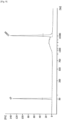
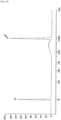
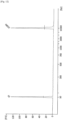
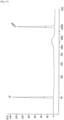
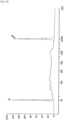
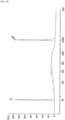
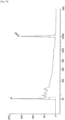
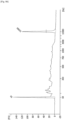
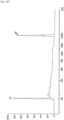
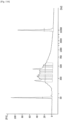
- the amplified DNA library size was as large as 2 kbp or more, but amplification of the DNA library of a target size (i.e., 100-bp to 500-bp) was not observed ( Fig. 2 ).
- a DNA library of 100 bp to 500 bp could not be obtained because it was highly unlikely that a random primer would function as a primer in a region of 500 bp or smaller.
- the correlation between the conditions that may affect PCR specificity; i.e., the annealing temperature (3.1.4 above), the enzyme amount (3.1.5 above), the MgCl 2 concentration (3.1.6 above), the primer length (3.1.7 above), and the primer concentration (3.18 above), and the DNA library size were examined.
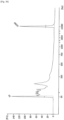
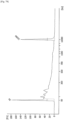
- Fig. 3 shows the results of the experiment described in 3.1.4 attained at an annealing temperature of 45 degrees C
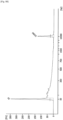
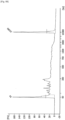
- Fig. 4 shows the results attained at an annealing temperature of 40 degrees C
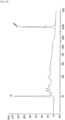
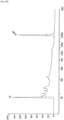
- Fig. 5 shows the results attained at an annealing temperature of 37 degrees C.
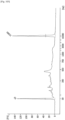
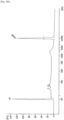
- the annealing temperature was lowered from 45 degrees C, 40 degrees C, to 37 degrees C, as shown in Figs. 3 to 5 , the amounts of high-molecular-weight DNA library amplified increased, although amplification of low-molecular-weight DNA library was not observed.
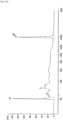
- Fig. 6 shows the results of the experiment described in 3.1.5 attained when the enzyme amount is increased by 2 times
- Fig. 7 shows the results attained when the enzyme amount is increased by 10 times the general amount.
- the enzyme amount was increased by 2 times or 10 times the common amount, as shown in Figs. 6 and 7 , the amounts of high-molecular-weight DNA library amplified increased, although amplification of low-molecular-weight DNA library was not observed.
- Fig. 8 shows the results of the experiment described in 3.1.6 attained when the MgCl 2 concentration is increased by 2 times
- Fig. 9 shows the results attained when the MgCl 2 concentration is increased by 3 times
- Fig. 10 shows the results attained when the MgCl 2 concentration is increased by 4 times the general amount.
- Figs. 11 to 18 show the results of the experiment described in 3.1.7 attained at the random primer lengths of 8 bases, 9 bases, 11 bases, 12 bases, 14 bases, 16 bases, 18 bases, and 20 bases, respectively. Regardless of the length of a random primer, as shown in Figs. 11 to 18 , no significant change was observed in comparison with the results shown in Fig. 2 (a 10-base random primer).
- the random primer concentration is excessively higher than 500 microM, amplification of a DNA fragment of a desired size cannot be observed.
- the random primer concentration should fall within an optimal range, which is higher than the concentration employed in a general PCR procedure and equivalent to or lower than a given level.
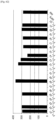
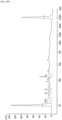
- a DNA library was prepared with the use of genomic DNA extracted from the rice variety Nipponbare, the genomic information of which has been disclosed, as a template, and random primers and subjected to electrophoresis, and the results are shown in Figs. 49 and 50 .
- the rho value was found to be as high as 0.979.
- Fig. 51 shows the results of MiSeq analysis of the read data.
- the correlational coefficient "r" was found to be as high as 0.992.
- the obtained read pattern was mapped to the genomic information of Nipponbare.
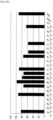
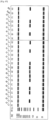
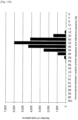
- DNA fragments were found to be evenly amplified throughout the genome at intervals of 6.2 kbp ( Fig. 52 ).
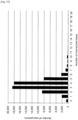
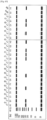
- Fig. 53 a result of comparison of the sequence and genome information of random primers, 3.6 mismatches were found on average, and one or more mismatches were observed in 99.0% of primer pairs ( Fig. 53 ).
- the results demonstrate that a DNA library involving the use of random primers is prepared with satisfactory reproducibility via non-specific amplification evenly throughout the genome.
- DNA libraries of the sugarcane varieties NiF8 and Ni9 and 22 hybrid progeny lines thereof were prepared with the use of random primers, the resulting DNA libraries were analyzed with the next-generation sequencer (HiSeq), the polymorphisms of the parent varieties were detected, and the genotypes of the hybrid progenies were identified on the basis of the read data. Table 26 shows the results.
- Table 26 Number of sugarcane NiF8 and Ni9 markers and accuracy for genotype identification Number of markers FI_01 FI_02 Total Concordance Reproducibility Concordance Reproducibility Concordance Reproducibility Concordance Reproducibility Concordance Reproducibility Reproducibility NiF8 type 8,683 8,680 99.97% 8,682 99.99% 17,362 99.98% Ni9 type 11,655 11,650 99.96% 11,651 99.97% 23,301 99.96% Total 20,338 20,330 99.96% 20,333 99.98% 40,663 99.97%
- the sugarcane varieties NiF8 and Ni9 and 22 hybrid progeny lines thereof were subjected to PCR with the use of the primers shown in Table 22, genotypes were identified via electrophoresis, and the results were compared with the number of reads.
- Figs. 54 and 55 show the number of reads and the electrophoretic pattern of the NiF8 marker N80521152, respectively.
- Figs. 56 and 57 show the number of reads and the electrophoretic pattern of the NiF8 marker N80997192, respectively.
- Figs. 58 and 59 show the number of reads and the electrophoretic pattern of the NiF8 marker N80533142, respectively.
- Figs. 60 and 61 show the number of reads and the electrophoretic pattern of the Ni9 marker N91552391, respectively.
- Figs. 62 and 63 show the number of reads and the electrophoretic pattern of the Ni9 marker N91653962, respectively.
- Figs. 64 and 65 show the number of reads and the electrophoretic pattern of the Ni9 marker N91124801, respectively.
- the correlation between the length and the concentration of random primers is found to be preferably within a range surrounded by a frame, as shown in Fig. 82 .
- the random primer concentration is preferably 40 to 60 microM when the random primers comprise 9 to 10 bases. It is preferable that a random primer concentration satisfy the condition represented by an inequation: y > 3E + 08x -6.974 , provided that the base length of the random primer is represented by y and the random primer concentration is represented by x, and 100 microM or lower, when the random primer comprises 10 to 14 bases.
- the random primer concentration is preferably 4 to 100 mM when the random primer comprises 14 to 18 bases.
- the random primer concentration be 4 microM or higher and the condition represented by an inequation: y ⁇ 8E +08x -5.533 be satisfied.
- the random primer concentration is preferably 4 to 10 microM.
- the inequations y > 3E + 08x -6.974 and y ⁇ 8E +08x -5.533 are determined on the basis of the Microsoft Excel power approximation.
- the number of bases and the concentration of random primers may be prescribed within given ranges, so that a DNA library with a molecular size suitable for analysis with a next-generation sequencer can be prepared with satisfactory reproducibility, and such DNA library can be suitable for marker analysis with the use of a next-generation sequencer.
- a DNA library was prepared with the use of human-derived genomic DNA and random primers at a final concentration of 60 microM (10-base primer A), and the results are shown in Figs. 105 and 106 .
- Fig. 105 shows the results of the first repeated experiment
- Fig. 106 shows the results of the second repeated experiment.
- Figs. 105 and 106 it was found that low-molecular-weight DNA fragments could be amplified while achieving very high reproducibility even if human-derived genomic DNA was used.
- the first DNA fragment was prepared via PCR using genomic DNA as a template and a random primer in accordance with the schematic diagrams shown in Figs. 107 and 108 , and the second DNA fragment was then prepared via PCR using the prepared first DNA fragment as a template and a primer for the next-generation sequencer.
- sequence analysis was performed with the use of a so-called next-generation sequencer, and the genotype was analyzed based on the obtained read data.
- genomic DNAs were extracted from the sugarcane variety NiF8 and the rice variety Nipponbare using the DNeasy Plant Mini kit (QIAGEN), and the extracted genomic DNAs were purified.
- the purified genomic DNAs were used as NiF8-derived genomic DNA and Nipponbare-derived genomic DNA, respectively.
- a random primer was designed based on 10 bases at the 3' terminus of the Nextera adapter sequence for the next-generation sequencer (Illumina).
- GTTACACACG SEQ ID NO: 2041, 10-base primer G
- the primer for the next-generation sequencer was also designed based on the sequence information of the Nextera adaptor (Illumina) (Table 31). [Table 31] No Primer sequence SEQ ID NO: 1 2042 2 2043
- a 0.2 mM dNTP mixture, 1.0 mM MgCl 2 , 1.25 units of DNA polymerase (PrimeSTAR, TAKARA), and a 60 microM random primer (10-base primer G) at final concentration were added, and a reaction solution was prepared while adjusting the final reaction level to 50 microliters.
- the resultant was subjected to PCR under thermal cycling conditions comprising 98 degrees C for 2 minutes and 30 cycles of 98 degrees C for 10 seconds, 50 degrees C for 15 seconds, and 72 degrees C for 20 seconds, followed by storage at 4 degrees C.
- a DNA library (the first DNA fragment) was prepared.
- the DNA library obtained in 3.1.2 above was purified with the use of the MinElute PCR Purification Kit (QIAGEN) and subjected to electrophoresis with the use of the Agilent 2100 bioanalyzer (Agilent Technologies) to obtain a fluorescence unit (FU). Also, the reproducibility of the repeated data was evaluated on the basis of the Spearman's rank correlation (rho > 0.9).
- a 0.2 mM dNTP mixture, 1.0 mM MgCl 2 , 1.25 units of DNA Polymerase (PrimeSTAR, TAKARA), a 0.5 microM primer for the next-generation sequencer at final concentration were added, and a reaction solution was prepared while adjusting the final reaction level to 50 microliters.
- the resultant was subjected to PCR under thermal cycling conditions comprising 95 degrees C for 2 minutes, 25 cycles of 98 degrees C for 15 seconds, 55 degrees C for 15 seconds, and 72 degrees C for 20 seconds, and 72 degrees C for 1 minute, followed by storage at 4 degrees C.
- a DNA library (the second DNA fragment) for the next-generation sequencer was prepared.
- the DNA library for the next-generation sequencer was subjected to purification and electrophoresis in the same manner as in 3.1.3.
- the DNA library for the next-generation sequencer obtained in 3.1.4 was analyzed via 100 base paired-end sequencing.
- the read patterns were identified on the basis of the read data obtained in 3.1.5. The number of reads was counted for each read pattern, the numbers of reads of the repeated analyses were compared, and the reproducibility was evaluated in terms of the correlational coefficient.
- a random primer was designed based on 10 bases at the 3' terminus of the Nextera adapter sequence for the next-generation sequencer (Illumina).
- 16 types of nucleotide sequences comprising a total of 12 bases; that is, 10 bases at the 3' terminus of the Nextera adapter sequence and arbitrary 2 bases added to the 3' terminus of the 10-base sequence, were designed as random primers (Table 32, 12-base primer B).
- the primer for the next-generation sequencer designed based on the sequence information of the Nextera adaptor sequence was used as in 3 .1.1 above.
- a 0.2 mM dNTP mixture, 1.0 mM MgCl 2 , 1.25 units of DNA polymerase (PrimeSTAR, TAKARA), and a 40 microM random primer (12-base primer B) at final concentration were added, and a reaction solution was prepared while adjusting the final reaction level to 50 microliters.
- the resultant was subjected to PCR under thermal cycling conditions comprising 98 degrees C for 2 minutes and 30 cycles of 98 degrees C for 10 seconds, 50 degrees C for 15 seconds, and 72 degrees C for 20 seconds, followed by storage at 4 degrees C.
- a DNA library (the first DNA fragment) was prepared.
- the DNA library obtained in 3.2.2 above was purified with the use of the MinElute PCR Purification Kit (QIAGEN) and subjected to electrophoresis with the use of the Agilent 2100 bioanalyzer (Agilent Technologies) to obtain a fluorescence unit (FU). Also, the reproducibility of the repeated data was evaluated on the basis of the Spearman's rank correlation (rho > 0.9).
- a 0.2 mM dNTP mixture, 1.0 mM MgCl 2 , 1.25 units of DNA Polymerase (PrimeSTAR, TAKARA), and a 0.5 microM primer for the next-generation sequencer at final concentration were added, and a reaction solution was prepared while adjusting the final reaction level to 50 microliters.
- the resultant was subjected to PCR under thermal cycling conditions comprising 95 degrees C for 2 minutes, 25 cycles of 98 degrees C for 15 seconds, 55 degrees C for 15 seconds, and 72 degrees C for 20 seconds, and 72 degrees C for 1 minute, followed by storage at 4 degrees C.
- a DNA library for the next-generation sequencer (the second DNA fragment) was prepared.
- the DNA library for the next-generation sequencer was subjected to purification and electrophoresis in the same manner as in 3.1.3.
- the DNA library for the next-generation sequencer obtained in 3.2.4 was analyzed via 100 base paired-end sequencing.
- the read patterns obtained in 3.2.5 were mapped to the genomic information of Nipponbare (NC_008394 to NC_008405) with Bowtie2, and the extent of concordance between the random primer sequence and genomic DNA was inspected. Also, the read patterns were identified on the basis of the read data obtained in 3.2.5. The number of reads was counted for each read pattern, the numbers of reads of the repeated analyses were compared, and the reproducibility was evaluated in terms of the correlational coefficient.
- Fig. 109 and Fig. 110 show the results of electrophoresis when PCR was carried out using a 10-base random primer at the 3' terminus of the Nextera adapter for the next-generation sequencer (Illumina) (10-base primer G) at high concentration of 60 microliters.
- amplification was observed in a wide range of area including 100 bp to 500 bp (the first DNA fragment). It was considered that amplification was observed in a wide range of area because amplification was also observed in areas other than the genomic DNA region corresponding to the random primer. Since the rank correlation coefficient among the repeated data was not less than 0.9 (i.e., 0.957), high reproducibility was observed in amplification patterns.
- Fig. 111 and Fig. 112 show the results of electrophoresis when PCR was carried out using the primer for the next-generation sequencer as described in 3.1.4.
- a DNA library (the second DNA fragment) comprising the Nextera adaptor of the next-generation ligated thereto
- PCR was carried out using the first DNA fragment as a template and the primer for the next-generation sequencer comprising the Nextera adaptor sequence (Illumina).
- the DNA library includes numerous short fragments of 100 bp or smaller or long fragments of 1 kbp or longer, the accuracy of analysis of the next-generation sequencer (Illumina) is drastically deteriorated.
- the DNA library for the next-generation sequencer prepared in this example (the second DNA fragment) showed a distribution in a range primarily from 150 bp to 1 kbp with the peak at approximately 500 bp as shown in Fig. 111 and Fig. 112 . Accordingly, such DNA library was considered suitable for its application as the DNA library for the next-generation sequencer. Since the rank correlation coefficient among the repeated data was not less than 0.9 (i.e., 0.989), high reproducibility was observed in amplification patterns.
- the resulting DNA library (the second DNA fragment) was subjected to MiSeq analysis using the next-generation sequencer, and the read data of 3.5 Gbp and 3.6 Gbp were obtained as a consequence.
- a DNA library (the first DNA fragment) was obtained via PCR using a 10-base random primer at the 3' terminus of the Nextera adapter for the next-generation sequencer (Illumina) at high concentration, and PCR was further carried out using the primer for the next-generation sequencer comprising the Nextera Adaptor sequence.
- the DNA library (the second DNA fragment) for the next-generation sequencer comprising numerous fragments was prepared in a convenient and highly reproducible manner.
- Fig. 114 and Fig. 115 show the results of electrophoresis when PCR was carried out using 16 types of random primers (12-base primer B) each comprising a total of 12 bases; that is, 10 bases at the 3' terminus of the Nextera adapter sequence for the next-generation sequencer (Illumina) and arbitrary 2 bases added to the 3' terminus thereof, at high concentration of 40 microliters. As shown in Fig. 114 and Fig. 115 , amplification was observed in a wide range of area including 100 bp to 500 bp (the first DNA fragment).
- Fig. 116 and Fig. 117 show the results of electrophoresis when PCR was carried out using the primer for the next-generation sequencer as described in 3.2.4.
- a DNA library (the second DNA fragment) comprising the Nextera adaptor of the next-generation ligated thereto
- PCR was carried out using the first DNA fragment as a template and the primer for the next-generation sequencer comprising the Nextera adaptor sequence (Illumina).
- the DNA library for the next-generation sequencer prepared in this example (the second DNA fragment) was found to show a distribution in a range primarily from 150 bp to 1 kbp with the peak at approximately 300 bp as shown in Fig. 116 and Fig. 117 . Accordingly, such DNA library was considered suitable for its application as the DNA library for the next-generation sequencer. Since the rank correlation coefficient among the repeated data was not less than 0.9 (i.e., 0.992), high reproducibility was observed in amplification patterns.
- the resulting DNA library (the second DNA fragment) was subjected to MiSeq analysis using the next-generation sequencer, and the read data of 4.0 Gbp and 3.8 Gbp were obtained as a consequence.
- the results demonstrate that the DNA library for the next-generation sequencer prepared in this example (the second DNA fragment) is applicable to analysis using the next-generation sequencer as described in 4.1.1 above.
- Fig. 118 demonstrates the results of comparison between a random primer sequence and the Nipponbare reference sequence, so as to evaluate the extent of concordance between the random primer sequence and the genome concerning the 19,849 read patterns obtained via MiSeq analysis. As shown in Fig.
- the average extent of concordance between the random primer sequence and the Nipponbare reference sequence was 34.5%. Since there were no read patterns that were completely concordant between the random primer sequence and the Nipponbare reference sequence, in particular, all the read patterns were considered to result from binding of a random primer to a sequence that is not concordant therewith. Such results were considered to be concordant with the results attained with the use of the bioanalyzer.
- a DNA library (the first DNA fragment) was obtained via PCR using 16 types of 12-base random primers in total; i.e., 10 bases at the 3' terminus of the Nextera adapter for the next-generation sequencer (Illumina) and arbitrary 2 bases added to the 3' terminus thereof, at high concentration, and PCR was further performed using a primer comprising the Nextera Adaptor sequence.
- a DNA library (the second DNA fragment) for the next-generation sequencer comprising numerous fragments was prepared in a convenient and highly reproducible manner.
- the first DNA fragment was prepared via PCR using genomic DNA as a template and a random primer in the same manner as in Example 2, and the second DNA fragment was then prepared via PCR using the prepared first DNA fragment as a template and a primer for the next-generation sequencer.
- sequence analysis was performed with the use of a so-called next-generation sequencer, and the genotype was analyzed based on the read data. In this example, in particular, whether or not amplification of a DNA fragment derived from the chloroplast genome could be suppressed depending on a type of a random primer used was examined.
- genomic DNA was extracted from the rice variety Nipponbare using the DNeasy Plant Mini kit (QIAGEN), and the extracted genomic DNA was purified. The purified genomic DNA was used as rice-derived genomic DNA. Genomic DNAs of corn, potato, and soybean used in this example were purchased from Cosmo Bio Co., Ltd. (Product Numbers: D1634330, D1634350, and D1634370).
- 64 types of nucleotide sequences each comprising 13 bases in total; i.e., 10 bases (TAAGAGACAG) at the 3' terminus of the Nextera adapter sequence for the next-generation sequencer (Illumina) and arbitrary 3 bases added to the 3' terminus thereof, were designed (Table 33).
- Sets of 64, 63, 60, 40, 20, and 10 random primers (sets of random primers A to F) were prepared.
- 16 types of nucleotide sequences each comprising 12 bases in total; i.e., 10 bases (TAAGAGACAG) and arbitrary 2 bases added to the 3' terminus thereof, were designed (Table 34, Set G).
- the primer for the next-generation sequencer was also designed on the basis of the sequence information of the Nextera adaptor (Illumina) (Table 35).
- Table 33 Primer information for sets of random primers (13-base primers) * SEQ ID NO: Sequence Set of random primers (the number of primers) SEQ ID NO: Sequence Set of random primers (the number of primers) A (64) B (63) C (60) D (40) G (20) C (10) A (64) B (63) C (60) D (40) E (20) F (10) 2080 TAAGAGAC AGAAA ⁇ ⁇ ⁇ ⁇ - - 2112 TAAGAGAC AGGAA ⁇ ⁇ ⁇ - ⁇ - 2081 TAAGAGAC AGAAC ⁇ ⁇ ⁇ ⁇ - - 2113 TAAGAGAC AGGAC ⁇ ⁇ ⁇ ⁇ - - 2082 TAAGAGAC AGAAG ⁇ ⁇ ⁇ - - 2114 TAAGAGAC AGGAG ⁇ ⁇ ⁇ ⁇ - - 2083 TAAGAGAC AGAAT ⁇ ⁇ ⁇ ⁇ - 2115
- Table 34 Primer information for set of random primers G (12-base primers) SEQ ID NO: Sequence 2065 TAAGAGACAGAA 2066 TAAGAGACAGAT 2067 TAAGAGACAGAC 2068 TAAGAGACAGAG 2069 TAAGAGACAGTA 2070 TAAGAGACAGTT 2071 TAAGAGACAGTC 2063 TAAGAGACAGTG 2072 TAAGAGACAGCA 2073 TAAGAGACAGCT 2074 TAAGAGACAGCC 2075 TAAGAGACAGCC 2076 TAAGAGACAGGA 2077 TAAGAGACAGGT 2078 TAAGAGACAGGC 2079 TAAGAGACAGGG
- Table 35 Primer information for sequencer No Type Sequence SEQ ID NO: 1 P5 2143 2 2144 3 2145 4 2146 5 2147 6 2148 7 P7 2149 8 2150 9 2151 10 2152
- a 0.2 mM dNTP mixture, 1.0 mM MgCl 2 , 0.625 units of DNA polymerase (PrimeSTAR, TAKARA), and a 40 microM random primer at final concentration were added, and a reaction solution was prepared while adjusting the final reaction level to 25 microliters.
- the resultant was subjected to PCR under thermal cycling conditions comprising 98 degrees C for 2 minutes and 30 cycles of 98 degrees C for 10 seconds, 50 degrees C for 15 seconds, and 72 degrees C for 20 seconds, followed by storage at 4 degrees C.
- a DNA library (the first DNA fragment) was prepared.
- a DNA library for the next-generation sequencer (the second DNA fragment) was prepared.
- the DNA library was subjected to purification with the MinElute PCR Purification Kit (QIAGEN) and electrophoresis with the Agilent 2100 bioanalyzer (Agilent Technologies), and the waveforms thereof were examined.
- the DNA library (the second DNA fragment) obtained in 3.3 was analyzed via 100 base paired-end sequencing.
- the read data obtained in 3.4 were mapped to the nucleotide sequence information of the chloroplast genomes from the relevant plants (corn: NC_001666.2 Zea mays chloroplast, complete genome; rice: NC_001320.1 Oryza sativa japonica group plastid, complete genome; potato: NC_008096.2 Solanum tuberosum chloroplast, complete genome; soybean: NC_007942.1 Glycine max chloroplast, complete genome) with Bowtie2, and the read data derived from the chloroplast genomes and the regions thereof were identified.
- Table 36 shows the results of MiSeq analysis of the DNA library prepared with the use of the set of random primers A shown in Table 33.
- Table 36 Read data derived from chloroplast genome of each plant set A) Corn Rice Potato Soybean Total number of reads 436,442 414,826 465,639 462,796 Chloroplast* 9,725 37,355 131,558 134,709 Percentage (%) 2.2% 9.0% 28.3% 29.1% * Number of reads mapped to chloroplast genome
- Table 37 shows the results summarizing the number of reads mapped to the particular region of the chloroplast genome from corn.
- Table 38 shows the results summarizing the number of reads mapped to the particular region of the chloroplast genome from rice.
- Table 39 shows the results summarizing the number of reads mapped to the particular region of the chloroplast genome from potato.
- Table 40 shows the results summarizing the number of reads mapped to the particular region of the chloroplast genome from soybean.
- Table 37 Number of reads mapped to particular region in chloroplast genome of corn Region Position (bp) Length (bp) Number of reads Percentage Region_1_1 100, 794 349 1, 617 16.6% Region_1_2 101, 027 116 2, 331 24.0% Region_2_1 121, 595 349 2, 175 22.4% Region_2_2 121, 595 116 3, 246 33.4% Total 9, 369 96.3%
- Table 38 Number of reads mapped to particular region in chloroplast genome of rice Region Position (bp) Length (bp) Number of reads Percentage Region_1_1 96, 947 348 5, 342 14.3% Region_1_2 97, 179 116 5, 437 14.6% Region_2_1 117, 824 348 7, 394 19.8% Region_2_2 117, 824 116 7, 448 19.9% Region_3_1 32, 151 114 3, 248 8.7% Region_3_2 32, 165 87 7, 467 20.0% Total 36, 336 97.3%
- Table 39 Number of reads mapped to particular region in chloroplast genome of potato Region Position (bp) Length (bp) Number of reads Percentage Region_1_1 107, 147 348 5, 367 4.1% Region_1_2 107, 379 116 50, 443 38.3% Region_2_1 133, 540 348 7, 592 5.8% Region_2_2 133, 540 116 67, 416 51.2% Total 130, 818 99.4%
- Table 40 Number of reads mapped to particular region in chloroplast genome of soybean Region Position (bp) Length (bp) Number of reads Percentage Region_1_1 105, 184 348 3, 995 3.0% Region_1_2 105, 416 116 52, 251 38.8% Region_2_1 129, 863 348 5, 512 4.1% Region_2_2 129, 863 116 69, 814 51.8% Total 131, 572 97.7%
- Figs. 120-1 and 120-2 show the results of comparison of nucleotide sequences of Region_1_1 and Region 2_1 from among the particular regions shown in Tables 37 to 40.
- particular regions found in corn are indicated as Region_1_1_Corn and Region 2_1 Corn
- particular regions found in rice are indicated as Region_1_1_Oryza and Region 2_1 Oryza
- particular regions found in potato are indicated as Region_1_1_Potato and Region_2_1_Poteto
- particular regions found in soybean are indicated as Region_1_1 Soybean and Region 2_1 Soybean.
- SEQ ID NO: 2153 shows the nucleotide sequence of Region_1_1 Corn
- SEQ ID NO: 2154 shows the nucleotide sequence of Region_1_1_Oryza
- SEQ ID NO: 2155 shows the nucleotide sequence of Region_1_1_Potato
- SEQ ID NO: 2156 shows the nucleotide sequence of Region_1_1_Soybean
- SEQ ID NO: 2157 shows the nucleotide sequence of Region_2_1_Corn
- SEQ ID NO: 2158 shows the nucleotide sequence of Region 2_1 Oryza
- SEQ ID NO: 2159 shows the nucleotide sequence of Region 2_1 Potato
- SEQ ID NO: 2160 shows the nucleotide sequence of Region 2_1 Soybean.
- Region_1_1, Region_1_2, Region_2_1, and Region_2_2 4 regions (i.e., Region_1_1, Region_1_2, Region_2_1, and Region_2_2) were very similar among all the plants, and these regions were thus considered to be common thereamong.
- Region_1_2 and Region_2_2 (indicated as "Region_ ⁇ _2" in Figs. 120-1 and 120-2 ) were present in the regions of Region_1_1 and Region 2_1, respectively, and a complementary strand of Region_1_1 was similar to that of Region 2_1. It was thus considered that palindromes were formed.
- the terminal sequences of these 4 regions could be roughly classified into 3 types, and, in particular, a sequence of 110 bases in each of such regions was common among 4 regions.
- a region of interest would be amplified with the aid of a random primer selected from among the set of random primers A, which comprises "TAAGAGACAG” and "TGC,” “GGA,” “GGG,” or “GTG” ligated to the 3' terminus thereof.
- the sequence "TAAGAGACAGTGC” was considered to be a random primer associated with amplification of all such regions.
- Fig. 121 shows the results of comparison of Region 3_1 and Region_3_2 among the particular regions found in rice (indicated as "Region_3_1_Oryza” and “Region_3_2_Oryza,” respectively).
- SEQ ID NO: 2161 and SEQ ID NO: 2162 show the nucleotide sequences of Region_3_1_Oryza and Region_3_2_Oryza, respectively.
- Region_3_2 was the internal sequence of Region 3_1.
- results of analysis demonstrate that a region of interest was amplified with the aid of a random primer comprising a sequence composed of "TAAGAGACAG” and "TGC,” “GTA,” “ATA,” or “CCA” ligated to the 3' terminus thereof.
- Table 41 shows the results attained with the use of the set of random primers B
- Table 42 shows the results attained with the use of the set of random primers C
- Table 43 shows the results attained with the use of the set of random primers D
- Table 44 shows the results attained with the use of the set of random primers E
- Table 45 shows the results attained with the use of the set of random primers F.
- Table 41 Read data derived from chloroplast genome of each plant (set B) Corn Rice Potato Soybean Total number of reads 387, 025 336, 103 395, 188 376, 049 Chloroplast* 1, 004 1, 981 2, 189 12, 488 Percentage (%) 0.3% 0.6% 0.6% 3.3% * Number of reads mapped to chloroplast genome
- Table 42 Read data derived from chloroplast genome of each plant (set C) Corn Rice Potato Soybean Total number of reads 539, 769 477, 714 524, 522 520, 182 Chloroplast ⁇ 2, 190 4, 074 2, 132 14, 191 Percentage (%) 0.4% 0.9% 0.4% 2.7% * Number of reads mapped to chloroplast genome
- Table 43 Read data derived from chloroplast genome of each plant (set D) Corn Rice Potato Soybean Total number of reads 426, 523 406, 970 434, 928 424, 531 Chloroplast* 776 1, 466 3, 093 4 ,476 Percentage (%) 0.2% 0.4% 0.7% 1. 1% * Number of reads mapped to chloroplast genome
- Table 44 Read data derived from chloroplast genome of each plant (set E) Corn Rice Potato Soybean Total number of reads 479, 090 390, 738 392, 798 381, 038 Chloroplast* 2, 192 13, 961 2, 999 34, 104 Percentage (%) 0.5% 3.6% 0.8% 9.0% * Number of reads mapped to chloroplast genome
- Table 45 Read data derived from chloroplast genome of each plant (set F) Corn Rice Potato Soybean Total number of reads 406, 309 416, 556 397, 316 422, 655 Chloroplast* 735 1, 175 2, 892 7, 400 Percentage (%) 0. 2% 0.3% 0.7% 1.8% * Number of reads mapped to chloroplast genome
- Fig. 122 shows the results shown in Tables 41 to 45 in combination with the results shown in Table 36.
- the results demonstrated in Tables 41 to 45 and in Fig. 122 demonstrate that the proportion of the read data mapped to the chloroplast genome would be reduced to at least a half of the usual level with the use of the sets of random primers B to F that do not comprise TAAGAGACAGTGC.
- the proportion of such read data was reduced to a significant extent (i.e., 0.3% to 3.3% of the usual level).
- the proportion of such read data was reduced to a significant extent (i.e., 0.2% to 1.8% of the usual level).
- a random primer may be selected on the basis of the sequence information of a particular region in the chloroplast genome found in this example, so that the read data derived from the chloroplast genome can be reduced to a significant extent.
- Table 4G Number of reads mapped to particular region in chloroplast genome of rice (set G) Region Position (bp) Length (bp) Number of reads Percentage Region_1_1 96, 947 348 20, 830 2.3% Region_1_2 97, 179 116 179, 845 19.6% Region_2_1 117, 824 348 38, 743 4.2% Region_2_2 117, 824 116 298, 605 32.6% Regian_3_1 32, 151 114 359, 157 39.2% Region_3_2 32, 165 87 - -
- the read data obtained using the next-generation sequencer with the use of a set of random primers comprising TAAGAGACAG at its 5' terminus were analyzed.
- all the plant species were found to include large quantities of read data derived from the chloroplast genome and approximately 30% of the read data obtained from certain types of plant species was derived from the chloroplast genome. Since the performance of the analysis involving the use of a next-generation sequencer significantly varies depending on the amount of read data, it is critical to improve the yield of the target read data.
- the read data of the chloroplast genome are not necessary, and a reduction thereof was an issue of concern.
- the read data derived from a particular region of the chloroplast genome can be reduced to a significant extent with the use of the set of random primers excluding particular random primers. Specifically, 5 sets of random primers excluding "TAAGAGACAGTGC" were selected on the basis of the sequence information of the particular region. With the use of any sets of primers, the read data derived from the chloroplast genome was reduced to at least a half of the usual level. With the use of the set of primers B prepared by removing "TAAGAGACAGTGC" or the set of 10 random primers F, in particular, a significant reduction was observed.
- a set of random primers capable of preventing the DNA fragment derived from a particular region from amplification may be designed, and the read data derived from the chloroplast genome may then be reduced to a significant extent, regardless of the number of random primers in the set of random primers.
Landscapes
- Chemical & Material Sciences (AREA)
- Life Sciences & Earth Sciences (AREA)
- Organic Chemistry (AREA)
- Engineering & Computer Science (AREA)
- Health & Medical Sciences (AREA)
- Proteomics, Peptides & Aminoacids (AREA)
- Wood Science & Technology (AREA)
- Zoology (AREA)
- Analytical Chemistry (AREA)
- Biotechnology (AREA)
- Genetics & Genomics (AREA)
- General Engineering & Computer Science (AREA)
- Bioinformatics & Cheminformatics (AREA)
- Molecular Biology (AREA)
- Physics & Mathematics (AREA)
- Biophysics (AREA)
- Biochemistry (AREA)
- Microbiology (AREA)
- General Health & Medical Sciences (AREA)
- Immunology (AREA)
- Chemical Kinetics & Catalysis (AREA)
- Botany (AREA)
- Mycology (AREA)
- Biomedical Technology (AREA)
- Bioinformatics & Computational Biology (AREA)
- Crystallography & Structural Chemistry (AREA)
- Plant Pathology (AREA)
- Measuring Or Testing Involving Enzymes Or Micro-Organisms (AREA)
Claims (14)
- Utilisation d'une amorce aléatoire ou d'un ensemble d'amorces aléatoires pour la préparation d'une bibliothèque d'ADN à partir d'un végétal constituée de, comme amorce aléatoire ou amorces aléatoires, un ou plusieurs oligonucléotides choisis parmi 15 types d'oligonucléotides représentés par TAAGAGACAGNN, SEQ ID NO: 2060, N représentant l'une quelconque parmi A, G, C et T, à l'exclusion de ceux dans lesquels 2 bases au niveau de la terminaison 3' sont TG et 63 types d'oligonucléotides représentés par TAAGAGACAGNNN, SEQ ID NO: 2061, N représentant l'une quelconque parmi A, G, C et T, à l'exclusion de ceux dans lesquels 3 bases au niveau de la terminaison 3' sont TGC.
- Utilisation selon la revendication 1, l'amorce aléatoire ou l'ensemble d'amorces aléatoires ne comprenant pas au moins un oligonucléotide comprenant la séquence de nucléotides comme présentée dans la SEQ ID NO: 2060 dans laquelle 2 bases au niveau de la terminaison 3' sont GG, GT, AT ou CC parmi les 15 types d'oligonucléotides.
- Utilisation selon la revendication 1, l'amorce aléatoire ou l'ensemble d'amorces aléatoires ne comprenant pas au moins un oligonucléotide comprenant la séquence de nucléotides comme présentée dans la SEQ ID NO: 2061 dans laquelle 3 bases au niveau de la terminaison 3' sont GGA, GGG, GTG, GTA, ATA, ou CCA parmi les 63 types d'oligonucléotides.
- Procédé pour la préparation d'une bibliothèque d'ADN à partir d'un végétal comprenant la conduite d'une réaction d'amplification d'acide nucléique dans une solution de réaction contenant un ADN génomique provenant d'un végétal en utilisant une amorce aléatoire ou un ensemble d'amorces aléatoires selon l'une quelconque des revendications 1 à 3 à une concentration élevée en utilisant un ADN génomique en tant que matrice pour obtenir un fragment d'ADN.
- Procédé pour la préparation d'une bibliothèque d'ADN selon la revendication 4, la solution de réaction contenant l'amorce aléatoire ou les amorces aléatoires à une concentration de 4 à 200 µM.
- Procédé pour la préparation d'une bibliothèque d'ADN selon la revendication 4, la solution de réaction contenant l'amorce aléatoire ou les amorces aléatoires à une concentration de 4 à 100 µM.
- Procédé pour la préparation d'une bibliothèque d'ADN selon la revendication 4 comprenant : une étape de conduite d'une réaction d'amplification d'acide nucléique dans une première solution de réaction contenant un ADN génomique provenant d'un végétal en utilisant une amorce aléatoire ou un ensemble d'amorces aléatoires selon l'une quelconque des revendications 1 à 3 à une concentration élevée en utilisant un ADN génomique en tant que matrice pour obtenir un premier fragment d'ADN ; et une étape de conduite d'une réaction d'amplification d'acide nucléique dans une deuxième solution de réaction contenant le premier fragment d'ADN et, en tant qu'amorce, un oligonucléotide comprenant au niveau de la terminaison 3' une séquence de nucléotides présentant au moins 70 % d'identité avec la séquence de nucléotides au niveau de la terminaison 5' de l'amorce aléatoire pour obtenir un deuxième fragment d'ADN comprenant le premier fragment d'ADN et l'oligonucléotide.
- Procédé pour la préparation d'une bibliothèque d'ADN selon la revendication 7, la première solution de réaction contenant l'amorce aléatoire ou les amorces aléatoires à une concentration de 4 à 200 µM.
- Procédé pour la préparation d'une bibliothèque d'ADN selon la revendication 7, la première solution de réaction contenant l'amorce aléatoire ou les amorces aléatoires à une concentration de 4 à 100 µM.
- Procédé pour la préparation d'une bibliothèque d'ADN selon la revendication 7, l'amorce qui amplifie le deuxième fragment d'ADN comprenant une région utilisée pour un séquençage de nucléotides ou l'amorce qui est utilisée pour une réaction d'amplification d'acide nucléique impliquant l'utilisation du deuxième fragment d'ADN en tant que matrice ou des réactions d'amplification d'acide nucléique répétées comprenant une région utilisée pour un séquençage de nucléotides.
- Bibliothèque d'ADN préparée par le procédé pour la préparation d'une bibliothèque d'ADN selon l'une quelconque des revendications 4 à 10.
- Ensemble d'amorces aléatoires constitué de, comme amorces aléatoires, 10, 20, 40, 60 ou 78 oligonucléotides choisis parmi 15 types d'oligonucléotides représentés par TAAGAGACAGNN, SEQ ID NO: 2060, N représentant l'une quelconque parmi A, G, C et T, à l'exclusion de ceux dans lesquels 2 bases au niveau de la terminaison 3' sont TG et 63 types d'oligonucléotides représentés par TAAGAGACAGNNN, SEQ ID NO: 2061, N représentant l'une quelconque parmi A, G, C et T, à l'exclusion de ceux dans lesquels 3 bases au niveau de la terminaison 3' sont TGC.
- Ensemble d'amorces aléatoires selon la revendication 12, qui ne comprend pas au moins un oligonucléotide comprenant la séquence de nucléotides comme présentée dans la SEQ ID NO: 2060 dans laquelle 2 bases au niveau de la terminaison 3' sont GG, GT, AT ou CC parmi les 15 types d'oligonucléotides.
- Ensemble d'amorces aléatoires selon la revendication 12, qui ne comprend pas au moins un oligonucléotide comprenant la séquence de nucléotides comme présentée dans la SEQ ID NO: 2061 dans laquelle 3 bases au niveau de la terminaison 3' sont GGA, GGG, GTG, GTA, ATA, ou CCA parmi les 63 types d'oligonucléotides.
Applications Claiming Priority (2)
| Application Number | Priority Date | Filing Date | Title |
|---|---|---|---|
| JP2017099408A JP7056012B2 (ja) | 2017-05-19 | 2017-05-19 | ランダムプライマーセット、及びこれを用いたdnaライブラリーの作製方法 |
| PCT/JP2018/019258 WO2018212318A1 (fr) | 2017-05-19 | 2018-05-18 | Ensemble d'amorces aléatoires et procédé de préparation d'une bibliothèque d'adn l'utilisant |
Publications (2)
| Publication Number | Publication Date |
|---|---|
| EP3625371A1 EP3625371A1 (fr) | 2020-03-25 |
| EP3625371B1 true EP3625371B1 (fr) | 2023-05-03 |
Family
ID=62495847
Family Applications (1)
| Application Number | Title | Priority Date | Filing Date |
|---|---|---|---|
| EP18728998.8A Active EP3625371B1 (fr) | 2017-05-19 | 2018-05-18 | Ensemble d'amorces aléatoires et procédé de préparation d'une bibliothèque d'adn l'utilisant |
Country Status (7)
| Country | Link |
|---|---|
| US (1) | US12428686B2 (fr) |
| EP (1) | EP3625371B1 (fr) |
| JP (2) | JP7056012B2 (fr) |
| KR (1) | KR102426827B1 (fr) |
| CN (1) | CN110651052B (fr) |
| TW (1) | TWI686482B (fr) |
| WO (1) | WO2018212318A1 (fr) |
Families Citing this family (2)
| Publication number | Priority date | Publication date | Assignee | Title |
|---|---|---|---|---|
| JP7047373B2 (ja) | 2017-12-25 | 2022-04-05 | トヨタ自動車株式会社 | 次世代シーケンサー用プライマー並びにその製造方法、次世代シーケンサー用プライマーを用いたdnaライブラリー並びにその製造方法、及びdnaライブラリーを用いたゲノムdna解析方法 |
| KR102739248B1 (ko) * | 2023-08-04 | 2024-12-05 | 주식회사 그래디언트바이오컨버전스 | 유전자 재현성 산출 장치, 유전자 재현성 산출 방법 및 컴퓨터 프로그램 |
Family Cites Families (41)
| Publication number | Priority date | Publication date | Assignee | Title |
|---|---|---|---|---|
| WO1992007095A1 (fr) | 1990-10-15 | 1992-04-30 | Stratagene | Procede de reaction en chaine de polymerase arbitrairement amorcee destine a produire une empreinte genetique de genomes |
| JP2000102400A (ja) * | 1998-09-30 | 2000-04-11 | Sanyo Electric Co Ltd | 核酸増幅方法及び装置 |
| DK1218542T3 (da) * | 1999-09-13 | 2004-08-02 | Nugen Technologies Inc | Fremgangsmåder og sammensætninger til lineær isotermisk amplifikation af polynukleotidsekvenser |
| AU2001245263A1 (en) | 2000-01-21 | 2001-07-31 | Kosan Biosciences, Inc. | Method for cloning polyketide synthase genes |
| MXPA02012739A (es) * | 2001-03-09 | 2004-04-20 | Nugen Technologies Inc | Metodos y composiciones para amplificacion de secuencias de arn. |
| JP4255630B2 (ja) | 2001-09-10 | 2009-04-15 | 独立行政法人農業・食品産業技術総合研究機構 | 米のdna食味判定技術及び籾/玄米半粒による良食味米選抜方法 |
| CN1377885A (zh) * | 2002-03-01 | 2002-11-06 | 复旦大学 | 人信号传导蛋白编码序列、其制备方法及用途 |
| US20050233305A1 (en) | 2002-08-19 | 2005-10-20 | Kazuo Yamamoto | Sugar chain library constructed via cargo receptor gene modification |
| US8206913B1 (en) * | 2003-03-07 | 2012-06-26 | Rubicon Genomics, Inc. | Amplification and analysis of whole genome and whole transcriptome libraries generated by a DNA polymerization process |
| EP1604040B1 (fr) | 2003-03-07 | 2010-10-13 | Rubicon Genomics, Inc. | Amplification et analyse d'un genome entier et de bibliotheques de transcriptomes entiers generees par un procede de polymerisation d'adn |
| WO2005003304A2 (fr) | 2003-06-20 | 2005-01-13 | Illumina, Inc. | Methodes et compositions utiles pour l'amplification et le genotypage du genome tout entier |
| US20040259100A1 (en) | 2003-06-20 | 2004-12-23 | Illumina, Inc. | Methods and compositions for whole genome amplification and genotyping |
| JP3972106B2 (ja) | 2004-03-03 | 2007-09-05 | 大学共同利用機関法人情報・システム研究機構 | ゲノムライブラリー作製方法、および同方法により作製されたゲノムライブラリー |
| DK2302070T3 (da) | 2005-06-23 | 2012-11-26 | Keygene Nv | Strategier til identifikation og detektion af polymorfismer med højt gennemløb |
| US20070020667A1 (en) * | 2005-06-30 | 2007-01-25 | Ruff David W | Methods and compositions for amplifying nucleic acids |
| US20080057499A1 (en) | 2006-02-06 | 2008-03-06 | Affymetrix, Inc. | Methods for high specificity whole genome amplification and hybridization |
| EP3239304B1 (fr) | 2006-04-04 | 2020-08-19 | Keygene N.V. | Détection à haut débit de marqueurs moléculaires sur la base d'aflp et de séquençage à haut débit |
| DE102007010311A1 (de) | 2007-02-23 | 2008-08-28 | Thines, Marco, Dr. | Organismusspezifisches hybridisierbares Nucleinsäuremolekül |
| WO2010039991A2 (fr) * | 2008-10-02 | 2010-04-08 | The Texas A&M University System | Procédé de génération de matrices informatives d’adn pour des applications de séquençage à rendement élevé |
| EP3783110B1 (fr) | 2009-11-05 | 2022-11-23 | The Chinese University Of Hong Kong | Analyse génomique f tal à partir d'un échantillon biologique maternel |
| JP5799484B2 (ja) | 2009-12-14 | 2015-10-28 | トヨタ自動車株式会社 | Dnaマイクロアレイにおけるプローブ設計方法、当該方法により設計されたプローブを有するdnaマイクロアレイ |
| US20110195457A1 (en) * | 2010-02-09 | 2011-08-11 | General Electric Company | Isothermal amplification of nucleic acid using primers comprising a randomized sequence and specific primers and uses thereof |
| ES2640906T3 (es) * | 2010-03-24 | 2017-11-07 | Institut National De La Sante Et De La Recherche Medicale | Modelo primate de la familia de los cercopitécidos infectado por una cepa del VHB de genotipo humano |
| US20140011694A1 (en) | 2011-01-11 | 2014-01-09 | Via Genomes, Inc. | Methods, systems, databases, kits and arrays for screening for and predicting the risk of an identifying the presence of tumors and cancers |
| WO2012103545A1 (fr) * | 2011-01-28 | 2012-08-02 | Illumina, Inc. | Remplacement d'oligonucléotides pour bibliothèques marquées aux deux extrémités et directionnelles |
| CA2877094A1 (fr) * | 2012-06-18 | 2013-12-27 | Nugen Technologies, Inc. | Compositions et procedes pour la selection negative de sequences d'acide nucleique indesirable |
| US10870099B2 (en) * | 2012-07-26 | 2020-12-22 | Illumina, Inc. | Compositions and methods for the amplification of nucleic acids |
| EP2971080B1 (fr) | 2013-03-15 | 2018-01-03 | Expedeon, S.L. | Procédés d'amplification et de séquençage utilisant du tthprimpol thermostable |
| SG11201603039PA (en) | 2013-10-18 | 2016-05-30 | Seven Bridges Genomics Inc | Methods and systems for identifying disease-induced mutations |
| US10550427B2 (en) | 2013-11-11 | 2020-02-04 | The Translational Genomics Research Institute | Systems and methods for universal tail-based indexing strategies for amplicon sequencing |
| GB2532749B (en) | 2014-11-26 | 2016-12-28 | Population Genetics Tech Ltd | Method for preparing a nucleic acid for sequencing using MspJI family restriction endonucleases |
| EP3245304B1 (fr) | 2015-01-16 | 2021-06-30 | Seqwell, Inc. | Code à barres itératif normalisé et séquençage de collections d'adn |
| KR101651817B1 (ko) | 2015-10-28 | 2016-08-29 | 대한민국 | Ngs 라이브러리 제작용 프라이머 세트 및 이를 이용한 ngs 라이브러리 제작방법 및 키트 |
| WO2017123758A1 (fr) | 2016-01-12 | 2017-07-20 | Seqwell, Inc. | Compositions et méthodes pour le séquençage d'acides nucléiques |
| KR101969905B1 (ko) | 2016-06-20 | 2019-04-17 | 한국표준과학연구원 | 염기서열분석을 위한 라이브러리용 프라이머 세트 및 라이브러리 제조방법 |
| JP7343264B2 (ja) | 2016-06-29 | 2023-09-12 | トヨタ自動車株式会社 | Dnaライブラリーの作製方法及びdnaライブラリーを用いたゲノムdna解析方法 |
| EP3485034B1 (fr) * | 2016-07-12 | 2021-08-18 | Kapa Biosystems, Inc. | Système et procédé de séquençage d'amplicon médié par une transposase |
| CN108025990A (zh) | 2016-08-31 | 2018-05-11 | 北京信纳国际新材料科技有限公司 | 一种碳基功能材料及应用 |
| WO2019009448A1 (fr) | 2017-07-06 | 2019-01-10 | 삼성전자 주식회사 | Procédé et dispositif de codage ou de décodage d'image |
| CN107513576A (zh) | 2017-10-18 | 2017-12-26 | 北京生命科学研究所 | 一种用于检测遗传性心肌疾病的试剂盒及其应用 |
| WO2019197712A1 (fr) | 2018-04-09 | 2019-10-17 | Nokia Technologies Oy | Appareil, procédé, et programme informatique destiné au codage et au décodage vidéo |
-
2017
- 2017-05-19 JP JP2017099408A patent/JP7056012B2/ja active Active
-
2018
- 2018-05-18 WO PCT/JP2018/019258 patent/WO2018212318A1/fr not_active Ceased
- 2018-05-18 CN CN201880032879.4A patent/CN110651052B/zh active Active
- 2018-05-18 US US16/613,532 patent/US12428686B2/en active Active
- 2018-05-18 KR KR1020197037057A patent/KR102426827B1/ko active Active
- 2018-05-18 EP EP18728998.8A patent/EP3625371B1/fr active Active
- 2018-05-18 TW TW107116929A patent/TWI686482B/zh active
-
2022
- 2022-01-12 JP JP2022002708A patent/JP2022051750A/ja active Pending
Also Published As
| Publication number | Publication date |
|---|---|
| TWI686482B (zh) | 2020-03-01 |
| WO2018212318A1 (fr) | 2018-11-22 |
| US12428686B2 (en) | 2025-09-30 |
| TW201907012A (zh) | 2019-02-16 |
| CN110651052A (zh) | 2020-01-03 |
| JP2022051750A (ja) | 2022-04-01 |
| KR20200005660A (ko) | 2020-01-15 |
| US20200071776A1 (en) | 2020-03-05 |
| JP2018191598A (ja) | 2018-12-06 |
| KR102426827B1 (ko) | 2022-07-28 |
| JP7056012B2 (ja) | 2022-04-19 |
| CN110651052B (zh) | 2022-10-28 |
| EP3625371A1 (fr) | 2020-03-25 |
Similar Documents
| Publication | Publication Date | Title |
|---|---|---|
| EP4105341B1 (fr) | Amorce pour séquenceur de nouvelle génération et son procédé de production, banque d'adn obtenue par l'utilisation d'une amorce pour un séquenceur de nouvelle génération et son procédé de production, et procédé d'analyse d'adn utilisant une banque d'adn | |
| CN107660234A (zh) | 使用二代测序预测器官移植排斥的方法 | |
| EP3480319A1 (fr) | Méthode de production d'une banque d'adn et méthode d'analyse d'adn génomique à l'aide d'une banque d'adn | |
| EP3068904A2 (fr) | Systèmes et procédés utilisables dans le cadre de stratégies d'indexation fondées sur des queues universelles pour le séquençage de produits | |
| CN110607356B (zh) | 一种基因组编辑检测方法、试剂盒及应用 | |
| EP3625371B1 (fr) | Ensemble d'amorces aléatoires et procédé de préparation d'une bibliothèque d'adn l'utilisant | |
| JP7528911B2 (ja) | Dnaライブラリーの作製方法及びdnaライブラリーを用いたゲノムdna解析方法 | |
| WO2022007863A1 (fr) | Procédé d'enrichissement rapide d'une région de gène cible | |
| US20230374574A1 (en) | Compositions and methods for highly sensitive detection of target sequences in multiplex reactions | |
| EP3455376B1 (fr) | Procédé de production d'une pluralité de sondes d'adn et procédé d'analyse d'adn génomique à l'aide de la sonde d'adn | |
| JP2026054450A (ja) | キャプチャー法による多検体kir遺伝子タイピング用プローブセット及びそれを用いたタイピング方法 | |
| NZ749198B2 (en) | Method for producing dna library and method for analyzing genomic dna using the dna library | |
| WO2025162424A1 (fr) | Procédé d'évaluation spécifique du degré de fragmentation d'acide nucléique cible | |
| KR20250167593A (ko) | 롱 리드 시퀀싱 하이브리드 데이터 분석을 통한 접합성 분해능을 이용한 원거리 유전체좌의 위상화를 위한 새로운 분석법 | |
| CN110317885A (zh) | 一种检测大围山微型鸡bpi基因snp的pcr-rflp方法 |
Legal Events
| Date | Code | Title | Description |
|---|---|---|---|
| STAA | Information on the status of an ep patent application or granted ep patent |
Free format text: STATUS: UNKNOWN |
|
| STAA | Information on the status of an ep patent application or granted ep patent |
Free format text: STATUS: THE INTERNATIONAL PUBLICATION HAS BEEN MADE |
|
| PUAI | Public reference made under article 153(3) epc to a published international application that has entered the european phase |
Free format text: ORIGINAL CODE: 0009012 |
|
| STAA | Information on the status of an ep patent application or granted ep patent |
Free format text: STATUS: REQUEST FOR EXAMINATION WAS MADE |
|
| 17P | Request for examination filed |
Effective date: 20191128 |
|
| AK | Designated contracting states |
Kind code of ref document: A1 Designated state(s): AL AT BE BG CH CY CZ DE DK EE ES FI FR GB GR HR HU IE IS IT LI LT LU LV MC MK MT NL NO PL PT RO RS SE SI SK SM TR |
|
| AX | Request for extension of the european patent |
Extension state: BA ME |
|
| STAA | Information on the status of an ep patent application or granted ep patent |
Free format text: STATUS: EXAMINATION IS IN PROGRESS |
|
| 17Q | First examination report despatched |
Effective date: 20200430 |
|
| DAV | Request for validation of the european patent (deleted) | ||
| DAX | Request for extension of the european patent (deleted) | ||
| GRAP | Despatch of communication of intention to grant a patent |
Free format text: ORIGINAL CODE: EPIDOSNIGR1 |
|
| STAA | Information on the status of an ep patent application or granted ep patent |
Free format text: STATUS: GRANT OF PATENT IS INTENDED |
|
| INTG | Intention to grant announced |
Effective date: 20221115 |
|
| GRAS | Grant fee paid |
Free format text: ORIGINAL CODE: EPIDOSNIGR3 |
|
| GRAA | (expected) grant |
Free format text: ORIGINAL CODE: 0009210 |
|
| STAA | Information on the status of an ep patent application or granted ep patent |
Free format text: STATUS: THE PATENT HAS BEEN GRANTED |
|
| AK | Designated contracting states |
Kind code of ref document: B1 Designated state(s): AL AT BE BG CH CY CZ DE DK EE ES FI FR GB GR HR HU IE IS IT LI LT LU LV MC MK MT NL NO PL PT RO RS SE SI SK SM TR |
|
| REG | Reference to a national code |
Ref country code: GB Ref legal event code: FG4D |
|
| REG | Reference to a national code |
Ref country code: AT Ref legal event code: REF Ref document number: 1564638 Country of ref document: AT Kind code of ref document: T Effective date: 20230515 Ref country code: CH Ref legal event code: EP |
|
| REG | Reference to a national code |
Ref country code: DE Ref legal event code: R096 Ref document number: 602018049208 Country of ref document: DE |
|
| REG | Reference to a national code |
Ref country code: IE Ref legal event code: FG4D |
|
| REG | Reference to a national code |
Ref country code: LT Ref legal event code: MG9D |
|
| REG | Reference to a national code |
Ref country code: NL Ref legal event code: MP Effective date: 20230503 |
|
| REG | Reference to a national code |
Ref country code: AT Ref legal event code: MK05 Ref document number: 1564638 Country of ref document: AT Kind code of ref document: T Effective date: 20230503 |
|
| PG25 | Lapsed in a contracting state [announced via postgrant information from national office to epo] |
Ref country code: SE Free format text: LAPSE BECAUSE OF FAILURE TO SUBMIT A TRANSLATION OF THE DESCRIPTION OR TO PAY THE FEE WITHIN THE PRESCRIBED TIME-LIMIT Effective date: 20230503 Ref country code: PT Free format text: LAPSE BECAUSE OF FAILURE TO SUBMIT A TRANSLATION OF THE DESCRIPTION OR TO PAY THE FEE WITHIN THE PRESCRIBED TIME-LIMIT Effective date: 20230904 Ref country code: NO Free format text: LAPSE BECAUSE OF FAILURE TO SUBMIT A TRANSLATION OF THE DESCRIPTION OR TO PAY THE FEE WITHIN THE PRESCRIBED TIME-LIMIT Effective date: 20230803 Ref country code: NL Free format text: LAPSE BECAUSE OF FAILURE TO SUBMIT A TRANSLATION OF THE DESCRIPTION OR TO PAY THE FEE WITHIN THE PRESCRIBED TIME-LIMIT Effective date: 20230503 Ref country code: ES Free format text: LAPSE BECAUSE OF FAILURE TO SUBMIT A TRANSLATION OF THE DESCRIPTION OR TO PAY THE FEE WITHIN THE PRESCRIBED TIME-LIMIT Effective date: 20230503 Ref country code: AT Free format text: LAPSE BECAUSE OF FAILURE TO SUBMIT A TRANSLATION OF THE DESCRIPTION OR TO PAY THE FEE WITHIN THE PRESCRIBED TIME-LIMIT Effective date: 20230503 |
|
| P01 | Opt-out of the competence of the unified patent court (upc) registered |
Effective date: 20231024 |
|
| PG25 | Lapsed in a contracting state [announced via postgrant information from national office to epo] |
Ref country code: RS Free format text: LAPSE BECAUSE OF FAILURE TO SUBMIT A TRANSLATION OF THE DESCRIPTION OR TO PAY THE FEE WITHIN THE PRESCRIBED TIME-LIMIT Effective date: 20230503 Ref country code: PL Free format text: LAPSE BECAUSE OF FAILURE TO SUBMIT A TRANSLATION OF THE DESCRIPTION OR TO PAY THE FEE WITHIN THE PRESCRIBED TIME-LIMIT Effective date: 20230503 Ref country code: LV Free format text: LAPSE BECAUSE OF FAILURE TO SUBMIT A TRANSLATION OF THE DESCRIPTION OR TO PAY THE FEE WITHIN THE PRESCRIBED TIME-LIMIT Effective date: 20230503 Ref country code: LT Free format text: LAPSE BECAUSE OF FAILURE TO SUBMIT A TRANSLATION OF THE DESCRIPTION OR TO PAY THE FEE WITHIN THE PRESCRIBED TIME-LIMIT Effective date: 20230503 Ref country code: IS Free format text: LAPSE BECAUSE OF FAILURE TO SUBMIT A TRANSLATION OF THE DESCRIPTION OR TO PAY THE FEE WITHIN THE PRESCRIBED TIME-LIMIT Effective date: 20230903 Ref country code: HR Free format text: LAPSE BECAUSE OF FAILURE TO SUBMIT A TRANSLATION OF THE DESCRIPTION OR TO PAY THE FEE WITHIN THE PRESCRIBED TIME-LIMIT Effective date: 20230503 Ref country code: GR Free format text: LAPSE BECAUSE OF FAILURE TO SUBMIT A TRANSLATION OF THE DESCRIPTION OR TO PAY THE FEE WITHIN THE PRESCRIBED TIME-LIMIT Effective date: 20230804 |
|
| PG25 | Lapsed in a contracting state [announced via postgrant information from national office to epo] |
Ref country code: FI Free format text: LAPSE BECAUSE OF FAILURE TO SUBMIT A TRANSLATION OF THE DESCRIPTION OR TO PAY THE FEE WITHIN THE PRESCRIBED TIME-LIMIT Effective date: 20230503 |
|
| REG | Reference to a national code |
Ref country code: CH Ref legal event code: PL |
|
| PG25 | Lapsed in a contracting state [announced via postgrant information from national office to epo] |
Ref country code: SK Free format text: LAPSE BECAUSE OF FAILURE TO SUBMIT A TRANSLATION OF THE DESCRIPTION OR TO PAY THE FEE WITHIN THE PRESCRIBED TIME-LIMIT Effective date: 20230503 |
|
| REG | Reference to a national code |
Ref country code: DE Ref legal event code: R084 Ref document number: 602018049208 Country of ref document: DE |
|
| REG | Reference to a national code |
Ref country code: BE Ref legal event code: MM Effective date: 20230531 |
|
| PG25 | Lapsed in a contracting state [announced via postgrant information from national office to epo] |
Ref country code: SM Free format text: LAPSE BECAUSE OF FAILURE TO SUBMIT A TRANSLATION OF THE DESCRIPTION OR TO PAY THE FEE WITHIN THE PRESCRIBED TIME-LIMIT Effective date: 20230503 Ref country code: SK Free format text: LAPSE BECAUSE OF FAILURE TO SUBMIT A TRANSLATION OF THE DESCRIPTION OR TO PAY THE FEE WITHIN THE PRESCRIBED TIME-LIMIT Effective date: 20230503 Ref country code: RO Free format text: LAPSE BECAUSE OF FAILURE TO SUBMIT A TRANSLATION OF THE DESCRIPTION OR TO PAY THE FEE WITHIN THE PRESCRIBED TIME-LIMIT Effective date: 20230503 Ref country code: LU Free format text: LAPSE BECAUSE OF NON-PAYMENT OF DUE FEES Effective date: 20230518 Ref country code: LI Free format text: LAPSE BECAUSE OF NON-PAYMENT OF DUE FEES Effective date: 20230531 Ref country code: EE Free format text: LAPSE BECAUSE OF FAILURE TO SUBMIT A TRANSLATION OF THE DESCRIPTION OR TO PAY THE FEE WITHIN THE PRESCRIBED TIME-LIMIT Effective date: 20230503 Ref country code: DK Free format text: LAPSE BECAUSE OF FAILURE TO SUBMIT A TRANSLATION OF THE DESCRIPTION OR TO PAY THE FEE WITHIN THE PRESCRIBED TIME-LIMIT Effective date: 20230503 Ref country code: CZ Free format text: LAPSE BECAUSE OF FAILURE TO SUBMIT A TRANSLATION OF THE DESCRIPTION OR TO PAY THE FEE WITHIN THE PRESCRIBED TIME-LIMIT Effective date: 20230503 Ref country code: CH Free format text: LAPSE BECAUSE OF NON-PAYMENT OF DUE FEES Effective date: 20230531 |
|
| REG | Reference to a national code |
Ref country code: DE Ref legal event code: R097 Ref document number: 602018049208 Country of ref document: DE |
|
| PG25 | Lapsed in a contracting state [announced via postgrant information from national office to epo] |
Ref country code: MC Free format text: LAPSE BECAUSE OF FAILURE TO SUBMIT A TRANSLATION OF THE DESCRIPTION OR TO PAY THE FEE WITHIN THE PRESCRIBED TIME-LIMIT Effective date: 20230503 |
|
| REG | Reference to a national code |
Ref country code: IE Ref legal event code: MM4A |
|
| PG25 | Lapsed in a contracting state [announced via postgrant information from national office to epo] |
Ref country code: MC Free format text: LAPSE BECAUSE OF FAILURE TO SUBMIT A TRANSLATION OF THE DESCRIPTION OR TO PAY THE FEE WITHIN THE PRESCRIBED TIME-LIMIT Effective date: 20230503 |
|
| PLBE | No opposition filed within time limit |
Free format text: ORIGINAL CODE: 0009261 |
|
| STAA | Information on the status of an ep patent application or granted ep patent |
Free format text: STATUS: NO OPPOSITION FILED WITHIN TIME LIMIT |
|
| 26N | No opposition filed |
Effective date: 20240206 |
|
| PG25 | Lapsed in a contracting state [announced via postgrant information from national office to epo] |
Ref country code: IE Free format text: LAPSE BECAUSE OF NON-PAYMENT OF DUE FEES Effective date: 20230518 |
|
| GBPC | Gb: european patent ceased through non-payment of renewal fee |
Effective date: 20230803 |
|
| PG25 | Lapsed in a contracting state [announced via postgrant information from national office to epo] |
Ref country code: IE Free format text: LAPSE BECAUSE OF NON-PAYMENT OF DUE FEES Effective date: 20230518 |
|
| PG25 | Lapsed in a contracting state [announced via postgrant information from national office to epo] |
Ref country code: SI Free format text: LAPSE BECAUSE OF FAILURE TO SUBMIT A TRANSLATION OF THE DESCRIPTION OR TO PAY THE FEE WITHIN THE PRESCRIBED TIME-LIMIT Effective date: 20230503 |
|
| PG25 | Lapsed in a contracting state [announced via postgrant information from national office to epo] |
Ref country code: SI Free format text: LAPSE BECAUSE OF FAILURE TO SUBMIT A TRANSLATION OF THE DESCRIPTION OR TO PAY THE FEE WITHIN THE PRESCRIBED TIME-LIMIT Effective date: 20230503 Ref country code: IT Free format text: LAPSE BECAUSE OF FAILURE TO SUBMIT A TRANSLATION OF THE DESCRIPTION OR TO PAY THE FEE WITHIN THE PRESCRIBED TIME-LIMIT Effective date: 20230503 Ref country code: FR Free format text: LAPSE BECAUSE OF NON-PAYMENT OF DUE FEES Effective date: 20230703 Ref country code: BE Free format text: LAPSE BECAUSE OF NON-PAYMENT OF DUE FEES Effective date: 20230531 |
|
| PG25 | Lapsed in a contracting state [announced via postgrant information from national office to epo] |
Ref country code: GB Free format text: LAPSE BECAUSE OF NON-PAYMENT OF DUE FEES Effective date: 20230803 |
|
| PG25 | Lapsed in a contracting state [announced via postgrant information from national office to epo] |
Ref country code: GB Free format text: LAPSE BECAUSE OF NON-PAYMENT OF DUE FEES Effective date: 20230803 |
|
| PG25 | Lapsed in a contracting state [announced via postgrant information from national office to epo] |
Ref country code: BG Free format text: LAPSE BECAUSE OF FAILURE TO SUBMIT A TRANSLATION OF THE DESCRIPTION OR TO PAY THE FEE WITHIN THE PRESCRIBED TIME-LIMIT Effective date: 20230503 |
|
| PG25 | Lapsed in a contracting state [announced via postgrant information from national office to epo] |
Ref country code: BG Free format text: LAPSE BECAUSE OF FAILURE TO SUBMIT A TRANSLATION OF THE DESCRIPTION OR TO PAY THE FEE WITHIN THE PRESCRIBED TIME-LIMIT Effective date: 20230503 |
|
| PGFP | Annual fee paid to national office [announced via postgrant information from national office to epo] |
Ref country code: DE Payment date: 20250325 Year of fee payment: 8 |
|
| PG25 | Lapsed in a contracting state [announced via postgrant information from national office to epo] |
Ref country code: CY Free format text: LAPSE BECAUSE OF FAILURE TO SUBMIT A TRANSLATION OF THE DESCRIPTION OR TO PAY THE FEE WITHIN THE PRESCRIBED TIME-LIMIT; INVALID AB INITIO Effective date: 20180518 |
|
| PG25 | Lapsed in a contracting state [announced via postgrant information from national office to epo] |
Ref country code: HU Free format text: LAPSE BECAUSE OF FAILURE TO SUBMIT A TRANSLATION OF THE DESCRIPTION OR TO PAY THE FEE WITHIN THE PRESCRIBED TIME-LIMIT; INVALID AB INITIO Effective date: 20180518 |
|
| PG25 | Lapsed in a contracting state [announced via postgrant information from national office to epo] |
Ref country code: TR Free format text: LAPSE BECAUSE OF FAILURE TO SUBMIT A TRANSLATION OF THE DESCRIPTION OR TO PAY THE FEE WITHIN THE PRESCRIBED TIME-LIMIT Effective date: 20230503 |