EP3653625B1 - Dérivé à cycle condensé ayant une activité inhibitrice de mgat-2 - Google Patents
Dérivé à cycle condensé ayant une activité inhibitrice de mgat-2 Download PDFInfo
- Publication number
- EP3653625B1 EP3653625B1 EP18831430.6A EP18831430A EP3653625B1 EP 3653625 B1 EP3653625 B1 EP 3653625B1 EP 18831430 A EP18831430 A EP 18831430A EP 3653625 B1 EP3653625 B1 EP 3653625B1
- Authority
- EP
- European Patent Office
- Prior art keywords
- compound
- mmol
- solution
- added
- reaction
- Prior art date
- Legal status (The legal status is an assumption and is not a legal conclusion. Google has not performed a legal analysis and makes no representation as to the accuracy of the status listed.)
- Active
Links
Classifications
-
- C—CHEMISTRY; METALLURGY
- C07—ORGANIC CHEMISTRY
- C07D—HETEROCYCLIC COMPOUNDS
- C07D471/00—Heterocyclic compounds containing nitrogen atoms as the only ring hetero atoms in the condensed system, at least one ring being a six-membered ring with one nitrogen atom, not provided for by groups C07D451/00 - C07D463/00
- C07D471/12—Heterocyclic compounds containing nitrogen atoms as the only ring hetero atoms in the condensed system, at least one ring being a six-membered ring with one nitrogen atom, not provided for by groups C07D451/00 - C07D463/00 in which the condensed system contains three hetero rings
- C07D471/20—Spiro-condensed systems
-
- C—CHEMISTRY; METALLURGY
- C07—ORGANIC CHEMISTRY
- C07D—HETEROCYCLIC COMPOUNDS
- C07D471/00—Heterocyclic compounds containing nitrogen atoms as the only ring hetero atoms in the condensed system, at least one ring being a six-membered ring with one nitrogen atom, not provided for by groups C07D451/00 - C07D463/00
- C07D471/02—Heterocyclic compounds containing nitrogen atoms as the only ring hetero atoms in the condensed system, at least one ring being a six-membered ring with one nitrogen atom, not provided for by groups C07D451/00 - C07D463/00 in which the condensed system contains two hetero rings
- C07D471/04—Ortho-condensed systems
-
- C—CHEMISTRY; METALLURGY
- C07—ORGANIC CHEMISTRY
- C07D—HETEROCYCLIC COMPOUNDS
- C07D471/00—Heterocyclic compounds containing nitrogen atoms as the only ring hetero atoms in the condensed system, at least one ring being a six-membered ring with one nitrogen atom, not provided for by groups C07D451/00 - C07D463/00
- C07D471/02—Heterocyclic compounds containing nitrogen atoms as the only ring hetero atoms in the condensed system, at least one ring being a six-membered ring with one nitrogen atom, not provided for by groups C07D451/00 - C07D463/00 in which the condensed system contains two hetero rings
- C07D471/10—Spiro-condensed systems
-
- A—HUMAN NECESSITIES
- A61—MEDICAL OR VETERINARY SCIENCE; HYGIENE
- A61K—PREPARATIONS FOR MEDICAL, DENTAL OR TOILETRY PURPOSES
- A61K31/00—Medicinal preparations containing organic active ingredients
- A61K31/33—Heterocyclic compounds
- A61K31/395—Heterocyclic compounds having nitrogen as a ring hetero atom, e.g. guanethidine or rifamycins
- A61K31/435—Heterocyclic compounds having nitrogen as a ring hetero atom, e.g. guanethidine or rifamycins having six-membered rings with one nitrogen as the only ring hetero atom
- A61K31/438—The ring being spiro-condensed with carbocyclic or heterocyclic ring systems
-
- A—HUMAN NECESSITIES
- A61—MEDICAL OR VETERINARY SCIENCE; HYGIENE
- A61K—PREPARATIONS FOR MEDICAL, DENTAL OR TOILETRY PURPOSES
- A61K31/00—Medicinal preparations containing organic active ingredients
- A61K31/33—Heterocyclic compounds
- A61K31/395—Heterocyclic compounds having nitrogen as a ring hetero atom, e.g. guanethidine or rifamycins
- A61K31/435—Heterocyclic compounds having nitrogen as a ring hetero atom, e.g. guanethidine or rifamycins having six-membered rings with one nitrogen as the only ring hetero atom
- A61K31/44—Non condensed pyridines; Hydrogenated derivatives thereof
- A61K31/4427—Non condensed pyridines; Hydrogenated derivatives thereof containing further heterocyclic ring systems
- A61K31/444—Non condensed pyridines; Hydrogenated derivatives thereof containing further heterocyclic ring systems containing a six-membered ring with nitrogen as a ring heteroatom, e.g. amrinone
-
- A—HUMAN NECESSITIES
- A61—MEDICAL OR VETERINARY SCIENCE; HYGIENE
- A61K—PREPARATIONS FOR MEDICAL, DENTAL OR TOILETRY PURPOSES
- A61K31/00—Medicinal preparations containing organic active ingredients
- A61K31/33—Heterocyclic compounds
- A61K31/395—Heterocyclic compounds having nitrogen as a ring hetero atom, e.g. guanethidine or rifamycins
- A61K31/495—Heterocyclic compounds having nitrogen as a ring hetero atom, e.g. guanethidine or rifamycins having six-membered rings with two or more nitrogen atoms as the only ring heteroatoms, e.g. piperazine or tetrazines
- A61K31/4965—Non-condensed pyrazines
- A61K31/497—Non-condensed pyrazines containing further heterocyclic rings
-
- A—HUMAN NECESSITIES
- A61—MEDICAL OR VETERINARY SCIENCE; HYGIENE
- A61K—PREPARATIONS FOR MEDICAL, DENTAL OR TOILETRY PURPOSES
- A61K31/00—Medicinal preparations containing organic active ingredients
- A61K31/33—Heterocyclic compounds
- A61K31/395—Heterocyclic compounds having nitrogen as a ring hetero atom, e.g. guanethidine or rifamycins
- A61K31/495—Heterocyclic compounds having nitrogen as a ring hetero atom, e.g. guanethidine or rifamycins having six-membered rings with two or more nitrogen atoms as the only ring heteroatoms, e.g. piperazine or tetrazines
- A61K31/50—Pyridazines; Hydrogenated pyridazines
- A61K31/501—Pyridazines; Hydrogenated pyridazines not condensed and containing further heterocyclic rings
-
- A—HUMAN NECESSITIES
- A61—MEDICAL OR VETERINARY SCIENCE; HYGIENE
- A61K—PREPARATIONS FOR MEDICAL, DENTAL OR TOILETRY PURPOSES
- A61K31/00—Medicinal preparations containing organic active ingredients
- A61K31/33—Heterocyclic compounds
- A61K31/395—Heterocyclic compounds having nitrogen as a ring hetero atom, e.g. guanethidine or rifamycins
- A61K31/495—Heterocyclic compounds having nitrogen as a ring hetero atom, e.g. guanethidine or rifamycins having six-membered rings with two or more nitrogen atoms as the only ring heteroatoms, e.g. piperazine or tetrazines
- A61K31/505—Pyrimidines; Hydrogenated pyrimidines, e.g. trimethoprim
- A61K31/506—Pyrimidines; Hydrogenated pyrimidines, e.g. trimethoprim not condensed and containing further heterocyclic rings
-
- A—HUMAN NECESSITIES
- A61—MEDICAL OR VETERINARY SCIENCE; HYGIENE
- A61K—PREPARATIONS FOR MEDICAL, DENTAL OR TOILETRY PURPOSES
- A61K31/00—Medicinal preparations containing organic active ingredients
- A61K31/33—Heterocyclic compounds
- A61K31/395—Heterocyclic compounds having nitrogen as a ring hetero atom, e.g. guanethidine or rifamycins
- A61K31/495—Heterocyclic compounds having nitrogen as a ring hetero atom, e.g. guanethidine or rifamycins having six-membered rings with two or more nitrogen atoms as the only ring heteroatoms, e.g. piperazine or tetrazines
- A61K31/505—Pyrimidines; Hydrogenated pyrimidines, e.g. trimethoprim
- A61K31/527—Pyrimidines; Hydrogenated pyrimidines, e.g. trimethoprim spiro-condensed
-
- A—HUMAN NECESSITIES
- A61—MEDICAL OR VETERINARY SCIENCE; HYGIENE
- A61P—SPECIFIC THERAPEUTIC ACTIVITY OF CHEMICAL COMPOUNDS OR MEDICINAL PREPARATIONS
- A61P3/00—Drugs for disorders of the metabolism
-
- A—HUMAN NECESSITIES
- A61—MEDICAL OR VETERINARY SCIENCE; HYGIENE
- A61P—SPECIFIC THERAPEUTIC ACTIVITY OF CHEMICAL COMPOUNDS OR MEDICINAL PREPARATIONS
- A61P3/00—Drugs for disorders of the metabolism
- A61P3/04—Anorexiants; Antiobesity agents
-
- A—HUMAN NECESSITIES
- A61—MEDICAL OR VETERINARY SCIENCE; HYGIENE
- A61P—SPECIFIC THERAPEUTIC ACTIVITY OF CHEMICAL COMPOUNDS OR MEDICINAL PREPARATIONS
- A61P3/00—Drugs for disorders of the metabolism
- A61P3/06—Antihyperlipidemics
-
- A—HUMAN NECESSITIES
- A61—MEDICAL OR VETERINARY SCIENCE; HYGIENE
- A61P—SPECIFIC THERAPEUTIC ACTIVITY OF CHEMICAL COMPOUNDS OR MEDICINAL PREPARATIONS
- A61P3/00—Drugs for disorders of the metabolism
- A61P3/08—Drugs for disorders of the metabolism for glucose homeostasis
- A61P3/10—Drugs for disorders of the metabolism for glucose homeostasis for hyperglycaemia, e.g. antidiabetics
-
- A—HUMAN NECESSITIES
- A61—MEDICAL OR VETERINARY SCIENCE; HYGIENE
- A61P—SPECIFIC THERAPEUTIC ACTIVITY OF CHEMICAL COMPOUNDS OR MEDICINAL PREPARATIONS
- A61P43/00—Drugs for specific purposes, not provided for in groups A61P1/00-A61P41/00
-
- A—HUMAN NECESSITIES
- A61—MEDICAL OR VETERINARY SCIENCE; HYGIENE
- A61P—SPECIFIC THERAPEUTIC ACTIVITY OF CHEMICAL COMPOUNDS OR MEDICINAL PREPARATIONS
- A61P9/00—Drugs for disorders of the cardiovascular system
- A61P9/10—Drugs for disorders of the cardiovascular system for treating ischaemic or atherosclerotic diseases, e.g. antianginal drugs, coronary vasodilators, drugs for myocardial infarction, retinopathy, cerebrovascula insufficiency, renal arteriosclerosis
-
- C—CHEMISTRY; METALLURGY
- C07—ORGANIC CHEMISTRY
- C07D—HETEROCYCLIC COMPOUNDS
- C07D487/00—Heterocyclic compounds containing nitrogen atoms as the only ring hetero atoms in the condensed system, not provided for by groups C07D451/00 - C07D477/00
- C07D487/02—Heterocyclic compounds containing nitrogen atoms as the only ring hetero atoms in the condensed system, not provided for by groups C07D451/00 - C07D477/00 in which the condensed system contains two hetero rings
- C07D487/10—Spiro-condensed systems
-
- C—CHEMISTRY; METALLURGY
- C07—ORGANIC CHEMISTRY
- C07D—HETEROCYCLIC COMPOUNDS
- C07D491/00—Heterocyclic compounds containing in the condensed ring system both one or more rings having oxygen atoms as the only ring hetero atoms and one or more rings having nitrogen atoms as the only ring hetero atoms, not provided for by groups C07D451/00 - C07D459/00, C07D463/00, C07D477/00 or C07D489/00
- C07D491/12—Heterocyclic compounds containing in the condensed ring system both one or more rings having oxygen atoms as the only ring hetero atoms and one or more rings having nitrogen atoms as the only ring hetero atoms, not provided for by groups C07D451/00 - C07D459/00, C07D463/00, C07D477/00 or C07D489/00 in which the condensed system contains three hetero rings
- C07D491/14—Ortho-condensed systems
- C07D491/147—Ortho-condensed systems the condensed system containing one ring with oxygen as ring hetero atom and two rings with nitrogen as ring hetero atom
-
- C—CHEMISTRY; METALLURGY
- C07—ORGANIC CHEMISTRY
- C07D—HETEROCYCLIC COMPOUNDS
- C07D491/00—Heterocyclic compounds containing in the condensed ring system both one or more rings having oxygen atoms as the only ring hetero atoms and one or more rings having nitrogen atoms as the only ring hetero atoms, not provided for by groups C07D451/00 - C07D459/00, C07D463/00, C07D477/00 or C07D489/00
- C07D491/12—Heterocyclic compounds containing in the condensed ring system both one or more rings having oxygen atoms as the only ring hetero atoms and one or more rings having nitrogen atoms as the only ring hetero atoms, not provided for by groups C07D451/00 - C07D459/00, C07D463/00, C07D477/00 or C07D489/00 in which the condensed system contains three hetero rings
- C07D491/20—Spiro-condensed systems
-
- C—CHEMISTRY; METALLURGY
- C07—ORGANIC CHEMISTRY
- C07D—HETEROCYCLIC COMPOUNDS
- C07D519/00—Heterocyclic compounds containing more than one system of two or more relevant hetero rings condensed among themselves or condensed with a common carbocyclic ring system not provided for in groups C07D453/00 or C07D455/00
Definitions
- the present invention relates to a compound having monoacylglycerol acyltransferase 2 (hereinafter, also referred to as "MGAT2”) inhibitory activity or its pharmaceutically acceptable salt, and a pharmaceutical composition including thereof.
- MGAT2 monoacylglycerol acyltransferase 2
- Body mass index is a simple index of weight-for-height that is commonly used in classifying overweight and obesity in adult (age 15 and over) populations and individuals. It is defined as the weight in kilograms divided by the square of the height in meters (kg/m 2 ).
- World Health Organization defines "overweight” as a BMI of 25 kg/m 2 or greater and “obesity” as a BMI of 30 kg/m 2 or greater.
- Japan Society for the Study of Obesity defines "obesity” as a BMI of 25 kg/m 2 or greater.
- Neutral fat taken in meals is decomposed into 2-monoacylglycerol and free fatty acids by the action of pancreatic lipase in the digestive tract, and they are absorbed by small intestinal epithelial cells.
- An acyl group is transferred from the free fatty acids to the 2-monoacylglycerol by the action of monoacylglycerol acyltransferase (MGAT).
- MGAT monoacylglycerol acyltransferase
- the diacylglycerol formed is further converted into neutral fat by the action of diacylglycerol acyltransferase (DGAT).
- MGAT1 Three isoforms of MGAT, namely, MGAT1, MGAT2, and MGAT3 have been identified. Among them, MGAT2 and MGAT3 are highly expressed in the small intestine, and believed to be involved in fat absorption in the small intestine.
- Non-patent Document 1 It has been reported that an experiment with MGAT2 knock-out mice has demonstrated that high-fat diet promotes expression of MGAT2 in the small intestine to increase the MGAT activity. In addition, reduction of weight gain caused by high-fat diet, suppression of induction of insulin resistance, reduction of increase of blood cholesterol, prevention of fatty liver formation or the like, and promotion of energy consumption have been found for MGAT2 knock-out mice (Non-patent Document 2).
- An object of the present invention is to provide a compound having MGAT2 inhibitory activity or its pharmaceutically acceptable salt, and a pharmaceutical composition including thereof.
- the compound according to the present invention has MGAT2 inhibitory activity, and are useful as a prophylactic agent and/or therapeutic agent for, for example, obesity, metabolic syndrome, hyperlipidemia, hypertriglyceridemia, hyper-VLDL-triglyceridemia, hyperfattyacidemia, diabetes mellitus, or arteriosclerosis.
- halogen includes a fluorine atom, a chlorine atom, a bromine atom and an iodine atom.
- a fluorine atom and a chlorine atom are preferable.
- alkyl includes a C1 to C15, preferably a C1 to C10, more preferably a C1 to C6, and further preferably a C1 to C4 linear or branched hydrocarbon group.
- Examples include methyl, ethyl, n-propyl, isopropyl, n-butyl, isobutyl, sec-butyl, tert-butyl, n-pentyl, isopentyl, neopentyl, n-hexyl, isohexyl, n-heptyl, isoheptyl, n-octyl, isooctyl, n-nonyl, and n-decyl.
- alkyl is methyl, ethyl, n-propyl, isopropyl, n-butyl, isobutyl, sec-butyl, tert-butyl or n-pentyl.
- a more preferred embodiment is methyl, ethyl, n-propyl, isopropyl or tert-butyl.
- alkylene includes a C1 to C15, preferably a C1 to C10, more preferably a C1 to C6, and further preferably a C1 to C4 liner or branched divalent hydrocarbon group. Examples include methylene, ethylene, propylene, tetramethylene, pentamethylene, and hexamethylene.
- aromatic carbocyclyl means a cyclic aromatic hydrocarbon group which is monocyclic or polycyclic having two or more rings. Examples include phenyl, naphthyl, anthryl, and phenanthryl.
- aromatic carbocyclyl is phenyl
- non-aromatic carbocyclyl means a cyclic saturated hydrocarbon group or a cyclic unsaturated non-aromatic hydrocarbon group, which is monocyclic or polycyclic having two or more rings.
- the "non-aromatic carbocyclyl” which is polycyclic having two or more rings includes a fused ring group wherein a non-aromatic carbocyclyl, which is monocyclic or polycyclic having two or more rings, is fused with a ring of the above "aromatic carbocyclyl”.
- non-aromatic carbocyclyl also include a group having a bridge or a group to form a spiro ring as follows:
- the non-aromatic carbocyclyl which is monocyclic is preferably C3 to C16 carbocyclyl, more preferably C3 to C12 carbocyclyl, and further preferably C4 to C8 carbocyclyl.
- Examples include cyclopropyl, cyclobutyl, cyclopentyl, cyclohexyl, cycloheptyl, cyclooctyl, cyclononyl, cyclodecyl, cyclopropenyl, cyclobutenyl, cyclopentenyl, cyclohexenyl, cycloheptenyl, and cyclohexadienyl.
- a non-aromatic carbocyclyl which is polycyclic having two or more rings is preferably C8 to C20 carbocyclyl, and more preferably C8 to C16 carbocyclyl. Examples include indanyl, indenyl, acenaphthyl, tetrahydronaphthyl, and fluorenyl.
- aromatic heterocyclyl means an aromatic cyclyl, which is monocyclic or polycyclic having two or more rings, containing one or more, same or different heteroatom(s) selected independently from O, S and N.
- aromatic heterocyclyl which is polycyclic having two or more rings, includes a fused ring group wherein an aromatic heterocyclyl, which is monocyclic or polycyclic having two or more rings, is fused with a ring of the above "aromatic carbocyclyl”.
- the aromatic heterocyclyl which is monocyclic, is preferably a 5- to 8-membered ring, and more preferably a 5- to 6- membered ring.
- Examples include pyrrolyl, imidazolyl, pyrazolyl, pyridyl, pyridazinyl, pyrimidinyl, pyrazinyl, triazolyl, triazinyl, tetrazolyl, furyl, thienyl, isoxazolyl, oxazolyl, oxadiazolyl, isothiazolyl, thiazolyl, and thiadiazolyl.
- An aromatic heterocyclyl which is bicyclic is preferably an 8- to 10-membered ring, and more preferably a 9- or 10- membered ring.
- Examples include indolyl, isoindolyl, indazolyl, indolizinyl, quinolinyl, isoquinolinyl, cinnolinyl, phthalazinyl, quinazolinyl, naphthyridinyl, quinoxalinyl, purinyl, pteridinyl, benzimidazolyl, benzisoxazolyl, benzoxazolyl, benzoxadiazolyl, benzisothiazolyl, benzothiazolyl, benzothiadiazolyl, benzofuryl, isobenzofuryl, benzothienyl, benzotriazolyl, imidazopyridyl, triazolopyridyl, imidazothiazolyl, pyrazinopyrid
- aromatic heterocyclyl which is polycyclic having three or more rings, include carbazolyl, acridinyl, xanthenyl, phenothiazinyl, phenoxathiinyl, phenoxazinyl, and dibenzofuryl.
- non-aromatic heterocyclyl means a non-aromatic cyclyl, which is monocyclic or polycyclic having two or more rings, containing one or more, same or different heteroatom(s) selected independently from O, S and N.
- Non-aromatic heterocyclyl which is polycyclic having two or more rings, includes a fused ring group wherein a non-aromatic heterocycle, which is monocyclic or polycyclic having two or more ring(s), is fused with a ring of the above "aromatic carbocyclyl", “non-aromatic carbocyclyl” and/or “aromatic heterocyclyl”, and includes a fused ring group wherein a ring of the above "aromatic heterocyclyl” is fused with the above "non-aromatic carbocyclyl", which is monocyclic or polycyclic having two or more ring(s).
- non-aromatic heterocyclyl also include a group having a bridge or a group to form a spiro ring as follows:
- the non-aromatic heterocyclyl which is monocyclic, is preferably a 3- to 8-membered, and more preferably a 5- to 6- membered.
- Examples include dioxanyl, thiiranyl, oxiranyl, oxetanyl, oxathiolanyl, azetidinyl, thianyl, thiazolidinyl, pyrrolidinyl, pyrrolinyl, imidazolidinyl, imidazolinyl, pyrazolidinyl, pyrazolinyl, piperidyl, piperazinyl, morpholinyl, morpholino, thiomorpholinyl, thiomorpholino, dihydropyridyl, tetrahydropyridyl, tetrahydrofuryl, tetrahydropyranyl, dihydrothiazolyl, tetrahydroisothiazolyl, dihydroo
- a non-aromatic heterocyclyl which is polycyclic having two or more rings is preferably an 8- to 20-membered, and more preferably an 8- to 10- membered.
- Examples include indolinyl, isoindolinyl, chromanyl, and isochromanyl.
- a feature of the compound according to the present invention is that it has MGAT2 inhibitory activity by condensing ring A to a monocycle such as dihydropyridone of formula (I). Another feature is that the ring A is condensed to a monocycle such as dihydropyridone, whereby an enone structure can be avoided and toxicity can be suppressed.
- the compounds represented by formula (I) are not limited to specific isomers but include all possible isomers (e.g., keto-enol isomers, imine-enamine isomers, diastereoisomers, enantiomers, rotamers or the like), racemates or mixtures thereof.
- One or more hydrogen, carbon and/or other atoms in the compounds represented by formula (I) may be replaced with isotopes of hydrogen, carbon and/or other atoms respectively.
- isotopes include hydrogen, carbon, nitrogen, oxygen, phosphorus, sulfur, fluorine, iodine and chlorine, such as 2 H, 3 H, 11 C, 13 C, 14 C, 15 N, 18 O, 17 O, 31 P, 32 P, 35 S, 18 F, 123 I and 36 C1 respectively.
- the compounds represented by formula (I) include the compounds replaced with these isotopes.
- the compounds replaced with the above isotopes are useful as medicines and include all of radiolabeled compounds of the compound represented by formula (1).
- a "method of radiolabeling" in the manufacture of the “radiolabeled compounds” is encompassed by the present invention, and the “radiolabeled compounds” are useful for studies on metabolized drug pharmacokinetics, studies on binding assay and/or diagnostic tools.
- a radiolabeled compound of the compounds represented by formula (1) can be prepared using well-known methods in the art.
- a tritium-labeled compound represented by formula (1) can be prepared by introducing a tritium to a certain compound represented by formula (I), through a catalytic dehalogenation reaction using a tritium. This method comprises reacting an appropriately-halogenated precursor of the compound represented by formula (1) with tritium gas in the presence of an appropriate catalyst, such as Pd/C, and in the presence or absence of a base.
- an appropriate catalyst such as Pd/C
- the other appropriate method of preparing a tritium-labeled compound can be referred to " Isotopes in the Physical and Biomedical Sciences, Vol. 1, Labeled Compounds (Part A), Chapter 6 (1987 )".
- a 11 C-labeled compound can be prepared by using a raw material having "C.
- the pharmaceutically acceptable salts of the compounds represented by formula (1) include, for example, salts of the compounds represented by formula (I) with alkaline metal (e.g., lithium, sodium, potassium or the like), alkaline earth metal (e.g. calcium, barium or the like), magnesium, transition metal (e.g., zinc, iron or the like), ammonia, organic bases (e.g..
- inorganic acids e.g., hydrochloric acid, sulfuric acid, nitric acid, carbonic acid, hydrobromic acid, phosphoric acid, hydroiodic acid or the like
- organic acids e.g., formic acid, acetic acid, propionic acid, trifluoroacetic acid, citric acid, lactic acid,
- salts with hydrochloric acid, sulfuric acid, phosphoric acid, tartaric acid, methanesulfonic acid and the like are included. These salts can be formed by the usual methods.
- the compounds represented by formula (I) or pharmaceutically acceptable salts thereof according to the present invention may form solvates (e.g., hydrates or the like), cocrystals and/or crystal polymorphs.
- the present invention encompasses those various solvates, cocrystals and crystal polymorphs.
- “Solvates” may be those wherein any numbers of solvent molecules (e.g.. water molecules or the like) are coordinated with the compounds represented by formula (1).
- solvent molecules e.g.. water molecules or the like
- Recrystallization of the compounds represented by formula (I) or pharmaceutically acceptable salts thereof may produce crystal polymorphs.
- “Cocrystal” means that the compound represented by formula (1) or salt thereof and a counter molecule are present in the same crystal lattice, and a cocrystal with any number of counter molecules may be formed.
- the compounds represented by formula (I) or pharmaceutically acceptable salts thereof may form prodrugs, which are not encompassed by the wording of the claims.
- Prodrugs are derivatives of the compounds of the present invention that have chemically or metabolically degradable groups, and compounds that are converted to the pharmaceutically active compounds of the present invention through solvolysis or under physiological conditions in vivo.
- Prodrugs include compounds that are converted to the compounds represented by formula (I) through enzymatic oxidation, reduction, hydrolysis or the like under physiological conditions and in vivo, compounds that are converted to the compounds represented by formula (1) through hydrolysis by gastric acid etc., and the like.
- Methods for selecting and preparing suitable prodrug derivatives are described in, for example, " Design of Prodrugs. Elsevier. Amsterdam. 1985 ". Prodrugs themselves may have some activity.
- prodrugs include acyloxy derivatives and sulfonyloxy derivatives that are prepared by, for example, reacting compounds having hydroxy group(s) with suitable acyl halide, suitable acid anhydride, suitable sulfonyl chloride, suitable sulfonyl anhydride and mixed anhydride, or with a condensing agent.
- Examples include CH 3 COO-, C 2 H 5 COO-, tert-BuCOO-, C 15 H 31 COO-, PhCOO-, (m-NaOOCPh)COO-, NaOOCCH 2 CH 2 COO-, CH 3 CH(NH 2 )COO-, CH 2 N(CH 3 ) 2 COO-, CH 3 SO 3 -, CH 3 CH 2 SO 3 -, CF 3 SO 3 -, CH 2 FSO 3 -, CF 3 CH 2 SO 3 -, p-CH 3 O-PhSO 3 -, PhSO 3 - and p-CH 3 PhSO 3 -.
- the compounds represented by formula (I) of the present invention can be prepared by the general procedures described below. In extraction, purification, and other operations, any process commonly performed therefor in organic chemistry experiments can be employed.
- the compound of the present invention can be synthesized in accordance with a method known in the art.
- the compound of the present invention which is represented by formula (1) (a5 below) can be produced, for example, through the following production method.
- X1 is chlorine, bromine, iodine, or trifluoromethanesulfonate
- X2 is chlorine, bromine, or iodine
- each of other symbols is as described above.
- Compound a3 can be obtained by reacting Compound a2 and a base with Compound a1.
- triethylamine, diisopropylethylamine, sodium bicarbonate, cesium carbonate, and potassium bicarbonate are exemplified.
- the reaction temperature is 0°C to 100°C.
- the reaction time is 1 hour to 10 hours.
- reaction solvent methanol, ethanol, and tetrahydrofuran are exemplified.
- Compound a4 can be obtained by reacting Compound a3 with a halogenating agent such as copper chloride or copper bromide, an acid and an aqueous solution of sodium nitrite or the like.
- a halogenating agent such as copper chloride or copper bromide, an acid and an aqueous solution of sodium nitrite or the like.
- hydrochloric acid and acetic acid are exemplified.
- the reaction temperature is 0°C to 100°C.
- the reaction time is 1 hour to 10 hours.
- Compound a5 can be obtained by reacting Compound a4 with boronic acid, boronate ester, trialkylstannane, or the like in the presence of a metal catalyst and a base.
- metal catalyst palladium acetate, bis(dibenzylideneacetone)palladium, tetrakis(triphenylphosphine)palladium, bis(triphenylphosphine)palladium (II) dichloride, bis(tri-tert-butylphosphine)palladium, and the like are exemplified, and 0.001 to 0.5 molar equivalents of the metal catalyst with respect to Compound a4 can be used.
- lithium hydroxide, sodium hydroxide, potassium hydroxide, potassium tert-butoxide, sodium tert-butoxide, sodium carbonate, potassium bicarbonate, sodium bicarbonate, sodium phosphate, sodium hydrogen phosphate, potassium phosphate, potassium hydrogen phosphate and the like are exemplified, and 1 to 10 molar equivalents of the base with respect to Compound a4 can be used.
- the reaction temperature may be 20°C to reflux temperature of solvent, and if necessary, by a microwave irradiation.
- the reaction time is 0.1 to 48 hours, preferably 0.5 to 12 hours.
- reaction solvent tetrahydrofuran, toluene, DMF, dioxane, and water are exemplified, and one of or a mixture of these can be used.
- Compound a5 having an amine, imine, cyan, or the like in R 4a can be synthesized by reacting Compound a4 with an amine, imine, potassium cyanide, or the like.
- R 4a is carbonylamino, sulfonylamino or the like, synthesis can be performed by adding various functional groups to Compound a3.
- Compound a3 described above can be produced, for example, by the following production method. wherein each symbol is as described in above.
- Compound a6 can be obtained by reacting hydrazine hydrate with Compound a1.
- the reaction temperature is 0°C to 100°C.
- the reaction time is 1 hour to 20 hours.
- reaction solvent methanol, ethanol, and tetrahydrofuran are exemplified.
- Compound a3 can be obtained by reacting a base, halide, etc. with Compound a6.
- sodium bicarbonate, sodium carbonate, potassium carbonate, cesium carbonate, triethylamine, diisopropylethylamine, and sodium hydride are exemplified.
- the reaction temperature is 0°C to 100°C.
- the reaction time is 1 hour to 10 hours.
- reaction solvent tetrahydrofuran, dichloromethane, and dimethylformamide are exemplified.
- the compounds of the present invention have MGAT2 inhibitory activity, and are useful as a prophylactic agent and/or therapeutic agent for, for example, obesity, metabolic syndrome, hyperlipidemia, hypertriglyceridemia, hyper-VLDL-triglyceridemia, hyperfattyacidemia, diabetes mellitus, or arteriosclerosis.
- the compounds of the present invention have not only MGAT2 inhibitory activity but also usefulness as a medicine, and have any or all of the following superior features:
- a pharmaceutical composition of the present invention can be administered orally or parenterally.
- Methods for parenteral administration include dermal, subcutaneous, intravenous, intraarterial, intramuscular, intraperitoneal, transmucosal, inhalation, transnasal, ophthalmic, and inner ear or vaginal administration.
- any forms, which are usually used, such as oral solid formulations (e.g., tablets, powders, granules, capsules, pills, or films), and oral liquid formulations (e.g., suspension, emulsion, elixir, syrup, lemonade, spirit, aromatic water, extract, decoction, or tincture) may prepared according to the usual method and administered.
- the tablets can be sugar-coated tablets, film-coated tablets, enteric-coating tablets, sustained-release tablets, troche tablets, sublingual tablets, buccal tablets, chewable tablets or orally disintegrating tablets. Powders and granules can be dry syrups.
- Capsules can be soft capsules, micro capsules or sustained-release capsules.
- any forms which are usually used, such as injections, drips, and external preparations (e.g., ophthalmic drops, nasal drops, ear drops, aerosols, inhalations, lotion, infusion, liniment, mouthwash, enema, ointment, plaster, jelly, cream, patch, cataplasm, external powder, or suppository) can be preferably administered.
- Injections can be emulsions whose type is O/W, W/O, O/W/O, W/O/W or the like.
- the pharmaceutical composition may be manufactured by mixing an effective amount of the compound of the present invention with various pharmaceutical additives suitable for formulation, such as excipients, binders, disintegrants, lubricants, and diluents.
- the pharmaceutical composition can be for pediatric patients, geriatric patients, serious cases or operations by appropriately changing the effective amount of the compound of the present invention, formulation and/or various pharmaceutical additives.
- the pediatric pharmaceutical compositions are preferably administered to patients under 12 or 15 years old.
- the pediatric pharmaceutical compositions can be administered to patients who are under 27 days old after the birth, 28 days to 23 months old after the birth, 2 to 11 years old, 12 to 16 years old, or 18 years old.
- the geriatric pharmaceutical compositions are preferably administered to patients who are 65 years old or over.
- a usual oral dosage is 0.05 to 100 and preferably 0.1 to 10 mg/kg/day.
- a usual dosage is 0.005 to 10 mg/kg/day and preferably 0.01 to 1 mg/kg/day. The dosage may be administered in one to several divisions per day.
- the dose for co-administered drugs may be appropriately selected in reference to the clinical dose.
- the compounding ratio of the compounds of the present invention and co-administered drugs may be appropriately selected depending on the subject to be treated, administration route, disease to be treated, symptoms, combination of the drugs and the like.
- 1 part by weight of the compounds of the present invention may be used in combination with 0.01 to 100 parts by weight of co-administered drugs.
- the pharmaceutical composition of the present invention is also effective for obesity (however, only when there are both type 2 diabetes and dyslipidemia and BMI is 25 kg/m 2 or greater even if diet therapy/exercise therapy is performed).
- the pharmaceutical composition of the present invention is also effective for severe obesity for which the effect of diet therapy and exercise therapy applied in advance is insufficient.
- the pharmaceutical composition of the present invention can be used in combination with other anti-obesity agent(s) (the pharmaceutical composition comprising compounds having anti-obesity effect, or the medicinal agent for obesity or for the weight management for obesity).
- a combination treatment with a pharmaceutical composition comprising a compound having an anti-obesity effect and the compound of the present invention can be used for the prevention and/or treatment of obesity or the weight management for obesity.
- a combination treatment with the pharmaceutical composition comprising the compound of the present invention and a pharmaceutical composition(s) comprising a compound having an anti-obesity effect can be used for the prevention and/or treatment of obesity or the weight management for obesity.
- a method of treatment by administering the pharmaceutical composition of the invention can be used in combination of the diet therapy, drug therapy, exercise and the like.
- Tetraethoxytitanium (141 mL, 666 mmol), tetrahydrofuran (250 mL) of Compound 51 (100 g, 444 mmol) and a toluene (250 mL) solution were added to a solution of toluene (500 mL) of (R)-2-methylpropane-2-sulfinamide (134 g, 1.11 mol), and the mixture was stirred at 90°C for 12 hours. After a saturated aqueous ammonium chloride solution was added to the reaction solution at room temperature, followed by the extraction with ethyl acetate.
- 2,2,2-trifluoroethyl trifluoromethanesulfonate (310 mg, 1.34 mmol) and potassium carbonate (185 mg, 1.34 mmol) were added to a solution of N,N-dimethylformamide (1.5 mL) of Compound 61 (380 mg, 1.11 mmol), and after the mixture was stirred at room temperature for 14 hours, the mixture was heated to 60°C and further stirred for 2 hours. The reaction solution was diluted with ethyl acetate and water, and after the organic layer was washed with water, the solvent was evaporated under reduced pressure.
- a 4 mol/L dioxane hydrochloride solution (0.557 mL, 2.23 mmol) was added to a solution of methanol (2 mL) of the obtained residue, and the mixture was stirred at room temperature for 1 hour.
- the solvent of the reaction solution was evaporated under reduced pressure, and toluene was further added to evaporate the solvent under reduced pressure.
- N,N-dimethylformamide (63.5 mg, 0.869 mmol) and phosphorus oxychloride (133 mg, 0.869 mmol) were added to a suspension of 1,2-dichloroethane (6.2 mL) of Compound 63 (308 mg, 0.869 mmol), and the mixture was stirred at room temperature for 18.5 hours. Water was added to the reaction solution, and the precipitated solid was collected by filtration to give Compound 64 (312 mg, yield 96%).
- Tetraethoxytitanium (0.654 mL, 3.12 mmol) was added to a solution of toluene (2.5 mL) of (R)-2-methylpropane-2-sulfinamide (631 mg, 5.21 mmol), and a solution of toluene (2.5 mL) of Compound 73 (384 mg, 2.08 mmol) was added. The mixture was stirred at 100°C for 3 hours. Aqueous citric acid solution and ethyl acetate were added to the reaction solution at room temperature, and insoluble matter was filtered, followed by the extraction with ethyl acetate. The organic layer was washed with saturated sodium chloride solution, and then dried over anhydrous magnesium sulfate. The solvent was evaporated under reduced pressure, and the obtained residue was purified by the silica gel column chromatography (hexane-ethyl acetate) to give Compound 74 (428 mg, yield 72%).
- 2-hydrazinyl-5-methylpyridine hydrochloride (30.8 mg, 0.19 mmol) and sodium bicarbonate (34 mg, 0.40 mmol) were added to a solution of ethanol (1 mL) of Compound 78 (50 mg, 0.16 mmol), and the mixture was stirred at 80°C for 2 hours.
- 11-276 is an optically active compound having different stereochemistry of sulfoximine.
- RT indicates retention time (minutes) in LC/MS (liquid chromatography/mass spectrometry)
- MS indicates mass (M+H) in LC/MS
- LCMS Method indicates any of the following measurement conditions for LC/MS.
- a full-length human MGAT2 gene to which a Flag-tag had been added at the N-terminal was inserted into pFastBac (from Invitrogen).
- a recombinant baculovirus was produced in accordance with the protocol for a Bac-to-Bac baculovirus expression system (produced by Invitrogen), and Sf-9 cells were infected therewith. The cells were collected and sonicated, and then the membrane fraction was collected through centrifugation. Western blotting analysis with an anti-Flag antibody was performed for the membrane fraction to confirm expression, and the membrane fraction was used as a recombinant human MGAT2 enzyme solution.
- Solutions of the compounds of the present invention or reference examples in DMSO were each aliquoted into 0.2- ⁇ L portions in a 384-well polystyrene microplate produced by Corning Incorporated, and 5 ⁇ L of an enzyme solution prepared with an assay buffer (100 mmol/L phosphate buffer (pH 7.4) containing 2 mmol/L DTT) and 5 ⁇ L of a substrate solution (100 mmol/L phosphate buffer (pH 7.4), 30 ⁇ mol/L 2-Oleoylglycerol, 10 ⁇ mol/L Oleoyl-CoA) were added thereto, and the resultant was stirred and centrifuged, and incubated in a moist chamber at room temperature for 1 hour.
- an enzyme solution prepared with an assay buffer 100 mmol/L phosphate buffer (pH 7.4) containing 2 mmol/L DTT
- a substrate solution 100 mmol/L phosphate buffer (pH 7.4)
- a quenching solution (containing 0.2 ⁇ mol/L Diolein-d5, 0.4% formic acid, and 50% isopropanol) containing Internal Standard (IS) was added to terminate the reaction, and the resultant was sealed in a plate produced by Shimadzu GLC Ltd., and then stirred and centrifuged, and measurement was performed by using an electrospray ionization method with a RapidFire360 and Agilent 6550 Q-TOF mass spectrometer.
- a quenching solution containing 0.2 ⁇ mol/L Diolein-d5, 0.4% formic acid, and 50% isopropanol
- IS Internal Standard
- Diolein as a reaction product (P) of 2-Oleoylglycerol as the substrate and an ammonium adduct ion of the IS were detected, and the peak intensity ratio, P/IS, was calculated from the peak heights to evaluate the inhibitory activity.
- Inhibitory activities with/without addition of enzyme were defined as Control (+)/Control (-), respectively, and the respective % inhibitions were defined as 0% inhibition and 100% inhibition.
- IC 50 (nM) in the tables indicates a concentration exhibiting 50% enzyme inhibition.
- Table 52 No. IC50 (nM) No. IC50 (nM) No. IC50 (nM) No. IC50 (nM) No. IC50 (nM) No. IC50 (nM) No. IC50 (nM) No. IC50 (nM) No.
- the compound of the present invention or reference compound was reacted for a constant time, a remaining rate was calculated by comparing a reacted sample and an unreacted sample, thereby, a degree of metabolism of the compound of the present invention or reference compound in liver was assessed.
- a reaction was performed (oxidative reaction) at 37°C for 0 minute or 30 minutes in the presence of 1 mmol/L NADPH in 0.2 mL of a buffer (50 mmol/L Tris-HCl pH 7.4, 150 mmol/L potassium chloride, 10 mmol/L magnesium chloride) containing 0.5 mg protein/mL of human liver microsomes.
- the compound of the present invention or reference compound in the supernatant was quantified by LC/MS/MS, and a remaining amount of the compound of the present invention or reference compound after the reaction was calculated, letting a compound amount at 0 minute reaction time to be 100%.
- (Result) Remaining rate was shown at 0.5 ⁇ mol/L of test compound. [Table 54] No. Remaining rate (%) No. Remaining rate (%) No. Remaining rate (%) No. Remaining rate (%) No. Remaining rate (%) No. Remaining rate (%) No. Remaining rate (%) No. Remaining rate (%) No. Remaining rate (%) No. Remaining rate (%) No. Remaining rate (%) No. Remaining rate (%) No.
- erythrocyte photohemolysis test (Wolfgang J. W. Pepe et al., ATLA29, 145-162, 2001), which was an evaluation method using effect to biomembranes and photoperoxidation as indexes, was conducted as an In vitro phototoxicity test.
- a solution of the compound of the present invention or reference compound was prepared with dimethylsulfoxide as a medium, to which a sheep erythrocyte solution in a ratio of 2.5% (v/v) with respect to the prepared solution was added, and the thus-obtained mixed solution (concentration: 0.1 to 0.0008%) was used.
- the mixed solution was added to two microplates, and one of the prepared microplates was irradiated with light in UVA and UVB regions (10 J/cm 2 , 290 to 400 nm) by using an ultraviolet fluorescence lamp (GL20SE lamp, SANKYO DENKI Co., Ltd., and, FL20S-BLB lamp, Panasonic Corporation), and subjected to centrifugation together with the microplate without irradiation with light, and then the absorbance (540 nm or 630 nm) of the supernatant was measured.
- UVA and UVB regions 10 J/cm 2 , 290 to 400 nm
- an ultraviolet fluorescence lamp GL20SE lamp, SANKYO DENKI Co., Ltd., and, FL20S-BLB lamp, Panasonic Corporation
- the absorbance of the medium was subtracted from the absorbance obtained from the compound of the present invention or reference compound for each of the cases with and without irradiation with light, and the thus-calculated values were used for the subsequent calculations.
- a photohemolysis rate was determined from the difference in absorbance (540 nm) between the case with irradiation with light and the case without irradiation with light, and, with respect to photoperoxidation, change in absorbance (630 nm) between the case with irradiation with light and the case without irradiation with light was determined.
- the absorbance (540 nm) obtained from a 2.5% (v/v) sheep erythrocyte solution which had been subjected to forced hemolysis with distilled water was defined as the 100% photohemolysis rate and used as a reference. It was judged to be (-) when the photohemolysis rate was less than 10% and the change in the absorbance at 630 nm was less than 0.05. It was judged to be (+) when the photohemolysis rate was 10% or more and the change in the absorbance at 630 nm was 0.05 or more.
- HepG2 cells (derived from human liver cancer cells) were seeded in a 384-well plate at 60000 cells/mL, and a solution of the compound was added to each well after 24 hours.
- the solution of the compound was a solution of the compound of the present invention in DMSO (five stage dilution from maximum concentration of 50 ⁇ mol/L to minimum concentration of about 3.1 ⁇ mol/L at 2 fold ratio), and a solution consisting only of DMSO was used as a negative control, and a solution of camptothecin was used as a positive control.
- the solution of the compound of the present invention in DMSO, the negative control solution, or the positive control solution was added to each well.
- D-PBS Dulbecco's phosphate buffer solution
- the anti-obesity effect of the compound of the present invention was examined by using C57BL/6j mice (DIO mice) provided with a high-fat diet (TestDiet; 58Y1).
- mice Five-week-old male C57BL/6j mice (CLEA Japan, Inc.) were purchased, and grown with feeding of a high-fat diet under 12-hour light-dark cycles for 4 weeks to produce DIO mice.
- CYP1A2 7-ethoxyresorufin O-deethylation
- CYP2C9 mephenytoin 4'-hydroxylation
- CYP2D6 dextromethorphan O-demethylation
- CYP3A4 terfenadine hydroxylation
- reaction conditions are as follows: substrate, 0.5 ⁇ mol/L ethoxyresorufin (CYP1A2), 100 ⁇ mol/L tolbutamide (CYP2C9), 50 ⁇ mol/L S-mephenitoin (CYP2C19), 5 ⁇ mol/L dextromethorphan (CYP2D6), 1 ⁇ mol/L terfenedine (CYP3A4); reaction time, 15 minutes; reaction temperature, 37°C; enzyme, pooled human liver microsomes 0.2 mg protein/mL; concentrations of the compound of the present invention, 1, 5, 10, 20 ⁇ mol/L (four points).
- resorufin CYP1A2 metabolite
- CYP1A2 metabolite resorufin in the supernatant was quantified by a fluorescent multilabel counter or LC/MS/MS
- tolbutamide hydroxide CYP2C9 metabolite
- mephenytoin 4' hydroxide CYP2C19 metabolite
- dextrorphan CYP2D6 metabolite
- terfenadine alcohol CYP3A4 metabolite
- CYP3A4 (MDZ) MBI test is a test of investigating mechanism based inhibition (MBI) potential on CYP3A4 by the enhancement of inhibitory degree of a metabolic reaction caused by the compound of the present invention. CYP3A4 inhibition was evaluated using pooled human liver microsomes by 1-hydroxylation reaction of midazolam (MDZ) as a marker reaction.
- reaction conditions are as follows: substrate, 10 ⁇ mol/L MDZ; pre-reaction time, 0 or 30 minutes; substrate reaction time, 2 minutes; reaction temperature, 37°C; protein content of pooled human liver microsomes, at pre-reaction time 0.5 mg/mL, at reaction time 0.05 mg/mL (at 10-fold dilution); concentrations of the compound of the present invention, at pre-reaction time 1, 5, 10, 20 ⁇ mol/L (four points).
- a part was transferred to another plate, and 1/10 diluted by K-Pi buffer containing a substrate to initiate a reaction as a marker reaction.
- methanol/acetonitrile 1/1(V/V) solution was added in order to stop the reaction.
- the plate on which each index reaction had been performed was centrifuged at 3000 rpm for 15 minutes, and thereafter 1-hydroxylated midazolam in the supernatant was quantified by LC/MS/MS.
- IC at Preincubation 0 min/IC at Preincubation 30 min was defined as a value of Shifted IC, and a case that Shifted IC was 1.5 or more was regarded as Positive, and a case that Shifted IC was 1.0 or less was regarded as Negative.
- Appropriate quantity of the compound of the present invention or reference compound was put in suitable containers.
- 200 ⁇ L of JP-1 solution water was added to 2.0 g of sodium chloride and 7.0 mL of hydrochloric acid to reach 1000 mL
- 200 ⁇ L of JP-2 solution 500 mL of water was added to 500 mL of phosphate buffer (pH 6.8)) or 20 mmol/L sodium taurocholate (TCA)/JP-2 solution
- JP-2 solution was added to 1.08 g of TCA to reach 100 mL
- the bacteria was suspended in 8.0 mL of a Micro F buffer (K 2 HPO 4 : 3.5 g/L, KH 2 PO 4 : 1 g/L, (NH 4 ) 2 SO 4 : 1 g/L, trisodium citrate dihydrate: 0.25 g/L, MgSO 4 ⁇ 7H 2 O: 0.1 g/L), the suspension was added to 120 mL of an Exposure medium (Micro F buffer containing Biotin: 8 ⁇ g/mL, histidine: 0.2 ⁇ g/mL, glucose: 8 mg/mL). The TA100 strain was added to 120 mL of the Exposure medium relative to 3.1 mL of the bacterial solution to prepare a test bacterial solution.
- a Micro F buffer K 2 HPO 4 : 3.5 g/L, KH 2 PO 4 : 1 g/L, (NH 4 ) 2 SO 4 : 1 g/L, trisodium citrate dihydrate: 0.25 g/L, M
- DMSO solution of the compound of the present invention or reference compound (several stage dilution from maximum dose 50 mg/mL at 2 to 3 fold ratio), DMSO as a negative control, and 50 ⁇ g/mL of 4-nitroquinoline-1-oxide DMSO solution for the TA98 strain, 0.25 ⁇ g/mL of 2-(2-furyl)-3-(5-nitro-2-furyl)acrylamide DMSO solution for the TA100 strain under the non-metabolism activating condition, 40 ⁇ g/mL of 2-aminoanthracene DMSO solution for the TA98 strain, 20 ⁇ g/mL of 2-aminoanthracene DMSO solution for the TA100 strain under the metabolism activating condition as a positive control, and 588 ⁇ L of the test bacterial solution (a mixed solution of 498 ⁇ L of the test bacterial solution and 90 ⁇ L of S9 mix under the metabolism activating condition) were mixed, and this was shaking-cultured at 37
- 230 ⁇ L of the bacterial solution exposed to the compound of the present invention or reference compound was mixed with 1150 ⁇ L of an Indicator medium (Micro F buffer containing biotin: 8 ⁇ g/mL, histidine: 0.2 ⁇ g/mL, glucose: 8 mg/mL, Bromo Cresol Purple: 37.5 pg/mL), each 50 ⁇ L was dispensed into microplate 48 wells/dose, and this was subjected to stationary culturing at 37°C for 3 days.
- an Indicator medium Micro F buffer containing biotin: 8 ⁇ g/mL, histidine: 0.2 ⁇ g/mL, glucose: 8 mg/mL, Bromo Cresol Purple: 37.5 pg/mL
- extracellular solution NaCl: 145 mmol/L
- KCl 4 mmol/L
- CaCl 2 2 mmol/L
- MgCl 2 1 mmol/L
- glucose 10 mmol/L
- HEPES 4-(2-hydroxyethyl)-1-piperazineethanesulfonic acid
- % inhibition of tail peak current for the compound of the present invention relative to the tail peak current after application of the vehicle is calculated to assess influence of the compound of the present invention on I Kr .
- % inhibition was shown at 10 ⁇ mol/L of test compound.
- the compound of the present invention can be administered as a pharmaceutical composition by any conventional route, in particular enterally, for example, orally, for example, in the form of tablets or capsules, or parenterally, for example, in the form of injectable solutions or suspensions, topically, for example, in the form of lotions, gels, ointments or creams, or in a nasal or suppository form.
- Pharmaceutical compositions comprising a compound of the present invention in free form or in a pharmaceutically acceptable salt form in association with at least one pharmaceutically acceptable carrier or diluent can be manufactured in a conventional manner by mixing, granulating or coating methods.
- oral compositions can be tablets, granules, or capsules containing excipients, disintegrants, binders, lubricants and the like and active ingredients.
- Compositions for injection can be solutions or suspension, may be sterilized, and may contain preservatives, stabilizers, buffering agents, and the like.
- the compounds of the present invention have MGAT2 inhibitory activity, they are useful as a medicine for MGAT2-associated diseases including obesity, metabolic syndrome, hyperlipidemia, hypertriglyceridemia, hyper-VLDL-triglyceridemia, hyperfattyacidemia, diabetes mellitus, and arteriosclerosis.
Landscapes
- Health & Medical Sciences (AREA)
- Chemical & Material Sciences (AREA)
- Organic Chemistry (AREA)
- Animal Behavior & Ethology (AREA)
- Pharmacology & Pharmacy (AREA)
- Life Sciences & Earth Sciences (AREA)
- General Health & Medical Sciences (AREA)
- Public Health (AREA)
- Veterinary Medicine (AREA)
- Medicinal Chemistry (AREA)
- Engineering & Computer Science (AREA)
- Bioinformatics & Cheminformatics (AREA)
- Diabetes (AREA)
- Chemical Kinetics & Catalysis (AREA)
- General Chemical & Material Sciences (AREA)
- Nuclear Medicine, Radiotherapy & Molecular Imaging (AREA)
- Hematology (AREA)
- Obesity (AREA)
- Epidemiology (AREA)
- Urology & Nephrology (AREA)
- Emergency Medicine (AREA)
- Endocrinology (AREA)
- Child & Adolescent Psychology (AREA)
- Vascular Medicine (AREA)
- Cardiology (AREA)
- Heart & Thoracic Surgery (AREA)
- Pharmaceuticals Containing Other Organic And Inorganic Compounds (AREA)
- Nitrogen Condensed Heterocyclic Rings (AREA)
- Nitrogen And Oxygen Or Sulfur-Condensed Heterocyclic Ring Systems (AREA)
- Heterocyclic Carbon Compounds Containing A Hetero Ring Having Oxygen Or Sulfur (AREA)
- Acyclic And Carbocyclic Compounds In Medicinal Compositions (AREA)
- Pyridine Compounds (AREA)
- Nitrogen- Or Sulfur-Containing Heterocyclic Ring Compounds With Rings Of Six Or More Members (AREA)
Claims (13)
- Composé ou un sel pharmaceutiquement acceptable de celui-ci, dans lequel le composé est représenté par la formule suivante :
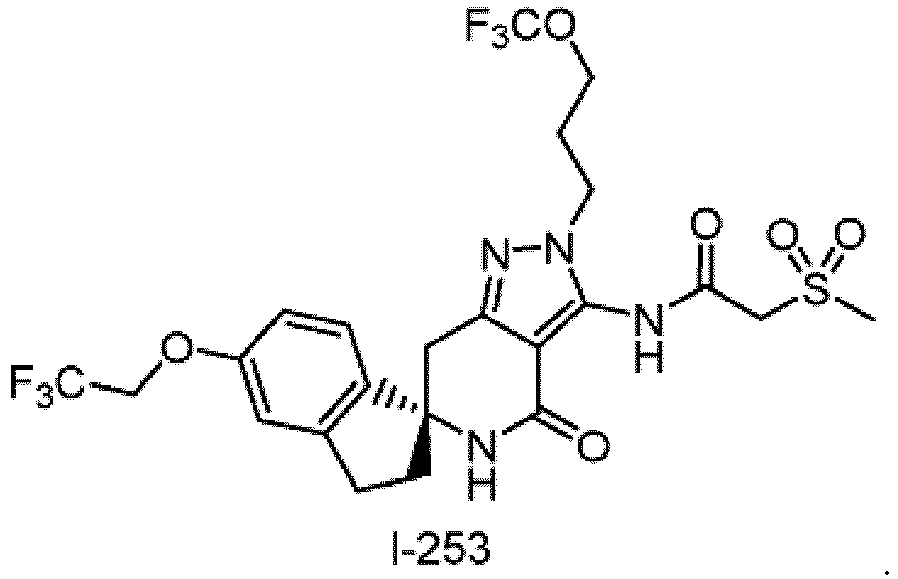
- Composé ou un sel pharmaceutiquement acceptable de celui-ci, dans lequel le composé est représenté par la formule suivante :

- Composé ou un sel pharmaceutiquement acceptable de celui-ci, dans lequel le composé est représenté par la formule suivante :
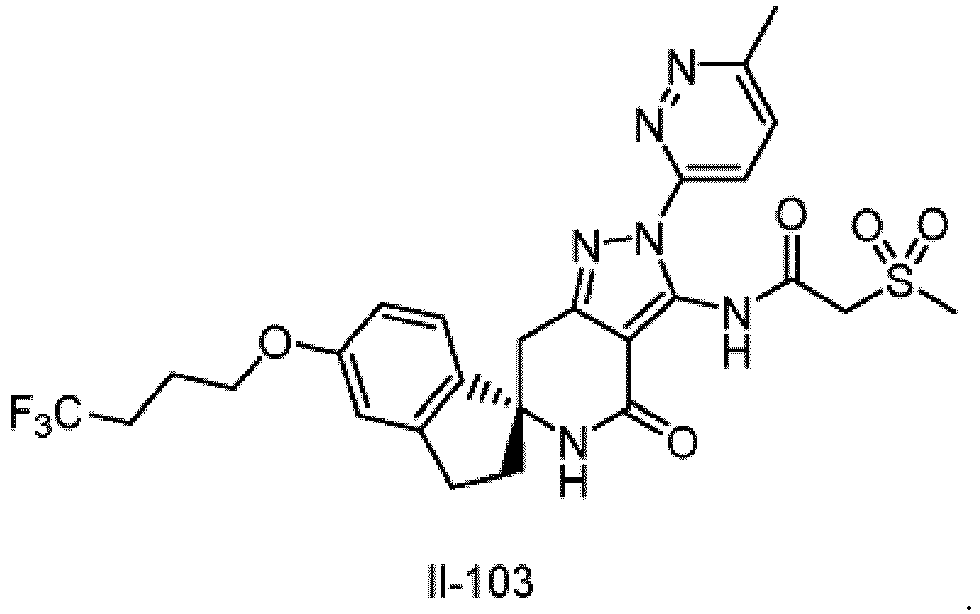
- Composé ou un sel pharmaceutiquement acceptable de celui-ci, dans lequel le composé est représenté par la formule suivante :

- Composé ou un sel pharmaceutiquement acceptable de celui-ci, dans lequel le composé est représenté par la formule suivante :
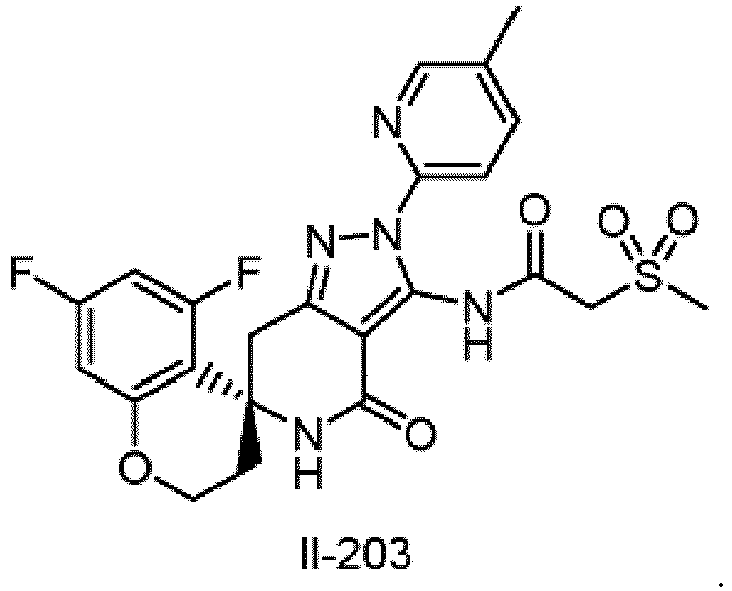
- Composé ou un sel pharmaceutiquement acceptable de celui-ci, dans lequel le composé est représenté par la formule suivante :

- Composé ou un sel pharmaceutiquement acceptable de celui-ci, dans lequel le composé est représenté par la formule suivante :

- Composé ou un sel pharmaceutiquement acceptable de celui-ci, dans lequel le composé est représenté par la formule suivante :

- Composé ou un sel pharmaceutiquement acceptable de celui-ci, dans lequel le composé est représenté par la formule suivante :

- Composé ou un sel pharmaceutiquement acceptable de celui-ci, dans lequel le composé est représenté par la formule suivante :

- Composition pharmaceutique comprenant le composé ou un sel pharmaceutiquement acceptable de celui-ci selon l'une quelconque des revendications 1 à 10.
- Composition pharmaceutique selon la revendication 11, pour une utilisation dans le traitement ou la prévention d'une obésité, d'un syndrome métabolique, d'une hyperlipidémie, d'une hypertriglycéridémie, d'une hypertriglycéridémie VLDL, d'un excès d'acides gras dans le sang, d'un diabète sucré, ou d'une artériosclérose.
- Composé ou un sel pharmaceutiquement acceptable de celui-ci selon l'une quelconque des revendications 1 à 10 pour une utilisation dans le traitement ou la prévention d'une obésité, d'un syndrome métabolique, d'une hyperlipidémie, d'une hypertriglycéridémie, d'une hypertriglycéridémie VLDL, d'un excès d'acides gras dans le sang, d'un diabète sucré, ou d'une artériosclérose.
Priority Applications (3)
| Application Number | Priority Date | Filing Date | Title |
|---|---|---|---|
| EP22165122.7A EP4043463B1 (fr) | 2017-07-14 | 2018-07-13 | Dérivé à cycle condensé ayant une activité inhibitrice de mgat2 |
| SI201831073T SI3653625T1 (sl) | 2017-07-14 | 2018-07-13 | Derivat fuzijskega obroča, ki ima zaviralno delovanje na mgat-2 |
| HRP20240295TT HRP20240295T1 (hr) | 2017-07-14 | 2018-07-13 | Derivat spojenog prstena koji ima inhibitorsko djelovanje na mgat-2 |
Applications Claiming Priority (2)
| Application Number | Priority Date | Filing Date | Title |
|---|---|---|---|
| JP2017137678 | 2017-07-14 | ||
| PCT/JP2018/026417 WO2019013311A1 (fr) | 2017-07-14 | 2018-07-13 | Dérivé à cycle condensé ayant une activité inhibitrice de mgat2 |
Related Child Applications (2)
| Application Number | Title | Priority Date | Filing Date |
|---|---|---|---|
| EP22165122.7A Division EP4043463B1 (fr) | 2017-07-14 | 2018-07-13 | Dérivé à cycle condensé ayant une activité inhibitrice de mgat2 |
| EP22165122.7A Division-Into EP4043463B1 (fr) | 2017-07-14 | 2018-07-13 | Dérivé à cycle condensé ayant une activité inhibitrice de mgat2 |
Publications (3)
| Publication Number | Publication Date |
|---|---|
| EP3653625A1 EP3653625A1 (fr) | 2020-05-20 |
| EP3653625A4 EP3653625A4 (fr) | 2021-02-24 |
| EP3653625B1 true EP3653625B1 (fr) | 2024-02-07 |
Family
ID=65001726
Family Applications (2)
| Application Number | Title | Priority Date | Filing Date |
|---|---|---|---|
| EP22165122.7A Active EP4043463B1 (fr) | 2017-07-14 | 2018-07-13 | Dérivé à cycle condensé ayant une activité inhibitrice de mgat2 |
| EP18831430.6A Active EP3653625B1 (fr) | 2017-07-14 | 2018-07-13 | Dérivé à cycle condensé ayant une activité inhibitrice de mgat-2 |
Family Applications Before (1)
| Application Number | Title | Priority Date | Filing Date |
|---|---|---|---|
| EP22165122.7A Active EP4043463B1 (fr) | 2017-07-14 | 2018-07-13 | Dérivé à cycle condensé ayant une activité inhibitrice de mgat2 |
Country Status (23)
| Country | Link |
|---|---|
| US (3) | US11198695B2 (fr) |
| EP (2) | EP4043463B1 (fr) |
| JP (3) | JP7224086B2 (fr) |
| KR (1) | KR102612176B1 (fr) |
| CN (2) | CN113501821B (fr) |
| AU (1) | AU2018298733B2 (fr) |
| BR (1) | BR112020000401A2 (fr) |
| CA (1) | CA3069799A1 (fr) |
| CL (1) | CL2020000086A1 (fr) |
| DK (1) | DK3653625T3 (fr) |
| ES (1) | ES2974287T3 (fr) |
| FI (1) | FI3653625T3 (fr) |
| HR (1) | HRP20240295T1 (fr) |
| HU (1) | HUE065838T2 (fr) |
| LT (1) | LT3653625T (fr) |
| MX (1) | MX394836B (fr) |
| PL (1) | PL3653625T3 (fr) |
| PT (1) | PT3653625T (fr) |
| RU (1) | RU2770437C2 (fr) |
| SA (1) | SA520411017B1 (fr) |
| SI (1) | SI3653625T1 (fr) |
| TW (1) | TWI782056B (fr) |
| WO (2) | WO2019013312A1 (fr) |
Families Citing this family (16)
| Publication number | Priority date | Publication date | Assignee | Title |
|---|---|---|---|---|
| TWI782056B (zh) * | 2017-07-14 | 2022-11-01 | 日商鹽野義製藥股份有限公司 | 具有mgat2抑制活性的縮合環衍生物 |
| MX2021008050A (es) * | 2019-01-11 | 2021-08-05 | Shionogi & Co | Derivado de dihidropirazolopirazinona que tiene actividad inhibidora de monoacilglicerol aciltransferasa 2 (mgat2). |
| JP7068743B2 (ja) * | 2019-01-11 | 2022-05-17 | 塩野義製薬株式会社 | Mgat2阻害活性を有する縮合環誘導体を含有する医薬組成物 |
| HRP20241159T1 (hr) | 2020-02-07 | 2024-12-06 | Gasherbrum Bio, Inc. | Heterociklički agonisti za glp-1 |
| JP2022016394A (ja) * | 2020-07-10 | 2022-01-21 | 塩野義製薬株式会社 | Mgat2阻害活性を有するジヒドロピラゾロピラジノン誘導体を含有する医薬組成物 |
| CN116368140A (zh) | 2020-09-10 | 2023-06-30 | 加舒布鲁姆生物公司 | 杂环glp-1激动剂 |
| CN114685502A (zh) * | 2020-12-25 | 2022-07-01 | 由理生物医药(上海)有限公司 | 作为kras-g12c抑制剂的螺环类化合物 |
| US20240374587A1 (en) | 2021-09-08 | 2024-11-14 | Shionogi & Co., Ltd. | Medicine for prevention and treatment of diseases linked to anti-obesity activity |
| CA3243798A1 (fr) * | 2022-02-09 | 2023-08-17 | Quanta Therapeutics, Inc. | Modulateurs de kras et leurs utilisations |
| WO2023230190A1 (fr) | 2022-05-25 | 2023-11-30 | Quanta Therapeutics, Inc. | Modulateurs à base de pyrimidine et leurs utilisations |
| KR20250022711A (ko) | 2022-06-13 | 2025-02-17 | 시오노기 앤드 컴파니, 리미티드 | 다이하이드로피리딘온 유도체 또는 그 용매화물의 결정 |
| CN120957993A (zh) | 2023-02-16 | 2025-11-14 | 加舒布鲁姆生物公司 | 杂环glp-1激动剂 |
| KR20260041941A (ko) | 2023-03-15 | 2026-03-27 | 콴타 테라퓨틱스, 인크. | Kras 조절 인자 및 이의 용도 |
| WO2025127097A1 (fr) * | 2023-12-13 | 2025-06-19 | 塩野義製薬株式会社 | Médicament pour le traitement de stéatoses hépatiques |
| JP2024100975A (ja) * | 2024-01-31 | 2024-07-26 | 塩野義製薬株式会社 | ジヒドロピリジノン誘導体を含有する医薬組成物 |
| WO2026008045A1 (fr) * | 2024-07-04 | 2026-01-08 | 苏州信诺维医药科技股份有限公司 | Composé spiro contenant un groupe alcynyle et son utilisation |
Family Cites Families (45)
| Publication number | Priority date | Publication date | Assignee | Title |
|---|---|---|---|---|
| ZA200504898B (en) * | 2002-12-20 | 2006-11-29 | Pharmacia Corp | Acyclic pyrazole compounds |
| EP2078719A4 (fr) | 2006-09-28 | 2009-11-11 | Dainippon Sumitomo Pharma Co | Composé ayant une structure de pyrimidine bicyclique et composition pharmaceutique comprenant le composé |
| CA2673888A1 (fr) * | 2007-01-04 | 2008-07-17 | Merck And Co., Inc. | Inhibiteurs de la beta-secretase de spiropiperidine bi-cyclique destines au traitement de la maladie d'alzheimer |
| US8389533B2 (en) * | 2008-04-07 | 2013-03-05 | Amgen Inc. | Gem-disubstituted and spirocyclic amino pyridines/pyrimidines as cell cycle inhibitors |
| AU2010216633A1 (en) | 2009-02-23 | 2011-09-08 | Msd K.K. | Pyrimidin-4(3H)-one derivatives |
| KR20100097077A (ko) * | 2009-02-25 | 2010-09-02 | 주식회사 중외제약 | Hsp90에 대한 억제 효능을 갖는 피리디논 유도체 |
| NZ601267A (en) * | 2009-12-23 | 2014-03-28 | Takeda Pharmaceutical | Fused heteroaromatic pyrrolidinones as syk inhibitors |
| JP2014051434A (ja) | 2010-12-28 | 2014-03-20 | Dainippon Sumitomo Pharma Co Ltd | 二環性ピリミジン誘導体 |
| CN103415519B (zh) | 2011-03-01 | 2016-03-02 | 詹森药业有限公司 | 作为β-分泌酶(BACE)抑制剂有用的6,7-二氢-吡唑[1,5-a]吡嗪-4-基胺衍生物 |
| JPWO2012124744A1 (ja) | 2011-03-14 | 2014-07-24 | 大正製薬株式会社 | 含窒素縮合複素環化合物 |
| CN103012397B (zh) * | 2011-09-26 | 2017-03-01 | 赛诺菲 | 吡唑并喹啉酮衍生物、其制备方法及其治疗用途 |
| JP6042060B2 (ja) * | 2011-09-26 | 2016-12-14 | サノフイ | ピラゾロキノリノン誘導体、その調製および治療上の使用 |
| SI2573073T1 (sl) * | 2011-09-26 | 2015-02-27 | Sanofi | Pirazolokinolinonski derivati, njihova priprava in njihova terapevtska uporaba |
| US8791091B2 (en) * | 2011-12-02 | 2014-07-29 | Bristol-Myers Squibb Company | Aryl dihydropyridinone and piperidinone MGAT2 inhibitors |
| US9073856B2 (en) | 2012-01-23 | 2015-07-07 | Eli Lilly And Company | Phenyl methanesulfonamide derivatives useful as MGAT-2 inhibitors |
| BR112014018712A8 (pt) | 2012-01-31 | 2017-07-11 | Lilly Co Eli | Derivados de morfolinila úteis como inibidores de mogat-2 |
| AR089771A1 (es) | 2012-01-31 | 2014-09-17 | Lilly Co Eli | Derivados de bencil sulfonamida utiles como inhibidores de mogat-2 |
| TW201348226A (zh) | 2012-02-28 | 2013-12-01 | Amgen Inc | 作為pim抑制劑之醯胺 |
| EP2855483B1 (fr) * | 2012-05-24 | 2017-10-25 | Novartis AG | Composés pyrrolopyrrolidinones |
| JP2014005245A (ja) * | 2012-06-26 | 2014-01-16 | Dainippon Sumitomo Pharma Co Ltd | 二環性ピリミジン誘導体を含有する医薬組成物 |
| JP2014009165A (ja) * | 2012-06-27 | 2014-01-20 | Dainippon Sumitomo Pharma Co Ltd | 二環性ピリミジン化合物 |
| JP6099753B2 (ja) * | 2012-10-03 | 2017-03-22 | アドビナス セラピューティクス リミテッド | スピロ環化合物、その組成物及びその医薬応用 |
| US9416138B2 (en) | 2012-11-06 | 2016-08-16 | Eli Lilly And Company | Benzyl sulfonamide compounds useful as MoGAT-2 inhibitors |
| JPWO2014133134A1 (ja) | 2013-02-28 | 2017-02-02 | 味の素株式会社 | 新規テトラヒドロピリドピリミジノン誘導体 |
| TWI629275B (zh) * | 2013-03-13 | 2018-07-11 | 賽諾菲公司 | N-(4-(氮雜吲唑-6-基)-苯基)-磺醯胺及其作為醫藥之用途 |
| AU2014243257A1 (en) * | 2013-03-25 | 2015-10-15 | Sanofi | Pyrazolonaphthyridinone derivatives as METAP2 inhibitors (methionine aminopeptidase type-2) |
| CN104109160B (zh) | 2013-04-17 | 2017-12-15 | 上海翰森生物医药科技有限公司 | 吡咯并n杂环类化合物及其制备方法和医药用途 |
| KR102291444B1 (ko) | 2013-05-29 | 2021-08-18 | 브리스톨-마이어스 스큅 컴퍼니 | 디히드로피리디논 mgat2 억제제 |
| TW201605859A (zh) * | 2013-11-14 | 2016-02-16 | 必治妥美雅史谷比公司 | 作為酪蛋白激酶1δ/ε抑制劑之新穎經取代之吡唑并-哌 |
| EP3097095A1 (fr) * | 2014-01-24 | 2016-11-30 | AbbVie Inc. | Dérivés furo-3-carboxamide et méthodes d'utilisation |
| WO2015112465A1 (fr) | 2014-01-24 | 2015-07-30 | Merck Sharp & Dohme Corp. | Dérivés d'isoquinoline utilisés comme inhibiteurs de mgat2 |
| EP3112369A4 (fr) | 2014-02-27 | 2017-09-20 | The University of Tokyo | Dérivé de pyrazole condensé ayant une activité inhibitrice d'autotaxine |
| JP2017078024A (ja) | 2014-02-28 | 2017-04-27 | 味の素株式会社 | 新規テトラヒドロピリドピリミジノン誘導体 |
| JP6498705B2 (ja) * | 2014-03-07 | 2019-04-10 | ブリストル−マイヤーズ スクイブ カンパニーBristol−Myers Squibb Company | 代謝障害の治療に用いるためのジヒドロピリジノンmgat2阻害剤 |
| MA39335B1 (fr) | 2014-03-07 | 2019-12-31 | Bristol Myers Squibb Co | Inhibiteurs mgat2 de dihydropyridinone à substitution tétrazolone |
| ES2715676T3 (es) | 2014-03-27 | 2019-06-05 | Janssen Pharmaceutica Nv | Derivados de 4,5,6,7-tetrahidro-pirazolo[1,5-a]pirazina sustituidos y derivados de 5,6,7,8-tetrahidro-4h-pirazolo[1,5-a][1,4]diazepina como inhibidores de ros1 |
| WO2015191681A2 (fr) | 2014-06-11 | 2015-12-17 | Bristol-Myers Squibb Company | Pyridinones substituées utilisées comme inhibiteurs de mgat2 |
| JP2017171579A (ja) | 2014-08-11 | 2017-09-28 | 味の素株式会社 | 新規テトラヒドロピリドピリミジノン誘導体 |
| US9868738B2 (en) | 2014-09-19 | 2018-01-16 | Merck Sharp & Dohme Corp. | Diazine-fused amidines as BACE inhibitors, compositions, and their use |
| HK1244427A1 (zh) * | 2014-12-06 | 2018-08-10 | Intra-Cellular Therapies, Inc. | 有机化合物 |
| US9879029B2 (en) * | 2014-12-22 | 2018-01-30 | Eli Lilly And Company | ERK inhibitors |
| JP2018052818A (ja) | 2015-01-28 | 2018-04-05 | 武田薬品工業株式会社 | スルホンアミド化合物 |
| JP2016164154A (ja) | 2015-02-26 | 2016-09-08 | 塩野義製薬株式会社 | オートタキシン阻害活性を有する7位無置換縮合ピラゾール誘導体 |
| WO2017069224A1 (fr) * | 2015-10-22 | 2017-04-27 | 塩野義製薬株式会社 | Dérivé spiro hétérocyclique présentant une activité inhibitrice de mgat2 |
| TWI782056B (zh) * | 2017-07-14 | 2022-11-01 | 日商鹽野義製藥股份有限公司 | 具有mgat2抑制活性的縮合環衍生物 |
-
2018
- 2018-07-12 TW TW107124096A patent/TWI782056B/zh active
- 2018-07-13 CN CN202110774911.XA patent/CN113501821B/zh active Active
- 2018-07-13 KR KR1020207004424A patent/KR102612176B1/ko active Active
- 2018-07-13 FI FIEP18831430.6T patent/FI3653625T3/fi active
- 2018-07-13 DK DK18831430.6T patent/DK3653625T3/da active
- 2018-07-13 CA CA3069799A patent/CA3069799A1/fr active Pending
- 2018-07-13 BR BR112020000401-4A patent/BR112020000401A2/pt not_active Application Discontinuation
- 2018-07-13 EP EP22165122.7A patent/EP4043463B1/fr active Active
- 2018-07-13 US US16/628,753 patent/US11198695B2/en active Active
- 2018-07-13 PT PT188314306T patent/PT3653625T/pt unknown
- 2018-07-13 MX MX2020000286A patent/MX394836B/es unknown
- 2018-07-13 JP JP2019529794A patent/JP7224086B2/ja active Active
- 2018-07-13 PL PL18831430.6T patent/PL3653625T3/pl unknown
- 2018-07-13 HU HUE18831430A patent/HUE065838T2/hu unknown
- 2018-07-13 HR HRP20240295TT patent/HRP20240295T1/hr unknown
- 2018-07-13 WO PCT/JP2018/026418 patent/WO2019013312A1/fr not_active Ceased
- 2018-07-13 EP EP18831430.6A patent/EP3653625B1/fr active Active
- 2018-07-13 SI SI201831073T patent/SI3653625T1/sl unknown
- 2018-07-13 AU AU2018298733A patent/AU2018298733B2/en active Active
- 2018-07-13 LT LTEPPCT/JP2018/026417T patent/LT3653625T/lt unknown
- 2018-07-13 RU RU2020106727A patent/RU2770437C2/ru active
- 2018-07-13 WO PCT/JP2018/026417 patent/WO2019013311A1/fr not_active Ceased
- 2018-07-13 CN CN201880059379.XA patent/CN111094288B/zh active Active
- 2018-07-13 ES ES18831430T patent/ES2974287T3/es active Active
-
2020
- 2020-01-09 SA SA520411017A patent/SA520411017B1/ar unknown
- 2020-01-10 CL CL2020000086A patent/CL2020000086A1/es unknown
-
2021
- 2021-11-12 US US17/525,010 patent/US12024519B2/en active Active
-
2022
- 2022-02-25 JP JP2022027456A patent/JP7060298B1/ja active Active
-
2023
- 2023-02-02 JP JP2023014333A patent/JP7493635B2/ja active Active
-
2024
- 2024-05-16 US US18/665,923 patent/US12454533B2/en active Active
Also Published As
Similar Documents
| Publication | Publication Date | Title |
|---|---|---|
| EP3653625B1 (fr) | Dérivé à cycle condensé ayant une activité inhibitrice de mgat-2 | |
| JP7068743B2 (ja) | Mgat2阻害活性を有する縮合環誘導体を含有する医薬組成物 | |
| WO2017069224A1 (fr) | Dérivé spiro hétérocyclique présentant une activité inhibitrice de mgat2 | |
| TWI840489B (zh) | 酮衍生物 | |
| US10335401B2 (en) | Non-aromatic heterocyclic derivative having MGAT2 inhibitory activity | |
| JP2022016394A (ja) | Mgat2阻害活性を有するジヒドロピラゾロピラジノン誘導体を含有する医薬組成物 | |
| RU2803743C2 (ru) | Производное дигидропиразолопиразинона, обладающее ингибирующей активностью в отношении mgat-2 | |
| WO2018235785A1 (fr) | Dérivé de dihydropyridone ayant une activité inhibitrice de mgat2 | |
| HK40059861A (en) | Fused ring derivative having mgat-2 inhibitory activity | |
| JP2026046943A (ja) | Mgat2阻害活性を有するジヒドロピリドピラジノン誘導体 | |
| HK40059861B (zh) | 具有mgat-2抑制活性的稠合环衍生物 |
Legal Events
| Date | Code | Title | Description |
|---|---|---|---|
| REG | Reference to a national code |
Ref country code: HR Ref legal event code: TUEP Ref document number: P20240295T Country of ref document: HR |
|
| STAA | Information on the status of an ep patent application or granted ep patent |
Free format text: STATUS: THE INTERNATIONAL PUBLICATION HAS BEEN MADE |
|
| PUAI | Public reference made under article 153(3) epc to a published international application that has entered the european phase |
Free format text: ORIGINAL CODE: 0009012 |
|
| STAA | Information on the status of an ep patent application or granted ep patent |
Free format text: STATUS: REQUEST FOR EXAMINATION WAS MADE |
|
| 17P | Request for examination filed |
Effective date: 20200214 |
|
| AK | Designated contracting states |
Kind code of ref document: A1 Designated state(s): AL AT BE BG CH CY CZ DE DK EE ES FI FR GB GR HR HU IE IS IT LI LT LU LV MC MK MT NL NO PL PT RO RS SE SI SK SM TR |
|
| AX | Request for extension of the european patent |
Extension state: BA ME |
|
| DAV | Request for validation of the european patent (deleted) | ||
| DAX | Request for extension of the european patent (deleted) | ||
| A4 | Supplementary search report drawn up and despatched |
Effective date: 20210122 |
|
| RIC1 | Information provided on ipc code assigned before grant |
Ipc: A61K 31/527 20060101ALI20210118BHEP Ipc: A61P 3/06 20060101ALI20210118BHEP Ipc: C07D 471/10 20060101ALI20210118BHEP Ipc: A61P 43/00 20060101ALI20210118BHEP Ipc: A61P 3/10 20060101ALI20210118BHEP Ipc: C07D 471/04 20060101AFI20210118BHEP Ipc: A61K 31/438 20060101ALI20210118BHEP Ipc: A61P 3/04 20060101ALI20210118BHEP Ipc: C07D 491/20 20060101ALI20210118BHEP Ipc: A61P 9/10 20060101ALI20210118BHEP Ipc: A61K 31/497 20060101ALI20210118BHEP Ipc: A61K 31/444 20060101ALI20210118BHEP Ipc: A61K 31/501 20060101ALI20210118BHEP Ipc: A61P 3/00 20060101ALI20210118BHEP Ipc: A61K 31/506 20060101ALI20210118BHEP |
|
| STAA | Information on the status of an ep patent application or granted ep patent |
Free format text: STATUS: EXAMINATION IS IN PROGRESS |
|
| 17Q | First examination report despatched |
Effective date: 20220103 |
|
| RIC1 | Information provided on ipc code assigned before grant |
Ipc: C07D 491/147 20060101ALI20221018BHEP Ipc: C07D 487/10 20060101ALI20221018BHEP Ipc: C07D 471/20 20060101ALI20221018BHEP Ipc: C07D 491/20 20060101ALI20221018BHEP Ipc: C07D 471/10 20060101ALI20221018BHEP Ipc: A61P 43/00 20060101ALI20221018BHEP Ipc: A61P 9/10 20060101ALI20221018BHEP Ipc: A61P 3/10 20060101ALI20221018BHEP Ipc: A61P 3/06 20060101ALI20221018BHEP Ipc: A61P 3/04 20060101ALI20221018BHEP Ipc: A61P 3/00 20060101ALI20221018BHEP Ipc: A61K 31/527 20060101ALI20221018BHEP Ipc: A61K 31/506 20060101ALI20221018BHEP Ipc: A61K 31/501 20060101ALI20221018BHEP Ipc: A61K 31/497 20060101ALI20221018BHEP Ipc: A61K 31/444 20060101ALI20221018BHEP Ipc: A61K 31/438 20060101ALI20221018BHEP Ipc: C07D 471/04 20060101AFI20221018BHEP |
|
| GRAP | Despatch of communication of intention to grant a patent |
Free format text: ORIGINAL CODE: EPIDOSNIGR1 |
|
| GRAJ | Information related to disapproval of communication of intention to grant by the applicant or resumption of examination proceedings by the epo deleted |
Free format text: ORIGINAL CODE: EPIDOSDIGR1 |
|
| GRAP | Despatch of communication of intention to grant a patent |
Free format text: ORIGINAL CODE: EPIDOSNIGR1 |
|
| STAA | Information on the status of an ep patent application or granted ep patent |
Free format text: STATUS: GRANT OF PATENT IS INTENDED |
|
| INTG | Intention to grant announced |
Effective date: 20230216 |
|
| GRAJ | Information related to disapproval of communication of intention to grant by the applicant or resumption of examination proceedings by the epo deleted |
Free format text: ORIGINAL CODE: EPIDOSDIGR1 |
|
| STAA | Information on the status of an ep patent application or granted ep patent |
Free format text: STATUS: EXAMINATION IS IN PROGRESS |
|
| INTC | Intention to grant announced (deleted) | ||
| GRAP | Despatch of communication of intention to grant a patent |
Free format text: ORIGINAL CODE: EPIDOSNIGR1 |
|
| STAA | Information on the status of an ep patent application or granted ep patent |
Free format text: STATUS: GRANT OF PATENT IS INTENDED |
|
| INTG | Intention to grant announced |
Effective date: 20230901 |
|
| GRAS | Grant fee paid |
Free format text: ORIGINAL CODE: EPIDOSNIGR3 |
|
| GRAA | (expected) grant |
Free format text: ORIGINAL CODE: 0009210 |
|
| STAA | Information on the status of an ep patent application or granted ep patent |
Free format text: STATUS: THE PATENT HAS BEEN GRANTED |
|
| P01 | Opt-out of the competence of the unified patent court (upc) registered |
Effective date: 20231222 |
|
| AK | Designated contracting states |
Kind code of ref document: B1 Designated state(s): AL AT BE BG CH CY CZ DE DK EE ES FI FR GB GR HR HU IE IS IT LI LT LU LV MC MK MT NL NO PL PT RO RS SE SI SK SM TR |
|
| REG | Reference to a national code |
Ref country code: GB Ref legal event code: FG4D |
|
| REG | Reference to a national code |
Ref country code: CH Ref legal event code: EP |
|
| REG | Reference to a national code |
Ref country code: DE Ref legal event code: R096 Ref document number: 602018064995 Country of ref document: DE |
|
| REG | Reference to a national code |
Ref country code: IE Ref legal event code: FG4D |
|
| REG | Reference to a national code |
Ref country code: DK Ref legal event code: T3 Effective date: 20240227 |
|
| REG | Reference to a national code |
Ref country code: NL Ref legal event code: FP |
|
| REG | Reference to a national code |
Ref country code: FI Ref legal event code: FGE Ref country code: SE Ref legal event code: TRGR |
|
| REG | Reference to a national code |
Ref country code: PT Ref legal event code: SC4A Ref document number: 3653625 Country of ref document: PT Date of ref document: 20240327 Kind code of ref document: T Free format text: AVAILABILITY OF NATIONAL TRANSLATION Effective date: 20240321 |
|
| REG | Reference to a national code |
Ref country code: SK Ref legal event code: T3 Ref document number: E 43675 Country of ref document: SK |
|
| REG | Reference to a national code |
Ref country code: GR Ref legal event code: EP Ref document number: 20240400661 Country of ref document: GR Effective date: 20240410 |
|
| REG | Reference to a national code |
Ref country code: HR Ref legal event code: T1PR Ref document number: P20240295 Country of ref document: HR |
|
| REG | Reference to a national code |
Ref country code: EE Ref legal event code: FG4A Ref document number: E024115 Country of ref document: EE Effective date: 20240302 |
|
| REG | Reference to a national code |
Ref country code: ES Ref legal event code: FG2A Ref document number: 2974287 Country of ref document: ES Kind code of ref document: T3 Effective date: 20240626 |
|
| REG | Reference to a national code |
Ref country code: HU Ref legal event code: AG4A Ref document number: E065838 Country of ref document: HU |
|
| REG | Reference to a national code |
Ref country code: HR Ref legal event code: ODRP Ref document number: P20240295 Country of ref document: HR Payment date: 20240618 Year of fee payment: 7 |
|
| PG25 | Lapsed in a contracting state [announced via postgrant information from national office to epo] |
Ref country code: SM Free format text: LAPSE BECAUSE OF FAILURE TO SUBMIT A TRANSLATION OF THE DESCRIPTION OR TO PAY THE FEE WITHIN THE PRESCRIBED TIME-LIMIT Effective date: 20240207 |
|
| PG25 | Lapsed in a contracting state [announced via postgrant information from national office to epo] |
Ref country code: SM Free format text: LAPSE BECAUSE OF FAILURE TO SUBMIT A TRANSLATION OF THE DESCRIPTION OR TO PAY THE FEE WITHIN THE PRESCRIBED TIME-LIMIT Effective date: 20240207 |
|
| REG | Reference to a national code |
Ref country code: DE Ref legal event code: R097 Ref document number: 602018064995 Country of ref document: DE |
|
| PLBE | No opposition filed within time limit |
Free format text: ORIGINAL CODE: 0009261 |
|
| STAA | Information on the status of an ep patent application or granted ep patent |
Free format text: STATUS: NO OPPOSITION FILED WITHIN TIME LIMIT |
|
| 26N | No opposition filed |
Effective date: 20241108 |
|
| PG25 | Lapsed in a contracting state [announced via postgrant information from national office to epo] |
Ref country code: MC Free format text: LAPSE BECAUSE OF FAILURE TO SUBMIT A TRANSLATION OF THE DESCRIPTION OR TO PAY THE FEE WITHIN THE PRESCRIBED TIME-LIMIT Effective date: 20240207 |
|
| PG25 | Lapsed in a contracting state [announced via postgrant information from national office to epo] |
Ref country code: RS Free format text: LAPSE BECAUSE OF FAILURE TO SUBMIT A TRANSLATION OF THE DESCRIPTION OR TO PAY THE FEE WITHIN THE PRESCRIBED TIME-LIMIT Effective date: 20240207 |
|
| PGFP | Annual fee paid to national office [announced via postgrant information from national office to epo] |
Ref country code: PL Payment date: 20250608 Year of fee payment: 8 |
|
| PGFP | Annual fee paid to national office [announced via postgrant information from national office to epo] |
Ref country code: GB Payment date: 20250529 Year of fee payment: 8 |
|
| PGFP | Annual fee paid to national office [announced via postgrant information from national office to epo] |
Ref country code: LT Payment date: 20250604 Year of fee payment: 8 |
|
| PGFP | Annual fee paid to national office [announced via postgrant information from national office to epo] |
Ref country code: NL Payment date: 20250613 Year of fee payment: 8 Ref country code: LU Payment date: 20250625 Year of fee payment: 8 Ref country code: BE Payment date: 20250619 Year of fee payment: 8 |
|
| PGFP | Annual fee paid to national office [announced via postgrant information from national office to epo] |
Ref country code: LV Payment date: 20250603 Year of fee payment: 8 Ref country code: PT Payment date: 20250624 Year of fee payment: 8 |
|
| PGFP | Annual fee paid to national office [announced via postgrant information from national office to epo] |
Ref country code: EE Payment date: 20250606 Year of fee payment: 8 Ref country code: FR Payment date: 20250610 Year of fee payment: 8 |
|
| PGFP | Annual fee paid to national office [announced via postgrant information from national office to epo] |
Ref country code: GR Payment date: 20250618 Year of fee payment: 8 Ref country code: BG Payment date: 20250529 Year of fee payment: 8 |
|
| PGFP | Annual fee paid to national office [announced via postgrant information from national office to epo] |
Ref country code: RO Payment date: 20250619 Year of fee payment: 8 |
|
| PGFP | Annual fee paid to national office [announced via postgrant information from national office to epo] |
Ref country code: SK Payment date: 20250612 Year of fee payment: 8 |
|
| PGFP | Annual fee paid to national office [announced via postgrant information from national office to epo] |
Ref country code: CZ Payment date: 20250618 Year of fee payment: 8 |
|
| PGFP | Annual fee paid to national office [announced via postgrant information from national office to epo] |
Ref country code: IE Payment date: 20250610 Year of fee payment: 8 |
|
| PGFP | Annual fee paid to national office [announced via postgrant information from national office to epo] |
Ref country code: SE Payment date: 20250528 Year of fee payment: 8 Ref country code: SI Payment date: 20250613 Year of fee payment: 8 |
|
| REG | Reference to a national code |
Ref country code: HR Ref legal event code: ODRP Ref document number: P20240295 Country of ref document: HR Payment date: 20250624 Year of fee payment: 8 |
|
| PGFP | Annual fee paid to national office [announced via postgrant information from national office to epo] |
Ref country code: HU Payment date: 20250630 Year of fee payment: 8 |
|
| PGFP | Annual fee paid to national office [announced via postgrant information from national office to epo] |
Ref country code: FI Payment date: 20250715 Year of fee payment: 8 Ref country code: ES Payment date: 20250801 Year of fee payment: 8 |
|
| PGFP | Annual fee paid to national office [announced via postgrant information from national office to epo] |
Ref country code: DK Payment date: 20250714 Year of fee payment: 8 Ref country code: DE Payment date: 20250528 Year of fee payment: 8 |
|
| PGFP | Annual fee paid to national office [announced via postgrant information from national office to epo] |
Ref country code: NO Payment date: 20250709 Year of fee payment: 8 |
|
| PGFP | Annual fee paid to national office [announced via postgrant information from national office to epo] |
Ref country code: TR Payment date: 20250704 Year of fee payment: 8 Ref country code: IT Payment date: 20250623 Year of fee payment: 8 |
|
| PGFP | Annual fee paid to national office [announced via postgrant information from national office to epo] |
Ref country code: HR Payment date: 20250703 Year of fee payment: 8 |
|
| PGFP | Annual fee paid to national office [announced via postgrant information from national office to epo] |
Ref country code: AT Payment date: 20250625 Year of fee payment: 8 |
|
| PGFP | Annual fee paid to national office [announced via postgrant information from national office to epo] |
Ref country code: MT Payment date: 20250717 Year of fee payment: 8 Ref country code: CH Payment date: 20250801 Year of fee payment: 8 |
|
| PGFP | Annual fee paid to national office [announced via postgrant information from national office to epo] |
Ref country code: IS Payment date: 20250707 Year of fee payment: 8 |
|
| REG | Reference to a national code |
Ref country code: AT Ref legal event code: UEP Ref document number: 1655305 Country of ref document: AT Kind code of ref document: T Effective date: 20240207 |
|
| PGFP | Annual fee paid to national office [announced via postgrant information from national office to epo] |
Ref country code: CY Payment date: 20250606 Year of fee payment: 8 |