EP3663761A1 - Degradationsverhinderer für immunoassay-reagenz mit unlöslichen trägerteilchen - Google Patents
Degradationsverhinderer für immunoassay-reagenz mit unlöslichen trägerteilchen Download PDFInfo
- Publication number
- EP3663761A1 EP3663761A1 EP18840741.5A EP18840741A EP3663761A1 EP 3663761 A1 EP3663761 A1 EP 3663761A1 EP 18840741 A EP18840741 A EP 18840741A EP 3663761 A1 EP3663761 A1 EP 3663761A1
- Authority
- EP
- European Patent Office
- Prior art keywords
- insoluble carrier
- reagent
- carrier particles
- mass
- particles
- Prior art date
- Legal status (The legal status is an assumption and is not a legal conclusion. Google has not performed a legal analysis and makes no representation as to the accuracy of the status listed.)
- Pending
Links
- 239000002245 particle Substances 0.000 title claims abstract description 156
- 239000003153 chemical reaction reagent Substances 0.000 title claims abstract description 118
- 238000003018 immunoassay Methods 0.000 title claims abstract description 59
- 230000015556 catabolic process Effects 0.000 title claims abstract description 33
- 238000006731 degradation reaction Methods 0.000 title claims abstract description 33
- 230000003405 preventing effect Effects 0.000 title claims abstract description 15
- 238000000034 method Methods 0.000 claims abstract description 50
- 238000005189 flocculation Methods 0.000 claims abstract description 38
- 230000016615 flocculation Effects 0.000 claims abstract description 38
- 239000004816 latex Substances 0.000 claims description 90
- 229920000126 latex Polymers 0.000 claims description 90
- PCHJSUWPFVWCPO-UHFFFAOYSA-N gold Chemical compound [Au] PCHJSUWPFVWCPO-UHFFFAOYSA-N 0.000 claims description 36
- 230000002265 prevention Effects 0.000 claims description 14
- 230000004520 agglutination Effects 0.000 claims description 13
- 239000002904 solvent Substances 0.000 claims description 3
- 238000007710 freezing Methods 0.000 description 48
- 230000008014 freezing Effects 0.000 description 48
- 238000010257 thawing Methods 0.000 description 46
- DHMQDGOQFOQNFH-UHFFFAOYSA-N Glycine Chemical compound NCC(O)=O DHMQDGOQFOQNFH-UHFFFAOYSA-N 0.000 description 30
- 239000000126 substance Substances 0.000 description 27
- JJMDCOVWQOJGCB-UHFFFAOYSA-N 5-aminopentanoic acid Chemical compound [NH3+]CCCCC([O-])=O JJMDCOVWQOJGCB-UHFFFAOYSA-N 0.000 description 26
- UCMIRNVEIXFBKS-UHFFFAOYSA-N beta-alanine Chemical compound NCCC(O)=O UCMIRNVEIXFBKS-UHFFFAOYSA-N 0.000 description 26
- BTCSSZJGUNDROE-UHFFFAOYSA-N gamma-aminobutyric acid Chemical compound NCCCC(O)=O BTCSSZJGUNDROE-UHFFFAOYSA-N 0.000 description 26
- 239000000047 product Substances 0.000 description 26
- SLXKOJJOQWFEFD-UHFFFAOYSA-N 6-aminohexanoic acid Chemical compound NCCCCCC(O)=O SLXKOJJOQWFEFD-UHFFFAOYSA-N 0.000 description 23
- 229960002684 aminocaproic acid Drugs 0.000 description 23
- 239000000654 additive Substances 0.000 description 18
- 230000000996 additive effect Effects 0.000 description 17
- 239000006185 dispersion Substances 0.000 description 17
- 239000004471 Glycine Substances 0.000 description 15
- XDOLZJYETYVRKV-UHFFFAOYSA-N 7-Aminoheptanoic acid Chemical compound NCCCCCCC(O)=O XDOLZJYETYVRKV-UHFFFAOYSA-N 0.000 description 13
- 239000000427 antigen Substances 0.000 description 13
- 102000036639 antigens Human genes 0.000 description 13
- 108091007433 antigens Proteins 0.000 description 13
- 229940000635 beta-alanine Drugs 0.000 description 13
- 229960003692 gamma aminobutyric acid Drugs 0.000 description 13
- PEDCQBHIVMGVHV-UHFFFAOYSA-N Glycerine Chemical compound OCC(O)CO PEDCQBHIVMGVHV-UHFFFAOYSA-N 0.000 description 12
- 239000000872 buffer Substances 0.000 description 11
- 238000011088 calibration curve Methods 0.000 description 9
- 230000008859 change Effects 0.000 description 8
- 238000002835 absorbance Methods 0.000 description 7
- 238000003556 assay Methods 0.000 description 7
- 102000004169 proteins and genes Human genes 0.000 description 7
- 108090000623 proteins and genes Proteins 0.000 description 7
- 239000004793 Polystyrene Substances 0.000 description 6
- HEMHJVSKTPXQMS-UHFFFAOYSA-M Sodium hydroxide Chemical compound [OH-].[Na+] HEMHJVSKTPXQMS-UHFFFAOYSA-M 0.000 description 6
- 230000000052 comparative effect Effects 0.000 description 6
- 235000011187 glycerol Nutrition 0.000 description 6
- 239000000203 mixture Substances 0.000 description 6
- 229920002223 polystyrene Polymers 0.000 description 6
- DPVHGFAJLZWDOC-PVXXTIHASA-N (2r,3s,4s,5r,6r)-2-(hydroxymethyl)-6-[(2r,3r,4s,5s,6r)-3,4,5-trihydroxy-6-(hydroxymethyl)oxan-2-yl]oxyoxane-3,4,5-triol;dihydrate Chemical compound O.O.O[C@@H]1[C@@H](O)[C@H](O)[C@@H](CO)O[C@@H]1O[C@@H]1[C@H](O)[C@@H](O)[C@H](O)[C@@H](CO)O1 DPVHGFAJLZWDOC-PVXXTIHASA-N 0.000 description 5
- JKMHFZQWWAIEOD-UHFFFAOYSA-N 2-[4-(2-hydroxyethyl)piperazin-1-yl]ethanesulfonic acid Chemical compound OCC[NH+]1CCN(CCS([O-])(=O)=O)CC1 JKMHFZQWWAIEOD-UHFFFAOYSA-N 0.000 description 5
- 239000007995 HEPES buffer Substances 0.000 description 5
- 239000003125 aqueous solvent Substances 0.000 description 5
- 238000006243 chemical reaction Methods 0.000 description 5
- 238000002360 preparation method Methods 0.000 description 5
- 230000001235 sensitizing effect Effects 0.000 description 5
- 238000003860 storage Methods 0.000 description 5
- 229940074409 trehalose dihydrate Drugs 0.000 description 5
- 102100040214 Apolipoprotein(a) Human genes 0.000 description 4
- 101710115418 Apolipoprotein(a) Proteins 0.000 description 4
- FAPWRFPIFSIZLT-UHFFFAOYSA-M Sodium chloride Chemical compound [Na+].[Cl-] FAPWRFPIFSIZLT-UHFFFAOYSA-M 0.000 description 4
- 230000000694 effects Effects 0.000 description 4
- 238000005259 measurement Methods 0.000 description 4
- 229920000642 polymer Polymers 0.000 description 4
- 239000011541 reaction mixture Substances 0.000 description 4
- 239000000243 solution Substances 0.000 description 4
- XLYOFNOQVPJJNP-UHFFFAOYSA-N water Substances O XLYOFNOQVPJJNP-UHFFFAOYSA-N 0.000 description 4
- 241000283707 Capra Species 0.000 description 3
- LYCAIKOWRPUZTN-UHFFFAOYSA-N Ethylene glycol Chemical compound OCCO LYCAIKOWRPUZTN-UHFFFAOYSA-N 0.000 description 3
- KRKNYBCHXYNGOX-UHFFFAOYSA-N citric acid Chemical compound OC(=O)CC(O)(C(O)=O)CC(O)=O KRKNYBCHXYNGOX-UHFFFAOYSA-N 0.000 description 3
- 238000001514 detection method Methods 0.000 description 3
- KWIUHFFTVRNATP-UHFFFAOYSA-N glycine betaine Chemical compound C[N+](C)(C)CC([O-])=O KWIUHFFTVRNATP-UHFFFAOYSA-N 0.000 description 3
- 239000012071 phase Substances 0.000 description 3
- 239000011369 resultant mixture Substances 0.000 description 3
- 238000003756 stirring Methods 0.000 description 3
- YBJHBAHKTGYVGT-ZKWXMUAHSA-N (+)-Biotin Chemical compound N1C(=O)N[C@@H]2[C@H](CCCCC(=O)O)SC[C@@H]21 YBJHBAHKTGYVGT-ZKWXMUAHSA-N 0.000 description 2
- BTBUEUYNUDRHOZ-UHFFFAOYSA-N Borate Chemical compound [O-]B([O-])[O-] BTBUEUYNUDRHOZ-UHFFFAOYSA-N 0.000 description 2
- 102000006395 Globulins Human genes 0.000 description 2
- 108010044091 Globulins Proteins 0.000 description 2
- 125000004432 carbon atom Chemical group C* 0.000 description 2
- 238000001816 cooling Methods 0.000 description 2
- 238000010348 incorporation Methods 0.000 description 2
- 239000007788 liquid Substances 0.000 description 2
- 239000011859 microparticle Substances 0.000 description 2
- 230000035945 sensitivity Effects 0.000 description 2
- 239000011780 sodium chloride Substances 0.000 description 2
- 238000001179 sorption measurement Methods 0.000 description 2
- 239000006228 supernatant Substances 0.000 description 2
- HDTRYLNUVZCQOY-UHFFFAOYSA-N α-D-glucopyranosyl-α-D-glucopyranoside Natural products OC1C(O)C(O)C(CO)OC1OC1C(O)C(O)C(O)C(CO)O1 HDTRYLNUVZCQOY-UHFFFAOYSA-N 0.000 description 1
- 102000004190 Enzymes Human genes 0.000 description 1
- 108090000790 Enzymes Proteins 0.000 description 1
- LFQSCWFLJHTTHZ-UHFFFAOYSA-N Ethanol Chemical compound CCO LFQSCWFLJHTTHZ-UHFFFAOYSA-N 0.000 description 1
- 108010010803 Gelatin Proteins 0.000 description 1
- 239000006173 Good's buffer Substances 0.000 description 1
- 229920000084 Gum arabic Polymers 0.000 description 1
- 102000001554 Hemoglobins Human genes 0.000 description 1
- 108010054147 Hemoglobins Proteins 0.000 description 1
- 229920002153 Hydroxypropyl cellulose Polymers 0.000 description 1
- 108060003951 Immunoglobulin Proteins 0.000 description 1
- 229920001213 Polysorbate 20 Polymers 0.000 description 1
- 241000978776 Senegalia senegal Species 0.000 description 1
- VYPSYNLAJGMNEJ-UHFFFAOYSA-N Silicium dioxide Chemical compound O=[Si]=O VYPSYNLAJGMNEJ-UHFFFAOYSA-N 0.000 description 1
- HDTRYLNUVZCQOY-WSWWMNSNSA-N Trehalose Natural products O[C@@H]1[C@@H](O)[C@@H](O)[C@@H](CO)O[C@@H]1O[C@@H]1[C@H](O)[C@@H](O)[C@@H](O)[C@@H](CO)O1 HDTRYLNUVZCQOY-WSWWMNSNSA-N 0.000 description 1
- 238000010521 absorption reaction Methods 0.000 description 1
- 239000000205 acacia gum Substances 0.000 description 1
- 235000010489 acacia gum Nutrition 0.000 description 1
- 239000002253 acid Substances 0.000 description 1
- 230000004523 agglutinating effect Effects 0.000 description 1
- HDTRYLNUVZCQOY-LIZSDCNHSA-N alpha,alpha-trehalose Chemical compound O[C@@H]1[C@@H](O)[C@H](O)[C@@H](CO)O[C@@H]1O[C@@H]1[C@H](O)[C@@H](O)[C@H](O)[C@@H](CO)O1 HDTRYLNUVZCQOY-LIZSDCNHSA-N 0.000 description 1
- 150000003978 alpha-halocarboxylic acids Chemical class 0.000 description 1
- 230000009435 amidation Effects 0.000 description 1
- 238000007112 amidation reaction Methods 0.000 description 1
- 230000002528 anti-freeze Effects 0.000 description 1
- 239000004599 antimicrobial Substances 0.000 description 1
- 229960003237 betaine Drugs 0.000 description 1
- 230000015572 biosynthetic process Effects 0.000 description 1
- 229960002685 biotin Drugs 0.000 description 1
- 235000020958 biotin Nutrition 0.000 description 1
- 239000011616 biotin Substances 0.000 description 1
- 210000004369 blood Anatomy 0.000 description 1
- 239000008280 blood Substances 0.000 description 1
- 239000007853 buffer solution Substances 0.000 description 1
- 239000002738 chelating agent Substances 0.000 description 1
- 229960001231 choline Drugs 0.000 description 1
- OEYIOHPDSNJKLS-UHFFFAOYSA-N choline Chemical compound C[N+](C)(C)CCO OEYIOHPDSNJKLS-UHFFFAOYSA-N 0.000 description 1
- 239000003086 colorant Substances 0.000 description 1
- 238000004040 coloring Methods 0.000 description 1
- 239000013065 commercial product Substances 0.000 description 1
- 238000007796 conventional method Methods 0.000 description 1
- 230000000593 degrading effect Effects 0.000 description 1
- 239000000839 emulsion Substances 0.000 description 1
- 210000003743 erythrocyte Anatomy 0.000 description 1
- 239000000835 fiber Substances 0.000 description 1
- 229920000159 gelatin Polymers 0.000 description 1
- 239000008273 gelatin Substances 0.000 description 1
- 235000019322 gelatine Nutrition 0.000 description 1
- 235000011852 gelatine desserts Nutrition 0.000 description 1
- 239000010931 gold Substances 0.000 description 1
- 239000001863 hydroxypropyl cellulose Substances 0.000 description 1
- 235000010977 hydroxypropyl cellulose Nutrition 0.000 description 1
- 102000018358 immunoglobulin Human genes 0.000 description 1
- 230000001771 impaired effect Effects 0.000 description 1
- 230000006872 improvement Effects 0.000 description 1
- 230000001939 inductive effect Effects 0.000 description 1
- 239000010954 inorganic particle Substances 0.000 description 1
- 150000002500 ions Chemical class 0.000 description 1
- 239000007791 liquid phase Substances 0.000 description 1
- 238000004519 manufacturing process Methods 0.000 description 1
- 239000000463 material Substances 0.000 description 1
- 238000000691 measurement method Methods 0.000 description 1
- 229940126619 mouse monoclonal antibody Drugs 0.000 description 1
- 230000003287 optical effect Effects 0.000 description 1
- 239000000256 polyoxyethylene sorbitan monolaurate Substances 0.000 description 1
- 235000010486 polyoxyethylene sorbitan monolaurate Nutrition 0.000 description 1
- 230000008569 process Effects 0.000 description 1
- 230000009257 reactivity Effects 0.000 description 1
- 230000009467 reduction Effects 0.000 description 1
- 238000000926 separation method Methods 0.000 description 1
- 239000003381 stabilizer Substances 0.000 description 1
- 230000000087 stabilizing effect Effects 0.000 description 1
- 108010075210 streptolysin O Proteins 0.000 description 1
- 238000004781 supercooling Methods 0.000 description 1
- 238000002198 surface plasmon resonance spectroscopy Methods 0.000 description 1
- 239000004094 surface-active agent Substances 0.000 description 1
- 238000010998 test method Methods 0.000 description 1
- 229940074410 trehalose Drugs 0.000 description 1
- 230000000007 visual effect Effects 0.000 description 1
- 238000001262 western blot Methods 0.000 description 1
Images










Classifications
-
- G—PHYSICS
- G01—MEASURING; TESTING
- G01N—INVESTIGATING OR ANALYSING MATERIALS BY DETERMINING THEIR CHEMICAL OR PHYSICAL PROPERTIES
- G01N33/00—Investigating or analysing materials by specific methods not covered by groups G01N1/00 - G01N31/00
- G01N33/48—Biological material, e.g. blood, urine; Haemocytometers
- G01N33/50—Chemical analysis of biological material, e.g. blood, urine; Testing involving biospecific ligand binding methods; Immunological testing
- G01N33/53—Immunoassay; Biospecific binding assay; Materials therefor
- G01N33/543—Immunoassay; Biospecific binding assay; Materials therefor with an insoluble carrier for immobilising immunochemicals
- G01N33/54393—Improving reaction conditions or stability, e.g. by coating or irradiation of surface, by reduction of non-specific binding, by promotion of specific binding
-
- G—PHYSICS
- G01—MEASURING; TESTING
- G01N—INVESTIGATING OR ANALYSING MATERIALS BY DETERMINING THEIR CHEMICAL OR PHYSICAL PROPERTIES
- G01N33/00—Investigating or analysing materials by specific methods not covered by groups G01N1/00 - G01N31/00
- G01N33/48—Biological material, e.g. blood, urine; Haemocytometers
- G01N33/50—Chemical analysis of biological material, e.g. blood, urine; Testing involving biospecific ligand binding methods; Immunological testing
- G01N33/53—Immunoassay; Biospecific binding assay; Materials therefor
- G01N33/531—Production of immunochemical test materials
-
- A—HUMAN NECESSITIES
- A61—MEDICAL OR VETERINARY SCIENCE; HYGIENE
- A61K—PREPARATIONS FOR MEDICAL, DENTAL OR TOILETRY PURPOSES
- A61K8/00—Cosmetics or similar toiletry preparations
- A61K8/18—Cosmetics or similar toiletry preparations characterised by the composition
- A61K8/30—Cosmetics or similar toiletry preparations characterised by the composition containing organic compounds
- A61K8/40—Cosmetics or similar toiletry preparations characterised by the composition containing organic compounds containing nitrogen
- A61K8/44—Aminocarboxylic acids or derivatives thereof, e.g. aminocarboxylic acids containing sulfur; Salts; Esters or N-acylated derivatives thereof
-
- G—PHYSICS
- G01—MEASURING; TESTING
- G01N—INVESTIGATING OR ANALYSING MATERIALS BY DETERMINING THEIR CHEMICAL OR PHYSICAL PROPERTIES
- G01N33/00—Investigating or analysing materials by specific methods not covered by groups G01N1/00 - G01N31/00
- G01N33/48—Biological material, e.g. blood, urine; Haemocytometers
- G01N33/50—Chemical analysis of biological material, e.g. blood, urine; Testing involving biospecific ligand binding methods; Immunological testing
- G01N33/53—Immunoassay; Biospecific binding assay; Materials therefor
- G01N33/543—Immunoassay; Biospecific binding assay; Materials therefor with an insoluble carrier for immobilising immunochemicals
- G01N33/54313—Immunoassay; Biospecific binding assay; Materials therefor with an insoluble carrier for immobilising immunochemicals the carrier being characterised by its particulate form
-
- G—PHYSICS
- G01—MEASURING; TESTING
- G01N—INVESTIGATING OR ANALYSING MATERIALS BY DETERMINING THEIR CHEMICAL OR PHYSICAL PROPERTIES
- G01N15/00—Investigating characteristics of particles; Investigating permeability, pore-volume or surface-area of porous materials
- G01N2015/0092—Monitoring flocculation or agglomeration
Definitions
- the present invention relates to means for preventing degradation of an immunoassay reagent containing insoluble carrier particles. According to the present invention, degradation of a liquid-form reagent, which would otherwise be caused by non-specific flocculation of insoluble carrier particles in a freezing/thawing process, can be prevented, regardless of whether the insoluble carrier particles are unsensitized or sensitized.
- Typical insoluble carrier particles are latex particles and colloidal gold particles.
- immunoassay reagents containing insoluble carrier particles such as latex particles and colloidal gold particles are widely used in various clinical examinations.
- an assay system in which an antibody or an antigen is detected through employing a latex or gold colloid which has been sensitized with an antigen or an antibody or an unsensitized latex or gold colloid in a liquid phase.
- the immunoassay can be made by determining the degree of agglutination through visual observation or through measurement of an increase in turbidity as a change in absorbance or scattered light intensity.
- the latex agglutination method and the colloidal gold agglutination method can be performed in a simple manner and can be relatively easily applied to an automatic analyzer.
- these assay techniques are one of the most widely used examination methods at present.
- the immunoassay reagent containing insoluble carrier particles such as latex particles and colloidal gold particles is in a freeze-dry form as a commercial product, it is used as a dispersion of the insoluble carrier particles at least upon use. Therefore, the reagent is preferably in a dispersion form in advance, from the viewpoint of ease of handling in actual assay sites.
- Patent Document 1 WO 2014/132833 pamphlet
- the immunoassay reagent containing insoluble carrier particles such as latex particles or colloidal gold particles in the aforementioned dispersion form (hereinafter may be referred to as a liquid-form reagent) is generally stored under appropriate cool conditions (i.e., 2 to 8°C), degradation of the reagent due to freezing barely occurs.
- appropriate cool conditions i.e., 2 to 8°C
- the entirety or a part of the liquid-form reagent may freeze due to supercooling or local cooling.
- non-specific flocculation of insoluble carrier particles problematically occurs. If such non-specific flocculation occurs, the reactivity of the reagent varies, to lose accuracy of assay measurements, which leads to inaccurate diagnostic results. Thus, such non-specific flocculation is not preferred.
- an object of the present invention is to find a freeze degradation preventing component which can be applied not only to unsensitized insoluble carrier particles but also to sensitized insoluble carrier particles and which exerts the freeze degradation preventing effect in a relatively small amount of use thereof, thereby realizing enhancement of a technique of stabilizing a liquid-form reagent and further improvement thereof.
- the present inventor has found that the aforementioned object can be attained by use of a specific ⁇ -aminocarboxylic acid as a freeze degradation preventing component.
- an immunoassay reagent comprising, in a solvent, sensitized or unsensitized insoluble carrier particles and an ⁇ -aminocarboxylic acid represented by the following formula (1) : [wherein n is an integer of 2 to 6] (hereinafter may be referred to as ⁇ -aminocarboxylic acid (1)).
- this immunoassay reagent may be referred to as the "immunoassay reagent of the present invention.”
- a method for preventing degradation of an immunoassay reagent comprising causing the aforementioned ⁇ -aminocarboxylic acid (1) to be co-present in an immunoassay reagent comprising sensitized or unsensitized insoluble carrier particles, to thereby prevent non-specific flocculation of the insoluble carrier particles.
- this method may be referred to as the "degradation prevention method of the present invention.”
- the term “sensitized” refers to attaching an antigen or an antibody to insoluble carrier particles, or a state in which an antigen or an antibody is attached to insoluble carrier particles.
- the term “sensitized” has the same meaning as “immobilized on” or “supported on.”
- the insoluble carrier particles include latex particles; inorganic particles such as silica particles and colloidal gold particles; gelatin particles; and erythrocytes. Of these, latex particles and colloidal gold particles are typically used as the insoluble carrier particles.
- latex is also called “polymer emulsion” and is a dispersion of a polymer which is dispersed in an aqueous solvent such as water. In the dispersion, the aqueous solvent serves as a continuous phase, and particles of the polymer having a spherical or quasi-spherical shape serve as a dispersion phase.
- latex particles refers to the polymer particles of the dispersion phase of the latex. As used herein, also, the term “latex” may refer to latex particles.
- the latex examples include physical adsorption latexes such as polystyrene latex, ultra-low-carboxylic acid-modified latex, and hydrophilic group-localized latex; chemical bonding latexes such as carboxylic acid-modified latex, amino-modified latex, hydroxy-modified latex, glycidyl-modified latex, aldehyde-modified latex, and amido-modified latex; various colored latexes; latexes for blood agglutination such as high-density polystyrene latex; and magnetic latex.
- physical adsorption latexes such as polystyrene latex, ultra-low-carboxylic acid-modified latex, and hydrophilic group-localized latex
- chemical bonding latexes such as carboxylic acid-modified latex, amino-modified latex, hydroxy-modified latex, glycidyl-modified latex, alde
- gold colloid refers to a dispersion of microparticles to which gold atoms are bonded, and is synthesized through a method such as reduction of tetrachloroauric(III) acid in liquid.
- Au 3+ ions are reduced to gold atoms, which are bonded to one another.
- nucleus particles having a particle size of ⁇ 1 nm are formed, and the unbound gold atoms are successively bonded to the nucleus particles, to thereby allow particle growth.
- the particle size can be made uniform.
- a stabilizer such as citric acid is generally added.
- the gold colloid tends to intrinsically undergo flocculation.
- gold colloid assumes various colors based on surface plasmon resonance.
- a monodisperse gold colloid having a uniform particle size exhibits a single absorption wavelength.
- the particle size of the colloidal gold particles present in the gold colloid is smaller than that of the aforementioned latex particles, and the specific surface area of the colloidal gold particles with respect to unit weight is large.
- the colloidal gold particles are suited for determination of a substance present at high concentration.
- sensitized insoluble carrier particles refers to insoluble carrier particles whose surfaces are sensitized with a certain substance; more specifically to insoluble carrier particles sensitized with an antibody or an antigen for inducing antigen-antibody reaction essential for immunoassay.
- the antibody may be a monoclonal antibody or a polyclonal antibody. Furthermore, so long as antigen-antibody reaction with the target antigen can be induced, the antibody may be the entirety or a part of an immunoglobulin molecule. No particular limitation is imposed on the antigen, so long as it can bind to the target antibody via antigen-antibody reaction.
- unsensitized insoluble carrier particles refers to insoluble carrier particles not sensitized with such an antibody or antigen.
- the aqueous solvent is a solvent mainly composed of water, and examples thereof include water and various buffers.
- the ⁇ -aminocarboxylic acid (1) may be synthesized through a known method, for example, amidation of an ⁇ -halocarboxylic acid having a specific number of carbon atoms. Alternatively, a commercial ⁇ -aminocarboxylic acid may also be used. No particular limitation is imposed on the form of the immunoassay reagent, so long as insoluble carrier particles are actually contained and occurrence of flocculation of the particles in a period other than immunoassay affects the immunoassay values.
- an "immunoassay reagent employing an agglutination method" in which the degree of agglutination of the insoluble carrier particles is used as an index for the target antigen-antibody reaction.
- the agglutination method include a slide test method, an optical measurement method, a microtiter method, and a filter-separation method.
- methods other than the agglutination method include a sandwich method, an immunochromatographic method, and a western blotting method. No particular limitation is imposed on the label employed in the immunoassay, and examples include a radioisotope, a fluorescent substance, a coloring substance, a color developing enzyme, and biotin.
- an assay technique employing unsensitized insoluble carrier particles a method is known in which unsensitized latex particles are brought into contact with a specimen (i.e., an isolated bio-sample), to thereby cause an assay target protein to be adsorbed onto the particle surface; an antibody against the target protein is reacted with the adsorbed protein, to thereby cause agglutination of the particles; and the turbidity of the reaction mixture is measured to determine a target protein amount (Japanese Patent No. 2677753 ).
- the present invention is also applicable to an immunoassay reagent based on such a technique using unsensitized insoluble carrier particles.
- the present invention provides means for preventing degradation of an immunoassay reagent containing insoluble carrier particles such as latex particles and colloidal gold particles, due to non-specific flocculation of the particles caused by freezing/thawing, as an "immunoassay reagent” and a "method for preventing degradation of an immunoassay reagent.”
- the degradation preventing component of the present invention which is the ⁇ -aminocarboxylic acid (1), can prevent non-specific flocculation of insoluble carrier particles due to freezing/thawing by incorporation thereof in a relatively small amount, regardless of whether the insoluble carrier particles are sensitized or unsensitized, whereby degradation of the immunoassay reagent can be prevented.
- the immunoassay reagent of the present invention contains, as a degradation preventing component, ⁇ -aminocarboxylic acid (1), wherein the number of carbon atoms n is an integer of 2 to 6, more specifically 2, 3, 4, 5, or 6.
- n is preferably an integer of 2 to 5, with an integer of 5 being most preferred in both cases (i.e., unsensitized and sensitized). That is, 6-aminohexanoic acid is most preferred.
- the concentration of ⁇ -aminocarboxylic acid (1) in the reagent is preferably 0.1 to 10 mass%, more preferably 0.3 to 3 mass%.
- the concentration is preferably 3 to 10 mass% when n is an integer of 2 to 5; and the concentration is preferably 0.1 to 0.3 mass% when n is 6.
- the concentration of ⁇ -aminocarboxylic acid (1) is preferably lower. This is because the measurement sensitivity tends to be lowered at higher concentration.
- aqueous solvent for the immunoassay reagent of the present invention examples include water and a buffer, as mentioned above. No particular limitation is imposed on the buffer, and examples include a glycine buffer, a borate buffer, and Good's buffer. Also in the present invention, appropriate additives such as BSA, gum arabic, a surfactant, choline, a chelating agent, and an antiseptic agent may be used in such a quality and an amount that the effects of the invention are not virtually impaired.
- the pH of the aqueous solvent is preferably controlled so as not to impair a target antigen-antibody reaction. More specifically, the pH is preferably about 4 to about 9, particularly preferably about 6 to about 9.
- the mean particle size of the insoluble carrier particles may be widely selected from a range of about 0.01 to about 1 ⁇ m, whereas in the case of colloidal gold particles, the mean particle size may be selected from a range of 0.005 to 0.1 ⁇ m.
- the insoluble carrier particles such as latex particles and colloidal gold particles are unsensitized
- the following technique may be employed, as mentioned above.
- the target protein in a specimen is caused to be directly adsorbed onto the carrier particles, and a corresponding antibody is caused to react with the target protein.
- No particular limitation is imposed on the target protein, and examples include hemoglobin A1c.
- the mode of attaching a sensitizing antigen or antibody is not limited. In the case of latex particles, either physical adsorption or chemical bonding may be employed.
- the sensitizing antigen may be freely selected in accordance with the target antibody in the body. No particular limitation is imposed on the sensitizing antigen, and examples include a syphilitic antigen and streptolysin O.
- the sensitizing antibody may be freely selected in accordance with the target antigen.
- the sensitizing antibody may be a monoclonal antibody or a polyclonal antibody
- the globulin (as a molecule) may be selected from any of the classes of IgG, IgM, IgA, IgD, and IgE. No particular limitation is imposed on the subclass, and the entirety or a part of the globulin molecule may be employed.
- co-presence of the aforementioned ⁇ -aminocarboxylic acid (1) in the immunoassay reagent containing a sensitized or unsensitized insoluble carrier particles can be realized in the following manner. Specifically, ⁇ -aminocarboxylic acid (1) is added to the reagent in any step of production of the immunoassay reagent so as to attain a specific concentration. Addition of the ⁇ -aminocarboxylic acid (1) may be performed before or after addition of the insoluble carrier particles.
- the immunoassay reagent subjected to the degradation prevention method of the present invention does not cause non-specific flocculation of insoluble carrier particles during a freezing/thawing process. As a result, degradation of the immunoassay reagent can be prevented.
- the immunoassay reagent of the present invention is the thus-produced immunoassay reagent.
- the unit “%” refers to the unit “mass%” with respect to the incorporation object.
- the ⁇ -aminocarboxylic acid (1) is represented by the following formula (1): [wherein n is an integer of 2 to 6].
- unsensitized polystyrene latex particles (mean particle size: 0.12 ⁇ m: product of Fujikura Kasei, Co., Ltd.) were added so as to adjust the particle content to 0.1%, and then the pH was adjusted to 7.9 by use of aqueous sodium hydroxide. Finally, 37 samples of unsensitized latex dispersion were prepared.
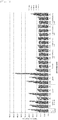
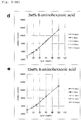
- each of the above-prepared first reagents was repeatedly subjected to freezing/thawing operations 0 to 10 times (specifically, 0, 1, 3, 6, and 10 times). After each of the repeated freezing/thawing operations, the mean particle size of the latex particles was measured, while the particles remained in the sample. In each freezing/thawing operation, the reagent was frozen by means of a freezer at -30°C for ⁇ 3 hours, and thereafter, the frozen product was allowed to stand at room temperature (about 25°C), to thereby complete thawing to liquid. This freezing/thawing procedure is referred to as "one time" freezing/thawing operation.
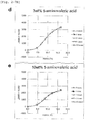
- the mean particle size in the sample was measured by means of Fiber Optics Particle Analyzer FPAR-1000 (product of Otsuka Electronics Co., Ltd.). Fig. 1 shows the results.
- an anti-human HbAlc mouse monoclonal antibody product of Fujikura Kasei, Co., Ltd.
- an anti-mouse IgG goat polyclonal antibody Product of Wako Chemical Industries, Ltd.
- hydroxypropyl cellulose were added to adjust their concentrations to 0.05 mg/mL, 0.2 mg/mL, and 1%, respectively, whereby an antibody dilute solution was prepared.
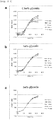
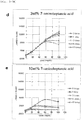
- the first reagents were repeatedly subjected to freezing/thawing operations 0 to 10 times (specifically, 0, 1, 3, 6, and 10 times).
- a calibration curve (change in absorbance vs. HbA1c concentration) was drawn with respect to each sample at any time of repeated freezing/thawing operations.
- the samples for drawing calibration curves were purified human HbAlc samples having an HbA1c concentration of 0%, 4.2%, 8.5%, 12.0%, and 16.4%.
- Each sample (6 ⁇ L) was mixed with a first reagent (150 ⁇ L), and the mixture was allowed to react at 37°C for 5 minutes.
- An anti-human Lp(a) goat polyclonal antibody (product of Torina Bio Reactives) (100 mg) was added to a 50-mM borate buffer (20 mL), and 10% latex dispersion (12.5 mL) of unsensitized polystyrene latex particles (mean particle size: 0.12 ⁇ m: product of Fujikura Kasei, Co., Ltd.) was added thereto.
- the resultant mixture was ultra-sonicated by means of an ultra-sonicator VCX750 (product of SONIC & MATERIALS INC.) for 1 minute under cooling with ice.
- the product was stirred at room temperature for 30 minutes, and 5% aqueous BSA (7 mL) was added, followed by stirring at 50°C for 30 minutes. Then, the mixture was centrifuged at 20,000G for 20 minutes, and the supernatant was removed to obtain the sensitized polystyrene latex particles.
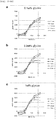
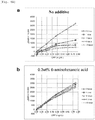
- the fourth reagents were repeatedly subjected to freezing/thawing operations 0 to 10 times.
- a calibration curve (change in absorbance vs. Lp(a) concentration) was drawn with respect to each sample at any time of repeated freezing/thawing operations.
- the samples for drawing calibration curves were purified Lp(a) samples having an Lp(a) concentration of 0 mg/dL, 15 mg/dL, 30 mg/dL, 60 mg/dL, and 100 mg/dL.
- Each sample (2.1 ⁇ L) was mixed with a third reagent (210 ⁇ L), and the mixture was allowed to react at 37°C for 5 minutes.
- 6-aminohexanoic acid i.e., ⁇ -aminocarboxylic acid (1), wherein n is 5
- ⁇ -aminocarboxylic acid (1) wherein n is 5
- a gold colloid dispersion (product of Roche Diagnostic K. K.) (350 mL) was mixed with 500-mM HEPES (pH:7) (7 mL), and an anti-human CRP goat polyclonal antibody (product of ADVY) (2.1 mg) was added thereto, followed by stirring at room temperature for 1 hour. Subsequently, 0.1% aqueous BSA (38.5 mL) was added thereto, and the resultant mixture was stirred at room temperature for 30 minutes.
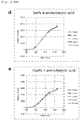
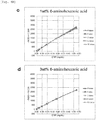
- the fourth reagents were repeatedly subjected to freezing/thawing operations 0 to 10 times.
- a calibration curve (change in absorbance vs. CRP concentration) was drawn with respect to each sample at any time of repeated freezing/thawing operations.
- the samples for drawing calibration curves were purified CRP samples having a CRP concentration of 0 mg/dL, 0.02 mg/dL, 0.05 mg/dL, 0.09 mg/dL, 0.19 mg/dL, 0.38 mg/dL, and 0.75 mg/dL.
- Each sample (2.1 ⁇ L) was mixed with a third reagent (140 ⁇ L), and the mixture was allowed to react at 37°C for 5 minutes.
- a fifth reagent 140 ⁇ L was added to the reaction mixture, and a change in absorbance within a time range of 5 minutes was determined by means of Hitachi Auto Analyzer 7180 through the 2-point end technique (main wavelength: 600 nm).
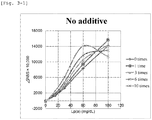
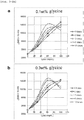
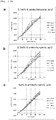
- Figures 4 show the results.
- 6-aminohexanoic acid i.e., ⁇ -aminocarboxylic acid (1), wherein n is 5
- n is 5
- the present invention enables storage of immunoassay reagents without degrading their detection performance, and greatly contributes to convenience of storage and transport of immunoassay reagents. Furthermore, the present invention significantly differs from similar conventional techniques in that the present invention is also applicable to sensitized insoluble carrier particles.
- the present invention enables stable storage of an immunoassay reagent employing sensitized insoluble carrier particles in a detection system.
- the present invention can also facilitate storage and transport of an immunoassay reagent employing sensitized and unsensitized insoluble carrier particles that coexist in a detection system, which is used, for example, in the case where a plurality of diagnostic terms are analyzed by means of a small special analyzer.
Landscapes
- Health & Medical Sciences (AREA)
- Life Sciences & Earth Sciences (AREA)
- Immunology (AREA)
- Engineering & Computer Science (AREA)
- Chemical & Material Sciences (AREA)
- Biomedical Technology (AREA)
- Urology & Nephrology (AREA)
- Molecular Biology (AREA)
- Hematology (AREA)
- General Health & Medical Sciences (AREA)
- Analytical Chemistry (AREA)
- General Physics & Mathematics (AREA)
- Cell Biology (AREA)
- Pathology (AREA)
- Microbiology (AREA)
- Biotechnology (AREA)
- Biochemistry (AREA)
- Physics & Mathematics (AREA)
- Food Science & Technology (AREA)
- Medicinal Chemistry (AREA)
- Epidemiology (AREA)
- Birds (AREA)
- Animal Behavior & Ethology (AREA)
- Public Health (AREA)
- Veterinary Medicine (AREA)
- Chemical Kinetics & Catalysis (AREA)
- Peptides Or Proteins (AREA)
- Investigating Or Analysing Biological Materials (AREA)
- Compositions Of Macromolecular Compounds (AREA)
Applications Claiming Priority (3)
| Application Number | Priority Date | Filing Date | Title |
|---|---|---|---|
| JP2017149290 | 2017-08-01 | ||
| JP2017208678A JP6919499B2 (ja) | 2017-08-01 | 2017-10-27 | 不溶性担体粒子を含有する免疫測定試薬の劣化防止手段 |
| PCT/JP2018/026098 WO2019026569A1 (ja) | 2017-08-01 | 2018-07-10 | 不溶性担体粒子を含有する免疫測定試薬の劣化防止手段 |
Publications (2)
| Publication Number | Publication Date |
|---|---|
| EP3663761A1 true EP3663761A1 (de) | 2020-06-10 |
| EP3663761A4 EP3663761A4 (de) | 2021-04-21 |
Family
ID=65478317
Family Applications (1)
| Application Number | Title | Priority Date | Filing Date |
|---|---|---|---|
| EP18840741.5A Pending EP3663761A4 (de) | 2017-08-01 | 2018-07-10 | Degradationsverhinderer für immunoassay-reagenz mit unlöslichen trägerteilchen |
Country Status (4)
| Country | Link |
|---|---|
| US (1) | US11668704B2 (de) |
| EP (1) | EP3663761A4 (de) |
| JP (1) | JP6919499B2 (de) |
| CN (1) | CN110720038B (de) |
Cited By (1)
| Publication number | Priority date | Publication date | Assignee | Title |
|---|---|---|---|---|
| US20210122863A1 (en) * | 2019-10-25 | 2021-04-29 | Canon Kabushiki Kaisha | Particle and method of producing the particle |
Families Citing this family (2)
| Publication number | Priority date | Publication date | Assignee | Title |
|---|---|---|---|---|
| JP7436838B2 (ja) * | 2020-05-20 | 2024-02-22 | 藤倉化成株式会社 | 抗体-デンドリマー複合体を用いるヘモグロビンA1cの測定方法 |
| JP7822024B2 (ja) * | 2021-12-28 | 2026-03-02 | 株式会社シノテスト | 試料中のhmgb1の測定方法及び測定試薬、抗hmgb1抗体を固定化した担体の非特異的凝集の抑制方法並びに試料中のhmgb1測定時の試薬ブランクの上昇の抑制方法 |
Family Cites Families (11)
| Publication number | Priority date | Publication date | Assignee | Title |
|---|---|---|---|---|
| JPS61274261A (ja) | 1985-05-30 | 1986-12-04 | Nitto Electric Ind Co Ltd | 免疫学的診断試薬 |
| JPH073424B2 (ja) * | 1986-03-31 | 1995-01-18 | 日東電工株式会社 | 免疫学的診断試薬 |
| JPH02259566A (ja) * | 1989-03-31 | 1990-10-22 | Green Cross Corp:The | 間接凝集反応試験法及びそれに使用する検体希釈用液 |
| JPH0384461A (ja) | 1989-08-28 | 1991-04-10 | Green Cross Corp:The | 免疫学的凝集反応試薬及びその製法 |
| JP2890250B2 (ja) * | 1996-04-17 | 1999-05-10 | 株式会社コスモ総合研究所 | ヒトプラスミン−α2−プラスミンインヒビター複合体の免疫学的測定法および免疫学的測定用試薬 |
| JP3520757B2 (ja) * | 1998-01-30 | 2004-04-19 | 富士レビオ株式会社 | 非特異反応吸収剤及び該吸収剤を用いる免疫測定法 |
| JP2004163423A (ja) | 2002-10-23 | 2004-06-10 | Sekisui Chem Co Ltd | 血液凝固促進剤及び血液検査用容器 |
| JP5170742B2 (ja) * | 2005-12-28 | 2013-03-27 | 積水メディカル株式会社 | 凝集測定用試薬及び凝集測定方法 |
| JP5706315B2 (ja) * | 2009-03-05 | 2015-04-22 | デンカ生研株式会社 | 検査試薬及びそれを用いた被検試料中の被測定物の測定方法 |
| CA2817671A1 (en) | 2009-11-17 | 2011-05-26 | Universite De Montreal | Heteropeptides useful for reducing nonspecific adsorption |
| JP5676498B2 (ja) | 2012-01-20 | 2015-02-25 | 株式会社Lsiメディエンス | 非特異反応を抑制する免疫学的測定試薬及び測定方法 |
-
2017
- 2017-10-27 JP JP2017208678A patent/JP6919499B2/ja active Active
-
2018
- 2018-07-10 CN CN201880038355.6A patent/CN110720038B/zh active Active
- 2018-07-10 US US16/635,677 patent/US11668704B2/en active Active
- 2018-07-10 EP EP18840741.5A patent/EP3663761A4/de active Pending
Cited By (2)
| Publication number | Priority date | Publication date | Assignee | Title |
|---|---|---|---|---|
| US20210122863A1 (en) * | 2019-10-25 | 2021-04-29 | Canon Kabushiki Kaisha | Particle and method of producing the particle |
| US11597787B2 (en) | 2019-10-25 | 2023-03-07 | Canon Kabushiki Kaisha | Particle and method of producing the particle |
Also Published As
| Publication number | Publication date |
|---|---|
| CN110720038B (zh) | 2023-12-22 |
| JP6919499B2 (ja) | 2021-08-18 |
| US11668704B2 (en) | 2023-06-06 |
| EP3663761A4 (de) | 2021-04-21 |
| CN110720038A (zh) | 2020-01-21 |
| US20210123907A1 (en) | 2021-04-29 |
| JP2019028050A (ja) | 2019-02-21 |
Similar Documents
| Publication | Publication Date | Title |
|---|---|---|
| EP3663761A1 (de) | Degradationsverhinderer für immunoassay-reagenz mit unlöslichen trägerteilchen | |
| CN108828209B (zh) | 用于免疫检测的微球的制备方法 | |
| JP5364310B2 (ja) | 反応性物質が結合した微小粒子の安定化方法および該微小粒子含有試薬 | |
| US20150369826A1 (en) | Method for preventing deterioration of unsensitized latex reagent | |
| AU2025267460A1 (en) | Method of stabilizing protein contained in specimen and solution for stabilizing protein contained in specimen | |
| WO2019026569A1 (ja) | 不溶性担体粒子を含有する免疫測定試薬の劣化防止手段 | |
| JP7483109B2 (ja) | フェリチン測定試薬 | |
| KR101628221B1 (ko) | 검사 시약 및 그것을 사용한 피검 시료 중의 피측정물의 측정 방법 | |
| US20080064123A1 (en) | Method of Assaying Antigen and Reagent Therefor | |
| EP2439533B1 (de) | Immunoassayverfahren und reagens dafür | |
| JP2004012434A (ja) | ペプシノーゲン測定方法および測定用キット | |
| JP7096482B2 (ja) | 感作された不溶性担体粒子を含有する免疫測定試薬の劣化防止手段 | |
| US20260063628A1 (en) | Method of detecting target substance and detection reagent for target substance | |
| WO2025070599A1 (ja) | ラテックス粒子分散液、試薬キット、検出方法、沈降抑制剤、及び沈降抑制方法 | |
| CN121208365A (zh) | 一种用于糖化血红蛋白的胶乳增强免疫比浊法检测试剂及其使用方法 | |
| JPH0354465A (ja) | 免疫学的測定用希釈液 |
Legal Events
| Date | Code | Title | Description |
|---|---|---|---|
| STAA | Information on the status of an ep patent application or granted ep patent |
Free format text: STATUS: THE INTERNATIONAL PUBLICATION HAS BEEN MADE |
|
| PUAI | Public reference made under article 153(3) epc to a published international application that has entered the european phase |
Free format text: ORIGINAL CODE: 0009012 |
|
| STAA | Information on the status of an ep patent application or granted ep patent |
Free format text: STATUS: REQUEST FOR EXAMINATION WAS MADE |
|
| 17P | Request for examination filed |
Effective date: 20200228 |
|
| AK | Designated contracting states |
Kind code of ref document: A1 Designated state(s): AL AT BE BG CH CY CZ DE DK EE ES FI FR GB GR HR HU IE IS IT LI LT LU LV MC MK MT NL NO PL PT RO RS SE SI SK SM TR |
|
| AX | Request for extension of the european patent |
Extension state: BA ME |
|
| DAV | Request for validation of the european patent (deleted) | ||
| DAX | Request for extension of the european patent (deleted) | ||
| A4 | Supplementary search report drawn up and despatched |
Effective date: 20210323 |
|
| RIC1 | Information provided on ipc code assigned before grant |
Ipc: G01N 33/531 20060101AFI20210317BHEP Ipc: G01N 33/543 20060101ALI20210317BHEP |
|
| STAA | Information on the status of an ep patent application or granted ep patent |
Free format text: STATUS: EXAMINATION IS IN PROGRESS |
|
| 17Q | First examination report despatched |
Effective date: 20240129 |