EP3671864A1 - Verfahren zur herstellung eines übergangs mit interband-tunneleffekt - Google Patents
Verfahren zur herstellung eines übergangs mit interband-tunneleffekt Download PDFInfo
- Publication number
- EP3671864A1 EP3671864A1 EP19217691.5A EP19217691A EP3671864A1 EP 3671864 A1 EP3671864 A1 EP 3671864A1 EP 19217691 A EP19217691 A EP 19217691A EP 3671864 A1 EP3671864 A1 EP 3671864A1
- Authority
- EP
- European Patent Office
- Prior art keywords
- dopants
- substrate
- equal
- concentration
- heat treatment
- Prior art date
- Legal status (The legal status is an assumption and is not a legal conclusion. Google has not performed a legal analysis and makes no representation as to the accuracy of the status listed.)
- Granted
Links
Images


Classifications
-
- H—ELECTRICITY
- H10—SEMICONDUCTOR DEVICES; ELECTRIC SOLID-STATE DEVICES NOT OTHERWISE PROVIDED FOR
- H10F—INORGANIC SEMICONDUCTOR DEVICES SENSITIVE TO INFRARED RADIATION, LIGHT, ELECTROMAGNETIC RADIATION OF SHORTER WAVELENGTH OR CORPUSCULAR RADIATION
- H10F10/00—Individual photovoltaic cells, e.g. solar cells
- H10F10/10—Individual photovoltaic cells, e.g. solar cells having potential barriers
- H10F10/14—Photovoltaic cells having only PN homojunction potential barriers
- H10F10/142—Photovoltaic cells having only PN homojunction potential barriers comprising multiple PN homojunctions, e.g. tandem cells
-
- H—ELECTRICITY
- H10—SEMICONDUCTOR DEVICES; ELECTRIC SOLID-STATE DEVICES NOT OTHERWISE PROVIDED FOR
- H10F—INORGANIC SEMICONDUCTOR DEVICES SENSITIVE TO INFRARED RADIATION, LIGHT, ELECTROMAGNETIC RADIATION OF SHORTER WAVELENGTH OR CORPUSCULAR RADIATION
- H10F10/00—Individual photovoltaic cells, e.g. solar cells
- H10F10/10—Individual photovoltaic cells, e.g. solar cells having potential barriers
- H10F10/16—Photovoltaic cells having only PN heterojunction potential barriers
- H10F10/161—Photovoltaic cells having only PN heterojunction potential barriers comprising multiple PN heterojunctions, e.g. tandem cells
-
- H—ELECTRICITY
- H10—SEMICONDUCTOR DEVICES; ELECTRIC SOLID-STATE DEVICES NOT OTHERWISE PROVIDED FOR
- H10F—INORGANIC SEMICONDUCTOR DEVICES SENSITIVE TO INFRARED RADIATION, LIGHT, ELECTROMAGNETIC RADIATION OF SHORTER WAVELENGTH OR CORPUSCULAR RADIATION
- H10F71/00—Manufacture or treatment of devices covered by this subclass
- H10F71/128—Annealing
-
- H—ELECTRICITY
- H10—SEMICONDUCTOR DEVICES; ELECTRIC SOLID-STATE DEVICES NOT OTHERWISE PROVIDED FOR
- H10F—INORGANIC SEMICONDUCTOR DEVICES SENSITIVE TO INFRARED RADIATION, LIGHT, ELECTROMAGNETIC RADIATION OF SHORTER WAVELENGTH OR CORPUSCULAR RADIATION
- H10F77/00—Constructional details of devices covered by this subclass
- H10F77/10—Semiconductor bodies
- H10F77/12—Active materials
- H10F77/122—Active materials comprising only Group IV materials
- H10F77/1223—Active materials comprising only Group IV materials characterised by the dopants
-
- H—ELECTRICITY
- H10—SEMICONDUCTOR DEVICES; ELECTRIC SOLID-STATE DEVICES NOT OTHERWISE PROVIDED FOR
- H10D—INORGANIC ELECTRIC SEMICONDUCTOR DEVICES
- H10D8/00—Diodes
- H10D8/70—Tunnel-effect diodes
-
- H—ELECTRICITY
- H10—SEMICONDUCTOR DEVICES; ELECTRIC SOLID-STATE DEVICES NOT OTHERWISE PROVIDED FOR
- H10P—GENERIC PROCESSES OR APPARATUS FOR THE MANUFACTURE OR TREATMENT OF DEVICES COVERED BY CLASS H10
- H10P30/00—Ion implantation into wafers, substrates or parts of devices
- H10P30/20—Ion implantation into wafers, substrates or parts of devices into semiconductor materials, e.g. for doping
- H10P30/202—Ion implantation into wafers, substrates or parts of devices into semiconductor materials, e.g. for doping characterised by the semiconductor materials
- H10P30/204—Ion implantation into wafers, substrates or parts of devices into semiconductor materials, e.g. for doping characterised by the semiconductor materials into Group IV semiconductors
-
- H—ELECTRICITY
- H10—SEMICONDUCTOR DEVICES; ELECTRIC SOLID-STATE DEVICES NOT OTHERWISE PROVIDED FOR
- H10P—GENERIC PROCESSES OR APPARATUS FOR THE MANUFACTURE OR TREATMENT OF DEVICES COVERED BY CLASS H10
- H10P30/00—Ion implantation into wafers, substrates or parts of devices
- H10P30/20—Ion implantation into wafers, substrates or parts of devices into semiconductor materials, e.g. for doping
- H10P30/21—Ion implantation into wafers, substrates or parts of devices into semiconductor materials, e.g. for doping of electrically active species
-
- H—ELECTRICITY
- H10—SEMICONDUCTOR DEVICES; ELECTRIC SOLID-STATE DEVICES NOT OTHERWISE PROVIDED FOR
- H10P—GENERIC PROCESSES OR APPARATUS FOR THE MANUFACTURE OR TREATMENT OF DEVICES COVERED BY CLASS H10
- H10P30/00—Ion implantation into wafers, substrates or parts of devices
- H10P30/20—Ion implantation into wafers, substrates or parts of devices into semiconductor materials, e.g. for doping
- H10P30/28—Ion implantation into wafers, substrates or parts of devices into semiconductor materials, e.g. for doping characterised by an annealing step, e.g. for activation of dopants
-
- H—ELECTRICITY
- H10—SEMICONDUCTOR DEVICES; ELECTRIC SOLID-STATE DEVICES NOT OTHERWISE PROVIDED FOR
- H10P—GENERIC PROCESSES OR APPARATUS FOR THE MANUFACTURE OR TREATMENT OF DEVICES COVERED BY CLASS H10
- H10P32/00—Diffusion of dopants within, into or out of wafers, substrates or parts of devices
- H10P32/10—Diffusion of dopants within, into or out of semiconductor bodies or layers
- H10P32/14—Diffusion of dopants within, into or out of semiconductor bodies or layers within a single semiconductor body or layer in a solid phase; between different semiconductor bodies or layers, both in a solid phase
- H10P32/1404—Diffusion of dopants within, into or out of semiconductor bodies or layers within a single semiconductor body or layer in a solid phase; between different semiconductor bodies or layers, both in a solid phase using predeposition followed by drive-in of impurities into the semiconductor surface, e.g. predeposition from a gaseous phase
- H10P32/1406—Diffusion of dopants within, into or out of semiconductor bodies or layers within a single semiconductor body or layer in a solid phase; between different semiconductor bodies or layers, both in a solid phase using predeposition followed by drive-in of impurities into the semiconductor surface, e.g. predeposition from a gaseous phase by ion implantation
-
- H—ELECTRICITY
- H10—SEMICONDUCTOR DEVICES; ELECTRIC SOLID-STATE DEVICES NOT OTHERWISE PROVIDED FOR
- H10P—GENERIC PROCESSES OR APPARATUS FOR THE MANUFACTURE OR TREATMENT OF DEVICES COVERED BY CLASS H10
- H10P32/00—Diffusion of dopants within, into or out of wafers, substrates or parts of devices
- H10P32/10—Diffusion of dopants within, into or out of semiconductor bodies or layers
- H10P32/17—Diffusion of dopants within, into or out of semiconductor bodies or layers characterised by the semiconductor material
- H10P32/171—Diffusion of dopants within, into or out of semiconductor bodies or layers characterised by the semiconductor material being group IV material
-
- Y—GENERAL TAGGING OF NEW TECHNOLOGICAL DEVELOPMENTS; GENERAL TAGGING OF CROSS-SECTIONAL TECHNOLOGIES SPANNING OVER SEVERAL SECTIONS OF THE IPC; TECHNICAL SUBJECTS COVERED BY FORMER USPC CROSS-REFERENCE ART COLLECTIONS [XRACs] AND DIGESTS
- Y02—TECHNOLOGIES OR APPLICATIONS FOR MITIGATION OR ADAPTATION AGAINST CLIMATE CHANGE
- Y02E—REDUCTION OF GREENHOUSE GAS [GHG] EMISSIONS, RELATED TO ENERGY GENERATION, TRANSMISSION OR DISTRIBUTION
- Y02E10/00—Energy generation through renewable energy sources
- Y02E10/50—Photovoltaic [PV] energy
- Y02E10/544—Solar cells from Group III-V materials
-
- Y—GENERAL TAGGING OF NEW TECHNOLOGICAL DEVELOPMENTS; GENERAL TAGGING OF CROSS-SECTIONAL TECHNOLOGIES SPANNING OVER SEVERAL SECTIONS OF THE IPC; TECHNICAL SUBJECTS COVERED BY FORMER USPC CROSS-REFERENCE ART COLLECTIONS [XRACs] AND DIGESTS
- Y02—TECHNOLOGIES OR APPLICATIONS FOR MITIGATION OR ADAPTATION AGAINST CLIMATE CHANGE
- Y02E—REDUCTION OF GREENHOUSE GAS [GHG] EMISSIONS, RELATED TO ENERGY GENERATION, TRANSMISSION OR DISTRIBUTION
- Y02E10/00—Energy generation through renewable energy sources
- Y02E10/50—Photovoltaic [PV] energy
- Y02E10/547—Monocrystalline silicon PV cells
-
- Y—GENERAL TAGGING OF NEW TECHNOLOGICAL DEVELOPMENTS; GENERAL TAGGING OF CROSS-SECTIONAL TECHNOLOGIES SPANNING OVER SEVERAL SECTIONS OF THE IPC; TECHNICAL SUBJECTS COVERED BY FORMER USPC CROSS-REFERENCE ART COLLECTIONS [XRACs] AND DIGESTS
- Y02—TECHNOLOGIES OR APPLICATIONS FOR MITIGATION OR ADAPTATION AGAINST CLIMATE CHANGE
- Y02P—CLIMATE CHANGE MITIGATION TECHNOLOGIES IN THE PRODUCTION OR PROCESSING OF GOODS
- Y02P70/00—Climate change mitigation technologies in the production process for final industrial or consumer products
- Y02P70/50—Manufacturing or production processes characterised by the final manufactured product
Definitions
- the invention relates to the technical field of inter-band tunnel effect junctions.
- the invention finds its application in particular in the manufacture of tandem photovoltaic cells, where the inter-band tunnel effect junction allows their connection in series, or also in the manufacture of various microelectronic devices such as generators or amplifiers.
- Steps b ') and c') are carried out with suitable implantation energies so that the first and second profiles have concentration peaks offset in the depth of the substrate.
- the difference in concentration between the first dopants and the second dopants in the first region of the substrate, as well as the difference in concentration between the second dopants and the first dopants in the second region of the substrate, are preferably chosen so that the junction at inter-band tunnel effect has a space charge zone having a thickness of between 3 nm and 6 nm, preferably less than or equal to 4 nm.
- the difference in concentration between the first dopants and the second dopants in the first region of the substrate, as well as the difference in concentration between the second dopants and the first dopants in the second region of the substrate are preferably sufficiently large (greater than or equal to 5x10 19 at. cm -3 , preferably greater than or equal to 10 20 at.
- cm -3 more preferably greater than or equal to 10 21 at. cm -3 ) so that the tunnel effect junction inter -bands has a space charge zone having a thickness of between 3 nm and 6 nm, preferably less than or equal to 4 nm.
- such a method according to the invention makes it possible, thanks to ion implantation by plasma immersion of steps b) and c), to implant dopants with a rate compatible with the production of photovoltaic cells (at least greater than 1500 substrates per hour) and implanting dopants less in depth and therefore closer to the first surface of the substrate than implantation by ion beams, which makes it possible to envisage finer and therefore better quality tunnel junctions electric.
- Ion implantation by plasma immersion is also less costly than the implantation technique using ion beams, in particular in terms of investment costs, maintenance, floor space, etc.
- step d) is to correct the crystal defects caused by ion implantations during steps b) and c).
- the method according to the invention may include one or more of the following characteristics.
- the threshold value is predetermined so that the inter-band tunnel effect junction has a space charge zone having a thickness of between 3 nm and 6 nm, preferably less than or equal to 4 nm.
- an advantage provided is to facilitate the passage of charge carriers (free carriers) between the first zone of the substrate - said short junction or fine junction-predominantly doped with the first type of conductivity by the first dopants, and the second zone of the substrate - said long junction or deep junction - mainly doped with the second type of conductivity by the second dopants.
- the predetermined threshold value is equal to 5 ⁇ 10 19 at. cm -3 .
- the second thickness is less than or equal to 500 nm, preferably less than or equal to 200 nm.
- an advantage obtained is to reduce the recombination of minority carriers (i.e. the electrons when the first dopants are of type p, or the holes when the first dopants are of type n) compared to a junction with deeper tunnel effect.
- the plasma bias voltage makes it possible, in conjunction with the heat treatment of step d), to control the thickness (ie the depth) of the first zone of the substrate - said short junction or fine junction - mainly doped with the first type of conductivity by the first dopants.
- the plasma bias voltage makes it possible, in conjunction with the heat treatment of step d), to control the thickness (ie the depth) of the second zone of the substrate - said long junction or deep junction - mainly doped with second type of conductivity by the second dopants.
- the heat treatment is applied during step d) under an oxidizing atmosphere or under an atmosphere mainly comprising H 2 .
- an advantage obtained is to be able to accelerate the diffusion of the second dopants, according to their nature and that of the first dopants, in particular by phenomena of acceleration of the diffusion (TED for “Transient Enhanced Diffusion” in English language), when the first and second dopants have similar diffusion coefficients for a given temperature value of the heat treatment of step d).
- the thermal annealing applied during step d) is a rapid thermal annealing, the second phase having a duration less than or equal to 300 seconds, preferably less than or equal to 30 seconds.
- the first surface of the substrate provided during step a) is coated with a passivation layer; steps b) and c) being executed so that the first and second dopants are implanted through the passivation layer.
- an advantage provided is to improve the crystal quality of the inter-band tunnel junction by implanting the first and second dopants through the passivation layer.
- a passivation layer may allow diffusion of the second dopants greater than that of the first dopants during step d).
- the first and second dopants can be implanted during steps b) and c) in whole or in part in the passivation layer, part of the first and second dopants can be implanted in the substrate, outside the passivation layer.
- the substrate provided during step a) is doped with the first type of conductivity.
- a p / n junction or an n / p junction is created with a view to the formation of a photovoltaic cell.
- Step a) is illustrated in Figure la.
- Step b) is illustrated in Figures la and 1b.
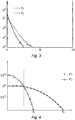
- the first profile P 1 obtained at the end of step b) is illustrated in figure 3 .
- Step c) is illustrated in figure 1c .
- the second profile P 2 obtained at the end of step c) is illustrated in figure 3 .
- the first and second modified profiles P ' 1 , P' 2 obtained at the end of step d) are illustrated in the figure 4 .
- the concentration of free carriers obtained at the end of step d) and of the compensation of the first and second modified profiles P ' 1 , P' 2 is illustrated in figure 5 .
- the substrate 1 provided during step a) is advantageously doped with the first type of conductivity, that is to say of the same type of conductivity as the area 200 of the substrate - said short junction or fine junction - mainly doped by first dopants 2.
- the substrate 1 can be made of monocrystalline silicon or of multicrystalline silicon.
- the substrate 1 can have a thickness of between 100 ⁇ m and 600 ⁇ m.
- the first surface 10 of the substrate 1 provided during step a) is advantageously coated with a passivation layer 100.
- the passivation layer 100 can be made of a material selected from SiN, SiO x , a transparent conductive oxide, a layer of amorphous silicon, a layer of polysilicon. It should be noted that the layer of amorphous silicon transforms into polysilicon after step d).
- the passivation layer 100 can be active (electrically conductive) when it is an amorphous silicon layer or a polysilicon layer.
- the passivation layer 100 preferably has a thickness between 10 nm and 200 nm, more preferably between 20 nm and 100 nm.
- the passivation layer 100 can be etched in whole or in part (eg by laser or chemically) to allow electrical conduction via the junction to inter-band tunnel effect. However, when the passivation layer 100 is electrically conductive, it can be preserved.
- the threshold value C min is advantageously predetermined so that the inter-band tunnel effect junction has a space charge zone having a thickness of between 3 nm and 6 nm, preferably less than or equal to 4 nm.
- the predetermined threshold value C min is advantageously equal to 5 ⁇ 10 19 at. cm -3 , preferably greater than or equal to 10 20 at. cm -3 , more preferably greater than or equal to 10 21 at. cm -3 .
- the choice of the value of the dose of first dopants 2 and the choice of the value of the bias voltage of the plasma 20 depend in the first order on the temperature of the heat treatment of step d), and depend in the second order on the duration of the heat treatment in step d).
- said values of the dose and of the bias voltage can be tested using a simple design of experiments (DOE for “ Design Of Experiments ” in English) within the reach of the skilled in the art.
- DOE Design Of Experiments ” in English
- the concentration values of the first modified profile P ′ 1 and the first thickness e 1 can be measured at the end of step d) by techniques known to those skilled in the art, for example by ECV (“ Electrochemical Capacitance Voltage "In English) or by SIMS (" Secondary Ion Mass Spectrometry "in English).
- the dose of first dopants 2 is preferably between 10 14 at.cm -2 and 10 17 at.cm -2 .
- the first dopants 2 are advantageously phosphorus atoms or arsenic atoms.
- the first dopants 2 are advantageously boron atoms.
- the first thickness e 1 is advantageously less than or equal to 100 nm.
- step b) is advantageously performed so that the first dopants 2 are mainly implanted in the passivation layer 100 .
- the choice of the value of the dose of second dopants 3 and the choice of the value of the plasma bias voltage 30 depend first on the temperature of the heat treatment in step d), and depend on the second order on the duration of the heat treatment in step d).
- said values of the dose and of the bias voltage can be tested using a simple design of experiments (DOE for “ Design Of Experiments” in English) within the reach of the skilled in the art.
- DOE Design Of Experiments” in English
- the concentration values of the second modified profile P ′ 2 and the second thickness e 2 can be measured at the end of step d) by techniques known to those skilled in the art, for example by ECV (“ Electrochemical Capacitance Voltage "In English) or by SIMS (" Secondary Ion Mass Spectrometry " in English).
- the dose of second dopants 3 is preferably between 10 14 at.cm -2 and 10 17 at.cm -2 .
- the second dopants 3 are advantageously phosphorus atoms or arsenic atoms.
- the second dopants 3 are advantageously boron atoms.
- the second thickness e 2 is strictly greater than the first thickness e 1 .
- the second thickness e 2 is preferably less than or equal to 500 nm, preferably less than or equal to 200 nm.
- step c) is advantageously carried out so that the second dopants 3 are mainly implanted in the passivation layer 100 .
- Step c) does not necessarily follow step b). Steps b) and c) can be reversed.
- the heat treatment is advantageously applied during step d) under an oxidizing atmosphere or under an atmosphere mainly comprising H 2 .
- the heat treatment in step d) can also be applied under an inert atmosphere (eg dinitrogen, argon).
- the plateau value is advantageously chosen as a function of the solubility limit of the first and second dopants 2, 3 in the silicon of the substrate 1 so as to obtain sufficiently high concentrations of first and second dopants 2, 3 on either side of the junction.
- the first and second dopants 2, 3 are advantageously chosen as a function of their solubility limits in the silicon of the substrate 1 in order to obtain a surface doping compensation mechanism for the first dopants 2.
- the thermal annealing applied during step d) is advantageously rapid thermal annealing, the second phase having a duration less than or equal to 300 seconds, preferably less than or equal to 30 seconds.
- the thermal annealing is advantageously applied during step d) according to a thermal budget suitable for electrically activating the first and second dopants 2, 3.
- a plateau value of 1050 ° C. and a duration of 1 second for the second phase allow to electrically activate boron atoms and phosphorus or arsenic atoms.
- thermal budget is meant the choice of an annealing temperature value (i.e. the plateau value) and the choice of an annealing duration value (i.e. the duration of the second phase).
- the absolute totality of the first zone 200 of the substrate 1 it is not necessary for the absolute totality of the first zone 200 of the substrate 1 to have a difference in concentration between the first dopants 2 and the second dopants 3 greater than or equal to the predetermined threshold value C min. . In the same way, it is not necessary for the absolute totality of the second zone 300 of the substrate 1 to present a difference in concentration between the second dopants 3 and the first dopants 2 greater than or equal to the predetermined threshold value C min .
Landscapes
- Crystals, And After-Treatments Of Crystals (AREA)
- Photovoltaic Devices (AREA)
- Silicon Compounds (AREA)
Applications Claiming Priority (1)
| Application Number | Priority Date | Filing Date | Title |
|---|---|---|---|
| FR1873568A FR3091003B1 (fr) | 2018-12-20 | 2018-12-20 | Procede de fabrication d’une jonction a effet tunnel inter-bandes |
Publications (2)
| Publication Number | Publication Date |
|---|---|
| EP3671864A1 true EP3671864A1 (de) | 2020-06-24 |
| EP3671864B1 EP3671864B1 (de) | 2022-10-26 |
Family
ID=66867260
Family Applications (1)
| Application Number | Title | Priority Date | Filing Date |
|---|---|---|---|
| EP19217691.5A Active EP3671864B1 (de) | 2018-12-20 | 2019-12-18 | Verfahren zur herstellung eines übergangs mit interband-tunneleffekt |
Country Status (2)
| Country | Link |
|---|---|
| EP (1) | EP3671864B1 (de) |
| FR (1) | FR3091003B1 (de) |
Cited By (1)
| Publication number | Priority date | Publication date | Assignee | Title |
|---|---|---|---|---|
| FR3124641A1 (fr) * | 2021-06-28 | 2022-12-30 | Commissariat A L'energie Atomique Et Aux Energies Alternatives | Procede de realisation d’une cellule photovoltaïque tandem |
Citations (1)
| Publication number | Priority date | Publication date | Assignee | Title |
|---|---|---|---|---|
| US20120322192A1 (en) * | 2011-06-15 | 2012-12-20 | Varian Semiconductor Equipment Associates, Inc. | Method of defect reduction in ion implanted solar cell structures |
-
2018
- 2018-12-20 FR FR1873568A patent/FR3091003B1/fr active Active
-
2019
- 2019-12-18 EP EP19217691.5A patent/EP3671864B1/de active Active
Patent Citations (1)
| Publication number | Priority date | Publication date | Assignee | Title |
|---|---|---|---|---|
| US20120322192A1 (en) * | 2011-06-15 | 2012-12-20 | Varian Semiconductor Equipment Associates, Inc. | Method of defect reduction in ion implanted solar cell structures |
Non-Patent Citations (4)
| Title |
|---|
| ALAIN FAVE ET AL: "Fabrication of Si tunnel diodes for c-Si based tandem solar cells using proximity rapid thermal diffusion", ENERGY PROCEDIA, vol. 124, 1 September 2017 (2017-09-01), NL, pages 577 - 583, XP055646551, ISSN: 1876-6102, DOI: 10.1016/j.egypro.2017.09.281 * |
| BELLANGER PIERRE ET AL: "Silicon Tunnel Junctions Produced by Ion Implantation and Diffusion Processes for Tandem Solar Cells", IEEE JOURNAL OF PHOTOVOLTAICS, I E E E, US, vol. 8, no. 6, 18 September 2018 (2018-09-18), pages 1436 - 1442, XP011703398, ISSN: 2156-3381, [retrieved on 20181026], DOI: 10.1109/JPHOTOV.2018.2864632 * |
| P. BELLANGER ET AL.: "Silicon Tunnel Junctions produced by Ion Implantation and Diffusion Processes for Tandem Solar Cells", IEEE JOURNAL OF PHOTOVOLTAICS, vol. 8, no. 6, September 2018 (2018-09-01) |
| RAY ASHOK ET AL: "Optimization of a plasma immersion ion implantation process for shallow junctions in silicon", JOURNAL OF VACUUM SCIENCE AND TECHNOLOGY: PART A, AVS /AIP, MELVILLE, NY., US, vol. 32, no. 6, 8 October 2014 (2014-10-08), pages 061302-1 - 061302-9, XP012190917, ISSN: 0734-2101, [retrieved on 19010101], DOI: 10.1116/1.4896756 * |
Cited By (2)
| Publication number | Priority date | Publication date | Assignee | Title |
|---|---|---|---|---|
| FR3124641A1 (fr) * | 2021-06-28 | 2022-12-30 | Commissariat A L'energie Atomique Et Aux Energies Alternatives | Procede de realisation d’une cellule photovoltaïque tandem |
| EP4117045A1 (de) * | 2021-06-28 | 2023-01-11 | Commissariat à l'énergie atomique et aux énergies alternatives | Verfahren zur herstellung einer tandem-fotovoltaikzelle |
Also Published As
| Publication number | Publication date |
|---|---|
| FR3091003A1 (fr) | 2020-06-26 |
| EP3671864B1 (de) | 2022-10-26 |
| FR3091003B1 (fr) | 2020-12-04 |
Similar Documents
| Publication | Publication Date | Title |
|---|---|---|
| EP2724385B1 (de) | Verfahren zur behandlung einer photovoltaischen zelle mit heteroübergang | |
| FR2468208A1 (fr) | Dispositif semiconducteur avec une diode zener | |
| EP3671864B1 (de) | Verfahren zur herstellung eines übergangs mit interband-tunneleffekt | |
| EP2965350A1 (de) | Monolithisches halbleitersubstrat auf der basis von silicium, in unterzellen unterteilt | |
| WO2019053368A1 (fr) | Procede de fabrication d'une cellule photovoltaïque a homojonction | |
| WO2017042486A1 (fr) | Procédé de fabrication d'un dispositif à jonction électronique et dispositif associé | |
| EP3331030A1 (de) | Passivierungsstruktur und -prozess | |
| EP4088312B1 (de) | Verfahren zur herstellung einer halbleiter-auf-isolator-struktur für hochfrequenzanwendungen | |
| FR3042645B1 (fr) | Procede de fabrication d'une cellule photovoltaique a heterojonction | |
| EP3673518B1 (de) | Verbessertes verfahren zur dotierung von solarzellen | |
| EP4060716A1 (de) | Verfahren zur veränderung eines spannungszustandes von mindestens einer halbleiterschicht | |
| EP2701185B1 (de) | VERFAHREN ZUR ÜBERTRAGUNG EINER InP-SCHICHT | |
| EP3289617A1 (de) | Verfahren zur herstellung einer fotovoltaischen zelle | |
| EP3242335B1 (de) | Verfahren zur herstellung einer fotovoltaischen zelle mit einem heteroübergang | |
| FR3052293A1 (fr) | Procede de fabrication d'un empilement de dispositifs electroniques | |
| WO2017064383A1 (fr) | Procédé de fabrication d'une heterojontion pour cellule photovoltaïque | |
| EP4022687B1 (de) | Verfahren zur herstellung eines tunnelübergangs für eine fotovoltaikzelle | |
| EP3660928B1 (de) | Herstellungsverfahren von fotovoltaik-solarzellen | |
| EP4560389A1 (de) | Verfahren zur herstellung eines elektrooptischen kerr-modulators | |
| WO2025073493A1 (fr) | Structure semi-conductrice a base de carbure de silicium pour applications de puissance et procede de fabrication associe | |
| EP3826077A1 (de) | Verfahren zur herstellung einer fotovoltaikzelle | |
| FR3130070A1 (fr) | Procédé de fabrication d’une cellule photovoltaïque | |
| FR3032062A1 (fr) | Fabrication d'une zone implantee et d'une reprise de contact par un faisceau d'ions focalise | |
| FR2467486A1 (fr) | Procede de formation de jonctions n-p, jonctions de ce type et leurs applications | |
| FR2971627A1 (fr) | Procédé de réalisation d'une structure a émetteur sélectif |
Legal Events
| Date | Code | Title | Description |
|---|---|---|---|
| PUAI | Public reference made under article 153(3) epc to a published international application that has entered the european phase |
Free format text: ORIGINAL CODE: 0009012 |
|
| STAA | Information on the status of an ep patent application or granted ep patent |
Free format text: STATUS: REQUEST FOR EXAMINATION WAS MADE |
|
| 17P | Request for examination filed |
Effective date: 20191218 |
|
| AK | Designated contracting states |
Kind code of ref document: A1 Designated state(s): AL AT BE BG CH CY CZ DE DK EE ES FI FR GB GR HR HU IE IS IT LI LT LU LV MC MK MT NL NO PL PT RO RS SE SI SK SM TR |
|
| AX | Request for extension of the european patent |
Extension state: BA ME |
|
| GRAP | Despatch of communication of intention to grant a patent |
Free format text: ORIGINAL CODE: EPIDOSNIGR1 |
|
| STAA | Information on the status of an ep patent application or granted ep patent |
Free format text: STATUS: GRANT OF PATENT IS INTENDED |
|
| INTG | Intention to grant announced |
Effective date: 20220523 |
|
| GRAS | Grant fee paid |
Free format text: ORIGINAL CODE: EPIDOSNIGR3 |
|
| GRAA | (expected) grant |
Free format text: ORIGINAL CODE: 0009210 |
|
| STAA | Information on the status of an ep patent application or granted ep patent |
Free format text: STATUS: THE PATENT HAS BEEN GRANTED |
|
| AK | Designated contracting states |
Kind code of ref document: B1 Designated state(s): AL AT BE BG CH CY CZ DE DK EE ES FI FR GB GR HR HU IE IS IT LI LT LU LV MC MK MT NL NO PL PT RO RS SE SI SK SM TR |
|
| REG | Reference to a national code |
Ref country code: GB Ref legal event code: FG4D Free format text: NOT ENGLISH |
|
| REG | Reference to a national code |
Ref country code: CH Ref legal event code: EP |
|
| REG | Reference to a national code |
Ref country code: AT Ref legal event code: REF Ref document number: 1527696 Country of ref document: AT Kind code of ref document: T Effective date: 20221115 |
|
| REG | Reference to a national code |
Ref country code: DE Ref legal event code: R096 Ref document number: 602019021067 Country of ref document: DE |
|
| REG | Reference to a national code |
Ref country code: IE Ref legal event code: FG4D Free format text: LANGUAGE OF EP DOCUMENT: FRENCH |
|
| REG | Reference to a national code |
Ref country code: LT Ref legal event code: MG9D |
|
| REG | Reference to a national code |
Ref country code: NL Ref legal event code: MP Effective date: 20221026 |
|
| REG | Reference to a national code |
Ref country code: AT Ref legal event code: MK05 Ref document number: 1527696 Country of ref document: AT Kind code of ref document: T Effective date: 20221026 |
|
| PG25 | Lapsed in a contracting state [announced via postgrant information from national office to epo] |
Ref country code: NL Free format text: LAPSE BECAUSE OF FAILURE TO SUBMIT A TRANSLATION OF THE DESCRIPTION OR TO PAY THE FEE WITHIN THE PRESCRIBED TIME-LIMIT Effective date: 20221026 |
|
| PG25 | Lapsed in a contracting state [announced via postgrant information from national office to epo] |
Ref country code: SE Free format text: LAPSE BECAUSE OF FAILURE TO SUBMIT A TRANSLATION OF THE DESCRIPTION OR TO PAY THE FEE WITHIN THE PRESCRIBED TIME-LIMIT Effective date: 20221026 Ref country code: PT Free format text: LAPSE BECAUSE OF FAILURE TO SUBMIT A TRANSLATION OF THE DESCRIPTION OR TO PAY THE FEE WITHIN THE PRESCRIBED TIME-LIMIT Effective date: 20230227 Ref country code: NO Free format text: LAPSE BECAUSE OF FAILURE TO SUBMIT A TRANSLATION OF THE DESCRIPTION OR TO PAY THE FEE WITHIN THE PRESCRIBED TIME-LIMIT Effective date: 20230126 Ref country code: LT Free format text: LAPSE BECAUSE OF FAILURE TO SUBMIT A TRANSLATION OF THE DESCRIPTION OR TO PAY THE FEE WITHIN THE PRESCRIBED TIME-LIMIT Effective date: 20221026 Ref country code: FI Free format text: LAPSE BECAUSE OF FAILURE TO SUBMIT A TRANSLATION OF THE DESCRIPTION OR TO PAY THE FEE WITHIN THE PRESCRIBED TIME-LIMIT Effective date: 20221026 Ref country code: ES Free format text: LAPSE BECAUSE OF FAILURE TO SUBMIT A TRANSLATION OF THE DESCRIPTION OR TO PAY THE FEE WITHIN THE PRESCRIBED TIME-LIMIT Effective date: 20221026 Ref country code: AT Free format text: LAPSE BECAUSE OF FAILURE TO SUBMIT A TRANSLATION OF THE DESCRIPTION OR TO PAY THE FEE WITHIN THE PRESCRIBED TIME-LIMIT Effective date: 20221026 |
|
| PG25 | Lapsed in a contracting state [announced via postgrant information from national office to epo] |
Ref country code: RS Free format text: LAPSE BECAUSE OF FAILURE TO SUBMIT A TRANSLATION OF THE DESCRIPTION OR TO PAY THE FEE WITHIN THE PRESCRIBED TIME-LIMIT Effective date: 20221026 Ref country code: PL Free format text: LAPSE BECAUSE OF FAILURE TO SUBMIT A TRANSLATION OF THE DESCRIPTION OR TO PAY THE FEE WITHIN THE PRESCRIBED TIME-LIMIT Effective date: 20221026 Ref country code: LV Free format text: LAPSE BECAUSE OF FAILURE TO SUBMIT A TRANSLATION OF THE DESCRIPTION OR TO PAY THE FEE WITHIN THE PRESCRIBED TIME-LIMIT Effective date: 20221026 Ref country code: IS Free format text: LAPSE BECAUSE OF FAILURE TO SUBMIT A TRANSLATION OF THE DESCRIPTION OR TO PAY THE FEE WITHIN THE PRESCRIBED TIME-LIMIT Effective date: 20230226 Ref country code: HR Free format text: LAPSE BECAUSE OF FAILURE TO SUBMIT A TRANSLATION OF THE DESCRIPTION OR TO PAY THE FEE WITHIN THE PRESCRIBED TIME-LIMIT Effective date: 20221026 Ref country code: GR Free format text: LAPSE BECAUSE OF FAILURE TO SUBMIT A TRANSLATION OF THE DESCRIPTION OR TO PAY THE FEE WITHIN THE PRESCRIBED TIME-LIMIT Effective date: 20230127 |
|
| REG | Reference to a national code |
Ref country code: DE Ref legal event code: R097 Ref document number: 602019021067 Country of ref document: DE |
|
| PG25 | Lapsed in a contracting state [announced via postgrant information from national office to epo] |
Ref country code: SM Free format text: LAPSE BECAUSE OF FAILURE TO SUBMIT A TRANSLATION OF THE DESCRIPTION OR TO PAY THE FEE WITHIN THE PRESCRIBED TIME-LIMIT Effective date: 20221026 Ref country code: RO Free format text: LAPSE BECAUSE OF FAILURE TO SUBMIT A TRANSLATION OF THE DESCRIPTION OR TO PAY THE FEE WITHIN THE PRESCRIBED TIME-LIMIT Effective date: 20221026 Ref country code: IT Free format text: LAPSE BECAUSE OF NON-PAYMENT OF DUE FEES Effective date: 20221218 Ref country code: EE Free format text: LAPSE BECAUSE OF FAILURE TO SUBMIT A TRANSLATION OF THE DESCRIPTION OR TO PAY THE FEE WITHIN THE PRESCRIBED TIME-LIMIT Effective date: 20221026 Ref country code: DK Free format text: LAPSE BECAUSE OF FAILURE TO SUBMIT A TRANSLATION OF THE DESCRIPTION OR TO PAY THE FEE WITHIN THE PRESCRIBED TIME-LIMIT Effective date: 20221026 Ref country code: CZ Free format text: LAPSE BECAUSE OF FAILURE TO SUBMIT A TRANSLATION OF THE DESCRIPTION OR TO PAY THE FEE WITHIN THE PRESCRIBED TIME-LIMIT Effective date: 20221026 |
|
| REG | Reference to a national code |
Ref country code: CH Ref legal event code: PL |
|
| REG | Reference to a national code |
Ref country code: BE Ref legal event code: MM Effective date: 20221231 |
|
| PG25 | Lapsed in a contracting state [announced via postgrant information from national office to epo] |
Ref country code: SK Free format text: LAPSE BECAUSE OF FAILURE TO SUBMIT A TRANSLATION OF THE DESCRIPTION OR TO PAY THE FEE WITHIN THE PRESCRIBED TIME-LIMIT Effective date: 20221026 Ref country code: LU Free format text: LAPSE BECAUSE OF NON-PAYMENT OF DUE FEES Effective date: 20221218 Ref country code: AL Free format text: LAPSE BECAUSE OF FAILURE TO SUBMIT A TRANSLATION OF THE DESCRIPTION OR TO PAY THE FEE WITHIN THE PRESCRIBED TIME-LIMIT Effective date: 20221026 |
|
| PLBE | No opposition filed within time limit |
Free format text: ORIGINAL CODE: 0009261 |
|
| STAA | Information on the status of an ep patent application or granted ep patent |
Free format text: STATUS: NO OPPOSITION FILED WITHIN TIME LIMIT |
|
| 26N | No opposition filed |
Effective date: 20230727 |
|
| PG25 | Lapsed in a contracting state [announced via postgrant information from national office to epo] |
Ref country code: LI Free format text: LAPSE BECAUSE OF NON-PAYMENT OF DUE FEES Effective date: 20221231 Ref country code: IE Free format text: LAPSE BECAUSE OF NON-PAYMENT OF DUE FEES Effective date: 20221218 Ref country code: CH Free format text: LAPSE BECAUSE OF NON-PAYMENT OF DUE FEES Effective date: 20221231 |
|
| PG25 | Lapsed in a contracting state [announced via postgrant information from national office to epo] |
Ref country code: SI Free format text: LAPSE BECAUSE OF FAILURE TO SUBMIT A TRANSLATION OF THE DESCRIPTION OR TO PAY THE FEE WITHIN THE PRESCRIBED TIME-LIMIT Effective date: 20221026 Ref country code: BE Free format text: LAPSE BECAUSE OF NON-PAYMENT OF DUE FEES Effective date: 20221231 |
|
| PG25 | Lapsed in a contracting state [announced via postgrant information from national office to epo] |
Ref country code: IT Free format text: LAPSE BECAUSE OF NON-PAYMENT OF DUE FEES Effective date: 20221218 |
|
| PGFP | Annual fee paid to national office [announced via postgrant information from national office to epo] |
Ref country code: IT Payment date: 20221231 Year of fee payment: 4 Ref country code: DE Payment date: 20231219 Year of fee payment: 5 |
|
| PGRI | Patent reinstated in contracting state [announced from national office to epo] |
Ref country code: IT Effective date: 20221231 |
|
| PG25 | Lapsed in a contracting state [announced via postgrant information from national office to epo] |
Ref country code: HU Free format text: LAPSE BECAUSE OF FAILURE TO SUBMIT A TRANSLATION OF THE DESCRIPTION OR TO PAY THE FEE WITHIN THE PRESCRIBED TIME-LIMIT; INVALID AB INITIO Effective date: 20191218 |
|
| PG25 | Lapsed in a contracting state [announced via postgrant information from national office to epo] |
Ref country code: CY Free format text: LAPSE BECAUSE OF FAILURE TO SUBMIT A TRANSLATION OF THE DESCRIPTION OR TO PAY THE FEE WITHIN THE PRESCRIBED TIME-LIMIT Effective date: 20221026 |
|
| PG25 | Lapsed in a contracting state [announced via postgrant information from national office to epo] |
Ref country code: MK Free format text: LAPSE BECAUSE OF FAILURE TO SUBMIT A TRANSLATION OF THE DESCRIPTION OR TO PAY THE FEE WITHIN THE PRESCRIBED TIME-LIMIT Effective date: 20221026 |
|
| PG25 | Lapsed in a contracting state [announced via postgrant information from national office to epo] |
Ref country code: MC Free format text: LAPSE BECAUSE OF FAILURE TO SUBMIT A TRANSLATION OF THE DESCRIPTION OR TO PAY THE FEE WITHIN THE PRESCRIBED TIME-LIMIT Effective date: 20221026 |
|
| PG25 | Lapsed in a contracting state [announced via postgrant information from national office to epo] |
Ref country code: TR Free format text: LAPSE BECAUSE OF FAILURE TO SUBMIT A TRANSLATION OF THE DESCRIPTION OR TO PAY THE FEE WITHIN THE PRESCRIBED TIME-LIMIT Effective date: 20221026 Ref country code: MC Free format text: LAPSE BECAUSE OF FAILURE TO SUBMIT A TRANSLATION OF THE DESCRIPTION OR TO PAY THE FEE WITHIN THE PRESCRIBED TIME-LIMIT Effective date: 20221026 |
|
| PG25 | Lapsed in a contracting state [announced via postgrant information from national office to epo] |
Ref country code: BG Free format text: LAPSE BECAUSE OF FAILURE TO SUBMIT A TRANSLATION OF THE DESCRIPTION OR TO PAY THE FEE WITHIN THE PRESCRIBED TIME-LIMIT Effective date: 20221026 |
|
| GBPC | Gb: european patent ceased through non-payment of renewal fee |
Effective date: 20231218 |
|
| PG25 | Lapsed in a contracting state [announced via postgrant information from national office to epo] |
Ref country code: MT Free format text: LAPSE BECAUSE OF FAILURE TO SUBMIT A TRANSLATION OF THE DESCRIPTION OR TO PAY THE FEE WITHIN THE PRESCRIBED TIME-LIMIT Effective date: 20221026 |
|
| PG25 | Lapsed in a contracting state [announced via postgrant information from national office to epo] |
Ref country code: GB Free format text: LAPSE BECAUSE OF NON-PAYMENT OF DUE FEES Effective date: 20231218 |
|
| PG25 | Lapsed in a contracting state [announced via postgrant information from national office to epo] |
Ref country code: GB Free format text: LAPSE BECAUSE OF NON-PAYMENT OF DUE FEES Effective date: 20231218 |
|
| REG | Reference to a national code |
Ref country code: DE Ref legal event code: R079 Ref document number: 602019021067 Country of ref document: DE Free format text: PREVIOUS MAIN CLASS: H01L0031028800 Ipc: H10F0077122300 |
|
| REG | Reference to a national code |
Ref country code: DE Ref legal event code: R119 Ref document number: 602019021067 Country of ref document: DE |
|
| PG25 | Lapsed in a contracting state [announced via postgrant information from national office to epo] |
Ref country code: DE Free format text: LAPSE BECAUSE OF NON-PAYMENT OF DUE FEES Effective date: 20250701 |
|
| PGFP | Annual fee paid to national office [announced via postgrant information from national office to epo] |
Ref country code: FR Payment date: 20251222 Year of fee payment: 7 |