EP3681282B1 - Revêtement antimicrobien - Google Patents
Revêtement antimicrobien Download PDFInfo
- Publication number
- EP3681282B1 EP3681282B1 EP18769166.2A EP18769166A EP3681282B1 EP 3681282 B1 EP3681282 B1 EP 3681282B1 EP 18769166 A EP18769166 A EP 18769166A EP 3681282 B1 EP3681282 B1 EP 3681282B1
- Authority
- EP
- European Patent Office
- Prior art keywords
- coating
- tio
- islands
- metal oxide
- antimicrobial
- Prior art date
- Legal status (The legal status is an assumption and is not a legal conclusion. Google has not performed a legal analysis and makes no representation as to the accuracy of the status listed.)
- Active
Links
Images




Classifications
-
- A—HUMAN NECESSITIES
- A01—AGRICULTURE; FORESTRY; ANIMAL HUSBANDRY; HUNTING; TRAPPING; FISHING
- A01N—PRESERVATION OF BODIES OF HUMANS OR ANIMALS OR PLANTS OR PARTS THEREOF; BIOCIDES, e.g. AS DISINFECTANTS, AS PESTICIDES OR AS HERBICIDES; PEST REPELLANTS OR ATTRACTANTS; PLANT GROWTH REGULATORS
- A01N59/00—Biocides, pest repellants or attractants, or plant growth regulators containing elements or inorganic compounds
- A01N59/16—Heavy metals; Compounds thereof
-
- A—HUMAN NECESSITIES
- A01—AGRICULTURE; FORESTRY; ANIMAL HUSBANDRY; HUNTING; TRAPPING; FISHING
- A01N—PRESERVATION OF BODIES OF HUMANS OR ANIMALS OR PLANTS OR PARTS THEREOF; BIOCIDES, e.g. AS DISINFECTANTS, AS PESTICIDES OR AS HERBICIDES; PEST REPELLANTS OR ATTRACTANTS; PLANT GROWTH REGULATORS
- A01N25/00—Biocides, pest repellants or attractants, or plant growth regulators, characterised by their forms, or by their non-active ingredients or by their methods of application, e.g. seed treatment or sequential application; Substances for reducing the noxious effect of the active ingredients to organisms other than pests
- A01N25/02—Biocides, pest repellants or attractants, or plant growth regulators, characterised by their forms, or by their non-active ingredients or by their methods of application, e.g. seed treatment or sequential application; Substances for reducing the noxious effect of the active ingredients to organisms other than pests containing liquids as carriers, diluents or solvents
-
- A—HUMAN NECESSITIES
- A01—AGRICULTURE; FORESTRY; ANIMAL HUSBANDRY; HUNTING; TRAPPING; FISHING
- A01N—PRESERVATION OF BODIES OF HUMANS OR ANIMALS OR PLANTS OR PARTS THEREOF; BIOCIDES, e.g. AS DISINFECTANTS, AS PESTICIDES OR AS HERBICIDES; PEST REPELLANTS OR ATTRACTANTS; PLANT GROWTH REGULATORS
- A01N25/00—Biocides, pest repellants or attractants, or plant growth regulators, characterised by their forms, or by their non-active ingredients or by their methods of application, e.g. seed treatment or sequential application; Substances for reducing the noxious effect of the active ingredients to organisms other than pests
- A01N25/34—Shaped forms, e.g. sheets, not provided for in any other sub-group of this main group
-
- B—PERFORMING OPERATIONS; TRANSPORTING
- B05—SPRAYING OR ATOMISING IN GENERAL; APPLYING FLUENT MATERIALS TO SURFACES, IN GENERAL
- B05D—PROCESSES FOR APPLYING FLUENT MATERIALS TO SURFACES, IN GENERAL
- B05D1/00—Processes for applying liquids or other fluent materials
- B05D1/02—Processes for applying liquids or other fluent materials performed by spraying
- B05D1/04—Processes for applying liquids or other fluent materials performed by spraying involving the use of an electrostatic field
-
- C—CHEMISTRY; METALLURGY
- C09—DYES; PAINTS; POLISHES; NATURAL RESINS; ADHESIVES; COMPOSITIONS NOT OTHERWISE PROVIDED FOR; APPLICATIONS OF MATERIALS NOT OTHERWISE PROVIDED FOR
- C09D—COATING COMPOSITIONS, e.g. PAINTS, VARNISHES OR LACQUERS; FILLING PASTES; CHEMICAL PAINT OR INK REMOVERS; INKS; CORRECTING FLUIDS; WOODSTAINS; PASTES OR SOLIDS FOR COLOURING OR PRINTING; USE OF MATERIALS THEREFOR
- C09D1/00—Coating compositions, e.g. paints, varnishes or lacquers, based on inorganic substances
-
- C—CHEMISTRY; METALLURGY
- C08—ORGANIC MACROMOLECULAR COMPOUNDS; THEIR PREPARATION OR CHEMICAL WORKING-UP; COMPOSITIONS BASED THEREON
- C08K—Use of inorganic or non-macromolecular organic substances as compounding ingredients
- C08K3/00—Use of inorganic substances as compounding ingredients
- C08K3/18—Oxygen-containing compounds, e.g. metal carbonyls
- C08K3/20—Oxides; Hydroxides
- C08K3/22—Oxides; Hydroxides of metals
- C08K2003/221—Oxides; Hydroxides of metals of rare earth metal
- C08K2003/2213—Oxides; Hydroxides of metals of rare earth metal of cerium
-
- C—CHEMISTRY; METALLURGY
- C08—ORGANIC MACROMOLECULAR COMPOUNDS; THEIR PREPARATION OR CHEMICAL WORKING-UP; COMPOSITIONS BASED THEREON
- C08K—Use of inorganic or non-macromolecular organic substances as compounding ingredients
- C08K3/00—Use of inorganic substances as compounding ingredients
- C08K3/18—Oxygen-containing compounds, e.g. metal carbonyls
- C08K3/20—Oxides; Hydroxides
- C08K3/22—Oxides; Hydroxides of metals
- C08K2003/2258—Oxides; Hydroxides of metals of tungsten
-
- C—CHEMISTRY; METALLURGY
- C08—ORGANIC MACROMOLECULAR COMPOUNDS; THEIR PREPARATION OR CHEMICAL WORKING-UP; COMPOSITIONS BASED THEREON
- C08K—Use of inorganic or non-macromolecular organic substances as compounding ingredients
- C08K3/00—Use of inorganic substances as compounding ingredients
- C08K3/10—Metal compounds
- C08K3/11—Compounds containing metals of Groups 4 to 10 or of Groups 14 to 16 of the Periodic Table
-
- C—CHEMISTRY; METALLURGY
- C08—ORGANIC MACROMOLECULAR COMPOUNDS; THEIR PREPARATION OR CHEMICAL WORKING-UP; COMPOSITIONS BASED THEREON
- C08K—Use of inorganic or non-macromolecular organic substances as compounding ingredients
- C08K3/00—Use of inorganic substances as compounding ingredients
- C08K3/18—Oxygen-containing compounds, e.g. metal carbonyls
- C08K3/20—Oxides; Hydroxides
- C08K3/22—Oxides; Hydroxides of metals
-
- C—CHEMISTRY; METALLURGY
- C08—ORGANIC MACROMOLECULAR COMPOUNDS; THEIR PREPARATION OR CHEMICAL WORKING-UP; COMPOSITIONS BASED THEREON
- C08K—Use of inorganic or non-macromolecular organic substances as compounding ingredients
- C08K3/00—Use of inorganic substances as compounding ingredients
- C08K3/28—Nitrogen-containing compounds
Definitions
- the present invention relates to an antimicrobial coating of a substrate, the coating being obtained by applying the coating to a surface of the substrate by means of an electrostatic spray process.
- Such surfaces can be formed, for example, by clothing, lounges in buildings and public transport and their furnishings, medical implants, hygiene items, means of payment or medical devices, etc.
- WO 2016/069027 A1 describes anti-microbial compositions and methods.
- WO 2010/120730 A1 describes materials, equipment and processes for removing hazardous substances.
- U.S. 2003/096062 A1 describes a method and product for antimicrobial metal coating.
- WO 2015/040558 A1 describes an antimicrobial film with dual action.
- CN 104403476A describes a self-cleaning antibacterial fluorocarbon coating.
- CN 101148556A describes a material for producing antibacterial coatings containing particles with a silver iodide core and a TiO 2 shell.
- CN 104231850A describes a material for producing antibacterial coatings containing zinc oxide and copper sulfate in an epoxy resin.
- CN 107140850A describes an antimicrobial coating on a glass surface.
- CN 106609096A describes an antimicrobial coating of a surface by electrostatic spraying of a composition containing TiO 2 and zinc stearate.
- CN 106010133A describes an antimicrobial coating of a surface of a drain pipe/duct with a composition containing TiO 2 , cerium oxide, zinc molybdate, and silver zirconium phosphate.
- CN 105860743A describes an antimicrobial coating of the inner surface of a tube with a composition containing TiO 2 .
- JP 2000 143369 A describes an antimicrobial coating of a ceramic surface with a composition containing TiO 2 and silver molybdate.
- Tetsu Tatsuma et al. describe in Electrochemistry Communications, Vol. 5, No. 9, September 1, 2003, at pages 793-796 the coating of a Pyrex glass plate with a TiO 2 -WO 3 film by means of spin coating and subsequent calcination.
- Cordt Zollfrank et al. describe in Materials Science and Engineering C, Vol. 32, No. 1, September 22, 2011, pages 47-54 a method for producing an antimicrobially active composite material.
- the DE 10 2012 103 064 A1 a hydrophilic composite material with at least one carrier material and at least one antimicrobially active agent in the form of a metal or a metal compound.
- the DE 10 2013 114 573 A1 also shows a method for producing an antimicrobially effective furniture and/or interior component, in which at least one molybdenum-containing inorganic compound is arranged at least in the area of a surface of the furniture and/or interior component.
- the DE 10 2011 085 862 A1 further discloses a composition with at least one antimicrobially active agent that acts as a proton donor upon contact with an aqueous medium, wherein the at least one agent is at least partially coated with at least one coating material, the coating material having a lower water solubility than the agent.
- the WO 2008/058707 A2 shows the use of an inorganic substance which, in contact with an aqueous medium, forms hydrogen cations which induce an antimicrobial effect, the substance containing molybdenum and/or tungsten.
- a cooling tower is known in which by internals made of composite materials and / or material composites and an antimicrobial active substance containing tungsten and/or molybdenum, the contamination with microorganisms and their multiplication can be avoided.
- the DE 600 22 344 T2 relates to a personal care product having anti-microbial activity selected from anti-microbial disposable absorbent articles, toothbrushes or baby pacifiers.
- More anti-microbial surfaces of objects are from DE 199 36 059 A1 , the DE 103 42 258 A1 , the DE 103 23 448 A1 , the DE 101 20 802 A1 , the DE 100 13 248 A1 , the WO 95/020878 A1 as well as the DE 10 2013 101 909 A1 known.
- Such antimicrobial coatings or objects have a coating quality or effectiveness that is not always satisfactory, and coating processes that are expensive and complex to handle.
- the invention is based on the basic idea that by applying an aqueous solution containing the metal oxide and/or metal salt in microdroplet form to the substrate, the solid antimicrobial coating is formed by evaporation.
- the metal oxide and/or the metal salt are very readily soluble or suspendable in the aqueous solution.
- the aqueous solution / suspension has a nitrate content of approx. 28%.
- metal oxides eg TiO 2
- metal salts have particularly good and effective antimicrobial properties, which means that these types of compounds are particularly well suited to improving the antimicrobial effect of the coating by changing the composition in a targeted manner.
- the great advantage of this coating process is also that the Spray process charged droplets find a suitable discharge partner on the oppositely charged coating surfaces and are thus automatically attracted by it. This significantly improves the adhesion properties of the microdroplets and the antimicrobial coating that forms from them. This also reduces the undesirable effect of exposure to fine dust during application. Consequently, the areal density of the antimicrobial coating is improved on the one hand and its adhesion properties and longevity on the other hand.
- the coating contains at least one complex compound according to claim 2 .
- Additional new properties of the antimicrobial coating depending on the composition of the antimicrobial coating, can be generated by means of the complex compound. In this connection it is conceivable, for example, that the antimicrobial effectiveness of the coating is enhanced by the complex compound.
- the structure of the metal oxide can be described by the formula A c O d , where A is selected from the elements of Group 4 of the Periodic Table of the Elements (IUPAC nomenclature) and O is the element oxygen, where c and d are independent of one another can have a value between 0 and 24 (not 0 and 24).
- PSE metal oxide with the metals from group 4 of the periodic table of the elements
- the structure of the metal oxide is described by the formula AO 2 , where A is selected from the elements of Group 4 of the Periodic Table of the Elements (IUPAC nomenclature) and O is the element oxygen, with the metal oxide in particular TiO 2 , ZrO 2 or HfO 2 .
- the metal dioxides of group 4 of the PSE have a very good antimicrobial Efficacy and are therefore suitable in a particularly advantageous manner for use in the anti-microbial coating. Consequently, the antimicrobial effectiveness of the coating can be further increased.
- the structure of the metal oxide can be described by the formula Me e O d , where Me is selected from the elements of Group 6 of the Periodic Table of the Elements (IUPAC nomenclature) and O is the element oxygen, where d and e are independent of one another can have a value between 0 and 24 (especially not 0 and 24).
- Me is selected from the elements of Group 6 of the Periodic Table of the Elements (IUPAC nomenclature) and O is the element oxygen, where d and e are independent of one another can have a value between 0 and 24 (especially not 0 and 24).
- d and e are independent of one another can have a value between 0 and 24 (especially not 0 and 24).
- Such a structure of the metal oxide enables diverse catalytic properties of the antimicrobial coating.
- metal oxides made up of molybdenum Mo and tungsten W should be mentioned in particular, since the corresponding chromium compounds have a very pronounced toxicity.
- the structure of the complex compound is described by the formula A c B d X n Me e B f or X n Me e B f , where A consists of the elements of group 4, B consists of the elements of Group 15 or 16, X from the elements of groups 5, 7, 8, 9, 10, 11, 12, 13, 14, the lanthanides or the actinides and Me from the elements of group 6 of the periodic table of elements (IUPAC nomenclature) is selected, and where c, d, n, e and f can independently have a value between 0 and 24. Since complex compounds of this type also have good antimicrobial properties, the use of this type of complex compound in an antimicrobial coating is also particularly advantageous. In this connection it is also conceivable that such complex compounds are added in the form of a suspension or as a solid after drying to lacquers and paints (eg anti-fouling lacquers or paints), which are thus given antimicrobial properties.
- the structure of the complex compound is described by the formula AO 2 X n MeO 4 or X n MeO 4 , where A consists of the elements of group 4, X consists of the elements of groups 5, 7, 8, 9, 10, 11, 12, 13, 14, the lanthanides or the actinides, and Me from the elements is selected from group 6 of the periodic table of the elements (IUPAC nomenclature) and O is the element oxygen, where n can have a value between 0 and 24, and where the complex compound contains in particular molybdates, tungstates or chromates.
- the complex compound of the formula AO 2 X n MeO 4 has in particular a synergy effect with regard to enhancing the antimicrobial properties or effects of the antimicrobial coating. This is because a complex compound of the formula AO 2 X n MeO 4 has a stronger antimicrobial activity than its components with the formulas AO 2 or X n MeO 4 .
- the complex compounds with this composition are in particular partly in the form of colorless complexes of the form TiO 2 *X n MeO 4 and can be particularly advantageously incorporated into plastics (e.g. silicone, PU, etc.) or building materials (e.g. cement), which as a result have microbial properties, at least on their surface.
- the structure of the complex compound is described, for example, by the formula AO 2 Me e O d , where A is selected from the elements of group 4, Me from the elements of group 6 of the periodic table of the elements (IUPAC nomenclature) and O is the element oxygen, where d and e can independently have a value between 0 and 24. Since this type of complex compound also has an increasing effect on the antimicrobial effectiveness of the antimicrobial coating, its use is also particularly advantageous in this regard.
- the complex compound is one made from molybdates with TiO 2 or tungstates with TiO 2 , the molybdates being (NH 4 ) 6 Mo 7 O 24 , Na 2 MoO 4 , Ag 2 MoO 4 , Al 2 (MoO 4 ) 3 , CeMoO 4 , CoMoO 4 , CuMoO 4 , FeIII-MoO 4 , MnMoO 4 , NiMoO 4 or ZnMoO 4 , and the tungstates Na 2 WO 4 , AgWO 4 , AlWO 4 CeWO 4 , CoWO 4 , CuWO 4 , Fe-III-WO 4 , MnWO 4 , NiWO 4 or ZnWO 4 .
- the structure of the metal salt is described by the formula XBO 3 , where X is from the elements of groups 5, 7, 8, 9, 10, 11, 12, the lanthanides or the actinides and B is from the elements of group 15 of the periodic table of the elements (IUPAC nomenclature) and O is the element oxygen, and in particular wherein the metal salt is AgNO 3 .
- the structure of the metal oxide and metal salt is described by the formula AO 2 XBO 3 , where A consists of the elements of group 4, X consists of the elements of groups 5, 7, 8, 9, 10, 11, 12, the lanthanides or the actinides, and B is selected from the elements of Group 15 of the Periodic Table of the Elements (IUPAC nomenclature) and O is the element oxygen, and in particular wherein the metal oxide and metal salt TiO2 is AgNO3 .
- This type of metal oxide and/or metal salt has in particular amplifying effects on the anti-microbial effectiveness of the anti-microbial coating in darkened ambient conditions.
- the coating is used where there is little incidence of light, e.g. for the internal coating of pipelines or for implants, its use is particularly advantageous.
- the coating is designed in the form of a matrix structure, the matrix structure having a plurality of islands spaced apart from one another, and the islands having a diameter in a range in particular from approximately 0.1 ⁇ m to approximately 500 ⁇ m, preferably from approximately 1 ⁇ m to about 200 microns, particularly preferably from about 2 microns to about 100 microns, and wherein the islands are spaced from each other according to their diameter.
- the close spacing of the individual islands from one another allows them to be distributed homogeneously on the substrate and, as a result, a high antimicrobial effectiveness of the coating with a simultaneously optimized material use of the metal oxides or metal salts used.
- the islands are coated on the substrate by the aforementioned electrostatic spray method, their adhesion to the substrate can be improved.
- the sprayed and deposited microdroplets eg at room temperature
- the islands contain TiO 2 and ZnMoO 4 .
- the very effective antimicrobial properties of TiO 2 have been known for a long time. These can be increased synergistically by adding ZnMoO 4 compared to the two individual components, which means that the overall antimicrobial effectiveness of the coating can be further increased.
- Another essential aspect of applying water-soluble titanium dioxide to the substrate using the suspension or aqueous solution and thus working as a basic matrix is the positive charge in the solid state.
- the titanium dioxide retains this positive charge, especially after separation from the aqueous-acidic environment (pH ⁇ 6.8), even in the dry state. Both species of the form Ti-O(H + )-Ti and O-Ti + -O occur here.
- compounds with a permanent positive charge e.g. quaternary ammonium compounds such as PHMB
- PHMB quaternary ammonium compounds
- the islands have a surface that is pan-shaped with a central area and an edge area that rises radially outward in this regard.
- this type of shaping increases the surface area of the islands, as a result of which a larger effective surface area of the individual islands can be produced on the one hand.
- this also increases the overall effective surface area of the antimicrobial coating. Due to the pan-like structure of the individual island surfaces, the lowered central area of the individual islands in particular can be better protected against mechanical influences, e.g. by a cleaning cloth, which also increases the durability of the antimicrobial coating.
- the islands prefferably have a convex surface, which is formed with a central area and an edge area that flattens out radially in relation to this.
- This type of convex shaping also increases the surface area of the individual islands, as a result of which a larger effective surface area of the individual islands can be produced on the one hand. On the other hand, this also increases the overall effective surface area of the antimicrobial coating.
- the surface of the islands has a grooved structure, the grooves each having a width of in particular approx. 10 ⁇ m, preferably approx. 5 ⁇ m, particularly preferably approx. 2 ⁇ m, so that the surface of the islands of the matrix structure is increased.
- the grooves additionally increase the effective surface area of the individual islands and consequently also of the entire surface area of the antimicrobial coating. In this way, the antimicrobial effectiveness of the entire coating can be improved or increased.
- the surface of the coating has hydrophilic properties.
- the hydrophilic properties of the coating also improve its antimicrobial effectiveness. This situation can be explained by the fact that hydrophilic surfaces, in contrast to hydrophobic surfaces, bind bacteria or microorganisms on the surface and cause a reverse transfer Habitat, eg the room air or water, prevent.
- the hydrophilic properties make it easier to clean the antimicrobial coating, since a monomolecular layer of water forms between the dirt (e.g. cell debris) and the surface.
- the antimicrobial properties of the coating are independent of the incidence of light, in particular UV light.
- the independence of certain coating compounds from the incidence of light has significant advantages, particularly under darkened environmental conditions of the antimicrobial coating (eg TiO 2 *AgNO 3 ).
- the use of the antimicrobial coating can be made much more variable or expanded in terms of its conditions of use.
- conditions of use in objects or components that are only partially or never exposed to light are conceivable.
- incidence of light can in particular also be understood to mean incidence of UV light from a natural and/or non-natural light source (for example outdoors).
- These can be, for example, coatings of pipelines or containers, implants, filters, hygiene articles, catheters, adhesives, personal care products, paints, polymer materials, prostheses, stants, silicone membranes, wound dressings, fittings, credit cards, housings, coins, banknotes, parts of the interior of public transport, etc. be.
- the antimicrobial properties of the coating can be enhanced by exposure to light, in particular exposure to UV light.
- the strengthening of the antimicrobial coating by exposure to UV light has the particular advantage of an even greater antimicrobial effectiveness of this coating. Since the use of the antimicrobial coating often takes place under exposed or partially exposed conditions, the use of the antimicrobial coating can be made significantly more variable or expanded.
- the electrostatic spray process is particularly advantageous, above all with regard to improved adhesion properties of the antimicrobial coating on the substrate.
- the charged droplets first find an opposite discharge partner on the oppositely charged substrate, so that they are automatically attracted to it. This also reduces the risk of fine dust pollution during application.
- the microdroplets deposited thereon eg at room temperature
- the metal oxide is in the form of nanoparticles with an average size of, in particular, less than about 100 nm, preferably less than about 20 nm, particularly preferably less than about 10 nm, before being added to the aqueous solution or suspension is present, and wherein the aqueous solution or suspension has a pH value of in particular less than or equal to about 6.8, preferably less than or equal to about 2, particularly preferably less than or equal to about 1.5. Since the metal oxide, eg TiO 2 , is in the form of nanoparticles before it is added to the aqueous solution or suspension, it is very readily soluble in water.
- the good water solubility is additionally enhanced by the decreasing size of the individual nanoparticles, which means that a size of the nanoparticles of less than approx. 10 nm is particularly advantageous in this context.
- a suitable metal oxide eg TiO 2
- TiO 2 can retain this positive charge even in the dry state after separation from the aqueous-acidic environment (pH ⁇ 6.8). This results in an even better effectiveness of the antimicrobial coating.
- the metal oxide in the aqueous solution or suspension is in a range, in particular from approx. 0.005% to approx. 20%, preferably from approx. 0.01% to approx. 10%, particularly preferably from approx % to about 2% is included.
- aqueous solutions can be applied, in particular with a metal oxide content of 0.01 to 10%.
- a content of 1.5% (15 g/L) is particularly advantageous for the later resulting solid matrices of the metal oxides.
- the aqueous solution or suspension contains at least one complex compound.
- the germ-reducing or antimicrobial properties of the coating can advantageously be varied or expanded by means of complex compounds. In this way, for example, the antimicrobial effectiveness of the coating can be improved or adapted to external circumstances such as incidence of light or UV light or no incidence of light.
- the substrate is electrically positively or negatively charged and the droplets of the aqueous solution or suspension are electrically positively or negatively charged. It is particularly important to note in this context that the droplets must always have the opposite charge to the substrate, so that the coating can be applied in an improved and particularly advantageous manner and, as a result, improved adhesion properties of the coating in the solid state can arise in the first place .
- the invention also relates to the use of a coating material containing at least one metal oxide with a structure of the metal oxide according to claim 1 and optionally at least one metal salt with a structure of the metal salt according to claim 1 for producing an antimicrobial coating on a surface of a substrate, the coating at least contains the metal oxide and optionally at least the metal salt, the coating being in the form of a matrix structure, the matrix structure having a plurality of islands spaced apart from one another, and the islands having a diameter in a range in particular from about 0.1 ⁇ m to about 500 ⁇ m , preferably from about 1 micron to about 200 microns, more preferably from about 2 microns to about 100 microns, and wherein the islands are spaced from each other according to their diameter.
- the coating material can also be in the form of an anti-fouling paint and / or an anti-fouling paint, wherein the coating material at least one complex, in particular at least one TiO 2 * X n MeO 4 complex, in the form of a suspension or as Solid is added after drying.
- the coating is an antimicrobial coating as described above and/or that the coating is obtained by an electrostatic spray process as also described above.
- the great advantage of this coating method is that the droplets charged during the spraying process find an effective discharge partner on the oppositely charged substrate and are therefore automatically attracted by it. This significantly improves the adhesion properties of the microdroplets and the antimicrobial coating that forms from them.
- a surface of the coating is a work surface and/or is at least temporarily in contact with the ambient air and/or fluids and/or liquids.
- the antimicrobial coating according to the invention can Germ load of a user can be noticeably reduced, which has a particularly positive effect on his well-being and health.
- the antimicrobial coating according to the invention is also very advantageous for increasing the air quality in living or clean rooms, for example, since the reduced particle load in the air has a positive effect on the production conditions in the clean rooms (fewer defective components) or the air quality in the living rooms can be improved.
- the antimicrobial coating can be applied, for example, as an internal coating to drinking water pipes, containers and fittings.
- FIG. 1 shows an enlarged representation of a top view of a first exemplary embodiment of an antimicrobial coating 10 according to the invention of a substrate 12.
- the anti-microbial coating 10 of the substrate 12 is obtained by applying the coating 10 to a surface 14 of the substrate 12 using an electrostatic spray process.
- the coating 10 contains at least one metal oxide.
- the structure of the metal oxide is described by the formula A c O d .
- A is selected from the elements of group 4 of the periodic table of elements (IUPAC nomenclature) and O is the element oxygen.
- the indices c and d can also have a value between 0 and 24 independently of one another.
- the structure of the metal oxide is described more specifically by the formula AO 2 .
- A is also selected from the elements of group 4 of the periodic table of elements (IUPAC nomenclature) and O is the element oxygen.
- the metal oxide is in particular TiO 2 (or ZrO 2 or HfO 2 ).
- the coating 10 according to 1 formed in the form of a matrix structure in which the TiO 2 is contained.
- This matrix structure has according to 1 several islands 16 spaced apart from one another.
- These islands 16 have a diameter in a range, in particular, from approximately 2 ⁇ m to approximately 100 ⁇ m.
- the islands 16 are each spaced apart from one another according to their diameter.
- the islands 16 also contain AgNO 3 .
- a SEM analysis of an island shows a shallow pan in the central area 18 with a clear bump at the edges of the TiO 2 islands.
- the islands 16 have a surface which is pan-shaped with a central area 18 and an edge area 20 that rises radially outward in relation thereto.
- the islands 16 have a convex surface.
- This surface is also formed with a central area and an edge area that flattens out radially in this respect.
- the grooved structure is formed in particular in the edge area 20 of the individual islands 16 .
- the furrows 22 each have a width of approximately 2 ⁇ m, so that the surface of the islands 16 of the matrix structure increases.
- FIG. 12 also shows the hydrophilic properties of the first exemplary embodiment of the coating 10 according to FIG 1 .
- the surface of the coating 10 with the hydrophilic properties (right) has a clearly recognizable hydrophilic effect.
- the anti-microbial or anti-bacterial effectiveness of various coatings can be determined according to 4 classified as “none”, “slight”, “significant” and “strong”.
- the reduction factor R L is used to quantify the antimicrobial effectiveness.
- R L log (A/B).
- A corresponds to a mean value of so-called colony-forming units (CFU) per ml on a reference surface without an antimicrobial coating.
- B corresponds to an average of the colony forming units (CFU) per ml on a reference surface with an anti-microbial coating according to the present invention.
- the colony forming units can also be interpreted as a specific total bacterial count per ml.
- JIS Z 2801 Japanese Industrial Standard Test, JIS Z 2801
- ISO 22196 in Europe is used to objectively assess the germ-reducing effect of surfaces.
- Petri dishes coated with the test substance are first wetted with a germ suspension (e.g. E. coli or Staphylococcus aureus), covered with foil and then incubated at 35°C and 95% humidity.
- a germ suspension e.g. E. coli or Staphylococcus aureus
- the experiments can be carried out in the dark or under defined lighting conditions (e.g. using LED light at 1600 lux).
- figure 5 shows a tabular representation of the antimicrobial effectiveness of further exemplary embodiments of an antimicrobial coating 10' according to the invention.
- the antimicrobial effectiveness against E. coli bacteria is in figure 5 specified for a duration of 5 min in the dark and under defined light conditions at 1600 lux.
- A is selected from the elements of group 4
- X from the elements of group 11
- B from the elements of group 15 of the periodic table of elements (IUPAC nomenclature)
- O is the element oxygen.
- the metal oxide and the metal salt is TiO 2 AgNO 3 and the metal salt is AgNO 3 .
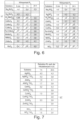
- FIG. 6 shows a further tabular representation of the antimicrobial effectiveness of further exemplary embodiments of an antimicrobial coating 10" according to the invention in the last line on the left and right. Comparative examples are shown on the left and right in each case.
- the antimicrobial effectiveness against E. coli bacteria is in 6 specified for a duration of 5 min, 1 h and 24 h under defined light conditions at 1600 lux.
- the coating 10 contains at least one complex compound.
- the structure of the complex compound is generally described by the formula A c B d X n Me e B f or X n Me e B f .
- A is from the elements of group 4, B from the elements of group 15 or 16, X from the elements of groups 5, 7, 8, 9, 10, 11, 12, 13, 14, the lanthanides or the actinides as well Me selected from the elements of group 6 of the periodic table of elements (IUPAC nomenclature).
- c, d, n, e and f can have a value between 0 and 24 independently of one another.
- the structure of the complex compound is described by the formula AO 2 X n MeO 4 or X n MeO 4 .
- A is from the elements of group 4
- X from the elements of groups 5, 7, 8, 9, 10, 11, 12, 13, 14, the lanthanides or the actinides and Me from the elements of group 6 of the periodic table Elements (IUPAC nomenclature) selected and O is the element oxygen.
- n can have a value between 0 and 24.
- the complex contains according to 6 in particular molybdates or tungstates.
- the molybdates include in particular (NH 4 ) 6 Mo 7 O 24 , Na 2 MoO 4 , Ag 2 MoO 4 , Al 2 (MoO 4 ) 3 , CeMoO 4 , CoMoO 4 , CuMoO 4 , FeIII-MoO 4 , MnMoO 4 , NiMoO 4 or ZnMoO 4 .
- the antimicrobial coating 10'' can be formed either from these molybdates or from a combination of these molybdates with TiO 2 .
- the antimicrobial coating 10′′ can, according to the invention, also comprise MoOs or a compound of TiO 2 and MoOs instead of the molybdates (comparative examples).
- the tungstates include in particular Na 2 WO 4 , AgWO 4 , AlWO 4 , CeWO 4 , CoWO 4 , CuWO 4 , Fe-III-WO 4 , MnWO 4 , NiWO 4 or ZnWO 4 .
- the antimicrobial coating 10'' can either be formed from these tungstates (comparative examples) or, according to the invention, from a compound of these tungstates with TiO 2 .
- the antimicrobial coating 10'' according to the invention can also comprise WO 3 or a combination of TiO 2 and WO 3 .
- FIG. 7 shows a further tabular representation of the anti-microbial effectiveness of further exemplary embodiments of an anti-microbial coating 10 ′′′.
- the antimicrobial effectiveness against E. coli bacteria is in 7 specified for a duration of 1 hour and 24 hours under defined light conditions at 1600 lux.
- the representation in the 7 serves in particular to show the difference in the antimicrobial effectiveness of the antimicrobial coating, which is formed on the one hand from a tungstate and on the other hand is formed from this tungstate in combination with TiO 2 .
- the tungstates according to 7 include in particular AgWO 4 , AlWO 4 , CeWO 4 , CuWO 4 , or ZnWO 4 or these tungstates in combination with TiO 2 .
- Me is selected from the elements of group 6 of the periodic table of elements (IUPAC nomenclature) and O is the element oxygen.
- d and e can have a value between 0 and 24 independently of one another.
- the metal oxide according to 7 is in particular WO 3 .
- A is selected from the group 4 elements, Me from the group 6 elements of the periodic table of elements (IUPAC nomenclature) and O is the element oxygen.
- d and e can have a value between 0 and 24 independently of one another.
- the complex compound according to 7 is in particular WO 3 *TiO 2 .
- the antimicrobial effectiveness against E. coli bacteria is in 8 specified for a duration of 1 h under defined light conditions at 1600 lux.
- the representation in 8 serves in particular to show the difference in the antimicrobial effectiveness of this antimicrobial coating 10'' with different compositions.
- This coating 10'' includes in particular ZnCrO 4 (comparative example), ZnMoO 4 (comparative example) or ZnWO 4 (comparative example).
- Figure 9a shows a schematic representation of an exemplary embodiment of an electrostatic spray process for obtaining an antimicrobial coating 10, 10′, 10′′, 10′′′, 10′′′′ according to the invention.
- the metal oxide Before being added to the aqueous solution or suspension 24, the metal oxide is in the form of nanoparticles with an average size of less than or equal to about 10 nm.
- the aqueous solution or suspension 24 has a pH of less than or equal to about 1.5.
- the metal oxide is also contained in the aqueous solution or suspension 24 in a range in particular from about 0.1% to about 2%.
- the aqueous solution or suspension 24 can also contain a complex compound.
- Figure 9b shows an enlarged view of an island 16 in this regard.
- the moisture content is 2%.
- this behavior determines the basic idea of converting a water-soluble TiO 2 after application in the form of small droplets 26 with the previously described electrostatic spray process into a solid matrix into which soluble and insoluble (complex) compounds with a germ-reducing effect can be introduced .
- the deposited micro-droplets 26 evaporate very quickly at room temperature within only 1-2 minutes and leave behind a transparent TiO 2 matrix in the form of small islands 16 (cf Figures 1 and 2 ).
- Compounds with a permanent positive charge e.g. quaternary ammonium compounds such as PHMB are known to attract the negatively polar bacteria in their outer shell and thus prevent them from being transported back into the room air.
- the positive charge leads to a structural change in the bacterial membrane and a dysfunction of the ion channels.
- hydrophilic surfaces of the substrate 12 Due to the hydrophilic properties of the TiO 2 matrix (see 3 ) In contrast to hydrophobic surfaces, such hydrophilic surfaces of the substrate 12 have the advantage that they bind bacteria on the surface and prevent back transfer away from the coating surface.
- This property is an important first step towards improved indoor hygiene.
- the result shows a two-phase decline with a rapid loss of vitality within the first hour and a further slow, essentially linear reduction between 1 hour and 24 hours.
- the two curves also show the same course under dark and light conditions and lead to a high level of effectiveness ( RL > 3.5) after 24 hours.
- the anti-microbial coating contains a matrix of TiO 2 and silver nitrate TiO 2 *AgNO 3 .
- the antimicrobial effectiveness of the coating against E. coli bacteria is in 11 given after an incubation period of 24 h under defined light conditions at 1600 lux.
- silver changes the tertiary structure of the bacterial outer membrane.
- Petri dishes coated with TiO 2 *AgNO 3 were left to rest several times (2x, 5x, 10x) with TiO 2 *AgNO 3 in a first study for 2 days and, after decanting the water, hydrochloric acid was added.
- Silver chloride (AgCl) could not be detected in any of the cases.
- the structure of the deposited TiO 2 *AgNO 3 matrix is stable against wiping 1000 times with an antiseptic cloth (ethanol, benzalkonium chloride).
- 13a therefore shows a diagram of a comparison of the germ reduction over time of these two exemplary embodiments of the coating 10′ according to the invention according to FIG figure 5 in darkness and brightness (approx. 1600 lux).
- the evaluation is shown as a percentage.
- TiO 2 *AgNO 3 shows a very strong germ reduction within the first 5 minutes by up to > 99.99%.
- Remarkable is the very strong germ reduction at 1600 lux of 98.1% after 1 min and 99.859% after 3 min.
- the anti-microbial properties of this coating 10' can consequently be enhanced by exposure to UV light.
- Figure 13b additionally the in 13a data points shown in tabular form.
- cations from the TiO 2 matrix can change the tertiary structure of the bacterial outer membrane in such a way that this membrane becomes porous and the bacterium dies.
- cationic silver has a very high oxidation potential and is able to attack the outer membrane of the microorganisms through rapid electron transfer, which also chemically inactivates sulphur-containing enzymes.
- 14a 10 shows a tabular representation of the antimicrobial effectiveness of an exemplary embodiment of the coating 10' according to FIG figure 5 against a Staphylococcus aureus germ.
- coated and non-coated Petri dishes are contaminated in a dry state and microbial growth is checked using a contact test method (RODAC method).
- RODAC method contact test method
- Figure 14b shows in this regard a reduction in time of an Aspergillus fumigatus germ on an uncoated and one with an exemplary embodiment of the coating 10' according to FIG figure 5 coated Petri dish.
- the anti-microbial coating in Figure 14b points, as well as in the Figures 11 to 14a shown, a TiO 2 *AgNO 3 matrix structure.
- FIG. 12 is a reduction in time of a Candida albicans germ on an uncoated and one with an exemplary embodiment of the coating 10' according to FIG figure 5 coated Petri dish.
- the anti-microbial coating 10' in 15 points as well as in the Figures 11 to 14b shown, a TiO 2 *AgNO 3 matrix structure.
- the anti-microbial coating 10 'of substrates according to Figures 11 to 15 with TiO 2 *AgNO 3 is conceivable, for example, outdoors (eg building walls, surfaces of public transport vehicles or road surfaces).
- FIG. 1 also shows a bar chart with a comparison of the E. coli germ reduction over time of six exemplary embodiments according to the invention and a coating 10′, 10′′ not according to the invention figure 5 and 6 after 5 min incubation time in the dark.
- ZnMoO 4 refers to a comparative example.
- the anti-microbial coating contains a combination of the TiO 2 matrix with oxides and salts of group 6 (IUPAC nomenclature) of the periodic table of elements.
- the following compounds were each sprayed onto a substrate 12 in the form of an antimicrobial coating, as already described above, and within 24 hours of incubation and a light incidence of 1600 lux against E. coli bacteria tested.
- ammonium heptamolybdate (NH 4 ) 6 Mo 7 O 24 was tested, which under these experimental conditions has an antimicrobial effectiveness of 1.4 after 1 hour and 4.3 after 24 hours.
- ammonium heptamolybdate ((NH 4 ) 6 Mo 7 O 24 ) used for the synthesis already shows a significant effectiveness after 1 hour.
- sodium molybdate (Na 2 MoO 4 ), which is also very soluble, does not show any antimicrobial effect even after 24 h (cf. 6 ).
- silver molybdate (Ag 2 MoO 4 ) could be detected as another strong germ-reducing compound.
- the starting material for the syntheses was sodium tungstate, which reacts with the soluble salts (chloride, nitrate, sulfate) of aluminum, cerium, cobalt, copper, nickel, manganese, silver and zinc to form sparingly soluble salts of the form X n WO 4 .
- tungsten molybdate In analogy to sodium molybdate, tungsten molybdate also shows no antimicrobial activity after an incubation period of 1 hour and 24 hours.
- zinc tungstate ZnWO 4
- TiO 2 *ZnWO 4 shows a strong germ-reducing effect within 24 hours. These are also observed for silver tungstate (AgWO 4 ), aluminum tungstate (AlWO 4 ), cerium tungstate (CeWO 4 ), copper tungstate (CuWO 4 ) and for their respective combination with the TiO 2 matrix.
- tungsten oxide also has this strong effect and its combination with the TiO 2 matrix.
- TiO 2 with CeWO 4 (yellow) and CuWO 4 (green) is listed here as an example.
- a three-center complex may also form between the positively charged TiO 2 , the positive metal cation (eg Ce 2+ ) and the tungstate anion.
- the electronic states change in such a way that the color of the original tungstates is lost.
- the yellow tungsten oxide (WO 3 ) also forms a colorless suspension with TiO 2 as a result of complexing.
- Such a use of a coating material can thus be provided for producing an antimicrobial coating 10, 10′, 10′′, 10′′′, 10′′, as described above, on a surface 14 of a substrate 12, the coating 10 comprising at least one metal oxide as described above and /or contains a metal salt.
- the coating 10, 10′, 10′′, 10′′′, 10′′ is obtained by an electrostatic spray process as described above.
- the surface 14 of the coating 10, 10′, 10′′, 10′′′, 10′′′′ can be a work surface or at least temporarily be in contact with the ambient air, fluids or liquids.
- TiO 2 *X n MeO 4 can be added in the form of a suspension or as a solid after drying to lacquers and paints (eg anti-fouling), which thus acquire antimicrobial properties.
- a TiO 2 *X n MeO 4 complex in the form of a suspension or as a solid is added to the coating material, which is designed in particular as an anti-fouling paint or an anti-fouling paint, after drying.
- the colorless complexes of the form TiO 2 *X n MeO 4 can be incorporated into plastics (eg silicone, PU, etc.) or building materials (eg cement), which then become antimicrobial.
- plastics eg silicone, PU, etc.
- building materials eg cement
- hafnium oxide should be usable as a group relative of subgroup IV (Ti, Zr, Hf).
Landscapes
- Life Sciences & Earth Sciences (AREA)
- General Health & Medical Sciences (AREA)
- Health & Medical Sciences (AREA)
- Chemical & Material Sciences (AREA)
- Engineering & Computer Science (AREA)
- Wood Science & Technology (AREA)
- Zoology (AREA)
- Agronomy & Crop Science (AREA)
- Dentistry (AREA)
- Plant Pathology (AREA)
- Pest Control & Pesticides (AREA)
- Environmental Sciences (AREA)
- Inorganic Chemistry (AREA)
- Toxicology (AREA)
- Materials Engineering (AREA)
- Organic Chemistry (AREA)
- Paints Or Removers (AREA)
- Agricultural Chemicals And Associated Chemicals (AREA)
- Application Of Or Painting With Fluid Materials (AREA)
- Catalysts (AREA)
Claims (7)
- Revêtement antimicrobien (10, 10', 10'', 10‴, 10ʺʺ) d'un substrat (12) ;le revêtement (10, 10', 10'', 10‴, 10ʺʺ) étant obtenu par application d'une solution ou d'une suspension aqueuse (24) sous forme de gouttelettes sur une surface (14) du substrat à l'aide d'un procédé de pulvérisation électrostatique, la solution ou la suspension aqueuse (24) contenant au moins un oxyde métallique soluble en elle et/ou au moins un sel métallique ;le revêtement contenant au moins un oxyde métallique et/ou au moins un sel métallique :dans lequel le revêtement (10, 10', 10'', 10‴, 10ʺʺ) est réalisé sous la forme d'une structure matricielle, la structure matricielle comportant plusieurs îlots (16) espacés les uns par rapport aux autres et les îlots (16) présentant un diamètre dans une certaine zone notamment d'environ 0,1 µm à environ 500 µm, de préférence d'environ 1 µm à environ 200 µm, de façon particulièrement préférée d'environ 2 µm à environ 100 µm et les îlots (16) étant respectivement placés à une certaine distance les uns des autres en fonction de leur diamètre ;dans lequel la composition de l'oxyde métallique est décrite par la formule AcOd ou MeeOd, où A est sélectionné parmi les éléments du groupe 4 et Me est sélectionné parmi les éléments du groupe 6 du système périodique des éléments (nomenclature IUPAC) et où O est l'élément oxygène, c, d et e pouvant prendre la forme de valeurs indépendantes les unes des autres comprises entre 0 et 24, donc hors 0 et 24, l'oxyde métallique étant de préférence TiO2, ZrO2, HfO2, l'oxyde de molybdène ou l'oxyde de wolframite ; etdans lequel la composition du sel métallique est décrite par la formule XBO3, où X est sélectionné parmi les éléments des groupes 5, 7, 8, 9, 10, 11, 12, les lanthanoïdes ou les actinoïdes et B est sélectionné parmi les éléments du groupe 15 du système périodique des éléments (nomenclature IUPAC) et O est l'élément oxygène.
- Revêtement antimicrobien (10'', 10‴) selon la revendication 1, caractérisé en ce que le revêtement (10", 10‴) contient l'oxyde métallique TiO2 et/ou le sel métallique AgNO3 et dans lequel le revêtement (10", 10‴) contient en outre au moins une liaison complexe ;dans lequel la liaison complexe est réalisée soit à partir d'une liaison de molybdalates avec TiO2 ou à partir d'une liaison de wolframates avec TiO2 ;dans lequel les molybdates comprennent (NH4)6Mo7O24, Na2MoO4, Ag2MoO4, Al2(MoO4)3, CeMoO4, CoMoO4, CuMoO4, Fe-III-MoO4, MnMoO4, NiMoO4 ou ZnWO4 ; etdans lequel les wolframates comprennent Na2WO4, AgWO4, AlWO4, CeWO4, CoWO4, CuWO4, Fe-III-WO4, MnWO4, NiWO4 ou ZnWO4 .
- Revêtement antimicrobien (10, 10') selon la revendication 1, caractérisé en ce que l'oxyde métallique et le sel métallique sont TiO2AgNO3.
- Revêtement antimicrobien (10ʺʺ) selon la revendication 1, caractérisé en ce que les îlots (16) contiennent TiO2 et ZnMoO4.
- Revêtement antimicrobien (10, 10', 10'', 10‴, 10ʺʺ) selon l'une quelconque des revendications précédentes, caractérisé en ce que les îlots (16) comportent une surface réalisée en forme de poêlon avec une zone centrale (18) et une zone de bordure (20) se soulevant de façon relative vers l'extérieur dans le plan radial.
- Procédé de pulvérisation électrostatique servant au revêtement d'au moins un substrat (12), comprenant au moins les étapes suivantes :- mise à disposition d'un substrat (12) ;- revêtement du substrat (12) à l'aide d'une solution ou d'une suspension aqueuse (24) sous forme de gouttelettes au travers du procédé de pulvérisation électrostatique, dans lequel la solution ou la suspension aqueuse (24) contient au moins un oxyde métallique soluble en elle avec une composition de l'oxyde métallique selon la revendication 1 et/ou au moins un sel métallique avec une composition du sel métallique selon la revendication 1, la solution ou la suspension aqueuse (24) présentant des propriétés antimicrobiennes ; et- formation d'un revêtement antimicrobien permanent (10, 10', 10", 10‴, 10ʺʺ) sur le substrat (12) sous la forme d'une structure matricielle obtenue par évaporation de la phase fluide et/ou aqueuse à partir de la solution ou de la suspension aqueuse (24), de sorte que l'oxyde métallique et/ou le sel métallique soient contenus dans la structure matricielle du revêtement (10, 10', 10", 10‴, 10ʺʺ) ;le revêtement (10, 10', 10", 10‴, 10ʺʺ) étant réalisé sous la forme d'une structure matricielle, dans lequel la structure matricielle comporte plusieurs îlots espacés les uns par rapport aux autres (16) et dans lequel les îlots (16) présentent un diamètre notamment situé dans une zone d'environ 0,1 µm à environ 500 µm, de préférence d'environ 1 µm à environ 200 µm, de façon particulièrement préférée d'environ 2 µm à environ 100 µm et les îlots (16) étant respectivement placés à une certaine distance les uns des autres en fonction de leur diamètre.
- Utilisation non thérapeutique d'au moins un oxyde métallique avec une composition de l'oxyde métallique selon la revendication 1 et en option au moins un sel métallique avec une composition du sel métallique selon la revendication 1, contenant un matériau de revêtement permettant de réaliser un revêtement antimicrobien (10, 10', 10", 10‴, 10ʺʺ) sur une surface d'un substrat (12), le revêtement (10, 10', 10'', 10‴, 10ʺʺ) contenant au moins l'oxyde métallique et en option au moins le sel métallique ;
dans lequel le revêtement (10, 10', 10'', 10‴, 10ʺʺ) est réalisé sous la forme d'une structure matricielle, dans lequel la structure matricielle comporte plusieurs îlots espacés les uns par rapport aux autres (16) et dans lequel les îlots (16) présentent un diamètre notamment compris dans une zone d'environ 0,1 µm à environ 500 µm, de préférence d'environ 1 µm à environ 200 µm, de façon particulièrement préférée d'environ 2 µm à environ 100 µm et les îlots (16) étant respectivement placés à une certaine distance les unes des autres en fonction de leur diamètre.
Applications Claiming Priority (2)
| Application Number | Priority Date | Filing Date | Title |
|---|---|---|---|
| DE102017121439.9A DE102017121439A1 (de) | 2017-09-15 | 2017-09-15 | Anti-mikrobielle Beschichtung |
| PCT/EP2018/074551 WO2019053037A1 (fr) | 2017-09-15 | 2018-09-12 | Revêtement antimicrobien |
Publications (2)
| Publication Number | Publication Date |
|---|---|
| EP3681282A1 EP3681282A1 (fr) | 2020-07-22 |
| EP3681282B1 true EP3681282B1 (fr) | 2023-06-21 |
Family
ID=63557484
Family Applications (1)
| Application Number | Title | Priority Date | Filing Date |
|---|---|---|---|
| EP18769166.2A Active EP3681282B1 (fr) | 2017-09-15 | 2018-09-12 | Revêtement antimicrobien |
Country Status (13)
| Country | Link |
|---|---|
| US (2) | US20200267990A1 (fr) |
| EP (1) | EP3681282B1 (fr) |
| JP (1) | JP2020533172A (fr) |
| CN (1) | CN111432638A (fr) |
| AU (1) | AU2018331926A1 (fr) |
| BR (1) | BR112020008620A2 (fr) |
| CA (1) | CA3075783A1 (fr) |
| DE (1) | DE102017121439A1 (fr) |
| DK (1) | DK3681282T3 (fr) |
| FI (1) | FI3681282T3 (fr) |
| HU (1) | HUE064608T2 (fr) |
| SG (1) | SG11202002382SA (fr) |
| WO (1) | WO2019053037A1 (fr) |
Families Citing this family (11)
| Publication number | Priority date | Publication date | Assignee | Title |
|---|---|---|---|---|
| EP4021187A4 (fr) * | 2019-08-29 | 2023-10-18 | Claw Biotech Holdings, LLC | Compositions anti-pathogènes |
| EP3907261A1 (fr) * | 2020-05-06 | 2021-11-10 | Hecosol GmbH | Utilisation de revêtement antimicrobien |
| JP7415890B2 (ja) * | 2020-06-05 | 2024-01-17 | 住友金属鉱山株式会社 | 暗色粉分散液、暗色粉分散体ならびに着色層付基材 |
| CN114173903B (zh) * | 2020-06-19 | 2023-04-04 | 雅弦科技有限公司 | 空气过滤系统及形成空气过滤系统的方法 |
| CN112390563A (zh) * | 2020-11-09 | 2021-02-23 | 贵州石博士科技股份有限公司 | 一种磁场作用下抗微生物腐蚀混凝土外加剂的制备方法 |
| FR3116434B1 (fr) * | 2020-11-24 | 2022-12-02 | Oreal | Utilisation d’un oxyde métallique particulier pour la photoconversion de composés organiques sur les matières kératiniques |
| WO2022202762A1 (fr) * | 2021-03-24 | 2022-09-29 | Dic株式会社 | Agent antibactérien et antiviral, composition de revêtement, composition de résine, couche de revêtement et corps moulé |
| CN113952952B (zh) * | 2021-09-07 | 2024-01-19 | 新乡医学院 | 一种Ag2Mo2O7/TiO2抑菌材料及其制备方法和应用 |
| EP4440316A1 (fr) * | 2021-11-29 | 2024-10-09 | Fondazione Istituto Italiano di Tecnologia | Matériau composite transparent ayant des propriétés antimicrobiennes |
| US11985972B2 (en) | 2022-03-17 | 2024-05-21 | Allen Howard Engel | Biocidal |
| EP4279550A1 (fr) * | 2022-05-19 | 2023-11-22 | Speira GmbH | Bande en aluminium pourvue de revêtement antibactérien |
Family Cites Families (40)
| Publication number | Priority date | Publication date | Assignee | Title |
|---|---|---|---|---|
| US5326598A (en) * | 1992-10-02 | 1994-07-05 | Minnesota Mining And Manufacturing Company | Electrospray coating apparatus and process utilizing precise control of filament and mist generation |
| ATE155649T1 (de) | 1994-02-01 | 1997-08-15 | Theodor Krall | Verfahren zur herstellung von bakteriziden/fungiziden kunststoffkörpern |
| US6051246A (en) * | 1997-03-28 | 2000-04-18 | Parker Holding Services Corp. | Antimicrobial composition supported on a honeycomb-shaped substrate |
| JP2000143369A (ja) * | 1998-11-05 | 2000-05-23 | Mitsubishi Materials Corp | 表面処理材及び抗菌性窯業製品並びにその製造方法 |
| EP1066825A1 (fr) | 1999-06-17 | 2001-01-10 | The Procter & Gamble Company | Produit antimicrobien pour les soins du corps |
| DE10013248A1 (de) | 2000-03-17 | 2001-09-20 | J Peter Guggenbichler | Verfahren zur Herstellung von antimikrobiellen Kunststoffkörpern mit verbessertem Langzeitverhalten |
| DE19936059A1 (de) | 1999-07-30 | 2001-02-01 | J Peter Guggenbichler | Verfahren zur Herstellung von antimikrobiellen Kunststoffkörpern |
| CN1338210A (zh) * | 2000-08-16 | 2002-03-06 | 周鹤轩 | 光学农药 |
| DE10120802A1 (de) | 2001-04-27 | 2002-10-31 | Basf Ag | Verfahren zur Herstellung von gecoateten Nanopartikeln |
| US20030096062A1 (en) * | 2001-11-20 | 2003-05-22 | Sargent Manufacturing Company | Antimicrobial metal coating process and product |
| DE10323448A1 (de) | 2003-01-09 | 2004-07-22 | Uvr-Fia Gmbh Verfahrensentwicklung Umweltschutztechnik Recycling | Kaltkeramik |
| GB0301034D0 (en) * | 2003-01-16 | 2003-02-19 | Dupont Teijin Films Us Ltd | Polymeric film and coating |
| DE10342258A1 (de) | 2003-09-11 | 2005-04-07 | Josef Peter Prof. Dr.med. Guggenbichler | Antimikrobiell wirkendes Präparat zur äußerlichen Anwendung |
| US20070218095A1 (en) * | 2006-03-14 | 2007-09-20 | 3M Innovative Properties Company | Photocatalytic substrate with biocidal coating |
| JP2008115351A (ja) * | 2006-11-02 | 2008-05-22 | D Trip:Kk | 消臭性、抗菌性及び調湿性を保持する内装材 |
| AT12981U1 (de) | 2006-11-13 | 2013-03-15 | Josef Peter Dr Guggenbichler | Stoff mit antimikrobieller wirkung |
| CN101148556B (zh) * | 2007-10-16 | 2011-11-09 | 湖南至诚新材料有限公司 | 分子组装纳米载药抗菌复合涂料 |
| DE102007061965A1 (de) | 2007-12-21 | 2009-06-25 | Guggenbichler, Joseph Peter | Reduzierung der mikrobiellen Kontamination in Kühltürmen |
| JP2011514255A (ja) * | 2008-03-18 | 2011-05-06 | ナノ−エックス ゲーエムベーハー | 高耐摩耗性の乗り物用塗料の製造方法、乗り物用塗料、およびその使用 |
| US20110192789A1 (en) * | 2008-09-02 | 2011-08-11 | Drexel University | Metal or metal oxide deposited fibrous materials |
| US20100255447A1 (en) * | 2009-04-07 | 2010-10-07 | University Of Arkansas | Advanced bio-compatible polymer surface coatings for implants and tissue engineering scaffolds |
| WO2010120730A1 (fr) * | 2009-04-13 | 2010-10-21 | Global Protection Usa, Inc. | Matériaux, appareil et procédés éliminant des substances dangereuses |
| DE102011085862A1 (de) | 2011-11-07 | 2013-05-08 | AMiSTec GmbH & Co. KG | Zusammensetzung mit wenigstens einem antimikrobiell wirksamen Wirkstoff |
| JP2013216596A (ja) * | 2012-04-06 | 2013-10-24 | Sumitomo Chemical Co Ltd | 抗菌剤、抗菌剤分散液、およびこれを用いた抗菌加工製品 |
| DE102012103064A1 (de) | 2012-04-10 | 2013-10-10 | AMiSTec GmbH & Co. KG | Verbundmaterial mit einem Trägermaterial und einem antimikrobiell wirksamen Agens |
| DE102013101909A1 (de) | 2013-02-26 | 2014-08-28 | AMiSTec GmbH & Co. KG | Verwendung von sauren Makromolekülen zum Herstellen einer antimikrobiell wirksamen Oberfläche |
| DE102013104284A1 (de) | 2013-04-26 | 2014-10-30 | Amistec Gmbh & Co Kg | Verfahren zum Herstellen eines dotierten oder undotierten Mischoxids für einen Verbundwerkstoff und Verbundwerkstoff mit einem solchen Mischoxid |
| WO2015040558A1 (fr) * | 2013-09-17 | 2015-03-26 | Theta Chemicals Limited | Film antimicrobien à double action |
| CN105636689B (zh) * | 2013-10-16 | 2018-11-02 | 信越化学工业株式会社 | 氧化钛-氧化钨复合光催化微粒分散液、其制造方法、及在表面具有光催化薄膜的构件 |
| GB2521405B (en) * | 2013-12-18 | 2015-12-02 | Dublin Inst Of Technology | A surface coating |
| DE102013114575A1 (de) * | 2013-12-19 | 2015-06-25 | AMiSTec GmbH & Co. KG | Verfahren zum Herstellen eines antimikrobiell wirksamen Verbundwerkstoffs und antimikrobiell wirksamer Verbundwerkstoff |
| DE102013114573B4 (de) | 2013-12-19 | 2022-10-13 | Fritz Egger Gmbh & Co. Og | Verfahren zum Herstellen eines antimikrobiell wirksamen Möbel- und/oder Innenausbauteils |
| CN104231850A (zh) * | 2014-08-22 | 2014-12-24 | 安徽博大纤维素科技有限公司 | 一种抗菌防腐粉末涂料 |
| WO2016069027A1 (fr) * | 2014-10-29 | 2016-05-06 | Nanonanousa, Llc | Compositions antimicrobiennes et procédés |
| CN104403476A (zh) * | 2014-11-28 | 2015-03-11 | 安徽省金盾涂料有限责任公司 | 一种自清洁抗菌氟碳涂料 |
| DE102015111582A1 (de) * | 2015-07-16 | 2017-01-19 | Bsn Medical Gmbh | Verpackung für ein medizinisches Produkt |
| CN105860743B (zh) * | 2016-04-11 | 2018-07-06 | 黑龙江省易爱蒽新材料科技发展有限公司 | 一种钢质管道内防腐长效负氧抗菌防腐粉末涂料 |
| CN106010133A (zh) * | 2016-07-29 | 2016-10-12 | 王小凤 | 一种市政排水污水管道耐酸碱抗菌涂料 |
| CN106609096A (zh) * | 2016-12-01 | 2017-05-03 | 天长市金陵电子有限责任公司 | 一种厨具专用静电喷涂粉末涂料及其制备方法 |
| CN107140850A (zh) * | 2017-05-02 | 2017-09-08 | 江苏秀强玻璃工艺股份有限公司 | 一种镀膜抗菌钢化玻璃及其制备方法 |
-
2017
- 2017-09-15 DE DE102017121439.9A patent/DE102017121439A1/de not_active Withdrawn
-
2018
- 2018-09-12 WO PCT/EP2018/074551 patent/WO2019053037A1/fr not_active Ceased
- 2018-09-12 SG SG11202002382SA patent/SG11202002382SA/en unknown
- 2018-09-12 BR BR112020008620-7A patent/BR112020008620A2/pt not_active Application Discontinuation
- 2018-09-12 DK DK18769166.2T patent/DK3681282T3/da active
- 2018-09-12 HU HUE18769166A patent/HUE064608T2/hu unknown
- 2018-09-12 JP JP2020537036A patent/JP2020533172A/ja active Pending
- 2018-09-12 CN CN201880073309.XA patent/CN111432638A/zh active Pending
- 2018-09-12 EP EP18769166.2A patent/EP3681282B1/fr active Active
- 2018-09-12 AU AU2018331926A patent/AU2018331926A1/en not_active Abandoned
- 2018-09-12 US US16/647,465 patent/US20200267990A1/en not_active Abandoned
- 2018-09-12 CA CA3075783A patent/CA3075783A1/fr not_active Abandoned
- 2018-09-12 FI FIEP18769166.2T patent/FI3681282T3/en active
-
2023
- 2023-10-23 US US18/492,621 patent/US20240049719A1/en active Pending
Non-Patent Citations (1)
| Title |
|---|
| S. VARGHESE ET AL: "Novel antibacterial silver-silica surface coatings prepared by chemical vapour deposition for infection control", JOURNAL OF APPLIED MICROBIOLOGY, vol. 115, no. 5, 13 November 2013 (2013-11-13), pages 1107 - 1116, XP055142703, ISSN: 1364-5072, DOI: 10.1111/jam.12308 * |
Also Published As
| Publication number | Publication date |
|---|---|
| WO2019053037A1 (fr) | 2019-03-21 |
| US20200267990A1 (en) | 2020-08-27 |
| DK3681282T3 (da) | 2023-09-25 |
| CA3075783A1 (fr) | 2019-03-21 |
| HUE064608T2 (hu) | 2024-04-28 |
| AU2018331926A1 (en) | 2020-04-23 |
| CN111432638A (zh) | 2020-07-17 |
| JP2020533172A (ja) | 2020-11-19 |
| FI3681282T3 (en) | 2023-09-22 |
| SG11202002382SA (en) | 2020-04-29 |
| EP3681282A1 (fr) | 2020-07-22 |
| BR112020008620A2 (pt) | 2020-10-13 |
| DE102017121439A1 (de) | 2019-03-21 |
| US20240049719A1 (en) | 2024-02-15 |
Similar Documents
| Publication | Publication Date | Title |
|---|---|---|
| EP3681282B1 (fr) | Revêtement antimicrobien | |
| AT12981U1 (de) | Stoff mit antimikrobieller wirkung | |
| EP2077976B1 (fr) | Revêtement bioactif contenant du ruthénium, et dispositif correspondant | |
| EP2988794B1 (fr) | Procédé de production d'un oxyde mixte dopé pour un matériau composite et matériau composite comprenant ledit oxyde mixte | |
| EP3147266B1 (fr) | Élement en verre medical | |
| DE3004338A1 (de) | Verfahren zur verminderung der anzahl von mikroorganismen in medien | |
| CN102093791A (zh) | 纳米负离子复合功能性涂料配方工艺 | |
| EP2278875A2 (fr) | Matériau stratifié | |
| EP4279552A2 (fr) | Système hybride antimicrobien particulaire | |
| DE102007061965A1 (de) | Reduzierung der mikrobiellen Kontamination in Kühltürmen | |
| EP3949736A1 (fr) | Système hybride antimicrobien particulaire | |
| EP2352377A1 (fr) | Composant comportant une surface antimicrobienne, et son utilisation | |
| WO2010072288A2 (fr) | Suspension destinée à traiter des filtres ou des matériaux filtrants, procédé de traitement de filtres ou matériaux filtrants et filtres ou matériaux filtrants pourvus d'un revêtement biocide | |
| EP3915374A1 (fr) | Composition bioactive de destruction des cellules | |
| WO2003018499A2 (fr) | Poudre de verre antimicrobienne et utilisation | |
| Sharma et al. | Preparation, characterization and evaluation of the zinc titanate and silver nitrate incorporated wipes for topical chemical and biological decontamination | |
| EP3907261A1 (fr) | Utilisation de revêtement antimicrobien | |
| DE3228850C2 (de) | Teildurchlässige Membran | |
| HK40063388A (en) | Use of antimicrobial coating | |
| DE102007048107A1 (de) | Antibiotisch wirkendes Substrat zu Impfzwecken zur Herstellung von Materialien wie Farbe, Papiere, Stoffe, Fasen und Gewebe und Baumaterialien, insbesondere Suspensionen für Oberflächenbeschichtungen | |
| EP3935946A1 (fr) | Dispositif de réduction des microorganismes actifs dans des fluides | |
| DE102022104272A1 (de) | Biophotonische Filtervorrichtung zur Inaktivierung von Mikroorganismen in einem Filtrat | |
| WO2022018025A2 (fr) | Surfaces à effet antiviral contenant des polyoxométallates et du molybdate de zinc | |
| CA2645736A1 (fr) | Nouvelles compositions de materiau antimicrobien enrichies de composes d'oxygene actif |
Legal Events
| Date | Code | Title | Description |
|---|---|---|---|
| STAA | Information on the status of an ep patent application or granted ep patent |
Free format text: STATUS: UNKNOWN |
|
| STAA | Information on the status of an ep patent application or granted ep patent |
Free format text: STATUS: THE INTERNATIONAL PUBLICATION HAS BEEN MADE |
|
| PUAI | Public reference made under article 153(3) epc to a published international application that has entered the european phase |
Free format text: ORIGINAL CODE: 0009012 |
|
| STAA | Information on the status of an ep patent application or granted ep patent |
Free format text: STATUS: REQUEST FOR EXAMINATION WAS MADE |
|
| 17P | Request for examination filed |
Effective date: 20200408 |
|
| AK | Designated contracting states |
Kind code of ref document: A1 Designated state(s): AL AT BE BG CH CY CZ DE DK EE ES FI FR GB GR HR HU IE IS IT LI LT LU LV MC MK MT NL NO PL PT RO RS SE SI SK SM TR |
|
| AX | Request for extension of the european patent |
Extension state: BA ME |
|
| DAV | Request for validation of the european patent (deleted) | ||
| DAX | Request for extension of the european patent (deleted) | ||
| STAA | Information on the status of an ep patent application or granted ep patent |
Free format text: STATUS: EXAMINATION IS IN PROGRESS |
|
| 17Q | First examination report despatched |
Effective date: 20210503 |
|
| GRAP | Despatch of communication of intention to grant a patent |
Free format text: ORIGINAL CODE: EPIDOSNIGR1 |
|
| STAA | Information on the status of an ep patent application or granted ep patent |
Free format text: STATUS: GRANT OF PATENT IS INTENDED |
|
| RIC1 | Information provided on ipc code assigned before grant |
Ipc: A01P 1/00 20060101ALI20230123BHEP Ipc: A01N 59/16 20060101ALI20230123BHEP Ipc: A01N 25/34 20060101AFI20230123BHEP |
|
| INTG | Intention to grant announced |
Effective date: 20230217 |
|
| GRAS | Grant fee paid |
Free format text: ORIGINAL CODE: EPIDOSNIGR3 |
|
| GRAA | (expected) grant |
Free format text: ORIGINAL CODE: 0009210 |
|
| STAA | Information on the status of an ep patent application or granted ep patent |
Free format text: STATUS: THE PATENT HAS BEEN GRANTED |
|
| AK | Designated contracting states |
Kind code of ref document: B1 Designated state(s): AL AT BE BG CH CY CZ DE DK EE ES FI FR GB GR HR HU IE IS IT LI LT LU LV MC MK MT NL NO PL PT RO RS SE SI SK SM TR |
|
| P01 | Opt-out of the competence of the unified patent court (upc) registered |
Effective date: 20230514 |
|
| REG | Reference to a national code |
Ref country code: CH Ref legal event code: EP |
|
| REG | Reference to a national code |
Ref country code: DE Ref legal event code: R096 Ref document number: 502018012536 Country of ref document: DE |
|
| REG | Reference to a national code |
Ref country code: AT Ref legal event code: REF Ref document number: 1580226 Country of ref document: AT Kind code of ref document: T Effective date: 20230715 |
|
| REG | Reference to a national code |
Ref country code: IE Ref legal event code: FG4D Free format text: LANGUAGE OF EP DOCUMENT: GERMAN |
|
| REG | Reference to a national code |
Ref country code: FI Ref legal event code: FGE |
|
| REG | Reference to a national code |
Ref country code: DK Ref legal event code: T3 Effective date: 20230922 |
|
| REG | Reference to a national code |
Ref country code: NL Ref legal event code: FP |
|
| REG | Reference to a national code |
Ref country code: LT Ref legal event code: MG9D |
|
| PG25 | Lapsed in a contracting state [announced via postgrant information from national office to epo] |
Ref country code: SE Free format text: LAPSE BECAUSE OF FAILURE TO SUBMIT A TRANSLATION OF THE DESCRIPTION OR TO PAY THE FEE WITHIN THE PRESCRIBED TIME-LIMIT Effective date: 20230621 |
|
| REG | Reference to a national code |
Ref country code: NO Ref legal event code: T2 Effective date: 20230621 |
|
| PG25 | Lapsed in a contracting state [announced via postgrant information from national office to epo] |
Ref country code: RS Free format text: LAPSE BECAUSE OF FAILURE TO SUBMIT A TRANSLATION OF THE DESCRIPTION OR TO PAY THE FEE WITHIN THE PRESCRIBED TIME-LIMIT Effective date: 20230621 Ref country code: LV Free format text: LAPSE BECAUSE OF FAILURE TO SUBMIT A TRANSLATION OF THE DESCRIPTION OR TO PAY THE FEE WITHIN THE PRESCRIBED TIME-LIMIT Effective date: 20230621 Ref country code: LT Free format text: LAPSE BECAUSE OF FAILURE TO SUBMIT A TRANSLATION OF THE DESCRIPTION OR TO PAY THE FEE WITHIN THE PRESCRIBED TIME-LIMIT Effective date: 20230621 Ref country code: HR Free format text: LAPSE BECAUSE OF FAILURE TO SUBMIT A TRANSLATION OF THE DESCRIPTION OR TO PAY THE FEE WITHIN THE PRESCRIBED TIME-LIMIT Effective date: 20230621 Ref country code: GR Free format text: LAPSE BECAUSE OF FAILURE TO SUBMIT A TRANSLATION OF THE DESCRIPTION OR TO PAY THE FEE WITHIN THE PRESCRIBED TIME-LIMIT Effective date: 20230922 |
|
| PG25 | Lapsed in a contracting state [announced via postgrant information from national office to epo] |
Ref country code: SK Free format text: LAPSE BECAUSE OF FAILURE TO SUBMIT A TRANSLATION OF THE DESCRIPTION OR TO PAY THE FEE WITHIN THE PRESCRIBED TIME-LIMIT Effective date: 20230621 |
|
| PG25 | Lapsed in a contracting state [announced via postgrant information from national office to epo] |
Ref country code: ES Free format text: LAPSE BECAUSE OF FAILURE TO SUBMIT A TRANSLATION OF THE DESCRIPTION OR TO PAY THE FEE WITHIN THE PRESCRIBED TIME-LIMIT Effective date: 20230621 |
|
| PG25 | Lapsed in a contracting state [announced via postgrant information from national office to epo] |
Ref country code: IS Free format text: LAPSE BECAUSE OF FAILURE TO SUBMIT A TRANSLATION OF THE DESCRIPTION OR TO PAY THE FEE WITHIN THE PRESCRIBED TIME-LIMIT Effective date: 20231021 |
|
| PG25 | Lapsed in a contracting state [announced via postgrant information from national office to epo] |
Ref country code: SM Free format text: LAPSE BECAUSE OF FAILURE TO SUBMIT A TRANSLATION OF THE DESCRIPTION OR TO PAY THE FEE WITHIN THE PRESCRIBED TIME-LIMIT Effective date: 20230621 Ref country code: SK Free format text: LAPSE BECAUSE OF FAILURE TO SUBMIT A TRANSLATION OF THE DESCRIPTION OR TO PAY THE FEE WITHIN THE PRESCRIBED TIME-LIMIT Effective date: 20230621 Ref country code: RO Free format text: LAPSE BECAUSE OF FAILURE TO SUBMIT A TRANSLATION OF THE DESCRIPTION OR TO PAY THE FEE WITHIN THE PRESCRIBED TIME-LIMIT Effective date: 20230621 Ref country code: PT Free format text: LAPSE BECAUSE OF FAILURE TO SUBMIT A TRANSLATION OF THE DESCRIPTION OR TO PAY THE FEE WITHIN THE PRESCRIBED TIME-LIMIT Effective date: 20231023 Ref country code: IS Free format text: LAPSE BECAUSE OF FAILURE TO SUBMIT A TRANSLATION OF THE DESCRIPTION OR TO PAY THE FEE WITHIN THE PRESCRIBED TIME-LIMIT Effective date: 20231021 Ref country code: ES Free format text: LAPSE BECAUSE OF FAILURE TO SUBMIT A TRANSLATION OF THE DESCRIPTION OR TO PAY THE FEE WITHIN THE PRESCRIBED TIME-LIMIT Effective date: 20230621 Ref country code: EE Free format text: LAPSE BECAUSE OF FAILURE TO SUBMIT A TRANSLATION OF THE DESCRIPTION OR TO PAY THE FEE WITHIN THE PRESCRIBED TIME-LIMIT Effective date: 20230621 Ref country code: CZ Free format text: LAPSE BECAUSE OF FAILURE TO SUBMIT A TRANSLATION OF THE DESCRIPTION OR TO PAY THE FEE WITHIN THE PRESCRIBED TIME-LIMIT Effective date: 20230621 |
|
| PG25 | Lapsed in a contracting state [announced via postgrant information from national office to epo] |
Ref country code: PL Free format text: LAPSE BECAUSE OF FAILURE TO SUBMIT A TRANSLATION OF THE DESCRIPTION OR TO PAY THE FEE WITHIN THE PRESCRIBED TIME-LIMIT Effective date: 20230621 |
|
| REG | Reference to a national code |
Ref country code: DE Ref legal event code: R097 Ref document number: 502018012536 Country of ref document: DE |
|
| PLBE | No opposition filed within time limit |
Free format text: ORIGINAL CODE: 0009261 |
|
| STAA | Information on the status of an ep patent application or granted ep patent |
Free format text: STATUS: NO OPPOSITION FILED WITHIN TIME LIMIT |
|
| REG | Reference to a national code |
Ref country code: HU Ref legal event code: AG4A Ref document number: E064608 Country of ref document: HU |
|
| PG25 | Lapsed in a contracting state [announced via postgrant information from national office to epo] |
Ref country code: SI Free format text: LAPSE BECAUSE OF FAILURE TO SUBMIT A TRANSLATION OF THE DESCRIPTION OR TO PAY THE FEE WITHIN THE PRESCRIBED TIME-LIMIT Effective date: 20230621 |
|
| PG25 | Lapsed in a contracting state [announced via postgrant information from national office to epo] |
Ref country code: LU Free format text: LAPSE BECAUSE OF NON-PAYMENT OF DUE FEES Effective date: 20230912 |
|
| 26N | No opposition filed |
Effective date: 20240322 |
|
| PG25 | Lapsed in a contracting state [announced via postgrant information from national office to epo] |
Ref country code: MC Free format text: LAPSE BECAUSE OF FAILURE TO SUBMIT A TRANSLATION OF THE DESCRIPTION OR TO PAY THE FEE WITHIN THE PRESCRIBED TIME-LIMIT Effective date: 20230621 Ref country code: SI Free format text: LAPSE BECAUSE OF FAILURE TO SUBMIT A TRANSLATION OF THE DESCRIPTION OR TO PAY THE FEE WITHIN THE PRESCRIBED TIME-LIMIT Effective date: 20230621 Ref country code: LU Free format text: LAPSE BECAUSE OF NON-PAYMENT OF DUE FEES Effective date: 20230912 Ref country code: IT Free format text: LAPSE BECAUSE OF FAILURE TO SUBMIT A TRANSLATION OF THE DESCRIPTION OR TO PAY THE FEE WITHIN THE PRESCRIBED TIME-LIMIT Effective date: 20230621 |
|
| PGFP | Annual fee paid to national office [announced via postgrant information from national office to epo] |
Ref country code: FI Payment date: 20240919 Year of fee payment: 7 Ref country code: IE Payment date: 20240919 Year of fee payment: 7 |
|
| PGFP | Annual fee paid to national office [announced via postgrant information from national office to epo] |
Ref country code: DK Payment date: 20240920 Year of fee payment: 7 |
|
| PGFP | Annual fee paid to national office [announced via postgrant information from national office to epo] |
Ref country code: BE Payment date: 20240920 Year of fee payment: 7 |
|
| PGFP | Annual fee paid to national office [announced via postgrant information from national office to epo] |
Ref country code: NL Payment date: 20240920 Year of fee payment: 7 |
|
| PGFP | Annual fee paid to national office [announced via postgrant information from national office to epo] |
Ref country code: NO Payment date: 20240919 Year of fee payment: 7 |
|
| PG25 | Lapsed in a contracting state [announced via postgrant information from national office to epo] |
Ref country code: BG Free format text: LAPSE BECAUSE OF FAILURE TO SUBMIT A TRANSLATION OF THE DESCRIPTION OR TO PAY THE FEE WITHIN THE PRESCRIBED TIME-LIMIT Effective date: 20230621 |
|
| REG | Reference to a national code |
Ref country code: AT Ref legal event code: MM01 Ref document number: 1580226 Country of ref document: AT Kind code of ref document: T Effective date: 20230912 |
|
| PGFP | Annual fee paid to national office [announced via postgrant information from national office to epo] |
Ref country code: HU Payment date: 20241009 Year of fee payment: 7 |
|
| PG25 | Lapsed in a contracting state [announced via postgrant information from national office to epo] |
Ref country code: BG Free format text: LAPSE BECAUSE OF FAILURE TO SUBMIT A TRANSLATION OF THE DESCRIPTION OR TO PAY THE FEE WITHIN THE PRESCRIBED TIME-LIMIT Effective date: 20230621 |
|
| PG25 | Lapsed in a contracting state [announced via postgrant information from national office to epo] |
Ref country code: AT Free format text: LAPSE BECAUSE OF NON-PAYMENT OF DUE FEES Effective date: 20230912 |
|
| PG25 | Lapsed in a contracting state [announced via postgrant information from national office to epo] |
Ref country code: AT Free format text: LAPSE BECAUSE OF NON-PAYMENT OF DUE FEES Effective date: 20230912 |
|
| PGFP | Annual fee paid to national office [announced via postgrant information from national office to epo] |
Ref country code: CH Payment date: 20241001 Year of fee payment: 7 |
|
| PG25 | Lapsed in a contracting state [announced via postgrant information from national office to epo] |
Ref country code: CY Free format text: LAPSE BECAUSE OF FAILURE TO SUBMIT A TRANSLATION OF THE DESCRIPTION OR TO PAY THE FEE WITHIN THE PRESCRIBED TIME-LIMIT; INVALID AB INITIO Effective date: 20180912 |
|
| PGFP | Annual fee paid to national office [announced via postgrant information from national office to epo] |
Ref country code: DE Payment date: 20250919 Year of fee payment: 8 |
|
| PGFP | Annual fee paid to national office [announced via postgrant information from national office to epo] |
Ref country code: GB Payment date: 20250918 Year of fee payment: 8 |
|
| PGFP | Annual fee paid to national office [announced via postgrant information from national office to epo] |
Ref country code: FR Payment date: 20250922 Year of fee payment: 8 |
|
| PG25 | Lapsed in a contracting state [announced via postgrant information from national office to epo] |
Ref country code: FI Free format text: LAPSE BECAUSE OF NON-PAYMENT OF DUE FEES Effective date: 20250912 |
|
| REG | Reference to a national code |
Ref country code: DK Ref legal event code: EBP Effective date: 20250930 |
|
| PGFP | Annual fee paid to national office [announced via postgrant information from national office to epo] |
Ref country code: TR Payment date: 20260310 Year of fee payment: 8 |