EP3689461A1 - Donneur d'électrons et procédé de synthèse de 4,4'-bipyridine dans lequel un donneur d'électrons est utilisé - Google Patents
Donneur d'électrons et procédé de synthèse de 4,4'-bipyridine dans lequel un donneur d'électrons est utilisé Download PDFInfo
- Publication number
- EP3689461A1 EP3689461A1 EP18862003.3A EP18862003A EP3689461A1 EP 3689461 A1 EP3689461 A1 EP 3689461A1 EP 18862003 A EP18862003 A EP 18862003A EP 3689461 A1 EP3689461 A1 EP 3689461A1
- Authority
- EP
- European Patent Office
- Prior art keywords
- reaction
- investigation
- electron donor
- bipyridine
- pyridine
- Prior art date
- Legal status (The legal status is an assumption and is not a legal conclusion. Google has not performed a legal analysis and makes no representation as to the accuracy of the status listed.)
- Withdrawn
Links
Images


Classifications
-
- C—CHEMISTRY; METALLURGY
- C07—ORGANIC CHEMISTRY
- C07D—HETEROCYCLIC COMPOUNDS
- C07D213/00—Heterocyclic compounds containing six-membered rings, not condensed with other rings, with one nitrogen atom as the only ring hetero atom and three or more double bonds between ring members or between ring members and non-ring members
- C07D213/02—Heterocyclic compounds containing six-membered rings, not condensed with other rings, with one nitrogen atom as the only ring hetero atom and three or more double bonds between ring members or between ring members and non-ring members having three double bonds between ring members or between ring members and non-ring members
- C07D213/04—Heterocyclic compounds containing six-membered rings, not condensed with other rings, with one nitrogen atom as the only ring hetero atom and three or more double bonds between ring members or between ring members and non-ring members having three double bonds between ring members or between ring members and non-ring members having no bond between the ring nitrogen atom and a non-ring member or having only hydrogen or carbon atoms directly attached to the ring nitrogen atom
- C07D213/06—Heterocyclic compounds containing six-membered rings, not condensed with other rings, with one nitrogen atom as the only ring hetero atom and three or more double bonds between ring members or between ring members and non-ring members having three double bonds between ring members or between ring members and non-ring members having no bond between the ring nitrogen atom and a non-ring member or having only hydrogen or carbon atoms directly attached to the ring nitrogen atom containing only hydrogen and carbon atoms in addition to the ring nitrogen atom
- C07D213/22—Heterocyclic compounds containing six-membered rings, not condensed with other rings, with one nitrogen atom as the only ring hetero atom and three or more double bonds between ring members or between ring members and non-ring members having three double bonds between ring members or between ring members and non-ring members having no bond between the ring nitrogen atom and a non-ring member or having only hydrogen or carbon atoms directly attached to the ring nitrogen atom containing only hydrogen and carbon atoms in addition to the ring nitrogen atom containing two or more pyridine rings directly linked together, e.g. bipyridyl
-
- B—PERFORMING OPERATIONS; TRANSPORTING
- B01—PHYSICAL OR CHEMICAL PROCESSES OR APPARATUS IN GENERAL
- B01J—CHEMICAL OR PHYSICAL PROCESSES, e.g. CATALYSIS OR COLLOID CHEMISTRY; THEIR RELEVANT APPARATUS
- B01J31/00—Catalysts comprising hydrides, coordination complexes or organic compounds
- B01J31/02—Catalysts comprising hydrides, coordination complexes or organic compounds containing organic compounds or metal hydrides
- B01J31/0234—Nitrogen-, phosphorus-, arsenic- or antimony-containing compounds
- B01J31/0235—Nitrogen containing compounds
- B01J31/0237—Amines
-
- B—PERFORMING OPERATIONS; TRANSPORTING
- B01—PHYSICAL OR CHEMICAL PROCESSES OR APPARATUS IN GENERAL
- B01J—CHEMICAL OR PHYSICAL PROCESSES, e.g. CATALYSIS OR COLLOID CHEMISTRY; THEIR RELEVANT APPARATUS
- B01J23/00—Catalysts comprising metals or metal oxides or hydroxides, not provided for in group B01J21/00
- B01J23/02—Catalysts comprising metals or metal oxides or hydroxides, not provided for in group B01J21/00 of the alkali- or alkaline earth metals or beryllium
- B01J23/04—Alkali metals
-
- B—PERFORMING OPERATIONS; TRANSPORTING
- B01—PHYSICAL OR CHEMICAL PROCESSES OR APPARATUS IN GENERAL
- B01J—CHEMICAL OR PHYSICAL PROCESSES, e.g. CATALYSIS OR COLLOID CHEMISTRY; THEIR RELEVANT APPARATUS
- B01J31/00—Catalysts comprising hydrides, coordination complexes or organic compounds
- B01J31/02—Catalysts comprising hydrides, coordination complexes or organic compounds containing organic compounds or metal hydrides
- B01J31/0234—Nitrogen-, phosphorus-, arsenic- or antimony-containing compounds
- B01J31/0235—Nitrogen containing compounds
- B01J31/0244—Nitrogen containing compounds with nitrogen contained as ring member in aromatic compounds or moieties, e.g. pyridine
-
- B—PERFORMING OPERATIONS; TRANSPORTING
- B01—PHYSICAL OR CHEMICAL PROCESSES OR APPARATUS IN GENERAL
- B01J—CHEMICAL OR PHYSICAL PROCESSES, e.g. CATALYSIS OR COLLOID CHEMISTRY; THEIR RELEVANT APPARATUS
- B01J35/00—Catalysts, in general, characterised by their form or physical properties
- B01J35/20—Catalysts, in general, characterised by their form or physical properties characterised by their non-solid state
- B01J35/27—Catalysts, in general, characterised by their form or physical properties characterised by their non-solid state in a liquid or molten state
-
- B—PERFORMING OPERATIONS; TRANSPORTING
- B01—PHYSICAL OR CHEMICAL PROCESSES OR APPARATUS IN GENERAL
- B01J—CHEMICAL OR PHYSICAL PROCESSES, e.g. CATALYSIS OR COLLOID CHEMISTRY; THEIR RELEVANT APPARATUS
- B01J2231/00—Catalytic reactions performed with catalysts classified in B01J31/00
- B01J2231/40—Substitution reactions at carbon centres, e.g. C-C or C-X, i.e. carbon-hetero atom, cross-coupling, C-H activation or ring-opening reactions
- B01J2231/42—Catalytic cross-coupling, i.e. connection of previously not connected C-atoms or C- and X-atoms without rearrangement
-
- B—PERFORMING OPERATIONS; TRANSPORTING
- B01—PHYSICAL OR CHEMICAL PROCESSES OR APPARATUS IN GENERAL
- B01J—CHEMICAL OR PHYSICAL PROCESSES, e.g. CATALYSIS OR COLLOID CHEMISTRY; THEIR RELEVANT APPARATUS
- B01J2231/00—Catalytic reactions performed with catalysts classified in B01J31/00
- B01J2231/60—Reduction reactions, e.g. hydrogenation
- B01J2231/64—Reductions in general of organic substrates, e.g. hydride reductions or hydrogenations
- B01J2231/641—Hydrogenation of organic substrates, i.e. H2 or H-transfer hydrogenations, e.g. Fischer-Tropsch processes
- B01J2231/645—Hydrogenation of organic substrates, i.e. H2 or H-transfer hydrogenations, e.g. Fischer-Tropsch processes of C=C or C-C triple bonds
-
- B—PERFORMING OPERATIONS; TRANSPORTING
- B01—PHYSICAL OR CHEMICAL PROCESSES OR APPARATUS IN GENERAL
- B01J—CHEMICAL OR PHYSICAL PROCESSES, e.g. CATALYSIS OR COLLOID CHEMISTRY; THEIR RELEVANT APPARATUS
- B01J2231/00—Catalytic reactions performed with catalysts classified in B01J31/00
- B01J2231/60—Reduction reactions, e.g. hydrogenation
- B01J2231/64—Reductions in general of organic substrates, e.g. hydride reductions or hydrogenations
- B01J2231/641—Hydrogenation of organic substrates, i.e. H2 or H-transfer hydrogenations, e.g. Fischer-Tropsch processes
- B01J2231/646—Hydrogenation of organic substrates, i.e. H2 or H-transfer hydrogenations, e.g. Fischer-Tropsch processes of aromatic or heteroaromatic rings
Definitions
- the present invention relates to an electron donor, and a method for synthesizing 4,4'-bipyridine using an electron donor.
- Coupling reactions are chemical reactions for selectively combining two molecules, particularly cyclic compounds such as aromatic compounds and aromatic heterocyclic compounds, into one molecule.
- cyclic compounds such as aromatic compounds and aromatic heterocyclic compounds
- 4,4-bipyridine which is one isomer of a bipyridine compound obtained by coupling pyridines to each other, can be used to synthesize a porous material through coordinated polymerization with a metal, and there are expectations regarding the application thereof to separation of CO 2 by absorption, and the like.
- An electron donor is an example of a reagent used in a coupling reaction of aromatic compounds, aromatic heterocyclic compounds, or the like.
- a metal when a metal is added to a solvent such as liquid ammonia or hexamethylphosphoric triamide (which may be abbreviated as "HMPA" hereinafter), the metal dissociates into ions and electrons to produce a colored solution. It is known that, in this solution, the ion and the electron are surrounded by solvent molecules and are thus in a stable solvation state, and this solvated electron can function as a strong electron donor.
- HMPA hexamethylphosphoric triamide
- Trimethylbenzene disclosed in Patent Document 2 is designated as a class 4 hazardous material under the Fire Service Act of Japan. Therefore, as is the case with ammonia and HMPA as mentioned above, if trimethylbenzene is utilized in an industrial field, apparatuses, facilities, and the like that are suitable for handling thereof are required, and thus problems such as an increase in cost arise.
- Patent Document 3 With the technique disclosed in Patent Document 3 established by the inventors of the present invention, reagents that are difficult to handle are not required, and a pyridine coupling reaction can be carried out under relatively mild conditions in a short period of time. In addition, this technique is advantageous because complicated operations are not included, and the reaction is carried out through a small number of steps. However, the yield of bipyridine, which is a coupling product, is low, and there is room for further improvement in the yield.
- a coupling reaction of cyclic compounds can be efficiently carried out under safe and mild conditions in a short period of time by mixing 1,3-dimethyl-2-imidazolidinone and a dispersion product obtained by dispersing sodium in a dispersion solvent, and this mixture can function as a favorable electron donor. Utilizing this makes it possible to carry out an oxidation-reduction reaction such as a coupling reaction through a small number of steps without the need for toxic or carcinogenic reagents that are difficult to handle as well as the need for complicated and expensive facilities, apparatuses, and the like.
- the inventors of the present invention achieved the present invention based on these findings.
- the present invention relates to an electron donor, and its feature is that the electron donor includes a mixture of a dispersion product obtained by dispersing sodium in a dispersion solvent, and 1,3-dimethyl-2-imidazolidinone.
- an electron donor that can be used to carry out a coupling reaction of aromatic compounds, aromatic heterocyclic compounds, or the like stably and efficiently. Furthermore, it is possible to provide an electron donor that can be utilized as a polymerization initiator. Specifically, a solvated electron is produced by adding a dispersion product obtained by dispersing sodium in a dispersion solvent to 1,3-dimethyl-2-imidazolidinone, and strong reducing power is exhibited. With this solvated electron, an oxidation-reduction reaction such as a coupling reaction can be carried out stably and efficiently, and thus a product such as a coupling product can be obtained with a high yield.
- the electron donor according to this configuration With the electron donor according to this configuration, a dispersion product that is obtained by dispersing sodium in a dispersion solvent and is easy to handle is used, and therefore, an oxidation-reduction reaction such as a coupling reaction can be simply carried out through a small number of steps under mild conditions in a short period of time without the need for complicated chemical techniques. Furthermore, the electron donor does not contain toxic or carcinogenic reagents and is thus a safe electron donor, and therefore, expensive facilities, apparatuses, and the like are not needed for handling of the electron donor. Accordingly, the electron donor according to this configuration has major economical and industrial advantages. Moreover, sodium is very widely distributed throughout the earth, and therefore, this electron donor is excellent from the viewpoint of sustainability. As described above, the electron donor according to this configuration can be utilized in various technical fields such as the synthesis of functional materials (e.g., medicines, agricultural chemicals, and electronic materials).
- functional materials e.g., medicines, agricultural chemicals, and electronic materials
- Another feature is that, when the dispersion solvent is a nonpolar solvent that separates from the 1,3-dimethyl-2-imidazolidinone, and a specific gravity of the dispersion solvent is smaller than that of the 1,3-dimethyl-2-imidazolidinone, a lower layer of the mixture that has been divided into two layers is used as the electron donor.
- a nonpolar solvent that separates from 1,3-dimethyl-2-imidazolidinone so that two layers are formed and whose specific gravity is smaller than that of 1,3-dimethyl-2-imidazolidinone (specific gravity ⁇ 1.05) is selected as a dispersion solvent in which sodium is dispersed to produce a dispersion product
- the mixture of the dispersion product and 1,3-dimethyl-2-imidazolidinone is divided into two layers.
- a layer of the dispersion solvent derived from the dispersion product is formed on a layer containing a solvated electron produced due to sodium in the dispersion product dissolving in 1,3-dimethyl-2-imidazolidinone.
- the lower layer containing the solvated electron is blocked from air, and thus the electron donor according to this configuration can be easily handled even when exposed to air.
- the reaction efficiency is improved.
- pouring only the lower layer portion containing the solvated electron into a reaction apparatus makes it possible to easily separate the dispersion solvent derived from the dispersion product obtained by dispersing sodium in the dispersion solvent. This makes it possible to more stably, more efficiently, and more simply carry out an oxidation-reduction reaction such as a coupling reaction, dearomatization of an aromatic ring, hydrogenation of an alkene and an alkyne, or a polymerization reaction.
- Another feature is a method for synthesizing 4,4'-bipyridine in which 4,4'-bipyridine is obtained through a reaction between the electron donor according to [1] or [2] above and pyridine.
- An electron donor according to this embodiment includes a mixture of a dispersion product obtained by dispersing sodium in a dispersion solvent and 1,3-dimethyl-2-imidazolidinone (which may be abbreviated as "DMI" hereinafter).
- DMI 1,3-dimethyl-2-imidazolidinone
- the dispersion product (which may be abbreviated as "SD", an abbreviation of "Sodium Dispersion”, hereinafter) obtained by dispersing sodium in a dispersion solvent is a dispersion product obtained by dispersing minute particles of sodium in an antisolvent, or a dispersion product obtained by dispersing sodium in a liquid form in an antisolvent.
- Sodium metal, sodium metal alloys, and the like can be used as the sodium.
- the average particle diameter of the minute particles is preferably less than 10 ⁇ m, and, particularly preferably, minute particles having an average particle diameter of less than 5 ⁇ m can be used.
- the diameter of a sphere having a projected area equal to the projected area obtained through image analyses of photomicrographs is taken as the average particle diameter.
- a solvent known in the art can be used as the dispersion solvent as long as minute particles of sodium or sodium in a liquid form can be dispersed in an antisolvent, and the reaction of the coupling target compound, which is a starting compound, with the solvated electron derived from SD is not inhibited.
- Examples thereof include normal paraffin-based solvents such as normal decane, normal hexane, normal heptane, and normal pentane, aromatic solvents such as xylene and toluene, heterocyclic compound-based solvents such as tetrahydrothiophene, and mixed solvents thereof.
- the dispersion solvent is preferably a nonpolar solvent.
- a mixture of the nonpolar solvent and DMI which is a polar solvent, is divided into two layers.
- a nonpolar solvent whose specific gravity is smaller than that of DMI is preferable.
- a mixture of the nonpolar solvent and DMI is divided into two layers and the nonpolar solvent moves to the upper layer side.
- the specific gravity (20/20) of DMI is 1.0570 to 1.0590. It is preferable that the specific gravity of the dispersion solvent is smaller than that of DMI.
- the specific gravity of the dispersion solvent is preferably 1.05 or smaller, and more preferably 0.95 or smaller.
- the mixture of SD and DMI is divided into two layers, and a layer of the dispersion solvent of SD is formed on a layer containing a solvated electron produced due to sodium in SD dissolving in DMI. Accordingly, the lower layer containing the solvated electron is blocked from air, and thus the electron donor according to this embodiment can be easily handled even when exposed to air. In addition, the reaction efficiency is improved because the mixing of impurities can be suppressed. Furthermore, pouring only the lower layer containing the solvated electron into a reaction apparatus makes it possible to easily separate the dispersion solvent of SD, and thus there is no need to provide a step of separating the dispersion solvent of SD from a reaction product. This makes it possible to more stably, more efficiently, and more simply carry out an oxidation-reduction reaction such as a coupling reaction.
- SD having such activity that, when 2.1 molar equivalents or more of SD is reacted with chlorobenzene in a reaction solvent such as hexane, the yield of phenylsodium is 99.0% or more with respect to added chlorobenzene.
- a highly active SD makes it possible to more efficiently carry out a coupling reaction.
- a case where SD is stored in a container having poor gas barrier properties is not eliminated. In such a case, SD is used immediately (e.g., within several weeks, preferably within 3 weeks) after being manufactured.
- DMI is a colorless and transparent aprotic polar solvent having a five-membered cyclic urea structure in which methyl groups are introduced to two nitrogen atoms of 2-imidazolidinone.
- DMI has a high flash point and is thus easy to handle.
- DMI has excellent solvency power, and is stable against strong acids and strong bases.
- DMI or DMI manufactured using a method known in the art such as carbonylation of N,N'-dimethylethylenediamine in which N,N'-dimethylethylenediamine, obtained through a reaction between dichloroethane and methylamine, is reacted with carbon dioxide, for example, may be used.
- the mixing ratio between SD and DMI in the electron donor according to this embodiment can be set as appropriate depending on the application of the electron donor and the like.
- DMI and SD can be mixed in such amounts that the molar ratio of DMI to SD is 1 : 1 to 5 : 1.
- DMI and SD can be mixed in such amounts that the molar ratio of DMI to SD is 2 : 1 or more, such as 2.5 : 1.
- the substance amount of SD herein means the substance amount in terms of sodium metal contained in SD.
- the electron donor according to this embodiment may be composed of a mixture of SD and DMI or various additives other than SD and DMI may be blended into the electron donor as appropriate.
- the additives may be used alone or in combination of two or more. There is no particular limitation on the additives as long as the function of the mixture of SD and DMI to serve as an electron donor is not impaired. Examples thereof include, but are not limited to, aromatic components, surfactants such as sorbitan trioleate, and antioxidants.
- SD and DMI When SD and DMI are mixed, the sodium metal in sodium particles dissociates into ions and electrons, and thus the color of the solution turns bright blue. At this time, the electron is surrounded by DMI molecules and is thus brought into a stable solvation state.
- the method for mixing SD and DMI As long as sodium particles contained in SD are uniformly dissolved in DMI and a stable solvated electron is produced. It is preferable that SD is added to DMI through dropping or the like, and then SD and DMI are mixed through shaking, stirring, or the like as needed.
- SD and DMI When SD and DMI are mixed, there is no particular limitation on the conditions such as the mixing time and the mixing temperature. SD and DMI can be mixed in a short period of time even at room temperature and produce a solvated electron.
- the electron donor according to this embodiment can exhibit its functions only when DMI and SD are used in combination.
- the electron donor according to this embodiment can be utilized for an oxidation-reduction reaction.
- the electron donor according to this embodiment can be favorably utilized in a coupling reaction of aromatic compounds, aromatic heterocyclic compounds, or the like. It can also be favorably utilized in reduction reactions such as dearomatization of an aromatic ring and hydrogenation of an alkene and an alkyne.
- the electron donor according to this embodiment can also be favorably utilized as a polymerization initiator in a polymerization reaction.
- the coupling target compound there is no particular limitation on the coupling target compound, and examples thereof include aliphatic hydrocarbon compounds, alicyclic hydrocarbon compounds, alicyclic heterocyclic compounds, aromatic hydrocarbon compounds, and aromatic heterocyclic compounds, which optionally have a substituent. Aromatic compounds and aromatic heterocyclic compounds that have an aromatic ring structure are particularly preferable. Although it is preferable that a carbon-carbon bond is formed through the coupling reaction, a bond between other atoms may be formed. For example, a nitrogen-nitrogen bond may be formed.
- the coupling reaction may be a homo-coupling reaction or cross-coupling reaction.
- the aliphatic hydrocarbon compounds may be linear or branched, and saturated or unsaturated. There is no particular limitation on the chain length. When the aliphatic hydrocarbon compounds have a substituent, there is no particular limitation on the number of substituents and the position to which a substituent is introduced. Examples of the aliphatic hydrocarbon compounds include, but are not limited to, alkanes, alkenes, and alkynes having preferably 1 to 20 carbon atoms, and more preferably 3 to 20 carbon atoms.
- alkanes include, but are not limited to, methane, ethane, propane, n-butane, 2-methylpropane, n-pentane, 2-methylbutane, 2,2-dimethylpropane, n-hexane, 2-methylpentane, 3-methylpentane, 2,2-dimethylbutane, 2,3-dimethylbutane, n-heptane, 2-methylhexane, 3-methylhexane, 2,2-dimethylpentane, 2,3-dimethylpentane, 2,4-dimethylpentane, 3,3-dimethylpentane, 3-ethylpentane, 2,2,3-trimethylbutane, n-octane, 2-methylheptane, 3-methylheptane, 4-methylheptane, 2,2-dimethylhexane, 2,3-dimethylhexane, 2,4-dimethylhexane, 2,5-d
- alkenes include, but are not limited to, ethylene, propylene, butene, pentene, hexene, heptene, octene, nonene, and decene.
- alkynes include, but are not limited to, ethyne (acetylene), propyne (methylacetylene), butyne, pentyne, hexyne, heptyne, octyne, nonyne, and decyne.
- the aliphatic hydrocarbon compounds optionally have a substituent.
- the aliphatic hydrocarbon compounds may have one or more substituents. When the aliphatic hydrocarbon compounds have a plurality of substituents, the substituents may be the same or different. Examples of the substituents include, but are not limited to, an aliphatic hydrocarbon group, an alicyclic hydrocarbon group, a heteroalicyclic group, an aromatic hydrocarbon group, an aromatic heterocyclic group, a halogeno group, an alkoxy group, cycloalkoxy group, an aryloxy group, an aralkyloxy group, an aliphatic heterocyclicoxy group, an aromatic heterocyclicoxy group, an alkylthio group, a cycloalkylthio group, an arylthio group, an aralkylthio group, an alicyclic heterocyclothio group, an aromatic heterocyclothio group, an alkylamino group, a cycloalkylamino group,
- examples of the aliphatic hydrocarbon groups include atomic groups obtained by removing one or more hydrogen atoms from the aliphatic hydrocarbon compounds listed above, and examples of the alicyclic hydrocarbon groups, alicyclic heterocyclic groups, aromatic hydrocarbon groups, and aromatic heterocyclic groups include atomic groups obtained by removing one or more hydrogen atoms from alicyclic hydrocarbon compounds, alicyclic heterocyclic compounds, aromatic hydrocarbon compounds, and aromatic heterocyclic compounds listed below.
- the halogeno group is a chloro group, a bromo group, a fluoro group, or an iodo group, and is preferably a chloro group.
- alkoxy groups include alkoxy groups having 1 to 10 carbon atoms, and specific examples thereof include, but are not limited to, a methoxy group, an ethoxy group, a propoxy group, a butoxy group, a pentyloxy group, and a hexyloxy group.
- a preferable example of the cycloalkoxy groups is a cyclopropoxy group having 3 to 10 carbon atoms, and other examples thereof include a cyclobutoxy group, a cyclopentyloxy group, and a cyclohexyloxy group.
- aryloxy groups include aryloxy groups having 6 to 20 carbon atoms, and specific examples thereof include, but are not limited to a phenyloxy group and a naphthyloxy group.
- aralkyloxy groups include aralkyloxy groups having 7 to 11 carbon atoms, and specific examples thereof include a benzyloxy group and a phenethyloxy group.
- heterocyclic moieties of the alicyclic heterocyclic oxy groups and the aromatic heterocyclic oxy groups include alicyclic heterocyclic compounds and aromatic heterocyclic compounds listed below.
- alkylthio groups include alkylthio groups having 1 to 20 carbon atoms, and examples thereof include, but are not limited to, such as a methylthio group, an ethylthio group, a propylthio group, a butylthio group, a pentylthio group, and a hexylthio group.
- cycloalkylthio groups examples include cycloalkylthio groups having 3 to 10 carbon atoms, and specific examples thereof include, but are not limited to, such as a cyclopropylthio group, a cyclobutylthio group, a cyclopentylthio group, and a cyclohexylthio group.
- arylthio groups include arylthio groups having 6 to 20 carbon atoms, and specific examples thereof include, but are not limited to, a phenylthio group and a naphthylthio group.
- aralkylthio groups include aralkylthio groups having 7 to 11 carbon atoms, and specific examples thereof include, but are not limited to, a benzylthio group and a phenethylthio group.
- heterocyclic moieties of the alicyclic heterocyclic thio groups and the aromatic heterocyclic thio groups include alicyclic heterocyclic compounds and aromatic heterocyclic compounds listed below.
- the bonds between the ring forming atoms may be saturated or unsaturated, and there is no particular limitation on the number of ring members.
- the alicyclic hydrocarbon compounds may be monocyclic or have conjoined rings such as condensed rings and spiro rings.
- Examples of the alicyclic hydrocarbon compounds include, but are not limited to, cycloalkanes having preferably 3 to 10 and more preferably 3 to 7 carbon atoms, and cycloalkenyl groups having preferably 4 to 10 and more preferably 4 to 7 carbon atoms.
- cycloalkanes include, but are not limited to, cyclopropane, cyclobutane, cyclopentane, cyclohexane, cycloheptane, and cyclooctane.
- cycloalkenyl groups include, but are not limited to, a cyclopropenyl group, a cyclobutenyl group, a cyclopentenyl group, a cyclohexenyl group, a cycloheptenyl group, and a cyclooctenyl group.
- the alicyclic hydrocarbon compounds optionally have a substituent.
- the alicyclic hydrocarbon compounds may have one or more substituents. When the alicyclic hydrocarbon compounds have a plurality of substituents, the substituents may be the same or different. There is no particular limitation on the position of a substituent. Examples of the substituents include those listed as the substituents for the aliphatic hydrocarbon compounds.
- the alicyclic heterocyclic compounds are nonaromatic heterocyclic compounds that have one or more hetero atoms as ring forming atoms.
- the alicyclic heterocyclic compounds may be monocyclic or have conjoined rings such as condensed rings and spiro rings.
- the bonds between the ring forming atoms may be saturated or unsaturated, and there is no particular limitation on the number of ring members.
- the hetero atoms there is no particular limitation on the hetero atoms as long as they do not react with sodium when contained as ring forming atoms.
- the number and positions of the hetero atoms Preferable examples of the hetero atoms include an oxygen atom, a nitrogen atom, and a sulfur atom.
- alicyclic heterocyclic compounds include those having preferably 2 to 7 and more preferably 2 to 5 carbon atoms and preferably 1 to 5 and more preferably 1 to 3 hetero atoms. It should be noted that, when a plurality of hetero atoms is contained in an alicyclic heterocyclic compound, the hetero atoms may be the same or different.
- alicyclic heterocyclic compounds include, but are not limited to, nitrogen-containing alicyclic heterocyclic compounds such as azetidine, which is a monocyclic four-membered ring compound, pyrrolidine, which is a monocyclic five-membered ring compound, and piperidine and piperazine, which are monocyclic six-membered ring compounds; oxygen-containing alicyclic heterocyclic compounds such as oxirane (oxacyclopropane), which is a monocyclic three-membered ring compound, oxetane (trimethyleneoxide), which is a monocyclic four-membered ring compound, tetrahydrofuran, which is a monocyclic five-membered ring compound, and tetrahydropyran, which is a monocyclic six-membered ring compound; sulfur-containing alicyclic heterocyclic compounds such as tetrahydrothiophene, which is a monocyclic five-fluor
- the alicyclic heterocycles optionally have a substituent.
- the alicyclic heterocycles may have one or more substituents.
- the substituents may be the same or different. There is no particular limitation on the position of a substituent. Examples of the substituents include those listed as the substituents for the aliphatic hydrocarbon compounds.
- aromatic hydrocarbon compounds there is no particular limitation on the aromatic hydrocarbon compounds as long as an aromatic ring is contained in the compound.
- the aromatic hydrocarbon compounds may be monocyclic or have conjoined rings such as condensed rings and spiro rings. There is no particular limitation on the number of ring members. Examples of the aromatic hydrocarbon compounds include those having preferably 6 to 22 and more preferably 6 to 14 carbon atoms.
- aromatic hydrocarbon compounds include, but are not limited to, benzene which is monocyclic six-membered ring compound; naphthalene, pentalene, indene, and azulene which are bicyclic compounds; biphenylene, indacene, acenaphthylene, fluorene, phenalene, phenanthrene, and anthracene which are tricyclic compounds; fluoranthene, aceanthrylene, triphenylene, pyrene, and naphthan (tetracene) which are tetracyclic compounds; perylene and tetraphenylene which are pentacyclic compounds; pentacene which is hexacyclic compound; and rubicene, coronene, and heptacene which are heptacyclic compounds.
- benzene which is monocyclic six-membered ring compound
- the aromatic hydrocarbon compounds optionally have a substituent.
- the aromatic hydrocarbon compounds may have one or more substituents. When the aromatic hydrocarbon compounds have a plurality of substituents, the substituents may be the same or different. There is no particular limitation on the position of a substituent. Examples of the substituents include those listed as the substituents for the aliphatic hydrocarbon compounds.
- the aromatic heterocyclic compounds are aromatic heterocyclic compounds that have one or more hetero atoms as ring forming atoms.
- the aromatic heterocyclic compounds may be monocyclic or have conjoined rings such as condensed rings and spiro rings.
- Preferable examples of the hetero atoms include an oxygen atom, a nitrogen atom, and a sulfur atom.
- aromatic heterocyclic compounds examples include those having preferably 1 to 5 and more preferably 3 to 5 carbon atoms and preferably 1 to 4 and more preferably 1 to 3 hetero atoms. It should be noted that, when a plurality of hetero atoms is contained in an aromatic heterocyclic compound, the hetero atoms may be the same or different.
- monocyclic aromatic heterocyclic compounds include, but are not limited to, nitrogen-containing aromatic heterocyclic compounds such as pyrroline, pyrazole, pyridine, and imidazole, which are five-membered ring compounds, and pyrazine, pyrimidine, and pyridazine, which are six-membered ring compounds; oxygen-containing aromatic heterocyclic compounds such as furan, which is a five-membered ring compound; sulfur-containing aromatic heterocyclic compounds such as thiophene, which is a five-membered ring compound; nitrogen-oxygen-containing aromatic heterocyclic compounds such as oxazoline, isooxazoline, and furazan, which are five-membered ring compounds; and nitrogen-sulfur-containing aromatic heterocyclic compounds such as a thiazole group and an isothiazole group, which are five-membered ring groups.
- Pyridine is particularly preferable.
- polycyclic aromatic heterocyclic compounds include, but are not limited to, nitrogen-containing aromatic heterocyclic compounds such as an indolizinyl group, isoindole, indole, indazole, purine, isoquinoline, quinoline, phthalazine, naphthyridine, quinoxaline, quinazoline, and cinnoline, which are bicyclic compounds; and carbazole, carboline, phenathridine, acridine, perimidine, phenanthroline, phenazine, which are tricyclic compounds; oxygen-containing aromatic heterocyclic compounds such as benzofuran, isobenzofuran, and benzopyran, which are bicyclic compounds; sulfur-containing aromatic heterocyclic compounds such as benzothiophene, which is a bicyclic compound, and thianthrene, which is a tricyclic compound; nitrogen-oxygen-containing aromatic heterocyclic compounds such as benzooxazole and benzisoxazole, which
- the aromatic heterocyclic compounds optionally have a substituent.
- the aromatic heterocyclic compounds may have one or more substituents. When the aromatic heterocyclic compounds have a plurality of substituents, the substituents may be the same or different. There is no particular limitation on the position of a substituent. Examples of the substituents include those listed as the substituents for the aliphatic hydrocarbon compounds.
- the coupling reaction progresses when the coupling target compound is brought into contact with the electron donor according to this embodiment. Since the electron donor according to this embodiment contains DMI, which is an aprotic polar solvent, there is no need to further add another solvent as a reaction solvent when a coupling reaction is carried out.
- DMI is an aprotic polar solvent
- solvents known in the art such as paraffin-based solvents (e.g., normal paraffin-based solvents and cycloparaffin-based solvents), ether-based solvents, aromatic solvents, amine-based solvents, and heterocyclic compound-based solvents is not prohibited.
- Cyclopentyl methyl ether, 2-methyltetrahydropyrene, tetrahydrofuran, and the like can be favorably used as the ether-based solvents. Cyclohexane, normal hexane, normal decane, and the like are particularly preferable as the paraffin-based solvents. Xylene, toluene, benzene, and the like are preferable as the aromatic solvents, and halogenated aromatic solvents such as chlorobenzene and fluorobenzene can be used. Ethylenediamine and the like can be favorably used as the amine-based solvent. Tetrahydrothiophene and the like can be used as the heterocyclic compound-based solvent. These solvents may be added alone or added as a mixed solvent of two or more solvents.
- the reaction temperature of the coupling reaction is not particularly limited, and can be set as appropriate depending on the types and amounts of the coupling target compound, which is a starting compound, and SD, the reaction pressure, and the like. Specifically, it is preferable that the reaction temperature is set to a temperature that is lower than the boiling points of DMI and a reaction solvent that is added as needed. Since the boiling points under increased pressure are higher than the boiling points under atmospheric pressure, the reaction temperature can be set to a higher temperature under increased pressure.
- the reaction can also be carried out at room temperature, and the reaction temperature is preferably 0 to 100°C, more preferably 20 to 80°C, and even more preferably room temperature to 50°C.
- a temperature controlling means may be provided as needed.
- the reaction may also be carried out at a low temperature, preferably about 0°C, as needed in order to suppress a side reaction and the like.
- the reaction time of the coupling reaction is also not particularly limited, and it is sufficient that the reaction time is set as appropriate depending on the types and amounts of the coupling target compound, which is a starting compound, and SD, the reaction pressure, the reaction temperature, and the like. Normally, the reaction is carried out for 15 minutes to 24 hours, and preferably 20 minutes to 6 hours.
- the dispersion solvent of SD is a nonpolar solvent, the mixture of which with DMI is divided into two layers, and whose specific gravity is smaller than that of DMI, a layer of the dispersion solvent derived from SD is formed on a layer containing a solvated electron, and thus the electron donor according to this embodiment can be stably handled in the atmosphere.
- a highly active coupling intermediate and the like may be protonated due to moisture resulting from the mixing of air. Accordingly, the reaction may be carried out in an inert gas atmosphere that is filled with argon gas, nitrogen gas, or the like.
- a target coupling product can be obtained by adding a hydrogen donor to the reaction solution to deactivate the electron donor according to this embodiment and then performing air oxidation.
- Materials known in the art can be used as the hydrogen donor as long as the materials provide hydrogen to a reaction product produced through the reaction with the electron donor according to this embodiment and the materials themselves are dehydrogenated.
- Water and alcohols can be used, for example.
- Preferable examples of the alcohols include lower alcohols, which have about 1 to 6 carbon atoms.
- the obtained coupling product may be purified through a purification means known in the art such as column chromatography, distillation, or recrystallization.
- a configuration may also be employed in which the unreacted remaining coupling target compound, which is a starting compound, is collected and subjected to the coupling reaction again. This may be carried out in an inert gas atmosphere that is filled with argon gas, nitrogen gas, or the like in the same manner as in the coupling reaction.
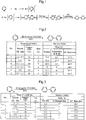
- FIG. 1 is a diagram illustrating a mechanism of a reaction for synthesis of 4,4'-bipyridine through a pyridine coupling reaction.
- an electron provided by sodium in SD is stabilized in DMI as a solvated electron. This allows the coupling reaction to progress efficiently.
- utilizing the electron donor according to this embodiment makes it possible to improve the yield of 4,4'-bipyridine, which is a coupling product, to 70% (as Na efficiency).
- a ratio DMI : pyridine : SD is 1.5 to 5 : 3 to 7 : 1, particularly 2.5 : 5 : 1, for example.
- the electron donor according to this embodiment can be utilized in reduction reactions such as dearomatization of an aromatic ring and hydrogenation of an alkene and an alkyne.
- the electron donor according to this embodiment can be used instead of Birch reduction in which strong reducing power of a solvated electron produced when an alkali metal such as sodium metal is added to liquid ammonia is utilized.
- reaction conditions of the reduction reaction such as the reaction temperature and the reaction time
- the reaction conditions can be set as appropriate depending on the types and amounts of a reduction target compound, which is a starting compound, and SD, and the like, in accordance with the above-mentioned reaction conditions of the coupling reaction. It is preferable to carry out the reaction under a condition that a ratio DMI : reduction target compound : SD is 2 to 8 : 1 : 2 to 8, particularly 2 to 6 : 1 : 2 to 6, for example.
- the electron donor according to this embodiment can be utilized as a polymerization initiator, particularly an initiator for anionic polymerization.
- a compound having an electrophilic substituent can be favorably used as a polymerization target monomer.
- Preferable examples thereof include monomers containing an unsaturated bond in the molecule.
- Specific examples thereof include, but are not limited to, vinyl-based monomers such as styrene and styrene derivatives (e.g., ⁇ -methylstyrene), diene-based monomers such as butadiene, and acrylic monomers such as acrylates.
- the monomers may be used alone or in combination of two or more.
- the polymerization reaction may be a homopolymerization reaction or a copolymerization reaction such as a block copolymerization reaction, a random copolymerization reaction, or a graft copolymerization reaction.
- the electron donor according to this embodiment can be particularly preferably used as a polymerization initiator for a styrene polymerization reaction, and polystyrene can be efficiently synthesized.
- the polymerization reaction progresses when the coupling target compound is brought into contact with the electron donor according to this embodiment.
- the reaction conditions of the polymerization reaction such as the reaction temperature and the reaction time
- the reaction conditions can be set as appropriate depending on the types and amounts of a monomer, which is a starting compound, and SD, and the like, in accordance with the above-mentioned reaction conditions of the coupling reaction.
- a solvated electron is produced by mixing SD and DMI, and thus the electron donor according to this embodiment can exhibit strong reducing power. Accordingly, utilizing the electron donor according to this embodiment makes it possible to stably and efficiently carry out a coupling reaction of aromatic compounds, heterocyclic compounds, or the like, oxidation-reduction reactions such as dearomatization of an aromatic ring and hydrogenation of an alkene and an alkyne, and to obtain a product such as a coupling product with a high yield. Furthermore, the electron donor according to this embodiment can be used as a polymerization initiator, and thus a polymerization reaction of aromatic vinyl-based monomers such as styrene derivatives can be stably and efficiently carried out.
- the electron donor according to this embodiment has major economical and industrial advantages. Moreover, sodium is very widely distributed throughout the earth, and therefore, this electron donor is excellent from the viewpoint of sustainability.
- the electron donor of this embodiment is a mixture of DMI and SD, and DMI is a stable solvent, a problem of removal of a proton and the like, which is a problem with amine-based solvents and the like, does not arise.
- the electron donor of this embodiment can serve as an efficient electron donor. This makes it possible to improve the yield of a product such as a coupling product.
- the electron donor according to this embodiment has strong reducing power, and can be utilized in various technical fields such as the synthesis of functional materials (e.g., medicines, agricultural chemicals, and electronic materials).
- functional materials e.g., medicines, agricultural chemicals, and electronic materials.
- JP 2017-71591 A filed by the inventors of the present invention which is one of the prior art documents listed above, discloses that bipyridine was synthesized through a pyridine coupling reaction in which a mixed solvent of tetrahydrofuran (which may be abbreviated as "THF” hereinafter) and ethylenediamine (which may be abbreviated as "EDA” hereinafter) was used as a solvent. Therefore, in this preliminary investigation example, the synthesis of 4,4'-bipyridine through a pyridine coupling reaction was investigated by changing the ratio between THF and EDA.
- THF tetrahydrofuran
- EDA ethylenediamine
- the ratios of 4,4'-bipyridine were 17.9% (Investigation No. 1), 26.3% (Investigation No. 2), 26.9% (Investigation No. 3), 24.9% (Investigation No. 4), 23.3% (Investigation No. 5), and 32.7% (Investigation No. 6).
- the ratios of 4,4'-bipyridine were as low as about 20 to 30% irrespective of the investigation conditions.
- 2-chloropyridine (0.5 mmol) was reacted with two molar equivalents of SD.
- the ratios of 4,4'-bipyridine were 26.8% (Investigation No. 1), 35.9% (Investigation No. 2), 36.8% (Investigation No. 3), 30.7% (Investigation No. 4), 36.2% (Investigation No. 5), 36.5% (Investigation No. 6). It can be understood that, in Investigation Nos. 1 to 6, the ratios of 4,4'-bipyridine were as low as about 30% to 40% irrespective of the investigation conditions as is the case of Preliminary Investigation Example 1.
- the ratio of 4,4'-bipyridine was about 30% to 40% irrespective of the investigation conditions, and the yield was insufficient.
- the addition amount of SD was as small as 1 molar equivalent, most (50% to 75%) of 2-chloropyridine remained unreacted.
- Na efficiency ⁇ 2 ⁇ production amount of 4,4'-bipyridine (mmol) / added SD (mmol) ⁇ ⁇ 100.
- the Na efficiencies were 6% (Investigation No. 1), 5% (Investigation No. 2), 7% (Investigation No. 3), 8% (Investigation No. 4), 15% (Investigation No. 5), and 19% (Investigation No. 6).
- the Na efficiency was about 5% to 20% irrespective of the investigation conditions.
- a problem of insufficient stirring due to an increase in viscosity arose, and 2,2'-bipyridine was produced as a by-product when hexane was added to suppress the increase in viscosity.
- the Na efficiencies were 14% (Investigation No. 7), 5% (Investigation No. 8), 19% (Investigation No. 9), 8% (Investigation No. 10), 11% (Investigation No. 11), 6% (Investigation No. 12), and 9% (Investigation No. 13).
- the pyridine balances were 54% (Investigation No. 7), 82% (Investigation No. 8), 35% (Investigation No. 9), 68% (Investigation No. 10), 56% (Investigation No. 11), 48% (Investigation No. 12), and 63% (Investigation No. 13).
- the concentrations of 4,4'-bipyridine and the unreacted remaining pyridine were measured, and the Na efficiency was calculated. A product was thus evaluated. Furthermore, the pyridine balance was calculated, and the evaluation was also performed from the viewpoint of a material balance. It should be noted that the Na efficiency and the pyridine balance were calculated as mentioned above.
- the Na efficiencies were 11% (Investigation No. 1), 13% (Investigation No. 2), 19% (Investigation No. 3), 41% (Investigation No. 4), and 15% (Investigation No. 5).
- 0.84 mmol of 4,4'-bipyridine was synthesized from 4.1 mmol of SD, and the Na efficiency was improved to about 41%.
- the pyridine balance was favorable.
- a further improvement in the Na efficiency was expected.
- Example 1 Coupling Reaction in Which Electron Donor Containing Mixture of DMI and SD is Used and Pyridine is Used as Substrate
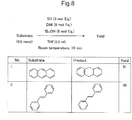
- the obtained product, 4a,9,9a, 10-tetrahydroanthracene was measured using 1 H NMR, and the yield was calculated.
- the yield was calculated as the ratio (%) of the actually obtained product to a product that should be theoretically produced from the substrate added to the reaction system. As a result, the yield of the product was 91%.
- the present invention can be favorably used in all technical fields in which an oxidation-reduction reaction using a solvated electron is utilized.
- the present invention can be favorably used particularly in a coupling reaction, dearomatization of an aromatic ring, hydrogenation of an alkene and an alkyne, a polymerization reaction, and the like, and is useful in fields in which functional materials such as medicines, agricultural chemicals, and electronic materials are manufactured.
Landscapes
- Chemical & Material Sciences (AREA)
- Organic Chemistry (AREA)
- Engineering & Computer Science (AREA)
- Materials Engineering (AREA)
- Chemical Kinetics & Catalysis (AREA)
- Pyridine Compounds (AREA)
- Catalysts (AREA)
- Organic Low-Molecular-Weight Compounds And Preparation Thereof (AREA)
Applications Claiming Priority (2)
| Application Number | Priority Date | Filing Date | Title |
|---|---|---|---|
| JP2017188320 | 2017-09-28 | ||
| PCT/JP2018/035873 WO2019065811A1 (fr) | 2017-09-28 | 2018-09-27 | Donneur d'électrons et procédé de synthèse de 4,4'-bipyridine dans lequel un donneur d'électrons est utilisé |
Publications (2)
| Publication Number | Publication Date |
|---|---|
| EP3689461A1 true EP3689461A1 (fr) | 2020-08-05 |
| EP3689461A4 EP3689461A4 (fr) | 2021-07-07 |
Family
ID=65902932
Family Applications (1)
| Application Number | Title | Priority Date | Filing Date |
|---|---|---|---|
| EP18862003.3A Withdrawn EP3689461A4 (fr) | 2017-09-28 | 2018-09-27 | Donneur d'électrons et procédé de synthèse de 4,4'-bipyridine dans lequel un donneur d'électrons est utilisé |
Country Status (4)
| Country | Link |
|---|---|
| US (1) | US11066367B2 (fr) |
| EP (1) | EP3689461A4 (fr) |
| JP (3) | JP6543011B1 (fr) |
| WO (1) | WO2019065811A1 (fr) |
Families Citing this family (5)
| Publication number | Priority date | Publication date | Assignee | Title |
|---|---|---|---|---|
| CN114920687B (zh) * | 2022-05-25 | 2024-04-09 | 南京红太阳生物化学有限责任公司 | 一种4,4′-联吡啶的制备方法 |
| CN115417809A (zh) * | 2022-09-05 | 2022-12-02 | 天津药明康德新药开发有限公司 | 一种4,4-二吡咯-2,2-联吡啶的制备方法 |
| EP4431355A1 (fr) * | 2023-03-17 | 2024-09-18 | Zenseact AB | Système de commande de frein de véhicule et procédé associé |
| CN119350229A (zh) * | 2024-09-27 | 2025-01-24 | 南京红太阳生物化学有限责任公司 | 一种4,4'-联吡啶的制备方法 |
| CN119954714A (zh) * | 2025-01-24 | 2025-05-09 | 南京红太阳生物化学有限责任公司 | 一种4,4'-联吡啶的制备方法 |
Family Cites Families (10)
| Publication number | Priority date | Publication date | Assignee | Title |
|---|---|---|---|---|
| GB957098A (en) | 1961-07-05 | 1964-05-06 | Ici Ltd | Improvements in the production of bipyridyls |
| DE2811803A1 (de) | 1978-03-15 | 1979-09-27 | Schering Ag | Verfahren zur herstellung von 4.4'-bipyridyl und dessen alkylderivaten |
| JPS5524154A (en) * | 1978-08-11 | 1980-02-21 | Kawaken Fine Chem Co Ltd | Preparation of 1,4-cyclohexadienes |
| JPH01211532A (ja) * | 1988-02-18 | 1989-08-24 | Nippon Zeon Co Ltd | アセチレン化合物の製造方法 |
| GB9315974D0 (en) * | 1993-08-02 | 1993-09-15 | Ass Octel | Fuel additives |
| IT1270656B (it) | 1994-10-13 | 1997-05-07 | Euron Spa | Composizione di carburante |
| CN1053894C (zh) | 1996-03-01 | 2000-06-28 | 涿州市桃园农药厂 | 4,4'-联吡啶的制造工艺 |
| JP6412038B2 (ja) * | 2015-10-08 | 2018-10-24 | 株式会社神鋼環境ソリューション | ビピリジン化合物の合成方法 |
| WO2017061581A1 (fr) * | 2015-10-08 | 2017-04-13 | 株式会社神鋼環境ソリューション | Procédé de synthèse d'un composé de bipyridine et procédé de fabrication d'un composé de pyridine |
| TW201726618A (zh) | 2015-10-08 | 2017-08-01 | Kobelco Eco-Solutions Co Ltd | 聯吡啶化合物之合成方法及吡啶化合物之製造方法 |
-
2018
- 2018-09-27 US US16/651,134 patent/US11066367B2/en not_active Expired - Fee Related
- 2018-09-27 WO PCT/JP2018/035873 patent/WO2019065811A1/fr not_active Ceased
- 2018-09-27 EP EP18862003.3A patent/EP3689461A4/fr not_active Withdrawn
- 2018-09-27 JP JP2019502820A patent/JP6543011B1/ja not_active Expired - Fee Related
-
2019
- 2019-06-13 JP JP2019110140A patent/JP6775806B2/ja active Active
- 2019-06-13 JP JP2019110141A patent/JP6683984B2/ja not_active Expired - Fee Related
Also Published As
| Publication number | Publication date |
|---|---|
| WO2019065811A1 (fr) | 2019-04-04 |
| JP6683984B2 (ja) | 2020-04-22 |
| JP6775806B2 (ja) | 2020-10-28 |
| JPWO2019065811A1 (ja) | 2019-11-14 |
| US20200270212A1 (en) | 2020-08-27 |
| EP3689461A4 (fr) | 2021-07-07 |
| JP6543011B1 (ja) | 2019-07-10 |
| JP2019194206A (ja) | 2019-11-07 |
| JP2019214042A (ja) | 2019-12-19 |
| US11066367B2 (en) | 2021-07-20 |
Similar Documents
| Publication | Publication Date | Title |
|---|---|---|
| US11066367B2 (en) | Electron donor, and method for synthesizing 4, 4′-bipyridine using electron donor | |
| De et al. | Recent advances in the use of sodium dispersion for organic synthesis | |
| Chuentragool et al. | Calcium carbide as a cost-effective starting material for symmetrical diarylethynes via Pd-catalyzed coupling reaction | |
| Luz et al. | Fe (III)-Catalyzed direct C3 chalcogenylation of indole: The effect of iodide ions | |
| Iakobson et al. | Reductive activation of sulfur hexafluoride with TEMPOLi: Addition of the pentafluorosulfanyl group and TEMPO to terminal alkenes | |
| Chang et al. | Highly selective fluorescent sensing of Cu2+ ion by an arylisoxazole modified calix [4] arene | |
| Phan et al. | The arylation of aldehydes with arylboronic acids using metal-organic framework Ni (HBTC) BPY as an efficient heterogeneous catalyst | |
| Hu et al. | Triptycene‐Derived Oxacalixarenes as New Wheels for the Synthesis of [2] Rotaxanes: Acid–Base‐and Metal‐Ion‐Switchable Complexation Processes | |
| Yamada et al. | Zincation of styrylsulfonium salts | |
| US10544098B2 (en) | Method for synthesizing bipyridine compound and method for manufacturing pyridine compound | |
| Griwatz et al. | Continuous‐flow synthesis of cycloparaphenylene building blocks on a large scale | |
| Tamamoto et al. | Practical tetrafluoroethylene fragment installation through a coupling reaction of (1, 1, 2, 2-tetrafluorobut-3-en-1-yl) zinc bromide with various electrophiles | |
| CN112279772B (zh) | 一种α,α-二氘代胺类化合物、氘代药物及其制备方法 | |
| CN110449183A (zh) | 离子型铁(iii)配合物在制备烯丙基胺类化合物中的应用 | |
| Hayashi et al. | From propargylic biscarbonate to diaryl [n] dendralenes | |
| Xu et al. | Palladium Couplings on Metallocalix [4] arenes: A Efficient Synthesis of New Functionalized Cavities | |
| Li et al. | The synthesis of novel polysiloxanes with pendant hand-basket type calix [6] crowns and their transporting properties for metal ions in a liquid membrane | |
| CN112479898A (zh) | 一种二价锰催化的芳胺邻位烯化反应方法 | |
| Zhou et al. | Photoredox-catalyzed chloroalkylation and dimerization of styrenes with CF3CCl3 and CCl4 | |
| Kumar et al. | One-step synthesis of a singly bridged biscalix [6] arene and evaluation of its alkali metal recognition properties | |
| WO2018139470A1 (fr) | Procédé de synthèse d'un composé de 2,2,6,6-tétraméthylpipéridide de sodium | |
| JP2022122443A (ja) | 電子供与体および還元剤 | |
| JP6403083B2 (ja) | ナトリウム2,2,6,6−テトラメチルピペリジド類の合成方法 | |
| Edelbach et al. | An Expedient Synthesis of 2, 4, 6-Tris (trifluoromethyl) aniline | |
| WO2024002783A1 (fr) | Composé de thianthrénium bicyclopentyle, son procédé de préparation et son utilisation |
Legal Events
| Date | Code | Title | Description |
|---|---|---|---|
| STAA | Information on the status of an ep patent application or granted ep patent |
Free format text: STATUS: THE INTERNATIONAL PUBLICATION HAS BEEN MADE |
|
| PUAI | Public reference made under article 153(3) epc to a published international application that has entered the european phase |
Free format text: ORIGINAL CODE: 0009012 |
|
| STAA | Information on the status of an ep patent application or granted ep patent |
Free format text: STATUS: REQUEST FOR EXAMINATION WAS MADE |
|
| 17P | Request for examination filed |
Effective date: 20200415 |
|
| AK | Designated contracting states |
Kind code of ref document: A1 Designated state(s): AL AT BE BG CH CY CZ DE DK EE ES FI FR GB GR HR HU IE IS IT LI LT LU LV MC MK MT NL NO PL PT RO RS SE SI SK SM TR |
|
| AX | Request for extension of the european patent |
Extension state: BA ME |
|
| DAV | Request for validation of the european patent (deleted) | ||
| DAX | Request for extension of the european patent (deleted) | ||
| REG | Reference to a national code |
Ref country code: DE Ref legal event code: R079 Free format text: PREVIOUS MAIN CLASS: B01J0035120000 Ipc: C07D0213220000 |
|
| A4 | Supplementary search report drawn up and despatched |
Effective date: 20210604 |
|
| RIC1 | Information provided on ipc code assigned before grant |
Ipc: C07D 213/22 20060101AFI20210528BHEP Ipc: B01J 35/12 20060101ALI20210528BHEP Ipc: B01J 23/04 20060101ALI20210528BHEP Ipc: B01J 31/02 20060101ALI20210528BHEP |
|
| RAP1 | Party data changed (applicant data changed or rights of an application transferred) |
Owner name: KOBELCO ECO-SOLUTIONS CO., LTD |
|
| STAA | Information on the status of an ep patent application or granted ep patent |
Free format text: STATUS: THE APPLICATION IS DEEMED TO BE WITHDRAWN |
|
| 18D | Application deemed to be withdrawn |
Effective date: 20230401 |