EP3718548B1 - Dispersion solide - Google Patents
Dispersion solide Download PDFInfo
- Publication number
- EP3718548B1 EP3718548B1 EP18882399.1A EP18882399A EP3718548B1 EP 3718548 B1 EP3718548 B1 EP 3718548B1 EP 18882399 A EP18882399 A EP 18882399A EP 3718548 B1 EP3718548 B1 EP 3718548B1
- Authority
- EP
- European Patent Office
- Prior art keywords
- group
- solid dispersion
- hypromellose
- pharmaceutically acceptable
- dispersion according
- Prior art date
- Legal status (The legal status is an assumption and is not a legal conclusion. Google has not performed a legal analysis and makes no representation as to the accuracy of the status listed.)
- Active
Links
Images



Classifications
-
- A—HUMAN NECESSITIES
- A61—MEDICAL OR VETERINARY SCIENCE; HYGIENE
- A61K—PREPARATIONS FOR MEDICAL, DENTAL OR TOILETRY PURPOSES
- A61K9/00—Medicinal preparations characterised by special physical form
- A61K9/14—Particulate form, e.g. powders, Processes for size reducing of pure drugs or the resulting products, Pure drug nanoparticles
- A61K9/141—Intimate drug-carrier mixtures characterised by the carrier, e.g. ordered mixtures, adsorbates, solid solutions, eutectica, co-dried, co-solubilised, co-kneaded, co-milled, co-ground products, co-precipitates, co-evaporates, co-extrudates, co-melts; Drug nanoparticles with adsorbed surface modifiers
- A61K9/146—Intimate drug-carrier mixtures characterised by the carrier, e.g. ordered mixtures, adsorbates, solid solutions, eutectica, co-dried, co-solubilised, co-kneaded, co-milled, co-ground products, co-precipitates, co-evaporates, co-extrudates, co-melts; Drug nanoparticles with adsorbed surface modifiers with organic macromolecular compounds
-
- A—HUMAN NECESSITIES
- A61—MEDICAL OR VETERINARY SCIENCE; HYGIENE
- A61K—PREPARATIONS FOR MEDICAL, DENTAL OR TOILETRY PURPOSES
- A61K9/00—Medicinal preparations characterised by special physical form
- A61K9/14—Particulate form, e.g. powders, Processes for size reducing of pure drugs or the resulting products, Pure drug nanoparticles
- A61K9/16—Agglomerates; Granulates; Microbeadlets ; Microspheres; Pellets; Solid products obtained by spray drying, spray freeze drying, spray congealing,(multiple) emulsion solvent evaporation or extraction
- A61K9/1605—Excipients; Inactive ingredients
- A61K9/1629—Organic macromolecular compounds
- A61K9/1652—Polysaccharides, e.g. alginate, cellulose derivatives; Cyclodextrin
-
- A—HUMAN NECESSITIES
- A61—MEDICAL OR VETERINARY SCIENCE; HYGIENE
- A61K—PREPARATIONS FOR MEDICAL, DENTAL OR TOILETRY PURPOSES
- A61K31/00—Medicinal preparations containing organic active ingredients
- A61K31/33—Heterocyclic compounds
- A61K31/395—Heterocyclic compounds having nitrogen as a ring hetero atom, e.g. guanethidine or rifamycins
- A61K31/495—Heterocyclic compounds having nitrogen as a ring hetero atom, e.g. guanethidine or rifamycins having six-membered rings with two or more nitrogen atoms as the only ring heteroatoms, e.g. piperazine or tetrazines
- A61K31/505—Pyrimidines; Hydrogenated pyrimidines, e.g. trimethoprim
- A61K31/519—Pyrimidines; Hydrogenated pyrimidines, e.g. trimethoprim ortho- or peri-condensed with heterocyclic rings
-
- A—HUMAN NECESSITIES
- A61—MEDICAL OR VETERINARY SCIENCE; HYGIENE
- A61K—PREPARATIONS FOR MEDICAL, DENTAL OR TOILETRY PURPOSES
- A61K47/00—Medicinal preparations characterised by the non-active ingredients used, e.g. carriers or inert additives; Targeting or modifying agents chemically bound to the active ingredient
- A61K47/30—Macromolecular organic or inorganic compounds, e.g. inorganic polyphosphates
- A61K47/36—Polysaccharides; Derivatives thereof, e.g. gums, starch, alginate, dextrin, hyaluronic acid, chitosan, inulin, agar or pectin
- A61K47/38—Cellulose; Derivatives thereof
-
- A—HUMAN NECESSITIES
- A61—MEDICAL OR VETERINARY SCIENCE; HYGIENE
- A61K—PREPARATIONS FOR MEDICAL, DENTAL OR TOILETRY PURPOSES
- A61K9/00—Medicinal preparations characterised by special physical form
- A61K9/14—Particulate form, e.g. powders, Processes for size reducing of pure drugs or the resulting products, Pure drug nanoparticles
- A61K9/16—Agglomerates; Granulates; Microbeadlets ; Microspheres; Pellets; Solid products obtained by spray drying, spray freeze drying, spray congealing,(multiple) emulsion solvent evaporation or extraction
- A61K9/1605—Excipients; Inactive ingredients
- A61K9/1617—Organic compounds, e.g. phospholipids, fats
- A61K9/1623—Sugars or sugar alcohols, e.g. lactose; Derivatives thereof; Homeopathic globules
-
- A—HUMAN NECESSITIES
- A61—MEDICAL OR VETERINARY SCIENCE; HYGIENE
- A61K—PREPARATIONS FOR MEDICAL, DENTAL OR TOILETRY PURPOSES
- A61K9/00—Medicinal preparations characterised by special physical form
- A61K9/14—Particulate form, e.g. powders, Processes for size reducing of pure drugs or the resulting products, Pure drug nanoparticles
- A61K9/19—Particulate form, e.g. powders, Processes for size reducing of pure drugs or the resulting products, Pure drug nanoparticles lyophilised, i.e. freeze-dried, solutions or dispersions
-
- A—HUMAN NECESSITIES
- A61—MEDICAL OR VETERINARY SCIENCE; HYGIENE
- A61K—PREPARATIONS FOR MEDICAL, DENTAL OR TOILETRY PURPOSES
- A61K9/00—Medicinal preparations characterised by special physical form
- A61K9/20—Pills, tablets, discs, rods
- A61K9/2004—Excipients; Inactive ingredients
- A61K9/2022—Organic macromolecular compounds
- A61K9/205—Polysaccharides, e.g. alginate, gums; Cyclodextrin
- A61K9/2059—Starch, including chemically or physically modified derivatives; Amylose; Amylopectin; Dextrin
-
- A—HUMAN NECESSITIES
- A61—MEDICAL OR VETERINARY SCIENCE; HYGIENE
- A61K—PREPARATIONS FOR MEDICAL, DENTAL OR TOILETRY PURPOSES
- A61K9/00—Medicinal preparations characterised by special physical form
- A61K9/48—Preparations in capsules, e.g. of gelatin, of chocolate
- A61K9/4841—Filling excipients; Inactive ingredients
- A61K9/4858—Organic compounds
-
- A—HUMAN NECESSITIES
- A61—MEDICAL OR VETERINARY SCIENCE; HYGIENE
- A61P—SPECIFIC THERAPEUTIC ACTIVITY OF CHEMICAL COMPOUNDS OR MEDICINAL PREPARATIONS
- A61P13/00—Drugs for disorders of the urinary system
- A61P13/12—Drugs for disorders of the urinary system of the kidneys
-
- A—HUMAN NECESSITIES
- A61—MEDICAL OR VETERINARY SCIENCE; HYGIENE
- A61P—SPECIFIC THERAPEUTIC ACTIVITY OF CHEMICAL COMPOUNDS OR MEDICINAL PREPARATIONS
- A61P19/00—Drugs for skeletal disorders
- A61P19/06—Antigout agents, e.g. antihyperuricemic or uricosuric agents
-
- A—HUMAN NECESSITIES
- A61—MEDICAL OR VETERINARY SCIENCE; HYGIENE
- A61P—SPECIFIC THERAPEUTIC ACTIVITY OF CHEMICAL COMPOUNDS OR MEDICINAL PREPARATIONS
- A61P43/00—Drugs for specific purposes, not provided for in groups A61P1/00-A61P41/00
-
- C—CHEMISTRY; METALLURGY
- C07—ORGANIC CHEMISTRY
- C07D—HETEROCYCLIC COMPOUNDS
- C07D513/00—Heterocyclic compounds containing in the condensed system at least one hetero ring having nitrogen and sulfur atoms as the only ring hetero atoms, not provided for in groups C07D463/00, C07D477/00 or C07D499/00 - C07D507/00
- C07D513/02—Heterocyclic compounds containing in the condensed system at least one hetero ring having nitrogen and sulfur atoms as the only ring hetero atoms, not provided for in groups C07D463/00, C07D477/00 or C07D499/00 - C07D507/00 in which the condensed system contains two hetero rings
- C07D513/04—Ortho-condensed systems
Definitions
- the present invention relates to a solid dispersion containing a compound having a high xanthine oxidase inhibitory activity or a pharmaceutically acceptable salt thereof, and a hypromellose derivative.
- Hyperuricemia causes gout, kidney failure, and the like, and is considered to be a risk factor for coronary artery disease. It has been pointed out that hyperuricemia has a close relationship with the onset of lifestyle-related diseases such as hypertension. Therefore, the treatment of hyperuricemia includes not only treatment of gout but also prevention of various lifestyle-related diseases associated with aging.
- xanthine oxidase inhibitors such as allopurinol and febuxostat are mainly used for the treatment of hyperuricemia.
- a compound described in PCT International Publication No. WO 2005/121153 pamphlet (Patent Literature 1) has been reported as a compound having a similar mechanism.
- EP3263109A1 discloses formulations xanthine oxidase inhibitors for treating dementia.
- Patent Literature 1 The inventors made a study on a compound having a high xanthine oxidase inhibitory activity disclosed in Patent Literature 1 and found that there was still room for improvement in in vivo absorbability when this compound was orally administered to a living body.
- Non-Patent Literature 1 a method of micronizing a compound to a nano level is disclosed.
- Patent Literature 2 a method of preparing a solid dispersion in which a xanthine derivative is dispersed in a methacrylic acid copolymer is disclosed.
- Patent Literature 3 a method of preparing a solid dispersion containing N 4-(4-([1,2,4]triazolo[1,5-a]pyridin-7-yloxy)-3-methylphenyl)- N 6-(4,4-dimethyl-4,5-dihydrooxazol-2-yl)quinazoline-4,6-diamine and a dispersion polymer is disclosed.
- Non-Patent Literature 1 Evaluation of the physical properties of poorly water-soluble drugs and new development of formulation designs, CMC Publishing, 2010, pages 141 to 150
- Objects of the present invention are to improve in vivo absorbability of the compound disclosed in Patent Literature 1 or a pharmaceutically acceptable salt thereof, and provide a pharmaceutical composition containing them as an active ingredient.
- Patent Literature 1 The inventors conducted various studies regarding improvement in absorbability of the compound disclosed in Patent Literature 1 or a pharmaceutically acceptable salt thereof, and as a result found that when a solid dispersion with a specific polymer was formed, in vivo absorbability and storage stability were improved, thus completing the present invention.
- the present invention provides the following aspects.
- the solid dispersion of the present invention is useful as a therapeutic agent for hyperuricemia and the like because it exhibits excellent in vivo absorbability and storage stability.
- R 1 is an unsubstituted phenyl group or a phenyl group substituted with a substituent.
- Examples of "an alkyl group having 1 to 8 carbon atoms" as a substituent in the phenyl group represented by R 1 include a methyl group, an ethyl group, a propyl group, an isopropyl group, a butyl group, an isobutyl group, a tert -butyl group, a pentyl group, and a hexyl group, and a methyl group or an ethyl group is preferable.
- Examples of "an alkyl group having 1 to 8 carbon atoms substituted with a halogen atom" as a substituent in the phenyl group represented by R 1 include a fluoromethyl group, a trifluoromethyl group, a 1,1-difluoroethyl group, and a pentafluoroethyl group, and a fluoromethyl group or a trifluoromethyl group is preferable.
- Examples of "an alkoxy group having 1 to 8 carbon atoms" as a substituent in the phenyl group represented by R 1 include a methoxy group, an ethoxy group, a propoxy group, an iso -propoxy group, a butoxy group, an iso -butoxy group, and a tert -butoxy group, and a methoxy group is preferable.
- Examples of "an alkoxycarbonyl group having 2 to 8 carbon atoms" as a substituent in the phenyl group represented by R 1 include a methoxycarbonyl group, an ethoxycarbonyl group, a propoxycarbonyl group, a butoxycarbonyl group, and a tert -butoxycarbonyl group, and a methoxycarbonyl group or an ethoxycarbonyl group is preferable.
- halogen atom as a substituent in the phenyl group represented by R 1 include a fluorine atom, a chlorine atom, a bromine atom, and an iodine atom, and a fluorine atom or a chlorine atom is preferable.
- R 1 an unsubstituted phenyl group is preferable.
- R 2 is a cyano group or a nitro group, and a cyano group is preferable.
- X is an oxygen atom or -S(O) n -, and an oxygen atom is preferable.
- Y is an oxygen atom or a sulfur atom, and a sulfur atom is preferable.
- Examples of the pharmaceutically acceptable salt of the compound represented by General Formula (I) include an alkali metal salt such as a sodium salt, a potassium salt, and a lithium salt, and a potassium salt is preferable.
- the compound of General Formula (I) used in a solid dispersion which is one embodiment of the present invention can be obtained by, for example, a synthesis method described in Patent Literature 1.
- the pharmaceutically acceptable salt may be formed from Compound 1 to Compound 14.
- Compound 3 to Compound 5 Compound 8 to Compound 10, Compound 13 to Compound 14, or a pharmaceutically acceptable salt of these compounds are preferable.
- a hypromellose derivative represents hypromellose itself (may be abbreviated as HPMC), and an organic acid ester of hypromellose.
- Hypromellose is called hydroxypropyl methylcellulose, and is a mixed methyl group and hydroxypropyl group ether of cellulose.
- Examples of an organic acid forming an ester with hypromellose include acetic acid, succinic acid, and phthalic acid.
- Hypromellose according to the present invention may form an ester with one, two or more organic acids selected from among these organic acids.
- hypromellose derivative used in the present invention examples include hypromellose, hypromellose acetate succinate (may be abbreviated as HPMCAS), and hypromellose phthalate (may be abbreviated as HPMCP), and hypromellose acetate succinate or a hypromellose phthalate is preferable.
- HPMCAS hypromellose acetate succinate
- HPMCP hypromellose phthalate
- hypromellose acetate succinate or a hypromellose phthalate is preferable.
- Examples of the hypromellose according to the present invention include hypromellose in which a substitution proportion per monomer unit is 28 to 30 % for a methoxy group and 7 to 12 % for a hydroxypropoxy group.
- Examples of the hypromellose acetate succinate according to the present invention include hypromellose acetate succinates in which a substitution proportion per monomer unit is 20 to 26 % and preferably 21 to 25 % for a methoxy group, is 5 to 10 % and preferably 5 to 9 % for a hydroxypropoxyl group, is 5 to 14 % and preferably 7 to 11 % for an acetyl group, and is 4 to 18 % and preferably 10 to 14% for a succinoyl group.
- Examples of the hypromellose phthalate according to the present invention include hypromellose phthalate in which a substitution proportion per monomer unit is 18 to 24 % for a methoxy group, 5 to 10 % for a hydroxypropoxy group, and 21 to 35 % for a carboxybenzoyl group.
- a content of a methoxy group, a hydroxypropoxy group, an acetyl group, a succinoyl group, a carboxybenzoyl group, or the like in the hypromellose derivative can be measured by a method according to a method of measuring a degree of substitution of hypromellose, hypromellose acetate succinate and hypromellose phthalate defined in the 17 th revised Japanese Pharmacopoeia.
- a viscosity of the hypromellose derivative according to the present invention is not particularly limited as long as the effect of the present invention is obtained, for example, 2.4 to 204 mPa ⁇ s, and preferably 2.4 to 3.6 mPa ⁇ s can be mentioned.
- a viscosity of the hypromellose derivative according to the present invention can be measured by a method according to a method of measuring a viscosity of hypromellose, hypromellose acetate succinate, and hypromellose phthalate defined in the 17 th revised Japanese Pharmacopoeia.
- a weight ratio between the compound represented by General Formula (I) or a pharmaceutically acceptable salt thereof and the hypromellose derivative can be appropriately adjusted in a range of 1 : 0.1 to 1 : 25.
- the weight ratio between the compound represented by General Formula (I) or a pharmaceutically acceptable salt thereof and the hypromellose derivative is 1 : 0.1 to 1 : 10 in one aspect, 1 : 0.1 to 1 : 4 in another aspect, 1 : 1 to 1 : 10 in still another aspect, 1 : 2 to 1 : 5 in yet another aspect, and 1 : 3 to 1 : 4 in yet another aspect.
- solid dispersion refers to a solid system containing at least two components, and a solid composition forming a system in which at least two components are uniformly mixed together.
- at least one component is generally dispersed throughout the system.
- one aspect of the "solid dispersion" of the present invention is a solid composition which contains the compound represented by General Formula (I) or a pharmaceutically acceptable salt thereof and the hypromellose derivative, and forms a system in which the compound represented by General Formula (I) or a pharmaceutically acceptable salt thereof and the hypromellose derivative are uniformly mixed together.
- solid dispersion is a solid composition forming a system in which the compound represented by General Formula (I) or a pharmaceutically acceptable salt thereof are dispersed throughout the hypromellose derivative.
- the compound represented by General Formula (I) or a pharmaceutically acceptable salt thereof forms a dispersed phase as a dispersoid
- the hypromellose derivative forms a continuous phase as a dispersion medium.
- the "solid dispersion" of the present invention is composed of the compound represented by General Formula (I) or a pharmaceutically acceptable salt thereof, the hypromellose derivative, and optionally a pharmaceutically acceptable additive.
- the pharmaceutically acceptable additive optionally contained include the additive selected from among a surfactant, a pH-adjusting agent, sugars and a plasticizer. These can be appropriately combined and added to a solid dispersion of the present invention in required amounts.
- surfactant examples include a cationic surfactant such as sodium bis -(2-ethylhexyl)sulfosuccinate (sodium docusate), and an alkyltrimethylammonium bromide (for example, cetyltrimethylammonium bromide (cetrimide)), an anionic surfactant such as sodium lauryl sulfate, and a nonionic surfactant such as polyoxyethylene sorbitan (for example, Tween (Tween TM 20, 40, 60, 80 or 85)), and a sorbitan fatty acid ester (for example, Span TM 20, 40, 60, 80, or 85).
- a cationic surfactant such as sodium bis -(2-ethylhexyl)sulfosuccinate (sodium docusate), and an alkyltrimethylammonium bromide (for example, cetyltrimethylammonium bromide (cetrimide)
- an anionic surfactant such
- pH-adjusting agent examples include an acid such as succinic acid, maleic acid, tartaric acid, citric acid, and aspartic acid, and an alkali such as sodium hydroxide, magnesium oxide, silicon dioxide, sodium hydrogen carbonate, and L-arginine.
- sugar examples include lactose, white sugar, glucose, fructose, sucrose, maltose (malt sugar), reduced maltose, maltitol, mannitol, erythritol, sorbitol, and xylitol.
- plasticizer examples include triethyl citrate, polyethylene glycol, and triacetin.
- the "solid dispersion" of the present invention may not contain a pharmaceutically acceptable additive.
- a pharmaceutically acceptable additive for example, a weight ratio between the compound represented by General Formula (I) or a pharmaceutically acceptable salt thereof and the surfactant is 1 : 0.01 to 1 : 2, more preferably 1 : 0.02 to 1 : 1.5, and most preferably 1 : 0.03 to 1 : 1.2
- a weight ratio between the compound represented by General Formula (I) or a pharmaceutically acceptable salt thereof and the pH-adjusting agent is 1 : 0.01 to 1 : 2, more preferably 1 : 0.02 to 1 : 1.5, and most preferably 1 : 0.03 to 1 : 1.2
- a weight ratio between the compound represented by General Formula (I) or a pharmaceutically acceptable salt thereof and the sugar is 1 : 0.02 to 1 : 20, and more preferably 1 : 0.15 to 1 : 10
- a weight ratio between the compound represented by General Formula (I) or a pharmaceutically acceptable salt thereof and the plasticizer is 1 : 0.
- the pharmaceutically acceptable additive may constitute a dispersed phase or a continuous phase of the solid dispersion.
- solid dispersion it is preferable that a part or all of the compound represented by General Formula (I) or a pharmaceutically acceptable salt thereof be amorphous.
- amorphous means that a substance has a form having a short-distance order between atoms or molecules of the compound represented by General Formula (I) or a pharmaceutically acceptable salt thereof and having no long-distance order such as in crystals.
- an amorphous state can be identified according to a halo peak shown in X-ray diffraction.
- an amorphous content is preferably 50 weight% or more, more preferably 80 weight% or more, still more preferably 90 weight% or more, yet more preferably 95 weight% or more, yet more preferably 98 weight% or more, and an amorphous content may be 100 weight%.
- the amorphous content can be obtained by an X-ray diffraction method.
- the solid dispersion of the present invention can be produced by a method known per se.
- a mixing and grinding method a mechano-chemical method
- a solvent method a solvent method
- a melting method a hot melt extrusion method, and the like
- a hot melt extrusion method a hot melt extrusion method, and the like
- the compound represented by General Formula (I) or a pharmaceutically acceptable salt thereof and the hypromellose derivative, and optionally a pharmaceutically acceptable additive are mixed together, and a conventional method using a mixer and a grinding machine such as a ball mill and a hammer mill, can be then performed.
- the solvent method refers to a method in which the compound represented by General Formula (I) or a pharmaceutically acceptable salt thereof and the hypromellose derivative, and optionally a pharmaceutically acceptable additive are dissolved or suspended in a solvent (an organic solvent, water or a mixed solution thereof), and the solvent is then removed to precipitate a solid dispersion or a solid dispersion is precipitated in the solvent.
- a solvent an organic solvent, water or a mixed solution thereof
- the solvent can be removed by a method such as spray methods (can be classified into a fluid bed method, a blowing drying method (also called a spray dry method), a rolling layer method, a stirring method, a supercritical method or the like according to an embodiment), a filtration method, an evaporation method, a freeze-drying method, or the like.
- spray methods can be classified into a fluid bed method, a blowing drying method (also called a spray dry method), a rolling layer method, a stirring method, a supercritical method or the like according to an embodiment), a filtration method, an evaporation method, a freeze-drying method, or the like.
- a spray method is preferable, and a spray-drying method is particularly preferable among these methods.
- a pharmaceutically acceptable solvent is preferable.
- ethanol methanol, 2-propanol, acetone, 2-butanone, methyl isobutyl ketone, tetrahydrofuran (THF), tetrahydropyran, 1,4-dioxane, diethyl ether, toluene, acetonitrile, methylene chloride, chloroform, methyl acetate, ethyl acetate, butyl acetate, acetic acid, formic acid, N , N -dimethylformamide, N , N -dimethylacetamide, and dimethyl sulfoxide may be used.
- the compound represented by General Formula (I) or a pharmaceutically acceptable salt thereof and a pharmaceutically acceptable additive optionally added dissolve in such a solvent.
- the solid dispersion can be produced by a method known per se .
- the compound represented by General Formula (I) or a pharmaceutically acceptable salt thereof and the hypromellose derivative, and optionally a pharmaceutically acceptable additive may be added to the solvent to prepare a solution or suspension, the solution or suspension may be formed into a fine mist by centrifugal spraying using a rotating disk or pressure spraying using a pressure nozzle, and this may be sprayed into a drying medium (heated air or nitrogen gas), and thereby a solid dispersion can be obtained as a powdered dried component.
- a drying medium hereinated air or nitrogen gas
- the temperature of the drying medium is, for example, 50 to 120 °C, and preferably 50 to 90 °C.
- the drying medium may be caused to flow in a certain direction, and can be caused to flow as an air flow, for example, at 0.2 to 0.6 m 3 /min, and preferably 0.3 to 0.5 m 3 /min.
- the precipitation method in the solvent methods is preferably a coprecipitation method, and the compound represented by General Formula (I) or a pharmaceutically acceptable salt thereof and the hypromellose derivative, and optionally a pharmaceutically acceptable additive are dissolved or suspended in a solvent, the dissolved compound (I) or the pharmaceutically acceptable salt, and the hypromellose derivative, and the pharmaceutically acceptable additive optionally added are precipitated by lowering the dissolution concentration by addition of an insoluble solvent, lowering a temperature, or the like, and thereby a solid dispersion can be obtained.
- the compound represented by General Formula (I) or a pharmaceutically acceptable salt thereof and the hypromellose derivative, and optionally a pharmaceutically acceptable additive are dissolved or suspended in a solvent, the dissolved compound (I) or the pharmaceutically acceptable salt, and the hypromellose derivative, and the pharmaceutically acceptable additive optionally added are precipitated by lowering the dissolution concentration by addition of an insoluble solvent, lowering a temperature, or the like, and thereby a solid dispersion
- the melting method is a method in which the compound represented by General Formula (I) or a pharmaceutically acceptable salt thereof and the hypromellose derivative, and optionally a pharmaceutically acceptable additive are heated to the melting point or the softening point of hypromellose derivatives or higher and stirred, and thus the compound represented by General Formula (I) or the pharmaceutically acceptable salt thereof and the pharmaceutically acceptable additive optionally added are dissolved or dispersed in the hypromellose derivative and then rapidly cooled.
- an additive for example, a plasticizer such as triethyl citrate, polyethylene glycol, and triacetin, and a surfactant can be additionally added.
- the production can be performed using a stirring granulator having a heating device.
- the hot melt extrusion method is a method in which the compound represented by General Formula (I) or a pharmaceutically acceptable salt thereof and the hypromellose derivative, and optionally a pharmaceutically acceptable additive are heated and mixed under pressure using an extruder having a heating device, for example, a 2-screw extruder, and thereby a solid dispersion is obtained.
- the obtained plastic-like solid dispersion can be ground using a grinding machine to obtain a solid dispersion powder.
- the solid dispersion of the present invention produced according to the above production method can be formed into solid dispersion particles having a certain particle size by a known method, and the solid dispersion particles can be directly used as a powder or a granular agent.
- a pharmaceutical composition containing the solid dispersion of the present invention contains the solid dispersion and a pharmaceutically acceptable additive.
- a pharmaceutically acceptable additive for example, a binding agent, a disintegrating agent, a diluting agent, a lubricant, and the like are appropriately combined and added in required amounts, and thereby a pharmaceutical composition of the present invention can be produced.
- binding agent examples include methyl cellulose, hydroxyethyl cellulose, hydroxypropyl cellulose, hypromellose, polyvinyl pyrrolidone, gelatin, agar, alginic acid, sodium alginate, partially saponified polyvinyl alcohol, pullulan, partly pregelatinized starch, dextrins, xanthan gum, and gum arabic powder, and hydroxypropyl cellulose, hypromellose, or polyvinyl pyrrolidone is preferable. These may be used alone or two or more types thereof may be used in combination.
- Examples of the disintegrating agent that can be used in the pharmaceutical composition of the present invention include crystalline cellulose, carboxymethyl cellulose (carmellose), croscarmellose sodium, calcium carboxymethyl cellulose, low-substituted hydroxypropyl cellulose, crospovidone, hydroxypropyl starch, starch, partly pregelatinized starch, and starch sodium glycolate. Croscarmellose sodium, starch sodium glycolate, and crospovidone are preferable, and crospovidone is more preferable.
- An amount of the disintegrating agent added is preferably 5 to 30 weight% and more preferably 5 to 15 weight% with respect to a total weight of the pharmaceutical composition.
- an amount of the disintegrating agent added is preferably 1 to 10 weight% and more preferably 2 to 6 weight% in granules for tableting.
- the diluting agent that can be used in the pharmaceutical composition of the present invention can be added to a kneaded product, a granulated product or after the granulation.
- the diluting agent include celluloses such as crystalline cellulose, ethyl cellulose, hydroxypropyl cellulose, low-substituted hydroxypropyl cellulose, hydroxypropyl methylcellulose (hypromellose, etc .), starches such as corn starch, potato starch, wheat starch, rice starch, partly pregelatinized starch, and hydroxypropyl starch, sugars such as glucose, lactose, white sugar, refined white sugar, powdered sugar, trehalose, dextran, and dextrins, sugar alcohols such as D-mannitol, xylitol, sorbitol, and erythritol, glycerin fatty acid esters, inorganic salts such as magnesium aluminometasilicate, synthetic hydrotal
- Examples of the lubricant that can be used in the pharmaceutical composition of the present invention include stearic acid, sodium stearyl fumarate, magnesium stearate, calcium stearate, sucrose fatty acid ester, polyethylene glycol, light anhydrous silicic acid, hardened oils, glycerin fatty acid esters, and a talc.
- stearic acid sodium stearyl fumarate, magnesium stearate, calcium stearate, and sucrose fatty acid esters are preferable. These may be used alone or two or more types thereof may be used in combination.
- the pharmaceutical composition of the present invention is subjected to a formulation process known per se and formulated into and provided as a solid preparation such as a tablet, a capsule, a granular agent, a powder, and a trochiscus or a liquid preparation such as an injection product.
- a formulation process known per se and formulated into and provided as a solid preparation such as a tablet, a capsule, a granular agent, a powder, and a trochiscus or a liquid preparation such as an injection product.
- the pharmaceutical composition of the present invention may be provided as a solid preparation, put into the injection product for use, and used.
- the present invention has an effect of preventing tableting failures, it is particularly preferable when the solid preparation has a tablet form.
- a solid preparation can be optionally coated.
- a content of the solid dispersion in the pharmaceutical composition of the present invention is 10 to 95 weight%, preferably 30 to 90 weight%, and more preferably 60 to 85 weight% with respect to a total weight of the pharmaceutical composition.
- the solid dispersion of the present invention or the pharmaceutical composition containing the solid dispersion can be orally or parenterally administered to humans or other mammals, and is useful as a therapeutic agent for hyperuricemia or gout.
- treatment in this specification may include the concept of prophylactic or prophylactic use in addition to treatment.
- One aspect of the present invention is a method of treating hyperuricemia or gout including administering a therapeutically effective amount of the solid dispersion of the present invention or the pharmaceutical composition containing the solid dispersion to a subject for which a hyperuricemia or gout treatment is necessary.
- Another aspect of the present invention is the solid dispersion of the present invention or the pharmaceutical composition containing the solid dispersion for use in treatment of hyperuricemia or gout.
- Still another aspect of the present invention is use of the solid dispersion of the present invention for producing a therapeutic agent for hyperuricemia or gout.
- a dose of the solid dispersion of the present invention or the pharmaceutical composition containing the solid dispersion can be adjusted according to a content of the compound represented by General Formula (I) or a pharmaceutically acceptable salt thereof in the solid dispersion of the present invention or the pharmaceutical composition containing the solid dispersion.
- the dose can be appropriately determined according to an administering method, and age, body weight, gender, symptoms and sensitivity to a drug of an administering subject, and the like, but it may be adjusted according to the progress of improvement in symptoms.
- a dose of the solid dispersion of the present invention or the pharmaceutical composition containing the solid dispersion for example, in terms of a content of the compound represented by General Formula (I) or a pharmaceutically acceptable salt thereof for adults, of about 0.1 mg to 100 mg per day for an injection product and 1 mg to 2000 mg per day for oral administration can be usually administered, but it can be increased or decreased according to age, symptoms, and the like.
- the number of administrations is, for example, 1 to 3 times per day, and preferably 1 to 2 times.
- HPMCAS used in Example 1 was of an MF type (specifically, regarding a substitution proportion per monomer unit, a methoxy group: 21.0 to 25.0 %, a hydroxypropoxyl group: 5.0 to 9.0 %, and an acetyl group: 7.0 to 11.0 %, and a succinoyl group: 10.0 to 14.0 %, and a viscosity: 2.4 to 3.6 mPa ⁇ s).
- Table 2 Polymer Type Polymer weight ratio Manufacturer
- Example 1 HPMCAS MF 25-fold amount Shin-Etsu Chemical Co., Ltd.
- Comparative Example 2 Eudragit S-100 25-fold amount Evonik Degussa Japan Co., Ltd. Comparative Example 3 Eudragit E-100 25-fold amount Evonik Degussa Japan Co., Ltd. Comparative Example 4 Eudragit L-100 25-fold amount Evonik Degussa Japan Co., Ltd. Comparative Example 5 PVP Kollidon ® 25 25-fold amount BASF Japan Ltd. Comparative Example 6 PEG 6000 25-fold amount Wako Pure Chemical Corporation Comparative Example 7 Crospovidone Kollidon CL-M 25-fold amount BASF Japan Ltd. Comparative Example 8 Poloxamer 188 P188 25-fold amount BASF Japan Ltd. Comparative Example 9 None - - -
- the solubility of the compound A in Comparative Example 9 was 0.39 ⁇ g/ml in the first fluid, and 0.49 ⁇ g/ml in the first fluid. However, in Example 1, and Comparative Examples 3 and 4, the solubility increased to 5.0 ⁇ g/ml or more.
- Eudragit E-100 as a basic polymer in Comparative Example 3 in the first fluid under acidic conditions, and HPMCAS as an acidic polymer of Example 1 in the first fluid under neutral conditions had a strong effect of improving the solubility of the compound A.
- the compound A was dissolved in tetrahydrofuran and adjusted to 2.5 mg/ml solution.
- the solution containing the compound A was added to the polymer solution while stirring so that a weight ratio between the compound A and the polymer was 1 : 25.
- a sample to which no polymer was added was also prepared.
- the solution was immediately transferred into an eggplant flask, and the organic solvent was distilled off using a rotary evaporator (N-1100, Tokyo Rikakikai Co., Ltd.).
- the eggplant flask was transferred to a desiccator, and dried under a reduced pressure for about 16 hours using a vacuum pump, and thereby a solid dispersion containing the compound A was obtained.
- the solid dispersion was dried, then ground using an agate mortar or ground using a portable high-speed grinder (LM-PLUS, Osaka Chemical Co., Ltd.), and then sieved (a sieve opening: 150 ⁇ m).
- Table 4 Polymer Type Polymer weight ratio Manufacturer Example 2 HPMCAS MF 25-fold amount Shin-Etsu Chemical Co., Ltd.
- Comparative Example 10 Eudragit E-100 25-fold amount Evonik Degussa Japan Co., Ltd. Comparative Example 11 None - - -
- Test Example 2 Absorbability of the solid dispersion containing the compound A in rats
- a single dose of 10 mg/kg or 30 mg/kg, as the compound A, of the solid dispersions of Example 2 and Comparative Example 10, and the sample of Comparative Example 11 suspended in a 1 % carboxymethylcellulose aqueous solution was orally administered to fasted male rats (8 weeks old, Crl:CD (SD), Japan Charles River Laboratories).
- a crystalline form of the compound A was used as a control (Comparative Example 12).
- the concentration of the compound A in the plasma was measured by HPLC (Shiseido and Hitachi High-Technologies Corporation). A time to reach the highest concentration in the plasma (T max ), the highest concentration in the plasma (C max ) and an area under the plasma concentration-time curve (AUC) were calculated from the change in the concentration in the obtained plasma. The results are shown in Table 5. Here, values in the table are the mean value ⁇ standard deviation of three examples.
- Example 2 and Comparative Example 10 exhibited higher absorption-improving effect on C max and AUC than those of the drug substance. Therefore, when the compound A was prepared in an amorphous form and in a solid dispersion form, improvement in the absorbability was exhibited. In addition, the solid dispersion with HPMCAS exhibited a stronger absorption-improving effect than the solid dispersion with Eudragit.
- the compound A was dissolved in tetrahydrofuran and adjusted to 2.5 mg/ml.
- the obtained primary dried component was additionally subjected to secondary drying (room temperature/overnight) using a vacuum pump, the secondary dried component was appropriately ground using a portable high-speed grinder (LM-PLUS, Osaka Chemical Co., Ltd.), and then sieved (sieve opening: 300 ⁇ m).
- LM-PLUS portable high-speed grinder
- HPMCAS used in Example 3 was of an LG type (specifically, regarding a substitution proportion per monomer unit, a methoxy group: 20.0 to 24.0 %, a hydroxypropoxyl group: 5.0 to 9.0 %, an acetyl group: 5.0 to 9.0 %, and a succinoyl group: 14.0 to 18.0 %, and a viscosity: 2.4 to 3.6 mPa ⁇ s).
- HPMCAS used in Example 4 was of an MG type (specifically, regarding a substitution proportion per monomer unit, a methoxy group: 21.0 to 25.0 %, a hydroxypropoxyl group: 5.0 to 9.0 %, an acetyl group: 7.0 to 11.0 %, and a succinoyl group: 10.0 to 14.0 %, and a viscosity: 2.4 to 3.6 mPa ⁇ s).
- HPMCAS used in Example 5 was of an HG type (specifically, regarding a substitution proportion per monomer unit, a methoxy group: 22.0 to 26.0 %, a hydroxypropoxyl group: 6.0 to 10.0 %, an acetyl group: 10.0 to 14.0 %, and a succinoyl group: 4.0 to 8.0 %, and a viscosity: 2.4 to 3.6 mPa ⁇ s).
- Table 6 Polymer Type Polymer weight ratio Manufacturer
- Example 3 HPMCAS LG 25-fold amount Shin-Etsu Chemical Co., Ltd.
- Example 4 HPMCAS MG 25-fold amount Shin-Etsu Chemical Co., Ltd.
- Example 5 HPMCAS HG 25-fold amount Shin-Etsu Chemical Co., Ltd.
- Test Example 3 Absorbability of the solid dispersion containing the compound A in rats
- a single dose of 10 mg/kg, as the compound A, of the solid dispersions of Example 3, Example 4, and Example 5 suspended in a 1 % carboxymethylcellulose aqueous solution was orally administered to fasted male rats (7 to 9 weeks old, Crl : CD (SD), Japan Charles River Laboratories).
- the obtained blood was centrifuged at 1500 ⁇ g, 4 °C for 15 minutes to obtain a plasma.
- the concentration of the compound A in the plasma was measured by HPLC (Shiseido and Hitachi High-Technologies Corporation).
- Example 4 In the solid dispersion of Example 4, C max and AUC exhibited the highest concentration in the plasma. Table 7 Type Dose (mg/kg) T max (hr) C max (ng/ml) AUC last (ng ⁇ hr/ml) Example 3 LG 10 3.3 ⁇ 1.2 3089 ⁇ 532 16342 ⁇ 2494 Example 4 MG 10 3.3 ⁇ 1.2 3961 ⁇ 943 24039 ⁇ 6189 Example 5 HG 10 2.3 ⁇ 1.5 1836 ⁇ 112 8970 ⁇ 2058 AUC last : an area under the plasma concentration-time curve up to the final observation point
- the compound A was dissolved in tetrahydrofuran and adjusted to 2.5 mg/ml.
- the mixture was pumped into a spray dryer (GB22, Yamato Scientific Co., Ltd.) at a rate of about 5 ml/min via a peristaltic pump, and spray drying and granulation were started from a 2-fluid nozzle (with a diameter of 406 or 508 ⁇ m) at an inlet temperature of 80 °C and an outlet temperature of about 60 °C under conditions of a dry air flow of 0.32 to 0.47 m 3 /min and a nozzle spray air pressure of 1.0 to 3.1 kgf/cm 2 .
- a spray dryer GB22, Yamato Scientific Co., Ltd.
- the obtained primary dried component was additionally subjected to secondary drying (room temperature/overnight or room temperature/overnight at 40 °C/day) using a vacuum pump and sieved (sieve opening: 300 ⁇ m).
- Table 8 Polymer Type Polymer weight ratio Manufacturer
- Example 6 HPMCAS MG 1-fold amount Shin-Etsu Chemical Co., Ltd.
- Example 7 HPMCAS MG 2-fold amount Shin-Etsu Chemical Co., Ltd.
- Example 9 HPMCAS MG 3.5-fold amount Shin-Etsu Chemical Co., Ltd.
- Example 10 HPMCAS MG 4-fold amount Shin-Etsu Chemical Co., Ltd.
- Example 11 HPMCAS MG 5-fold amount Shin-Etsu Chemical Co., Ltd.
- Example 12 HPMCAS MG 10-fold amount Shin-Etsu Chemical Co., Ltd.
- Test Example 4 Absorbability of the solid dispersion containing the compound A in rats
- a single dose of 10 mg/kg, as the compound A, of the solid dispersions of Examples 6 to 8, and 10 to 12 suspended in a 1 % carboxymethylcellulose aqueous solution was orally administered to fasted male rats (7-9 weeks old, Crl : CD (SD), Japan Charles River Laboratories).
- the obtained blood was centrifuged at 1500 ⁇ g, 4 °C for 15 minutes to obtain a plasma.
- the concentration of the compound A in the plasma was measured by HPLC (Shiseido and Hitachi High-Technologies Corporation).
- the concentration in the plasma increased depending on the weight ratio when a weight ratio of HPMCAS-MG with respect to the compound A was 1, 2, and 3-fold, but, in the range of a weight ratio of 3, 4, 5 and 10-fold, differences in the concentration in the plasma dependent on the weight ratio were not observed.
- Test Example 5 Evaluation of an amorphous state of the solid dispersion containing the compound A (powder X-ray diffraction)
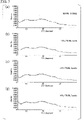
- the solid dispersions of Examples 9 to 11 were stored under open conditions at 40 °C / 75 % RH, and a change in the amorphous state was evaluated using an X-ray diffraction device (D2 Phaser, Bruker). The results are shown in Figs. 1 to 3 .
- D2 Phaser X-ray diffraction device
- Test Example 6 Evaluation of the amorphous state of the solid dispersion containing the compound A (absorbability in rats)
- the solid dispersions of Examples 9 to 11 were stored under open conditions at 40 °C / 75 % RH, and a change in the amorphous state was evaluated according to absorbability in rats.
- a single dose of 10, and 30 mg/kg, as the compound A, of the solid dispersions of Examples 9 to 11 suspended in a 1 % carboxymethylcellulose aqueous solution was orally administered to fasted male rats (7-9 weeks old, Crl : CD (SD), Japan Charles River Laboratories).
- the obtained blood was centrifuged at 1500 ⁇ g, 4 °C for 15 minutes to obtain a plasma.
- the concentration of the compound A in the plasma was measured by HPLC (Shiseido and Hitachi High-Technologies Corporation).
- Test Example 7 Action of the solid dispersion containing the compound A lowering a plasma uric acid level in rats
- a single dose of 30 mg/kg, as the compound A, of the solid dispersion of Example 11 suspended in a 1 % carboxymethylcellulose aqueous solution was orally administered to fasted male rats (8 weeks old, Crl : CD (SD), Japan Charles River Laboratories).
- a 1 % carboxymethylcellulose aqueous solution was used as a control.
- the obtained blood was centrifuged at 1500 ⁇ g, 4 °C for 15 minutes to obtain a plasma.
- a concentration of uric acid in the plasma was measured by HPLC (Hitachi High-Technologies Corporation). Welch's t-test was performed on plasma uric acid levels at each time point of the control group and Example 11. A level of significance was p ⁇ 0.05 (both cases). The results are shown in Fig. 4 .
- the plasma uric acid level after the solid dispersion of Example 11 was administered was significantly lower than that of the control group, and the action of lowering a uric acid level was continuous.
- the compound A was dissolved in tetrahydrofuran and adjusted to 2.5 mg/ml.
- the mixture was pumped into a spray dryer (GB22, Yamato Scientific Co., Ltd.) at a rate of about 5 ml/min via a peristaltic pump, and spray drying and granulation were started from a 2-fluid nozzle (with a diameter of 406 or 508 ⁇ m) at an inlet temperature of 80 °C and an outlet temperature of about 60 °C under conditions of a dry air flow of 0.32 to 0.47 m 3 /min and a nozzle spray air pressure of 1.0 to 3.1 kgf/cm 2 .
- a spray dryer GB22, Yamato Scientific Co., Ltd.
- the obtained primary dried component was additionally subjected to secondary drying (room temperature/overnight or room temperature/overnight at 40 °C/day) using a vacuum pump and sieved (sieve opening: 300 ⁇ m).
- Table 11 Polymer Polymer weight ratio Surfactant Surfactant weight ratio Type Manufacturer Manufacturer
- Example 13 HPMCAS 3-fold amount Tween 80 0.03-fold amount MG Shin-Etsu Chemical Co., Ltd. Tokyo Chemical Industry Co., Ltd.
- Test Example 8 Absorbability of the solid dispersion containing the compound A in rats
- a single dose of 10 mg/kg, as the compound A, of the solid dispersions of Examples 13 and 14 suspended in a 1 % carboxymethylcellulose aqueous solution was orally administered to fasted male rats (7-9 weeks old, Crl : CD (SD), Japan Charles River Laboratories).
- the obtained blood was centrifuged at 1500 ⁇ g, 4 °C for 15 minutes to obtain a plasma.
- the concentration of the compound A in the plasma was measured by HPLC (Shiseido and Hitachi High-Technologies Corporation).
- Example 13 Polymer weight ratio/surfactant weight ratio Dose (mg/kg) T max (hr) C max (ng/ml) AUC last (ng ⁇ hr/ml)
- Example 13 3-fold amount / 0.03-fold amount 10 3.3 ⁇ 1.2 3625 ⁇ 1335 21420 ⁇ 4825
- Example 14 3-fold amount / 0.03-fold amount 10 2.7 ⁇ 1.2 3589 ⁇ 1370 21318 ⁇ 6599
- Example 8 3-fold amount 10 3.3 ⁇ 1.2 3970 ⁇ 2048 23859 ⁇ 9799
- Example 5 To 6.0 g of the solid dispersion obtainable in Example 5, 2.8 g of sodium carboxymethyl starch, 3.01 g of lactose, 2.1 g of hydrated silicon dioxide, and 0.1 g of magnesium stearate are added according to a conventional method, mixed together in a plastic bag, and the mixture is tableted using a rotary type tableting machine (VELA-5, Kikusui Seisakusho Ltd.) to produce a tablet.
- a rotary type tableting machine VelA-5, Kikusui Seisakusho Ltd.
- Example 5 To 2 g of the solid dispersion obtainable in Example 5, 0.3 g of magnesium stearate and an appropriate amount of lactose are added to prepare a total amount of 23.5 g, which is mixed together in a plastic bag, and hand-filled in a No. 1 capsule to produce a capsule.
- the solid dispersion of the present invention is useful as a therapeutic agent for hyperuricemia and the like because it exhibits excellent in vivo absorbability and storage stability.
Landscapes
- Health & Medical Sciences (AREA)
- Chemical & Material Sciences (AREA)
- Life Sciences & Earth Sciences (AREA)
- Medicinal Chemistry (AREA)
- Pharmacology & Pharmacy (AREA)
- Animal Behavior & Ethology (AREA)
- General Health & Medical Sciences (AREA)
- Public Health (AREA)
- Veterinary Medicine (AREA)
- Engineering & Computer Science (AREA)
- Bioinformatics & Cheminformatics (AREA)
- Epidemiology (AREA)
- Organic Chemistry (AREA)
- Chemical Kinetics & Catalysis (AREA)
- General Chemical & Material Sciences (AREA)
- Nuclear Medicine, Radiotherapy & Molecular Imaging (AREA)
- Inorganic Chemistry (AREA)
- Physical Education & Sports Medicine (AREA)
- Pain & Pain Management (AREA)
- Rheumatology (AREA)
- Urology & Nephrology (AREA)
- Biophysics (AREA)
- Molecular Biology (AREA)
- Pharmaceuticals Containing Other Organic And Inorganic Compounds (AREA)
- Medicinal Preparation (AREA)
- Glass Compositions (AREA)
- Inorganic Insulating Materials (AREA)
- Optical Communication System (AREA)
Claims (14)
- Dispersion solide comprenant un composé représenté par la formule générale (I) :

un dérivé d'hypromellose, dans laquelle le dérivé d'hypromellose est le succinate acétate d'hypromellose ou le phtalate d'hypromellose. - Dispersion solide selon la revendication 1, dans laquelle R1 est un groupe phényle non substitué ou un groupe phényle substitué avec un atome d'halogène.
- Dispersion solide selon la revendication 1 ou 2, dans laquelle X est un atome d'oxygène.
- Dispersion solide selon l'une quelconque des revendications 1 à 3, dans laquelle Y est un atome de soufre.
- Dispersion solide selon l'une quelconque des revendications 1 à 4, dans laquelle le composé représenté par la formule générale (I) ou un sel pharmaceutiquement acceptable de celui-ci est amorphe.
- Dispersion solide selon l'une quelconque des revendications 1 à 5, dans laquelle un rapport en masse entre le composé représenté par la formule générale (I) ou un sel pharmaceutiquement acceptable de celui-ci et un dérivé d'hypromellose est de 1:0,1 à 1:25.
- Dispersion solide selon l'une quelconque des revendications 1 à 5, dans laquelle un rapport en masse entre le composé représenté par la formule générale (I) ou un sel pharmaceutiquement acceptable de celui-ci et le dérivé d'hypromellose est de 1:2 à 1:5.
- Dispersion solide selon l'une quelconque des revendications 1 à 5, dans laquelle un rapport en masse entre le composé représenté par la formule générale (I) ou un sel pharmaceutiquement acceptable de celui-ci et le dérivé d'hypromellose est de 1:3 à 1:4.
- Dispersion solide selon l'une quelconque des revendications 1 à 8, dans laquelle le composé représenté par la formule générale (I) est la 2-(3-cyano-4-phénoxyphényl)-7-hydroxythiazolo[5,4-d]pyrimidine.
- Dispersion solide selon l'une quelconque des revendications 1 à 9, dans laquelle le dérivé d'hypromellose est le succinate acétate d'hypromellose dans lequel une portion de substitution par unité monomère est de 21 à 25 % pour un groupe méthoxy ; 5 à 9 % pour un groupe hydroxypropoxyle ; 7 à 11 % pour un groupe acétyle ; et 10 à 14 % pour un groupe succinoyle.
- Procédé de production d'une dispersion solide, comprenant : la production de la dispersion solide selon l'une quelconque des revendications 1 à 10 en utilisant un procédé de séchage par pulvérisation.
- Procédé de production d'une dispersion solide, comprenant : la production de la dispersion solide selon l'une quelconque des revendications 1 à 10 par un procédé au solvant utilisant un solvant choisi dans le groupe consistant en éthanol, méthanol, 2-propanol, acétone, 2-butanone, méthylisobutylcétone, tétrahydrofurane, tétrahydropyrane, 1,4-dioxane, diéthyléther, toluène, acétonitrile, chlorure de méthylène, chloroforme, acétate de méthyle, acétate d'éthyle, acétate de butyle, acide acétique, acide formique, N,N-diméthylformamide, N,N-diméthylacétamide, et diméthylsulfoxyde.
- Composition pharmaceutique comprenant la dispersion solide selon l'une quelconque des revendications 1 à 10.
- Composition pharmaceutique selon la revendication 13, qui est une préparation solide.
Applications Claiming Priority (2)
| Application Number | Priority Date | Filing Date | Title |
|---|---|---|---|
| JP2017227807 | 2017-11-28 | ||
| PCT/JP2018/043788 WO2019107412A1 (fr) | 2017-11-28 | 2018-11-28 | Dispersion solide |
Publications (3)
| Publication Number | Publication Date |
|---|---|
| EP3718548A1 EP3718548A1 (fr) | 2020-10-07 |
| EP3718548A4 EP3718548A4 (fr) | 2021-09-01 |
| EP3718548B1 true EP3718548B1 (fr) | 2022-10-26 |
Family
ID=66664040
Family Applications (1)
| Application Number | Title | Priority Date | Filing Date |
|---|---|---|---|
| EP18882399.1A Active EP3718548B1 (fr) | 2017-11-28 | 2018-11-28 | Dispersion solide |
Country Status (8)
| Country | Link |
|---|---|
| US (1) | US11234984B2 (fr) |
| EP (1) | EP3718548B1 (fr) |
| JP (1) | JP7217890B2 (fr) |
| KR (1) | KR102728350B1 (fr) |
| CN (2) | CN111405900B (fr) |
| ES (1) | ES2929730T3 (fr) |
| TW (1) | TWI780270B (fr) |
| WO (1) | WO2019107412A1 (fr) |
Families Citing this family (4)
| Publication number | Priority date | Publication date | Assignee | Title |
|---|---|---|---|---|
| CN113924145A (zh) * | 2019-06-04 | 2022-01-11 | 日本化学药品株式会社 | 痛风或高尿酸血症的治疗药 |
| JP6903252B2 (ja) * | 2019-06-04 | 2021-07-14 | 日本ケミファ株式会社 | キサンチンオキシダーゼ阻害剤含有腸溶性製剤 |
| WO2022124325A1 (fr) * | 2020-12-08 | 2022-06-16 | 国立大学法人東京大学 | Activateur intracellulaire d'atp |
| TW202448478A (zh) | 2023-02-24 | 2024-12-16 | 日商日本化美化股份有限公司 | 具有p2x4受體拮抗作用之化合物的固體分散體 |
Family Cites Families (15)
| Publication number | Priority date | Publication date | Assignee | Title |
|---|---|---|---|---|
| JPS5944514B2 (ja) | 1974-09-02 | 1984-10-30 | 北越工業 (株) | 液体処理による液冷式回転圧縮機の運転動力軽減方法 |
| JPS5944514U (ja) | 1982-09-14 | 1984-03-24 | 日立化成工業株式会社 | 移動床濾過装置 |
| JPH07324086A (ja) * | 1994-05-31 | 1995-12-12 | Sankyo Co Ltd | チアゾリジン誘導体の固体分散体または固体分散体製剤 |
| US6254889B1 (en) | 1995-07-26 | 2001-07-03 | Kyowa Hakko Kogyo Co., Ltd. | Solid dispersion dosage form of amorphous xanthine derivative and enteric-coating polymer |
| GB0317615D0 (en) * | 2003-07-28 | 2003-08-27 | Stannah Stairlifts Ltd | Improvements in or relating to stairlifts |
| JP4914210B2 (ja) * | 2004-06-14 | 2012-04-11 | 日本ケミファ株式会社 | 縮合ピリミジン誘導体、及びキサンチンオキシダーゼ阻害剤 |
| KR101191071B1 (ko) * | 2004-06-14 | 2012-10-15 | 닛뽕 케미파 가부시키가이샤 | 축합 피리미딘 유도체 및 크산틴 옥시다제 저해제 |
| EP2036561B1 (fr) * | 2006-06-22 | 2017-05-10 | Nippon Chemiphar Co., Ltd. | Agent pour surmonter une résistance à un agent anti-cancer |
| US20090264476A1 (en) * | 2008-04-18 | 2009-10-22 | Mckelvey Craig | CB-1 receptor modulator formulations |
| BR122020010643B1 (pt) * | 2011-10-14 | 2022-05-17 | Array Biopharma Inc | Dispersão sólida, composições farmacêuticas compreendendo a referida dispersão, usos das composições farmacêuticas e processo de preparação de uma dispersão sólida |
| EP2792360A1 (fr) * | 2013-04-18 | 2014-10-22 | IP Gesellschaft für Management mbH | (1aR,12bS)-8-cyclohexyl-11-fluoro-N-((1-methylcyclopropyl)sulfonyl)-1a-((3-methyl-3,8-diazabicyclo[3.2.1]oct-8-yl)carbonyl)-1,1a,2,2b-tetrahydrocyclopropa[d]indolo[2,1-a][2]benzazepine-5-carboxamide pour utilisation dans le traitement de HCV |
| US20140363504A1 (en) | 2013-06-11 | 2014-12-11 | The Beauty Nation Ptd Ltd | Absorbable encapsulated calcium in hypromellose capsule |
| EP3263109B1 (fr) * | 2015-02-24 | 2020-06-17 | National University Corporation Tottori University | Médicament pour prévenir et/ou traiter la démence |
| PE20181521A1 (es) * | 2015-12-08 | 2018-09-24 | Ardea Biosciences Inc | Composicion farmaceutica que comprende un potente inhibidor de urat1 |
| JP6715103B2 (ja) | 2016-06-23 | 2020-07-01 | 株式会社フジクラ | 光レセプタクル |
-
2018
- 2018-11-27 TW TW107142281A patent/TWI780270B/zh active
- 2018-11-28 KR KR1020207014619A patent/KR102728350B1/ko active Active
- 2018-11-28 CN CN201880076272.6A patent/CN111405900B/zh active Active
- 2018-11-28 US US16/765,575 patent/US11234984B2/en active Active
- 2018-11-28 JP JP2019557268A patent/JP7217890B2/ja active Active
- 2018-11-28 EP EP18882399.1A patent/EP3718548B1/fr active Active
- 2018-11-28 WO PCT/JP2018/043788 patent/WO2019107412A1/fr not_active Ceased
- 2018-11-28 ES ES18882399T patent/ES2929730T3/es active Active
- 2018-11-28 CN CN202311189665.7A patent/CN117257807A/zh active Pending
Also Published As
| Publication number | Publication date |
|---|---|
| US11234984B2 (en) | 2022-02-01 |
| WO2019107412A1 (fr) | 2019-06-06 |
| TW201924688A (zh) | 2019-07-01 |
| JPWO2019107412A1 (ja) | 2020-11-19 |
| TWI780270B (zh) | 2022-10-11 |
| CN111405900B (zh) | 2023-10-10 |
| KR20200092956A (ko) | 2020-08-04 |
| ES2929730T3 (es) | 2022-12-01 |
| EP3718548A1 (fr) | 2020-10-07 |
| CN111405900A (zh) | 2020-07-10 |
| KR102728350B1 (ko) | 2024-11-08 |
| US20200306251A1 (en) | 2020-10-01 |
| CN117257807A (zh) | 2023-12-22 |
| EP3718548A4 (fr) | 2021-09-01 |
| JP7217890B2 (ja) | 2023-02-06 |
Similar Documents
| Publication | Publication Date | Title |
|---|---|---|
| EP3125872B1 (fr) | Dispersion solide amorphe comprenant un taxane, comprimé contenant la dispersion, et méthode de préparation associée | |
| EP3718548B1 (fr) | Dispersion solide | |
| JP2025061775A (ja) | 痛風又は高尿酸血症の治療薬 | |
| JP6989064B1 (ja) | 固形製剤及びその製造方法 | |
| EP4260860A1 (fr) | Activateur intracellulaire d'atp | |
| HK40073463B (en) | Therapeutic for gout or hyperuricemia | |
| HK40098529A (zh) | 固体分散体 | |
| HK40073463A (en) | Therapeutic for gout or hyperuricemia | |
| JP6903252B2 (ja) | キサンチンオキシダーゼ阻害剤含有腸溶性製剤 | |
| HK40027115B (zh) | 固体分散体 | |
| WO2020048449A1 (fr) | Composition pharmaceutique solide contenant un dérivé de 1,3,5-triazine ou un sel de ce dernier | |
| HK40027115A (en) | Solid dispersion | |
| JP5563371B2 (ja) | クエチアピンフマル酸塩含有経口用錠剤 | |
| CN102088961A (zh) | 依普罗沙坦组合物 |
Legal Events
| Date | Code | Title | Description |
|---|---|---|---|
| STAA | Information on the status of an ep patent application or granted ep patent |
Free format text: STATUS: THE INTERNATIONAL PUBLICATION HAS BEEN MADE |
|
| PUAI | Public reference made under article 153(3) epc to a published international application that has entered the european phase |
Free format text: ORIGINAL CODE: 0009012 |
|
| STAA | Information on the status of an ep patent application or granted ep patent |
Free format text: STATUS: REQUEST FOR EXAMINATION WAS MADE |
|
| 17P | Request for examination filed |
Effective date: 20200526 |
|
| AK | Designated contracting states |
Kind code of ref document: A1 Designated state(s): AL AT BE BG CH CY CZ DE DK EE ES FI FR GB GR HR HU IE IS IT LI LT LU LV MC MK MT NL NO PL PT RO RS SE SI SK SM TR |
|
| AX | Request for extension of the european patent |
Extension state: BA ME |
|
| DAV | Request for validation of the european patent (deleted) | ||
| DAX | Request for extension of the european patent (deleted) | ||
| A4 | Supplementary search report drawn up and despatched |
Effective date: 20210802 |
|
| RIC1 | Information provided on ipc code assigned before grant |
Ipc: A61K 31/519 20060101AFI20210727BHEP Ipc: A61K 9/16 20060101ALI20210727BHEP Ipc: A61K 9/20 20060101ALI20210727BHEP Ipc: A61K 9/48 20060101ALI20210727BHEP Ipc: A61K 47/38 20060101ALI20210727BHEP Ipc: A61P 19/06 20060101ALI20210727BHEP Ipc: A61P 43/00 20060101ALI20210727BHEP Ipc: C07D 513/04 20060101ALI20210727BHEP |
|
| GRAP | Despatch of communication of intention to grant a patent |
Free format text: ORIGINAL CODE: EPIDOSNIGR1 |
|
| STAA | Information on the status of an ep patent application or granted ep patent |
Free format text: STATUS: GRANT OF PATENT IS INTENDED |
|
| INTG | Intention to grant announced |
Effective date: 20220602 |
|
| GRAS | Grant fee paid |
Free format text: ORIGINAL CODE: EPIDOSNIGR3 |
|
| GRAA | (expected) grant |
Free format text: ORIGINAL CODE: 0009210 |
|
| STAA | Information on the status of an ep patent application or granted ep patent |
Free format text: STATUS: THE PATENT HAS BEEN GRANTED |
|
| AK | Designated contracting states |
Kind code of ref document: B1 Designated state(s): AL AT BE BG CH CY CZ DE DK EE ES FI FR GB GR HR HU IE IS IT LI LT LU LV MC MK MT NL NO PL PT RO RS SE SI SK SM TR |
|
| REG | Reference to a national code |
Ref country code: GB Ref legal event code: FG4D |
|
| REG | Reference to a national code |
Ref country code: CH Ref legal event code: EP |
|
| REG | Reference to a national code |
Ref country code: AT Ref legal event code: REF Ref document number: 1526558 Country of ref document: AT Kind code of ref document: T Effective date: 20221115 |
|
| REG | Reference to a national code |
Ref country code: DE Ref legal event code: R096 Ref document number: 602018042411 Country of ref document: DE |
|
| REG | Reference to a national code |
Ref country code: IE Ref legal event code: FG4D |
|
| REG | Reference to a national code |
Ref country code: ES Ref legal event code: FG2A Ref document number: 2929730 Country of ref document: ES Kind code of ref document: T3 Effective date: 20221201 |
|
| REG | Reference to a national code |
Ref country code: NL Ref legal event code: FP |
|
| REG | Reference to a national code |
Ref country code: LT Ref legal event code: MG9D |
|
| REG | Reference to a national code |
Ref country code: AT Ref legal event code: MK05 Ref document number: 1526558 Country of ref document: AT Kind code of ref document: T Effective date: 20221026 |
|
| PG25 | Lapsed in a contracting state [announced via postgrant information from national office to epo] |
Ref country code: SE Free format text: LAPSE BECAUSE OF FAILURE TO SUBMIT A TRANSLATION OF THE DESCRIPTION OR TO PAY THE FEE WITHIN THE PRESCRIBED TIME-LIMIT Effective date: 20221026 Ref country code: PT Free format text: LAPSE BECAUSE OF FAILURE TO SUBMIT A TRANSLATION OF THE DESCRIPTION OR TO PAY THE FEE WITHIN THE PRESCRIBED TIME-LIMIT Effective date: 20230227 Ref country code: NO Free format text: LAPSE BECAUSE OF FAILURE TO SUBMIT A TRANSLATION OF THE DESCRIPTION OR TO PAY THE FEE WITHIN THE PRESCRIBED TIME-LIMIT Effective date: 20230126 Ref country code: LT Free format text: LAPSE BECAUSE OF FAILURE TO SUBMIT A TRANSLATION OF THE DESCRIPTION OR TO PAY THE FEE WITHIN THE PRESCRIBED TIME-LIMIT Effective date: 20221026 Ref country code: FI Free format text: LAPSE BECAUSE OF FAILURE TO SUBMIT A TRANSLATION OF THE DESCRIPTION OR TO PAY THE FEE WITHIN THE PRESCRIBED TIME-LIMIT Effective date: 20221026 Ref country code: AT Free format text: LAPSE BECAUSE OF FAILURE TO SUBMIT A TRANSLATION OF THE DESCRIPTION OR TO PAY THE FEE WITHIN THE PRESCRIBED TIME-LIMIT Effective date: 20221026 |
|
| REG | Reference to a national code |
Ref country code: NL Ref legal event code: PD Owner name: NIPPON CHEMIPHAR CO., LTD.; JP Free format text: DETAILS ASSIGNMENT: CHANGE OF OWNER(S), ASSIGNMENT; FORMER OWNER NAME: SHIZUOKA PREFECTURAL UNIVERSITY CORPORATION Effective date: 20230510 |
|
| PG25 | Lapsed in a contracting state [announced via postgrant information from national office to epo] |
Ref country code: RS Free format text: LAPSE BECAUSE OF FAILURE TO SUBMIT A TRANSLATION OF THE DESCRIPTION OR TO PAY THE FEE WITHIN THE PRESCRIBED TIME-LIMIT Effective date: 20221026 Ref country code: PL Free format text: LAPSE BECAUSE OF FAILURE TO SUBMIT A TRANSLATION OF THE DESCRIPTION OR TO PAY THE FEE WITHIN THE PRESCRIBED TIME-LIMIT Effective date: 20221026 Ref country code: LV Free format text: LAPSE BECAUSE OF FAILURE TO SUBMIT A TRANSLATION OF THE DESCRIPTION OR TO PAY THE FEE WITHIN THE PRESCRIBED TIME-LIMIT Effective date: 20221026 Ref country code: IS Free format text: LAPSE BECAUSE OF FAILURE TO SUBMIT A TRANSLATION OF THE DESCRIPTION OR TO PAY THE FEE WITHIN THE PRESCRIBED TIME-LIMIT Effective date: 20230226 Ref country code: HR Free format text: LAPSE BECAUSE OF FAILURE TO SUBMIT A TRANSLATION OF THE DESCRIPTION OR TO PAY THE FEE WITHIN THE PRESCRIBED TIME-LIMIT Effective date: 20221026 Ref country code: GR Free format text: LAPSE BECAUSE OF FAILURE TO SUBMIT A TRANSLATION OF THE DESCRIPTION OR TO PAY THE FEE WITHIN THE PRESCRIBED TIME-LIMIT Effective date: 20230127 |
|
| RAP2 | Party data changed (patent owner data changed or rights of a patent transferred) |
Owner name: NIPPON CHEMIPHAR CO., LTD. |
|
| REG | Reference to a national code |
Ref country code: DE Ref legal event code: R081 Ref document number: 602018042411 Country of ref document: DE Owner name: NIPPON CHEMIPHAR CO., LTD., JP Free format text: FORMER OWNERS: NIPPON CHEMIPHAR CO., LTD., TOKYO, JP; SHIZUOKA PREFECTURAL UNIVERSITY CORP., SHIZUOKA-SHI, SHIZUOKA, JP Ref country code: GB Ref legal event code: 732E Free format text: REGISTERED BETWEEN 20230511 AND 20230517 |
|
| REG | Reference to a national code |
Ref country code: BE Ref legal event code: PD Owner name: NIPPON CHEMIPHAR CO., LTD.; JP Free format text: DETAILS ASSIGNMENT: CHANGE OF OWNER(S), ASSIGNMENT; FORMER OWNER NAME: SHIZUOKA PREFECTURAL UNIVERSITY CORPORATION Effective date: 20230510 |
|
| REG | Reference to a national code |
Ref country code: DE Ref legal event code: R097 Ref document number: 602018042411 Country of ref document: DE |
|
| PG25 | Lapsed in a contracting state [announced via postgrant information from national office to epo] |
Ref country code: SM Free format text: LAPSE BECAUSE OF FAILURE TO SUBMIT A TRANSLATION OF THE DESCRIPTION OR TO PAY THE FEE WITHIN THE PRESCRIBED TIME-LIMIT Effective date: 20221026 Ref country code: RO Free format text: LAPSE BECAUSE OF FAILURE TO SUBMIT A TRANSLATION OF THE DESCRIPTION OR TO PAY THE FEE WITHIN THE PRESCRIBED TIME-LIMIT Effective date: 20221026 Ref country code: MC Free format text: LAPSE BECAUSE OF FAILURE TO SUBMIT A TRANSLATION OF THE DESCRIPTION OR TO PAY THE FEE WITHIN THE PRESCRIBED TIME-LIMIT Effective date: 20221026 Ref country code: EE Free format text: LAPSE BECAUSE OF FAILURE TO SUBMIT A TRANSLATION OF THE DESCRIPTION OR TO PAY THE FEE WITHIN THE PRESCRIBED TIME-LIMIT Effective date: 20221026 Ref country code: DK Free format text: LAPSE BECAUSE OF FAILURE TO SUBMIT A TRANSLATION OF THE DESCRIPTION OR TO PAY THE FEE WITHIN THE PRESCRIBED TIME-LIMIT Effective date: 20221026 Ref country code: CZ Free format text: LAPSE BECAUSE OF FAILURE TO SUBMIT A TRANSLATION OF THE DESCRIPTION OR TO PAY THE FEE WITHIN THE PRESCRIBED TIME-LIMIT Effective date: 20221026 |
|
| PG25 | Lapsed in a contracting state [announced via postgrant information from national office to epo] |
Ref country code: SK Free format text: LAPSE BECAUSE OF FAILURE TO SUBMIT A TRANSLATION OF THE DESCRIPTION OR TO PAY THE FEE WITHIN THE PRESCRIBED TIME-LIMIT Effective date: 20221026 Ref country code: LU Free format text: LAPSE BECAUSE OF NON-PAYMENT OF DUE FEES Effective date: 20221128 Ref country code: AL Free format text: LAPSE BECAUSE OF FAILURE TO SUBMIT A TRANSLATION OF THE DESCRIPTION OR TO PAY THE FEE WITHIN THE PRESCRIBED TIME-LIMIT Effective date: 20221026 |
|
| PLBE | No opposition filed within time limit |
Free format text: ORIGINAL CODE: 0009261 |
|
| STAA | Information on the status of an ep patent application or granted ep patent |
Free format text: STATUS: NO OPPOSITION FILED WITHIN TIME LIMIT |
|
| 26N | No opposition filed |
Effective date: 20230727 |
|
| PG25 | Lapsed in a contracting state [announced via postgrant information from national office to epo] |
Ref country code: IE Free format text: LAPSE BECAUSE OF NON-PAYMENT OF DUE FEES Effective date: 20221128 |
|
| PG25 | Lapsed in a contracting state [announced via postgrant information from national office to epo] |
Ref country code: SI Free format text: LAPSE BECAUSE OF FAILURE TO SUBMIT A TRANSLATION OF THE DESCRIPTION OR TO PAY THE FEE WITHIN THE PRESCRIBED TIME-LIMIT Effective date: 20221026 |
|
| PG25 | Lapsed in a contracting state [announced via postgrant information from national office to epo] |
Ref country code: CY Free format text: LAPSE BECAUSE OF FAILURE TO SUBMIT A TRANSLATION OF THE DESCRIPTION OR TO PAY THE FEE WITHIN THE PRESCRIBED TIME-LIMIT Effective date: 20221026 |
|
| PG25 | Lapsed in a contracting state [announced via postgrant information from national office to epo] |
Ref country code: MK Free format text: LAPSE BECAUSE OF FAILURE TO SUBMIT A TRANSLATION OF THE DESCRIPTION OR TO PAY THE FEE WITHIN THE PRESCRIBED TIME-LIMIT Effective date: 20221026 Ref country code: HU Free format text: LAPSE BECAUSE OF FAILURE TO SUBMIT A TRANSLATION OF THE DESCRIPTION OR TO PAY THE FEE WITHIN THE PRESCRIBED TIME-LIMIT; INVALID AB INITIO Effective date: 20181128 |
|
| PG25 | Lapsed in a contracting state [announced via postgrant information from national office to epo] |
Ref country code: BG Free format text: LAPSE BECAUSE OF FAILURE TO SUBMIT A TRANSLATION OF THE DESCRIPTION OR TO PAY THE FEE WITHIN THE PRESCRIBED TIME-LIMIT Effective date: 20221026 |
|
| PG25 | Lapsed in a contracting state [announced via postgrant information from national office to epo] |
Ref country code: MT Free format text: LAPSE BECAUSE OF FAILURE TO SUBMIT A TRANSLATION OF THE DESCRIPTION OR TO PAY THE FEE WITHIN THE PRESCRIBED TIME-LIMIT Effective date: 20221026 |
|
| REG | Reference to a national code |
Ref country code: CH Ref legal event code: U11 Free format text: ST27 STATUS EVENT CODE: U-0-0-U10-U11 (AS PROVIDED BY THE NATIONAL OFFICE) Effective date: 20251201 |
|
| PG25 | Lapsed in a contracting state [announced via postgrant information from national office to epo] |
Ref country code: TR Free format text: LAPSE BECAUSE OF FAILURE TO SUBMIT A TRANSLATION OF THE DESCRIPTION OR TO PAY THE FEE WITHIN THE PRESCRIBED TIME-LIMIT Effective date: 20221026 |
|
| PGFP | Annual fee paid to national office [announced via postgrant information from national office to epo] |
Ref country code: NL Payment date: 20251119 Year of fee payment: 8 |
|
| PGFP | Annual fee paid to national office [announced via postgrant information from national office to epo] |
Ref country code: DE Payment date: 20251119 Year of fee payment: 8 |
|
| PGFP | Annual fee paid to national office [announced via postgrant information from national office to epo] |
Ref country code: GB Payment date: 20251121 Year of fee payment: 8 |
|
| PGFP | Annual fee paid to national office [announced via postgrant information from national office to epo] |
Ref country code: IT Payment date: 20251125 Year of fee payment: 8 |
|
| PGFP | Annual fee paid to national office [announced via postgrant information from national office to epo] |
Ref country code: FR Payment date: 20251126 Year of fee payment: 8 |
|
| PGFP | Annual fee paid to national office [announced via postgrant information from national office to epo] |
Ref country code: BE Payment date: 20251119 Year of fee payment: 8 |
|
| PGFP | Annual fee paid to national office [announced via postgrant information from national office to epo] |
Ref country code: CH Payment date: 20251201 Year of fee payment: 8 |
|
| PGFP | Annual fee paid to national office [announced via postgrant information from national office to epo] |
Ref country code: ES Payment date: 20251229 Year of fee payment: 8 |