EP3733280A1 - Kohlenwasserstoffadsorbens mit metallimprägniertem zeolithteilchen mit regelmässiger mesopore und herstellungsverfahren dafür - Google Patents
Kohlenwasserstoffadsorbens mit metallimprägniertem zeolithteilchen mit regelmässiger mesopore und herstellungsverfahren dafür Download PDFInfo
- Publication number
- EP3733280A1 EP3733280A1 EP18893856.7A EP18893856A EP3733280A1 EP 3733280 A1 EP3733280 A1 EP 3733280A1 EP 18893856 A EP18893856 A EP 18893856A EP 3733280 A1 EP3733280 A1 EP 3733280A1
- Authority
- EP
- European Patent Office
- Prior art keywords
- particles
- spp
- impregnated
- zeolite
- hydrocarbon adsorbent
- Prior art date
- Legal status (The legal status is an assumption and is not a legal conclusion. Google has not performed a legal analysis and makes no representation as to the accuracy of the status listed.)
- Withdrawn
Links
Images






Classifications
-
- B—PERFORMING OPERATIONS; TRANSPORTING
- B01—PHYSICAL OR CHEMICAL PROCESSES OR APPARATUS IN GENERAL
- B01J—CHEMICAL OR PHYSICAL PROCESSES, e.g. CATALYSIS OR COLLOID CHEMISTRY; THEIR RELEVANT APPARATUS
- B01J20/00—Solid sorbent compositions or filter aid compositions; Sorbents for chromatography; Processes for preparing, regenerating or reactivating thereof
- B01J20/02—Solid sorbent compositions or filter aid compositions; Sorbents for chromatography; Processes for preparing, regenerating or reactivating thereof comprising inorganic material
- B01J20/10—Solid sorbent compositions or filter aid compositions; Sorbents for chromatography; Processes for preparing, regenerating or reactivating thereof comprising inorganic material comprising silica or silicate
- B01J20/16—Alumino-silicates
- B01J20/18—Synthetic zeolitic molecular sieves
- B01J20/186—Chemical treatments in view of modifying the properties of the sieve, e.g. increasing the stability or the activity, also decreasing the activity
-
- B—PERFORMING OPERATIONS; TRANSPORTING
- B01—PHYSICAL OR CHEMICAL PROCESSES OR APPARATUS IN GENERAL
- B01D—SEPARATION
- B01D53/00—Separation of gases or vapours; Recovering vapours of volatile solvents from gases; Chemical or biological purification of waste gases, e.g. engine exhaust gases, smoke, fumes, flue gases, aerosols
- B01D53/02—Separation of gases or vapours; Recovering vapours of volatile solvents from gases; Chemical or biological purification of waste gases, e.g. engine exhaust gases, smoke, fumes, flue gases, aerosols by adsorption, e.g. preparative gas chromatography
-
- B—PERFORMING OPERATIONS; TRANSPORTING
- B01—PHYSICAL OR CHEMICAL PROCESSES OR APPARATUS IN GENERAL
- B01D—SEPARATION
- B01D53/00—Separation of gases or vapours; Recovering vapours of volatile solvents from gases; Chemical or biological purification of waste gases, e.g. engine exhaust gases, smoke, fumes, flue gases, aerosols
- B01D53/02—Separation of gases or vapours; Recovering vapours of volatile solvents from gases; Chemical or biological purification of waste gases, e.g. engine exhaust gases, smoke, fumes, flue gases, aerosols by adsorption, e.g. preparative gas chromatography
- B01D53/04—Separation of gases or vapours; Recovering vapours of volatile solvents from gases; Chemical or biological purification of waste gases, e.g. engine exhaust gases, smoke, fumes, flue gases, aerosols by adsorption, e.g. preparative gas chromatography with stationary adsorbents
-
- B—PERFORMING OPERATIONS; TRANSPORTING
- B01—PHYSICAL OR CHEMICAL PROCESSES OR APPARATUS IN GENERAL
- B01D—SEPARATION
- B01D53/00—Separation of gases or vapours; Recovering vapours of volatile solvents from gases; Chemical or biological purification of waste gases, e.g. engine exhaust gases, smoke, fumes, flue gases, aerosols
- B01D53/34—Chemical or biological purification of waste gases
- B01D53/92—Chemical or biological purification of waste gases of engine exhaust gases
- B01D53/94—Chemical or biological purification of waste gases of engine exhaust gases by catalytic processes
- B01D53/9481—Catalyst preceded by an adsorption device without catalytic function for temporary storage of contaminants, e.g. during cold start
- B01D53/9486—Catalyst preceded by an adsorption device without catalytic function for temporary storage of contaminants, e.g. during cold start for storing hydrocarbons
-
- B—PERFORMING OPERATIONS; TRANSPORTING
- B01—PHYSICAL OR CHEMICAL PROCESSES OR APPARATUS IN GENERAL
- B01J—CHEMICAL OR PHYSICAL PROCESSES, e.g. CATALYSIS OR COLLOID CHEMISTRY; THEIR RELEVANT APPARATUS
- B01J20/00—Solid sorbent compositions or filter aid compositions; Sorbents for chromatography; Processes for preparing, regenerating or reactivating thereof
- B01J20/02—Solid sorbent compositions or filter aid compositions; Sorbents for chromatography; Processes for preparing, regenerating or reactivating thereof comprising inorganic material
- B01J20/06—Solid sorbent compositions or filter aid compositions; Sorbents for chromatography; Processes for preparing, regenerating or reactivating thereof comprising inorganic material comprising oxides or hydroxides of metals not provided for in group B01J20/04
-
- B—PERFORMING OPERATIONS; TRANSPORTING
- B01—PHYSICAL OR CHEMICAL PROCESSES OR APPARATUS IN GENERAL
- B01J—CHEMICAL OR PHYSICAL PROCESSES, e.g. CATALYSIS OR COLLOID CHEMISTRY; THEIR RELEVANT APPARATUS
- B01J20/00—Solid sorbent compositions or filter aid compositions; Sorbents for chromatography; Processes for preparing, regenerating or reactivating thereof
- B01J20/02—Solid sorbent compositions or filter aid compositions; Sorbents for chromatography; Processes for preparing, regenerating or reactivating thereof comprising inorganic material
- B01J20/10—Solid sorbent compositions or filter aid compositions; Sorbents for chromatography; Processes for preparing, regenerating or reactivating thereof comprising inorganic material comprising silica or silicate
- B01J20/16—Alumino-silicates
- B01J20/18—Synthetic zeolitic molecular sieves
-
- B—PERFORMING OPERATIONS; TRANSPORTING
- B01—PHYSICAL OR CHEMICAL PROCESSES OR APPARATUS IN GENERAL
- B01J—CHEMICAL OR PHYSICAL PROCESSES, e.g. CATALYSIS OR COLLOID CHEMISTRY; THEIR RELEVANT APPARATUS
- B01J20/00—Solid sorbent compositions or filter aid compositions; Sorbents for chromatography; Processes for preparing, regenerating or reactivating thereof
- B01J20/28—Solid sorbent compositions or filter aid compositions; Sorbents for chromatography; Processes for preparing, regenerating or reactivating thereof characterised by their form or physical properties
-
- B—PERFORMING OPERATIONS; TRANSPORTING
- B01—PHYSICAL OR CHEMICAL PROCESSES OR APPARATUS IN GENERAL
- B01J—CHEMICAL OR PHYSICAL PROCESSES, e.g. CATALYSIS OR COLLOID CHEMISTRY; THEIR RELEVANT APPARATUS
- B01J20/00—Solid sorbent compositions or filter aid compositions; Sorbents for chromatography; Processes for preparing, regenerating or reactivating thereof
- B01J20/28—Solid sorbent compositions or filter aid compositions; Sorbents for chromatography; Processes for preparing, regenerating or reactivating thereof characterised by their form or physical properties
- B01J20/28002—Solid sorbent compositions or filter aid compositions; Sorbents for chromatography; Processes for preparing, regenerating or reactivating thereof characterised by their form or physical properties characterised by their physical properties
-
- B—PERFORMING OPERATIONS; TRANSPORTING
- B01—PHYSICAL OR CHEMICAL PROCESSES OR APPARATUS IN GENERAL
- B01J—CHEMICAL OR PHYSICAL PROCESSES, e.g. CATALYSIS OR COLLOID CHEMISTRY; THEIR RELEVANT APPARATUS
- B01J20/00—Solid sorbent compositions or filter aid compositions; Sorbents for chromatography; Processes for preparing, regenerating or reactivating thereof
- B01J20/28—Solid sorbent compositions or filter aid compositions; Sorbents for chromatography; Processes for preparing, regenerating or reactivating thereof characterised by their form or physical properties
- B01J20/28014—Solid sorbent compositions or filter aid compositions; Sorbents for chromatography; Processes for preparing, regenerating or reactivating thereof characterised by their form or physical properties characterised by their form
- B01J20/28016—Particle form
-
- B—PERFORMING OPERATIONS; TRANSPORTING
- B01—PHYSICAL OR CHEMICAL PROCESSES OR APPARATUS IN GENERAL
- B01J—CHEMICAL OR PHYSICAL PROCESSES, e.g. CATALYSIS OR COLLOID CHEMISTRY; THEIR RELEVANT APPARATUS
- B01J20/00—Solid sorbent compositions or filter aid compositions; Sorbents for chromatography; Processes for preparing, regenerating or reactivating thereof
- B01J20/28—Solid sorbent compositions or filter aid compositions; Sorbents for chromatography; Processes for preparing, regenerating or reactivating thereof characterised by their form or physical properties
- B01J20/28054—Solid sorbent compositions or filter aid compositions; Sorbents for chromatography; Processes for preparing, regenerating or reactivating thereof characterised by their form or physical properties characterised by their surface properties or porosity
-
- B—PERFORMING OPERATIONS; TRANSPORTING
- B01—PHYSICAL OR CHEMICAL PROCESSES OR APPARATUS IN GENERAL
- B01J—CHEMICAL OR PHYSICAL PROCESSES, e.g. CATALYSIS OR COLLOID CHEMISTRY; THEIR RELEVANT APPARATUS
- B01J20/00—Solid sorbent compositions or filter aid compositions; Sorbents for chromatography; Processes for preparing, regenerating or reactivating thereof
- B01J20/28—Solid sorbent compositions or filter aid compositions; Sorbents for chromatography; Processes for preparing, regenerating or reactivating thereof characterised by their form or physical properties
- B01J20/28054—Solid sorbent compositions or filter aid compositions; Sorbents for chromatography; Processes for preparing, regenerating or reactivating thereof characterised by their form or physical properties characterised by their surface properties or porosity
- B01J20/28057—Surface area, e.g. B.E.T specific surface area
-
- B—PERFORMING OPERATIONS; TRANSPORTING
- B01—PHYSICAL OR CHEMICAL PROCESSES OR APPARATUS IN GENERAL
- B01J—CHEMICAL OR PHYSICAL PROCESSES, e.g. CATALYSIS OR COLLOID CHEMISTRY; THEIR RELEVANT APPARATUS
- B01J20/00—Solid sorbent compositions or filter aid compositions; Sorbents for chromatography; Processes for preparing, regenerating or reactivating thereof
- B01J20/28—Solid sorbent compositions or filter aid compositions; Sorbents for chromatography; Processes for preparing, regenerating or reactivating thereof characterised by their form or physical properties
- B01J20/28054—Solid sorbent compositions or filter aid compositions; Sorbents for chromatography; Processes for preparing, regenerating or reactivating thereof characterised by their form or physical properties characterised by their surface properties or porosity
- B01J20/28069—Pore volume, e.g. total pore volume, mesopore volume, micropore volume
-
- B—PERFORMING OPERATIONS; TRANSPORTING
- B01—PHYSICAL OR CHEMICAL PROCESSES OR APPARATUS IN GENERAL
- B01J—CHEMICAL OR PHYSICAL PROCESSES, e.g. CATALYSIS OR COLLOID CHEMISTRY; THEIR RELEVANT APPARATUS
- B01J20/00—Solid sorbent compositions or filter aid compositions; Sorbents for chromatography; Processes for preparing, regenerating or reactivating thereof
- B01J20/28—Solid sorbent compositions or filter aid compositions; Sorbents for chromatography; Processes for preparing, regenerating or reactivating thereof characterised by their form or physical properties
- B01J20/28054—Solid sorbent compositions or filter aid compositions; Sorbents for chromatography; Processes for preparing, regenerating or reactivating thereof characterised by their form or physical properties characterised by their surface properties or porosity
- B01J20/28069—Pore volume, e.g. total pore volume, mesopore volume, micropore volume
- B01J20/28071—Pore volume, e.g. total pore volume, mesopore volume, micropore volume being less than 0.5 ml/g
-
- B—PERFORMING OPERATIONS; TRANSPORTING
- B01—PHYSICAL OR CHEMICAL PROCESSES OR APPARATUS IN GENERAL
- B01J—CHEMICAL OR PHYSICAL PROCESSES, e.g. CATALYSIS OR COLLOID CHEMISTRY; THEIR RELEVANT APPARATUS
- B01J20/00—Solid sorbent compositions or filter aid compositions; Sorbents for chromatography; Processes for preparing, regenerating or reactivating thereof
- B01J20/28—Solid sorbent compositions or filter aid compositions; Sorbents for chromatography; Processes for preparing, regenerating or reactivating thereof characterised by their form or physical properties
- B01J20/28054—Solid sorbent compositions or filter aid compositions; Sorbents for chromatography; Processes for preparing, regenerating or reactivating thereof characterised by their form or physical properties characterised by their surface properties or porosity
- B01J20/28078—Pore diameter
- B01J20/28083—Pore diameter being in the range 2-50 nm, i.e. mesopores
-
- B—PERFORMING OPERATIONS; TRANSPORTING
- B01—PHYSICAL OR CHEMICAL PROCESSES OR APPARATUS IN GENERAL
- B01J—CHEMICAL OR PHYSICAL PROCESSES, e.g. CATALYSIS OR COLLOID CHEMISTRY; THEIR RELEVANT APPARATUS
- B01J20/00—Solid sorbent compositions or filter aid compositions; Sorbents for chromatography; Processes for preparing, regenerating or reactivating thereof
- B01J20/28—Solid sorbent compositions or filter aid compositions; Sorbents for chromatography; Processes for preparing, regenerating or reactivating thereof characterised by their form or physical properties
- B01J20/28054—Solid sorbent compositions or filter aid compositions; Sorbents for chromatography; Processes for preparing, regenerating or reactivating thereof characterised by their form or physical properties characterised by their surface properties or porosity
- B01J20/28088—Pore-size distribution
- B01J20/2809—Monomodal or narrow distribution, uniform pores
-
- B—PERFORMING OPERATIONS; TRANSPORTING
- B01—PHYSICAL OR CHEMICAL PROCESSES OR APPARATUS IN GENERAL
- B01J—CHEMICAL OR PHYSICAL PROCESSES, e.g. CATALYSIS OR COLLOID CHEMISTRY; THEIR RELEVANT APPARATUS
- B01J20/00—Solid sorbent compositions or filter aid compositions; Sorbents for chromatography; Processes for preparing, regenerating or reactivating thereof
- B01J20/30—Processes for preparing, regenerating, or reactivating
- B01J20/305—Addition of material, later completely removed, e.g. as result of heat treatment, leaching or washing, e.g. for forming pores
- B01J20/3057—Use of a templating or imprinting material ; filling pores of a substrate or matrix followed by the removal of the substrate or matrix
-
- B—PERFORMING OPERATIONS; TRANSPORTING
- B01—PHYSICAL OR CHEMICAL PROCESSES OR APPARATUS IN GENERAL
- B01J—CHEMICAL OR PHYSICAL PROCESSES, e.g. CATALYSIS OR COLLOID CHEMISTRY; THEIR RELEVANT APPARATUS
- B01J20/00—Solid sorbent compositions or filter aid compositions; Sorbents for chromatography; Processes for preparing, regenerating or reactivating thereof
- B01J20/30—Processes for preparing, regenerating, or reactivating
- B01J20/32—Impregnating or coating ; Solid sorbent compositions obtained from processes involving impregnating or coating
-
- B—PERFORMING OPERATIONS; TRANSPORTING
- B01—PHYSICAL OR CHEMICAL PROCESSES OR APPARATUS IN GENERAL
- B01J—CHEMICAL OR PHYSICAL PROCESSES, e.g. CATALYSIS OR COLLOID CHEMISTRY; THEIR RELEVANT APPARATUS
- B01J20/00—Solid sorbent compositions or filter aid compositions; Sorbents for chromatography; Processes for preparing, regenerating or reactivating thereof
- B01J20/30—Processes for preparing, regenerating, or reactivating
- B01J20/32—Impregnating or coating ; Solid sorbent compositions obtained from processes involving impregnating or coating
- B01J20/3202—Impregnating or coating ; Solid sorbent compositions obtained from processes involving impregnating or coating characterised by the carrier, support or substrate used for impregnation or coating
- B01J20/3204—Inorganic carriers, supports or substrates
-
- B—PERFORMING OPERATIONS; TRANSPORTING
- B01—PHYSICAL OR CHEMICAL PROCESSES OR APPARATUS IN GENERAL
- B01J—CHEMICAL OR PHYSICAL PROCESSES, e.g. CATALYSIS OR COLLOID CHEMISTRY; THEIR RELEVANT APPARATUS
- B01J20/00—Solid sorbent compositions or filter aid compositions; Sorbents for chromatography; Processes for preparing, regenerating or reactivating thereof
- B01J20/30—Processes for preparing, regenerating, or reactivating
- B01J20/32—Impregnating or coating ; Solid sorbent compositions obtained from processes involving impregnating or coating
- B01J20/3214—Impregnating or coating ; Solid sorbent compositions obtained from processes involving impregnating or coating characterised by the method for obtaining this coating or impregnating
- B01J20/3217—Resulting in a chemical bond between the coating or impregnating layer and the carrier, support or substrate, e.g. a covalent bond
- B01J20/3221—Resulting in a chemical bond between the coating or impregnating layer and the carrier, support or substrate, e.g. a covalent bond the chemical bond being an ionic interaction
-
- B—PERFORMING OPERATIONS; TRANSPORTING
- B01—PHYSICAL OR CHEMICAL PROCESSES OR APPARATUS IN GENERAL
- B01J—CHEMICAL OR PHYSICAL PROCESSES, e.g. CATALYSIS OR COLLOID CHEMISTRY; THEIR RELEVANT APPARATUS
- B01J20/00—Solid sorbent compositions or filter aid compositions; Sorbents for chromatography; Processes for preparing, regenerating or reactivating thereof
- B01J20/30—Processes for preparing, regenerating, or reactivating
- B01J20/32—Impregnating or coating ; Solid sorbent compositions obtained from processes involving impregnating or coating
- B01J20/3231—Impregnating or coating ; Solid sorbent compositions obtained from processes involving impregnating or coating characterised by the coating or impregnating layer
- B01J20/3234—Inorganic material layers
- B01J20/3236—Inorganic material layers containing metal, other than zeolites, e.g. oxides, hydroxides, sulphides or salts
-
- B—PERFORMING OPERATIONS; TRANSPORTING
- B01—PHYSICAL OR CHEMICAL PROCESSES OR APPARATUS IN GENERAL
- B01J—CHEMICAL OR PHYSICAL PROCESSES, e.g. CATALYSIS OR COLLOID CHEMISTRY; THEIR RELEVANT APPARATUS
- B01J20/00—Solid sorbent compositions or filter aid compositions; Sorbents for chromatography; Processes for preparing, regenerating or reactivating thereof
- B01J20/30—Processes for preparing, regenerating, or reactivating
- B01J20/32—Impregnating or coating ; Solid sorbent compositions obtained from processes involving impregnating or coating
- B01J20/3291—Characterised by the shape of the carrier, the coating or the obtained coated product
- B01J20/3293—Coatings on a core, the core being particle or fiber shaped, e.g. encapsulated particles, coated fibers
-
- B—PERFORMING OPERATIONS; TRANSPORTING
- B01—PHYSICAL OR CHEMICAL PROCESSES OR APPARATUS IN GENERAL
- B01J—CHEMICAL OR PHYSICAL PROCESSES, e.g. CATALYSIS OR COLLOID CHEMISTRY; THEIR RELEVANT APPARATUS
- B01J20/00—Solid sorbent compositions or filter aid compositions; Sorbents for chromatography; Processes for preparing, regenerating or reactivating thereof
- B01J20/30—Processes for preparing, regenerating, or reactivating
- B01J20/34—Regenerating or reactivating
- B01J20/3408—Regenerating or reactivating of aluminosilicate molecular sieves
-
- B—PERFORMING OPERATIONS; TRANSPORTING
- B01—PHYSICAL OR CHEMICAL PROCESSES OR APPARATUS IN GENERAL
- B01J—CHEMICAL OR PHYSICAL PROCESSES, e.g. CATALYSIS OR COLLOID CHEMISTRY; THEIR RELEVANT APPARATUS
- B01J20/00—Solid sorbent compositions or filter aid compositions; Sorbents for chromatography; Processes for preparing, regenerating or reactivating thereof
- B01J20/30—Processes for preparing, regenerating, or reactivating
- B01J20/34—Regenerating or reactivating
- B01J20/345—Regenerating or reactivating using a particular desorbing compound or mixture
- B01J20/3458—Regenerating or reactivating using a particular desorbing compound or mixture in the gas phase
-
- B—PERFORMING OPERATIONS; TRANSPORTING
- B01—PHYSICAL OR CHEMICAL PROCESSES OR APPARATUS IN GENERAL
- B01J—CHEMICAL OR PHYSICAL PROCESSES, e.g. CATALYSIS OR COLLOID CHEMISTRY; THEIR RELEVANT APPARATUS
- B01J20/00—Solid sorbent compositions or filter aid compositions; Sorbents for chromatography; Processes for preparing, regenerating or reactivating thereof
- B01J20/30—Processes for preparing, regenerating, or reactivating
- B01J20/34—Regenerating or reactivating
- B01J20/3483—Regenerating or reactivating by thermal treatment not covered by groups B01J20/3441 - B01J20/3475, e.g. by heating or cooling
-
- B—PERFORMING OPERATIONS; TRANSPORTING
- B01—PHYSICAL OR CHEMICAL PROCESSES OR APPARATUS IN GENERAL
- B01J—CHEMICAL OR PHYSICAL PROCESSES, e.g. CATALYSIS OR COLLOID CHEMISTRY; THEIR RELEVANT APPARATUS
- B01J23/00—Catalysts comprising metals or metal oxides or hydroxides, not provided for in group B01J21/00
- B01J23/70—Catalysts comprising metals or metal oxides or hydroxides, not provided for in group B01J21/00 of the iron group metals or copper
- B01J23/72—Copper
-
- B—PERFORMING OPERATIONS; TRANSPORTING
- B01—PHYSICAL OR CHEMICAL PROCESSES OR APPARATUS IN GENERAL
- B01J—CHEMICAL OR PHYSICAL PROCESSES, e.g. CATALYSIS OR COLLOID CHEMISTRY; THEIR RELEVANT APPARATUS
- B01J29/00—Catalysts comprising molecular sieves
- B01J29/04—Catalysts comprising molecular sieves having base-exchange properties, e.g. crystalline zeolites
- B01J29/06—Crystalline aluminosilicate zeolites; Isomorphous compounds thereof
- B01J29/40—Crystalline aluminosilicate zeolites; Isomorphous compounds thereof of the pentasil type, e.g. types ZSM-5, ZSM-8 or ZSM-11, as exemplified by patent documents US3702886, GB1334243 and US3709979, respectively
-
- B—PERFORMING OPERATIONS; TRANSPORTING
- B01—PHYSICAL OR CHEMICAL PROCESSES OR APPARATUS IN GENERAL
- B01J—CHEMICAL OR PHYSICAL PROCESSES, e.g. CATALYSIS OR COLLOID CHEMISTRY; THEIR RELEVANT APPARATUS
- B01J29/00—Catalysts comprising molecular sieves
- B01J29/04—Catalysts comprising molecular sieves having base-exchange properties, e.g. crystalline zeolites
- B01J29/06—Crystalline aluminosilicate zeolites; Isomorphous compounds thereof
- B01J29/40—Crystalline aluminosilicate zeolites; Isomorphous compounds thereof of the pentasil type, e.g. types ZSM-5, ZSM-8 or ZSM-11, as exemplified by patent documents US3702886, GB1334243 and US3709979, respectively
- B01J29/42—Crystalline aluminosilicate zeolites; Isomorphous compounds thereof of the pentasil type, e.g. types ZSM-5, ZSM-8 or ZSM-11, as exemplified by patent documents US3702886, GB1334243 and US3709979, respectively containing iron group metals, noble metals or copper
- B01J29/46—Iron group metals or copper
-
- B—PERFORMING OPERATIONS; TRANSPORTING
- B01—PHYSICAL OR CHEMICAL PROCESSES OR APPARATUS IN GENERAL
- B01J—CHEMICAL OR PHYSICAL PROCESSES, e.g. CATALYSIS OR COLLOID CHEMISTRY; THEIR RELEVANT APPARATUS
- B01J29/00—Catalysts comprising molecular sieves
- B01J29/04—Catalysts comprising molecular sieves having base-exchange properties, e.g. crystalline zeolites
- B01J29/06—Crystalline aluminosilicate zeolites; Isomorphous compounds thereof
- B01J29/70—Crystalline aluminosilicate zeolites; Isomorphous compounds thereof of types characterised by their specific structure not provided for in groups B01J29/08 - B01J29/65
- B01J29/72—Crystalline aluminosilicate zeolites; Isomorphous compounds thereof of types characterised by their specific structure not provided for in groups B01J29/08 - B01J29/65 containing iron group metals, noble metals or copper
- B01J29/723—CHA-type, e.g. Chabazite, LZ-218
-
- B—PERFORMING OPERATIONS; TRANSPORTING
- B01—PHYSICAL OR CHEMICAL PROCESSES OR APPARATUS IN GENERAL
- B01J—CHEMICAL OR PHYSICAL PROCESSES, e.g. CATALYSIS OR COLLOID CHEMISTRY; THEIR RELEVANT APPARATUS
- B01J29/00—Catalysts comprising molecular sieves
- B01J29/04—Catalysts comprising molecular sieves having base-exchange properties, e.g. crystalline zeolites
- B01J29/06—Crystalline aluminosilicate zeolites; Isomorphous compounds thereof
- B01J29/70—Crystalline aluminosilicate zeolites; Isomorphous compounds thereof of types characterised by their specific structure not provided for in groups B01J29/08 - B01J29/65
- B01J29/72—Crystalline aluminosilicate zeolites; Isomorphous compounds thereof of types characterised by their specific structure not provided for in groups B01J29/08 - B01J29/65 containing iron group metals, noble metals or copper
- B01J29/76—Iron group metals or copper
- B01J29/7615—Zeolite Beta
-
- B—PERFORMING OPERATIONS; TRANSPORTING
- B01—PHYSICAL OR CHEMICAL PROCESSES OR APPARATUS IN GENERAL
- B01J—CHEMICAL OR PHYSICAL PROCESSES, e.g. CATALYSIS OR COLLOID CHEMISTRY; THEIR RELEVANT APPARATUS
- B01J29/00—Catalysts comprising molecular sieves
- B01J29/04—Catalysts comprising molecular sieves having base-exchange properties, e.g. crystalline zeolites
- B01J29/06—Crystalline aluminosilicate zeolites; Isomorphous compounds thereof
- B01J29/80—Mixtures of different zeolites
-
- B—PERFORMING OPERATIONS; TRANSPORTING
- B01—PHYSICAL OR CHEMICAL PROCESSES OR APPARATUS IN GENERAL
- B01J—CHEMICAL OR PHYSICAL PROCESSES, e.g. CATALYSIS OR COLLOID CHEMISTRY; THEIR RELEVANT APPARATUS
- B01J35/00—Catalysts, in general, characterised by their form or physical properties
- B01J35/60—Catalysts, in general, characterised by their form or physical properties characterised by their surface properties or porosity
- B01J35/61—Surface area
-
- B—PERFORMING OPERATIONS; TRANSPORTING
- B01—PHYSICAL OR CHEMICAL PROCESSES OR APPARATUS IN GENERAL
- B01J—CHEMICAL OR PHYSICAL PROCESSES, e.g. CATALYSIS OR COLLOID CHEMISTRY; THEIR RELEVANT APPARATUS
- B01J35/00—Catalysts, in general, characterised by their form or physical properties
- B01J35/60—Catalysts, in general, characterised by their form or physical properties characterised by their surface properties or porosity
- B01J35/61—Surface area
- B01J35/615—100-500 m2/g
-
- B—PERFORMING OPERATIONS; TRANSPORTING
- B01—PHYSICAL OR CHEMICAL PROCESSES OR APPARATUS IN GENERAL
- B01J—CHEMICAL OR PHYSICAL PROCESSES, e.g. CATALYSIS OR COLLOID CHEMISTRY; THEIR RELEVANT APPARATUS
- B01J35/00—Catalysts, in general, characterised by their form or physical properties
- B01J35/60—Catalysts, in general, characterised by their form or physical properties characterised by their surface properties or porosity
- B01J35/61—Surface area
- B01J35/617—500-1000 m2/g
-
- B—PERFORMING OPERATIONS; TRANSPORTING
- B01—PHYSICAL OR CHEMICAL PROCESSES OR APPARATUS IN GENERAL
- B01J—CHEMICAL OR PHYSICAL PROCESSES, e.g. CATALYSIS OR COLLOID CHEMISTRY; THEIR RELEVANT APPARATUS
- B01J35/00—Catalysts, in general, characterised by their form or physical properties
- B01J35/60—Catalysts, in general, characterised by their form or physical properties characterised by their surface properties or porosity
- B01J35/63—Pore volume
-
- B—PERFORMING OPERATIONS; TRANSPORTING
- B01—PHYSICAL OR CHEMICAL PROCESSES OR APPARATUS IN GENERAL
- B01J—CHEMICAL OR PHYSICAL PROCESSES, e.g. CATALYSIS OR COLLOID CHEMISTRY; THEIR RELEVANT APPARATUS
- B01J35/00—Catalysts, in general, characterised by their form or physical properties
- B01J35/60—Catalysts, in general, characterised by their form or physical properties characterised by their surface properties or porosity
- B01J35/64—Pore diameter
- B01J35/647—2-50 nm
-
- B—PERFORMING OPERATIONS; TRANSPORTING
- B01—PHYSICAL OR CHEMICAL PROCESSES OR APPARATUS IN GENERAL
- B01J—CHEMICAL OR PHYSICAL PROCESSES, e.g. CATALYSIS OR COLLOID CHEMISTRY; THEIR RELEVANT APPARATUS
- B01J35/00—Catalysts, in general, characterised by their form or physical properties
- B01J35/60—Catalysts, in general, characterised by their form or physical properties characterised by their surface properties or porosity
- B01J35/66—Pore distribution
- B01J35/69—Pore distribution bimodal
-
- F—MECHANICAL ENGINEERING; LIGHTING; HEATING; WEAPONS; BLASTING
- F01—MACHINES OR ENGINES IN GENERAL; ENGINE PLANTS IN GENERAL; STEAM ENGINES
- F01N—GAS-FLOW SILENCERS OR EXHAUST APPARATUS FOR MACHINES OR ENGINES IN GENERAL; GAS-FLOW SILENCERS OR EXHAUST APPARATUS FOR INTERNAL-COMBUSTION ENGINES
- F01N3/00—Exhaust or silencing apparatus having means for purifying, rendering innocuous, or otherwise treating exhaust
- F01N3/08—Exhaust or silencing apparatus having means for purifying, rendering innocuous, or otherwise treating exhaust for rendering innocuous
- F01N3/0807—Exhaust or silencing apparatus having means for purifying, rendering innocuous, or otherwise treating exhaust for rendering innocuous by using absorbents or adsorbents
- F01N3/0828—Exhaust or silencing apparatus having means for purifying, rendering innocuous, or otherwise treating exhaust for rendering innocuous by using absorbents or adsorbents characterised by the absorbed or adsorbed substances
- F01N3/0835—Hydrocarbons
-
- B—PERFORMING OPERATIONS; TRANSPORTING
- B01—PHYSICAL OR CHEMICAL PROCESSES OR APPARATUS IN GENERAL
- B01D—SEPARATION
- B01D2253/00—Adsorbents used in seperation treatment of gases and vapours
- B01D2253/10—Inorganic adsorbents
- B01D2253/106—Silica or silicates
- B01D2253/108—Zeolites
-
- B—PERFORMING OPERATIONS; TRANSPORTING
- B01—PHYSICAL OR CHEMICAL PROCESSES OR APPARATUS IN GENERAL
- B01D—SEPARATION
- B01D2253/00—Adsorbents used in seperation treatment of gases and vapours
- B01D2253/10—Inorganic adsorbents
- B01D2253/106—Silica or silicates
- B01D2253/108—Zeolites
- B01D2253/1085—Zeolites characterized by a silicon-aluminium ratio
-
- B—PERFORMING OPERATIONS; TRANSPORTING
- B01—PHYSICAL OR CHEMICAL PROCESSES OR APPARATUS IN GENERAL
- B01D—SEPARATION
- B01D2253/00—Adsorbents used in seperation treatment of gases and vapours
- B01D2253/10—Inorganic adsorbents
- B01D2253/112—Metals or metal compounds not provided for in B01D2253/104 or B01D2253/106
- B01D2253/1124—Metal oxides
-
- B—PERFORMING OPERATIONS; TRANSPORTING
- B01—PHYSICAL OR CHEMICAL PROCESSES OR APPARATUS IN GENERAL
- B01D—SEPARATION
- B01D2253/00—Adsorbents used in seperation treatment of gases and vapours
- B01D2253/25—Coated, impregnated or composite adsorbents
-
- B—PERFORMING OPERATIONS; TRANSPORTING
- B01—PHYSICAL OR CHEMICAL PROCESSES OR APPARATUS IN GENERAL
- B01D—SEPARATION
- B01D2253/00—Adsorbents used in seperation treatment of gases and vapours
- B01D2253/30—Physical properties of adsorbents
- B01D2253/302—Dimensions
- B01D2253/308—Pore size
-
- B—PERFORMING OPERATIONS; TRANSPORTING
- B01—PHYSICAL OR CHEMICAL PROCESSES OR APPARATUS IN GENERAL
- B01D—SEPARATION
- B01D2253/00—Adsorbents used in seperation treatment of gases and vapours
- B01D2253/30—Physical properties of adsorbents
- B01D2253/302—Dimensions
- B01D2253/311—Porosity, e.g. pore volume
-
- B—PERFORMING OPERATIONS; TRANSPORTING
- B01—PHYSICAL OR CHEMICAL PROCESSES OR APPARATUS IN GENERAL
- B01D—SEPARATION
- B01D2257/00—Components to be removed
- B01D2257/70—Organic compounds not provided for in groups B01D2257/00 - B01D2257/602
- B01D2257/702—Hydrocarbons
-
- B—PERFORMING OPERATIONS; TRANSPORTING
- B01—PHYSICAL OR CHEMICAL PROCESSES OR APPARATUS IN GENERAL
- B01D—SEPARATION
- B01D2257/00—Components to be removed
- B01D2257/70—Organic compounds not provided for in groups B01D2257/00 - B01D2257/602
- B01D2257/702—Hydrocarbons
- B01D2257/7022—Aliphatic hydrocarbons
-
- B—PERFORMING OPERATIONS; TRANSPORTING
- B01—PHYSICAL OR CHEMICAL PROCESSES OR APPARATUS IN GENERAL
- B01D—SEPARATION
- B01D2257/00—Components to be removed
- B01D2257/70—Organic compounds not provided for in groups B01D2257/00 - B01D2257/602
- B01D2257/702—Hydrocarbons
- B01D2257/7027—Aromatic hydrocarbons
-
- B—PERFORMING OPERATIONS; TRANSPORTING
- B01—PHYSICAL OR CHEMICAL PROCESSES OR APPARATUS IN GENERAL
- B01D—SEPARATION
- B01D2257/00—Components to be removed
- B01D2257/70—Organic compounds not provided for in groups B01D2257/00 - B01D2257/602
- B01D2257/708—Volatile organic compounds V.O.C.'s
-
- B—PERFORMING OPERATIONS; TRANSPORTING
- B01—PHYSICAL OR CHEMICAL PROCESSES OR APPARATUS IN GENERAL
- B01D—SEPARATION
- B01D2258/00—Sources of waste gases
- B01D2258/01—Engine exhaust gases
-
- B—PERFORMING OPERATIONS; TRANSPORTING
- B01—PHYSICAL OR CHEMICAL PROCESSES OR APPARATUS IN GENERAL
- B01D—SEPARATION
- B01D2259/00—Type of treatment
- B01D2259/40—Further details for adsorption processes and devices
- B01D2259/40083—Regeneration of adsorbents in processes other than pressure or temperature swing adsorption
- B01D2259/40088—Regeneration of adsorbents in processes other than pressure or temperature swing adsorption by heating
-
- B—PERFORMING OPERATIONS; TRANSPORTING
- B01—PHYSICAL OR CHEMICAL PROCESSES OR APPARATUS IN GENERAL
- B01J—CHEMICAL OR PHYSICAL PROCESSES, e.g. CATALYSIS OR COLLOID CHEMISTRY; THEIR RELEVANT APPARATUS
- B01J2220/00—Aspects relating to sorbent materials
- B01J2220/40—Aspects relating to the composition of sorbent or filter aid materials
- B01J2220/42—Materials comprising a mixture of inorganic materials
-
- Y—GENERAL TAGGING OF NEW TECHNOLOGICAL DEVELOPMENTS; GENERAL TAGGING OF CROSS-SECTIONAL TECHNOLOGIES SPANNING OVER SEVERAL SECTIONS OF THE IPC; TECHNICAL SUBJECTS COVERED BY FORMER USPC CROSS-REFERENCE ART COLLECTIONS [XRACs] AND DIGESTS
- Y02—TECHNOLOGIES OR APPLICATIONS FOR MITIGATION OR ADAPTATION AGAINST CLIMATE CHANGE
- Y02T—CLIMATE CHANGE MITIGATION TECHNOLOGIES RELATED TO TRANSPORTATION
- Y02T10/00—Road transport of goods or passengers
- Y02T10/10—Internal combustion engine [ICE] based vehicles
- Y02T10/12—Improving ICE efficiencies
Definitions
- the present invention relates to a hydrocarbon adsorbent with metal-impregnated zeolite particles having regular mesopores and a manufacturing method therefor, and more particularly, to a hydrocarbon adsorbent in which metal cations and metal oxides are impregnated in zeolite particles including regularly formed mesopores of which mesoporosity can be controlled by controlling contents of water and ethanol and a Si/Al ratio in a synthetic precursor solution of the zeolite particles, and a hydrocarbon adsorption method using the hydrocarbon adsorbent.
- HC hydrocarbons
- PM partate matter
- the HC is mostly oxidized by three-way catalysts (TWCs), and the three-way catalysts are activated at a temperature of about 200 to 300 °C or higher, and thus, in a cold start section in which the three-way catalysts are not activated, HC corresponding to 50 to 80 % of total HC emission is emitted.
- TWCs three-way catalysts
- HC trap hydrocarbon adsorbent
- the hydrocarbon adsorbent is a device that adsorbs HC emitted in the cold start section and desorbs the HC when the three-way catalyst becomes activated at a temperature 200 to 300 °C.
- zeolite having high physical and chemical stability has been much studied. Performance of the hydrocarbon adsorbent is tested by measuring adsorption/desorption of propene and toluene, which are typical HC emission materials. Studies on the performance of the hydrocarbon adsorbent according to a zeolite structure, a Si/Al ratio, and whether or not metal impregnation is performed, have been conducted. The HC is more adsorbed as an Al content (Si/Al ratio) of zeolite increased. In addition, among various zeolite structures, ZSM-5 and beta-zeolite have the highest performance. However, when a large amount of water ( ⁇ 10 vol%) is present, performance of the hydrocarbon adsorbent is deteriorated, so many studies have been conducted to solve this problem.
- Cu-ZSM-5 particles that have undergone copper ion exchange with ZSM-5 particles in which mesopores are introduced through dealumination and desilication have high HC trap performance.
- Cu-ZSM-5 it has been reported that there is little propene and toluene emitted since the Cu-ZSM-5 adsorbs propene and toluene up to a high temperature and then oxidizes propene and toluene being desorbed ( GC Koltsakis et al., Prog. Energy Combust. Sci. 23, 1-39, 1997 ).
- the ZSM-5 particles in which the mesopores are introduced through the dealumination and desilication have irregular mesopores, so it is disadvantageous that the Si/Al ratio and mesoporosity thereof cannot be controlled.
- the inventors of the present invention tried to develop a hydrocarbon adsorbent that had regular mesopores and of which a Si/Al ratio and mesoporosity was able to be controlled, and as a result, confirmed that when a hydrocarbon adsorbent in which metal cations and metal oxides were impregnated by using a wet impregnation method in zeolite particles of which mesoporosity was adjusted by changing contents of ethanol and water was manufactured, hydrocarbon adsorption capacity increased in a cold-start section, and the hydrocarbon was rapidly oxidized when being detached, thereby accomplishing the present invention.
- An object of the present invention is to provide a hydrocarbon adsorbent that may have regular mesopores and of which a Si/Al ratio and mesoporosity may be adjusted.
- hydrocarbon adsorbent including a metal cation and a metal oxide that are impregnated in zeolite particles.
- the zeliote particles include regularly formed mesopores having a size of 2 to 10 nm.
- the metal cation and the metal oxide may act on adsorption and oxidation of hydrocarbons, respectively.
- Mesoporosity of the zeliote particles may have a mesoporous volume of 0.01 cm 3 /g or greater, the zeolite has a Si/Al molar ratio of 10 to 200, the metal cation is present in an amount of 3 to 85 % with respect to the maximum weight that is able to be impregnated in the zeolite, and the metal oxide is present in an amount of 15 to 97 % with respect to the maximum weight that is able to be impregnated in the zeolite.
- the metal cation may be selected from the group consisting of Al, Cr, Fe, Co, Ti, W, Si, Ir, Pt, Rd, Pd, Ru, Th, Ni, Cu, V, Au, Re, Zr, and Mo.
- the metal oxide may be selected from the group consisting of Al, Cr, Fe, Co, Ti, W, Si, Ir, Pt, Rd, Pd, Ru, Th, Ni, Cu, V, Au, Re, Zr, and Mo.
- the zeolite may be a self-pillared pentasil (SPP) zeolite.
- SPP self-pillared pentasil
- Another object of the present invention is to provide a manufacturing method of a hydrocarbon adsorbent.
- the method includes adding zeolite particles in which mesopores having a size of 2 to 10 nm are regularly formed to a metal-containing solution, and impregnating a metal cation and a metal oxide into the zeolite particles.
- the metal cation may be selected from the group consisting of Al, Cr, Fe, Co, Ti, W, Si, Ir, Pt, Rd, Pd, Ru, Th, Ni, Cu, V, Au, Re, Zr, and Mo.
- the metal oxide may be selected from the group consisting of Al, Cr, Fe, Co, Ti, W, Si, Ir, Pt, Rd, Pd, Ru, Th, Ni, Cu, V, Au, Re, Zr, and Mo.
- Mesoporosity of the mesopores may be changed according to a content of ethanol and water in the synthetic precursor solution of the zeolite particles.
- a molar ratio of Si:Al in the synthetic precursor solution of the zeolite particles may be 5 to 500.
- Another object of the present invention is to provide a hydrocarbon adsorption method that uses the hydrocarbon adsorbent.
- the hydrocarbon may be selected from the group consisting of propene, toluene, ethane, ethene, propane, benzene, xylene, ethylene, 2-methylbutane, formaldehyde, styrene, and acetaldehyde.
- the present invention provides a hydrocarbon adsorbent in which a metal cation and a metal oxide are impregnated in zeolite particles in which mesopores of 2 to 10 nm are regularly formed.
- the present invention provides a manufacturing method of the hydrocarbon adsorbent in which a metal cation and a metal oxide are impregnated into zeolite particles by adding the zeolite particles in which mesopores of 2 to 10 nm are regularly formed to a metal-containing solution.
- the present invention provides a hydrocarbon adsorption method using the hydrocarbon adsorbent.
- hydrocarbon adsorbent according to the present invention has regular mesopores and it is possible to adjust a Si/Al ratio and mesoporosity thereof, hydrocarbon adsorption capacity may increase in a cold-start section and it is possible to rapidly oxidize the hydrocarbon when the hydrocarbon is desorbed, thereby reducing emission of exhaust gas generated in vehicles and industries.
- a hydrocarbon adsorbent was manufactured using a manufacturing method of a hydrocarbon adsorbent that may have regular mesopores and of which a Si/Al ratio and mesoporosity may be adjusted, then a metal cation and a metal oxide were impregnated in the adsorbent, and as a result, in the presence of 10 vol% of water, adsorption capacity of hydrocarbon increased in a cold start section and it was possible to rapidly oxidize the hydrocarbon when the hydrocarbon was desorbed. It was confirmed that the metal cation played a role in improving hydrocarbon adsorption and the metal oxide played a role in hydrocarbon oxidation.
- the present invention relates to a hydrocarbon adsorbent in which a metal cation and a metal oxide are impregnated in zeolite particles.
- the zeolite particles include regularly formed mesopores having a size of 2 to 10 nm.
- regularly positioned or “regularly formed” as used herein refers to being positioned within, or formed in substantially normal, predictable and/or fixed intervals such that the occurrence of the regularly positioned or regularly formed objects may be according specific orders and be substantially uniform.
- the "regularly formed mesopores” are formed in a porous material at substantially normal, predictable and/or fixed intervals or distances to each other, so the mesoporous material can have uniform density or porosity throughout.
- the metal cation plays a role in improving hydrocarbon adsorption and the metal oxide plays a role in hydrocarbon oxidation, so that adsorption and oxidation performance may be improved.
- the mesoporosity may have a mesoporous volume of 0.01 cm 3 /g or greater
- the zeolite may have a Si/Al molar ratio of 10 to 200
- the metal cation may be present in an amount of 3 to 85 wt% with respect to a maximum weight thereof that may be impregnated in the zeolite
- the metal oxide may be present in an amount of 15 to 97 wt% with respect to a maximum weight thereof that may be impregnated in the zeolite
- a volume of the mesopore may be 0.1 cm 3 /g or greater
- the zeolite may have a Si/Al molar ratio of 20 to 80
- the metal cation may be present in an amount of 25 to 40 wt% with respect to a maximum weight thereof that may be impregnated in the zeolite
- the metal oxide may be present in an amount of 65 to 75 wt% with respect to a maximum weight thereof that may
- the metal cation may be selected from the group consisting of Al, Cr, Fe, Co, Ti, W, Si, Ir, Pt, Rd, Pd, Ru, Th, Ni, Cu, V, Au, Re, Zr, and Mo, and preferably, may be a cation of Fe(I), Fe(II), Fe(III), Co(I), Co(II), Ni(I), Ni(II), Cu(I), or Cu(II).
- the metal oxide may be selected from the group consisting of Al, Cr, Fe, Co, Ti, W, Si, Ir, Pt, Rd, Pd, Ru, Th, Ni, Cu, V, Au, Re, Zr, and Mo, and preferably, may be FeO, Fe 3 O 4 , Fe 2 O 3 , Co 3 O 4 , CoO, NiO, Cu 2 O, Cu 2 O 3 , or CuO.
- the zeolite may be a self-pillared pentasil (SPP) zeolite.
- SPP self-pillared pentasil
- the present invention provides a manufacturing method of a hydrocarbon adsorbent, including adding zeolite particles in which mesopores of 2 to 10 nm are regularly formed to a metal-containing solution, and impregnating a metal cation and a metal oxide into the zeolite particles.
- the metal cation may be selected from the group consisting of Al, Cr, Fe, Co, Ti, W, Si, Ir, Pt, Rd, Pd, Ru, Th, Ni, Cu, V, Au, Re, Zr, and Mo, and preferably, may be a cation of Fe(I), Fe(II), Fe(III), Co(I), Co(II), Ni(I), Ni(II), Cu(I), or Cu(II).
- the metal oxide may be selected from the group consisting of Al, Cr, Fe, Co, Ti, W, Si, Ir, Pt, Rd, Pd, Ru, Th, Ni, Cu, V, Au, Re, Zr, and Mo, and preferably, may be FeO, Fe 3 O 4 , Fe 2 O 3 , Co 3 O 4 , CoO, NiO, Cu 2 O, Cu 2 O 3 , or CuO.
- mesoporosity may be changed according to contents of ethanol and water in the synthetic precursor solution of the zeolite particles.
- a molar ratio of Si:Al in the synthetic precursor solution of the zeolite particles may be 5 to 500, and preferably, may be 20 to 50.
- the present invention relates to a hydrocarbon adsorption method using the hydrocarbon adsorbent.
- the hydrocarbon may be selected from the group consisting of propene, toluene, ethane, ethene, propane, benzene, xylene, ethylene, 2-methylbutane, formaldehyde, styrene, and acetaldehyde, but is not limited thereto.
- the hydrocarbon may include all of volatile organic compounds that are generated in a manufacturing and storage process of petrochemical refinery paint coating plants, vehicle exhaust gases, building materials such as paints or adhesives, and storage tanks of gas stations.
- the adsorbed propene increased in proportion to an amount of Cu 2+ ions.
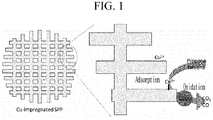
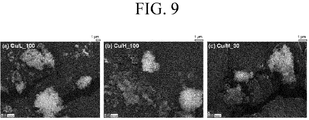
- Cu/M_30 had a greatest adsorption amount, and Cu/L_100 had the least adsorption amount. It was confirmed that most of Cu 2+ ions adsorbing propene and toluene by a structure of SPP zeolite were present on an outer surface thereof, and CuO for oxidizing was also present on a surface thereof.
- an adsorption capacity of propene and toluene of zeolite increases with an increase of a surface area and acid.
- propene and vapor are simultaneously adsorbed to the H-type ZSM-5 zeolite, the propene and vapor compete for occupation of an adsorption site.
- Propene is strongly and chemically adsorbed to Cu-ZSM-5, of which chemical adsorption is significantly increased compared to that of H-ZSM-5 ( M. Navlani-Garcia et al., Environ. Sci. Technol. 47, 5851-5857, 2013 ; H.W. Jen et al., Catal. Lett. 26, 217-225, 1994 ).
- an SPP particle synthesis precursor solution was prepared.
- the precursor solution is referred to as Compound A.
- Sodium hydroxide NaOH, 98 %, Sigma-Aldrich
- NaOH NaOH
- the final synthetic precursor solution was sealed in a polypropylene bottle and further hydrolyzed at least overnight.
- the synthetic precursor solution after the hydrolysis step of Example 1 was transferred to a cap-free 45 mL Teflon liner, and while stirring it at room temperature, a certain amount of ethanol and water was evaporated.
- a molar composition after ethanol removal along with the molar composition mentioned above was 1 SiO 2 :x Al 2 O 3 :0.3 TBPOH:10 H 2 O:2x NaOH:0 EtOH, and a molar composition after removing half the amount of ethanol and half the amount of water was 1 SiO 2 :x Al 2 O 3 :0.3 TBPOH:5 H 2 O:2x NaOH:0 EtOH.
- the produced solid product was recovered by repeating centrifugation, decanting, and deionized water washing 5 times. Thereafter, it was dried at a temperature of 70 °C overnight, and calcined at a temperature of 550 °C for 12 hours at a heating speed of 1 °C/min under a flow of 200 mL/min.
- ⁇ _E1_W1.0 Samples obtained after (1) no evaporation, (2) ethanol evaporation, and (3) additional water evaporation were labeled as ⁇ _E1_W1.0, ⁇ _E0_W1.0, and ⁇ _E0_W0.5, respectively.
- ⁇ represents the Si/Al ratio
- the numbers next to E and W represent the ratio of ethanol and water with respect to the existing precursor solution.
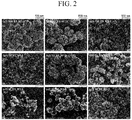
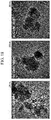
- the 100_E1_W1.0 particles had a size of 400 to 600 nm and surfaces that were rather unsmooth and uneven ( FIG. 2 (a1)).
- Each particle of 100_E0_W1.0 obtained after the ethanol removal was mainly formed of a thinner or sharper nanosheet, and the particle size was reduced ( FIG. 2 (a2)).
- the 100_E0_W0.5 sample synthesized after the addition water removal was formed of a sharp nanosheet similar to 100_E0_W1.0, and its size was further reduced ( FIG. 2 (a3)).
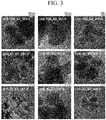
- 100_E1_W1.0 was mainly formed of a thick nanosheet ( FIG. 3 (a1)), but after the ethanol evaporation, 100_E0_W1.0 was formed of a sharp MFI nanosheet or lamella with a significantly reduced thickness ( FIG. 3 (a2)). As shown in FIG. 2 (a2) and (a3), when water was further removed, it was confirmed that both the particle size and the thickness of the nanosheet size were decreased ( FIG. 3 (a2) and (a3).
- 30_E1_W1.0 was subject to a formation of a different step from the MFI zeolite step.
- the X-ray diffraction (XRD) analysis was performed on the SPP particles obtained in Example 1.
- the XRD pattern of all samples showed a representative peak corresponding to the MFI structure except for the amorphous 30_E1_W1.0.
- some XRD peaks did not appear.
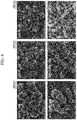
- the XRD peak corresponding to the (hkl) plane was weakened, but the peak corresponding to the (h01) or (0k0) plane appeared ( FIG. 4 ). This may be because the nanosheets in the SPP were many on the ac-plane, or the sample holders were extensively aligned on the ac-plane during measurement.
- the XRD pattern consisting of a specific peak corresponding to the (h01) or (0k0) plane means that a thin layer of MFI nanosheet was formed along the b axis ( H. Kim et al., Catal. Tod. In press, 2017 ).
- BET Brunauer-Emmett-Teller
- Smeso+ext and V micro were measured by using the modified t-plot method, and S micro was calculated by using the following formula.
- S micro S BET S meso + ext
- V 2-10 was calculated by using the BJH pore size distribution in the 2 to 10 nm range.
- Table 1 shows the pore volume of the calcined SPP sample calculated from the N2 physical adsorption isotherm at 77K (" a " represents Smeso+ext and V micro measured by using the modified t-plot method, and " b " represents the BJH pore size distribution data).
- H-type SPP particles among the nine types of Na-type SPP particles calcined in Example 1, 100_E1_W1.0, 100_E0_W0.5, and 30_E0_W0.5 were stirred in a 1 M ammonium nitrate (NH4NO3) solution for 6 hours at a temperature under 80 °C at a fixed ratio of 0.01 M of the Na-type SPP particles (g)/NH 4 NO 3 solution (mL) to obtain an ion exchanged sample. The obtained sample was recovered by repeating centrifugation, decanting, and deionized water washing three times. The recovered sample was dried overnight at a temperature of 70 °C, and calcined at a temperature of 500 °C for 6 hours at a heating speed of 10 °C/min under an air flow of 200 mL/min.
- NH4NO3 ammonium nitrate
- the obtained particles were indicated as L_100, H_100, and M_30.
- the letters H, M, and L respectively mean high, medium, and low mesoporosity in the generated particles, and the number at the end thereof represents the Si/Al ratio.
- Cu was impregnated into the H-type SPP particles by using a wetness impregnation method. Specifically, copper nitrate trihydrate ((Cu(NO 3 ) 2 ⁇ 3H 2 O, 98 %, Sigma-Aldrich) was dissolved in deionized water to manufacture a solution of 0.04 M copper(II) nitrate (Cu(NO 3 ) 2 ). The H-type SPP particles were added to the copper nitrate solution so that 5 wt% of Cu was finally impregnated.
- copper nitrate trihydrate (Cu(NO 3 ) 2 ⁇ 3H 2 O, 98 %, Sigma-Aldrich) was dissolved in deionized water to manufacture a solution of 0.04 M copper(II) nitrate (Cu(NO 3 ) 2 ).
- the H-type SPP particles were added to the copper nitrate solution so that 5 wt% of Cu was finally impregnated.
- the mixture was put in a rotary evaporator, and after removing all moisture, the Cu-impregnated SPP was recovered, dried at a temperature of 100 °C for 3 hours, and calcined at a temperature of 550 °C for 6 hours at a heating rate of 1 °C/min under a flow of 200 mL/min.
- the obtained particles were indicated as Cu/L_100, Cu/H_100, and Cu/M_30.
- Cu means that copper was impregnated in the H-type SPP particles (L_100, H_100, and M_30).
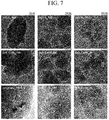
- the scanning electron microscope (SEM) images and transmission electron microscopy (TEM) images were observed by using the Hitachi S-4800 field emission scanning microscope (FE-SEM) and the Tecnai G2 F30ST field emission transmission electron microscope (FE-TEM).
- SEM scanning electron microscope
- TEM transmission electron microscopy
- the Si/Al ratio of the H-type and Cu-impregnated SPP particles was similar to the Si/Al ratio of the Na-type particles, except for L_100 and Cu/L_100 (Table 2 and Table 3).
- L_100 and Cu/L_100 the standard deviation value is high compared to the average value, so that it is difficult to obtain an accurate Si/Al ratio value.
- Table 2 shows the results of elemental analysis measured from the EDX data of the H-type and Cu-impregnated SPP particles (" a " represents the EDX data of each sample, and " b " represents Cu wt% data of the copper impregnated SPP measured from the SEM/EDX mapping in FIG. 9 ).
- Table 3 shows the elemental analysis results measured from the EDX data of the Na-type SPP particles (" a " represents the EDX data of each sample).
- Table 3 Sample Si/Al a Na/Al a 100_E1_W1.0 81 ⁇ 31 0.9 ⁇ 0.4 100_E0_W1.0 217 ⁇ 145 1.9 ⁇ 1.9 100_E0_W0.5 51 ⁇ 13 0.2 ⁇ 0.3 50_E1_W1.0 64 ⁇ 12 1.4 ⁇ 0.3 50_E0_W1.0 31 ⁇ 3 0.2 ⁇ 0.1 50_E0_W0.5 86 ⁇ 19 1.4 ⁇ 1.0 30_E1_W1.0 4.1 ⁇ 0.3 0.5 ⁇ 0.0 30_E0_W1.0 25 ⁇ 1 0.4 ⁇ 0.0 30_E0_W0.5 23 ⁇ 6 0.6 ⁇ 0.3
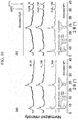
- the Cu-impregnated sample showed the XRD peaks (about 36° and 39°) corresponding to CuO, and its size was confirmed to be 20 nm as calculated based on the Scherrer equation ( FIG. 10 ).
- an amount of CuO having the size of 20 nm among the Cu-impregnated SPP particles may be easily estimated in a corresponding XRD peak area.
- Cu/L_100, Cu/H_100, and Cu/M_30 were 0.6, 1, and 0.4, respectively.
- amounts of the CuO having the size of 5 nm were greater in the order of Cu/M_30, Cu/L_100, and Cu/H_100.
- the N2 physical adsorption isotherms were measured in the same manner as in Example 5, and the pore sizes and volumes were calculated.
- BET Brunauer-Emmett-Teller
- Table 4 shows the pore structure and acid titration results of the H-type and Cu-impregnated SPP particles (" c " represents all B acids located on the outer and mesoporous surfaces).
- Table 4 Sample S BET (m 2 /g) S micro (m 2 /g) a S meso+ext (m 2 /g) a V micro (cm 3 /g) a V 2-10 (cm 3 /g) b B site ( ⁇ mol/g) L site ( ⁇ mol/g) Total External c L_100 393 ⁇ 0.3 267 126 0.105 0.027 45 40 19 H_100 574 ⁇ 1.2 162 412 0.082 0.244 109 100 38 M_30 501 ⁇ 0.2 164 337 0.068 0.139 191 121 31 Cu/L_100 382 ⁇ 0.1 266 116 0.105 0.043 21 8 145 Cu/H_10 0 488 ⁇ 0.2 145 343 0.062 0.206 74 58 17
- FT-IR Fourier Transform Infrared Spectroscopy
- Self-pelletized samples in an in-situ FT-IR cell were activated under vacuum and at a temperature of 500 °C conditions for 6 hours.
- the sample was adsorbed by flowing saturated vapor of pyridine (Py; saturated vapor pressure of 2.80 kPa at a temperature of 25 °C) or 2,6-di-tert-butylpyridine (dTBPy; 0.034 kPa saturated vapor pressure at a temperature of 25 °C) at a He flow of 30 mL/min for 1 hour.
- dTBPy 2,6-di-tert-butylpyridine
- dTBPy 2,6-di-tert-butylpyridine
- the weakly attached Py or dTBPy molecule was removed under vacuum for 60 minutes to obtain an FT-IR spectrum of the activated sample.
- the concentrations of a total Lewis acid, a total Bronsted acid, and Bronsted acid on mesopores and the outer surface were respectively calculated.
- the Lewis acid and the Bronsted acid were denoted as L site and B site, respectively.
- the B site of the H-type SPP particles (L_100, H_100, and M_30) was mainly located in the mesopores and outer surface area. Specifically, in the amount of the total B site, M_30 (191 ⁇ mol/g, mainly due to the lowest Si/Al ratio) was the greatest, and L_100 (45 ⁇ mol / g, mainly due to the lowest mesopores and outer surface area) was the least (Table 2).
- the amount of the total B site decreased by 69 ⁇ mol/g in Cu/M_30, and it decreased by 24 ⁇ mol/g in Cu/L_100. This means that in the Cu-impregnated SPP particles, the amount of Cu 2+ ions was the greatest in Cu/M_30 and the least in Cu/L_100.
- the Cu 2+ ions were located on the inner surface rather than the mesopores and outer surface.
- the cold start test was performed by filling a sample of 0.06 g H-type SPP particles sieved in the range of 150 to 250 ⁇ m into a quartz tubular reactor (with an inner diameter of 6.9 mm and an outer diameter of 9.6 mm).
- the temperature was controlled using a temperature controller (UP35A, Yokogawa), and the flow speed of the supplied vapor was controlled using a mass flow controller (High Tech, Bronkhorst).
- the temperature was measured using a thermocouple under a quartz frit on which the sample was placed.
- the vapor was produced by injecting a predetermined amount of water into heated tubing. After passing through the reactor, a trap in which the cooling water (1 °C) was circulated removed the vapor in the outlet gas stream. After the trap, the outlet was connected to a mass spectrometer (Lab Questor-RGA, Bongil).
- the calcined H-type SPP particles were activated at a temperature of 600 °C for 30 minutes under a He flow of 30 mL/min for 30 minutes.
- 560 ppmv of Ar was used as an internal standard for quantifying the molar composition of the gas outlet.
- the reactor started at a temperature of 70 °C and was maintained for 5 minutes. Thereafter, the reactor was heated to a temperature of 600 °C at a heating speed of 50 °C/min, and maintained at the temperature of 600 °C for 30 minutes.
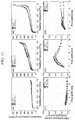
- L_100, H_100, and M_30 showed almost the same emission profile ( FIG. 12 ).
- the H-type SPP initially hardly adsorbed propene ( FIG. 12 (a1)). This was due to strong adsorption inhibition of the stream (supply of 10 vol%).
- H_100 a portion of propene was consumed immediately after the temperature was increased, and then the supply concentration was recovered ( FIG. 12 (a1)).
- FIG. 13 (a1), (a2), and (a3) different types of hydrocarbons were produced ( FIG. 13 (a1), (a2), and (a3)).
- Benzene and xylene isomers were produced in all the H-type SPP particles, while 2-methylbutane was produced only in H_100 ( FIG. 13 ).
- H-type SPPs (L_100, H_100, and M_30) did not have the ability to delay the emission of propene and toluene to the active temperatures of TWCs and oxidize hydrocarbons.
- H-type SPP particles were not suitable for use as an HC adsorbent in the cold start section.
- the Cu-impregnated SPP particles showed a different unique discharge profile compared to the H-type SPP particles ( FIG. 12 (b1), (b2), and (b3)).
- the Cu-impregnated SPP particles were able to adsorb propene at an initial temperature of 70 °C, and Cu/M_30 showed the highest adsorption capacity.
- Cu/L_100 began to discharge propene before heating started, and Cu/M_30 desorbed propene at a temperature of a temperature of around 90 °C.
- Cu/H_100 showed intermediate performance between Cu/L_100 and Cu/M_30.
- toluene was completely adsorbed, similarly to the H-type SPP particles ( FIG. 12 (b2)). Desorption of toluene was most delayed at Cu/M_30 (toluene began to be discharged at 190 °C). This was because Cu/M_30 strongly adsorbs propene.
- Cu/L_100 had improved adsorption capacity compared to L_100. Toluene desorption of Cu/H_100 was considerably reduced, but its desorption behavior was almost the same as that of H_100. Cu/L_100 desorbed most of the adsorbed toluene, while in Cu/H_100 and Cu/M_30, the amount of desorbed toluene was significantly reduced.
- Cu/M_30 was an effective HC adsorbent because toluene was desorbed last and the amount of desorption decreased.
- Cu/M_30 could be used as an excellent HC adsorbent because it could adsorb both propene and toluene.
- the tested sample was heated to 800 °C at a heating speed of 5 °C/min under an air flow of 100 mL/min and measured by a thermogravimetric analyzer (TGA, Q50, TA Instruments).
- the CST for Cu-impregnated SPP particles that were not hydrothermally treated or that were hydrothermally treated was continuously performed.
- CST cold-start test
- the Cu-impregnated SPP particles had the performance of the HC adsorbent, but the hydrothermally-treated Cu-impregnated SPP had reduced adsorption capacity for propene and toluene.
- the oxidation temperature of the Cu-impregnated SPP HT was higher than that of the Cu-impregnated SPP, and this oxidation temperature was similar to that of bulk CuO ( FIG. 15 (a2), (b2), and (c2)).
- FIG. 15 (a2), (b2), and (c2) As a result of analyzing the emission profiles ( FIG. 15 (a2), (b2), and (c2)) and the TGA results ( FIG. 17 ), it can be seen that hydrocarbons were converted to CO 2 or CO.
Landscapes
- Chemical & Material Sciences (AREA)
- Chemical Kinetics & Catalysis (AREA)
- Organic Chemistry (AREA)
- Analytical Chemistry (AREA)
- Engineering & Computer Science (AREA)
- Materials Engineering (AREA)
- Inorganic Chemistry (AREA)
- Oil, Petroleum & Natural Gas (AREA)
- General Chemical & Material Sciences (AREA)
- Crystallography & Structural Chemistry (AREA)
- Nanotechnology (AREA)
- Combustion & Propulsion (AREA)
- Physics & Mathematics (AREA)
- Thermal Sciences (AREA)
- Environmental & Geological Engineering (AREA)
- Biomedical Technology (AREA)
- Health & Medical Sciences (AREA)
- Mechanical Engineering (AREA)
- General Engineering & Computer Science (AREA)
- Solid-Sorbent Or Filter-Aiding Compositions (AREA)
- Catalysts (AREA)
- Exhaust Gas After Treatment (AREA)
- Silicates, Zeolites, And Molecular Sieves (AREA)
- Treating Waste Gases (AREA)
- Separation Of Gases By Adsorption (AREA)
- Exhaust Gas Treatment By Means Of Catalyst (AREA)
Applications Claiming Priority (2)
| Application Number | Priority Date | Filing Date | Title |
|---|---|---|---|
| KR1020170183959A KR102085652B1 (ko) | 2017-12-29 | 2017-12-29 | 규칙적인 메조 기공을 가진 제오라이트 입자에 금속이 함침된 탄화수소 흡착제 및 그 제조방법 |
| PCT/KR2018/016590 WO2019132482A1 (ko) | 2017-12-29 | 2018-12-24 | 규칙적인 메조 기공을 가진 제오라이트 입자에 금속이 함침된 탄화수소 흡착제 및 그 제조방법 |
Publications (2)
| Publication Number | Publication Date |
|---|---|
| EP3733280A1 true EP3733280A1 (de) | 2020-11-04 |
| EP3733280A4 EP3733280A4 (de) | 2021-10-27 |
Family
ID=67067909
Family Applications (3)
| Application Number | Title | Priority Date | Filing Date |
|---|---|---|---|
| EP18893856.7A Withdrawn EP3733280A4 (de) | 2017-12-29 | 2018-12-24 | Kohlenwasserstoffadsorbens mit metallimprägniertem zeolithteilchen mit regelmässiger mesopore und herstellungsverfahren dafür |
| EP18896734.3A Withdrawn EP3733282A4 (de) | 2017-12-29 | 2018-12-28 | Kohlenwasserstoffadsorptionsmittel |
| EP18895622.1A Pending EP3733281A4 (de) | 2017-12-29 | 2018-12-28 | Kohlenwasserstoffentfernungssystem |
Family Applications After (2)
| Application Number | Title | Priority Date | Filing Date |
|---|---|---|---|
| EP18896734.3A Withdrawn EP3733282A4 (de) | 2017-12-29 | 2018-12-28 | Kohlenwasserstoffadsorptionsmittel |
| EP18895622.1A Pending EP3733281A4 (de) | 2017-12-29 | 2018-12-28 | Kohlenwasserstoffentfernungssystem |
Country Status (6)
| Country | Link |
|---|---|
| US (5) | US20200360891A1 (de) |
| EP (3) | EP3733280A4 (de) |
| JP (3) | JP7217278B2 (de) |
| KR (1) | KR102085652B1 (de) |
| CN (3) | CN111542388A (de) |
| WO (3) | WO2019132482A1 (de) |
Families Citing this family (11)
| Publication number | Priority date | Publication date | Assignee | Title |
|---|---|---|---|---|
| GB2581776B (en) * | 2019-02-19 | 2022-08-17 | Jaguar Land Rover Ltd | Catalytic converter core having first and second regions with different thermal inertia |
| JP7540167B2 (ja) * | 2020-03-10 | 2024-08-27 | 東ソー株式会社 | 疎水性mfi型ゼオライト、その製造方法、及びその用途 |
| WO2021201018A1 (ja) * | 2020-03-31 | 2021-10-07 | 東ソー株式会社 | 炭化水素吸着剤及び炭化水素の吸着方法 |
| CN116368099B (zh) * | 2020-10-23 | 2025-05-30 | 株式会社科特拉 | 烃吸附装置 |
| KR20220067569A (ko) * | 2020-11-16 | 2022-05-25 | 현대자동차주식회사 | 탄화수소 흡착 촉매 및 이를 포함하는 탄화수소 트랩 |
| KR102529420B1 (ko) * | 2020-11-24 | 2023-05-08 | 고려대학교 산학협력단 | 양이온 종류를 제어한 제올라이트를 포함하는 탄화수소 흡탈착 복합체 및 이의 제조방법 |
| KR102509811B1 (ko) * | 2020-11-24 | 2023-03-14 | 고려대학교 산학협력단 | 가스흡착부 및 보강부를 포함하는 탄화수소 흡탈착 복합체 및 이의 제조방법 |
| KR102529419B1 (ko) * | 2020-11-24 | 2023-05-08 | 고려대학교 산학협력단 | 양이온 비율을 제어한 제올라이트를 포함하는 탄화수소 흡탈착 복합체 및 이의 제조방법 |
| KR20240068833A (ko) * | 2022-11-08 | 2024-05-20 | 현대자동차주식회사 | 탄화수소 흡착 촉매의 제조 방법, 이에 의하여 제조된 탄화수소 흡착 촉매, 및 이를 포함하는 탄화수소 트랩 |
| CN115770612A (zh) * | 2022-12-06 | 2023-03-10 | 中国科学院青岛生物能源与过程研究所 | 一种用于二氧化碳加氢制备甲醇的催化剂及其制备方法和应用 |
| CN115920589B (zh) * | 2022-12-21 | 2023-08-11 | 可迪尔空气技术(北京)有限公司 | 一种低浓度污水池废气的处理方法 |
Family Cites Families (37)
| Publication number | Priority date | Publication date | Assignee | Title |
|---|---|---|---|---|
| US3895080A (en) * | 1972-06-06 | 1975-07-15 | Sun Research Development | Separation of cyclic compounds by adsorption on partially sorbed metallic zeolites |
| US3929669A (en) * | 1972-12-22 | 1975-12-30 | Universal Oil Prod Co | Method for manufacturing an adsorbent useful for olefin separation |
| US4297328A (en) * | 1979-09-28 | 1981-10-27 | Union Carbide Corporation | Three-way catalytic process for gaseous streams |
| JPS59196745A (ja) * | 1983-03-31 | 1984-11-08 | Res Assoc Residual Oil Process<Rarop> | 鉄含有ゼオライト組成物 |
| US5185305A (en) * | 1991-11-08 | 1993-02-09 | Ford Motor Company | Catalyst system for treating the exhaust from a lean-burn gasoline-fueled engine |
| JP3616112B2 (ja) * | 1992-12-28 | 2005-02-02 | 日産自動車株式会社 | 炭化水素吸着材 |
| JP3207577B2 (ja) * | 1993-01-20 | 2001-09-10 | 三菱重工業株式会社 | 炭化水素の吸着剤及び吸着浄化方法 |
| JP3190780B2 (ja) * | 1994-03-17 | 2001-07-23 | 出光興産株式会社 | 排ガス浄化用炭化水素吸着触媒 |
| JPH0810613A (ja) * | 1994-07-05 | 1996-01-16 | Ngk Insulators Ltd | 自動車排ガス浄化用吸着材 |
| JPH0975721A (ja) * | 1995-09-12 | 1997-03-25 | Tokyo Gas Co Ltd | 炭化水素系ガス中微量成分除去用吸着剤および除去方法 |
| EP0768111A1 (de) * | 1995-10-16 | 1997-04-16 | Corning Incorporated | Verfahren zum Modifizieren eines Kohlenwasserstoffadsorbens und seine Verwendung |
| KR100490511B1 (ko) * | 1996-05-29 | 2005-08-04 | 엑손모빌 케미칼 패턴츠 인코포레이티드 | 제올라이트 촉매 및 탄화수소 전환반응에 있어서의 그의 용도 |
| JP3918305B2 (ja) * | 1997-07-02 | 2007-05-23 | 東ソー株式会社 | 炭化水素吸着剤及び排ガス浄化触媒 |
| DE69826768T2 (de) * | 1997-07-02 | 2006-03-09 | Tosoh Corp., Shinnanyo | Adsorbens für Kohlenwasserstoff und Katalysator zur Abgasreinigung |
| JP3417309B2 (ja) * | 1997-10-28 | 2003-06-16 | トヨタ自動車株式会社 | 炭化水素吸着材 |
| EP1206317A1 (de) * | 1999-05-05 | 2002-05-22 | ExxonMobil Chemical Patents Inc. | Durch zeolith gebundener katalysator enthaltend mindestens drei verschiedene zeolithen; verwendung bei der umwandlung von kohlenwasserstoffen |
| FR2863909B1 (fr) * | 2003-12-22 | 2006-05-26 | Ceca Sa | Methode de purification de flux gazeux pollue par co2 et hydrocarbure(s) et/ou oxyde(s) d'azote par adsorbant zeolitique agglomere |
| DE102005061713B4 (de) * | 2005-12-22 | 2015-05-21 | Süd-Chemie Ip Gmbh & Co. Kg | Adsorbereinheit für flüchtige Kohlenwasserstoffe, Verfahren zur Herstellung eines zeolithischen Adsorbermaterials und zeolithisches Adsorbermaterial erhältlich nach dem Verfahren |
| FR2895283B1 (fr) * | 2005-12-22 | 2008-02-01 | Inst Francais Du Petrole | Catalyseur comprenant une zeolithe euo, une zeolithe 10mr et une zeolithe 12mr et son utilisation en isomerisation des composes c8 aromatiques |
| BRPI0620252B1 (pt) * | 2005-12-22 | 2016-08-30 | Inst Français Du Petrole | catalisador suportado de forma irregular, não esférica e processo de hidroconversão de frações petrolíferas pesadas |
| JP4956112B2 (ja) | 2006-09-22 | 2012-06-20 | 三菱自動車工業株式会社 | Hcトラップ触媒の調製方法 |
| US8413433B2 (en) * | 2008-07-17 | 2013-04-09 | Ford Global Technologies, Llc | Hydrocarbon retaining and purging system |
| KR101062666B1 (ko) * | 2009-02-02 | 2011-09-06 | 한국과학기술원 | 팔라듐 담지 메조다공성 제올라이트 |
| US8147588B2 (en) | 2009-10-06 | 2012-04-03 | Basf Corporation | Lower reactivity adsorbent and higher oxygenate capacity for removal of oxygenates from olefin streams |
| MY160970A (en) * | 2010-04-08 | 2017-03-31 | Basf Se | A catalyst for use in selective catalytic reduction comprising zeolites of the cha structure type comprising cu and zeolites of the mfi structure type comprising fe, an exhaust gas treatment system comprising this catalyst, a process for the treatment of a gas stream comprising nox using the catalyst |
| JP2011240273A (ja) | 2010-05-19 | 2011-12-01 | Jx Nippon Oil & Energy Corp | 吸着剤及びその製造方法、並びに燃料の脱硫方法 |
| US20110286914A1 (en) * | 2010-05-21 | 2011-11-24 | Pq Corporation | NOVEL METAL-CONTAINING ZEOLITE BETA FOR NOx REDUCTION AND METHODS OF MAKING THE SAME |
| GB201100595D0 (en) * | 2010-06-02 | 2011-03-02 | Johnson Matthey Plc | Filtration improvements |
| KR101147669B1 (ko) * | 2010-07-05 | 2012-05-21 | 한국과학기술원 | 규칙적 또는 불규칙적으로 배열된 메조기공을 포함하는 제올라이트 또는 유사 제올라이트 물질 및 그의 제조 방법 |
| KR101451902B1 (ko) * | 2012-11-26 | 2014-10-22 | 한국과학기술원 | 메조기공을 갖는 mre 구조의 제올라이트 또는 유사 mre 제올라이트 물질 및 그의 제조 방법 |
| WO2015001123A1 (en) * | 2013-07-05 | 2015-01-08 | Danmarks Tekniske Universitet | Method for producing zeolites and zeotypes |
| JP6398448B2 (ja) * | 2013-08-30 | 2018-10-03 | 東ソー株式会社 | ペンタシル型ゼオライト及びその製造方法 |
| US9463447B2 (en) * | 2014-01-29 | 2016-10-11 | Ford Global Technologies, Llc | Hydrocarbon trap with increased zeolite loading and improved adsorption capacity |
| JP6294127B2 (ja) * | 2014-03-31 | 2018-03-14 | 株式会社キャタラー | Scr用触媒及び排ガス浄化触媒システム |
| SG11201806211VA (en) * | 2016-02-19 | 2018-09-27 | Exxonmobil Res & Eng Co | Small crystal, high surface area emm-30 zeolites, their synthesis and use |
| US10105691B2 (en) * | 2016-03-31 | 2018-10-23 | Ford Global Technologies, Llc | Multiple zeolite hydrocarbon traps |
| WO2017187344A1 (en) * | 2016-04-26 | 2017-11-02 | Basf Corporation | Zoned configuration for oxidation catalyst combinations |
-
2017
- 2017-12-29 KR KR1020170183959A patent/KR102085652B1/ko active Active
-
2018
- 2018-12-24 EP EP18893856.7A patent/EP3733280A4/de not_active Withdrawn
- 2018-12-24 JP JP2020535532A patent/JP7217278B2/ja active Active
- 2018-12-24 CN CN201880084499.5A patent/CN111542388A/zh active Pending
- 2018-12-24 WO PCT/KR2018/016590 patent/WO2019132482A1/ko not_active Ceased
- 2018-12-28 WO PCT/KR2018/016906 patent/WO2019132612A1/ko not_active Ceased
- 2018-12-28 CN CN201880084462.2A patent/CN111526941A/zh active Pending
- 2018-12-28 JP JP2020536557A patent/JP2021509087A/ja active Pending
- 2018-12-28 JP JP2020535596A patent/JP2021509086A/ja active Pending
- 2018-12-28 CN CN201880084423.2A patent/CN111655367A/zh active Pending
- 2018-12-28 US US16/957,658 patent/US20200360891A1/en not_active Abandoned
- 2018-12-28 US US16/957,927 patent/US20210370219A1/en not_active Abandoned
- 2018-12-28 EP EP18896734.3A patent/EP3733282A4/de not_active Withdrawn
- 2018-12-28 EP EP18895622.1A patent/EP3733281A4/de active Pending
- 2018-12-28 WO PCT/KR2018/016905 patent/WO2019132611A1/ko not_active Ceased
-
2020
- 2020-06-26 US US16/913,671 patent/US20200391178A1/en not_active Abandoned
- 2020-06-26 US US16/913,466 patent/US20200324268A1/en not_active Abandoned
-
2023
- 2023-02-03 US US18/163,914 patent/US20230191362A1/en not_active Abandoned
Also Published As
| Publication number | Publication date |
|---|---|
| CN111542388A (zh) | 2020-08-14 |
| EP3733280A4 (de) | 2021-10-27 |
| WO2019132612A1 (ko) | 2019-07-04 |
| US20230191362A1 (en) | 2023-06-22 |
| JP2021509086A (ja) | 2021-03-18 |
| WO2019132482A1 (ko) | 2019-07-04 |
| EP3733281A4 (de) | 2021-08-25 |
| WO2019132611A8 (ko) | 2019-08-01 |
| EP3733282A1 (de) | 2020-11-04 |
| JP2021509635A (ja) | 2021-04-01 |
| EP3733281A1 (de) | 2020-11-04 |
| CN111526941A (zh) | 2020-08-11 |
| EP3733282A4 (de) | 2021-11-03 |
| US20200324268A1 (en) | 2020-10-15 |
| WO2019132611A1 (ko) | 2019-07-04 |
| KR20190081424A (ko) | 2019-07-09 |
| CN111655367A (zh) | 2020-09-11 |
| US20200391178A1 (en) | 2020-12-17 |
| KR102085652B1 (ko) | 2020-03-06 |
| JP2021509087A (ja) | 2021-03-18 |
| US20200360891A1 (en) | 2020-11-19 |
| JP7217278B2 (ja) | 2023-02-02 |
| US20210370219A1 (en) | 2021-12-02 |
Similar Documents
| Publication | Publication Date | Title |
|---|---|---|
| US20230191362A1 (en) | Hydrocarbon adsorbent with metal-impregnated zeolite particle having regular mesopore and manufacturing method therefor | |
| Zhang et al. | Design and synthesis of core-shell structured meso-Cu-SSZ-13@ mesoporous aluminosilicate catalyst for SCR of NOx with NH3: Enhancement of activity, hydrothermal stability and propene poisoning resistance | |
| Peng et al. | Toward rational design of a novel hierarchical porous Cu-SSZ-13 catalyst with boosted low-temperature NOx reduction performance | |
| Huang et al. | Promotional effect of HZSM-5 on the catalytic oxidation of toluene over MnO x/HZSM-5 catalysts | |
| CN102666387B (zh) | 新型金属硅酸盐及其生产方法、氮氧化物除去催化剂及其生产方法和使用所述催化剂的氮氧化物除去方法 | |
| EP2457872A1 (de) | Zeolith und herstellungsverfahren dafür | |
| CN112694101B (zh) | 核壳分子筛、合成方法及其用途 | |
| EA035737B1 (ru) | Цеолитовые адсорбенты с большой внешней поверхностью и их применение | |
| Ilmasani et al. | Deactivation of phosphorus-poisoned Pd/SSZ-13 for the passive adsorption of NOx | |
| Peng et al. | Sn-MFI as active, sulphur and water tolerant catalysts for selective reduction of NO x | |
| Song et al. | Catalytic hydrolysis of HCN on ZSM-5 modified by Fe or Nb for HCN removal: surface species and performance | |
| CN103269977A (zh) | 磷酸钛硅铝 | |
| Mousa et al. | Adsorptive desulfurization of iraqi heavy naphtha using different metals over nano Y zeolite on carbon nanotube | |
| CN114534687A (zh) | 包含具有受控阳离子比率的沸石的烃吸附和解吸复合物及其制备方法 | |
| JP7739742B2 (ja) | Yfi構造を有するゼオライト組成物、炭化水素吸着剤及び炭化水素の吸着方法 | |
| Cao et al. | Comparison of surface passivation modification of two mordenite zeolites and their application on the isomerisation of o-ethyltoluene | |
| JP2018089571A (ja) | Szr型ゼオライトを含む炭化水素吸着剤及び炭化水素の吸着方法 | |
| Kustov et al. | Mesoporous Fe-containing ZSM-5 zeolite single crystal catalysts for selective catalytic reduction of nitric oxide by ammonia | |
| JP7803044B2 (ja) | 炭化水素吸着剤及び炭化水素の吸着方法 | |
| Zhang et al. | Synthesis and toluene adsorption/desorption property of beta zeolite coated on cordierite honeycomb by an in situ crystallization method | |
| CN114534688B (zh) | 烃吸附和解吸复合物及其制备方法 | |
| US20250319453A1 (en) | Hydrothermally stable hydrocarbon trap by controlling the composition ratio of cations within the beta zeolite and preparation method thereof | |
| US20250367647A1 (en) | Synthesis of a catalyst comprising a high-purity nu-86 zeolite and iron for the converson of nox and n2o | |
| Wang et al. | Seed-assisted Template Control of ZSM-5 Structure for Mitigating Propylene Emissions over Cu/ZSM-5 Catalysts During Cold Start | |
| JP2024011057A (ja) | 銅含有fau型ゼオライト |
Legal Events
| Date | Code | Title | Description |
|---|---|---|---|
| STAA | Information on the status of an ep patent application or granted ep patent |
Free format text: STATUS: THE INTERNATIONAL PUBLICATION HAS BEEN MADE |
|
| PUAI | Public reference made under article 153(3) epc to a published international application that has entered the european phase |
Free format text: ORIGINAL CODE: 0009012 |
|
| STAA | Information on the status of an ep patent application or granted ep patent |
Free format text: STATUS: REQUEST FOR EXAMINATION WAS MADE |
|
| 17P | Request for examination filed |
Effective date: 20200623 |
|
| AK | Designated contracting states |
Kind code of ref document: A1 Designated state(s): AL AT BE BG CH CY CZ DE DK EE ES FI FR GB GR HR HU IE IS IT LI LT LU LV MC MK MT NL NO PL PT RO RS SE SI SK SM TR |
|
| AX | Request for extension of the european patent |
Extension state: BA ME |
|
| DAV | Request for validation of the european patent (deleted) | ||
| DAX | Request for extension of the european patent (deleted) | ||
| RAP3 | Party data changed (applicant data changed or rights of an application transferred) |
Owner name: HYUNDAI MOTOR COMPANY Owner name: KOREA UNIVERSITY RESEARCH AND BUSINESS FOUNDATION Owner name: KIA CORPORATION |
|
| A4 | Supplementary search report drawn up and despatched |
Effective date: 20210928 |
|
| RIC1 | Information provided on ipc code assigned before grant |
Ipc: B01D 53/04 20060101ALI20210922BHEP Ipc: B01J 35/10 20060101ALI20210922BHEP Ipc: B01J 29/46 20060101ALI20210922BHEP Ipc: B01J 29/40 20060101ALI20210922BHEP Ipc: B01J 20/18 20060101ALI20210922BHEP Ipc: B01J 20/28 20060101ALI20210922BHEP Ipc: B01J 20/32 20060101AFI20210922BHEP |
|
| P01 | Opt-out of the competence of the unified patent court (upc) registered |
Effective date: 20230527 |
|
| STAA | Information on the status of an ep patent application or granted ep patent |
Free format text: STATUS: EXAMINATION IS IN PROGRESS |
|
| 17Q | First examination report despatched |
Effective date: 20250220 |
|
| STAA | Information on the status of an ep patent application or granted ep patent |
Free format text: STATUS: THE APPLICATION IS DEEMED TO BE WITHDRAWN |
|
| 18D | Application deemed to be withdrawn |
Effective date: 20250621 |